IBM announced this morning that it will acquire Merge Healthcare for $1 billion, planning to add Merge’s imaging and clinical systems to its Watson Health analytics unit. IBM says Merge’s systems will allow Watson to “see” and will “unlock the value of medical images to help physicians make better care decisions.”
Merge has 7,500 customer sites, which IBM sees as prospects for its Watson Health Cloud. The company suggests it could be used to compare a patient’s images to previously taken ones and with those of similar patients. Specific use cases include clinical trials design, making diagnosis and treatment decisions, optimizing patient engagement, and delivering value-based care.
IBM SVP John Kelly said in a statement, “As a proven leader in delivering healthcare solutions for over 20 years, Merge is a tremendous addition to the Watson Health platform. Healthcare will be one of IBM’s biggest growth areas over the next 10 years, which is why we are making a major investment to drive industry transformation and to facilitate a higher quality of care. Watson’s powerful cognitive and analytic capabilities, coupled with those from Merge and our other major strategic acquisitions, position IBM to partner with healthcare providers, research institutions, biomedical companies, insurers and other organizations committed to changing the very nature of health and healthcare in the 21st century. Giving Watson ‘eyes’ on medical images unlocks entirely new possibilities for the industry.”
Cerner announces Q2 results: revenue up 32 percent, adjusted EPS $0.52 vs. $0.40, meeting earnings estimates but falling short on revenue expectations as service revenue declined and operating expenses jumped 53 percent. The company raised full-year earnings guidance but lowered full-year revenue guidance, sending CERN shares down 3.5 percent in after-market trading following the market’s close Tuesday. CERN shares are up 26 percent in the past year vs. the Nasdaq’s 17 percent.
CFO Marc Naughton says the company is disappointed that it missed its guided revenue estimates, but is happy with its all-time high strong sales and positive outlook.
Recurring revenue from the Siemens acquisition is tracking as expected, but fewer than expected customers committing to moving to Millennium or buying additional of the former Siemens solutions as they are “holding pat with their hand.”
President Zane Burke says Cerner differentiates itself (presumably from Epic) on predictable costs of ownership, fixed-fee implementations, and partial or full IT department outsourcing.
Cerner says (without naming names) that it is gaining ambulatory business at the expense of Athenahealth because it offers better service and value.
Burke says Cerner is happy to have been chosen by the DoD as part of the Leidos bid, but doesn’t expect a material impact on sales, revenue, or profits in the near term. He adds that the DoD’s project estimate is $9 billion over 18 years, but the value of the contract awarded is less.
Cerner says its customers “are actually very excited” about its DoD win.
Cerner’s new campus construction will require a capital expenditure of $150 million in the fiscal year.
CEO Neal Patterson was supposed to join the call for Q&A, but did not participate.
Reader Comments
From Captain Cupric: “Re: CHIME’s for-profit vendor-CIO matchmaking service. Isn’t that what the AHA’s AHA Solutions group does? Vendors pay hundreds of thousands of dollars (sometimes more than a million dollars) for an agreement, then pay a percentage of sales for ‘introductions’ to decision makers.” I believe that’s the case, although AHA Solutions does have some sort of vetting procedure (other than having the vendor’s check clear) before anointing their solutions as “endorsed.” It annoys me when supposedly non-profit member organizations can’t resist the lure of transforming themselves into richly rewarded pimps who arrange vendor-member liaisons in exploiting the “Ladies Drink Free” business model. The healthcare history is rich with examples (AHA, AMA, HIMSS, etc.) and CHIME seems anxious to pile onto the financial bandwagon in selling access to its provider members.
From CIO Doc: “Re: DoD EHR coverage. HIStalk had all I needed to know, from the early rumors to Dim-Sum’s webinar to critical analysis of the selection and then contract and vendor insight.” The other sites didn’t get anything wrong, they just didn’t add much value to the single-paragraph DoD contract notice (which is all they had to work with) in cranking out mindless articles and tweet-seeking missiles like (a) plucking a few random tweets or reader comments about the selection and passing them off as an insightful article representing the industry’s collective reaction; (b) running a long piece about how Epic feels about getting passed over in repurposing content from a rather sloppy Madison newspaper article; (c) asking but not answering questions in headlines; and (d) assembling random, pointless factoids together in proclaiming “X things to know” that were in fact not at all worth knowing. I don’t see much value in having writers with zero healthcare or IT experience rewording public information to seem like fresh news, hoping to attract reader eyeballs and advertiser support with stories that provide those readers with little value, but that’s just me.
From Horse Hockey: “Re: Healthcare IT News. Tooting its own horn in an odd press release. It’s odd that they brag on their unstated DoD reader numbers and even more that they issued a press release about themselves – what editor other than their own would think something like that is newsworthy?” I hesitate to comment since this reader’s email came after I had already written my media diatribe in response to the comment above, but the HIMSS-owned HITN issues a self-congratulatory news flash stating that its (unstated) readership numbers temporarily rose by an (unstated) percentage after they stopped the online presses for lightweight articles as, “CIOs ‘surprised’ at Cerner DoD win,” “Is DoD’s EHR modernization bound to fail?” and “The good, the bad, and the ugly: social media’s response to DoD Cerner EHR contract win.” I don’t read any health IT sites since I’ve yet to find anything there that wasn’t amply described elsewhere, but more power to everybody who can earn and keep readers, especially if they’re trying to do it as cheap seats observers.
From Informatics Please: “Re: Tampa General Hospital. Has extended their instance of Epic to the University of South Florida in a large ambulatory Epic Connect project involving 850 physicians and 2,800 users.” Unverified, but the source is sound.
From RingRing-Tom Brady: “Re: question for clinical readers. What about a vendor prompts them to want more in going to the vendor’s website or picking up the phone? I’m interviewing and am amazed at how much faith sales and marketing people place in their CRM and automated marketing platforms to drive sales. Is email outreach and social media really making an impact or is it just lazy selling? Does it matter how many touches you hit a prospect with, or do they just hit delete? Does an old-school ‘let me tell you how I can help solve your problem’ work?” I’ll let readers weigh in, but I’ll say this: I often find that clueless sales and marketing people who measure vanity but irrelevant metrics such as ad clicks to be employed by equally clueless and unsuccessful vendors. I’ll also opine that any company that relies on Twitter and Facebook to drive sales might as well lock up and go home since most heavy users of social media (both vendors and providers) are junior employees rather than decision-making executives. I would wager that most healthcare IT sales come from word of mouth or existing personal relationships, not a flashier HIMSS booth or insultingly boilerplated emails.
HIStalk Announcements and Requests
Welcome new HIStalk Platinum Sponsor VitalHealth Software. The company, co-founded by Mayo Clinic and Noaber Foundation in 2006, offers cloud-based solutions that include chronic disease care management, patient questionnaires, an integrated digital interventions portal, a next-generation heath IT application development environment for deploying cloud-based EHR solutions, and a Mayo-designed EHR for specialty practices. The company is a certified supplier of ICHOM, which defines global outcomes standards for issues that matter most to patients. The company’s global eHealth solutions are used by 100 healthcare networks in the US, Argentina, China, Spain, and several other countries, with a project in China, for example, providing cost-effective telemedicine services with shared medical records, risk profiles, and patient access to their medical records by smartphone. Thanks to VitalHealth Software for supporting HIStalk.
I found this YouTube video describing the use of VitalHealth Software’s QuestLink questionnaire platform for patient-reported outcomes.
I was about to eat an apple this morning and polished it on my shirt, leading me to ponder, why do I do that? The apple has passed through a lot of unwashed hands on its way from orchard to me, so anything short of washing it or peeling it isn’t going to accomplish much (not to mention that polishing it will deposit cloth particles and whatever’s on my shirt on the peel I’m about to eat). It’s almost as mystifying as why many men (not me) pointlessly spit in a public restroom urinal before using it.
Listening: Vaults, a London-based synth pop trio that nobody seems to know anything about — their website says nothing about them and they aren’t even on Wikipedia or Amazon. Their melodic, slow, bass-heavy music is fronted by a siren-like singer. Trying to find them turned up “In Vaults,” a new album of Chicago-based, female-led prog rock from District 97. The band played an amazing live version of “Starless” that features King Crimson’s vocalist/bass player John Wetton, who sang the original version of that King Crimson musical epitaph to itself on the group’s 1974 final album “Red” and who delivered an engaged performance here, unlike most of his 1970s-era music peers who just prop themselves up on stage like sagging, lip-syncing Disney audio-animatrons.
I’m happy to report that most of the HIStalapalooza sponsorship spots have been claimed, meaning the odds have improved that I won’t go broke in throwing the industry a free party next February. Still available are the all-access CEO Rock Star package and one I’m calling HIStalkacabana, although we’ll still consider the needs of smaller companies who want to be involved (we’ve customized some packages already). Contact Lorre. Thanks for the companies that have stepped up – it’s going to be a great evening as always.
Webinars
None scheduled in the next two weeks. Previous webinars are on the YouTube channel. Contact Lorre for webinar services including discounts for signing up by Labor Day.
Acquisitions, Funding, Business, and Stock
Activist investor Starboard Value, which holds an 8.7 percent stake in MedAssets, calls for the company to replace some of its board members, questioning its acquisition track record and undervalued share price. MedAssets also files SEC disclosure that Tenet will not renew its group purchasing contract with the company, costing MedAssets $44 million in annual revenue or about six percent of its total, but Tenet will continue using its revenue cycle technology products under a separate agreement. MedAssets reiterated that it is continuing to pursue a “value creation plan” and the loss of the Tenet contract may cause “expense reductions, restructuring charges, and/or investments in products or services to help drive long-term growth.” Above is the one-year share price chart of MDAS (blue, up 1 percent) vs. the Nasdaq (red, up 17.3 percent). The company’s market cap is $1.3 billion, helped along by the prospect of Starboard Value taking control from present management.
Preventative care and disease management platform startup Zest Health, co-founded by former Allscripts executives Glen Tullman and Lee Shapiro, raises $6 million in Series A funding, with an unstated amount of the money coming from the Tullman-Shapiro-led 7wireVentures.
Aetna announces Q2 results: revenue up 4 percent, EPS $2.05 vs. $1.69, falling short of revenue expectations but beating on earnings. AET shares rose 46 percent in the past year, with CEO Mark Bertolini holding $83 million worth.
CVS Health announces Q2 results: revenue up 7.4 percent, EPS $1.12 vs. $1.06, beating earnings expectations but reporting a front-of-store sales drop of 7.8 percent following the company’s decision to stop selling tobacco products last fall.
The Advisory Board Company reports Q2 results: revenue up 30 percent, adjusted EPS $0.40 vs. $0.30. The company also announces a new healthcare marketing product, Audience RX.
Allscripts reports Q2 results: revenue flat, adjusted EPS $0.12 vs. $0.09. GAAP numbers showed the company losing $3.2 million in the quarter. From the Allscripts earnings call:
CEO Paul Black is happy with the company’s sales, revenue, profitability, gross margin, and recurring revenue.
The company added 180 new customers in the quarter.
The company signed one net-new Sunrise client, a 50-bed hospital.
Allscripts will work with NantHealth on API integration between their respective systems and in integrating genomic data.
I reported a reader’s rumor on July 29 that said a company (whose name I omitted) would divest several hospitals and its consulting company. I omitted some of the details since they involved the publicly traded Community Health Systems, which announces exactly what the reader reported – it will spin off 38 of its rural hospitals and Quorum Health Resources. CYH share price has risen 60 percent in the past year, valuing the company at $7 billion and the holdings of CEO Wayne Smith at $61 million.
Premier acquires supply chain and performance services vendor CeCity for $400 million. The company offers PQRS reporting, an educational platform, clinical data registries, and a performance and population health management system. CEO Lloyd Myers, a pharmacist, founded the Pittsburgh-based company in 1996.
Meditech’s Q2 report shows total revenue down 16 percent and product revenue down a startling 42 percent as the company moves from $23.4 million net income to just over $17 million quarter over quarter, reporting EPS of $0.46 vs. $0.63. Six-month net income dropped from $85.4 million to $37 million. Sales dropped nearly $26 million as maintenance fees made up more of the company’s total revenue, with that big sales drop seeming to prove the market perception that Meditech is no longer a significant challenger as Cerner and Epic make it a two-horse health system EHR race as they move down the food chain into smaller and acquired hospitals.
Sales
Delaware Valley ACO chooses Wellcentive’s value-based care solution.
Presbyterian Healthcare Services (NM) will deploy Zynx Health’s Knowledge Analyzer to standardize its clinical decision support using evidence-based intelligence.
University Health System (TX) chooses Spok for enterprise clinical communications.
Baptist Health South Florida chooses Cerner Millennium and HealtheIntent for all of its locations, apparently replacing Soarian clinicals but keeping Soarian financials in favor of Cerner’s own offering.
Spartanburg Regional Healthcare System chooses HCTec Partners for Epic 2015 implementation consulting.
People
Hebrew SeniorLife (MA) names Peter Ingram (MetroChicago HIE) as CIO.
Diana Nole (Carestream Health) will join Wolters Kluwer Health as CEO.
Ingenious Med names Todd Charest (Cogent Healthcare) as chief innovation and product officer.
SRG Technology, which offers population health management technology it developed with Massachusetts General Hospital, hires Adrian Zai, MD, PhD, MPH (MGH) as CMIO.
Greenway Health names David Wirta (Vista Consulting Group) to the newly created position of chief revenue officer.
Announcements and Implementations
NTT Data acquires global exclusive rights to products from it business partner InteHealth, which include a cloud-based HIE and portals for patients and physicians. The LinkedIn profile of former InteHealth VP Frank Nash (now senior director at NTT Data) says NTT Data acquired the assets of InteHealth on June 1, 2015 and the company is now part of NTT’s Healthcare Convergence Group.
London-based EY (the former Ernst & Young) consolidates its health consulting offerings in a barrage of obfuscatory buzzwords, promising to “collaborate with clients on improving efficiencies, catalyzing new digital health technologies, and helping to ensure wellness and prevention.” The company promotes Jacques Mulder to Global Health Sector Leader, a title that begs to be uttered in a Darth Vader voice.
Government and Politics
The Senate’s HELP committee is scheduled to discuss Karen DeSalvo’s nomination for HHS assistant secretary of health on Thursday, August 6. This is probably the Senate’s first step in confirming President Obama’s May 2015 nomination of DeSalvo for the HHS promotion, which would leave ONC searching for its next National Coordinator. She won’t get much if any opposition.
Privacy and Security
Sensato and Divurgent will offer a three-day workshop titled “Designing Secure Healthcare Systems” October 27-29, 2015 in Long Branch, NJ. It would be fun to attend a hacker’s conference – I bet they are constantly trying to pry into each other’s Wi-Fi connections to earn happy hour bragging rights before the World of Warcraft all-nighter.
Indiana-based NoMoreClipboard vendor Medical Informatics Engineering says the medical information of 3.9 million people was exposed its May 2015 breach by unknown hackers. The long list of affected health organizations include Concentra, Franciscan St. Francis Health Indianapolis, and Rochester Medical Group. The company’s former president says it took in $18 million in 2014 revenue from 2,500 commercial clients, all of which could go right down the tubes after this massive breach. MIE’s other claim to fame is that it invented the phony Extormity and SEEDIE sites that made fun of EHRs a few years back, an attempt to gain the company publicity that unfortunately fell far short of the exposure it’s getting from spilling the data of millions of people into the hackersphere.
Innovation and Research
The FDA approves Spritam, the first drug to be manufactured by 3D printing. Manufacturer Aprecia holds an exclusive worldwide license for MIT-developed 3DP (powder-liquid three- dimensional printing) technology, which can deliver a high-dose drug in a quickly dissolved tablet. Spritam is a new formulation of the existing epilepsy drug levetiracetam (Keppra).
Other
In England, Papworth Hospital NHS Foundation Trust backs out of its commitment to implement Epic following an investigation into the Epic implementation of Cambridge University Hospitals NHS Foundation Trust, with which Papworth jointly chose Epic in the spring of 2013. Papworth’s board concluded last week that Epic won’t deliver optimal value and says it will consider other vendors to provide “a cost-effective ICT system which meets our patients’ needs.” I like that they’re thinking value, as they obviously do in working from building that looks like a slightly decrepit hotel rather than the obscenely glitzy edifice complex palaces commonly found in even financially teetering US hospitals.
Athenahealth posts a video of CEO Jonathan Bush interviewing oncologist, author, and Affordable Care Act contributor Ezekiel Emanuel, MD, PhD. Emanuel says excess hospital bed capacity, low margins, and the fact that nobody really wants to be hospitalized will cause 1,000 hospitals to close as their bond market drives up, while the survivors will shift into other care venues. He’s against health system consolidation, which focuses on controlling the market, vs. more care-focused integration. He says most hospital executives have no idea what it costs to perform a given procedure or service, so any claims that they lose money on Medicare or Medicaid patients aren’t fact-based. Emanuel says EHR information can drive quality and price transparency. He thinks video visits are the wave of the future.
Researchers find that hospitals that score well on clinical quality metrics often have quality-focused boards of directors.
Computer systems at the fantastically named Credit Valley Hospital in Ontario, Canada go down for a day and a half following flooding that took out its telecommunications systems. As is always the case, the hospital claims patient care was not impacted in moving back to paper, which if you take at face value raises the question of why they bothered installing those systems in the first place.
Sponsor Updates
Peer60 names Nuance as the leading provider of medical image-sharing offerings with its PowerShare Network.
ADP AdvancedMD offers “5 ways to enhance your current ICD-10 transition plan.”
Aprima will hold its user conference August 7-9 in Dallas.
Aventura, Capsule Tech, CareSync, and Culbert Healthcare Solutions will exhibit at the Allscripts Client Experience August 5-7 in Boston.
Billian’s HealthData offers “Traversing the Path to Patient Data Access.”
Caradigm posts “Moving Healthcare Analytics from Measurement into Management.”
Jaffer Traish, director of Epic consulting with Culbert Healthcare Solutions, publishes a letter to the editor of the Boston Globe titled “Celebrating strides being made in electronic health records.”
CitiusTech wins the “2015 Best Companies to Work For” award from the Great Place to Work Institute for the fourth consecutive year.
August 3, 2015Dr. JayneComments Off on Curbside Consult with Dr. Jayne 8/3/15
I spent most of this weekend doing something that I really enjoy. Most physicians dread it, IT people tolerate it, and vendors may or may not love it (depending on whether they’re getting paid for it.) I won’t keep you guessing on the riddle of what I was doing – I was running a client’s upgrade project. As a CMIO, I picked up a lot of skills I never dreamed I’d have. It’s fulfilling to use them to help clients who are struggling or who want to take on something that’s bigger than they’re used to handling.
This wasn’t just any upgrade – the client wanted to install new hardware, upgrade the operating system, and upgrade the EHR/billing system all in the same weekend. There are varying opinions on whether that combination of tasks should be done at the same time. Does it make it too hard to troubleshoot? Does it create too much stress for the team? Is it just a bad idea?
Ideally most of us would prefer not to have to do all of these things at once, but unfortunately this client’s parent organization backed them into a corner from a timeline perspective, so we had to make it work. They realized the need to have some project management support so they could focus on other things they needed to complete prior to the upgrade. I was happy to agree, although somewhat nervous about the whole idea.
The client is one that I’ve been working with for some time. Even before I left my full-time CMIO gig, I had done some side consulting work and was therefore familiar with the team’s abilities and work ethic. I knew they had a strong leader – one of those “the buck stops here” types – who wasn’t afraid to roll up her sleeves and get dirty if needed. They also had a proven track record for solid communication and problem-solving. Upgrades of this magnitude aren’t without issues and I strongly suspected that with those factors in place that we would be successful.
The other asset of this team is its culture. They’ve embraced the idea that it’s OK to ask questions even if it seems to be challenging the status quo or questioning someone’s expertise. All the members seem genuinely motivated to deliver a quality product whether that product is software, connectivity, training, or support. They also have relatively thick skins and don’t take things personally, which is my favorite part of working with them. Sometimes the role of the consultant is to turn over every rock and make sure there isn’t anything hiding under it, even if it makes people uncomfortable. I appreciate being able to do my job without any hurt feelings or drama.
This team also has a strong record of aggressive project management, detailed planning, and constant refinement. They’ve done many individual upgrades over the last half-decade and have continually modified their plans to make sure that every detail has been attended to and that they have planned for a variety of contingencies. When they decided they wanted to try this plan, they already had proven methodologies for doing each of the component parts and it was fairly easy to figure out how we could fit them together.
When they first presented their plan, I was impressed. They had data on each of the last several upgrades they had done, including the elapsed time for various steps and a log of what didn’t go as planned as well as the modifications they identified for the future. They also had worked with the various vendors involved to identify potential timelines and to determine whether the combined project was even possible. A review of their documentation showed that the planning was sound, so the next step was to perform a tabletop exercise and walk through all the moving parts to identify any other potential gotchas.
This was several months ago, but I still remember how they walked through it all, talking through each step and verbalizing the handoffs. Several team members also added specific comments on their steps, such as, “… and now I’m going to stop process A, because we know that if we just pause it we’ll have a problem. Process A is now stopped. Clear for the handoff to the DBA.” It was overkill from anything I’d ever seen, but it let me know that they knew their stuff and were ready to tackle something larger. It did feel a little bit though like being in mission control for a spaceship launch, however.
Over the last several months, they’ve performed each upgrade separately in a test environment except for the hardware piece. Although they experienced some performance issues, they were within the expected realm considering that their test servers were several years older than their production servers. They started training end users several weeks ago and ensured that not only did the users demonstrate mastery of the content, but of the support process and troubleshooting steps and downtimes procedures that would be needed if something didn’t go as expected.
Our final test came about a month ago when they received their new hardware and did a complete dry run. There were a couple of glitches, but nothing that couldn’t be addressed. All training was complete the week before last and they’ve been in a code freeze, so all that was left was to review the downtime plan and train a couple of stragglers.
Most of my work with this client has been remote (I do so love working in my fuzzy slippers), but I wanted to be on site for the go-live. They’re in a city that has a lot to offer and I headed to town on Thursday to spend time with friends as well as to make sure I was in position if anything unexpected happened. When we took the system down on Friday evening and the clock started ticking, I admit it was a little bit of an adrenaline rush. I wasn’t prepared for what was next though – this is the most anxious I’ve ever been on an upgrade project. It wasn’t necessarily because I was worried, but because it was so quiet. I’m used to getting phone calls here and there with questions about sticky situations and I wasn’t hearing anything from this client.
When we reached our first pre-scheduled checkpoint call, everything was under control and they were even a little bit ahead on the timeline. I’m not used to working with a team that is this capable and organized and found myself having to come up with strategies to just mentally let it roll. The friends I was staying with have a pool, so I spent the better part of the weekend contemplating the mysteries of various kinds of rafts and floats while waiting for my next checkpoint call.
Everything finished early Sunday morning and we were able to get some end users on the system for quick testing before we released it to the urgent care locations that were just getting ready to open. I have to admit, with all the pool time this is the most relaxed I’ve ever been going into post-live support. The urgent cares represent only 10 percent of the typical user load, however, so Monday morning might be a different story.
We’re as ready as we can be – issue tracking processes are in place, people know where they need to be, the communication plan has been reviewed, and I’ve ordered enough food into the command center to feed an army. Every practice site will get a personal visit from someone on the team at some point during the day, whether there are issues or not. And every visit will be accompanied by a snack basket. Maybe it’s because of my roots (don’t ever go visiting without a covered dish, seriously) but I believe in letting the users know that we care how they are doing and wanted to bring a little something to brighten up the day.
It’s now Sunday evening and the daily close process is running. The nightly backup will kick off soon and I hope everyone is settling in for a good night’s sleep. I’ll let you know later in the week how it goes. Despite its magnitude, this has been a lot of fun.
Grahame Grieve is a principal with Health Intersections of Melbourne, Australia and was the architect-developer of HL7’s Fast Healthcare Interoperability Resources (FHIR, pronounced “fire”) specification that allows EHRs to exchange information.
Tell me about yourself and what you do.
I qualified as a bench scientist in a hospital, but got dragged into working for a lab systems vendor. I got more and more involved in interoperability. Eventually I cut loose and consulted in interoperability and system integration in healthcare. Then I got gradually more and more involved in leading the standards in the area. Mainly I consult with the national programs.
Programmers call FHIR public API for EHRs. How would you define FHIR to a clinician and explain to them why it’s important?
It’s a framework for finding and exchanging data between two different systems so that they can exchange data in the background to provide services in the foreground that make people’s ability to do medicine better. You have to sort out flows, data contents, and agreements about responsibilities. FHIR focuses on doing those through modern technology, the same kind of agreements that support the massive systems around Facebook, Google, Apple, and the current social web system.
What lessons have we learned from the adoption of HL7?
It’s really hard to get people to agree. The content agreements and business agreements are valuable things that accrete very slowly. People line up with very long life cycles to them. You can’t expect quick change. You can legislate for it, you can pay for it, but you won’t get it. It takes time to get people to perform surgery on their systems while they’re going.
The criticism of HL7 is that vendors took advantage of its flexibility in making it less of a standard and more of a general framework. Is there a fine balance between being prescriptive enough versus making a standard too open?
Yes, it’s really difficult to find the right balance there. This variation in implementation was because vendors didn’t know any better and we didn’t have any way to encourage consistency of interpretation. We’ve tried to do what we can about that more recently.
There’s also variation because we have no authority to tell people to behave better, to act consistently, to make consistent decisions. Because we can’t dictate behavior, we have to tolerate a lot of inconsistency in the base specification. That fosters inconsistency in interpretation. It’s an ongoing process getting people to agree about those decisions.
What they don’t like is telling them how their business should work. But they do like to tell us that we should solve their business problems.
Are there concerns that the FHIR standard may fall short in meeting the lofty expectations that have been set for it?
There’s people out there who think that with FHIR we’ve solved all the problems. We haven’t, because we’re not authorized to solve lots of the problems.
What we’re trying to do is to get the interoperability format and framework out of the way of the problems that exist. They’re still real problems that will require real hard work to solve. I’m proud of what we’ve done with FHIR, but we only solve one of the set of problems that exist.
What else has to be done beyond developing and using FHIR?
There’s a set of things around security and understanding the balance between usefulness and risk in healthcare. Until we get a degree of agreement across a broad set of stakeholders about what risk is acceptable and what the trade-offs between risks and benefits are, that will continue to be a roadblock.
Then there’s a bunch of things needed around legal liability for exchange of data. There’s always ongoing tension about how much data people want to exchange. Exchanging data and commoditization are related. People will always resist commoditizing their core business. They’ll always be in favor of commoditizing their plumbing. Not a lot of awareness about the relationship between people’s interoperability and commoditization and plumbing in core business. Until core businesses align, then that will continue to be a challenge as well.
Finally, at the clinical level, there’s strong disagreements about clinical content and what kind of clinical statements you should be able to make and be able to exchange. Until the clinicians agree about what clinical interoperability is — not IT interoperability, but clinical interoperability, and that we actually need that — then the amount of clinical interoperability we have will be highly limited.
Was the past focus on document-based exchange a good learning experience and a good alternative or did it take us away from where we should have been going all along?
One of the things that I keep saying within the standards community is that you’ve got to accept your limitations. You can have what’s possible. We weren’t in a position to offer a data-centric standard. The industry went with a document-centric approach. It has great limitations around the ability to do workflow and data integration, but it has a great advantage around the ability to have some kind of immediate, computer-assisted data exchange for humans, where you have low agreement about workflow and clinical content.
Lots of the systems that have come to exist have come to exist because we did what you might call the low-coherency, document-based exchange approach. That’s continued to be a valid thing to do. We’ve gone out of her way to make that possible with FHIR while at the same time allowing people to cherry pick things and do data-based integration and exchange where the clinical processes support and need that. It’s going to continue to be a mixed picture.
When you look at the lack of interoperability, what do you think are the most important or the most difficult issues to address?
Moving data around costs money. Nobody really knows how much that should cost. There seems to be a strong view that the market value is not a fair value because the market is rigged. But none of the proposals that I’ve seen to fix that involve less rigging of the market. They’re just rigging it differently.
It’s extremely difficult to have any sense of what fair value for the cost of exchanging data is. It’s too easy to extract rent one way or another. That will continue to be a major obstacle because for most data exchanges I get involved with, there’s a real asymmetry between the cost of moving the data and the benefits of moving the data. The benefits typically accrue further downstream to someone who’s not paying for the data exchange and really thinks they shouldn’t need to. That will continue to be a big barrier to progress.
Other than that, getting clinical agreement about what the clinical interoperability needs to be and driving clinicians to change their practice to be consistent and to practice medicine consistently rather than inconsistently. That’s a huge cultural gulf that they’re going to have to confront soon.
How long will it be before patients can reasonably expect a new provider to have instant access to their existing data?
It’s a process. In the past, we didn’t have any way of exchanging data. We figured out how to exchange billing and identification data and some diagnostics. Then we added the ability to do some pretty crude document-based transfer of the data. That was a big achievement. I worked on that.
Now we’re extending that to cover through the JSON API task report to cover availability of limited data that can be looked at and maybe processed a little bit. A bunch of consortiums are working on getting better quality and more consistent data. That will take a lot longer.
You build a mountain, you stand on top of it and see a bigger mountain that you can go and stand on top of. The urgent need to build bigger mountains never goes away. We’ll just keep climbing up the stack towards a useful system. Each mountain is about a 10 to 15 year building process. That’s how it has gone historically.
Are we trying to do something in healthcare that other industries haven’t done in asking competitors to share their customer data with each other?
There’s a number of industries where they have data sharing arrangements of one kind or another. Those things are possible and they work to some degree. They need some kind of governmental interference or mandate to make them happen. Very often, most of those industries wouldn’t go back to the chaos they had before.
I live in a country where there’s not a lot of competition for business, but the interoperability picture is not very different. It’s really hard to move data. The US focus on competition and anti-competition is a bit overstated. Countries that don’t have a lot of competition still have trouble exchanging data unless they have a single provider providing all of the clinical systems. It’s just a matter of time to drive consistency.
One big problem people don’t talk about very much is legacy data. Almost all of us could easily get to an interoperable state if we simply one day turned off our legacy data and threw it away. Most practicing clinicians and clinical institutions are kind of reluctant to part with their legacy data. They call it ongoing care of a patient. As long as take that attitude — which we should — to healthcare interoperability, it’s got to be a slow process to move everything forward.
You mentioned that there’s a disconnect between who gets benefits from sharing data versus who pays for the cost of sharing data. What would be the ideal model? Should those who contribute data be rewarded in some way by those who receive it?
I don’t really know. Standards arise in a broken market. That’s a question that I’ve heard a lot of speculation about, but no convincing story. If the incentives were aligned, we wouldn’t need standards and people would just do it. We’re trying to move the market to a better, stable place.
Perhaps countries where they have a more holistic approach to funding … there’s a professor at my local university who says that we have an "ill-thcare" system rather than a “healthcare system.” If we focused on health and paid for health, then maybe the incentives would align differently. I don’t think that’s a very easy transformation to make.
What do you think of the work of the SMART group that uses FHIR as their data query method?
We love SMART. The SMART team are members of the FHIR team and vice versa. We have a very strong working relationship indeed. I think that 80 to 90 percent of the deployment of FHIR systems will also be a deployment of SMART on FHIR systems. It’s possible, although not certain, that SMART on FHIR will eventually become part of the FHIR specification. That’s water to go under the bridge yet. They’re doing great work. I really personally endorse their goals and they endorse our goals to the point where at some stage we might just be one team.
If you could wave your interoperability magic wand and have one wish granted, what would it be?
I wish the clinicians would believe in clinical interoperability the way that the IT people believe in IT interoperability. We’ve had doubters in the past, but pretty much everybody believes in it now if only we can get there. I wish the clinical people thought that that was a clinical problem.
England’s Monitor regulatory program is investigating the $300 million Epic rollout and overall financial management of Cambridge University Hospitals NHS Foundation Trust. Cambridge was Epic’s first UK client, with the 10-year, $250 million contract announced in early 2013.
Reader Comments
From Military Medicine: “Re: DoD EHR bid. Your estimate of 10-20 percent of the total contract value going to Cerner is a bit high from what I’ve heard – it might have been as low as 9-15 percent, which is why Cerner cautioned investors not to get overly excited about their potential revenue and profit. I also suspect Leidos won’t be all that excited about rolling out a new solution since they have the lucrative contract to maintain the old system – they will let the government delay at every step they can bill for working on both systems at the same time.” Leidos its later spinoff SAIC have been paid billions to create and support the DoD’s AHLTA, the renamed Composite Health Care System that wags say stands for “oh, hell, let’s try again.” Leidos has incentive to milk AHLTA for as long as possible while simultaneously collecting checks for its new project work. Using the low end of that range, Cerner’s cut of the rumored $1.7 billion in guaranteed money over 10 years would be only $15 million per year, which given Cerner’s annual revenue would indeed not be an investor-cheered windfall.
From Grunt in Green: “Re: DoD EHR bid. For those who say this is the world’s largest HIT procurement, 60 percent of DoD care is handled by civilian delivery systems under TriCare, so quite a few systems are already larger than DoD, including Kaiser for sure and probably Sutter and Providence.”
From Bang a Gong: “Re: DoD EHR bid. I hope everyone watches closely as Leidos goes over their $1.7 billion bid, then blows through the $2.6 billion in contingencies, and then keeps right on running up the project’s tab while simultaneously renewing their sustainment contracts for AHLTA. By the time they realize how far over this will go, they’ll be beyond the point of no return and will have to finish it, even with huge overages, to avoid an even bigger NPfIT debacle.” Of that I have little doubt since government IT projects never come in on schedule and at the original cost estimate.
From UberUser: “Re: Uber’s user rating added in the latest update. Lots of HIS consultants and vendors use Uber. I wonder if anyone has attained the elusive 5.0 rating? I have a 4.7 with 50 rides, so I probably got a 1 from a guy I complained about.” I checked mine and it’s 4.9. I’m a bit less enamored than I once was with Uber due to (a) frequent surge pricing that makes me suspect that it’s more reflective of company need for profits rather than the demand for rides; (b) drivers who cancel the arranged ride because they don’t want to travel that far to pick me up; (c) lack of drivers in some areas so that you can’t get a ride at all; and (d) imposition of minimum pricing in some cities and when traveling from some airports such that it’s cheaper to just get a cab or an airport limo. I miss Uber when it’s not available, though, such as in Las Vegas, where cab driver protests and the city’s powerful taxi lobby (which includes two former Nevada governors as lobbyists) got Uber shut down awhile back, although I hear it may return. I tried to use Uber in Seattle and only Uber Black (not Uber X) is available at the airport, with the $50 flat rate charge to downtown being $5 more expensive than booking a car on the spot, which in my case turned out to be a stretch limo for the flat $45.
HIStalk Announcements and Requests
Eighty percent of poll respondents check their work email or voicemail at least once per day while on vacation, most just a handful of times, but 12 percent admit that they do so nearly constantly. New poll to your right or here: what factor was most responsible for the Leidos-Cerner-Accenture DoD EHR win?
Readers continued to seek information on the DoD’s EHR project Thursday, when HIStalk pages were displayed 17,000 times in 12,000 unique visits, beating the all-time record set the day before. Since then, though, newsworthy “news” has been close to non-existent. Today’s post is short, but includes everything important — there just isn’t much of it post-DoD announcement and I won’t waste your time with faux news.
Here’s a tip to folks running tiny (or even one-person) companies: it’s pompous to call yourself CEO when you don’t really have many executive duties. I hereby create an industry rule: you can use the title “president” once you’ve hit five employees, but you can’t brag on being “CEO” until you have 25 employees. Fewer than five employees makes you a “principal” or “owner” or whatever else you like the suggests roll-up-your-sleeves work rather than jetting off to board meetings or delivering weighty speeches.
Thanks to the following sponsors, new and renewing, that recently supported HIStalk, HIStalk Practice, or HIStalk Connect. Click a logo for more information.
My Medical Records Saga Continues
I faxed my request for a copy of my medical records to the hospital on June 26. This past Friday, five weeks later, an letter-sized hospital envelope came in the mail with my name and address handwritten on it with no indication of what was inside. I opened it up and there was my visit summary, contained on two pages front and back as printed off from the hospital’s Epic system. The hospital didn’t include a greeting or explanation or anything to indicate why they had sent the copies – it was just the two pages in an envelope with the hand-scrawled address, which was a long way from being professional. I was surprise they didn’t include a marketing or personal message knowing that most people request their records because they’re going to seek care elsewhere or file a lawsuit, either situation being an excellent time to engage positively with the patient.
Last Week’s Most Interesting News
The Department of Defense chooses the team of Leidos, Cerner, Accenture, and Henry Schein for its EHR implementation project.
McKesson CEO John Hammergren says in the company’s earnings call that “we have been struggling in the hospital IT business.”
Rep. Renee Ellmers (R-NC) introduces the Flex-IT 2 act that would delay Meaningful Use Stage 3 until at least 2017.
An investment fund co-founded by Harvard professor and disruption author Clayton Christensen invests $8.4 million in care coordination vendor ACT.md, whose platform was developed by Zak Kohane, MD, PhD and Ken Mandl, MD, MPH from the informatics department of Harvard’s Boston Children’s Hospital.
NantHealth Founder Patrick Soon-Shiong, MD takes his cancer drug firm NantKwest public, valuing his holdings at $1.6 billion, 33 times the amount he paid for the company a year earlier.
UMass Memorial Health Care (MA) says its implementation of Epic will cost $700 million over 10 years, the health system’s largest capital expense ever.
Webinars
None scheduled in the next two weeks. Previous webinars are on the YouTube channel. Contact Lorre for webinar services including discounts for signing up by Labor Day.
Sales
Department of Vermont Health Access chooses eQHealth Solutions for population health management technology.
People
Gretchen Tegethoff (TechExec Advisors) is named to a newly created CHIME VP position overseeing its for-profit CHIME Technologies. The business apparently charges vendors an enrollment fee and then takes a percentage of each sale made to CHIME members. Even HIMSS isn’t so brazen as to pimp out its dues-paying members for a percentage piece of the sales action.
Announcements and Implementations
Allscripts Sunrise user National Institutes of Health Clinical Center attains HIMSS EMRAM Stage 7.
Privacy and Security
FDA advises hospitals not to use Hospira’s Symbiq infusion pump following a Homeland Security warning that it is susceptible to attacks from hackers who could gain access to a hospital’s network. It’s the first time FDA has issued a cybersecurity-related medical device product warning. Hospira had been phasing out the Symbiq pumps since 2013, when FDA raised product quality concerns.
Innovation and Research
An Institute of Medicine report titled “Transforming Health Care Scheduling and Access: Getting to Now” lists patient scheduling best practices that include having the scheduler delve deeper into the patient’s need, give the patient options for appointment times, and providing alternatives to a clinician visit.
Other
I was talking to an ENT surgeon last week and asked him about his EHR. He says his office uses the NextGen practice management system, but gave up on its EHR because it was too cumbersome and slow. He said he enjoys e-prescribing, but uses a standalone product instead because NextGen’s module isn’t workflow friendly. It sounds as though he might be better served with a specialty EHR.
Ten leukemia patients in Australia receive half the intended dose of cytarabine due to what sounds like an incorrectly created order set.
Former Kaiser Permanente semantic interoperability expert and former HL7 board member Robert Dolin, MD surrenders his medical license following his September 2014 sentencing for possession of child pornography.
Rocky Mountain Health Plans rolls out its MyDigitalMD video visit service with a funny parody video called “Save the Hipsters.”
Weird News Andy calls this a “s-s-s-selfie.” A man poses for a photo with a rattlesnake in Yellowstone National Park, with his resulting snakebite requiring a five-day, $150,000 hospital stay for treatment and antivenin (which only one company makes at $5,000 per vial.) That reminds me of an old snakebite joke you probably know whose punch line is, “He says you’re going to die.”
July 30, 2015Dr. JayneComments Off on EPtalk by Dr. Jayne 7/30/15
I received a fat envelope in the mail today. Unfortunately it was from my former employer’s credential verification service, reminding me of the need to renew my medical staff privileges. I thought it was odd since I resigned my appointment when I quit, but a call to the medical staff office confirmed they never received my letter. In keeping with the digital age (even if it doesn’t comply with the medical staff bylaws) they let me resign via email and confirmed receipt. This is the first time I’ve been without hospital privileges since finishing residency and it feels a little odd.
Speaking of receipts, my new pet peeve: Outlook users who have their accounts set up to request a “read receipt” for every email they send, regardless of its importance. One of my consulting clients gave me a corporate email account and my inbox is plagued by two analysts with this behavior who also engage in extreme carbon copying. You can bet our next discussion of their communication policy will include these elements.
Another pet peeve: sales teams who use physician directories to try to drum up business from people they think might have money. “I called your office earlier and spoke with Katherine, but wanted to follow up with you via email about our event.” Interestingly, I’ve never worked with anyone named Katherine and haven’t had an office for months. I’m not sure I’d trust someone to manage complex affairs like asset protection and financial advice if they can’t manage the truth.
From Cardinal Fan: “Re: BJC HealthCare experienced a system-wide computer outage lasting over 20 hours across more than a dozen facilities. It wasn’t just the clinical systems – everything was down including email. Corporate mouthpieces celebrated our contingency planning, but things were far from smooth. Emergency departments went on diversion and transfers from other hospitals were impacted. Although there is no official root cause, lots of employees are speculating hackers might be involved.” Local media agree with the lack of smoothness, noting problems with moving patients from the emergency department to patient care floors without a functional bed tracking system. An internal email forwarded to me described “system-wide information systems non-functionality.” I admire their fine use of synonyms to avoid saying “outage” or “downtime.” Definitely a bad week to practice medicine in St. Louis – about four hours into the incident, a 20-inch water main broke outside flagship Barnes-Jewish Hospital, sending water into lower levels of the facility and shorting out electrical equipment. At least one backup generator failed and over 130 patients were evacuated.
Some physicians I was having lunch with earlier in the week were discussing the recent Forbes article about curing “Doctor Dropout.” Young physicians see the stress levels of their teachers and mentors and are selecting careers outside of traditional practice. The piece cites Stanford as having just 65 percent of their students going on to residency training in 2011. That doesn’t surprise me – although it was a few years before 2011, nearly 10 percent of my medical school graduating class elected not to pursue residency training or even physician licensure. Of those who did complete their training, quite a few of us have left the careers we trained for.
The author comments that “trying to combine revenue maximization into a clinical process results in a system best described as a Gordian Knot designed by Rube Goldberg. Common sense would suggest that adding yet more complexity (e.g. new payer reporting requirements) on top of an already-flawed model is a recipe for disaster.” That about sums it up.
In case you were getting bored waiting for the Meaningful Use final rule, CMS released proposed rules addressing long term care facilities. The nation’s 15,000 nursing facilities would be required to send care summaries when patients are transferred. I’m disappointed that they’re not requiring electronic transactions in the same formats required of the rest of us. Instead, they’re just proposing a set of information to be communicated. Problems with transcription errors and inaccuracies were cited as why the rest of us need to exchange data electronically with prescribed formats, but I guess CMS thinks nursing homes don’t need to be held to the same standard. The actual language states:
Transfers or Discharge: We propose to require not only that a transfer or discharge be documented in the clinical record, but also that specific information, such as history of present illness, reason for transfer and past medical/surgical history, be exchanged with the receiving provider or facility when a resident is transferred. We are not proposing to require a specific form, format, or methodology for this communication.
I can’t believe that not even a problem list, a medication list, or an allergy list made the cut. At least when they’re done torturing eligible providers and hospitals, CMS will have plenty to work on with other facilities.
What do you think about the proposed rule for nursing facilities? Email me.
The Department of Defense awards a $4.3 billion renewable EHR contract to the team of Leidos, Accenture, Cerner, Henry Schein, and 31 partner companies, with the DoD estimating its total project cost at $9 billion over 18 years. The roster of companies in the Leidos Partnership for Defense Health includes:
Most interesting of these subcontractors is the apparently defunct Ocean Bay Information & Systems Management LLC, launched in April 2012 in Alaska and shut down in December 2014 without an online trace. Its founder, Ernest Anastos, lists his current occupation as “versatile executive seeking new challenges.” The meaty part of his bio is further down the page: he was a former CEO of the Navy Medical Information Management Center and handled Navy acquisitions (DHMSM is a Navy project).
Reader Comments
From HIPAA Love: “Re: requiring a signature on patient information requests. It’s not a HIPAA requirement, but HIPAA allows covered entities to require individuals to make their requests in writing as long as it tells them so.” Thanks. That means hospitals and practices that require patients to fax or mail a signed request form are just making their own rule, not enforcing a HIPAA requirement.
From Denominator: “Re: former Epic employees. Profiled on a Madison site.” The article describes a few former Epic project managers and implementation consultants who struck out on their own after growing tired of endless travel, long hours, and lack of personal satisfaction. They twenty-somethings report changing jobs to fulfill their true passions despite walking away from an average Epic salary of $83,000.
From Red Man Walking: “Re: companies and CEOs. Which ones have you advised or worked with?” None. My life’s work seems to be sitting in an empty room filling an empty screen every single day, but perhaps I’m missing an opportunity to become a “Consigliere to the CEO Stars,” where I would serve as the invisible, ambition-free, bias-free source of truth for CEOs who don’t trust their ambitious, biased VPs to challenge their decisions, provide brutally honest advice, or provide a spin-free assessment of what customers and the market are saying. I like to think that my complete lack of qualifications (having never run a business or climbed the executive ladder) is offset by my naive objectivity and lack of a socially acceptable verbal filter.
From Festus: “Re: BJC HealthCare. Experienced a system-wide computer outage this week.” The St. Louis-based system goes down for 20 hours through Wednesday morning, leaving its 13 hospitals with no access to its EHR, administrative systems, and email. The hospitals went back to paper and turned away transfer patients. BJC hasn’t announced the cause, although with all systems down you would have to assume network problems or maybe even a malware attack since otherwise I would expect the hospital to have diagnosed and announced what went wrong.
HIStalk Announcements and Requests
You may have noticed that you couldn’t bring up the HIStalk page for part of Wednesday afternoon. So many readers were looking for DoD news that my web hosting provider initially thought it was a denial of service attack. Even though the site couldn’t handle all the readers with the server’s CPU usage needle pegged, it still received 16,000 page views in 12,000 unique visits Wednesday, which I’m pretty sure is a record. I’m writing this Thursday evening and today’s numbers are tracking just about as high. A couple of people emailed me to say that I should start a DoD EHR site, although I think interest will wane as the hard work goes underground and there’s not much to talk about for a year or two.
Here’s a shout-out to Carla from Health Data Specialists, who asked for a “we sponsor HIStalk” website badge since they are fans. I didn’t give much direction to the offshore guy to whom I paid $15 to design the graphic figuring it wasn’t all that important, but Carla was right – dozens of sponsors have asked for it for their own sites after I mentioned it in my email to them. It’s gratifying to be supported so enthusiastically.
This week on HIStalk Connect: Nike and Apple settle a class-action lawsuit alleging that the companies knowingly marketed FuelBand activity trackers as more accurate than they actually are. German engineers develop a prosthetic hand capable of mimicking details muscle memory functions. AstraZeneca partners with Adherium, a New Zealand based digital health company that makes smartphone-connected inhalers to help COPD and Asthma patients track medication adherence. Illinois amends its blue sky laws to allow startups to run equity-backed crowdfunding campaigns worth up to $4 million.
My Medical Records Saga Continues
Add to my list of ways providers can make patient electronic records requests easier by sending me your ideas. Here’s one I received:
Provide several ways for patients to request them. Over the phone, online, patient portal, etc. Ensure that in order to receive the records, patient needs to provide several key identifiers that ensure the information is secure and is only provided to said patient (or patient POA). Have a dedicated person and/or department handle these requests so that there is an efficient process and patients don’t have to wait to receive information that is rightfully theirs.
Thoughts on the DoD’s selection of Leidos, Cerner, Accenture, and Henry Schein
The DoD notified the bidders of its decision early Wednesday morning but asked them not to comment until after its contract announcement, which was posted online at just after 5:00 p.m. Eastern time. Analysts for the publicly traded participants apparently started leaking the news at between 3:00 and 3:30, giving shares of Cerner and Leidos a sharp rise on high volume by around 3:30.
This was not a typical EHR procurement given that the package includes a lot more than just a single product. It wasn’t just Allscripts, Cerner, and Epic that were being evaluated, but rather an extensive package of services, infrastructure, maintenance, and willingness to meet the DoD’s ongoing needs. It would be interesting to know how much of the final scoring involved the actual EHR product and vendor.
Self-proclaimed experts lauded the decision in suggesting that “openness” played a part even though: (a) they didn’t define “open”; (b) they didn’t say how they determined that Cerner is more open than Epic or Allscripts; and (c) DoD didn’t say how (or if) it measured and scored “openness.”
Most of the industry – me included – underestimated the importance of the military’s comfort level with the prime contractor based on what knowledgeable readers have told me since the bid was announced. I’ve heard that IBM isn’t strong in defense contracting compared to the winning consortium’s defense powerhouse of Leidos, Accenture, and SAIC.
Allscripts had one good partner (HP) and one not-so-good one (CSC) and a product with tiny market share and limited breadth, making that team the obvious long shot no matter how you look at it. Clearly nobody expected the Allscripts group to win given that MDRX shares didn’t drop on the news that it lost.
Accenture’s participation may have tipped the scales slightly for Leidos since it helped save Healthcare.gov.
The DoD says it has spent more time on the EHR project so far than it did on the trillion-dollar F-35 Joint Strike Fighter.
Leidos operated as SAIC until it spun that unit off as a separate business and renamed itself Leidos in September 2013. SAIC has outperformed Leidos on the stock market in the past year, with its shares up 28 percent compared to those of Leidos at 6.5 percent.
Cerner will replace the military’s present system, the many-billion dollar, contractor-enriching, VA-ignoring, custom-written taxpayer boondoggle known as AHLTA.
Cerner did not win the bid, Leidos did. It’s an important distinction since Cerner is not accustomed to taking a second banana position. Cerner as a company is worth nearly nine times the stock market value of Leidos. Even Henry Schein is four times larger than Leidos.
I’ve heard rumors that Leidos won the bid mostly on price and DoD comments seem to reflect that. The company needed good news after recent major business problems (huge losses, CEO replacement, and a big drop in its healthcare business) and may have bid aggressively for that reason.
I’ve also heard that a lot of the $4.3 billion initial contract value (more than half, in fact) isn’t guaranteed, but rather is set up as contingency money. Leidos and its partners excel at extracting money from the often clueless Washington bureaucracy, a capability that will be essential if the contract really does put so much of the contract value at risk. The #1 rule of government software project bidders: put in a lowball bid knowing that once you get your foot in the door, you can figure out ways to enrich the deal.
If indeed so much of the contract is at risk, that leaves Leidos and its 34 partners with maybe $2 billion guaranteed over 10 years before extensions, which includes all costs related to implementation, support, and software maintenance. Leidos as the prime contractor will certainly be squeezing its subs (including Cerner) to keep as much of the money for itself as it can.
I don’t know how much Cerner gets from the total project award, but a SWAG might place it at 10-20 percent. If only $2 billion or so is guaranteed, maybe Cerner gets $200-$400 million guaranteed over 10 years (obviously I don’t have insider information so this is just speculation for entertainment’s sake). If that’s anywhere close, $40 million per year isn’t going to change Cerner’s life all that much given that it’s already tracking close to $4 billion in annual revenue.
One-third of the non-software cost has to be subbed out to small, minority, or veteran-owned businesses. That means Leidos will have to contract out quite a bit of even the software maintenance fees. Check the list I posted at the top of the page – many of the companies partnering with Leidos trumpet their set-aside status more than anything else.
Cerner tagged Intermountain as a “strategic partner” that will provide “clinical governance of solutions and workflow,” although I don’t understand what battlefield and military hospital expertise Intermountain brings to the table.
Cerner and Leidos are going to need a bunch of experienced project people, and in the absence of restrictive policies like Epic’s that prevent experienced people from moving on to better jobs with other hospitals or consulting firms, the poaching is probably already underway.
The contract has a first-year budget of $149 million and an expected total lifetime cost of $9 billion over the next 18 years (keep an eye on that estimate because you won’t see it that low again).
Let’s not forget that Henry Schein was a big winner, too, as one of the four winning core partners in contributing its dental system expertise.
I can’t imagine that the Epic and Allscripts teams will fight the DoD’s decision barring some major contracting gaffe, but it does bring back memories of the then-tanking, Tullman-led Allscripts throwing a lawsuit tantrum when New York City Health and Hospitals chose Epic over Allscripts in 2012, when Allscripts cried that it wasn’t fair that their prospect was willing to pay more to get Epic.
It’s hard to predict how each company will fare now that the die has been cast. Will Cerner gain knowledge and experience that it can roll into products for the general market or will DoD consume so much of its energy that it will get distracted? Will Epic lose prestige and sales now that it has lost the biggest procurement in health IT history or will it bear down harder in competing with Cerner? Does Allscripts keep trying with Sunrise or just concede the hospital EHR market and focus on ambulatory systems and population health? Do existing customers of each vendor win or lose?
It’s good for the market that Cerner won since Epic needs more competition, although it’s a shame that we don’t have a strong third competitor.
I remember the excitement when companies won those big NPfIT contracts years ago and it turned out to be a bloodbath for them when they were held accountable for delivering what they promised. Let’s hope (against hope) this project delivers more than a spectacular NPfIT bonfire of British pounds. Big government IT projects hardly ever hit their planned budget, timeline, and benefits, but contractors and taxpayers keep lining up at the trough to take another swing.
None scheduled in the next two weeks. Previous webinars are on the YouTube channel. Contact Lorre for webinar services including discounts for signing up by Labor Day.
McKesson reports Q1 results: revenue up 9 percent, adjusted EPS $3.14 vs. $2.47, beating analyst expectations for both. Technology Solutions revenue was down 7 percent due to the company’s anticipated drop-off in hospital IT business and the sale of its nurse triage operation, but tempered by good performance from RelayHealth and the physician revenue cycle business. CEO John Hammergren said in the earnings call that, “We have been struggling in the hospital IT business, where we have been reinvesting in the go-forward products and de-investing in the products that we’ve already announced that we plan to sunset” as the company tries to “put the momentum back in the business.”
CVS Health will co-develop a chronic disease care management solution with IBM’s Watson group, planning to sell it to insurers and use it in its own pharmacies and MinuteClinics.
MedAssets reports Q2 results: revenue up 13 percent, adjusted EPS $0.31 vs. $0.30, beating expectations for both.
Lockeed Martin exhibits atrocious timing in announcing its Healthcare Technology Alliance the day Leidos and Accenture hogged the government contractor limelight with the DoD’s announcement, but if anyone cares, the Alliance’s founding members are Cisco, Cloudera, Illumina, Intel, and Montgomery College.
People
Stephanie Wallace (Greythorn Healthcare IT) joins Huntzinger Management Group as national sales director.
Cumberland Consulting Group promotes Praneet Nirmul and Adam Seyb to partner.
Margaret Laws (California HealthCare Foundation) is named president and CEO of HopeLab, which develops children’s health-related technology.
Valence Health names former TriZetto and Eclipsys CEO Andy Eckert as CEO. Founding CEO Phil Kamp will move into a chief strategy officer role. Eckert is chairman of Varian Medical Systems.
Announcements and Implementations
John Gomez (Sensato) and Colin Konschak (Divurgent) publish “Cyber-Security in Healthcare 2015,” available as a free e-book download from iTunes.
Government and Politics
Rep. Renee Ellmers (R-NC) introduces the Flex-IT 2 act that would delay Meaningful Use Stage 3 until at least 2017. CHIME chimes in with its support for the bill, saying it will ensure Meaningful Use’s “long-term vitality,” meaning it likes the EHR welfare program as long as the provider bar is set low enough that everybody collects taxpayer cash, not really buying into the idea that the MU program was supposed to be a short-term, cash-for-clunkers stimulus project.
Privacy and Security
Partners HealthCare-owned McLean Hospital loses four unencrypted backup tapes containing information on 12,600 people who have designated their brains to be donated upon their death.
Other
Healthcare Growth Partners publishes its mid-year health IT review with a focus on IPOs. I can’t say enough about HGP’s reports – they are stellar at summarizing the challenges and opportunities of healthcare and healthcare IT in a macroeconomic way. HGP gives their reports away when other firms produce reports with a tiny fraction of their insight and charge handsomely for them. The graphic above nicely compares the 2007 publicly traded health IT market to that of 2015. I also enjoyed this brilliant summary of US healthcare:
Healthcare spending in the US is about 90 percent higher than in most other industrialized countries. The US ranks #46 out of 48 in terms of efficiency – one place below Iran, and that’s without economic sanctions. Inefficient markets typically result in a mispricing of goods and services. The cause is often due to monopolies, poor regulation, and a lack of market transparency. Each is a contributor to inefficiency in the US healthcare economy, but the primary shortcoming is the lack of market transparency, or information, needed to define the cost and quality of goods and services, otherwise known as value. Restated, we must define the cost of care and we must define the quality of care in order to determine the value of care. That information then must be made available to consumers who can act on it to create a market-based economy, which in turn theoretically leads to outcomes and efficiencies. The concept of “value” is behind nearly all health IT investment activity, and in a market as personalized and complex as healthcare, the amount of investment required to achieve it is staggering.
Four hospital ED nurses in Saudi Arabia face prosecution for causing injuries that require a six-year-old’s hand to be amputated after their failed attempt to start an IV.
HIMSS is attempting to insert itself into the DoD’s EHR project by announcing how happy it will be if someone will just invite it to participate, so I will issue an equally self-serving statement of my own:
As the Department of Defense moves forward with its modernization project, Mr. HIStalk is committed to working closely with the DoD on the planning and implementation stages in providing biting commentary for those involved.
Weird News Andy applies his own product name of “iDon’t Touch” to iSperm, which turns an iPad into a sperm counter. WNA also likes this story about nice Canadians (he says the term is redundant) in which a woman stuck in the ED with her sick child posts her status to a Facebook new moms group worrying about her car being towed, after which several strangers feed the parking meter until she is able to leave. WNA pipes up one more time to comment on the CVS-IBM Watson story, titling it, “Come here, Watson, I need you” in picturing a CVS customer answering Watson’s questions about intestinal distress with, “Alimentary, my dear Watson.”
Sponsor Updates
An independent analyst firm places VisionWare among the leaders in master data management technology and customer satisfaction.
A Validic survey finds that 59 percent of healthcare respondents are either behind on their digital strategy or don’t have one.
The Department of Defense announces that its EHR project, with an overall estimated cost of $9 billion, will be executed by the team of Leidos, Cerner, and Accenture. Leidos has been awarded a two-year, $4.3 billion renewable contract.
The Bon Secours Health System Convenes to Review the SAFER Guides By Patricia P. Sengstack, DNP
Patient safety – have we fixed that yet? Apparently not. Fifteen years after “To Err is Human” was published, we still see errors leading to adverse events in our healthcare settings.
So let’s rely on health IT to take care of the problem. Hmmmm…. It seems that health IT can actually lead to new types of errors when not configured or implemented well. I liken it to a game of Whack-A-Mole. As a new error arises attributed to health IT, we change the system or a process to make it go away. Then a new one that we hadn’t considered pops up that we have to address: orders are written on the wrong patient, a default value is provided for a medication that is inappropriate for a patient in renal failure, a result from an outside lab is manually transcribed incorrectly into a patient’s electronic record.
As we deal with each issue, we hope to become a learning health system, continuously improving to ensure our patients get the best and safest care possible. In looking for resources to support continued safety improvement efforts, we see tools emerging from our industry experts and researchers.
One such tool can be found on ONC’s website and is a collection of nine self-assessment checklists covering safety related areas such as patient identification, system-to-system interfaces, CPOE with CDS, and high-priority practices. These SAFER Guides are available on the ONC website. If you’ve read the recent Sentinel Event Alert (#54) published by The Joint Commission, you know they recommend that organizations develop a proactive, methodical approach to health IT process improvement that includes assessing patient safety risks using tools such as the SAFER Guides.
To do just this, a multi-disciplinary team from across the entire Bon Secours Health System convened to perform a self-assessment and determine areas for health IT safety improvement using the High-Priority Practices SAFER Guide. We wanted to see what this guide was all about and decide if we wanted to move forward with reviewing the other eight guides.
The High-Priority Practices guide consists of 18 evidence-based recommended practices and includes examples of how successful organizations have improved patient safety in each area. A rating scale for each practice is provided that allows organizations to identify areas of vulnerability and to help prioritize follow up activities. These ratings include Fully Implemented In all Areas, Partially Implemented in Some Areas, and Not Implemented.
Since this was the first exposure to the SAFER Guides for almost everyone gathered in the room, our intent was not to create a to-do list with assigned resources for follow up, but simply to review the guide as a group of stakeholders to understand their intent, how to use them, and determine next steps. We had about 25 people in the room that represented clinical, IT, informatics, and patient safety from our entire 14-hospital system.
We started with a discussion on recommended practice #1, “Data and application configurations are backed up and hardware systems are redundant,” then moved on to the next one, and so on. Every single recommended practice generated at least 20 minutes worth of discussion – all good. We only got through recommended practice #11 when time ran out.
Not one of the recommended practices was scored as Fully Implemented in All Areas, but some were almost there. Those were the shorter discussions. We found ourselves wishing that there was another ranking in the scale. If just about everything is “partial” without any differentiation of “partiality,” then it’s hard for an organization to prioritize which partial recommendation to tackle first, second, third. In other words, if we checked off everything as Partially Implemented, where do we focus?
I believe the group felt that the guides were validating. Never before in one place have they seen the importance of their work in black and white with references in a concise checklist. They may have heard that a particular practice was the right thing to do, but having it in this tool provides the necessary focus on things that sometimes get pushed to the back burner for system enhancements that are a bit more sexy and innovative. The list below represents highlights from our self-assessment discussions as well as some questions generated. These will help us to provide focus over the next several months:
Backup systems are currently adequate. In process of moving some backup systems to a more remote location.
Every downtime is different. If you’ve survived one downtime, you’ve survived one downtime.
We need more practice at downtime – decision making, communication, and improvements to downtime forms. If only interfaces are down, should we take the system completely down for all users?
Where appropriate, we need to ensure we are using SNOMED/LOINC terminologies, need to assess. Are there free text areas that could be coded?
Some of our naming conventions in radiology are unclear, making order entry problematic and error prone. We need to review and make improvements.
How much do we police physician use of evidence-based order sets? Do we force their use without exception?
Pharmacy build team embraces ISMP guidelines.
How do we get our vendor to help us make improvements using this guideline? They should be at the table with us during the next discussion.
End user acceptance testing as well as production validation testing are happening, but think we can improve. Problems occur when using test patients in production. (Do not assume there are no real patients in the system with the last name “Test”).
We strongly recommend using the patient’s picture for identification. If the system allows it, we should implement (and we have started in our inpatient settings).
Usability of the system can be improved. Some of the language is not clear to the end-user, making it misleading while charting. Need more inclusion of end users at both the vendor and organization level during design sessions.
We need to develop a “Top 10 Optimization List” based on our safety review.
Need better method to assess end user proficiency in order to develop effective, ongoing training programs.
At the end of the session, the group wanted to set up times to complete the remainder of the recommended practices in the High Priorities guide and then move on to the Organizational Responsibilities guide. We have the next date scheduled and will continue our review.
At no other time in our organization’s history have we convened to solely discuss health IT safety. This exercise using the SAFER guide has provided the impetus leading to valuable discussions that are only the beginning of this journey to improved patient safety.
My EHR Vendor is Losing Market Share – What Should I Do? By Jason Fortin
These are turbulent times for many EHR vendors. In fact, according to a 2014 report from KLAS, only three vendors – Epic, Cerner, and Meditech – gained hospital market share in 2013; everyone else lost more hospital customers than they won.
What should you do if your EHR vendor is one of the many that is losing market share?
Understand the market dynamics. The reality is the EHR market is shifting quickly right now, with rapid consolidation and distinct winners and losers. A number of vendors are losing customers, but there are many reasons hospitals and health systems decide to change their core EHR. Some of the shift in EHR market share is due to justified concerns about the long-term viability of certain vendors, but increasingly, it is also a result of other factors, such as recently-merged hospitals and health systems looking to align on a single EHR.
Ask the tough questions. Go beyond the headlines and try to determine why your EHR vendor is losing market share. Are these things that can change? For example, is the loss of customers a result of the vendor’s lack of executive leadership and vision? Or is it more due to the current features and functionality of the product?
It is also important to look at what types of customers the vendor is losing and how fast the attrition is happening. Are clients being lost only in a specific segment outside the vendor’s target market (such as smaller community hospitals or large AMCs)? Or are all types of customers looking to switch?
Lastly, evaluate the level and immediacy of risk. Is the loss of market share so severe that the vendor could go out of business in the next one or two years?
Don’t panic, but evaluate if your needs are being met. Look at all the factors involved. Even if your vendor is losing market share, consider how their product specifically supports your business and clinical needs right now. Do they have a clearly defined plan to support your business and clinical needs in the future?
Also consider what your vendor offers in the context of what it will take to stay competitive in your market. For example, “interoperability” is an important characteristic, but it is far more important to have a system that can exchange discrete data with the specific EHRs that are predominant in your region.
Take an objective look at the alternatives and make a decision. Evaluate the market, looking at other core EHRs as well as applicable niche solutions to get a sense of different approaches to functionality that is most important to you (i.e. data exchange, population health, etc.) Compare those to your current EHR and be honest in terms of which capabilities represent a significant improvement over what you have, which are essentially a trade-off, and which might be nice to have but aren’t critical to achieve your specific business and clinical goals.
If you decide to leave your vendor, carefully consider your options for selecting a new one. One course of action is a full system selection, which involves a thorough and comprehensive look at multiple solutions (including detailed demos and interviews), but may not be practical from a timing perspective or in cases when a replacement is urgently needed. An alternative option is a “null hypothesis” selection. This approach is focused on starting with the best potential fit based on your scan of market leaders, and then undergoing an expedited selection process with that one “null hypothesis” vendor to try and disprove why it would not be a good EHR for your organization.
The bottom line is loss of market share is a valid reason for customers to be concerned about their core EHR vendor. In some cases, it is sufficient cause to begin looking at a potential replacement. But it is also important to look at why a vendor is losing customers and to objectively look at your current system and the alternatives in the context of what your organization will specifically need to remain competitive in your market. Committing to an EHR vendor is a big decision, and unfortunately in the current landscape, it is not a decision hospitals and health systems can afford to get wrong.
Jason Fortin is senior advisor with Impact Advisors of Naperville, IL.
July 29, 2015Readers WriteComments Off on Readers Write: Meet Generation Z
Meet Generation Z By Frank Myeroff
The next generation to enter the workforce has been coined “Generation Z” or “Gen Z.” Gen Z refers to the group of people born after the Millennial Generation.
There is no agreement on the exact range of birth dates. However, according to Wikipedia, some sources start this generation at the mid or late 1990s or from the mid-2000s to the present day. Right now they comprise about 7 percent of the workforce, but by 2019 it is estimated that 30 million will be employed.
As the father of two Gen Zers, I can tell you that not only is this generation the most digitally connected, but they have no concept about life before the Internet, mobile devices, digital games, or iTunes. This screen-based generation utilizes technology as a tool to communicate, share information, be entertained, receive and complete school assignments, obtain breaking news, and so much more in every aspect of their lives.
What do we as HIT executives and hiring managers need to know about Gen Z’s arrival in the HIT workplace?
Expect leadership to be transparent. Because Gen Z knows the power of sharing and openness, they want leaders to be honest and forthcoming. There will be no place to hide for inept leaders.
Expect leaders to provide immediate results. Gen Z is used to real-time information and moving at a fast pace. They want leaders to offer exposure to new HIT projects as well as show them how to attain a high level position in a short period of time.
Plan on entrepreneurial spirit. Seventy-two percent of Gen Z expects to create and run their own startups at some point in their career. This means heavy competition. Organizations will not only have to compete against each other for talent, but against entrepreneurial startups.
Derive possible cost savings. Expect a savings by hiring Gen Z. Since they’re transient and want to work remotely from any location in the world, you’ll probably save on office space, infrastructure, and relocation costs.
Anticipate faster and easier access to healthcare. From my perspective and their use of technology, Gen Z knows that faster and easier access to healthcare is all about the adoption of emerging technology. They will expect better technical assistance and training and the adoption of HIT best practices in order to transform access to American health care. In addition, Gen Z will be demanding a higher quality of infrastructure and efficiency of operational systems in order to adopt systems that provide better quality of patient care.
Expect higher education. For the most part, when talking to Gen Z, they plan on traditional college careers, but it’s as much for the social benefits and networking connections as it is for honing IT skills. After graduation, most plan to gain higher education and many plan to accomplish this through online learning.
Plan for idealistic generation. They want to change the world, feel that their work in the HIT profession is of value to society, and love the idea of volunteer work, which many are already doing.
As more information about Gen Z emerges, it’s most interesting how they differ from other generations, including the Millennials. What will it take to attract and retain Gen Z HIT Professionals?
Create a young professionals employee group. Starting an employee group for Gen Z will engage and empower these individuals to become future leaders by providing personal and professional development opportunities. Within this group, encourage networking and civic involvement.
Provide the latest and best technology. Gen Z is accustomed to having the latest and greatest technology. They’ve been raised on smartphones, laptops, desktops, iPods, etc. and using multiple screens are the norm. Therefore, to get their attention and keep them happy, continuously invest in new technologies and provide Gen Z with the tech tools that will engage them and make them more successful.
Provide a career path that is tailored to them. As we know, the HIT industry is exploding, which is creating all kinds of employment opportunities. In order to attract and retain Gen Z, offer them a broad range of areas within your organization where they can specialize and succeed. Think about tailoring positions that leverage Gen Z’s quick adoption of technology and their desire to move up quickly.
Expand flexible work hours and remote connectivity. As the tools and technology evolve, make it part of your culture to allow remote participation in meetings. Think about embracing Web-based video conferencing and online meetings if you haven’t already.
Offer coaching and mentoring. Gen Z expects your organization to offer formal coaching and mentoring programs. They will especially need training in interpersonal skills and communication. They are so accustomed to communicating through the use of technology that most could use pointers on how to have an effective face-to-face dialogue.
refresh your rewards and/or recognition programs. Gen Z professionals need more rewards and recognition programs than any other generation. They look for accolades on even minor accomplishments. You will need to reward often and keep changing the rewards program to keep up with their expectations.
Generation Z is quickly approaching and they’re ready to live and compete in the digital world like no other. This technologically savvy and extremely innovative generation feels that they can achieve anything and they will expect your HIT organization to support them and provide growth opportunities or risk losing them.
Do you want more influence at work and life? The key to increased power is the opposite of what most of us do. Most of us hoard power. But here is the truth: the more power you give away, the more influential you are.
There are two primary reasons most people hoard power: pride and insecurity. With power we can easily become arrogant. It feels good and makes us feel important. (Maybe more important than others around us?) It begins to shape our identity and invades our ego. We become addicts reliant on a power fix to make us feel good and ignore pain.
Yesterday’s fix does not satiate today’s appetite, so we need more and when we don’t get it, we lose our security. We are no longer thankful for the opportunity to have influence. It becomes an addiction. We all know people who once were rational and lovely but became unrepentant tyrants. It’s all pride and insecurity.
I recall the difficulty of moving the “IT Agenda” forward in a specific organization. Originally technology stragglers, leadership was quick to allocate resources to any other area but IT. Clearly there are multiple approaches to overcoming this common situation and we employed many. Embracing the paradox of power was the single biggest strategy we adopted that enabled our organization to move from laggard to national leader in a very short time.
I served with a gifted CMIO who reported directly to me. Our relationship was amazing and extended far beyond the workplace. We didn’t want our friendship to change, but knew we needed broader influence, so we expanded his reporting relationships. At first it was a dual reporting relationship to the CMO and then ultimately grew to a triad reporting structure to the COO as well. This approach was so successful, we severed his reporting relationship to me entirely. We eventually took a similar path with the CNIO. The results? Laggards to leaders.
Think about it. When it was time to prioritize budget items, I had the power of a singular vote. Now, I wasn’t the only believer in the power of technology to transform how we delivered care, there were two others of the same opinion. The IT vote was essentially tripled. This is one example but you can see the principle in action. The more you give away, the more you receive. This method is effective in play, at home, and at work.
In contrast, the insecure leader tries to tighten their grip on influence. No sharing. Hoarding takes hold. Command and control. No longer viewed as a team player, the leader’s power slowly and painfully erodes and is no longer respected. Key people resign, leaving behind equally insecure “yes” men and women. In an effort to replenish and build power, energy is diverted and the insecure leader begins to self-destruct.
Not only does the leader lose, but the organization loses as well. It is an avoidable tragedy. Imagine an organization where leaders seek to share power with one another. That is where I want to serve!
The biggest blocker of giving away power is insecurity. You must be secure to give it away! Insecure leaders are easy to spot—they do the opposite. They grab for power and hold on for dear life. They protect power. They actually believe they are becoming more powerful by controlling people. Controlling reporting relationships. Controlling information. Controlling culture. Another paradox? The more they try to control, the more they become controlled, imprisoned behind bars of fear. The cellblock does not have a lock. None is required.
What is the message? Give it away. Yep. Give up your power. Give up the control. Give up the grip.
An interesting dynamic happens when you walk in the opposite mindset or what I tag “freedom.” The chains are loosened and eventually broken. As this transformation occurs, you see results that serve as motivation to give away even more. Not only did this approach help us transform healthcare delivery, but it also felt good and was fun. Insecure leaders hoarding power—not fun.
This paradox is active in every aspect of life. I had this experience with money way back when. We did not have much and everything we did have, we hoarded. We did not share. And things stayed about the same financially. One day, we started to give it away. We noticed that the door to our cell had no lock and eventually we walked out free. More money started coming in. The more we gave, the more we received.
A few years ago I posted about softball. I was the best on the team, but we were mediocre. I swallowed my pride, gave away my position and batting spot, and boom, we won every game. We went from mediocre to champions.
I could give you similar examples in love as well. Don’t argue with me until you try it. If it does not work, then let’s talk! You want more power, more love, more success, more of anything? Give away more and let the cell door slam shut behind you!
Ed encourages your interaction by clicking the comments link below. You can also connect with Ed directly on LinkedIn and Facebook and follow him on Twitter.
An investment firm founded by Harvard professor and disruption author Clayton Christensen invests $8.4 million in ACT.md, a care coordination platform developed by Zak Kohane, MD, PhD and Ken Mandl, MD, MPH from the informatics department of Harvard’s Boston Children’s Hospital, both of whom are also on the company’s board. The advisory board includes Mark Frisse of Vanderbilt and John Halamka of BIDMC.
Reader Comments
From GraySky: “Re: [hospital system name omitted]. Will announce on July 30 that it will spin off several hospitals and its management and consulting company.” Unverified. I’ve left out the system’s name for reasons that will become apparent if the rumor turns out to be true.
From WikiStiki: “Re: Wikipedia’s hot mess entry on ‘electronic health record.’ It really needs to be rewritten.” The page is pretty much a disaster, an unfocused collection of facts (and quite a few opinions) written by people who don’t understand the big picture. WikiStiki offered to rewrite it if a sponsor will help cover some of the cost of her time, so I’m wondering if anyone thinks it’s worth doing. The page is probably read only by non-industry people, but that might make it even more important that it be accurate, timely, and clear (it’s none of those things now).
From Polite Spokesperson: “Re: startups. Another responsibility of startups is to create jobs.” Not true. Companies don’t hire people just to be nice or to bolster the local economy. The last thing I want as an investor or shareholder is for a company to pad its payroll with unnecessary employees since that just makes the company non-competitive. We’re just starting to realize in America that we have more people who need jobs than we have companies who need employees given farm and manufacturing productivity increases caused by technology (not to mention citizens who have prepared themselves poorly for decent jobs). However, I’ll return to your assertion to agree that people who find themselves unemployed or underemployed need to consider an alternative to wage slavery, such as jumping on the 1099 economy by starting a small business or contracting themselves out. People gripe endlessly about their employers, but don’t position themselves to do anything more than find another job working for someone else to be unhappy about. We don’t raise entrepreneurs like they do in hungrier countries, but that seems to be slowly changing. The future of our economy is small businesses, especially those that can turn impressive per-employee revenue.
HIStalk Announcements and Requests
Here’s how a monopoly behaves from an example I was reading about. Electric companies whose customers install solar panels are required by law to buy back any excess energy that customer generates, allowing solar customers to lower their monthly electric bills to a very low rate that will eventually offset the high cost of the initial installation. Electric companies, alarmed at the possibility of widespread consumer choice, are now lobbying to change the laws to not only eliminate the requirement that they buy customer-generated power, but they also want to charge those customers more than their actual electricity usage because they see solar users as freeloaders who use their grid without paying their fair share (the entitlement attitude is rampant among utilities). Electric companies are worried that as more customers use less of their product in favor of cheaper alternatives, they will have to spread their high fixed costs over fewer and fewer full-paying customers, feeding the cycle all over again as solar panels become even more cost effective. That’s the same problem the post office can’t figure out. You might well find similarities in healthcare. Government and monopolistic organizations never graciously accept getting smaller and instead find more desperate ways to protect their government-granted fiefdoms against declining market demand.
My Medical Records Saga Update
A reader asked for ideas about how hospitals and providers could respond more effectively to patient requests for electronic copies of their records. Send me your thoughts via this quick online form (it saves you from having to compose an email) and I’ll summarize them. My main takeaway is that records requests go to the hospital’s HIM department, which is usually clueless about anything electronic such as the hospital’s patient portal and not all that user friendly when it comes to patient requests. It’s also bizarre that a business case even exists for release of information companies to place themselves between patients and providers, but that’s another issue. Meanwhile, here’s what I came up with.
Records requests should be automated via online form for folks who have that access and technical knowledge. PDF downloads, scanning, and faxing are not reasonable.
ID verification should be by "what you know" rather than "what you have." No scanned driver license or form — just DOB, last four digits of SSN, address, etc. Or, use SMS messaging to send a text message to a mobile phone number and then use the generated coded to validate that the phone number is active and in possession of the requester.
The request form (hopefully online) should be tailored specifically to patients requesting their own information, with a separate form available for other entities making similar requests.
The form should not require medical record number (hospitals are ridiculous in making it the patient’s job to memorize their assigned MRN).
The form should provide information for using the provider’s portal. It should offer a phone number or email address for signing up or getting a password/userID reminder (providers should like the idea of increased portal usage) and should compare paper copies, online access, and an electronic download and how to request each. It’s not reasonable that the HIM department handles medical records requests without having any knowledge or interest in their own employer’s patient portal that might be more appropriate for the patient’s needs.
The request should open some sort of help desk ticket so it can be tracked by the patient. I can imagine patients giving up in frustration unless someone feels pressure to close the ticket to the patient’s satisfaction (possibly measured by a follow-up survey link).
The form should include the records charges and how those are calculated. I really don’t see how a provider can justify charging for an electronic copy that surely already exists in their systems, but naturally hospitals rarely turn down the chance to create a charge.
If you want to critique your own provider, here are some ideas. Email me your experience. You don’t even need to actually make the records request – just see what’s involved.
Is information about record requests available online where it can be easily found by patients?
Is the form or process easy to understand?
How does the provider validate the requestor’s ID?
Does the request spell out what the patient will be charged for copies? Does it involve a “per page” figure that doesn’t make sense for electronic records?
Does the request form indicate that data can be sent electronically or does it offer only paper copies?
Does any step involve a physical trip, a fax machine, or information the average patient won’t have (like MRN)?
Does the request form indicate the existence of a patient portal, explain why that might be a better option than requesting records copies, and describe the steps needed to gain access to it?
I decided to randomly choose a hospital and see how they handle records requests from patients. This is from Beth Israel Deaconess Medical Center, which accepts requests only via a mailed form and offers only paper copies of records, taking up to 14-21 business days (it’s odd to count business days in seven-day full-week increments) and costing the requestor around $600 (!!) for copies of a full chart. The “internal only” portion of the form suggests that the patient must produce a photo ID. I bet John Halamka’s IT group has nothing to do with this process and he’s probably not even aware of it since the chasm between HIM and IT is wide in hospitals.
I’ve noticed that other hospital sites say that HIPAA prevents them from providing records without the patient’s signature, meaning electronic requests can’t be accepted. I’m not so sure this is true, but perhaps a HIPAA expert can weigh in.
Florida Hospital’s medical records page tells patients upfront that they can get a lot of their information from their portal, to which it provides a link. Every hospital should do this. Hospitals need to get with the 21st century and realize that the HIM department is no longer the obvious and sole gatekeeper for patient records requests. All of this presumes a patient has Internet access and capability – I can only imagine the roadblocks they would find calling the hospital switchboard.
Webinars
July 29 (Wednesday) 11:30 ET. “Earning Medicare’s New Chronic Care Management Payments: Five Steps to Take Now.” Sponsored by West Healthcare Practice. Presenters: Robert J. Dudzinski, PharmD, EVP, West Healthcare Practice; Colin Roberts, senior director of healthcare product integration, West Healthcare Practice. Medicare’s new monthly payments for Chronic Care Management (CCM) can improve not only patient outcomes and satisfaction, but provider financial viability and competitiveness as well. Attendees will learn how to estimate their potential CCM revenue, how to use technology and clinical resources to scale up CCM to reach more patients, and how to start delivering CCM benefits to patients and providers by taking five specific steps. Don’t be caught on the sidelines as others put their CCM programs in place.
July 30 (Thursday) 3:00 ET. “De-Silo Your Disparate IT Systems Around the Patient with VNA.” Sponsored by Lexmark. Presenters: Steven W. Campbell, manager of diagnostic applications and interfaces, Piedmont Healthcare; Larry Sitka, VNA evangelist, Lexmark. The entire patient record, including both DICOM and non-DICOM data, should be available at the point of need. Disparate, aging systems that hide data inside departmental silos won’t cut it, nor will IT systems that can’t integrate medical images meaningfully. Learn how Piedmont Healthcare used a vendor-neutral archive to quickly and easily migrate its images and refocus its systems around its patients.
Previous webinars are on the YouTube channel. Contact Lorre for webinar services including discounts for signing up by Labor Day.
Acquisitions, Funding, Business, and Stock
NantHealth founder Patrick Soon-Shiong, MD takes cancer drugmaker NantKwest public Tuesday in the biggest biotech IPO in several years at a $2.7 billion market cap. He bought Conkwest less than a year ago for $48 million, renamed it, and kept 60 percent of shares, valuing his newly IPO’ed holdings at $1.6 billion or 33 times what he paid for the company a few months ago.
Small practice EHR vendor Kareo raises $55 million.
Israel-based home telehealth sensor vendor TytoCare raises $11 million in a Series B funding round.
Covenant Health (TN) chooses Strata Decision’s StrataJazz for decision support and budgeting.
UF Health Shands Hospital (FL) selects Lexmark’s vendor-neutral archive.
The Banner Health Network (AZ) ACO chooses eClinicalWorks EHR and population health management systems.
Abbeville Area Medical Center (SC) will implement Medhost’s EDIS.
People
Jason Friedman (Ascension Information Services) joins Oneview Healthcare as VP of solutions.
Announcements and Implementations
Stella Technology announces Inspector of Quality Healthcare Data, developed with New York’s HealthElink HIE to evaluate the quality of HIE-collected data.
Government and Politics
ONC awards $29.6 million in grants to 12 state entities to expand adoption of HIEs, $2.2 million to Academy Health to create population health strategies, and $6.7 million to six colleges and universities to update HITECH’s workforce development curriculum.
Privacy and Security
A security researcher finds a flaw that lets hackers take over Android phones by simply sending a self-destructing text message, meaning all they need is the victim’s cell phone number to launch a Stagefright trojan attack that can’t be detected or prevented.
Other
A new report from Peer60 finds that 20 percent of community hospitals are planning to replace their EHRs, with the major complaints being poor usability and missing functionality. Meditech is the dominant product, followed by McKesson Paragon, Cerner, and Healthland, but the hospitals are focusing on Epic, Cerner, and Meditech in considering new systems.
Fortune magazine seems to have dumbed itself down considerably in the past few years, but it also seems to believe its readers are getting stupider along with it as it sleuths out an under-the-covers scrappy healthcare startup called McKesson (#11 on the magazine’s own list of largest US corporations). John Hammergren surely grimaced at the writer’s obvious lack of industry knowledge in trying unsuccessfully to pose insightful questions.
In Canada, Nova Scotia stops further hospital EHR rollout amidst physician complaints about inefficiency, lack of consistency between practice and hospital EHRs, and worries that practices maintain information that they don’t share. The province issued a “One Person, One Record” RFP in April 2015 with hopes of replacing the three hospital EHRs it had previously approved, use of which the government says is “beyond what we can sustain in a province the size of Nova Scotia.”
A study finds that hospital checklists, which delivered dramatic clinical results when first introduced several years ago as described in Atul Gawande’s “The Checklist Manifesto,” often fail to deliver similar results when rolled out on a broad scale. A 101-hospital study that found no improvement after checklists were mandated suggests that the problem isn’t the concept but rather its implementation, which is dependent on rollout methods, localization, and staff resistance. In other words, as is often the case, hospitals manage to mess up projects that seem foolproof via their stubborn culture of accepted mediocrity and lack of accountability.
The CEO of UMass Memorial Health Care (MA) says the system will spend $700 million over 10 years to implement Epic, its largest capital expense ever. He adds that Epic cost 10-20 percent more than its competitors, but 500 employees voted Epic as their top choice following demos.
QPID Health posts a pretty funny video called “Squirrelnado 2, the QPID Edition” that has some fun pop culture references that include, “You’re going to need a bigger nutcracker” and the “Nut Bucket Challenge.”
Former Stanford hospitalist turned concierge medicine provider ZDoggMD creates a superb, non-humorous (angry, in fact) video called “Ain’t the Way to Die.” It should serve as a call to action for the half of my recent poll respondents who unwisely haven’t created an advance directive. You might as well do it right now since insurance companies are increasingly requiring it since they otherwise have to eat the cost of long-term ventilator care that patients probably don’t want anyway. I keep watching it over and over. A sample of the lyrics:
Let me go, I’m leaving you—no I ain’t Tube is out, you put it right back, here we go again It’s so insane, ’cause though you think it’s good, I’m so in pain I’m more machine than man now, I’m Anakin
But no advance directive, I feel so ashamed And, crap, who’s that nurse? I don’t even know her name You lay hands on me, to prolong my life again I guess you must think that this is livin’…
Weird News Andy is fascinated that new guidelines for healthcare mobile device security were published by NIST just as the DEA investigates the explosion of an apparent meth lab running inside NIST’s headquarters, leading WNA to question the security of NIST’s immobile devices. He also likes the article description of NIST as "the federal agency responsible for setting standards for precise measurement of just about everything.”
Sponsor Updates
An imaging site reviews the VA Midwest’s deconstructed PACS project that includes an imaging viewer from Visage Imaging, vendor-neutral archive from Lexmark, and a work list module from Medicalis.
Zynx Health adds Android support to its ZynxCarebook mobile care coordination solution.
Video clinical pathways vendor ViiMed will use InterSystems HealthShare to integrate with provider EHRs.
Voalte will hold its inaugural Voalte User Experience conference (VUE15) in Sarasota, FL on November 10-12.
AirStrip CEO Alan Portela pens “A Ray of Hope from Washington? Don’t Rush Meaningful Use.”
There are many reasons to use consultants. Sometimes an organization needs an expert resource that they don’t have on staff or don’t have time to develop. Sometimes they need staff augmentation for a critical project. Sometimes they need an outside opinion to validate their goals and the plan to achieve them.
At least in my current consulting practice, however, most of the organizations I’m working with just need a consultant to save them from themselves.
Healthcare has always been a fairly dysfunctional business. The emphasis on shifting models of care and the relentless pursuit of technical tools has added stress to an already challenged system. Although a couple of my clients were referred to work with me early when things started heading in the wrong direction, my newest client waited until they hit rock bottom. I’m never one to shirk a challenge (particularly during the slow summer months when other clients don’t want to do much because too many key staffers are on vacation) but this one is a doozy.
This client was referred by one of my existing clients, who I had worked with on creating policies and procedures for Meaningful Use-related workflows and making sure that they had solid workflows prior to their reporting period. They had been a dream to work with. I knew that the physician owner had a brother who was also a physician, but in a different specialty.
Scope of practice not withstanding, the two practices couldn’t be different. My existing customer was a dream to work with. The new client called me incessantly demanding we set up an initial call. He apparently didn’t listen to my outbound greeting which explained that I was on vacation and would not be returning any calls until a certain date.
One of the benefits of working for yourself is being able to set your rates however you feel is appropriate. From the tone of this physician’s calls (increasingly desperate), I suspected he would be in my top billing tier. I also knew before even talking to him that if I did decide to take him on as a customer, it would be for an extremely limited engagement.
When we finally were able to have an initial discovery call, he had calmed down quite a bit and our discussion was entirely reasonable. We discussed the services he was requesting and what an engagement would look like.
His situation is not unusual. He is an independent physician who accepted subsidies from a health system to implement the EHR they were offering. Now he has decided to move off that platform and needs assistance with selecting a new system and actually making the transition.
One red flag, though, is that he wants to leave the hospital’s EHR system due to “philosophical differences,” which can mean a variety of things when you’re a high-profile surgeon. As far as finding a replacement, he’s already been largely swayed by a couple of vendors who should be easy to work with. I’m always happy to take any complications out of the mix.
Despite his desperation in trying to contact me initially, he had no problem dragging his feet when it was time to execute our consulting agreement. My standard contract is pretty simple – less than two pages – and spells out exactly what will be done and on what timeframe. He wanted to argue about the duration of the engagement (as a rule, I never do more than a six-month engagement the first time I work with a client) and didn’t seem to understand that in this situation, the consultant has the power. I don’t have to work for him and don’t have to agree to his terms.
He eventually figured that out and agreed to my proposal, so we jumped right in to his system selection problem. If I thought my contract negotiation with him was a challenge, I can’t imagine what it’s going to be like for him to execute a software agreement. I haven’t worked with either of his top choices (both are specialty-specific offerings) so am not able to give him much guidance in how best to work with them.
He’s still trying to decide and hasn’t been very receptive to my advice on how to weigh the pros and cons of different vendors and features. He refuses to use checklists or document his thoughts immediately after demos. When he can’t remember what he saw or what he thought about it, he just demands another demo, which results in a lot of schedule juggling. I’m fortunate to have a retired project manager I can throw at the problem so we can start to document for him and reduce the overall craziness.
In the mean time, we’re working to clean up the data in his existing system and create a plan to extract the data he wants to load into his new system. A good chunk of his documentation was dictated and he still has the original text files, so those will hopefully be easy to add to the new system. It’s the first time I’ve ever been grateful to not have very much discrete data.
He also didn’t attest for Meaningful Use yet, so I’m grateful to not have to deal with archiving that data for audits or dealing with how to synchronize his reporting period with the migration to the new system. I’ve got a young informaticist working with me who is excited about dealing with what data there is, so that is off my plate as well.
It’s a little strange to be delegating this work when I’m used to doing so much of it myself. It was one thing to delegate when I was a CMIO and working for a large health system, but it’s another thing to delegate when your name is on the door and it’s your company. Right now, though, my main function is to “handle” the customer and make sure we meet his needs. I’m OK with that. I’m not sure the people assisting with his engagement feel the same way, but we’ll have to see how things unfold. If nothing else, it’s putting experience under our collective belts.
All I Needed to Know to Disrupt Healthcare I Learned from “Seinfeld”: Part VII – Showmanship, Double Dipping, and the Timeless Art of Seduction By Bruce Brandes
Are there any classes in business school where we are taught to learn to take yes for an answer? Evidently not, because so few do.
Over the years, we have all been in meetings or presentations that went exceedingly well. In fact, often, the objectives are achieved long before the time allotted for the discussion has expired.
I was in a meeting just last week when an entrepreneur seeking funding got to a “yes” from our team 45 minutes into an event scheduled for an hour and a half. To his credit, he asked if we had any other questions or topics for discussion. When it was clear we were content, he confirmed next steps, thanked us, and got up to walk out. He exited on a high note for sure! And with my newly-found free half hour, I got inspired and started to write this column.
Not surprisingly, the first thought entering my mind as I sat down at the keyboard was of George Costanza developing a plan to end every conversation on a "high note" and "leave them wanting more."
George: "I had ’em Jerry. They loved me."
Jerry: "And then?"
George: "I lost ’em. I can usually come up with one good comment during a meeting, but by the end it’s buried under a pile of gaffes and bad puns.”
Jerry: "Showmanship, George. When you hit that high note, say goodnight and walk off."
Unfortunately, in business, showmanship has a different meaning than it does in comedy. Many companies can put on a great show to distract from disappointing or alarming realities. HBOC’s yada yada we discussed earlier comes top of mind.
How would our world, and healthcare specifically, be different if we applied Jerry’s version of showmanship to our healthcare business? Think of your favorite legacy vendor, say one who has built and sold a medical device or an EMR for decades, whose business is clearly waning as they desperately cling to their diminishing ongoing maintenance revenues.
Imagine the implications of them one day frankly telling the market long before they ever reached that point of decline, “Thank you, everybody. That’s it for me! Goodnight, everyone.”
In some ways, this does happen, just not as obviously and directly. Is this what Siemens was essentially saying when Cerner bought them last year? Or is that actually what SMS tried to express back in 2001 when they sold the company to Siemens in the first place?
In the late 1960s, SMS took their first dip into the market by pioneering shared computing for hospitals and helping revolutionize the business of healthcare. Decades later, SMS would try to “double-dip” their way to restored relevance with the introduction of Soarian. What would the market have missed if SMS had instead taken a page from Jerry’s playbook and stepped off the market stage in 2001 (or earlier)? Would their clients have been better off moving then to another vendor, unencumbered by the pressure to protect legacy maintenance fees, with more clear promise for the future?
You may be thinking that many of these established companies (Philips, IBM, Stryker, etc.) reinvent themselves regularly by acquiring innovative, growing companies with better solutions. Some large companies do indeed make successful integration of acquisitions a core competency.
However, more often than not, legacy culture extinguishes the spark which made that group they acquired successful in the first place. Established vendors with historical encumbrances find it very difficult to bring innovations to market that may disrupt those legacy revenue streams. So generally they wait until some other entrepreneur with a more agile organization does it for them.
For example, who was better positioned 20 years ago to understand people’s preferences for taking, viewing, and sharing photos than Kodak or Polaroid? Many of you know the story about Kodak inventing the digital camera but shelving it out of fear it would cut into their revenue from selling film. Who would have bet instead on an arrogant, hoodie-wearing, college dropout to put these companies out of their misery?
When was the last time you shunned Facebook or Instagram in favor of taking your film to the Kodak Photomat so you could share photos like this one?
Of the companies on the Fortune 500 from 1995, 57 percent are no longer on the list. Eighty-seven percent of the Fortune 500 from 1955 are now completely out of business.
Which healthcare vendors are poised to become the next Kodak? And might the industry be better served for some of those organizations to accept their inevitable fate, sparing the industry a ride on their death spiral?
Preferably, the industry would benefit if these legacy EMR and device companies would realize their proper place in the new, boundary-less healthcare ecosystem. Replacing incumbent vendors unnecessarily will only take time and money which healthcare organizations do not have.
To truly add value to the marketplace, legacy vendors must commit to interoperability completely and unreservedly as if their lives depended on it. Historical interoperability initiatives driven by the government or the vendors themselves have left us with little more than brochure-level integration.
Healthcare executives are now taking control of their own destiny. Through the new Center for Medical Interoperability, the CEOs of the most influential health systems in the country are turning the tables on vendors to open up and play nice with others or seal their fate to follow in Kodak’s footsteps.
I implore those legacy companies who may resist, perhaps greedily trying to hang on, to take metaphorical advice from Timmy, who once rebuked George for trying to double-dip his chip. "From now on, when you take a chip, just take one dip and end it!”
Personal note: I have often wondered how one day I could apply my endless hours of Seinfeld study to somehow support my career. Having fallen short of my dream job as a sitcom writer, the chance to periodically pen this column has been great fun for me. I sincerely appreciate the kind words and encouragement I have received from old friends and new colleagues through the HIStalk community.
I plan to take my TV friend Jerry’s advice and end this series — hopefully on a high note — with this post, possibly leaving a few of you wishing for more rather than becoming stale and redundant. As a child of the 70s, I vividly recall how the phrase “jumping the shark” was coined. So, good night everybody. That’s it for me!
Bruce Brandes is managing director at Martin Ventures, serves on the board of advisors at AirStrip and Valence Health, and is entrepreneur in residence at the University of Florida’s Warrington College of Business.
NIST publishes a draft guide for securing medical information on mobile devices that includes a risk assessment. It’s pretty geeky in places, which is a good thing since the last thing anybody needs is more feel-bad security hysteria that isn’t actionable. This is a must-read for health system CISOs and network engineers and probably their vendors as well.
Reader Comments
From Jack: “Re: Meaningful Use payments to providers. Explain it like I’m five: how can I tell if mine has been paid for MU2? CMS also doesn’t seem to have a good way to see which providers have invested in their Continuity of Care bits. I’m trying to empower my community, remove hassle, and get rid of impediments to care and this seems like a major ‘all of the above.’”
From The PACS Designer: “Re: Windows 10 readiness. With the launch of free Windows 10 sometime after July 29, it’s a good time to get existing systems ready for the 3GB install. Best thing to do before that date is to go to Control Panel and enter Defrag, and Remove in the Search Box to review what should be removed to make room for the upgrade. For Defragmentation, if percentage is more than 5 percent, run the option. Also for Win7/8, enter ClearType to improve the crispness of text in documents.” I thought it was smart of Microsoft to drop the Windows icon in the taskbar to click for notification when Win10 is ready for download sometime after Tuesday. It’s also nice that the upgrade is free. I’ve signed up.
From Petty Officer: “Re: Catholic Health Initiatives. Minimizing Wipro in choosing Cerner ITWorks.” CHI contracts for Cerner’s managed IT services even though it signed a $200 million IT outsourcing agreement with India-based Wipro in 2013.
From Linky: “Re: Military Health System. CIO David Bown may have spilled the beans on DoD’s EHR selection when he said they are working on EHR infrastructure in the Pacific Northwest. January news stories said that IBM/Epic are piloting their system at Tacoma, WA-based MultiCare.” It is interesting, although perhaps IBM/Epic was aware of the initial rollout plans early (maybe it was mentioned in the RFI) and smartly planned their own pilots for the same region.
From NantWhere?: “Re: NantHealth. Purchased Harris healthcare division for $50 million and agreed to keep 170 employees for at least a year in addition. Nant is clearing house to make way for a floundering organization with no sales for over a year. Where is NantHealth going and who will be left to do the work?” Unverified. Harris must have really botched its healthcare business that it bought for $155 million (in the form of Carefx) in 2011 if it really did dump it for just $50 million after deciding to remove its tentative toe from the healthcare waters and focus on big government defense contracts (I apologize for the redundancy – all government defense projects, and in fact all government projects, are “big” and usually grow a lot bigger before they’re either finished or abandoned, which happens with roughly equal frequency.)
From Robert Lafsky, MD: “Re: New Yorker article. Somehow this made me think of you.” The article urges people to “communicate your needs and desires via email that doesn’t require the use of ‘please find.’” I like it, although “please find” irritates me less than the smarmily obsequious “please know.” I blame teachers for telling students they shouldn’t write like they talk, which results in artificially flowery and awkward phrases that are painful to read.
From Ashley Madison: “Re: Ashley Madison breach. Lots of adulterers getting nervous out there!” The site — which proclaims itself “the most famous name in infidelity and married dating” with 38 million members — is breached, with all of its members’ records now in the hands of cyberhackers who are already spamming them and threatening to take their information public if the site isn’t shut down. The company is providing no updates to its users, most of whom are probably just curious without seriously contemplating extramarital relationships. Men, who make up most of the paying customers, spend up to $300 per year hoping to contact women that are in many cases literally unreal (one woman sued the company for wrist injuries she sustained in manually creating thousands of fake female subscriber profiles). A few users have anonymously threatened suicide on various sites. Parent company Avid Life planned an IPO following steady profits that rose to $55 million in 2014, but selectively moral potential investors steered clear.
HIStalk Announcements and Requests
Most poll respondents will take 10 to 19 paid days off in 2015, although a healthy number (pun intended) will be away from work for 20 to 29 days. Shockingly to some of those folks, their employer will not descend into chaos due to their absence, that same reality that sets in when your appreciative, associate-friendly employer suddenly lays you off without even a blip in corporate output as less-expensive replacement hamsters are brought in to keep the wheel turning. A couple of readers noted that despite their alleged time “off,” they are still tethered and sometimes pulled back into “I need you now” situations. Readers also suggested the follow-up poll to your right or here: how often do you check work email or voicemail on a vacation day? Thank the dearly departed Steve Jobs for inventing the iPhone and thereby eliminating the “I’m out of the office not checking email” concept that worked just fine when we all had email access only from our work desktops and we could therefore vacate the office both physically and virtually rather than only the former.
I’m back from vacation, facing thousands of emails and the infuriating “you didn’t reply within a day or two, so I’m sending it again” messages from people (all of them, not coincidentally, from PR companies) who obviously don’t read HIStalk, which is exactly why I don’t set an “out of office” message since readers and sponsors already know I’m offline, selectively responding to anything critical but otherwise not sharing anybody else’s urgency. Jenn admirably covered for me on the Tuesday and Thursday posts, which I read to make sure nothing earth-shattering occurred. I’ll be catching up this week.
A “My Medical Records Saga” Update
I still haven’t heard from the hospital or the Office for Civil Rights regarding my complaint that the hospital refused to provide electronic copy of my records. I used CareSync to request my PCP’s records and the company uploaded and transcribed the information quickly, giving me both discrete data elements and the practice’s scanned reports. CareSync also fixed the technical handshake between its system and Carebox and I was able to effortlessly shoot those records over to Carebox via a Direct message, which required only that I click CareSync’s “share” button and provide my Carebox-assigned Direct address. It was maybe two minutes later that I received Carebox’s “got it” email and was able to view a nicely formatted record, including a beautiful BlueButton extract. The process was immensely satisfying on both ends.
CareSync is a deeper and richer application than I expected and having real humans assemble and upload the records makes it painless. They will even initiate the process of correcting information that the provider has recorded inaccurately (like the hospital flagging me as a smoker for some reason). I haven’t really explored what else CareSync does, but I see that it allows bringing in data from wearables, adding personal and insurance documents, scheduling appointments, setting medication reminders, assigning health maintenance tasks, and viewing a nicely formatted health timeline. You can add a family member as a user, allowing them to view and manage your information.
I think I read somewhere that CareSync offers a “break the glass” one-time password option for emergencies, although I haven’t figured that out yet (it would be cool to have an emergency bracelet thingy to solve that “unconscious in the ED” problem that RHIOs failed to fix). In fact, CareSync could be an opt-in HIE if it could just solve the legal and logistical challenges of polling the user’s defined providers regularly to automatically update information from new visits — you have to request them each time.
I recall that in China, each person maintains their own paper medical records, bringing them along every time they have an encounter and then taking them back home afterward with the new information added. Most people here would think that’s a Luddite system, but I’ve always thought it’s pretty smart given the pathetic state of interoperability in this country, where your ED or hospital outcome will probably already have been decided one way or another before your medical history ever arrives (assuming that the ED or hospital even bothers to try to get it, which I seriously doubt). I would much rather give a provider access to information that I’ve already reviewed with my own comments added, hoping they review it right then and there to avoid errors, conflicts, and expensive duplicate testing. That’s also the logical place to store an advance directive and power of medical attorney since a shocking number of those are ignored because nobody knows they exist or they can’t be found when needed.
Maybe someday we’ll figure this provider-to-provider interoperability thing out despite competing special interests, but until then, the only sure thing is for patients to collect and share their own information. CareSync happened to be the application I tried and I can see great possibilities in providers using it to provide ongoing care management and communication, but I’m sure competing products also do a good job. It has been an eye-opening experience for me to see health IT from the other side of the provider-patient relationship, to take control of my records, and to see what’s been recorded about me by providers, sometimes incorrectly.
Book Review: The Lean Startup
I’m short on time having been away, so I will simply summarize the startup advice as suggested by “The Lean Startup,” which was recommended to me by DrLyle. Quite a bit of it is relevant to healthcare IT and software development in particular, even for large companies interested in increasing their innovation and creating new growth. It’s like an MBA program for startups in highlighting the difference between running a big business and starting a small business with big ambitions.
Most startups fail not because they lacked a good idea, didn’t have the right stuff, or had poor timing, but rather because they don’t follow a process that seems too much like the much-maligned “management” that the corporate world embraces.
The prime focus of a startup isn’t to develop or sell products – it’s to learn via validated experiments that force the entrepreneur to test individual elements of their vision, resulting the measurable discovery of truths that keep the company optimally focused and moving forward.
A startup’s activities should revolve around the Build-Measure-Learn cycle that tells the company whether to stick it our or to pivot (“pivot” being defined as changing direction with one foot planted in the current state, not abandoning the concept for something unrelated).
While management methods used by established companies – such as market research, forecasting, and accounting – don’t work for startups and result in “achieving failure,” just diving in while merrily abandoning any sort of managerial discipline is also likely to ensure failure.
Success results from the ongoing measuring and tuning of the “engine of growth.”
Products should be developed in small batches or even via continuous deployment (which is counter-intuitive in a production-oriented environment), tested with a subset of customers, and negative changes backed out or fixed quickly. Startups don’t have much of a reputation to be tarnished, so it’s OK to fail.
Ongoing customer contact and behavior monitoring is critical.
The customer will tell a company what they need or want, which might not be what the company originally thought. Assumptions are often wrong, but the time spent chasing the wrong objective still results in valuable learning.
Companies need to understand which activities add measurable value and eliminate those that don’t.
It’s paradoxically easier to raise money with zero revenue and zero customers because small numbers eliminate the possibility of overnight success.
The initial product release should be the minimum viable product that can be released and tested quickly even without features that may seem essential, followed by intense measurement of product use and customer response to see if the “leap of faith” assumptions on which the company was based are accurate.
Startups have to manage by non-vanity metrics that portray the true growth trajectory.
Customer behavior should be tracked by cohort rather than in aggregate to understand how each demographic group responds to product attributes and to design a sales funnel-type process.
The paid engine of growth is to either increase revenue from each customer or reduce the cost of getting a new customer.
Companies can fail by efficiently making changes that inflate vanity metrics without changing customer behavior, which then creates a crisis when the growth tapers off with no new activities underway to replace the inevitable slowdown.
Deciding which incremental investments to make can be done by the Five Whys, addressing a given problem by asking incremental “why” questions five times to arrive at the root cause.
Last Week’s Most Interesting News
Anthem finalizes its deal to acquire Cigna for $54 billion.
UCLA Health announces that a September 2014 cyberattack exposed the information of 4.5 million patients.
An ONC-commissioned consultant’s report outlines a five-year plan for a $20 million, 10-employee Health IT Safety Center whose focus will be “convening, researching, and disseminating.”
Ascension Health offers to buy revenue cycle services vendor Accretive Health — which gets half its revenue from Ascension — for half its stock market value, sending shares down 50 percent as the company rejects the uninvited offer and issues a “seek strategic alternatives” cry for help.
UMass Memorial Health care (MA) announces that it will replace the former Siemens (now Cerner) Soarian with Epic, abandoning a bizarre $100 million best-of-breed project announced in 2010 that had the organization trying to cobble together systems from Allscripts, Siemens, Picis, IBM, and Hyland as planned by then-CIO, now-resigned George Brenckle.
Webinars
July 29 (Wednesday) 11:30 ET. “Earning Medicare’s New Chronic Care Management Payments: Five Steps to Take Now.” Sponsored by West Healthcare Practice. Presenters: Robert J. Dudzinski, PharmD, EVP, West Healthcare Practice; Colin Roberts, senior director of healthcare product integration, West Healthcare Practice. Medicare’s new monthly payments for Chronic Care Management (CCM) can improve not only patient outcomes and satisfaction, but provider financial viability and competitiveness as well. Attendees will learn how to estimate their potential CCM revenue, how to use technology and clinical resources to scale up CCM to reach more patients, and how to start delivering CCM benefits to patients and providers by taking five specific steps. Don’t be caught on the sidelines as others put their CCM programs in place.
July 30 (Thursday) 3:00 ET. “De-Silo Your Disparate IT Systems Around the Patient with VNA.” Sponsored by Lexmark. Presenters: Steven W. Campbell, manager of diagnostic applications and interfaces, Piedmont Healthcare; Larry Sitka, VNA evangelist, Lexmark. The entire patient record, including both DICOM and non-DICOM data, should be available at the point of need. Disparate, aging systems that hide data inside departmental silos won’t cut it, nor will IT systems that can’t integrate medical images meaningfully. Learn how Piedmont Healthcare used a vendor-neutral archive to quickly and easily migrate its images and refocus its systems around its patients.
Previous webinars are on the YouTube channel. Contact Lorre for webinar services including discounts for signing up by Labor Day.
Acquisitions, Funding, Business, and Stock
Marketing company Physicians Interactive acquires Qauntia, which offers the QuantiaMd collaboration platform and mobile community for physicians.
Dermatology EHR vendor Modernizing Medicine will acquire gastroenterology EHR vendor gMed.
Athenahealth reports Q2 results: revenue up 21 percent, adjusted EPS $0.32 vs. $0.32, falling short of revenue expectations but handily beating on earnings with shares spiking upward on the news. Above is the one-year price chart of ATHN (blue, up 2.8 percent) vs. the Nasdaq (red, up 14.5 percent).
The company is approaching $1 billion in annual revenue.
Athena expect to receive 75,000 applications for the 1,500 positions it will fill in 2015.
CEO Jonathan Bush says the under-50 bed hospitals that are prospects for the RazorInsights product it acquired don’t have a strong balance sheet or deep IT talent, which the company will approach as it did small practices originally as in, “We’re not just going to sell you a system, we’re going to give you a system and we’re going to do the crap work that you hate and struggle with that gets in the way of treating patients for you. And so, instead of charging you X hundred thousand or million dollars upfront, we won’t charge you upfront, and we’ll take over these functions, get you more cash faster. And in the course of doing so, give you the clinical and financial systems that you need and keep them current forever.”
Bush says value-based care is a great opportunity for the company, and while ACOs are “a really badly written risk contract,” Athenahealth can move its focus from Meaningful Use compliance towards portal adoption, care coordination, and system scheduling.
Bush says the expansion of AthenaCollector to the hospital market is “incredibly synergistic” since a hospital claim has “all of the information on an ambulatory claim with three times the money on it and maybe 10 percent more information” and the company’s ambulatory claims experience allows it to reduce hospital collection cost using the information hospitals already have.
Bush says of its Enterprise segment, “We are getting access into the Cerner and Epic systems that we’ve never had before and are able to provide an integrated view of the patient’s experience inside and outside of AthenaNet. You’ve always been able to see where a patient’s been inside of AthenaNet even if it’s a different practice, but you’ve never been able to see very cleanly and reliably stuff that’s gone on in the hospital … we’ve always had major Cerner customers, but now we’ve got major Epic customers, not just throw out all of Epic, but you deal with the 50 percent of their admissions that come from outside of that directly-employed inner circle, maybe even some of the guys in the inner circle that are enraged and frustrated and are flight risks to the hospital for being on a hospital-controlled flow-centric system.”
RazorInsights will disappear as a separate product by next year as it is rolled into AthenaOne, while its acquisition of BIDMC’s WebOMR was scarcely mentioned in the call.
Bush describes the company’s transactional revenue of 250 information exchanges per doctor per day as, “You’ve got eligibility checks, claims submissions, claim status inquiries, lab accessions, lab results, referrals, authorizations, get me another one, in-office exchanges. So, every time somebody uses an integrated blood pressure cuff, and so the thing goes off from AthenaNet to Welch Allyn and back, each one of those counts on the server. Each one of those is a tick.” The company is measuring that as its total automation rate, which it says is at 57.2 percent.
Besler Consulting acquires the transfer DRG recovery business of DRG Review.
Sales
SCL Health (CO) chooses Phynd for profiling and credentialing its 25,000 physicians across multiple IT systems.
Charleston Area Medical Center (WV) will convert from the former Siemens Soarian to Cerner’s other product (Millennium) by next July, saying they are “first in line” to make the move. The health system also says only 25 of its 1,200 doctors have completed ICD-10 training and those who haven’t done so my Monday will have their Soarian access removed.
People
Dan Critchley (University of Arizona Health Network) joins Optimum Healthcare IT as CEO of managed services.
Roy Moxam (McKesson) joins Sunquest as VP of client experience.
Impact Advisors hires Scott Pillittere (Huron Consulting Group) as VP.
Nick van Terheyden, MD (Nuance) joins Dell Healthcare as chief medical officer.
Announcements and Implementations
Medidata will integrate patient-generated data into its clinical trials platform using Validic’s digital health platform.
Harvard licenses its sleep apnea monitoring software to startup MediCollector.
Government and Politics
Researchers Dean Sittig and Hardeep Singh post a Health Affairs review of ONC’s plan for a Health IT Safety Center, saying that it’s a step forward given the absence of any other form of clinical systems oversight but suggesting that a VA-type safety events analysis service is still needed. ONC’s proposal calls for the Health IT Safety Center to avoid doing such investigations, which the article says will probably have to be performed internally by individual health systems with the Center possibly aggregating and reporting their findings.
HHS’s OIG posts a job opening for CIO, with applications due today (7/27).
A San Diego newspaper article questions whether Medicare can afford personalized medicine as patients demand more expensive custom treatments and tests. However, proponents expect cost avoidance in finding drugs that work for a given patient, citing the fact that cancer drugs fail 75 percent of the time. A health policy researcher says Medicare should change its payment model so that successful treatments for a given patient carry a higher price tag than the same drug, test, or procedure that delivers a less-impressive result for another patient.
Technology
The New York Times profiles the Lively safety watch, a stylish alternative to the “I’ve fallen and I can’t get up” one-push alert button that also counts steps and provides medication alerts via an in-home cellular hub with sensors for pill containers and the refrigerator. The watch costs $50 and the monitoring service is $30 per month. It looks a lot like the Apple Watch.
Nike will pay $2.4 million to purchasers of its FuelBand following a class action lawsuit claiming that the company sold the fitness trackers even though they knew its measurements were inaccurate. It appears the wearables fad is tapering off as users don’t find their habits changing and the devices capture information that is a primitive health marker at best. I have at least a couple of them tossed aside in drawers and I bet you do, too.
Other
Global Health Limited sues the government of South Australia, claiming that the state is using its Chiron patient management software despite holding an expired license. The state has been the last user of the outdated software since 2008 but had asked Global Health for permission to keep using it since its implementation of Allscripts Sunrise Clinical Manager for the new Royal Adelaide Hospital is behind schedule.
Western Australia has IT problems of its own as the new Fiona Stanley Hospital reports problems with IT systems that include lack of integration and a 15-minute delay after a physician logs in. Clinicians and patients also report problems with the hospital’s in-room interactive patient entertainment system. The hospital, which was supposed to be paperless, is running well over budget and behind schedule on its $150 million IT project.
A group of fund managers who invest in drug companies launches a US campaign calling for clinical trials to be registered and all data published within a year of study completion. AllTrials recently sued FDA to force it to release clinical trials data for two new, expensive drugs for hepatitis C. Its call to action petition can be signed here and it seeks volunteers to post its videos, host website buttons, and distribute flyers.
Insert your own punch line here: analysis of CMS payment data finds that Dr. Oz made $1.17 million from a hemorrhoid treatment he shilled, albeit at least with disclosure that he was involved in its development, which is about as ethical as he’s ever going to get.
Weird News Andy says he knows Bay Area real estate is expensive, but $2,000 for a bag of dirt might be a bit much. A fake doctor running a fake California cancer treatment center is charged with giving patients treatments consisting of baggies of expired medications and dirt, telling his patients to mix and swallow them with any resulting burning sensation meaning his concoction was working.
Sponsor Updates
Medicity client Great Lakes Health Connect surpasses its goal of having 1,000 medical practices using its referral application and will soon exceed 1,000 practices that are linked to Michigan’s immunization registry.
Huntzinger Management Group expands its technology service offerings to include technical advisory, security, operational improvements, and end user services.
Forward Health Group joins CMS’s Health Care Payment Learning and Action Network, charged with moving Medicare toward more value-based payments.
July 23, 2015Dr. JayneComments Off on EPtalk by Dr Jayne 7/23/15
This week has been chaotic. It’s amazing how being out of the swing of things even for a couple of weeks can interfere with our habits and processes. I thought I had this week’s EPtalk nearly written and saved it out to the cloud, only to now be unable to find it (along with another presentation I was working on). A keyword search wasn’t helpful nor were some of the other tricks I tried, so those thoughts will have to wait until they turn up which will hopefully be before next week.
Luckily the presentation is for something several weeks out, so I have time to rebuild it if I can’t find it. I’m also traveling and my laptop’s wireless has been on the fritz, which might have played a role in the mystery of the missing documents. At one point today I was working at a blazing fast 512 kbps, which I haven’t seen in a long time. There’s nothing quite like cloud storage gone wrong.
I’ve also been tunneling through more than a thousand emails that came in while I was away. Many are related to social media and things like LinkedIn, so shame on me for not having adequate filters set up to prevent it my inbox from being an overwhelming mess. I’m grateful for the legitimate mail from readers that keeps me soldiering on.
From Commanding Officer: “You wrote about an ICD-10 code for the psychotic reaction you were going to have when kids were playing games on your flight without headphones. My recommendations are:
R45.4 Irritability and anger
F63.81 Explosive disorder, intermittent; Aggressive episodes frequently result in physical or verbal assaults or property destruction (for example, road rage). The individual may report feeling tension prior to the episode, immediately followed by relief.”
I agree with the reader’s suggestion of leaning towards the road rage code. Although we occasionally hear about airline passengers behaving badly, the more I fly the more I continue to be amazed that there are not even more incidents occurring.
From Jimmy the Greek: “With the number of conference calls I’m sure you’ve been on in your career, I thought you’d get a kick out of this quote of the day. A coworker actually said, ‘That’s impossible for us to do, because we’ve never done it before.’ I resisted the urge to ask how she managed to get out of her cave.” Hearing stories like that always makes me feel better about the places I’ve worked. No matter how bad you think it is, the grass isn’t always greener elsewhere. The fact that this comment is from a technology professional at a company known for communications solutions makes it all the funnier.
As for summer adventures, several readers have written to share theirs: hiking, camping, and a safari were included on the list. At least three readers plan to spend time at scout camps with their children. One reader noted that although it was great to unplug, it was not so great to have to spend two whole days reading emails after returning to work. Another travels every year to a working ranch in Montana that I have to say looks pretty incredible.
From High Adventure: “I’ve enjoyed several treks to places with minimal cell phone coverage and what was there, was enough to get the occasional text message or phone call out to family to let them know we’re safe. Not enough to download email or anything like that. As an IT professional who deals with the daily deluge of electronic communications, I find these trips refreshing. But, I’ll confess, you need to learn how to unplug and let go of the work. It’s not easy but you have to trust your team and co-workers to do the right thing. As a leader, if you can’t trust them to do that, you’ve failed in one of your key jobs.” I remember reading a blog piece attributed to Jonathan Bush where he talked about taking a month off for summer vacation with his family. He cited the need to let his team have the experience of managing without him as one of the reasons for taking an extended vacation. That’s great when leaders have seasoned teams below them, but as a consultant, I see a fair number of dysfunctional teams where that would never be an option.
Speaking of vacation, several readers responded to my piece about vacations in modern business culture. One mentioned that his company, Lexmark, went to an unlimited vacation policy in 2013. One reader suggested SCUBA as a great vacation since cell phones don’t function well underwater. Another offered tips for vacationing as a corporation of one:
I also have my own solo business as does my twin sister in the legal field. When one of us is going to be seriously out of touch, we cover each other’s voice and emails just scanning for “must do now” things and sending reassuring messages to those who can wait until the owner gets back. We also have a deal that the person vacationing knows that the other will contact them if something comes up but that they are supposed to relax and not check since they have a proxy on duty who is filtering. You do have to trust the person you partner with (and I know it is harder to get closer than an identical twin) but perhaps something like this would be helpful to you.
That’s a great story. My brother is also an independent business person, but given his entrepreneurial tendencies, he’d probably charge me for the coverage. Luckily right now my file of consulting clients is small enough that I was able to tell everyone my plans in advance and most know me well enough that even if anything urgent came up I’d be able to turn it pretty quickly on my return. I’m sure it won’t be that way forever and I appreciate the idea.










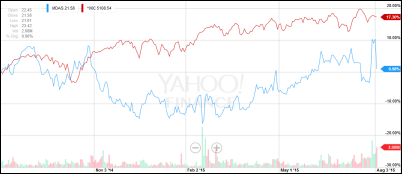
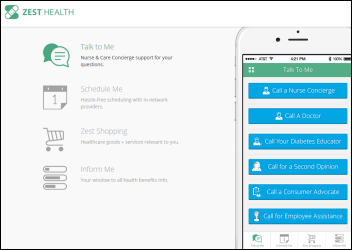








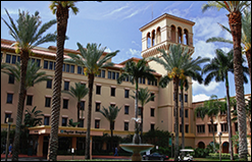






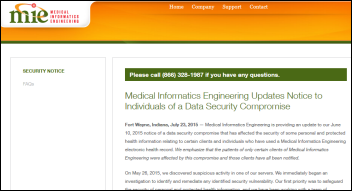

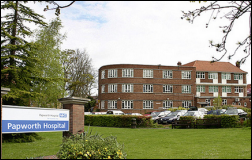






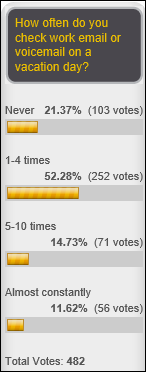





















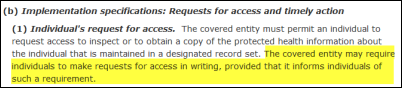


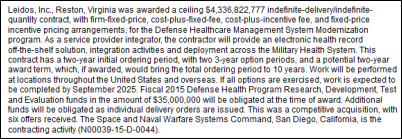


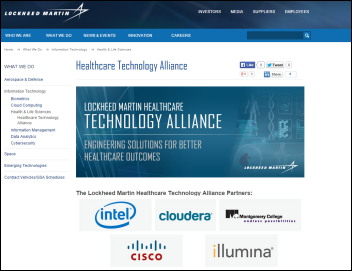







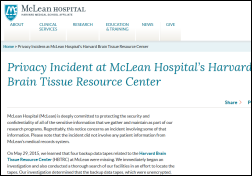
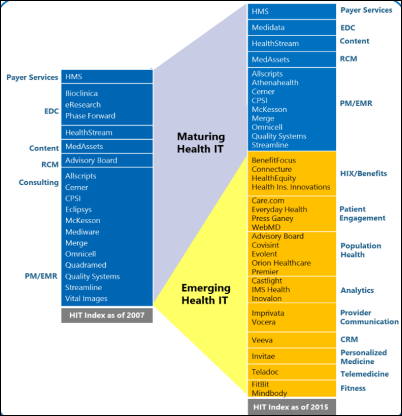


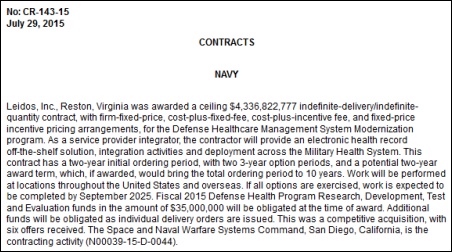
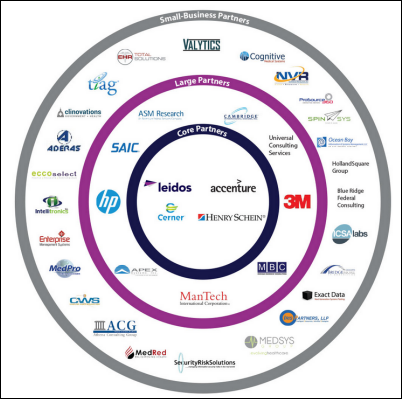




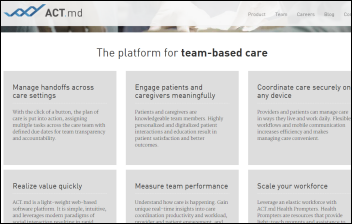
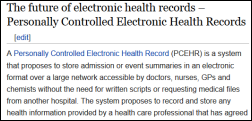
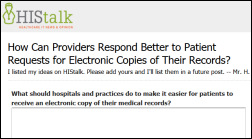
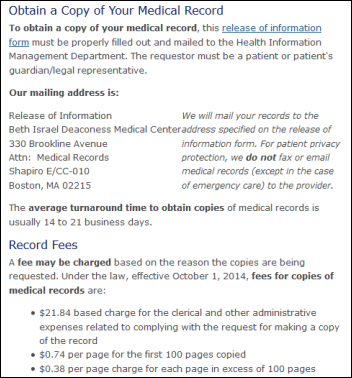




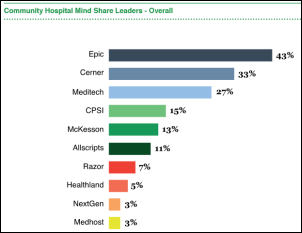

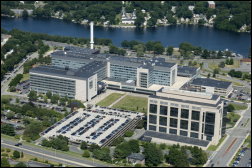





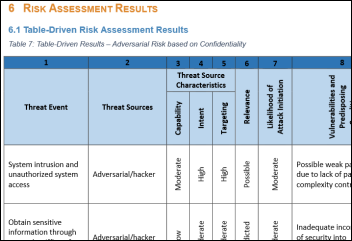



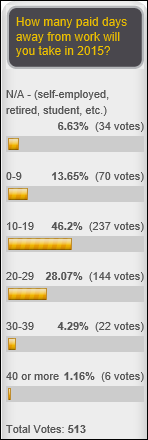

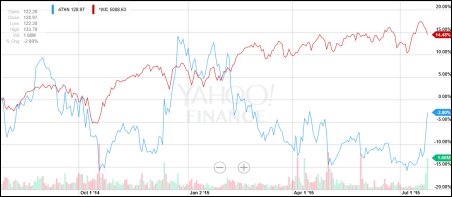



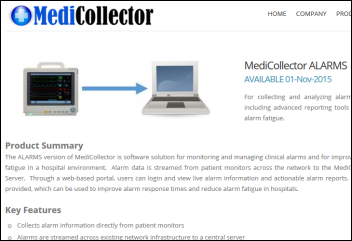




Re: Deliberately Faked Academic Papers in Nature See, this doesn't surprise me at all. Of course AI quotes these bogus…