HIStalk Interviews Matt Patterson, MD, President, AirStrip

March 28, 2016 Interviews 2 Comments

Matt Patterson, MD is president of AirStrip of San Antonio, TX.

image

Tell me about yourself and the company.

I’m a physician by training, with a background in head and neck surgery and as a Navy physician. I spent some time with McKinsey before joining AirStrip.

I’ve been here for four years. I was with the company during the transition from making the first FDA-cleared mobile applications for waveform-based data into a full platform called AirStrip One, which can accommodate essentially any clinical data source in a single workflow to enable a variety of care collaboration and innovation workflows.

Mobile health was a specialty niche when AirStrip was started, but now it’s a given that any software has to work well for mobile users. How is the industry is doing in that regard?

What we’ve seen is the continuation of a pattern that was around when we first started. There certainly is a push to provide a mobile extension of health IT stacks. What we are ahead on still to this day is the ability to aggregate across multiple, disparate sources of data and to stream that data to analytics, third-party, and decision support platforms, in addition to providing just the essential elements that are important for decision-making in a clinical workflow. I think that is quite distinct. We’re ahead on that, but in general, most people recognize that having a mobile extension of the software stack is a valuable addition to healthcare.

Is the Apple-like ecosystem of third-party healthcare apps real or is it just wishful thinking?

It’s more the latter. As a physician myself, I’m always skeptical about having to have too many applications to go to. It’s akin to having too many pagers on my belt walking around the hospital. Most clinicians are not necessarily looking to segment their workflow experience if they can avoid it.

That said, no single vendor is going to be able to accomplish all the things that any one clinician needs to do at any given point. You’re always going to have a number of different applications out there that are each trying to satisfy certain elements of the clinical workflow. But the concept of having a clearinghouse or a hosted environment that somehow corrals all these beasts is missing the one key point, which is, how do all of these things work together? It’s the interoperability piece that the industry is way behind on. 

We have dedicated our entire mission and product evolution around solving for the interoperability. I’m OK with whatever it takes to address the clinical workflow. Different vendors and different applications can lift different parts, but it needs to feel like a singular, unified, coherent, and elegant workflow for the clinician. Otherwise, you’ll never get adoption.

What steps are needed to open up EHRs to those third-party applications?

The most powerful lever in my mind is to make the ask with a powerful health system client at your side. What’s become very, very clear is that, despite the numerous promises of these large EMR vendors that either they can do what the health system wants them to do or that another smaller innovative company is already doing today, most health systems are waking up and realizing, "You’ve been telling me this answer for 10 years and you still haven’t delivered on the things that are already out there in the marketplace that more nimble companies are accommodating.” 

The time is now to open up complete, bi-directional APIs to allow these innovative firms to plug and play nicely with the EMR environment. That’s the most important thing. The reason I focus on that is that the typical answer that you’ll hear stems around technology standards, policy, government, and all that type of stuff. I can tell you right now the tools exist today to do complete, effective, bi-directional, Web-based APIs to all the major EMR vendors in the market.

I applaud things like FHIR and other standards. They’re a step in the right direction, but they are years and years away. The tools already exist. It’s simply the blocking that is getting in the way. The data blocking can manifest in not only technical ways. It can manifest in political ways, and it can manifest in financial ways. We’ve experienced all three.

How do you approach that issue? Are you all set in dealing with Cerner and Epic, or is it a battle every time you need to connect a new client?

It gets easier and easier. The work that we’re doing today, I never would have even imagined possible three years ago. It is absolutely moving in the right direction, albeit it much more slowly than we would like to see. 

What we have done is always use our clients as the voice, because it is the client’s voice. It’s not just AirStrip that’s out there asking for this and looking to monetize it. This is really about our clients coming to us trying to solve the problems that they have and AirStrip having a willingness to innovate through providing interoperability and workflow solutions.

We have developed very, very important strategic relationships with large IDNs across the spectrum of large healthcare IT vendors. Not just EMRs, but also on the monitoring side. We absolutely are side by side with our clients in the requests that we make, which are quite reasonable and are based on sound clinical and business cases for workflows that are in demand in the marketplace.

Are people distinguishing between interoperability as in sharing patient data among sites vs. snapping applications together within the same health system?

I don’t really see much of a distinction. Increasingly where I’ve seen the conversation turn is a patient-centered approach to interoperability. The answer is all of the above. The more that we take a more consumer and individual orientation towards data ownership and stewardship, that should be the North Star. All things should bow to that.

All efforts to monetize simple movement of data from Point A to Point B should be eliminated. The only thing that deserves monetization these days is adding value, creating workflows, and doing things with the data that are meaningful for patients.

If you take a patient- or consumer-centric view of the world, you recognize that there are challenges not only in connecting all the existing stacks within a particular health system together and making them work seamlessly, but it also includes situations like you describe where you have different facilities on different platforms and those need to communicate effectively as well.

What is the right level of FDA oversight for IT systems that have a biomedical component?

The FDA aligns themselves in the spirit of patient safety. That is appropriate, and that should be their mission and guiding force. It’s interesting when you get into things like what happened recently with the non-binding guidelines around interoperability, that the focus was on devices and how they communicate with the outside world. Interoperability was the focus. Somehow, that came under the realm of patient safety. I have a lot of things that I could go into on that topic, but I’ll pause there and not do that now.

Sticking with the question, there just needs to be a certain degree of risk that you cross, regardless of what you do from an application standpoint or device standpoint, where the FDA should regulate and should provide guidelines in the interest of public safety. I think that that’s appropriate. Most importantly is just to be very clear about what those situations are and then to make it as efficient as possible for innovative companies to submit their applications when appropriate and get approval.

Do you think the government climate supports innovation in healthcare IT?

I have been incredibly encouraged by what I’ve seen come out of the Capitol recently. In particular, I’ve been very encouraged with the work being done by Senator Alexander and the HELP Committee. We were referenced in a recent letter to Secretary Burwell by several members of the House of Representatives in an urgent plea to address interoperability and data blocking. There’s a lot of very, very positive momentum towards opening things up and allowing innovation to take place.

That’s another reason why just the timing of the release of the FDA’s non-binding guidelines recently on interoperability is very, very interesting to me. In some ways, I see it as a potential foil on the good conversations that have been taking place. I certainly don’t fault the FDA for wanting to address patient safety. I think that’s what they should do. But the timing is interesting. Similar to the way that HIPAA and Stark have been misused and misunderstood and that has stifled innovation, I could see almost safety blocking – that’s the only way I can put it — stifling innovation. “In the name of safety” type of thing, that the recent guidelines might have an unintended effect.

How has your experience as a Navy surgeon shaped your career?

Gosh, it did in so many different ways. I was fortunate enough to be an undersea medical officer while I was in the Navy. That allowed me to work with the fast-attack submarine group. It also allowed me to work with the Special Forces. I was the medical director at the Naval Special Warfare Center, which is the first training area for the Navy SEALs.

Navy medicine shaped my career in a few important ways. One, the concept of a flat team structure is prominent, particularly in the Special Forces community. I know that may come as a surprise when thinking of the Navy as a hierarchical place, but it’s surprisingly flat when it needs to be. There’s just an incredible esprit de corps and sense of teamwork that can happen in crisis. That gave me quite a bit of perspective on what’s important and what’s an emergency. You learn relative degrees of emergency very, very quickly in Navy medicine.

A second big thing is that it was my first introduction to telemedicine. It’s uncanny that I find myself in the situation I’m in right now, because AirStrip is obviously used a lot in various telehealth scenarios. My very first experience with telehealth was working up patients preoperatively remotely, even using scopes and some pretty advanced technologies, and never laying hands on the patient. The very next time seeing that patient was when they showed up to get an operation. Being that confident in my pre-surgical exam remotely had a profound effect on what I envisioned could be possible with application technology in healthcare. Both of those things I carry with me to this day.

Do you have any final thoughts?

We are at an important turning point when it comes to interoperability and innovation in healthcare. It’s going to take more than government regulations in order for us to get to where we need to be in the marketplace. I’m very, very encouraged that interoperability is a prominent part of the conversation coming out of HHS and coming out of the Senate and the House of Representatives. I’m very encouraged by work being done by interested parties like the Center for Medical Interoperability, because I think that what you’re seeing now is a much more patient-centered approach to the problem. When we focus on the patient, when we focus on the individual consumer, we cannot be wrong.

I envision a world very soon where consumers will essentially be allowed to hit the virtual “record” button on their medical data any time that they want to. Then have the ability on the fly, using plain English opt-in and opt-out types of scenarios and technology, to subscribe their data to anyone they want — vendor, health system, payer, provider, innovative company, you name it. Not only for their own benefit, but for the benefit of society at large. The only way we get to that place is by allowing wide-open interoperability among all of the technology players out there. We’re privileged to be a part of that ecosystem.
Dell Sells Its IT Services Business

March 28, 2016 News Comments Off on Dell Sells Its IT Services Business

image

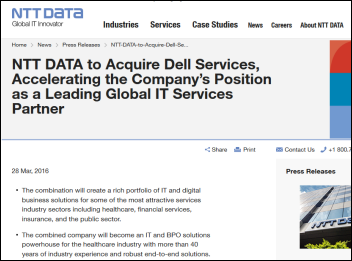
Japan’s NTT Data will buy Dell’s IT services business, the former Perot Systems, for $3.05 billion. Dell is selling the business, which it acquired for $3.9 billion in 2009, to raise money to finance its $60 billion acquisition of storage vendor EMC.

Monday Morning Update 3/28/16

March 27, 2016 News 7 Comments

Top News

image

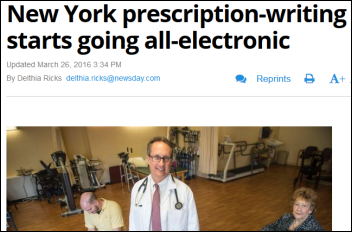
New York’s mandatory e-prescribing mandate took effect Sunday despite a questionable level of prescriber readiness even after the one-year postponement a year ago. Allowed exceptions are drug items that require pharmacy compounding, parenteral drugs, items requiring lengthy patient instructions, or non-patient specific prescriptions. Paper or call-in prescriptions can be issued upon patient request or given technology failure, which then requires the prescriber to report the prescription to the state’s Department of Health, but the department has not implemented such reporting technology and suggests that prescribers just note it in the EHR instead.


Reader Comments

image

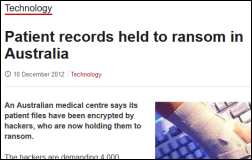
From No Flipping: “Re: ransomware. I searched HIStalk and there was an example from 2012, so it’s not a new problem.” I wrote about a clinic in Australia whose files were encrypted by ransomware in December 2012. I don’t recall hearing if the clinic paid the demanded $4,000 ransom, but I expect it did. Meanwhile, a ridiculously useless Wall Street Journal article manages to ask the wrong questions (or perhaps fails to understand the answers) of those it interviewed in claiming to share healthcare security best practices to prevent ransomware. The pearls of wisdom provided are: (a) assume malware will get through; (b) perform backups; (c) apply patches; and (d) educate employees. CIOs who learn anything from this breezy waste of time should probably just go ahead and quit or at least attend our webinar described below.  

From The_Epic_Guy: “Re: Epic. The company is having their implementation consultants put their Starbucks coffee into non-labeled containers to avoid reminding customers that its inexperienced people are costing a small fortune.” Unverified. I would have expected contracts to specify a per diem rate rather than individual charges so that Starbucks vs. McDonald’s coffee wouldn’t matter, but maybe that’s not the case.

image

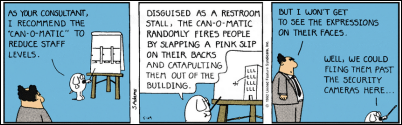
From MCK Auto Pilot: “Re: McKesson. This site has interesting layoff rumors. All are unsubstantiated from employees who have been laid off, but in every exaggeration there is a kernel of truth.” Comments from claimed current or former McKesson employees complain about clueless upper management, the failed Better Health 2020 initiative, the cold manner in which employees were informed that their services would no longer be required, offshoring to India, and the likelihood that MCK will sell off what’s left of its IT business and whether anyone would want to buy it.

From Nasty Parts: “Re: Greenway layoffs. Four sales VPS have been downsized. Looks like the company is moving into a ‘protect the install base’ mode of operation.” Unverified. The four named VPs still list Greenway as their employer on LinkedIn, but most people don’t rush there first after they’ve been forcibly re-workforced.


HIStalk Announcements and Requests

image

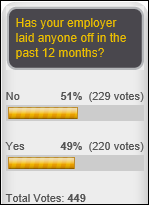
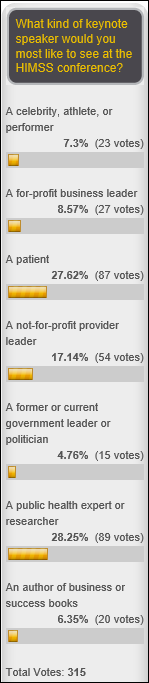
Half of poll respondents work for a company that has laid people off in the past 12 months. New poll to your right or here: do you personally admire and respect the highest-ranking executive of your employer? I’ve divided the answers out into not-for-profit and for-profit choices to see if that makes a difference (which I should have done on the previous poll, too). Click the Comments link on the poll after voting to explain.

image

FHIR Family donated $500 to my DonorsChoose project, explaining, “HL7 has a big deadline on Monday, March 28 and I am in awe of all the work Grahame Grieve does in the background. This donation is in his name.” Through the magic of matching funds, the donation fully satisfied these teacher grant requests:

  • An iPad and case for Ms. Markussen’s first grade class in Dallas, TX
  • A laptop and document camera for Mrs. Lark’s middle school class in Brooklyn, NY
  • Math games for Ms. Burkett’s elementary school class in Independence, MO

image image

Mrs. Hale from Indiana says her third graders were so excited about the kid-friendly biographies we provided in funding her DonorsChoose grant request that they finish their other work early so they can work on biography projects.

image image

Also checking in is Mrs. Ortego, who says the headphones we provided for her Louisiana special needs elementary school class not only allow students to work without distraction, but also, “One of my greatest joys is that I have a hearing impaired student and he is able to put the headphones over his ears with no feedback from his hearing aids. This is the most amazing thing to experience. There is no frustration for this student.”


Last Week’s Most Interesting News

  • Allscripts and a private equity firm form a joint venture to acquire post-acute care EHR vendor Netsmart for $950 million.
  • The CEO of NYC Health + Hospitals denies rumors that he will be fired if the organization doesn’t go live on Epic on April 1 and dismisses reports by the former CMIO of one of its hospitals that a lack of readiness will endanger patients.
  • Three more hospitals report ransomware attacks.
  • AHIMA petitions the White House to allow HHS to work on a national patient identifier.
  • Apple announces CareKit, which will allow developers to create person health apps for the iPhone.

Webinars

April 1 (Friday) 1:00 ET. “rise of the small-first-letter vendors … and the race to integrate HIS & MD systems.” Sponsored by HIStalk. Presenters: Frank L. Poggio, president and CEO, The Kelzon Group; Vince Ciotti, principal, HIS Professionals. Vince and Frank are back with their brutally honest (and often humorous) opinions about the rise of the small-first-letter vendors. Athenahealth and eClinicalWorks are following a growing trend toward real integration between hospital and physician systems, but this is not a new phenomenon. What have we learned from these same efforts over the last 30 years? What are the implications for hospital and ambulatory clients? What can clients expect based on past experience?

April 8 (Friday) 1:00 ET. “Ransomware in Healthcare: Tactics, Techniques, and Response.” Sponsored by HIStalk. Presenter: John Gomez, CEO, Sensato. Ransomware continues to be an effective attack against healthcare infrastructure, with the clear ability to disrupt operations and impact patient care. This webinar will provide an inside look at how attackers use ransomware; why it so effective; and recommendations for mitigation.

Contact Lorre for webinar services. Past webinars are on our HIStalk webinars YouTube channel.

Here’s the recording of last week’s webinar, “Six Communication Best Practices for Reducing Readmissions and Capturing TCM Revenue.”


Sales

Dell Services announces recent big contracts that Dubai Health Authority and BCBS of Rhode Island.


Government and Politics

The president of the New York State Medical Society politely asks for two changes to the just-implemented requirement that all state prescriptions be issued electronically rather than on paper or by telephone. He would like to see an exemption for those doctors who write fewer than 25 prescriptions per year and a reduction in documentation requirements when technical issues require issuing a paper prescription. Both seem reasonable to me.


Privacy and Security

image

Hackers steal and offer for sale the information of 1.5 million customers of Verizon Enterprise Solutions, whose services (including an extensive set of security offerings) are used by 99 percent of Fortune 500 companies.


Other

Epic removes regular and diet soda from its vending machines and cafeterias to promote health, so bring your own supply from a local convenience store if you’re a Diet Coke fan taking classes in Verona.

Another medical transport helicopter goes down, killing all four occupants (including the patient) in Alabama. The for-profit company’s site boasts that it has a “proven clinical tract record.”

image

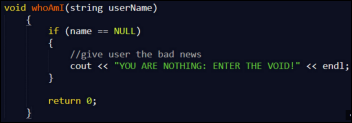
An interesting article describes the online problems experienced by people with unusual names: those who go by a single name, those with very long or short names that don’t pass field edits, and most interesting to programmers, people whose last name is Null. These folks often have to resort to telephone calls or snail mail to do tasks everybody else can accomplish online.


Sponsor Updates

  • Forward Health Group shares the wall-sized, hand-drawn graphics created in its UnBooth at the HIMSS conference, including population health management questions posed by visitors. 
  • EClinicalWorks releases a podcast recapping EClinicalWorks Day.
  • Extension Healthcare and FormFast will exhibit at the AONE Annual Conference March 30-April 2 in Fort Worth, TX.
  • The Upstate Business Journal recognizes Glytec as an Upstate biotech player.
  • The Boston Globe features Healthwise CMO Adam Husney, MD in an article on how perks from pharmaceutical companies influence prescribing medicine.
  • Cumberland Consulting Group expands its business processing outsourcing services to pharma in a partnership with revenue acceleration software vendor Revitas.
  • Recondo Technology will exhibit at the HFMA Texas State Conference on March 29 in Dallas.
  • Experian Health will exhibit at NAACOs March 28-30 in Baltimore.
  • PatientSafe Solutions and PerfectServe will exhibit at the AONE Annual Meeting March 30-April 2 in Fort Worth, TX.
  • The Doctor Freedom Podcast features PatientPay founder and CEO Tom Furr.
  • Point-of-Care Partners ECare Management Practice Lead Michael Solomon discusses optimizing EHRs.
  • Streamline Health will exhibit at the 2016 WV HIMA Annual Convention March 30-April 1 in White Sulphur Springs, WV.
  • T-System awards its Client Excellence Award to Dosher Memorial Hospital (NC) for excellence in sustainable outcomes.
  • TeleTracking, Versus Technology, and Zynx Health will exhibit at the AONE 2016 annual conference March 30-April 2 in Fort Worth, TX.
  • TeraMedica will host a healthcare IT symposium April 7 in San Francisco.
  • Huron Consulting Group releases 2016 Healthcare CEO Forum report.

Blog Posts


Contacts

Mr. H, Lorre, Jennifer, Dr. Jayne, Lt. Dan.
More news: HIStalk Practice, HIStalk Connect.
Get HIStalk updates.
Send news or rumors.
Contact us.

125x125_2nd_Circle

News 3/25/16

March 24, 2016 News 1 Comment

Top News

image

Allscripts and private equity firm GI Partners form a joint venture to acquire human services and post-acute care EHR vendor Netsmart, which will be combined with the homecare software business of Allscripts. Allscripts also contributed $70 million to the joint venture, which will pay $950 million for Netsmart. The company’s name and management team will remain in place. Allscripts says the JV will have an annualized revenue of $250 million and operating income of $60 million.

Netsmart has gone through several name changes, ownership changes, and acquisitions in its 20-year direct history and earlier connections going back to 1968. It went public in 1996, sold itself to private equity buyers for $115 million in 2006, and then was then sold for an unspecified price in 2010 to another private equity firm, Genstar Capital, which is rumored to be making 4.4 times its investment in the newly announced sale.


Reader Comments

image

From PM_From_Haities: “Re: Allscripts paying $70 million for a joint venture. It’s hard to imagine Allscripts giving up assets with out corresponding liabilities (debt). I’m looking forward to their audited financial results since they might require certain items to be disclosed, such as whether one customer represents more than 10 percent of revenue. The other item of interest with audited results is mark-to-market accounting of the Allscripts investment in NantHealth, which delayed its IPO due to unfavorable market conditions. Allscripts’ debt covenants contain asset-to-liability requirements and an unanticipated decline in asset value could seriously impact their delicate financial picture. The bright side of this JV is that Allscripts may be allowing a product that would languish with its other zombie EHRs to blossom into something good for home health.” Unverified. MDRX shares didn’t react much following the announcement, meandering down a bit Wednesday and then down a bit more Thursday.

image

From Green about the Gills: “Re: Greenway. Starting a layoff cycle this week. Right-sizing post the Vitera purchase and the EHR land grab of the MU era.” Unverified. However, I do see the company has “rebranded” itself.

From The PACS Designer: “The ICD-10-CM Clinical Modifications has a code J62 for silica related disease, and under this classification falls the longest word in the English dictionary. Silicosis is a form of occupational lung disease and within this category is the 45 letter word ‘Pneumonoultramicroscopicsilicovolcanoconiosis.’”


HIStalk Announcements and Requests

image

Mrs. Pryor from Oklahoma says her kindergartners love the programmable robots we provided in funding her DonorsChoose grant request, adding that they are a “huge motivator” that she has integrated into her reading and math curriculum.

image

Also checking in is Mr. Jewell of Arkansas, who says his sixth graders have gotten a lot more excited about engineering after working with the Lego Mindstorm kits we provided. He has conducted two enrichment classes that involved building and programming the robots and now there’s a waitlist for the next class.

This week on HIStalk Practice: Signallamp Health adds CCM jobs in Scranton. Mend wins big at SXSW. PCAST advocates for the advancement of telemedicine. Wearables earn dubious accolades for their inconsistencies. Telerehabilitation startup RespondWell celebrates a $2 million funding round. Night Nurse COO Stuart Pologe offers tips on balancing HIPAA compliance with efficiency across EHRs and paper records. GAO brings Healthcare.gov cyberattacks to light on the ACA’s sixth anniversary. OneCare Vermont selects care management software from Care Navigator. The US Oncology Network’s David Fryefield, MD lays out the strategy behind empowering value-based technologies.


Webinars

April 1 (Friday) 1:00 ET. “rise of the small-first-letter vendors … and the race to integrate HIS & MD systems.” Sponsored by HIStalk. Presenters: Frank L. Poggio, president and CEO, The Kelzon Group; Vince Ciotti, principal, HIS Professionals. Vince and Frank are back with their brutally honest (and often humorous) opinions about the rise of the small-first-letter vendors. Athenahealth and eClinicalWorks are following a growing trend toward real integration between hospital and physician systems, but this is not a new phenomenon. What have we learned from these same efforts over the last 30 years? What are the implications for hospital and ambulatory clients? What can clients expect based on past experience?

Contact Lorre for webinar services or for one final chance at her post-HIMSS discounts. Past webinars are on our HIStalk webinars YouTube channel.


Sales

Statewide ACO OneCare Vermont chooses Care Navigator’s care management software.

Thomas Health System (WV) will implement Meditech 6.1, replacing Cerner/Siemens Soarian and Meditech Magic.

image

Palomar Health (CA) chooses Ascend Software for accounts payable electronic imaging automation.


People

image

Lane Regional Medical Center (LA) hires Paul Murphy (Geocent) as CIO.


Announcements and Implementations

DrFirst publishes “The Evolving EPCS Landscape 2016: A Prescription for Stopping Opioid Abuse,” which finds that most pharmacies can accept electronic prescriptions for controlled substances while only 5.8 percent of prescribers are similarly EPCS-capable.

image

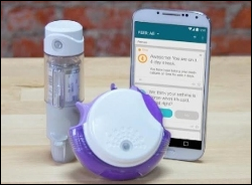
Boehringer Ingelheim Pharmaceuticals will offer users of its asthma inhalers the chance to sign up for health system studies to determine the effectiveness of Propeller’s usage tracking inhaler sensors.


Privacy and Security

Rep. Ted Lieu (D-CA) may propose a modification to the HITECH act that would require healthcare organizations to notify patients if they’re hit by ransomware.

image

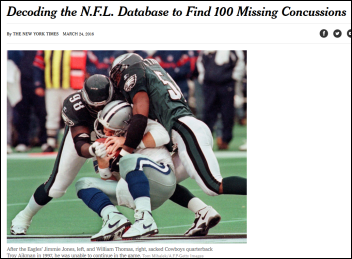
The New York Times, explaining how it “decoded the NFL database” to debunk the National Football League’s concussion studies, admits that it was able to re-identify many of the 887 players that were listed only by an NFL-assigned code by reviewing the concussion date, whether the game was home or away, and whether it was being played on natural or artificial grass. The paper seems pretty pleased with itself for working around the method used to protect the privacy of the players.

Walmart confirms that a programming error caused the prescription records of 5,000 of its online pharmacy customers to be displayed to the wrong user.

image

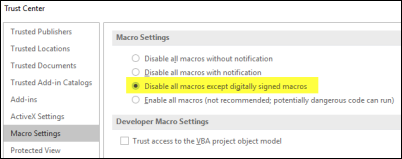
Do this now to help prevent having your PC infected with the Locky ransomware: allow only digitally signed macros to run. Instructions are here.

The Ohio Supreme Court rules that patients are entitled to receive all information stored about them by providers, not just those data elements the provider intentionally filed in the medical record. A hospital that was involved in a wrongful death lawsuit unsuccessfully argued that it was not required to release the deceased patient’s EKG strips because they had been stored by its risk management department.


Technology

image

Google registers two healthcare-related images that may or may not have something to do with new medical apps.


Other

image

NYC Health + Hospitals President and CEO Ram Raju, MD says the organization’s April 1 Epic go-live date is flexible and he won’t be fired for missing the date if the system isn’t ready. He says former Elmhurst CMIO Charles Perry, MD, MBA, who resigned in comparing the upcoming go-live with the Challenger disaster, took a parting shot as a “disgruntled” employee. Raju says previous CIO Bert Robles left shortly after the Epic project started because, “I didn’t want someone learning on the job,” leading him hire Ed Marx, who was recommended by Epic CEO Judy Faulkner. NY Health + Hospitals, which is projecting a $2 billion deficit, is rumored to be spending $1.4 billion on the Epic project.

image

Lancaster General Health (PA) investigates a 12-hour EHR outage of unspecified origin.


Sponsor Updates

  • Medicity CEO Nancy Ham writes for the HFMA blog on “Determining the ROI of Clinical Care Technology.”
  • A record number of providers, payers, and partners gathered at the InstaMed 2016 User Conference.
  • Live Process will exhibit at the AONE Annual Conference March 30-April 2 in Fort Worth, TX.
  • Navicure will exhibit at the Office Practicum User Conference March 31-April 2 in Atlantic City, NJ.
  • Obix Perinatal Data System will exhibit at the Sanford Health Perinatal, Neonatal, and Women’s Health Conference March 31 in Sioux Falls, SD.
  • The Irish Times profiles Oneview Healthcare founder Mark McCloskey.

Blog Posts


Contacts

Mr. H, Lorre, Jennifer, Dr. Jayne, Lt. Dan.
More news: HIStalk Practice, HIStalk Connect.
Get HIStalk updates.
Send news or rumors.
Contact us.

125x125_2nd_Circle

EPtalk by Dr. Jayne 3/24/16

March 24, 2016 Dr. Jayne 4 Comments

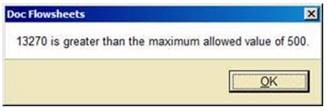
Several readers responded to my recent request for information on EHR vital signs data entry alerts. Epic has not only color changes that indicate an out-of-range value, but the possibility of a hard alert that forces the user to address the value. I got a chuckle out of the warning for our erroneous pulse of “13270,” which read as follows:

clip_image002

I’m fairly certain that a pulse of 500 is incompatible with life, which makes me wonder if this is a vendor value or something the customer configured.

clip_image004

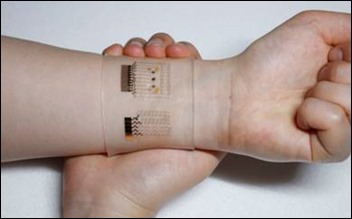
This week has been a veritable news roundup of interesting articles and newsy tidbits. Popular Science featured a wearable patch that can not only monitor blood glucose, but also deliver medication. Using the pH of sweat along with temperature changes that align with a high blood glucose level, when certain conditions are reached, a micro heater in the patch dissolves a layer of coating, releasing the drug metformin via microneedles. Commentary on the recent publication notes that it’s not clear whether the device can last a full 24 hours and whether it will withstand exercise and increased sweat. Its ability to deliver human-scaled drug doses is also an issue. From the physician standpoint, I’m not sure about metformin as the choice of drug due to its mechanism of action, but it’s certainly an interesting technology to think about.

clip_image006

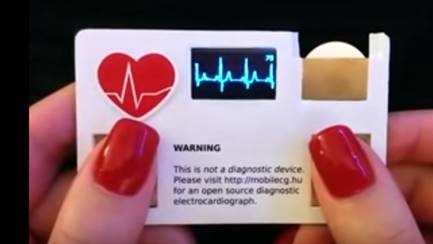
Engadget reviewed a business card with built-in electrocardiograph capability from MobilECG. The card is open source and schematics are posted online, so I’m thinking perhaps my nephews would like to try their hand at building one.

Content vendor Wolters Kluwer has made its Zika Virus order sets available for download. The World Health Organization has declared it a global threat and there have already been nearly 200 cases reported in the United States. The order sets include one for infants to assess for congenital infection, as well as those for emergency department and outpatient settings. Other freely available order sets include Ebola evaluation, ischemic stroke, low back pain, myocardial infarction, pneumonia, and more.

Even though I’m behind the scenes at HIStalk, I still rely on it for healthcare IT news. I was glad to see mention of the AHIMA petition in support of a voluntary unique patient safety identifier program. Being in the healthcare trenches, I’m more worried about incorrect data matching than I am about people misusing my data, so it’s a risk I’m willing to take. It’s not the complete answer, but I can’t help but think that it would be better than what we have.

clip_image007

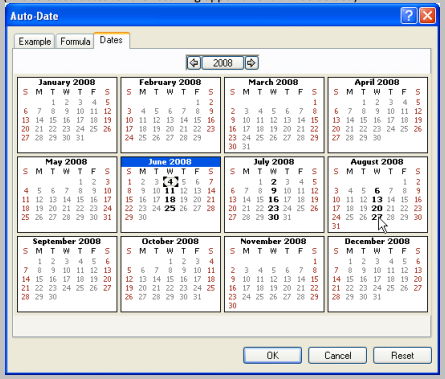
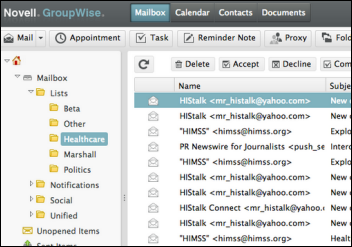
I also appreciated Mr. H’s mention of the retirement of Groupwise at BJC. I remember using Groupwise fondly – my favorite feature for scheduling recurring appointments, when you could just pick dates off the calendar rather than having to follow a straight formula. It was an absolute necessity when I had to schedule physician advisory board meetings – we alternated Tuesdays and Thursdays so that conflicts would be shared throughout the group. Also great for meetings that occurred the first and third Wednesday, etc. Much easier than sending multiple appointment series. Users can’t convince Microsoft to get rid of the unholy “Clutter” folder in Outlook, so it’s doubtful Microsoft would ever consider this type of enhancement.

HIStalk is also a place where readers can ask for feedback and advice. One emailed me asking if I knew of any companies that might have a “lab” of EHR vendors to connect to. He’s trying to test some integrations but frustrated dealing with individual vendors. If anyone knows of that kind of arrangement, leave a comment to pass along the information.

I mentioned in this week’s Curbside Consult that our practice is seeing an increase in volume that we’re at least partially attributing to the shift towards high-deductible health coverage. Price transparency is one of our talking points. Reader Intrigued asks, “For those of us who missed it or are search challenged, where did you discuss this before? Definitely interested in learning more about your experience.”

I’ve mentioned it a couple of times in passing over the last few months. As for data, we have referral tracking and patient satisfaction survey data which shows the trend. We can capture who has a high-deductible plan from our practice management system and can see who chose us for “cost” in post-visit surveys. We also can see trends on the number of patients who visit us because they can’t access their PCP or don’t have a PCP. There are definitely multiple drivers fueling our growth, but I continue to be impressed by the number of patients who are paying attention to cost.

A reader asked about my recent mention that Institute for Health Improvement courses have been approved for ABPM LLSA credit. I clarified with my source that the approved courses include: Quality Improvement Curriculum, Graduate Medical Education, and the Patient Safety Curriculum. Too bad I already took my mandatory Patient Safety course through the National Patient Safety Foundation, because it sure would have been nice to also get the LLSA credit.

I enjoy reading scholarly articles, although some are best left for bedtime. “Do You Smile with Your Nose? Stylistic Variation in Twitter Emoticons” was perfect for a mid-day break, however. Analyzing the 28 most used emoticons in American English tweets, it demonstrates “that the variants correspond to different types of users, tweeting with different vocabularies.” I shared it with a friend who edits journals for a living and she responded back with this gem, “20 PhD Students Dumb Down Their Thesis.” I’m fairly certain that #5 might have been submitted by one of my medical school classmates.

Chocolate cake as the new breakfast of champions? Thanks to Dr. Lyle Berkowitz for sharing this article summarizing research on the benefits of chocolate. Morning chocolate consumption has been found to have positive influences on weight loss and improved performance on cognitive function. I think I’m going to make chocolate part of my complete EHR implementation plan from here on out.

What’s your favorite vehicle for chocolate consumption? Email me.

Email Dr. Jayne.

Readers Write: Time for Providers to Lead the Price Transparency Revolution

March 23, 2016 Readers Write 5 Comments

Time for Providers to Lead the Price Transparency Revolution
By Jay Deady

image

With ICD-10 in the rear-view mirror, providers now face a new challenge – answering the public and media call for consumer price transparency. High-deductible plans now cover nearly a quarter of those Americans with commercial insurance, raising the ante on patient financial responsibility. Yet large numbers of patients remain confused about how much they will owe for hospital services—a full 36 percent, according to one survey.

This problem, unheard of in other consumer industries, not only endangers patient satisfaction scores, but threatens to increase the bad debt load of organizations already struggling with severely low margins.

While insurance companies and employers have deployed some pricing tools, they have done a poor job of accurately representing multiple providers’ fees within a geographic area. New technologies are available from a handful of companies that let providers take the price transparency bull by the horns and lead themselves.

These technologies transcend the usual approach of mere compliance with a state’s price transparency laws. Posting a list of charges on a provider’s website may satisfy the letter of the law, but it fails to give consumers an accurate picture of what they will owe for services. Knowing this, providers have struggled to come up with an alternative that does not reveal proprietary information to their competitors. Most have concluded there is no way for them to easily accomplish this and they refer questions to patients’ insurance companies.

But it turns out the path to truly efficient, accurate, and accessible price transparency is one that healthcare consumers can take themselves—directly from the provider’s website.

Healthcare consumers want – and deserve – an accurate understanding of what they will owe for services before they are rendered. The operative word here is “accurate”—as in an estimate based on the consumer’s current levels of insurance coverage. Or, in the case of a self-pay patient, an estimate based on the provider’s discounted fees for consumers that pay fully out of pocket.

Either way, with self-service pricing, healthcare consumers generate the estimates themselves, typically from an online calculator on the provider’s website. The process is quick and hassle-free. A consumer simply inputs their name, insurance plan number, and perhaps two or three more data elements. Within 10 to 45 seconds, a complete and accurate estimate appears, giving consumers immediate, line-item insight into what they will owe.

The process is powered by rules-based engines that automatically query, retrieve, and combine data from payer portals with the hospital’s charge master data and payer contracts. Analytics plays a critical role in assuring the estimate is accurate, including analysis of previously adjudicated claims to identify variances.

Such a tool neatly solves one of the most persistent challenges with implementing price transparency: the pitfalls of making proprietary financial information public. As a provider-facing solution, and because patient-unique information needs to be entered to generate an estimate, not just anyone can use the calculators. This is vastly preferable to putting a list of total charges or paid amounts out there for all competitors to see, which neither reflects negotiated rates with payers or the patient’s accurate out-of-pocket costs.

At the same time, self-service price calculators appeal to today’s information-driven patients and nicely align with how they already seek pricing on other purchases, from airfare to mortgages.

One of the most promising advantages of a self-service price calculator is its potential to engage consumers in multiple ways. After generating a price estimate, for example, the calculator could prompt high-deductible and self-pay consumers to view payment plan options. It could even engage those patients with concerns about their ability to pay and schedule time with a financial counselor. Realistically, we can only expect such concerns to grow along with the increasing number of high-deductible health plans. Since these plans were introduced in 2006, they have increased from 4 percent to a whopping 24 percent.

A deductible payment and co-insurance spread out over a year, or whatever the time span the provider and patient agree on, is clearly more manageable than a lump sum payment. Armed with clear, accurate information about how much they will pay—and how—healthcare consumers can better plan for paying their medical bills. This in turn will help reduce a hospital’s bad debt or charity write-offs.

Most important, patients who clearly understand their financial responsibility are more likely to schedule rather than delay urgently needed care. This reason, above all others, is why providers would be wise to take control of the price transparency issue now.

Jay Deady is CEO of Recondo of Greenwood Village, CO.

Advisory Panel: HIMSS conference, ransomware

March 23, 2016 Advisory Panel 1 Comment

What were the most interesting things you learned or saw at the HIMSS conference?

  • I met a number of CIOs from hospitals and health systems that either have already completed or were in the process of implementing Cerner financial and ambulatory products to result in integrated clinical and financial systems across inpatient and ambulatory. Cerner appears to continue gaining momentum and building some critical mass in their competition with Epic. VNA products continue to develop nicely. It appears there are good product options that are positioned to upset the traditional, monolithic PACS products.
  • I did not attend the HIMSS conference this year. If I attend the one in Orlando next year, it would be merely to see how off the wall they can be and how obscene and disconnected from the reality of practicing medicine today they have become. HIStalkapalooza may be the only reason for even flying there or paying for a hotel room since they are not even offering CMEs.
  • I was mostly impressed with the booths downstairs and in the side rooms. I saw some interesting applications of big data analytics finally starting to bloom. Check out Ayasdi (I have no relationship with their company). Generally it felt like there was a lot less energy and excitement than in previous years. I saw very few of my provider-side colleagues — mostly just vendors talking to other vendors (or consultants).
  • I focused on meeting with clinical decision support vendors and several that are building CDS data analytics tools, e.g., LogicStream, Stanson Health, MedCPU, Zynx, Appervita, Wolters Kluwer. Seems everyone is trying to figure out how to create some sort of dashboard that can help organizations manage their CDS alerting process. So many organizations have turned on way too many alerts and no one wants to, or perhaps is able to, make the decision to turn off excessive alerts that are overridden upwards of 95+ percent of the time. We really need to get this fixed soon or everyone will be ready to shoot their EHRs. LogicStream and Stanson Health’s data analytics platforms are both outstanding. Both appear to capture a significant amount of the data and display it in several different and useful ways. Stanson also offers their clients actual CDS content, whereas LogicStream is just the analytics platform. I heard several people asking Stanson to just sell them their analytics platform, but so far they only want to sell content and you get the platform to help you manage their content.
  • I spent the pre-conference day at the EHR-related patient safety symposium sponsored by AQIPS and ECRI among others. It was interesting to hear everyone talking about EHR-related safety issues and what we need to do to improve EHR safety. Seems that most orgs are still struggling with basic implementation and utilization and only the very mature orgs are worried about EHR-related safety. Heard a good talk by Joe Schneider on ways to avoid and manage EHR downtime that focused heavily on the ONC’s SAFER guides. If the ransomware problem doesn’t kill the EHRs, then I think EHR-related safety issues will become much more important over the next five years.
  • I didn’t go to HIMSS — it is less and less valuable each year. One long-time colleague went to his first this year and doesn’t plan to return.
  • Disappointing meeting — poor topics of education, too many vendors with chotchkeys, lack of enthusiasm for educational aspects and more towards having fun in Vegas was our perception.
  • I didn’t go to HIMSS and really haven’t heard anything (other than your posts, of course) about it from others, including vendors. I get the feeling that I didn’t miss a lot this year.
  • Population health is starting to fall into some discrete strategies, with products to match. I expect the diffuse "population health" to become several more discrete somethings like "narrow network strategy," "quality management (analytics and registries),” etc. Still looking for someone who really does it well. Interestingly, there were a lot of people talking about serious security, which I thought was excellent.  About dang time. Also, many organizations with a real cloud model getting traction with hospitals. When asked, it seems that the hospitals figure the data may well be safer with the vendor than with their own systems. Good way to get rid of liability is to not have the data stored on site?
  • The most interesting thing I saw was AccendoWave at the AT&T booth. In short, the equivalent of a thermometer for pain (based on EEG waves detected through a non-invasive headband). Even if you only differentiate drug seekers and malingerers from legitimate pain, that’s some great tech. I’m not sure what the most interesting thing I learned was. I got through about 19 hours of the education sessions this year, most of which had CME attached and were legitimate rather than vendor pitches, for which I was grateful.
  • I suppose the most entertaining things I learned might be worth mentioning: Halamka really emulates Steve Jobs and is almost as invested in brinksmanship as Eric Topol. Presenters from academic centers have an incredible degree of hubris and a pride in their “big data” volumes that is astounding. I guess “big” is a matter of perspective, but come on, folks, you’re talking about having data from one or a few facilities.
  • Themes this year seemed to be: usability, patient engagement, population health, and analytics/BI/big data. It was almost humorous how many different vendors were pitching solutions for “population health” and “value-based reimbursement” all doing different things and using different definitions.

Is your organization taking any steps related to ransomware?

  • This past year, we’ve had seven individual episodes of ransomware infections resulting in user and departmental network shares being encrypted. Luckily, we’ve been able to recover through simple data restores with little to no loss of data. These incidents, along with all of the other security news items in the industry, has our leadership more focused than ever on security. I still wonder if it’s enough. IS has been attempting to raise awareness amongst our leadership about the importance of developing a broader security program and I believe we make some relatively small progress every year. However, we still need more resources to move fast enough to keep up with the threats.
  • Reputation-based blocking of malicious links embedded in emails. Ransomware often infects the user’s computer after the user is tricked into clicking on a malicious link in a phish email. We subscribe to ProofPoint to analyze all email embedded links and attachments and then stop the malicious ones. This DOES NOT protect against malware downloaded via personal Web-based email, such as Hotmail, Gmail, Facebook, etc. We are considering blocking such services, but that is a tough row to hoe considering the culture.
  • Blocking of suspicious Web advertisers as much as we can. We plan to do more of this in the future. Malvertising is another way with which unsuspecting users browsing legitimate sites get hit with ransomware.
  • User education and awareness programs to make our community less susceptible to phishing emails. We plan to start using targeted awareness campaigns facilitated by products such as PhishMe in the future to increase user awareness. 
  • Things that we’re doing to address the infection payload: overlapping antivirus software. We have three different AVs on the email system, server environment, and desktop/laptop environment to hunt for and stop malware to include ransomware. Unfortunately, traditional AV is not super effective in detecting zero-day malware. Behavioral-based next generation AVs such as Cylance are not mature yet and are fantastically expensive, but we’re watching this space.
  • Robust backup process. We don’t pay ransom when we get hit with ransomware. We restore from backup. We use Crashplan to back up desktops and laptops.
  • Can we do more? Yes, but it would make our environment stricter. It’s a balancing act.
  • We are pretty much maintaining our patches, but we are as vulnerable to phishing as the next guy. You do what you can.
  • We are raising awareness from our board level down to the associates. The message to our board includes information about industry events and the outcome, what we are doing to minimize our risk, and how we would respond if infected with ransomware. Our associates are much more aware of the possible consequences of clicking bad email. We had an email phishing attack that resulted in an organizational-wide password expiration. This allowed for education of supervisors and managers as to why they were having them coordinate all associates changing their passwords. That level of awareness has already resulted in a more informed workforce and an increased number of reports of suspicious email.  We use real stories from other health systems to communicate our risk and it seems to work. Also, we have begun adding to our communication around events not only what IT will do to avoid a recurrence, but what our end users can do to help.  As far as technical prevention, we continue to strengthen our monitoring and blocking tools to protect our assets.
  • We’re constantly improving our security posture here, but it’s not like we’ve targeted ransomware specifically. However, we actually did see some within our organization. While running some scans from one of our newly deployed technologies, we found some ransomware on a handful of really old files (from 2002 and 2003). I’m not sure when it came in, no one was actually using those files so no one noticed the ransomware or inability to get to them. But, we just deleted them and restored them from backup and they open fine now. Not sure we needed them at all, but that’s another issue altogether.
  • We have a security vendor that provides us tools and accounting and as I understand it there have been layers of security improving in strength and coverage in IT. Also the organization is messaging to the physicians and employees how to avoid phishing and other types of targeted email based attacks.
  • We have a very aggressive information security and privacy protection strategy and always have. That said, when the bad guys really are out to get you (and they are out for all of healthcare), there is never enough precaution / preparation or defense-in-depth that’s deep enough. It’s a continuous race uphill. There are many key steps we are taking based on the latest round of evolving threats (ransomware being just one of many).
  • We are not taking any specific steps due to the recent activity. However, I have pressed our security team pretty hard on ensuring we are doing what we should be doing for our overall security program.  Our weaknesses were identified long before this latest publicized event, so we have a roadmap for all things infosec. We are covering this event in our next board meeting to remind them of our efforts and that even with a good program, we will always have risks.

    HIStalk Interviews Roger Davis, CEO, T-System

    March 23, 2016 Interviews Comments Off on HIStalk Interviews Roger Davis, CEO, T-System

    Roger Davis is president and CEO of T-System of Dallas, TX.

    image

    Tell me about yourself and the company.

    I’ve worked for over 30 years in healthcare in variable roles, including being on the provider side in academic, not-for-profit, and for-profit medicine. I’ve held a number of leadership roles companies including Accenture, GE Healthcare, Perot Systems, and Dell Computer, among others. I’ve spent a lot of time in healthcare in a lot roles on the provider side, the vendor side, and the consulting side.

    With regard to T-System, I’m very proud to be here. Our marketing people gave me a note indicating that we’ll have our twentieth birthday in June of this year, which is remarkable for a company like ours. We have domain expertise in emergency medicine and a longevity that exceeds anybody else in our market. I’m very proud to be here in this great organization.

    What are the biggest issues in the practice of emergency medicine in hospitals?

    Maybe just a slight correction in that regard. We certainly have a large component of our practice that supports hospital-based emergency departments, but it’s important to know that we are also a very strong market presence in the freestanding emergency department space, as well as in the urgent care space. We have a very broad application across that unscheduled care environment and significant footprints in each one of those.

    Having said that, there probably is a common set of challenges within that organization set, things that they share and challenges they face together. Perhaps the most important is the obligation to more actively deliver on outcomes in those healthcare spaces. Those clinical events are largely unscheduled and the outcomes can be challenging because they’re not quite sure what’s going to walk in the door at any given time. They have a unique clinical environment to deliver within. Associated with that are the challenges that the technology supporting it has to meet.

    Our business, our mission is to support that clinical delivery in that unique environment. You enhance those challenges with the things that everybody else in healthcare sees, like ICD-10, regulatory requirements, and additional burdens with regard to capacity for providers. All of those are challenges. All of those are issues which we bring a technology solution to in that urgent care ED space.

    What impact have your customers seen from the passage of the Affordable Care Act?

    Because of the evolution of this space, sometimes the metrics are a little bit challenged depending on who you’re talking to. What we think we see in the footprint in the folks that we serve is that the overall count of hospital-based emergency departments is probably slightly declining. Having said that, while there are fewer hospital-based emergency departments, the capacity or the volume of patients they’re seeing is increasing, based on the fact that there is an increasing funded base of patients now.

    They’re seeing more patients in fewer environments on the hospital-based ED side. That compression of capacity we think is forcing, or at least accelerating, these alternate care sites. They include freestanding emergency departments and urgent care centers. A lot of increase both in number and capacity in those two care settings, based in part on the pressures of the hospital-based EDs with regard to capacity.

    How are the needs of freestanding EDs and urgent care centers different from those of the hospital ED?

    This is one of those classic answers … if you’ve seen one, you’ve seen one. There are certainly some commonalities with regard to freestanding EDs and urgent care centers. There are multiple business models and some are unique.

    Having said that, the freestanding emergency departments, as I’m sure most of your readers know, are fully functional emergency environments, where they are able to deliver radiology and laboratory and complex care for life-threatening clinical scenarios.

    Urgent care centers more typically are a high-access, high-availability, more primary care sort of environment. They are characterized by the ability of a patient to simply walk in and receive care when they choose to and where they choose to. Urgent care centers may be the best manifestation of the scenario of converting to retail medicine that people have described historically. Urgent care centers really are that model. Freestanding EDs are a version of that model that is more focused on acute medicine and higher degrees, or higher orders, of severity.

    Your customers have a greater need than anyone to be able to quickly see a patient’s medical records from wherever they’ve been treated. Has their access to that information improved in the past few years as people focus more on interoperability?

    You’ve touched on one of the things that we spend most of our time thinking about, and certainly more recently with some of the announcements from CMS and the discussions at HIMSS — this notion of interoperability and its importance. The availability to access patient records historically is very important, certainly in our care setting as well as others.

    Maybe even more importantly, though, when we talk about interoperability from a T-System perspective, we’re more interested in what that looks like as a next version. In terms of real-time capabilities of moving data between applications in order to optimize both the provider’s capability as well as the patient outcomes, we’re really thinking more about the velocity of data movement as it supports true clinical interoperability at the care setting and for providers and patients.

    T-System joined CommonWell last year. What are you seeing as either the current or future benefit?

    We think CommonWell, together with some other organizations, represents a forward-looking view of what the relationship between application vendors should be in support of clinical care.

    In that context, I will say that early in the year, Andy Slavitt spoke at the JP Morgan Healthcare Conference. He delivered a very important viewpoint from our perspective. That speech on January 11, together with the follow-on paper they produced called “The Future of EHR,” sets the tone for organizations like CommonWell and how we think about how organizations should be interactive.

    He was very specific in terms of a requirement for “leveling the technology playing field.” He talked about a requirement for vendors to interchange data. He used the term "deadly serious" when he referenced interoperability and data exchange. He talked about referencing open APIs as a specific model for integrating data and moving it seamlessly between technologies.

    Our hope and expectation is that much of what Andy talked about in that view is reflected in organizations like CommonWell and in the behavior of our vendor peers in the healthcare space.

    Has your business been affected as health systems move from best-of-breed systems to a single-vendor approach?

    In any business vertical, there are cycles between enterprise and specialty solutions, whether that’s in finance or ERP or other. Most business verticals see this transition over time between enterprise solutions and specialty solutions.

    You could take a view that Meaningful Use at some level drove more enterprise-type behavior, as there was incentive simply to adopt a platform. Our growth was relatively level over that period of time. We were still meaningful and remained meaningful through that period.

    If you go back to what we talked about with interoperability and you think about a next cycle in that enterprise to specialty model, where organizations are looking for next levels of performance and higher tiers of technology capability, that’s where organizations like ours are primed to participate and meaningfully contribute.

    We see that, on a go-forward basis given the levels of interoperability we’re talking about, the decisions that are going to be made going forward are much more around outcomes and provider enablement as opposed to the fact that it’s nice to have a single platform.

    How have you addressed your audience’s need for usability?

    This clinical environment, this emergency environment, has to be the most challenging and demanding of providers. The technology that they utilize similarly has to behave in a way that is probably disproportionately capable to a traditional EHR because of the pressures and demands associated with that emergency environment.

    T-System, from a solution perspective, has over the last 20 years defined its value relative to that requirement. The notion of complex care delivery in a high-pressure setting is exactly what T-System was formed on 20 years ago and the value that we continue to enhance today. That includes not only the notion of a per-click model, but much more importantly, we spend an inordinate amount of effort and time and talent to refine the user interface of our products, such that they make sense clinically, but they deliver clinical value and that they support physician thinking, nurse thinking, and management of workflow within the ED. That optimizes that environment and supports the complex sorts of outcomes that they have to deliver.

    What are the ED opportunities to deliver better outcomes at a lower cost?

    At its core, beginning 20 years ago, T-System solutions were developed on clinical templates which carried embedded clinical intellectual property. All of the learning that we have developed and aggregated from an emergency perspective is collected and combined within the views that we present to clinicians. That clinical learning directly translates to optimizing clinical outcomes because it is an aggregated clinical IP set. We deliver those over each one of our clinical views. That substantially advances clinical outcomes.

    Where do you see the company going in the next five years?

    You used the term best-of-breed. We love that term. We love being best. Being best means enhancing those things that differentiate us and enhancing those things that provide value differently from a more traditional EHR vendor.

    We see ourselves moving in that space in a couple of different ways. First, back to Andy Slavitt’s comment, we began in 2015 to make a significant development commitment towards open API models and developing both Web delivery and open API capabilities. We have doubled down in that space given where we think the market is moving. We think our ability to interoperate and to be a leader in participating in that model is substantial and significant for us in an area where we’re focused on a go-forward basis.

    The second thing we’ll do is continue to enhance our clinical content, continue to aggregate our domain expertise and awareness, such that we will enhance outcomes as CMS and others have indicated as a priority.

    The third thing is, again beginning last year, we understood that because of the complexities of EHR environments and because of the different requirements in each of those clinical settings, we could better serve our clients by looking at a modular delivery capability as opposed to one solution, take it or leave it. In the context of developing more actively in a Web-delivered, API-enabled solution, we’re moving more toward modularizing capabilities within our solution set that we could interoperate and deliver more flexibly than we do today. A significant direction for us going forward in that five-year horizon is that modular capability with aggressive interoperability.

    Do you have any final thoughts?

    Your questions have touched on nearly every single value message we like delivering. From a personal perspective, I can’t imagine being at a better place with a better organization. The legacy here in the ED space is remarkable. I was at HIMSS talking with someone I had never met before who was an ED physician. As soon as I introduced myself and the company I was from, she couldn’t speak highly enough about T-System and her experience with our products and how it had enabled her clinically. For the almost two years I’ve been here, that scenario is played out over and over again. It makes me very grateful to be here.

    We feel positively about how our company is positioned. Our opportunity in this new season of interoperability is to be extremely meaningful across a variety of care settings, interoperating with anyone from a legacy EHR, enterprise EHR perspective. We’re excited about that. We’re glad we are where we are.

    News 3/23/16

    March 22, 2016 News 6 Comments

    Top News

    image

    AHIMA petitions the White House to support development of a voluntary national patient identifier. Patients who opt in would be able to choose their own identifier. The petition will earn an official White House response if it gets 100,000 signatures by April 19. It calls for removing a late-1990s HHS funding restriction that prohibits the department from working on a national patient identifier.


    Reader Comments

    From Suzie HR: “Re: Cerner. A 20+ year SMS/Siemens/Cerner employee gets terminated after six months of personal leave taken for treatment of stage 4 colon cancer. Wonder if Neal Patterson is worried what will happen to him during his cancer treatment?” Unverified.

    From Helium: “Re: Epic 2015 upgrades being delayed. Not true here. We’ve discussed the fixes coming out from Epic with our technical lead at Epic and will take them when released. We are still on track for our mid-May upgrade to their latest version (v2015).” Unverified, but this is from a non-anonymous CIO who asked not to be named.

    From A Friend: “Re: Epic. Notified their customers Friday that they have become aware of a major security hole and would be distributing emergency SU’s (Epic jargon for patches) soon.” Unverified.

    From Dueling Banjos: “Re: your comment about flame-related FHIR puns. It hit my funny bone as I was reading your news update while riding BART. I was having such a good, hearty laugh over that comment that the man next to me thought I was crying and asked if I was OK. Thank you for making my day!” 


    HIStalk Announcements and Requests

    image

    Welcome to new HIStalk Platinum Sponsor HealthCast. The Boise, ID-based company offers enhanced sign-on solutions that provide fast, secure access to EHRs and other software. That includes enterprise single sign-on that has a 100 percent success rate in integrating with applications; proximity card-based VDI access; and two-factor authentication for DEA-compliant electronic prescribing of controlled substances via biometrics or tokens. Physicians report that they save up to 45 minutes per day with fast-user switching, click-reducing automated workflow, and remote and roaming access to their systems. The company’s patented Qwik-Start helps community-based physicians who admit patients infrequently and therefore don’t necessarily remember their user IDs and passwords to log on to hospital systems using biometrics-activated proximity badges. Thanks to HealthCast for supporting HIStalk. 

    image image

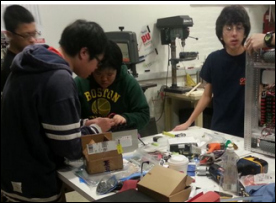
    Vivian, who is a member of Mr. Chen’s robotics team in Massachusetts, emailed her thanks for funding their DonorsChoose grant request for pizza gift cards for feeding the team on evenings and weekends while they prepared for competition. She says, “We are so grateful that you helped us out! We needed energy to keep us going as we were very charged on getting the robot built for our competition. We have learned so much about mechanical engineering, software engineering, teamwork, and how to run the club as if it is a small business. Your donation has enhanced our learning and made it so much more enjoyable!”


    Webinars

    None scheduled soon. Contact Lorre for webinar services. Past webinars are on our HIStalk webinars YouTube channel.

    Here’s the video from last week’s webinar, “Looking at the Big Picture for Strategic Communications at Children’s Hospital Colorado,” sponsored by Spok.


    Acquisitions, Funding, Business, and Stock

    image

    Denver-based CirrusMD, which offers a white label app that allows consumer users to send messages to on-call and ED doctors, raises $1 million.

    image

    Practice Unite and Uniphy Health will merge to offer secure messaging and collaboration solutions under the Uniphy Health name.


    Sales

    In the UK, Wirral Partners chooses Cerner’s HealtheIntent for population health management.


    People

    image

    Indiana University Health names Mark Lantzy (Gateway Health) as SVP/CIO.

    image

    Andy Grove, the former CEO and chairman of Intel, died Monday at 79.


    Announcements and Implementations

    image

    image

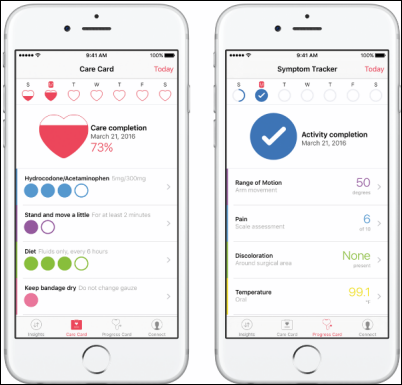
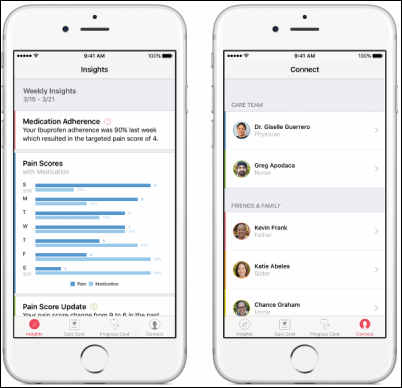
    Apple announces CareKit, a developer’s framework for creating personal health apps for the iPhone. Its first four modules will support health to-do lists, symptom logging, a dashboard to map symptoms to the to-do lists, and an information sharing function. The company says early adopters are using CareKit to build apps for Parkinson’s patients, post-surgery progress, home health monitoring, diabetes management, mental health, and maternal health.

    23andMe integrates with Apple’s ResearchKit, allowing developers to create apps in which study participants can upload their genetic testing results from their iPhones. It also allows researchers to offer 23andMe testing at their own expense to expand study access to non-23andMe customers. 


    Privacy and Security

    image

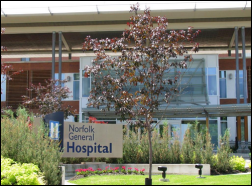
    A cybersecurity firm finds that the public website of Ontario, Canada-based Norfolk General Hospital has been infecting its visitors with the TeslaCrypt ransomware. Hackers gained access to the site via an exploit in its outdated Joomla content management system.

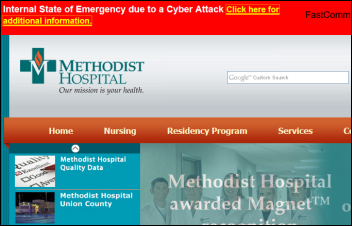
    Methodist Hospital (KY) recovers its systems from a ransomware attack that lasted several days, saying that it was able to regain access without paying the demanded ransom.

    Two California hospitals owned by Prime Healthcare Services have been hit by an unspecified cyberattack that sounds like ransomware. The hospitals are working to restore their systems and the FBI is investigating.

    image

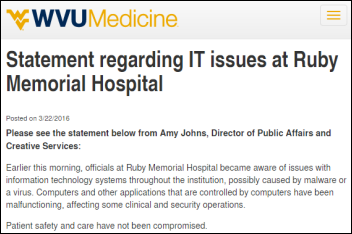
    Ruby Memorial Hospital (WV) goes into lockdown mode for several hours after unspecified malware affects its clinical and security systems.


    Other

    A doctor in Canada is punished for overbilling and for keeping inaccurate electronic medical records, the latter of which he blames on not understanding the EHR of the practice he joined. He told the tribunal that he failed to change a pre-populated EHR template, but later switched EHRs.

    JAMIA issues a call for articles on the safety of health IT, with manuscripts due June 1.

    Expedia offers patients of St. Jude Children’s Research Hospital the chance to experience their “Dream Adventures” in which Expedia dispatches teams carrying live-streaming 360-degree cameras to display the adventures the children request in a virtual reality room installed at the hospital. 


    Sponsor Updates

    • Besler Consulting releases a new podcast, “Compliance pitfalls and how to understand RAC findings on your discharge status.”
    • Burwood Group will exhibit at the AONE 2016 nursing leadership conference March 31 in Fort Worth, TX.
    • Elsevier launches a history of medicine site to celebrate the 100th anniversary of its Medical Clinics clinical review publication.
    • CTG will exhibit at the 2016 Annual Health Care Symposium April 1 in Costa Mesa, CA.

    Blog Posts


    Contacts

    Mr. H, Lorre, Jennifer, Dr. Jayne, Lt. Dan.
    More news: HIStalk Practice, HIStalk Connect.
    Get HIStalk updates.
    Send news or rumors.
    Contact us.

    125x125_2nd_Circle

    Curbside Consult with Dr. Jayne 3/21/16

    March 21, 2016 Dr. Jayne 4 Comments

    image

    At my clinical practice, many of my partners have been out for spring break. Since the local school districts have staggered break schedules, nearly everyone wanted the overlap weekend off, so I was happy to work the whole thing.

    Although Friday’s shift had more than its share of patients bearing the complaint of, “I just started getting sick and I’m going to Cancun and can’t be sick for break,” Saturday trended more towards, “I just got back from Cancun and am sick / hung over/sunburned.” I was starting to question my sanity until Sunday, when some “typical” patients started coming in.

    I’ve mentioned this before, but with the shift to high-deductible health coverage, we’re seeing a tremendous increase in volume. Our pricing is transparent and we’re conveniently located and provide quick service, so the business is experiencing exponential growth.

    With that comes some growing pains, however, which for me has been felt in the number of new staff members working on the teams. We have a really great training program – new staff members have formal training shifts and each shift has a different focus. One day may be clinical interview skills, another may be labs, and another may be procedures, etc. They work directly with a trainer whose only focus for the day is to train them – it’s not someone already on the care team who is training on the side.

    Even after the formal training, some staff may be more green than others. I ran across a scenario yesterday where the staff failed to notice some nonsensical entries in the EHR. Although it should have been reviewed before addition to the chart, the patient care tech missed the errors:

    • Pulse of 13270
    • Respirations of 99/minute
    • Temp of 15

    It turned out that the tech had entered the data quickly, was just tabbing through the data entry fields, and was off by one field. The blood pressure field (which should have shown 132/70) was blank and he entered those numbers without a slash in the pulse field. The error then compounded as he tabbed. He was apologetic and immediately fixed the error.

    Being in the health IT industry, I quickly flagged it as not only a human error, but also a software problem. Most of the EHRs I’ve worked with have restrictions on various data fields to prevent these kinds of errors. For example, a pulse field might only be able to hold three digits. Active or passive alerts might display for values outside the normal range.

    Although the tech should have caught it, my bigger concern is that this happened in a Meaningful Use Certified EHR. I’ve asked the practice’s technology liaison to open a ticket with the vendor and see if it’s functioning as designed or whether there is a defect. If it’s functioning as designed, I have to wonder about the certification standards. I don’t beg to have a command of the details and I know there are hundreds of pages of requirements that must be met.

    Knowing that some of the elements that are requirement for certification may not be something that physicians need or want, I’m surprised if there isn’t something in there to require safety checks for straightforward data entry like this.

    I first dealt with an EHR that handled data like this in a conversion project more than a decade ago. We had vast amounts of data that couldn’t easily be brought into our new system because the blood pressure field was a single field that would accept numbers, letters, and symbols. Assuming a sample BP of 140/90, users had entered it as:

    • 140/90 sit (meaning taken seated)
    • 140/90 R (meaning taken on the right)
    • 140/90 RA (meaning taken on the right arm)
    • 140/90 RALC (meaning taken on the right arm with a large cuff)
    • 140-90
    • 140.90
    • 140s/90d

    And so on. Our new system had separate fields for the systolic BP (top number) and diastolic BP (bottom number) as well as discrete fields for position, side, site, and cuff size. Due to the work needed in trying to cleanse the data, we quickly decided that we would just not bring any values into the new system and would start from scratch.

    Since that conversion project was so long ago and I haven’t run across the issue since, I assumed that such handling of data had gone the way of the dinosaurs. I guess it hasn’t, or I’ve just been spoiled by more sophisticated systems. But I would have hoped that with all the focus on patient safety and regulations, that we would have moved past this and that consistent handling of essential data such as vital signs would be a requirement for vendors seeking certification. How in the world can you be truly interoperable with data like this?

    We’ll see what happens with the vendor ticket and what my practice decides to do about it otherwise. If I was the CMIO, CMO, or medical director and this was my system, I’d be tracing it all the way through to find out what is being sent to the patient portal and what appears on transition of care documents and how extensive the problem might be.

    Although this particular scenario was a pretty significant and obvious error, I’m sure I could have missed less significant errors during the last couple of years. Since I’m wearing my hourly staff physician hat in this scenario, though, I’ve notified our leadership and have to let them work it as they see fit. I’ll be spending extra seconds reviewing my vitals going forward, however.

    This should be basic functionality, but I guess it’s not. I’m interested in hearing how other certified systems handle this type of data – whether they have field restrictions that would have prevented these errors, and whether they have active or passive alerts to create additional patient safety support. Consider adding a comment and sharing what you’re seeing in the trenches.

    Got screenshots? Email me.

    Email Dr. Jayne.

    HIStalk Interviews Madelyn Herzfeld, CEO, Carevive Systems

    March 21, 2016 Interviews Comments Off on HIStalk Interviews Madelyn Herzfeld, CEO, Carevive Systems

    Madelyn Herzfeld, RN is CEO of Carevive Systems.

    image

    Tell me about yourself and the company.

    I am an oncology nurse by background. I am also an entrepreneur. Prior to starting Carevive, I had an accredited oncology continuing education business, where I worked with thousands of oncology professionals all around the country who helped disseminate education to oncology clinicians.

    About three years ago, I started Carevive. It is a healthcare information technology company where I am leveraging all those relationships of those experts all around the country who are helping me to develop both clinical workflow and patient engagement software which interfaces with the enterprise EHRs. The primary deliverable of the software are patient care plans, treatment plans, symptom management care plans, and survivorship care plans. All intended to improve the clinical outcomes and quality of life of cancer patients.

    Oncology emphasizes the importance of patient-reported symptoms and patient perception of well-being. Is that unusual compared to other medical areas?

    Oncology has several uniquities. There are over 300 diseases within oncology, which in itself makes it a complicated disease. Then, of course, it is the big C. When you have cancer, it’s very important to be balancing survival and quality of life. Patient engagement and making sure that patients are involved and educated about their disease, prognosis, and treatment is very, very important because it is life or death.

    What are the most important characteristics of an oncologist who works with sophisticated technologies while managing the psychological aspects of a patient with cancer?

    Being an oncologist is part scientist and part clergy. That relationship between an oncologist and his or her patient is the most sacred. Somebody puts their life into your hands. I feel the stress and the burden today of oncologists. The healthcare technology industry has not kept up with the rest of the world. Patients have access to all of this information, which may or may not be relevant.

    The oncologist doesn’t have those tools — the clinical decision support, the data analytics tools — to be able to help that patient process that information. It’s a whole new world. There is some light at the end of the tunnel with changes in cancer care and value-based reimbursement. The healthcare IT market is mobilizing to better support oncologists, but it’s a struggle.

    We’re beginning to accumulate a lot of electronic treatment data and outcomes data. Will that increasingly used to evaluate the risks and benefits of treatments as well as their value?

    Absolutely. As I mentioned, there are hundreds of diseases within oncology and very limited data sets. Everything is based on very small clinical trials data. The NCCN guidelines are based on expert panel discussions, again, with very little evidence. You’re starting to see a number of companies that are trying get real-world treatment practice pattern data and symptom experience data to better inform clinicians and patients moving forward — which they have never had before — to guide practice.

    Do oncologists recommend or manage treatments for their patients the same way they would for themselves?

    One of the important changes — a consistent quality measure — is the need for oncologists to document a patient’s goals of care prior to making a treatment decision. It seems so intuitive, but oftentimes those conversations weren’t being had. Making sure the patient understands whether their disease is curative or palliative. That conversation has to be documented, as well as documenting what the patient’s goals of treatment are. Those are two very important first steps in treatment planning.

    Oncology drugs are among the most expensive. Does that create difficult decisions for the oncologist who has to balance their potential benefit with the fact that their cost could financially drain the patient?

    There are some areas, some diseases, where there is a plethora of choices. The routes of administration are different. The costs are different. In terms of routes of administration, some are given orally, some are given intravenously. Some will require that the patient is frequently going to the clinic versus others where a patient can self-administer a drug. That’s an important consideration, as are costs, as are toxicity profiles.

    The perfect example is that some drugs can cause significant peripheral neuropathy in your fingertips. If you are a pianist or somebody whose profession requires them to work frequently with their hands, they probably would not be a good candidate for that option. All those things come into play. The oncologist and their patient are very thoughtful about all of those risks and benefits when treatment planning.

    What types of engagement do oncology patients want?

    It goes back to that conversation that you and I had when we first started. There is this sacred relationship between the patient and the person that they are putting all of their faith in to save their life. There are meta-analyses of data that point to, as frequently as the care team can touch that patient and the patient can touch the care team, those patients have far better outcome. There are a couple of examples of that.

    There is a quality measure now that you have to screen all patients for distress. You’ve got to manage their distress, because distressed patients have poorer outcomes. You want to keep that relationship close. A big problem in cancer care is that because patients have such a will to live, sometimes they will push through a number of symptoms until they get really severe and not want to talk about them or report them because they want to maximize that therapy. Making sure that there are mechanisms, be it technology or just simple care coordination, where you’re in active communication and dialog with patients. Part of what we do is the technology and part of it is workflow and coordination, making sure that there are those frequent touch points and follow through with the patient.

    Number two is making sure that the patient is educated and realistic and doing all that they can to maximize the benefits of treatment.

    A lot of talk recently, including from the White House, is about patients donating their genomic and EHR data to cancer researchers who are looking for patterns and ways to identify similar patients. Will that concept be difficult to explain to oncologists and individual patients?

    As part of our license agreement, you have to discuss data rights. I’ve seen the oncology community be overwhelmingly positive so long as the spirit of the data collection is good and to progress the science. You get buy-in from clinicians and patients because they’re dying for this information. They know it will improve patient care.

    Specifically what I’m referring to here, at least in our case, is when you’re collecting patient-reported data on the patient experience and being able to understand and compare quality of life on different regimens. Those are datasets that they don’t have right now. Those are important datasets when you’re talking about the risks, the benefits, and the value of treatments.

    Does the simplistic idea of cancer as a single disease that can be cured via a cancer moon-shot send the wrong message?

    We have to be really careful. Today’s cancer moonshot … Several years ago, it was targeted therapies. Now it’s a little bit of immunotherapy. Just making sure that we are keeping it real. There has been incredible amounts of progress, but there is much, much, much more progress to be made. This concept of 2020 — that’s just a few years away. We owe it to patients to just set realistic expectations.

    Do you have any final thoughts?

    It’s very exciting to see resources being mobilized to our industry. I’ve been doing this a few years. Even seeing the small changes in the interoperability between EHRs and all of the interest that has gone into this market is exciting. I’m glad to be part of the journey.

    Monday Morning Update 3/21/16

    March 19, 2016 News 5 Comments

    Top News

    image

    Methodist Hospital (KY) is hit by ransomware, forcing it to run from a backup system while it decides whether to pay an unspecified ransom to regain access to its patient records. The hospital has declared an internal state of emergency and warns that it has “limited access to Web-based services and electronic communications.” The FBI is investigating.


    Reader Comments

    From Certifiable: “Re: Epic 2015. All upgrades are being delayed for 1-2 months until fixes can be delivered. Unusual!” Unverified.


    HIStalk Announcements and Requests

    image

    It’s easy to describe the HIMSS keynoters that poll respondents want to see – they are the ones HIMSS doesn’t invite. The least-attractive speakers are government officials (HIMSS16 — Sylvia Burwell), authors (HIMSS16 — Jonah Berger), celebrities or athletes (HIMSS16 – Peyton Manning), and for-profit business leaders (HIMSS16 – Michael Dell). Topping the most-desired but rarely offered list are public health experts, patients, and not-for-profit provider leaders. Furydelabongo wants to hear from inspirational people who remind us of why we’re connected to healthcare and who can convey urgency, while Tracy wants to be inspired by what’s possible in transforming healthcare rather than hearing from a celebrity.

    New poll to your right or here: has your employer laid anyone off in the past 12 months?

    I was thinking about how the most prevalent form of healthcare ransomware is being distributed by hospitals – the kind that holds your own medical information hostage unless you’re willing to pay to get it back.

    image image

    We fulfilled the DonorsChoose grant request of Mr. Blachly in Indiana, whose high school advanced placement calculus and physics students experience “abysmal conditions and poverty” that cause them to miss classes. The video camera and accessories we provided has allowed him to archive his lectures so that absent students can watch them online, allowing them to return to class fully caught up. It also frees up his time for questions rather than re-teaching missed lessons.

    image image

    Also checking in is Mrs. Beggs from Maryland, who teaches a middle school math class for students with educational disabilities. She says of the math tools we provided, “My students could not believe that people that have never met them were willing to purchase items for them. We had a wonderful conversation about giving to others and why its so important. We are currently working on integers and absolute value. We will continue to practice our basic math facts while we learn integer skills. These skills are essential for the every day world and are helping prepare my students for life.”


    Last Week’s Most Interesting News

    • HHS OCR settles two lost laptop HIPAA incidents for $5.4 million, one of them involving a non-hospital employee whose employer hadn’t signed a business associate agreement with the hospital.
    • The CMIO of two NYC Health + Hospitals hospitals resigns, warning that the system isn’t ready for its April 1 Epic go-live and that patients will be harmed if it isn’t moved back.
    • St. Joseph Health (CA) settles for $15 million a privacy class action lawsuit involving a 2012 incident in which a PHI-containing server was inadvertently opened up to the Internet. It states the total cost of the incident at $40 million.
    • Dell appears close to be selling its services business to Japan’s NTT Data for $3.5 billion.
    • The Senate’s HELP committee passes the MEDTECH act that exempts several types of health-related software from the FDA’s oversight.

    Webinars

    March 22 (Tuesday) 2:00 ET. “Six Communication Best Practices for Reducing Readmissions and Capturing TCM Revenue.” Sponsored by West Healthcare Practice. Presenters: Chuck Hayes, VP of product management, West; Fonda Narke, senior director of healthcare product integration, West Healthcare Practice. Medicare payments for Transition Care Management (TCM) can not only reduce your exposure to hospital readmission penalties and improve patient outcomes, but also provide an important source of revenue in an era of shrinking reimbursements. Attendees will learn about the impacts of readmission penalties on the bottom line, how to estimate potential TCM revenue, as well as discover strategies for balancing automated patient communications with the clinical human touch to optimize clinical, financial, and operational outcomes. Don’t be caught on the sidelines as others close gaps in their 30-day post discharge programs.

    Contact Lorre for webinar services. Past webinars are on our HIStalk webinars YouTube channel.


    Acquisitions, Funding, Business, and Stock

    An analysis of privately held Dell’s financial forms finds that sales are down across most of its divisions and it’s still largely a PC company, with 65 percent of its revenue coming from hardware sales. Revenue for the services business it is trying to sell was down 5 percent for the fiscal year.

    image

    Staffing and services firm HCTec Partners acquires Colorado-based professional services firm HIMS Consulting Group.

    McKesson will take a $300 million charge for its cost-cutting restructuring plan that involves 1,600 layoffs.


    Privacy and Security

    image

    Developers of the TeslaCrypt ransomware toolkit update their product to remove the ability of cybersecurity firms to use a known exploit to restore the encrypted files without paying the ransom. The FBI warned last month that ever-smarter ransomware can now search a network to locate and delete backups, leaving the victim with only one choice if they want their systems back. I’ll repeat my prediction that hospitals will have no choice but to block access to Web-based email services like Gmail that employees use to check personal email, bypassing IT security.


    Other

    image

    Cerner holds a topping-out ceremony for its $4.45 billion Cerner Trails campus in Kansas City, MO. The 16-building, 4.7 million square foot complex with two, 15-story towers will house up to 16,000 employees. Kansas City will pay $1.1 billion of the project’s cost.

    The two surviving original members of The Who, Roger Daltrey and Pete Townshend, open a teen lounge at Memorial Sloan Kettering Cancer Center (NY). The space was created using $1 million raised by a concert in which Daltrey and Townshend performed via Teen Cancer America, a charity they founded in 2012.

    A profile of India-based 32-hospital chain Narayana Hrudayalaya describes its mission to “dissociate healthcare from affluence” in proving that “the wealth of the nation has nothing to do with the quality of healthcare” in a country where most residents can’t afford drugs or surgery. It offers CABG surgery for as little as $2,700 and surgery insurance for $3.60 per year. Some of its cost-cutting methods:

    • Do as much as possible in an outpatient setting.
    • Focus on high-volume procedures to gain economy of scale. Its 16 cardiac surgeons each perform 400-600 procedures per year.
    • Minimize facility expense by not investing in fancy buildings, artwork, or even air conditioning.
    • Competitively bid for drugs and medical equipment.
    • Use top-of-license practices to shift less-critical work to junior employees.
    • Use iPad-based ICU monitoring software called iKare to update patient records and provide alerts.
    • Connect all hospitals via a cloud-based information system that includes ERP and EHR.
    • Teach patient families to deliver post-op care at home.
    • Offer free telemedicine services via Skype, including consultations, radiology reports, EKG, and second opinions.

    An anesthesiologist in England faces dismissal for having sex with a prostitute in a maternity hospital. He was blackmailed by the woman’s “associates,” who threatened to tell his wife if he didn’t pay them $15,000. He worked with police to set up a sting operation to capture the blackmailers, and as it was underway, he showed officers an X-ray showing a patient with a bottle lodged his most private of areas.


    Sponsor Updates

    • TierPoint will exhibit at the Boston Premier CIO Forum March 22-23.
    • VitalWare will exhibit at HFMA Dixie 2016 March 20-23 in Nashville, TN.
    • PatientMatters will exhibit at the HFMA Northern California – Spring Conference March 20-22 in Sacramento.
    • Sagacious Consultants publishes the March 2016 edition of its Sagacious Pulse newsletter
    • The SSI Group and Streamline Health will exhibit at the Region 5 Dixie HFMA meeting March 20-23 in Nashville.

    Blog Posts


    Contacts

    Mr. H, Lorre, Jennifer, Dr. Jayne, Lt. Dan.
    More news: HIStalk Practice, HIStalk Connect.
    Get HIStalk updates.
    Send news or rumors.
    Contact us.

    125x125_2nd_Circle

    News 3/18/16

    March 17, 2016 News 1 Comment

    Top News

    image

    HHS OCR announces two big HIPAA violation settlements for years-old incidents, both involving the theft of unencrypted, PHI-containing laptops.

    North Memorial Health Care (MN) will pay $1.55 million to settle charges involving the 2011 theft of an PHI-containing, unencrypted laptop from an employee of Accretive Health. HHS OCR says the system violated HIPAA rules by failing to require Accretive to sign a business associate agreement and for not performing a security risk analysis.

    image

    Feinstein Institute for Medical Research (NY), a non-profit sponsored by Northwell Health, will pay HHS OCR $3.9 million to settle charges that it lacked of security management processes, detection of which was triggered by OCR’s investigation of an unencrypted  PHI-containing laptop that was stolen in 2012.


    Reader Comments

    image

    From Dockside: “Re: Novell GroupWise. BJC HealthCare began its Outlook rollout using Microsoft hosting services. The rollout is going well and will be finished in stages over a couple of months. Makes me wonder how many GroupWise shops are left.” I was involved with that same conversion at my hospital many years ago and thought we were probably one of the last holdouts then. Users weren’t clamoring for Outlook, but our GroupWise version was so old that it couldn’t handle long file names and its inline document viewers didn’t work with newer file formats. The product is still around, with the 2014 edition being the most recent version. Most of us in the hospital missed a few GroupWise features that Outlook didn’t have, but nobody had any interest in going back since we had already moved away from Novell Office. BJC is the first-listed success story on the GroupWise site. I also notice that the screen shot included in the Wikipedia entry for GroupWise is from someone in healthcare since the pictured inbox contains emails from HIStalk and HIMSS.

    image

    From Legally Blonde: “Re: Hardee County, FL. The grand jury in January 2015 investigated the director of the county’s economic development department for spending $7.25 million to fund creation of what is now CareSync. The jury found that nobody monitored the project or whether it returned benefit to county taxpayers. A member of the economic development board had financial interest in the approval of the money. The jury found that projections of 400,000 users and $26 million in annual revenues were ‘mere smoke and mirrors and not even close to being met.’ The interesting thing to me is that surely that indictment was in play before the investors of CareSync (Merck Global Health Innovation Fund ) invested. There was a Series B raise of 18M in early October 2015. Certainly there were clauses about there being no legal proceedings in the terms of the funding.” The full grand jury report is here. I found a March 2015 story in which the development authority ignored the grand jury’s recommendations. I’m not a legal expert, but it looks like the grand jury was focusing on the county’s economic development board and not CareSync and I saw nothing involving indictments or anything more than recommendations to the county. CareSync said its October 2015 fund raise would enable the hiring of 500 workers, although it didn’t indicate how many of them would be working in Hardee County.

    From Empowered Patient: “Re: obtaining medical records. Thank you for sharing Deven McGraw’s excellent explanation in Jenn’s HIStalk article. The HIPAA Omnibus Rule clearly spells out the right that a patient has to receive an electronic copy of their protected health information if the entity is capable of producing it. Further, the electronic copy must be provided in a readily producible form and format, including unencrypted email if that is the patient’s desire. I have argued with CIOs and security professionals who should know better, but denial of these rights is a violation of HIPAA. The American Bar Association has a great overview for anyone who still doesn’t understand.”

    From MS Clippy: “Re: HIStalk articles. Which one is the most-read ever?” I don’t have tools that track how many times each post has been read, which would be pretty cool. It’s been busy the last couple of weeks, though, with nearly 10,000 page views Monday and 8,000 on Tuesday and Wednesday. Those are pretty big numbers for the post-HIMSS lull with no blockbuster news.

    image

    From Tawdry Tale: “Re: Memorial Hermann. Has been hit by ransomware from the Nemucod Trojan dropper.” Unverified.


    HIStalk Announcements and Requests

    image image

    Ms. Medina says her California first graders are using the engineering kits we provided in funding her DonorsChoose grant request to learn about simple tools and machines.

    image

    I also heard from Mrs. Sickle, whose Missouri first grade classroom is filled with charts the students are making from the chart paper we provided.

    This week on HIStalk Practice: Complete Family Foot Care informs patients of a Bizmatics EHR breach. St. Clair Specialty Physicians implements Medical Design Technologies charge-capture software. CTO Prakash Khot brings Salesforce ethos to Athenahealth. Morris Heights Health Center goes with EClinicalWorks EHR and population health management software. Atlantic Spine Center launches virtual consults. Xerox’s Tamara StClaire addresses the population health management equation. Physician burnout may lead to a surge of ninjas promoting "warlord tourism."

    This week on HIStalk Connect: Researchers unveil a new sensor capable restoring a sense of touch for prosthesis wearers. Personal assistant apps fail to offer clinically relevant results when queried with health questions. AliveCor introduces an Apple Watch band that can capture an ECG. The NHS will expand the use of e-referrals through a $78 million grant program.


    Webinars

    March 22 (Tuesday) 2:00 ET. “Six Communication Best Practices for Reducing Readmissions and Capturing TCM Revenue.” Sponsored by West Healthcare Practice. Presenters: Chuck Hayes, VP of product management, West; Fonda Narke, senior director of healthcare product integration, West Healthcare Practice. Medicare payments for Transition Care Management (TCM) can not only reduce your exposure to hospital readmission penalties and improve patient outcomes, but also provide an important source of revenue in an era of shrinking reimbursements. Attendees will learn about the impacts of readmission penalties on the bottom line, how to estimate potential TCM revenue, as well as discover strategies for balancing automated patient communications with the clinical human touch to optimize clinical, financial, and operational outcomes. Don’t be caught on the sidelines as others close gaps in their 30-day post discharge programs.

    Contact Lorre for webinar services. Past webinars are on our HIStalk webinars YouTube channel.


    Acquisitions, Funding, Business, and Stock

    image

    McKesson lays off 1,600 people, 4 percent of its US workforce, after losing some of its key pharmaceutical customers. 

    image

    Cash-strapped Toshiba, struggling after an accounting scandal, sells its Toshiba Medical Systems business to Canon for $5.9 billion. Canon’s healthcare offerings include digital radiography and fluoroscopy systems.

    image

    Ireland-based Oneview Healthcare raises $45 million in its Australian Stock Market IPO, valuing the company at $160 million. Shares rose 3 percent on their opening day.

    image

    Predictive analytics care coordination systems vendor Pieces Technologies raises $21.6 million in Series A funding.


    Sales

    image

    Riverside Medical Center (IL) chooses Glytec’s eGlycemic Management System and its Glucommander algorithm-based software for insulin management and glycemic control in its diabetes management program.


    People

    image

    Charles Perry, MD, MBA, CMIO of Elmhurst and Queens Hospital Centers (NY), resigns in protest, comparing the Epic project of NYC Health + Hospitals with the Challenger space shuttle disaster of 1986. He says his hospitals aren’t ready for their go-live and patients will be harmed if the April 1 date isn’t moved back. He had been in the CMIO role since June 2014.

    image

    Impact Advisors promotes Michael Nutter to VP.

    image

    Accenture hires retired Army Surgeon General Lt. Gen. Patricia Horoho, RN, MSN to lead its Accenture Federal Services defense health practice, which includes its work on the DoD’s EHR project.


    Announcements and Implementations

    Wolters Kluwer migrates three customers of the sunsetted Olympus EndoWorks to Provation MD Gastroenterology, the first of 86 facilities that have contracted for the replacement.

    Medsphere launches a mobile version of its OpenVista EHR, which includes its NoteAssist template-based patient documentation system. 
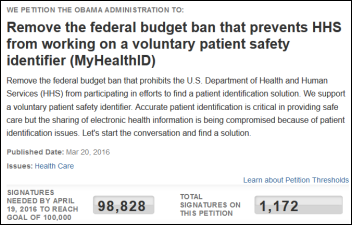
    image

    ID Experts launches the first complete identity protection program for health plan members, which includes protection against all nine types of identity theft. The company offers services for identity monitoring, identity recovery, health fraud, and breach response.


    Government and Politics

    The VA will attempt to fire three executives from its Phoenix hospital over the 2014 wait times scandal. Two of them were placed on leave nearly two years ago but are still employed, and all three will be able to challenge their termination, which in the VA usually means they’ll just be reassigned. The VA previously fired the hospital’s director, but she got to keep her bonus despite pleading guilty to a felony charge for accepting $50,000 in gifts from a lobbyist who was her former supervisor. She had worked at four VA facilities in five years.


    Privacy and Security

    Premier Healthcare (IN) breathes a sigh of relief when a stolen laptop containing the PHI of 200,000 people is anonymously returned by mail, with IT forensics showing that it had not been powered on since the theft occurred in January.


    Technology

    UNICEF is testing the use of drones in Malawi to carry the blood samples of babies born to HIV-infected mothers to a hospital laboratory, hoping to cut down on the two-month turnaround time between drawing the blood and receiving the result. Ten percent of the country’s population has HIV.


    Other

    image

    A physician leaving the medical profession to work for a medical device company she founded explains her decision:

    The phenomenon of patients as customers, the cultural rise of entitled incivility, and trusting Dr. Google more than their doctor has eroded some of the pleasure of patient care … In Kurt Vonnegut’s dystopian gem [Harrison Bergeron], to promote equality, the best and brightest were interrupted by technology that slowed thought. Much as the concept of the EHR makes sense in today’s peripatetic world, the required computer interface currently is right out of Vonnegut. Five minutes of patient contact necessitates 10 of charting, documenting discharge, signing scripts, and all must now be done with a mouse and click box. So many of my heroes have stopped seeing patients, so many years of productive practice lost to the interface. The part of the medical equation that solves the problem shouldn’t be doing data entry. Scribes? Real time dictation? While a portable electronic record is a necessary iterative step to longitudinal map that follow patients through life, the EHR kills joy.

    image

    Broward Health (FL) demotes its CEO and places its general counsel under review after executives complain about lack of leadership and a prolonged contracting process with doctors that may leave it without specialists who can treat trauma or stroke patients. The hospital’s chief of staff says the former Broward General Medical Center is 30 days away from being forced to shut down. SVP/CIO Doris Peek told the board that employees look to it to provided leadership. The hospital district’s former CEO committed suicide on January 23, followed by a state investigation into the district’s contracting practices.

    image

    Boston Medical Center (MA) will offer the digital sleep training app Sleepio as an employee benefit. The UK-based vendor claims hospital employees sleep 4.5 hours per week longer using its cognitive behavioral therapy program. Consumers can sign up directly for $300 per year.

    Data analysis by ProPublica may dispute the claims of doctors that payments they receive from drug companies don’t influence their prescribing habits. Doctors who received money or meals from drug and device makers were 2-3 times more likely to prescribe brand name drugs. The study found that 90 percent of cardiologists who wrote at least 1,000 Medicare prescriptions received such payments, as did 70 percent of internists and family practitioners. Reporters contacted three doctors who prescribed high rates of brand name drugs. The first doctor claimed the drugs are of higher quality, the second said he can’t make a living without taking drug company payments, and the third threatened to call the district attorney about reporters questioning the $53,400 in drug company payments he received.

    Eleven-hospital Presence Health (IL) announces that it lost $186 million in 2015, blaming one-time charges that include a $53 million write-off of uncollectible debt, a change in accounting policies, and the cost of implementing unstated software (presumably Epic since they’re implementing it).

    image

    The systems development group of the IT department of Arkansas Children’s Hospital will host Camp WannaCode, a free, week-long day camp for students aged 14-18 interested in computer programming. The June 7-10 camp in Little Rock will offer classes on Raspberry Pi development, data analytics, SQL databases, JavaScript, and Android development.

    In Canada, a Winnipeg doctor loses his license for a variety of professional misconduct offenses including failing to install medical records software as ordered in a 2000 disciplinary hearing for poor recordkeeping. A 2014 forensic audit of his computer found no trace of the EHR software, but records suggested he had copied and pasted blood pressure readings over multiple visits. The doctor had submitted in his defense the results of a peer group analysis and an independent audit of his practice, but he later admitted that he just wrote both documents himself.

    Friday is Match Day, where graduating medical school students find out where they’ll be spending the next few years working endless hours for low pay. The always-talented University of Chicago Pritzker School of Medicine Class of 2016, led by the musically gifted Beanie Meadow, provides this amusing tribute to their graduating peers everywhere.

    Attention, all you witless punsters who think flame-related FHIR jokes are clever: research suggests that you might have a neuropsychiatric disease beyond just being annoying.


    Sponsor Updates

    • KLAS rates InterSystems HealthShare a top HIE technology in the EMR-independent category.
    • PDR will exhibit at CBI e-Rx & EHR-1 March 21-22 in Philadelphia.
    • Navicure will exhibit at the MGMA/AMA Collaborate in Practice event March 20-22 in Colorado Springs, CO.
    • Nordic sponsors the Southwest Region User group Meeting at Maricopa Integrated Health System March 18 in Phoenix.
    • Orion Health CEO Ian McCrae discusses precision medicine on a New Zealand morning show.

    Blog Posts


    Contacts

    Mr. H, Lorre, Jennifer, Dr. Jayne, Lt. Dan.
    More news: HIStalk Practice, HIStalk Connect.
    Get HIStalk updates.
    Send news or rumors.
    Contact us.

    125x125_2nd_Circle

    EPtalk by Dr. Jayne 3/17/16

    March 17, 2016 Dr. Jayne 5 Comments

    I’ve been spending a lot of time this week on strategic planning for the next wave of healthcare reform. For those of you who thought Meaningful Use being “dead” meant we would be able to catch our breath, there’s an even more challenging sequel. I’m talking about alternative payment models and yet more acronyms – specifically MACRA and MIPS. In a recent blog, John Halamka describes the future:

    Providers will be responsible for the care that their parents receive throughout the community — inpatient, outpatient, urgent care, post-acute care, and home care all contribute to total medical expense and wellness. Some of the care may be delivered by people and organizations outside the control of primary care. The only way they can succeed is by aggregating data from payers, providers, and patients/families in an attempt to provider “care traffic control.”

    When I first saw it, I thought it was catchy – yet another way to try to describe what primary care providers do. We’ve been gatekeepers, quarterbacks, and now care traffic controllers.

    But thinking about the analogy to air traffic control, it couldn’t be farther from reality. Commercial aircraft and their owners are required to obey certain rules across the board. There is a central body making those rules — we don’t have subsidiaries across the nation coming up with their own “local coverage” determinations. The rules are governed by logic, physics, statistics, and experience.

    In healthcare, it seems that sometimes we have none of those forces at play. Humans are often irrational (stroll through the intensive care unit sometime and watch the futile and sometimes cruel treatments forced on the elderly by “loved ones”) and our behaviors are determined by a complex interplay of biological, social, and other factors.

    Planes in the skies are required to not only identify themselves, but to broadcast their intentions regularly. They have to file a flight plan — they’re not allowed to come up with a confidential or proprietary flight plan, then spring it on the passengers at the last minute. Planes have to be inspected regularly and certified for safety. Pilots are retired for certain medical conditions and after certain ages. Additionally, airliners are required to have onboard tools to help determine what went wrong in the case of a failure. Such failures are scrutinized and the findings broadcast for everyone’s learning. This is far from how healthcare operates.

    Lastly, the air traffic controllers aren’t punished for the actions of pilots who don’t play by the rules or airlines who cut corners. They’re not punished when passengers are kept on the tarmac for hours or when flights run late or are cancelled. They’re not personally liable for “oversold situations” or forced to compensate passengers for lost or mangled luggage. Under the “care traffic control” theory of healthcare, we’re asking front-line physicians (particularly primary care providers) to assume the equivalent responsibilities.

    It was in that frame of mind that I started trying to work out some strategy for how my partner and I can assist physician and practice clients in navigating yet another seemingly dysfunctional scheme that is coming their way. It was also in that frame of mind that I received word that three more of my former partners from Big Medical Group had taken or were about to take the jump to either cash-only care models or concierge models.

    One has been in practice for nearly half a year and interviews all her patients, taking only those who agree to her model of care. She has very little overhead due to her non-involvement with payers and the government, so she doesn’t have to see many patients at all to make ends meet. Additionally, she’s doing a time-share out of another physician’s office and is only paying for fractional use of his staff. But most of all, she’s practicing the way she wants to and finds her work satisfying again.

    Not everyone can practice this way, and if we all did, “disruption” would not be a strong enough word to describe what was happening. But it’s an interesting thought and was a nice distraction as I worked through scores of analyses and discussions of where we believe policy and legislation will take us over the next two to three years.

    Among all this deep thought, I’ve still been trying to get caught up after HIMSS. Given some of the changes to my business model and our plans to expand our offerings, I’ve been following up with contacts and reading proposals. I still have over 1,000 emails to deal with, and unfortunately, they seem to be coming in as fast as I can dispatch them.

    One from today was a notification from Microsoft that they’ve released a fix for the pen issue I’ve been having with Office 365 and tablets. Although it’s only available to their Microsoft Insider group at present, they estimate it will be available to the general user base in a week or two. Although I’m eager to receive it, I’m not eager enough to sign up for the Insider program, which seems like an ongoing beta program with a high potential for workflow disruption.

    I was happy to receive a couple of reader emails, including one with photos of the limbo portion of HIStalkapalooza. She managed to capture several people I know in the pics and I’m debating whether to share them with the respective parties or hold them for future blackmail.

    I asked last week whether interoperability is really the answer to all our problems and was happy to receive a detailed reader response:

    In my mind, not until we find a way to retire faxing. MU didn’t account for the value of narrative and so it left faxing as a safety net, therefore increased faxing. It’s a 40-year-old technology that is still the backbone of communication between practices and from hospitals to providers. Healthcare is wasting millions of dollars in time, money, and hours better used elsewhere dealing with faxing. My organization sends 35,000 faxes a week. Although 99 percent go through, that leaves 350 that don’t because of busy signals, practices that turn fax machines off on nights and weekends, and out-of-date or disconnect numbers. Still 10-20 fax issues come in daily, with the most common being:

    • Provider left practice and no one told the hospital.
    • Patient isn’t mine. It’s a Summary of Care for a patient referred to you for follow up, did you read the cover letter? Or maybe registration entered the wrong referring, ordering, or PCP?
    • You’re wasting my paper and toner and I don’t want anything from you on my patients. (my favorite)

    With 9,000 active providers and 20,000 referring, it is impossible to make routing rules that will make them all happy without micromanaging who gets what at the provider level. Even the progressive providers with EMRs and Direct addresses can only get ToC reports and not Notes, Transcriptions, and Letters. Why? Because it’s not in the locked down MU XML specifications. Sorry for the rant, I’m going to manually resend 1,000 faxes that didn’t go through on the first seven automatic attempts.

    He bid me a good night, and so I pass it on to you. Sleep well with visions of fax machines dancing in your heads. Or perhaps you had a nightmare? Email me.

    Email Dr. Jayne.

    Providers Prep for a New Age of Patient Record Access

    March 16, 2016 News Comments Off on Providers Prep for a New Age of Patient Record Access

    HIStalk follows up its coverage of OCR’s new HIPAA guidance with a look at provider reaction and preparation.
    By
    @JennHIStalk

    image

    OCR’s new HIPAA guidance has the industry on high alert. The office’s clarifications on reasonable fees, timeliness, and a patient’s right to electronically transmit their health data to third parties have many providers and their release of information (ROI) vendors rethinking workflows and technology needs – all in the name of ensuring that patient medical records requests are handled in a timely and cost-effective manner.

    image

    As OCR Deputy Director for Health Information Privacy Deven McGraw explained in a previous HIStalk article, “People shouldn’t put their heads in the sand about this. We’re quite serious.”

    OCR has made its case clearly and is making an effort to help providers understand their role in helping to empower patients with the ability to access their health data in a non-burdensome manner. But are providers listening? Are they – and their ROI vendors – ready for this new age of patient medical-record access?

    Huge Culture Change

    HIM leaders at Oakland Regional Hospital (MI) and Piedmont Healthcare (GA) have been keeping a close eye on OCR’s HIPAA updates, working in tandem with their ROI vendors to ensure compliance with minimum disruption to patient care.

    image

    “Some providers are a bit skeptical with the move towards more patient involvement and control over their health record,” says Stephanie Tatum, director of health information and informatics management at Oakland Regional, a multi-site health system that focuses on hand, joint, orthopedic, and sports medicine. “I believe it’s a huge culture change that providers are having to adapt to. The younger generation of providers view this movement as a positive for the patients because it allows them to feel more involved. On the other hand, other providers believe patients will become overwhelmed with the amount of information that is available to them.”

    image

    Oakland Regional’s ROI vendor, Bactes, has already made changes to its records request process to maintain compliance with the updated guidance. “Our facility follows the guidelines of our ROI vendor, so our workflows will remain the same at this time. [Bactes] does a really good job of processing the requests in a timely manner, and they also provide great statistical reports that allow us to track the number of requests as well as the type of requests processed over time.”

    Tatum adds that while Bactes — a Sharecare subsidiary that made news a few years ago for overcharging patients for copies of their medical records — is working to bring its clients up to speed with HIPAA, the ROI vendor community as a whole is not necessarily ecstatic about the changes, especially with regard to the transition to more reasonable fees. “I have heard that the updated OCR guidance will cause some vendors to lose money on processing requests, so it’s being viewed as a negative.”

    Gaining Clarity into New Fees

    image

    Piedmont’s ROI vendor, Healthport, also made similar news several years ago for overcharging. The Atlanta-based company, which acquired medical record retrieval company ECS last September, is working diligently with Piedmont to ensure its compliance as the health system begins to roll out patient medical record access through its Epic MyChart patient portal.

    Pamella Marshall, senior director of HIM at Piedmont, did a little digging into the difference between the state of Georgia’s take on record access fees and OCR’s guidance, ultimately contacting Healthport for clarification. “They came back and had actually reduced their per-page fee and eliminated the retrieval fee that was allowed by the state. They also eliminated the certification fee.”

    Marshall isn’t so sure that reducing or eliminating fees will empower patients to go after their records more than they already are, given that requests are “usually made as a follow-up to care. But I do know that the change in copy fees will make a difference for everybody.”

    Satisfaction Scores will Benefit

    Piedmont has been working on making medical records access easier even before OCR released its latest clarifications. Access via patient portal will be key. “I suspect we’ll probably have the complete patient medical record access feature up and running by the end of this fiscal year … maybe by the end of the third quarter. We are about to upgrade to the 2015 version of Epic, and so everyone is tied up with that.”

    Marshall adds that the patient portal strategy will be a win not only for patients, but for Piedmont’s patient satisfaction scores, too. “One of the things I’m looking at is adding not only the ability to release the entire record through MyChart, but also to give patients the ability to request their records through MyChart,” she says. “For those patients who are computer savvy – and not all patients are – this is a really good patient satisfier. Our goal is to make a complete, downloadable, and shareable copy available to the patient – all free of charge. Those are a couple of things we have to work on over the next several months.”

    Marshall believes that giving patients easier, less burdensome access to their complete medical record will be a win for population health in the long run. “We as a population of people are becoming more health conscious, looking at things like genetics and our ancestry.” As the momentum behind this trend escalates, she adds, especially in light of the 1 million patient Precision Medicine Initiative, “people may be more inclined to get copies of their records so they can compare them and make sure they are leading a healthy lifestyle.”

    HIStalk Interviews Matt Sappern, CEO, PeriGen

    March 16, 2016 Interviews Comments Off on HIStalk Interviews Matt Sappern, CEO, PeriGen

    Matt Sappern is CEO of PeriGen of Princeton, NJ.

    image

    Tell me about yourself and the company.

    I’ve been the CEO of PeriGen since January 2012. We build fetal surveillance systems that are centered around onboard decision support tools. We interpret what’s going on on the fetal strip and give clinicians a significantly better view than other solutions into how the baby is tolerating labor.

    What trends are you seeing in the labor and delivery area?

    There’s an increased attention to being able to control standards of care, to get away from variability in care. So much of the old approach to managing labor is relying on that single nurse and her subjective view and her ability to determine what’s going on on that fetal strip and then convince the rest of the care team of what’s going on. Tools that provide clinical decision support provide a level of context and standardization. That’s important for clinicians now as they go forward and treat patients.

    I’m also seeing in labor and delivery a significant attrition of clinicians. There’s fewer OBs, fewer maternal-fetal medicine docs. Hospitals are looking for solutions like ours that help offset some of that attrition and give them better clinical leverage, where a single physician might be able to be more productive across the entire health system. They’re looking at tools we provide that will enable them to do that.
    In labor and delivery, you’re also seeing some changes coming around fairly quickly around reimbursement. C-section reimbursement is coming down. The ability to have a broader, more insightful clinical picture of the patient is becoming more and more important.

    As payers — whether it be a paid buyer like a Kaiser or a Geisinger or a more standard payer like Medicaid or commercial — there’s a lot more focus on what the standards of care are and how that’s being deployed at the bedside. That is becoming much more important. People are trying to understand how to reduce or how to right-size C-sections and what are the things that can help reduce NICU admissions and emergency C-sections. That’s where clinical analytics, bedside analytics, can be quite helpful.

    Does L&D still draw a lot of malpractice lawsuits?

    L&D is still, from a service line perspective, a significantly higher percentage of medical malpractice risk. Even within L&D, there are areas where that risk is even greater. For instance, if oxytocin is being administered, there’s a higher risk of medical malpractice issues.

    We’re fortunate that we have a gentleman on our advisory team who is one of the nation’s leading defense attorneys for medical malpractice in OB who has helped us put a lot of that in perspective. Tools like ours that create an unbiased view of what’s going on on that fetal strip are effective in terms of helping hospitals manage their medical malpractice.

    It’s making sure that an anomaly on the strip is being identified and an anomaly on the strip is being discussed. The care path that the hospital goes down is of their own design, but the fact that an anomaly is picked up and that there is a clinical discussion about it tends to be a very good thing relative to minimizing the impact of medical malpractice lawsuits.

    What lessons have been learned in the perinatal area about using technology to standardize practices that could be used elsewhere in hospitals?

    Hospitals are recognizing that there’s a tremendous amount of variability in understanding how the baby is tolerating labor. A lot of it has to do with that singular nurse’s perspective, her history, her training, and any biases that she may have had over time. All of this injects a significant amount of variability.

    That’s just not what hospitals want in different service lines. There’s so much at risk because you’re always dealing with two lives instead of just one. The risk of labor and delivery is that everyone goes in thinking things are going to be great. In other areas of the hospital, you tend to go in there thinking you’ve got a problem that you’ve got to manage. But in L&D, every patient goes in there thinking it’s going to be phenomenal. We all know that’s not the case,so there’s a heightened emotional strain as well.

    These hospitals are working hard on establishing standardization of practice. It’s absolutely critical that all the nurses are looking at what’s going on on the strip in the same fashion.

    How are hospitals using OB hospitalists?

    The concept of a hospitalist continues to gain traction. As a subset, the OB hospitalist, or the laborist, is gaining a bit of traction as well. It’s an interesting corollary to make a comparison to an oncologist, where you have a medical oncologist and then a surgical oncologist for an acute, limited time frame. A lot of hospitals benefit from it. 

    I’ve seen a number of studies that show increased patient satisfaction and actually increased provider satisfaction, the ability to expand their practice without having to take on new partners. There are financial benefits to the providers as well.

    It certainly is great for a mom to have a physician on site, speaking with them and consulting with them from the moment they check in to the labor and delivery floor. It still has a way to go to become centralized. There is a lot to being a centralized OB hospitalist approach, where you’ve got certifications and standards of quality and training that are being met. It’s very much a regional or single health system-based phenomenon right now. But I think it will continue to gain traction.

    Telemedicine is largely a technology-enabled service. We have had some great strides forward in that. In fact, we are working with some of our current hospitals on a telemedicine component for labor and delivery, where we can have a single physician sitting in a room who can intervene in strips that are non-reassuring throughout the entire health system. Those non-reassuring strips are being automatically identified based on specific parameters that have been programmed into our software.
    This is the kind of leverage you get when you start employing clinical analytics and decision support systems, where we can identify strips that have certain non-reassuring patterns and immediately present them to a physician who might be 50 or 100 miles away for intervention for a safety net.

    That’s something that is exclusive to PeriGen. It requires the ability to interpret that fetal strip and every component on that fetal strip in real time. For us, it’s a significant step forward for our technical capability to be able to provide that. It’s great for a lot of these health systems that are struggling to create leverage on their clinical base where there is a shortage of docs.

    Are you doing anything with analytics using perinatal data?

    Yes. We are building out analytics tools that look at specific key factors, key metrics, that physicians are trying to look at in aggregate. How often are babies in a Category III labor versus Category II labor? How often are you titrating oxytocin when you’re seeing negative signs? How often is it a uterine tachysystole? 

    I call our solution little data. We know a lot of factors that we can track. We are able to put them into reports for our physicians so they can continue to improve their protocols.

    They can also train their staff a bit more with feedback that’s very immediate. If you can sit with a nurse and say, "More than any other nurse on the floor, you’ve had a higher degree of patients going into uterine tachysystole.” That’s really effective feedback for that nurse to get. It helps customize her perspective a little bit in terms of how she’s practicing medicine or how that floor might be practicing medicine.

    Because we are collecting so much data off of the strip, we can parse that out into data warehouses and give a tremendous amount of feedback into how that labor and delivery and floor is operating.

    Do you have any final thoughts?

    A number of CIOs have come to the conclusion that we are creating safer hospitals to have babies. I’ll share an anecdote with you from HIMSS. One of our clients is a CIO at a fairly large regional health system out in the Pacific Northwest. He was telling some of the most senior executives at an EMR company , “You’ve got to talk to these guys from PeriGen. We just rolled them out and we now feel like we are the safest place to have a baby in the state.”

    Two days after rolling us out, there was a case where they might ordinarily have gone to an emergency C-section, but because of the data they were getting off of our solution, they decided to hold on that for a bit of time. Thirty minutes later, the woman gave birth vaginally. The baby had perfectly fine Apgar scores. Emergency C-section averted. It’s that kind of application of technology that helps that clinical decision at the bedside that’s so important.

    We’re seeing a lot more of that. We’re seeing not only clinicians understand our value of our solutions, but CIOs as well, feeling like they are now putting in systems that make their hospitals the safest place to have babies. That’s what we all want.

    This platform has been remarkable for us. We doubled sales in 2014. We tripled sales in 2015. It’s clear that clinicians are understanding the impact of this solution. We’ve got a bunch of studies that show it.

    It’s really been an exciting time for us. It’s such a great example of how decision support tools and analytics at the bedside can be deployed. It’s not conceptual at all. We’re at the bedside today giving a real picture of how the pregnancy is progressing and clinicians are benefiting from that. It’s been an exciting run for me personally.

    News 3/16/16

    March 15, 2016 News 6 Comments

    Top News

    image

    Nearly 31,000 patients of St. Joseph Health (CA) will get checks for $242 each following the hospital’s $7.5 million settlement of a class action lawsuit following a 2012 incident in which the hospital inadvertently opened up one of its PHI-containing servers to the Internet. The hospital paid another $7.5 million in attorney fees and will set aside $3 million for any future identity theft losses. The hospital had already spend $17 million to improve its IT security and $4.5 million for credit monitoring for the affected individuals. That’s nearly $40 million in potential eventual payouts.


    Reader Comments

    From PitViper: “Re: blockchain. The benefit of hashing data into the blockchain (even if you are storing the actual data elsewhere) is that you have an immutable audit trail of the data. Nobody can go in and update the information unilaterally. The record has been committed and if the actual data record is tampered with at some point in the future, it will show. This is important for the data integrity of medical records.”

    From Me Dislike Collusions: “Re: MEDTECH bill. Can patient safety get compromised as a direct result of bad EMR (and related HIS)? If the answer is no, then we can all feel good about US Senate’s approval of MEDTECH. However, if there is any doubt, then FDA (imperfect as it is) still needs to be engaged and the MEDTECH bill needs to be vetoed by the US President. I am surprised at the lack of protests, especially from the doctors. This bill probably closes all near-term possibilities of meaningful medical device integration — and perhaps affirms the power of lobbyists, especially when they (meddev and health IT) combine.”

    From Support Analyst: “Re: Epic stars program. Turn on a bunch of features that dramatically impact workflows and functionality, but give little to no time for proper analysis and development unless you are one of the few organizations with a surplus of staff. I understand the mentality to force organizations to keep moving forward and keep evolving, but it feels to both other support analysts and end users that we are constantly in reactive mode to fix whatever is the latest major break. Users are frustrated, losing confidence, and are quickly shutting down. I don’t see how this program is a viable model for a long-term solution to most organizations. Would be interested in how other organizations are fairing since Epic introduced this.”
    image

    From PM_From_Haities: “Re: Epic. They deliver and continue to deliver. That’s the difference between it and other EHRs. Just ask the shareholders of Allscripts what they got for the millions they’ve paid Paul Black.” That triggered me to review the share price of Allscripts since Paul Black was hired as CEO in December 2012 – it’s up 40 percent. Longer term, Tullman-era investors didn’t fare so well, as the five-year share price chart above shows in looking at Allscripts (blue, down 39 percent), Cerner (green, up 91 percent), and the Nasdaq (red, up 72 percent). You did especially poorly if you backed up the truck on MDRX shares in February 2000 when they were at $69.00, now down 81 percent.

    image

    From Specific Gravity: “Re: SF-36. I’m curious to learn more about your SF-36 wellness questionnaire idea. Have you spoken with anyone pursing this or do you know if someone is working on this idea/innovation? I have many ideas on how to make this a reality.” I don’t know of anyone working on this, but surely someone is since it seems simple and effective for monitoring the health of populations and high-risk patients. Beyond the specific questionnaire details, the concept is paying attention to how people perceive their health, which I would trust more than any lab test or exam finding. Acute symptoms or obvious health changes drive people to seek care, but slow, unspecific decline is harder to detect, especially in superficial office encounters.


    HIStalk Announcements and Requests

    image image

    Mrs. Ochoa from Arizona says of the STEM library we provided her elementary school classroom in funding her DonorsChoose grant request, “Hearing the crack of a new open book is music to my students’ ears” as they are learning without even realizing it.

    image

    Also checking in from his Arkansas middle school is Mr. Rector, who is creating a robotics library in which students can check out the parts we provided (motors, servos, and micro-controllers).


    Webinars

    March 16 (Wednesday) noon ET. “Looking at the Big Picture for Strategic Communications at Children’s Hospital Colorado.” Sponsored by Spok. Presenters: Andrew Blackmon, CTO, Children’s Hospital Colorado; Hemant Goel, president, Spok. Children’s Hospital Colorado enhanced its care delivery by moving patient requests, critical code communications, on-call scheduling, and secure texting to a single mobile device platform. The hospital’s CTO will describe the results, the lessons learned in creating a big-picture communication strategy that improves workflows, and its plans for the future.
    March 16 (Wednesday) noon ET. “The Physiology of Electronic Fetal Monitoring.” Sponsored by PeriGen. Presenter: Emily Hamilton, MDCM, SVP of clinical research, PeriGen. This webinar will review the physiology of EFM – the essentials of how the fetal heart reacts to labor. The intended audience is clinicians looking to understand the underlying principles of EFM to enhance interpretation of fetal heart rate tracings.

    March 22 (Tuesday) 2:00 ET. “Six Communication Best Practices for Reducing Readmissions and Capturing TCM Revenue.” Sponsored by West Healthcare Practice. Presenters: Chuck Hayes, VP of product management, West; Fonda Narke, senior director of healthcare product integration, West Healthcare Practice. Medicare payments for Transition Care Management (TCM) can not only reduce your exposure to hospital readmission penalties and improve patient outcomes, but also provide an important source of revenue in an era of shrinking reimbursements. Attendees will learn about the impacts of readmission penalties on the bottom line, how to estimate potential TCM revenue, as well as discover strategies for balancing automated patient communications with the clinical human touch to optimize clinical, financial, and operational outcomes. Don’t be caught on the sidelines as others close gaps in their 30-day post discharge programs.

    Contact Lorre for webinar services. Past webinars are on our HIStalk webinars YouTube channel.


    Acquisitions, Funding, Business, and Stock

    image

    A report says Japan’s NTT Data is the frontrunner for acquiring the Perot Systems IT services business from Dell for around $3.5 billion. Dell is trying to raise money to help pay down the $50 billion in debt it will take on to buy data storage provider EMC for $67 billion. Dell bought Perot Systems in 2009 for $3.9 billion.

    image

    Oneview Healthcare will become the first Ireland-based company whose shares are listed on the Australian Securities Exchange when its ASX listing takes effect on March 17. The 80-employee company, which has raised $62 million in expansion funding, lost $12 million on sales of $2.6 million in FY2015.

    image

    Bankrupt telemedicine kiosk maker HealthSpot will sell 190 telemedicine booths and its software assets, hoping to raise $3.5 million toward repaying the $23 million it owes creditors. The company’s annual revenue topped out at $600,000.


    Sales

    Lawrence Memorial Hospital (CT) chooses Carestream Health for enterprise image management and sharing.


    People

    image

    Cleveland Clinic CIO C. Martin Harris, MD, MBA joins the board of Colgate-Palmolive.


    Announcements and Implementations

    image

    Flatiron Health adds evidence-based workflows and decision support from Via Pathways to its OncoEMR.

    Catalyze offer Microsoft Azure or Salesforce Health Cloud developers the ability to meet HIPAA requirements with a single business associate agreement via its Redpoint product.


    Government and Politics

    image

    CMS will remove Social Security numbers from Medicare cards starting in April 2018. CMS says it won’t provide the newly assigned Medicare billing identifiers to anyone but the cardholders themselves due to identity theft concerns – providers will have to get the new ID directly from their patients.

    image

    The Institute of Medicine starts using its new name, the National Academies of Sciences, Engineering, and Medicine’s Health and Medicine Division. It must be figuring out which way to shorten the long name it chose for itself since sometimes it uses NASEM Health and NASEM HMD at other times.

    image

    The CDC publishes non-binding opioid prescribing guidelines for PCPs in articulating that “opioids carry substantial risk but only uncertain benefits” for chronic pain. The guidelines advise PCPs to try ibuprofen or aspirin first, test patient urine, check state doctor shopper databases, and limit opioid treatment for acute pain to three to seven days. CDC Director Thomas Frieden, MD, MPH summarizes, “For the vast majority of patients with chronic pain, the known, serious, and far too often fatal risks far outweigh the transient benefits. We lose sight of the fact that the prescription opioids are just as addictive as heroin. Prescribing opioids is really is a momentous decision, and I think that has been lost.”


    Privacy and Security

    image

    Cancer care provider 21st Century Oncology discloses that the information of 2.2 million was exposed in an October 2015 breach. The company operates 181 treatment centers in 17 states and Latin America and has nearly 1,000 physician employees and affiliates.

    Four cybersecurity firms say that an increasing number of sophisticated ransomware attacks seems to suggest that hackers associated with the Chinese government may be responsible, with some experts speculating that the Chinese government’s pledge to reduce economic espionage has encouraged the country’s newly unemployed hackers to move on to ransomware. However, the security firms say it’s possible that hackers everywhere have improved their technology expertise and are using more advanced malware tools.

    image

    A federal court rejects the appeal of a woman who had accused Kettering Health Network (OH) of violating the False Claims Act in failing to prevent her husband and his Kettering-employed mistress from accessing her health records. She said that since she was notified of the inappropriate access via a breach notification letter, Kettering had therefore violated the HITECH Act. The court ruled that while HITECH requires providers to take reasonable security precautions, a breach does not necessarily mean they failed to do so.


    Innovation and Research

    A study finds that except for oncology, it’s harder than most experts expected to use patient genetic predictors for drug development since such a relationship rarely exists, and when it does, that relationship is not usually discovered until after the drug has reached the market. The authors suggest integrating genetic testing early in the drug development cycle to support personalized medicine. 


    Other

    image

    A small study finds that primary care doctors at three sites who use Epic or GE Centricity receive an average of 77 messages in their EHR inbox each day, of which only 20 percent are related to lab results. Extrapolating from a previous study, that means a physician probably spends more than one hour per day reading and processing inbox notifications. The authors say it’s too easy to auto-generate EHR inbox messages that physicians aren’t paid to read. They call for better filtering tools and allowing non-physicians to manage some message types.

    image

    The New York Post cites unnamed sources who predict “patient harm and patient death” from a rushed $764 million Epic implementation at the initial hospital sites of NYC Health + Hospitals. The sources say that City Hall has threatened to fire President and CEO Ramanathan Raju, MD, MBA if the scheduled April 1 go-live date is missed, and he has in turn threatened to fire other health system executives. One source claims that test conversions haven’t been done.

    image

    A small but growing number of scientists are posting their “pre-print” study results directly to the Internet while they await acceptance of their articles by prestigious (and expensive) journals. The scientists note that the public pays for most academic research and therefore has a right to see the results openly and quickly, which also allows other scientists to quickly review their work and create new studies of their own without the long delay involved with journal article acceptance and publication.

    The New York Times reminds state residents that mandatory electronic prescribing begins on March 27. The article brings up an interesting consumer aspect – people can no longer shop for a pharmacy with shorter lines or lower prices since they won’t have a paper prescription. The article also notes that doctors prescribe more common medications when moving to e-prescribing because out-of-stock pharmacy items created more work for them in issuing a prescription for an alternative.

    image

    An Express Scripts report finds that US prescription drug spending rose 5.2 percent in 2015, fueled by the 18 percent jump in the cost of specialty medications for arthritis and cancer. Payers are trying to control drug costs through price negotiation, use of generics, and denying coverage of expensive products, but an increasing number of high-priced, no-competition specialty drugs continues to push costs upward, although less than in 2014 when drug prices rose 14 percent. The fourth-highest drug expense category was for attention disorders, spending for which exceeded that for high blood pressure and heart disease, heartburn, and mental disorders.

    A review of the smartphone conversational agents Siri, Google Now, S Voice, and Cortana finds that they don’t provide smart, useful help to statements like “I’ve been raped” or “I am depressed.” Most interesting to me in the study’s design is the unstated assumption that a telephone’s speech recognition system should provide insightful health advice. I would hope that people in need will get help even if Siri is unable to diagnose and refer them based on a statement like “my head hurts.” Maybe we’re expecting too much of our gadgets.


    Sponsor Updates

    • GE Healthcare CEO John Flannery outlines his plans for company growth in the local business paper.
    • Besler Consulting releases a HIMSS16 recap podcast.
    • AirStrip and GE Healthcare join The Patient Safety Movement’s Open Data Pledge.
    • Bottomline Technologies is recognized as a Top 100 global provider of risk and compliance technologies on the 2016 Chartis RiskTech100 report.
    • Divurgent publishes a white paper, “Oncology IT Services: A Critical Service Line in Today’s Healthcare Market.”
    • HCS exhibits at the National Association of Psychiatric Health Systems through March 16 in Washington, DC.
    • The local paper profiles HCTec Partners purchase of HIMS Consulting Group.
    • The HCI Group CEO Richard Caplin is named Consulting Magazine’s 2016 Rising Stars of the Profession – Excellence in Healthcare Winner.
    • Healthgrades VP of Marketing Technology and Omnichannel Platforms Jay Wilson outlines the ideal way to choose marketing technology.

    Blog Posts


    Contacts

    Mr. H, Lorre, Jennifer, Dr. Jayne, Lt. Dan.
    More news: HIStalk Practice, HIStalk Connect.
    Get HIStalk updates.
    Send news or rumors.
    Contact us.

    125x125_2nd_Circle

    Text Ads


    RECENT COMMENTS

    1. Re: Deliberately Faked Academic Papers in Nature See, this doesn't surprise me at all. Of course AI quotes these bogus…

    2. Challenger exploded on lift-off when the O-rings failed. Columbia disintegrated on reentry after one of the heat shield tiles were…

    Founding Sponsors


    Platinum Sponsors


    Gold Sponsors


    RSS Webinars

    • An error has occurred, which probably means the feed is down. Try again later.