The Journey from Population Health Management to Precision Medicine By David Bennett
Imagine a world where individuals receive custom-tailored healthcare. Patients are at the center of their own care, making key decisions themselves. They are supported by research and education, and their information is shared easily between caregivers and clinicians. Preventive care is more effective than ever, and medical interventions occur in record time.
With precision medicine, this world is not just within reach — it’s already happening.
Precision medicine (also known as personalized medicine) is the next step in population health management, transforming healthcare from being about many, to focusing on one.
Population health serves as the “who” to identify cohorts of patients that are at risk and require attention. Precision medicine is the “what,” providing caregivers with the specific information they need to create effective prevention and treatment plans that are customized for each individual.
Having the largest variety of data sets possible optimizes therapeutic tracking of each patient’s care plan to make and refine diagnoses. This sets the stage to pursue the most personalized therapy possible by detecting patterns in clinical assessments, behavior, and outcomes.
Data is essential, but it’s only useful if you have the ability to make big data small in order to personalize care. Today’s technology platforms can do just that, by capturing vast amounts of health data and applying real-time analytics that provide information and tools that help healthcare professionals and health insurers make more effective, individualized treatment decisions.
Using this information to engage patients and guide care management makes the journey from population health management to precision medicine that much easier, paving the way for an era of truly personalized medicine that prevents the deterioration of health.
The timing couldn’t be better for precision medicine’s heyday, and here’s why: one-size care does not fit all.
Many factors are converging to make the adoption of precision medicine a reality:
A growing number of EMRs, EHRs, and HIEs are being connected and cover a significant number of individuals.
Patients are more interested in participating in their care, especially when they get access to their own data. There are myriad devices on the market today that are relevant — from wearable devices that measure activity and sleep quality, to wireless scales that integrate with smartphone apps, to medical devices that send alerts (such as pacemakers and insulin level trackers). The data from these devices contribute to a robust longitudinal patient record. The interactive nature of the technology is also an excellent way to engage patients.
MHealth advances allow us to easily capture consumer data using cellphone technology and monitoring patients remotely with telehealth and virtual consultations.
Ability to see which inherited genetic variation within families contributes both directly and indirectly to disease development. We can now adjust care plans when genetic mutations occur as a reaction to the treatment in place.
If we look at healthcare outcomes in the United States, it’s clear that we need to anticipate patients’ needs with evidence and knowledge-based solutions. Only then will we will be able to identify a patient’s susceptibility to disease, predict how the patient will respond to a particular therapy, and identify the best treatment options for optimal outcomes. Precision medicine will get us there.
Precision medicine is about aggregating all forms of relevant data to enable different types of real-time data explorations. More concretely, specific areas of medicine are expected to make use of new sources of evidence, and the data types they leverage vary based on medical specialty. A good example would be the difference between the data sets used by oncologists versus immunologists.
There are two critical types of data explorations that both need a very large number of data sets to bring results:
Medical research with scientific modeling. Precision medicine can be leveraged to advance the ways in which large data sets are collected and analyzed, which will lead to better ways and new approaches to managing disease.
Clinical applications. Treatment plans and decisions can be greatly improved by identifying individuals at higher risk of disease, dependent on the prevalence and heritability of the disease. We call this cognitive support at the point of impact. To support this, more control is needed in real time over macro variables: genomics, proteomics, metabolism, medication, exercise, diet, stress, environmental exposure, social, etc. Precision medicine provides a platform that has an extensive number of data sets with the ability to easily create custom data sets to capture these types of variables.
Precision medicine not only means care tailored to the individual, it also brings to the healthcare industry the visibility on variability and the speed necessary to act expediently on findings to prevent the deterioration of health. Not only does this enhance patients’ lives, it saves healthcare dollars and prevents waste.
Tailoring deliverables to the needs of individuals is nothing new, at least in other fields such as banking and retail. Pioneers in these industries have leveraged open-source technology on a solid data foundation to meet their markets’ challenges.
Surely we can do the same in healthcare, where it’s literally a matter of life and death. That’s why so many of us are working on a daily basis to accelerate the science behind precision medicine and to encourage its adoption. Precision medicine is nothing short of revolutionary, and together, we can all make it a reality.
David Bennett is executive vice president of product and strategy at Orion Health of Auckland, New Zealand.
Three Tips for Supporting a Population Health Management Program By Brian Drozdowicz
Provider organizations have a lot of options when selecting population health management expertise and system support, including analytics, data aggregation, clinical workflow / care management, and patient engagement solutions. With the market for these solutions expected to reach $4.2 billion by 2018, it is not surprising that new vendors pop up practically daily, or that existing vendors are beefing up their solution portfolios to capitalize on the opportunity.
As providers’ wish lists continue to grow, driven in part by government initiatives and commercial payer programs, system selection starts to take on the overwhelming feel of a second EMR implementation. This is causing providers to hesitate just when they need to act. How can providers find the right path to effective population health management?
No matter what shape a program might take, the right team is a foundational imperative. Assuming risk for populations often means that provider organizations are learning and mastering a new set of skills while simultaneously balancing the demands of “business as usual.”
One frequently deployed tactic is to hire staff from payer environments. They bring the requisite knowledge to the table and can help incorporate proven payer techniques and processes that both build on and complement a provider’s current infrastructure. Team members are needed who “speak data” and are also representative of groups across an organization (e.g., clinicians, program managers, business leads, finance team members, IT staff) to best determine what program goals are, what is possible for the specific organization, and what actions should be taken along what timeframe.
Once the right team is in place, here are three tips to support the implementation of a population health management program:
Recognize that data quality is more important than data quantity. The foundation of any population health management program is data. However, providers don’t need or want it all because each type of data has to be managed and maintained, often by separate people and according to different rules (e.g., privacy constraints). Focus on obtaining and properly maintaining the right data to drive population analysis, program structure, program management, and ongoing assessment.
Learn to embrace claims data. Provider organizations need the longitudinal view that claims data provides to adequately assess utilization, total cost of care, and provider performance, and in turn to answer complex, multi-faceted questions about risk. Other benefits of claims data include that it is: (a) easier to manage and maintain; (b) more readily available and accepted than ever before; (c) controllable from a systems perspective; and (d) proven to yield accurate insights.
Show physicians the numbers and what drives those numbers. Physician change is required to embrace the concept of value-based care. Comparative performance data can be a huge eye-opener. Physician leadership can help physicians be the champions of program performance assessment by making sure they can dig deep into the data, develop confidence in its findings, and understand what precisely needs to change. Complement performance data with compensation plans that reward participation, improvement, and outcomes. Start by placing the emphasis on participation, and then weight improvement and outcomes more heavily over time.
Provider organizations must know what is essential versus nice to have before they go into the vendor evaluation process. In a new and volatile market, the number of vendors offering potential solutions is huge, and the allure of slick user interfaces that can perform every population health management function, while integrating all types of data, is understandable.
However, little is proven, and most organizations do not have the time to wait until it is. Solutions have a gestation period to build, test, and revise before they become accurate, produce valid results, and deliver actionable business value. Answers are needed now, so organizations should look for a track record of results in a similar setting.
What does an organization need to effectively manage risk and care for populations? Of course, the answer is, “it depends,” but if you build the right team and thoroughly research your options, these tips can help bring order to the chaos.
Brian Drozdowicz is executive vice president of product management at Verisk Health of Waltham, MA.
It’s Time to Get Doctors Out of EHR Data Entry By Marilyn Trapani
There was a day when medical transcription was neat and clean. A doctor dictated what happened during an exam and a transcriptionist accurately typed each detail into the patient’s record. Each future encounter built on that record, a detailed history meant to ensure quality care. It wasn’t a perfect system, but it worked.
Now doctors sit for hours each week in front of a computer screen entering patient encounter data into electronic health records (EHRs). These complex systems were meant to more efficiently and effectively track health data for hospitals, payers, and physicians alike. EHRs were promised to save physician practices, hospital systems, and other provider organizations millions of dollars in the long run.
Reality shows something quite different. Placing documentation responsibilities on physicians is resulting in severe problems not only for doctors, but for patients and the hospitals and practices who serve them. Doctors are spending more time – in some cases, 43 percent of their day – entering data into EHRs, which means less time available for patients. This continual influx of data is bloating EHRs with unnecessary, repetitive, unintelligible information.
Doctors play an integral part in developing and maintaining medical records. But we are asking them to do too much and the entire healthcare system is suffering because of it. Instead of dictating information into the medical record, many physicians are required to type notes into their EHR, which is time-consuming and distracting.
That’s just one challenge they face when required to directly document into an EHR. Upon accessing the system, the doctor enters a patient’s medical number and their record pops up. There are boxes for history, medications, procedures, etc. This “structured data” methodology allows physicians to click radio buttons or check boxes to denote what was done, but too often allows for little or no free text. Physicians are presented options from which to choose, even if those options aren’t applicable. The structured data choices can’t be changed, and the patient’s record is built off what the doctor ultimately chooses as the lesser of evils.
Most EHRs allow doctors to copy and paste information from one area of the record to another. This creates “note bloat,” a serious issue that’s resulting in junk data and unwieldy, unmanageable records. It’s not uncommon for information copied from one patient’s record to end up in a different person’s file.
Not only does that create note bloat, it also causes mistakes. One hospital was recently sued by a patient who suffered permanent kidney damage from an antibiotic given for an infection. The patient also had a uric kidney stone, which precludes antibiotic use. The EHR file was so convoluted, none of the attending physicians noticed the kidney stone. Printed out, the patient’s record was 3,000 pages. The presiding judge ruled the record inadmissible, in part because a single intravenous drip was repeated on almost every page.
In late January, Jay Vance, president of the Association for Healthcare Documentation Integrity (AHDI), testified to the US Senate Health, Education, Labor and Pensions Committee that EHR documentation burdens on physicians can be reduced by expanding language to a draft bill aimed at improving the functionality and interoperability of EHR systems.
The move to pay providers based on the quality of the care they deliver instead of the volume of cases seen by physicians and specialists is driving much of the federal healthcare discussion. There’s a chance that work can help restore sanity to the interaction between doctor and document. The Medicare Access and CHIP Reauthorization Act of 2015 (MACRA), the bill that ended the onerous Sustainable Growth Rate, authorized the Centers for Medicare and Medicaid to pay physicians via value-based reimbursement. The law also called for a replacement for Meaningful Use.
One component of MACRA is the Merit-Based Incentive Payment System (MIPS) that, among other things, incentivizes providers for using EHR technology. The goal is to achieve better clinical outcomes, increase transparency and efficiency, empower consumers to engage in their care, and provide broader data on health systems. But there is more that can be done.
This is progress, because at the end of the day, patient focus should always trump data entry by physicians. That’s not to say that physicians shouldn’t have a hand in documentation. According to AHDI, accurate, high-integrity documentation requires collaboration between physicians and the organization’s documentation team – highly skilled, analytical specialists who understand the importance of clinical clarity and care coordination. Certified documentation and transcription specialists can ensure accuracy, identify gaps, errors, and inconsistencies that may compromise patient health and compliance goals.
AHDI’s recommendation: include wording that expands the definition of “non-physician members of the care team” to include certified healthcare documentation specialists and certified medical transcriptionists.”
There’s not a single documentation and transcription scenario to meet every organization’s needs. But there is common ground to be found where all functions – EHR vendors, documentation specialists, transcription experts, physicians, hospital administrators – can create a structure that results in clean, effective, understandable patient medical records.
Step 1 – reduce doctors’ administrative burdens. A physician’s role in documentation should be focused on dictation, not data entry. EHR voice recognition software allows doctors to directly narrate into the system. Like any other text, narrated notes need to be reviewed for accuracy and then approved. In some cases, doctors are approving their entries without reviewing them. This increases the risk of inaccurate data and mistakes.
Step 2 – find the balance of structured and unstructured EHR data. There is a place for both structured and unstructured data in the EHR. Structured data can be queried and reported on with much greater ease than free flow text. However, doctors complain there aren’t enough options to share narratives about encounters and what patients had to say about their visit. The goal of an EHR is to provide a complete and accurate view of patients’ conditions, treatments, and outcomes. It makes sense to use structured data for entries such as those required by CMS. Using dictation and expert transcription assistance, unstructured free-text narratives and information also can be a part of the EHR while maintaining accuracy and completeness.
Step 3 — eliminate interface barriers. EHRs require interfaces to “talk” with other systems. Fees charged for said interfaces prevent providers from using outside documentation and transcription services. Interfaces are necessary, but should be part of the standard development of EHR structured data forms and information collection.
Step 4 – put the responsibility of document editing and transcription in expert hands. I believe there will be resurgence of transcription services in 2016. Streamlining data entry into an EHR will never replace the need for documentation and transcription experts. Providers will continue to need outside assistance in ensuring patient data is accurately and cleanly logged in the EHR.
EHRs are here to stay. So are documentation and transcription experts. Provider organizations need both of us. When experts on both sides to combine their strengths and expertise, we can put doctors, physicians, and other health care professionals back where they belong: taking care of patients.
Marilyn Trapani is president and CEO of Silent Type of Englewood, NJ.
I am a principal with ECG Management Consultants. I’ve been with the firm for about ten and a half years. I’ve worked in healthcare since 1993 and have been involved in healthcare IT specifically since 2003, which was when I was involved in my first EHR implementation.
ECG is a healthcare consulting company. We focus on providers and payers, specifically. We’ve been around since 1973 and have services in technology, operations, finance, and strategy.
How actively are health systems buying physician practices or affiliating with them in creative ways, and how are tighter linkages between health systems and practices affecting quality and cost?
I wouldn’t categorize it as an emerging trend. It’s a trend that we’ve been seeing for quite a while now, which is various forms of consolidation. Whether it’s acquisition or some other type of affiliation, the number of independent physician practices is reducing in size and the number of independent hospitals is reducing in size.
A lot of that has to do with efforts associated with improving quality and also containing costs. Reducing redundancy out of the system, whether it be from a personnel perspective, a technology perspective, whatever the cost basis might be in that regard. Also taking the things that the individual organizations do really well — in terms of service lines, specialty care, etc. — and proliferating that across a broader network of providers to try to increase the quality for that provider base up to a higher bar than what was previously variable from group to group to group.
Are you seeing any new urgency on the part of health systems to look harder at their costs since they are responsible for a lot of overall healthcare expense?
With the transition from volume to value, it’s essentially becoming a business imperative that they do that. Whether that includes acknowledgement that they they were part of the problem, or they see that now is the opportunity to focus on that and to act on that because it’s a requirement if they’re going to be sustainable and maintain any type of margins because of how the payer environment is shifting. Either way, the focus is there. You see cost control measures, but you also see a shift in care out to the ambulatory environment just to reduce the higher-cost acute care that tends to result in the larger bills.
Are hospitals prepared to be more responsive to their customers or patients than they’ve been in the past?
It’s highly variable in the market. You see some organizations that have led the charge on that and have made it a competitive advantage for themselves within their respective markets.
If you look at, for example, the portal adoption rate for Kaiser since they launched their portal in the early 2000s and had that focus, that’s become a mainstay of their business and has helped them to be competitive in many environments where the consumers have multiple options, in terms of insurers, but overall network providers. Then you see other pockets of the country that aren’t thinking that way at all yet. There is a ton of variability there.
For some payer and provider organizations in the country, you’re seeing entire consumer technology divisions being created and being supported with capital and operating dollars. To have the patient be more at the center of the decisions that are being made and do internal investment in consumer technologies, versus just waiting for the broader IT industry to necessarily catch up in some cases.
What is worrying academic medical centers right now?
The AMCs have a lot of the same pressures as other organizations, but then they have additional requirements that are put on them, whether it be research, their GME programs, or where they get their funding. They have their own concerns as everyone else, but they have a lot of additional challenges and requirements that they have to work through that make it much more difficult to figure out how they’re going to allocate funds and where they’re going to receive funds from.
You also see academic medical centers that have had a distributed group within them, separate sets of clinics that were operating fairly independently and they’re trying to create more of an integrated group within themselves to try to lower the cost basis, but also try to take out the variability from area of care, whether it’s department to department or specialty to specialty. To your point earlier, they can also look at the cost and the quality basis that they’re working from at the same time.
They have to handle all that at the same time that they’re dealing with the challenges of operating a school of medicine, operating a school of nursing, looking at the research requirements, providing faculty oversight, running GME programs, et cetera. It’s a lot to handle.
It’s been said that we’ve laid the technology tracks and are now realizing what we can do with newly collected healthcare information. What ideas are out there?
In terms of Meaningful Use, it definitely got systems in environments of care where it didn’t exist before. Areas of the hospital, clinic, or whatever that were largely paper based. It did push a lot of organizations to at least get some digital storage. Did it get all of the benefits that were touted at the time? I personally don’t think so. I think a lot of people don’t think so either, in terms of it being the magic bullet that it was marketed as, to improve care and improve safety. As people have these systems, whether they be expensive systems or lower-cost systems, in their environments now, they’re seeing ways that they can optimize those systems so that they’re using the data to make better decisions.
A lot of the other benefits in terms of efficiency, I don’t think that we’ve seen those. The usability of most of the systems, especially on the clinician side, hasn’t been there to allow more efficient work flows. They’re looking at ways that they can use the information and system to make wholesale different decisions about how they’re going to run their organizations, versus just appending that, they plug the system in and it’s going to make cappuccino for them, for example, and do all these wonderful things. They’re going to have to make more transformational decisions about how the organization works on a day-to-day, week-to-week basis. If they can make some of those decisions based on what the data is telling them, at least they can be more directive in what they’re moving toward 100 percent reactive to whatever the latest firefight is.
What will the impact of the CPC+ program be? Do you see CMS wanting to become more involved with how EHRs are used?
Moving away from just the rules and regulations associated with Meaningful Use is allowing the vendors to put more of their R&D dollars in some of the stuff that matters more so in terms of how systems are used within environments of care and that usability factor that’s going to drive efficiency and adoption that actually results in these types of outcomes. I think CMS putting some focus on programs like this, as opposed to, “Which buttons are you clicking to produce which reports?” so that you can satisfy the requirements of a given stage and avoid the penalty for not complying with those stages — we’ve gotten a little bit of that behind us.
By having more quality-centered programs like this announced, it’s going to further help align the interests of the users of the systems and the makers of the systems so that those development dollars are going into things that can help the providers, help the hospitals and clinics, and ultimately and ideally, provide some efficiency and care outcome impact as well.
The nice thing about these programs is that they do emphasize the fact that there’s a lot in these technologies that people put in in the Meaningful Use era that they just haven’t really used yet. They were using the basics of it, whether it be decision support or outreach to patients for reminders, et cetera. They were using it to hit a numerator and a denominator without as much line of sight on what the impact of that could be or should be.
Programs like this one are a good reminder that you have a lot of tools at your disposal already. If you narrow your view and just try to move the needle a little bit in a couple of these areas, you can get some benefit out of them instead of trying to hit a numerator number just so that it looks right on the report, but not necessarily seeing what value that’s providing to your patients.
Do you have any final thoughts?
It’s an exciting time in the industry because organizations are focusing on IT as a strategic enabler of other outcomes or directions that they want to move, as opposed to IT and IT investments as a standalone decision that they have to do or that may only be linked to the financial side of the company or the organization.When I first started implementing EHRs, it was really common that the IT director, or even CIO, reported up through the CFO, for example, and didn’t necessarily have an equal seat at the table with those making decisions. We’ve changed a lot of that in the last 10 years.
Organizations, especially now as they’re looking at how to optimize their systems and, more and more, if they need to replace their systems and how they need to replace their systems – that’s a much more coordinated and collaborative conversation with strategic drivers, financial drivers, and clinical quality drivers. You have your IT leaders saying, "We’ll help enable whatever the best thing is to support those other goals and initiatives," as opposed to having more of an IT decision or an IT implementation in a silo, where we hope that we get those other benefits and we definitely hope that we don’t introduce harm or a step back in those other areas of the organization. “We’re going to do this with the intent of improving those areas and measure our success as to whether or not we did that,” versus measure our success on, “Did we get everything turned on at the time that we said we were going to flip the switch and within the capital budget that was given to us as part of our implementation?”
For me as a consultant, it’s a lot of fun right now. We’re doing this and we’re actually seeing some of the outcomes from what we’re doing, as opposed to, we’re doing this and we’re trying to get really excited about a go-live event, not knowing whether or not that go-live event is actually going to lead to anything meaningful in terms of real outcomes on the care and safety side, or on the cost control side.
For a while there, it was a bit of a sludge getting through healthcare IT consulting on a day-to-day basis, where it was so focused on go-lives and numerators and denominators. We took a step too far away from why it is that we got in this business in the first place. Now we’re getting closer to some of those original projects, at least in philosophy and emphasis, where nobody was making us do it, but we did it because it was the right thing to do. For me, my job is a lot more fun, over the last 18 to 24 months even, than it was for the few years before then.
Federal prosecutors launch a criminal investigation of Theranos, seeking to determine whether the lab company misled regulators and investors about its technology. Founder Elizabeth Holmes said during her squirmy and somewhat creepy “Today” show appearance on Monday (sans her trademark black turtleneck, but sporting her equally common deer-in-the-headlights look) that she was “devastated” to learn of extensive company failings of which she was previously unaware.
Holmes confidently told “Today” that the company will survive because the world needs it, although I wouldn’t be so sure. She says Theranos will “rebuild this entire laboratory from scratch.” Maybe the show’s label of Holmes as “billionaire” (on paper, anyway) was correct before the hydrogen-filled Theranos zeppelin went down in flames, but I doubt anyone would buy the entire, permanently tarnished Theranos for anywhere close to $1 billion at this point.
The mistake Holmes made in starting Theranos as a rich, Stanford dropout (at 19) was proclaiming it to be a high-valuation, disruptive Silicon Valley tech startup rather than a tiny entrant into the boring back office lab system business that is dominated by Quest and LabCorp, failing to put reasonable clinical oversight in place and competing with them mainly on price (although the sustainability of even that business model has yet to be proven). It’s OK and maybe even desirable to be quirky, obsessively focused, publicity-shy, and inexperienced when you’re starting a faddish website for easily amused 20-somethings, but less so when you’re running a federally regulated medical business with lives on the line.
Reader Comments
From CarrolltonObserver: “Re: Greenway Health. Tee Green is stepping away and another 100 employees were let go last week. My guess is that Tee is slowly stepping away to get into politics.” See my mention in the People section below. The company says Tee “will remain in an active, full-time role as executive chairman, focusing on innovation and growth initiatives,” which sounds like work more appropriate to the position he left than the one he’s taking.
From Blue Horseshoe MD: “Re: cholera in Haiti. This article that describes the US implications is mind-blowing, but it also demonstrates the power of data visualization in epidemiology and thus in medicine.” Haiti’s cholera epidemic, which has killed nearly 10,000 people and infected 775,000 others, was apparently caused by UN peacekeepers from Nepal who brought the disease with them and from whom it spread due to negligent sanitation practices. The article says the CDC and the US administration are trying to hide the outbreak’s source by using questionable public health tracking measures. No cases of cholera had ever been reported in Haiti until the peacekeepers arrived and geo-mapping of reported cases points directly to the UN facility, with a CDC official going on record in unscientifically characterizing its response as, “We’re going to be really cautious about the Nepal thing because it’s a politically sensitive issue for our partners in Haiti.”
Speaking of the value of data visualization, the Johns Hopkins Bloomberg School of Public Health launches a fully online, part-time masters in spatial analysis for public health.
From How EMRya?: “Re: the EMR replacement market. All the vendors thought the high EMR dissatisfaction rate would keep the market going with replacements. I don’t think it evolved that way. Physicians burned themselves out with their selection process within the past five years and don’t want to go through it again with vendors that seem about the same. Companies like NextGen and Greenway are retooling their business to an EBIDA strategy of just holding onto the base in running a profitable company in a saturated market.” I agree that it’s not likely that large numbers of physicians will want to go through choosing and implementing a new EHR no matter how unhappy they are with their current one. Even if they do eventually switch, it would be tough to build a stable business based on what they might do and when they might do it. I predicted early in the HITECH days that vendors would scale up to meet temporary demand, but then find it hard to shrink back down once they had blown through their share of the taxpayer billions. Maybe that’s why everybody from Allscripts to EClinicalWorks is trying to pivot into something fresh that’s outside their historic core competency, which usually ends up being population health management for lack of alternatives.
HIStalk Announcements and Requests
Welcome to new HIStalk Platinum Sponsor PokitDok. The San Mateo, CA-based company (its name is pronounced “pocket doc”) offers a healthcare API ecosystem that meets consumer-driven healthcare market demands. APIs include clearinghouse (enrollment, eligibility, authorizations, claims, claims status, referral – all of those X12 APIs are free); patient scheduling (across all major PM/EHR systems); identity management (EMPI queries); payment optimization (medical financing qualification tools); and a Private Label Marketplace for provider search (scheduling, eligibility, payments). Customers use these APIs to connect doctors to patients, to help payers and providers develop new business functions, and to connect EHRs and other digital health services. PokitDok’s APIs allow startups to scale immediately with lower cost, encouraging innovation and connectivity. Thanks to PokitDok for supporting HIStalk.
Here’s an overview video of PokitDok that I found on YouTube.
My latest pet peeve: people who say “pop health,” apparently challenged to find time in their day to enunciate the three additional syllables. They probably mean “population health management technology” anyway, so maybe their 10-syllable avoidance is worth it.
Mrs. Ulhaque from Texas is happy that we funded her DonorsChoose grant request for a single classroom iPad that is shared by her 24 students. She says they love playing educational games and she is rewarding students who show academic improvement with extra time on it.
Also checking in is Ms. Munoz, who teaches Grade 5-6 math and science for special education students (intellectual disabilities, Down syndrome, brain injury, autism, etc.) We provided four tablets and cases, which she says have helped the students complete lessons they couldn’t previously tackle before because of their disabilities and motor skills problems. The students who can’t write or speak are using a communications app that allows them to interact with their teachers and fellow students. Just to give you an idea of how little it costs to fund such a significant classroom project, HIStalk readers paid for half of the $363 total and Google matched that amount.
Webinars
April 26 (Tuesday) 1:00 ET. “Provider-Led Care Management: Trends and Opportunities in a Growing Market. ”Sponsored by HIStalk. Presenter: Matthew Guldin, analyst, Chilmark Research. This webinar will provide a brief overview and direction of the provider-led care management market. It will identify the types of vendors in this market, their current and longer-term challenges, product capabilities, partnership activity, and market dynamics that influence adoption. It will conclude with an overview of key factors for vendors and solutions moving forward.
Contact Lorre for webinar services. Past webinars are on our HIStalk webinars YouTube channel.
Acquisitions, Funding, Business, and Stock
A reader provided details on the lawsuit brought by the MetroChicago HIE against Sandlot Solutions. The HIE says Sandlot took away its data access one day after warning it that it would be shutting down but then provided a database copy. The HIE said that was unacceptable since any technical snags in restoring the information could cause the HIE itself to shut down. The lawsuit says Sandlot was insolvent and was closing following a failed merger attempt. Santa Rosa Consulting, listed in the lawsuit as Sandlot’s owner (which I’m not sure is exactly true – the parent of both is Santa Rosa Holdings), was a co-defendant in the lawsuit. Sandlot announced its only funding round ($23 million) about 18 months before it shut down (it’s always a red flag when a company fails to raise new money unless it’s doing so obviously well that it doesn’t need it). Interestingly, the HIE says Sandlot’s actions violated HIPAA since the company is a business associate of the HIE. Also interestingly, the lawsuit claims that Sandlot refused to provide the HIE with its data because the database would contain previously deleted data from other Sandlot customers.
UnitedHealth Group makes good on its earlier threat to stop offering policies on Affordable Care Act marketplaces as it loses $1 billion on those policies over the past two years. The company will offer exchange policies in only a handful of states in 2017, saying that the market isn’t growing and it’s being stuck with sicker patients as younger, healthier ones don’t see the value in buying health insurance. UHG’s policies are rarely the least expensive and it holds only a 6 percent market share.
People
Scott Zimmerman (TeleVox / West Interactive) joins Greenway Health as CEO, according to his LinkedIn profile. He apparently replaces Tee Green, who is now listed on the company’s site as executive chairman.
Voalte hires Adam McMullin (SFW Capital Partners) as chairman and CEO.
Government and Politics
A study finds that nearly 3 percent of physicians who provide Medicare Part B services billed CMS for work that would require more than 100 hours per week, with optometrists, dermatologists, and ophthalmologists leading the pack. Those same providers also submitted more high-intensity billing codes than average. The authors suggest using Medicare’s utilization and payments data to flag potential fraud, although they probably underestimate the complexity of how providers use their National Provider Identifier to bill Medicare for services they don’t necessarily provide personally.
Florida becomes the second state to prohibit hospitals from balance-billing patients treated in their network for services rendered by the hospital’s out-of-network practitioners — such as surgeons, ED doctors, and anesthesiologists — for which the patient can’t seek an in-network alternative. The patient will pay the in-network rate, leaving the insurance company and provider to negotiate any additional payments.
Privacy and Security
The computer systems of Newark, NJ’s police department are taken offline for four days following a ransomware attack.
Other
The board of Massena Memorial Hospital (NY) approves $1 million to upgrade its “ancient” Meditech system (or “metatech,” as the local paper spells it) in contracting with CloudWave for cloud-based hosting. The CEO warned the board that their current implementation runs on Windows Server 2003, which he describes as “a big garage door somebody could hack their way through and steal everything.”
A brilliant article in London’s “The Guardian” says unlearned movie stars should stick to pretending to be someone else on screen rather than taking positions on medical science, referencing “Vaxxed,” the new movie about Andrew Wakefield, the widely discredited anti-vaccine doctor who eventually lost his medical license. Robert DeNiro included the film in his film festival with a vague rationale that the documentary “is something people should see,” only to pull it when scientists complained. The Guardian notes:
If “Vaccinating With the Stars” looks a little inappropriate where public health is concerned, so too is the prospect of children falling ill because an actor clearly hasn’t read Wakefield’s Wikipedia entry. Unless, worse still, he has.
An LA Times article quotes University of Michigan’s Karandeep Singh, MD, MMSc, who says unregulated and sometimes poorly design healthcare-related apps can be “like having a really bad doctor.” It points out a recent study of Instant Blood Pressure, a $4.99 app marketed without FDA approval that correctly diagnosed hypertension only 25 percent of the time, with the company hiding behind the excuse that it isn’t intended for diagnosis and treatment, thus rendering its raison d’être questionable.
A New York jury awards $50 million to a woman who says she has become incontinent after her obstetrician performed an unnecessary episiotomy during the birth of her healthy child in 2008. The woman says she was forced to quit her job, has to wear panty liners, and can’t have sex with her husband. The doctor, who insists he did nothing wrong and that the woman never complained about any issues, says, “Someone can just make up a story, cry to the jury, and they will ignore all the records and give her a big award.”
Sparrow Health System (MI), bowing to pressure from the National Labor Relations Board and the state nurse’s union, rescinds its policies that prohibited employees from talking about health system policies on social media and to the press. NLRB says the health system’s policies related to social media, cell phone use, the wearing of unapproved buttons, and gossiping are overly broad and are discriminatory.
Minnesota hospitals report that their emergency departments are becoming “holding pens” for sometimes violent mental health patients, forcing other patients to wait for hours or to be sent elsewhere as up to half of their gurneys are occupied by patients who require levels of oversight and security that few hospitals can provide. One hospital psychiatrist reports, “This is supposed to be a place of peace and security. Instead, we have acute psychiatric patients banging on windows, throwing feces, and assaulting people. It’s deeply unsettling to other patients in the ER.”
In Canada, Alberta Health Services will spend $316 million over the next five years to replace 1,300 mostly non-interoperable clinical systems with a single system that can maintain a single medical record. It will issue an RFP shortly. The College of Physicians and Surgeons termed existing systems “woefully inadequate” in late 2014, with a government official adding that after spending nearly $300 million, Alberta “really got nothing more than electronic isolated file systems. Do we realize we need to have data exchange standards before we start adding systems? We need systems to talk. It blows my mind.”
A study of those Dyson Airblade hand dryers with which business replace paper towels (while claiming unconvincingly that their motivation is your health rather than reducing their restroom expenses) finds that they blast germs onto anyone within 10 feet of the bathroom wall, so you’d better hope the person using it washed their hands well first. Dyson disputes the study, claiming the paper towel cartel is behind it.
Sponsor Updates
Aprima will exhibit at the Boulder Valley Individual Practice Association meeting April 26 in Lafayette, CO.
Catalyze CEO Travis Good, MD will speak at the HITRUST Annual Summit April 25-28 in Grapevine, TX.
Besler Consulting releases a podcast on “IME Shadow Billing.”
Crossings Healthcare Solutions will exhibit at the Cerner RUG April 20-22 in Charlotte.
Cumberland Consulting Group Managing Director Tom Evegan guest blogs for Revitas.
EClinicalWorks will exhibit at the California MGMA 2016 Annual Conference April 22-23 in Sonoma.
Isthmus Magazine features Healthfinch and its data partnership with Beekeeper.
I recently concluded a long-term engagement with a client. Having started as a small private practice, they had grown to 20 or so physicians and wanted to get larger, but had been running in circles trying to figure out how to grow their business.
I was hired to do an analysis and conduct some strategic planning sessions. After my first call with them, it was clear that a multiple decisions had somewhat sabotaged their chances for success and that much work was needed before we could truly embark on strategic planning.
None of the physicians had really wanted to take the lead in managing the practice, so they hired an outside administrator. For lack of a better description, he was the Harold Hill of practice leadership. He had billed himself as an experienced administrator who could help them grow from 20+ physicians to over 100 in less than two years, so they hired him. I knew he was going to be an issue because he instantly opposed my involvement with the group, with some of his comments being red flags that he had something to hide.
It was clear early on that they had some serious issues with physician satisfaction and employee engagement that would make it difficult to grow at all, let alone quadruple in size. It’s hard to recruit physicians when the existing ones are disgruntled and when you’ve had turnover issues with staff.
When I tried to explore how their staffing ratios looked compared to various professional organization statistics, he couldn’t even cite his own ratios, falling back on the fact that, “Every one of our locations is a little different” over and over. The word “evasive” didn’t even begin to describe him at this point. He also kept going around and around about the fact that “we’re a family” and extolling the virtues of various team members.
In my experience, that’s a technique used to try to distract an observer from the fact that they are overstaffed, underproductive, or both. At many practices I’ve worked with, the sense of “family” often does not outweigh the fact that a staff member is dysfunctional or incapable, but it’s cited as a reason that the issue has not yet been dealt with. Family or longevity can also be a way to try to camouflage overcompensation of resources that haven’t been able to keep up with the evolution / revolution we’re seeing in healthcare delivery.
Once the administrator was hired, the physician partners gave him the reins and stopped checking in on management issues. There were some red flags on the revenue cycle side (lack of clean claims, increased denials, failure to track down slow-pay or no-pay accounts) and it was clear that some of the critical reports available in the practice management system had not been run recently.
The managing partners were shocked to hear that this was going on, although the audit trail data in the software was clear. If he wasn’t running the reports, he certainly wasn’t presenting the information to the practice. However, I had a hard time figuring out whether he was presenting bogus data or no data at all, because the physicians all just stared at each other around the table. When pressed about the lack of reports, he immediately threw the practice management vendor under the proverbial bus, but was unable to provide support tickets for the alleged problems.
In digging deeper into some of the employee satisfaction issues, it was clear that the new administrator had chosen his favorites and wasn’t doing anything to build relationships with the rest of the staff. He had given the favorites control of the other staffers and wasn’t monitoring the equity of shift assignments or the quality of work being performed. What I heard from the line staff didn’t match up with the inspirational posters he had placed around the office regarding the ability of employees to drive the success of the business.
Turnover was a significant issue with the clinical support staff. In working with the practice over several months, it was clear that they had no plan to engage the staff beyond just the day-to-day duties performed in a medical office. Those staffers that showed initiative and drive were quickly shut down by some of the favorite staff, who saw energetic young staffers as a threat. They quickly left.
Some of the remaining staff members were mediocre at best and were interested in punching the clock rather than making the practice great. While I was working with them, two staffers resigned. I asked if I could participate in the exit interviews and learned that they didn’t have them or see a need for them. I instituted them anyway and found that the employees didn’t feel like there was any room for them to grow in the practice, that they didn’t feel valued, and that they didn’t see it as a place they wanted to stay.
One mentioned that the administrator had done an employee survey which was supposed to be anonymous, but they suspected that their responses were identified and were shared with the middle managers who may have used the responses in a retaliatory manner. It’s a shame for an organization to fail to take advantage of employee feedback, but thinking that you can get away with creating a hostile / retaliatory workplace in this day and age is just shocking. Healthcare workers are in demand (particularly skilled ones who are energetic) and organizations should seek to cultivate them and empower them. This means really engaging with them and not just paying lip service to the concepts.
Apparently at least one of the partners had asked about turnover. The administrator’s idea was to put in place a bonus structure that was not clearly documented or well executed. Employees were told they would receive a bonus, and then it would be months before it was paid if it was paid at all (as was reported by two staffers). I’m not completely blaming the administrator for all of this, as the managing physician partners were also responsible for the situation. When hiring someone into a position of authority, organizations need to make sure the transition is carefully monitored and that outcomes are matching expectations. If they’re not, then there needs to be an intervention.
After receiving the results of my initial analysis, the practice decided to have me try to mentor the administrator to see if he could be salvaged. My gut instinct was that this was not going to be possible, but I was willing to give it a go. Working with him on a day-to-day basis, it was clear that he had no strategic plans for the practice and really had no idea what he was talking about in a lot of core areas. We tried to discuss managed care contracting as it relates to practice growth and he quickly became defensive, trying to cover the fact that he was lost in the discussion. We talked about physician incentive strategies and staff engagement and he had no concrete plans or goals. When asked to discuss the practice’s mission and culture, he popped out a canned response but could not elaborate.
After a couple of weeks, it was clear he wasn’t going to be part of their go-forward strategy, but the practice was on the fence about actually terminating him. Practices are often afraid of letting people go for fear of being sued. I explained to them that it’s really a fairly straightforward process, depending on whether you have an employment agreement or not and whether the job description is clearly documented. I suggested trying to document “non-performance of essential duties” strictly through the lack of diligence around the financial reporting requirements, which should have been a clean way to do things.
I was surprised that they didn’t want to go that way and instead wanted additional documentation. I explained that this would require some effort on the part of the managing partners as well as additional risk to the practice while the administrator was allowed to continue to alienate staff and fail to manage the practice. They disagreed, so we embarked on a four-week effort that ultimately did culminate in his departure, although not without a lot of angst among the partners and turmoil in the office.
My partner and I finally got them stabilized and spent quite a few additional weeks creating policies, procedures, and protocols to help take them forward. We took them through a search process and they’ve hired a new administrator who will be carefully supervised by one of the senior managing physicians, according to the steps we’ve laid out for them. My partner is going to continue to work with them on a weekly basis to make sure we can solidify their process and keep them moving forward. We’re planning to conduct the original strategic planning engagement down the road, but want them to show that they can at least keep 20 physicians and the accompanying support staff stable before they decide to try to grow again.
Given the changes in healthcare, I want to root for the independent practices and am happy that they are a large part of my consulting practice. It’s easy to throw up your hands and allow your practice to be purchased by a hospital or health system, but it doesn’t fix anything. Usually it creates more issues. I’m hopeful for this group, but we’ll have to see what the next six months bring.
Has your organization experienced their own Harold Hill moment? Email me.
April 18, 2016InterviewsComments Off on HIStalk Interviews Ben Moore, CEO, TelmedIQ
Ben Moore is founder and CEO of TelmedIQ of Seattle, WA.
Tell me about yourself and the company.
We’re a healthcare IT company focused on improving communication between clinicians to save time and increase patient safety. We do that by supplying HIPAA-compliant texting and voice solutions that integrate with the clinical systems in the hospital. We work with over 300 healthcare organizations to improve communication for close to 80,000 clinicians every day.
This company was started based on personal experiences within the healthcare industry. More specifically, my wife was in the hospital with a complicated pregnancy with the arrival of my daughter. I noticed a lot of issues in the communication between providers, specifically when patients were being handed off between doctors and nurses. That inspired me to start the company to fix that problem.
Into what groups would you categorize your competitors that offer pager replacement and secure messaging?
The first-generation, basic solutions take text messaging and secure that channel. The majority of the vendors fit into that space. There’s not really any efficiency gained by those solutions. There’s no clinical work flow. They don’t solve any of the fundamental problems. They just secure a channel that’s already being used. That’s the largest quadrant.
One step up from them are systems that attempt to do some integration with other systems, such as the call center and physician schedules.
The more strategic vendors are the ones that have robust, bi-directional integration with the medical record as well as work flow concepts.
The other component here is voice. Voice still drives between 30 percent and 50 percent of all communication between clinicians. You can also segment that out by which ones offer voice and which ones do not.
Sometimes technology vendors don’t understand that pagers offer value over telephones because they are asynchronous, which prevents busy clinicians from being interrupted. Are some vendors good with the technology but not all that aware of optimal clinician use?
Secure texting solutions give you that asynchronous approach, but it’s always been our belief that they’re not enough to replace pagers. We think it’s a dangerous context for an organization to try and replace pagers with texting. Some examples, such as who should get Dr. Smith’s messages when he’s unavailable? What happens if a page is not responded to in five minutes? Secure texting solutions don’t address those issues.
Pagers are more reliable than a smartphone in the sense that they are able to penetrate to the bowels of a hospital. It’s not enough just to say we’re going to replace pagers with secure texting. You need policy and rules behind how those messages get delivered.
The other thing that you need is voice capability, so you can call a pager number and leave a message. Secure texting platforms don’t do that.
How do you see the convergence of communications devices or services in healthcare?
There’s a few issues with respect to the secure texting solutions today. A lot of hospitals will buy them and layer them on top of other systems. It’s just one other mode of communication. Adding another secure texting platform to existing nurse mobility, house phones, and pager devices is not enough. It just adds to the clutter.
Our vision is of a single solution that coordinates all of those device end points. We’re calling that a healthcare communications hub.
As far as clinical integration, when you look at EMR platforms, when they’re used properly, they do a good job at clinical documentation. Some of them do an OK job at clinical work flow. But there’s a lot of things that need to be communicated between providers that should never go in the medical record, and some things that should. That’s one of the problems that we’ve tackled as a company.
For example, even a secure texting platform is not appropriate for the texting of orders if you haven’t thought through how those orders would make their way back into the medical record.
Are you taking situational awareness from the EHR and sending out alerts?
That’s one of our fundamental work flows. We have a deep level of integration with not just the EHRs, but also the lab systems.
We have a policy engine that allows the organization to set thresholds. For example, if a critical patient value comes back and it’s not read or accepted or reviewed by a clinician within a certain period of time, escalations can occur. That does two things. It improves your clinical efficiency by not requiring, for example, a physician to repeatedly log in to check for test results in the EMR. But it also fulfills the Joint Commission requirement to have escalations on critical lab value delivery back to the requesting provider.
What you said is exactly on point. That’s really where this industry is headed, which is situational awareness-based. Not just on the medical record, but also on the physician’s schedules, the time of day, and other policies that affect patient care.
What are the challenges in making the conversion from a hosted pager infrastructure to Wi-Fi or cellular?
It’s less of a problem now than when we started the company five years ago. You have corporate Wi-Fi that’s been put in place for the support of telemetry applications in healthcare. You can leverage a lot of those networks for the communications network.
What happens when the message does not get to the end point? That’s where you need a system that identifies that scenario and can respond on it through escalations or try an alternate delivery of a message. That’s an area that we were focused on from the beginning of our company. We productized that with our first launch called SmartPager. That’s exactly the issue that we addressed initially.
Is it now assumed that employees will use their own devices or are health systems buying devices for them?
What we’ve seen now as the norm is a mix of the two. It’s divided based on the type of clinician.
In the majority of our clients, the physicians are using “bring your own device” based on their preference. Some physicians are using corporate devices. But almost ubiquitously, all the nurses and other clinician staff that are on the communication network are using it from a corporate device.
It’s obviously important to have a solution that works nicely in that “bring your own device” environment, but that can also support a corporate device scenario. I believe that’s going to slowly evolve, where nurses will start to get more into the “bring your own device.” But right now, typically the policy for nurses would be corporate devices accessing through, for example, the nurse workstation. It’s not very common to see a “bring your device policy” for nurses. In fact, I haven’t seen that in my five years.
Are health systems interested having patients securely message into the health system with enough system intelligence to route their messages correctly, such as for population health management?
Yes. That is one of our initiatives, to allow patients to be a part of the communication platform.
Our experience when we tried to launch that initially was that it’s almost impossible to reliably get patients to install an app. Where we’ve taken the product — and where I believe the industry will go — is it will be a mobile Web experience that has a very similar experience to an installed app. That’s the best way to drive patient adoption, to not require them to install an app.
When the patient communication comes back in to the healthcare network, it has to be triaged based on who that message should go to and based on the call schedule and availability of the providers.
How does an answering service fit into the communications suite?
Our answering service essentially extends what is already being used as the texting platform and turns it into a converged solution. Clinicians can use one application to handle all of their texting and voice calls.
On my iPhone, if someone sends me a voice mail, I have no way to share that voice mail with a colleague. I’s the same thing for clinicians.Our solution allows voice mails to be passed around as they were text messages to allow for better communication. A lot of HIPAA audits overlook the fact that voice mail on personal devices is not secure and not being governed by the organization. By using a platform like ours, you can lock down not just texting, but also the voice mail communications between providers.
Where do you see the communications spectrum evolving over the next several years?
Things will be consolidating into single platform that involves all the stakeholders. Right now you have companies focusing on physician communication and others on patient-to-doctor communications, patient-to-practice communications, and nurse call communications. There’s no reason that can’t all happen on one platform, But in order to accomplish that, you need the clinical expertise, the integrations, and the experience of being in the market for a number of years.
Epic’s trade secrets lawsuit against India-based Tata Group concludes with the Wisconsin jury awarding Epic $940 million in damages. The verdict calls for Tata to pay Epic $240 million for the benefits received by its subsidiary (Tata Consultancy Services) from stealing Epic’s trade secrets plus another $700 million in punitive damages. The lawsuit said employees of Tata posed as Kaiser Permanente employees to gain access to client-only Epic documentation that Tata planned to use to develop a competing product.
Tata says it will appeal, claiming it did not use Epic’s information in the development of its Med Mantra system. The company says its developers never saw Epic’s materials.
The $940 million judgment will certainly be reduced by the presiding judge, who chided Epic’s damage claims before the hometown jury’s verdict was announced. He observed:
Epic didn’t provide the court with the method it used to calculate its damage claims until after the trial began, which could cause those claimed damages to be excluded.
Epic hasn’t proved that it was damaged to the extent claimed or that Tata benefited to that degree, explaining, “The complete lack of evidence tying the costs of Epic’s research and development efforts to any commensurate benefit to TCS dooms its methodology.”
Epic claims that the biggest benefit to Tata wasn’t stealing development secrets or source code, but rather then value of “what not to do” that is “spread throughout the enterprise.”
The only evidence provided of how Tata used Epic’s information was a side-by-side marketing graphic comparing Epic’s products and Tata’s Med Mantra, with the claimed damages “based on Epic’s speculation that the confidential information is sitting on a shelf somewhere to be used immediately after this trial ends.”
The judge says such “future use” assumptions are more appropriately addressed via injunction to prevent such use rather than a speculative damage award. He also noted that Tata has mostly failed in its attempts to penetrate the US market and that an injunction would reduce its chances even further.
Reader Comments
From Verisimilitude: “Re: HealthTap access on Facebook Messenger. I’m not sure how much privacy protection people are given. I’m no HIPAA expert, but my guess is there’s a big fat release and arbitration clause buried in a EULA someplace.” Video visit vendor HealthTap offers a free chatbot Q&A service using Facebook Messenger rather than real-time access to actual human doctors. HealthTap’s terms of service are indeed voluminous and include an arbitration clause. I tried the Facebook service and it was worthless – all I received within several hours of asking a simple question was a list of previously answered similar questions (that weren’t similar at all) and a link to HealthTap’s site.
From Nasty Parts: “Re: NextGen. A major re-org was announced as Rusty Frantz continues the Pyxis-ization. It has dissolved its silos into ‘One NextGen,’ and as a result, multiple senior execs are transitioning out.” Unverified. Nasty Parts named several VPs who are leaving and says there’s “much more change to come.” I’m not sure that’s a bad thing. Frantz has been CEO at Quality Systems for almost a year, so he’s had time to think through what needs to be done.
From Maury Garner: “Re: Sandlot Solutions. You reported their closing. I ran across this lawsuit filed by one of their customers to prevent Sandlot from destroyer their data immediately after copying it for them. The article describes Sandlot Solutions as insolvent and closing.” I don’t have a Law360 subscription to see the details, but your description of their article seems accurate.
From Rebuttal: “Re: IT departments. In the last 5-6 years, I’ve noticed that organizations I’ve interviewed with seem to care more about what I can bring rather than having a balanced interest in our mutual needs. It seems that complex vendor systems have turned IT departments into sweatshops.” It may well be that the high cost of vendor systems has raised provider expectations that new hires will immediately pay off in task-specific, product-specific ways with implementation and optimization. It’s also probably true that for-profit companies in particular aren’t as interested in investing in mutually satisfying long-term relationships with new hires who might bolt once they’ve built their resumes. Lastly, I would speculate that the rise of the 1099 economy has redefined the work environment on both sides to a “what have you done for me lately” mindset. I’ll invite readers to weigh in.
From Vince Ciotti: “Re: Bill Childs. Just to make sure readers appreciate how progressive Bill and the pioneering team at Lockheed were, they also came up with:
CRTs (cathode ray tubes). They called them VMTs (Video Matrix Terminals) in an era when most systems relied on keypunch cards and green bar paper reports for input and output.
Light pens. The precursor (punny?) to today’s mice, an idea Jobs and Wozniak copied from Xerox PARC. Clinicians using MIS only had to click on the VMT screen instead of trying to learn touch typing.
Screen building. Lockheed (later TDS) called it matrix coding, but teams of clinicians designed their own order screens rather than implementing a model designed by programmers who never saw a patient.
Feeling nostalgic? You can read more in Vince’s HIS-tory series that ran on HIStalk for several years. I immersed myself back into them over the weekend as a guilty pleasure.
From Rocket J. Squirrel: “Re: Erlanger. A rocky start to the Epic project. The consultant evaluation ignored the lowest-cost option and the CTO who made the decision is gone after eight months. Totally behind on project staffing and already six months delayed.” Unverified.
From Alpha Surfer Dude: “Re: Dr. Brink’s article on radiology benefits managers. See what’s going on in Hawaii if you want to learn why this is so topical.” A Readers Write article by James A. Brink, MD, vice chair of the American College of Radiology and Mass General radiologist in chief, criticized plans to require pre-authorization of advanced imaging. He says electronic guidelines can help ensure the appropriateness of such orders in real time. Insurer Hawaii Medical Service Association (HMSA) made outpatient imaging pre-authorization mandatory in December 2015, leading doctors to complain that care is delayed and that tests are often denied. Newly proposed legislation would hold insurance companies rather than providers liable for any civil damages resulting from pre-authorization delays. HMSA requires doctors to contact Arizona-based radiology benefits management company National Imaging Associates (a subsidiary of publicly traded Magellan Health), leading one Hawaii doctor to complain, “Do you want those decisions to be made by offshore non-experts?” Taking the counterpoint, it was widespread ordering of medically questionable imaging studies – sometimes by doctors with a financial interest in the machines used to perform them — that created the need for such restrictions in the first place. As they say, one person’s excess cost is another’s livelihood.
HIStalk Announcements and Requests
Only 12 percent of poll respondents have had a virtual visit in the past year, although 81 percent of those who did were satisfied. New poll to your right or here: would you be worried about your privacy if you were being treated for depression by an EHR-using provider? Please explain after voting.
Mrs. May, a first-year teacher from Florida, says her special education classes are using the STEM and engineering kits we provided in funding her DonorsChoose grant request not only to learn about science, but also “how important communication is to get to the finish line.”
Also checking in is Mrs. Johnson from Oklahoma, who says her elementary school students “are loving the hands-on materials that you have provided for us. I no longer hear any complaints when I ask them to go to their math stations because they are not only enjoying them, but they are practicing their skills.”
Last Week’s Most Interesting News
CMS threatens to ban Theranos CEO Elizabeth Holmes from the blood testing business for failing to correct problems that CMS had previously called to the company’s attention.
Kaiser Permanente launches a database of data contributed by its members that researchers will use to study how genetic and environmental factors affect health.
CMS announces a five-year pilot of CPC+, a medical home model that requires the use of a certified EHR, and for one of the two tracks, a signed agreement from the practice’s EHR vendor that it will support the capabilities needed.
Kaiser Permanente releases a summary of what it has learned from having a large number of its patients use a portal, disclosing that one-third of its PCP encounters are now conducted by secure email with expectations that the percentage will increase significantly.
Webinars
April 26 (Tuesday) 1:00 ET. “Provider-Led Care Management: Trends and Opportunities in a Growing Market. ”Sponsored by HIStalk. Presenter: Matthew Guldin, analyst, Chilmark Research. This webinar will provide a brief overview and direction of the provider-led care management market. It will identify the types of vendors in this market, their current and longer-term challenges, product capabilities, partnership activity, and market dynamics that influence adoption. It will conclude with an overview of key factors for vendors and solutions moving forward.
Contact Lorre for webinar services. Past webinars are on our HIStalk webinars YouTube channel.
Acquisitions, Funding, Business, and Stock
Cardinal Health-owned NaviHealth, which offers post-acute care utilization management services, will acquire care transition software vendor Curaspan Health Group.
Behavioral health software vendor Quartet Health raises $40 million in a Series B funding round led by GV (the former Google Ventures), increasing its total to $47 million.
People
Mark Cesa, whose long healthcare IT sales career included stints with Baxter Healthcare, GTE Health Systems, Eclipsys, Tamtron, QuadraMed, Allscripts, and Napier Healthcare, died of cancer April 1. He was 61.
Announcements and Implementations
Voalte announces that it signed 125 hospitals in its fiscal year ending March 2016, increasing its customer base by 83 percent.
Imaging IT expert Herman Oosterwijk posts the Digital Imaging Adoption Model that was announced a few weeks ago by the European Society of Radiology and HIMSS Analytics.
Government and Politics
VA CIO LaVerne Council says in Congressional testimony that the VA needs “a new digital health platform” and seems to suggest it will pursue a custom-developed system rather than buy a commercially available product or upgrade VistA. Council says a working prototype will be available in a few months that “is aligned with the world-class technology everyone’s seen today and using in things like Facebook and Google and other capabilities. But it also is agile and it leverages what is called FHIR capability, which means we can bring things in, we can use them, we can change them, we can respond.” Lawmakers are justifiably concerned that the history of the VA specifically and government agencies in general suggests a high likelihood of expensive failure and lack of interoperability with the DoD, but Council says the cost-benefit analysis is solid. She also reiterated previous statements that the VA is putting its $624 million Epic patient scheduling system rollout on hold while it tests its own self-developed system that will cost just $6.4 million. The VA and Congress, anxious to deflect bad publicity about the VA’s wait time scandal, quickly threw IT money at the patient scheduling problem last year despite scant evidence implicating technology as the problem.
CMS Administrator Andy reiterates that EHR certification will require vendors to provide open APIs for interoperability.
Privacy and Security
The Department of Homeland Security’s US-CERT urges Windows PC users who have Apple’s QuickTime installed to de-install it immediately after a security firm finds major vulnerabilities and Apple quickly drops QuickTime for Windows support. It’s fine on Apple devices.
A federal appeals court rules that a healthcare company’s general liability insurer must defend it against security breach claims even when the policy doesn’t specifically include cyberbreach wording. .
Other
Jenn covered for me Thursday and mentioned the JAMIA-published study that found missing information about patients with diagnoses of depression or bipolar disorder, about which I will opine further. The authors try to make the case that primary care EHRs suffer from “data missingness” that indicates that “federal policies to date have tilted too far in accommodating EHR vendors’ desire for flexible, voluntary standards” that “can lock providers in to proprietary systems that cannot easily share data.” Underneath that big (and preachy) conclusion is a little study with a lot of problems:
It analyzed data from 2009 only, eons ago in HITECH years (in fact, that was the same year that HITECH was passed, well before it had significant EHR impact).
It covered patients from a single insurance plan’s patients, treated by a single medical practice, using a single EHR (Epic).
The “data missingness” it claims involves only two behavioral health diagnoses that were likely treated by specialty providers (LCSW, PhD, psychiatrists) who weren’t HITECH-bribed to adopt EHRs and who often don’t use them because of privacy concerns and lack of benefit.
The study matched EHR information to claims data in finding that 90 percent of acute psychiatric services were not captured in the EHR. The authors should have noted that many patients seeking behavioral health services pay cash to avoid creating a claims history, seek help from public services, or travel out of their own area for them to maintain privacy, all of which could impact their conclusions.
It’s likely that some or even most of the patients with missing information would have opted out of automatic sharing of their behavioral health information given the chance.
The authors blame EHR vendors for the lack of interoperability, but give the organization they studied a free ride in assuming that it freely exchanges information with any other provider who expresses interest.
The study seems to state an expectation that every primary care provider’s EHR have a complete patient record from all sources of care, which is a nice dream, but as they correctly conclude is not today’s reality for many reasons, most of them unrelated to EHR vendors. That doesn’t necessarily mean the information isn’t available (via an HIE, records request, patient history, etc.) but only that it isn’t updated in real time across EHRs everywhere.
Lack of information doesn’t necessarily change the treatment plan or outcome. Doctors have never had that information, electronic or otherwise, so it’s not like EHRs caused a new problem.
The best conclusion is this: if you want the most nearly complete patient information available, use both EHR information and individual patient claims data across all commercial and governmental payers and present it from within the patient’s EHR record. That’s not how the system works for most PCPs, however.
Kansas City tax authorities approve reimbursing Cerner for $1.75 billion of the $4.45 billion construction cost of the company’s new The Trails campus. Cerner says the new space will allow it to add 16,000 jobs within 10 years and the increased post-construction assessment should generate $2.6 million of additional property taxes per year.
In Canada, Nova Scotia has spent $30 million on incentives for practices to use EHRs, but faxing is still the most common way for practices to communicate with each other because the government-approved systems aren’t interoperable.
Lee Memorial Health System (FL) comes up with creative excuses for earning a one-star quality rating from CMS: (a) the hospital converted to Epic just three years ago; (b) incomplete EHR coding caused the health system to be compared unfairly; (c) CMS doesn’t take into account tourist-driven seasonality; and (d) CMS doesn’t take socioeconomic factors into account and therefore penalizes hospitals that treat poor patients who are sicker (a minor variant of the “our patients are sicker” explanation). The hospital didn’t suggest that it will actually treat patients any differently even though its largest customer gave it the lowest possible quality score.
Weird News Andy notes that “even junkies are logical” as evidenced by this story, in which drug abusers are injecting themselves in the bathrooms and parking garages of Massachusetts General Hospital so they can get medical help quickly if they overdose. MGH says people are even tying themselves to the emergency pull cords in its bathrooms so the alarm will go off if they keel over in a narcotic stupor.
Sponsor Updates
A Spok case study describes the 50 percent of University of Utah Health Care’s incoming residents and medical students who choose to communicate using Spok Mobile for secure text messaging.
Medecision President and CEO Deborah M. Gage is named as one of the most powerful women in healthcare IT.
T-System will exhibit at the UCAOA National Urgent Care Convention April 17-20 in Orlando.
Huron Consulting Group is named by Forbes as one of America’s Best Employers for the second consecutive year.
Wellsoft will exhibit at TCEP Connect 2016 April 21-24 in Galveston, TX.
ZirMed will exhibit at the California MGMA Conference April 21-23 in Sonoma.
Zynx Health will exhibit at the ANIA 2016 Conference April 21-23 in San Francisco.
PatientPay shows commitment to rid paper from healthcare billing in support of The Nature Conservancy.
QPID Health CMO Mike Zalis will speak at the North Carolina Association for Healthcare Quality Annual Conference April 21-22 in Durham.
Huffington Post interviews Red Hat CEO Jim Whitehurst.
The SSI Group will exhibit at the Healthcare Finance Institute April 17-19 in Tysons Corner, VA.
Streamline Health will exhibit at the 2016 California MGMA Annual Conference April 21-23 in Sonoma.
April 13, 2016Readers WriteComments Off on Readers Write: Radiology Benefits Managers: An Inelegant Method for Managing the Use of Medical Imaging
Radiology Benefits Managers: An Inelegant Method for Managing the Use of Medical Imaging By James A. Brink, MD, FACR
Doctors, lawmakers, and regulators are supposed to work together to make healthcare better. So why put a process in place that takes medical decisions out of the hands of doctors and patients, may delay or deny care, and often results in longer wait times to get care?
That is what insurance companies do by requiring preauthorization of advanced medical imaging (such as MRIs or CT scans) ordered for beneficiaries. A better way to ensure appropriate imaging is widely available and already in use.
In most cases, if your doctor thinks an imaging scan can improve your health, he or she has to ask a radiology benefits management company (RBM) whether the scan will be covered or not. This process can take days or even weeks. You may not be able to get the scan at all if the RBM says no, which happens a lot.
In fact, a Patient Advocate Foundation (PAF) study found that in people who challenged coverage denial for scans, 81 percent were denied by RBMs and 90 percent of reversed denials were in fact covered by the patient’s health plan. The U.S. Department of Health and Human Services (HHS) says there are no independent or peer-reviewed data that prove radiology benefit managers’ effectiveness. HHS also warned against the non-transparent coverage protocols that RBMs use.
What’s more, ensuring appropriate imaging is already being done in a more modern and efficient way. Clinical decision support (CDS) systems, embedded in electronic health records systems, allow providers to consult appropriate use criteria prior to ordering scans. American College of Radiology (ACR) Appropriateness Criteria, for instance, are transparent, evidence-based guidelines continuously updated by more than 300 doctors from more than 20 radiology and non-radiology specialty societies.
CDS systems — easily incorporated into a doctor’s normal workflow — reduce use of low-value scans, unnecessary radiation exposure, and associated costs. The systems educate ordering healthcare providers in choosing the most appropriate exam and suggesting when no scan is needed at all.
An Institute for Clinical Systems Improvement study across Minnesota found that such ordering systems saved more than $160 million in advanced imaging costs vs. RBMs and other management methods over the course of the study. A major study by Massachusetts General Hospital and the University of Florida showed that these systems significantly reduced advanced imaging use and associated costs. This was done without delaying care or taking decisions out of the hands of patients and doctors.
In fact, the Protecting Access to Medicare Act — passed by Congress with the backing of the ACR and multiple medical specialty societies — will require providers to consult CDS systems prior to ordering advanced imaging scans for Medicare patients starting as soon as next year. This makes image ordering more transparent and evidence-based than any other medical service. The law would require preauthorization only if a provider’s ordering pattern consistently fails to meet appropriate use criteria.
In short, preauthorization is an antiquated approach to utilization management that disconnects doctors and patients from learning systems designed to improve patient care. Patients. together with the providers and legislators who serve them, should be demanding a more modern approach to prior authorization through the delivery of EMR-integrated imaging CDS.
James A. Brink, MD, FACR is vice chair of the American College of Radiology, radiologist-in-chief of Massachusetts General Hospital, and Juan M. Taveras Professor of Radiology at Harvard Medical School.
Why Can’t I Be Both Patient and Customer? By Peter Longo
I love the clinicians at my local health system. However, I hate the bills from my local health system.
When the clinic staff helped last month with my knee, they were the best — rock stars. When I got their confusing bill, they were the worst. Is there any other industry where you love the service, but 30 days later, they go out of their way to take away all of your happy thoughts?
Yes, I did something stupid again. Over the holidays, I took some time off to go skiing with the family. Time with the family was not stupid; skiing in the trees was stupid. (note to self; you are not in your 20s any more and need to take it easy). The ensuing tumble, spin, twist, and crash resulted in an injured knee.
I entered the local university health system in search of a cure. In total amazement, I walked into the office and the entire staff greeted me. Just like in the Gap, the entire front staff looked up and said “hello” loudly.
Over the next month, the medical group and hospital went out of their way to make me feel at home … until the bill came. Or should I say “bills” (plural). They should have stamped on the envelopes, “Screw you” in an effort to be more honest.
Most of the bills appeared to be for my knee, based on the dates of service. But for the record, they decided to add some of my wife’s medical charges into the mix on one statement.
Having spent 25 years working in the healthcare tech world plus having two graduate degrees, it still did not give me the skills to make any sense of the bills. I decided to call them at 4:50 one afternoon. The very nice recording said, “The billing office closes at 4 p.m. Monday through Friday.” Seriously? What about people who work and don’t have time to call until after work, or on the weekend? The Gap has greeters, but they are open nights and weekends. Seems my health system copied the Gap only on the greeters.
A few days later, I was able to talk to someone. I started the call by saying, “I want to pay all that I owe, so please provide a summary and explain the charges so I can pay you.” Surprisingly, they did not understand half the statements. They indicated they could not access the “other system that has more information,” so they would need to call me back.
A few days later, someone from the billing office called. Together we figured out where there were some discrepancies and determined the correct amount owed. She indicated she would clean everything up and send me a new statement. Thirty days later, I got the statement and paid right away. As I was writing that check, I had already forgotten about how they “cured” me, as it seemed so long ago.
The cost for the billing staff involved in my bill was probably more that what I owed, so I did feel bad for them. That sympathetic feeling only lasted a short time. Last night I got a call at the house. My 15-year-old handed the phone to me. I owe $25 and they sent it off to their collection agency.
Is it too much to ask that my health system treat me both as a patient and as a customer?
Peter Longo is SVP/chief revenue officer of Sirono of Berkeley, CA.
April 13, 2016Readers WriteComments Off on Readers Write: Three Reasons EHRs Need to Treat Biosimilars Differently from Generics
Three Reasons EHRs Need to Treat Biosimilars Differently from Generics By Tony Schueth
Biosimilars are being introduced in the United States and are expected to quickly become more mainstream in the near future. In response, stakeholders are beginning to work on how to make them safe and useful within the parameters of today’s healthcare system.
The reason is that biosimilars, like biologics, are made from living organisms, which makes them very different from today’s conventional drugs. These differences will create challenges and opportunities in how they are integrated in electronic health records (EHRs) and user workflows as well as how patient safety may be improved.
Normally, there is a lot of lead time before EHR vendors must address such issues. Things are different with biosimilars. Here are some reasons.
There are powerful drivers
Several drivers will stimulate demand for EHRs to address biosimilars sooner rather than later. This is because of central role EHRs play in value-based care coordination and patient safety.
New biologics will be bursting on the healthcare scene. Although biosimilars have recently been approved for use in the US, they have been in use extensively in Europe and Asia for many years. More than 80 biosimilars are in development worldwide, and the global biosimilars market is expected to reach $3.7 billion. This will stimulate rapid adoption by payers and physicians in the US, which, in turn, will create the need for EHRs to capture and share a variety of information about biologics and biosimilars. It is easy to envision the availability of four biosimilars for 10 reference products in 2020, given projected market expansions.
Next, uptake in the US is expected to take off because biosimilars are lower-cost alternatives that will be used to treat the growing number of patients with such chronic diseases as arthritis, diabetes, and cancer. Rand has estimated savings from using biosimilars at $44.2 billion over 10 years. Money talks and payers will create demand for EHRs to fold biosimilars and biologics into EHR functionalities and workflows.
Payers and regulators also will demand enhanced tracking of biologics and biosimilars because they are key pieces of the move toward value-based reimbursement and are a focus of public and private payers. Identifying, tracking, and reporting adverse events that might be associated with biologics and biosimilars are expected to become key metrics for assessing care quality and pay-for-performance incentives.
Biosimilars are not generics
It would be a mistake to think of biosimilars as being synonymous with generics, which have been around for years and use mature substitution methodology. The reason begins with the fact that biologics and biosimilars are medications that are made from living organisms. Unlike generics, which have simple chemical structures, biosimilars are complex, “large molecule” drugs that are not necessarily identical to their reference products, thus the term “biosimilar,” not “bioequivalent.” In addition, biosimilars made by different manufacturers will differ from the reference product and from each other, making each biosimilar a unique therapeutic option for patients.
Furthermore, biologics and biosimilars have varying locations where they are administered, most commonly infused in physician offices, hospitals, or special ambulatory centers, or by patients at home. Given that administration location and type can vary, such information — along with the particulars of the drug that was administered — must get back to the physician and incorporated into the patient’s EHR record.
Getting this information into the patient’s record in the EHR also is important for improving patient safety. That is because it will help in identifying and distinguishing the source of the adverse drug events and patient outcomes from a biosimilar, its reference biologic, and other biosimilars.
Substitution laws are expanding and evolving
Developers of EHR systems will need to keep abreast of evolving state laws concerning substitution. In fact, many states already are considering substitution legislation or have enacted it. According to the National Conference of State Legislatures, as of early January 2016, bills or resolutions related to biologics and/or biosimilars were filed in 31 states. Keeping pace with these new laws is likely to be a challenge to ensure that EHRs are compliant, especially since requirements are apt to vary considerably from state to state. Given the rapid changes in the regulatory landscape, latency of updates to EHR systems is a problem that needs to be addressed.
Not only that, the drug that is dispensed may be very different than what was prescribed. As a result, it is important for physicians to know whether a substitution has been made and capture information about the drug that was administered in the patient’s EHR record. Because of the differences from conventional medications, different, more granular information such as lot number, will also be required. This is important for treatment and follow-up care as well as in cases where an adverse drug event or patient outcome occurs later on.
All in all, EHRs will face a brave new world when it comes to adapting to biologics and biosimilars.
Tony Schueth is CEO and managing partner of Point-of-Care Partners of Coral Springs, FL.
CMS announces a five-year, 5,000-practice test of Comprehensive Primary Care Plus (CPC+), a new medical home model that moves payments further away from fee-for-service. Eligible practices can apply to participate in one of two tracks, both of which require use of a certified EHR.
Track 1 practices will be paid $15 per month per Medicare patient plus performance-based incentives in return for providing 24/7 patient access and supporting quality improvement activities. Track 2 practices will be paid $28 per Medicare patient plus performance-based incentives and must also follow up after ED or inpatient discharge, connect patients to community resources, and have their EHR vendor sign an agreement that “reiterates their willingness to work together with CPC+ practice participants to develop the required health IT capabilities.”
CPC+ will begin in January 2017.
Reader Comments
From Bob: “Re: Meditab. Any news? Emails are bouncing and phone numbers are disconnected.” I’ve barely heard of the ambulatory EHR vendor, so I don’t have a lot of interest or knowledge about whether they are defunct or not. I tried to contact sales and got into an endless PBX loop.
From Lance Carbuncle: “Re: Vocera. Lawsuits are flying after an infringement on the privacy (and dignity) of a patient. A mother whose baby passed away was subjected to an open communication between the transplant team and the nurse wearing her Vocera badge. Then the worst part was the care team disclosed that the mother has HIV to the family over a ‘speakerphone’ Vocera badge.” Unverified. A patient sues Tampa General Hospital (FL) for disclosing HIV test results without authorization, claiming that a nurse spoke to the transplant team on speakerphone. The hospital has announced its intention to replace Vocera with Voalte.
From Portobello: “Re: Arkansas Children’s Hospital. Is walking away from its Meditech 6.1 implementation for Epic. I am wondering if the hospital is being acquired by a larger health system and it just hasn’t been announced yet or if the ambulatory product was so poorly implemented that it pushed them away.” Sources tell me the hospital is not happy with Meditech’s new ambulatory system, to the point they had to halt its rollout. Ambulatory has been the Achilles heel of Meditech and lack of a competitive offering is further marginalizing company as the choice of small hospitals that would rather have Epic or Cerner but can’t afford them. It’s a shame because we really could use more inpatient EHR competition. Meditech’s executives and directors average 65 and 77 years of age, respectively, and while I admire that the company has rigidly stuck to its knitting for 50 years, sometimes it feels like the rich, Boston-society guys in charge are no longer fully engaged enough to successfully run a technology company in the face of better competition than they had in 1990. It would have been interesting if Athenahealth had bought Meditech in its effort to penetrate the inpatient market, but that would have probably been a $1 billion acquisition loaded with legacy baggage and a customer base of small hospitals that are being bought out by larger health systems who want everybody running the same system.
From Diametric: “Re: Bill Childs. He published this document in April 1968 when he was at Lockheed. I’ve always kept this document to remind me what’s important. While the technology has changed, I think this can still serve as a supplemental guide for rational development. I have interacted with perhaps 200 vendors over the years and found those that held close to this philosophy made the best partners.” I set up the document for downloading here. It’s a remarkable manifesto written nearly 50 years ago that spells out the still-valid requirements for hospital clinical systems. Bill started at Lockheed doing missile programming, then in 1968 moved over to the company’s new project of building a hospital information system. He later joined Technicon Data Systems. Not only was he a healthcare IT technology pioneer, he then started what became Healthcare Informatics magazine and ran that from 1980 to 1995 before getting back into the vendor world. Somehow he hasn’t yet won the HIStalk Lifetime Achievement Award despite being amply qualified. Thanks for sending over the document – it made my day.
HIStalk Announcements and Requests
I uncharacteristically funded a non-STEM DonorsChoose project from Ms. A from Texas, whose grant request asked for two trumpets for her music classes that are creating the area’s first school band. She reports, “While many of our scholars have very little material possessions, I truly believe we are providing them with something that cannot be purchased with money. We are offering them something that goes beyond what they can buy, which is confidence, creativity, and self-expression.”
Webinars
None scheduled soon. Contact Lorre for webinar services. Past webinars are on our HIStalk webinars YouTube channel.
Acquisitions, Funding, Business, and Stock
GE Ventures and Mayo Clinic create Vitruvian Networks, which will offer software and manufacturing capabilities to support personalized medicine in the treatment of cancer, specifically those blood diseases that can be treated by reengineering the patient’s own blood cells.
Diabetes management software vendor Livongo Health, founded by former Allscripts CEO Glen Tullman, raises $44.5 million in a Series C round, increasing its total to $77.5 million.
Sales
North Memorial Health Care (MN) goes live on the VitraView enterprise image viewer from Vital Images.
Tift Regional Health System (GA) chooses Cerner’s clinical and financial systems.
University of Kansas Hospital (KS) will replace Cisco phones and Vocera voice badges with Voalte’s clinical communication and alert notification system.
The State of Vermont will offer PatientPing to all state providers to give them real-time alerts when their patient is being seen by another provider.
People
Susan Pouzar (Versus Technology) joins H.I. S. Professionals as SVP of sales and marketing.
NIH hires Eric Dishman (Intel) as director of its Precision Medicine Initiative Cohort Program.
Adrienne Edens (Sutter Health) joins CHIME as VP of education services.
Forward Health Group hires Subbu Ravi (Amphion Medical Solutions) as COO.
Streamline Health Solutions names Shaun Priest (Influence Health) as SVP/chief growth officer.
GetWellNetwork hires Scott Filion (Digital Health Innovations) to the newly created role of president.
Announcements and Implementations
Kaiser Permanente launches Research Bank, where volunteer KP members will contribute their genetic information as well as behavioral and environmental factors to allow researchers to study their effect on health.
Presbyterian Homes of Georgia (GA) goes live with the HCS Interactant EHR.
Logicalis will offer its healthcare clients single sign-on and biometric ID solutions from HealthCast Solutions to support e-prescribing.
Technology
Boston Children’s Hospital (MA) launches cloud-based parent education for Alexa-powered devices such as Amazon Echo. KidsMD will be packaged as an Alexa “skill” that can be enabled by saying phrases such as, “Alexa, ask KidsMD about fever.”
Other
A former Michigan house majority whip who is also a physician is charged with healthcare fraud for providing nerve blocks for patients he hadn’t examined, then billing for his services although nurse practitioners staffed his clinics. Paul DeWeese is accused of storing his signature electronically in the EHR and then giving employees his login credentials to falsely indicate that he had met the insurance company’s requirement of reviewing the clinical documentation before being paid. He lost his medical license last summer for writing narcotics prescriptions for patients he hadn’t examined.
Former University of Missouri Chancellor R. Bowen Loftin, forced out of his job and into a newly created position with the joint MU-Cerner project called Tiger Institute for Health Innovation, never took the promised job after Cerner complained that the university didn’t consult them before announcing it.
Sponsor Updates
PatientKeeper will exhibit at the 2016 International MUSE Conference in Orlando, May 31-June 3.
AirStrip will exhibit at the Regional CEO Forum April 13-15 in Chicago.
Frost & Sullivan recognizes Bernoulli with the 2016 North American Frost & Sullivan Award for Product Leadership.
PatientPay will plant a tree through The Nature Conservancy for every patient payment the company receives on Earth Day, April 22.
Besler Consulting is named a finalist in several B2B Marketer Awards categories.
CapsuleTech will exhibit at the 2016 American Nursing Informatics Association Conference April 21-23 in San Francisco.
CoverMyMeds will exhibit at the North Carolina HIMSS Annual Conference April 20-21 in Raleigh.
Direct Consulting Associates will exhibit at the Health IT Summit April 19-20 in Cleveland.
EClinicalWorks joins the National Patient Safety Foundation’s Patient Safety Coalition.
April 11, 2016Dr. JayneComments Off on Curbside Consult with Dr. Jayne 4/11/16
Although the majority of my consulting work revolves around healthcare IT, I’ve done a fair number of practice management and operations engagements along the way. Many of the opportunities have bubbled up as a result of a practice or medical group trying to implement EHR.
Going through the process tends to highlight overall inefficiencies, role confusion, lack of management, financial issues, and more. Over the last six months, I’ve seen the requests for those types of services increase, which is part of why I joined forces with another consultant. We’ve written a number of engagements that don’t really have any information technology components.
As we’ve been exploring the different kinds of services we can offer and the needs of our potential customers, we’re seeing more organizations that are at a crossroads. It seems that quite a few primary care organizations are having what amounts to an identity crisis. Should they press ahead towards value-based care? Should they transform their systems and prepare to accept full-risk contracts? Or should they retreat towards their roots with personalized (and sometimes concierge) care? Two emails this week from the American Academy of Family Physicians highlighted this looming crisis.
On one hand, the AAFP has launched what is describes as a “full-court press” to ensure that family physicians are ready for payment reform. Calling it a “ground-breaking, knock-your-socks off change that opens to the door to a whole new era of Medicare physician payment,” the AAFP is positioning itself to help physicians “reap the benefits of a new payment system that, unlike fee-for-service, values the training, skill level… and time that goes into taking care of patients in a family medicine setting.”
In order to prepare for the transition, they’re encouraging physicians to participate in the Physician Quality Reporting System (PQRS). They also recommend that practices review their Quality Resource and Use Reports (QRURs) which will show physicians where they stand as far as future payments for the MIPS track. Most of the primary care physicians I know have never heard of a QRUR and would be put off by the process one needs to go through to obtain theirs.
AAFP also recommends that practices embark on clinical practice improvement activities around access to services, patient engagement, care coordination, and more. Smaller practices (and some larger organizations) are often ill-equipped to try to make these changes on their own. Their articles are pushing physicians towards the new models with comments that the process won’t go away or be delayed, and that “this train has left the station.” There’s going to be a huge market for services around helping physicians make the transition and I’m sure the AAFP teams will be gearing up with offerings of their own.
On the other hand, AAFP is hedging its bets by also marketing services towards physicians who are choosing to opt out of payment reform entirely. They’ll be hosting a Direct Primary Care Summit in July. The meeting is targeted towards not only physicians who have already converted to direct primary care, but for those who are thinking about it or trying to figure out how to manage the transition. They’ll be educating physicians on the legal aspects of operating a direct care practice as well as how to address business development around the new model. The conference promotion materials cite the “momentum” and “growing excitement” saying Direct Primary Care is “no longer a trend” and is being supported by positive legislation across the country.
I certainly don’t fault AAFP for playing both angles. Primary care is at a crossroads. The National Residency Matching Program “Match Day” was last month. This year’s match saw only 1,481 graduates from United States medical schools choosing family medicine. There were some other interesting statistics coming out of the Match:
Family medicine offered 11.7 percent of all positions in the Match.
The fill rate in family medicine for US seniors has decreased from 1996 (72.6 percent) to 2005 (40.7 percent) with a slight increase this year (45.4 percent).
The fill rate in family medicine for US seniors has been below 50 percent since 2001.
Aggregate primary care positions (family med, general internal med, general pediatrics, and internal med/peds) filled with US seniors at a rate of 50.7 percent.
Only 12 percent of US seniors participating in the Match selected primary care residencies.
Looking at non-US seniors who matched into family medicine, the numbers are climbing overall. Although I’m happy to see qualified international graduates matching into primary care specialties, I think the fact that US grads continue to choose other pursuits is very telling. Primary care salaries are among the lowest in the physician ranks and primary care physicians report some of the highest burnout levels compared to their peers.
The loss of autonomy brought by shifting healthcare policy over the last decade has hit primary care physicians disproportionately compared to specialists in many markets. Although payment reform may extend that loss of autonomy more fairly across the board, if feels like we’re moving towards the lowest common denominator rather than trying to elevate everyone.
Lots of people are looking at the decline of primary care. A recent JAMA article looks as the expanded use of the term “primary care provider” as having negative consequences for the future of primary care. It asserts that although increased use of the term provider “reflects the importance of a multidisciplinary approach to modern primary care delivery, extending beyond the traditional dyad of patient and physician,” it has also had negative impacts. Patients may not be reaching the appropriate member of the primary care team if they can’t distinguish between different types of primary care providers. A mismatch in care delivery can lead to both over- and under-performance as well as challenges to patient safety and the delivery of cost-effective care.
The article specifically cites the rise of Direct Primary Care as being from “the resultant uncertainty and insecurity about who is going to handle their medical problem.” It also mentions that not differentiating between providers may put some individuals into “situations beyond their level of training and competence.”
I’ve seen this with one of our practice’s competitors, whose push for their nurse practitioners and physician assistants to practice independently is causing them to seek employment elsewhere. Healthcare IT is cited as a potential bridge for providers in those situations, who may be able to use protocols and clinical decision support mechanisms to “help mitigate some of the front-line diagnostic and management challenges for team members facing situations beyond their level of expertise.” I leverage technology often in practice, but it’s not a substitute for experience.
The authors also mention that the provider designation ”risks de-professionalizing” physicians, NPs, PAs, and nurses “who value their specific professional identities.” My favorite part of the article says it all:
Using the “provider” designation in primary care also suggests that primary care is simple care that can be commoditized and delivered piecemeal in a variety of settings by less well-trained personnel operating interchangeably at low cost. As such, use of the term may promote low levels of compensation and diminishes respect for the field, compromising its fundamental mission. Although low-cost approaches to some very basic elements of primary care, such as immunizations and treatment of upper respiratory infections, make enormous sense, they do not apply to the resources, skill, and training needed to deliver the full spectrum of comprehensive primary care in personalized, coordinated fashion, especially to an aging population with multiple comorbidities. “Provider” belies the complexity and amount of effort required. Note that the designation of “provider” has not been applied to such fields as surgery or cardiology, even though these too entail multidisciplinary, team-based care structures.
It goes on to recommend that we “cease referring to and treating primary care clinicians (as well as all other physicians and health care practitioners) as “providers” and address and relate to them as the highly trained professionals they are. If only things were that simple, that we could change some terminology and things would improve. Healthcare seems to just keep riding tide after tide and grabbing after the next shiny object that they think will solve the problems. We hoped for the last decade that technology would solve all our problems, that if we just added automation to the practice of medicine that we’d solve problems. Unfortunately, automation was often poorly applied and shifted the work to physicians.
Now we think that if we make the data more accessible, we can fix the problem. It feels like we’re pinning our hopes on interoperability, but we’re not doing what we need to make better use of the data, whether by physicians and other care providers or by patients themselves. Professional and educational organizations are weighing in, but are somewhat hampered by the lack of details on how new care models will unfold.
“Providers” are tired of waiting and continue to leave practice or pursue alternatives such as Direct Primary Care or to opt out of Meaningful Use or Medicare/Medicaid. The giants of our industry are increasingly reactive rather than being proactive or innovative. Eventually, something will have to give, and I fear it will be the people on the front lines.
Do you think emerging payment models will fix the healthcare crisis? Email me.
Jim Litterer is president and CEO of Vital Images, A Toshiba Medical Systems Group Company, of Minnetonka, MN.
Tell me about yourself and the company.
Vital Images is a company that’s been around for about 25 years. It was founded by Vincent Argiro. For the first 20 years of existence, it focused on advanced visualization and clinical applications. We’ve been broadening the focus of the organization over the past several years because we realized that advanced visualization and 3D imaging capabilities are a great way to communicate to downstream care teams.
We’ve been broadening our solution offerings and have created three divisions within Vital. One is focused on enterprise imaging, our Personalized Viewing Solutions.
In the second, Enterprise Informatics, we deliver a unique interoperability solution where information can be connected across disparate structured content systems to provide the right information to the right person at the right time within the care cycle.
Our third division focuses on image practice management software and an analytics platform. We are able help IDNs visualize the imaging operations across all locations in real time, in conjunction with the ability to drill down to patient-level quality benchmarking. That data is then used to make informed decisions on operations management and capital investments in lockstep with accountable care imperatives within the organization.
Describe what visualization tools do and how they are used.
Visualization tools can range from diagnostic decision-making tools to enterprise viewers to assist the care team. Even patient communication, which is crucial as organizations strive to attain patient engagement.
The personalized viewing platform delivers the ability to adapt to simple examples of clinical review, or drill down to diagnostic view, then further advanced visualization. In essence, the platform adapts to the role of the clinician and disease state of the patient.
Our advanced visualization solution creates quantitative data that can then be stored as discrete data that can be leveraged in broader sets of applications.
From the diagnostic imaging side, we provide patient-centric viewers to imaging specialists — such as radiologists and cardiologists – who use that to make the diagnosis.
Finally, we have viewers beyond diagnosis that help care teams treat patients ongoing. Clinicians use our zero-footprint viewer, VitreaView, to understand the diagnosis and make treatment planning decisions.
What will the next generation of VNAs and enterprise viewers look like?
It’s heading to a place where hospitals are looking for enterprise systems that connect not just imaging information, but discrete data as well. We’ve all heard of PACS 3.0. These solutions are migrating to where you’re accessing locations of information, and then you use viewers and interfaces to create care dashboards for the clinical specialists to more effectively treat patients by being presented with the right information at the right time.
We reviewed the VNA and enterprise viewer market, Based on direct feedback of our customers, we launched second-generation products. For instance, VNA On Demand allows the CIO to incrementally build a VNA based on their architecture.
What is the expectation that images will be shareable in an interoperable world?
Images, multimedia, and other structured content are critical to decision-making and treatment planning. As a support line within a hospital, imaging practices are going through a large amount of change due to the effects of the Affordable Care Act. Hospitals need solutions that help align imaging activities with bundled payment models. Imaging is a key technology to driving cost-effective diagnosis, but in order to get the full value from imaging practices, the information needs to be completely integrated in with the health record.
In the past, it was assumed that you’d have to aggregate information to a central location to use it. We’re creating solutions that can access imaging data and imaging content in their native sources, which allows physicians to access that data through the health record in a patient-centric context.
What are the most pressing issues in medical imaging?
Imaging data is exploding and accounts for the majority of the storage claimed within a health system. This large set of data is also one of the most underutilized in terms of population management and risk stratification.
The largest task at hand is to take that image content that is being successfully used within a radiology department and then extend it across the healthcare enterprise. Imaging investments are large and there is much more we can do to leverage the information for improved patient care outcomes and improved efficiencies to align with the Affordable Care Act payment models.
Who consumes the actual images rather than the interpreted description of what the images are believed to show?
Text-based reports have been the primary focus of delivering imaging results to the treating physicians. We have found that if you provide treating physicians with a zero-footprint, three-dimensional viewer and quantitative results displayed on image itself, this information is used just as much as the text-based report. The old adage, “A picture is worth a thousand words” couldn’t be truer in medical imaging.
As an example, once you’re able to provide simple volumetric viewing tools along with the text information, it’s a much easier way for a surgeon to plan a complex procedure or learn the best way to operate on a specific disease to save OR time, not to mention educating the patient on the procedure.
We’re seeing applications for this imaging data as health systems investigate 3D printing applications. 3D printing is a hot topic and is starting to build momentum in the market today, primarily for treatment planning and for patient education. We are just starting to scratch the surface with this technology. It will be something to pay attention to.
What has been the impact of having the surgeon be able to walk through a representation of the procedure as a practice run before doing it for real?
We’re on the edge of 3D printing becoming a much more broadly used application. We have about 5,000 installations of our advanced digitalization tools around the world. We’re seeing a lot of interest from radiology practices that are looking to offer 3D printing as a value-add to their practice for downstream physicians. We’re certainly seeing it in big hospitals and large academic sites. Many of them have invested in 3D printers to handle this type of workflow.
You released an imaging analytics solution specifically for ACOs. How are their needs different?
We are using Vitality IQ to enable IDNs to visualize the all activities that are happening within their imaging department. Operationally, this solution provides real-time access to frontline management to understand where bottlenecks and idle time are occurring. Strategically, the solution provides aggregated information from EMR, PACS, HIS/RIS, and financial systems to make larger informed decisions on future equipment investments or how to better market to referring physicians based on trending information.
Where do you see the company in five years?
We will be a healthcare informatics company that provides an enterprise service bus for structured data that help HIEs and IDNs integrate in the imaging information through our viewers. We’ll continue to be focused on viewing or imaging-based applications, but we know that these solutions must tie in much beyond a specific department. We’re going to continue to evolve our solutions to help our customers solve the challenges they have within imaging and in the utilization of that information.
Dell’s security business finds that the going rate for hiring a hacker to penetrate Gmail, Hotmail, or Yahoo email accounts is $129, while breaching a corporate email account runs $500. They will hack into a Facebook or Twitter account for $129, provide a complete US identity (driver’s license, Social Security Card, and utility bill) for $90, or provide a Visa or MasterCard for $7. They’ll even turn over a US bank account with a $1,000 balance for just $40.
The enterprise price list is even more sobering – hackers will launch a denial-of-service attack for as little as $5 or will install a remote access Trojan for $5 to $10. Security sites have noted that hackers are selling Ransomware as a Service for $50 plus a 10 percent commission on the ransom money paid, allowing non-technical criminals to easily and immediately launch their own extortion business.
Reader Comments
From Twidiots: “Re: [publication name omitted]. Stole your story about the DoD’s EHR project name without giving credit. I’m going to email them.” It’s common for sites to miss subtle but significant news items until they read about them on HIStalk, but it’s obvious this time because I ran the Tuesday evening announcement in my Thursday night news and suddenly everybody’s running it first thing Friday, pretending they found the days-old announcement themselves. That’s OK, but it’s still lazy to reword the DoD’s announcement without linking to it and to cite the published quotes as “US Department of Defense officials said” like some general called them up with a scoop. I guess they get lots of readers, just like those clueless “9 things you need to know” sites that rarely contain anything you might actually need to know. I think HIStalk readers are smarter than that, so there’s no need to email the publication.
From Vince Ciotti: “Re: Leapfrog’s tests that showed CPOE systems missed 39 percent of harmful drug orders and 13 percent of potentially fatal ones. That means they flag 61 percent and 87 percent, respectively – great progress since paper charts caught none of them!” Leapfrog took a measured approach in describing its findings as it does every year during Medication Safety Awareness Week, noting that CPOE warnings are doing a pretty good job. It’s nice that we’ve moved from questioning whether such warnings work at all to urging that it work 100 percent of the time.
From boyfrommer: “Re: Decision Resources Group. CEO Jim Lang quit and will be replaced with Jon Sandler of IndUS Group, the private equity arm of the group that purchased (and overpaid for) DRG in 2012. Jon has no operating experience and neither does his COO, who also comes from IndUS.” I’ve never heard of the company, which appears to provide medically related research reports.
From The PACS Designer: “Re: ICD-10-PCS. It’s an exciting time for healthcare as the ICD-10-PCS Procedure Codes will be updated with 3,651 additions by CMS to further enhance it starting October 1. Here’s a sample: 0273356 Dilate 4+ Cor Art, Bifurc, w 2 Drug-elut, Perc (abbreviated version) or Dilation of Coronary Artery, Four or More Arteries, Bifurcation, with Two Drug-eluting Intraluminal Devices, Percutaneous Approach.”
HIStalk Announcements and Requests
Poll respondents would fell safest having their medical information in the hands of Apple and an EHR vendor, placing the least trust with Microsoft and an HIE. My suspicion is that the spate of health system breaches of many kinds has cause people in general (and healthcare IT people in particular) to lose faith that their information will remain confidential. New poll to your right or here: have you had a virtual visit in the past 12 months?
Ms. Chestnut from Indiana says her fourth graders are becoming better world citizens by studying the library of nearly 100 books we provided in funding her DonorsChoose grant request.
Also checking in is Mrs. P from Virginia, who says she has “been laminating like a mad woman and our new printer is SO FAST” in describing some of the supplies that we provided, from which her elementary school students are creating their own math and reading games that they play independently.
Listening: The Raconteurs, the possibly defunct Detroit-Nashville supergroup foursome that includes Jack White, formerly of The White Stripes. It’s catchy, has big horns, and pushes into acid rock/Led Zeppelin in its experimentation. That sent me back (as happens frequently) to one the greatest (and most intelligent) live rock and roll bands in the world, Sweden’s Howlin’ Pelle Almqvist and The Hives.
Last Week’s Most Interesting News
The Department of Defense gives its Cerner project the name MHS Genesis.
MedStar Health (MD) disputes reports that its ransomware attack was made possible by unpatched server software.
HHS asks for suggestions for interoperability measures that it should incorporate into MACRA objectives.
Massachusetts General Hospital (MA) and two hospitals of NYC Health + Hospitals go live on Epic.
At least two more hospitals are taken offline by ransomware attacks, this time in California and Indiana.
Webinars
One of the best (and most timely) webinars we’ve done was last week’s “Ransomware in Healthcare: Tactics, Techniques, and Response” by Sensato CEO John Gomez. We had a big, engaged crowd that asked John so many questions that we didn’t have time to address them all in our scheduled one hour. It’s worth watching — we asked John to put this together purely as a public service, so there’s zero pitch or commercial influence involved.
None scheduled soon. Contact Lorre for webinar services. Past webinars are on our HIStalk webinars YouTube channel.
Acquisitions, Funding, Business, and Stock
Medical equipment and workflow vendor Midmark Corporation will acquire RTLS vendor Versus Technology to enhance its clinical workflow offerings.
Asset, facilities, and real estate management software vendor Accruent acquires Mainspring Healthcare Solutions, which offers equipment maintenance and asset management systems.
Oncology EHR vendor Flatiron Health announces strategic partnerships with its drug company customers Celgene and Amgen, both of which participated in the company’s $175 million funding round in January 2016.
People
St. Peter’s Health Partners (NY) promotes interim VP/CIO Chuck Fennell to the permanent position.
Announcements and Implementations
IBM and drug company Pfizer will collaborate to remotely monitoring sensor data from people with Parkinson’s disease to look for new diagnostic and treatment insights.
Privacy and Security
Einstein Healthcare Network (PA) notifies 3,000 people who filled out a web form requesting information that their entries were exposed when the form’s underlying database was inadvertently opened up to the Internet.
Target says in a securities filing that it has spent $300 million cleaning up the mess from its 2013 data breach, of which it expects only $90 million to be covered by cyberinsurance.
Adobe urges computer users to upgrade to the latest level of Flash released last week after finding flaws that allow delivery of ransomware. Steve Jobs was right when he said in 2010, “Symantec recently highlighted Flash for having one of the worst security records in 2009. We also know first hand that Flash is the number one reason Macs crash. We have been working with Adobe to fix these problems, but they have persisted for several years now. We don’t want to reduce the reliability and security of our iPhones, iPods, and iPads by adding Flash.”
Other
Want to make it obvious you don’t really know healthcare IT? Refer to inpatient drug “orders” as “prescriptions.”
Wired profiles artificial intelligence technology vendor Sentient Technologies, which has raised $143 million in funding since 2008 to create financial applications. The company is developing an “AI nurse” that can predict patient condition changes. The co-founder describes how such a system can teach humans:
One of the good things about evolutionary AI is that — if you know how to read it — you can actually see the rule sets. In the case of traders or of AI nurses (on which we are working, too), they are fairly complex beings. A trader may have up to 128 rules, each with up to 64 conditions. Same thing for an AI nurse. So, they are pretty complex systems and the interplay among these rules is not always linear. But if you spend some time on it, you can still understand what this thing is doing, because it’s declaratory — it says what it is doing, in other words. So we can certainly take this and learn from this what works and what doesn’t work when it comes to solving a certain problem. AI can teach people to make better decisions.
Authors from Kaiser Permanente describe what the organization has learned from having many of its patients use its patient portal over several years.
Seventy percent of KP’s eligible adult patients, 5.2 million people, have registered to use its Epic MyChart-powered portal called My Health Manager.
KP providers and patients exchanged 23 million secure emails in 2015, representing one-third of all PCP encounters in the first half of 2015.
Use of secure email was associated with a 2 to 6.5 percent improvement in HEDIS measures and a 90 percent approval rate by users with chronic conditions.
My Health Manager users are 2.6 times more likely to remain KP members.
KP is studying the disparities introduced by e-health technologies after its studies found that a disproportionate number of users are white, older, and better educated.
Weird News Andy says he’s a sucker for stories like this. Wichita, KS police arrest a 36-year-old man for child abuse after the two-year-old son of his 21-year-old girlfriend is brought to the ED not breathing due to a two-inch dead octopus blocking his throat. The boyfriend claims the child swallowed the octopus while the mother was at work. Police say it wasn’t a pet – it was intended for sushi. The child is OK.
Sponsor Updates
DrFirstwill exhibitat the 2016 International MUSE Conference May 31 – June 3 in Orlando, FL.
T-System will exhibit at the UCAOA National Urgent Care Convention April 17-20 in Orlando.
TierPoint will host a seminar on Emerging Threats & Strategies for Defense April 13 in Liberty Lake, WA.
TransUnion CMO Julie Springer is inducted into Direct Marketing’s 2016 Marketing Hall of Femme.
Valence Health will exhibit at the First Illinois HFMA Spring Symposium April 11-12 in Chicago.
Visage Imaging will exhibit at the 2016 Spring Radiology & Imaging Conference April 13-15 in Atlanta.
VitalWare will exhibit at the 2016 Vizient Supplier Summit April 11-13 in Las Vegas.
Huron Consulting Group will exhibit at the 2016 AAPL Annual Meeting and Spring Institute April 11-17 in Washington, DC.
West Corp. will exhibit at the World Health Care Congress April 10-13 in Washington, DC.
The Department of Defense christens its Cerner-centered EHR project as MHS Genesis. The functional project champion explains, “We want people to know MHS Genesis is a safe, secure, accessible record for patients and healthcare professionals that is easily transferred to external providers, including major medical systems and Department of Veterans Affairs hospitals and clinics. When our beneficiaries see this logo or hear the name, they’ll know their records will be seamlessly and efficiently shared with their chosen care provider.”
I might quibble that the DoD’s new logo incorrectly contains all capital letters in spelling GENESIS and looks like something a Photoshop newbie might design, but at least it uses the correct Greek mythology symbol of the wingless Staff of Asclepius – which denotes healing and medicine –rather than the oft-mistaken winged Staff of Caduceus, which is symbol of commerce. Still, I can understand how the latter is more appropriate than the former in our convoluted healthcare system, where the lines at the financial trough are often serpentine.
Reader Comments
From ZenMaster: “Re: Sandlot Solutions. Website down. Phone not working. Clients frantic. A cautionary tale for all the start up Population Health Analytics companies out there. HIE / Healthcare Data Aggregation / Population Analytics is hard. Proceed with caution.”
From A Vendor That Also Finds Email Tracking Slimy: “Re: vendors being informed when you open their spam email and then contacting you directly. Most of these programs function by embedding a one-pixel image into emails and tracking when that image is loaded. Disable the automatic download of images in your mailbox settings or contact your organization’s IT team about blocking or filtering items that are created using similar methods like Tout, Sidekick, Yesware, Streak, etc.” Promos for the Yesware tracker shows why aggressive companies keep using it for “prescriptive analytics” to pester prospects – unfortunately, it works, just like other sales techniques that range from cold calling to outright lying.
HIStalk Announcements and Requests
We funded the DonorsChoose grant request of Ms. S in Texas, who asked for five animation studio kits for her elementary school class to produce STEM-related movies.
Also checking in is Mrs. S from Connecticut, whose middle schoolers are using the Chromebooks we provided to publish and discuss their writing, with some of the most active participants being those students who don’t otherwise engage.
Speaking of Chromebooks, I decided to round out my little technology arsenal of everything I use to research and write HIStalk (a $300 Toshiba laptop and a $200 iPad Mini) with a Chromebook. The Asus C201 has an 11.6-inch monitor (perfect for traveling), 4 GB of memory, a 16 GB solid state drive, a very nice Chiclet keyboard (I’m not a fan of on-screen and tiny Bluetooth keyboards), and a battery life of around 10-12 hours. It weighs about 2 pounds and is 0.7 inches thick. It powers on and off almost instantly and took almost no time to set up, automatically updating itself as needed in the background with no third-party antivirus needed. The learning curve is pretty much zero – the only workaround I had to look up was how to regain Delete-key function since that key is omitted from most Chromebooks for space reasons. Best of all, it was only $200 complete with a nice padded sleeve and a wireless mouse with nano receiver. Chromebooks use the Chrome OS operating system instead of Windows or Linux, so they won’t run most desktop apps, but the Chrome browser is very fast (as are Google Docs and Gmail), Dropbox works fine, and thankfully my most valuable program LastPass works great on it for automatically logging me in password-protected sites I’ve saved, like Amazon. I even installed the Chrome OS version of Teamviewer in case I need to remote back into the laptop to do something. It’s not for everyone – for example, folks who rely on desktop versions of Office – but you might be surprised at how much of your work is online once you think about it and this is an inexpensive, lightweight, headache-free alternative to Windows or Apple laptops.
This week on HIStalk Practice: KAI Innovations acquires Trimara Corp. Family physician Kim Howerton, MD stumps for direct primary care in Tennessee. DuPage Medical Group expands relationship with PinpointCare. Cable and home security business Connect Your Home gets into the telemedicine business. Culbert Healthcare Solutions VP Johanna Epstein offers advice on improving patient access (and ROI to boot). Kaiser Permanente Northwest puts medical record access at patient fingertips. Tribeca Pediatrics founder details the drastic steps he took to revitalize his failing practice. Biotricity CEO Waqaas Al-Siddiqoffers his take on what’s holding physicians back from making the wearables leap.
Webinars
April 8 (Friday) 1:00 ET. “Ransomware in Healthcare: Tactics, Techniques, and Response.” Sponsored by HIStalk. Presenter: John Gomez, CEO, Sensato. Ransomware continues to be an effective attack against healthcare infrastructure, with the clear ability to disrupt operations and impact patient care. This webinar will provide an inside look at how attackers use ransomware; why it so effective; and recommendations for mitigation.
Contact Lorre for webinar services. Past webinars are on our HIStalk webinars YouTube channel.
Acquisitions, Funding, Business, and Stock
Andover, MA-based National Decision Support Company opens a research and development headquarters in Madison, WI.
Population health management systems vendor Lightbeam Health Solutions acquires Browsersoft, which offers an HIE solution built with open source tools.
Digital check-in vendor CrossChx raises its second $15 million round in two years, increasing its total to $35 million.
Sales
Tampa General Hospital (FL) will implement the Voalte Platform for caregiver communication.
Universal Health Services will replace the former Siemens Invision revenue cycle solution with Cerner’s revenue cycle solution, integrating with UHS’s existing Millennium products. For-profit hospital management company UHS operates 25 hospitals.
The Department of Defense awards a five-year, $139 million contract to McKesson’s RelayHealth for patient engagement and messaging solutions. I assume that’s an extension or expansion since the military was already using RelayHealth.
Ernest Health (NM) will expand its use of NTT Data’s Optimum Clinicals suite in four facilities. The organization uses Optimum RCM in its 25 locations.
Queensland, Australia’s Metro North chooses the referrals management system of Orion Health.
People
Influence Health names Michael Nolte (MedAssets) as CEO. He replaces Peter Kuhn, who remains as president, chief customer officer, and board member.
Announcements and Implementations
Franciscan Alliance (IN) uses InterSystems HealthShare to create a vital signs viewer for legacy data that can be accessed from inside Epic by its 140-physician group.
India-based doctor finding and appointment scheduling app vendor Practo begins answering medical questions from India, the Philippines, and Singapore at no charge via Twitter using the @AskPracto account.
Government and Politics
National Coordinator Karen DeSalvo, MD, MPH says of information blocking in a Wall Street Journal interview, “We don’t have all the authority we need to really be able to dig into the blocking effort. We have put forward a proposal to Congress asking for more opportunities to address the issue.” She says that it’s a big step that the major inpatient EHR vendors have pledged to not participate in information blocking vs. a year ago when “people said blocking is a unicorn and not happening.” She adds consumers are interested in third-party apps that can extract data from elsewhere to create their own longitudinal health record and says that person-centric medical records will shift “very deliberately away from the electronic health record as being the source or center of the health IT universe.”
HHS asks for ideas about how to measure interoperability within MACRA objectives, with responses due June 3. The most interesting part of the information published in the Federal Register is that ONC is considering analyzing the audit logs of EHR users to determine how often they exchange information.
AMIA says proposed HHS changes that would give drug and alcohol abuse patients more control over their medical records aren’t adequate and fail to address electronic information exchange. AMIA wants HHS to revisit the idea of giving patients granular sharing control over their entire medical record, saying that managing substance abuse data differently is “a dated concept and flawed approach.” Doug Fridsma, MD, PhD, AMIA president and CEO, said in a statement, “Clearly, the trend in healthcare is to make patients first-order participants in their care. This means giving them complete access to their own medical records, and it should mean giving them complete control over who sees their medical information.”
Privacy and Security
MedStar Health (MD) disputes earlier Associate Press reports indicating that an unpatched JBoss server allowed hackers to take its systems down with ransomware. MedStar says Symantec, which it hired to investigate the attack, has ruled out unapplied 2007 and 2010 JBoss patches as the problem. The AP stands by its earlier report and adds that experts say that the Samsam ransomware that infected MedStar can be prevented by keeping updates current.
Google’s Verily Life Sciences biotechnology company comes under fire for awarding a research contract to a company its own CEO owns and for failing to tell its Baseline health study volunteers that it is planning to sell their data to drug companies for a profit.
Metropolitan Jewish Health System (NY) announces that an employee of one of its participating agencies responded to a phishing email in January 2016, with the unidentified hacker gaining access to the email account that contained PHI.
Other
Leapfrog Group finds that CPOE systems still miss a significant number of drug ordering errors, failing to warn the prescriber of potentially harmful orders 39 percent of the time and also missing 13 percent of potentially fatal orders. Leapfrog collects voluntary CPOE test results from hospitals that use its testing tool.
The AMA publicly supports AllTrials, a global campaign that calls for every past and present clinical trial to be registered with their methods and summary results reported. The campaign says it’s not fair to study participants to hide study results that are inconclusive or unfavorable to the sponsoring organization, such as a drug company buying a study that finds one of its products ineffective. Commendably, the AMA’s involvement came from a proposal from its Medical Student Section.
The COO of BCBS of North Carolina, promoted from CIO four years ago, resigns abruptly after the botched rollout of a billing and enrollment system last November during Healthcare.gov’s open enrollment period. The company is scrambling to rewrite the system in time the next open enrollment that starts November 1. It found an unspecified “fatal problem” in its software before last year’s open enrollment began, but continued anyway thinking it could fix problems as they arose, causing 147,000 customer calls on November 1 alone and 500,000 in the first week. The company imposed emergency measures in January 2016 after projecting that it will lose $400 million in North Carolina Healthcare.gov business, turning off the ability for consumers to apply online since they had no way to determine whether the applicant was actually eligible to purchase insurance.
The always-hustling Newt Gingrich pens an editorial criticizing his home state of Georgia for proposing to outlaw people doing their own eyeglass exams at home via a company’s app. USA Today got the assurance of Newt’s people that he had no financial interest in any related firms before running his op-ed piece, only to find out afterward that he’s running a $100 million tech fund with a private equity firm.
I missed a great April Fool’s prank by MedData, who announced the April 1 hiring of Hayden Siddhartha "Sidd" Finch as chief experience officer, slyly referencing a 1985 George Plimpton April’s Fool fake story in Sports Illustrated involving a Tibetan pitcher with a 168 mph fastball. The brilliant Plimpton even led off the 1985 story with a clever clue in spelling out “Happy April Fool’s Day” with the first letters of each word in the opening sentence, but still duped a significant number of people who should have known better (including a Senator, reporters, and Mets fans looking for hope).
An article questions whether it’s OK for sexting-comfortable teens to send genitalia photos to their doctors for diagnosis, wondering whether those images should be sent securely or whether the doctor receiving them might even be charged with possessing child pornography.
A woman who recorded her hernia operation with a hidden recorder captures OR staff making fun of her belly button and calling her “Precious” from the movie about an overweight teen. Harris Health System (TX) declined to comment citing HIPAA, but told the woman they had reminded OR staff to watch their comments and that was enough. She says she was racially profiled and is considering suing.
A primary care physician at Massachusetts General Hospital (MA) says the lack of patient narrative in EHRs dehumanizes patients and hampers the diagnostic abilities of physicians, noting that the story of Cinderella, if entered into the hospital’s newly implemented Epic system, would be a problem list consisting of “Poverty, Soot Inhalation, Overwork, and Lost Slipper.” She describes Epic (and thus EHRs in general) as:
Epic features lists of diagnoses and template-generated descriptions of symptoms and physical examination findings. But it provides little sense of how one event led to the next, how one symptom relates to another, the emotional context in which the symptoms or events occurred, or the thought process of the physician trying to pull together individual strands of data into a coherent narrative. Epic is not well-suited to communicating a patient’s complex experience or a physician’s interpretation of that experience as it evolves over time, which is to say: Epic is not built to tell a story.
A Boston Globe article ponders why the medical schools of Harvard and nine of its prestigious peers like Yale, Johns Hopkins, and Columbia don’t have a department of family medicine. Harvard blames lack of costly participation by its affiliate hospitals to support a residency. However, a Harvard medical student says doctors specializing in internal medicine and pediatrics often bolt for more lucrative subspecialties while most family medicine practitioners remain in primary care, adding that Harvard Med thinks, “You’re less competitive or you’re less rigorous if you’re interested in primary care.” Ironically, Harvard launched one of the first family practice residencies in 1965, but the federal government ended its funding 10 years later due to poor quality. The chair of the recently created family medicine program at Icahn School of Medicine says bluntly, “It’s bizarre to me that you have these institutions that don’t really feel that there’s a requirement to introduce their students to the second-largest specialty in the United States.”
The department of physical and occupational therapy at Massachusetts General Hospital (MA) create a video just before its April 2 go-live with Epic.
Sponsor Updates
CloudWave joins the Microsoft Cloud Solution Provider program.
Experian Health will exhibit at the SE Managed Care Conference April 7-8 in Charleston, SC.
PeriGen publishes its annual review of labor and delivery malpractice awards.
Red Hat announces the winners of its 2015 North American Partner Award Winners.
The SSI Group will exhibit at the Texas Ambulatory Surgery Center Society 2016 Annual Conference April 7-8 in San Antonio.
Streamline Health will exhibit at the 2016 HASC Annual Meeting April 13-15 in Dana Point, CA.
Surescripts announces its 2015 White Coat of Quality Award winners for excellence in e-prescribing quality.
Iatric Systems will exhibit at the Hospital & Healthcare IT Reverse Expo April 13-15 in Atlanta.
RTLS technology from Versus earns Cisco Compatible Extensions certification.
A record number of attendees gather at InstaMed’s annual user conference.
InterSystems will host its annual Global Summit April 10-12 in Phoenix.
Intelligent Medical Objects will exhibit at HealthCon2016 April 10-13 in Lake Buena Vista, FL.
Netsmart will exhibit at the Texas Public Health Association Conference April 11 in Galveston.
Obix Perinatal Data System will exhibit at the SSMHealth Annual Perinatal Nursing Conference April 14 in Fenton, MO.
In a previous post, I mentioned Epic vital signs alerts with values that were way out of range. Several readers commented, with one saying this couldn’t possibly be a client value and another wondering what other customer-built “garbage” might be in their system. The original reader who shared the alert sent me a screenshot of the Epic foundation build, showing the Epic-released values that are delivered read-only. Although you can modify it on age-based overrides, the the maximum pulse of 500 is out of the box.
Even worse, I noted that the pulse values all have trailing zeroes. I’ve spent more than a decade arguing with EHR vendor staffers about the concepts of precision and significant digits, and the fact that trailing zeroes don’t belong in fields like these. Since a pulse measurement obtained via traditional clinical skills can’t technically be precise to two decimal places, it shouldn’t be reported as such. Weird News Andy chimed in as well, suggesting that perhaps it was an alert for hummingbirds.
It’s National Public Health Week. Events in our area focused on tobacco, obesity, and diabetes. One of our offices had planned to host a blood drive, but it was canceled by the blood bank due to an “equipment malfunction.” I’m not sure what might be malfunctioning that would prevent us from using disposable collection gear, but we weren’t able to find another agency that had availability. Hopefully we’ll be able to make up for it next month.
Several of my consultant friends have a betting pool running on when CMS will release the MIPS/MACRA proposed rule. It looks like it has gone to the White House Office of Management and Budget, which might mean we could see it sooner than some of us thought. I’m banking on Memorial Day weekend since CMS has made a habit out of releasing it just before long weekends. By law, it has to be released within 90 days, but I think there may have been one recent proposed rule that came out past the 90-day mark. I’m too tired to Google it though, and it doesn’t really matter, so props to those of you who know for sure. I’m seeing a deluge of information from professional societies asking their members if they’re ready for MACRA, which is funny because many of the front line physicians I talk to don’t even have an idea what it is.
I mentioned it before, but the White House petition supporting a voluntary patient identifier doesn’t seem to be getting much traction. Only 6,000 people have signed it since it went live on March 20. It needs nearly 94,000 more signature prior to April 19 in order to receive a response from the White House. Although the Executive Branch can’t actually solve the problem, getting enough signatures on the petition would make a statement. If you’re supportive, please consider signing to have your voice heard.
The AMIA iHealth conference is right around the corner. I’ll unfortunately be attending another conference at the same time, but am interested to hear from readers that may attend. It’s approved for 12 hours of ABPM LLSA credit, so if you’re board certified in Clinical Informatics and haven’t started earning your hours, it would make a nice start. I’m nearly done with my continuing education for the year, which is a good feeling. The only thing I have left is a module for my primary board certification, and I’m waiting until summer when a new MOC paradigm goes into effect for us.
I often have physicians throwing articles at me with ratings and rankings of the “best EHRs.” Such pieces generally drive me crazy, because once you dig into the number of participants and truly dissect the data, it is often poor. In one recent study, the physicians polled couldn’t even correctly identify their vendor and instead claimed they were using systems from vendors such as “CPOE” and multiple acronyms developed by hospitals to brand or market their systems. The prize for the best article of the week goes to GomerBlog, however. Thanks for the laugh because I sorely needed it this week.













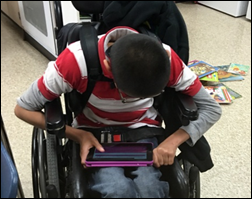


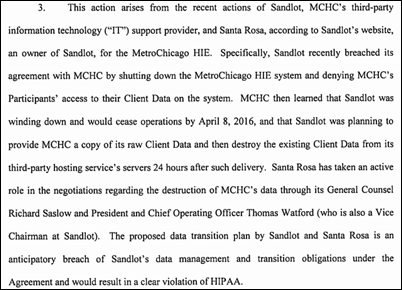





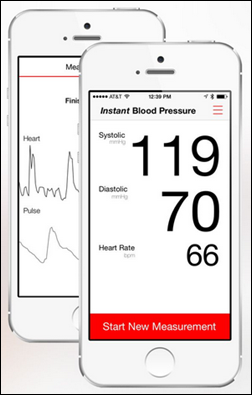

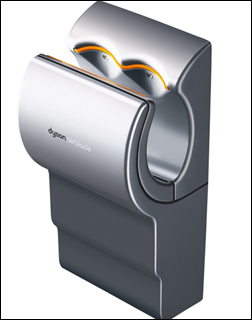






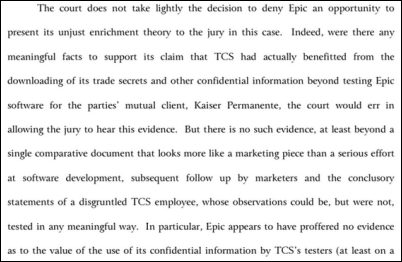



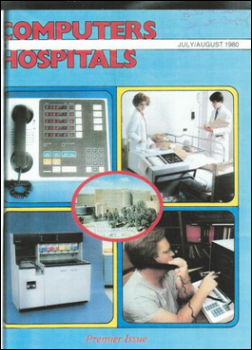
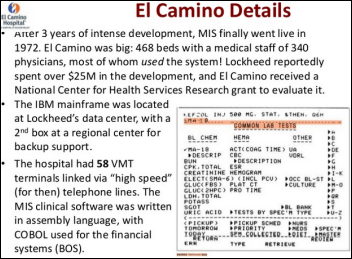

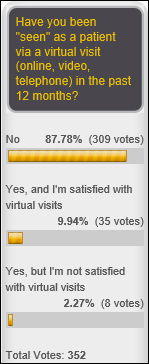





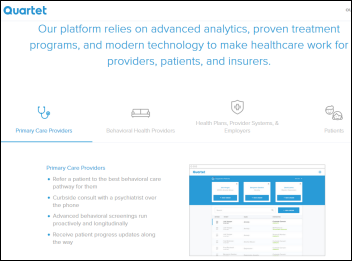


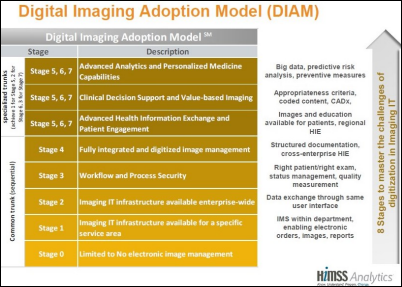

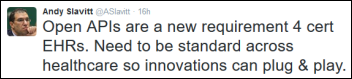




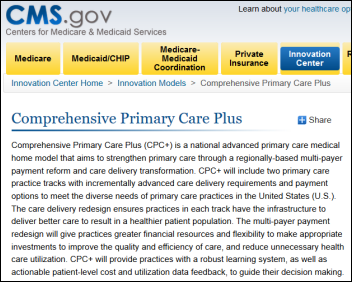


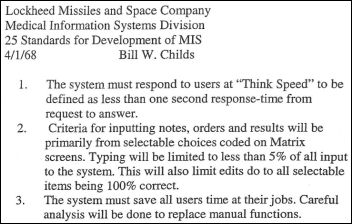












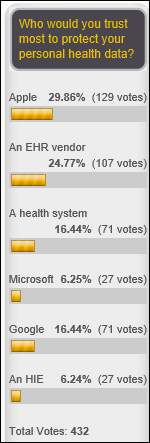







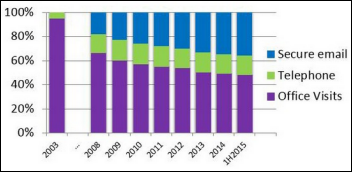










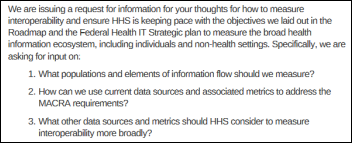






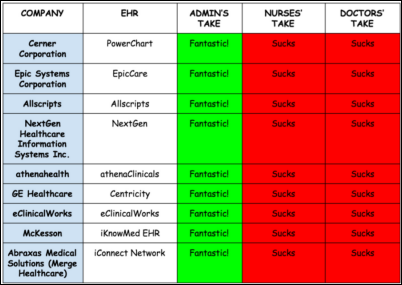

Re: Deliberately Faked Academic Papers in Nature See, this doesn't surprise me at all. Of course AI quotes these bogus…