HIStalk Interviews Curtis Watkins, CEO, Parallon Technology Solutions

February 15, 2018 Interviews Comments Off on HIStalk Interviews Curtis Watkins, CEO, Parallon Technology Solutions

Curtis Watkins is president and CEO of Parallon Technology Solutions of Nashville, TN.

image

Tell me about yourself and the company.

I’ve been in the healthcare IT industry since 1998 as a hospital IT director, vice-president of large corporations, CIO of a large health system, and deputy CIO of a very large health system. Most of my career has been on the provider side. I’ve been CEO for about three and a half years at Parallon Technology Solutions.

Parallon Technology Solutions is a healthcare IT services delivery firm. We provide EMR implementation, optimization, and full and partial IT outsourcing or managed services. We have a pretty big staff augmentation business as well, providing contract labor to health systems. Those are the three main pillars — EMR implementations, IT support, and staffing.

Is the mix of your business services changing because of provider consolidation or other new trends?

You certainly hit on one of them right off the bat. The acquisition and divestiture process, both of them. Somebody is buying something and somebody else is selling. Both sides of that equation are creating a lot of work, primarily in infrastructure refresh and EMR implementation as the hospital system is brought on board. We’re seeing a lot of activity there.

Another big shift has happened over the last couple of years. In the wild and woolly days of Meaningful Use and EMR implementations, everybody had a lot of money and a lot of incentive to implement these systems, doing it fast and at any cost. It was a pretty easy time to be in our industry. As those systems sink in and become important to operationally support, we’ve seen the costs in healthcare systems and healthcare IT shops dramatically increase. Especially if somebody’s going from, say, legacy Meditech to Epic or Cerner. It’s a lot of operating cost increase.

Over the last couple of years, uncertainty – about reimbursement models, the exchanges, and non-clarity from the Trump administration about where hospital reimbursement is going — has created a drawback on non-essential investment in hospital IT systems. The focus is on looking at the sustainability and cost of keeping IT running.

We’ve seen a lot of opportunity present itself. We’re having a lot of discussions with a lot of health systems about how to reduce operating costs, whether by some type of outsourcing or by creating some type of shared enterprise-scaled environment. Especially when you look at small hospitals or small health systems. We view that as a big opportunity. They just don’t have the levers to pull to get the most cost-effective support mechanisms in place.

Has provider technology innovation suffered as high EHR maintenance costs eat up an even bigger percentage of IT budgets as they are cut back?

Yes. I’ve seen a shift into haves and have-nots in the health system. The medium-sized health systems, small health systems, smaller hospitals, community hospitals — most of them aren’t thinking at all about population health or business intelligence. To the extent they can get that from their package vendors, sure, but they’re concentrating on operations and looking at broader uses of data and broader uses of collaboration. Interoperability and integration have taken a back seat. That’s not a universal, but in a large number of hospitals, they just don’t have the dollars to invest in those types of tools and the resources to run them.

Are health systems using more remote contract IT workers?

Yes. It’s one of the things that we do. A mid-sized or small hospital system can take advantage of economies of scale. Our central remote team can support several hospitals at once in a shared environment. Hospitals get greater expertise as their share of a high-level person who they need only once in a while.

We put together groups of hospitals, understand their operations, and support them remotely. We’ve seen people increasingly be OK with that, especially if the company has good communication tools and the ability to talk with customers and report on actual experiences and actual outcomes. It’s more a case of having a good view of how your providers are doing as opposed to having to have them right in front of you.

Elbow support has to be there, especially for end-user support or to manage the unique things about a hospital or a health system, but I think remote support continues to be important. People are getting more comfortable with it.

How will consolidation of providers and insurers affect health IT?

You’re seeing a couple of trends there. Health systems, in particular, are trying to vertically expand their systems with LTACs and urgent care to provide more of the continuum of care for a patient across their life cycle. Providers, health insurance companies, and drug companies are starting to merge to try to gain competitive advantage in areas where they have the economies of scale to do that.

It’s really interesting to see discussions about corporations like Berkshire and Amazon. What are they going to do there? What’s in their mind as big companies and corporations try to define some part of that healthcare experience and manage more of the cost structure associated with their employee health? That’s going to be interesting. It’s really about just gaining economies of scale or getting cost advantage via strength in numbers or via some kind of shared services approach.

Do you have any final thoughts?

It’s a great time to be in the industry. A lot of things are changing. I think the most important thing is for companies to be flexible, dynamic, and be prepared to meet the needs of the hospitals and health systems as they evolve. We are well positioned to do that.

Readers Write: It’s Time for Drug Price Transparency

February 14, 2018 Readers Write 9 Comments

It’s Time for Drug Price Transparency
By Stanley Crane

image

Stanley Crane is the chief technology officer of InteliSys Health of San Diego, CA.

EHR vendors face a tough challenge in deciding which new features to develop and integrate for their next release and which ones to leave on the cutting room floor. The benefits of each potential enhancement must be weighed against the costs, usually measured in programming time. Moreover, features required for Meaningful Use and MIPS must be included, making the triage even more difficult.

However, EHR companies are missing the boat if they neglect to add a feature that could have a massive impact on their clients’ patients. I am speaking here of prescription drug pricing comparisons, built directly into the EHR workflow of prescribers

We’ve heard a lot about drug price transparency lately. But the public discussion hasn’t come close to the truth.

There are vast differences in the prices pharmacies charge for the same drug from the same manufacturer within the same geographical area. For example, the price of generic Plavix (clopidogrel) ranges from $6.16 at one pharmacy in Aurora, CO to an amazing high of $150.33 at another pharmacy just a few steps away. That’s the equivalent of a gas station charging $72 per gallon for unleaded regular when a station across the street is asking $2.95. This is merely one of literally millions of examples of the absurd variation in retail drug prices.

Most doctors and patients are unaware that retail drug prices vary by so much. As a result, many patients go to the pharmacy, get hit with sticker shock, and walk out without picking up their medication. Others pay far more than they should for the drug because they’re unaware of widespread price variance.

A handful of companies now sell prescription drug price comparison tools directly to consumers. These haven’t had much impact, however. First, because not many people know about them. But also because it’s too complicated for the patient to move their prescriptions to another pharmacy.

Imagine how the situation would be different if a patient’s own doctor could tell him or her what their medications would cost at different pharmacies, regardless of whether the patient has insurance.

What our healthcare system needs today is a modern price comparison tool that is integrated with an e-prescribing tool, ideally within an EHR. The range of prices for a particular drug would appear on the prescribing screen within milliseconds of a physician selecting that medication. Using real-time pricing data from pharmacies, the software could show the cost of that drug at the closest pharmacies to the doctor’s office or the patient’s home or workplace. None of this information is available via EHRs on the market today.

Such a solution could use the patient’s insurance information in their doctor’s EHR, as well as search health plan databases to determine a patient’s out-of-pocket cost (after factoring in deductibles, co-payments, and out-of-pocket minimums). If the patient is on the hook for the cost — either because of a high deductible, high co-pay, or because he or she is uninsured –the software could show the cash price of the medication. It could also indicate whether the cash price is lower than the co-payment under the patient’s plan, ensuring that the patient pays the lowest price each time.

At the patient’s choice, the doctor could then send the e-prescription to the most convenient pharmacy that charges the lowest price for that drug. If the price is still too high for the patient, the software could automatically analyze the selected drug against therapeutically equivalent alternatives, enabling the doctor to prescribe a lower-cost alternative, again comparing the prices at local drugstores.

Transparency in prescription drug pricing offers several benefits. Patients are likely to have better outcomes if they fill their prescriptions and adhere to their prescribed therapy. Physicians can garner higher quality scores if their patients take their meds and control their chronic conditions. Lastly, if price transparency becomes widespread, some pharmacy chains will be forced to lower their prices to avoid losing customers to lower-priced stores or chains. If that happens, the whole system benefits, including patients, plans, employers, and taxpayers.

HIStalk Interviews Bruce Cerullo, CEO, Nordic

February 14, 2018 Interviews Comments Off on HIStalk Interviews Bruce Cerullo, CEO, Nordic

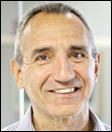
Bruce Cerullo is chairman and CEO of Nordic of Madison, WI.
image

Tell me about yourself and the company.

I’m a Boston-area guy, growing up in a blue collar Italian family. Hospital secretary mom, high school janitor dad. What they taught us, since they didn’t have any money, was the power of love, education, and service to others. I’m back in the game because when I got a look at Nordic, they have a mission of service in the healthcare IT space.

In the 1990s, I led a workforce solutions provider called Cross Country TravCorps that is in the nurse, physician and allied health space. It was all about finding really great people who had a mission to service and deploying them to clients that had a need. Then Vitalize Consulting Solutions in the mid-2000s — same mission, same modus operandi, good people, mission-driven, deployed at hospitals in the healthcare IT space.

I straddle the light and the dark sides, “light” being running companies and leading companies and “dark” being private equity investing. When I was wearing my black hat, I ran into Nordic and said, this company has an interesting take on the healthcare IT consulting space. The more I learned, the more I liked. I was lucky enough to be able to invest and assume the leadership chair. So here I am, I’m doing what I like to do.

Being from Boston, what’s your perspective on Madison?

As a family-oriented guy, it’s a really nice, family-oriented place. Madison, as I’ve learned, is driven by the intellectual capital of two hallowed institutions, the University of Wisconsin-Madison and Epic in nearby Verona. I used to be the young person in all my companies. Now I’m the old dude walking down the halls. Nordic is about 850 strong, which is fairly remarkable for a company that’s only seven years old, and most of the folks are under 40 and the big population are under 35. As a 58-year-old feller, I’m like, OK, it’s a young place, it’s a dynamic place with a lot of smart people.

I think there’s a social mission here. It reminds me a little bit of Cambridge, Massachusetts. Smart people trying to do good work, and in our case, trying to do good work in the healthcare IT consulting space.

What is changing in consulting now that the peak of EHR implementations is over?

The good old days of brute-force implementation have passed. Consulting firms rode that wave. Those like Nordic that have evolved beyond that into what our clients’ needs are today and hopefully tomorrow will continue to thrive and succeed.

Nordic was once a high-quality, Epic-focused staff augmentation firm. It has involved into what we like to call a customized end-to-end solutions provider. Which is a nice way of saying that we do a whole bunch of things along the continuum that leverage the EHR and to help our clients finally get to the promised land, which is a return on a significant investment. Whether it’s optimization, rev cycle, training, population health, data analytics, and managed services that follow, those are services that organizations that are going to survive and thrive, like Nordic, will have to be able to provide clients. That’s where their needs are today.

What characteristics of a company allow it to react to such a dramatic change in market demand?

As my mother used to say, “God gave you two ears and only one mouth for a reason.” If you listen to your clients, it’s remarkable what they’ll tell you. In the case of Nordic — and again, I’ve only been the leader for two and a half years or so — Nordic has always been really good at listening to what the clients’ needs are. That’s hard enough. Then having the courage to spend some money, because it takes money to make money, so to speak, to invest.

For example, our managed service offering. If you asked me a year and a half ago, should we spend as much building out a physical plant as we have? Would the customers be ready for it? It’s amazing. All of our customers have a mandate today to do more with less. To locate the Holy Grail of better quality at a lower cost, with happy patients and happy docs. To do that, they need to take their best and brightest staff folks to do the interesting work so they don’t lose them to a competitive hospital. They’re leveraging folks like Nordic to outsource the application support — very important, but less-sexy, less-interesting work to do. That’s one of the fastest-growing parts of our business. You see hospitals adopting strategies that, up to now, other industries have had in spades, but hospitals tend to be a little behind that curve.

What has changed as EHR vendors have deepened their hosting and IT services offerings?

Our work was changing, not necessarily because respected organizations like Epic are moving into the hosting space. They’re doing it for the same reasons that we are evolving, because the clients’ needs are evolving as well. Once upon a time, hospitals ran their own food service, laundry, and security. For very good reasons, they brought in partners who could do it theoretically better for less money. Now that they’ve spent tens or hundreds of millions of dollars on a very necessary investment, their EHR, they have to find ways to get full value from it and to reduce their ongoing operating cost. Epic is probably driven by some of the same business decisions that we are, and that is, what does the client need?

What impact have you seen from the tax law changes, including the possibility that individuals such as consultants might gain an advantage in billing under a 1099 arrangement instead of being a consulting firm’s W-2 employee?

I would say nothing directly yet. We are employee-owned and we’re privately equity-backed. That’s part of Nordic’s special sauce. All of our employees become owners of the company through our employee stock option plan or our consultant equity participation plan. What a concept — if you want someone to act like an owner, you’d better treat them as an owner. All of our folks have a vested interest in our clients’ success, because if our clients succeed, in theory, we grow. At the company level, we’re not doing anything different because every free dollar of cash that we generate, we’re plowing back into evolving our model.

We offer a “freedom to choose” employment model, which is very different than the Big Sixes or the Big Fives, whatever they call themselves these days. The international outsourcers and the Big Sixers tend to have an employed model. We offer our consultants the opportunity to be employed “in a permanent capacity.” We offer what we call fixed-term, temporary engagements. But in both of those cases, they are our W-2 employees. The people who would be most impacted by the tax law change, the independent consultants who are either 1099 or what we call corp-to-corp, are a very small percentage of our population of people and that’s by design.

What was your reaction when Tech Mahindra acquired The HCI Group? What does it mean when a big conglomerate from India buys a US healthcare IT consulting firm?

I’ve spent a good part of the last 20 years investing in companies. I’ve never had an original idea, but I’m pretty good at picking good people with a pretty good business idea. Since life is too short to work with a-holes, the “good people” part of the equation matters a lot and the work that they do matters a lot.

Most of the time, when the big gobble the medium-to-small, over time what made the medium-to-small special tends to go away. The history of healthcare IT landscape is littered with firms that were very special in their own right and became less so when they became part of somebody else’s business model.

It’s not surprising to me that the international outsourcers would like a real stake in the US healthcare IT game. It’s a pretty gigantic pie. Some of what has made them great in other sectors will make them a formidable competitor to a Nordic-like organization in healthcare.

But at the same time, how many firms have tried to get into healthcare — whether it’s Google or Microsoft or whoever — and realized, oh, it really is different? As our esteemed President said, “Who knew healthcare was so complicated?” I understand why the international outsourcers are interested in firms like HCI. Having been at this game a long time, we are choosing an independent, US-focused path.

As someone who has been both a leader and an investor in the health IT market, what are the most interesting things happening in it?

It is a time of convergence. You’ve got technology converging with infrastructure converging with innovation and converging with human collaboration. To find that Holy Grail of healthcare, which is higher quality, lower cost, happy patients and docs.

But what people forget is that convergence happened because Uncle Sam spent money and Meaningful Use dollars. The functionality of the major EHRs — Epic, Cerner, and Meditech are the three survivors — would not have happened without them. But people are really quick to criticize either the Meaningful Use Program and/or the leaders of these important EHR vendors.

The reality is, without the money and the innovation, we wouldn’t be where we are today. Health systems have what they need to develop credible digital health strategies. Up to now, you could talk it, but you couldn’t necessarily walk it. So I’m bullish. It’s that time of convergence. Finally, the CIO and the CMIO, arguably, have a real seat at the table. I get chest pain when I think of their jobs, because for them to be successful, patients, family members, clinicians, and hospital employees have to be happy. How’s that for pressure?

Summation Health Ventures is a private equity firm in LA that is funded by MemorialCare and Cedars-Sinai. MemorialCare is Scott Joslyn, the CIO there, and you know Darren Dworkin. So Darren Dworkin, the CIO at Cedars-Sinai, Scott Joslyn, and their respective CEOs have formed their own private equity firm. That’s how much convergence has occurred. You have hospitals that are not only driving innovation, but actually funding it. That’s exciting.

I’m associated with a Boston-based firmed called SV Health Investors. SV probably gets 20 business plans a month. They’re from some really smart people with really innovative ideas that a client would never spend the money on. But if they then called Summation to say, “What do you think?” and if Darren or Scott say, “Hey, great idea,” then that’s where the decision should be made. Because great ideas are great, but if no one will pay for them, you’re not going to be in business very long.

That’s a real-life example of how much convergence is occurring in healthcare. I think it’s good. We’re finally at a point where we have what we need to try to advance the cause. That’s why I got back in the game.

Do you have any final thoughts?

Actually, with your permission, I’d like to promote something that is very important. I don’t know if you’re aware, but CHIME has formed an Opioid Task Force. I’m a volunteer with that organization and I’m trying to raise its profile. The effort is being led by who I consider a very courageous guy in Ed Kopetsky, who’s the CIO at Lucile Packard Children’s. He lost a son to an overdose just a couple of years ago. He’s trying to turn a bad thing into a good thing.

Jim Turnbull, who’s the CIO at the University of Utah, and Russ Branzell, who’s the CHIME lead, came together and said, “Hey, CHIME Foundation members — what can we do as a group that’s uniquely qualified in the IT space to try to help combat this scourge?” Fifty or 60,000 people die every year of opioid overdoses. It’s like the Vietnam War every year. My thought is, to the degree that there are folks who read this interview who have a special talent, treasure, or time on their hands who can help us, we’re still looking for a few good people to join. We would love for them to reach out to the folks at CHIME to volunteer their interest.


News 2/14/18

February 13, 2018 News 13 Comments

Top News

image

The White House’s budget request would give the VA $1.2 billion in FY2019 funding to begin its Cerner implementation, broken out as $675 million initial payment for the Cerner contract, $120 million for program management, and $412 million for infrastructure support (which includes VistA modernization).

Cerner has apparently passed the third-party review of its interoperability capabilities that was holding up contract signing. The VA says it expects to finish the deal within three weeks.


Reader Comments

From Informatics MD: “Re: AI in radiology. We pre-process CT scans using deep machine learning, imaging analytics, and clustering optimization techniques to look for evidence of strokes. If suspected, it re-prioritizes the PACS worklist so that the radiologist reads the suspected film sooner. This is particularly useful with ambulatory diagnostic imaging since the time from study to read can be longer than in the acute setting.” That’s pretty smart to use AI to move images of suspected stroke patients to the highest radiologist priority.

From Alababa: “Re: Craig Richardville SVP/CIAO of Carolinas HealthCare. Has left the organization.” Unverified, but his bio has been removed from the executive page. UPDATE: a spokesperson from the newly renamed Atrium Health confirms to the Charlotte newspaper that Craig no longer works there.

From Moody: “Re: HIMSS. I’m going for the first time. As a hospital employee, how should I plan?” Just off the top of my head:

  • Arrive at least a day early to avoid the starter’s pistol rush of all the other badge-wearing attendees on the first day.
  • If you don’t arrive early, do anything you can to avoid the airport cab line and the inevitable two-hour wait.
  • It’s Las Vegas, so if you haven’t been there, be prepared to be shocked by the sleaze but intrigued by the tricks and big data analysis those billion-dollar hotel casinos use to keep people losing money while thinking they’re having a great time.
  • Prepare to be overwhelmed with the amount of advertising real estate HIMSS sells – on escalators, floors, buses, and just about any item someone hands you. All of that contributes to ridiculous healthcare costs, but in the vendors’ defense, it apparently works.
  • Dress comfortably, not to impress. You won’t be impressive by Day 2 when you are hunched over and limping from walking 10 miles in stylish but uncomfortable shoes.
  • Housing choice is up to you, but I always VRBO a house or condo instead of shoehorning in with all the other badge-wearers in the conference hotels. It’s a cheap Lyft ride to the convention center. It probably costs a bit more unless you share your space, but decompressing away from the HIMSS herd is worth it, plus you aren’t stuck eating overpriced, unhealthy food and being forced to mingle everywhere you turn. Otherwise, especially if you lean toward introversion, you will find yourself sitting on the floor of unused corners of the convention center just to get some quiet.
  • Expect to see only 5 percent of what’s going on. Study the program guide ahead of time to identify the potentially most valuable 5 percent. Even then, expect to be disappointed.
  • Skip the keynote sessions. You can read about them even before they happen since HIMSS puts a recap from the speaker’s draft in the daily conference rag.
  • Ask fellow attendees what they found valuable to see in the exhibit hall or have them message you if there’s a really good session underway that you can crash.
  • The exhibit hall provides educational polarity. You can learn a lot there, but you can also waste a lot of time that could have been better spent elsewhere instead of just wandering around aimlessly.
  • Walk out on any session that under-delivers and find another one. Or, skip them all and just read the slides or listening to the recordings afterward (they’re included in your registration)
  • Don’t attend any educational session that features a vendor employee as a presenter.
  • Talk to peers. The biggest HIMSS takeaway is often the relationships built there.
  • Don’t treat the conference as a vacation blowout. Your employer is paying for your education, not to sleep in after over-imbibing.
  • Don’t schedule time with a vendor. It is incredibly inefficient to be clock-watching the time you need to start walking miles to visit a vendor’s booth at a pre-arranged time. You’re the prospect – they will make time for you when you show up.
  • Flip your badge over backwards if you want to walk around in the exhibit hall unmolested.
  • Take your badge off as soon as you leave the convention center to avoid looking like every other HIMSS conventioneer zombie wandering around on the Strip, an easy target for scammery and ridicule by decidedly low-brow, non-HIMSS visitors.
  • Don’t leave the conference thinking that you or your employer are under-accomplished compared to what you heard and saw, most of which was BS. It’s like loud-mouth Las Vegas gamblers – they will crow endlessly about their big win while failing to disclose the 100 losses that left them well into the red.
  • Write up what you learned for your boss who had to approve the cost of your trip or offer to share your new knowledge with your team who didn’t get to go.
  • Marvel at the fact that, like monstrous hospital buildings, the excesses of the HIMSS conference serves as a reminder that US healthcare isn’t something we selflessly do for each other as empathetic humans but is rather an enormous, impersonal business that makes a bunch of people very wealthy and a far greater number of people very poor.

HIStalk Announcements and Requests

image

I finally got around to looking into encrypting the site, which is becoming the standard across the Web. That’s done – SSL encryption is in place, so your browser will indicate “https” and will show the closed lock in the address bar. As a reader notes, you can now enter a comment without wondering if your employer might intercept it (so hey, might as well).


Webinars

February 14 (Wednesday) 2:00 ET. “Time is Money: Aurora Health’s Journey of Implementing and Advancing Cost Accounting.” Sponsor: Strata Decision Technology. Presenter: Patrick Nolan, VP of finance, Aurora Health Care. Aurora Health Care’s implementation of Strata’s Decision Support module involved not only building an improved cost accounting model, but improving the process to engage a cross-functional team in cost development. It now has accurate, consistent cost data to support decision-making. Aurora’s next phase will be to use actual procedure and visit times to allocate costs. This presentation will provide a detailed view into both the implementation and future direction of the Strata Decision Support program within Aurora.

Previous webinars are on our YouTube channel. Contact Lorre for information.


Acquisitions, Funding, Business, and Stock

image

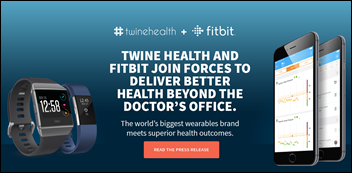
Fitbit acquires app-powered health coaching provider Twine Health, hoping to tie Fitbit’s wearables into the management of chronic conditions. Or perhaps the synergy involves two companies that eschew the use of properly capitalized words in their logos. Twine Health had raised $10 million in funding.

image

A Wall Street Journal report says Amazon will expand its Amazon Business program to sell medical supplies to hospitals and clinics, sending shares of McKesson and other wholesalers down sharply. Amazon could make a fortune shorting stocks in sectors that it then rumors it will enter.

image.

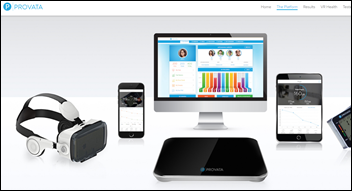
StayWell, a population health management and patient education technology vendor owned by drug maker Merck, acquires Provata Health, which offers lifestyle and chronic disease management apps. Provata Health raised a single funding round of $1.4 million from NIH in August 2015 and doesn’t seem to have done much since mid-2016 except try to create a virtual reality meditation product. StayWell acquired health app vendor MedHelp in October 2017.

image

Cerner files its employment agreement with new Chairman and CEO Brent Shafer with the SEC. He gets $11 million in stock options, a $4 million stock option grant, a one-time grant of $3.7 million in restricted stock units, use of the company’s jet, relocation expenses, $800K in annual salary, and a $1.2 million annual bonus target. His golden parachute calls for two years’ worth of salary, average bonuses, and health insurance coverage.

California launches an investigation into Aetna following the testimony of a former company medical director that he never looked at patient records when deciding to approve or deny care. He added that he had to make decisions about medical conditions that he knew little about. Aetna says its clinical review process is sound and the medical director’s job is to follow the company’s Clinical Policy Bulletins in reviewing the medical records that it must obtain manually from patients and doctors. The former medical director says nurses reviewed the patients’ records and gave him recommendations that he managed online without ever calling the nurse. He is amply credentialed, however (now running a one-person family medicine practice) so I imagine he was doing exactly what Aetna expected or ordered.


People

image

Clinical trials technology vendor Bracket hires Mike Nolte (Influence Health) as CEO.


Announcements and Implementations

SNAGHTML1c883c95

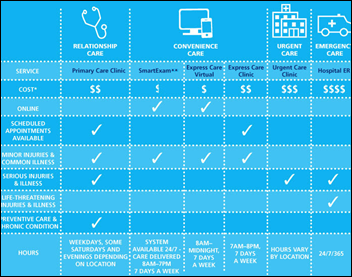
Providence Health & Services will offer its patients and health plan members in Oregon online exams for non-emergent conditions, with patients who complete an online questionnaire receiving an emailed treatment plan within one hour. Providers respond seven days per week between 8 a.m. and 7 p.m., with the encounter covered in full for health plan members or $20 otherwise. The technology is provided by Bright.md.

image

Providence Express Care created a great graphic explaining its care options, including the new SmartExam.

A Black Book report looks at EHRs across 23 countries in a 7,500-respondent survey, finding that:

  • Most international users say their systems lack connectivity with other providers and question whether the definition of an “interoperable” system even exists.
  • More than half of respondents in Europe, the Middle East, and South Asia plan to move away from siloed EHRs to more US-style offerings that include data exchange and care coordination.
  • Countries being held back by a lack of national infrastructure, policy, funding, or privacy rules include Japan, China, Qatar, Brazil, Taiwan, India, and Russia. The best-positioned ones include New Zealand, Denmark, Israel, Singapore, and Netherlands.
  • Top-ranked vendors include Allscripts (South Asia, UK); Cerner (Oceania, Middle East); InterSystems (Nordic Europe), ChipSoft (Western Europe); and Orion Health (Canada); Everiss NTT Data (Latin America), and Neusoft (China).

image

Lancaster, PA-based Connexion Health launches its walk-in, touchless, app-powered health assessment kiosk. According to its website, the kiosk “uses advanced AI to integrate a myriad of sensor data streams that independently would be incoherent. It syncs data derived from a laser, multiple cameras, IR, and microphones to provide incredibly precise analytics. More importantly, Connexion OS apps can enhance their capabilities with a unique, proprietary AI that allows them to guide people to better overall health outcomes.” The company was incubated by AI-focused Aspire Ventures. Target markets are sports teams, employee health, and healthcare providers.


Government and Politics

SNAGHTML1ca70b5c

The White House’s proposed budget and HHS’s budget request document contain some interesting line items:

  • ONC’s budget would be cut from $60 million to $38 million, with its focus being interoperability and provider burden reduction.
  • HHS OCR would see its budget reduced from $39 million to $31 million.
  • Medicare and state Medicaid would be given some ability to negotiate drug prices
  • Post-acute care provider costs would managed with a payment system based on clinical needs rather than the site of care
  • Off-campus, hospital-owned physician practices would be paid at the same rate as other practices.
  • Prior authorization would be required for physicians who order services in excess relative to their peers.
  • The Independent Payment Advisory Board would be repealed.
  • The reporting burden and arbitrary requirements for use of EHRs would be eliminated.
  • MIPS reporting would be simplified.

Other

A 2,000-respondent healthcare leadership survey sponsored by Change Healthcare finds that 80 percent of payers are addressing social determinants of health for their members. Half of respondents think lack of digital health tool adoption is caused by security and privacy concerns.

China’s Ping An Technology describes the healthcare-related AI projects it is working on:

  • Interpret CT scans to reduce workload and improve accuracy
  • Use facial recognition for patient identification to reduce fraud and to allow patients to grant access to their medical records.
  • Use facial recognition for clock-in of healthcare workers to reduce fraud.
  • Create a vaccine record app for people in poor and remote areas that uses facial and voiceprint recognition.
  • Develop intelligent disease prediction and screening models.

Jay Rath pens a “Valentine for HIMSS and HERSS.”


Sponsor Updates

  • Huntzinger Management Group will expand its cybersecurity support in a partnership with Delta Risk.
  • PerfectServe will integrate its team collaboration platform with QGenda’s physician scheduling software to accurately deliver calls and messages.
  • Vocera delivers its one millionth Badge communications device to Memorial Sloan Kettering Cancer Center.
  • Besler releases a new podcast, “How Hospital-to-Hospital Transfer Policies Impact Billing and Coding.”
  • CarePort Health CEO Lissy Hu, MD will present at the CHA Post-Acute Care Conference February 16 in Redondo Beach, CA.

Blog Posts


Contacts

Mr. H, Lorre, Jenn, Dr. Jayne.
Get HIStalk updates. Send news or rumors.
Contact us.

125x125_2nd_Circle

HIStalk Interviews Michael Barbouche, CEO, Forward Health Group

February 13, 2018 Interviews Comments Off on HIStalk Interviews Michael Barbouche, CEO, Forward Health Group

Michael Barbouche is founder and CEO of Forward Health Group of Madison, WI.

image

Tell me about yourself and the company.

I’m a husband and I’m a dad. We have three kids. If you have answers on managing teenage social media, I would appreciate it. My wife is a practicing general internist. I run a company based in Madison, Wisconsin named Forward Health Group. We’re in the analytics space. Some might call it population health.

Our solutions work. I’m proud to say to you and to your readers that we have the platforms that today are helping to fix healthcare and deliver the outcomes that all stakeholders are seeking.

Has interest in the company increased following the recognition in KLAS’s recent population health management technology report?

You bet. Let me state a foundation point for this company. We look at the market and say, these EHRs are important. We need to build upon them. We need to make them successful. A big driver for us was always around clinician engagement. We saw clinician trust as this gateway to the ACOs and to the hospitals.

I can’t sugarcoat it. This is going to be an amazing transition for all of us in the US healthcare system. We will go through a reimbursement change. The feedback we’re getting, though, from groups like KLAS that you mentioned, affirms what we’re seeing. Our clients are having success. They are able to pioneer in their markets where they want to go. We love it. It’s great.

We have this energy-filled relationship with every one of our sites. We say, what are we going to solve today? What are we going to go after? The challenges that they face – other than the normal ones on the financing side and on the growth side – are still around the same things we’ve been talking about – the data. It’s messy. What do we do with our technology? How do we get it into the workflow?

The KLAS report validates, and certainly our experience with our clients reveals, that we’ve helped them figure that out. We have helped them figure out how to maximize – in their world, their own pieces – how to do this right. How to do this efficiently. How to have a strong impact on the outcomes of their patients.

What does that mean in real life?

We have this long-time client – a very rural delivery network, poor, underserved populations, lots of challenges. Sparse access to specialists, scant resources to hire additional staff. It’s the sort of system you might not expect to become the poster child of EHR success. The EHR is truly working for the care teams, not the other way around. As one of our physicians at this site always says, “We count the things that count.”

We installed PopulationManager three or four years ago, and because of very clean data and clinician-understood analytics, they’ve advanced their key metrics through the roof. Colorectal cancer screening almost doubled to over 60 percent, which if you do the math on a largely rural, mostly African-American population, greatly reduces the risk of colon cancer. That’s a lot of prevention in the population when there is limited access to screening services.

It goes on. Greatly improved pneumococcal vaccine rates, but also diabetes control, hypertension control, and more. They’re doing all this by leveraging the data we deliver to improve the data capture and the workflows in their existing EHR platform. They are making such a difference in patients’ lives. That’s pretty cool.

The KLAS report concluded that EHRs aren’t very good at population health management. As a not-huge company, how do you use that information to find new business?

The first thing that I would say to any prospect is, what data are we talking about here? Invariably they’ll speak about an EHR or two or three. But what’s so powerful for many of our clients today is claims data.

I’m an old claims guy from the 1990s. I was a shaggy-haired data guy running claims data. Claims data is enormously important to every health system, but they don’t know how to use it. It’s so important. We’ve naturally expanded to the health plan market because they’re sitting on this untapped asset of rich data.

We say to any prospect, look, you can’t get there, anywhere, with just one of those buckets of data. The EHR is rich. It’s enormous. It’s a data source unlike any we’ve had. But if we don’t bring in other clinical data, other outside labs that you haven’t yet interfaced, and, most of all, if you haven’t brought in the claims data, you’re not going to get anywhere.

The value proposition for us is straightforward. Let’s talk about your market opportunities. Talk about your market pressures. We weave together clinical and claims so we can make sense of their performance in a manner that they can leverage the data, take action, and ultimately drive outcomes.

Our initial focus in this market was around harvesting, curating, and presenting very clean, very trusted clinical data. But in the back of my mind, we were not maximizing claims data. We would incorporate claims into our builds and populate measures and metrics for our clients based on claims data as a source, but there was a richer solution to uncover.

Beginning in 2012, we began to sketch out a new path for claims data. The move to value-based reimbursement, no matter the final form of any CMS program, would place a richer emphasis on the performance and really the behavior of the clinical network. Think of where the country has spent the last 15-20 years building out the revenue cycle. Value-based care and contracting requires an x-ray vision lens on how that network is actually behaving, where the inefficiencies occur, where the care is not coordinated.

We built that x-ray vision. In 2017 we softly launched a very cool new visual platform that addresses the problem of our time. Whether you want to call it leakage, or keepage, or steerage, it is happening. We view this as a lens on the patient’s care journey. We named the platform PopulationCompass because so much of a patient’s care journey occurs outside the four walls of their PCP’s clinic. Which also means the care is often outside of the PCP’s EHR. Your clinically integrated network’s flows, in and out, come into very clear visual focus. Risk-bearing delivery systems are going to need a compass to find their way around out there.

Do you think providers know how sloppy their data is and how hard it is to move it around in a meaningful way?

I cannot begin to tell you how eyes have opened in the last three or four years. Years prior, we had some intuitive tools, some beautiful visualizations that were basic and simple. I call them poor man’s QlikView. We thought the user was a medical assistant or a nurse or whatever.

But now you can’t get into a conversation with any system without immediately being challenged on data quality, data completeness, and other data integrity things. When we first started hearing those questions in the field, we were jumping up and saying, “Hey! Who told you about all of our speaking points?” It’s wonderful. It’s refreshing. We teach all of our clients about data quality. Teach them about this beautiful asset in their electronic record and say, we’re going make this thing hum.

We’ve got sites — and I’m just tickled by this — visited by the NIH and CDC so they can learn how they’ve improved outcomes so quickly. Trying to learn so these big organizations can help the country learn to maximize health IT. They say, how the heck are you screening this many people in this rural area where there’s no access to colorectal cancer screening? Well, for some of our clients, we have mapped 187 different nooks and crannies where we can find a hit on a colonoscopy or a FIT test or what have you in their EHR. And that number will only go up. We’re weaving in data from the three different health plans to say, somebody was screened over here at this other hospital. “You need to get that properly registered in the patient’s record in the EHR.” Continually helping them narrow in on this smaller and smaller cohort of patients that they need to target and that they need to bring in.

It’s refreshing and exciting as heck to have a prospect challenge us and say, “You know what, buddy? Our data’s a stinking mess. How are you going to make sense of it?” That’s where we stand up and thrive.

Where do you think we are in the trajectory to value-based care?

We’re in a period that we haven’t had for quite some time. I will call it a period of the least uncertainty we’ve probably had in 10 or 15 years. The move to value is certain. The path to value is fraught with unknowns.

I can tell you candidly from my observations from working in multiple markets that the delivery systems, the health systems are not at the forefront. They’re struggling with this. It’s difficult. And by the way, they’re still making too much money on fee-per-service. So what do they need to change?

We’re seeing more and more that market pressures are being introduced. Health plans are getting more anxious and getting more involved. We’re involved in numerous incentive programs, Medicaid waivers, and other market shifts. The pressures are growing, but the delivery systems are not making rapid progress.

This is probably the most exciting time that we’ve ever had as a company. We are now positioning every one of our clients to take action. We tell them, “You don’t get to wait around. You signed up. Now step up. We’re working together. We’re going to play offense here. We’re going to be the aggressor.”

We have clients that are meeting with the biggest of the big, hairy health plans, the scariest national ones of all. And saying, “Hi, I’m from an FQHC and I want to set incentive terms with you.” Do you know what the response is every time? “Let’s meet quickly.”

We tell the health plans that the gating item is the claims data. Send us the claims so everyone can go to the meeting and talk to about how attributions are all screwed up. About how assigning a bunch of patients in a vacuum isn’t working. About how prior auths are occurring in all the wrong places. And by the way, these are the quality incentives that we should be looking at. And by the way, these are the diabetes patients both sides should support and the health system needs your help managing them.

What we see right now is a window, probably three to five years, where health systems can call a meeting with their health plan partners, roll up their sleeves, and say, let’s do this together. Let’s sit at the table. Let’s talk about what our priorities are. Let’s figure out how to coordinate the improvement journey.

Will the announced healthcare cost reduction focus of Amazon, Berkshire Hathaway, and JPMorgan struggle with getting data out of potential partners?

I’m a Minnesota native, I grew up in the Twin Cities. I went to grad school there. The Minnesota Business Group on Health was talking about this stuff in the early 1990s. I welcome it. I’m excited.

Tell the Amazon folks they should give us a call. We’ve solved it. We want to visit with them and tell them how to do it. JPMorgan as well will be very interested. This is an important event, along with the craziness about Apple’s recent announcement, which isn’t so crazy. The data is still a mess and we’re not aggregating the data and using the data to drive decision-making to drive the markets.

The Amazon, JP, and Berkshire announcement represents a stake in the ground, a shot across the bow to a lot of the incumbent analytics players. The reports you’ve been sending them in the three-ring binders? They’re not right. We can tell you they’re not right, because when we look at the data and we peel it back, we are able to identify risk and identify exposure in a way that says, “This list right here of 61 people? That’s what you guys need to be working on.” Anything that helps us see the purchasers exert more and more interest and influence in demanding outcomes is for the better. I’m glad they’re here.

Do you have any final thoughts?

We’re optimistic about the future for our clients. We’re excited that they have the opportunity to go after change in this value world and do what’s right for their organizations. And, do what’s right for their insureds or their patients and have at the forefront a focus on improving patient outcomes.

We’ve known for decades that we need to go there. We’re excited to see that happening, day after day, for all of our clients.

Curbside Consult with Dr. Jayne 2/12/18

February 12, 2018 Dr. Jayne 1 Comment

I was heartened this week to see the American Academy of Family Physicians engaging with ONC in an attempt to “reduce clinician burden from health information technology.” AAFP has been meeting with CMS and ONC as part of the Patients over Paperwork initiative, and submitted what amounts to a wish list of items to discuss at a follow-up meeting later this month.

The letter opens with commentary about the regulations that physicians are subject to are “daunting and often demoralizing.” AAFP cites lack of standardization among payers, whether public or private, as a significant challenge.

The letter cites family physicians as possibility participating with 10 or more payers, which is a significantly smaller number than what we see in our community. In my family medicine heyday, I was contracted with nearly 35 payers, including Medicare and Medicaid for two states. Just the credentialing paperwork alone was mind-numbing, and the actual paperwork that needed completion to actually care for patients was soul-crushing. Every plan had a different pre-authorization form, certification process, and appeals framework. Although I was part of a large health system, my personal office staff spent a significant amount of time dealing with it since we had no centralized resources to assist.

AAFP refers to their wish list as “consensus principles on administrative simplification” and many of them seem like common sense measures. First, they call for CMS and ONC to work with Congress to reduce the reliance on healthcare IT usage measures. Their point is that programs such as MIPS are already measuring quality, cost, and practice improvement, so measuring the usage of IT systems is no longer necessary. AAFP calls for policies that mandate health IT use to be assessed to identify “evidence of benefit and burden in real-world practice prior to their implementation.”

I agree with this request wholeheartedly. Many of the requirements found in these programs seemed like a good idea to the people who designed them, but when they’re placed into practice, they fall flat. An example is the requirement that physicians send certain percentages of prescriptions electronically, including controlled substances. There was no corresponding requirement to mandate that pharmacies update their systems, resulting in delays for physicians who wanted to use the technology and frustration for those whose service areas didn’t have adequate pharmacy adoption. Requiring certain numbers to be met also doesn’t take into account the preference of certain patient populations who want a hard copy of the prescription to take with them.

Many of my older patients didn’t trust electronic prescribing or had experienced delays or misadventures with it previously, and simply wanted paper prescriptions. Even if I tried to e-prescribe and then print a backup copy for the patient, the way our EHR calculated the transactions, I would still be on the hook for a printed prescription. Meeting my patients’ needs and preferences for care put me at risk for a penalty, which just seems wrong.

One of the more hot-button requests in the AAFP letter is a request that the CMS Documentation Guidelines for Evaluation and Management Services (E&M Coding) be overhauled. It notes that, “adherence to E/M Documentation Guidelines consumes a significant amount of physician time and does not reflect the workflow of primary care physicians.” They cite the creation of the Guidelines for the paper world as being part of the problem, and that the Guidelines don’t take into account how EHRs support care and documentation.

They go as far as asking that guidelines for new and established office visits be eliminated for primary care physicians. That’s certainly a big ask and personally I don’t see it happening, but I’m glad they’re trying. I’d love to see the guidelines at least modified to allow for different types of documentation to “count” for coding points. For example, when my patients come in with rashes, I’d love to be able to drop in a couple of pictures of the rashes and call it a day rather than trying to find the right checkboxes to click to try to describe a rash in a way that may not convey what I saw. Under the current requirements, I can drop that photo in, but I still have to use words in order to get billing credit.

My favorite request in their list is a request that the Medicare Program Integrity Manual be updated “to allow medical information to be entered by any care team member related to a patient’s visit” and that it be changed across the board for all Medicare contractors, Medicaid programs, and private payers. We’ve been living in a world with arbitrary boundaries where staff can document the Review of Systems but not capture any History of Present Illness (HPI) data, even if the patient volunteers it. Of course, this is if your employer follows a strict interpretation of the rules, which many do. Other practices may allow staff to collect HPI data and have the rendering provider review it, which saves time and effort, but I see that less commonly.

The original E&M guidelines also don’t fully address the requirements of patient documentation when scribes are used, and whether documentation can be performed differently depending on the training and education of the scribe. For instance, if I have a registered nurse scribing for me, I may get more detailed documentation than if I have a less-trained scribe, because the nurse may pick up more specifics from my descriptions. A patient care technician might enter my statements verbatim (I often speak in lay terms to patients when I explain their exam findings) where a nurse may translate these descriptions to accepted medical terminology.

AAFP also calls on CMS and ONC to go after those who are guilty of information blocking. Administrators, listen up: when you’re ready to go after some major health systems, give me a call. They’re the biggest offenders in my metropolitan area and the EHR vendors don’t have anything to do with it. It’s all about controlling your referrals and managing your ACO and not about enabling patient choice or sharing of clinical data. Too bad there’s not a whistleblower clause since  maybe I could retire early.

The letter evokes the myth of interoperability, where many of us are exchanging reams of irrelevant information that we don’t have time to wade through. Even though I haven’t been a family physician for years, I still appear in many patients’ records and receive C-CDA documents on a frequent basis. Most of them are unintelligible, and one local hospital is guilty of including every medication the patient has ever been on, which I imagine makes medication reconciliation nearly impossible for the receiving party.

The letter notes the need for consistent data models created by clinicians rather than by legislators or software engineers. I deal with several EHR vendors that don’t even really have a data model of their own, which is amazing to me in this post-Meaningful Use age. When data comes in from another vendor, it creates a mess that is hard to sort out and adds considerable junk to the patient chart. It also notes the need to continue to harmonize clinical measures, so that physicians don’t have to report data that is similar but not identical to different payers.

Other factors mentioned should be no-brainers in this day and age, such as removing the need for physicians to fill out new forms for items like diabetic supplies when a patient switches brands. Especially if we are trying to allow patients to be empowered and make choices about cost of drugs and supplies, having to write for “WonderGlucose Harmonious Precision Extra” as opposed to “glucometer test strips” is silly.

The letter closes with a request for CMS and ONC to reach out to Steven Waldren, a family physician who is the Director of the Alliance for eHealth Innovation. I had a chance to meet Dr. Waldren a couple of years ago at HIMSS and he’s a knowledgeable physician with a good head on his shoulders. For some reason, however, I don’t suspect that his phone is ringing off the hook with regulators asking how they can help. I’m interested to see if other specialty organizations follow suit and whether we see any changes.

What would you do with your free time,should E&M coding be eliminated? Email me.

Email Dr. Jayne.

HIStalk Interviews Lissy Hu, MD, CEO, CarePort Health

February 12, 2018 Interviews 4 Comments

Lissy Hu, MD, MBA is co-founder and CEO of CarePort Health of Boston, MA.

SNAGHTML17ad83ae

Tell me about yourself and the company.

I started the company as I was pursuing a joint MD/MBA at Harvard. I had always been interested in healthcare, but I became very interested in some of the more foundational problems around healthcare. I was in the hospital. I was seeing patients get discharged and come back in 30 days from nursing homes, where we had no visibility into the quality of care. All I knew was that there was a lot of variation in quality of care.

I left medicine to build CarePort to address some of the variations in post-acute care, to help patients make more informed decisions about the types of care that they can choose from. Also, to provide more visibility to their caregivers as they transition, often multiple times, across different nursing homes, home health agencies, and hospices. A lot of people,  even in the healthcare industry, don’t realize that these settings are an integral part of the healthcare system.

From the hospital’s point of view, what are the most common transitions of care to post-acute care settings and what challenges do patients and families experience?

Patients get very little information about their post-acute care options, of which the two most common are skilled nursing and home health. Generally what happens in a hospital is that someone hands you a list of names and addresses and you have to pick. The case managers who are supposed to be guiding you are hamstrung by the vagueness of regulations around how they can get involved in patient choice. They are afraid to recommend one provider over the other. That’s something they really can’t do.

For a long time, we didn’t have much information about the quality of post-acute care providers. Patients were making important decisions literally based on just a name and an address. Most of them were choosing purely based on geographic proximity.

What you see in the Medicare data is that there is huge variation of quality of post-acute care providers. Just to give you one example, the average home health 30-day readmission rate is around 28 to 30 percent. But when you look at the bottom quartile of providers, it can be double. Even after you risk-adjust for different patient populations and all of that, you still see variation. It’s important when patients and families are making these decisions to think carefully and to have that information, because it can have a big impact on their recovery course.

What accountability do hospitals have for what happens when the patient moves to a post-acute care setting?

For a long time, there was no real accountability. In a fee-for-service world, you’re focused on throughput and trying to get your patients out in a timely manner. People started to think about post-acute care with the advent of readmission penalties. As we’ve moved toward bundled payments, accountable care, and risk-sharing with commercial plans, people have looked at those types of arrangements where they’re at risk. They have started to think about not only where they are discharging their patients, but also how they are doing in those settings.

Five years ago when I started this company, I would walk into a hospital and ask them, have you thought about your post-acute care strategy? It was crickets. Even doctors would say, all throughout medical school, I didn’t learn much about post-acute care or what that even is. Nowadays, when I walk into a hospital and we’re talking about their post-acute care strategy, it’s in the top three or five things that they’re thinking about. How do we have better control and management of our patients who are in this intermediate level of care who aren’t ready to go home just yet?

Should hospitals who claim to be managing population health have some control over what happens in post-acute care facilities? Are they expanding that idea into owning or managing those other providers?

The question of who owns the patient is a hot topic in population health right now. I think it’s the responsibility of the hospital to offer guidance in choosing that post-acute care provider. It’s not really much of a choice if you’re just giving the patient a list of names and addresses. At worst, it’s just totally uninformed and almost random. Hospitals have the responsibility to guide that choice and make sure that the patient is set up for success. That they’re going to a facility with lower readmission rates, higher star ratings, and all those factors that folks should be looking at when they’re choosing a post-acute care provider.

For ongoing management of the patient, it depends on who is bearing the risk for that patient. From what we’ve seen, hospitals that are engaged in ACOs or bundled payments are staffing out with care coordinators who are managing that patient across different settings. They need to have information from these nursing homes or home health agencies in real time about how those patients are doing. We make sure that the patient is set up for success, but we also continue tracking them once they’re in the post-acute care setting.

A lot of people don’t even know that nursing homes have EMRs. When I was initially talking to hospitals about giving them tools to track their patients in real time rather than just having retrospective data, a lot of them were skeptical. They thought that nursing homes were on pen and paper. We had to validate early on the hypothesis that most skilled nursing facilities are on some type of system, and often cloud-based systems where you can build APIs and pull this data rather than having these painful, one-off integrations that sometimes you encounter in healthcare.

How do you describe the benefits of your product to hospitals?

I emphasize that they need to have visibility into what’s happening to their patients in post-acute care from a readmission perspective. Also from a cost perspective, because if 40 percent of their Medicare patients are going into some type of post-acute care setting, that’s a big tranche of patients and they need to have that visibility from a readmission perspective. There are wide variations in how long people are in skilled nursing facilities. The average cost per day in a skilled nursing facility is between $500 to $700, so it’s a big chunk of change. Also to prepare themselves, as they are managing larger and larger patient populations, for having a sense of how their network is performing from an analytics standpoint and having that holistic view.

What patient information do skilled nursing providers and hospitals want to exchange?

I see this almost like a two-sided network. You need the engagement of the hospital, but you also need the engagement of the post-acute care providers to want to share that data.

When I was starting this company, one of the things I wanted to validate and test was the willingness of a skilled nursing facility or home health agency to share data with the hospital. It wasn’t a completely clear-cut answer. From what I had seen in the hospital, there was definitely some trepidation in sharing their own data. When we went out and spoke with a lot of these post-acute care providers, one of the things that they said to us was that they are being asked for specific care protocols to take care of ACO patients, for example, in a certain way. Often they have no idea who those ACO patients even are.

We need to add value, not only to the hospital, but to the skilled nursing facility and home health agency. We can collect data on when a patient is admitted, when they’re discharged, and some of the clinical factors, like the medications that they’re on in the nursing home. We can pass that, for example, to a hospital care coordinator. But at the same time, while the post-acute provider is not paying us, we add value by giving them things such as the name of the patient’s care coordinator and whether they are an ACO or a bundled patient. We add value to both partners.

How has the Allscripts acquisition affected the company?

It wasn’t something that we were looking for. It’s not like I started this company and had it in my mind that it was going to be acquired in a couple of years. We had supportive investors who were willing to put more money into the company, so we had multiple options. This is my company, my baby, and I wanted to make sure that whatever the decision was would set us up for long-term success.

When I jumped out of medicine, it wasn’t because I didn’t like taking care of patients. I saw this as a problem that needed solving. I was passionate about it and I wanted to make an impact. I didn’t want to just get sold. You hear stories of products getting shelved and never seeing the light of day again. It was important to me that we were able to operate independently and that there was strategic value in the acquisition that would allow us to scale quickly.

I could have gone two ways. I could have raised a boatload more money, hired out a sales team, and sold on my own to hospitals, health systems, ACOs, payers, and all that. Or, here was Allscripts, which has a product called Allscripts Care Management, which was formally known as ECIN before they acquired it. This product was in 1,000 hospitals and 70,000 post-acute care providers – SNFs, home health, LTAC, rehab, transport, and DME – are receiving referrals from it. We were encountering it over and over again as that nexus between the hospital and the community. When I thought about scaling this product, it provided a real strategic advantage for us to be able to link up with this discharge planning product. Because the other thing I hear constantly in hospitals is, I don’t want to go to another platform. If I’m using this for discharge planning, I don’t want to log into another platform.

From a user perspective, the discharge planning product sends the referral from the hospital to the post-acute care provider and CarePort bookends that process. We help with the selection and then we continue to track that patient. From a platform perspective, it made a lot of sense. That being said, most of our customers are Epic or Cerner. We’re fairly EHR-agnostic in terms of our client base.

Do you have any final thoughts?

This is a really exciting time to be in healthcare. People are finally paying attention to this whole area of post-acute care that for a long time was largely ignored. I’m hopeful that with these payment changes and the focus in post-acute care, we will finally be able to deliver to patients a better post-acute care experience. It is a critical part of their recovery and I’m glad there’s an awareness around that. I’m glad there are financial incentives around that. I’m really excited in terms of where the next five years is going to take us as an industry.

Monday Morning Update 2/12/18

February 11, 2018 News 4 Comments

Top News

image

American Academy of Family Physicians asks HHS and ONC to reduce the health IT burden of clinicians, specifically recommending that they:

  • Eliminate the health IT usage metrics in MIPS since it already measures the end results of quality, cost, and practice improvement.
  • Eliminate the use of visit documentation E/M codes along with the box-checking tasks that are required for payment.
  • Focus on how and when data is exchanged rather than focusing on the individual data elements, with the goal being to reduce the irrelevant information that is automatically generated in exchanging CCDAs.
  • Penalize organizations that do not share information and align financial incentives so that “interoperability is good business.”
  • Fund the creation of consistent data models in a physician-led process.
  • Reduce the number of products and services that require prior authorization; develop a standard form that all payers use; require payers and PBMs that create a PA specifically to save themselves money to pay physicians for the time required to complete those forms; and eliminate PAs for durable medical equipment, imaging, supplies, and generic drugs.
  • Adopt a single set of quality measures that span all public and private payers.
  • Develop a single, EHR-populated form for justifying orders for medical supplies and services.

Reader Comments

From Pickleball: “Re: Bob Dolin. Professional organizations that I belong to have formal ethics codes and committees that would exclude individuals from membership for such behavior. I would suggest that HL7 needs to show some leadership in terms of standards, not just with respect to electronic formats. While societal interests aren’t served if a talented individual becomes unemployable after serving out a physician, Dolin’s crime as a physician was a particularly heinous violation of public trust. According to published accounts, he downloaded lots of images onto work computers, which might be relevant to informatics where one is interfacing to an organization’s computers or accessing EHRs that could include photos or private information about children. I tend to be empathetic and accepting of the frailties of individuals, but in this instance, I don’t think the informatics community should simply welcome Dolin back as though nothing happened.” For another viewpoint, I have run a lengthy comment as its own post titled “Readers Write: In Defense of Bob Dolin.”

From Constantine: “Re: a radiology question for your readers. Are any healthcare organizations sending preliminary results from a radiology AI application to the EHR prior to radiologist review?” It will be interesting to see if radiology departments trust AI analysis enough to post the preliminary interpretation in the EHR. My guess is no, but we will see.

image

From The PACS Designer: “Re: ICD-10 Head Injury from goose. The head injury in ICD-10-CM is: 2018 ICD-10-CM Diagnosis Code S07.9XXA Crushing injury of head, part unspecified, initial encounter.”

image

From Aleutian: “Re: Stanford cancer vaccine announcement. Sounds promising. What do you think will happen?” Oncologist Ronald Levy, MD and postdoctoral fellow Idit Sagiv Barfi, PhD (above) find that directly injecting a combination of immune-stimulating agents into mice tumors (breast, colon, and melanoma) kills both the tumor and any metastases, in essence curing cancer in 87 of 90 mice. If it works in humans – and that’s a big if – the treatment would offer a fast, cheap way to stop cancer in is tracks without the side effects inherent with tweaking the patient’s entire immune system. Stanford is starting clinical trials in lymphoma patients, for which we should all keep our fingers crossed. It sounds like they will find out quickly if it works since the effect is nearly immediate.

From Privacy Guy: “Re: DuckDuckGo’s privacy browser add-in. It doesn’t grade the HIStalk site well and they’re apparently anti-Google and Facebook.” The HIStalk low grade is because the site (a) doesn’t use encrypted sessions, and (b) articles sometimes link to rather innocent third-party systems such as Twitter and YouTube that can track user behavior. I’m considering implementing SSL security just because Google downgrades search results for unencrypted sites, but there’s little benefit otherwise – the only information you can enter here that could be intercepted would be an article comment. 


HIStalk Announcements and Requests

image

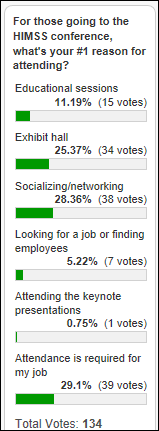
Most poll respondents attend the HIMSS conference either because their job requires it or because they like socializing and visiting the exhibit hall. I can’t say I’m shocked.

New poll to your right or here: Would you be satisfied if your doctor prescribed a digital health app rather than a medication?

image

Thanks for the great responses to “What I Wish I’d Known Before … Taking a Job Selling Software to Hospitals or Practices,” which contains useful insight whether you’re a seller or a buyer.

image

This week’s question is timely – if you’ve attended the HIMSS conference as an exhibitor, take a minute to share your thoughts about what you wished you had known beforehand.

SNAGHTML12574fb1

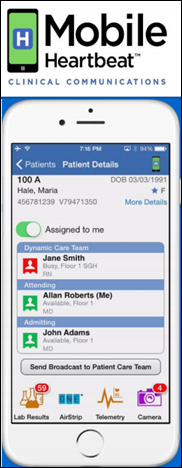
Welcome to new HIStalk Platinum Sponsor Mobile Heartbeat. The Waltham, MA company is a leading provider of enterprise mobility clinical communications and collaboration solutions. Its Clinical Unified Results Enterprise (CURE) technology powers MH-CURE, which improves clinical workflow by giving clinicians what they want and need, no matter where they are. MH-CURE consolidates alarms, notifications, patient information, lab data, texting, voice, and photography. Some of the country’s largest health systems have reported results that include 31 percent faster clinician response time, 50 percent improvement in HCAHPS scores, and 50 percent reduction in noise. Its patient-centric Dynamic Care Team director connects team members – inside and outside the hospital – to the patients they are caring for, ensuring that patient alerts and notifications are sent to the right person, who can then quickly engage other team members. Thanks to Mobile Heartbeat for supporting HIStalk.


Webinars

February 13 (Tuesday) 1:00 ET. “Beyond Sliding Scale: Closing the Gap Between Current and Optimal Glycemic Management Practices.” Sponsor: Monarch Medical Technologies. Presenter: Laurel Fuqua, BSN, MSN, EVP/chief clinical officer, Monarch Medical Technologies. The glycemic management practices of many hospitals and physician staff differ from what is overwhelmingly recommended by experts and relevant specialty societies. As a result, they are missing an opportunity to improve the quality, safety, and cost of care for their patients with diabetes and hyperglycemia, which commonly represent more than 25 percent of their inpatient population. Hospitals that transition from sliding-scale insulin regimens to consistent use of basal / bolus / correction protocols are seeing reductions in hyperglycemia, hypoglycemia, and costs. Making this shift more effective and efficient is the use of computerized insulin-dosing algorithms that can support dedicated staff using a systematic approach.

February 14 (Wednesday) 2:00 ET. “Time is Money: Aurora Health’s Journey of Implementing and Advancing Cost Accounting.” Sponsor: Strata Decision Technology. Presenter: Patrick Nolan, VP of finance, Aurora Health Care. Aurora Health Care’s implementation of Strata’s Decision Support module involved not only building an improved cost accounting model, but improving the process to engage a cross-functional team in cost development. It now has accurate, consistent cost data to support decision-making. Aurora’s next phase will be to use actual procedure and visit times to allocate costs. This presentation will provide a detailed view into both the implementation and future direction of the Strata Decision Support program within Aurora.

Previous webinars are on our YouTube channel. Contact Lorre for information.


Acquisitions, Funding, Business, and Stock

image

Vocera announces Q4 results: revenue rose 26 percent, adjusted EPS $0.29 vs. $0.00, beating Wall Street expectations for both. From the earnings call:

  • CEO Brent Lang says several customers have purchased the rules-driven Engage care team communication platform.
  • Q4 sales include $2.8 million deals with the DoD and Sutter Health as well as a system-wide implementation at BayCare (FL).
  • Lang says the company expects overall hospital IT spending to increase 5-7 percent in 2018, mostly for back-to-basics solutions that reduce cost or increase efficiency.
  • He says the BYOD movement is limited for hospital clinical workers and more health systems are instead providing company-owned devices for better security.
  • Widespread consumer acceptance of a voice user interface will open up possibilities and the company is investing in speech recognition technology.

image

CPSI announces Q4 results: revenue increased by 21 percent, EPS –$1.57 vs. $0.15, although the loss included a $28 million impairment charge. From the earnings call:

  • The company is working with Caravan Health to create the CPSI Rural ACO Program to help rural providers transition to value-based care.
  • The $28 million impairment charge is because of poor revenue and high development costs of the American HealthTech post-acute care product, which contributes 8.7 percent of CPSI’s revenue. (Healthland acquired American HealthTech in 2013 for an undisclosed price, then CPSI acquired Healthland for $250 million in late 2015).
  • 15 percent of Evident clients are live on CommonWell.
  • The company hasn’t seen any impact from the Allscripts ownership of the former McKesson Paragon, which it says doesn’t really play strongly in CPSI’s target market of hospitals under 100 beds. The company’s strongest competition has shifted to Cerner, Epic Community Connect, Athenahealth, and Meditech.
  • An analyst asked why hospitals running older systems would replace them without government incentives, with the company answering that the driver is doctors who are unhappy with usability and software completeness, especially with those systems that were bought quickly to earn Meaningful Use money.

image

I missed this earlier: Quality System (NextGen) posts Q3 results: revenue up 3 percent, adjusted EPS $0.15 vs. $0.23, beating revenue expectations slightly and meeting on earnings. QSII shares have dropped 20 percent in the past year and are trading at their 52-week low, valuing the company at $800 million.

A review of the New York healthcare startup landscape predicts that health IT investment will decrease in an overheated market, with the hope that someone will buy digital health companies that are losing too much money to run an IPO. Most of the M&A involved big companies buying point solutions vendors for under $100 million. A growth equity executive says hospitals are busy running expensive EHR implementations and insurer consolidation has left fewer customers in that sector, so pharma is the best bet.


Sales

Community Hospital Corporation (TX) chooses Parallon Technology Solutions to provide 24/7, US-based help desk services.

The state of Queensland, Australia selects Sunquest for a 10-year, $54 million laboratory software and services contract.


Decisions

  • Lake Area Medical Center (LA) will switch from Medhost to Meditech in 2018.
  • Gulf Breeze Hospital (FL) went live with Allscripts in December 2017.
  • Paoli Hospital (PA) will go live on Epic on March 3, 2018.

These provider-reported updates are supplied by Definitive Healthcare, which offers a free trial of its powerful intelligence on hospitals, physicians, and healthcare providers.


People

image image

DocuTAP hires Rob Rueckl (Edmentum) as CFO and Jared Lisenby (PointClear Solutions) as SVP of sales.


Announcements and Implementations

Logicworks launches Pulse, a cloud monitoring solution that integrates with AWS and Azure to look for security gaps, architectural red flags, and unusual traffic patterns.

image

DrFirst announces a mobile e-prescribing app intended to improve opioid prescribing by integrating with state PDMP databases, providing medication history and medication adherence information, and making it easier to prescribe shorter-term therapy that can be easily extended if needed.


Other

Healthcare spending jumped 15 percent from 2012 to 2016, not because patients consumed more services, but because providers keep raising their prices unsustainably even as usage declines. Surgical admissions declined 16 percent, but the average price increased $10,000 to $42,000. 


image

In China, a man playing games on his phone while sitting on the toilet for 30 minutes has a rectal prolapse and requires emergency treatment. You publish-or-perish academics might want to create an observational study to determine how many people (with a male vs. female comparison) whip out their phones during stall visits of greater than two minutes.


Sponsor Updates

  • Liaison Technologies breaks company revenue records in 2017 thanks to Alloy Platform’s marketplace momentum.
  • LogicStream Health releases a new podcast, “Overcoming Healthcare Delivery Challenges.”
  • A NEA survey pinpoints the top 10 dental practice pain points.
  • Sunquest Information Systems will exhibit at Molecular Med Tri-Con February 11-16 in San Francisco.
  • TriNetX will exhibit at the Scope Summit February 12-15 in Orlando.
  • Jay Silverstein (Picwell) joins ZappRx’s Board of Directors.

Blog Posts


Contacts

Mr. H, Lorre, Jenn, Dr. Jayne.
Get HIStalk updates. Send news or rumors.
Contact us.

125x125_2nd_Circle

Readers Write: In Defense of Bob Dolin

February 10, 2018 Readers Write 23 Comments

This comment was provided as a response to discussion about whether former Kaiser physician and HL7 chair Bob Dolin, MD should be allowed to return to industry work after serving a prison sentence for possession of child pornography.

I appreciate Mr. HIStalk’s comment that Bob should be able to work. Not only is should he be allowed to work, he is obligated to return to being a useful, productive member of society. Not just from my perspective, but from the government perspective.

I know more intimately than any of you what the real situation is and was. I am his wife. So much for anonymity.

Many of you know me. I am a strong, independent woman, dependent on no one. Someone who not only hates child pornography and the implications of what that means for these children, but one who also despises “regular” pornography and the industry’s encouragement for participants to descend into child pornography (think “barely legal”). I also recognize that most men have participated in viewing pornography, especially men in unhappy marriages. But I don’t hate them or think they are sick — they are just unhappy.

Why have I stayed with Bob? Why do I encourage him to do the work he loves and to which he has made such great contributions? Let me tell you the reasons.

Bob is not a depraved, sick person. He never inappropriately touched any child. He is as far away from being a misogynist as any man I know. Likely, he has been far more monogamous and faithful than most of you.

While you might surmise that children were harmed because he downloaded a few zip files in one period in his life over 10 years ago, it is highly unlikely. There is no empirical evidence for that. Again, I am not asserting in any way that this was OK.

I have been with Bob nearly 24/7 since shortly after this was discovered. In fact, I believe, our relationship and strong marriage has been a primary healer. Bob simply only has the desire for the intimacy that only a special love such as ours provides.

I am firmly asserting is that he is not sick or depraved. I am stating that back 10 years ago, as his previous marriage was ending, he was in a bad spot. Did he go out and rape anyone or touch any child? Did he even have affairs? No. He withdrew into himself and escaped by viewing “regular” pornography, and unfortunately purposefully downloaded some child porn. The was no money exchanged.

In regards to “infants and toddlers being sadistically abused,” I challenge you to find an ICE arrest announcement (that’s the branch of government that deals with child pornography cases) that does not say, “XXX number of child pornography pictures were found, including infants and toddlers being sadistically abused.” Simply, that is what is in those zip files. How do I know? I was told that by lawyers who specialize in this area. The media (and ICE) love to emphasize this aspect. Whether or not the offender actually spent any time looking at these images is unknown in most cases.

I wish ICE would spend more time on finding and prosecuting the abusers and creators of child porn (usually family members) than on the easy targets of introverted adult males. For that matter, how is it possible that such pictures can even be uploaded? Surely we have the technology to recognize them and prevent it.

After extensive testing, examination, and interviews, Bob was not deemed a danger to society. Exam after exam has revealed him to have made a single mistake in an otherwise exemplary life. Not only that, it was about five years from when the forensics were done on his laptop to when the feds decided to prosecute. We assumed during this time there was nothing worth prosecuting for – they must have had far more pressing cases to deal with.

Bob’s friends, family, and many colleagues are happy to see Bob back contributing his brilliant mind to the industry. They recognize the price he has paid. For those of you who are appalled that he dare be a contributing member of society and HL7, and will quit if Bob continues to go to HL7 meetings after downloading child pornography 10 years ago, spending 2.5 years in federal prison, and losing his career, I encourage you to grow up, act like a mature adult, and think about the logic of that.

To quote a famous Rabbi, “And why beholdest thou the mote that is in thy brother’s eye, but considerest not the beam that is in thine own eye?” Are you perfect? Even if your sins are not as severe as you have judged Bob’s to be, as they may not be, and you have taken it upon yourselves to so severely damn him, I ask, you to examine yourselves, your motives, and your personal issues.

Lastly, think of who you are hurting besides Bob. You are hurting me to the core. You are damaging my ability and desire to participate as a useful member of society. You are making me question nearly everyone at HL7 as to whether they have been two-faced to me these few past years, where I have remained a successfully contributing HL7 member by myself.

I won’t abandon Bob because of this. He is a good man, the best man I know, who made a bad mistake over 10 years ago.

What I Wish I’d Known Before … Taking a Job Selling Software to Hospitals or Practices

I wish I would have known that the company had a policy of customizing the application to whatever they thought the prospect needed. Functionally what we wound up doing was demoing vaporware, and there was no way the clients would ever get that content without customizing. It’s entirely unethical. I was gone within a few months.


As someone who has started two small HIT software companies (both acquired by larger HIT companies) and was responsible for designing, selling, and implementing the systems and overall customer satisfaction, a couple things I would want to know:

What is the main value that customers get from the system?

What percent of the customers get that value? (Software companies love to highlight their reference sites, but what is more important is what benefit do the majority of the customers derive from the software. Reference sites are nice, but even a blind squirrel finds a nut once in a while.

Can you quantify the value?

How does the value stack up against the investment?

How long does it take to get the software installed and how long before the customer starts receiving the value?

How much work is it going to take by the customer to get the software running and keep it up and running and is that amount of work and cost part of the return on investment analysis?

Why would a prospect buy the competitors’ products rather than the product we are selling?

What is the customer retention rate, and don’t include the customers that have to renew because they are in a multi-year agreement. I would want to know what percent of customers renewed the last 2-3 years that had the option to turn off the system.

Do Epic and Cerner have a similar offering?

What is my quota and how have the current sales team done with respect to that quota over the last two years?

What is the retention rate of the sale staff over the last 2-3 years?

How long has the sales leader been in the role?

Can I live in San Diego?

Do I have to wear a tie to client meetings?


Most of the people you talk to or not meaningfully involved in the decision-making process.

The people who are using your software are often not at all involved in the decision process, which injects hostility once purchase and deployment happens.

Don’t sell your software without the client having a strong change management plan in place. The sale is usually worth less money than having your name dragged through the mud later if adoption is poor.

You should aim to sell one client multiple things over the course of a long relationship more than trying to get clients.

Take your estimate of the sales cycle and double it.

Old-fashioned networking and being able to discuss specific use cases that resulted in success are the best methods for selling. Healthcare is not very impressionable by social media, content marketing, email campaigns, or other more modern marketing tactics.


How lonely the job can be.


For five years in my career, I sold an EMR to physician practices. Looking back, I wish I had understood better the degree to which physicians lacked the appreciation of the overall efficiency and throughput of their practices (which they usually owned) versus their role within the practice. Most thought only in terms of themselves and their own time, and these were the ones that struggled or refused to modernize their practices (also usually the ones with full waiting rooms of frustrated patients). Those I worked with that recognized that they were a part of a larger system embraced changes to their practices supported by EMR, they flourished, and tended to have happier patients with shorter waits for appointments.


How difficult it was going to be to accurately forecast when the sales would close.


My job is a hybrid, or at least it’s supposed to be. I have a half dozen clients that I am responsible for their satisfaction as well as a quota for each client. However much our company likes to say “It all comes down to satisfaction! Keep your clients happy!” and even with tying a portion of our compensation to client satisfaction surveys, it’s obviously all about selling. Leadership would rather you sell whatever you can, however you can, even if you piss off everyone in the process. It’s a very short-sighted model, but with how the direction this company is moving, I’m not very surprised. If you have any ounce of empathy, or like to forge client relationships that focus on more than dollars and cents, selling may not be for you. (If there are companies we can work for that actually give a hoot about clients beyond what they buy quarter to quarter, please share!)


That some of the “function and features” are pure vaporware. They haven’t been tested or met compliance in any setting other than the developer’s environment. This obviously causes major concerns from the client at go-live. I end up selling future versions that a user will not experience until 12-24 months later.


In no particular order or rank, here are a few of the things I wish I’d known before getting into the HIT sales field.

The training for salespeople is very limited and you’ll hear, “We don’t want you to train them, just sell it.” My product training for my first job included watching two demos of the application by my manager, one of which was provided while we waited for our plane at the airport. EHR software is complicated enough that vendors should either sufficiently train sales reps or use product specialists for all demos.

You’ll want to ask a lot of questions about your territory (how often does it change, how successful were previous sales reps, what is the turnover in this territory, are there any/many happy customers in my territory, etc.) to try and figure out if you really can make your numbers. Sales managers like to pretend that all sales territories are created equal, but they are not.

To truly provide a demo that shows a provider how your software works for their workflow, you will need to do a discovery with the provider or someone who truly understands the workflow. In the ambulatory physician space, it can be very difficult to get face time with the doctor and critical staff, so you know this beforehand and be able to prepare sufficiently to show them what they want/need to see. This discovery isn’t or shouldn’t be done to use smoke and mirrors and trick the staff. It’s no different than a doctor not being able to accurately diagnose a patient unless they’ve had sufficient time to do an assessment and evaluation before they prescribe the correct treatment. Salespeople should really refuse to do demos if they don’t get this time, but as long as they have quotas, they will do it.

Many physicians and their practice staff won’t bother to complete the requisite pre-work before their implementation, which further compromises their ability to optimize the expensive software they just bought. It is time-consuming, but it’s usually a question of “pay me now or pay me later.”


Not sales, but working in HIT for 16 years for companies that sell commercial software to doctors and nurses. I wish I’d known about the stress of being morally compromised on a daily basis as keeping my job (and thus my ability to pay my rent and buy food) requires either doing things I know are the wrong thing to do, or not doing things that are the right thing to do (way more of the latter than the former, fortunately). I’ve seen some very dark instincts on the business and technology “leadership” side of the house. If you ask why I stay, the only answer I have is: if I leave, that’s one less person banging the drum for what is right.


How often solutions aren’t fully baked before companies try to package them as GA.


Does the product actually work? Can the company actually implement and deliver it? Can they support it? Do they have any idea who will actually buy it? And who pays for it? Too many healthcare software companies I’ve worked for/with think that “if it treats patients better” or “makes the organization better” or “makes clinicians better” or “makes patients safer” (etc.) their product will fly off the shelves. All you, Mr. Salesperson, have to is bust your hump, get in front of the right people, and do your sales magic. Healthcare sales today is ALL about compliance or cash. C-Levels are only buying that which they HAVE to have, will save them money, or make them money (hard ROI).


Who are the competitors who are investing in the same product line?


While software is 100 percent margin, software companies in healthcare don’t want to pay as much as other technologies and their products are usually late.


I was in a sales support position, demonstrating application software. I suppose I was naïve to think that I would have to stretch the truth about the functionality of said software. Salespeople would provide me with what my response should be to certain questions. To which I stated, “That’s when I turn to you, because I won’t lie.” Ultimately, I transferred to another department within the vendor company to training so that the end user would find out how the system really worked. I would hear, “But they said [that being the salesperson] the system could do that.” To which I replied, “I know what they said, but I’m here to tell you the truth.”


Weekender 2/9/18

February 9, 2018 Weekender 2 Comments


weekender


Weekly News Recap

  • Former GE CEO Jeff Immelt is named board chair of Athenahealth.
  • Former CMS Acting Administrator Andy Slavitt launches United States of Care, a non-profit that hopes to spur development of healthcare policies that allow all Americans to obtain health insurance and avoid medical bankruptcy.
  • JPMorgan CEO Jamie Dimon assures the company’s healthcare banking customers that its venture with Amazon and Berkshire Hathaway won’t really be disruptive, but instead is an effort to lower the employee healthcare costs of the three companies through price negotiation.
  • A review by the Economist finds that the number of prescription-only digital health apps that have earned FDA approval is rising sharply.

Best Reader Comments

Regarding Dolin, I think looking at pics of infants and toddlers being sadistically abused makes you permanently toxic. Just because he’s out of jail doesn’t mean there won’t be social consequences for his depravity. I get what you’re saying, but I would find it difficult to have collegial feelings for the man. It wouldn’t make for a very productive work environment. (Sorry)

Those C-level org changes give you a clear mandate and direction for where your business IT systems need to go. And there’s a deep well of work to be fulfilled in order to get there. However, this also means that IT can fall far behind the curve of what the organization needs. Imagine the C-suite doing an M&A deal every 1-2 years. Meanwhile bringing those accreted organizations into payroll, into G/L, into EMR, into ERP, into purchasing, into HR. That can take 4-5 years or more, especially if the entire organization must be re-done around a new system.(Brian Too)

I was pretty bummed to hear about Jamie Dimon hitting the phones to play down the JPMorgan / Amazon / Berkshire deal. Either they’re lying to their healthcare clients and they actually do want to do something disruptive or they shouldn’t even bother because they won’t move the needle. If JPMorgan and Amazon can’t bargain based on volume already, I don’t know what makes them think they’ll be more successful together. Group purchasing is probably more beneficial in the small / mid market. They want to attack healthcare costs, yet they don’t seem to want to cut any of the cost. (MN fan)

Workplace wellness programs show recent evidence that already-healthy people are the most active participants even when there is a small pot of cash (incentive) to be earned for demonstrating healthy behaviors for anyone participating. Similarly, providers will leave incentives on the table all day long, but if you send along a negative payment adjustment, providers will roar for more time. In the sticks and carrots analogy, carrots don’t seem to work in healthcare. (ellemennopee87)

To my fellow IS colleagues, don’t let disgruntled physicians or bedside providers distract you from your mission to serve the patient. Also remember that doctors are not upset with EHRs and IT most of the time — they are upset at healthcare in general. The EHR and IS tend to be a lightning rod for physicians to leverage their frustrations at. I am very empathetic to practicing physicians today and feel that if I can help save a few clicks or get them home sooner, then they will care for my mom, sister, friends, etc. much better. (Dave Butler, MD)


Watercooler Talk Tidbits

image image

Readers funded the DonorsChoose teacher grant request of Mrs. T, who asked for take-home science and math games and backpacks to carry them in for her Michigan elementary school class. She provides an update: “The package was brought by our school secretary to the room right in the middle of our math lesson and also right during my principal’s visit for teacher observation. I apologized later to the principal for her not getting to see the whole math lesson and her reply was, ‘I loved it. You could feel the energy level skyrocket in the room when the secretary brought the box. I could tell how excited the kids were about this project.’ I have heard so many great comments like the little girl who came in smiling and said ‘I beat my Dad every time. I know lots more about force and motion then he does!’ I had two girls who were thrilled they were each taking home a backpack because they were having a sleepover together that weekend and said they would get to play the games out of each others’ pack. Thank you so much for helping make this year more fun and letting the kids feel special when they walk out of school with a backpack or win a game against their parents or sibling.”

image

Be careful getting your science news from Inc. or the several other crappy sites that ran this as sensationalized news. The researcher whose scholarly paper was turned into clickbait clarifies that, while a particular silicone product seemed to stimulate hair follicle growth in the lab and that same product is “reportedly” used by McDonald’s in its fryers, consuming it alone won’t cure baldness. He was baffled and then alarmed after seeing reader comments asking how many fries they need to eat to regain their tresses.

A nurse who sought care in a hospital in England for a mental health crisis is told that she’ll have to sleep on a row of chairs because no beds are available. Security camera footage shows her being groped by another patient as employees walk by without concern. The man admits that he kissed the woman, but says he didn’t sexually assault her, adding, “If she had told me ‘don’t’ I would have been like, OK, of, course, I’m a gentleman.” The man was found guilty, while the hospital assures the public that it was “an isolated incident.”

SNOMED International announces that its SNOMED CT clinical terminology will be used in the GE Healthcare’s Athlete Management Solution at the Winter Olympic Games. It also mentions a project called Olympic Healthcare Interoperability, which apparently will support cross-system athlete information exchange and portability to upcoming Olympics. 

Cardiologist and retired UC Irvine medical school professor John Longhurst, MD, PhD and his wife Cherril are killed when their single-engine plane crashes near San Diego. Newspaper accounts suggest that they were the parents of Chris Longhurst, CIO at UCSD Health.

image

The low-carb diet that I’ve been on for a couple of weeks has delivered spectacular results (zero hunger pangs, significant weight loss, improved mental clarity presumably due to better insulin control even though I’m not diabetic), so I was interested in this article. A comprehensive, 262-patient study finds that a low-carb diet combined with virtual adherence coaching from Virta Health yielded dramatic improvement in people with Type 2 diabetes:

  • HbA1c was lowered from 7.6 to 6.3 percent on average
  • Participants lost an average of 12 percent of their body weight
  • 94 percent of insulin-using participants either reduced their dose or were able to go off insulin completely
  • Every person who was taking an oral medication for diabetes no longer needed it

This will send ICD-10 wags searching for the right code. A Maryland hunter is airlifted to a hospital when the goose that someone in his party shot fell out of the sky onto his head, rendering him unconscious with head injuries.


In Case You Missed It


Get Involved


125x125_2nd_Circle

EPtalk by Dr. Jayne 2/8/18

February 8, 2018 Dr. Jayne 3 Comments

clip_image002 

We’ve heard a lot of stories lately about people behaving badly (not to mention criminally), and frankly there are too many stories of harassment to count. The AMIA Board of Directors released a new anti-harassment policy that applies to future meetings. I was pleased to see that they called out the unacceptable behavior of “real or implied threat of professional or personal damage.” Fear of retaliation or professional retribution are powerful forces that keep people from reporting harassing and unprofessional behavior. Simply having a policy isn’t going to stop abusers, but it may make them think twice about their actions. Regardless, I’ve seen too many institutions sweep inappropriate behavior under the proverbial rug, so kudos to AMIA for providing leadership.

In the current climate, organizations need to get serious about educating their employees about problematic behaviors and reducing situations where harassment and abuse can occur. HIMSS is coming and it will be interesting to see if the parties are any less alcohol-fueled than in previous years. I was harassed by a vendor sales rep the last time HIMSS was in Las Vegas and didn’t say anything because I just wanted to get away from the situation and forget about it. Thinking back, I’m still disheartened that the other sales folk that witnessed it didn’t say anything either, because they were people I had known for many years. I’m hoping that both victims and witnesses are increasingly empowered to say something and make sure that abusers know their behavior is not OK.

clip_image004

Speaking of HIMSS, if you’re planning your wardrobe, too bad you can’t get a pair of Intel’s new Vaunt smart glasses yet. A worthy successor to Google Glass, they don’t look too different from typical spectacles. The main feature is retinal projection, which makes you feel like you’re looking at information on a screen. The glasses don’t have a speaker or a microphone, which saves on weight and adds more normalcy. An early access program will launch for developers later in the year. If they’re looking for any sassy physicians to give it a try, I’m definitely game.

clip_image006

I was beyond disappointed to hear of Jamie Dimon’s comments that walked back the Amazon, Berkshire Hathaway, and JPMorgan Chase healthcare venture. Apparently now it’s only going to be targeted to benefit employees of the three companies, and are sounding more like a group purchasing arrangement than the lofty endeavor we heard about last week. We need someone to shake up healthcare, but to do it in a way that includes a rational business plan rather than hype. I had hoped that these companies would be the real deal, but they’re already sounding like a fizzle.

In actual news that might help patients deal with the high cost of care, the FDA reports that 2017 was a record year for approval of generic drugs, with 843 medications receiving full approval. I haven’t seen any statistics on “formerly generic drugs that we let manufacturers re-brand and drive up the cost” such as Colcrys, but I’d like to see what that category looks like over the last several years. Despite a generic being available again after the three-year period of exclusivity for Colcrys, prices haven’t dropped anywhere near the historical price of generic colchicine. It was around 10 cents a pill prior to Colcrys, then went to $5 per pill, and even the generic still sits near $4 per pill ($2.50 if you can find a really good coupon). I get that it’s capitalism at its finest, but for patients, it’s terrible.

Even though we’re seeing a spike in flu cases, we have many patients coming in with severe illness because they’re trying to avoid medical costs. Patient deductibles reset on January 1, and with many more patients using high-deductible plans, cost of care is right in front of them rather than months later when the explanation of benefits arrives.

My practice’s cost of care is higher than it might be at a primary physician, but still significantly less than the emergency department, so patients are often pleasantly surprised at the end of their visit, especially if we’ve had to do a significant procedure such as a laceration repair or a CT scan. Our physicians are very conscious of our charges and how we fit into the overall healthcare expenditure scheme, so we can educate our patients as they make choices.

I wonder how many physicians truly understand how much the care they’re delivering costs and what value it does (or does not) bring. Every day I meet physicians who are having quality metrics data entered on their behalf and reported behind the scenes so they can check a box to avoid payment penalties. They have no idea what their actual numbers look like and aren’t using them to change how they deliver care. Now that is truly a waste of time, money, and effort.

clip_image008

The best thing I did this week was rearrange a meeting to be able to watch the Falcon Heavy live stream on Tuesday. Many kids dream of being an astronaut, but I took it one step farther and wanted to be the first doctor on a permanent space station. I figured by the time I finished medical school and residency, certainly we’d have civilians living and working in Earth’s orbit. That dream wasn’t to be, but I still find the idea of space travel fascinating. In some ways, my generation became somewhat spoiled by the seemingly “routine” nature of the Space Shuttle program even with its tragic accidents. Movies like “Apollo 13” and “Hidden Figures” gave us a new appreciation of what it took from a STEM perspective to make space travel possible. I still can’t believe we put people into orbit and later went to the moon with human computers and slide rules making it possible behind the scenes.

Hopefully a new generation of kids will be inspired by what they saw this week and will do some deeper digging. The Tesla may have been the first midnight-cherry roadster launched into space, but three other electric cars went before it on Apollo 15, 16, and 17. The story of our journey up to this point, both manned and unmanned, is inspiring. We need many more young people to be as fascinated by science and engineering as they are by pop culture and social media if we’re going to solve some of the biggest problems we’ll face in the next hundred years. If you didn’t have a chance to watch the launch, I highly recommend viewing the video, especially when the side boosters re-enter and land, starting around seven minutes into the flight.

Email Dr. Jayne.

News 2/7/18

February 6, 2018 News 5 Comments

Top News

image

Former CMS Acting Administrator Andy Slavitt joins several luminaries to launch the non-profit United States of Care, a non-partisan group that will push for federal healthcare policies that it believes are nearly universally supported despite political differences.

Among its members are health system executives, actors, Mark Cuban, Atul Gawande, former US CTO Todd Park, and former Republican Senate Majority Leader Bill Frist.

image

Slavitt describes the group’s goals in a Health Affairs blog post.


Reader Comments

From Orbiter: “Re: HISsies awards. I got my ballot, but how are you presenting the results without an HIStalkapalooza?” I could do some kind of Web extravaganza via GoToWebinar with celebrity participants and live reaction from the winners (perhaps including a virtual pie in the face), with the cost underwritten by the “worst vendor” winner. Or, maybe I’ll just run the PowerPoint results sometime before, during, or after the HIMSS conference. Guess which?

From Integumentary Film: “Re: HIMSS. What are you looking forward to most?” Two things: (a) not having to deal with HIStalkapalooza headaches, and (b) checking out vendors undercover in the exhibit hall. I have planned nothing for the entire week – no events, no meetings, no must-see educational sessions – so I’ll just be letting the HIMSS breeze (including the inevitable hot air) carry me.


HIStalk Announcements and Requests

Does it seem that there’s less industry news to read today? It’s that time of year when vendors start creating their backlog of self-serving announcements, mistakenly thinking that they’ll get more exposure and booth traffic if they hold off announcements until Tuesday, March 6. HIMSS is just 25 days away and the smart companies are building the PR momentum now instead of after it’s too late to take advantage of it.


Webinars

February 13 (Tuesday) 1:00 ET. “Beyond Sliding Scale: Closing the Gap Between Current and Optimal Glycemic Management Practices.” Sponsor: Monarch Medical Technologies. Presenter: Laurel Fuqua, BSN, MSN, EVP/chief clinical officer, Monarch Medical Technologies. The glycemic management practices of many hospitals and physician staff differ from what is overwhelmingly recommended by experts and relevant specialty societies. As a result, they are missing an opportunity to improve the quality, safety, and cost of care for their patients with diabetes and hyperglycemia, which commonly represent more than 25 percent of their inpatient population. Hospitals that transition from sliding-scale insulin regimens to consistent use of basal / bolus / correction protocols are seeing reductions in hyperglycemia, hypoglycemia, and costs. Making this shift more effective and efficient is the use of computerized insulin-dosing algorithms that can support dedicated staff using a systematic approach.

February 14 (Wednesday) 2:00 ET. “Time is Money: Aurora Health’s Journey of Implementing and Advancing Cost Accounting.” Sponsor: Strata Decision Technology. Presenter: Patrick Nolan, VP of finance, Aurora Health Care. Aurora Health Care’s implementation of Strata’s Decision Support module involved not only building an improved cost accounting model, but improving the process to engage a cross-functional team in cost development. It now has accurate, consistent cost data to support decision-making. Aurora’s next phase will be to use actual procedure and visit times to allocate costs. This presentation will provide a detailed view into both the implementation and future direction of the Strata Decision Support program within Aurora.

Previous webinars are on our YouTube channel. Contact Lorre for information.


Acquisitions, Funding, Business, and Stock

image

Cerner announces Q4 results: revenue up 4 percent, adjusted EPS $0.58 vs. $0.61, missing Wall Street expectations for both. President Zane Burke describes the company’s FY2017 as, “We finished the year on a mostly positive note, with record bookings and all other key metrics except for earnings in line with our expectations,” which glosses over the significant point that the company’s all-important profit number disappointed everyone, including Cerner itself.

image

Varian acquires radiation oncology QA software vendor Mobius Medical Systems for undisclosed terms.

image

JPMorgan billionaire CEO Jamie Dimon had to soothe the ruffled feathers of the company’s healthcare clients after the announcement that his company — along with Amazon and Berkshire Hathaway – will work together to reduce the healthcare costs of their 1.2 million employees. The company’s healthcare bankers – who drive $682 million in annual revenue – reassured their customers that the partnership won’t really be as disruptive as people are wildly speculating, but instead will be more like a group purchasing organization that will help the companies negotiate better prices for services their employees consume. Insiders say that more-disruptive activities that were discussed, especially with Amazon’s involvement — such as offering health insurance, starting a pharmacy benefits management company, and distributing drugs – are now off the table.

NantHealth CEO Patrick Soon-Shiong is rumored to be close to acquiring the Los Angeles Times and San Diego Union-Tribune for $500 million. Declining business and a series of missteps at the LA Times by owner Tronc – the former Tribune Publishing, in which Soon-Shiong is a major shareholder – have resulted in a two-thirds cut in reporting staff, heavy-handed management intervention into editorial issues to appease advertisers, and a vote by newsroom employees to join the union.


Sales

image

UCSF Health (CA) selects Voalte for enterprise communications across six hospitals.

Pickens County Medical Center (AL) chooses Cerner Millennium, delivered via the CommunityWorks hosted model.


Announcements and Implementations

image

Michigan Medicine offers virtual visits for minor illnesses such as adult flu, offering a same-day response to symptom questionnaires submitted by noon or within 24 hours if completed later in the day. The seven-day-per-week service costs $25 and is accessed through the health system’s Epic MyChart patient portal.

LifeImage launches Clinical Connector, a vendor-neutral, standards-based platform by which clinicians and patients can access medical images and information from PACS and EHRs across sites. The project began as the LifeImage-powered RSNA Image Share pilot that winds down in March.

DrFirst announces that its real-time prescription benefit checking service has been used 6 million times, saving patients an average of $11 for a 30-day prescription.


Government and Politics

image

This isn’t directly health IT related, but it’s important for healthcare journalism, of which I’m the fringest of players. CMS threatens to ban Modern Healthcare Washington bureau chief Virgil Dickson from its news conferences after he wrote a story blaming the resignation of a high-ranking Medicaid official on that official’s clashes with CMS Administrator Seema Verma. I Googled the name of the spokesperson who told Dickson’s editor that he would be banned unless he rewrote his story — Brett O’Donnell is working under a private contract with CMS after (or during) his career as a political communications consultant (nicknamed “Tea Party Whisperer”), during which he pleaded guilty in 2015 to lying to House ethics investigators.


Privacy and Security

In England, Department of Health officials admit that every one of 200 NHS trusts have failed new, tougher cybersecurity requirements, many of them because of delays in system patching.


Other

SNAGHTMLe4506c

Google’s DeepMind reports “promising signs” from its research project with NHS Moorfields Eye Hospital to analyze retinal scans with AI to detect eye disease. Its report has been submitted to a peer-reviewed medical journal.

In Ireland, a review of last year’s incident in which the country’s national imaging system was found to ignore the “less than” symbol finds that no patients were harmed as a result. The Health and Safety Executive says Change Healthcare did not tell it about a software update that fixed the problem, so it didn’t apply that update.

Lancaster County, PA’s Coalition to End Homelessness creates a social services data system that allows people to sign up for multiple programs with a single, universal electronic form that sends information to 40 participating organizations and then allows the groups to coordinate their efforts. The local health system CEO says she has HIPAA concerns with such a project and the hospital won’t participate because it doesn’t have the resources. The cloud-based system vendor is CaseWorthy, which says its system meets HIPAA requirements. It is apparently working on integrating its system with Epic.

In Australia, a coroner finds that an inpatient’s death after routine knee surgery was due to a drug overdose that was caused by an anesthesiologist entering the wrong product in Macquarie University Hospital’s just-implemented InterSystems TrakCare system. The doctor admitted that he wasn’t trained on the system and didn’t follow up when he noticed his patient wearing a pain patch that he didn’t intentionally prescribe.

Vince takes a look back 30 years, when magazine ads featured decisive hospital executives wearing three-piece suits and clinicians literally dancing with EHR delight, which might make you think the hospital IT wars had been fought and won to the musical backdrop provided by chart-toppers Tiffany and the manufactured Latin-influenced band Exposé.

image

This tweet is brilliant.


Sponsor Updates

image

  • DocuTap employees restock The Teddy Bear Den, an incentive and education program for limited-income pregnant women and their children.
  • PerfectServe publishes a new customer success story, “Chicago-based ACO and managed care organization Advocate Medical Group (AMG) strengthens continuity of care for patients.”
  • AdvancedMD will exhibit at the Association of Dermatology Administrators & Managers February 12-14 in San Diego.
  • Besler releases a new podcast, “The impact of 340B changes on providers and beneficiaries.”
  • CarePort Health will exhibit and present at the California Hospital Association’s Post-Acute Care Conference February 15-16 in Redondo Beach, CA.
  • Healthx teams with Change Healthcare to provide cost transparency tools.
  • CompuGroup Medical encourages support for health center funding via the Red Alert campaign.
  • Cumberland Consulting Group will sponsor Model N Rainmaker 2018 February 12-14 in Carlsbad, CA.
  • Dimensional Insight will host a regional user meeting February 8-9 in Amelia Island, FL.
  • Divurgent publishes a new success story, “Cybersecurity Transformation Program.”

Blog Posts


Contacts

Mr. H, Lorre, Jenn, Dr. Jayne.
Get HIStalk updates. Send news or rumors.
Contact us.

125x125_2nd_Circle

Readers Write: Healthcare CIO Tenure Trends

February 5, 2018 Readers Write Comments Off on Readers Write: Healthcare CIO Tenure Trends

Healthcare CIO Tenure Trends
By Ranae Rousse

image

Ranae Rousse is VP of sales for Direct Consulting Associates of Solon, OH.

Last year while supporting one of the many local HIMSS chapter events, a keynote speaker presented a statistic that caught my attention. The speaker was presenting on the rise of cybersecurity threats to healthcare. The first slide in his well-constructed PowerPoint presentation had a bolded “17 months” with a font size of about 200. The gentleman then shared with the attendees, most of whom were CIOs, that 17 months is now the average tenure for a chief information officer.

I asked for the source of the 17-month statistic and found that it was for CISOs rather than CIOs and it was also not specific to healthcare. I decided to do my own research with an independent survey of 1,500 healthcare CIOs. The results:

  • The average tenure for a healthcare CIO is 5.5 years, with the range from five months to 23 years.
  • 37 percent of respondents were not healthcare CIOs in their previous jobs. Those who were tended to have longer tenure in their previous CIO positions.
  • 44 percent of the respondents said they don’t have a succession plan. Those respondents also did not have a requirement to appoint a successor.
  • 69 percent intend to retire as a healthcare CIO, although 11 percent say they would purse a COO/CEO role and the remaining 20 percent were split equally between moving to a consulting job or leaving healthcare.

Increases in mergers, acquisitions, and hospital closures between 2008 and 2017 reflect a loss of roughly 280 hospitals, so the number of CIO positions is decreasing. The perception of the CIO role itself has changed from being a senior IT leader to becoming a higher-level healthcare executive, opening the door for the role of the associate CIO in many large health systems.

Considering this ever-changing landscape; what trends can we anticipate for the future?

Readers Write: The Secret to Engaged Physicians at Go-Live: Personalize the EHR

February 5, 2018 Readers Write 1 Comment

The Secret to Engaged Physicians at Go-Live: Personalize the EHR
By Dan Clark, RN

image

Dan Clark RN, MBA is senior vice-president of consulting at Advisory Board.

I often compare an EHR implementation and go-live to getting a new smart phone. Out of the box, it’s a powerful tool, but it doesn’t truly become effective until you start to download applications, add your email and contacts, and pick a personal picture as your background.

Just like your new smart phone, EHRs aren’t ready to perform at their best out of the box and always require some degree of personalization. EHR personalization may sound like one more step in a long, multi-staged implementation and go-live, but it can often be the difference between adoption and rejection.

New technology will always be a disruption, but personalization can minimize a new EHR’s negative impact on patient care by matching new tech to existing clinical workflow, not vice versa. While it’s important to focus on “speed to value” with a new EHR, health systems that take the time to personalize workflows for specialties and individual providers typically see a much higher rate of adoption and a quicker return to pre-go-live productivity.

Health systems should consider a multi-layered approach to personalization. At the very least, health systems should design technology that aligns the EHR to serve high-level strategic goals, such as quality reporting and provider productivity expectations.

When it comes to the individual user level, almost every health system starts with didactic classroom trainings that may combine users from a variety of different clinical and administrative areas. While this is a good baseline, it’s challenging to teach a course that applies to doctors and nurses, front office staff, and revenue cycle alike. Physicians, specifically, report that these sessions take time away from their patients and don’t always provide the value they are hoping they will.

Because of this, one-on-one opportunities for personalization are most efficient and have the biggest impact. I typically see health systems tackle one-on-one personalization support in a couple of ways. The first is setting up a personalization lab. Prior to go-live, we set up a 24/7 personalization lab right in the physician’s office or hospital. This gives clinicians the opportunity to stop in with ad hoc questions, or better yet, make a formal appointment with a clinical EHR expert. These sessions are guided by an extensive checklist of EHR personalization options, fine-tuning everything to the clinician’s preference and specialty.

One orthopedic surgeon came back to the personalization lab four times, and that was after she had already completed the classroom training. We worked with her to personalize specific workflows, order sets, and even simple things like page setup in the EHR.

Personalization serves as just-in-time training and is usually well received by the clinicians. Sometimes this training takes the form of a mobile workstation in the hallways that caters to clinicians’ in-the-moment questions during their breaks and doesn’t pull them away from patients. This kind of assistance is also usually well received by clinicians since it gives them a chance to ask a question about a real patient scenario.

The trick to getting EHR and go-live training right, in any scenario, is to provide the right support—other clinicians who will stand at the elbow with the providers as they navigate real scenarios and issues. And staffing your personalization lab with clinicians will give you the best bang for your buck, providing your staff with clinical and technical expertise. Trainers that combine EHR acumen with clinical expertise and knowledge of appropriate workflows can help clinicians hard code best practices into the technology in a way a technical expert may not.

EHR go-live is an anxiety-ridden time for all health system staff, clinicians and non-clinicians alike. It’s important that all staff feel they have the support, training, and preparation to use the EHR to its fullest potential to impact patient care.

Curbside Consult with Dr. Jayne 2/5/18

February 5, 2018 Dr. Jayne Comments Off on Curbside Consult with Dr. Jayne 2/5/18

I receive quite a few requests from readers wanting to pick my brain about various topics. This week brought questions about Apple’s new Health Records. There are concerns that patients can change or hide information, which makes them less reliable should patients want to show them to physicians. A reader asked what I thought about it.

Frankly, hiding or changing information is nothing new. Patient-provided medical records of the past (mostly from memory) can have dramatically variable reliability. Sometimes people don’t remember a procedure or lab they’ve had done or don’t think a piece of their history is relevant. Other times patients intentionally alter the facts, leaving out details that they think might negatively impact their interaction with the physician or that might make it into records for potential release.

One of the best examples of this is asking patients about their alcohol intake. In medical school, we often joked about the rule that whatever the patient says should be doubled. The advent of EHR documentation has forced our questions to be much more detailed, so it’s difficult to tell whether that still holds true.

Does asking for more detailed information make the data more reliable? Do patients just round down because they’re tired of answering so many detailed questions? I would be interesting to study, although I don’t see such an exercise being funded any time soon. Patients also tend to intentionally leave out other confidential information such as sexual history, drug use, incarceration, and more. This happened in the paper world, and whether it’s worse in the digital world or not remains to be seen.

Then there are situations where patients might want to remove information because it’s inaccurate. I’ve had it happen to me, where an erroneous diagnosis was entered into my chart. Once that happens, it becomes nearly impossible to remove it. I’m surprised by how many ambulatory organizations don’t have good records correction policies. As long as an audit trail exists, erroneous information that hasn’t been acted upon should be able to be removed from the chart in a way that it doesn’t continue to haunt the patient. Of course, it’s a different story of the erroneous information has been acted upon, and it might need to remain in the chart in a modified fashion to document a decision process or an adverse event.

In many instances, a patient-curated chart might be more accurate than some of what we inherit from other physicians, especially if the patient is engaged and has a high degree of health literacy.

In short, I don’t think the fact that Apple will let people edit their records is a big deal. I personally don’t see the app getting a huge amount of traction, but we’ll have to see what the coming months bring once people start downloading and using it.

Another reader wanted to pick my brain about why I still attend HIMSS. As the cost of attending continues to rise, it’s something I weigh each year. So far, the benefits continue to outweigh negatives, and as long as they do, I’ll likely attend. What do I find beneficial?

  • It’s an easy way to pick up 20 of the magical LLSA Credits that those of us who are board certified in clinical informatics need. Many of the sessions are actually relevant to what we do as informaticists, unlike some of the other LLSA-eligible coursework out there such as undersea / hyperbaric medicine and occupational health. Even though some of the sessions can be stale, there is often lively discussion and I’ve met a good number of people with similar interests in sessions that I correspond with.
  • Meeting people face-to-face is valuable and HIMSS is an easy place to do it. Many companies don’t send people to the conference and don’t exhibit, but they know that there is going to be a critical mass of people wherever the conference is held. Last year, I had at least a handful of vendor meetings with people who weren’t registered for HIMSS but came to town to do business. I was able to use the opportunity to make decisions on products and strategy for my clients.
  • Some of the less-flashy parts of the meeting are good opportunities to talk to people in the trenches. I spent a fair amount of time in the Interoperability Showcase over the last couple of years, talking with the people who actually build the solutions that are in the field. Once you get past the demos (which can range from engaging to lackluster), people are eager to talk about the work they’re doing and how it’s behaving in the real world. Presenters seem willing to talk about what they’ve seen go wrong as well as what has gone well, and that’s where real learning happens.
  • The exhibit hall, in its own crazed, deranged, over-the-top way. It’s interesting to see what companies decide to put front and center. Sometimes it’s something truly interesting, and sometimes it’s just a smokescreen for the fact that they really don’t have anything new to talk about. It’s a decent way to check out comparable products from different vendors without having to schedule people to come to the office, and to be able to go back and forth and make purchasing decisions. I did this a couple of years ago with workstation carts. The time it would have taken to try to do real comparisons while meeting with vendors in the hospital would have been untenable, but having all the competitors on the same show floor was a timesaver.

I have to admit, I have a love/hate relationship with the exhibit hall, though. The excess makes me nauseated, as do the reps that can’t engage and the companies that think prospects aren’t smart enough to figure out that they’re showing vaporware. I’m tired of the luxury cars, jet skis, and Vespas, yet I’m entertained by the magician. For someone who spends most of their day being cool, collected, and logical, the fact that it’s so overwhelmingly overdone makes me think in a different way. And then there’s the scones — can’t forget those for putting a smile on your face.

I also have a bit of a love/hate relationship with the parties and social activities, of course with the exception of the late HIStalkapalooza. I enjoy the networking and meeting new people and learning what’s going on elsewhere in the industry, but attending both as me and as my alter ego can be tricky. I think the kind of event that a company throws says a lot about their strategy and how they see themselves, as well as how they’re trying to position their products. Are they the wild and crazy party guys? Are they the quiet trip to the symphony? Are they the people that invite you and then un-invite you? If the latter happens, that’s a huge red flag for a company you do not want to do business with.

I do love some of the social media meet-ups, even though I attend incognito. It’s good to talk with people who face some of the same challenges that I face in writing every week and trying to keep things fresh in an industry that sometimes feels like it has a deadly undertow. There’s no one in my real life that I can talk to about blogging or how to navigate the industry.

Last but not least, HIMSS is the one time of year I get to see my HIStalk family. What we do is usually a solitary activity, so it’s great to be able to spend time together and get to know each other as people rather than just lobbing columns and articles and “hey, did you see this?” messages back and forth.

I’d like to see HIMSS dial it down a little and work on providing a better value proposition for more attendees, but I’m not too hopeful that they’re going to change the recipe (or the venues, for that matter, since we’re likely permanently locked into the Las Vegas-to-Orlando death march).

Now that my brain has been thoroughly picked, let’s hear from some readers. Why do you attend or not attend HIMSS? Leave a comment or email me.

Email Dr. Jayne.

HIStalk Interviews Rob Culbert, CEO, Culbert Healthcare Solutions

February 5, 2018 Interviews 1 Comment

Rob Culbert is founder and CEO of Culbert Healthcare Solutions of Woburn, MA.

image

Tell me about yourself and the company.

I started my career in the mid-1980s with a company called IDX. I had the pleasure of watching IDX grow by leaps and bounds over a nine-year career. I’ve been in the consulting world for over 20 years, starting Culbert Healthcare Solutions in 2006. We are just entering our 13th year, having a blast, and trying hard to help customers through all these crazy times of healthcare.

How is consolidation in health systems, software vendors, and consulting firms affecting your company and the industry as a whole?

We’ve seen it as well. It’s hard to avoid it. In some ways, it’s positive because it’s an opportunity to gain efficiencies through economies of scale.

The areas where we have seen it the most have been around organizations coming together and either consolidating billing operations or creating centralized billing functions. Also with IT opportunities. In many cases, organizations are able to make better IT decisions when they can spread the cost over a larger population to pick the technology that makes the most sense for the newer organization. It’s a win for the patient, obviously, the more centralized an electronic health record. From a billing and efficiency standpoint, organizations have great opportunities to do their job easier.

What is the impact of Epic and Cerner offering systems appropriate to smaller hospitals?

It helps the vendors get a customer that they might not otherwise get. The need and the interest in being able to outsource IT for organizations that don’t have the bandwidth to hire the technical talent in-house — it makes it a tougher decision if they have to own that responsibility. If they can leverage a larger organization that can provide security and disaster planning, then it’s the difference between selecting a system vendor and not selecting a system vendor.

People have always said that it’s hard to sell small hospitals pre-packaged software that was designed to meet the more complex needs of larger hospitals. Do you get calls now from some of those small hospitals that are implementing Epic and Cerner who need help with implementation, maintenance, and optimization?

We do. You’re right, it is amazing that smaller hospitals that you wouldn’t have thought of as being a traditional Epic or Cerner customer can now take advantage of that technology like the big boys. We see it quite a bit, whether it’s through an affiliation with a larger organization or becoming part of a larger organization. It really does help them to be able to get access to a system.

The content that has been provided by the vendors, in addition to the software, helps organizations make the right install decisions. There’s a whole lot more tools to help them through that process than there used to be. The timetable of how it takes to implement a hospital on these systems has narrowed quite a bit to make it a win-win.

Are hospitals with less-certain margins questioning the ongoing cost of maintaining these systems?

I would say it’s the number one worry that they have. Trying to balance the user’s need for functionality and technology to do the job and the costs associated with providing that technology and supporting that technology. There’s always a balance.

The challenge in looking at it compared to earlier times is that systems are more integrated now. Typically when we were involved in a practice management implementation or a hospital billing system implementation, you didn’t get involved with people outside of those departments. That can’t be the case now because so much of what clinicians do, in terms of entering medical data for electronic health systems, is going to ultimately feed the billing side of the house. There has to be a whole lot more coordination.

If you look at total cost of ownership and take out the non-pure IT costs that can be eliminated if you set up the systems correctly, the cost of expensive systems comes significantly down.

Are hospitals looking back at the cost and effort of implementation to decide if they got their money’s worth?

A number of customers that have asked us to help them take a look at what they’ve already spent. Many times it’s because they have board members or C- level folks who are reading the newspaper and find a horror story that talks about costs of implementing a system, the challenges that came out of the early days of that system going live, and the disruption it caused to the physicians and to the organization.

What we have found is that typically when you let the dust settle — because everybody starts out all thumbs on a brand new system regardless of the system — and you get to the point where they’re using it the intended way, the costs settle down. In many cases, we’ve been able to show customers that their investment turned out to be a very good one. That helped justify their willingness to move forward to a Phase 2 or Phase 3.

We typically don’t see a ton of big-bang implementations of every application across the board. We’ve seen an awful lot of cases where it’s been staged. There’s been nervousness around, did we spend too much? Did we get the value? Is the system doing what we want it to do? We’ve found that often that investment has proven to be invaluable and helped make the decision to move forward to completing the enterprise-wide system. It’s made it a “go” decision more often than not.

A lot of what passes for interoperability involves entities within a given health system connecting their respective systems. How much interest do unaffiliated health systems or practices have in exchanging information with those potential competitors?

The reason we typically see the challenges of trying to share all of the patient data within the multiple systems that one organization might have has more to do with the business need to grow faster, add more physicians, or help hospitals into the fold so that they can do their job better of managing costs and helping patients across a wider spectrum. The business decisions around needing to implement those acquisitions quickly happen far faster than the IT systems can keep up with changing them over. That business need is what has driven some of the system integration pieces to lag behind, where everybody would prefer to start right off the bat with a clean system that is fully integrated across the various entities that have come together over time.

After that, in terms of sharing with others outside of the particular organization, the interest is there and the need is there, but we see a mixed bag of success in that happening. It is dependent on what each of those organizations use for technology as to whether or not they have the mutual interest and the ability to afford the resources to put into sharing that data.

What factors should health systems check before hiring a firm to do major implementation work?

What is the goal at the start and the end of an implementation? In some cases, if an organization has a system software license that’s going to expire in 12 months and they have no interest or ability to extend that license, then they might be under the gun to do an implementation in that time frame, regardless of whether the organization is ready and able to handle all the change management that goes into making that implementation successful and do the change management and the re-engineering of work flow to best change advantage of what the software can help you with.

That’s where we see the missed opportunities — if there are pressures above and beyond just doing the ideal implementation. Some of those organizations, whether they like it or not, are making the strategic decision that they have to move forward, get the system up and running, and then do a wave of optimization after the fact in order to make sure that they round out all of the bells and whistles and the features that could go in place.

Any time you do a big bang implementation of this size, you are hitting people over the head in terms of the amount of change that they are going to have to absorb in a short period of time. You typically try to push out your training until the very end for almost any of your users, because whatever gap in time between the training and the go-live point is going to hurt their ability to remember what they learned in training and take advantage of all the tips and tricks that they’ve been taught.

Once users get used to the system, in some cases finding themselves to be using their thumbs more than they want to, optimization waves provide a great opportunity to reinforce best practices that may have been taught in the beginning but that were forgotten. In other cases, the organization has the ability to turn on features that didn’t go on in the beginning, or maybe they turn them on because they see challenges, opportunities for improvement, or the chance to make users’ lives easier. That never changes. Constant, ongoing training to help users take full advantage of the technology. It doesn’t happen overnight. Sometimes system implementations get blamed for being a bad implementation or a poor implementation when it’s really just the start of the journey.

What is the single biggest trend you saw in health IT in 2017?

The number of organizations that were looking for a partner or an affiliate to leverage their need for IT. Their need for knowledge of the IT in order to get the biggest bang for the buck for their IT dollars and spend. Why reinvent the wheel if someone has already done it very well and you can take advantage of their best practices to get you to the end game faster?

Do you have any final thoughts?

I’ve been in this business for over 30 years. I’ve watched providers come together, go apart, and come back together for lots of reasons. The most exciting part is that there’s an opportunity to use data to make the provider world so much better, allowing them to do their job for patients in new ways. We are only seeing a fraction of the benefit of EHR installs today because we’ve been so busy getting people to take advantage of structured notes and following a structure that can now turn into data that we can use to do great things.

It’s scary and it’s frustrating because it’s a much bigger pie than we’re used to when focusing on clinicals, financials, hospitals, or ambulatory business, but all of that now has the ability to come together. We’ve never had access to that information. We will have better ways to help the patient and run an organization more efficiently than we’ve ever seen.

Text Ads


RECENT COMMENTS

  1. Challenger exploded on lift-off when the O-rings failed. Columbia disintegrated on reentry after one of the heat shield tiles were…

Founding Sponsors


Platinum Sponsors


Gold Sponsors


RSS Webinars

  • An error has occurred, which probably means the feed is down. Try again later.