Readers Write: Narrow Your Focus: Amplify Your Impact

February 26, 2025 Readers Write 1 Comment

Narrow Your Focus: Amplify Your Impact
By Steve Shihadeh

Steve Shihadeh is founder of Get-to-Market Health of Malvern, PA.

image

Recently, we have observed the healthcare technology market and evolving companies that are feeling pressure to be all things to all people by offering broad solutions and application suites. This product approach is tempting in today’s healthcare technology field as health systems lean toward buying from fewer vendors.

Based on recent trade shows and our read of the market, too many companies end up with a murky product strategy and struggle to land a differentiated message. Our clear recommendation is to:

Focus and then focus 10 times harder.

When you look at some of the biggest success stories in our field, they all started with a very narrow problem set and got great at solving it. Here are three relevant examples:

  • Epic’s first application was built to address ambulatory clinic scheduling in large academic medical centers. It was tricky and complicated, but they mastered it and gained credibility with market leaders who then looked to Epic for more.
  • Nvidia saw graphics-based processing as the best trajectory for tackling challenges that had eluded general-purpose computing methods. They were obsessed about how to make their graphics processing units increasingly powerful. Subsequently, Wall Street has anointed them with a massive market cap, and Nvidia has a significant order backlog.
  • The Livongo team did not try to be awesome at 10 things. They focused squarely on helping employers manage a single disease, diabetes. The market rewarded them with a $18 billion buyout.

Where are you trying to excel? If you are looking to solve real healthcare challenges, you need to be completely dialed into your customers’ needs and issues. To use a cliché, what is really keeping your customers up at night and stressing their metrics? Deeply understand a narrow set of their pain points and work obsessively to make their business function better.

For example, be great at connecting payers and providers, or be the best at the back third of the rev cycle, or deliver amazing tools to help radiologists get the full patient care picture of the images they are viewing. Whatever you prioritize, first be fantastic at one important function that solves a key customer priority.

Being magnificent at one thing can solve key challenges, especially for emerging health tech companies:

  • It helps employees, clients and investors get your “why.”
  • Focusing intently on narrow greatness builds a natural moat that defends against competitors and protects your growing business
  • It leads you in the right direction for key product investment decisions.
  • It helps potential buyers secure funding for your solution by giving them superlatives by which to remember you.
  • Concentrating in one area allows you to demonstrate a straightforward ROI.
  • It makes you an attractive partner for other healthcare tech solutions, as you may not be able to go it alone forever.
  • It enables investors to clearly see your path to profits.

Once you are excellent at one thing, options multiply for your company. Become the brand that KLAS and others praise. Then build adjacent apps that amplify your presence and/or make you attractive to potential buyers.

With some buyers looking for suite solutions, our advice might seem contrarian. However, most great companies buck the trend to break through the noise, and there is a lot of noise in the health tech landscape. It ranges from claims of “AI-everywhere” to changing regulatory impacts from the new administration. Our current environment is extremely confusing and distracting to healthcare buyers, and it will take your focus, obsession, and amazing solutions to stand out in the crowd.

Give important stakeholders a reason to understand what you do by going for narrow greatness that will drive dividends down the road.

HIStalk Interviews Stuart McLean, CEO, Nordic Global

February 26, 2025 Interviews 3 Comments

Stuart McLean, MBA is CEO of Nordic Global.

image

Tell me about yourself and the company.

I’ve been in healthcare for about three decades now. I started by doing merger work for what is now Northwell. I did that for half a dozen years as we built that system, which led me to have a deep appreciation for the importance of scale and operating efficiency. I co-founded my own turnaround firm and merged it into Alvarez and Marsal. I’ve been focused for the last couple of decades on strategic financial operational strength for healthcare providers.

Nordic has been in place for about 15 years. We’ve greatly evolved over that time. We have a handful of areas of strength, certainly EHR – Epic, Oracle, and Meditech. We are increasingly working as implementation partners for Workday and Infor and seeing that as an important part of what our client healthcare systems need.

We’ve also developed a real strength in cloud, working with our partners AWS and Azure. The healthcare industry is moving to the cloud, at least on a hybrid basis, so it’s an important question about how best to do that. Finally, I would want to highlight the transformation that we have taken on to move in the direction of a full-service, end-to-end managed information technology company for our clients.

How do you characterize the health tech consulting market and how do you differentiate Nordic within it?

I think it’s getting increasingly crowded. Private equity views this as an important part of the healthcare transformation, so there’s a bit of a rush into this business.

We have maturity and a deep team. We have 3,300 professionals who have been at this for a while. We began 15 years ago with a deep expertise in the implementation, optimization, and integration of EHR systems. We think that makes a significant difference.

What are the benefits and drawbacks of being such a large organization that also provides services in Europe?

The expansion into Europe has been interesting. We operate in four countries in Europe — England, Ireland, Switzerland, and the Netherlands. We are growing pretty rapidly in that market as those markets recognize the benefits of the EHR platform as part of their strength. Because of our focus on managed services, we do a good bit of outsourcing work both in Ireland and in the Philippines.

How far along is the move to the cloud? Are health system worried about the cost or vendor lock-in?

This is a very early game. We just published an e-book that is available on our website where we dive into that a little bit deeper. We think it’s important to have a comprehensive evaluation so that we understand the benefits from an integration perspective and the concerns with regard to security since health systems are, and should be, risk-averse with regard to patient care information. That’s an important element of the response that health systems must make to the financial pressures that they are feeling.

Oracle Health has a lot of resources when it comes to cloud and technology and general. How will that influence its position in healthcare?

We are all going to benefit from that competitive dynamic between Epic and Oracle Health. Each company comes from a slightly different place. Both companies see the massive market size here and are pursuing it. They are pursuing it thoughtfully. I don’t pretend to have a clear crystal ball into who will be the winner here. They both will survive. They both will thrive. Here again, the health systems will benefit from that kind of competitive dynamic.

How much do health systems margins, M&A, and changes in staffing patterns affect your business?

As somebody who knows the health system industry really well, I’m surprised at the government’s response to the desire and the need for scale with health systems. I’m really surprised by it. When you compare UnitedHealthcare or any number of these large, national, fully consolidated insurers and the desire by the US government to keep healthcare pretty fragmented, it makes the work that Nordic does even more important. Those health systems are simply unable to access the scale economies that they would if they were allowed to be $20 to $50 billion super-regional health systems. We at Nordic can deliver the benefit of that scale.

How are health system IT departments affected by cloud adoption and the challenge to find and keep employees with specific skills?

It’s a little overwhelming. Without naming or getting into any competitive information, we have clients who are very concerned about the competition for their IT talent.  That’s where I think we can be beneficial, because of the size that that we have, for those clients that choose to establish an outsourced relationship with us.

Two things happen. One, they no longer have to worry about access to talent, because we have it on a national and international basis. Secondly, we think we’ve struck the right mix of offshore, lower-cost delivery and onshore capacities.

Will the shift from onsite consulting to remote services last?

I think so. I’m an individual on this question, but also we at the leadership level have given some thought to this. We see efficiencies from non location-specific delivery of these services.

Will AI change your business?

For AI adoption to be successful, it’s a balance. It’s technology, but also humanity and empathy. The focus in the health systems space today is principally around decision support, predictive analytics, and workflow optimization.

We don’t see a revolutionary impact in the near term, in the next year or two. To your earlier question, with regard to Epic and Oracle, those organizations are spending a tremendous amount of energy and effort in this area and are working with early adopters to beta test and refine these capabilities.

I think the AI promise is very real, but it’s more likely three to five years away than one to two years.

Will it deliver tangible ROI to health systems in the short to medium term?

I don’t see it in the short term. I’m not even sure that this will ever be an ROI topic for health systems. It’s about the quality of care and population health, with the ability to become more proactive, more targeted, and more precise with regard to patient- specific situations.

How much of an AI driver is clinician satisfaction and wellness?

It’s not a primary ask from our clients at this point. It’s a bit more of an evolutionary component of this. The clinician and physician wellness part of it will be supported by the healthcare heuristics element. Have you asked this question? Have we considered this diagnosis? Rather than the AI providing the answer, it will offer help with going down the decision tree in the pursuit of the answer.

Shifting to business climate, what kind of companies will be winners and losers now that cheap financing is gone and investor demands have changed?

I think there will be a fair bit of chaos in this space. Nordic is in a very strong position. W are owned by Bon Secours Mercy Health, and their ownership interest is strategic and long-term.  We’re not worried about capital structure and those sorts of things. We are focused on the strategic value of the work that is delivered by Nordic to our clients. We have a longer and more patient horizon, and that will make us stronger over time. There is money pursuing quick earnings, and this business requires patience.

Does General Catalyst’s acquisition of Summa Health foretell significant industry change?

I don’t follow General Catalyst closely, but I’m aware of that situation. I think they see the health system ownership as platform, almost a laboratory, for innovation that could then be deployed and delivered to others. I think that Bon Secours Mercy Health is in a better, stronger position as an independent, not-for-profit. long-term that’s less interested in capitalizing and creating dollars than they are in supporting the quality of care over long periods of time.

What factors will be important to Nordic in the next three to five years?

Strategic partnerships with other large health systems. We’ve been a contractor and we remain a contractor, largely. We’re hired by a health system to run a project to implement the EHR or optimize the EHR. We see our benefit increasingly in long-term, five-plus year agreements with health systems to be their technology partner. Not developing technology, which is the role of Epic and Oracle and others, but managing that technology cost-efficiently because the pressure is real. We think that we can be worth 25 to 30% over time in terms of the technology spend while still ensuring a strong, durable, consistently available platform.


News 2/26/25

February 25, 2025 News 6 Comments

Top News

image

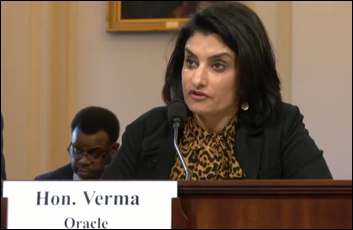
Lawmakers warn the VA of their concerns about its Oracle Health implementation in a House hearing:

  • An independent analysis predicted a total project cost of $50 billion, but that was before program changes and delays that warrant producing a new estimate.
  • Recent staffing cuts that were mandated by the White House included the firing of eight probationary employees of the EHR modernization project and the resignation of another 16 under the deferred resignation program.
  • The Oracle Health contract expires in May 2028, but its system is live in just six VA facilities with 164 to go, and go-lives won’t be started until mid-2026. The VA acknowledges that it won’t be finished by the contract’s end.
  • Oracle Health EVP/GM Seema Verma stressed that “The totality of updates, enhancements, investments, and innovations to the EHR show that this is a dramatically improved system from what was originally deployed in Spokane in 2020.”

HIStalk Announcements and Requests

image

Thanks to long-time HIStalk sponsor AGS Health and CEO Patrice Wolfe for stepping up as a Founding Sponsor. Those coveted Founding slots, which are limited to two, have become available only 2-3 times over many years, and only when one of those sponsors was acquired. Here’s a refresher on what the company does:

AGS Health is more than a revenue cycle management company — we’re a strategic partner for growth. Our distinctive methodology blends intelligent automation with award-winning RCM services and high-touch customer support to deliver peak end-to-end revenue cycle performance and an empowering patient financial experience. We employ a team of 13,000 highly trained and college-educated RCM experts who directly support more than 150 customers spanning a variety of care settings and specialties, including nearly 50% of the 20 most prominent U.S. hospitals and 40% of the nation’s 10 largest health systems. Our thoughtfully crafted RCM solutions deliver measurable revenue growth and retention, enabling customers to achieve the revenue to realize their vision.


We’ve been longtime Costco members, but I kept hearing about Sam’s Club’s superior technology and its stress-free, line-free shopping, and unlike Costco, an app and website that allow checking prices and inventory levels. In my first Sam’s trip this week, I used Scan and Go to ring myself up, paid instantly, and then bypassed checkout entirely and just sauntered out the door as AI-powered cameras verified my cart. No waiting in line to pay, no door-check bottleneck. I can see making a quick stop at Sam’s for just a handful of items, whereas the cupboard has to be pretty bare to be worth Costco trip anxiety. I’ll keep both memberships since Sam’s wins on prices, store layout, and produce, but Costco still leads on clothes, wine, and regular rollout of new items that I don’t need.


Sponsored Events and Resources

Live Webinar: March 4 (Tuesday) noon ET. “Securing a competitive edge in value-based care with AI: Data-driven strategies for enhancing returns across MA, ACO and Commercial programs.” Sponsors: Navina, AMGA. Presenters: Dana McCalley, MBA, VP of value-based care, Navina; Ron Rockwood, executive director of value-based care, Jefferson City Medical Group; Jonathan Meyers, CEO, Seldon Health Advisors. As value-based care models evolve, healthcare organizations must leverage AI to stay competitive and drive better financial and clinical outcomes. This webinar offers data-driven strategies for improving risk adjustment accuracy, optimizing risk stratification, and streamlining clinical and administrative workflows. You’ll walk away with proven techniques for measuring and quantifying the impact of your value-based care initiatives across your organization

Live Webinar: March 20 (Thursday) noon ET. “Enhancing Patient Experience: Digital Accessibility Legal Requirements in Healthcare.” Sponsor: TPGi. Presenters: Mark Miller, director of sales, TPGi; David Sloan, PhD, MSc, chief accessibility officer, TPGi; Kristina Launey, JD, labor and employment litigation and counseling partner, Seyfarth Shaw LLP. For patients with disabilities, inaccessible technology can mean the difference between timely, effective care and unmet healthcare needs. This could include accessible patient portals, telehealth services, and payment platforms. Despite a new presidential administration, requirements for Section 1557 of the Affordable Care Act (ACA) have not changed. While enforcement may unclear moving forward, healthcare organizations still have an obligation to their patients for digital accessibility. In our webinar session, TPGi’s accessibility experts and Seyfarth Shaw’s legal professionals will help you understand ACA Section 1557 requirements, its future under the Trump administration, and offer strategies to help you create inclusive experiences.

Contact Lorre to have your resource listed.


Acquisitions, Funding, Business, and Stock

image

OpenEvidence, which offers a clinical decision support chatbot for providers, announces $75 million in funding at a $1 billion valuation. It recently signed a content agreement with The New England Journal of Medicine.

EXA Capital acquires human services-focused EHR and care management software vendor PrecisionCare.

image

Clinical documentation software company Retrieve Medical will acquire Curatus, which specializes in AI-powered provider data management.

HealthStream reports Q4 results: revenue up 5.2%, EPS $0.16 versus $0.15. HSTM shares have gained 24% in the past 12 months, valuing the company at $1 billion.


Sales

  • Mass General Brigham (MA) will implement the Philips Capsule Medical Device Information Platform, Philips Clinical Insights Manager, and Philips Capsule Surveillance technologies.
  • Hartford HealthCare (CT) will use K Health’s agentic AI-based virtual primary care software to power its new HHC 24/7 virtual care service.
  • ECU Health (NC) selects Pep Health’s patient experience analysis software.

People

image

Eric Talbot, MBA (MedFuse) joins CheckedUp as chief data and analytics officer.

image

Troy Tazbaz, the former director of the FDA’s Digital Health Center of Excellence, returns to Oracle as SVP of data center planning – corporate development.

image image

Guidehouse names Erik Barnett and Brian Smit (R1 RCM) partners in its health and managed services practices, respectively.

image

MGMA hires Julia Rosen, MBA (Pera Healthcare) as SVP of IT.

image

Jeff Surges (RLDatix) joins Brighton Park Capital as partner.

image

Eve Cunningham, MD, MBA (Providence) joins Cadence as chief medical officer.

image

Clinical Architecture names Laura Nixon, MBA (Nixon Strategic Consulting) as VP of interoperability solutions.


Announcements and Implementations

image

MyMichigan Health implements QGenda’s provider credentialing software.

Corti adds Wolters Kluwer Health’s UpToDate clinical decision support content to its AI-powered Assistant app for clinicians.

Lumeris announces GA of Tom, an AI-powered clinical workflow tool for primary care.

image

Ray County Hospital and Healthcare (MO) works with OCHIN to replace CPSI (now TruBridge) and EPowerDoc with Epic.

Altera Digital Health integrates Medicomp’s Quippe AI engine with its TouchWorks EHR. Medicomp also releases Quippe Alchemy that applies AI to problem list cleanup.

Inovalon launches an AI-powered, EHR-integrate clinical trials recruitment tool.


Government and Politics

The White House says that former health tech executive Amy Gleason is serving as acting administrator of Elon Musk’s DOGE cost reduction program.


Privacy and Security

Malware researchers find that a China-based hacker group is disguising its malware as a Philips DICOM viewer.


Other

image

Technical.ly profiles the University of Maryland Medical System’s AI-powered remote fetal monitoring program, which launched last year using technology from PeriGen. Sixteen nurses work at the Neonatal Outcomes Impacted by Escalation Safety Telemetry (NEST) center, monitoring labor and deliveries across seven hospitals in real time. Nurse Manager Christine Haas, RN points out that the nurses have often been quicker to catch abnormalities than the AI: “This program is fundamentally the nurses’ brains with the AI counterpart, just really sort of being a reinforcement and a help for them.”


Sponsor Updates

  • Capital Rx releases a new episode of “The Astonishing Healthcare Podcast” titled “Pharmacy Benefits 101: Stop-Loss Insurance, with Mike Miele, FSA, MAAA.”
  • Agfa HealthCare announces that several hospitals within the Osakidetza Basque Country healthcare network in Spain have successfully transitioned to its Enterprise Imaging for radiology and molecular imaging.
  • Philips Capsule participates in the IHE North America Connectathon 2025 in Toronto.
  • CloudWave publishes a new guide titled “The Strategic Value of Managed Cloud Services in Healthcare.”

Black Book Research’s list of top, physician-rated health IT for rural and critical access providers includes the following HIStalk sponsors:

  • TruBridge and Meditech Expanse – rural and CAH inpatient EHRs
  • Redox – rural healthcare interoperability and HIE vendors
  • Inovalon – population health, rural healthcare management, quality and safety solutions

Blog Posts


Contacts

Mr. H, Lorre, Jenn, Dr. Jayne.
Get HIStalk updates.
Send news or rumors.
Follow on X, Bluesky, and LinkedIn.
Contact us.

Curbside Consult with Dr. Jayne 2/24/25

February 24, 2025 Dr. Jayne 1 Comment

I’ve written previously about the cost of healthcare and health tech conferences and the need to make sure that attending is worth your while. I skipped ViVE in favor of HIMSS primarily because more of my clients or potential clients will be attending HIMSS and it’s a great way for me to have in-person meetings without having to fly across the country.

Still, it’s a substantial investment from both a monetary and time management standpoint. I usually stay at the Palazzo when HIMSS is in Las Vegas, but I went with a more cost-effective option this year even though it’s a bit of a hike to get to the convention center. I’m sure I’ll be questioning that choice when I’m walking 10 miles a day, but my accountant will be happier. I’ve already mapped out the best way to make it to the sessions without having to walk through a smoke-filled casino, so that’s something especially since my route takes me past a spot where I can grab some gelato if I need a boost.

A reader recently asked Mr. H his thoughts on the value of attending health tech conferences as a frustrated patient. He provided a summary of why it might not be the most productive way to advocate on behalf of patients, and I agree with his points. However, I’d like to add a few thoughts of my own for people working on the vendor side:

Although patients aren’t your target market since they’re not paying your invoices, they should be part of your product management and development processes. Similar to the patient and family advisory groups that many care delivery organizations have, they could provide valuable insight into whether the features and functions you’re planning are going to hit the mark or whether they’ll just result in spending that doesn’t move healthcare forward.

If one is going to spend a decent chunk of change enhancing your product, doesn’t it make sense to deliver the best value possible so you don’t have to revise it in the future? I don’t always trust the provider organizations to really understand what patients need, nor do I trust them to understand what their staff needs. I’d be out of a consulting job if they did this well in the first place, but I’m happy to educate them.

There need to be better ways to make sure your customers understand what new features were intended to do and how to implement them in a streamlined fashion. There also should be better incentives to help your customers use things properly. Consultants have made a tremendous amount of money coming through after a botched implementation and reworking things so that workflows are effective and efficient.

Unfortunately, there are some oddities in certain EHR software that if you don’t do it right the first time, it’s nearly impossible to correct. Anyone who had to work with the McKesson Horizon orderable pick lists, which displayed in the order in which they were built and had no mechanism to reorder, knows what I’m talking about. If you’re a vendor who still has content like this, please, for the love of all things, do something about it.

Although I agree with Mr. H’s comment that software vendors can’t fix the problems that are inherent with our dysfunctional US healthcare system, I do think that vendors can benefit from understanding how that system impacts patients, clinicians, and other users of the systems they produce. Understanding the baseline level of frustration experienced by users can help influence intuitive design as well as features and functionality.

I’ve been in this industry a long time. I’ve seen how the attitudes of my friends who are on the product management and development sides of the house have changed now that they’re older and have had more encounters with the healthcare system. It could be a little thing, like making sure that an error message is helpful and informative versus obnoxious and interruptive, that makes a difference in a user’s day.

The healthcare industry needs to do a better job of addressing the needs of frustrated patients, regardless of whether they attend a conference. I had an absolutely awful experience at a local institution last fall, complete with HIPAA violation. I returned a scathing response on my patient satisfaction survey and checked the box requesting a call from someone at the officel. I never heard from anyone. I also sent a letter to the departmental administrator, with zero response.

Want to know how I finally got a response? By taking the solicitation card from their annual alumni campaign, writing “no donation this year due to poor care at the institution,” and mailing it back in the business reply envelope. Patients shouldn’t have to resort to that in order to get attention.

Over the last several years, I have seen more people attending conferences in the role of patient advocate. Although some may be merely symbolic, others are using the opportunity to shine a light on what really happens in the industry and to raise awareness of chronic conditions where technology can really have an impact, such prenatal care and treatment of mental health. I would be interested to hear more from patient advocates that attend conferences to learn about their strategies for trying to drive change. Individual patient needs and opinions may not drive markets, but if you had strong advocates representing large cohorts of patients, we might see the needle move, even if it’s just a little bit.

In talking with some of my industry colleagues about their HIMSS plans, it sounds like many of them have cut back on their booths this year. Many have booked private meeting rooms in which they can meet clients, while others are just planning to be in town and host lunches and dinners to meet with prospects and customers but still save on costs.

I tried to look up the pricing for a 10×10 booth and it looks like you can’t see it directly on the website this year. Instead, you have to talk to the HIMSS25 sales team. I noticed on the exhibitor page that they’re listing 26,800 registrations under the Attendee Highlights section, which is a far cry from the HIMSS heyday when we used to see more than 40,000 people in attendance. When you’re a health system running at a 1% margin, it’s easy to see how conference budgets aren’t a priority.

What are your HIMSS plans, and how have they changed from previous years? Are there any particular sessions to which you are looking forward? Leave a comment or email me.

Email Dr. Jayne.

Readers Write: Unlocking Hidden Gems: Leveraging RCMTAM for Revenue Cycle Excellence

February 24, 2025 Readers Write Comments Off on Readers Write: Unlocking Hidden Gems: Leveraging RCMTAM for Revenue Cycle Excellence

Unlocking Hidden Gems: Leveraging RCMTAM for Revenue Cycle Excellence
By Kim Waters

Kim Waters, MBA is principal consultant, advisory services with CereCore.

image

Revenue cycle management (RCM) has become more challenging than ever. With increasing denials, evolving payer policies, and growing patient financial responsibility, healthcare organizations need innovative solutions to optimize their revenue cycles. Enter the Revenue Cycle Management Technology Adoption Model (RCMTAM), a game-changing framework that’s revolutionizing how we approach RCM technology.

As a leader in healthcare IT solutions, I’ve seen first hand how RCMTAM can transform revenue cycle operations. Let’s dive into the hidden gems this model offers and explore how it can drive operational efficiency, improve financial outcomes, and uncover cost-saving opportunities.

The RCMTAM Advantage: A Data-Driven Approach to RCM Excellence

RCMTAM is more than just another acronym in the healthcare alphabet soup. It’s a peer-reviewed, five-stage framework endorsed by Healthcare Financial Management Association (HFMA) that assesses operational performance and the maturity of revenue cycle technology within healthcare organizations. What sets RCMTAM apart is its data-driven approach, linking technology adoption with financial outcomes to create customizable roadmaps for RCM optimization.

Key features of RCMTAM include:

  • A five-stage model for assessing RCM technology maturity.
  • Financial benchmarks for performance comparison.
  • Correlation of RCM technology adoption to financial performance.
  • Personalized organizational roadmaps.

Uncovering Hidden Gems: RCMTAM in Action

Let’s explore some specific examples of how RCMTAM can enhance operational efficiency and improve financial outcomes:

  • Streamlining eligibility checks. Experian’s recent state of claims survey revealed that 43% of respondents spend 10 to 20+ minutes on secondary eligibility checks. By leveraging RCMTAM to assess and optimize eligibility verification technology, organizations can significantly reduce this time, improving staff productivity and accelerating the revenue cycle.
  • Tackling denials head-on. With 38% of respondents reporting claim denial rates of 10% or higher, denials management is a critical area for improvement. RCMTAM can help organizations identify and implement advanced denial prevention and management technologies, potentially saving millions in denied claims.
  • Automating manual processes. Nearly 50% of providers still review denials manually. RCMTAM can guide the adoption of AI and automation technologies in the denial management process, freeing up staff for more complex tasks and reducing errors.
  • Enhancing data accuracy. Bad data is a leading cause of denials, with 46% of respondents citing missing or inaccurate data as a top reason. RCMTAM can help organizations assess and improve their data management technologies, reducing errors and improving clean claim rates.

The Path Forward: Embracing RCMTAM for Continuous Improvement

As the 2024 State of Claims survey shows, the healthcare landscape is constantly evolving. Payer policy changes are occurring with more frequency (77% agree), and 66% of respondents find submitting “clean” claims more challenging now than before the pandemic. In this dynamic environment, RCMTAM provides a structured approach to continuous improvement.

By regularly reassessing your organization’s position on the RCMTAM scale, you can:

  • Identify emerging technologies that address your specific pain points.
  • Benchmark your performance against industry leaders.
  • Create data-driven strategies for ongoing RCM optimization,

Navigating the complexities of revenue cycle management can be tough. An RCMTAM assessment can provide the performance readout that your organization may need to help uncover the hidden gems in your revenue cycle so you can drive meaningful improvements in your financial performance.

As you embark on your RCMTAM journey, remember that technology is just one piece of the puzzle. Success lies in the seamless integration of people, processes, and technology. By taking a holistic approach and leveraging the insights provided by RCMTAM, you can transform your revenue cycle from a source of frustration to a driver of organizational success.

Monday Morning Update 2/24/25

February 23, 2025 News 4 Comments

Top News

image

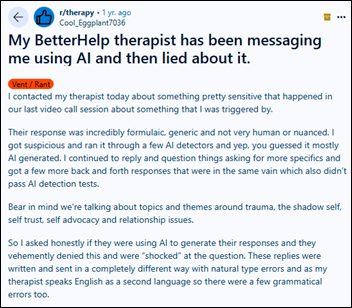
A short-selling investment firm claims that mental health therapists in Teladoc Health’s BetterHelp business are using ChatGPT to respond to patients during therapy sessions without the patient’s knowledge.

Some BetterHelp therapists who were confronted by their patients admitted that they use AI tools because of heavy workloads and company bonuses that are tied to the number of words that a therapist types.

TDOC shares dropped 9% on Friday. They have lost 24% in the past 12 months, valuing the company at $2 billion.

Teladoc Health paid $4.5 million in 2015 to acquire BetterHelp, which generates $1 billion in annual revenue, representing up to 40% of Teladoc Health’s total revenue. However, declining BetterHealth revenue caused Teladoc to take a $790 million impairment charge in mid-2024.


Reader Comments

From Placater: “Re: agentic AI. What does that even mean and why should I care?” AI began as a simple chatbot that answered user questions, sometimes even correctly. Over time, it improved by learning to analyze, correct its mistakes, and respond based on context to please its master. We’re now at agentic AI, which can take keyboard actions like placing an Amazon order or prescribing medication. This is the step that will start killing jobs, although software developers were already ripe for reduction by the last phase. The next short step is AI-powered robots performing human-like tasks, which is really just another output of agentic AI that is limited more by robotics maturity than AI itself. Self-driving cars already showcase AI’s ability to make better decisions than distracted human drivers. With each leap, fewer people benefit — while tools like ChatGPT help the masses, only industry titans and their investors will gain when robots replace human workers.

From Monetary Magnet: “Re: health tech conferences. I’m thinking about attending HIMSS next year as a frustrated patient. Will software vendors listen, or am I wasting my time? Didn’t you sponsor several patient advocates to attend HIMSS years ago?” I did, but that experience didn’t encourage me to repeat it. Reasons:

  • Health tech vendors create products that the market wants, and that market isn’t patients. Consumers don’t see 99% of the available software and their complaints usually relate to how it is used, not how it was designed.
  • Software vendors can’t fix the problems that are inherent with our dysfunctional US healthcare system. I eat at restaurants occasionally, but I would add zero value by attending a restaurant software convention. That’s a cleaned up version of my initial cynical healthcare thought, which is that having patients at health tech conferences would be like inviting livestock to attend a slaughterhouse software convention (that came to mind because I have a friend who is an executive in exactly that business).
  • Healthcare is not a retail market. Patients aren’t the ones paying and often don’t have a say in major decisions that affect them as a result.
  • Conferences like HIMSS and ViVE are designed for industry experts, and any patient representation is likely symbolic at best or tokenistic at worst. Their emotional keynote anecdotes get us all worked up, but we walk out of the conference room with nothing actionable.
  • It’s easy for patient advocates to become overwhelmed by conference parties and booth giveaways. A lack of relevant education sessions would probably leave them to wander the exhibit hall.
  • Healthcare is fragmented by geography, demographics, provider choices, and medical needs. A single patient’s experience and viewpoint don’t necessarily represent that diversity.
  • Vendor input on patient needs is more effectively gathered from their provider customers who write the checks. Those providers should be talking with their patients / customers and choosing software that supports whatever strategies the providers choose. Blame providers for bad patient experience.
  • The bottom line is that we’re all patients, just not at the same time, but what we think as patients doesn’t necessarily move markets. Change would need to come from providers, politicians, insurers, and life sciences firms that are pretty happy with the profitable status quo. Patients might better invest their time by engaging with people from those organizations.

HIStalk Announcements and Requests

image

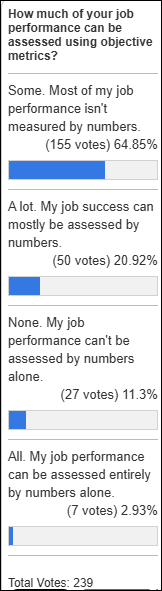
Three-fourths of poll respondents don’t believe that their job performance can be entirely measured by objective metrics. Question: if that’s the case, what is your boss using instead, especially if you work remotely? I assume subjective criteria such as peer feedback, customer satisfaction, and the maddeningly vague areas of responsiveness, collaboration, problem-solving, and worth ethic, all of which might be heavily influenced by likeability or brown-nosability.

New poll to your right or here: Who is most responsible when a telehealth company regularly prescribes drugs that patients want in the absence of clear medical need? I admit that I don’t understand why companies are punished for fraud, opioid overuse, and prescribing without adequate clinical due diligence, but the clinicians who actually generated those prescriptions for cash aren’t even named, much less punished. Would you as a patient want to know that your doctor has willingly agreed to rent their license to the highest bidder? The concept probably extends to health systems – aren’t doctors supposed to represent the best interest of the patient rather than of their corporate bosses?


image

I’m testing a weekly, 60-second LinkedIn carousel that lists my picks of the week’s most important health tech news stories for the TL;DR types. I’ll post a new one each Wednesday morning to see how it goes.


Sponsored Events and Resources

Live Webinar: March 20 (Thursday) noon ET. “Enhancing Patient Experience: Digital Accessibility Legal Requirements in Healthcare.” Sponsor: TPGi. Presenters: Mark Miller, director of sales, TPGi; David Sloan, PhD, MSc, chief accessibility officer, TPGi; Kristina Launey, JD, labor and employment litigation and counseling partner, Seyfarth Shaw LLP. For patients with disabilities, inaccessible technology can mean the difference between timely, effective care and unmet healthcare needs. This could include accessible patient portals, telehealth services, and payment platforms. Despite a new presidential administration, requirements for Section 1557 of the Affordable Care Act (ACA) have not changed. While enforcement may unclear moving forward, healthcare organizations still have an obligation to their patients for digital accessibility. In our webinar session, TPGi’s accessibility experts and Seyfarth Shaw’s legal professionals will help you understand ACA Section 1557 requirements, its future under the Trump administration, and offer strategies to help you create inclusive experiences.

HIMSS25 Guide: HIStalk sponsors can provide conference participation details by February 24 to be included in my guide.

Survey Opportunity: Healthcare AI Purchasing. Responses from health system and imaging center readers to this short survey will trigger a Donors Choose donation from Volpara Health plus matching funds.  

Contact Lorre to have your resource listed.


Acquisitions, Funding, Business, and Stock

image

Waystar reports Q4 results: revenue up 19%, EPS $0.11 versus –$0.12, beating analyst expectations for both. WAY shares have gained 104% since the company’s June 2024 IPO, valuing the company at $7 billion.


Sales

  • Akron Children’s will implement Abridge for ambient documentation.
  • Blessing Health System (IL) will implement Epic, replacing Altera Digital Health’s Sunrise.

Announcements and Implementations

Mass General Brigham researchers develop an Epic tool that identifies frail patients who are at risk for higher rates of hospital readmission and death. The tool works even when primary care visit data is not available.


Government and Politics

Website operator Gregory Schreck pleads guilty to federal charges that accused him of tricking Medicare patients into giving up their personal information so they could be sent “free” medically unnecessary items like braces and pain creams that were then billed to federal insurance programs. The scheme led to $1 billion in false Medicare claims, with Medicare and insurers paying out more than $360 million. Schreck was a VP at DMERx, the Internet platform that was used to generate the false prescriptions. He was also VP of HealthSplash, which advertised its service as helping payers, providers, and suppliers share data.


Other

The UK’s medical exam administrator admits to sending incorrect scores to September 2023 test-takers. It mistakenly told 222 internal medicine doctors they had passed when they had actually failed, while 61 who passed were told they had failed. The British Medical Association warns that those who were wrongly told that they passed now face an uncertain future, while some of the 61 who were incorrectly failed may have already left the profession as a result.


Sponsor Updates

  • Black Book Research publishes a free report, “2025 Black Book of Rural and Critical Access Healthcare IT Solutions.”
  • Nordic releases a new “Designing for Health” podcast featuring Doug Turner, MBA.
  • Nym names Yaara Libai and Bella Sirota clinical data annotators, Ariela Krumgals VP of HR, Yiftah Sasson product manager, Shiraz Tov junior backend engineer, and Hadar Yehezkeli NLP research engineer.

Blog Posts


Contacts

Mr. H, Lorre, Jenn, Dr. Jayne.
Get HIStalk updates.
Send news or rumors.
Follow on X, Bluesky, and LinkedIn.
Contact us.

Readers Write: ViVE 2025 Recap

February 21, 2025 Readers Write 1 Comment

ViVE 2025 Nashville – The Tale of AI and the Snowpocalypse!
By Mike Silverstein

Mike Silverstein is managing partner of healthcare IT and life sciences at Direct Recruiters, Inc.

image

Tell me about your agents! No, not one from the CIA, FBI, or your record label. Tell me about your AI agents!

That was the theme of ViVE 2025 in Nashville. Music City was frigid outside, but inside the Nashville Convention Center, the agentic AI blaze was on. 

Two weeks ago, I gave up and finally asked a client on a Zoom call, ”Can you tell me what the heck agentic AI is?” My head is still spinning from large language models (LLMs), GPTs, and generative AI (still not entirely sure what this is). Now if you don’t have AI agents, you are an HIT artifact.

Big tech is coming to healthcare and this time I think it is REALLY here to stay. With the labor crunch and margin pressures being ubiquitous and in full force, an AI agent that can make a phone call to a patient / member / health plan and converse like a real person with whatever tone and accent you prefer might just be a game changer.

The tools are really getting smart, borderline scary smart. I had several people demo products for me that I literally couldn’t tell with certainty if I was listening to a real person or an AI agent. Even more, these agents are being trained on serious healthcare data and workflows, and I believe the dominoes are going to start falling.

At HLTH 2024 in Las Vegas, AI co-pilots were all the rage. Now those firms are racing to stay up the value stream and provide even higher value clinical impact as AI note-taking feels like it will be table stakes very soon. Call centers and one-way SMS texts both seem like they could be on the chopping block, and it feels like we could be on the precipice of patients actually having a real consumer experience like in every other industry.

On the investment front, deal activity seems to be up. The firms I talked to are living less hand to mouth (as opposed to only focused on sales in the next six months) and are back investing in products and technology out of fear of being left in the dust. However, what stood out as interesting to me is that access to this cutting-edge technology seems to be far wider than various technological breakthroughs of the past.

Most of the vendors I talked to are layering their healthcare workflows on top of off-the shelf AI agent tools and platforms, so the speed-to-market has been pretty blinding. New healthcare tools are being developed using publicly available foundational tech and low code development. ViVE 2025 felt a bit like healthcare’s version of a big-time arms race. Everyone is working diligently to stay out in front of, or totally away from, Epic’s roadmap. It feels like this could be the start of a major leap in how we experience healthcare as consumers.

Unfortunately, the other major thing I learned this week is that Nashville is woefully unprepared for snowstorms. At the end of every conversation I had in the past 48 hours, everyone told me, “You had better move up your flight. It’s going to snow on Wednesday and this whole place is going to shut down.” As a result, there was a mass exodus from Nashville Tuesday evening, and the airlines cashed in big on change fees.

Even so, Music City was a great host, and 2025 feels like it’s going to be a pivotal year in the adoption of AI in healthcare.

News 2/21/25

February 20, 2025 News 4 Comments

Top News

image

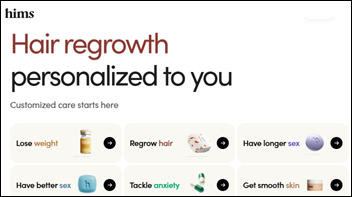
Vanity prescription vendor Hims & Hers acquires Trybe Labs, an at-home lab testing provider that process customer self-collected blood samples.

The company says the acquisition will allow it to offer whole-body testing and give it de-identified health data for AI training.

HIMS shares rose on the news are are up 350% in the past 12 months, valuing the company at $15 billion.


Reader Comments

From Hal2k: “Re: HIMSS25. Federal employees, including those from ONC / ASTP, have had to drop out. What will be the downstream impact? I heard lower turnout overall – they had to cancel a couple of hotels.” Unverified. I gave the conference website a quick look, with the only surprise being that Hal Wolf will be doing a fireside chat with Oracle Health EVP/GM Seema Verma on improving patient-centered care, which seems questionable for several reasons.

From Tired Sales Gal: “Re: ViVE. My perspective is that its attendance was down from previous years. Not sure if the weather played a part or not. Attached is an attendee list. The majority were vendors versus providers and payer representatives. Fewer investors attended. I question whether the list might not have included those attendees who registered through CHIME, but that might only be another 500 folks.” The list has about 4,000 vendors versus 900 providers, and some of those provider folk don’t have a title that suggests purchasing influence (podcast host, professor, administrative fellow, etc.) I’ve never heard of quite a few of the companies on the list. Maybe if I decide that I care enough I’ll compare the ViVE and HIMSS exhibitor lists.


ViVE Conference Day 3 and 4 Observations from an Attendee

image

  • Tuesday felt like the busiest day; lots of activity across the floor as folks tried to wrap up before the snow.
  • Simply based on my perceptions from walking around, it felt like sessions on the four primary stages were sparsely attended. One-on-one and small group meetings seemed to be the dominant activities throughout the conference.
  • Nashville got about 1.5″ of snow, so on the low side of expectations. On Wednesday there were lots of flight delays but relatively few cancellations, and major roads were in decent shape.
  • I’d estimate only ~2,000 folks were around on Wednesday. Probably one-third of booths had no one, and many started packing up early.
  • ViVE should’ve had a scavenger hunt to find all the booths that don’t have AI mentioned somewhere in their display or marketing materials. Practically every company is trying to say they have or use AI, but how real it is is unclear to me.
  • I want to give a shout-out to Streamline Flow. They were demoing until the very end, and in an industry of bad software, their product seems attractive, intuitive, clinician-friendly, and easy to use. It’s early, but looking forward to seeing how they progress.
  • Now the hard work begins. Companies that had a good conference and generated valuable leads are only on first base; there is a lot remaining to do to get to home plate. We feel good about how ViVE was for us but how we execute in the coming weeks and months will determine whether it was worthwhile.

Sponsored Events and Resources

HIMSS25 Guide: HIStalk sponsors can provide conference participation details by February 24 to be included in my guide.

Survey Opportunity: Healthcare AI Purchasing. Responses from health system and imaging center readers to this short survey will trigger a Donors Choose donation from Volpara Health plus matching funds.  

Contact Lorre to have your resource listed.


Acquisitions, Funding, Business, and Stock

image

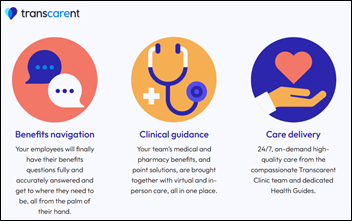
A remarkably fine MedCity News investigative piece (it’s well worth clicking over) by Arundhati Parmar looks at Transcarent:

  • Founder Glen Tullman had said previously that care navigation companies are as obsolete as travel agents. Transcarent then acquired care navigation company Accolade for $621 million last month at what was seen as a fire sale price.
  • Insiders say that Transcarent wildly missed its 2024 sales targets, booking $60 million instead of the expected $175 million, and earned most of its big clients via its acquisitions or from Tullman’s executive connections.
  • Another insider says that 70 employer navigation RFPs were issued last year and Transcarent not only failed to win any of them, it wasn’t even considered in any.
  • Accolade’s prospects were fading after being dropped by big customers, trading as a penny stock, and being shopped to potential buyers.
  • A CEO who has known Tullman for years criticizes the strategy of Transcarent selling directly to executives who tend to perform less due diligence than benefits consultants: “I think Glen preys on the benefits buyers who do not have a ton of resources to understand that there is nothing under the veneer that he is presenting. There is no Transcarent model. They have no NCQA designation, no URAC designation. They have no hard standard accreditation for care management. He invests a lot of money in political connections and in being part of CEO clubs that give him access to board members that don’t know much about benefits.”
  • A healthcare CEO who passed on acquiring telemedicine vendor 98point6 after reviewing its financials said of Transcarent’s $100 million acquisition of the company: “They were losing 60 cents for every dollar of revenue they made. Glen has a pattern of taking distressed, low-quality assets and then slapping a bunch of tech together.”

Therapy Brands, which offers EHR/PM software for mental health and therapy providers, expands its Fusion rehab therapy product to the adult market.

Venture capital and private equity firm Insight Partners merges two of its population health management technology companies, Azara Healthcare and I2i Population Health. The announcement is coy about what name the combined businesses will use.

Hummingbird Healthcare raises $20 million in a Series B funding round.

Walgreens shares jump Tuesday following a report that its potential acquisition by private equity firm Sycamore Partners could be back on the table.

IRhythm Technologies announces Q4 results: revenue up 24%, EPS –$0.04 versus -$1.26. IRTC shares are down 1% over the past 12 months, valuing the ambulatory ECG solution vendor at $3.5 billion.


Sales

  • Cleveland Clinic will roll out ambient documentation from Ambience Healthcare.
  • Inspira Health announces that it will replace Oracle Health with Epic, as a reader reported here last September.

Announcements and Implementations

WellSky launches a patient scheduling and workforce management solution for home care agencies. 

Availity launches Rapid Recovery, a solution that is designed to swiftly restore critical healthcare operations after large-scale catastrophic events, including cyberattacks. Key features include a five-day recovery objective, an air-gapped recovery environment, comprehensive backups, and third-party certification.

image

Epic will expand its 11,400-seat Deep Space underground conference center by 23,000 square feet with a new 750-seat auditorium and a dining facility. The expansion is intended to accommodate the company’s user group meeting and is scheduled to open before UGM 2026 next August.


Government and Politics

Sen. Patty Murray (D-WA) presses Paul Lawrence, PhD at his confirmation hearing for VA deputy secretary:

EHR started in 2018 under President Trump and in 2020, it deployed to two Washington state VA hospitals. Instead of helping to improve our veterans’ health care, the rollout ending up being a complete disaster, and it endangered veteran patients. Unfortunately, the system still is not working the way that the VA doctors and nurses need, and veterans are continuing  to suffer. Last month, the VA announced that it would be moving forward with pre-deployment activities at the next four sites for this Electronic Health Record. You will oversee the EHR program, so if confirmed, I want to know what you are going to do differently to hold Oracle accountable and to make sure we get this system right for our veterans?” Lawrence responded that he will figure out an accountability plan, to which Murray said, “We have heard that answer from every VA person that’s come before this committee for a number of years now. Everybody’s looked at it, everybody’s considered it, everybody’s talked about it, everybody’s convened panels. It is not working.”


Other

I saw this after reading Dr. Jayne’s piece on tech for seniors and thought it looked interesting. The free version turns an old tablet into a companion device that serves as a smart picture frame, text and photo messaging tool, and task manager. A $10 per month subscription adds auto-answer video calls, auto-join of Zoom meetings, AI activities and check-in, and connection of multiple family members. Onscreen Joy was announced last month at CES.

In the Netherlands, a man buys five 500GB hard drives for $5 each at a flea market and discovers that they contain patient medical records, apparently from the defunct healthcare software vendor Nortade ICT Solutions.


Sponsor Updates

  • Capital Rx releases a new episode of “The Astonishing Healthcare Podcast” titled “Judi Health: Going Beyond Pharmacy and into Medical Claims, with AJ Loiacono and Dr. Sunil Budhrani.”
  • BNH Hospital in Thailand implements the TrakCare EHR from InterSystems.
  • A Surescripts analysis projects more than $3.76 billion in healthcare savings could be realized if care managers leverage Surescripts Medication History for Populations technology.
  • First Databank publishes a new white paper, “Empowering Consumer Choice with EPrescribing.”
  • Findhelp welcomes new customers Cone Health (NC), Help at Home (IL), and Marion County Commission on Youth (IL).
  • FinThrive will present at the Idaho HFMA Spring Conference March 3 in Boise.
  • Five9 announces its global availability on Google Cloud Marketplace.
  • Healthcare Growth Partners advises Insight Partners on its investment in Azara Healthcare and I2I Population Health.
  • Inbox Health partners with Lighthouse Lab Services.
  • MRO achieves HITRUST CSF certification for its Exchange Services platform.
Blog Posts


Contacts

Mr. H, Lorre, Jenn, Dr. Jayne.
Get HIStalk updates.
Send news or rumors.
Follow on X, Bluesky, and LinkedIn.
Contact us.

EPtalk by Dr. Jayne 2/20/25

February 20, 2025 Dr. Jayne 1 Comment

As someone who has been practicing medicine via telehealth since pre-pandemic days, sometimes I am placed in the wise elder role and asked to explain how things started and how they came to be the way they are. It can be a bit of a journey down memory lane, but then again, everything changed when COVID arrived and telehealth will never be the same.

Although large healthcare delivery organizations see telehealth as an extension of what they are doing in brick and mortar facilities, players in the direct-to-consumer space have dramatically shifted the options that patients can choose from in their quest for prescriptions and other services. In my own practice, I’ve seen it shift from being a partnership between physician and patient to being a transactional consumer activity where an outcome is expected and the patient/consumer becomes irate if they don’t get exactly what they think they need.

This is often frustrating to physicians who are new to third-party telehealth and thought it would be an easy way to pick up some extra money while making use of the medical license they spent hundreds of thousands of dollars in tuition payments to acquire.

I was in an online physician forum the other day and this topic came up. A physician was asking what it’s like to work for one of the direct-to-consumer companies that is well known for prescribing medications for erectile dysfunction. The company has added pre-visit questionnaires to gather information, often with somewhat leading questions that coach for patient answers that will generate a prescription. It’s a win-win for profits since the company is selling the medications as well as the professional services.

In some states, clinicians don’t even have to interact with patients in real time. They can treat them based on the equivalent of a one-way message. The medical board of a neighboring state has disciplined dozens of physicians for this since it’s not allowed in their state, but that doesn’t seem to have dissuaded people from doing it.

It always amazes me to see physicians who have no idea what is going on in their own industry and have little visibility beyond their personal practices. I found a recent article about the phenomenon and shared it to the forum. It was clear based on the comments section that people were having their minds blown.

One of the facts from the piece that drew quite a bit of attention was that together, three well-known telehealth companies spent more than $1.5 billion on advertising, sales, and marketing in 2023. Physicians in the forum also had no idea that direct-to-consumer telehealth companies were getting into clinical conditions that involve more complexity, such as mental health or obesity.

One of the physicians in the forum is the chief medical officer at an online weight management program. It works strictly through payer-based contracts and provides a multidisciplinary care team to address patients’ varying needs. She shared horror stories about patients who came to them after being seen at more commercial enterprises, where patients were basically told to use the medications that were shipped to their doorsteps but weren’t given any other counseling or support.

She made some great points. It’s not just that the treatments are ineffective, but that in some situations, they introduce side effects, including metabolic abnormalities that could have been avoided if a more thorough evaluation were performed prior to treatment.

Patients don’t always understand the knowledge and experience that is behind why physicians do or do not recommend a treatment. That’s especially true when they have seen dozens of influencers and paid spokespersons tell them exactly what they “need.” They don’t know the difference between one obesity management telehealth company that only hires physicians who have extensive formal training and years of experience in weight management versus another that is willing to onboard any licensed provider who willing to sign on the dotted line and accept $20-$30 for writing a prescription and a brief chart note.

The article has some great comments from Ateev Mehotra, MD, MPH, a public health professor who focuses on telehealth. He describes the transition from patients who work with their physician to make a treatment plan to a situation where the patient makes their own diagnosis and consults a transactional service whose clinician is a screener who is paid only to make sure that the medication is safe for the patient. That’s the lowest possible expectation for healthcare.

Not to mention that “safe” is a relative term. Is it safe because it probably won’t kill you? Or is it safe because you aren’t likely to have complications that dramatically impair your quality of life, whether briefly or for a longer period of time?

The article mentions situations where a screening-type approach might make more sense, with one of them being the provision of reproductive health services. Especially in states where it might be difficult to obtain reversible contraception, those services can be popular.

For medications that are over the counter in many other nations but remain prescription-only in the US, it’s easier to see that the risk/benefit equation for certain drugs might tip in favor of more streamlined access. I don’t have the statistics in front of me, but would bet that for many healthy non-smoking females in their 20s, the risk of morbidity and mortality from oral contraceptives is likely less than that of pregnancy, given the current state of maternal and infant health in the US.

I’m looking forward to seeing how the conversation unfolds over the next couple of days, which is about the typical length of time one of these threads survives. I’ll certainly make note and share if there are any particularly thought-provoking comments.

A group of men on a stage

AI-generated content may be incorrect.

I enjoyed reading Mr. H’s recap of one of the Donors Choose grants in which reader donations provided microphones and speakers for a classroom in North Carolina. In addition to students being able to hear their teacher and peers clearly, learning how to use a microphone properly is a life skill that everyone should have.

Conferences that I’ve attended usually have microphones distributed throughout the audience to ensure that people can be heard when they ask questions. Invariably, at least one or two people will declare, “I don’t need the microphone.” They try to talk loudly, but don’t succeed, or they inadvertently sabotage the recording or broadcast for attendees who are not in the room. Some hold the microphone too far away from themselves or place it right up against their lips, both of which are never great for the audience or others who actually would like to hear what the speaker is saying. Hopefully incorporating those skills into the school setting will pay dividends for those students down the road.

If your organization expects you to confidently approach the microphone, do they provide any instruction in how to effectively do so or to avoid the dreaded screechy feedback? Or do they just hope you were a member of the A/V club in high school or that you channel your inner rock star? Leave a comment or email me.

Email Dr. Jayne.

Readers Write: Solving Healthcare’s $125 Billion Fax Problem

February 19, 2025 Readers Write 3 Comments

Solving Healthcare’s $125 Billion Fax Problem
By Thomas Thatapudi

Thomas Thatapudi, MBA is CIO of AGS Health.

image

In the six years since Centers for Medicare and Medicaid Services called for an end to faxing in healthcare, the industry remains stubbornly attached to fax communications. Fax-led communications solutions are prevalent today, as organizations continue exchanging more than 9 billion fax pages each year, representing about $125 billion in annual costs to the healthcare system.

It is a problematic practice in terms of data integrity, productivity, and efficiency. According to information compiled by DirectTrust, 30% of tests must be re-ordered due to lost faxes and 25% of faxes fail to arrive before a patient’s first visit. Faxes also often require manual indexing for integration into the EHR and other health information systems, a time-consuming process that requires human and financial resources that are hard to come by for many healthcare organizations.

Luckily, fax indexing lends itself to automation. In particular, generative AI (GenAI) and agentic AI excel at automating mundane and repetitive tasks. However, it is unrealistic to expect digital workers, such as AI agents that mimic human actions, to accurately index 100% of the faxes from the outset. Thus the best outcomes are realized when digital workers are paired with human counterparts who manage exceptions and handle specialized information and requests, at least until the digital workers have accrued enough on-the-job training via machine learning and deep learning models to take over higher complexity tasks.

Implementing a hybrid fax indexing model accelerates processing and eliminates the care delays that are caused by improperly managed faxes. It also alleviates the strain on increasingly scarce resources, reducing costs and freeing internal staff to focus on higher-value tasks.

However, achieving these outcomes requires careful orchestration of a workflow that seamlessly integrates digital workers (AI agents) and their human counterparts delivering on quality, timeliness, and accuracy.

Designing the Digital Workforce

The heart of a successful hybrid fax indexing strategy is a well-designed digital workflow model that helps orchestrate workflows between humans and digital workers. It starts with mapping the necessary technologies, a step that is best informed by shadowing human indexers to fully understand the process and map any unique needs. This information is also used to plan the implementation and conduct feasibility testing.

Like their human counterparts, digital workers are armed with an array of intelligence and automation tools, including optical character recognition (OCR), to analyze faxed documents and convert them into machine-readable text. They use natural language processing (NLP) models to interpret and manipulate the data contained within. GenAI is then leveraged to classify faxes based on the sender’s documentation format, determine its confidence threshold, and either index it into a documentation management system or EHR or divert it to the validation workflow for manual processing.

Machine learning allows digital workers to adapt to new document formats and categorize data according to providers’ templates and styles. Further, each processed fax enhances accuracy, efficiency, and capabilities while reducing exceptions.

Monitoring effectiveness is crucial to success. Establish clear KPIs, such as the volume of faxes indexed per day, indexing accuracy, turnaround times, and productivity levels to assess progress over time.

AI Grounded in Reality

While automated fax indexing is a relatively new entry into the burgeoning field of healthcare AI, it is quickly making an impact. One health system’s implementation of automated fax indexing has put it on track to save approximately $2 million in annual expenses. Automation has reduced the number of manual indexers that are required to process the health system’s fax volume, which allows key team members to focus on higher-value tasks while achieving a near-perfect accuracy rate and 24-hour turnaround time. As digital workers “learn” over time, the automation rate will increase, while the need for human intervention decreases, adding to the anticipated cost savings.

While it is unlikely that we will see a fax-free healthcare system in the near-term future, leveraging readily available automation and AI tools makes it possible to digitize the process and alleviate its associated cost, productivity, and patient safety burdens.

Automated fax indexing is yet another example of a thoughtful AI application that solves an age-old problem that, until now, has been stubbornly resistant to change.

Readers Write: Are Your Patient Access Metrics Ready for Healthcare Consolidation?

February 19, 2025 Readers Write Comments Off on Readers Write: Are Your Patient Access Metrics Ready for Healthcare Consolidation?

Are Your Patient Access Metrics Ready for Healthcare Consolidation?
By Emily Tyson

Emily Tyson, MBA is COO of Relatient.

image

The healthcare industry witnessed a surge in merger and acquisition (M&A) activity in 2024, a trend that is expected to gain momentum in 2025. While organizational growth can unlock new potential for patient care and financial performance, it often brings operational inefficiencies that, if left unchecked, can strain staff, frustrate patients, and hinder sustainable success.

One of the biggest hurdles is managing the influx of data from fragmented sources. Adding new providers and locations introduces complexity, making it difficult to maintain consistency in scheduling, patient flow, and care delivery. Without the right tools to consolidate and standardize this data, organizations risk creating bottlenecks that impact the patient experience, disrupt operations, and negatively affect financial outcomes.

To ensure sustainable growth, healthcare organizations need proactive, data-driven strategies that are focused on four key aspects of patient access — provider scheduling performance, call center efficiency, patient experience, and financial outcomes — to not only identify inefficiencies, but also address them before they escalate.

Provider scheduling performance

During periods of growth, whether through acquisition or organic expansion, the last thing healthcare organizations need are scheduling disruptions. Scheduling is a cornerstone of operational success, directly impacting patient acquisition, physician satisfaction, and financial performance.

Accurate data insight is key to identifying gaps and uncovering opportunities for improvement. For example, high patient no-show rates might signal ineffective communication about appointment details, leading to missed visits. Another critical metric is appointment wait time, as patients overwhelmingly identified this as a top frustration in a 2024 survey.

Other essential metrics such as provider utilization rates, rule optimization, and scheduling accuracy reveal how effectively an organization accommodates provider preferences while balancing patient demand. Monitoring these indicators helps prevent overbooking, supports efficient patient throughput, and ensures that providers’ schedules are sustainable.

Metrics like the third next available appointment and waitlist conversion further illuminate the balance between patient access and appointment availability. These insights empower organizations to fill open slots more efficiently, expanding patient access while maximizing financial performance.

Contact center efficiency

During periods of growth and M&A activity, ensuring a seamless transition at the first touchpoint of the patient journey, the contact center, is critical. As new organizations integrate, call volumes naturally increase and require careful management to maintain care quality and consistency.

Proactively measuring and analyzing key performance indicators (KPIs) for both efficiency and patient satisfaction allows healthcare organizations to identify potential gaps. For instance, tracking peak call times allows administrators to allocate resources strategically, ensuring that patients receive timely support during high demand periods. The right metrics provide insights to reduce bottlenecks, streamline scheduling, and lower operational costs. Other KPIs like appointment booking efficiency, minutes per call, and staff training time offer a comprehensive view of contact center performance and areas for improvement.

Patient experience

Today’s healthcare consumers demand convenience, and if scheduling processes are complicated or time-consuming, particularly during periods of growth or consolidation, patients are likely to seek care elsewhere. To meet these expectations and enhance both patient experience and contact center efficiency, organizations must monitor patient experience metrics that reflect engagement and satisfaction.

Given that research consistently shows that patients prefer self-scheduling options, empowering patients to take more control of the scheduling process can lead to better outcomes for both patients and staff.

With the right systems in place, providers can track self-scheduling rates and after-hours scheduling activity to gain deeper insights into patient behavior. Other essential patient experience metrics include patient acquisition, referral conversation rates, and appointment abandonment rates, all of which provide a clearer picture of how well the organization is meeting patient needs.

Financial outcomes

Effective scheduling and data management play a vital role in driving financial performance. During periods of rapid growth, healthcare organizations should closely monitor key financial metrics that are tied to scheduling and payment processes. Doing so enables them to identify opportunities to streamline operations, reduce costs, and maximize revenue.

Crucial metrics that provide insight into a practice’s financial health include payment collection percentages, reductions in accounts receivable, balances collected through payment plans, and the speed of patient balance collection. By tracking these indicators, organizations can pinpoint inefficiencies, implement targeted improvements, and ensure financial stability during times of expansion.

Setting the state for growth

Tracking the right metrics enables teams to address inefficiencies and achieve sustainable growth by focusing on four critical areas:

  • Optimizing scheduling workflows. Track scheduling KPIs like no-show rates, wait times, and provider utilization to balance patient demand and provider efficiency.
  • Boost contact center performance. Analyze KPIs such as peak call times, appointment booking efficiency, and staff training to improve operations and care quality.
  • Enhance patient engagement. Offer self-scheduling options, track patient satisfaction metrics, and resolve issues like appointment abandonment to align with consumer expectations.
  • Improve financial health. Focus on payment collection rates, accounts receivable reductions, and patient payment speed to drive revenue stability.

Intelligent patient access tools such as multi-channel appointment scheduling, provider preference management, and automated appointment reminders allow organizations to accurately track the most relevant KPIs, enhancing operations and improving the patient experience. Combined with robust analytics, these tools enable data-driven strategies, optimize performance, and support sustainable growth.

Healthcare AI News 2/19/25

February 19, 2025 Healthcare AI News Comments Off on Healthcare AI News 2/19/25

News

image

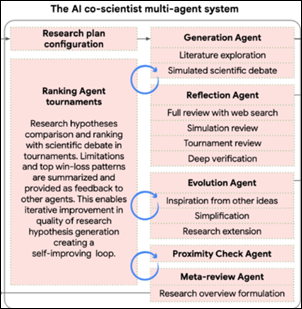
Google launches Co-Scientist, a Gemini 2.0-powered research LLM that researchers say is like having an expert collaborator. Users provide a plain language research goal, after which the tool provides a summary of published literature and cited suggestions for new hypotheses and possible experiments.

Healthcare accreditor URAC announces plans to release a healthcare AI accreditation program later this year.

image

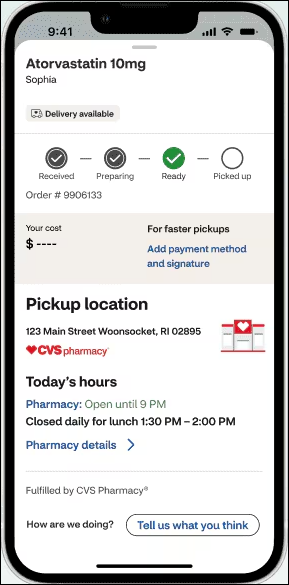
CVS Health redesigns its app with AI-driven features to provide a personalized health concierge experience. The app allows users to manage prescriptions for their entire family across CVS Pharmacy, CVS Caremark mail order, and CVS Specialty pharmacies. It also allows them to open locked display cabinets and pick up prescriptions using a barcode. Future enhancements include conversational AI for checking refill status and tailored recommendations for chronic condition management.


Business

image

Innovaccer launches telephone-based AI voice agents for patient scheduling, protocol intake, referral, authorization, care gap closure, HCC coding, and patient access.

image

HP acquires wearable device maker Humane AI for $116 million, gaining its employees and software while discontinuing the device. The widely hyped product, criticized as a solution in search of a problem, will be retired. The year-old, $699 Humane AI Pin  — which also required a $24 monthly subscription – will become dysfunctional next week when its cloud service shuts down. The startup had raised $230 million and sought a $1 billion buyout.

Ambient documentation vendor Abridge raises $250 million an a Series D funding round. The company was previously valued at $2.5 billion.

Crunchbase lists five healthcare-related companies whose new fundraising rounds suggest a Unicorn Club valuation of at least $1 billion:

  • Neko Health (body scanner), $1.8 billion.
  • Hippocratic AI (AI agents), $1.6 billion.
  • Aragen Life Sciences (drug discovery), $1.4 billion.
  • Truveta (healthcare data from its provider owners), $1 billion.
  • Cera (digital-first home health), $1 billion.

Research

A UK-based company develops an AI-powered “super test” for prostate cancer screening that offers greater accuracy and sensitivity than traditional tests like PSA. The multi-omics test uses AI to analyze blood and urine samples for the presence of specific genes and proteins that have been clinically associated with the disease.

image

University of Michigan and other organizations are using a federal grant of up to $25 million to develop an AI-equipped van that can help medical generalists deliver hospital-level services in rural areas.


Contacts

Mr. H, Lorre, Jenn, Dr. Jayne.
Get HIStalk updates.
Send news or rumors.
Follow on X, Bluesky, and LinkedIn.
Contact us.

Morning Headlines 2/19/25

February 18, 2025 Headlines Comments Off on Morning Headlines 2/19/25

FDA cuts hit AI division, even as Trump invests in the technology

Report says that FDA has laid off many AI and digital health employees who were involved in healthcare AI regulation.

Ex-Palantir Veteran to Run Data, IT Security for RFK Jr.’s Health Department

HHS appoints Clark Minor, a Palantir software executive, as CIO.

MultiPlan Enters New Era and Unveils New Brand, Claritev, Reflecting Company’s Transformation and Mission to Support the Healthcare Continuum

Out-of-network price platform vendor MultiPlan changes its name to Claritev.

Ohio Becomes First State to Require Hospitals to Publish Prices

A new Ohio law prohibits hospitals that don’t post their prices publicly, as required by the federal government, from collecting medical debt and filing negative credit reports against patients.

News 2/19/25

February 18, 2025 News 2 Comments

Top News

image

Abridge raises $250 million in a Series D funding round.

The company says that its ambient documentation product is being used by 100 health systems.

Abridge’s valuation has been reported as $2.5 billion.


Reader Comments

From Dr. Anon: “Re: Oracle Health. We keep hearing about the ‘excitement’ of Oracle shifting ‘to the cloud,’ but I’ve still not been able to get a straight answer on what will happen to all of our custom build when that occurs. And we have tons of custom build based on the old PowerForm / PowerNotes features that supports all of our regulatory reporting requirements. Unfortunately the workflow mPages and dynamic documentation features, on which the cloud implementation will be based, has yet to include key features despite a decade of Cerner / Oracle knowing what is needed.”

From Aca-Doc: “Re: work metrics for physician productivity. My prior chairman was big on metrics for bonuses. As the CMIO, I had to develop reports to show who was at 75th percentile or above on RVUs. Because we’d had problems with people submitting charges without writing a note, the metrics also incorporated a requirement that 95% of notes had to be completed within seven days of the visit. People figured out workarounds. They would sign a blank note on the day of the visit and then go back later and fill in the details. On the other hand, patient satisfaction and outcomes are not necessarily a good indicator of work effort or quality, so it’s not really fair to hold clinicians accountable for these variables over which they have no control.” 

From ViveRant: “Re: ViVE. Now there’s wristband for ‘additional security.’ This is required wear in addition to the badges that now include a picture of the attendee. As when airlines started requiring picture ID, the point was to remove the thriving secondhand market for unused plane tickets. Like CES, ViVE realized that badge pictures are suboptimal since scanning thousands of people is impossible. Adding a wristband that cannot be removed without breaking is possibly easier to spot, but for most, it remains invisible and adds the frustration of unnecessary lines each morning to get a new wristband unless you like wearing a post-shower, now-sodden cloth wristband.” Being cynical, I would wonder what kind of attendee tracking the badge enables, like the RFID that HIMSS planned to use at HIMS11 (also RSNA) so that exhibitors could “derive a more accurate score of a visitor’s buying potential and send a booth alert when a key prospect approaches.” As if that wasn’t creepy enough, the tech company that HIMSS hired for that attendee tracking later incorporated facial recognition and also added a feature that HIMSS didn’t use — value-based booth pricing, so getting stuck in exhibit hall Siberia at least cost less. Also, did the ViVE wristbands have ads?


ViVE Conference Day 1 and 2 Observations from an Attendee

image

  • 10,000 attendees (2,500 more than ViVE 2023 in Nashville), 30% are C-Suite-level. 725 provider and payer organizations represented. 5,000 scheduled meetings over the course of the conference.
  • Nashville has not been spared from the latest Arctic blast. There were snow flurries falling during the (partially outdoor) opening night reception.
  • The show floor feels both active and quiet; there’s definitely a lot of people and a lot of activity, yet nothing feels frenetic or chaotic. It feels like everything flows and runs smoothly.
  • The layout of the show floor is different in notable ways from two years ago. There is less empty space. Every inch is used in a way that’s compact but doesn’t feel cramped.
  • It feels like there are a lot more vendor booths, and they’ve cut back on some of the free space as a result. Also, the primary stages at each corner of the show floor have much less seating compared to two years ago.
  • 99% of the booths seem to be taken. I’ve only seen three booths and one meeting cube on the floor plan showing as unfilled.
  • AI is definitely a core focus and some of the biggest booths are heavily AI-oriented.
  • Vendors I’ve noticed who have a diminished or no presence (smaller booth, much fewer attendees): Health Gorilla, Graphite Health, Moxe, eClinicalWorks, Interfaceware, Quest Diagnostics. I’m sure there are others.
  • I continue to question how valuable a booth is. If you have a catchy brand or offering that’s likely to attract the attention of a wanderer, I can see it helping. If you’re meeting- and one-on-one-focused, I feel like a meeting area is a better investment.
  • The Provider and Payer Connect Lounge, where vendors have scheduled meetings with provider and payer orgs, is huge this time around, with at least 170 small tables for meetings. The Investor Connect Lounge feels smaller and anecdotally, I haven’t run into nearly as many investors.
  • Being a repeat ViVE attendee, I feel my organization has a much better game plan for the conference. I’m clearer on who to meet with and how to make connections happen. I’m more realistic about who actually attends and how to find them. I think vendors coming to ViVE need to understand that it is focused on doing business with investors and health system/health plan prospects. The days are heavily structured around meetings and more curated interactions with providers, payer, and investors. Some folks are here to learn or explore, but many are on a mission and will treat everything tangential to that mission as a distraction. If you are a B2B company, like a professional services org, you need to hit every aisle of booths and seek out partnerships or prospects. You have to have the right strategy to make the conference worthwhile, and for some it probably isn’t the right fit.
  • Nashville is expecting one to four inches of snow starting late Tuesday night, so there is a lot of chatter about folks changing flights and abandoning town. I’m expecting Wednesday to be dead, and I’m surprised the ViVE organizers haven’t addressed the elephant in the room and given guidance on whether they’ll even keep Day 4. I feel bad for those slated to hold key meetings or to present on the final day. Though the weather’s unusual, it isn’t unheard of in Nashville in February. ViVE should really stick to March.

Sponsored Events and Resources

Instant Access Webinar: “How AI Addresses Resource Constraints Within Identity Data Management.” Sponsor: Rhapsody. Presenters: Lynn Stoltz, MS, director of product management, Rhapsody; Drew Ivan, MS, chief architect, Rhapsody; Michelle Blackmer, chief marketing officer, Rhapsody. Discover how to overcome the toughest challenge in identity data management: resource constraints.  The presenters will cover how Rhapsody EMPI with Autopilot solves resource challenges like limitations in time, talent, and budget; Reduces costs and risks associated with inaccurate data; and boosts identity data accuracy through 98% decision-making precision.

HIMSS25 Guide: HIStalk sponsors can provide conference participation details by February 24 to be included in my guide.

Contact Lorre to have your resource listed.


Acquisitions, Funding, Business, and Stock

image

Keebler Health raises $6 million in seed funding. The Durham, NC-based company’s software performs medical records review to help providers assess and adjust risk under value-based care contracts.

I missed this from mid-January. A private equity firm acquires ComplexCare Solutions, a carve-out from Inovalon. The company offers an independent health assessment and member engagement platform.

Avandra, which operates a medical imaging data network, raises $17.75 million in funding.


Sales

  • Community Hospital Corporation will deploy CarePilot’s AI scribe solution. Founder and CEO Joseph Tutera, Jr. ran unsuccessfully for governor of Kansas in 2017 at age 16, then started a business early in the pandemic buying respirator masks and COVID tests from Asia and reselling them to US customers.
  • MultiCare Connected Care will use Tuva Health’s open-source technology to manage and analyze data for 375,000 patients and has taken an ownership stake in the company through its investment arm.
  • Montefiore Health System selects Amazon Web Services as its cloud provider and will transition Epic to AWS.

People

image

Germany-based medical inhaler digital therapy vendor VisionHealth promotes Peter Shadday to CEO. He replaces founder Sabine Häussermann, PhD, who will move to chief scientific officer.

image

Oncology software vendor OncoHealth hires Jon Maack, MBA (Definitive Healthcare) as CEO.


Announcements and Implementations

image

Innovaccer launches telephone-based AI voice agents for patient scheduling, protocol intake, referral, authorization, care gap closure, HCC coding, and patient access.

DrFirst enhances its IPrescribe electronic prescribing app with a feature that lets providers call patients from their personal phones while displaying their practice’s name as the caller ID.

Healthcare accreditor URAC announces plans to release a healthcare AI accreditation program later this year and seeks advisory committee members to help develop standards.

DirectTrust opens a 60-day public comment period for draft criteria for its new Identity Provider and UDAP Identity Provider programs.

image

Arcadia launches new solutions for modeling care networks, managing value-based care contracts, identifying care gaps, and developing AI models to identify disease progression and risk.

Symplr announces an AWS-powered platform that integrates 28 applications in a unified user experience.

MultiPlan changes it name to Claritev and announces its intentions to broaden its product lines beyond reducing payments for out-of-network provider claims.

Clarigent Health, a Cincinnati Children’s startup that developed an AI-driven tool for schools to analyze counseling session recordings for suicide risk, shuts down. The company had received $1 million in NIH funding, but a 2023 newspaper investigation found no evidence supporting its claims and raised accuracy concerns due to the AI being trained on recordings from a majority-white population.


Government and Politics

HHS appoints Clark Minor, a software executive at Palantir, as CIO. The intelligence data firm won a contested $415 million NHS contract in 2023, drawing criticism over sole-source awarding and full NHS data access. HHS, a Palantir client, has paid the company $300 million over four years.

Stat reports that FDA has laid off many AI and digital health employees who were involved in AI regulation.

A new Ohio law forces hospitals to comply with the widely ignored federal price transparency rule by prohibiting non-compliant hospitals from collecting patient medical debt.


Sponsor Updates

  • Cordea Consulting introduces its Innovation Lab video series.
  • Clinical Architecture joins the CHIME Foundation to collaborate on healthcare IT innovation.
  • Optimum Healthcare IT achieves Amazon Web Services Healthcare Competency status.
  • CloudWave will present at the North Carolina Healthcare Association Winter Meeting February 20 in Raleigh.

Blog Posts


Contacts

Mr. H, Lorre, Jenn, Dr. Jayne.
Get HIStalk updates.
Send news or rumors.
Follow on X, Bluesky, and LinkedIn.
Contact us.

Curbside Consult with Dr. Jayne 2/17/25

February 17, 2025 Dr. Jayne 5 Comments

I spent some time this weekend doing something that I’m sure many techie readers have done at least once. I supported an elderly relative who was having technology issues.

My particular relative is in her late 90s and still lives fairly independently, which is impressive in itself. Even more impressive is the fact that she understands the value of the internet in helping her stay connected with the rest of the world, especially as she describes it, “now that my friends who actually used the telephone are all dead.”

We’ve seen plenty of data on the fact that older people do indeed use technology, and we know that utilization numbers are growing as the population ages. Still, actually spending time with someone who is nearly 100 years old and watching them interact with technology was particularly educational.

She called me initially to say that she thought she had a virus on the tablet she uses for internet access, Based on her description, I knew it would be easier to just go see what was happening myself rather than trying to figure it out over the phone. For some of my other older relatives who primarily use PCs and laptops, we’ve installed remote access solutions so we can troubleshoot when they have issues, but I have exactly zero experience doing remote access on tablets.

I had a couple of thoughts about how I could help her, including doing a factory reset on her device versus buying a newer tablet versus replacing it with something else like a touch screen laptop. I’m not a fan of tablets because I think the user interface is clunkier than what you get on a Windows interface, plus the ability to install remote access software would be a plus. Like many older people, she’s significantly hard of hearing and also has a tremor, which can make it interesting when the user interface requires fine motor control. I packed a bag of different devices and headed out.

The first thing I identified was the fact that she actually has two tablets, although it was initially unclear why she needs two or how she decides which one to use. Seeing them jogged my memory, as I remembered hearing about this from another relative who had  helped her manage two email accounts and two Facebook accounts. She didn’t understand then that accounts can be accessed across different devices, so she had just made new accounts when she got the second device.

I asked her to show me how she uses each one and what kinds of sites she accesses with them so that I could see it for myself and not make any assumptions about her technology needs. As I watched her, we had some good conversations about how Facebook actually works and the fact that it primarily exists to make money off of people’s viewing habits, by way of explaining why her feed was entirely clogged with junk and not things she actually wanted to see.

In addition to social media, she’s a fairly heavy user of MyChart, which always impresses me. She gave me access to her account many years ago so I could help explain some of her lab results. Although Epic has proxy functionality, she prefers that I use her login and password.

That made sense once I saw her password management system in person. She uses an old Rolodex to keep track of her passwords, with a card for each website or app. Thank goodness she doesn’t write down her usernames right next to the passwords, but still it was enough to make me cringe. She writes down new passwords when she changes them, but doesn’t always cross out the old ones, which added to the adventure as I was trying to gather all of her important information in case we had to do a factory reset on her devices.

It was interesting to see the password choices of someone in their 90s, especially for sites that require some degree of complexity. I laughed when I came across a password of “OldLady” plus her age to satisfy the numeric requirement of her last password reset. There were plenty of passwords with names of people who I’ve never heard of and also words in another language. I was glad that I didn’t see “Password123,” the name of her late spouse, or other easily guessed options. We talked a little about how the Rolodex probably isn’t a great idea unless she’s willing to keep it in her lockbox, but I made a note to myself to explore password manager solutions for tablets.

One of the issues that she was having with the tablet interface was not being able to unsubscribe to emails or easily mark them as spam. As a Windows user, I can see clear links in the different email clients I use. For her, she would need to press and hold on the screen to get a dialogue that would allow her to do this, which was difficult given her motor abilities even though she is using a stylus.

She agreed to let me access her email from my laptop so I could rapidly clean up her inbox and take care of a lot of junk mail. As we began that process, I discovered how difficult it is when you don’t have a smart phone and systems want to text you a code to confirm that you are logging in on a new device. Although some of these platforms also allow you to receive a phone call for a verbal code, you can imagine the comedy of errors that ensues when the person is using a landline and a telecommunication device for the deaf to receive her phone calls.

After clearing up her primary problem — which was annoying popup ads that were being generated by a solitaire game that she didn’t remember installing — and working to clean up her tablets, we decided to send the older one to the next electronics recycling event to reduce any future confusion. Now that we had her back in action with a device she knew well, I decided to forego auditioning new devices since I have good hopes that we can probably get another six months of use out of this one. No need to upset the proverbial apple cart if we have something that meets her needs. I know from experience that the future value of a problem can sometimes be worse than the current value of a problem, but I’m willing to play the odds on this one.

The experience was a good one to remind me that although many of the elderly have access to technology, they may not understand how it works or how to stay out of trouble when they’re online. It also gave me a new appreciation for people with mobility and sensory challenges who are trying to access technology platforms. That will give me some things to think about the next time I have to write scripts for end user testing. I’m glad I could help her and she treated me to an ice cream at the end, so you can’t go wrong with that.

If you work for a technology vendor, do you consider the needs of the elderly or those who have additional needs as you design your solutions? Leave a comment or email me.

Email Dr. Jayne.

Monday Morning Update 2/17/25

February 16, 2025 News 12 Comments

Top News

image

A JAMA commentary piece notes that patients don’t trust how health systems will use AI, but then again, they don’t trust health systems in general.

A cited study found a mean health system overall trust score of 5.23 on a 12-point scale. Only 40% of respondents expressed high trust, down from 72% pre-pandemic.

The author, Vanderbilt informatics professor Jessica Ancker, MD, MPH, recommends that health systems clearly disclose AI interactions, specify who can access AI-generated data, and inform patients when AI is used to influence clinical decisions.

She also notes that people tend to be wary of technology they haven’t personally experienced, such as self-driving cars, but usually warm up to it once they see it for themselves.


Reader Comments

image

From Peds MD: “Re: Epic’s Care Everywhere. Responding to the HIStalk post last fall where Care Everywhere failed to match a critical newborn, Epic relaxed its requirements to make matches if you have the patient’s Care Everywhere number (from the place you are querying) and two other matching demographics. Today we had a patient who had “some kind of heart surgery” as a child in 2001, and it was medically important to know exactly what was done. Because they had moved across the country, I couldn’t match the patient using regular demographics — everything had changed except their name, sex, and date of birth — but when I obtained and entered the Care Everywhere number from the other hospital’s HIM department, the match came back immediately. We are still working with Epic on improving matching, but I think it’s important to recognize progress, as it made a big difference in this patient’s care. Kudos to HIStalk for helping in this.” I posted the reader’s original problem description last year. Thanks for the update and thanks to Epic, which I can say always responds quickly and personally to address issues that readers have reported here.

From Silken: “Re: Epic and SaaS. I’ve seen online commentary about the benefit of Epic moving to SaaS model. What do you and your readers think?” For me, I see the possible customer advantages of running a SaaS versus on-premise and cloud-hosted products. However, technical punditry and wishful thinking aside, you have to assume that Epic is like all companies in being most likely to take whatever path benefits it most. Thoughts:

  • Big, Epic-using health systems aren’t visibly demanding a SaaS model, at least when it comes to voting with their dollars, which is the only vote that counts. They have already invested in Epic-driven infrastructure, IT expertise, and long-term budgets. These are sunk costs that shouldn’t influence future decisions, but hospitals are generally risk-averse and don’t relish major disruptions like retraining and workflow changes, especially in the absence of a clear business benefit.
  • Even though Epic’s maintenance costs are high, SaaS wouldn’t necessarily be cheaper over time since it’s still up to Epic to set prices.
  • Many health systems already operate a de facto SaaS model by hosting Epic for affiliated hospitals and clinics. This may be more cost-effective than Epic offering SaaS directly to an ever-decreasing number of unaffiliated small hospitals and practices.
  • SaaS benefits include scalability and faster onboarding of acquisitions, but drawbacks include a reduced ability for customization, forced upgrades on Epic’s schedule, and tighter vendor lock-in.
  • The Change Healthcare breach heightened concerns about reliance on a single vendor, possibly making CIOs skeptical that Epic SaaS would be more secure or resilient than their own IT capabilities.
  • SaaS would increase health system dependence on Epic, with unknowns about what a post-Judy Epic looks like.
  • Oracle Health talks up cloud-native ambitions but lacks market momentum, industry focus, and credibility to provide much of a medium-term threat. Health systems care less about technology compared to business results, proven ROI, and vendor responsiveness and stability. Oracle’s commitment, performance, and retention of internal healthcare expertise remains unproven, and customers have been historically burned by big tech outsiders who barged into (and then out of) healthcare. 
  • A full Epic rewrite is unlikely unless the reward to Epic clearly outweighs the risk. Few vendors have pulled this off. Meditech did it seemingly effortlessly with Expanse and Cerner (as a publicly traded company) sweated through many bad years until Millennium was fully baked. Otherwise a lot of vendor-touted technology improvement is pig lipstickery, and sometimes that’s all customers care about anyway.
  • Epic dominates the market and will eventually run out of deep-pockets health systems to sell to. It doesn’t need to chase new customers by teasing their CTOs into an advanced state of technical arousal.
  • Potential drivers for change are Oracle Health rebounding as a serious competitor; a demand for cloud-native AI and analytics; and regulatory pressures around interoperability and cybersecurity (which seem to be lessening by the day).

HIStalk Announcements and Requests

image

Most poll respondents book their medical appointments by telephone or patient portal. Some say they do it at the check-out desk at the end of their visit, which I’ve seen almost universally with dentists but commonly with doctors, although that experience probably involves routine chronic condition management.

New poll to your right or here: How much of your job performance can be measured using objective metrics?This came to mind while reading an article about how much of a pay cut office employees would take to work fully remotely. The article noted that managers who oppose WFH often oversee employees whose performance isn’t easily quantified by output metrics, which forces them to rely on in-office proxies such as hours worked, enthusiasm, and the perceptions of colleagues and customers. Another question might be that if your job performance isn’t being mostly measured by metrics, then why not? Is your work inherently unquantifiable, or is it that managers haven’t created the right metrics and instead rely on direct observation?

image

HIStalk sponsors: fill out this form to tell me about your HIMSS25 plans by February 24 and I will include you in my guide, which will look like the one above from last year..

image

Readers provided microphones and speakers for students in Ms. B’s elementary school classes in Kinston, NC. She reports:

You would not believe how student engagement has changed in our classroom!!! We faithfully use the devices during our math lessons. Students love when they are able to clearly share their thinking, using the microphone, as they give explanations while solving rigorous word problems. Being in the spotlight, they aren’t shy to speak out for all to hear. The Bluetooth speaker sits stationary in the center of the room so all voices are projected throughout. I love the range and how I’m able to walk around freely without even realizing that it’s still on. The students are able to hear me no matter if I’m in the front of the room or in the back of the room.


Sponsored Events and Resources

Instant Access Webinar: “How AI Addresses Resource Constraints Within Identity Data Management.” Sponsor: Rhapsody. Presenters: Lynn Stoltz, MS, director of product management, Rhapsody; Drew Ivan, MS, chief architect, Rhapsody; Michelle Blackmer, chief marketing officer, Rhapsody. Discover how to overcome the toughest challenge in identity data management: resource constraints.  The presenters will cover how Rhapsody EMPI with Autopilot solves resource challenges like limitations in time, talent, and budget; Reduces costs and risks associated with inaccurate data; and boosts identity data accuracy through 98% decision-making precision.

Contact Lorre to have your resource listed


Acquisitions, Funding, Business, and Stock

image

ProPublica examines the history of Zolgensma, a taxpayer- and charity-funded gene therapy for a rare nerve disease in infants whose rights were acquired by a startup. The chief scientist gained partial ownership, the startup went public, and Novartis later bought it for $8.7 billion, netting the scientist $400 million, an investor $315 million, and the CEO $190 million. Novartis then priced the drug at a record $2 million per dose. Medicaid spent $309 million on it over four years, while Novartis made $6.4 billion. The article notes that 10 gene therapy products now cost more than $2 million per dose once Novartis set the price bar so high.


People

image

WellSpan Health SVP/CIO Hal Baker, MD announces that he will retire in July. He encourages those who might want to succeed him to apply for the York, PA-based job, telling me that “We have a fantastic team, are doing some very cool cutting edge stuff in AI, and I think my 30 years working for a single employer says about as much as one can about how good the opportunity is.”


Announcements and Implementations

Meditech signs its 100th Meditech as a Service client.

Epic integrates organ donation registration capabilities into MyChart in collaboration with the non-profit Donate Life America.

image

Mayo Clinic will pilot VoiceCare AI’s voice AI agent in three areas for pre-authorization and benefit confirmation.

image

Ukraine’s Ministry of Defence deploys the first batch of 200 tablets to Air Assault Forces medics, who will use them to document frontline care in the military’s self-developed Electronic Primary Medical Records system. The tablets were donated by the Come Back Alive foundation, which supports members of the Armed Forces of Ukraine.


Other

image

In England, a trade union raises concerns about a hospital’s plan to use license plate recognition software to impose fees and fines. The website of technology provider ParkingEye says that the advantages are to “increase parking revenue, reduce car park abuse, and improve customer satisfaction,” also noting that 30 NHS trusts already use its systems. Complaints abound, mostly about being erroneously told by someone on site that it was free to park or to get validated, having their credit card hit with a huge charge with no response to appeals, and angry excuses of the “I was only a little over the time limit and it wasn’t my fault” variety.


Sponsor Updates

  • Health Data Movers hires Andrew O’Hara as a health IT recruiter.
  • TruBridge announces its selection as a preferred partner to healthcare services company Cibolo Health.
  • Visage Imaging General Manager, North America Brad Levin recaps the first Sharp HealthCare Spatial Computing Health Care Summit in San Diego.
  • Contessa Health (TN) works with Netsmart to develop and configure the first application in a suite of tools that is its new population health management platform for palliative care at home.
  • Nym publishes a new case study, “Transforming Medical Coding at Inova.”
  • Optimum Healthcare IT publishes a new white paper, “Improving Efficiency & Meeting User Demand with ITSM Practices in Healthcare.”
  • Praia Health announces it has been granted a second patent for its account and experience orchestration technology.
  • QGenda offers a new case study, “North American Partners in Anesthesia Achieves Faster, More Accurate Payroll with QGenda’s Schedule-Driven Time and Attendance Solution.”
  • Waystar earns top rankings for its payment solutions in eight categories, according to Black Book Research’s latest analysis of AI-powered RCM software platforms.
  • WellSky publishes an EHR checklist for behavioral health facilities.

Blog Posts


Contacts

Mr. H, Lorre, Jenn, Dr. Jayne.
Get HIStalk updates.
Send news or rumors.
Follow on X, Bluesky, and LinkedIn.
Contact us.

News 2/14/25

February 13, 2025 News 14 Comments

Top News

image

Robert F. Kennedy, Jr, JD, LLM is sworn in as HHS secretary.

He will manage a $2 trillion budget and will oversee CMS, CDC, FDA, NIH, the Public Health Service, HHS OIG, AHRQ, Office for Civil Rights, and ASTP.


HIStalk Announcements and Requests

image

Welcome to new HIStalk Platinum Sponsor Inbox Health. Inbox Health directly addresses one of the fastest-growing problems in healthcare — the challenge of patient A/R. Built for healthcare revenue cycle leaders, Inbox Health automates patient billing and patient payments and modernizes the patient support experience. Inbox Health improves patient engagement by providing clear medical bills immediately after service; choice of payment methods and communication channels; and fast, empathetic support through the phone and live chat. By improving the patient experience, practices see an increase in profitability, cash flow, and collection speeds. With Inbox Health, customers report a 60% increase in collection speeds in the first 60 days. Inbox Health provides an automated, streamlined platform that increases revenue, saves time, and reduces costs. Inbox Health serves over 3,000 healthcare practices and more than 2 million patients a year. Headquartered in New Haven, CT, Inbox Health was recently named to the Inc. 5000 list of fastest-growing private companies in America. Thanks to Inbox Health for supporting HIStalk.


Sponsored Events and Resources

Instant Access Webinar: “How AI Addresses Resource Constraints Within Identity Data Management.” Sponsor: Rhapsody. Presenters: Lynn Stoltz, MS, director of product management, Rhapsody; Drew Ivan, MS, chief architect, Rhapsody; Michelle Blackmer, chief marketing officer, Rhapsody. Discover how to overcome the toughest challenge in identity data management: resource constraints.  The presenters will cover how Rhapsody EMPI with Autopilot solves resource challenges like limitations in time, talent, and budget; Reduces costs and risks associated with inaccurate data; and boosts identity data accuracy through 98% decision-making precision.

Contact Lorre to have your resource listed.


Acquisitions, Funding, Business, and Stock

image

CVS Health reports Q4 results: revenue up 4%, EPS $1.30 versus $1.58, beating expectations for both and sending battered shares up 15%. Executives emphasized plans to boost margins in its Aetna insurance unit, which was hit by high utilization costs, and refine drug pricing models.

Revenue cycle automation vendor Candid Health raises $52.5 million in a Series C funding round.

image

No-code healthcare workflow automation and integration platform vendor Keragon raises $7.5 million in seed funding.

image

Vitalchat, which offers an AI-powered inpatient virtual nursing and procedural telehealth platform, raises $6 million in a Series A funding round. CEO Michael Raymer, Chief Marketing Officer Jennifer Haas, and board member Peter Neupert spent time at Sentillion / Microsoft and the executive team has deep health tech experience in general.

Half-year results of Pro Medicus, Visage Imaging’s Australia-based parent, report a 35% jump in revenue from North America.

image

Oracle EVP and lobbyist Ken Glueck fires off another unhinged rant against Epic and CEO Judy Faulkner after his initial diatribe last spring. Snips:

  • “We set on a path to build a modern EHR Cloud, focused on innovation while Epic built a yellow brick road to nowhere. At Epic, product demos were replaced by campus tour.”
  • He spends most of his 21 paragraphs accusing Epic of favorably editing its own Wikipedia page, although he (a) admitted that it’s possible that nobody associated with Epic actually did this; and (b) didn’t elaborate on why Epic would find Wikipedia pages important enough to justify “a more sophisticated, coordinated, and sustained effort.” 
  • Glueck says that Epic has run a smear campaign against Oracle EVP/GM Seema Verma, who he says riled Judy by pushing interoperability in her former role as CMS administrator. (note: Verma’s Wikipedia page is certainly an interesting read without any Epic embellishment).

Oracle Health employees reacted negatively on Reddit:

  • “Childish and stupid. Truly embarrassing.”
  • “Who the hell is Ken Glueck and is this external for clients to read? That’s totally embarrassing. Also, Feinberg said Epic isn’t our competitor anyway, so what’s the problem?”
  • “I am not sure I have witnessed a more profound ass kissing. How the hell does a professional organization let a piece like that out the door?”
  • “To paraphrase Steve Jobs, real wizards ship.”

Sales

  • Cordea Consulting brings Jupiter Medical Center (FL) live on Epic on Amazon Web Services.

People

image

RWJBarnabas Health hires Roshan Hussain, MBA, MPH (UK HealthCare) as SVP/chief data and analytics officer.

image

Mark Amey, MBA (Alameda Health System) joins Ellit Groups as COO.

image image image

CloudWave promotes Tina Brown, MBA to VP of cloud operations; Tony Rienzo to VP of service delivery; and John Duffy to VP of cloud infrastructure.

image

Evidently hires Kai Romero, MD (By The Bay Health) as head of clinical success.

image

Jay Volk, JD, LLM, MA (EtherFax) joins Weave Cloud Solutions as CEO.


Announcements and Implementations

Medicomp System announces support for USCDI Version 3 and Version 4 for its Quippe platform, which gives its partners access to SDOH screening tools and export capability to FHIR.

image

Surescripts announces Touchless Prior Authorization.

Apple adds heart rate monitoring to its new $250 Powerbeats Pro 2 earbuds.

Meditech renames its patient portal to MyHealthHub.

image.

Apple launches the Apple Health Study in collaboration with Brigham and Women’s Hospital, which will use the Research app to explore how data from Apple devices relates to health.

In England, Fordcombe Hospital goes live on Altera Digital Health’s Sunrise EPR.


Government and Politics

Politico reports that three HHS / ASTP technology executives who were hired into newly created positions four weeks ago appear to no longer work for the organization – Meghan Dierks, MD (chief AI officer); Alicia Rouault (CTO); and Kristen Honey PhD, MA (chief data officer).


Other

image

Former Theranos CEO and federal inmate Elizabeth Holmes tells People that she is still filing patents and plans to re-enter healthcare technology after her scheduled release in 2032. Critics say that the article might indicate that she is angling for a sentence reduction or possibly a White House pardon by creating sympathy for her children, ages 2 and 3, who were born during her fraud trial. She says that her newfound passion is to become an advocate for reforming the US criminal justice system.


Sponsor Updates

  • Digital Health New York inducts Capital Rx into its inaugural Hall of Fame as part of a cohort of companies that have built the foundation of New York’s Digital Health ecosystem.
  • Black Book Research publishes its first comprehensive industry review of AI applications in revenue cycle management.
  • TruBridge names Jerry Canada and Dris Upitis to its board as a part of cooperation agreements with Pinetree Capital and Ocho Investments.
  • Clearsense announces a strategic rebrand, the relocation of its headquarters to Nashville, and the addition of new features to its 1Clearsense data-enablement platform.
  • Jack Squires (WellSky) joins Healthmonix as sales executive.
  • Riverside University Health System – Behavioral Health (CA) adds Netsmart’s CareRouter mobile dispatch tool to improve the efficiency of its Mobile Crisis Response Program.

  • WellSky launches a new patient panel, available in the WellSky CarePort Connect solution, that will equip providers with critical and holistic knowledge of their patient population.

  • Health Data Movers hires Andrew O’Hara as a health IT recruiter.
  • Inovalon releases an eight-episode podcast, “INOvators 2025 Forecast.”

Blog Posts


Contacts

Mr. H, Lorre, Jenn, Dr. Jayne.
Get HIStalk updates.
Send news or rumors.
Follow on X, Bluesky, and LinkedIn.
Contact us.

Text Ads


RECENT COMMENTS

  1. RE the AI GLP1 company, Washington Post has an article today by someone who used one of those compounded products,…

  2. Re: A chief health AI transformation officer (CHAITO) I predict a position evolution along the following lines. "We have too…

  3. To take the counterpoint to the "don't just schedule more visits" argument - it depends on if you're looking at…

  4. Aaand, 4th to last graf, 1st sentence, not a distance, so you would go further, not farther.

Founding Sponsors


Platinum Sponsors


Gold Sponsors


RSS Webinars

  • An error has occurred, which probably means the feed is down. Try again later.