Recent Articles:

Readers Write: HLTH: Healthcare’s Burning Man for the Well Funded

November 3, 2025 Readers Write 5 Comments

HLTH: Healthcare’s Burning Man for the Well Funded
By Anonymous

I’ve been around this industry for decades. I have to admit that I’m still trying to wrap my head around all these newfangled conferences like HLTH.

Back in my day, HIMSS was the gold standard. Everyone knew it, everyone went, and you could count on a certain level of professionalism.

HLTH, on the other hand, feels like it’s out of control. I remember when it started in 2018 as just a small gathering in Las Vegas. It has apparently ballooned to 12,000 attendees and 900 sponsors. I guess that’s progress, although I’m not sure it’s all for the better.

When I went to my first HLTH a couple of years back, I was struck by how different it felt. Most companies had the same booth size, so you would think the focus would be on substance. Still, there were a lot more “tech bros” than I’m used to, with lots of sneakers and puffer vests but not many suits. It was supposed to be about conversation and content. 

Now we have big booths with espresso machines and ice cream carts. Honestly, it felt more like a popularity contest. Maybe I’m old-fashioned, but I miss the days when people were more interested in building real relationships than just being seen.

HLTH also doesn’t seem to care much for academic rigor or peer review. At HIMSS, you could count on presentations that were vetted and at least acted like they had substance. At HLTH, it feels like speakers are chosen for how much noise they make online, not for what they actually have to say. Most presentations are just opinions and visions, not proven results.

I suppose HLTH never claimed to be academically rigorous. They say they are about “healthcare innovation and societal well-being,” whatever that means. I’ve always believed that lofty goals are fine, but in healthcare, you need something concrete. I’ve seen plenty of big companies come and go, thinking they could fix healthcare, only to leave with their tails between their legs.

There were some positives at the 2025 HLTH conference, such as Kroger and Walgreens giving flu shots. But I ran into plenty of vendors who couldn’t explain what they actually do. I even asked a CEO for a simple elevator pitch, and all I got in return was a finger pointing to an iPad and a questionnaire. If you ask me, that’s not a good sign. Nobody bothered to ask about my organization or my needs, even though I have buying authority.

This year, HLTH was crawling with so-called “influencers.” I’ll be honest, I don’t care much for that term. Most of these folks seem more interested in building their personal brands than in driving real innovation. Some have medical degrees but never finished residency or got board certified. They’re quick to share opinions on topics where they don’t have much expertise. Their LinkedIn profiles are full of adviser roles and startup credits, but it’s hard to tell if they have actually accomplished anything.

There was even a dust-up online about a group of “physician founders” flying to the conference on a private jet, courtesy of an anonymous sponsor. The LinkedIn post and group photo were deleted after some backlash, but it makes you wonder how many of these folks still practice medicine.

HLTH seems to encourage this influencer culture, handing out free passes if you agree to post about the conference nine times. You could spot them in the exhibit hall, always taking selfies and blocking the aisles. They even had their own lounge.

Another trend I just don’t get is all the rebranding. Companies spend a fortune changing logos and colors, then throw parties to celebrate. Wouldn’t that money be better spent on employees or helping out struggling healthcare organizations? HLTH is also the time for big corporate announcements, most of which don’t mean much once you read the fine print.

And don’t get me started on the entertainment. The opening event was at Topgolf, way off the strip, and you needed a shuttle to get there. It just reinforces the old “business is done on the golf course” mentality. The Industry Night at Drai’s Beach Club was another example of excess. I even witnessed some pretty bad behavior at the casino bars, stuff I thought we had moved past.

Sponsors also go overboard with their own parties. I got at least 20 emails inviting me to events, but most required a certain profile to attend. Sometimes you had to apply, and even then, you might get rejected or have your invitation rescinded at the last minute. That’s just bad manners and bad business.

I didn’t bother with the hosted buyer program, even though I’m a budget owner. From what I overheard, it’s basically speed dating for vendors, and I heard some complaints from vendors that the buyers they met with acted bored, as if they were just doing it for the discounted registration.

Bottom line: HLTH and vendors need to take a hard look in the mirror. It’s become too much of a party, with way too much extravagance. In a year when care delivery organizations are facing more uncompensated care and cuts to Medicare and Medicaid, all this glitz just feels out of touch.

I will run pieces whose author prefers to remain anonymous, although they must submit it to me under their real name so I can check for credibility and conflict of interest.

HIStalk Interviews Dan Dodson, CEO, Fortified Health Security

November 3, 2025 Interviews Comments Off on HIStalk Interviews Dan Dodson, CEO, Fortified Health Security

Dan Dodson, MBA is CEO of Fortified Health Security.

image

Tell me about yourself and the company.

I have been in cybersecurity since about 2014, and in healthcare IT for 20 years. Fortified Health Security is a cybersecurity company that is focused exclusively on healthcare. We provide two kinds of services, advisory services and our managed security service provider business, or MSSP, for 24×7 monitoring and management of cyber technologies.

How does a healthcare-focused cybersecurity firm work differently than a more generalized company?

The attacks, adversaries, and the vectors they use are similar to other industries. The difference is how you respond to those threats and adversaries and risk reduction.

We believe strongly in having a knowledge base and an understanding of how healthcare organizations work, not only from a governance and regulatory perspective, but regarding infrastructure, legacy applications, mixed environments, EHRs, and medical devices. We build our playbooks and recommendations to take those elements into consideration. Our clients get more actionable intelligence so their teams can respond and take actions faster with the intelligence that is infused into our recommendations.

The top things organizations are trying to work through are AI, third-party risk, and training and awareness. Those three things are what organizations are talking mostly about with us.

What findings have surprised you in performing security risk assessments?

One surprise that we see is that everybody is at a different spot, and the weaknesses and the opportunities to improve are pretty vast. We’ve seen a lot of organizations make investments in different areas, some of which are reducing the risks that they set out to do. Sometimes they have opportunities for improvement. But as they’ve built their program over years, some areas tend to have significant gaps.

Third-party risk is a big area where organizations are struggling to tackle those challenges. Obviously with the rise of AI, we are in the early innings of understanding that from a risk perspective at the client side.

A lot of conversations are happening around end-user training and development. It’s a big challenge to actually drive better utilization of the tools to combat phishing, et cetera.

Are easily guessed or shared passwords still a big problem?

That certainly is still a challenge. The vast majority of compromises that could lead to a breach of data involve the end-user clicking on an email and giving up their credentials into a phishing email. Then the adversary comes in, moves laterally across the environment, and ultimately causes havoc. That’s still the number one entry point, so organizations are focused on combating that.

It seems like tools should have gotten sophisticated enough to block the clicking of suspicious links.

Tools are out there, and not having a tool would certainly increase your exposure. But this is an area where the adversaries are good. They are able to navigate around those tools and ultimately end in the inbox.

We see organizations thinking about how to reduce that attack surface. Do I have employees within the healthcare organization that maybe don’t need external email to execute their job? That’s a little bit of a culture challenge, because in the US, people associate their employment with having email. No one really talks about that. It’s the norm.

We are seeing some creative designs around that to make sure that we are limiting the attack surface. There are actually some cost benefits as well, such as fewer licenses for whichever email that you may use.

The other approach is training end users. A recent development is that most people are familiar with someone who was compromised personally for some type of phishing attack. Or, they have been impacted by breaches at Target or Nordstrom’s. One part of training is whether to focus more on the personal side and helping users understand how to protect themselves at the individual level. That would ultimately increase the level of protection for the organization.

What about users logging into their company email from personal devices?

That is still an issue. BYOD is prevalent. We have a lot of contract labor. If you live in a metro area, physicians have multiple privileges at multiple facilities. 

Who is winning the AI war between hackers and organizations?

I think the data would would tell us that the adversaries are being more successful. Breaches are continuing to occur. If you look at the Office for Civil Rights, the number of breaches year over year is stabilizing, but the impacts are getting larger. So I would say that, unfortunately, the adversaries are probably winning that fight. The adversaries are also using AI to launch more sophisticated attacks, both via email and help desk voice impersonations. They are definitely leveraging AI to hit us on all fronts.

How is the government’s role in healthcare cybersecurity changing?

Our view is that we are in a little bit of a standstill. There was a lot of energy at the end of the Biden administration. Senator Warner was leading that charge. Frameworks were put in place for programs that would provide clear expectations, along with some monetary support in a carrot-and-stick model to adopt said frameworks.

But a lot of that has stalled. The current view is that we may see tweaks to frameworks and expectations, but monetary support coming alongside that is probably off the table, at least in the near term.

Hackers have threatened to report their breach to HHS or have contacted individual health system executives, board members, media outlets, and even patients to threaten to expose breach information in hopes of getting a ransom payment. How do you address that dynamic, especially knowing that you wouldn’t be paying the most of honorable people with no recourse if they don’t deliver?

That’s the biggest challenge if you have a ransomware event or active breach that ends up in some type of negotiation. Thinking about adversarial intent, bad actors come after us to begin with because it’s monetary. They will pull all the strings that they can to create as much leverage against that organization to increase the likelihood of payment.

Also driving that behavior is class action lawsuits. Attorneys who used to chase car wrecks and malpractice cases have turned their eyes to cyberattack class action lawsuits. The adversaries know that, so they will weaponize that against the victim that is under attack. They will pull the strings on anything they can do to increase the likelihood of payment.

What are the advantages of organizations moving from point tools that are monitored by understaffed internal security groups to moving to a more centralized approach?

In most healthcare delivery organizations, teams are quite small. A lot of those individuals have been at that healthcare organization for a number of years and have made their way to the cybersecurity team. Health systems in general are not the best at training and having dollars available to train resources.

How do we make those individuals who have institutional knowledge about the networks, environment, and culture of the organization as effective as cyber warriors as possible?  We partner with those organizations to bring high-fidelity, actionable information to that team so that they can take quick and swift action.

As far as which service or what opportunity, I would just tell you that every healthcare organization is at a different point in their cybersecurity journey. They have made prior investments. Can our organization plug in, leverage existing investments, and operationalize that in a more efficient way to ultimately drive down risk?

One of your reports about downtime preparation quoted a chief nursing officer whose hospital experience an unanticipated problem because young nurses couldn’t read the cursive handwriting that doctors used to write paper orders. Is it common to find problems during downtime that weren’t anticipated in the plan?

Almost every time. Organizations do their best to prepare for downtimes that are short in duration. Hospitals go on diversion a lot for various reasons that have nothing to do with cybersecurity. They have downtime when they have to patch a system, implement a system, or upgrade a machine. We are relatively good at doing that for a short period of time. The challenge arises when you are down for a long duration and you don’t really know how to manage through days or weeks of not having access to the systems.

That’s driven by a couple of things. One, we are heavily reliant on systems when delivering care, whether that’s the EHR or the hundreds of other applications that power these health systems. So when they are down to some degree, the clinicians are frozen in their normal work habits. Anxiety and nervousness sets in because they want to take care of the patients, but they don’t have the technical controls in place to ensure that they provide swift, quality care. It slows down the care delivery model significantly.

Calculating is another issue we see. How am I calculating if I’m making an order for a particular medication? Med reconciliation is another thing that drives a lot of nervousness, making sure that I’m giving the right meds at the right dose to the right patient. Most of that at scale is done electronically, and that becomes an issue.

Communication is also another big challenge that we see. How are we communicating as a team if we’re using some type of a pager system or a walkie-talkie-system like Vocera and it’s down? That’s how we are used to communicating.

Lastly, a lot of the younger physicians have never operated in a world where they haven’t had technology. They were trained on an EHR at med school and they’ve been delivering care for years while being guided by electronic systems.

How do you advise organizations to deploy resources to protect their ever-increasing reliance on external technology vendors?

Step one is understanding how you interact with those third parties technically, so that if they have an event, you can take quick action to sever ties to limit the disruption to your organization from an adversarial perspective. But then comes the challenge that you need that system to deliver it, but the reality is that for the hundreds of systems that are that are in these healthcare delivery organizations, there’s not enough dollars to have backup systems for every single one of them. It’s unrealistic, both monetarily and operationally. That would also double your attack surface, so it’s not necessarily recommended. The first step is getting your arms around all of your third parties.

Step two is determining what the interaction is between your organization and those third parties. 

Step three is putting in some contractual language and some compensating controls on your side to try to limit the downtime.

Step four is that as you think about the disaster recovery plan, work with your clinical teams to understand how they would operate with certain critical systems down. Start with the ones that are most useful clinically and are most widespread so that you have some type of backup plan in place in the unlikely event that it’s unavailable.

What is the company’s strategy over the next few years?

Our strategy is to continue to work with healthcare organizations to increase their cybersecurity posture. We believe very strongly that a coordinated, programmatic approach through various elements of their cyber program can help minimize that risk. We are going to invest in our central command platform, which is our service delivery platform that provides actionable information and drives results across their entire organization to reduce risk.

Comments Off on HIStalk Interviews Dan Dodson, CEO, Fortified Health Security

Morning Headlines 11/3/25

November 2, 2025 Headlines Comments Off on Morning Headlines 11/3/25

Waystar Reports Third Quarter 2025 Results

Waystar reports Q3 results: revenue up 12%, EPS $0.17 versus $0.03, beating expectations for both.

Medical Technology Company Expands in Oakland County, Creating Over 107 new jobs

Remote therapeutic monitoring software company PtMantra will expand its operation in Wixom, MI through a collaboration with affiliate IT consulting firm Youngsoft.

YNHHS reaches preliminary $18 million settlement over data breach

Yale New Haven Health System (CT) will pay $18 million to settle a class action lawsuit related to a March 2025 cybersecurity breach that affected 5.5 million patients.

Comments Off on Morning Headlines 11/3/25

Monday Morning Update 11/3/25

November 2, 2025 News 3 Comments

Top News

image

Waystar reports Q3 results: revenue up 12%, EPS $0.17 versus $0.03, beating expectations for both.

WAY shares are up 73% since its June 2024 IPO, valuing the company at $7 billion.

CEO Matthew Hawkins said in the earnings call that Waystar’s $1.25 billion acquisition of Iodine Software in October 2025 extends its data coverage across all RCM phases and will enable development of AI-based products that autonomously manage revenue cycle functions.


Reader Comments

image

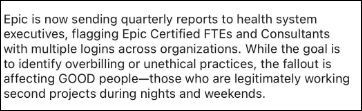
From Decent Undercarriage: “Re: Epic consulting. Redditors are discussing a LinkedIn post that says Epic is calling out certified analysts who are billing multiple clients, aka double dippers.” A since-removed LinkedIn post claims that Epic is sending quarterly reports to health system executives that list employees and consultants who are using multiple logins across organizations. The author says some of those folks have been terminated without a chance to explain their situation, even when their extra hours were legitimate, such as moonlighting. The post also refers to individuals who are billing 160 or more hours per week.


HIStalk Announcements and Requests

image

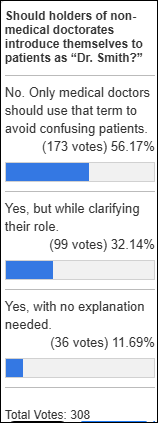
I think most poll respondents recognize the achievement of earning a doctorate in anything. However, more than half say that hospitals should limit the title’s use to medical doctors.

New poll to your right or here: Do health systems create a conflict of interest by promoting or using technology from for-profit companies that they partly own? I’ve noticed a trend of posting glowing press releases about successful technology rollouts at major health systems, only to find in the fine print that the health system is also an investor in the company and thus unlikely to utter a discouraging word.  


image

It’s that annual time when I pretend to be a performative marketer instead of a hospital IT nerd lifer whose hobby is spending part of every day filling blank computer screens. If your company has been meaning to sponsor HIStalk “someday,” this is your nudge to do so before December 31. You get free months, startup perks, and a special nod if you are a former sponsor who returns to my little fold. Email Lorre while I’m briefly focused on feeding the financial beast of keeping HIStalk running instead of obsessing over writing it.


Sponsored Events and Resources

None scheduled soon. Contact Lorre to have your resource listed.


Acquisitions, Funding, Business, and Stock

Virginia Commonwealth University pursues the purchase of a 450,000-square-foot former tobacco company building to house drug and cancer research and to increase the capacity of its public health and pharmacy programs.

Health insurers will fight profit-sapping medical costs by using AI to counter what they say is the AI-driven aggressive claims coding of providers.

image

You may be unaware that private equity firms own an increasing percentage of US hospices. You may be unsurprised that their hospices make the most money, spend less on patient care, and shift care to nursing facilities whenever possible to push medical costs onto someone else.


Announcements and Implementations

image

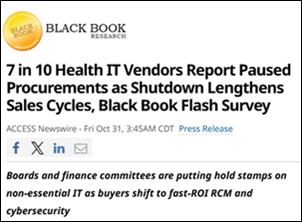
A Black Book Research survey of health tech vendor executives finds that health system cash worries, many of them triggered by the federal government’s shutdown, are prompting project pauses, RFP delays, and a shift toward revenue-producing initiatives. 

A study finds that asynchronous, text-based depression therapy is just as effective as real-time video sessions. Most insurers don’t cover it, however.

OpenAI says that it will deliver an AI intern-level research assistant by September 2026 and a fully capable scientific researcher by 2028, also predicting that deep learning systems will reach superintelligence — systems that are smarter than humans — within the next decade.


Privacy and Security

Yale New Haven Health System will pay $18 million to settle a class action lawsuit related to a March 2025 cybersecurity breach that affected 5.5 million patients. The health system has not confirmed reports that the attack involved ransomware.


Other

image

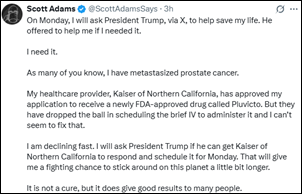
Dilbert creator Scott Adams will ask President Trump to intervene in his quest to obtain chemotherapy for prostate cancer. A course of Pluvicto costs about $300,000. Clinical trials showed that it extended average survival from 11 months to 15 months, although other studies found that the drug had no impact on lifespan.


Sponsor Updates

  • Black Book Research releases new reports on the state of healthcare laboratory information for Europe and North America.
  • Netsmart adds Rectangle Health’s payment software to its TheraOffice EHR and practice management software.
  • Agfa HealthCare will exhibit and present at RSNA 2025 November 30-December 4 in Chicago.
  • Nordic releases a new “Designing for Health” podcast featuring Will Morris.
  • Nym publishes a new case study titled “Genesis HealthCare System’s Autonomous Coding Success Story.”
  • Inovalon will showcase expanded platform capabilities and feature enhancements at its annual Empower healthcare summit November 2-4 in Washington, DC.
  • WellSky will exhibit at the America’s Physician Group Fall Conference November 5-7 in National Harbor, MD.

Blog Posts


Contacts

Mr. H, Lorre, Jenn, Dr. Jayne.
Get HIStalk updates.
Send news or rumors.
Follow on X, Bluesky, and LinkedIn.
Sponsorship information.
Contact us.

Morning Headlines 10/31/25

October 30, 2025 Headlines Comments Off on Morning Headlines 10/31/25

Thermo Fisher strikes $9.4bn acquisition of Nordic Capital and Astorg-backed Clario

Thermo Fisher Scientific will acquire clinical trials software vendor Clario from its private equity owners for $9 billion in cash.

Layoffs hit Bellingham caregivers as PeaceHealth announces 2.5% workforce reduction

PeaceHealth will reduce its workforce by 2.5%, with 13 informaticist positions and chief health information officer job listed as eliminated positions.

WellSky Launches AI-Powered Ambient Listening for Specialty Care EHR

WellSky enhances its Specialty Care EHR with ambient listening using Suki’s solution, which it found reduces documentation time and after-hours work by 40%.

Comments Off on Morning Headlines 10/31/25

News 10/31/25

October 30, 2025 News 2 Comments

Top News

image

CVS Health reports Q3 results: revenue up 7.8%, adjusted EPS $1.60 versus $1.09, beating analyst expectations for both.

The company took a $5.7 billion impairment charge for its Oak Street Health business that focuses on Medicare Advantage primary care patients and value-based care.

An executive said in the earnings call, “And lastly, our operating platforms, a tremendous amount of credit goes to our leadership in this business is driving to a much more tech-driven AI native platform that’s driving and really taking a lot of the work out a lot of operations and something that was one of the most complex parts of healthcare, which is effectively trying to drive these medications into the patients’ homes.”


Reader Comments

From The Chart Whisperer: “Re: AI-free periods for physicians. Let’s lock the autopilot and see if they still know how to fly. Spoiler: some don’t, so then what?”

From MarginMatters: “Re: hospital innovation. The biggest threat isn’t a lack of technology, it’s misaligned incentives. Every tool that improves quality but reduces billable volume fights a losing battle with the revenue cycle. That’s why most planned uses of AI involve cranking out bills, reducing costs, or increasing widget volume (visits).”


Sponsored Events and Resources

None scheduled soon. Contact Lorre to have your resource listed.


Acquisitions, Funding, Business, and Stock

image

Teladoc Health reports Q3 results: revenue down 2%, EPS –$0.28 versus –$0.19, beating analyst expectations for both. Its BetterHealth virtual behavioral health business continued its slide with another revenue drop. TDOC shares have lost 8% in the past 12 months, valuing the company at $1.5 billion versus its $45 billion market cap in early 2021 shortly after it acquired Livongo for $18.5 billion.

Thermo Fisher Scientific will acquire clinical trials software vendor Clario from its private equity owners for $9 billion in cash. The company’s analytics software was used in 70% of US drug approvals.

image

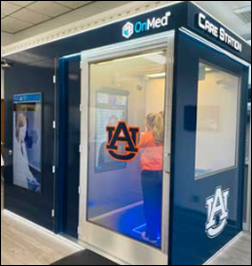
Telemedicine kiosk maker OnMed will go public via a SPAC merger.

PeaceHealth will reduce its workforce by 2.5%, with 13 informaticist positions and chief health information officer job listed as eliminated positions.


Announcements and Implementations

Health insurer EmblemHealth and Prime Therapeutics launch a pharmacy benefit model that uses Judi Health’s cloud platform and Amazon Pharmacy to deliver transparent drug pricing, real-time savings alerts, and digital prescription management. The partnership aims to make specialty drug access simpler, faster, and more affordable for members.

image

Healthmonix launches Prism, a unified quality-reporting and interoperability platform that supports healthcare organizations through shifting CMS models such as MVPs, TEAM, and ASM.

Altera Digital Health launches CareInTelligence, a cloud-native data platform that unifies fragmented healthcare data for payers, providers, and community outreach organizations, enabling actionable insights, custom reporting, and governance controls to advance care delivery and outcomes.

WellSky enhances its Specialty Care EHR with ambient listening using Suki’s solution, which it found reduces documentation time and after-hours work by 40%.


Government and Politics

Updated Affordable Care Act pricing on Healthcare.gov shows that premiums will increase an average of 26% for 2026, with a 114% increase if Congress fails to extend ACA tax credits.

In Canada, Saskatchewan’s health minister orders the health authority to stop using the staff scheduling module of the AIMS system, whose implementation has faltered several times since its 2021 launch, and revert back to the system it replaced. The AIMS project, which will cost triple its original budget at $175 million USD,  has been relaunched multiple times due to pay and scheduling problems. The province will continue to use the software’s payroll and supply chain modules.  


Other

image

The New York Times covers the use of fall detection and prevention technology in assisted living facilities, mentioning vendors Foresite Healthcare and SafelyYou. It notes the privacy concerns of residents and the occasional deployment of such systems without obtaining informed consent.


Sponsor Updates

  • Medicomp Systems releases a new episode of its “Tell Me Where IT Hurts” podcast featuring Alwi Yunus, clinical director of health informatics at Institut Jantung Negara in Malaysia.
  • Symplr partners with Cartwheel to automate billing and improve efficiencies for healthcare staffing firms.
  • New data from Five9 and PanTerra Networks reveals that AI is making healthcare more human by alleviating administrative burdens.
  • Wolters Kluwer Health introduces Ovid Synthesis Expert AI as an optional add-on to its Ovid Synthesis platform.
  • Black Book Research’s latest analysis finds a shift by US hospitals and health systems away from traditional offshore RCM outsourcing and toward software-led, AI-enabled, and on-shore operating models into 2026.
  • Consensus Cloud Solutions, Ellkay, Waystar, and DrFirst will exhibit at NextGen Healthcare’s user group meeting November 2-5 in Nashville.
  • HCTec will exhibit at the NJDV HIMSS 2025 Fall Conference November 4-6 in Atlantic City.
  • Healthcare IT Leaders will exhibit at UKG Aspire November 4-6 in Las Vegas.
  • Impact Advisors publishes a new success story titled “Epic Analysts Deliver High-Quality and Cost-Effective Services.”

  • Infinx will exhibit at the AAMC Annual Meeting November 1-5 in San Antonio.
  • MRO will exhibit at the SAOE Annual Meeting November 5-7 in Chattanooga.
  • Navina will present at the American Physicians Group Fall Conference November 6 in National Harbor, MD.

Blog Posts


Contacts

Mr. H, Lorre, Jenn, Dr. Jayne.
Get HIStalk updates.
Send news or rumors.
Follow on X, Bluesky, and LinkedIn.
Sponsorship information.
Contact us.

EPtalk by Dr. Jayne 10/30/25

October 30, 2025 Dr. Jayne 1 Comment

Sometimes reader comments make my day. One did earlier this week, when Data Diva accused hospital boards of “trying to cosplay as tech bros” and suggested that we consider “automating leadership bloat before automating bedside care.”

This inspired me to see whether a large language model could do a better job than hospital administrators at certain tasks. I asked Microsoft Copilot to assume that I am a hospital administrator trying to figure out how to make life better for the nurses who work at my hospital. I then asked, “How would they like to be rewarded for their hard work?”

I was pleased with Copilot’s response. Nurses deeply value recognition that feels personal, meaningful, and supportive of their well-being and professional growth. A mix of financial, emotional, and developmental rewards works best.

The response went on to suggest a combination of authentic recognition and appreciation, such as peer-to-peer recognition programs, along with fair compensation and financial incentives. Competitive salaries were specifically mentioned, along with ensuring that pay aligns with industry standards and reflects experience and performance. Performance-based bonuses and spot rewards were listed, as were tuition reimbursement, paid training, and clear opportunities for promotion and skill building.

Other suggestions included flexible scheduling, additional time off, and mental health support. Copilot went on to recommend that recognition be embedded into daily culture, “not just during Nurses Week,” and that rewards should be tailored to individual preferences to “ensure all staff feel seen and valued.”

It went on to ask if I wanted help designing a nurse recognition program tailored to my hospital’s culture and budget. I threw out a random number and asked what I could get for $100 per nurse. Suggestions included a customized thank-you box; a voucher for an experience, such as a massage or yoga class; branded gear, such as a high-quality fleece jacket, tumbler, or tote; a continuing education stipend; extra PTO, a coupon for a flexible shift swap; or a gift card for healthy meals.

Nowhere did it recommend pizza parties or challenge coins. For that alone, I can conclude that LLMs are better than actual hospital administrators. I ran these items past a couple of nurses and they were on board. Administrators should take note before they wind up being replaced by an AI assistant.

I was feeling a little punchy, so I went on to ask, “Do nurses like pizza parties?” Copilot was again accurate: pizza parties are appreciated as a kind gesture, but most nurses view them as insufficient on their own. They prefer meaningful recognition, support, and resources that address their real challenges. Copilot went on to suggest that pizza parties are “symbolic but shallow” and “can feel tone deaf” since they don’t address deeper needs such as burnout, staffing shortages, and lack of support.

Without prompting, it instead recommended authentic recognition, work-life balance elements such as flexible scheduling and adequate staffing, professional growth and career advancement opportunities, and mental health support. It went on to recommend that “if you still want to host a pizza party” that leadership should pair it with something meaningful and also make it inclusive and convenient, specifically recommending making sure that the night shift can participate. Winning the hearts of the night shift is pretty smart, so two points for Copilot.

I’ve had some medical adventures over the last year and have several important physician appointments pending. I’m always tuned in when I receive an email or text saying that I have a new message in my chart. I admit it triggers a bit of a fight-or-flight response. I was less than thrilled when I logged in to find that the message was letting me know that the hospital is having phone issues I should use the patient portal instead if I need to contact a physician. Health systems should be able to flag these kinds of communications as “non-urgent” or “a general communication from your health system” header so that patient anxiety isn’t provoked. 

Pet peeve of the week: people who keep sending broken web links even though you’ve told them that the link is broken. I have been working with a vendor rep who keeps sending me documents to review. I dutifully report the broken links, but each subsequent includes the same broken links. If I can’t trust that you’re reading my emails and taking action on my requests to send content that I can actually view, I’m not sure you’re the kind of person or organization with whom I’d like to do business.

This article about AI-free periods for physicians caught my eye. It points out concerns for “deskilling” that is due to overreliance on technology. Singapore’s National University Health System has been implementing the AI-free periods after studies found that physicians who relied on AI tools during endoscopy were less able to use their own skills to detect polyps when the tool was taken away. By removing AI tools occasionally, leaders hope that physicians will maintain their core competencies and avoid being overly reliant on tools.

The article also mentions tracking physician performance to determine whether AI tools are having a negative impact. Anyone who has had to navigate a downtime situation when it hasn’t been practiced for a while knows what it feels like when technology is taken away, so I think that considering AI-free practice on occasion is a good idea. And if you haven’t had a downtime drill in a while, there’s no time like the present.

My hospital recently did a user survey to gather information on how well the informatics team did as they implemented a new feature. We’ve used anonymous surveys before and have always found them to be a good way to get direct user feedback and ideas for improvement. We don’t usually receive a lot of free-text user feedback, but we always get a few constructive comments.

This time, however, I was completely floored by how hostile some of the free-text responses were. Some of them even included personal attacks on members of the training and implementation teams. 

I’ve seen enough anonymous posts on social media to know that societal rules are evolving to a point where people feel emboldened to say whatever they feel, but I haven’t seen these kinds of borderline threatening responses from our medical staff. It makes me wonder about the overall stress level of providers in the organization and whether we need to take additional steps to ensure the welfare of our employees.

Have you noticed a change in the level of civility at your institution? Have steps been taken to improve communications and ensure that staff members are safe? Leave a comment or email me.

Email Dr. Jayne.

Morning Headlines 10/30/25

October 29, 2025 Headlines Comments Off on Morning Headlines 10/30/25

CVS Health tops Q3 forecasts but absorbs hefty charge for struggling clinic business

CVS Health sees a 7.8% increase in Q3 revenue, resulting in an increase in 2025 earnings estimates despite a $6 billion hit from its poorly performing care delivery business.

OnMed and Berto Acquisition To Merge

Health kiosk vendor OnMed will merge with special purpose acquisition company Berto ahead of an eventual IPO.

Teladoc Health Reports Third Quarter 2025 Results

Teladoc Health reports a 2% dip in Q3 revenue, with its Better Help online mental health segment experiencing yet another quarterly decline.

Comments Off on Morning Headlines 10/30/25

Healthcare AI News 10/29/25

October 29, 2025 Healthcare AI News 1 Comment

News

image

Hospital for Special Surgery hip and knee replacement patients give high marks to an AI-powered chatbot that was trained on the hospital’s patient education materials to answer their pre- and post-op questions. The small study found that most questions were asked before the operation rather than after, and patients said they were comforted by knowing that someone was always available to respond. The technology was provided by customer care AI agent vendor Aidify.

A Johns Hopkins study finds that physicians perceive their AI-using peers as less capable, regardless of whether those doctors use it for primary decisions or for verification. Doctors viewed peers most favorably when they avoided generative AI altogether, even though most said they appreciate its healthcare potential.

Cleveland Clinic expands its use of Bayesian Health’s sepsis detection software, which applies AI to EHR data to identify at-risk patients. The Clinic is an investor in the company.

The American Medical Association asks ASTP/ONC to harmonize federal AI regulations, remove regulatory barriers, and ensure that clinicians review algorithms that affect patient privacy and safety.


Business

image

Laudio enhances its leader operations platform with Performance Insights, an AI tool that provides insight for mentorship and performance management.

image

England-based Aide Health, which develops apps to help patients manage chronic conditions, launches an AI tool that records and summarizes medical visits for patients and their families. The company says that its Mirror app improves prescription adherence and engagement, reduces avoidable visits, and helps patients retain information that they would otherwise forget, which it estimates is 80% of what is discussed during appointments.


Research

OpenAI finds that 0.07% of ChatGPT users who are active in a given week exhibit possible signs of mental health emergencies in their AI conversations. The company created a network of 170 psychiatrists, psychologists, and primary care physicians to devise ChatGPT responses that encourage users to seek real-world help. The company acknowledges that while the percentage is tiny, it still represents hundreds of thousands of users.


Other

image

A man’s brother-in-law dies of a heart attack during a brief ED visit that generated a hospital bill for $195,000. The brother used ChatGPT to negotiate it down to $37,000 by requesting an itemized bill with CPT codes, comparing the charges to Medicare rates, and then finding major discrepancies. The hospital agreed to correct its charges, but asked him to accept the bill reduction as charity care. He declined, saying that the move was likely to protect the hospital’s tax-exempt status. He concludes that “hospitals know they are the criminals they are” and that no one should pay more out of pocket than Medicare would.

image

An 1,800-attorney law firm apologizes to a judge in a hospital bankruptcy case for submitting an AI-generated filing that contained inaccurate and fabricated legal citations. The hospital alerted the court that the document appeared to be AI-generated, but the attorney initially denied it, later admitting that while she hadn’t used AI herself, she knew it had been used but let it pass because she was overworked.


Contacts

Mr. H, Lorre, Jenn, Dr. Jayne.
Get HIStalk updates.
Send news or rumors.
Follow on X, Bluesky, and LinkedIn.
Sponsorship information.
Contact us.

This Week in Health Tech 10/29/25

October 29, 2025 This Week in Health Tech Comments Off on This Week in Health Tech 10/29/25
LinkedIn weekly 102925 - Copy
Comments Off on This Week in Health Tech 10/29/25

Morning Headlines 10/29/25

October 28, 2025 Headlines 1 Comment

Fitbit’s personal health coach in public preview is here

Google will launch the public preview of its AI-powered personal health coach for its Fitbit Premium subscribers on Wednesday.

Samsung Health and HealthTap Expand Access to Virtual Primary Care to Millions

Samsung Electronics will offer virtual primary and urgent care from HealthTap through the Samsung Health app.

UnitedHealth Group Reports Third Quarter 2025 Results and Raises Full Year 2025 Earnings Outlook

UnitedHealth Group announces Q3 results: revenue up 12%, adjusted EPS $2.92 versus $7.15, beating analyst expectations for earnings but falling short on revenue.

News 10/29/25

October 28, 2025 News Comments Off on News 10/29/25

Top News

Google will launch the public preview of its AI-powered personal health coach for its Fitbit Premium subscribers ($80 per year) on Wednesday.


Reader Comments

From Nine Mile: “Re: non-physician use of the Doctor title with patients. Totally agree, and I would also point out the misleading, rampant practice of MA introducing themselves as Doctor X’s ‘nurse’. Patients get the wrong idea and accept some of the things they say as coming from a professional-level person. Also they see them performing only low-level tasks, which skews their view of what nurses bring in terms of assessment and clinical skills.”


Sponsored Events and Resources

None scheduled soon. Contact Lorre to have your resource listed.


Acquisitions, Funding, Business, and Stock

image

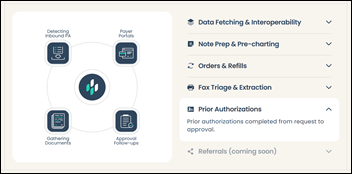
Back-office AI agent software startup Honey Health raises $7.8 million in seed funding.

UnitedHealth Group announces Q3 results: revenue up 12%, adjusted EPS $2.92 versus $7.15, beating analyst expectations for earnings but falling short on revenue. The company reported quarterly revenue of $113 billion and increased guidance. 


Sales

  • In England, the Royal Orthopaedic Hospital NHS Foundation Trust will implement TrakCare EHR software from InterSystems next year.
  • WellStar Health (GA) expands its use of Clear’s patient check-in technology to 150 facilities.
  • The VA will implement Knowtex’s AI clinical documentation software across its health system.
  • Sound Physicians will implement WellStack’s Unified Data Model, RCM Decision Hub, and ACO Decision Hub.

People

image

Thomas Tsang, MD, MPH (Valera Health) joins Omada Health as chief medical officer.

image

J. Marc Overhage, MD (TriAxia Health) will become CEO of the Consortium for State and Regional Interoperability in January.

image

Unite Us promotes Taylor Justice, MBA to CEO. He replaces co-founder Dan Brillman, MBA, who has been named CMS deputy administrator for Medicaid and CHIP. 


Announcements and Implementations

Kaleida Health (NY) will use a new state grant to replace its 13 EHRs with Epic, as initially reported here as a reader rumor in November 2024. The health system went live on its $125 million Cerner / Oracle Health system in February 2019.

Cleveland Clinic implements Axuall’s Sync provider data management technology.


Government and Politics

Six VA facilities, all now live on the Oracle Health-based Federal EHR, implement the Oracle Health Community Care offline-capable app to support their home-based primary care teams.

image

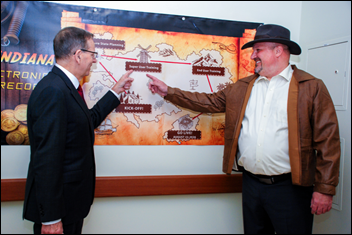
VA Deputy Secretary Paul Lawrence, PhD tours the VA Northern Indiana Health Care System as it prepares to transition to the Federal EHR next August. He observed that system leadership is focused on scheduling and training, scheduling fewer meetings, providing more hands-on experience, and sharing best practices.


Other

image

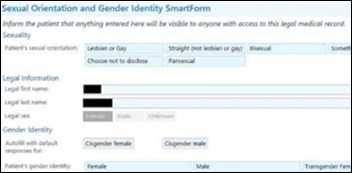
A conservative group’s report accuses Epic and Oracle Health of configuring their EHRS to promote gender transition discussions with minors by including questions about preferred pronouns, sex assigned at birth, and gender with which they identify. The publication says that clinicians, who they call “predators,” use those responses to steer minors toward puberty blockers, hormone replacement, and surgery. The report also accuses health systems of blocking parental access to the records of their children after age 13. The report concludes that providers should not restrict parental access to the records of their minor children beyond what federal or state law allows because it undermines parental rights and endangers children by concealing information about gender transition care.


Sponsor Updates

image

  • Cardamom employees volunteer at Madison Area Food Pantry Gardens during the company’s annual Giveback Day.
  • AdvancedMD publishes a new e-book titled “Bridging the Gap between Primary Care and Behavioral Health.”
  • Optimum Healthcare IT publishes a white paper titled “4 Strategies To Create a Better Patient Engagement for All.”
  • Agfa HealthCare names Jean Barrette, MBA (Christie Innomed) regional VP of sales, Canada.
  • Arcadia celebrates customer success, innovation, and new AI-driven solutions at Aggregate 2025.
  • Bizmatics publishes a new Prognocis case study titled “Growth Without the Pains: How a Multi-State Clinic Expanded Operations by 178%.”
  • Censinet releases a new episode of “The Risk Never Sleeps Podcast” featuring HLTH’s Robbie Dorius.
  • Clearwater offers a new Healthcare Regulatory Compliance Crosswalk and Mapping Tool.
  • In Canada, Oak Valley Health, Southlake Health, and Stevenson Memorial Hospital upgrade their shared Meditech EHR.

Blog Posts


Contacts

Mr. H, Lorre, Jenn, Dr. Jayne.
Get HIStalk updates.
Send news or rumors.
Follow on X, Bluesky, and LinkedIn.
Sponsorship information.
Contact us.

Comments Off on News 10/29/25

Morning Headlines 10/28/25

October 27, 2025 Headlines Comments Off on Morning Headlines 10/28/25

Honey Health Raises $7.8M to Automate Healthcare’s Back Office With Autonomous AI Agents

Back-office AI agent software startup Honey Health raises $7.8 million in seed funding.

Intention Healthcare Acquires Vesta Healthcare Assets, Expanding Home-Based Care Capabilities Across the US

Intention Healthcare acquires virtual care and care coordination services company Vesta Healthcare.

Sunwave Health and Lightning Step Merge and Secure Strategic Growth Investment from BVP Forge

Behavioral health software vendor Lightning Step announces that it will acquire competitor Sunwave Health and that it has secured funding from PE firm BVP Forge.

Data center, health company expansions bringing more than 100 new jobs to central Ohio

Virtual specialty care company AndHealth plans to hire 75 additional employees at its headquarters in Columbus, OH.

Comments Off on Morning Headlines 10/28/25

Curbside Consult with Dr. Jayne 10/27/25

October 27, 2025 Dr. Jayne Comments Off on Curbside Consult with Dr. Jayne 10/27/25

Dr. Jayne Goes to Las Vegas

image

Most healthcare IT people were aware of the HLTH conference in Las Vegas last week. I would bet that only a few knew that the National Association of Community Health Centers was holding its 2025 Workforce Conference just down the street at Caesars Palace.

The conference was formerly known as the FOM/IT — Financial, Operations Management / Information Technology Conference & Expo. It is significantly lower key than HLTH. It focuses on the challenges that community health centers face.

If you’ve never worked in that part of healthcare, I would summarize it as being populated by some of the hardest working and most genuine folks I’ve ever had the pleasure of meeting. They tend to think of situations in a glass half full manner. Even if the glass is less than half full, they are committed to figuring out how they can fill it. They are also focused on patients, outcomes, and figuring out how to do more for their patients with less.

I’ve attended this conference a couple of times. Since the attendees include quite a few CEOs and COOs as well as IT folks, I was looking forward to reconnecting with a couple of friends from medical school who have gone on to the community health center CEO role. The conference is really only a single day, although there were some pre-conference workshops the day prior, so it also presented an opportunity to connect with friends who were attending HLTH since the schedules overlapped.

One of the first things that I did when planning my trip was to compare the two conferences. It’s not surprising that the one focusing on community health centers had a registration fee that was half of that of its glitzier counterpart. The CHC conference featured meaty-sounding sessions on topics such as workforce burnout, building healthy teams through smarter workflows, electronic case reporting for communicable diseases, interoperability, navigating tough financial times, working with aging and underserved populations, using AI to reduce burnout, and financial stewardship.

I certainly didn’t see anything about financial stewardship on the list of topics for HLTH, but I did see some session titles that were a bit edgier. GLP-1 drugs featured in sessions with titles such as Longevity Wonder Drugs and Buy Now, Weigh Less Later. Other longevity-themed sessions included Longevity Reimagined: The AI-Powered Personalized Health Moonshot, Longevity Beyond the Boys’ Club, The Longevity Preparedness Index: Are We Ready for the 100-Year Life?, and Death Becomes Optional. 

Other interesting titles included: Decoding the MAHA Movement, Bot Fight Club, Women are Not Octopuses. Care Beyond the Stirrups, Trust Me, I’m an LLM, and Picking Up Uncle Sam’s Slack.

A couple of titles that were interesting to me but didn’t fit my schedule were From Gray Areas to Red Flags: Hot Topics in Fraud & Abuse, The Big Bill Fallout, If Everything is AI, then Nothing is AI, and Is Wearable Data Hitting a Dead End.

The award for best abstract goes to Longevity Beyond the Boys’ Club for this entry:

While tech entrepreneurs dump millions into experimental supplements and cryogenic chambers like modern-day alchemists chasing immortality, the rest of us are left wondering if living longer is reserved for those with venture capital portfolios. Women, who already outlive men by several years without fancy biohacking protocols, are watching this testosterone-fueled quest for the fountain of youth with bemused curiosity, as researchers scramble to figure out why nature already gave half the population a longevity advantage that no amount of ice baths can replicate.

While some tech bros are trying to engineer our way to 150 years, health leaders are working to democratize more proven, practical interventions that don’t require a billionaire’s budget. Because turning longevity from an exclusive club for the ultra-wealthy into an accessible public health priority might just be the difference between extending life for the few versus extending healthspan for the many. Spoiler alert: there’s no silver bullet that works the same for everyone, even those with Y chromosomes.

This brief write-up sums up a lot of what is going on in the health tech space lately. Hats off to whoever penned the blurb with phrases such as “testosterone-fueled quest for the fountain of youth.” Although the whole thing is over the top, I like the idea of making it possible for more people to live longer healthier lives since that’s what primary care is all about in the first place.

Unfortunately, we’re still at the phase where we can’t even guarantee that all people can receive proven interventions such as vaccinations and nutrition counseling to address obesity, so it will be a long time before we increase the average lifespan from its current mid-70s to 150 years.

In the interest of good reporting, however, I did make sure I had a chance to meet up with some of my favorite HLTH attendees for a booth crawl or two. Here is the highlight reel:

image

Intelligent Medical Objects (IMO) once again brought its A game with an outstanding shoe/sock combo. The pic also highlights the bare concrete floor and the thin foam aisle runner, which didn’t do much for reducing foot and ankle fatigue.

image

Nordic Consulting CMO Dr. Craig Joseph enjoyed learning about Plated,  which aims to improve food service quality for institutional environments. Its frozen meals are warmed via a unique cabinet that prevents overcooking and nutrient loss. Technology includes menu management as well as interfaces with the most common senior care EHRs. Dr. Joseph also gave a thumbs up to their swag, which was an ergonomic vegetable peeler.

image

Vulvai is a relative newcomer, highlighting health conditions that can impact half the population and which can take upwards of seven years to diagnose. Female patients offer suffer with these conditions in silence, so I applaud their work and will continue to follow them. Extra credit to their booth rep, who had a Las Vegas spin to her outfit.

image

Weight Watchers, which is back to its original name following the WW branding debacle, sponsored a pickleball court next to the puppy petting area. It also sponsored a cocktail hour with boozy and sugary options, which I thought was ironic.

image

Disease management company Abacus Health had adorable water bottles as swag.

image

OpenLoop Health understood the assignment for attendees who prefer a cold Diet Coke.

image

An honorable mention in the footwear category goes to this gentleman from InterScripts. I wasn’t able to assess his sock game, but I’ll keep an eye out for him at future conferences.

On a more serious note, I take my attendance at these conferences seriously since the cost is substantial. It’s not just about looking for the hippest booth, the coolest swag, or the most fun party, but rather identifying solutions that might be helpful and to cut through some of the hype by speaking to companies in person. I was able to learn more about companies that serve parts of the industry outside of large health systems. 

I was impressed by the team at PointClickCare, which serves the senior living and skilled nursing environments. Founders, Dave and Mike Wessinger grew up learning about the long-term and post-acute care space from their mother and found a need to improve solutions there. I happened to be chatting with some of the company’s Canada-based leadership team while the Toronto Blue Jays were in the process of winning an important baseball game and it was great to see the smiles on their faces as their team advanced. to the World Series.

I also checked back in with Linus Health as they continue to refine their digital cognitive assessment tools. The company was featured in a research article in the Annals of Family Medicine earlier this year following an early detection study that was done across seven sites, including Indiana University Health. The study found that half of all patients scored as impaired or borderline for cognitive impairment. For a condition that can benefit from early diagnosis, it’s great to see a product that can be easily implemented within my own specialty without a lot of fuss. 

Emtelligent’s solution marries natural language processing with AI tools that can turn unstructured chart notes and reports into useful information, including patient summaries. I was impressed by the ability of their booth team to engage about different parts of the industry as well as their own. It was refreshing in a world where most industry folks want to focus on whether you’re ready to spend money with them.

image

I didn’t make it to the HLTH industry night performance by Big Sean, but I did close out the night sharing espresso martinis with industry long-timers who have become friends. We typically only see one another at conferences and it’s amazing how we can pick up right where we left off last time. Here’s to wrapping up my last work trip for 2025 with a mellow evening.

If you attended HLTH, what did you think about it? Was it worth your time and your company’s investment? Leave a comment or email me.

Email Dr. Jayne.

Comments Off on Curbside Consult with Dr. Jayne 10/27/25

Morning Headlines 10/27/25

October 26, 2025 Headlines Comments Off on Morning Headlines 10/27/25

Topcon Healthcare Invests in Sanro Health to Connect Clinical and Imaging Data for Smarter Care and Faster Discovery

Sanro Health, a health IT developer that integrates clinical data with imaging data for personalized retinal care and research, secures funding from Topcon Healthcare.

As Washington Republicans Threaten Future of Health Care, Governor Hochul Secures Significant Funding for Hudson Valley Hospital System

Westchester Medical Center (NY) will use $100 million in federal funding to support the integration of Bon Secours Charity Health System and Health Alliance of the Hudson Valley into its network, including unifying its EHR.

VA launches offline mobile app to support HBPC teams in remote areas

Six VA facilities, all now live on the Oracle Health-based EHR, implement the Oracle Health Community Care app to support their home-based primary care teams.

Comments Off on Morning Headlines 10/27/25

Monday Morning Update 10/27/25

October 26, 2025 News 3 Comments

Top News

image

Humana and Providence launch a scalable data exchange collaboration that will use HL7 FHIR standards and modern APIs to reduce administrative burden, enhance interoperability, and support value-based care.

The payer-provider collaboration’s first deliverable, which provides member attribution for Humana’s Medicare Advantage members, goes live this month.


Reader Comments

From SkepticalMD: “Re: using the Doctor title. Let’s be honest, the Doctor title outside of medicine is mostly a vanity project. Patients don’t care about your dissertation on 18th-century poetry or leadership theory, they just want someone who can diagnose their chest pain. Using Doctor in a clinical setting when you’re not a physician confuses patients, inflates egos, and cheapens a title that should mean something. Sign your name with your non-medical degree or have it embroidered on your lab coat if you must , but don’t use it to play doctor.”

From Data Diva: “Re: AI tools. Hospitals don’t need them as much as they need fewer executives who pretend to understand them. Every ‘AI strategy’ announcement sounds like a board trying to cosplay as tech bros while nurses drown in administrivia. How about automating leadership bloat before automating bedside care?”


HIStalk Announcements and Requests

image

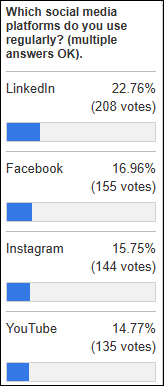
Most poll respondents use some form of social media, most commonly the platforms above. You could probably infer the median age of respondents by their heavy use of Facebook and near-zero involvement with TikTok and Snapchat. For me personally, I’m most often on YouTube (commercial-free with an invaluable Premium subscription) and Reddit, but when I’m doing HIStalk work it’s probably LinkedIn to grab someone’s credentials and headshot. I’ve mostly abandoned X and its cesspool of toxicity and ignorance, which are way worse on Facebook but at least easily avoidable.

New poll to your right or here, extending my previous rant: should holders of non-medical doctorates introduce themselves to patients as “Dr. Smith?” Thinking beyond that question, since patients call hospital people whatever name they are given, should those doctorate holders instead refer to themselves as “Mr. Smith” or “John?” (I’ve never heard a hospital employee, other than nurses of a certain age, use courtesy titles). We have some weird title conventions in the US – addressing cooks with no specific education or certification as “Chef,” calling the airline employee who flies the plane “Captain” as though they were in the military, and rent-a-cops who title themselves “Officer” despite being associated with no office.


Sponsored Events and Resources

None scheduled soon. Contact Lorre to have your resource listed.


Acquisitions, Funding, Business, and Stock

CVS Health will close 16 Oak Street Health Centers, 7% of the company’s senior care locations, due to high medical costs in the Medicare and Medicare Advantage market. CVS paid $10.6 billion in cash to buy Oak Street Health in May 2023.


Sales

  • Heritage Medical Associates will implement Epic via an Epic Community Connect agreement with Vanderbilt Health.

Sponsor Updates

image

  • Wolters Kluwer Health team members volunteer with the Chicago Park District.
  • Altera Digital Health publishes a new client story titled “Leading the way: Reducing police callouts and prioritizing patient safety at Bolton NHS Foundation Trust.”
  • Judi Health releases a new episode of “The Astonishing Healthcare Podcast” titled “Balancing Technology and a Human Touch in Member Service, with Lisa Ellerhorst and Sonia Pettis.”
  • Black Book Research offers an analysis of provider plans for TEFCA onboarding in 2026.
  • TrustCommerce, a Sphere company, Chief Product Officer John Welch joins PAX Technology’s Steering Committee’s Technology & Innovation group.
  • Waystar will exhibit at the NJ/Metro Philadelphia HFMA Annual Institute October 28-31 in Atlantic City.
  • WellSky will exhibit at the 2025 AMRPA Fall Educational Conference & Expo through October 29 in Philadelphia.

Blog Posts


Contacts

Mr. H, Lorre, Jenn, Dr. Jayne.
Get HIStalk updates.
Send news or rumors.
Follow on X, Bluesky, and LinkedIn.
Sponsorship information.
Contact us.

Morning Headlines 10/24/25

October 23, 2025 Headlines 1 Comment

Healthcare company Ensemble Health has tapped JPMorgan as it eyes a $13 billion sale or IPO in 2026

The private equity owners of revenue cycle management company Ensemble Health have reportedly hired investment bankers to conduct a company sale or IPO early next year.

Epic to end program that took position in Abridge

Epic will shut down its Workshop program, which co-develops software in partnership with third party companies such as Abridge and Nuance.

Findhelp Acquires Uno Health, Creating the First Full-Stack Platform for Benefit Enrollment and Social Care Coordination

Social care technology company Findhelp acquires Uno Health, which offers a digital enrollment platform for government benefits.

Text Ads


RECENT COMMENTS

  1. Really interesting perspective — especially around the EHR market. What I’m seeing lines up with this: Epic keeps consolidating, Oracle/Cerner…

  2. Why does the displayed "exam room of the future" still have the classic "clinician has their back to the patient"…

  3. Anything related to defense will need to go to Genesis.

Founding Sponsors


Platinum Sponsors


Gold Sponsors


RSS Webinars

  • An error has occurred, which probably means the feed is down. Try again later.