Recent Articles:

McKesson Announces New Technology Solutions Head

June 16, 2009 News 9 Comments

blake

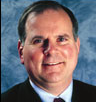
McKesson announced this morning that Patrick Blake, 45, has been promoted to executive vice president and group president of McKesson Technology Solutions, effective immediately. He replaces Pamela Pure, who left the company in March 2009, with responsibilities over McKesson Provider Technologies, McKesson Health Solutions, RelayHealth, and McKesson’s International Operations Group.

Blake was previously president of McKesson Specialty Care Solutions, its specialty drug distribution services division. He joined the company in 1996 and held previous roles in the company’s drug distribution businesses. He will report to CEO John Hammergren and serve on McKesson’s executive committee.

CIO Unplugged – 6/15/09

June 15, 2009 News Comments Off on CIO Unplugged – 6/15/09

The views and opinions expressed in this blog are mine personally, and are not necessarily representative of Texas Health Resources or its subsidiaries.

Meaningful Meaningful Use?
By Ed Marx

I ran a ‘night before vacation’ errand to Loews. As I completed the purchase, the store manager interrupted on the overhead, “employees and customers, head immediately to the break room. A tornado has been spotted and is headed our direction.” The tornado never materialized and we were cleared to leave. The rains were torrential, coming in successive waves, each one more violent than the previous. The storm died down but then kept returning. Over the next 24 hours, we had enough rain and lightning to shut down the airport for several hours, delaying our trip…which gave me time to create this post. We may have set a record for precipitation. I don’t believe we will need to water our lawn for the rest of the summer.

There is another type of watering that does not saturate but dilutes. We use concentrates that require adding water to dilute the mix, making it less powerful. Coffee is a good example. I like strong coffee, so I often add more grounds than required. Others like to pour half a cup and then fill with water. This dilutes the intent of the coffee, and as a card carrying Starbucks aficionado, I find the practice almost heretical.

The official definition of “meaningful use” will emerge this month. As a healthcare executive and tax payer, I will be offended if the clarified meaning waters down the intent of the original language. Indications are that, as a byproduct of our political process, the official definition will lack the intended punch that could truly advance the adoption of healthcare information technology to improve outcomes. In other words, it will be watered down. Given the incentive nature (increased payments) for meaningful use, it’s hard to understand why anyone would set the bar so low. If the goal is to accelerate change, we need to shake off the political pressures and do the right thing.

Contemplate the following. CPOE would not be required for a couple of years. Initially, a 50% order rate would be considered meaningful. Health Information Exchange is considered achieved if you are able to send and received scanned documents. Clinical decision support, arguably the “holy grail” when it comes to clinical benefit realization, may not be required until 2015. That’s 6 years away! Incentives should be a stretch goal, not something already achieved by a majority of hospitals today.

I recommend taking an activist approach and pushing for higher standards. Do we want change, or not? As healthcare executives, we can exert profound influence in our communities, professional societies, affinity groups, and government to ask for more meaningful meaningful use. Let’s push ourselves and our broken healthcare system to accelerate the adoption of healthcare information technology. Who drinks watered down coffee anyway?


Ed Marx is senior vice president and CIO at Texas Health Resources in Dallas-Fort Worth, TX. Ed encourages your interaction through this blog. (Use the “add a comment” function at the bottom of each post.) You can also connect with him directly through his profile pages on social networking sites LinkedIn and Facebook, and you can follow him via Twitter – User Name “marxists.”

Comments Off on CIO Unplugged – 6/15/09

An HIT Moment with … Bill O’Toole

June 15, 2009 Interviews 5 Comments

An HIT Moment with ... is a quick interview with someone we find interesting. William O’Toole is the founder of O’Toole Law Group of Duxbury, MA.

bill

You have negotiated the vendor side of thousands of software licenses. Give my CIO readers the three most valuable tips you can think of to use next time they’re sitting across the table from someone like you.

The following are my top three suggestions for negotiating HIT software licenses.

Say what you mean and mean what you say

Determine up front what is truly important to your organization. Establish your contract priority list prior to negotiations. Include as much input as possible from the CIO, CFO, CEO, consultant, and legal counsel. The more complete your list is up front, the better the vendor can establish what it must deal with to land this new customer.

Don’t label something a deal breaker if it is not. Many times I gained the upper hand after responding negatively to a supposed deal breaker issue, only to have the prospect roll on it. Do identify your priority list up front. It does not have to be detailed or extensive. Get the message across early and put it on the table for all to see. Refer to it as revisions are turned. If the vendor does not address an item, raise it immediately.

Identify who is driving the bus

On the customer side, it is usually the CIO or CFO. Establish early and keep this person informed and involved. Others may handle conference calls and meetings during negotiations, but having the person in authority identified helps immensely. Have the vendor identify the individual in charge of negotiations, even if that person is not involved in each conference call or meeting. If things get rough on a specific issue, it may be helpful to have the two “drivers” talk directly after being brought up to speed by their respective sides in order to cut out all the dancing and grandstanding and get right to the issue. Marching orders can then be given back to the negotiating teams.

Do not dictate the terms by which you expect the vendor to license you their software

Setting the stage in this manner only creates an adversarial process, which is not what you want. It sets you up to become just another sale where only the money counts. Approach it as a relationship in the making. Know what you want (see above) and present a priority list, but do not dictate terms or you will get far less cooperation and poor results and ultimately be left unhappy with the deal.

Vendors always talk about being partners with their customers. If you were representing the customer in crafting such an agreement, what terms would you consider essential to truly aligning the vendor’s interest with theirs?

This is a really good question. The term “partner” is way, way overused. Unfortunately that really dilutes its importance. The ultimate indicator of partnership is sharing, whether it be capital investment, development effort, or risk. HIT vendors all thank their customers for choosing them as their HIT partner. But are they really partners? If a vendor truly wants you as a partner and not just its next customer, then you should realize real benefit in at least four major areas.

Payment for performance

If establishing a true partnership, then there should be a willingness to include terms reflective of such a position. Progress payments should be tied to measurable or identifiable events. Further, there should be a willingness to delay or forego (in some specific amount) payments if the events are not met.

Exposure

Government regulations, public entity constraints, and potential liability are prime examples of areas in which a partnership can be created as opposed to a strict customer/vendor transaction relationship. How much is the vendor willing to do or risk for its customer? The more the vendor risks, the more of a partner your organization becomes.

Near term and long term costs

Nail down the cost of acquisition and implementation. The customer partner should have absolute comfort in the cost outlay for the project. Not to the dollar, obviously, but certainly a solid figure assuming no significant deviation in the project. Long term costs should be predictable and you should never pay twice for the same product.

Development

The vendor may find your business of such importance that they are willing to offer you the opportunity to be a beta site or to provide input on development of a key area of software functionality. These opportunities can have both good and “not so good” ramifications. Weigh the pros and cons carefully. While this is a very strong indicia of partnership, it can be a tremendous amount of work for the customer.

Some people think putting performance penalties in contracts starts off the vendor relationship on rocky footing, while others say the only way to get a vendor’s attention when problems arise is to hit them in the checkbook. Should software contracts include penalty terms?

With regard to the initial implementation process, there should be no need for penalties if payments are based on attaining measurable milestones during the implementation (see above). This puts a positive spin on the issue. Pay the vendor for work done as planned. You arrive at the same result, but in my scenario, money is due when work is done, rather than the negative approach where money is not due because work was not done. With regard to ongoing support, it gets a little tricky. If you applied my implementation scenario, full payment would be due only if there were no issues in the service period, not a realistic scenario for any vendor.

So it could be argued that penalties make sense in the ongoing support situation. That said, it only adds another layer of work for the customer and the vendor, which is not something a CIO wants. Ultimately the CIO and CFO will withhold payment if things go really bad, so work with that concept. Negotiate the ability to withhold (delay) support payments in good faith if good support is not provided. Put the work on the vendor. If the vendor’s accounts receivable personnel are looking for payment and the customer reports payments are being held due to support issues in accordance with the contract, then those receivables folks will go to the vendor’s support personnel, which will escalate issues on the vendor’s side with little input from the customer.

In short, I believe that with regard to ongoing support payments, the time spent on identifying penalty situations and associated dollar amounts to be credited is better invested in personnel involved in resolving the underlying problems or issues.

Porter Hospital is involved in lawsuits involving the transfer of software rights to an acquiring organization. How often do disputes over legal ownership and transfer rights occur in healthcare and how do vendors look for noncompliance?

Fortunately I did not experience many disputes in this area during the past two decades. I use the word “fortunately” because these situations are fairly straightforward and end up costing the hospital(s) money.

That said, my experiences all demonstrate that the licensees did not do their homework. Transfer restrictions are not complicated and all vendor agreements have some language clearly stating what is permitted and what is not. Most often these matters involved spinning off a single hospital from a multi-facility license, or the acquisition of a hospital operation from a bankruptcy proceeding. I do not want to come across as preaching from on high, but in any divestiture situation it is incumbent on the parties to do a thorough job researching the items to be transferred, and I did intend to use the term “parties”. If I were on the acquiring side, I would absolutely review all the pertinent documents to make sure everything was in order. Time spent up front is far cheaper an investment than time spent in resolving a later conflict.

As for how vendors look for non-compliance, in the case of my former employer, we found that these matters usually have a way of popping up without extensive watchdog action. For site licenses, it is fairly obvious when the customer calls for assistance setting up a new facility or troubleshooting software tied to a formerly unrecognized facility. In situations involving machine licenses, the trigger is often the request for technical support for unauthorized hardware or for an upgrade or addition of hardware. User licenses may be the ones that go unnoticed unless the vendor routinely performs audits.

In my opinion, the licensees in these situations are not (in nearly all cases) maliciously trying to beat the vendor out of a fee, rather they just are not familiar with the restrictions on their systems. Once again, I suggest that being vigilant up front is less costly for the customer.

What’s it like leaving a corporation to set out on your own?

Daunting, yet comfortable. During the past 20 years negotiating HIT agreements as MEDITECH’s Corporate Counsel, I interacted with thousands of healthcare executives, attorneys, and consultants and experienced an amazing array of perspectives from healthcare entities, ministries, and governmental agencies throughout the United States, Canada, and beyond.

As I considered the next 20 years of my life and career, I realized that there are very few individuals with more experience than me in this practice area. Coupling the confidence MEDITECH management had in my work and the authority they gave me with the compliments I received from healthcare executives at the conclusion of countless deals, I realized that the prospect of establishing my own law firm demanded strong consideration.

Although it was difficult to leave MEDITECH after so many years, I decided that I would be successful and would do well for myself and my family by offering my services to the healthcare industry. It was very telling for me that just prior to my departure from MEDITECH (once the word got out that I was leaving) I had several contacts from entities seeking to retain me once I established my practice. So although no reasonable person would be without some concern in my situation, I am carefully confident that I will succeed.

Monday Morning Update 6/15/09

June 13, 2009 News 15 Comments

From HITMan: “Re: EMRs. Regarding the Wharton professor’s comment about the value (or lack thereof) of EMRs, is it possible that our entire industry is missing the point? I admit that in their early years EMRs were sold as differentiators, cost savers, and patient care improvers (is that a word?). Today, however, the benefit of EMRs that no one is discussing is the knothole effect. Essentially, if we pull all physicians and nurses through the same knothole and force them to operate in the same way, we have not improved patient care, but we have standardized care in a way that when the healthcare system makes an evidence-based medicine change, it improves the performance of all clinicians simultaneously. In the old world, modification one one physician’s behavior modified one physician’s behavior. In an EMR world, changes to physician processes force all EMR users to operate in the same way. Variation is the enemy of perfection.” I would agree, other than the fact that medicine as a science is far too primitive to prescribe the “one right way” (as I always say, we’re good at observing, correlating, and creating confident-sounding names for stuff, but tentative and inconsistent on being able to do anything with that information to improve outcomes). I like the idea of getting new research into the field, a problem that hasn’t been improved with EMRs, so I’ll agree that some form of central-oversight-by-EMRs could do that. Or, on a less contentious level, at least fully defining the extent of practice variation in real time and alerting physicians of areas for improvement. That would be a cool social networking app: have docs post cases (auto-populated and de-identified from the EHR) so that peers could weigh in as a mass consult.

From The PACS Designer: “Re: RFID. Coca Cola, one of the best-run companies in the world, has developed an RFID-enabled beverage dispensing machine for fast food outlets and restaurants. The system uses flavor cartridges similar to print cartridges to mix up to 100 drink combinations directly from the mixing mechanism in the dispensing machine. At the same time, it uses RFID to send information to Coca Cola about customer preferences each day for analysis. InformationWeek has an article in their most recent issue explaining how instant mixing for drinks was devised by copying the anesthesia treatment methods used to dispense precise amounts of drugs to patients.”

From Brian D: “Re: WWMR. IntrinsiQ LLC acquires consulting company WWMR out of San Mateo, CA.” IntrinsiQ is the company behind the online chemo dosing application IntelliDose. WWMR is a marketing research company that offers product assessment and economic forecasts to oncology drug companies. Sounds like the idea is to package up all the chemo ordering information collected by IntelliDose and sell it to drug companies. Did you ever get the feeling that the healthcare industry secretly lets the drug companies do whatever they want just to provide a potential purchaser of newly developed technologies and startup companies? Every HIT business plan somehow seems to revolve around getting money from either the government or the drug industry, both of which have the sometimes-abused power to print money.

A reader claiming to be a physician from a Pittsburgh hospital says a recent clinical systems upgrade is causing major problems with medication administration. He/she adds, “I bet you will not publish this because [vendor] is a platinum sponsor of your site”. The reader does indeed seem to be from a Pittsburgh hospital, but I’m not comfortable running the vendor’s name without verification (by the way, the vendor in question is not an HIStalk sponsor). More information is welcome from non-anonymous sources (I’ll leave your name off the posting, but I need to know who I’m quoting).

Miguel Perez III, former IT director at Driscoll Children’s Hospital (TX), is promoted to CIO of its health plan.

Grammatical gripe: “take a vitamin everyday” is wrong. Everyday as a single word is an adjective; otherwise, it’s “take a vitamin every day.” And, when you preface someone’s name with Dr., it is incorrect to put their credentials afterward, such as Dr. John Smith, MD (I call that “academic bookending). Thanks for listening to me vent.

slide

Andy, HIStalk’s official source of odd news, finds this gem: an 18-year-old science student self-diagnoses her Crohn’s disease, finding abnormalities in a slide of her own intestinal tissue that a pathologist had missed.

The Health Services Executive of Ireland gets an injunction against Keogh Software, a vendor of radiology and billing systems that is threatening to cut off support unless the organization pays what it claims are overdue maintenance fees.

White House health czar Nancy-Ann DeParle made $5.8 million in the past three years from big industry players like Cerner and Medco, renewing debate about whether having deep industry financial ties is a good thing (experience) vs. a bad one (bias). One thing about politicians: pretty much all of them got rich working the system, even democrats like DeParle.

Cleveland Clinic becomes yet another health system turned software vendor, collaborating with CareMedic to sell patient access management software.

Grocery store company Safeway says “market-based solutions” can slash healthcare costs by 40%, claiming it has held its own healthcare costs steady over the past four years vs. the average company increase of 38% over the same period. How they did it: they followed the car insurance model, where irresponsible drivers pay more instead of being subsidized by good drivers. Employees pay more if they are overweight, if they smoke, or if they have high blood pressure or cholesterol. The company complains that their performance would be even better if federal laws didn’t prohibit bigger discounts: they’re allowed to give non-smokers a rate reduction of only $312 even though smokers cost $1,400 more a year in insurance costs. Great idea, although given the number of folks who wouldn’t get discounts, it’s political dynamite unlikely to be embraced by politicians. The company is a member of Coalition to Advance Healthcare Reform, whose principles are here.

compuware

Inga didn’t mention some of the This Is Spinal Tap moments in Compuware’s Vantage 11 video. The video snap above says it all. I think I need to get involved with something like this since I like satire.

Most of the 97 readers participating in the poll to your right think Mark Leavitt and Steve Lieber should resign their CCHIT roles (75% to 25%). I should clarify my own position: the problem is the appearance of potential vendor influence, assuming HIMSS at least looks like a vendor trade group even though it says (usually) it isn’t. With billions of ARRA money on the line, the ties between the organizations should be cleaved even though CCHIT has done what seems to be a fine job, assuming you like the idea of certifying EMRs for something more than interoperability (which was all CCHIT was tasked to do, but now everyone wants them to become the Good Housekeeping Seal of Approval to make EMR implementations risk-free, which is impossible). Certification hasn’t made much of a dent in low EMR utilization, in case you didn’t notice.

I like the Lemon Law idea: draft a standard, government-approved warranty that requires EMR vendors to offer refunds for products that fail to perform as represented (including implementation services if they provide them). Or, given Obama’s propensity to directly tinker with how taxpayer-owned car manufacturers operate, perhaps he should fire up the currency printing presses and simply pay low-rated EMR companies not to sell software, like paying farmers not to raise certain crops.

New Jersey Assemblyman Herb Conaway, Jr. follows his “make non-CCHIT EMRs illegal” bill with one that would create a New Jersey Broadband and Electronic Health Information Network Authority, which would have the power to issue bonds (and levy taxes to pay for them) and exercise eminent domain to finance broadband infrastructure projects and oversee development of a state-wide electronic health information network. I’m thinking about working with him on a “Click It or Ticket” EMR project in which any doctor found using a pen instead of a mouse could be cited, the New Jersey version of “meaningful use”.

I admit I’m miffed after I think about this timeline. Conaway introduces his “make non-CCHIT EMRs illegal” bill on May 11. Reader Chip tipped me off, so I found the text of the proposed bill and wrote it up on June 5. Other sites and rags started reporting it as hard news on June 6, linking to the bill’s text with the same link I’d used. I think timing makes it obvious where they got their information, but a credit would have been nice. Finding stories is harder than it looks.

Pharmacy automation vendor Talyst, fresh off $8 million in new funding and finding entrenched competitors blocking expansion of its hospital market share, wants to expand into nursing homes and prisons. 

Revenue cycle and software development vendor Apollo Health Street says it has developed an ambulatory EMR for a client and had it certified by CCHIT. I don’t really understand the company’s origins, but it seems to be the BPO and IT arm of India-based Apollo Hospitals. 

I’m interested in PDF Healthcare and asked some folks who are involved to consider putting some kind of short overview together. They overachieved – Steven Waldren, MD, MS, director of the Center for Health IT for the American Academy of Family Physicians, did an 11-minute slide overview (complete with his own casual narration) just for HIStalk’s readers. If you ask me, that’s the perfect way to teach people, not one-hour platform speeches or boring white papers.

McKesson’s Community Days volunteer project will benefit Grady Health System (GA), which will receive 250 packages of blankets and toiletries for patients in its rehab and LTC facility.

Australia struggles with the decision of whether an e-prescribing network will be owned by the government or a private firm.

Striking doctors in India block public streets, annoying the locals.

Odd: a patient being seen in a doctor’s office walks out afterward with the doctor’s laptop. He beat the odds by finding a laptop-using practice in the first place.

I ran across the Institute for e-Health Policy, yet another political organization within HIMSS (actually, buried a layer deeper as part of the HIMSS Foundation). It was founded a year ago. Its stated goal: “To be the pre-eminent organization to provide e-health policy education, research and best use examples to key decision-makers, their staff, and other stakeholders within the Capitol Beltway.” I don’t see any accounting of salaries in the Foundation’s financials, so I’m not sure how it’s funded. It runs National Health IT Week, in which providers are somehow convinced to take time off from work to lean on their legislators to pass vendor-enriching laws.

Related: the PHI-containing laptop of an Oregon Health & Science University doctor is stolen from his car parked at home.It was password protected, at least.

The consultant who billed eHealth Ontario for tea and Choco Bites leaves instead of hiring on full time as she had planned. She got shafted if you ask me: her expenses followed policy and they were approved for payment. It’s hard to get excited about a couple of dollars worth of snacks in the grand scheme of what was going on there.

Interesting: a video game executive predicts that fitness games will integrate with EMRs. “The ultimate customization is a video game that you just turn on and it goes, ‘Hey, Ben, I noticed your doctor would like you to eat less trans-fatty-whatever. You go to your doctor’s office and your doctor has your EA Sports Active profile and says, ‘Hey, you’re doing really well.’”

Bayonne Medical Center (NJ) locks out union employees, which the online site calls “flaunting labor laws” (which means displaying them proudly) instead of “flouting labor laws” (meaning disregarding them). Sorry about the grammatical fixation.

Park Ridge Hospital (NC) upgrades its surgery and OB facilities, including adding flat screen TVs so patients can access the Internet and the hospital’s GetWellNetwork for education and communication with staff.

Maryland’s state medical society wants the AMA to convince the federal government to drop plans to penalize doctors for not adopting electronic medical records.

The wife of Senator Chris Dodd, one of the people leading the charge on healthcare reform, sits on the boards of three drug companies and a senior living center and received several hundred thousand dollars of benefit in the last year. His spokesperson says don’t worry about it, her career is separate from his. Named in the same article is Senator Jay Rockefeller, who reported capital gains on his wife’s stock sale of athenahealth and who serves on a board with several executives of healthcare-related organizations, and several other members of Congress who have a financial stake in drug, insurance, or for-profit hospital companies.

Odd legal maneuver: University of Pittsburgh Medical Center, being sued for the death of a woman who wandered from her room and died on the roof of one of its hospitals, defends itself by claiming that it doesn’t run hospitals or employee healthcare professionals. UPMC’s lawyers say it’s a holding company that isn’t responsible for the actions of its individual hospitals, which are separate corporations.

E-mail me.

News 6/12/09

June 11, 2009 News 5 Comments

From Whistler Ski Gal: “Re: Grady. Grady Hospital has not awarded the contract to Epic – they have only been selected. Negotiations have slowed down. Community leaders, politicians, and board members are challenging the total cost of ownership that was approved initially by the board. Apparently only a three-year cost for acquisition was provided, not a TCO over 5-7 years.” One of the rags ran a piece saying the contract had been signed, but maybe they messed up since that story was dated from when the initial announcement was made.

From BlueDogSpirit: “Re: CCHIT. I would like to see a poll regarding what you just commented on, whether CCHIT Chair Mark Leavitt and CCHIT Trustee Chair (and HIMSS CEO) H. Stephen Lieber should step down from their respective roles at CCHIT. Keep up the good work! I enjoy reading your column first thing in the morning with a cup of coffee. I only wish I had known about your column last year. I know have missed so much.” Enrobing your request with flattery is a solid strategy, so consider it done. New poll to your right.

From Needs_Gas: “Re: Noesis Health. It appears Santa Rosa Consulting has acquired them.” True. Inga found this June 9 announcement (warning: PDF) announcing the acquisition. Santa Rosa Consulting is run by mostly former Superior Consultant people (including former CEO Rich Helppie) and former FCG COO Tom Watford. Noesis did consulting and integration work.

From Someone: “Re: Merge Healthcare. Anything on laying off support staff in Toronto?” A stock message board posting says the whole group was laid off, but it’s hardly authoritative. Inga reached out to the Merge folks and received this message from the chief marketing officer: "Thank you for giving us the opportunity to clarify this information. Merge Healthcare opted to consolidate support functions for its Fusion product line to better serve those customers. As a part of this process, some job functions were moved from Toronto to Milwaukee. This is not a reduction in force for the company."

normanregional

Norman Regional Health System (OK) turns the IT function over to COO Greg Terell.

Philips is named the official medical equipment supplier of the New York Yankees, providing digital radiology for its players ($201 million a year worth, with 14 players making more than $5 million a year). People actually go into dumb stuff like teaching or medicine instead of playing games and charging those same teachers and doctors dearly to sit and watch them. I obviously don’t get pro sports.

HIMSS says 3,000 people registered for its Virtual Conference, which ended Wednesday.

Final count on the EMR lemon law poll: 53%, would support one, 47% wouldn’t.

OB software vendor and McKesson partner LMS Medical Systems (nameplated as Horizon Perinatal Care) files bankruptcy in Canada. I figure the company has one strong candidate to buy it.

sunyatsen

This CIO of a 2,000 bed hospital in China isn’t exactly a supercharged optimist, but maybe it sucks to be him: he has only 12 IT employees, few of them with any informatics experience. The hospital is looking for ERP and PACS systems, having ruled out self-development (good idea). Maybe we’re getting closer to Chinese-style communism: he, too,is hoping the government’s healthcare reform plan will include interoperability goals, along with government money to pay to meet them (their communist economy seems to be kicking sand in the face of ours, plus they’ve got the “you’ll do as we say” thing going for them, so they’re the safe bet). HIMSS will be in Beijing for AsiaPac ‘10 in case you’ve got travel money to burn.

A big vendor gets a Cerner implementation and joint venture deal in the UK. It’s UPMC, the Pittsburgh health system (and Cerner development and marketing partner) that knows no bounds when it comes to global reach and non-taxpaying status. Interesting: the trust approached Cerner, but Cerner didn’t want to sell direct, maybe to avoid competing with its customer/partner (man, those lines are really blurred).

Speaking of NHS, low pay and few training programs are causing a shortage of informatics professionals there.

Jobs: Nursing Systems Product Specialist, Statistical Analyst, SVP Professional Services, COO-Healthcare Software. Job blastage signup is here.

Speaking of jobs, I checked in with HIMSS Jobmine to see what was happening since I’ve not looked in months. I must have missed that they gutted the site and put in a “newly enhanced” system (a third party run one from JobTarget) that is really confusing. According to the Open Systems by Category, it’s got five jobs listed (hopefully that’s on the bug list, although it’s not far off: a search shows only 28 positions listed). There’s no longer an Executive category, just General Management. Candidates can now submit resumes that employers have to pay to see (“Pay-Per Prospect", the site says). I can’t say I’m a fan.

Medicity is offering a Webinar on HIE for Meditech customers on June 25, with CIO and CMO presenters from two Meditech hospitals.

airstrip

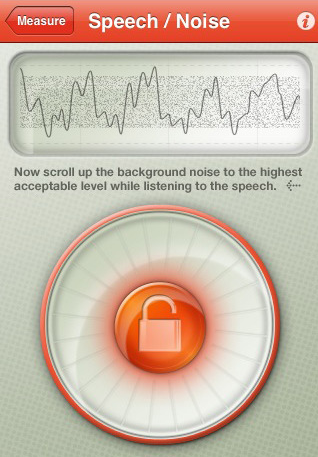
AirStrip Technologies got time on the center stage at the big Apple developer’s conference this past Monday, being one of eight companies invited to demo iPhone apps. Their product being tested is a real-time system for showing data from OB or ICU. A free demo is available on the App Store.

Speaking of Apple, the Mac and iPod Touch are pretty amazing, now that I’m one of those smug artsy types who’s been in the Apple store a couple of times this week with my newly Mac-packin’ family member (last time we were there, the rugged individualism was even more apparent: one 60-something employee with a gray ponytail and was wearing a camouflage kilt, which makes the usual Hawaiian Shirt Friday sartorial jollity of tech companies look lame in comparison). It looked like a crowd that would be equally comfortable passing around recreational drugs. I admit I like the whole Apple vibe, even though it involves a startlingly different (but not exclusive) demographic of creative types vs. the beige box geek crowd. I was so inspired that my editorial this week for Inside Healthcare Computing was WWJD: What Would (Steve) Jobs Do If He Worked in Healthcare IT Instead of Apple? in which I editorialize: “And, Steve Jobs in his jeans and turtleneck was one beret short of being a full-on artiste, while Microsoft gave us the hyper-annoying loudmouth Steve Ballmer as the cartoonish, kill-our-enemies capitalist pig who was ideally cast for the political climate of that time.”

Speaking of Microsoft, it’s teaming up with University of Miami to see if the health of a small sampling of diabetics (25 patients) improves if they use a portal to interact with doctors and nurses. Technologies include HealthVault and SharePoint (they seem to like those two-words-without-spaces trade names).

And speaking of Apple, biotech company Illumina  announces at the Consumer Genetics show (!!) that consumers can buy their own genetic information for $48,000, which includes an Apple computer loaded with their DNA sequence and software to read it (other companies sell genetic information cheaper, but they only offer a genotype, not the more complex genome).

Illumina is touting the health benefits of knowing your genome, so it will be interesting to see how EMR vendors whose products were not developed in the current millennium (which is nearly all of them) will handle that information (Cerner seems to be the leader, at least judging from earlier announcements of its intentions). And like EMR vendors, Illumina has an information page and special pricing related to customers chasing stimulus money.

Simba Technologies announces its release of a free ODBC driver that connects Excel and Access to HealthVault.

A Wharton professor says what I’ve been saying all along: “No one has done the careful research to indicate that if one health care system has information technology and the other doesn’t, then the care is different. There are no controlled trials. The best-case scenario is that information technology will improve quality but not lower costs. The worst case is that there’s no difference at all.” That’s not saying that IT is bad, only that mileage varies depending on who’s using it and how, like any other tool such as a hammer or a sculptor’s chisel. Many hospitals have spent lots of money on a vast array of IT tools and people, yet they don’t seem to have a lower cost profile than those that haven’t (in fact, the opposite is often true). Outcomes also don’t seem to be positively correlated either (not to mention proving actual cause and effect). My conclusion: it’s no different than giving an employee a PC — if you are a very good hospital, carefully deployed IT will usually make you a little bit better. Otherwise, don’t count on it (although you really are counting on it, as a taxpayer buying a lot of IT-inspired blind hope).

InformationWeek covers use of VMware’s end-user virtualization software at Norton Healthcare (KY) to run Meditech desktops on thin client PCs. Norton says Meditech didn’t work in Citrix.

A Massachusetts startup led by a BIDMC clinical pathologist develops Pubget, a search tool for life sciences literature that crawls sites like PubMed to link searches to full-text PDF articles (the search beta is here).

A US News & World Report piece called 7 Ways Health Reform Is Going to Affect You likes interoperability, worries about privacy, and seems uncertain about quality (“Standardized practice guidelines will be evident everywhere, even embedded into your doctor’s government-certified computer: As described in the Obama budget, computer pop-ups will appear to help your doctor make decisions. (And through the same systems, his or her choices can be monitored for consistency with the guidelines.) More uniform care will certainly improve weak performers, but many experts worry about intruding on the seasoned judgment of the good physician. It remains to be seen how government micromanaging—if not rationing—of care, driven by reasons other than patient well-being, will go down, particularly when that patient has a face.”)

Former Emageon CEO Chuck Jett joins pharmacy management services vendor Principle Pharmacy Group as CEO.

E-mail me.

HERtalk by Inga

Those wacky guys at Compuware sent me a link to their mockumentary featuring the release of the Vantage 11 product. The piece features "Simon," who seems pretty hip in an IT-nerd sort of way. There is a Michael Moore look-alike, who is the interviewer/producer. I have a pretty short attention span, but this amusing and clever video kept my attention for the full four minutes.

Atlanta-based mPacts becomes the latest reseller of the  Allscripts-Misys MyWay PM/EHR.

dbMotion and SNOMED Terminology Solutions (STS) announce a partnership to define a semantic HIE ontology based on SNOMED Clinical Terms. STS is a divsion of the College of American Pathologists.  Likely more revealed at a July 1st webinar hosted by dbMotion, STS, and UPMC entitled, "Semantics—Bringing ‘True’ Meaning to Health Information Exchange." Details here.

It’s official: the World Health Organization declares a swine flu pandemic, the first global flu epidemic in 41 years. Almost 30,000 people in 44 countries have been infected, with 144 reported deaths. WHO chief  Dr. Margaret Chan calls the virus "unstoppable."

In an unrelated porcine story, a Washington woman sues a restaurant after being bitten by the establishment’s potbellied pig. The restaurant apparently has its own pigpen (why?) and the diner was trying to feed the pigs. The complaint claims the woman has suffered "lasting injuries from the attack."

Streamline Health reports a small profit of $16,341 for its first quarter ending April 30th. This compares to an $814K loss for the same period last year. The document imaging and management software vendor also saw a less than 1% increase in revenues, to $3.8 million.

US Oncology launches the iKnowMed EHR to the open market. US Oncology bought the EHR in 2004 and has been tweaking the product ever since. The company is now marketing the software to community-based physicians.

EnovateIT releases its first internally designed, developed, and assembled medical computing cart. More details on the new made in the USA carts here.

More than 50 radiologists from London’s Royal Free Hospital are now live on Nuance Communications’ SpeechMagic system. The software is fully integrated with the hospital’s RIS and PACS systems.

RCM-provider Caprio secures a contract with University Health Alliance (HI) for claims and electronic remittance advice.

The 425 member Oakland Physician Network Services (OPNS) selects my1HIE to electronically connect its members. OPNS is the fifth Michigan provider organization to join the exchange, which is working with Covisint to develop its online patient health information network.

Less than 20% of hospitals have any sort of electronic surveillance system to detect and investigate potential healthcare-associated infections real-time. Budget constraints are partly to blame.

CollaborateMD partners with 3M Health Information Systems to integrate 3M’s medical necessity coding content into CollaborateMD’s billing software applications.

CCHIT names 265 volunteers to staff 19 different workgroups. Vendors were not allowed to count for more than one-third of the positions, but I saw just about every major vendor represented once or twice. Over 600 applicants vied for the spots.

Sage’s Healthcare division donates half a ton of food to America’s Second Harvest in Tampa Bay. Each year Sage supports a global effort to give back to the community and this year the focus was on donating food. Thumbs up.

First Mr. H encouraged readers to puruse Atul Gawande’s piece in the New Yorker. Next thing you know, President Obama makes it required reading for aides and calls them to the Oval Office to discuss. Clearly just about everyone looks to Mr. H for thought leadership.


E-mail Inga

News 06/10/09

June 9, 2009 News 12 Comments

From EMR BloodClot: “Re: eHealth Ontario. It has just been reported that Sarah Kramer, the CEO of eHealth Ontario, has been given her marching orders to ‘beat it’ as CEO. She has wasted millions and lost track of the big picture, which is patient safety and clinician satisfaction with the Pan-Canadian EMR. Why does eHealth Ontario continue to ignore us, the clinicians, who will be the end custodians of this poorly thought out EMR implementation?” Because that’s what IT executives do (no offense to those CIOs who really do give physicians a strong voice in decision-making). I’ve been on that IT side and the working assumptions where I’ve been were that doctors and nurses (a) don’t understand organizational strategy; (b) are too easily swayed by demo eye candy and insincere vendor promises; (c) understand only products themselves and not the big picture IT world of vendor stability, product positioning, and integration; and (d) don’t appreciate IT’s technology, support, and organizational challenges. I’ve worked in three places where users were invited to review and recommend clinical systems. In every one, the first choice of doctors and nurses wasn’t the one that was purchased because we IT folks (some of whom were held in very high regard, mostly by themselves and their easily influenced peers) were so much more knowledgeable that we had the right … no, the obligation … to override them to buy what we thought was the best system. Their resulting adoption was about what you would expect. CIOs are often fixated on buying whatever will cause them the fewest headaches or that carries the lowest organization risk.
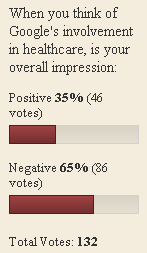
With Kramer booted from eHealth Ontario, do Courtyard Group and Accenture get a free pass for getting business from her under questionable circumstances? Or, as has happened before with BearingPoint and others whose inside contact was outed and ousted, does she go to work for one of them? She’s getting $317K in severance for up to 10 months unless she finds another job. I wouldn’t be looking too hard.

googlemenu 

bingmenu

From The PACS Designer: “Re: Microsoft’s Bing. In a challenge to Google, Microsoft has released a new search engine called Bing. There’s Discover Bing Tour that Inga and others can use to shop for shoes, and at the same, time earn, some cash!” In a startling burst of originality, Microsoft swaps the order of Google’s six search options in creating its own unique user experience. Even the text ads look exactly the same. While I’m sure it works OK and maybe is even better than Google in some minor ways, it’s a shame that the best Microsoft can do these days is to follow paradigms created by competitors. I can’t see why I’d be interested even with zero switching costs since Google works fine for me.

From Richiebaby: “Re: ONCHIT. The comment period on funding for regional centers deadline is coming up … just so ya know. Here’s a link to the Fed Register: Notices May 28, 2009.”

A PR company e-mailed about my comment regarding InQuickER, which allows people to schedule ED visits online at participating hospitals (there aren’t many so far). My point: why are patients going to the ED if they aren’t sick enough to go through triage and wait? The PR company’s response (paraphrasing) is that it takes a long time to get a doctor’s appointment, so patients who need “ER care but are not experiencing an urgent situation” can wait for their arranged time comfortably from home and “help hospitals save money and become more efficient.” I don’t understand why towns of any size have an all-hours veterinary office/hospital that everybody else refers to, but in healthcare it’s only the ED working nights and weekends. You would think there’s business to gain.

dawgedata

It had to happen: a company develops Dawg-E-Data, a $30 dog-attached USB PHR (or maybe CHR – canine health record) that holds medical information and gives appointment reminders. It was an unplanned side trip on the way to developing a human PHR. I kind of like it since people are more likely to keep their pet’s medical information current than their own.

Listening: Hammers of Misfortune, obscure California prog metal, kind of like Kansas or The Flower Kings. And watching: Deadliest Catch, although I have no idea why.

The VA will spend $3.5 billion for IT this year, but a new auditor’s report triggered by perpetually late VA planning documents says it isn’t capable of managing and overseeing its investments. The unusually pointed report (warning: PDF) says the VA’s problems started in 2006 when then-CIO Robert McFarland insisted on creating a centralized management structure reporting to him, but didn’t follow through with governance. McFarland says the criticism is a “silly, untrue and uninformed statement.” Roger Madura sent the link and postulates that the VA’s attempt to move from the much-heralded VistA to commercial software like Cerner Millennium must not be going so well.

Keane finishes its Keane Optimum iMed (Web-enabled clinical applications) implementation at Capital Health (NJ).

Nortel gets a mention in the Dallas paper for its high tech prototype medical clinic. Actually, it’s high tech only in the sense that it uses what Nortel sells: wi-fi, cellular, IVR, and RFID. London and Dubai will get their own prototypes later this year.

Former Eclipsys CFO Bob Colletti is named CFO of e-learning vendor Learn.com.

A Canada Free Press article called Healthcare: What Americans have to look forward to recaps the eHealth Ontario debacle (humorously, I might add). “CEO Sarah Kramer was earning a salary of $380,000 a year. While only being on the job a short while (the agency has only been in existence for nine months) she was awarded a bonus of $140,000. If she accomplished anything other than handing out attractive, untendered contracts to her friends and associates who, while the gravy train lasted, never had to pay for their tea and muffins, no one is quite sure of what it is. But there’s more. Beleaguered Ontario Health Minister, David Caplan last week ordered a third party review of eHealth Ontario’s expenditures, centering on the amounts paid for consultants. The province hired the firm of PricewaterhouseCoopers to conduct an examination of the way eHealth Ontario conducted its affairs. A third party review; in other words the province of Ontario hired a consultant to determine whether too much money was being spent on consultants.”

Vietnam’s economy is suffering because American technology companies that rushed in during boom times are now rushing out, leaving the country with a shrinking GDP and rising unemployment. Students are bailing out of science and technology programs and going into marketing and PR (bad idea).

Some anonymous blog commenters (not here) are demanding that Mark Leavitt step down from his role as CCHIT chairman, claiming his history with HIMSS will always taint CCHIT. My thoughts: I agree. HIMSS wisely used its clout to create CCHIT in its image and nurture it through general acceptance to advance its own agenda, but the strings need to be cut now (including replacing Steve Lieber as CCHIT board chair). I predicted when CCHIT was created that it wouldn’t really change the industry because the interoperability changes CCHIT was supposed to certify (and nothing more) weren’t capabilities customers cared about anyway. That’s what has happened, at least from my cheap seat. Now that CCHIT indirectly affects billions in stimulus dollars, I’d rather see it run by people with no trade group or vendor connections. If it isn’t willing to do that, I’d say choose or form another group to run the certification program. Some of what CCHIT wants to measure, report, or certify (functionality, security, specialty capabilities) is going way beyond what the government should be mandating anyway, although this particular government seems to enjoy telling carmakers and banks how to run their affairs (kind of like letting the Mafia buy into your business). It’s funny that the industry has fought tooth and nail to avoid FDA oversight that it couldn’t control, but seems to like CCHIT because it removes some competitors and sends innovation to the back of the line.

Speaking of CCHIT’s role expansion from simple interoperability certification to keeper of the official “here are the good EMRs” list, the poll to your right asks whether a mandatory EMR “Lemon Law” would be a better way to increase EMR adoption. The Yes votes are at 55%, while 45% say No.

Oregon passes a health reform bill that includes putting doctors and hospitals into a data network and also create statewide registry for the end-of-life wishes of citizens.

lawton

IT systems at Lawton Indian Hospital (OK) go down after a wind storm knocks power out.

iSoft launches a PACS product, developed with an Israel-based developer. It will be offered standalone or as part of Lorenzo.

Media reports said that Australia’s government would store health records on Medicare cards, but the government denies it. They still want to create a centralized database of medical records, with patient participation voluntary.

Idiotic lawsuit (dismissed): a woman loses her four-year lawsuit against the makers of Cap’n Crunch with Crunchberries when the judge rules that she shouldn’t have been deceived by the company, as she had claimed, that the cereal contains a real fruit called the Crunchberry. Her lawyer’s firm had previously lost a similar case in which they sued the Froot Loops people for deceiving highly literate customers who thought it contains real Froot.

E-mail me.

HERtalk by Inga

From Job Seeker: “Re: new job. I think I may have just found a contracting role to purse after reading Monday’s blog. Going to call Canada’s government agency eHealth and see if I can’t get to the bottom of why Peter Cho is paid 12% less than Richard Chen for the same job. And then there’s Kirk Chan, who earns quite a bit more than either one of them. Must be an alphabetical last name thing. That investigation should be worth $212/hour and a few uptight moments!” It’s pretty juicy happenings over at eHealth. President and CEO Sarah Kramer is now stepping down and there are calls for chairman Dr. Alan Hudson to do the same. Meanwhile, more reports of excessive reimbursement have surfaced, including a $30,000 for 78 hours of work (that’s $384/hour).

The administrator of Bradley County Medical Center (AR) says lack of capital and high cost is keeping his hospital from making its initial EMR investment, observing that “there’s nobody in the hardware and software business out there that’s cutting me a deal because I’m a small hospital.”

blue mountain

Meanwhile, the 11-bed Blue Mountain Hospital (UT) plans to implement Medsphere’s OpenVista in only three months.

The Minnesota-based Buyers Health Care Action Group rolls out myHealthfolio, a web-based PHR that utilizes the HealthVault platform. Avenet Web Solutions designed the application that will be utilized by Buyers’ coalition of public and private employees.
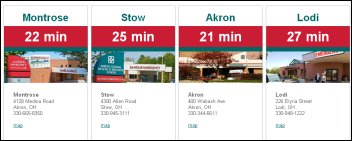
RelayHealth wins Target Corporation’s 2008 Partner Award of Excellence for demonstrating “innovative leadership, superior business practices and commitment” to Target’s core strategies. The award was presented at the recent National Council on Prescription Drug Program’s annual conference.

Former GetWellNetwork exec Bruce Matter joins Peminic, a healthcare workflow and process management supplier, as EVP over company growth and client satisfaction.

The VA announces plans to allow researchers to use de-identified, aggregated data of veterans to pinpoint the most effective treatments for specific conditions, including post-traumatic stress disorder and antibiotic-resistant staph infection.

James Giordano, president and CEO of CareTech Solutions, is named a finalist in Ernst & Young’s 2009 Central Great Lakes region’s Entrepreneur of the Year award.

Axolotl Corp. and Initiate Systems announce a partnership to integrate Axolotl’s Elysium Exchange and Initiate’s patient identification solution.

revelationMD wins a contract to provide clinical integration for Genesis Physicians Group (TX). The 1,460 member IPA will invest over $100,000 for the exchange technology. 

The PPO Physicians’ Organization of the University Medical Center at Princeton selects iMedica as its recommended EHR/PM provider for its 500+ member physicians.

I upgraded from my old 2G iPhone to the new, hip, sleeker 3G model just two weeks ago. I am relishing in the fact that I was cutting edge – for exactly 14 days. I am now back in phone envy mode after Apple’s announcement of its new 3GS version.

Though 42% of CIOs in all industries cut their budgets by an average of 4.7% in Q1, healthcare CIOs reported an average increase of 2.2%.

And, according to HIMSS Analytics, US hospitals will spend $4.7 billion on IT this year and $6.8 billion by 2014. Providers will use an estimated 43% to 48% of their capital budgets on technology this year.

belize

Sanford Health (SD) announces plans to construct its first international children’s clinic in Belize City, Belize. I’m already working on plans to have Mr. H send me to the ribbon-cutting.

If you are a provider organization wanting analysis on how well different vendors are positioned to meet yet-to-be-defined “meaningful use” criteria, KLAS has a new report to sell you. For $980, you can get opinions on how well nine different EHRs are delivering on CPOE, nurse charting, etc.  Cerner and Epic received the highest rankings.  If you would like this “Meaningful Use Leading to Improved Outcomes” report and you are not with a provider organization, you can still purchase it for a mere $18,800.  (Did I mention that meaningful use is still not defined?)

Here is a sad sign of the times: retirees from Molson Brewery protest outside the St. Louis facility after the company announced a cut in their pension plans. The original pension package included six dozen beers per month, but, the company is now cutting this benefit down to one dozen monthly. Apparently, reception to the news fell flat.

E-mail Inga.

Readers Write 6/8/09

June 8, 2009 Readers Write 12 Comments

Submit your article of up to 500 words in length, subject to editing for clarity and brevity (note: I run only original articles that have not appeared on any Web site or in any publication). I’ll use a phony name for you unless you tell me otherwise. Thanks for sharing!

The Problem with Publicly Traded Companies
By Mike Quinto

The problem with publicly traded companies is they serve the spreadsheet, not the customer.

In the last year, I have heard:

  • the VP of implementation of an HIS vendor said that she does not have the personnel to devote to our implementation because she needs to hit a certain metric and this would blow her numbers.
  • a sales VP at a major ambulatory EMR vendor tell me that because of their end of year, they needed me to commit to buying six more licenses (to true up a five-year-old old problem THEY created) within 24 hours or they would “turn us off”.
  • the SVP at a major ERP vendor, admitting that the sales team “made a mistake,” said they can’t fix it because they have to hit a certain profit margin (FYI, your company hitting a certain double-digit growth or profit margin is not a large concern of my non-profit health system struggling to break even — know your audience, people).

Whatever happened to partnerships? It is clear that the ‘partnership’ with the shareholder is far greater than the ‘partnership’ with the client.

I have been fortunate enough to work for privately held software vendors and unfortunate enough to work for publicly traded software vendors. I have worked at a privately held software vendor that was purchased by a publicly traded company. I have seen the difference from both sides. I know that the customer is not at the center of decisions in a publicly traded company; spreadsheets are at the center of decisions.

As a client of both publicly traded and privately held vendors, I am experiencing both sides of the equation. Without question, the privately held vendors make better ‘partners’.

I would not imagine the 14K that caused such a barrier to customer service at a major healthcare ERP vendor is worth the damage it has done to this two million dollar ‘partner’. The 20K that created a competitive environment was not worth putting the client at risk. The confidence lost at the executive level was not worth the implementation team hitting a certain metric for the quarter.

We all have to hit certain metrics. We all have our own challenges. Publicly traded software vendors often keep the short term revenue recognition or expense metric in focus when the big picture should be on customer satisfaction and retention. This quarter’s financial statement will not keep you going in the long run. Your ability to attract and retain happy customers that buy from you again will keep you going.

Mike Quinto is CIO of Appalachian Regional Healthcare System of Boone, NC.


Is Data In Your CDR Accurate? Are You Sure?
By Unfrozen Caveman CIO

I’ve always wondered about the accuracy of the process of duplicating data in ancillary systems, such as a laboratory information system (LIS) or radiology information system (RIS) to a clinical data repository (CDR). The most common process consists of parsing HL-7 messages and storing the data in a CDR. Sounds simple and straightforward. What could go wrong?

It turns out it’s not so simple and things do go wrong:

  1. HL-7 is not simple or straightforward to work with. Parsing data can cause random discrepancies.
  2. Changes, such as revising clinical data, e.g. change a lab value, revising a finalized report, etc., can cause discrepancies.
  3. Software updates in the ancillary system can cause discrepancies between data in the ancillary system and CDR.

My organization is moving away from the CDR-centric framework to a web services framework (aka service-oriented architecture). In this framework, clinical data is not reproduced in a CDR unless absolutely necessary and data is retrieved from ancillary systems using web services when needed. However, for reasons related to response time, we needed to duplicated lab data in a lab data repository outside the LIS.

During this process we discovered that a vendor-supplied CDR and a second, smaller CDR, purchased as a package from a vendor to provide mobile access to clinical data, store lab data that does not match data in the LIS.  These systems are no longer used for clinical operations for reasons unrelated to the discrepancies noted.

As part of our effort to build a lab data store, we also built a program that validates lab data by comparing data in the ancillary system with data in the CDR for a specific date. We are experimenting with the best strategy for running this program. For example, run the program every morning for dates equal to yesterday, last week, and last month.

How significant were the discrepancies? That question misses the point. The question should be what do you do about it? Ignore it and pretend it doesn’t exist? Or have in place a data validation process that identifies, reports, and fixes discrepancies. Did your CDR come with one? If not, what are you going to do about it?

Forget eHealth Ontario
By Justen Deal

Forget eHealth Ontario! Take a look at the federally-sponsored not-for-profit entity, Canada Health Infoway, which actually appears to be accomplishing even less. Plus, because it is not actually part of the federal government, it gets to be much less transparent to boot! 

So far, since 2001, it has received $2.1 billion in funding, including $500 million for 2009 it just got in January.

Their longstanding goal has been to ensure 50% of Canadians are covered by electronic health records by 2010. According to a recent survey by the Commonwealth Fund, only 23% of primary care physicians in Canada are using electronic health records (compared to 28% for the United States). Sounds like they’ve got a long way to go in the next seven months, eh?

That might be why they’re now focusing on a new (and improved!) goal of covering 100% of Canadians by 2016. They estimate more funding will be required…  😉

justendeal

Justen Deal is venture director at QuarrierWade of Charleston, WV.

NAHAM Report
By John Holton

This is a belated update on the NAHAM (National Association of Healthcare Access Managers) convention a week ago. The most exciting aspect of the convention was the formation of the Healthcare Access Management Coalition which is comprised of NAHAM, hospitals, other healthcare providers and industry vendors.

Everyone acknowledges administrative waste in our healthcare system and yet access to care and the arcane reimbursement environment created by the insurance companies is missing from the current debate. The new coalition is focusing on educating policymakers on the importance of efficient and quality management processes from a patient’s point of entry through the continuum of care. Hopefully through this education, new policies streamlining the administrative end of healthcare will result in more dollars being spent on the actual delivery of patient care.

The goals of the coalition are:

  • Improve access to care and reduce healthcare costs through dynamic healthcare management
  • Ensure healthcare reform includes entry point and patient management processes
  • Educate policymakers about technologies that improve service delivery models
  • Support technology solutions that make healthcare more affordable and efficient

Anyone interested in these topics can get more information by contacting John Richardson, NAHAM Director of Government Relations at (202) 367-1175 or jrichardson@smithbucklin.com.

 johnholton

John Holton is president and CEO of SCI Solutions of Los Gatos, CA.

Monday Morning Update 6/8/09

June 6, 2009 News 6 Comments

From Bright Idea?: “Re: DC HIE. What would happen to regional HIEs if the government goes national with an HIE of its own?” That refers to this news: Washington, DC’s Medicaid agency chooses MedPlus for its Medicaid-focused health information exchange. The pilot will involve three hospitals and six clinics, with analytics that allow public health officials to track outcomes and look for care gaps.

Moffitt Cancer Center (FL) names Mark Hulse, formerly of North Shore Medical Center (MA), as CIO.

More on Canadian government agency eHealth Ontario: it paid a $300-an-hour consultant’s eight-hour invoice stating that she consulted herself. It was a typo, but the agency paid it without question. The consultant works for a company that got a $268,000 PR contract for the agency ($300 an hour for PR help? Seriously?) She also billed $7,000 for writing a speech for eHealth Ontario’s CEO. Her husband is the managing partner for Courtyard Group, which got $2 million worth of no-bid contracts. CBC throws another punch in its salvo: the 30% bonus paid to the CEO after four months on the job was double the 15% maximum allowed, which the CEO says was pre-negotiated because she left Cancer Care Ontario before earning her bonus there. eHealth Ontario let three highly paid consultants go Thursday after the unflattering articles appeared, one of them an executive assistant being paid $212 an hour.

Speaking of eHealth Ontario, it discloses all salaries of over $100K on this page (subtract 10% to convert Canadian to American dollars). It’s a long list and the salaries seem awfully generous for government-hired technical people

orchestrate

Orchestrate Healthcare is now a Platinum Sponsor of HIStalk. The Greenwood Village, CO offers healthcare integration and technical expertise (HIEs, transactions, service oriented architecture, and integration tools like eLink, Bridges, Cloverleaf, Ensemble, and DataGate). Consultant resumes are here. The company won Best in KLAS 2008 in the technical services category. I thank them for supporting HIStalk and the folks who read it.

I got a nice note from Natalie Hodge, the pediatrician I mentioned who started her own company to help doctors start pediatrics concierge practices. She’s looking forward to the iPhone 3.0 and doing some Web infrastructure setup to get things rolling, she says.

I bought the MacBook and wasn’t disappointed: the twenty-something young lady who sold it to me at the Apple Store had spiked hair, lots of tattoos, and a gruesomely fascinating piece of silver jewelry implanted squarely between her middle two top teeth. I was infused with hipness by just being there.

charm

A news site criticizes an Australian hospital for not yet implementing oncology software that was bought in November following 11 chemo overdoses, none of which cause patient harm. The Australian Medical Association is demanding that it be brought live, while the hospital says it’s still working on setup and training (note to the AMA: you don’t want to rush them). The software appears to be made by Australian vendor CharmHealth.

David Brailer and his Health Evolution Partners seem to have disappeared, so I thought I’d check their site to see if anything was happening. They just made an investment in Optimal Reading Services Group, an Alabama-based radiology reading service. It doesn’t sound all that innovative to me, but Brailer claims it is highly cost-effective, a good idea when the market wants imaging costs lowered. HEP has a lot of expensive talent, but I’m not seeing much in the way of results. You would think they would be buying up everything in sight at a big discount with the market down.

I’ve closed the poll on CCHIT, where 88% of 193 respondents said CCHIT is still under the influence of HIMSS. New poll to your right, featuring an idea from Evan Steele. CCHIT was formed to certify interoperability, not functionality or vendor stability. To encourage EMR adoption, would you support a mandatory EMR “lemon law” that would give purchasing providers their money back if they found the product they purchased unsuitable?

MD Anderson joins other big-name hospitals on the service-oriented architecture advisory group of clinical trials system vendor Velos.

Concord Hospital (NH) had systems down all this week when a SAN upgrade took down their network. Recently hired clinical users had no idea how to go back to paper, so they struggled and say they’ll have to develop policies and procedures. That happens in every hospital with new clinical systems, of course: the first big downtime causes newbies to struggle because they don’t know how the old paper processes worked.

The federal government will upgrade its Connect NHIN gateway later this year, adding a master person index, a policy engine, and a document management system.

A few years ago, the cheerleading health IT rags couldn’t write enough about HealthSouth’s “digital hospital.” Says HealthSouth’s CEO: “It was a pipe dream and a figment of the imagination,” saying the company would have had to stop all investments in its other 93 hospitals for at least two years to pay for it. Siemens was supposed to supply all the gadgetry, including Soarian.

E-mail me.

News 6/5/09

June 4, 2009 News 8 Comments

From The PACS Designer: “Re: NASA’s Nebula. NASA has entered the cloud computing on ramp to apply the concept to its space travel activities. Their venture into cloud computing is called Nebula.” I took a look at the Nebula services chart ad didn’t understand anything on it other than MySQL, but I’m no rocket scientist.

From WhiteSoxFan: “Re: International MUSE. Has anyone heard anything about attendance, vendors, presentations?”

Carl Byers, CFO of athenahealth, will resign early next year to move overseas, the company announced today. Board member and former IDX CFO John Kane will lead a search committee to replace him. Finance VP Dawn Griffiths will be promoted to chief accounting officer and treasurer on July 1.

Debuting on the Healthcare Informatics 100: HIStalk Platinum sponsor Cumberland Consulting Group. The company was also named by Consulting Magazine as one of its “Seven Small Jewels 2009: The Hidden Gems of the Profession” of niche firms making a big impact. They interviewed managing partner Jim Lewis.

conaway 

njbill

Herb Conaway, Jr., a private practice physician, attorney, and Democratic assemblyman from New Jersey, introduces a bill that would make it illegal to sell or use non-CCHIT certified systems in the state. He previously introduced the New Jersey Health Information Technology Promotion Act that appears to mandate EMR use. HIMSS loves him, of course, having given him a 2008 State Advocacy Award and put him on the podium at the annual conference in Chicago. I found it interesting that his own practice’s EMR vendor went belly-up, maybe leading him to favor the larger vendors that can afford CCHIT certification fees and who wouldn’t mind seeing a bunch of competitors knocked out of the arena for one reason or another. Thanks to HIStalk reader Chip for the tip.I thought I was getting used to well-intentioned government intrusion into private business, but this idea leaves me speechless.

Sensible Certification, on the other hand, is trying to rally support to scale back grand certification ideas. I was skeptical until I read its six suggestions, of which I agree with every one: (1) stop the rush to certification; (2) don’t define requirements until ‘meaningful use’ is defined; (3) certify only basic capabilities, such as data sharing; (4) use NIST’s Laika as the certification requirement; (5) don’t certify functionality because the market should decide that; and (6) certification CCHIT-style will stifle innovation. They’re petitioning David Blumenthal at ONCHIT. The site doesn’t say who’s responsible, but it’s registered to Gordon Moore, MD, a family doctor who left a salaried job and struck out in a low-overhead practice.

I’m not interested enough to sort this out, but two New Zealand medical systems vendors are threatening each other over something or other, one of them and EMR company with 90% market share who supposedly won’t make patient information available outside its systems without being paid.

informationcure

TriZetto founder, chairman, and CEO Jeff Margolis publishes a book called The Information Cure: Solving the Healthcare Crisis Systematically Through Integrated Healthcare Management. It’s aimed at consumers willing to pay $25 to read about a technology vendor guy’s ideas on fixing healthcare, so I’m sure Jeff will be keeping that day job. Not that it isn’t interesting, but Americans don’t read books, especially non-fiction ones that require thinking. There’s just no time with all that reality TV to watch. If anyone wants to review it, jump right in. Amazon doesn’t have it yet, but Jeff was signing copies at AHIP this week.

CBC isn’t done with eHealth Ontario, following up its early article with reports that the CEO has connections to uncontested contract winners Courtyard Group and Accenture.

Want e-mail updates when I write something new? Join 4,317 folks who get the news first by putting your e-mail in the Subscribe to Updates box to your right. Below that is the Search function, courtesy of Google, that digs through six years (as of this week) of HIStalk to find whatever you’re looking for. The hideous green rectangle below that is the Rumor Report button, clicking of which allows you to directly and anonymously send stuff to me without fooling around with e-mail (even an attachment, if you like, with highly personal photos and revelations always appreciated). The calendar is getting some action, I see, and I should take a moment to thank the guest authors here and on HIStalk Practice for sharing with us all.

Jobs: Project Architect, Director of Marketing, Regional VP of Sales.

OK, you Apple zealots who are always e-mailing me finally convinced me. I’m buying a Macbook for a family member. The tipping point, beyond the obvious non-Microsoft hip appeal: Apple is offering a newly upgraded white Macbook for $949 (after an educational discount) and they’re throwing in a free $229 8 gB iPod Touch as a back-to-school special. Sold to the abrasive blogger for the equivalent of $720, not much more than I was figuring on spending for the usual generic HP or Dell laptop. All I need now is a black turtleneck and tattooed chick.

A Computer Weekly article says London NHS will pay BT more than $800 million in extra costs after the company renegotiated its contracts with the threat of pulling out like Accenture and Fujitsu did before it. In BT’s defense, however, it had already written down billions in losses, an unspecified amount of which was due to lowball NHS contracts. There’s probably a good lesson in there: Richard Granger did admirable work in stretching a dollar (pound, in his case) until the eagle squalled (as we country folk say on occasion), but having unhappy and money-losing vendors isn’t a formula for success. I thought he did a super job with some aggressive contracting, but the results don’t exactly bear that out.

Boston Medical center moves 67% of its accounts payable checks to electronic payments using software from Bank of America.

wii

Nintendo announces the Wii Vitality Sensor, a finger-attached controller that measures stress. It won’t be out until next year. Nobody mandated its development, it isn’t certified, and you spend your own money on it, just in case you remember those days.

iMedicor announces a portal (it seems to be free) that it says will allow providers to exchange medical records. It has a doctor registry and utilities to export EHR documents and exchange Continuity of Care Record files.

Greek authorities put the wife and daughter of a former Siemens executive in jail, charging them with complicity in the money laundering and bribery case that sent the man fleeing as a wanted fugitive.

An Indonesian woman who complained about her hospital treatment is jailed on criminal defamation charges that could result in six years in prison. She e-mailed friends claiming the hospital falsified lab results to justify additional treatments. She already lost a civil suit that cost her $6,000 and a public apology. The Radio Australia news item calls Indonesia’s defamation laws “draconian”.

HHS cites a chemical dependency unit for HIPAA violations, saying the program director allowed her “significant other” to hang around patients and the nursing station. That means she’s in DePoo, which happens to be the name of the place.

Hospital lawsuit: a North Carolina hospital is sued by the Equal Opportunity Commission for not hiring people who are taking prescribed narcotics.

E-mail me.

HERtalk by Inga

camels

From Bill Williams: “Re: The Pipe. I’ve long had a question in my mind that I’ll ask here: why would a doctor/healthcare provider be depicted smoking? Has anyone ever asked the question before?” As a matter of fact, the question has come up many times. Mr. H claims it is intentional irony since the doctor in the logo is in the 50s style (note the head mirror) when many doctors smoked. Check out this commercial for proof.

Duke University Health System selects SSI Group as its primary supplier of revenue cycle claims management products.

The national healthcare alliance VHA signs a multi-agreement with RemitDATA, Inc. for its Reimbursement PRO and WebScan PRO RCM products.

A power surge knocks out the computer system at Clarian Health (IN) Monday afternoon, forcing its hospitals to hand write records. By 1:00 a.m. Tuesday, Methodist Hospital and Indiana University Hospital were so backlogged with paperwork that they went on ED diversion. The computer system was fully restored by 7:00 a.m. As Kevin says, “If you want more of a smart-assed IT perspective, check out the comments on the Slashdot story here.”

Medsphere says it has raised almost $2 million of its targeted $15 million secondary venture round. Michael J. Doyle, Medsphere’s CEO and president, just received the Sister Fedde Award from Lutheran Healthcare (NY), recognizing his contribution to the health of area residents. You probably already guessed that Lutheran is currently installing OpenVista.

More hospital layoffs: 77 from Greenwich Hospital (CT) and 245 from The University of Alabama at Birmingham Health Systems, though 81 of the Alabama workers are being shifted into jobs now held by contractors. In addition, The University of Iowa Hospital must cut $45 million from its budget by June 30, 2010, which will likely result in an unspecified number of layoffs.

Walgreens teams up with HealthVault, allowing its pharmacy patients to access their prescription records through the online PHR. Patients will also be able to share the online information with their physicians.

According Harvard Business School researchers, male Twitter users have 15% more followers than women and the average man is twice more likely to follow another man than a woman. And, the average woman is 25% more likely to follow a man than a woman. Ergo, Twitter promotes sexism. (I was going to go into my detailed analysis of why Mr. H has more Twitter followers than me, even though I follow more people and Tweet more often. However, I think I’ll just blame society as a whole.)

MEDecision and Availity enter into a joint marketing agreement that includes integration between Availity’s web portal and MEDecision’s collaborative HIE service.

 enovate

Longtime sponsor EnovateIT sent us this note: “Exciting times for us. What you see is short term, next week we unveil. You’re the first to know publicly.” We like getting the scoop, even if we don’t know what it means. What we do know is that Enovate, which specializes in wireless mobile computer systems integration, just rolled out this micro-site and promise to tell us more next week. Theories welcome.

The weather in San Diego is in the 60s as I type, which is surely more refreshing than most parts of the country. And if you are in San Diego at AHIP, fill us in on the buzz, including what happened during the protests scheduled for Thursday morning against the health insurance industry. Also take a moment to say hello to the HIStalk sponsors that are exhibiting, including Allscripts, 3M, and RelayHealth.

The Queen’s Medical Center pays $2.5 million to settle two whistleblower lawsuits. The suits allege that over a three-year period, the hospital overbilled and submitted false claims to Medicare, Medicaid, and TRICARE.

Sweden rolls out the first stage of its national EHR called National Patient Overview. Over 500 clinicians are now accessing patient records that are hosted by InterSystems Healthcare information exchange platform.

E-mail Inga.

Being John Glaser 6/3/09

June 3, 2009 News 18 Comments

Several weeks ago, I spent time talking to a class of IT managers. These managers, from a wide range of industries, were learning about IT management and leadership. I was there to talk about my career, my management style, my values, and why I made the choices that I made over the course of my career.

During our discussion, I suggested that they think about the following.

All of us are caught up in the busy-ness of our professional and personal lives. But let’s suppose that you were told that you had five minutes left in your life. As you looked back on your life, what would you want to be able to say?

And I gave them my answer. I would want to be able to say:

  • That I was as madly in love with my wife then as I am today. I fell in love with Denise 34 years ago. And I am more in love today. She is my best friend, my lover, the mother of my kids, and my confidante. In ways that are unfathomable and indescribable, in many aspects of our lives and being, she and I have become one.
  • That my three daughters have had lives as blessed as mine. Their paths will have been different and their choices will have been their own. But I hope that they know deep love, good fortune, success, and many fine moments that have become treasured memories. I would hope that we were always good friends and looked forward to each other’s company.
  • That I will have been spared the agony and horror that can dominate a person’s life. I hope I never have to experience great hunger, deep and enduring physical pain, crushing hatred, or excruciating torment. If I was spared this, I would be grateful. If I was not spared this, I hope that I exhibited courage.
  • That those people with whom I worked say that I inspired them, taught them, and led them well. Just as I have been inspired, taught, and led well by several people, I hope that I gave that gift to others. I would like to know that many people are different people, better people because they knew me.
  • That the health care industry in which I work, and the provider organizations that I work for, have been changed, become more effective, have advanced because of the legacy that I have left. I would want to know that I showed these organizations and industries how to operate and think at a higher level; a level that significantly increases their ability to care for people, innovate and teach.

And if I can say all of this, I will die with a smile on my face. I will have had a good run.


John Glaser is vice president and CIO at Partners HealthCare System. He describes himself as an "irregular regular contributor" to HIStalk.

News 6/3/09

June 2, 2009 News 8 Comments

From Blogger: “Re: Microsoft. Microsoft Health Solutions group blurs traditional relationship to media by building up inside relationship with bloggers. Should bloggers (not worried about HIStalk) disclose who pays them to attend conferences? What if companies like Microsoft give you early access to information and insider info — do you owe your allegiance to them?” I would say the blogger should disclose that fact, but you have no way of knowing anyway. Reader beware: if a blogger seems to have an unwaveringly positive opinion of a company or product, even in the face of negative news developments, then they may well have sold their soul intentionally or otherwise. I can only say that if I went to a conference or other trip at a company’s expense (which I’ve never done), I would say so when I wrote about it (and just to make sure, I’d probably rip them roundly just to err on the side of fairness, which means nobody will be inviting me anyway). I can’t speak for Microsoft except to say that they’ve never offered me anything.

From The PACS Designer: “Re: 2D/3D workstations for MDCT. There have been a lot of marketing claims by vendors that their MDCT workstations outperform their competitors. Well, now there’s been a 2D and 3D face-off conducted at the International Symposium on Multidetector-Row CT by Diagnostic Imaging Magazine. The result is they’re all quite similar in performance, thus no one can really claim to be the best.”  

Several folks have added events to the HIStalk calendar, so thanks for that. You can post your event here for free.

Microsoft buys Rosetta Biosoftware, a Seattle-based genomic software vendor owned by Merck. It will add gene analysis and clinical trials capabilities to Amalga Life Sciences.

Hospitalists Now, a hospitalist provider, gets a $3.5 million investment to help bring its administrative and patient care software to market. Its Web site says only “under construction” and “medical software solutions.”

A Connecticut doctor takes the concierge medicine route, taking on 250 patients for an annual retainer of $1,800 as a “country doctor with all the modern technology.” She says her practice prevents hospitalizations. “I have kept four or five patients out of the hospital in just this past year. I don’t let my patients go to the emergency room alone. I meet them there, and because I know them very well, I don’t have to practice defensive medicine. I can arrange for visiting nurse services or delivery of a hospital bed where necessary and have the patient home the same day. And when they do have to be admitted, I am in frequent communication with their specialists, and we care for them together.”

aim

Ingenix acquires AIM Healthcare Services, a Nashville-based medical claims company.

One of the funniest things I’ve read lately: Joel Diamond’s take on abbreviations on HIStalk Practice.

An investigative report by The Arizona Republic says the lack of electronic medical records in Maricopa County’s jail system has cost taxpayers millions in lawsuit-related costs and contributed to its loss of accreditation. Strangely enough, if you read about the terribly backward paper and crude database systems they use, it sounds pretty much like the average hospital. They’ve passed on previous recommendations: “The software, the implementation, did not deliver the result that was promised. That was a business judgment. What’s the point of spending $5 million and buying nothing but trouble?” But, one late-breaking factor has led them to immediately change their tune and start EMR shopping: they will apply for $2 million in federal stimulus money to buy the system they declined to purchase with their own funds.

A Medicaid HMO privatization program started in five Florida counties in October 2006 isn’t drawing rave reviews: patients say they can’t get appointments, 25% of doctors in the two biggest counties have dropped out because of red tape, state officials can’t get even basic data about the program’s treatments and prescriptions, and the largest HMO company involved (which admitted stealing $35 million from another state program) opted out because profits were too low.

CFO Magazine runs a rebuttal by Al Borges, MD to its pro-EMR article.

Who knew it would be lobbyists who got stimulated? Big lobbying companies are creating new groups whose entire raison d’etre is to figure out how to lap at Farmer Obama’s trough. “Sinclair said he is awaiting clarity on the bidding process for electronic medical records systems, especially in terms of how the money would flow and to which agencies. Starting in 2010, the state will make grants available to hospitals, physicians and clinics for purchasing health information technology systems, according to its Web site, which tracks stimulus projects. With health information technology projects, Stanton also sees a change in the playing field. He said the challenge is in dealing with members of the executive branch, instead of ‘going down to Congress and begging a legislator to put an earmark,’ as both have different levels of complexity and difficulty.”

Speaking of lobbyists, GE Healthcare, anxious to ensure that healthcare reform doesn’t hurt its imaging revenue further, hires on a slew of former government officials as lobbyists, including the former chief of staff of Sen. Max Baucus, chair of the Senate Finance Committee. 

salaries

AHA mounts its own emergency lobbying campaign, hoping to derail the Senate Finance Committee’s deliberation of a reform issue that would require hospitals to provide charity care if they want to remain non-taxpaying. Meanwhile, the provider group that offered to reduce the growth of healthcare costs by 1.5% over ten years came up with this: prevent more infections, keep patients safer, use more technology, and simplify forms. One of the presenters was the CEO of a “non-profit” hospital who was paid $6.2 million in 2007, according to federal records, but absurd executive salaries weren’t on the list.

emr 

This hard-sell EMR Web site is courtesy of “America’s #1 EMR Medical Systems Expert,” who does not provide credentials to validate that claim (and who apparently caters only to one-patient medical practices, given the last line of the pitch).

Tasmania is looking for vendors of radiology and PACS systems, just in case any vendors are looking for prospects.

Software developer RxVantage gets $500K in VC money. Its systems let drug reps practically become a member of a doctor’s office staff, letting them book appointments, send samples, and “be able to to see office preferences for meal types and hours for sample drops.” The company claims it is “focused on developing smart technology to help improve patient care.” If you can overlook the flawed healthcare system it supports, it actually sounds pretty cool.

Stevens Institute of Technology (NJ) announces its IT graduate certificate for healthcare professionals.

Odd lawsuit: a man with a 30-year record of violent crime who took hostages at a campaign office of Sen. Hillary Clinton sues Frisbie Memorial Hospital (NY) and its psychiatric services provider, claiming they cause his actions by failing to treat a previous suicide attempt in which he ate antifreeze-laced soup.

E-mail me.

HERtalk by Inga

Picis announces new agreements with 18 hospital clients to use its integrated clinical and financial ED solution. Twelve of the hospitals have already gone live this year and six more are scheduled to go live within the next month.

Allscripts hires Eileen McPartland to serve as its COO, taking over for interim COO Lee Shapiro. Shapiro will continue in his role as President. McPartland has served as executive VP of global sales for Misys PLC and previously worked at Oracle. Allscripts also announces SYNNEX will distribute the MyWay product through its SYNNEX Healthcare Solutions Division.

The non-profit Vermont Information Technology Leaders names David Cocharan, MD as its president and CEO. Cochran is the former VP of strategic development at Harvard Pilgrim Health Care.

aic

Sunquest president and CEO Richard Atkin accepts the role of president of the board of American Interfaith Camps (AIC). The North Carolina-based AIC provides an environment for children of different backgrounds to “eat, pray and grow together as friends both in body and spirit.” The camp looks like it is in a beautiful setting (lots of woods and water.) Good stuff.

The Premier healthcare alliance acquires Phase 2 Consulting (PC2), a division of RehabCare Group. PC2 provides consulting services to hospitals and health services and will complement Premier Consulting Solutions.

Amerinet and Perot Systems ink a deal that makes Perot’s revenue cycle solutions available to Amerinet’s acute and alternate care site members.

Former Vanguard Health System VP Orlando L. Alvarez, Jr. is named senior VP of physician strategy and business development for the Sisters of Charity Health System (OH).

All Children’s Hospital (FL) selects Mediware’s BloodSafe remote release blood system.

HealthGrades names the 340 winners of its Outstanding Patient Experience Award, which recognizes the top-ranking 15% of hospitals in terms of patient experience. The ratings are based on patient satisfaction results from the HCAHPS survey and included questions rated to clinician communication, staff responsiveness, cleanliness, and noise levels. In glancing at the list, I was somewhat surprised to see the absence of some institutions traditionally recognized for providing top medical care, including Cleveland Clinic, Mayo Clinic, MD Anderson, ULCA, and Johns Hopkins. Personally, if faced with a life-threatening illness, I’d choose the best care over noise levels and nice nurses.

The Canadian Sunnybrook Health Sciences Centre contracts for Eclipsys’ Sunrise Patient Flow solution.

Merge Healthcare reaches a definitive agreement to purchase Etrials for about $18.3 million in cash and stock. Last month Etrials rejected a $14.5 million bid from Bio-Imaging Technologies.

Healthcare Informatics releases its HCI 100 list, which ranks the top HIT companies by revenue. Not surprisingly, McKesson is number one (again), followed by Cerner and CSC. In the $3.5 billion consulting company category, CSC was the highest ranked, followed by Perot. HIStalk sponsors CareTech Solutions and Vitalize Consulting Solutions made the top 10. In the $22 billion HIS vendor category, the top three were McKesson, Cerner, and Siemens. In the $2 billion a year physician practice management category, Allscripts took the spot by a wide margin. I also noticed that on the overall list, both athenahealth and eClinicalWorks were ranked much higher than last year (now 31 and 39, respectively.) Here’s some interesting math (or mindless, depending on your point of view): the total industry represents about $27.5 billion a year in revenues and the 16 HIStalk sponsors on the list account for 21% of those revenues.

Dan Lemerand reports that the HIStalk Fan Club on LinkedIn now has 712 members. Also, I have 200 connections on LinkedIn (always happy to have more) and 360 followers on Twitter. I can only imagine how Susan Boyle feels.

CIO magazine lists its 2009 CIO award winners, which includes companies shown to create “new business value by innovating with technology.” The list includes plenty of corporate giants, including IBM, Dell, and FedEx. Also recognized: tiny Midland Memorial Hospital (TX), with reported revenues of $155 million, and 261-bed Chester County Hospital (PA), with revenues of $190 million.

The Northern Californian IPA Hill Physicians Medical Group discloses it had a net loss of $4.4 million last year, due to unrealized investment losses of $7.4 million. Hill’s 2008 HMO revenue was $420 million; operating operating was $3 million.

 smart room

Cerner launches a Smart Room to be on display at the company’s Dubai office. Cerner says this is the first-of-its kind high-tech hospital room created in the Middle East.

Here is one of Mr. H’s favorite kind of stories. A Michigan woman is suing Starbucks, claiming that an employee improperly secured a lid of her coffee, causing it to spill on her lap, inner thighs, and legs. The incident occurred three years ago when Irene Bruno purchased the coffee through a drive-through window. Bruno now seeks a minimum of $75,000 in damages, alleging she has suffered “extreme humiliation and embarrassment” due to the coffee spill scars still visible on her body.

E-mail Inga.

CIO Unplugged – 6/1/09

June 1, 2009 Ed Marx Comments Off on CIO Unplugged – 6/1/09

The views and opinions expressed in this blog are mine personally, and are not necessarily representative of Texas Health Resources or its subsidiaries.

It’s Not About You
By Ed Marx

I dreaded visits from Battalion HQ. Bravo Company operated fine without big brother coming down and creating more work. As a twenty-year-old platoon leader, I had to gauge what level of involvement was beneficial versus what was busywork. I understood the need and benefit of our association with well-intentioned HQ, but at times, enough was enough before they only caused agitation. I made every effort to keep standard operation policies from becoming the frontlines. HQ existed to help my troops complete their mission, not create diversion and roadblocks.

I then recall with trepidation my promotion to Captain with orders to HQ. As the Battalion Motor and Movement Officer, I was responsible for the readiness and mobility of the 40M dollars worth of vehicles in our five line companies. Operating my unit and making sure our companies were prepared to deploy at a moment’s notice while contending with the inherent HQ bureaucracy of my position was tough.

Over time, I became…one of them. I found myself so focused on my HQ efforts that I lost site of the reason for my position. I was building a world-class organization and process but inadvertently choking our line companies agility required for mission execution.

Those Army leadership experiences shaped my belief that corporate exists to serve those who did frontline work.

As our country emerged out of the American Revolution, similar conflicts took place. Our young republic was deeply concerned about the national government growing too large and powerful to the point of snuffing out state rights. Conversely, federalists were worried that too much state independence and freedom would unravel the fragile democracy. Perhaps the greatest balance was brought forth not by the constitution itself, but in the principles espoused in the Federalist Papers. Two hundred years later, these papers still carry important lessons and ideas for corporate America. They help bring perspective and balance to the relationship of corporate HQ versus line company relationships.

It’s easy for those of us who hold HQ positions to forget that we exist to serve line companies. In healthcare, the frontline is anywhere care is delivered. In a single hospital, clinics and departments see patients. In multi-hospital systems, the hospitals themselves interface with patients. I continually struggle with this reality. In and of themselves, the strategies, structure, and process I create are important. At the same time, they become hurdles too high for frontlines to jump, therefore impeding progress. When HQ is physically separated from the frontline, the challenge is exasperated. In such cases, be extra vigilant.

Here are some actionable ideas to help us remember our appropriate HQ role:

· Frontlines is where care is delivered and what drives revenue:

Beyond government/accreditation/safety mandates, are your requirements perversely impacting clinical care?

Beyond government/accreditation/safety mandates, are your requirements perversely impacting revenue?

· HQ by definition is overhead, a “tax” burden on the frontline:

Keep costs low as possible

Keep demands on frontlines to a minimum

Regularly question your own demands and those of your peers

· Seek to understand before striving to be understood:

Leaders, spend equal amounts of time on the frontlines as you do in your safe, remote office

Send staff routinely to the frontlines to gain customer perspective and understanding

· Engage frontlines in all aspects of your area and avoid mandates:

Include them in strategic planning

Be extremely transparent with costs

Provide options with well thought out pros and cons

Discuss and gain perspective before making mandates

Ask them the tough question “am I helpful?” and then listen

· Policy & procedures:

Eliminate as many policies as possible

Stop creating new policies unless absolutely necessary

Develop common operating principles

Say “yes” more than you say “no”

Many governments, armies, and companies grow the complexity of HQ at the expense of frontlines and eventually lose their sense of purpose. Their pride turns into arrogance as HQ shines brightly, yet the dull of the frontlines quickly tarnishes any fleeting glory. I plead guilty on all counts! Balance is a must. Once you become more concerned with your area performance than with frontline success, you have lost your reason for existence.


Ed Marx is senior vice president and CIO at Texas Health Resources in Dallas-Fort Worth, TX. Ed encourages your interaction through this blog. (Use the “add a comment” function at the bottom of each post.) You can also connect with him directly through his profile pages on social networking sites LinkedIn and Facebook, and you can follow him via Twitter – User Name “marxists.”

Comments Off on CIO Unplugged – 6/1/09

Readers Write 6/1/09

June 1, 2009 Readers Write 4 Comments

Submit your article of up to 500 words in length, subject to editing for clarity and brevity. I’ll use a phony name for you unless you tell me otherwise. Thanks for sharing!

The Psychology of Health Information Technology: What’s Missing?
By Mark Hochhauser

I’m a psychologist whose spouse works in a hospital pharmacy implementing an EMR system. My interest is the missing psychological aspect of the current drive towards electronic medicine.

Behavior change theories

Assumptions about the ability of various electronic health systems to change physician and patient behaviors are not based on an understanding of behavior change principles. Information may help change someone’s knowledge, but changing their attitudes and behaviors is much more difficult.

For example, about 20% of US adults still smoke, down from about 50% in 1964 when the first Surgeon General’s report on smoking was published. That represents about a 60% reduction, but it has taken 45 years to get there. Why does anyone assume that information alone will lead to behavior change when that conclusion not supported by the evidence?

One goal is to give physicians and patients information that will lead to behavior changes by both groups (and healthier patient outcomes), but nowhere have I seen any references to the behavior change literature. For example, relevant behavior change theories such as the 1) Health Belief Model, 2) Stages of Change Model, 3) Consumer Information Processing Model, 4) Theory of Planned Behavior and 5) Implementation Intentions Model are absent from the HIT literature. How can behaviors change when HIT programs are not based on any understanding of behavior change theories? What you’re left with are trial-and-error programs.

Limited patient health literacy

Presumably patients will become more active participants if they get more information via electronic patient records. Missing from that assumption are any insights from health literacy research. The 2006 “Health Literacy of America’s Adults” [http://nces.ed.gov] estimated that 14% of adults had “below basic” health literacy, 22% had “basic” health literacy, 53% had “intermediate” health literacy, and 12% had “proficient” health literacy. What level of health literacy is needed to understand health information and complicated health information tasks such as keeping and updating electronic personal health records? Not everyone is as smart as you.

Lack of an evaluation plan

Years ago, when I reviewed prevention proposals for federal agencies, they recommended that 15% of the budget be spent on program evaluation. Although I’ve read extravagant claims for the future benefits of EHRs, I have yet to see a decent program evaluation plan described in the literature. Unless an appropriate plan has been developed with experimental (EHR, CPOE, etc.) and control groups (no EHR, CPOE, etc.) along with relevant definitions and measurements of physician and patient behavior changes before, during, and after implementation, there will be no way to scientifically determine whether these programs work or do not work. Hype is not an evaluation plan.

Conclusion

Getting physicians and patients to change their behaviors is harder than anyone seems to recognize. The absence of key psychological perspectives in the development and implementation of HIT programs means that they will probably not be very effective. Psychologically, current HIT programs represent the triumph of hope over evidence.

Mark Hochhauser, PhD is a readability consultant in Golden Valley, MN.

Quality and Pricing Transparency in Healthcare
By Colin Konschak

Since consumers rely on quality and cost information in many other segments of their lives, I believe it is the consumer who will soon begin to drive improvements in quality and price transparency in healthcare. Further, the American Recovery and Reinvestment Act of 2009 will result in the industry’s increased adoption of technologies that are critical to creating the environment of transparency that consumers will demand.

As consumers become more and more involved in their care, they are coming to realize that better information about cost and quality will allow them to make better, more informed choices. Just as they can book hotel rooms anywhere around the world—and find data on cost and quality that is readily available—they will begin to expect the same in healthcare. Providers operating in a competitive environment will be forced to improve the quality and cost of care if they are to compete effectively. In addition, transparency will encourage these consumers to reward high quality/low cost care. Over time, consumers will not tolerate a healthcare system without quality and cost transparency.

Hotels and healthcare

Already, today’s consumers feel that the current state of information is inadequate. They rarely have cost and quality details about healthcare services, and even physicians rarely have comparative information on the quality of their own care or of the care of physicians to whom they refer patients[1].

Quite unlike decisions about a hotel stay, the unique characteristics of healthcare decision-making includes a high degree of risk and value–both perceived and real. Healthcare decisions therefore necessitate that consumers maintain a high level of involvement in the decision-making process. Unfortunately today, most consumers overall could spend considerable time and effort to uncover a minimal level of information to make their final purchase decision. Further, even though they have researched the service, sometimes the end-user experience differs greatly from what they expected, since the healthcare delivery processes includes many touch points. This variance in the consistency of services and involvement of diverse processes in the system raises additional issues of cost and quality transparency.

Opportunities and solutions

Cost and quality transparency would help patients to make informed choices about their care, encourage private insurers and public programs to reward quality and efficiency, and compel providers to improve services by benchmarking their performance against others[2]. To develop and implement a national strategy for health care quality measurement and reporting, for example, the National Quality Forum (NQF), a private not-for-profit membership organization, was incorporated in 1999. NQF is also involved in standardizing health care performance measurement and reporting. Some of the selected projects include cancer care quality measures, mammography standards for consumers, cardiac surgery performance measures and nursing care performance measures. Some effective state-driven transparency efforts[3] in the US include various programs such as the Pennsylvania Health Care Cost Containment Council, California health care reform, Florida Compare Care and the Massachusetts Health Care Quality and Cost Council.

The demand for details and quality in the form of report cards and rating systems for hospitals has also provided business opportunities for private companies. Some of these report card providers are:

  • “Consumers’ CHECKBOOK,” which provides “desirability” ratings for hospitals based on surveys of physicians, risk-adjusted mortality figures, and adverse outcome rates for several surgical procedures
  • “Leapfrog Group,” which surveys hospitals on about 30 safety practices and then combines them to provide an overall safety score
  • “HealthGrades,” which rates hospitals by individual procedures and conditions[4].

These report card providers may differ in the methodology of their rating systems, so it’s become important for consumers to have a broad perspective in order simply to evaluate these ratings.

Key conclusions

Going forward, the cost and quality transparency and standardization of services will act as key purchase drivers and contribute to the success of a healthcare system.

Therefore, if stakeholders in the health sector wish to look forward to assured profits from this industry, they have to execute activities such as in-depth planning, deployment, execution, and monitoring of various parameters which can equip them to deal with customer sensitiveness for quality and cost transparency. What might the role of technology play in this arena?

[1] Collins SR and Davis K. Ibid

[2] Collins SR and Davis K. Transparency in Health Care: The Time Has Come, The Commonwealth Fund.2006 Available at:
http://www.commonwealthfund.org/publications/publications_show.htm?doc_id=361215. Accessed February 6, 2009

[3] Health care price transparency: A strategic perspective for state government Leaders, Ibid

[4] Hospital report cards: Making the grade. The Harvard Medical School Family health guide Available at: https://www.health.harvard.edu/fhg/reportcards.shtml . Accessed February 6, 2009.

clip_image002

Colin Konschak is a managing partner at Divurgent.


EMRs are more than Electronic Filing Cabinets with Advanced Health IT – Improving Care and Lowering Costs
By Rich Noffsinger

The act of digitizing patient information won’t lower costs or improve care on its own. Improvements cannot be accomplished without aligning patient, provider and payer interests. Health IT contributes to this alignment by integrating critical patient, clinical and insurance data – enabling stakeholders to leverage multiple sources of information at once to personalize care, improve quality and lower costs.

Similar to how the Internet reformed the investing and travel industries by opening up access to information that was once siloed or guarded, health IT will enable a level of information sharing that simply does not exist today – between doctors and patients, laboratory and other health care providers, health care facilities, insurance companies and providers, etc. It will also allow us to apply computing power throughout the health care supply chain.

Once we unleash these kinds of processing capabilities such as modern analytics, we will see rapid advances in closing gaps in care, revealing wasteful spending, the application of evidence-based treatments, and even broadening medical research. However capitalizing on this data and computing power requires a Herculean level of interoperability and participation.

The value is not simply in digitizing health information; rather, the ROI comes from what you can actually do with the data electronically – through advanced tools and IT strategies like clinical decision support, predictive modeling, comprehensive risk stratification and evidence-based medicine.

By ignoring sophisticated health IT tools and technologies, patients, payers and providers miss opportunities to leverage the volumes of medical guidelines, insurance rules, treatment comparisons and best practices – that can improve health care and lower costs.

richnoffsinger

Rich Noffsinger is CEO of Anvita Health.

Monday Morning Update 6/1/09

May 30, 2009 News 9 Comments

From Tired of it: “Re: quality. If I hear one more consultant say ‘quality is the new battleground’, I am going to fire every single one of them. We are right now in four-year process to get paid for implementing an EHR. Last I checked, that makes quality last at this point, economically. Consultants love to sell quality ideas and analytic solutions.”

From Frank Pulver: “Re: NAHAM. Attendance is down 25-30% this year, but lots of hospital representation and some outstanding presentations.”

From Pedro Fumar: “Re: Top Ten American Healthcare Myths (warning: PDF). It is over 100 pages, is kinda pithy, but nonetheless contains a lot in interesting stuff, particularly when looking at European solutions. There is a chapter on IT.” It’s from Pacific Research Institute, a think tank that seems to be somewhere between conservative and Libertarian (right in my sweet spot, in other words). Some pretty good insights: “The sad reality is that as much as we’d like for politicians to be able to create technological revolutions, they just aren’t very good at it … Private businesses are quite good at adopting the right technology at the right time—and finding innovative solutions to improve productivity. When government tries to grease that process, it often gums up the gears. You end up with something resembling a classroom in a D.C. public high school. There are plenty of computers, but not enough textbooks, or even kids who can read … Politicians love to talk about HIT as though it will automatically save costs … A 2005 study by the RAND Corporation concluded that HIT could save our health care system around $77 billion a year … Americans spend $2.3 trillion a year on health care. So potential savings as a result of HIT are only 3.3 percent of our total medical spending. That’s like a family cutting its housing costs by moving from a house with 21 rooms to a house with 20.”

Participation in the “Is CCHIT free of HIMSS influence” poll to your right is high, with 91% saying “no” so far. 

Thanks for the couple of folks who posted events to the brand spankin’ new HIStalk calendar. Feel free to click the Submit Event link on that page.

g1

Speaking of the calendar, I Googled to find events I might want to put on it. Big mistake: there are for-profit companies everywhere (many of them associated with the rags) that are shilling conferences. They all feature big-name speakers, who I assume are paid (since it’s a for-profit conference, why not?) and don’t mind missing work. There’s an $800 conference on HIT stimulus money (run by a magazine). There’s an EMR one run by a conference company that urges immediate registration, despite having no posted agenda and a registration form (including asking for credit card info) that nowhere mentions what it costs. There’s a $1,600 version run by a magazine that features the latest in buzzwords: deep dive, galvanize, futurist, and symbiosis. Here’s a radical thought for folks who work for cash-strapped providers (is that redundant?): stay home instead of going to conferences. Radical, I know, but when hospital employees are losing their benefits and even their jobs, I could not sleep fitfully in a $300 a night hotel room and sit in swanky ballrooms listening to peers from places highly unlike mine give their standard stump speech, bracketed by wide swaths of time left open for receptions, recreation, and schmoozing with vendors. More importantly, if the place those speakers work is so darned smart, why are they struggling like everyone else? Encouragingly, a couple of the conferences offered an online version that eliminates all the time and money wasted on travel, so that’s better. But, I’ll stick with the premise that conferences occasionally give you safe, mildly useful information that passes for change, but real innovation is something you have to sweat out on your own.

MedAssets will promote the Web-based, front-end patient access tools (including scheduling, orders and self-service) of SCI Solutions as part of its offerings to improve net revenue.

TeraMedica and its partner Sun Microsystems announce the availability a pre-configured image viewing and management solution that presents images from multiple modalities and providers as a single view.

The Verden Group releases its Q1 Insurer Ranking Report (warning: PDF). Spoiler alert: Aetna drops a few spots, while small market LifeWise Health Plan takes #1.

A VP of the Cox cable company describes (by audio) his company’s interest in healthcare technology, which comprises 10% of its overall business. He talks about telemedicine in rural areas. My short attention span kicked in at the three-minute mark, so there’s 12 more minutes that, like Nixon, I can’t account for. I don’t get the whole podcast thing, which takes 15 minutes to absorb what would be a 30-second read, but it has fans, I guess.

Hospital operator Tenet and physician practice systems/services vendor MED3OOO form a joint venture that will offer services to doctors in Tenet’s service area, including those Tenet employs. The new MED3OOO Practice Resources will offer management services and technology. Tenet owns 20% of MED3OOO. Correction: Tenet owns 20% of the newly created entity, not of MED3OOO itself.

Old news I missed: Emdeon will acquire fraud management company The Sentinel Group.

Elected to the board of medical exam and actuary company Hooper Holmes: Larry Ferguson, former CEO of First Consulting Group and Daou; and Ron Aprahamian, former CEO of Compucare and chairman of Superior Consultant. The announcement didn’t mention that the company did not support their election, which occurred only after Aprahamian led a proxy fight. He’s a big shareholder with 3 million shares, which sounds fantastic until you learn that the share price is $0.49 and market cap is only $34 million.

albertachildrens

Microsoft asks Alberta Children’s Hospital for its technology wish list for hospitalized children through its program that provides PCs, software, Xbox consoles, and wireless connectivity. I had a smart alecky comment about asking for Macs, but it felt Scroogish since they’re doing an undeniably good thing.

A doctor in Australia uses his EMR to successfully defend a medical board’s claim that he mismanaged a patient. A family member claimed his exam lasted only one minute, but the medical record showed it took more than seven minutes. His conclusion: “His mother gave evidence to the board of what she thought, but I gave evidence from the computer.”

IT saves the career of another doctor. A hospital ED director accused of sexual assaulting a co-worker as she replaced the printer toner in his office is cleared after IT staff verified that he didn’t have a printer there.

A Harvard Business blog discusses the declining trend of virtualized company management, using Eclipsys as its focal point. On replacing Andy Eckert as CEO, primarily because he didn’t want to leave California to be where the company is (Atlanta), “Pead said this week in an address to customers, ‘You can’t deny how effective it is to be able to sit down and have lunch with another leader and resolve an issue quickly.’ My sense is that he’s right and we all know it. However, many companies seem not to want to acknowledge it.”

hodge

I’ve mentioned Natalie Hodge before – she’s the pediatrician who started Personal Pediatrics, a concierge practice that does house calls. Some interesting nuggets from this interview: (a) she says there is no need for an actual office since everything fits in the trunk of her car; (b) she plans to affiliate with other physicians (“a fleet of iPhone Doctors,” the article says) and to offer them iPhone access to company tools once Version 3.0 comes out, and (c) the “old model” of running an office cost her office $200K, while the new one provides the same revenue with only $50K in costs. She’s gone all dot-com: moved to San Francisco, hired PR people (thus the artsy black and white pic above, which I like), and is looking for a startup CEO.

The local paper profiles Geonetric of Cedar Rapids, IA, which is moving from designing Web sites to creating a personal health record or consumer portal type of product. I played around with their Backpack Tool for kids, which is pretty cool.

A huge Northern California IPA announces that it took a surprise loss last year, mostly because of investment losses, but also discloses that it spent $7 million on EHR implementation last year.

A reader called out a typo in Inga’s mention of BIDMC’s cost savings using Nuance eScription. The savings cited was $5 million since 2003.

Amy Rees Anderson, CEO of MediConnect Global, is named to the Utah Technology Council’s board. MediConnect’s site lists several services, but its bread and butter is retrieving medical records for lawyers and insurance companies. “MediConnect specializes in providing medical record retrieval services to the organizations that need them most-law firms involved in mass tort, medical malpractice and personal injury cases and insurance brokers and underwriters … turn soft medical record retrieval costs into concrete billable expenses.” As best I can tell, they simply call up hospitals or doctors, ask to have paper medical records sent to them, and then scan and send them on. That’s an interesting business, especially since she started out selling Web-based physician systems. Smart.

The CBS Evening News runs a piece on BIDMC, whose employees sacrificed to save jobs that would have otherwise been eliminated due to a $20 million budget shortfall.

Fresh off the “most e-mailed” list of articles from the Orlando newspaper is one detailing salaries of the folks who run the non-profit hospitals there, including the CEO of Florida Hospital ($1.1 million) and its parent, Adventist Health ($3.5 million), which the author dryly notes is “not bad for a faith-based nonprofit” since that paycheck is bigger than those for the folks who run Mayo and Hopkins … combined.

Medical diagnostics vendor Hologic will use products from Loftware in deploying Oracle’s supply chain applications. If you’re involved with healthcare labeling or the GS1 standards for global supply chain, they’ve got resources, including a GS1 white paper (warning: PDF), which I had to look at since I’m not very familiar with GS1. I was more comfortable with their Hopkins case study involving lab sample labeling.

inquicker

I mentioned InQuickER a few months back, an online ED appointment scheduling application that I could find next to nothing about. The Atlanta profile does a short writeup on it. Patients pay $24.99 to scheduled an ED slot online and are guaranteed be seen within 15 minutes of the scheduled time. I’m skeptical, of course: if you can make an advance appointment, why are you going to the ED? Are EDs like restaurants, where reservations trump walk-ins? If EDs are already overburdened, why are they making the experience more pleasant only for those who pay extra? Come on, people, use those retail clinics that are everywhere unless you truly need ED services.

On that theme: if you’re a highly paid executive and don’t want to hang around the sick and underfunded people that hospitals attract, Adventist Bolingbrook Hospital will treat you better for a price, offering executive health coordinators and an “executive health lounge.”

A fire that requiring shutting off power at St. Vincent’s Medical Center and St. Luke’s Hospital in Jacksonville, FL took computer systems down Thursday. They were back up that same evening. I always like this quote: “Patient care has been unaffected,” which seems to imply that those systems weren’t doing much for patients anyway.

iSoft sells to its first hospitals in Italy.

Ralph Webb, who designed LDS Hospital’s lab system and developed the first patient wristband ID, died this week in Utah at 80.

E-mail me.

News 5/29/09

May 28, 2009 News 10 Comments

From Nasty Parts: “Re: Allscripts. They will announce the acquisition of Medfusion and Medem shortly, bolstering their physician connectivity capabilities.” Consider it unverified and, until further notice, untrue. Hypothetically speaking, it seems to make good sense and there’s some history there — Allscripts and physician connectivity vendor Medem have worked together and Allscripts bought 3% of the company and $2 million of its debt in 2004, while the former Misys Healthcare Systems created its consumer portal with Medfusion, which is based in Cary, NC, next to Raleigh.

streamlinemd

From Inside Ohio: “Re: Propractica (StreamlineMD CCHIT-certified EHR). Heard rumors that it has gone out of business.” Not so, according to Sean Mullen, president of the company (who, when I called him, started off by brusquely saying he’d never heard of HIStalk, which I tried to overlook). I got voice mail at the listed telephone numbers, but one of the support reps gave me Sean’s cell phone number, saying they have a new phone system. Sean says StreamlineMD was formed May 1 when EMR vendor Propractica merged with Professional Receivables Control, an Akron practice management systems company. Business is stronger than ever, he says (it might be even stronger if humans answered the telephone numbers listed on the Web site – that’s some pro bono advice).

Listening: Anvil, since I saw a VH1 commercial for what sounds like a great new underdog documentary (not “mockumentary” like Spinal Tap, even though the lead guitarist’s name is Robb Reiner) about this early 80s Canadian metal band that went nowhere, but influenced everyone from Metallica to Megadeth and still trudges on today. Ebert gives the movie three stars, calling out funny-sad scenes that led to their obscurity, like their bad, barely English-speaking management booking them in Japan for a 9:45 a.m. concert. I like to see old has-beens finally win, so I’m rooting for them to make a comeback, even though their music is kind of Whitesnake-y at best.

I always enjoy getting the latest Medicity newsletter, so it was even better to see HIStalk mentioned in it (for naming the company’s booth as the coolest one at HIMSS and also your voting its merger with Novo Innovations as the smartest vendor strategic move). It also included results from a survey of 24 Medicity Novo Grid customers, in which more than 60% of those who connected their EMRs said they saw improvements in patient care, staff efficiency, cost, and hospital relationships. Both of the company’s CHIME focus groups received 100% “top box” scores (excellent or very good). They’re also offering 25 customer video case studies on CD that are free for the asking.

McKesson takes it in the shorts for suing a former pharma sales employee who bolted for medical supply competitor Henry Schein in 2004 even though he hadn’t signed a non-compete agreement. The judge dismissed McKesson’s suit, he countersued, and a jury just awarded the former employee $5 million and his new employer $6 million. McKesson says it will appeal.

New poll to your right: is CCHIT free of influence from HIMSS?

greaterbaltimore

Greater Baltimore Medical Center (MD) rolls out ED clinical documentation from crosstown vendor Salar, integrated with its Meditech system.

In the least-shocking news I’ve heard lately, Grady Hospital (GA), like pretty much every large medical center buying clinical systems these days, picks Epic for its $40 million project. Losers: Cerner, McKesson, and Siemens (although I certainly would have put Eclipsys above at least one if not two of those). Oddly enough, Grady chose Epic on price, which must be an industry first since they are invariably more expensive than everyone else. Here’s my prediction: Epic’s honest, but I bet Grady made some estimating error that will cost them at least double that $40 million, probably involving labor, maybe their own since they are struggling and may optimistically think they can do a lot of the work without paying expensive outsiders.

NAHAM (National Association of Healthcare Access Management) is having its annual conference right now in Las Vegas. Our friends at SCI Solutions are there, no doubt, and QuadraMed is showing its new consumer portal for scheduling. Reports from the field are welcome.

New insurer payment rankings from athenahealth: Humana goes to #1 as the best payer. The industry as a whole improved over last year as well, with claims paid 5.3% faster and denial rates down 9%.|

 histalkcalendar

I took action on a suggestion readers have made a few times over the years: there is now an HIStalk Calendar to keep track of industry events (there’s also a link at the top of each HIStalk page and links to upcoming events in the right column). Some cool features: users can submit their own events, it accepts rich text and graphics, and each event has a link to see a map and current weather. You can even download an event to your calendar, e-mail it, or share it on Twitter and a bunch of other online services. Feel free to share your events, although you won’t see them until I approve them (to keep out the inevitable spammers).

Cerner names Michael Battaglioli to the newly created role of chief accounting officer.

Jobs: Health Care Revenue Cycle Consultant, Senior Cognos Developer, Meditech Nurse Informaticists.

Atul Gawande, maybe the best healthcare writer there is, covers McAllen, TX in his latest piece in The New Yorker. The issue: the town is poor and rural, but second only to Miami in healthcare costs per person. Local doctors blamed everything from obesity to lawsuits, but analysis revealed something none of them said: overuse of medicine, especially specialists and implantable devices, sometimes for the express purpose of enriching a hospital or a doctor. “Something even more worrisome is going on as well. In the war over the culture of medicine—the war over whether our country’s anchor model will be Mayo or McAllen—the Mayo model is losing. In the sharpest economic downturn that our health system has faced in half a century, many people in medicine don’t see why they should do the hard work of organizing themselves in ways that reduce waste and improve quality if it means sacrificing revenue.” I’ve been far less eloquent and entertaining than Atul, but my motto echoes his conclusion: people and companies are guided by economic principles that will lead them to the most profitable activities, so you can change their behavior only by intentionally or otherwise redirecting their profit motive to something more desirable. If you pay for procedures, you will get lots of procedures. If you pay for quality (assuming you can define it), you will get quality.

University of North Carolina Health Care and IBM create a data warehouse to support projects related to grants, clinical trials, quality statistics, and the study of diseases.

Health officials in a Chinese province are forced to make a public denial after a widespread Internet rumor suggested that many of its doctors got AIDS after having sex with a female drug rep in return for prescribing her company’s products. The press-unfriendly police “briefly detained” a former patient who was believed to have started the rumor, after which he apologized, even though other doctors said it wouldn’t surprise them since medical bribery is standard procedure. A Chinese economics researcher stated the obvious about medicine in both China and the US: drug companies have access to information to tell them who’s prescribing, so it’s not surprising they try to influence the holdouts.

Former IBMer Walter Groszewski is named VP of business development at Medsphere.

Accenture, always geographically creative in avoiding paying US taxes, moves its “headquarters” from Bermuda to Ireland. If you want to buy American, it ain’t them (which you already knew since many of its employees work in cheap labor countries like India and the Philippines). It’s not just them, of course — I’ve been to the Caymans and all those corporations headquartered there must have short executives since their entire corporate office fits neatly in a standard post office box. Not their fault – Uncle Sam should just close the loophole by saying if you do more than $1 million in business here, you’re taxed the same as a domestic corporation.

A CBC article criticizes eHealth Ontario’s contracting practices, claiming that nearly $5 million in deals were signed with Courtyard Group and Accenture (begorrah!) without seeking other bidders. It also criticizes the organization’s salaries, noting that 164 employees make over $100K and hiring consultants keeps other names off that list (the CEO is paid $380K plus she got a $114K bonus five months after she started). Two consultants listed as SVPs on its site cost $1.5 million a year, including flights from their homes, per diem, and hotels. Most personally, it notes that one consultant listed as SVP was charging $3,000 a day as a consultant, while the company his wife owns got $300K in contracts, billing $300 an hour read newspaper articles and check holiday voicemail greetings. The CEO’s rebuttal: we chose single-source vendors because of urgency and we had to pay market rates to get the best people available. You will want to read at least some of the 200+ comments left, one of which notes, “This is one of the many reasons why we have a 50 billion deficit. We are no better than the US….ridiculously high salaries for top level management, high bonuses, over-priced contracts, unnecessary projects, no accountability and worst of all a government that no one has any respect for.”

E-mail me.

HERtalk by Inga

bidmc

John Halamka claims that speech recognition technology and computer-aided medical transcription have saved Beth Israel Deaconess Medical Center $35 million since 2003 and reduced report turnaround time from five days to less than an hour. They have 3,000 physicians using Nuance’s eScription.

New York City agrees to pay $2 million to the family of a woman who collapsed and died on the floor of the psychiatric ward at Kings County Hospital Center last year. The patient had waited more than 24 hours to be treated and lay on the floor for more than an hour while workers did nothing to help her.

Streamline Health Solutions CEO Brian Patsy admits that overall business has slowed during the current recession, but says its hosting business is picking up. Streamline had 10 major deals in 2008 and eight involved hosting. Only one of four major deals in 2007 involved hosting.

HIT outsourcer Phoenix Health Systems partners with Sungard Availability Services to offer hospitals disaster recovery services.

Mayo Clinic finds that when surgical teams participate in preoperative briefings prior to cardiac surgery, communication is improved, errors are reduced, and costs are lowered. Teams participating in the pre-op briefings reduced miscommunication problems during surgery by 53% and decreased their medical supply waste. I’m now analyzing the amazing parallels between surgery and marriage.

McKesson declares a regular dividend of $.12/share of common stock, payable July 1st to all stockholders of record on June 10th.

Optimum Lightpath signs an exclusive agreement with GetWellNetwork to provide the Interactive Patient Care solution to New York metropolitan area hospitals. Optimum will package the Interactive Patient Care solution technology with its 100% fiber optic network to provide television-based communication systems in patient rooms.

dillon1

Elsevier Health Sciences appoints Chris Dillon managing director for its Clinical Decision Support group. Dillon is a former VP of marketing for both Misys and McKesson.

Legacy Hospital Partners (TX) enters a 10-year agreement with PHNS to deploy clinical, EMR, and financial applications.

DeKalb Medical (GA) selects MRO Corp. to provide its ROI Online software and services. In case you are slow like me, “ROI” stands for release of information, as in managing the release of medical record information.

Misys reaches a new three-year financing agreement to help repay the debt created from the Allscripts merger. The $335 million deal involves five different banks and includes a term loan and a revolving credit facility. Funds will be used to repay $150 million in bank debt plus $190 million to ValueAct Capital.

IASIS Healthcare (TN)  signs a two year consulting agreement with Precyse Solutions. Precyse will provide IASIS medical staff with peer-to-peer training for quality clinical documentation.

A West Virginia woman sues a hospital after a parking gate arm comes down on her head, knocking her unconscious. The woman, who was on oxygen and used a walker, claims the hospital was negligent because traffic cones had directed pedestrians to walk near the parking gate arm.

Here’s a curious quiz. The results suggest I am a liberal (since I like the idea of slapping authority figures and don’t have a problem drinking out of anyone’s wine glass).

inga

E-mail Inga.

Readers Write 5/27/2009

May 27, 2009 Readers Write 16 Comments

Submit your article of up to 500 words in length, subject to editing for clarity and brevity. I’ll use a phony name for you unless you tell me otherwise. Thanks for sharing!

CIOs: Sell Your Board and Executives on the Big Picture
By Ivo Nelson

If you think your IT staff and budget will decline in the next five years, think again. By 2010-2013, hospitals will be in full-scale EMR implementation mode. At the same time, they will be reengineering their revenue cycle processes and systems to accommodate some level of healthcare reform, while preparing for conversion to ICD-10.  

All of this activity will be on the same scale as converting to DRGs (1983) AND converting to Y2K (1999) AND implementing HIPAA (2003) times two (or more). And keep in mind, because these changes are mandated by the government, ALL hospitals and physicians will have to comply at the same time.

If you think your vendor contracts will cover all this, think again. If you think you’re at the top of their priority list, think again. If you think you’re going to get a break when you wind down your EMR implementation, think again.

Why?

I’ve met with over 60 CIOs in the last couple of months,  looking for insights into their strategies, concerns, and challenges.

The ARRA HIT stimulus bill is on everyone’s mind. Most CIOs have done more PowerPoints in the last couple of months than in the last five years due to inquiries from their CEOs and boards who smell money. The focus is the stimulus money and how their hospital is positioned to receive the maximum amount from the government. They allude to an END, when the EMR is implemented and demonstrates “meaningful use”, some minimal level of interoperability all within the boundaries of HIPAA security and privacy regulatory changes.

The ARRA HIT stimulus is just the start. Healthcare reform will change reimbursement to true pay-for-performance, requiring billing systems to be based on outcomes and quality. Additionally, if bundled payment is adopted, it will require unparalleled coordination to bring the hospital, physician charges, and other services into a single rate. Any emphasis on coordination of care requires a level of interoperability that doesn’t exist today. 

On top of all that, the impending ICD-10 coding conversions requires the number of diagnostic codes to swell from 13,500 to 120,000. For inpatient procedures, the number jumps from 4,000 codes to 200,000 codes. The IT implications are huge. The impact on the hospital operations process and analytics will be even greater.

Quality is the new battleground. Once we are required to produce consistent quality reporting as a requirement for incentive payments (and eventually to avoid penalties), the game changes. Quality comparisons among competitors will be posted on the sides of buses, billboards, magazine ads, and on the TV. Quality care will be the first thing patients look for when it comes to the well-being of themselves, their family, and their community.
The usual Press-Ganey patient satisfaction measure will become almost irrelevant. Patients will endure long lines, rude staff, and will sit on the floor if they believe they will receive higher quality of care.

For the CIO, there will be immense pressure to be agile in producing reports to manage and report quality. Many are already coming to the sad reality that, after spending tens of millions of dollars on their EMR, all they have is a transaction system that doesn’t produce information. An entirely new genre of HIT now emerges around healthcare analytics. Remember, reimbursement will likely be tied to this information. Losing revenue because IT can’t produce reports, systems aren’t integrated, or vendors aren’t responsive isn’t going to be a conversation any CIO wants to have with his/her CEO or board.

Interoperability/Community Connectivity? Obama’s view of community connectivity is the sharing of patient information between heathcare organizations regardless of their competitive stance and strategy with each other. Our president greatly underestimates the power of local political will. Connectivity is contemplated, in the short term, only when organizations use it to capture a greater share of referring physicians – damn the community good. Elaborate arguments  will justify the self-serving, digital capture of community (e.g. referring) physicians. There is a good chance ‘connectivity’, in the Obama sense, will eventually be defined in the courts.

Most CIOs are aware of the issues around interoperability. Most are participating on some committee on the state or local level as per their boss’s direction. Most roll their eyes at the naïve, non-healthcare participants who see the healthcare exchanges and interoperability as the holy grail.

Most realize they are being required to respond to some government mandate that doesn’t completely comprehend the data complexities that exist within the walls of most organizations. One organization has  92 different definitions for glucose and another has 16 different ways to define death. And they’re going to talk to each other? It’s a good thing there are some smart people on the ARRA HIT Standards Committee.

Of course, all of this is going on while we’re in a recession and CFOs are ratcheting back on capital and asking CIOs when their staff will downsize post-EMR implementation. It is not just that the CFOs are asking for reductions, it’s that the credit markets have tanked and the money simply isn’t there. It’s one thing for a CFO to say we need to reduce expenses; it’s another thing for a hospital to find out they have no credit because the bond market has tanked.

If I were a CIO, I’d be adding a few slides to my PowerPoint presentation to include ALL of the potential changes coming down the pipe, not just the stimulus incentives. I wouldn’t do a full-scale strategic plan, but I would dig deeper into a staffing analysis and make sure I didn’t prematurely reduce or redeploy staff. I’d create some what-if scenarios on the high and low end of change. I’d also take more advantage of the current access to my board and executives to educate and "sell" them on the bigger picture. Yep, and all this needs to be done while you’re trying to get the printer to format labels for the lab accurately.

The budget cycles are starting now for 2010. Make sure you get all of your cards on the table. I know it’s not all defined yet, legislation isn’t passed, and some changes may be a moving target. Like it or not, this is a government that makes decisions. The stakes are high. Now is not a time to be timid.

In the words of the great Wayne Gretzky, “A good hockey player plays where the puck is. A great hockey player plays where the puck is going to be.” Let’s keep the puck on the ice. Go Red Wings!

Ivo Nelson is chairman of Encore Health Resources, a healthcare IT consulting organization.


From DVR-Challenged to an EHR?
By Gregg Alexander

Bringing real change to healthcare information integration will never happen until the focus is off of the “technology” and onto the training, education, implementation, and ongoing usage support of such complicated tools. Period.

Of course you can force the horse, but he he’ll die of dehydration if he can’t figure out how to drink. Geeks docs get it, but most clinicians are not geeks and couldn’t care less about technology if it doesn’t:

1. Make their lives easier;

2. Strengthen their profit margins;

3. Help them be better doctors, AND;

4. Come with ongoing, easy-to-access, stupid-simple support.

Number 4 is probably the most important, yet most often shortchanged component of these quadrangular conditions. Both the technology and the issues it is trying to support (healthcare issues) are far too complex for the general masses of providers to wrap their brains around all together. Just being a clinician is hard enough. Giant new learning curves for techno-tools which – let’s face it – don’t really hold much fascination for most normal folks are off-putting, even repulsive.

Here’s what I hear: “With pen and paper, I can be a decent doctor (#3), get by financially (#2), and I already, almost innately, know how to use them (#1). Sure, paper has a ton of associated problems, but until there are sufficient helpmates (#4) to hump me over that technological learning curve mountain, I’ll do what I know and spend my extra time trying to get the hang of my DVR. By the way, speaking of computers, what’s this Twitter thing? Is it … (hushed) … sexual?”


Dr. Gregg Alexander is a grunt-in-the-trenches pediatrician and geek. His personal manifesto home page…er..blog…yeh, that’s it, his blog – and he – can be reached through http://madisonpediatric.com or doc@madisonpediatric.com. He writes regularly for HIStalk Practice, but we decided to put him on HIStalk this time just for fun.

Blade Server Review – Main Features and Values
By The PACS Designer

There has been a lot of press lately about blade server architectures, so TPD thought it would be a good idea to highlight some of the main features of this type of architecture.

A blade is a plug-in device that is installed in a chassis. Its Wikipedia description reads, "The name blade server appeared when a card included the processor, memory, I/O and non-volatile program storage (flash memory or small hard disk(s)). This allowed manufacturers to package a complete server, with its operating system and applications, on a single card / board / blade. These blades could then operate independently within a common chassis, doing the work of multiple separate server boxes more efficiently. In addition to the most obvious benefit of this packaging (less space-consumption), additional efficiency benefits have become clear in power, cooling, management, and networking due to the pooling or sharing of common infrastructure to supports the entire chassis, rather than providing each of these on a per server box basis."

Blade servers and storage systems generally consume 50% less energy than traditional servers. They also occupy much less floor space, so valuable real estate can be put to better use. They also require fewer cables, have smaller power needs, and fit into 19" slots in a chassis.

Blade servers won’t replace mainframes any time soon, but they will be deployed for Web solutions and  cloud computing. An effort to move mainframe software to external users through conversion to SOA and REST solutions would typically be good for installation on blade server/storage systems, provided adequate security methods have been installed.

IBM’s partnership with Sentry Data Systems, which serves pharmacies and hospitals in over 20 states, is an example of a cloud solution that was deployed to reduce power consumption and  meet the growing needs for servers in a smaller operating space with less cabling.

Since the genie is out of the bottle, so to speak, for Web 2.0 and cloud computing, we will be seeing more need for blade systems solutions in the years ahead.

News 5/27/2009

May 26, 2009 News 12 Comments

From Lazlo Hollyfeld: “Re: regional health IT extension centers. They are being passed of as a critical component to assist 1-3 physician practices with EMR issues. Is it just me or does anyone else think that they are going to be a complete boondoogle? I recently heard a prominent official compare their design/purpose to QIOs. If this is the case, ONCHIT is largely going to piss away at least $700M over the next few years with very spotty results.”

From The PACS Designer: “Re: ICU LifeGuard. Baptist Hospital of South Florida has installed an intensive care solution called ICU Lifeguard that can detect subtle changes in a patient’s condition. The system permits 24-hour-a-day monitoring of patients undergoing intensive care at a central work area to improve the chances for intervention should alarms be activated during times when direct care is not present.” Link. I think that’s just their name for Visicu’s eICU.

American Sentinel University, an accredited (DETC) online school, will give incoming students in three Master’s programs up to 18 hours of credit for Cerner Millennium coursework.

The board of Grady Memorial Hospital (GA) will choose a vendor for its $40 million infrastructure upgrade on Wednesday.

A couple of folks have sent articles or comments that have run elsewhere (their own blogs or someone else’s) with the expectation that I will use them. Unlike other blogs, I use only original material. Reader submissions are encouraged if they haven’t appeared anywhere else.

The CMIO of Wheeling Hospital will present a Medicity-sponsored Webinar on June 18 called “Enhancing clinical effectiveness and efficiency through patient-centered care collaboration”. If I have some time this weekend, I’ll be rolling out a new HIStalk events calendar to make it easier to find programs like this.

Intellect Resources will offer a free HIT career search workshop in NYC on June 3.

Cerner will add 40 tech support jobs in Dublin, Ireland by the end of the year.

Kaiser Permanente uses HealthConnect to gather data for a study that found 11% of its patients got whooping cough because their parents didn’t get them immunized. Their chances of getting the infection are 23 times that of children who got all their shots.

denni

Forbes interviews Denni McColm, CIO of Citizens Memorial Hospital of Bolivar, MO. This quote is about the technology being used to monitor patients at home: “We’ve also seen some decline in our admission rates for home health patients. They take vital signs, weight and blood pressure every day, and it’s automatically fed into our system … it’s submitted to electronic medical records through phone lines. It can also remind them to take their medication. They get a reminder to step on the scale, take their blood pressure and put this on your finger. And sometime in the next hour, when their phone isn’t busy, it dials in the information. The sky’s the limit about how much care can be provided at home. One nurse can sit in a room and monitor 40 patients and be alerted to any anomalies, which you can’t do if you have to go through their home or see them one at a time.”

Lee Memorial Health System (FL) gets board approval to spend $68 million to roll out its EMR system (Epic, I believe) to its four hospitals and all employed physicians, although it’s hoping to offset that cost with up to $40 million in ARRA money.

A great answer for hospital overutilization: encourage people to die somewhere else.

A CBS News piece covers electronic health records in the ED at Inova Fair Oaks Hospital (VA), covering (but not by name) Picis ED PulseCheck. Tidbits: Inova spent $200 million over 10 years for its IT solutions. A doctor in a three-doc practice had an interesting comment about ambulatory EMRs: “I’m not doing unless I get a benefit from it, right? Is it going to make me any faster? No. Is it going to make my patient care any better? I don’t see that.”

3M Canada donates patient coding software to the HIM program of a Canadian college.

Patient check-in software vendor Phreesia gets a writeup in a New Brunswick business journal, mostly because it’s doubling its employees in Canada to 100 in addition to 49 in New York.

Natural language processing coding and billing systems vendor A-Life Medical buys out UPMC’s interest in its inpatient coding solution, setting up a new management team.

acuitec

Three-employee Acuitec, a Birmingham, AL-based joint venture between a local entrepreneur and Vanderbilt University, is marketing a Vanderbilt-developed periop system.

E-mail me.

HERtalk by Inga

minuteclinic

Retail clinics in grocery stores and retail chain stores are more likely to be located in areas with a lower population of black residents, lower poverty rates, and higher median incomes. In other words, poorer neighborhoods are less likely to have access to one of the country’s 1,000 or so retail clinics.

NHS patients concerned with privacy risks will now be allowed to delete the electronic summaries of their treatment records from the national database.

Epic earns top honors in a new KLAS report highlighting pharmacy information systems and integration. Epic scored high for its tight integration between EpicRx and its other EHR functions, as well as for customer service and support. Siemens Pharmacy and GE Centricity Pharmacy were the second- and third-ranked products. The report also noted an increased demand for integration between core clinical systems and pharmacy software. The tighter the integration, the bigger the impact to patient safety and the increased likelihood of physician adoption and satisfaction.

The New York Times explores some of the more less conventional ways hospitals are trying to connect with the public to attract patients, donors, and doctors. Twittering from operating rooms, posting surgeries on YouTube, and patient blogging are some of the ways hospitals are trying to stand out among competitors. Remember the good old days when doctors didn’t advertise? Now you have brain surgery on the Web and baseball stadiums named after your local healthcare system.

The former head of a closed Detroit hospital agrees to pay $350,000 for violating state public health code and privacy laws after medical records were found burning on his farm. Dr. Soon K. Kim must also hire a contractor to dispose of any remaining records. Assuming the burning did the trick, the settlement amount sounds a little excessive. But, what do I know?

Mt. Washington Pediatric Hospital (MD) selects PerfecTIME time and attendance software to automate the workforce management process for its 600 employees.

IT employment continues to drop from its 4.058 million peak in November. By the end of April, only 3.87 million workers were employed in IT. Don’t expect things to turn around until at least the end of the year.

AT&T is partnering with device monitoring companies and other high-tech firms to advance telehealth applications.

HHS Secretary Kathleen Sebelius and Attorney General Eric Holder announce the creation of the Health Care Fraud Prevention and Enforcement Action Team (HEAT). The HEAT team will focus on investigating Medicare fraud, including investing in new technology for fraud detection.

seattle

Seattle Radiologists deploys Corepoint Integration Engine to monitor its IT environment and enhance its radiology workflow and application environment.

Why do we women have to suffer so much for fashion? Experts are now finding that women who wear too tight jeans run the risk of suffering a nerve problem called meralgia paresthetica. Seriously, what man would possibly look our way if we were wearing jeans that look like maternity pants from the 1980s?

E-mail Inga.

Text Ads


RECENT COMMENTS

  1. The comments are true above. HIMSS is facing serious leadership and governance concerns, particularly involving the CEO and head of…

  2. "A valid concern..." Oh please. Everyone picks the software they like and the origin of that software is an afterthought.…

  3. I don't disagree with you completely, but to take the counterpoint: there is plenty of precedent for saying "this *entire…

  4. Teens will certainly find a way to use their social media apps of choice. I'm not in favor of the…

Founding Sponsors


Platinum Sponsors


Gold Sponsors


RSS Webinars

  • An error has occurred, which probably means the feed is down. Try again later.