Recent Articles:

Monday Morning Update 7/23/12

July 21, 2012 News 9 Comments

From So SARry: “Re: Epic stock ownership. My information is a bit dated, but here’s how it used to work, anyway. Two classes of stock were issued – A and B. Judy owned all the B stock, which I suspect is how she controls the company. In the beginning, anybody could own A stock, and there actually is some stock floating around privately that’s never been owned by an employee, but selling stock like this was discontinued a long time ago. Employees received stock as well, but originally, there was no rule to sell stock when you left. Shares still trade privately, but later employees must sell their stock when they leave the company. At some point, they must have hit the 500-shareholder limit or foresaw this and created Stock Appreciation Rights. New employees from that point got SARS. While they advertise that they are the same as stock, the rules are quite different, mainly in that you can only hold a SAR for so long, which limits its appreciation. Pretty scammy, actually. Employees getting SARS get pretty small numbers. No new employee gets stock, and with the older employees leaving and being forced to sell their stock in most cases, the ownership of the company is increasingly concentrated into certain long-time employees (certainly not all) who get the repurchased stock from the other employees as bonuses. They don’t advertise that, either. There are probably in the neighborhood of 150 employee shareholders or less now.”

7-21-2012 6-46-10 AM

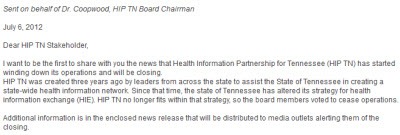
From Ossia: “Re: Surescripts. Was offline this week.” Unverified, but above is a snip of an explanatory e-mail that clients supposedly were sent.

From Emu: “Re: MU attestations by vendor. Do you know of anybody keeping these stats up to date and publicly available?” I don’t follow it much, so I’ll defer to Inga or readers who may know.

Listening: Baby Woodrose, a dead ringer for fuzz guitar / organ / tambourine paisley psychedelic rock bands from the Sunset Strip in the late ‘60s (The Seeds, 13th Floor Elevators), surprising since it’s basically one guy from Denmark with occasional rotating backup musicians. Luckily nobody was in the vicinity when I fired up the first few tunes on Spotify because someone could have been harmed by my involuntarily spastic desk drumming. This tune ought to be hit, other than nobody listens much to real music these days. Baby Woodrose just rips it up and leaves it on the stage. I like it a lot. Similarly good but from Sweden: The Maharajas.

7-21-2012 5-03-15 AM

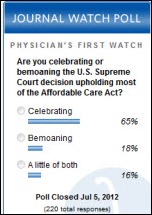
Most readers think the loosely defined “telehealth” will improve quality and costs. New poll to your right: will public HIEs survive?
7-21-2012 5-25-03 AM

Welcome to new HIStalk Platinum Sponsor Accent on Integration. As the Texas-based company’s name suggests, its raison d’etre is eliminating data silos via intelligent data exchange, giving hospitals better access to clinical information and thus helping them improve patient care. Areas of focus include interoperability (EMR integration, HIE to HIE integration, accountable care), device integration (monitors, OB and ECG systems), and systems integration (HL7, IHE, CCD, CCR, XML, Web services). Accelero Connect is the company’s enterprise-class clinical data integration platform (vendor-neutral, manufacturer-neutral, and modality-neutral) that connects patient care devices to hospital clinical systems and EMRs, an FDA-registered Medical Device Data System that passed all tests in the Patient Care Device Domain of the 2012 IHE Connectathon. Hospitals that use bedside monitoring systems from multiple manufacturers or that need to capture data from multiple modalities (IV pumps, ventilators, wired or wireless patient care devices, etc.) get a consistent message structure for sending information from those devices to their clinical systems. Clinicians can choose specific incoming data points to include in their EMR documentation (since most EMRs can’t handle a constant barrage of frequent data readings) or the whole process can be placed on autopilot by setting IHE’s device observation filter to pass through only the desired information. Stillwater Medical Center (OK) chose Accelero Connect after an ICU monitoring system upgrade to automatically integrate patient information into the EMR, reducing the time and errors involved with having nurses document manually and giving physicians a real-time view into patient condition to allow faster intervention. Thanks to Accent on Integration for supporting HIStalk. 

I’ve warned a couple of times that Meaningful Use attestation is based on the honor system only to a point: HHS has said from the beginning that audits would be done after the fact. They’ve started, apparently, despite the lack of a formal announcement. Providers are getting letters from Medicare cost auditors Figliozzi and Company (check out their ultra-cheesy 1990s FrontPage site, which will shatter any confidence you may have had in them as technologically astute auditors) requesting specific MU-related documentation: a copy of their product’s certification, an explanation of how they calculated ED admissions, and supporting documentation to back up meeting the core and menu set items claimed. CMS awarded Figliozzi a three-year, $3 million contract in April to do the job.

Integrity Transitional Hospital (TX), a 54-bed long-term acute care hospital, chooses HCS INTERACTANT EMR and financial solutions.
7-21-2012 7-03-46 AM

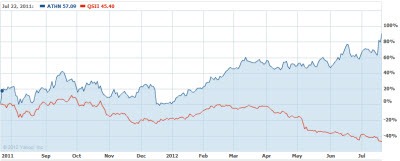
Shares in Quality Systems Inc. continued their slide this week on news that the physician network of Florida-based Health Management Associates will replace QSI’s NextGen products with those from athenahealth. QSII shares that were trading in the $45 range in mid-March closed at $23.41 Friday. Over the past year, ATHN shares are up 78% (they jumped nearly 7% on Friday alone), while QSII’s are down 48%. That’s a one-year chart above. Athenahealth’s market cap is now $3.3 billion, with Jonathan Bush holding about $29 million worth. That makes athenahealth worth only a little less than Allscripts ($1.89 billion), Quality Systems ($1.39 billion), and Greenway ($445 million) combined. You would have more than quadrupled your investment if you’d bought ATHN shares two years ago.

In the athenahealth earnings call, Jonathan Bush outlines some of the company’s strategies: Jedi (adding services such as provider credentialing and denials); Beautiful (improving the user experience in working with the company and engaging design firm IDEO on “future medical record user experiences” and design philosophy); Coordinate (not really explained except to say it’s not working yet); and More Disruption Please (working with other disruptive technology entrepreneurs). Worth reading just to pick out fun JB quotes, which must have the stock guys linting up their suits while rolling on their floors:

  • “I had our Physician Advisory Board in yesterday. The biggest thing that they said is, ‘Listen, it makes perfect sense, both as a receiver and as a sender, to be on this Coordinator service. The problem is it’s not really worth doing as a sender unless there’s a lot of receivers, and it’s not worth really doing as a receiver unless there are a lot of senders.’ So I bought five chickens, and I am going to figure out how these freaking eggs get going.”
  • [on the replacement system business] “Well, Ryan, thank you for bringing up one of my favorite parts of the athena hospital, the Burn Unit. No question about it, the Burn Unit is getting busier and busier across all segments. I actually saw the KLAS survey did something recently, 30% to 50% — was it 40% to 50%? — of large groups are engaged now in replacing the EMR that they rushed out to buy because they rushed out to buy the one that they knew when the Obama administration told them they needed one, and that was the software-based Flock of Seagulls-era EMR system that they had looked at and chose not to buy in the early 90s.”
  • [on increasing sales rep productivity] “So you have a small group guy who’s in her 20s, shows up and she plugs into a desk. It’s like getting on a bull, and the demos come pouring in. And she’s doing demos like the Beatles when they worked at those strip clubs back in the ’60s. They do 10 to 15 shows a day. They get very good very quickly. And you see their close rates pop up into the normal sort of 20% close rate range within a quarter, two quarters max.”
  • [on terms of the HMA deal] “They can all leave whenever they want, but hopefully, we don’t get boring. We keep changing our outfits, and they stay forever. We cut our hair short, we let it grow long.”
  • [on competing with Allscripts] “I call it O-negative day, that earnings call from Allscripts when they became a universal donor.”
  • [on competitors] “It’s our business model that’s on the side of history. Now I am not smarter than those other guys. We didn’t start out better, we’re not better people, we don’t work longer hours. We’re attracting the next generation of brilliant developer because the business model makes sense to people. So over time, we might actually end up with a better raft of people and a more inspired raft of customers. But I really think it really boils down to just the accident of our stumbling upon to this business model, lo those 13 years ago.”
  • “We are a nation of shoppers. And the reason healthcare sucks so much, both from a satisfaction and a cost perspective, is nobody’s allowed to shop. It turns out, the way policy has gone, the consumer will not be shopping for a while. That was on the rise. Since the inauguration, that has been on the fall. But it turns out the doctor could shop. The doctor could be the first generation of American shopper for healthcare.”
  • “I think this quarter speaks for itself. I do think that we took on, as I said in the beginning of my prepared remarks, more than we could chew. And so we won’t be done chewing by the end of the year in terms of our bolder projects. But anyway, that makes it less hard to figure out what to do next year. And we get the joy and the binding experience that comes from a little bit of failure along the way, which keeps us real because we are so much smaller than this mission we’re on, and we have so much, so much farther to go.”
7-21-2012 7-18-10 AM

NIST releases a guide on EMR usability for delivering care to pediatric patients. It’s a free download.

Weird News Andy finds this story interesting. The hospital technician who was charged with infecting at least 30 New Hampshire patients with hepatitis C (he was injecting himself with drugs and then re-using the syringes) was an agency traveler, having worked in at least six states in the past five years. He’s apparently good at sounding sincere – he was reported by a co-worker as “foaming at the mouth” while on the job, but made up a story about crying over a dead relative. What WNA liked is his response to questioning about how all those patients contracted hepatitis: “You know, I’m more concerned about myself, my own well-being.”

Visage Imaging’s server-side rendering and support for Windows, Mac, and iOS platforms is mentioned in an AuntMinnie article covering the technology approaches to developing mobile apps for medical imaging.

7-21-2012 5-22-26 PM

Political attack ads aimed at Missouri State Senator Brad Lager, a candidate for lieutenant governor and a part-time Cerner employee, challenge, “While Kinder fights Obamacare, Brad Lager profits from it. Records show a healthcare company that’s made billions from Obamacare pays Lager thousands.” His opponent, the incumbent lieutenant governor, fared even worse – an ad questioned, “Skipping work to hang out at the Horny Toad?”, referring to his admitted visits to a St. Louis strip club of that name and his rumored involvement with a stripper who was plying her trade there.

GE announces Q2 numbers: revenue up 2%, EPS $0.38 vs. $0.35. GE Healthcare contributed profits of $711 million, up from $661 million quarter-over-quarter.

Vince starts his HIS-torical coverage of Keane and its acquisitions over the years.

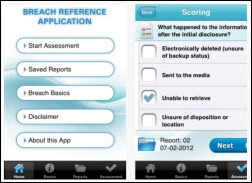
Beth Israel Deaconess Medical Center (MA) notifies 3,900 patients that their PHI has been exposed after a physician’s personal laptop is stolen from hospital property. The hospital was already encrypting its own laptops, and prompted by the incident, now requires non-owned devices to be encrypted before using them to access patient information.

Philips recalls 226 of its Xcelera Connect interface systems after a hospital reports to the FDA that it was sending incomplete cardiology test data to EMRs. The company found that if a physician hit Enter in the summary section of their interpretation, any following information in the report was sometimes lost. Xcelera Connect exchanges data to and from cardiac-related modalities to hospital information systems.

Meditech cloud hosting services provider Park Place International signs on as the first client of CyrusOne, which operates a new Texas data center that it says is ideally located to minimize geographic risk, is connected to highly available electrical and cooling systems, and is hardened with physical security controls.

The 5,800 square foot Memphis house that Steve Jobs secretly bought in 2009 to prepare for his liver transplant there was owned by the University of Tennessee and used as a residence for the chancellor of its Health Science Center. It was appraised for $1.3 million, but the university, anxious to shed some of its residential real estate and spooked by the tanking real estate market and lowball offers on the property, sold the house to Jobs for $850K. After Jobs went back to California, the house was sold to his transplant surgeon.

7-21-2012 7-37-07 AM

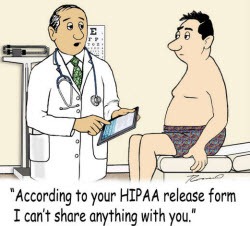
This amuses me, but then again, it doesn’t take much.
E-mail Mr. H.

Readers Write 7/20/12

July 20, 2012 Readers Write 1 Comment

Submit your article of up to 500 words in length, subject to editing for clarity and brevity (please note: I run only original articles that have not appeared on any Web site or in any publication and I can’t use anything that looks like a commercial pitch). I’ll use a phony name for you unless you tell me otherwise. Thanks for sharing!

Note: the views and opinions expressed are those of the authors personally and are not necessarily representative of their current or former employers.


How Obamacare is Driving Healthcare IT Investment
By Stewart Billings

Mandates in the Affordable Care Act and the changes in patient behavior that accompany it, combined with the rising consciousness of the public about the cost of healthcare, are forcing providers to make sustained investments in their IT infrastructure.

Health Information Exchanges

Government action may have been the only thing that could have driven this level of cooperation on sharing data across the entire system. Health information exchanges (HIEs) are possibly the biggest driver of healthcare IT change mandate by the ACA. They also carry high potential for driving change across an entire organization. The efficiencies that can be achieved when clinical data can actually be shared and accessed through HIEs depends largely on how the availability of the data translates into more timely and higher quality continuity of care for patients. Those savings may be years down the road, but the investment in the infrastructure that undergirds HIE needs to happen now and be continued sustainably into the future.

New Payment Paradigms

Electronic funds transfer requirements are pushing an industry standard for processing payments and accessing claims, simplifying the whole payment process and finally giving healthcare IT confidence in the payment frameworks they are building. These new rules also push standardization of claims attachments, unique identifiers for health plans and certifications for HIPAA compliance.

ACOs Will Need Communication Support

Accountable care organizations are likewise going to have to have ways to report, record, and analyze patient care in order to improve the outcome of care. All of that coordination between providers in an ACO will likely go beyond even the necessities of information exchanges. Infrastructure will need to be in place for sharing data about cost, quality, and care plans between providers.

Even Bigger Data Will Drive Efficiency

The big unknown in all of this is what tools IT can provide to help organizations collect and analyze all of the data that these standardized systems will be generating about patients, providers, and even their own operations. That mountain of data is promising in that it can help identify inefficiencies and test policy changes that can improve patient outcomes.

Big data will be a competitive advantage for companies that are able to use it to inform patients about their consumption of services, too. Connecting customers with cogent information about the cost of procedures gives them the ability to make decisions about how they access and pay for care, not to mention making the decisions of their providers more transparent.

All of these changes were probably inevitable, but the Supreme Court decision on the ACA has lit a fire under organizations that were already pushing long-term investment into their information technology resources. The next few years should be very revealing about just how tangible any of these benefits are likely to be for providers, ACOs and patients.

Stewart Billings is marketing manager for ZirMed of Louisville, KY.


Actuarial Informatics: An Emerging Field?
By Digital Bean Counter

I can’t remember the last time I actually enjoyed writing a term paper, let alone writing about a topic I inherently knew nothing about at the time. What kept me going (besides the multiple lattes) was that deep down, I truly believed I was on to something: the emerging field of actuarial informatics. 

You could argue that I simply combined two words so that I would appear intelligent, but Google “actuarial informatics” and you’ll be surprised at what little substantive data and information is readily available. With a deadline looming, and a busy work schedule thanks to Medicare bid season, I did a deep dive into the books hoping that I would learn something.

Fast forward three months: I’m in a new role with a health plan working on something that I’ve only learned and read about as a master’s student. My paper has long since been turned in. I’m thumbing through the day’s meeting minutes, recapping the announcement from CMS that we officially joined the ranks of 153 others in the ACO world today, and I see the header on a report from a leading health plan that we’ve been following: Actuarial Informatics Dept.

Call it what you want, there is much evidence suggesting actuarial informatics is alive and well. In the ACO world, the buzzwords are aplenty: value-based purchasing, risk stratification, bundled payments, and population management, just to name a few. While the rest of the industry continues to debate topics such as the true definition of informatics, I often wonder who or which organization will capitalize on low-hanging fruit such as actuarial informatics.

Now if they would only reopen my favorite coffee shop, my life would be complete.


Single Sign-On: Are Preconceptions Actually Misconceptions?
By Dean Wiech

With single sign-on (SSO), end users log in to accounts once with their credentials and thereafter enjoy immediate access to all of their applications and systems without being asked to log in again. It’s a splendid antidote to the many passwords end users currently have to remember. Typically, that’s not reason enough for organizations to unquestionably implement an SSO solution.

Many IT managers and security officers are skeptical about the implementation of an SSO solution. Their skepticism is the result of a number of preconceptions, which in many cases are misconceptions, about these identity and access management tools. The following is a summary of the most common beliefs held by IT managers and security officers at large and medium-sized companies in a variety of sectors, including enterprise healthcare systems.

Implementing SSO Imposes Greater Pressure on Security

In many instances, IT managers and security officers believe that with one-time logging in to accounts security of information is immediately placed at risk, because if an unauthorized person gets hold of that single log-in credential, that person will have access to all the account’s associated applications.

When using SSO, all the various access entries to applications are replaced by one access point. For example, the software allows users to use just one password for multiple accounts. Once the password is entered, all accounts are accessed. Though this does appear to constitute a risk, the log-in process is actually streamlined for the user. Having to remember just one password essentially does away with the risk that the user will scribble passwords on a piece of paper and place them under their keyboard (as is often the case) like they might if they have to remember 12 password and username combinations (the average number per user) that most users have without SSO.

To protect the critical applications and applications with private and sensitive information, it is possible to add extra security to the primary SSO log-in with a user card and pin code or an extra-strong password. Logging in with a card and pin code is an extremely secure authentication, and users also consider it to be very user-friendly.

An SSO Implementation is a Long, Drawn Out Project

Often, an SSO implementation is part of a broader security policy. Other components might be introducing more complicated passwords, taking more care with authorizations, and complying with standards imposed by the government.

Because SSO affects almost all end users and runs throughout the organization, some see implementation as taking a great deal of time to notify and prepare end users for the change. SSO brings with it a number of questions, like, “How do I deal with people who have multiple log-ins on one application?” or “What do I do if an application offered through SSO gets a new version?” and “What happens if the application itself asks for a password to be reset?”

All these questions often cause SSO implementation to be shifted to the background. However, any potential complexity faced at implementation is no reason to postpone adding a SSO solution because it has long-lasting benefits once up and running. By starting small, say by making the top five applications available through SSO, a considerable time saving on the number of log-in actions can be achieved, justifying buying the solution.

It’s Not Possible to Make Cloud Applications Accessible via SSO

Regarding SSO, one thing is certainly clear: the SSO log-in to cloud applications is possible just as it is with every other application.

An SSO Implementation is Expensive

The nice thing about an SSO solution is that it’s often not necessary to set it up for all the people in an organization. In a hospital, for instance, SSO is only needed for a select group of people. The advice here is to restrict yourself to the most critical applications and the people who have to log in to a variety of different applications. The implementation will then be easy to control in terms of price and complexity. This offers an excellent springboard for any further growth and expansion in accordance with changing future needs.

An SSO Solution is Not Needed Because We Use Extremely Complex Passwords

Insisting on extremely complex passwords is one way to secure the network, but at the same time, it’s also one of the causes of insecure situations. Many end users have difficulty remembering their mandated passwords, certainly when they have to recall more than a dozen username and password combinations. Often, a strict password policy immediately leads to more help desk calls because employees tend to forget their passwords. A highly insecure and undesirable situation arises when end users write their passwords on notes and leave them lying around their computer. Using SSO means employees only have to remember one password for all of their applications, meaning a simple solution to a complex problem, easier access to multiple accounts for all who need access to them, and fewer calls the help desk, ensuring IT staff are able to focus on more important priorities than password resets.

Dean Wiech is managing director at Tools4ever of Baarn, The Netherlands.


Bye, Bye Privacy and Securityl Hello HIPAA, Hello!
By Frank Poggio

Some think there may be a hidden ‘gold nugget’ in the proposed Meaningful Use Stage 2 regulations. ONC is proposing to eliminate the Privacy and Security (P&S) test criteria for EHR Module certification in Stage 2. On the surface, it looks like they want to give niche players and best-of-breed (BoB) vendors a nice break.

If you are not familiar with the P&S criteria required by the Accredited Testing and Certification Bodies (ATCB), here they are along with a short description:

  1. Access controls – can you system prevent unauthorized access?
  2. Authentication – does you system authenticate each user?
  3. Emergency access – can your system allow limited access in emergency situations?
  4. Automatic log-off – after no user activity for a specified period of time, does your system clear all PHI and log off all users?
  5. System access logs – do you maintain system logs for all inquiries, adds, modifications, and deletions of PHI? Do you generate mandatory reports?
  6. General encryption – does your system encrypt PHI at rest using a FIPS 140 compliant algorithm?
  7. Integrity – do you use SHA1-compliant tools to maintain file and data integrity?
  8. HIE encryption – how does your system ensure integrity and encryption when data is communicated / received to / from outside entities?
  9. Account for disclosures – do you track requests for PHI from outside entities?

Most EHR Module vendors that have gone through ONC Certification get certified on 1 through 8. Number 9 is deemed ‘optional’. In my many certification experiences, numbers 6 through 8 can be a hurdle, particularly if you are a SaaS or cloud-deployed system.

Meanwhile on page 125 of the Proposed Stage 2 Rules for Vendor Certification, ONC states:

We propose not to apply the privacy and security certification requirements at §170.550(e) for the certification of EHR Modules to the 2014 Edition EHR certification criteria. Stakeholder feedback, particularly from EHR technology developers, has identified that this regulatory requirement is causing unnecessary burden (both in effort and cost). EHR Module developers have expressed that they have had to redesign their EHR technology in atypical ways to accommodate this regulatory requirement, which sometimes leads to the inclusion of a privacy or security feature that would not normally be found in a certain type of EHR Module. In turn, this has led to EPs, EHs, and CAHs purchasing EHR Modules that have redundant or sometimes conflicting privacy and security capabilities.

And then ONC goes on to state:

In addition, EPs, EHs, and CAHs remain responsible for implementing their EHR technology in ways that meet applicable privacy and security requirements under Federal and applicable State law (e.g., the HIPAA Privacy Rule and Security Rule and 42 CFR Part 2).

But as might be expected in this regulatory maze, when you look at the ONC Stage 2 Draft “Medicare and Medicaid Programs; Electronic Health Record Incentive Program”, which is the basis for provider MU attestation for Stage 2, you will see repeatedly that to meet the Privacy and Security MU requirements, the provider (not the vendor) must:

Conduct or review a security risk analysis in accordance with the requirements under 45 CFR 164.308(a)(1), including addressing the encryption / security of data at rest in accordance with requirements under 45 CFR 164.312 (a)(2)(iv) and 45 CFR 164.306(d)(3), and implement security updates as necessary and correct identified security deficiencies as part of the provider’s risk management process.

45 CFR 164 is the HIPAA security rules. Just last month, HHS’s Office for Civil Rights published the protocol that it will use to conduct audits of the HIPAA Privacy and Security rules. In that document, they outline the audit procedures the OCR will follow. For example:

164.308 (a) Audit Procedure

Inquire of management as to whether formal or informal policy and procedures exist to review information system activities; such as audit logs, access reports, and security incident tracking reports. Obtain and review formal or informal policy and procedures and evaluate the content in relation to specified performance criteria to determine if an appropriate review process is in place of information system activities. Obtain evidence for a sample of instances showing implementation of covered entity review practices Determine if the covered entity policy and procedures have been approved and updated on a periodic basis.

This audit procedure is repeated frequently throughout 164.308 and applies to all PHI, regardless of whether it is in the primary EHR or resides in a Module(s). In regard to Business Associate agreements under 164.308 (b)(1), OCR further states:

Inquire of management as to whether a process exists to ensure contracts or agreements include security requirements to address confidentiality, integrity, and availability of ePHI. Obtain and review the documentation of the process used to ensure contracts or arrangements include security requirements to address confidentiality, integrity, and availability of ePHI and evaluate the content in relation to the specified criteria. Determine if the contracts or arrangements are reviewed to ensure applicable requirements are addressed.

As you can see, the HIPAA audit does not differentiate between a full EHR and EHR Module. Any and all systems or service contracts that deal with PHI of any type must comply, and the provider must prove it under audit.

Under Stage 1 the ongoing debate was whether a best-of-breed system supplier needed to get ONC certified. Fact is there was never an ONC-mandated requirement that any vendor get certified. But many BoBs underwent certification for competitive reasons and some addressed most of the P&S criteria because they did not want to allow the big EHR vendors a ‘certification edge’.

Now ONC is trying to push the P&S criteria of MU back on the provider and thereby reduce the time and effort for the testing bodies. Their strategy, as they often state in the proposed Stage 2 regulations (see page 119), is to let the market require (demand) it, not mandate it via ONC regulation. Simply put, since the health provider needs to be legally responsible for P&S under HIPAA and MU attestation, ONC expects that providers will demand from their vendors that they meet the HIPAA P&S requirements. HIPAA audits by OCR have started this year, so expect your clients to contact you for help and assistance as OCR asks to see the P&S documentation for all systems that touch PHI. And the best documentation you can show that confirms you the vendor comply with HIPAA P&S will be … ONC certification!

As Stage 2 unfolds, I would expect either one of these scenarios;

  • Things stay as they are – EHR Modules must meet the eight P&S criteria, or,
  • If the Draft regulations stand, module vendors can request to be tested by the ATCBs for P&S so as to satisfy HIPAA Business Associate requirements and address market / competitive issues.

In summary, BoB and niche vendors could in the past casually sign Business Associate agreements. Under proposed Stage 2 and HIPAA, you’ll have to prove you got real P&S. On closer inspection, that nugget is beginning to look more like fool’s gold.

Frank L. Poggio is president of
The Kelzon Group.

Time Capsule: Private Investors Will Create Competitive Newcomers

July 20, 2012 Time Capsule Comments Off on Time Capsule: Private Investors Will Create Competitive Newcomers

I wrote weekly editorials for a boutique industry newsletter for several years, anxious for both audience and income. I learned a lot about coming up with ideas for the weekly grind, trying to be simultaneously opinionated and entertaining in a few hundred words, and not sleeping much because I was working all the time. They’re fun to read as a look back at what was important then (and often still important now).

I wrote this piece in September 2007.

Private Investors Will Create Competitive Newcomers
By Mr. HIStalk

I’m anxious to see which companies will become bigger, meaner competitors once they get some private equity investment money underneath them.

Most small companies will never find the holy grail of being publicly traded. An IPO requires a showcase management team, several rounds of pre-IPO investment, and strong capabilities in accounting, marketing, and culture development. If you don’t have those resources, you’re stuck looking in from the outside while your glitzier competitors leverage their newfound capital infusion to drive the nail a little deeper into your coffin.

Private investors level the playing field. Companies can get funding and management assistance without being hampered by high administrative costs and mandatory shareholder disclosure. You still have to sell your soul by giving big investors board seats and hefty equity, but you get the cash for growth without having to survive the leering, probing stares of the Wall Street beauty contest.

David Brailer says his healthcare private investment fund will spend $700 million of the retirement fund of California’s public employees on problem-solving healthcare companies. He’s looking for niche players with limited competition and profitability (who isn’t?) in which to make investments in the $10 to $80 million range.

He’ll need several to spend that money, maybe up to 50 companies. That could change the face of the industry fairly quickly, at least before some of those dice rolls go bust.

So what kinds of companies will Brailer and other money managers seek out? I’d look for companies that offer:

  • Software products that are standalone for a single hospital function or department. That decouples the product from the long sales cycles that are common for broad application suites.
  • Solutions for expensive problems like capacity management, throughput, medical errors, case management, purchasing, and enhancement of the bottom line. High ROI means easier selling.
  • Products that coordinate care through communications or alerting.
  • PM/EMR products for small physician practices that can survive the ongoing shakeout in that market.
  • Home care systems, especially remote monitoring.
  • Outsourcing of high-dollar functions that can be performed remotely, like reading radiology images or configuring complex software applications.
  • Medication packaging and distribution to support bedside barcoding and drug supply integrity.
  • Licensed clinical decision support content that can be easily integrated into existing systems.
  • Consumer testing and retail healthcare delivery.
  • Applications for minimally penetrated high acuity areas such as anesthesia, labor and delivery, and the emergency department.

With all that investor money seeking a home, it will be a seller’s market. Private equity companies will try to outbid each other for the chance to latch onto an eventual winner. HIMSS didn’t stir up much interest with its program to connect needy companies with moneylenders, but times have changed. Private equity is hot and those investor dollars are burning a hole in its pocket.

If you’re a small company with growth, profits, clean books, and a solid story, you’ll be hearing knocking on your door. While the money most certainly doesn’t come free, it can push a company to the next level, assuming it’s smart enough to use the money wisely to support long-term growth.

For everyone else, we should see some exciting ups and downs in the competitive landscape. I predict you’ll see a lot of new names in those HIMSS booths in a few months. Brailer always joked about the number of companies littering the HIMSS exhibit hall, so now we know why he was there: he was scouting for future investment.

Comments Off on Time Capsule: Private Investors Will Create Competitive Newcomers

News 7/20/12

July 19, 2012 News 14 Comments

Top News

7-19-2012 9-28-02 PM

WorldOne acquires the 130,000 physician-member Sermo, which adds to WorldOne’s global network of 1.7 million healthcare professionals across 80 countries.


Reader Comments

inga_small From Simple Simon:Re: ambulatory EMR satisfaction. First the CDC reports that 55% of US doctors are using some type of EHR and 85% of those claim to be somewhat or very satisfied with its day-to-day operations. Now KLAS says that 49% of practices with existing EHRs are considering replacing their systems. Somebody has to be wrong.” Perhaps, but keep in mind the sample sizes and methodologies were quite different. CDC’s findings are based on the results of a mail-in survey from 3,200 physicians. KLAS used a  smaller sample of 302 practices. KLAS suggests that practice consolidation may be contributing to the high replacement figure as entities search for a single solution to replace disparate EHRs. In other words, a good number of providers may be perfectly happy with their EHR, even as the organization searches for a new system. As a whole, I think you can draw some broad conclusions that adoption is up, that support and product issues are creating discontent among some users, and that the replacement EHR market will continue to flourish. I am reminded of the advice that Mr. H regularly administers: be leery of the conclusions drawn by many of these surveys because methodology and biases sometimes make them questionable.

7-19-2012 6-00-03 PM

From CDMer: “Re: DoD-VA Interagency Program Office. They’ve issued an RFI to survey the market for vendors who can meet the specs of the future iEHR that will allow them to replace AHLTA and VistA. It’s always nice to have 100-year goals!”

7-19-2012 8-23-50 PM

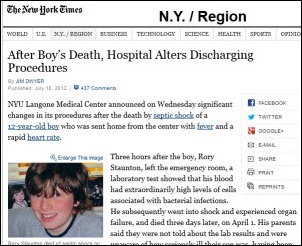
From Wurka Round: “Re: NYU Langone. Paper checklists are being deployed to keep results from being silo-bound in the ER.” The hospital, stung by media coverage of the death of a 12-year-old boy who was discharged from the ED despite available lab results showing significant infection, now requires ED employees to complete a pre-discharge checklist indicating that they have reviewed labs and vitals one last time. The hospital also says it will make sure that any post-discharge abnormal lab values are communicated to the referring physician, which also didn’t happen in the boy’s case.

7-19-2012 7-00-20 PM

From Clownface: “Re: Epic. What qualifies as an employee-owned company? In my training class, Epic says it’s employee owned, but SEC reporting of financial data is required for more than 500 shareholders and Epic does no reporting. With more than 5,000 employees, that means less than 10% of them are shareholders. How is that employee ownership? Does the CEO just have to be an employee to count?” Good question. From what I can tell, SEC requires detailed financial reporting for private companies exceeding $10 million in revenue and 500 shareholders. Meditech is a good example. I don’t see any Epic filings on EDGAR, but maybe they use a less-obvious name to avoid prying eyes. Or, you could be right that most employees will never get a shot at owning shares. Maybe someone who works there can enlighten us, although I’m not counting on that happening.

7-19-2012 8-26-49 PM

From Albert: “Re: UC Health, Cincinnati. Ambulatory applications went live in big bang fashion last week, replacing an extremely customized GE Centricity. Nearly 100 clinics and 3,000 users are up and running!” I believe they’re implementing Epic.

From MT Hammer: “Re: M*Modal. Nuance tried to buy them?” An interesting blog post makes a strong case that Nuance was the unidentified company that offered $17 a share for M*Modal in June, an offer that was rejected because the unnamed company had just purchased an M*Modal competitor (presumably Nuance’s acquisition of Transcend), leading to uncertainty about whether the deal would actually close due to antitrust issues. Quite a few folks (some of them working for securities class action law firms) say M*Modal sold out to JP Morgan Chase too cheaply, so they will undoubtedly point to this news to support their position.


HIStalk Announcements and Requests

inga_small I am back from my semi-vacation and still busy cleaning out my inbox. If you haven’t had a chance to read the recent HIStalk Practice posts, here are a few goodies you might have missed. Highlights from KLAS’s recent report on ambulatory EHRs, including the most replaced and most considered vendors. NCQA extends a “Distinction” designation to 60 PCMH primary care practices. Greenway publishes a cool infographic that overviews the MU process. MGMA’s tips for practices considering a social media presence. New payment methodologies may have helped primary care physicians increase their 2011 compensation by more than five percent. Aaron Berdofe discusses health record banks in the third part of his series on healthcare infrastructure data models. Dr. Gregg explains the commonality of clubbing, EHRs, and religion. Brad Boyd of Culbert Healthcare Solutions highlights the great promise of centralizing patient access and revenue cycle. Take a moment to cool yourself from the summer’s heat with HIStalk Practice’s refreshing ambulatory HIT news. Sign up for the e-mail updates while you are there. And, thanks for reading.

Here’s a gentle reminder for PR folks anxious to get the executive hires of their clients listed in the “People” section of HIStalk. I like including a photo since it’s 100 times easier for someone to recall if they know someone if they’re looking at a photo (can you imagine a text-only high school yearbook?) Every executive should have a LinkedIn profile that includes a high-quality, professionally made head shot (not resized down to the tiny, low-resolution thumbnail – LinkedIn does that automatically, but the high-res version still pops up if you click the thumbnail.) No full-length dramatic pose shot at an angle, no tiny head in a big picture that can’t be cropped without an astounding loss of quality. And of course, as I always preach, don’t bother sending me a press release that hasn’t been posted to the news services or the company’s own site – I can’t use it unless I have something to link to. I’m not in the PR biz, but all of this seems pretty obvious to me.

7-19-2012 7-47-32 PM

Welcome to new HIStalk Platinum Sponsor ICSA Labs. The company, which is an independent division of Verizon, offers testing and certification of EHRs and health IT technology. They’ve certified over 100 health IT products since launching ONC-ATCB services in March 2011. Vendors (and self-certifying providers) have a choice of testing and certifying partners, so why choose ICSA Labs? (a) their folks have a lot of healthcare and/or interoperability experience (every employee has at least 10 years’ worth); (b) they make sure their clients are prepared for testing, providing them with documents that include sample code, interoperability tips, and step-by-step instructions; (c) they offer low prices, flexible payments, and any needed re-testing within two business days at no extra charge; (d) they help their clients market their certification. Fresh news this week is that ICSA Labs was just accredited by ANSI as a permanent certification body for ONC, meaning they can certify complete EHRs and EHR modules after the temporary program (ONC-ATCB) expires. They created a cool web page just for HIStalk readers, and based on e-mails Inga and I have swapped with some of their folks, they actually read what we write (that isn’t always true of sponsors, although thankfully it usually is.) Thanks to ICSA Labs for supporting HIStalk.

You know what’s coming next: I went to YouTube to scrounge for ICSA Labs videos that would give you a visual on what they do. Here’s a recent and nicely done webcast covering the 2014 Edition Security and Privacy criteria. I was just going to post it and move on, but I got kind of hooked on it and ended up watching a good bit of it.

On the Job Board: McKesson HSM and MAC Activation Support, Account Executive – NE and Mid-Atlantic.


Acquisitions, Funding, Business, and Stock

7-19-2012 5-50-44 PM

Gateway EDI, a subsidiary of The TriZetto Group, expands into the hospital and large-practice base with the acquisition of ClaimLogic. Terms were not disclosed, but Sermo had raised $40 million in its seven-year history.

Microsoft reports its first quarterly loss in 26 years as a publicly traded company, triggered by the full write-down of the $6.3 billion it paid to buy ad platform company aQuantive.

Application development tools vendor Progress Software names former Allscripts board chair Phil Pead as non-executive chairman. It also hires former Picis CFO Melissa Cruz as SVP/CFO.

7-19-2012 9-40-13 PM

Athenahealth reports Q2 numbers: revenue up 33%, adjusted EPS $0.24 vs. $0.12, beating consensus earnings expectations of $0.23.


Sales

The Denver Hospice selects HEALTHCAREfirst for its clinical and business operations.

Health Management Associates will implement athenahealth’s solutions for its 1,200 employed providers. athenahealth will also offer services to the 10,000 independent physicians affiliated with HMA hospitals.

In the UK, Royal Berkshire NHS Foundation Trust signs a $26 million contract with Cerner for Millennium hosting and system support.


People

7-19-2012 6-34-23 PM

MedVentive appoints Bernard Chien (Radisphere) chief technology officer.

7-19-2012 7-11-20 PM

John Lynch (Provena Health) is named VP/CIO of Greater Hudson Valley Health System (NY).


Announcements and Implementations

7-19-2012 9-41-45 PM

Duke University Health System (NC) goes live on the first phase of its $500 million Epic implementation this week at 33 primary care practices.

ANSI announces the first accredited certification bodies for the ONC’s Permanent Certification Program for HIT. They include CCHIT, Drummond Group, ICSA Laboratories, InfoGard Laboratories, and Orion Register.

7-19-2012 9-43-57 PM

CareTech Solutions releases BoardNet 4.0, a new version of its Web-based portal for hospital board members.

7-19-2012 6-09-35 PM

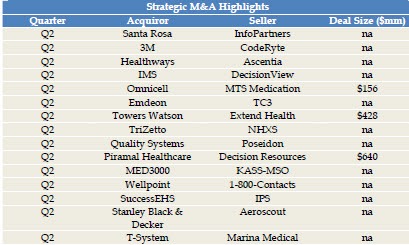
Healthcare Growth Partners releases its healthcare IT and services quarterly report.

Three Sentara hospitals are scheduling inpatient procedures in its Epic system, which the apparently detail-challenged local newspaper interpreted as being synonymous with “smart room technology” because the words were close together in announcement’s headline.


Government and Politics

A House Appropriations subcommittee votes to cut $1.3 billion in HHS funding and eliminate all funding for AHRQ.

CMS announces the 15 ACOs that will participate in the Advanced Payment ACO model and receive upfront and monthly payments to invest in their care coordination infrastructure.


Other

Demand for HIE consulting services is on the rise, according to KLAS. However, hospitals are struggling to differentiate among the 13 firms that offering the service.

7-19-2012 7-18-35 PM

A KLAS report on ambulatory EMR perception finds that there’s a lot of rip-and-replace going on, especially in larger practices. Systems from Allscripts, GE, and McKesson are the most replaced (not surprising since they have a lot of customers and have been around for a long time.) Most often chosen as replacement systems are eClinicalWorks, Epic, and Greenway. In addition, the win rate for vendors outside the most popular group increased significantly in the past year. Common reasons for replacement are poor support, hidden costs, and products too technically complicated for a small practice to keep running.

Vermont leaders express frustration with lack of results from $70 million in healthcare IT investment, even though most of that money came from the federal government. A Senator said, “I hear genuine frustration from providers who are spending time and resources trying to modernize and make their offices more efficient, and prepare for the future, and yet every one of them feels like they’ve been burned. Basically we’re not getting any results for these millions and millions of dollars that have been pumped into IT. We should be a lot further along. I just don’t think the leadership’s in place.”

A study finds that registered dietitians can enter physician-approved nutrition orders faster and more accurately than RNs and clerical employees. The original research article, which appeared in a nutrition journal, urges that dietitians be given access to electronic diet order systems.

A pretty funny Gawker article entitled If You Go to a Hospital in July, Get Ready to Die covers The July Effect, which fascinates laypeople because they think we hospital folks try to hide the bungling that happens when clueless new residents first try out their medical wings (we do actually try to hide that, but nobody really denies it.) Gawker’s gonzo journalism summarizes, “Being a doctor is one big game of Operation to these punks. You go in with a headache and all of a sudden they’re trying to remove your Wish Bone with a pair of tweezers, being real, real careful not to touch the sides. The stethoscopes around their necks are made of plastic. Their doctor’s coats are just one of their dad’s white dress shirts.”

Bloomberg covers a California surgery center chain that bills insurance companies exclusively at out-of-network rates, allowing its surgeon-investors earn up to 200% rate of return. The chain’s seven centers bring in $100 million per year in revenue. Aetna is suing the chain, saying it gouges on rates, excessively rewards surgeons for referrals, and defrauds health plans. One surgeon says his partnership was terminated because he didn’t refer enough patients whose insurance had extensive out-of-network coverage, or as the text message the company sent him explained, “Simple rule of thumb is Aetna, United, Cigna, and Blues with no daily max.” The company’s marketing pitch to surgeons was that their $10,000 investment would give them monthly payouts of $6,709. The Iranian immigrant who started the company did so after being inspired by her sister and brother-in law, who were making $10,000 for each out-of-network colonoscopy they performed from a rented office.

Three Chicago-area men contemplate filing lawsuits against Northwestern Medical Faculty Foundation, whose sperm freezers and alarm systems failed in April, ruining the men’s sperm samples they had stored there before undergoing fertility-affecting medical procedures.


Sponsor Updates

  • GetWellNetwork creates a highlights video from its May user conference in Orlando. It’s far more interesting and entertaining than you might expect.
  • eClinicalWorks was the most-used EHR among respondents to an OIG survey research the use of EHRs, the company says.
  • Beacon Partners expands its HIPAA and HITECH privacy and security services into an Enterprise Information Assurance practice.
  • Park Place International receives Meditech’s approval to provide OpSus|Connect and secure Meditech VPN support connectivity.
  • Billian’s HealthDATA releases its report on the Ten Busiest Home Health Agencies.
  • BridgeHead Software demonstrates that its Healthcare Data Management Solution meets the requirements of Integrating the Healthcare Enterprise at the European Connectathon.
  • Boca Raton Regional Hospital (FL), The Independent Physicians Association of Nassau/Suffolk Counties (NY), The Huron Valley Physicians Association (MI) and The Arizona State Physicians Association are some of the new health systems and IPAs choosing Greenway’s PrimeSUITE EHR/PM solution.
  • The Illinois Department of Healthcare and Family Services expands its contract with Optum to include an expanded data warehouse for advanced analytics.
  • OTTR releases details of its September OTTR Users International 2012  meeting in Omaha, NE.
  • MDeverywhere selects Health Language’s Language Engine and provider-friendly terminology to integrate with its charge capture software.
  • Peoria Tazewell Pathology Group (IL) selects McKesson Revenue Management Solutions to provide RCM services.

EPtalk by Dr. Jayne

CMS publishes a new guide for Eligible Professionals seeking to demonstrate Meaningful Use through the Medicaid program. Although the 94-page length is a little off-putting, it’s written at a high level and is a reasonable entry-level document. If you haven’t figured out your MU strategy and you see a fair number of Medicaid patients, check it out.

The Joint Commission releases a statement on the use of unlicensed persons acting as scribes. Although it is specifically targeted at Critical Access Hospitals, it makes several good points relevant to all settings. You’d think these are largely common sense, but I often see behaviors that don’t quite meet these standards:

  • The job description clearly defines scribe qualifications and responsibilities
  • The employer offers specific orientation and training
  • Employment is contingent on competency assessment and performance evaluations
  • Physicians must authenticate notes after the scribe enters them (and do so before leaving the patient care area, since others are using the information)
  • Scribes should not enter orders (it’s CPOE, not CSOE)

Especially in the ambulatory setting, I see physicians who think they can take a medical assistant or nurse and add “scribe” to their already-full list of duties. These staffers may be pushed outside their comfort zone with little or no training. They may be expected to document according to “understood” physician intent rather than fully scribing the visit, which is never a good idea. I use scribes in one of my practice settings and a good scribe is worth his or her weight in gold. It doesn’t remove the need for the physician to know the system and be able to assimilate data, however.

I ran across a piece on the “clickiness” of EHRs. I deal with doctors day in and day out who refuse to come to training, yet expect to be instantly proficient in use of EHR, CPOE, and other systems. When they’re not, they blame it on the software. Having been a user of most of the major EHR vendors out there at one time or another, I know that they all have their issues. My favorite comment:

We don’t assume that someone can step up to a piano and play all the right notes to a complicated piece of music with no training. Yet for some reason, we think that a doctor can step up to a complicated piece of software (EHR for those following at home) and quickly navigate all of the features of the software. Training matters and can make the world of difference in how you feel about the number of “clicks” you have to do in your EHR.

Too true. Even with the most intuitive design, physicians who try to leap into seeing patients without adequate training will feel stressed and likely fail. The requirements of documentation (thanks to CMS, payers, regulators, and uber-conservative compliance departments) have become so cumbersome that documenting a visit is like playing a video game – you just have to figure out how to get to the next power-up. Those that recognize it for what it is (just another hoop we have to jump through to get paid) seem to do much better on the learning curve. Yelling at the IT department is not going to change what CMS thinks about documentation bullets and correct coding.

Print


Contacts

Mr. H, Inga, Dr. Jayne, Dr. Gregg.

More news: HIStalk Practice, HIStalk Mobile.

CIO Unplugged 7/18/12

July 18, 2012 Ed Marx 4 Comments

The views and opinions expressed in this blog are mine personally and are not necessarily representative of current or former employers.

Presence, not Presents

It was the Southern Colorado District Tennis Championships. Playing Pueblo West in the finals, my Mitchell High School doubles partner and I were in for a tough match. For the first time, we would face line judges, a referee, and a crowd (gulp). The stands were full and the tiny stadium was lined with people. We hit a few warm-up balls, and then came the call for player introductions. The crowd and cheerleaders went wild for Pueblo West. “Cool,” I thought. The announcer then called out our school and names next.

The silence deafened me.

Finally, a small but authoritative voice called from outside the fences. “Go, Ed’vard! Go, Ed’vard! Go, Ed’vard!” Yep, my mom, in her thick German accent, cheered us on—one lone fan among the hundreds watching. Out of respect to us, and to honor my mom, the entire crowd broke into applause. We felt the love.

Moms teach us something unique about leadership. But that object lesson often gets lost between high school graduation and our first day in the corporate world. We somehow compartmentalize traits and end up leaving this vital asset outside the doors of our organization. Yet this talent that makes a family tight is also what makes the team tight and the platoon fight.

What is it, you ask? Relationship. I’ll unpack it for us to chew on.

1) The Burden of Visibility. Like it or not, it comes with leadership. Once you leave line staff and enter a position of authority, your orientation must change. Your primary purpose is to serve the team or platoon that actually does the work. Your time is no longer your time. Your calendar becomes your staff’s calendar. A great leader learns to be unselfish—just like Mom taught.

2) The Tactic of Availability. How available are you? Your staff could tell you because it’s not something you can easily mask. Do you solely demand your agenda be met, or do you occasionally meet with them on their agenda? When is the last time someone popped into your office unannounced just to talk? How often do you spend time outside of work with staff? Do you know all your staff names and what team they are a part of? (That can be tough!)

3) The Participation Act. (This requires prioritizing, rearranging your schedule, and good time management.) Take part in life events. Even ten minutes of your life can make a decade of a difference to staff. Join in the celebration of a new baby, a marriage, or a graduation. When tragedy strikes, mourn with the family. Visit sick staff at home or in the hospital. Think about what really matters in light of eternity and make the sacrifice today. If Mom was an example of caring for her fellow man, then practice what she preached through her actions.

4) Engagement. The more a leader engages, the more impact the department has. Be real. Be transparent. Who wants to serve a stodgy, close-minded, secretive leader? Nobody. Think back to whose house you played at as a kid. Probably the home where Mom baked the cookies, offered wise counsel, and didn’t mind messes. If you’ve ever dreamed of making your organization the best place to work, then engage.

A true story: Norman’s soldiers feared death in the brutal killing fields of the notorious Batangan Peninsula. He vowed none would ever be left behind. One day, he received word that his men had encountered a minefield. He rushed to the scene in his helicopter and found several soldiers still trapped. Norman urged them to retrace their steps slowly. Still, one soldier tripped a mine. Severely wounded, the man flailed in agony, and the soldiers around him feared he might set off another mine. Norman, also injured by the explosion, crawled across the minefield to the wounded man and held him so another could splint his shattered leg. One soldier stepped away to break a branch from a nearby tree to make the splint. In doing so, he triggered a mine, killing himself and two other soldiers. That explosion also blew an arm and a leg off the artillery liaison officer. With much effort, Norman led all the survivors to safety. Although he had every right to stay safe, he returned the minefield to retrieve the injured. He could have lectured his staff on the dangers of war and the need to look out for one another. Instead, he showed the way. He served. Nobody ever questioned his commitment to his staff. As a result, they fought harder.

We recently had a tragedy with one of our staff. I mourned the loss of this great person and cried with the family who just lost their daddy. But I also cried because of the outpouring of love and support I witnessed from staff and leaders. We had leaders attend the ceremony who were not in this person’s chain of command, but came out in support for this man and his family. They could have just written a check for a special scholarship fund, but they also chose to be there. Presence, not presents.

Time holds top value to the heart. We can’t let that value slide simply because we’re on the corporate ladder. Don’t let the rat race run over your humanity.

Reap the benefits. They are numerous. When staff know you care, their level of engagement rises. You can rah-rah all you want at staff meetings or in your blogs, but they will respond to the tangible evidence. Words can ring hollow.

General Schwarzkopf, who saved the young soldiers, went on to become General of the Army. He led the Gulf War effort via Operation Desert Shield and Operation Desert Storm. In his autobiography, It Doesn’t Take a Hero, the General speculates that the way he was present with his soldiers in the minefield firmly cemented his reputation as an officer who would risk his life for those under his command.

My partner and I lost that tennis championship match 6-2, 6-1. Mom could have just given me a gift that evening or taken me out to dinner. But what spoke volumes was the fact she took the time out of her busy day to stand in the heat and watch her son play tennis. I preferred losing and having my mom there more than winning without her. That is how much time together means to me. It means the same to your staff.

Presence, not presents expands a good leader into a great leader.

P.S. While you are attending staff’s life events, watch who shows up that did not have to be there. Write down their names, because you’ve probably just identified an emerging leader of a unique breed.

Ed Marx is a CIO currently working for a large integrated health system. Ed encourages your interaction through this blog. Add a comment by clicking the link at the bottom of this post. You can also connect with him directly through his profile pages on social networking sites LinkedIn and Facebook and you can follow him via Twitter — user name marxists.

HIStalk Advisory Panel: Best Ways for Vendors to Engage Hospital Leadership 7/18/12

July 18, 2012 Advisory Panel 5 Comments

The HIStalk Advisory Panel is a group of hospital CIOs, hospital CMIOs, practicing physicians, and a few vendor executives who have volunteered to provide their thoughts on topical industry issues. I’ll seek their input every month or so on an important news development and also ask the non-vendor members about their recent experience with vendors. E-mail me to suggest an issue for their consideration.

If you work for a provider organization (hospital, practice, etc.), you are welcome to join the panel. I am grateful to the HIStalk Advisory Panel members for their help in making HIStalk better.

This report involves these questions, submitted by a vendor CEO. What are the most effective ways you learn about products and companies? What advice would you give that CEO about using his salespeople and other resources effectively to explore areas of mutual interest with hospital IT decision-makers?


What are the most effective ways you learn about products and companies?

  • HIStalk for one. HIMSS is another.
  • HIMSS national and local chapter meetings. Peer suggestions. Company website review. Google searches. Healthcare system / physician leader blogs. If I am still interested in learning more, then, and only then will I contact the vendor.
  • #1 HIStalk (kudos to you and your team – indispensable!) #2 HIMSS and other more specialized expos. #3 Occasionally through listservs and other blogs I follow.
  • Internet research if I am looking for a particular service or product. Trade shows if I am interested in what’s new on the market.
  • I read a lot. As problems arise or as I see something that piques my interest, I will contact a local partner to see how we get more info. White papers are a good thing and healthcare-specific press is good, too.
  • HIStalk, of course! Really, nice capsule summaries from blogs are more effective than glossy brochures, webinars, or other such efforts to snag my time.
  • CHIME’S CIO Fall Forum offers vendor access to many CIOs and other key resources through their program to engage through small groups forums. These sessions often are around how to market a new or different service or how to package a product. They are also good lead generation tools. Similarly, regional HIMSS and similar meetings, relationships with other vendors to offer a solution to a problem that crosses disciplines, can be effective. Sales cold calls either in person or by telemarketing are at best an irritation and at worst a total turn-off. E-mail is little better. I do look at sponsorship of HIStalk as a positive. The absolute best is a CIO acquaintance testimonial.
  • This is tough. There is so much noise you have to figure out a way to rise above it. A box in the mail always attracts my attention – I know it’s shallow, but it works. I get 100 junk e-mails (that get through my filters) every day — e-mail doesn’t work any more.
  • Honestly, I find out about companies through your blog. Not through the ads, but through the notice of implementation. I’m a buyer rather than a shopper, so I’m more likely to look at a product that has mentioned several times. Also, I don’t go looking for something until I need it – again, a buyer mentality rather than that of a shopper.
  • From my staff. Vendors often want to get right to the CIO or the CEO, but mostly we block these cold calls. Get someone on my staff excited about something and they can get to me.
  • Several recommendations. First, ensure you take time to learn about the provider organization… key clinical / business challenges as well as the current landscape of IT priorities. Nothing more annoying than a vendor who shows up and asks, “What are your challenges?” Second, ensure proposed / new product / service has a fit – innovative ideas that create real value for patients, offer a true opportunity to enhance operating margin. We’ve heard the other  pitches before and are overwhelmed with folks offering EMR skills, offering to “outsource” our data center or application teams. Nothing new there. We want to hear the new, innovative ideas, and don’t be shy about telling us where in the development cycle something is. If it’s new and we’d be the first to implement, just let us know upfront that you’re proposing more of a partnership. 
  • I pay attention to CHIME and HIMSS updates. I read all updates from Advisory Board and Healthcare IT News. The problem comes when I need a specific solution and have nowhere to turn. I know it is out there somewhere, but where? It is kind of like the red car syndrome — when you buy a red car, you suddenly see them everywhere. When I need a solution, all of a sudden I pay attention to the direct mail campaigns that bombard me. Most of the time they are irritating and quickly discarded, but always at least looked at from a cursory perspective.
  • Beside HIStalk? Word of mouth, other CMIOs.
  • CHIME sessions, introductory 1:1 meetings, regional seminars.
  • By researching on my own, speaking with peers, or working with my colleagues. Have to start with a business issue or need realized throughout the organization first.
  • Whatever they do, don’t cold call me. Trade shows are not bad as long as there is an introductory e-mail or mail piece sent ahead of time. I also like the vendor speed dating events, as I can learn more in 15 minutes of focused time with a company than any other way (effectively).
  • Often word of mouth from colleagues. Occasionally at a show like HIMSS. I do like HIStalk’s interviews and reviews on HIStalk Mobile because they seem to be more candor than fluff.
  • Websites such as HIStalk, Information Management Direct, Data Governance Institute, etc. White papers, with real case scenarios not fluff, distributed via websites.
  • I learn from reading blogs like HIStalk and in talking to friends at other practices (most of those opinions are very negative).
  • Throwaway magazines. Word of mouth from other CMIOs. News articles. Meetings (e.g., AMDIS). This is obviously not a great system, but it’s true.
  • Trade shows and conferences. The exhibit floor is a great resource, as are the networking events. 
  • Reading stories about their success. Conferences.

What advice would you give that CEO about using his salespeople and other resources effectively to explore areas of mutual interest with hospital IT decision-makers?

  • We have a local HIMSS meeting once a month that is always looking for a sponsor. A local EMR user group is always looking for a sponsor also. Another way is to figure out a way to get to the IT staff and have them sell it to the boss. Instead of trying to get on that CIO calendar or get through that CMIO door, network until you find the lead tech or application person and sell them first. The "C" folks have people beating down their doors and free lunches galore. A little attention to the folks in the trenches can go a long ways.
  • I have to go back to HIMSS and other ways of getting in the door without taking time out of their busy schedule. It is not easy and it is getting harder, so you have to be open to thinking outside the box. A "lunch for the IT staff" like the clinicians get every day. How about free education combined with selling?
  • Get to the point. What exactly does your system do and how does it avoid my pain? And Dear Lord, skip the buzzwords of industry-leading, complete platform solution, etc. I can’t tell you how many product descriptions I’ve read in entirety and still had no
    idea what they did. Videos take too much time – don’t bother. The message has to be something that can be delivered in a quickie pitch, single e-mail, single web page, etc. Provide more info if desired, but any extra required steps puts off that many more execs. Possibly ask for a simple e-mail address but not much more.
  • First, understand our business and local relationships. Second, DO NOT cold call or e-mail requesting to introduce yourself. I rarely read or listen to the entire message and immediately delete. I do not have time to participate in “fishing expeditions.” Third, get involved with local tertiary organizations (sponsorships) and events. You first have to establish a relationship, then understand us before we will then seek to understand you or your company.
  • Fairly simple: ask what problems they want to solve. Don’t offer a solution and try to find a problem it can solve. Be prepared to not see an immediate ROI or anything and at the same time be ready to experiment with a few new areas where you might not see the payoff.
  • As someone in the same shoes as this CEO (i.e., a vendor), we’ve been lucky in that we can typically get in the door for a brief conversation based on our benefits of revenue enhancement and similar “hot button” issues that are top of mind for them. That said, given they are incredibly busy and operate at broader stroke level, once you’re in, your team will need to deliver your message very clearly and succinctly in a way that they can grasp the concept and benefits quickly and basically make the decision your solution is worth pursuing or at least exploring further to get it to the next step or person who’ll dive deeper. We’ve been very successful with this model.  a. Internet research if I am looking for a particular service or product. Trade shows if I am interested in what’s new on the market.
  • I could write a book on this topic. It’s more about what not to do. Here are a few suggestions. (a) Respect the CIO’s time. Whether its voicemail or e-mail, get to the point quickly and tell me how you are going to solve my problems and intrigue me enough to contact you. Of course to do that you need to know something about my organization, so do your homework on me and my organization before contacting. If you can find out what keeps me up at night and provide a solution, I’m all in. We constantly live in fear of something. Find out what that is or convince me I should be afraid. (b) Find someone who knows me. You’ll have a better chance if a trusted colleague introduces you. (c) Do not sell to users or go over the CIO’s head. Most CIOs have big egos, so this is a non-starter and will only tick them off. (d) Try starting lower down in the IS organization. Most CIOs will listen if a subordinate leader feels that CIO should meet a particular vendor. (e) Offer a free trial or some sort of risk-sharing proposal. If I know you are offering to put skin in the game, I am more likely to listen.
  • I know I don’t meet with new vendors often. I don’t listen to cold call voice mails and don’t really read spam e-mail. It has to be through a mutual contact or something I am looking for if I am going to talk to a new vendor. The best way in is through partners or resellers. All IT departments have them and they work closely with the management team. That is the best inroad to the department. Local HIMSS groups or industry groups like that would be a great way in also.
  • The cold call approach will not work. The cold e-mail approach won’t either. Finding a method that can present a forum for general questions, before any specifics are identified for commonalities, is most productive, and lets me weed out those with whom I can find no area(s) worth pursuing.
  • No hard sell. Solve a problem for me and be respectful of my time and the organization’s limited resources.
  • From a vendor perspective, direct access to the C-suite is difficult. In many cases when you do get access, you have a very small window of time to make an impression. If that C-level doesn’t have what you are pitching on her radar at that particular moment, your chances of progress are greatly diminished. What I have always tried to do, and coach our sales people to do, is become part of the community in which we sell. Participate (not just join) in organizations that support the local medical delivery area. Attend meetings and offer to speak about subjects (not a sales pitch) that interest the participants. Help make connections with other executives. Get to know the executives and let them get to know you as a person who is helpful and a thought leader. Once something appears on their radar that you can help with, the chances are pretty good they will remember you and reach out. It sounds like a really slow way to build a pipeline, but that is not the point. Opportunities happen every day, and if you are connected, you will find them by being a known quantity. Executives in any market leverage their network of contacts and associates to get things done when they need it. Healthcare is no different. The best sales people I know are those that build the best relationships. Nobody really sells ice to Eskimos.
  • We almost all participate in some kind of association. HIMSS is obviously the big one, but there are local organizations that offer more meaningful networking opportunities. This is where the vendor needs to hire experienced people. They already have the relationships established.
  • Offer white papers and case studies. Please don’t call me or send me e-mail because I will just delete it. Don’t call, because I won’t call you back. Partnering with a customer to present a Webex of a business problem that they solved together is appealing.
  • Google. So much about our organization is in the public domain. Look at a map—see what hospitals are close to us and then investigate what they are doing. Chance are good that we know and care about our competitors.
  • Set up a focused briefing with multiple decision-makers in the room. Nothing is going to happen without CIO insight, consent, alignment. We have found, however that briefing sessions, if well-coordinated and with the right IT and clinical resources in the room, are a good use of time. Education for the provider team plus exposure to the right audience for the vendor. In a large provider organization, what’s not effective is having lots of one-off conversations with local hospital folks. Understand the provider’s governance and decision-making process.
  • Make the investment to attend conferences. At these small conferences (IHT2 ,for example, in Fort Lauderdale a few weeks ago) I spoke to every vendor there. It was a good event.
  • I would see it as an iterative process. You get one customer, give them a good deal, use their story (and people) to get the next, larger, bigger name customer, and repeat. Write articles for blogs, "throwaway" journals, newsletters. If your niche is small, a well-titled article in a throwaway will catch my eye. I can delete about 100 unsolicited e-mails a minute and my secretary doesn’t take cold calls. It would be sneaky, but you could get your first CMIO (your first customer) to go to the appropriate meetings and shill.
  • The least-effective way is the cold call—can’t delete those fast enough. HIMSS has lost its charm for me, so a booth in the nether regions of the exhibit hall is not a good use of limited funds IMHO. A short, well-written e-mail that clearly identifies the problem the vendor is seeking to solve with a link to a web site/demo video is often an effective first encounter. An article in one of the trades can be a good route too. Obviously, the best answer is to network and know the potential customer’s situation and needs. AKA, targeted marketing.
  • Work with someone in the industry such as an ex-CIO who can open doors for 1:1 intro meetings or small group events in local markets with a select group of CIOs to discuss the product offering in an intimate, non-high pressure environment.
  • It is not easy for salespeople to reach me – that is by design. I get more cold calls than I can care to listen to and delete voicemails as soon as I realize it’s an unsolicited call. As much as it can be irritating to me and the rest of the IS department, it’s best for vendors to connect with the business units that may benefit from their offering. I look at the IT role as one of guidance and support. We can run a project, crunch numbers, negotiate contracts, evaluate technology, etc. We aren’t the ones to evaluate the true business need, but we can lead our internal customers through the process of evaluation.
  • There needs to be a compelling reason for me to become educated on the product and to see if it fits a need that we have. Sales is tough. Getting in front of a CIO is tougher. And going around IT to get the message out if it is a tech play is the kiss of death. Companies have to be patient, too. Just because you have the greatest thing since single malt scotch does not mean we are ready to consider it.
  • Every CMIO and CIO these days is totally deluged with requests from all kinds of vendors, large and small. It’s overwhelming, and almost impossible to determine who is selling a useful product. To be honest, I rarely make time for salespeople any more. I’m more likely to talk to a company CMO or clinical resource if they reach out to me.
  • We are busy and don’t have time for drop-in or sales calls. Sending information i.e. white papers is an easy way to generate interest. Have one or two current users present when you attend or present product at local / state / national meetings- they can give real life examples of why the product is good.
  • Cold calls are never good – best to leverage if some kind of relationship to the company already exists or leverage a conference where leaders are there to be looking at other vendors and technologies. Larger health systems are increasingly placing emphasis on ‘vendor management’ departments within IT and working through this groups can be useful since they are usually involved in determining partner vendors and vendor selection processes.
  • Acknowledge to me that you understand that I’m busy and that I may already have the equivalent of what you are selling (at least I think so). Offer to look at what I already have to see if there’s ways that you can help me. If no, say so, retreat and fight another day. Don’t ask the CMIO about things that are the CIO’s realm and vice versa – nothing I hate more than when a vendor has talked to my CIO about systems that impact clinicians without talking to me first or talking with us together. If you’re talking to a CMIO or CIO in a hospital system, don’t go directly to the docs or to individual hospitals – that’s a real no-no.
  • My number one rule is that all messaging from sales to CXO level needs to be focused on the business issues of the CXO and their organization in their market. Not focused on me, the vendor, my cool product, my cool customer base, my cool technology. Cut out all the buzz talk, marketing speak, tech speak, and really study the provider and their town. Who are their competitors? What is their market share? What are their financials like? What do their physician customers and patient customers think of them?They need to open their conversations with a provocative message that shows they have done their homework and know the business. Let that conversation flow until the customer says, “Hey, can you help me with that issue?” Salespeople need to be customer experts, not product experts.
  • This is an interesting question in that the answer has changed drastically in the last five years. It used to be easier to engage with management, no matter how busy, because it could be done after hours – dinner, a sporting event, drinks. Now, however, more and more facilities have purchasing guidelines in place that prevent employees from taking anything from vendors, including meals. This means that all meetings have to take place during already jam-packed days, resulting in fewer opportunities to build relationships. It has become more of a 15-minute elevator speech opportunity rather than a relationship-building opportunity. Because of that, an effective plan seems to be: e-mail contact, phone contact, correspondence through e-mail with questions and answers, in-person meeting, follow-up information through e-mail and calls. Much less personal, but still effective.
  • His salespeople better know his clients really well.

SAIC To Acquire maxIT Healthcare for $473 Million

July 18, 2012 News 13 Comments

7-18-2012 6-50-10 AM

SAIC has announced that it will acquire maxIT Healthcare in a $473 million all-cash transaction. SAIC says it will combine maxIT, which is the largest private, independent healthcare IT consulting company in the US, with its previous healthcare IT acquisition Vitalize Consulting Solutions to create the country’s largest EHR consulting practice.

SAIC had previously announced its interest in expanding its EHR implementation and integration services to offset declining federal government revenue.

maxIT Healthcare’s 1,300 employees will join SAIC’s Health Solutions Business Unit. The acquisition is expected to close in August.

News 7/18/12

July 17, 2012 News 2 Comments

Top News

7-17-2012 5-59-27 PM

Shareholder materials from Quality Systems, Inc. (NextGen) indicate that “dissident shareholder and current Board member” Ahmed Hussein has launched his fourth attempt to gain control of the company by nominating his own slate of director candidates. In announcing his action, he said, “I am confident in the potential of Quality Systems, but a hand-picked board is allowing the non-executive chairman to be declared an independent director and act in an inappropriate executive capacity.” Most interesting is that one of his director candidates is Pat Cline, the former Quality Systems president and chief strategy officer who retired in 2011.


Reader Comments

From HIT Guy: “Re: shifting capacity in the Madison market. I know there is some behind-the-scenes software that looks for doctors making referrals out.” Insurance company Physicians Plus says it will save $30 million per year in moving services from UW Hospital to Meriter.

From Stephen Yoder: “Re: prescription drug abuse. Do you think efforts like this will help?” Any solution that involves restricting the supply and not the demand is doomed to fail – all that does is raise prices and thus profits for those selling drugs. Much of the country has been blasted out of its mind since the 1970s when Valium and Librium became the mother’s little helper of choice. Drug companies have convinced patients and doctors that everything from difficulty sleeping to minor pain requires immediate pharmacologic intervention, and you don’t hear patients complaining about popping pills. Even if you completely shut off the flow of illegal drugs, you’d still have millions of people altering their consciousness with legal ones. I don’t know the answer since routine drug use no longer carries much of a stigma when everybody’s grandma is doing it.

7-17-2012 5-21-36 PM

From Doc Martin:“Re: Martin Memorial in Florida. I’ve heard their Epic installation is not going well. Supposed to cost $80 million and now north of $100 million and still climbing. The stuff is not working well and their A/R and billings are a mess.” That’s not the case, VP/CIO Ed Collins says. They hit a few snags early, but are now meeting their budgeted revenue and A/R targets. The $80 million number was spread out over 10 years and they are pretty sure they’ll meet or beat that number. Martin successfully attested for MU Stage 1 for Medicaid and Medicare last week.

7-17-2012 5-27-09 PM

From HITEsq: “Re: McKesson lawsuit. A small Texas practice is suing McKesson for a failed EMR install. It’s not clear what happened, but there are complaints about failing to transfer patient histories, a weird HIPAA violation, and the price of hardware. They’re seeking less than $100K in damages.” It’s something about copying records from one practice to another when the former office neighbors went their separate ways, but only for patients that were moving to the new practice. The new practice’s doctor says McKesson couldn’t copy just the specific records, so they copied everything. We haven’t heard McKesson’s side of the story, but it sounds like the doc should have done more due diligence, as evidenced by complaining the lawsuit that the contract required the practice to buy the “severely overpriced” hardware from McKesson. I would hope the parties will settle instead of making their lawyers rich.

From A CEO: “Re: ambulatory healthcare IT market. Lots of rip and replace. Significant teasers from investment bankers on EHR deals. Practices that sold their souls to hospitals are getting a peek at reality.”


HIStalk Announcements and Requests

Today’s post may be a bit less comprehensive and more likely than usual to contain grammar or spelling errors. I missed work today (which almost never happens) with a temperature of 101.5 and I’m feeling less than stellar, but I’ll do what I can despite fuzzy cognition and sweat dripping onto my keyboard.

Here’s a brief Listening, involving the singer-songwriter genre, which I usually detest because I don’t like warbled twee love songs. My one and only exception: John Dawson Read, who had a modest hit or two in the 1970s and then disappeared from the music industry. I first heard this song, which he wrote about his friend Tommy Davidson (not the guy from In Living Color) going blind from muscular dystrophy, many years ago on late-night radio when it was already old, and I never forgot it despite only one listen. I just happened to run across it on YouTube this week. Pure genius. He’s even making new music after a three-decade break.

7-17-2012 6-02-30 PM

Welcome to Wellcentive, joining HIStalk as a Gold Sponsor. The Roswell, GA-based company offers solutions for population management, care management, Patient-Centered Medical Home, and accountable care. Consider its Advance Outcomes Manager, an open, cloud-based data aggregation platform that provides analytics, risk modeling, and a clinical rules engine for management population health and quality (here’s a case study from Lakeshore Health Network). Clinical decision support capabilities include care gap alerts, medication reconciliation, patient report cards, and secure messaging. It’s pretty cool that the company announced its sponsorship, although making me blush by calling HIStalk a “thought leader” (although maybe it’s my pyrexia that’s causing the blushing.) Thanks to Wellcentive for supporting HIStalk.

My predictable YouTube foray turned up this recent video on Wellcentive’s Advance Outcomes Manager, which explains it in two minutes.


Acquisitions, Funding, Business, and Stock

7-17-2012 4-37-48 PM

Zebra Technologies acquires LaserBand LLC, a maker of patient ID wristbands.

Internet-based transcription provider iMedX completes the acquisition of the medical transcription assets of Electronic Medical Transcription Services (eMTS).


Sales

Epic Medical Center (OK) selects RazonInsights’ ONE solution for inpatient clinicals, financials, and ambulatory practice management.

Hacienda HealthCare (AZ) purchases Healthland Centriq EHR for its 15-bed hospital and long-term care facility.

Pacific Health Corporation (CA), Physicians for Healthy Hospitals (CA), and Optim Healthcare (GA) select McKesson’s Paragon HIS.


People

7-17-2012 4-42-32 PM

The SSI Group announces the retirement of Bobby Smith, its founder, CEO, and president. VP/CFO James M. Lyons will replace him.

7-17-2012 4-44-00 PM

Former Vitera SVP Lee Horner joins Eliza Corporation as SVP of sales for the company’s health engagement management segment.

7-18-2012 7-40-40 AM

EnovateIT appoints Mike Wilson (Compuware) as its chief strategy officer.

Huron Consulting Group promotes Hazel Seabrook to lead the company’s clinical operations solution within Huron’s healthcare practice.

Maxim Healthcare Services appoints Andrew Friedell (Medco Health Solutions) as VP of government affairs.


Announcements and Implementations

The Hawaii Island Beacon Community announces the expansion of its Alere Wellogic HIE following a successful pilot at North Hawaii Community Hospital.

Hunterdon HealthCare Partners establishes an ACO with Aetna using Medicity’s HIE technology.

ADP AdvancedMD deploys its 2012 Summer release, which includes an iPad app, new ICD-10 tools, and workflow improvements for pediatrics.

ICA announces the launch of Kansas Health Information Network’s direct messaging capabilities.

7-17-2012 4-47-26 PM

NCHICA and Oak Grove Technologies create a mobile app of the HITECH Act Breach Notification Risk Assessement Tool. Its $1.99 on iTunes.

Amcom Software releases Version 5.0 of its critical test results solution, which it recently acquired from IMCO Technologies. It has earned FDA’s 510(k) clearance as a Class II medical device.

Botsford Hospital (MI) joins the Michigan Health Connect HIE.

Orlando Health’s neurologists use Polycom’s RealPresence to assess and treat stroke patients from their tablets. The health system will expand its use of the technology to trauma collaboration.

Aprima announces an app to provide mobile EHR access on iPhone or Android devices.


Other

The CDC finds that 55% of US doctors use some type of EHR, with 85% of them reporting being either somewhat or very satisfied with its day-to-day operations.

Weird News Andy says this is what happens when the government runs healthcare. In the UK, NHS addresses budget cuts by suggesting that all provider contracts be redrafted, to include pay cuts, elimination of overtime and holiday pay, and reduced vacation. If they don’t like it, they’ll be let go.

Two UK hospitals say that problems with their Cerner Millennium implementation caused appointments to be cancelled or were mailed to patients with incorrect dates, requiring the spending of $7 million to fix the problems. However, an independent review says the hospitals themselves were the problem – they didn’t have enough skilled employees, training was inadequate, they let IT run the project instead of operational leadership, and the trust ignored outside advice and declined to follow its own governance processes.


Sponsor Updates

7-17-2012 6-20-40 PM

  • Allscripts VP of Strategic Initiatives Rich Elmore provides details of his one-year leave of absence serving as ONC coordinator for Query Health.
  • MedHOK achieves 2012 Disease Management performance measures certification for its 360Care software.
  • University of Louisville Hospital is using Access Intelligent Forms Suite to import electronic documents into Siemens Soarian without manual indexing.
  • Beacon Partners offers a hospital roundtable discussion white paper on ICD-10.
  • Surgical Information Systems releases the results of its survey showing that surgeons view technology as a tool to reduce errors and improve quality of care.
  • eClinicalWorks, Allscripts, GE, NextGen, and Greenway are named among the top nine EHR vendors the Office of Inspector General in a report on the progress of EHR implementations.
  • Alfa Insurance selects Kony Solutions to launch its Alfa2Go mobile app.
  • Streamline Health Solutions and nTelagent enter into a joint marketing agreement to support revenue cycle improvements and patient access.
  • INHS announces that 16 of its clients have been named “Most Wired” hospitals for 2012.
  • Cloud-MD contracts with DrFirst to integrate DrFirst’s e-prescribing capabilities into Cloud-MD’s PM/EHR.
  • Iatric Systems highlights how its PtAccess solution enabled Griffin Hospital (CT) to successfully meet Meaningful User criteria.
  • Digital Prospectors Corp receives three awards in the Top 2012 Businesses of New Hampshire.
  • Macadamian’s Director of Research Lorraine Chapman presents best practices at the 9th Annual Healthcare Unbound Conference in San Francisco this week.
  • Culbert Healthcare Solutions promotes Tom Gantzer and Jason Drusak to managers of Epic Consulting Services.
  • An AT&T-sponsored physician practice technology survey finds that 37% of practices have fully implemented an EHR. Expense continues to be the top reason practices say they’ve not done so.

Contacts

Mr. H, Inga, Dr. Jayne, Dr. Gregg.

More news: HIStalk Practice, HIStalk Mobile.

Curbside Consult with Dr. Jayne 7/16/12

July 16, 2012 Dr. Jayne Comments Off on Curbside Consult with Dr. Jayne 7/16/12

Last month, I threw out a challenge for vendors to brag about their use of physicians and other clinical experts in design, implementation, and support. I’m a bit surprised that certain vendors were so quiet. I know of at least a handful that have large physician teams in addition to significant numbers of other clinical professionals, but I didn’t hear a peep out of them.

I offered priority placement to companies with witty submissions and was not disappointed. The grand prize goes to this one. While I must keep them anonymous, their piece left me grinning like a Cheshire cat. I’ll let them speak up and claim it if they decide to get approval from The Powers to make a public statement:


As the IS department of a multi-specialty group practice, we are bucking the trend of buying vendor software and living with the consequences. Instead, we develop the majority of our clinical software in-house, which provides tremendous advantage and incentive. We eat our breakfast 300 yards from 4,000 medical staff who are trained to kill us, so don’t think for one second we can code with apathy, charge for upgrades, and not be nervous.

When you develop software for an aggregate group of faceless customers, you come to work with a different perspective than when you develop software for the physicians that will sign off on IS raises. The age-old question posed by efficiency expert Bob Slydell, “What would you say you do around here?” to engage physicians in software design is tackled next.

7-16-2012 4-14-24 PM

Last year, IS made the organizational transformation from Waterfall to Agile development. To better facilitate and support active provider involvement, we implemented new technologies and architectural platforms, remodeled our workspace, and completely changed the way we work with operations (including providers and support staff.) We created transparency in everything we do and greatly enhanced our channels of communication, transforming from a culture of “Us vs. Them” (operations vs. IS) to a culture of “We” collaboration and teamwork. (we habitually hold hands and break into stirring renditions of Kumbaya!)

Our providers now work closely with us throughout all stages of development, often meeting one or more times per week and are also readily available via e-mail – both our product owners (the providers ultimately responsible for driving the solution) as well as other members of the workgroups created to support the product owners. These cross-functional workgroups are composed of other providers along with members of various operational departments, including care coordinators, administrators, patient financial services, HIM, support staff, ancillary departments, and more. (we even include fictional characters to keep the meetings lively.)

As we develop working prototypes, we regularly engage willing providers, residents, and support staff in focus groups and usability testing in our state of the art usability lab (the unwilling are goaded by inviting them to the same lab under false pretense of providing pizza and light snacks.) In addition, our user experience design research team comes in to give a green light to the product or send it back for more iterations. (reminds me a lot of French class, Fait Encore!)

Requirements workshops, interviews, surveys, and design workshops are yet other methods we utilize to give our providers a voice in our projects. They, in turn, provide a plethora of much appreciated input.

Happily serving our providers so we can still afford to eat,

The IS Department


It’s hard to top that, so I’m going to leave this team standing on the first-place podium. More to come in next week’s Curbside Consult.

Print


E-mail Dr. Jayne.

Comments Off on Curbside Consult with Dr. Jayne 7/16/12

Monday Morning Update 7/16/12

July 14, 2012 News 4 Comments

7-14-2012 3-29-33 PM

From The PACS Designer: “Re: Bromium Microvisor. An interesting concept is forming at Bromium in the development of a micro-web browser within your main web browser. The Bromium Microvisor encapsulates e-mails, PDFs, and other documents within a micro-visor so that malware can’t infect your operating system. When you delete an e-mail or other document, the malware is deleted as well, and your operating system is protected. This concept may be a solution to consider for healthcare institutions who have to daily deal with numerous mobile devices.” Bromium is a lightweight and transparent hardware-based utility that limits what a launched malware application can do, isolating it so it can’t infect anything outside of its own assigned micro-virtual machine even if the malware penetrates company e-mail or secured sites. A standard laptop can run hundreds of simultaneous micro-VMs, each of which run in their own little world without running a separate instance of the operating system. It would be great for bring-your-own-device security, but only if your own mobile device runs Windows on an Intel processor (not likely) since that’s all Bromium supports at the moment.

7-14-2012 2-31-10 PM

From The Borg: “Re: resistance is futile, you will be assimilated – signed, Epic. This may have always been out there, but in the 2012 release, they have renamed ‘Now Showing’ as Epic Earth.”

From DBD: “Re: video. See Death by Deletion.” I think I’ve mentioned this before since it’s an old story. Whistleblower and risk manager Patricia Moleski claims her former employer, Adventist Health System, manipulated electronic patient information for various reasons to protect itself against liability. She also claims that a bug in AHS’s Cerner system caused patient injury and death. She says she was then fired, legally bullied, and intimidated by gunshots to her house and the burning of her car. That’s her side of the story, which I would be cautious about taking at face value without hearing the other side. She’s not mentioned on the Web very much, other than by sites catering to workers’ rights and those who claim the Adventist faith is a cult, so I don’t know what happened with her claimed involvement as an informant with the FBI, which she says was investigating her charges. This incident is a couple of years old, so you would think it would have been resolved one way or another by now.

Listening: new from Marina and the Diamonds, which is really just quirky Welsh-born singer-songwriter Marina Diamandis and her backing band. She’s intentionally playing the character of a witty, cynical, and insightful pop star with an American celebrity attitude, fronting music that ranges from faux bubblegum to 80s New Wave. Good for fans of Florence + The Machine, although the less-concepty first album (The Family Jewels) is probably a better starting point.

7-14-2012 1-33-28 PM

Go after insurance companies if you want to control healthcare costs, said respondents to my most recent poll (though they are also suspicious of malpractice attorneys). New poll to your right: will telehealth improve healthcare quality and/or reduce costs? Before complaining that I should have included 20 other answer choices (as a few folks always do when faced with the polarizing characteristics of questions with a Boolean answer choice), note that you are not only permitted but actually encouraged to add a comment after you have been forced under duress to choose one answer or the other. That’s where you may opine more extensively than your allotted one click allows.

7-14-2012 12-57-00 PM

Thanks to new HIStalk Platinum Sponsor CommVault, whose Simpana solution allows its health system clients to protect, manage, and access their organizational information. Hospitals use Simpana’s single console to manage all of their enterprise information: application data, messaging, files, and databases, from laptops to the cloud. Simpana bundles backup, archiving, and reporting into a single platform. The company is partnering with EMR and PACS vendors to simplify healthcare data management, ensuring security and compliance, managing data growth, cutting storage costs by up to 50%, and supporting the establishment of a common set of data and information management policies. Data growth has messed up the backup and restore capabilities of many organizations, motivating 16,000 users to save time and money by leaving NetBackup, Networker, and TSM behind and moving to Simpana (CommVault has conversion tools). If you run legacy backup software, CommVault suggests that you ask these five questions before renewing your maintenance agreement. Thanks to CommVault for supporting HIStalk.

 
I headed over to YouTube to look for a CommVault Simpana overview, so here’s a webcast that explains it. I also found this Gartner video that includes an interview with CommVault customer Sharp HealthCare, as VP Teri Moraga talks about the health system’s storage needs and solutions at around the 6:30 mark (and why they switched to Simpana at around 9:15).

7-14-2012 1-37-09 PM

Dr. Jayne has previously pontificated on both the zombie apocalypse and smartphone addiction, so I thought of her when I saw this.

7-14-2012 2-08-48 PM

The Florida National Guard hosts representatives from five Caribbean islands to discuss the military’s use of electronic medical records.

7-14-2012 2-36-30 PM 7-14-2012 2-38-22 PM

Penn State Hershey Medical Center names Rod Dykehouse (ProHealth, UCLA – left) as CIO. Former CIO Tom Abendroth MD (right) will become the hospital’s first chief of medical informatics, leading efforts to use its EMR to improve care and research.

Former Mediware COO John Damgaard is named president of nursing home software vendor MDI Achieve.

Huntington Memorial Hospital (CA) chooses Infor’s Lawson solutions for financial management, supply chain, and analytics.

7-14-2012 4-25-52 PM

Representatives of a local hospital district in Minnesota are “reeling” after the breakdown of talks with executives of Essentia Health, which leases the 25-bed critical access hospital. Hospital board members complained that Essentia isn’t investing in Essentia Health – Sandstone and gave notice that the board was cancelling Essentia’s lease that expires in August. Essentia then fired the top two hospital executives and said it would exercise its option to buy the hospital outright. The two main issues are hospital oversight and the EMR system used by the hospital, which they want to keep instead of replacing it with Essentia’s system (which I believe is Epic.)

The San Francisco business paper mentions that Washington Hospital Healthcare System (CA) is halfway through its $86 million Epic implementation.

The Joint Commission revises its standards pertaining to the use of scribes in hospitals, adding Physician Assistant as a professional for which scribes may perform EMR documentation under their supervision (along with physicians and advanced practice nurses.) TJC also specifically said that scribes should not enter orders directly into CPOE systems.

7-14-2012 3-10-15 PM

A BMJ article says the British government is premature in advocating the widespread use of telehealth as a way to cut cost and improve care, claiming that preliminary findings are inconclusive. One of the authors says her own hospital trust has looked at everything that might reduce hospital admissions and none of the potential solutions, including telehealth, has reduced the rate of increase. A previous study by the same trust concluded that increased efficiencies in discharging patients may have simply opened up more beds for doctors to fill, allowing them to admit more patients. I noted, however, that despite the imposing BMJ (the former British Medical Journal) on the article and a list of academic-looking citations, this particular article is a feature written by a freelance journalist. The same issue has several articles on telemedicine, though.

7-14-2012 4-06-30 PM

I’ve reported this previously: FDA launched electronic surveillance of its own scientists, intercepting the e-mails of those on its “enemies list” who criticized the agency. The FDA’s document imaging subcontractor botched the project by inadvertently posting the intercepted documents to the Internet, allowing anyone (including The New York Times) to read e-mails that had been sent to members of Congress and even the President. The scientists found out and are suing. Senator Chuck Grassley, upset that e-mails of one of his employees turned up in the surveillance database, called FDA “the Gestapo.” FDA used parental monitoring software sold commercially for $99.95 to spy on its scientists, who they suspected of leaking confidential vendor information about medical imaging equipment which they believe exposes patients to excessive radiation.

7-14-2012 4-15-13 PM

A Mississippi oncologist, her office manager, and her billing clerk plead guilty to overbilling Medicare and Medicaid by $15 million for cancer drugs. Prosecutors say the cancer clinic administered drugs while the doctor was overseas and also reused needles and diluted chemo drugs. The clinic was shut down and $6 million was seized from the doctor, but she has been held without bond because she has plenty of money left and is considered a flight risk to head back to her native India.

7-14-2012 3-55-13 PM

An editorial in The Australian says the government’s Model Healthcare Community Roadshow is guilty of misleading advertising in pitching that country’s $1 billion personally controlled e-health record (PCEHR). The critique says PCEHR may contain a few physician-uploaded medical summaries, but there’s no way for hospitals, EDs, specialists, or pharmacies to add information, and any updating that occurs is not real time. The road show truck shows diagnostic images even though PCEHR can’t accept images yet. The article concludes that as a voluntary system, doctors have already said they won’t rely on its information for making treatment decisions.


7-14-2012 2-44-27 PM

A Weird News Andy find: a California urgent care doctor suspected of writing prescriptions for cash examines an undercover officer, studying the x-ray the patient brought in and helpfully pointing out the bones causing the pain for which the doctor recommended “Roxicodone? Or oxycodone? Or whatever you want.” His diagnostic acumen might be questionable, however, given that he missed the fact that the patient had a tail, according to the x-ray (which was actually of a German shepherd and was clearly labeled as coming from an animal hospital). The doctor, who was previously convicted of taking kickbacks for Medicare home health referrals, was arrested for improper prescribing.

Vince ties up loose ends on HMS, including taking an interesting peek into what systems the under-100 bed hospitals use and what they cost. For the next HIS-tory, Vince will start a series on Keane. He’s looking for help from anyone with details about the companies Keane acquired over the years — Source Data Systems, Infostat, PHS Patcom, CHC, or Pentamation / Ferranti. If you can help out with fun anecdotes or yellowing documents, e-mail Vince. He is always effusive with his thanks and generous with his acknowledgments.

E-mail Mr. H.

HIStalk Advisory Panel: When to Join an HIE 7/16/12

July 14, 2012 Advisory Panel 6 Comments

The HIStalk Advisory Panel is a group of hospital CIOs, hospital CMIOs, practicing physicians, and a few vendor executives who have volunteered to provide their thoughts on topical industry issues. I’ll seek their input every month or so on an important news development and also ask the non-vendor members about their recent experience with vendors. E-mail me to suggest an issue for their consideration.

If you work for a provider organization (hospital, practice, etc.), you are welcome to join the panel. I am grateful to the HIStalk Advisory Panel members for their help in making HIStalk better.

This report involves a question submitted by a health system’s VP of physician systems. When is the right time for a provider to participate in a new HIE initiative: when it first launches, when it reaches financial stability, or when physicians and/or patients demand participation?


At Launch

  • Probably upon launch or shortly thereafter. It could easily become chicken-and-egg and never reach the latter two without significant participation at the onset. If there’s never critical mass, financial stability and public awareness will likely never happen.
  • If everyone waits until the HIE reaches financial stability, very few will get off the ground. It is important to support these as soon as they are available IF they can show a reasonable path to sustainability (if they can’t they shouldn’t be supported.) Limited term funding guarantees, a fair sharing of costs among providers, hospitals, and insurers (the major beneficiaries) should all be considered.
  • Our hospitals is an HIE founding member, but our providers derive almost zero benefit from it. There are a number of reasons for this, but workflow is probably the most important. So, any advice I have about when to engage providers in an HIE must be taken with a very large grain of salt—it could reasonably be argued that I don’t know what I’m talking about. That said, I would say when it is first launched. If you wait until it is financially stable, it may fail because you are waiting.
  • Excellent question, and one that we’re wrestling with as a nascent HIE is forming on our doorstep. Our health system has chosen to be a charter member (long before financial stability or patient and physician demand) in order to ensure this thing evolves in a way that matches our business interests. However, having previously been involved with a failed statewide HIE, I know all this effort may come to nothing.
  • When it first launches, especially if vendor has a significant share of the market.
  • Having been involved back in the early 2000s when we called them RHIOs and everyone loved  the idea but didn’t participate, I would say that getting in early and driving the direction and focus is better than jumping in late and playing catch-up. I think an early aggressive stance is better than sitting on the sidelines. I understand that there are cost issues to play in an HIE, but I would rather try and make the rules than have to follow the rules built by others.
  • I believe that getting in at the ground level, when it first launches, is important. The provider will have some voice in necessary changes, will probably get in for a lower cost, and will not have to wait in line down the road when everyone jumps on the bandwagon.
  • The right time is at the beginning so they can be involved in functionality and governance. But the more pragmatic time is when there is a definite need and business model to support it.

When Other Providers are Jumping On

  • You definitely don’t want to be in early. Too many bugs and no real benefit because there are no other providers to collaborate with within the system. You also don’t want to be last in. There is too much risk of losing patients to providers who offer the service from an HIE with a patient portal. As an MD, I would start publicizing that I will be joining and when patient demand reaches a level that ensures interest and benefit start the process.
  • For most providers, the right time is when the local hospitals start using the HIE. The real benefit for the independent providers is to exchange data with hospitals. Unless there are hospitals signed up, it does not make much sense to invest time and money into this fairly resource-intensive process. Alternatively, there are several incentives (state or federal outside of MU) that help the providers sign up to HIE. Independent providers should seriously consider joining the HIE if one of the financial incentives is strong enough.
  • When the health system the provider affiliates or partners with is actively engaged – makes the individual provider’s efforts more worthwhile and helps to ensure that patient information useful to the provider is going to be available via the HIE.                          

When the HIE Achieves Financial Stability

  • When it reaches financial stability. We have three that we could hitch our wagon to, but two of them probably cannot sustain their current financial model. I’m glad that we waited a year before making a decision. Our physicians and patients are still not demanding it, but it’s the right thing to do. If we wait for them, it might not happen for another three years.
  • We have providers who fall into each of these categories. However, in the spirit of what is best for the patient regarding continuity of care and cost reduction, I would argue that once an HIE is established (assuming early adopters have technically proved it out) and sustainable, that would be the best time. Once patients start demanding, you are already behind the curve and have suffered from a customer service perspective.
  • After it reaches financial stability, but before physicians and patients demand participation. In that window, you should move when you are almost but not completely comfortable that it will be *the* platform.

When Benefits Are Compelling

  • Only when the benefit outweighs the risk. Only when the information offered by the HIE is worth something to your clinicians. We have yet to reach that point.
  • When the participant (physician, nurse, care coordinator, etc.) feels that there is something useful being offered by the HIE, they will join. There must be utility in the service or potential participants won’t be bothered. What is utility? The answer depends on the person offering and receiving the information. Some physicians may want a simple hospital discharge or something as detailed as a complete CCD. Some may find a PDF that can be attached to the patient record useful; others may find utility only in data being stored in fields within their EHR. I just sat in a think tank meeting yesterday (my friends would find irony in that statement!) where a similar topic was discussed for hours among various stakeholders with no clear consensus. All that being said, sustainability is also a concern. Maybe some participants will operate under the “I’ll take what I can get while I can get it” mode, but many others will be more cautious and wait to see if this new service will be around for the long haul. In a pay-to-play model, I would imagine that participants would become hyper-sensitive to both of these points.
  • I’m not sure there’s a magic answer here. The right time should be when any benefit can be realized for providers and/or patients. Ideally, you want a guarantee that an HIE will be financially stable and provide some benefit to the community. However, if someone doesn’t take risks to be the first, then you don’t make progress.  My experience to date is as follows:  our state HIE has wonderful presentations on their technology architecture, but no answer to how they will sustain the solution once the grant dollars dry up. It’s hard to create executive support for any initiative if you can’t tell them how much it’s going to cost. Creating a regional HIE would be an alternative solution, but the competitive environment between the practices and hospitals in the area may make this a pipe dream. Instead we have one-off integration attempts between select hospitals and practices. I think it’s a shame for the patient – most families will end up having their data compartmentalized throughout the community, and if MU Stage 2 continues with the proposed rule, patients will have to utilize multiple portals to gain access to their information. This is not progress.

When Physicians or Patients Express Interest

  • I would say when physicians and/or patients are interested. HIEs are fee based, so value needs to be identified before committing. Stage 2 MU has some specific criteria regarding electronic exchange, so timing could be a moot point.
  • Generally I would say when others demand your participation, but that is not what we are doing. We got involved right at the beginning, assisted with vendor selection etc. It is more expensive to be involved at the beginning, but you can impact the direction more that way. If you miss the beginning and have no input, then wait until physicians demand it. All of these are being funded on the backs of hospitals, so spend only when you need to.
  • This question sounds like it comes from someone at a large organization. From the small practice perspective, not many providers really think about this. Most providers in private practice probably don’t know what HIE stands for. We have 10 providers (doctors and physician assistants). Of them, I know of one who might know what an HIE is. If the demand comes from providers, it will start at large organizations like Kaiser and hospital systems and then spread to communities. 

Depends on the Organization or Area

  • There is no right answer here:  much like any other “bleeding edge” vs. mainstream vs. laggard discussion, jumping in too early can have more pain (growing pains, financial pains, failure) it also can be a marketing tool for patient engagement and connectivity. What is the value of that? Clearly, it depends on the locale, competition, etc. Understanding the dynamics of the local market and needs is more important, and having realistic expectations for all is a necessity.
  • I think this depends on the size of your organization. Larger institutions are typically the earlier adopters and have the resources to get the HIE launched. Smaller institutions will join as it becomes more stable.
  • The timing decision to participate in a new HIE depends on the culture of the provider organization. There are the early adopter benefits of participating at the beginning. You may be viewed as a thought leader and innovator. Additionally, your organization may shift faster to leverage and benefit from the exchange. There may also be early adopter risks of sharing without clear guidelines for exchange participants. Organizational support tends to be key regarding timing along the HIE maturity curve.
  • It depends upon your broader competitive and clinical integration strategy. The more strategic, get in early. The less strategic, fit it in when you can, if it makes sense at all to do.
  • This is really a chicken and egg question. If a provider does not start early, then the chance of the HIE being sustainable — and more importantly, set up in the best interest of all stakeholders — is greatly reduced. However, if the ante to be at the table early is too risky for an organization, then they should stay on the sidelines until the HIE is proven functional and sustainable. The issue across the country, of course, is one of sustainability… and politics.  In our state, an insurer/provider conglomerate tried to convince the state to run on their infrastructure. It took great effort to derail that thought (imagine you are a provider and the insurer side of this company has a deep dive or this kind of data to potentially use against you in contract negotiations) AND as soon as a new direction was set, the state then pushed the provider consortium aside for another politically-driven organization. At that point, the providers exited.
  • HIE participation depends on multiple aspects, and requires frank assessment of both the HIE and the participating provider. If the HIE is inadequately funded, its leadership does not have a proven track record, and questions arise about its stability, then a provider organization should not devote resources to what may turn out to be a failing proposition. The converse is also true: if the participating provider is inadequately funded and dealing with its own internal problems (either staffing or trying to meet government and more pressing internal organizational goals,) then it should not try to devote scarce resources even if the HIE is a stellar player. The character and experience of the participating provider also should determine time of enrollment: if the provider is tech-savvy, at the forefront of the implementation curve, and has both time and resources to deal with startup issues, then they should be a first-launch participant. However, if the provider expects smooth sailing or a plug-and-play experience, then waiting for maturity of the HIE is in order. Looking back on historical ease of implementation and rollout of EMR to individual physicians may provide a template for which providers should go up first on an HIE and which should wait.
  • Depends upon (a) the provider’s tolerance for ambiguity and willingness to shape the HIE. If high, get involved when it first launches and be among the first to participate. You can always use it as a marketing tool with your patients to show how advanced you are. If low, wait until there is demand. If you wait until it reaches financial stability, you’ll grow old and die first in most cases. (b) the cost of participation. There will be limited value at first, sort of like those who had the first telephones when their neighbors didn’t , but there may be discounts (temporary or permanent) that could be negotiated for early participation.

Dr. Sam 7/13/12

July 13, 2012 News Comments Off on Dr. Sam 7/13/12

MEMS and the Patient – Computer Real-Time Interface

We are an industry of fads and trends. As a close consultant friend of mine often says, our industry spends hundreds of millions of dollars annually trying to differentiate between the two. "Futurists" tell us what is happening next – or sometimes what is happening after what is happening next – a relatively safe place from which to operate since by the time whatever happens after what happened next happens, it is too late to get your money back.

I’d like to discuss an essential technology with unlimited application to healthcare technology and quality care that has been quietly happening while everything else that is happening next has been happening – almost completely under the healthcare IT industry radar.

Have you ever wondered how your cell phone or iPad display knows how to orient itself depending on the position in which you are holding your phone? How your digital camera remains stable enough to take a perfect picture even though you know you moved a little bit when you pressed the shutter button or icon? How the compass application on your cell phone knows the direction you are pointing the phone? Or how your Wii game reproduces the tennis stroke, golf stroke, or punch that you deliver with the handset swinging in midair with just the right direction and intensity?

Just a few decades ago, we marveled that entire computer circuits could be on a single chip the size of the head of a pin. Today, micro-machines are created and produced on silicon chips that fit easily on chips of the same size. Almost any machine that you can imagine – with actual moving parts – can now be embedded in microchips. That includes (but is no means limited to) gyroscopes, radios, sensors (pressure, radiation, stress), transmitters, levers, hinges, gears, chain assemblies, micron-sized motors, tweezers, pumps, separators, injectors, needles, scalpels, propellers, turbines, mirrors, …. and on and on. The Industrial Age is being reborn on a microscale and even a nanoscale level. The science of MEMS – Micro-Electrical-Mechanical Systems – is well underway and has been for more than a decade.

That positional sensor that rotates your cell phone display is a microscopic acceleration detector. Micro gyroscopes keep your camera steady. MEMS sensors keep choice lists and drop-down menus scrolling on device screens when you speed up your touch movements. Combinations of such devices tell your Wii machine if you just threw a jab or an uppercut and how hard you punched. Within a few months of the tsunami disaster in Japan, micro-radiation detectors were available within cell phone circuitry to serve as alerts to radiation exposure.

On the nano scale, sensors based on silicon chips use electron spin instead of charge to store information using nanoscale layers of magnetic film with thickness measured in atomic levels.

The implications for medicine and healthcare are both endless and mind-boggling. Embedded microchips are currently capable of measuring and transmitting real-time blood pressure and glucose levels in a linear timeline. Hearing aids are likely to be replaced by self-adjusting artificial cochleas. There is active development of artificial implantable retinas. Cardiovascular stunts are being designed to measure and transmit blood flow and therefore the integrity, patency, and efficiency of the stent (cheaper and more accurate than CT scanning). Embeddable microchips can perform and transmit lab analysis studies and even do DNA analysis. Micro pressure sensors can transmit intra-arterial pressure in abdominal aortic aneurysms. Pressure sensors in contact lenses and even embedded in the iris can transmit intraocular pressure measurements for real-time monitoring of glaucoma treatment.

As we struggle to implement electronic health records to maximize real-time documentation, order entry, lab reporting, and data sharing, an entire science is developing that is capable of delivering direct exchange of digital information. Not between external devices, but directly from within the bodies of our patients.

Imagine how this capability might eventually impact health information exchanges, data collection, outcomes monitoring and adherence to protocols, developing personal health records, and the concept of the Medical Home.

The trends of today may well fade to fads that have been eclipsed by science that has outpaced them.

The MEMS industry itself is no fad. In 2001 it was a $215 million industry. According to IHS iSuppli‘s market intelligence, MEMS revenue will grow at an enviable 9.7% CAGR (compound annual growth rate), from $7.9 billion in 2011 to $12.5 billion in 2016. This compares to only 4.5% for the overall semiconductor industry. In term of units, shipments of MEMS sensors and actuators will more than double, from 5.4 billion in 2011 to 13.7 billion devices in 2016—a 20.7% CAGR.

An entire renovation and revolution in how we diagnose, treat, measure, and monitor is soon to envelop us.

Gentlemen, start your nano-engines.

Sam Bierstock MD, BSEE is the founder of Champions in Healthcare, a widely published author and popular featured speaker on issues at the forefront of the healthcare industry, and the founder of Medical MEMS, a healthcare MEMS technology consulting group.

Comments Off on Dr. Sam 7/13/12

Time Capsule: The HIT "Trendulum" Starts its Swing

July 13, 2012 Time Capsule Comments Off on Time Capsule: The HIT "Trendulum" Starts its Swing

I wrote weekly editorials for a boutique industry newsletter for several years, anxious for both audience and income. I learned a lot about coming up with ideas for the weekly grind, trying to be simultaneously opinionated and entertaining in a few hundred words, and not sleeping much because I was working all the time. They’re fun to read as a look back at what was important then (and often still important now).

I wrote this piece in August 2007.

The HIT "Trendulum" Starts its Swing
By Mr. HIStalk

mrhmedium

Anyone who’s worked in healthcare IT for a long time knows about the often-mentioned pendulum (or "trendulum", as I call it). It swings one way, reaches its maximum travel, and then starts its swing back in the other direction. Some examples have been:

  • PC desktop vs. thin client
  • Midrange/mainframe vs. PC
  • Own vs. lease
  • Build vs. buy
  • Outsource vs. bring it back in-house

I’m not sure why there’s a pendulum. Probably because providers are limited in capital, project resources, and institutional focus, thereby making it impossible to get IT projects done until the need for them reaches a crisis level.

Four or five years ago, the pendulum finally swung back on clinical applications after a long absence. The formerly hot enterprise resource planning, budgeting, and financial systems cooled off in favor of patient care systems.

Magazines started fawning over CPOE and forming RHIOs for clinical data sharing. Maybe it really was a trend, or maybe reporters just got tired of writing about administrative systems. Toss in some eager consultants and feel-good politicians and suddenly the only systems that mattered were clinical.

It’s hard to accurately detect the pendulum’s slow reversal, but it looks to me like it’s almost ready to head back the other way. Maybe it wasn’t permanently lodged on the clinical side after all.

The reason is disillusionment. CPOE got sold, but not used. Clinical decision support systems haven’t yet yielded the expected results on clinical outcomes. Small-practice doctors have steered a wide berth around electronic medical records systems. RHIOs met the technical challenges, but not the business ones.

In the mean time, payments (or "reimbursements" for those too polite to say the word) have been stagnant or declining. Costs are up (including IT costs ratcheted up by all that clinical systems activity). No margin, no mission. Before you know it, customers will again be clamoring for those formerly unsexy systems that handle purchasing, collections, and contracting.

Wall Street and the private equity companies apparently see it coming. Indian firms are snapping up healthcare billing and collections companies. MedAssets and athenahealth are going public with an attractive value proposition: those who use their systems, unlike clinical systems, get to take home more money. Wal-Mart is putting its healthcare IT clout into RFID tracking, not patient care software.

That "equal but opposite" reaction was inevitable. Care redesign hasn’t paid off yet, so it’s time to go back to wringing inefficiencies out of the system. Everybody’s best hope for doing that will rest with IT systems, just like it did for outcomes improvement.

That’s not necessarily a bad thing. Once one fire has been brought under control, it’s time to turn the hoses on the other ones. Everyone gripes about healthcare costs even while providers swear they’re not making money, so something has to give.

The great thing about predicting a trend is that you can be vague on the timeline and you’ll eventually be right. So, here’s my prediction: it won’t be long before the industry will be buzzing about administrative systems again.

Comments Off on Time Capsule: The HIT "Trendulum" Starts its Swing

News 7/13/12

July 12, 2012 News 10 Comments

Top News

7-12-2012 10-36-00 PM

University of Virginia settles its $47 million breach of contract lawsuit against GE Healthcare over what it claims was a botched IDX implementation going back to 1999 (the suit wasn’t filed until 2009.) UVA wanted a refund of the $20 million it paid IDX (later acquired by GE Healthcare), but GE said UVA violated the contract by neglecting its own responsibilities related to project staffing and workflow analysis. UVA signed an Epic contract, then terminated its agreement with GEHC. Terms of the settlement were not disclosed.


Reader Comments

7-12-2012 8-18-02 PM

From HITEsq: “Re: Allscripts and Cerner. Both sued by RLIS for patent infringement. Based solely on the complaint, it appears that RLIS tried its hand at the EMR industry in the late 1990s and failed.” I’ve never heard of the company, but they did file the lawsuits.

From Lindy: “Re: MD Anderson. They got tired of trying to build their own EMR over the past eight years when everyone around them is up on Epic or Cerner. Their new president probably forced a fresh look at the huge costs and minimal results from their internal software development effort.” Unverified, and I assume speculative based on the wording provided. If it’s true, I would add one comment – the vendor pickings were slim back when MDA first started developing ClinicStation. Then-CIO Lynn Vogel wrote on HIStalk about their development work in January 2009.

7-12-2012 10-38-37 PM

From Newport: “Re: Capsule. Acquired by JMI Equity. The press release makes it sound like this was simply an investment, but it is an outright acquisition of 100% of the shares.” Capsule announces a strategic investment from JMI Equity and the appointment of Gene Cattarina as CEO, replacing Arnaud Houette (who will remain on the company’s board). Cattarina’s background includes executive roles at Impulse Monitoring, Lynx Medical, E&C Medical Intelligence, Landacorp, Medicode, and TDS Healthcare Systems. Some of JMI’s other healthcare IT holdings are Navicure (revenue cycle management),  Courion (identity management), and PointClickCare (EHR for long-term care.)

From Ross: “Re: reading suggestions. I’m a relative newcomer to HIStalk and to the industry in general. I’m interested in reading suggestions to deepen my understanding of the field. I’d love to know what readers are reading, even if it’s not about healthcare.” Leave a comment if you’d care to pass along suggestions to Ross.


HIStalk Announcements and Requests

I’m back from vacation, sort of. Even though I posted several times that Inga and I would be out this week in a rare but unavoidable simultaneous absence, a few folks kept e-mailing the same requests every day, apparently either unwilling to believe that we aren’t hard wired to e-mail 24×7 or thinking that a lack of immediate action on our part meant we were being unresponsive and thus in need of a more forceful request (I really dislike that about post-iPhone electronic communication – expectations for e-mail are what they used to be for instant messaging, where a delay of more than a few hours is perceived as being irresponsible.) I figured I might as well forget the rest of vacation, come home early, and get back to work. I was annoyed enough that I cancelled a new sponsor who was e-mailing me daily wanting one thing or another immediately, even though I replied every time that I was on vacation and would get to it when I got back. For everybody else, I will most likely spend the weekend catching up before going back to work at the hospital on Monday. At least I got to take a short break, working only a few hours early in the week while enjoying time away with Mrs. HIStalk.


Sales

Parkland Hospital (TX) selects M*Modal Fluency for Coding(TM) in preparation for ICD-10.

Memphis Obstetrics & Gynecological Association (TN) chooses MED3OOO’s InteGreat EHR for its 24 providers.

South Hills Radiology Associates (PA) will implement McKesson Revenue Management Solutions for its 13-physician practice.

Jacobs Engineering Group announces a $20 billion contract award it won to provide a variety of IT support services to NIH and other federal agencies.


Announcements and Implementations

INTEGRIS Health (OK) deploys Amalga from Caradigm.

Quintiles and Allscripts partner to develop solutions improving processes for clinical and post-approval drug research.

Ten-bed Guadalupe County Hospital (NM) goes live on Medsphere OpenVista.


Other

7-12-2012 7-55-57 PM

Here’s the latest cartoon from Imprivata.

KLAS announces a new enterprise imaging report, finding that the top two strategies are vendor-neutral archive and PACS enterprise archive solutions. Those surveyed mentioned GE and Philips most often as strategic enterprise imaging partners, while Agfa and Merge are mentioned most often for the VNA-centric strategy.

CSC begins laying off employees involved with the failed NPfIT project in the UK.

7-12-2012 10-44-59 PM

The local TV station covers the $70 million implementation of Epic (which they inexplicably spell EPIC) at Lee Memorial Health System (FL). It’s the typical TV piece, light on research and heavy on anecdotal chat, but aimed appropriately for laypeople with marginal interest.

7-12-2012 10-45-42 PM

FDA’s Jeffrey Shuren MD, JD, in an NPR interview, says some apps that behave as medical devices (like those that turn a smartphone into an EKG machine) need FDA’s review before marketing, but the agency has no interest in overseeing apps related to lifestyle, wellness, and management of personal medical conditions.

7-12-2012 10-47-55 PM

Weird News Andy finds this news cool, but scary (and asks, “First Amendment, anybody?”) The Department of Homeland Security has developed a laser-based scanner that can analyze people at the molecular level from up to 164 feet away, detecting everything from illegal substances to high adrenaline levels. It’s the last paragraph of the article that gets WNA’s attention: “Although the technology could be used by ‘Big Brother,’ Genia Photonics states that the device could be far more beneficial being used for medical purposes to check for cancer in real time, lipids detection, and patient monitoring.”


Sponsor Updates

  • Imprivata receives a patent for its “biometric authentication for remote initiation of actions and services.”
  • TeleTracking announces enhancements to its capacity management software to help hospitals manage length of stay and increased transfer center volume.
  • AlliedHIE (PA) and ICA announce the go-live of Allied-DIRECT allowing AlliedHIE to recruit providers to join the statewide DIRECT grant program established by PA eHealth Collaborative.
  • The Salvation Army and MedAssets partner to provide healthier choices in food and nutritional items at a better cost through MedAssets buying contracts.
  • OTTR will host a July 18 webinar demonstrating its soon-to-be released OTTR Mobile.
  • Merge Healthcare will offer OrthoPACS, its new image management and digital templating solution for orthopedics, as a subscription model.
  • A military-specific version of the Vocera Communications System earns the Department of Defense’s Joint Interoperability Test Command certification.

EPtalk by Dr. Jayne

clip_image001

NCQA offers a seminar on facilitating PCMH recognition. It will be held on August 21 and 22, with a session on PCMH Best Practices and Lessons Learned to follow. I guess that’s like a stiff drink with a chaser. I’m not sure I could handle three full days of PCMH, especially with the steep price.

The Institute of Medicine reports that as baby boomers age, the nation is unprepared to deliver mental health services to that population. I would argue that based on the decline of primary care and the challenges of Meaningful Use as well as the continued problem with Medicare payments, we’re pretty much going to be unprepared to deliver a lot more services than just mental health.

Wisconsin-based Asthmapolis receives FDA approval for its asthma inhaler sensor. The prescription device captures timestamp data on asthma attacks and transmits it to the company. Patients can use mobile and web software to track asthma symptoms and triggers. Additional features include text messaging for medication reminders.

clip_image003

IT staffers beware: a recent study links sitting more than three hours each day to a shorter life span. I wonder if they controlled for various different types of sitting? I think sitting in meetings viewing endless badly-done PowerPoint presentations will take much more off one’s life expectancy than sitting on the beach with an umbrella-bearing cocktail.

Hallucinogenic club drug ketamine (known as Special K) is being tested as a potential treatment for depression. Ketamine is used as a horse tranquilizer and as a sedative for pediatric patients. In adults, it can give them disturbing hallucinations. One scientist comments, “If not used carefully, we could end up curing depression with schizophrenia.” Anyone want to volunteer for that clinical trial?

According to a recent report, fear of errors in computer-aided E&M coding may lead physicians to code visits manually. The CEO of the American Medical Association is pushing for testing of coding recommendations during EHR certification. How about this: we convince CMS to institute a fair system for compensating physicians instead of giving them games to play with two different coding schemes and a nauseating array of arcane rules and aggressive auditors.

I appreciate the number of readers who were able to identify the photo of Harney Peak (also known as Black Elk Peak or Saint Elmo Peak) and especially those readers who didn’t cheat and load the link associated with the photo. The structure in question is a fire lookout tower – correctly identified by several other readers even if they didn’t know the specific location. Two readers tried to identify it as a fire tower near El Centro, CA which tells me there must be one pretty similar. Another thought it looked like an 18th century European signal tower, and having seen a few of those, I tend to agree. Our winner is Richard S., who gets the bragging rights.

Print


Contacts

Mr. H, Inga, Dr. Jayne, Dr. Gregg.

More news: HIStalk Practice, HIStalk Mobile.

News 7/11/12

July 10, 2012 News 3 Comments

Inga and I are on a short break for another couple of days, so I’ll keep my posts brief (and rather Spartan) so that Mrs. HIStalk doesn’t feel neglected on vacation. If I’ve missed anything important, let me know.

From UK Lurker: “Re: Epic. As Epic projects get going in the UK, is there any indication of how UK customers will be handling their project team staffing? Are they using US-based consultants who have experience with Epic? UK firms that know the NHS?"

The CEO of Baptist Memorial Health Care (TN) says he is “thrilled” to announce that the organization has signed with Epic. We reported the rumor from Jog that Epic would replace McKesson Horizon there on July 6.

Kevin Shimamato is named interim CEO of Tulare Regional Medical Center (CA). He was previously CIO at Sierra View District Hospital and says it’s a trend that hospitals are hiring CEOs with a technology background. He applied for the job through his consulting company. 

MyHealthDIRECT names board member Tom Cox (Healthways) as CEO. He replaces founder Jay Mason, who will remain with the company and continue serving on its board.

University of Virginia and GE Healthcare head off to court this week over what UVA says is the failure of the former IDX to meet hospital information system implementation milestones going back to 1999. GE Healthcare bought IDX in 2006, the hospital says GEHC didn’t resolve the issues, and it’s suing for $30 million after already moving to replace IDX with Epic. GEHC says UVA didn’t make an effort to fix its own project and still owes it money. 

7-10-2012 8-20-14 PM

Weird News Andy is glad to see that these nurse assistants have been banned from healthcare. While working on contract for the Virginia Veterans Care Center, they took four wedding rings from elderly veterans suffering from dementia and other chronic conditions, pawning them immediately for a total of $405 (their appraised value was over $4,000.) The first was found guilty, but says she took only two of the rings and claims she didn’t remove them forcibly, although at least one of the victims had bruised fingers. She could be sentenced to up to 120 years in prison. Her partner in crime (check out her photo above – would you voluntarily choose her as your caregiver?) will be tried later this month.


Sponsor Updates

  • University Physicians (CO) will deploy GE’s Centricity Business solution across its hospitals and physician practices.
  • Legacy Health (OR) selects ProVation Medical software by Wolters Kluwer Health for its GI lab documentation and coding at five hospitals.
  • Hartford Healthcare Corporation realizes $15.3 million in financial improvements within a year of selecting MedAsets revenue cycle solutions.
  • DrFirst launches an e-prescribing task force to assist New York physicians in meeting the requirements of i-STOP.
  • Southwest Community Health Center (CT), an FQHC, will deploy NextGen EHR, PM and Electronic Dental Record across its 12 locations.
  • InMedica, a division of IMS Research, names Merge Healthcare as the #1 vendor neutral archive provider in its recent market study.
  • OrthoKC (KS) selects SRS EHR for its 10 providers.
  • e-MDs congratulates its client, Princeton Healthcare Affiliated Physicians, for the successful MU attestation of all 21 eligible providers.
  • Optum launches coding technology to facilitate and accelerate hospitals transitioning to ICD-10.
  • NextGate highlights two wins by its partners, Orion Health and Covisint, using its EMPI and provider registry.
  • New York City Health & Hospitals Corporation attests to Stage 1 MU in all 11 hospitals and met interoperability requirements by exchanging data with New York’s RHIOs using QuadraMed solutions.
  • James Backstrom MD of Foundation Radiology Group and Robin Brand of The Advisory Board Company will present strategies to increase imaging referrals during a free webinar July 19.
  • Memphis Obstetrics & Gynecological Association (TN) selects MED3OOO’s InteGreat EHR for its 24 providers.
  • MEDSEEK partners with BrightWhistle to resell its social patient acquisition solutions.


E-mail Mr. H
.

Curbside Consult with Dr. Jayne 7/9/12

July 9, 2012 Dr. Jayne 15 Comments

clip_image002

I wasn’t surprised at all when I read this article about a San Diego Padres fan being struck in the chest by a foul ball. Although neighboring fans moved out of the way, the injured spectator was trying to update Facebook and didn’t notice the ball speeding to his section. Studies have demonstrated increases in injuries to pedestrians who text and we all know the hazards of texting while driving. This is another example that smart phones may really be making us dumb.

For many of us, technology has been integrated into various facets of our lives longer than it has been playing a role in healthcare. Because of it, some of us are losing essential skills. Now that GPS navigation is widely available in vehicles and on phones, people seem less likely to know how to read a map or use a road atlas. On family vacations when I was a kid, I looked forward to driving across the state line so we could stop at the visitor’s center and pick up a map. We always had a stack of maps from various states in the glove compartment which were great to look at while on long trips.

Vacations were about getting away from day-to-day activities rather than letting work stress follow us everywhere we went. We didn’t feel obligated to tell the world every little thing we did or broadcast pictures of our food using the internet. If we needed to contact someone, we had to find a pay phone. (Remember pay phones? My buddy Skeptical Scalpel does in this funny blog posting.)

Technology can be great – it’s definitely safer to have a cell phone in case of emergency than to have to walk down the road to find a pay phone which may or may not be in working condition. It’s reassuring to have allergy and interaction alerts in my electronic medical record rather than relying on memory (as if one could actually know every interaction out there – cytochrome P450 haunts my dreams.) But does relying on the system hamper our desire to actually learn and retain the information?

I thought I’d be immune to it by now, but as a primary care doc, I’m still amazed at people’s dependence on technology. The other day, I walked into an exam room where a patient was scheduled for a gynecological exam. I generally run on time and actually had to wait a minute after I knocked because the patient was still changing out of her clothes. I could barely make it into the room because the patient had rearranged the chairs to allow her phone charger to reach the outlet. She also unplugged the exam table, making it impossible for me to perform her exam without plugging it (and the lamp) back in. She was already texting by the time I entered the room and I had to ask her to put the phone down so we could conduct the visit.

I see countless parents who can’t put their phones down long enough to talk to me about their children. What message do they think they’re sending? Unfortunately, the kids develop the idea that what’s on the screen in the virtual world must certainly be more interesting than the real world. They think it’s normal to be connected to the office 24×7. When we’re rounding in the hospital and we’re focused on our phones rather than interacting with nursing staff and the care team, it’s no different. Conversely, trying to interact with members of the team while they’re texting or taking personal calls isn’t a good thing, either.

At a local youth camp where I volunteer, we have detailed emergency preparedness plans and the staff monitors conditions so that we’re ready for severe weather. Nevertheless, parents are still glued to their phones watching weather radar in case it might rain rather than seeing their kids do fun things like archery and horseback riding. I watched one mom tell her son that he needed to get back in line to do archery again so she could take a picture because she missed him doing it the first time. Why did she miss it? She was on Facebook posting pictures from the morning’s activities.

With obesity and lifestyle-related diseases on the rise, it’s even more important for each of us to put down the technology for some part of the day. Try driving without the GPS and actually take in your surroundings. Or, get outdoors and let your brain recharge or give your body some needed activity. Reclaim your critical thinking skills and your sense of wonder rather than letting technology define your world.

Can you name the location pictured above (courtesy of Jake DeGroot) or do you know its purpose? Email me.

E-mail Dr. Jayne.

Monday Morning Update 7/9/12

July 6, 2012 News 7 Comments

7-6-2012 6-46-44 PM

7-6-2012 5-56-34 PM

From Gob Bluth II: “Re: Health Information Partnership for Tennessee (HIP TN). HIP RIP. Another HIE bites the dust.” Verified. Gob forwarded the e-mail that went out to stakeholders on Friday, along with a copy of the official announcement that will be released Monday. The three-year-old state network says officials decided to pursue a simpler strategy of using the DIRECT system as a HIP replacement. HIP TN chose Optum’s Elysium Exchange (the former Axolotl) in October 2010 and now it’s going to the Greek mythology version of Elysium, the afterlife of the chosen.

From Data Birth: “Re: Consumer Reports hospital safety rankings. I’ll wager the reason the data were inconsistent or missing is because hospitals don’t want this particular information to reach the eye of regulators or the public. You would think this would be available through Joint Commission inspections.” In my experience, the Joint is good for two things: (a) reacting to headlines by setting big-picture goals and ever-moving standards that never result in hospitals getting punished, and (b) clearing the hallways of carts and getting storage boxes away from the fire sprinklers, which happens only when their inspectors are on site. Hospitals in the past have been given a clean bill of health by Joint Commission, only to be threatened with shutdown immediately afterwards by inspectors from the state or CMS over egregious patient safety problems. I’m not casting implications on the Joint’s motivations since I’d much rather have them than not, but they’re making nice coin by not only selling inspections but also the tools and services that help hospitals pass them, and sometimes I think they struggle with the balance of being both a regulator and a vendor (like other similar organizations.) I think they see their role as more consultative than punitive, while sometimes the latter seems more appropriate.

From Max Payne UK: “Re: NHS and Epic. Epic doesn’t have a UK localised product and Cerner is installed in several Trusts. Reportedly, Cerner was cheaper than Epic. So how did Epic wind up being the winner? What consulting company or consultant advised the Trust on this decision?” Hospitals often choose Epic for non-financial reasons: perceived honesty, a near-perfect track record of going live on time, general polish on issues like training and documentation, and lack of Wall Street pressure that could shift their focus quarter by quarter. Not to mention that the big price tags mentioned for Epic projects are all-inclusive of even internal labor, which other vendors don’t include to the later discomfort of their customer. If you’ve seen the actual contracts (and I have), Epic isn’t always more expensive than arguably inferior alternatives. With regard to localization, they have over 5,000 employees and have learned from the mistakes made by others, so the have a leg up on the pioneers before them who crawled back with arrows in their backs. You bring up a good point – do organizations buy Epic because consultants recommend it, or do consultants even get involved with Epic decisions? And as one last thought, Epic (and Meditech) are big enough to command UK attention, but emerged unsullied by the NPfIT meltdown since they weren’t players, so that’s a plus for them. I would hope that those who made the Epic decision talked to the Cerner-using trusts first.

From Konrad: “Re: job stress. I often wonder if part of the fear of EMR and Obamacare is tracking of stressful of employers, like cancer centers. One place I worked actually did that for employees.” The former CEO of France Telecom is released on bail after being questioned by government officials about the suicide of more than 30 company employees in the two years just before he quit. He says the suicide rate was similar to that of non-employees and blames pressure brought on by the economy and the company’s minority shareholder (the French government), but did say he wishes he had paid attention to the warnings of doctors that the company’s massive layoffs and unreasonable performance targets were causing employee health issues.

From BitesTheDust: “Re: John Muir. Epic must have gotten another major McKesson account – this time John Muir in California. Looks like the CIO (Eric Saff) is already gone too as an executive firm looks for his replacement and prefers Epic experience.” They chose Epic awhile back, I think. I had run a rumor here (without naming the hospital) that Epic had originally declined to work with John Muir over some perceived conflict with its IT department and told the hospital’s board as such. I think this may happen more often that we know – the Epic train rolls right over the CIO during selection or implementation when Epic’s way isn’t warmly embraced by IT.

From HR Guy: “Re: stack ranking of employees. Epic does stack ranking as well, with about the same results, combined with the slow hire/quick fire mentality it’s been pretty deadly.” An article about Microsoft’s lack of agility and its fall from swaggering innovator to bean-counting market follower blames stack ranking, the practice that requires a fixed percentage of employees to be identified as great, adequate, or poor, with the great getting promotions and the poor getting shown the door. It concludes, based on Microsoft employee interviews, that everybody spent more time stabbing each others’ backs and sucking up to those who might review them instead of worrying about how Apple was beating them like a drum. Steve Ballmer gets a lot of the blame (honestly, what does Microsoft see in that guy that nobody else does?) but the damage was well underway when Bill Gates was still running the show. A former marketing manager concludes, “I see Microsoft as technology’s answer to Sears. In the 40s, 50s, and 60s, Sears had it nailed. It was top-notch, but now it’s just a barren wasteland. And that’s Microsoft. The company just isn’t cool any more.” Epic does apparently follow the same practice of quickly categorizing employees based on feedback from managers and co-workers who may barely even know them. I like the practice in theory, but as in most aspects of life and business, execution is everything.  

7-6-2012 7-42-46 PM

Welcome to new HIStalk Platinum sponsor Visage Imaging. The San Diego company is a global provider of enterprise and advanced visualization solutions that make slow, trickily deployed client-server and Web-based PACS approaches obsolete. No more reconstructions at the modality console while the radiologist twiddles his or her thumbs waiting on digital mammography or PET/CT — Visage 7 makes even the largest multi-slice datasets completely navigable in seconds via an intelligent thin-client viewer displaying server-rendered 2D, 3D, 4D, and advanced visualization imagery on a single desktop (in plain language, huge images don’t need to be pushed painfully and slowly from the hospital data center to the radiologist’s workstation – the server does the work and interpretation gets underway faster no matter where the radiologist is sitting.) Its platform enables enterprise viewing and interpretation and image enablement of EMRs, VNAs, HIEs, and RIS/PACS. You can use it on smart phones and even on Macs. Thanks to Visage Imaging for supporting HIStalk.

I headed over to YouTube to see if Visage Imaging had anything there, and lo and behold, here’s a brand new video on Visage 7 that includes some cool product video (though being a non-radiologist, anything with lots of movement and color seems cool to me).

Clearing out my “Listening” box for now: Phideaux, interesting “psychedelic progressive gothic rock” led by TV soap opera director Phideaux Xavier. Think Jethro Tull, Kansas, and Renaissance rolled into a more modern package with bigger production. It’s really good, especially coming from a guy who directs General Hospital as his day job. I’m playing it loud enough for Mrs. HIStalk to ask me what I’m listening to, though her tone suggests an interest that doesn’t necessarily involve my loading it to her Nano.

Inga and I are coincidentally both traveling this week (not together, just to be clear) so we may be occasionally tardy in our responses and terse in our writing as we take rare simultaneous vacations. Let me know if anything really important comes up this week that I might otherwise miss since I’m hoping to spend a few more hours than usual not working.

Thanks to the following sponsors, new and renewing, that supported HIStalk, HIStalk Mobile, and HIStalk Practice in June. Click a logo for more information as you ponder with me the illogicality of respected, successful companies backing a shoot-from-the-lip journalistic ne’er-do-well who nonetheless appreciates their support in forms that often extend beyond financial to personal. There hasn’t been a day in the nine years I’ve been writing HIStalk that I didn’t marvel at how cool it is to live my Mr. H alter ego even though it’s purely imaginary.

7-6-2012 6-35-20 PM
7-6-2012 6-56-48 PM
7-6-2012 6-34-23 PM
7-6-2012 6-58-20 PM
7-6-2012 6-49-14 PM
7-6-2012 6-51-06 PM
7-6-2012 6-54-27 PM
7-6-2012 6-50-12 PM
7-6-2012 6-52-38 PM
7-6-2012 6-53-32 PM
7-6-2012 6-51-55 PM
7-6-2012 6-55-52 PM

7-6-2012 5-04-01 PM

PPACA pretty much splits us as taxpayers, but we apparently like it fine as healthcare IT people. New poll to your right: which group would you target first to reduce healthcare costs? Obviously it’s a simplistic question with limited answer choices, so the poll accepts comments for your further elucidation.

7-6-2012 6-21-45 PM

A Physician’s First Watch poll on the Affordable Care Act drew similar results, with 65% of respondents (presumably mostly doctors) saying they like the Supreme Court’s decision (which presumably means they like PPACA).

7-6-2012 6-27-42 PM

CapSite releases its 2012 Laboratory Information Systems study. By the numbers, the dominant vendors are Meditech, Cerner, and Sunquest, and 81% of respondents say they won’t be replacing their system within two years. I like reading CapSite’s reports because they’re formatted as PowerPoints saved as PDFs and they get right to the point with charts. I had forgotten until I read the graphic above that Allscripts offers a LIS, which I assume is the former Sysware that it acquired in 2006. I also noticed that Epic’s Beaker is moving up the LIS ladder even though it’s not quite there yet, but probably will be by the time its newly implementing customers are ready to take another look at lab systems.

For the stats-obsessed among us (not me, but maybe Inga, and surely that one person who always e-mails me to ask), June’s readership numbers were really good given the annual summer slowdown: 102,849 visits and 191,515 page views, up a bunch from last year.

Weird News Andy finds the comments left on the Physicians’ Declaration of Independence interesting.

7-8-2012 6-38-12 AM

Here’s why e-MDs CEO Michael Stearns is  no longer with the company, as explained to its customers via e-mail. Grizzled Veteran provided that rumor last week. Founder and board chair David Winn has replaced Stearns as CEO.

7-8-2012 7-01-33 AM

This might be the first time that a hospital is acquired primarily for the value of its expected Meaningful Use payout. Cookeville Regional Medical Center (TN) will hold back $700K of its $6.7 million acquisition price for Cumberland River Hospital until that hospital gets its $4 million in Meaningful Use money. CRMC’s CEO said, “Part of the viability of this acquisition is the fact the Meaningful Use dollars are tied to it. That’s why it’s vital to have those dollars. That’s why we were adamant to have a hold-back of $700,000 so that we wouldn’t close the deal and they would stop working if they have a chunk of money held out there to comply with the purchase."

Vince continues his HIS-tory this week with HMS, having connected with co-founder Tom Givens to get a first-hand account of those heady days. I suspect many of you who are enjoying Vince’s series lived the experience first-hand in some of the 1970s-80s companies he has mentioned (and those he’ll be mentioning down the road). If so, Vince could use your old pictures and papers for future installments, but most of all, your anecdotes of what it was like back in the day.

E-mail Mr. H.

Text Ads


RECENT COMMENTS

  1. ... because it's a construction worksite. (It's a bit more evident from the second photo in the linked post.)

  2. I can't get past the helmets and safety vests. On everyone. Including the model patient. What, are they expecting the…

  3. I'm all for a startup mentality, but there really needs to be a net positive return for all that time,…

  4. Re: It would be interesting to compare after-hours use of generative AI solutions by patients who have access to after-hours…

  5. Would be interesting to see what Providence St. Joe's return has been on all their adventures. When I was on…

Founding Sponsors


Platinum Sponsors


Gold Sponsors


RSS Webinars

  • An error has occurred, which probably means the feed is down. Try again later.