Recent Articles:

Readers Write: The True Benefit of Big Data in Healthcare: A Perspective from the Industry

October 9, 2013 Readers Write 1 Comment

The True Benefit of Big Data in Healthcare: A Perspective from the Industry
By Rich Temple

10-9-2013 3-17-55 PM

In response to a September 9, 2013 “Readers Write” article that suggests “big data” is the next boondoggle, I would like to illustrate the promise of big data, also referred to as business intelligence and analytics (BI) in healthcare. In that post, the author alludes to the challenges faced by industries embarking on big data journeys dating back to the 1960s.

While the struggles he noted were valid through those experiences, so much is different now in terms of the absolute necessity of big data in healthcare, as well as the exponentially-improved technology that can crunch numbers in nanoseconds. We need to recognize that the game has changed and now is the time for BI to make a significant impact to improve healthcare.

In general, broad concepts such as BI do have the potential to run aground in industries where they are treated as “nice to have.” The healthcare industry in 2013 is at a key inflection point where it absolutely cannot move forward without key BI and analytics as an engine for these healthcare reform initiatives, as well as many others:

  • Accountable Care Organizations (ACOs)
  • Population Health
  • Health Information Exchanges (HIEs)
  • Health Insurance Exchanges (HIXs)
  • Value-based purchasing reimbursement initiatives
  • Reporting regulatory requirements around quality and cost coming from the government

BI and analytics become the fuel that powers the healthcare industry’s ability to fulfill its obligations to all its stakeholders under healthcare reform. If we are going to improve the quality of care necessary for the above mentioned healthcare programs, BI will need to be used to provide information with the highest level of integrity possible for accurate decision-making across the healthcare industry. When a concept reaches a critical mass as an essential business driver for growth and sustainability for healthcare providers, it should not be seen as a boondoggle.

While healthcare still has quite a way to go on its journey toward true interoperability across systems, recent initiatives, such as Meaningful Use, ACOs, HIEs, among others, point to just how much has been achieved in mitigating the data integrity challenges that the author notes. These challenges are not only being addressed, but are in the process of being solved by current initiatives to connect systems and organization through:

  • HIEs
  • HIXs
  • Interoperability between hospitals and their affiliated physician networks
  • ACOs

Recent mandates involving coalescing around particular standards (e.g., LOINC) also help facilitate interoperability. As these challenges continue to be worked through, it becomes that much easier to extract truly actionable information from the mounds of data that are housed in our disparate healthcare information systems.

Another key differentiator that makes BI not only possible, but achievable in ways that it could never have been until recently, is the advanced technology that is now available to process staggering amounts of data in time units measured in seconds or minutes, as opposed to weeks, months, or years. With new BI technologies such as Hadoop, it is no longer ridiculous to assume that an organization can mine many terabytes of data in just seconds.

In the past, organizations had no way to access all that data in nearly real-time, rendering a lot of their efforts to come to naught. Today, we do have that capability. When today’s consumer cell phones contain more sophisticated computing technology than the Apollo rockets that landed on the moon, it has to be taken as a given that certain challenges that industries grappled with in the past no longer apply to today’s world of BI.

Given the tumult in healthcare and the new abilities to use data in ways previously thought impossible, I see BI not as a boondoggle, but as an essential component of any healthcare organization’s survivability. The author is spot-on when he expresses concerns about the challenges of harmonizing data across disparate provider and functional systems; all systems, whether they are EHR, payer, decision-support, financial, case management, or one of many others, need to communicate much richer information than ever before. But the changing face of healthcare is pushing these “conversations” along in ways we could not have imagined even a few years ago.

Without BI and analytics, the new paradigm of healthcare will fail if we don’t move forward full speed ahead. Stakeholders will need to bring the commitment and expertise to bear. By working through the challenges together and moving forward, we can finally unlock the potential of the systems we have invested in to provide real improvements in the quality of care and bend the cost curve to make the benefits of healthcare transformation available to all. BI will play a central role in this effort to take healthcare to the next level.


Rich Temple, MBA is national practice director for
Beacon Partners.

HIStalk Interviews Michael Barbouche, Founder and CEO, Forward Health Group

October 9, 2013 Interviews 1 Comment

Michael Barbouche is founder and CEO of Forward Health Group of Madison, WI.

10-9-2013 11-34-07 AM

Tell me about yourself and the company.

I am a math guy by training. I studied algebra. Then I had the good fortune of stumbling into health services research as formal training. I’m married to a general internist. We have three great kids, and following my lovely wife around through training, I had a very Forrest Gump-like journey that took me through all sorts of different places with healthcare data.

The company was established formally in 2009. We are a population health measurement group based in Madison. We help get the good, fresh data to flow.


A lot of companies offer population health management and analytics tools, some of them brand new. How do you differentiate yourself from competitors?

We didn’t set out to start a population health company. We ended up solving a riddle going back to 2004. Our team came together and we took on one of these longstanding challenges that plagues the healthcare world. Namely, how to measure apples to apples performance looking at outcomes. System to system, platform to platform.

If you go back to 2004, we didn’t have HIEs. We didn’t really have widespread EHR adoption. We didn’t talk about that stuff. But the perspective of employers and purchasers and payers was the same. They needed to get to some kind of new way of measurement.

Our team developed that for a group called the Wisconsin Collaborative for Healthcare Quality. That led to a whole series of very interesting conversations. A bunch of people that came and knocked on the door in ’06 and ’07 and ’08 saying, we need to extend this, why don’t we take this into practices? We weren’t reluctant to set up a company. We solved the riddle first on how to get to the data. Then we figured out, we’d better make this into a service and into a solution that can be widely adapted and broadly spread to help get clean data in the hands of all sorts of stakeholders, not just practices, but researchers, payers, and everybody in between.


Where do you get the data and how do you get it into a form that makes it that usable?

The data’s a mess. I mean, it’s a horrible, bloody mess. It’s bad out there and it’s all over the place. The data sources are varied. They’re ever moving, they’re ever shifting. Really what we are is a company that builds good denominators. Not very sexy, not probably a great conversation starter, but that’s we do. We figured out in ’04 and what we’ve really been working on ever since is to get the data to align and to kind of flow in a good direction, we need to begin by building sound denominators.

That means we have to work on tricky things like attributions. We have to work on all sorts of messy stuff with the data that doesn’t come forward very clean and very clear. It also means that we have to look at every potential data source. It’s not just an EHR connection or a lab interface or what have you. Most health systems have multiple versions of all of those and some practice management systems and some legacy things to boot. We build a custom strategy to find the most sustainable way to get data every place we go.


Do you think people underestimate the challenge not just collecting data in one place, but trying to make sense of data that is inconsistent and possibly not even reliable?

Oh, heck yeah. There have been so many people my entire career, 25 years now, that have talked about building this giant vacuum cleaner in the sky that sucks up all the data and it’s just going to magically appear. But, you know, we all know now very well that healthcare has this very painful metadata problem. It doesn’t know how to build data about itself. I think all of our careers will be over before anybody actually knows what a clinical FTE actually is in a practice. It’s really hard to things like attribution. There’s no right answer.

But if you try to suck up all this data into a giant vat and then make sense of it and distill it down, when you put it in front of somebody like my wife, you’re not going to get anywhere. That’s one of the litmus tests that we set out to kind of solve, that you have to be able to have all stakeholders look at the data and go, "Yeah, all right, yeah, we’ve got to improve." And there’s a real important credibility lift there that says the data is quite custom, it’s quite local, it’s quite turbulent. We need to really understand that and go for that.


Tell me what The Guideline Advantage is and what you’re doing with them.

That’s a spectacular program, and we’re really honored to be part of it. This is a tri-agency led by American Heart Association, American Cancer Society, American Diabetes Association. We didn’t set out to become their partner. They had a data problem. They followed a traditional registry model for getting data, and then they stumbled into us. We were delivering data for one of our clients, total population, total denominator. All of a sudden, that magical, “how do we get the data out of EHR?” 

The program is really focused on primary prevention and looking at the role of the inventory side, saying that chronic disease is something that we can tackle head on. With our platform, PopulationManager, we are now looking at practices across the country to get them in synch with the guidelines developed by these three great organizations, and then talking to one another and collaborating so they can begin to move things forward together. The goal is very simple — to raise all boats. We’ve put spirit behind the Wisconsin Collaborative Initiative that we’re a part of, and it remains the same here with The Guideline Advantage program.


Who is your typical prospect or customer?

We work with health systems. We work with physician groups and hospitals. We work with payers. We work with researchers. Everybody really needs to become a consumer of this data. This is what we’re all after.

There are two pots of data out there. There’s administrative data, and we’ve been working on that for forever. And now there’s all this clinical results stuff. Everyone’s figuring out, oh yeah, that clinical results stuff, that’s where outcomes comes from. So to the degree that a stakeholder has an interest in seeing outcomes move in the right direction, this is the foundation of value-based fill-in-the-blank or anything else you want to put as a label, you’re going to need that clinical result data. 

When you look market by market across the country, some will be payer-led. It has to be that way. Others will be health system or provider led. The Guideline Advantage is a third-party group that has a very strong research and reporting mission. We work with any kind of group that needs to get into the business of having good, clean, fresh data.


Describe what hospitals might do differently having implemented PopulationManager.

First, let’s just talk about the burden on IT. The limited resource in every one of your reader’s systems are their shaggy-haired, headphone-wearing data analysts. You just can’t hire enough of them. We learned back in ’04 and ’05 that that resource couldn’t be tapped in an unlimited manner. Instead, they had to find a way to get at data that was already there, that was essentially rotting in place, and figure out a way to maximize it. We put together a good harvesting strategy and system that within six months, IT becomes our very best friend because we remove the tremendous burden on their part of ad hoc reports and trying to keep pace.

But more than that, we’ve flooded the system with a tremendous amount of actionable data that’s in the hands of their docs, clinic managers, schedulers, nurses, and a whole lot of other folks in between. We want the install to be very fast and very much a light lift to the entire organization. We have to get it done in about 8 to 12 weeks, because the data in their world is ever shifting, it’s on sand, it’s always moving. What they have to measure is ever shifting. If we stood around and said, well, it’ll take six months or a year, every assumption we had made would already be busted. We have to go quick, and we have to hand them essentially their data back in a way that is very intuitive and very easy to understand.


A lot of times in healthcare specifically you can make a set of data look decent enough, but future data may not follow the rules. Do you find that you have to do ongoing maintenance to keep the data clean?

More than that. We have this construct that we call a data refresh.The customer selects the cycle, let’s just say quarterly. On a quarterly basis, we act like we’ve never been there, and every assumption, every  mapping, and every kind of transformation we’ve done has been busted. Because most of the time, it has been. 

We have to essentially take the data through that process once a quarter and make sure that all of the links are live. We can’t publish data out on our visualization platform and have 28 percent of the blood pressures all of a sudden just go missing. It happens. It’s not because they didn’t deliver the care, it’s because the data got moved or there’s a new interface or what have you. That burden falls to us, as the measurement partner, to make sure we find those hiccups before they occur.


If I’m a patient of a health system that’s implemented PopulationManager, what do I see different in my care?

We set out to deliver tools that are like a mirror, a mirror of performance across the system or across the health plan. Our clients are pushing the boundaries of taking the data that we deliver and really saying, we need to make this patient facing. We don’t have a patient portal, but we’re now positioning the data — which isn’t our data, by the way, it’s our client’s data — in a position where they can begin to leverage it. 

I’ll give you a quick example. We have this very simple scatter plot that’s so intuitive it just drops off the page. But if you plot that out and you select the colors and you select the shapes, when you look at all of the crazy dots on the screen, there are patients that stand out immediately. We’ve had some of our medical directors at our site say, I need to show this to my patients who are outliers so they know when I’m saying, “Look, buddy, it’s you” they can really see on the screen they’re the ones that are standing out. There’s a huge frontier of patient reported data and all this other stuff that needs to come into the mix. We look at that quite simply as just another very rich data source that’ll have to be brought into the mix.


Do data projects take into account that what looks like a good set of data today could be not-so-good set of data a month from now?

Their data is ever moving, ever shifting. They’re doing upgrades and they’re adding on new locations and there’s new devices. But then what they’re measuring is always shifting as well. You have these two continual states of flux that are absolute, and I don’t know how we’re ever going to change those. We had to build the bridge in between that said, we know that your stuff’s ever moving and we know what people want from you is ever shifting. Let’s split that balance in between.

It’s very difficult for the health system, for the hospital, to deploy their resources, to go to all the meetings and figure out, these are our clinical priorities, these are our financial priorities, and we need to map those into the world of our data. There’s just too movement there. We’re a denominator company. We say, all right, what are our focus areas now, and, oh, you’re going to change now? Well, OK, great. At the next refresh, let’s blow away all of your existing measures and put in new ones. There’s nothing rigid or fixed in our approach, because the systems don’t have that ability. We have to meet them where they are, which is in a very, very constant state of flux right now.


Where do you see the company moving in the next several years?

What inspires all of us, our team and everything else, is it’s working. Our sites inspire the heck out of us. They’re moving the needle in the right direction. There are tremendous opportunities in all areas of care. Some of the work I think we’re the most proud of is behavioral health and HIV, which you don’t find much stickier or thornier data than that. But to see the innovations that are coming from the practices. Not because we have done anything magical. We’ve just given them access to their data and we give it to them in a way that’s very intuitive, it’s very clean, and it’s accurate. Where they’re going with it, I think that’s the real potential. 

For the company itself, we’re on a great run. We’ve got great partnerships and we’ve got good momentum going. What we need to do is continue to get rich data as well, and put that in the hands of more and more practices. There is a secondary opportunity out there that we’ll certainly have to address, which is mainly what to do with all that rich data, because there are wonderful, important answers for research, for the financing of healthcare, in the collected data. When you get it clean, when you get it accurate, and it’s apples to apples, you can answer some pretty powerful questions.


Any concluding thoughts?

I just want to say, as many do, that I very much appreciate what you do. Your site is wonderful. I’d also really like to give a shout-out to my great team. Without them, I wouldn’t be here. The work and the dedication that they’ve done through these years as a little bootstrap company means the world to me. They are a great group, and I’m very honored to be their CEO.

Morning Headlines 10/9/13

October 8, 2013 Headlines Comments Off on Morning Headlines 10/9/13

Software, Design Defects Cripple Health-Care Website

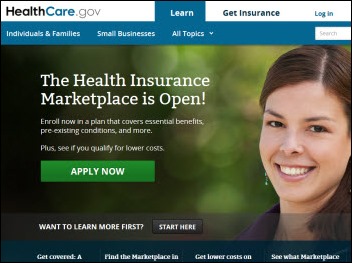
The federal government has acknowledged for the first time since the October 1 launch of the federal insurance marketplace healthcare.gov that coding and architecture issues are causing the site’s poor performance. Until Sunday, the administration was maintaining that the site was technically sound, but could not keep up with traffic demands.

Nuance Adds Two Icahn Associates to Board

After months of pressure from activist investor Carl Icahn, Nuance names two Icahn delegates to its board: Brett Icahn, Carl Icahn’s son, and David Schechter, a longtime business partner.

PatientKeeper CPOE Rated the Easiest-to-Use CPOE Solution by KLAS Research

KLAS gives PatientKeeper’s CPOE system an ease-of-use score of 8.3 (out of 9), placing it almost a full point above Epic’s second-place score of 7.4.

WellStar launches massive project to merge data, improve access

WellStar Health System, a five-hospital system based in Marietta, GA, is covered by the local news as it begins a $125 million Epic implementation that will integrate its hospitals, urgent care centers, practices, home health agencies, nursing homes, and hospice.

Comments Off on Morning Headlines 10/9/13

News 10/9/13

October 8, 2013 News 5 Comments

Top News

10-8-2013 7-28-00 PM

US CTO Todd Park tells USA Today that the Healthcare.gov insurance marketplace wouldn’t be failing if the site hadn’t drawn five times the expected number of simultaneous users. “Take away the volume and it works,” he said. Former National Coordinator and Republican appointee David Brailer wasn’t impressed with the Democratic appointee’s explanation: “Whoever thought it would draw 60,000 people wasn’t reading the administration’s press releases. The Medicare Part D site was supposed to have 20,000 simultaneous users and was (built for) 150,000, and that was back when computing was done on an abacus. It isn’t that hard.” A Wall Street Journal investigation finds that an Experian identity module is crashing frequently, the site contains orphan programming code that appears to do nothing, and caching was not employed for efficiency. It estimates that up to 99 percent of those people who try to register can’t complete the process. The previously chatty government contractors involved are now declining to return calls.


Reader Comments

From Patient Presents Without Comment: “Re: ICD 10. I wish I could see when, You’d be part of my past, and be gone; Your codeset is fine, but look: I prefer Nine. It’s opinion- how can it be wrong? There’s just under a year- it’s a while, but I fear, That there’s yet quite some Gantt chart to go; Could you install yourself? It’d be good for my health. So please MYOB, IMO.”

From Beer Reviewer: “Re: Monday morning news. The posts have been short. Is the news in short supply?” It is, actually. I go through the same steps every weekend to put together the Monday Morning Update, just like I’ve been doing since 2003. Lately news has been nearly non-existent. I could do like everybody else and pad it out with worthless, self-serving press releases masquerading as useful information, but I assume you would rather me not waste your time. Nobody has pointed out anything important that I’ve missed, a test I apply every single day to what I write.

From More Please: “Re: anonymous CIO interview. Fascinating! I would like to see more.” So would I. All I need are CIOs who are willing to be interviewed anonymously. If that’s you, let me know.


HIStalk Announcements and Requests

Everybody knows that most everything Yahoo is hopelessly antiquated crap, but I’ve stuck loyally with the paid version of Yahoo Mail for nearly 10 years because I like it better than the alternatives. No more. Yahoo is having a spam-related spat with Spamcop blacklisting that was causing my emails to fail and despite all the hoopla about improving the user experience, Yahoo has apparently removed every possible way of contacting support (even via an online form – thanks, Marissa Mayer). The best way to get me now is mr_histalk@histalk.com.


Acquisitions, Funding, Business, and Stock

10-8-2013 7-17-51 PM

Luminate Health, which offers a patient-friendly lab results portal, raises $1 million.

Nuance gives in to activist investor Carl Icahn by adding two of his nominees to its board in return for his support of the company’s slate.


Sales

Sacramento Family Medical Clinic (CA) is implementing Forward Health Group’s PopulationManager as it joins forces with The Guideline Advantage to improve quality outcomes and patient care.

Partners HealthCare (MA) selects InterSystems HealthShare to replace several integration engines as it consolidates to a single EHR.

The Valley Hospital (NJ) will implement Merge Healthcare’s CTMS for Investigators solution to organize and centralize its clinical research operations.

Aegis Sciences will implement Passport Health’s OrderSmart and PaymentSafe to automate transactions between its CBO and U.S. locations.

10-8-2013 7-33-50 PM

Washington Health System (PA) selects eClinicalWorks EHR for its 87 physicians and 21 residents in its family practice residency program.

In Brazil, Hospital Israelita Albert Einstein chooses Cerner Millennium.


People

10-8-2013 3-40-00 PM

St. Francis Medical Center (CA) names Judi Binderman, MD, MBA, MHSA (Encore Health Resources) as CMIO. 

10-8-2013 3-51-08 PM

Former ONC Principal Deputy Director David Muntz will join GetWellNetwork as CIO. We ran this as a reader rumor last week.

10-8-2013 3-57-23 PM

Encore Health Resources promotes Steve Eckert to partner of client services.

10-8-2013 5-40-50 PM

Alameda Health System (CA) names Dave Gravender (Kaweah Healthcare District) as CIO.

Clinovations hires Brian Morton (Halley Consulting) as VP of physician networks, Kim Tombragel (maxIT-Vitalize) as SVP of business development, and Robin Walters (Halley Consulting) as business development manager.


Announcements and Implementations 

10-11-2013 7-14-30 PM

A KLAS report finds that PatientKeeper is the most user-friendly standalone CPOE system on the market, with its 8.3 score on a nine-point scale beating Epic inpatient by almost a full point. All PatientKeeper customers interviewed by KLAS said they would buy it again, with an overall company performance score of 86.4 and reported physician user training time of as little as 10 minutes.

Nuance announces its Clinic 360 suite, an outsourced transcription service and application for physician practices and ambulatory clinics that manages dictation, review, editing, and sign-off for specialties such as oncology.

ADP AdvancedMD introduces its business intelligence solution AdvancedInsight during MGMA. The company also ADP releases its iPhone app.

Harris Healthcare achieves critical milestones while deploying its Service Oriented Architecture Suite across the US Department of Veterans Affairs and the DoD.

Vitera is previewing Intergy V9.00 at MGMA this week.

Capario introduces CaparioOne, its redesigned web portal application for revenue cycle management.

10-8-2013 4-49-11 PM

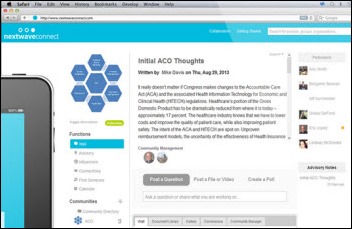
Next Wave Health launches Next Wave Connect, a problem-solving social network for healthcare organizations. Drex DeFord will serve as CEO and Mike Davis as EVP of research and analytics.

VHA Mid-Atlantic will offer its hospitals mobile patient satisfaction and experience tools from Marbella Technologies.

10-8-2013 5-32-04 PM

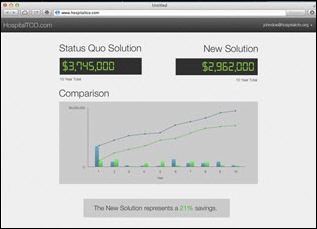
Peer60 offers HospitalTCO.com, which allows hospitals to determine total cost of ownership for IT systems over 10 years. It’s free.

Athenahealth announces its readiness for Meaningful Use Stage 2.

Mediware says it will expand the CPR+ platform it acquired in July 2013 to create a management tool covering home medical equipment, home infusion, specialty pharmacy, and home health.


Other

10-8-2013 7-38-52 PM

Officials of Dane County (WI) Regional Airport are planning a $30 million parking deck expansion to handle the increasing number of Epic Systems travelers.

10-8-2013 6-11-43 PM

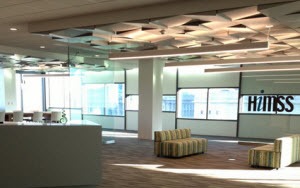
HIMSS releases a photo of its Innovation Center inside the just-opened Global Center for Health Innovation in Cleveland.

The local newspaper covers the $125 million Epic project of WellStar (GA).

10-8-2013 7-39-44 PM

UNC Health Care (NC) says it expects to post an operating loss for the fiscal year due to reduced volumes caused by its Epic go-live. 


Sponsor Updates

  • T-System launches two solutions to assist EDs overcome negative aspects of EHRs, including a paper-based note-taking tool (Doc Notes) and an ED physician documentation application (EV for physicians).
  • InstaMed says use of its Member Payments solution, launched earlier this year, will exceed $100 million in patient payments.
  • CareTech Solutions signs its first long-term care facility to its Clinical Service Desk support service.
  • PeriGen will offer an October 9 Webinar, “Uterine Tachysystole: How much is really too much?
  • The HCI Group is honored as the fastest growing private company in Florida by the Florida Business Journal.
  • Billian’s HealthDATA will host an October 16 webinar offering three perspectives on patient and provider engagement.
  • Predixion Software CEO Simon Arkell briefs the Boulder Business Intelligence Brain Trust on V3.1 of Predixion Enterprise Insight and its Machine Learning Semantic Model.
  • Genesis Health System (IA) discusses the performance efficiencies they’ve experienced since the integration of Vocera’s wireless communication system with their Cerner EHR.
  • Intermountain Healthcare and Craneware will present “Structuring Multidisciplinary Teams for Revenue Cycle Improvement” during the 2013 HFMA MAP Event October 28 in Ft. Lauderdale, FL.
  • Elsevier and Jefferson Medical College (PA) are co-sponsoring the “Art + Medicine: How Art Can Make Better Doctors” conference November 2-3 in Philadelphia.
  • Health Care Software participates in the AHCA/NCAL 64th Annual Conference and Expo in Phoenix this week.
  • Intelligent InSites will present “The Why’s and How’s of Reforming Healthcare Operations” on October 9.
  • NextGen Inpatient Clinicals V2.6 receives 2014 ONC HIT certification as a complete EHR.
  • Aspen Advisors Jody Cervenak is moderating a panel on the optimization of physician documentation during the CHIME13 Fall CIO Forum in Scottsdale this week.
  • ZirMed signs over 900 clients processing over 2.2 billion transactions while launching three additional products in the first nine months of 2013.
  • Greenway supports the national eHealth Exchange by joining Healtheway.
  • Dan Charney, managing partner of Direct Recruiters, Inc. / Direct Consulting Associates, is named a “Forty under 40” honoree by Crain’s Cleveland Business.
  • Orchestrate Healthcare is hosting an October 17 business intelligence Webinar.

Contacts

Mr. H, Inga, Dr. Jayne, Dr. Gregg, Lt. Dan, Dr. Travis

More news: HIStalk Practice, HIStalk Connect.

125x125_2nd_Circle

Morning Headlines 10/8/13

October 7, 2013 Headlines Comments Off on Morning Headlines 10/8/13

David Muntz, former Principal Deputy Director of the Office of the National Coordinator on Health Information Technology (ONC), joins GetWellNetwork

GetWellNetwork confirms that David Muntz, outgoing principal deputy director at ONC, will be joining the company as its new CIO.

Incentive program helps Mass. General’s physicians organization reach quality-improvement goals

The Massachusetts General Physician’s Organization outlines the pay-for-performance program it used to incentivize EHR adoption. As part of a larger quality improvement initiative designed to financially reward behavioral change within the physician community, EHR adoption was quantified by defining specific deliverable goals, such as entering final notes into the system within eight days, and performance was rewarded with a maximum $5,000 a year bonus.

Gravender named CIO at Alameda Health System

Dave Gravender, former VP and CIO at Kaweah Delta Healthcare District, is named CIO at Alameda Health System, the Oakland, CA-based safety net provider operated by Alameda County.

Comments Off on Morning Headlines 10/8/13

HIStalk Interviews Steve Levin, CEO, Connance

October 7, 2013 Interviews Comments Off on HIStalk Interviews Steve Levin, CEO, Connance

Steve Levin is CEO of Connance.

10-4-2013 5-01-36 PM

Tell me about yourself and the company.

I’m a reformed consultant. I spent 15 or 20 years doing consulting in and around healthcare and places like that. I spent a fair amount of time with one provider in particular, and they had some interest in applying predictive analytics to enhance their business. As a consultant, I was able to get them to realize some gains, and if you fast forward, ultimately they initiated this idea of founding Connance and getting me to come into that company to help organize an industry platform, an industry solution to help providers  engage on and leverage predictive analytics proudly.


How would you describe how predictive analytics work? What data do you use and what comes out?

The secret sauce to predictive analytics, what’s in it and what comes out, is one of those things that no one will ever tell you down to the variable. But the way we think of it and the way we talk with folks about it is, look, let me try to put predictive analytics in context. The industry is familiar and comfortable with business intelligence and BI platforms, which are good at snapshotting where we’ve been and what we have in our inventory. We’re good at having workflow systems and operations that can queue up accounts for follow-up and pursuit.

There’s a layer between those two, which is about what’s the best next step on this account and why. Predictive analytics and predictive solutions live in that layer there, which is about figuring out what’s the right or best next step to take. It’s contextual. In a revenue cycle, it may be about the cash or the operating cost in a discharge planning structure. It could be about the risks in the patient engagement. What you’re predicting and what you’re trying to manage differs and is contextual. But in every situation, what you’re trying to do is you’re looking at what information do I have available at the moment of application. What’s available about this account in the file? What do I know about the patient when they’re standing in front of me?

What might I find, if I had time, if I were to look out on the World Wide Web, and all those databases in the world, and whether it’s public records or all those catalog marketing databases, or for some people, we need credit bureau files, credit files, and that’s a longer conversation. What else do I know based on having looked at similar types of patients over the years across the industry and across providers? 

That’s three pools of insights — the situation at hand, that which you can find out from the world at large, and that which you know from experience. That gives you the input to figure out what’s the right next step on this account. Predictive analytics is just massive. It’s a massive buzzword right now. But the way I think of it and what we try and do is, we try and help people think about what, you know, making sure accounts get into the light next work step, and those people going for those lists are doing them in the right order.


On the clinical side, it’s polarizing to where you’ve got the giant data sets for managing populations and making broad, sweeping decisions. But then there’s also that need to take what you can get from that and use it for that person that’s standing right in front of you as a patient. Is that true with financials as well?

Yes, it is. It’s an interesting continuum from the individual account. What do I want to do on John Smith’s account right now as he walked into my doctor’s office or walked into the dentist office? All the way up to, what do I think I’m going to experience from the 10,000 John Smith accounts that I’m likely to see over the next 60 days or six months, whatever it is? Predictive analytics is a realm of predicting the future. You predict either individual or populations and you do it based upon pattern recognition of the history.


Self-pay patients used to be those without insurance. How is that changing, and what do hospitals need to do to manage it effectively?

The industry as a whole has to become proactive in what I think of as patient relationship management. Almost anybody that walks into a doctor’s office or a clinic or a hospital these days, whether they aren’t insured or they’re insured, they’re likely to have some co-pay and deductibles, some co-insurance, they’re going to have some financial skin in the game.

What we’re seeing and what providers are saying to us is, almost every time we engage a consumer, we have to think of managing that relationship. They’re looking for the question of, how do I best engage these consumers? The days of, “Let’s send three letters and make phone calls at 6:00 PM to every single account” are over. Similarly, the days of assuming that the patient balance has got no value, we’re just going to not even bother pursuing it, are over. Every penny, every dollar counts. Every patient relationship matters. 

We do a little research every now and then. We ask consumers about their satisfaction with the financial processes and how well they do connecting with providers. Not every patient has a great experience when they get the bill or when they try to figure out their insurance coverage. It can be complicated. 

What we have seen is that if you ask a patient when they had a really good experience with the financial systems if they’d be willing to recommend that hospital clinician to a friend. There’s a real strong correlation. The Net Promoter score is positive when we’re doing a great job engaging them in the financial relationship. The reverse is also true, though, which is very compelling. When we do a bad job, when we make a mistake in the system, when we don’t explain it to them, when we’re less than respectful and responsive, they will tell a friend to go somewhere else. It’s a big negative. What we see providers talking about is, how do I maximize the value from that patient relationship? It’s about today’s bill and it’s about their needs in the future.


When hospitals use Net Promoter scores with its single “would you recommend” question, do you think they recognize that it could be measuring something more than satisfaction with doctors and nurses?

No, they don’t. This is an industry problem, because the age gap and the various services the government have don’t go beyond the discharge. The questions they ask are all focused on was the room quiet, how was your pain managed. Those are really important things, but we go in on Monday, we get discharged on Wednesday. The rules say I have to have that survey within six weeks of discharge. The fact of the matter is, the patient might not see their portion of that bill for another eight weeks. The financial relationship and the financial thing goes on much longer than that engagement, and I think the way the industry thinks about satisfaction based on some of the government measures is a little short-sighted.

Everyone talks about the revenue cycle. But when they draw this picture, what they really draw is they draw a revenue process. On the left side of the page, they start with pre-registration and scheduling. They put treatment in the middle. On the right, they put billing and self-pay and the bad debt agencies. That goes right to left. That’s not a cycle, that’s an end-to-end process.

What we started thinking about, and we’re seeing lots of writers get into this, is a real cycle. Which is, draw a circle and at the top is a patient or a home that’s healthy. They go down to 2:00 on the circle here and say, I have a need for a clinical interaction, whether I have a broken arm or it’s a check-up if you’re not feeling so great. Then at 4:00, they get the clinical treatment. Then at 6:00, they get discharged, and at 8:00, they get the bill sent. At 10:00, the bill’s resolved and it’s all paid off. And they go back to 12:00, hopefully, which is happy and healthy and home. That’s a cycle. That’s a closed loop. 

If we look at the dynamic, we realize a whole bunch of things about what we create — the types of loyalty, the types of relationship, the types of engagement, the type of referral pattern that we want. That’s much more consistent with the way that Best Buy or Ritz Carlton or some of these people who we think of service excellence would think of the world. We need to embrace that. But a lot of what’s in the industry in terms of the regulatory, the measurement systems out there, there are lots of good reasons to focus on the clinical experience, which is really important, but we lose sight of some of the other stuff.

One of the things I always remember is, I don’t do a really good job of taking advice from people or organizations that I find kind of upsetting. If as a provider or an organization, I want my patients to really engage and have this deep relationship with me, I better make sure that every engagement is reinforcing to a positive.


Hospitals aren’t always good at recognizing the marginal cost versus marginal revenue of chasing down accounts that are probably not going to be paid. Do they recognize those accounts as not being worth the effort?

That was a pretty sophisticated question. My view is similar, but different. Hospitals do a pretty good job of believing they know who won’t pay and therefore where they shouldn’t put any money. Where they don’t do a good job is thinking about when they’re trying to follow up and get money from someone, they think is worth everything, but in fact they’re spending when they don’t have to. I think hospitals tend to overspend in places where they don’t need to, and underspend in places where they should.


Tell me about presumptive charity and how that changes with the Affordable Care Act and the changes in the Form 990 requirements.

The world of presumptive charity and charity classification is going to change. With Affordable Care and some of the new health reform, clearly we hope we’re going to get a lot more folks who currently are uninsured into some government program. A lot of the uninsured are going to migrate to some form of insurance. I think the number’s 50 million uninsured today and it will go down to 20 or 25 million, whatever the gross estimates they keep moving around.

That’s going to change the box that we think of today as charity. Charity being those accounts which can be either documented as living in poverty and therefore meriting financial assistance, or accounts that for lots of reasons choose not to engage and we can’t document, but can be presumed charity. Health reform is clearly going to move a bunch of people uninsured into the insured box, which is great. There’s still a sizeable patient portion in almost every one of those plans whether it’s co-pays, deductibles, uncovered procedures, etc. We’re still going to have a bunch of folks that are not buying insurance, for whatever reason. We’re still going to have a bunch of folks that are in Medicaid plans where they’ve got some co-pay, some deductible, etc.

There’s still going to be a bunch of patient responsibility running around. What the whole charity presumptive or documented is about is making sure that for the people that are living in difficult household income situations, that our hospitals, who are pillars of the community, in fact are thoughtful about their policies with them. There’s a large chunk of Medicare, Medicaid patients that might have coverage and deductibles are actually charity-qualified. The future of presumptive charity and the charity space generally is going to be about making sure we’re being thoughtful about amongst these insured patients, and even amongst those who are uninsured, are we being responsive to their situations? 

It’s not going to go away as an issue. It’s going to become even more under the spotlight. The regulators, the consumer protection organizations, state and federal, are going to start saying things like, look, we’re subsidizing a vast chunk of the care for these people. You are not paying taxes, and you have a responsibility on the residual piece to give them a break. And if we see that you’re not carrying through on that part of the bargain, maybe we have to rethink this relationship.


It’s tough for hospitals being non-profit good citizens and big employers, yet they have to collect payment for the services they’ve rendered. Do you see that getting tougher as budgets are squeeze and as the rules become blurred about who’s uninsured and who’s charity care?

Absolutely. Predictive analytics is probably one of the critical levers in the system. Predictive analytics can help them get more nuance on an account-by-account basis in a structured, consistent, standardized way to understand the real nuances between who’s living in poverty, who needs financial assistance, who is simply a reluctant payer, what’s the right way to process accounts. The future is going to demand predictive analytics and demand sophistication in understanding the gradations here. Every dollar’s going to count. I haven’t heard any provider come to me yet and say, you know what, I’ve got an extra five percent in the budget with nothing to do with it.


Any concluding thoughts?

As we keep talking to providers around the industry, as far as we can see, the dollars in the industry are getting tighter. Hospitals and providers are on the hook for a lot more. They’re on the hook for a lot more of the outcome and they’re integrating across the continuum. They own the risk when the patient goes home. They’re going to own the risk when they go to the clinic.

We don’t have any more money. We have more risks and more responsibilities. We’ve got a very large IT investment going on around EMR and some of the patient systems out there. 

There are some competency implications in the industry that are interesting. You have to be good at managing these patients. You have to understand the difference amongst patients. You have to understand how to engage patients and how to move them across venues and over time. We’re going to have to be good, if we’re going to do that, at applying data. It’s not that we have to get more spreadsheets and more dashboards, it means we have to take data and automate what’s the next best step. It’s the predictive application of data.

It also means we have to come to a point of view on revenue cycle. For a lot of folks, the revenue’s cycle is either going to be a source of a competitive advantage, because it’s going to be a place for relationship management, or we need to figure out how to commoditize it because they can’t afford to not do it well.

Comments Off on HIStalk Interviews Steve Levin, CEO, Connance

Curbside Consult with Dr. Jayne 10/7/13

October 7, 2013 Dr. Jayne Comments Off on Curbside Consult with Dr. Jayne 10/7/13

clip_image002

I attended an outdoor leadership training session this weekend. It was billed as an opportunity to learn different techniques for working with groups as they manage change. I’ve done similar sessions in the past and was looking forward to coming back with some new ideas for team building and creative strategies for making training sessions more exciting.

Even though several people from my organization attended, the organizers intentionally divided us up so that teams were made up of people who didn’t know each other previously. The plan was to spend three days and two nights rotating through different stations where we would learn a mix of outdoor skills and workplace skills. We would have the opportunity to work on various projects that incorporated both sets of skills, such as lashing downed trees together to build various structures.

When we weren’t in class, we would have to work together to complete basic outdoor activities – setting up a camp site, planning menus and preparing food, and figuring out how to divide the work. We would also have to remember our corporate roots and arrive at sessions on time and prepared regardless of weather or competing priorities.

We arrived Friday afternoon to our site, which was located in a valley with surrounding ridges that I thought might keep cell signals at bay. Once we received our team camp sites, it was time to load in our gear and set up our tents and cooking area. Several of my teammates habitually checked their phones (presumably to look at “the weather”) though which quickly became annoying. Call it mean, but I hoped they had recently upgraded to iOS 7 so that their batteries would be gone quickly.

Our team had four men and two women and I was glad to learn my tent-mate had experience camping. When I have attended sessions like this before, the women typically have less outdoor experience than the men and it can create some challenges, so this was a good thing. Three of us were IT professionals and it made me happy that our companies recognized the need to develop our skills in change leadership. One member had lived on a sailboat for several years, which I figured would come in handy for ropes and knots. We also had a young man fresh out of college with the added bonus of being an Eagle Scout. The last member of our team was a man who didn’t say very much, although he seemed enthusiastic about attending the session.

We quickly got our tents pitched, our dining fly set up, our allotment of supplies stowed, and were ready to go. Our first challenge was to come up with a team name and a cheer. We agreed on the name pretty quickly, chose a cheer, selected our representative to introduce us, and headed off to the opening session. With our without iPhones and the Weather Channel app, we had been told to expect bad weather, including rain and the arrival of a major cold front, and to prepare accordingly as we wouldn’t be able to go back to our tents.

After introductions, we started a session on team dynamics. Tuckman’s stages of group development (Forming, Storming, Norming, and Performing) was familiar from a previous class, although quite a few of the 30 attendees didn’t seem to have heard of it before. The instructors led us through the fact that we had just worked through the Forming phase, where the team organizes and works through introductory tasks while avoiding conflict. We had been eager to achieve consensus on our name and cheer, but there wasn’t a lot of leadership or direction.

We were next given a proposed project to plan. As we circled our camp chairs, we found one member of our team was missing. No one had seen him step away and we assumed he’d be back quickly, so we thought we’d try to move ahead. It reminded me a lot of meetings I’ve attended over the last few months where everyone is present and ready to participate but one critical attendee doesn’t show up even though they accepted the appointment. It was as frustrating in the outdoors as it is in the office since the task required everyone to participate and we were stuck in place until he returned.

When he did show up, couple of members immediately confronted him for letting the team down by disappearing without letting anyone know. I figured that was a sign that we had moved to the Storming phase. Our disappearing man didn’t seem to understand that his absence was a problem and had a hard time getting back up to speed. We sat in the circle and brainstormed potential solutions for our assigned problem. Just when we got going, the rain started. Most of us reached into our day packs and pulled out gear, but a handful of people popped up to run to their tents.

Again I was reminded of the office and people who show up to paperless meetings without a laptop or who show up to demonstrate an application which isn’t loaded and ready on their machines. Like the office, the project moved forward whether people were prepared or not, forcing the remaining team members to pick up the slack, which often leads to resentment and distrust that the team will be available in the future. We were only a couple of hours into the weekend and this wasn’t looking good.

We made it through the rest of the evening. The evening meal was provided by the training center, although we had to attend presentations on camp cooking and sanitation as we earned our supper. We knew we’d be cooking our own meals from there on out, so most of us paid close attention. After we headed back to our camp site, we struggled to make up the duty roster for the next day. Since class started at 7:30, it meant a 5:30 wake-up to start fires, prepare food, and clean up. Although people were eager to volunteer, no one seemed to take charge, which was frustrating for those who wanted to get it all decided and head to our tents. Ultimately we finished then secured our food against wildlife intrusion and turned in for the night.

We woke to a humid morning but quickly got started on cooking bacon, eggs, tortillas, and rice. The group pulled together except for our “missing man” who hadn’t yet come out of his tent despite multiple attempts at waking him up. Ultimately he emerged but declined breakfast, saying he already ate. He must have missed the lecture about raccoons and other wildlife since he was keeping his own food in his tent. I tried to give him the benefit out the doubt, but knowing the training center’s attention to providing for different dietary needs (our team was gluten free), it was a hard sell. One of my team mates commented that he felt like he was still at work since he often encounters people who feel the need to do their own thing regardless of team strategy or planning.

For our first session, half the teams headed to plant and animal identification. Although most corporate types don’t have a lot of need for that skill set, the point of the exercise was to learn creative strategies to train material that the learners would assume was pointless or irrelevant. Having attended corporate training on fraud and abuse, passwords and privacy, and various regulatory programs every year regardless of mastery, I knew exactly what they were talking about. The instructors had some great strategies that many of us thought would translate easily to our offices. As we worked through categories covering everything from noxious plants to animal scat, I could see the other half of the teams at their session and I began to worry.

We were scheduled next for knots, ropes, and lashings. Although I know my way around a handful of knots, I can’t tie them off the top of my head without a refresher. I had never done lashings before and certainly hadn’t built any structures that needed to support a person. I was grateful to have the Eagle Scout and the sailboat fan on our team, but my hopes faded when I learned that our finished structure had to have at least one lashing constructed by each person. After a time of instruction, we were allowed to practice or head to be tested. Those students who tested early were supposed to return to their teams to assist with practice. I was surprised when our disappearing colleague headed off to the testing station. I wasn’t surprised though when he didn’t return after passing the testing station.

The two who did return did a great job of helping the rest of us through the basic knots and on to the more complicated lashings. We felt like we had moved to the Norming phase as we completed our structure but were disqualified due to our missing man so went back to Storming. Once again my thoughts turned to the office where time and again I’ve seen teams derailed by one member who ends up sabotaging the team, whether deliberately or subconsciously. Our missing man returned in time for our next rotation and it was there that we figured out at least part of what was going on with him.

We were tasked with preparing a session to train another team in a wilderness first aid topic. Each team was given an instructor to serve as subject matter expert for the content, but we had to construct the lesson plans and deliver the training session. In this more focused discussion environment we realized our missing man had a significant hearing deficit. That might explain his behavior at the ropes session – maybe he didn’t realize he was supposed to come back after testing. Maybe he didn’t hear the warnings about aggressive raccoons and not storing food in the tents. My tent mate said it reminded her of a co-worker who was in treatment for a life-threatening condition but didn’t tell the team, resulting in a lot of speculation about why her performance was declining. Although workplaces must accommodate disabilities, it’s hard to make appropriate modifications when no one is aware.

Saturday night wrapped up with a chili cook-off and a traditional campfire, which helped us relax and refuel after a long taxing day. I fell asleep with the sound of rain on our tent, which was better than any white noise generator I’ve encountered. The cold front arrived overnight and we awoke to a crisp morning. Our missing man again gave us something to talk about while he proceeded to take down his own tent while the rest of us were busy cooking as a team and taking care of group needs. Since he reminded us of the people we’ve worked with who are psychologically checked out, coupling that with all the other episodes made us wonder if he was a plant by the instructors to force us to think through the various teamwork and conflict resolution scenarios.

We had several more stations on Sunday with a little rain interspersed. This time the participants were better prepared. Our missing man was around half the time and contributed maybe a quarter of the time. He disappeared for good right before our debrief session and although that allowed us to talk openly about how his behavior made us feel, we weren’t able to experience the group dynamics needed to confront a dysfunctional team member.

Although sometimes frustrating, the weekend overall was outstanding. I learned a great new chili recipe and that the gluten free cookies that look like Oreos are better than the original. I learned that no matter what environment you’re in there will always be people who aren’t following the playbook and that we have to have strategies ready to deal with them. I learned new techniques to train students on material they find uninteresting.

Last, I learned 10 good knots, three different lashings, and their potential uses. Have you ever attended corporate training in the great outdoors? Need to learn how to secure your food in a bear bag? Email me.

Print

E-mail Dr. Jayne.

Comments Off on Curbside Consult with Dr. Jayne 10/7/13

Morning Headlines 10/7/13

October 6, 2013 Headlines Comments Off on Morning Headlines 10/7/13

Electronic Health Record System (EHRS)- Vendor Demonstration

The DoD announces that it will be holding EHR vendor demonstrations during the week of October 21. In order to secure a spot, vendors must submit an application that asks a variety of questions including: is the system built on an open-source platform, is it MU Stage 1 certified, and does the vendor have at least one HIMSS Stage 7 customer.

CaroMont Health reveals security breach

CaroMont Health (NC) discloses a 1,310 patient security breach stemming from an unencrypted email sent by an employee that included names, dates of birth, diagnoses, last dates of service, medications, and insurance company names.

Sunquest Expands Senior Leadership Team

Sunquest Information Systems announces Jonathan Pierson (formerly MedAssets) will join the company as a VP of implementation, and Keith Laughman (former CEO of MedFusion) will join as the EVP of Community Care Solutions, where he will focus on strategic growth areas for Sunquest including ACOs, and patient centric care.

CareCloud Reports Continued Record Client and Revenue Growth for the Third Quarter 2013

Cloud-based ambulatory EHR and PM vendor CareCloud reports triple-digit growth for the 15th consecutive quarter.

Comments Off on Morning Headlines 10/7/13

Monday Morning Update 10/7/13

October 5, 2013 News 2 Comments

From Insider: “Re: David Muntz from ONC. Will join GetWellNetwork’s leadership team.” Unverified.

From The PACS Designer: “Re: iOS7. Now that the hoopla has subsided over the 5C/5S, thought it would be good to reveal what are the improvements that Apple brings us with iOS7. They say, ‘It has a new structure, applied across the whole system, that brings clarity to the entire experience. The interface is purposely unobtrusive. Conspicuous ornamentation has been stripped away. Unnecessary bars and buttons have been removed. And in taking away design elements that don’t add value, suddenly there’s greater focus on what matters most: your content.’ Other features are improved graphics, audio, and many other areas to numerous to mention here. With Apple’s acquisition of Cue, a personal assistance app, the solution will surely find is way into iOS7 healthcare communications software.”

10-5-2013 4-21-58 PM

From THB: “Re: Northwestern Memorial in Chicago. Leaving the Cerner fold and going to Epic, but I don’t see it mentioned in searching your site. Am I missing something? It’s been going on for the last several months, so is this a big secret, or is it hiding in plain sight?” I ran a reader’s rumor about the switch a year ago, and another reader’s rumor before that.

10-5-2013 9-01-10 AM

Most poll respondents don’t see customers of either Vitera or Greenway benefitting from their single ownership. New poll to your right (which is actually an earlier poll that few saw since it wasn’t the featured poll): how will hospitals handle liability and workers comp insurers that won’t accept ICD-10 data until 2015?

Thanks to the following sponsors who recently supported HIStalk, HIStalk Practice, and HIStalk Connect. Click a logo for more information.

10-5-2013 9-27-26 AM
10-5-2013 9-39-53 AM
10-5-2013 9-53-46 AM
10-5-2013 10-00-37 AM
10-5-2013 9-35-12 AM
10-5-2013 9-38-46 AM
10-5-2013 9-28-28 AM
10-5-2013 9-59-08 AM
10-5-2013 9-25-54 AM
10-5-2013 9-33-02 AM
10-5-2013 9-41-22 AM
10-5-2013 9-23-10 AM
10-5-2013 9-24-38 AM
10-5-2013 9-30-58 AM
10-5-2013 9-57-15 AM
10-5-2013 9-33-57 AM
10-5-2013 9-37-24 AM
10-5-2013 9-22-11 AM
10-5-2013 9-55-40 AM
10-5-2013 9-54-44 AM

Kyle scored an interview with Aaron Levie, co-founder and CEO of Box, at Health 2.0.

10-5-2013 10-12-04 AM 10-5-2013 10-11-21 AM

Sunquest announces two new executives: Jonathan Pierson (MedAssets) as VP Solution Adoption Center of Excellence and Keith Laughman (MedFusion) as EVP of Community Care Solutions.

10-5-2013 4-18-37 PM

CaroMont Health (NC) announces a breach involving the records of 1,310 patients that were sent by an employee via unsecured email.

10-5-2013 4-26-57 PM

Weird News Andy says it’s usually a brother-in-law: a two-year-old boy in China with a swollen stomach and difficulty in breathing is found to have a parasitic twin with fully formed spine and limbs growing inside his stomach. Doctors removed the eight-inch-wide twin.

Vince identifies several vendor C-suite executives of long ago this HIS-tory edition, but he seeks help filling in some of the blanks.


Contacts

Mr. H, Inga, Dr. Jayne, Dr. Gregg, Lt. Dan, Dr. Travis

More news: HIStalk Practice, HIStalk Connect.

125x125_2nd_Circle

Readers Write: Connecting the Divide between Inpatient and Outpatient Care

October 4, 2013 Readers Write Comments Off on Readers Write: Connecting the Divide between Inpatient and Outpatient Care

Connecting the Divide between Inpatient and Outpatient Care
By Michelle R. Troseth, MSN, RN, DPNAP, FAAN

10-4-2013 4-26-01 PM

Premier Healthcare Alliance’s spring 2013 Economic Outlook predicts a major shift in admissions from inpatient to outpatient settings. With such predictions, healthcare organizations must connect episodes of care, closing the gap between inpatient and outpatient care. Only then will healthcare develop integrated networks that include hospitals, health systems, ambulatory care centers, community clinics, long-term care facilities, home care agencies, and medical groups, that can work together to coordinate care and share accountability for quality, cost, and outcomes.  

Accountable care demands the reform of healthcare delivery. The key to successful clinical integration is to build high-performance organizations of physicians, specialists, hospitals, and others that are willing to adopt and use information technology and innovative care systems to prevent illness, enhance safety and quality, and coordinate and integrate care. In the process, these organizations become accountable for the quality and cost of care delivered to a defined patient population.     

Equally relevant to closing the inpatient/outpatient divide are the escalating requirements of Meaningful Use, as well as clinical integration, which demands information systems designed to provide clinicians with access to meaningful, actionable information at the point of care decision making. 

The great challenge to achieving new ways of thinking and practicing in the midst of the shifting landscape remains in the how to best create integrated healthcare systems.  While an interoperable technology platform is unquestionably needed, so is an interoperable practice platform to expedite the seamless transition of care between inpatient and outpatient. 

In developing a common practice framework that can be embedded in any technology platform, the following components have been validated as essential for high-quality seamless care:

  • Shared purpose and values 
  • Dialogue skills
  • Polarity thinking skills
  • Competency in full scope of practice
  • Integrated competency to halt duplication of services
  • Partnerships to support networking across the continuum
  • Evidence-based tools to develop individualized, interdisciplinary, integrated plans of care
  • Integrated documentation that reflects the patient’s story, plan, progress and outcomes across the continuum
  • Exchange processes and handoffs that ensure safe, quality care

If providers hope to close the gap between inpatient and outpatient care, they should adopt such an infrastructure that supports continuity of care. Among the most essential steps are: 

  • Provide teams with interprofessional, evidence-based tools
  • Implement integrated clinical documentation
  • Engage patients and family members
  • Insist on interoperable HIT systems
  • Develop professional exchange/ handoffs processes that ensure safe, quality, coordinated care
  • Allow professionals to practice to their full scope of practice

We can bridge the gap between inpatient and outpatient care if we remain aware of the shifting demands of accountable care, population health management, clinical integration and collaborative, coordinated and consistent care by government, payers, patients, and provider partners. Instead of another high-tech fix, implementation of a comprehensive practice platform that blends evidence-based tools with team competency and compassion should be considered. 

Just as important is the investment in smart content that supports integrated documentation, patient engagement, interoperable systems, professional exchange, advanced practice professionals, and intentionally designed tools to support coordinated, collaborative care.    


Michelle R. Troseth, MSN, RN, DPNAP, FAAN  is chief professional practice officer of
Elsevier.

Comments Off on Readers Write: Connecting the Divide between Inpatient and Outpatient Care

Readers Write: The Changing Physician-CIO Relationship: Do You have a Strong Partnership?

October 4, 2013 Readers Write 1 Comment

The Changing Physician-CIO Relationship: Do You have a Strong Partnership?
By Rob Culbert

10-4-2013 4-21-46 PM

Building a relationship is hard. Managing a successful and long-term partnership is even harder.

That’s what most healthcare chief information officers (CIOs) are finding out as they examine their rapport with physicians. Productive relationships take effort and a commitment to change. Successful healthcare organizations can strengthen the physician-CIO dynamic by making a concerted effort to involve physicians in their technology adoption efforts.

Consider these questions as you determine how your organization stacks up in fostering positive interactions with your physicians and what you need to do to build a stronger physician-CIO partnership.

What’s driving the changing relationship between your CIO and physicians?

In most healthcare organizations, physician and CIO responsibilities have historically been siloed—the CIO drove technology, physicians drove clinical care. Now the relationship is changing as physicians expect the hospital to provide greater technology support, which in turn allows the physician to provide higher quality care. More than ever, physicians demand a system that provides full access to both ambulatory and inpatient clinical data.

Yesterday’s hands off approach with physicians no longer works. Healthcare CIOs must employ an intentional strategy to involve their physician partners and meet their new requirements for support and information.

What specific roles are physicians playing in your technology deployment?

Technology is becoming more directly linked to patient care, so much so that physicians now expect systems that seamlessly support their work and improve efficiencies. This is even more the case with younger physicians, who grew up using technology and can’t imagine delivering care without it.

To capture physician opinions and requirements for technology, organizations may want to create a physician steering committee, which involves physicians in major decisions about system design, functionality, and content. Organizations are using these committees to fix and improve specific technology. For example, working as a subset of the steering committee, a physician ICD-10 committee may focus on the required workflow changes and corresponding system changes needed to support a smooth implementation of the new code set. After implementation, physician practice user groups can be leveraged to educate physicians on advanced features and to gain feedback for system adjustments.

Are you providing opportunities for physicians who don’t want to be heavily involved in technology?

It’s a fact: some physicians simply want to be doctors, not IT gurus. Yet, they still can provide a wealth of information through their frontline system knowledge. Avenues for feedback include physician surveys, informal focus groups, or even hallway conversations. Site visits to physician practices can clearly reveal how the system is being used and highlight opportunities for improvement. Garnering involvement and feedback from as wide an audience as possible leads to a healthy and dynamic physician-CIO rapport.

What benefits can your organization realize through physician-CIO alignment?

Perhaps the biggest benefit of physician-CIO alignment is that it’s just good for business – for the physician and the healthcare organization. Most practices don’t have the resources for a sophisticated IT structure with 24/7 support, clinical system protection, disaster recovery, and guaranteed uptime performance. However, healthcare organizations often have extensive IT capabilities and can provide the needed support and resources at a reasonable cost.

Healthcare organizations benefit because strong alignment between physicians and technology leaders can ultimately improve patient care and foster greater efficiency. In addition, it can positively impact a physician’s choice where to practice. Because most physicians want to partner with an organization that is responsive to physician involvement, this strengthened relationship allows organizations to be more competitive in recruiting and retaining physicians.

Strong physician-CIO interactions can also help a healthcare organization strategically position itself for quality improvement and agility with the coming healthcare legislation, ultimately improving payment and reimbursement rates for both parties.

Establishing and maintaining strong partnerships between physicians and technology leaders is essential to navigating the evolving healthcare landscape. As information technology becomes more critical to care delivery, the strength and resiliency of the physician-CIO relationship will determine your organization’s ability to successfully deliver quality care and maintain financial viability.


Rob Culbert is president and CEO of Culbert Healthcare Solutions.

Time Capsule: Lessons from Shark Tank — Beware of Vendors Borrowing Money or Going Public

October 4, 2013 Time Capsule 1 Comment

I wrote weekly editorials for a boutique industry newsletter for several years, anxious for both audience and income. I learned a lot about coming up with ideas for the weekly grind, trying to be simultaneously opinionated and entertaining in a few hundred words, and not sleeping much because I was working all the time. They’re fun to read as a look back at what was important then (and often still important now).

I wrote this piece in August 2009.

Lessons from “Shark Tank” — Beware of Vendors Borrowing Money or Going Public
By Mr. HIStalk

125x125_2nd_Circle

I don’t watch a lot of TV, but lately I’ve been watching this show called “Shark Tank.” It’s a reality show from Mark Burnett, the Survivor guy who made TV 100 times more of a vast wasteland than anyone thought possible, killing lame dramas and comedies in favor of cheaper and even lamer junk shows that make Dead Billy Mays infomercials look like Shakespeare plays.

The premise of “Shark Tank” is this: small business owners who need funding pitch their business idea to a panel of private investors who critique it nastily (it’s reality TV, after all) and maybe begrudgingly offer to loan the owner money at quite unfavorable terms (such as demanding half of the company in return).

So, the businessperson has three ways to look stupid: they can be turned down cold, they can take the offered money at usurious rates, or they can voluntarily walk away as the investor panel agrees among themselves just how stupid the business owner is for not wanting to throw in with whiz kids like themselves.

The last show had a guy who had invented a folding guitar. He had sold a few hundred of them at $500 each and, by applying some questionable math, decided his company was worth $10 million (the expressions on the faces of the money lenders when they heard that figure were priceless).

One sympathetic money man (sympathetic on a greedy bloodsucker scale, anyway) asked him an excellent question, though: do you want to make really great guitars or do you want to make a lot of money?

His message was clear. Big profits and quality just don’t mix. The idea of actually making a great product was incomprehensible to the money man. The real money was to be made in licensing the folding neck idea to other guitar companies. Instead of being an engaged, driven entrepreneur making guitars he’d be proud to sell, the guy could just sit on the porch and cash checks.

This made me sad. The money man was right – people like him don’t care about quality, customer benefits, or long-term value. They don’t even care about the product or service. Everything they need to know is contained in the financial and marketing numbers. And if the visionary founder takes money from them, he or she will be elbowed aside as the business is pillaged to yield the biggest, quickest return possible. So, forget that great product – wouldn’t you rather get rich instead? All of the money people, it turned out, made their pile selling out to some bigger company (which often regretted it, I found out from Googling).

It makes you wonder how many great innovations have been pushed aside because a dollar-fixated money man didn’t see the point. It also makes me wonder how many dull, average companies got that way because they took someone’s cash, put the founders out to pasture, and set all the fun, smart ideas aside and turned themselves into a bad mutual fund run by second-tier MBA school graduates.

My hospital got burned once when the vendor we had just chosen went public and the obligatory new gunslinger corporate executives suddenly became more worried about the company’s quarterly numbers than my hospital or their products. I’ve had vendors that were bought by GE and were never heard of again. Others borrowed themselves to the hilt and had to put the money men in charge as collateral, which naturally meant the answer to every problem was to charge us more, give us less, and sell of chunks of the company to anyone interested.

I like to think the time for change is at hand. The financial industry melted down because of that kind of short-sighted greed. The government will either have to live within its new lesser means or keep selling the country off piecemeal to foreign debt-holders. People want to shop local, keep it simple, and live green. Rich people and monolith corporations suddenly don’t look so infallible any more.

So while you’re out their driving your Prius and eating organic apples, give this a try. Every now and then, buy an IT product or service from a low-debt, founder-led company that thinks creatively, has fun, and cares about its customers. The last thing we need is more faceless widget factories run by money-lending Sharks.

In fact, I kind of hope Shark Tank gets cancelled.

Morning Headlines 10/4/13

October 3, 2013 Headlines Comments Off on Morning Headlines 10/4/13

Lexmark acquires PACSGEAR for $54M

PACSGEAR, an EHR/PACS integrator that transmits images, videos, and supporting documentation between PACS systems and EHRs, is acquired by Lexmark for $54 million in cash.

Providers Demand More Than Just Regulatory Reporting From Quality Management Systems

A new KLAS report evaluates quality management systems, which customers say should be doing more than just automating regulatory reports. The expectation is that quality management solutions will drive operational and financial improvements across the organization, leading to better outcomes. Xerox Healthcare comes out on top in the survey.

Google Glass in hospitals? Royal Philips, Accenture think so

Philips showcases a new Google Glass app that displays data from its surgical solution so that surgeons can review real-time patient data intraoperatively on a hands-free form factor.

HIMSS Analytics Releases 2013 Inpatient Revenue Cycle Management Study

A recent HIMSS Analytics survey about inpatient RCM solutions finds systems used for pre-certification, address validation, and bill estimation are lagging and likely to be replaced. Advisory Board, Emdeon, Experian, RelayHealth, and Recondo are among the vendors with the highest mind share.

Comments Off on Morning Headlines 10/4/13

News 10/4/13

October 3, 2013 News 6 Comments

Top News

10-3-2013 5-38-48 PM

Lexmark International acquires PACSGEAR, which provides connectivity solutions for sharing medical images with PACS and EMRs. The price was $54 million in cash. The acquisition will be operated from Lexmark’s Perceptive Software.


Reader Comments

From Frank: “Re: certification scoreboard. A check of the certified inpatient systems still shows some big names missing. For full EHR certified systems missing are two biggies, Cerner and Siemens. Also no shows are Healthland, QuadraMed and NTT-Keane. A week ago Dr. Mostashari was quoted as saying that two-thirds of the systems in use were already 2014 (Stage 2) certified. That’s hard to believe with Siemens and Cerner still out, and McKesson only certified for Paragon. That’s got to cover at least half the hospitals in the country. Also somewhat ironic is Siemens is not certified. Remember John Glaser was a key member on the HIT Committees that set up the criteria for Certification/MU program. I remember him being quoted two years ago in an HIStalk interview saying that the program was not going to be easy and some organizations just won’t make it. Well he’s proving himself a prophet now!”


HIStalk Announcements and Requests

inga_small Some news you might have missed this week from HIStalk Practice: CareCloud and Box integrate Box’s content-sharing capabilities into the CareCloud platform. My top educational session pick for MGMA, plus my tentative party agenda. Most physicians are satisfied with the e-prescribing workflow for controlled substances. Medicare awards Arch Systems a contract to validate the accuracy of data submitted to the eRX and PQRS programs. Physicians claim EMR use is stressful. If you are headed to MGMA, you’ll want to peruse our annual list of Must See Vendors. The guide includes essential details such as vendor booth numbers, product offerings, and fun giveaways. Thanks for reading.

inga_small I’ll be reporting from MGMA beginning on Sunday so keep reading HIStalk Practice (or sign up for email alerts) for all the conference updates. Feel free to email me if you have any recommendations for conference sessions, exhibit booths, or after-hours festivities.

On the Jobs Board: Chief Medical Officer, Clinical Analyst, Epic Revenue Cycle Project Director.


Acquisitions, Funding, Business, and Stock

Mobile healthcare communications provider Duet Health secures an undisclosed investment from Baird Capital.


Sales

PIH Health (CA) selects Allscripts Sunrise EHR for its newly acquired PIH Health Hospital-Downey and extends its hosting and managed services agreement.

10-3-2013 6-03-42 PM

Southern Regional Medical Center (GA) engages MedAssets for A/R services and revenue cycle consulting.


People

10-3-2013 3-41-21 PM

AirStrip promotes Matt Patterson, MD from chief transformation officer to COO.

10-3-2013 5-14-25 PM

MaineHealth names interim CIO Andy Crowder as CIO.

10-3-2013 5-30-19 PM

Farzad Mostashari, MD will join the Engelberg Center for Health Care Reform of The Brookings Institution as a visiting fellow.

10-3-2013 5-33-17 PM

NorthCrest Medical Center (TN) promotes Randy Davis as president and CEO. He had previously served as VP/CIO.

Shelia Mitsuma, MD, who holds positions with Brigham and Women’s Hospital and Massachusetts General Hospital, joins EBSCO Information Services as deputy editor of its DynaMed clinical reference tool.


Announcements and Implementations

Newton Medical Center  connects its Meditech EHR to the Kansas HIN using ICA’s CareAlign interoperability platform.

inga_small Cerner announces a strategic relationship with Shawnee Mission Medical Center and TMC Lakewood and designates the organizations “Certified Maternity Partners” for its KC-area employees. Cerner says the arrangement is designed to “improve infant and maternal health outcomes,” while “managing rising healthcare costs for its associates.” I suppose that means that many Cerner employees or their covered spouses may need to change providers in order to receive full maternity benefits. I’ll be curious to see how receptive Cerner employees are to this change since my experience is that women in particular prefer to exercise maximum control over their own health issues, including their choice of providers.

The Georgia Department of Community Health launches its statewide HIE network with the Truven Health Analytics platform, powered by CareEvolution.


Government and Politics

ONC reports that as of July 31, 1,115 critical access hospitals and small, rural hospitals had attested for MU, which exceeded ONC’s goal of 1,000 by 2014.

The VA warns that the federal government shutdown will reverse its progress on decreasing the backlog of disability claims because claims processors cannot be paid overtime.


Innovation and Research

10-3-2013 10-13-22 AM

Inpatient providers report a high level of adoption for eligibility and scheduling solutions from RCM vendors, according to a HIMSS Analytics study. Many respondents say they intend to replace or purchase new RCM solutions to handle pre-certification, address validation, and bill estimation. The most-considered RCM vendors include Passport, RelayHealth, Emdeon, and MedAssets.


Technology

Athenahealth and Epocrates introduce Bugs + Drugs, a free app to identify the most common bacterial infections recorded in a geographic region using data collected  from athena customers.

Royal Philips and Accenture demonstrate a proof of concept for the use of Google Glass to aid in surgery. Researchers successfully transferred patient vital signs from Philips Intellivue software to Google Glass, giving surgeons continual access to patient data hands free.


Other

10-3-2013 1-02-38 PM

Xerox, provider of the Midas+ product,  is named the “vendor to beat” in a KLAS report on quality management solutions. Nuance and Premier earned the next-highest performance scores. Providers say they want more from their vendors than just regulatory reporting functionality and are looking for solutions that will facilitate operational and financial improvements to drive better outcomes.

A multi-day systems outage at a Scottish hospital trust that forced cancellation of hundreds of appointments is blamed on a corrupted Microsoft Active Directory.

A man who gave a phony name in his hospital admission rips out his IV, steals another patient’s iPhone and iPod, and slips out of the hospital. The man is a suspect in several similar incidents at other hospitals.


Sponsor Updates

  • CTG Health Solutions publishes a white paper with recommendations and steps for setting up executive dashboards to manage EHR implementation project issues or risks.
  • Elsevier names five winners of its third annual Mosby’s Suite Superheroes of Nursing contest.
  • Vocera Communications previews its Vocera Collaboration Suite at the ANCC National Magnet Conference this week in Orlando. Also at ANCC: GetWellNetwork will demonstrate its new patient user interface.
  • Levi, Ray & Shoup opens a Paris, France office to provide support for its LRS Output Management software.
  • Truven Health Analytics establishes a Singapore-based regional office as its Asia Pacific headquarters.
  • Infor CMIO Barry Chaiken, MD and Infor customer Joel Vengco, CIO at Baystate Health, will discuss learning to leverage social networking and user experience optimization tools to drive patient-centered clinical workflow at next week’s CHIME 13 Fall CIO Forum in Scottsdale.
  • Aventura earns Gold status in the Golden Bridge Awards for its innovative, secure, and effective IT awareness computing platform.
  • Forward Health Group reports it is poised to nearly double the number of deployments of its PopulationManager platform within a matter of weeks.
  • HCS will exhibit at next week’s AHCA/NCAL 64th Annual Conference and Expo.

EPtalk by Dr. Jayne

The past week has been uncharacteristically low key for me.  Our IT teams have been working hard to knock out strategic projects because we know our EHR vendor is on the cusp of releasing their ICD-10 ready package to the general public. Once that happens, it’s going to be all hands on deck and full speed ahead.  Luckily we’ve been more efficient than usual so we have a bit of a lull while we wait.  It feels a bit like they describe the eye of a hurricane as we wait for the beating that’s surely coming.

I’ve been catching up on email, reassuring providers that we’re going to meet all our deadlines, and trying to stay away from any new projects the operations people try to sneak in. We’ve had a terrible time prioritizing new initiatives and finally have a good process in place, but there is one administrator who is always pushing a pet project. It usually doesn’t have funding or a well-defined scope, so I’m avoiding him at all costs.

I guess I shouldn’t be shocked anymore at how far some of his initiatives make it before someone finally says no. It seems like our hospital administration is increasingly reactive, responding to the squeakiest wheel or the sparkliest thing dangled in front of them regardless of its lack of purpose in context of our long term goals. There were a lot of strategic planning apple carts upset over the last few years as hospitals struggled to plan for upgrades and other initiatives around Meaningful Use and ICD-10. The only unknown on the horizon now is Meaningful Use Stage Three and I think we can at least make some reasonable plans based on what we think will make it in the final requirements.

I have appreciated the opportunity we’ve had to roll up our sleeves and take care of all the things we put on hold over the last few years. On the technical front we’ve expanded interface capabilities for our ambulatory sites, implemented some great new reports, and increased our patient outreach efforts. On the workflow front, we have had fewer new implementations so we can actually spend time going back to retrain staff and reinforce best practices. Our operations teams have actually had time to do some process redesign work and build on the clinical transformation we started with EHR.

Of course, we’re still doing all the day to day “care and feeding” activities such as maintenance and patches but it’s been nice to feel like we’re making up some of the ground we lost with all the focus on MU. Our compliance teams are starting to train ICD-10 in earnest and I’ve enjoyed fielding questions from colleagues who seem to have been under a rock or locked in a biodome for the last few months. Somehow they missed all the demos we did showing that yes indeed the system will be capable and ready come October next year.

I wonder if vendors are experiencing any of the lull that we are. It would be great to know that they’re able to focus on greater usability, expanded content, and designing the next best way to document patient visits rather than checking the box on regulatory requirements. Many of our vendors have been through the wringer during the last couple of years. It will never be the way it was before Meaningful Use, but I’m looking forward to a new normal where we can again collaborate rather than scrambling madly in the same general direction.

I figure I’ve got about two weeks of the good life left and then I’m going to be back in an upgrade cycle with all the standing meetings that entails. I’ll be back in the trenches testing workflows and trying to find defects as quickly as possible so that our vendor can roll them into patches before we go live. Every time we upgrade it reminds me more and more of some kind of military assault. I’m not sure if it’s just the way we run them or a little bit of post-traumatic stress. Maybe it’s a little of both.

Are you in the calm before the storm? Planning an upgrade or just trying to stay afloat? Email me.


Contacts

Mr. H, Inga, Dr. Jayne, Dr. Gregg, Lt. Dan, Dr. Travis

More news: HIStalk Practice, HIStalk Connect.

125x125_2nd_Circle

Morning Headlines 10/3/13

October 2, 2013 Headlines Comments Off on Morning Headlines 10/3/13

As Demand Stays High, Officials Try to Address Problems in Exchanges

Federal and state health insurance exchanges are struggling with numerous glitches and unexpected traffic volumes. The federal HIE, Healthcare.gov, crashed Tuesday after receiving one million visitors before 7am. The federal site is back up, but is still plagued with glitches and long delays.

Epocrates Bugs + Drugs App: Big Data for Better Care

Epocrates launches its first new app since being acquired by AthenaHealth. The app uses infectious disease information pulled from Athena’s 40 million de-identified patient charts to provide physicians with real-time information on which antibiotics are working best to kill different organisms in their communities.

VA warns disability claims progress ‘at risk’

The VA issues a warning that gains made to reduce the disability claims backlogs will be lost during the government shutdown due to an inability to pay claims processors overtime. The overtime program was established in May and has resulted in a 30 percent drop in outstanding claims.

Introducing the Box + Dignity Health Patient Education App Challenge

This week during the Health 2.0 conference, cloud-based file sharing vendor Box announces a $100,000 innovation challenge soliciting app designs that will help extending the patient education process into the post-acute environment.

Comments Off on Morning Headlines 10/3/13

HIStalk Interviews Anonymous CIO 1

October 2, 2013 Interviews 4 Comments

This is the first CIO interview I’ve done with the intention of protecting the subject’s identity. This reader-suggested format allows an unusual level of candor. If you are a health system CIO and want to get your viewpoint in front of the industry risk free, let me know.

What are the good and bad parts about being a health system CIO?

The very best part of it is how lucky we are that we’ve selected a trade in information technology. I got into it out of college. it wasn’t at the dawn of IT, but it certainly was when it broke out and became ubiquitous within just about every industry and every business. It was the advent of the personal computer, the advent of file servers, and it just exploded at the right time. There’s no end in sight, so you pick the career trade where it’s constantly evolving. There’s all kinds of growth. If anyone as an IT professional is bored, that’s on them, because there’s so much that you can pick to expand your own horizons from a technical standpoint.

The second part of that is the fact that it’s at a crossroads between IT. You pick IT and how dynamic and ever-changing that is, and then then you pick healthcare as the industry vertical, and holy smokes. Look at all the change that’s happened and all the change that will continue to happen. IT’s in the middle of it. 

It’s anywhere from the more somewhat mundane. Take ICD-10. Organizations can’t convert and be compliant with ICD10 without the IT component. Meaningfully Use, that’s mostly around IT enabling it. And the list goes on. It’s going to keep on going, especially now with payment reform and all the pressures that we all have to be able to deliver quality care for less money. IT’s going to be right in the thick of that, at the very least from measuring it to make sure that you’re hitting the mark and making improvements all the way up into making process improvements that IT will enable.


Do you think CIOs are fairly compensated?

You know, I think we are, because you can’t run the business without us, and there’s all kinds of pressure on keeping up and getting ahead, and especially when you have things like, “We’re going to replace about 70 percent of our systems and we want to do that in 24 months.” That’s a lot of heavy lifting, and even once you get that accomplished, you have a new need for support that you have to figure out. You’re doing this all the while that the business is still operating. Hospitals are still running, the clinics are still running. It is a balancing act that not everyone is cut out for.

If you look at other industries, healthcare leaders aren’t exactly paid the same as what they are in manufacturing and financial services. I cringe when I hear people say that CIOs or other healthcare leaders are overpaid. You don’t hear that about the other C-suite in other industries, general health. I don’t think we’re overpaid at all because it’s a very stressful job.

Even under best circumstances, it’s stressful, albeit the stress sometimes is self-imposed because we’re all very conscientious professionals and we know what we do is important to the organization. We know that mistakes can eventually harm people. It’s fairly rare, thank God, but it still can happen. Then you throw in the constant change. Then if you work in an organization that is, let’s say, less than ideal, then everyone is a critic. Everyone is a critic of IT. Everyone thinks they can do it better. And it’s a fairly risky position from a political standpoint.

So no, I don’t think we’re overpaid at all. Not at all.


What’s the most common reason that you’ve heard that CIOs get fired?

It’s typically around missed expectations. I’ve heard that a lot, especially in the last five years. Some CIOs are really big on marketing their programs and marketing themselves within their organization, sometimes even outside their organization. In doing so, they’re setting the expectations of what IT can do rather high. Sometimes it’s almost like a self-fulfilling prophecy where they’ve gone and worked hard at getting the word out about IT and perhaps they’ve made some promises that they’ve not been able to keep. There are expectations that are missed. That happens more often than what we hear about.

But then the other part that is, even if you’re not actively doing that and are trying to deliver at what’s reasonable and what you can commit to, there are still times where people get taken out because it’s perceived that they’ve not done enough. It’s a pretty slippery slope and it begins with the CEO of the organization. I’ve seen CEOs that are passive about IT. Sometimes the other members of the C-suite will not be passive about it, meaning that the CEO will be somewhat engaged, but they’re not going to be on you all the time. They spread their attention out fairly evenly across all the different divisions, so IT’s not singled out necessarily. And some of your colleagues then will take an interest in it. 

CFOs are probably the most guilty of this, just doing their job and they’re trying to manage to the bottom line. It’s more of a financially-driven thing. They feel that there needs to be a check and balance in IT. Other times, I think CFOs believe that they’re smarter than the CIO and IT should be reporting to them because they can really control those costs. They do this sometimes without regard to understanding the value of what IT can deliver. They look at it as just the cost center that is just something else to be controlled. Those are bad situations.

I worked at a place where the organization’s financial standing was in very good shape. The CFO that we had there had retired, and this guy coming into it didn’t have a lot to do. He didn’t have to work very hard for the organization to look good from a financial standpoint. I am fairly confident through his boredom, he decided to stick his nose into other parts of the organization, including IT, and it really wreaked hell, challenging everything that we were doing. Finally we had to ask the CEO to intervene, which he did. That further pissed off the CFO, which I thought, well, too bad, dude, why don’t you stick to your knitting? Everyone’s a critic and sometimes people become active from outside of IT and try to manage and get into your business about it. I’ll never understand it.


It’s always interesting to me that a lot of the people who are IT critics approved the systems, but then resent IT having the maintenance expense in its budget.

Here’s an example of that. A hospital selected Epic while they were recruiting the CIO. They committed and got board approval for $80 million. The CIO gets on the ground, figures out where the restroom is and where the water cooler is, and is like, “Can I take a look at the budget for the Epic project just to make sure everything’s up to snuff?” The CIO asks the program director, "Is it your understanding that this budget in front of us is to cover everything?" They said yes. The CIO says, "We’re in trouble, then." Based on a crosswalk from similar Epic organizations, the hospital was about $32 million short.

The board approved the extra money, it gets implemented, and it’s done on time. Six or seven go-lives, inpatient and outpatient. Then the CFO says, “We’re not spending $18 million a year to support Epic.” The CIO says, “With all the stuff you guys missed going into it, let me guess that no one has had the conversation with you that to support Epic, it takes more. It takes more people, costs more money than whatever you’re coming out of.”

The CFO says he just assumed it would be less because the hospital was consolidating all these systems. That’s one of the dirty secrets of Epic. If you don’t talk to the right people and if you don’t ask the right questions, the support does cost you more money.

The CFO is fit to be tied. He wasn’t happy about going to Epic. He wasn’t happy about $80 million and he sure as heck wasn’t happy about $120 million. Then he’s looking at 18 or 19 million bucks a year on top of the 16 to 17 million a year in non-Epic IT. He’s just fit to be tied.

People are all yippy skippy about getting the new platforms. It’s going to be great and we’re going to spend this money. Then you get through it and the financial reality hits you. Then they’re not so crazy about it because now they’re spending more money in some cases on support, which then doesn’t allow you to do other initiatives. The spotlight remains on IT, and I think very unfairly. 

If you’re a decent CIO, the big decisions as far as financial commitment to do major projects and everything that goes with that … if you’re doing a good job, the organization is deciding and committing the resources. You’re not. Good IT programs, for the most part, are working at the will of the organization and working on their priorities. The only thing that IT should be doing that most of your peers of the CIO are not going to care very much about it is the infrastructure stuff. You’re still getting the right approval, you’re still informing, you’re still making sure that, yeah, if we’re going to move from HP servers to Cisco servers and we’re going to spend $8 or $10 million over two or three years, here’s what we’re going to get for this. 

It’s a very weird phenomenon. You don’t necessarily see that in any other part of the business.


What companies are doing a good and not so good job in your eyes?

Epic does a good job as long as you know what you’re getting into and you ask the right questions. MedAssets does a good job in what they do. I’ve worked with them a few times and I think they’re a pretty upstanding organization.

We’ve had very good experience with Nordic Consulting. Very good people and they stand behind their folks and we’ve not had a bad person from there. Trying to think of bad experiences. I’ve been pretty lucky, because what I consider a bad experience is usually something that the organizations brought on themselves.

There have been people that have shown up for consulting work that we’ve had to turn around and after a week or two and they’ve not qualified, but that’s not the end of the world. That happens. There’s plenty of firms where I’ve seen that happen. maxIT, it’s happened with once or twice. I don’t hold it against them because sometimes it’s a misunderstanding of what we were looking for. Sometimes the hiring manager hasn’t been able to articulate the skills that they’re needing. It’s usually a mismatch. It’s not usually they’ve sent us a bum or they’ve sent us someone who’s just not competent. They’ve sent a competent person, but they just don’t have the skillsets that we thought we needed. I don’t get too worked up about that.


When you look at what vendors are hyping, what do you think’s the most overhyped stuff that’s out there that could be a landmine?

Certainly anything cloud and some of the risks that come with that.

I think one of the things that Microsoft is doing right now without telling too many stories that Microsoft will get pissed off about, but we had our enterprise agreement renewal come up. It was about $1.8 million net increase for the next three-year agreement and we weren’t buying anything in addition to the previous three-year agreement, so it was a net zero difference on stuff. We had some exposure if we acquired or merged or whatever, but that’s business as usual. We figure that in.

We knew he had this $1.8 million no matter if we didn’t add a single seat to the agreement. They came back and they said, if you go to Office 365, we’ll waive that $1.8 million. We get that in front of the CFO and he’s like, yeah, done, we’re going to do this. I’m like, whoa, whoa, whoa, whoa, wait. 

I said, "Do you really understand what that means? All of our email, Exchange Server, Outlook, everything goes to Microsoft facilities. Everything goes to the cloud. We have PHI in our email and there’s nothing we can do about that. That’s always going to be there. We’re completely trusting Microsoft to have our back for any PHI disclosure when it comes to email, right? And if we have a breach and it goes public, you know that $1.8 million is going to look like chump change, right?" 

He still did it. He went to the CEO and said, "We can save this money." I’m like, oh good Lord, OK. Microsoft held a gun to our head. Maybe they were gambling a little bit and they felt that our financial position was such that we’d take the bait. They were right. Even after my emphatic pleas in trying to get people to understand what a risk that was that we were assuming, they’re still doing it. I wasn’t happy about that at all, and I think that at least in the case of Microsoft, we’ll see more things like that. From a financial standpoint, it makes it hard to say no, but from a business standpoint, especially innate to healthcare, we have to be good stewards and be aware of what our risks are, especially with patient information. That it puts us potentially in a bad spot.


People overlook how much of the IT budget is made up of ongoing maintenance. It sounds good upfront, you spend your money, and then suddenly you’re locked into these forever contracts that have price escalators built in.

You ran a piece from Frank about big data and the hype around that. I thought it was a pretty good piece. In fact, I copied that and put it in a Word file for future reference.

I think that’s kind of a slippery slope right now, too. Even though there are plenty of organizations in healthcare that have not done a really good with decision support and with business intelligence and they do need to catch up a little bit and it will make them more effective, some organizations are going to go into this headfirst into the deep end. They’re going to be looking at companies and buying product from SAS, which is good stuff, but you  have to have smart, very well-trained people in order to get the most out of it. The list goes on. 

Some organizations have figured out that you don’t have to invest $5 million or $8 million or $10 million to have good analytics to be able to drive the business. It’s going to continue to heat up and we may see a bit more hype around big data. You’re going to see organizations overspending a bit.


Do you think hospitals even use the data that they already have? The problem often isn’t that they don’t have enough data, but are lacking the will or the capability to do something with it.

I think that’s correct. There’s so much good data available that is just dormant. But again, some of the tools are not the best.

For example, Epic took a big step last year at UGM when they announced this whole Cogito thing. They have the ability where you can do ETL data transfers into the Cogito platform from non-Epic systems. If you’re an enterprise customer, you get the platform for free, you just have to pay to stand the thing up. I know it’s a step in the right direction, but I think that until an organization has a platform where they can have data from any part of their system infrastructure, they’re going to be leaving a little bit on the table. 

Of course you can get it done through much simpler tools like Access and, God forbid, Excel worksheets, but you’re always going to be prone to missing something or having a transcription issue when you take data from your key and from one place to another. I don’t believe you have to bet the farm on BI and spend $8 million just to get what you need. I think there’s some risk. I think there’s some hype there that we’re all going to have to deal with.


Would you as a CIO be comfortable in being the data and quality lead for the whole health system?

There are some CIOs that could do that. I’ve met plenty out there that have had more training than I’ve had in statistics and data management. That’s the luck of the draw. We’re all exposed to different things throughout our career and we all have different parts of what we do that are more interesting than others. I can see some CIOs doing that.

For me, I would take it on, but boy, I would make sure that I had a very strong individual or data jocks that really know and understood what the data was telling the organization and understood the relationships and understood what it meant to have high integrity in the data and the source of truth. There’s plenty of people who don’t understand the fundamentals and then you end up making decisions on bad data.


If you had a blank check both organizationally and financially to run IT any way you wanted, what would you do differently?

The first thing that is anything that has to do with IT would be under the IT umbrella. Too many organizations have allowed different parts and different departments too much leeway and have their own IT staffs and they end up sometimes with an uncoordinated mess. If there’s a bit or byte involved, it comes into central IT so it can have a much better coordinated effort. 

I’d probably invest a little going back to the whole data thing. I think most organizations from the people standpoint don’t have enough of the right people. No matter what the decision support BI tool is, that’s almost not important if you have really good data people in the organization. I’d invest a bit more there. I think it’s becoming much more important given where we are and where we’re headed as an industry. The organizations that are going to be successful are those that understand their information and their data, act on it appropriately, and use it to make the improvements they need to make be it quality, cost reduction, or process improvement.

I guess the third thing is, I always am very transparent as far as what IT does, but I certainly would continue to say, “Look, Mr. CFO, Mr. Fill-in-the-Blank, just keep your nose out of our business and don’t try to run IT. Leave it to the professionals.”


How do you as a CIO feel about HIMSS and the HIMSS conference?

I have found that I don’t go to the sessions. I spend my time networking with people I know in business, especially vendor partners. That’s the one time of year where you can get caught up. It’s a pretty good setting. People are more open and honest at HIMSS. For whatever reason, it’s just a more relaxing environment than just having one-on-one meetings throughout the year.

I think it’s still relevant to the industry, especially for staff to go. There are good presentations. There’s good information to be had. Of course, there are some that are not so good, but that’s been ever since I’ve been going.

I think the exhibit all is helpful if, of course, if you’re in a buying mode where you can do one-stop-shop and compare products, but also learn about new products, which is pretty helpful. In New Orleans, I spent all my time in the exhibit hall and meeting with colleagues and with people that I know that are in different aspects of the industry. I didn’t go to a single session. I’ll still go, but I don’t go for the full event. I’ll go for three days.


Any final thoughts?

Those of us that work in the business, we’re all just very fortunate to have these dynamic times with our industry and the dynamic times as technology evolves and how we can figure out how to apply it to the work we do. Continuing to work on getting organizations to understand what the potential value is and how we can deliver it and strengthen how IT is being viewed versus just a cost center.


CIO Unplugged 10/2/13

October 2, 2013 Ed Marx 6 Comments

The views and opinions expressed in this blog are mine personally and are not necessarily representative of current or former employers.

Connecting with Staff

Own up. Once you leave staff and move into management, you cease to add productive value. Staff is the engine; it’s where work happens. Management is overhead and owes any success to staff. Our calendar is now their calendar. They come first. Management second.

Never forgetting my roots makes it easy for me to connect with staff. Back in the day, I started as a clinic janitor, an experience that sparked my healthcare career. Later, after working some god-awful assembly lines and toiling to fill sandbags, I made a commitment to move into management. My goal was to reinvent staff work to make it more meaningful and efficient. After my lousy experiences, I promised myself I would treat staff as I would’ve wanted to be treated. As I worked my way through management, I observed and took notes. Tucking away all the good things from that experience, new inspirations sprouted, and I committed to the idea of remaining connected to staff.

Management that loses touch begins a downward slope towards mediocrity.

10-2-2013 5-46-33 PM

10-2-2013 5-47-34 PM

Even today, I observe my peers and management and look for gems. I actively seek to relate and stay linked. The day I lose touch is the day I become impotent.

Here are some best practices I presently deploy:

  • Major Life Events. Be there. Remember what matters—your presense, not presents.
  • Hands-On Visits. Go experience their work environment. I spend significant time traveling to our various facilities and hang with staff. I worked the service desk. Email and texting are false forms of relationship building.
  • Drop In. I drop by unannounced into various meetings and just listen and answer any questions.
  • Personal Parties. I am always looking for a reason to host a party, especially in our home. We host several annual parties as well as impromptu. We have about 200 staff and family each year in our home.
  • Other’s Parties. I love getting invited to department parties, and I make them a priority. Nothing feels freer than ripping off the suit and let out the real me.
  • Unique Venues. Not everyone feels comfortable coming to my house. So I’ve started picking cities in the metroplex and going bar hopping. We publish schedule to give plenty of advance notice. Remember the beer summit? Well, it’s better than that.
  • Sport. I lead triathlon teams, adventure race teams, and climb teams. These provide tremendous opportunity for time together. Sometimes, I mountain bike with staff. I can’t golf, but I drive a mean cart on the course.


  • Open Door. Staff can view my schedule and drop in whenever I’m around our offices.
  • Meals. When I have free time, I actually publish these offers to see if anyone wants to go to breakfast or lunch. Impromptu meals are a lot of fun.
  • Exercise. We have spin/cycling and treadmill conference rooms and I let staff know when I’m in one. They’ll throw on a pair of tennis shoes, and we talk while exercising indoors to avoid the 100-degree Texas weather. Now that’s efficient multi-tasking!
  • Volunteer. We volunteer together. We’ve served in food banks, Habitat for Humanity, and other various organizations.
  • Town Halls. We do these once or twice per year. Too stuffy for me, but I do them.
  • Department Meetings. Whenever I’m invited, I’m there.
  • Social Media. For sure I connect with any interested staff on Facebook, Twitter, etc.
  • Collaboration Tools. I microblog daily to staff and share what I’m working on plus general, organizational news. Staff can reach out numerous ways to include IM, Txt and Yam. Email if you must.
  • Book Studies. We do these quarterly. Eight-week sessions, one hour each. Great team building.
  • Holidays. My wife and I make a point of serving my Service Desk staff on Thanksgiving and Christmas. We cater in all the food and have a giant feast.

I love my staff. It is a privilege and honor to serve them. They make things happen, and connecting is one way I can add value back to the system.

How do you connect with your staff?

Ed Marx is a CIO currently working for a large integrated health system. Ed encourages your interaction through this blog. Add a comment by clicking the link at the bottom of this post. You can also connect with him directly through his profile pages on social networking sites LinkedIn and Facebook and you can follow him via Twitter — user name marxists.

Text Ads


RECENT COMMENTS

  1. Merry Christmas and a Happy New Year to the HIStalk crowd. I wish you the joys of the season!

  2. "most people just go to Epic" that's a problem because then EPIC becomes a monopoly in healthcare, if it isn't…

  3. Only if CEO can post 'bail' which nowadays stands at 1B$ paid directly to the orange president or his family…

  4. I enjoy reading about the donations to Donor's Choice by HIStalk members. I also believe in the worthiness of Donor's…

Founding Sponsors


Platinum Sponsors


Gold Sponsors


RSS Webinars

  • An error has occurred, which probably means the feed is down. Try again later.