Recent Articles:

Morning Headlines 8/17/15

August 16, 2015 Headlines Comments Off on Morning Headlines 8/17/15

Practice Fusion Taps Interim CEO Ahead of Expected IPO

Practice Fusion replaces its founder and CEO Ryan Howard ahead of an expected IPO announcement. New CEO by Tom Langan has only been with the company for a year, and was promoted from his position as chief commercial officer.

Boots, Tesco and Superdrug to get access to NHS medical records

In England, the NHS will begin sending patient summary records to retail pharmacies following a successful 140-pharmacy pilot project that ended this spring.

Top 10 Parkland upgrades: Wi-Fi, new chapel, no fast food

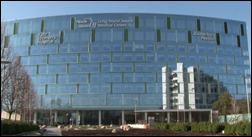
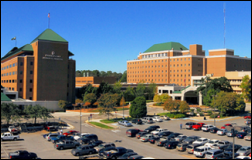
Parkland Hospital (TX) opens its newly constructed hospital, equipped with an interactive patient education system, palm-vein scanners used for patient identification, and a connected ICU that streams 18 points of data from the patient’s monitors to the EHR.

Meet the doctor bringing cheap, 3D printed medical devices to Gaza

Doctors working in the war-torn Gaza strip publish designs to create a 3D-printed stethoscope that costs 30 cents to produce and performs as well as modern commercial alternatives.

Comments Off on Morning Headlines 8/17/15

Monday Morning Update 8/17/15

August 16, 2015 News 13 Comments

Top News

image

Practice Fusion promotes Tom Langan to interim CEO, replacing founder Ryan Howard, who will move to board chair. That’s a bizarre move given that Langan has no CEO experience (he’s always been in sales) and he joined the company only a year ago. Practice Fusion is planning an IPO that could be imminent, but that plan seems faulty with this move. Sounds fishy to me, but then again that’s been said about the company’s free (as in advertiser-sponsored and data-selling) EHR business model from the beginning. They seemed awfully anxious to get Howard out of the CEO chair without having a viable replacement identified.


Reader Comments

image

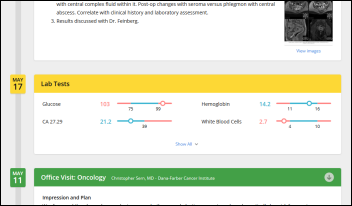
From Jed: “Re: your medical records saga. I came across PicnicHealth and I see you mentioned them back in 2014. The demo account looks pretty slick.” PicnicHealth, like CareSync, offers to manually obtain and input all of a patient’s records into its online system, which is presented in timeline form. They charge $19.95 per month for twice-yearly collection or $39.95 per month for constant updates. The company absorbs any records fees charged by providers, although it’s not clear from their site whether they obtain hospital records as well as those from practices. I mentioned PicnicHealth in August 2014, noting that they had five employees working from a San Francisco apartment or office above a Western wear store, sharing an address with the headquarters of sex party operator Kinky Salon. PicnicHealth raised $2 million in April 2015. I would be a bit concerned that its director of medical informatics, called “Doctor” throughout, is actually an ND (naturopathic doctor), although it probably doesn’t really matter for a consumer site. Still, that’s why the form “Dr. XXX” should never be used in writing, and when it is (incorrectly), I check the degree and school every time — it’s the folks trying to hide something that don’t state their actual degree or who conferred it.

From Digger: “Re: press releases. You mentioned that other sites basically rewrite them to look like news. I notice they also don’t link to them.” Of course they don’t – that would make it obvious that they did no original research or added no value at all. I always link to the source so you don’t have to take my word for it.

image

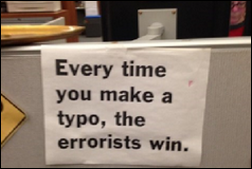
From Terry: “Re: summer Sunday haha. Saw this on LinkedIn.” As you suspected, I like it.


HIStalk Announcements and Requests

image

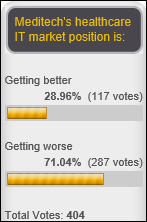
Seventy-one percent of poll respondents say Meditech’s competitive position is worsening. Reader comments include  Bread_Butter_Site: Meditech has too many platforms, got into ambulatory too late, took too long to release a Web version, and sacrificed agility to maintain their legacy platforms. PFS_Guy: Meditech offers the cheapest option for small to medium-sized facilities, but those are getting bought up by larger systems who replace it with their own system. Previous Medical User: decreasing product sales will force Meditech to raise support fees and limit product development. It’s Just Business: HCA considered moving to Epic but chose to stay on Magic.

New poll to your right or here: in which company (some publicly traded, some considering it) would you invest $10,000 if forced to choose one? I predict somebody will, as they always do, add a comment suggesting, “You should have put a ‘none of them’ response,” which of course would be irrational given the question.

Listening: new from Toto, decades-polished hard rock/progressive that stands as excellent on its own without even thinking about their late 1970s/early 1980s hits “Rosanna,” “Africa,” and “I’ll Supply the Love.” They aren’t just guys pushing 60 riding off into the sunset atop their ancient hits – the guitarist still shreds. They’re on tour now with Yes, who I say with sadness (having seen them many times as one of my favorite bands ever) is just topping off the grandchildren’s trust funds by cashing in on yet another tour as a sloppy, wooden cover band with no original members or creative energy left to do anything other than issue a zillion live albums from the band’s nearly 50 years.

Pet Twitter peeve: I’m scrolling through an endless list of utter Twitter crap, mostly retweets from the 134 people I follow (who often get maddeningly off-topic sidetracked in tweeting about baseball, a guy wearing a kilt, and pet issues like their personal airline gripes or their photography hobby) when I finally see something interesting and click on a link. Twitter then resets the very long list back to the beginning, forcing me to restart the endless scrolling. It’s time for another round of un-following.


Last Week’s Most Interesting News

  • Premier adds to its analytics arsenal by acquiring Healthcare Insights for $65 million.
  • Teladoc releases its first post-IPO quarterly report that shows a significant telemedicine usage ramp-up, but huge losses.
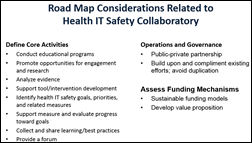
  • ONC announces that its IT safety center – assuming Congress changes its mind about not funding it — will be named the Health IT Safety Collaboratory.
  • A Vancouver newspaper’s investigation finds that IBM was fired from a large clinical systems transformation project and has been replaced with its subcontractor Cerner.
  • AHA complains that the FCC’s decision to open up some frequency bands to wireless microphones will interfere with Wireless Medical Telemetry Services in hospitals.
  • A GAO report finds that the VA and Department of Defense are missing key interoperability dates but are making progress, with the great unknown being how the DoD’s new Cerner project fits in.

Webinars

August 25 (Tuesday) 1:00 ET. “Cerner’s Takeover of Siemens: An Update (Including the DoD Project).” Sponsored by HIStalk. Presenters: Vince Ciotti, principal, HIS Professionals; Frank Poggio, president and CEO, The Kelzon Group. Vince and Frank delivered HIStalk’s most popular webinar, "Cerner’s Takeover of Siemens, Are You Ready?" which has been viewed nearly 6,000 times. Vince and Frank return with their brutally honest (and often humorous) opinions about what has happened with Cerner since then, including its participation in the successful DoD bid and what that might mean for Cerner’s customers and competitors, based on their having seen it all in their decades of experience. 

Previous webinars are on the YouTube channel. Contact Lorre for webinar services including discounts for signing up by Labor Day.


Acquisitions, Funding, Business, and Stock

image

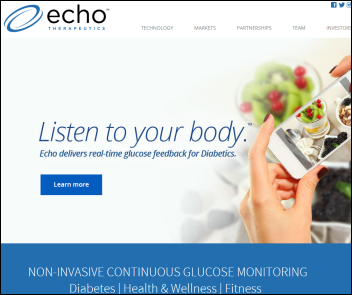
Wireless and needle-free continuous glucose monitoring technology vendor Echo Therapeutics proves the difficulty of turning an idea into a business: the company loses $11 million in the quarter after deciding to abandon plans to license its technology and instead focus on its own product development by working with a China-based technology company. Echo’s largest investor, an arbitrage fund, agreed to invest another $4 million in the company in December in return for having the company’s board replace three of its members with its own people. The fund had previously sued the company for mismanagement, while its former CEO received a settlement from the company after suing for wrongful termination. ECTE shares peaked at around $800 in 2000 but are priced at $1.51 today, valuing the company at $17 million.


People

image

Ross Martin, MD, MHA (AMIA) joins the Maryland HIE CRISP as program director.


Announcements and Implementations

image

Medhost will convene “The Nashville Experience” at Nashville’s Music City Center on September 16, featuring speakers Hayley Hovious (Nashville Health Care Council), Nicholas Webb (futurist and author), Farzad Mostashari, MD (former National Coordinator and current Aledade CEO), attorney Steve Blumenthal, and Jitin Asnaani (executive director, CommonWell). Registration is $250 including meals with an optional $150 ticket to the Taste of Nashville Gala.


Government and Politics

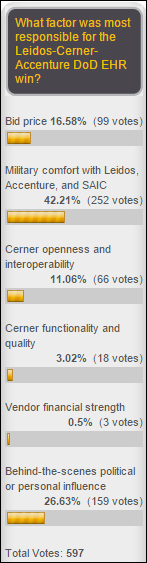
The protest period for the DoD’s EHR bid has expired, so the contract stands with the winning team of Leidos, Cerner, Accenture, and Henry Schein. Competing bidding consortia that included partners Epic and Allscripts were rumored to have been underbid by $1 billion by the ultimate winner, making their protest unlikely since a win would require them to do the work for a lot less money than they estimated.


Privacy and Security

NHS England will give chain pharmacies access to the summary care records of all patients (excepting those few who have opted out) this fall following a pilot project involving 140 pharmacies. The records, which are on file for 96 percent of the country’s residents, contain medications and diagnoses. The pharmacist is required to ask the patient for permission to view their record during their drugstore encounter. Only 15 patients responded to surveys during the pilot, so few that their input was discarded. Pharmacists have expressed some confusion about when they need the patient’s permission and how to obtain it.

image 

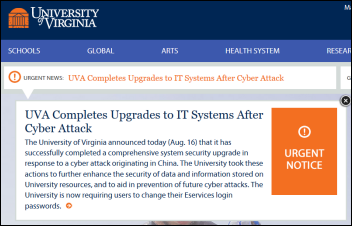
University of Virginia announces that a China-based cyberattack affected its IT systems on June 11, but didn’t affect the UVa Health System.


Technology

image

The Nashville paper suggests that hospitals and other business consider deploying beacon technology rather than apps that require installation and updates. Beacons use Bluetooth Low Energy to broadcast to nearby Android or iOS smartphones, displaying the desired information to the user and reporting back information to the business. The advantage to customers is that their location is encrypted and push notifications aren’t sent when they are out of range or their phones are turned off. Beacons cost only around $20 are even sold at Target for finding lost devices with beacons attached. Theoretically beacons could replace some hospital RFID functions or even to transmit vital signs information, although that probably strays into FDA approval territory.


Other

image

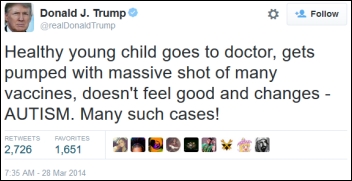
The Donald is finding that it’s hard to hide from past idiocy that lives forever in social media. Many such cases!

image

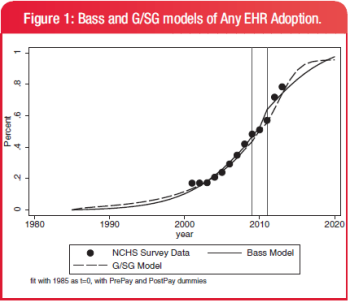
A reader sent over the full-text JAMIA article that bizarrely concludes that HITECH had no impact on EHR adoption. The public health professor authors used some kind of diffusion model to determine that EHR adoption was imitative rather than innovative, then wanders off to a seemingly unrelated conclusions about lack of positive EHR impact on productivity and interoperability. I think what they’re trying to prove is that HITECH drove EHR adoption for the wrong reasons and may have stifled innovation as a result, with the billions of taxpayer dollars spent on HITECH returning little value in clinical outcomes or costs. That’s just guessing since I really can’t figure it out. I’m surprised JAMIA’s editors let this run without asking for more clarification.

image

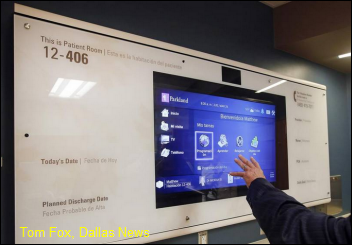
The new $1.3 billion Parkland Hospital (TX), twice the size of the old building across the street, includes an interactive patient care system, Wi-Fi throughout, palm vein scanning for patient ID, and a more comprehensive ICU monitoring system.

image

image

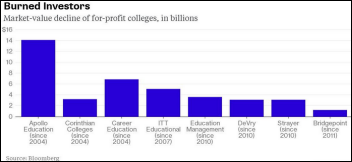
Graduate diploma and associate degree nurses of a struggling for-profit college chain break into tears at their first look at their licensure exam when they realize they were poorly trained, causing the community college exam proctors to bring in a mental health counselor and to hand out information about a suicide hotline. Brown Mackie College faces national fraud charges for using unqualified instructors (the Arizona campus instructor for anatomy and physiology is a lawyer) and skipping practical instruction for tasks such as starting an IV, which students tried to learn on their own by finding YouTube videos. Parent company Education Management Corporation lost more than $2 billion in 2012 to 2014 as the government cracked down on for-profit colleges marketing themselves hard to students who didn’t know better and who were likely to default on federal student loans, taking away 90 percent of the potential school profits. The Pittsburgh-based Education Management Corporation also operates Argosy University, The Art Institutes, and South University. Taxpayers will pay billions of dollars to cover the defaulted loans of students whose schools shut down as students demand that the federal government cancel their loans because they allowed themselves to be swindled. It’s not just a problem with for-profit colleges, as private and public colleges and universities woo students with the idea that they should rack up dozens or hundreds of thousands of dollars of debt in studying whatever interests them despite the almost certain likelihood that they’ll end up with no increase in employability or earning power as a result.

image

Combat communications airmen with the US Air Force’s 35th Combat Communications Squadron from Tinker Air Force Base, OK rebuild the Internet connectivity of a Honduras hospital as part of a joint training exercise. The hospital had been offline for three years. Tech Sgt. Jasmine Matus says the team focused on the archives room that holds paper medical records since the hospital is hoping to migrate to digital storage. A 15-member Air Force medical team also participated, supporting classroom and drinking well construction teams from the Air Force’s 823rd Red Horse Squadron from Hurlburt Field, FL and the 271st Marine Wing Support Squadron from Marine Corps Air Station Cherry Point NC.

Employees of Willis Knighton Proton Therapy Center (LA) surprise 12-year-old spinal cord tumor patient Sophia with a flash mob dance (practiced on their own time) to celebrate the completion of her advanced proton therapy.

Weird News Andy titles this story “Jettisoned Evidence,” in which scientists study how bacterial populations differ around the world by extracting samples from the sewage holding tanks of commercial jets.


Report from the Allscripts Clinical Experience
By Joe Adkins, Clinical Pharmacist
Springhill Medical Center, Mobile, AL

image

I changed my mind last week about what a healthcare IT conference is really all about.

When I made plans for the Allscripts Client Experience (ACE) held August 5-7 in Boston, I had no idea just how much my world view would be changed about what lies ahead for our industry. I planned to attend the usual technology sessions to learn about product roadmaps and functionalities.

But after experiencing the opening session, I realize what I’m doing now in my role as a clinical pharmacist is helping to build the future for healthcare’s new era of personalized medicine.

From the opening session featuring Allscripts President and CEO Paul Black along with NantHealth founder Patrick Soon-Shiong, MD, I realized that this conference isn’t just about software. It’s about saving lives, thinking big, and finding a path to predictive medicine from our current reactive medicine mode. When it comes to treating cancer and other complex diseases, genomic sequencing is going to change the game – and sooner than we know.

I was given access to some of the great thinkers on health information technology (HIT), and a view into where we’re headed not next year, but five, 10, even 15 years down the road. It was interesting to see just how far Black and Soon-Shiong are planning beyond what we even know as healthcare IT today.

What I heard them saying is that the medications we use to treat and target cancer and other complex diseases are becoming more personalized and predictive thanks to nearly commonplace access to genomic sequencing. The advances in cancer treatment alone are moving ahead by leaps and bounds that we couldn’t imagine just two years ago. All of us in HIT must step up to ensure that the clinical information needed to treat patients is available in real time at the point of care just as quickly as discoveries are made.

For example, a handful of medications treat cancer well in ways we couldn’t envision just a few years ago. Eventually, there will be several dozen types of drugs to select from, and eventually, thanks to genomic sequencing, we’ll know which one works best for each individual.

The development pathways for those types of drugs have become much, much more compressed and the industry currently has no answer for how to keep up.

But Black and Soon-Shiong provided an interesting sneak peek into the future, and they are making some bets that NantHealth has the answer. It’s a little bit of a gamble, but I think it’s a calculated, good one. We don’t know yet whether this is the direction to go, but I’m glad Allscripts and NantHealth are investigating a new path to the future of HIT.

We can save more lives if we get this right. And I’m all in for that.


Sponsor Updates

  • The SSI Group will exhibit at the 2015 MS HFMA Summer Workshop August 19-21 in Philadelphia, MS.
  • Streamline Health will ring Nasdaq’s opening bell August 19.
  • Surescripts Chief Administrative and Legal Officer Paul Uhrig is featured in a Boston Global article, “E-scrips seen as a way to combat opioid abuse.”
  • T-Systems offers “Leading with Passion: Check Your Resilience.”
  • TeleTracking posts “The Value of Time” in optimizing hospital operations.
  • TransUnion writes its first corporate social responsibility report.
  • Valence Health will exhibit at the World Congress on Health and Biomedical Informatics August 19-23 in Sao Paulo, Brazil.
  • VitalHealth Software offers, “The Patient Centered Medical Home: Will the Demonstration Projects Fail?”
  • Voalte offers a preview of VUE15, its first user experience conference, November 10-12 in Sarasota, FL.
  • West Corp. offers, “The New Healthcare Paradigm: “Think Whole Person.”
  • Xerox Healthcare explains how “Data Analytics Transforms Virginia Medicaid.”
  • ZirMed will host its 2015 UGM, ZUG 15, August 17-18 in Chicago.
  • Navicure offers “Shifting Attention: Value-Based Reimbursement Gains Traction.”
  • Nordic offers “HIT Breakdown 10 – Patient Engagement possibilities with MyChart.”
  • NTT Data posts “5 Reasons Your Cloud is About to Become a Legacy System.”
  • Oneview Healthcare offers “Yelp Comes to Healthcare.”
  • Orion Health writes “Does greater patient control equate to a better healthcare experience?”
  • Park Place International offers “Sustaining Virtual Desktop Infrastructure.”
  • Summit Healthcare reports the experience of its client Valley Regional Healthcare (NH), which is using the company’s downtime reporting system.
  • Patientco publishes a new white paper, “3 Strategies for Increasing Self-Service Patient Payments with PatientWallet.”
  • PatientKeeper offers “Relieving a Practice’s ICD-10sion.”
  • Phynd Technologies writes “Merger Mania in the Healthcare Industry.”
  • PMD submits “Digital Health: A New Haven for Physicians.”
  • RelayHealth posts a new case study, “Focusing on Patients, not Dollars, makes Cooper Bend Pharmacy unique.”
  • Sagacious Consultants offers a “Q&A with David Hammer: How Consolidation and Unified Reimbursement will Change Revenue Cycle Management.”
  • Sandlot Solutions will exhibit at the iHT2 Health IT Summit August 18-19 in Seattle.

Contacts

Mr. H, Lorre, Jennifer, Dr. Jayne, Dr. Gregg, Lt. Dan.

More news: HIStalk Practice, HIStalk Connect.

Get HIStalk updates.
Contact us or send news tips online.

125x125_2nd_Circle

Morning Headlines 8/14/15

August 13, 2015 Headlines Comments Off on Morning Headlines 8/14/15

Premier, Inc. acquires healthcare analytics leader Healthcare Insights

Premier acquires Health Insights for $65 million, a data analytics vendor focused on budgeting, forecasting, and cost analytics.

Outcome-Oriented Metrics and Goals Needed to Gauge DOD’s and VA’s Progress in Achieving Interoperability

A GAO report finds that the DoD and VA are making progress toward interoperability, but cautions that work will not be finished until sometime after 2018.

Healthcare IT: Zombie start-ups and vulture capital

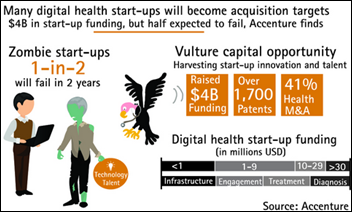
Accenture publishes a report predicting that half of all funded digital health startups will fail within their first two years of launching, contributing to a culture of vulture capitalism in which larger, more established businesses cherry pick technology and talent from failed startups.

Teladoc Announces Second Quarter 2015 Results

Teladoc announces Q2 results: revenue up 78 percent to $18.3 million, EPS –$7.20 vs. -$2.15.

Comments Off on Morning Headlines 8/14/15

News 8/14/15

August 13, 2015 News 4 Comments

Top News

image

Premier acquires financial analytics vendor Healthcare Insights for $65 million in cash. 


Reader Comments

image

From Bean Enumerator: “Re: North Shore-LIJ’s JV with Newport Health. Newport says it has experienced and innovative health IT talent, but the only person listed as working for the company has no relevant experience whatsoever. It’s a bad sign when an investment banker starts a health IT company. How did Allscripts lose this one given their supposedly tight partnership with NS-LIJ and their population health management aspirations?” I couldn’t find much of anything on Newport Health other than it’s apparently connected to Newport Private Group with a real office in Newport Beach, CA and mail drawer addresses in New York and Texas. The site contains nothing that suggests why they would make a good partner for NS-LIJ or anyone else for that matter.

From Divine: “Re: Cerner. Have you heard anything about them pulling their Intermountain team back to Kansas City?” I have not.

From ACOver: “Re: Aledade. You didn’t mention that the company is expanding.” Farzad’s Aledade has nothing to do with health IT, which some of the HIT sites can’t quite grasp in confusing his former job with his current one. Non-HIT sites with healthcare reform and insurance followers are the place for that kind of story rather than HIT sites that just reword Aledade’s press releases without adding any value whatsoever.

image

From GeneInsight SchmeneInsight: “Re: Sunquest and Partners HealthCare marketing GeneInsight software. While the GeneInsight investment may be helping, I spoke with two folks (Meridian Health, NJ and Main Line, PA) each doing due diligence on enterprise systems to include ripping out Sunquest. Epic and Cerner are being vetted at both sites.” Unverified. The challenge with being a best-of-breed vendor is that your fervent, enterprise-resistant users don’t have the final word when health systems consider buying a broad, good-enough integrated product line from a company that supports it all. Those dominoes have been falling for years – lab, radiology, and pharmacy are moving (or being pushed) to Epic and Cerner from their favorite departmental systems. I haven’t seen any evidence that patient outcomes or costs have suffered as a result despite the dire predictions from the folks in those departments whose niche systems were, in their minds, integral to their unique mission.


HIStalk Announcements and Requests

image

Welcome to new HIStalk Platinum Sponsor YourCareUniverse. The Franklin, TN-based company offers cloud-based technology and expertise in consumer relationship management, putting consumers at the center of the health system’s strategy. Patient-facing modules include YourCareHealth (personal health records), YourCareWellness (a wellness portal), YourCareEverywhere (consumer health content), and YourCareNavigation (rules-based care and wellness plans). Provider-facing technologies include a patient education content repository for clinician prescribing, community risk stratification analytics, an HIE and HIE connector, a patient transfer application, a Salesforce-integrated consumer marketing system, and a referral management system. The company also offers strategic consulting to guide organizations through transformational change. YourCareUniverse quickly signed up 38 customers after it was launched early this year, with its first go-live last month at Mount San Raphael Hospital (CO), which is using the patient engagement capabilities to promote its brand to consumers. Thanks to YourCareUniverse for supporting HIStalk.

image

The YourCareUniverse folks are excited to present their two-day “Transvisional Forum: Transforming the Health of Consumers Through Engagement” conference September 16-17 at the Music City Center in Nashville. Topics of the nine educational sessions include cultivating consumer loyalty, managing the digital patient, analyzing big data, and increasing volume. Keynote speakers are Nicholas Webb (author of “The Digital Innovation Playbook”), Farzad Mostashari, MD (former National Coordinator and CEO of Aledade), Steve Blumenthal, JD (health IT attorney and all-around HIStalk pal), and Jitin Asnaani (executive director, CommonWell Health Alliance). Early bird registration is $795 through this Saturday, August 15.

This week on HIStalk Practice: Texas physicians struggle to keep their doors open and spirits up. HelloMD pivots its telemedicine services to medical marijuana. The Senate approves the Electronic Health Fairness Act, while HHS gets a black eye over breaches. Kathryn Evans offers best practices for leveraging technology to ensure reliable disposal of hazardous drugs at physician practices. HHS Secretary Sylvia Burwell announces $169 million in funding for new health centers. CSI rolls out Doctor on Demand telemedicine services. SecurityMetrics develops a HIPAA Dashboard for physician practices.

This week on HIStalk Connect: Google X Labs partners with DexCom to develop a miniaturized, disposable continuous glucose monitor. Twitter introduces an API exposing its entire 500 million tweet history to software developers. A Cambridge, MA-based genetics startup raises a $120 million Series B to advance its research into CRISPR-Cas9 gene editing therapies. A consortium of European researchers is developing a "smart mirror" that will screen users for early signs of chronic diseases.

image

My love-hate affair with Windows 10 continues after one of its silent updates trashed my laptop’s Wi-Fi connectivity yesterday due to what I initially thought was device driver incompatibility. I spent a couple of hours trying to fix it before giving up and taking it to the repair shop (which I’ve never had to do since I can usually fix things myself). The shop owner left a message last night saying he had spent hours of analysis without figuring out a solution, with the only option he could suggest being to downgrade back to Windows 8.1. I returned his call this morning and he had experienced some sort of nocturnal epiphany and fixed the update-corrupted Windows networking components by matching up individual DLLs with versions and dates and then reinstalling and registering them one at a time. It’s back on my desk working fine. The $89 cost was worth it and I’m pretty happy to keep Win10, although I’m annoyed at the exasperation and expense of fixing the damage it caused and fearing the havoc the next update will wreak. The repair shop owner has added my problem to his Win10 issues folder, which is rather thick after just two weeks of its availability. He’s probably thrilled at the business uptick.


Webinars

August 25 (Tuesday) 1:00 ET. “Cerner’s Takeover of Siemens: An Update (Including the DoD Project).” Sponsored by HIStalk. Presenters: Vince Ciotti, principal, HIS Professionals; Frank Poggio, president and CEO, The Kelzon Group. Vince and Frank delivered HIStalk’s most popular webinar, "Cerner’s Takeover of Siemens, Are You Ready?" which has been viewed nearly 6,000 times. Vince and Frank return with their brutally honest (and often humorous) opinions about what has happened with Cerner since then, including its participation in the successful DoD bid and what that might mean for Cerner’s customers and competitors, based on their having seen it all in their decades of experience. 

Previous webinars are on the YouTube channel. Contact Lorre for webinar services including discounts for signing up by Labor Day.


Acquisitions, Funding, Business, and Stock

image

Roswell, GA-based Tea Leaves Health, which sells hospital marketing software, will be acquired for $30 million by consumer health website publisher Everyday Health. Tea Leaves Founder Reuben Kennedy will make a pile of money he doesn’t really need given his LinkedIn endorsement of a car detailing company that attends to his “five Ferraris, several Porsches, and a Lamborghini.”

image

PokitDok, which offers 16 healthcare transaction APIs for application developers, raises $34 million.

image

DispatchHealth, which offers cities a mobile acute care alternative to dispatching an ambulance in response to 911 calls, raises $3.6 million. Dispatchers route non-urgent calls to the company, which sends out cars with a clinician, a mobile lab, medical equipment, medications, and Internet connectivity. The company was previously known as True North Health Navigation. It doesn’t indicate pricing, but a FAQ on its old site suggests $200 to $300 per visit with insurance accepted.  

image

Freshly IPOed telehealth vendor Teladoc reports Q2 results: revenue up 78 percent, EPS –$7.20 vs. -$2.15. The company warns that it expects to lose $50 million in the fiscal year. Teladoc reports that 83 percent of its revenue comes from the per-member, per-month fees paid by employers, health plans, and health systems, with the remaining 17 percent coming from visit fees averaging $40. Teladoc made reference to future possibilities that include behavioral health, dermatology, second opinions, at-home testing and biometrics, post-discharge monitoring, and wellness programs.

image

In a strange business shift, HelloMD, which previously offered expensive, cash-only video visits with big-name medical specialists, relaunches itself as a seller of $49 video consultations for medical marijuana cards. Note that the site says “Approved in 20 mins,” which suggests that a minimal amount of clinical rigor is applied during the video visit. The lady on its home page indeed seems to have been relieved of all her medical suffering and is now in a blissful state of deep-breathing wellness, surrounded by clouds.


Sales

image

BayCare Health System (FL) chooses Legacy Data Access to retire its SoftMed application.

New England Healthcare Exchange Network chooses Cognizant and its TriZetto subsidiary to manage its technology infrastructure.

University Hospitals (OH) will use Sectra’s vendor-neutral archive.

Cambridge Health Alliance (MA) chooses Imprivata’s two-factor authentication for e-prescribing of controlled substances.

image

Athol Hospital (MA) will implement Medhost’s ED information system.


People

image

Cureatr appoints former Highmark CEO William Winkenwerder, Jr., MD to its board.

image

Bill Wallace (Kansas HIE, BCBS of Kansas) takes over as interim CEO of the Kansas Foundation for Medical Care.

image

University of Iowa Health Care names Maia Hightower, MD, MBA, MPH (Stanford Health Care) as CMIO. She replaces Douglas Van Daele, MD, who will serve as executive director of University of Iowa Physicians.


Announcements and Implementations

InterSystems will use technology from Validic to integrate user-generated and wearables data into its HealthShare interoperability suite.

image

HIMSS brags on its Cleveland conference center and its role in helping its vendor members market their products as it trolls for “collaborators” (i.e., paying tenants). The upcoming events list isn’t very compelling with mostly small HIMSS meetings and vendor presentations for attendees yearning for a junket to Cleveland. I’m starting to think that from my experience with health systems and member organizations that the concept of non-profit (meaning “non-taxpaying”) organizations should be eliminated.


Government and Politics

image

A GAO analysis finds that the VA and DoD are working on interoperability between their systems, but are missing dates and won’t be finished until 2018.


Privacy and Security

The Economist ponders whether databases can remain useful after being anonymized, or if in fact real anonymization is even possible given the relative ease of matching one database to another to re-identify the information. Possible solutions include releasing data only to researchers rather than to the general public, making data recipients sign use contracts, making re-identification illegal, encrypting data queries as a package so that researchers can’t see the underlying data rows, and dividing the database among multiple hosts.

image

The Greater New York Hospital Association bans filming in the city’s hospitals without the the prior written consent of patients, embarrassed by a 2012 episode of “NY Med” that captured the ED death of a patient whose family recognized him on TV despite his digitally obscured face.


Innovation and Research

I can’t see the full article since I don’t subscribe to JAMIA, but I would question the methodology of this study, which concludes that HITECH didn’t change the EHR adoption trajectory – it was just practices without EHRs imitating those that had them.


Other

image

image

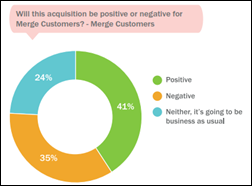
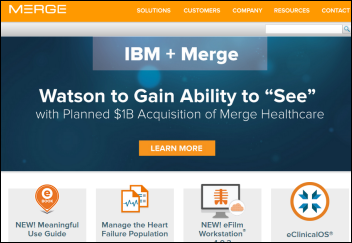
Peer60 publishes a “Rapid Reaction Report” on IBM’s planned acquisition of Merge Healthcare, collecting thoughts from 130 healthcare leaders in the two days following the announcement. One-third of the Merge customer contacts said the acquisition will be negative, but 20 percent said they will expand their use of Merge’s solutions under IBM’s ownership. Radiology and non-CIO IT folks felt pretty good about the announcement, but 60 percent of CIOs see it as negative. The main concern seems to be whether IBM is too big and too light on PACS knowledge to keep Merge customers happy while they try to sex up Watson with Merge-supplied “eyes.”

image

A British newspaper profiles EMIS Health Managing Director and former Misys Healthcare executive Duane Lawrence, noting that he was the #1 territory sales manager for Coca-Cola at 22 years of age before deciding, “I wanted to do something that was going to make a difference.” I can’t think of any positive healthcare difference Misys ever made other than getting out of it, but perhaps he has finally found his calling.

image

The shrill shrieking for Internet attention has unfortunately encouraged the proliferation of witless, intellect-insulting puns in headlines, I’ve noticed. The reporter’s credentials suggest he should know better, although maybe I’m expecting too much since he also contributes to “Painting and Wallcovering Contractor.”

image

Nice job spell-checking, Health Gorilla (or is that Health Gorrila?)

image

The former network manager of Yukon Kuskokwim Health Corporation (AK) is indicted for collecting and distributing child pornography over the hospital’s network after investigators find 29 terabytes of images and videos.

image

An Accenture analysis of 900 digital health IT startups labels half of them as “zombies” that are likely to fail in their first two years, creating a “vulture capital’ market in which better companies pick at their carcasses for people and technologies. The report identified the zombie startups as those “dead but unaware of it” companies that raised up to $50 million from 2008 through 2013 but haven’t had new financing in the past 20 months. I’m not as optimistic as Accenture that those struggling newcomers have people or intellectual property worth poaching, but we’ll see. They left out the most interesting part – the list of those companies they targeted as zombies. It would be fun to run a death pool contest.

In Australia, a state review of the new Queensland children’s hospital finds that patients were endangered in the rush to open the facility quickly before medical equipment, computer systems, and even hand sanitizers were in place. Employees didn’t meet each other for the first time until the day of opening. Everyone agrees now that the hospital needed another two months before opening its doors.

image

I winced when I saw the “register for HIMSS16” subject line in my inbox. The pushed-back Chicago version was like Daylight Saving Time – it was great having the extra weeks before last year’s conference, but now we’ll all pay as the clocks are set forward for Las Vegas and the dreaded week comes all too quickly (you’re likely an HIT newbie or anything-to-miss-work conference junkie if you actually look forward to it). Early bird member registration runs $765. Las Vegas always requires messing up the familiar schedule to accommodate the busloads of gamblers that the hotels and casinos won’t displace over the weekend, meaning the HIMSS conference runs Monday through Friday instead of Sunday through Thursday. The opening keynote will be at 5:00 p.m. Monday and the exhibit hall won’t open until Tuesday morning. HIStalkapalooza will be Monday night as usual, so hopefully the opening keynote will be as unappealing as in the past several years so people can bail out to arrive at my event on time. The closing keynote will be delivered by noted healthcare IT expert Peyton Manning, who will face a Friday afternoon audience smaller than at a Denver Broncos closed practice scrimmage. Hotel rates are, as always, jacked up for expense account attendees, with the same Treasure Island room running triple what it would cost to go next week in the miserably hot Las Vegas summer. In case you forgot, HIMSS announced earlier this year that the conference will alternate between Las Vegas and Orlando, having outgrown all the more interesting places.


Sponsor Updates

  • E-MDs offers a free ICD-10 Survival Kit.
  • Extension Healthcare offers “Market Trends: Counting Down to Alarm Safety Readiness.”
  • Galen Healthcare offers “Healthcare Interoperability Musings: Incentives, Barriers, Blocking.”
  • Access demonstrated its electronic forms and signatures solutions at Meditech South Africa’s event in Johannesburg.
  • Greenway Health posts “Electronic Prescribing of Controlled Substances: a Convenient Tool to Improve Patient Care and Safety.”
  • Hayes Management Consulting offers “Secure Messaging – Why It Makes Your Job Easier & Your Patients Happier.”
  • ZeOmega earns NCQA’s disease management certification.
  • The HCI Group publishes “4 Steps for Success: ICD-10 Training for Physicians and Non-Clinicians.”
  • HDS offers “FDA Warns of Medical Device Hacking.”
  • Cumberland Consulting Group is named to the Inc. 5000.
  • Healthfinch says “Document, Document, Document!”
  • HealthMedx offers “Proposed CMS rules set new destinations for SNFs … but where’s the path?”
  • Healthwise offers “Engaging Moms on Medicaid.”
  • Iatric Systems posts “EHR Optimization: Go-LIVE Marks the Beginning.”
  • VitalWare is named to the Inc. 500/5000.
  • Impact Advisors is recognized by KLAS for service performance.
  • InstaMed offers “In Healthcare Payments, EMV May be a Driver, But Dodging PCI is the Benefit.”
  • InterSystems and Leidos Health will exhibit at the Defense Health Information Technology Symposium August 18-20 in Orlando.
  • Liaison Technologies is named a finalist in the 2015 North Carolina Healthcare Information and Communications Alliance Health IT Transformation Awards.

Contacts

Mr. H, Lorre, Jennifer, Dr. Jayne, Dr. Gregg, Lt. Dan.

More news: HIStalk Practice, HIStalk Connect.

Get HIStalk updates.
Contact us or send news tips online.

125x125_2nd_Circle

EPtalk by Dr. Jayne 8/13/15

August 13, 2015 Dr. Jayne Comments Off on EPtalk by Dr. Jayne 8/13/15

clip_image001 

CMS continues to remind everyone that the ICD-10 transition is less than 50 days away. Unfortunately this seems to be news to some. I’ve been absolutely inundated with requests for ICD-10 training. I suspect the previous delays encouraged some providers to procrastinate, thinking there would be another reprieve. I’d be seriously surprised if there is one, so if you haven’t started prepping, now is definitely the time. My free consulting advice:

  • Every provider should have a list of his or her top 50 diagnoses and should practice documenting those diagnoses in the EHR, either with dual-coding on a live system or otherwise in a test system.
  • By specialty, providers should know what common codes might have pitfalls and be ready to diagnose them.
  • Organizations should follow their vendors’ ICD-10 readiness checklists. Some EHRs require updates and there may be nuances on how they need to be applied compared to “typical” updates given the number of moving parts for ICD.
  • Each office should identify an ICD-10 point person to handle issues on October 1.
  • Everyone should dust off their business continuity plans. Your office may be OK, but your clearinghouse or payers may not, so it pays to think through the possibilities.

clip_image002

CMS also sent out a link to the National Broadband Map, where providers can see if they will qualify for certain Meaningful Use exclusions based on the availability of broadband service. I don’t qualify for an exclusion, but the page did have some interesting information about my county, including racial and ethnic data, median income, poverty rate, and educational status.

My former employer still hasn’t figured out how to remove me from all its email distribution lists. From time to time I still receive confidential information, including physician performance data. This week I received a system-wide bulletin stating that in order to prepare for ICD-10, effective next week the hospitals are no longer going to accept only ICD-9 codes for the patient diagnosis. Physicians must include a narrative description of the diagnosis if they want their orders to be processed. Quarterbacking from afar, I think a week’s notice is pretty short and the lack of a grace period isn’t very provider-friendly. They also didn’t mention what they would do when orders are received without a narrative. Will the patient be turned away? Will someone try to contact the provider? Heaven forbid will someone whip out a code book and scribble a narrative on the order so the patient can be taken care of? I’ve asked a couple of my former colleagues to let me know how it goes.

clip_image004

I wrote a few months ago about a friend who had knee surgery and some of her experiences while I played patient advocate for a day. She still hasn’t gotten a full copy of her records, but watching the bills and insurance Explanation of Benefits statements come in has been entertaining. Although it’s been more than four months and she’s 90 percent back to normal activities, the surgeon still hasn’t billed her. The hospital sent her a mysterious refund check with no explanation even though her insurance statement indicated that she actually owed money. Given the slim margins that some of us operate on, it surprises me that anyone would leave money on the table.

The DME vendor has double billed her and two other vendors have failed to submit to insurance prior to billing her. The only vendor that seems to have its act together is the physical therapy provider. The bills arrive monthly and are detailed and accurate. Even though I’m in healthcare and understand the markups, the actual dollar amounts are pretty amazing. Overall she was billed more than $45,000 and insurance has adjusted off about 75 percent of that. She’s got tremendous insurance, so her out-of-pocket cost has been manageable. Not being in healthcare, I’m pretty sure she has decided that our entire industry is simply crazy.

PricewaterhouseCoopers (you have to love the arrangement of that name) is projecting a potential increase in healthcare costs. The cost of security for electronic systems is cited as a factor, along with new and expensive specialty drugs hitting the market. Increasing employment of physicians by hospitals is also cited, particularly with the practice of billing out physician office visits with a hospital facility charge. Team-based care is predicted to help lower or stabilize spending. Not surprisingly, they predict that patients with high-deductible plans will be more cost conscious. It will be interesting to see what the data shows in five years and whether patients who forego medical services due to high deductibles end up having larger expenditures as conditions are left underdiagnosed or undertreated. The proliferation of such plans feels a bit like an experiment being conducted on people without the benefit of an institutional review board to protect them.

What do you think about healthcare spending trends? Email me.

Email Dr. Jayne.

Comments Off on EPtalk by Dr. Jayne 8/13/15

Morning Headlines 8/13/15

August 12, 2015 Headlines Comments Off on Morning Headlines 8/13/15

Health IT Policy Committee Meeting Data Update

According to new data published at yesterday’s HITPC meeting, electronic information sharing is improving among US hospitals and practices. 76 percent of hospitals are exchanging information with outside provider organizations, up from 41 percent in 2008.

94M records stolen so far this year

Driven by massive data breaches at Anthem, UCLA Health, and others, hackers have stolen the personal medical information of 94 million patients thus far in 2015.

Mostashari’s Aledade to form new ACOs in 7 states

Farzad Mostashari, MD Former national coordinator for health IT and current startup CEO, is in the process of registering new ACOs across seven states.

Google’s Life Sciences division to build a miniature glucose tracker

Google X Labs partners with DexCom to co-develop a miniaturized, disposable continuous glucose monitor. DexCom will pay Google $100 million plus royalties for the rights to exclusively distribute the new CGM.

Comments Off on Morning Headlines 8/13/15

Readers Write: Interesting Times for ePA and EPCS

August 12, 2015 Readers Write Comments Off on Readers Write: Interesting Times for ePA and EPCS

Interesting Times for ePA and EPCS
By Connie Sinclair, RPh

image

These are interesting times in the e-prescribing world. Readers may recall that NCPCP approved the SCRIPT electronic prior authorization (ePA) transaction standard in July 2013. Several state legislatures have passed laws requiring support for the NCPDP ePA transaction 24 months after its adoption, which brings us to right now. With Missouri’s new e-prescribing of controlled substances (EPCS) rules becoming effective July 30, EPCS is allowed in all 50 states and DC, with only Vermont holding out on EPCS of Schedule II substances.

Having been involved with electronic prescription applications for almost 30 years and today tracking what states are legislating and regulating, it is gratifying to see the tremendous progress the industry has made in terms of adoption and in advancing e-prescribing to become the standard of care. Even EPCS, which was considered one of the biggest hurdles, is now legally a done deal.

EPCS not only provides better tracking and deterrence of controlled substance diversion and abuse, it also helps patients get the medication they need in a more timely manner. Orthopedic patients no longer have to hobble into their surgeon’s office when they need pain relief prescriptions. Adults and children who are on ADHD meds can also avoid unnecessary trips to the doctor for maintenance med prescriptions.

Some might say, “Whew, we’re done.” Not so fast. Although EPCS is allowed and transaction flow for controlled substance prescriptions is certainly increasing, we still have a long way to go to get adoption to levels that are equal to non-controlled substance prescribing. Anecdotal evidence suggests that many practices are unaware of the legality of EPCS, most likely because they do not yet have access to an EPCS certified version of their EHR. Also, many states are watching New York very closely to see the impact of mandatory e-prescribing and EPCS effective March 2016, and some are expected to follow suit.

While EHR vendors have been slogging their way through MU requirements, industry stakeholders, prescribers, standards organizations, and legislators have been busy advocating for prior authorization (PA) reform. As I am sure most HIStalk readers are aware, the traditional and cumbersome PA process is a huge sore spot for prescribers and patients alike who believe it hinders patients from getting needed medication per their doctors’ orders. Over the last few years, state legislators have taken note and have approved new laws requiring reform and automation of the process. 

A big part of my current job is to monitor state law. Seven states had July 2015 effective dates for some level of support for electronic prior authorization. In addition, four states already require electronic submission of the PA form and three additional states have laws on the books with future effective dates regarding ePA support. As always, the devil is in the details as each state has a different interpretation of what constitutes an electronic prior authorization. Most states impose the requirement to support ePA on the health plan, but EHR vendors should take note because at least two states impose the requirements on the provider.

As patients and as caregivers for patients as well as EHR stakeholders, we should all be encouraged by the progress of the ePA and EPCS initiatives and do what we can to keep things moving along in the right direction.

Connie Sinclair, RPh is director of the regulatory resource center of Point-of-Care Partners of Coral Springs, FL.

Comments Off on Readers Write: Interesting Times for ePA and EPCS

HIStalk Interviews Scott Bagwell, President, Experian Health

August 12, 2015 Interviews Comments Off on HIStalk Interviews Scott Bagwell, President, Experian Health

Scott Bagwell is president of Experian Health.

image

Tell me about yourself and the company.

I’ve been in the HIT industry since the late 1990s. I’ve been through a dozen acquisitions on both sides. I started out with a small company in Charlotte called Systems Associates, Incorporated — which was the SAINT hospital system — that was acquired by American Express, which became First Data, which sold to HBOC, which became McKesson HBOC. I stayed through all those acquisitions. In 2000 I went to Sunquest in Tucson, acquired by Misys Healthcare. I then went to NDC Health in Atlanta, which was mainly a healthcare claims and pharmacy transaction company, including analytics. That was acquired by PerSe, which was acquired by McKesson, and I ended up again at McKesson. I left there in 2010 and came to Passport Health Communications, which was acquired by Experian.

What is included under the Experian Health umbrella and what’s changed since Experian acquired Passport?

I came to Passport in 2010. My former boss Scott MacKenzie and I had worked together for 10 years at McKesson, NDC, RelayHealth, and all those McKesson companies.

Passport was known primarily in the early days for patient access, focusing on eligibility, address verification, those front-end components of the patient access solution. We eventually became an integrated workflow. We replaced multiple point solutions in hospitals and physician offices. In the patient access world, there could be as many as seven different vendors on the front-end process. We developed a platform called eCare Next that integrated all of the front-end functions, from ordering, scheduling, eligibility, address verification, patient estimation, quality control, and payment systems, including claims and management.

Experian Health originally acquired Search America in 2008. Search America had a strong presence in about 900 hospitals, primarily providing payment prediction services, correction software, and address verification. They were also focused on data analytics. That was Experian’s first venture into health. In 2011, they acquired Medical Present Value, which is primarily focused on physician practices. It was an Austin, TX and San Antonio-based company providing services for physician practices in large academic medical centers for over 75,000 doctors,  focused on improving reimbursement and payments from commercial providers.

That was 2011. That was Experian Healthcare. Then in 2013, Experian acquired Passport. We had a strong presence in both hospital and physician markets. Our products were focused on front office efficiency and an integrated workflow management system. Our guiding principle at Passport was payment certainty. Our systems were designed to find a payment for patient, no matter whether it was charity, Medicaid, Medicare, or third party. We focused on that guiding principle of payment certainty for every patient.

That’s who Experian Health is today. It’s a combination of those three companies: Search America, Medical Present Value, and Passport Health.

Passport was a fairly quiet company that sold for $850 million. How does a company position itself for success in ways that might not be obvious?

Passport began in the mid to late 1990s providing Medicaid eligibility systems. At its heart, it was really a technology company. It’s those roots and that focus on technology that allowed us to evolve into SaaS. We’re a SaaS solution today. That allowed us to begin to integrate those disparate modules into one integrated workflow. Our core value is client driven, first and foremost. Focusing on the customer. We believe if you focus on the customer first and foremost, everything else follows in line.

Technology was the enabler that we had in place. We had some really smart people at Passport. We encouraged teamwork. Consider the source, but I think it’s one of the best collections of employees that I have ever worked with, really dedicated to our customers. We are somewhat maniacal about customer satisfaction.

We are in a tough market. Tough with all of the variables that we deal with, but we are very metric driven. Every function that we have at now Experian Health — we began this at Passport — we measure. We measure the user experience. We get automated reports showing how our customers are actually using our products. The ultimate goal is to help those customers optimize our products and solutions.

Customer driven first and foremost, high-performing teams, and then the metrics –measuring how we do. Never, never, ever achieving “becoming good enough” because we always know there’s room for improvement.

What is the biggest change for providers trying to collect the increasing amounts of patient responsibility while maintaining their satisfaction scores?

It’s tremendous change with uncertainty over financial responsibility, the fact that a patient can’t know in advance what their service is going to cost them. There’s increasing ownership and involvement by the patient to become more engaged in that part of the healthcare system. There’s a need for transparency.

We developed a patient estimation solution several years ago. It is one of the most widely deployed out there. It’s part of that integrated workflow. The uncertainty of financial responsibility, both from the provider and the patient perspective and the payer as well, and then that need for transparency. Part of what we focus on and the challenge that we see is how to optimize performance in the midst of the growing out-of-pocket fees and the decline in reimbursement for our customers.

Reimbursement seems to have diverged, where on one end patients are expected to pay for their specific services in cash, while on the other end value-based care makes charges mostly irrelevant. Is it a challenge to deploy technology to manage both?

Yes, it absolutely is. There’s a blurring of the lines in a trend that’s moving quicker from providers to the payer side with this value-based reimbursement model that’s gaining strength in the marketplace. There definitely is a blurring of the lines. 

In post-acute care, the patient goes into a black hole today. There’s a coordinated care document in a hospital, but it rarely follows the patient. In order for the payers to bill for bundled payments, for the providers to understand what payments they should be getting, we think there’s some common good in there. We believe we’re in particularly good position to do that today. That’s the part of the growth strategy that we’re focused on right now. How we can help with that whole value-based reimbursement world, both from the provider perspective to the payer. The bulk of our business is with hospitals and physicians. We have a number of payers, but we’re a pretty provider-centric organization today.

What drives you crazy as a patient when you experience your provider’s revenue cycle first hand?

I like to know that my bills are paid. The fact that a provider would take so long to get the bill back … I just think it’s crazy to wait 60 to 90 days for the providers to get paid.

At NDC, we worked in the pharmacy transaction world. It’s a simpler transaction, but the standard in the pharmacy world is NCPDP. When we were at NDC, we used to wonder why we couldn’t auto-adjudicate for hospitals like we did for pharmacy. Granted it’s greatly more complex, but why can’t we get there? To this day I wonder why we can’t get there. We had a number of initiatives and we thought we could pull it off, but it still hasn’t happened.

What opportunities and threats do you see for provider revenue cycle?

Wherever there’s a threat, there’s typically an opportunity. Our goal is to encourage greater patient engagement. We are working on mobile applications for mobile access to our applications today. Maybe not schedule an appointment, but why can’t you request an appointment? We’re looking at greater patient engagement. We engage our clients in client-driven innovation. We’re in almost 3,000 hospitals today and we work with some of the largest systems in the country. They drive us. We like delivering client-driven innovation.

The other thing that has been one of our guiding principles is touchless processing. I talked about being metric driven and how we measure everything we do. We look at the customers who are coming closest to achieving touchless processing. You’ll never get 100 percent touchless processing, particularly in what we do in the patient access-revenue cycle world, but 85 percent of the time, we believe a transaction could go through our integrated workflow. We think that’s the ultimate goal and we’re continuing to drive to that.

We’re not there yet. We’ve got some large customers who are achieving 80 percent touchless processing, so the workflow just goes through.  The hospitals only touch the exceptions in the process. That’s where we think the opportunity will continue and we’re focused on delivering it.

Do you have any final thoughts?

I’m pretty proud of the company. We achieved #1 in KLAS last year. That in itself is a challenge because people will tell you the only way to go is down. We’ve had a contest among every department to see how we not just live on last year’s laurels, but how we can improve our customer satisfaction scores. We really are focused on that. We’re just announcing the winners. Every department, every functional part, sales and marketing, the sys ops, the devs all had nominations to see how they could personally improve our customer satisfaction scores. We’re pretty proud of what we’ve done. We’re not going to rest on our laurels moving forward.

Comments Off on HIStalk Interviews Scott Bagwell, President, Experian Health

Morning Headlines 8/12/15

August 11, 2015 Headlines 1 Comment

Newport Health Solutions, North Shore-LIJ Sign Letter of Intent to Pursue Joint Venture to Further Develop “Health Connect” Network Technology in NY

North Shore-LIJ Health System (NY) and population health vendor Newport Health Solutions have signed a joint venture agreement to deploy and further develop Newport’s platform across the North Shore-LIJ system, and then collaboratively market the platform commercially.

Health minister says he read riot act to IT leaders over megaproject problems; IBM out, Cerner in

In Canada, British Columbia’s health minister Terry Lake reports that IBM has been fired from the province’s 10-year, $640 million integrated EHR project, and that Cerner has been named as the replacement vendor.

Castlight Health Announces Second Quarter 2015 Results

Castlight Health reports Q2 results: revenue increased 76 percent to $18.5 million but the company still closed out the quarter with an adjusted net loss of $17.6 million and adjusted EPS –$0.19 vs. –$0.21.

UNC Health Care on pace to double budgeted operating income

UNC Health Care reports that it is closing out its fiscal year with $120 million in operating income, 142 percent higher than the $50 million it had forecasted. The health system gives partial credit for the financial turnaround to its now complete Epic implementation, which it says has had a positive impact on its overall financial performance.

News 8/12/15

August 11, 2015 News 6 Comments

Top News

image

image

North Shore-LIJ Health System signs a joint venture agreement with population health management system vendor Newport Health Solutions. The new company will complete the installation of Newport’s Health Connect throughout NS-LIJ, then try to sell it commercially. The only listed officer of Newport is Sophia Teng, whose experience is entirely in investment banking rather than healthcare.


Reader Comments

From EMRYouThere: “Re: EMR. One of our physicians runs two clinics for underserved patients in Guatemala. He would like to get them on an EMR but they are under-resourced. Suggestions?” The first ones I thought of were the open source OpenMRS, FreeMed, and iSante, but certainly others are available. I assume that Internet connectivity may be unreliable or slow, but if that isn’t the case, a cloud-based solution would probably require less setup and maintenance. I’ll invite readers to weigh in.

image

From Ian: “Re: Sandlot Solutions. Ten to 15 people laid off, CTO Telly Shakelford has left.” I asked Rich Helppie (above), chairman and CEO of Santa Rosa Holdings, which includes Sandlot Solutions, Santa Rosa Consulting, InfoPartners, and Fortified Health Solutions. Rich says there was no material event – the company is fine-tuning its resources to match customer needs and is still hiring. He wouldn’t comment on specific current or former employees, but Telly’s bio has been removed from the company’s executive team page.

From J. Ferguson: “Re: Dim-Sum. I just read the HIStalk Dim-Sum reports, each and every one across 2014. He is hilarious, opinionated, and smart. This guy (I am assuming here) seems bright, on his game, and very aware of how IT works in the medical environment. I am surprised that more people did not initiate, demand, or at least ask for ongoing commentary via HIStalk because it is the perfect forum for someone that is informed and willing to express an opinion. I found nothing on-line about DHMSM that was compelling or interesting until this guy.  He seems like a person that could help initiate discussions and perhaps even be a catalyst for positive change in our industry. I have been in IT for a long while, most of it in healthcare, and he is spot on with occasional sarcasm, but it is entertaining and more than 95 percent accurate. I listened to the commentary via the webinar and his knowledge is very impressive, better than people that will be managing DHMSM I’m sure. Good luck and someone should hire this guy before he wanders off into anonymity.” I agree, his writings (here, here, here, and here) and webinar were outstanding. We haven’t spoken for some time, but last I heard he was hoping I would start some regular feature or site that covers the DoD’s progress.


HIStalk Announcements and Requests

image

It appears that my unblemished streak of Windows 10 success has ended. Windows automatically applied an update to my laptop today, after which I couldn’t access the Internet. I tried everything I could think of – repairing the connection, flushing the DNS cache, tethering to my phone instead, rolling back to an older Wi-Fi adapter driver, de-installing and re-installing the Wi-Fi adapter, and checking the TCP-IP configuration. I gave up and called the computer repair place and the guy says he’s fixed half a dozen PCs with the same problem since the July 29 Win10 release date because of incompatible Wi-Fi adapter drivers. It will cost me around $100 to diagnose and fix (probably involving a new Wi-Fi adapter with a known Win10-compatible driver), I wasted a couple of hours of troubleshooting time, and I had to drag out my Win8 desktop while the laptop is in the shop. At least I was lucky enough to be home when it happened and not stuck elsewhere without an alternative.

My latest Internet gripe: those scroll-happy, overly wordy web pages that tell long stories when a short news item would suffice, especially when those painfully overwrought pieces masquerade as news but aren’t dated. 

Listening: new from Jack + Eliza, a college student duo that sounds like sunny, trippy 1960s groups like the Cowsills or Mamas and the Papas. I needed an antidote to all that cheery music, so I turned to Atlanta-based Mastodon and their upcoming tour-mates Corrosion of Conformity


Webinars

None scheduled in the next two weeks. Previous webinars are on the YouTube channel. Contact Lorre for webinar services including discounts for signing up by Labor Day.


Acquisitions, Funding, Business, and Stock

image

Medical device Olympus, whose redesigned but not FDA-approved duodenoscopes have been implicated in spreading bacteria that in some cases killed patients, reports a record-breaking $130 million profit and a 14 percent sales increase in the devices, for which it holds an 85 percent market share. The Department of Justice has subpoenaed the company over the infections. Olympus is also being investigated for corruption in South America and has set aside $450 million to settle US kickback charges. Feel free to insert your own GI tract-related punch line.

image

image

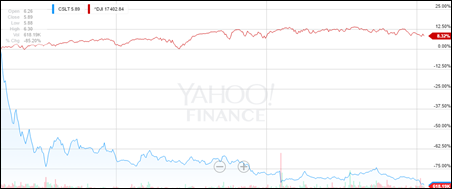
Castlight Health announces Q2 results: revenue up 76 percent, adjusted EPS –$0.19 vs. –$0.21, missing earnings expectations. Shares swirled even deeper around the bowl on the news, with the graph above showing CSLT shares dropping 85 percent since the company’s high-flying March 2014 IPO as its market cap has dropped to just over $500 million. The investor conference call covered just about every vanity metric and excuse buzzword.

image

Data integration and cloud vendor Informatica goes private in a $5.3 billion deal that includes secondary funding from Microsoft and Salesforce.

image

Sunquest’s year-old investment in Partners HealthCare subsidiary GeneInsight is paying off, the company says, as Sunquest has gained knowledge that it is incorporating into its anatomic pathology product and GeneInsight gets access to Sunquest customers.


Sales

The US Coast Guard chooses InterSystems HealthShare to provide a comprehensive, longitudinal EHR view across its disparate systems.

Christus Health will expand its use of Wellcentive’s value-based care and population health management solutions to most of its US operations.

Providence Health & Services chooses QPID Health to automatically search and interpret free text patient information for quality reports and registry forms.


People

image

Orion health promotes Cheryl McKay, PhD, RN to chief nursing officer.

image

Mark McMath (Indiana University Health Bloomington Hospital) joins Methodist Le Bonheur Healthcare as CIO.

image

PatientSafe Solutions hires Balaji Sekar (Sutherland Healthcare Solution) as CFO.


Government and Politics

image

A presentation to the Health IT Policy Committee on Tuesday seems to suggest that ONC’s proposed health IT safety center will be called “Health IT Safety Collaboratory.” I can’t decide if that’s innovative or annoying, but I’m leaning toward the latter.

image

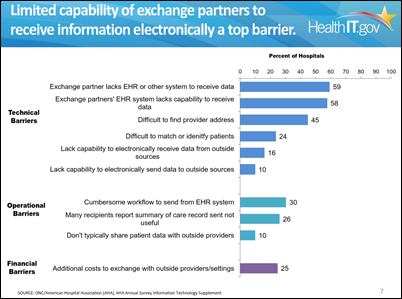
Also from Tuesday’s HITPC meeting: hospitals blame other providers for their lack of information exchange, with 59 percent saying their partners lack the technology. The AHA-sponsored survey questionably concludes that hospitals would love to exchange information with their competitors if only the technology supported it.

Meanwhile, ONC seeks a consumer-patient representative for the HIT Policy Committee and several members for the HIT Standards Committee.

A software error in the VA’s eligibility system has caused 35,000 combat veterans to be denied enrollment. Combat veterans are automatically entitled to free care for five years, but the VA’s system rejected their applications if they didn’t fill out a family income form. Nearly half of those who were rejected had applied more than five years ago, meaning their eligibility has since expired without their receiving any benefits.

image

CMS awards Booz Allen Hamilton a five-year, $202 million contract to run Healthcare.gov. 

image

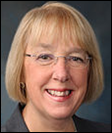
HELP Committee member Senator Patty Murray (D-WA) urges President Obama to issue an executive order that would guarantee paid sick days to 28 million federal contractors, saying, “Our nation needs it.” She could just save time and propose raising the minimum wage to $100 per hour, which will be (as is true with all government tinkering with employee compensation terms) fantastic for everybody left standing after companies lay off enough people to pay for their newly mandated largesse.


Privacy and Security

The SEC brings charges against two Ukrainian hackers who breached the systems of three press release companies (PRNewswire, Marketwired, and BusinessWire) and sold pre-release, market-moving company earnings announcements to 30 stock traders around the world who bought or sold shares minutes before the news went public, earning the traders $100 million in illegal profits. The hackers created a video of themselves breaching the systems to sell their services to the traders, who sometimes agreed to give the hackers a percentage of the profits.

image

Some patients who were among the 3.9 million whose information was exposed in the Medical Informatics Engineering breach complain that they are confused by the online form to request credit monitoring and can’t get through on the telephone hotlines provided. Experian has added call center agents and online signup tips.

A cybersecurity expert notes that it’s easy to look up physician credentials in public databases, then use them to sign up for access to the national electronic registries for births and deaths. The hacker can then file a death certificate that allows someone to collect life insurance or change the age on a birth certificate.


Other

image

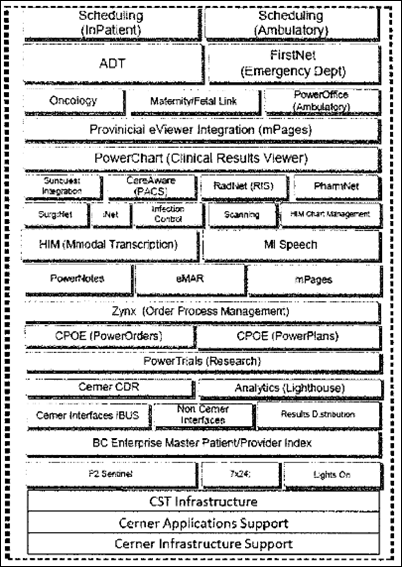
A freedom of information request by the Vancouver newspaper finds that the health minister fired IBM in April 2015 from its $640 million, province-wide clinical systems transformation project and has now replaced it with Cerner. The 10-year-old project involves 1.2 million patients. Cerner’s deal extends through 2026. IBM’s problems included unmet deadlines, too many consultants and too few informaticists involved, and the rejection by clinicians of every treatment plan IBM designed. Cerner was already providing most of the systems involved. It’s interesting that IBM gets fired as prime contractor with Cerner as its sub in Canada, then loses the US DoD bid to the Leidos-Cerner team when partnered with Epic. Equally interesting is that while large-scale health IT projects fail with alarming regularity (generally because incompetent government bureaucrats are running them), the largest successful health IT project is arguably Kaiser Permanente’s Epic rollout, which happened only after KP fired IBM. Maybe they need to rethink that old saying that nobody gets fired for buying IBM.

Medsphere President and CEO Irv Lichtenwald quotes my interview with Grahame Grieve in an editorial titled “FHIR will not save us. We need national patient identifiers.” He cites the automobile industry’s well-financed, self-serving resistance to implementing VIN (vehicle identification numbers) that stood until the federal government insisted that it be put in place to track theft, accidents, and recalls. He adds, “This is disconcerting. On the one hand, the current Congress is passing legislation like the 21st Century Cures Act that mandates interoperability without mandating a certain standard. On the other, a previous Congress avoided the responsibility of creating the prerequisite for interoperability in a national patient identifier.”

image

Brennan Spiegel, MD, MSHS, director of health services research at Cedars-Sinai, says that as a clinical front-liner, he knows digital health is harder than technology companies believe and is in fact still in its infancy. He urges rigorous research rather than self-proclaimed success to figure out where digital health really proves value and says its imperative to interview real patients, adding a tremendously insightful conclusion: “Next time you read a forward-reaching statement about the glory of digital health, ask yourself whether the author has ever placed a digital device on an actual patient.” He gives some Cedars lessons learned:

  • Streams of data often make no sense until you talk to the patient about what they were doing and feeling at the time.
  • Patients won’t wear sensors that must be applied to a specific part of the body or that are visible.
  • Some technologies, like virtual reality goggles, sound great in theory but won’t necessarily be accepted by patients in distress.
  • Patients lose devices and misuse them in ways that seem impossible.
  • Humans react to designs, even simple aspects like colors and method of attachment, in unpredictable ways.
  • Build it and they won’t necessarily come – Cedars got endless publicity (including from Apple’s Tim Cook on the stage) for its HealthKit and wearables integration with Epic, but of the 80,000 MyChart users who were invited to sign up, only 500 (or 0.6 percent) uploaded their information even once.

image

UNC Health Care (NC) reports that its operating income for the first 11 months of the year is $121 million vs. the $50 million it expected, which it attributes to the opening of new facilities, better expense management, and its implementation of Epic.

I keep reading about companies determined to be “the Uber of healthcare” in offering on-demand, smartphone-requested house calls. Note to those companies: there’s a nearly endless supply of potential Uber drivers, but not of licensed physicians. You’re going to run out of doctors (and thus runway) as everybody chases the same idea. Our medical education model restricts — intentionally or otherwise — the number of physicians it produces and many of those are opting out of practicing after graduation, which is why it seems that at least a third of the doctors listed on any insurance company’s list weren’t born in the US. Video visits hold more promise since they are geographically indifferent (other than archaic state-by-state licensure), ideal for part-timers, and more efficient overall than traipsing around to the houses of individual callers.

I find this hard to believe: American Academy of Family Physicians endorses HealthFusion’s EHR to its members, but claims it wasn’t paid to do so.

Coca-Cola funds a new non-profit that will fund the research of scientists trying to prove that obesity is due to lack of exercise, not guzzling the gallons of obscenely sugary water sold under Coke’s nameplate. One of the fund’s main researchers is the dean of the public health school of West Virginia University, located in the state that perpetually battles Mississippi for obesity bragging rights.

image

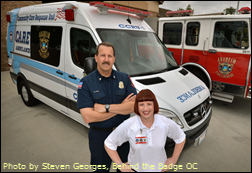
Anaheim, CA and other cities are running pilot projects in which nurse practitioners accompany paramedics on non-urgent 911 calls, diagnosing and treating the callers in their homes instead of taking them to overcrowded ED. A third of Anaheim’s medical 911 calls are from people reporting non-urgent situations such as headaches and stomach aches, all of whom would have otherwise ended up in the ED.

image

A Kim Kardashian Instagram post in which she extols (with the obligatorily enthusiastic “OMG”) the virtues of a drug sold by a company “that I’m partnering with” without including the drug’s mandatory risks earns the manufacturer an FDA warning. The company responds (I’m paraphrasing) that Kardashian is an airhead celebrity of questionably earned fame who probably thinks a package insert is an OMG-cool sexual practice and it will muzzle her appropriately. FDA insists that, “To the extent possible, corrective messaging should be distributed using the same media, and generally for the same duration of time and with the same frequency that the violative promotional material was disseminated,” which I paraphrase as, “She needs to retake that selfie holding up the warnings and precautions, preferably with the same OMG so her dimwitted followers can understand their folly in taking medical advice from a reality TV star.”


Sponsor Updates

  • First Databank adds a new column titled “Little Known Facts About Drugs” to its company blog.
  • KLAS scores Impact Advisors services as an overall 92.8 in its mid-year report.
  • The Chartis Group publishes “Consortium Model Networks: Evaluating the Potential of Collaboration.”
  • Zynx Health adds transitions of care content to its ZynxCarebook mobile care coordination solutions.
  • AdvancedMD offers “Level the financial data playing field.”
  • AirStrip offers “Midwives and Technology: Maximizing Local Care.”
  • Anthelio Healthcare Solutions CEO Asif Ahmad discusses healthcare technology trends driving development of products and services in a new video.
  • Besler Consulting offers “The CCJR is distinctly different from other bundled payment models.”
  • Billian’s HealthDATA offers “Trends in Healthcare Finance.”
  • Caradigm posts “Engaging High-Risk Patients through Care Management.”
  • CareTechSolutions’ Jim Giordano presented the “Whatever IT Takes” award to Sammi Goulet, who worked 22 hours straight on a recent go-live
  • CenterX will exhibit at the National Council for Prescription Drug Programs Workgroup Meeting August 12-14 in Minneapolis.
  • Clinical Architecture offers “A Meaningful Scavenger Hunt.”
  • CoverMyMeds posts “Pelotonia Fundraiser ‘Bump, Set, Cure!’” D
  • Divurgent offers “Why Cerner? Reflecting on DoD’s EHR Decision & The Role of Cyber-Security.”
  • PracticeUnite offers “Developing User Friendly UI for Secure Texting Patient Apps.”

Contacts

Mr. H, Lorre, Jennifer, Dr. Jayne, Dr. Gregg, Lt. Dan.

More news: HIStalk Practice, HIStalk Connect.

Get HIStalk updates.
Contact us or send news tips online.

125x125_2nd_Circle

Morning Headlines 8/11/15

August 10, 2015 Headlines Comments Off on Morning Headlines 8/11/15

Booz Allen Hamilton tapped as lead HealthCare.gov contractor, but CMS can’t quit Optum yet

Booz Allen Hamilton will replace Optum as the next lead contractor to maintain Healthcare.gov, winning a five-year contract worth $202 million. Optum will continue on in its role as quality tester while protests from losing bidders for that segment of work are resolved.

How Identity Theft Sticks You With Hospital Bills

The Wall Street Journal correlates increased health data breaches and instances of medical identity theft with the rapid adoption of EHRs across the country in a story that presents both empirical and anecdotal evidence of the cost that poor IT security compliance has on the people who are victims of medical identity theft.

Health IT Policy Committee and Health IT Standards Committee; Call for Applications

ONC is soliciting applications to fill a variety of volunteer positions on its HITPC and HITSC panels. Selected applicants will serve on the panels for three years.

President Obama Hosts the First-Ever White House Demo Day

The Obama Administration hosts the first-ever White House Demo Day, highlighting entrepreneurs working in a variety of industries, including a number of healthcare startups.

Comments Off on Morning Headlines 8/11/15

Curbside Consult with Dr. Jayne 8/10/15

August 10, 2015 Dr. Jayne 3 Comments

clip_image002 

The continued consolidation in the EHR market is often a cause of concern for physicians and hospitals that haven’t chosen the dominant players. There are still plenty of specialty-specific of niche products out there that are certified and do a great job and their users may not be looking for a change. For those groups on a mid-sized system or looking to participate more actively in value-based care programs such as accountable care organizations, the desire to move is much more tempting.

I’ve written over the last year or so about how my own health system went through the process. It was very organized and quite transparent, with all kinds of end users and technical staffers participating in the process. An initially large vendor list was narrowed to three. Then structured analysis of the products was performed. Ultimately we had on-site demonstrations and a variety of metrics were assessed and scored for each of the vendors to assist in the final decision.

We knew we had a handful of existing vendors that would be de-installed regardless of the final selection. We communicated our intent with them throughout the process. We worked with not only our designated front-line support team, but also with vendor executives to help them understand the forces that led us to the decision to sunset their product.

It was dicey at times, because even though we ultimately decided on a single vendor for ambulatory and inpatient clinicals, we ended up keeping another vendor’s enterprise financial system for inpatient. We were clear about our needs and what we felt were challenges with keeping any other individual systems and made sure that our vendors knew where we stood at all times.

Although until recently I’ve spent most of my CMIO career within a single health system, I’ve collaborated with many other CMIOs as we shared our struggles and victories. I’ve seen the system replacement process through at least half a dozen different lenses as colleagues have worked through the process. It’s always been fairly collaborative with the vendors much as my own experience was. With that in mind, it’s been interesting to watch one of my friends’ hospitals go through a fairly hostile system selection process.

He’s always been a bit of an outsider, a CMIO without the title who the administration grudgingly put into place when physicians complained about the poor quality of the EHR. Although he didn’t have formal CMIO training, he’s taken the proverbial bull by the horns the last two years and really made a place for himself. He’s led the charge for overhauling their EHR governance and standardizing the system. This has allowed for retirement of customizations that were crippling workflow while improving physician satisfaction. Training quality has improved and the IT teams have been restructured.

I’ve been mentoring him on how to work with his vendor to help his hospital move forward. Initially the primary EHR vendor (which we shared at the time) was being blamed for everything, regardless of whether it was actually relevant. I reviewed and critiqued some of his strategies for helping the users understand that a lot of their pain was self-inflicted and supported him through a couple of upgrades which he used to steer workflow to a much better path for everyone.

Knowing how hard he’s worked to improve relations with his vendor, I’ve also watched his pain as the hospital decided to migrate off the system. He’s shared some of the email threads with me as a way to vent his frustration, so I know he’s not exaggerating. The vendor was told several months ago that the hospital was looking at a potential system replacement (largely due to a failed hospital implementation of a different vendor) that would also potentially impact the ambulatory systems. Rather than be honest and open about the process, the hospital appeared to ignore the vendor’s attempts to be kept in the loop. My friend has been increasingly frustrated at the way his administration is acting, but they’ve made it clear that he doesn’t have a seat at the table.

Most frustrating is their complete disregard for the end users in this process. They haven’t done any significant engagement of physicians, nurses, or other end users. They haven’t done any demos or site visits. Instead, they went ahead and contracted with a different vendor behind closed doors. Even more offensive is that my friend found out that a contract had been signed when he saw the press release. I feel bad for my friend – that kind of treatment is just inexcusable. But I also feel bad for our formerly-mutual vendor.

Sometimes I guess customers forget that vendors are people, too. Even if you don’t want to continue to do business with a company, hopefully you have developed at least some semblance of a relationship with the people who support you and work with you on a regular basis and may have done so for years. It would be nice to let them know of your decision before a press release is issued or before they read about it on HIStalk with their morning bagel. I’m aware of the adage “it’s just business,” but sometimes it also needs to be personal. After all, we’re people.

Some of my best friends in the healthcare IT space work for vendors. Getting to know them and understanding how things work on the other side of the stream (or river, or gorge, depending on how well you mesh with a given vendor) has made me a better CMIO and a stronger advocate for my own users. Many of them have gone to work for other vendors in the industry, allowing me to be exposed to different strategies and technologies that I might not have known much about while working at Big Health System. They’ve definitely helped me be a stronger contributor to HIStalk (even though they may not know it) and for that I’m grateful. I feel sad whenever one that I’m close to moves on. I sincerely hope that our paths cross again.

I’m sad for my friend (and his hospital) and also for the vendor and its team. I hope that there is more transparency during the actual migration project, for everyone’s sake. Whether the relationship is working or not, it’s still a relationship.

Have you hugged a vendor lately? Email me.

Email Dr. Jayne.

HIStalk Interviews Mari Poledna, Telehealth ICU Nurse, Banner Health

August 10, 2015 Interviews Comments Off on HIStalk Interviews Mari Poledna, Telehealth ICU Nurse, Banner Health

Mari Poledna, RN is a telehealth ICU nurse with Banner Health of Phoenix, AZ.

Tell me about yourself and what you do.

I’m a telehealth ICU nurse. I work for Banner. I have been in this position for seven years. I have 18 years of ICU experience. I monitor ICU patients throughout the Banner healthcare system, following the model and the protocols that we’ve developed throughout the years for providing bedside monitoring and services for our sickest patient populations.

What’s it like to be working on the tele-ICU side of the house after being a bedside nurse?

In my heart of hearts, I am, I think, a bedside nurse. I still do some bedside nursing to keep my skills as clinically accurate and up to date as I can. I find that the challenges for me are to keep myself focused on how I can best support the bedside nurse and the patients in their hospital stay. I’m always trying to think like the bedside nurse.

Nurses glean a lot from their familiarity with the patient and how they are behaving. Can you do that as a telehealth nurse?

I have found that at this point in my career, with having the experience I’ve had — 18 years of seeing patients with all acuity levels — that with a video camera, honestly, I can video camera, look at a patient, and within a minute in many instances, I can tell that patient’s in trouble and that patient’s not going to last very long in terms of how they’re doing and what their physiological status is.

I feel in that sense that I can definitely get a good sense of how patients are doing. I don’t have to focus on the minutiae and the tasks of getting the things done. My viewpoint is different than what they see at the bedside, but it’s sometimes a really, really important vantage point. If you’re looking at something really up close versus stepping a few feet away, you’re still looking at the object, but you may see things that you didn’t see before.

A bedside nurse has to worry about the minutiae. They have to worry about the tasks, managing their time, other patients that they’re responsible for. Sometimes you’re just so busy and the patients are so much more ill now than they were when I started in ICU 18 years ago. Half the patients I see now in ICU would probably be dead, in all honesty. They’re very, very sick. So yes, I can look at a patient and a lot of times be able to see there’s going to be a big problem here.

The bedside nursing model seems to fluctuate every few years, with nurses first doing only clinical tasks at the top of their license, but then being made responsible for everything down to emptying patient room trash cans and sweeping floors. Now that you’re isolated from those non-clinical tasks and can concentrate purely on the intellectual activity of being a nurse, does it seem that the model is wrong?

I still do some bedside. I am emptying my trash and I’m doing certain things that other non-licensed people could do. Once again, it’s a budgetary focus, and a lot of times, the things that get cut are the things that they figure, hey, nursing can do that. We’ll just have nursing do that.

The trickle-down effect is that they’re not having the time to sit and look through trends, values, and labs. I can do that. If I see a patient and I’m worried about them, I can spend as much time as I want, 15 or 20 minutes, and look through the chart, look through results, and pull up strips. I have time to come up with a picture and a situation.

When I’m at the bedside, a lot of times I’m in this frantic mode of doing. I’m doing, I’m doing, I’m doing. Sometimes I have to stop myself and go, wait a minute, let’s think for a minute. What’s going on with this patient? What do I need to focus on right now?

I think I have a distinct advantage in that I’m still doing both versus some of the folks that I’ve worked with who are only doing the telemedicine side of it. I can see how you become more out of touch with that bedside experience. You become a little more out of touch of what they’re trying to do and what their challenges are. I like being in touch. I want to be able to be that person who can say, I know what it’s like at the bedside — I still do it.

Tell me what your day looks like.

My day will start with getting an assignment of approximately 45 patients in five to seven facilities throughout the United States. I’ll come in and I’ll pull up all my technology, which is Philips monitors at the bedside. I pull up the electronic medical record that the nurses have at the bedside. Then I pull up three different applications that help me monitor the patients. One is just alarms and vital signs. If anyone’s vitals — heart rate, blood pressure, oxygenation — goes out of range, I get a notification for that. I have one screen that’s just a video camera that I can quickly access if I want to look into a patient’s room. 

Then I have our version of an EMR. It’s not part of the patient’s medical record, but we use it to admit our patients and create a profile. Our electronic medical record has vital signs, trending, and basic labs. It’s a quick snapshot. If I tell a physician, "Please look at this patient," they can pull up a screen and have a quick snapshot of everything they might need to look at for that patient.

I start out by doing rounds, much like the physicians go in and do rounds. I look at the chart. I look at recent vitals, the labs for the day, I will video camera in a room and look at the room, look at the IV pumps, look at the oxygenation, look at the patient’s general condition. How do they look? Have they been stable? What are their hemodynamic drips? What are their oxygen requirements? Are they safe? Do they look comfortable? That takes maybe five minutes per patient. If I see issues, if I see holes, if I have questions, I’ll go and delve a little bit deeper into that patient’s chart. Then I move onto the next patient.

I’m doing my rounds, and as I’m doing that, new patients will be coming in the system. I have to quickly assess, how sick is this patient coming into this bed? Do I want to send the message to my doctor and say, "I’m getting a really sick patient into this facility — please take a look at this patient." Or is it a relatively stable ICU patient that I can put them in the system and just keep an eye on them? You’re looking at alarms. If I see what we call the red alarms, which are the most acute values, I might have to click into the Philips monitor and say, that oxygen says it’s 80 percent. Is that really true, or could that be the patient pulling the monitor off their finger? There’s a lot of false alarms. I’m sure you know what alarm fatigue is. That’s a big problem in these monitor units.

When I see critical situations, I have to look at that and go, do I need to look at this right now or is this a false alarm? Your whole day is rounding. It’s answering alarms and looking at patients. Sometimes the bedside will call us and ask for a second med verification, or we can actually verify blood. Our video cameras are so specific that I can zoom in and read a patient’s armband. I can zoom in and tell you where an endotracheal tube has been taped at the lip. If you have a nurse with a flashlight in the room, we can check pupils. We can look at anything in that room, even to the minutiae.

If you find something wrong or need to communicate with other ICU nurses or intensivists, what do you do?

A lot of times, if something really serious is happening at that point, if there’s someone physically in the room, a nurse, I’ll be talking to them. If not, I’ll usually ask one of my colleagues, hey, call over to this facility, tell them to go into Room 12.

Let’s say it’s a patient who’s hanging out of bed. They’re going to fall out of bed. We get a lot of that. Confused patient, they’ve just pulled out one of their lines, they’re bleeding all over the place. If it’s a nursing thing, I have someone else call the actual unit and I usually stay with the patient virtually — I talk to them. Believe it or not, they’re actually very receptive if we direct them, “Don’t put your other leg over the bed.” We tell them what to do or what not to do. “Put your oxygen back on” if they can physically do it. A lot of times they’ll actually do what we ask them to do.

If it’s something very serious where they need a physician, we have instant messaging to our physicians. I’m in Phoenix, they’re in Los Angeles, they could be in Tel Aviv, Israel. Sometimes, they’re in the same core that we’re in here in Phoenix. Sometimes I’ll just walk over and say, “Dr. Shah, can you go into this room right now?” Or we’re all up on instant message, so I can instant message them, and within seconds they will be able to turn their video camera on and go in the room and assist with whatever situation is going on.

In the Banner configuration, are you an extra layer of eyes and ears or have they taken nurses away from the bedside and moved the coverage to the tele-nurses?

No, they haven’t. They have not taken anything away from the bedside. One of Banner’s main initiatives is to become a leader in this industry of innovation and telemedicine. They’re using a lot of their resources. 

We’re finding that our results are great. We’re saving money and length of stay in ICU patients. We’re bettering our morbidities and mortalities by this service. No, the nurses don’t have to do anything extra. They don’t take on extra patients or extra responsibilities. We used to refer to ourselves as a second layer of care, or second pair of eyes.

Do the bedside nurses see you as a Banner colleague who happens not to be sitting there or do they have some resentment that you’re overseeing them from afar?

Initially there was a lot more resentment, I think because the education that we provided probably wasn’t as much as it should’ve been when we would first go into a facility. What we learned was if we’re going to be providing a service, it’s really important for us to go there, spend several days, meet the staff. Really educate them, explain to them that we’re not watching what they’re doing. 

We’re not looking for mistakes. We’re not micromanaging what they’re trying to do. We’re just here. If I see something that maybe for whatever reason I’m not sure if they’re aware of, or I have a concern, I approach it like, "This is something I noticed. Do you need some help? Can I get an order for you? Do you want my doctor to come in and assist you in this situation?”

Here’s a brief example. Doing my rounds one morning, I noticed an oxygen level was at 70 percent for a patient. Normal is 93 to 100. I went into the room to take a look. The respiratory therapist and nurse were in there and the patient had a tracheostomy. They were using a bag. They were bagging the patient and trying to get the oxygen levels up. They were all working very hard, but I could see that the patient was not responding. I could see the patient had had several of these episodes in the past. I said, "Just coming in to check on you guys. Can I send you my doctor? Do you need some help?" One of the nurses said, "We were thinking about calling you." I said, "No problem. Let me have my doctor come in."

When our physician went in the room, he could immediately see the patient and what was going on and see that the patient was not being able to be ventilated. He gave several medications. He paralyzed the patient, gave sedation. He spent a good amount of time to get the patient in a condition where he could be ventilated because the patient was having some heart problems with his oxygenation.

They were doing what they knew to do. They were doing the right thing, but the patient needed more. What the patient needed was an expert physician who understood how to treat this patient. We were able to prevent that patient from coding because they were going to head in the direction of a cardiac arrest. That was a great idea of how I was able to go in and say, "Can I help you?" and they said, "Sure. What can it hurt?”

They’ll think about us, but they’re in the moment, they’re treating the patient. “Oh, I better call the primary care doctor and get some orders,” but in that situation, there really wasn’t time to wait for someone to respond to a page or come in. At my workplace, we call that a save. Our physician did some extensive interventions. We were able to save that patient from deteriorating.

Do you document in the electronic health record?

We do. If we have interaction, there is a special form that’s been developed into our electronic health record. We used to be called iCare and it’s called an iCare intervention form. If I have a discussion with a nurse or I see something, then I’ll put a quick note stating what I observed and that I spoke to the nurse. It will direct me to, did I escalate it to a provider or am I just going to continue to monitor the patient?

We do put our stamp in the medical record when we do some interventions or we have conversations. We need to be able to validate how we’re contributing to the patient care. That’s an important part of our job that they’re having us focus more on. It’s like, if you’re doing things, if you’re assisting with things, make sure that you make a note. We do that.

How do you see more generalized types of video visits fitting in with in-person clinician visits?

It mirrors where we are technologically in our society. Ten years ago, I don’t think any of us thought we would be able to be on the Internet on our phones. That seemed like a strange concept. We are using a lot of our two-way video now. We project our image into a patient room so that they can see us. It’s like anything — when people are exposed to it and they get used to it, it can and I think will become more of the norm.

The only thing our ICU physicians can’t do from a remote location is, of course, lay their hands on the patient. What we’re finding is that certain procedures that used to be physician-only, now we are training advanced respiratory care practitioners to put in central lines and do certain things. There are only very few things that we would need a physician to physically do.

The technology has allowed us to have a conversation. You can physically see the physician. The video, the audio quality is great. We’re going to more and more probably see that as being the norm. Banner is expanding their telehealth programs to tele-psych, tele-wound care, behavioral health, tele-OB. You’ll probably see what Banner is doing with the telemedicine program on the horizon.

Comments Off on HIStalk Interviews Mari Poledna, Telehealth ICU Nurse, Banner Health

Morning Headlines 8/10/15

August 10, 2015 Headlines Comments Off on Morning Headlines 8/10/15

Statement on FCC Decision to Allow Unlicensed Devices in Dedicated Health Care Spectrum

AHA sends a letter to the FCC criticizing a recent decision to open up new frequency bands for use by unlicensed devices because those frequencies had previously been reserved for use by patient monitoring devices.

Usefulness of Pharmacy Claims for Medication Reconciliation in Primary Care

A comparison between pharmacy claims data and EHR medication lists finds discrepancies between the two data sources 77 percent of the time. Researchers conclude that embedding pharmacy claims data into medication reconciliation workflows within EHRs could help increase medication list accuracy.

MedicineBall is the new Moneyball. WikiLeaks meets the #data scalpel

Healthloop founder Jordan Shlain, MD comments on the recent ProPublica surgeon scorecard publication, saying “the outcomes data feedback loop is in effect; forcing the house of medicine to take a data perspective on its future.”

Texas Health Resources Names New Chief Information Officer

Texas Health Resources names Joey Sudomir as its new CIO. Sudomir has held the position as acting CIO since April, when his predecessor Ed Marx, CHIME’s 2013 CIO of the Year, departed  to join the Advisory Board Company.

Comments Off on Morning Headlines 8/10/15

Monday Morning Update 8/10/15

August 9, 2015 News 2 Comments

Top News

image

The American Hospital Association complains that the FCC’s decision to open up TV and 600mHz bands to unlicensed devices such as wireless microphones places hospitals at risk since Wireless Medical Telemetry Service uses 608-614 mHz. The FCC denied AHA’s request for a delay but agreed to increase the geographical buffer zone to several hundred meters, leaving it up for hospitals to figure out how to enforce it to avoid interference with their vital signs and cardiac monitors. Hospitals request the buffer zone by registering each device in a central AHA database that unlicensed devices are supposed to check in finding a vacant frequency.


Reader Comments

From PollyWantACracker: “Re: Yale Physician Services. I played golf with two of their MDs. They both stated that Epic had a terrible rollout, they are still trying to figure it out, and they wished they hadn’t switched.” Sounds like par for the course (no pun intended) following an EHR rollout. I thought Epic had been live there for some time, so either they still aren’t over it or perhaps their practice was implemented later in the cycle.

image

From Howdy Partner: “Re: Microsoft’s US partners of the year. Will be announced soon, but here’s the slide from their user group meeting last week announcing the winners.” Hopefully Microsoft will realize that it spelled the name of its Rising Star Partner of the Year incorrectly – Health Catalyst is two words.

From Will Bloom: “Re: cloud. I ran across your 2008 article. It was pretty forward thinking then.” I had to dig to figure out which one the reader was referring to. I think it’s this one, where I argued for SaaS and connected networks in opining:

In other words, I don’t need a loaded PC any more than I need a gas generator, a TV antenna, or an outhouse. The grid is better, cheaper, and more reliable to meet those needs. All I need is a connected appliance. But more importantly, the network adds tremendous value. You contribute a little by joining, but you get a lot in return … The Holy Grail is to pull data back out in a way that lets hospitals learn something actionable, like which antibiotics work best or which lab values correlate with genomic profiles. Few hospitals have the capability to even get that kind of information from their own locally stored data. Fewer still can tap into the collective knowledge of their fellow IDN members. And nearly none can focus the accumulated intelligence of hundreds of peers when making important clinical and business decisions … It will soon make good sense to shut down the endlessly duplicated silos of locally maintained hospital IT and get on the grid instead.

From Hacky Sacker: “Re: hackable medical devices. You mentioned the FDA’s warning about wirelessly controlled infusion pumps that can be taken over by hackers. Here’s a live demo of an actual IV pump hack as performed at the recent BlackBerry Security Summit.” The live hack of a PCA pump is sobering, although hackers have limited incentive to prowl security camera-equipped hospital hallways looking for medical equipment to hack. The demo hacker connects the PCA pump to his laptop via Ethernet, uses hacker tools to see what network services and ports the pump is using, uses unsecured Telnet and FTP to gain root access to the pump, then finds the wireless network name and unencrypted WEP passwords to log into the pump wirelessly as well. He installs malware into the pump’s firmware and changes settings freely, such as increasing the narcotic dose to a level that would have killed the attached patient.


HIStalk Announcements and Requests

image

Poll respondents minimized Cerner’s contribution to the DoD win by Leidos, Accenture, Cerner, and Henry Schein, with 42 percent of them crediting the DoD’s incumbent vendor Leidos, 26 percent saying the selection was due to political influence, and 17 percent suggesting that  DoD chose the Leidos team strictly on price. New poll to your right or here, triggered by my report on Meditech’s latest financials and the company’s ensuing response: is Meditech’s market position getting better or worse?

image

Welcome to new HIStalk Gold Sponsor Bernoulli. The Milford, CT medical device integration company has been a leader since 1989 in real-time data integration and patient safety surveillance for clinical areas, ICUs, and telemedicine settings. Bernoulli Enterprise offers an enterprise, vendor-neutral medical device integration platform; alarm management; a virtual ICU; remote patient monitoring with built-in dashboards and viewers; and analytics that provide clinical decision support and outcomes analysis. Customers with some of the company’s 35,000 installed beds include Duke University Medical Center and Memorial Sloan-Kettering Cancer Center. The company’s CEO is industry long-timer Janet Dillione, who many folks will remember used to run Siemens Health Services and Nuance Healthcare. Thanks to Bernoulli for supporting HIStalk.

image

Elementary schoolteacher Mrs. F from Wisconsin sent a thank-you note and photos about the STEM professional development library and iPad Mini we funded via vendor donations (with matching funds from the  Bill & Melinda Gates Foundation). She says neither she nor her school district could have afforded the 20 books that she’s studying on her own time this summer in a pilot project to prepare for the upcoming school year. Her school is moving toward a STEM (science, technology, engineering, math) emphasis and she and her colleagues needed to dig deeper into how to prepare students for 21st century careers. She especially liked the units on MakerSpaces, do-it-yourself labs where students are provided with tools, supplies, and space to explore their scientific interests. Vendors who donate $1,000 or more to my DonorsChoose project get a mention here on HIStalk and have their funds matched by an anonymous vendor executive benefactor.

My latest LinkedIn gripe: executives who lack advanced degrees (usually sales and CEO types) who pad their resumes with “executive coursework” from big-name schools that offer expensive weekend programs for status-sensitive executives who couldn’t be bothered to actually attend graduate school.

The update on my Windows 10 experience is as positive as I could hope – I’ve had no problems or seen any puzzling or questionable behavior. I had ongoing memory and disk problems under Windows 8 , not a big deal, but near-lockups that occasionally required bringing up Task Manager to kill piggish, long-running apps like Firefox. I haven’t had to do that under Win10 and my CPU and desk utilization are still low, dropping down to 1 percent or so when I’m not doing anything. I hadn’t thought of using the laptop’s webcam microphone to give verbal requests to Cortana, but that’s working too, although its speech recognition isn’t nearly as good as on my Amazon Echo, so I’ll stick to keyboard entry.


Last Week’s Most Interesting News

  • IBM announces plans to acquire Merge Healthcare for $1 billion to add imaging capability to Watson.
  • The Senate moves along the confirmation of Karen DeSalvo as HHS assistant secretary for health.
  • Cerner’s Q2 results miss analyst revenue expectations, sending shares down 9 percent for the week.
  • Meditech’s quarterly results show a 16 percent revenue drop on a 42 percent decrease in sales.
  • Allscripts announces flat quarterly revenue and reduced losses, with the company adding one Sunrise sale in the quarter.
  • Papworth Hospital in England changes its plans to install Epic and instead will look for a more cost-effective system.
  • Medical Informatics Engineering informs HHS that its May cyberbreach exposed the information of 3.9 million patients of dozens of provider organizations to unknown hackers.
  • CHIME announces Gretchen Tegethoff as VP of its for-profit business that charges vendors for access and sales to its CIO members.

Webinars

None scheduled in the next two weeks. Previous webinars are on the YouTube channel. Contact Lorre for webinar services including discounts for signing up by Labor Day.


Sales

Streamline Health Solutions will implement the abstracting module of its Looking Glass solution at one of its existing, unnamed customers through a channel partner.


People

image

Texas Health Resources promotes Joey Sudomir to CIO.

image

Citra Health Solutions names Eric Olofson (Olofson Group) as COO/CIO.

image

Well-being technology vendor Healthways names board chair Donato Tramuto as CEO. He’s also chairman and CEO of Physicians Interactive, which sells “digital marketing tactics” to drug companies.


Announcements and Implementations

image

Physicians’ Desk Reference updates its mobilePDR smartphone app to feature concise drug label information such as indications, dosing, adverse effects, side-by-side drug comparison, interaction checker, and pill identifier. The iOS and Android apps are free for US healthcare professionals.


Technology

Baidu, the Google-like China-based web services company, develops “Ask a Doctor,” a voice translation application that allows users to speak their symptoms to then receive a possible diagnosis and link to a nearby medical specialists. The company says its goal is “to build a medical robot.” The company is building artificial neural networks to allow it to accept voice input in the complex Mandarin language. It also hopes to connect to EHRs, which are in early deployment in China.

image

The Privacy Visor, $240 eyeglasses that trick facial recognition systems so they can’t identify the wearer in a form of visual opting out, will go on sale in Japan within a year. They were developed by a government-affiliated institute.


Other

image

A Health Affairs Blog post asks a question I’ve raised many times myself: why do veterinary practices, especially those in chain pet stores, have far better patient portals and EHRs than their medical practice and hospital counterparts?

image

This tweet makes perfect sense: why are hospitals considered the organizations best equipped to manage overall individual or population health? Not only do most people spend only a tiny fraction of their lives interacting with hospitals, hospitals don’t even make up a significant percentage of the time a given patient spends interaction with the healthcare system since most care is delivered from physician practices, pharmacies, walk-in clinics, etc. Unstated bias puts hospitals in the healthcare driver’s seat when they have always been the poorest performing, most expensive, and most consumer-indifferent healthcare resource, not to mention the one patients would most like to avoid. Hospitals made their fortunes cranking out highly paid and questionably effective procedures while blaming insurance companies and doctors for most of what’s wrong with healthcare, and now that the market is less inclined to pay for those procedures, hospitals have suddenly developed a keen interest in the overall wellbeing of their customers.

Researchers find that EHR medication lists perfectly match a patient’s claims data only 24 percent of the time, with 60 percent of the discrepancies involving EHR-profiled meds with no claim filed and 40 percent having meds for which a claim was filed that didn’t appear in the EHR.

China’s technology-driven healthcare reform has stalled, with policy changes and innovative technology startups failing to overcome inadequate IT systems, overregulation, and pressure from the dominant state-run hospitals that still deliver 90 percent of visits. Doctors are also pushing back against reform that would reduce hospital reliance on drug sales for income, saying they need the money to stay open.

image

Greece’s financial crisis has led to the formation of illegal free clinics, most of which refuse to register with the government because they say the government is legally responsible for providing the care they are delivering. The country’s 25 percent of hospitals that are not government run are struggling with patients who can’t afford their services and who are instead crowding public hospitals, which are 40 percent fuller than before despite an austerity-mandated hiring freeze that has been in effect since 2011.

Healthloop founder Jordan Shlain, MD says public reporting of surgical outcomes (“data scalpels”) is causing surgical teams to review their overall performance since every person on it contributes to outcomes (“your income will be dependent on your outcomes.”) He urges physicians to collect and analyze their own data instead of letting insurance company statisticians boil it down to their own questionable conclusion.


Sponsor Updates

  • The SSI Group and T-System will exhibit at the HFMA Region 10 Healthcare Conference August 12-14 in Colorado Springs, CO.
  • Forward Health Group creates a music video to promote its August 27 open house. It seems to have been created as a single, two-minute roving video that involved everybody in the office lip syncing, which must have been quite a coordination challenge.
  • Streamline Health will attend Medhost’s “The Nashville Experience” event September 16 in Nashville.
  • Surescripts offers “I’ll Take One Refill, Hold the Fax.”
  • SyTrue founder Kyle Silvestro is featured in a NewsReview article on data-driven healthcare.
  • TeleTracking offers “Lean Strategies in Healthcare.”
  • Fujifilm Teramedica offers “VNAs usher in new opportunities for healthcare.”
  • GetWellNetwork publishes a white paper on Carilion Roanoke Memorial Hospital’s implementation of its interactive patient care system.
  • TransUnion postss “For Healthcare Companies, Data Security is a Critical Test.”
  • Verisk Health offers “5 Tips for a Successful HEDIS Season.”
  • Versus Technology publishes “5 Myths and Misunderstandings About RTLS.”
  • The Information Difference names VisionWare a leading technology vendor in the Master Data Management space.
  • Recondo’s EmpoweredPatientAccess suite earns a most-improved score in a KLAS mid-year report.
  • VitalHealth Software will host an Executive Forum on “Healthcare Outcomes – what we measure matters” August 12 in Minneapolis.
  • Voalte offers a guest post, “Changing the Game and Getting it Right.”
  • Huron Consulting will exhibit at CORE Conference 2015 August 12-14 in Salt Lake City.
  • West Corp. offers “How Chronic Care Management is Like Going to the Gym.”
  • Xerox offers “An Overlooked Member of an Effective Healthcare Team.”
  • ZirMed offers “Diagnosing the Increase in Surprise Bills at Urgent Care Centers.”

Contacts

Mr. H, Lorre, Jennifer, Dr. Jayne, Dr. Gregg, Lt. Dan.

More news: HIStalk Practice, HIStalk Connect.

Get HIStalk updates.
Contact us or send news tips online.

125x125_2nd_Circle

Morning Headlines 8/7/15

August 6, 2015 Headlines Comments Off on Morning Headlines 8/7/15

Watson to Gain Ability to “See” with Planned $1B Acquisition of Merge Healthcare

IBM announces plans to acquire Merge Healthcare for $1 billion, with the goal of integrating Merge’s imaging services with IBM’s Watson initiative so that Watson customers could review diagnostic images with analytical assistance.

Karen DeSalvo nomination moves to the Senate floor

The Senate HELP Committee unanimously approves Karen DeSalvo, MD’s nomination for assistant secretary of HHS, a position she has filled in an interim capacity since last fall. Her nomination will now move to the Senate floor for consideration.

US hospitals urge DOJ antitrust probe of Anthem-Cigna deal

In a letter to the Department of Justice, AHA lobbies for a review of the proposed Anthem-Cigna merger, citing concerns that the shrinking payer market will inevitably reduce competition and drive up insurance costs.

Computer algorithm could aid in early detection of life-threatening sepsis

Researchers from Johns Hopkins have developed a new algorithm that detects early sepsis with an 85 percent accuracy, and without increasing false positives over current methods.

Comments Off on Morning Headlines 8/7/15

News 8/7/15

August 6, 2015 News 11 Comments

Top News

image

IBM will acquire Merge Healthcare for $1 billion, giving IBM’s Watson product “eyes” that will allow users to compare images within a single patient or across similar patients for diagnosis and treatment. IBM will pay $7.13 per MRGE share, a 32 percent premium to Wednesday’s closing price. Merge shares haven’t hit that price since late 2006, having dropped 58 percent in the past 10 years as the Nasdaq rose 135 percent.


Reader Comments

image

SNAGHTML68b489e

image

image

From Helen Waters: “Re: MEDITECH’s financial report. To reference a famous quote: ‘The reports of my death have been greatly exaggerated.’ (Mark Twain, 1897). MEDITECH is ushering in a long overdue level of energy and meaningful innovation to the EHR market. Our customers, and the EHR industry, should expect more. We are delivering disruptive innovation with fiscal responsibility, which we believe the industry very much needs. No other company is better positioned to deliver an advanced and contemporary EHR solution that addresses the needs of the market at an affordable price point. We are doing that. Let’s stop assuming that if you pay more, you get more. To what degree has that premise really been vetted? The EHR vendor community needs to work harder for your health care IT dollar. As healthcare leaders, you owe it to your organization, and as vendors, we owe it in partnership with the national agenda. We are all being called upon to drive down the cost of delivering efficient and effective quality healthcare, as well as to spend the healthcare dollar more wisely, and this includes information technology. We are fortunate to have a big seat at the EHR table, and we intend to preserve and grow it. While you note a change in our revenue and earnings, given these transformative efforts, this was not unexpected. Please know we are responsibly at the table, and we are committed to our existing customer base, providing them with an affordable option to migrate to our latest platform. We celebrate the success of our customer base and the impact they’ve had advancing the delivery of high quality healthcare for the communities they serve. At times, the EHR market feels a bit irrational relative to IT decisions and the promise of utopia often being trumpeted with selecting one system over another. We are proud of our past, executing in the present, and delivering for the future of healthcare technology.” Helen is VP of sales and marketing for Meditech and references my mention of the numbers above from its Q2 report.

From DoD: “Re: DoD contract. The actual amount Cerner got is very small and will need to be shared with Intermountain. I suspect we’ll see a tremendous amount of infighting in this group as they begin the work of delivering while not being paid until the users come online as the contract requires. That stretches payments over seven years, but the investment needs to be done up front. There are several off ramps built in and some strict deliveries. The prime will have to beat the subs into submission in order to deliver on the commitments while withholding payments for years.” Unverified. I’m not sure what Intermountain contributed to the bid or what they’ll get in return.

From Doogie: “Re: Epic. In light of news of Epic’s failures in the UK, coupled with DoD decision, Epic should probably start worrying about its public image. Judy’s silence may have worked for her in the past, but now that Epic is finally being held accountable for its shortcomings, people are going to start wondering if there’s nothing to hide why not comment? One thing is certain, Epic’s stubborn refusal to join CommonWell, among many other things, may finally be backfiring.”

From Concerned Reader: “Re: HIStalk. You’re a Cerner hater and an Epic lover. I have decided to stop reading HIStalk because your bias affects your reporting to the extent of being unethical journalism. On Monday the morning update headlined Cerner missing financial projections in the first line and Epic’s loss of the UK hospital as the very last line.” One thing I’ve learned in writing HIStalk for 12 years is that I can’t mention Epic, religion, or George Bush in any capacity without having a few hysterical, anonymous readers react like a bull instinctively charging a red cape. It doesn’t matter what I actually say — just seeing the words on the page sends a few grudge-bearing readers off screaming with fingers in ears. Lt. Dan writes the headlines and wisely chose Cerner’s earnings report (along with those of Allscripts and Meditech) as the top headline  – Cerner’s report and comments were more important given their DoD win and continued integration of Siemens Health Services. If you’re truly going to stop reading HIStalk (those who threaten almost never do), consider first Googling to see which of the cookie cutter, opinion-free alternatives covered Epic’s reported loss at Papworth – I don’t see even one, which means your only source of that negative Epic news was right here on good old unethical and Epic-loving HIStalk.

From Out of Touch: “Re: KLAS. Using ‘fighting words’ and posturing as they holding vendors hostage on a topic KLAS clearly doesn’t understand. Irrelevant. For a price, I bet.” KLAS says many large vendors “challenged KLAS to step up and be the Switzerland of interoperability,” an assignment it accepted “with trepidation” in offering to convene a meeting along with CHIME. It adds that, “Congress and federal agencies are likely to cheer when they know such action is voluntarily taken” and lists as participants CEOs of Allscripts, Cerner, Epic, Athenahealth, Meditech, and others. I’m not sure I would expect KLAS to be the Switzerland of anything or to lead the interoperability charge while selling non-interoperable vendors reports as its main focus, but we’ll see what the participants come up with.

image

From Mute Pointer: “Re: BJC. Says their downtime wasn’t due to a hack.” MP forwarded an internal email describing the results of BJC’s investigation, which concluded that “inadvertent actions within our own IS department” flooded the network and caused its protection systems to restrict application access. They’ve hired an external consulting firm to review their IT infrastructure, having not done one since 2013.

image

From Isadore Nobb: “Re: AHA Solutions. I don’t think any product has failed to earn their ‘vetting’ approval as long as the company paid. With one contract at least, they added a huge group of solutions from a business unit without any process other than to require another million dollars and a percentage of sales. Turns your ethical stomach.” Unverified.


HIStalk Announcements and Requests

image

I took a deep breath of hesitation before clicking the button to upgrade my primary PC to Windows 10. It was painless and has been perfect so far, with zero learning curve, no unexpected gotchas, and no incompatible programs. The only extra step for me was to install a new Win10-compatible version of Bitdefender Total Security 2015 and the upgrade even prompted me to do that automatically. Win10 has a good user interface and just feels right all around. Here’s what I’ve discovered so far with a small amount of use:

  • The Cortana “ask me anything” digital assistant box is useful, even if only to avoid navigating trying to find commonly used functions like Device Manager.
  • The Start Menu is not only back, it has been enhanced to display some of the Metro live tiles by default (but that can be turned off, too).
  • The Edge browser replacement for Internet Explorer feels really fast and lightweight – it brings up the HIStalk page faster than Firefox by my timing.
  • Task View does something with virtual desktops that would seem to be useful, although I haven’t done anything with it.
  • The Action Center icon rides in the system tray and offers one-click access to some settings and a log of recent system activity. The much-hated “hover to see the charms” option is gone.
  • I haven’t studied it in depth, but looking at Task Manager’s CPU and disk utilization, Win10 seems to be much more efficient. My CPU usage always seemed to be high under Win8, but it’s at 1 percent right now and so is disk utilization. I don’t know what actually changed, but everything feels snappier.

So far, I would say this is the best and easiest Windows upgrade ever. That only negative I’ve read is that some basic and not universally used features (being able to play DVDs, for example, or play ad-free Solitaire) have been removed from the basic free upgrade and are now paid options in the previously little-used Microsoft Store, raising the possibility that Microsoft plans to give away the basic OS (to previous consumer-only licensees, of course – businesses and new users still pay) and charge more for optional individual apps and services in a cafeteria-style promotion. In that regard, Microsoft may have moved Windows into the ultimate machine for generating recurring revenue instead of a one-and-done upgrade.

My server took a temporary break when I sent out the email blast about the IBM-Merge deal Thursday, just like it did last week on DoD news, which I thought was a one-time overload of readers. The result was a “you’re going to need a bigger boat” maxing out of server memory to the point it couldn’t even swap out storage even though I’m running a dedicated server with a Xeon E3 four-core processor, 16GB of memory, and solid-state disk. I’ve placed an order to upgrade the server yet again, a problem I’ll happily accept every time since it means someone is reading other than me.

My present grammar gripe, which isn’t really a gripe since it’s cutely old school: referring to a “piece of software” as though the user gets just one slice of the larger software pie.

This week on HIStalk Practice: Dr. Gregg composes a moving requiem for the patient portal. AncestryHealth Chief Health Officer Cathy Petti discusses company plans to move member health histories into EHRs. Practice Fusion ramps up executive team in preparation for IPO. WEDI survey confirms what other ICD-10 research has already shown: Physician practices aren’t ready for October 1. AMA lobbying dollars come under scrutiny. Azalea Health secures a new round of financing. Premier Physician Network goes live on Centricity. The newly formed Ohio Independent Collaborative looks to extend the livelihoods of independent physicians.

This week on HIStalk Connect: Yelp expands its consumer review platform to include Medicare performance data for hospitals, dialysis clinics, and nursing homes. The FDA issues a safety alert over cybersecurity vulnerabilities found within Hospira infusion pumps. Developers in South Korea introduce a new Braille-based smartwatch for the visually impaired. A new startup focused on women’s health unveils an earbud that tracks basal body temperature during sleep, plotting it on a paired smartphone app.


Webinars

None scheduled in the next two weeks. Previous webinars are on the YouTube channel. Contact Lorre for webinar services including discounts for signing up by Labor Day.


Acquisitions, Funding, Business, and Stock

image

Computer cart maker Capsa Solutions acquires Rubbermaid Healthcare., which offers basically the same product line.

image

Marlin Equity Partners will acquire ambulatory EHR/PM vendor AdvancedMD. ADP bought the company in early 2011. Marlin also owns e-MDs and MDeverywhere.

image

Health Catalyst acquires Health Care DataWorks, the early but lagging data warehouse vendor that was spun off from Ohio State with former CIO Herb Smaltz in 2008.

image

India-based Cognizant reports a 39 percent increase in its healthcare business is it continues to boost revenue and profits following its September 2014 acquisition of TriZetto for $2.7 billion.Health makes up 29 percent of the company’s business. Share price rose 50 percent in the past year, valuing the company at $41 billion.

image

Leidos Holdings reports Q2 results: revenue up 4 percent, adjusted EPS $0.73 $0.61, with its health and engineering segment losing $7 million vs. a loss of $482 million in the previous year. Chairman and CEO Roger Krone said of the company’s Department of Defense EHR bid, “We’re in that weird period between the award and the expiration of the protest period, so we’re not going to give a lot of guidance on what’s going on. We probably have another five days or so until we think we’re safely on the other side of the protest period.”

image

McDonald’s tries to stem its dramatic business downturn by naming Dignity Health CEO Lloyd Dean to its board. Perhaps it missed Dignity’s web page declaration that “in today’s fast-paced, fast-food society, it can be tough to make healthy decisions for kids.” McDonald’s is getting endless pressure from franchisees unhappy with out-of-touch management and lack of buyers for their underperforming locations; competition from fresher offerings at Burger King, Wendy’s, Shake Shack, and Chipotle; and strongly slumping sales.

image

India-based provider search website Practo raises $90 million in funding from investors that include Google.


Sales

image

WellStar Health System (GA) chooses Legacy Data Access to retire its McKesson Horizon applications.
image

The FDA awards genome informatics vendor DNAnexus a contract to build precisionFDA, an open source platform for sharing genetic information as part of the White House’s precision medicine initiative.


Announcements and Implementations

Extension Healthcare publishes a guide for hospitals working to comply with the Joint Commission’s January 1, 2016  alarm safety goal.

Long-term care software vendor PointClickCare adds the ability for customers to receive radiology tests results into their EHR using technology from Liaison Healthcare. 

image

Yelp will add ProPublica-produced data to its provider business listings, including ED wait times, fines paid, and readmission information. It’s a bit of an odd relationship given that ProPublica is a non-profit, public-spirited news reporting organization now turned data vendor to a commercial customer via an undisclosed business arrangement. I took the screen shot above Wednesday afternoon. Hospitals will learn that Yelpers tend to get dramatic given one bad experience even after many good ones, so it’s common for an otherwise quiet or even complimentary Yelper to suddenly go off on a one-star tirade over something only marginally related to the business’s main focus, as they often do when they can’t get a table at their favorite restaurant or find an error in their credit card charge after the fact (you really are only as good as your latest review).

HIMSS offers so many conferences that it is now co-locating them in confusing attendees about what they’re signing up for. The latest: the Connected Health Conference in chilly National Harbor, MD in November, which includes the mHealth Summit, Cyber Security Summit, and Population Health Summit. Each requires $695 registration, but signing up for one allows attending the others.
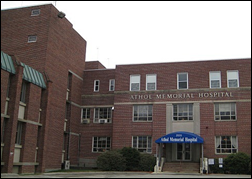


Apple’s ResearchKit gets its first international use as Stanford’s MyHeart Counts app is made available to people living in Hong Kong and UK.


Government and Politics

The Senate’s HELP committee unanimously approves the promotion of Karen DeSalvo, MD, MPH to HHS assistant secretary for health without a hearing Thursday, clearing the way for a full Senate vote following its recess through September 8. DeSalvo has been holding the assistant secretary position since October 2014 while remaining National Coordinator. In that role, she oversees the Surgeon General, communications, regional health administrators, and a number of public health related offices.

The SEC approves a new rule that will require most public companies to publish the ratio of CEO pay to its average overall employee salary.

Ireland will roll out a national patient identifier, with the automatically assigned record including a signature and photograph. According to the health minister, “It will allow us to follow patients and staff as they move through the service in a way we currently can’t. This will improve patient safety, reduce duplication and errors, and give us a huge amount of new data that we can use to make services more efficient and improve planning.”

image

The American Hospital Associates asks the Department of Justice to review possible increase in healthcare costs that the proposed merger of Anthem and Cigna could cause. Perhaps the insurance companies should ask DOJ to look at hospital mergers since those seem to be increasing opportunistic pricing as well.

image

Arizona Governor Doug Ducey announces a plan to improve the state’s Medicaid program that includes offering personal savings accounts for paying for non-covered services and an app- and portal-based member system that includes appointment reminders, disease management tools, and a provider locator. 


Innovation and Research

Johns Hopkins University researchers develop an algorithm that uses 27 factors to predict septic shock in 85 percent of cases.


Other

image

A Commonwealth Fund survey finds that 50 percent of primary care physicians see technology as improving care quality, with 28 percent feeling that HIT makes it worse. Their feelings about ACO impact are all over the place, with only 30 percent of those actually participating in an ACO saying they have a positive impact on patient care. Nearly half of PCP physicians say healthcare trends are causing them to consider early retirement.

image

Phoebe Putney Memorial Hospital (GA) will go live on Meditech on October 1 at a total project price of $50 million. It chose Meditech 6.1 in April 2014.

The family of a 14-year-old girl who died at a “Foam Wonderland” rave concert at the New Mexico State Fair sues the state, three promoters, two security firms, an ambulance company, a hospital, and two paramedics, claiming that all of them contributed to her death by their recklessness and negligence in failing to save her from her MDMA overdose.


Sponsor Updates

  • Medicity CEO Nancy Ham co-authors the HFMA article “The Financial Impact of Population Health Analytics in the Shift to Value-Based Models.”

  • Billian’s HealthData and Porter Research invite responses from professional marketers in a survey on marketing practices.
  • Hayes Management Consulting posts “Prepping Your Staff for a Successful EHR implementation, what you need to know.”
  • MBA Health Group and Netsmart will exhibit at the Allscripts Client Experience 2015 through August 7 in Boston.
  • MedAptus offers “A Glimpse into the Facility Billing World from a Split-Billing Expert.”
  • MedData offers “The Wait is Over: Welcome to ‘The Impatient Patient.’”
  • Navicure offers “Increasing Patient Payments with Clarity.”
  • Nordic offers the latest video in its “Making the Cut” series on Epic conversion planning.
  • NTT Data offers “Six Reasons You’re Not Yet on the Cloud.”
  • NVoq offers “Your iPhone has Good Dictation. Why Doesn’t Your Enterprise Application?”
  • Oneview Healthcare will host Health Facilities Design and Development Victoria August 17-19 in Melbourne, Australia.
  • Experian Health/Passport Director of Strategy and Innovation Karly Rowe is featured in Washington Business Journal’s “4 things to know about data security after the Children’s hack.”
  • PatientSafe Solutions offers “Alarm hazards as patient safety concern.”
  • UlteraDigital interviews Patientco Director of Marketing Josh Byrd about redesigning PatientWallet and the need for innovation in healthcare.
  • PatientKeeper offers “The Physics of EHR Advocacy.”
  • PerfectServe offers “Put down the phone, and other communication lessons from healthcare professionals.”
  • PeriGen piblishes “How research resulted in a checklist solution.”
  • Phynd Technologies offers “Is There a Solution to Provider Abuse of the Medicare System?”
  • PMD posts “Client-Server Architecture and Finding the Right Balance.”
  • Qpid Health offers “Getting meaning from patient records stuffed full of results and statistics.”

  • Sagacious Consultants launches a charity ad campaign for Tri 4 Schools at the Dane County Regional Airport in Madison, WI.
  • Salar Inc. offers “ICD-10 is still on track to launch October 1, 2015, will you be ready?”
  • Sandlot Solutions will exhibit at the EHealth Initiative’s IThrive Innovation Challenge August 12-13 in Washington, DC.
  • Elsevier Clinical Solutions, Impact Advisors, and Intelligent Medical Objects will exhibit at the Allscripts Client Experience through August 7 in Boston.
  • EClinicalWorks offers “1.5 Million Referrals Exchanged via P2POpen.”
  • Galen Healthcare Solutions publishes “Clinical Data: Hey, You Are Migrating Your EHR, Take Me with You!!”
  • Greenway Health offers “CMS Expands ICD-10 Grace Period Guidance.”
  • The HCI Group offers “Epic Consultant Corner: Robert Kight Interview.”
  • HDS offers “Thoughts on Meaningful Use by the Brookings Institution.”
  • Healthcare Growth Partners advises GMed on its sale to Modernizing Medicine.
  • Healthfinch offers “It’s Not Just a Formality: Formal Refill Protocols are a Must.”
  • Healthgrades recaps its second HG Challenge hackathon.
  • HealthMedx will exhibit at the Arizona Health Care Association Annual Conference & Trade Show August 18-20 in Scottsdale.
  • Holon Solutions offers “Next Up For Enabling Data Exchange: Transitions of Care Between Hospitals and Nursing Homes.”
  • Influence Health posts “Engaging Patients for Impactful Changes.”
  • Ingenious Med offers “IM1: Solving ZDoggMD’s Readmission Problem.”
  • InterSystems publishes “From Opposition to Cooperation: Payers Join the Care Team.”
  • LifeImage offers “The Top 5 Reasons to Integrate Image Exchange with Your EMR.”

Contacts

Mr. H, Lorre, Jennifer, Dr. Jayne, Dr. Gregg, Lt. Dan.

More news: HIStalk Practice, HIStalk Connect.

Get HIStalk updates.
Contact us or send news tips online.

125x125_2nd_Circle

Text Ads


RECENT COMMENTS

  1. The $50 billion Rural Health payout is welcome. In context, it's less than the total cost of the F22 raptor…

  2. RE NEJM piece: He shouldn’t future-conditional with “they can retreat, which might mean abdicating medicine’s broad public role, perhaps in…

  3. The sentence was "most people just go to Epic UGM" - that's people going to Epic's annual user conference and…

  4. Merry Christmas and a Happy New Year to the HIStalk crowd. I wish you the joys of the season!

Founding Sponsors


Platinum Sponsors


Gold Sponsors


RSS Webinars

  • An error has occurred, which probably means the feed is down. Try again later.