Veradigm Files Fiscal 2022 Form 10-K and Restated Financial Statements
Veradigm files its long-overdue 2022 10-K in an effort to regain its listing on the Nasdaq.
App-enabled house call provider DispatchHealth acquires Medically Home, which offers hospital-at-home care software and services.
Canvas Medical Launches Hyperscribe, an Open Source AI Copilot for Clinicians
EHR vendor Canvas Medical announces an open source AI copilot and ambient documentation system.

Veradigm files its long-overdue 2022 10-K, which also contains certain restated financial statements for periods in fiscal year 2022, 2021 and 2020.
Total revenue rose slightly in 2022, but EPS from continuing operations plunged from $0.92 to –$0.18, with an $86 million loss.
Nasdaq delisted MDRX in February after the company failed to file its 2022 report and multiple quarterly statements. Veradigm attributed the issue to a software error that overstated financials over six quarters.
MDRX shares, which now trade on the OTC market, have fallen 40% in the past year. The company hopes to regain Nasdaq listing status.
Veradigm spent eight months through January 2025 seeking a buyer, but received no offers from 30 interested parties.

I’m bringing back a simple way for health system technology executives to share their candid insights anonymously, effortlessly, and with influence. See this example of the result back when I called it the HIStalk Advisory Panel.
Once a month, I’ll email you one quick question. Just hit reply with your thoughts. I’ll compile responses (stripping out anything identifiable to maintain your anonymity) and write them up for HIStalk. You will be influencing industry conversations with minimal effort.
I’m looking for executives from health systems, ACOs, and hospital-owned medical practices; CMIOs, CNIOs, and clinical informaticists; health system IT leaders; and digital health executives. Provider-side only, please. Thank you for signing up to be part of the HIStalk Executive Watercooler.
Live Webinar: March 20 (Thursday) noon ET. “Enhancing Patient Experience: Digital Accessibility Legal Requirements in Healthcare.” Sponsor: TPGi. Presenters: Mark Miller, director of sales, TPGi; David Sloan, PhD, MSc, chief accessibility officer, TPGi; Kristina Launey, JD, labor and employment litigation and counseling partner, Seyfarth Shaw LLP. For patients with disabilities, inaccessible technology can mean the difference between timely, effective care and unmet healthcare needs. This could include accessible patient portals, telehealth services, and payment platforms. Despite a new presidential administration, requirements for Section 1557 of the Affordable Care Act (ACA) have not changed. While enforcement may unclear moving forward, healthcare organizations still have an obligation to their patients for digital accessibility. In our webinar session, TPGi’s accessibility experts and Seyfarth Shaw’s legal professionals will help you understand ACA Section 1557 requirements, its future under the Trump administration, and offer strategies to help you create inclusive experiences.
Live Webinar: March 27 (Thursday) noon ET. “How to Improve Clinical Workflows with AI Chart Summaries and Risk Predictions.” Sponsor: Health Data Analytics Institute. Presenters: Scott Cullen, MD, senior advisor, Health Data Analytics Institute; David Clain, chief product officer, Health Data Analytics Institute. Learn how the EHR-embedded HDAIAssist tool is transforming the ability of clinicians to pull insights out the mountains of data that have accumulated in the EHR, quickly, accurately, and cost-effectively. HDAlAssist, which is part of HealthVision, the intelligent health management system, combines AI chart summaries and granular risk predictions to quickly inform care planning decisions, especially for the most complex, high-risk patients.
Contact Lorre to have your resource listed.

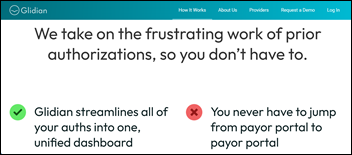
AI-powered RCM vendor Infinx marks its second acquisition of the year with the purchase of Glidian, a prior authorization automation company based in California. It acquired pathology billing and RCM business MedReceivables Advisor earlier this year.

Nordic appoints Steve Eckert, MBA (Cook Children’s Health Care System) chief growth officer.

Siemens Healthineers names John Kowal president and head of the Americas. He was formerly president of the Americas at Varian Medical Systems, which Siemens acquired in 2021.

Loyal names Nanette Oddo (Truveris) CEO.

Jeff Evans (CAE Healthcare) joins Qventus as chief commercial officer.

J. Michael Kramer, MD, MBA (Health Value Leadership) joins Cone Health (NC) as CMIO.
EHR vendor Canvas Medical announces an open source AI copilot and ambient documentation system.
NHS England informs 5,000 patients of an administrative error that blocked them from receiving routine screening reminders. The decades-long issue, initially identified on a small scale last year, stemmed from GP practices failing to fully complete patient registrations, preventing automatic transfer of data to screening reminder systems.
Blog Posts
Mr. H, Lorre, Jenn, Dr. Jayne.
Get HIStalk updates.
Send news or rumors.
Follow on X, Bluesky, and LinkedIn.
Contact us.
![]()
Glidian Joins Infinx to Advance Prior Authorization Automation and Expand Market Reach
AI-powered RCM vendor Infinx acquires Glidian, a prior authorization automation company based in California.
CareCloud Reports Record Breaking Full Year 2024 Net Income
CareCloud reports nearly flat year-over-year Q4 revenue of $28.2 million, with annual revenue down slightly to $111 million.
Cerebral Vet’s New Behavioral Health Venture Raises $6.2M
AdvocateMH, founded by former Cerebral CEO David Mou, MD, MBA will use $6.2 million in new funding to further develop its behavioral health triage software.
In this week’s Monday Morning Update, Mr. H launched a poll that asks about reader strategies to reduce the time spent in meetings that are less than productive.
After a couple of decades in healthcare IT, with many of those spent working on large and lengthy projects, I feel like I’ve attended more than my share of unproductive meetings. I can’t wait to see the poll results, but here are my recommendations for productive meetings (most of which are directly related to having high performing teams, so I’ll include those too).
There you have it, folks. It’s like a free hour of management consulting from someone who has definitely been there and done that. In the meantime, visit the poll and let us know how you tackle the issue of unproductive meetings. If you have a great story to share, leave a comment or email me.
Email Dr. Jayne.
Thanks to everyone who completed my reader survey. My readers come from all corners of healthcare and bring a wide range of experience and expectations. I’ve learned that designing by committee usually leads to something that pleases no one in the quest to please everyone, so I pay attention to individual survey responses. I earn a passing grade if readers keep coming back.
I also try not to let my enthusiasm lead me to promise more than I can deliver. Everything on the site, except for Dr. Jayne’s pieces, is put there by two people who work here less than full time. I might agree with some reader suggestions but still pass due to the reach-versus-grasp resource situation.
Some major points from the survey:
I focus on results from the “helped you do your job better” question. I would hope that the 96% of readers who say that reading HIStalk helps them do their job better will keep coming back.
I extracted some respondent comments. Italicized comments are mine.
HHS braces for a reorganization
Government insiders say that White House-mandated HHS cost cutting could reduce ASTP’s headcount from 180 to 30.
What is NHS England – and what does abolishing it mean?
In England, UK Prime Minister Keir Starmer announces plans to dissolve NHS England in a move the government estimates will save $130 million by eliminating duplicate costs.
Nimblemind.ai Raises $2.5M to Unlock AI-Ready Clinical Data for Healthcare Providers
Nimblemind.ai will use $2.5 million in new funding to further develop and market its data infrastructure platform, which enables healthcare organizations to turn unstructured clinical data into AI-ready formats.

Several private equity firms have submitted bids to acquire revenue cycle management company AGS Health at a valuation of around $1 billion.
The company’s Sweden-based investment firm owner paid $320 million for the company in 2019.
The 14,000 employees of AGS work from offices in India, the Philippines, and the US.
From Borat: “Re: Epic Research. Who needs the CDC now, Elon? Kidding, but only sort of. You can’t beat the recency of the data versus the 3-4 year delay in CDC reports.” Epic Research enables the rapid sharing of vetted insights that are drawn from Epic’s Cosmos database of the de-identified patient data from customers. As the organization puts it, unlike traditional research and publication as a journal article, “It is designed to make good data available sooner rather than perfect data available too late.” This approach bypasses the lengthy process required for peer-reviewed journal. The CDC has turned to Epic Research for help with urgent public health and pandemic-related issues that couldn’t afford delays. Also, while I’m not sure how the CDC selects its research priorities, their focus likely leans less toward publishing findings that are immediately actionable for health systems. Add in the uncertainty surrounding which CDC projects will be defunded and how many experts it may lose and Epic Research becomes even more appealing. Meanwhile, Larry Ellison has stated that Oracle Health intends to pursue similar real-world evidence research, so it will be interesting to see what they produce. Regardless, the ability to quickly analyze and apply real-world data is an increasingly valuable asset.

Poll respondents aren’t confident about the 2025 prospects of their employers, with commenters citing federal government dysfunction, potential cuts in Medicaid and Medicare, and the threat of a recession.
New poll to your right or here: What ways have you recently used to reduce the time you spend on unproductive meetings? I didn’t ask how you recognize that a meeting is going to be a waste of time, but here are some signs from years of reading the hospital conference room:
Live Webinar: March 20 (Thursday) noon ET. “Enhancing Patient Experience: Digital Accessibility Legal Requirements in Healthcare.” Sponsor: TPGi. Presenters: Mark Miller, director of sales, TPGi; David Sloan, PhD, MSc, chief accessibility officer, TPGi; Kristina Launey, JD, labor and employment litigation and counseling partner, Seyfarth Shaw LLP. For patients with disabilities, inaccessible technology can mean the difference between timely, effective care and unmet healthcare needs. This could include accessible patient portals, telehealth services, and payment platforms. Despite a new presidential administration, requirements for Section 1557 of the Affordable Care Act (ACA) have not changed. While enforcement may unclear moving forward, healthcare organizations still have an obligation to their patients for digital accessibility. In our webinar session, TPGi’s accessibility experts and Seyfarth Shaw’s legal professionals will help you understand ACA Section 1557 requirements, its future under the Trump administration, and offer strategies to help you create inclusive experiences.
Live Webinar: March 27 (Thursday) noon ET. “How to Improve Clinical Workflows with AI Chart Summaries and Risk Predictions.” Sponsor: Health Data Analytics Institute. Presenters: Scott Cullen, MD, senior advisor, Health Data Analytics Institute; David Clain, chief product officer, Health Data Analytics Institute. Learn how the EHR-embedded HDAIAssist tool is transforming the ability of clinicians to pull insights out the mountains of data that have accumulated in the EHR, quickly, accurately, and cost-effectively. HDAlAssist, which is part of HealthVision, the intelligent health management system, combines AI chart summaries and granular risk predictions to quickly inform care planning decisions, especially for the most complex, high-risk patients.
Contact Lorre to have your resource listed.
Informa’s annual financial report reveals that it paid $110 million for its July 2023 acquisition of the HIMSS conference. The last pre-COVID HIMSS tax filing from 2019 reported $43 million in conference revenue against $16 million in expenses, suggesting that Informa paid about four times earnings. That would represent about 24% of the total revenue of HIMSS.

CTG hires Dan Stoke (Nordic Global) as VP of its US healthcare business. He replaces Christine Blanchard, who is retiring.
In England, UK Prime Minister Keir Starmer announces plans to dissolve NHS England, which was established in 2013 to oversee NHS funding, policies, and major initiatives like digital health transformation. Its functions will be absorbed by the Department of Health and Social Care, a move the government estimates will save $130 million by eliminating duplicate costs. Of NHS England’s 15,000 employees, 9,000 are expected to lose their jobs as part of the transition.

Government insiders say that White House-mandated HHS cost cutting could reduce ASTP’s headcount from 180 to 30.
Blog Posts
Mr. H, Lorre, Jenn, Dr. Jayne.
Get HIStalk updates.
Send news or rumors.
Follow on X, Bluesky, and LinkedIn.
Contact us.
![]()
A federal court upholds an injunction granted last summer that prohibits senior care EHR vendor PointClickCare from blocking Real Time Medical Systems from its systems.
Global buyout funds line up for AGS Health
Four investment firms including Blackstone and General Atlantic express interest in acquiring AGS Health at a $1 billion valuation, up slightly from the valuation its parent company floated last September when announcing it would explore a sale.
TruBridge Announces Fourth Quarter and Full Year 2024 Results and Provides Initial 2025 Outlook
TruBridge announces Q4 results: revenue up 2%, EPS –$0.38 versus –$2.92. TBRG shares have gained 206% in the past 12 months, valuing the company at $415 million.
Scottish software company Craneware reports record results
Scotland-based Craneware reports record results, which it attributes to US hospitals refocusing on efficiency following the presidential election.

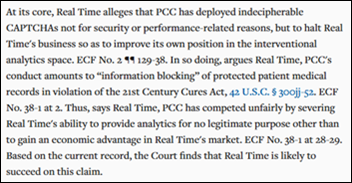
A federal court upholds an injunction that prohibits senior care EHR vendor PointClickCare (PCC) from blocking Real Time Medical Systems (RTMS) from its systems.
The injunction, which was granted in July 2024, found that PCC violated the 21st Century Cures Act by using an unsolvable CAPTCHA to block RTMS’s web-scraping bots that collect skilled nursing data for analytics.
RTMS alleges that PCC took the action after ending discussions to acquire RTMS and instead developed a competing product.
Circuit Court judges agreed that PCC’s actions were anticompetitive and were not justified by its stated cybersecurity concerns.

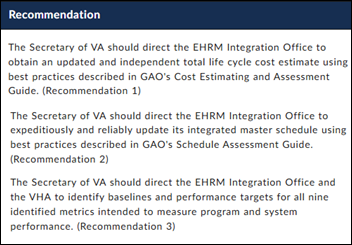
From Skeeter: “Re: VA. Is the GAO just beating a dead horse at this point? Yet another report highlights the VA’s failure to follow up on GAO’s previous recommendations related to EHR modernization, which include clarifying the project’s total cost, master schedule, or performance targets.” Meet the new report, same as the old report. Its recommendations are clear and necessary for project completion, even as the VA dodges discussions of cost, timelines, and performance targets that it is unlikely to meet. Oracle Health isn’t going anywhere, thanks to (a) a lack of viable alternatives; and (b) its no-bid selection under Jared Kushner in the first Trump administration, which likely shields it from budget cuts. Oracle has also ingratiated itself with the federal government in ways Cerner never could have, such as making former CMS Administrator Seema Verma the EVP/GM of Oracle Health. Plenty of verbal vaporware has been dispersed from all sides, none of which has scared VA leadership enough to force real commitments or change. Congressional frustration at spending up to $50 billion with little to show for it so far is palpable, most of it aimed at the VA and not Oracle Health, which the DoD implemented just fine.
From AnInteropGuy: “Re: Veradigm. Has performed a RIF, effective Friday. Not sure how many, but the Payer and Life Sciences units have been affected.” Unverified, but entirely likely.
From Barn Burner: “Re: Mark Cuban. Says companies who are buying insurance should hire a healthcare CEO to make benefits decisions rather than allowing an HR leader or insurance broker to run the program.” Cuban observes that healthcare is the only industry where a employer company’s CEO and CFO are blocked from accessing their expense data (such as prescription claims) to help make benefits decisions. Contracts bar executives from discussing pricing or supply with drug manufacturers, who themselves can’t see claims data. He also faults pharmacy benefit managers for not pressuring manufacturers and payers, advocating instead for a pass-through PBM that charges fixed administrative fees rather than profiting from hidden rebates and discounts.
From Slinky: “Re: Epic ERP. I interviewed with Neal Patterson for a position at Cerner in the 1990s. I asked why the company’s plans for Health Network Architecture didn’t include a patient accounting systems. His response was, ‘Why would I want to go spend millions of dollars on a me-too product and think that I can be successful starting with zero percent market share?” That was probably a sound short-term decision as CEO of a publicly traded company, but not so good for future-proofing since patient accounting shortcomings cost Cerner a lot of customers.
From Doggedly: “Re: CHIME. They are taking the HIMSS direction and creating a vendor-friendly media company.” CHIME is looking for a sales pro “with a hunter mentality” to “drive engagement with healthcare technology vendors.” It states HIMSS-like aspirations to “position CHIME as the premier media and research partner for healthcare technology vendors.” I don’t find this objectionable since it’s targeting salespeople. However, it’s a reminder that member organizations love revenue and largely generate it by charging supplier members for access to potential buyer members in publications and conferences, which usually makes “news” synonymous with “PR fluff.” I started HIStalk because HIMSS Media was where seldom was heard a discouraging word about vendors, i.e. the target audience for selling ads and conference booths.
Spare a minute to fill out my reader survey and you’ll be helping me make HIStalk better (or maybe prevent me from making it worse).
Thanks to Dan for letting me know that my “subscribe to updates” option wasn’t working. Fixing the issue changed the link, so click here to get email updates.

I’ve hit a weekly rhythm with these LinkedIn carousels. Let me know if you have ideas for other uses of this fun format.
Welcome to new HIStalk Platinum Sponsor Infinx. Founded in 2012, Infinx provides scalable, AI-driven solutions to optimize the financial lifecycle of healthcare providers across all functions of patient access and revenue cycle management. Our cloud-based software, powered by AI and automation, is leveraged by experienced consultants and billing specialists across the US, India, and the Philippines. We help 172,000 healthcare professionals across 4,000 facilities capture more revenue, stay ahead of changing regulations and payer guidelines, and focus on patient care. Thanks to Infinx for supporting HIStalk.
Here’s a good Infinx explainer video that I found on YouTube.
Live Webinar: March 20 (Thursday) noon ET. “Enhancing Patient Experience: Digital Accessibility Legal Requirements in Healthcare.” Sponsor: TPGi. Presenters: Mark Miller, director of sales, TPGi; David Sloan, PhD, MSc, chief accessibility officer, TPGi; Kristina Launey, JD, labor and employment litigation and counseling partner, Seyfarth Shaw LLP. For patients with disabilities, inaccessible technology can mean the difference between timely, effective care and unmet healthcare needs. This could include accessible patient portals, telehealth services, and payment platforms. Despite a new presidential administration, requirements for Section 1557 of the Affordable Care Act (ACA) have not changed. While enforcement may unclear moving forward, healthcare organizations still have an obligation to their patients for digital accessibility. In our webinar session, TPGi’s accessibility experts and Seyfarth Shaw’s legal professionals will help you understand ACA Section 1557 requirements, its future under the Trump administration, and offer strategies to help you create inclusive experiences.
Live Webinar: March 27 (Thursday) noon ET. “How to Improve Clinical Workflows with AI Chart Summaries and Risk Predictions.” Sponsor: Health Data Analytics Institute. Presenters: Scott Cullen, MD, senior advisor, Health Data Analytics Institute; David Clain, chief product officer, Health Data Analytics Institute. Learn how the EHR-embedded HDAIAssist tool is transforming the ability of clinicians to pull insights out the mountains of data that have accumulated in the EHR, quickly, accurately, and cost-effectively. HDAlAssist, which is part of HealthVision, the intelligent health management system, combines AI chart summaries and granular risk predictions to quickly inform care planning decisions, especially for the most complex, high-risk patients.
EBook: “7 Performance Benchmarks Every Medical Practice Must Know.” Sponsor: UnisLink. This free EBook lists seven critical KPIs for revenue cycle efficiency, how to calculate each one, steps to improve, and benchmarking data.
Contact Lorre to have your resource listed.
TruBridge announces Q4 results: revenue up 2%, EPS –$0.38 versus –$2.92. TBRG shares have gained 206% in the past 12 months, valuing the company at $415 million.
Scotland-based Craneware reports record results, which it attributes to US hospitals refocusing on efficiency following the presidential election.

Symplr hires Mike Valli (Optum) as chief commercial officer and Scott Sbihli, MBA (Inovalon) as chief product officer.

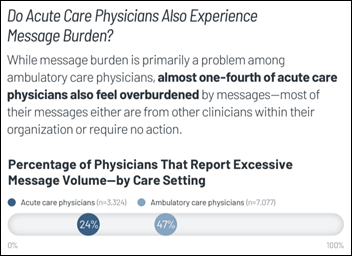
A new KLAS report on physician message burden notes that 59% of patients are using technology to communicate with their provider’s office before and after visits, which has driven message volume up and EHR satisfaction down. Recommend solutions:
Two US representatives reintroduce the Patient Matching and Transparency in Certified Health IT Act of 2025, directing the HHS secretary to convene stakeholders to establish patient matching standards and track match rates. The bill also requires ASTP to develop a minimum data set for patient matching as part of EHR certification.
Blog Posts
Mr. H, Lorre, Jenn, Dr. Jayne.
Get HIStalk updates.
Send news or rumors.
Follow on X, Bluesky, and LinkedIn.
Contact us.
![]()
It’s rare for me to see patients without having at least some discussion about the cost of care. Patients usually want to know if the medication I’ve prescribed is a generic, or if they’re in a high-deductible health plan, whether it’s going to be cheaper if they use GoodRx or another discount program.
I trained in a place where generic prescribing was not only encouraged but expected, so many of these conversations are fairly straightforward unless I’m having to recommend a second- or third-line medication after others haven’t worked, or if I’m stuck prescribing one that I know tends to have coverage issues. Patients are becoming more financially savvy when it comes to healthcare costs, which is good considering that patients in the US borrowed $74 billion to cover healthcare costs last year. The US leads the world in medical bankruptcies, and according to recent data, nearly a third of patients are “very concerned” about the possibility of medical debt.
EHRs have become better at embedding data about drug pricing, sometimes putting it at the point of prescribing. This can be cool when implemented well, but when implemented poorly, it’s annoying. For example, if most of the medications that I prescribe cost less than $15 because they’re generic, I really don’t want to see warnings telling me that the drug is going to cost $6 or $8 or whatever it is. EHR-embedded data is also less than helpful when it doesn’t take into account things like deductibles or coinsurances or patients who have both primary and secondary insurance coverage. Maybe we can put some AI resources to work making that information more actionable and also more accessible.
The University of Michigan is planning to reach rural patients through the use of AI-powered mobile clinics. The aspirational goal is one where “general practitioners with AI help could make diagnoses, run and interpret tests, and perform procedures like specialists.” The project is in partnership with the Advanced Research Projects Agency for Health (ARPA-H) and would use vehicles “equipped somewhere between a doctor’s office and hospital.” Even without consideration of the AI element, the devil is in the details for something like this. What kind of lab services will be performed? Is it considered a moderate complexity lab? What is the location of service? How will regulators think about a facility that is constantly on the move?
Those interviewed in the article note that AI agents would “coach” physician assistants and nurses to performed more advanced procedures. I’d like to offer a wild solution to help increase the numbers of advanced procedures that are done across the US. How about we allow family physicians (MDs and DOs) to perform the procedures for which they were trained?
I trained in a high-acuity residency program and developed the skills to perform a variety of outpatient surgical procedures, endoscopies, and even C-sections. But there’s not a hospital in a 100-mile radius that would allow me to have privileges to perform any of those unless I’m a member of a residency program’s faculty. It seems that if we could leverage the skills that highly trained physicians are actually mastering during their training, we could help more patients without the expense of developing and implementing AI. Just a thought. But of course, AI is a lot sexier than allowing family physicians to operate at the top of their licensure, so there you have it.
I was excited to learn that progress has been made in having state licensing boards and hospital credentialing offices remove certain questions from their applications that raise the risk that professionals won’t seek mental health services when they are needed. The Dr. Lorna Breen Heroes’ Foundation has been instrumental in promoting this effort to reduce the stigma of mental health issues among licensed clinicians. The foundation honors the memory of Dr. Lorna Breen, a long time emergency physician who died by suicide during the spring of 2020 while serving on the front lines of COVID. Many of us were in very dark places during that time as well as during other points in our careers. Thank you to the foundation for working to make sure that physicians can get help when they need it rather than worrying whether they will lose their licenses.
I missed this article the first time through the inbox, but I was glad to have caught it later. An original investigation that was published in JAMA Network Open looked at “Clinician Experiences With Ambient Scribe Technology to Assist With Documentation Burden and Efficiency.” The study follows roughly four dozen clinicians at the University of Pennsylvania Health System during two months in 2024, when they were using the DAX Copilot AI tool. Interesting tidbits: while use of the tool correlated with improved efficiency, reduced cognitive burden, and improved patient engagement during appointments, there was “mixed feedback regarding the length and quality of ambient scribe-generated notes.” Some users noted high error rates, but it’s unclear if that has any association with clinician subspecialty since there were 17 specialties represented among the 46 participants.
Notes were about 20% longer, which isn’t always a good thing, although sometimes having more details can make the difference long term. Multiple clinicians felt that the time they spent editing the notes balanced out any time savings during the workday. One of the most interesting tidbits, at least for this data nerd, was that net promoter scores (NPS) were all over the map. Thirteen clinicians were promoters, 11 were passive, and 13 were detractors, leading to an overall NPS of zero. It’s certainly not the overwhelming victory that those who are paying for it were likely hoping for.
I’d love to see this kind of project reproduced in single-specialty cohorts, matching for patient complexity and other factors. I’d also like to see it done at more than one academic institution. Another study limitation was the fact that all participants opted in, which certainly doesn’t reflect how I see physicians embracing (or not embracing) new technologies in the real world.
Have you personally used ambient documentation tools, and what did you think of them? Leave a comment or email me.
Email Dr. Jayne.
Applied behavior analysis software vendor Motivity raises $27 million and announces new leadership.
Greenspace Health, which offers measurement-based care software for mental healthcare providers, secures Series B funding from ABS Capital Partners.
Knack RCM acquires PPM Partners, an Alabama-based company that offers anesthesia billing and practice management services.
OpenAI introduces a developer platform for building AI agents that includes tools to perform web and file searches and to perform web-based tasks similar to its Operator browser.
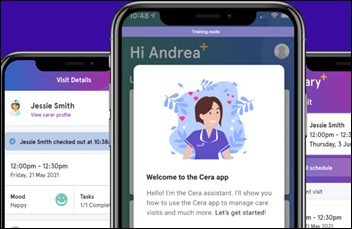
NHS England is deploying an AI tool that can predict a patient’s risk of falling with 97% accuracy. The software, which was developed by Cera, is also being used to predict deterioration in home care patients.
A study finds that patients slightly preferred AI-generated responses to their portal questions over human-written ones, but reported lower satisfaction when told that the response came from AI. The authors conclude that patients should be told that AI was used since it didn’t reduce satisfaction significantly. They also polled patients on their preferred wording of the disclosure, with the winner being, “This message was written by Dr T. with the support of automated tools.”
Memorial Sloan Kettering Cancer Center completes a pilot of Abridge’s AI ambient documentation and plans a broad rollout over the next two years.
AI drug discovery company Insilico Medicine deploys a “bipedal humanoid” to train AI systems on the tasks performed by laboratory scientists. They are also using the robot, called “Supervisor,” to assist with lab tours, telepresence, and lab supervision.

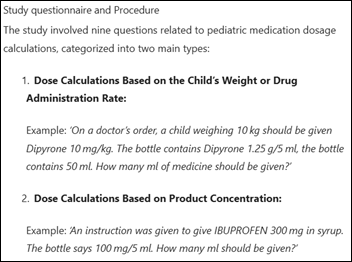
Researchers find that LLMs show promise in reducing pediatric medication dosage errors. A medication ChatGPT and Claude were more accurate and faster than pediatric and neonatal nurses, while Llama performed poorly due to an apparent weakness in its calculation logic. The authors recommend evaluating specific LLMs rather than treating all of them as equally capable.
LLMs exhibit “anxiety” when processing emotional mental health topics like interpersonal violence and accidents. Researchers found that mindfulness-related prompts could help regulate the model’s responses, similar to how human therapists manage their emotional reactions while maintaining empathy.
Stanford researchers use AI to identify a naturally occurring prohormone that is as effective as Ozempic in weight loss without the side effects of nausea, constipation, and loss of muscle mass.

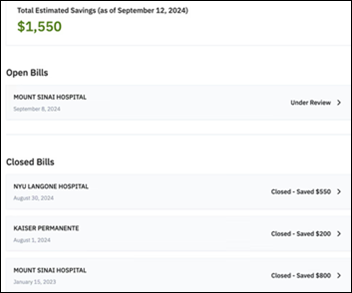
Patients are using LLMs to analyze their hospital bills for charges that exceed state and national averages. New startup OpenHand is offering similar analysis, after which the company negotiates with providers to lower the bill.

TikTok users report that AI-generated deepfake doctors are spreading medical advice on topics like surgery, diet, and cosmetic procedures. Some use the Captions app to create and edit AI videos that can be easily replicated with different messages, which is how the users noticed the fakes.
A reader asked for my take on Epic’s plans for agentic AI. I have no inside knowledge, so this is pure spitballing.
Some background. Agentic AI acts independently to achieve goals without human oversight while responding dynamically to its environment. Think self-driving cars. It renders robotic process automation (RPA) obsolete, as RPA relied on rigid rules and predefined inputs. It’s hard to believe it’s been just four years since Olive was health tech’s hottest startup.
Non-agentic AI, by contrast, requires human direction. Chatbots are an example. They answer questions and retrieve information but don’t take external actions like scheduling appointments. In between are limited function, app-specific copilots that assist users without initiating decisions.
The business case for agentic AI is workflow automation, reduced labor costs, real-time monitoring (cybersecurity, throughput, resource allocation), and rapid feature deployment. Instead of modifying core systems via traditional coding, testing, and releases, AI can introduce new functionality faster and allow customization at the client level. It also streamlines integrations with external systems. All of this is theoretical, of course, and is heavily dependent on the vendor and user organization.
Epic has already embedded non-agentic AI across its platform, with use cases like drafting patient replies, simplifying documents, automating prior authorizations, and enabling voice control. These are quickly becoming table stakes with AI’s ubiquity.
Agentic AI is the logical next step, and Epic seems to be out front, although Oracle Health’s plans aren’t quite clear yet either. Early implementations will likely focus on low-risk back-office tasks, then expand into clinical support, population outreach, and automated reminders. Unlike third-party AI vendors that rely on brittle workarounds like screen scraping, Epic can integrate AI natively and provide scalability and stability.
AI’s role in clinical decision support is gaining acceptance, as long as a human remains in the loop as FDA requires to avoid inviting regulation as a medical device. Future AI applications could preassemble patient histories, flag care gaps, match patients to clinical trials, and pull relevant literature. AI could also be used to personalize the patient’s treatment and communication.
Few vendors have the resources to develop and support AI agents that have unknown ROI. Reputational risks from AI errors and regulatory scrutiny will be a deterrent for some companies. Another possible barrier is the willingness of a developer-focused software company to allow an AI agent to take over software flow but still support normal user interaction.
Epic benefits from its homogeneous customer base and a track record of incremental software development. It doesn’t need to chase AI-jazzed investors, so it can roll out tools when it’s ready in an Minimum Viable Product-type approach.
Epic also has advantages such as its Cosmos data repository, the ability to integrate deeply with its existing products, and the market power to influence what partners and competitors do.
I would expect Epic to deploy both agentic and non-agentic AI initially to reduce clinician burden and surface relevant insights within workflows. It will probably have another group working on reducing the health system labor that is needed to basically push (electronic) paper that someone outside the health system requires. It will eventually use AI to adapt its underlying software to user preferences. It will probably tread lightly at first with clinical functions, making sure to allow opt-outs and human overrides when the AI’s confidence is low.
On the big-picture operational side, Epic will position itself as offering an intelligent, proactive platform for hospital management, which people have been talking about for years. That will be a significant development assuming that early adopters show measurable improvement in moving from “tools” to “systems.”
Success depends on Epic’s ability to build new expertise in AI and determine the level of cloud dependency its customers will accept. It’s likely already working with an early adopter cohort, though we won’t hear much outside of UGM presentations. By August, we should have a clearer picture of its direction. Anything in the meantime is speculation, which I wouldn’t have offered if the reader hadn’t asked. Your thoughts are welcome.
Mr. H, Lorre, Jenn, Dr. Jayne.
Get HIStalk updates.
Send news or rumors.
Follow on X, Bluesky, and LinkedIn.
Contact us.
![]()
Hinge Health Files Registration Statement for Proposed Initial Public Offering
Digital physical therapy provider Hinge Health files IPO paperwork.
Tempus Announces Acquisition of Deep 6 AI
Precision medicine technology vendor Tempus AI acquires Deep 6 AI, which has developed software that matches patients with clinical trials using EHR data.
RLDatix acquires IPeople Healthcare
RLDatix, which offers healthcare governance, risk, compliance, and workforce management solutions, acquires downtime continuity and Meditech-focused professional services company IPeople Healthcare.
Vori Health Secures $53 Million in Series B Funding to Transform Value-Based Musculoskeletal Care
Virtual orthopedic care provider Vori Health raises $53 million in a Series B funding round, bringing its total raised to $103 million.

Digital physical therapy provider Hinge Health files IPO paperwork.
The company’s most recent funding round in October 2021 raised $600 million, valuing it at $6 billion.
Hinge sells its services to employers and payers. It estimates the direct and indirect costs of back and joint pain at $1.3 trillion per year.
From Pomme: “Re: Epic ERP. Judy Faulkner used to tell the story of ‘Atalanta and the Golden Apples’’ to represent opportunities that Epic must ignore to stay on mission. It describes how Hippomenes won a race against Atalanta by dropping golden apples that Atalanta stopped to pick up, which slowed her down just enough to allow Hippomenes to win. ERP sounds like a bushel of golden apples. I hope she is just messing with Oracle.”
From Bill Spooner: “Re: Epic ERP. Developing a full ERP system is not a quick and easy task. Epic needs to decide if this is right for them. It’s hard to imagine it replacing Workday or Oracle, yet it could be a smart play for smaller institutions.”

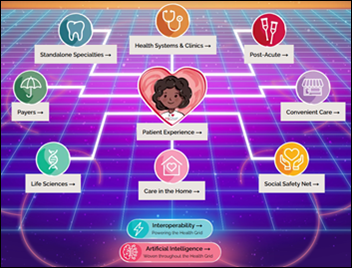
From Brendan Keeler: “Re: Epic ERP. The announcement is not surprising in the slightest. It is concretely related to their Health Grid strategy — build network effects products to new verticals as a wedge / beachhead and offer a related system of record (CAPS, CTMS, ERP, LIS, pharmacy information system) that natively performs between with those network effects products. Along the same lines, they also announced a clinical trials management system. I predicted this last month.”
From Slow Green: “Re: Greenway Health. The profiles of CEO Pratap Sarker and Chief of Staff Frank Pirantino have been removed from the company’s leadership page.” Verified. The page now lists industry veteran Richard Atkin, who served as CEO from 2018 to 2022, as CEO once again. Atkin is a principal with Vista Equity Partners, which owns Greenway and tried to sell it, apparently unsuccessfully, a year ago.
Drop your knowledge bombs in my reader survey, which you can complete in a minute or two. I haven’t done one since 2021, so it needs a refresh.
Live Webinar: March 20 (Thursday) noon ET. “Enhancing Patient Experience: Digital Accessibility Legal Requirements in Healthcare.” Sponsor: TPGi. Presenters: Mark Miller, director of sales, TPGi; David Sloan, PhD, MSc, chief accessibility officer, TPGi; Kristina Launey, JD, labor and employment litigation and counseling partner, Seyfarth Shaw LLP. For patients with disabilities, inaccessible technology can mean the difference between timely, effective care and unmet healthcare needs. This could include accessible patient portals, telehealth services, and payment platforms. Despite a new presidential administration, requirements for Section 1557 of the Affordable Care Act (ACA) have not changed. While enforcement may unclear moving forward, healthcare organizations still have an obligation to their patients for digital accessibility. In our webinar session, TPGi’s accessibility experts and Seyfarth Shaw’s legal professionals will help you understand ACA Section 1557 requirements, its future under the Trump administration, and offer strategies to help you create inclusive experiences.
Live Webinar: March 27 (Thursday) noon ET. “How to Improve Clinical Workflows with AI Chart Summaries and Risk Predictions.” Sponsor: Health Data Analytics Institute. Presenters: Scott Cullen, MD, senior advisor, Health Data Analytics Institute; David Clain, chief product officer, Health Data Analytics Institute. Learn how the EHR-embedded HDAIAssist tool is transforming the ability of clinicians to pull insights out the mountains of data that have accumulated in the EHR, quickly, accurately, and cost-effectively. HDAlAssist, which is part of HealthVision, the intelligent health management system, combines AI chart summaries and granular risk predictions to quickly inform care planning decisions, especially for the most complex, high-risk patients.
Contact Lorre to have your resource listed.

Oracle reports Q3 results: revenue up 6%, EPS $1.02 versus $0.85, missing Wall Street expectations for both. The only healthcare-related mention was in Larry Ellison’s response to a question about AI agents. He sounded pretty stoked about it, with these snips from his lengthy answer:

RLDatix, which offers healthcare governance, risk, compliance, and workforce management solutions, acquires downtime continuity and Meditech-focused professional services company IPeople Healthcare.

Digital health and remote patient monitoring company CoachCare acquires virtual care vendor VitalTech, its eighth acquisition in the last two years.

Virtual orthopedic care provider Vori Health raises $53 million in a Series B funding round, bringing its total raised to $103 million.
People

SmarterDx names Jacob Schiftan (Viz.ai) VP of product and Tom Dougherty, MBA (Care Continuity) head of sales.

Agfa HealthCare appoints Omar Sunna, MBA (Microsoft) chief customer officer for North America.

Trent Green, MBA, MHA (One Medical) joins NRC Health as CEO.

Emids names Abhishek Shankar, MBA (Tech Mahindra) CEO.

OptimizeRx promotes Steve Silvestro, MLA to CEO.
Zoom pilots its new AI-enhanced Workplace for Clinicians technology, which was developed for in-person and virtual appointments.
ECRI lists its most significant threats to patient safety for 2025:
In England, former health secretary Steve Barclay says that NHS “spends too much on foreign IT systems” and should prioritize British companies instead.

The US Navy will offer sailors and their dependents free access to digital services from Talkspace as part of a new mental healthcare program that is being piloted at six bases.
Therapists at the VA’s clinical resource hubs are protesting being forced to conduct virtual mental health sessions from open cubicles. The therapists, who worked remotely until ordered to return to the office, are housed in facilities that lack private offices. VA leadership reportedly stated that “screen protectors, a white noise machine, and a headset is [sic] sufficient to ensure patient privacy in a large bullpen of cubicles.”
Business Insider reports that some states are requiring Bamboo Health to track the prescribing of abortion pills in their prescription monitoring programs that were designed for opioid tracking. Louisiana has reclassified misoprostol and mifepristone as controlled substances, which requires clinicians to log them into Bamboo’s system. Texas, Indiana, and Idaho are considering similar measures. Bamboo says that it is legally obligated to monitor the drugs in states that require it. Doctors are raising concerns about data access, as the information isn’t protected by HIPAA and can be viewed by state health departments, medical examiners, and law enforcement under certain conditions.

HIMSS26 will be held March 9-12 in Las Vegas next year, according to parent company Informa Connect. ViVE, meanwhile, will take place February 22-25, this time in Los Angeles.
Consultants discover that Health New Zealand, whose annual budget is $18 billion, manages its finances using a single Microsoft Excel worksheet. The health minister recently highlighted HNZ’s fragmented digital infrastructure, which includes 6,000 apps and 100 digital networks.
Blog Posts
Mr. H, Lorre, Jenn, Dr. Jayne.
Get HIStalk updates.
Send news or rumors.
Follow on X, Bluesky, and LinkedIn.
Contact us.
![]()
Digital health and remote patient monitoring company CoachCare acquires RPM vendor VitalTech, its eighth acquisition in the last two years.
MoveUp to Acquire Deep Structure.ai, Strengthening AI-Driven Orthopedic Care
MoveUp, a global digital health company focused on remote patient monitoring and rehabilitation, acquires digital orthopedic care delivery business Deep Structure.ai.
Software bug at firm left NHS data ‘vulnerable to hackers’
Care coordination and referral company Medefer comes under fire in England for mishandling an API flaw that left NHS patient referral data exposed to potential data breaches.
Ed Gaudet is founder and CEO of Censinet.

Tell me about yourself and the company.
I started Censinet in 2017 to help healthcare providers deal with the risk around their third-party providers whether they be vendors, technology vendors, consultants, or any type of third party that could introduce risks into a health system. We have recently extended into the enterprise side of risk management, those areas of risk that are internal to a health system.
What type of risks are associated with third-party relationships?
If you look at the data that the American Hospital Association has put out and the OCR wall of shame, where they post the breaches and the data around cyber incidents in healthcare, you find that about half or more of these incidents are related to third parties. These third parties could be software providers, hardware providers, medical device providers, API vendors, or consultants who have access to the network. Any type of third party that is critical, or maybe even non-critical, has access to the network, or is working with the clinical data and or administrative data. They may not have the type of controls that the hospital has or the maturity of cybersecurity, whether their processes aren’t up to date or they are not implementing the right technical controls to protect against attacks, data breaches, or disruption to critical systems. These third parties represent risk to a health system.
Does that risk change with cloud adoption?
Yes. It changes with any type of technology adoption. Those become vectors to attack. Look at AI. AI exponentially changes the attack surface. It will be the next frontier for cybersecurity organizations, security professionals, and risk management professionals because it’s the wild, wild West out there with AI adoption. We’re at the top of the first inning and we’ve got the first batter at the plate as it relates to AI adoption. It’s really early days.
We think of ransomware when we hear the word cyberattack, but what are other common methods that may not even specifically involve malware?
You’ve got the deepfake issue, which could be audio or video. Phishing attacks are going to get better and more accurate. I think they will come at us exponentially. The scale of the attacks, given what you can do with AI, is going to be much greater. We have to leverage AI for defensive purposes, not just for clinical use or patient care cases. We also have to look at it from a risk management and cybersecurity perspective.
I was reading that someone has developed AI that can mask foreign accents, and I assume it can also mimic anyone’s voice, both of which would take away one red flag about social engineering attacks.
Is this really Mr. H that I’m talking to today, or is it somebody else on your team? I guess that’s the point. How will we know and how will we verify these things that have been easily verifiable from an analog perspective, but now are now digital or electronic? It’s going to get much harder.
Imagine that your spouse calls you and says they need money because they have been abducted or has a flat tire and needs to pay the AAA person money via Venmo. These attacks are going to get more personal, and we are largely not ready for it.
How are health systems collaborating to share their cyberattack experiences?
One of the ideas that we had, looking at the state of the art back in 2017, was that there were a lot of manual approaches to risk management. We felt like there was not only an opportunity to drive automation at the workflow level, but do it in a way that gave leverage to the community. This is the guiding principle of how I looked at solving the problem. How do I give leverage back to the community that is managing risk on both sides of the transaction, whether it be the provider, the health system, the CISO, the CISO’s team of risk analysts, but also those third parties that have to go through that process of a security risk assessment?
At the time, everything was a point-in-time approach to a risk assessment. We believe that risk has a heartbeat and a life cycle. All points from cradle to grave and in between represent opportunities for risk. You can acquire a product or service and have a good sense of the out-of-the-box risk. But what happens when you technically integrate and configure that product internally? You will have different knobs and you will configure it in a way that is different from the next health system. Those have to be considered.
Then what happens when upgrades, patches, or new functionality are introduced? If you look at AI as an example, everyone is thinking about AI coming into the organization from the front door. I think the bigger risk is it coming in through the window, through the back door, or through the basement. You have all of these technologies in play and being managed, and they are introducing AI into their products through upgrades, point releases, or patches. How can health systems and CISOs keep up with new risks that are introduced not just via adoption or acquisition, but also through the implementation, configuration, and usage?
We’ve seen plenty of scenarios where a product was acquired to solve a specific use case that did not require protected health information. Then users got their hands on the application and started leveraging it, maybe in ways it wasn’t designed to do, such as including PHI. All of a sudden you go from a non-business associate to a business associate relationship. You don’t have all of the protections that would be in place in terms of a BAA being signed, or any of the insurance obligations that a BAA might have to take on, because the initial intention was this different type of relationship.
What are the lessons learned from the breach of Change Healthcare? It was a critical supplier to health systems and a new acquisition for UnitedHealth Group, which said it found out afterward about Change’s security deficiencies.
It goes back to this lifecycle approach to risk versus a point in time. During the lifecycle, during the relationship that you have with a vendor and the product set, there are plenty of opportunities to introduce risk. One of those is ownership.
When I was at ViVE last year, I was speaking to a couple of customers as the breach was announced. They said, “We don’t use Change Healthcare, so we’re good.” Within 48 hours, they realized that they actually did use Change Healthcare through an acquired product that they relied on.
There’s always danger of that introducing new risk. That risk is around concentration. You have a critical function in your organization, a business process that is directly linked to your ability to collect revenue. All of a sudden it shuts down and that spigot is turned off. Now you have operational disruption. You only have so much cash on hand. That was another big aha. We have to deal with all that disruption, but we also have limited cash on hand. We can only sustain operations for a certain number of weeks.
Complacency set in. We got comfortable relying on one vendor over time to do a very critical function. In fact, we may have created that scenario, because we may have signed up for exclusivity clauses and contracts. There may have been an exclusivity clause that required us to go all in with a particular vendor. That sounds good on paper until something like this happens. Where you haven’t built up a resiliency plan, you don’t have continuity in place. You haven’t thought about alternatives that you may need to activate in the event of an incident like Change Healthcare. A lot of lessons came out of this incident.
What advice would you give a hospital CEO about vendor and supply chain risk management?
People tend to confuse these two areas. Vendors tend to be supportive of a particular business process, whether it’s a critical clinical function, an administrative process, or an operational process. If you look at health systems today, every organization and every department leverages a technology-based business process. I can’t think of another function that isn’t relying on some technology to meet its goals and objectives in support of the company’s growth or other mission. You also realize that there are opportunities where you need to include certain components in the things that you create or deliver as a service. Think of them as ingredients. I think of a supply chain as those things that I need to create my end service or product. That’s how I think about the difference between those two things.
Do you see an opportunity to use AI to further develop your offerings?
Absolutely. In fact, we made a couple of announcements at ViVE. We’ve been working with AI for the last couple of years. We took a conservative, responsible approach to it because we’re a risk management company. We have to put security first for our customers.
For us, it was all about identifying those use cases where we could drive efficiency of process. There’s a lot of process automation and solutions that AI can enable through making things faster, better, cheaper.Then there’s the whole data aspect of AI. What things can we learn from the data? What insights can we gather that we couldn’t because we didn’t have these language models that would enable this in a way that was truly, truly scalable?
We’re applying it in those two ways, generally speaking. We also took a step back and thought about how we would apply it to our product sets.The first thing we did was create Censinet AI, which is a foundational set of services that are secure, proprietary, and native. We don’t rely on ChatGPT or any open API language models. They are all built on the AWS stack. We went all in with AWS, Bedrock, and Anthropic Claude and their models.

That architecture enables secure capabilities that can be turned on by demand by customers. Customers can opt in to choosing to activate to turn on those capabilities or not. They can do it based on their appetite and also their timeline. We have some customers that are ahead of everyone else, and they want to jump right in with AI. They trust us to protect the infrastructure, so they are going to turn them on quickly. Other customers will go slowly and turn them on over time as their governance processes mature.
Vendors are coming out and saying, hey, we have a solution, and it’s all AI based. We think that’s a failed approach, and people are going to get into trouble. We think that the approach to be more prescriptive and controllable by the end users is the way to go.
How do you expect the federal government’s role in healthcare cybersecurity to change under new leadership?
Censinet has been at the forefront of working the HHS 405(d) initiative and with the Health Sector Coordinating Council on things like the landscape analysis that we worked on in conjunction with CMS to create the cybersecurity performance goals, which came out of CISA. We thought those would be the foundation for a standard that health systems could actually adopt. I called it Meaningful Protection, analogous to Meaningful Use. Can we create this level or threshold of protection that we can all agree on. that is affordable, and could move the needle on patient safety?
That all was heading in the right direction. They realized last year that because the Cybersecurity Performance Goals were voluntary, they couldn’t be turned into laws. They needed another vehicle, so HIPAA was opened up. A comment period was started based on a HIPAA proposal a new rule that was generated. The administration change risks that being slowed down significantly or being canceled altogether. We’ll have to wait and see how it plays out.
But to your point, there’s a lot of movement in all of the different agencies. CISA lost a lot of their leaders and also risks being completely shut down, which I think would be a disaster. HHS has lost a lot of great leaders like Micky Tripathi and Nitin Natarajan. Between CISA and and the people at the HHS, we’re taking a wait and see approach. We’re going to continue to move the process towards the extension of HIPAA to include the CPGs or the intention of the CPGs.
What factors will be important parts of the company’s strategy over the next few years?
We continue to evolve the platform. We have over 50,000 vendors and products on one side of the network. We have a couple hundred providers on the other side of the network. We continue to build the product to address new use cases.
AI is a particular area. Not only are we have invested in our infrastructure and our product set to bring these AI features to market, managing the risks of AI as core to the product as well. We have capabilities that enable AI governance through workflows and through content curation. On the vendor side of the network, we leverage the data in a way that enables these third parties to assess their protections and their security in an AI context.


We will continue to move the needle for our customers, both the third parties as well as the providers. We are also excited about agentic AI and what that can bring to the table in the longer term. We recognize that there’s a lot of unknowns there and there’s a lot of risks associated with agents going off and not only identifying relevant data, but then turning that into action and conducting the action on behalf of humans. We think that is coming and we need to do it in a secure and a responsible way.
The author here keeps introducing irrelevant ideas. It's true that there are nimble organizations and bureaucratic ones. What is the…