
Recent Articles:

Monday Morning Update 9/4/17

September 3, 2017 News Comments Off on Monday Morning Update 9/4/17

Top News
image

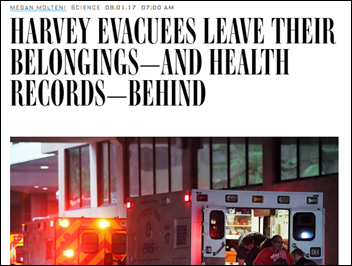
An article in Wired says that despite widespread use of electronic medical records, people with medical needs aren’t faring any better after Hurricane Harvey than following Hurricane Katrina in having their medical history available to first responders and new providers.

The article blames lack of interoperability and EHR downtime caused by flooding and power outages.
image

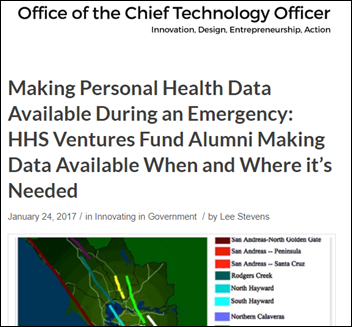
The author describes PULSE (Patient Unified Lookup System for Emergencies), an HHS-funded pilot project to create a data-sharing network that can be activated in a crisis. A January 2017 HHS announcement describes the California pilot that uses technology from Audacious Inquiry:

PULSE is currently being built to facilitate exchange during a declared emergency by extending interoperability across disparate technologies to support health information exchange. PULSE will allow Alternative Care Facilities (think of these as aid stations or MASH units set up during an emergency) so that EMS and authenticated volunteer providers can quickly get access to often life-saving data, when and where they need it. In the future, the PULSE system could facilitate patient lookup capability in an ambulance.

During a recent demonstration by Audacious Inquiry, the contractor that developed the PULSE technology, the program’s benefits become readily apparent. In the event of an earthquake, or forest fire (like the one that recently ravaged Eastern Tennessee), first responders (defined under PULSE as any of six provider types, including doctors, nurses and EMTs) can query PULSE with standard eHealth exchange patient demographics—including name, date of birth, and gender.  PULSE then sends out data tendrils to California-based HIEs, health systems and hospitals, for instance, looking for a match to the query. PULSE then enables first responders to see recent care notes from treating providers – including hospital discharge summaries and the Consolidated Clinical Documents (CCDs).

As PULSE is being developed, we have tried to ensure that it can be a model for other states to use. To support future scalability, PULSE is utilizing industry standards when communicating with HIEs and hospitals.


HIStalk Announcements and Requests
image

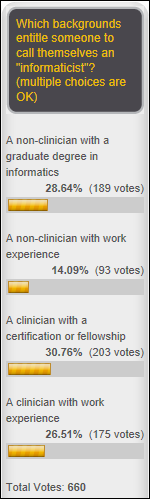
Poll respondents are OK with — clinicians with or without formal informatics credentials — calling themselves “informaticists” and are equally accepting of non-clinicians who have earned a graduate degree in informatics, but draw the line at a non-clinicians whose only credential is work experience. Harry suggests calling technically focused people “informaticists” and those specializing in clinical applications and user experience “informaticians.” Kelley says a challenge in public health is separating informatics from IT.

New poll to your right or here: What is the primary reason hospitals don’t exchange patient information freely?


This Week in Health IT History

One year ago:

  • CMS offers providers four “pick your pace” Quality Payment Program options for 2017.
  • St. Jude Medical sues a medical security services vendor, claiming its pacemaker vulnerability testing was not only improperly performed, but also part of stock short-selling scheme.
  • Apple announces the iPhone 7.
  • In England, NHS announces a digital exemplar grant program for trusts.

Five years ago:

  • Merge Healthcare hires an investment bank to review strategic alternatives.
  • Vocera announces its public offering.
  • Harris Corporation investigates potential US bribery law violations by its Carefx China division, whose employees were found to have provided gifts and payments to prospects.
  • A computer hacker in Italy shares his brain cancer-related medical records on the Internet in seeking help in a project he calls “My Open Source Cure.”

Ten years ago:

  • Ingenix acquires Healthia Consulting.
  • Athenahealth prices its IPO.
  • Allscripts announces its largest EHR sale in its history to Columbia University Medical Center.
  • A UK hospital blocks employee access to Facebook after heavy use degrades its network performance.
  • Health Evolution Partners, started by former National Coordinator David Brailer, MD, PhD, begins its search for investments.

Last Week’s Most Interesting News

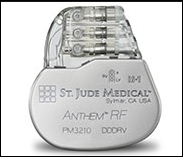
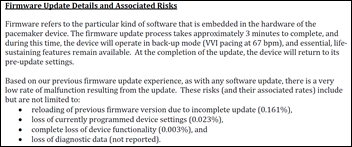
  • FDA announces a voluntary recall of St. Jude Medical pacemakers to install a firmware update to fix cybersecurity vulnerabilities.
  • CHIME and DirectTrust announce plans to promote universal deployment of the Direct network.
  • Advisory Board announces plans to sell its healthcare business to UnitedHealth Group.
  • Texas hospitals struggled with flooding from Hurricane Harvey.

Webinars

September 13 (Wednesday) 1:30 ET. “How Data Democratization Drives Enterprise-wide Clinical Process Improvement.” Sponsored by: LogicStream Health. Presenter: Katy Jones, program director of clinical support, Providence Health & Services. Providence is demonstrating positive measurable results in quality, outcomes, and efficiency by implementing clinical process improvement solutions in arming operational and clinical stakeholders with unlocked EHR data. Providence’s army of process engineers use their self-service access to answer questions immediately and gain an understanding of how their clinical care delivery is impacting outcomes. The presenter will describe practical applications that include antibiotic stewardship, hospital-acquired infections, and comprehensive knowledge management.

Previous webinars are on our YouTube channel. Contact Lorre for information on webinar services.


Decisions

  • Mercy Medical Center (MD) will replace Meditech with Epic.
  • Southeast Health Center Of Stoddard County (MO) changed from Medhost to Evident in June 2017.
  • Integris Canadian Valley Hospital (OK) replaced Cerner with Epic in May 2017.

These provider-reported updates are supplied by Definitive Healthcare, which offers a free trial of its powerful intelligence on hospitals, physicians, and healthcare providers.


People

image

Orion Health hires Terry Macaleer (Anthelio Healthcare Solutions) as president of its US operations.

image

Henry Mayo Newall Hospital (CA) hires Ray Moss (Cedars-Sinai) as VP/CIO.


Announcements and Implementations
image

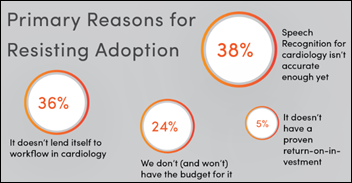
A new Reaction report finds that only one in four cardiology facilities use speech recognition, with far less enthusiasm and effort than their counterparts in radiology, but cardiology use is increasing quickly. Nuance and MModal hold 89 percent of that market.

Cerner and its customer HealthSouth will work together to develop tools to manage post-acute care patients.


Privacy and Security

A university in Canada loses $12 million to scammers who impersonated an employee of its construction company vendor in requesting that checks be sent to their new address that was actually that of the scammers.


Other

image

Artificial intelligence researcher Oren Etzioni proposes in a New York Times op-ed piece that AI be regulated in three ways, based on Isaac Asimov’s 1942 “three laws of robotics”:

  • Companies that deploy AI systems must be held accountable for any illegal behavior that results.
  • The AI system, such as a chatbot, must disclose that it is not a human in any conversations with humans.
  • AI systems must not retain or disclose confidential information they receive, such as background audio recorded by Amazon Echo.
image

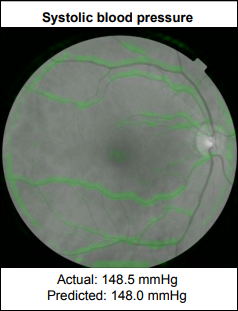
Google’s Verily life sciences company develops a way to predict cardiovascular risk factors by analyzing a person’s retinal image with a machine learning algorithm instead of performing blood tests. The model showed high accuracy in using only the retinal image to predict age, blood pressure, body mass index, gender, and smoking status.
image

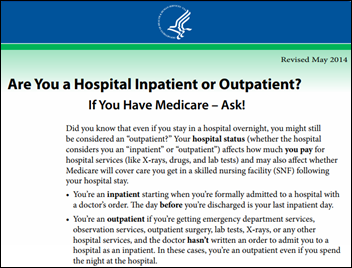
A federal judge certifies as class action a lawsuit covering all Medicare recipients who were hospitalized but categorized by the hospital as observation patients, which means that as outpatients without necessarily knowing it, they pay more for drugs, co-insurance, and nursing home care.


Sponsor Updates

Blog Posts


Contacts

Mr. H, Lorre, Jenn, Dr. Jayne, Lt. Dan.
Get HIStalk updates. Send news or rumors.
Contact us.

125x125_2nd_Circle

Comments Off on Monday Morning Update 9/4/17

Morning Headlines 9/1/17

September 1, 2017 Headlines Comments Off on Morning Headlines 9/1/17

Health IT Now Letter To ONC

An industry group comprised of AMIA, Athenahealth, and others asks ONC to provide guidance around information blocking.

Firmware Update to Address Cybersecurity Vulnerabilities Identified in Abbott’s (formerly St. Jude Medical’s) Implantable Cardiac Pacemakers: FDA Safety Communication

The FDA issues a voluntary recall of St. Jude Medical implantable pacemakers due to cybersecurity vulnerabilities in the devices firmware. The FDA suggests that patients coordinate with care providers to discuss the need to have their firmware updated.

Bipartisan Governors Blueprint

A bipartisan group of eight governors sends a letter to Congress with recommendations on how to stabilize the individual health insurance exchanges.

Limited Waiver of HIPAA Sanctions and Penalties During a Declared Emergency

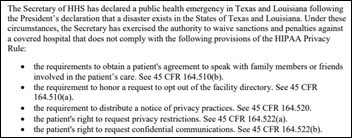
HHS Secretary Tom Price issues a 72-hour waiver on HIPAA privacy rules for hospitals responding to the aftermath of Hurricane Harvey in Texas and Louisiana.

Regulator Wants Stronger Oversight Of Private Health IT Firm That Gets Public Funds

Vermont’s Green Mountain Care Board, which oversees the state’s medical industry, says the state’s HIE is failing to meet the needs of providers in the state and warns that it will need to improve to justify continued public funding.

Comments Off on Morning Headlines 9/1/17

News 9/1/17

August 31, 2017 News 4 Comments

Top News

image

A Health IT Now stakeholder group made up of several member associations (including AMIA) and health IT vendors ask ONC and HHS OIG to provide guidance around information blocking:

  • What are examples of behaviors that the federal government will interpret as being information blocking?
  • How is “should have known” defined?
  • How will patient access be measured?
  • How does the law interact with HIPAA and medical malpractice laws?
  • What reasonable business practices and contract terms are exempt from information blocking requirements?
  • How will the $1 million per violation vendor penalty be defined?
  • What mitigation opportunities will be offered before incidents are turned over to HHS OIG for investigation and penalties?

Reader Comments

SNAGHTML55f1e682

From Harvey Headbanger: “Re: HIPAA. The HHS secretary has waived HIPAA Privacy Rule provisions for hospitals in Texas and Louisiana for 72 hours after their disaster protocol has been activated. So you’ve got a hospital in a disaster area with problems including, but not limited to, rolling power outages, floating fire ants, looting, a looming public health crisis, and of course all the flooding compounded with strained emergency and utility services. The Secretary graciously expects that after three days, I have to create a semi-manual process for distributing and capturing NPPs and managing requests for privacy restrictions in an environment where communication is already very difficult, workforce shortages are common, and I’m trying to determine how to triage the unusual influx of patients. Not seeing it. Thoughts and prayers to the people of SE Texas and Louisiana.”

SNAGHTML56c6d178

From Geaux Texans: “Re: your Houston donations. Why not the Red Cross?” I’m not a fan of that organization since they don’t earmark donations for specific causes, multiple reports exist over years indicating that they are dismissive of local volunteers, and my unscientific observation is that they seem to take advantage of global natural disasters to promote themselves and their fundraising. They also get a score of 83 on Charity Navigator, which isn’t so great. I know that their fundraising machine will allow them to do mass-scale work, leaving me to support more local efforts without feeling guilty. I donated to the Salvation Army of Houston because Salvation Army is my favorite charity overall and I trust their mission and stewardship even though as a religious-based organization they aren’t rated by Charity Navigator. Houston Food Bank earns a Charity Navigator score of 100 and the Houston SPCA gets a 97, both of those being local organizations that I’m pretty sure will quickly do the right thing without much bureaucratic overhead. Please donate, but be careful – scammers abound during high-profile disasters when donors are anxious to help quickly. Donate directly from the verified home pages of charities you’ve first checked on Charity Navigator. This isn’t the time to click shady Facebook “donate here” links or to send money to GoFundMe projects.


HIStalk Announcements and Requests

image

The inaccessibility and loss of paper medical records during Hurricane Katrina kicked off the uptake of EHRs (and led New Orleans health commissioner Karen DeSalvo, MD, MPH, MSc to the National Coordinator role). I’m wondering if Hurricane Harvey will provide the impetus for adoption of other technologies, perhaps telemedicine or even drone delivery of drugs and medical supplies.

image

I passed on a modestly interesting news item today because the company has so much high-falutin’ gibberish on its website that I couldn’t figure after several minutes exactly what it is they do. Marketing people convince company executives that their painfully wrought, committee-driven aspirational BS prose is what users want, but I say it’s a big fail if their site doesn’t quickly tell me what they’re selling and why I should care.I envisioned the result of that company’s marketing brain trust being cut loose on some kid’s lemonade stand, with the resulting tagline being, “Refreshment, realized” and a mission statement of:

Katy’s Lemonade Stand is a regionally recognized, trusted partner for implementing a diverse portfolio of innovative products, strategies, and frameworks that enhance synergistic hydrationary outcomes and provide an exemplary customer experience that inspires human achievement.

I’m also annoyed by companies that add a customer service chat box to their websites, which is intrusive but not super annoying, but then double down by including a loud “look down here at our cool automated chat agent” sound effect that makes me jump a foot off my chair. Websites should not automatically play any sound or auto-start a video that includes audio. Sites are killing off traffic in jamming poorly performing video, overlay ads, pop-ups, and slow-loading third-party content on their sites (CNN and other news sites along with the usual clickbait sites – was that redundant? — are prime examples).

This week on HIStalk Practice: Texas officials fast-track licensing permits for out-of-state physicians looking to help after Harvey. Indica MD launches medical marijuana telemedicine services. Florida law enforcement implements new heroin overdose tracking software. Harvey relief efforts tap into Medicare data to identify at-risk patients. Marathon Health adds behavioral health services. PeakMed Direct Primary Care raises $5.5M. Oklahoma officials call for more funding, better MD use of statewide PDMP. AI-generated facial emojis could be coming to a telemedicine visit near you. West’s Allison Hart discusses the importance of technology in ambulatory care for chronic disease management. The MAVEN Project looks to connect community health centers with telemedicine services.


Webinars

September 13 (Wednesday) 1:30 ET. “How Data Democratization Drives Enterprise-wide Clinical Process Improvement.” Sponsored by: LogicStream Health. Presenter: Katy Jones, program director of clinical support, Providence Health & Services. Providence is demonstrating positive measurable results in quality, outcomes, and efficiency by implementing clinical process improvement solutions in arming operational and clinical stakeholders with unlocked EHR data. Providence’s army of process engineers use their self-service access to answer questions immediately and gain an understanding of how their clinical care delivery is impacting outcomes. The presenter will describe practical applications that include antibiotic stewardship, hospital-acquired infections, and comprehensive knowledge management.

Previous webinars are on our YouTube channel. Contact Lorre for information on webinar services.


Acquisitions, Funding, Business, and Stock

image

Kevin Mullin, chair of the Green Mountain Care Board that oversees Vermont’s medical industry, demands that Vermont Information Technology Leaders improve its operations to justify its public funding. VITL gets the money generated from a health insurance claims assessment that ends this year, as lawmakers will decide whether to end the tax or send its proceeds elsewhere. Mullin, who was a state senator when the tax was approved, says, “VITL was oversold to legislators. I regret ever selling the claims tax.” 

image

Drug pricing analytics vendor Truveris raises $35 million in a Series D funding round. 

image

Madison-based ImageMoverMD, which offers a secure image-sharing app for doctors, raises $1.2 million.


Sales

image

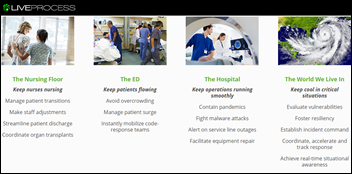
Penn Medicine (PA) chooses the LiveProcess emergency management system for universal employee notification and response during disasters, cyberattacks, and everyday coordination, bringing it into compliance with CMS’s emergency preparedness rule.

image

My Health My Resources of Tarrant County (TX) selects Netsmart’s EHR.


Announcements and Implementations

image

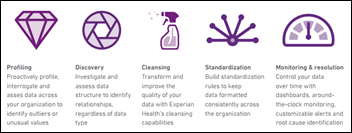
Experian Health announces its Pandora data quality platform that can ingest, index, and cleanse data from one or many data sources.

image

Non-profits CHIME and DirectTrust will jointly promote the universal deployment of the Direct network for secure information exchange.

Canada’s PrescribeIT national e-prescribing service will begin its rollout in Ontario “in the coming weeks” in eventually covering six provinces, 2,600 drug stores, and an unstated number of EHR vendors using technology from Telus Health.


Government and Politics

image

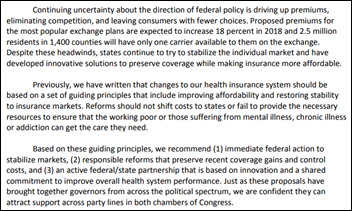
A bi-partisan group of eight state governors makes recommendations to Congress for stabilizing the individual insurance market, including:

  • Committing to continuing paying cost-sharing reduction payments.
  • Creating a temporary stability fund for states to create reinsurance programs.
  • Exempting insurers from federal health insurance taxes from exchange plans sold in counties designated as underserved.
  • Keeping the individual mandate until a credible replacement can be devised.
  • Continuing the funding of outreach and enrollment efforts that encourage younger, healthier people to sign up.
  • Shortening grace periods and verify special enrollment to make sure people aren’t waiting to sign up for insurance until they are about to incur expenses.
  • Addressing unsustainable increases in the cost of healthcare services by paying providers based on quality rather than quantity of care, including a committing to support value-based healthcare purchasing.

image

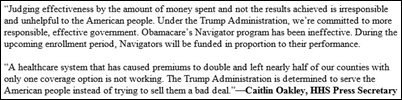
Meanwhile, the White House on Thursday violated the fifth point above in announcing that President Trump will cut ACA signup advertising spending by 90 percent and in-person assistance funding by 39 percent, saying that Americans already know about the ACA. Critics say insurance risk and thus pricing will increase in a “let it fail” strategy” with fewer healthier, younger people being reminded to sign up to balance the risk pool. Former CMS Acting Administrator Andy Slavitt said in a tweet that the change won’t save taxpayers money because the costs are paid by insurance company user fees. An HHS press secretary (she was previously Congressman Tom Price’s press secretary and before that executive assistant at The Beer Institute) said ACA is a “bad deal” and isn’t working because premiums have doubled and half of US counties have only one coverage option.


Privacy and Security

image
SNAGHTML551d0c95

FDA issues a voluntary recall of 465,000 St. Jude Medical pacemakers, recommending that patients return to their doctor or hospital to have their device’s firmware updated to address cybersecurity vulnerabilities.

image

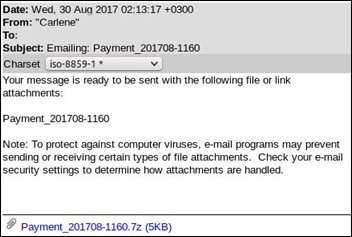
Security firm Barracuda says it has logged 20 million ransomware attack attempts in the past 24 hours that uses a spoofed “from” address and the attachment’s name in the subject line, attempting to lure the recipient into clicking the attachment, which then begins encrypting the device.


Innovation and Research

image

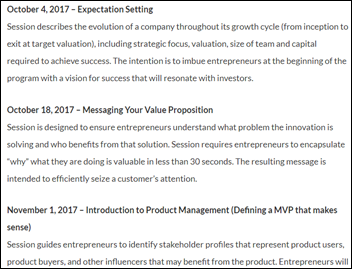
Inova Personalized Health Accelerator offers a free educational program for first-time health technology entrepreneurs. The topics are interesting but the program is limited to folks who can attend seven, 90-minute on-site sessions in Fairfax, VA.


Other

image

Health system consolidation continues as UNC Health Care and Carolinas HealthCare announce plans to form a jointly operated system that will have 52 hospitals, nearly 100,000 employees, and $13.4 billion in annual revenue. The health systems insist that the proposed transaction is a partnership rather than a merger since they will not combine their assets to create a new entity.

image

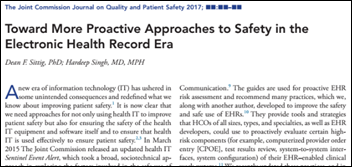
An article in the Joint Commission’s journal describes the newly revised, ONC-published SAFER (Safety Assurance Factors for EHR Resilience) Guides and offers implementation advice for provider organizations, written by Dean Sittig, PhD and Hardeep Singh, MD, MPH.

image

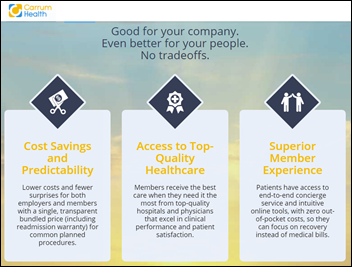
A California Healthline article explains why it made sense for Santa Barbara County to send an employee who needed surgery to a hospital 250 miles away near San Diego. Answer: Scripps Hospital charged $62,000 for a surgery that would have cost more than double that amount at the two local hospitals. Scripps priced its services via bundled pricing as contracted through startup Carrum Health. The county waives employee co-pays and deductibles and pays travel costs for a luxury resort. The program is at risk since CMS is proposing eliminating bundled payments under the Trump administration in accusing Medicare –as have anxious hospital trade groups — of overstepping federal authority and interfering in the doctor-patient relationship. Insurance premiums in Santa Barbara County are 27 percent higher than those of Los Angeles, with a county HR executive saying, “The only difference between our two hospitals is one is expensive and the other is exorbitant.”

image

A Cleveland Clinic neurologist says the movie “Moneyball” showed that baseball uses more decision-making analytics than his own field, but that a wealth of EHR data and availability of disease-modifying therapies for multiple sclerosis will allow better treatment choices than the previous tools of physical examination and patient self-assessment. He notes the use of an iPad-powered performance test, new MRI and blood tests, and EHR-enabled doctor-patient collaboration.

image

In England, Royal Devon and Exeter NHS Foundation Trust sues ATOS for $10 million for selling it an EHR scanning and document management system that is slow and buggy, problems the vendor attributes to the trust’s network and hardware.

SNAGHTML56d85cfc

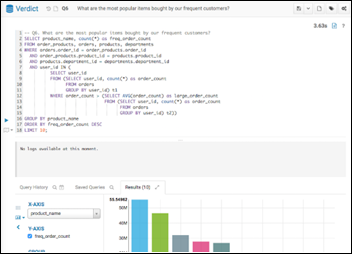
University of Michigan researchers develop Verdict, a database tool that learns from each user-submitted query to deliver answers 200 times faster with 99 percent accuracy. The software stores each query as a query synopsis and breaks it up into snippets that are used to create a mathematical model of questions and answers, allowing it to then target newly needed data efficiently or even to deliver results directly from its own stored information. Medical research and business decision-making are likely use cases.

image

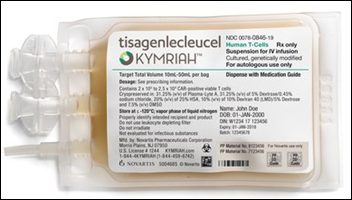
FDA approves the first gene-altering drug for treating leukemia, with manufacturer Novartis declaring Kymriah a bargain at $475,000, especially since it will charge only if the drug works. The company claims it cost $1 billion to bring Kymriah to market.

The Wall Street Journal reports that 27 Gulf Coast hospitals have closed or evacuated patients since Hurricane Harvey made landfall and another 25 have reported storm-related problems that may prevent them from seeing new patients. Those that are open are expecting to be overwhelmed as roadways clear.

Some employers in the Louisville, KY area have stopped performing pre-employment drug tests because the high number of failures leaves too few candidates to fill their open positions. Other companies report that half of job candidates drop out of the hiring process once they realize they’ll be tested for drug use.

image

In India, an OB-GYN and anesthesiologist are suspended after an employee-recorded video goes viral that shows them engaging in a heated, insult-filled argument while standing over their C-section patient.


Sponsor Updates

  • Logicworks opens a new office in Denver.
  • Navicure will exhibit at Greenway Health Engage17 September 7-10 in Orlando.
  • IDC names Nuance as the market share leader among global device and print management vendors.
  • NTT Data Services publishes a new case study, “Two health systems in Qatar partner on a nationwide EHR to enhance quality of care.”
  • Healthwise adds enhanced visual design to its Patient Instructions.
  • Experian Health will present at the HFMA/AAHAM Western PA conference September 7 in Farmington.
  • Vocera announces that 15,000 care team members of Franciscan Alliance are using its secure text messaging and hands-free communication system.
  • The SSI Group and ZirMed will exhibit at the CASA 2017 Annual Conference September 6-8 in Indian Wells, CA.
  • Nuance Communications wins the 2017 Star Performer and Implementation Awards at Speech Technology Magazine’s annual awards event.
  • Solutionreach publishes a new case study, “Dr. York Yates Plastic Surgery Triples Their Response to Review Requests.”
  • Verscend Technologies publishes a new infographic, “Analyzing 2017’s risk adjustment valuation to improve 2018’s processes.”
  • McLaren Flint (MI) avoids a $1 million capital expense for new IV pumps by tracking its pump inventory using Versus Advantages Asset Management.
  • Visage Imaging will exhibit at SIIM/NYMIIS 2017 September 7 in New York City.
  • Huron partners with the Red Cross to support relief efforts for victims of Hurricane Harvey.

Blog Posts


Contacts

Mr. H, Lorre, Jenn, Dr. Jayne, Lt. Dan.
Get HIStalk updates. Send news or rumors.
Contact us.

125x125_2nd_Circle

EPtalk by Dr. Jayne 8/31/17

August 31, 2017 Dr. Jayne Comments Off on EPtalk by Dr. Jayne 8/31/17

I’ve received quite a bit of correspondence lately, so it’s time to open the reader mailbag.

From Coastal but not Coasting: “Re: great article. It came at the perfect time for my practice. We just received PCMH recognition, level 3, so we are currently beaming! But it has not been easy. There have been many challenges, including staff burn-out and frustration over all of the change. We had to get them to buy in to it without always knowing WHY the change needed to occur. Sometimes the WHY is very involved and time-consuming and we were trying to fast track recognition.” I agree that sometimes sorting out the “why” and the “what’s in it for me” can be challenging, especially when trying to work through things quickly or when trying to meet specific regulations that don’t always mesh 100 percent with how the organization has been running. There are times when I’m working with clients where I just want to say, “Because I said so, and your boss is paying lots of money for my expertise,” but that would rarely go well. There’s an art to balancing buy-in vs. top-down rulemaking and I applaud organizations that have figured out how to do it well.

From Back to School: “Re: huddles. Have you ever met anyone that runs a family huddle? Thinking about my family and children and the chaos of school around the corner made me pause to consider if we might benefit from a more set time / agenda to nail down logistics. We communicate well, but sometimes it’s frequent and distracting with our own work days.” Why yes, I do! One of my good friends from Big Health System takes her process improvement work home with her. They have a family huddle during dinner where they run through the activities for the next day and outline what equipment, supplies, and transportation are needed. Thinking back to the one I witnessed, it’s a lot like a practice huddle. They also maintain a family Google calendar so everyone can see it from their phones. Time management is an important skill that many of the client employees I work with struggle to master. Developing those skills during the adolescent and young adult years would definitely serve one well in the working world.

From John Showalter: “Re: staying sane. I thought you might be interested in learning more about a book I helped write. I think focusing on shared outcomes helps keep everyone sane. I totally agree with you about the meeting skills.” Several of the topics covered in the book caught my interest. What motivates physicians, why a lack of education about revenue cycle and population health impedes their ability to see how improving administrative processes positively impacts the patient, and approaches to creating actionable knowledge that will enable increased collaboration. I struggle regularly with providers that aren’t in tune with the business side of healthcare and don’t fully understand how their world will be impacted by big data. May be a good read for my next book club.

From Cowtown: “Re: private equity in physician practices. Interesting that you notice this pattern. I have had in mind that health systems buying up doctors seemed to be getting fairly smug fairly quickly. It kind of feels like the hospital leadership thinks, we’ve got 300 head of PCP out grazing in the North Region. This attitude belies the fact that doctors (non-competes notwithstanding) hold their own licenses and can take their acts elsewhere. Perhaps there seems to be little will to break away amongst the traumatized mid-career types and the debt-ridden youngsters. Nonetheless, the ongoing evolution of IT, along with the availability of capital as you note, make it entirely comprehensible.

It is a shame, though perhaps expected, that the first forays you’re seeing are aggressive, hubristic moves that misunderstand power – market and otherwise. I believe that successful ventures for primary care will center around:

  • Building physician culture, with an eye towards work-life balance.
  • Operational excellence, with an emphasis on IT and measurement through data.
  • Patient satisfaction, leading toward the basics of customer experience – business hours, asynchronous communication, basic physical plant and services.

Oh, and did I mention, I think these should be primary-care only entities? The specialists can build out their own models, with operational excellence centered on procedures with bundled payments – it’s a different business. PE is the flavor of the day because of the tax advantages for the fund partners. It is usually looking for an exit, which if it is selling out to the hospital, likely becomes a destruction of value event. I hope that capital remains available to physicians, especially PCPs who want to do this the right way.” In many markets, physicians at all levels feel trapped, not just those with debt or feel beaten down. Although they can theoretically take their panels and licenses and go elsewhere, sometimes the choice is between bad and worse. My region has several major health systems; although some used to have distinguishing features (such as the willingness to enter into joint ventures with physician groups for surgery centers or diagnostic imaging) they’ve become fairly homogenized with their relative unwillingness to negotiate with physicians. Narrow networks are making physicians nervous about losing market share, so I see them staying in situations they wouldn’t have tolerated several years ago. The hospital-owned medical groups definitely don’t seem interested in building physician culture or work-life balance although they are trumpeting “operational excellence” through statistics pulled from their EHRs. They’re also treating subspecialists the same as primary care physicians (albeit with larger paychecks) which is adding to the negativity as the procedural subspecialists get a taste of what the rest of the physician base has been experiencing all along.

As a result, we’re starting to see increasing numbers of physicians headed to the direct primary care model. Those who are remaining in traditional physician groups are starting to opt out of Medicare in an attempt to regain autonomy. I’ve heard people talk about it for years but it seems to be actually happening, which will be interesting with the aging patient base in our community. I don’t make it to the hospital physician lounge very often but when I do, the conversations are always lively.

Has private equity shown interest in your practice? Email me.

Email Dr. Jayne.

Comments Off on EPtalk by Dr. Jayne 8/31/17

Morning Headlines 8/31/17

August 30, 2017 Headlines 2 Comments

AHA Letter To Representative Pat Tiberi

AHA writes a letter to Rep. Pat Tiberi (R-OH), Chairman of the Committee on Ways and Means’ Subcommittee on Health, calling for the cancellation of Meaningful Use Stage 3.

FDA approval brings first gene therapy to the United States

The FDA has approved CAR-T, a gene therapy treatment for certain types of pediatric leukemia, making it the first gene therapy approved for use in the US. Novartis developed the treatment and has put a $475,000 price tag on the drug, far below analyst expectations. In a clinical trial, a single dose of CAR-T left 83 percent of participants cancer free after three months.

Medtronic invests $40 million in robotics company Mazor

Medtronic announces that it has invested $40 million in surgical robot vendor Mazor Robotics, bringing its total investment in the company to $72 million. Medtronic will now become the exclusive distributor of Mazor’s robotic surgery system.

Aetna scoops up rising star from Wal-Mart’s health group to lead Apple Watch partnership

Aetna hires Walmart’s health division director Ben Wanamaker to lead its joint venture with Apple.

Readers Write: Malware Lessons Shared: Seven Key Questions for Health Leaders to Ask About Cyber Preparedness

August 30, 2017 Readers Write 1 Comment

Malware Lessons Shared: Seven Key Questions for Health Leaders to Ask About Cyber Preparedness
By Joe Petro

image

Joe Petro is SVP of engineering for the healthcare division of Nuance Communications.

As business leaders, we must confront a new reality: our organizations are facing an unprecedented threat from cybercrime. The number of cyber incidents is growing and the nature of the attacks is evolving. They are becoming faster, more sophisticated, and more potentially destructive. As the severity of incidents increases, the knowledge to address the technical aspects and manage through an attack has become essential to our skill set.

For those reasons, we think it’s important to share some of the lessons we’ve learned since we were affected by a global malware incident on June 27. Cybersecurity experts later identified the malware as NotPetya, highly sophisticated malware written to provide disruption and destruction rather than to demand ransom. It spread quickly, and unlike some malware, patching alone would not have stopped its propagation.

Our first priority was to contain the incident and protect our customers. This meant immediately commencing shut-down procedures across our global network to contain the spread of the malware. These actions affected our ability to communicate with our customers, employees, and other stakeholders, and we immediately sought alternative ways to alert them to the situation. To ensure they had up-to-date information, we hosted daily conference calls and corresponded via email with affected clients. We regularly posted updates to a dedicated Web page in addition to conducting a very large number of one-on-one client calls and meetings.

Importantly, we were able to tell them that NotPetya does not have the ability to copy or extract file contents from affected systems or allow any unauthorized party to view file contents on affected systems. In other words, no Nuance customer information was altered, lost, or removed by the malware.

After containing the spread of the malware, our focus turned to restoring our clients to full functionality. Our dedicated staff—along with third-party experts in cybersecurity and forensics—rapidly initiated restoration efforts. At the same time, we enhanced our security against similar future incidents to ensure we emerge from this incident with an even more secure operating environment.

We are committed to sharing the knowledge we have gained from our own response and recovery process. The more we know about malware like NotPetya, the more powerful we all can be in combatting future cybercrimes. Early lessons include:

  • Incident notification protocols should be as simple as possible, with multiple layers of redundancy to ensure stakeholder communication can continue at all times. This is particularly critical in the early days of response, when normal channels may not be viable.
  • Increase network segmentation, including adding micro-segmentation.
  • Even fully patched Windows machines remain vulnerable to certain exploits and vulnerabilities. We have deployed a hardening process that disables SMBv1, enables additional blocks on host-based firewalls including blocking unnecessary SMB ports, disables unnecessary usage of WMI and PsExec, disables unnecessary admin shares, increases logging levels, and validates that each system meets a minimum baseline of security measures.
  • Cyberattacks can occur very quickly, challenging even the best prevention systems. Thus, the best strategy is a combination of prevention, detection, and containment.

Healthcare and IT leaders need to ask the right questions now so that they can be better prepared for a malware incident in the future. Below are seven important security questions every leader should consider:

  1. Cybercrime is part of the new reality for every company, organization, and person. What can you be doing now to prepare for this scenario?
  2. How comprehensive are your security policies, and do those policies actually translate into deployed security capabilities?
  3. Have you developed a crisis and disaster plan and communicated it broadly throughout your organization?
  4. How would you communicate to your staff, your board, your customers, and your patients?
  5. What are your primary vulnerabilities? What measures are you taking to ensure patient data is protected?
  6. Do you understand and align with your vendors’ security policies and do you have the appropriate validation and/or risk assessment programs in place?
  7. Have you identified a team of outside experts to help in case of an incident, including cyber security firms?

    Readers Write: Response to Webinar, “3 Secrets to Leadership for Women in Healthcare IT”

    August 30, 2017 Readers Write 1 Comment

    Response to Webinar, “3 Secrets to Leadership for Women in Healthcare IT”
    By Helen Waters

    image

    Helen Waters is executive vice president of sales and marketing with Meditech of Westwood, MA.

    Recently, I was inspired by a HIStalk webinar, “3 Secrets to Leadership Success for Women in Healthcare IT,” hosted by two female executives of health IT companies, Liz Johnson and Nancy Ham. During the webinar, Ham and Johnson provided valuable advice to women who are interested in progressing in their careers to a leadership position, but who may experience unconscious or conscious gender bias.

    I wasn’t surprised to see that organizations experience higher profits when women represent at least 30 percent of their executive leadership teams. I believe when men and women rid themselves of gender biases and come together at the table, great things will happen.

    There are thousands of women in high-powered positions making a difference around the world every day. Still, as Ham and Johnson pointed out, the percentage of women in leadership positions — particularly in healthcare IT — remains low. In addition, there are thousands of women who are capable of so much more, who would make great leaders and heads of companies, but who lack confidence.

    I wholeheartedly agree with Ham and Johnson’s three secrets  — mastering negotiation, closing the confidence gap, and the networking effect. However, if I could add one more key ingredient to the list, it would be to channel your passion.

    Climbing the corporate ladder and breaking the glass ceiling is no easy feat. It takes focus, drive, the belief that you will succeed, and the passion to make it happen. Not only have passion for what you do and your company, but for your customers and the industry you work in. If you don’t love the company you work for or enjoy your day-to-day life at work, then maybe it’s time for a change.

    When you love what you do and show up to work excited about what you will tackle and overcome each day, the confidence gap will get smaller and smaller. Why? Because when you’re passionate about something, it will be noticed by others. The enthusiasm and positive energy you bring to work and how you treat and communicate with others will have an impact on your ability to inspire and lead others.

    The determination and motivation that passion drives will set you apart, push you to produce your best work, excite others, build awareness, and lead you to your goals, whether it’s a position in management, the C-suite, or on the board.

    My passion, commitment, and love for my company and industry runs deep. My love of healthcare and technology has kept me intrigued and stimulated at my company for over 25 years. I believe in my case, knowing that what I do contributes to keeping people safe in one of their most vulnerable times in life (as a patient) is what keeps me going and gives a great sense of fulfillment.

    My goal is to help my company continue to grow and flourish, but more importantly, to help staff grow. I strive to develop the next generation of leaders who are as passionate and inspired as I am when it comes to healthcare. Hopefully during my tenure, I will have influenced a substantial number of people and contributed to the future of the company through them.

    In my personal life, my family is my passion. I’ve always wanted to show my daughters that anything is possible, to always be open to learning something new, to follow their passion, and do what makes them feel fulfilled.

    What are you passionate about?

    Readers Write: Why Healthcare Organizations Take So Long to Make Buying Decisions and How We Can Fix It (Part 1 of 4)

    August 30, 2017 Readers Write 3 Comments

    Why Healthcare Organizations Take So Long to Make Buying Decisions and How We Can Fix It (Part 1 of 4)
    By Bruce Brandes

    image

    Bruce Brandes is founder and CEO of Lucro of Nashville, TN.

    image

    Over my 28-year career selling to health systems, the most common “competitor” to which my companies would lose a deal was the same: Do Nothing. For decision-makers across the country, there are many reasons that deferring buying decisions was historically a wise choice. 

    Rarely was there a compelling reason to make a decision at all. In the past, the economics, competitive pressures, and the underlying business model did not change meaningfully enough to encourage risk-taking. Frequently, if you waited long enough, potential industry changes would often just go away.

    Further, vendors that sell “nice to haves” rather than “have to haves,” assume everyone in every hospital must want to hear their pitch. They create noise that is deafening to decision-makers. Plus, most purchases historically have not yielded the promised benefits or ROI and risk-averse buyers that have been burned before are hesitant to make the same mistake again.

    As a healthcare vendor, the results of all this doing nothing (while trying desperately to find the person who is going to do something) include unclear value from traditional sales and marketing investments and the consequences of unpredictable business forecasting.

    Moreover, there is real concern that the length of healthcare sales cycles discourages bright entrepreneurial minds and innovative investors away from our industry, despite the lure of “disrupting” a three-trillion-dollar annual spend.

    In partnering with long-time hospital operator Charlie Martin, I was heartened to learn that he and his peers also found the ridiculousness of the buying / selling process in healthcare equally problematic. In fact, we’ve spent the past two years collaborating with some of the largest and most influential health systems in the country to gain a deep understanding of their challenges related long decision-making cycles.

    One specific example was illustrated by the head of strategy for a large regional health system in the Southeast. Their organization had identified the need to be in the direct-to-consumer virtual care business. They followed their normal process to pick a partner — formed a committee, engaged a consultant, did an initial survey of the market landscape, sent out an RFI, had a lot of meetings, sent out an RFP, brought in a short list for demos, had more meetings, called references, and finally made a decision on a vendor partner for the project. The decision was made 24 months after they originally identified their business need.

    During the two years of their selection process, the hospital system found that three other healthcare companies (none of which were historically competitive with them) had successfully built and deployed their own direct-to-consumer virtual care platforms in the same market. The incumbent hospital system lost the opportunity to engage, with a modern care alternative, the very community they have traditionally served for decades.

    New industry forces (underlying financial models, competitive pressures, reduced volume, consumerism, etc.) in healthcare now dictate that organizations no longer have years, but months to make strategic buying decisions before the market may pass them by.

    Together with healthcare organizations that collectively operate 20 percent of all the hospitals in the US, we identified three key areas with opportunity for improvement:

    • Alignment
    • Trust
    • Process

    Over the next several weeks, we will detail the learnings that resulted in a new way for healthcare organizations to accelerate and de-risk their buying process.

    HIStalk Interviews Bimal Desai, MD, MBI, Co-Founder, Haystack Informatics

    August 30, 2017 Interviews 1 Comment

    Bimal Desai, MD, MBI is co-founder of Haystack Informatics and AVP/chief health informatics officer at Children’s Hospital of Philadelphia.

    image

    Tell me about yourself and your jobs.

    I’m the chief health informatics officer at Children’s Hospital of Philadelphia. I came to CHOP for residency and then stuck around, so this is my 18th year with the organization. I have oversight over the clinical informatics program, which includes the physician informaticists who interface with the Epic team. I oversee analytics and reporting as my second area of responsibility. The third program that I oversee is a newly-launched digital health program — we’re celebrating our one-year anniversary this month. 

    The connection to Haystack is that in 2014, CHOP had an internal innovation competition to try to find ideas that were potentially commercializeable. We partnered with Dreamit Health, a health IT accelerator that has a branch in Philadelphia. This idea that I pitched for privacy protection using EHR data was accepted to go to the accelerator. That became Haystack Informatics.

    How often does the privacy monitoring system detect employees doing something they shouldn’t?

    It’s a tricky question. There’s malicious access with intent to identify private information about patients. For example, an employee who’s trying to obtain Social Security numbers and things like that. Then there’s the more casual privacy violations, like your neighbor or a celebrity is admitted, and just out of curiosity, you take a look.

    We’ve learned that every institution has a different culture of privacy. Some institutions take it seriously and will announce formally, “You may have heard the news that we have a celebrity admitted to the hospital. Be aware that we’re monitoring access, and if anyone is found in that chart, they’ll be terminated from the institution.” 

    Some institutions take a hard stance on that and others don’t. It’s hard to say what the scope of the problem is.

    I would think that knowing a hospital has sophisticated access monitoring tools in place would reduce the casual violations.

    I think that’s right. To some degree, just having a privacy monitoring solution can be a deterrent. For example, if I were an employee and I kept getting calls from the privacy office for false positive alerts, “Were you supposed to be in this patient’s chart?” I would start to quickly distrust the privacy office. But if the true positive rate of those alerts in their system was high enough, employees would start to recognize that these guys have a legitimate solution in place. They will be able to find out if I’m snooping around in my neighbor’s chart.

    The other advantage is that privacy officers are required to look through these access logs. There’s no useful way to do it manually. All these technologies that we’ve developed simplify their work, allowing them to focus on the small subset of truly suspicious events.

    We looked at a single patient as a thought exercise, a celebrity who was admitted to the institution. I asked a question — how many rows of audit log data would you expect to see for this patient for a two-week hospitalization? It was hundreds of thousands of rows of data. In the absence of tools, the privacy officer couldn’t do it manually, even for just this one patient.

    That’s the value of these tools. They empower your privacy officer. They also help your staff employees stay on the right side of HIPAA regulations.

    What surprised you most about becoming an entrepreneur?

    The hardest part was understanding how I would continue to maintain my responsibility to CHOP and at the same time be an entrepreneur. I think people underestimate what it takes to start a company. Many physician entrepreneurs probably think that a good idea is sufficient enough. But it’s a lot of sweat equity. It’s a lot of work to build a company.

    I had to work that first year to negotiate time for my employer. Because this was a CHOP-sponsored project in that first year, especially, I was able to take a mini-sabbatical. It’s not something you can really do in your spare time. The one affordance that my employer gave me was two days a week for the first few months to dedicate to Haystack.

    Haystack has a really strong CEO, Adrian Talapan, who understood that I had this line in the sand when it came to conflict of interest and also the amount of time I was allowed to spend on the company based on the tech transfer and intellectual property requirements for the University of Pennsylvania and Children’s Hospital. There was a lot of negotiation that first year. That was probably the trickiest part.

    What technology and innovations are proving to be clinically useful at CHOP?

    I’m biased, but I think the electronic health record is turning out to be the strongest tool in the arsenal for things like supporting safety and quality kinds of initiatives. Not to diminish the work of the safety and quality offices themselves, but when it comes to actually crystallizing a workflow or suggesting that people take the right course of action, we’ve found that the electronic health record ends up really helping.

    In my role as a clinical informaticist, it’s interesting when I hear about institutions that lament or struggle with their EHR implementations. They’re struggling to understand what this tool does to help them standardize care. We’ve been very fortunate. We’ve got a strong partnership between my group of clinical informaticists as well as the offices of quality and safety and medical operations. It’s been fruitful. As much work as they’ve put into the development of the clinical pathways and the clinical quality metrics and tools to standardize care, there’s almost as much work in redesigning the EHR to support that workflow.

    That kind of partnership between informaticists and the people who have clinical design goals in mind has worked to our advantage. That’s probably been the most positive structure that we’ve put in place. We have 20 board-certified informaticists at CHOP. They’re embedded in every kind of quality and safety or workflow redesign project throughout the institution.

    Are most hospitals as successful as CHOP in integrating their own clinical content into the EHR to make it easier for clinicians to do the right thing?

    I’s a heavy lift. That’s the part that’s worrisome to me, that an institution that doesn’t have the kind of informatics resources that some of the big academic medical centers have. It is going to be a heavier lift for them. But their fallback is the content provided by the EHR vendor or external decision support vendors that provide canned order sets, simple protocols and things like that.

    It’s challenging. I don’t know of many other hospitals that have 20 informaticists. We’ve been successful in lobbying for those resources and making the argument for why it’s valuable to have them. But I think that that’s the hardest part.

    We had a meeting in Verona with the Epic leadership a couple of years ago. I remember Carl Dvorak saying that the EHR is a manifestation of your systems of care. The way you take care of patients at some level is reflected in how you design that tool. The double-edge sword of that is that if all of your systems of care rely on the EHR, then it’s really hard when the EHR is down. It’s really hard when you want to transport your model of care to another institution, for example, a partner institution. There is a benefit, but also potentially a vulnerability.

    Do you get pushback  when you roll out changes that the informaticists agree is the right way to care for patients, but that the end user doesn’t understand or receive benefit from in return for any extra effort required of them?

    That’s the trick. Neither part works without the other. Without some sort of EHR representation of a pathway, it’s hard to get people to standardize their work. On the flip side, just introducing a new order set is not going to improve the quality of a clinical process. 

    Our quality office does a good job with this, involving stakeholders and getting people in the right culture of improvement. To say, “We can all agree that we have this clinical quality problem. We can all agree that these are our clinical goals. Here are the tools to help you do it, or at minimum, help us design tools that you would find useful and usable.” It’s a dialog. You can’t really slap it in from the EHR side.

    We have many successful examples, but we’ve got plenty of failures, too, where we didn’t do the grunt work with regards to change management. It’s a common theme in the field. An order set is not just an order set. The way you roll it out is just as important.

    It’s even more of a challenge for hospitals that use mostly community-based physicians whose incentives aren’t necessarily aligned and who are asked to change behaviors.

    I hear that. One of my other hats is that I help teach the board review course in clinical informatics for AMIA. In the course of doing that for the past four or five years, I’ve met hundreds of informaticists and have heard stories from them about how CDS implementations have gone awry or pathways weren’t as successful as they anticipated. You’re right, part of the problem is that if your staff are not employed, that’s a challenge because it’s harder to get people aligned to the right goals.

    Our specific challenge in an academic center is that in some critical areas, you might have a majority of providers that are not employed by CHOP and they’re not pediatricians. If you look at our emergency department, for example, at any given time, less than half of the people there are CHOP emergency medicine docs. The rest might be rotating residents from adjacent adult ER programs, trauma programs, or family practice programs.

    We have put a lot of thought into designing the system to support not just expert users and pediatricians, but anyone. For any physician who steps into the institution — whether they’re a rotating surgeon from University of Pennsylvania or rotating emergency doc from Temple University –this system should be something they should be able to pick up and run with. The ED is probably the one place where we’ve put the most thought into that design for non-pediatricians.

    Would that technique be valuable for institutions where community-based physicians have admitting privileges and things like that? I don’t know if I know the answer for that, but I would think that probably yes. Designing for all users is probably a good thing.

    Do you have any final thoughts?

    I’ve been working in the EHR field straight out of residency since 2004. Across the country, we’re not universally successful, but we at least know some of the pitfalls of what makes clinician decision support useful and what makes it a challenge at different institutions.

    The next wave of interesting questions will deal with what you can do with all these data you’ve amassed. Once you’ve had an electronic health record in place for a decade, you’ve got terabytes of data that you can plow through. A lot of it is machine data, a lot of it is clinical data. The useful analytics derived from the EHR data and other sources. Genomic information, for example, is intriguing.

    We also haven’t yet figured out how to pull patients and families into their care. The portals are a snapshot or a window, but I don’t think we yet know the best techniques for participatory medicine and involving patients and families in their care. For us in pediatrics, we’ve got an interesting opportunity. All of our patients and their parents are, for the most part, digital natives. We don’t have to persuade them to use a smart phone to get access their health records. In fact, they’re asking us, when can we see this information on a mobile view or in a tablet? 

    We’re going to keep pushing some of that at CHOP to see where it goes and to try to demonstrate the value of things like telemedicine and inpatient portals and connected devices. It’s the next wave. We know about order sets, pathways, and decision support. Where else can we start to derive value from using technologies?

    Morning Headlines 8/30/17

    August 29, 2017 Headlines Comments Off on Morning Headlines 8/30/17

    Advisory Board to sell healthcare, education units in $2.58 billion deal

    The Advisory Board confirms rumors that it will sell its healthcare and education units to UnitedHealth Group. Its healthcare business was valued at $1.55 billion in the deal.

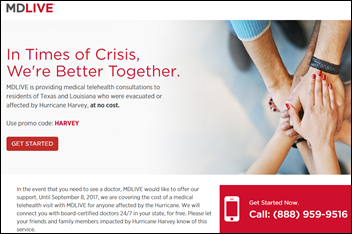
    In Times of Crisis, We’re Better Together.

    Direct-to-consumer telehealth vendor MDLive announces free medical consultations to residents of Texas and Louisiana who have been evacuated or otherwise affected by Hurricane Harvey.

    Medical Journals Have a Fake News Problem

    Bloomberg covers the FTC investigation of predatory pay-for-publication scientific journal Omics International, which claims to publish more than 50,000 articles annually in medicine, technology, and engineering, but which academics and federal investigators claim is undermining public trust in scientific inquiry by publishing questionable or sloppy research.

    Medicare Shared Savings Program Accountable Care Organizations Have Shown Potential for Reducing Spending and Improving Quality

    An HHS OIG investigation finds that the Medicare Shared Savings Program has saved nearly $1 billion in the last three years, while improving quality on most of the individual quality measures reported.

    Comments Off on Morning Headlines 8/30/17

    News 8/30/17

    August 29, 2017 News Comments Off on News 8/30/17

    Top News

    image

    The Advisory Board Company will sell its healthcare business to UnitedHealth Group’s Optum. The education part of its business will be acquired by Vista Equity Partners. The breakup and acquisitions were accurately rumored in early July.

    The healthcare business drew $1.3 billion of the $2.58 billion total deal value.

    Advisory Board said in February that it would explore strategic options after an ownership stake was taken by activist investor Elliott Management, which is now exerting similar pressure on Athenahealth.


    Reader Comments

    SNAGHTML4c5db4f9

    From Athenahealth Spokesperson: “Re: Givenchy’s comment from the 8/23/17 HIStalk regarding financial success metrics for community hospitals. Thank you for bringing this to our attention. The metrics listed were a carryover from the previous iteration of the page and speak to our results on the ambulatory side. We have removed the numbers to avoid any confusion.” I speculated in my original response that the metrics probably weren’t related to hospitals, especially since they were footnoted to suggest all Athenahealth customers excluding hospitals since the company wasn’t in the inpatient business during that pre-RazorInsights benchmark period.

    image

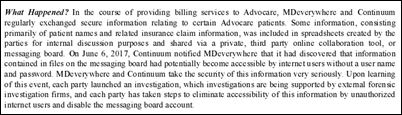
    From Whassup: “Re: MDeverywhere breach. The newly listed breach affects E-MDs since it merged with MDeverywhere. Looks like they are trying to keep it hush hush, along with the fact that E-MDs is up for sale.” HHS is investigating an unauthorized access / disclosure incident of MDeverywhere that was reported August 10, 2017. Marlin Equity Partners acquired E-MDs in March 2015 and merged it with its existing portfolio company MDeverywhere, which offers revenue cycle management and credentialing services. I found a breach notice sent by an MDeverywhere customer that says that the company and its customers use a messaging board to exchange patient information and worksheets, but the customer found on June 6, 2017 that any Internet user could log into the message board without entering a name and password. The non-clinical information of just 1,396 people was involved, so it’s pretty unexciting as healthcare breaches go.

    From Josh: “Re: potential changes to E/M visit codes. It’s buried in a large article, but CMS has opened a public comment window until September 11, 2017 saying they have heard from stakeholders that E/M visit codes are outdated and a source of audit vulnerability and administrative burden. CMS wants public input.” A snip of the proposed Medicare rule – which is rather startlingly insightful and technologically current — says:

    We continue to agree with stakeholders that the E/M documentation guidelines should be substantially revised. We believe that a comprehensive reform of E/M documentation guidelines would require a multi-year, collaborative effort among stakeholders. We believe that revised guidelines could both reduce clinical burden and improve documentation in a way that would be more effective in clinical workflows and care coordination. We also think updated E/M guidelines coupled with technological advancements in voice recognition, natural language processing and user-centered design of EHRs could improve documentation for patient care while also meeting requirements for billing and population health management. We recognize that achieving the goal of reduced clinician burden and improved, meaningful documentation for patient care will require both updated E/M guidelines, as well as changes in technology, clinician documentation practices and workflow …We are specifically seeking comment on how we might focus on initial changes to the guidelines for the history and physical exam because we believe documentation for these elements may be more significantly outdated, and that differences in MDM are likely the most important factors in distinctions between visits of different levels. We are also specifically seeking comment on whether it would be appropriate to remove our documentation requirements for the history and physical exam for all E/M visits at all levels. We believe medical decision-making and time are the more significant factors in distinguishing visit levels, and that the need for extended histories and exams is being replaced by population-based screening and intervention, at least for some specialties. In addition, an increase in the utilization of EHRs, and to some extent, shared health information via EHRs, may have changed the character of extended patient histories since the guidelines were established. As long as a history and physical exam are documented and generally consistent with complexity of MDM, there may no longer be a need for us to maintain such detailed specifications for what must be performed and documented for the history and physical exam (for example, which and how many body systems are involved). We are seeking comment on whether clinicians and other stakeholders believe removing the documentation requirements for the history and physical exam would be a good approach.


    HIStalk Announcements and Requests

    image

    Texans need our help, so I invite you to do as I did in making generous donations to The Salvation Army of Houston, the Houston Food Bank, and the Houston SPCA. The best thing you can do is to send money to reputable local organizations – it’s just too hard to deploy well-intentioned contributions of physical items and those organizations need the flexibility to use their buying power to provide the most benefit. Houston has a marketing problem – it’s the nation’s fourth-largest city, yet few of us visit there on vacation or attend a conference there, so we don’t really have much of a connection to it. As was the case with Hurricane Katrina, the extent of the death and destruction there won’t become evident until days after the floodwaters recede and public health issues – such as food and housing shortages – take over the shrinking headlines and outlast by years the nation’s short attention span.

    Meanwhile, in a discussion that mimics our country’s healthcare debate, a Politico report blames the federal government’s subsidized flood insurance program for encouraging people and developers to build and re-build homes in known floodplains and to pave over drainage areas. More than half of the country’s “repetitive loss properties” are located in Houston, second only to New Orleans, as the federal flood insurance program is running $25 billion in the red. One federally insured home in Mississippi has flooded 34 times in 32 years, with federal taxpayers paying $663,000 for claims involving the $69,000 home, while members of Congress have voted to delay charging homeowners actuarially sound premiums following complaints about inevitably higher prices from coastal communities. Only 15 percent of Houston homes are insured against flooding since such insurance isn’t required for most mortgages and people either can’t afford the premiums or play the odds that they won’t experience a loss.


    Webinars

    September 13 (Wednesday) 1:30 ET. “How Data Democratization Drives Enterprise-wide Clinical Process Improvement.” Sponsored by: LogicStream Health. Presenter: Katy Jones, program director of clinical support, Providence Health & Services. Providence is demonstrating positive measurable results in quality, outcomes, and efficiency by implementing clinical process improvement solutions in arming operational and clinical stakeholders with unlocked EHR data. Providence’s army of process engineers use their self-service access to answer questions immediately and gain an understanding of how their clinical care delivery is impacting outcomes. The presenter will describe practical applications that include antibiotic stewardship, hospital-acquired infections, and comprehensive knowledge management.

    Previous webinars are on our YouTube channel. Contact Lorre for information on webinar services.


    Acquisitions, Funding, Business, and Stock

    image

    Surgery management system vendor ExplORer Surgical raises $3 million.

    image

    India-based technology vendor Tech Mahindra names Jacksonville, FL as its global healthcare headquarters following its $110 million acquisition earlier this year of Jacksonville-based The HCI Group. 

    image

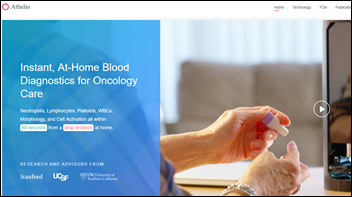
    A Stanford drop-out distances his startup from Theranos in describing its own in-home finger-prick blood analyzer. The co-founders of Athelas are 20 and 22 years old. Their Amazon Echo-like technology, which has yet to earn FDA approval, uses machine learning to analyze blood cell images that pathologists have interpreted and then applies that knowledge to new high-resolution images of a patient’s home blood sample. Their target market is oncology patients who require frequent blood tests.

    SNAGHTML4bd04507

    Columbus, OH-based PriorAuthNow increases its funding to $3.6 million to expand its hospital procedure prior authorization system.


    Sales

    image

    Yale New Haven Health System (CT) will add pharmacogenomic decision support from ActX to its Epic EHR.


    People

    image

    Marc Milstein (University of Texas System) joins University of Texas Southwestern Medical Center (TX) as VP of information resources.


    Announcements and Implementations

    image

    Allscripts will integrate Vidyo’s video visit technology into its FollowMyHealth patient portal.

    SNAGHTML4b510316

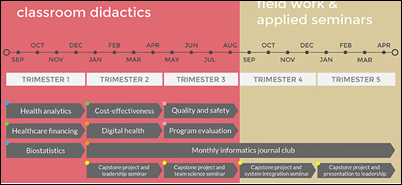
    Cedars-Sinai launches a 20-month, $25,000 executive master’s degree program in health delivery science that emphasizes analytics, health IT implementation, quality and safety, and cost-effective service delivery.

    image

    MDLive offers free non-emergency telephone or video visits to people impacted by Hurricane Harvey from August 25 to September 8.

    image

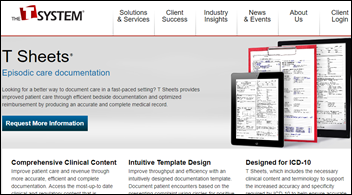
    T-System offers its T Sheets disaster relief documentation templates at no charge to hospitals and freestanding EDs in areas affected by Hurricane Harvey.


    Government and Politics

    image

    The Senate’s HELP committee will hold hearings early next month in hopes of creating legislation to stabilize and then improve the Affordable Care Act individual insurance marketplace. Leaders Senator Lamar Alexander (R-TN) and Senator Patty Murray (D-WA) have successfully collaborated previously on the 21st Century Cures Act. The committee will take the unfortunately refreshing approach of holding actual committee hearings and seeking input from lawmakers on both sides of the political wall. Alexander wants to quickly get legislation on the books to guarantee the federal government’s payment of legally challenged insurance premium subsidies, hoping to reduce the number of insurers pulling out of the individual market or raising premiums due to uncertainty.


    Privacy and Security

    SNAGHTML4b1f780a

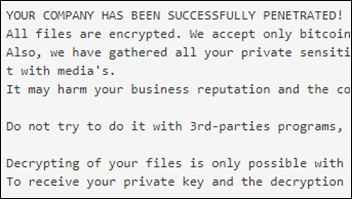
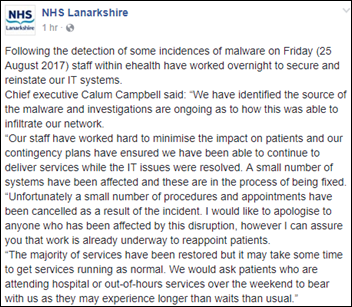
    System downtime at Scotland’s NHS Lanarkshire is being blamed on a new variant of Bit Paymer ransomware, which demands payment of an unusually high ransom of $218,000 for the return of “private sensitive data.” Mass media articles say the malware is spread by phishing emails, but technical sites say it is manually installed following brute force password attacks on insecure Remote Desktop Protocol connections, after which the size of the ransom is set by the hacker’s perception of the victim’s ability to pay.

    A former ED employee sues Northwell Health for firing her for looking up Justin Bieber’s medical records, claiming she didn’t do it and instead was fired just because she’s female. Somehow I suspect Northwell’s audit logs contain information that implicates her beyond her gender.


    Innovation and Research

    SNAGHTML4b63d88f

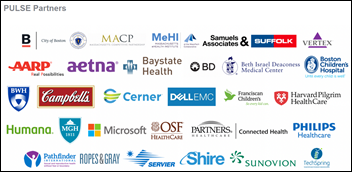
    Non-profit digital health lab Pulse@MassChallenge — which is backed by the Commonwealth of Massachusetts and industry partners (Microsoft, AARP, BIDMC, Cerner, etc.) — seeks startups for its next class. Early bird applications are due September 15 and the application fee is discounted 100 percent using code “2018HISTalk100.”


    Other

    A Salesforce research paper covers the potential of translating natural language questions into database SQL queries, which could allow users to ask database questions without knowing SQL syntax.

    image

    A Department of Defense video shows how Walter Reed National Medical Center (MD) makes prostheses.

    image

    image

    Bloomberg Businessweek covers predatory journal publisher Omics International, an India-based open access journal publisher that charges “publish or perish” academics to run their often poorly prepared research papers as well as those of drug companies that want to disseminate favorable but sloppily researched studies. The founder of Omics calls the FTC’s investigation into his company – which took in $11.6 million in publishing and conference revenue in 2016 – as “fake news.” The article questions whether the company’s journals that feature papers that are “rife with grammar glitches and low-resolution headshots” are confusing drug companies that publish research in them or whether they really don’t care. Omics has 2,000 employees who occupy 250,000 square feet of office space in Hyderabad. Academic and business speakers pay more than attendees to participate in its conferences, which says a lot, while all attendees get 50 percent of the publishing fee for their next research masterpiece. I bet quite a few healthcare organizations are unwittingly underwriting this ego-boosting crap in sending people off to fun destinations under the guise of academic achievement. The company repeatedly accepts hilariously fake article and conference presentation abstracts, one that was submitted as a test being “Evolution of flight characteristics in avian-porcine physiology” that purports to explain how pigs fly. Another author submitted a journal article consisting of 10 pages of the repeated phrase, “Take me off your $&%#! list,” which was happily accepted pending payment of a $150 publishing fee by The International Journal of Advanced Computer Technology.


    Sponsor Updates

    • AssessURHealth and Intelligent Medical Objects will exhibit at Greenway Engage17 September 7-10 in Orlando.
    • Besler Consulting releases a new podcast, “Key takeaways from the FY 2018 IPPS Final Rule.”
    • FormFast publishes a new case study featuring Duncan Regional Hospital (OK).
    • Healthgrades and Gartner publish “Beyond Healthcare CRM: Changing the Paradigm of Patient Communication.”
    • Healthwise will exhibit at the 2017 HCEA Conference September 6-8 in Salt Lake City.

    Blog Posts


    Contacts

    Mr. H, Lorre, Jenn, Dr. Jayne, Lt. Dan.
    Get HIStalk updates. Send news or rumors.
    Contact us.
    125x125_2nd_Circle

    Comments Off on News 8/30/17

    Morning Headlines 8/29/17

    August 28, 2017 Headlines Comments Off on Morning Headlines 8/29/17

    Defray – New Ransomware Targeting Education and Healthcare Verticals

    Cybersecurity vendor Proofpoint describes a new ransomware campaign called Defray that is targeting specific industries, including healthcare, education, and manufacturing.

    Pfizer Rare Disease Launches Two First-of-Its-Kind Innovative Technologies for People Living with Hemophilia at National Hemophilia Foundation Annual Meeting

    Pfizer releases a Minecraft-based gamification app designed to help children living with hemophilia.

    2017 HIMSS Cybersecurity Survey

    HIMSS releases results from a survey conducted with 126 health IT professionals on cybersecurity threats and the defensive best practices emerging within the industry.

    Stabilizing the Individual Health Insurance Market

    Oliver Wyman publishes analysis of several current legislative proposals aimed at stabilizing the individual insurance markets.

    Comments Off on Morning Headlines 8/29/17

    Curbside Consult with Dr. Jayne 8/28/17

    August 28, 2017 News Comments Off on Curbside Consult with Dr. Jayne 8/28/17

    My heart goes out to the people of Houston along with the many other areas impacted by Hurricane and Tropical Storm Harvey. In addition to residents who weren’t able to leave the area before the flooding, there are scores of out-of-town patients stranded after traveling to Houston for care at facilities such as MD Anderson Cancer Center.

    Working in the ED and urgent care space, I’m connected to my community’s emergency preparedness efforts. Natural disasters can strike anywhere at any time and I would encourage everyone to take this opportunity to make sure your family has a preparedness plan. Keeping a small stock of non-perishable food and bottled water is a good idea for everyone. Even if you don’t live in a flood plain, tornado alley, fault zone, or wildfire hazard area, there’s always a chance of losing power or other essential services.

    Healthcare organizations large and small should also have preparedness plans, including resources to support staff who might become stranded at work. My area is prone to ice storms, and although I always keep bottled water and energy bars on hand when I have to go out in bad weather, I can’t assume that my staff is likewise prepared. The leftover pizza and freezer-burned Hot Pockets aren’t going to go very far if we ever encounter a catastrophic weather event. I’m not advocating that everyone needs to constantly live in Doomsday Prepper mode, but our society has embraced the just-in-time and convenience culture so thoroughly that many people and organizations haven’t given much thought to basic preparedness in the face of a calamity.

    The schools in my state now require education in CPR as a high school graduation requirement. I’d love to see a little coverage given to basic emergency preparedness. We do have a teen CERT (Community Emergency Response Team) program along with an adult program and there is always a waiting list for people to attend. If you can’t get into a community offering or your area doesn’t have one, there are some great educational resources available through the Ready.gov website.

    I had two client-facing trips cancel due to the weather, so I’ve been using the opportunity to play catch-up and try to get ahead for the busy times that are surely coming. Although there has been a relaxation in the requirements to have 2015 Edition Certified EHR Technology in place before January 1, I’m not seeing my clients take the foot off the gas as far as preparing for upgrades and workflow changes. I think they’ve already done so much work to get ready they just want to see things through and get the decks cleared for the next thing that gets thrown at them. I’ve also got several clients moving forward aggressively with Patient-Centered Medical Home initiatives, and since I haven’t been to formal training yet for the 2017 NCQA standards, I’m trying to become more familiar with the requirements.

    Although there are a lot of details to learn, many of the principles are straightforward. Sometimes those are the hardest to bring into daily clinical practice, not only because they require people to change, but because they require attention to efficiency and detail. Take for example the daily huddle. In its simplest form, it’s the opportunity for the care team to look at the daily schedule and anticipate specific needs related to each patient appointment. It could be basic things like ensuring there is an extra chair in the exam room for an interpreter or family member, or it could range to issues like tracking down lab results or reviewing needed clinical preventive services and counseling.

    I’ve seen a lot of daily huddles derailed by the lack of an effective meeting strategy. The team needs to show up on time, someone needs to be the leader, someone needs to be the timekeeper, and someone needs to document and manage the follow-up. The reality in many medical offices across the country is that these skills are lacking, and if the practice wants to be successful, the skills need to be taught and reinforced. If staff members are habitually late, it needs to be addressed. If huddle attendees aren’t paying attention and things need to be repeated, it needs to be addressed. Staff discussion needs to stay on topic and sidebar conversations should be stopped.

    I see practice leaders sometimes struggle to address these issues, which is why bringing in an outsider to help with change leadership activities is tempting. It’s also easier to let someone else be the lightning rod, which sometimes happens. One group I’m working with in preparation for an aggressive PCMH rollout has a provider and a nurse manager who are very difficult. The provider often makes changes to his schedule without telling anyone (I’d revoke his access to the scheduling system in a heartbeat) and the nurse manager enables the bad behavior by making everyone else dance around trying to accommodate the last-minute changes. The provider frequently overloads his schedule by double- and triple-booking appointment slots, which makes the entire day run badly and frustrates the staff. The practice doesn’t have a good understanding of their true capacity to see patients, and I suspect some of their panels need to be adjusted by shifting patients from busier PCPs to more accessible PCPs on a given care team. The provider in question is resistant to this change, and although I understand his wanting to maintain patient relationships, it shows that he is not embracing the concept of PCMH and that the practice will continue to suffer until this is addressed.

    I’m planning a series of leadership discussions where try to solidify provider buy-in and discuss the benefits that being a patient-centered practice can provide. If we can’t get everyone to arrive at a place where they can at least agree not to obstruct efforts, however, I’m going to recommend that they seriously consider placing the initiative on hold until we can figure out how to get people on the same page. Simply saying “this is what our practice is going to do” hasn’t been enough for them to be successful thus far. Change is hard, but it’s the reality for medical practice in the years to come. I’ll be on site with them in a couple of weeks, so we’ll see how things go.

    What’s your strategy for keeping staff sane during times of change? Email me.

    Email Dr. Jayne.

    Comments Off on Curbside Consult with Dr. Jayne 8/28/17

    HIStalk Interviews Luke Bonney, CEO, Redox

    August 28, 2017 Interviews 1 Comment

    Luke Bonney is co-founder and CEO of Redox of Madison, WI.

     SNAGHTML468d936d

    Tell me about yourself and the company.

    I grew up in upstate New York in a small town in the Finger Lakes. I went to school at Cornell, graduated in 2008, and worked at Epic for six years on the implementation team. That was where I cut my teeth.

    Our goal for Redox is to drastically accelerate the adoption of technology by eliminating integration as a barrier. We want to make all data in healthcare available and usable.

    Right now, we talk about the exchange of data. What we care about is how to empower developers and technologists to take that data and turn it into useful information for patients and providers. We do that with our engine and the services that we provide with our engine through our platform.

    In an age where modern web developers are used to building tools in the cloud, people expect to be able to exchange data with a single endpoint and a single platform. Today, that doesn’t really exist in healthcare. We have a number of standards that people have to learn. We have a fragmented ecosystem where each health system has their own version of their EHR and their legacy systems.

    Two important trends have occurred – rapid, aggressive adoption of EHRs and healthcare starting to accept cloud as the direction of overall technology adoption. We represent that by offering up a single platform and a set of APIs that any Web developer can connect to.

    Are non-technologists who assume that APIs can solve all interoperability problems overlooking important details?

    I don’t think APIs by themselves are the answer. Standards bodies such as HL7 and others are primarily solving for the use case of how to help health systems exchange their own data. Because of that, you have to consider the extreme edge case, where your unique cocktail of legacy systems — lab systems or whatever it might be – requires you to have highly extensible format.

    The developer thrives on consistency. That’s what they want and what they need. They want to be able to build something and scale it aggressively.

    For us, it’s not really about a APIs by themselves. It’s about offering APIs on top of a platform where we can both connect you to all the different health systems you need to connect to and then normalize that data down to the data models that we provide. Talking about APIs unto themselves is only thinking about part of the problem.

    What is the universe of data you can access and how does a developer use your system as the bridge?

    Our goal is to make the way we exchange data easy and available as anybody would expect it. The short answer to that question is go to developer.redoxengine.com, where you can read the exact data that we support today. I think it’s 17 data models – core clinical data, core registration and practice management data, device data, all the way down to financial data.

    We’re customer driven. We build out data models and offer APIs based on what our customers need. Each time we build out a new data model, we make it available to everybody.

    Our promise is that you connect to us through a single end point. You tell us the scope of information that you need. Then we’re going to normalize data within the health systems you need to exchange with back down to that data model.

    Do startups hit a dead end when companies that hold the data they need, such as EHR vendors, decline to share it?

    Lots of things are moving in the industry that relate to this question. The core problem we solve is the relationship between the application and the health system. That’s where the problem lies. You have physicians or patients who want to turn on a tool. They want to have access to that technology. They want to use it and use it quickly. That’s where we focus and spend our time. Solving that problem is where there’s the most value. Turning it on and having data being exchanged. That’s the frame through which we think about the relationship with vendors, whether that is Allscripts, Athena, Epic, Cerner or anybody else.

    Lots of good things are happening in that area. Groups are starting to offer marketplaces and thinking about what rolling out FHIR would mean. People are starting to embrace the idea that developers and third parties can add a ton of value. There’s also the continued signaling that we’re headed toward the cloud, which is great.

    EHR vendors have to struggle with, how open do you want to be? At the core of that question is, how open are you going to be for third parties that might compete directly with some of the core functionality that you provide?

    We’ll see how it shakes out over time. Where we focus is solving problems in connecting applications to health systems.

    What about policies that wrap around the technology, such as legal agreements between those who hold the data and those who want to use it?

    Our belief is that the data belongs to the patient. That patient is the one who is receiving care. But today, that data is an asset to the healthcare organization that provides care. So at the very core, you need to make sure that you have a business associate agreement set up with any organization that you would ever consider exchanging information with. You need to make sure you’re secure in HIPAA compliance, whether that’s through HITRUST certification or SOC 2 certification or something like that. That’s the table stakes at this point. 

    I think the question you’re asking is, how do the agreements shake out with some of these vendors that are starting to offer up their own APIs? We see a lot of experimentation, both in what they’re asking people to sign and with the business models they’re thinking about. Redox’s role in all of that is to provide feedback. We tell people what’s working and what’s not working because we see all of it. If there’s an opportunity to bring people together to talk about what’s working and what’s not working, we’ll try to have that conversation. But at the end of the day, we’re going to play by the rules, and if the rules don’t make sense, we’re going to figure out how to make them make sense for everybody involved.

    How has investment funding and the involvement of outside investors change the company’s strategy and operations?

    We had angel investing at the very beginning and then two rounds of venture investing. The way we look at funding is, is the opportunity big enough and the problem painful enough where you need to go faster than you would otherwise be able to go if you were constrained by a cash flow? The opportunity we see to solve a massive problem in healthcare helped us decide very early on that we wanted to be a venture-backed company. Any group, starting from the very beginning, has to ask themselves that question. It’s not an inevitable decision. It should be made with some intentionality.

    We were thoughtful on who the investors were that we decided to work with. Whether it was luck or skill, we did pretty good there. Our investors – .406 out of Boston, Flybridge, Dreamit, and HealthX — were in our first round. Then in the most recent round, we brought in RRE and Intermountain. Each of those groups has been absolutely fantastic to work with. They’re not just investors — they also bring a huge amount of strategic advice and valuable networks to the table.

    How does the startup environment in Wisconsin compare to that of Atlanta, Chicago, or the other traditional health IT centers?

    I could not be more excited about what’s going on in Wisconsin. We have an opportunity in Madison – the Madison-Milwaukee corridor, more specifically — to do something huge in healthcare. Judy and Carl of Epic have been a recruitment machine and have brought incredibly smart people, incredibly hard-working people who are passionate about healthcare IT, into this area. It’s on the community to figure out how to take advantage of that and to turn it into what I think could be the major health tech hub in the country.

    Before Redox, the two other founders and I worked on a healthcare IT incubator here in Madison. We started seven digital health companies. Redox came out because those companies were all going to need the services we provide with Redox. But the reason we started that incubator — it was called 100health — is because we thought that Wisconsin and  Madison were poised to have a huge impact. I’m super excited about it and the community here is super excited about it as well, all the way up to the president of the Chamber, up to the full group here.

    Do you have any final thoughts?

    Healthcare IT is officially the sexiest place to be when you think about being a technologist and building great companies. It’s incredible because there’s so much opportunity based on progress to date and seeing what we have in front of us. 

    If I was a developer, if I was a health system executive, what I would see is that in the time you spend here, not only can you have a significant impact and make significant progress, but unlike any other industry, we’re all participants in healthcare. Because of that, you can see the impact of the work you do in your life, in the lives of friends and family, and in the lives of the people you love. If you’re trying to figure out what you want to spend your time on, working in this space is absolutely fantastic.

    Morning Headlines 8/28/17

    August 27, 2017 Headlines Comments Off on Morning Headlines 8/28/17

    Harvey Brings Catastrophic Floods to Houston; at Least Five Reported Dead

    Power outages in Houston are forcing local hospitals to evacuate patients and implementing flood control systems, as Texas Medical Center CEO William McKeon explains “Those submarine doors were locked yesterday afternoon when we started to see the rain.”

    ‘Stay away from hospital’: Patients told to avoid Lanarkshire A&Es after cyber attack

    In Scotland, a ransomware attack on the computer network at NHS Lanarkshire has forced clinicians back to paper workflows and prompted hospital officials to urge patients not to come to the hospital unless it is essential.

    Doctors are burning out because electronic medical records are broken

    Lloyd Minor, MD and Dean of Stanford University School of Medicine argues in an op-ed that EHRs are one of the leading causes of physician burnout, calling for a major revamp of EHR design, with doctors taking a leading role in the process.

    Philips to build health technology center in Tennessee

    Royal Philips announces plans to build a health technology center in Nashville that local officials expect will create more than 800 jobs over the next two years.

    Comments Off on Morning Headlines 8/28/17

    Monday Morning Update 8/28/17

    August 27, 2017 News Comments Off on Monday Morning Update 8/28/17

    Top News

    image

    Southeast Texas continues to be hammered by the stalled remnants of Hurricane Harvey, which has already dropped 25 inches of rain on Houston and continues to linger over the state in what could be the most expensive natural disaster in US history. Rivers exceeded their historic high-water levels by as much as 10 feet. At least five people are known dead, but the toll will certainly rise when conditions allow the storm’s damage to be assessed.

    • Several hospitals evacuated patients or closed.
    • Driscoll Children’s Hospital in Corpus Christi air transported 10 NICU babies to a hospital in Fort Worth, fearing that a power outage would disable their ventilators.
    • Five of 11 Memorial Hermann hospitals in Houston reported spikes in newborn deliveries, with barometric pressure changes doubling the usual number of births in some hospitals.
    • Several Houston-area hospitals closed the flood doors they had installed after Tropical Storm Allison in 2001, hoping to protect their basements and ground floors.
    • MD Anderson closed its campus and advised employees and patients to stay home Sunday morning due to impassable roads, with on-site staff assigned to remain at work until conditions improve.
    • Clinicians at DeTar Hospital Navarro volunteered to stay at the hospital instead of at home with their families.
    • 911 lines were jammed as families in danger took to Twitter seeking rescue from anyone nearby.

    image

    image

    image

    Behrouz Zand, MD posted this picture of MD Anderson’s lobby on Twitter.

    image

    This Twitter-posted photo is of Aransas Pass Care Regional Medical Center, which was heavily damaged when its roof blew off, after which it was burglarized.

    image

    A Twitter user reported that these guys walked five miles in the water to respond to a Twitter plea for a help from a family with a sick baby.

    image

    The mother of a baby delivered as the storm approached land at Corpus Christi Medical Center Doctors Regional decided to name the boy Harvey.


    Reader Comments

    From Gladiolus: “Re: The Advisory Board. After information leaked out in July about the company’s split and UnitedHealth Group purchasing the consulting side, no further public information has been provided.” The company said in its August 8 earnings call that it would not comment on the board’s strategic review process. ABCO shares dropped sharply after the earnings miss, but they’ve still kept pace with the Nasdaq index over the past year.


    HIStalk Announcements and Requests

    image

    The results of last week’s poll are interesting, although IP address analysis doesn’t inspire much confidence in their validity.

    New poll to your right or here: which backgrounds entitle someone to call themselves an “informaticist?” I ran a similar poll in 2010 and it stirred up quite a bit of discussion, such as whether a nurse doing EHR implementation and support work is an informaticist.

    image image

    HIStalk readers funded the DonorsChoose teacher grant request of Nevada middle school PE teacher Mr. H, who asked for shot puts and relay batons so the track and field team can practice for meets.

    Thanks to these companies for their recent support of HIStalk. Click a logo for more information.

    image
    image
    image
    image
    image
    image
    image
    image
    image
    image
    image
    image


    This Week in Health IT History

    One year ago:

    • The systems of two West Virginia hospitals go down in a malware attack.
    • The Department of Defense pushes back its first scheduled go-lives of MHS Genesis.
    • Apple tightens App Store requirements for health-related apps.

    Five years ago:

    • SAIC announces that it will split itself into two publicly traded companies.
    • ONC says it will not allow EHR vendors to drag their feet in supporting data exchange with competing EHRs.
    • HL7 announces that it will make its standards available at no charge to increase their use.
    • Technology investor Vinod Khosla says computers will eventually replace 80 percent of doctors.

    Ten years ago:

    • Acer buys Gateway Computers.
    • MedAssets files for its IPO.
    • A lawsuit brought against McKesson for its involvement in setting inflated drug cost benchmarks is certified as class action.
    • The builder of Epic’s $100 million, 5,300-seat learning center posts photos of the project online.
    • HIMSS offers its second Virtual Conference.

    Weekly Anonymous Reader Question

    image

    Responses to last week’s question:

    • Misys gave away a car a couple of times. Created buzz, not sure if it created sales.
    • The most memorable I’ve seen is when Medicomp launched Quipstar – I think at HIMSS 2011. There was a tremendous amount of buzz. Of course it also helped that they helped sponsor HIStalkapalooza that year.
    • HIMSS Orlando 2017 Watson. Simple, bright booth with actual physicians and researchers demonstrating their work throughout the day. The individuals around the booth were knowledge, including marketing representatives, not just hourly booth babes. Admittedly, they can’t all be like this as the distraction of infotainment, gadgets, and snacks is occasionally welcome throughout the day.
    • Epic’s cartoon books and tights-wearing WebMan.
    • Iatric had a magician at a trade show who was quite memorable for his tricks and demeanor.
    • Richard Simmons at the booth for a “Thin Client” promo for either IDX or Cerner. Way back in the late 90s.
    • The urinal screens with advertising by ???? Guess it wasn’t that effective over the really long term. What, four years ago?
    • Cold-emailed me to offer me shots at the bar!
    • A Vermont-based vendor offering cans of Heady Topper, which is one of the top IPAs in the world and accessible only within a 25-mile radius of Waterbury, VT.
    • Can’t beat the OnBase Bar in the middle of the vendor floor.
    • Ivo Nelson’s Pub Night. Long after the show floor is closed, the dinners and parties are over, most in the know head to Ivo’s pub night. An informal gathering to see old friends and build new relationships. Much work gets done.
    • Years ago Arthur Andersen distributed jazz CDs at HIMSS in New Orleans. I still play the CD today and it’s loaded on my mobile devices.
    • HIMSS itself, conducting the annual Interoperability Showcase.

    image

    This week’s question: who is the most inspirational health IT or healthcare person you interact with regularly?


    Last Week’s Most Interesting News

    • Google offers a link to a depression questionnaire to mobile users who search on “clinical depression.”
    • CliniComp files a bid protest with the VA for choosing Cerner in a no-bid contract.
    • A reader calls attention to Care Otter, which is apparently an Allscripts project to develop a new EHR, after which Care Otter’s web page, Twitter account, and YouTube channel are taken down.
    • Investment research firm Hedgeye speculates that the new, unnamed six-hospital Allscripts Sunrise customer is Verity Health, owned by Allscripts investor Patrick Soon-Shiong.
    • HIMSS Analytics provides detailed information on inpatient EHR market share by hospital count, total beds, and the number of physician users.

    Webinars

    September 13 (Wednesday) 1:30 ET. “How Data Democratization Drives Enterprise-wide Clinical Process Improvement.” Sponsored by: LogicStream Health. Presenter: Katy Jones, program director of clinical support, Providence Health & Services. Providence is demonstrating positive measurable results in quality, outcomes, and efficiency by implementing clinical process improvement solutions in arming operational and clinical stakeholders with unlocked EHR data. Providence’s army of process engineers use their self-service access to answer questions immediately instead of waiting for reports to be written and double checked for possibly inaccurate information. The presenter will describe practical applications that include antibiotic stewardship, hospital-acquired infections, and comprehensive knowledge management.

    Previous webinars are on our YouTube channel. Contact Lorre for information on webinar services.


    Acquisitions, Funding, Business, and Stock

    Philips will create a Nashville health technology center that will add 800 jobs.


    Decisions

    • Roane Medical Center (TN) will switch from McKesson to Cerner in 2018.

    These provider-reported updates are supplied by Definitive Healthcare, which offers a free trial of its powerful intelligence on hospitals, physicians, and healthcare providers.


    Announcements and Implementations

    image

    Sunquest announces GA of Mitogen, a laboratory information management system and genetic software suite for molecular diagnostics and precision medicine.


    Privacy and Security

    image

    In Scotland, NHS Lanarkshire urges people with non-emergent conditions to avoid its ED due to a malware incident that has taken its systems down. The same trust was hit hard by the WannaCry ransomware this past May. 

    image

    Salina Family Healthcare Center (KS) notifies 70,000 patients that its computer systems were infected with ransomware in June. Afterwards, a patient who hadn’t been seen there for 13 years complained that his records should have been purged and that outdated addresses on file means the breach notices will be sent to the wrong people.


    Innovation and Research

    image

    A new Reaction report covers the Allscripts acquisition of McKesson’s EIS business. The report finds that McKesson already had a high rate of users interested in replacing its systems, a process that may speed up with the acquisition.


    Other

    SNAGHTML3c1f2b09 image

    Epic CEO Judy Faulkner makes the “Forbes Richest People in Tech” list, coming in at #73 with an estimated net worth of $3.4 billion. Rishi Shah, the 31-year-old CEO of waiting room advertising company Outcome Health, was #69 at $3.6 billion.

    SNAGHTML3c3fe286

    Lloyd Minor, MD,  dean of Stanford’s medical school, blames EHRs for physician burnout and says that they (along with shorter office visits) “turn medical practice into a regimented, one-size-fits-all endeavor.” He says EHRs should add diagnostic support functions and use speech recognition, while doctors should use scribes to free up their time. 

    image

    The Las Vegas paper covers the fire department’s deployment of RNs to staff its emergency call line for less-urgent medical calls, where the nurses follow software-driven to decide whether to roll an ambulance or to call Lyft to take the caller to a hospital or urgent care center. The pilot project’s return on investment might be questionable – nurses work from 9 a.m. to 6. p.m. and take just six calls per day, costing $300,000 per year.

    In Australia, a cancer survivor blames the lack of interoperability between the EHRs of two hospitals for her missing follow-up visits. A member of parliament says he has received several complaints that Sunshine Coast University Hospital cannot access patient histories since it does not use the state-wide, Cerner-powered IEMR system and instead uses a scanning-based system while it plans its transition to IEMR.

    Weird News Andy can’t visualize why some clueless eclipse-watchers who weren’t able to get protective glasses decided that their next-best option was to put sunscreen on their eyeballs.


    Sponsor Updates

    • Medicity publishes a new white paper, “Interoperability 2.0: Solving Health Care’s Data Aggregation Problem.”
    • ZeOmega’s Jiva population health management platform earns NCQA certification.
    • Experian Health will exhibit at AAHAM California August 27-30 in Rancho Palos Verdes, CA.
    • Patientco recognizes Houston Healthcare (GA) as its Client of the Quarter.

    Blog Posts


    Contacts

    Mr. H, Lorre, Jenn, Dr. Jayne, Lt. Dan.
    Get HIStalk updates. Send news or rumors.
    Contact us.
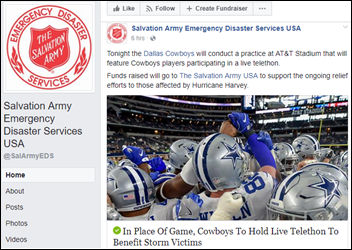
    125x125_2nd_Circle

    Comments Off on Monday Morning Update 8/28/17

    Morning Headlines 8/25/17

    August 24, 2017 Headlines 1 Comment

    There is now a Google test for depression and mental ill health

    Google has partnered with the National Alliance on Mental Illness to begin offering depression screenings directly within its search results when users search “clinical depression” from a mobile device.

    Filled With Blood And Drugs, These Delivery Drones Are Saving Lives In Africa

    Fast Company profiles Zipline, a startup using drones to deliver life-saving medical supplies at a national scale in Rwanda. The copmany has made 1,400 commercial deliveries since its launch 10 months ago, 25 percent of which delivered life-saving supplies.
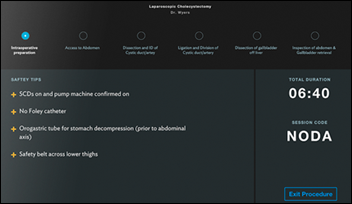
    MD Anderson back in the black for the fiscal year

    MD Anderson, which was running a $169 million defecit earlier in the year, is now operating in the black year-to-date thanks to cost cutting measures that included major staff reductions.

    Insurer’s mailing to customers made HIV status visible through envelope window

    Aetna is being sued after 12,000 people with HIV received letters that may have exposed their HIV status through an unnecessarily large window in the envelope.

    Text Ads


    RECENT COMMENTS

    1. Merry Christmas and a Happy New Year to the HIStalk crowd. I wish you the joys of the season!

    2. "most people just go to Epic" that's a problem because then EPIC becomes a monopoly in healthcare, if it isn't…

    3. Only if CEO can post 'bail' which nowadays stands at 1B$ paid directly to the orange president or his family…

    4. I enjoy reading about the donations to Donor's Choice by HIStalk members. I also believe in the worthiness of Donor's…

    Founding Sponsors


    Platinum Sponsors


    Gold Sponsors


    RSS Webinars

    • An error has occurred, which probably means the feed is down. Try again later.