Recent Articles:

Morning Headlines 12/1/17

November 30, 2017 Headlines Comments Off on Morning Headlines 12/1/17

Drug Charity May Shutter After U.S. Faults Pharma Influence

Caring Voice Coalition, a big pharma-funded charity setup to help patients pay their prescription drug co-payments, will likely shut down after an OIG investigation finds that the charity was providing drugmakers detailed information on whether their charitable contributions were going to their own customers, which ultimately allows them to raise the prices of their drugs for insurers, while insulating patients from the immediate out-of-pocket effects.

VA misses deadline on Cerner contract

The VA misses its own self-imposed deadline to sign its contract with Cerner. The contract is reportedly ready to execute, but the VA needs approval from the House and Senate Appropriations committee to transfer of $374 million between existing accounts prior to moving forward, which it has not yet received.

Siemens unit set for major Frankfurt IPO

Siemens will list its healthcare unit, Siemens Healthineers, on the German stock exchange at a value of $47 billion.

Hardly anyone uses Australia’s My Health Record service

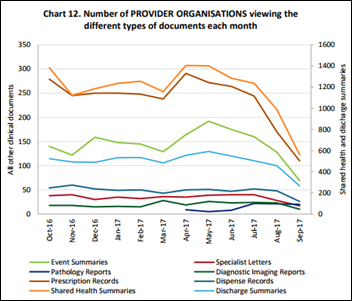
Australia’s nationwide patient portal and health information exchange service has almost no traffic, despite its $1.5 billion price tag. Fewer than 200 GP patient summaries and 150 hospital discharge summaries are accessed by healthcare providers in a given month.

Comments Off on Morning Headlines 12/1/17

News 12/1/17

November 30, 2017 News 2 Comments

Top News

image

HHS OIG cracks down on drug co-pay charity Caring Voice Coalition, removing its seal of approval after finding that the charity shares data with the drug companies that provide its support.

CVC, which has received hundreds of millions of dollars from drug companies earmarked for paying patient prescription co-pays, had been exposed by several former employees as fast-tracking assistance for patients that use a donor company’s drug while wait-listing those who are prescribed drugs sold by non-donors.

OIG says the information sent to the drug companies could help them raise Medicare prices by accumulating anecdotal patient-reported successes.

CVC told OIG that it will probably shut down following the ruling.

I found CVC’s 2015 federal tax forms, in which it reported $132 million in 2014 revenue (vs. $83 million in 2013), giving it a $30 million surplus for the year.

The Justice Department had previously sent subpoenas to a handful of drug companies in its investigation of patient assistance programs, after which United Therapeutics set aside $210 million in case it gets caught up in a False Claims Act lawsuit over its donations.

The Internal Revenue Service is reviewing the tax-exempt status of another patient assistance program, Chronic Disease Fund (now known as Good Days), which took in more than $1 billion of drug company money over six years, of which the charity used $35 million to pay for data processing services provided by a company owned by the charity’s founder. Good Days has filed eight lawsuits so far this year to fight IRS subpoenas.


Reader Comments
image

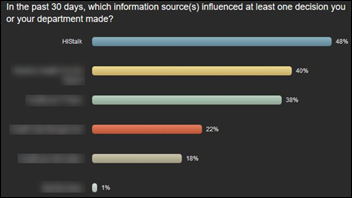
From Dollar Bill: “Re: [site name omitted.] Who finds actionable information there?” I can’t say, but the above is from Reaction Data’s independent C-level survey that asked about which sites influenced their decisions. I’ve blurred the names, but the one you’re asking about finished poorly in this and the other four categories (most-read, most-influential, most interest-generating, most positively affecting job performance, and most recommended). I immodestly note that the winner in all categories was a spare-bedroom, one-author one.


HIStalk Announcements and Requests

This week on HIStalk Practice: DaVita preps to sell its $4 billion medical group. South Carolina’s PDMP helps slash opioid prescriptions. Elderly New Hampshire MD faces non-license renewal over lack of computer skills. Google researchers develop gaze-detection software to deter snooping smartphone bystanders. Senate HELP Committee questions HHS Secretary nominee Alex Azar on drug prices. VillageMD New Hampshire selects Geneia predictive analytics for PHM efforts. CareCloud’s Polly Friend offers three key things practices should do to prep for MIPS.


Webinars

December 5 (Tuesday) 2:00 ET. “Cornerstones of Order Set Optimization: Trusted Evidence.” Sponsored by: Wolters Kluwer. Updating order sets with new medical evidence is crucial to improving outcomes, but coordinating maintenance for hundreds of order sets with dozens of stakeholders is a huge logistical challenge. For most hospitals, managing order set content is labor intensive and the internal processes supporting it are far too inefficient. Evidence-based order sets are only as good as their content, which is why regular review and updates are essential. This webinar explores the relationship between clinical content and patient care with an eye toward building trust among the clinical staff. Plus, we will demonstrate a new evidence alignment tool that can easily incorporate the most current medical content into your order sets, regardless of format, including Cerner Power Plans and Epic SmartSets.

Previous webinars are on our YouTube channel. Contact Lorre for information.


Acquisitions, Funding, Business, and Stock

image

Nuance announces Q4 results: revenue down 8 percent, adjusted EPS $0.20 vs. $0.31, beating analyst estimates for both and sending shares up to extend a run that started in mid-November. The company says its June malware attack cost it $53 million in revenue for the quarter. NUAN shares have risen 4 percent in the past year vs. the Nasdaq’s 30 percent. From the earnings call:

  • The total impact of the malware incident was just over $60 million vs. the originally expected $85 million.
  • The healthcare business delivered its best net new bookings quarter in history in Q4 despite the malware attack.
  • Nuance’s strategic focus will be conversational AI and analytics-based solutions.
  • The company expects Dragon Medical to replace transcription as its largest healthcare revenue contributor as its HIM business continues to decline.

image

Siemens will take its Siemens Healthineers healthcare business public in Germany at a valuation of $47 billion, the country’s largest IPO in 20 years. The company chose the German exchange after ruling out London due to Brexit and the US markets because it wants to appeal to investors from Asia.
image

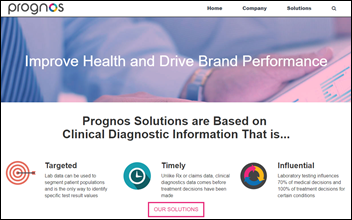
AI-supported diagnostic software vendor Prognos closes a $21 million Series C funding round, increasing its total to $43 million. Its target audience is drug companies, insurers, and labs. Co-founder Jason Bhan, MD used to work for Clinovations, while Sundeep Bhan co-founded Medsite.

Bizarre: three-employee medical translation training vendor MiTio files for a $10 million IPO despite having only ever enrolled 1,000 students, naming as its CFO/CIO/CTO the founder’s 16-year-old son who is “a rising star in the coding community.” The company says it won’t sell shares publicly,  but had to file for an IPO because it will give investors cryptocurrency tokens. That’s the second company I’ve seen today offering that form of investment (see the Health Wizz item below). I admit that I don’t understand that concept.


Sales
image

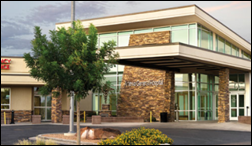
Artesia General Hospital (NM) chooses FormFast’s FastPrint, Capture, FastFlow, Content Manager, and Connect.

The Ministry of Health of the Republic of Kazakhstan will implement Elsevier’s ClinicalKey reference solution in 200 locations.


People

image

Nuance hires Tom Beaudoin (SimpliVity) as EVP of business transformation. He was EVP/CFO for Nuance from 2008 to 2015.

image

Laure Kreofsky, MHA, MBA (MedSys Group) joins Pivot Point Consulting, A Vaco Company as VP of advisory services.

image

Hurley Medical Center (MI) promotes Casey Bryson to CIO from the interim role.


Government and Politics

image

The VA misses its target date to sign with Cerner, which it originally vowed to get done in November in responding to a lawsuit protesting its no-bid selection. A VA source says the contract is ready to sign as soon as Congress approves moving the money to the correct accounts.


Announcements and Implementations
image

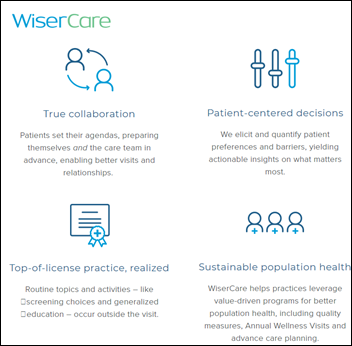
Elsevier will offer WiserCare’s Shared Decision Making solution as part of its patient engagement suite.
image

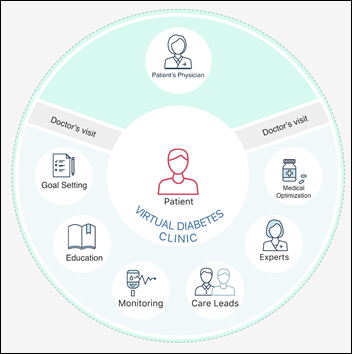
Glytec’s Glucommander Outpatient will be integrated with the virtual diabetes clinic of Onduo, whose parent companies are drug manufacturer Sanofi and Alphabet’s Verily.
image

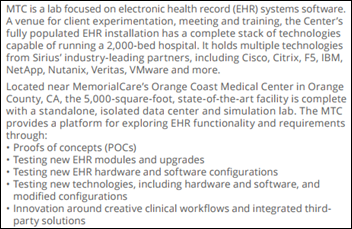
MemorialCare (CA) opens a technology testing and training center in conjunction with systems integrator Sirius Computer Solutions. It includes the technologies need to run a 2,000-bed hospital, an isolated data center, and a simulation lab.
image

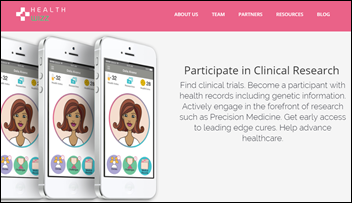
Health Wizz launches a blockchain-powered consumer tool for managing and sharing their medical data with research organizations and drug companies that can offer to pay them. The company is recruiting investors who will receive digital tokens.
image

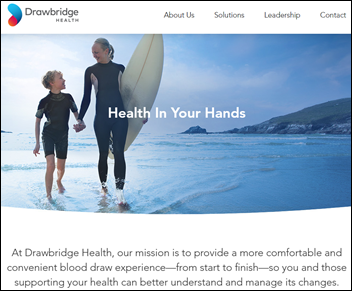
GE launches blood collection firm Drawbridge Health, which will allow physician offices and clinics that don’t have a blood draw technician to easily draw small-volume blood samples and send them to third-party labs. I like the idea of going back to the good old days when you could get your blood drawn during your office visit instead of starting over with the DMV-level indifferent employees of Quest or LabCorp and then listening to your NPO stomach grumble while watching the Unemployment TV Network of fake judges, on-cue fistfights over infidelity, and ambulance-chaser commercials.

image

Tahoe Forest Health System (CA) goes live on Epic, implemented and hosted by Mercy Technology Services. 

GetWellNetwork adds Elsevier’s patient education videos to its content library.
image

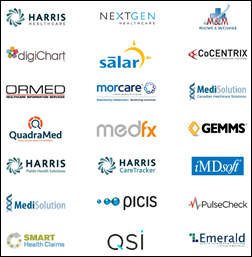
QuadraMed and Harris Healthcare launch individual websites that cover their respective products, with QuadraMed offering its EMPI solutions and Harris Healthcare covering Affinity Patient Self-Service, Affinity ERP, AcuityPlus staffing, Team Notes, the QCPR EHR, and Affinity RCM. The Harris Health Group brands are listed above, although it should be noted that it acquired only the hospital division of NextGen and not the entire NextGen Healthcare product line or its parent company Quality Systems, whose logos appear on the page.
image

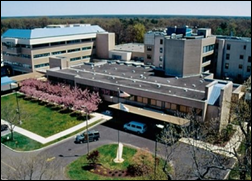
Deborah Heart and Lung Center (NJ) will go live on Meditech 6.1.5 today (Friday). I believe they’re upgrading from Meditech Magic.


Privacy and Security

image

A cybersecurity publication asks three healthcare security experts to assess the recent hospital ransomware episode of “Grey’s Anatomy,” who conclude:

  • It didn’t make sense for the hacker to take down patient monitors since the hacker’s objective is to make money and the on-screen ransom note would accomplish that less dramatically.
  • The attack took down phones, computers, and medical devices, which the experts say could actually happen since hospital networks are often “one big, flat, happy family” instead of being segmented or protected by internal firewalls. Still, the variety of operating systems and versions used in a typical hospital make it unlikely that everything could be taken offline by the same malware.
  • Medical uncertainty due to lack of a paper backup may be realistic, although more hospitals are keeping electronic snapshots of important clinical information.
  • The demanded ransom – $20 million in bitcoin at the time of the airing and $50 million today – is not realistic because nobody would pay that much.
  • It’s not likely that a cyberattack could take down access control systems, as shown on the show when nobody could open the door to the blood bank.
  • It’s unrealistic that the FBI would arrive in minutes and take charge as the show depicted.
  • It’s not necessarily advisable to just shut all systems down, but rather to control the malware’s spread while forensically trying to learn more about the hacker.
  • The TV chief of surgery made the decision to pay the ransom, which is unrealistic not only because that’s a CEO-level decision, but also because hospitals usually follow the FBI’s advice and refuse to pay.
image

Security researchers find that the installation script of free, web-based OpenEMR does not automatically remove itself upon completion and that the instructions don’t tell users to delete it, allowing hackers to gain administrative access and to execute PHP scripts of their own. Kudos to the developers, who released a patch within four days, made a community announcement about the vulnerability, and updated its instructions to include removing unnecessary files after installation. The system is used by thousands of healthcare facilities and users in supporting an estimated 90 million patients.

In England, a financial administrator who was worried that she was being out-earned by co-workers hacks into the hospital’s systems, looks up salaries, collects data on celebrity mental health patients, and deletes key files. The judge let her off with a suspended sentence since she argued that her deeds were to “ease her mind” rather than for financial gain.

A federal court drops child pornography charges against a California oncologist after his attorney argues that the warrant used to search his home – in which child pornography was apparently found – was invalid because the FBI’s tip from a Best Buy technician was triggered by a photo of a naked girl that was not pornography but rather “child erotica,” which is not illegal but may not be the kind of image you hope your oncologist is studying intently.


Other
image

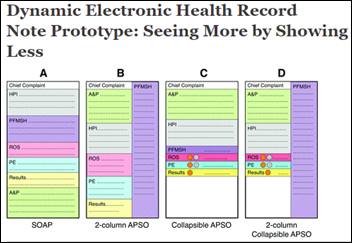
Family medicine doctors from the University of Missouri School of Medicine design a prototype of collapsible accordion physician notes, comparing four models that also emphasize abnormal items.
image

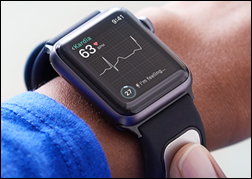
FDA approves AliveCor’s EKG watchband replacement for the Apple Watch to warn users of possible atrial fibrillation. The KardiaBand use what it claims is AI on the smart watch to determine a specific user’s normal heart rate based on activity, then issue a warning to run the EKG function if the rate goes outside the normal range. The band costs $199 plus a $100 per year subscription. Like other “advances” that find previously undetected conditions that require expensive treatment, we’re all going to be paying for it. Going problem fishing by using data for bait isn’t usually as good for patients as it seems.
image

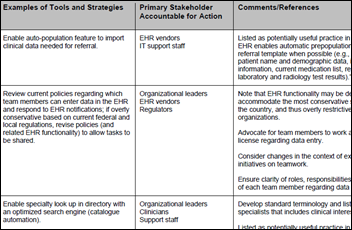
IHI/NPSF publishes “Closing the Loop: A Guide to Safer Ambulatory Referrals in the EHR Era.” Recommendations include developing better interoperability among EHRs used by PCPs and specialists; conducting a risk assessment of the electronic referral process using the SAFER guidelines; creating collaborative care agreements for PCPs and specialists that include how patients will be managed and communications etiquette; and developing easy ways to track referral status by patient. The impressively credentialed expert panel notes that 24 percent of malpractice claims are caused by missed or delayed diagnosis; the volume of referrals has skyrocketed and more frequently involves multiple specialists; and that patients don’t follow through on up to half of referrals. The study also observes that while EHRs have potential to improve the referral situation, they generate a lot of ignored noise and a lack of evidence-based guidelines makes it tougher.
image

Australia’s My Health Record – rollout of which cost up to $1.5 billion with annual costs of up to $300 million — is being roundly ignored by both providers and consumers, according to the government’s dashboard that shows few new voluntary registrations and that only 200 doctor-entered patient summaries were viewed by hospitals in August.
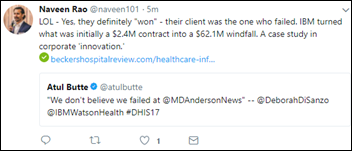
image

This is a fun tweet.

image

Here’s another great tweet I found via @healthblawg.

Big health systems keep moaning about how financially strapped they are and brag about how they’re moving away from the lucrative “heads in the beds” financial model, but Ohio State University joins a bunch of other health systems that have recently announcing huge construction projects. The cost of their much-anticipated erection – which includes an impressive 840-bed tower – has not been determined.

A study estimates that healthcare illiteracy – which includes half of Americans, according to the CDC – costs the country up to $175 billion per year.

Snapchat CEO Evan Spiegel says the factors that have driven social media – more friends, more likes, and more free content – will undermine it. He says that automated, personalized newsfeeds based on what friends are consuming — like Facebook’s — “came at a huge cost to facts, our minds, and the entire media industry.”
SNAGHTML515edcbe

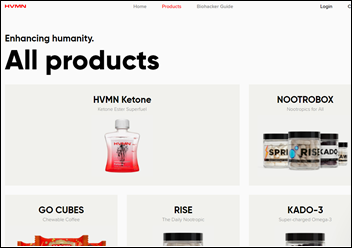
Weird News Andy will love this. A startup that raised millions to develop its $40-a-bottle “cognitive enhancement” concentration pill (aka “nootropics”) tries to bury the results of its own study, which conclude that the expensive product is less effective than just drinking a cup of coffee.


Sponsor Updates

  • ZeOmega achieves Oracle Validated Integration of Jiva 6.1 with Oracle Healthcare Foundation 7.1.1.
  • The HCI Group partners with the Dubai Health Authority as part of its Transformation Forum.
  • The local paper features Healthlink Advisors consultant Claude Younger’s health-prompted feat of running marathons in all 50 states.
  • Optimum Healthcare IT publishes an infographic titled “The ROI of Interface Error Management.”
  • Meditech posts a video featuring ancillary department directors of Colquitt Regional Medical Center (GA) discussing their time savings from using its Web EHR.
  • Bill  Spooner, founding advisor at Next Wave Health Advisors – a Huntzinger Management Company, leads sessions at the Millenium Alliance’s Assembly on healthcare provider transformation.

Blog Posts


Contacts

Mr. H, Lorre, Jenn, Dr. Jayne, Lt. Dan.
Get HIStalk updates. Send news or rumors.
Contact us.

125x125_2nd_Circle

EPtalk by Dr. Jayne 11/30/17

November 30, 2017 Dr. Jayne Comments Off on EPtalk by Dr. Jayne 11/30/17

clip_image002 

I enjoy following startup companies, especially those that are looking for novel or improved ways to manage complex conditions. Diabetes is not only a killer, but a significant drain on our already overloaded healthcare system, and many physicians feel there has to be a better way to engage patients to participate in the lifestyle-related parts of their care. I’ve been following Diasyst for a couple of years now and it looks like they’ve actually launched. Their approach uses a patient-facing mobile app to monitor blood sugars coupled with EHR integration to get all the data in the same place. They then use clinical algorithms drawn from work at Emory, Georgia Tech, Grady Memorial Hospital, and the Atlanta VA Medical Center to provide clinical decision support. The loop is closed by sending custom patient plans back to the mobile app. I haven’t seen a demo yet, but hope to catch one soon.

clip_image004

My laugh of the week was and email from the communications and marketing team at a hospital where I haven’t worked for a number of years. They were asking me for a new head shot for my profile on their find-a-physician website. They’re switching systems and my old picture apparently was too low of a resolution to be compatible. I replied and told them I was no longer affiliated with the facility and they sent an email again asking for a head shot and telling me it was my right to be included in the directory because I have “referral privileges for diagnostic testing” and that it would be free advertising for my practice.

In all the years I’ve filled out medical staff credentialing forms (both as an applicant and as a department chair), I’ve never heard of that class of privileges. When was the last time you saw a hospital refuse a patient who arrived with an order for diagnostic testing because the ordering or referring physician wasn’t on staff? Personally, I’ve never seen it, and I’ve received reports from many hospitals where I wasn’t on staff but where the patient had arrived with a radiology or lab order form. As long as the insurance card is valid and/or the preauthorization is in order, you’re usually cleared to receive services.

I asked the marketing rep what contact information she had on file for me and she replied that in the old system my profile is completely blank, which was leading her to think that perhaps the list she was given should have been vetted before she started contacting people. She rescinded her offer for free advertising after I told her that I am employed by a competitor.

My clinical employer has opted out of Meaningful Use, so this vendor blog article about why urgent cares should opt in caught my eye. For physicians and practice managers who may not know a lot about MIPS, they did a reasonable job summarizing how MACRA brought several CMS initiatives together and how practices can avoid negative payment adjustments or earn a bonus. They mention that practices with a high performance score can be “proud to share with the public.” I’m not sure how relevant this is to the average patient – despite a push for consumer-driven medicine and patient engagement, as an urgent care physician, most of our patients choose our services based on our location and hours of operation or by word of mouth. They’re not out investigating Composite Performance Scores before they come see us to get help with their poison ivy or flu symptoms.

The piece goes on to make submission seem straightforward, with no mention of the amount of data that has to be gathered or the work that has to be done beyond what is typically done in the urgent care setting. It also cites a top score as a way to “attract top talent on a healthcare landscape where every advantage matters.” In my world, we’re attracting top talent simply because we have opted out of the federal programs. Physicians are tired of dealing with initiative after initiative and just want to practice medicine. We’ve not only opted out of the madness, but provide scribes if providers want to use that documentation style. At least from the inside, it feels like we’re taking control of our situation and delivering good care at reasonable prices with a minimum of hassle. It remains to be seen how the penalties will impact us and whether our non-Medicare book of business will be impacted if competitors start advertising their MIPS composite scores.

image

As a physician who reads a great number of chest x-rays, I also enjoyed this article about automating x-ray interpretation. We’ve automated readings of other studies such as Pap tests, and given the number of chest films that are taken each year, it makes sense to see how we can do better. There is always a debate whether a patient has an early pneumonia or whether they just have increased bronchovascular markings. The Stanford University Machine Learning Group is tackling this, with the algorithm now outperforming radiologists in diagnosing pneumonia.

Although the data don’t mention family physicians, emergency physicians, internal medicine physicians, or pediatricians, I suspect it would outperform us as well. At our practice, each film is read by two providers to reduce the risk of interpretation errors. Having the second review be part of a proven algorithm would be a bonus. In the mean time, we’ll continue making the decisions based on our interpretation of the x-rays along with the clinical picture of the patient in front of us, which is often more important than the film itself.

I don’t envision a future with photo booths where a patient pops in for an x-ray and gets a printed script based on the algorithm, unless it can also look at nutrition and hydration status, co-morbid conditions, history of medical non-compliance, current climate of antibiotic resistance, travel history, occupation, social supports, financial status, insurance coverage, and more. Those are all the things physicians consider in making our decisions that outsiders often overlook. I’m not worried about being replaced just yet.

Email Dr. Jayne.

Comments Off on EPtalk by Dr. Jayne 11/30/17

Morning Headlines 11/30/17

November 30, 2017 Headlines Comments Off on Morning Headlines 11/30/17

Nuance Fourth Quarter and Fiscal 2017

Nuance releases Q4 results: adjusted revenue fell to $466 million, compared to $506.2 during the same quarter last year, adjusted EPS -$0.23 vs. $0.06, beating estimates on both and driving share prices up 3.2 percent in after hours trading. In its financial statements, the company noted that costs associated with its NotPetya cyberattack totaled $53 million in Q4, less than the $65 – $75 million range it initially estimated.

Is It Time for a New Medical Specialty? The Medical Virtualist

An article in JAMA proposes creating a medical virtualist specialty that would focus primarily on providing telehealth-based services.

Medicare Part D Opioid Prescribing Mapping Tool

CMS releases new data visualizations showing geo-located Medicare Part D opioid prescribing rates from 2013 to 2015 with additional information on extended-release opioid prescribing rates and spatial analyses to identify “hot spots.”

Remarks by Dr. Gottlieb at FDA’s Generic Drug Science Day

FDA Commissioner Scott Gottlieb, MD says the agency is approving record numbers of generic drugs in its push to speed up the “approval of safe, high-quality, and more affordable generic drugs.”

Comments Off on Morning Headlines 11/30/17

Readers Write: The Challenges (and Benefits) of Anesthesia Data Capture

November 29, 2017 Readers Write Comments Off on Readers Write: The Challenges (and Benefits) of Anesthesia Data Capture

The Challenges (and Benefits) of Anesthesia Data Capture
By Douglas Keene, MD

image

Douglas Keene, MD is chairman and founder of Recordation of Wayland, MA and an anesthesiologist and co-founder with Boston Pain Care Center.

As part of the American Recovery and Reinvestment Act of 2009, hospitals and clinics were required to demonstrate conversion to electronic medical records (EMRs) by the end of 2014. However, despite government incentive programs totaling in the billions, the program initially faced a myriad of hurdles and proved harder to implement than initially anticipated. Fast-forward to nearly a decade later and the initiative is back on track, with over 90 percent of healthcare facilities using EMRs as their universal standard.

With that said, one segment of the healthcare market has lagged in EMR adoption: anesthesia care providers and the adoption of anesthesia information management systems (AIMS). Despite the critically important role the operating room plays in a hospital’s ecosystem –typically the source of about 60 to 70 percent of a hospital’s revenue – the majority of healthcare facilities have been hesitant to make substantial monetary investments in AIMS.

To bring the EMR revolution out of the doctor’s office and into the OR setting, physicians must reflect on the factors that have led to slow AIMS adoption,and consider the key features and components needed in order for physicians and administrators to overcome these implementation hurdles.

Anesthesiology departments have grappled with many of the same challenges initially faced by healthcare facilities looking to adopt EMRs. These include reluctance to share information with competitors, software from different vendors that can’t interoperate or communicate, lengthy and complex implementation phases, and the overall high price tag of such systems.

In addition to these obstacles, AIMS adoption faces an even more challenging hurdle: adoption inertia by anesthesia providers. While all EMR software faced some initial skepticism by healthcare providers in general, this aversion has been far more vehement among anesthesia care teams for several important reasons, and stemming from the complexity of real-time anesthesia-related documentation.

Early AIMS were difficult to learn to use and implement. They relied upon larger, expensive computers with relatively lower processing power and faced challenges with interfacing reliably with anesthesia equipment and hospital information systems. Anesthesia workflow and efficiency often worsened with the introduction of early AIMS technology.

Advances in computer technology and interface design have improved some aspects of the overall user experience. However, the drawbacks from early AIMS still linger in the minds of many anesthesia providers.

While many academic and larger surgical facilities have adopted AIMS made by the vendors of the existing hospital information systems, there are numerous community hospitals and ambulatory surgical centers that have not yet transitioned to electronic anesthesia records, based upon their smaller sizes and budgetary constraints.

As a result, many of today’s anesthesiologists and CRNAs who underwent their initial training using AIMS in academic facilities ultimately enter practices that still rely on handwritten documentation.

As economic and regulatory forces increase pressure to consider the adoption of electronic anesthesia records, teams that include administrators, information management specialists, clinical managers, and anesthesia providers are sharing the decision-making process.

As a board-certified anesthesiologist, pain management, and clinical informatics specialist, I am certainly familiar with the complaints physicians have had with AIMS. In my opinion, with the modern technologies now available on the market – and many now available at more reasonable price-points – there is no good reason that surgical facilities and anesthesia departments should hesitate to consider the adoption of anesthesia information technology. The benefits of AIMS and the potential perils of not adopting such a system are far too great to ignore.

In choosing an AIMS, the type of facility in which it will be implemented should be considered and the characteristics of the facility should be embodied in the AIMS. As an example, ambulatory surgery centers (ASCs), while among the slowest to adopt AIMS, are beginning to realize that their survival will depend upon information management.

ASCs must provide patient care with a focus on safety, quality, and operational efficiency, but often have smaller budgets to implement information technology. Therefore, a sensible approach would be choosing a cost-effective AIMS solution designed to facilitate perioperative documentation in a fast-paced anesthesia workflow environment that is focused on providing easily available data for process analysis and improvement.

ASCs also need to streamline the sharing of information from and with numerous sources, including primary care providers, surgeons, patients, and hospitals, and therefore should choose an AIMS solution that focuses on interoperability and that is easy to implement. These factors will benefit all of the ASC’s stakeholders and will lead to better patient care and assure the long-term financial viability of the facility.

From the point of view of the AIMS end users, the anesthesia care team must view the AIMS solution as benefit rather than an obstacle. Instead of placing a barrier between physician and patient as some feared AIMS would do, early adopters have found that well-designed AIMS empower physicians and CRNAs to be more vigilant with respect to direct patient care during surgery.

Instead of using handwriting to create what is sometimes partially illegible documentation during a surgical procedure, many AIMS are able to capture vital signs such as pulse oximetry, end-tidal CO2, volatile agent concentrations, and other numerics automatically, enabling providers to spend more time monitoring the patient and focusing on quality of care. The result: better data, accurate documentation of measurements, and improved patient outcomes.

Other improvements to modern day AIMS includes intuitive user experiences and interfaces, the ability to easily customize workflows, as well as increased interoperability with existing EMR systems. For AIMS users, and especially for ASCs, ease of use and system integration is of utmost importance as the success of an ASC depends on the ability to seamlessly share information back to the host system of a hospital or provider during transfer of care.

In addition to interoperability, today’s AIMS solutions are designed to mimic traditional interfaces and workflows with which anesthesia providers are already familiar. In fact, adopters of well-designed AIMS can become comfortable with their use after just a few surgical procedures.

There will always be new documentation requirements, new monitoring data that must be recorded, and new information that will need to be shared with providers. Practices that adopt modern AIMS solutions will be able to weather these changes far more easily than those who continue to create handwritten anesthesia documentation, as well-designed clinical solutions respond to these changes and guidelines in anesthesia technology, monitoring, and standards of care.

In summary, a well-designed AIMS provides a cost-effective alternative to handwritten documentation in that anesthetic records can now be based upon high resolution electronic data capture, with computer-validated information that can be aggregated into databases that form the basis for continuing quality analysis and improvement studies.

In the end, with a relatively small investment in anesthesia information technology, even the smallest community hospitals and ambulatory surgical centers can implement technology that will empower the facilities to say with confidence, “We’re doing a great job and here’s the proof.”

Comments Off on Readers Write: The Challenges (and Benefits) of Anesthesia Data Capture

Readers Write: Tell Me More: Documentation Support in Telemedicine

November 29, 2017 Readers Write Comments Off on Readers Write: Tell Me More: Documentation Support in Telemedicine

Tell Me More: Documentation Support in Telemedicine
By Patty Maynard

image

Patty Maynard is senior vice president of business development with Health Navigator of La Grange, IL.

A successful telemedicine platform provides value beyond the latest technology or reduced healthcare costs. The most effective platforms focus on workflow, from resource allocation to staff education. In fact, a recent REACH Health survey showed telemedicine can improve outcomes, access to care, and efficiency.

Clinical documentation support (CDS) facilitates reaching these goals. From the chief complaint to the pre-visit, “tell us more” step, CDS can improve workflow. It captures shareable data for medical call centers, telemedicine providers, hospitals, and primary care providers. This data can simplify the pre-visit process, saving time and money. In addition, it provides patients with a familiar and comforting medical interaction, but in a digital format. CDS is part of the back-end content and workflow that make the digital health experience run smoothly.

The more information a healthcare professional has, the easier it is to make decisions. In telemedicine encounters, an easy-to-navigate questionnaire about the chief complaint or symptom can help move the process along.

Imagine knowing a patient’s chief complaint, symptoms, and demographic information before they reach the clinic. This may sound too good to be true, but modern platforms can provide a patient-facing checklist or Rapid Medical History that prompts patients to provide information. Clinicians can review a patient’s Rapid Medical History or use the CDS tool to record patient responses.

For example, a patient using a telehealth application may respond to two of five questions in a pre-visit checklist or Rapid Medical History. In a follow-up call, the clinician reviews the responses and asks any unanswered questions. The clinician then collects relevant information from a standardized CDS checklist and gives care advice.

CDS checklists also help providers ensure staff follow safe, consistent processes with patients. Checklists are especially important in crisis or high-stress situations when staff may forget details. In the long run, checklists help:

  • Ensure consistent workflows
  • Improve communication
  • Reduce provider risk, and
  • Save time.

For every chief complaint, there is related information telemedicine providers need to know. The ideal telemedicine platform should have access to content that automatically links a chief complaint to a Rapid Medical History template. A platform that connects chief complaints to a standardized list of questions can save time and improve efficiency. These custom templates can also improve accuracy of care advice.

The traditional, pre-visit process can take a significant amount of time, time that could be spent elsewhere. Incorporating CDS reduces time spent gathering patient background information and allows staff to get to the root of the problem quickly. This leads to faster, more accurate diagnoses and care recommendations. It also creates an alternative to ER or urgent care visits for low-urgency conditions, which make up a large part of telemedicine encounters. CDS can also be used to augment EHRs with data that improve patient tracking.

A standardized clinical documentation support process can transform the telemedicine experience, creating a faster diagnostic process and reducing unnecessary visits. CDS can improve patient outcomes, safety, and satisfaction by delivering a consistent experience for patients and staff. This can help patients feel empowered and gives them tools to make appropriate healthcare decisions. In short, CDS is a building block of a better telemedicine experience with more valuable data.

Moving forward, the healthcare industry will see more of this data processed through artificial intelligence (AI) like natural language processing (NLP). NLP directly relates to CDS because this “narrow AI” produces the standardized, follow-up templates for each chief complaint. These two technologies can improve all areas of telemedicine.

Some of the major areas of opportunity for telemedicine lie in services like tele-ICU, tele-psychology, and triage. CDS allows these services to deliver a richer, data-driven experience. These areas are only expected to grow, and CDS helps telemedicine providers meet patient and provider needs.

As telemedicine falls under new legislation and continues to evolve as a covered benefit, expect to see new guidance on standardization and use. CDS provides data that makes telemedicine visits valuable, fitting into value-based payment models. Telemedicine providers can expect to see increasing demand for these convenient services as employers and health systems work to provide cost-effective, accessible care.

Comments Off on Readers Write: Tell Me More: Documentation Support in Telemedicine

Readers Write: HIT Talent Trends to Watch in 2018

November 29, 2017 Readers Write Comments Off on Readers Write: HIT Talent Trends to Watch in 2018

HIT Talent Trends to Watch in 2018
By Frank Myeroff

image

Frank Myeroff is president of Direct Consulting Associates of Cleveland, OH.

What’s in store for 2018 when it comes to HIT talent? Here are eight talent trends that will help to shape the HIT workforce in the New Year.

Widespread Adoption of People Analytics

As Millennials move into HIT management roles, they’re turning to analytics much more than their predecessors as a way to better understand the effectiveness of people practices, programs, and processes. Millennial HIT managers are creating employee dashboards like Microsoft’s MyAnalytics to help people better understand how their time is spent and as a means to measure progress of organizational HIT goals and initiatives.

Cybersecurity Needs to Improve

Cybersecurity in 2018 needs to become a top priority. In 2017, the WannaCry outbreak brought serious attention to security in the healthcare industries. The security of digital health data has not kept up with its growth due to a lack of investment in people and technology, but that is starting to change. Healthcare IT hiring managers and HR executives could be in a good position to lure cybersecurity talent in 2018 because healthcare is the hottest hiring hotspot when it comes to cybersecurity.

Explosive Growth in Telemedicine Services

According to an IHS Technology Report, the telemedicine services field is expected to grow to include 7 million patient users, nearly twice what is was in 2016. Telemedicine is a huge change to healthcare because it can help extend care and reach of patient monitoring, consultation, and counseling to those individuals who cannot make it to a doctor’s office. Plus, once it reaches its potential, telemedicine will allow doctors to help more patients in less time. According to a survey done by Becker’s Healthcare, only one percent of respondents had no plans to implement telemedicine in the future. This fast growth means that HIT professionals will play an event bigger role when it comes to developing telemedicine services. By helping to create the telehealth infrastructure, HIT professionals can help make telemedicine a fixture in healthcare delivery.

Robotics and AI Represent Greatest Transformation in Healthcare Services

While this has been a high-growth area in recent years, we see it skyrocketing in 2018 and beyond. The main areas of healthcare that will benefit the most from robotics and AI are direct patient care such as surgery and prosthetics, indirect patient care in the areas of pharmacy, medical goods delivery, home health, and disinfection that will interact with people having known infectious diseases. This high demand in robotics and AI will add a plethora of new jobs in the areas of highly skilled data specialists, algorithm specialists, robotics engineers, software developers, and technicians.

Expected IoT Job Boom On Hold

The healthcare industry only saw an 11 percent boost in Internet of Things (IoT) network connections between 2016 and 2017. That ranks the healthcare industry behind four other key industries: manufacturing, energy / utilities, transportation / distribution, and smart cities / communities according to “The Verizon State of the Market” report. While IoT devices clearly offer new benefits for healthcare provider organizations, adoption remains limited due to the IoT standards, security, interoperability, and cost. Therefore, the hiring of developers, coders, and hardware professionals will not be needed to the extent previously thought.

Continued Rise of Freelance Economy

There’s high growth when it comes to freelancers, temporary workers, contractors, and independent consultants within the HIT space. New technologies, cost factors, and a whole new generation of HIT professionals wanting to work in a gig economy are fueling the growth. Organizations should, now more than ever, look at building new strategies or evaluating what is already in place to keep these workers motivated and engaged. If they don’t, they risk losing this highly skilled talent to their competition. By 2020, it is anticipated that 50 percent of all US workers within various industries will be contingent workers.

Candidate-Driven Job Market Continues

In most industries across the US, we’re experiencing a candidate-driven job market and the HIT industry is no exception. Those who do have the right skills are in a good position to find the best job offer. They have far more power and latitude to be very selective regarding opportunities and employers. In fact, HIT professionals tell us that they have a pipeline of opportunities to choose from and are getting up to 20 recruiting calls per day. There’s no doubt that healthcare organizations are feeling the impact of the heightened competition for their attention.

Diversity in Technology Still Needed

With the retirement of the baby boomer generation in full swing, worker shortages are of great concern. The fact that the information technology field can’t seem to attract a more diverse population doesn’t help the situation. The IT workforce is predominantly white males. Even though many organizations announce diversity initiatives on a regular basis, hiring managers complain that they can only hire from the worker pool that is available. By introducing science, math, engineering, and technology (STEM) to minority students (including females) at an early age plus having a diverse group of educators throughout their schooling, the amount of diversity in the field as a whole can increase.

Comments Off on Readers Write: HIT Talent Trends to Watch in 2018

Morning Headlines 11/29/17

November 29, 2017 Headlines 1 Comment

University Hospital Patient Information Was Potentially Vulnerable to Hackers

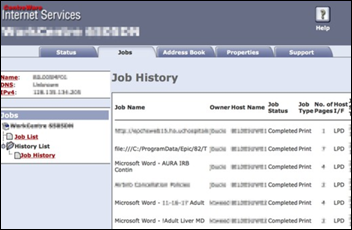
The student newspaper at the University of Chicago exposes network vulnerabilities that would allow anyone on the school’s network to access printers used within the hospital, where any hacker could access “organ donation logs, surgery face sheets, prescriptions, and even medical records.”

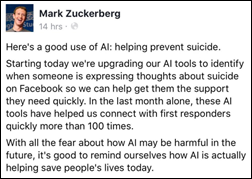
Here’s a good use of AI: help prevent suicide

Mark Zuckerberg announces that Facebook will deploy algorithms designed to identify suicidal ideation to connect its users with someone that can provide immediate help, rather than waiting for concerning posts to be flagged by users.

Athenahealth Files An 8-K

Athenahealth names Marc A. Levine, formerly of the JDA Software Group, as its next CFO.

UnitedHealth’s Optum Launches $250M Fund To Invest In Start-Ups

UnitedHealth will invest $250 million in early-stage healthcare startups.

News 11/29/17

November 28, 2017 News 11 Comments

Top News

SNAGHTML472cc7b6

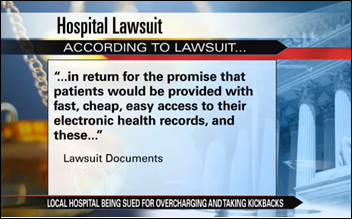
A newly unsealed state court lawsuit claims that 62 Indiana hospitals fraudulently attested for $300 million in Meaningful Use money because they don’t give patients copies of their medical records within three business days 50 percent of the time as required.

Two lawyers filed the suit after testing four Indiana Hospitals with a records request. They say that none of the hospitals delivered their records promptly even though all the hospitals reported that they had done so.

Their statistics were extrapolated to other state hospitals to assume that they, too are not following through on patient records requests in a timely manner.

image

Also named in the lawsuit is records release vendor Ciox Health, which the plaintiffs say illegally profited from overcharging patients for their records in violation of anti-kickback laws.


Reader Comments

image

From Uncle Douger: “Re: HIStalk reporting bias. Have you looked at who is making those claims as article comments? I would be suspicious.” I will only say that those commenters claiming that I’m biased against any given company often use IP addresses owned by that same company. Today’s anti-journalism environment encourages anyone who doesn’t like particular facts to accuse those who present them of bias. There’s nothing I like more, however, than having my own opinion — when I actually state one — challenged and occasionally changed by rational and well-considered facts.

image

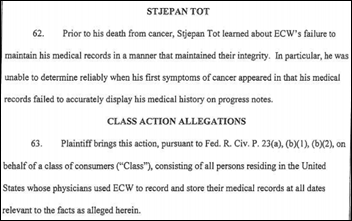
From Apple Alar: “Re: billion-dollar lawsuit against ECW. It’s interesting that it was filed as a class action suit rather than wrongful death / malpractice. The implications for setting a legal liability precedent for a vendor involving the content of the electronic health record would be game-changing. What about systems that send information to the EHR that is improperly presented there?” I don’t really know what to make of the lawsuit since the plaintiff made vague claims that her husband’s cancer wasn’t diagnosed because of EHR issues, but she wasn’t specific and didn’t name any doctors or hospitals as defendants. It also copied and pasted a lot of information from the DOJ’s settlement with ECW, which I took as an indication that it was a me-too claim hoping for a quick settlement from a company trying to distance itself from its $155 million payout. Attorney readers, what do you think?

From ExEpic: “Re: HIMSS compensation survey. They don’t even list Washington, DC as an option for the state or territory of residence.” I checked the survey and it asks, “In which state do you work?” in omitting DC but including an “Other US Territory” option.


HIStalk Announcements and Requests

I was reviewing the rehearsal of Thursday’s excellent webinar by PatientSafe Solutions and took note of the “wireless wellness” problem mentioned by both CIO presenters. It was a key lesson learned – every new application that would use the wireless network must be tested because some of them are poorly designed and could mess up other apps.

I like this brilliant quote as tweeted from a conference: “Palliative care is what all care would be like if we started over with healthcare.”


Webinars

November 30 (Thursday) 1:00 ET. “Making Clinical Communications Work in Your Complex Environment.” Sponsored by: PatientSafe Solutions. Presenters: Steve Shirley, VP/CIO, Parkview Medical Center; Richard Cruthirds, CIO, Peterson Health. Selecting, implementing, and managing a mobile clinical communications platform is a complex and sometimes painful undertaking. With multiple technologies, stakeholders, and disciplines involved, a comprehensive approach is required to ensure success. Hear two hospital CIOs share their first-hand experience, lessons learned, and demonstrated results from deploying an enterprise-wide mobile clinical communications solution.

December 5 (Tuesday) 2:00 ET. “Cornerstones of Order Set Optimization: Trusted Evidence.” Sponsored by: Wolters Kluwer. Updating order sets with new medical evidence is crucial to improving outcomes, but coordinating maintenance for hundreds of order sets with dozens of stakeholders is a huge logistical challenge. For most hospitals, managing order set content is labor intensive and the internal processes supporting it are far too inefficient. Evidence-based order sets are only as good as their content, which is why regular review and updates are essential. This webinar explores the relationship between clinical content and patient care with an eye toward building trust among the clinical staff. Plus, we will demonstrate a new evidence alignment tool that can easily incorporate the most current medical content into your order sets, regardless of format, including Cerner Power Plans and Epic SmartSets.

Previous webinars are on our YouTube channel. Contact Lorre for information.


Acquisitions, Funding, Business, and Stock

The Boston business paper reports that while Athenahealth is selling its Bombardier Challenger 300 jet in a cost-cutting move, it will keep its second aircraft, a propeller-driven Pilatus PC-12. I was curious about the cost of the Challenger – $24 million new with an operating cost of $7,250 per hour.

image

UnitedHealth Group’s Optum launches a $250 million fund to invest in early-stage healthcare startups, including digital health. If you’ve started a crappy company that everybody else’s digital health fund has passed on, here’s your chance.

Bloomberg predicts a wave of bankruptcies involving hospitals and healthcare vendors in 2018, especially for disproportionate share hospitals whose funding has been cut.


Sales

image

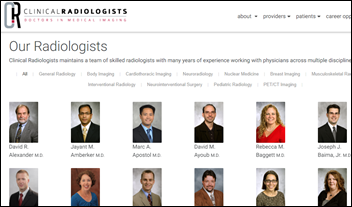
The Clinical Radiologists radiology group chooses MModal for radiologist documentation, real-time physician documentation, business intelligence, critical test results management, and peer review and learning.


People

image

Athenahealth names Marc Levine (JDA Software Group) as CFO.

image

University Hospitals (OH) rehires Robert Eardley (Houston Methodist Hospitals) as CIO.

image

Vice-Admiral Raquel Bono, MD, MBA, director of the Defense Health Agency, accepts the HIMSS Federal Health IT Award.

image

John Halamka, MD will serve as editor-in-chief of the new open access, online journal Blockchain in Healthcare Today. Another site run by the same company runs ads, so I assume this one will, too.

image

Health coaching app vendor Farewell names former US Surgeon General Richard Carmona, MD, MPH to its board. He’s also a combat-decorated Vietnam veteran and a Special Forces medic who also earned an AA degree in nursing and accumulated many awards as a deputy sheriff and SWAT leader.

image

Patient engagement software vendor Relatient hires board director and venture capital operating partner Michele Perry as CEO.


Announcements and Implementations

image

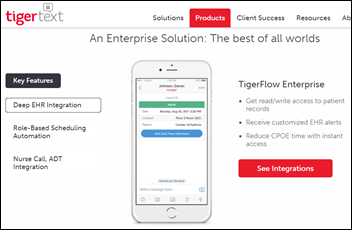
TigerText announces TigerFlow Enterprise, a clinical communication and collaboration platform.

Unified clinical communications platform vendor Telmediq integrates the IPhone X’s Face ID authentication.


Privacy and Security

image

The University of Chicago student newspaper reviews the network log scans of its hospital, finding unsecured network printers that are being used to print PHI-containing forms that any hacker could theoretically access. They found Epic-issued print jobs containing organ donor information, diagnostic procedure reports, and prescription forms. The reporters also found Internet of Things devices such as cameras and sensors were accessible and sometimes controllable. In the all-too-common shoot the messenger scenario, the person who initially tipped off the reporters was identified during the university’s ensuing investigation and was “formally summoned to the Office of the Dean of Students.”

Precision medicine platform vendor LifeOmic offers customers a $1 million ransomware guarantee that covers “any financial extortion payment or service reimbursement.”


Other

image

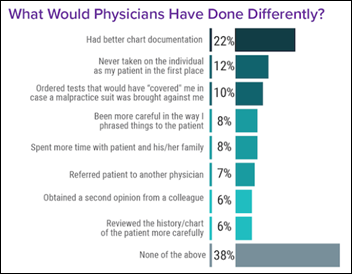
A Medscape survey of 4,000 physicians finds that half have been sued for malpractice, noting that New York OB/GYNs pay nearly $200,000 per year in malpractice premiums. Sixty percent of doctors said they were either encouraged or required by their insurer to settle their case, with two-thirds of those resulting in payouts of less than $500,000. A surprising 62 percent of doctors said the outcome of the lawsuit against them was fair, but one-third of those sued said they no longer trust patients, treat them differently, or left the practice setting after the lawsuit. Three-fourths of doctors in general say the threat of malpractice influences their actions. Doctors say the best ways to discourage lawsuits include communicating more effectively with patients, screening cases for merit by a medical panel, capping non-economic damages, making the plaintiff responsible for paying the legal fees of both sides if they lose, and banning lawyers from taking cases on contingency.

image

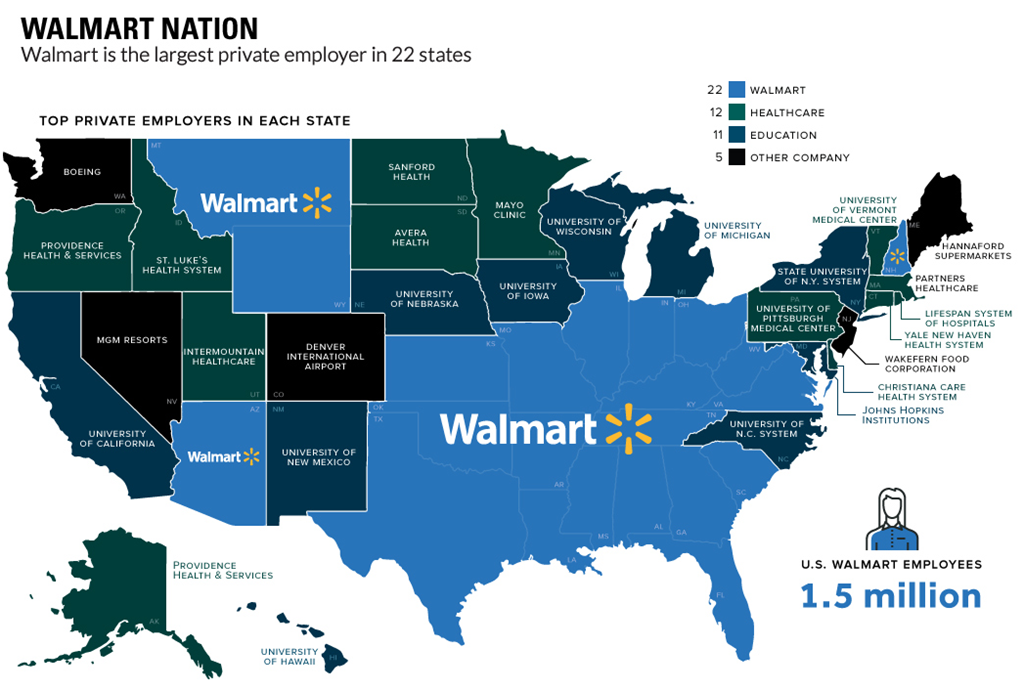
An interesting graphic (click to enlarge) shows that Walmart is the largest private employer in 22 states, but also unintentionally illustrates that 12 states have a health system as their largest employer. Unlike Walmart, those systems are tax-exempt and create profits that often involve less-direct societal costs in the form of Medicare and Medicaid.

SNAGHTML45d94c4e

Facebook upgrades its AI tools to identify users who are expressing suicidal thoughts so they can be connected to first responders.

image

A Google Research Blog post says the company will work with Stanford researchers to understand how automatic speech recognition models can be used to transcribe physician notes, with a patient-consented pilot study looking at ways to reduce EHR interaction in capturing clinical information from conversations. It will use voice recognition technology from Google Assistant, Home, and Translate. A Google team just published “Speech Recognition for Medical Conversations.”

image

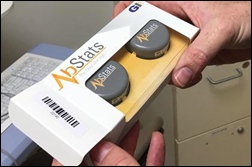
CNBC profiles Cedars-Sinai testing of AbStats, a stomach-attached wearable that analyzes bowel sounds to alert doctors that their post-op patients are capable of eating. The hospital is also testing the device to alert users that their stomach is empty so they eat only when it’s time. The inventor of AbStats is Brennan Spiegel, MD, MSHS, director of health services research at Cedars-Sinai.

SNAGHTML47397f54

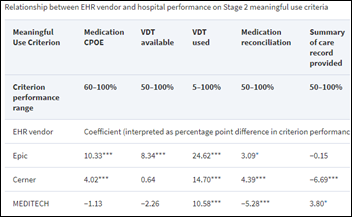
A JAMIA-reported study finds that hospital Meaningful Use performance is associated with the EHR they use, with Epic users scoring higher in five of six criteria. The article – which is of the “let’s merge some government databases and see if we can find something to publish” type — duly notes that correlation does not necessarily indicate causation, as hospitals that use Epic, for example, might well have different resources and motivations than those that don’t. It also correctly notes that MU criteria have little to do with patient outcomes. In that regard, I don’t see one iota of usefulness in the study, especially since the information is hardly actionable even if valid. It also fails to note that presence of EHR functionality (as measured by certification) doesn’t do anything to meet hospital MU requirements — the hospital creates and actively enforces policies on EHR use (maybe Epic-using shops just press their doctors harder to chase MU targets). I’ve seen sites pushing sensationalistic headlines around this article and interpreting it wildly incorrectly, making it even worse and more like an Epic commercial.

A JAMA op-ed piece proposes – not very convincingly – the creation of a “medical virtualist” specialty, with the proposed required training including “webside manner,” competency in conducting virtual examinations, and including families in virtual visit. It’s not clear why those specific competencies should not be included in regular medical education or as a certificate (no different than learning to use a particular EHR) rather than carving out yet another self-serving, expensively maintained medical specialty.

image

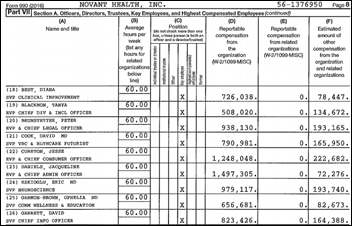
The local paper notes that the CEO of Novant Health (NC) has had a 93 percent salary increase since 2012, with total 2016 compensation of $3.4 million. SVP/CIO Dave Garrett was paid $990,000.

image

Microsoft CEO Satya Nadella says in his new book that he learned empathy after the 1996 birth of his son, who has cerebral palsy:

On one of his son’s hospital ICU stays shortly after Satya Nadella became CEO, the Microsoft executive noticed how many devices in the room were running Windows and were connected to the cloud: “It was a stark reminder that our work at Microsoft transcended business, that it made life possible for a fragile young boy. It also brought a new level of gravity to the looming decisions back at the office on our cloud and Windows 10 upgrades. We’d better get this right, I remember thinking to myself.”

The surgeon treating the minor tongue condition of a five-year-old asks the mother if she wants her daughter’s ears pierced while she’s under anesthesia, so she says OK. The daughter leaves with a repaired tongue, a pair of earrings installed, and an extra $1,900 bill for “operating room services” that her insurer refused to pay. Children’s Hospital Colorado demanded that she either write a check or deal with its collections agency, but eventually waived the charge. Meanwhile, one of the piercings was off center and had to be redone at a mall kiosk, which set her back another $30.


Sponsor Updates

image

  • Netsmart recognizes its employees in honor of Giving Tuesday.
  • Ivenix will demonstrate its infusion system at the ASHP meeting in Orlando December 3-7.
  • The Washington Stat Health Care Authority certifies consumer decision aids from Healthwise for knee osteoarthritis and hip arthritis.
  • Nuance launches its AI Marketplace for Diagnostic Imaging.
  • Change Healthcare will work with healthcare AI vendor Zebra Medical Vision to apply AI to radiology solutions
  • Endpoint management software vendor Igel will integrate its product with Imprivata’s OneSign SSO after joint work at Parkview Medical Center (CO).
  • AdvancedMD Cares makes 600 quilts for three Nashville charities during its Evo17 conference.
  • The Boston Globe includes Definitive Healthcare in its list of Top Places to Work in Massachusetts for 2017.
  • MModal extends its Speech Understanding technology to the PACS desktop in a unified workflow.
  • Conduent Health publishes a new e-book, “Patients’ Attitudes Regarding Healthcare.”
  • Forbes features Kyruus co-founder and CEO Graham Gardner, MD in its look at how AI and digital will shape the future.
  • Arcadia Healthcare Solutions sponsors the Millenium Alliance Healthcare Payers Transformation December 7-8 in Nashville.
  • Besler Consulting publishes an analysis of the 2018 OPPS Final Rule.
  • Change Healthcare announces a strategic relationship with Google Cloud.
  • ChartLogic publishes a new white paper, “Evaluating Your Next EHR’s Support.”
  • CoverMyMeds will exhibit at the American Society of Health System Pharmacists Midyear Conference December 3-7 in Orlando.

Blog Posts


Contacts

Mr. H, Lorre, Jenn, Dr. Jayne, Lt. Dan.
Get HIStalk updates. Send news or rumors.
Contact us.

125x125_2nd_Circle

Morning Headlines 11/28/17

November 27, 2017 Headlines Comments Off on Morning Headlines 11/28/17

Two St. Joseph County hospitals accused of false claims, kickbacks

A $300 million lawsuit filed in Indiana alleges that 62 Indiana-based hospitals defrauded the government when they attested to Meaningful Use but, in practice, repeatedly failed to provide electronic copies of medical records to its patients within 3 business days.

Judge: 84-year-old doctor who doesn’t use computer can’t regain license

In New Hampshire, a judge rules that 84-yer-old Anna Konopka, MD cannot renew her medical license. She claims that state regulators forced her to give up her license over her unwillingness to use a computer and, as a result, her inability to comply with the state’s mandatory PDMP policies.

Prediction of Acute Kidney Injury with a Machine Learning Algorithm using Electronic Health Record Data

An AI algorithm designed to detect early onset of acute kidney injury outperforms current detection protocols, leading researchers to conclude that a “machine-learning-based AKI prediction tool may offer important prognostic capabilities for determining which patients are likely to suffer AKI.”

Rotunda Hospital Officially Moves Away From Paper-Based Records

Dublin-based Rotunda Hospital, the oldest continuously operating maternity hospital in the world, goes live on Cerner, replacing paper-based workflows.

Comments Off on Morning Headlines 11/28/17

Curbside Consult with Dr. Jayne 11/27/17

November 27, 2017 Dr. Jayne Comments Off on Curbside Consult with Dr. Jayne 11/27/17

Conventional wisdom dictates that healthcare IT projects shouldn’t schedule a go-live on a holiday weekend due to resource constraints and time off. I was called by another consulting company to see if we could provide some go-live support resources for a hospital that decided to break the mold. Although our focus is largely ambulatory healthcare IT, I work with people who have extensive experience with both inpatient and outpatient systems, so I decided to bite. Especially with it being a holiday situation, the pay being offered was definitely attention-grabbing.

My consultants have been prepping for this for several weeks, viewing recordings of the hospital’s training sessions so they could see exactly how the system was configured and how the users had been trained to use the system. This is important when you’re a third-party go-live resource. Often clients elect not to deploy part of a system or to modify the functionality, which can result in issues when you suggest that the end users access a feature they can’t actually use. Ensuring your go-live contractors understand how the system is actually going to be deployed is a key responsibility for client leaders who decide to outsource their Day 1 support. I’ve seen this overlooked in the past and have learned to insist on it when my team is involved.

The videos were thorough. Nursing staff received about 16 hours of training, including some overlap into the provider workflows so that they could assist with supporting community physicians who may not use the system as frequently as hospitalists and other full-time inpatient providers. Physicians were supposed to attend about eight hours of training, and although they were required to be at both half-day sessions, I received report that there wasn’t a lot of enforcement of participation or a required demonstration of mastery before they would be issued their production passwords.

We were warned to be able to support specific providers more heavily than others and were given their names and specialties and typical rounding times. I haven’t experienced that in the past – usually resources are assigned to a particular nursing unit or another location where provider documentation takes place and are expected to just help people on the fly. This was the first time I had a “hit list” of people who might have issues and I thought it was a great idea.

Since the original consultancy was responsible for the communication with the hospital, they arranged all the logistics for who would be stationed at various parts of the hospital and made sure they had a mix of contract resources at the larger care delivery areas. I’ve seen this split out before, where one subcontractor would cover this floor, another would cover the next, and so on. I thought their mixing of the resources across the various units was a great way to hedge their bets, especially since they knew there may be some resource challenges with it being a holiday weekend.

Still, everyone was a bit nervous going into things, since you never know what a Thanksgiving weekend might bring. Typically, physician offices are closed the Friday after, which shifts volumes to the emergency department. There may be a lull on Saturday and then it usually picks up again as people who were trying to wait until Monday decide they can’t wait anymore.

Of course, there’s also the Holiday Heart Syndrome, which can lead to cardiac irregularities when people overdo it during the Thanksgiving and Christmas eating seasons. Sometimes non-healthcare people are surprised when we talk about these kinds of volumes and trends in planning and people casually throw out their stories of being in the emergency department or working urgent care during major days off.

My best story was working on labor and delivery on Super Bowl Sunday as a resident. Within 45 minutes of the end of the game, we were swamped, with all 19 labor rooms full and overflow into the antepartum unit. Women had remained laboring at home so as to not disturb viewing of the game, then headed right to the hospital as the clock ticked down. Several babies were born within 30 minutes of arriving at the hospital, which is cutting it close if you were planning for epidural anesthesia or using the birthing pool. I had volunteered to work that day since I wasn’t a huge football fan and didn’t have other plans, but made a point to mark my calendar for the next two years so that I didn’t experience that level of back-to-back deliveries again.

Our go-live officially occurred on Friday morning while many people were out doing their Black Friday shopping or spending time with families. There were no elective surgeries scheduled and very few outpatient procedures, providing an overall reduced volume through the hospital. I suspect there had been more than a few “early” discharges for patients who didn’t want to be in the hospital for Thanksgiving, either opting for skilled nursing or home health as a way to leave the wards early. Patients rarely want to spend a holiday in the hospital, so I’m sure the insurance folks were happy. Based on some of the admissions I saw on Friday, there may have been a few people who went home too early, which of course isn’t good for those readmission metrics.

Friday was largely uneventful, with most of the staff being full-time hospital employees and seeming to have been fully present for their training. The community physicians started rounding again on Saturday, but were scattered throughout the morning and early afternoon, making support easy. From an at-the-elbow perspective, we were relatively redundant, but it was good to have multiple people ready to pitch in should the need arise. Assuming budget permits, I’d always rather it be that way then having physicians fighting for someone to help them. Sunday was much of the same, although some different hospitalists rolled in to start seeing patients since their work weeks run Sunday through Sunday. Many of the hospitalists have worked on multiple systems, so this was barely a blip for them.

I headed out Sunday night, leaving a couple of my consultants to help with targeted support for the community physicians on Monday. This is of course where the rubber meets the proverbial road, where providers who may not have been as invested in training as they could have been start arriving on the floors and taking care of patients. The hospital had some great cheat sheets deployed to the workstations both in paper and electronic form, not to mention the go-live contractors, who will be on site in full force Monday through Wednesday wearing their hot pink tee shirts so users can find them. They’ll start tapering off after that, with the hospital planning to support with only internal resources starting Week 3.

I haven’t personally staffed a hospital go-live in some time, so it was a nice experience, and doubly so being at a place where things were over-orchestrated to the point that they were uneventful. Not every go live is like that, for certain. We’ll see if my team has any good stories to share later in the week, but I would love to hear some go-live stories from the trenches.

Have a good story? Leave a comment or email me.

Email Dr. Jayne.

Comments Off on Curbside Consult with Dr. Jayne 11/27/17

Morning Headlines 11/27/17

November 26, 2017 Headlines 1 Comment

Amazon’s cloud is about to announce a huge health-care deal with Cerner, sources say

Cerner and Amazon’s AWS business are partnering to bring Cerner’s population health product, HealtheIntent, to the cloud.

Cottage Hospital Pays $2 Million to Settle Security Breach Lawsuit

Cottage Hospital (CA) reaches a $2 million settlement with the California Attorney General’s office after the health system left a server containing patient records exposed to the Internet for over three years. Investigators found that Google searches led to hundreds of records being inappropriately accessed during that time.

Many doctors aren’t checking Florida database for opioid control, study finds

In Florida, only 21 percent of physicians and 57 percent of pharmacists have registered with the state’s PDMP. The state has had a PDMP since 2011, but adoption has been slow because checking the database is voluntary, and EHR integration is still missing.

Ginger.io Builds on AI Foundation, Offering New Model of Emotional and Mental Health Support

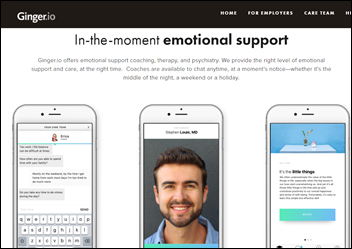
Ginger.io, a digital health startup building a behavioral health surveillance and disease management platform, pivots its strategy due to lackluster demand for its product. The company will now move into the provider space, offering technology-driven behavioral health services.

Monday Morning Update 11/27/17

November 26, 2017 News 12 Comments

Top News

image image

CNBC reports that Amazon Web Services and Cerner will announce an agreement this week involving Cerner’s HealtheIntent population health management system, which is already hosted on AWS.

The new deal may involve allowing researchers to analyze HealtheIntent data using AI technology.

CERN shares led the S&P 500 in gaining 5 percent Wednesday afternoon after the article ran.


Reader Comments

image

From Dr. Scripps: “Re: Eric Topol, MD. Has been pushed out of his position as chief academic officer at the Scripps Healthcare System, where he reported to CEO Chris Van Gorder. He still practices cardiology at Scripps Clinic one day a week, but is no longer a member of the executive leadership team. He has joined The Scripps Research Institute (TSRI), which shares the Scripps moniker, but is not part of the health system, which never adopted the ideas Eric has been evangelizing for years.” Eric’s LinkedIn shows that he left the CAO position in August 2017, moving into the role of EVP and professor of molecular medicine at the Research Institute.

SNAGHTML231f8354

From A Little BIrdie Told Me: “Re: Iraan General Hospital. They were implementing Athenahealth because of the cost model in the clinics and decided to put it into the acute side. I’m working on what the specific drivers were to go back to CPSI.” Unverified. The trend of CPSI customers going to Athenahealth and then returning quickly to the fold is close to astonishing, although it would be interesting to see what if any inducements CPSI gave them.


HIStalk Announcements and Requests

image

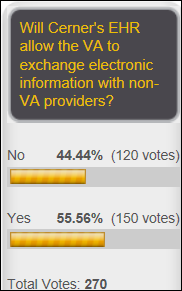
Just over half of poll respondents think the VA’s Cerner system will allow it to exchange information with providers outside the VA. Commenters note, however, that being able to exchange information doesn’t necessarily mean that the VA will actually make it happen.

New poll to your right or here: where did you do your online electronics shopping last week, if anywhere?

image

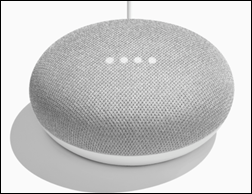
I limited my Black Friday shopping to getting a Google Home Mini and Chromecast to play around with, unable to resist the great deal Google was offering. I was tempted by an $800 Mac Air, but that device is so long in the tooth (especially the display) that it seemed like an unwise investment, especially since I recently paid less for a much better equipped Windows 10 laptop and my only interest was learning Mac stuff and running a couple of Mac-only apps. Actually, I went back Saturday for one more Black Friday weekend special – Amazon-owned Woot! has fantastic deals on Diamondback bicycles (inexpensive, but plenty good for someone like me who hasn’t ridden in years) that beat every price available plus $5 shipping, so the his-and-hers models are on their way.

image

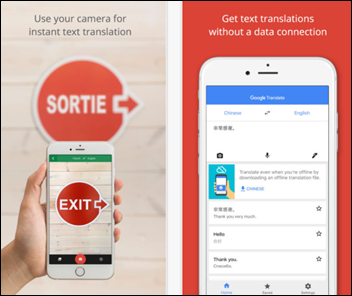
A minimally Spanish-speaking friend is traveling in South America, so I checked out the much-improved, still-free Google Translate app. It can now be used with the mobile device’s microphone both ways – you set the to/from language (like English to Spanish), speak into it (“Where is the nearest bar?”) and it puts the translated text on the screen with an option to play it aloud with a natural-sounding voice for the other person to hear in their language. Then, you flip the languages and let the other person speak in Spanish, which you then see on-screen or hear in English. Google has improve the translation engine a lot, apparently, so it’s more conversational than before. A cool new option (via a Google acquisition) is the ability to translate written words on the screen by pointing the device’s camera at road signs, menus, etc. that then displays the English translation as an image overlay in real time. You can also download the language package so it can be used while offline.


This Week in Health IT History

One year ago:

  • President-elect Trump nominates Tom Price, MD as HHS secretary and Seema Verma as CMS administrator.
  • Constellation Software subsidiary Harris acquires IMDsoft.
  • Orion Health shares drop to a post-IPO low following poor quarterly results and its announced post-election US sales concerns.

Five years ago:

  • KLAS lists its top radiology PACS innovators as Infinitt, Intelerad, DR Systems, McKesson, Novarad, and Sectra.
  • Cleveland Medical Mart signs Cleveland Clinic and GE Healthcare as tenants.
  • OIG warns that CMS is not adequately auditing Meaningful Use attestation submissions, recommending that CMS conduct random audits, issue guidance of the types of documentation it expects providers to have available, and require certified EHRs to issue verification reports.

Ten years ago:

  • UPMC CIO Mark Hopkins dies of cancer at 47.
  • A nursing professor creates simulation training on Second Life.
  • Experts at Penn’s Wharton School predict that personal health records such as Microsoft HealthVault could serve as the bridge between incompatible hospital EHRs.
  • Athenahealth buys a 130,000 square foot office facility in Belfast, ME as its second site.
  • Carestream Health announces plans to integrate its radiology solutions with IBM’s Lotus Sametime messaging.

Last Week’s Most Interesting News

  • The AMA severs its relationship with Outcome Health following fraud allegations that also caused the company to offer buyouts that were accepted by one-third of its staff.
  • The VA announces that it is considering merging its Choice program with the DoD’s Tricare following discussions about their planned joint EHR.
  • Banner Health confirms that its Tucson-based hospitals are experiencing patient delays following its October 1 Cerner go-live.
  • Advisory Board closes the sale of its healthcare business to Optum.

Webinars

November 30 (Thursday) 1:00 ET. “Making Clinical Communications Work in Your Complex Environment.” Sponsored by: PatientSafe Solutions. Presenters: Steve Shirley, VP/CIO, Parkview Medical Center; Richard Cruthirds, CIO, Peterson Health. Selecting, implementing, and managing a mobile clinical communications platform is a complex and sometimes painful undertaking. With multiple technologies, stakeholders, and disciplines involved, a comprehensive approach is required to ensure success. Hear two hospital CIOs share their first-hand experience, lessons learned, and demonstrated results from deploying an enterprise-wide mobile clinical communications solution.

December 5 (Tuesday) 2:00 ET. “Cornerstones of Order Set Optimization: Trusted Evidence.” Sponsored by: Wolters Kluwer. Updating order sets with new medical evidence is crucial to improving outcomes, but coordinating maintenance for hundreds of order sets with dozens of stakeholders is a huge logistical challenge. For most hospitals, managing order set content is labor intensive and the internal processes supporting it are far too inefficient. Evidence-based order sets are only as good as their content, which is why regular review and updates are essential. This webinar explores the relationship between clinical content and patient care with an eye toward building trust among the clinical staff. Plus, we will demonstrate a new evidence alignment tool that can easily incorporate the most current medical content into your order sets, regardless of format, including Cerner Power Plans and Epic SmartSets.

Previous webinars are on our YouTube channel. Contact Lorre for information.


Acquisitions, Funding, Business, and Stock

image

Behavioral app vendor Ginger.io pivots its business to become a technology-focused national medical practice that will provide therapists. The company, which had raised $28 million with its most recent funding round in late 2014, had struggled to get hospital customers in its previous model.

Philips acquires Analytical Informatics to enhance its PerformanceBridge Practice imaging department management system. The company offers applications for quality analysis, productivity, dictated report search, scanner utilization, peer review, undictated studies lists, image quality problem reporting, and real-time alerts.


Announcements and Implementations

image

Children’s Healthcare of Atlanta (GA) will spend $1 billion to build a replacement 446-bed hospital on a new campus on North Druid Hills.

image

University of Pennsylvania Health System (PA) will spend $3.9 billion on construction in the next five years, including $1.5 billion for a 17-story patient tower, updating other buildings, and adding a new Center for Health Care Technology that will house IT and other corporate functions.

UMass Memorial Medical Center (MA) goes live on Agfa HealthCare’s enterprise imaging platform.

Memorial Hospital (IL) goes live on Epic.


Privacy and Security

image

Cottage Hospital (CA) pays $2 million to settle state charges regarding two incidents between 2011 and 2013 in which patient information was freely discoverable in Internet searches. The hospital, which faced up to $275 million in penalties, has agreed to upgrade its security infrastructure and to hire a chief privacy officer.


Other

image

Researchers find that only 21 percent of Florida physicians have registered for the state’s prescription drug monitoring program database, with lack of EHR integration being found as one significant factor. Use of the database to check patient opiate histories is voluntary, but submission of opiate prescription and dispensing data is mandatory.

image

A designer creates a virtual reality system to reduce death anxiety in terminally ill hospital patients by creating a sensation of leaving the body. He says,

The fear and experience of death is a neglected topic. If we began treating our anxieties surrounding death, it might mean the process of dying could become more comfortable. In the developed world, the majority of people die in hospital or a care home, turning deaths into medical experiences. But doctors are trained to save and prolong lives, not tend to our demise. They simply lack the tools.

China, following through on its ambition to lead the world in AI by 2030, announces plans to build an unmanned, AI-powered police station that can handle DMV-type issues such as administering driver exams and vehicle registration.

image

I wrote last week about the dedication of a new e-health center in India that admitted afterward that it had no actual doctors or staff, with outside workers brought in for the ceremony as pretend employees to impress the locals and the governor of Punjab. The center has closed four days after it opened after the lone doctor at the dispensary where it was housed “was found missing” (is that an oxymoron?) and even the dispensary itself has closed until a replacement is found.


Sponsor Updates

Blog Posts


Contacts

Mr. H, Lorre, Jenn, Dr. Jayne, Lt. Dan.
Get HIStalk updates. Send news or rumors.
Contact us.

125x125_2nd_Circle

Morning Headlines 11/22/17

November 21, 2017 Headlines Comments Off on Morning Headlines 11/22/17

American Medical Association severs ties with Outcome Health

AMA formally distances itself from Outcome Health over fraud allegations leveled by investors and investigative reporters.

For the First Time, a Robot Passed a Medical Licensing Exam

In China, an AI-powered robot passes the national medical examination with an above average score.

Trump FCC chair unveils plan to repeal net neutrality

The FCC announces plans to dismantle regulations that uphold net neutrality.

Comments Off on Morning Headlines 11/22/17

News 11/22/17

November 21, 2017 News Comments Off on News 11/22/17

Top News

image

The AMA asks to have its content removed from the platforms of waiting room advertising technology firm Outcome Health “in light of recent unfavorable reports in the media” that involve fraud accusations against the company.

Another publisher, Harvard Health Publishing, says it is “reviewing the situation” in determining the future of its relationship with Outcome Health.

image

Outcome Health offered voluntary buyouts to most of its employees late last week because of “challenging times.” More than one-third of its employees – about 200 – took the company up on its offer of a 90-day severance payment to quit. That will reduce the company’s headcount to just over 300, based on previous estimates. The company laid off employees in late September just after pledging to add 2,000 Chicago jobs by 2022 when it dedicated Outcome Tower on Chicago’s North State Street.

image

Meanwhile, a Chicago Tribune investigation finds that the company has struggled for years with salespeople making false and misleading statements to medical practices in trying to get them to replace a competitor’s system with that of Outcome Health. Examples include one salesperson describing drug company advertisers as “diabetes advocacy organizations;” using a drug company rep’s conference badge to obtain material from a competitor’s trade show booth; telling practices using a competitor’s system that the competitor had approved replacing its product with that of Outcome Health; and lying to prospects about how many of the competitor’s systems it had replaced.

image

Outcome Health also twice sued competitor AccentHealth for making misleading statements to prospects in the same manner it has been accused, but then bought that same company months later in November 2016.


Reader Comments

SNAGHTML21a7ecc2

From Lee Carmen: “Re: UI Health Care’s Epic Community Connect program. The Community Connect program is currently part of UI Health Ventures. UI Health Ventures is going through a reorganization process and our Community Connect program will transition into UI Health Care in the coming months. Operations will continue as usual for our current clients, but we are putting a hold on new contracts for now as we complete the transition.” Thanks to UIHC CIO Lee, who provided this response to a reader rumor I ran earlier this week.

image

From PreviousGen: “Re: NextGen. Looks like someone sent their patient safety problem alert to the wrong list!” I give them credit for notifying users of potentially patient-endangering software problems, which amazingly is still not done by some vendors.

From Itchy Scratchy: “Re: HIMSS social medial ambassadors. Can you explain the point?” The précis: HIMSS likes to get mentioned in tweets by folks it can bribe with free conference registration and the chance to mug with each other for Twitter selfies. My admittedly cynical observation is that for some of those chosen,  their social media volume is inversely proportional to their relevant education and real-world accomplishments.


Webinars

November 30 (Thursday) 1:00 ET. “Making Clinical Communications Work in Your Complex Environment.” Sponsored by: PatientSafe Solutions. Presenters: Steve Shirley, VP/CIO, Parkview Medical Center; Richard Cruthirds, CIO, Peterson Health. Selecting, implementing, and managing a mobile clinical communications platform is a complex and sometimes painful undertaking. With multiple technologies, stakeholders, and disciplines involved, a comprehensive approach is required to ensure success. Hear two hospital CIOs share their first-hand experience, lessons learned, and demonstrated results from deploying an enterprise-wide mobile clinical communications solution.

December 5 (Tuesday) 2:00 ET. “Cornerstones of Order Set Optimization: Trusted Evidence.” Sponsored by: Wolters Kluwer. Updating order sets with new medical evidence is crucial to improving outcomes, but coordinating maintenance for hundreds of order sets with dozens of stakeholders is a huge logistical challenge. For most hospitals, managing order set content is labor intensive and the internal processes supporting it are far too inefficient. Evidence-based order sets are only as good as their content, which is why regular review and updates are essential. This webinar explores the relationship between clinical content and patient care with an eye toward building trust among the clinical staff. Plus, we will demonstrate a new evidence alignment tool that can easily incorporate the most current medical content into your order sets, regardless of format, including Cerner Power Plans and Epic SmartSets.

Previous webinars are on our YouTube channel. Contact Lorre for information.


Acquisitions, Funding, Business, and Stock

image

Change Healthcare acquires Docufill’s dental provider credentialing technology.


Sales

image

Yale New Haven Health (CT) chooses the Visage 7 enterprise imaging platform.

SNAGHTML231f8354

Iraan General Hospital (TX) goes back to CPSI’s Evident Thrive EHR, saying it had previously switched to an unnamed system that caused billing problems and couldn’t handle its service lines.


People

image

Smartphone wound image analysis app vendor Tissue Analytics hires Mark Becker (Cerner) as VP of sales.

image

Jonathan Teich, MD, PhD  (Brigham and Women’s Hospital) joins InterSystems in a role he didn’t specifically name in his Facebook update. UPDATE: Jonathan report that his new job title is CMIO/director of product management.

image

Patrick Conway, MD, MSc, former CMS administrator for innovation and quality, joins BCBS of North Carolina as president and CEO.

image

Continuous monitoring vendor EarlySense hires Karissa Price-Rico, PhD (Healthways) as COO.


Government and Politics

FCC Chairman Ajit Pai announces his plan to “stop micromanaging the Internet” in ending net neutrality regulations that prevent broadband providers from selectively throttling back or blocking traffic from specific sites and apps and from charging cable-like a la carte pricing for accessing specific websites, expected to be approved at FCC’s mid-December meeting in a straight party line vote. Internet service providers would be free to do whatever they want as long as they disclose their policies to users, making Internet service less like a public utility in transferring most oversight of consumer protections to the Federal Trade Commission.


Other

image

The AI-powered robot of a China-based company passes the country’s national medical exam with an above-average score. IFlytek will launch the robot in March 2018 to improve cancer care and to train PCPs. A reported 500 million people in China use its voice product that translates between English and Chinese, which also powers business functions such as transcription, automated call center replies, and sending voice instructions to ride-hailing app drivers. The 10 robotic greeters in the lobby of one hospital in China give directions to departments based on what symptoms the patient says they have, while clinicians use it to input voiceprint-verified information into the EHR.

image

A report on the use of technology by the “death industry” cheerily projects a big increase in sales of equipment to private morgues that correlates to the number of US hospitals. Refrigeration units are the big seller for which business is “booming,” driven by North American Christian burials that require holding bodies for long periods.

In India, a governor performs the dedication of a new pharmacy-based telemedicine center, although its head later admitted to the press that it has no doctors or other staff, adding that the busy technicians conducting tests in the background were just brought in for the photo opportunity. According to the local paper’s account, “The centre has been set up by converting a courier container, which was lying unused at the Dhanas dispensary for nearly a decade.” Meanwhile, another paper reports that dispensary patients were told to come back the next day since its only doctor was hosting the festivities.


Sponsor Updates

  • Visage Imaging will demonstrate the AI-powered research and diagnostic capabilities of Visage 7 at RSNA.
  • The Minnesota High Tech Association names Ability Network the software category winner of its Tekne Awards for its cloud-based revenue cycle management application.
  • Nuance will showcase AI enhancements for radiologist effectiveness at RSNA.

Blog Posts


Contacts

Mr. H, Lorre, Jenn, Dr. Jayne, Lt. Dan.
Get HIStalk updates. Send news or rumors.
Contact us.

125x125_2nd_Circle

Comments Off on News 11/22/17

Morning Headlines 11/21/17

November 20, 2017 Headlines Comments Off on Morning Headlines 11/21/17

The Crisis Next Door: President Donald J. Trump is Confronting an Opioid Crisis more Severe than Original Expectations

The White House publishes revised figures on the opioid crisis, reporting that drug overdoses are now the leading cause of injury death in the United States, outnumbering traffic crashes or gun-related deaths. The report estimates that the cost of the opioid crisis in 2015 was $504 billion, or 2.8 percent of GDP.
From Katrina To Wildfires: Leveraging Technology In Disaster Response

In a Health Affairs article, former National Coordinator Karen DeSalvo, MD explores how EHRs can help coordinate care for patients impacted by natural disasters. In 2005, DeSalvo lived in New Orleans and worked at Tulane University School of Medicine as the Vice Dean of Community Affairs and Health Policy when Hurricane Katrina devastated the city.

A New Algorithm Can Spot Pneumonia Better Than a Radiologist

Stanford University researchers have developed an AI algorithm trained on a data set of 100,000 chest x-rays that were annotated with information on 14 different diseases that turn up in the images. The algorithm has proved to be more reliable at spotting each of the 14 diseases than a group of board certified radiologists that also interpreted the images.

Apple CEO Tim Cook gave a shout-out to a $100-per-year app for doctors — here’s what it does

During its recent earnings call Apple CEO Tim Cook mentioned digital health app VisualDx, noting that the company is using Apple’s machine learning plugin to help dermatologists diagnoses skin conditions from a photo.

Comments Off on Morning Headlines 11/21/17

Readers Write: Preparing Nurses for Opioid-Addicted Patients

November 20, 2017 Readers Write Comments Off on Readers Write: Preparing Nurses for Opioid-Addicted Patients

Preparing Nurses for Opioid-Addicted Patients
By Jennifer David, RN, BSN, MHA

image

Jennifer David, RN, BSN, MHA is vice-president of clinical operations for Avant Healthcare Professionals of Casselberry, FL.

President Donald Trump declared the opioid crisis a national emergency. As a reaction to this announcement, Intermountain Healthcare, a Utah-based hospital chain, pledged to decrease opioid prescriptions by 40 percent in 2018.

Making a commitment to addressing the crisis is a crucial first step. However, only addressing the patient-use side is not a holistic approach to the problem.

The mental health of the nurses and doctors who care for overdosed patients are not considered in the opioid equation, yet every day they feel the magnitude of the epidemic and they are left alone to manage their pain. Ultimately, they may leave their job or the profession altogether without support in facing this problem.

Nurses are the frontline warriors in this epidemic. Several times each day, they’re responding to the screams of withdrawal, managing the inherent chaos of addiction, and dealing with family members who demand an immediate solution. For many patients, it’s the second, third or tenth time to the emergency department for the same problem. Families are desperate, angry, and looking for someone to blame, often defaulting to the nurse.

I’ve had nurses from hospitals around the country explain that they feel that they’re enabling drug-addicted patients by administering pain medications. However, “managing pain” is an important aspect of HCAHPS. Nurses are conflicted between caring for a patient and adding to the problem. This conflict can lead to anger, stress, and frustration among nurse staff, and in some cases, could drive nurses to quit.

Some hospitals have made steps in protecting nurses against these patients with a patient code of conduct, which states that violence and verbal abuse against staff will not be tolerated. A large hospital in New York has their patient code of conduct displayed throughout their hallways and another facility in Missouri strictly enforces that their staff will not be disrespected by patients. When these rules are up against patient discretion on HCAHPS scores, they become harder to enforce.

The best thing hospital leadership can do is to mentally prepare nurses to care for these difficult patients. This will also reduce staff turnover and improve employee communication.

The first place to start is to recognize the potential of a problem. I make personal visits to our nurses on assignment and always ask them how they are dealing with opioid-addicted patients. It is not always easy or possible to give individual attention to every nurse on staff. However, it is important to identify who is having issues. Surveying the nurse team to ask if they feel respected at all levels and supported in their job challenges is a great strategy to begin with.

Once honest communication begins, explore what support nurses want and need, then put a plan together. It should include a healthy dose of continuous learning intended to help build understanding and empathy for patients’ needs. Seeing how our nurses were affected, we now incorporate training on how to care for drug-addicted patients in our curriculum as well as provide consistent follow up while nurses are on assignment. We want to pre-expose them for what they might face and be there for them when they face it.

There will likely be multiple tiers of support needed,  varying from the occasional discussions about a particularly challenging patient to more intense, personalized support from the human resources department. Everyone has different experiences and belief systems about addiction, so allow for that. One of the hardest things to address is that opioid-addicted patients should not be discriminated against.

Not all days are the same when dealing with these patients, and some days might be especially challenging. Consistent follow up is necessary to maintain a healthy staff and also allows for positive patient experiences. If nurses feel that their employer constantly empathizes with them, they will feel the support they need when caring for such patients.

Comments Off on Readers Write: Preparing Nurses for Opioid-Addicted Patients

Text Ads


RECENT COMMENTS

  1. It doesn't look like much more than a computer facing a wall!!

  2. Really interesting perspective — especially around the EHR market. What I’m seeing lines up with this: Epic keeps consolidating, Oracle/Cerner…

  3. Why does the displayed "exam room of the future" still have the classic "clinician has their back to the patient"…

Founding Sponsors


Platinum Sponsors


Gold Sponsors


RSS Webinars

  • An error has occurred, which probably means the feed is down. Try again later.