Recent Articles:

Jonathan Bush Resigns as Athenahealth CEO

June 6, 2018 News 27 Comments

image 

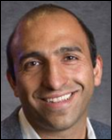
Athenahealth President and CEO Jonathan Bush has resigned, effective immediately.

Executive Chairman Jeff Immelt and CFO Marc Levine will assume responsibility for day-to-day operations. Board member Amy Abernethy, MD, PhD of Flatiron Health will advise the company on data strategy.

Bush was the subject of misconduct allegations and the pressure of activist investor Elliott Management.

Athenahealth’s board is exploring a sale, merger, or other transaction involving the company, but will also consider continuing as an independent company. It has opened a search for Bush’s replacement as CEO.

Bush said in the announcement, “I believe that working for something larger than yourself is the greatest thing a human can do. A family, a cause, a company, a country – these things give shape and purpose to an otherwise mechanical and brief human existence. Athenahealth is a near once-in-a-life time example of such a thing. With that lens on, it’s easy for me to see that the very things that made me useful to the company and cause in these past 21 years are now exactly the things that are in the way. I cannot imagine a single organization more loaded with potential to transform healthcare.”

Board Chair Jeff Immelt said, “Athenahealth is the most universally connected healthcare network in the country and we believe there remains significant, unrealized value in the company. To ensure Athenahealth maximizes shareholder value and is best positioned to realize the full potential of its premier healthcare technology platform, the board has authorized a thorough evaluation of strategic alternatives, including a potential sale or merger or continuing as an independent company under new leadership. We approach this process with an open mind and a commitment to continuing to strengthen the company – including its rich data asset, platform strategy, and culture of innovation. We are fully focused on serving the best interests of our shareholders, employees and clients.”

Morning Headlines 6/6/18

June 5, 2018 Headlines Comments Off on Morning Headlines 6/6/18

Microsoft has acquired GitHub for $7.5B in stock

Developers flee the GitHub platform as rumors solidify that Microsoft has acquired the open source repository for $7.5 billion in stock.

Florida Hospital and GE Healthcare Partners to Build ‘Command Center’ to Guide Clinical Operations

Florida Hospital will develop a clinical operations command center for its nine campuses using GE Healthcare’s AI-powered Wall of Analytics.

Pentagon investigates White House doctor Ronny Jackson

The DoD’s OIG is investigating allegations about White House physician and one-time VA secretary nominee Ronny Jackson, MD, who has been accused of improperly providing sleeping pills, drinking on the job, and sharing the medical information of VP Mike Pence’s wife without her consent.

Comments Off on Morning Headlines 6/6/18

News 6/6/18

June 5, 2018 News 6 Comments

Top News

image

Apple releases an API that allows developers to build apps connected to Apple Health Records.

Third-party developers can create IPhone apps that use medical information that is stored in Health Records and HealthKit, which Apple says can connect to 500 hospitals and clinics. Doctors can also integrate the stored patient information into their ResearchKit study apps to replace health questionnaires.

Apple says developers are creating apps for medication tracking, disease management, nutrition planning, and medical research.


Reader Comments

From Over Easy: “Re: Athenahealth. What are the odds that Elliott Management is behind the sudden surfacing of the old domestic news of Jonathan Bush?” I can’t speculate, but Googling turns up accusations that the hedge fund that’s pressuring the company has used shady tactics in the past hoping to discredit resistant CEOs, including hiring investigators to spy on their families and neighbors in hopes of turning up something salacious. The hedge fund denies that it has ever done that. However, the timing of the sudden interest in 12-year-old court documents certainly seems suspicious, especially since they involve divorce and custody proceedings rather than criminal activity.


HIStalk Announcements and Requests

image

Designer Kate Spade has died at 55 in an apparent suicide. I mention this only because I received an email from the National Action Alliance for Suicide Prevention asking media to report such events responsibly and to recommend that anyone who needs help call the 24/7 National Suicide Prevention Lifeline at 800-273-8255, so it seems like a good time to get the word out, especially since we have a physician suicide problem in our own industry. 

SNAGHTML29ab9abd

Here’s a reminder to answer this week’s question if you’re so inclined. It’s a little-understood profession onto which you might shine some light.


Webinars

June 12 (Tuesday) 2:00 ET. “Blockchain in Healthcare: Why It Matters.” Sponsor: Quest Diagnostics. Presenter: Lidia Fonseca, CIO, Quest Diagnostics. Blockchain technology is gaining traction in many industries, including healthcare. It’s not only a hot topic, but is also showing promise with real-world applications. This webinar will share how blockchain may play a key role in the future of healthcare IT by helping to solve some of the industry’s challenges, distinguishing the hype from reality by discussing how it works, how it can impact healthcare providers, and its future application in healthcare IT.

June 21 (Thursday) noon ET. “Operationalizing Data Science Models in Healthcare.” Sponsor: CitiusTech. Presenters: Yugal Sharma, PhD, VP of data science, CitiusTech; Vinil Menon, VP of enterprise applications proficiency, CitiusTech. As healthcare organizations are becoming more adept at developing models, building the skills required to manage, validate, and deploy these models efficiently remains a challenging task. We define operationalization as the process of managing, validating, and deploying models within an organization. Several industry best practices, along with frameworks and technology solutions, exist to address this challenge. An understanding of this space and current state of the art is crucial to ensure efficient use and consumption of these models for relevant stakeholders in the organization. This webinar will give an introduction and overview of these key areas, along with examples and case studies to demonstrate the value of various best practices in the healthcare industry.

Previous webinars are on our YouTube channel. Contact Lorre for information.

Here’s the recording of Tuesday’s webinar titled “Increase Referrals and Patient Satisfaction with a Smarter ‘Find a Doctor’ Web Search.”


Acquisitions, Funding, Business, and Stock

image

Microsoft acquires open source repository GitHub for $7.5 billion in stock. The company, whose income is generated by charging enterprise customers for private repositories, has never made a profit. Developers are apparently already fleeing the platform on rumors that Microsoft – which once called the open operating system Linux “a cancer” — was taking over. GitHub was valued at just $2 billion in 2015. VC Andreessen Horowitz will make over $1 billion on the sale from its $100 million investment in 2012.

image

Teladoc acquires virtual visit provider Advance Medical for $352 million. The Westwood, MA-based Advance Medical is the leading virtual care provider outside the US.

image

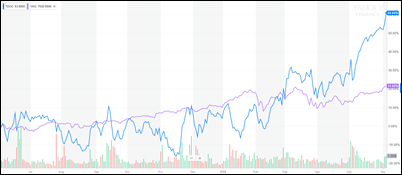
Teladoc shares are up 61 percent in the past year vs. the Nasdaq’s 22 percent rise, valuing the company at $3.4 billion despite increasing annual losses.


Sales

  • Advocare will replace GE Centricity with EClinicalWorks for its 600 providers in New Jersey and Pennsylvania.
  • Estonia’s Tartu University Hospital joins the TriNetX global research network to expand its clinical trials population internationally.
  • North Mississippi Health Services selects Mercy Technology Services to install Epic’s ambulatory EHR.
  • Johns Hopkins Medicine will implement the Voalte Platform at Johns Hopkins Bayview Medical Center and Sibley Memorial Hospital for voice calling, secure text messaging, and alarm management.
  • Children’s Hospital Colorado chooses Mediware’s blood management solutions.
  • Lawrence General Hospital (MA) selects Santa Rosa Consulting as its Meditech Expanse implementation partner.

People

image

Adam McMullin (Voalte) joins pharmacy technology vendor FDS as CEO.

image image

Cantata Health promotes Jonathan Isaacs as CEO and hires Krista Endsley (Abila) as president.

image

Columbia University nursing and biomedical informatics professor Suzanne Bakken, RN, PhD is named editor-in-chief of JAMIA.


Announcements and Implementations

image

Penn State Health St. Joseph goes live on Cerner.

image

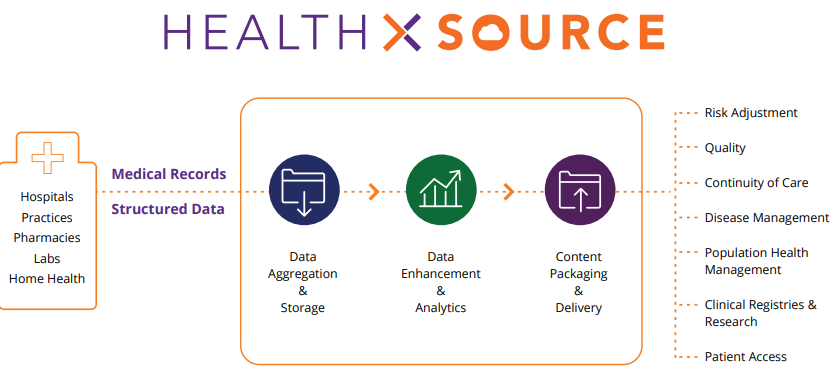
Ciox Health announces GA of HealthSource, a cloud-based clinical information-sharing platform that can extract information from disparate health records using artificial intelligence, optical character recognition, and natural language processing. Three modules were also announced: Clarity (release of information), Smart Chart (medical records aggregation into a longitudinal profile), and Vault (a patient- and provider-centric data repository). 

image

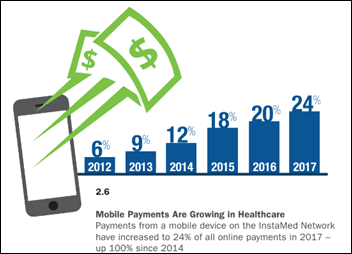
InstaMed publishes its annual healthcare payments trends report, with these findings:

  • 75 percent of Americans question the value they receive from the nation’s $10,400 per capita cost of healthcare
  • 65 percent of consumers say they would change providers to obtain a better payments experience
  • 58 percent of providers rely on statements to collect patient money owed as “paper is the sandpaper of healthcare”
  • Consumer out-of-pocket spending is growing rapidly to a projected $608 billion as high-deductible health plans and ever-increasing deductibles become common
  • Annual health insurance premiums have risen to an average of nearly $19,000
  • Nearly three-fourths of consumers can’t make sense of EOBs or bills and only nine percent of them can define the basic health insurance concepts of premium, deductible, co-insurance, and out-of-pocket maximum
  • More people (40 percent) fear the cost of illness more than the illness itself
  • Only 21 percent of consumers regularly use their provider’s patient portal
  • 80 percent of consumers want to check in for provider visits on their phones and 65 percent would use a phone app to pay medical bills as mobile payments have increased to 24 percent of the total
  • The survey found strong increases in the use of online payments, digital wallets, and automatic payment plans

Imprivata launches Mobile Device Access for fast clinical mobile device authentication.

image

Mary Meeker’s influential Internet trends report finds that:

  • Smartphone sales and Internet user growth have slowed as more than half the world is connected, but people are spending even more time online, with US adults averaging 5.9 hours per day
  • People are spending more on healthcare, which may drive improvements in office convenience, digitized transactions, and on-demand pharmacy services
  • The reach of digital payments is increasing
  • Data and data-driven personalization can be an important driver of customer satisfaction
  • Social media discovery is driving some product sales
  • Return on ad spending is going down, with “customer lifetime value” receiving more emphasis as a result
  • Household debt is at its highest historical level as consumers spend more on housing, insurance, and healthcare but less on food, entertainment, and clothing

image

Florida Hospital will develop a clinical operations command center for its nine campuses using GE Healthcare’s AI-powered Wall of Analytics.

ZappRx expands its partnership with prior authorization services vendor PARx Solutions to cover gastroenterology, rheumatology, and neurology.


Government and Politics

image

The Defense Department’s OIG is investigating allegations about White House physician and one-time VA secretary nominee Ronny Jackson, MD, who has been accused of improperly providing sleeping pills, drinking on the job, and violating the privacy of the wife of VP Mike Pence by sharing her medical information with other providers.

The Department of Justice charges two nurse practitioners and a surgery technician with opioid distribution after they allegedly sold prescriptions that they wrote on a doctor’s stolen prescription pad. DOJ also announces that a 65-year-old family practitioner in North Carolina who also ran an office-based opioid treatment has pleaded guilty to trading opiate prescriptions for sex with at least seven female patients, billing Medicare and Medicaid along the way for office visits that didn’t actually happen.

image

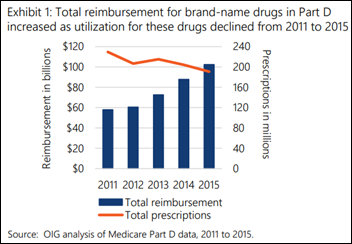
An HHS OIG investigation finds that even though the number of Medicare Part D prescriptions for brand name drugs dropped 17 percent from 2011 to 2015, drug companies made 77 percent more money as they simply raised prices at six times the inflation rate, which then automatically raised Medicare’s cost since it is based as a percentage of list price.


Other

image

The 514 residents of Surprise Valley, CA grapple with whether to sell the town’s one-bed, bankrupt hospital to the 34-year-old owner of nutraceutical companies who wants to use it for billing insurance companies for lab tests and telemedicine visits. He already loaned the hospital district $2.5 million to allow the hospital to buy one of his businesses, allowing him to advertise that it’s a wholly-owned subsidiary of the hospital and to keep 80 percent of the resulting lab billing profits. The bankrupt hospital tried a similar arrangement last year with EmpowerHMS, which it says abandoned the hospital after facilities it owned were accused of billing at least $175 million for lab services to patients who weren’t seen at those locations.

image

A Stanford Medicine survey of 500 EHR-using primary care doctors finds that:

  • Two-thirds of them think EHRs have improved care and say they’re at least somewhat satisfied with their systems
  • 59 percent think EHRs should be overhauled
  • More than half say that using an EHR detracts from their satisfaction and clinical effectiveness
  • A 20-minute patient visit involves 12 minutes of interaction, eight minutes with the EHR, and another 11 minutes of after-visit EHR time
  • Suggested short-term improvements are EHR user interface redesign, shifting work to support staff, and using voice recorders as scribes
  • Suggested long-term improvements are improving interoperability, using predictive analytics, and integrating patient cost information into the EHR

image

“Bad Blood” author and Wall Street Journal reporter John Carreyrou partially blames business-friendly Arizona for the “giant, unauthorized experiment” in which Theranos used its faulty technology to process blood samples collected from patients at Walgreens in the company’s original “wellness center” rollout in Phoenix, also noting that Theranos and its lobbyists convinced state legislators to pass a law that the company mostly wrote itself that allows patients to get blood tests performed without a doctor’s order.

image

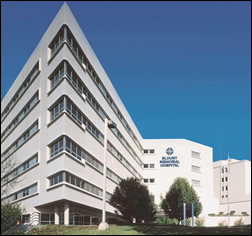
Blount Memorial Hospital (TN) says a “corrupted file” caused a three-day downtime of its physician group’s network in early May, requiring restoring from backups.

Examination of the work computer of former dean of Michigan State University’s School of Osteopathic Medicine – who retired after charges of sexual harassment and failing to oversee child sex abuser Larry Nassar — turns up pornographic images of women wearing MSU Spartan gear.

A consultant says that every state should develop an all-payer claims database to study healthcare trends and to allow building consumer transparency tools for cost and quality. Twenty states are working on them, but the author notes that California – which spends $367 billion per year on healthcare – has rolled out an incomplete system even though it would cost only around $20 million to do it right.

image

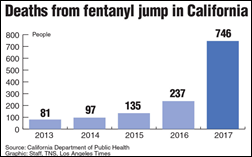
Weird News Andy thinks this idea is dope. California is giving drug users free fentanyl test strips in hopes of reducing overdoses caused by the 40 percent of heroin that contains the powerful narcotic.The Canadian company that sells the $1 strips warns that they were designed to test urine, not drug products, and says the tests shouldn’t give users a false sense of security.


Sponsor Updates

  • Ready Computing offers an off-the-shelf solution that combined InterSystems HealthShare HIE and Clinical Architecture’s Symedical content management to give physicians a graphical view of test results, diagnoses, and treatments.
  • Impact Advisors is named to CRN’s 2018 Solution Provider 500 list.
  • Spok joins Zebra’s PartnerConnect channel partner program.
  • HBI Solutions contributes to a journal article titled “Assessing Statewide All-Cause Future One-Year Mortality: Prospective Study with Implications for Quality of Life, Resource Utilization, and Medical Futility” that features the work of its solutions staff and clients.
  • Change Healthcare, ACO Partner, and BCBS of Arizona announce successful results of a shared savings plan.
  • The Boston Business Journal ranks Definitive Healthcare the 11th fastest growing company in Massachusetts.
  • Nordic is named to Inc. Magazine’s “Best Workplaces” list.
  • AdvancedMD will exhibit at Masters in Ophthalmology June 8-10 in Orlando.
  • Aprima will exhibit at the NJMGMA Practice Management Conference June 6-8 in Atlantic City.
  • Arcadia will exhibit at the Millenium Alliance Healthcare Payers Transformation Assembly June 7 in Marana, AZ.
  • Bernoulli receives the Best Research Paper award from AAMI Journal Awards for the paper, “Continuous Surveillance of Sleep Apnea Patients in a Medical-Surgical Unit.”
  • Burwood Group will exhibit at the NCHICA Academic Medical Center Security & Privacy Conference June 11-12 in Chapel Hill.
  • Centrak will exhibit at APIC 2018 June 13-15 in Minneapolis.
  • EClinicalWorks will exhibit at the Value-Based Summit Series Telehealth 2018 June 7-8 in San Diego.
  • FormFast will exhibit at the AZHIMA Annual Meeting June 14-15 in Mesa.
  • Healthfinch will exhibit at the Healthcare Call Center Times event June 13-15 in Pittsburgh.
  • Huntzinger Management Group EVP and Partner William Reed will speak at the Investment and M&A Opportunities in Healthcare Conference June 6 in Nashville.
  • CRN names Impact Advisors to its 2018 Solution Provider 500 list.
  • Intelligent Medical Objects will exhibit at the NextGen Large Client User Group Meeting June 6-8 in Chicago.
  • Kyruus will exhibit at the Healthcare Transformation Summit June 7-8 in Austin, TX.
  • EY names Collective Medical’s Chris Klomp, Adam Green, and Wylie van den Akker Entrepreneur of the Year 2018 Utah Region Award Winners.

Blog Posts


Contacts

Mr. H, Lorre, Jenn, Dr. Jayne.
Get HIStalk updates. Send news or rumors.
Contact us.

125x125_2nd_Circle

Morning Headlines 6/5/18

June 4, 2018 Headlines Comments Off on Morning Headlines 6/5/18

Apple opens Health Records API to developers

Apple announces that it will give users the ability to share health data stored on their devices with third-party developers and researchers.

Judge rules Theranos investors cannot pursue class action

A California judge rules that over 200 Theranos investors can’t pursue a class-action lawsuit against the company, which they claim defrauded them out of millions of dollars.

Teladoc Acquires Global Virtual Care Provider, Advance Medical

Teladoc acquires Advance Medical, a telemedicine company serving Latin American and Asian markets, for $352 million.

Comments Off on Morning Headlines 6/5/18

Curbside Consult with Dr. Jayne 6/4/18

June 4, 2018 Dr. Jayne Comments Off on Curbside Consult with Dr. Jayne 6/4/18

clip_image003 

From time to time, I get together with one of my colleagues from residency to catch up on what’s going on in the primary care community. We used to be able to make it happen quarterly, although as her practice has gotten busier and as her children have gotten older, it’s more and more difficult to do. We last got together almost a year ago, and then had a flurry of rescheduling and canceling until we finally arrived at the following summer.

Of the residents I trained with, she is one of the few still practicing traditional primary care. The rest of us have either hung it up entirely or moved into semi-related careers in urgent care, emergency medicine, sports medicine, aesthetic medicine, telemedicine, or clinical informatics. We were finally able to catch up this week and dish a bit about the healthcare landscape in our fair city.

We both initially worked for Big Health System, both in start-up practices in relatively underserved areas where the economics proved to be unsustainable. I felt a little guilty because she was a year behind me in training and I had recruited her to work in a practice situation that was similar to my own, and because neither of us could ever “make it” given the economic model used by the health system. Typically, a newly employed physician is on a salary guarantee and is expected to break even in the first few years of practice. At the time, hiring hospitals were offering modified “eat what you kill” salary arrangements, which if you did the math academically using average reimbursement for the area, seemed very doable.

Despite being more savvy than some of our peers, both of us wound up in the same trap as far as payer mix. As straight fee-for-service providers, we were negatively impacted when both local auto plants closed and many of our patients lost their jobs along with their well-paying insurance.

I had already been forced to limit the number of Medicaid patients I saw after coming to the conclusion that having 30 percent of my panel leading to reimbursements of $24 per visit wasn’t going to be economically sustainable. I did make exceptions for patients who were already established, but wasn’t taking new Medicaid patients, which created a crisis of conscience for me as I was caught between economic realities (getting off that guarantee so I could start paying back my student loans) and caring for people as I thought I had been called to do.

My employer was ill-equipped to deal with self-pay patients, barely offering a discount and making it difficult to care for people who didn’t have solid commercial insurance or Medicare. Although my visit numbers and my billings were great, my collections were terrible, and I was faced with a steep drop in salary at the end of my guarantee period.

Digging into the finances revealed the fact that my employer was charging the costs of building my office against my practice’s cost center, which although not specifically mentioned in the contract, was apparently allowable. Had I taken the easier route and joined an existing practice with no build-out required, I wouldn’t have had any construction costs attributed to me and the cliff I was about to fall from would not have been quite as high. Fortunately, my colleague had gone into an existing space while her office was under construction, so she wasn’t getting hit with the build-out costs and had time to maneuver before her guarantee ran out.

Meanwhile, we were watching our friends who had gone out into affluent communities beat the guarantee in barely over a year since they had a stronger payer mix and fewer patients with public aid and bad debt.

I was offered the opportunity to transition to clinical informatics, working a bit of urgent care on the side. She didn’t have that option, so she terminated her contract and decided to take her chances with the non-compete clause and work urgent care while she looked for a full-time position. She was quickly snapped up by a rival health system, who offered her a position outside her non-compete radius and with a better compensation plan.

Her new employer had realized that they weren’t going to be able to recruit physicians into relatively underserved areas (her new position was rural) without finding a way to make the finances work. This organization used more of a RVU-based compensation model, where physicians were paid more equitably based on the work they did rather than by their payer mix. They also had more of their salaries attributable to quality scores. Looking back, they were much more on the forefront of pay for performance than we had been at Big Health System.

Fast forward more than a decade. She is still in the same practice, but coping with the ups and downs that many physicians do. First, there was the EHR conversion to Epic, which created a lot of upheaval and several years of slow progress while the system tried to synchronize content and features across a multi-state environment. Then, there was the birth of Meaningful Use and its respective pains and the rise of Patient-Centered Medical Home and other incentive programs, all of which put stresses on providers. She and her partners are trying to have a semblance of work-life balance when they’re being asked to better engage patients by providing expanded evening and weekend hours, by delivering after-hours telemedicine services for their regional physician group, and ensuring their quality numbers are at the top of the scale.

At her age, she should be a good two decades from retirement, but she’s seriously contemplating a change now. In addition to the challenges already mentioned, she cites her biggest struggles as low health literacy and socioeconomic issues – but the challenges are at two different ends of the spectrum.

At one end, there is the stereotypical situation where patients lack education about health-related issues and lack the means to address some basic needs. She has patients in her semi-rural community who struggle with food insecurity, transportation issues, lacking support systems, and more. At the other end are relatively affluent patients who have been streaming into the community to take advantage of inexpensive housing and who have much more economic means. However, they have similar levels of low health literacy, but due to insurance coverage and the perceived need for services, rank as “high utilizers of healthcare” similar to their lower-status peers.

She finds the latter group more frustrating, as they seek care for many conditions that could be treated at home and with over-the-counter remedies. They tend to use urgent care and retail clinics for convenience, demand care within hours of having any kind of symptom, and often want tests performed when a history and physical would reveal the answers. She’s tried to get many of them to use the after-hours nurse line rather than urgent care or the emergency department, but hasn’t been successful, leading to increased work handling coordination and transition of care issues the next time these patients present to the office.

We talked a little bit about moral distress. With one group, she feels she is delivering poor care because they lack resources. With the other group, she perceives the care as poor quality because it’s fragmented and sometimes the patients frankly receive too much care. It seems that dealing with these polar opposite situations adds stress of its own, with too few solutions in sight.

For a while, she entertained the idea of direct primary care or a retainer practice, where she could define the terms of care as part of the agreement, but was not willing to give up serving her less-economically advantaged patients. She’s been having thoughts about trying to start some kind of educational foundation or organization that would specifically target health literacy and appropriate care issues, but it’s hard to find seed money for something like that, especially when one of your constituencies is well off.

We talked a bit about the idea that “too much care” is relative, that as we empower patients, it’s up to the patients to decide whether they’re receiving too much (or not enough) care and to decide when, where, and how they want to engage with caregivers. It’s a tough spot to be in, especially when you’re trying to manage a business, raise a family, and control your own stress level.

I didn’t have any good advice for her other than to validate her feelings and talk about different approaches I’ve seen in my travels. It’s a shame that a physician with so much to offer feels like she is at a crossroads like this, with few choices when she still has a potentially long practice career ahead of her. The health systems in our community tend to suffer from shiny object syndrome, ranging their attention from telemedicine to school-based clinics to medical home to employer-based clinics to retail clinics and beyond. Neither of them seem to be acting very strategically, which adds to the madness of the system.

What we’ve arrived at is a two-tier system without admitting it. There’s the “public” safety net system and the “private” alternative for those who can afford insurance. We pay lip service to quality and value-based care and the providers and other clinicians are caught in the middle somewhere.

I’d love to hear from people in progressive healthcare systems or delivery networks how they’re addressing this and whether they can make it work, keeping all of the parties engaged and reasonably satisfied (at least enough to keep them at the table). Have you figured out how to keep primary care physicians from leaving practice before they hit the tender age of 50? Do you have an answer in your Magic 8-Ball? Leave a comment or email me.

Email Dr. Jayne.

Comments Off on Curbside Consult with Dr. Jayne 6/4/18

HIStalk Interviews Helen Waters, EVP, Meditech

June 4, 2018 Interviews 1 Comment

Helen Waters is EVP of Meditech of Westwood, MA.

image

Tell me about yourself and the company.

I’ve been with Meditech for 28 years. I previously worked in the software industry for a financial software company. I’ve held various positions in the last 28 years. I’ve spent a lot of time in the field working with customers and selling to customers. I had an operational vice president position for our legacy products of Magic and Client-Server, where I managed the development, implementation, and client services for those customers for about five years. I was promoted to executive vice president about 24 months ago. I’m an officer of the company. I’m involved today in its strategic direction and vision along with some of my peers here at that level. I’m happy to be talking with you.

With regard to Meditech, it’s a 50-year legacy in an industry that we’re very passionate and excited about, in terms of the future of what we’re doing and where the industry is headed.

How much of Expanse is newly developed and how does it differ from previous offerings?

Expanse for us represents the development over several years of an EHR that we designed for the post-Meaningful Use era. Major components of it were written from the ground up, enumerating many, many modules. In particular, the entire physician experience, in addition to introducing an ambulatory system, which prior to that time, we had not built on our own. We have spent a lot of time building out the provider experience to a different level of clinical sophistication in that tool set. Rewriting many, many modules within it so that it’s a Web-based system accessible through a browser and a completely tap-and-swipe experience as it relates to the provider encounter for any element of providers engaged in ordering, documenting, reconciling, and reviewing the record. That’s ambulatory, acute, and the emergency area.

The company was late to recognize the demand for an integrated ambulatory system in partnering with and then acquiring LSS. It also wasn’t very public-facing in just plugging away quietly, even skipping the HIMSS conference one year. What triggered the realization that the strategy that had worked so well needed to change?

Very fair comments on all fronts. We had recognized the need for an ambulatory system that would be built and driven by us in an integrated fashion. I would put it in the context of 2007 and 2008, when a brand new user experience was introduced to the world by Apple. I would say that by 2009 and 2010, we saw that gripping hold of the consumer landscape pretty extensively. The IPad came out in 2010. We saw a tremendous opportunity to start to envision where we wanted to end up at the end of MU.

The company itself was realizing all of its success factors over many decades, but also identifying the need to retool the company for this next chapter that we want to write. The technology was moving very fast in terms of that user experience. We saw that as taking hold. At the time, we realized that we had an opportunity to differentiate this next half-century for Meditech by taking that user experience that we were used to in other levels of our life in tapping and swiping and remove the hindrance of clicking, scrolling, and digging.

We saw an opportunity in 2011 and 2012 to build a brand new EHR, and in particular, emphasize the provider experience. We started with the ambulatory system. We had a lot of great choices then. I think everybody knows we owned LSS, which was successful for a period of time, but we at that time hit a pause button and said that we wanted to come out with something that was better, more integrated, and perhaps more transformational than what we saw in the market at that time. That’s when we hit the pause button to build the ambulatory system and bring that web platform out into general release in the market in 2016.

How is the hosted system market developing and how is Meditech responding?

Our entire Expanse platform is driven off of browser access. We no longer require complicated mechanisms to log on to our system. Our entire physician experience requires just a mobile device and a browser of their choice to get into the system. There’s a lot of discussion we could have about the importance of the security around that, but these systems are cloud hosted and cloud based.

In addition to that, we announced as a company in 2017 the availability of Meditech fully as a service, initially offering it to critical access facilities. We recognize the many challenges facing our customers and certainly smaller organizations in procuring systems, deploying them, and maintaining and managing them. We wanted to take an opportunity to deliver an all-encompassing solution for that market and a cloud-hosted service, soup to nuts, in a standard offering for the critical access hospitals to start. Scaling up from there now to the community hospital environment.

The company’s annual revenue and income took a steep slide from 2013 to 2016, but  turned back up in 2017. What caused that trend and why is it improving now?

The market, in our opinion, is still to a degree in a state of flux. There are major established players in the EHR space. Three of them encompass over 80 percent of the market. We’re fortunate to be one of those. The market has witnessed a tremendous amount of consolidation. There continues to be heavy pressure in the form of the fiscal realities of healthcare, the changing reimbursement models, the fact that our customers or all customers are being pressured with cost containment management and the fact that the nation as a whole is still striving to see the cost of healthcare go down and that has not yet been realized.

The introduction of a platform that was designed for today’s healthcare paradigm versus the one that was in 1990 or 1980, for that matter, with Magic. Introducing a system that was built around an environment that had shifted massively because of Meaningful Use has made people sit up and take notice of Meditech. The legacy of this company and its commitment to healthcare, and more so its commitment to solving problems with this industry in the spirit of partnership, in addition to a very contemporary system and one that is still affordable. We think that that’s an important point, to underscore that the value proposition in what we’re delivering. That has caught the attention in the market. Contemporary tools, modernized for today’s user experience the way people expect and should demand. Very deep and functional capacity in terms of advanced features, but still acquired, maintained and sustained affordably. That’s critical for healthcare today and that has helped the market start to readjust itself down.

It’s long been an assessment made by the market that if you paid a ton more for software, you got a lot more. Over the last eight years, we’ve seen the industry go through massive amounts of investment, yet we wake up at the end of that investment and we have a high physician frustration factor, a high burnout factor. We have yet to see real economies of scale in terms of the consolidation in the market, truthfully, in terms of provider organizations or price points. The market is ripe for new technology, new discussion, new context. That’s why you’ve seen an upturn.

Why more conversation about Meditech in general? One of the things that I realize with a deep level of experience and passion for this company is that having a cone of silence really didn’t serve the market or our customers well. A few years ago, we decided to be comfortable in our own space of putting our company into context, making a determination that we were here with a purpose and a passion for what we do. Unequivocally, we do it as well if not better than most. We had a very strong intention to continue to play a significant role in this market, so we made a decision to be more comfortable in those conversations, to be more open about them. At one point in time, I don’t know that we spent a lot of energy and investment there. We’ve identified the need for that. This is a whole different world. This is a very different company.

Most people will recognize us without question in terms of the core value structure and the emphasis and principles that we still maintain. But this is a company that has clearly evolved both inside and externally to the market, and that’s been well received. We’ve been humble enough to realize that the success factors that made this company great over the last 50 years will continue to need to be retooled and evolved for the market that we’re in today and for the customer that we’re trying to satisfy the needs of today. Very different.

How are non-profit hospitals looking at the role of cost and value when they make EHR decisions? Their for-profit counterparts mostly aren’t buying Cerner and Epic with contracts worth hundreds of millions of dollars.

I’d like to say that I hope that they stop, pause, and think about it more than they have been. I like to say that this an industry where there is a me-too movement that because someone else bought it, it has to be good. We’ve been busy debunking that theory. As we sought to identify where our future was headed and what we wanted for ourselves, we studied a lot of data. We looked at CMS data. We looked at cost data. We did some comparisons of our customers to others. There was a great realization, an epiphany, that came to us. For an industry that was pretty well established and automated, including hospitals, what has caused the escalation of cost in this automation? It doesn’t make any sense to us.

We’re trying to get people to wake up to the fact that they should be educated consumers. That software, in particular, is abstract. It’s not a car. It’s not a house. They need to look at data that is generated by unbiased sources, CMS being one. At the end of these eight years, does any one vendor stand out in terms of key categorizations of readmission penalties, hospital-acquired conditions, or value-based purchasing adjustments? Our research says that there’s very little distinguishing characteristic associated with the EHR that’s driving that.

We’re out to have an honest discussion with the market about being an educated consumer. Recognizing that these dollars that they’re spending on EHRs are important to other decisions that they’ll have to make, to other investments that they’ll want to carry forth, on capital resource, human resource, and otherwise. That they need to look at the results.

People have been responsive to that. You can’t open a digital media source without seeing some pretty difficult stories out there on the challenges of sustainability of these EHRs, the cost infrastructure, the staffing ramp-up, which is causing a lot of burden and in some cases, real heartache to organizations who’ve had bond degradings, layoffs, and other things happen as a result. We’re proud of our track record in maintaining the value discussion and partnering with the industry on taking the cost down, not driving it up.

How is Meditech’s market changing with hospital consolidation and the release of down-market offerings from Cerner and Epic that hit your sweet spot of smaller hospitals?

One thing I’d point out is that we do have a number of sizable IDNs in this country and globally. There are a collection of urban hospitals in the 200- to 400-bed range that also own and operate other facilities.

There’s no doubt that the urban academic medical center expansion and consolidation has been a challenge at times for us. I’m interested to see where this goes. The watchdog of our industry is starting to ask questions that we’re happy about in terms of, has the consolidation netted better higher quality for patients? More convenience, better pricing, and lower costs? There seems to be a lot of controversy out there right now, as to, does bigger necessarily dictate better?

Banking is a great analogy to that. The banking industry was consolidated. There were major players and the world was going to be better. It was going to be more affordable. Customers would be happier. There would be more convenience. A decade later, we see a lot of challenge in that industry. It didn’t necessarily prove to be better.

We’re watching the consolidation. We’ve built a robust interoperability strategy. I’ve seen less rip-and-replace in these last two to three years than we had seen previously. I’ve seen in some cases national not-for-profits and for-profits making decisions to consider two-vendor strategies. If you take the top 10 health systems in the country that might be listed as having a single EHR, I would comfortably tell you that we’re still present in all of those systems.

It’s an evolving conversation. The fiscal realities of making those decisions is causing people to pause. The market as a whole is looking at the impact of maybe too much consolidation and what that has done to healthcare, particularly in rural communities. There’s some really interesting lawsuits here and there where services were siphoned off over time. The facility may have been purchased and then people are driving another 50 to 100 miles to get basic services. There’s a lot of general controversy as to where this all goes in the future.

The interoperability messaging has been critical for us. We’ve seen it slowing down. We’ve seen more pragmatic thinking around that concept that rip-and-replace doesn’t always make sense. Interoperability, consolidation, a care management platform, and the ability to have a strong analytics platform that can be consolidated is more important. There’s a lot of innovation in those areas.

Do you have any final thoughts?

Healthcare is one of those unique industries that binds us together because we consume it. The combination of a highly agile technology sector with an evolving vertical market that’s moving with a company history and resume that’s pretty deep in experience is positioning us with renewed energy for the job that we have ahead of us. That is, to continue to participate in solving problems for customers and assisting on a national level with something that still has to happen, which is the reduction overall of healthcare spending as a percentage of GDP.

We’re enthusiastic about the next 50 years and beyond. We have purpose. We have mission. We have enthusiasm for the fact that this is a changing market and we’ve embraced the change as a company. We certainly have embraced the change in the platform. When you look at new concepts such as population health, reimbursement models evolving, artificial intelligence, and genomics, there’s a whole host of things that are going to continue to keep us very challenged and engaged. We are excited about that. I know that sounds corny, but we are. That fuels us every day.

Morning Headlines 6/4/18

June 3, 2018 Headlines 1 Comment

IBM says it’s reaching for the ‘moon’ with Watson Health. That hasn’t stopped layoffs.

IBM acknowledges that last week’s layoffs affected a small percentage of Watson Health’s workforce, the rest of which will forge ahead with a new implementation project slated for Apollo Hospitals in India.

Intelligent Medical Objects (IMO) Announces Leadership Transition to Support Next Chapter of Growth and Innovation

Ann Barnes (MedData) joins IMO as CEO, replacing co-founder Frank Naeymi-Rad, who will become chief innovator and remain chairman of the board.

Illinois upholds Epic’s $62 million university contract

The Illinois Procurement Policy Board rejects Cerner’s challenge of the seven-year, $62 million Epic contract signed by University of Illinois Hospital and Health Sciences System.

Monday Morning Update 6/4/18

June 3, 2018 News 6 Comments

Top News

SNAGHTML20edc117

The Illinois Procurement Policy Board rejects Cerner’s challenge of the seven-year, $62 million Epic contract signed by University of Illinois Hospital and Health Sciences System.

The board had previously recommended cancelling the contract and letting the state executive ethics commission render an opinion based on Cerner’s complaint that its bid was lower, that it wasn’t allowed to demonstrate its product, and that the selection involvement of Impact Advisors created a conflict of interest since that consulting firm also offers Epic implementation and staffing assistance.

The procurement board realized that Epic had not been offered a chance to request its own hearing, and after listening to arguments from both companies, declined to pursue the matter further and will let the contract stand.

UIC executives said when Cerner filed its protest in December 2017 that it has had problems with Cerner as a current customer, that it has failed twice in trying to roll out Cerner ambulatory due to Cerner-admitted performance problems, and that Cerner failed its technical review and was therefore excluded from demonstrating per state procurement law.

UIC’s Epic project will replace systems from Cerner and Allscripts.


Reader Comments

image

From Norway José: “Re: Cerner in central Norway. It seems they’ve pulled out, assuming the translation is correct. Wonder if this is a sign of things to come as they turn their attention and resources to the VA?” The Health Center Norway RHF article says that Epic will get the contract after Cerner pulls out for unstated reasons.

From You Don’t Need a Weatherman: “Re: referrals. Interesting timing in light of the Steward case.” A case before the US Supreme Court regarding how antitrust laws are enforced may change how courts look at anti-steering provisions. The case involves credit card companies, but if the Supreme Court upholds a lower court’s decision, hospitals and insurers would be allowed to include anti-referral rules in their contracts. The AMA argues that physicians would be unable to send patients to out-of-network specialists even when they believe it’s in the patient’s best interest. 

image

From PitVIper: “Re: provider data. Humana, Aetna, UnitedHealthcare, ONC, SureScripts, VA, and other organizations got together and defined an industry roadmap to address issues in provider data.” A CAQH-convened group develops “An Industry Roadmap for Provider Data” in hopes of reducing the inefficiency created by inaccurate provider data. The groups involved will declare a commitment to the vision, form a governance structure, define an initial dataset and standards, engage regulators, and begin measuring impact.


HIStalk Announcements and Requests

image

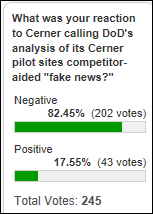
More than 80 percent of poll respondents had a negative reaction to Cerner President Zane Burke’s labeling the DoD’s negative internal report on the MHS Genesis pilot sites as “fake news” that was influenced by an unnamed competitor in unnamed ways.

New poll to your right or here: who is most responsible for high US healthcare costs? Next week I’ll compare the new results from the same poll I ran a couple of years ago.

image

I received too few entries to last week’s question, so here’s one last try. I should note that I’m not looking only for negative answers with these questions even those are often in the majority.

Thanks to the following companies that recently supported HIStalk. Click a logo for more information.

image
image
image
image
image
image
image
image
image
image
image
image
image
image
image
image
image
image
image
image
image
image

Following through on my long-ago promise to a reader to also recognize companies that have chosen not to renew their sponsorship, I’ll say thanks and goodbye to these companies that have left the HIStalk building since January 1:

  • Conduent
  • Dynamic Computing Services
  • Ellis & Adams
  • Encore Health Resources (acquired by Emids)
  • Harris Healthcare (although it has added a sponsorship for its QuadraMed EMPI business)
  • Haystack Informatics
  • Healthlink Advisors
  • Infor
  • InMediata
  • Lifepoint Informatics
  • Protenus
  • Sphere 3
  • UltraLinq

image

Welcome to new HIStalk Platinum Sponsor Ciox Health. The Alpharetta, GA-based company facilities and manages the movement of health information with the industry’s broadest provider network, deploying capabilities in release of information, record retrieval, health information management, audit management, coding services and education, imaging services, clinical abstraction, and oncology data management. The company has 40 years of HIM experience and provides services to 60 percent of US hospitals, 16,000 physician practices, and 100 health plans. It manages 40 million requests for health information each year and complies with rigorous standards to ensure privacy and security. The company manages health information to support continuity of care, patient access to data, and reimbursement improvement. Thanks to Ciox Health for supporting HIStalk.

Here’s a Ciox Health intro video I found on YouTube.

I paid $65 to run the HIStalk email list through a third-party email validation tool that performs a deep dive into each subscriber’s email service. No wonder people say they aren’t getting my emails – a big chunk of company servers don’t let them through because of anti-spam systems, incorrectly configured servers, and readers who entered their email address wrong. At least I feel better telling people that the problem is on their end, not mine.

image

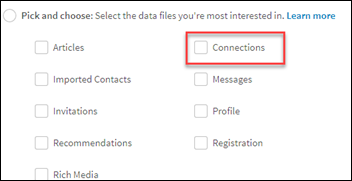
I also learned this by accident – if you export your LinkedIn connections from the Privacy menu, you’ll get an Excel file that includes every one of your contacts along with their job title, employer, email address, and connection date.

Thanks to the long-time readers who sent nice thoughts about HIStalk’s 15th birthday, some of whom were reading way back in my first lonely, fumbling year of 2003 (it’s still lonely and fumbling, but I accept it more readily).

Listening: new from Black Thought, aka Tariq Trotter, the genius co-founder and performer of The Roots. The lyrics are simultaneously angry, crude, and poetic: “Picture my daughter drinkin’ water with a sign; say ‘for colored girls,’ I ain’t talkin’ Ntozake Shange; Who said it’s cynical? I was a king and general; Rich in every resource, precious metal and mineral; Before the devil entered the land of the plentiful.” Lyrics are undervalued now that music is dominated by good looks, slick dance moves, and computer-enhanced songs written by someone other than the singer, but check out his freestyle rap from December to hear what Shakespeare might sound like if he were born 46 years ago in Philadelphia to parents who were separately murdered by the time he was 16.

I just finished reading the Theranos book “Bad Blood: Secrets and Lies in a Silicon Valley Startup.” Book report to follow.


Webinars

June 5 (Tuesday) 1:00 ET. “Increase Referrals and Patient Satisfaction with a Smarter ‘Find a Doctor’ Web Search.” Sponsors: Phynd Technologies, Healthwise. Presenters: Joseph H. Schneider, MD, MBA, FAAP, retired SVP/CHIO, Indiana University Health; Keith Belton, VP of marketing, Phynd. A recent survey found that 84 percent of patients check a hospital’s website before booking an appointment. However, ‘Find a Doctor’ search functions often frustrate them because their matching functionality is primitive and the provider’s information is incomplete or outdated. Referring physicians need similarly robust tools to find the right specialist and to send the patient to the right location. Attendees of this webinar will learn how taxonomy-driven Provider Information Management improves patient and referrer satisfaction by intelligently incorporating the provider’s location, insurance coverage, specialty and subspecialty, and services offered that can be searched via patient-friendly terms.

June 12 (Tuesday) 2:00 ET. “Blockchain in Healthcare: Why It Matters.” Sponsor: Quest Diagnostics. Presenter: Lidia Fonseca, CIO, Quest Diagnostics. Blockchain technology is gaining traction in many industries, including healthcare. It’s not only a hot topic, but is also showing promise with real-world applications. This webinar will share how blockchain may play a key role in the future of healthcare IT by helping to solve some of the industry’s challenges, distinguishing the hype from reality by discussing how it works, how it can impact healthcare providers, and its future application in healthcare IT.

June 21 (Thursday) noon ET. “Operationalizing Data Science Models in Healthcare.” Sponsor: CitiusTech. Presenters: Yugal Sharma, PhD, VP of data science, CitiusTech; Vinil Menon, VP of enterprise applications proficiency, CitiusTech. As healthcare organizations are becoming more adept at developing models, building the skills required to manage, validate, and deploy these models efficiently remains a challenging task. We define operationalization as the process of managing, validating, and deploying models within an organization. Several industry best practices, along with frameworks and technology solutions, exist to address this challenge. An understanding of this space and current state of the art is crucial to ensure efficient use and consumption of these models for relevant stakeholders in the organization. This webinar will give an introduction and overview of these key areas, along with examples and case studies to demonstrate the value of various best practices in the healthcare industry.

Previous webinars are on our YouTube channel. Contact Lorre for information.


Sales

  • Boulder Community Hospital (CO) chooses Epic.

Decisions

  • Cumberland Memorial Hospital (WI) will replace Evident with Athenahealth on August 1.
  • Caldwell Memorial Hospital (LA) switched from Healthland to Evident in September 2017.
  • Faulkton Area Medical Center (SD) will replace Healthland with Cerner on June 25.

These provider-reported updates are supplied by Definitive Healthcare, which offers a free trial of its powerful intelligence on hospitals, physicians, and healthcare providers.


People

image

Curt Thornton (Capsule) joins Quantros as SVP of sales.

image

Intelligent Medical Objects hires Ann Barnes (MedData) as CEO. She replaces co-founder Frank Naeymi-Rad, PhD, MS, MBA, who will continue as board chair and will add the role of chief innovator.


Announcements and Implementations

image

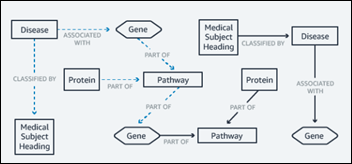
Amazon Web Services announces GA of Amazon Neptune, a graph database that allows developers to query relationships to power social networks, recommendation engines, fraud detection, and drug discovery. A life sciences startup is using it to study disease by connecting genomics, pathology, neurochemistry, and device and patient clinical data.

image

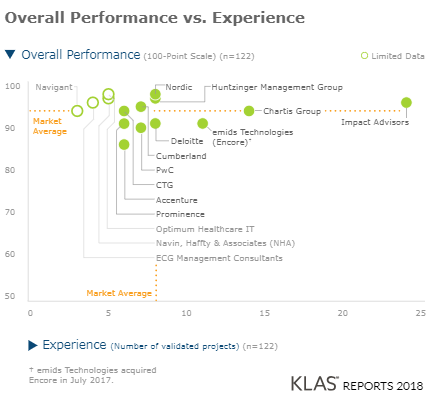
A new KLAS report on HIT assessment and strategic planning finds that Cumberland and EMids Technologies (the former Encore Health Resources) are more consistent in exceeding client expectations; Impact Advisors and Chartis Groups excel at delivering high-quality outcomes across a large number of clients and projects; Nordic is the highest overall performer; and Accenture finishes worst as clients report less value obtained. The report highlights Nordic and Deloitte for thought leadership.


Other

image

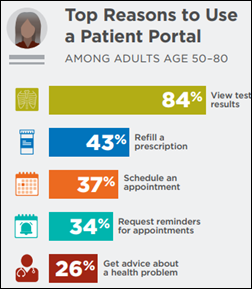
A University of Michigan poll finds that half of older adults have set up a patient portal, with those aged 65-80 who haven’t done so saying they aren’t comfortable with technology while those 50-64 say their biggest barrier is that they just haven’t bothered. Respondents gave portals a slight edge in their ability to understand the information they’re given, but telephone contact with the practice won for the ability to explain what they need and also with the hope of getting a faster response.

image

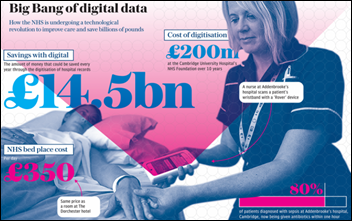
In England, The Daily Telegraph looks at the digital revolution in healthcare, giving kudos to Epic-powered alerts for quickly detecting and treating sepsis at Cambridge University Hospital’s NHS Foundation Trust, where 80 percent of newly diagnosed sepsis patients are being given antibiotics within one hour. It also mentions the Pediatric Early Warning Score for escalating peds issues quickly. The article also quotes Eric Topol, MD, who is reviewing an NHS technology review and who predicts the end of expensive “hotel hospitals” as patients are increasingly monitored at home.

Australia’s new, $2 billion Royal Adelaide Hospital is spending an annualized $2 million to store and deliver paper medical records after the incoming new government pauses its Allscripts rollout. The health minister says the EPAS project is “hundreds of millions of dollars over budget and years behind schedule.”

A small poll finds that 88 percent of Americans aged 40 and over would be comfortable receiving care via telemedicine, although half worry that care could be of lower quality.

A tiny new study finds that doctors can predict which patients will do well on chemotherapy by looking at activity data from their fitness trackers. Those who are non-sedentary more than 60 hours per week seem to require fewer hospitalizations and ED visits.

Newly published research finds that many cancer patients could safely skip chemo and surgery without affecting their survival, including eliminating chemotherapy after surgery for early-stage breast cancer. 

image

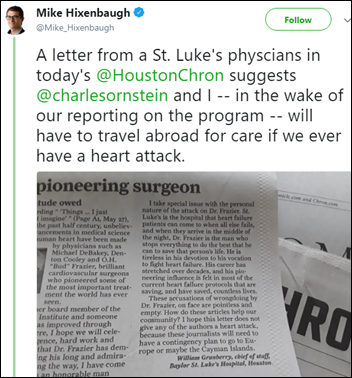
Baylor St. Luke’s Medical Center (TX) temporarily suspends its heart transplant program following publication of investigative reports calling out patient deaths and surgeon turnover. Meanwhile, the hospital’s chief of staff says in a Houston Chronicle opinion piece that “these journalists will need to have a contingency plan to go to Europe or maybe the Cayman Islands” if they need cardiac care after the authors noted the high death rates of heart surgeon Bud Frazier, MD even though the hospital itself had found problems with his work years ago.

Apple announces Digital Health, which despite the name, is an app to help consumers wean themselves off their electronic devices by limiting their time online. Google has introduced a similar feature in its Android operating system that records the time spent within each app and allows the user to set time limits.

In France, two doctors face disciplinary action after getting into a fistfight in an OR after an anesthesiologist complains about having to work after 4:00 p.m. because the urologist’s case ran over. The anesthesiologist says the urologist threw a bottle of Betadine in his face, with the latter then going after the urologist with surgical scissors. They continued their fracas in the OR dressing room afterward, when the urologist is alleged to have smacked the anesthesiologist in the face with his computer bag, shattering his eye socket and requiring a month-long recovery.


Sponsor Updates

image

  • Pivot Point Consulting’s Seattle team volunteers at the Hopelink food bank.
  • Netsmart will exhibit at the NAPHSIS – Vital Records Annual Conference June 4 in Miami.
  • Datica lists its milestones attained as it reaches its fifth anniversary.
  • Clinical Computer Systems, developer of the Obix Perinatal Data System, will exhibit at the Epic Michigan User Group Conference June 5 in Ypsilanti.
  • OmniSys will exhibit at PioneerRx Connect June 7-10 in Nashville.
  • Meditech will host  its 5.x/6.0 Revenue Cycle Summit June 26-27 and 6.1/Expanse Revenue Cycle Summit June 28-29, both in Foxborough, MA.   
  • Quadramed will exhibit at the CHIA Convention and Exhibit June 3-6 in San Diego.
  • Wisconsin Health News features Redox CEO Luke Bonney.
  • Nordic reports that its score of 98.1 on KLAS’s “HIT Assessment & Strategic Planning 2018” report is the highest of all companies mentioned.
  • WebPT announces the speaker lineup for its annual Ascend Summit September 28-29 in Phoenix, AZ.
  • Access joins Athenahealth’s More Disruption Please program.
  • Philips Wellcentive publishes a white paper titled “Is there a business case for value-based care?”
  • ZappRx achieves HITRUST CSF Certification.
  • The SSI Group earns certification under the HHS Optimization Program Pilot of Administrative Simplification.

Blog Posts


Contacts

Mr. H, Lorre, Jenn, Dr. Jayne.
Get HIStalk updates. Send news or rumors.
Contact us.

125x125_2nd_Circle

Weed’s Legacy

Weed’s Legacy
By Robert D. Lafsky, MD

Robert D. Lafsky is a gastroenterologist in Virginia.

image

It’s been a year since Dr. Lawrence Weed passed on at 93. He got a mention in HIStalk and a longer obituary in the New York Times, where he’s credited as a major innovator in the organization and computerization of medical records.

He was. But reading his later work, one has to doubt that Weed would have been happy with the Times statement about his Problem Oriented Medical Record, that “two of its features have become nearly universal in health care: the compiling of problem lists and the SOAP system for writing out notes in a patient chart.” 

Oh sure, you can look at the average EMR chart these days and see a “problem list” and SOAP designations on at least some of  the progress notes. But do the problem lists reflect the sort of organized rigorous thinking and aggressive pruning he advocated as necessary to keeping them useful?

Not very often. Especially after several admissions, a hospital patient’s list has a long string of overlapping, duplicative, or clearly unnecessary subordinate “problems.” It’s of little use to anybody. And are the SOAP notes problem-specific and do they clearly divide up the information as intended and point toward action?

Don’t get me started. Let’s just say that if we revived Dr. Weed and turned him loose with a current day EMR and gave him an hour at the lectern, his critical dissection and ridicule of the clinical work therein would be strikingly similar to what he does in his famous video from 1971.

The key concept underlying the Weed scheme was that one doctor brain couldn’t hold enough information to organize information and make good decisions about a patient. The process needs a more systematic and documented approach. 

As obvious as that may sound to readers here, medical giants walked the Earth 50 years ago, and a Big Ego telling other Big Egos — especially specialists — that their egos were too big didn’t always go over so well. But there was a more fundamental problem and Weed had to deal with it.

The original Weed system made sense dealing with the management of known and established problems, but the “unknown unknown,” the diagnosis problem, was the flaw in the scheme. I saw this myself when I started practice as a specialist in the early 1980s in a then-hotbed of Weed methodology — a small hospital with young family practitioners trained on the POMR concept.

What I saw repeatedly as a consultant was that no amount of dogged problem list maintenance could get you to see that problems 1, 3, and 5 were actually components of a single syndromic diagnosis. You just had to know that. And in those days, without sufficient training in the field in question, the light bulb never went off over your head.

Actually that light bulb method is still what we’re doing, but Weed spent his later career working on a computerized improvement. A trained interviewer (not necessarily a physician) would work with the patient and the records to input extremely granular information in a neutral fashion, avoiding the leading questions that the current heuristic system requires. The computer would then go to work applying a series of “knowledge couplers,” what I believe would be considered an expert system in current terminology, to generate a complete list of diagnostic possibilities. Only after that would a physician start dealing with the case and sort out the problems in light of that information.

How did that work out? You can read Weed’s book for a very full discussion of his later views. But the business of the ensuing business enterprise is a checkered story. Here’s an article from 2002 about his system and its fate. Suffice it to say that this was not a system that took over the world.  

Is Weed doomed to be an obscure historical figure in medical history at best and a minimally successful software developer at worst? I’ve had conversations with very highly-placed medical people who had never even heard of him. But it’s hard to look at the current morale problem in medicine and not see him as a prophetic visionary. Every week or so, I see two or three “burnout” articles or videos, mainly focusing on the current EMR experience. Everybody complains that they now have two jobs, data entry and actual thinking, or at least trying to make the light bulb turn on.

Will a Weed-like diagnostic system take over eventually and automate the light bulb? The problem is it’s going to take a lot more time and disruption to get something like that working and working well.   

But in smaller but still important ways, Weed’s legacy can and should come into play right now. The Weed argument would be that this burnout crisis was foreseeable, a result of medicine never controlling the data design process in the first place. And we never developed an ethos that requires that everyone have the individual discipline to actually contribute value to structured data with rigorous truthfulness, regardless of specialty orientation. And then to rely on what’s in there, or if necessary, correct it. 

In particular, although specialists are necessary, they have special duty in a shared hospital EMR environment to pay attention to what’s in the data tables and not just churn out unstructured and often contradictory text reports. Detail management is hard but critical, and although details span a range of importance, failure (say, to get a fresh and confirmed cancer diagnosis on the problem list before discharge) should be considered somewhat above the misdemeanor level.  

The burnout crisis reflects a pervasive sense that medicine has lost its autonomy to business and IT interests. But a key Weed-based insight is that we can’t start to get it back without taking more responsibility for what’s gone wrong.

Weed can be seen to offer a tough but fair path off of the beachhead we seem to be stuck on. The profession as a whole can regain autonomy, but the individuals in it have to give up some of individual ego-tripping many in it have enjoyed for too long.

There’s great potential for a better software environment in the future. Weed’s legacy will be more clear to everyone in the future. Right now, we have to pitch in now to work better with what we have.

Weekender 6/1/18

June 1, 2018 Weekender 1 Comment

weekender


Weekly News Recap

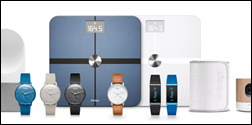
  • France-based Withings buys back the consumer digital health business it sold to Nokia two years ago and will restore the brand to the market
  • Providence St. Joseph Health modifies its EHR to store patient advance directives and display them to clinicians during care events
  • IBM reportedly lays off a significant number of employees of its Watson Health business
  • Orion Health lays off 177 employees and is rumored to be pursuing a sale of some or all of the company with unnamed parties
  • Personal injury lawyers in Philadelphia are buying geofencing-powered advertising campaigns to identify smartphone users who are in hospital EDs and so they can solicit lawsuit business afterward

Best Reader Comments

Zane: HISsie 2018 nomination + a lock on “Biggest Sore Winner” in a one-horse race. (Another Dave)

Why is it that every time IBM announces another quarterly loss (is this the 25th or 26th consecutive quarter?) that the people who have been busting their tails for years are the ones who unceremoniously get let go while the people in leadership continue to collect their massive salaries and are pretty much immune to any excision-related actions? (Genteel Giant)

Are there really so few women or people of color who making newsworthy HIT career moves? (ellemennopee87)

Keeping current on industry trends is smart, and I think writing thoughts and trends down in your own words (versus just skimming) industry news, if even just a couple sentences a day or even per week, is a good way to stay current. (Kallie)

Practice Fusion is a little clunky in some areas, very slick in others, but the great thing about it is that it’s continually improving. Someone there really cares about users and keeps making the little refinements that make the physician’s day easier. Hopefully, whoever they are, they’ll stick around after the Allscripts acquisition! We’re paying the $100/provider/month for now and we’ll see how it goes. (Dr. Herzenstube)

Is Sutter claiming that there were not any adverse events due to all records of all patients having gone black in one fell swoop? Did any patients die from the delays in care? (Sandi Green)


Watercooler Talk Tidbits

image image

Reader donations funded a three-day academic camping trip in the Santa Monica Mountains for Ms. V’s fifth grade class in urban Los Angeles. She reports, “The project made a world of difference in the lives of so many students such that they are able to have the resources that they need in order to be able to succeed in a natural learning environment. Going to fifth grade camp has been such an incredible experience for my students, not only for learning academic science standards, but also for learning how to work together. For some of the students, it’s the first time that they’ve ever spent the night away from their parents, and it’s truly special to be able to share this with them and their friends.”

In Canada, a Nova Scotia doctor says it’s not fair that the province has singled him out for enforcing its “no new EMRs” policy as it tries to implement a big-picture system in a project started years ago. He says he’s the only one of 15 orthopedic surgeons who is stuck using a paper-based system since his peers ignored the ban and implemented EMRs.

A private addiction hospital in Scotland opens a rehab program for people addicted to trading cryptocurrencies, mostly young males and casino workers. 

image

Documentary filmmaker Ken Burns gives Mayo Clinic a preview of scenes from the upcoming film he executive produced titled “The Mayo Clinic: Faith, Hope, Science.” It will air on PBS in September.

HBO Documentary Films is creating a film covering the rise and fall of Theranos.

image

A drug company rep who struggled to push its Subsys fast-acting fentanyl spray that costs $25,000 per prescription because patients were “already addicts” was told to literally beg pain management doctors to prescribe its drug, according to a newly unsealed whistleblower lawsuit. Salespeople report taking doctors to strip clubs and shooting ranges, posing as medical practice office staff to convince insurers to cover the prescriptions, and hiring a male doctor’s girlfriend once he agreed to “turn on the Subsys switch.” The former rep says her employer, Insys Therapeutics, hired a former stripper and escort service manager as a sales executive, along with another rep who was described by her boss as being “dumb as rocks” but willing to have sex with doctors. He described the ideal candidate for an open drug rep position: “A doctor’s girlfriend, son, or daughter. Banging a doctor, that would be perfect.” The company reportedly also developed a script to push reps into selling the drug for off-label uses and used a mail-order pharmacy that didn’t question prescriptions for excessive doses and quantities.

A small study of doctors in two safety net hospitals finds that providing emergency-only hemodialysis to undocumented immigrants contributes to the physicians’ professional burnout due to: (a) seeing patients needlessly suffer and die for non-medical reasons; (b) their lack of control over the treatment criteria; (c) the moral distress that results from seeing care decisions made for non-medical reasons and only after gaming the system; and (d) being inspired for advocacy. 

image

A New York gynecologist files a $1 million defamation lawsuit against a patient who gave him bad reviews of her one and only visit. The patient claimed that the doctor’s business practices are “very poor and crooked” on Facebook, Yelp, and doctor review sites after she was stuck with a $427 bill when he billed her insurance for a new-patient visit plus sonogram instead her covered annual exam. The practice says the doctor has to base his clinical decisions on patient need, he always gives new patients a sonogram, and it’s not his job to keep current on the intricacies of every insurance company. The patient claims that after the reviews, the practice publicly posted her entire medical record in retaliation. Dim-witted Yelpers reacted as they always do – they flocked to Yelp to leave their own scathing reviews of the doctor, making sure to include a hefty dose of ethnic insults because he was born in Korea. Scouting Yelp, the woman has also left lengthy, bitter one-star reviews for a dentist (“I don’t know why anyone would put up with this type of abuse”), a professional women’s association (“everything was not explained to me”), a gym (“I suffered a terrible trapezius injury”), and Fedex (“all of their services are a rip off in my opinion”). Maybe doctors need their own version of a doctor-shopper database to share information about patients likely to complain, lie, or sue. Meanwhile, nothing in this story alters my perceived reality that while I use Yelp regularly, it attracts more unintelligent, sour, and writing-challenged users by far than other review sites like Tripadvisor and OpenTable. Yelp desperately needs the ability for readers to filter out the results (and ratings contribution) of users whose reviews are consistently unhelpful or untrustworthy, especially those one-review contributors who are almost certainly company plants.

image


In Case You Missed It


Get Involved


125x125_2nd_Circle

Morning Headlines 6/1/18

May 31, 2018 Headlines Comments Off on Morning Headlines 6/1/18

ClearBridge Investments Sends Letter to Board of Directors of athenahealth Inc.

Athenahealth investor ClearBridge Investments urges the health IT company to launch sale proceedings in light of a “litany of executive turnover, misexecution on several initiatives and persistent downward trajectory of a variety of financial measures.”

Withings will return after buying out Nokia’s health business

Withings will sell the Nokia Health products it re-acquired earlier this year, and relaunch the Withings brand by the end of 2018.

Propeller Health Raises $20 Million, Accelerating Development of Digital Medicines for Respiratory Health and Other Diseases

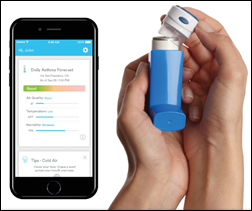
Propeller Health secures $20 million with help from Aptar Pharma, which will help the company scale its digital therapeutics beyond its core chronic respiratory disease market.

Comments Off on Morning Headlines 6/1/18

News 6/1/18

May 31, 2018 News Comments Off on News 6/1/18

Top News

image

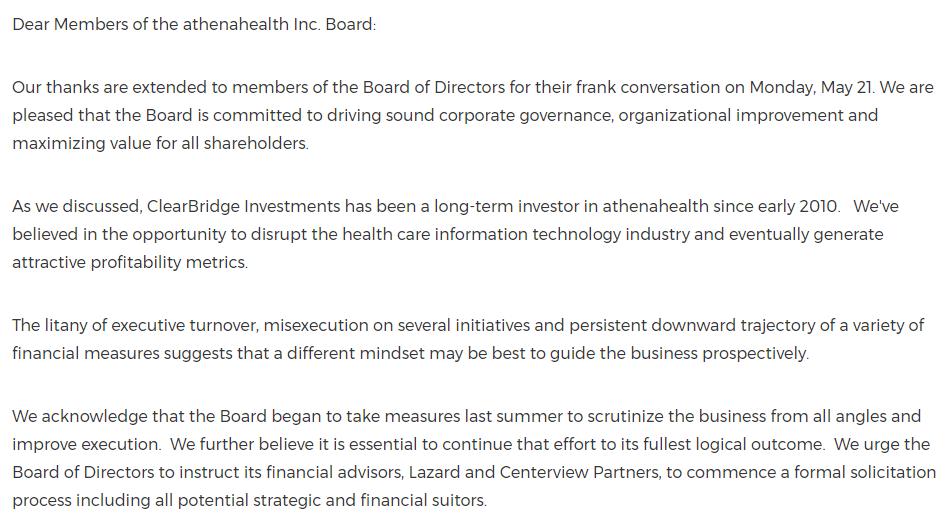
Athenahealth investor ClearBridge Investments jumps on the Elliott Management bandwagon, urging the health IT company to launch sale proceedings in light of a “litany of executive turnover, misexecution on several initiatives and persistent downward trajectory of a variety of financial measures.”


Reader Comments

From Only the Lonely: "Re: Allscripts. Getting ready to drop the bomb on vast swaths of employees. If you have a total of 60 years combining age and number of years with the company, you have been given notice to accept a early retirement package or else. Numbers said to be 500+." Unverified. I can say from past experience that the company won’t comment on personnel actions, so I didn’t bother to ask. The rumored effective date is July 1.


Webinars

June 5 (Tuesday) 1:00 ET. “Increase Referrals and Patient Satisfaction with a Smarter ‘Find a Doctor’ Web Search.” Sponsors: Phynd Technologies, Healthwise. Presenters: Joseph H. Schneider, MD, MBA, FAAP, retired SVP/CHIO, Indiana University Health; Keith Belton, VP of marketing, Phynd. A recent survey found that 84 percent of patients check a hospital’s website before booking an appointment. However, ‘Find a Doctor’ search functions often frustrate them because their matching functionality is primitive and the provider’s information is incomplete or outdated. Referring physicians need similarly robust tools to find the right specialist and to send the patient to the right location. Attendees of this webinar will learn how taxonomy-driven Provider Information Management improves patient and referrer satisfaction by intelligently incorporating the provider’s location, insurance coverage, specialty and subspecialty, and services offered that can be searched via patient-friendly terms.

June 12 (Tuesday) 2:00 ET. “Blockchain in Healthcare: Why It Matters.” Sponsor: Quest Diagnostics. Presenter: Lidia Fonseca, CIO, Quest Diagnostics. Blockchain technology is gaining traction in many industries, including healthcare. It’s not only a hot topic, but is also showing promise with real-world applications. This webinar will share how blockchain may play a key role in the future of healthcare IT by helping to solve some of the industry’s challenges, distinguishing the hype from reality by discussing how it works, how it can impact healthcare providers, and its future application in healthcare IT.

June 21 (Thursday) noon ET. “Operationalizing Data Science Models in Healthcare.” Sponsor: CitiusTech. Presenters: Yugal Sharma, PhD, VP of data science, CitiusTech; Vinil Menon, VP of enterprise applications proficiency, CitiusTech. As healthcare organizations are becoming more adept at developing models, building the skills required to manage, validate, and deploy these models efficiently remains a challenging task. We define operationalization as the process of managing, validating, and deploying models within an organization. Several industry best practices, along with frameworks and technology solutions, exist to address this challenge. An understanding of this space and current state of the art is crucial to ensure efficient use and consumption of these models for relevant stakeholders in the organization. This webinar will give an introduction and overview of these key areas, along with examples and case studies to demonstrate the value of various best practices in the healthcare industry.

Previous webinars are on our YouTube channel. Contact Lorre for information.


Acquisitions, Funding, Business, and Stock

image

Withings co-founder Eric Carreel plans to sell the Nokia Health (née Withings) products he re-acquired earlier this year, and to relaunch the Withings brand by the end of 2018. The company still employs 200 at its headquarters in France.

image

Omada Health becomes the largest Diabetes Prevention Program provider to achieve full recognition status from the CDC. Founded in 2011, the company has raised $126 million to develop and market a technology-based diabetes management program for employers and payers.

image

Ovulation-tracking wearable company Ava raises $30 million in a Series B round, bringing its total raised to just over $45 million.

image

Madison, WI-based Propeller Health secures $20 million in a funding round led by Aptar Pharma. With help from Aptar, Propeller Health plans to scale its digital therapeutics beyond its core chronic respiratory disease market.


People

image

Voalte hires Keith DeYoung (Wolters Kluwer Health) as VP of sales.

image

Alan Stein, MD (Hewlett-Packard) joins medication risk management technology vendor Tabula Rasa Healthcare as SVP of healthcare analytics.


Announcements and Implementations

image

After a successful pilot last year during Hurricane Harvey, UTHealth’s (TX) physician group will offer the Babyscripts prenatal remote monitoring app to all of its pregnant patients.

Premier launches a new collaborative to help health systems navigate physician practice acquisitions.

image

Robin Healthcare announces GA of an Alexa-like device for orthopedics and other specialties that uses machine learning and natural-language processing to capture physician notes and add them to the EHR.

Fitango Health develops care management and patient engagement software for oncologists.

image

Hyland debuts new enterprise imaging solutions including PACSgear Image Link Encounter Workflow and upgrades to its NilRead enterprise viewer.

image

Samsung will embed video visit and symptom checker capabilities from Babylon Health within its Health app on Galaxy devices sold in the UK. Babylon, which powers the NHS “GP at Hand” telemedicine service, hopes the deal will propel it beyond British borders should Samsung decide to expand the partnership beyond the UK.


Sales

  • Capital Regional Medical Center (MO) selects Infor’s CloudSuite Healthcare and Cloverleaf Clinical Bridge software.

Privacy and Security

image

Several Aultman Hospital (OH) employees fall prey to an email phishing scam, resulting in a late-March data breach that potentially exposed patient medical record, driver’s license, and Social Security numbers.


Other

image

This article highlights the blind-like trust consumers put into Ancestry.com’s DNA testing services, despite the secretive nature of what the Utah-based company does with biological samples after it sends customers their ethnicity profiles. Ancestry has expanded its DNA database to include samples from over 5 million people, and won’t reveal where it stores the DNA or how long it will be kept. “Right now they see the benefit as being able to have cocktail-party conversation about their genetic makeup,” says former FDA commissioner Peter Pitts, who now heads up the nonprofit Center for Medicine in the Public Interest. “They aren’t thinking about the risks of giving up their personal information, and the long-term implications.”

A literature review of HIE studies finds that community HIEs do indeed reduce healthcare utilization and associated costs, especially in the areas of duplicate procedures and imaging. The finding contradicts a 2015 study that found few HIE benefits in similar areas.

image

Laurent Duvernay-Tardif, MD becomes the first active NFL player to graduate from medical school. The Kansas City Chiefs right guard hopes to add his new honorific to the back of his jersey.

image

A study conducted by researchers at the University of Virginia using software from National Decision Support Co. finds that radiology trainees are more apt to select appropriate imaging studies when aided by clinical decision support technology from within an EHR. CDS utilization in turn helped to reduce unnecessary imaging and related costs.

A KLAS report on HIT assessment and strategic planning recognizes Nordic as the top overall performer.

image

Weird News Andy points out that high-profile donors don’t guarantee great outcomes: An elderly dementia patient is found dead in the stairwell of the Zuckerberg San Francisco General Hospital’s power plant. The woman had gone missing from a nearby mental health facility 10 days before. The hospital experienced a similar tragedy in 2013, when a patient was found dead in a stairwell two days after being admitted.


Sponsor Updates

  • Medicomp Systems publishes a new infographic, “Phoenix Children’s By The Numbers: Enhancing Patient Care, Increasing Physician Productivity, and Saving Big with Medicomp’s Quippe.”
  • A.T. Still University of Health Sciences will use Aprima’s EHR as part of its grant-funded falls risk assessment and prevention program for older adults.
  • EClinicalWorks will exhibit at Digestive Disease Week 2018 June 2-5 in Washington, DC.
  • FormFast will exhibit at the California Health Information Association Convention & Exhibit June 2-6 in San Diego.
  • Healthwise will exhibit at the Cerner North Atlantic Regional User Group Meeting June 4-6 in Grantville, PA.
  • Impact Advisors promotes Kevin Gately to principal advisor and Molly Ekelof to senior advisor.
  • With help from Engage, Island Hospital (WA) wraps up initial implementation of Meditech Expanse.
  • Gainsight recognizes Imprivata for customer success excellence.
  • In New Zealand, MercyAscot selects the InterSystems TrakCare EHR.
  • Mobile Heartbeat VP of Professional Services James Webb will speak at Cisco Live US 2018 on June 13 in Orlando.
  • CTG consolidates several of its enterprise information management services into a single solution dubbed EIM Advantage.
  • Salesforce invests in Virsys12, a healthcare-focused Salesforce implementation and consulting company.
  • Datica celebrates its fifth anniversary as a cloud-based compliance and security company.
  • The SSI Group achieves HHS Optimization Program Pilot of Administrative Simplification certification.

Blog Posts


Contacts

Mr. H, Lorre, Jenn, Dr. Jayne.
Get HIStalk updates. Send news or rumors.
Contact us.

125x125_2nd_Circle

Comments Off on News 6/1/18

EPtalk by Dr. Jayne 5/31/18

May 31, 2018 Dr. Jayne 2 Comments

A reader sent me this piece about an Ohio hospital that added physicians to the emergency department triage process, helping them lower their wait times for patients to be seen by a provider. The headline was attention grabbing, but when you look at their process, basically they started running their triage area like a mini-urgent care, with providers performing H&Ps and ordering tests. They also created a separate waiting room for patients who were waiting for test results. I’m not sure how different this is from creating a “fast track” section of the emergency department or adding an on-campus urgent care or convenient care facility to divert non-emergency cases from the core emergency department. I’m sure it created some interesting flows for documentation, since providers would be using different workflows depending on whether they were working in triage or as traditional emergency department physicians.

When I work with clients who are “stuck” with their EHR projects, I occasionally encounter a physician who has built his own EHR and uses it as the gold standard against which he compares what we’re trying to implement or optimize. (I use the male pronoun intentionally, because I’ve never had a woman physician admit to it.) I’m all for home-based innovation, but I have to draw the line at DIY Gene Editing  which apparently is a thing. Apparently, there are meetups for these biohackers, including “Body Hacking Con” which was held in Austin. After reading how easy it might be to brew up a batch of bioweapons in your bathtub, I’m almost wishing I hadn’t read it. Plausible deniability might be better, after all.

EHR vendors take note: the next set of screening questions you add to your product might need to be around your patients’ tax preparation strategies, or lack thereof. The StreetCred program is a partnership between various hospitals and community organizations, including Boston Medical Center, where patients are supported so that they can receive tax benefits and other entitlements that might help reduce the impact of poverty on chronic medical conditions. BMCs program operates through the Department of Pediatrics and ensures that clients receive tax credits for which they qualify along with tax refunds. Families with improved financial stability have lower stress levels and higher participation in care programs than those whose situations might be more tenuous. Yale School of Medicine has a similar program based on the work at BMC.

Kudos to CMS for figuring out new ways to use acronyms to confuse us. The Direct Provider Contracting model is being referred to as DPC, causing confusion with the Direct Primary Care movement. In Direct Primary Care, patients contract directly with a primary care provider (usually a solo physician although some DPC practices are small groups with low overhead) for services and pay a monthly fee. Direct Provider contracting is different, and includes provider networks which receive Medicare funds in an advance-payment scheme, to manage their patients’ care. It’s considered a potential alternative to the Alternative Payment Model (APM) options already out there. MGMA has already voiced concern about this new direct contracting model and its potential negative impact on small groups.

CMS further sullies the acronym soup by referring to these provider networks as CIOs (clinically integrated organizations) which by necessity must include professional, technical, and hospital service components. Medicare would incent patients to participate by offering lower co-pays for patients seeking care within the CIO-created network, which sounds dreadful for anyone who has ever had to deal with an unexpected “out of network” bill. Most billing systems do a mediocre job of handling non-fee-for-service payments, so providers who might want to do this need to be discussing it with their EHR and practice management system vendors as this unfolds. It’s another nail in the coffin of ambulatory-only products since trying to do the cost accounting needed to make this viable becomes tricky when you’re working on multiple systems. I missed the boat on this one since CMS only accepted public comments on it through May 25.

Given our society’s obsession with smartphones, I am always on the lookout for articles discussing how people use them effectively or to their detriment. In my travels, I see more and more people who are so engaged with their phones they create problems for the people around them. On my flight this week, a woman deplaned a few people in front of me and pulled out her phone in the jet bridge. Her forward momentum dropped as she started fiddling with her phone, resulting in the person behind her (who was also fiddling with a phone) smacking into her. Heads up and hands out, people, and be ready to interact with the world around you. Unfortunately, judging by the number of children in the under-13 set who are also face down on phones or tablets, I don’t see any improvement in this over time. The Wall Street Journal covered the topic, discussing CEOs who have tried to address the issue. The statistics are staggering — the average person engages with his or her phone over two hours per day, including during work hours.

I’ve been in meetings were electronics are banned and find it unfortunate mainly because I take verbose meeting notes on my laptop all the time. Taking notes on paper results in lost productivity later as I have to transcribe my notes. I also like to fire off action item emails in real time rather than carry a list of to-dos back to my desk. On the other hand, I’ve watched people openly surf Facebook or play games during meetings and that’s just not acceptable.

Going “no phones” needs to also address the prevalence of smart watches and other notification devices. My clinical office has a “no cell phones” policy in the workplace and surfing the internet is against our code of conduct. Employees aren’t even allowed to have phones in their pockets for emergencies – they are expected to provide their children and loved ones with the office phone number so they can be reached in case of emergency. Although this may sound draconian, it has resulted in more engaged employees who look for tasks to complete in the office or who actually talk to their co-workers rather than head down the social media rabbit hole. Apparently, an upcoming version of the Android system will include a time tracker to help people track their phone use and I have some family members I can’t wait to try it on.

What do you think about smartphone overuse? Are we addicted or just bored? Leave a comment or email me.

Email Dr. Jayne.

Morning Headlines 5/31/18

May 30, 2018 News Comments Off on Morning Headlines 5/31/18

Healthcare startup Qliance files for bankruptcy, lists more than 100 creditors — including CEO’s new company

Membership-based primary care company Qliance Medical Management files for bankruptcy after abruptly shutting its doors last year.

Manhattan Doctor Sues Patient For $1 Million For Posting Negative Reviews Online

Joon Song, MD of New York Robotic Gynecology & Women’s Health sues patient Michelle Levine for $1 million in damages plus legal fees after she posted negative reviews on Healthgrades, Yelp, and Zocdoc.

Next time you buy a TV at Best Buy, you may be also offered health care

Best Buy looks into offering seniors aging-in-place technologies and services as part of a potential push into healthcare.

VA Announces New Acting Secretary, Retirement of Deputy Secretary

VA Chief of Staff Peter O’Rourke takes over as acting VA secretary from Robert Wilkie, who has returned to his position within the DoD while he waits out the VA secretary nomination process.

Comments Off on Morning Headlines 5/31/18

Readers Write: Modern Practice: Automation and Lifestyle Management are Key Drivers for Growth

May 30, 2018 Readers Write 2 Comments

Modern Practice: Automation and Lifestyle Management are Key Drivers for Growth
By Arman Samani

Arman Samani is CTO of AdvancedMD of South Jordan, UT.

image

At the beginning of 2015, I discussed the technologies that would influence the growth of private practices going forward. Enabled by mobile and cloud computing, integrated practice management (PM), electronic health record (EHR), patient relationship management, and actionable analytics, as well as interoperability were top of mind, with the integration of statistics from patient wearables, benchmarking, and actionable alerts as specific technology solutions for private practices to consider.

Some of these technologies have gained traction while others remain a goal to attain. At the same time, innovations have emerged to help private practices not only compete but thrive in the era of consolidation and healthcare reform. Let’s take a look at how providers are using technology and how they may further engage their patients while thriving as businesses.

Cloud- and mobile-enabled technology as foundation of modern practice

Cloud technology has been around for quite some time now, but I’d estimate that more than 50 percent of private practices still use server-based applications. New entrants into the practice market, particularly those with technology-savvy leadership, are definitely embracing the cloud. These new providers are building their practices around all the technology elements I discussed three years ago. Yet even these modern practices must be vigilant and do their due diligence when identifying cloud-based applications to suit their needs. Some vendors offer so called “fake” cloud: a hosted server solution which is not a true shared environment accessible from any device.

Cloud adoption will absolutely continue for practices that are server-based. Understandably, it’s hard to switch a working practice, but we do see them moving to the cloud when their server applications can no longer keep up with the demand of the new generations of patients.

Workflow automation is a must for successful patient engagement

Given today’s consumer-oriented mentality about healthcare, patients want and need an automated process for all interactions with their medical providers.

As a patient, if I am online searching for a physician, I should be able to look at comments on the doctors in my network, schedule an appointment with the one I select either on a desktop or phone, and receive a reminder of that appointment. I should also be able to provide feedback on my visit and experience. This is where innovations such as Google-interfacing reputation management platforms come in to bring patient engagement closer to how retail, services, and other sectors engage with customers. Private practices can manage their online presence like any other business, obtain feedback from patients, and respond to it in a timely manner.

The physician’s office should also be able to check my benefits, manage my wait time, automatically file claims and receive payments, view day/week/month closings, and send out digital statements. None of it is doable in an efficient and patient- and provider-friendly manner without automation.

Securely automating and interconnecting these processes enables providers to avoid some of the mounting costs of doing business while being responsive to the needs of patients and payers. Ideally, providers should have unified, easy-to-use solutions for all parts of their practice, with one workflow, one database, and one log-in, accessible from all major browsers and on multiple devices.

Continuous engagement for lifestyle management

Everyone is excited about the potential of Fitbits and other wearables to deliver real-time patient data that could both engage patients and help their providers optimize treatment. However, we are far from realizing this integration. Even in the value-based care environment, there are no incentives for private practices to adopt the technologies that would help them proactively manage patient lifestyles. Practices are only reimbursed for managing patients from one visit to the next rather than providing continuous care management that has the potential to significantly reduce care costs.

There is plenty of evidence now that factors such as lifestyle (from exercise to diet to work habits) and social determinants of health (where people are born, live, learn, work, play, and age) account for as great, if not greater, portion of outcomes as clinical factors. This is a tremendous opportunity for the industry to enable providers with appropriate reimbursement and technology to improve the health of our country.

On the lifestyle technology front, think about patient reminders to take medications, fill prescriptions, balance food intake, and check in on both physical and mental health-related issues. Such continuous engagement can be accomplished either by pushing lifestyle applications or sending text messages and responding to communications from the patients.

We are seeing this emerging trend with some employers who are betting on preventative care to keep their employees healthy. They negotiate with payers to offer successful wellness programs that are typically popular with employees. By shifting more funds to lifestyle management, we have more opportunities to reduce costs dedicated to chronic care management. I hope that Medicare will begin to cover lifestyle management medicine, with private health insurance companies following suit.

Future is in technology-enabled continuum of care

Change in healthcare technology does not always occur as quickly as we would like, but it is happening now more rapidly than ever. The consumerism of healthcare will continue to grow and technology will grow with it; ideally, ahead of it. Providers should aim to convert everything that is currently done on paper or that involves a phone call to a digital format that is easily accessible to patients. Private practices are advised to adopt cloud-based systems to optimize the patient experience, including online scheduling, telemedicine, and automated reminders for various purposes, providing options previously unavailable to busy consumers. Technology-savvy patients will be looking for providers who offer this continuum of care and payers will begin to recognize its significance.

The government is also well aware of the consumer-focused technology drivers. I believe we will see a greater consistency in telemedicine rules and reimbursements from state to state and payer to payer. I also truly hope that insurers will begin to support lifestyle management services, helping practices expand beyond chronic care management. Practices can demonstrate the return on investment by measuring results of lifestyle programs through benchmarking and share that data with the insurers.

When we can demonstrate that better-managed lifestyles can reduce or prevent chronic conditions, private practices will have greater leverage in negotiating with payers and be able expand their practices with new, state-of-the-art services and technology supporting the shift. It’s time for payers and providers to move from the visit-to-visit viewpoint to one of long-term wellness.

HIStalk Interviews Ron Remy, CEO, Mobile Heartbeat

May 30, 2018 Interviews Comments Off on HIStalk Interviews Ron Remy, CEO, Mobile Heartbeat

Ron Remy is CEO of Mobile Heartbeat of Waltham, MA.

image

Tell me about yourself and the company.

Mobile Heartbeat has been in existence since 2009. The current product was introduced in 2011. It’s my second project working together with the technology team that started the company. I’ve been in technology my whole career. I was an early employee of Sun Microsystems, going all the way back to 1985, so I’ve been in the technology industry for a long time.

Mobile Heartbeat makes a product line called MH-CURE, which is a clinical communications and collaboration product. It’s designed for acute care and affiliated ambulatory facilities of hospitals. It runs on IOS and Android smartphones and is available both on-premise, with servers inside the hospital’s data room, or a cloud offering via our cloud partner, Parallon Technology Solutions.

What do clinicians want from mobile apps other than message exchange?

The most important aspect is to know who’s on the care team for each and every patient, as well as the status of those individuals. Particularly in the larger facilities, you may not personally know every member of the team that you’re on. You need to be able to instantly recognize who is the nurse, who is the physical therapist, who is the cardiologist taking care of that patient, You need to know exactly what their status is — online or offline, in the facility or out of the facility — and then be able to communicate to them with a variety of methods — secure text, a phone call, a video chat, or even a page.

All of those are the communications capabilities, but if you don’t know who to contact, whether they’re available, why they are relevant to you, and what their context is, the communication systems aren’t all that impactful.

What kind of outcomes to customers see?

We talk about a value hierarchy. You get started with implementing mobility in smartphones and their applicable software — which includes our class of software, Mobile Heartbeat, as well as your mobile device management software — and your infrastructure to support those. Your wireless network, your servers, your security. Then layer on top of that our software and the smartphones.

The first thing that you need to look at to make sure you’re getting to the Holy Grail, which is better patient outcomes, is the adoption ratio. How many users are on this mobile network that you’re providing? We tend to quote Metcalfe’s law. It’s an interesting telecommunications law that the value of a network is equal to the square of the number of nodes on a network. For a 10-node or a 10-user network, that value is 100. For a 1,000-user network, that value is a million. It’s much more valuable. If you don’t get high adoption rates, if you don’t get a lot of users on your network, the value is relatively low.

Now that you’ve got your adoption rate high, you start looking at how people are communicating with one another. Who is texting who? Who is calling who? How often? You start to analyze those patterns. Why are people communicating with one another? If you know why and when, then you can start optimizing the workflows around that. Take Lean thinking and apply it to your workflow.

One of the greatest learning experiences early on at Mobile Heartbeat is that the number of ancillary staff members — not necessarily just the nurses and doctors — that you’re in communication with on a regular basis is extremely high. If you exclude those people from your mobile network, your mobile program, you’re missing out on some great workflow improvements.

Once you improve your workflows, the best possible thing that you can achieve is higher quality and better patient outcomes. Very few customers are at that point. They’ve not deployed mobility for that long a period of time. But everyone needs to get there. That’s the top of the pyramid — higher quality, better patient outcomes.

How do you go about analyzing that and what kind of insights can you gain from looking at how they’re using the system?

We have a team of three informaticists, nurses with an informatics background, that assists clients in this analysis. A system like ours creates a huge amount of operational data. The first thing to do is to extract that, do some data mining on it, and see what the communication patterns are. Who is calling whom, who is texting whom and when?

The patterns might tell you that there’s a huge amount of texting going on between the nurses and the warehouse, surprisingly. Why is that? Maybe it’s because they are constantly having to track down supplies. They’re always in contact with the warehouse trying to locate something that they need desperately for a patient. Now that you know who’s texting whom, you can look at the rationale behind that and start to optimize that.

The next level of optimization, and we’re just beginning to do that, is to look at using natural language processing to not just look at who’s texting whom, but also look at the actual content of those text messages. You can get some real insight on that.

Let’s go back to that same analogy of the nurse constantly contacting the warehouse for a specific item. Using natural language processing, you know that they’ve been requesting a specific item all the time. If you know it’s a major workflow request, let’s make that item a little bit more available. Maybe stage that item in the nurse’s central station. Now you’re starting to take this communications system and apply it to workflows, to make those workflows more efficient and to raise the quality and the speed of what you’re getting done inside the hospital.

What kind of integration with other systems is offered or beneficial?

Huge. That’s probably the biggest requirement. The most obvious one to get started is to the electronic medical record, specifically the ADT feed coming out of the EMR, to know which patients are in and out of the hospital. That’s a requirement for having a care team directory and a patient list available to your clinicians.

The second is into the nurse call system of the hospital so that nurse call alerts and alarms aren’t randomly sent to the unit, but instead are directed to the correct responder’s smartphone. That’s a requirement of any system like ours.

Integration to the lab information system makes critical lab results available to the clinician. They’re looking at a patient and they want to see exactly what’s going on with their lab results.

Integration to third-party messaging systems. That’s a generic term, but I’ll give you an example of what one of those is. There’s a tremendous amount of effort in predictive analytics around sepsis prevention using patient data and maybe even population health data to predict that a specific patient is going to go into sepsis. The system that does the analytics makes the determination that a specific patient might be a sepsis risk. Now you have to tell somebody to take action. The integration to that third-party system has to come from that system into Mobile Heartbeat and get sent to the correct clinician taking care of that patient. We’re the last-mile delivery for all these third-party messaging systems. That’s an absolutely critical integration that you have to put in place.

To foster that, we’ve built a fairly comprehensive API set. One of those APIs handles incoming messages from third-party systems and directs them to the correct caregiver. That message can have multiple choice responses, so the caregiver, the nurse, the physician gets the message, it pops up on their smartphone, and they can indicate their response and have that go back to the initiating system to take further action. Maybe it kicks off another alert or alarm or another message. All of that integration is a requirement.

Clinicians use to have a belt full of gadgets because each application had its own device. How do you figure out how those applications can coexist on the device that a user is assigned or brings in from home?

Let’s start physical and then go to logical. When we started the company, we realized that the utility belt effect was powerful and we needed to address it. You’d look at a clinician and they might have a pager and two voice-over-IP phones on their belt walking around the facility. The first step was to consolidate all that onto one device. The advent of the smartphone and its capabilities made that, obviously, the perfect device. That’s where most industries that were consolidating any type of telecommunications or communication systems were looking.

We built our software to take advantage of a couple of key features. The first is to use voice-over-IP for inside the facility, so that you’ve got a voice-over-IP phone that is available for making phone calls over the WiFi network.

The second was to take a look at those old-school pagers that everyone wanted to get rid of. They were all wearing them on their belt. They wanted to get rid of the pager, but they couldn’t get rid of the actual paging service, because the workflows that they’ve been using for 15 years required that paging capability. We developed the ability for sending and receiving pages to come directly into our application using the existing pager service.

That was the first level of making this a much more efficient product and getting rid of some of those utility belt things that you’ve seen in years past. We think that trend is going to continue. It’s pretty obvious that people want to use their smartphone.

The second part of that is, early on, we asked clinicians what they wanted to do on the smartphone. The answer really shocked us. It was, I want to do everything on it. I never want to get in front of a workstation again if I don’t have to. Because when I’m in front of a workstation, I’m not with a patient. With my mobile device, I can be with a patient, so I want everything on that.

That led us to enable another API set that we call the InterApp launcher. You can leave Mobile Heartbeat and go directly to another application. No extra login, so you log in once to the system using your Active Directory login. You log in to every application as you move to it and you can pass patient context. For instance, I can leave Mobile Heartbeat, look up the exact same patient in AirStrip, and view the live waveform of that patient seamlessly, just by clicking inside of Mobile Heartbeat. I don’t have to do any manipulation of the new application. That is the next level of integration we see.

Where do you see clinical communication going in the next five years and how will the company be involved?

Apple announced in their recent earnings call that our largest customer just purchased 100,000 IPhones to launch a corporate-wide mobility program throughout all their hospitals. We’re the core software of that mobility program. That is an absolute milestone in the industry, seeing major players announce that they’re going into mobility in a big way. Software to run on those devices, Mobile Heartbeat and others, is a key component to the rationale behind this.

A year ago, we installed our product at Sunrise Medical Center in Las Vegas, Nevada. It’s a good-sized facility one block off the Las Vegas Strip. When the Route 91 Harvest Festival shooting happened in October, 214 of the injured patients made their way the ED of this specific facility via Uber, police car, or with a bystander. We didn’t really know much about it at the time since it happened in the middle of the night here in Boston.

We were a core component of that facility’s ability to triage, treat, and successfully take care of those patients. To get the staff at the right place at the right time. To broadcast out to everybody, both inside and outside the hospital, what needed to get done.

The learning from that is going to be industry-wide. If you do not have a communications platform in place — both physically with phones as well as your network and the software you’re using — then you’re really not prepared for that kind of event. I don’t want to cast doom and gloom, but being prepared for these types of mass casualties in any good-sized facility is something that requires a lot of care and preparation. We believe that the technology that we build is one of the components of being prepared for that.

Our software and our own products are very exciting, but the industry as a whole is just as exciting. We love to see potential clients picking up mobility in any form. We’d obviously love our product to win every single time, but we’re more excited when they make a determination that smartphone technology is the way to go inside their hospitals. It’s a big step forward in healthcare in the United States.

Comments Off on HIStalk Interviews Ron Remy, CEO, Mobile Heartbeat

Morning Headlines 5/30/18

May 29, 2018 Headlines Comments Off on Morning Headlines 5/30/18

Providence St. Joseph Health Helps Ease, Enhance End-Of-Life Care

Providence St. Joseph Health publishes a state-specific online advance directive toolkit and customizes its EHR to store the advance directives of its patients.

IBM’s Watson Health wing left looking poorly after ‘massive’ layoffs

IBM Watson Health reportedly had big layoffs last week, with the “resource action” mostly focused on employees from its big-bet acquisitions Truven, Merge, and Phytel.

Orion Health cuts 177 jobs as more red ink spills

As layoffs mount, reports suggest that New Zealand-based Orion Health is considering selling all or part of the company to unnamed parties.


ResMed to Acquire HEALTHCAREfirst, a Cloud-based Software and Services Provider for Home Health and Hospice Agencies

Home monitoring technology vendor ResMed will acquire HealthcareFirst.

Comments Off on Morning Headlines 5/30/18

Text Ads


RECENT COMMENTS

  1. That, or we see if Judy will announce Epic's new Aviation module (probably called Kitty Hawk) that has integrated Cruise…

  2. The $50 billion Rural Health payout is welcome. In context, it's less than the total cost of the F22 raptor…

  3. RE NEJM piece: He shouldn’t future-conditional with “they can retreat, which might mean abdicating medicine’s broad public role, perhaps in…

  4. The sentence was "most people just go to Epic UGM" - that's people going to Epic's annual user conference and…

Founding Sponsors


Platinum Sponsors


Gold Sponsors


RSS Webinars

  • An error has occurred, which probably means the feed is down. Try again later.