Recent Articles:

Morning Headlines 3/31/25

March 30, 2025 Headlines Comments Off on Morning Headlines 3/31/25

Oracle has reportedly suffered 2 separate breaches exposing thousands of customers‘ PII

Oracle deals with a breach to its Oracle Health systems and the theft of patient data, and a separate breach of its Oracle Cloud servers that has led to the login credentials of 6 million users being put up for sale.

Bankruptcy judge: MercyOne should produce records related to Mercy Iowa City downfall

A federal judge orders MercyOne to produce records related to its management of the now bankrupt Mercy Iowa City, including those pertaining to the troubled roll out of an EHR that may have contributed to the hospital’s financial troubles.

Update Regarding Medical Transition Services at Premier Health

Premier Health (OH) will end its transcription services since most providers have shifted to Dragon speech recognition and built-in Epic tools.

Comments Off on Morning Headlines 3/31/25

Monday Morning Update 3/31/25

March 30, 2025 News 4 Comments

Top News

image

A hacker has breached Oracle Health systems and stolen patient data with the intention of extorting providers, according to a customer communication from Oracle. The FBI is investigating.

Oracle says the intruder used a customer’s stolen credentials to access legacy Cerner servers that hadn’t yet been moved to Oracle’s cloud. The company didn’t say how one user’s credentials could have been used to access the information of other clients.

Oracle said it became aware of the breach on February 20, 2025. Customers learned of the breach only when they received notification from Oracle’s external law firm. Oracle reportedly told those hospitals that they, rather than Oracle, are responsible for determining whether the stolen data violates HIPAA, and if so, for notifying affected patients.

In related news, a hacker claims to have breached Oracle Cloud servers and is offering the login credentials of 6 million users for sale. Oracle denies the claims of the threat actor, who provided a sample of the stolen data that customers verified as belonging to them.


Reader Comments

From Redzenskyca: “Re: Baptist Health South Florida. Moving away from Cerner to Epic.” Unverified. Nothing new so far in job postings or UserWeb accounts.

From Jimmy the Greek: “Re: comments. I’ve commented on Dr. Jayne’s Curbside twice now, but the comments don’t appear. What gives?” I found your comments. They were sent to suspected spam because they included several links. I’ve activated them.


HIStalk Announcements and Requests

image

About one-fourth of poll respondents say that their employer’s support for work-life balance has declined over the past two years. Two poll commenters say that theirs improved because they changed jobs for that reason.
New poll to your right or here: Which initiative is burning the most time and money while delivering little improvement to patients?

There’s little health tech news happening, so let’s give you some free time after a brief musical mention. Listening: Postmodern Jukebox, a “rotating musical collective” that reimagines pop hits into retro-style covers that are weirdly compelling. Examples: “Ain’t Talkin’ ‘bout Love” as a 1960s girls group or “A Bar Song (Tipsy)” as Sam Cooke might have done it. In that same vein of interesting weirdness is Flaming Lips, a trippy, psychedelic musical art project that I regret not seeing when they played near me a while back.


Sponsored Events and Resources

Live Webinar: April 15 (Tuesday) 1 ET. “Navigating ACO Quality in 2025: Lessons Learned and Future Directions.” Sponsor: Healthmonix. Presenters: Michael Lewis, VP of customer success, Healthmonix; Steven Tyson, senior account executive, Healthmonix.  Accountable care organizations (ACOs) must stay ahead of evolving quality requirements and reporting changes. Join us for an in-depth discussion on lessons learned from past ACO implementation, key areas for improvement, and the impact of Medicare Clinical Quality Measures (CQMs).

Contact Lorre to have your resource listed.


Announcements and Implementations

Premier Health (OH) will end its transcription services since most providers have shifted to Dragon speech recognition and built-in Epic tools.


Sponsor Updates

  • Black Book Research publishes the “2025 Black Book of Patient Engagement and Healthcare Consumer Communications Technology.”
  • The Alliance for Health Information Operations and Standards re-elects HealthMark Group CEO Bart Howe president and elects MRO CFO Nate Eastman treasurer.
  • PerfectServe publishes “How to Reduce Missed Calls with an Effective Answering Service” featuring Women’s Health Associates (TX).
  • Praia Health achieves SOC 2 Type 2 certification.
  • RLDatix supports the ACHE Congress as a premier corporate partner.
  • WellSky will present at the Minnesota Home Care Association Leadership Summit April 2 in Maple Grove.
  • Vyne Medical publishes a paper titled “From Costly Paper Processes to Streamlined Operations: How Healthcare Can Build a Better Future.”

Blog Posts


Contacts

Mr. H, Lorre, Jenn, Dr. Jayne.
Get HIStalk updates.
Send news or rumors.
Follow on X, Bluesky, and LinkedIn.
Contact us.

Morning Headlines 3/28/25

March 27, 2025 Headlines Comments Off on Morning Headlines 3/28/25

Kennedy to slash 10,000 jobs in major overhaul of US health agencies

HHS will eliminate 10,000 full-time positions and close half of its regional offices, and will merge Health Resources and Services Administration (HRSA), Substance Abuse and Mental Health Services Administration (SAMHSA), and other groups under the newly created Administration for a Healthy America.

Taxo Raises $5M from Y Combinator, General Catalyst, and Character to Build Out Autonomous Systems for Healthcare

Taxo, which offers a data extraction and workflow automation engine for healthcare administration, raises $5 million in seed funding.

Layer Health Raises $21 Million Series A to Transform Medical Chart Review Using AI

Automated chart review startup Layer Health raises $21 million in a Series A funding round led by Define Ventures.

Marit Health Launches Groundbreaking Community-Powered Platform for Salary Transparency in Medicine, Secures $3.2M Seed Round

Several former leaders of Glassdoor launch Marit Health, a salary transparency website for doctors and advanced practice providers, and announce $3.2 million in seed funding.

Comments Off on Morning Headlines 3/28/25

News 3/28/25

March 27, 2025 News Comments Off on News 3/28/25

Top News

image

HHS will eliminate 10,000 full-time positions and close half of its regional offices, with past and planned cuts expected to reduce its FTE count from 82,000 to 62,000.

The largest number of cuts will occur at FDA and CDC, which will lose 6,000 positions.

HHS Secretary Robert F. Kennedy Jr. also announced plans to merge Health Resources and Services Administration (HRSA), Substance Abuse and Mental Health Services Administration (SAMHSA), and other groups under the newly created Administration for a Healthy America. HHS will also merge the Assistant Secretary for Planning and Evaluation with the Agency for Healthcare Research and Quality to create the Office of Strategy.

HHS will also create a position of Assistant Secretary for Enforcement that will oversee the Departmental Appeals Board, the Office of Medicare Hearings and Appeals, and the Office for Civil Rights.


Reader Comments

From Cynical C-Suite: “Re: ASTP/ONC. Being gutted and maybe folded into CMS. Guess that makes it official that interoperability is now just a billing problem.”


Sponsored Events and Resources

Live Webinar: April 15 (Tuesday) 1 ET. “Navigating ACO Quality in 2025: Lessons Learned and Future Directions.” Sponsor: Healthmonix. Presenters: Michael Lewis, VP of customer success, Healthmonix; Steven Tyson, senior account executive, Healthmonix.  Accountable care organizations (ACOs) must stay ahead of evolving quality requirements and reporting changes. Join us for an in-depth discussion on lessons learned from past ACO implementation, key areas for improvement, and the impact of Medicare Clinical Quality Measures (CQMs).

Contact Lorre to have your resource listed.


Acquisitions, Funding, Business, and Stock

image

Solace, which connects Medicare patients with virtual support advocates, raises new funding at a $300 million valuation. The company pivoted from a cash-only model to serving Medicare beneficiaries last year, when the program began covering advocacy services. Advocates help with scheduling appointments, communicating with doctors, reviewing medical bills, managing insurance appeals, and researching treatment options. Co-founder and CEO Jeremy Gurewitz previously worked as a marketing VP for a kids book club company.

image

Investor Halle Tecco checks in on the 65 health tech-adjacent unicorns that were born during the 2020–2022 ZIRP frenzy. She predicts that companies have been forced to accept unlabeled or down rounds, have undertaken cost-cutting programs, and are trying to extend their runway to reach profitability.

  • 89% are still operating.
  • Two-thirds haven’t raised additional funding.
  • One went public (SomaLogic), and another plans to (Hinge Health).
  • Four were acquired or merged (CareBridge, Truepill, MindMaze, ClassPass).
  • Two shut down (Forward, Olive AI).

Taxo, which offers a data extraction and workflow automation engine for healthcare administration, raises $5 million in seed funding.

image

Several former leaders of Glassdoor launch Marit Health, a salary transparency website for doctors and advanced practice providers. It offers anonymous, verified data on salaries, bonuses, benefits, and shifts. Investors in its $3.2 million seed funding round include the founders of several health tech companies.


People

image

Mount Sinai Health System promotes Robbie Freeman, DNP, MS to chief digital transformation officer.


Announcements and Implementations

Royal Victoria Regional Health Centre in Ontario, Canada integrates four local hospices into its Meditech Expanse EHR.

image

Akido Labs will provide fast, clinician-supervised medical care to New York ride-share drivers using its ScopeAI diagnostic and treatment tool. In addition to its AI technology, the company operates a network of primary care and specialty care providers in California and Rhode Island.

Truveta adds administrative data to its EHR-sourced database, including billing details, provider resource allocation, and patient movement information.

image

Penn Medicine’s elimination of 300 positions includes six employees of Center for Health Care Innovation at Penn Medicine Lancaster General Health, which includes an accelerator program and innovation lab. The center’s website lists eight employees.


Government and Politics

Politico reports that potential candidates to lead ASTP/ONC include Ryan Howells, MA (Leavitt Partners, The CARIN Alliance) and former ONC senior advisor Thomas Keane, MD, MBA. It also says that the White House is reportedly considering reducing the office’s staff from 180 to 30 and possibly merging it into CMS.


Privacy and Security

The UK government fines Advanced Computer Software Group $4 million after ransomware hackers breached its systems that lacked multifactor authentication.


Sponsor Updates

  • CloudWave’s Managed Cloud Hosting solution again achieves the “Best Practice” rating following its completion of the Meditech Infrastructure and Supporting IT Process Assessment.
  • Black Book Research probes the fate of healthcare technology in the NHS based on insights from Digital Health Rewired 2025.
  • The Aga Khan University profiles its work with Meditech to roll out an EHR across Kenya.
  • Five9 announces that Five9 AI Agents has been named a winner for Innovative AI Products in the 2025 Artificial Intelligence Excellence Awards, presented by the Business Intelligence Group.
  • Inovalon will exhibit at AMCP Annual March 31-April 3 in Houston.
  • Linus Health will present at AD/PD April 1-5 in Vienna, Austria.
  • Mednition will exhibit at AONL 2025 March 31-April 1 in Boston.

Blog Posts


Contacts

Mr. H, Lorre, Jenn, Dr. Jayne.
Get HIStalk updates.
Send news or rumors.
Follow on X, Bluesky, and LinkedIn.
Contact us.

Comments Off on News 3/28/25

EPtalk by Dr. Jayne 3/27/25

March 27, 2025 Dr. Jayne 2 Comments

image

It looks like I’m one of the users who have been selected to test the beta version of the new Amazon Health AI digital assistant.

According to news articles, the tool is designed to field health and wellness questions, and of course to suggest products. Some responses have a “clinically verified” indicator that shows that the information has been “reviewed and confirmed as accurate by medical experts.” I couldn’t find any indication of their definition of “experts,” which can vary widely. It also didn’t indicate how often such information is reviewed or how long ago this particular excerpt was reviewed.

I tried a number of scenarios, including questions about an ongoing cough and a query about what a measles rash looks like. For the cough question, it suggested that I might be interested in purchasing Lipton tea or an over-the-counter inhaler.

image

For the measles question, I was shocked that it answered the question by providing a correct answer, but for a different question than the one that I actually asked. If I’m asking what a measles rash looks like, I would expect to see a photo of a measles rash (there are dozens out there that are easily accessible from search engines) rather than a description of a vaccine-associated rash.

Initially, when I read the answer, I missed the word “vaccine” because I skipped over the regurgitated question directly to the bullets. I would want to read more carefully next time. I also thought it was odd to add a disclaimer about “while I cannot provide an exact cause for your symptoms” when I didn’t indicate that I was asking about symptoms. I was just asking a health educational question, so the system isn’t sophisticated enough to understand that and probably assumes everyone has a symptom. Users have the ability to provide feedback on the responses, so you can bet I gave that one a thumbs down.

Next, I specifically asked whether the tool had a picture of a measles rash. It apologized for not having an image, but then went on to again discuss a rash that is related to a measles vaccine. It then offered me the opportunity to join Amazon One Medical, which I guess is not surprising.

I also asked how to care for a sprained ankle. The output was missing key information in the form of sentences that didn’t populate correctly: “Over-the-counter like or can also help manage pain and inflammation.” I guess the model forgot to throw in medication names like “acetaminophen” or “ibuprofen.” This search generated a suggestion that I may be interested in buying an elastic bandage as well as visiting Amazon One Medical. I repeated these questions in another search engine and frankly got better answers, so overall I’m going to give Amazon’s new tool a D-minus. Try again, folks.

From Primary Care: “Re: this article Did you see this article in JAMA Network Open? It talked about the fact that states with less regulation of health insurance offerings have higher rates of diagnosis for late-stage cancers. I don’t understand how people can see this data and not think we need payment reform or overall healthcare reform.” I can’t say that I’m surprised. Here’s the full scoop: the study looked at 1.3 million patients in states that had either no regulations or limited regulations on short-term, limited-duration (STLD) insurance plans. These are sometimes purchased by patients who are between jobs or who lose coverage for other reasons. They’re usually pretty poor plans and have waiting periods and other elements within the policies that essentially discourage the patient from receiving care. They typically have high deductibles and high out-of-pocket costs for patients. They are not compliant with the Affordable Care Act (ACA) requirements, which results in higher patient responsibility for tests that would have been fully covered by an ACA-compliant plan.

The study was led by the American Cancer Society and looked at adults aged 18-64 years who had a cancer diagnosis between January 2016 and February 2020. It covered 47 states plus the District of Columbia and used information from the National Cancer Database. States were classified as to whether they prohibited these plans before and after 2018, stopped them after 2018, allowed them with restrictions, or had no additional regulation of the plans. The study adjusted for social and demographic factors, year of diagnosis, and state random effect.

The authors found that in states with no additional regulations of STLD plans, there was a net increase of 0.76 percentage points in late-stage cancer diagnoses compared to those states that continuously prohibited such plans. States with some regulations had a net increase of 0.84 percentage points compared to those with continuous prohibition.

The authors concluded that “the 2018 federal policy loosening restrictions on STLD plans was associated with an increase in late-stage cancer diagnoses in states without or with inadequate additional STLD plan regulatory protections. Findings were consistent among cancer types with recommended screening tests (i.e., female breast and colorectal cancers) and extended prior research conducted in a limited number of states, underscoring the importance of state policies and federal efforts to limit STLD plans.”

This illustrates the difference between allowing healthcare and healthcare finance to be regulated at a state level versus at the federal level. The latter would promote more consistent care delivery across our population. Looking at my own state, the level of education of many of our legislators varies greatly and very few have any firsthand experience with healthcare policy. The year is 2025 and I can’t believe we haven’t gotten on board with the idea that everyone in the US deserves high quality healthcare and that a state patchwork of rules isn’t going to do that for us.

image

Doctors’ Day is March 30 in the US, celebrated on the day when ether was first used for general anesthesia back in the 1840s. It’s on a weekend this year, so hopefully hospitals and healthcare institutions are planning to do something either before or after. It’s been a while since I worked anywhere that had any kind of formal recognition of the day, so if you have doctors in your life, please consider doing something nice for them or at least just wish them a Happy Doctors’ Day.

How does your organization celebrate Doctors’ Day? Is there a pizza party or a challenge coin involved? Leave a comment or email me.

Email Dr. Jayne.

Morning Headlines 3/27/25

March 26, 2025 Headlines Comments Off on Morning Headlines 3/27/25

ProsperityEHR Debuts Next-Gen EHR to Keep Behavioral Health Practices Thriving

TheraManager rebrands and officially launches as ProsperityEHR to offer behavioral health practices EHR, RCM, and practice management software.

Amazon Tests ‘Interests’ AI shopping tool, Health Chatbot

Amazon is testing a health-focused chatbot that answers wellness questions and recommends products, with offered responses reviewed by a US-based “clinically verified” clinician.

Morningside Ventures Makes Strategic Investment in Xealth to Accelerate Digital Health Ecosystem

Digital health integration company Xealth announces new funding from Morningside Ventures.

Comments Off on Morning Headlines 3/27/25

Healthcare AI News 3/26/25

News

image

OpenAI adds an advanced image generator into ChatGPT-4o. The new tool can handle up to 20 objects, learn from user-uploaded images, and create photo-realistic images. I had it reimagine a HIMSS conference session as if it were happening on the deck of a Caribbean cruise ship. This is my brilliant idea for guaranteeing booth traffic by trapping attendees at sea with nowhere to go except the exhibit hall. Think “Monsters of Rock Cruise” but with more AI panels and fewer grandparent-aged musicians stuffed like a sausage into long-mothballed leather pants.

image

China-based DeepSeek releases V3.1, which is free for commercial use and can run locally on a high-end Mac Studio.

Amazon is testing a health-focused chatbot that answers wellness questions and recommends products, with responses that it offers that have been reviewed by a US-based clinician marked with a “clinically verified” badge.


Business

Cleveland Clinic partners with UAE-based AI firm G42 to develop and apply healthcare AI solutions.

image

Healthcare AI clinician copilot developer Navina raises $55 million in a Series C funding round.


Research

A Stanford Medicine study finds that an AI tool that was trained on 80,000 EHR-based nutrition orders for premature infants could reduce medical errors, save time and cost, and improve care in low-resource settings. The AI identified 15 standardized TPN formulas that meet the needs of most patients and was able to accurately recommend the best option for each case. Neonatologists consistently preferred the AI-generated orders.

image

A fascinating Harvard Business School study of Procter and Gamble commercial and R&D employees looks a how AI might change worker performance, expertise sharing, and social engagement:

  • Individual employees who used AI produced work of similar quality to two-person teams without AI, suggesting that AI can function as a “cybernetic teammate.”
  • Teams that used AI submitted more balanced solutions that crossed functional boundaries, unlike non-AI teams whose ideas reflected only their own area of expertise.
  • Participants who used AI reported increased excitement and energy, indicating that AI can replicate the social and motivational aspects of teamwork.
  • AI enabled less-experienced employees to achieve output quality that was comparable to that of seasoned innovators.
  • AI-assisted individuals and teams spent up to 16% less time on tasks while producing longer and more comprehensive solutions.
  • AI-supported teams were three times more likely to generate top-quality solutions.

Other

A Duke University Medical Center study finds that ChatGPT accurately routed radiology procedure requests when it had been trained on team members, contact info, and schedules, but struggled with out-of-scope requests like those during evenings and weekends.

China’s military is using DeepSeek AI in its hospitals, where it provides treatment suggestions.

A New York Times article explores how doctors are using AI to repurpose existing drugs to treat rare diseases, 90% of which lack approved treatments and draw little interest from drug companies due to limited profit potential.

A woman asks ChatGPT about her anxiety and grief but rejected its suggestion of blood cancer, certain that her symptoms were caused by her father’s recent death. As her condition worsened, she saw a doctor who found that she had Hodgkin’s lymphoma.


Contacts

Mr. H, Lorre, Jenn, Dr. Jayne.
Get HIStalk updates.
Send news or rumors.
Follow on X, Bluesky, and LinkedIn.
Contact us.

Morning Headlines 3/26/25

March 25, 2025 Headlines 1 Comment

VisiQuate Acquires Rotera to Advance AI-Driven Revenue Cycle Automation

RCM vendor VisiQuate acquires Rotera, which offers a digital assistant platform.

Navina secures $55M Series C funding led by Growth Equity at Goldman Sachs Alternatives

AI clinical insights company Navina raises $55 million in a Series C funding round, bringing its total raised to $100 million.

Silna Health Announces $27 Million in Funding to Tackle America’s Prior Authorization Crisis

Silna Health, which offers automated insurance verification and prior authorization software, announces $27 million in new funding.

News 3/26/25

March 25, 2025 News Comments Off on News 3/26/25

Top News

image

California-based consumer genetic testing company 23andMe files for Chapter 11 bankruptcy protection.

Co-founder Anne Wojcicki has stepped down as CEO, but remains on the board and plans to bid independently to buy the company.

Once valued at $6 billion, 23andMe’s market cap has plunged to $20 million.

California’s attorney general has issued a consumer alert reminding customers that they can delete their genetic data, prompting heavy traffic that repeatedly crashed the company’s website.


Reader Comments

From Bill Bonkers: “Re: health tech. When will innovation focus on care instead of coding?” When care quality drives more profit than tweaking bills.


HIStalk Announcements and Requests

image

Welcome to new HIStalk Platinum Sponsor ReferWell. ReferWell is a digital healthcare company that is focused on helping health plans and provider organizations manage value by helping more people get on, and stay on, their healthcare journey. With a mission to transform access to care and improve patient engagement, the company’s innovative Care Access Scheduling platform and unique Care Access programs remove administrative burdens from health plans, providers, and patients to effortlessly connect patients with care to improve their experience and health outcomes. ReferWell, which is headquartered in Stamford, Connecticut, has grown to support plans and providers that are responsible for more than 10 million covered lives across the US. Thanks to ReferWell for supporting HIStalk.

Here’s a ReferWell explainer video that I found on YouTube.


Sponsored Events and Resources

Live Webinar: March 27 (Thursday) noon ET. “How to Improve Clinical Workflows with AI Chart Summaries and Risk Predictions.” Sponsor: Health Data Analytics Institute. Presenters: Scott Cullen, MD, senior advisor, Health Data Analytics Institute; David Clain, chief product officer, Health Data Analytics Institute. Learn how the EHR-embedded HDAIAssist tool is transforming the ability of clinicians to pull insights out of the mountains of data that have accumulated in the EHR, quickly, accurately, and cost-effectively. HDAlAssist, which is part of HealthVision, the intelligent health management system, combines AI chart summaries and granular risk predictions to quickly inform care planning decisions, especially for the most complex, high-risk patients.

Contact Lorre to have your resource listed.


Acquisitions, Funding, Business, and Stock

image

AI clinical insights company Navina raises $55 million in a Series C funding round, bringing its total raised to $100 million.

image

The Financial Times reports that majority-stake owners Temasek and Warburg Pincus are considering selling their stakes in supply chain management technology vendor Global Healthcare Exchange at a $5 billion valuation. Singapore-based Temasek acquired its stake in the company from Thoma Bravo in 2017, while Warburg Pincus became an investor in GHX in 2021.

RCM vendor VisiQuate acquires Rotera, which offers a digital assistant platform.


Sales

  • University of Wisconsin Hospitals and Clinics will expand its use of Abridge’s ambient documentation product to 300 more providers.

People

image

David Clickner (Beacon Healthcare Systems) joins Itiliti Health as SVP of sales.


Announcements and Implementations

image

Peterson Health Technology Institute looks at early adopters of ambient documentation systems:

  • Solutions are offered by 60 companies, the fastest adoption of any recent healthcare technology in the absence of a regulatory requirement.
  • Health systems are mostly using the technology in primary care settings.
  • The systems deliver the most benefit to clinicians who often fall behind in documentation or spend more time talking to patients.
  • Early adopters report reduced clinician burnout, enhanced productivity, and improved patient experiences.

  • PHTI suggests that health system leaders define the outcomes that they seek and then measure the performance and financial impacts of ambient documentation systems against those goals.

image

Centralus Health (NY) hospitals Cayuga Health and Arnot Health go live on Epic.

image

The State of Ohio adds Bamboo Health’s overdose history alert tool to its Ohio Automated Rx Reporting System.
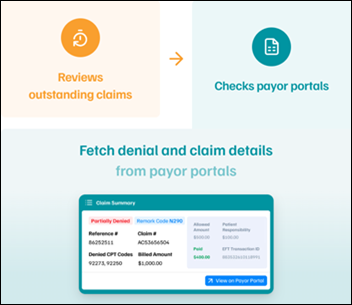
image

Tallahassee Memorial HealthCare (FL) implements Epic. This LinkedIn clip offers a peek into its Super Mario-themed go live activities.


Other

image

The local paper reports on St. Luke’s University Health Network’s use of Engnite CardioCare, which analyzes EHR and ECG data to help diagnose heart conditions. Egnite President and CEO Joel Portice has health tech executive experience with Intermedix and Enclarity.
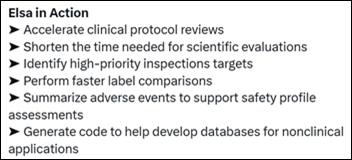
The US falls to #24 in the World Happiness Report 2025, continuing a slide that started in 2016 that has been led by declining social trust and growing inequality. The rankings are based on six factors:

  • GDP per capita.
  • Healthy life expectancy.
  • Social support.
  • Freedom to make life choices.
  • Generosity, as measured by charitable acts.
  • Perceptions of corruption.

Sponsor Updates

  • Black Book Research identifies market leaders in digital pathology.
  • Philips Capsule will exhibit at the ANIA Annual Conference March 27-29 in New Orleans.
  • Clinical Architecture publishes a new case study titled “Advance Real-time Insights with Data Quality Automation.”
  • CloudWave will exhibit at the MUSE New England Community Peer Group event March 28 in Saratoga Springs, NY.
  • CTG names Christina Kochan, RN (Oula) healthcare solution architect.

Blog Posts


Contacts

Mr. H, Lorre, Jenn, Dr. Jayne.
Get HIStalk updates.
Send news or rumors.
Follow on X, Bluesky, and LinkedIn.
Contact us.

Comments Off on News 3/26/25

Morning Headlines 3/25/25

March 24, 2025 Headlines Comments Off on Morning Headlines 3/25/25

Roper Technologies to acquire CentralReach

Roper Technologies will acquire applied behavior analysis software vendor CentralReach for $1.65 billion.

23andMe files for bankruptcy, Anne Wojcicki steps down as CEO

Consumer genetic testing company 23andMe co-founder and CEO Anne Wojcicki steps down as the company enters Chapter 11 bankruptcy protection.

Scribe Health – Leading AI Medical Scribe announces $1.2 million seed round

Brooklyn, NY-based AI medical scribe startup Scribe Health raises $1.2 million.

Comments Off on Morning Headlines 3/25/25

Curbside Consult with Dr. Jayne 3/24/25

March 24, 2025 Dr. Jayne 5 Comments

image 

Mr. H was correct in his assumptions around what I would think about Function Health, the celebrity-backed company that offers subscriptions to lab tests.

I checked out their website and the first thing that annoyed me was the use of “insights,” which has become quite the buzzword over the last few years. What exactly does “insights from top doctors” mean? Are they sharing high-quality, peer-reviewed research findings, or are these just their opinions? How do they even define “top doctors?”

Just looking at their “all-in-one for everyone” laboratory test menu makes me cringe. The vast majority of these tests haven’t been proven to be useful for screening average-risk people. Selenium testing, anyone? Selenium deficiency is extremely rare in the US and Canada, except among patients who are undergoing dialysis and occasionally in patients with HIV. But sure, let’s test everyone and hope for the best, and let the beleaguered primary care physicians sort it out when a patient’s results flag high or low in a clinically insignificant way.

News flash: although it looks like it’s included on their home page, it’s actually an add-on test that costs extra, which to me adds an element of bait-and-switch for the customers who aren’t going to do the six additional clicks needed to see the lists of tests.

Most patients don’t understand that “normal” lab values are defined statistically. For that reason, people will be outside the accepted range even though their levels are probably just fine for them as a human. In fact, we don’t really use the word “normal” for most blood tests – we use “in range” and “out of range” unless it’s a critical high or low. Back when I was in med school, the students at my university were used in a project to revalidate the reference ranges for cholesterol tests. I can guarantee that based on our eating habits, we probably weren’t the best population to use for that effort.

We often see confusion when patients look at the results of chemistry panels and their values are a decimal point above or below the cutoffs. Usually those calls result in a phone conversation that is at least 10 minutes long, which takes away time from patients with actual issues who need care.

Other labs included in their testing panels are ones that are tricky to interpret in the face of patients with symptoms, let alone when ordered on a patient with no symptoms. Immune-related labs are the most common of these and can be vexing to patients to the point where we in the primary care trenches only order them when we’re trying to rule a disease or condition in or out of our diagnostic process. They will be “out of range” or mildly abnormal in quite a few patients, which is why you want to avoid ordering them unless the results will change your diagnostic or management plan.

I’m sure that some patient engagement advocates have thoughts around this, but I’ve been in this exact patient scenario and encouraged my own physician to only order the tests that were specifically indicated. I didn’t want to go down any other diagnostic rabbit holes chasing spurious abnormalities that weren’t going to drive the management of my particular situation in a productive direction.

Also in this scenario, the patient has no idea of the education, training, or reputation of the physicians or midlevel providers who may be reviewing their results. I personally like to know who my providers are and where they trained to ensure they’re not low quality. There are plenty of random physicians who will literally do this kind of work for $8-$10 per chart regardless of their qualifications, so buyer beware.

The company also offers the Galleri multi-cancer detection test as another extra-fee add-on. This can be useful, but is best performed after a patient receives appropriate counseling to understand the implications of having been tested for certain conditions or of receiving non-negative results. There are supposed to be laws protecting us from genetic discrimination, but in reality there are plenty of ways in which they can impact a person negatively.

One sneaky trick is not asking patients for the results of their genetic testing, but asking if they’ve ever been tested for a particular condition and then using that information to negatively impact the insurance underwriting process. I’m not an attorney and don’t know if it’s legal, but I’ve seen it. And if you’re in the military and seeking certain job roles, the presence of testing can disqualify you even with negative results. I had to write an appeal letter for one of my patients in that situation, and unfortunately it was not successful. Alzheimer’s risk testing is another one that falls into this bucket.

Other add-on tests are those related to food allergies. Let me tell you about the case that happened in my home town, where a patient died as the result of inappropriately ordered food allergy testing. It’s been written up in the literature and I wasn’t a treating physician, so not a HIPAA violation for those who might be concerned.

The pediatric patient ate peanut butter daily with no issue. However, their physician ordered an overly broad food allergy testing panel that said they were allergic to peanut butter. The parents immediately banned peanuts from the house. Months later, the patient was exposed to peanuts elsewhere and had an anaphylactic reaction and died. How does that happen? The patient had been orally desensitized to the allergen through daily consumption, which protected them. (We actually do this now intentionally with kids with severe peanut allergies, starting with microdoses and working our way up.) When they stopped that daily protection, a life-threatening allergy was now in play. To summarize, a poorly considered lab test that never should have been ordered killed this child.

Although this offering is a subscription service that offers all this testing for one low price, guess who pays for all the follow up of the abnormal tests? You and I do, in the form of increased insurance premiums, since it’s almost certain that people who need additional testing and medical visits to explain it all will do so on their commercial or publicly funded coverage. We also pay for it through an increase in unnecessary visits to follow up these findings, which reduce access to those who actually need care.

I experienced this personally when I was in traditional primary care practice and Quest Diagnostics launched their direct-to-consumer testing site. The site mentions that “clinicians call you promptly if any urgent results arise,” but I’m betting those clinicians who are making the phone calls are medical assistants, patient care technicians, or medical secretaries and not actual licensed clinicians. I doubt there will be a physician on the other end of the line to answer your questions.

There are also some interesting findings in the FAQs, including that Function is considered “beta” and is “not yet fully developed” and “there will be rapid changes with occasional bugs.” This would not be allowed in mainstream electronic health record or laboratory management software in this day and age. They try to absolve themselves through a disclaimer that they are a healthcare tech company and not a medical or laboratory provider, and that all the real work is done by independent third parties.

The FAQs also note that the company is jumping on the AI bandwagon and “aims to apply machine learning algorithms to your lab test results over time, in order to uncover things that humans are likely to miss.” Regarding privacy, the site notes that patients can delete their data and no personally identifiable information will be shared, but it doesn’t address any concerns about them selling de-identified or otherwise aggregated data, which I would bet they are.

Like the commenters on Mr. H’s post, I’d also like to see a copy of the clinical summary and how they interpret unnecessary tests. Maybe we should start a HIStalk fund drive to sponsor a reader to sign up in exchange for sharing their experiences throughout the course of the year-long subscription.

What do you think about Function? Is Matt Damon’s endorsement enough to lure you in? Leave a comment or email me.

Email Dr. Jayne.

HIStalk Interviews Sriram Devarakonda, CTO, Cardamom Health

March 24, 2025 Interviews Comments Off on HIStalk Interviews Sriram Devarakonda, CTO, Cardamom Health

Sriram Devarakonda, MSEE is CTO of Cardamon Health.

image

Tell me about yourself and the company.

I’m CTO and one of the founders of Cardamom Health. I’ve been in the healthcare IT ecosystem all my life. I was at Epic many years ago, then went to work for Microsoft in their Health Solutions venture. After that, at Nordic, and then then most recently and currently at Cardamom. I have a product, platform, and services end-to-end view of the world.

Cardamom Health is a data analytics and apps company. Our goal is to create this end-to-end focus as a company. A lot of organizations are great in certain verticals, but what it takes to drive change in healthcare is to use data, uncover insights, and use the insights to drive application and workflow optimizations. We as a company are doing that end to end. We are a two and a half year old company and are making some amazing progress in this area.

How will health system technology change as the move to the cloud continues?

We can learn a ton from established verticals like finance, retail, and manufacturing. As a consumer, when I’m spending money online, the scale of cloud computing allows sub-second fraud detection when my credit card is misused, content personalization, and cybersecurity analysis. All these things are happening because of the scale of cloud computing. Healthcare can learn from some of those established verticals.

My prediction is that since we’re starting an early journey of a full-on cloud migration, we will eventually be able to see greater resilience in terms of things like disaster recovery and the kind of cybersecurity we can expect with a hyperscaler that has thousands of cyber engineers who are working on a cyber threat analysis.

Those are two specific examples, but also this model of hybrid cloud makes it easier to connect to each other. You’re on one hyperscaler, you want to move data to another hyperscaler, and the speed at which interoperability can happen. These are things that I expect in healthcare. My hope is also the amount of innovation, the speed of innovation, that will happen to launch a basic VM, test something, deploy, fail fast, and move forward. Innovation will be much faster.

There’s also a cultural aspect. Workforce needs will change. Some of the traditional reliance on on-prem — database management, network administration, and ETL management —  some of it just goes away. Hopefully it is replaced with the need for somebody that is a lot broader in terms of cloud architecture, pure business analysts that can connect the different systems. Healthcare organizations will need to proactively manage that re-skilling and up-skilling in that hybrid cloud model.

How will health systems obtain AI expertise? Will they hire people, hire companies, or buy solutions?

We are working with many organizations, large and small. One thing that’s very clear is that everybody is in this mode of “necessity is the mother of invention.” Organizations are experiencing challenges with clinical burnout, which is a cliché term, but it’s truly happening at a scale that we have not seen before. Big, small, and in-the-middle organizations are looking at all options that are on the table to address workflow inefficiencies. I strongly believe that while everybody is going to buy — they already are buying from Epic or copilots from Microsoft – they are actively seeking out ways that they can take on very specific problems in those of areas. 

For partnering with someone like us, we understand Epic. We understand technology. We have our own data scientists. We can take some of those smaller or mid-level problems that nobody is looking at and go after them with some force.

My perspective is that everybody is going to do it. The real question is how much of that will last and how far they will go with that with the development. 

We also see the rise of low-code and no-core orchestration tools. There are amazing deployment frameworks out there and this democratization of AI. I’m looking at schools here in Loudoun County, where I’m from. Kids are coming out of college and high school with amazing skills in data science. It’s a lot more democratized than it was. Organizations will be comfortable doing more self-service AI and building their own AI tools, but they will absolutely buy as well. I’s a combination of build and buy, depending on how much build they can afford or how much buy they can afford.

Will we see some disappointment with health system attempts to apply AI to business problems that don’t create ROI? Are switching costs high enough that they will keep working on these projects, or will they just walk away and try something different?

It’s definitely a real challenge on how to measure the efficacies of AI agents, predictive models, and whatnot. People are still getting their heads around that. But there is low-hanging fruit. I have Microsoft, Epic, or Cerner. For me to adopt and take on their 50-plus models of the release out of box, and even go after those 50% of them that are around denials prediction, deterioration index, or the ability to respond to patient letters, these are straightforward use cases. If I can take off X minutes off every clinician, that’s value for them.

They are making some progress in some areas, not so much progress in the other areas, partly because of the efficacy of those models. Creating a framework for those, how to measure ROI and VOI, continues to be an interesting challenge. Somebody like us knows how to measure those workflows and improvements because we’ve helped other organizations do it.

How do newer technologies such as AI agents and model deployment via Nvidia Inference Microservices fit into the healthcare environment?

There are two parts to the question. First, agents or agentic workflows are already being deployed by all platforms alike. Some of these are what I call headless agents, where they’re doing some of that background agentic work, and some of that is UI app focused. They do very specific things, very singular. Some are multifunctional.

For us, the greatest inefficiencies lie in healthcare where you are collating information from X different areas — whether it is data from ERP and EMR — and then making sense out of it. Then depending on the kind of agent, whether it’s an information retrieval agent or an active agent that is making actions happen, is where the biggest needs are.

Every health tech vendor has agentic workflows at the core. The real questions over the next few years are some of the same challenges that we have seen in analytics historically — API access, data governance, what agents should have what access to information, and the lifecycle of creating an agent. That will become a process strategy question for organizations, because you don’t want agents to go do those things without other governance.

These are the challenges, but over the next couple of years, there will be this proliferation of agents across the board, just like when everybody wanted to do analytics and reporting. We have this bloat problem in the industry where the organizations have so much to do. How do you keep sense of what makes sense? Agents are here to stay. It really depends on the kinds of agents – tech-focused, back end, front end, and whether they act or retrieve all of that. But the value will be from their governance and change processes.

Will software vendors go beyond using AI to generate code and use it to change the functionality, appearance, or deployment of their products?

There will continue to be agents continue that are deeply ingrained into workflows such as Epic’s. You are a physician and you have an agent that does a very specific activity. Generating a progress note is one of them. At the launch of a quick voice command, some of that will happen. Those are deeply integrated solutions. But I also see external agents that harness and collate data from multiple sources.

It ultimately depends on which agents are natively part of your core workflows. If I’m a third-party vendor in value-based care or clinical research, I may need to do things to integrate with Epic and integrate that back into workflows. Ambient AI is great example.

Will companies try to add EHR AI functionality and hope that the EHR vendor doesn’t create their own version?

Take analytics as an example. A lot of amazing analytics work comes out of Epic, and lots of amazing organizations are using Epic’s own tools. But you still have these other organizations that have non-Epic analytics models. Is it the form factor of the external analytics tool? Is it the way that it’s integrated into Epic? Is it the flexibility of the UI?

If I were to build an AI tool to integrate with Epic, what parts of it can I do with my AI tool that maybe Epic cannot do, ever or in the short term? Short term in healthcare as 18 to 24 months. because the amount of innovation that’s coming is constantly changing. How do I manage that?

It’s a balancing act, honestly. I’ve seen organizations that have been in analytics for a long time still sustain because they constantly add some of the additional value. Ambient AI is a perfect, timely example today. Those ambient AI documentation companies do a great job when they have this bi-directional capability within Epic. I am a physician, I launch a note, I record a conversation using ambient AI on my mobile. As long as I deeply integrate within Epic workflows and to the exact same clinical note section, I have no dual documentation needs and no burden or extra steps needed.

But if I can’t do that, how good is AI? It will really depend on the bi-directional capabilities that I have the ability to do within Epic or Cerner or whatnot. But also the other things that I can bring to bear. If I’m a value-based care company, in addition to the ambient AI, I also have this external claims database, which is awesome, that I can uncover some of those notes.  It really becomes the question of, why will a physician, clinician, or nurse come out of their core EMR, and is that big enough for them to come out of the EMR?

In the early days of ChatGPT, companies rushed out wrapper-type products that were quickly matched by competitors or OpenAI’s own enhancements. How do companies decide whether to quickly release a product that doesn’t have a strong competitive moat versus hunkering down for long-term success?

I’ll give a slightly non-technical answer. I’ve been in healthcare for the last 20 years or so. With analytics, data platforms, and point solutions, why did some survive and others disappeared? Some lost their technical edge. They’re not innovative any more.

But overwhelmingly, I feel that some of them didn’t really solve the problem. They had technology, but did they enable the technology to the last mile? Do I have the combination of strategy culture as a company to continue to innovate and present that to organizations or to my users?

What I would tell those organizations is that technology is absolutely critical, but if you do not have the ability to figure out adoption, the enablement of all that, and constantly innovate in terms of other features you can build that maybe some of these other larger companies cannot be prepared, you are always at risk of being displaced. It is always the last-mile integration and constantly improving that for organizations.

What is an aspect of healthcare technology for which you have a contrarian opinion?

We are now close to 25 or 30 years of EMR deployments and digitization of records. Interoperability is still the same challenge. It’s not getting better, and all our progress has been incremental. We’ve gone from HL7 and came up with FHIR, which is a modern implementation of HL7 in its own way, more REST API based. But it’s all been incremental, and we have not really solved the foundational problem of interoperability.

I talk to any organization that’s in clinical research, value-based care, or even emerging fields like AI. Talk to any tech venture company. They still are clueless to figure out how best to integrate with not just EMRs, but with each other, with other vendors. The amount of work that has happened and we’re at a point where this incremental thinking of replacing one format to another is just not working to me. It’s destructive thinking. There has been a lot of talk about establishing national EMPI to reduce that data fragmentation.

Also, really, what is really interoperability this day compared to what was 25 years ago? There’s a lot more data sets that are interoperable, lot more fragmentation of workflows, and we’ve not really expanded the definition of clinical documentation to encompass everything that happens with a physician or a patient. Fundamentally disrupting that interoperability mindset is what I would say.

Will AI create a technical arms race where smaller companies can’t keep up, or will it instead give them a new way to compete?

It’s how technology has always been disrupted. Think of what Abridge has done in the last two years. Think of what ChatGPT has done. There’s still a small company.

Disruption will always happen, and my strong belief is that the next area of disruption will come from data creation, not data input. If you look at what we’ve historically done for the last 40 years, data input has always been text-based, whether you’re writing on a piece of paper or typing on a keyboard. But now we are in this early phase of disruption by data creation. The emergence of data input should not be by explicit text input, but by the product of human action, whether it is video documentation, wearables, or devices.

Innovation will come from smaller companies that are solving those problems around wearables, devices, and video documentation. Continued expansion of ambient AI is where that innovation will come. Small players can still disrupt, is my hope.

The amount of innovation that is coming out of EMRs and ERP systems is amazing, but some of this AI noise is also putting them on a back seat. We have to be careful about adulation of AI because AI is still new. It’s going fast, maybe much faster than anything we’ve ever seen, but it could also come at the cost of some of the innovation that’s already within the investments that you’ve made. Maximizing the usage of what you have is never the wrong strategy.

Comments Off on HIStalk Interviews Sriram Devarakonda, CTO, Cardamom Health

Readers Write: CMS TEAM: What Hospitals Need to Know to Succeed

March 24, 2025 Readers Write Comments Off on Readers Write: CMS TEAM: What Hospitals Need to Know to Succeed

CMS TEAM: What Hospitals Need to Know to Succeed
By Mary Sirois

Mary Sirois. MBA is managing director of clinical transformation with Nordic

image

Healthcare reimbursement is undergoing a significant transformation, with the Centers for Medicare & Medicaid Services (CMS) spearheading a decisive shift towards value-based care, cost reductions, and confidence in care quality. At the forefront of this evolution is Transforming Episode Accountability Model (TEAM), a mandatory, episode-based, alternative payment program that is designed to improve the patient experience from surgery through recovery.

With the January 1, 2026 launch date quickly approaching, I strongly encourage healthcare leaders to prioritize understanding and proactively preparing for TEAM now. Without a strategic and well-executed plan that addresses topics such as EHR integration, clinical and operational workflows across the continuum of care, data infrastructure, change management, governance, and more, organizations risk compromised patient outcomes, competitive disadvantage, and financial instability.

Patient-centered care and financial sustainability: Unlocking TEAM’s potential

TEAM will advance the CMS Innovation Center’s prior work on episode-based alternative payment models, including the Bundled Payments for Care Improvement Advanced and Comprehensive Care for Joint Replacement Models. TEAM is designed to improve care coordination and outcomes for Medicare beneficiaries undergoing any of the following five episodes of care, which begin with the “event” (admission or surgery), extend throughout 30 days, and include both hospital and ambulatory care:

  • Lower extremity joint replacement.
  • Surgical hip femur fracture treatment.
  • Spinal fusion.
  • Coronary artery bypass graft.
  • Major bowel procedure.

The assessment and payment structure under TEAM is based on a retrospective analysis of the total cost of care for each episode. CMS sets target prices based on historical data and benchmarks, and providers are accountable for managing costs within these targets. If the actual cost of an episode is below the target, providers may share in the savings.

Conversely, if costs exceed the target, providers may face financial penalties. This risk-sharing arrangement incentivizes providers to optimize care pathways, reduce unnecessary services, and improve patient outcomes. Key opportunities for healthcare organizations include:

  • Leveraging Intersocietal Accreditation Commission data.
  • Mitigating financial penalties.
  • Aligning with ongoing population health/value-based care work.
  • Improving care coordination across the continuum of care and partnerships.
  • Reducing unnecessary readmissions.

Navigating CMS TEAM: Assessment, collaboration, monitoring, and strategic partnership

To effectively prepare for CMS TEAM and strive under the program, healthcare leaders should focus on three core areas:

1. Comprehensive assessment and playbook development. Begin with a thorough current state assessment, evaluating financial projections, risk stratification, care setting optimization, provider alignment, discharge planning, care coordination, outcomes management, quality measures, and model readiness. This assessment will inform the development of a strategic playbook, outlining specific strategies to improve performance and ensure compliance with TEAM requirements.

2. Strategic collaboration and technology integration. Foster collaborations with providers across the continuum of care (many of whom are not directly aligned to the healthcare system, such as post-acute, skilled nursing facilities, and home care) and payers. Evaluate and implement technology solutions that enhance data sharing and care coordination. Prioritize patient engagement and education, empowering them within the episode-based care model.

3. Continuous monitoring and adaptation. Establish a robust monitoring system, tracking performance against key indicators and implementing continuous quality improvement initiatives. Proactively adapt to evolving CMS guidelines and industry best practices. Create alerts for early identification of and response to care pathway deviations.

Given the complexities of TEAM and the critical need for urgency, hospitals and health system leaders can benefit from partnering with experienced, healthcare-focused consultants who can help identify potential challenges and areas for improvements. Through high-level performance reviews, strategic recommendations, and implementation considerations, partnership enables hospitals and health systems to take a strategic and clinically driven approach to TEAM compliance that harnesses the power of data and technology to enhance patient and clinician journeys and optimize performance.

CMS TEAM: Seizing this pivotal moment for healthcare excellence

As our industry stands on the cusp of the TEAM launch, I see this as a pivotal shift towards a more efficient, cost effective, data-driven, and patient-centered healthcare system. By embracing the principles of value-based care, taking proactive steps to prepare, and engaging in meaningful partnerships, healthcare leaders can ensure their organizations comply with TEAM requirements, deliver the highest quality care, and thrive in the evolving healthcare landscape.

Comments Off on Readers Write: CMS TEAM: What Hospitals Need to Know to Succeed

Readers Write: Payment Cost and Confusion Continue to Frustrate Patients. Why Is Healthcare So Late to the Game?

March 24, 2025 Readers Write Comments Off on Readers Write: Payment Cost and Confusion Continue to Frustrate Patients. Why Is Healthcare So Late to the Game?

Payment Cost and Confusion Continue to Frustrate Patients. Why Is Healthcare So Late to the Game?
By Tom Furr

Tom Furr is founder and CEO of PatientPay.

image

More than two years after a Kaiser Family Foundation survey found that 100 million American adults wrestle with medical debt, cost and affordability of care remain top concerns for consumers. Half of adults say that it’s difficult to afford care, a 2024 KFF poll found, and one in four have skipped or delayed care due to cost concerns.

Could 2025 be the year when the healthcare industry takes bigger, bolder steps toward easing these concerns by running a more automated and patient-friendly operation? In a year when medical costs are expected to rise about 8% and commercial healthcare spending could rise to its highest level in 13 years, according to a PwC analysis, one would argue that it should be.

According to a recent William Blair report, Consumer-Centric Healthcare: 2025 Update, US healthcare spending continues to outpace that of comparable countries with $12,555 in healthcare spending per person, “$4,000 greater than any other high-income nation, yet the nation falls behind most developed countries when it comes to health outcomes. And while this spending gap continues to widen, we’re not seeing better outcomes for the money spent.

“If federal health spending accounted for the same share of GDP that it did in 1973, the budget would be balanced,” the report states. “If it were the same as in 2000, the deficit would be 2.5% of GDP, less than both the 1946-2023 and 1962-2023 averages.” I would be shocked if this fact were not on DOGE’s radar, since Elon Musk was the first to ask why the government uses “cost-plus contracts” for military and space projects. I guess the space challenge between SpaceX and Boeing shows that having more capabilities with less expense ultimately wins the race.

Yet even as federal requirements for hospital price transparency continue to be put into play, the types of information patients want most — their out-of-pocket costs after insurance and their options for payment — remain challenging to determine at some organizations. It’s an area where digital tools that offer automation plus reduced cost for patient billing and collection to help reduce administrative expenses. One organization that currently devotes eight people to payment processing found that it could reduce manpower for this task to one person with an automated solution.

A New Era for the Patient Financial Experience

The proportion of self-pay patients has risen sharply since the end of Medicaid continuous enrollment, including for emergency visits among patients in all age groups. Meanwhile, as healthcare costs increase, employee pay raises have slowed. These are signs that healthcare organizations should reexamine their approach to automation, in particular for the patient financial billing and payment process.

A Deloitte survey of healthcare leaders suggests some organizations are poised to do so. Most leaders surveyed believe automation will help with cost and affordability for the healthcare industry this year, with 53% saying their organization will focus on improving the consumer experience, engagement, and trust while reducing the cost to achieve efficiencies and increase productivity.

To truly make an impact, patient financial services teams should look to automation to communicate financial responsibility, resources, and payment options in ways that meet patients where they are. This means sharing information in ways that can be easily understood regardless of a person’s education level or their native language. It also means making sure information is available in a variety of formats, including via mobile phone, given that 98% of American adults own a mobile phone. One company only allows patient payments to be set up after a call is made, even though most patients want to set up their payment online while reviewing their bill. Limiting patients’ options is a dissatisfier in an era of consumer-driven convenience.

Making the Right Connections to Ease Payment Concerns

In the quest to cure payment confusion and strengthen consumer trust, how can healthcare revenue cycle teams most effectively communicate financial information to patients? There are three things healthcare revenue cycle teams should consider.

1. Broadly communicate options for patient financial assistance.

This includes one-to-one conversations at the point of registration, via a widely publicized toll-free number, through posters and brochures in patient waiting rooms, on the provider’s website, and via secure text. It may also consist of discussions at the point of care, so long as the patient has been stabilized and consents. Discussions around financial assistance options should take place as early in the patient encounter as possible, according to guidance from the Healthcare Financial Management Association. It should also incorporate language the patient can readily understand, both verbally and in written form. Some organizations suggest that print and digital communications be written at a fifth-grade level and available in more than one language. When written communications are not available in the patient’s native language, seek a translator or translator service to ensure clarity.

2. Explore mechanisms for digital communication and payment.

Leading healthcare organizations leverage the device most consumers own, their mobile phone, to send payment notifications via secure text. It’s an option consumers gravitate toward: A 2024 J.P. Morgan survey reveals 75% of consumers want to pay their medical bills online. Yet 71% of healthcare providers most often collect payment from consumers via paper and manual processes, the survey found. “The trends reveal a deep disconnect between the healthcare industry and consumers,” according to the analysis.

Keys to successfully rolling out a text-to-pay model that collects more payments while reducing cost, such as the number of paper statements sent: Use patient payment behavior to determine which patients are most likely to respond to this approach. Give digital communications time to breathe, typically, one week, before following up. While some individuals will pay within minutes or hours of receiving a text notification, some may wait longer, although typically not more than a week.

3. Integrate EOBs with digital payment.

Providing access to the patient’s explanation of benefits (EOB) statement with their bill offers an opportunity to clear up questions around the out-of-pocket amount that is due from the start of the patient financial encounter. It gives patients a chance to review how much their insurance company has paid and how the amount due was calculated. By providing consumers a mechanism for verifying the amount that is due at the point of payment, this increases the likelihood of payment.

As healthcare leaders express a desire to strengthen the patient financial experience while also reducing their cost to accomplish better collection results, they should deploy a thoughtful approach to automation around financial communications and payment remittance before being pushed to do so by outside sources.

Comments Off on Readers Write: Payment Cost and Confusion Continue to Frustrate Patients. Why Is Healthcare So Late to the Game?

Morning Headlines 3/24/25

March 23, 2025 Headlines Comments Off on Morning Headlines 3/24/25

Temasek and Warburg Pincus seek up to $5bn for sale of healthcare company GHX

The owners of supply chain management technology vendor Global Healthcare Exchange are reportedly looking to sell the company at a $5 billion valuation.

6 health AI updates we shared at The Check Up

Google Chief Health Officer Karen DeSalvo, MD, MPH, MSc announces six health AI updates at the company’s annual healthcare conference.

Paging Dr. Cube: UniDoc to buy software from AMD Telemedicine to improve remote healthcare offering

Canada-based virtual healthcare kiosk manufacturer UniDoc Health acquires most of the assets of telemedicine hardware and software vendor AMD Telemedicine for $175,000.

Comments Off on Morning Headlines 3/24/25

Monday Morning Update 3/24/25

March 23, 2025 News 3 Comments

Top News

Google Chief Health Officer Karen DeSalvo, MD, MPH, MSc announces six health AI updates at the company’s annual healthcare conference:

  • Enhanced the AI overview capabilities of health searches, including “What People Suggest,” which can “organize different perspectives from online discussions” into themes.
  • Provided API access to Health Connect, the company’s Android-based health and fitness data sharing platform.
  • Rolled out loss of pulse detection, an FDA-cleared Pixel Watch 3 feature that automatically calls emergency services if the wearer’s heart stops.
  • Released an AI co-scientist for Gemini 2.0 that can help design clinical studies by reviewing existing research and proposing testable hypotheses.
  • Released open, Gemma-based models to enhance AI-powered drug discovery.
  • Worked with a hospital in the Netherlands to support personalized pediatric cancer treatments by applying knowledge from medical publications to individual patients.

Reader Comments

From RM: “Re: NIMs. Nvidia Inference Microservices are now available on Microsoft Azure AI Foundry. These are essentially optimized containers for two dozen foundation models, allowing developers to deploy generative AI applications and agents quickly. Epic is planning to be an early adopter.” The Microsoft blog post quotes Epic VP Drew McCombs as saying that it will use Azure AI Foundry and is working with UW Health and UCSD Health to evaluate clinical summaries using advanced models. Epic gains several advantages from using a direct infrastructure pipeline for AI model deployment:

  • Standard APIs make it easier to integrate models into workflows with contextual awareness.
  • Customer deployment of models is easier.
  • Health systems can fine-tune models locally.
  • Epic gains competitive advantage in using advanced technology and applying it to key integration points such as Best Practice Advisories.

From Piazza: “Re: VA. How will they hire contractors to support ramped-up go lives when the federal government is cutting contracts? Who would take those jobs, especially if start and end dates are soft?” That will be one of the VA’s many challenges. It might have been easier had the VA followed the DoD’s lead in choosing a government-entrenched company like Leidos as the prime contractor with Cerner as the subcontractor rather than allowing Cerner to be its own prime.


HIStalk Announcements and Requests

Last call for provider-side IT leaders to join my Executive Watercooler panel, whose participants will get a monthly “what do you think about this” email and send me their brief thoughts.

image

Poll respondents list several ways they reduce their time spent in unproductive meetings.

New poll to your right or here: How has your employer’s support for work-life balance changed in the past two years?


Sponsored Events and Resources

Live Webinar: March 27 (Thursday) noon ET. “How to Improve Clinical Workflows with AI Chart Summaries and Risk Predictions.” Sponsor: Health Data Analytics Institute. Presenters: Scott Cullen, MD, senior advisor, Health Data Analytics Institute; David Clain, chief product officer, Health Data Analytics Institute. Learn how the EHR-embedded HDAIAssist tool is transforming the ability of clinicians to pull insights out the mountains of data that have accumulated in the EHR, quickly, accurately, and cost-effectively. HDAlAssist, which is part of HealthVision, the intelligent health management system, combines AI chart summaries and granular risk predictions to quickly inform care planning decisions, especially for the most complex, high-risk patients.

Contact Lorre to have your resource listed.


Acquisitions, Funding, Business, and Stock

Canada-based virtual healthcare kiosk manufacturer UniDoc Health acquires most of the assets of telemedicine hardware and software vendor AMD Telemedicine for $175,000. The Massachusetts-based AMD’s Agnes Connect software platform captures and shares real-time medical device data its live videoconferencing module.


People

image

Jett Reidy, MBA (EnableComp) joins Collabrios Health as CTO.


Sponsor Updates

  • Findhelp powers seamless closed-loop referrals and data exchange under CalAIM’s CLR and HRSN requirements.
  • Nordic releases a new episode of its “Designing for Health” podcast titled “Interview with Spencer Dorn, MD.”
  • Surescripts releases a new episode of “The Dish on Health IT” podcast titled “What Challenges, Opportunities and Urgency Face Pharmacy Interoperability Today?”
  • TeamBuilder will exhibit at the AMGA conference March 26-29 in Grapevine, TX.
  • Tegria will present the The Beryl Institute’s Elevate PX conference April 1 in Las Vegas.
  • WellSky will exhibit at the NHIA conference March 29-April 2 in National Harbor, MD.

Blog Posts


Contacts

Mr. H, Lorre, Jenn, Dr. Jayne.
Get HIStalk updates.
Send news or rumors.
Follow on X, Bluesky, and LinkedIn.
Contact us.

Morning Headlines 3/21/25

March 20, 2025 Headlines Comments Off on Morning Headlines 3/21/25

Forcura and Medalogix Join to Create Transformative Post-Acute Care Technology Platform

Workflow solutions vendor Forcura and post-acute care analytics company Medalogix merge under majority owner Berkshire Partners.

John Snow Labs Introduces First Commercially Available Medical Reasoning LLM at Nvidia GTC

John Snow Lab announces Medical LLM Reasoner, which it says is the first commercially available healthcare-specific reasoning LLM.

Anywhere for Health Systems Delivers Clinical-Grade Cognitive Assessments Remotely

Linus Health launches Anywhere for Health Systems, an FDA-listed, EHR-integrated AI cognitive assessment tool that PCPs can ask their patients and their care partners to administer.

Comments Off on Morning Headlines 3/21/25

Text Ads


RECENT COMMENTS

  1. And which "political exercise[s]" by a private entity are appropriate for state governments in this country to punish with a…

  2. What do you mean? What was the "political exercise" that prompted this response?

  3. Many, yourself included, chose to make healthcare and Healthcare IT a political exercise. Shouldn't be shocked when the other side…

  4. I see a lot of people dislike what I said. I assume some don't like it because what I said…

  5. I have a hard time believing that Ken "unconvicted felon" Paxton does anything in good faith. Daily reminder that during…

Founding Sponsors


Platinum Sponsors


Gold Sponsors


RSS Webinars

  • An error has occurred, which probably means the feed is down. Try again later.