Recent Articles:

Katie the Intern 1/1/21

January 1, 2021 Katie the Intern Comments Off on Katie the Intern 1/1/21

Happy Holidays, HIStalk! I hope you had a great Christmas and are set to have a happy and safe New Year. This column offered a wide range of topics that I found really informational and interesting, so I’ll touch on a few of them and go more in-depth on some in the next column. Hope you enjoy! 

image

This time around, I spoke with Rodrigo Martinez, MD, a practicing otolaryngologist who describes himself as being “familiar with the gaps between many of the good ideas and technologies that are employed and why they often fail when implemented into the clinical environment.” I thought this would be an excellent intersection to discuss healthcare IT, as Dr. Martinez has experience in medicine, EHR strategy and consulting, and software implementation. 

Dr. Martinez serves as the chief clinical officer at TransformativeMed, a company that builds software for specialty-specific data visualization that embeds inside an EHR. TransformativeMed has worked inside Cerner and is moving into Epic in early 2021. Dr. Martinez’s start as a physician gave him an insight into the importance of incorporating physician-based ideas into EHR implementation to solve macro-level issues. 

“I have had an interest in how you take all of these different technologies and how you bring them into a clinical workflow,” he said. “In parallel, as you have more and more technologies that are consumer-focused, how do you create processes and workflows that stitch all of these different capabilities together?”

To create a workflow to start this process, a provider needs to have an EHR in place that can begin this implementation of different technologies. I realized I have not really asked past interviewees about that process, so Dr. Martinez spoke to this topic and how it has changed over time. 

A decade ago, a provider would start with an overhaul of processes and select an EHR that could best support them, Dr. Martinez said. The push for the use of these electronic healthcare records by government began in 2009, and rewards were given to those companies that selected EHRs that met Meaningful Use criteria. 

“What that did was create an enormous rush to implement electronic health records,” Dr. Martinez said. “That’s why you have seen, over the last 10 years, such a dramatic increase in the adoption– or at the very least, implementation — of electronic health records.”

Today, EHR concerns center on how a facility can maintain the best access to data. Access to data and the use of EHRs to manage that task are incredibly important because of CMS incentives and repercussions. In sheer numbers, an estimated 97% of hospitals nationwide used EHR data in 2017, compared to 87% in 2015. This jump in usage means that health systems can no longer afford to use just any EHR, but need a system that can manage data from multiple sources. 

“You’re seeing health systems go after a single EHR system in an attempt to try to maintain the cleanest flow of data,” Dr. Martinez said. “Once a patient starts to move in and out of one system or another, you lose the ability to quickly and cleanly access and move data, or you’re forcing the end-users, the physician or the nurse, to jump into and out of different systems.” 

Though so many clinics and providers have EHRs in place, Dr. Martinez said many of these EHRs are not well adapted and do not provide the benefit that vendors originally promised. This is where his intersection of ideas comes into play, and where TransformativeMed embeds solutions that improve clinical collaboration across inpatient care teams. 

Closing the gap between what an EHR can do and what an EHR does for a provider group is an important task to Dr. Martinez. Some of the tools that his company creates has begun to do just that. The specialty-specific views of data, called the Core Clinical Workflows, allows a provider to gather specific patient and specialty information without sorting through the clutter of multiple specialties. 

“Usually, the EHRs are set up with fairly generic-looking displays of data,” Dr. Martinez said. “We have pre-optimized or curated ways of looking at the information so that there is less hunting around for information, so you’re increasing the workflow efficiency.”

This data is available on desktop and mobile devices, as well as in app form for some specific decision-support tools. The software also allows for easier patient handoff and task management. This fingertip access supplies an easier and faster process for providers who are focusing on patient health decisions. 

The app that Dr. Martinez specifically spoke about was the Core Diabetes App, a tool for inpatient diabetes management. The backbone of a clinical support tool is reliant upon information about a patient’s state in an illness (in this case, diabetes). This app focuses on a single disease state, Dr. Martinez said, and combines all of a patient’s data in real time for up-to-date information that can impact decisions around care.

“The software is reading all of the vital signs and the glucose and blood pressures and a bunch of other elements, and it combines all of that information and it presents it in a very easily digestible and actionable format,” Dr. Martinez said. “The end user can standardize those protocols and can scale them across the entire health system. That is a huge step in driving evidence-based care for diabetes.”

If a clinician is able to see all of the combined information in real time, they are better able to make a decision about care. Providers are always able to act on the most recent evidence and information. This app is targeted at monitoring and managing diabetes, but what about other diseases?

Dr. Martinez said that many diseases can be monitored in similar fashion to diabetes, watching and managing those high and low levels and keeping a patient within them. For example, alcohol withdrawal, the regulation and management of blood thinners, and even pain management are all illnesses that could be managed or monitored through a similar system. It comes down to working with individual health systems on what they need to monitor the most.

“There are a number of things and we have really been exploring what are some of the other conditions that hospitals and health systems are prioritizing,” Dr. Martinez said. “Then, by partnering with them, we co-develop these different capabilities.”

Dr. Martinez and I also covered the idea of AI powered assistants and their application, which I believe I will focus on for the next column.

I am enjoying learning about the tech side of integration in these manners, and I’d love to write and research more about them for future columns. So that is it for this one!

Happy New Year! I cannot be the only one to say that I am excited to send 2020 off with a bang!

Katie The Intern

Katie

Email me or connect with me on Twitter.

Comments Off on Katie the Intern 1/1/21

Morning Headlines 12/31/20

December 30, 2020 Headlines Comments Off on Morning Headlines 12/31/20

Telehealth: The Right Care, at the Right Time, via the Right Medium

UCLA Health describes in a NEJM Catalyst article how providers should developing triage processes that recognize telehealth’s benefits and limitations.

Stanford Medicine mistakenly vaccinated non-clinical affiliates over weekend

Stanford Medicine, fresh off protests by medical residents that its COVID-19 vaccination priority algorithm excluded them, deals with its second vaccine controversy in a week when rumors of “excess” doses caused non-clinical employees to line up at vaccination stations, where staff decided to give shots to anyone who was wearing a Stanford badge in ignoring the policy that only frontline workers in high-acuity settings should be injected.

PointClickCare Technologies Announces Closing of Collective Medical Acquisition

The long-term and post-acute care technology vendor completes its acquisition of Collective Medical, which offers a real-time care notification, activation, and collaboration platform.

Comments Off on Morning Headlines 12/31/20

Morning Headlines 12/30/20

December 29, 2020 Headlines Comments Off on Morning Headlines 12/30/20

Health-Costs Transparency Rule for Hospitals Upheld on Appeal

A federal court rejects AHA’s appeal, forcing hospitals to post their payer-specific negotiated charges on their websites starting Friday.

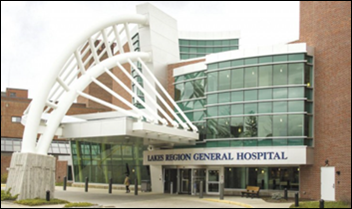
Judge signs off on Concord Hospital’s acquisition of LRGHealthcare

The bankrupt two-hospital, 162-bed system says it was paying $342,000 per month – 9% of its total revenue – to run Cerner.

Y. Michele Kang joins Washington Spirit ownership group

The founder and CEO of health and human services software vendor Cognosante buys a stake in the professional women’s soccer team.

Comments Off on Morning Headlines 12/30/20

News 12/30/20

December 29, 2020 News 1 Comment

Top News

image

A federal appeals court upholds hospital price transparency rules that will go into effect Friday.

The court rejected a lawsuit that was brought by the American Hospital Association to keep hospital-insurer negotiated rates secret.

image

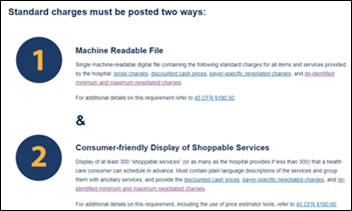
Hospitals must post their standard charges on a public-facing website, both as a machine-readable file of all hospital charges and a consumer-friendly display of 300 “shoppable services.” Both must include the discounted cash price, payer-specific negotiated charges, and de-identified minimum and maximum negotiated charges.

HHS says it will monitor and enforce the requirements starting Friday, and non-compliant hospitals can be issued a warning notice, required to develop a corrective action plan, or have a civil monetary penalty imposed.


Webinars

None scheduled soon. Previous webinars are on our YouTube channel. Contact Lorre to present your own.


Sales

  • Syracuse Orthopedic Associates chooses Emerge’s platform to create dashboards using structured and scanned data from its Allscripts TouchWorks EHR.

People

image

Kaleb Huhl, MBA (Curaspan) joins Olio as VP of sales.

image

HIMSS hires Julius Bogdan, MBA, MGM (SCL Health) as VP/GM of analytics for North America.


Government and Politics

The Defense Health Agency awards Cherokee Nation Operational Solutions a one-year, $42 million contract to support DoD’s MHS Genesis rollout of Cerner.


COVID-19

image

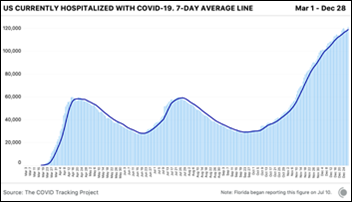
US hospitals reported 124,696 COVID-19 inpatients on Tuesday, another record high.

SNAGHTML19d28640

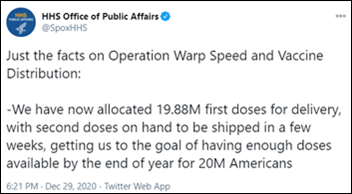
CDC reports that 2.1 million Americans have received their first of two COVID-19 vaccine shots, far short of Operation Warp Speed’s goal of 20 million vaccinated citizens by December 31. California was allocated 1.7 million doses, of which it has received 438,000 and administered just 70,000. HHS Secretary Alex Azar said in October that 100 million doses would be available by December 31, but the actual number is at 11.5 million. States have received minimal money and help from the federal government to address the “last mile” of getting injections into arms, and some state health departments see their role as making sure hospitals and clinics get vaccine doses and figure out on their own how to get them administered. HHS disputed the vaccination numbers in a tweet storm Tuesday following exasperated tweets from Ashish Jha, MD, MPH, dean of Brown School of Public Health, saying that data reporting is lagging and that it will ship 20 million first doses by Friday and hold another 20 million for the second round of injections.

Hospitals in England report record hospitalizations even with aggressive mitigation measures in place, as a more contagious coronavirus variant has also pushed case counts to record levels. The first known US case of the mutated virus was discovered Tuesday in Colorado.

Russia admits that 186,000 of its citizens have died of COVID-19, triple the number that has been officially reported, based on excessive death counts. The country has been criticized for counting only deaths in which an autopsy confirms that the virus was the main cause. The new estimate places Russia behind only the US (335,000) and Brazil (192,000) in coronavirus deaths.

TSA screened 1.3 million air travelers on Sunday, the highest count since the pandemic began and the sixth day in the past 10 that traveler volume exceeded 1 million.

Five LA-area hospitals declare internal disasters, including implementing patient diversion, due to overloaded patient room oxygen pipes that are pumping the high volumes – up to 10 times the normal flow – that COVID-19 patients require.

The Atlantic interviews 30 experts about how the pandemic’s second year could play out in 2021:

  • Understaffed public health departments will need to get people vaccinated despite low budgets, lack of a national strategy, and rampant disinformation that may increase the significant percentage of vaccine-hesitant people even more.
  • The uneven deployment of vaccines due to states that are working from their own priority rules and resource availability could delay herd immunity and introduce risk in traveling between areas with high and low immunity levels.
  • The vaccine’s impact could be blunted if states relax mitigation measures or if those people who have been vaccinated mistakenly believe those practices no longer apply to them.
  • The questions of how long immunity lasts and whether the vaccine will protect against mutated strains will begin to be answered, but could trigger another cycle of urgent vaccine development and deployment.
  • A weakened healthcare system and its depleted clinician ranks will be difficult to restore to normal levels given the years of study that are required and the US’s anti-immigration policies, making it even harder for aging people, those with chronic diseases, those with mental health needs, and a new population of COVID long-haulers to find care.
  • The country will need to learn from its mistakes in many ways — including preparing for the next pandemic, funding public health, and addressing social determinants that go beyond vaccine availability –- in a divisive environment where consensus is unattainable on even identifying the problems, much less their potential solutions.

Advocate Aurora Health throws out 500 doses of COVID-19 vaccine after an employee removes it from the pharmacy refrigerator to get something else, then forgets to put it back within the allowed 12-hour post-refrigeration window. Meanwhile, eight home care workers in Germany are given entire vials of five vaccine doses as a single shot due to human error.


Other

image

Concord Hospital (NH) will acquire bankrupt two-hospital LRGHealthcare (NH) for $30 million. LRGHealthcare blames its financial woes on excessive investment in inpatient services as demand was shifting to outpatient as well as its “massively expensive” EHR, on which it was spending 9% of total organizational revenue each year to run its two hospitals that have a combined 162 licensed beds. The Concord paper reports that LRGH runs Cerner, paying $342,000 per month as its 75% share in a services agreement with Speare Memorial Hospital. Concord Hospital also runs Cerner.

image

Michele Kang, MPPM, founder and CEO of health and human services software vendor Cognosante, buys a stake in the Washington Spirit professional women’s soccer team.


Contacts

Mr. H, Lorre, Jenn, Dr. Jayne.
Get HIStalk updates.
Send news or rumors.
Contact us.

125x125_2nd_Circle

Morning Headlines 12/29/20

December 28, 2020 Headlines 4 Comments

Health startup seeks to bring COVID-19 vaccine tracking to Apple Wallet

Los Angeles County chooses Healthvana to allow people to present proof of COVID-19 vaccination as stored in Apple Wallet and to receive reminders when their second shot is due.

Home DNA test unicorn 23andMe raises nearly $85M

The company was laying off employees a year ago in citing declining consumer demand.

‘Toxic Individualism’: Pandemic Politics Driving Health Care Workers From Small Towns

Healthcare workers are moving away from their rural communities after being harassed by their neighbors for providing public health advice, challenging rural hospitals that were already struggling to fill clinical positions during the pandemic.

Curbside Consult with Dr. Jayne 12/28/20

December 28, 2020 Dr. Jayne 1 Comment

I’m in the middle of a blissful stretch of days away from in-person patient care. The days are still full, though, as I try to wrap up a bunch of year-end projects for clients.

I also spent several hours finishing up some Maintenance of Certification and Continuing Education requirements so that I can remain board certified moving forward. Several of the major boards have given people relief from completing their usual requirements this year, which is much appreciated since those of us still seeing patients have been a little busy dealing with the pandemic.

The last couple of weeks have also brought some unexpected changes that have shaken things up in my consulting practice. I’m having to completely re-engineer my plans for 2021 as I seem to suddenly have a lot of open time on my calendar. I can always backfill the time with telehealth visits, but I am really starting to miss being part of the large-scale health IT projects that I worked on when I was in more of a traditional CMIO role. My remaining clients could certainly benefit from full-time clinical informatics attention, but no one has the budget to make it a reality.

There are so many non-COVID initiatives that healthcare organizations could be working on right now. Even with the uncertainties of COVID, there are plenty of diseases that need prevention or early detection. Colorectal cancer is one of those, and JAMA highlighted it this week in a piece about in-home screening tests. Even pre-COVID, colonoscopy as a means of cancer screening presented a lot of barriers – cost, transportation issues, and the dreaded (but not really that bad) prep. At-home kits, while not quite the same level as the gold standard colonoscopy, can help close those gaps in care.

While health plans and other organizations are sending kits to patients who are due for screening, there are plenty of people of screening age who aren’t plugged in with a primary care physician who are falling through a second gap since they’re not an anyone’s database to be detected as needing the test. Some of these are patients who use urgent care centers as their primary source of care, since they either don’t have a primary care physician or don’t think they need one. Given the shortage of primary care physicians in my community, no one is reaching out to these individuals to try to bring them to care. The average wait for a new appointment for a patient who actually wants to see a primary physician is close to three months.

The JAMA piece also highlighted some interesting food for thought facts. One is that colonoscopies and stool tests haven’t been compared in a randomized trial. There is one ongoing to compare the two, with 50,000 veterans randomized to receive either a single colonoscopy versus annual home testing for 10 years. The endpoint is deaths related to colon cancer, and results are due in 2028. Another element that requires thought is the fact that discussing the pros and cons of different colorectal cancer screening tests takes more physician time than actually performing a colonoscopy. Guess which service pays better for the physician? It definitely helps us understand yet another reason why patients are pushed towards colonoscopy as a first-choice test.

I do respect the attitude taken by UnitedHealth, which has an educational campaign that includes an online video. Their main message is that the best test is the one you will actually get done. It sounds simple, but unfortunately there’s a lot of over-thinking in healthcare and sometimes providers miss the obvious due to competing priorities, lack of time, lack of understanding, or all of the above. UnitedHealth is also doing outreach direct to its Medicare members, which will hopefully spur some important conversations between patients and their care teams.

Kaiser Permanente Northern California is another organization that has gone direct to patient, in this case, mailing test kits directly to patients who are eligible for screening. They were able to more than double their rate of screening among members. The piece notes that sending kits isn’t enough, though. There needs to be a wraparound campaign to support patients — including text, email, and phone reminders — to ensure completion. Education is key – people are still squeamish about handling a stool sample at home and mailing it back. We need to figure out how to normalize this experience, even if it takes celebrities showing off their stool kits in an effort to encourage average people to complete screening.

Technology can certainly play a role in this, whether it’s chatbot systems to remind patients to do their tests, apps that gamify medical screenings, or database analysis to determine which patients are most likely to do the test with minimal intervention versus those who need a human nudge. The National Cancer Institute projects a potential excess of 4,500 colon cancer deaths in the coming decade due to pandemic-related delays in diagnosis and treatment. Hopefully, we can harness technology to think outside the primary care box and engage these patients in multiple ways. Otherwise, we’ll see patients presenting with more advanced cancers down the road, which will lead to increased treatment costs as well as disability and death.

Unfortunately, many healthcare organizations are just trying to get by one day at a time as we approach what will perhaps be the highest peak of COVID cases and deaths during the month of January. By necessity, they’re taking the short view and aren’t thinking about consequences we won’t see for five or 10 years. However, even as uncertain as things are today, I want to challenge them that they can’t afford to not think about the longer term. Not to mention that with all the darkness and despair that surrounds healthcare on a daily basis right now, it would be nice to have some wins to celebrate with health outcomes where we can actually make a difference for our loved ones and our communities. COVID is going to be with us for the foreseeable future, but colorectal cancer and other life-altering diseases will continue to impact patients long after COVID is under control.

Is your organization doing preventive outreach initiatives or focusing on non-COVID health conditions? Leave a comment or email me.

Email Dr. Jayne.

Morning Headlines 12/28/20

December 27, 2020 Headlines Comments Off on Morning Headlines 12/28/20

EverCommerce Acquires Updox, Industry Leader in Virtual Care and Communications Solutions

Service sector business software vendor EverCommerce acquires Updox, which offers healthcare solutions for faxing, electronic forms, video chat, and secure messaging.

Sumner Regional Medical Center experiencing outage issues as result of Nashville explosion

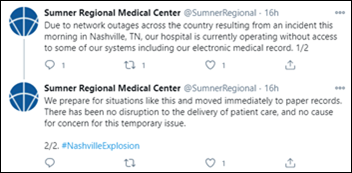
The Gallatin, TN hospital goes back to paper records when network outages caused by the Nashville RV explosion disrupt its EHR access.

Frieden honored for his lifelong work helping people with disabilities

Lex Frieden, MA, professor of health informatics at UTHealth School of Biomedical Informatics, was named the 2020 Katie Beckett Award recipient for his lifelong work advancing the rights of people with disabilities.

Comments Off on Morning Headlines 12/28/20

Monday Morning Update 12/28/20

December 27, 2020 News Comments Off on Monday Morning Update 12/28/20

Top News

image

Service sector business software vendor EverCommerce acquires Updox, which offers healthcare solutions for faxing, electronic forms, video chat, and secure messaging.

Updox had raised $16.7 million in debt financing and in a May 2017 Series B round.

Other EverCommerce healthcare brands include AlertMD (charge capture and messaging), CollaborateMD (medical practice billing software), AllMeds (EHR/PM), and ISalus (EHR).


HIStalk Announcements and Requests

image

Most poll respondents are anxious to be vaccinated against COVID-19 at their first opportunity.

New poll to your right or here, inspired by Dr. Jayne’s comments: What was the physician wearing as their outermost layer during your most recent visit?

image

I didn’t post a Christmas day edition of Weekender where I provide a Donors Choose update, so here ‘tis. Readers funded the teacher grant request of Ms. V in New Mexico, who asked for a library of 18 books for her elementary school class. She reported in July, “A couple of the photos I posted are of the last day I was with my students this school year. They had earned a reading celebration and we turned our classroom into a huge reading fort (and they got to wear their pajamas). We read ALL day! Thank you so much giving my students wonderful books! They will be enjoyed by 100’s of students for years to come!”

Speaking of Donors Choose, reader Vicki’s generous contribution, when amplified by matching funds including those provided by my Anonymous Vendor Executive, fully paid for these teacher projects:

  • A second monitor for online teaching of Ms. S’s elementary school class in Los Angeles, CA.
  • Robotics and coding learning tools for Mrs. P’s K-5 girls’ coding program in New Orleans, LA.
  • Headphones for the remote learners of Ms. S’s elementary school class in Irving, TX.
  • Distance learning materials for Ms. S’s second grade class in Henderson, NV.

 image

Meanwhile, for one more Donors Choose uplift in a thankfully ending year that could use it, here’s what Ms. S had to say upon hearing last week that HIStalk readers had funded her project with matching funds from my Anonymous Vendor Executive and San Diego Gas & Electric.

Lorre stayed busy pre-holiday, bringing three new sponsors on board on Wednesday 12/23 alone in what is normally a glacially slow time of year. Her thesis is that companies are anxious to get their 2021 marketing plans going, especially with the delay in the traditionally early HIMSS conference. Contact her if you have 2020 marketing budget that needs to be quickly rehomed in return for a full year of benefits.


Webinars

None scheduled soon. Previous webinars are on our YouTube channel. Contact Lorre to present your own.


Sales

  • Cerner announces four new rural hospital clients of CommunityWorks.

People

image

Arkansas Children’s Hospital promotes interim SVP/CIO Erin Parker, MBA to the permanent role.

image

UTHealth School of Biomedical Informatics Professor Lex Frieden, MA is named the 2020 Katie Beckett award recipient for his lifelong work in disability advocacy, which includes playing key roles in development and passage of the Americans with Disabilities Act of 1990.


COVID-19

The COVID Tracking Project warns that COVID-19 tests, cases, and deaths will be underreported through the second week of January, when everybody gets back to normal work schedules. The only reliable daily stats will be hospitalizations, which are reported without interruption since hospitals don’t close for holidays. That number stood Saturday at 117,344, down slightly from Friday. One out of every 1,000 Americans has now died of COVID-19.

IHME’s latest COVID-19 model projects that US deaths will reach 567,000 by April 1 or 731,000 if states ease their mitigation mandates, estimating that planned vaccination timelines will save 33,000 lives. US deaths are at 332,000.

image

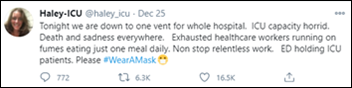
COVID-overwhelmed hospitals in Los Angeles County, CA are running out of oxygen and other supplies and their ambulance-arrived patients are waiting curbside for up to eight hours before being brought into overcrowded EDs. Southern California’s ICU capacity is at 0%, with peak, post-holiday travel hospital demand still likely a month away. 

image

Huntington Hospital (CA) alerts patients and families that it may begin rationing care in allocating scarce ventilators, ICU beds, and clinical staff to patients who are more likely to survive, as directed by a team that includes doctors, a community member, and a bioethicist. The hospital reminds the public that those resources are shared by patients with all medical needs, not just COVID-19.

Florida’s Department of Corrections removes daily prison-level COVID-19 case counts and testing numbers from its public dashboard right after two big outbreaks that involved more than 400 inmates. The department says it changed the dashboard because the information it contained was cumulative from the beginning of the pandemic and therefore was not helpful in monitoring new information, but didn’t explain why prison-level reporting was eliminated.

New York hospitals apologize for their vaccination teams giving COVID-19 vaccine to anyone who joined the line instead of limiting doses those workers who were on the high-priority list as was planned, eliciting protests from employees who observed that the queue included people who have been working from home and doctors who falsely claimed that they perform COVID-related procedures. According to one doctor, ”Clearly, we’re ready to mow each other down for it.”

The suddenly worrisome new coronavirus variants are likely already circulating in the US, going undetected since this country is #43 in the world’s percentage of cases that are analyzed genetically. The strain was discovered in Britain, which has sequenced 160,000 samples versus 51,000 here, and appears to be more contagious, including in children. Japan has barred entry to all foreigners through the end of January after the variant was discovered travelers from Britain.

image

The Washington Post describes conditions in a $31 million field hospital that was created in the former headquarters of a bank in Rhode Island. Most of the nurses are working under short-term agency contracts, IVs are delivered by gravity drip instead of electronic pumps, EHRs are not available, and patients summon help by ringing a bedside metal bell instead of pressing a call button. The hospital is run by Care New England Health System, whose nearby Kent Hospital is reporting that ED patients are waiting 2-3 days for a bed.

AstraZeneca’s COVID-19 vaccine may earn UK approval this week as the company says that new data shows its product, like those of Pfizer and Moderna, is 95% effective. Initial trial results were clouded by underdosing of some patients due to a University of Oxford mistake in analyzing the strength of a vaccine batch. Epidemiologists question what the new data could be given that the trials are completed and no new signups are likely when competing vaccines are available instead of a test dose that has a 50% chance of being a placebo.


Other

image

Sumner Regional Medical Center (TN) goes back to paper when the Nashville RV explosion on Christmas morning caused connectivity disruption.

A Connecticut OB-GYN practice pays $2 million to settle malpractice charges brought by a woman whose daughter was born with cystic fibrosis even though the practice told her that her genetic tests – including one for CF – were normal. The physician found that the test had never been ordered, which the plaintiff’s attorney believes was due to the difficulty involved in accessing lab results through the practice’s new EHR. 

image

England’s Northern Lincolnshire and Goole Hospitals creatively used their Vocera devices to make calls to Santa on behalf of their young ED patients on Christmas day, which were answered and followed with presents dispatched.


Contacts

Mr. H, Lorre, Jenn, Dr. Jayne.
Get HIStalk updates.
Send news or rumors.
Contact us.

125x125_2nd_Circle

Comments Off on Monday Morning Update 12/28/20

Morning Headlines 12/24/20

December 23, 2020 Headlines Comments Off on Morning Headlines 12/24/20

Two Owners of New York Pharmacies Charged in a $30 Million COVID-19 Health Care Fraud and Money Laundering Case

The two owners of several New York pharmacies are indicted on federal charges for healthcare fraud and money laundering, accused of using Medicare’s emergency override COVID-19 codes and edits to submit $30 million in claims for cancer drugs that were never ordered or administered.

Leaky Server Exposes 12 Million Medical Records to Meow Attacker

A hospital EHR vendor in Vietnam exposes 12 million unprotected records that contained the medical and financial details of 80,000 patients of 18 medical facilities, and immediately afterward the misconfigured database was deleted in a so-called “meow” attack in which a hacker-dispatched bot erases an exposed database as a security lesson to its owner.

Trump commutes 20-year sentence in massive health care fraud run out of Florida

President Trump commutes the 20-year prison sentence of Miami Beach businessman Philip Esformes, who was convicted in April 2019 for his involvement in a $1 billion healthcare fraud case.

Comments Off on Morning Headlines 12/24/20

Morning Headlines 12/23/20

December 22, 2020 Headlines Comments Off on Morning Headlines 12/23/20

HMS to be Acquired by Veritas Capital-Backed Gainwell for $37.00 Per Share

Medicaid technology vendor Gainwell Technologies will acquire publicly traded HMS, which offers cost and outcomes systems, for $3.4 billion in cash.

Azara Healthcare and SPH Analytics’ Population Health Division Announce Merger

Community Health and physician practice population health technology vendor Azara Healthcare merges with the population health division of SPH Analytics.

Astria Health bankruptcy plan gets closer to approval as objections resolved

Washington-based Astria Health resolves Cerner’s objections to its bankruptcy reorganization plan, in which Cerner said it was owed $10.7 million that the health system it wasn’t said it wasn’t paying because its problems with Cerner billing caused at least $150 million in damages.

Comments Off on Morning Headlines 12/23/20

News 12/23/20

December 22, 2020 News 2 Comments

Top News

image

Medicaid technology vendor Gainwell Technologies will acquire publicly traded HMS, which offers cost and outcomes systems, for $3.4 billion in cash.

Gainwell is backed by private investment firm Veritas Capital, which says it will optimize HMS’s solutions with those of Cotiviti, another of its investments.


Reader Comments

From Writer Blocked: “Re: Readers Write articles. Why do you allow only a single author?” This question has come up several times in the past couple of weeks, oddly. Answer: those are supposed to be personal opinion pieces of about 800 words, so they should not require enlisting a helper. On that topic, I really wish vendor authors would write their own imperfect but honest and insightful articles instead of outsourcing the job to PR companies whose only attainable goal (since they are not health IT experts) is marketing disguised as shallowly presented thought leadership. That’s a failing of the vendor, not their PR firm. I also draw a firm line on interviews — I only interview CEOs, I don’t provide a list of questions in advance since it’s a dynamic conversation, nobody else can be on the call because I’m not interested in what the handlers say and I know they’ll say it anyway, and I don’t provide a draft before the interview runs because the marketing people will form a committee to edit the life out of it. My co-existence with marketing and PR people is comfortable since most of the experienced ones know how I work, respect the process, and add value in making the connection and letting me do what I’ve been doing for nearly 18 years. Other sites provide examples of what happens when you cozy up with advertisers and send readers fleeing for the exit.

From No-Fly Zone: “Re: travel. A friend’s daughter has received a job offer from a children’s hospital that is requiring an on-site interview, which is a 1,500-mile flight, to complete the I-9 employment eligibility verification process. The HR department recommends making the trip immediately and won’t allow using a remote I-9 service. Who is flying for work these days, how is it in the middle seat, and what precautions are people taking?” Readers are welcome to weigh in. ICE has relaxed the Form I-9 document examination requirements through December 31 under some situations, but it’s up to the employer and hospital HR departments are notoriously unwilling to deviate from the rule book (maybe ask the hiring manager to intervene with HR – that has always worked for me). I wouldn’t be afraid to fly regardless of the “middle seats open” claim (that’s just a PR illusion since you’re still crammed in with strangers with spitting distance regardless) as long as the airline enforces mask-wearing. The plane’s ventilation system is probably most important of all, but you have no way to evaluate that. All things considered, a direct flight on Southwest would be my top choice. Bottom line for me is if the job is important and the hospital is unyielding, I would take the flight instead of waiting, even though I can’t imagine why a hospital with half a brain about COVID-19 wants remote job candidates fresh off a plane running around a campus they’ll never see again.

From Breach Victim: “Re: Mednax. Just reported a breach of 22,000 patients in July, of which my son was one. He was seen 12 hour after his birth for a total of five minutes by a hospitalist that we found out afterward was contracted through a private physician group that uses Mednax. Our insurer denied the payment, so the five minutes cost $500 out of pocket, and now we have the security breach. Is the hospital liable for any of this?” I’m guessing no since is unfortunately common for hospitals to outsource key services to companies that bill separately, without the patient’s advance knowledge, and without accepting insurance (how is “hospitalist” not a core business of a “hospital?”) The hospital wasn’t a Mednax client, so like your ridiculous bill, they will disavow any knowledge of what the contractors they hired did while rendering services within their building. I would be tempted to sue both the hospital and the practice just because this is litigious America, hungry plaintiff lawyers work cheap, and the hospital should feel some heat that goes beyond paying “consumerism” lip service.


HIStalk Announcements and Requests

My Christmas wish, beyond seeing COVID-19 go away, is this — please stop saying “build out” instead of just “build,” which expresses precisely the same thought in half the number of syllables (bonus – it also separates you from the big hat, no cattle posers and lingo-flingers who use the term despite never having “built out” anything in their lives). No word or phrase grates on me more, except perhaps faking heartfeltness by leading off a sentence with the superfluous “Please know,” as in, “Please know we in management wish you and yours the best even though we marched you off our property to join the newly unemployed on Christmas Eve.” Remove “please know” and it says exactly the same thing.

image

Generous donations from HIStalk readers Ben, Michael, Steve, and Dennis – with matching funds from my Anonymous Vendor Executive and other sources – fully funded these Donors Choose teacher requests this morning:

  • STEM kits for Ms. B’s special education class in Buckeye, AZ.
  • An Apple TV for the seventh-grade science class of Ms. S in El Cajon, CA
  • Journal-writing and emotional support supplies for Ms. S’s first grade class in New York, NY.
  • Student of the week prizes for the all-remote learners in Ms. V’s middle school class in San Luis, AZ.
  • Headphones with microphones for remote learning students of Mr. P in Los Angeles, CA.
  • Hands-on games for the virtual pre-kindergarten students of Ms. A in Mount Hope, WV.
  • A document camera and speakers for the remote learning third grade class of Ms. M in Houston, TX.
  • STEM kits for after-hours classes of Ms. M in Mobile, AL.
  • Home learning kits for the remote learning elementary school class of Ms. G in Buffalo, NY.
  • Digital resources for the remote learning kindergarten class of Ms. L in Chicago, IL.
  • Home learning kits for Ms. R’s kindergarten class in Somerton, AZ.
  • An all-in-one HP computer for the high school senior International Baccalaureate class of Ms. G in Houston, TX.

I’m probably one of few people who mentally celebrate December 21, which I can accept as the first day of winter (not my favorite season) only because that also means that every day gets longer from now through June 20. I’ll get another psychological pick-me-up on March 14, when Daylight Saving Time restarts and it gets dark later. Example: the sun sets in Boston today at a ridiculous 4:15 p.m. EST, that won’t happen until 6:50 p.m. EDT on March 14, and our nearest star will remain visible until 8:25 p.m. EDT on June 20. DST may be an irrational policy, but I like it. I would not like living at extreme northern latitudes, however, where the sun never rises in early winter but then never sets in early summer.


Webinars

None scheduled soon. Previous webinars are on our YouTube channel. Contact Lorre to present your own.


Acquisitions, Funding, Business, and Stock
image

Population health technology vendor Azara Healthcare merges with the population health division of SPH Analytics. The business will operate as Azara Healthcare, with Jeff Brandes continuing as CEO and Kevin Weinstein, MBA from SPH Analytics assuming the president / chief growth officer role. SPH Analytics will remain a minority shareholder and active business partner of Azara Healthcare and will continue its focus on healthcare consumer experience measurement.


Sales

  • West Virginia OrthoNeuro chooses Emerge ChartGenie to convert its legacy EHR data to Athenahealth.
  • Avita Health system will use Dimensional Insight’s Diver Platform to gain insights from Epic.

People

image

Bob Allen (TransUnion) joins NView Health as VP of strategic partnerships.


Announcements and Implementations

image

A newly updated KLAS report on EHR interoperability finds that “deep interoperability” (access to outside data, easy location of patient records, visibility of outside data within EHR workflow, and positive impact on patient care) has improved considerably since 2017 except in the most important “impact on care” category. Epic is the clear leader in record-sharing, while Cerner is improving significantly and EClinicalWorks is doing well but isn’t proactive. Little progress has been seen for Meditech, Greenway Health, and Allscripts. Cerner has the highest adoption rate of APIs, especially FHIR ones, while Epic is being selective on which vendors it will work with and is less focused on APIs. 

The VA uses InterSystems HealthShare to identify its need for COVID-19 vaccine by filing case count data with CDC. The VA also uses the data platform to monitor case spikes, testing volumes, and COVID-related resource availability.

image

Verily Life Sciences announces Verily Patch, which alerts the user via its Bluetooth-connected mobile app if their temperature rises beyond the threshold they set. The continuous monitoring patch, which is being marketed under FDA’s relaxed requirements for thermometers during the pandemic, lasts 90 days and is offered only to participants in specific programs.


Government and Politics

Politico reports that the American Hospital Association has filed an emergency motion to prevent the federal government from implementing price transparency rules that take effect January 1.

HHS OCR imposes a $36,000 HIPAA settlement on a Georgia primary care doctor who ignored a patient’s request for copies of their medical record, received technical assistance from OCR in response to the patient’s complaint, and then again failed to provide copies. The patient finally got their records 13 months after filing their original complaint.


COVID-19

A record 115,351 people were hospital inpatients with COVID-19 in the US on Monday. The death count rose to 320,000.

Mass General Brigham apologizes to its employees after a crush of sign-ups for receiving COVID-19 vaccine takes down its appointment system. Meanwhile, only 600 of Howard University Hospital’s 1,900 have signed up to receive its 725 doses, with the CEO saying that they know about the US Public Health Service’s Tuskegee studies of 1932 to 1972, in which hundreds of black men with syphilis were left untreated just to see what would happen.

California is reaching out to foreign countries in hopes of finding 3,000 temporary ICU-trained nurses as the supply of travel nurses dries up due to nationwide COVID-19 demand. The state has 18,359 confirmed COVID-19 patients hospitalized, and its prediction model forecasts that the number could swell to 100,000 hospitalized patients in the next few weeks. COVID-19 patients are occupying 3,600 California ICU beds and Los Angeles County says it has just 30 beds available.
image

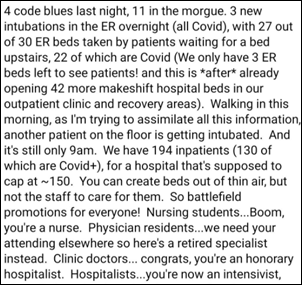
A Southern California hospitalist reports battlefield conditions from his hospital.

A study finds that COVID-19 mortality rates vary significantly by hospital even as overall hospital mortality declines, mostly driven by their level of being overwhelmed by high community case rates. In other words, flattening the curve works, and our current inability to accomplish that portends higher hospital death rates.

A New York Times poll of experts finds that while people who have received COVID-19 vaccine will be safer, they still need to continue most precautions until 70% herd immunity is reached since 95% vaccine effectiveness still leaves a decent chance of being infected with all the virus that is circulating. Two-thirds of epidemiologists say they won’t change their behavior until herd immunity is reached, although they say small-scale socializing is OK as long as all participants have been vaccinated. Once herd immunity is reached, public gatherings, eating indoors at restaurants, and taking public transportation should be safe. This coming summer should be much better, although next winter’s “flu season” will turn into “flu and COVID season” as indoor gatherings create outbreaks.  
image

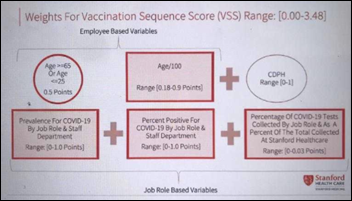
Stanford Medical Center initially blamed mistakes in “a very complex algorithm” and artificial intelligence for excluding most medical residents and fellows from the first wave of COVID-19 vaccinations, but the algorithm was actually just a simple rules-based formula that looks at and the prevalence of COVID-19 testing, positive results, and active infection for each employee’s job role. House staff who deliver direct COVID-19 care apparently fell out of the top risk tiers because they are in the lower-risk age band of 25-65, COVID prevalence didn’t take into account those employees who were infected by patients instead of in the community, and residents didn’t earn priority points for their work area because they don’t have a permanent assignment. An internal Stanford email says that program heads, department chairs, attending physicians, and nurses were not involved in designing the formula. Residents protested publicly after finding out that only seven of the 1,300 of them earned a spot in the first 5,000 employees to be offered vaccination.

A Tennessee hospital whose nurse manager fainted on camera from a longstanding vagal condition just after receiving COVID-19 vaccine last week posts a time-stamped current photo of her in hopes of squelching conspiracy theorists from spreading rumors on social media that she had died immediately.


Other

image

The bankruptcy reorganization plan of Astria Health (WA) gets closer to approval as the health system resolves objections from Cerner, which wanted $10.7 million to be set aside to cover its overdue bills for software and revenue cycle management services. The health system says it did not plan to pay Cerner because problems with its billing system and RCM services cost it $150 million.

image

University of Vermont Health Network admits that its month-long computer downtime and return to paper charting was caused by ransomware. Officials say they were never contacted about paying a ransom, however, although the malware provided contact instructions that the health system assumed was for demanding payment. The health system has still not restored 20% of its systems from the October incident, which is still being investigated by the FBI.


Contacts

Mr. H, Lorre, Jenn, Dr. Jayne.
Get HIStalk updates.
Send news or rumors.
Contact us.

125x125_2nd_Circle

Morning Headlines 12/22/20

December 21, 2020 Headlines Comments Off on Morning Headlines 12/22/20

Mass General Brigham apologizes to employees for rocky vaccine rollout

A crush of sign-ups takes down employee COVID-19 vaccine appointment systems at Mass General Brigham and Tufts Medical Center.

Rio Grande Hospital Workers Turned Down the Vaccine. A Senator and a Sheriff’s Deputy Lined Up Instead.

A Texas hospital that was among the hardest hit with COVID-19 says that so many of its high-priority employees declined to receive the vaccine that it instead vaccinated a state senator, a sheriff’s deputy, and a community pharmacist and his daughter as it used all of its allocated 5,850 doses.

Joni Ernst Sparks Backlash for Getting COVID Vaccine After Spreading Conspiracy

US Senator Joni Ernst (R-IA), who previously accused doctors of falsifying COVID-19 deaths for money and claimed that only 6% of reported COVID-19 deaths are actually caused by the infection, draws ire for tweeting out a photo that shows her receiving one of the first doses of COVID-19 vaccine.

Comments Off on Morning Headlines 12/22/20

Curbside Consult with Dr. Jayne 12/21/20

December 21, 2020 Dr. Jayne 1 Comment

A recent article on telemedicine, privacy, and information security caught my eye this week. It appeared in the Journal of the American Medical Informatics Association. Although it’s not a write-up of a blockbuster study, it brings up some important points that we need to address as we move forward with new ways of delivering healthcare.

Even with vaccines on the horizon, there will still be a need to deliver care with reduced contact for the foreseeable future. Health systems and providers have made major leaps forward. One of my CMIO colleagues notes that it took her system less than 60 days to roll out an implementation that they had planned to take more than 18 months. It’s amazing what can be done when resources are focused on a single project since most of us are used to trying to manage dozens of projects that move forward an inch at a time. The reality, however, is that many projects were likely sidelined in favor of the one, and I bet the re-prioritizations were interesting when projects were reassessed through the lens of a global pandemic.

For organizations that didn’t already have a plan to roll out telehealth, many went with whatever solution they could take live quickly, especially with government waivers allowing non-healthcare solutions such as FaceTime, Facebook Messenger, and more. Zoom has been heavily used, but the phenomenon of “Zoom-bombing,” along with encryption concerns and the inefficiencies of a freestanding system, have led provider organizations to look for more robust solutions that integrate with EHRs and scheduling systems.

Broadband continues to be a barrier in several areas, and even in areas with good coverage, there can still be outages. I experienced this first hand this week as my internet was down for nearly five days as AT&T came up with different troubleshooting strategies and failed solutions before it finally was resolved yesterday. If I had been trying to practice telehealth this week instead of in-person care, it would have been a nightmare. When I was finally able to schedule a rep to come and assess the situation in person, I had an in-person shift and was only able to get back online by having my favorite retirees come house-sit.

The article also had good discussion of privacy and security concerns, including the ransomware attacks that continue to plague health systems. They cited recent research which showed that employee workload has a major impact on the rate at which employees are likely to click on phishing links. Increased use of broadcast email announcements was noted as a risk for increasing workload.

One of the organizations that I work with sends entirely too many broadcast emails and doesn’t pay much attention to crafting crisp subject lines that allow employees to prioritize their reading. They also overdo the “high priority” flag and haven’t figured out to focus the audience for different emails to send a more effective message. Maybe when I finish their informatics consulting engagement I can convince them that they need more routine management consulting-type services.

There’s a technical component to privacy and security that gets most of the focus, but especially when many of us are in work-at-home situations, there needs to be more focus on the need for physical safeguards. From the number of calls I’ve been on during the last few months where small children and significant others have come walking into the middle of the call, I’m guessing there is a shortage of locks on home office and bedroom doors. Some of the calls where this happened have involved discussions of protected health information, including quality review of patient visits, so having people potentially present who have no right to the information is a concern. Perhaps a corporate policy to require that headphones be used when discussing PHI would be an easy fix as well.

One of my clients tackled the issue of people working at home by setting the idle time lockout for all their laptops at 90 seconds, which is pretty short if you’re doing work that involves flipping through written documents and taking notes on your laptop, or if you’re using multiple computers to perform different tasks while working on a project. It also discourages sitting there thoughtfully reading an email before replying, which is a skill that the world could probably use more of. I was going to try a USB “mouse jiggler” to get some relief, but enough people complained that they relaxed it a bit. For someone working in an otherwise empty house, it’s still a little short for my taste, but at least I could stop entering my password dozens of times each day.

Thinking about how technology should evolve to keep up with telehealth led me to consider other ways in which telehealth may want to evolve. Many organizations encourage their telehealth providers to wear their white coats while on camera as a sign of professionalism. I always feel a little weird doing this, since for me the white coat is a tool that I absolutely don’t need while at home seeing patients on my laptop. In medical school, my white coat was stuffed full of everything I could possibly need for patient care – depending on which service you were on, it could contain an otoscope, ophthalmoscope, reflex hammer, stethoscope (although that was normally around students’ necks since our pockets were so full), penlight, multiple ink pens, patient notecards, reference books, and more.

As physicians progress in their training, the contents of the coat are reduced and more specialized. Right now, my in-person coat typically contains a stethoscope (there’s no way that thing is ever going around my neck again in a post-COVID era), single pen, lip balm, and a pocket full of gloves since we had to take them out of the exam rooms because patients were stealing them. I don’t need any of those things to practice telehealth, and it just seems contrived to be sitting in front of a bookcase in my house wearing a white coat. I’m pretty sure patients who are calling in for my urgent care services don’t care what I’m wearing as long as I seem competent and do what I can to help them.

I can’t wait to look back on this post a year from now and see where telehealth has taken us. Will we have evolved to a place where patients have home monitoring and assessment devices and physicians are able to really diagnose and treat like they would in person? Or will we still be using creative exam strategies to get the information we need? Will there be a physician-enabled camera filter that can take the bags from under my eyes and remove the semi-permanent mask marks from my face? Only time will tell.

How do you think telehealth will evolve for the future? Leave a comment or email me.

Email Dr. Jayne.

Readers Write: IT Leadership: An Essential Consideration for M&A+

December 21, 2020 Readers Write 1 Comment

IT Leadership: An Essential Consideration for M&A+
By Laura Kreofsky

Laura Kreofsky, MHA, MBA is vice president of advisory for Pivot Point Consulting, a Vaco Company, of Brentwood, TN.

image

Mergers and acquisitions (M&A) has been a blanket term for the massive industry consolidation in healthcare over the last several years. Challenging operating conditions and shrinking margins, the shifting regulatory landscape, and the move to value-based care have spurred provider organizations to acquire typically smaller systems, independent hospitals, or provider groups. It has also led healthcare organizations that don’t have the capital to acquire assets outright to craft arrangements and relationships that are less than full asset mergers offering more autonomy to both parties.

In 2021 and beyond, M&A models are not going to be binary. Joint ventures, affiliations, and countless innovative options will change the operational landscape of healthcare, creating what could be called M&A+. The industry is rapidly creating new organizational types and service models that are designed to meet healthcare’s dynamic challenges and opportunities. These new business structures will spur IT innovation and also introduce new complexity.

While traditional M&A activity can be incredibly complex, the technology side is straightforward in its execution, at least in theory. The basic model is that the acquiring partner migrates the acquired entity to their technology, systems, and processes over a defined period. The goal is to create one big, happy family. Like all blended families, there are always compromises, but there is some conformance in the end.

With joint ventures, affiliations, and other hybrids, often the relationships and technology strategies are far less definitive. Each side may seek to continue to use their technologies and processes to some extent. The two entities must then decide which systems and processes to use in the new partnership.

The result is often hybridization and harmonization that meets the needs of both sides equitably. In some cases, the goal is a minimum value product (MVP) that is “just enough” to meet the relationship’s needs. In other cases, the new partners will co-create solutions that far exceed either party’s capabilities individually.

IT has a critical role in system and process integrations to bring measurable value to the partnership. However, IT teams are repeatedly brought in late in M&A. Critical IT decisions often go unaddressed at the strategic level. The individuals making the decisions may lack deep health IT insight. IT is often left to determine how to execute, not innovate or optimize.

In the M&A+ world, IT leaders must be engaged early to support initial assessment and planning. They can offer guidance regarding the best approach to building the new entity’s technology ecosystem encompassing the infrastructure, software, and services driving greater value and speed to execution.

In the M&A+ era, healthcare consolidation agreements will be more diverse, data more valuable, and technology more critical and complex. IT leadership engagement in assessment, planning, and overall transaction execution will help organization be better positioned for success.

Morning Headlines 12/21/20

December 20, 2020 Headlines Comments Off on Morning Headlines 12/21/20

Intelerad Medical Systems acquires Digisonics, Inc.

Imaging workflow vendor Intelerad acquires Digisonics, which sells cardiovascular and OB/GYN information systems.

DataLink Acquires Orizon360°: Expands Value-based Clinical Data Integration, Advanced Analytics and Financial Informatics Capabilities

EHR, analytics, and patient engagement software vendor DataLink acquires Orizon360°, which offers risk-bearing contract management technology.

Mental wellness platform Lyra Health is raising up to $175M at a $2.25B valuation

Employer-focused mental health app developer Lyra Health is raising $175 million in a Series E round, more than doubling its valuation to $2.25 billion.

Comments Off on Morning Headlines 12/21/20

Monday Morning Update 12/21/20

December 20, 2020 News 3 Comments

Top News

SNAGHTML328ef883

Imaging worklow vendor Intelerad acquires Digisonics, which sells cardiovascular and OB/GYN information systems.


Reader Comments

From Money Heist: “Re: investment. Why the sudden overabundance of investment news in HIStalk? Are your interests changing?” Health IT investment activity is soaring, especially with the sudden popularity of backdoor IPOs via special purpose acquisition companies (SPACs) that are required to complete a deal within two years or give investors their money back. Accordingly, acquisition prices are way up and expectations from folks who paid high per-share prices will follow, meaning it’s important to see how customers and competitors are affected by these financial gyrations. There’s only so much to say about the Big Three inpatient EHR vendors now that the HITECH land grab is over (unless they make an acquisition, of course), so the industry is focused on new sectors and new players, especially those that aim to pick the deep pockets of insurers, pharma, drug store chains, and even masses of consumers who are happy to lay out cash for whatever prescriptions, diagnostics, and treatments they want in bypassing the usual gatekeepers. Healthcare is, unfortunately, almost entirely driven by profits, the actions of big companies, and the heavy involvement of government as an insurer, provider, and legislator — the rest of us, including patients, are just gawking bystanders. 


HIStalk Announcements and Requests

image

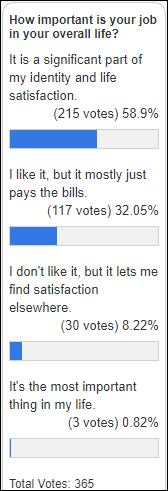
Many poll respondents say that their job represents a big part of their identity and life satisfaction, which I guess is a good news-bad news sort of situation where they are happy with the work that contributes so heavily to the perceived quality of their existence, but that perhaps dangerously makes them dependent on an employer whose goodwill is situational (my personal experience is that a new boss, company sale, financial stumble, or backstabbing colleagues can end those happy workdays quickly). Look down the road as well to unintentional unemployment or retirement, when the well-meaning but misguided question of “What do you do?” (meaning, “to whom do you sell time and for doing what as your primary identity?”) has no easy, pat answer.

New poll to your right or here: What are your COVID-19 vaccination plans?

I’m fascinated by the argument over whether someone who has earned a non-medical doctorate should use the title of “Dr.” and in what setting. Even with medical doctors it’s not cut and dried — UK doctors earn an MBBS, which is a professional bachelor’s degree that is equivalent to MD, and I’ve heard that they called generalists “Dr.” and specialists “Mr.,” although I’m too lazy to look that up. I say we stop calling everyone Dr. as part of their name since that term is vague (I’m thinking of those chiropractors who place “Dr.” in front of their name instead of “DC” after it in their ads, hoping for some beneficial confusion.) Meanwhile, I’ll defer to the AP Stylebook, which says to use Dr. in the first reference to someone who holds specific medical degrees such dentistry, allopathic or osteopathic medicine, podiatry, or veterinary medicine – notice that list does not include pharmacists, doctorate-level nurses, physical therapists, or PhDs. Actually, I’m not sure that we even need any titles as part of names in our stridently informal society, especially with the gender-signifying issues that result – does someone really need to be Mr. Smith instead of just John? Meanwhile, feel free to address me as Reverend Doctor HIStalk since I bought those credentials from the Universal Life Church with college work-study money in hoping to created a higher-power aura that women would find irresistible (pretty much like a lot of people who wave their “Dr.” titles in the faces of strangers, in fact).


Webinars

None scheduled soon. Previous webinars are on our YouTube channel. Contact Lorre to present your own.


Acquisitions, Funding, Business, and Stock

image

Tenet Healthcare will sell 87 of its CareSpot and MedPost urgent care centers to FastMed Urgent Care for $80 million as it refocuses on the 45 ambulatory surgery centers that it is buying for $1.1 billion. North Carolina-based FastMed operates 104 locations in Arizona, North Carolina, and Texas. Googling suggests that CareSpot and MedPost use NextGen, while FastMed announced in January 2020 that it was implementing Epic in all of its locations.

SNAGHTML3255ea30

In Canada, Telus Health acquires virtual care provider EQ Care.


Sales

  • The State of Virginia will spend $10 million in federal coronavirus aid money to implement Unite Us to connect the EHRs of health systems and medical practices to manage social services referrals.
  • Highmark Health chooses Google Cloud in a six-year deal to develop Highmark’s Living Health Model, described by Highmark marketing committees who flung buzzwords like a zoo monkey’s feces until this vague “Curated Design” description earned the most colored sticky dots: “Our new design will have health care operating differently — better. It will become an experience that is simple, easy, and streamlined for all parties.” Highmark says it is changing a broken healthcare system (in which it profitably participates with $20 billion in annual revenue and an $8 million CEO) because of its sudden realization that “it’s the right thing to do.” Remind me to check back in a couple of years to see if Highmark makes good on its promise that its relationship with Google will end healthcare-related stress, confusion, fragmentation, reactive processes, complexity, and high cost.
  • NHS Greater Glasgow and Clyde Health Board join the TriNetX global health research network, which has presented 7,800 clinical trials opportunities to 170 healthcare organizations in 30 countries. 
  • Ochsner Health chooses Loyal for patient self-scheduling and website live chat. 

People

SNAGHTML38ef52b7

Jason Dvorak (Hillrom) joins Lohman Technologies as president.


Government and Politics

HHS OCR publishes guidance on how HIPAA allows covered entities and business associates to disclose PHI via HIEs for public health activities. High points:

  • Covered entities can send patient data to HIEs when disclosure is required by law, such as sending infectious disease lab testing data.
  • Covered entities can assume that whatever information the public health agency requests is minimum necessary, such as the Common Clinical Data Set, without making their own determination. CDC’s request for COVID-19 patient data via Electronic Case Reporting and state influenza reports are examples. 
  • Covered entities may disclose bulk PHI to public health agencies via an HIE without individual patient approval as long as they verify that the agency has permission to collect the data.
  • OCR will not impose penalties on business associates or covered entities that transmit PHI for public health activities, regardless of whether their business associate agreement specifically permits such disclosure.
  • Covered entities must provide requesting individuals with an accounting of disclosures that includes public health reporting.

COVID-19

image

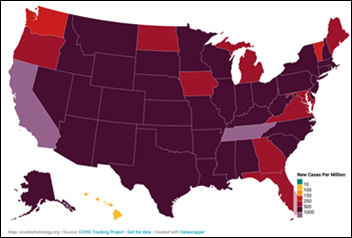
Friday set a US COVID-19 hospitalization record of 114,751 and another 2,751 deaths. Tennessee has the world’s worst infection rate per capita at 1,300 per million residents and rising, joining California as the only state whose rate exceeds 1,000. Tennessee announced Saturday tat it has passed 6,000 deaths, has 2,893 people hospitalized, and is showing a test positivity rate of 30%. COVID Tracking Project keeps having to make up new colors in extending beyond red to illustrate the uncontrolled US coronavirus spread. 

A newspaper investigation concludes that Florida stopped reporting backlogged deaths from October 24 to November 17, creating big drop in the death count right before and after the election. Governor Ron DeSantis has changed the reporting requirements multiple times and is accused by fired state COVID-19 data scientist Rebekah Jones of falsifying the numbers to support the state’s aggressive reopening, which he denies.  

FDA issues its Emergency Use Authorization to Moderna’s COVID-19 vaccine, with the first doses to be administered Monday.

A CDC panel recommends that people over 74 years of age and 30 million frontline essential workers get COVID-19 vaccine first, with Monday’s expected approval of those recommendations being sent to states as guidance. CDC says that 556,000 people in the US got their first shot in the past week.

image

Stanford Medicine medical residents and fellows protest at being mostly left out of its COVID-19 vaccine distribution plan, as only seven of the 1,300 made the list even though many of them are frontline COVID-19 caregivers. The health system and medical school apologized, explaining that their algorithm prioritized recipients based on work unit and age, but nobody noticed that house staff were skipped over because they don’t have an assigned location that indicates their involvement with COVID-19 patients. Stanford University is of course a globally recognized Silicon Valley center for AI excellence, but perhaps its humans – especially the non-executive ones — needed to be more involved in double-checking how its AI evaluates equitable access. 

In the UK, Boris Johnson imposes a full emergency lockdown of London and southeast England following the rapid spread of a new COVID-19 strain that is responsible for 60% of new infections, which doubled in London in the past week. The new strain is no deadlier and offers no new vaccine resistance and is therefore curious but not alarming to epidemiologists, but it does appear to be more contagious.

image

A United Airlines passenger with COVID-19 symptoms dies on a flight from Orlando to Los Angeles, which his wife says he was able to board because he lied that he was symptom-free on the passenger declaration form. Three fellow passengers performed CPR for an hour until the flight landed in New Orleans after being diverted, and one of them is now experiencing COVID-19 symptoms.


Other

University Hospital (GA) says that hackers are attempting to penetrate its Epic MyChart system 550 times each day, while its email security system is rejecting 20% of incoming email due to security threats.

Seattle-area drugstore chain Bartell Drugs will pay $800,000 to settle DOJ charges that it failed to implement a computer system to verify prescriber licensure, which allowed pharmacists to fill 400 opioid prescriptions that were issued by doctors whose licenses had been suspended, some of whom had been sanctioned or indicted for federal violations. The chain is being sold to Rite Aid for $95 million.


Sponsor Updates

  • Pivot Point Consulting releases its new Quarterly Pivot report, focusing on trends to watch in Q1 2021.
  • Pure Storage makes available Pure as-a-Service in the AWS Marketplace, and launches its Cloud Block Store Efficiency Guarantee to improve cloud economics.
  • Zynx Health publishes a review of COVID-19 vaccine administration guidelines as the FDA authorizes emergency use of the Pfizer/BioNTech COVID-19 vaccine.
  • Meditech customer Sunderland Royal Hospital becomes the first hospital in the North of England to earn HIMSS Stage 7 recognition.

Blog Posts


Contacts

Mr. H, Lorre, Jenn, Dr. Jayne.
Get HIStalk updates.
Send news or rumors.
Contact us.

125x125_2nd_Circle

Katie the Intern 12/18/20

December 18, 2020 Katie the Intern Comments Off on Katie the Intern 12/18/20

image 

This week’s focus was on how healthcare has begun to change from a fee-for-service model to a value-based model for some providers. I interviewed Matt Lambert, MD, who has served as chief medical officer at Curation Health for the past two years. Dr. Lambert is a practicing provider who has also authored multiple books about healthcare. 

Curation Health is a technology and services company that helps healthcare providers and organizations transition from fee-for-service to value-based care, Dr. Lambert said. Curation Health uses tools to sort data so that providers can capture certain diagnoses for their patients. 

“Physicians never signed up to be data managers,” Dr. Lambert said. “So anything that we can do to help manage data and the regulation for them is usually pretty well received by providers.” 

I know that 99% of HIStalk readers probably know the difference between the two models of healthcare application, but as someone new to the IT field, I asked Dr. Lambert just how different they are. Value-based care reimburses on outcomes, while fee-for-service reimburses on volume, he said.

“The currency of value-based care is some very specific diagnoses that need to be made and need to be managed on a yearly basis in order for you to get compensation for managing the complexity of your patients,” Dr. Lambert said. 

As we talked about what Curation Health does, we also focused on how the pandemic impacted the trend of shifting to value-based care.

“This shift was happening already,” Dr. Lambert said. “The payers are always more nimble than the providers. Providers are lagging in the transition into this.” Health systems and providers are built on a system that requires month-to-month, short-term investments, but value-based care gets reimbursed yearly.

“Just by definition, you have to have the ability to look a year down the road and say, hey, we’re going to make some changes to our business model now, it’s going to pay off in a year,” Dr. Lambert said. “But most health systems aren’t created that way. They’re built off of fee-for-service models.”

Establishing reimbursement for care isn’t the only struggle that providers face when adjusting to value-based care. Dr. Lambert said providers also have to learn how to document their care differently, as well as work against the typical workflow of an EHR. The typical workflow is designed to have an output of an E&M code (evaluation and management, got it), which is a fee-for-service model component.

“One of the reasons why providers are struggling in the shift to value-based care is because we’re asking them to do something they weren’t trained to do with a tool that is not designed to do it,” Dr. Lambert said. 

The shift towards value-based care was implemented in 2008, and providers are still struggling to make the switch. I wondered how COVID-19 affected it.

Dr. Lambert said that COVID-19 slowed down the ability for providers to physically see patients in a face-to-face manner because in order to get credit for managing a patient, providers have to physically see them. That is, providers used to have to do so. 

Dr. Lambert mentioned that the initial shift to value-based care was driven by CMS (Centers for Medicare and Medicaid Services, noted). When the pandemic hit, CMS was quick to deregulate the rules for reimbursement through value-based care.

“Telehealth became eligible for a risk-adjustment visit for value-based care visit,” Dr. Lambert said. Here, telehealth strictly means a video visit, as “telephonic” visits do not qualify as value-based care as of now. Dr. Lambert said CMS removed the HIPAA compliance requirements for a lot of visits, allowing more access to patients and a wider medium for providers. 

Though moving to value-based care is not the easiest task, adjusting to this new system of care is important for providers. According to Dr. Lambert, it isn’t just a care-based adjustment, but also a business one. 

“This is how the payers are going to reimburse you, and moving forward, if you continue to do things the same way, you’re going to fall behind in the way you get reimbursed,” Dr. Lambert said. 

Dr. Lambert also said value-based care is set up to compensate for and incentivize different things. It is set up to incentivize information sharing and care coordination, which encourages patients to be engaged with doctors and their health. It does so in a way that encourages outcomes, not just in the idea that a patient has to come back the following week or month, he said. 

Overall, Dr. Lambert says value-based care will to continue to grow through commercial and public incentives. He said there will be a lag into 2021 due to all the closures and limited care from the pandemic. But afterwards, there will be an increase in utilization and in compensation. He isn’t sure exactly where value-based care is going, but did say telemedicine improved dramatically through COVID-19 and will continue to do so. Perhaps that intersection of telemedicine and value-based care will be a sweet spot in providing better care and compensation for all. 

“It’s not very often in our lives that we try something new until circumstances force us to do that,” Dr. Lambert said.

That’s it for this week! Thanks, HIStalk! 

Katie The Intern

Katie

Email me or connect with me on Twitter.

Comments Off on Katie the Intern 12/18/20

Text Ads


RECENT COMMENTS

  1. RE NEJM piece: He shouldn’t future-conditional with “they can retreat, which might mean abdicating medicine’s broad public role, perhaps in…

  2. The sentence was "most people just go to Epic UGM" - that's people going to Epic's annual user conference and…

  3. Merry Christmas and a Happy New Year to the HIStalk crowd. I wish you the joys of the season!

  4. "most people just go to Epic" that's a problem because then EPIC becomes a monopoly in healthcare, if it isn't…

Founding Sponsors


Platinum Sponsors


Gold Sponsors


RSS Webinars

  • An error has occurred, which probably means the feed is down. Try again later.