Recent Articles:

Morning Headlines 5/14/21

May 13, 2021 Headlines Comments Off on Morning Headlines 5/14/21

Cedar Announces Agreement to Acquire OODA Health to Revolutionize the Consumer Financial Experience in Healthcare

Patient payments platform vendor Cedar will acquire competitor OODA Health for $425 million.

Boston-based tech company raises $8M to develop AI-powered CVD software

Elucid, a developer of cardiovascular diagnostic image analysis software, raises $8 million in a Series A funding round.

Biden-Harris Administration to Invest $7 Billion from American Rescue Plan to Hire and Train Public Health Workers in Response to COVID-19

ONC will spend $80 million to train public health professionals to modernize the public health data infrastructure.

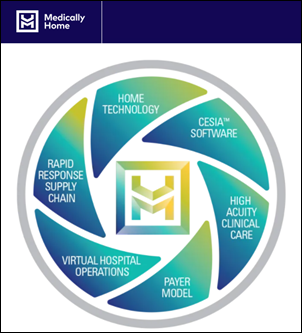
Mayo Clinic, Kaiser Permanente announce strategic investment in Medically Home to expand access to serious or complex care at home

Mayo Clinic and Kaiser Permanente make an unspecified investment in Medically Home, which offers technology and services to support delivering acute care and recovery services at home.

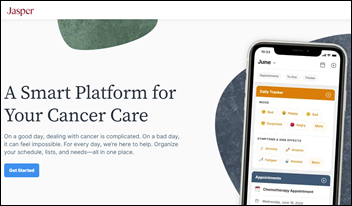
Jasper Health Launches Comprehensive Support Platform for Individuals With Cancer and Their Caregivers

Digital cancer care organization platform vendor Jasper Health launches with $7 million in seed funding, naming as its top executives two veteran leaders of CVS Health and Walgreens.

Comments Off on Morning Headlines 5/14/21

News 5/14/21

May 13, 2021 News 4 Comments

Top News

image

Patient payments platform vendor Cedar will acquire competitor OODA Health for $425 million.

OODA’s co-founder, chairman, and co-CEO is Giovanni Colella, MD, who also co-founded Castlight Health and founded RelayHealth.

Colella founded OODA with two other former Castlight executives in 2017.


Reader Comments

image

From Notinda House: “Re: Salesforce. Sad to see them let go another leader of their healthcare vertical, Ashwini Zenooz. Like a few of her predecessors, she was only there two years. Not sure her VA experience is a good fit for a sales focused organization. Do you think SF has a hiring problem in that they hire the wrong leader consistently? Or maybe they do a good job because they are consistent?” The LinkedIn of radiologist Ash Zenooz, MD says she left her Salesforce job as chief medical officer / GM in April and is now president and chief medical officer of Commure.

From Gladhander: “Re: HIMSS21. Predictions on attendance? Time to run another poll about who’s going?” No and no. All I can say is that I’ll be there to recap whatever happens. I won’t have a booth, but I’ll do my usual guide to what HIStalk sponsors will be doing there, cover everything I hear in the exhibit hall and hallways, run photos of what it looks like, and share any big announcements (if indeed companies are holding any back for the conference’s first day). As I wrote the other day, unlike previous years, many registrants are just carrying over their use-it-or-lose-it HIMSS20 registration, plus hotels can be cancelled up until right before the conference starts with minimal penalty (zero if by July 12, one night’s stay after that), so no amount of data will predict who will actually show up. The good news is that COVID-19, as it relates to both infection risk and hospital workload, should not be a factor. I don’t have any sage wisdom for companies that are trying to decide whether paying full price to participate in a potentially scaled-back conference is worth it, although perhaps the potential competitive penalty for sitting out is light since the full, normal HIMSS22 will be just six months later.


HIStalk Announcements and Requests

Reader Lloyd’s generous donation, with matching funds applied from my Anonymous Vendor Executive and other sources, fully funded these Donors Choose teacher requests:

  • A document camera for Ms. C’s sixth grade class in Provo, UT.
  • Science kits for Mr. C’s elementary school class in Westminster, CA.
  • Science mystery kits for Ms. L’s eight grade class in El Paso, TX.

Listening: Who bass player John Entwistle, in this remarkable video that isolates his work on “Won’t Get Fooled Again” in a live performance. He looks entirely bored while flawlessly and apparently effortlessly playing the most complex and musically rich bass lines imaginable, surely later inspiring Rush’s Geddy Lee to forget just laying down root notes and instead rip it like a lead guitarist. The song is simple and I would not have suspected that so much bass artistry was happening underneath, especially since I don’t particularly like the song. He died in 2002 at 57.


Webinars

June 3 (Thursday) 2 ET: “Diagnosing the Cures Act – Practical Prescriptions for Your Success.” Sponsor: Secure Exchange Solutions. Presenters: William E. Golden, MD, MACP, medical director, Arkansas Medicaid; Anne Santifer, executive director, Arkansas Department of Health – Office of Health Information Technology; Kyle Meadors, principal, Chart Lux Consulting. A panel of leading experts will provide practical guidance on how to prepare for the Cures Act. Will it upend your business model? What is information blocking? How can standardized technologies be applied to meet Cures Act requirements? What must I do now as well as in the next five years?

Previous webinars are on our YouTube channel. Contact Lorre to present your own.


Acquisitions, Funding, Business, and Stock

image

“Hospital at home” and decentralized clinical trials platform vendor Huma raises $130 million in a Series C funding round, increasing its total to $200 million. The London-based company, which changed its name from Medopad a year ago, will use the money to expand its platform to the US, Asia, and Middle East.

image

Mayo Clinic and Kaiser Permanente make an unspecified investment in Medically Home, which offers technology and services to support delivering acute care and recovery services at home. The company had previously raised $65 million.

Regulators in England block Imprivata’s planned acquisition of Manchester-based digital identity vendor Isosec, which has 120 NHS customers. The Competitions and Markets Authority said that the companies are rivals in the digital identity verification business and removal of a competitive threat to Imprivata would negatively impact taxpayer value.

image

New York City-based digital cancer care organization platform vendor Jasper Health launches with $7 million in seed funding, naming as its top executives two veteran leaders of CVS Health and Walgreens.

image

Amwell reports Q1 results: revenue up 7%, EPS –$0.16 versus –$0.58, beating earnings estimates but falling short on revenue. Shares dropped nearly 25% Thursday following the report and have shed nearly 60% of their value in the past 12 months, valuing the company at $2.4 billion.

DrFirst closes a $50 million equity investment that increases its total raised to $118 million.

CPSI acquires encoder solutions provider TruCode.


Sales

  • Penn Highlands Healthcare (PA) selects Infor CloudSuite Healthcare and Cloverleaf Cloud.

Announcements and Implementations

In the UK, Cognetivity will use InterSystems IRIS for Health to integrate its IPad-based early detection questionnaire for early dementia detection, which it Cognetivity says can identify the condition up to 15 years earlier than conventional methods.

image

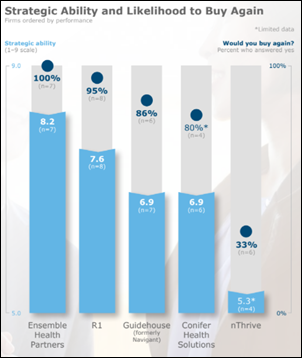
A new KLAS report on revenue cycle outsourcing finds that the mostly mid-sized clients of Ensemble Health Partners are highly satisfied, while R1’s clients tend to be larger and are happy with the company’s direction and technology. Those companies top the “most likely to buy again” list. More than 80% of NThrive’s clients are dissatisfied and the company trails competitors in every segment in which the company is rated by KLAS, while 43% of Conifer Health Solutions clients report dissatisfaction because they say the company is not proactive or innovative.


Government and Politics

ONC will spend $80 million to train public health professionals to modernize the public health data infrastructure, part of the White House’s $7.4 billion in spending under the American Rescue Plan to expand the public health workforce.

image

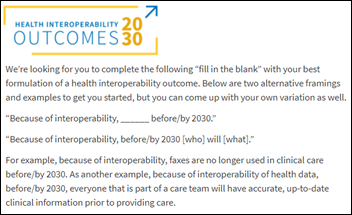
ONC invites submissions for outcome statements related to its Health Interoperability Outcomes 2030 project.


COVID-19

image

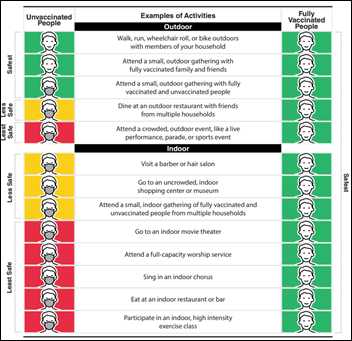
New CDC guidance says that fully vaccinated Americans don’t need to wear masks or distance from others under any circumstances, including while indoors or outdoors and in gatherings of any size, except where local regulations or a business’s rule require it or when using public transportation. CDC Director Rochelle Walensky, MD, MPH announced, “If you are fully vaccinated, you can start doing the things that you had stopped doing because of the pandemic. We have all longed for this moment when we can get back to some sense of normalcy.”

The seven-day rolling average of US COVID-19 deaths was at 629 Wednesday, the lowest since last July. That’s down more than 80% since the peak in mid-January. US deaths are at 580,000.


Other

A security researcher discovers an unprotected online database that contained the records of 200,000 patients of a national disability evaluation services company based in Jacksonville, NC. United Valor Solutions responded quickly to have its (unnamed) contractors shut down public access, although the researcher also found ransomware-related files on the server.

image image

Ocean City, MD first responders celebrate the heroism of Atlantic General Hospital (MD) CIO Jonathan Bauer, who saw that a two-year-old girl had been ejected – still in her car seat — into the Assawoman Bay during a five-car crash. He dove off the bridge, which was 30 feet above water that is five feet deep, and kept the girl’s head above water until both were rescued by boat. He asked to remain anonymous, but the city wanted to recognize him. The toddler is fine.

jf

Forbes is right – I have never heard of Judy “Falkner.” The accompanying video is as lame as the headline writer’s spelling skills (also botched was writing “women” instead of “woman”).  Was there a time when Forbes had credibility?


Sponsor Updates

  • EClinicalWorks posts a new episode of its podcast titled “How Software Updates Promote Usability and Patient Safety.”
  • Critical event management company Everbridge completes its acquisition of XMatters to accelerate digital transformation for enterprise IT and cyber resilience.
  • Healthwise partners with the City of Boise, Idaho to develop and open the Hillside to Hollow Reserve and trailhead.
  • Optimum Healthcare IT publishes a white paper titled “Governance: What’s the Big Deal?”
  • Fast Company recognizes Jvion’s COVID Community Vulnerability Map with an honorable mention in its 2021 World Changing Ideas Awards.
  • St. Luke’s Health System uses Meditech’s self-scheduling for COVID-19 vaccination.

Blog Posts


Contacts

Mr. H, Lorre, Jenn, Dr. Jayne.
Get HIStalk updates.
Send news or rumors.
Contact us.

125x125_2nd_Circle

EPtalk by Dr. Jayne 5/13/21

May 13, 2021 Dr. Jayne Comments Off on EPtalk by Dr. Jayne 5/13/21

Not surprisingly, the big news around the virtual water cooler this week was the approval of the Pfizer COVID-19 vaccine for the 12- to 15-year-old age group. In my community, most of the health system vaccination sites began to schedule vaccination appointments for that group for Thursday and Friday in advance of the expected approval. Only the retail clinics held the line, and my guess is they were frantically updating websites Wednesday evening. Colleagues in several other states reported that vaccination sites weren’t waiting for the final CDC approval but took the FDA emergency use authorization as enough to go ahead and start vaccinating younger teens on Tuesday. It will be interesting to see what happens to vaccine rates now, with many parents wanting their children vaccinated so they can get “back to normal.”

Another boost to vaccination rates, particularly among young healthy men, might be this article that explores concerns about COVID-19 causing erectile dysfunction. Researchers at the University of Miami Miller School of Medicine found detectable viral RNA in the penile cells of COVID-19 positive patients at a substantial interval after the initial infection. They conclude that the same kinds of cellular dysfunction caused elsewhere by COVID-19 infections may be contributing to erectile dysfunction. I’ve been saying for a while now that this is a weird virus and we’re a long way from understanding exactly what it can do. I suspect this isn’t the last of the unusual complications that we’ll learn of.

Another journal article that crossed my desk this week should be near and dear to many healthcare IT professionals. Molecular Psychiatry published a piece describing how “Habitual coffee drinkers display a distinct pattern of brain functional connectivity.” Researchers used functional magnetic resonance imaging (fMRI) to assess brain changes. The findings support an association between coffee consumption, improved motor control, cognitive focus, and alertness. Similar changes could also be seen in the brains of non-coffee drinkers after consuming even a small amount of coffee. I’m not a huge coffee drinker, but do like an iced coffee from time to time, although too much tends to make my hands shake, which is not good when you have to sew people up for a living. Maybe I’ll be able to enjoy it more often now that I’m no longer in the urgent care trenches.

We’ve certainly moved into a new phase of the pandemic, and that’s the one where drug companies begin direct-to-consumer advertising for COVID-19 related treatments. Regeneron has started its advertising campaign for monoclonal antibodies. The advertisements are permissible under the FDA’s emergency use authorization, and four commercials have been developed. As with nearly every other drug ad, patients are told to “ask your doctor” about the treatment. We screened people for potential treatment at my former employer, and the reality was that very few patients qualified and even fewer actually wanted to go to the infusion center for a treatment. It will be interesting to see if the ads actually drive business.

clip_image001

The HIMSS21 schedule for in-person general education sessions is now live. I went ahead and dropped the keynotes, exhibit hall times, and registration info on my calendar, but it’s hard to get excited about choosing sessions just yet. Many of my healthcare IT colleagues are still debating whether they’re going or not, wondering if the expense will be worth it, especially if they have to pay out of pocket. My local university is still on a travel ban as are several of my favorite vendors, so right now very few of my besties are planning to attend. Those of us going will make the most of it, though, and it will certainly be good to see people in person.

clip_image003

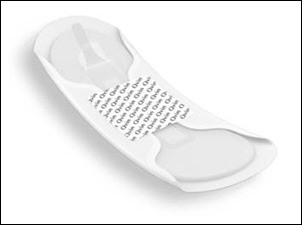
Sometimes I run across products that are solutions in search of a problem, and I’m fairly certain the Q-Pad by vendor Qvin fits this description. The device is a menstrual pad with an embedded test strip used for laboratory-based hemoglobin A1c testing. The company differentiates itself based on needle-free blood testing without regard for the fact that patients who are in need of hemoglobin A1c testing also need a variety of blood tests that aren’t available on their platform. Like any good device vendor, the company provides a smartphone app. Direct-to-consumer pricing is available on a one-time, monthly, or quarterly basis despite the lack of evidence for random testing in the menstrual-age population. The website contains a video interview with the founder, who says the device appeals to the “quantified self” crowd.

clip_image005

I’m a big fan of the Honor Flight Network and had the privilege of traveling on a flight with my favorite Korean War veteran. It’s an amazing experience that was curtailed by the COVID-19 pandemic, with only one flight going in 2020 before everything shut down. I was glad to see an outstanding application for virtual reality technology to help continuing honoring veterans, as T-Mobile partnered with Healium and the Honor Flight Network to virtually transport veterans to see their memorials in Washington, DC. Honor Flight is gearing up to restore the trips as soon as it is safe and practical, but the reality is that we will lose many of our WWII veterans before they can travel, and many more are not physically able to make the trip. Kudos to these organizations for their support of our veterans.

clip_image007

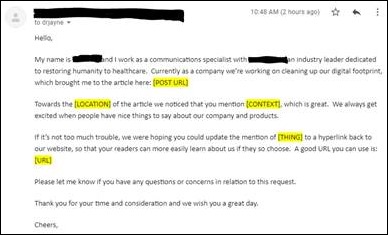
Marketing folks of the world – I highly recommend testing your email blast software on a small distribution list before just cutting it loose. Clearly the email I got didn’t format as intended, and since it’s supposed to be coming from a communications specialist, it doesn’t inspire confidence.

For fans of “The Six Million Dollar Man,” the time for “bionic” eyes has arrived. Researchers at the Keck School of Medicine at the University of Southern California have created the Argus II to provide limited vision to blind individuals. Although it’s currently limited to helping people recognize shapes and patterns, they hope to eventually provide the ability to see colors and details.

What’s your favorite technology from vintage TV that has become a reality, or that you can’t wait to see some day? Leave a comment or email me.

Email Dr. Jayne.

Comments Off on EPtalk by Dr. Jayne 5/13/21

Morning Headlines 5/13/21

May 12, 2021 Headlines Comments Off on Morning Headlines 5/13/21

$50 Million Follow-on Equity Investment from Sixth Street Growth Caps $135 Million Total in 2020-21 for DrFirst

Health IT company DrFirst announces a $50 million equity investment from Sixth Street Partners, bringing its total raised over the last 12 months to $135 million.

Ettain group, a Leading Provider of Talent Solutions, Acquires Bradford & Galt, an IT Staffing and Consulting Firm

Ettain Group acquires Bradford & Galt, a staffing and consulting firm specializing in EHR go-live support and training.

CPSI Announces the Acquisition of Medical Encoder Solutions Provider, TruCode LLC

CPSI, parent company of TruBridge, Get Real Health, Evident, and American HealthTech, acquires coding and revenue cycle optimization company TruCode.

Comments Off on Morning Headlines 5/13/21

Readers Write: AI is Essential to Stopping Further COVID-19 Spread and Limiting Future Pandemics — Here’s Why

May 12, 2021 Readers Write 3 Comments

AI is Essential to Stopping Further COVID-19 Spread and Limiting Future Pandemics — Here’s Why
By Sally Embrey

Sally Embrey, MSPH, MS is VP of public health and health technologies of DataRobot of Boston, MA.

image

It is safe to say that 2020 showed us the limitations of the US healthcare structure and a long-antiquated approach to public health and emergency preparedness. Under lockdown, it became clear how unequipped the world was to address the scope of the COVID-19 pandemic. Since the onset of the greatest healthcare crisis in our lifetimes, the strengths and weaknesses of our healthcare system came into clear focus, while the consequences of our failures will be felt for years to come.

But how do we move forward? In the United States, COVID-19 spread has varied widely, from states to cities and counties. This spring, as COVID-19 cases in Michigan, New York, and New Jersey were slowly declining, cases in Oregon were increasing at higher rates than anywhere else in the United States, according to The New York Times.

One thing that has been emphasized time and time again is that the absence of more complete, accurate, and representative data was a key and often missing factor in our ability to effectively respond to the COVID-19 pandemic. We also learned that the systems required to process that data were as equally important to delivering the insights needed. The pandemic has made the role of AI in the healthcare field essential to preventing and mitigating future pandemics.

Research groups worldwide built and deployed various AI-driven systems that sought to fight the pandemic. For example, researchers developed systems that automatically analyzed CT images to provide the probability of COVID-19 infection to rapidly detect COVID-19-related pneumonia. Since AI can locate lesions in seconds instead of hours, it can significantly reduce the workload for already overburdened physicians. Other models were developed and deployed throughout COVID-19 to help understand clinical severity and identify the patients most at risk of serious illness and even death. By deploying AI, healthcare systems could prioritize which patients needed to be hospitalized and provided immediate care, and early care was shown numerous times to help with health outcomes.

At the same time, AI systems gave the federal government and state governments insight into where resources were needed most critically. They utilized AI-driven long-term forecasting models to understand the scope and spread of COVID-19, as well as drive site selection during the vaccine trials by predicting where outbreaks were most likely to occur up to eight weeks before cases increased. This could forever change how we enroll individuals into clinical trials, which are typically constrained to research hospitals or highly manual processes. Improving and streamlining the approval of vaccinations is the golden ticket to infectious disease prevention.

Organizations across the healthcare and technology industries also stepped outside of the box to create at-home COVID-19 antigen tests, many of which have an accompanying gamified platform. By combining physical antigen tests with AI and an accessible digital platform, patients are better able to understand their risk of being contagious with COVID-19. Arming people with information about their COVID-19 risk through innovative solutions powered by AI is the solution for slowing and preventing future pandemics.

As a leading nation in health research and technology, we have a responsibility to do better, and we must ensure we can more quickly contain this type of outbreak in the future. By leveraging the importance of complete, accurate, and representative data and combining it with the power of AI and public-private coordination, we can and will be ready to stop future pandemics.

Readers Write: Providers’ Post-Pandemic Assessments of Telemedicine

May 12, 2021 Readers Write Comments Off on Readers Write: Providers’ Post-Pandemic Assessments of Telemedicine

Providers’ Post-Pandemic Assessments of Telemedicine
By Amanda Hansen

Amanda Hansen is president of AdvancedMD of South Jordan, UT.

image

Healthcare delivery has shifted dramatically since March 2020, when the COVID-19 pandemic hit. For many providers, telemedicine had fallen into the category of a “someday, maybe” service, not a practice essential that was regularly requested or required of them. But when social distancing mandates were enacted to reduce the potential for infectious exposures, demand and the subsequent adoption of telehealth skyrocketed.

About 90% of providers say they are conducting some of their patient visits via telehealth. They have rapidly scaled offerings to see 50 to 175 times the number of patients via telehealth than they did before the pandemic. Going forward, it is projected that virtual visits will account for $250 billion, or 20%, of what Medicare, Medicaid, and commercial insurers spend on outpatient, office and home health visits.

Given the rapid and event-specific changes to telemedicine’s applications, we were curious about the impact to independent practices and their impressions that will come to shape the future of remote clinical services. Are practices capitalizing on the promise that telemedicine saves them both time and money? What has the effect been on the patient experience? We were interested specifically in the following aspects of telemedicine provision:

  • Effect on time spent with patients.
  • Effectiveness in reducing barriers.
  • Impact of care costs.
  • Impact on quality of care

In early April. we partnered with nearly 200 select physician offices to conduct a survey addressing these very questions.

Access

An overwhelming majority of survey respondents, 75%, find that telemedicine reduces or eliminates barriers to care for their patients. For practices, this access is expanded without increasing staff or marketing costs.

The ability to provide effective care is a largely a function of provider availability and visit timing. In many segments of healthcare — such as mental health, primary care, and various specialties — the shortage of providers results in excessive wait times for appointments. Telemedicine makes providers more available and creates opportunities for additional visits, reducing barriers to care.

Convenience

Telemedicine enables flexibility for patients, streamlining care for those outside the immediate area. It also enables quicker resolution for diagnoses and prescribing. Practices offering telemedicine visits are able to divert patients from more costly and complex care settings like emergency rooms. Chronic care patients, in particular, are much more likely to visit with a care provider before the condition enters a crisis and maintain standard care continuity when it is seamless and simple. Convenience remains integral to reducing both barriers and cost of care.

Quality

Among survey respondents, 38% say they are providing more quality care using telemedicine. In one of our other recent surveys, 59% of providers said they feel they are able to provide higher quality care with telemedicine. In the early months of the pandemic, telemedicine allowed practices to remain open to provide the quality services their patients required. Today, the service allows practices to maintain and grow their patient volumes.

Engagement

Telemedicine enables 24% of responding providers to spend more time with patients, but engagement goes beyond time per appointment. Practices that integrate telemedicine with the EHR and other practice management tools like portals, scheduling, text alerts, and claims processing serve patients who are more engaged in their own care. Solutions that meet patients where they are make care management functions seamless and simple. With telemedicine as part of the engagement strategy, patients are getting the same healthcare experience online that they have in traditional, onsite visits, and can even shop for doctors who provide the service and have availability at set times. Engaged patients are healthier patients.

For providers, telemedicine is serving a new purpose. With 271 telehealth case types (with CPT codes) reimbursable by CMS, there are many opportunities to expand utilization and revenue streams. In the decade prior, physicians often engaged in patient phone or video calls without any reimbursement whatsoever. Now, providers are able to deliver services to those who need it with a technology that has proven effective and advantageous.

By reducing costs and breaking down barriers, telemedicine is improving the quality and efficiency of care delivery.

Comments Off on Readers Write: Providers’ Post-Pandemic Assessments of Telemedicine

Readers Write: Sharing Diverse Patient Data to Support Clinical Trials: Can We Afford Not To?

May 12, 2021 Readers Write Comments Off on Readers Write: Sharing Diverse Patient Data to Support Clinical Trials: Can We Afford Not To?

Sharing Diverse Patient Data to Support Clinical Trials: Can We Afford Not To?
By Monica Matta

Monica Matta is head of operations and GM of provider business at COTA of Boston, MA.

image

Flatly,  we cannot.

Clinical trials are the foundation of innovation in the fight against hard-to-treat diseases, including cancers. For the millions of people living with cancer, and the millions more who will be newly diagnosed this year, clinical trials are critically important for opening up new treatment options and paving the way for improved outcomes.

Cancer may affect everyone, but not everyone has equal access to the resources and research projects designed to combat this complex group of diseases. Certain racial and ethnic groups are systematically excluded and chronically disenfranchised when it comes to screening, testing, and clinical care.  These groups, including individuals affected by the socioeconomic and environmental determinants of health, often experience worse health outcomes and mortality at higher rates.

Black patients, for example, are significantly more likely than members of any other group to die from many cancers, including prostate cancer, breast cancer, and multiple myeloma. While black patients account for anywhere from 15-20% of the national incidence of these diseases, they only comprise 3-5% of clinical trial representation. This is a huge problem.

Clinical trials for new therapies are often not truly representative of the populations the therapies will be treating. Lower participation rates not only leave patients without access to potentially ground-breaking therapies, but also leave investigators with worrisome gaps in knowledge about the efficacy and safety of these treatments in the wider, real-world population.

The ethics are clear. There are also financial arguments supporting the need for increased diversity in clinical trials. If manufacturers and payers cannot verify that new therapies are going to achieve the desired result across all potential populations, why should they invest time and resources in distributing these agents to patients?

We simply cannot afford, both morally and more tangibly, not to focus on architecting more representative and inclusive clinical trials.

We can begin to meet the needs of underserved and underrepresented populations by encouraging more individuals to participate in clinical trials and prioritizing the evaluation of real-world outcomes with an emphasis on privacy and ensuring equitable access to the results. In order to do so, investigators must have access to rich, curated, diverse real-world data that accurately capture the experience and outcome of patients from all backgrounds.

Healthcare providers, including cancer centers, oncologists, and other specialists, remain a critical conduit for facilitating education about the benefits of data sharing and connecting patients with clinical trial opportunities. We must continue to build strong relationships between patients, providers, and clinical trial sponsors to gain the trust and input of diverse populations.

As we look to the future, however, there is much potential in leveraging technology and portals to clinical research marketplaces that allow individuals to grant access to their personal data assets for specific, well-defined use cases. These marketplaces will likely include some type of data dividends as compensation for participation. Patients can then become the direct purveyors and benefactors of their data, creating an entirely new model which reengages the right stakeholders in the conversation once more.

As we develop these ideas and tackle the myriad issues around the creation of such a system, we will need to keep informed, empowered patients at the center of all we do. Privacy, security, and equity must remain paramount to ensure our efforts are transparent, sustainable, and effective.

Whatever the next generation of data sharing will look like, we have opportunities right now to meet our obligations to patients. By pairing technical innovations with clinical expertise, we can lay the foundations for more expansive use of real-world data from traditionally underrepresented populations. We can continue to prioritize de-identification and patient privacy as we grow our data-sharing networks to encourage contribution and participation. We can proactively connect with representatives from underserved groups to provide education about clinical trials. We can keep working across the healthcare enterprise to refine our research approaches, expand access to breakthrough therapies, and support patients throughout their healthcare journey.

This is a moral imperative. For the sake of our neighbors, friends, families, and colleagues, we cannot afford not to be inclusive when it comes to clinical trials for cancer and the real-world evaluation of new protocols. The choices we make now will directly impact the lives of millions as we look to a future where sharing patient data with researchers is empowering and rewarding for all.

Comments Off on Readers Write: Sharing Diverse Patient Data to Support Clinical Trials: Can We Afford Not To?

HIStalk Interviews Stephen Gorman, CEO, RCxRules

May 12, 2021 Interviews Comments Off on HIStalk Interviews Stephen Gorman, CEO, RCxRules

Stephen Gorman is CEO of RCxRules of Burlington, VT.

image

Tell me about yourself and the company.

Like many people in this industry, I’ve spent my entire career in the healthcare IT space. I started out working at IDX in the early ‘90s when I was 24, which now seems like a long time ago. I held various leadership positions at IDX and GE Healthcare before joining forces with revenue cycle experts from a longtime IDX customer to start RCxRules back in 2010.

RCxRules helps medical groups improve their billing and coding, which is admittedly a pretty crowded market. There are a couple of things that make RCxRules unique. The first is that our technology focuses on harnessing our customers’ deep understanding of their unique billing and coding challenges. We then take that expertise and help them automate as much of their billing and coding process as possible.

We also have a deep appreciation for just how challenging the healthcare industry is. We appreciate that successful IT projects require a real partnership with our customers to be successful. We pride ourselves on rolling up our sleeves and working closely with our customers to deliver a solution that really meets their needs.

To what extent are provider organizations using customizable rules for billing?

The short answer is customized rules are used all the time. When we started RCxRules, we incorrectly believed our customers would find our “standard” billing rules and guidelines to be most valuable. We quickly learned it was our ability to easily create custom rules that customers appreciated the most.

As we dug into this, it made sense. With the adoption of EMRs, doctors are now entering the billing information directly into these systems, and we all know doctors are not billers or coders. In the old days, doctors scribbled markings on paper charge slips to indicate billing information. Billers then performed the very valuable but underappreciated work of translating that charge slip into a set of billing codes that insurance companies would accept. The billers eventually learned the idiosyncrasies of the doctors they supported and intuitively corrected their specific issues. They provided a great deal more value than simple data entry.

To make this process work well in the current electronic and EMR-centric world, our technology had to harness the knowledge of these billers. We learned that our technology had to be flexible enough to deal with physicians’ idiosyncrasies, and that a one-size-fits-all approach doesn’t meet the customers’ needs.

What billing challenges have resulted from expanded telehealth volume?

While expanding telehealth was a great move for both patients and providers, it really wreaked havoc on the billing process, especially back in April and May of 2020 when CMS and other payers were scrambling to liberalize the use of telehealth. Pre-pandemic, medical groups needed to use certain codes and modifiers to designate a telehealth visit, and these codes were designed to downgrade the reimbursement rate. A critical aspect of the telehealth expansion was normalizing the reimbursement with traditional face-to-face visits. So literally overnight, the payers then wanted different codes and modifiers to reflect that the care was being provided via telehealth, but that the visit qualified for normal reimbursement levels.

Telehealth billing is still complicated, especially with different payers having different policies, and our product helps manage this complexity. But at least now the guidelines aren’t changing every week as they were back in the spring of last year. The next big challenge is going to come when the public health emergency ends and the payers establish their long-term policies for telehealth.

What technologies and processes, especially those involving physicians, are needed to successfully move to value-based reimbursement?

In some respects, moving to value-based care models is extraordinarily challenging. But the concept is pretty simple. Value-based care models focus on compensating physicians for spending the right amount of time with their patients to deliver the necessary care. Sicker patients need more care and attention, and therefore money more to treat. At its core, this is an intuitive concept that allows physicians to get off the fee-for-service treadmill and allocate time based on clinical need.

This simple concept becomes very challenging in a few ways. The first being that physicians have to live in two worlds, fee-for-service and value-based models, which have different incentives and drive different behavior. The second is the actuarial-like accounting and reporting that is necessary to allocate the right amount of money to groups based on the health of their patients. This is where HCC coding comes in. Older and sicker patients cost more to care for than younger and healthier patients. Again, it is an easy concept to grasp, but the devil is definitely in the details.

The bottom line is that the physicians need help succeeding in this new model. The staffing profile and technology that are optimized for fee-for-service don’t work in value-based models. The physicians need help clinically and administratively. Clinically, they need to staff care teams that can support both physicians and patients, and they need data on which patients need the most care. They can get this data either from their own population health solution or from their payers. Administratively, the priority is utilizing HCC coders and HCC technology to ensure the physicians’ good work with patients is correctly reported to the payers so the right amount of money is allocated for care.

What are the company’s priorities over the next 3-5 years?

Our customers are large medical groups. We fully appreciate the challenge they are living through balancing the fee-for-service world with the value-based care world. It’s the proverbial “foot in two canoes” challenge. Most medical groups have more priorities they want to accomplish in any given year than resources to get them done. They sometimes talk of feeling like they’re on a treadmill that keeps speeding up every year.

Our focus over the next three to five years will be the same as our focus over the last 10: helping customers get off that treadmill. We will continue to build and deliver solutions that remove as much manual effort from this complex billing and coding process as possible. We want to free up our customers’ time so they can accomplish more of their priorities.

Comments Off on HIStalk Interviews Stephen Gorman, CEO, RCxRules

Morning Headlines 5/12/21

May 11, 2021 Headlines Comments Off on Morning Headlines 5/12/21

Aetion Closes $110M Series C Funding Round Led by Warburg Pincus

Aetion, which offers a real-world evidence platform for drug companies and payers, raises $110 million in a Series C funding round, increasing its total to $212 million.

Nuance Announces Second Quarter 2021 Results

Nuance, in the midst of being acquired by Microsoft, announces Q2 results: revenue up 10%, adjusted EPS $0.20 versus $0.16.

Huma, which uses AI and biomarkers to monitor patients and for medical research, raises $130 million

“Hospital-at-home” company Huma (formerly known as Medopad) raises $130 million in a Series C funding round.

Memora Health Closes $10.5M Financing Led by Andreessen Horowitz to Modernize Care Delivery

Automated care workflow company Memora Health raises $10.5 million.

CPSI Announces First Quarter 2021 Results

CPSI reports Q1 results: revenue down 3%, EPS $0.28 versus $0.28, beating estimates for both.

Comments Off on Morning Headlines 5/12/21

News 5/12/21

May 11, 2021 News Comments Off on News 5/12/21

Top News

image

Aetion, which offers a real-world evidence platform for drug companies and payers, raises $110 million in a Series C funding round, increasing its total to $212 million.

Former FDA Commissioner Scott Gottlieb, MD serves on the company’s board.


Reader Comments

From Mr. F: “Re: HIMSS. I am a long-time member, speaker, and volunteer for HIMSS, but for the first time ever I find myself on the vendor side. We are about to pull the trigger on investing in exhibiting so I asked HIMSS to share as of today (91 days prior to the conference) how is registration looking compared to 91 days prior to the start of the 2019 conference. I was provided the following from HIMSS — approximately 2,800 registered in-person attendees for HIMSS21 (made sure they removed the digital-only participants) compared to 2,000 registered attendees this time in advance of the 2019 conference. The HIMSS employee also commented that it is a significantly larger proportion of C-Suite attendees and extremely high engagement on the conference website.” It seems odd that a conference with 42,000 attendees in 2019 had less than 5% of them registered 90 days out since it’s hardly an impulse item and you lose out on early bird pricing. That makes me wonder how many of the total headcount were full-paying registrants versus exhibitors, students, etc. I suppose those exhibitors who rent the HIMSS21 attendee list will get an early idea of attendance and job breakout. There’s also the question whether the many folks who rolled over their HIMSS20 registrations for free will actually show up to HIMSS21 given their unprecedented lack of skin in the game. Exhibitor count is at 462. I assume Mr. F’s pseudonym identifies them as a fellow fan of “Arrested Development,” to which I extend them a belated Happy Cinco de Cuatro.

From Job Hopper: “Re: employment. The near end of the pandemic seems like a good time to start job-hunting, so I am.” I expect a heightened level of employee churn over the next several months as folks start to feel free to move around after a long hibernation, companies are likely to be hiring, and remote work policies become a bargaining chip. That will be magnified by the recruiting efforts of new companies that are flush with investor cash and need more bodies to chase the pitch deck promises of hockey stick growth.

From Bama Jelly: “Re: Ro and other telehealth prescription companies. What standards do you suppose they use in evaluating a ‘patient’ who will become a ‘customer’ only if the doctor clears them?” Probably the same as my thankfully short-term vendor days in which I was tasked with filling out zillion-page RFPs — the answer is always “yes” unless (a) all possibilities have been exhausted, including custom programming and manual intervention; and (b) even then, someone in sales will probably twist your arm into semi-agreeing so that they can override your “no” to “yes” given the lack of a “sort of” as an option. I would be shocked if the hired gun doctors aren’t retained based on their percentage of evaluations that result in prescriptions, which they can probably justify by the minimal vetting that happens in the office anyway and that they can save time and thus make more money by going straight to yes. I would also wager that the forms that patients fill out nudge them into saying whatever it takes to get what they’ve already decided they want. Billions of dollars of investment has been poured into companies whose business model is based on hiring rubber-stamp doctors to bypass the good-intentioned by often bureaucratic prescribing process. I’ve known doctors over the years who just did this on their own and kept the proceeds for themselves, so mass corporatization is the only new feature.


HIStalk Announcements and Requests

image

Welcome to new HIStalk Platinum Sponsor Twistle. The Albuquerque, NM-based company uses secure, patient-centric communication to drive care plan and protocol adherence, improve outcomes, lower costs, and build brand loyalty. A library of multi-disciplinary clinical communication pathways and best practices, combined with remote physiologic monitoring capabilities, generates clinical, financial, and operational ROI, such as 90% patient engagement rates, 20% improvement in medication / device adherence, 32% fewer readmissions, and more. Care teams realize productivity gains through the automatic initiation of personalized, HIPAA-compliant message pathways, and alerts and dashboards that focus attention on patients that require early intervention. Twistle enhances virtual healthcare initiatives by keeping patients on track as they navigate care journeys. The company offers case studies from Virginia Mason, Providence, AdventHealth, ChristianaCare, Swedish, and others. Check out the video, “The Narrated Patient Experience with Twistle.” Thanks to Twistle for supporting HIStalk.


Today I learned a fun saying from the Internet: “the plural of anecdote is not data.” I will pair that with the Twitter bio of my favorite COVID-19 information source Ashish Jha, MD, MPH, which says “an ounce of data is worth a thousand pounds of opinion.”

Dear companies and PR firms, I genuinely appreciate that you are often now including a LinkedIn bio link to your company new executive hire announcements since that’s where I look for what I need for my “People” section (advanced degrees, previous job, and headshot).


Webinars

June 3 (Thursday) 2 ET: “Diagnosing the Cures Act – Practical Prescriptions for Your Success.” Sponsor: Secure Exchange Solutions. Presenters: William E. Golden, MD, MACP, medical director, Arkansas Medicaid; Anne Santifer, executive director, Arkansas Department of Health – Office of Health Information Technology; Kyle Meadors, principal, Chart Lux Consulting. A panel of leading experts will provide practical guidance on how to prepare for the Cures Act. Will it upend your business model? What is information blocking? How can standardized technologies be applied to meet Cures Act requirements? What must I do now as well as in the next five years?

Previous webinars are on our YouTube channel. Contact Lorre to present your own.


Acquisitions, Funding, Business, and Stock

CPSI reports Q1 results: revenue down 3%, EPS $0.28 versus $0.28, beating estimates for both. CPSI shares are up 33% in the past 12 months versus the Nasdaq’s 47% gain, valuing the company at $444 million.

Nuance announces Q2 results: revenue up 10%, adjusted EPS $0.20 versus $0.16. The company’s acquisition by Microsoft remains on track, to be closed by the end of the year.

image

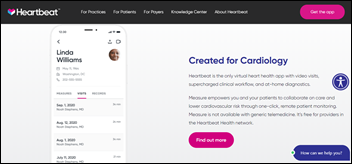
Heartbeat Health raises $20 million in a Series B funding round. The New York City-based company offers a cardiovascular care management platform that includes telemedicine, remote diagnostics, and digital health programs. I interviewed CEO Jeffrey Wessler, MD last year.

image

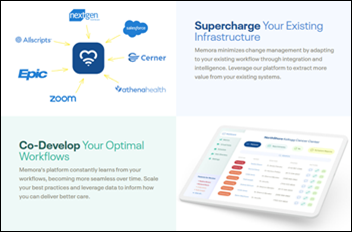
Automated care workflow company Memora Health raises $10.5 million. The company, which launched out of Y Combinator in 2018 with its proprietary “Felix” software and six employees, now serves patients at 55 healthcare facilities with a staff of 22.


Sales

  • The Oklahoma Health Care Authority selects Orion Health’s Amadeus data-sharing software to power its statewide HIE, set to go live this fall. Consulting firms HealthTech Solutions and Cureous Innovations will also assist with HIE development.
  • Jackson Hospital (FL) will implement Emerge’s ChartScout and ChartPop medical record data search, visualization, and reporting software.
  • Tandigm Health (PA) selects NextGate’s Enterprise Master Patient Index and Provider Registry.
  • Temple University Health System chooses ElectrifAi’s machine learning models for contracting and financial accounting.

People

image

Vish Anantraman, MD, MS (Northwell Health) joins Mayo Clinic as CTO.

image

Digital voice assistant company Suki promotes Erin Palm, MD to VP of clinical.

image

Wes Cronkite (Bright Spring Health Services) joins CPSI in the new role of chief innovation officer.

image image

Edifecs names Sundar Shenbagam (Oracle) SVP of engineering and Scott Davis (MedeAnalytics) associate VP of product marketing and demand generation.

image

AMIA hires Tanya Tolpegin, MBA (American Academy of Audiology) as CEO, returning to pre-Don Detmer separation of the CEO (hired) and president (elected) jobs in which the former manages the organization and the latter handles the science and policy.

image

Loyal hires Tyler Bennett, MS  (Icebreaker) as VP of operations and analytics.

image

GetWellNetwork hires Todd Strickler, MBA (Marriott International) as SVP of product.


Announcements and Implementations

image

Olive establishes an AI command center at TriHealth’s offices in Cincinnati to help the six-hospital system automate tasks, initially starting with its revenue cycle. Olive, which has raised nearly $500 million since launching in 2013, has established 22 such sites across the country and plans to develop over 40 more by year’s end.

image

In an effort to help hospitals reduce call wait times, Well Health’s communication software now gives patients the option to switch their calls to text messaging and automatically receive texts when their calls are dropped or abandoned.

Surescripts will sunset v10.6 of its E-Prescribing and Medication History services in accordance with the CMS-mandated shift to the National Council of Prescription Drug Programs SCRIPT Standard v2017071 on September 1.


COVID-19

FDA extends its emergency use authorization to Pfizer’s COVID-19 vaccine to those aged 12-15.

California will allow pediatricians to administer COVID-19 vaccine to children without using its cumbersome, Accenture-developed MyTurn vaccine management system that cost $50 million.


Other

image

A ransomware attack on pharmacy administrative services business CaptureRx has exposed the PHI of patients at health systems in Pennsylvania, New York, and Vermont; plus the customers of Thrifty Drug Stores.

Australia’s SA Health determines that Microsoft’s RemoteApp feature caused the glitch in its Allscripts Sunrise system that duplicated the last digit of medication doses, mistakenly displaying a 10 mg dose as 100 mg.

A survey of mental health professionals finds that while 50% of them would rather conduct virtual sessions instead of in-person ones, 39% admit that they are distracted by social media and email during those virtual sessions. A similar percentage say their attention wanders because of other people around them, Internet browsing, and noise from outside their home. One-third of those responding say they deliver a lower level of care in virtual sessions, with the #1 problem being distracted clients and the challenge of assessing and engaging them online. Half of the therapists say they were dealing with their own symptoms of anxiety and depression in the past year and 38% were already in therapy themselves before the pandemic.

image

Reflect on your larger-than-life legacy with this humorous obituary of 48-year-old plastic and reconstructive surgeon Thomas Flanigan, MD, which sounds jarringly self-written but as actually cobbled together by friends after his death from unstated causes using snippets of his annual New Year’s Eve letters. The “Ginger God of Surgery and Shenanigans” expresses pride in his role as “a beacon of light shining upon those who couldn’t scan the internet for their own hilarious and entertaining comic relief.”


Sponsor Updates

  • Dutch hospital Alriine Zorggroep expands its enterprise imaging contract with Sectra to include cardiology.
  • SOC Telemed names Gyasi Chisley (Cancer Treatment Centers of America Global) and Chris Gallagher, MD (Access Physicians) to its board.
  • Agfa HealthCare announces its first enterprise imaging installation in Colombia, at the Fundación Valle del Lili.
  • Cerner publishes a new customer story, “Truman Medical Centers/University Health offers community-based vaccine clinics to vaccinate underserved community.”
  • The local business paper profiles ChartSpan’s journey to a hybrid work-from-home model.
  • CHIME releases a new edition of its Leader to Leader Podcast featuring GAVS Technologies CEO Sumit Ganguli.
  • Ellkay features Tivity Health SVP and CIO Sarah Richardson in its Women in Health IT series.
  • Ohio’s Hospice expands its relationship with Netsmart to include a 10-year innovation partnership that will focus on enhancing value-based care leveraging the CareFabric platform.

Blog Posts


Contacts

Mr. H, Lorre, Jenn, Dr. Jayne.
Get HIStalk updates.
Send news or rumors.
Contact us.

125x125_2nd_Circle

Comments Off on News 5/12/21

Morning Headlines 5/11/21

May 10, 2021 News Comments Off on Morning Headlines 5/11/21

Heartbeat Health Raises $20M Series B Funding to Expand Virtual Heart Care

Telehealth company Heartbeat Health raises $20 million in a Series B funding round led by Echo Health Ventures.

Ransomware attack on healthcare admin company CaptureRx exposes multiple providers across United States

A ransomware attack on pharmacy administrative services business CaptureRx has exposed the PHI of patients at several health systems and customers of Thrifty Drug Stores.

Medicus IT Acquires Managed Services Provider HITCare

Atlanta-based IT and managed services provider Medicus IT acquires California-based HITCare, a health IT services and consulting firm focused on nonprofit community health centers and human services organizations.

Comments Off on Morning Headlines 5/11/21

Curbside Consult with Dr. Jayne 5/10/21

May 10, 2021 Dr. Jayne Comments Off on Curbside Consult with Dr. Jayne 5/10/21

clip_image002 

As the healthcare industry begins to shift more towards telehealth and non-office-based management strategies, there’s a greater need for devices that patients can use at home or on the go. I’ve long been a fan of my Garmin watch, which tracks my daily steps, maps my runs, and reminds me to get moving when I’ve been sitting too long. Beyond that, I’ve not gotten too deep into the quantified self movement. I’m more motivated by being able to watch frivolous Netflix on the treadmill than I am by tracking performance numbers, so I haven’t needed that external reinforcement.

At a recent medical visit, I had an uncharacteristically high blood pressure reading, which I mostly attributed to the fact that I was about to be stuck with a bunch of needles. However, as a student of data and given my family history, I figured it might be time to invest in my own home blood pressure monitor to make sure nothing more sinister was going on. Plus, as a physician practicing telehealth and relying on patients providing their own data, it would give me some visibility into the experiences my patients might be having.

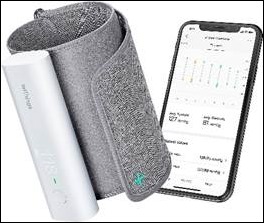
A couple of my physician friends have hypertension and monitor themselves religiously, so I asked around the virtual physician lounge for recommendations. Nearly everyone recommended the Withings BPM Connect, which is supposed to be easy to use and compact. It also supports both Bluetooth and Wi-Fi connectivity. I’ve had some experience with the Withings scales as part of a congestive heart failure project I did for a health system client, so decided to take their recommendation. Through the wonders of internet commerce, I was able to have one delivered to my home quickly and was eager to get it up and running. Since I was evaluating the device from different perspectives – patient, clinician, and informaticist – I had a lot of different elements I wanted to look at.

The first challenge with the device was the printed instructions that came with it. The user manual appeared to be printed on environmentally friendly brown paper. Although it’s a good idea from a sustainability standpoint, for users of a certain age where contrast is important for printed materials, it was a bust. I became one of those folks that uses the flashlight function on their phone just to read it, which made one of the younger members of my household laugh. Rather than watch me struggle with it, he proceeded to take the manual and read the German version to me, seeing if I could figure it out from the bits and pieces of the language that I understand. Based on that experience, I can see how the written documentation alone would be challenging to older users or those with low vision.

Eventually I got to the point where I needed to pair it with my phone, which was an adventure in itself. I downloaded the app easily and followed the instructions to connect. That’s where things started heading downhill. After what seemed like an interminably long “trying to connect” screen, it failed to connect. I repeated the process multiple times with the same results. Even though my phone identified the cuff as an available device from within the phone’s connectivity settings, it wouldn’t connect. In true IT fashion, I rebooted the phone and tried again.

This time I was able to get it to connect, and a firmware upgrade was applied to the cuff. Unfortunately, it immediately disconnected and wouldn’t reconnect. Multiple trips through the “trying to connect” screen and a couple more reboots later, I finally got it to connect to the phone. Eventually it also allowed me to connect the cuff to my home Wi-Fi network and I was ready to try to take an actual blood pressure reading. By this point, though, I had a fairly ripping headache and was a bit frustrating, so I expected a less-than-perfect result. The cuff itself is fairly easy to put on and take off, although patients with less dexterity in their arms or hands might benefit from having some assistance.

The Withings Health Mate app has a helpful video for those who have never taken a blood pressure that explains how you should sit quietly for five minutes and make sure your arm is supported at the level of your heart prior to taking a reading. As a matter of logistics, these steps are almost never followed at medical offices, which re-emphasizes the role home monitoring devices might play in helping patients and physicians obtain accurate results. The cuff itself has two modes – one where a single blood pressure is taken, and one that takes three blood pressures over a short period of time and then averages the results. I decided three data points were better than one and gave it a whirl. The LED display was easy to read and includes your name in the final display, which is helpful since the device will support up to eight users.

The Health Mate app does a nice job of graphing your results as well as displaying your latest measurements and highest and lowest values. I found it annoying, though, that it keeps asking me to connect to Google Fit, which I have no desire to do. There didn’t seem to be a way to get it the reminder to snooze, so we’ll have to see if it keeps coming back. The app offers functionality to send patient data to the physician, but I haven’t experimented with that yet. The device advertises six months of use on a single charge (via USB), but doesn’t specify whether that’s one person checking blood pressure daily, or some other combination of variables. As a physician, the timeframe we recommend for BP checks varies from person to person, and sometimes it’s not ideal for patients to check it too often. The app does offer patient-facing reminders to encourage regular measurements.

Withings advertises the BPM Connect as “travel friendly” and I agree it’s rather compact – the cuff wraps tightly around the display unit and it’s about the same diameter as a flat iron used for hairstyling, although much shorter. The company also sells a protective travel case for $29.95 but I don’t think it’s necessary, unless you’re tossing it in a gym bag where it might come into contact with sweaty or dirty clothes or where it might be rattling around with something that might catch on the Velcro.

I got a kick out of reading some of the reviews on the Withings website. One noted that the device “feels like a premium home health product with soft, heathered fabric around the outside and a soft-touch plastic to the tube…” I guess I didn’t think much about the fabric or the feel of the plastic since I’m used to conventional nylon office-style blood pressure cuffs, but that might be an important aesthetic for some users. My absolute favorite customer review was a product manager’s wildest dream, stating, “I never thought I’d buy into the ecosystem so much, but they are *genuinely* delighting me with their user experience.”

My initial user experience was less than delightful, and had I been someone who was less tech savvy, I might have given up. It definitely felt like one of those moments where people call their grandchildren and ask them for help. Fortunately, even with the aggravation with the connectivity, my blood pressure wasn’t all that exciting and I’m glad to know I still have a resting heart rate that borders on being abnormally slow. We’ll have to see how it performs over the next several months and whether the old adage about what gets measured gets managed applies.

What’s your favorite piece of home monitoring equipment? Leave a comment or email me.

Email Dr. Jayne.

Comments Off on Curbside Consult with Dr. Jayne 5/10/21

Readers Write: Taking the Friction Out of Digital Health Adoption

May 10, 2021 Readers Write Comments Off on Readers Write: Taking the Friction Out of Digital Health Adoption

Taking the Friction Out of Digital Health Adoption
By Manny Fombu, MD

Emmanuel “Manny” Fombu, MD, MBA is founder of Marché Health.

image

COVID-19 showed the value of digital tools, encouraging a flood of new solutions into the market. The resulting confusion has launched a seemingly unending cycle of pilots, delayed digital health adoption, and hampered progress.

In pandemic-hit America, health organizations are expected to do more with less — less patient volume, less funding, less resources, less staff resources. Having the right tools in place can extend and assist burdened care teams, allowing them to improve patient retention and raise STAR ratings / HCAHPS scores.

Staying ahead of the latest digital health innovations can be challenging. Information is coming from disparate sources, creating noise and hindering the ability to garner any actionable insights. With global digital health companies raising $1 billion a week in March 2021, there is no slowing down yet.

However, there still isn’t one unified digital health focused marketplace and community where all key stakeholders in the ecosystem — including health systems, clinicians, payers, consultants, biopharma, entrepreneurs, and investors — can go to, not only to find out which digital health tools work best, but to actually review products, learn, and connect with key decision makers to quickly adopt them.

Today, more than ever, it is crucial for healthcare organizations to simplify the evaluation and adoption of digital health initiatives by adopting a marketplace that meets community engagement needs to educate, connect, and empower individuals in order to stay safe in the tsunami of tools and one-sided information creating friction and plaguing consumers.

An independent, objective, and trusted marketplace helps health systems innovate and improve healthcare outcomes by:

  • Lowering acquisition costs.
  • Gaining insight through centralized, unbiased data.
  • Learning from buyer recommendations.
  • Learning about programs that advance patient care.
  • Streamlining the procurement process.
  • Gaining objective peer-to-peer feedback.

A marketplace must not only connect buyers and sellers, but also create a community where all sides can come together to actually learn from the other and to identify which solution is the best.

These days, it is all about lowering healthcare costs and achieving IHI’s Quadruple Aim (better outcomes, lower costs, and improved patient and clinician experiences). Innovative health systems must make connections that cut through the “app-pollution” that prevents the customer from making better purchasing and partnering decisions leading to empowerment and advocacy , not confusion and frustration.

This can only be achieved by the ability to:

  • Compare vendors based on objective, trusted data.
  • Make connections.
  • Increase transparency.
  • Enhance knowledge.
  • Simplify elevations.

It is time to break the pilot merry-go-round and find ways to not just increase, but improve digital health adoption. Then, we can achieve the promise that these innovations offer and discuss lasting results.

Comments Off on Readers Write: Taking the Friction Out of Digital Health Adoption

Readers Write: Provider Scheduling Matters

May 10, 2021 Readers Write Comments Off on Readers Write: Provider Scheduling Matters

Provider Scheduling Matters
By Mary Piepenbrink, RN

Mary Piepenbrink, RN, MBA is SVP/GM of PerfectServe Provider Scheduling powered by Lightning Bolt.

image

It’s time to vanquish dated provider scheduling methods. This subject is near and dear to my heart, but I think we have finally reached critical mass. The market for provider scheduling technology has matured, and real-world results prove it is safe—and wise—to make the leap.

The scheduling market started from a desire to improve physician scheduling at practices, so it was outpatient centric. Using technology to generate equalized, fair schedules in group practices was the original market opportunity. We didn’t call the central problem “burnout” then, but it was there, and it has gotten progressively worse.

Scheduling solutions still solve for those practice and burnout problems, but they have also moved beyond the outpatient office setting, scaling into broader areas to create better workflows and more efficiencies across health systems.  The easiest way for me to demonstrate value—real return on investment—is to create four buckets:

  • Value to health system. There are many, but the best scheduling solutions generate real-time, integrated, dynamically updated information for multi-faceted uses across the health system, all leveraged to improve both business and clinical operations.
  • Value to care team staff. Simple—speed to care. Scheduling systems must power other applications in the health system so the care team staff can locate and connect with providers in a frictionless way. I was a nurse back in the day, and when I needed an order for my patient, I would check a paper on-call list, hope the needed specialist listed was accurate, hope the pager number hadn’t changed, hope the provider would actually get the page after I dialed it on a landline, then really hope for a fast return call so I could just go deliver care. I also hoped I wouldn’t get pulled away or distracted while waiting only to miss the callback and have to start the whole process over. Today’s clinicians have mobile devices and digital on-call technology, but without accurate, integrated scheduling information, the care team still experiences much of what I used to go through. And there are still lots of pagers! So, scheduling technology helps organizations improve speed to care by facilitating seamless location of (through scheduling information) and connection (via secure communications) with the right provider.
  • Value to group practices. Scheduling systems integrated with payroll systems means accuracy in provider pay. The use of advanced technology to auto-generate optimal, fair schedules means greater provider satisfaction. Scheduling issues are the top factor leading to burnout, which is costly for practices. Using scheduling technology that supports capacity / resource management also helps improve patient access, provider utilization, and patient and staff satisfaction. Less burnout means less provider turnover and a better patient experience.
  • Value to end user provider. The ability to reduce friction associated with schedule management: accurate pay, ability to easily request time off, ability to easily swap shifts if needed, ability to include preferences that will actually be considered in even the most complex practice, and knowledge that the schedule produced is the most balanced possible and based on proven technology versus the chance of human error. Many providers also actively involve themselves in scheduling, which robs time from patient care.

One of my biggest frustrations is when I see innovative health systems buy the latest technology without articulating what they’re solving for—technology for technology’s sake or “it’s an IT project” instead of realizing the technology’s true value for patients and/or staff and how the other existing IT investments can be exploited (which also makes those systems more valuable). That’s why my healthcare brain and my nurse’s heart were equally joyful when KLAS zeroed in on ROI and found that enterprise scheduling solutions generate tangible outcomes and positive impact. As it turns out, there’s real value to be had if you do this right!

I’ll close with a story . I was chatting with a radiologist who had tried scheduling solutions before but always reverted to manual scheduling. I asked how long it took him to produce his practice’s schedule by hand. “About 20 hours a week,” he said. I replied, “Why on earth don’t you just hire someone, even full-time, to do that for you so you can spend those 20 hours reading films?” His answer was simple: “Because my life matters that much to me, and my partners’ lives matter that much. Unless we can find something as good as me, I’ll keep making the schedules.” In that moment, it became very clear that we need to make what we do in the scheduling world as near-perfect as possible, because it absolutely matters.

Comments Off on Readers Write: Provider Scheduling Matters

HIStalk Interviews Carina Edwards, CEO, Quil Health

May 10, 2021 Interviews Comments Off on HIStalk Interviews Carina Edwards, CEO, Quil Health

Carina Edwards, MBA is CEO of Quil Health of Philadelphia, PA.

image

Tell me about yourself and the company.

I have spent my career leveraging technology to improve the clinical and patient experience across healthcare. I’ve done that at companies including Imprivata, Nuance, Zynx Health, and Philips Health.

Quil is a digital health joint venture between Comcast NBCUniversal and Independence Blue Cross. We are on a mission to help people organize and navigate their health lives. We have proven that an educated and engaged consumer leads to better outcomes at a lower cost. That has been the holy grail and we want to see that through. It’s an exciting venture and I am thrilled to be at the helm.

To what extend has widespread availability of consumer technology, as well as comfort with using it, provided richer healthcare at home options?

The home as the center of care is squarely in our remit. We purposely think about the connected home, which with devices, wearables, and the television hanging on your wall, can be truly differentiated and activated in health. But the core comes down to, why aren’t consumers activating in their health?

One of the big things for me is that we need to stop, as an industry, thinking about the patient, the member, the employee, and the caregiver. We need to start thinking about the person. We need to be thinking through how we bring health and the navigation of health together for the individual. That means meeting them where they are — whether they are in a high-tech or low-tech household, whether they are connected, how they are connected — and trying to figure out the best way to activate that persona in a healthcare journey or in health literacy.

Nobody wakes up hoping to be admitted to a hospital or nursing home. Is it hard to tell the story of care options that don’t involve particular venues?

That’s the part that is rapidly changing. My customers span providers, payers, and employers. When I speak to all of them, they see their as-is state moving very quickly. The more progressive ones get it. The hospital at home concept has been touted for a very long time, but COVID brought to life the need to do infusions at home and do cancer treatment at home. Nobody wants to come in to the city center to the amazing, beautiful, big cancer tower, because that’s inconvenient for their life and they are already in pain and struggling. 

How do we bring as many services, knowing that there is a huge cost implication of that, too? Where we can leverage people, process and technology, we can rethink many things at a lower cost and meet people where they are. I love that sentiment.

How will health systems change their business model as the pandemic winds down leaving deeper experience with delivering care outside the hospital?

Everybody realized that, and they quickly spun up the technologies. It’s an interesting perspective where both providers and payers realized where the gaps were in the other side of the pane of glass. It wasn’t so much, can I get and engage my patient, member, or employee on a digital medium? It’ more like, how does it fit into the workflow of healthcare as we’ve established it? How does that integrate to make sure that the waiting room is virtual? The thoughts are virtual? You’re keeping people engaged, you’re meeting them, and they’re not meeting some random doctor or someone that doesn’t have their health history.

As they look forward, we hear a lot about, how do you bring information sharing? Now that we are all working towards interoperability with the passage of the legislation and the activation of the legislation, how do you bring that to the pane of glass in the provider workflow? In the patient workflow? So they they can not only interact, but they know what to do pre and post, because so much is forgotten during the encounter.

That’s another stat that I love to bring to people’s attention. People forget that when you hear a critical diagnosis or even a joyful diagnosis – congratulations, you’re pregnant, or I’m sorry to inform you that you have cancer — your brain goes to a whole different place. Studies have observed time and time again that patients can’t easily recall information that was relayed during an appointment. So now in this new medium, how do you make sure they understand, acknowledge, and can continue learning and engaging post the video visit?

What expectations come with the big investments that are being made in healthcare companies that offer everything from primary care chains to employee wellness technologies?

It’s an interesting world and I’m really encouraged by it. You’re going to see a lot of starts and stops, and we’re going to get to new models because consumerism is creeping in. 

The excitement is around consumers and where we’re trying to meet people where they are. We are trying to segment the market. There isn’t one size fits all for an individual, what they need, and their health at a certain part of their life. If I am a younger employee trying to figure out basic care and navigation, things like needing to get a flu shot, that’s a very different patient persona than someone who has been given a new diagnosis, is dealing with a chronic condition, is aging, or needs to go in for a procedure. Care at that point in time becomes very local.

I love that these new models of care are springing up. Just like there’s not one department store we buy clothes in, and there’s not one TV channel that we consume information on, we are giving people opportunities to engage in mediums that might work for them, make it easier in their life, and get all of us to better outcomes. I’m encouraged by it. But I don’t think there’s one big magic bullet that will change healthcare as we know it. At the end of the day, complex care requires care coordination, testing, and all those diagnostic tools that hopefully will move over time into the home. But those towers will still be relevant in someone’s health journey over time.

How do you broaden the use of apps, wearables, or other technologies beyond the “worried well” to more effectively move the health cost needle?

We spend a lot of time thinking about care in the home — ambient sensing,  wearables, technology, and voice. Together with our parent Comcast, we’ve run a bunch of experiments, especially with the silver tsunami that is coming, the aging at home of a generation that I adore that wants to go out fighting. They do not want to go to assisted living facilities. They want to live exactly where they are and how they want to. We have done a lot of consumer research where those who are aging at home will sometimes buy some of these technologies to allow them to continue to live independently. The other thing that we see is that there are 54 million unpaid caregivers in the US, those unpaid caregivers are also managing their own lives, and 23% of them have worse health because of their caregiving responsibilities.

Finding technologies to support the care recipient and being mindful of the individual that wants that independence, but also wants that safety net, is a great segment where you will see consumerism come to life for aging and home solutions that are way better than the “I’ve fallen and I can’t get up” button. That’s where you are going to see some really fun innovation.

Some people dumb down hospital at home and remote monitoring to “can get a pulse ox into the chart?” That’s not the challenging part. It’s the figuring out what data to get, what ranges to allow, and how to make sure that when it comes into the clinical record that it’s clinically relevant. How do you start thinking through the lens of the clinicians at that point in time to say, what is useful in an encounter? What is useful for me to remote monitor? When do I actually look at thresholds, alerts, and alarms?

That remote patient monitoring world will continue to scale from simple wearables to ambient sensors. We have been playing with this concept of, can you make the bathmat a scale? Can you start using new technologies for those that are very chronically ill, that might have episodes that they might not be self-aware enough to tackle?

A new article just concluded that nurses spend twice as much time managing a patient who is seen virtually instead of in the office, mostly because they need to monitor a steady stream of data from wearables and patient-reported information instead of just looking everything over during a three-month office visit. Has the capability of sensors exceeded the ability of people or systems to monitor the data those sensors create?

It’s a workflow and insight challenge. When you start looking at data, data is data. Data is overwhelming. You can start gleaning insight from data through models, algorithms, and deep understanding, but you have to do so through the lens not just of the data and the individual generating it, but the individual who has to consume the data. We spend a lot of time on user experience and user design, and sitting with clinicians – which has been challenging during the pandemic – to observe their workflow, watch these things, and design the system around when it should alert, when it  should tell you, what’s overwhelming, what can be computer screened out, and what can be noise in the system. Then, what is actionable, and where does that action lie?

When we redesigned these versions, the process side of it, we try to throw tech at a lot of things. The process and understanding side is important. Then, there’s the financial component. Is the nurse doing some of those things because that is the right data digestion, or is it also because there is a documentation requirement to get reimbursed for remote patient monitoring? Thinking about that whole spectrum and making it a win-win for all three parties involved is key. The payer truly comes into this as well. It’s a new frontier that can only be better. When we start any new technology, it changes. When it moves the cheese, it changes the workflow, and so many times we don’t assess the workflow change and acknowledge it.

With all of the provider roles, who coordinates monitoring the patient’s data that is created by devices in the home?

The key for us is today, where we are. This is all a life cycle, and as we are progressing down our life cycle. We see convergence coming together for the individual. That’s our three- to five-year vision of how I, as an individual, get the different streams of health, care, benefits, and employee benefits all navigated for me in one pane of glass that I choose. We’re starting in the provider, payer, and employer world, with unique use cases. Learning and aggregating, and where we can collapse them, we do. If I am on a pregnancy journey that is navigating me — not just on benefits, short-term disability, talking to my manager about being pregnant, and thinking about childcare post delivery — and I am also on a pregnancy journey with my provider, those two worlds come together for me today on a pane of glass.

But each of those pieces is uniquely owned by the organization. The employee benefit side of it is going back to the employer. The clinical insight generator is going over to the provider. But the individual has one pane of glass to see the experience together. That is the nirvana as we think through data sharing, permissioning, and where all of that needs to go. And to your point, who is bearing risk on that? How do I make sure that the risk-bearing entity — because there’s many models of risk now — that you need to align around that model of who’s there in it with you, that everybody wants the best outcome? Then, who is incented for better outcomes?

Is it hard to sell an employer an app or service using metrics around employee adoption or satisfaction rather than cost savings that will deliver return on investment?

Is it difficult? No. Do you have to understand their world? Yes. All employers want the best outcomes for their employees. There are more forward-thinking ones in benefits and benefits aggregation that are thinking through better outcomes, getting people to higher-quality venues, because that’s a win-win for everybody. It’s not wasting time, and it’s keeping presenteeism. There are so many ways to measure success.

But to your point, the more progressive employers are looking for real, tangible outcomes. It’s not just about X percent engaged, X percent liked it. Clearly, there’s a point that you want a great employee experience. It has to be usable. Those are almost table stakes today. How, though, do you generate that longer-term ROI that justifies that? Who do you put in the middle of that? We have taken the approach where we are going to be focused on a digitally-forward health engagement platform, not coach-enabled. But others have taken the approach where we are coach enabled, and then through digital interaction, we can get you to a next action. We will see that evolve over time. Can we get more digitally forward so we can scale and improve outcomes across the continuum?

How can technology support unpaid caregivers of people aging at home?

I look at it pretty simply. It’s there for them and it’s there for you. For them, it’s technology that is easing the care recipient’s mind. For you, it’s also there for the caregiver. They are able to do task trade-offs with their family, coordinate things, be in one space, not have to time slice, and have one point of view on what’s going on with mom, dad, loved one, neighbor, etc. There’s also levels of caregiving. The fun thing is there for them, there for you. As the care recipient, there for me, I want to know who has access to my data, who I want to have permission to my data. 

We think a lot about the tier of caregiver you are. If you are the neighbor who might have a key to get somebody in if something happens to you, that’s a tier one relationship. If you’re navigating and supporting me for a geriatric hip fracture to home, or through hospice to home, you want that person to have access to everything. Making sure that the tool understands that it’s not one way. It’s not a caregiver tool, it’s the caregiver and the care recipient tool. I’ll leave it with there with there for them and there for you, because it’s multi-sided.

Comments Off on HIStalk Interviews Carina Edwards, CEO, Quil Health

Morning Headlines 5/10/21

May 9, 2021 Headlines Comments Off on Morning Headlines 5/10/21

Health Catalyst (HCAT) Reports Q1 Loss, Tops Revenue Estimates

Health Catalyst reports Q1 results: revenue up 24%, adjusted EPS –$0.06 versus –$0.16, beating Wall Street expectations for both.

Cincinnati health system partners with Columbus unicorn

Olive establishes an AI command center at TriHealth’s offices to help the six-hospital system automate tasks, initially starting with its revenue cycle.

OptimizeRx Reports First Quarter 2021 Financial Results, Revenue Up 48% on Rising Enterprise Adoption of Digital Health

OptimizeRx reports Q1 results: revenue up 48%, adjusted EPS $0.03 versus –$0.06, beating expectations for both.

Comments Off on Morning Headlines 5/10/21

Monday Morning Update 5/10/21

May 9, 2021 News 1 Comment

Top News

image

Walmart Health acquires telehealth provider MeMD, which it will roll out as a national virtual care service for urgent, behavioral, and primary care.

The company offers solutions to employers, health systems, and individuals, the latter paying $67 for an urgent care, men’s health, or women’s health visit.

MeMD was founded in 2010 by internist, attorney, and entrepreneur John Shufeldt, MD, JD, MBA, who previously founded NextCare Urgent Care, which operates 145 locations in 11 states. He left the private equity-backed NextCare in 2010 after that company declined to partner with his new venture MeMD.


Reader Comments

image

From People Sectioned: “Re: Meditech. I didn’t see the promotion of Michelle O’Connor to president and CEO mentioned.” I saw no company announcement, but her LinkedIn says she was promoted this month. She has worked for Meditech for 33 years as her only post-college employer. The executive page shows these changes from a cached copy from February:

  • Howard Messing – from CEO to vice chairman.
  • Michelle O’Connor – from president and COO to president and CEO.
  • Steven Koretz – from SVP of client services to emeritus.
  • Shannon Connell, JD – added as chief governance officer and general counsel. She started with the company in 1998 as an applications consultant, attended law school at night, and moved to the legal department in 2005.

image

From Pay Me Now: “Re: Aprima EHR. Down for nearly two weeks from ransomware.” Unverified, but reported by several readers. Jenn hasn’t heard back from the couple of PR folks she reached out to (it’s complicated because EMDs acquired Aprima in January 2019, then CompuGroup Medical acquired EMDs in November 2020). Users say that they received an email from CGM saying that Aprima’s hosting provider, MedNetwoRX, had sustained a ransomware attack. None of the companies involved seems to be making public statements or responding to inquiries.

From Sopwith Camel: “Re: health IT vendors. How do you keep track — maintain a list?” My only list is the HIStalk search function via Google Site Search, which turns up companies that I have mentioned – good or bad – over many years. I include a company news item only if it is truly newsworthy or interesting (and 95% are not), so finding few to zero mentions means the company in question hasn’t made much of a dent. Lorre sometimes asks me what I know about a company that has inquired about sponsoring, correctly predicting in many cases that my somewhat surprised answer will be “never heard of them” even though I’ve followed the industry for many years, giving me a chance to learn something new. The industry is a lot bigger than all of us think.


HIStalk Announcements and Requests

image

Many poll respondents aren’t willing to fill out a personal information for to download a vendor’s white paper, but the rest will share most information other than their work phone number. I included the seemingly ridiculous “work address” because I had just seen a download form that required it, which seemed excessive given that hospital addresses are unchallenging to find.

New poll to your right or here: How would you grade Brent Shafer’s three-year tenure as Cerner’s top executive? Click the poll’s comments link after voting to explain your role (employee, investor, competitor, observer, etc.) and what you think he did right or wrong. If you are feeling loquacious, describe the kind of person Cerner should choose to replace him.

Thanks to the following companies that recently supported HIStalk. Click a logo for more information.

image
image
image
image
image
image
image
image
image
image


Webinars

May 11 (Tuesday) noon ET. “Modern Healthcare Innovation Leaders: How Top Health Systems Plan and Execute Innovation.” Sponsors: RingCentral, Net Health. Presenters: Todd Dunn, MBA, VP of innovation, Atrium Health; Paul Nagy, PhD, co-founder, Technology Innovation Center at Johns Hopkins Medicine; Roy Rosin, MBA, chief innovation officer, Penn Medicine; Patrick Colletti, founder, Net Health (moderator). This panel discussion will provide insights from innovative healthcare leaders who have embarked on the journey of planning and implementing innovation projects in their organizations and the wisdom they learned through the process. Topics will include predictive analytics and AI, potential challenges and risks of implementing innovation projects, challenges of interoperability and emerging technologies, and when to build versus buy when working with emerging and established vendors.


June 3 (Thursday) 2 ET: “Diagnosing the Cures Act – Practical Prescriptions for Your Success.” Sponsor: Secure Exchange Solutions. Presenters: William E. Golden, MD, MACP, medical director, Arkansas Medicaid; Anne Santifer, executive director, Arkansas Department of Health – Office of Health Information Technology; Kyle Meadors, principal, Chart Lux Consulting. A panel of leading experts will provide practical guidance on how to prepare for the Cures Act. Will it upend your business model? What is information blocking? How can standardized technologies be applied to meet Cures Act requirements? What must I do now as well as in the next five years?

Previous webinars are on our YouTube channel. Contact Lorre to present your own.


Acquisitions, Funding, Business, and Stock

Health Catalyst reports Q1 results: revenue up 24%, adjusted EPS –$0.06 versus –$0.16, beating Wall Street expectations for both. HCAT shares are up 115% in the past 12 months versus the Nasdaq’s 52% rise, valuing the company at $2.4 billion.

OptimizeRx reports Q1 results: revenue up 48%, adjusted EPS $0.03 versus –$0.06, beating expectations for both. Shares jumped 9% on the news and are up 356% in the past 12 months, valuing the company at $880 million.


Sales

  • Israel’s Shaare Zedek Medical Center will implement Sectra’s digital pathology solution.

Announcements and Implementations

image

The American Bar Association updates its Mind Your Loved Ones advance directive app, which costs $8 per year for two users. Elder law and estate planning attorney Barbara Keller bought the rights to an app that ABA had previously distributed, then expanded it and reintroduced it through ABA.


COVID-19

CDC updates its guidance to indicate that coronavirus spreads by airborne transmission, changing its previous position that infections mostly spread by “close contact, not airborne transmission.” Distancing alone isn’t enough in poorly ventilated spaces and close-quarters workers may need to wear respirators rather than surgical masks.

Daily US vaccinations drop below two million per day for the first time since early March, as American vaccine supplies pile up unused while other parts of the world have none. Some experts call for the government to stop underselling the benefits of vaccination with overly cautious post-vaccination advice and instead aggressively loosen restrictions for those who have been vaccinated. The biggest-lagging states are Mississippi, Alabama, and Louisiana, with only about one-third of eligible residents receiving at least their first vaccine dose.

WHO approves the emergency use of COVID-19 vaccine from China-based Sinopharm, concluding that the efficacy of the inactivated virus product – it’s an old-school vaccine that does not use the MRNA platform — is 78%.

image

The Lancet runs a scathing opinion piece about India’s COVID-19 crisis, blaming the country’s government for prematurely declaring the pandemic to be over, hiding data, suppressing criticism of its policies, allowing religious festivals with millions of participants to proceed with lack of mitigation measures, and botching its vaccination campaign. The editorial urges the government to admit its mistakes, provide responsible leadership and transparency, and start basing its public health efforts on science. India is reporting 400,000 new cases and 4,000 deaths each day, both numbers assumed to be wildly underreported as experts say deaths are closer to 25,000 per day or maybe more as crematories there are operating 24/7 and running out of fuel.

A hospital in India orders medical staff to flee and hide as oxygen runs out in an ICU that is caring for COVID-19 patients, raising concerns of violence by several angry families who found dead relatives in the abandoned ICU. Hospital employees in India have been physically attacked by angry family members following the deaths of loved ones.

A KHN investigation finds that large health systems are billing insurers from $20 to over $1,400 for a simple, inexpensive COVID-19 test that the tested consumer believes is free. Insurers have no bargaining power because federal law requires them to pay the full billed price and to charge the patient nothing. Some freestanding EDs in Texas have charged over $1,000 per test plus several thousand dollars more in facility fees, while Quest Diagnostics quadrupled its Q1 profit over last year by selling PCR tests for $100.


Other

Administrators at Dartmouth’s medical school accuse 17 students of cheating on their remotely taken exams, which they detected by secretly using the school’s learning system to identify students who accessed course material during the tests. Technology experts say the school’s findings aren’t reliable since students often leave course pages open in the Canvas learning management system and the system performs background activities that look like user page views. Accused students have been threatened with expulsion, suspension, or a forced repeat of the school year. Commenters on the article question why rote memorization for medical school exams is important when doctors have to pass rigorous licensing exams and then are then encouraged as practicing physicians to use external knowledge resources and real-time clinical decision support to keep their practice current.

image

A random LinkedIn news feed item led me to the biography of NASA astronaut and Navy Lieutenant Jonny Kim, MD, whose accomplishments include training as a Navy SEAL and Special Operations combat medic right out of high school; deployment in over 100 combat operations in Iraq as a sniper, navigator, and point man man in earning a Silver Star and Bronze Star with valor in combat; graduation from Harvard Medical School and an emergency medicine residency with Partners Healthcare; and now an astronaut candidate awaiting an Artemis Team moon mission assignment. I’ll feel like even more of a slacker when he’s walking on the moon.


Sponsor Updates

  • EClinicalWorks publishes a video case story from Potomac Urology, which uses the company’s cloud product.
  • Appriss Health completes its acquisition of PatientPing in a transaction valuing the combined company at $1.5 billion.
  • Protenus will host its fifth annual PANDAS conference virtually May 11-12, featuring a keynote from Afia Asamoah, head of legal at Google Health.
  • The Business Unusual Podcast features ReMedi Health Solutions CEO Sonny Hyare, MD.
  • Spirion hires Chris Thomley (Canopy Capital Partners) as CFO and promotes Scott Giodano to general counsel.
  • Talkdesk will donate $20,000 during its Digital Showdown: Innovations in CX virtual event May 26.
  • Vocera publishes the “2021 CNO Perspective” report.
  • In India, Wolters Kluwer provides free access to UpToDate coronavirus resources and tools for front-line clinicians and medical researchers.

The following sponsors have won MedTech Breakthrough Awards:

  • Kyruus, Provider Match for Consumers (Best Patient Registration & Scheduling Solution).
  • Elsevier Clinical Path (Best Computerized Decision Support Solution).
  • WebPT Reach (Best Patient Relationship Management Solution).
  • Vocera Ease (Best Overall Patient Engagement Solution).
  • Pure Storage (Best EHR Security Solution).
  • Capsule Vitals Plus (Best Overall Medical Data Solution Provider).
  • SOC Telemed, Telemed IQ (Best Overall Telemedicine Platform).
  • Fortified Health Security (Best Overall Healthcare Cybersecurity Company)

Blog Posts


Contacts

Mr. H, Lorre, Jenn, Dr. Jayne.
Get HIStalk updates.
Send news or rumors.
Contact us.

125x125_2nd_Circle

Text Ads


RECENT COMMENTS

  1. RE the AI GLP1 company, Washington Post has an article today by someone who used one of those compounded products,…

  2. Re: A chief health AI transformation officer (CHAITO) I predict a position evolution along the following lines. "We have too…

  3. To take the counterpoint to the "don't just schedule more visits" argument - it depends on if you're looking at…

  4. Aaand, 4th to last graf, 1st sentence, not a distance, so you would go further, not farther.

Founding Sponsors


Platinum Sponsors


Gold Sponsors


RSS Webinars

  • An error has occurred, which probably means the feed is down. Try again later.