Recent Articles:

Morning Headlines 9/2/25

September 1, 2025 Headlines Comments Off on Morning Headlines 9/2/25

University of Iowa Health Care reports cybercriminal incident affecting 211,000

University of Iowa Health Care and UI Community HomeCare notifies 211,000 patients and employees of a July 3 data breach that prompted the organization to take systems offline for one day.

Digi Acquires Jolt to Accelerate ARR Growth and Strengthen SmartSense’s Market-Leading Offerings

Digi International will incorporate newly-acquired Jolt Software’s operations technologies into its SmartSense business, which offers operational intelligence and compliance automation software for healthcare and other verticals.

Systems restored for Ohio State hospital system after network upgrade caused outage

Ohio State University Wexner Medical Center recovers from an unexpected system outage that occurred during a system upgrade.

Comments Off on Morning Headlines 9/2/25

Morning Headlines 8/29/25

August 28, 2025 Headlines Comments Off on Morning Headlines 8/29/25

Tiny US Agency to Enforce Substance Abuse Regs – and HIPAA

HHS shifts enforcement of substance use records confidentiality from SAMHSA to the Office for Civil Rights, which also handles HIPAA enforcement.

Alignmt AI Raises $6.5M in Seed Funding

Healthcare AI governance and risk management startup Alignmt AI announces $6.5 million in seed funding.

NY Health System Settles Web Tracker Privacy Claim for $5.3M

Mount Sinai Health System will pay $5.3 million to settle a proposed class action lawsuit that accused it of using pixel tracking tools to send patient portal and website visitor information to Facebook.

Comments Off on Morning Headlines 8/29/25

News 8/29/25

August 28, 2025 News 2 Comments

Top News

image

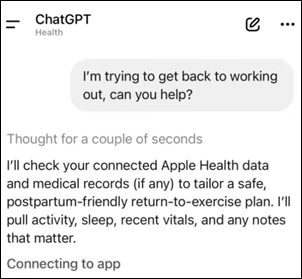
ChatGPT maker OpenAI will reportedly build its own healthcare applications. 

The company has hired former health tech executives from Doximity and the investment community.

Business Insider reports that OpenAI is considering developing both consumer-facing and enterprise tools, including clinical triage, clinical documentation, and patient engagement.


Reader Comments

image

From Alabaster: “Re: Dr. Jayne’s concerns about OpenEvidence. What risks do you see for physician users?” I’m not an attorney, but my cursory review of the company’s Terms of Use and Business Associate Agreement suggests some areas of concern that, to be fair, are true of many clinician-targeted applications and services:

  • The company can sell de-identified data and use records of detailed user interactions to train its models or for commercial purposes. That de-identified data may still contain enough specificity to allow re-identification of patients, especially in rare or unusual cases that are described in user prompts and are more likely when using a tool like this to find information.
  • The BAA does not restrict the use of non-PHI or tracking technologies for ad targeting, which likely aligns with the company’s intent to sell ads to drug companies.
  • The platform is labeled as educational only, leaving physicians fully liable for any clinical decisions it suggests or patient harm that results. The company caps its own liability at $100.
  • Physicians may not be able to reproduce the AI’s previous outputs in a legal defense since the tool doesn’t guarantee version control or output retention.
  • Doctors who submit patient-specific information without a signed institutional BAA could violate employer policy and HIPAA. The Terms of Use prohibit use on behalf of a hospital without legal authorization, and the tool may bypass hospital IT controls that were designed to ensure compliance. Using the product without institutional review and approval puts the risk squarely on the physician, with no guarantee of support in what could be a high-profile case given the trendy AI angle.

Sponsored Events and Resources

None scheduled soon. Contact Lorre to have your resource listed.


Acquisitions, Funding, Business, and Stock

Alphabet’s Verily business shuts down its medical device division and doubles down on “precision health, AI, and data,” according to an internal memo obtained by media.


Sales

  • Cleveland Clinic will implement Dyania Health’s AI-powered clinical trial matching tool.

People

image

Suresh Krishnan (Cone Health) joins Memorial Health (IL) as SVP/CIO.  


Announcements and Implementations

image

Providence evaluates Nuance DAX ambient documentation for family medicine physicians who were identified in Epic as working after hours or taking over a week to close notes. Burnout dropped from 57% to 27%, documentation frustration fell from 89% to 39%, and more doctors reported better patient connection. After-hours “pajama time” decreased from 107 minutes to 81. Note: the study group was tiny.

France-based HeartFocus launches FDA-cleared heart exam software in the US on Butterfly Network’s handheld ultrasound devices. The AI-powered tool enables any clinician to perform heart scans for early detection.

West Virginia University scientists develop AI models that detect signs of heart failure from ECGs rather than less-available echocardiography by incorporating local socioeconomic and environmental factors.

image

Altera Digital Health integrates Medicomp’s Quippe Clinical Intelligence Engine into its new ambient documentation solution for the TouchWorks EHR.

image

Artisight says that its smart hospital platform is the first that can autonomously document OR activity in the EHR using AI and computer vision. The system records patient entry and exit and procedure start and end time. It also prompts staff to complete next steps in their workflow.


Government and Politics

image

CMS opens a research challenge to identify innovative solutions that can detect Medicare fraud using claims data.

Drug companies launch a lobbyist-sponsored watchdog group whose goal is to limit Medicare drug price negotiations by requiring analysis of CMS data. A spokesperson for one of the lobbying firms says, “The vast majority of our effort is focused on the analytics, and we didn’t see anybody, including CMS, publicly reporting at this level of granularity. This data is hard to work with, so we are investing in this kind of information.”

HHS shifts enforcement of substance use records confidentiality from SAMHSA to the Office for Civil Rights, which also handles HIPAA enforcement. Observers worry that OCR, which was already stretched thin by staffing and budget cuts, won’t be able to complete investigations in a timely manner.


Privacy and Security

Mount Sinai Health System will pay $5.3 million to settle a proposed class action lawsuit that accused it of using pixel tracking tools to send patient portal and website visitor information to Facebook.


Sponsor Updates

image

  • Capital Rx staff volunteer at a back-to-school event with the New York City Football Club and Niño de la Caridad Foundation.
  • The Medicomp Systems “Tell Me Where IT Hurts” podcast releases a new episode titled “The Evolution of FDB” with FDB Executive Chairman Charles Tuchinda, MD.
  • Artera announces that it has been named the named the 2025 Frost & Sullivan Technology Innovation Leader in the patient engagement platforms and solutions industry.
  • Inovalon will work with Google Cloud to develop an AI-powered prior authorization solution for its Inovalon One Platform.
  • Healthcare Growth Partners advises EVideon during its sale to TigerConnect.
  • Health Data Movers releases a new episode of its “Quick HITs” podcast titled “Shaping the Future of Pediatric Healthcare IT, with Dr. Anita Harris-Brown.”
  • Healthcare IT Leaders will exhibit and present at Workday Rising September 15-18 in San Francisco.
  • Infinx releases a new episode of its “Revenue Cycle Optimized” podcast titled “Building a Strong Foundation in Soft Collections & Patient Services.”
  • Navina will present at Hospitalogy’s VBC Retreat September 18 in Austin, TX.

Blog Posts

Sponsor Spotlight

image

This week, healthcare technology company RLDatix announced the launch of Smart Entry, a new AI-enabled feature designed to streamline documentation for safety event reporting. Proven to give time back to frontline staff, RLDatix’s Smart Entry is reducing event reporting time by up to 70%. RLDatix will be exhibiting with an immersive booth experience related to its Safety & Risk Management module, which houses Smart Entry, at the upcoming ASHRM 2025 conference from September 28-30, 2025. (Sponsor Spotlight is free for HIStalk Platinum sponsors).


Contacts

Mr. H, Lorre, Jenn, Dr. Jayne.
Get HIStalk updates.
Send news or rumors.
Follow on X, Bluesky, and LinkedIn.
Sponsorship information.
Contact us.

EPtalk by Dr. Jayne 8/28/25

August 28, 2025 Dr. Jayne 1 Comment

Researchers from Indiana University have created an algorithm that helps clinicians search through patient data from health information exchanges and other sources. The tool identifies the most relevant data for a given visit such as in the ED, where surfacing key information quickly can impact treatment decisions.

It also suggests next search terms based on those used by other clinicians, similar to what we’re used to on retail and commercial platforms. The team has earned two patents for its work.

Public health informatics is a key domain that must be mastered to obtain board certification in clinical informatics. I hadn’t done much work in that area when I prepared for my board exam, but I found it to be fascinating. It’s also challenging due to limited US public health funding and the need to work across disparate systems — state registries, public health center clinics, disease surveillance platforms, and environmental data sources.

I’d like to give a shout-out to the public health informatics teams in Mississippi that provided the data that led state health officials to announce a public health emergency from rising infant mortality rates. That declaration lets the state mobilize resources it otherwise couldn’t.

Mississippi has previously been on watch lists for its high numbers of preterm births. It also a “maternity-care desert,” with wide regions lacking hospitals that offer obstetric care. 

Informatics will underpin many of the proposed solutions, such as improving standardization of care, expediting transfers to different levels of care, monitoring prenatal care opportunities, expanding home visit programs, addressing gaps in maternal care, and improving patient education and engagement around safe sleep practices. If you’re working on any of these healthcare IT projects in Mississippi, we’d love to hear from you.

image

Speaking of love, props to one of my favorite PR people, Grace Vinton, for channeling her inner Swiftie into healthcare advocacy with a series of reflections on what has become the social media story of the week. I was excited to see a healthcare tie-in so that HIStalk wouldn’t be the only media outlet that didn’t do at least some kind of coverage.

Other captions included: “When prior auth says immediately yes;” “When there’s a telehealth option; “When there’s a patient access quality measure;” and “When the war for patients to get full access to their own data is finally won”. I never thought I would see the day when I would add “Swiftie” to my Microsoft Word dictionary, but here we are.

image

Mr. H called this recent sponsorship announcement to my attention last week. I’m always leery of hospitals that spend their money on stadium-naming rights or on partnerships that seem nebulous. This one seems to be more than just name recognition, with a Mount Sinai Health System web page detailing the ways they’ll be supporting the event.

There will be a booth for player meet-and-greets, a Children’s Sports Zone for family activities, and a broad swath of Mount Sinai physicians on standby, representing specialties including orthopedic surgery, emergency medicine, sports medicine, anesthesiology, psychiatry, radiology, and urology. There are also some health and wellness videos including one on “how to prepare for a day at the US Open” and another one on “heart health and tennis.” Kudos to the health system for turning this into more than a name-on-the-wall moment. 

From Lost in the Archives: “Re: medical records requests. My hospital is being absolutely crushed by requests dating back decades, since the Radiation Exposure Compensation Act (RECA) was extended to cover hazardous exposures in St. Louis. The Department of Justice is requiring that hospitals certify all the medical records for patients to receive cancer-related compensation. Most of the records being requested have already been purged. This is a nightmare for patients and our skeleton crew in medical records.” I did a little digging to find that the legislation adds eligibility for residents in 21 ZIP codes in and around the St. Louis metropolitan area that were contaminated with uranium waste after processing that was related to Cold War efforts. The compensation program, which is administered by the Department of Justice, previously covered certain cancers for patients who lived in New Mexico and other areas that were affected by release of radiation during atmospheric nuclear tests.

I cold-called one of the academic medical centers in the area. They are putting together their own guidance for patients since the phone number for the program doesn’t work. The rep I spoke to declined to be identified, but said that the stories are “heartbreaking” and patients “just start sobbing” when told that their records have been purged. She mentioned that they are directing patients to the Missouri Cancer Registry, which started gathering data in the 1980s. I’d be interested to hear from anyone who is working there to understand how they’re managing the request volume.

image

OSF Healthcare is using virtual care solutions at some of its facilities in an effort to reduce emergency department wait times. Patients are screened to ensure that they are appropriate candidates for virtual services. Those who opt in receive their care in a dedicated virtual exam room. Patients can be examined by the virtual physician using electronic stethoscopes, otoscopes, and ophthalmoscope technology as well as standard audio and video tools.

As someone who has worked in various emergency settings with a wide range of acuity levels, it makes sense to have lower-acuity patients seen virtually if doing so helps the overall staffing model while providing the same quality of care.

People often don’t realize that a fair amount of the care that goes on in the emergency department these days is really primary care. Hospitals have been caring for these patients in fast-track units for years. Unfortunately, even those units get saturated.

During the years I worked fast-track, I was usually the only physician on the unit. Patient care could have been so much more efficient if we’d had another 0.3 or 0.5 FTE physician working, but staffing half a human is hard to do. These virtual approaches allow that additional human to provide staffing to two or more facilities, which makes it more cost effective.

Have you ever had a virtual visit in the ED? Would you object if it were offered? Leave a comment or email me.

Email Dr. Jayne.

Morning Headlines 8/28/25

August 27, 2025 Headlines Comments Off on Morning Headlines 8/28/25

OpenAI wants to build its own healthcare apps, hire exec from Instagram and Doximity to lead

ChatGPT maker OpenAI will reportedly build its own health app, tapping former health tech executives from Doximity and the investment community.

Alphabet’s Verily closes its medical device division and lays off staff

Alphabet’s Verily business shuts down its medical device division and doubles down on “precision health, AI, and data,” according to an internal memo from CEO Stephen Gillett.

CMS launches ‘chili cook-off competition’ to source AI that can detect fraud

CMS hopes to discover new AI solutions that will help curb Medicare fraud through its recently launched Crushing Fraud Chili Cook-Off Competition.

Ascension Wisconsin reverses course, no longer plans to outsource ICU doctors to TeamHealth

Ascension Wisconsin decides not to outsource ICU staffing to TeamHealth after physicians warn that the switch could result in a transition to electronic ICUs and substandard patient care.

Comments Off on Morning Headlines 8/28/25

This Week in Health Tech 8/27/25

August 27, 2025 This Week in Health Tech Comments Off on This Week in Health Tech 8/27/25
LinkedIn weekly 082725 - Copy
Comments Off on This Week in Health Tech 8/27/25

Healthcare AI News 8/27/25

August 27, 2025 Healthcare AI News Comments Off on Healthcare AI News 8/27/25

News

image

Cleveland Clinic will implement Dyania Health’s AI-powered tool that scans medical records to identify clinical trial candidates. The health system has also invested in the company. Founder and CEO Eirini Schlosser is a former investment banker who previously founded an EHR data mining technology company.

ChatGPT maker OpenAI will reportedly build its own health app, tapping former health tech executives from Doximity and the investment community. Business Insider reports that OpenAI is considering both consumer-facing and enterprise tools, including clinical triage, clinical documentation, and patient engagement.

image

Parents sue OpenAI over the death of their teenage son, citing ChatGPT transcripts in which the chatbot engaged with him as he discussed suicide and shared self-harm photos. They allege it praised his ability to fashion a noose, confirmed his belief that it could hang a human, and suggested hiding it rather than leaving it out as a cry for help. He reportedly bypassed safety prompts by framing his questions as part of a story he was writing.


Business

image

India-based Narayana Health launches a self-developed ambient documentation tool for its Athma EHR. Future plans include integration of wearables, external health records, and predictive models to personalize treatments. Founder, chairman, and cardiac surgeon Devi Shetty, MBBS called out AI’s potential to reduce errors and cost:

There are millions of data points coming from everywhere, and we are constantly worried we are missing something. AI, however, can do all this and present it in a manner that allows doctors to access maximum information about the patient in the quickest possible time. More than anything else, AI will prevent doctors from making mistakes and will double or triple their productivity. They will become more efficient in treating patients properly, and errors will be reduced. In the process, costs will go down dramatically because whenever productivity increases, cost goes down.

AI precision medicine technology vendor Tempus AI acquires Paige, which has developed FDA-cleared AI pathology tools, for $81 million.


Research

Researchers build an AI system that filters EHR data for ED physicians treating urgent cases and recommends search terms that peers have found useful, in the “you might like” style of Amazon or Netflix.


Other

image

A Washington Post opinion piece says that FDA’s new AI assistant for reviewing drug approval documents is error-prone and “makes stuff up” when summarizing content. HHS attributes the criticism to disgruntled former employees. Analysts flagged a pre-launch HHS report that cited non-existent studies, included invalid links,and mischaracterized findings, concluding that it was likely written using ChatGPT.

Researchers from Johns Hopkins and other institutions warn that older Americans may not live long enough to benefit from FDA-cleared AI technologies unless  bottlenecks are removed. They recommend:

  • Medicare should develop time-limited payments for AI technologies that are then converted to value-based models if they are proven effective. They note that imaging tools capture too much CMS interest compared to decision support and remote patient monitoring.
  • The federal government should provide grants or tax credits to companies that support data standardization initiatives and interoperability.
  • The federal government should reform the unsuccessful policies that were intended to increase rural broadband access to support remote specialist care.
  • Developers should form community advisory boards to encourage AI uptake among seniors who may prefer hands-on care.

image

Microsoft’s head of AI warns that tools mimicking consciousness may mislead users by telling them what they want to hear. One physician predicts that clinicians will soon ask about AI usage alongside with that of smoking and alcohol. A professor expands on the concern in his book “Automating Empathy.”

While these things are convincing, they are not real. They do not feel, they do not understand, they cannot love, they have never felt pain, they haven’t been embarrassed, and while they can sound like they have, it’s only family, friends and trusted others who have. Be sure to talk to these real people.”


Contacts

Mr. H, Lorre, Jenn, Dr. Jayne.
Get HIStalk updates.
Send news or rumors.
Follow on X, Bluesky, and LinkedIn.
Sponsorship information.
Contact us.

Comments Off on Healthcare AI News 8/27/25

Morning Headlines 8/27/25

August 26, 2025 Headlines Comments Off on Morning Headlines 8/27/25

Assort Health nabs $50M to automate patient phone calls, sources say

Assort Health, which helps providers automate processes using AI voice agents, announces $50 million in Series B funding.

ASTP Awards Next Option Year for TEFCA RCE Contract to The Sequoia Project

ASTP/ONC awards The Sequoia Project a second option year as the TEFCA Recognized Coordinating Entity.

Eyebot gets $20M Series A to expand eye care access

Eye care kiosk company Eyebot raises $20 million in a Series A funding round, bringing its total raised to $30 million.

Comments Off on Morning Headlines 8/27/25

News 8/27/25

August 26, 2025 News Comments Off on News 8/27/25

Top News

image

PE firm Advent International acquires PatientPoint, which sells point-of-care advertising to pharma companies and online marketing services to providers.

Advent’s portfolio includes Iodine Software and Definitive Healthcare.


HIStalk Announcements and Requests

image

Thanks to AMIA for referencing Dr. Jayne’s concerns about the compliance risks of using free online tools in its Informatics SmartBrief.


Sponsored Events and Resources

Instant Access Webinar: “Healthcare Data Strategies: Retire, Retain, and Ready for AI.” Sponsor: Triyam, an Access Company. Presenters: Sudhakar Mohanraj, founder and CTO, Triyam; Benjamin Cassity, director of research and strategy, KLAS; Jamie Greenstein, senior marketing manager, Access. The presenters deliver practical tactics to help IT leaders manage exploding data volumes — how to clean up legacy systems, craft smarter retention policies, and prepare historical data for analytics and AI.

Contact Lorre to have your resource listed.


Acquisitions, Funding, Business, and Stock

image

Ambulatory-focused health IT vendor CareCloud acquires Medsphere, giving it a foothold in the rural and small hospital IT market. Medsphere’s solutions include CareVue, Wellsoft, ChartLogic, and Phoenix and Systeem IT managed services.

Post-acute care transition AI software startup Cascala Health announces $8.6 million in seed funding.

Sales

  • Barry University School of Podiatric Medicine (FL) selects ModMed’s podiatry-focused software.
  • The Australian Digital Health Agency chooses Telstra Health to upgrade its My Health Record interoperability technology from Clinical Document Architecture to FHIR standards that will allow real-time information exchange.

People

image

Censinet appoints James Foster (IronCircle) as chairman of the board.

image

The Medical University of South Carolina names Marylyn Ritchie, PhD (University of Pennsylvania Perelman School of Medicine) as chief AI officer.


Announcements and Implementations

Tampa General Hospital (FL) integrates Clear’s identity verification software with its identity access management platform.

image

Hammond-Henry Hospital (IL) will switch from Meditech to Epic through an Epic Community Connect collaboration with UnityPoint Health.


Government and Politics

Industry veteran and DOGE Acting Administrator Amy Gleason pens an LA Times opinion piece that calls for companies to join the federal government’s data sharing efforts.


Other

image

TEFCA Recognized Coordinating Entity The Sequoia Project seeks TEFCA experts who are interested in sharing their experiences via recently established TEFCA workstreams. Applications are due September 4.

image

OSF HealthCare Saint Elizabeth Medical Center (IL) offers virtual ER care to eligible patients.


Sponsor Updates

image

  • Arrive Health staff create tie blankets for UPMC Hillman Cancer Center patients during the company’s community give-back day.
  • Altera Digital Health publishes a new client story titled “Worcestershire Hospitals adopts new quality-assured EPR optimisation model.”
  • Gartner features Clearsense in a new report titled “Case Study: Trinity Health Drives IT Cost Optimization with Legacy Decommissioning.”
  • Artera is now listed on the FedRamp Marketplace.
  • Zen Healthcare IT will host its virtual August Interop Workshop August 27 at 1pm CT featuring Liz Lewis from CommonWell Health Alliance.
  • Consensus Cloud Solutions will exhibit at the Defense Health Information Technology Symposium through August 28 in Nashville.
  • Waystar announces that it has earned multiple Gold Stevie Awards in the 2025 International Business Awards, including Healthcare Company of the Year and Top-ranked AI Software Platform.
  • ReferWell publishes a new white paper titled “Transforming Member Engagement to Drive CAHPS Excellence.”
  • Ellkay, Waystar, Crossings Healthcare Solutions, Fortified Health Security, Nordic, Artera, Healthcare IT Leaders, Impact Advisors, and Surescripts will exhibit at the Oracle Health & Life Sciences Summit September 9-11 in Orlando.
  • Black Book Research details the compliance, technology, and operational challenges providers will face when Medicare telehealth flexibilities expire on September 30.
  • Capital Rx releases a new episode of “The Astonishing Healthcare Podcast” titled “Capital Equilibrium, a New Level-Funded Pharmacy Plan, with Mike Miele, FSA, MAAA.”

Blog Posts


Contacts

Mr. H, Lorre, Jenn, Dr. Jayne.
Get HIStalk updates.
Send news or rumors.
Follow on X, Bluesky, and LinkedIn.
Sponsorship information.
Contact us.

Comments Off on News 8/27/25

Morning Headlines 8/26/25

August 25, 2025 Headlines Comments Off on Morning Headlines 8/26/25

Advent International to Acquire PatientPoint, the Point of Change company, elevating healthcare through the nation’s largest digital point-of-care engagement network

PE firm Advent International acquires PatientPoint, which sells digital point-of-care advertising to pharma companies and online marketing services to providers.

Barti Raises $12M Series A to Accelerate AI-Powered EHR for Eye Care

Barti Software, which specializes in EHR and practice management technology for eye care practices, raises $12 million.

CareCloud Closes Medsphere Acquisition, Expanding into the Hospital IT Market

Ambulatory-focused health IT vendor CareCloud acquires Medsphere, giving it a foothold in the rural and small hospital IT market.

Cascala Health Raises $8.6M in Seed Funding

Post-acute care transition AI software startup Cascala Health announces $8.6 million in seed funding.

Comments Off on Morning Headlines 8/26/25

Curbside Consult with Dr. Jayne 8/25/25

August 25, 2025 Dr. Jayne 1 Comment

Like many  practicing physicians, I use a variety of tools to research clinical questions. This might be for patients I’m seeing or for board certification questions (which thankfully allow the use of references now).

I received an email from OpenEvidence the other day that announced “a new feature purpose-built for the patient visit” to deliver real-time evidence, help draft your clinical notes, and connect with patient context. It went on to say that the tool can act like a digital assistant and add medical intelligence into notes and other documentation by “automatically surfacing the latest clinical evidence and guidelines directly within your documentation workflow.”

As one would predict, my clinical informaticist sense was tingling. I had to go check it out.

What I found was a potential compliance nightmare. I hope practice leaders are aware of the potential risks and are educating their physicians accordingly.  I’ve spent enough time as a physician executive to know that many frontline physicians aren’t aware of compliance issues beyond what they see in annual HIPAA and Fraud, Waste, and Abuse training. Those only touch the surface of all things compliance.

Upon clicking the new visit button in OpenEvidence, I got a pop-p that said that the visits feature “can record patient encounters” and that it requires a “free BAA between your practice and OpenEvidence.” It asked me to input the name of my practice and then told me to “Contact your CMIO” to have my organization establish a BAA, even going as far as providing me a draft message to cut and paste to my CMIO.

If I sent that email to my CMIO, or anyone empowered to manage Business Associate Agreements on behalf of my clinical employer, I’d be laughed right out the door, especially since the preformed letter had the name of the practice wrong.

It also provided the option to say that I am in solo practice rather than with a corporate entity, which is also true for me, since I’ve maintained a legal entity over the years that would enable that should I want to use it. It gave me a one-click option to sign a five-page BAA, but you can bet that I’m not going to be doing that anytime soon.

I’m always skeptical when a service is free because I know money is being made one way or another behind the scenes. Unfortunately, that doesn’t keep people from just clicking and thinking that they’re good to go without fully understanding what is happening with their data.

Once I left that pop-up, I was greeted by a stealthy little pop-up below the search bar that again gave me a one-click option to accept the BAA. Based on how it looked, I can imagine that physicians might just accept it without fully understanding what they’re agreeing to in that innocuous little pop-up.

The experience made me think of other free services that may run the risk of needing a Business Associate Agreement, including Doximity. Plenty of physicians have signed up to use its free services, which include Fax and Dialer. The latter lets physicians call patients without revealing the physician’s contact information. It also allows physicians to send secure texts. 

Video testimonials on its website talk about physicians using it to share lab results or other important communications. I hadn’t thought about using that service, but it made me wonder how much physicians are really thinking about it and how they’re documenting these communications in the medical record without there being integration. It made me wonder about the potential liability risks of these services and if physicians are sacrificing accurate documentation for convenience.

Doximity also offers a GPT feature. I tried it a couple of months ago and didn’t think it was that great, so I decided to give it another go.

I asked it one of my favorite dermatology-themed board questions and found it to be utterly unhelpful, giving an answer that essentially said, “it depends.” That certainly wouldn’t be good enough to get me credit for my board certification question block, which had a very specific answer in mind. Fortunately, I had previously used a stronger reference to help manage that question, and I’m grateful that I went with that strategy rather than relying on this one.

I asked a question about electrolytes in a specific medical condition and got a much more satisfying answer, with the response nicely calling out some important details specific to the clinical scenario. Other AI tools I’ve used haven’t done that well with that particular scenario. I still wonder what the company might be doing with my data and my search history.

I don’t remember what was in the Doximity terms and conditions when I signed up. I did it many years ago for a free fax number so I could submit expense reports during a particularly annoying consulting engagement where they wouldn’t accept them in PDF format.

They were easy to find via a link located at the bottom of the screen. They were 23 pages long, so I just skimmed through them looking for interesting tidbits. One was a clause that the user agrees not to use the tools “in any way that violates or conflicts with any agreement to which you are a party, including any agreement with your employer.”

I’ve been involved in enough physician online forums to know that a good number of physicians have no idea of some of the key details in their employment agreements, such as the number of days of notice they have to provide if they’re quitting, or how their bonuses are calculated. I would be surprised if the majority of physicians know the details of clauses that might be lurking in those agreements with respect to tools such as these.

One of my favorite sentences in the agreement: “We do not guarantee the accuracy or reliability of this content and information.” That’s certainly something right there.

The agreement also clearly says that the AI tools are “for informational purposes only” and shouldn’t be “used as clinical decision support tools or for diagnosing, preventing, or treating any medical condition.”

The agreement also linked out to the company’s privacy policy, which clearly states that the company may use de-identified data and share it with third parties for purposes that include to “support commercial opportunities, generate insights and identify trends, and promote our business.” I’m no lawyer, but I’m guessing the part about commercial opportunities allows them to sell that de-identified data for whatever purpose they see fit.

Additionally, they’re clear about how they work with “commercial clients” to target physicians. Although I’m not crazy that the platform enables marketing, it’s not like they’re hiding what they do.

I got tired of reading about two-thirds of the way through, especially since I have a pile of better things to read sitting on my nightstand and at least one novel was actively calling my name.

I’m sure that various company terms and conditions contain other interesting examples. I would be interested to hear from users on some of their favorite or least-favorite clauses.

What do you think about free services that are monetizing your information? Is everyone so used to it by now that no one cares anymore? Leave a comment or email me.

Email Dr. Jayne.

Readers Write: Realizing the Value of AI Starts With Data Governance and Leadership Support

August 25, 2025 Readers Write Comments Off on Readers Write: Realizing the Value of AI Starts With Data Governance and Leadership Support

Realizing the Value of AI Starts With Data Governance and Leadership Support
By Mark Leifer

Mark Leifer is data and analytics manager for Tegria.

image

AI dominates healthcare conversations. Vendors are knocking. Leadership is pressured to act. Pilots are sprouting across the industry. EHR vendors like Epic, Meditech, and Oracle are rolling out exciting AI tools that are embedded directly into their platforms.

Whether your organization is adopting those EHR-native tools or building a custom solution, one thing is clear: data governance is foundational.

Amid the AI buzz, many health systems remain stuck in the proof-of-concept phase, unable to scale or sustain results. Gartner reports that by 2027, 60% of organizations will fail to achieve the full value of their AI initiatives due to poor data governance.

In my experience, this isn’t a technology failure. It’s because the organization isn’t ready, and leadership hasn’t made data governance a priority.

Without Governance, AI Can’t Deliver Results

Imagine your organization rolls out a shiny new AI tool for clinical decision support. The logic is sound. It integrates with the EHR and the demo wowed the C-suite. But six months in, utilization is low, analysts distrust the data, and compliance wants to know who approved it.

This isn’t hypothetical. In fact, it’s a common pattern. AI stalls not because the tech fails, but because data governance was never embedded in the foundation. Behind that missing foundation is a lack of executive sponsorship.

Governance Needs a Seat at the Leadership Table

If AI is going to succeed in healthcare, data governance can’t live in the shadows. It needs executive backing, visibility, and resources.

Once an organization sets clear, business-aligned goals for data and AI, the next most important success factor is strong executive sponsorship. Ideally, that sponsor is someone with a C-level title — like a CIO, CMIO, or chief data officer — who can connect the dots between business strategy and the operational work of governance.

Modern data governance should emphasize accountability, clear decision-making authority, cultural alignment, and measurable outcomes rather than focusing solely on control. Executive sponsors are critical to bridging those priorities across business and IT. Their role is not to manage the day-to-day, but to model support, prioritize funding, and align governance with organizational goals.

When leaders show up to governance councils, reference it in strategy discussions, and reward good data practices, the signal is clear: This matters.

Culture, Not Control, Is the Real Barrier

Governance must move from fixing data to enabling confident use of data across the enterprise, from “AI as a cool tool” to “AI as a governed system.” Developing a strong data culture happens through modeling, incentives, and stewardship that’s embedded into real workflows. Without that cultural groundwork, even well-designed AI tools will flounder. Teams won’t know who owns the data. Trust will be low. People won’t feel confident using the outputs. Worse, they may not feel safe raising concerns when something looks off.

Build a Coalition, Not a Silo

Executive sponsorship is step one. Step two is building a data governance coalition that spans departments. This coalition — ideally a formal data governance committee — should include IT, clinical leadership, compliance, operations, and analytics. Too often, these groups are working in silos. This structure ensures that governance is positioned as a value enabler and a risk mitigator for AI adoption, rather than bureaucracy.

When it comes to AI, the governance committee should help define approval processes, monitor model performance, and ask questions about transparency, bias, and explainability. But they should also help build buy-in, provide feedback loops, and support training across the organization.

Is Your Culture Ready for AI?

Here are four signs that it may not be:

  • No one can clearly answer who owns governance for AI tools.
  • A promising AI pilot was shelved due to unclear accountability or lack of trust.
  • Data decisions are made in silos or based on influence, not strategy.
  • Governance is viewed as red tape, not a strategic capability.

If these sound familiar, you have work to do, but these are fixable problems.

Three Practical Moves To Build Executive-Led Data Governance

If your organization wants better AI outcomes, here’s what I recommend:

  1. Appoint a C-level sponsor for governance and AI readiness. This person should connect governance to business strategy. Not manage the weeds, but advocate visibly and consistently.
  2. Stand up a formal data governance committee that includes stakeholders from across the organization. Give it real authority, diverse voices, and a regular meeting cadence.
  3. Make cultural change part of the plan. Train people, talk about successes, and share stories where good governance led to better outcomes. Help teams see data governance as something that supports their work, not slows it down.

Final Thought

AI won’t transform healthcare if we treat it like a series of disconnected tech pilots. It must be guided by strategy, grounded in governance, and shaped by people who understand the intersection of data, operations, and clinical care. That kind of alignment demands executive leadership, cultural change, and above all, trust. And trust begins with governance.

Comments Off on Readers Write: Realizing the Value of AI Starts With Data Governance and Leadership Support

Readers Write: Innovate Responsibly – Cutting Through the Hype of Generative AI in Healthcare

August 25, 2025 Readers Write Comments Off on Readers Write: Innovate Responsibly – Cutting Through the Hype of Generative AI in Healthcare

Innovate Responsibly – Cutting Through the Hype of Generative AI in Healthcare
By Holly Urban, MD

Holly Urban, MD, MBA is VP of business development for Wolters Kluwer Health.

image

In the fast-moving world of generative AI (GenAI), it’s easy to get caught up in the allure of shiny new technologies in healthcare. But we can’t let hype alone outpace responsibility. GenAI’s strengths quickly turn into weaknesses if we deploy GenAI in clinical care without carefully vetting it first.

The Shiny Object Dilemma

The healthcare technology market has become flooded with flashy new tools and solutions. According to Deloitte, 75% of leading healthcare companies are already experimenting with GenAI, and our research shows that nearly three-quarters of healthcare professionals recognize the potential of technology like GenAI in aiding professional development, clinical training, and efficiency.

Still, experimentation doesn’t always equate to readiness. What we should be looking at — and answering — is whether GenAI is capable of solving today’s most pressing challenges.

The key to healthcare innovation starts with creating impactful technology and fostering an environment for clinicians and their patients to thrive. That’s only possible by aligning technology with the real needs of healthcare professionals, the patients they’re serving, and demonstrating the return on investment (ROI) in clinical and financial outcomes.

Rolling out new GenAI should be about matching the problems with the right technology. For example, 60% of healthcare professionals believe that GenAI can improve the patient experience, and 41% think that ambient listening capabilities will enrich patient-provider relationships.

Ambient documentation is a prime example of where GenAI is making a significant impact by alleviating one of healthcare’s biggest challenges in a low-risk domain. It can save clinicians hours each week by creating clear and actionable patient summaries, and there’s an incredible opportunity to integrate clinical decision support and revenue cycle into these workflows.

Balancing Hype with Safety

As GenAI gains traction throughout healthcare, risks persist, particularly as GenAI approaches the actual patient and directly impacts their care. One area of concern among healthcare professionals is the overreliance on GenAI. In fact, a preliminary study from MIT explored how GenAI alters the brain’s ability to process information, leading to impaired learning and retention.  

As great as GenAI is at generating content and creating patient summaries in seconds, it’s also capable of hallucinating with complete confidence in the same amount of time. What’s more problematic is the inability to distinguish hallucinations from reality. One study found that up to 45% of residents do not detect hallucinations accurately.

The likes of ChatGPT may perform well on a medical exam or when diagnosing textbook clinical vignettes, but real-world patient care can be far more complex and unpredictable. Patients expect their clinicians to make error-free decisions using trustworthy evidence, not guesswork, to ensure the best possible outcomes.

It’s easy for LLMs to be unaware of clinical context and fail to ask important questions before delivering diagnostic and treatment recommendations when they aren’t held to a gold standard of evidence. LLMs can fail to admit they’re wrong and may lead a clinician down the wrong path if it’s not caught early on.

For example, if you’re treating a patient with a urinary tract infection who is allergic to penicillin, an LLM will likely recommend prescribing fluoroquinolones, which is typically the right course of action. However, if it is not trained to ask if the patient is pregnant, fluoroquinolones could cause a harmful drug reaction in the patient and the fetus.

Real-world concerns can come with severe consequences. GenAI must be fully ready for every clinical application and grounded in rigorously reviewed evidence-based content before doctors rely on it to aid in clinical decision-making.

Making GenAI Responsible for Healthcare

Organizations are beginning to take the lead in building robust AI governance to ensure the safe and responsible use of GenAI at their institutions, as the technology is currently advancing faster than the oversight.

It’s important to learn to walk before you sprint. We’re seeing benefits from gradual rollouts, pilot programs, and industry consortiums offering quality assurance resources for clinical AI. Collaborations are crucial to working towards the same goal of seamless integration and avoiding disruptions or costly errors.

Ultimately, the most effective GenAI tools in healthcare will remove, not add, another layer of complexity to practicing medicine. Our efforts should be grounded in restoring joy to healthcare through the simplification of processes. Patient encounters should focus on care, not on clinicians spending valuable time searching for information.

GenAI offers an incredible opportunity to eliminate friction and accelerate access to the right information at the right time, when clinicians need it. At the end of the day, technology should be an enabler, not a barrier, to delivering the best possible care.

Comments Off on Readers Write: Innovate Responsibly – Cutting Through the Hype of Generative AI in Healthcare

Morning Headlines 8/25/25

August 24, 2025 Headlines Comments Off on Morning Headlines 8/25/25

Sonitor and Tagnos Announce Strategic Merger, Paving the Way for Enhanced Healthcare Technology Solutions

Sonitor and Tagnos will form a single company that combines intelligent workflow software with RTLS capabilities.

Eight Sleep Secures $100 Million to Accelerate AI‑Powered Sleep Optimization, Expand Into Medical, and Grow Global Footprint

Sleep solution vendor Eight Sleep raises $100 million in new funding and announces plans to seek FDA approval.

Tampa General Hospital Adds Organ Donation Registration to MyChart – a First for Florida Residents

Tampa General Hospital goes live with Epic’s MyChart enhancement that allows patients to register as organ donors.

Vermont Business Heavyweight Rich Tarrant Dies at 83 

The basketball all-American, US Senate candidate, and co-founder of hospital information system vendor IDX — which was acquired by GE Healthcare in 2006 for $1.2 billion — has died.

Comments Off on Morning Headlines 8/25/25

Monday Morning Update 8/25/25

August 24, 2025 News Comments Off on Monday Morning Update 8/25/25

Top News

image

RTLS vendor Sonitor will merge with Tagnos, which offers asset management and clinical workflow software.

Its platform supports asset tracking, patient flow optimization, staff safety and efficiency, infection control, and environmental monitoring.


Reader Comments

From Dee Lorean: “Re: AI use cases. Replacing much of the EHR user interface seems likely.” Ambient documentation is now table stakes, with the differentiator mostly being EHR integration. AI tools could shift vendor work from tweaking screens and forms to building an AI layer that intelligently summarizes information, supports voice navigation, makes real-time recommendations, and manages the logistics of visit prep and follow-up. Success will hinge on stability, change management, and ease of user education compared to standard app development. Since vendors don’t want to rewrite their EHRs, AI may offer a way to improve UI, workflow, and connectivity without heavy reprogramming. Oracle Health’s approach seems sound for refreshing Millennium without a rewrite, while Epic’s seems more ambitious in addressing research data, patient involvement, and clinical decision support. After decades of obsessing over native screen designs, the real power move will probably be the lessened importance of them as AI becomes more of the UI. 


HIStalk Announcements and Requests

image

Most poll respondents receive appointment text messages from their providers and are satisfied, although many agree with Dr. Jayne that they get too many.

New poll to your right or here: Which services have you received in the past year from an online clinician you’ve never met? It’s “none of these” for me, so enlighten me with a poll comment after voting. 


image

DonorsChoose was matching all classroom project donations last week, so I applied reader donations and matching money from my Anonymous Vendor Executive to fund several projects:

  • Digital writing tablets for Ms. B’s high school class in Lynchburg, VA.
  • Math books for Ms. M’s kindergarten class in Clearlake, CA.
  • Headphones for Ms. B’s elementary school class in Stockton, VA.
  • Headphones and computer speaker for Mr. K’s elementary school class in Philadelphia, PA.
  • Headphones and a document camera for Ms. B’s elementary school class in Dallas, TX.

Ms. B sent a note:  “Because of you, my students will now have the resources they need to learn, grow, and thrive. Your contribution is making a real difference—not only in our classroom today, but in the confidence and curiosity my students will carry into the future. We are so excited to put these materials to use, and I know my students will be thrilled to see how many people believe in them and their potential. Your support reminds us that education is a community effort, and we are truly grateful to have you as part of ours.”


Sponsored Events and Resources

Instant Access Webinar: “Healthcare Data Strategies: Retire, Retain, and Ready for AI.” Sponsor: Triyam, an Access Company. Presenters: Sudhakar Mohanraj, founder and CTO, Triyam; Benjamin Cassity, director of research and strategy, KLAS; Jamie Greenstein, senior marketing manager, Access. The presenters deliver practical tactics to help IT leaders manage exploding data volumes — how to clean up legacy systems, craft smarter retention policies, and prepare historical data for analytics and AI.

Contact Lorre to have your resource listed.


Acquisitions, Funding, Business, and Stock

image

Sleep solution vendor Eight Sleep raises $100 million in new funding. The company, whose biometric-powered system adjusts temperature, bed elevation, and sleep routines, will use the funds to accelerate its AI roadmap. The company will develop AI solutions for menopausal sleep and sleep apnea and will seek FDA approval for medical sleep challenges. Its package costs $3,000 to $5,000 and its top-end app and monitoring package runs $33 per month.


People

image

IDX co-founder Rich Tarrant has died at 83. Search Vince’s HIS-tory to for more on his legacy.


Announcements and Implementations

Tampa General Hospital goes live with Epic’s MyChart enhancement that allows patients to register as organ donors. So did UK HealthCare, which implemented the registration feature that was the result of a collaboration between Epic and Donate Life America.

image

The state of Tennessee goes live with the Findhelp-powered Tennessee Community Compass, which allows care teams to identify health-related social needs, refer and authorize services, track outcomes, and pay community organizations for the services they provide.

Researchers develop a machine learning tool that detects heart failure decompensation with 98% accuracy from the patient’s self-reported daily weight, blood pressure, heart rate, and symptoms.

image

Athena Security introduces an IPad-powered hospital visitor management system that offers check-in and check-out,  badge printing, and offline operation if connectivity is lost.


Other

Former Google AI expert and startup founder Jad Tarifi, PhD, advises people who are considering earning a PhD in AI should skip it and instead spend those years working in a relevant job instead since the field will outpace their studies before they finish. He adds that medicine and law education are especially vulnerable, as both rely heavily on memorization and knowledge that quickly becomes obsolete.


Sponsor Updates

  • Nordic Global releases a new “Designing for Health” podcast featuring Mukul Mehra, MD.
  • Optimum Healthcare IT becomes the first healthcare IT consulting firm to integrate Clear for workforce identity verification.
  • Capital Rx releases a new episode of “The Astonishing Healthcare Podcast” titled “Rx Retro: An Approach to Safe & Effective Deprescribing, with Lauren Carroll, PharmD.”
  • Redox releases a new episode of its “Shut the backdoor” podcast titled “A Hacker Summer Camp – Inside DEFCON 2025.”
  • Wolters Kluwer Health will exhibit at Rise West August 25-27 in Las Vegas.

Blog Posts


Contacts

Mr. H, Lorre, Jenn, Dr. Jayne.
Get HIStalk updates.
Send news or rumors.
Follow on X, Bluesky, and LinkedIn.
Sponsorship information.
Contact us.

Comments Off on Monday Morning Update 8/25/25

Morning Headlines 8/22/25

August 21, 2025 Headlines 1 Comment

MDLand International Corporation – Notice of Data Event

EHR vendor MDLand says that a May ransomware attack exposed the information of 23,000 patients and caused the unrecoverable loss of a month’s worth of customer data.

Trump Officials Demanded Confidential Data About Transgender Children Seeking Care

The justice department demands that Children’s Hospital of Philadelphia provide complete medical records for children for whom it provided gender-related treatments.

Oracle Health 2025: How Are Customers Faring Three Years Post-Acquisition?

KLAS interviews with customers of the former Cerner find a significant level of dissatisfaction, uncertainty, and defections under Oracle’s ownership.

News 8/22/25

August 21, 2025 News 3 Comments

Top News

image

Epic CEO Judy Faulkner tells UGM attendees that the company has 200 AI features in development.

It is a testing a much-anticipated AI charting tool that it developed with Microsoft’s Dragon technology.

Epic is also studying the use of AI to mine its Cosmos research database.

image

image

Oracle Health was reportedly in attendance.


Sponsored Events and Resources

Instant Access Webinar: “Healthcare Data Strategies: Retire, Retain, and Ready for AI.” Sponsor: Triyam, an Access Company. Presenters: Sudhakar Mohanraj, founder and CTO, Triyam; Benjamin Cassity, director of research and strategy, KLAS; Jamie Greenstein, senior marketing manager, Access. The presenters deliver practical tactics to help IT leaders manage exploding data volumes — how to clean up legacy systems, craft smarter retention policies, and prepare historical data for analytics and AI.

Contact Lorre to have your resource listed.


Acquisitions, Funding, Business, and Stock

image

Healthcare technology services and consulting firm CitiusTech acquires Health Data Movers, which offers data and application services.

image 

Healthcare investor and services provider HGM Limited acquires coding solutions vendor Aideo Technologies.

Availity will triple headcount at its technical center in India by the end of 2026.

AliseAI, which offers conversational AI agents for housing and medical practices, raises $250 million in a Series E funding round.

A former Emory Healthcare finance employee files a proposed class action lawsuit, alleging that the health system violated the WARN Act by terminating 540 finance employees without giving them the required 60 days’ notice. Emory says it outsourced 232 coding jobs on August 12. An HIStalk reader noted in a June 9 comment that Emory had recently parted ways with nearly all of its IT executives.


Sales

  • Med Center Health will implement Epic.
  • CHE Behavioral Health Services implements Inbox Health’s digital-first patient billing solution.

People

image

Kristin Weir (MacroHealth) joins Inovalon as SVP of product.

image

NeuroTrax hires Robert Pepper, MBA (Medicept) as CEO.


Announcements and Implementations

HL7 publishes version 1.0.0 of “Patient Request for Corrections Implementation Guide,” which supports the patient’s right under HIPAA and GDPR to ask that their medical records be corrected. 

Behavioral health documentation technology vendor Eleos launches the OBBBA (One Big Beautiful Bill Act) AI scanner, an AI scribing tool that detects events that could trigger a reduction in a patient’s Medicaid coverage due to new federal restrictions.  

image

A new KLAS report summarizes the experience of former Cerner customers three years Oracle’s acquisition:

  • Oracle Health has made big promises that have had minimal customer impact.
  • Company communication and partnership activity have declined.
  • The company has lost 57 health system customers, 12 of them with over 1,000 beds, and new wins are increasingly rare.
  • Half of the responding health systems say they wouldn’t buy the product again.
  • Oracle’s AI work has raised interest, but customers still don’t understand the company’s roadmap.
  • Customers are concerned that the company’s resources have been redirected to its federal work, the lack of integration between Fusion and Millennium, and the layoff of senior employees.
  • A CIO summarizes what Oracle needs to do: “Oracle Health needs to deliver on four priorities. One is revenue cycle feature and functions. Second is a revised, modern consumer experience for our patients and their family members as they engage with us digitally. Third, we need to see them continue to invest in the core components of the EHR to modernize that. It has been years since they have fundamentally changed that. Fourth, they need to not screw up the move to OCI.”

Government and Politics

Australian physician and journalist Norman Swan, MBChB questions the country’s $1.3 billion My Health Record digital health record platform project: “So, $2 billion on a My Health Record that is still PDFs? It’s shameful. Is the universal medical record for the system, as well as the consumers, My Health Record? And if so, we’re in deep shit.” A government spokesperson responded that they hope to transition from PDFs to FHIR-based data capture in the next 12 months


Privacy and Security

image

The Department of Justice issues a subpoena demanding that Children’s Hospital of Philadelphia provide complete medical records for children for whom it provided gender-related treatments.

EHR vendor MDLand notifies 23,000 patients that a May 2025 ransomware attack exposed their information. The company says that data entries from April 1 to May 1, 2025 were irrecoverably deleted and clients will need to re-enter them. MDLand reported a breach in November 2024 that affected 63,000 people.

Pharma contract research organization Inotiv says in an SEC filing that an August 8 ransomware attack continues to disrupt its operations.


Other

image 

Paging Dr. Jayne …


Sponsor Updates

  • Capital Rx releases a new episode of “The Astonishing Healthcare Podcast” titled “How Fast is the Way Consumers Search for Care Evolving? Almost Beyond Comprehension, with Carrie Liken.”
  • First Databank will present at the NCPDP August 2025 Work Group Meetings August 13 in Spokane, WA.
  • Fortified Health Security releases the first episode of its new “Cyber Survivor” podcast titled “A Former FBI Agent’s Deep Dive into Digital Defense with Scott Augenbaum.”
  • LiveData will sponsor the Kentucky Hospital Association’s Mid-South Critical Access & Rural Hospital Conference August 20-22 in Louisville.
  • Meditech announces that it is committed to the pledge to implement the CMS Interoperability Framework and enable the participation of its provider customers in CMS Aligned Networks.
  • Navina will present at the AMGA Fall Council + AI Summit September 9-11 in Nashville.

Blog Posts


Contacts

Mr. H, Lorre, Jenn, Dr. Jayne.
Get HIStalk updates.
Send news or rumors.
Follow on X, Bluesky, and LinkedIn.
Sponsorship information.
Contact us.

Text Ads


RECENT COMMENTS

  1. I'll bite on the disagreement side. 25+ years in EHR implementation, sales, and support. First, regarding the decision effect. Sure,…

  2. And which "political exercise[s]" by a private entity are appropriate for state governments in this country to punish with a…

  3. What do you mean? What was the "political exercise" that prompted this response?

  4. Many, yourself included, chose to make healthcare and Healthcare IT a political exercise. Shouldn't be shocked when the other side…

  5. I see a lot of people dislike what I said. I assume some don't like it because what I said…

Founding Sponsors


Platinum Sponsors


Gold Sponsors


RSS Webinars

  • An error has occurred, which probably means the feed is down. Try again later.