News 3/21/14

March 20, 2014 News 5 Comments

Top News

image

Transcription and software vendor MModal files for Chapter 11 bankruptcy protection less than two years after being acquired by One Equity Partners for $1.1 billion. The company, which lists its assets and its liabilities between $500 million and $1 billion,  says it is in “constructive discussions” with its lenders and bondholders regarding the terms of a consensual financial restructuring plan and expects to continue normal business operations throughout the restructuring process.


Reader Comments

From Experienced CIO: “Re: reader survey. I had to write to admire how many ways you politely declined to go down rabbit holes and chase information that is not within your (broad) span of knowledge. You are great at delivering what you know and show a comprehensive understanding of the business. Thus, I welcome your personal opinions and commentary. I also recommend that you discontinue HIStalkapalooza, which is a wonderful gesture when you were smaller, but has become unmanageable. Just invite everyone to get together at a cash bar and it will take care of itself in a year or two. Good job, well written, and you stick to your knitting. That is why your publication is so popular.” I appreciate the comments. I like the idea of a simpler, cheaper HIStalkapalooza, having initially envisioned a big parking lot or park with kegs of beer, grill-your-own hot dogs, and a band. Dr. Travis from HIStalk Connect wanted me to put something like that together for startups at HIMSS, but the idea didn’t come up until too late. I’m considering options for next year. Party planning isn’t my core competency.
image

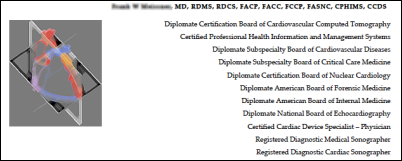
From Arcanity: “Re: your poll about professional certifications on your business card. I think this guy takes the cake.” Looks like either a big ego or a small … well, you know. Diplomate-ically speaking, his business card must be the size of a poster board.


HIStalk Announcements and Requests

inga_small A few of the stories you may have missed this week on HIStalk Practice: CMS offers a free online tool to help small practices transition to ICD-10. Over 60 percent of practices don’t plan to participate in an ACO. A reader suggests that Practice Fusion, CareCloud, and ZyDoc might follow Castlight’s IPO lead within the year. The potential costs associated with information loss during the ICD-10 transition could be substantial. Four major insurance carriers tell the AAFP they’ll be ready for ICD-10 by October 1. NCQA intends to raise its PCMH recognition standards in 2014. Thanks for reading.

This week on HIStalk Connect: Castlight Health shares soar 149 percent on the day of its IPO. Physician-only social networking site Doximity reaches 40 percent market penetration with US physicians. SharePractice launches a mobile app designed to let doctors use crowdsourcing to collaborate on and rank the best approaches to treating specific conditions. Dr. Travis dissects the recent failings of Google Flu Tracker and its implications on big data at large.

image

Welcome to new HIStalk Platinum Sponsor NYeC (New York eHealth Collaborative). NYeC is New York State’s not-for-profit public resource for healthcare IT, facilitating the EHR transition for providers and improving healthcare for all New Yorkers. Its activities include the SHIN-NY HIE; NYeC Regional Extension Center serving the upstate region and Long Island; the multi-state EHR-HIE Interoperability Workgroup; and the Patient Portal for New Yorkers that will go online this year. It runs the New York Digital Health Accelerator along with the Partnership Fund of New York City, supporting early- and late-stage digital health companies working on care coordination, patient engagement, predictive analytics, and workflow management. Chosen companies, which are required to have a New York presence, receive $100,000 in upfront funding and participate in a leadership program of healthcare leaders, entrepreneurs, and investors for the five-month term. Applications for the 2014 class are due April 11. The class of 2013 included ActualMeds, Aidin, Avado, CipherHealth, Cureatr, MedCPU, Remedy Systems, and SpectraMedix. Thanks to NYeC for supporting HIStalk.

Here’s my free “how not to look stupid” tip of the week: don’t reply to business emails on your phone. I see this constantly: the sender doesn’t notice incorrect spellcheck changes, they write barely intelligible terse text that makes little sense, and the tiny keyboard makes it too much trouble to make desirable changes to the subject or to the “Sent from my iPhone” email signature that indicates they are dashing off a reply on the fly while doing something else. You would be better composing a more thoughtful reply on a real computer later unless it’s an emergency.


Upcoming Webinars

April 2 (Wednesday) 1:00 ET. A Landmark 12-Point Review of Population Health Management Companies. Sponsored by Health Catalyst. Presenter: Dale Sanders, SVP, Health Catalyst. Learn the 12 criteria that a health system should use to evaluate population health vendors and to plot its internal strategy, then see the results of grading seven top PHM vendors against these criteria. No single vendor can meet all PHM needs. The most important of the 12 criteria over the next three years will be precise patient registries, patient-provider attribution, and precise numerators in patient registries.


Acquisitions, Funding, Business, and Stock
image

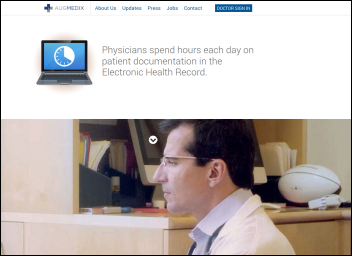
Augmedix, a startup building clinical applications for Google Glass, secures $3.2 million in venture funding.

image

CitiusTech announces an investment partnership with General Atlantic. The company, which works with 50 healthcare organizations worldwide, reported 2013 revenue growth of 51 percent.
image

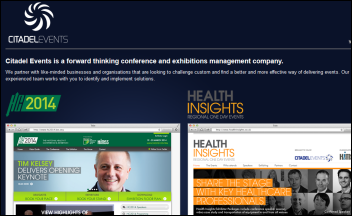
HIMSS acquires Harrogate, England-based conference promoter Citadel Events, renaming it HIMSS UK.
image

Social health management vendor Welltok acquires wellness game developer Mindbloom.
image

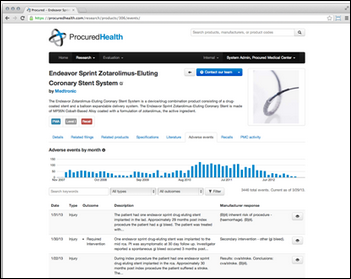
Procured Health, which offers software that manages hospital purchases of medical devices, raises $4 million in a Series A round.


Sales

The New England Healthcare Exchange Network will implement the Ability Secure Exchange Platform across its member hospitals and provider sites.

Mercy Orthopedic Hospital Springfield (MO) selects Emmi Solutions for patient engagement.

Adventist Health Hospitals (CA) will deploy Aperek Ellipse for real-time anytime spend visibility and analytics.

image

BJC Healthcare (MO) selects Health Language to assist with its transition to ICD-10.


People

image

Clinovations promotes Kevin Coloton from COO to president.


Announcements and Implementations

Methodist Healthcare (TN) deploys MedAptus Professional Charge Capture for inpatient coding and billing.

La Clinica del Pueblo (DC) goes live on Forward Health Group’s PopulationManager and The Guideline Advantage.
image

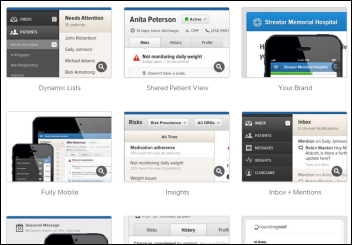
The Nashville paper profiles RoundingWell, the patient engagement software company launched by the founder of bulk email software provider Emma. It uses EHR-generated information to send patients questions, education, and guidance from a proprietary content library developed with Vanderbilt University School of Nursing and The Center for Case Management. A tiny study found that patient engagement rates were at 60-70 percent over 90 days, with the average patient having eight risks identified that it says wouldn’t have been addressed otherwise.

Aprima offers Etransmedia customers running Allscripts MyWay a conversion to Aprima Patient Relationship Manager, hosted by either Aprima or Etransmedia.

HealthEast Care System (MN) goes live with an early intervention program for heart failure patients that uses patient engagement technology from Pharos Innovations.

Catholic Health System (NY) deploys Juniper Networks Meta Fabric, an open standards-based architecture for data centers. 

image

Sanford Health (ND) completes the installation of  RTLS technology from Sonitor Technologies and Intelligent InSites at Sanford’s soon-to-be-opened Moorhead clinic.


Government and Politics

OIG testing of the 28-hospital Indian Health Services computer network reveals inadequate security and significant network vulnerabilities. OIG hackers were able to gain unauthorized access to the IHS web server and an IHS computer, as well as obtain user account and password data and records in the IHS file system.

3-20-2014 10-47-09 AM

The HHS Office of the Assistant Secretary for Preparedness and Responses and ONC launch an initiative to promote the use of HIT in emergency medical services.
image

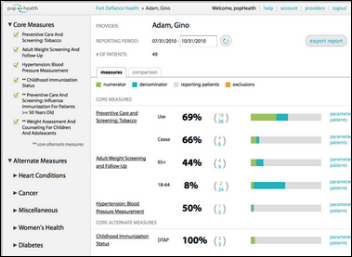
ONC announces that its open source popHealth tool to process electronic clinical quality measures has been certified as a 2014 edition EHR module.

image

Oregon Governor John Kitzhaber fires the head of the state’s health authority and asks Cover Oregon to replace its senior management team, including the CIO and COO, following an independent investigation. Cover Oregon remains the only state whose exchange, which cost $200 million, hasn’t enrolled a single person after its planned October 1 rollout failed. The report concluded that the state’s managers had too much confidence that Oracle, which has been paid $160 million so far, could deliver what it promised.


Innovation and Research
3-20-2014 11-31-49 AM

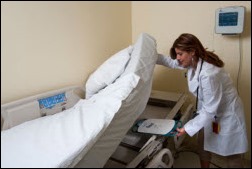
Harvard University Medical School researchers find that use of the EarlySense monitoring system on a medical-surgical unit was associated with a significant decrease in length of stay, code blue events, and ICU stay times. EarlySense uses a sensor that is placed under a patient’s mattress to detect potential adverse events, as well as monitor heart and  respiratory rates and movement.

A study finds that facial recognition software beats humans at detecting patients who are faking pain, with accuracy of 85 percent vs. 55 percent.


Other
3-20-2014 1-38-00 PM

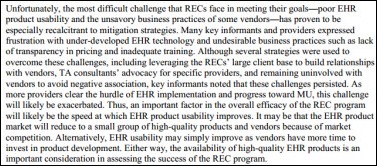
An ONC-commissioned review of nine RECs finds that their most difficult challenges are poor EHR product usability and the “unsavory” business practices of some vendors. Other struggles include physician resistance to EHRs and the MU program, sustainability of RECs once federal funds are depleted, and difficulties communicating often confusing details of the MU program. The authors also note three best practices that emerged for helping providers achieve MU:

  • Maintain strong partnerships with the community
  • Hire technical employees who that have a mix of IT skills, clinical understanding, and general business understanding
  • Work with a physician champion.

The Business Journals names its “10 Markets with the Strongest Brainpower”: Washington DC, Madison, Bridgeport-Stamford, Boston, San Jose, Durham, San Francisco-Oakland, Raleigh, Minneapolis-St. Paul, and Colorado Springs.

image

Supply chain software vendor Global Healthcare Exchange, acquired by private equity firm Thoma Bravo a week ago, reportedly lays off 130 of its 500 employees.

Google CEO Larry Page, speaking at a TED conference in Vancouver, touts the sharing of medical records, saying, “Wouldn’t it be amazing if everyone’s medical records were available anonymously to research doctors? We’d save 100,000 lives this year. We’re not really thinking about the tremendous good which can come from people sharing information with the right people in the right ways.” He described losing his voice because of an undocumented condition and finding thousands of people with the same problem after posting a description online.

St. Luke’s Health System (ID), which lost an antitrust lawsuit filed when it attempted to buy a physician group and used its Epic system as one of the benefits, receives a $10 million legal bill from the the hospital, surgery, center, and attorney general that successfully sued it.

Cerner is among 23 Kansas City-area employers recognized for their commitment to lesbian, gay, bisexual, and transgender equality.
image

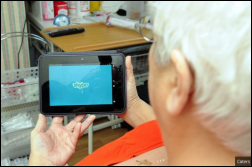
Doctors in England using Skype to check on a home dialysis patient notice her husband collapsing in the background and send an ambulance to help the 70-year-old man, who was later found to have bowel cancer.


Sponsor Updates

  • ScImage will deliver its PICOM365 PACS with Cedaron’s CardiacCare.
  • Direct Consulting Associates joins the HIMSS Innovation Center in Cleveland as a Supporting Collaborator.
  • CommVault will add 250 jobs in the next three years at its 275,000 square foot headquarters under construction in Eatontown, NJ.
  • Pandodaily.com spotlights Validic and its data pipeline solution for healthcare.
  • GetWellNetwork sponsors the 28th annual National Disabled Veterans Winter Sports Clinic March 30-April 4 in Snowmass, CO.
  • Emdeon CEO Neil de Crescenzo tells the Nashville Business Journal that his company has hired 100 people in the last six months.
  • AdvanceNet Health Solutions will add the CoverMyMeds ePostRx automated prior authorization solution to its enterprise pharmacy management platform.
  • Summit Healthcare partners with Indigo HIT to offer complimentary services to enable clients with streamlined and scalable CCD integration.
  • Kareo adds Rignadoc to the Kareo Marketplace to help physicians with phone triage.
  • ICSA Labs certifies First Databank’s MedsTracker as a 2014 Edition Ambulatory and Inpatient Modular EHR.
  • The Ethisphere Institute names Premier a 2014 “World’s Most Ethical Company” for the seventh consecutive year.
  • Angela Hunsberger, senior consultant for Hayes Management Consulting, discusses the need to balance security and usability in patient portals.
  • Healthcare services firm Accreon partners with identity management solution provider NextGate to deliver services and technology for enterprise data awareness and exchange.
  • RelayHealth Financial releases RelayClearance Plus 5.0, a pre-service financial clearance solution that includes an eligibility benefits detail viewer.
  • Clinithink launches its suite of CLiX Online Solutions to translate unstructured clinical narrative for real-time use.
  • TeleTracking Technologies names Hill-Rom a licensed reseller of TeleTracking’s asset and temperature tracking software, while Hill-Rom extends re-sale rights to TeleTracking for its hand hygiene compliance solution.

EPtalk by Dr. Jayne

I spent all day Tuesday at yet another continuing education class to recertify a life support certification. This is the last one until summer, so I’m glad to have a break.

I understand why they require us to stay certified, but the odds of my actually having to participate in a code situation in the hospital are pretty slim based on my clinical practice patterns. I’m more likely to have to use basic CPR at the supermarket than any of the other skills, which I guess is a good thing. This year I took the “independent study” course, which included an online pre-course as well as the in-person practice and skills testing sessions using a computerized mannequin.

In some ways, the certification seems like a racket. This week confirmed my thoughts. The health system I work for has a master license to be able to train staff on adult cardiac life support because they require most of the clinical staff to maintain certification. I have no idea how much that master license costs, but I know that the individual certification fee is $220 because I had to pay it out of pocket.

In a quirk of rule-making, since I’m not employed by the hospital in a clinical service line (my Emergency Department work is through a third-party contracting firm), there isn’t a department to cost it back to. Apparently neither the administration or IT cost centers are valid for the education department to use, which makes me nervous that someone thinks administration and technology don’t need continuing ed.

At other hospitals (such as the one where I take my pediatric course) the fee for the all-day course includes the textbooks and lunch, but ours doesn’t. I’m a girl who knows how to brown bag and I don’t mind not being allowed to keep the books because I’m never going to look at them again. Neither of those are that big of a deal, but the twist at the end of this course was unbelievable. When we turned in our evaluations at the end of the day expecting to pick up our certification cards, we were asked to pay an additional $2.25 (in cash) for the actual card. Talk about unbundling!

Hospitals are infamous for nickel and diming patients. I suppose I shouldn’t be surprised that they’re now doing it to the medical staff and the independent contractors who fill the positions they can’t staff on their own. When I registered for the course, I had to wait until my check had cleared to actually schedule it and borrow the text books. I thought that was a little weird, especially since I’ve been on staff for more than a decade and they know where to find me if the check bounced, but I understand not everyone is that reliable. Incidentally, the pediatric hospital takes online payments for their courses, so they don’t have the check cashing issue.

My suggestion to the education department was to just raise the course cost to $222.50 (or even $225) so that they’d have the full payment up front and not ask for cash at the end of the course. I was told that the clinical departments only allowed $220 for the course and the reason they charge for the card was because the “regular employees” don’t actually need the card, they just need a statement from the education department that they had passed the course. Only “external” attendees need the card, hence the extra charge.

I guess external is a nicer way to say that I’m an irregular employee, or to possibly admit that our hospital is so cheap they won’t pay $2.25 for the 20 or so “external” attendees who take the course each year. Or that they’re ignoring the cost savings of recycling textbooks that they’re charging individuals for.

I’m afraid that as healthcare reform evolves, this is only going to get worse. Our hospital has hired a fleet of financial staffers to micromanage every facet of patient care (without admitting they’re telling physicians how to practice medicine) at the same time they’re cutting positions for nurses and patient care technicians. They were already in the business office, where I did battle over the fact that I can only order one printer cartridge at a time (despite the fact that they’re cheaper in a two-pack) due to new purchasing rules. They were already on the hospital floors, where we have to bar code scan every gauze pad and bandage we touch. Now they’re even in CPR class.

We are the embodiment of penny-wise and pound-foolish. I’m curious about the trends our readers are seeing in the hospital or clinic. Has everyone gone as mad as my employer seems to have gone? Are we headed towards the level of care seen in other parts of the world, where patients are expected to provide their own bandages and meals? Email me.


Contacts

Mr. H, Inga, Dr. Jayne, Dr. Gregg, Lt. Dan, Dr. Travis, Lorre.

More news: HIStalk Practice, HIStalk Connect.

 

125x125_2nd_Circle
.
CIO Unplugged 3/19/14

March 19, 2014 Ed Marx 2 Comments

The views and opinions expressed in this blog are mine personally and are not necessarily representative of current or former employers.
Trains

I spent my early years in Europe, where travel by train was the most efficient form of transportation. I loved the excursions where we bypassed the Autobahn, moving swiftly across the landscape of Germany and surrounding countries.

Returning often as an adult, I became increasingly aware of the differences in how trains were run by country. Even my kids quickly learned that German and Swiss trains were always on time, while the French trains were often delayed or just plain cancelled. We crossed our fingers whenever we had to jump a train for France.

I asked some Swiss operators why the French trains had such a dismal reputation. They blamed it on the culture — their processes were not as sharp as those of other countries.

December 2010, I had a rude awakening that my internal operations, or “trains,” were more French than they were German. I detailed some of the lessons learned in this post. I realized that our culture, unattended, had drifted. We had no logical processes that were detailed except in the minds of one or two key individuals. Not good.

Around 2 a.m that fateful day, one of my team convinced me it was time for a major change and that we needed uber focus on process. Convince me … Nothing! I was desperate!

Since then, I’ve learned that the majority of IT organizations across all industries don’t have formal process plans. Based on historical success or experience, they operate without intention. Some do extremely well with this non-method; others don’t.

We operated well without a plan for years. But given the complexity in this increasingly digital healthcare world, the risk became too great to operate whimsically. We chose the ITIL framework. I’m not endorsing ITIL, but it is the framework we selected for IT service management.

As a result, we’ve seen significant improvements in our operations. Like most frameworks, ITIL isn’t just about operations, but it is the area we chose to focus on initially.

We started with a gap assessment. Yep, we had holes in our processes, and we knew it. Our train tracks were not always true.

We started to close those gaps, reassess, find more holes, and filled them. We were tenacious. It became one of our top priorities.

image

Three years later, we won a major industry award for the impact of our ITIL journey. Again, it is just an external validation of what was taking place internally. A complete transformation of our operations. This train is going places, reliably!

This is the video that was shown prior to my employer winning this prestigious award conferred by Pink Elephant.

If you find yourself with operations that are more akin to the French trains than German ones, here are some steps you can take to transform your operations:

  • Lead this personally so everyone knows how important this initiative is.
  • Hire someone, redirect a current position if you must, to have someone focus 100 percent on your framework.
  • Have an external review of all IT service management processes.
  • Pick highest risk areas and focus relentlessly.
  • Require IT service management certification as a condition of employment (I was in the first class).
  • Require advanced certification of all your leadership.
  • Everyone takes our classes, including administrative support.
  • As momentum grows, add staff as needed to enable transformation, even if it means repurposing existing staff.
  • Make your maturity level goals part of your key performance indicators to ensure everyone has skin in the game.
  • Invest in an appropriate number of staff to become experts.
  • Annual external assessments to review progress to KPI.
  • Never lose the focus or determination, talk about it often.

Not everyone will be on board. You will experience pushback from your own team. That is part of leadership. Have the vision and execute. Listen to your team and adjust accordingly, but never lose sight on the need to drive this until IT service management is just a part of the culture and folklore.

Our results on our operational areas of focus:

Area Baseline, Year 1, Year 2

  • Service Desk – 2.5, 3.28, 4.04
  • Incident Management – 2.0, 3.07, 3.79
  • Problem Management – 1.5, 3.13, 3.63
  • Change Management – 1.25, 3.10, 3.34
  • Configuration Management – 1.0, 3.10, 3.07
  • Knowledge Management – 1.0, 3.18, 3.69

We met our KPI by meeting a 3 or greater CMMI level of maturity. We now push towards 4 or greater and have expanded our areas of focus.

An example of how this translates into transformation is our rate of unplanned changes (Emergency and Urgent) has been reduced by over 40 percent. We now have a vibrant service catalog. Ninety-four percent of all team is ITILv3 Foundation certified and 95 percent IT leaders have at least one advanced certification. We now have nine ITILv3 Experts.

But the best part is how our focus on running our trains efficiently and effectively has impacted business and clinical performance. I am unable to share our metrics at this point, but the reason we won the Pink Elephant had everything to do with ensuring the reliability of our systems to enable superior business and clinical outcomes. Simply put, we save lives.

Perhaps your trains run well and IT service management is not an issue for your organization. Bravo. I know this was not the case for us. Today our customers can trust that our trains won’t be delayed or cancelled. All aboard….

Ed Marx is a CIO currently working for a large integrated health system. Ed encourages your interaction through this blog. Add a comment by clicking the link at the bottom of this post. You can also connect with him directly through his profile pages on social networking sites LinkedIn and Facebook and you can follow him via Twitter — user name marxists.

Reader Survey Results 2014

March 19, 2014 News 3 Comments

Right after the HIMSS conference every year, I survey HIStalk readers. The responses, which are always smart and insightful, help me plan the next year. That’s important since I rarely see readers in person – they don’t seem to stray often into the spare bedroom in which I write HIStalk alone, which is probably a good thing since I don’t have any extra chairs.

Some demographics of the 600 survey respondents:

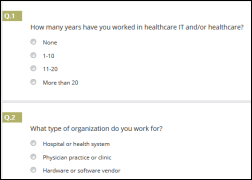
  • 38 percent of respondents have worked in the industry for more than 20 years, while another 31 percent have more than 11-20 years of experience.
  • 45 percent of respondents work for vendors, 20 percent for consulting firms, and 27 percent for hospitals or practices.
  • 6 percent of respondents are CEOs, 5 percent are CIOs, and 2 percent are CMIOs.
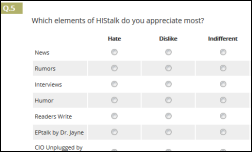
  • The most-appreciated features of HIStalk are news, rumors, humor, and the morning headlines.
  • 86 percent of respondents say they have a higher appreciation of companies I’ve mentioned on HIStalk.
  • 37 percent of readers say they’ve recommended HIStalk to others in the past month, while people whose world revolves around social media might be surprised that only 11 percent of respondents saw even one of our tweets.
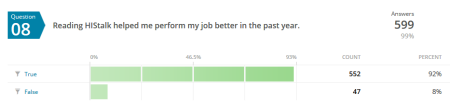
  • My favorite stat: 92 percent of respondents say reading HIStalk helped them performed their job better in the past year. That’s the metric I watch most closely.

I’ve learned not to overreact to individual comments on the survey. Like everyone else, I think I’m representative of all readers and therefore can see obvious things that should be changed, but that’s not really the case. I don’t run HIStalk by committee because the result — as happens when software vendors let user groups dictate their entire R&D — would be a product that nobody hates but that nobody loves either.

Not everybody likes the same parts of HIStalk. Some people love interviews, some hate them. For every person who complains about music reviews, several say they love them and want more. Readers Write articles are often vendor fluff pieces even though I’m rejecting more of those, but some people don’t even like the really good ones because they just want to read news presented as tersely as possible. The bottom line on content is that I have to write and report what I think is relevant and interesting. I write something I would want to read. For those who don’t agree, other sites do it differently.

I’m also careful not to let my reach exceed my grasp. I get a lot of suggestions to cover more international news, to dig deeper into the payer market, or to cover more healthcare news in general and not just the healthcare IT side. I don’t have the time or interest to cover entire new subject areas well,  so I’ll stick with what I know. I’ll always try to make HIStalk better, but I don’t really want it to get bigger because then it wouldn’t be fun for me. It’s been 11 years since I started it and I would have quit long ago if I wasn’t having a good time.

I ask a couple of open-ended questions on the survey and will address some of the responses. I should add, though, that the most common comment was “don’t change anything.”

Get deeper into the implementation cycle. Do stories about how people get solid benefit realization.

I’m happy to do this. Providers are busy and don’t often have time to participate, but I almost always ask questions around benefit realization when I’m interviewing CIOs. Maybe that’s the opportunity – if you work for a health system in a non-CIO role but can speak authoritatively on implementation lessons learned, optimization, and benefits, I will interview you, anonymously or otherwise (since I know many hospitals don’t allow interviews without approval).

That answer applies to several suggestions. Readers want more information from providers just like I do, but it’s hard to bring those people into the conversation.

Create a moderated forum for further discussion.

I did that awhile back and participation was pathetic. Everybody loves the idea, including me, but a lesson I’ve learned is that while many people enjoy consuming content, few want to create it. It’s hard to solicit engaging comments and thoughtful guest articles except from people who are pitching something.

Express more opinion in your observations.

I agree. Sometimes I get so busy, especially for the Tuesday and Thursday night posts when I’m getting tired, that I focus on summarizing complex news items without adding as much personal commentary. That’s one takeaway from the survey – I will do more of that, although the folks who say “less commentary and just the facts” won’t be thrilled.

Add the patient experience of IT to the mix. It is a missing voice in HIStalk. Otherwise, it is off the charts incredible.

That would be great, but I don’t know to get them involved since they likely don’t read HIStalk. I just thought of something that I might be able to do along those lines, so let me think it through and I’ll report back.

I would add some basic educational materials targeted at folks who are new to healthcare IT.

I keep thinking about how to do this, but it’s a big job for me to take on alone.

The webinars still feel a bit too vendor sales focused.

We’ve tried to make the ones we’ve produced more educational, but the bar was set low and we haven’t been able to raise it as quickly or as far as I’d hoped yet. We’ve had vendors come to our rehearsals without the presenter even having seen the slide deck. We have drawn the line in some ways – I review the slides and rehearsal ahead of time and if I think it’s irrelevant except as a sales pitch to prospects, I make them say so in the abstract’s target audience. The one thing I’ll say is that the webinar you see will always be better than it would have been without our guidance. Whether it could have been better still is the issue we’re addressing.

Let’s hear more from front-line nurses, like a Dr. Jayne column.

I agree. I would need someone insightful with the time and ability to write well and regularly. I’ve solicited that kind of talent before and have struck out. I would be happy to hear from a nurse in an actual caregiving role who is IT savvy, opinionated, and an engaging writer.

Add tags for discussion, links to specific story items, or improve the search function.

I haven’t found an easy technical way to do any of these things. The “one post, many items” format is perfect for reading, but doesn’t lend itself to breaking out discrete data elements for searching or filtering. I would contract out doing some manual indexing if I could figure out what the result would even look like. Someone suggesting reaching out to an informatics professor to have their students devise a solution, which would be fun.

Stop being so pro-Epic.

I report about Epic the same as any other vendor. They are successful and a driving force in the industry, but they also aren’t perfect and I report that too (questionable non-competes, hospital bond ratings that suffer because of Epic rollouts, and weaknesses in specific product lines). Epic will get mentioned more than some vendors because they are big and many readers, especially the big-hospital ones, are involved with their products and have more to say about them. Everybody either loves or hates Epic  (often breaking down into Epic users vs. Epic competitors), but I think I’m as much in the middle as anyone. Of course everyone thinks they are unbiased and I’m no different.

Do more interviews with non-sponsoring companies.

I will interview almost anyone who sounds interesting and who volunteers or who agrees when I reach out, although for companies I only interview at the CEO level. I don’t guarantee sponsors that I will interview their executives, but their PR people often make the CEO available and I’ll usually accept under my rules (no blatant promotion, no advance screening of the questions, no approval editing of the transcript, I’ll talk about what I want to talk about and that probably won’t be the usual PR fluff.) I love interviewing providers, but they rarely volunteer. Typically the only interviews I decline are non-CEOs and CEOs of companies that aren’t doing anything interesting or important enough for most readers to care.

Avoid the whining sour tone that creeps into HIStalk.

This is another area where opinions vary. Some people claim I’m an industry cheerleader oblivious to the facts, while others see me as a negative naysayer. I can only say that I’m being myself when I write and you either like it or you don’t. I’m not changing.

Have you considered charging people to write "Readers Write" articles? They have become self-promotional advertisements for consultants or software vendors.

I agree that they had become tedious until a couple of months ago. My policy was to accept anything that wasn’t promotional. Lately, I’ve started rejecting articles that don’t present useful information appropriate to a knowledgeable audience and I’ve alerted the PR people who were ghost-writing them that I can’t use those articles. I will also say that anyone who interviews or submits guest articles is promoting something, even themselves, or they wouldn’t bother, so it will never be perfect unless I stop accepting guest content altogether.

HIStalk seems to be getting rather smug and self-congratulatory, especially in the case of HIMSS coverage and the HISsie awards and the HIStalk party. It seems you are beginning to think that what HIStalk does IS the news rather than you report the news.

We do cover ourselves at HIMSS since everything we’re doing there involves readers, but not to the exclusion of anything else. It’s tongue in cheek – it’s not news, just acknowledgment that HIMSS brings a lot of readers and us together. I barely mentioned the HISsies awards and only enough about HIStalkapalooza to allow people to sign up and to read the recaps afterward. It isn’t news, but then again neither is most of what happens that week.

I would like to see more B2B opportunities for sponsors and other companies to connect with each other for partnerships, staffing, or even acquisitions.

I’ve always liked the idea, although I’m not sure I have any particular expertise to make it happen. I’m open to ideas.

I believe there’s an opportunity with HIStalk for readers to share with the entrepreneur community what are the real world problems that still exist and still remain unsolved. 

Readers would have to step up and contribute and that doesn’t usually happen. I could ask for volunteers to serve as an ongoing provider panel, contacting them every six months or so.

Morning headlines don’t seem very useful. The information is usually covered in more detail during the following news post.

That’s the point. Some people just want a quick glance at the most important news. It stands to reason that stories important enough to be included in the headlines would also be covered in the regular HIStalk post, with the assumption that someone short on time might not get to the latter right away.

The email updates don’t offer anything helpful. They just say something new was posted to the website.

That’s all they are intended to do. I’m not writing a newsletter, I’m just letting people who signed up for the updates know there’s a new post. The majority of readers come to the site by clicking the email link. I am willing to put Lt. Dan’s morning headline posts into their own full email if people want that, and a few respondents do.

Include more regular content from healthcare M&A investors.

I would be happy to do that, but those folks are busy enough that nobody has volunteered. People like the idea of writing regularly for HIStalk, but then realize that it’s a fair amount of work on a fixed schedule. I’ve tried several people as regular writers and they dropped out not long after they started.

More information about cutting edge technologies.

I’m willing. It’s hard to tell which startups are BS or doomed to a mercifully quick death (and quite a few are both), but I will interview CEOs (or even better, their customers, if they have any) since that’s the best way to find out what they’re doing.

Filter comments more to get the non-productive ones out.

That’s a slippery slope. I generally approve all comments except those that are potentially libelous or are of a suspicious nature (like someone making unsubstantiated claims about a publicly traded company.) I would love having more thoughtful and balanced comments, but I can’t make people submit them. I have started deleting the incessantly anti-EMR whining ones from the many fake names of the reader known as Not Tired of Suzy, RN because they all say the same thing.

A bit less content. It’s a lot to read 

It is quite a bit of reading, maybe 10 minutes per day, but it’s everything important going on the industry. I reject 95 percent of the “news” that’s out there because it’s irrelevant and what’s left is what I think is important. Certainly you could skip some sections that you know in advance won’t interest you as being hard news (probably the reader comments, sponsor updates, upcoming webinars, etc.) but I’m writing for people with a lot of backgrounds, some of whom find information on sales, business news, and people changes to be the most useful parts of HIStalk. In other words, everyone would like to see content tailored to their specific interests, but those interests vary.

Create a cleaner front page design.

I have to be honest that I’m more of a content guy. Everybody likes the idea of a different page design, but when I looked at it awhile back with reader input, nobody had any great ideas given the nature of the content. However, I will take this chance to remind that you can click the “View/Print Text Only” link at the bottom of the post to get a simpler layout that some find easier to read. It also makes it easier to copy/paste if you want to send a snippet to someone. Try it right now.

image

image

Interviews with users and not just C level.

I’m willing to interview anyone who is interesting, but I can’t make them volunteer. I don’t have any good way to get in touch with floor nurses or hospitalists from hospitals all over the country.

How about a column from someone at ONC or a member of the HIT Policy Committee? Also, The Investor’s Chair has tapered off and it would be good to see more of him.

I’m certainly willing on the former. On the latter, I love running Ben’s stuff but I guess he’s been busy, same as Dr. Rick Weinhaus’s “EHR Design Talk.” Volunteer contributors  have jobs and lives that come first. Writing isn’t their primary activity.

I would love a section for analytics.

I probably need to dig a little deeper into that, but there’s an awful lot of frothiness out there (or maybe that’s a reason do to it instead of a reason not to.) I will figure out how to get more education on the topic since I’m a casual follower for now. 

Create an HIStalk podcast or audio format of HIStalk for the morning commute.

I could do that, but I don’t know if enough people would care to make it worthwhile. I’m biased because I’d much rather read words than listen to audio or watch video where I can’t skim, but it might be fun for commuters.

Bigger venue for HIStalkapalooza.

HIStalkapalooza has turned into a headache as it keeps getting bigger and expectations are raised, but I’ll try to make it better where I have enough influence with the company that’s paying. I dread it every year because I get into emotional arguments about how many people I can invite, where it will be held, and how we’ll handle things like guest requests or special diets. Then I get into a Vietnam of requests from righteously indignant people who didn’t sign up or who I couldn’t invite because of capacity. I said after this year’s event that I was done with it, but I’ll probably change my mind over the summer.

Don’t dilute your brand with things outside your core of news and comments.

I’m keeping close to the core, I think. The only new offering involves webinars and I let Lorre manage those so I don’t get distracted. I received probably 30 or more ideas of things I should get more involved with, but I will likely pass on most or all of them and stick to my knitting. I have enough challenges already.

I would make the "Anonymous CIO" interviews a regular feature.

I would love to. I asked for volunteers and got the one you saw. That’s it.

Bring back the old logo. Don’t give in to the PC police!

I didn’t drop the smoking doc logo because of political correctness. It’s still at the bottom of every post, in fact. The problem was that it wasn’t designed as a logo. It was cool, but the size, shape, and detail didn’t work as a logo. I still get occasional hysterical emails from people who don’t get the intentional irony of a 1950s, reflector-wearing, pipe-smoking doctor, who think that they are the first to have noticed that a healthcare IT site features smoking.

Most of your content is regurgitated news from other sources.

News almost always comes from other sources no matter what you’re reading, although I will take exception in that some of the reader comments, rumors, and interviews provide news that nobody else has. None of the big-budget publications have people out there on the street doing investigative journalism or first-person reporting – we’re all somewhat reliant on announcements, journal articles, vendor propaganda, and lame survey results (and in the case of many sites, using what they find on HIStalk and pretending they didn’t get it there.) The HIStalk difference, I hope, is that I won’t run space-filling stories that don’t interest me, I summarize the stories and put them into perspective, and I’ll add my own commentary when I think I can add value. I’ve been on the provider side for a lot of years, so I would hope I can do a better job than a reporter fresh off a fashion magazine. 

Separate out the content areas into separate sections in their own posts.

I don’t want to do that. People want one quick glance to see everything, not to go clicking on several separate posts just to see what’s new. I know other sites do it that way, but I think they are wrong.

Take a break and get some R&R more often so you don’t flame out prematurely.

I’ve been writing HIStalk for almost 11 years and I still look forward to it every day. Sometimes the administrative parts take more energy than I’d like, but that’s why I got smart and brought Lorre and some other folks on board to help out so I can do the parts I care most about.  

A couple of readers have asked about my succession plan. There isn’t one. If I flame out prematurely or otherwise, HIStalk flames out with me. That leaves Inga or Lt. Dan to post my obituary, which I hope in honor of my tiny legacy will be crisply concise and snarky.

News 3/19/14

March 18, 2014 News 2 Comments

Top News

SNAGHTMLc37257a

The comment period opens for a CMS proposal that would allow it to recoup improper PQRS and e-prescribing incentive payments in a four-year project that would look for errors, inconsistencies, and gaps related to data handling, program requirements, and clinical quality measure specifications.


Reader Comments

image

From Cupola Dogs: “Re: Epic Emeritus Program. Interesting.” Forwarded documents describe a program in which Epic will offer vetted, independent “Epic Emeriti” (Epic-experienced retirees who are least 55 years old) who will help customers as Epic subcontractors. It’s an interesting concept, especially considering that the average Epic employee is probably under 30. Obviously most of the Emeriti will come from hospitals, where experience is considered an asset rather than a liability. Maybe Epic is finally acknowledging that while industry newcomers can follow a carefully documented project plan, sometimes it’s nice for nervous customers to have someone who has walked in their shoes standing beside them.

image

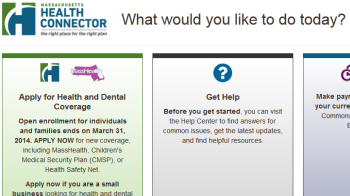
From TooMuchCoffee: “Re: Mass Health Exchange. Cuts ties with CGI Federal. There has been a lot of finger-pointing over the poor-performing sites, but the one common factor in the lousy sites is the lousy contractor CGI Federal, period. WA state was done by Deloitte and is doing fine.” My cynical suspicion is that the combination of governmental and contractor incompetence creates a lot of dysfunctional software that neither party wants publicized. The insurance exchange sites just happened to be public-facing and political, ensuring that their problems make the papers.

From Parker: “Re: McKesson. Still struggling to find a major health system on their Horizon product to convert to Paragon in order to prove to the naysayers that Paragon can manage complex systems. Atlantic Health was going to, but now is not going to move until they see more progress before making a final decision.” Unverified. It’s tough to get customers to switch to a different product offered by their incumbent vendor without their at least going out to the market first, so that may be causing indecision. It’s also tough to convince them to stick with a vendor who’s retiring the product they bought, which will require a painful new implementation no matter whose product they choose. That’s not a reflection on Paragon, just the reality of why most customers aren’t going to be thrilled, especially the larger ones that can afford to buy another system instead of accepting a free one.


HIStalk Announcements and Requests

image
Welcome to new HIStalk Platinum Sponsor VisionWare. The Newton, MA company provides a healthcare-focused data management platform that provides world class operational and analytical integrity. Its Master Data Management solutions address data management, integration, and data visualization. VisionWare’s Patient 360 brings in information from a variety of enterprise systems (including retired ones) to provide providers, payers, and HIEs a 360-degree view of a person (patient, member, or customer) and meet the needs for Meaningful Use Stage 2, ACO reporting, and fee-for-value reporting. Provider 360 manages provider engagement, credentialing, referral management optimization, and relationship management. Specific solution components include an EMPI, provider registry, data verification, data visualization, and data governance. Long-time friend of HIStalk Paul Roscoe joined the company as CEO in January after running The Advisory Board Company’s Crimson analytics unit and Microsoft’s Health Solutions Group. Thanks to VisionWare for supporting HIStalk.

Listening: reader-recommended Lake Street Dive, skilled jazz/soul featuring amazing vocals and a female upright bass player who rocks it. They even sound great in a driveway.


Upcoming Webinars

March 19 (Wednesday), 1:00 p.m. ET. The Top Trends That Matter in 2014. Sponsored by Health Catalyst. Presenters: Bobbi Brown, VP and Paul Horstmeier, SVP, Health Catalyst. Fresh back from HIMSS14, learn about 26 trends that all healthcare executives ought to be tracking. Understand the impact of these trends, be able to summarize them to an executive audience, and learn how they will increase the need for healthcare data analytics.

April 2 (Wednesday) 1:00 ET. A Landmark 12-Point Review of Population Health Management Companies. Sponsored by Health Catalyst. Presenter: Dale Sanders, SVP, Health Catalyst. Learn the 12 criteria that a health system should use to evaluate population health vendors and to plot its internal strategy, then see the results of grading seven top PHM vendors against these criteria. No single vendor can meet all PHM needs. The most important of the 12 criteria over the next three years will be precise patient registries, patient-provider attribution, and precise numerators in patient registries.


Acquisitions, Funding, Business, and Stock

3-18-2014 1-32-20 PM

AbilTo, a provider of behavioral health telehealth services, closes a $6 million Series B round.

Castlight Health signs a deal to turn Leapfrog Group’s 2013 hospital survey information into report to help consumers understand hospital performance.

Varian Medical Systems will acquire the oncology team imaging collaboration software product of Atlanta-based Velocity Medical Solutions.

image

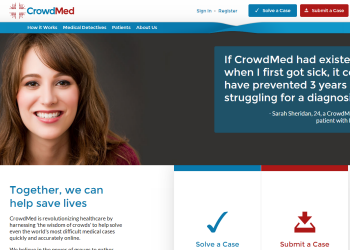
Bloomberg Businessweek profiles CrowdMed, where patients whose unusual conditions have stumped their local doctor post their the symptoms and offer a reward for a correct diagnosis. The site says 180 people have gone through the process, with 80 percent of them reporting that they received a useful diagnosis.


Sales

The Veterans Health Administration Midwest Health Care Network will deploy Lexmark’s Perceptive Software Acuo VNA to consolidate medical image storage.

Meridian Health Systems ACO (CA) selects Halfpenny Technologies to provide analytics modules and an interface engine for exchanging lab information.

3-18-2014 1-34-07 PM

Capital Regional Medical Center (MO) selects Summit Healthcare’s Exchange technology to enable CCD integration and Direct messaging.

image

Saint Peter’s Healthcare System (NJ) selects athenahealth’s athenaOne EHR, PM, and communication system.

Health Choice (TN) selects Valence Health to build a clinically integrated network for population health management and clinical integration.

UNC Health Care (NC) chooses FrontRange HEAT for its newly consolidated service desk, replacing ServiceNow.

image

New Hanover Regional Medical Center (NC) chooses Strata Decision Technology’s StrataJazz for cost accounting, budgeting, planning, forecasting, management reporting, and productivity improvement.

Valley Hospital (NJ) will upgrade to Meditech 6.1, including the company’s new CCU/ICU application.


People

3-18-2014 10-06-09 AM

R. Andrew Eckert (CRC Health Group/Eclipsys) joins TriZetto Corporation as CEO.

3-18-2014 9-03-10 AM

CynergisTek hires Erin Fulton (T-System) as VP of operations.

image

NexTech names Eric Nilsson (Surgical Information Systems) CTO.

image

Home health and hospice EMR provider HealthWyse appoints Graham Barnes (HealthyCircles) CEO.

3-18-2014 1-39-39 PM

Lois Rickard (Press Ganey Associates) joins Streamline Health Solutions as SVP/chief people officer.

3-18-2014 1-40-50 PM

Deloitte names Sarah Thomas (NCQA) director of research for the Deloitte Center for Health Solutions.

image image 

Box appoints Aneesh Chopra (Hunch Analytics) and Glen Tullman (7WireVentures) as advisors for its healthcare and life sciences practice.

image

SSM Health Care (MO) SVP/CIO Tom Langston will retire on July 3 after 33 years with the health system.

image

GetWellNetwork appoints Bart Witteveen (Matrix Medical Network) CFO.


Announcements and Implementations

Three teams share $85,000 in prize money for winning NewYork-Presbyterian Hospital’s InnovateNYP, a two-day hackathon to develop patient engagement ideas for its patient portal. The winning concepts were: (a) a platform that allows inpatients to connect with each other for games, communication, and education; (b) an app that allows patients to connect with other patients, mentors, friends, and families; and (c) a tool that streamlines appointment check-in and rewards patients for healthy activities.

3-18-2014 9-15-41 AM

The Boone County Health Center (NE) and clinics go live on Cerner.

Grady Memorial Hospital (GA) implements RTLS from Intelligent InSites to track mobile assets and tissue and blood samples.

image

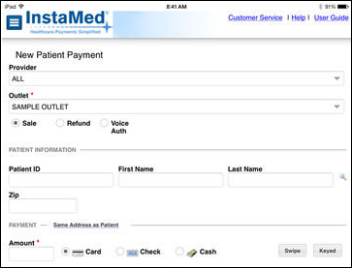
InstaMed launches InstaMed Go, which allows providers to collect patient payments via smartphones from any location with the payments posted automatically to their practice management systems and receipts emailed to patients.


Government and Politics

image

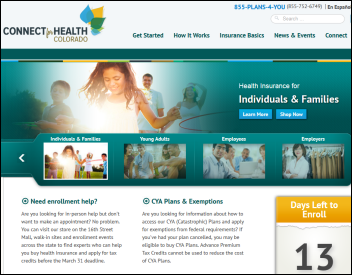
A salary review of Colorado’s health insurance exchange finds that its 36 employees are paid generously with mostly federal tax dollars, with 20 percent of them making more than $100,000 per year and all of them receiving a  10 percent contribution to their retirement plan. The executive director makes $191,000 per year and was given a $18,500 bonus within nine months of being hired. According to a healthcare policy expert for the Independence Institute think tank, “This is a bunch of people really responsible for nothing other than getting government grants.”


Innovation and Research

image

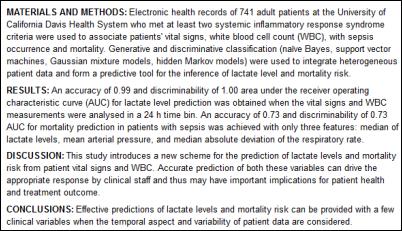
Inpatient EHR information can be used to predict sepsis, according to a study published in JAMIA. Researchers are working on a sepsis risk algorithm that an EHR can automatically calculate.


Technology

image

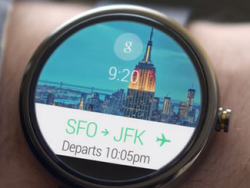
Google beats Apple to the smartwatch punch by announcing Android Wear, available later this year. The watches, which will be tethered to Android-powered phones, will offer voice control, a Siri-like personal assistant, Google Maps, and fitness-tracking sensors. Android Wear may eventually power other wearables, such as a smart jacket.


Other

image

UNC Health Care System-owned Rex Healthcare (NC) will pay $28 million this year for its portion of UNC’s Epic implementation, which is scheduled for a summer go-live.

CDC’s flu tracking data is better than Google Flu Trends even taking its lag time into account, with Google Flu Trends overestimating flu prevalence by more than 50 percent in the past two flu seasons.

3-18-2014 1-03-53 PM

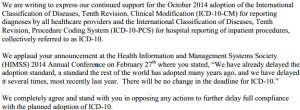
AHIMA, CHIME, and other ICD-10 stakeholders urge Congressional leaders to continue to move forward with the October 1, 2014 ICD-10 implementation deadline and ask for support for the Medicare Audit Improvement Act, which addresses challenges with the RAC program.

A doctor in England is caught by fraud investigators for falsifying electronic medical records to earn NHS quality care bonuses. He enlisted the help of an IT person to enter fraudulent data, but after getting caught, blamed the technician and then computer coding errors for the falsified records. Some of the patients he claimed to have treated were imprisoned, abroad, or dead at the time. 

Weird News Andy titles this, “Lungfish?” Student engineers program at Rice University (TX) enrolled in a program that addresses the problems of hospitals in developing countries create an affordable bubble CPAP device (it helps newborn breathe by pushing air into their lungs) made from two aquarium pumps and a Target shoe box. The device has been deployed in hospitals in Malawi and is being rolled out to other countries. One of the students visited a hospital in Malawi and was told by a nurse there that their device had saved her own baby’s life.


Sponsor Updates

image

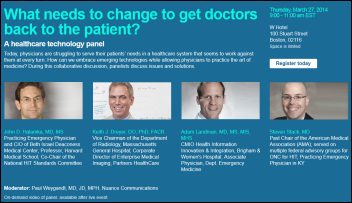
  • Nuance will host a free “Art of Medicine” panel discussion on Thursday, March 27 from 9:00 to 11:00 a.m. at the W Hotel in Boston, MA that features Beth Israel’s John Halamka, MD; the AMA’s Steven Stack, MD; and Mass General’s Keith Dryer, DO, PhD discussing demands that take doctors away from patients. Email to register.
  • SyTrue is chosen to participate in the first Wharton DC Innovation Summit on April 29-30, which will bring together investors, innovators, entrepreneurs and academic leaders. CEO Kyle will present a session on “Innovation Tools.”
  • Gartner positions NTT in the Challengers Quadrant of the 2014 Magic Quadrant for Global MSSPs.
  • Canon USA introduces Nuance eCopy ShareScan v5.2, which features an email and folder-watching service to simplify electronic workflows.
  • The Drummond Group certifies Kareo EHR for MU 2014 Stage 2.
  • Truven Health Analytics reports that its Treatment Cost Calculator tool for estimating out-of-pocket medical costs now reaches 20 million consumers through its client base of employers and health plans.
  • Culbert Healthcare Solutions VP Brad Boyd and Oschsner Health System medical director of accountable care Philip M. Oravetz,MD will discuss strategies for extending EHR technology to affiliated practices at next month’s AMGA conference in Dallas.

Contacts

Mr. H, Inga, Dr. Jayne, Dr. Gregg, Lt. Dan, Dr. Travis, Lorre.

More news: HIStalk Practice, HIStalk Connect 

125x125_2nd_Circle

Curbside Consult with Dr. Jayne 3/17/14

March 17, 2014 Dr. Jayne 1 Comment

There was a great response to last week’s Curbside Consult and my mention of the therapeutic powers of baking. Despite everything going on at the office, it ended up being a fairly low-key week, so the only things coming out of my kitchen were a pan of brownies and a batch of banana bread.

(I admit I played a little bit of the Mad Scientist game with the banana bread. Although it was good, it wasn’t significantly better than the original recipe, so maybe I’ll stop trying to mess with perfection.)

We made a fair amount of progress in our due diligence efforts around bringing the patient records from the practice we acquired onto our system. Although some people might find it boring, I actually enjoy rolling up my sleeves and digging in. It’s predictable work in some regards.

Our DBAs started looking at their system’s data structure to identify how many custom fields they are using compared to a vanilla version of the software. Some of our EHR analysts started looking at the actual user screens to identify custom fields from that perspective as well as to begin diagramming the workflow they’ve built in the EHR.

We’ll send people on site and work with their training team to determine whether the EHR workflow matches how they operate in the practices or if this is an opportunity to retire any custom elements that aren’t actually working in the field. I’ve seen plenty of instances where physicians have customized their systems to the point where efficiencies are lost. This tends to happen more when users don’t have adequate training or don’t agree with the design intent of the software.

Where there are customizations in the workflow, we’ll also do some statistical analysis to look at how many times custom fields are actually used. Just because they were built doesn’t mean anyone uses them regularly.

Our medical group has grown substantially over the last few years. Given the number of physicians who currently use an EHR, we’ve had to do a fair number of conversions. Some of them are simple, especially when the source EHR is fairly primitive or doesn’t have a robust data structure. In those situations, we might convert the patient notes to PDF files and bring them in as if they were scanned documents. It doesn’t give us a lot of discrete data, but in some regards it may be safer than trying to map imprecise data.

I’ve seen systems that don’t use any kind of formatting on data fields (such as restricting blood pressure entries to numbers only) that lead to garbage in the record. In those situations, I typically sit down with the physician and explain the choices: we can either bring the data as images (akin to scanning a paper chart as far as patient safety is concerned) or we can spend a lot of time and money trying to map it. In the latter scenario, they will need to sign off on any corrections.

Most physicians who hear about the time commitment for mapping data run shrieking out of my office and I never hear from them again until I see their signature on the checklist approving the test extract that’s been pulled into the imaging system. Those who aren’t scared off by the time commitment are usually scared off by the budget, which our medical group usually isn’t very keen on funding.

I’m surprised (at least at some level) but the number of physicians who realize they have dirty data but don’t do anything about it. They see the typo’d letters in the BP fields and authenticate their notes anyway rather than talking with their staff about data accuracy. Very few have thought to talk to their vendors about why the system even allows typing of letters into a BP field.

I guess I shouldn’t be that surprised, because I’ve seen even wackier things in the paper world, such as subspecialists who had their staff stamp consult letters with nonsense like, “Dictated but not read; signed by secretary to expedite.” Someone who is OK with that probably doesn’t care about potentially erroneous data in their notes.

So far, the potential conversion doesn’t look that bad from a technical perspective. Although there is a fair amount of customization, it’s not being used extensively. In fact, overall use of the EHR is pretty light. From a change management perspective, though, that’s pretty ominous, especially since our group requires significant commitment to documentation via discrete data. We’ll have our work cut out for us in helping them truly adopt EHR as well as in helping them adapt to our culture.

I almost wish the technical aspects of the conversion were more daunting because I could use that to buy more time with the powers that be. Our analysts still have a bit of digging to do and the workflow teams will find plenty of issues when they go on site, but I’m not sure we’ll have as much time to formulate an effective plan as I’d like. We’ll have to see how things unfold.

Regardless of what we find, I know we won’t have anywhere near as much budget as we need to do our best. We’re pretty good at delivering the impossible, though, so I’m hopeful. And when all hope is gone, there will always be pastry.

Email Dr. Jayne.

HIStalk Interviews Bill Anderson, CEO, Medhost

March 17, 2014 Interviews Comments Off on HIStalk Interviews Bill Anderson, CEO, Medhost

Bill Anderson is chairman and CEO of Medhost of Franklin, TN.

image

Tell me about yourself and the company. 

I’ve been in business a long time, more than 40 years now. This is my first foray into the healthcare IT business. My background has generally been in the financial area and financial technology. I was about 20 years in consulting, went to be CFO of a large public company, and ended up doing the Internet with a company called Bankrate.com. As I got into technology, I got more and more interested in different types of technology and ended up in healthcare.

We’re a diversified technology company, an HCIT company with enterprise software and some innovative new products. We’re just finishing up our audit, but we think we’ll be around $180 million this year. We’re really proud of the fact that we’ve grown in excess of 20 percent a year over the last five years. We have about 1,000 customers, about 60 percent of in general acute care, but with significant market share in some specialty areas like LTACs, inpatient behavioral, and inpatient rehab.


Even experienced industry people were confused about HealthTech’s multiple product brands until the names were changed to Medhost in December. What took so long to consolidate?

We realize the importance of consistent branding. We had a couple of choices, and so we had to sort through the situations where we could actually get good title to names as well as having the URLs and all the other type of connectivity that you’d like to have. We settled upon the fact that Medhost was the best choice for us. We’ve been very happy with the reception from that so far.


I don’t think I ever noticed HealthTech’s booth at previous HIMSS conferences, but with the Medhost name this year, it was a nice presence and the booth had a lot of activity every time I went by. Did you notice a change?

We did, and thank you for the compliment on the booth. I think that many HCIT buyers did not realize what a comprehensive line we had. When we pulled our different product lines together in the Medhost booth and did some promotion around the new branding, we got some much higher response rates or levels of interest than we had in the past. We were very pleased with the HIMSS conference.


I would assume most people know the company from the EDIS product line that provided the company’s new name. But you have a variety of products, many of them from acquisitions. How do you portray the company’s identity now and how hard is it to support a fairly diverse and extensive product line?

We do have a diverse and extensive product line. It’s come about principally through acquisition, but also some significant organic growth.

We acquired a company called HealthCare Management Systems, which was an enterprise software business, because two of the most important departments in a hospital are the perioperative and the ED. We acquired a company called Acuitec, which essentially was selling the Vanderbilt surgery and anesthesia system. And Medhost, with EDIS.  Today we think we’ve got leading products in these very important areas. Those came in by acquisition, as three pieces.

There are also two product lines that you may have noticed that we’ve built internally. One being our YourCareCommunity platform with our first app that runs on that platform, which is our patient portal. Also, our profitability solutions.We call those solutions because they’re a combination of our patient flow product, our business intelligence product, and a consulting group. We have the full range of the products necessary to deliver a higher profitability to our customers.


Is there sales synergy across these products or do they each have to be sold on their own?

Oh, absolutely. You know, we view ourselves as a distribution company. One of the things that has characterized Medhost is that about 60 percent of our customers are associated with a multi-facility organization. Over the years, we’ve demonstrated an ability to distribute products into our customer base, who are growing rapidly themselves. We have tried to tailor our products — acquisitions and the parts we’ve developed — to meet the needs of that customer base. That’s been a successful strategy for us.


Who are your biggest competitors and what advantages do your products offer?

We view our sales as being a middle market provider in the HCIT business. I would say our principle competitors in the general acute care space would be McKesson’s Paragon and probably Meditech. We obviously see Cerner, who comes down into the middle market with a hosted solution, as well as CPSI, who comes up market with their product line. But as far as direct competitors, we would probably identify those two as the most directly comparable.


What are you seeing as the key drivers of the decisions made by that market?

In our customer base, we think we’ve got customers for which ROI really makes a difference. We have a heavy concentration in the for-profit healthcare business. What we view is that for our customers, a combination of market-appropriate features plus ease of use results in a low total cost of ownership. As a result of that, that’s what differentiates us in the marketplace.


It’s always interesting that for-profit hospitals buy and deploy differently than the not-for-profits. Why do you think that is?

Our customers are not only good at delivering healthcare, but they are very good at running businesses. As a result, I think they’re looking for the effectively the right product for the facility they have. In many cases, we’re in customers that have segmented their bases, and we tend to be in the hospitals and other facilities where our features match up  with what that facility’s doing. And again, we offer what we believe is a low total cost of ownership.


Where does the company’s future lie?

We’re pretty happy with our menu of products for the inpatient world right now. We think we’ve covered bases with that. We would like to do additional acquisitions, because we think our customers have needs, and we’d like for them to be able help serve those needs.

We would be looking at areas like post-acute care. Many of our customers are going to be more and more involved in dealing with patients outside the four walls of a hospital. Also in services, because again those are becoming more and more important to both our corporate customers and our standalone customers. Things like revenue cycle outsourcing, some other types of services like that, we think are going to be very important to these customers as margins are squeezed and they need to be able to control their costs.

Probably the biggest area that we are interested in either building products or acquiring products or partnering with customers is in this YouCareCommunity platform. Essentially what we’ve done is combined an HIE with an enterprise master patient index to allow people to pull records from both ambulatory and inpatient EHRs into the cloud. Using that platform, we’ve launched some initial applications, being our patient portal, and we’re working on a disease management product and some other products. But we’re also looking for partners and acquisitions that add additional applications to that platform.


Is this product the answer to the HIMSS buzz around population health management or analytics, or do you have other strategies or do you even want to be in those markets?

Yes, we absolutely want to be in that market. This would be the platform that we use to address the needs of our customers in that marketplace. 

Population health has a number of different facets. The really important thing, though, would be to help manage the patient, or even better to help the patient manage themselves, to prevent things like readmission, disease management, things of that nature. We think that with our cloud-based platform and our strategy to engage the patient on a regular basis, even when they are not currently in the hospital or have recently been in the hospital, will allow our customers to help affect their downstream cost on those customers.


What are your customers telling you about their state of readiness or state of interest in Meaningful Use and ICD-10?

Everyone is very focused right now on the Meaningful Use program. I think that’s been a challenge, particularly to our smaller, standalone customers. They’re interested in trying to attest as quickly as possible and move on to other things, one of those things being ICD-10.

We view this as being a very difficult transition for many of our customers, and one that we hope we’ll be able to assist them with. We believe we have the right tools in place for them to do that, but it will be a significant change in training and how a facility has to deal with some of their billing and coding issues.


Evidence suggests that smaller hospitals may be walking away from Meaningful Use money after the first couple of years. Do you see that happening?

That’s going to be difficult to do. There will be some in the very small end of the hospitals. We have less than a 100 critical access hospitals in our more than 1,000 customers, and with many of those really small facilities, the economics are not going to work for them.

The cost of attesting and maintaining the Meaningful Use progression is going to be more than the potential penalties or the rewards. That is going to be an issue globally for healthcare, because it is in the best interest of the healthcare delivery system in general for those customers — our customers — of that size to participate, as well as other facilities of that size. That will be an issue that ultimately the government will have to address — how to pool those customers into the system. Because it is going to be difficult.


You are emphasizing a touchscreen user experience in the keystroke-heavy world of healthcare. Do you think that is the market changing to now accept and even demand a touchscreen experience?

Absolutely. While we think of our users as healthcare professionals, they’re also consumers. Every day they use mobile platforms. They use consumer software. Healthcare professionals, like other consumers, are going to be more demanding about the quality of their software.

As a result, we’re making and are continuing to make significant investments in things like workflows, usability of the product, and making it mobile agnostic. Our belief is that tablets will be very important in the medical area. We do have some phone apps and some others that are in process, but inherently the phone apps or smartphone apps are going to be more difficult to use.

Tablets, however, will give the clinician much better access to data and the ability to kind of process data without being tied to a particular workstation or having to sign in and sign out. The convenience and the ability to increase productivity will make that important for all software providers.


Many of the early claims vendors made about mobile access involved Citrix running a desktop session on an iPad. How is the industry is progressing in creating a true mobile experience?


The industry in general has had a lot of demands upon it and has been distracted from some of the work flow and ease-of-use type of objectives that I think are shared by most vendors. Everyone will have to cycle back to that.

Almost four years ago now, we started a renovation of our enterprise systems to put an HTML 5 interface layer on top of it. The reason for doing that is that the combination of wanting to have a more inexpensive hosting solution as well as being mobile agnostic. You can do that an HTML 5 interface as long as you’re paying attention to form factors and how you design a page. Then the same page I can view on a computer, I can view on my tablet and get a very satisfactory experience. Those types of solutions are going to be very important in the future.


What are you priorities for the company in the next three to five years?

Our priorities are to continue to grow our base and our enterprise business, but also at the same time, to take these new product lines that we have in our profitability solutions and YourCareCommunity and to try to meet more the needs of our customers in those areas.

We think in particular, our ability to provide a patient portal in both the ambulatory and inpatient area that is certified and can pull together the care community is going to be a really important thing. We are out trying to talk to as many of our customers as we can about the advantages of being able to build this community in terms of improving patient care, giving the patient better ability to manage their own care, as well as keeping revenues within the network.


Do you have any final thoughts?

There’s a lot of changing coming and has been coming in both the healthcare provider industry and in the healthcare IT industry. With change, there’s always opportunity. Our goal is to try to take advantage of that opportunity and return as much benefit to our employees and shareholders as we can.

Monday Morning Update 3/17/14

March 16, 2014 News 10 Comments

Top News

image

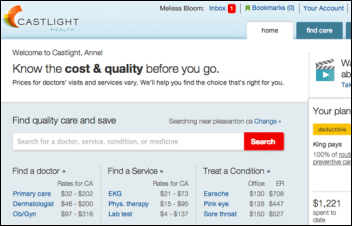
Castlight Health’s share price climbs dramatically after its Friday IPO, surging 149 percent from $16.00 to $38.90. The company was valued at $1.39 billion at the IPO price, placing it in the $3 billion plus range after Friday’s market close. The company had $13 million of total revenue last year and lost $62 million, reportedly placing its loftily priced IPO price (107 times revenue) as the highest multiple since the dot-com era. Still, the company’s underwriters left a lot of Castlight’s money on the table at pricing the shares so far below their first-day closing price. Nobody’s saying how much shares owned by the already-loaded founders are worth (Todd Park, CTO and co-founder of athenahealth; Bryan Roberts, PhD, chairman and co-founder of venture capital firm Venrock; and Giovanni Colella, MD, founder of RelayHealth.) They might want to sell their shares soon: studies show that shares of companies valued at this level of frothiness have historically had a three-year return of –92 percent.


Reader Comments

From Krikey: “Re: ongoing column writers. There are some very perceptive and witty folks out there, just a challenge to find and encourage them to contribute. I have ideas, but hesitate to name names.” I enjoy the writings of Ed Marx, Darren Dworkin, Dr. Gregg, and others on the provider side who have an interesting perspective and an entertaining way of presenting it. I’m happy to entertain the possibility of adding to that roster, but with the added comment that lots of folks think it sounds great until they realize it’s an ongoing commitment.

From Orange Belt: “Re: hospital salaries. Why are you so down in paying high-performing executives what the market demands?” Because non-profit hospitals shouldn’t be a market – they are a charity for taking care of sick people and should pay comparably to other charitable organizations even though they are inexplicably forced to run like a big business instead. I’m pretty sure that while the talent pool might be different if a health system paid its CEO only $500K instead of several million dollars, that amount would still be sufficient to hire a committed and skilled candidate. Making excuses such as (a) “We have to pay too much because everybody else does”; (b) “We have to compete against the giant corporations our executives would be lured away to run given their vast experience in dealing with nurses and insurance companies in a non-consumer driven market”; and (c) “Our executives are worth every penny because we’ve made a fortune since they took charge” are just excuses to avoid admitting that running a hospital has become a lucrative profession rather than a selfless calling and has attracted leaders who would wander off in an instant if they were paid responsibly.


HIStalk Announcements and Requests

image

Quite a few readers reported their annual job compensation, breaking out into the categories above. New poll to your right: should patients have a greater role in the HIMSS conference?

image

Thanks to everyone who completed my reader survey. I’ve emailed $50 Amazon gift cards to three randomly selected winners (I use a random number generator to choose from the available Excel rows of responses). I will be reviewing the results carefully over the next several weeks and will report back, but the item above is the one I watch most carefully, in which 92 percent of respondents said that reading HIStalk helped them perform their job better in the past year.

image

Another DonorsChoose classroom update: Mrs. Pew’s Louisiana second graders are already enjoying the books you and I bought them four weeks ago using proceeds from the top HIStalk banner ads during the HIMSS conference. She reports, along with sending the photo above, “Your donation has helped make it possible for all students to be actively engaged in my classroom in one way or another. They are able to interact with one another, discuss the books they listen to, and learn new words. Thank you for your generous donation and for bringing such joy to my classroom.”

Listening: Dead Confederate, country-tinged hard rockers from Athens, GA.


Upcoming Webinars

March 19 (Wednesday), 1:00 p.m. ET. The Top Trends That Matter in 2014. Sponsored by Health Catalyst. Presenters: Bobbi Brown, VP and Paul Horstmeier, SVP, Health Catalyst. Fresh back from HIMSS14, learn about 26 trends that all healthcare executives ought to be tracking. Understand the impact of these trends, be able to summarize them to an executive audience, and learn how they will increase the need for healthcare data analytics.


Acquisitions, Funding, Business, and Stock

image

Mobile open source healthcare network vendor Cytta and telehealth technology provider ViTel Net announce plans to merge some or all of their companies. Sounds like they suffer from either commitment issues or premature declaration.


Announcements and Implementations

image

As expected, formerly high-flying Accretive Health is notified by the New York Stock Exchange that its shares have been delisted because the company has not filed its revised 2012 annual report. Above is the five-year share price chart of AH vs. the DJIA. The company’s market capitalization is still at $790 million, but shares are down 75 percent from their July 2011 high. The company tangled to its eventual disadvantage with Minnesota’s attorney general in early 2012 over is aggressive collection practices for hospital patients, including strong-arming patients with no outstanding balances who were still in their ED treatment rooms. I explained my mixed feelings about the company’s practices at that time:

The question raised by the Accretive mess that nobody wants to ask or answer is this: how much collection effort is too much? If the model forces a hospital to operate as a business, is it fair that some customers get away without paying, quite a few of them perfectly capable but just unwilling to do so because it’s not exactly a pleasurable purchase? Or that they don’t pay because hospital list prices are absurd, with insurance companies getting huge discounts on the $4 aspirin that cash-paying patients are expected to pay at list price? Accretive probably went too far, but it’s a slippery slope. They are the symptom, not the problem. Imagine if a restaurant couldn’t turn away hungry but broke patients, has to serve them steak and lobster if that’s what they want, and has to welcome them back for meal after meal even though they’re capable but unwilling to pay. Is that fair to the other diners who will have to make up the difference?

image

Duke LifePoint Healthcare, a joint venture between Duke University (NC) and for-profit LifePoint Hospitals, will acquire Conemaugh Health System (PA) for $500 million, adding to its total of 60 hospitals and 29,000 employees. LifePoint, whose annual revenue is $3.68 billion, paid its CEO $9 million in 2012, with its other six officers making between $1.8 million and $3.4 million each. 


Government and Politics

The VA Secretary Eric Shinseki says the VA will enter its VistA Evolution in the Department of Defense’s EHR procurement project, claiming that the upgraded system will be equal to the commercially sold EHR systems that the DoD seeks. The VA announced its interest in receiving bids for developing VistA Evolution in late January, allowing eight business days to receive responses. It requested $269 million for 2015 to develop it.  I can’t decide if Shiseki is just yanking the DoD’s chain, calling DoD out publicly knowing they would rather use stone tablets and chisels than admit that the VA’s systems are better, or if he really thinks the DoD is open-minded and taxpayer-respectful enough to use what makes sense instead of what it can control with an iron hand and an army (pun intended) of government contractors. Hopefully he won’t trigger a DoD-led military healthcare junta.

At the same House Veterans Affairs Committee meeting, the American Legion scolded both agencies in written testimony, saying the agencies “squandered more than a billion dollars of taxpayer money and wasted years in an ultimately empty pursuit of a joint electronic medical record system that would have streamlined and simplified logistics between the two agencies …The warfighter turned veteran is the same patient and deserves a system that honors that person with continuous care and seamless transition between agencies.  It is unforgivable that DoD and VA have spent the past several years infighting rather than actively developing a comprehensive solution that is in the best interest of the American service member.”

image

The Defense Health Agency expects to spend $1.5 billion in 2017-2019 to buy a new EHR, according to new budget documents. I’m guessing that line item didn’t come from the VA’s RFI response.


Innovation and Research

Patrick Soon-Shiong says on Larry King that like fellow billionaires Warren Buffet and Bill Gates, he has signed the Giving Pledge and will thus donate more than half of his wealth to charitable causes.  He also announces his latest invention: a $300 hearing aid that can be tuned by smartphone, making hearing correction affordable for the 700 million people who need it. He used the same technology to develop the $100 Notes personalizable headset and will donate a hearing aid for each two headsets sold, hoping to give away one million hearing aids in the next five years.


Other

image

Washington’s state medical commission files unprofessional conduct charges against the former physician head of Harborview Medical Center’s burn unit, finding that he testified about the value of using flame retardants in furniture without disclosing that he was being paid by the companies that produce the chemicals. Government scientists had concluded that the products are toxic and don’t work, leading the chemical companies to create a phony three-member consumer watchdog group to create public fear about fire danger and to pay experts for favorable testimony. The group was quietly shut down in 2012. The doctor is also accused of making up compelling patient stories and violating patient privacy laws by using a minor patient’s photo without permission. 

image

Valley View Hospital (CO) notifies 5,400 patients that technicians found an encrypted, hidden server folder that contained their credit card, Social Security, and demographic information, adding that the information may have been used for identity theft. An unnamed virus collected and stored screen shots of online web pages that may have been sent outside the facility. The hospital says it has since improved its antivirus and firewall systems.

image

The Sacramento paper profiles Davis, CA-based Cedaron Medical, which offers software for cardiac care, rehab documentation, speech pathology, occupational therapy, and worker’s compensation evaluation. I’m fascinated that founders Malcolm and Karen Bond also started Bondolio, an award-winning olive oil business.

An editorial in BMJ says that doctors would provide better care if they knew that patients were recording their encounters, even suggesting that doctors record sessions themselves and offer patients a copy. It addressed a debate in England in which the UK General Medical Council eventually changed its position that such records would not be admissible in professional practice reviews. The article concludes that there’s no way to stop patients from recording their physician interaction, so the medical profession might as well figure out how to use that information to improve care.

image

Former Epic project manager Brian Stowe is sentenced to 38 years in prison for sexually assaulting six of his female Epic co-workers and a 17-year-old girl and filming the attacks. The victims were unaware of his activities until video from his computer surfaced years later, leading to the unproven possibility that he drugged them, that speculation bolstered by the fact that one his computer’s video folders was labeled “drug assaults.” One set of photos was apparently made during an Epic business trip. Stowe apologized, said he was “out of control,” and added, “The only part about getting caught that truly upsets me is that it’s caused the lives of all these people I love and care about to implode.” Stowe, who had pleaded guilty, faced a sentence of more than 400 years for 62 felonies, but that count was reduced to 27 felonies in a plea deal.

A former contract ED doctor working at Spectrum Health (MI) sues the hospital group, claiming it banned her from working there for making a Facebook comment. She thought she recognized a patient depicted in an ED nurse’s Facebook photo of a woman’s backside, so she added a comment, “OMG. Is that TB?” The doctor claims the hospital was unhappy that she was planning to consult with other EDs using materials she had developed, so they falsely claimed her comment was a HIPAA violation. She adds that a nurse was reprimanded rather than fired for leaving a comment, “I like big butts and I cannot lie.”


Contacts

Mr. H, Inga, Dr. Jayne, Dr. Gregg, Lt. Dan, Dr. Travis, Lorre.

More news: HIStalk Practice, HIStalk Connect.

125x125_2nd_Circle

News 3/14/14

March 13, 2014 News 1 Comment

Top News

image

Validic, which offers a platform for accessing data from mobile health devices and wearables, secures a $1.25 million convertible note.


Reader Comments

image

From Professional Zac: “Re: Mat Kendall. Has given ONC exemplary service in leading its workforce, REC. and rural programs as director of the Office of Provider Adoption Support. He is leaving.” Mat is one of those people who gets a lot done, not only running those ONC programs, but before that working for New York’s EHR program and before that leading a FQHC. Like everybody who works for ONC, he sacrificed income and lifestyle for public service since it’s generally true that only low-level government employees fare better than they might in the private sector. I haven’t heard where he’s going.


HIStalk Announcements and Requests

inga_small This week on HIStalk Practice: Practice Wise CEO Julie McGovern addresses EHR users who refuse to admit they might be causing their own system problems. Users of drchrono’s free EHR will be rushing to apply for MU hardship exemptions after the company announces that its Stage 2 certified release won’t be ready until  “later this year.” A Rand study finds that physicians recognize the value of EHRs in concept but believe they undermine professional satisfaction and can negatively impact patient care. Between 2011 and 2012, the percentage of EPs participating in  Medicare’s MU program dropped 16 percent and the percentage dropping out of Medicaid’s program fell 61 percent. CareCloud CEO Albert Santalo discusses a possible IPO, company growth, and how its offerings differ from athenahealth’s. While you are checking out the latest in ambulatory HIT news, take a moment to subscribe to the email updates so you’ll never miss a post. Thanks for reading.

This week on HIStalk Connect: Proteus Digital Health announces large-scale trials and plans for a new manufacturing plant in the UK. Nintendo will refocus its strategic direction to capitalize on the growing health and wellness market. Validic raises $1.25 million to expand its mHealth integration engine.

image

Last chance to help me out plus be entered into a drawing for three $50 Amazon gift certificates: complete my reader survey before I close it Saturday. I appreciate it.


Upcoming Webinars

March 19 (Wednesday), 1:00 p.m. ET. The Top Trends That Matter in 2014. Sponsored by Health Catalyst. Presenters: Bobbi Brown, VP and Paul Horstmeier, SVP, Health Catalyst. Fresh back from HIMSS14, learn about 26 trends that all healthcare executives ought to be tracking. Understand the impact of these trends, be able to summarize them to an executive audience, and learn how they will increase the need for healthcare data analytics.


Acquisitions, Funding, Business, and Stock

image

Telus Ventures invests $3 million in PatientSafe Solutions and becomes the exclusive reseller of the PatientTouch point-of-care mobile system in Canada.

image

Covisint announces preliminary Q4 revenue of $24-$25.5 million, short of estimates, and appoints Sam Inman (Comarco Wireless Technologies) as interim CEO.

image

Accretive Health says it will probably not meet the SEC’s deadline to file restated financial results from the last three years, which will likely cause its stock to be delisted from the NYSE next week. 

image

General Atlantic is said to be the frontrunner to make a $100 million investment for a 30 percent stake in 1,400-employee healthcare IT services firm CitiusTech, which seeks capital to fund growth in Europe and the Middle East.


People

image image image

Validic hires John Turnburke (MedFusion) as SVP of business development, Chris Edwards (Allscripts) as VP of marketing, and Ben Clark (Allscripts) as VP of operations.

image

Janet Dillione, executive vice president and general manager of Nuance’s healthcare division, will step down on March 21, according to an SEC filing.

image

Richard Paula, MD (Tampa General Hospital) is named CMIO at Shriners Hospital for Children (FL).

image

Brian Ahier (Advanced Health Information Exchange Resources) is named director of standards and government affairs for Medicity.

image

Connance names Michael Puffe (Huron Consulting Group) SVP of sales.


Announcements and Implementations

image

MMRGlobal announces a confidential patent agreement with Cerner relating to MMR’s MyMedicalRecords PHR portfolio, including the one above submitted in 2005.

image

OCHIN and Health Choice Network launch Acuere QOL, a data aggregation, analytics, and quality solution powered by the Caradigm Intelligence Platform that will help CHCs and PCAs manage populations and improve quality.

PatientsLikeMe launches a media campaign urging people to share their medical information. How the for-profit PatientsLikeMe makes money: selling the medical information people share to drug and device manufacturers.


Government and Politics

image

A GAO report recommends that HHS pay more attention to the reliability of EHR data used for quality measures and use them to measure progress.


Other

BIDMC CIO John Halamka reports that the ED has been beta-testing Google Glass since December to view the patient dashboard during examinations. He says its greatest strength is being able to provide real-time updates at the bedside and will become valuable when tied to location services.

image image

Executives of three Madison, WI-area healthcare IT companies were among the 35 invitees who were briefed by White House and HHS officials on healthcare innovation and entrepreneurship last week, including a session with National Coordinator Karen DeSalvo, MD.  The companies were Nordic Consulting, Forward Health Group, and healthfinch.  

image

Speaking of the White House meeting, HIStalkapalooza winner and Nordic Consulting President Drew Madden broke out socks appropriate to the occasion. It’s apparent that he has worn them before, with the obvious question being, “To where?”

image

I recently mentioned that I rarely complete a HIMSS member survey because the are so long and poorly designed. I just received one asking for feedback on the annual conference that ran eight online pages and 1,100 words. Needless to say my incompletion record remains intact.

A Fitch Ratings report says hospitals may face weakened credit ratings as a result of their ICD-10 conversion.

The Department of Homeland Security warns users of the now-unsupported Windows XP that they should at least replace Internet Explorer with a more secure browser for which security updates will be issued.

The Society of Thoracic Surgeons will connect its clinical database to CMS claims data, allowing researchers to track readmissions, second procedures, and long-term survival.

Weird News Andy wonders if the hospital gets a commission on tickets as local police install a red light camera near the ED of University Hospital of Tamarac (FL), snaring at least one patient experiencing chest pains. WNA quotes a related story in which most people with chest pain in Northern Utah drive themselves to the ED, slowing their treatment since ambulances can run ECGs during transport and alert the cath lab team to be ready at the door.


Sponsor Updates

image

  • Shareable ink Founder/CTO Steve Hau will run in the Boston Marathon on April 21 and will personally match up to $10,000 in donations for victims and survivors of the 2013 bombing. 
  • Capsule Tech will showcase Capsule SmartLinx Medical Device Information System at the American Organization of Nursing Executives annual meeting in Orlando.
  • Fujifilm Medical Systems and Fujifilm SonoSite will participate in the National Consortium of Breast Center Meeting in Las Vegas March 15-19.
  • Perceptive Software launches v10.3 of its Enterprise and Workgroup Search.
  • Holon Solutions and Texas Organization of Rural & Community Hospitals (TORCH) will build a health information exchange (HIE) that will connect North Texas Medical Center (TX) to local clinics.
  • HealthCare Anytime offers two-minute video overviews of their enterprise and SaaS portals.
  • NTT Data is doubling the size of its US headquarters in Plano, TX.
  • Seven healthcare CIOs shared strategies for managing IT cost while maximizing its value at the CIO Summit in Chicago co-sponsored by Impact Advisors.
  • NexxRad Teleradiology Partners selects Merge PACS to integrate with its NexxRIS.
  • ZirMed partners with Precyce/HealthStream to offer client ICD-10 education to the ambulatory market.
  • WiserTogether and Truven Health Analytics partner to help consumers make better healthcare decisions.
  • Porter Research President Cynthia Porter shares her thoughts on the Health IT Marketing and PR Conference in Las Vegas April 7-8.
  • pMD announces that all of its new mobile charge capture implementations will be ICD-10 compliant.

EPtalk  by Dr. Jayne

clip_image001

I was pleasantly surprised in my personal Yahoo mail account this morning when they returned a feature that was taken away with its redesign last fall. Although I’m glad I can now see my folders and their contents, I still wish they would bring back the tabs across the top that allowed multiple emails to be open at the same time. They also followed up with an email response to my original complaint letting me know. After the original annoyance of the upgrade, I moved most of my real email activity to Gmail, so pretty much all I use Yahoo for anymore is coupons and shopping promotions.

clip_image003

Inga tipped me off to this piece regarding physician professional satisfaction. The study showed multiple factors as having a positive impact on physician professional satisfaction:

  • Perception of whether high-quality care is being delivered
  • Control over work environment, pace, and content
  • Common values shared with leadership
  • Respectful professional relationships
  • Fair and predictable incomes

Not surprisingly, these have more to do with how practices and physician organizations run rather than with EHR. Although there are problematic EHRs and other IT systems out there, my sense over the last few years is that physicians often use them as a scapegoat. My local colleagues have voiced the thought that they can have some degree of control over EHR (refusing to use the system, demanding de-installation, blaming the vendor) but that some of the other factors (control over work environment, salary issues) are simply untouchable.

Thinking about this from a pure behavioral health standpoint, this is classic behavior. When people experience trauma, they tend to cling to the things they can control even when the rest of their lives are out of control.

Although the timing of the study didn’t allow assessment of the impact of the Affordable Care Act, I see a lot of physicians ready to use it as a scapegoat even though the majority of its changes have not yet impacted anything other than the access issue. I liked the fact that the study had a qualitative portion, which included open-ended interviews rather than just survey-type items. Those types of questions allow respondents to share direct responses without feeling the need to fit them into a predefined response box.

Unfortunately, the responses may also fail to allow full understanding of or exploration of the results. Physicians stated that “their EHRs required them to perform tasks that could be done more efficiently by clerks and transcriptionists.”

Since I spend a lot of time working on efficient clinician workflow, I would have wanted a follow up question. Is it really the software that is requiring the workflow, or is it also impacted by organizational policies that require physician data entry where it is not necessary? Is it impacted by continued administrative cost cutting that forces work onto physicians because they are perceived as “free labor” since the hospital doesn’t bill for their services as community physicians? Of course those would be rather leading questions, but that’s what I see a lot of in our metropolitan area.

Due to my CMIO responsibilities, I cobble together my clinical experience at several different hospitals. Two of them have the same EHR vendor, yet the user experience difference is night and day. One system has been configured to require endless busywork. The order sets are poor, in a confusing order, and missing seemingly key components. Physicians are required (by administrative decision) to key a PIN for each individual order rather than being able to authenticate a cohort of orders at once. That kind of thing is fixable through educating the decision makers and ensuring that physicians are part of that decision-making process.

Don’t get me wrong, there are a lot of bad EHRs out there. It’s hard to sort that out though when poor leadership, incomplete training, and lack of understanding can cripple a perfectly good system. We need to remember that there are plenty of “causal” factors to go around, In order to truly deliver physician usability, we have to address both the hardware/software issues and how the system is implemented and governed.

In addition to EHRs, physicians cited multiple sources of dissatisfaction:

  • Obstacles to care, such as unsupportive practice leadership or payers refusing to cover recommended services
  • Income instability
  • Burdensome regulations, including Meaningful Use

Unfortunately, these aspects of physician practice are mostly outside our control. We can’t control payers and spend countless hours of uncompensated time trying to get care for our patients. We can see more patients, but we can’t control the wide variation in payments for the same service that we see across payers. We certainly can’t control the regulatory environment.

So what do we do? We circle back to the EHR as something we think we can have some control over.

I don’t have any good answers here and wish I did. I’d love to have a magic wand or even a sparkly Band-Aid to make it all better. How do we empower physicians to be part of the solution? How do we help administrators make rational decisions around system selection and implementation? How do we get them to share the reins with providers? Email me.


Contacts

Mr. H, Inga, Dr. Jayne, Dr. Gregg, Lt. Dan, Dr. Travis, Lorre

More news: HIStalk Practice, HIStalk Connect.

125x125_2nd_Circle

Readers Write: What Is Population Health Management, Exactly?

March 12, 2014 Readers Write 1 Comment

What Is Population Health Management, Exactly?
By Steven Merahn, MD

image

While at HIMSS, I stopped by the KLAS booth and ended up revisiting the October 2013 KLAS report on population health management. I was both impressed and concerned about its findings. Impressed because of the level of market commitment to population health-related solutions, but concerned because I still don’t think the market gets it when it comes to population health management.

The real power of population health is the opportunity it offers those delivering care to disintermediate those we now call payers — removing or disrupting a layer insulating patients from their providers – or at least put physicians and provider networks in a position of strength in negotiations with those contracting for care (unfortunately, it also puts hospitals at risk for similar disruption, like what happened to the railroads when airline travel began to get traction).

HIMSS was full of vendors hawking analytics and care management platforms, but population health is really not at its heart a technology play. In the executive summary of the KLAS report, author Mark Wagner tried to address this issue when he said,  “…automation is a misnomer for vendor solutions and PHM remains largely a manual process.”

However, the use of the phrase manual process is itself a misnomer. It presumes that automation is even possible for population health management. Elements of a technology stack can enable (and may be necessary for) population management, but these elements – individually and collectively – are wholly insufficient for successful implementation of a population management infrastructure.

Wagner again alludes to this in his reference to the value of “collaborating with physicians early,” but there’s more to this than simply physician engagement. It’s far more fundamental, as physician leaders, provider networks, and healthcare delivery systems are discovering. In successful population management, the databases, software analytics. and care planning platforms — whether EHR-based or independent but interoperable — are largely subordinate to a more dominant factor:  the human factor.

If there’s one thing that has been consistently affirmed to me in the 30+ years since medical school graduation, it is that health and healing is impossible without the human connection. I submit that the value in value-based care – improving quality of care and quality of health based on more efficient use of effective healthcare resources across a cohort or defined population – is more powerfully achieved through reconsideration of the organizational principles and operating relationships among the people, programs, platforms, and partners that comprise healthcare delivery and care management.

Population health management transcends the technological elements that may fulfill some of its specific functional requirements. Product, services, and channels may be necessary, but are insufficient to truly influence the trajectory and quality of a person’s health. That influence occurs at more tactile and emotive levels in people lives, “tactile” referring to the responsiveness, reliability, consistency, and convenience of care; “emotive” referring to the sincerity, authenticity, integrity, and dignity associated with the experience.

I am reminded here of Dr. Lipton, our family physician in the 1950s and 1960s, For him, what we now call population health was just the way he practiced medicine. If my grandfather – who had his first heart attack in his mid-30s – missed his quarterly blood pressure check, we would get a call. After my grandmother’s sigmoidoscopy — then done in an operating room as an inpatient — he stopped by the house.

His technology for this: the work of worry — and a weekly index card tickler file. But despite what would seem to us some technological limitations, time and time again he demonstrated to us that we were very present for him even when we were absent from his waiting room.

He did get paid in cash for services rendered, on a fee schedule and sliding scale, but he also worked to earn our trust. There was no doubt that this was an important form of compensation for him. His value proposition was threefold:  mastery of his craft, demonstrable commitment, and genuine consideration. As such, his responsibilities for our health extended beyond the doors of his office.

For our family, he provided comfort and a safe harbor – despite some looming health threats — because there was a person, and not just a person, an expert, who worried along with us and that was in many ways a more powerful influencer of our healthcare quality then the medicines he prescribed. His recommendations were followed, even when there was intellectual resistance, because we could not imagine letting him down.

Our current approach to technology is focused on “managing measureable variables,” but the real challenge is that quality of health is based on a different set of variables than quality of care. Our technology may allow us to identify and attempt to control dozens of evidence-based clinical factors, but is still not powered by factors representing the capacity to influence a patient in ways that truly matter.

Which means that if we truly want transform care delivery with technology, we need to shift our focus from the meaning of the data to what we mean to each other.

Healthcare technologies should be instruments of human expression in service of health and healing, with a fundamental mission to provide the patient and their family the same sense of comfort, safety, and reliability provided by the Dr. Liptons of the world – where professionals are valued for their commitment to mastery and human service and patients are helped to find the meaning of health in the context of their relationship with themselves and others.

This will require us to reconsider what we mean by population health by designing systems of care that amplify the humanness in our care delivery, where technology supports goal-directed collaboration between humans and machines and where we are allowing people to find meaning and value within themselves and from each other.

Steven Merahn, MD is senior vice president and director of the Center for Population Health Management at Clinovations of Washington, DC.

Readers Write: Why a Unique Patient Identifier is Critical to Improve Patient Matching

March 12, 2014 Readers Write 4 Comments

Why a Unique Patient Identifier is Critical to Improve Patient Matching
By Barry Hieb, MD

image

In a recent HIStalk article entitled “National Patient Identifier: Why Patient Matching Technology May Be a Better Solution,” Vicki Wheatley argues that, “… healthcare organizations should instead focus on strengthening their existing enterprise matching strategies” rather than work to implement a national patient identifier (NPI). The article makes several valid points that contribute to the ongoing debate about an NPI:

  • No solution, including an NPI, can solve all patient matching problems.
  • Patient matching errors and healthcare fraud will continue to require special attention.
  • Accurate tracking of an individual’s information across healthcare silos is becoming increasingly important.
  • Any proposed patient matching solutions must not negatively influence privacy, security, or clinical outcomes.
  • Accurate patient matching is essential for activities ranging from clinical care to healthcare analytics to population health management.

In these and several other areas, Ms. Wheatley’s article makes a valid contribution to the ongoing debate concerning a national unique patient identifier.

There were a few areas, however, where we have a somewhat different viewpoint. The first of these is the implied assumption that healthcare organizations must make a choice between having an EMPI and having a national patient identifier. We believe that this is a false dichotomy.

Clearly, healthcare organizations must continue to improve their existing EMPI systems as much as possible. However, years of analysis and experience indicate that this will not allow them to achieve the levels of patient matching accuracy that are being required going forward. Those requirements include identification of individuals across disparate healthcare systems, the need for matching against ever-increasing patient populations, and the fact that patient demographic data has known variability and ambiguities.

These represent just three of the reasons why unassisted EMPI demographic matching cannot represent the sole patient matching strategy. Rather, the EMPI approach will need to be supplemented by techniques such as the use of an NPI, biometrics, digital certificates, and other technologies.

Virtually every EMPI system uses a patient’s Social Security number as a data element to improve the performance of their demographic matching algorithm. I was puzzled by the statement, “… even in theory, every single potential patient in the country would need to be assigned one…” as a condition for an NPI to work. Ms. Wheatley acknowledges that there are many people in the US who require healthcare but do not have an SSN. Despite this deficiency, the use of the SSN clearly adds value in those situations where it is accurately available. Similarly, an NPI would benefit each patient who chooses to use one.

An important point to keep in mind is that there is no mechanism to check for data entry errors in most of the data elements currently used for demographic matching. This includes the SSN, names, and addresses. For example, there is no reliable way to detect transposition of digits when a SSN is manually entered. Nor is there an easy way to automate the capture of a patient’s SSN.

Contrast that with a well-designed national patient identifier system. In most situations, the NPI would be read using automated technology such as a barcode reader or a smart chip that would virtually eliminate errors. Even when the NPI is manually entered, embedded check digits can ensure that any data entry errors are immediately detected and the operator is prompted to re-enter the NPI. When added to a person’s demographic profile, the NPI thus becomes the single demographic element that can lead to accurate patient identification on its own. These proposals represent a major advance from the current situation – i.e., an 8 percent or more error rate in EMPI matches.

It is very clear that healthcare organizations will continue their use of EMPI systems for the foreseeable future. That fact, however, should not blind us to the reality that these EMPI systems need to be augmented by additional capabilities going forward if they are going to meet the patient matching accuracy needs that are emerging in healthcare.

The use of a national patient identifier, even if it is initially only chosen by a subset of providers (or patients, on a voluntary basis), will enhance the patient matching accuracy for those patients and help avoid the medical errors that are associated with patient matching errors.

Barry Hieb, MD is chief scientist with Global Patient Identifiers, Inc. of Tucson, AZ.

Health IT from the CIO’s Chair 3/12/14

March 12, 2014 Darren Dworkin 3 Comments

The views and opinions expressed in this article are mine personally and are not necessarily representative of current or former employers. Objects in the mirror may be closer than they appear. MSRP excludes tax. Starting at price refers to the base model; a more expensive model may be shown.

Attending HIMSS Made Me Wonder: Does IT Matter?

Flying home from HIMSS after spending a week in Orlando and reflecting on the conference it made me think about Nicholas G. Carr’s book from over 10 years ago that made everyone it IT defensive. Mr. Carr asked, with a provocative title, Does IT Matter?

After spending a few days on the HIMSS show floor, the collective group of exhibitors might have colluded to try to make Mr. Carr’s point.

Before I run the risk of losing my secret CIO decoder ring (which gives me wide, sweeping powers to say “no” to things, an important task of a CIO), let me skip to the end and say, “Heck yes, I think IT matters.” But it sure was hard to see at this year’s show.

Let me add context. Mr. Carr never claimed that IT didn’t matter. People who only read the title of the book argued thinking that, but his main point was that IT yielded diminishing returns as a continuing source of strategic differentiation.

Since I already shared that I don’t agree with his thesis and I think that IT does matter, let me explain more why it was hard to hold my ground at HIMSS.

I believe that real strategic value from IT comes from cumulative and sustained use of our systems.

The show floor at HIMSS is best at being a live shopping catalog. If strategic value comes from health systems hunkering down and “just using what they own,” it really means we should all be at our core vendor’s user group to get focused instead of out shopping. This is not to say that there weren’t some interesting new ideas and companies at the show, but I would contend that most health system should be implementing, optimizing, or perfecting the use of their existing systems.

The problem with not staying focused is that it makes us forget that IT is only a tool, not a panacea. Shopping for the latest technology because it can be installed now does not usually translate to having our problems magically solved. 

Especially for those institutions that have achieved MU Stage 1 or HIMSS EMRAM Stage 6 or higher, the goal really needs to be to make use of everything we have by using our systems more deeply. Most big vendors I talk to often complain that they have trouble getting their existing customer base to either stay current on latest versions or to implement and use all of the already-live functionality.

But it is not simple. New technologies will continue to give companies the chance to differentiate and first movers who take risk will gain advantage. But understanding the opportunity and deciding when the right time to make the bet is not for the faint of heart. It is among the toughest choices for CIOs and the rest of the C-suite to make these days, with constrained budgets and scarce ROI from previous large IT projects.

Mr. Carr makes the claim that widespread adoption of best practices through the use of IT software makes advantages disappear. It is obvious to me that Mr. Carr never spend time trying to enforce common content in a large health system. If he saw our slower pace, he would certainly declare we had a long way to go and had a low risk of IT not mattering.

The reality is that a lot of the IT mystique has been eliminated as consumer use of technology continues to grow. IT teams now need to play by the same rules as other business units by having clear objectives before money is spent. The age of technology for technology’s sake is probably in the rear view mirror. As technology infrastructure becomes a commodity (the cloud), how we use our tools or the depth of our use of IT will define and create our advantage.

Adding to the challenges of the CIO will be the realization that just because we find a new innovation, it does not necessarily mean that it will pay to be a pioneer. Our focus might be better spent on hunkering down and optimizing.

If we are going to make IT matter, as a mentor once told me,“Let’s get ‘er done.” Then we can go shopping.

1-29-2014 12-54-46 PM

Darren Dworkin is chief information officer at Cedars-Sinai Health System in Los Angeles, CA. You can reach Darren on Linkedin or follow him on Twitter.

HIStalk Interviews Mark Bakken, CEO, Nordic Consulting

March 12, 2014 Interviews 3 Comments

Mark Bakken is CEO of Nordic Consulting and an investor in several healthcare IT startups.

image

How’s Nordic’s business these days?

Our business is booming, like everybody else in healthcare IT right now. We’re doing a lot with optimization, helping a lot of Epic customers as they figure out how to leverage their investment in Epic and the EMR to not only improve care, but reduce costs at the same time. 

It’s been pretty fun to be able to send in experts to quickly do an assessment and say, hey, if you enabled all these features and other things, you could most likely make your co-workers very, very happy by saving them some time, and at the same time, get better results or hone in on a cure a little faster, leverage the technology you have while at the same time get more done with less. It’s like the equivalent of robots for manufacturing. It’s fun to do these. 

These organizations are so large. Nobody likes to eliminate positions or let people go if they don’t have to. But since most of them are so big, they can reduce the number of staff they need relative to them growing. If they do acquisitions and mergers, they don’t need to hire as many. The net effect is their efficiency gets better from a cost perspective, or they could do it through attrition if they say we no longer have to do registration, for example. Customers and patients are doing it automatically, so we need a lot of people. That person can then take a new career opportunity within a healthcare organization.

It’s fun to be on the forefront, to see organizations starting to leverage their initial investment into that second wave.


The company just moved to a new headquarters location. Epic is known for some interesting and fun buildings. What’s yours like?

[Laughs] It’s nowhere near as Disney or Google-like as Epic’s, but it’s nice and open and airy. We pride ourselves on transparency. We made it nice and professional looking, but within reason, I would say.


What’s the overall state of healthcare IT innovation and the business climate in Wisconsin?

Obviously with Epic in Madison — and I’m in Madison — there’s a lot going on here. There’s a lot of really sharp people that either come to the University, work at Epic, and then they have some ideas. Epic’s road map isn’t going to get around to building those into their core products for a few years, so they say, hey, maybe I can do it, grab some friends, and give it a shot at the new American dream — starting your own company and making it big some day. There’s a lot of that going on.

There’s a lot of support around that from the investment community here. Madison, Wisconsin was one of the leaders in the whole biotechnology wave that started taking off with stem cell research and everything else. Not to mention all the providers in Wisconsin were some of the early adopters, especially with Epic in our back yard, where they tried some things and are benefitting from some of those early advances with healthcare IT. We’ve got a lot of the good raw ingredients here.


Neither you nor Judy Faulkner would have fit my mental model of what education a founder would have since you both have degrees in computer science. Is there something different about being educated at University of Wisconsin or does Epic just create things that are like Epic?

It is interesting because usually that isn’t the background. We’ve taken different paths. Judy has been at it obviously for a long time. Trying to figure out the right mix and perseverance is a big piece of it and you do find that in computer science people that gravitate towards that. There’s always a problem you’re trying to figure out and there’s many different ways to go about it. 

Maybe there’s something to that. Who knows? It might just be coincidence or maybe it is one of those things, as computers and technology are becoming much more relevant in a services-based economy, where you can use computers to automate things. That’s a good question.


What are you doing with your investing and what kinds of things you look for in companies?

What I look for, like most people, is a great management team, leadership, and passion. People that can inspire people, whether it’s people that follow them or just believe in their vision and their dream, whether it’s customers, or potentially investors. Then other employees that have the same desire or vision to do that. 

With healthcare and IT and everything going on right now, all the pressure and all the change and everything else, there’s lots of ways you can use technology to not only get the patient more engaged and more accountable and figure out how to do that from the Fitbits, smart scales, to the whole continuum of care that say, it’s all about responsibility. It’s not just the physician, it’s not just the healthcare organization. Let’s all try to leverage technology to be healthier and live longer and find things sooner so we can find a cure.

Learn from each other. I heard a stat that says something like an average 40 percent of physicians’ initial diagnoses are incorrect. If that’s true, we can definitely do better than that by leveraging data. If we can leverage technology, leverage data to find things, to hone in on things sooner before they’re uncurable or unfixable, that ends up being a good thing. That’s basically what you look for. 

Epic, Cerner, athena, Meditech, McKesson, AllScripts — the list goes on and on. They’ve got a really good platform and a good foundation, but healthcare and driving down costs and improving care is much more than just the clinical data. You got to take everything into account and there’s lots of different ways to do that. There’s a lot of bolt-ons.

I saw a ton of this with the whole Microsoft wave and revolution in 1990s and early 2000s where Microsoft has a platform, and then there’s lots of other companies out there like, hey, we can build on it and we can make something better for what you specifically need. The thing is, the bigger the companies get, they can’t come out with that specific module or niche. It might take them three to five years, and by the time they come out with it, the market may have moved on. They might have a different need or something else came up. 

Young, small startups that are agile and can get things done quickly … it’s fun to be part of that.


What are some companies you’re investing in?

I would probably start with Catalyze.io. They’re creating repeatable platforms for healthcare IT. It’s HIPAA compliant. Instead of reinventing the wheel, there’s a lot of things that we could learn from each other. We can share that framework to do quick custom development stuff.

Forward Health is a great analytics company, population health, medical intelligence organization. Great way to slice and dice information easily. Not just clinical data, but when you look at RX data, claims data, consumer data, or anything else that you need in order to make better decisions faster for actuaries and statisticians as well as physicians.

Wellbe.me is another organization. Patient engagement before they come in for a surgery or when they leave, making sure they do all the things ahead of time and they fill out all the forms and all the checklists. They do it in a very easy way that’s a nice wraparound any of the EMR programs out there. Very affordable, works very, very well. Lots of interest from everybody to say, hey, when you come in, if you do all these things ahead of time, the odds of you not having to be readmitted greatly increase. Then afterwards, make sure you do all the follow-ups. It makes it easier for a healthcare organization to manage tons of people before they come in and after they come in and leverage their social network to do so.

Moxe Health, which is the connection and interfaces. Just think of all the different things you have to connect out there. Instead of paying someone to customize all those at the end of the day, maybe there’s 50 different systems that someone has to connect to, why do you have to custom build all those things over and over and over again? They’re making reusable app store type connectors out there.

Healthfinch is another one that makes a great way to save physician time. That’s their whole goal in life is to reduce the number of clicks. Right now there’s a lot of frustration on the physician side saying, hey, I just want to do what I do. Trying to find the best use of their time, finding that right mix without making them all hire scribes to follow them around. There’s some clever things they’ve done with prescription refills, which is interesting. On average, physicians spend seven percent of their time doing that. They have a way they can get it down to one percent. For every 100 physicians, if you can free up six physicians’ time doing things that could be automated, that’s a good thing for everybody.


What’s your vehicle for investing? Do you just make a personal investment or do you have a fund of some sort?

It’s all new territory for everybody. It’s either go to friends or family, which is tough because you don’t want to mix friends and family. It’s to try to do a round, or do a convertible note is what they would call it, where you can do a loan and then down the road, if they raise money, once they have more customers and more success than the valuation.

The trick is, you want to make sure the people actually doing the work have some substantial stake in the outcome and some motivation to make sure they can create something that’s creating value out there. If they do, they benefit and that would be good for me, too.

I just am a huge, huge fan of entrepreneurs. I know how tough it is to get going. You need the right mix of everything. You need the stars to all align and a little bit of guidance from “don’t do this” or “how do you do that?” Everywhere from how do you work with large organizations, how do you contract with them, how do you get insurance, how much insurance, to payroll, to taxes, to a lot of little things that everybody needed despite what they’re doing. If I can help point them in a direction that will save them a bunch of time so they can focus on what they really are good at, then I think that’s a good thing.


Is there a way the average person can invest now that some of the rules have loosed up, such as for crowd funding, for instance?

Not as easily as you would hope yet. You read all about the crowd funding. Some of the laws in Wisconsin, thankfully, have changed. You can actually get them some equity instead of some kind of token gift or something. It’s going to be easier without having to be accredited and all this other stuff and all these hoops. 

There’s some other things I’m looking at personally trying to do. Change the business lending laws to be more in line with America’s economy, which is more of a services-based economy. The business lending laws that were set up 70 years ago were based on America being a manufacturing-based economy. You need inventory, you need all these other things, assets, you need buildings that a bank could repossess in order to get a line of credit or a loan. If we can make that easier for people so they don’t have to spend a bunch of time trying to get people to invest in their idea and everything else, I think that would be a good thing. It would be good for them, good for America.


What do the companies you’re investing in need most, other than money?

They need a mixture of things. You’ve got to have a customer that is willing to work with you, to at least do the pilot, to work out the kinks, to figure out how to price it, how to package it, how to deliver it. That’s one.

They need mentors from every angle, from lawyers, from LLCs or S corp to C corp to some other structure, and then all the other mentor types around like that. In Madison, we have something called 100health, which is geared towards helping people figure out where they can go for different resources and packages to get their idea off the ground in the most efficient manner.

I do have to say, there is a lot of other interest in investment in healthcare IT right now from the venture capital community, even down to the tens or hundreds of thousands of dollars, whether they’re from Chicago or all over the country. I just was in an advisory board meeting where they said that VC funding has more than doubled in the last four years in healthcare IT space. The rest of the world’s starting to take notice, to say, hey, I think there’s something to this whole EMR and healthcare IT technology wave that will be good for everybody.


Money comes at a price and companies give away their equity too early or get taken in a direction that seems to be the quickest path to profitability and not really what their vision was. Do you see that as a challenge?

Yes, absolutely. There are strings attached. Part of it is finding the right way to do that. Typically in Wisconsin and other states around the country, there’s a lot of older money. They don’t quite understand this new world economy; the Silicon Valleys and WhatsApp be worth $18 billion, not to say healthcare IT is going to go that kind of crazy.

It is basically trying to find that right balance. That’s why I think I can, because I know the healthcare IT space. Me personally making some kind of investment of faith at some kind of valuation to at least set the bar that is fair. Then other people can piggyback on that and do things at the same ratio with the entrepreneurs and the people doing all the work feel like, OK, that’s fair, I don’t feel like I’m getting held over a barrel.


What are the start-ups most naive about?

Most of them really, really get excited about their idea and their program or whatever they’re going to do without 100 percent going to the market and knowing are people willing to pay for this, and if so, how much, and is it enough where they can actually make a good living by providing that value to a customer. People can think great thoughts, but if the market isn’t ready, if there isn’t a budget, if it really doesn’t make sense, if it’s a nice to have instead of a need to have, then it’s one of those lessons learned type things.


How do you think healthcare IT will look different than it does today in five years?

It will be hugely different in a very, very good way. There was another study that came out like one in eight hospitals had an EMR back in 2009, five years ago. Five years from now, I think almost everybody will. With that, hopefully we’ll be able to analyze that data to be able to find other Patients Like Me type thing, where physicians, nurses, everybody in the healthcare world can use that data to hone in on a cure faster or to diagnose something before it’s unsolvable. I think we really, really, really will be using data a lot more so to make care better so people can live longer, healthier, happier lives.


Do you have any final thoughts?

It’s pretty fun to be part of it right now, the whole healthcare IT revolution that’s going on. The one thing I look at is saying roughly 18 percent of our economy is spent on healthcare and it’s basically flying blind. We’re using data for everything else, so it would be nice to actually use this data to make care safer and better. It’s fun to be part of it.

News 3/12/14

March 11, 2014 News 6 Comments

Top News

image

The HIT Policy Committee submits its Meaningful Use Workgroup’s Stage 3 recommendations.


Reader Comments

image

From Pointy Toes: “Re: CEHRT Hardship Exception Guidance. This is a joke. All you have to say to qualify for the Medicare hardship exemption to avoid the 2015 payment adjustment is say you  had ‘2014 Vendor Issues.’ Tavenner previously said some ‘narrow’ hardship exemptions would be granted. Sounds like anyone wanting an exemption can request it and presumably one will be granted one. Why not just push the deadline back for everyone instead of requiring providers to jump through an extra hoop?” CMS issued guidance Tuesday for EPs and hospitals worried about being hit with penalties, even going so far as to provide instructions to choose “2014 Vendor Issues” no matter what their actual issue. It is ridiculous – setting the bar high officially, then accepting a wink-wink rubber stamp excuse for anyone who can’t make it. Maybe someone should track the vendors whose non-compliant yet certified products forced their users to claim hardship.

From Canuck: “Re: rumore that UHN in Toronto is replacing QuadraMed EHR with Cerner. I believe instead it came down to Cerner and Epic and Epic won.” Unverified.


HIStalk Announcements and Requests

image

Welcome to new HIStalk Gold Sponsor SyTrue. The Chico, CA-based company offers a business and clinical intelligence platform that tells hospitals how their clinical objectives are being deployed; what physicians are doing; and who in the market is providing services at a given cost and outcome. It integrates and structures disparate EHR information for predictive and clinical analytics used for data analysis, electronic abstraction, outcomes analytics, operations, population management, clinical research, and patient engagement. Thanks to SyTrue for supporting HIStalk.

image

Here’s one final mug shot featuring Tammi’s office de-stresser, which must have traveled furthest from Orlando while still not leaving the continental US (the UFO on a stick in the background should give a strong hint of her location).

image

Thanks to the 355 folks who have completed my reader survey so far. That number provides respondents with good odds of being randomly drawn for one of three $50 Amazon gift cards, but represents only around 1 percent of HIStalk’s 30,000+ readers. Spend less than five minutes completing the survey and you’ll help me plan the next year of HIStalk and earn my appreciation besides.

I’m always looking for interesting people to interview. Know someone who would be stimulating, fun, and a straight shooter? Let me know.


Upcoming Webinars

March 19 (Wednesday), 1:00 p.m. ET. The Top Trends That Matter in 2014. Sponsored by Health Catalyst. Presenters: Bobbi Brown, VP and Paul Horstmeier, SVP, Health Catalyst. Fresh back from HIMSS14, learn about 26 trends that all healthcare executives ought to be tracking. Understand the impact of these trends, be able to summarize them to an executive audience, and learn how they will increase the need for healthcare data analytics.


Acquisitions, Funding, Business, and Stock

First-half results from Scotland-based Craneware: revenue up five percent, pre-tax profit up seven percent.

CompuGroup Medical acquires three European HIT providers: lab software provider vision4health Laufenberg & Co and office-based physician software vendors Imagine Editions and Imagine Assistance.

Quest Diagnostics completes its acquisition of Solstas Lab Partners Group and raises its full-year 2014 financial guidance.

image

Employer benefits platform provider Castlight Health raises the price range of its IPO to $13-15 per share, up from the $9-11 range it set just a week ago. The company, which lost $62 million on $13 million of revenue in 2013, would receive proceeds of $140 million, valuing it at $1.5 billion. The company’s founders are Todd Park (US CTO and co-founder of athenahealth); Bryan Roberts, PhD (chairman and co-founder of venture capital firm Venrock); and Giovanni Colella, MD (founder of RelayHealth).


Sales

The Royal Free London NHS Foundation Trust selects OpenText to manage its scanned legacy case notes.

The Community of Hope (DC) is implementing Forward Health Group’s PopulationManager and The Guideline Advantage.

The VA awards Leidos three contracts worth $16 million to support blood bank software and the MyHealtheVet program.


People

image image

TeleTracking Technologies names Diane Watson (Tilt, Inc.) COO and Joseph Tetzlaff (inVentiv Health) CTO.

image

Michael Hart is promoted to VP of IT applications at Arkansas Children’s Hospital.

image

Craig Joseph, MD (Agnesian HealthCare) is named ICD-10 and EHR physician advisor at Texas Children’s Hospital (TX).


Announcements and Implementations

Cox Health (MO) deploys Phytel’s population health and patient engagement platform.

McKesson announces QICS for Cardiology, a CVIS-based workflow and critical results communications platform. OSF Healthcare (IL) is piloting.

QuadraMed announces GA of its QCPR 6.0 enterprise EHR, which includes bar code medication administration, a comprehensive problem list, a Web-based patient portal, the ability to create a CCD, and Canada-specific architecture requirements.

image

In Canada, Bluewater Health will roll out patient flow software from Oculys.

image

University of Colorado Physicians goes live on the DocASAP self-scheduling system.


Government and Politics

Office of Civil Rights fines the public health department of Skagit County, WA $215,000 for HIPAA violations involving information on 1,581 people exposed in its public web server, the first time a HIPAA fine has been levied against a local government.

)

The White House launches #GeeksGetCovered, encouraging technology entrepreneurs who can now buy their own non-employer health insurance because of the Affordable Care Act to start their own businesses.

President Obama riffs hilariously with comedian Zach Galifianakis, appearing on “Between Two Ferns” to plug Healthcare.gov (“I wouldn’t be with you here today if I didn’t have something to plug … Healthcare.gov works great now.”)

image

The phrase “healthcare exchange” always seems to be preceded by “troubled,” so add Maryland’s $200 million version to the list.  Like other states, it decided to create its own site, hired a contractor that it later said underperformed, missed its go-live date, and had to create a backup plan to accommodate people who wanted to enroll but couldn’t. HHS announces that it will investigate.

Hillary Clinton’s financial disclosure forms for 2012 reveal that her husband Bill took a $225,000 speaking fee from the struggling, non-profit Washington Hospital Center as it was laying off employees. The hospital also brought in George W. Bush to speak, but since his wife isn’t running for office, his fee remains confidential. Bill made a bunch of money in 2012 for addressing money-losing non-profits. Somewhere in those records is the payment he received from HIMSS if anyone knows how to locate them. I’d bet $400K.


Innovation and Research

image

A NIST report says that inadequate workflow integration forces users of ambulatory EHRs to develop system workarounds, suggesting that EHR vendors develop these capabilities:

  • At-a-glance physician views of patient schedules
  • Task reminders from previous patient visits
  • Redacting and summarizing lab results
  • Draft creation of patients orders in advance
  • Conversion of working diagnoses to formal diagnoses
  • Skip or defer tasks when workload requires
  • Role-based views of progress notes
  • Visually differentiate copied-and-pasted progress note text from newly entered documentation
  • Manage referral and consultation messages with specialists
  • Track scheduled consults and lab results review

image

The Charlotte, NC newspaper says that Carolinas HealthCare System will use innovative (unnamed) software and the information collected by its multiple EMR systems to identify ED patients who are likely to be readmitted, allowing team-based intervention and remote management. The system’s chief medical officer weighs in on hospitals that don’t use electronic medical records: “You don’t know how bad it is until you actually go back. It was like a time warp. The care is unsafe, it’s uncoordinated. It’s a nightmare…The system was absolutely stupid, and frightening.” I interviewed SVP/CIO Craig Richardville in September 2013. It might be time for a follow-up to talk about analytics.


Technology

image

Wellocracy provides a well done comparison chart of wearable activity trackers.


Other

image

A column by InfoWorld’s executor editor says a disconnect exists between complex government EHR requirements and the stubbornness of the healthcare industry to embrace them, summarizing, “We have a mess of proprietary EHR systems with highly customized processes, a set of HIEs that use different standards and protocols to connect them, and a mandate to provide human-readable data from these disparate systems. What could possibly go right?”

In England, University Hospital of North Staffordshire plans to conduct video consultations via Skype, saying the service will reduce outpatient appointments by 35 percent.

image

The Gainesville, FL newspaper profiles Shadow Health, whose founder licensed avatar technology from the University of Florida to create nursing school education tools that students buy for $89.

A study finds that incorrectly flagging patients as being allergic to penicillin increases overall inpatient days by 10 percent and increases resistance to broad-spectrum antibiotics. Up to 95 percent of patients who say they are allergic to penicillin really aren’t.

)

New York-Presbyterian Hospital will host a hospital hackathon this weekend in which teams will design apps for its portal that improve patient access to care. The hospital is offering $85,000 in prizes and has filled all of its slots with 120 participants. Dr. Oz provides the video introduction.


Sponsor Updates

  • Kinetic Data names CareTech Solutions “Innovator of the Year” for realizing $4.7 million in cost savings by implementing Kinetic Request.
  • Premier enhances its OperationsAdvisor labor management solution to give healthcare organizations the ability to analyze labor efficiency across multiple care settings.
  • Ryan Uteg, senior advisor for Impact Advisors, is named to Consulting Magazine’s “35 Under 35.”
  • Allscripts Sunrise is selected by Black Book as top inpatient EHR.
  • Iatric Systems will deploy integration in the EDIS and vital sign monitors as Southeast Alabama Medical Center (AL) upgrades its McKesson Paragon HIS.
  • MedAssets’ National Sourcing Collaborative cumulatively saves providers $135 million over the last three years.
  • Wolters Kluwer Health launches Bates’ Visual Guide demonstrating evidence-based physical exam techniques.
  • Santa Rosa Consulting’s Fred L. Brown is inducted into Modern Healthcare’s “Health Care Hall of Fame 2014.”
  • Kareo announces that its ICD-10 Success Checklist is available on a write-on poster.
  • NextGen Healthcare’s CMO Sarah Corley is elected to serve on the EHR Association Executive Committee.
  • Medical Economics spotlights e-MDs customer John Bender, MD of Miramont Family Medicine (CO) for expanding his practice while 30 percent of local practices have sold or closed.
  • Health Catalyst publishes a free white paper with a candid 12-point review of population health management software vendors.


Contacts

Mr. H, Inga, Dr. Jayne, Dr. Gregg, Lt. Dan, Dr. Travis, Lorre

More news: HIStalk Practice, HIStalk Connect

125x125_2nd_Circle

Curbside Consult with Dr. Jayne 3/10/14

March 10, 2014 Dr. Jayne 13 Comments

This week was the beginning of what I suspect will be a long and painful project at work. If I wanted to deal with mergers and acquisitions, I would have gone to business school. Instead, I went into medical school, but nevertheless here I am.

Like so many other health systems across the US, mine has been in growth mode. We were accelerating the growth of our employed medical group going back as far as 2008. The push towards more tightly integrated delivery systems has only added fuel to the fire.

We had previously been purchasing groups in the three- to 10-physician practice space, with a couple of outliers that had 15 or so physicians. Now we’ve gone and purchased a 75-physician group. I’m sure it looked great to the hospitals as a way to further consolidate their referral bases. It was also a grab for the revenue that the new group’s imaging division was bringing in on the side.

I had the opportunity to speak with a few of their physician leaders in a couple of weeks ago. My ears perked up when they mentioned one upside of being part of our health system as “better support with IT projects including Meaningful Use and PQRS.”

Red lights started flashing in my head and alarms were going off. Thinking that PQRS or Meaningful Use are “IT projects” is like thinking that a heart/lung transplant is a “plumbing project.”

I immediately scheduled a series of meetings with their leadership and IT teams and our counterparts to figure out what had been promised by the C-suite and how we were going to deliver it. It’s bad enough to have to deal with a culture shift, but when technology and millions of dollars in incentives are involved, the problem is magnified. Our C-suite has a track record of promising technology projects that they can’t deliver (such as a complete EHR conversion in 30 days) so we quickly formed a betting pool to entertain just how bad this might get.

One of the reasons they get us into these kinds of binds is they’re afraid to involve too many people in the acquisitions. They fear that other physicians will get word of them and become demanding or that there will be a loss of bargaining power if it’s public too early. I understand that, but I also understand the need to do due diligence around merging or converting IT systems before the promises are made and the papers are signed.

Every once in a while, one of the VPs will ask someone from IT to “look under the hood” at an acquisition target, but it’s usually more along the lines of valuing their hardware, calculating their maintenance, and figuring out how to connect them to the hospital backbone than it is to assessing the quality of their data and how well their workflows and care gel with our existing best practices.

Unfortunately, the ink was already dry before I knew about it. Our group president made some assumptions that since our target was on the same EHR as we are that it should be fairly easy to just “throw them on our system and have them attest with our docs.” Oh, so much easier said then done, my friend. When I started throwing out reasons why it doesn’t really work that way, he actually referred to me as Debbie Downer and reminded me that we have to make it work because we already said we would.

I can’t believe that’s what passes for leadership these days, but our health system seems to love this guy. He’s personable and kind of a teddy bear, but he’s generally all fluff and no stuff, which leaves the rest of us to scramble around behind him to try to make things work.

This week began the series of meetings to try to figure out how to deliver the impossible. We now have two installations of the EHR to deal with. Their group has a lot of primary care docs that refer to our specialists. Given the number of common patients between the platforms, I’m not confident of being able to do a clean conversion without a lot of data integrity issues and a substantial commitment for clinical cleanup even if we had a nice long time interval. That’s problem number one.

Problem number two is that both installations have to take a major upgrade before we start the attestation period for Meaningful Use on July 1. Leadership assumed we could combine the systems quickly and do a single upgrade, but in addition to the patient issue, we also have a fair amount of customization and client-specific configuration on each system that will have to be evaluated. We can’t just throw it all away and assume physicians will be immediately facile on a plain vanilla system.

We also have the issue that at least 40 of their providers are going to be attesting for MU the first time. That means that not only do we have to get their upgrade live early enough prior to July 1 that the users have enough time to burn in the new workflows and make sure they’re entering quality data, but we need to plan to have our MU and auditing teams work around the clock at the end of the quarter so we can attest for them by the deadline. Problem number three.

Let’s see, the end of that quarter also puts us at October 1, which is ICD-10 go-time. That makes problem number four.

Let’s back up a little, though. If they’re such a solid, established group, I wonder why more than half of them are just now going after MU Stage 1? That was the topic of Wednesday’s half-day working session, when I really dug into the fact that they think MU, PQRS, and other quality initiatives are IT projects. That’s when I came up with problem number five, which unfortunately is the biggest one of all. The reason they haven’t attested yet is they’ve been attempting to have IT lead all these projects without adequate operational and clinical support.

They seriously think that there is some kind of magical IT wand that will be waved around and the physicians will do what they are asked along with all the support staff. They have zero physician alignment strategy. Physicians have no financial skin in the game for MU or any of the other incentive programs. They don’t even have a standard physician contract. All the physicians have been able to negotiate their own deals even those in the same physical location. That makes it a little tricky when partners are able to earn the same income seeing dramatically different numbers of patients per month.

The IT team listed off more than a dozen resentful bitter physician disagreements without even taking a breath. At least all of our physicians were migrated to a common contract in tandem with our EHR project more than half a decade ago because we realized only money would align them with our goals. These folks (including the one operations person that bothered to show up at the meeting) acted like they have never heard such a thing.

Their staffing ratios are also a mess. Everyone has the same number of support staff regardless of specialty, productivity, or how they run their offices. There is no common scheduling methodology across their locations, which adds another worry of how we’ll do an appointment conversion if we decide to do one when we move them to our database. No wonder they were ripe for the picking — they were undoubtedly losing money with how they were running. By the end of the meeting, I was scarfing down Advil like they were the green M&Ms in Inga’s Quipstar dressing room at HIMSS.

I spent most of Friday with my trusted lieutenants trying to figure out how we’re going to do this and still preserve our sanity and keep our team intact. After looking at all the pros and cons, I think I’m going to be lucky to make it through the next two quarters without losing my own mind or quitting my job. My liver can’t take as many martinis as I think I’ll need to get through the inevitable goat rodeo this will become, so I figured it was time to find a less-harmful way to self-medicate.

My drug of choice: pastry. This week’s offering is pictured at top. I’m a big fan of doing things old-school so I can let out my stress cutting the butter into the flour by hand as I pursue the perfect crust. I can release my creative energies by trying different fillings. If I really need to escape, I can do decorative top crusts or make little designs with dough cutouts.

I may not be able to make this project work, but I’m armed and dangerous where an egg wash is concerned. I’m going to go all Martha Stewart in my free time, just without the insider trading or the prison term.

Got a recommendation for pastry therapy? Email me.

Email Dr. Jayne.

HIStalk Interviews Regina Holliday, Patient Advocate

March 10, 2014 Interviews 11 Comments

Regina Holliday is a Washington, DC-based patient advocate and artist known for painting a series of murals depicting the need for clarity and transparency in medical records. After her husband’s death from kidney cancer in 2009, she painted "73 Cents," a mural showing her husband dying in darkness surrounded by inaccessible technological tools in a closed data loop. The title refers to the cost per page charged to patients to obtain their medical records in the state of Maryland.

image

Give me some background about what you do and what The Walking Gallery is.

Almost five years ago, my husband had cancer. He was in the hospital for 11 weeks. We had very little access to his electronic medical record. He died in the 12th week. I  decided I would do everything in my power — speaking, painting, writing — to try to change healthcare and make it become where the patient’s story is front and center, and within hospitals, you can get to your medical record in real time.

That’s why I paint giant murals and that’s why I started a movement called The Walking Gallery, where people have paintings on the back of their business suit jackets and the goal of the patient’s story is front and center.


You just spoke at the HIMSS conference. Did you leave it feeling that patient engagement and advocacy are really taking hold or is it just a few folks hoping that it is while the rest are indifferent?

I’ve spoken now at several different informatics societies. I’ve been excited to see how much HIMSS is embracing patient advocacy in a real way. It doesn’t seem to be token and it’s growing every year, which is real exciting to see. I’m sure it’s incredibly frightening for them to watch it take off.


HIMSS tries to serve two factions, high-paying vendors who want to sell products and providers who are their prospects and users. But usually absent from those discussion are the patients all of that technology affects.

Before I worked in healthcare, I came from the toy industry. I’m very familiar with Toy Fair, which is gigantic trade show. There’s a lot of similarities, because just like in that world, you’re focused on sales, high-dollar items, and what’s going to move that year. But you’re also really focused on the fact that your customers are children. There’s this wonderful, youthful spontaneity to that product line, the concept of selling toys.

In healthcare, we have somewhat distanced ourselves from the end user, which is patients. I’ve been wanting to see the realization come back that when you’re a vendor, when you’re a provider, whoever you are at HIMSS, inside of you, you are a patient. It’s been really exciting to see people flip and relate to themselves as their patient self before they relate to themselves as their vendor-provider self.


Will patients ever have that kind of power where they’re like a customer in any other industry?

Yes. It’s coming. The beautiful thing that happened to medicine was social media. The ability for patients, regular folks who have no organization behind them, to have an equal voice to a company.

While I was at HIMSS, they had trouble getting my hotel room. I was tweeting about it, and within less than two hours, I was talking to Hilton, the national channel. Later that day, I was talking to Hyatt, the national channel. That kind of power didn’t exist before — the ability as an individual to communicate with large organizations. It’s changing everything.


Do you think that’s really the case? At Hilton or Hyatt, you’re paying the bill, and if you’re unhappy, you stop using them. But in healthcare, you don’t necessarily get to choose where you receive your care or control what you pay for …

I disagree with that. The model of care is rapidly changing. With the Affordable Care Act and a lot of consumers becoming high-deductible plan payers, they’re determining where they’re getting their care. The ability to make choices about where you’re going to get your care affects the bottom line in institutions. With things like HCAHPS scores, patient satisfaction scores, now being publically available, with transparency in pricing becoming more and more demanded, you have an end-user consumer that’s actually becoming very empowered.


What do you see as the impact of the Affordable Care Act?

Major major groundswell change. People becoming very interested in the fact they have choices in policies. 2008 really hurt a lot of this country. People were wedded to a location, a job, and insurance that came with that job. Which meant that, unfortunately, a lot of people who should have been able to move so they could economically better themselves found themselves not in a position to do so.

Affordable Care Act comes on the stage. Now all of a sudden we are getting the ability to untangle our health life from our job life. That allows for a whole bunch of people to work at different organizations, start new businesses, go the freelance, self-employed contractor route when they thought they couldn’t do that before because they couldn’t get insured. That allows us to have a looser economy.

Honestly, when it comes to Americans, we are spectacular at innovation and creativity. Those things are squashed if you’re forced to stay in a job that you don’t want to be in any more. For a long time, the way we set up our insurance in this country, you were forced in that position.


Inpatient demand is dropping, so hospitals are using their money and clout to buy physician practices to shore up their protected markets. Will they be able to end run the trend that would place them less at the center of the healthcare universe?

Not if we do a really good job with transparency exposure in social media. You’re opening people up to what’s really going on and then make different decisions. Also, we need to get in the world view wonderful facilities that are the future of healthcare.

I just toured Eskenazi Health in Indianapolis. It’s a safety net public hospital. It’s astounding. They get it. They get where the future’s heading, which is a health and wellness hub where the community is still going to the hospital, but they’re not going to the hospital for the same reasons they used to go.

Hospitals that get it, that see the future as the way it is coming, are going to succeed. The hospitals who don’t get it, there’s a really good chance they’re going to go down.


It’s rare anything takes root in healthcare unless someone makes money from it. The right thing to do doesn’t always win. Does patient involvement have a strong business case?

Yes. We in the past have not looked at the potential the facility has. We were all about, “Fill the beds, fill the beds.” That’s not necessarily the future way people are going. 

Videoconferencing, mobile technologies, people wanting to have a health community. Patient communities are really, really skyrocketing. You have to think in a different way. It’s more of like a library hub direction with wellness activities and physical activities. Why can’t there be sick child care? I was in Lawrence, Kansas back when they were doing that back in the 1990s.

There’s different ways that you can make money that are wonderful, legitimate ways to make money that actually helps citizens, as opposed to the system that we’ve had that were incentives for failure. There were incentives for person getting an infection and staying longer. We have to flip that matrix to where healthiness is the incentive.


Putting patients at the center of healthcare is, unfortunately, a big change. For those overwhelmed by the long-term vision, what would be some short-term goals you would settle for?

I often look at the intersection of health and art. That’s one of my focuses. We need way, way more realistic visuals of care. Less stock photography, more painting. More involving regular people into the life of your hospital. 

I would like to see patients — not just a patient advisory council at hospitals, which a lot of them have — on every board and council throughout the entire facility. I’m talking like EMR workflows as well as M&M reports. We need to be part of the conversation. Because what is absolutely beautiful if you do this is that patients can say things that staff can’t. Staff may be thinking it, but politically they’re put in a position where they can’t say it. Their job can be affected. We don’t want to rock the boat. 

Patients, not in a bad way, can say the words, since we’re not hired by the institution, that everybody might be thinking but don’t feel the power to say. Once we’ve said it, all of a sudden things break open. Doors break open and pathways change. 

One of the major things I would love to see is truly embracing us as part of the team. Not a token. Don’t have us design your lobby again. But really, seriously involve us in decision-making processes and get our feedback. That’s a great short-term goal, very doable by next week.


What do you think would happen if you bought a random patient a HIMSS conference badge and said, “Tell me what you think about what you saw there?”

I think that would rock. We should totally do that next year. Let’s have a scholarship fund. We’ll call it the HIStalk Scholarship Fund. We will just take random people and send them to HIMSS. Let’s do it.


I think they would not only feel uncomfortable there, they might actually be angry to see all the machinations that go on behind the scenes that affects them but doesn’t involve them. 

I think you’re right. There’s some people who would be very freaked out. I would recommend a cross section throughout the United States. Since I speak nationally, I do find there’s major regional differences in the way people talk to folks, strangers in crowds and things like that. If we had a good cross section — West Coast, Midwest, South, East — attend HIMSS, that would be spectacular. Since it’s in Chicago this coming year, it can be an entire concept since that’s the middle of the country. I would totally be behind you on that.


Did you see any technology in the exhibit hall that excites you in being able to allow patients to get more involved in their care and see their own information?

This year I felt HIMSS wasn’t showing a lot of new product. I thought HIMSS was truly embracing the stuff they were introducing as new products a few years ago. Now mobile health wasn’t like this weird new thing of will it work, but pretty much an accepted reality, which that was really great to see.

image

I don’t know if you saw my painting, HIMSS and HERS, that I painted at the event. I was still frustrated by the way larger demographic that is male than female at HIMSS. I even went by a booth where the women were complaining about their heels. I said, “Why don’t you just wear sensible shoes?” They were like, “Well, you know, we have to wear nice clothes because somebody could come to the booth and see us not dressed appropriately.” Whoa, is this the 1950s? Do you really think you have to be a booth babe when you’re just as competent at technology as all these guys that are in the space?


I heard that HIMSS had some resistance to bringing you this year because of cost even though they’ve helped you out in years past.

Well, they invited me to attend. They said they had no funding for travel or lodging.


You’re self-funded, right?

Yes. I don’t have an organization behind me. I started a Gittip fund, a crowdsourcing, sustaining model which is pretty cool. I was very excited. I had never seen that before. To help pay for me being at HIMSS. 

Between my babysitting fees and going there, I spent close to a thousand dollars just getting there. As patients, we aren’t being paid back by our business to be there because there isn’t one. It is one of those things that can be a hardship. That’s why I was really excited to see Chicago’s coming up, because at least it’s in the middle of the country and it’s easier to fly there so it’s not so much of a hardship to be part of the experience.


Not that your role wasn’t substantial this year because they at least did put you on the patient engagement stage, but what do you see as your involvement next time?

Hmm. I’d love to be on a main stage. That would totally be great. That hasn’t happened yet. My goal is one day to keynote at HIMSS. I’m sure it will happen. It’s just a matter of time.


How did you feel that the opening keynote, the most important speaking slot at HIMSS, went to an insurance company CEO?

It was sort of an odd choice. I think it might have been partially because of the Affordable Care Act kind of year. They thought that talking to someone from the industry, especially the insurance industry, would make a lot of sense in this timeframe.

I tend not to judge necessarily so much where a person comes from, what business they come from, but whether they are they an amazing speaker. Do they get the space and do they inspire people? I was really excited when Eric Topol’s keynote last year because he gets it. He understands the space. He understands how to inspire.

When people come to a convention or a conference, they’re not just coming there for the most current information and to get the good vendor deals. Those are really important things. But they’re also going there to recharge, to have the energy to go into next year and be better than they were the year before.

At times, it seems that HIMSS has lost sight of this. Why don’t we just stay home? We can get good deals from home. We go to an event to network with people and to recharge our soul. I look forward to embracing that more deeply in the future.


What would you say to healthcare software vendors?

I want you to think of your parent in that bed or your child or your wife or your husband when you’re designing software. I want you to think of them. Because every single thing you do should be to make sure they get the best possible care. God, I hope you get to that point before it happens in your very own life. If I can do anything or say anything to get you to emotionally that point where you’re thinking about them while you’re designing, then I’ve done my job.


An article called you the Rosa Parks of healthcare.

Because I’m a regular person. I was a teacher, a special needs mom, and a wife. I worked in a toy store for 16 years. I was normal. I decided that as a normal, regular person, I’m going to stand up to injustice. That’s what Rosa Parks did. I didn’t come from healthcare, but I will do everything I can to make it better for folks who live within it.


What are your thoughts for the future?

One of my major goals is that when we get to Stage 3 of Meaningful Use, we have real-time access to the medical record – nurses’ notes, progress notes, doctors’ progress notes, all labs, all information. That should be available to the hospitalized patient just as much as the discharged patient because the hospitalized patient is spending the most money and they need that information in the most timely fashion. That’s my overarching goal and everything I do is toward that overarching goal.


Any concluding thoughts?

This has been absolutely delightful. I look forward to us putting together the HIStalk Scholarship Fund for next year.


That would be fun. Unfortunately, it’s become somewhat predictable in how conferences handle patients on the podium. The person tells a moving, compelling story about a something bad that happened to them, everybody in the audience feels embarrassed and gives them a standing ovation, then they just wipe the tear from their eye and go  back to what they were doing before that allowed the problem to occur. The emotional tug is there, but nobody can figure out how turn it into something useful.

Years ago, I was a motivational speaker before lunch at a CMIO boot camp. They said, would you like to stay for lunch? I said yes, I’d love to stay for lunch, so I ate lunch with them. Then they said, now we’re going to go into our work sessions and there was that quiet pause moment. I said, can I go to the work session, too? They said, uh, well, yes, it’s going to be very technical, but you’re welcome to come. 

I sat in this giant hall with 40 CMIOs. They were talking about a specific vendor system that I had actually seen. I had gone to the company and seen it person. They were talking about problems with files where they didn’t know who the person was, like recognition of the correct patient. I said, I’m confused, you’re using so-and-so’s system and I know they have the ability to have a visual avatar. Every field can have a picture of the patient right there on the field. Why are you having this problem?

They said, no, it doesn’t, it doesn’t have that feature. I said, yes it does. The only way it doesn’t have it at your hospitals is that somebody turned it off. Everyone’s head turned to the front of the room where the man was standing in the front who’d been speaking and was in charge of these all of these facilities. He said, yeah, I just turned it off because I thought nobody would want that. 

What was so cool about that moment was that I may have been the motivational speaker of the morning, but I had information to give those individuals that they didn’t have prior to that. That’s the beauty of involving patients. They can often be that little hinge pin that can change things.


Did you ever consider developing a checklist of how to make an EMR more patient friendly?

We’ve talked within the Society for Participatory Medicine about concepts like that. I don’t think there’s a uniform thing yet, but it’s definitely something to put on the list of things we need to do.

There’s things about standardization at work and then there’s some things that don’t work regionally, so you want to have an overarching checklist that you can work with. But the really thing that’s important to remember is every institution works a tiny little bit differently. It’s important to catch their unique differences. That’s one of the things that overarching standards often miss.


What do you think about the Open Notes project?

Love it! I was on Twitter back in 2010 complaining about not having open doctor’s notes when the Robert Wood Johnson foundation tweeted to me. I was like, what are you doing? They said, we’re just holding. We’re doing this amazing study. Watch what we’re doing for the next two years. And I did. 

I was so excited at the 2012 press conference when they talked about it. I was there. It was really exciting to paint about it and talk about it. I went to Tom Delbanco and was like, you know, your whole concept made me think of the open note within music, the whole note, the patient is everything, it’s part of the communication with the provider. And Tom Delbanco said you know, it really is that. I’m a musician. The whole concept behind Open Notes was a musical note.

Isn’t that beautiful? It’s one of those things that’s the idea of all of us as provider and patient working together in the totality of ourselves.

Monday Morning Update 3/10/14

March 9, 2014 News 4 Comments

Top News

image

The Wall Street Journal reports that transcription and speech recognition software vendor MModal will file bankruptcy this week, loaded with $750 million in debt as a result of its leveraged buyout in August 2012 and facing declining sales. The company expects to work out a debt restructuring plan in advance that will allow some of its creditors to swap the money they are owed for equity in the reorganized company. UPDATE: MModal provided this statement in response to the HIStalk news item:

MModal is continuing discussions with certain of its lenders and bondholders regarding a range of financial restructuring options to enable the company to reduce its debt and enhance its financial flexibility. We believe these discussions have been constructive and we are working towards a resolution that has the support of our lenders which would provide a positive outcome for all of our stakeholders, including our customers, employees, and suppliers. We fully expect to continue operating in the ordinary course of business and providing our customers the high level of support they have come to expect from MModal. The company has solid revenue, strong operating margins, cash flows consistent with industry norms, a large customer base, and we are continuing to invest in the future. Our operations are strong and we are generating exceptional quality metrics and high customer satisfaction. We are executing on our vision to provide the healthcare industry’s most advanced clinical documentation solutions.


Reader Comments

image

From Caterwaul: “Re: readers during HIMSS. How many do you get?” Around 8,000 visits daily during the conference, peaking this year at 9,000 visits and 17,000 page views on Wednesday, February 26. For the month, it was 125,000 visits and 207,000 page views. The graph above covers the last 30 days.

From The PACS Designer: “Re: iPhone 6. Excitement is starting to build for the next generation of the iPhone, will feature for the first time a quad-core 64 bit processor along with iOS 8. Also expected at  launch is a heart rate monitor along with the much anticipated iWatch. It looks like Apple’s going for a big splash of new products in 2014.” Sometimes it feels as though the iPhone is like the iPod – a mature, somewhat commoditized market in which minor feature differentiation passes for innovation. Apple and competitors can do only so much in screwing around with the screen size and construction materials, so the real improvements have to come from the OS.

From Jeff: “Re: headlines. Is is possible to get the morning headlines and any M&A news in a daily email?” I hadn’t thought of doing that since I assume most readers just go to the site, but it’s possible. Weigh in on the reader survey if you’d like since that’s where my to-do list will come from.

image

From Olga: “Re: reader comments. I get the feeling that comments are filtered since controversial topics don’t always have many.” Comments are not filtered. I approve every one except these: (a) unverifiable claims that a specific person is quitting or being fired; b) repetitive, annoying diatribes posted by the same person using different names, as in the multiple anti-EMR identities of Not Tired of Suzy, RN; (c) comments trying to publicize a company or site. I should add that the Akismet spam filter automatically deletes comments that come from known spammer IP addresses or that contain questionable content, like a bunch of links. You might be surprised at some of the comments that I’ve rejected: claims that a specifically named CEO forced a female VP to attend an orgy, assertions of deviant behavior by well-known industry figures, and full-out personal attacks on people named in given post.


HIStalk Announcements and Requests

image

Half of the HIMSS conference attendees who responded to my poll said it was a good overall experience, with the remaining 25 percent each declaring it to have been either poor or great. New poll to your right, just for (anonymous) fun: how much money did you make from your primary job in 2013?

image image

Here are more mug shots. Theo, 18 months old, doesn’t seem to mind Dad’s mishap traveling home from HIMSS that will require Mom to fix the handle. To the right, Colleen says she has one wish for Christmas since nurses need high-capacity mugs.

image

Every year right after the HIMSS conference I ask readers to complete my survey telling me what they like, don’t like, and recommend for HIStalk. It only takes a few minutes and I plan my entire year from the feedback. You will make a difference, earn my gratitude, and be entered in a drawing for three $50 Amazon gift cards. Thank you.

image

I won’t overdo the DonorsChoose project updates, but I wanted to share an example of the student letters you receive when you fund a classroom project. This one from a second grader says, “Thank you for the nonfiction books. We use them for learning and reading stations. We love them.” Lots of charities do good work but spend too much of their donations on fundraising and salaries. DonorsChoose has amazing stats: 94.4 percent of donations go toward programs and services instead of overhead, the CEO is paid only $240K, and it earns an amazing score of 67.83 out of a possible 70 on Charity Navigator. I was jaded about charities having worked in wasteful hospitals until I did my homework and came up with DonorsChoose and Salvation Army. I don’t donate a penny until I check Charity Navigator because marketing overhead can be up to 90 percent for some causes that run TV ads.

Thanks to the following sponsors, new and renewing, that recently supported HIStalk, HIStalk Practice, and HIStalk Connect. Click a logo for more information.

image
image
image
image
image
image
image
image
image
image
image
image
image
image
image
SNAGHTML238269d4
image
image
image
image
SNAGHTML238e5b43
image 


Upcoming Webinars

March 19 (Wednesday), 1:00 p.m. ET. The Top Trends That Matter in 2014. Sponsored by Health Catalyst. Presenters: Bobbi Brown, VP and Paul Horstmeier, SVP, Health Catalyst. Fresh back from HIMSS14, learn about 26 trends that all healthcare executives ought to be tracking. Understand the impact of these trends, be able to summarize them to an executive audience, and learn how they will increase the need for healthcare data analytics.


Acquisitions, Funding, Business, and Stock

image

The private equity owners of payer-provider connectivity vendor Ability Network are seeking a buyer for the company, expected to fetch up to $500 million.


Government and Politics

image

Former White House advisor and oncologist Ezekiel Emanuel, MD, PhD (Rahm’s brother) writes a Wall Street Journal piece on the infighting involved in creating the Affordable Care Act. Everybody knows that HHS on one hand declares itself technologically innovative and its ONC organization demands that healthcare providers advance their technology prowess, while the CMS side of HHS’s house spends vast taxpayer fortunes on its primitive systems and the marginally competent bureaucracy required to maintain them. On bundled payments:

We presented the idea of phasing in bundled payments, especially for chronic conditions, to the rest of the White House reform team, where we found some strong support. But then we hit a brick wall. Many of our colleagues who worked for Medicare feared that creating the bundles would be too hard and warned that Medicare didn’t have the computer infrastructure to handle it. The arguments went back and forth, but the Medicare bureaucracy wouldn’t budge. Ultimately, the ACA authorized 10 demonstration projects that could be expanded if they worked—a good start, but a far cry from the more ambitious bundling plan many of us had hoped to see.

Delaware’s health department wants $87 million in FY2015 capital to upgrade its eligibility systems to meet Affordable Care Act requirements, adding that it’s too good of a deal to pass up since federal tax dollars will cover 90 percent of the cost. A Republican state representative isn’t impressed with the department’s plans. “We could have started our own endowment. It’s just staggering. This math is out of control. It’s extremely, extremely disingenuous to say this (Affordable Care Act) is saving us money.”


Innovation and Research

Engineering cadets from the United States Air Force Academy develop Neumimic as their capstone project, working with a local hospital to design a stroke recovery application based on Microsoft Xbox Kinect. The system allows patients to exercise specific muscle groups at home without a physical therapist.


Other

It’s spring-forward time as I write this on Saturday morning. Thanks if you are one of the folks who will be babysitting hospital systems tonight to make sure everything works with the change to Daylight Saving Time.

The folks at SIS put together a hilarious video that parodies vendors preparing for the HIMSS conference. It contains quite a few inside references from HIStalk (like companies that claim “HIPPA” expertise). Leave a comment with those you notice since I’m sure I didn’t catch them all.

image

An interesting and scary use of big data: auto repossession companies are using vehicle-mounted recognition technologies to cruise the parking lots of malls and stadiums, capturing the license plate numbers, location, and timestamp of every car they pass. The information goes to a company in Texas whose database contains 1.8 billion scans that include the majority of American vehicles. The company is just beginning to realize the value of that information, planning to sell it to private investigators, insurance companies, and banks, who only need to match up the plate numbers to other state databases to know where any given person has been.

image

Somehow this local newspaper’s headline seems Onion-like.

image

Family members of deceased patients in China, like those in India, are increasingly turning violent toward the doctor or hospital involved, with 17,000 recorded incidents in 2010. An ED doctor in Guangdong province was forced last week to march with 100 friends and family members of a patient who died, accusing the doctor of malpractice. The hospital called police and he was released 30 minutes later.


Contacts

Mr. H, Inga, Dr. Jayne, Dr. Gregg, Lt. Dan, Dr. Travis, Lorre.

More news: HIStalk Practice, HIStalk Connect.

125x125_2nd_Circle

News 3/7/14

March 6, 2014 News 1 Comment

Top News

image

The Defense Health Agency, established in October 2013 as a successor to TRICARE, requests $1.6 billion to support its health IT systems in 2015. It also wants $91 million for R&D to develop a new EHR by 2017 and $68 million to integrate its systems with those of the VA. Meanwhile, the VA’s 2015 budget requests include $269 million for EHR development.


Reader Comments

image

From TooMuch Coffee: “Re: WA state healthcare insurance exchange. You mention that 15k applications are stuck in limbo. I agree that’s not great, but they have signed up around 500k successfully. The site basically works, unlike OR and HI sites.” I’ve written about Oregon’s struggling exchange, so here’s the story on Hawaii’s: it received $204 million in federal funding, went live two weeks late due to software problems, has enrolled fewer than 5,000 people (at a cost of about $46,000 each), and has already been declared unsustainable without ACA rule changes since few potential customers and insurers are interested and it’s supposed to be self-funding its $15 million annual operating budget with 2 percent of the take. Meanwhile, the US Government Accountability Office says it will audit Oregon’s exchange, which cost $304 million and hasn’t enrolled a single person without manual help.

From Concerned: “Re: UHN in Toronto. Can anyone confirm that they are replacing QuadraMed EHR with Cerner?”


From Nobody Knows: “Re: value-based risk contracts. Is there a resources that details which payers and providers are engaging in them vs. those doing fee-for-service? I’ve tried AIS, HIMSS Analytics, and Billian’s and so far, no dice. Even a high-level report would be nice.”


HIStalk Announcements and Requests

inga_small This week on HIStalk Practice: You won’t want to miss the summary of my chat with eClinicalWorks CEO Girish Navani, who shares his thoughts on the MU program, population health, and health information exchange, plus provides an estimate of the company’s valuation if it were to go public. Despite the growing number of  employed physicians, work still needs to be done to integrate physicians and develop performance-based reward programs. The pay gap between primary care providers and specialists narrowed in 2013. I recap some vendor announcements from last week and muse on various HIMSS sights and sounds, including the future of Practice Fusion; Allscripts and its new tag line; what’s driving Aprima’s recent growth; and, the hot topic of ICD-10. Thanks for reading.

This week on HIStalk Connect: Samsung unveils the Galaxy S5, which integrates with both its two new smart watches and its new activity tracker. Basis, the maker of the B1 activity tracker, is acquired by Intel for a rumored $100 million. The FDA is looking for a vendor to develop social media analytics tools.

On the Jobs Board: Chief Market Strategist – Healthcare, EHR Tester, Epic Activation Consultant.

image

Welcome to new HIStalk Platinum Sponsor CompuGroup Medical. You see the count of big global customer numbers in their graphic above and the owner-led and publicly traded company is expanding its US sales. Offerings include CGM Clinical (integrated PM/EHR), CGM DAQbilling (PM), CGM webEHR (EHR), CGM webPRACTICE (PM), and CGM Enterprise (PM/EHR for community health centers); LIS, outreach, and reference lab solutions; the eSERVICES Patient Portal, EMEDIX Reimbursement Solutions, and the SAM disease management platform. The new CEO of CGM US is Norbert Fischl, who has an interesting background as leader of the company’s Northern European region, managing director of a software company, McKinsey consultant, and an Internet entrepreneur. Thanks to CompuGroup Medical for supporting HIStalk.

image

Here’s another update on one of our DonorsChoose projects that was paid for by the top-of-the-page ads. The 35 freshman girls in the Illinois high school taught by Teach for America teacher Ms. Schwartz are using the notebooks and colored pencils we provided to create College Bound Journals. They will fill them with goals, thoughts about their futures, and information they gather about college campuses and majors. You can see in the photo sent by the teacher that they’ve already started.

image image image

More remote mug sightings.

image

Anne-Marie wasn’t able to get way from the family medicine practice she manages to attend the HIMSS conference, so she made her own mug. She says it’s not nearly as cool as the original, but I disagree.

image

It’s time for the once-yearly HIStalk Reader Survey. It’s quick and I use the results to plan the entire next year of HIStalk, so I would really appreciate your taking five minutes or less to give me some guidance. I’ll sweeten the pot by randomly drawing three responses to receive $50 Amazon gift cards. Thanks in advance – most of the good ideas I’ve put in place came from responses to this survey.


Upcoming Webinars

March 19 (Wednesday), 1:00 p.m. ET. The Top Trends That Matter in 2014. Sponsored by Health Catalyst. Presenters: Bobbi Brown, VP and Paul Horstmeier, SVP, Health Catalyst. Fresh back from HIMSS14, learn about 26 trends that all healthcare executives ought to be tracking. Understand the impact of these trends, be able to summarize them to an executive audience, and learn how they will increase the need for healthcare data analytics.


Acquisitions, Funding, Business, and Stock

image

MedAssets reports Q4 results: revenue up 4.1 percent, adjusted EPS $0.28 vs. $0.25, beating estimates on both.

image

Clinical prediction software vendor Health Outcomes Services completes a $5 million financing round. CEO Jim Wilson has worked for McAuto, EDS, and Cerner and was president of Craneware before joining HOS.


People

image

ArborMetrix appoints former CMS administrator and FDA commissioner Mark McClellan, MD, PhD (Brookings Institution) to its board.

3-6-2014 12-31-58 PM

Idea Couture hires James Aita (Medicomp) as head of healthcare solutions.

image image

Bart Foster, founder and CEO of self-service medical kiosk maker SoloHealth, is replaced by Chairman Larry Gerdes (both above.) The company’s CFO has also resigned and an undisclosed number of employees have been laid off. Gerdes sold transcription vendor Transcend Services to Nuance for $300 million in 2012. One of SoloHealth’s investors is healthcare IT long-timer Walt Huff, the “H” in HBOC, where Gerdes was an executive from 1977 to 1991.

Tamyra Hyatt (McKesson) joins Azalea Health as VP of marketing.


Announcements and Implementations

3-6-2014 9-32-27 AM

The New York eHealth Collaborative and the Partnership Fund for NY call for applications for participation in the second class of the  NY Digital Health Accelerator, where 10 early- and growth-stage companies will each receive mentoring and $100,000 of investment capital.

image

North Dakota officials announce the official rollout of the state’s HIN, which will connect all of North Dakota’s hospitals by the end of the year.

image

The US Army deploys a software upgrade to its battlefield Medical Communications for Combat Casualty Care EMR, also known as the MC4 system, that includes an upgraded operating system, enhanced security, and patient safety improvements related to allergies and medication history.


Government and Politics

HHS includes $75 million in its 2015 budget for ONC, a $14 million increase over last year.

3-6-2014 1-30-21 PM

ONC updates its Health IT Dashboard to include a Rand Corporation-prepared review of literature on the impacts of HIT, with a focus on MU functionalities.

image

Analysis of full-year 2013 MU attestation data by Wells Fargo Securities finds that 92 percent of hospitals stuck with the same vendor for at least two years. Meditech, Allscripts, and Siemens topped the list of hospitals that stayed the vendor course, Cerner and CPSI were average, and Healthland, McKesson, and HMS lagged. It also finds that small hospitals seem to be dropping out in big numbers by the third year, perhaps because they’ve paid their EHR costs in the first two years and don’t want to deal further with MU complexity.


Innovation and Research

3-6-2014 1-09-43 PM

Hospitalization rates declined at nursing homes that used after-hours telemedicine services, according to a Commonweath Fund-sponsored study. Researchers estimate that the use of telemedicine services could net Medicare a $120,000 savings annually per nursing home.


Technology

image

Azoi announces Wello, a $199 case that turns an iPhone into a monitor for blood pressure, ECG, heart rate, blood oxygen, temperature, and lung functions.


Other

3-6-2014 12-47-31 PM

Epic, Orion, and Siemens earn the highest customer satisfaction scores in a KLAS survey on HIE solutions. Overall provider satisfaction with HIE solutions has dropped an average of eight percent since last year.

Becker’s Hospital CFO looks back at hospitals whose bond ratings have been downgraded by Moody’s Investors Services because of EHR-related budget problems: (1) Health East Care System (MN), which is spending $145 million on Epic; (2) Community Medical Center (MT), which is having cash flow problems after installing Cerner and NextGen; (3) Saint Luke’s Health System (MO), implementing Epic for $200 million; (4) Scott & White Healthcare (TX), seeing increasing costs with Epic; (5) Washington Hospital Healthcare (CA), having increased costs and a negative margin after implementing Epic; (6) Robinson Memorial Hospital (OH), with losses partially attributed to its Allscripts Sunrise implementation.

image

Bloomberg News calls Mount Sinai Hospital (NY) “a heart surgery factory with obscene levels of pay,” claiming the hospital coaches patients to feign heart attack symptoms in the ED to get their stents covered by insurance, earns referrals from doctors with financial ties to the hospital, and pays its head of interventional cardiology $4.8 million per year. The head of another New York interventional cardiology program summarizes, “You essentially have physicians combing the streets of Staten Island, Queens, Brooklyn, and Bronx looking for patients they can screen on a treadmill to feed into the cath lab, where the big reimbursement comes.”

In Canada, Pierre Le Gardeur Hospital cancels all elective procedures after experiencing an unspecified computer system problem.

image

Weird News Andy has his ear to the UK ground in noticing this story, in which the British public reacts to news that a marketing company used a 47 million-record hospital data extract to target Facebook and Twitter ad campaigns. Another company was found to have loaded the entire database to Google’s servers to create interactive maps. The Hospital Episodes Statistics database had been made available by the government to researchers and approved private companies. The government has a PR nightmare on its hands because de-identification is hard to describe to laypeople who react to “my hospital records are on the Internet.”


Sponsor Updates

  • Vonlay concludes an Epic engagement with Aspirus (WI).
  • Physicians Interactive and McKesson Patient Relationship Solutions will jointly deliver Coupons on Demand, which will provide clinicians access to online cost-saving offers for medications.
  • Kinston Pulmonary Associates (NC) will implement NextGen PM and EMR from TSI Healthcare.
  • InterSystems joins the Global Alliance for Genomics and Health.
  • Gastroenterology-specific EHR provider gMed will add medical content from Health Language to its system.
  • E-MDs releases details on its June 5-7, 2014 User Conference and Symposium in Austin, TX.
  • CIO profiles ICSA Labs, which is now the largest government-approved EHR testing and certification body.
  • Hardin Memorial Hospital (KY) reports improved clinical response times since integrating telemetry alarms with Voalte smartphones.
  • Divurgent raises $5,000 during HIMSS for the Florida Hospital for Children.
  • RazorInsights ONE-Electronic Health Record achieves Stage 2 ONC certification.
  • Daniel Flanagan, executive consultant for Beacon Partners, discusses in the company’s blog his recommendations to ensure a clearinghouse is ready for the ICD-10 transition.
  • MedAssets estimates that its latest National Sourcing Collaborative event will drive $5 million annually in added value for its participating clients.
  • Connance expands its patient-pay solution to include predictive analytics and additional platform reporting and consumer engagement functionality.
  • On the company’s blog, MEA | NEA CEO Lindy Benton explains the significance of electronic submission of medical documentation (esMD) and health information handler (HIH).

EPtalk by Dr. Jayne

One of my fondest memories from medical school is working the ER during Mardi Gras. I sewed up more than one reveler who didn’t really need anesthesia because they were already feeling no pain. I chuckled when one of my former classmates sent me this story about the germs residing on Mardi Gras beads. Who would have thought that beads that have been thrown around in the midst of public drunkenness might have germs? I wonder if there’s an ICD-10 code for that? Maybe there’s one for choking on the baby in the King Cake as well.

One thing I found lacking at HIMSS was the presence of wearable devices (other than on attendees). I didn’t see much vendor promotion or anything cool enough that I’d consider it (although watching people try to interact with Google Glass was pretty funny). I don’t have any experience with Fitbit, but after reading this article I heard about on Twitter, I might consider one just to have this app. The Sleep Tracker Hack, which emerged from the recent Netflix Hack Day, helps a viewer find her place after sleeping through streaming media. I just might know someone who has fallen asleep in the middle of re-watching “Grey’s Anatomy” for the last several weeks. Unfortunately the hack was part of an internal hackathon, so it may never see the light of day.

I believe in patient engagement and making health-related technology accessible to patients, but there’s such a thing as going too far. I was reading a piece about the Bellabeat Connected System that turns a smart phone into a fetal heart monitor. It also mentioned the Huggies “TweetPee” that sends a tweet when the baby wets its diaper. Seriously? Unless your infant has a urologic problem, I’m not sure tracking urination on social media will do much more than drive followers crazy.

One of my favorite HIMSS connections reached out earlier this week to ask if I would be willing to help mentor a physician who would like to join the CMIO ranks. When I first started out, I had no one to look to for advice, so I was happy to oblige. One of his questions was what I think is the most important CMIO function. I’m not sure I can pin down a single one, but one of the most important in my book is being able to be the peacemaker among IT, the operations folks, and the physicians. Certainly there are other constituencies, but those are the three that tend to be the most contentious.

I’m still surprised that nearly a third of health systems still don’t have a CMIO. The organization where my mentee works falls into that category, but at least they understand that they need to work towards filling that role even if they aren’t ready to admit they need an honest to goodness CMIO. Whether we’re called Medical Directors or Directors of Informatics or Physician Champions, we can still help organizations move forward.

His hospital is currently struggling with physician engagement and clinical oversight, so it makes sense that a physician would be uniquely positioned to assist. He’s not highly techy, but I think that’s OK – if we can master anatomy and pathophysiology, we can learn enough about networks and software to be meaningful participants. The key is knowing who our experts are and being willing and able to leverage them appropriately.

He’s worried that his hospital isn’t really ready to formalize physician leadership in the IT space. There have been comments made about fears that the CMIO “will come in and boss IT around because he’s a physician” or that he will preferentially take the physicians’ side in arguments. I’m encouraging him that even though his role is emerging,  he should ensure that  it’s well defined and that leadership is prepared to support him. Without those elements, the risk of frustration will be fairly high for all involved.

At this point, I think he’s wise to negotiate for a formal position, but I’d recommend going for something part time that lets him dip his toes in the waters of clinical informatics without locking in at an organization that might not be as ready to move forward as he thinks they might be. That will buy him some time to work on professional development and to build the skills he’ll ultimately need if he wants to make a career of this. I’ll keep you posted as I hear from him. I’m looking forward to remembering what it was like to be young and idealistic before the CMIO life started beating me down.


Contacts

Mr. H, Inga, Dr. Jayne, Dr. Gregg, Lt. Dan, Dr. Travis, Lorre.

More news: HIStalk Practice, HIStalk Connect.


125x125_2nd_Circle

Text Ads


RECENT COMMENTS

  1. Re: Deliberately Faked Academic Papers in Nature See, this doesn't surprise me at all. Of course AI quotes these bogus…

  2. Challenger exploded on lift-off when the O-rings failed. Columbia disintegrated on reentry after one of the heat shield tiles were…

Founding Sponsors


Platinum Sponsors


Gold Sponsors


RSS Webinars

  • An error has occurred, which probably means the feed is down. Try again later.