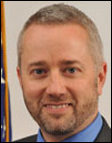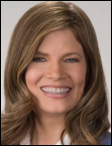
HIStalk Interviews Aaron Sorensen, Director of Informatics, Temple University School of Medicine

June 16, 2014 Interviews Comments Off on HIStalk Interviews Aaron Sorensen, Director of Informatics, Temple University School of Medicine

Aaron Sorensen is director of informatics at Temple University School of Medicine of Philadelphia, PA.

image

Tell me about your job.

I’m at Temple University at the School of Medicine with an affiliated health system. Our new leadership is keen on creating a robust infrastructure to support clinical research. I’m heading up the informatics aspects of that.


What is the informatics influence in the School of Medicine?

Within the health system, you have the IT shop that runs a myriad of clinical systems. There’s a feeling from the researchers that all this data exists, but it’s hard to get at. What do you do with it once you have it? What are the appropriate safeguards regarding compliance and privacy? 

The School of Medicine is trying to make it so that every time a clinical researcher wants to ask a question of the clinical data, it doesn’t become a maze that you get lost in, with different people are telling you different things. There’s this straightforward way to do it and you can go to a central team of people that will guide you through the path and help you along your way.


Describe how PCORnet came about and what it does.

My understanding is that over 10 years ago, when the NIH was originally thinking about redoing the way they fund clinical research extramurally at academic medical centers, the PCORnet idea was floated. The feeling was that it would be costly and it would be hard to achieve. They had other priorities, so instead of doing that, they funded the CTSA awards.

PCORI, the Patient-Centered Outcomes Research Institute, is not a federal organization, but it’s funded through the Affordable Care Act. It’s federal dollars, but it itself is a independent non-profit. The feeling was that it was worth pursuing the idea of creating a network of hospitals that have the ability to share de-identified patient data for the purposes of clinical research. 

Although they have grants that fund all different kind of things, just like the NIH does, I believe the crown jewel within the PCORI portfolio is PCORnet. It has 29 funded groups, some of which focus more on general health system patient populations, whereas others are more focused on particular patient groups with specific diseases.


What Temple systems are contributing data to PCORnet?

In terms of our electronic medical record, we’ve been on Epic outpatient for about three years. We’re just now kicking off the project to go with Epic inpatient. Epic, as most EMRs, receives a number of feeds from different systems. When you get to the back-end Epic reporting database, you not only have the data that originated in Epic, but from a number of different systems.

For our contribution to PCORnet, we are only using our Epic back-end database that gets feeds from cardiology systems, pulmonary medicine systems, and billing type of data. It’s a wide range of things. For the purposes of this project, we are only using what comes into our central EMR.


Can researchers query data from any or all of those 29 contributing organizations?

Yes and no. The 29 break out into two groups.

The patient-focused ones that are disease specific are called PPRNs, the Patient-Powered Research Networks. The health system ones, of which Temple plays a role, are called CDRNs, or Clinical Data Research Networks. 

I don’t know 100 percent what the PPRN plan is. I think it’s slightly less ambitious than the CDRN plan of which I’m a part. I can speak to the 11 funded groups that are part of the CDRN and that cross the country. 

There are two aspects to the PCORI contract. Our network is the University of Pittsburgh, Johns Hopkins University, Temple, and Penn State Hersey. Within our network, we have been funded to create the ability to share data for two different diseases. One is rare disease – idiopathic pulmonary fibrosis. Then a more common disease, for which we chose atrial fibrillation.

At the CDRN level, at the national PCORnet level, we have to support two cohorts. One is what they originally called an obesity cohort, but then they decided they wanted to expand beyond people who are already obese to include people who are at risk of becoming obese. They’re now calling it the weight cohort. We’re going to support a weight cohort. 

Then we have to have a randomly chosen one million plus patient pool from which PCORnet can do centralized queries. Each of the 11 groups has to make available at least one million randomly selected patients, or else their whole patient population, for these centralized queries. As well as a subset of that which will be used specifically for to measure issues around obesity. For that group, you have to have collected good data on weight, height, calculating BMIs, and things around diabetes, coronary artery disease, and certain co-morbidities associated with obesity.


Do researchers have to file paperwork for what they’re looking for? Can you tell how they are using the system?

Yes. Within our network, we have IRB protocols that have been set up to allow for the researchers to ask certain questions. That’s specified ahead of time and is pretty locked down.

For PCORnet, they have the ability to ask anything. The data is always de-identified. You’re not typically ever sharing patient-level information. You’re aggregating it so that they can get an understanding within a given population how it breaks out — what the demographics are, what the prevalence or incidence of a given disease is, etc. 

For those questions, they are not pre-established. It’s not like at the beginning of the project that we know, “We will ask these 100 questions over the next year and a half.” Each funded site will have the ability to not respond to a given query, assuming that they have good justification not to do so.


The advantage to the researcher is that they might need to reach outside of Temple to identify a patient cohort large enough for their project, right?

Exactly. For our rare disease, idiopathic pulmonary fibrosis, at the time we submitted the grant, we estimated that we only had about 70 living patients with that disease. If you went to Pitt, which was the highest, they maybe had about 350 or so. 

With only 70 patients, maybe you don’t even have the number to show any statistical significance in certain differences between drugs or other interventions you’re trying to assess. Whereas if you were to combine all the centers together and you get above 500 patients, then all of a sudden potentially you have the ability to make a finding that will stick with the general population.


Is there a plan to add organizations or conditions or to use the data more widely?

Yes. We were initially funded for 18 months. That 18 months is supposed to be used largely to build an infrastructure to support future research. There will be some research done during the 18 months, but the idea is to make sure you can set up this robust network for the future. 

PCORI has said that they will be having a Phase 2 in which no longer will they be paying to help you set up this infrastructure, but instead they will want specific questions answered. You have the ability to then apply for Round 2 funding, in which you will potentially participate in clinical trials where, using the network, you identify certain patient profiles and you go out and enroll them in certain studies, or for large-scale retrospective studies, where you harness the power of the longitudinal data you have for your one million plus cohort of randomly selected patients times 11.

So at least 11 million patients that you can then query to say, over the last 10 years, patients with this profile who were given this type of therapy, how did they fare over the last 10 years compared to this other therapy? There will be a Phase 2 where we can extend the funding to actually try to answer certain questions.

In terms of being awarded the contract, everyone was being asked, to what level is your institutional leadership committing to making this sustainable over the long run? Should the money dry up tomorrow, do you have strategies and do you have commitments from your top leaders to make sure that this stays in place and that you extend it to anyone outside of the network so that any non-funded investigators have the ability to ask any center and consortium … my consortium is called PATH , the initials of all the participating institutes. Geographically, we’re the mid-Atlantic CDRN. So anyone in our geographic area who is not at a funded institution has the ability to request access to our data and to collaborate with any of our investigators on any particular study.


Is there anything else you’d like to talk about?

The one really neat thing that’s come out of this that’s linked to PCORnet is the use of i2b2. It stands for Informatics for Integrating Biology in the Bedside. It’s an open source software package created at Boston Children’s. It is used extensively throughout the Harvard-Partners HealthCare network. It allows you in an open, non-proprietary way to take data out of any clinical system, merge it with other data you might have – such as genetic data from other systems — and to make it queryable, both at your institution or potentially teaming up with other institutions. The adoption rate has been growing by leaps and bounds.

Temple was not an i2b2 user before this initiative. While we are implementing it for the purposes of PCORnet, as are many of the other CDRNs, we also are using it as a springboard to create an internal tool that our investigators can use for any patients of any disease asking potentially any questions using the EMR data. 

A lot of times when an institution implements a new clinical data warehouse, they take their time and go step by step. It evolves over a period of years, potentially. Whereas because of this PCORI initiative, we had to go from zero to 60 quickly. Phase 1 lasts 18 months, and at the end of 18 months, you have to show that you’ve successfully created this infrastructure which can be used for robust clinical research. 

The i2b2 prevalence within academic medical centers over the US has been growing. As I dug into it, I realized that people use it in different ways. If you are trying to share data with another institution via i2b2, one approach is to try to convert all your data to the same standard. If you have internal lab codes and the other institution has their own internal lab codes, you could try to convert all your codes to a standard like LOINC. Or, you could allow them to stay as they are and then you have some lookup table that converts on the fly from your local ones to a standard.

As I was experiencing this and going through the baptism by fire of getting our institution using i2b2, not only for PCORI but for ourselves, it became clear that there should be a boot camp that helps you think about all these things. It needs to give you what I call the mental scaffolding, so that from the beginning of a project, you can consider all of the types of decisions you’ll have to make and the potential downstream ripple effects.

I contacted Harvard, the folks that created i2b2 and the accompanying SHRINE software that allows you to connect other institutions. I gave them some ideas about how it would have been great if I had been able to take this intensive boot camp before our project started. We went back and forth and we’re going to offer a pilot i2b2-SHRINE boot camp at Harvard in early 2015. 

Harvard is trying to assess what type of a demand would there be for such a boot camp after the pilot. We’ll try to fill maybe 25 spots with the pilot, but then whether there is enough hunger and demand to offer it regularly. If any of your readers have any thoughts about that, I’d love feedback in order to gauge whether it’s a minor niche thing or if it has wide applicability.
Monday Morning Update 6/16/14

June 14, 2014 News 3 Comments

Top News

image

Cumberland Consulting Group will announce Monday that it has acquired Cipe Consulting Group, a 50-consultant, Seattle-based EHR and RCM consulting company. Franklin, TN-based Cumberland has 230 consultants.


HIStalk Announcements and Requests

image 

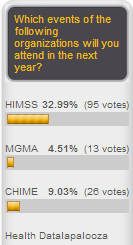
Responses to my poll about meeting attendance in the next year indicate that it’s the HIMSS conference (33 percent) and vendor user groups (26 percent) well out front, followed by CHIME (9 percent) and then a scattershot of other meetings with low percentage numbers. New poll to your right: how well does Epic support interoperability compared to other EHR vendors? After you vote, click the “Comments” link at the bottom of the poll to explain why you think so.

Things you can do to help me with HIStalk: (a) read HIStalk Practice and HIStalk Connect; (b) support my sponsors by checking out their ads, reviewing the listings in the Resource Center, and using the RFI Blaster for any consulting needs; (c) review the archived educational material on HIStalkU; (d) send me anything readers would find useful – people I should interview, conferences I should attend, and of course news, rumors, and fun stuff; and (e) tell people you know about HIStalk since I don’t advertise and nobody will hear about it otherwise. Thanks for reading HIStalk even though I started writing it in 2003 just for myself and it was mostly that way for years.


Upcoming Webinars

June 24 (Tuesday) noon ET. Innovations in Radiology Workflow Through Cloud-Based Speech Recognition. Sponsored by nVoq. Presenters: David Cohen, MD, medical director, Teleradiology Specialists; Chad Hiner, RN, MS, director of healthcare industry solutions, nVoq. Radiologists – teleradiologists in particular – must navigate multiple complex RIS and PACS applications while maintaining high throughput. Dr. Cohen will describe how his practice is using voice-enabled workflow to improve provider efficiency, productivity, and satisfaction and how the technology will impact evolving telehealth specialties such as telecardiology.

June 24 (Tuesday) 2:00 p.m. ET. Share the Road: Driving EHR Contracts to Good Compromises. Sponsored by HIStalk. Presenter: Steve Blumenthal, business and corporate law attorney, Bone McAllester Norton PLLC of Nashville, TN. We think of EHR contracts like buying a car. The metaphor has is shortcomings, but at least make sure your contract isn’t equivalent to buying four wheels, an engine, and a frame that don’t work together. Steve will describe key EHR contract provisions in plain English from the viewpoint of both the vendor and customer.

June 25 (Wednesday) 2:00 p.m. ET. Cloud Is Not (Always) The Answer. Sponsored by Logicworks. Presenter: Jason Deck, VP of strategic development, Logicworks. No healthcare organization needs a cloud – they need compliant, highly available solutions that help them deploy and grow key applications. This webinar will explain why public clouds, private clouds, and bare metal infrastructure are all good options, just for different circumstances. We’ll review the best practices we’ve learned from building infrastructure for clinical applications, HIEs, HIXs, and analytics platforms. We will also review the benefit of DevOps in improving reliability and security.

June 26 (Thursday) 1:00 p.m. ET. The Role of Identity Management in Protecting Patient Health Information. Sponsored by Caradigm. Presenter: Mac McMillan, FHIMSS, CISM, co-founder and CEO of CynergisTek. Identity and access management challenges will increase as environments become more complex, users create and manage larger amounts of sensitive information, and providers become more mobile. Learn how an identity and access management program can support regulatory compliance, aid in conducting audits and investigations, and help meet user workflow requirements.

July 2 (Wednesday) noon ET. The CIO’s Role in Consumer Health. Sponsored by HIStalk. Presenter: David Chou, CIO, University Of Mississippi Medical Center. We are moving towards an era where the consumer is searching for value. Healthcare is finally catching up with other industries and this is forcing health care providers and health plans to rethink their "business model" as consumers test new decision-making skills and demand higher quality and better value. Technology can provide value in this space as we move towards a digital healthcare.


Acquisitions, Funding, Business, and Stock

image

Streamline Health Solutions reports Q4 results after a delay involving an auditor change and an internal controls audit: revenue down 3 percent, EPS –$0.14 vs. –$0.63.


Announcements and Implementations

image

IT gets the blame (at least from non-IT people looking for a scapegoat) for the failed $31 million Cerner implementation at Athens Regional Health System (GA). The hospital’s chief medical officer says users weren’t well trained and the CIO was holding back information, while Cerner claims IT was running the project without getting users involved. The CEO and CIO were forced out after physicians protested.  My suspicion is that the medical staff docs were already mad at administration over something unrelated, refused to participate, then capitalized on go-live challenges to get the CEO fired. The CIO was probably collateral damage since an IT system was the claimed problem.


Government and Politics

image

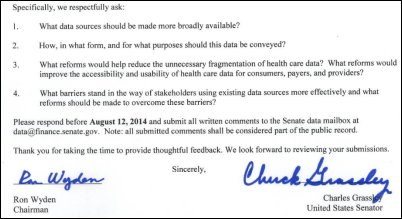
Senators Ron Wyden (D-OR) and Chuck Grassley (R-IA) ask unnamed stakeholders for ideas on how the use of government healthcare databases can be expanded. Chuck asks a lot of questions and writes a lot of letters, but that’s usually the last you hear about it.

image

Vanderbilt University Medical Center’s Eric Boehme, associate director of informatics, worries that the already-complicated Meaningful Use timetable could take an unexpected turn between the recent Notice of Proposed Rule Making and the actual rule, as in what happened with ICD-10. He also takes an interesting long view: “This is all too late and too little. MU is in trouble. Two powerful committees in Congress asked for a pause for MU to evaluate the success of the program and to emphasize the lack of true interoperability. ONC has lost a significant portion of its funding as the stimulus money dries up. Recently, some members of Congress questioned how much ONC should regulate HIT. ONC National Coordinator, Farzad Mostashari, CMS Administrator, Marilyn Tavenner, and the HSS Secretary, Kathleen Sebelius have all resigned.”

Other

image

A Wall Street Journal editorial by patient safety expert Peter Pronovost, MD, PhD of Johns Hopkins Medicine urges consumers to “Beware Bad Data About Hospitals” in the current “Wild West” environment in which “there are greater protections about what claims we can make about toothpaste than a hospital or measurement organization can make about quality of care.” He recommends creating the equivalent of a Securities and Exchange Commission to oversee development and use of quality indicators. Until then, he suggests that consumers use only composite scores such as those from The Leapfrog Group and Consumer Reports. He concludes with a simple plea: “There really is very little useful information on pricing. There should be.”

image

An unnamed IT system goes down at Fletcher Allen Health Care (VT) Friday morning, forcing the hospital to go to paper.

image

The Detroit newspaper profiles Sorie Kanue, a former Michigan State football standout and team captain (playing safety) who worked in IT after college and then went to nursing school. He has been named nurse of the year twice at Detroit Medical Center’s Heart Hospital and is working on his MSN.

image

image

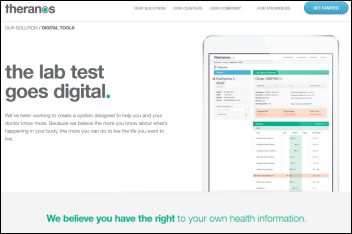
Fortune profiles Elizabeth Holmes, who as a Stanford sophomore in 2003 founded blood diagnostics company Theranos, which now has 500 employees and a valuation of $9 billion. When questioned by her professor about why she wanted to start a company, she answered, “Because systems like this could completely revolutionize how effective healthcare is delivered and this is what I want to do. I don’t want to make an incremental change in some technology in my life. I want to create a whole new technology, and one that is aimed at helping humanity at all levels regardless of geography or ethnicity or age or gender.” The company’s product can run dozens of tests from a single, tiny sample of blood drawn via pain-free finger stick, and the company’s app supports its pledge that “we believe you have the right to your own health information” and “answers at the speed of digital.” Test cost is as little as a tenth of what hospitals charge. Walgreens will put the company’s labs in many of its drugstores, but Theranos is also working with UCSF, Dignity Health, and Intermountain. Holmes says patients don’t have 40-60 percent of lab test orders drawn because of the pain or inconvenience involved.

image

”The Daily Show” invites a group of Google Glass fans to defend their worship of the technology, include one woman who claims that she was a victim of a hate crime because she wore Glass into a bar and filmed fellow patrons without their permission, eliciting their angry taunts as she cursed at them and announced while recording, “I want to get this white trash on tape for as long as I can.” The same woman’s neighbors had previously filed a restraining order against her for recording their private conversations. She and her fellow Glassholes probably should have stayed home: after hearing that Glass early adopters are called Explorers, the host responds, “Magellan was an explorer. Chuck Yeager was an explorer. You guys have a %&@! camera on your face.”


Contacts

Mr. H, Jennifer, Dr. Jayne, Dr. Gregg, Lt. Dan, Dr. Travis, Lorre.

More news: HIStalk Practice, HIStalk Connect.

Get HIStalk updates.
Contact us online.


125x125_2nd_Circle

News 6/13/14

June 12, 2014 News 13 Comments

Top News

image

ONC announces that Chief Privacy Officer Joy Pritts, JD has resigned after four years on the job.


Reader Comments

From Anonymous Tipster: “Re: Wayne Tracy on VistA. I agree it would be a tragic shame to see VistA replaced. Unless Epic were to make some dramatic changes in its approach to interoperability, this could be a disaster for the VA. Anyone who has ever suffered through a migration to Epic could tell you how difficult this can be from a workflow perspective (not to mention cost overruns). You think there’s backlog now? Remember the iEHR project that died? It’s an election year and the money is rolling in big time from lobbyists  — maybe Epic will even begin to divert some of its campaign dollars to Republicans).” The DoD’s IT efforts have been financial disasters, with AHTLA and its predecessors rumored to have cost $10 billion. The VA has done very well with VistA, but its more recent efforts involving government contractors (BearingPoint’s CoreFLS at Bay Pines) were spectacular failures, so there’s no guarantee that VistA wasn’t a one-trick pony. It’s also true that DoD and VA don’t agree on anything despite their common responsibility in caring for active service members who eventually (hopefully) become veterans. Kaiser had to pull the plug on its IBM-developed system that cost hundreds of millions of dollars and replace it with $4 billion or so worth of Epic, so that’s an interesting IBM-Epic partnership (I can’t imagine Epic letting IBM tell its 25-year-olds how to implement.) Add replacing VistA to DoD’s $11 billion project and you’re probably talking about $30 billion worth of overruns, delays, and potential patient harm as the VA and DoD are forced to smoke their first-ever HIT peace pipe – that number has substance since the DoD walked away from iEHR because it was going to cost $28 billion and nothing involving the federal government ever comes in on budget, especially if the military is involved. Britain’s failed NPfIT has been called one of the most expensive government IT projects in history at around $17 billion, so we’ll beat that for sure. One final thought: Epic’s Judy Faulkner and InterSystems’ Terry Ragon are already healthcare billionaires as sole owners of their hugely successful private companies — an IBM-Epic DoD deal would certainly raise the numeric placeholder in front of their billions.

image

From Expandable Beltway: “Re: DoD bid. Cerner is teamed up with Accenture.” Unverified. I am getting anxious to hear what Dim-Sum has to say. Lorre would love to get him or her to present a webinar on the DHMSM topic, for which I would even arrange one of those voice-changing gadgets.

image

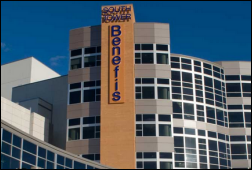
From Cool Runnings: “Re: Benefis EHR RFI. They use Meditech inpatient and replaced LSS with NextGen a few years ago. NextGen is taking a hit in Montana – a small hospital sued them, Bozeman Deaconess is rumored to be switching from Meditech/NextGen to Epic, and Community Medical Center in Missoula is merging with Billings Clinic, which very likely means a move from NextGen to Cerner Ambulatory.  I’ve heard that Benefis is talking to athena, but may be leaning toward looking for an integrated solution instead of just an ambulatory switch.” Unverified, but I should have checked Meditech’s online customer list, which would have told me that Benefis runs its soon-to-be-gone systems.  


HIStalk Announcements and Requests

It’s time to say goodbye to Inga, who has moved on to greener pastures after seven years of contributing to HIStalk and HIStalk Practice. She finished working on the sites in April and has finally tied up her last loose ends. Rumors that she is launching a healthcare shoe division of Christian Louboutin may or may not be unfounded, but we will wish her well in any case. Jennifer Dennard took over writing HIStalk Practice several weeks ago, while Lorre is happily handling the non-writing HIStalk chores.

This week on HIStalk Practice: ONC’s 10-year vision statement on interoperability prompts CommonWell to up its game. Several trade associations line up with telemedicine-related requests for new HHS head Sylvia Burwell. ARcare receives the HIMSS Analytics Stage 7 Ambulatory Award. Epocrates ranks number one again. HIT Policy Committee meeting numbers show $24 billion in MU incentive payments so far. Jim Morrow, MD gives healthcare IT its due as an independent physician. Wesley Medical Center docs face employment ultimatums. Northern Virginia launches the HeaLiXVA HIE. Thanks for reading.

This week on HIStalk Connect: Dr. Travis discusses the concept of patient ownership of health data, its benefit to public health in general, and the role that Apple and Samsung will play in advancing the concept. ZocDoc expands its business model to include corporate wellness services. Autism Speaks signs a deal with Google to create a database that will store 10,000 fully sequenced genomes in the cloud, where researchers across the globe can access the data.


Upcoming Webinars

June 24 (Tuesday) noon ET. Innovations in Radiology Workflow Through Cloud-Based Speech Recognition. Sponsored by nVoq. Presenters: David Cohen, MD, medical director, Teleradiology Specialists; Chad Hiner, RN, MS, director of healthcare industry solutions, nVoq. Radiologists – teleradiologists in particular – must navigate multiple complex RIS and PACS applications while maintaining high throughput. Dr. Cohen will describe how his practice is using voice-enabled workflow to improve provider efficiency, productivity, and satisfaction and how the technology will impact evolving telehealth specialties such as telecardiology.

June 24 (Tuesday) 2:00 p.m. ET. Share the Road: Driving EHR Contracts to Good Compromises. Sponsored by HIStalk. Presenter: Steve Blumenthal, business and corporate law attorney, Bone McAllester Norton PLLC of Nashville, TN. We think of EHR contracts like buying a car. The metaphor has is shortcomings, but at least make sure your contract isn’t equivalent to buying four wheels, an engine, and a frame that don’t work together. Steve will describe key EHR contract provisions in plain English from the viewpoint of both the vendor and customer.

June 26 (Thursday) 1:00 p.m. ET. The Role of Identity Management in Protecting Patient Health Information. Sponsored by Caradigm. Presenter: Mac McMillan, FHIMSS, CISM, co-founder and CEO of CynergisTek. Identity and access management challenges will increase as environments become more complex, users create and manage larger amounts of sensitive information, and providers become more mobile. Learn how an identity and access management program can support regulatory compliance, aid in conducting audits and investigations, and help meet user workflow requirements.


Acquisitions, Funding, Business, and Stock

image

Imprivata sets terms for its $75 million IPO that values the access management company at around $400 million.

image

KeyBanc downgrades shares of CPSI, saying that Healthland is strong in the small-hospital market and that Epic’s Community Connect program is making it a competitor there as well.

image

Elsevier acquires Amirsys, which offers clinical decision support and learning tools for radiology, pathology, and anatomy that will be integrated with the Elsevier Clinical Solutions suite.

image

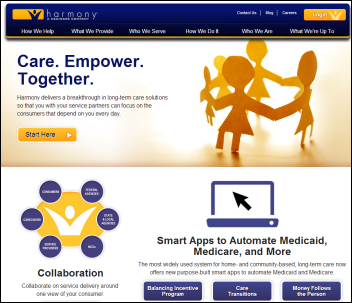
Mediware acquires Harmony Information Systems, whose systems help state and local agencies track long-term care policies.


Sales

image

The State of Vermont signs a six-month $5.69 million contract with OptumInsight for evaluation, remediation, and operations support for its health insurance exchange.

image

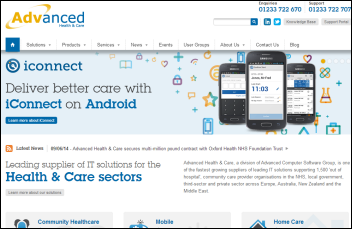
In England, Oxford Health NHS Foundation Trust awards a five-year, multi-million pound contract to Advanced Health & Care to develop an EHR that up to 3,500 clinicians will use on iPads. Oxford Health provides services for mental health, home care, children and family, and substance abuse.

image

Irving, TX-based USMD chooses the population health management platform of Lightbeam Health Solutions for its ACO and other risk-based programs. I interviewed Lightbeam CEO Pat Cline three weeks ago.


People

image

IMDsoft names Lars-Oluf G. Nielsen (Epic) CEO.


Announcements and Implementations

image

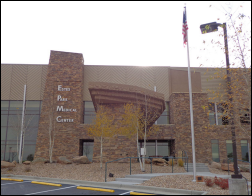
Estes Park Medical Center (CO) goes live on Medhost EDIS.

UPMC (PA) will deploy 2,000 Microsoft Surface Pro 3 devices to deploy its Convergence app, which UPMC says it first tried to roll out on the iPad without success. Convergence, developed by UPMC and Caradigm, gives clinicians a single view of UPMC’s Cerner and homegrown applications and suggests and monitors compliance with clinical pathways.

image

Nevada, MO, Cerner’s testbed for healthy communities, gets a new playground courtesy of the company and the Nevada Parks and Recreation Department.


Government and Politics

CMS reassures taxpayers that the workers who were sleeping on the job at the call center of Serco (which has a $1.25 billion Healthcare.gov contract) are busier now that the site is actually working.

Jon Stewart makes fun of the June 9 testimony of Assistant Deputy VA Under Secretary Philip Matkovsky, in which Matkovsky says in in the deadest of deadpans, “Our scheduling system scheduled its first appointment in April of 1985. It has not changed in any appreciable manner since that date.”

It isn’t just the VA that has an appointment problems. England’s NHS backlog hits three million patients who are waiting for appointments, not even counting six trusts that couldn’t report data because of computer problems. Still, NHS squeaked by in meeting the requirement that it treat 90 percent of patients within 18 weeks. As with the VA, increasing demand could cause NHS to start missing its goals routinely.

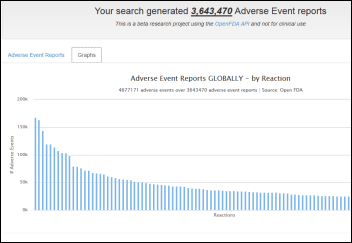
OpenFDA was possible only because the agency used a startup’s technology to turn its document backlog into discrete data. Captricity uses a combination of optical character recognition and crowdsourcing the unreadable parts by giving human reviewers “shredded” sections so they don’t see entire Social Security numbers or full names, preserving confidentiality. Pricing runs around 15 cents per page.


Innovation and Research 

image

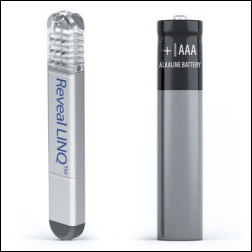
Device maker Medtronic says every person will eventually want sensors implanted in their bodies that will generate data for self assessment, remote monitoring, and disease management. The company is testing a pill-sized cardiac pacemaker and has already released the Linq insertable cardiac monitor that’s the size of a AAA battery and uses cell technology for remote cardiac monitoring.


Other

image

Via Christi (KS) asks for patience as it tries to recover from slowdowns caused by its Cerner Millennium go-live, with one patient reporting a 12.5-hour wait to get from the ED to a bed.

A McKesson-sponsored report predicts that value-based payments will double within five years, to two-thirds of the total.

image

AMA approves guidelines recommending that limitations on physician payments for providing telemedicine services be removed as long as a valid patient-physician relationship has been previously established, the physician is licensed in the patient’s state and follows that state’s laws, and standards are followed the same as for in-person encounters.

CHIME and AMDIS announce an alliance in which CHIME will provide health IT support to AMDIS and AMDIS will provide physician informatics advice to CHIME. The organizations recently jointly offered the CHIME/AMDIS CMIO Boot Camp, modeled after CHIME’s longstanding CIO Boot Camp.

image

Georgia Regents University will host the week-long NLM Georgia Biomedical Informatics Course September 14-20 at the Brasstown Valley resort in Young Harris, GA. Applications are due July 7. The nationally known faculty will teach change agents (biomedical educators, medical administrators, faculty, and others who don’t have knowledge of the field but who can spread the word) how to apply informatics solutions such as clinical informatics, big data, and telemedicine to their delivery, research, and education challenges. Enrollment is limited and competitive since the National Library of Medicine will pay for the registration, travel, housing, and meals of those accepted.

image

For $2,500, you can buy a report containing a SWAG at the size of the EHR market over the next four years in which the authors clearly don’t have a clue about data precision and presentation. Either that or they are very good at estimating the market to within 0.004 percent. I don’t see them trumpeting proof of previous accuracy.

A hospital in France blames a drug delivery robot’s computer bug for sending $15 million worth of drugs to the incinerator in the past five years.

An English hospital apologizes for the death of an 11-month-old baby whose acute appendicitis was not diagnosed because the samples for ordered tests were not delivered to the lab. A Trust spokesperson said that the pathology computer system has been upgraded to flag specimens ordered but not received.

image

Castlight Health co-founder Giovanni Colella, MD (formerly of RelayHealth), says big data rather than government intervention is needed to fix healthcare. He recommends: (a) companies should analyze the claims data from their health plan to see what they’re paying for; (b) gag clauses prohibiting the release of price contracts between insurance companies and providers should be abolished; (c) the government should allow the private sector to use Medicare claims data and physician quality data; and (d) price, utilization, and quality data should be made publicly available in the absence of a compelling reason not to.

image

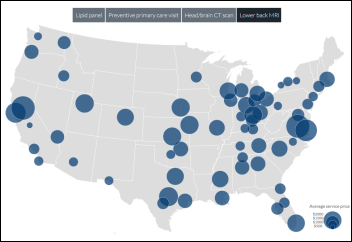
More from Castlight Health: the company releases interactive maps showing national in-network pricing for lipid panel, PCP visit, head CT, lower back MRI (above, which ranged from $676 in Fresno, CA to $2,635 in Sacramento, CA, just 171 miles away by car.)


Sponsor Updates

  • Healthland will offer its hospital customers Meaningful Use Manager of Iatric Systems to help with their Meaningful Use attestation.
  • Grinnel Regional Medical Center (IA) reports a seven percent increase in cash collections, 79 percent of payments made via self-service, and 124 saved hours per month in a two-year review after its go-live with Patientco’s payment automation solution.
  • Impact Advisors and the Scottsdale Institute publish a report from the CIO Summit on IT Cost Management and Value Realization.
  • Sixteen medical innovations were showcased at Premier, Inc.’s Innovation Celebration in San Antonio, TX this week.
  • Quest Diagnostics certifies MedicsDocAssistant EHR v. 7.0 from Advanced Data Systems as a Silver Quality Solution under its Health IT Quality Solutions Program.
  • Janssen Diagnostics collaborates with Halfpenny Technologies to provide specialized reporting for HIV/AIDS healthcare.
  • GetWellNetwork recognizes several providers for using its solutions to improve care at GetConnected 2014 in Chicago, IL.
  • Hills Health Solutions signs a distribution agreement to make Lincor’s interactive patient engagement technology available in Australia and New Zealand.
  • Craneware and Centura Health (CO/KS) will co-present best practices of charge capture during HFMA ANI 2014 in Las Vegas June 24.
  • InstaMed shares how its Premium Payments solution has changed the consumer payment process.
  • Medfusion publishes a white paper on creating patient value through portals.
  • Gartner names Covisint a Leader in Identity and Access Management as a Service.
  • PeriGen CNO Rebecca Cypher will discuss fetal heart rate interpretation at AWHONN 2014 in Orlando June 14.

EPtalk by Dr. Jayne

clip_image002

This has been a rough week in the healthcare IT trenches. Our medical group has been in acquisition mode again, resulting in the addition of several new specialties. Unfortunately, this time around our EHR vendor doesn’t have content for any of them.

Luckily we’ve been through this enough to have a process in place. Our implementation team sends out a staffer or two to observe the practice’s current state workflow and documentation style. This is essentially a reconnaissance mission. We try to blend in and to avoid having the practice ask us a lot of questions while we gather data.

The team then comes back and makes a presentation to the implementation manager, the application team manager, and me to talk about what their current process looks like and how much we’ll be able to handle with the EHR as-is, without any additional development. Depending on the specialty, it’s hit and miss.

For example, when we added vascular surgery, we were able to handle 95 percent of their needs because we have both general surgery and cardiovascular content. On the other hand, when we’ve added certain pediatric subspecialties, we’ve had to get creative with what we choose to offer them. Vendors haven’t quite figured out that children are not just little adults and it’s not as easy as just having them use adult content with the same specialty name.

For example, pediatric cardiology deals with care for children who have had a variety of surgical procedures that are largely unspoken of in the adult cardiology world. On the flip side, there isn’t very much coronary artery disease or many triple vessel bypass surgeries among the pre-adolescent set.

Often we’re working with physicians who are used to dictating their notes and having them transcribed. We’ve had good success at putting them in our EHR “core” templates for documenting histories, assessments, and plans, but we augment the “story” part of the visit with voice recognition. It’s a hybrid approach, but it prevents us from doing costly development that will only be used by a handful of physicians. It also provides for physician satisfaction in that they’re used to being able to include a detailed narrative in their visit documentation.

We encountered a rare bird this week, however: a subspecialist who seriously believes she’s going to be happy with point-and-click documentation. She wants us to build a whole herd of custom screens for her. She dictates on the hospital system at present and has no previous experience with discrete data.

In our experience with other physicians of the same subspecialty, it’s generally not worth building custom screens. They tend to change their minds before the content is even built. If they don’t change their minds, once they see it, they decide it’s too “clicky,” and 90 percent of the time they end up dictating anyway.

We had our follow-up meeting with her today. We ran through the options and asked her to try some typical click-by-click workflows in the general medicine templates just to get a feel for what it would be like. She wasn’t terribly proficient, so we had her try voice recognition within the system. She did fairly well with that. It was clear to the team that she’ll likely do better with that kind of hybrid approach. The subspecialist was unconvinced, however.

We moved to our next tactic,  which is to ask the physician to use our recommended workflow for a couple of months and then decide if we still need custom content. It was obvious that she was not buying what we were selling. She told us we were just being difficult and didn’t want to do what she asked. She then accused us of trying to skimp on her content for budgetary reasons.

We explained the history with other physicians in her specialty, even trying to show her the content we had previously built that her peers had abandoned. She didn’t want to see that either, but made it completely clear that she expected us to build custom content for her alone. I knew we weren’t going to win this discussion, so we agreed to go back to the office, brainstorm other solutions, then meet up in a few weeks.

In debriefing with the team in the car, we’re not sure what to do for her. We have more than a decade of experience doing this. We know what works and what doesn’t work. However, we have a physician with no EHR experience (and no track record as an end user – she won’t even use the hospital system) who is demanding a certain course of action. My team asked what we should do.

My thoughts went into doctor mode. It feels like the scenario where a patient is demanding an antibiotic where none is indicated, or insisting on a procedure that could potentially be more risky than it is worth. The patient in this case is arguing with the IT-equivalent of our professional medical opinion as to the course of care. In the medical world, we wouldn’t be bullied into doing something that is not of benefit. Not to mention that building clicky screens for a provider who has never been exposed to that documentation style is a recipe for unhappiness.

Our plan is to bring some of her soon-to-be colleagues in the same subspecialty with us to our next meeting and hope that their shared experiences will steer her in the right direction. We’d like her to make the choice herself without us having to flat out reject her request, but I’m not sure how we’ll handle it if she doesn’t start to get on board with our advice. Being new to the group, we know her level of trust of our team is low and her experience with EHR is minimal, so that seems like a logical approach.

I never like disappointing people. It’s always difficult to have those conversations with patients when you deny their requests. It’s doubly challenging when you’re dealing with a peer who might be more senior than yourself, and particularly difficult when they’re in a seemingly more prestigious subspecialty than your own.

In other parts of the physician universe, we’re also dealing with some significant Meaningful Use issues where physicians are requiring retraining and a lot of hand-holding. This was just one more thing to add to the mounting heap of stress.

I polled a couple of my CMIO peers on how they handle these situations. They didn’t have too many better answers. For all our readers on the implementation and content side, what’s your take? Is there a silver bullet solution? Email me.


Contacts

Mr. H, Jennifer, Dr. Jayne, Dr. Gregg, Lt. Dan, Dr. Travis, Lorre.

More news: HIStalk Practice, HIStalk Connect.

Get HIStalk updates.
Contact us online.

125x125_2nd_Circle

HIStalk Interviews Matt Zubiller, VP of Strategy and Business Development, McKesson

June 11, 2014 Interviews 2 Comments

Matt Zubiller is vice president of strategy and business development for McKesson.

image

Give me some background about what you do at McKesson.

I’ve been with McKesson for about 10 years. I’ve held a variety of roles, both on the strategy side and the general management side. Most recently I was the general manager for decision support, InterQual, and the Clear Coverage business. Now I am responsible for the strategy for the McKesson Health Solutions business, which connects payers and providers.


What is the Better Health tour?

McKesson put on the Better Health tour with a variety of its customers and stakeholders. McKesson touches a lot of different people and customers. We brought pharmacists, payers, providers, diagnostics manufacturers, and technology companies together to talk about healthcare and what type of change is needed to move it forward.

We’ve done that across several regions–Portland, Boston, and also in Minnesota now. We are looking to bring together each of these different types of constituents to help them move healthcare forward and help be the change we want to see.


What kind of innovation are they talking about on the tour?

It starts with looking at the change. We as McKesson operate on an international basis, but healthcare happens very locally. Depending on the region you’re in, there are different problems that are being addressed.

They were macro issues, like the changing of reimbursement from volume to value. But also issues about how you help to move technology along, along with physician adoption. How do you help payers or a health systems collaborate more effectively with each other to help drive the inefficiency out of healthcare?


Can you describe what you’re seeing that’s interesting or what attendees are talking about?

They talked about a few models — particularly in Boston — that were interesting to us. There are technology innovators that we invited. We call them Edisons. They are the folks who are  pushing both technology and different healthcare business models forward.

One example was a company called Iora Health. They contract with payers, providers, and primary care to provide primary care services on a fixed fee per-patient basis. That business model innovation is super interesting. When you use technology to support it, it becomes a lot more efficient and effective so you can track the performance of those patients.

Another example is some work that the Tufts health system has been doing. Tufts is a big health system, the oldest in the country, I believe. They had been looking across their region within the Boston area. They had contracted with and also connected to community hospitals so they could serve a much broader region of patients. You don’t have to have patients come in all the way into the Tufts health center to be able to be served. The community physicians themselves and the community systems can help support their patients.

There are several different ways we’re using technology to help break boundaries, but also to be able to shift business models.


Jonathan Bush had an interesting thought in his book that part of the limitations of healthcare are geographic as well as driven by state-by-state licensure. In addition to telemedicine, he says hospitals should physically transport patients from long distances into their hospitals that perform high volumes of specific procedures, the focused factory model. What’s the potential of telling a patient in Boston that the best treatment for them at the best price might be in Ohio or Minnesota?

I think that is another factor as well. The walls are both regulatory and just the way we think about healthcare today. 

Clayton Christensen was presenting at our innovation conference as part of the tour. He was talking about different types of innovation, both incremental and disruptive innovation. One of the things he has espoused is the fact that you need to provide the best care in the lowest-cost setting. I think that equally applies to your point, around the fact that care can be provided in one region or another depending on how efficient and how effective that really is.

Part of the problem in healthcare — and this is something that also came up –  is how do you effectively measure that? When you move from a volume-based model to a value-based model, where everybody’s talking about being paid based on value, how can you truly get to agreement around what value is? That’s a particularly difficult concept that the government’s trying to push forward with the ACA program, to begin to define different types of metrics.

But in the end, part of the wall you need to break down is not just understanding what good quality clinical care is, but what the financial decisions are that come along with it so you can begin to represent value.


I’ve worked in hospitals almost all of my career and we never told patients that another facility might be better at doing certain things. You worked in an area of McKesson that managed that data, so you could see it. Is it hard to convince patients that their local, shiny hospital that’s a source of community pride isn’t always the best place for them to seek care?

It’s an incredibly difficult sell, but I think it’s also generational. If you look at the generations who are a bit older, their fundamental healthcare relationship is based on that trust between them and their physician. If you look at some of the new generations, they’re beginning to not only question that, but they’re looking for the tools, as consumers in healthcare, to find the best healthcare at the best cost. 

I think it’s incredibly difficult to bend that, but generationally we will probably end up getting there, even if it’s going to be 20 years from now. I prefer to believe we can use technology to accelerate that.


The big thing two or three years ago was medical tourism, with foreign hospitals marketing their Joint Commission accreditation, English-speaking employees, and luxurious accommodations. What happened to that?

I think medical tourism still has its place. I think that is still progressing forward. Telemedicine will help progress that forward.

What seems to be a big catalyst that’s going to be needed is this push towards value. It’s super hard to compare and contrast where can I truly get the best care at the best cost. It feels like medical tourism is still a bit of a novelty. 

But when you begin breaking down these walls, if you can very clearly communicate to the patient, the consumer making that decision, what quality procedure they can receive with turnaround times and outcomes associated with it as well as cost, I think you’ll begin to see consumers demanding more of that information from the rest of the healthcare system.


Health IT startups usually claim they are innovative, but they are also often naive about the entrenched players and the difficulty in targeting an audience to make a sale or even get a pilot. What advice do you have for those companies?

Before I was in McKesson, I was both an entrepreneur and worked with a lot of entrepreneurs. One of the blessings you have as an entrepreneur is that you have wide-angle views, but also you don’t believe the obstacles in front of you are as big as they really are. I guess that’s the definition of an entrepreneur.

Healthcare moves slowly, more slowly than anybody else, because of all the constituents, stakeholders, and agendas that are involved. 

Most folks who know of McKesson don’t immediately think that we are this incredible source of innovation. But it’s interesting in that I see a lot of pockets across McKesson in the various different constituents we have that we are innovating. But I think that we can do it faster. I think we can do it smarter. 

That one of the reasons we put the tour together, to connect to those Edisons out there, those entrepreneurs who are thinking about new business models, who are thinking about overcoming the challenges that they see in front of them, and help us maybe get past, or in some cases, out of our own way. The partnership between the notion of the Davids and the Goliaths.

I guess you could argue that  McKesson can very much seem like a Goliath in many ways. But if we can partner with those Davids out there who are going to eventually disrupt the businesses that we work in in a way that helps support the innovation, I think we can get what consumers need in the long run, which is more clarity around value, as well as being able to progress and change and adapt our business models before they get adapted for us.


What’s a good way for McKesson to work with those little companies?

We’re still figuring that out ourselves. We’ve tried the acquisition route before in the past. We’ve also tried the investment route before in the past, and we’re going to continue to evolve that over the course of the next 18-24 months as well with a couple of things that are coming out that we’re happy to talk with you about.

But one thing I’d throw out there is that we know that both on the outside and the inside that McKesson’s really good at scaling up, being able to take existing business models that have shown good promise and be able to provide both the technological support and the infrastructure and the scale to be able to blow it out to all the different stakeholders that are involved. And be able to do that while managing all the various conflicts.

For an entrepreneur, that’s really hard work. Not only that, it’s some of the most difficult work for them to try to pass through, because most of the time, entrepreneurs are starting new things and trying to grow companies, while the scale that McKesson brings is super important. 

I think that there’s a nice pairing there, where people who are looking to start new businesses and be innovative can look at things in different ways, show how that works, and then McKesson can bring its scale and its process excellence, customer relationships, and network to help it grow quickly.


If you took the start-ups that have a paying customer or two, you would eliminate probably 90 percent of them. Assuming they’ve cracked the code and gotten that far into healthcare, what are the biggest potholes in the road that could cause them to fail?

One is time. Most of the time as an entrepreneur, you’re naturally also very aggressive around time. But in healthcare, the clock moves so much more slowly. 

The ability to not only get customers on board, but to demonstrate results to show that you can actually improve costs or improve outcomes, is critical. Once you do that, you can scale. You have to address time. You have to be able to demonstrate outcomes and cost savings.

Once you’re able to do that, one of the biggest challenges that the entrepreneur has is figuring out how to break into the markets. Being able to get in front of payers, for example. Payers are obviously very busy and they’ve got a lot of things on their plate already. They tend to be somewhat siloed organizations. If you’re trying to get into a payer organization, you have to figure out how to leverage relationships to go do that.

That’s one thing McKesson can do, and it’s something I’ve seen myself. On the provider side, we obviously have relationships with thousands of health systems and tens of thousands of providers. That same issue — how do you break into the mindset of the physician when not only you but every other entrepreneur out there is trying to figure out how to get a hold of their attention to have them use your product or to be able to buy your solution?


It takes almost as much effort for an insurance companies other deep-pockets investors to do a little deal as a big one, so it may not be attractive to take a minority position or to invest in a small company. Is there a middle ground where they should look to someone other than a McKesson to help them get to the next level without giving away all of their equity?

I’ve seen a lot of experimentation out there. You see joint ventures that are happening because they’re a little bit less intensive in terms of taking equity away from the entrepreneur. There’s a shared upside on both sides, which is nice. There are a couple of organizations that are out there that are using that very well to their advantage. 

There are venture funds that are being started by different organizations to support investments in those start-ups, which I think is also a good avenue depending on the level of engagement that the executives at that company have with those funds. That’s the real value the entrepreneur gets out.

If you serve a unique or specific niche or segment need, you can start with a simple partnership to demonstrate value and have the organization help you demonstrate that value. That can go a long way to the next step, be it a joint venture, a venture investment, or a potential acquisition down the road.


What do you see as the most likely area in which there could be true disruption versus incremental innovation, focusing on the technology side?

I look at technology as a great enabler of a disruption, but I don’t look at it as the source of the disruption.

As we move and shift our reimbursement system, it’s going to be a tremendous impact on our organizations. ACA, for whatever it’s worth, did many things. One of the things it did was expand access. It hasn’t done a lot around controlling costs.

I think you’ll see the next big change is going to be how to get our costs under control. Health systems have tremendous operating margin pressure. Health plans themselves are limited in terms of where they can reduce medical costs. 

In the end, I think the shift in reimbursement model from a volume-based, fee-based model to a value-based model is where you’re going to see significant disruption. You’re going to see providers beginning to think about pushing volume out to lower cost settings. You’re going to see payers incentivizing providers and doing it in a way that’s clear. 

They’re going to need technology to do all of this, from population management — which is one of the thing McKesson is focused on — through risk management, through telemedicine, through connectivity. CommonWell is a good example — to be able to share data across different systems. Work we’re doing around decision support to both know clinically and financially what’s most appropriate at the point of care. Those are technological innovations that are going to stem from that business model disruption.


Do you have any final thoughts?

The tour is an exciting thing for us, but it’s just one part of the many things that McKesson is looking to do to drive and partner with innovators. Recognizing that we are a big organization that’s been around for a really long time, by working with those companies who have great ideas and those people who want to change healthcare for the better, the tour is just one good example of us trying to make that happen.

CIO Unplugged 6/11/14

June 11, 2014 Ed Marx 3 Comments

The views and opinions expressed in this blog are mine personally and are not necessarily representative of current or former employers.

Data-Driven Performance

I have a confession to make. While I am an uber advocate of data-driven performance in healthcare and IT operations, I seldom apply these tools to my personal life. Sure, I look at data when I consider investments and major purchases, but, put it this way, you’ll never see me with a Fitbit!

I am witness to the power of data to shape clinical transformation. Are you kidding me? Serving in organizations with mature electronic health records and advanced business intelligence tools, I see the evidence in our quality reports all the time. Bam! Data-driven outcomes for sure. Evidence-based medicine—check. Ditto on the business side. In fact, my organization is among the first in the country to post our data-driven metrics online. Transparency is a great motivator.

For all my talk on leadership, innovation, connected health, and business intelligence, you might expect me to be a walking wearable. Nope. I’m wired as a visionary. Details are not my forte. I might have a grand idea for a party, but I leave the planning and execution to the detailed-minded organizers.

When it comes to athletic endeavors, I’m about getting to the finish line fast. Forget style and quality form; just get out of my path.

Over the years, the downside of this method caught up with me. Time was no longer my friend. Another confession: my performance had stayed flat for a few years. I wanted to see improvements, so I needed to change.

My friend Ben Levine is a perennial “top doc.” He runs the Institute for Exercise and Environmental Medicine and is one of the world-renowned types who’s been kind enough over the years to help train my mountain climbing teams.

image

Ben took me through the paces of his research lab. Part of our deal meant I had to be in a study and sport a wearable for a while.

After analyzing all the tests, he told me my body was capable of greater performance. My lifelong conditioning gave me a good base, including a resting heart rate of 40 (occasionally six BPM when asleep). But I had not reached my physiological potential.

image

I researched and found a triathlon coach to help me get to the next level of performance. Of course, it turned out that Amari of Dallas-based Playtri is a total data hog. She stretches me (no pun intended) beyond my comfort zone with all these wearables and resulting analytics.

In the past, I would cycle in a race and hope for the best by just doing whatever felt good. Now she had me monitoring a combo of heart rate, cadence, and wattage. Speed is secondary. If I focus on the analytics, the outcome (speed) will take care of itself. If I only look at speed, as I did in the past, I might dismount my bike only to find I have no legs left for the run —bonk!

I posted last fall about qualifying for regionals and then for the national Duathlon (run/bike/run) championships. Through grit, I lucked out and secured the last spot (age group) on Team USA. It was not pretty, but I made the team.

With the World Championship on the horizon as well as other important races, the time for data-driven performance arrived. A real life experiment—with me as the subject. Time to walk the talk.

Albeit imperfect in my utilization, Amari’s training formula is completely driven by near real-time data feeds. She makes adjustments based on daily training and race results. I dutifully wear the gear and upload. She parses the data, does meta- and microanalysis, and off we go.

What were the 120-day results?

image

I am writing this post on the plane home from the World Championships in Pontevedra, Spain. I followed Amari’s race plan, which was all data points: 150-165 BPM heart rate on the first 10K, 270 watts on the bike, never going lower than 165. It was not “outrun the person in front of me,” but to be patient and focus on my data. If I did that, the results would be my friend.

I finished in the top 25. I was the #4 American (an upgrade from #18 last fall) to cross the finish. Data-driven performance! I’m a believer. I can’t wait until I perfect the technology and discipline myself further under Amari’s coaching to see even stronger outcomes.

Personal life imitates professional. We must all push our organizations and ourselves to become data driven.

While being data driven leads to improved outcomes, no data tool could ever create the following. Intrinsic motivation does have a purpose.

image

The home stretch with .5K to go. I saw the Team USA Manager exhorting us to finish strong. Tim handed me Old Glory as I ran by and said, “Catch two more racers!” I caught my two as I turned into the stadium sprinting to the finish. Waving my country’s flag. Hearing chants of “USA USA USA.” Tears of joy.

Go Team USA!

Ed Marx is a CIO currently working for a large integrated health system. Ed encourages your interaction through this blog. Add a comment by clicking the link at the bottom of this post. You can also connect with him directly through his profile pages on social networking sites LinkedIn and Facebook and you can follow him via Twitter — user name marxists.

News 6/11/14

June 10, 2014 News 12 Comments

Top News

image image

Our intrepid beltway reporter Dim-Sum has been telling us for months that IBM and Epic are pitching for the DoD’s $11 billion EMR contract, which IBM now confirms in announcing its intentions. Heading the project will be IBM CMIO Keith Salzman, MD, MPH, who was an Army doc for 22 years. Dim-Sum’s reports have been minor masterpieces of puns, semi-obscure references, and teasing hints, but I just realized that even his or her phony name is yet another one: the bid falls under DHMSM (DoD Healthcare Management Systems Modernization). I suspect we will get a June report shortly, but in the meantime, you might want to refer to his or her updates from March 5, March 28, April 9, and May 2 now that their accuracy has been confirmed (he or she reported here that it would be IBM-Epic two months ago.)  


Reader Comments

image

From Big Sky: “Re: Benefis Health System in Montana. Has an RFI out for EMR replacement.” Unverified. I don’t know what they’re running for inpatient, but they finished a huge NextGen ambulatory rollout a couple of years ago.

From Speechless: “Re: HIMSS chapter speakers. We are putting together a panel discussion for the fall on healthcare IT innovation. If you could choose one or two East Coast speakers, who would they be? We’re thinking of a progressive hospital CIO, someone interesting from one of the incubators, and a provider-side innovation leader.” Let’s crowdsource it with HIStalk readers – leave a comment with your suggestion or if you’d like to volunteer to present (or you can email me.) I’ve been a HIMSS chapter program chair and it’s hard to get good non-vendor speakers.

image

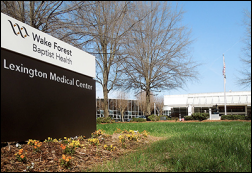
From Demon Deacon: “Re: Wake Forest Baptist Medical Center. Successfully launched Epic Inpatient for the Lexington Medical Center, which was the last Wake Forest hospital to go live.” Congratulations to WFBMC for getting the job done despite some disastrous (and preventable) early missteps that cost the health system a lot of money and credibility. My fellow barbeque fans might consider a site visit given that Lexington, NC has the highest ratio of pits-to-people in the country and one joint (Lexington Barbeque, aka “Honey Monk’s”) fed world heads of state at a 1980s summit at the request of President Reagan.
image

From Power Seeker: “Re: power strips. Joint Commission says that CMS ‘is no longer allowing relocatable power taps, referred to as RPTs or power strips, to be used with medical equipment in patient care areas, including operating rooms, patient rooms and areas for recovery, exams, and diagnostic procedures. The restriction does not apply to non-patient care equipment such as computers and printers or to areas such as nurse stations, offices, and waiting rooms.’ If this is true, time to invest in companies that sell UPS solutions.” It’s true. Patient care rooms are going to need a lot of red wall jacks to plug in medical devices individually. Hospitals will also need to check their liability insurance since power cords will be running all over the place and tripping people. I see the point – even UL-approved power strips aren’t intended for critical medical devices where failure could be disastrous (if there’s no battery backup, anyway) — but alleviating that risk will be ugly in already-crowded patient rooms.

From Wayne Tracy: “Re: Monday’s post. I’m very cynical about the VA’s problems and agree that because of commercial vested interests, VistA is quite likely to become a fall guy. VistA in my opinion is the most comprehensive user-developed healthcare clinical application. My fear is that the lack of advocacy is because: 1) Sonny Montgomery is no longer in Congress, 2) No vender will make money on it, 3) No consulting company can charge an arm and a leg to implement it. The proposals to do away will the VA healthcare system are at best naive. Last time I looked at our mental health system, I’m compelled to assert that it is woefully inadequate. What system can deal the population of amputees and brain trauma cases plaguing some two million recent vets? Some have suggested that some 50 percent are or will experience PTSD and related psychological problems. What civilian healthcare organization is prepared to deal with that large a patient population, or more importantly, has the proven expertise? If you think the backlog is bad now, just wait. This administration and Congress has good intentions that will potentially result in a diminished quality of care at greater expense.” Wayne is an industry long-timer and a retired Navy officer. I agree with all of his points. VistA will take a fall because the VA’s volume and people problems are drawing beltway buzzards and arrogant DoD’ers who can’t wait to see VistA replaced with something way more expensive even though it has been a poster child for doing IT the right way for patients (although the VA has struggled with automating patient scheduling). Nobody wants to talk about his second conclusion – we civilians weren’t really paying attention to what was happening in Iraq and Afghanistan because the death toll didn’t seem all that high. Our military participants were coming home alive but physically and mentally mangled and now we have to figure out how to pay for their care whether it’s delivered by the VA or otherwise. I’ve argued in the past that the VA should be dissolved and care provided by the existing healthcare system, but I’m not confident that system can handle the volume any better or that we can manufacture enough additional red ink to cover the cost.


HIStalk Announcements and Requests

Listening: Circa Survive, thoughtful indie rockers from Doylestown, PA. I’ve been listening to them nonstop once I got over my disappointment that the singer isn’t a sensitive female but instead is a high-voiced guy. Those of us with a clinical persuasion will appreciate this song title: “The Difference Between Medicine and Poison is in the Dose.” They’re touring now with Ume, who I also like a lot. Also, new albums from First Aid Kit and Passenger.  

image

I was reviewing Steve Blumenthal’s slides from the June 24 webinar below – he’s going to be fun, I suspect, especially for a lawyer. I also sat in on the rehearsal for the radiology workflow one and it was interesting to hear about teleradiologist workflow with the high volumes of images they deal with – no wonder they sit in a quiet, dark room and look at on-screen pictures while talking into a microphone all day. Like programmers, I’m guessing they rarely see daylight.


Upcoming Webinars

June 11 (Wednesday) 1:00 p.m. ET.  A Health Catalyst Overview: An Introduction to Healthcare Datawarehousing and Analytics. Sponsored by Health Catalyst. Presenters: Eric Just, VP of technology; Mike Doyle, VP of sales; Health Catalyst. This short, non-salesy Health Catalyst overview is for people who want to know more about the company and what we do, with plenty of time for questions afterward. Eric and Mike will provide an easy-to-understand discussion regarding the key analytic principles of adaptive data architecture. They will explain the importance of creating a data-driven culture with the right key performance indicators and organizing permanent cross-functional teams who can measure, make and sustain long-term improvements.

June 24 (Tuesday) noon ET. Innovations in Radiology Workflow Through Cloud-Based Speech Recognition. Sponsored by nVoq. Presenters: David Cohen, MD, medical director, Teleradiology Specialists; Chad Hiner, RN, MS, director of healthcare industry solutions, nVoq. Radiologists – teleradiologists in particular – must navigate multiple complex RIS and PACS applications while maintaining high throughput. Dr. Cohen will describe how his practice is using voice-enabled workflow to improve provider efficiency, productivity, and satisfaction and how the technology will impact evolving telehealth specialties such as telecardiology.

June 24 (Tuesday) 2:00 p.m. ET. Share the Road: Driving EHR Contracts to Good Compromises. Sponsored by HIStalk. Presenter: Steve Blumenthal, business and corporate law attorney, Bone McAllester Norton PLLC of Nashville, TN. We think of EHR contracts like buying a car. The metaphor has is shortcomings, but at least make sure your contract isn’t equivalent to buying four wheels, an engine, and a frame that don’t work together. Steve will describe key EHR contract provisions in plain English from the viewpoint of both the vendor and customer.

June 26 (Thursday) 1:00 p.m. ET. The Role of Identity Management in Protecting Patient Health Information. Sponsored by Caradigm. Presenter: Mac McMillan, FHIMSS, CISM, co-founder and CEO of CynergisTek. Identity and access management challenges will increase as environments become more complex, users create and manage larger amounts of sensitive information, and providers become more mobile. Learn how an identity and access management program can support regulatory compliance, aid in conducting audits and investigations, and help meet user workflow requirements.


Acquisitions, Funding, Business, and Stock

image

T-System sells its ED billing business to Intermedix, saying it will focus on its clinical and coding initiatives that will continue to be offered under the RevCycle+ brand.

image

Indianapolis-based startup Indigo Biosystems raises $8.5 million in venture capital and replaces its CEO with the company’s founder. Its clinical laboratory software interprets visual results from instruments such as mass spectrometers, flagging outlier data for human review.

image

Oncology drug maker Celgene invests $25 million in NantHealth to develop personalized medicine for cancer. There’s a connection: NantHealth founder Patrick Soon-Shiong sold his own chemo drug company, Abraxis BioScience, to Celgene for $3 billion in 2010.


Sales

image

The federal government awards ScImage a two-year, $45 million contract for its Picom365 Enterprise system, including PACS, diagnostic viewers, VNA, and workflow tools.

image

United Arab Emirates-based physician helpline vendor Mobile Doctors will implement mobility solutions from Cerner.

image

Freestanding Cypress Creek ER (TX) chooses Wellsoft’s EDIS.

image

Mission Health (NC) will advance its population health management with Health Catalyst’s Late-Binding Data Warehouse and Analytics platform.

Children’s Health Alliance (OR) chooses Wellcentive’s population health management solutions.

Catholic Health (NY) selects Perceptive Software’s enterprise content management system to integrate with its Infor financial and HR systems.


People

image

Sunquest officially announces that Matthew Hawkins (Greenway Health) has joined the company as president.

image

Capsule Tech promotes Kevin Phillips to VP of marketing and product management.

image

Former athenahealth CFO Carl Byers (Fidelity Biosciences) joins the board of Netsmart Technologies.


Announcements and Implementations

ZeOmega announces the 5.6 release of its Jiva population health management system.

image

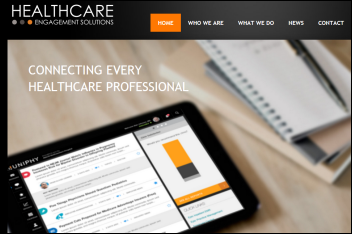
Healthcare Engagement Solutions signs an agreement with Cleveland Clinic Innovations to further develop its Uniphy mobile technology platform.

image

Rockcastle Regional Hospital (KY) goes live on Medhost, sending data to the Kentucky HIE through YourCareLink.

IntraCare North Hospital (TX) goes live on Medsphere’s OpenVista.

Belmont University and the Tennessee chapter of HIMSS launch a healthcare IT certification program for individuals.

The mHealth Summit announces that it will host the Global mHealth Forum for low- and middle-income countries, to be co-located at its December 7-11 conference in National Harbor, MD.

image

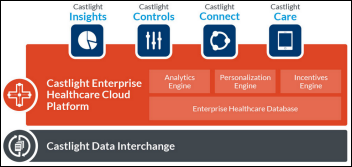
Castlight Health announces GA of Castlight Enterprise Healthcare Cloud, which provides four solutions for self-insured employers: cost-optimization analytics, benefits design, a catalog of available third-party services, and a mobile benefits app for employees. Shares were up 3 percent Tuesday, but still down 58 percent from the closing price on IPO day less than three months ago. The company’s valuation is $1.5 billion on $20 million in annual revenue and $75 million in annualized losses.


Government and Politics

A  VA self-audit of 731 facilities finds that 13 percent of schedulers were told to enter desired appointment dates different from what the patient requested, eight percent of facilities kept external scheduling lists invisible to the VA’s EWL/VistA systems, and unrealistic targets encouraged facilities to game the system. New patients waited up to three months to see a doctor. The VA announced immediate changes: eliminating the 14-day appointment target as unreasonable, implementing real-time patient surveys, conducting an external audit, freezing new hires and eliminating bonuses at VA headquarters and regional offices, and creating an HR team to get clinicians hired faster.

image

CMS may be congratulating itself publicly for releasing Medicare payment data (which it did only after losing a lawsuit in trying to prevent it), but the more the statistical jockeys play around with the databases, the more obvious it becomes that CMS is asleep at the taxpayer wheel. A Wall Street Journal analysis finds that 2,300 providers were paid $500,000 or more from performing single procedures or services, some of them operating well outside their area of expertise. A non-cardiologist was paid nearly all of the $2.3 million he billed Medicare for in 2012 for performing a rare and questionable cardiac procedure (“exercise while lying on your back,” advertised on his site above) on all of his Medicare patients, with his entire training in the procedure consisting of “reading lots of articles, studies, and clinical trials.”An orthopedic surgeon billed Medicare for $3.7 million in one year even though he didn’t perform a single surgery – he charged for 108,000 massages and manual manipulations. It was billed by his former employer, Abyssinia Love Knot Physical Therapy, a PT chain run by self-proclaimed “Pastor Shirley.”

image

HHS tweeted this picture, which it captioned, “Welcome Secretary Sylvia Mathews Burwell!” I haven’t seen anything official that she has been sworn in.  

The Indian Health Service contributes its VistA-based RPMS scheduling system to the OSEHRA open source community.
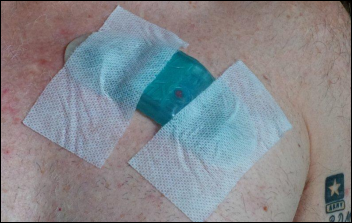
image

The Alliance for Connected Care writes to Sylvia Burwell even before she takes office as HHS secretary, urging her to use her authority to open up telemedicine reimbursement for all ACO providers, not just those located in specific rural areas as is the case today. The trade association, run by former government officials Tom Daschle, Trent Lott, and John Breaux, actually sent two letters, one signed by its business members (Walgreens, WellPoint, and Teladoc, for example) and the other signed by a couple of dozen big health systems. The American Telemedicine Association sent Burwell a letter of its own listing sweeping improvements that would be enabled by paying everybody for delivering telehealth services, with that letter signed by mostly by big vendors (and HIMSS.) One might infer that while patient care could improve under such an arrangement, vendor and provider revenue would most certainly do so. Sylvia hasn’t even found the restroom yet and already the special interests are pawing at her.

image

Statistics presented at Tuesday’s HIT Policy Committee meeting indicate that of EPs who first attested for Meaningful Use in 2011, 84 percent attested in 2012 and 75 percent in all three years of 2011, 2012, and 2013. Nearly half of those who attested the first year and then skipped 2012 returned in 2013. EHR incentive payments totaled $24 billion through the end of May.

image

AHRQ, presenting at the HIT Policy Committee meeting Tuesday, says that lack of EHR interoperability is a big problem, recommending that ONC define an “overarching software architecture” within 12 months and require EHR vendors to develop and publish APIs to support it. I’m pretty sure that’s not going to happen.


Other

St. Francis Hospital (GA) admits that one of its employees sent a mass email to 1,175 patients using CC: instead of BCC:, exposing the email addresses to all recipients. Apparently even that triggers the breach notification rule, at least according to the hospital’s interpretation.

BetaBoston profiles Seratis, a secure messaging app for care teams. The company is offering free personal use and hopes to get a Boston pilot. Their site is light on details, so it’s hard to determine whether its product is differentiated from similar apps from bigger players.

image

Victor Dzau, MD, stepping down as CEO of Duke University Health System (NC) on June 30 to become president of the Institute of Medicine, looks back on his tenure with comments about Duke’s $700 million Epic system:

I think we all recognize that to provide the best care for patients, you need an integrated information technology system … you can capture all the information of the patient made available to the providers and the patient, and make it available throughout the entire system … Through Epic, we are able to connect with other systems that have Epic, such as Novant and many others; now UNC just implemented it … It really is an entire information system that allows you to look at charge capture, laboratory testing, finances, work flow, decision-making … it’s a phenomenal system that can help us really improve patient care … about a year ago, I launched an institute called Health Innovation to try to make the whole place think about better ways to think about patients to try to bring together this whole large amount information that we have now through electronic health records and the use the analytic capabilities to look at data, big data, to determine how we can be a learning health care system, and try to use the new technology of digital technology sensors and others to manage patients better in the community in their homes and so they don’t have to use our facilities as much … we have Durham Health Innovation which is an initiative that we will work with the Department of Health and others bringing in geographic information systems, mapping the patient, the community, where do they live, what are the economic factors, what’s the closest clinic where’s the closest grocery store, the closest barber shop to work together to improve their health.

image

This seems like the worst app idea ever. A Singapore company creates Hospital PIX, the usual lame hospital finder app that also allows users to “post reviews about OBAMACARE.” That’s not even the “worst” part: it also encourages doctors, nurses, and patients to post their hospital photos (we have this thing called HIPAA over here). The fake photos from “Benson Hospital” feature an entirely Asian medical staff and the hospital distances shown are all from Indonesia, so perhaps the app’s localization isn’t quite complete.

In Alberta, Canada, the government-backed Telus Wolf system goes down on Monday, leaving practices without access to lab results, medical histories, and medications. According to one doctor, “There is no longer any government support. We pay $2,000 a month for this. Who is going to hold Telus accountable now? The government has abandoned us. Cost and issues switching patient data when systems are not compatible prevents us from going somewhere else.” Telus acquired Wolf Medical Systems in February 2012.

The Apple Toolbox site files a Freedom of Information Act request to find out what was discussed in several meetings between Apple and the FDA last year. The highlights:

  • Apple thinks the FDA’s guidance on mobile medical apps is appropriate.
  • The company believes it has a “moral obligation” to do more given the increasing number of available mobile sensors.
  • FDA will regulate apps based on their intended use, not necessarily because they use a particular sensor. For example, FDA wouldn’t regulate an consumer-oriented information nutrition app that uses a glucometer, but would consider the same app a medical device if it is targeted to diabetics.
  • Apple and FDA will work more closely together to ensure that Apple’s plans don’t run afoul of FDA’s requirements (it’s good to be Apple).

Weird News Andy questions whether this was really the “responsible” anesthesiologist. Washington’s health department suspends the license of a Seattle anesthesiologist for sexting during surgeries, accessing patient images for sexual gratification, and having sex at the hospital. Investigators found 250 sexually related messages he had sent while in surgery, including pictures he sent to patients of his exposed genitalia, one of which he captioned, “My partner walked in as I was pulling up my scrubs. I’m pretty sure he caught me.” 


Sponsor Updates

  • Greenway customer ARcare (AR) earns recognition as Stage 7 of the HIMSS Ambulatory EMR Adoption Model.
  • Impact Advisors is named to Crain’s Chicago “Fast 50 List” of high-growth companies.
  • A pMD blog post addresses “Medical scribes: the solution to EHR inefficiencies, or just a temporary bandage?”
  • First Coast Cardiovascular Institute (FL) reduces charge lag after going live on MedAptus charge capture.
  • Kareo and ChartLogic partner to deliver cloud solutions for surgical, orthopedic, and otolaryngology specialties.
  • Gartner names AirWatch as a Leader in the 2014 Magic Quadrant for Enterprise Mobility Management.
  • Verisk Health SVP Matt Siegel will moderate a panel discussion on value-based healthcare at AHIP Institute June 12 in Seattle, WA.
  • Truven Health Analytics launches its cost-sharing reduction analysis and reconciliation solution for health insurance exchanges.
  • Merge Healthcare is hosting a Coding Contest for Computer Science students June 11 at the University of Waterloo in Canada.
  • ADP AdvancedMD supports the Greater Springfield Habitat for Humanity during a corporate team-building day.
  • NaviNet collaborates with Informatica to deliver a “smart” network.
  • E-MDs will offer Lightbeam’s population health management solution to its clients.

Contacts

Mr. H, Inga, Dr. Jayne, Dr. Gregg, Lt. Dan, Dr. Travis, Lorre.

More news: HIStalk Practice, HIStalk Connect.

Get HIStalk updates.
Contact us online.

125x125_2nd_Circle

Curbside Consult with Dr. Jayne 6/9/14

June 9, 2014 Dr. Jayne 5 Comments

I mentioned that I was planning to start working in an urgent care that documents patient visits on paper. I fell into an opportunity with an independent facility and worked my first shifts this week. A reader asked if I had mentioned during the job interview that I would be blogging about my work and whether I’ve been able to remain anonymous in my various work roles.

The answer to the blogging question is “no.” I enjoy my day jobs and wouldn’t want to jeopardize them. Although I share many stories about my work, there are a great many stories that don’t get told because they might result in specific people or organizations being identified. Some of the best tales will go with me to the grave.

A reader once said that as a CMIO, I’m still a doctor, but my patients are sick hospitals and physician offices. That’s true to a degree and I guard their information as I do with patient information. Often my material reflects events that are so common they could apply to many organizations across the country, so camouflaging the events and players isn’t necessary.

As far as my clinical duties, I do think I’ve been able to remain anonymous. Frankly most clinicians in the trenches are too busy keeping their heads above water to even know that there’s an entire health care IT community out there. They may not know who their own CMIO is or what he or she does, let alone that there are scores of us who know and talk to each other. The idea that there would be blogs talking about EHRs and the people who use them to torment physicians isn’t even remotely something that would cross their minds.

If I use photos from work, it’s often months after they were originally taken or in a slightly different context than where I obtained them. I have a veritable treasure trove of photos I’ll never be able to use because they would be easily identifiable or involve people that I know read HIStalk. I also use photos that have been sent to me by readers when they can help embellish something I’m writing about. Hopefully if anyone recognizes those, the story is different enough from their reality that they don’t make the connection.

Back to the world of paper records. I arrived at the office ready to go. It’s a little different vibe from working the ER. The lack of a metal detector and security guard was refreshing, although I admit after my first procedure, I missed wearing scrubs.

The physician I worked with was quick to show me the processes and systems. Staff does the intake interview, gathers the history, and performs any needed pre-testing based on a written standing order. The clipboard goes in the door with a magnet to indicate which patient should be seen next. Simple and elegant, although low tech.

The physician sees the patient, documents on a paper template (they have a dozen or so templates for their top conditions plus some more generic versions), then comes out and order whatever additional tests are indicated. If there aren’t any, we prepare the discharge instructions and prescriptions, which are done via computer. The prescription ordering system isn’t sophisticated, but it does have hard-coded selections for the most common drugs, sortable by body system and diagnosis. If you can’t find them, there’s a search dialog, and if you get in a real bind, there’s a paper script pad in the drawer.

I have to reiterate that this is obviously not a practice that is trying to achieve Meaningful Use. As an opt-out site, we’re not asking super-detailed questions about smoking history or the types of tobacco used. We’re not asking race and ethnicity. We’re not codifying problems in SNOMED. Since we’re not part of a hospital system or accredited by The Joint Commission, we’re also not spending time assessing suicide risk, nutritional status, or any number of possibly irrelevant scenarios on all our patients. This leaves us time to actually see our patients at a reasonable pace.
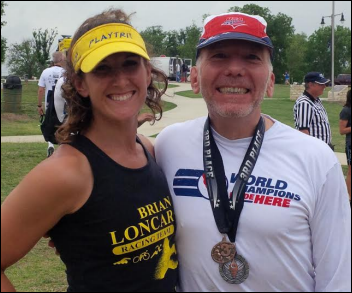
Even though the first part of the shift was fairly busy (5-6 patients per physician per hour), the pace didn’t seem extreme. I think mostly it felt like I was able to focus on the patient’s current needs and not feel expected to address unrelated issues just because someone made a regulation that said I needed to.

Once the provider is finished, the nursing staff then takes the discharge instructions and scripts, goes back in the exam room, counsels the patient, and addresses follow-up needs. Then the patient gets to go home. Their plan may not have all their medications printed on it nor their list of historical diagnoses, recent vitals, or a host of other things, but it does have the information they need to care for today’s problem and to follow up with their primary care physician.

Up to this point, I’ve focused on the things that made today easy. Let’s talk about what made it difficult.
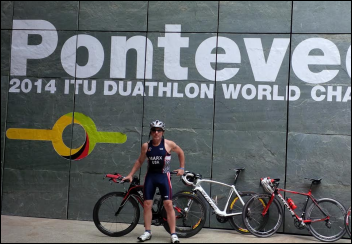
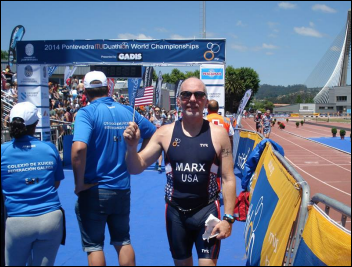
The first thing that jumped out at me was the fact that there is no drug or allergy checking when we write prescriptions. Although physicians have used paper scripts for years and there are plenty of people who argue that we were better on paper, I can’t help but think that I’m going to harm someone because I don’t have technology backing me up.

I calculated most of my weight-based pediatric prescriptions two or three times because I didn’t trust myself. I had one pharmacy call-back for prescribing a drug that might have had a mild to moderate interaction with a patient’s current medication. I know it would have flagged in an electronic prescribing system, but I’m wondering if there is a chicken vs. egg phenomenon going on. Did I miss the interaction because my vigilance was weakened by my reliance on technology? Or would I have missed it anyway?

I ended up customizing 80 percent of the patient education materials to include additional precautions or information that I like to provide for my patients. Most EHR systems would allow some level of saved customization. but our discharge system doesn’t. I’ll likely create a text document of common phrases that I can use to populate them in the future and just keep it open on my desktop.

Unlike some chain or pharmacy-related urgent cares, we don’t have an easy way to send information back to the primary care physician. It’s something that definitely merits discussion with my new employer.

Looking at the workflow with a critical eye, there were other inefficiencies. Staff had to transcribe lab data to the chart that might have been interfaced with an EHR. Patient education topics had to be searched manually rather than linked from diagnoses. These inefficiencies were virtually unnoticed, though.

Having done more than one stint as a science fair judge, I can’t say this was a valid experiment of any kind. Comparing this practice (regardless of whether it uses paper or EHR) to any other place I’ve practiced in the last several years would be like comparing apples to unicorns.

One major difference is the ability to focus on the patient’s presenting problem rather than extraneous but required information. Another is the encouragement to rely on support staff for tasks like order entry and diagnosis code lookup. It’s been so long since I was just able to articulate a diagnosis without codifying it that I didn’t know what to do with myself.

Whether it was due to the workflow process, the patient acuity mix, or other factors, I noticed one thing. Even after 12 hours of non-stop work, I felt like I had spent more of my day being an actual physician than in doing other tasks. We’ll have to see if I still feel this way in six months, but right now I’m cautiously optimistic. I’m still going to lobby for e-prescribing, though.

Have a story about going back to the basics? Email me.

Email Dr. Jayne.

Readers Write: Six Ways to Capitalize on the ICD-10 Delay

June 9, 2014 Readers Write Comments Off on Readers Write: Six Ways to Capitalize on the ICD-10 Delay

Six Ways to Capitalize on the ICD-10 Delay
By Dan Stewart

image

Most of the healthcare industry was taken by surprise when President Obama signed legislation that delayed the deadline to implement ICD-10 by at least a year. Now that there has been time to digest the new compliance date of October 1, 2015, healthcare providers may benefit by considering a more strategic approach for their transition to ICD-10.

Prior to the extension, many healthcare providers put in patches to meet the previous and quickly approaching October 1, 2014 compliance date. Process improvements and documentation training were put into high gear to meet the deadline, and in many cases, lacked strategic planning. With the additional time, providers can revisit their approach to implementation and potentially take advantage of other initiatives that directly impact the way their organization is evolving.

Here are six strategies to take advantage of the delay to be better positioned for post-transition success.

1. Increase clinical documentation and education

Providers now have an additional year to train their workforce. Nurses, physicians, coders, and even members of the C-suite need to understand the benefits for greater specificity in clinical documentation and how it applies to their role. Customized simulation training that addresses the specific educational needs of clinician groups can simplify the learning process and speed adoption. For example, customized simulation training can allow caregivers to practice documenting care in ICD-10 through their actual EHR application, which is critically important for learning workflow and gaining new knowledge about the system.

Any time and money invested in efforts like simulation training will be financially beneficial in ICD-9 and will also provide a smoother transition to ICD-10 with reduced risk of reimbursement issues. In addition, by continuing to engage staff with training, organizations can avoid losing the focus and interest that was created by the momentum leading up to the previous deadline.

2. Evaluate and improve the revenue cycle

Providers now have time to improve charge capture and billing and claims processing. Doing so will help to identify potential lost revenue and charge issues before claims are submitted and will improve compliance in anticipation of new denials and other post-transition challenges. Improved charge capture will also create a safety net to assist in identifying any potential ICD-10 process issues.

3. Implement computer-assisted coding (CAC) systems

Many hospitals have invested in CAC systems to aid coders in digesting physician documentation and determining which of the staggering 141,000 possible codes under ICD-10 is appropriate for each diagnosis and procedure. Now is the time to support the implementation of CAC and focus on coder workflow to optimize the benefits. Remote coding programs should also be evaluated. Incorporating tools like these not only reduces post-transition risk but also assists in the recruitment and retention of coders, which are in significantly increasing demand.

4. Begin dual coding

It is a reality that hospitals will need additional coders during the transition from ICD-9 to ICD-10. The extra time resulting from the delay creates an opportunity to begin dual coding sooner, providing physicians and coders additional practice before the compliance date. Prior to the transition, CAC systems can assist in the dual coding process by providing an automated crosswalk back to ICD-9 codes for submissions to payers, clearinghouses, and other third parties. The increased accuracy and efficiency of documentation and coding optimizes the post-transition period, mitigating the risk of compliance and reimbursement issues.

5. Analyze the financial impact

Hospitals should take the time to perform an in-depth financial impact analysis to determine the highest-impact codes on reimbursement to provide focus on operational remediation and training. Such analysis will additionally assist in identifying the reserves that will potentially be needed to get through post-compliance stabilization.

6. Expand the implementation plan

The ICD-10 extension presents an opportunity to strategically link its transition with other initiatives like Meaningful Use, Patient-Centered Medical Home (PCMH), and Accountable Care. Combining plans to adopt all of these programs can help ensure they each work together as efficiently as possible.

Miami Children’s Hospital, for example, is working to deploy a revenue cycle management system in addition to working toward ICD-10 compliance. Now that there is less immediate pressure to have physicians trained as soon as possible on ICD-10, their training can occur after the new system modules are implemented to better reflect the healthcare provider’s specific system and workflow. Implementing both of these programs in tandem saves time and money and strengthens the success of each.


While it would be easy for healthcare providers to decide to pause their efforts to become ICD-10 compliant as a result of the recent delay, it would benefit them much more to view the extra time as an opportunity to take a more strategic approach. Continuing the process will position the provider for a more successful, efficient transition to ICD-10. 

Dan Stewart is vice president and partner of strategic consulting and advisory services with Xerox.

Monday Morning Update 6/9/14

June 8, 2014 News 6 Comments

Top News

image

The Senate confirms Sylvia Burwell as secretary of HHS in a remarkably non-contentious process. Reports suggest that she will be sworn in and take office Monday.


Reader Comments

image

From Hallway: “Re: mapping applications. I saw your mention of Esri just after participating in a Google+ Hangout on Google Maps. One of the presenters was the CEO of Jibestream, which gives a hospital example.” Geographic tools will get a lot play because of consumerism and population health as health systems seek to understand their patients and target market better, move their health-related work into community social services, and  plan their locations and resource deployment. Tying databases to physical locations will become even more important with hospitals taking on risk-sharing arrangements and expanding to cover wider geographic areas. My advice to population health technology vendors and data geeks – get some exposure to geographic information systems now. The screen shot above is from another GIS mapping software vendor, Caliper’s Maptitude, which can be purchased online for $695 (I’m not recommending it since I don’t know anything about it – I just Googled and there it was.)

image

From The PACS Designer: “Re: Apple introduces new programming language Swift. It’s a variation of C intended to make it easier to create software solutions. Healthcare could use Swift to provide better access to siloed data and to sync consumer apps from iTunes.” It’s likely to be better and more programmer-friendly than its predecessor (Objective-C) but only if you don’t mind ignoring the majority of the world’s smartphone users who don’t use Apple devices. The non-fanboy market will decide if it really needs yet another programming language, especially a proprietary one. I would expect that for apps that don’t require a lot of hardware-intensive resources (anything but games, probably) HTML5 would work just fine and it runs on everything.

image

From Korn: “Re: Apple’s Health and Epic. Will it be as important as the hype suggests?” I doubt it. Apple probably hasn’t dug deep enough into healthcare to realize all of the potential issues as they (as one closed system) try to make something with universal consumer access to data from Epic (another closed system) and not run afoul of HIPAA issues. It’s great that a company the size of Apple is at least thinking about healthcare, but I think they are a lot more interested in consumer health monitoring since that might sell more Apple hardware in a way that I doubt hospital information would do. Surely Apple remembers Google and Microsoft stumbling in trying to turn personal health records into a business that consumers didn’t want. Think about it from your perspective: would anything from Epic be amazing just because you could do something new with it on an iPhone? I think the relationship is more in the other direction – Epic can take in information from Health, but that doesn’t really seem to benefit Apple very much. 

image

Meanwhile, the Australian free practice management systems vendor HealthKit was less than delighted to hear about the surprise use of its name by Apple, with one of its executives saying, “I’d like to think that [Apple] forgot to spend five seconds and type www.healthkit.com into their browser. But other people have said that possibly they did, and thought that we were just a startup and they could really just squash us.” In Apple’s defense, its product is called simply Health and only the development framework is called HealthKit. I’m sure Apple’s IP team did due diligence and saw no potential for confusion. I don’t think any names exist that someone hasn’t already locked down, which is why companies just make up words.

From Job Seeker: “Re: senior executive jobs in healthcare IT. Any idea what percentage are filled via retained search firm?” I don’t know, although I assume it’s different for provider CIO positions vs. vendor executive hires. Reader insight is welcome as long as it doesn’t contain a plug for a search firm.


From Arthur’s Sword: “Re: ONC’s new leadership. I wonder how many of the newly named folks have walked the walk and worked for a vendor or practice using an EMR? They are making important decisions for everyday physicians.” I found these backgrounds, but I will first say that I might question your premise of whether the folks in these positions really need current EHR exposure to do their jobs. Being an effective leader is more about listening than applying personal experience that might be dated or unrepresentative. It’s also not reasonable given the demands of these jobs to expect ONC’s people to deliver patient care or work with technology directly – they already work a lot of hours (for relatively low pay) and they solicit field input via committees, work groups, and the public comment process . My guess is that the “voice of the user” is represented behind closed doors when necessary by Reider and Murphy, who have the credibility to represent both the ambulatory and hospital providers, respectively. I would also question whether ONC will retain the influence you mention now that its money trough has mostly been lapped dry and providers rightfully start thinking about whether the dangling taxpayer cash is worth the hoop-jumping.

image

Kelly Cronin, healthcare reform coordinator.  Healthcare consulting, mostly government-related.

image

Jodi Daniel, policy. Lawyer and government.

image

Karen DeSalvo, national coordinator. Physician. Education, government. Her bio isn’t clear on when she last practiced medicine.

image

Doug Fridsma, chief science officer. Physician with clinical experience.

image

Lisa Lewis, deputy national coordinator for operations. Running federal grants programs.

image

Kim Lynch, programs. Government and REC.

image

Judy Murphy, deputy national coordinator for programs and policy. Nurse with extensive and recent hospital EHR leadership experience.

image

Seth Pazinski, planning, evaluation, and analysis. Government.

image

Joy Pritts, chief privacy officer. Lawyer and professor.

image

Jacob Reider, deputy national coordinator. Physician. Vendor and provider EHR experience.

image

Nora Super, public affairs. Government relations.

image

Steve Posnack, standards and technology. Government.

Speaking of ONC and HITECH, here’s what I said about it back in April 2009 (HITECH was approved in February 2009):

Healthcare is getting a lot of government money. Surely the feds wouldn’t start telling us how to run our shop, right? I wouldn’t count on it. We might be selling our souls here … Everybody’s clinking their glasses and high-fiving over the gravy train headed healthcare IT’s way. Fear the person from the government who’s here to help: there may be a hidden price. It’s clear that CCHIT (or something like it) will enjoy unprecedented power to set mandatory product requirements. “Effective use” will do the same for providers, spelling out exactly how they must use their technology. As Uncle Sam becomes an even more dominant buyer of healthcare services, the ratchet may be turned on reducing costs and following somebody’s medical cookbook … is the real agenda to use government clout to finally whip private industry around a little, making businesses behave in some unspecified way that runs contrary to the free market?


HIStalk Announcements and Requests

image

Poll respondents were mixed on whether Meditech’s competitive position is changing. New poll to your right: which events will you attend in the next year?

Thanks to the following sponsors, new and renewing, that recently supported HIStalk, HIStalk Practice, and HIStalk Connect. Click a logo for more information

image
image
image
image
image
image

image

Lorre reports that she visited athenahealth’s Watertown headquarters in Boston last week, enjoying a social event, a campus tour, and a briefing from Jonathan Bush, who then autographed a copy of his new book for her. 


Upcoming Webinars

June 11 (Wednesday) 1:00 p.m. ET.  A Health Catalyst Overview: An Introduction to Healthcare Datawarehousing and Analytics. Sponsored by Health Catalyst. Presenters: Eric Just, VP of technology; Mike Doyle, VP of sales; Health Catalyst. This short, non-salesy Health Catalyst overview is for people who want to know more about the company and what we do, with plenty of time for questions afterward. Eric and Mike will provide an easy-to-understand discussion regarding the key analytic principles of adaptive data architecture. They will explain the importance of creating a data-driven culture with the right key performance indicators and organizing permanent cross-functional teams who can measure, make and sustain long-term improvements.

June 24 (Tuesday) 2:00 p.m. ET. Share the Road: Driving EHR Contracts to Good Compromises. Sponsored by HIStalk. Presenter: Steve Blumenthal, business and corporate law attorney, Bone McAllester Norton PLLC of Nashville, TN. We think of EHR contracts like buying a car. The metaphor has is shortcomings, but at least make sure your contract isn’t equivalent to buying four wheels, an engine, and a frame that don’t work together. Steve will describe key EHR contract provisions in plain English from the viewpoint of both the vendor and customer.


Acquisitions, Funding, Business, and Stock

image

Allscripts opens its European headquarters in Manchester, England, expecting to hire up to 100 people in the next three years.


People

image

Mary Carroll Ford (MBC XPERT LLC) joins WeiserMazars as a principal in the company’s healthcare group.

image

3M Health Information Systems promotes JaeLynn Williams to president.

image image

Andis Robeznieks at Modern Healthcare points out that the incoming president of the American Medical Association as of June 2014 is a healthcare IT guy (Robert Wah of CSC, who has been an associate CIO and ONC’s deputy national coordinator) and so is the next president who will take office in June 2015, Steven Stack (long-standing chair of AMA’s health IT group).


Announcements and Implementations

image

E-MDs is named as Austin’s top biomedical R&D employer by the local business newspaper, with 200 local employees.

image

The local paper covers the use of InteHealth’s patient portal at Raritan Bay Medical Center (NJ).


Government and Politics

More signs that the VA’s VistA baby will be thrown out with the agency’s dirty bath water:  the President says publicly that the VA needs a new information system. Evidence is ample that that the real problem was that VistA’s scheduling system was accurate and transparent, and due to the VA’s resource and management challenges, that created a reason for users to avoid using it. In other words, the system gets thrown out because it was doing exactly what it was supposed to do. The political heat will require taking decisive action quickly, which probably means the VA will be pushed in the same direction DoD is heading, which nearly ensures that Epic (under a fat cat contractor) will get the deal.

image

The good news for insurance companies is that HHS now allows them to run their connections to Healthcare.gov on Amazon Web Services, the cloud-based hosting solution used in all industries. The bad news is that most of those companies had already purchased their own servers since HHS rejected their request to use cloud-based hosting just six months ago.

image

Cleveland Clinic President and CEO Toby Cosgrove withdraws as a candidate for VA secretary. It probably wasn’t that hard of a decision given a massive pay cut (from a couple of million per year from the Clinic plus his highly profitable cozy vendor ties), never-ending political headaches, and moving from a highly regarded organization to one whose luster has been tarnished somewhat unfairly. Who would you choose? I might go with Paul Levy, who underwent his own form of tarnish, although I don’t know if he has any military experience and that would be nearly mandatory. @Farzad_MD has a good suggestion: HCA Chief Medical Officer Jonathan Perlin, MD, PhD, who was previously the VA’s Under Secretary for Health and then CEO of the Veterans Health Administration. A mid-sized health system CEO can make $1 million or more, so it’s tough to find someone who is highly credentialed, willing to take on massive federal bureaucracy, and move to Washington DC on a salary of maybe $200K.


Innovation and Research

image

Todd Park just announced OpenFDA at Health Datapalooza, but Social Health Insights already has created a query tool built over FDA’s adverse event reports database.


Other

image

A hospital in Israel implants a “connected” pacemaker that transmits cardiac condition information over the cellular network as low-bandwidth text messages.

New Google+ Hangout interview videos from John Lynn include John Squire (Amazing Charts), Mac McMillan (CynergisTek), Vishal Gandhi (ClinicSpectrum), Alan Portela (AirStrip), and Daniel Cane and Michael Sherling (Modernizing Medicine).

A patient sues University of Cincinnati Medical Center (OH) when her syphilis diagnosis and her medical bill is posted to a member-only Facebook group called “Team No Hoes.” The woman refused to tell her former boyfriend why she was being treated at the hospital, so he asked another girlfriend who worked in the hospital’s billing department, who looked it up in the EMR. The patient’s name and diagnosis was then posted to a Facebook page devoted to identifying supposedly promiscuous women. The hospital is named in the lawsuit along with the billing employee it fired over the incident.

12-12-2013 8-47-43 PM

Moody’s downgrades the bonds of Lifespan (RI) to near-speculative (junk) status, listing as its challenges shrinking margins, high area unemployment leading to bad debt, an underfunded pension plan, heavy employee unionization, and high IT costs. Moody’s says it will upgrade its ratings when Lifespan completes its Epic implementation and shows improved metrics. The system announced its choice of Epic in March 2013, saying the project would cost $90 million.

Here’s a brilliantly fun video from medical school students at University of Chicago. A bit of sleuthing finds that the talented medical student star is Beanie Meadow, who has appeared in several similar videos. 

Weird News Andy calls this “unencrypted notepad.” The information of 400 Connecticut health insurance exchange enrollees is exposed when someone finds a backpack containing their manual paperwork on a Hartford street. Access Health CT thinks the backpack was lost by an employee of its contractor Maximus, which provides call center services. Officials suggest that the contractor’s employee may have been stealing information.


Contacts

Mr. H, Inga, Dr. Jayne, Dr. Gregg, Lt. Dan, Dr. Travis, Lorre.

More news: HIStalk Practice, HIStalk Connect

Get HIStalk updates.
Contact us online.

125x125_2nd_Circle

News 6/4/14

June 3, 2014 News 13 Comments

Top News

image

Apple announces (but does not demonstrate) HealthKit at its developers’ conference, which will combine and present information from healthcare apps and wearables. It will be part of iOS 8. Apple said in the announcement that it’s been working with Mayo Clinic, which will connect to the Health app within HealthKit, and also Epic, which has integrated HealthKit information into MyChart.   


Reader Comments

From Carol R: “Re: Dana Moore interview on Epic at Centura. One point I thought would have made the article more real and interesting was if Dana had discussed the journey from Epic to Meditech and then back to Epic. Centura decommissioned Epic in 2006 when it was replaced by Meditech. That was a directive from the board and Dana for cost containment overall and possibly other reasons as he stated in his review. Kelsey-Seybold Clinic in Houston also moved off and then back to Epic. I think there is a lot to learn from other organizations on a big decision over time such as the purchase of Epic. Why not share this knowledge in case there are other organizations struggling to figure this out?” I’m happy to run any information anyone would like to provide. It’s an interesting topic. 

From Lyle: “Re: Epic. See the first comment after this article. I was subject to this during my time at Epic.” An anonymous comment to a post on the “Life After Epic” blog claims that Judy Faulkner “exhorted managers to be capricious. Her idea was that you keep people at peak productivity by making sure they never know, exactly, where the goal post is. Independently-minded malcontents won’t stand for it and will leave; but people eager to please — people who need to please — will just keep trying. So you can essentially keep pulling 125 percent out of them indefinitely by being an ass and constantly moving the marker of what they need to do or how they need to do it.” As an example, the commenter claims that Judy told team leaders to randomly deny employee vacation requests just to keep them guessing. The commenter also opines that “the software is basically an undocumented rat’s nest of bailing wire and duct tape that it works because Judy has an unlimited supply of college kids graduating in a crap economy to throw at it.”


HIStalk Announcements and Requests

image

Congratulations to HIStalk friend Barry Wightman of Forward Health Group, whose novel Pepperland (which I enjoyed immensely) just won a regional fiction award. Barry is just about the coolest guy I know.

I’m a bit stretched on time since I’m at Health Datapalooza, so I’ll keep it short this time and catch up by the weekend.


Upcoming Webinars

June 11 (Wednesday) 1:00 p.m. ET.  Building a Data Warehouse and Analytics Strategy from the Ground Up. Sponsored by Health Catalyst. Presenters: Eric Just, VP of technology; Mike Doyle, VP of sales; Health Catalyst. This easy-to-understand discussion covers the key analytic principles of an adaptive data architecture including data aggregation, normalization, security, and governance. The presenters will discuss implementation tactics (team creation, roles, and reporting), creating a data-driven culture, and organizing permanent cross-functional teams that can create and measure long-term improvements.


Acquisitions, Funding, Business, and Stock

image

Outpatient specialty documentation system vendor Net Health acquires The Rehab Documentation Company.

image

McKesson sells its European technology product line, which includes its System C hospital offerings acquired in 2011, to private equity firm Symphony Technology Group.


Sales

Orthopaedic Associates of Southern Delaware (DE) chooses SRS PM/EHR.


People

image

Healthgrades names Jeff Surges (Merge Healthcare) to the newly created role of president.


Announcements and Implementations

Boston Software announces GA of Boston WorkStation Version 10, its workflow automation technology.

Kareo releases a social media and reputation management guide for practices that have limited resources to develop an online presence.

NextGen Healthcare claims it has achieved “vendor agnostic interoperability” because one of its client practices has exchanged C-CDA Summary of Care messages with Tucson Medical Center’s Epic system using the Surescripts network.


Government and Politics

The federal Bureau of Prisons issues an RFI for an EHR to replace the system it has used since 2006.

The Wall Street Journal reports that the White House is considering Cleveland Clinic CEO Toby Cosgrove, MD as the next VA secretary.

image

Edith Dees, CIO of Holy Spirit Hospital (PA), says the hospital is trying hard to meet Meaningful Use Stage 2 requirements but is struggling with issues outside of its control, including one vendor’s requirement that its system run on an OS version the hospital doesn’t support, an HIE vendor whose product doesn’t meet Direct Project security standards, EHR vendors that require buying additional products such as patient portals and add-ons, and delayed and buggy vendor MU releases.  


Other

NPR covers Health Datapalooza, which it calls “an awkward adolescence” in which “2,000 people [are] shrieking with excitement over federal healthcare databases,” cautioning that all of those cool apps that people are developing trying to make a buck are largely unproven works in progress.

University of Arizona Health Network (AZ) has lost $28.5 million so far this fiscal year ending June 30, which it says is due to $32 million in unplanned training and support costs for its $115 million Epic implementation.

image

A ProPublica series on national prescribing irregularities wins the Health Data Liberators Award at Health Datapalooza.

The 12th International Congress on Nursing Informatics will be held June 21-25, 2014 in Taipei, Taiwan.

Weird News Andy titles this article “Daft Graft Graft,” adding that “he had skin in the game.” A Pennsylvania man is arrested for stealing skin grafts worth $350,000 from Mercy Philadelphia Hospital over two years.


Contacts

Mr. H, Inga, Dr. Jayne, Dr. Gregg, Lt. Dan, Dr. Travis, Lorre.

More news: HIStalk Practice, HIStalk Connect

Get HIStalk updates.
Contact us online.

125x125_2nd_Circle

From Health Datapalooza 6/2/14

June 3, 2014 News 5 Comments

This is the first time I’ve attended Health Datapalooza. I thought from the name, location, and people involved that it would be entirely about government-released datasets and how companies are using them. Those topics were certainly covered, but many of the presentations and exhibitors had nothing at all to do with publicly available data or the government. Instead, Health Datapalooza is a seemingly random conglomeration of startups, consumer health, wellness, new payment models, chain drug stores, and just about anything else that bears (deservedly or not) the “innovative” label.

In that way, Health Datapalooza is identical to the mHealth Summit, held in December on the other side of the Potomac in National Harbor, MD. Health Datapalooza is mostly not about data and the mHealth Summit is mostly not about mobile. In fact, my first thought was that they should just combine the two conferences because they seem equally unfocused, like the HIMSS conference minus the hospital and ambulatory systems vendors, with skinny jean hipsters and Glass-wearing nerds intermingling uncomfortably with the stiff suits from insurance companies, federal agencies, and investment firms, all trying to figure out what they have in common other than patients and consumers.

I assume that most of the 2,000 Health Datapalooza attendees aren’t paying their own travel or registration costs. I tried to figure out the kinds of employers that would get their money’s worth sending their people, but I wasn’t coming up with much. I’ve seen many of the same faces you see at seemingly every conference held, the folks whose entire jobs seem to be tweeting and socializing from one conference to the next at their employer’s expense, but I don’t have a good feel for the demographic otherwise.

image

The event was held at the Washington Marriott Wardman Park in northwest DC. I didn’t stay there since I’m cheap: the special rate was still $224 per night and of course being a conference hotel everything costs extra – Internet access, breakfast, and the $46 per night parking charge. It looks great on the outside, but I wasn’t impressed with its 3.5 Tripadvisor stars, so instead I booked an $80, 4.5 star hotel in Alexandria (not far from Old Town) with free Internet, parking, breakfast, and shuttle to and from the Metro station. It took maybe 40 minutes to ride up the Yellow Line and switch to the Red Line to the Woodley Park Metro station, which is just a few hundred feet from the Marriott.

image

image

image

Monday’s keynote lineup was impressive: Elliot Fisher, MD, MPH (Dartmouth), Karen Ignagni (America’s Health Insurance Plans), Todd Park (US CTO), Jeremy Hunt (UK Secretary of State for Health), Jonathan Bush (athenahealth, unless you believe the conference agenda that says he’s the CEO of “aetnahealth), and Atul Gawande, MD, MPH (Brigham and Woman’s). Fisher had some strong opinions backed by data about the not-so-great state of US healthcare. Ignagni had some mildly interesting observations about insurers. Park was, as always, bursting with energy and enthusiasm about the “data liberators” and announced openFDA, which will give researchers API access to the FDA’s databases. Hunt was as charismatic and visionary as you would expect a politician to be and spoke eloquently about hospital errors and transparency. Bush was his usual shot-from-a-cannon rollercoaster of irreverent observations and insight. Gawande talked about the healthcare system and the use of data for quality improvement and also to target specific patients for interventions to improve their health and reduce their resource consumption.

It was a nice bonus that the conference provided lunch in the exhibit hall, with the only challenge being to find a table on which to eat it. The exhibit hall was manageable, with a few dozen exhibitors representing a wide variety of company types. I intentionally didn’t register as press since I wanted the same experience as everybody else.

image

I was admiring a book on geographic information systems at the Esri exhibit and they gave me a copy, which even included the mapping software DVD. It’s a really cool tutorial on the tools to apply geographic and mapping functions to databases. It would be a fun skill to learn for people who love tinkering with Access or data analysis tools.

image

This company’s booth was staffed by three reps, none of whom were coming up for air from poking at their phones while facing each other to form a protective circle against potential intruders.

image

Healthspek offers a free PHR, of which I’m skeptical, but it was a great-looking app, does some interesting merging of CCD data, has a provider view, and offers an emergency card that gives providers online access to the patient’s information in an emergency.

image

Validic had a nicely done graphical handout that described exactly what it offers, a digital health platform that connects medical devices, health apps, and wearables to the systems of hospitals, population management companies, pharma, and payers.

Some of the other booths I visited were:

  • Privacy Analytics, which provides data anonymization services.
  • AnalytixDS. The company’s Mapping Manager is a pre-ETL data mapping tool that caught my eye.
  • Arcadia Healthcare Solutions, who gave me an overview of EHR services and data analytics solutions.
  • Verisk Health. The company got a great off-the-cuff plug from Atul Gawande’s keynote in which he mentioned using their analytics tools to identify patients who were otherwise falling through the cracks and not receiving treatments and interventions they needed. His example was a blind diabetic patient who was racking up massive cost because of poor glucose control, which required only one visit to fix: he didn’t realize that he had to turn the insulin vial upside down to draw up his dose, so he was injecting himself with air instead.
  • Healthy Communities Institute. It offers a population health improvement portal for communities. The rep didn’t seem too interested in telling me more, but it looked pretty cool.

Many of the booth reps seemed disengaged, even worse than at the HIMSS conference. Maybe it’s because companies don’t send their A-teams to Health Datapalooza, or that attendees are so diverse that there’s no clear sales opportunity, or maybe they just would rather play around with their phones than anything else. I walked up to several booths and was ignored completely, while others gave me a quick “let me know if you have any questions” before turning away (usually my intended question was “what do you do?” since it was often hard to decipher the buzzwords.) I saw one guy take a delivered pizza to the booth and eat it while the hall was open, while others abandoned their booths entirely or discouraged interaction by gabbing with each other.

I attended a session that was a panel discussion among investment guys (I say “guys” because they were all male and most were from insurance companies.) I didn’t realize how actively insurance companies are investing in healthcare IT now that their previously lucrative insurance profits are drying up. Some interesting points:

  • Consolidation of hospitals and big practices could reduce the number of potential customers to a few hundred nationally.
  • The market has too much noise. There’s no way Castlight Health will be worth as much in 10 years as it is today. Lots of companies are getting investments that haven’t really earned them and most of them will fail.
  • Some of the big investors will put money into startups, especially those involved in consumer engagement, while others focus on later-stage companies that are already making money.
  • Investors are wary of companies whose product adds another platform and instead look for products that fit easily into the ecosystem. “We don’t need any new shiny objects.”
  • Investors won’t touch a healthcare software company whose business model assumes that consumers will pay for something.
  • Up to 90 percent of the investments the panelists are making involve services rather than products businesses, but they have to be convinced that the business can scale and be productized.
  • Investors don’t require a majority take as they often did previously, but they want enough equity to be worth their trouble and to give them some control over the company’s direction.
  • Strategic investors aren’t as interested in steamrolling the founder as they once were – they will take a minority position and let the company grow.
  • Investors have a strong interest in making investments in healthcare IT. Companies shouldn’t be shy about asking for what they really want.

If you are attending Health Datapalooza, leave a comment. What did you hope to accomplish there and how’s it going? Have you seen anything interesting?


Lorre’s Impressions

I was excited about attending Health Datapalooza 2014. HIStalk wasn’t exhibiting, so rather than spending the majority of time in a booth, I was free to participate. I mapped my day out in advance and set out bright and early to make the most of it.

Mr. H and I both attended the keynote events. Bryan Sivak did a great job moderating. He was interesting and energetic and injected relevant comments and some fun to keep people alert.

Todd Park announced the release of OpenFDA and discussed the need for more open data. He finished with a moving tribute to George Thomas, the chief data architect for the HHS Office of the CIO who died recently.

The Right Honourable Jeremy Hunt was passionate while talking about his priorities for improving health and care in the UK. He shared the data to illustrate their success with improving mortality rates to among the best in Europe. He emphasized the need to share electronic health information across borders and collaborate to solve common issues. What I found most interesting is his case for greater accountability and error reporting. Bryan mentioned that someone referred to Hunt as “dreamy” during the conference rehearsal and I would agree.

Atul Gawande, MD, MPH spoke about the importance of insurance coverage for everyone and emphasized it with personal experience. He was passionate in discussing the need to improve safety and performance in surgery, childbirth, and care of the terminally ill.

Jonathan Bush was a whirling dervish when he took the stage to talk about the importance of liberating data and discussing the attributes of organizations that suffer from “Upper Right Quadrant Syndrome” or URQS. He ended with a narration of a YouTube video that demonstrates what can happen when one person takes the lead and perseveres. He may have mentioned his new book, “Where Does It Hurt?” which is number 6 on the New York Times Bestseller List.

Between the keynote speakers, selected vendors gave short presentations on their companies and products. The best one by far was Purple Binder. President Joe Flesh did a fantastic job describing how the application enables people to quickly find available community resources for which they are eligible. The mission of the company impressed me and the application appears to be just as impressive.

I saw several attendees wearing their jackets as part of Regina Holliday’s “The Walking Gallery.” That’s always encouraging to see and the wearers are always eager to tell their patient advocacy stories.

After the keynotes, I went to the exhibit hall. I was eager to check out the booths, especially those of our nine sponsors who were there.

I visited all of the booths in the exhibit hall and introduced myself to the folks at the booths of our nine sponsors that are exhibiting. Only three seemed interested in talking to me about their products and services, so I can describe only what I heard from those.

clip_image002

It is always a pleasure to see our friends from CareSync. Amy and Travis were excited when they told me Amy would be giving a demonstration on the main stage on Tuesday. The person working in their booth was fun and attentive each of the times I stopped by during the day.

clip_image006

The folks manning the Validic booth were highly energized and eager to talk about their platform. As soon as I expressed interest, before they even knew I was with HIStalk, they were connecting me with the marketing manager to explain their product. I was impressed with the visual they use to explain how they take data from multiple sources and convert it to one language the end user can easily manipulate and use. It’s no wonder Gartner recently named them a Cool Vendor.

clip_image008

I especially enjoyed visiting the QlikView booth. The person in their booth was knowledgeable and interesting. He not only showed me how to use the application, he gave me instructions for downloading a free version of it.

The conference has well-managed logistics and the size is comfortable even though its focus is fuzzy. Health Datapalooza’s emphasis on patients is admirable and it’s always nice to reconnect with industry colleagues.

Curbside Consult with Dr. Jayne 6/2/14

June 3, 2014 Dr. Jayne 3 Comments

I haven’t been on a job interview in years, so I didn’t really know what to think when I found myself getting ready for one a few weeks ago. Since giving up traditional practice, I’ve worked in a variety of part-time and locum tenens primary care situations. I’ve also done part-time work in several emergency departments. I’ve worked directly for hospitals and also for staffing companies hired to populate the ED. It really doesn’t matter where my paycheck comes from – patients are patients and we care for them the best we can.

Due to a couple of regional shakeups with ED staffing companies and posturing by competing health systems, I recently found myself without a place to hang my clinical hat. My own hospital has decided that unless you are board certified in emergency medicine, you can no longer cover the ED (unless you’re a midlevel provider — then you’re OK to work as many shifts as you can cover.)

I find it ironic that they’d rather have a nurse practitioner straight out of training then a seasoned physician who happens to be certified in a non-emergency specialty. It’s less ironic, though, when you understand the real reason, which is as it always is, the bottom line.

Anyway, to take any kind of leave of absence is a pain. Unless you have an active practice address, you’re expected to surrender your state controlled substance license. They won’t let you just transfer it to your home or to an administrative office. I know this well because I got caught in the trap before and it took months to untangle. We received a 90-day notice that our contracts would be ending, so the race was on to find new positions.

Unfortunately, there were about a dozen other physicians in the hunt. Most were looking for full-time positions, though, so I had a bit of an edge being willing to work the odd shift here and there rather than needing a primary income.

I also have the edge of being sassy and single, which means I don’t mind working holidays or providing late-night coverage. In fact, I like the late nights. Usually the nursing staff has a better sense of humor and there are definitely great stories that come out of the ED after 11 p.m. As long as it doesn’t interfere with my CMIO duties, I’m up for it.

In a turn of serendipitous events, I was cold-called by a recruiter who was given my name by a friend of a friend. He vetted my profile using LinkedIn and thought I might be a reasonable candidate. A local urgent care was preparing to open a second location and needed additional coverage while they recruit full-time staff. Just my speed: low acuity, reasonable patient volume, not a terrible commute, and fair pay. And so it was that I found myself on my way to a job interview.

I explained my situation to the owner – that I have a full-time job but enjoy seeing patients on the side and am looking for a way to continue doing both. He asked me a lot of questions about being a CMIO. We talked about his PACS and the patient education system.

I became a little suspicious when the questions about standalone e-prescribing systems started, so I finally just asked what system they’re using. He kind of laughed and told me not to worry, the learning curve is about 30 seconds. I wish I could have seen my face when he handed me the clipboard.

I haven’t used paper in what seems like forever. Even during downtime I didn’t do formal paper documentation, but rather took a few notes to document in EHR later. I suppose it’s probably like riding a bike, although I think the combination of computerized PACS and discharge system with paper charting might feel a little strange. Part of me decided I wanted to work there just to see what going back in time would be like. At least they use templated paper forms, so it’s not like I’ll be writing SOAP notes from scratch.

I start in a couple of days, picking up a few hours after work one night to get used to the system while they’re fully staffed with other physicians. I’m most worried about getting to know the staff, figuring out the informal processes that aren’t documented anywhere, and trying not to make rookie mistakes.

I admit I’m a little nervous, though, not to have the backup of prescription error checking and clinical decision support, not to mention the convenience of e-prescribing. I had to dig through my storage area to find the leather prescription pad holder I received as a medical school graduation gift. Maybe to go full circle with the old-school vibe I’ll have to get myself a fountain pen.

Here’s to new adventures and hopefully a slow first shift. I’ll let you know how it goes. The monogrammed white coats have already been delivered, so there’s no turning back. I hope everyone stays well, but if you happen to find yourself at an urgent care with a sassy physician carrying a hot pink clipboard, you might want to do a double take.

Email Dr. Jayne.

Monday Morning Update 6/2/14

May 31, 2014 News 12 Comments

Top News

image

From Anonymous Tipster: “Re: ONC reorganization. Looks like the current leadership is basically staying in place. Flattening of the structure and some folks got big promotions. Rearranging deck chairs on the Titanic?” An internal email to ONC staffers from Karen DeSalvo announces that the following will serve as ONC’s leadership team along with Deputy National Coordinator Jacob Reider, MD:

  • Office of Care Transformation: Kelly Cronin
  • Office of the Chief Privacy Officer: Joy Pritts
  • Office of the Chief Operating Officer: Lisa Lewis
  • Office of the Chief Scientist: Doug Fridsma, MD, PhD
  • Office of Clinical Quality and Safety: Judy Murphy, RN
  • Office of Planning, Evaluation, and Analysis: Seth Pazinski
  • Office of Policy: Jodi Daniel
  • Office of Programs: Kim Lynch
  • Office of Public Affairs and Communications: Nora Super
  • Office of Standards and Technology: Steve Posnack

It’s not uncommon for a new leader of an organization to restructure the org chart, so I don’t read too much into that. I do wonder with provider pushback on the fading Meaningful Use program whether ONC will retain its influence and keep all its people busy. Government agencies never just go away on their own – they always find ways to survive and try to keep their funding. ONC is part of HHS, which is swollen with so much bureaucracy that nobody’s going to notice ONC’s little corner of it, but other than cheerleading for EMRs, RECs, HIEs, and other big ideas whose funding (and thus interest) has expired, what will ONC’s couple of hundred employees work on?


Reader Comments

image

From Anonymous Tipster: “Re: VA. My prediction: The VA and DoD will eventually decide to use a commercial vendor for a combined EHR (with a multi-billion dollar price tag) and Epic will ultimately win the bid. With the forgone conclusion of the Shinseki resignation now a reality, I am wondering if there are any implications for the VistA EHR system used by the VA. While the VA OIG report points to serious problems with the scheduling system, at last year’s summit of the Open Source Electronic Health Record Alliance (OSEHRA), Stephen W. Warren, executive in charge for information and technology at the VA, bragged about the scheduling system. The whistleblower in the case is pointing out some of these technology deficiencies and it seems that VistA could wind up being a tech fall guy for some of the VA’s problem. The VA inspector general has reported that an audit by an outside accounting firm revealed continuing problems protecting mission critical systems. Many of these problems rise from the fact that VA hasn’t instituted security standards on all its servers and systems. Remember back in 2009 when the VA canceled its patient scheduling system — dubbed the Replacement Scheduling Application Development Program — after spending $167 million over eight years and failing to deliver a usable product.” I agree that the VA scandal will blacken VistA’s eye along with the VA’s ability to run big software projects since people are starting to notice the VA’s scheduling history. On the other hand, DoD is a black hole of wasted taxpayer dollars. I think it’s safe to say that giving either agency a bunch of money for software in any form is likely to result in the usual budget overruns, missed dates, internal mismanagement, and a poor ROI when considering veteran/service member outcomes. Epic might be a safer choice, but those ever-present beltway bandits will figure out a way to make it less functional and more expensive. Regard Shinseki, I doubt he had any personal knowledge of the scheduling issues despite ample OIG warnings (which could also be said of the President) but clearly political pressure meant he had to go.

From The PACS Designer: “Re: Windows 8.1 for free. Microsoft has announced that it will offer tablet producers Windows 8.1 with Bing for free to ensure that it’s the platform sold to new customers. With Windows 9 coming next year, they’ll be able to get their next OS on these recently purchased tablets with an upgrade offer.” I would much rather get Android for free than Windows 8.1.


HIStalk Announcements and Requests

image

Respondents were split on whether the Meaningful Use slowdown is good or bad. New poll to your right: how do you see Meditech’s competitive position compared to a year ago?


Announcements and Implementations

image

Jamestown Regional Medical Center (ND) goes live with Epic, spending $1.2 million to replace HMS.


Government and Politics

image

The State of Maryland says it will fund development of a replacement health insurance exchange using $40-50 million in leftover funds and Medicaid funding without tapping into federal money. The state will pay Deloitte to customize Connecticut’s exchange for its use. Maryland fired contractor Noridian Healthcare Solutions in February after the $170 million Maryland Health Connection failed immediately on its October 1 go-live. Some state legislators wonder why it doesn’t just use Healthcare.gov, with one saying, “What still is amazing to me is why they don’t go to the federal exchange, which is free and works. You still have to spend $40 to $50 million. It is still money they are spending on something they don’t have to.”

Oregon Governor John Kitzhaber says the state will sue Oracle, hoping to recover the $134 million it paid the company to develop the failed Cover Oregon health insurance exchange.


Other

UPMC finally admits that that all of its 62,000 employees could be at risk for identity theft rather than the 27,000 it announced in April as unknown hackers breached its payroll system and used IDs to file 800 fraudulent tax returns.

A Kansas urologist who is also the president-elect of the Kansas Medical Society says his practice’s biggest problem is electronic medical records. “Now, we’re basically key-punch operators, transcriptionists having to input the data ourselves.  Voice-recognition software and some of those things help, but it has essentially tripled the time to complete a medical record. How do you accomplish that when we are already working 12 to 14 hours a day?” He says EMRs will shake out within 10 years, but doctors are quitting over them now.

image

Hurley Medical Center (MI) accidentally discloses the Social Security numbers of several employees when someone accidentally attaches an employee worksheet to a mass email about insurance.

Weird News Andy notes that Illinois closed three mental health facilities in 2012, but left behind heavy equipment, a medical specimen, and boxes of paper personnel and medical records.


Sponsor Updates

  • The Advisory Board Company will participate in several events at Health Datapalooza. VP Piper Su will moderate a panel on “Creating Wellness Outside the Clinic.” Jay Nagy, associate principal of corporate strategy, will participate in a panel discussion on “Integration of Patient Generated Data into HCP Clinical Workflow to Achieve Improved Outcomes.” Jonah Czerwinski , managing director of strategic planning, will serve on a panel discussion, “Creating a Sustainable Future for Healthcare.”
  • Validic  will exhibit at Health Datapalooza and will announce new device integration partners.
  • Michael Simon, principal data scientist at Arcadia Healthcare Solutions, provides a recap of eHealth Initiative National Forum on Data and Analytics.

Contacts

Mr. H, Inga, Dr. Jayne, Dr. Gregg, Lt. Dan, Dr. Travis, Lorre.

More news: HIStalk Practice, HIStalk Connect

Get HIStalk updates.
Contact us online.

125x125_2nd_Circle

HIStalk Interviews Norbert Fischl, CEO, CompuGroup Medical US

May 31, 2014 Interviews 6 Comments

Norbert Fischl is CEO of CompuGroup Medical US and SVP North America of CompuGroup Medical of Koblenz, Germany.

image

Tell me about yourself and the company.

Globally, CompuGroup Medical or CGM is amongst the top five to top 10 healthcare software providers. We have offices in 19 countries, customers in 43 countries, and more than 4,000 employees. 2014 revenue guidance is about $700-$712 million US and EBIDTA approximately $137-$150 million. 

We have the largest physician customer base worldwide. It’s a one-stop shop solutions and services offering. We serve small and large physician practices and huge hospital installations. One of our customers is Karolinska University Hospital in Stockholm,  which nominates the Nobel Prize candidate medicine or physiology, with over 30,000 concurrent users. Beyond that, we also offer solutions for pharmacy, lab, dentists, patients, and many more.

We entered the US market with three acquisitions in 2009-2011. We are ranked the #16 EMR provider in the US with about $50 million in revenue and 300 employees in six main offices.

We have three divisions. The ambulatory information systems, with our standalone and integrated EHR/PM systems. We have our EDI division, with our own integrated clearinghouse and reimbursement services. We also have a lab division, with a 30 percent market share in the physician office laboratory segment.

I call my vision 10-5-5-10. I want to be among the top 10 healthcare software providers in the US within the next five years, and in the top five software providers within the next 10 years. We here for the long run as an owner-led and publicly traded company as the reliable, trusted partner for our customers.

Being an entrepreneur and working in software is what I love to do. With CompuGroup Medical from 2011 until the end April 2013, I led our Northern European region with around 450 employees. Since May of last year, I’m honored to be responsible for our North American business, with the main focus on United States.


How do you see the US EHR market evolving?

There are still many doctors without EHRs. Of those, the question is, will they ever have one? We have Meaningful Use and adoption rates are still increasing, but they’re slowing down. Any market segment in any industry is characterized by incremental innovation and ultimately competing for replacement business.

What is interesting in the US is that switching rate of doctors to new software and to new software vendors is much higher than in most other countries in the world, especially on the EHR side. In Europe, for example, churn rate is more like one to two percent range. In the US, these rates are more around 15 to 20 percent. 

This means that in the EHR market and in the healthcare software market overall, there are enormous market opportunities for software vendors that understand their target groups and do their homework in terms of providing solid software solutions, a good amount of innovation, and excellence in service. CGM is delivering on those.


How will the market change if providers don’t stick around for Meaningful Use Stage 2?

Meaningful Use was supposed to improve quality by producing more fact-based measurement. Some doctors are more receptive to this than others. The money provides incentive for adopting EHRs, but that’s more appealing to some specialties than others. We see doctors who don’t give a lot of focus on the Meaningful Use topic, while others do.

Ultimately it’s the decision of the doctors themselves. I don’t think it will have a major impact on the development of the market.


How will you get a foothold in the US market?

Our US software solutions are solid and our services are of good quality and local. We will continue to invest in both product and service innovation. For example, by hiring the right talent into our service function.

Having said that, the main focus is on growing our business by continuing our path of operations excellence combined with continuous innovation. 

Operations excellence means, for example, the scaling of our direct sales force, which we’ve started to rebuild last summer. It also means that we will further improve on our service delivery and customer support. I want to be among the top 10 software providers in the next five years. I want to be best in class. We have made big progress there, but I still see big upside potential.

The US is a great market to be in. It is admittedly a highly competitive and geographically huge market. However, if you look at CompuGroup Medical’s history over the past 25 years, we penetrated all countries though acquisitions and we know how to do it successfully. We know that with the size of the US, it needs longer breadth and we have that. 

Excellence in the software business is how you take care of your customer and how close you are to your customer. The progress we made with our US business proves us right. Customers are returning from other competitors. We have won new customers in all product lines. 

It’s really doing the ground work and doing our homework. It’s not about spending millions of dollars to boost your brand recognition. Money can’t buy everything.

CompuGroup Medical stands for sustainability and long breadth. Feedback on our progress is greatly encouraging.


Do you have any final thoughts?

I would like to take the opportunity to say to our customers and to everyone else that we are back. I would like to thank everyone, our customers especially, for their loyalty and let them know that this is just the start. We are passionate about what we do, we are available 24/7, and we are here for the long run.

News 5/30/14

May 29, 2014 News 5 Comments

Top News

image

An interimVA OIG report on patient wait times at the Phoenix VA verifies the whistleblower’s claim that employees were hiding patient scheduling delays. They bypassed the electronic wait list application and instead sent screen shots of the appointment request directly to the outpatient treatment area, which was then responsible for entering them into the system but often ran weeks or months behind. The improved wait times allowed leaders to collect bonuses. OIG investigators added that inappropriate scheduling is a national problem, with schedulers gaming the electronic system in a variety of ways to show short appointment waits. They also noted that audit controls for the Phoenix VA’s VistA system were turned off. There’s no way VA Secretary Eric Shinseki keeps his job past the middle of next week given that he’s like Moses parting the Red Sea as politicians and bureaucrats of both parties put whatever distance they can between themselves and him as the lightning rod for public outrage.


Reader Comments

image

From The Product: “Re: Covisint. Lays off over 100, about 25 percent of the newly IPO’d company. Healthcare was rumored to have taken a huge hit, especially in analytics. The new CEO came in with the promise to streamline and cut he did.” Unverified. The new CEO said in the earnings call last week (revenue down 5 percent, EPS –$0.27 vs. –$0.10) that he is disappointed in the company’s performance and plans to cut costs and change leadership.


HIStalk Announcements and Requests

image

The latest in the long list of things I hate about Gmail is that its overactive spam filter can’t be customized or turned off. A reader said they sent me several emails that I finally found in Gmail’s spam folder (or label or whatever Gmail calls it) even though they bore no resemblance whatsoever to spam. I created the above filter since I would rather manually delete 50 spam messages than lose one important one.

This week on HIStalk Practice:  An MGMA physician survey finds that both physicians and patients are frustrated with the impact of ACA insurance exchanges. Atlantic City casino workers take healthcare matters into their own hands. Seema Rao, MD offers six tips on how to prepare for Meaningful Use. Healthcare actually fares worse than retail when it comes to security performance. Thanks for reading.

This week on HIStalk Connect:  Dr. Travis covers Mary Meeker’s annual Internet Trends presentation, which touches on all things technology, and now includes a section on the convergence of technology and healthcare. The CEO of 23andMe discusses the future of personal genetics testing after the FDA shuts down sales of its healthcare-focused genetic testing product. Aver Informatics closes an $8.5 million Series A round to continue development on its "episode-based" financial analytics platform. 

Listening: Swedish indie pop from Lykke Li. If you like (or Lykke) her, you’ll probably enjoy Bat for Lashes.


Acquisitions, Funding, Business, and Stock

image

Quality Systems (NextGen) reports Q4 results: revenue up 4 percent, EPS $0.12 vs. $0.24., missing earnings estimates. From the earnings call, the acquisition of Mirth integration engine was important as the company tries to repackage its EHR offerings into a clinical data repository that has population health management potential. Sales of inpatient core clinicals and financials aren’t doing so well, apparently. QSII shares dropped 4 percent on Thursday after the pre-market open announcement. Above is the one-year share price chart of QSII (blue) vs. the Nasdaq (red).


Sales

Kimball Health Services (NE) chooses the RazorInsights One clinical and financial system.

image

Miami Children’s Hospital (FL) will implement Xerox’s ICD-10 Complete.

In England, Viapath signs a seven-year, $18 million contract to implement the Cerner PathNet anatomic pathology system at Guy’s and St. Thomas’s Hospital.

Colorado Regional Health Information Organization selects Sandlot Solutions to extend its interoperability capabilities.

Allina Health (MN) chooses Omnicell for medication automation.

image

Intermountain Healthcare will use genomics-driven cancer care software from Synapse.

Upper Peninsula Health Plan (MI) will conduct a pilot to manage its Medicaid readmissions using infrastructure from Informatics Corporation of America .


People

image

Richard A. Caplin, CEO of The HCI Group, is selected as a finalist for EY Entrepreneur of the Year for Florida.

image

Orlando Portale has resigned as chief innovation officer of Palomar Health and will advise companies, investors, and provider organizations.

image image

Nephrology EHR vendor Acumen Physician Solutions promotes Hugh Gaston to VP of operations and Jason Holcomb to VP of business development.

image

Remedy Informatics hires Scott C. Howard, MD, MSc (St. Jude Children’s Research Hospital) as chief medical officer.

image

Danny Sands, MD, MPH joins “digital checkup” vendor Conversa Health as chief medical officer. 

image

The president and CEO of Athens Regional Medical Center (GA) stepped down last week over a problematic Cerner implementation and the ensuing physician revolt. SVP/CIO Gretchen Tegethoff has become the project’s second executive casualty as the hospital announced her resignation Thursday.


Announcements and Implementations

Arcadia Healthcare Solutions announces Launchpad, which allows users to create and monitor quality improvement programs and share them internally or with peer groups.

image

AMIA announces availability of its updated online Clinical Informatics Board Review Course to prepare physicians for the board subspecialty exam that includes new assessment questions and simulated exam questions. A 12-month subscription includes 23 hours of CME and costs AMIA members $1,495. AMIA reminds physicians that current practitioners need only take the exam to earn certification since they are grandfathered in until 2018, but starting then, a 24-month fellowship will be required.

image

The 2014 Health Privacy Summit will be held June 4-5 in Washington, DC, with National Coordinator Karen DeSalvo, MD as one of its keynote presenters.

Cerner makes 600 medical calculators available free as an MPage within PowerChart in a partnership with MedCalc3000.

PatientSafe Solutions makes Lead411’s list of “Hottest Southern California Companies.”


Government and Politics

image

HIMSS says ONC’s Security Risk Assessment Tool is not intuitive, contains legalese that the average provider won’t understand, and references only one of several security frameworks (NIST’s.) I also noticed that ONC can’t figure out how set up a download that works for Windows 8.1 (not running the tool, just downloading it) and when I installed it under Windows 7, it gives a warning that there’s no digital certificate and shows its source as “unknown publisher” (consider the irony given that this is a security tool.) I agree that it’s full of needlessly complex wording, a reminder that just as you don’t let programmers design apps on their own, government wonks should bring in someone to put some end-user polish on their prototype. I’m still trying to figure out how to de-install it since it didn’t add itself to the start menu, the desktop, or Control Panel’s list of installed programs. I finally figured out that it just downloads to your default location (without asking or telling) and runs directly from there, which is primitive.

image

ONC seeks work group members for its Health IT Policy and Health IT Standards committees. Applications are due Friday, June 6.

image

Meanwhile in Florida, Governor Rick Scott says he’ll sue the VA for not allowing state inspectors to conduct unannounced visits to its Florida hospitals. The VA has repeatedly reminded Scott that states have no authority over the VA, but the grandstanding governor keeps sending inspection teams for the VA to turn away. Scott gained personal expertise with unannounced hospital inspections in his role as chairman and CEO of Columbia/HCA when the FBI and IRS raided several of its hospitals for Medicare fraud in 1997, which the company later admitted and paid $2 billion to make go away.

Here’s US CTO Todd Park’s pitch for Health Datapalooza, which kicks off this weekend in Washington, DC. I would be more interested in hearing him describe his holdings and participation in IPO flameout Castlight Health, but I’ll still be at Health Datapalooza. I also noted in reading Jonathan Bush’s new book that he lavishes extensive praise on Todd Park’s work ethic, brains, and nerdiness. I’ve interviewed hundreds of people and he’s still one of the nicest and most interesting of them.

image

Speaking of athenahealth, the company owned 8 percent of Castlight Health at its IPO, with athenahealth’s Jonathan Bush saying the profits led him to invest in more companies. “We bought an airplane and we made enough on that to buy a bunch of airplanes.”

image

A TIME article says Congress killed the patent troll law because of pressure from Senator Harry Reid (D-NV), who has received $4 million in campaign contributions from lawyers and law firms (some of them listed above in his top contributors list). Patent troll lawsuits now make up 62 percent of all infringement suits, up from 29 percent just two years ago, with estimates of $29 billion in costs to defendants in the past three years. Companies will get no relief thanks to Senator Patrick Leahy (D-VT), who pulled the bill he had introduced while uttering an impressive array of unconvincing excuses that didn’t include being scared of Harry Reid.

image

An HHS OIG investigation finds that Medicare paid $6.7 billion too much for office visits in 2010 based on the judgment of professional coders reviewing a small random sampling of claims, but the agency says it’s not cost-effective to for it to review the billing history of doctors who always charge for level 5, the most expensive visits.

Meanwhile, The Economist says thieves pillage the American healthcare system for $272 billion per year. It cites an example of a luxury apartment complex in South Florida that housed 500 residents who were collecting Medicaid checks. It says that ethnic mobs with weapons stockpiles have moved from cocaine trafficking to prescription drug fraud because it pays as well and the penalties are lighter. It also points out medical identify theft and the fact that CMS has yet to act on a GAO suggestion that it stop printing Social Security numbers on Medicare cards. One doctor made $12 million for writing narcotics prescriptions, with the required documentation (images or urine samples) conveniently available for purchase from entrepreneurs who set up shop at the clinic’s front door. It could get worse, the article says, as Medicare and Medicaid beneficiaries move to managed care that will provide the minimally effective government watchdogs with even less information with which to direct their unremarkable efforts.

John Halamka offers thoughts on the Notice of Proposed Rulemaking that would change Meaningful Use attestation for this year. It’s really only a 90-day breather since the 2015 year still starts on October 1, 2014, so hospitals struggling with Transition of Care summary exchanges, electronic MARs, and portals don’t get much of a break. He suggests relaxing those requirements or changing the reporting period to any 90 day-period in 2015. Transition of Care is a noble idea, but community-based doctors can’t receive those summaries because they either don’t have a Direct address or there’s no way to look them up. He suggests allowing a hardship exemption where that’s the case. He adds that even CMS/ONC are confused because they keep individually tweaking the regulations such that, “It’s getting to the point that even the authors cannot answer questions about the regulations because there are too many layers.” He suggests simplifying the program for Stage 3, eliminating certification requirements and addressing only a few big-picture policy goals — he likes the idea of building Meaningful Use into the Merit-based Inventive Payment System that offers rewards but does not impose penalties.


Other

Samsung announces Simband, an experimental wristwatch whose sensors can measure blood pressure, ECG, oxygen, and heart rate. Samsung will make the device available to researchers to develop their own health-related wearable apps and devices, referring to it as a “design platform” rather than a product. The company also announced SAMI, an open software platform that collects data from wearable devices. Samsung also announces the $50 million Samsung Catalyst Fund to ramp up development of “disruptive sensors and algorithms” and a partnership with UCSF to validate them. All this comes just ahead of Apple’s expected wearables announcement at its developer conference next week.

Rumors say that Microsoft may be working on wearable sensors of its own, possibly incorporating Kinect sensors in a smart watch. The potential data partner is rumored to be Caradigm, of which Microsoft owns 50 percent in its joint venture with GE.

Over 400 medical school graduates failed to match for a residency this year, victims of a system in which medical school enrollments have increased while the number of available residency positions has remained unchanged for more than 15 years. Congress pays the cost of residencies and hasn’t changed the $10 billion in annual taxpayer dollars it has made available since 1997 to fund them, creating a bottleneck where larger medical school classes won’t change the total number of new doctors. The only positive development is that competition has pushed more graduates out of high-income specialties such as dermatology and orthopedics and into primary care.

image

Fitch Ratings keeps the bonds of MetroHealth (OH) at A-, with one of its positive observations being that the health system’s Epic system has helped it stay profitable despite a challenging payor mix.

CIO writes about an informal, information-sharing alliance of three CIOs of non-profits who “join forces to battle cancer.” The CIOs are from the American Cancer Society, the Leukemia and Lymphoma Society, and the fundraising arm of St. Jude Children’s Research Hospital. The most interesting part is the description of the increasing ability to match large data sets (clinical or genomic) to an individual patient’s condition to optimize treatments. Its quotes from other CIOs include this one from Pat Skarulis of Memorial Sloan Kettering:  “Everyone on my staff knows someone who’s been affected. Some have fought cancer themselves. We’re not doing something for some remote benefit, something that might do some good in the future. We see on a day-to-day basis how what we do effects people’s lives. Every day that we don’t know something is a day we haven’t helped someone."


Sponsor Updates

  • Ingenious Med’s Karen England discusses the ICD-10 delay.
  • Concur App Center names Healthcare Data Solutions as its partner of the year for the second consecutive year.
  • IHT2 offers a white paper on adding management to an LIS.
  • Medical Records Associates acquires TrustHCS’s cancer registry services division.
  • Awarepoint partners with Integrating the Healthcare Enterprise for interoperability demonstrations during AAMI 2014.
  • DataMotion’s Bob Janacek details the difference of “push” and “pull” delivery methods for encrypted email.
  • Arcadia Healthcare Solutions, CTG Health Solutions and Certify Data Systems discuss the challenges of creating and operating a successful ACO.
  • PMD launches a HIPAA-compliant notification system with short, fun videos explaining the how and why.
  • DrFirst, Forward Advantage, and Imprivata partner to provide e-prescribing of controlled substances for Meditech and MAGIC/OSAL platforms.
  • Triangle Business Journal profiles PatientPay.
  • HIStalk sponsors named on the HCI 100 for 2014 include 3M, ADP AdvancedMD, Alere Accountable Care Solutions, Allscripts, Beacon Partners, Capario, Capsule Tech, CompuGroup Medical, Craneware, CTG Health Solutions, Cumberland Consulting Group, eClinicalWorks, Elsevier, Emdeon, Encore Health Resources, ESD, Experian Health/Passport, Greenway, Harris Corp, Health Data Specialists, HealthStream, Iatric Systems, Impact Advisors, Imprivata, Infor, InterSystems, MModal, McKesson, MedAssets, Medhost, Merge, Navicure, Netsmart, Nordic Consulting, Optum, Orion Health, Perceptive Software, Premier Inc,, Quality Systems (NextGen), Siemens Healthcare, Sunquest Information Systems, Surgical Information Systems, T-System, TeleTracking Technologies, The Advisory Board Company, The SSI Group, Trizetto, Vocera, and Wolters Kluwer Health.

EPtalk by Dr. Jayne

clip_image002

I once read that part of being an effective writer is being a good reader. That’s pretty easy for me since I love to read. Sometimes I read for knowledge, sometimes I read for advice, and sometimes I just read for entertainment. Even in fiction my taste occasionally drifts to work-related content (Kate Scarpetta, anyone?) or high-tech thrillers (Dale Brown), although lately I’ve been choosing some fairly fluffy “beach read” type novels.

I’ve read a couple where the characters are in the film or TV industry. That’s about as far as it gets from my real life, so I suppose that’s good to allow my brain to recharge. Last week’s read included a plot line around a proposal for a TV show that was turned into a pilot and eventually a series. Assuming it was even halfway accurate, the process that a script goes through before it makes it to the home screen resembles either making sausage or creating CMS regulations, whichever you prefer.

There have been many notable medical TV characters. My personal favorites are the entire cast of “M*A*S*H,” “Quincy,” Beverly Crusher, and of course Dr. Quinn. I was too busy running a solo practice when “House” and “Grey’s Anatomy” initially came out, so I’m catching up on those via Netflix. My newest favorite, though, is BBC’s “Call the Midwife.”

I was in a 1950s public health mood (after finishing Season 2) when I read the HIStalk Monday Morning Update that referenced an article about physicians lacking physical diagnosis skills. I’ve had the privilege of working in extremely remote areas and I don’t disagree. I trained at a prominent medical school where technology was everywhere.

While on one rotation, I was asked what I thought about a murmur. My attending actually laughed at me when I said I thought we should get an echo for more information. Unlike the academic medical center where you could get a same-day echo, these patients had to travel several hours and generally wait a week or more to be scheduled.

During the first two years of medical school, the teaching of physical exam skills was cursory at best. We received a lecture about a given topic and were then turned loose to examine each other. It felt like preschoolers playing doctor. Unless someone has an unusual finding, there’s not much to learn from a crop of healthy 24-year-olds.

Even in third year when we examined real patients, we were generally by ourselves and without anyone more senior to make sure we understood the significance of what we were seeing, hearing, or feeling. Professional or “standardized” patients that coach students were just coming onto the scene.

The feeling that my medical education was somehow lacking (despite the steep tuition payments) became even clearer during a fourth-year rotation. I was at a community hospital that had a large number of residents who had trained at international medical schools. I quickly realized that most of them had not only studied in another country, they had been practicing physicians for years. They were repeating their training to try to get positions in the US.

My favorite resident was a neonatologist from the former Soviet Union. She could hear a tiny murmur from across the room and knew what it was before anyone else. Despite her busy schedule, she actually took the time to teach us, unlike many of the faculty who made it seem like teaching students was interfering with their research. Unfortunately, she couldn’t get a residency in her field and was therefore learning adult medicine after being in practice for nearly a decade.

There are a lot of pressures moving us away from physical diagnosis and towards tests. Patients often feel that high-tech evaluations are more accurate or just better than time honored skills. Others want data to convince them they’re OK rather than a person, who might be wrong. Defensive medicine, skyrocketing malpractice awards, and a fear of any kind of bad outcome (even if not preventable) cause unnecessary testing and added expense. Add that to the expectation that physicians complete an entire visit (including history, physical, documentation, and billing) in less than 10 minutes and corners are going to be cut.

In one of our offices, the exam rooms have speakers and a radio station constantly plays throughout the office to disguise the fact that there is no soundproofing in the walls. Without the radio, you can hear everything happening in the next room. Unfortunately, each room’s volume control is on the wrong side of the exam table, leading to decreased willingness for physicians to walk around, turn it down, use the stethoscope, and then turn it back up, especially during an increasingly compressed office visit.

The Washington Post article also mentions the fact that insurance pays for tests but doesn’t compensate us for spending extra time with the patient performing a more thorough history and physical. We are paid based on the amount of physical exam that is medically necessary based on the diagnosis – not what we do. I don’t get credit for performing diagnostic maneuvers if I end up determining that there is nothing wrong with you, because only a low level visit is justified.

Distraction is also an issue. I had a student shadowing me a few months ago. After seeing a particular patient for a rash, I asked what she thought about his tremor. She was so busy flipping through his chart that she missed a classic physical finding. I couldn’t blame the EHR for this one – the patient was a brand new patient and had brought his paper military file with him. The student was fixated on that, probably because it was a novelty.

Back to my initial thoughts about relaxing with a good book or learning about how TV shows are produced. A few years ago, there was a group of PBS series that took modern families and placed them in historical environments – “Frontier House,” “Colonial House,” and “The 1900 House” are the ones I remember watching. This was the educational aspect of the early reality shows.

If anyone knows anyone in the entertainment industry, I want to propose some sequels. Let’s do them all again, but with modern physicians in the cast. Let’s give them the tools of the trade appropriate to the time period and see how well they do with common period ailments.

Better yet, mix it up with graduates from top-tier research schools, primary care-oriented state schools, and schools in countries that lack abundant technology. In keeping with the spirit of today’s reality shows, let’s keep score. Any patient they misdiagnose or can’t help with the technology at hand gets added to their “kill chart” and lowers their rankings. And when they successfully figure out what to do with some of the odd-looking medical equipment from their time periods, they can earn points.

I think it would be entertaining, but I don’t think the outcomes would be surprising. I’ll bring my little black bag, my amputation knife, and my trephining drill. Who’s with me?


Contacts

Mr. H, Inga, Dr. Jayne, Dr. Gregg, Lt. Dan, Dr. Travis, Lorre.

More news: HIStalk Practice, HIStalk Connect

Get HIStalk updates.
Contact us online.

125x125_2nd_Circle

HIStalk Interviews Dana Moore, SVP/CIO, Centura Health

May 28, 2014 Interviews 12 Comments

Dana Moore is SVP/CIO of Centura Health of Englewood, CO. 

image

Centura is replacing Meditech with Epic. What led to that decision?

In Colorado, the market has changed dramatically since we made the decision to put in Meditech. We have seen Epic become the predominant system, where before there was a hodgepodge. Meditech probably had the most, but it was a hodgepodge of vendors.

As we’ve looked and seen Epic come into Sisters of Charity, University, Poudre Valley, Memorial, etc., it gave us pause before we made a decision to go to 6.1. Should we continue to invest with Meditech, who’s been a great partner with us, or should we look at alternatives? We decided that before we commit that much money, let’s look at alternatives.

We made a decision that Epic offered great benefits for the community and Colorado. We have providers that go between the various health systems. Having familiarity with the go-between hospitals was a plus. Same with nursing. Then for the residents of Colorado, the Epic sharing is huge. We felt that gave the residents an extra safety component as well. Those were drivers that went into our decision.


What strengths and weaknesses do you see of Epic versus Meditech?

One of the challenges we had with Meditech was in the ambulatory space, the old LSS product. As you probably know, Meditech is completely rewriting that ambulatory product. What we have seen so far looks very good. But it’s new and we need a solution now in that ambulatory space. That is something we see as a plus with Epic.

The other thing we saw with Epic was some functionality that Meditech either does not have yet or is on their roadmap. Anesthesia is one that comes to the top of my mind. Epic has that in place. Those are some benefits we see.

We also see the benefits of being able to share Epic content with health systems. Not just locally, but nationally, and some pretty well-known health systems around clinical content. It’s not sitting in a room trying to reinvent the wheel.


Did Meditech encourage you to interact and share content with fellow customers?

No, they did not. It wasn’t that they discouraged us, it just wasn’t something that they did. We didn’t go into it with that as a primary focus, but coming out of it, that had a lot of appeal.

The final thing for us is that we have eight affiliate hospitals. We have a lot of hospitals approaching this that are not affiliates yet, saying, “Can you manage my IT?” While we were going down that road with Meditech, the Community Connect program that Epic has that’s already a formal program was just another little piece of icing on the cake to help us make that decision of where we want to go as an organization — providing IT services, EMR, etc. This would jump-start those efforts for us.


Was cost or achieving return on investment a concern?

We’re a values-based organization. One of our values, of course, is stewardship. We like to say that in any decision of this magnitude, you’re going to have tension in the values.

Certainly yes, there was tension around, “We are going to increase our costs. We’re going to make a significant investment in putting in Epic.” But we felt it was in the long-term best interest of the ministry for a variety of reasons that I’ve described. We felt this was the direction we needed to go. The board agreed and approved it and here we go. Now the fun starts.


Did you consider Cerner?

We did look at Cerner. As you may or may not know, Centura is a joint operating agreement between Catholic Health Initiatives and Adventist Health out of Florida. We seriously looked at Cerner with the idea that we could piggyback on the work that Adventist Health has done and that could jumpstart our implementation. 

In the end, our providers were really more comfortable with Epic. It was overwhelming support for Epic. Not so much that there was anything wrong with Cerner — it was just the situations I described that pushed Epic to the forefront.


How have you done with Meaningful Use and how will Epic change your plans?

We’ve attested for Stage 1 for all of our hospitals except a brand new hospital that’s in the measurement period right now. We are in our first measurement period for Stage 2 and we’re running into a couple of challenges.

One is that when we started, there were two physicians in the entire state of Colorado that had a Direct address, so we’ve been scrambling to help get providers signed up. Then Meditech’s patient portal got deployed in February. We’ve been scrambling to get people pushed to the portal on the acute side. 

We feel like we’ve made a lot of good traction there. Our next timeframe that we can measure will be July through September 30. We have to make it then. I’m cautiously optimistic we will hit that. It’s been a big push with our CEOs of our hospitals.


Where do you think the Meaningful Use program will end up, or where do you hope it will?

That’s a great question. I hope we will achieve the goals of connectedness, meaning transitions of care between providers, between levels of care, become much better. I hope it doesn’t become so hard that more people decide “I’m done” and opt out. 

I know the government is struggling to find that fine line of, “I just don’t want to hand out free money and everyone gets a participation trophy. I have a goal I want to achieve, but if I make it too hard, no one will participate.” That’s my fear, that we’re going to see more people just decide this is too challenging and opt out. Then all the foundation work we’ve done may be didn’t achieve what we hoped.


Do you think that would be a bad outcome? The idea was to get EMRs installed, which happened in Stage 1, and not giving out more money wouldn’t change that. It would let vendors and providers go back to their own agendas.

I don’t necessarily think it would be a bad thing, meaning we wouldn’t have just wasted all this money. What I worry about is, in healthcare, we tend to be slow to take initiative at times. It’s like we built the house, but we didn’t quite finish it. Would we go ahead and finish it? Would we go ahead and really work hard to make it better for transitions of care? Would we do all that on our own if there’s neither carrot nor stick? That’s what I worry about.

The adage is that the carpenter never finishes his own house. Would we do that? I’m all for not just continuing just to hand out money, but let’s at least stay at the table and have conversations and make it meaningful to get this finished.


What questions or concerns did you have about interoperability when you selected Epic?

Certainly it was a concern. Their comment back is, “We do more sharing than any other system.” Of course you look at it and it’s a lot of Epic-to-Epic sharing.

I would say, because of our experience with Meditech — which was traditionally been somewhat similar to what Epic’s been accused of as far as challenging to get information out to share– that we said it’s going to be a challenge and we’re going to have to address it. But we also feel like that they have to respond with the CCD. They’ve got to hit all the requirements of Meaningful Use. 

I would argue that there probably isn’t really any EMR that is plug-and-play to share clinical information in a meaningful way yet. We’ll address the challenges as we come up against them.


The other party Epic was a bit late to was analytics, but they are moving with that. What are you doing or what are you looking for in terms of analytics and population health management?

We started down that road with Explorys for doing some population health. We have Explorys and Verisk tied in with them, tied in with some other products. 

We are probably a little late to the party ourselves as far as robust data warehouse. That’s the direction we’re going. But we recognize, great that we can get this Epic data or in today’s world this Meditech data and we can analyze it, but that’s only a subset of all the data we need to analyze to get a whole picture of the patient or of the system of care, anything. We need to tie that together. Not just Centura’s data, but we have the Centura Health Neighborhood, our clinical integrated network with a couple thousand of affiliated physicians all using various EMRs that we need to tie into our systems as well.

We’ve got a lot of work to do on data analytics, as does healthcare in general. I know we’re not in alone in talking with my counterparts about how we solve this problem.


Hospitals use Epic as a competitive weapon to a certain extent, offering it to owned and affiliated practices who can’t afford and support it on their own. That also gives the health system access to their data. Do you think your physicians will be concerned about Epic differently than LSS?

No. It’s amazing. We’ve already been approached by several physicians asking if they can get on Epic with us. There’s a lot of excitement in our community around the fact that we’re bringing in Epic.


In terms of innovation, are you doing anything that would be considered risky or offbeat or using smaller companies that few people would have heard of?

A lot of our time has been spent recently on making the Epic decision. But the work we’ve been doing with population health with this integrated network I described, so that’s where Verisk and Explorys come in.

We did some innovative stuff this year with our health plan firm associates. Innovative for our area, not necessarily nationwide or outside of healthcare. But we did the tobacco testing, the biometric screening. If you didn’t meet certain criteria, your premium went up. If you met it, you got a discount on the premium. You had opportunities to do wellness activities that could help you earn points for lower premiums as well. 

To measure all that, we used CafeWell and brought all that data from the biometric screening, everything, into CafeWell. It was Year One. We certainly learned things that we will do different in Year Two. But that’s been a pretty interesting change for our associates. We’ve talked about wellness now for years, but now it impacts me and my house and my dollars if I don’t do what I need to do health wise.


You oversee non-IT services such as supply chain and recruiting, a different span than the average health system CIO has. How does that make you see IT differently from someone who just runs the IT organization?

To give you some background on that, I’m the non-traditional CIO. I never worked in IT until I came to Centura. I’ve done project management and some software packages, but I was never a traditional IT person. My background is primarily revenue cycle and finance in healthcare.

Centura was going to outsource the IT department. I was asked to do the financial model with the outsourcing company, representing Centura to get this deal done. Then it became evident that the model didn’t make sense, it wasn’t going to work here. We did a reorg of the IT department. Then I was asked if I would consider staying. I fell in love with the organization, so here I am as the CIO.

We finished the Meditech implementation. We had a new CEO come in, Gary Campbell, who’s still our CEO. He was doing his talent evaluation and reorg, looked at my background, and was intrigued by it. He wanted to create a structure that separated what he calls “corporate” from “service center.” Corporate would be things like finance or his office, where I’m dictating down to the organization a policy or setting strategy. He defined service center as these are services that the hospitals, the physicians, the organization, are "purchasing" — and I put purchasing in air quotes because they’re paying through their management fee — purchasing these services from the service center. That would include IT, supply chain, revenue cycle, and departments like that. 

He said, “As I’m creating that, I need someone to oversee this service center.” That’s how that came about. He said, “You know, your background lends well to overseeing these areas.” Here I am six years later still overseeing them. It’s been a very educational opportunity for me. 

Where it helps me is that because of my background, I came in and I somewhat understood the organization from a non-IT perspective. But now when you also have operational oversight for these departments, it gives you more views into the organization from different perspectives than you would get just being the CIO. You get clinical from lab and you’re seeing clinical and cost savings from supply chain. It’s very helpful. I think it also helps the leaders of those areas because they get different perspectives from me as well because of the diversity of what I’m overseeing.


Do you think other organizations will do the same thing in putting someone with no IT background in charge because it’s really not that important any more that they have programmer or infrastructure experience?

I think so. It’s not going to be something that happens overnight. There’s still a lot of people that say, when it comes down to making that hiring decision, I need that person that understands the IT infrastructure because I don’t. Because you think about who’s doing the hiring — it’s usually a CEO, COO, CFO — and they traditionally don’t have any IT background. They’re concerned, “If I put that non-traditional person in place, is that going to come back to bite me? Because I need someone that really understands it.” 

I think more progressive organizations will move there. They’re going to see that if I get the right leader, they can get a good CTO, they can get the right people in place. I need them to understand the strategy in how IT can enable us to move that strategy forward, versus well, we got a new generator, that’s exciting. But I think it will be a long, long road.

My other concern with that is, how do you keep your talent inside of IT excited and not leave to go outside of healthcare where maybe there’s an opportunity for them to move to VP or CIO or something else? Because if they see that inside of healthcare it’s going to be going to more operational people than IT people, I need to go somewhere else to advance. You have to tie it back to the mission and why we’re here and keep them focused and excited on that as well as creating opportunities for advancement for them.


What do you see as your biggest challenges and opportunities in the next few years?

Certainly cost is always going to be a challenge. We’ve made a decision to put in Epic and that will drive up our costs, but how do we find other areas where we can generate efficiency, hold cost down or minimize the increases as we in this industry get a wake-up call on our cost structure? That is one.

How do we support the organization in identifying opportunities outside of IT’s budget for cost reduction? How do we get the analytics in their hands fast enough so they can identify opportunities and move on them? Those are both opportunities and challenges.

I think the other opportunity we have is as an organization is this implementation of Epic. We did a lot of standardization when we put in Meditech. We were probably more a federation of hospitals than a health system. Putting everyone on a common platform, the same universe of Meditech, forced a lot of standardization. Then we’ve continued down that road with the ambulatory implementation, the home care, putting out CPOE. We’ve moved more and more people to trying to do things together.

I think we have a wonderful opportunity with the new implementation to take that to the next level. Our users are much more sophisticated than they were six years ago because they’ve been using an AMR for six years. They know the challenges they’ve had and the things that have worked really well for them. We know we have to reduce clinical variation even further to drive out cost. This gives us an opportunity to have those discussions with our providers. It’s also the opportunity to further drive standardization and revenue cycle, etc., where we can do even better as an organization. 

This is an opportunity. We have to be very careful not to just re-implement an EMR and check the box that we got it done and then figure we’ll optimize and do everything later. We need to seize the opportunity while we’re implementing to refine what we’ve already done and make it even better.
 

Do you have any final thoughts?

Thank you for what you do. I got turned on to your site back when we announced Meditech. Someone said, “Do you read HIStalk? You guys are on there.“ I don’t think I’ve ever missed an article since. Thank you for all the hard work because I can only imagine how much time this consumes of you and your team. You do great things, so thank you.

Readers Write: Al’s Story

May 27, 2014 Readers Write 3 Comments

Happy Memorial Day. Today’s article is dedicated with a special, heartfelt thank you to all of our veterans serving our country abroad and to those here at home. Many thanks to all of the family members of the soldiers currently serving in harm’s way and to those who have lost loved ones. You all truly demonstrate great courage on a daily basis.

Mr. HIStalk, thank you for being so supportive of the troops. I’ve been present at many events across the country where you have personally recognized and paid tribute to anyone who has served in the military.

I recently sat down with Captain Donna Rowe who shared the story of her husband, Colonel Al Rowe.

Al’s Story
By Lisa Reichard, RN, BSN

clip_image002

Colonel Alvin G. “Al” Rowe

Al Rowe was born in Dubuque, IA in 1933. He became an Eagle Scout by the age of 12. He was a proud Iowa Hawkeye and graduated from the University of Iowa in 1956 with a bachelor’s degree in civil engineering. It was then that he entered the US Army as a Second Lieutenant through the university’s ROTC program. Al also received his masters in science degree from Iowa State University. Like many soldiers, Al could have made six figures working in the public sector as a civil engineer, but instead he chose to serve his country and did so faithfully for 30 years.

In 1965, he was sent with the 82nd Airborne to quell a communist uprising in the Dominican Republic. He was in his Jeep with his comrades and battalion. Sniper fire from rooftops hit him in the head. His comrades saved his life. There would be no one left behind.

clip_image004

“Al [shown third from the right] loved his comrades and put them first. He was a soldier’s solder who cared about his men,” said Donna.

My Sweetheart

According to Donna, “Al was treated for his injury at Fort Bragg, NC. This is how I came to meet him at Womack Army Hospital. He was my patient. I was a nurse supervisor at the time and we met briefly while he was recovering from surgery. Our first encounter was when I had to ask Al to quiet down. He was singing too loudly in the ward. Four days later when he was off duty, he asked to see me and if he could take me to dinner and I said OK. Although Al asked me for my number, I got busy and I walked off without giving it to him.”

“He called for three weeks to get my number, but since army policy is to never give out phone numbers, the ward would not release it. Finally, he called one of my friends who got my permission to give Al my phone number. We finally had our dinner date and when Al came to get me, my Louisiana-native roommate at the time, Carol Burnett, said with a very southern accent when Al picked me up in a white T-Bird convertible, ‘Donna, he has come to pick you up in a white stallion and carry you away.’ We were married 18 months later in 1967.”

Newlyweds Sent to War

Al and Donna were sent to Vietnam during the peak of the war in 1968 and 1969. Donna served as a head nurse of the Third Field Hospital in Saigon, one of the largest shock-trauma-triage emergency rooms in Vietnam. Al served as an adviser and equipment supplier to soldiers in the field during combat.

clip_image006

“Al and I were married 47 years and 10 months. He was my best friend,” said Rowe.

clip_image008

Donna and Al in Vietnam, Christmas 1968: “We sent this photo home to our families.”

Remembering an American Soldier and War Hero

Donna explained Al was shot down five times in Vietnam, but survived. “The communities where Al served loved and respected him a great deal both here and abroad. The South Vietnamese awarded him the Vietnam Cross of Gallantry.”

Col. Rowe received other military medals and decorations, including the Legion of Merit, the Bronze Star, Meritorious Service Medal, Joint Service Medal, Army Commendation Medal, Purple Heart, and the National Defense Service Medal, and many more. He was also a Master Parachutist.

After Vietnam, he went on to serve in the Pentagon, followed by the Army War College in Pennsylvania, before setting up forces command at Fort McPherson.

clip_image010

“Al [2nd from left] loved his comrades and put them first. He was a soldier’s solder who cared about his men.”

clip_image012

Al’s promotion to colonel at Fort McPherson in Atlanta in 1974 with Donna and son Richard at far left

“Al was a wonderful family man, and he was very active in the community,” said Donna. “We have two wonderful sons. He was a father figure to many.” She continued, “The military life can be very tough on families. They make lots of sacrifices.”

Upon his retirement from the Army, Al moved to Marietta, GA where he worked for Lockheed as a research engineer. Col. Rowe retired from the Army in 1983 as a colonel and was president of the Georgia Vietnam Veterans Alliance for four terms.

Another Battle

Col Rowe contracted Lou Gehrig’s disease, a neurodegenerative condition that affects nerve cells in the brain and the spinal cord, and struggled with the debilitating disease for three to five years. Donna believes it was service-connected (US Dept of Veteran Affairs – Agent Orange). “The journey with Lou Gehrig’s was difficult. It was another war that Al and I fought together.” She added, “The Department of Veterans Affairs in DC was wonderful during the illness. I really can’t say enough about how well we were treated.”

clip_image014

“Al served his country for 30 years, 10 months, and 22 days before he passed away on January 21, 2014. I miss him dearly. He was loved by many more friends and comrades-in-arms, and he will be dearly missed by everyone who knew him.”

Col Rowe’s legacy lives on through many programs, including the Society of American Military Engineers (SAME), which provides scholarships.

Fast Forward to Telemedicine Possibilities

With the recent resignation of Robert Petzel, undersecretary for health for US Veterans Affairs, there is a lot of discussion around improving timely access to care. General Eric Shinseki, US Secretary of Veterans Affairs, recently said most veterans are satisfied with the quality of care they get, but more must be done to "improve timely access to that care." Telemedicine could help to improve compliance and provide specialized care while decreasing long appointment waits both in the fields and at home for veterans.

Donna was willing to share her thoughts on telemedicine. “I really think it would be great to have telemedicine for diabetes patient maintenance and for treatment of Post-Traumatic Stress Syndrome (PTSS). It would cut down on a lot of hassle around travel time, parking, and other logistics and could help to increase compliance with maintenance programs,” she emphasized. Donna said that telemedicine will be great for soldiers in the field and that email centers exist for communication.

Final Thoughts — Help a Veteran

clip_image016

Hire Heroes USA provides career placement assistance to all of our returning service men and women. Here are some vet-friendly employers, including several healthcare companies.

Thank a Veteran

clip_image018 clip_image020

Donna sharing stories with me from her personal memoirs.

Donna was candid and generous to share her photos for this article. This interview was a good reminder for me that, like Donna and Al, every soldier has their own unique story just waiting to be told. If you get a chance this Memorial Day or any day, talk to a veteran and thank them for their service to our country.

When I started the interview with Donna Rowe about her husband Al, I thought it would make her day. Instead, I left the interview knowing that she had made mine.

image

Lisa Reichard, RN, BSN is director of community relations at Billian’s HealthDATA. HIStalk also featured an interview with Donna Rowe on The Kathleen Story for Nurses Week in May 2012.

Text Ads


RECENT COMMENTS

  1. Re: Deliberately Faked Academic Papers in Nature See, this doesn't surprise me at all. Of course AI quotes these bogus…

  2. Challenger exploded on lift-off when the O-rings failed. Columbia disintegrated on reentry after one of the heat shield tiles were…

Founding Sponsors


Platinum Sponsors


Gold Sponsors


RSS Webinars

  • An error has occurred, which probably means the feed is down. Try again later.