News 8/20/14

August 19, 2014 News 1 Comment

Top News

image

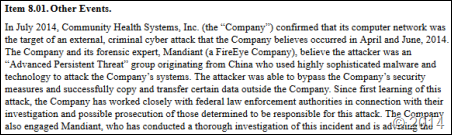
For-profit hospital operator Community Health Systems says it was the victim of a cyberattack in which the demographic information of 4.5 million patients of its 206 hospitals was stolen. The attack, which occurred in May and June, appeared to originate in China. The FBI is investigating. Community Health Systems is in the Fortune 500 with $7.2 billion in annual revenue and a pending $3.6 billion acquisition of Health Management Associates, which would make the company the largest for-profit hospital operator in the US.


Reader Comments

image

From Changing Wind: “Re: Orion Health. With the upcoming IPO, employee bonuses are being changed from four times a year to once, holding cash at the expense of their employees.” According to a forwarded email from Orion Health CEO Ian McCrae, “As part of the Board and Management review of the company measures and targets, a decision has also been made to move the frequency of the Company Incentive payment to annual, which aligns with the personal component of the Short Term Incentive. This change now aligns us with what is common market practice and also takes into account the recognition that the achievement of the revenue target is heavily reliant on our performance in the second half of this financial year.”

image

From Anonymous Tipster: “Re: Carl Dvorak’s testimony. To hear Mr. Dvorak complain about their customers bearing the cost of participating in data exchange governance mechanisms while spending many millions of dollars on Epic and then during verbal testimony claim that Epic is the underdog of the EHR industry made me laugh.“


Webinars

August 27 (Wednesday) 1:00 p.m. ET. Enterprise Data – Tapping Your Most Critical Asset for Survival. Presented by Encore, A Quintiles Company. Presenters: Jonathan Velez, MD, FACEP, CMIO, Hartford Healthcare; Randy Thomas, Associate Partner, Encore, A Quintiles Company. This first of a webinar series called “It’s All About the Data” will describe the capabilities provider organizations need to become data driven. The presenters will provide an overview of the critical role of an enterprise data strategy, creating the right data from source systems beginning with implementation, real-world data governance, how to avoid “boiling the ocean” with an enterprise data warehouse, and the role of performance feedback to transform analytics insights into improved outcomes and efficiencies.

September 4 (Thursday) 2:00 p.m. ET. MU2 Veterans Speak Out: Implementing Direct Secure Messaging for Success. Presented by DataMotion. Moderator: Mr. HIStalk. Panelists: Darby Buroker, executive director of health information exchange, Steward Health Care; Anne Lara, EdD, RN, CIO, Union Hospital of Cecil County, MD; Andy Nieto, health IT strategist, DataMotion; Mat Osmanski, senior application analyst, Steward Health Care; Bill Winn, PhD, Meaningful Use service line executive, Navin, Haffty & Associates. Panelists will discuss the strategy and tactics of meeting the transitions of care requirements for MU2, including assembling the team, implementing Direct Secure Messaging, getting providers on board, and reporting results.  


Acquisitions, Funding, Business, and Stock

image

Private equity firm Apax Partners LLP is looking for a buyer for payer and revenue cycle vendor TriZetto, according to rumors. Apax took TriZetto private in 2008 for $1.4 billion and hopes to sell it for up to $3 billion. TriZetto made $190 million in profit in the most recent fiscal year.

image

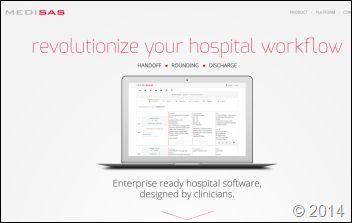
Inc. profiles the British doctor who founded hospital workflow software vendor Medisas and the expensive, lengthy process involved in getting a visa to set up shop in this country.  

image

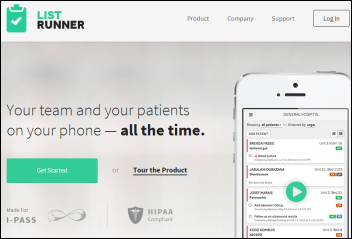
Clinician rounding app vendor Listrunner raises $500,000 in seed funding from independent physician investors. A trial version of the app is free.

Physician services group Mednax will acquire revenue cycle management vendor MedData. I’m hoping new ownership doesn’t interrupt the delicious flow of fresh-baked scones that MedData provided in the exhibit at HIMSS14 since they were a high point of the conference.


Sales

image

MultiCare Health System (WA) chooses Infor’s human capital management system.


People

image

Surgical Information Systems promotes Jonathan Lujan to EVP of North American sales for SIS and AmkaiSolutions.

image

Paul Sinclair (Allscripts) joins Beacon Partners as VP of business development.

image

Ford Phillips, who has worked in healthcare IT for 38 years, has written a short story collection about growing up in a small town in southern Illinois called “East of the Sun and West of of the Moon.”


Announcements and Implementations

image

KPMG will use Blue Cross Blue Shield claims information from Blue Health Intelligence, along with the CMS claims database, to enhance its service offerings.  

image

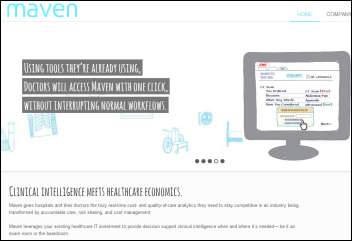
A Baltimore technology site profiles Maven Medical, an eight-employee startup that offers a medical procedure price transparency app that helps doctors choose cost-effective tests based on average Medicare reimbursement rates.

image

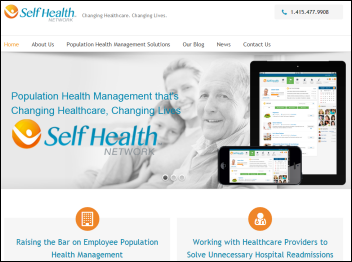
Self Health Network raises $5.6 million to further development its patient communications and private social network platform that supports patient-clinician communications, personal health records, home monitoring device data collection, and caregiver alerts.

image

Accelerator Rock Health signs three new corporate sponsors: Abbott, Blue Shield of California, and Deloitte.

image

Two Michigan senior living facilities implement the Visibility Resident Care call system, powered by Versus Technology’s RTLS.


Government and Politics

The White House denies a Freedom of Information Act request filed by the Associated Press that asked CMS to disclose records related to the security capabilities of Healthcare.gov. CMS refused to turn over the documents, claiming that doing so could violate HIPAA by making it easier for hackers to access consumer information. A legal expert comments, “Here you have an example of an agency resorting to a far-fetched privacy claim in an unprecedented attempt to bridge this legal gap and, in the process, making it even worse by going overboard in withholding such records in their entireties.”

image

Premier, responding to a call from the Senate Committee on Finance for ideas that would make healthcare data more useful while maintaining privacy, says that ONC should mandate open APIs for data access as recommended in the recent JASON report. Other suggestions: open up access to government-related claims data, allow researchers access to EHR information, and provide incentives for interoperability that includes patient matching.

A Washington Post investigation finds that Medicare has paid $8.2 billion buying power wheelchairs and scooters for patients, many of whom didn’t need them. Companies, many of them set up by immigrants who became overnight millionaires, paid recruiters to get Medicare patients to participate in the scam. One patient found it odd that the medical equipment company that claimed he couldn’t walk had second-floor exam rooms with no elevators. Medicare put out fraud alerts, but kept paying, required by law to pay most claims within 30 days and reviewing only about 3 percent of them before paying. Medicare is a bit wiser, so criminals are moving on to selling drugstore shoe inserts as $500 orthotics and prosthetic arms and legs for patients in Puerto Rico who have no record of amputations.


Other

A Brookings blog post says HIEs are “Facebook for doctors,” with three factors that encourage doctors to use them: (a) receiving referrals; (b) being located where other communications channels are limited, such as in rural areas; and (c) peer influence.

In Australia, South Australian Health argues with Allscripts over lack of functionality in its Sunrise billing module, falling short so far over exchanging lawsuits.  


Sponsor Updates

  • Billian’s HealthDATA discusses five hospital hiring trends in the C-suite.
  • Kareo CMIO Tom Giannulli will speak at the UBM Medica’s Practice Rx conference September 19-20 about the role technology plays in improving patient care.
  • Medhost announces that Cottage Hospital (NH) has attested for Meaningful Use Stage 2.
  • CoverMyMeds doubles its employee count and is expanding into a larger office space.
  • Quantros will showcase its Pharmacy Safety Suite of Solutions at the NACDS Total Store Expo 2014.
  • Navicure launches Navicure Payments that enables clients to estimate and secure patient financial responsibility and collect balances before service and after adjudication.
  • South County Radiologists (MO) selects McKesson Business Performance Services for its 14-physician practice.
  • The Advisory Board Company explains how it became a “Best Place to Work.”
  • DocuSign publishes a blog entry, “Fuel the Digital Revolution in Life Sciences with SAFE-BioPharma.”

Contacts

Mr. H, Lorre, Jennifer, Dr. Jayne, Dr. Gregg, Lt. Dan, Dr. Travis.

More news: HIStalk Practice, HIStalk Connect.

Get HIStalk updates.
Contact us online.


125x125_2nd_Circle

Morning Headlines 8/19/14

August 18, 2014 News Comments Off on Morning Headlines 8/19/14

Community Health says data stolen in cyber attack from China

The for-profit chain of 206 hospitals says the information of 4.5 million patients was stolen, possibly by hackers with links to the Chinese government.

Microsoft cloud service Azure restored after partial outage

The hosting platform for cloud-based applications went down in multiple centers Monday evening, but the issue has since been resolved.

When Patients Read What Their Doctors Write

NPR covers the OpenNotes project with an opinion piece from an ED doctor and author.

Curbside Consult with Dr. Jayne 8/18/14

August 18, 2014 Dr. Jayne 1 Comment

clip_image002

Thanks to Bianca Biller, who shared information about the new Practice Management System Accreditation Program (PMSAP).  The accreditation was developed through a partnership between EHNAC and WEDI. Three vendors (GE Healthcare, Medinformatix, and NextGen Healthcare) will be participating in a pilot program.

The program’s web page says the program “reviews the key functions of portability, interoperability, clinical integration, compliance monitoring, billing, reporting, and industry certification/accreditation” and that it will serve “as a baseline standard for providers in the process of PMS vendor selection and KLAS reviews.”

Although I like the idea of a program to ensure practice management systems meet the baseline needs of practices, I worry about yet another certification program whose hoops vendors will have to jump through. They can barely keep up with Meaningful Use, ICD-10, and CMS rules. Now we’re going to throw another set of requirements at them.

I also wonder whether practices will really find the separate certification of practice management systems to be meaningful. Many sites use systems that have combined practice management and EHR features. I doubt the lure of PM certification would be enough to convince physicians to consider changing systems when they are still struggling to attest for Meaningful Use. For those who may use separate EHR and PM systems, interfacing is a challenge that most wouldn’t want to repeat with a new vendor.

There are also the vendors that don’t allow interfacing with other systems. Others require you to purchase their PM system with the EHR and most physicians don’t have enough spare cash lying around to purchase a separate PM and interface it. On the other hand, if there is anyone who wants to make a change in their systems, transitioning from one PM system to another is often easier than trying to do an EHR conversion.

I downloaded the criteria document. Some of its elements include:

  • A diagram of “all sites that create, receive, maintain, or transmit PHI for the delivery of the services provided, whether company sites or outsourced organizations.”
  • Determination of the candidate’s status as a Covered Entity, Business Associate, etc. under HIPAA.
  • PHI disclosure and protection policies.
  • Controls against malware.
  • Documented customer service and escalation policies.
  • Minimum availability and redundancy to assure 98 percent system access.
  • Capacity monitoring and plans for handling peak load.
  • Compliance with applicable federal and state requirements and regulations.
  • Offsite six-month backup archive, storage, and retrieval capacity for all batch transactions with progress toward a seven-year back-up archive.
  • Ability to regenerate transactions going back 90 days within two business days.
  • Intrusion/attack monitoring capabilities.

One of my favorites is the requirement that “candidate must have sufficient qualified personnel to perform all tasks associated with accomplishment of the stated mission.” In speaking with most of my ambulatory-based colleagues, many feel their vendors are understaffed and overwhelmed most of the time. It’s a good thing that particular element isn’t mandatory for certification.

I find it interesting that the certification program only targets practice management systems. In my experience (both clinical and administrative), the inpatient financial systems are much more in need of supervision than their outpatient counterparts.

What do you think about the new PMSAP certification program? Email me.

Email Dr. Jayne.

Morning Headlines 8/18/14

August 18, 2014 News 1 Comment

Health IT Policy Governance Subgroup

Epic President Carl Dvorak testifies on the company’s position and progress on interoperability.

M*Modal Announces New Board

MModal CEO Duncan James resigns and a new board is named two weeks after the company emerges from Chapter 11 bankruptcy

Pervasive Medicare Fraud Proves Hard to Stop

A New York Times article says HHS’s fraud prevention efforts are minimally effective because the agency doesn’t manage private contractors well and provider appeals have overwhelmed the system.

Variation in charges for 10 common blood tests in California hospitals: a cross-sectional analysis

A study of 2011 California data finds that hospitals charged between $10 and $10,169 for the same lipid panel lab test. The same author previously found that the list price for an uncomplicated appendectomy prices ranged from $1,500 to $187,000.

Monday Morning Update 8/18/14

August 16, 2014 News 9 Comments

Top News

image

image

Epic President Carl Dvorak testifies at an ONC HIT Policy Committee interoperability governance subgroup hearing. Some of his points:

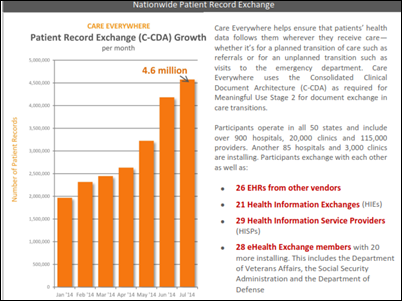
  • Epic’s Care Everywhere exchanges 4.6 million C-CDA documents each month with 26 non-Epic vendor systems, 21 HIEs, 29 HISPs, and 28 government agencies. Its connections to other organizations carry 20 billion transactions annually to 88 public health agencies, 18 research societies, 51 immunization registries, and 17 research registries. This, Dvorak says, portrays a broader definition of interoperability than just exchanging patient summary documents.
  • Dvorak said providers who receive Meaningful Use money should be required to participate in a national list of exchange-ready participants.
  • Epic recommends that Meaningful Use Stage 3 add eHealth Exchange standards for unplanned transitions of care.
  • Epic suggests allowing multiple trust verification services since DirectTrust is too expensive for some organizations.
  • Dvorak says data exchange should be simplified for data used only for patient treatment and not for the “payment and operations” part of HIPAA where information is often sold or redistributed to business associates.
  • Epic says ONC should give patients control of information sharing with a simple opt-in/opt-out option and let patients who want finer control to use their own personal health record instead.
  • Epic customers are reporting that state and local HIEs are demanding payments that exceed their connectivity value and that some are trying to pass laws requiring providers to pay their full fee just to access state immunization registries. Epic says immunization and public health reporting should be free to users and paid for by the states, and providers in states that refuse to do so should get an exemption from those Meaningful Use requirements.
  • Epic urges ONC to be wary of “political agendas and commercial competition” in assessing interoperability, adding that if ONC wants to get a true picture, they should encourage health care systems to voluntarily report their interoperability statistics directly to ONC. 

image

Also testifying at the subgroup meeting, CORHIO Executive Director Morgan Honea said one practice was quoted $50,000 to connect to its network. He also said independent providers and small health systems should get Meaningful Use money for connecting to HIEs since they have little incentive otherwise.

image

Tim Burdick, MD, CMIO of OCHIN, said that data are tethered to one EHR and one patient portal, giving an example of a cancer patient who has to log into the patient portals of six organizations to see her information, then send messages to the other five asking them to update their EHRs. He says that most of the 22 states in which OCHIN operates have their own technical standards and they are often outdated, vague, or impractical (example: data standards for immunization registries required 15 different interfaces.) He said that his organization struggles with connecting to specialized registries as MUS2 requires because not only is every state different, some registries are run by drug and device companies and require each participating doctor to pay a monthly fee or make them agree that the patient data they submit can be sold or used for any purpose. He says it’s hard to match Direct addresses to specific providers because some of them work for multiple organizations and it’s not clear whether each role has its own Direct address or what happens when that doctor stops working at that location. He finished by suggesting that ONC rate organizations that are using HIE best practices, which he calls “Yelp for HIE vendors.”


Reader Comments

image

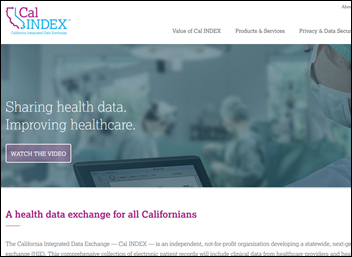
From HIErarchical: “Re: new insurance company-sponsored HIE in California. This has CalRHIO 3.0 written all over it. The program came from the president of UCLA, where former CalRHIO head Molly Coye, MD is chief innovation officer. She has surfaced to restart what was thrown out in 2010.” CalRHIO’s ambitious California-wide RHIO plans were thwarted in early 2010 when the state created a new entity that paired CalRHIO with a competitor with whom it had fought over HITECH money. CalRHIO, like former National Coordinator David Brailer’s Santa Barbara project, talked a lot but accomplished little – it brought one county’s EDs online. The chair of the newly created Cal Index HIE, which is funded with $80 million from Blue Shield of California and WellPoint’s Anthem Blue Cross, is the president of UCLA’s health system.  

image

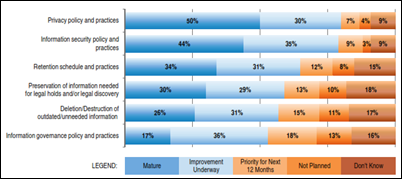
From Information Governor: “Re: information governance. I’m curious whether organizations have an information governance policy as described by a recent AHIMA white paper.” AHIMA recommends that hospitals define information as a critical business asset that is managed using published standards and the appropriate resources. Two-thirds of survey respondents said their organizations haven’t developed that kind of strategy. The most interesting part to me was the information life cycle management of electronic information, including accuracy, access, protection against loss, preservation for legal holds, managing data deletion, and plan for technology obsolescence. Actually, maybe even more interesting was the section on information controls: documentation requirements, downtime planning, data definitions, software testing, how information is corrected, and how data quality is measured. The survey went out only to AHIMA members, which may have skewed the results. Leave a comment if you’d like to describe your organization’s efforts.

image

image

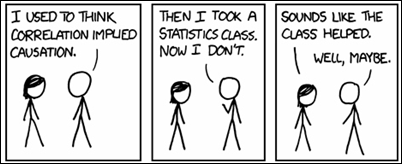
From Lodi: “Re: EMRs and quality improvements. You are a hospital IT person. Why do you always question study results proving that EMRs improve care?” Because the studies prove no such thing. It’s appalling to me that the people who conduct those studies, many of whom have a vested interested in being EMR cheerleaders, misstate their results as proving causation rather than correlation. Clueless reporters then add another layer of obfuscation by writing punchy but flat-out wrong headlines. I believe that hospitals using EMRs have better outcomes. I also believe that hospitals that have bigger profits, prettier buildings, cafeteria sushi bars, and showcase helicopters also have better outcomes. I’m throwing down a challenge to anyone who claims EMRs improve outcomes: show me your data.


HIStalk Announcements and Requests

image

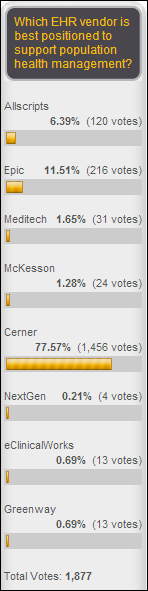
Cerner handily won the vote of which EHR vendor is best equipped to support population health management, although the IP addresses of respondents suggest that a huge percentage of the nearly 1,500 votes it received came from inside the company. Cerner contacted me to say they didn’t encourage ballot box stuffing, but non-Cerner voters nonetheless left scathing poll comments upon seeing the results, one of whom suggested giving the win to Epic by default (who also had some homers clicking away, with 62 of its 216 votes.) Let’s move on to a new poll to your right or here: is it a good deal for Cerner to buy the Siemens HIT business for $1.3 billion? Vote and then click the Comments link to expound further. Add some insightful comments and I bet some healthcare publications will use the results for further articles since information is otherwise scarce.

image

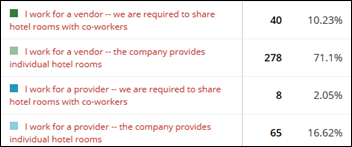
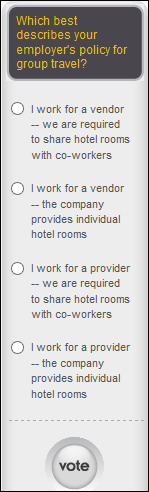
I asked readers whether their employer requires them to share hotel rooms for group travel. The results: only 12 percent of respondents said yes, which is about the same percentage as reported in other national surveys. The numbers were the same for both vendor and provider employees. My thoughts:

  • Vendors theoretically save their customers money by forcing the rank and file to share rooms, but the frugality often ends when executives are involved as the lavish salaries and stock options dwarf the cost of a few hotel nights. Customer costs never go down, and it’s likely that customers of the room-sharing vendors pay just as much.
  • I would bet anything that company executives don’t share rooms. I’m not a fan of policies that only apply to people in the trenches.
  • A better option would be to book single rooms in cheaper hotels and provide group transportation to the event’s location.
  • The “two same-sex people should be comfortable and safe as roommates” idea is a dated concept that makes incorrect and stereotypical assumptions about sexuality and body image.
  • A shared employer isn’t enough reason for me to be comfortable with forced cohabitation with someone I barely know.
  • I’m a big fan of asking employees if they will share rooms instead of insisting they have to. That gives people who are uncomfortable with the idea for any reason a discrete way to opt out.
  • Lawyers would salivate at the chance to represent someone exposed to sexual harassment or violence because of employer-mandated room sharing.

Last Week’s Most Interesting News

  • Epic hires a lobbying firm, breaking from its long-held claim of having nobody assigned to sales, marketing, and government relations roles.
  • Free EMR vendor Practice Fusion raised the ire of practice customers and hopefully the awareness of other cloud-based system users in reminding those customers to insist on access to local copies of their data for downtime situations.
  • A survey of ACOs finds that most have only basic IT systems.
  • Massachusetts says it will spend more money to fix its struggling health insurance exchange website rather than move to Healthcare.gov.

Webinars

August 27 (Wednesday) 1:00 p.m. ET. Enterprise Data – Tapping Your Most Critical Asset for Survival. Presented by Encore, A Quintiles Company. Presenters: Jonathan Velez, MD, FACEP, CMIO, Hartford Healthcare; Randy Thomas, Associate Partner, Encore, A Quintiles Company. This first of a webinar series called “It’s All About the Data” will describe the capabilities provider organizations need to become data driven. The presenters will provide an overview of the critical role of an enterprise data strategy, creating the right data from source systems beginning with implementation, real-world data governance, how to avoid “boiling the ocean” with an enterprise data warehouse, and the role of performance feedback to transform analytics insights into improved outcomes and efficiencies.


Acquisitions, Funding, Business, and Stock

image

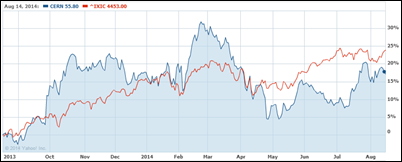
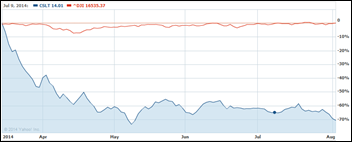
Cerner shares (blue) are up nearly 12 percent since the company announced that it will acquire the healthcare IT business of Siemens on August 5, but they still lag the Nasdaq (red) over the past year.


People

image

MModal announces that CEO Duncan James will resign from the company, which exited Chapter 11 bankruptcy two weeks ago. MModal has also brought in a new board.


Government and Politics

The New York Times reviews the government’s Medicare fraud efforts that cost $600 million per year, concluding that the 90 percent of fraud isn’t caught because HHS doesn’t manage the private recovery audit contractors it uses very well. The article says hospital pushbacks and extensive appeals have nearly completely shut down recovery efforts and cases can take up two years to get in front of a judge. It also notes that RAC bounties are so high that the companies paying fraudulent claims are sometimes the same companies paid to investigate them.


Other

image

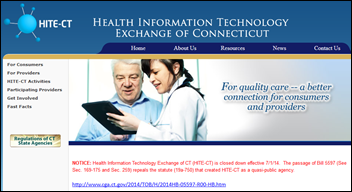
I missed this: Health Information Technology Exchange of Connecticut died a quiet death on July 1, 2014 when a new state budget bill repealed the creation of several quasi-public agencies, of which HITE-CT was one. Nobody seemed to notice or care, so that probably says it all.

In Canada, B.C. Emergency Health Services drops its $2.8 million ambulance electronic patient care record a year after it was supposed to go live, saying that, ”the vendor was unable to meet our business requirements.” The vendor was Interdev Technology.

A study of 2011 California data finds that hospitals charged between $10 and $10,169 for the same lipid panel lab test. The same author previously found that the list price for an uncomplicated appendectomy prices ranged from $1,500 to $187,000. Nobody pays list prices except the uninsured, who obviously wouldn’t be able to afford the ridiculous prices even if they wanted to pay. Healthcare prices are even more irrelevant than the inflated nightly rates listed on the back of hotel room doors.

image

In a relevant story, a man who went to the ED of for-profit Bayonne Medical Center (NJ) to have them look at a finger he had cut days before is billed $9,000 for a tetanus shot and a bandage. The hospital’s CEO says it went out-of-network for the insurance company because of low payments and that it needs high ED charges to survive. The insurance company says the CarePoint Health-owned hospital is deliberately gouging consumers by dropping out of networks since New Jersey law requires the insurance company to pay for ED services anyway. The insurance company settled with the hospital for $6,640, and after the local TV station picked up the story, the hospital wrote off the balance owed by the patient. It’s ridiculous to put in-network verification responsibility in the hands (no pun intended) of a patient seeking emergency treatment, or to ask every employee who walks in the door whether they are in-network since hospitals always have private doctors and contractors running around who issue their own bills.

image

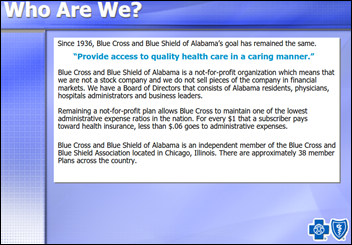
The top 10 executives at the non-profit Blue Cross and Blue Shield of Alabama made more than $1 million each in 2013, doubling their 2011 pay. The president and CEO made nearly $5 million.


Contacts

Mr. H, Lorre, Jennifer, Dr. Jayne, Dr. Gregg, Lt. Dan, Dr. Travis.

More news: HIStalk Practice, HIStalk Connect.

Get HIStalk updates.
Contact us online.


125x125_2nd_Circle

News 8/15/14

August 14, 2014 News 18 Comments

Top News

image

A survey of 62 ACOs finds that many lack tools for risk management and patient engagement and haven’t made much IT progress in the last year. Every respondent said they have problems getting data from external organizations as they struggle with interoperability, workflow integration, and infrastructure maintenance. Few of them use secure messaging, referral management tools, self-scheduling, remote monitoring, smartphone apps, or telemedicine. Most do not coordinate care via an HIE.


Reader Comments
image

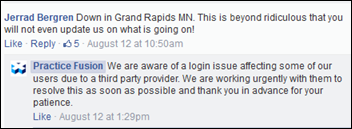
From Bucolic Splendor: “Re: Practice Fusion. Was down most of the day Wednesday, a major catastrophe for practices all over the country. Nobody really believes their explanation.” Practice Fusion blames its multi-day downtime on unnamed third parties, their data center partner, and a “global Internet brown-out.” Strangely, some users could access the system on their phones only, others could get on with the Safari browser but not Chrome, while some users said they could get partial access by turning off Shockwave. Users ripped the company in Facebook messages for not answering the support line and failing to provide updates as their practices sent patients home without treatment. The bottom line: get SLAs from your cloud-based vendors (so the burden of reviewing their infrastructure is theirs, not yours) and make sure you have a local information retrieval option since even Internet connectivity itself isn’t guaranteed. The cloud is great except when it isn’t and then you’d give anything to have that under-the-desk server back. Some user comments:

  • “I just had a consultation with a patient I only see once monthly and I had no idea what we talked about last time.”
  • “Don’t care about your acquisition since I can’t see my patient charts!”
  • “Practice Fusion deleting comments & removing unfavorable forum threads is a BAD IDEA. One step away from charging for negative reviews. Spend more time on keeping the system up, and less time combing your social rep.”
  • “It is amazing how many people there are out there who is getting a superb free handout and then bite the hand that feeds them. And you are supposed to be professionals. Give me a break. Go out and actually pay for another premium service. Then you will have every right to bitch when things go wrong.”
  • “I see lots of photos of team-building games and fun … and bravo for that … but it appears there is less emphasis, as David Stewart suggested, on building infrastructure and contingency plans. Your suggestions to have a backup server and hub do us no good when the problem in on your end.”
  • “We may be looking for another EMR system. I’ve been relatively happy with the program when it functions, but the lack of adequate support has challenged our practice more than once.
  • “Although it is free to medical provider, some huge advertisers are paying big dollars and are the ones allowing it free for us. I hope they are aware of this inconvenience.”
  • “For everyone that is frustrated, how long have you been with PF? How many times has it gone down? I’ve been with them for 3 1/2 years and had a total of 4 hours of unplanned down time.”
  • “I am OK with a Day or 2 of outages, but this is a wake up call to how much we rely on you. Next time it might be a security issue and we are helpless to do anything about it. I would feel better knowing that if there is a catastrophe, I at least have a backup that I can use to go forward with. Maybe even a paid option – like $50 a month to be able to do a daily backup to my local computer.”

image

From Reluctant Epic User: “Re: new Epic patent. I’m surprised the patent examiner thought that was novel for a Level of Service user interface.”
image

From Details … Details: “Re: Habersham Medical Center. With Meditech’s industry-leading 800+ attestations, it would seem that there might be some missing information here.” I don’t doubt that a bit – it was the client that said it was a software problem. However, they also fired the IT director, so that plus Meditech’s lack of attestation problems elsewhere seems to put the blame on the hospital.
image

From ShoezyQ: “Re: sharing hotel rooms. At the Allscripts user group meeting and annual sales meeting, the company requires employees to share hotel rooms. Maybe they should just send fewer people if they can’t afford the rooms. Can you ask your readers? I would never share a room with a colleague.” I’m with you. I bet Paul Black isn’t bunking up with Jim Hewitt at a Motel 6 and coordinating bathroom times, apologizing for snoring, and agreeing on the TV channel, so the policy is just for the “little people” who weren’t born with a suit on. It’s a pretty cheap company that requires employees to work a company event (which probably also means putting in a ton of excess unpaid hours away from home) and then forces them into steerage to save a few bucks. Maybe the peons could cook ramen noodles in their room’s microwave to save even more money. My strategy would be: (a) ask if you can apply your half-room cost to a single room and pay the difference for your privacy; (b) say you have sleep apnea and use a very loud CPAP machine that will keep your roomie up all night; or (c) find a new employer who values your dignity over their dollars. Meanwhile, I will ask readers as you requested: take the poll here and feel free to explain your employer’s policy via a comment.

image

From John Britton: “Re: Cerner acquires Siemens. I am the CIO at a medical center that uses Cerner as our primary EMR as well as their Smart Room technology. We also use Siemens MedSeries4 for General Financials (AP, MM, GL). In 2010 we became one of the first Cerner ‘smart’ hospitals when we went live with this technology in 2010. Since then, I’ve had a front-row seat to the work Cerner has done to connect medical devices to the EHR through their CareAware ecosystem. Avoiding duplicative data entry and preventing errors are some of the biggest benefits of this approach. I think Cerner’s acquisition of Siemens will only accelerate their work to connect different data sources to the EHR. It might also help get closer to realizing more comprehensive interoperability and data sharing models between disparate information platforms using initiatives currently underway like the CommonWell Health Alliance.” John is CIO of Fisher-Titus Medical Center in Norwalk, OH.


HIStalk Announcements and Requests

This week on HIStalk Practice: HHS spends precious man hours (and taxpayer money) attempting to find emails related to the Healthcare.gov rollout. ONC launches a website to collect feedback on its interoperability roadmap. HIPAA worries cause OBs to remove baby pictures from their office walls. Dr. Gregg explains how HIT leads to HID. The Healthcare Administrative Technology Association opens for business. Investors outline their attraction to healthcare IT firms in Nashville. Square’s new appointment-booking feature poses potential HIPAA concerns for small practices. Thanks for reading.

This Week on HIStalk Connect: HealthMap, a Boston Children’s Hospital and Harvard Medical School collaboration, combines public health data, Twitter data, and Google news alerts to track the recent Ebola outbreak with greater accuracy than the World Health Organization. Apple is reportedly in discussions with Allscripts, Johns Hopkins, Cleveland Clinic, and Mount Sinai to generate support for its HealthKit rollout. Validic raises a $5 million Series A round that it will use to expand its digital health integration engine and grow its customer base.

image

The first book written by ”CIO Unplugged” Ed Marx of Texas Health Resources will be released in late September. Watch for details of the upcoming virtual book launch for “Extraordinary Tales of a Rather Ordinary Life: How Applying Common, Everyday Principles Can Lead to Uncommon Results” on HIStalk.

Listening: new from The Gaslight Anthem, a hard-rocking New Jersey working class band that sounds like Springsteen backed by the Ramones. Also: new hard rock from the latest of several incarnations of Fuel from Henderson, TN – none of the 16 people who have played in the four-piece band’s 21-year history were in it continuously, but they always sounded good. 

I had a cool customer support experience today with one of our webinar tools. I had opened a ticket since the company basically rewrote the web-based software without instructions or updates to the knowledgebase. The support rep emailed me a screen capture movie showing how to do what I needed to do, even having a little one-way chat with me as he stepped through it. It would have taken him three times as long to write out the steps instead of just turning on Camtasia or whatever capture software he used to dash off a quick video.  That was both brilliant and personal, exactly what you want from a support tech.


BOSS Award Winner – Riton Khan

image

Several people nominated Riton Khan for the HIStalk Beacon of Selfless Service (BOSS) Award. Riton is an HISP/iNexx deployment engineer with Medicity.

Adam Rossback of the Ohio Health Information Partnership said in his nomination, “Riton spent countless hours working with me to establish HISP integration with our organization to allow 30+ hospitals to attest for July MU2 attestation.” Donna Maxey of Healthcare Access San Antonio says Riton went above and beyond his job description by working through EMR integration issues with her clients, adding, “Whenever I felt my client was stuck, no matter what the issue was, I asked for a meeting and Riton would send me a screen shot of his calendar. He allowed me to pick any open day/time that the client’s vendor was available. I have yet to work with any vendor employee that is that transparent so that my clients could get the project done on time.” Several other of Riton’s customers added their accolades.

Congratulations to Riton for his excellent work, which makes him entirely deserving of both the thanks of his customers and the BOSS Award. 

You are welcome to nominate a non-management individual for BOSS Award recognition.


Webinars

August 27 (Wednesday) 1:00 p.m. ET. Enterprise Data – Tapping Your Most Critical Asset for Survival. Presented by Encore, A Quintiles Company. Presenters: Jonathan Velez, MD, FACEP, CMIO, Hartford Healthcare; Randy Thomas, Associate Partner, Encore, A Quintiles Company. This first of a webinar series called “It’s All About the Data” will describe the capabilities provider organizations need to become data driven. The presenters will provide an overview of the critical role of an enterprise data strategy, creating the right data from source systems beginning with implementation, real-world data governance, how to avoid “boiling the ocean” with an enterprise data warehouse, and the role of performance feedback to transform analytics insights into improved outcomes and efficiencies.


Acquisitions, Funding, Business, and Stock

image

MedAssets will acquire consulting firm Sg2 for $142 million in cash.

image

Private equity firm GTCR will invest up to $200 million Cedar Gate Technologies, which it will form with former Medco CEO David Snow, who will add $20 million of his own money and serve as CEO. The company plans to “build a transformative company in the healthcare information technology industry by acquiring outstanding healthcare data and analytics businesses and accelerating their growth.” Snow is hardly an entrepreneur – he’s worked his whole career running giant insurance companies, although he’s on the board of a couple of startups.
image

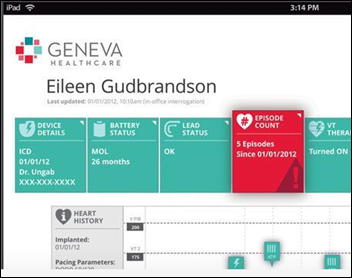
Geneva Healthcare, which offers a pacemaker data management platform that also integrates with other medical devices, raises $1.8 million in financing.


Sales
image

Princeton HealthCare System (NJ) selects Premier’s integrated supply chain, performance, and technology services.

image

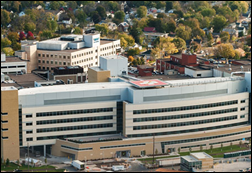
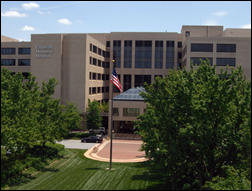
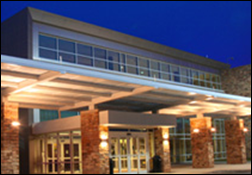
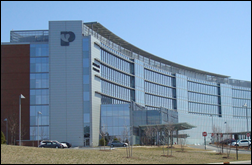
In England, West Suffolk NHS Foundation Trust signs for Cerner Millennium. I think they went live a few years ago on iSoft’s Lorenzo (now owned by CSC) as part of the now-dead NPfIT. You may infer from the hospital photo that despite having the superior healthcare system, NHS doesn’t suffer from the Edifice Complex of aggressively billing Medicare and using the otherwise restricted profits to erect huge, artistically stunning buildings whose exteriors can’t be viewed by the sick people inside their walls but that stroke the egos of the proud community and the executives in charge.

Azalea Health signs up the physician groups of two Georgia hospitals for its EHR and RCM systems, Dorminy Medical Center and Irwin County Hospital.

image

Wake Forest Baptist Medical Center (NC) chooses Tonic Health’s patient survey system.

National physician specialty services company Sheridan Healthcare chooses VitalWare’s iDocuMint ICD-10 code assignment and bill preparation tool for its 2,800 providers.

image

Basset Healthcare (NY) chooses Strata Decision’s StrataJazz as its complete financial platform.

Urology Centers of Alabama adds Greenway’s PrimeRCM revenue cycle solution, joining its PrimeSUITE EHR/PM system.


People
image

Louis Leibhaber (Fundamental Succcess LLC) joins WeiserMazars as director of the healthcare group.

image

Asif Ahmad, CEO of Anthelio Healthcare Solutions, is appointed to the board of orthotics vendor Hanger, Inc.

image 

People Magazine profiles the family of MedAptus employee Jennifer Crowley, whose six-year-old son Padraig has been diagnosed with stage 4 neuroblastoma, the same rare childhood cancer that killed her infant son in 2006. Friends have started a fundraising page to help cover the family’s medical bills. Padraig was started immediately on chemotherapy and will have a long stay at Memorial Sloan Kettering.  

Larry Covington, former CEO of Unibased System Architecture, died earlier this week at 75. Services will be next Friday, August 22, in St. Louis. 


Announcements and Implementations

image

Allscripts will integrate Clinical Architecture’s terminology management system, Symedical, with dbMotion.
image

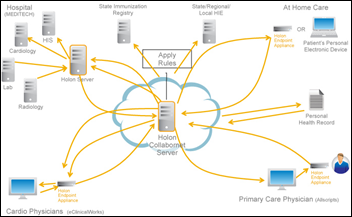
Two Texas hospitals are using Holon’s CollaborNet HIE platform in a state-developed pilot project to refer smokers to a free telephone-based smoking cessation program. Annual referrals jumped from seven to 1,254 after the single-click electronic system was put in place.

4medica announces the release of the first laboratory PHR licensed by MMRGlobal, which is curious in that paying off a patent troll is bragworthy.

image

The non-profit Healthcare Administrative Technology Association launches to provide advocacy and member education to practice management system stakeholders.

image

Impact Advisors joins the Epic-IBM team in pursuing the Department of Defense’s EHR bid.

image

Allscripts and Netsmart will partner to co-develop solutions for their acute care and behavioral health EHRs, respectively.

image

Nordic announces that it has worked with 100 Epic-using organizations, about a third of all Epic clients. That’s double the company’s 2012 total.


Government and Politics
image

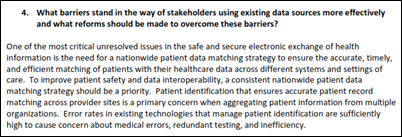
HIMSS EHR Association responds to a request from the Senate Finance Committee asking for comments about the availability of patient data vs. the need for patient privacy. The association says the biggest barrier to using existing data effectively is lack of a patient matching strategy, although it stopped just short of suggesting implementation of a national patient identifier.

CMS reactivates its Open Payments system for reporting drug and device company payments to doctors 11 days after taking it offline. Data problems had misattributed some of the physician payments.
image

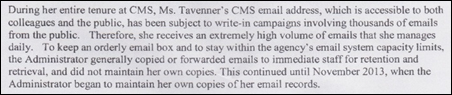
HHS says CMS Administrator Marilyn Tavenner inadvertently deleted emails related to the failed rollout of Healthcare.gov, explaining that she receives so many emails that she regularly hits her Outlook inbox limit and has to clear space. They added that she is supposed to forward or copy the emails for retention as the law requires before deleting emails, but she sometimes forgets. The National Archives and Record Administration says they can probably recover most of the internal emails since they would have been saved by their recipients, but those going to outside addresses may be gone for good. HHS has spent 23,000 staff hours so far trying to retrieve the emails in response subpoenas from Rep. Darrell Issa (R-CA), chair of the House Oversight Committee, so that’s a million-dollar plus delete key.


Innovation and Research

A HIMSS Analytics telemedicine study finds that … well, we don’t know what it finds since they provided a six-page teaser that only included the table of contents. That’s probably enough since the response rate was only 2.7 percent, so any generalization would be suspect.  
image

Speaking of HIMSS Analytics, they should know better than to make this speculative leap even though clueless reporters do it constantly. They did the usual lazy test of mashing up some clinical quality data with their own EMR Adoption Medical scores and found that mortality was generally better in EMR-using hospitals. What the study couldn’t find – despite the headline stating otherwise – is that the EMR cause the improved outcomes. Why couldn’t they use the same detailed Healthgrades data and compare it to each hospital’s EMR go-live date from the HIMSS Analytics database and see if mortality improved afterward? It’s just absurd to try to claim that because EMR-using hospitals have better outcomes that the EMR should get all the credit. The same study found that sepsis mortality rates were higher in EMR-using hospitals, so if you feel an infection coming on and you believe this report, you should seek out any randomly chosen hospital that still uses paper charts.
image

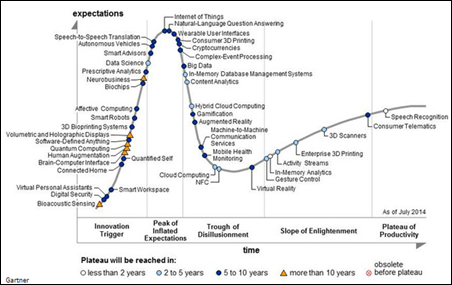
It was love at first sight between Gartner’s Hype Cycle and me years ago. Here’s a current version, which says mobile health monitoring is about to start moving up the Slope of Enlightenment. Big data and Internet of Things are still years away from matching their hype.

The Michael J. Fox Foundation and Intel announce their collaboration to objectively analyze data created from wearable devices to determine the progression of Parkinson’s Disease.


Technology

image

Apple quietly adds another healthcare expert to its payroll: Divya Nag, founder of StartX Med, an accelerator to commercialize Stanford research. The beta version of iOS 8, released last week, includes support for spirometry data, an option to display medical ID on the lock screen, and health privacy options.


Other

image

Epic officially breaks from its long-held “no marketing or government relations” position by engaging lobbying firm Card & Associates, run by the brother of the former White House chief of staff under President George W. Bush, as it seeks the DoD’s EHR bid.  

Beth Israel Deaconness CIO John Halamka says the hospital is almost ready for Meaningful Use Stage 2’s September 30 deadline, but is struggling with the 10 percent transitions of care threshold since few other providers, especially small physician practices, are capable of receiving the hospital’s information electronically. He adds, “On some days it feels that we have the only fax machine in town and thus it’s hard to fax.” That’s going to be everybody’s problem — so few providers are ready for Stage 2 that the go-getters don’t have anyone to exchange information with.

image

Former Allscripts CEO Glen Tullman says patients don’t want more engagement with their chronic diseases – they want less engagement so they can get on with their lives. He says that pushing patient engagement is a patronizing approach that will kill off all the technology startups that haven’t made a dent in managing illness anyway. He adds that words such as “tracking,” “monitoring,” and “intervention” are disempowering because they suggest a loss of independence and that nobody’s going to analyze their own data or look up ways to be healthier. Not everything Glen said when he was at Allscripts made sense, but this does.

An article in The Atlantic says that big data from expectant women is being used for both good and bad: good for analyzing fetal DNA to uncover genetic problems, bad because marketers are using it to find purchasers of pregnancy tests and other products so they can launch aggressive marketing campaigns that hope to turn their offspring into long-term customers. Crafty data brokers use browser cookies, page view histories, Facebook posts, and online purchasing histories to build marketing profiles that are sold to any willing buyer. An example is the father who complained to Target that sending coupons for maternity clothing to his daughter encouraged teen pregnancy, only to find that Target knew something he didn’t: she was already pregnant.
image

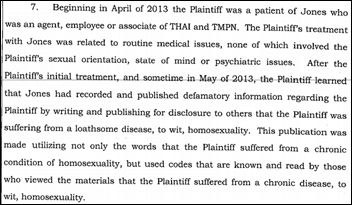
Torrance Memorial Physician Networks blames its EMR for allowing one of its doctors to code “homosexual behavior” in a male patient’s problem list. The patient, who is suing the doctor and practice for emotional distress and libel after seeing the entry in his chart after the hospital said they would remove it, says the doctor argued that the medical community is still not sure whether or not homosexuality is a disease. The man’s chart was coded with ICD-9 code 302.0, “ego-dystonic sexual orientation,” a code that was retired in 1987 to describe someone who’s unhappy with their sexuality. According to a spokesperson, “Due to the highly complex software used in creating an electronic medical record, the incorrect code continued to exist in an electronic table only. As a result, this incorrect diagnosis code was included on a paper copy of the record, which was provided only to the patient.”
image

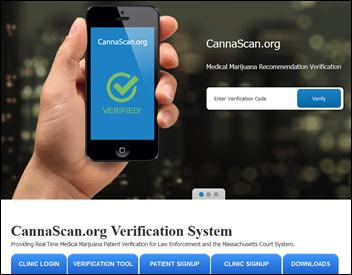
It’s surprising how much technology is being developed around the medical marijuana industry, but then again the financial alignment is clear. A radiologist and clinical owner develops CannaScan, a real-time, cloud-based validation system that allows Massachusetts police departments to verify that people found with marijuana have been issued a valid prescription. Massachusetts doctors were previously charging patients for ID cards, which the Department of Health found unethical, leading to CannaScan’s claim that it allows the “Good Guys to Weed Out the Bad.” The doctor says the software allows better care coordination and real-time patient management since it supports videoconferencing, scheduling, and notifications, or as he calls it, “A Clinic in the Clouds.”

image

Weird News Andy utters one of my favorite Monty Python lines in titling this article “I’m not dead yet.” A hospital in Australia apologizes for faxing death notices for 200 still-breathing patients to their family doctors, saying someone accidentally changed the templates involved. At least it’s not just the US healthcare system that’s keeping long-abandoned technology such as pagers and fax machines alive.
image

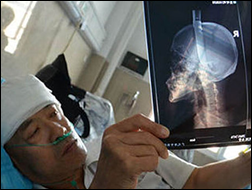
WNA also likes a story he calls “a knife on his mind.” A man in China taking a stroll feels pressure in his head, not realizing the cause until a shopkeeper points silently at the five-inch kitchen knife protruding from his skull. It had fallen from the balcony of a high-rise. He’s OK.


Sponsor Updates

  • NextGen describes the three tiers of the Patient Centered Medical Home.
  • The Meditech Solutions Group within Dell adds DataMotion Direct secure messaging to its portfolio of services.
  • CompuGroup Medical US and Teche Action Clinic (LA) team up to celebrate the 2014 National Health Center Week.
  • Levi Ray & Shoup announces the release of its Virtual Session Printer Agent.

EPtalk by Dr. Jayne

I attended a CME seminar this week which was actually pretty fun. It was good to get away from the grind of the IT world and remind myself why I became a physician in the first place.

Although most of us continue to have grumbles about payers, conflicting recommendations, and of course EHRs, we also have great stories about our patients and what it means to care for them. The course was on delivery of culturally competent care, which is pretty far away from what we usually deal with in the IT trenches.

Several of the physicians I met were interested in the fact that I gave up a busy solo practice to go into the world of IT. Many were from cities of a size that they may not have dedicated physician IT resources and were interested in how they could get more involved in the decisions that impact their practices and how they care for patients. Most were employed, although there were a few solo holdouts.

A couple are in direct-pay practice situations which I think is a very interesting solution to many healthcare issues. The patient sees the doctor, a fee is assigned, and the patient pays. If the patient wants to submit to insurance, they are given information about the visit so they can self-file. Although one uses EHR, the others don’t. All of them have opted out of Medicare and Medicaid. At least for now, all are happy.

It was strange to talk to physicians who aren’t dealing with MU attestation or the risk of audits. That’s become so much of our world lately. It was invigorating to see whether the grass is greener on the other side or not. I’m not interested in hanging up my IT hat, but I certainly would consider that model if I went back into a continuity-type primary care practice. It reminds me of the physician I saw when I was a kid.

Of course not being connected has its disadvantages. I don’t think I’d take it that far. I like the benefits of EHR too much to go back entirely.

Speaking of e-prescribing, I mentioned that I enrolled in the free Allscripts eRx product through the National ePrescribing Patient Safety initiative. Although the registration process was easy, I still am not set up to e-prescribe. Apparently they need to verify my NPI number. First they asked me to fax proof of my NPI, which I don’t have – I don’t have the original enumeration letter from way back when. I also don’t have a fax machine.

I asked if I could email it. They said yes, but again I need to provide proof. They helpfully directed me to a website where I could look myself up and find my NPI number, which I already knew and submitted to them. I’m not sure why they couldn’t go to that website and verify that the number I provided matches my name, but instead sent me 12 emails and called the office multiple times to tell me to go take a screenshot of a public website and email it to them.

I was finally able to find time to do that and sent it off, so hopefully they’ll get me set up soon. In the meantime, the system isn’t that useful since we don’t have a demographic interface to it and everything has to be manually keyed. Looks like I’ll be going back out to look for other vendors regardless of the outcome with the NPI.

clip_image002

From The Grey Goose: “Re: Allscripts user group meeting in Chicago. My kind of town! Check out this view from my hotel room.” I wasn’t sure initially if this picture was real or from a postcard, but I can only hope I have such a great view when I’m in town for HIMSS. This will be an interesting HIMSS for me since we’re in the middle of consolidating our systems. By the time it rolls around, we’re likely to be under contract with a new vendor. That will put a whole new spin on things.

The Allscripts user group meeting is in full swing and purports to have a Thursday night client event with bands Styx and The Gin Blossoms performing. Sounds like a great time and I hope some of the attendees share pictures. I’m off to the airport now. It will be good to sleep in my own bed before handling the torrent of emails that flooded in while I was away.

What’s your favorite vendor user group client event? Email me.


Contacts

Mr. H, Lorre, Jennifer, Dr. Jayne, Dr. Gregg, Lt. Dan, Dr. Travis.

More news: HIStalk Practice, HIStalk Connect.

Get HIStalk updates.
Contact us online.

 

125x125_2nd_Circle

Readers Write: Lessons on How to Survive in Healthcare

August 14, 2014 Readers Write 3 Comments

Lessons on How to Survive in Healthcare
By Nick van Terheyden, MD

image

From Samsung to Google to salesforce.com, the flurry of tech companies making a healthcare play over the past few months has left me both excited and dismayed. Excited because these companies have, in their own ways, revolutionized the way people interact with technology. Dismayed because of the steep hill they must climb and their battle to truly make their mark in the healthcare space.

We’ve seen it before. Tech companies dipping their toe in the water and then jumping back when they start sinking ankle-deep and losing their footing. From my 25+ years sitting at the intersection of medicine, technology, and policy, here’s my advice to these tech giants looking to make their mark in healthcare.

  • Get out of your comfort zone and consider the clinician. One of the biggest misses for these tech companies entering into healthcare is they’re expecting the patients to drive the revolution. That’s where they’re comfortable – with consumers. But so much happens on the clinical data side that needs to be factored in. Data needs to flow both ways. Even more importantly, doctors and nurses are drowning in a morass of technology and data that in many ways is hindering their ability to do their jobs effectively and with the passion they had when they entered the field. Add on the fact that working with and interpreting information gathered by a clinician about patients is not a pure art or science. That makes it hard to create consistency in working with it. While a patient app, sensor, or portal is nice, any company entering into healthcare needs to pay as much attention to the clinician as to the patient.
  • Build trust. We’re not making widgets. Google can’t mine healthcare data the way it mines ads and shopping data. It’s one of the major reasons they’re feeling the pain — it doesn’t fit into their core business. Healthcare data comes with all sorts of security and regulatory challenges, but even more important is that the healthcare consumer is a different kind of consumer and implicitly trusts their healthcare professional. They are already wary of ads targeted to their own needs – layer in data about their prostate exam and it becomes even more personal and they’re on the defensive. People interacting with the healthcare systems are typically vulnerable, stressed, and sometime scared. They need to trust their sources. Companies like Apple and industries like banking have built enormous trust with consumers, but replicating that in healthcare requires a different approach.
  • Stop looking for standards and release data from hostage. For these companies to be successful, they need to learn to operate outside of the world of data standards. Google was wildly successful moving into email, successfully because the iMac and Simple Mail Transfer Protocol (SMTP) made it easy. There’s no such advantage in healthcare. There are so many variations of standards – from Health Language 7 (HL7) to Clinical Document Architecture (CDA) to the Continuity of Care Record (CCR) and Digital Imaging and Communications in Medicine (DICOM) – that even when they do exist, they’re insufficient for sharing. But there may be an opportunity for Google or another company to actually create a new standard and have it take off. While Google is good at navigating and working with large amounts of data (i.e. Google Maps is constantly updating itself to have the most accurate information), the truth is that patients are ultimately going to own their healthcare data. For anything to change and for progress to be made, it all needs to be easily shared. How companies can turn a profit from shared data remains to be seen.

The more innovation in healthcare, the better for all of us. We need it more than ever. But any new entrant into the space needs a little Healthcare 101 to be successful and to make a difference in the lives of patients, clinicians, and their caregivers. 

Nick van Terheyden, MD is chief medical information officer of Nuance Communications of Burlington, MA.

Readers Write: The Looming Leadership Shortage

August 14, 2014 Readers Write 3 Comments

The Looming Leadership Shortage
By Frank Myeroff

image

Executives all the way up to CEOs and CIOs are expressing concerns about the looming leadership shortage in the US and around the globe. Because this shortage will hinder business growth, companies are in hot pursuit of professionals who demonstrate leadership potential at a greater rate. They are also willing to invest more resources in leadership programs. In fact, a survey conducted by The Conference Board and Right Management (talent, career, and management experts) indicates that businesses plan to spend 37 percent more on leadership programs this year than they did in 2013.

We’ve identified 10 principles of successful leaders:

  1. Vision. A leader has the ability to share a dream and direction that inspires others to follow.
  2. Trust. Without trust, vision can’t happen. A leader must walk the talk in order for people to give up what they know and venture into the unknown.
  3. Participation. A true leader can unleash the potential in others and get the best from them as they work to accomplish company initiatives.
  4. Learning. Leaders have a thirst for continuous training. Applying this knowledge creates real customer value.
  5. Respect. True leaders respect and have a deep appreciation for people’s differences, and as a result, are able to cultivate more committed employees.
  6. Innovation. Creativity and innovation are essential elements to building a successful company. Leaders need to express original ideas and ingenuity to motivate and inspire others to follow suit.
  7. Honesty. The hallmark of a good leader is integrity, honesty, and morality. We need leaders who have a deep sense of purpose and are true to their core values.
  8. Community. Today’s leaders need to be measured over and above the success of the company. They need to do for others and show involvement in their community.
  9. Courage. An effective leader must have the courage to see difficult situations through to the end and accept responsibility for the outcome of decisions.
  10. Selflessness. Leaders should be servants who facilitate the success of others. They spark action in others by seeing the value of others. In return, others start to think more highly of themselves and their abilities.

Today’s leadership training programs extend well beyond traditional classroom instructor-led activities. More resources are being allocated to a full spectrum of leadership learning initiatives.

  • Coaching. Often senior managers will serve as coaches to develop the capabilities of high-potential performers and help them achieve explicit workplace objectives and goals. Coaches have a vested interest in improving specific skills and interpersonal relationships that pertain to specific jobs because it impacts the company’s bottom line.
  • Action learning initiatives such as business challenges and simulations. Action initiatives enable trainees to jump right into the real world of upper management. Most business simulations are used for business acumen training and development. Learning objectives include strategic thinking, financial analysis, market analysis, operations, teamwork, and leadership.
  • Critical thinking and cognitive ability assessments. Administering these types of assessments will measure the learning capacity as well as the problem solving and decision making ability of an individual.

The bottom line is that the demand for quality leadership in the US and around the world is expected to far outpace the supply. Organization should identify potential leaders and implement new and effective leadership training programs in order to stay competitive and improve performance of both people and the company.

Frank Myeroff is president of Direct Consulting Associates of Cleveland, OH.

Readers Write: For Small Practices, The Time Is Right for Business Intelligence

August 14, 2014 Readers Write 1 Comment

For Small Practices, The Time Is Right for Business Intelligence
by Matt Barron

image

Small medical offices are dealing with increased patient volumes, Meaningful Use, Accountable Care Organizations, ICD-10, and declining reimbursement. Accordingly, physicians are spending less time with patients and more time dealing with the noise that surrounds the business of medicine.

Many small practices already have a critical solution at hand — they just need a better way to access and use it. The solution is big data, a trendy term for all the digital information medical practices already have in the form of electronic health records, billing records, practice management information, and more.

The trick is that big data alone doesn’t do much, and until recently, the software that small medical practices need to turn all that data into meaningful business intelligence was too expensive and difficult to use.

Now business intelligence software is more advanced and ready to address the needs of small medical practices that have  been wary of adopting cutting edge software because it was too costly and cumbersome.

Let’s take a look at a few ways BI software can help boost the financial health—and the quality of patient care—at small practices:

  1. Market segment analysis. To help practices find and generate more revenue, the latest software enables geographic analysis that determines where patients are coming from so practices can better target their marketing efforts.
  2. Claims management. Advanced tools make it simpler to increase first-time reimbursement capture and support follow through on denied and underpaid claims.
  3. Financial overviews. Financial overviews and details on the state of the practice are available in seconds with automatic comparisons to key performance indicators. Physicians can view revenue cycle performance, and find out how many days it takes to collect on accounts receivable. Armed with this information, they can institute best practices, make comparisons among various payers, and increase the overall productivity of their practices.
  4. Compliance support. The latest business intelligence software is designed to work with and address new requirements and regulations. It’s ICD-10 compliant and can be used to track progress toward demonstrating Meaningful Use and earning stimulus money.
  5. Individualized patient care. Physicians can create customizable health plans to manage patient conditions based on demographics, diagnoses, lab results, and more. They can check on whether the plans are being followed, automatically determining whether patients had their tests taken and viewing the results. By setting up alerts and reminders, physicians can also see which patients are most prone to a chronic disease, how many risk factors they have, and what actions can be taken to successfully manage the disease or avoid it altogether.
  6. Aggregate patient care. Physicians can track patient health trends over time and send reminders to patients automatically, providing medical advice and suggestions. On a broader level, the latest software makes it possible to uncover patient population trends and spot disease outbreaks, even determining by ZIP code which population segments are most at risk.

Today’s business intelligence software is more powerful, more affordable, more secure, and far easier to use.

Matt Barron is COE leader of business intelligence and consulting at ADP AdvancedMD of South Jordan, UT.

Curbside Consult with Dr. Jayne 8/11/14

August 12, 2014 Dr. Jayne 2 Comments

clip_image002

Several readers were in contact this week to share their stories of what is going right in healthcare IT as well as to sympathize with my experiences in the trenches. Others tried to guess the location of the lighthouse – no one has nailed it yet and I’m reluctant to give up my favorite beach just yet.

From Northern Lights: “I wanted to share what we are doing based on big data. Evidence has shown the outcomes are better if the mother carries the baby for at least 39 weeks. We’re working to reduce the number of elective births before 39 weeks to zero statewide! My little ‘ole community hospital captures the expected due date from the mother at the first maternity encounter. Then we programmed the scheduling system to not allow scheduling of elective inductions or C-sections before the 39-week threshold. Rocket science, I know, but our hospital hasn’t had elective early deliveries in over a year.” She went on to say that a couple of the providers were afraid this would cause problems with vacation schedules, but accepted it once they saw the evidence. These are the kinds of interventions we should be doing with big data. I appreciate your sharing it with me.

From The Other Jane: “I saw Mr. H’s post about OBs having to take down the photos of the babies they’ve delivered, even when the photos in questions have been provided by the babies’ mothers. It’s sad that HIPAA is so restrictive.” I agree – I hadn’t seen that article before I read the Monday Morning Update. Most of our OB offices still have a baby board, so I forwarded the article to a couple of my colleagues. I thought our compliance offers were uber-conservative, but they haven’t caught onto this one yet. I doubt they read HIStalk and I’m going to pretend that I didn’t see the article.

I forwarded it to a couple of friends out of state as well. One sent back a copy of the consent form they keep on the checkout desk for parents who want to drop off a picture. Another said they’re skirting under the premise of implied consent and the parents have to physically place the picture on the bulletin board. The article mentioned fertility clinics not wanting to “out” parents who used an egg donor. I’m guessing that parents in that situation might not be so apt to give their infertility specialist a picture to post in the first place if they have that concern.

As a family doc who had a solo practice in a small town, I had to get used to patients who didn’t care about showing off their problems in the supermarket checkout lane. Patient privacy took a back seat to impromptu consultations or the chance to avoid a co-payment.

My favorite privacy violation took place one year during the Founders’ Day parade, when I was riding on the hospital’s float. A patient’s wife called over the crowd to tell me how much better her husband’s hemorrhoids were doing. No one batted an eye or looked shocked, which tells you a little about life in a small town.

Over on HIStalk Connect, Dr. Travis has written a fair amount about mobile fitness trackers and applications to promote health and wellness. I have used Garmin devices to track my runs for nearly five years. Unfortunately, my current one’s specifications for being waterproof didn’t stand up to my recent beach activities. I tried to resuscitate the patient using a Tupperware container full of rice, a Ziplock bag with silica gel, and even prayer, but it could not be saved.

I only use a fraction of its capabilities and use the same routes all the time, so I thought I’d test drive using a regular sports watch and manually logging my activities on the GarminConnect website. Even though I had the same data points, there was something less satisfying than having all the details for each unique run. I hadn’t realized how much I had subconsciously bought into the concept of the quantified self until I could no longer track my activities.

I could have done an out-of-warranty replacement for my GPS, but I decided to instead go for something newer and smaller. The process of trying to find the “right” device was daunting to say the least. One of my vendor friends turned me on to the DC Rainmaker blog, which had some great device comparisons that ultimately helped me make up my mind. I’ve never used a Fitbit or any of the other activity trackers, but ended up selecting a running watch that also has those capabilities. It was actually the battery life that made me choose that device over a similar one, but I thought I might have fun with some of the other features.

I braved the back-to-school tax-free shopping madness and it’s on the charger for tomorrow morning. I can’t wait to wear it to work. The inactivity indicator tells you to MOVE when you’ve been sitting more than an hour. I think that feature might become an integral feature for Meeting Monday.

What do you use to track your activities or quantify yourself? Email me.

Email Dr. Jayne.

Monday Morning Update 8/11/14

August 9, 2014 News 5 Comments

Top News

image

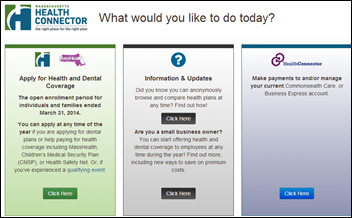
Massachusetts will upgrade Massachusetts Health Connector instead of piggybacking on Healthcare.gov, officials decide. The state will replace fired contractor CGI, to which it has paid $52 million, and replace it with Optum. The struggling site has cost $108 million so far.


Reader Comments

From Chris: “Re: jaded by the industry. We vendors are jaded too because it is a very difficult industry to serve. Fat cat EMR vendors have stolen from hospitals for years for very little value or improved outcomes. Then ACA just dumps millions into the hands of the same vendors, starving those innovating and trying to change a culture from the ‘80s. We have to deal with absurdities like IE7 (and IE8, 9, 10, and 11) while we push boundaries with iPad. There is so much apathy and very little standardization and consistency from one hospital to the next. You have to laugh at the amount of money that’s being spent to convert to electronic medical records and protect privacy. Paper wasn’t so bad after all and it was certainly cheaper. Until human behavior changes and the FDA starts protecting our food supply, we’re just fooling ourselves about improving healthcare.”

image

From Sticky Clicky: “Re: Habersham Medical Center. Which EHR forced them to return their Meaningful Use payments due to lack of capability?” They’ve been running Meditech forever, I believe. The hospital spent $3 million on software upgrades and attested for Stage 1, but later found that “a statement we made to CMS that it would work was in error” so they returned the $1.5 million in incentive money.

From Equitable: “Re: a recent vendor raising debt funding. I’m guessing it’s because they failed to raise equity after hiring Blair to try. Investors were concerned about the viability of an e-prescribing vendor at this point in the market.”

image

From Certified: “Re: LabCorp. Nationwide systems down as of noon Friday. Radio silence from corporate. Why aren’t they at Starbucks informing customers by Gmail? They can afford elite collection agencies, but their IT systems are primitive.” Even LabCorp.com is down as I write this Saturday evening and their portal log-in page returns an internal server error. That’s some major downtime.


HIStalk Announcements and Requests

image

Two-thirds of poll respondents think the federal government should develop EHR interoperability standards and make them mandatory. New poll to your right (or here):  which EHR vendor is best positioned to support population health management?

Thanks to the following sponsors, new and renewing, that recently supported HIStalk, HIStalk Practice, and HIStalk Connect. Click a logo for more information.

image
image
image
image
image
image


Last Week’s Most Interesting News

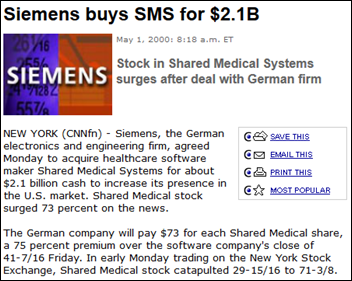
  • Cerner announces that it will acquire the healthcare IT business of Siemens for $1.3 billion in cash as Siemens finally unloads the business it bought in 2000 for $2 billion, making Cerner the biggest vendor in the industry in terms of revenue. Cerner’s interest is buying a captive audience for conversion to Millennium, incorporating patient data from the legacy systems of Siemens into a population health management system, and using R&D to blur the line between diagnostic and therapeutic equipment and IT systems in a post-EMR world.
  • Six Wisconsin health systems announced their affiliation to manage populations and earn business, including sharing patient information from the Epic system used by all six to deliver care and manage patients across institutions.
  • The annual EHR report by the Robert Wood Johnson Foundation finds that HITECH-incented hospitals and practices have rapidly implemented basic EHRs, but few are using them comprehensively and only a tiny percentage of users are ready for Meaningful Use Stage 2.
  • HHS OIG released a report that said ONC’s certification program doesn’t focus enough security issues ,such as enforcing password complexity and managing user privileges.
  • The State of Vermont ends its $83 million health insurance exchange contract with CGI, saying the site still isn’t fully functional.
  • Allscripts announces Q2 results that meet analyst expectations.

Acquisitions, Funding, Business, and Stock

image

Voalte will open Voalte Labs, an independent research center, in its home town of Sarasota, FL. It will be run by Don Fletcher, PhD, the company’s chief scientist.

image

From the Allscripts earnings call:

  • President and CEO Paul Black says the company will benefit “as clients look for solutions that are both interoperable and fully integrated, something Allscripts’ open platform is uniquely positioned to provide.”
  • The company’s one Sunrise hospital sale in the quarter was to a 78-bed hospital.
  • Black says the company’s new “fusion” technology will integrate parts of dbMotion, Sunrise, TouchWorks, and Pro.
  • The company blames reduced revenue vs. 2013 on “a continued shift toward subscription software arrangements.”
  • Maintenance revenue dropped as customers moved off MyWay.
  • The company blames flat transaction revenue on Medfusion, which cancelled its agreement with Allscripts claiming it wasn’t getting paid and that Allscripts was urging its portal users to switch to Allscripts acquisition Jardogs, now called FollowMyHealth.
  • The company is targeting Siemens customers now that its business will be acquired by Cerner.
  • Allscript expects international business to double as a percentage of total revenue, from 5 percent to 10 percent.

image

The CEO of Siemens Healthcare, quoted in the announcement that it will sell its health IT business to Cerner, said:

We have continuously invested in our HS-portfolio and achieved significant progress on the technology side. At the same time, we realized that business success of our hospital information systems could not always keep pace with our competition. Additionally an increasing number of country-specific requirements, such as resulting from US healthcare reform, make it increasingly challenging to achieve sufficient scale effects. Going forward we will focus on the development of information systems that support our businesses in laboratory diagnostics as well as imaging and therapy.


People

image

Patient data monitoring app vendor Conversa Health appoints Peter Levin, PhD (US Department of Veterans Affairs) to its board.


Announcements and Implementations

image

Google announces availability of preview version of its Google Fit software development kit. It allows programmers to access a user’s fitness history as recorded on Android-powered apps and sensors. Google Fit is scheduled for a fall release.


Government and Politics 

image

Oracle sues the state of Oregon, claiming that the Cover Oregon health insurance exchange owes it $23 million for using its software. This follows the state’s announced intentions to sue Oracle for the $134 million it paid it to develop the site, which never went live because of problems. According to a state spokesperson, “The state fully expected to end up in litigation over Oracle’s failure to deliver." Oracle says the state failed to define system requirements, focused on the site’s appearance instead of its functionality, and failed to hire a systems integrator. Oracle adds that state officials went on a 60-day day retreat to define specifications but “returned empty-handed.” Legal experts say the state probably won’t win its lawsuit against Oracle because of the state’s weak contracting practices and the fact that its actual contract is with Dell, which paid Oracle time and materials as a subcontractor. Meanwhile, the state is planning to dump Cover Oregon and use Healthcare.gov after spending $250 million in federal taxpayer money on the failed website.


Innovation and Research

Here’s how surgeons use TedCas’s Microsoft Kinect-powered user interface in the OR.


Texas Health Resources / CVS MinuteClinic Affiliation

image

CVS Caremark and Texas Health Resources announced an affiliation three weeks ago to provide convenient primary care services such as medication counseling, chronic disease monitoring, and wellness programs at CVS/pharmacy stores and MinuteClinic locations. The organizations hope to keep people healthier and out of the hospital and ED. I spoke to Barbara Adams, VP of Innovative Technology Services for Texas Health Physicians Group / Texas Health Resources about the relationship.

She says the driver for THR was to increase its access points. She said, “We have 250 clinics in DFW. We wanted to be able to refer after-hours patients so they don’t have to go to the emergency room. Many of the THR ED patients don’t have primary care doctors.”

Minute Clinic is staffed by nurse practitioners. Texas law requires physician supervision in the form of a review of 10 percent of charts. CVS will pay THR’s physicians for providing that supervision. THR also may gain referrals if patients choose them from the list MinuteClinic provides.

CVS is using a homegrown EMR but is moving to Epic, which THPG already uses. For now, the organizations will exchange information using Surescripts. The NP can push a message into THPG’s Epic system and the organizations can exchange CCDs over the HISP. Once CVS goes live on Epic next year, message exchange will be directional using Epic’s Care Everywhere.


Other

image

TechCrunch profiles five-employee PicnicHealth, which offers a $39 per month personal health record that is populated from information the company obtains by performing manual records requests for a person’s encounters. The fee also includes ongoing digitization of new records, synching with patient portals, and unlimited records delivery to doctors. The company’s official address is a San Francisco apartment.

image

HIPAA worries are causing obstetricians to remove “baby boards” that feature photos of babies they’ve delivered from their office walls. An OCR representative confirms that the practice is illegal even if the family sends the picture for that purpose since “implied consent” doesn’t count.

A new regulation in India requires doctors to write prescription in all capital letters to avoid sloppy cursive handwriting that was causing medication errors.

image

A California pathologist is charged with embezzling $500,000 from the pathology company that promoted her to CFO, with one of her first accomplishments being to give herself a raise from $226,000 to $739,000.

Weird News Andy says this story involves a million-dollar typo. A family who purchased  health insurance through Nevada’s health insurance exchange finds themselves on the hook for $1.2 million in medical bills related to premature birth of their daughter because of an incorrectly entered date of birth. The state has already fired Nevada Health Link’s contractor Xerox, who says the only way to add a newborn is to cancel the family’s policy and start over.


Contacts

Mr. H, Lorre, Jennifer, Dr. Jayne, Dr. Gregg, Lt. Dan, Dr. Travis.

More news: HIStalk Practice, HIStalk Connect.

Get HIStalk updates.
Contact us online.


125x125_2nd_Circle

News 8/8/14

August 7, 2014 News 16 Comments

Top News

image

Six Wisconsin health systems that cover 90 percent of the state create a network to share resources, manage populations, and attract the business of employers, insurance companies, and individual insurance holders. All of the 44 hospitals owned by the unnamed network’s members use Epic and will share their Epic EHR information to manage populations and deliver care across facilities. The systems are Aspirus, Aurora, Bellin Health, Gundersen, ThedaCare, and UW Health. The board chair of the network says the members chose a virtual affiliation because working out the financial and administrative details of a merger would have taken too long.


Reader Comments

From Pink Slip: “Re: hospital IT department layoffs. Do  you agree that the number seems to be increasing, or am I just noticing the announcements more?” That’s a good question to pose to readers, who are welcome to provide their thoughts. I asked the Advisory Panel about layoffs recently and few reported any, so I’m skewing toward it being perception more than reality.

image

From Frazzled CIO: “Re: Cerner. Our hospital announced the same day of the Cerner-Siemens announcement that we’re in discussions to acquire another hospital. We’re Cerner and they are Siemens. The announcement may have sent me over the edge if I hadn’t already been alerted through HIStalk of the potential deal and pondered the potential impacts ahead of time. Awesome work and thank you.” I will pass those thanks along to the readers who alerted me months before it happened and then provided thoughtful analysis Tuesday when it was announced. The “analysis” run by other sites was generally lame and dull, showing a remarkable lack of insight in gravely pontificating that Cerner should keep Millennium as its showcase platform (were they seriously thinking that Cerner would be tempted to lead with Soarian?) or that Cerner paid too much (they bought the Siemens IT business at the fire sale price of one year’s revenue, most of it probably recurring since Siemens isn’t selling much, and those customers can’t bolt short term.) The financial risk to Cerner is low as long as they don’t let the Siemens mess distract them.

image

The Siemens business needed to be bought because they had trashed it in the 10 years they owned it, as is often the case when a big company jumps into healthcare IT because it seems like easy money and because it makes their executives fell Silicon Valley-ish. I will repeat my mantra: only three companies (Epic, Cerner, and Meditech, although CPSI might logically be included) are serious competitors in the hospital core systems market and all three (a) built most or all of their products on a single platform; (b) sell and support one core system; (c) rarely acquire companies; and (d) haven’t themselves been acquired. Cerner breaks what would have been my fifth rule since they aren’t privately held, and now that they are buying the Siemens business, they will violate my third rule as well and we’ll see how that goes. Siemens was waiting to fall – events of similar importance that may happen one of these days that would put the industry into a similar frenzy are (a) Judy Faulkner retires and hands off Epic to her successors; (b) the retirement-age owners of Meditech decide to sell it given lagging market performance and the chance to cash out at the top; (c) Allscripts throws in the Sunrise towel because of infrequent sales, poor ambulatory integration, and a missed DoD contract if that happens; and (d) DoD’s selection makes Cerner, Epic, or Allscripts a household word but threatens to suck the energy out of them with endless government bureaucracy and implementation challenges.  

image

From Brian Yeaman, MD: “Re: Cerner acquires Siemens. In my longstanding history with Cerner as a major client in interoperability and around HIE an population health for nearly a decade, we’ve seen Cerner commit and engage deeply around interoperability. We’ve had great success with Cerner native solutions as well as acquired solutions and their ability to support all platforms while integrating the best of both worlds regarding the front and and back end for HIE, Long Term Care, reporting, Direct and other EHR integration have empowered tremendous success in our efforts in Oklahoma. I’m very confident that this will be a big win for existing and new Cerner clients via Siemens alike. Cerner’s efforts to enhance interoperability and the entire care continuum and care regions like Coordinated Care Oklahoma just took a quantum leap, in my opinion, to the good.” Brian is chief administrative officer of Coordinated Care Oklahoma. I think it’s a good deal all around. Siemens was not that great of a vendor, hoarding its legacy system recurring revenue and pretending the world hadn’t changed since the swinging SMS 1980s. Its customers would have been faced with abandoning the company’s antiquated core systems at some point anyway since Siemens did little beyond half-heartedly dangling the unattractive Soarian bait in front of them with no bites. Cerner will force Siemens customers to finally make a long-term choice, hopefully soothing the pain of the ripped-off Band-Aid with attractive Millennium pricing and conversion assistance.

image

From Holly Mathews: “Re: Epic. Putting the health back in healthcare—that’s been a big initiative of mine at Epic for the past three years. It finally seems like preventative care is coming to the forefront of EMR attention or at least it’s slowly being pieced together. There is absolutely more emphasis on what folks are to doing to maintain a healthy lifestyle. To a new Epic customer today I responded, ‘Yes, we do integrate with Fitbit.’ There is a genuine desire to promote and manage not just the patients who are sick. I work at Epic as a project manager, but I also race bikes on a professional cycling team. Last week I won a stage at the Prairie State Cycling Series in Chicago. I thought it was pretty cool. 🙂 Epic will ultimately help drive the shift of medical practice paradigms to focus on and manage active lifestyle choices.” My favorite part of Epic is the youthful, idealistic enthusiasm of its mostly 20-something very smart employees with no pre-Epic healthcare experience who jump in with both feet, have fun, and work hard. My stock in trade is jaded, world-weary cynicism formed by many years of being ground down by clueless executives, dysfunctional vendors, and healthcare decisions made by everybody except patients and clinicians, so it’s fun to see new optimistic new blood who think they can change the world and who in fact just might, no matter who they work for.

From OGMD: “Re: Practice Fusion. Don’t even mention their name on HIStalk – cover them on HIStalk Practice. The only docs I know that use it are one-doc practices too cheap to purchase a best-of-breed EMR. They still use paper charts because Practice Fusion comes with no training and is not robust enough to go entirely paperless.”  

From LFI Masuka: “Re: patient portals. The government mandates them, but patients will go online when it’s convenient or necessary. Kaiser’s success didn’t come from government mandate – they have things set up where it’s a bigger hassle to not use the portal than to use it. Most healthcare organizations don’t have such comprehensive control of the patient experience. My PCP is on Centricity, my specialist in the same clinic is on paper, and the local hospital is on an old version of Meditech. There’s a rudimentary RHIO trying to aggregate everything. As a patient, what compelling reason do I have to use a portal on any of these systems? I might trend some vitals or use it more if I had emergent health issues, but that won’t push the mandated numbers. We are throwing millions of dollars at technology in search of a problem.”

From Curious and Curiouser: “Re: patient portal opt-in. People are building the field to plug into the CCD format, but not actually placing the question anywhere it can be answered, essentially making every patient opt-in. What is your readers’ experience with opting in/out of portals? Are they asking the question or just opting everybody in to meet their numbers? It bothers me that the patients’ wishes aren’t being taken into consideration.”

image

From The PACS Designer: “Re: Apple. Reports suggest that the iPhone 6 could be announced on September 9.” 


HIStalk Announcements and Requests

image

This week on HIStalk Practice: Dr. Andy rants about the review of systems and checklist solutions. Telemedicine’s future in small practices comes into question. Big-box retailers continue to encroach on the business of primary care. Patients go the Priceline route for non-emergency care. Over 100 medical groups call for delay of the Open Payments system. Physician and EP Stage 2 MU attestations continue to underwhelm. Mark Gettleman, MD leaves brick and mortar for mobile and online at Goofy Gettwell Pediatrics.

This week on HIStalk Connect: Dr. Travis discusses the overlooked direct primary care segment of digital health and why he’s excited to see what new technologies it spawns. The FDA publishes draft guidance reducing its regulatory oversight on a large segment of Class I and II medical devices. Doctors On Demand raises a $21 million Series A to expand its national telehealth platform. Researchers at the Medical College of Wisconsin link text message-based reminders with improved preoperative instruction adherence. 

image

I almost never look at HIStalk readership stats, but May always starts the summer slowdown that runs through September. Surprisingly, the numbers jumped sharply up this past May despite mostly routine news and the rise has continued through June and July to record levels. Tuesday’s Cerner-Siemens announcement drove record single-day traffic with 10,600 visits from 7,800 unique people – I run HIStalk on a high-powered dedicated, rack-mounted server (geek alert: Xeon E3 four-core CPU, dual 7,200 RPM primary disks, 120GB SSD for MySQL databases, 16GB DDR3 memory, CentOS 64-bit Linux) and the page still took forever to load on Tuesday afternoon when the site was slammed. Visits in the past 30 days exceeded 150,000 and the number of unique people reading is 38,000, more than double the July 2013 total. I get an amazing amount of support from readers, sponsors, and contributors and I’m glad to see the numbers reflect that.

Listening: new from Mary Lambert, an eloquent and empowering 25-year-old Seattle singer-songwriter with a heartbreaking history of sexual abuse, body image problems, and bipolar disorder whose dark and emotional live performances often elicit tears from her audience. Lyrics: “Girls like us are hardly ever wanted, you know. We’re used up and we’re sad and drunk and perpetually waiting by the phone for someone to pick up and tell us that we did good. Well, you did good. I know I am because I said I am. My body is home.” If that’s not your thing, the new Godsmack rocks – my hand is tired but happy from desk-drumming.


Acquisitions, Funding, Business, and Stock

image

Allscripts announces Q2 results: revenue up 2 percent, adjusted EPS $0.09 vs. $0.05, meeting analyst expectations for both.

image

Practice Fusion acquires Ringadoc, which it calls a “telemedicine platform” and “next generation patient-doctor communication tools” vs. Ringadoc’s self-description as “medical answering service software.” The appeal to Practice Fusion — other than the fact that its CEO is an investor and mentor to the now-acquired company — is that Ringadoc is testing a doctor consultation service for consumers, although it seems to be phone-based rather than online.

image

The private equity firm that has owned healthcare product research vendor MD Buyline since 2011 sells the company to contract management solutions vendor TractManager.

image

Valence Health says its first-half revenues are up 51 percent year over year and it has added 10 clients so far in 2014. Headcount has risen 150 percent in three years to 470 and the company just leased 125,000 square feet of new office space in Chicago.

image

Walgreens announces that it will spend $15 billion to complete its acquisition of a European pharmacy and beauty company, but will surprisingly decline the resulting opportunity to declare its headquarters offshore to save a fortune in US taxes because of expected protracted IRS challenges and consumer backlash. The stock market’s reaction: shares dropped 14 percent. Meanwhile, the CIO of Walgreens hopes to leverage IT to meet the company’s goal of cutting operating expenses by $1 billion annually as it expects annual revenue to jump to $130 billion in the next two years.

image

Doctor on Demand, which offers $40 video visits, raises $21 million in a Series A round, with Sir Richard Branson as one of its investors. The company is recruiting doctors to staff its service, touting flexible shifts, $200K income for full-time work, no overhead, malpractice coverage, the ability to work from anywhere with Internet access, and easy-to-use paperless technology that is “more like applications they use personally than traditional medical software.” Sounds like the job-frustrated Dr. Jayne should work some shifts and report back.

image

Optum-owned QSSI, which was called in to save Healthcare.gov, will be the lead office tenant at a new Columbia, MD downtown office project scheduled for completion in July 2016.

image

CoverMyMeds will lease 64,000 square feet of office space in Columbus, OH to handle its expected growth from 70 to 180 employees in the next few years.

image

DrFirst secures $10 million in debt financing, which it will use to expand its development resources and prepare for international expansion.


People

image

Peter Csapo (VHA Inc. and McKesson before that) joins Accretive Health as SVP/CFO as the struggling company prepares to restate its financials.

image

CompuGroup Medical US promotes Werner Rodorff as CEO/SVP, replacing Norbert Fischl.


Announcements and Implementations

MModal joins athenahealth’s More Disruption Please program, adding its Fluency Direct and Fluency Flex mobile solutions to the MDP Marketplace.

Medicity and athenahealth will improve interoperability between their systems.

image

T-System donates T Sheets to QuestCare Clinic, a Dallas-area non-profit urgent care clinic. It is operated in partnership with Watermark Community Church and sees patients without requiring ID, insurance, or appointment, asking only for a $10 donation.

Children’s National Health System (DC) goes live on MedAptus’ dual-code ICD-10 solution for 600 physicians and 400 nurses.


Government and Politics

A VA hospital social worker and union president who claimed in May that her hospital was keeping secret patient waiting lists says the hospital harassed her after she met with a White House representative in July by taking her desktop PC away for a week to encrypt it.

A review of 2013 AHA hospital survey data finds that only six percent of hospitals met Meaningful Use Stage 2 criteria. The actual number is probably even lower because the authors looked only at EHR capabilities, not actual usage in tricky areas such as sending summaries of care and allowing patients to access their own information. The study also did not take into account where hospitals stood with regard to 2014 Edition criteria.


Other

A former Epic employee posts details of the company’s “cryptic raise/bonus black box,” explaining that the normalized results from ranking each employee against co-workers in the same role are sent to the compensation team that assigns raises. This person was hired right out of college at $60K and earned bonuses of $16K and year-end raises of 18 percent and 10 percent. The annual salary of the employee, who was probably 24 when he or she left Epic two years later, was $84K. 

image

Can Sanjay Gupta, MD please get back to his medical practice and ask CNN to return to its regularly scheduled programming of cute cat videos and celebrity gossip?

image

An internist writes in a NEJM article what it’s like coordinating the ambulatory care of a newly diagnosed cancer patient. In the 80 days from the time the internist told the patient about a liver mass until the day it was removed, the patient saw 11 other clinicians, had 11 office visits other than with the internist, and underwent five procedures. The internist communicated with those other clinicians via 32 emails and eight telephone calls, adding another 12 calls with the patient or the patient’s wife. He concludes that such coordination is essential for patient safety, but is difficult since it involves distributed teams of people who don’t know each other and the healthcare system was not designed to support collaboration. The internist was modest enough to not point out that neither he nor his employer (Weill Cornell Medical Center) were paid a penny for all of his efforts.

image

The annual Robert Wood Johnson Foundation report on EHRs finds that:

  • Two-thirds of hospitals have received HITECH money, but few of them can meet Meaningful Use Stage 2 criteria.
  • 59 percent of hospitals are using at least a basic EHR, quadruple the percentage of just four years ago, but only 26 percent have a comprehensive EHR and that number has increased only 3.6 percent since 2010.
  • Of the physician practices that received a Medicare EHR incentive check in 2011, 12 percent didn’t get one in 2012.
  • Of the physician practices earned a Medicaid EHR incentive payment in 2011, 61 percent did not in 2012.
  • The only hospitals that fell on the wrong side of the “digital divide” are critical access and small rural hospitals.
  • Health information exchange is still in its infancy, with barriers being privacy and security, competition concerns, and lack of physician demand.
  • Most hospitals use their EHR to create organizational performance dashboards, but only about half use them to identify care gaps and allow doctors to query their data directly. The key barrier is lack of EHR dashboard and query functionality.

image

Weird News Andy speculates that patent trolls are getting bolder given this newly issued patent for this innovative process: (a) a patient calls a doctor’s office; (b) the receptionist records their information and asks the doctor if they want to talk to the patient; (c) if so, the receptionist calls the patient back, transfers the call to the doctor, and adds the recording of the call to the patient’s file. The article points out the infamous MMRGlobal/MyMedicalRecords, which sent threatening letters to practices who dared speak to their patients by telephone without paying it a license fee.


Sponsor Updates

  • Aperek posts highlights of its attendance at the AHRMM conference.
  • Blanchard Valley Health System extends its Wellcentive PHM initiative by instituting a Nurse Care Navigation program that nets significant ROI.
  • Boston Software Systems publishes a white paper on avoiding five myths of EHR migration and eliminating the chaos.
  • MEA|NEA uses the importance of a good website as an example of the importance of technology to growing a business in a recent blog post.
  • PerfectServe posts an article titled “The Changing Role of the Physician.”
  • Aprima kicks off its user conference in Dallas.
  • ADP AdvancedMD spotlights three smaller private practices using its cloud solution to stay clinically and fiscally efficient.
  • Kareo suggests six steps to take in hiring the right staff for a medical practice.
  • NextGen Healthcare announces a new name for its November user group meeting, NextGen One.
  • Premier Health (OH) discusses how it solved the challenges and complexities of payer pre-certification by deploying Passport Health’s OrderRite.
  • SRSsoft will participate in the American Society for Surgery of the Hand conference September 18-20 in Boston.
  • Allscripts shares what “Open” means for healthcare and why it’s so important.
  • IHT2 offers an infographic, “Analytics: The Nervous System of IT-Enabled Healthcare.”
  • Susan Niemeier questions whether the new cool thing is always the smart choice when it comes to technology on Capsule’s blog.

EPtalk by Dr. Jayne

clip_image002

Of course the big news around the IT corridors today was the announcement of Cerner’s purchase of the Siemens Healthcare IT business. We are using solutions from both parties in at least some fashion. I’m not going to say exactly which ones (or respond to a reader comment asking specifically what systems I use) because I’d like to keep my day job. Let’s just say we have multiple hospitals that we’ve acquired over time and thus have a variety of systems in play.

We’re consolidating, which made the announcement more interesting although it’s not clear at this point how the marriage will impact us. If we decide to chuck everything and move to a different vendor entirely (always possible, but I’m not sure we can scrape up that much cash) it might be a moot point. Unfortunately, so many of our users have grown accustomed leveraging multiple systems to get the work done that the idea of a single vendor isn’t as sexy as it once was.

There was exactly zero discussion of the merger in the physician lounge, which didn’t surprise me. Unless they have stock in a given vendor or were involved in a selection process, some of our providers are oblivious to what system they’re actually using. We’re one of those cutesy organizations that gives every system an acronym used in a branding campaign to assist with user buy-in. I once had a user tell an auditor that our vendor was “SMILE” because we had used that acronym for a go-live.

Coupled with the fact that some of our systems are from vendors that acquired other products that we already owned and morphed them into a suite of quasi-connected pieces under a single name, it’s a wonder we can keep track of everything that’s in place.

For those users who do care that we use multiple systems, one benefit of consolidating our vendors would be a more consistent user experience. We already do a fairly good job of interfacing the data from system to system so that users don’t have to duplicate data entry, but it would be nice to have a more uniform look and feel. I’ve been through several product demos as part of the consolidation effort and have to say that even among vendors purporting to be single system, the look and feel can vary dramatically depending on whether they purchased components or built the system from scratch.

In the same set of comments, Brian Too asked how physicians want technology to reconcile the “tactical” needs of point of care IT support with the “strategic” needs of population health and statistical capabilities. “How do you make the physician interactions with an EMR low-friction while still gathering enough information, of sufficient quality, to support the strategic imperatives?” The answer is a difficult one. The key is in finding an easy way to enter discrete data that physicians don’t perceive as “clicky” or overwhelming.

I’m personally holding out hope for voice-to-data in which narrative can be parsed to identify discrete elements. Physician notes could appear like the dictations they’re accustomed to, but the data could sit underneath, ready for the picking. Technologies are getting closer and closer, but we’re still not to the point where we can pull it off in the way physicians expect.

Even with the slickest user interface, most of our providers still perceive data entry as being something they shouldn’t have to do (even though they did it in the paper world, only with a pen). I think it’s a factor of the volume of data they have to enter now compared to the pre-MU, pre-ACO era.

He also asks: “How much of current physician griping is more about having lost a certain amount of workplace control versus serious mismatches between software capabilities and real workflow needs?” Particularly among ambulatory physicians (and especially among those whose practices have been acquired by a hospital or health system) loss of autonomy may be the majority of the problem. Many organizations do not do a great job with the change management piece of the EHR transition. I see them doing a similarly bad job in transitioning purchased practices from independent to employed models, especially when the organization desires to standardize workflows or centralize certain practice functions.

When we hire new physicians coming out of training, I don’t hear anywhere near the level of complaining that we do when we acquire practices. Most new physicians have used EHRs during training and they’re used to the limitations, so whether they’re using one system or another it doesn’t seem to be as much of a big deal. You’d think we get more complaining from our most tenured physicians, but we actually don’t. The most vocal and unhappy of our providers are in the 45- to 55-year-old range. They’re generally proficient users, but they also have the highest expectations for what the system should be able to do and don’t like it when it doesn’t deliver.

At this point my perspective is so warped, I’m not sure what an ideal EHR would look like. For more and more physicians, the ideal EHR looks like a scribe.

What is in your ideal EHR? Email me.


Contacts

Mr. H, Lorre, Jennifer, Dr. Jayne, Dr. Gregg, Lt. Dan, Dr. Travis.

More news: HIStalk Practice, HIStalk Connect.

Get HIStalk updates.
Contact us online.

 

125x125_2nd_Circle

Readers Write: Make It Happen

August 6, 2014 Readers Write 4 Comments

Make It Happen
By Mike Carr

image

I’ve been in healthcare IT for more than 25 years. While I’ve known and appreciated the impact we have on people’s lives, I had a recent personal experience that made me see the impact of what we do firsthand and reminded me of why we do what we do.

Unfortunately, my mom suffered a severe stroke in June from which she never recovered.  I was at the hospital with her for almost six days.  During that time, I got to know the nursing staff, therapists, neurologists, and palliative care team pretty well. This was an amazing team of healthcare providers and the best I’ve seen in all my years in healthcare – every one of them. They all treated my mom like she was part of their family. 

The entire palliative care team took the time to meet with our family to explain that my mom probably wouldn’t recover and the options we had. Almost everyone, including the chief neurologist, had tears in their eyes. This amazing group of people really cares about their patients.

During my mom’s remaining time in the hospital, all of her medical information, including any significant changes in her condition, was available to me whenever I asked. The EHR, PACS, etc. was all at her bedside. 

On one occasion, when I requested that she get additional pain medication beyond the standing order, the nurse immediately entered the request into the system. The doctor approved it and entered the order from his mobile device and my mom had her medication from the medication cart in about five minutes. To make that possible, someone understood the importance of a patient getting pain medication quickly, reviewed the relevant processes, integrated those systems, developed the workflows, and implemented the technology to make it all happen. 

I think it’s important, on a daily basis, to keep in mind why we do what we do and our role in making it happen. The medication order example is just one small example of how we can help improve patient care, but it made a huge difference for my mom at the time. The recent experience my family and I had with this amazing group of healthcare providers and their ability to effectively use technology to make decisions and treat patients made a very difficult time a little easier.

Shortly after my mom passed away, someone sent me this. I think these are pretty good words to live by.  

clip_image002

– Regina Brett

The one thing I would add: and make it happen. By understanding the importance of what we do and its impact on patients and clinicians, we can take the steps to review the processes, integrate the systems, develop the optimal workflows, and implement the technology to make it all happen.

Mike Carr is director at Aspen Advisors of Pittsburgh, PA.

Readers Write: How to Actually Get Patients to Engage with a Portal

August 6, 2014 Readers Write 9 Comments

How to Actually Get Patients to Engage with a Portal
By Zach Watson

image

From increased interoperability requirements to percentage benchmarks for online patient usage of digital assets, Meaningful Use Stage 2 has several requirements that are making eligible professionals sweat. Let’s address the latter of the two.

From a high-level view, getting more than five percent of patients to download, transmit, or view health information online should be low-hanging fruit. But as the Mayo Clinic famously found out, simply creating this type of functionality doesn’t guarantee engagement. Of a reported 240,000 patients who signed up for portal accounts, less than 12,000 had actually logged in 2013. In contrast, Nashville’s own Vanderbilt experienced significant success with getting patients to interact with their portal. During 2012, they reported 193,969 unique logins.

And for truly outrageous engagement numbers, one need look no further than Kaiser Permanente. A reported 4.4 million of Kaiser’s 9.1 million members use the online portal.

Meeting Stage 2 engagement requirements is doable. The disconnect arises from providers simply implementing technology without truly integrating it. Online portal access should be introduced in the context of the patient-physician relationship, not as an extra feature that patients can access should the compulsion strike.

Here are three actionable methods for crossing the five percent chasm:

  1. Get a mobile app. It’s well known that electronic health record functionality varies by product, so it’s natural that patient portal capabilities will too. Part of granting patients greater access to their medical records lies in the intuitiveness with which they can retrieve said information. If they are asked to type in a username and password from the web browser on their phone, it’s unlikely they’ll go through the trouble. Mobile applications are becoming standard across all business verticals because they are formatted for ease of use. If a patient portal doesn’t come with a mobile app for patients to download, the physician implementing it should demand one. Kaiser launched their mobile app in 2012. Patients downloaded it over 450,000 times last year.
  2. Do a walk-through. Patient satisfaction is inherently tied to interaction with the physician or other clinician. To create an environment in which patients will be receptive to new information, have a knowledgeable staff member walk patients through how to login and use the portal. Explain the benefits of scheduling appointments and refilling prescriptions online. Perhaps even have the patients navigate the portal for 60 seconds or so to make sure they’re comfortable finding all the information. Will this affect clinic time? Yes. Will it help meet Stage 2 criteria? Absolutely.
  3. Create some marketing. It doesn’t have to be anything too spectacular, but some signs in the waiting room detailing the benefits of patient portals can certainly spark some interest from patients who are waiting.

This type of online access isn’t unexplored territory. Patients already enjoy this freedom with their bank accounts, credit reports, and so on. They want to be able to schedule appointments online. Make sure they know that they can.

Who knows, maybe they’ll download the app while they’re in the waiting room.

The key is to embrace patient portals – and other information technology for that matter – as a foundational element to the way healthcare works going forward. It’s already a reality. Patients simply need to be shown how easy it is to use.

Zach Watson is an analyst at TechnologyAdvice of Brentwood, TN.

Readers Write: Why Payers Are Seeking More Consumer “Likes”

August 6, 2014 Readers Write 1 Comment

Why Payers Are Seeking More Consumer “Likes”
By Scott Rotermund

image

It’s no secret that payers are not well liked among consumers. In fact, recent data shows that only seven percent of consumers trust their health plan, only slightly better than the likes of oil and tobacco companies.

Additionally — and maybe even more importantly — when looking for health advice, only 18 percent of consumers turn to their health plan, which is startlingly close to employers at 12 percent. With a reputation for being stuck in concrete towers locked away from the real world, health insurance companies are increasingly working to connect with consumers and up their likability.

In their defense, health insurance companies earned a sour reputation of being the evil ogre denying claims because of how the market defined their role. It was a check and balance in the clinical system of physicians prescribing care and health plans assessing the value of it.

Now, with the rollout of Obamacare — be it good or bad — the payer’s role has changed along with its business model. Health plans are looking at the entirety of their populations rather than those seeking treatment. That is going from the 15 percent of its population that is in the “sickcare” system at any given time to 100 percent of the population, a startling and overwhelming change.

This shift is driven by the moral and economical desire to 1) prevent people from sliding into the sickcare system by keeping them healthy, and 2) build brand loyalty to retain low risk members. Retention is a primary focus for health insurance organizations, as the health insurance industry is now similar to the car insurance industry. People can shop around and receive premium reductions for good health just as they do for good driving. Innovating and transforming the customer experience is more important than ever as consumers are empowered to choose the payer of their choice.

How does an entire industry change its reputation from being the school principal to class president? It starts by building an emotional connection and providing something that genuinely impacts their life. It’s not passing out free one-size-fits-all t-shirts, but connecting with consumers on an individual level and getting them to take action.

Playing a more active role in optimizing consumers’ health is a huge leap for payers and inherently may not be immediately welcomed by consumers. Here are some down and dirty tips for health plans looking to become the cool kids in healthcare:

  • You can’t appease the masses. Take a personalized approach to supporting consumers in achieving their health and wellness goals. Similar to what we are seeing in the clinical setting with personalized medicine, personalized healthcare will have a greater impact and results. This is challenging when you managing a population of millions, which leads into the next tip.
  • If it works … partner with it. Some national plans have allocated millions into wellness and prevention programs and have not seen significant uptake. Take a card from cross industry collaborations like Apple and Mercedes and forge partnerships with companies that already have the asset or relationship you are looking to build. Companies that have a consumer mindset and can deliver an experience that may be outside a health plans’ expertise. Today’s on-demand, multi-mobile consumer expects to have a solution that speaks directly to them, about them. By leveraging a health optimization platform to deploy a personalized, interactive experience, payers have an effective and efficient way to support consumers in improving their health. Plus, a true integration platform will allow payers to plug in existing programs such as video health coaches or other digital resources so those investments to date pay off too.
  • Provide optimal rewards for optimal health. While one may assume that it’s human nature to take care of yourself, its been proven that incentivizing consumers for healthier behaviors pays off for everyone. In a recent survey, 96 percent of consumers said they would be healthier if rewarded. From premium reductions to badges, incentive-based tools can be the extra motivation consumers need to make a healthy choice or address chronic decisions. Payers can build a more “rewarding” relationship with consumers by celebrating both participation and outcomes with their members.

These activities are helping payers power up their relationship and the health of their population. Consumers will soon view their insurers as health advocates guiding them through an increasingly complicated healthcare system and toward a healthier way of life. 

Scott Rotermund is co-founder and chief growth officer of Welltok of Denver, CO.

News 8/6/14

August 5, 2014 News 15 Comments

Top News

image

Cerner announces its intention to acquire the assets of Siemens’ health information technology business, Siemens Health Services, for $1.3 billion in cash. Cerner Chairman and CEO Neal Patterson told HIStalk that “the broad driver is the post-Meaningful Use era” and the large R&D budgets of both companies. The combined organizations will have 20,000 employees, 18,000 client facilities, and $4.5 billion in annual revenue. Cerner expects the transaction to close in Q1 2015.

image

Lorre took notes during the announcement call:

  • The Siemens customer attrition rate has been improving. Cerner will give them a clear path to a stable future and help get them there. Some percentage of those customers would have ended up with Cerner anyway.
  • When asked why the Siemens business is worth acquiring now when it was shopped previously with no takers, Cerner EVP/CFO Marc Naughton implied that Siemens cut the price and was waiting for a strategic buyer that wouldn’t leave its customers hanging.
  • Two Cerner executives will join the leadership team of Siemens. Only the client experience and administrative functions will be combined in the short term.
  • Siemens has had flat revenue for a couple of years and Cerner will boost that. Siemens has invested a lot of overhead in an unnamed project that didn’t accomplish anything – it will be cut immediately.
  • Neal Patterson, asked why this acquisition will work when so many other large ones haven’t, said Siemens knows what it’s doing and can expand, especially in population health management, specifically with regard to interoperability and openness.
  • International support will be evaluated country by country.
  • Asked why he was suddenly open to an acquisition, Neal said that IT is now ubiquitous and government incentive money is running out. IT will be pressured to meet mandates and provide measures. Cerner will evolve to population health and become a bigger part of the new middle. Cerner is building the most integrated EHR with integrated revenue cycle. Neal said he didn’t have a lot of enthusiasm about the transaction initially, but he went back to the two questions (would it slow Cerner down and can Cerner win over Siemens customers).
  • Neal said much of the industry’s healthcare IT talent comes from Cerner, so they have resources to draw from.
  • Neal said Siemens is a good asset with great talent at a fair price. They are passionate about innovation.

Reader Comments

image

From Anon: “Re: Siemens. I read that the company is the largest application hosting vendor in healthcare. Any truth to that? It might add credence to Cerner’s bid.” I wouldn’t be surprised since they’ve been running remote hosting (or is that “offering cloud-based SaaS solutions?”) since the timesharing 1970s. That would provide a guaranteed revenue stream, at least until clients move off those legacy platforms, the pace of which might well be accelerated by the change of ownership.

From Black-Scholes Supermodel: “Re: Cerner acquiring Siemens. If that happens, I will take you to the biggest steak dinner ever at Gibson’s at HIMSS, wear a pink tutu, and dance on the table until I get thrown out.” That’s from a July 23 email to me from a very good equities analyst joking about my running the improbable Cerner-Siemens rumor yet again on HIStalk (going back into May). Now that I have both dinner and entertainment to look forward to at HIMSS, I’ll share the analyst’s logic: (a) Cerner says they don’t need to buy market share because their products are good enough on their own; (b) Cerner  integrates everything except a few ancillary plug-ins and doesn’t want more product lines; (c) Cerner already has ample opportunity in the rip-and-replace market, which it estimates at 2,000 customers, so it doesn’t need a fast track into the Siemens legacy business. The analyst concludes that Cerner buying the old SMS means that Cerner’s growth is stagnating and it needed to ignore its long-held principles to feed the beast.

image

From HIS Junkie: “Re: Cerner acquiring Siemens. Looks like the John G magic could not work. He gave it a good try, but this was a sinking ship for over a decade. Let’s see, Siemens bought it for about $2 billion, gets 1.3 back … that’s only about $100 million per year loss! ..and it’s a great opportunity for Epic. Adds another 500 or so prospective clients to the mix.” Siemens destroyed quite a bit of corporate value, not to mention it paid way too much for SMS in the first place back in 2000, a 73 percent premium over SMS’s share price at the time. The division’s annual revenue today is the same as it was in 2000 and Siemens was anxious to unload the company for just 1x revenue.

From HealthITPundit: “Re: Cerner acquiring Siemens. So Judy Faulkner got Neal to bite! It was her plan all along that if Cerner bit more thank it could handle, Epic would be the last vendor standing. This will be an interesting corporate integration as any in this space. If Cerner is successful, they bought their market share. If they crash and burn, Judy is a genius. All the other verboseness about the win-win-win is a diversion from the truth. It’s all about stopping Siemens clients jumping to Epic. Gosh, I wish I thought of it!” That’s a solid observation. Cerner gains inside access to a large contingent of prospects who are sitting on primitive platforms. Cerner will be whispering “Millennium” in a soft and sexy voice while Epic bangs on the outside door. They won’t all go Cerner and some of the existing recurring revenue they contribute is already built into the $1.3 billion acquisition price, but they should be less-expensive customers to get onto Millennium and some of them are outside the traditional big-hospital demographic of both Cerner and Epic, plus both Cerner and Siemens offer hosting and operational support that is Epic’s weak point. 

From Dave Lancaster: “Re: Cerner acquiring Siemens. What impact might this have on smaller systems where both companies have competing products, such as their integration engines (Cerner OPENEngine vs. Siemens OPENLink)? Soarian and Siemens Rx et al. have some form of OPENLink embedded in them as their messaging services applications.”

From Kermit: “Re: Cerner acquiring Siemens. Nice HIStalk shout-out on this story.” That was nice – a few sites get their ideas from HIStalk and virtually none of them admit it, so thanks to Forbes.

From Old Malvernian: “Re: Cerner acquiring Siemens. Who do you think will be laid off beyond those from last month? John Glaser will probably get a big payday, as did Marv when he closed the Siemens deal in 2000. The other top execs will get an easy letdown, as most contracts have a nice acquisition clause. The Germans will be repatriated and employed. Those left hold the flaming bag of poo will be the H1B staff, offshore contractors, and worldwide rank and file. Siemens is the third largest employer in Chester County, PA. I wonder what the revised ranking will be?” Corporate support departments are sure to take a quick and painful hit: HR, marketing, and finance. The technologists and support people should be OK until product decisions are made. Those working in the hosting group should be in great shape. Sales could go either way – the company doesn’t seem to be selling much, so it’s tough to make an argument to spare sales from a shakeup. Every acquiring company says “business as usual” while drawing up long lists of those to be executed.

image

From Himster: “Re: MModal COO Ronald Scarboro. Word on the street is that he has resigned effective immediately. No official statement from the company.” MModal verifies that Ron has left the company.

image

From SQSUX: “Re: Sunquest. I’ve heard that more tenured folks are out the door. VP of HR is out and global client relationship manager has resigned.” Verified.


Vince Ciotti told me in late April that he was hearing rumblings about Cerner acquiring the health IT business of Siemens. He apologized for being wrong when it didn’t happen the following week, then emailed later to say he was hearing it again. I thought he might be right, so I saved this piece he sent me a couple of weeks ago so he could get the appropriate recognition when it happened.

Cermens? Siener??
By Vince Ciotti

Now that Siemens has officially announced that their HIT division is up for sale, the rumor about Cerner being a potential buyer becomes more interesting. The potential deal represents a huge shake-up in the HIS industry. Below are a few implications of what this deal could mean to the many parties involved.

Cerner

  • ProFit. After the $106M settlement with Trinity Medical Center in North Dakota at the end of last year, Cerner might have started looking for a replacement for its ProFit patient accounting system. When Siemens put its HIT division on the market, Soarian’s revenue cycle system must have seemed like a dream come true. Soarian’s clinicals still face several challenges (e.g. in the EDIS and ambulatory EHR arenas), but the revenue cycle module is relatively complete and working reasonably well, so for Cerner, the billion euro ($1.4B) price tag Siemens is asking might be reasonable in light of potential future litigation.
  • Data center. To its credit, Cerner has built two large data centers in Kansas City, many miles apart, which gives them reasonable protection against Midwest tornados. However, students of history might remember the New Madrid earthquake of 1812 that literally shook the whole state of Missouri. There was no Richter scale then, but scientists estimate it was between 7-8 points, and a re-occurrence today would cause unimaginable damage throughout the region. Acquiring Siemens’ super-modern data center in a different seismic zone would give Cerner the best backup protection of any US remote hosting vendor.
  • Sales team. Between them, Cerner and Siemens have the two best sales and marketing organizations in the industry. Both firms have grown to over a billion dollars in annual revenue thanks not only to their powerful new sales teams, but equally potent “account executives” who manage clients after the sale and sell new modules and systems, implementation assistance, consulting (totally objective, of course…), outsourcing, etc. These two combined teams would be able to sell screen doors on submarines, let alone HIS systems and services.
  • #1 vendor in revenue. We have been tracing the top HIS vendors’ annual revenue for many years for several leading HIS journals, and by our calculations, adding Cerner’s $2.9B in 2013 revenue to Siemens’ ≈$1.4B (what they’re asking for their IT division is probably about equal to its annual revenue) would create a $4.2B giant, a billion dollars larger than current industry leader McKesson. The merger would put Epic in third place, at “only” $1.7B

Siemens Clients

  • Soarian clients. One could imagine an interesting face-off between Millennium HNA and Soarian Clinicals at new prospects, but HIS-tory tells us that Cerner will probably stick to its Millennium HNA core system for future hospital sales, building an “integrated” interface to Soarian Revenue Cycle. What the deal means for Soarian clinical clients is an interesting question – Cerner would eventually try to convert them to Millennium, probably as individual contracts (from 10-12 years in duration) come up for renewal.
  • Invision and Medseries4 clients. Siemens recently assured the hundreds of clients on these aging HIS systems that Malvern would be supporting them for many more years, but will Kansas City? Again, the contract duration would probably determine how long they offer to support these individual hospitals: long-term contracts with many years to run would be supported the longest, while shorter-term agreement might get pressured to convert off of them earlier, lowering Cerner’s costs to support these legacy systems and increasing Millennium sales.

Competition

  • Epic. Should stand to gain enormously in future competitive situations as Siemens’ clients go to market, as Epic’s tidal wave of victories over the past five years continues. This is especially true at IDNs with large physician practices, where Epic still rules with its extremely functional and totally integrated ambulatory EHR and PM systems. Siemens had promised to add an integrated ambulatory EHR and PM system to Soarian, but the slow delivery of this costly R&D project could be one of the main reasons the parent company is selling its HIT division.
  • McKesson. The sunset of their large-hospital Horizon system has left them out of most large hospital sales for years and they are only beginning to make headway with Paragon in the mid-sized hospital market of 300-500 beds. The real question is how long it will take them to upscale Paragon to compete with Cerner and Soarian in the high-end market of 500+ beds. I should be fully retired (and maybe even deceased!) before that occurs, so I’ll leave that prediction to other pundits.
  • Allscripts. Would now rank in fourth place in terms of annual revenue at ≈$1.4B. Their solid ambulatory EHR and PM systems should sell well under Paul Black’s ex-Cerner leadership. However, the lack of true integration with the Eclipsys-based hospital EHR will be a weakness that the Cerner/Siemens sales reps will hammer upon.
  • GE. Oddly, their recent victory over Siemens in the bidding war for the French-based Alstom may have been a contributing factor in Siemens’ decision to sell its US HIT division to deepen its capital reserves. GE’s ambulatory solutions continue to perform well, but they have not made a hospital sale with their ex-IDX Centricity Enterprise system in recent memory, but rather have lost clients to Epic repeatedly. Now if Alstom has an EHR system…

Historical Precedents

Ironically, the only vendor acquisition of this size was when Siemens itself acquired SMS in 2000 for ≈$2B, not a bad profit for Jim and Harvey, who started SMS in 1969 with a $5M loan from savvy Wall Street investors. Prior to that, it was McKesson’s acquisition of HBOC in 1998 for a $14B stock swap that had topped the charts, although the subsequent financial scandal caused that stock value to drop precipitously. Aside from these two mega-deals, other large acquisitions that put the Siemens bid in perspective include include:

  • Allscripts buying Eclipsys for $1.35B
  • NTT Data acquiring Keane for $1.2B
  • GE gobbling up IDX for $1.2B

However, these other deals didn’t involve one HIS vendor buying another, each with a competing array of HIS products and services. That’s what makes the potential of Cerner acquiring Siemens’ HIT division an unprecedented industry shake-up, in that it will impact over 1,000 hospitals with these two vendors’ complex array of systems installed. Should make some interesting reading on HIStalk for many years to come!


Acquisitions, Funding, Business, and Stock

image

Premier, Inc. will acquire clinical surveillance software vendor TheraDoc from Hospira for $117 million in cash. TheraDoc has 1,000 facility customers. The price reflects around 10 times the company’s operating earnings, according to the announcement. Hospital acquired TheraDoc in 2009 for $63 million. Premier’s SafetyAdvisor is similar in analyzing data for hospital-acquired infection and for antimicrobial stewardship programs.

image

MModal exits Chapter 11 bankruptcy following financial restructuring and debt reduction of 55 percent.

image

Imprivata announces Q2 results: revenue up 34 percent, adjusted EPS –$0.81 vs. $0.01, falling short on earnings expectations.

image

The slide continues for the wildly hyped Castlight Health, with shares closing down another 4 percent Monday to $11.70 vs. March’s IPO day close of around $40. That’s a stunning 70 percent drop in less than five months. Above, it’s (obviously) CSLT in blue and the Dow Jones Industrial Average in red. Even at the fire sale price, the company is frothily valued at $1 billion, or 36 times revenue. The company announced last week that two of its directors have quit and the COO is leaving at the end of September, coinciding with its Q2 report that listed a $22 million quarterly loss.

image

McKesson shares closed Monday at an all-time high. You would have made 10 times your investment had you bought shares in the post-HBOC disaster days of 2000.


Sales

image

Providence Health & Services (WA) and Greenville Health System (SC – above) choose Infor Healthcare, which includes supply chain management and execution.

The Navy Medicine Operational Training Center (FL) selects AtHoc for mass notification and command-wide communications.


People

image

PatientSafe Solutions names Peter Longo (Health Gorilla) SVP/chief revenue officer.

image 

Jason Jobes, associate director of revenue cycle solutions at The Advisory Board Company, is named to the Board of Examiners for the 2014 Malcolm Baldrige National Quality Award, which is managed by NIST.  

image

Genome informatics vendor DNAnexus names David Shaywitz, MD, PhD (Theravance) as chief medical officer.

image

David Levin, MD (Cleveland Clinic) joins Nordic as chief medical officer.


Announcements and Implementations

DataMotion launches Direct Community Web Portal, which allows hospitals to meet Meaningful Use Stage 2 transition of care objectives by securely transferring PHI from one care setting to another. Affiliated providers aren’t required to use Direct or to run a certified EHR – the portal include a CCD viewer.

American Heart Association launches an Open Innovation Challenge for Midwestern startups with ideas about how to help people prevent or manage cardiovascular disease or stroke. The 10 best ideas move on to a crowdfunding competition and the top three then pitch to judges and investors in Chicago in November. The winner gets a $20,000 grant and whatever crowdfunding money they raise. Applications are due on September 12.

EHNAC releases new criteria for its HIE Accreditation Program that include the Texas program. EHNAC is a non-profit organization that accredits HIEs on their use of standards to achieve quality and trust.

image

California Integrated Data Exchange, funded by $80 million from Blue Shield of California and Anthem Blue Cross, announces plans to develop the Cal Index statewide HIE. Cal Index says it will go live in late 2014 with 9 million records online. The initial funding covers the first three years of operating expenses, after which the HIE plans to sell subscriptions. Note the business model: insurance companies are paying, which makes sense since they get access to data and their costs should go down with better care coordination. Finally there’s a business case for running an HIE.

IMedicor launches a cloud-based dental EHR.

Mississippi Medicaid launches a clinical data repository, provider portal, and MPI using technology from MedeAnalytics.


Government and Politics

image

Vermont ends its relationship with CGI and gives Optum a no-bid contract to take over Vermont Health Connect, saying CGI repeatedly missed deadlines and the site still isn’t fully functional. The state says the cost of the insurance exchange will probably exceed the $83 million CGI was to be paid, of which Vermont has already written checks for $57 million (97 percent of which comes from federal taxpayers). The state’s chief of health reform said in response to questions about hiring Optum without bidding out the work, “The state RFP process takes forever … we are undoubtedly going to get hammered. I don’t care.”

The Affordable Care Act is boosting the bottom lines of both for-profit and non-profit hospitals as newly insured patients use more orthopedic, oncology, and maternity services. Insurance companies are spending more than they expected, with Cigna’s CEO saying that health insurance exchanges aren’t sustainable unless more people, especially healthier ones, sign up through them.

image

CMS temporarily suspends use of its Open Payments system that shows payments made to doctors by drug and medical device companies. CMS found that a batch of payment records from an unnamed company had assigned payments to the wrong doctor by including an incorrect state medical license number. The system isn’t live yet, although doctors are able to verify their information.

image

An HHS OIG review finds that ONC’s former temporary certification program (ATCBs) didn’t ensure that certified EHRs were retested, didn’t include a training program to ensure that  testers were qualified, and didn’t look hard enough at security-related issues such as password complexity and user privilege changes. ONC replied that ATCBs are extinct and full certification now features improved security and privacy features, to which OIG commented, “We do not agree that the 2014 Edition EHR Certification Criteria sufficiently address our security concerns regarding the Temporary Program.”

image

Habersham Medical Center (GA) is struggling financially after voting in September 2013 to pay back $1.5 million in HITECH EHR incentive money it found it hadn’t qualified for and for borrowing $37 million for expansion and facility improvements. The CEO found that the 53-bed hospital had attested for the first incentive payment without having the necessary software despite having spent $3 million upgrades, leading to his dismissal of the IT director and sending CMS its money back.


Innovation and Research

Accenture and Philips develop proof-of-concept software that allows people with ALS and other nerve diseases to control Philips products using their brainwaves, along with existing capabilities to use voice and eye commands.

image

More promise of using technology in cancer treatment: a startup that develops oncology drugs by artificial intelligence and big data gets its first drug into human trials.


Other

image

The AMA tweeted the above graphic that references a magazine’s survey. The survey’s methodology wasn’t stated, which would have been nice since some of the percentages involve subsets of other questions and the devil is in the details. It also wasn’t stated if the survey involved self-selected online respondents, the validity of which is nearly zero.

image

In England, The Royal Free Hospital uses OpenText’s content management product to import paper-based progress notes and link them to Cerner Millennium.  

image

A crematorium in England installs a Digital Autopsy center run by software company iGene London. It uses a multi-slice CT scanner to create a 3D image that a pathologist can examine on a tablet.

A Russia-based crime ring is found to have stolen 1.2 billion Internet username/password combinations and 500 million email addresses using botnets.

Local governments in China say GE Healthcare’s telemedicine projects are floundering because their equipment is too expensive at over $300,000 per installation, adding that GEHC tried to sell less-expensive equipment to take market share away from Siemens but ended up competing with its own distributors.

image

Weird News Andy performs a literature review of robot nurses. Around 150 “welfare facilities for the elderly” in Japan are using Palro robots that remember names, faces, and previous conversations. Gizmodo profiles the RIBA-II robot nurse. Pittsburgh-based robotics firm RE2 releases a new line of robots that can mimic human movement to perform repetitive processes and lift heavy objects. The upcoming Disney movie “Big Hero 6” features an engineer who transforms a robotic nurse into a fighting machine with pop-out wings and a projectile fist (which could be useful for robotic nurses assigned to urban EDs.)


Sponsor Updates

  • Beacon Partners will exhibit at the Siemens Innovation Conference August 10-13 in Tampa, FL.
  • A blog post by Brad Levin of Visage Imaging addresses how radiology can improve productivity and quality.
  • Health Catalyst CMO Bryan Oshiro shares his wake-up call that solid data can save lives.
  • Greenway extends special pricing for Engage14 in Dallas September 4-7.
  • Greenway suggests how to select the clinical quality measures for a primary care practice.
  • ICSA Labs certified HIStalk sponsors Medfusion and Wellsoft in July.
  • HealthTronics posts its event schedule through the end of the year.
  • InstaMed launches its bi-coastal billion transaction infrastructure.
  • Premier Medical PC (AL) selects McKesson Business Performance Services.
  • Craneware and Shriners Hospitals for Children are co-presenting this week at AHRMM14 on automation of supply and pharmacy management processes.
  • Allscripts announces speaker information and agenda for ACE 2014 in Chicago August 12-15.
  • Valence Health is moving into larger office space in Chicago with plans to hire an additional 500 employees by 2019.

Contacts

Mr. H, Lorre, Jennifer, Dr. Jayne, Dr. Gregg, Lt. Dan, Dr. Travis.

More news: HIStalk Practice, HIStalk Connect.

Get HIStalk updates.
Contact us online.


125x125_2nd_Circle

Cerner To Acquire Siemens Health Services for $1.3 Billion

August 5, 2014 News 7 Comments

image

image

Cerner announced this afternoon that it will acquire the assets of Siemens’ health information technology business, Siemens Health Services, for $1.3 billion in cash.

According to a statement from Cerner Chairman and CEO Neal Patterson, “We believe this is an all-win situation for the clients of both organizations and all of our associates and shareholders. Through more than $4 billion of cumulative investments in R&D, Cerner has established a strong market standing and is positioned for continued growth. Siemens’ health care IT assets provide additional scale, R&D, an impressive client base, and knowledgeable and experienced associates who will help Cerner achieve our plans for the next decade. In addition, the alliance we’re creating will drive the next generation of innovations that embed information from the EMR inside advanced diagnostic and therapeutic technologies, benefitting our shared clients.”

I spoke to Patterson ahead of the announcement. He said, “Siemens could not keep up with the need to innovate across the continuum,” adding that Cerner looked carefully at how its business would fit into Cerner’s. “If it slowed us down, we weren’t going to touch it. If we didn’t think it would have a huge value proposition, we weren’t going to touch it.”

Patterson added, “The broad driver is the post-Meaningful Use era” and pointed to the $650 million combined annual research and development spend between the two companies. The companies will also jointly fund a $100 million alliance to perform development activity around diagnostic and therapeutic medicine. “IT systems are important to Siemens’ healthcare modalities,” he told me. “We will go much deeper than the workflow level.”
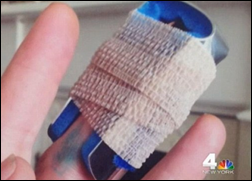
Patterson summarized, “This is a win-win-win across the board. Siemens clients will get a lot of value. We will partner on their core healthcare business. Lots of our clients use both systems in different capacities.”


image

Cerner says it will continue to support Siemens’ platforms and will support Soarian “for at least the next decade.”

John Glaser, PhD, CEO of the Siemens unit, said in a statement, “We are excited to join with one of the most competitive companies in health IT today, and a recognized leader in innovation. Siemens cares deeply about its clients and believes Cerner is the best organization to fully support their health IT needs going forward. The knowledge and strength of our combined resources opens up great possibilities for future collaboration and development, which is exciting for all of us. And our clients will benefit from our alignment with a company that has such a strong historical and future commitment to rapid innovation.”

The combined organizations will have 20,000 employees, 18,000 client facilities, and $4.5 billion of annual revenue. The transaction is expected to close in the first quarter of 2015.

HIStalk has featured rumors of the acquisition going back to early May, when Vince Ciotti was the first to tip me off to the rumors.

Text Ads


RECENT COMMENTS

  1. Re: Deliberately Faked Academic Papers in Nature See, this doesn't surprise me at all. Of course AI quotes these bogus…

  2. Challenger exploded on lift-off when the O-rings failed. Columbia disintegrated on reentry after one of the heat shield tiles were…

Founding Sponsors


Platinum Sponsors


Gold Sponsors


RSS Webinars

  • An error has occurred, which probably means the feed is down. Try again later.