


For someone running revenue cycle operations, how would you even begin to build a systematic check for this kind of…
Curbside Consult with Dr. Jayne 7/7/25
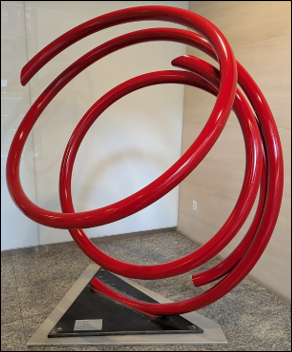
I’ve spent a lot of my career working on the “softer” side of clinical informatics, such as change management, governance, adoption, and optimization. Although I’ve implemented a couple of technologies in my career that have been dramatic, most of the time I’m working on projects that are a little more subtle.
I’m appreciative of projects like that when I have to gain buy-in from difficult stakeholders. When they don’t feel like you’re yanking the carpet out from under them, they are more likely to align with the goals and objectives. On the other hand, sometimes when projects are too low-key they’re not perceived as valuable. It’s a fine line that has to be walked.
I can’t even count the number of practices where I’ve helped implement EHRs over the years. I’ve worked with people ranging from those who have never used computers prior to the EHR to those who have been using them since birth.
In the early days of EHR, people used to talk about the “older” physicians being resistant. Fortunately, I had a good story to counter that after meeting a curmudgeonly colleague who informed me that he had been “advocating for electronic charting since long before you were born, young lady.” He and I actually competed for the first EHR-related role in our health system. I think he was a little grumpy that he didn’t get the position. I grew to appreciate his point of view as he pushed back on some of the things we were trying to do, because he always wanted to make things just a little bit better.
I’ve also worked with younger physicians who were incredibly resistant to adopting technology, particularly anything other than the one that they personally felt was the best. There’s nothing quite as entertaining as watching an Apple devotee argue with the IT team about how he absolutely, positively cannot use the PCs that are present in every shared workspace in the hospital. Folks like that were especially fun during the early days of “bring your own device” programs. They demanded to be able to use hardware that didn’t comply with the published standards.
I’ve worked with ER physicians who complained about how long it took them to do their charts, yet were found to be spending a good chunk of their day on the Zappos website.
These examples show how differing perspectives and experiences can have a tremendous impact on the success of a project. In turn, how those outcomes can ultimately influence the patient experience. When you have one physician in a practice who refuses to do the recommended workflow, it can cause extra work for the staff. It can also result in confusion and delays for patients who are waiting for their results or for a response from the physician.
I’ve long wondered what makes one person think a new solution is awesome and another one thinks it’s awful when they are doing the same work and caring for the same patients. An informatics colleague and I were talking about this over a recent round of cocktails. She brought up a recent study from the Proceedings of the National Academy of Sciences that looked at how different people perceive works of art.
Although I lived with an art history major for a number of years, I hadn’t heard of the concept of the “Beholder’s Share,” where a portion of a work of art is created by the memories and associations of the person viewing or experiencing it. I suppose it’s a more academic rendering of the idea that beauty is in the eye of the beholder.
The researchers behind the article employed high tech means to look at it, however, using functional MRI (fMRI) imaging to identify how people used their brains differently when viewing different types of art. Apparently abstract art results in more person-specific activity patterns, where realistic art delivers lass variable patterns. They also noted activity in different parts of the brain when looking at abstract art.
I’d love to see how different end user brains would react to differences in EHR screens and workflows. Maybe we could use that information to better predict how users will perform with different tools. Instead of looking at a subject’s brain activity while looking at a Mondrian painting, as the study did, we could see how their brains perform when confronted with different user interface paradigms.
I’ve seen EHR and clinical solution designs over the years that were jarring in color or layout. I’ve seen those that were so vanilla that nothing seemed to catch the user’s attention.
Another concept in the art world is that of shared taste. It explains why some groups of people prefer the same things, where others might find them objectionable. People typically know if they prefer art from classical times, the Renaissance, the Impressionists, or from abstract or modern artists, I would bet that we can create groupings around different types of clinical data visualization and how they can best be used in patient care.
Similarly, I would be interested to see if users who have certain sentiments about a given piece of technology can be grouped in a particular way, such as by specialty, user demographics, location, or tone of the program where they completed their training. Similar to the concept of precision medicine, I wonder if we could use that information to create precision training or a precision technology adoption curriculum that could help users adapt to new tools that end up in their workflows.
Even without the expense and risk of something like fMRI scans, I would bet that we could do a lot in clinical informatics to better understand our users and the learners with whom we are engaging. I’ve seen quite a few surveys that ask new employees about their experience with electronic documentation or technology in general, but they are fairly superficial. They usually have questions like, “Which of the following systems have you used?” with a list of vendor names. They don’t recognize if the user was on a heavily customized version or an out-of-the-box configuration. Most users wouldn’t know anyway unless they have experience behind the informatics curtain.
Institutions have come a long way recognizing different learning styles and whether people prefer classroom, asynchronous, or hybrid learning methods. I don’t doubt that the training and adoption efforts that we see today might be supplanted by other paradigms in the future.
Is the beauty of the EHR in the mind of the beholder, or is it something with which users simply have to cope? Is one platform more abstract than the other? Will we ever see an EHR with a classical sense of style? Leave a comment or email me.

Email Dr. Jayne.

Beholder’s Share can be supported in software without incurring much technical cost by supporting cosmetic configuration. Some Epic reports allow colors to be modified. Adoption seems to be location specific perhaps because of lack of knowledge, permissions, or social pressure. When those are overcome, you get front desk people whose screens are filled with hot pink or deep green reports, and happier end users.
Supporting workflow personalization on a person-by-person level is trickier. I have experimented with workflow software which generates and allows users to pick from different front end UIs and suggest improvements to create workflows which still satisfy “requirements”. The end user benefit is elimination of fields which are never used at a particular organization, which in turn reduces scrolling (and presumably cognitive load). The cost is a loss of muscle memory and training issues when everyone’s software looks different.
Hypothetically workflow software like Epic could be completely personalized. End users could choose between clicking (menus) vs scrolling (longer documents), smushing different pages into each other, and hiding/unhiding information. The value derived would need to be significant though to justify the development cost, and because AFAIK nobody does it we have no data on whether this more complex personalization is worthwhile. The only data we have is end user complaints about having to click around to find the data and input boxes they need to do their own jobs.