


Healthcare AI News 4/15/26
News
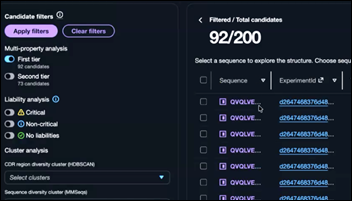
AWS launches Amazon Bio Discovery, an AI platform that gives scientists access to specialized biological models and an AI agent to design, run, and analyze drug discovery experiments without coding, while integrating directly with lab partners for testing. The system creates a “lab-in-the-loop” workflow in which experimental results feed back into the models, accelerating molecule design and compressing timelines from months to weeks.
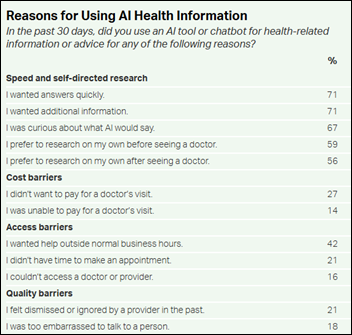
A survey of US adults finds that 25% have used AI to obtain health information or advice, with 14% of recent users saying that it led them to skip a provider visit in the past 30 days, even though most report that they do not strongly trust the information.
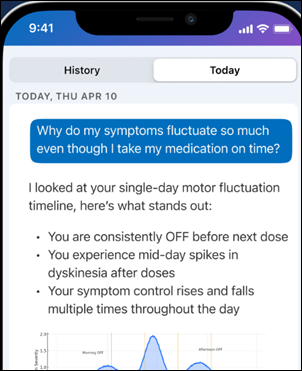
Rune Labs launches a personalized, subscription-based AI companion for people with Parkinson’s disease that includes medication education, symptom trending and interpretation, and coaching.
Business
An MIT student newspaper report profiles fast-rising AI compliance startup Delve, which faces fraud allegations from anonymous reports that allege that the company fabricated compliance audits, used questionable auditors, and misled customers about regulatory adherence. Some of its clients process US patient data. Delve’s two 21-year-old founders deny the claims.
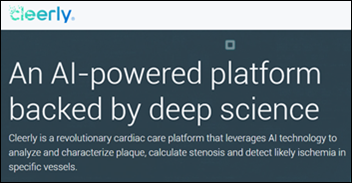
Heartflow sues rival Cleerly, alleging in a federal complaint that its AI-based cardiac imaging products infringe six patents and that Cleerly’s founder used confidential Heartflow technology from a prior consulting role.
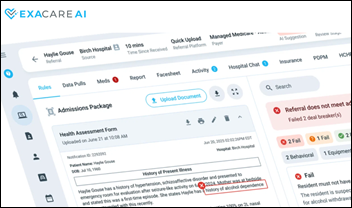
A Texas-based skilled nursing operator rolls out ExaCare AI across 160 facilities to automate and centralize preadmission workflows, processing more than 1,500 referrals within 48 hours and accelerating admissions decisions. The system consolidates referral data, summarizes patient information, and streamlines reimbursement workflows to improve speed, hospital coordination, and operational efficiency.
Research
AI action recognition systems can detect self-harm behavior in psychiatric wards under controlled conditions, but perform poorly in real-world clinical environments, where variability, occlusion, and subtle behaviors reduce reliability, which suggests that current models are not yet ready for routine clinical use.
Other
A study finds that while leading large language models often reach an accurate final diagnosis, they perform poorly at earlier steps such as generating differential diagnoses and handling clinical uncertainty, with failure rates exceeding 80% at that stage. The authors conclude that AI models still require clinician oversight.
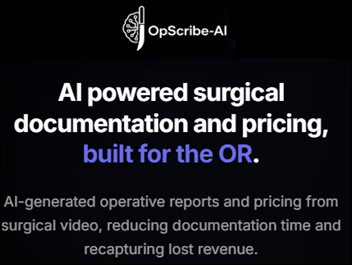
Two University of Wisconsin-Madison biomedical engineering students are developing an AI tool that uses surgical data and video to automate post-operative reports and coding. They plan to train the model by hiring medical residents to perform surgeries on cadavers.
Contacts
Mr. H, Lorre, Jenn, Dr. Jayne.
Get HIStalk updates.
Send news or rumors.
Follow on X, Bluesky, and LinkedIn.
Sponsorship information.
Contact us.


I haven’t been to Bostain in decades so I’m having who’s-on-first problems here. Is Deaconess who they’re merging with? So…