


RE the AI GLP1 company, Washington Post has an article today by someone who used one of those compounded products,…
News 3/25/26
Top News

Doctronic raises $40 million in Series B funding, bringing its total to $65 million.
The startup offers users a free healthcare AI chatbot that connects users to providers for paid video visits.
Reader Comments
From Sizzler: “Re: AI. This article on a competing site sure looks like the work of AI.” ChatGPT gives an 85% chance that it was written or polished by AI, noting that it offers “highly reusable executive tropes,” omits details to support its observations about the HIMSS conference, and has “zero friction or personality.” It concludes that thought leadership now consists of LinkedIn-optimized, bland consensus language that is soullessly spat out by both AI and cautious executives, so it doesn’t make much difference if they use AI because will sound the same.
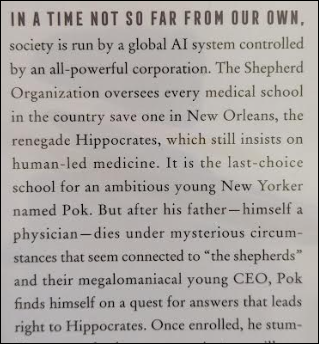
From Boynton: “Re: book. I just picked this up from the library. Healthcare in the future being run by AI, except one hospital still operated by humans.” Thanks. I have bought the Kindle version of the just-published “The Hospital at the End of the World” and will report back.
Sponsored Events and Resources
None scheduled soon. Contact Lorre to have your resource listed.
Acquisitions, Funding, Business, and Stock
Hopper OS acquires Efferent, which offers cloud-based PACS. I’m not quite sure from the buzzword-heavy Hopper OS website what exactly they sell as their “intelligent healthcare operating system” that “powers performance, experiences, and outcomes across the entire care continuum,” but it seems to have something to do with integration middleware. I asked ChatGPT to score its website on a 0-100 BS scale and it earned an 88, which it summarized as having achieved “peak abstraction density” in laying on the buzzwords “without clarifying what actually gets installed, replaced, or paid for.”

Shares in ImmunityBio tumble after the FDA warns the company that a TV advertisement and podcast that promote its cancer drug contain false or misleading information. The direct-to-consumer materials, which the FDA says suggest that Anktiva can cure cancer, feature Executive Chairman Patrick Soon-Shiong, MD. Shares of his NantHealth health tech business remain steady at “delisted.”
People

Cottage Health (CA) names Ryan Kelly, MBA, PhD (Inneo) chief innovation officer.

Kootenai Health (ID) promotes Todd Holling, MS to CIO.

Jeff Diamond, JD (MDpanel) joins Aptarro as CEO.
Announcements and Implementations
Marshall Health Network (WV) implements online scheduling and patient registration software from Notable.

American Lake VA Medical Center (WA) rolls out LiveData’s PeriOp Planner surgical scheduling tool.
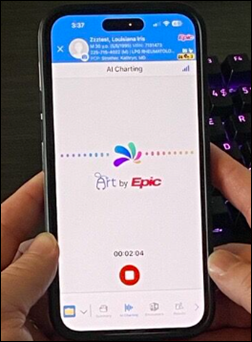
FMOL Health goes live on Epic’s Chart by Art diagnosis-aware note creation tool, becoming the first health system to do so. The feature generates documentation from spoken diagnoses and orders.
A new report finds that half of providers think patient access is better now than last year, but only 18% of patients agree. Providers blame staffing shortages as the biggest barrier to patient access.
Government and Politics
A new Medicare billing system glitch is delaying millions in payments to already struggling Minnesota rural hospitals, worsening cash flow to the point that some warn they could face closure within weeks if not fixed. Medicare enrollment data did not transfer correctly into a newly implemented CMS system, causing claim denials and delayed payments. The hospitals say that they call CMS multiple times each day to resolve individual issues, but are frustrated that they cannot reach the same representative and instead are routed by the hotline to any available representative.
Privacy and Security

University of Mississippi Medical Center reports a 20% dip in February revenue due to a ransomware attack that forced it to cancel elective surgeries and appointments over a nine-day period. Hospital officials say they will have more accurate revenue figures once all care charges documented on paper during the attack are logged electronically.
Deaconess Health System notifies patients of a January 13 third-party data breach that involves its release-of-information vendor MediCopy.
NYC Health + Hospitals will not renew its analytics contract with Palantir and will instead bring the work inhouse, which the health system says was the plan from the beginning.
Other
Authors of “A Problem of Epic Proportion” argue that Epic’s dominance is driven less by technical superiority than by network effects, high switching costs, and weak interoperability enforcement. They say the company’s near-monopoly status in the US contrasts with Europe, where regulatory structures limit vendor concentration, and point to troubled deployments in Norway, Denmark, Finland, and the UK as evidence that Epic’s success depends on US-style market dynamics. They conclude that this dominance constrains innovation and creates systemic risk, warranting stronger regulation and treating EHRs as critical public infrastructure.

Jewish General Hospital in Quebec implements EHR technology from Harris Healthcare as part of a $100 million Connected Health Record initiative that already includes virtual care capabilities and a command center.
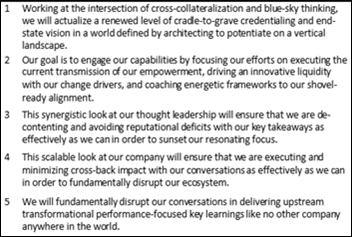
A scholarly article titled “The Corporate Bullshit Receptivity Scale: Development, validation, and associations with workplace outcome” finds that people who mistake jargon-heavy, meaningless corporate language as being valuable are likely to have poor thinking skills and make questionable work decisions. Those folks are also more likely to view leaders as visionary and to be inspired by mission statements. The authors speculate that employees who believe corporate BS might use it themselves in “using boastful exaggerations, embellishments, and other forms of impressive-sounding, epistemically-dubious speech in situations where a person lacks sufficient confidence and knowledge in what they are saying.” I remain cautiously optimistic that we can operationalize this insight into a scalable framework for driving alignment around high-impact, cross-functional narrative excellence.

Jack Brandt recounts how he was able to remotely reroute the Full Self-Driving Tesla his father was driving to a nearby hospital as his dad was having a heart attack:
What happened next still gives me chills. His Model Y had just passed the Carrollton exit. The car immediately took the next exit, turned around, re-entered I-20 East, and headed back to the Carrollton exit. It then navigated local roads and pulled directly in front of the Tanner Medical Center Emergency Room entrance. Despite fighting for consciousness, he was able to switch the speed profile to Mad Max to get there as fast and safely as possible. We called ahead, and the ER staff was ready and waiting.
Sponsor Updates
Blog Posts
- The Hidden Threat of Underpayments (AGS Health)
- What healthcare IT leaders need now and how we are responding (Nordic)
- How AI took center stage at HIMSS and ViVE 2026 (Wolters Kluwer Health)
- Between the screen and the patient: Restoring presence with ambient listening (Altera Digital Health)
- How to make the most of value-based care contracts (Arcadia)
- Scaling Specialty Care with Voice AI and Operational Integrity: A HIMSS26 Fireside Chat Recap (Artera)
- No More Prescription Ping-Pong: Optimizing Medication Management at HIMSS26 (DrFirst)
Contacts
Mr. H, Lorre, Jenn, Dr. Jayne.
Get HIStalk updates.
Send news or rumors.
Follow on X, Bluesky, and LinkedIn.
Sponsorship information.
Contact us.


The link from Sizzler doesn’t work.
Re: “A Problem of Epic Proportion”, I believe there are a couple of points that complicate the argument. First, there is not a product other than Epic that organizations would prefer to move to today. Epic is winning business and keeping customers because their solutions and services are the best in the industry for many healthcare systems. Not perfect, but there isn’t another vendor organizations would prefer to move to once on Epic. Second, having done a recent analysis of full cost of ownership of Epic vs competitors over 10 years, Epic is less expensive to operate when all factors are considered. Once you get past the project and conversion costs related to a migration, Epic can be millions of dollars cheaper on an annual basis.
Yes, but why is Epic “the best in the industry for many healthcare systems”? And sure, it’s a complex software environment, so you are simultaneously comparing many different attributes.
Yet I think it’s possible to identify one primary attribute of Epic that rises above the others. And the study is wrong about which attribute.
First of all, it has nothing to do with technical superiority. I know my industry pretty well and it’s possible, even easy, to design an EMR that is technically superior to Epic. These are tabletop exercises only you understand. Nor can you get around this by claiming that Epic is the best of the bunch technically (so a relative comparison). Interesting but still wrong.
Epic is winning because of the scope and depth and quality of it’s functionality. The business coverage of Epic is outstanding, and that is irresistibly appealing to clinicians. It’s for sure not network effects, which is completely undermined by weak interoperability enforcement. Yes, switching costs are high, but we see so much switching in our industry, that I think it’s easier than people think to gather the political support needed to switch. Not exactly “easy”, but well within the political capacity of a new CEO for instance.
Clinicians in healthcare like to complain that they have lost power. It’s likely true, at least in certain domains. That makes it even more interesting that in this case, clinicians are getting their preferred solution. This suggests that clinicians who act in concert with each other still have plenty of of power and influence. It’s in the individual domains that clinicians are losing power.