


EPtalk by Dr. Jayne 10/16/25
As the US federal government shutdown continues, I’m encountering military members who are having difficulty filling prescriptions for long-term medications. I’m certainly not an expert in how federal appropriations work, but most people on the clinical side of healthcare policy would agree that having a system where people might have to skip important medications through no fault of their own is problematic.
Based on social media posts from several military installations, pharmacies are only dispensing 30-day supplies for prescriptions even if the prescriber had approved 90-day supplies. Reasons cited include “to best serve the maximum number of beneficiaries for what could be an extended period of time,” which suggests that pharmacies are unable to replenish their stocks. Some bases are redirecting members to Express Scripts or to retail pharmacies where others have messaging that isn’t more helpful than “thank you for your understanding.”
Plenty of evidence demonstrates the benefits of 90-day prescriptions, including improved patient adherence to the medication regimen, better clinical outcomes, and reduced complications. From a non-clinical perspective, it also saves money and time for both patients and pharmacies. I feel for those pharmacy technicians who are going to have to fill many more prescriptions than planned, most likely without additional staffing, because they can only dispense a 30-day supply at a time.
Shifting to non-military pharmacies isn’t necessarily the best answer either. Those pharmacies also are not likely able to increase staffing on short notice as they start receiving increased requests. Back-and-forth conversations sometimes need to happen between prescriber and pharmacy when prescriptions are transferred, and that particular game of phone tag is never fun.
The answer is having comprehensive health policy that is funded so that patients aren’t penalized every time Congress reaches an impasse. Once Congress gets its act together, ensuring continuity of care for our military patients and their families should be a priority.
From Telehealth Scramble: “Re: Medicare telehealth. Our place is trying to get people to switch to an in-person visit right away, but they are specifically saying that patient care has to come first if they can’t. For the telehealth visits that would be unpaid, they are holding off on submitting the charges hoping that this will end soon and the re-upping of telehealth will be retroactive. It’s been a particular challenge for mental health because about 80% of our patients are still telehealth. We have many providers who do telehealth from home several days a week, and some are contracted as full-time telehealth from home, so we don’t have offices for them and they live a significant distance away. We also have a reasonable number of patients who are in the state but a far drive away, including college students or patients who are older and don’t really want to drive an hour on the freeway. Fortunately the insurers that we contract with have specifically said they will continue telehealth coverage unchanged, so we just have to reschedule the patients with straight Medicare. Also, our mental health providers are having to check insurance status and reschedule appointments with patients themselves because we don’t have enough clerical support.” I suspect that many organizations are taking this kind of pragmatic approach. Still, I wonder how many members of Congress would be able to articulate these issues that are happening in their states or districts or would be able to provide advice to their constituents on how to navigate the healthcare system?
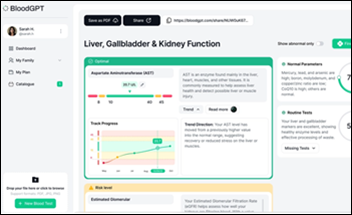
From Vampire Gal: “Re: BloodGPT. The name caught my attention as I perused my inbox, wading through all the spam emails that have resulted from my HLTH conference registration.” The headline on the website is, “Smarter blood test interpretation for everyone. ”it offers several sentence fragments indicating that it’s intended to address lab tests of varying complexity with a target audience of “individuals, doctors, and healthcare providers.”
Scrolling further, it offers patient-facing offerings for blood test interpretation, diet plans, and personalized recommendations. Clinicians can use the solution to deliver branded interpretation reports for patients. It also promises tracking for lab trends and “AI-powered chat for instant patient insights.” The company promises “medical-grade accuracy and zero hallucinations” even though it is powered by multiple LLMs. Having done a fair amount of AI work, I’m surprised at the claim of zero hallucinations, especially since none of the contributing LLMs (Claude, Gemini, OpenAI) report much higher hallucination rates when they’re talking about them.
I was considering digging deeper by downloading their sample report package until a clickbait type item caught my eye: “Always tired? These 3 Blood Markers Could Explain Everything.” Attention-grabbing statements like that always raise the hair on the back of my neck. When seeing patients, the number one reason most patients are tired is lack of sleep or lack of quality sleep, not lab values that you need to tinker with (after unnecessary spending to order the tests). This simple eye-catcher on the website makes me think that this vendor doesn’t appreciate the concept of evidence-based medicine.
The blog post that addresses this claim, which appears to be AI-written, cites other websites like the Cleveland Clinic and MedlinePlus, making it rather generic. After scrolling through a couple of pages of content, it closes out with, “Focus on evidence-based changes, balanced nutrition, regular sleep, stress management, and appropriate medical follow-up. With patience and proper guidance, your energy levels can improve and the fog of chronic tiredness may finally lift.” Unfortunately, that’s too little too late for my evidence-based medicine heart. My parting impression of this company is negative.
After some email correspondence, Vampire Gal shared some of the other companies that have been reaching out. One name that caught my attention was Eggmed, which is apparently an EHR/PM system designed for private practices. The website was a little vague in saying it was about “helping wellness professionals focus on their clients,” which makes me think it’s more for therapists and coaches and less for physicians. I also didn’t see anything about EHR certification, interoperability, or data sharing, which are becoming increasingly important for delivering comprehensive and coordinated care.
Kaiser Permanente workers began striking earlier this week, making the case for improved working conditions and greater pay. The healthcare giant has been negotiating with unions for several months and claims it has plans to continue operations without interruption. I reached out to a few colleagues in the field who confirmed reduced office hours, staffing challenges, and pharmacy closures. I guess the definition of “interruption” might be different for administrators than for patients or frontline physicians.

I spent more of the last few days than I wanted to performing Windows upgrades, moving multiple devices from the workhorse that is Windows 10 and onto Windows 11 now that the former has reached its end-of-support date. The latter is less awful than it was when it first came out, but it still lacks some of the niceties of its predecessor, such as the start menu.
The internet is full of articles that try to help users navigate the change. It also offers several third-party applications that allow bypassing the offending start menu. Those of us that feel Windows 11 is a bit of a backwards maneuver are just shaking our heads.
I have multiple laptops as well as a desktop PC. The laptops were easy, but the custom-built desktop posed a few challenges. I did get some laughs out of the process, though, because every time a Windows article told me to “consult your manufacturer’s documentation,” I fired off a text to the college kid who built it and asked where my documentation might be. I was offered an operating system with a tuxedo-wearing penguin in response, so I told him he was off the hook for documentation.
What’s the best operating system for a mid-career clinical informaticist living in a largely Windows world? Should I contemplate a switch? Leave a comment or email me.

Email Dr. Jayne.

There's a typo in your Oracle headline where it says "debilitating wave of layoffs."