Recent Articles:

HIStalk Interviews Steve Cagle, Board Advisor, Clearwater

September 30, 2025 Interviews Comments Off on HIStalk Interviews Steve Cagle, Board Advisor, Clearwater

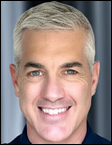
Steve Cagle, MBA was CEO of Clearwater at the time of this interview. He transitioned to board advisor on September 30.

image

Tell me about yourself and the company.

Clearwater is a healthcare-focused solutions firm that provides cybersecurity compliance and managed security services to hospitals, health systems, physician practice management groups, digital health, and health IT companies. Really all types of organizations in the healthcare ecosystem. We help those organizations to be more secure, be more compliant, and be more resilient so that they can achieve their missions.

I’ve been CEO of Clearwater since May 2018. My background is in healthcare. I started my career in a software company that provided quality management software to help pharmaceutical companies comply with FDA regulations, such as good manufacturing practices. I then spent some time in the pharma industry in consumer healthcare products, running a business before returning back to technology and compliance here at Clearwater.

How do health systems decide how much effort and money to invest in cybersecurity?

Unfortunately in healthcare, most organizations have been historically underinvested in cybersecurity. However, we have seen over the last five years or so an increased focus, especially following the pandemic, when we saw a wave of ransomware attacks on healthcare organizations. Then we had the Change Healthcare incident a year and a half ago, which affected about 70% of the providers and caused very extensive damage.

As healthcare organizations have continued to adopt new technology, technology has become critical to operating their businesses or providing care to patients. They have realized that cybersecurity mission critical and requires them to have the appropriate protections in place to reduce risks.

That’s really the key word. It’s about understanding your organization’s risks beyond the high level. A lot of organizations have done high-level risk assessments. They may be helpful as a starting point. But we need to go much deeper in today’s environment, where attack techniques have evolved to become difficult to defend and protect against.

Organizations have had significant impacts from ransomware attacks and breaches. That’s why the Office for Civil Rights of HHS, which enforces HIPAA regulations, has been focused on risk analysis and their risk analysis initiative. Risk analysis in healthcare requires that organizations understand where they have electronic protected health information, where they have those critical systems that support their operations or are connected to those systems with EPHI, and that they evaluate the vulnerabilities and threats, assess the controls that are in place, and determine the level of risk that exists with each system.

By doing that, organizations will be better informed as to where those high risks are. Based on their risk threshold, they can then identify those risks that fall above that threshold and put specific risk remediation or risk management plans in place to address those risks.

That’s a business-focused way of approaching cybersecurity. It’s not checking boxes. It’s not trying to have the best security program in the world. It’s really understanding your risk at a level that is appropriate. Then, taking actions to bring those risks to an acceptable level.

What were the most important lessons learned from the Change Healthcare incident?

Risk analysis. Clearly there’s been a lot of uptick in organizations really understanding, “I need to get to that next level. I’ve been doing the same type of assessment for many years. I’m going to invest more money into doing that risk analysis so that I can have better information about my security program.“

We’re seeing a lot of attention on cybersecurity and risk from the board of directors and the executive teams. From a cultural perspective, there has been a change in healthcare where this has become a priority that organizations need to focus on.

We’ve seen big changes in resiliency, where organizations have plans in place to not only respond to a security incident, but also to contain it to operate under duress through a business continuity plan. Having updated disaster recovery plans and testing those to make sure that they are effective.

As we look at all the solutions out there that are based on artificial intelligence, we have new concerns. There was a big rush to implement a lot of these new technologies that are based on AI. Unfortunately, many organizations did not take the time to establish policies and procedures about how they will use them and to assess the risks around these technologies. 

It is still risk analysis, but it’s a different set of risks and different set of controls. We are seeing a lot of interest from our clients in helping them to establish governance around artificial intelligence, cybersecurity, and privacy, or to assess their risks of those programs and to help make sure that they are implementing these technologies in a responsible way.

The mainstream press loves headlines about the devastating impact to patients of a local provider that has gone down from a cyberattack. How much do we not hear about providers who are successful in preventing that kind of attack?

That’s a very important point that you’re making. We hear about the bad news, but we don’t hear about the good things that are happening.

We’ve done over 650 NIST Cybersecurity Framework assessments for our clients over the last 10 years. We track and trend maturity levels over time. We see that the industry is becoming more mature. We track over time the organizations that adopt the NIST Cybersecurity Framework, which is a commonly accepted and used framework in healthcare, and we see that they are improving above the bar of the rest of the industry. There’s really good data that we can point to that demonstrates that we are making progress.

The challenge is that the bar keeps getting higher. You have more vulnerabilities, more threat actors. Threat actors have been very successful in obtaining ransomware payments from healthcare. They pay more often than any other industry. When it’s easier to attack a certain sector that is more willing to pay and pay more, that’s going to attract more threat actors.

You don’t hear about organizations that are being responsible. They are assessing risks, maturing their security programs, and not having those attacks. Or if they do have a security incident, they are able to address it quickly and with minimal impact. They have network segmentation and other types of controls in place that make it difficult for threat actors to exfiltrate the data or to do damage.

We will continue to see that maturity improve over time. But we have to realize that unless we stop developing and implementing new technologies and increasing the attack surface, it’s not going to stand still. The bar is always going to become higher.

How often do providers pay a ransom, and if they do, what is a typical outcome?

Fewer providers are paying than in the past. A few years ago, it was 67% of the time, and that number has gone down probably closer to 50%.

You really can’t trust criminals. A lot of them will try to uphold their end of the bargain because they want people to continue paying, but that’s not always the case.

There’s also double extortion. You get the encryption keys to unlock your systems. Maybe some of these organizations have good backups in place and are willing to take the downtime that it takes to restore those systems, which could take days or weeks, or longer. In some cases, those encryption keys do not work. They’ve done so much damage that it doesn’t really help them.

Then the second extortion is to get the data back. Often the data will end up somewhere else in the future. Paying the ransom doesn’t give you any guarantees. You’re really taking your chances. That’s why you are seeing fewer organizations making that payment.

How do organizations allocate their spending across prevention, detection, and rapid recovery?

We always recommend starting with a baseline set of controls and adopting industry standard best practices. We can point to the NIST Cybersecurity Framework. We can also point to the 405(d) health industry cybersecurity practices. Those are both recognized security practices in healthcare based on an amendment to the HITECH Act in January 2021.

The 405(d) HICP is a great place to start because it is provided in different volumes for small, medium, and large organizations. It was developed through collaboration with over 600 firms in healthcare — providers, vendors, and the government. It’s a practical way of setting up those baseline controls. 

Once you’ve picked a framework and standard, you go back to how much more you need beyond that. That comes down to the other requirements that you have. Do you have compliance requirements that you need to meet? Maybe even ones outside of HIPAA. Do you have clients, partners, or payers that require you to meet certain security standards, maybe a SOC 2 audit or HITRUST certification? What’s your risk profile? What kind of risk as an organization are you willing to accept?

Then you do that risk analysis to see where you have gaps between your current level of risk and what’s acceptable. Using all that information, we create a target profile. It’s a long-term roadmap of where we want to focus. That will help determine where to make those additional investments. We know the minimum requirements for standards and practices, but going beyond that, what is the organization’s specific situation? 

What is the value of health systems communicating regularly with their boards about cybersecurity, and what metrics are most useful for board members to understand the situation?

We speak to a lot more boards now than we did maybe five years ago. It’s pretty frequent. One of the key functions of a board is risk management. If the board is being informed of the other types of risks across the organization, cybersecurity has become an important area of risk, and one that they need to be informed about.

Typical things that we will talk to boards about are trends, particularly across the sector, and the higher-level concerns or risks that they need to think about.  

The board should be putting the governance in place. What higher-level policies do we want to have as an organization? What is the level of risk we are willing to accept?

Sometimes, but not as much any more, we see risk tolerance levels being set by more at the operating level, the IT department. The IT department is not the risk owner. If a security incident renders a hospital in a position where it can’t see patients, that’s a board level issue. That’s all the way up to the board. So the board needs to decide how much risk we are willing to take. How many resources are we willing to apply? And then put the management team to work with the mandate and the support to implement a program that will ensure that the organization is in line with those policies and is on a path to meet that risk threshold.

We have to keep in mind that risk changes over time. Just because we are below our risk threshold today doesn’t mean that tomorrow we’re not. We do M&A, acquire a new part of the business, partner with somebody else that includes new third-party risk, changing the threat landscape. It’s constantly changing, so the board needs to make sure that that risk management program is prioritized and resourced. Then getting information to know that it’s actually being executed appropriately.

What changes do you expect to see in HHS OCR’s enforcement of HIPAA and security?

The Office for Civil Rights has been focused a lot this year on its risk analysis initiative, where it’s making sure that organizations are prioritizing that risk analysis that I spoke about earlier. The notice of proposed rulemaking was released at the beginning of the year. Part of that rule contains updates to the risk analysis requirement that reflect its current enforcement actions and guidance.

A lot of other requirements are more specific and are required under the rule. I don’t think that rule in its current form will necessarily be the one that is eventually published. I do think, however, there will be an update to the rule or at least some additional standards that organizations will need to meet. The HIPAA security rule was last updated in 2013. The world has changed a lot since that time.

Most of the industry is looking for something specific we can point to, not overwhelming, but addressable. Ideally with some support and help from the government, especially for those smaller organizations or rural health organizations that don’t have the resources or the money to improve the programs the way that they would like.

What does the company’s strategy look like over the next 3-4 years?

Our strategy is to be a market leader in healthcare cybersecurity and compliance. To do that, we need to have a full set of capabilities that are relevant to healthcare organizations. Not just today, but over the next several years. Our strategy is to continue to ensure that we can provide those services to our clients in a way that helps them reduce costs, become more efficient, and focus more on their mission, whether it’s treating patients or driving their business. Being a partner and extension of the organization to help them address cybersecurity compliance.

We are excited about our growth at Clearwater. We are grateful to have dedicated professionals in the organization, as well as a growing list of clients that we collaborate closely with. We are dedicated to this industry and looking forward to continuing to serve this industry and help make a difference in healthcare.

We are thrilled to announce a growth investment from Sunstone Partners, which is a private equity firm that focuses on tech-enabled services with a particular focus in cybersecurity and healthcare. That makes them a great partner for Clearwater going forward. We are excited to have a great partner that can help us better serve our clients. We will be investing in more technology, as well as continuing to scale the organization.

Comments Off on HIStalk Interviews Steve Cagle, Board Advisor, Clearwater

Morning Headlines 9/30/25

September 29, 2025 Headlines Comments Off on Morning Headlines 9/30/25

Neura Health Secures $11.4 Million Series A to Fuel National Expansion of Comprehensive, Tech-Enabled Neurology Care Model

Virtual neurology clinic Neura Health raises $11.4 million in Series A funding, bringing its total raised to $22 million.

Vee Healthtek Announces Acquisition of Precision Practice Management to Expand Ambulatory Market Footprint and Technology Capabilities

RCM and consulting business Vee Healthtek acquires Precision Practice Management, which offers RCM and technical support services.

CareCloud Announces Acquisition of HFMA’s MAP App to Expand AI-Driven Benchmarking in Hospitals and Integrated Health Systems

CareCloud will acquire the Healthcare Financial Management Association’s MAP App, a revenue cycle performance benchmarking tool used by provider organizations.

Comments Off on Morning Headlines 9/30/25

Curbside Consult with Dr. Jayne 9/29/25

September 29, 2025 Dr. Jayne Comments Off on Curbside Consult with Dr. Jayne 9/29/25

We are approaching yet another threatened US government shutdown. In the virtual physician lounge this weekend, the hot topic was the telehealth mess that a shutdown would create.

Congress has not agreed on temporary funding for that modality, and the deadline is Tuesday at 11:59 p.m. Last Friday at 5 p.m., a colleague at a local institution received a message from the “administrator on duty” that encouraged clinics to move telehealth visits to in-person types. The timing shows little understanding of how medical offices run. Hordes of schedulers are not standing around at the end of the workday looking for things to do.

My colleague also lacks space in the clinic to convert those visits to in-person since his telehealth hours overlap with times when three other clinicians are occupying the practice’s exam rooms. Rescheduling into available space would require double-booking, which harms both the clinician and care quality, or pushing patients four or more months out.

US healthcare decision makers often miss the value of long-term policy and the realities of frontline delivery. A quote from one of my favorite movies is street racer Dominic Toretto saying, “I live my life a quarter mile at a time.” Many of us in the US healthcare system are unfortunately living our lives one Congressional budget cycle at a time.

I envy other parts of the world that take a longer view in the policy process. It’s not only in healthcare. As an avid outdoor enthusiast, I recently read an article about New Zealand and its 50-year plan to control invasive wild pine trees. The country has reached a consensus on the hazard that specific pine species create. It is working in a coordinated way to manage the issue while limiting the cost of the program and protecting the specific segments of the economy that would have been negatively impacted by expanding invasive species.

It’s the old “ounce of prevention” adage that makes both logical and financial sense, but is often lacking here in the US. Just thinking of some of the healthcare policies I’ve seen during my career makes me cringe. Medicare at times wouldn’t pay for diabetic testing supplies, which can help patients manage their blood sugars and prevent complications However, they would pay for the complications. That makes no sense at all.

I’ve spent the last couple of decades working on projects using Lean methodologies and creating cultures where continuous improvement and long-range planning is the norm. I’ve attended countless courses that addressed building high-performance teams and figuring out how to achieve consensus and move forward around specific clinical goals. 

I’ve seen that mindset do amazing things in healthcare organizations. I have watched teams continuously deliver results that initially seem impossible, to the credit of the principles of incremental change as part of a bigger effort, continuous improvement, and having a genuine desire to make things better. It’s been a privilege to work on so many high-performance teams, although I’ve certainly worked on some that haven’t been models of peak performance.

The most challenging teams I’ve worked on have been those that set ambitious goals without curating the teams that are charged with meeting them. They may take an existing team and assign tasks on top of their regular responsibilities, which isn’t a recipe for success.

Another common pitfall is to expect the team to not only be good at their principal areas of expertise, but also to be great at project and program management. I’ve seen multiple teams fail when they didn’t have the management support to keep tasks on track, ensure that project milestones were being accomplished steadily, and keep their efforts within budget.

I also see teams that focus entirely on the end point while forgetting that the team is made up of individuals who have needs of their own. Whether it’s a need to understand the “what’s in it for me” related to a project or a need to have some semblance of work-life balance, good leaders make sure that they not only understand the needs of individual team members, but that they are doing their best to ensure that those needs are met.

I feel particularly privileged to be working in my current environment, where the team and its leadership truly care about each other. During my career, I’ve been in plenty of meetings with the usual “what did you do this weekend” kind of small talk while everyone is gathering, but often there’s a sense that people are just talking to fill the time as opposed to really being interested in what is going on in the lives of their colleagues.

I recently had an experience where a colleague reached out on Slack to ask me about a personal event that I had mentioned in small talk several weeks prior, wanting to know how it had gone. I was humbled by that, by the idea that someone would care enough to remember the comment for a couple of weeks (or make note of it) and then take the time to reach out to ask about it. That kind of colleague interaction is worth its weight in gold. It is so different from what I often see elsewhere, which is a group of people just trying to get through the day, week, or month and not really building relationships.

I’m also impressed by leadership that wants to make sure that employees grow regardless of where they are in their careers. It’s common to see professional development for those early in their careers, but by mid-career, sometimes there’s an assumption that we already know what we need to know and just need to go about our work.

I was recently asked to put together a real professional development plan for myself, not just as a box-checking item in the annual corporate process. I was shocked. The idea of getting asked the equivalent of what I’d like to be when I grow up, at this stage of my career, really made me think. I’ve had loads of experiences, but the idea of being able to learn or do things that haven’t crossed my path yet was refreshing. It caught me off guard, and I’ll have to do some focused thinking about the question.

As the new federal fiscal year begins, and as the calendar-year fourth quarter starts for many of us, what is your organization doing to develop and retain people? Leave a comment or email me.

Email Dr. Jayne.

Comments Off on Curbside Consult with Dr. Jayne 9/29/25

Morning Headlines 9/29/25

September 28, 2025 Headlines Comments Off on Morning Headlines 9/29/25

Veradigm to Release Business Update September 30th and Host Investor Call October 1st

Veradigm will provide a business update after Tuesday’s market close, raising speculation that it will make an announcement about Nasdaq relisting.

Google, Flo Health to pay $56 million in period-tracking app privacy case

Google and Flo Health will pay a combined $56 million to settle a class-action lawsuit that claimed Flo Health collected its users’ menstrual cycle data for targeted Google advertising without their permission.

What a shutdown could mean for telehealth

Politico reports that a looming federal shutdown, which can be avoided only if Congress passes a funding bill by Tuesday night, would end Medicare’s coverage of telehealth visits this week.

Comments Off on Morning Headlines 9/29/25

Monday Morning Update 9/29/25

September 28, 2025 News 1 Comment

Top News

image

KLAS interviews 35 Epic customers at UGM following the company’s AI announcements. Most said that Epic’s move into ambient speech was expected.

Customers generally expect Epic’s product to be cheaper and better integrated than those of competitors.

Some respondents worry that Epic’s expanding footprint will stifle competition and innovation, although more than half expect to implement Epic’s ambient speech offering within two years.


Reader Comments

From Skeptical CIO: “Re: Epic’s ambient speech. Everyone assumes it will be cheaper than Nuance or Abridge, but Epic add-ons haven’t exactly reduced overall costs. The Epic tax keeps going up while reducing competitor innovation. I don’t buy the argument that Epic will run this as a loss leader.”

From Grizzled Analyst: “Re: federal telehealth coverage. Ending with a shutdown and turning off a decade of progress with the stroke of a Congressional pen. Hospitals spent millions on virtual care platforms, patients got used to access, and now it’s all at risk because of political brinkmanship.”


HIStalk Announcements and Requests

image

Most poll respondents don’t expect personal financial improvement next year, with federal government volatility most often cited as the cause.

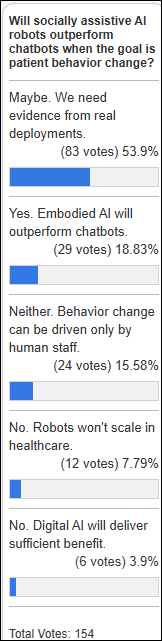
New poll to your right or here: Would you change doctors over non-clinical problems such as staff behavior, billing errors, bad tech, or scheduling headaches? It probably depends on how much you rely on continuity of care, whether you perceive your physician as better than the alternatives, or who takes your insurance. Medical practices are odd that much of the management and public-facing behavior is left to unqualified or unmotivated employees because doctors are poor managers. 

Pondering: 

  • Would outcomes differ if health system C-level executives, especially those who are going all-in on AI, were themselves replaced by AI that was trained on hospital data? That might be even more relevant to for-profit company C-level folks, who seem to misfire often enough that maybe AI can’t do worse while saving huge annual salaries.
  • With the raft of upcoming MyChart enhancements, should it work like Uber where doctors and patients rate each other for future consideration in booking appointments?
  • Were you really “promoted” if your new job is higher on the org chart but comes with no increase in pay? I admit that I accepted an offer like that once, and would do so again, because (a) the office view was killer; and (b) the alternative was to hope they didn’t hire an insufferable idiot as my new boss. The health system claimed that they couldn’t afford to pay me more, which wasn’t the strongest argument since I had IT access to its salaries and financials.

Listening: The Favors, a collaboration between apparently popular (judging from Spotify stream counts) Finneas O’Connell (“Finneas,” a 10-time Grammy winner and Billie Eilish’s brother and collaborator) and Ashley Willson (“Ashe”). They wrote all the songs on their new release. It’s not usually my kind of genre, but I’ve played the album several times and can’t get enough. My painfully obvious prediction is that they will soon approach household name status, probably both individually and collectively.

Meanwhile, I’m cooling on podcasts just as quickly as I embraced them. I tried all the reader suggestions, but endless commercials are so jarring and distracting that I can’t focus on the story.


Sponsored Events and Resources

Survey: “What’s your take on the value of IT Managed Services?” Sponsor: CTG. Due to recent legislative changes, Healthcare organizations are under growing pressure to balance cost, performance, and innovation. CTG wants to hear from leaders like you on how IT managed services can help — or hinder — those goals in this quick, 5-minute survey. Your insights will help inform industry understanding and provide a clear picture of how IT managed services is currently being used.

Contact Lorre to have your resource listed.


Acquisitions, Funding, Business, and Stock

Veradigm will provide a business update after Tuesday’s market close, raising speculation that it will make an announcement about Nasdaq relisting.

Bonsai Health, whose AI agents automate the front-office workflows of medical practices, raises $7 million in seed funding. Founders Travis Schneider and Luke Kervin have launched three previous companies together, most recently PatientPop, which merged with Kareo in late 2021 to form Tebra.


People

image

Randall Sanborn, MS (MyMichigan Health) joins Aspirus Health as VP of system IT process and emerging technologies.


Announcements and Implementations

A Black Book Research poll of physician practice managers finds rapid growth in digital tool use and stronger EHR/RCM vendor ties, but half worry that collections will drop with medical debt removed from credit reports, while 81% don’t trust their system’s AI prompts due to lack of transparency and auditability. The report notes that practice managers often don’t recognize or use the capabilities of their current systems.

image

A sponsored 9to5 Mac article highlights 100-bed Emory Hallandale Hospital’s deployment of Macs, IPads, IPhones, and Apple Watches that run Epic Hyperspace, including its native MacOS app.

A Canadian news network warns patients that Epic MyChart’s new user agreement requires arbitration and a class action waiver, though such clauses aren’t enforceable under the consumer protection laws of some provinces. It also notes that patients can instead use hospital-specific web version of MyChart, which doesn’t include those terms.

Yale School of Medicine researchers validate that consumer prices increase when hospitals acquire medical practices. Interesting facts:

  • States do not enforce antitrust laws.
  • Healthcare quality doesn’t usually improve post-acquisition because “doctors are rather good at providing care across corporate boundaries” due to experience navigating insurance and referrals.
  • Hospitals aren’t required to report practice acquisitions to regulators, so the authors had to develop an AI algorithm that probed available records to find doctors who changed employment from private practices to hospitals.
  • Prices go up because hospitals press employed doctors to keep referrals in-house, insurers are reluctant to remove practices from their networks when that would mean removing the hospital as well, and consolidation increases market power.

Government and Politics

Politico reports that a looming federal shutdown, which can be avoided only if Congress passes a funding bill by Tuesday night, would end Medicare’s coverage of telehealth visits this week.

The UK government creates a National Commission on the Regulation of AI in Healthcare, which will accelerate NHS adoption of AI by advising on regulation and reviewing technology such as ambient voice that falls into a regulatory gray area. The group’s chair is University of Birmingham medical professor Alastair Denniston, MBBChir, MA, PhD.


Other

image

My favorite headline of the week calls Oprah an influential “woo-woo wellness” aficionado, only lightly mentioning that she gave our Medicare leader an early, scrub-wearing medutainment platform to peddle miracle cures and fad diets.


Sponsor Updates

image

  • PerfectServe sponsors the American Heart Association’s Greater Washington Golf Tournament.
  • RLDatix launches its new Hello from RLD campaign, reintroducing the company in the wake of its major transformations over the last few years.
  • Arcadia, MRO, Healthmonix, and Navina will exhibit at the NAACOS Fall 2025 Conference October 8-10 in Washington, DC.
  • Redox releases a new episode of its “Shut the backdoor” podcast titled “The Link Between Disney Imagineering and Healthcare Security Teams – Making the Impossible Possible with guest Bob Weis.”
  • Waystar will exhibit at the KPCA Annual Conference October 1-3 in Covington, KY.

Blog Posts


Contacts

Mr. H, Lorre, Jenn, Dr. Jayne.
Get HIStalk updates.
Send news or rumors.
Follow on X, Bluesky, and LinkedIn.
Sponsorship information.
Contact us.

Morning Headlines 9/26/25

September 25, 2025 Headlines Comments Off on Morning Headlines 9/26/25

AmplifyMD Raises $20 Million Series B to Accelerate Transformation of Health System Care Delivery

AmplifyMD, which offers hospitals a multispecialty virtual care platform and physician network, raises a $20 million Series B round.

$97M Series D Backed by Strategic Investors Across the Oncology Ecosystem Positions Thyme Care to Break Through Cancer Care’s Biggest Bottlenecks

Tech-enabled cancer care company Thyme Care announces $97 million in Series D funding, bringing its total raised to $275 million.

Open@Epic Highlights: Expanded Data Connections for Developers and Patients

Epic announces several product updates and new capabilities at Thursday’s Open@Epic developer conference.

Bonsai Health Raises $7M Seed to Transform Healthcare With Agentic AI

Bonsai Health, which has developed AI agents to assist physician practices with front-office tasks, raises $7 million in seed funding.

Sunrise Group Raises $29 Million to Expand Dreem Health and Build the Largest U.S. Sleep Clinic

Sunrise Group will use $29 million in new funding to expand its Dreem Health digital sleep clinic across the country.

Comments Off on Morning Headlines 9/26/25

News 9/26/25

September 25, 2025 News Comments Off on News 9/26/25

Top News

image

Epic announces these items at Thursday’s Open@Epic:

  • MyChart Central, which adds biometric login using Epic ID and allows retrieval of a patient’s records from any participating organization.
  • Connection of home medical devices without external apps using Epic’s new Bluetooth Generic Health Sensor specification.
  • Real-time “blue dot” patient wayfinding in MyChart (November 2025).
  • Additional prior authorization APIs (February 2026).
  • Developer licenses for the Clarity Data Model.
  • Staff duress APIs (February 2026).
  • Updates to Open.Epic and Epic’s Vendor Services, including a five-step guide with developer roadmap, 40 developer playbooks, and expanded Sandbox testing capabilities.

Reader Comments

From Concerned Clinical Staff: “Re: Children’s Mercy Kansas City. Rolling out the Go Helen Nurse Concierge app ahead of Epic implementation. Does anyone have more information on the company? It seems duplicative with Epic’s Rover and Bedside and lack of Epic integration seems like a prime situation for errors in allergies, NPO, etc.” My understanding is that patients use the company’s voice app to make non-clinical, hospitality-type requests from their rooms (bring ice, order meals, etc.) that are then routed internally by the company’s concierge team. Nurses can also make in-room requests to have supplies brought to the room. The hospital is piloting Helen.


HIStalk Announcements and Requests

image

HIStalk sponsors who are participating in the HLTH conference October 19-22: tell me about your activities and I’ll include them in my conference guide.

I’m slowly warming up to podcasts after years of dismissing them, and I now see why they’re perfect for long walks and road trips. My first full series, which I’ve actually listened to twice, is the Peabody-winning investigative documentary “S-Town.” It’s gripping, provided you aren’t put off by profanity. Since its 2017 release, it has been downloaded 200 million times, which may make it the most-listened-to podcast ever. The experience reminds me of 1940s radio drama, where intimacy and imagination fill the mental space more powerfully in the absence of visuals.


image

Welcome to new HIStalk Platinum Sponsor Concord Technologies. Concord Technologies is a leading provider of Secure Document Exchange, Intelligent Document Processing, and Interoperability solutions to healthcare providers, payers, and  other highly regulated businesses. For more than 20 years, billions of sensitive records containing valuable patient information have been reliably, accurately, and securely exchanged across Concord’s digital health network, and today, the company processes more than 4 billion pages of protected data each year. The company is also recognized for its best-in-class development of new artificial intelligence technologies, including Concord’s Practical AI approach to solving the most pervasive administrative challenges in the healthcare industry and for pioneering end-to-end Straight-Through Processing of healthcare data into the system of record. Thanks to Concord Technologies for supporting HIStalk.


Sponsored Events and Resources

None scheduled soon. Contact Lorre to have your resource listed.


Acquisitions, Funding, Business, and Stock

Datavant acquires DigitalOwl, which summarizes patient records for law and insurance firms.

image

AmplifyMD, which offers hospitals a multispecialty virtual care platform and physician network, raises a $20 million Series B round.

Oracle awards its newly announced co-CEOs stock options worth $350 million, $250 million for Clay Magouyrk and $100 million for Mike Sicilia.


Sales

  • Java Medical Group will expand its use of TruBridge’s technology and services at Russellville Hospital (AL).
  • Bethany Children’s Health Center will implement Commure’s documentation and workflow platform, integrated with Meditech.
  • Primary care provider Marathon Health chooses Medbridge’s Pathways musculoskeletal care platform.

People

image

Intermountain Health promotes Mike Harmer, MPA to VP of ERP digital services.


Announcements and Implementations

CommonSpirit Health will use ESO’s EMS–hospital integration platform to give nearly 4,000 Utah first responders real-time access to the hospital outcomes data of patients they have transported.

CareCloud launches a hospital-focused physician relationship management platform obtained from its acquisition of Medsphere one month ago.

image

AI meeting assistant vendor Fireflies.ai rolls out Fireflies for Healthcare, a HIPAA-compliant documentation platform that integrates with EHRs via Chrome and generates clinical notes, patient summaries, referral letters, sick notes, and follow-up scheduling. Plans start at $10 per provider per month.

WellSky launches the AI-supported WellSky CarePort Referral Intake solution.

image

Wolters Kluwer Health announces UpToDate Expert AI, which allows clinicians to access evidence-based answers at the point of care.

The Joint Commission recognizes Tampa General Hospital with its inaugural innovation award, citing its work with Palantir, implement of ambient documentation, use of Apella’s OR safety computer vision technology, and its hospital-at-home program.

Ambience Healthcare introduces HCC Compliance Validator, which verifies in real time that clinician-selected diagnoses are substantiated for CMS compliance.

Access Community Health Network collaborates with Epic and the Social Security Administration to exchange medical records electronically to speed up disability benefit review.

Sutter Health launches Sutter Sync, developed with Epic, to send readings from its proprietary blood pressure cuff, scale, and glucometer directly to Epic’s MyChart app on the patient’s phone, eliminating the need for a separate device app. Epic mentioned its Bluetooth Generic Health Sensor specification this week at Open@Epic.


Other

A study finds that private equity hospital takeovers are linked to staff and salary cuts, more patient transfers to other hospitals, and increased ED deaths.

ProPublica details an insurer’s denial of mental health coverage for a man who tried to commit suicide twice. His wife accuses the company of “weaponized incompetence” for intentionally throwing up barriers such as publishing incorrect fax numbers and blocking her access to billing codes, denial reasons, and medical records that her husband had authorized her to see.  


Sponsor Updates

  • Medicomp Systems releases a new episode of its “Tell Me Where IT Hurts” podcast featuring Health Gorilla Chief Medical Officer Steven Lane, MD.
  • The “NCPDPunscripted” podcast features First Databank VP of Clinical Network Services Lathe Bigler.
  • AvaSure, First Databank, Inovalon, PerfectServe, Symplr, and Wolters Kluwer Health will exhibit at the ANA Magnet & Pathway Conference October 8-10 in Atlanta.
  • Healthcare IT Leaders publishes a new guide titled “The Ultimate Workday Resource Planning & Staffing Guide.”
  • Gartner recognizes Linus Health in its Hype Cycle for Digital Care Delivery, 2025, under the category of digital clinical voice analysis.
  • Optimum Healthcare IT publishes a new episode of its “Visionary Voices” podcast titled “Agentic AI in Healthcare,” featuring Sameer Sethi from Hackensack Meridian Health.

Blog Posts

Sponsor Spotlight

image

Wolters Kluwer Health announces UpToDate Expert AI, GenAI for clinicians, built by clinicians. Clinicians get fast, reliable, evidence-based answers for patient care in a chatbot-style interface. UpToDate Expert AI is purpose-built for centralized, enterprise-wide deployment and management. For health system administrators, Wolters Kluwer’s well-established ecosystem approach is committed to supporting enterprise needs for transparency, compliance, and governance. And, UpToDate is embedded in top digital health tech platforms, AI scribes, and EHRs ensuring workflow integration. See details. (Sponsor Spotlight is free for HIStalk Platinum sponsors).


Contacts

Mr. H, Lorre, Jenn, Dr. Jayne.
Get HIStalk updates.
Send news or rumors.
Follow on X, Bluesky, and LinkedIn.
Sponsorship information.
Contact us.

Comments Off on News 9/26/25

EPtalk by Dr. Jayne 9/25/25

September 25, 2025 Dr. Jayne Comments Off on EPtalk by Dr. Jayne 9/25/25

Autumn has arrived in the US, and with it the corporate compliance season. Nearly all the companies I’ve worked for do their mandatory training programs in September, October, and November, so I’m getting hit from all directions.

For those of us who have a patchwork of clinical employment and appointments, it means doing training programs from different entities. There is no single national training or certification that everyone can follow.

I’ve done four “Medicare Fraud, Waste, and Abuse” training programs in the last week, and I am at the point where I could teach the class. Online offerings range from “read this document and take a quiz” to videos that have to be watched at normal speed and in one sitting, which adds to the frustration.

Just one of my employers offers a choice of modalities (video versus reading a transcript), which highlights the fact that we need better recognition of different learning styles when we’re considering our corporate training offerings. Today I’m planning to tackle all my HIPAA training, so wish me luck.

It’s also the time of year when organizations update their ICD-10 codes since updates, additions, and deletions become effective on October 1. Changing codes is usually invisible to users, although depending on the EHR and revenue cycle management systems, a fair amount of behind-the-scenes work can be required.

Ideally, the transition involves more than just code changes. Coding and billing experts should ensure that providers understand the nuances of the annual changes. They should share that information with end users in the weeks leading up to the transition date.

Early in my informatics career, it was my job to write the provider bulletin that would highlight some of the new codes. Although that was important work at the time, in hindsight it seems a bit dull compared to the AI projects and large strategic projects I’ve had my hands in more recently.

Details about disbursement of the recently approved $50 billion in assistance for rural health projects are becoming public. The initial phase has states applying for funds that they can then use to augment their own rural health initiatives.

It’s always interesting to see how things go once the money starts flowing. Several states where I’ve lived practiced the bad habit of accepting federal funds for something and then cutting any pre-existing state funds. That doesn’t do much to move projects forward compared to applying federal funds in addition to existing state-level funding.

Rural health varies widely across the US. Some states have many rural health facilities, while others have few due to denser populations. How the funds are allocated will be telling.

The program has five strategic goals that vary in their vagueness. They range from “make rural America healthy again” to “workforce development.” States will employ different approaches to goals like workforce development, recruiting, and retention given the challenges of working in a rural environment.

I’ve practiced primary care in a rural setting and it is daunting. Being a family physician without a lot of subspecialty support requires you manage more conditions than in a suburban environment or at an academic medical center. Some of my rural friends are on call nearly 24/7, which is not necessarily attractive to new graduates even though they might find the environment both challenging and rewarding.

Increasing pay, not only for physicians but for all members of the healthcare team, would improve recruiting. It would require more than $50 billion to do that in a meaningful way in the US.

Other somewhat nebulous focus areas involve “the growth of innovative care models” designed to improve outcomes and “promote flexible care arrangements.” I’m hoping that these phrases aren’t used to advance programs that lead to increasing numbers of less qualified providers in rural areas. A couple of states have put together programs to increase access that allow physicians who are not fully licensed to practice in rural areas.

As someone who did a specialty residency in primary care, I would argue that just because one graduates from medical school doesn’t mean they are qualified to care for patients in the rural environment. I come from a long line of rural folk and have seen the health challenges they face. We need to make sure that we are incentivizing our best and brightest to go to those areas rather than just trying to supply warm bodies with incomplete training.

There is room for innovation in telehealth, team-based care that might involve subspecialists consulting remotely and other worthwhile areas. I hope we see plenty of those in funding proposals.

States must submit applications in by early November, so the timeline will be tight since awards will be announced by the end of the year. Are you involved in proposal submissions? What kinds of projects are on your wish list? Do you think your odds of being funded are good? Feel free to leave a comment or drop me an email.

A recent study caught my attention. It highlights how low-tech interventions might be better than high-tech ones. It found that when trying to identify health-related social needs such as housing instability, transportation needs, or food insecurity, simple questionnaires were more effective than advanced machine learning techniques. Using a combination was even more effective. The study examined 1,200 patients from two health systems in Indianapolis and included techniques such as using natural language processing of clinical notes to identify health-related needs.

Many of the clinicians who practice the US were trained in an environment where social determinants of health weren’t routinely covered. They have gradually been added to curricula, as research has shown that the environments in which people live and work have a significant impact on health outcomes and quality of life.

Some of the elements of the rural health initiative should help address this for patients who live in those areas. But we also need more support for urban populations that are dealing with similar challenges and others such as increasing levels of gun violence.

Is your organization working on initiatives to improve health in a particular community or trying to do so across the board? What are your priorities for these efforts in the coming year? Leave a comment or email me.

Email Dr. Jayne.

Comments Off on EPtalk by Dr. Jayne 9/25/25

Morning Headlines 9/25/25

September 24, 2025 Headlines Comments Off on Morning Headlines 9/25/25

AI-Powered Cognitive Rehab Leader Moneta Health Raises $4.5M, Expands Access with Benefis Health System Partnership

Cognitive rehab program startup Moneta Health raises $4.5 million in seed funding.

Evolent Announces Strategic Divestiture of its Value-Based Primary Care Business, Evolent Care Partners

Privia Health acquires Evolent Health’s Evolent Care Partners primary care business in a deal valued at up to $113 million.

Oura ring maker raising $875M Series E, bringing valuation to $11B, report says

Smart ring maker Oura announces $875 million in expected Series E funding, bringing its valuation to $11 billion.

Comments Off on Morning Headlines 9/25/25

This Week in Health Tech 9/24/25

September 24, 2025 This Week in Health Tech Comments Off on This Week in Health Tech 9/24/25
LinkedIn weekly 092425 - Copy
Comments Off on This Week in Health Tech 9/24/25

Healthcare AI News 9/24/25

September 24, 2025 Healthcare AI News Comments Off on Healthcare AI News 9/24/25

News

image

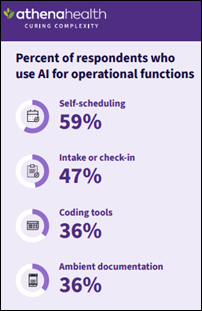
A new ASTP report says that 71% of hospitals used predictive AI tools in EHRs in 2024, mainly for outcomes, but increasingly for billing and scheduling.

image

Cleveland Clinic will expand its rollout of AI-powered sepsis detection system from Bayesian Health, in which it is an investor.

image

Clinic operator Akido Labs uses a proprietary LLM to let medical assistants conduct visits that are guided by ScopeAI, which generates and adapts questions, then summarizes the encounter for physician review. The company says the approach allows doctors to see four to five times more patients.


Business

image

Apple says that it  applied AI to its Heart and Movement Study data to build an algorithm that powers blood pressure monitoring in the new Apple Watch.


Research

An AI model that was trained on population data forecasts rates and outcomes across 1,000 diseases more accurately than many standard models, while also identifying comorbidity patterns over time.

A study says that the rollout of imaging AI in NHS hospitals has proven harder than expected, citing long procurement and contracting timelines, challenges in integration with legacy systems, resistance from skeptical clinical staff, and uneven governance. The authors conclude, “While AI tools may offer valuable support for diagnostic services, they may not address current healthcare service pressures as straightforwardly as policymakers may hope.”


Other

Albania’s government pledges a healthcare transformation that will be based on introducing AI in hospitals and expanding international alliances.

image

Expper Technology’s “huggable” AI robot Robin is being used in 30 nursing homes and pediatric units to offset staff shortages, engaging patients with music, conversation, jokes, and memory games. Thirty percent of Robin’s actions are autonomous,  while remote operators control the rest under clinical supervision.

Mayo Clinic nurses help build an AI-powered, EHR-integrated virtual assistant that creates nurse-specific patient summaries with links to clinical references.


Contacts

Mr. H, Lorre, Jenn, Dr. Jayne.
Get HIStalk updates.
Send news or rumors.
Follow on X, Bluesky, and LinkedIn.
Sponsorship information.
Contact us.
Comments Off on Healthcare AI News 9/24/25

Morning Headlines 9/24/25

September 23, 2025 Headlines Comments Off on Morning Headlines 9/24/25

Oracle Names Co-CEOs to Replace Catz as Software Provider Raises AI Bets

Oracle promotes Clay Magouyrk and Mike Sicilia to co-CEOS, replacing Safra Catz.

RevSpring to Acquire Kyruus Health, Creating a Connected Care Journey from Search to Final Payment

Patient communications and payment solutions RevSpring will acquire Kyruus Health, which offers provider search and scheduling.

Capital Rx Announces Funding Round of $400M to Accelerate AI-Powered Health Benefits Platform; Rebrands as “Judi Health” to Reflect Expansion Beyond Pharmacy

Pharmacy benefit manager and administrator Capital Rx rebrands to Judi Health, the name of its AI-powered health benefit management platform, and announces $400 million in new funding.

Glooko acquires Monarch to advance diabetes platform reach

Diabetes software vendor Glooko acquires Monarch Medical Technologies, which offers a glucose management system.

Caregility Raises $25 Million to Drive the Future of Hospital-Based Virtual Care

Enterprise telehealth vendor Caregility announces $25.1 million in new funding, bringing its total raised to $92 million.

Comments Off on Morning Headlines 9/24/25

News 9/24/25

September 23, 2025 News Comments Off on News 9/24/25

Top News

image image

Oracle promotes Clay Magouyrk and Mike Sicilia to co-CEOS, replacing Safra Catz.

Magouyrk was president of Oracle Cloud Infrastructure and has been with the company 11 years. Sicilia joined the company in 2008 and most recently was president of Oracle Industries. Both were heavily involved with Oracle’s AI work.

Sicilia, a former lobbyist, was an early post-acquisition spokesperson for Oracle in several federal hearings about the VA’s stalled Oracle Health project. He is a regular critic of Epic and CEO Judy Faulkner. CTO Larry Ellison said, “Mike has spent the last several years modernizing Oracle’s Industry applications businesses, including Oracle Health, by completely rebuilding those applications using the latest AI technologies.”

The promotions were first disclosed in a June SEC filing.


Sponsored Events and Resources

None scheduled soon. Contact Lorre to have your resource listed.


Acquisitions, Funding, Business, and Stock

image

Patient communications and payment solutions RevSpring will acquire Kyruus Health, which offers provider search and scheduling.

image

Pharmacy benefit manager and administrator Capital Rx rebrands to Judi Health, the name of its AI-powered health benefit management platform, and announces $400 million in new funding. The company has raised $732 million since its 2017 launch. I interviewed CEO AJ Loiacono last October.

image

Patient Square Capital will acquire tech-enabled group purchasing and supply chain company Premier Inc. in a $2.6 billion take-private deal. Premier, which went public in 2013, has been evaluating strategic alternatives for two years.

image

Prosper AI raises $5 million in seed funding. The company develops AI voice agents for patient access and administrative workflows.

image

Enterprise telehealth vendor Caregility announces $25.1 million in new funding, bringing its total raised to $92 million.

Diabetes software vendor Glooko acquires Monarch Medical Technologies, which offers a glucose management system. Glooko’s CEO says the acquisition will support its efforts to deliver a full hospital-to-home service.


Sales

  • The New York Office of Mental Health will implement Oracle Health’s EHR across 24 inpatient psychiatric facilities and 300 outpatient programs.
  • Yale New Haven Health (CT) will roll out Artisight’s Smart Hospital Platform, initially focusing on virtual nursing.

People

image

ReferWell names Loren Koerber (Medecision) VP of strategic account management.

image

Jason Bond, MBA (CareAbout Health) joins Sevaro Health as CFO and SVP of strategy.

image

Matt Rockhold (GE HealthCare) joins Thynk Health as chief commercial officer.

image

Joe Moscola, PA, MBA (Northwell Health) leaves the organization and will offer advisory consulting services.

image

Allymar Health Solutions hires Cecil Lynch, MD, MSc (Accenture) as CMIO.

image

Scottsdale Institute appoints John Glaser, PhD (Harvard Medical School) as board chair, replacing co-founder Don Wegmiller.


Announcements and Implementations

image

Sutter Health (CA) will use Epic-connected medical devices in its Sutter Sync digital care program for patients with chronic conditions and pregnancy.

Quest Diagnostics announces a collaboration with Epic to integrate its lab operations nationally, streamlining ordering, results, billing, and patient engagement through technologies like MyChart as part of its Project Nova initiative

Micromedex adds AI-powered drug information search for clinical decision support.


Government and Politics

VA Electronic Health Record Modernization Integration Office CNIO Toni Phillips, RN touts the new Oracle Health-based federal EHR’s streamlined medication administration capabilities, noting that the clicks to scan patient IDs have been reduced from 15 to two.


Sponsor Updates

  • Worcestershire Acute Hospitals NHS Trust’s review of Altera Digital Health’s Sunrise EPR finds that the system has delivered significant advancements in care quality, patient safety, and clinical efficiency.
  • Black Book Research publishes a new report titled “The Middleware Mandate.”
  • Linus Health, Navina, and Wolters Kluwer Health will exhibit at AAFP FMX October 5-9 in Anaheim, CA.
  • Clinical Architecture sponsors CHIME Innovation Summit Southwest through September 25 in Irving, TX.
  • Consensus Cloud Solutions will exhibit at the HIMSS Gulf Coast Conference September 24-26 in New Orleans.
  • Divurgent releases a new episode of “The Vurge” podcast celebrating the company’s 18th anniversary.
  • Canopii Collaborative names Brady Thomas account executive.
  • Symplr adds capabilities to its Operations Platform that unify provider data.
  • Surescripts announces the 11 winners of its 2025 Surescripts White Coat Award.

Blog Posts


Contacts

Mr. H, Lorre, Jenn, Dr. Jayne.
Get HIStalk updates.
Send news or rumors.
Follow on X, Bluesky, and LinkedIn.
Sponsorship information.
Contact us.

125x125_2nd_Circle_thumb3

Comments Off on News 9/24/25

Morning Headlines 9/23/25

September 22, 2025 Headlines Comments Off on Morning Headlines 9/23/25

Premier, Inc. Announces Definitive Agreement to Be Acquired by Patient Square Capital in Transaction Valued at $2.6 Billion

Patient Square Capital will acquire tech-enabled group purchasing and supply chain company Premier Inc. in a $2.6 billion take-private deal.

DispatchHealth Scales Back In 10 Markets, Lays Off Employees After Merger

House-call provider DispatchHealth lays off employees and scales back services as it reorganizes after acquiring hospital-at-home software and services company Medically Home.

Overbilling at women’s health care group padded private equity profits while costing patients, insider says

Florida Woman Care co-founder and former employee-turned-whistleblower Kenneth Konsker, MD notifies state officials and insurers of alleged upcoding that he says amounts to $100 million in improper billing.

Comments Off on Morning Headlines 9/23/25

Curbside Consult with Dr. Jayne 9/22/25

September 22, 2025 Dr. Jayne 6 Comments

image 

I am always up for a good read. I tend to read more fiction than anything else, but a couple of non-fiction offerings caught my eye recently.

“Superbloom: How Technologies of Connection Tear Us Apart” by Nicholas Carr came out earlier this year. It takes its title from a botanical event where a significantly higher than normal number of wildflowers bloom all at once. It usually happens when there are unusually wet conditions and seeds that have been dormant are able to come to life.

The superbloom mentioned in the book happened in California’s Walker Canyon in 2019, leading to numerous social media posts around the hashtag #superbloom and a boom in photos that went viral. The phenomenon and widespread promotion of the event drew thousands of visitors to the site and led to massive traffic jams, public safety issues, and damage to fragile ecosystems as people rushed to the area and shared posts about it on social media.

The author looks at the phenomenon and different aspects of internet-based communications and social media, countering the idea that increased communication pathways are good for society. Carr gives a history of media and communication technologies, going back to the days when movable type made mass printing a viable option. He covers the birth of the telegraph, evolution of telephones and radio, and the explosion of TV and internet.

It’s a wide-ranging discussion of how technology impacts society, changes culture, and can create division rather than bring people together. He discusses how being constantly connected can make people feel isolated and how the internet can create vast echo chambers that encourage the dissemination of hateful content.

Carr spends a significant amount of time talking about the evolution of Facebook, and in particular, the creation of its newsfeed. The platform’s users are not only the audience, but also the content creators, and ultimately a product sold to advertisers. He discusses research that looks at why increased time spent on social media makes people less empathetic.


Interesting tidbits: The phrase “social media” was first documented in the 1800s. Radio transmissions were largely unregulated until the Titanic disaster, when private radio operators interfered with the rescue, an early example of “fake news.”

image

I have a bad habit of seeing or hearing about a book and adding it to my reading list without making a note about who recommended it or why I wanted to read it. “Unaccountable: What Hospitals Won’t Tell You and How Transparency Can Revolutionize Care” was one of these. I added it to my library hold queue at some point and was a little surprised when it turned up on the shelf.

Still, it sounded good. I was excited to read it until I saw that it was published in 2012. I decided to read it with an eye towards understanding how far we’ve come since, although as I got into it, I quickly realized that we haven’t come very far at all.

Author Marty Makary introduces himself as a medical student who left medical school during his third year, disillusioned with the “dangerous and dishonest” behaviors that he saw during his training. He began graduate work at the Harvard School of Public Health and quickly fell into the movement around quality measurement as a mechanism of healthcare improvement. He returned to medical school after a year and began residency training in preparation for a career in surgical oncology.

On page 2 of the introduction, he describes “patients increasingly fed up with a fragmented healthcare system littered with perverse incentives,” which is what grabbed my attention in making me feel like we haven’t come far at all.

He describes situations where dangerous attending physicians aren’t confronted due to hospital politics. That still happens, although at least in my area, it seems to be less of a factor than it was when I first entered practice. He talks about patients winding up at hospitals that aren’t a good fit for their specific medical needs. Although there might be more transparency now with hospitals reporting quality measures and payers publishing that data, it still happens quite a bit due to the narrow networks that many insurance plans create.

Even today, people are talking about patient choice and how important it is for patients to do their research. However, when you are facing an expensive procedure, many in the US make their decisions on where to receive care based on insurance coverage and financial necessity.

He hits on one of my pet peeves, which is hospitals that shamelessly self-promote by naming their own departments “centers of excellence” without actually being accredited or recognized by an independent third party for any specific level of excellence. He puts it right out there: “Patient satisfaction surveys do not capture quality medical care, and ‘top’ scores and rankings in magazines are often paid for.” On these points, nothing has changed in the last decade.

He is open about his role in a few episodes of poor care. I admire his willingness to share this information since many physicians wouldn’t write about those events in a non-protected document. He looks at those episodes of care in a systematic way and identifies how individual decisions can be influenced by systems failures.

One passage in the book gave me a flashback from my own medical training. I was a lower-level resident on call, and the senior or supervising resident failed to provide the backup support that they should have. In my case, the resident told the interns not to call unless something was “really bad,” but didn’t give us any definition of the term.

In Makary’s case, he called his senior resident, who told him to go back to handling his workload (even though what is described in the book is more than one physician should be managing at a given time unless you’re in a disaster situation).

He goes on to skewer some of the same things that we are still skewering, including inflated CEO salaries. He takes particular issue with hospitals that aggressively fundraise from the public while spending money on all kinds of things other than actually treating patients, and finds it “unethical to raise massive monetary surpluses from local schools and charities while making cutbacks to frontline workers.” There’s still plenty of that going on these days.

He also laments “the culture of doing stuff” that is still pervasive in certain subspecialties, although the quality movement and greater patient advocacy are helping chip away at that trend.

Parts of the book were dated, but it still served as a good reminder that there is much work to be done in healthcare and that we need good and thoughtful people to do it. Overall, I’m glad I read it.

What nonfiction book would you recommend to a healthcare or technology colleague? Leave a comment or email me.

Email Dr. Jayne.

Readers Write: For Better Member Engagement, Talk to a Human

September 22, 2025 Readers Write 3 Comments

For Better Member Engagement, Talk to a Human
By Kevin M. Healy

Kevin M. Healy is CEO of ReferWell.

image

The healthcare industry is experiencing a digital gold rush. AI platforms are everywhere, offering innovative promises to change how we engage with members for the better. From chatbots to automated outreach tools, the future is fast, efficient, and increasingly faceless.

The issue that many people aren’t discussing is that while these tools offer a quick, and seemingly intelligent, alternative to direct outreach, people are not responding to it. 

Despite the excitement around AI and automation, the majority of healthcare appointments are still made over the phone. Not through an app or  chatbot, but a phone call, often with another human being, because healthcare is personal.

Research shows that 84% of healthcare consumers identified communication quality as a crucial factor in their overall patient experience. When someone needs help navigating the system, whether it’s finding a doctor, scheduling a mammogram, or understanding their benefits, they want to talk to someone who listens and knows their needs, not an AI bot that doesn’t truly understand the emotions that can come with complex healthcare decisions.

Digital tools have their place. Text reminders and emails can be helpful for tech-savvy members, and portals are a fantastic tool for direct follow-up questions with your provider or to reference after visit summary notes.

However, when it comes to driving action, such as actually getting people to the doctor, technology alone rarely moves the needle. A generic text cannot reassure someone who is anxious about an upcoming procedure. A portal doesn’t know if your insurance covers the provider you need to see. Instead, a phone call from a trained care navigator who speaks the member’s preferred language, understands their needs, and respects their time can make the difference.

A study conducted at the University of Alabama’s Patient Care Connect program found that 83% of patients were satisfied or very satisfied with assistance provided by care navigators, and an impressive 90% recommended the program to others. These human connections are more than feel-good anecdotes. They are proven strategies for increasing show rates, improving outcomes, and reducing care gaps.

This isn’t just a rejection of technology. It’s a reminder that we’re in the business of human health. AI can support and inform engagement efforts. It can help us identify the right people to reach and the right time to call, but it shouldn’t replace the human voice at the heart of care.

Let’s build smarter systems that elevate empathy, not eliminate it. Let’s use AI to empower human outreach, not sideline it. Let’s stop mistaking automation for connection. Because when it comes to getting someone to take that critical step, to schedule the appointment, show up, ask the hard question, and take control of their health, a conversation still works better than an algorithm.

Morning Headlines 9/22/25

September 21, 2025 Headlines Comments Off on Morning Headlines 9/22/25

Christopher G Chute, MD, DrPH, FACMI, to be awarded Morris F. Collen Award of Excellence at the AMIA 2025 Annual Symposium

The American College of Medical Informatics will present its Morris F. Collen Award of Excellence to Christopher Chute, MD, DrPH at the AMIA annual meeting November 15-19 in Atlanta.

Governor Hochul Announces $218 Million Investment to Improve Patient Care Across New York State’s Mental Health System

The New York Office of Mental Health will implement Oracle Health’s EHR across 24 inpatient psychiatric facilities and 300 outpatient programs.

The Responsible Use of AI in Healthcare

Joint Commission and the Coalition for Health AI publish “Guidance on Responsible Use of AI in Healthcare,” which provides internal governance for US health systems on implementing AI at scale.

Comments Off on Morning Headlines 9/22/25

Text Ads


RECENT COMMENTS

  1. I'll bite on the disagreement side. 25+ years in EHR implementation, sales, and support. First, regarding the decision effect. Sure,…

  2. And which "political exercise[s]" by a private entity are appropriate for state governments in this country to punish with a…

  3. What do you mean? What was the "political exercise" that prompted this response?

  4. Many, yourself included, chose to make healthcare and Healthcare IT a political exercise. Shouldn't be shocked when the other side…

  5. I see a lot of people dislike what I said. I assume some don't like it because what I said…

Founding Sponsors


Platinum Sponsors


Gold Sponsors


RSS Webinars

  • An error has occurred, which probably means the feed is down. Try again later.