Recent Articles:

Morning Headlines 3/14/24

March 13, 2024 Headlines Comments Off on Morning Headlines 3/14/24

Anatomy IT Expands Healthcare Specialties Expertise with Acquisition of Managed IT Services Leader

Anatomy IT acquires Manta HealthTech, which offers managed IT services to medical, dental, optometry, and veterinary care providers.

HHS Office for Civil Rights Issues Letter and Opens Investigation of Change Healthcare Cyberattack

The HHS Office of Civil rights launches an investigation into the Change Healthcare attack to determine if patient data was breached and what, if any, HIPAA violations have been committed by Change and parent company UnitedHealth Group.

Lurie Children’s Hospital investigating claims that stolen data was sold online

Lurie Children’s Hospital (IL) investigates claims made by the Rhysida ransomware group that it sold data stolen from the hospital.

Biden budget cuts funding for health record refresh amid ongoing program ‘reset’

Proposed fiscal year 2025 budgeting for the VA does not include any new funding for the continued roll out of the department’s stalled EHR modernization program.

Comments Off on Morning Headlines 3/14/24

Healthcare AI News 3/13/24

March 13, 2024 Healthcare AI News Comments Off on Healthcare AI News 3/13/24

News

Sixteen large health systems and Microsoft form the Trustworthy and Responsible AI Network (TRAIN), which will share best practices, register the use of AI in clinical settings, provide AI outcomes measurements, and facilitate creation of a federated national AI outcomes registry. The group will work with OCHIN and TruBridge to make sure that all organizations, regardless of resources, can benefit from TRAIN’s work. The recently formed Coalition for Health AI (CHAI) is a partner and says that TRAIN will operationalize its principles in health systems.

image

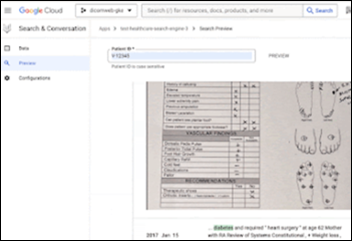
Google launches Google Cloud Vertex Search for Healthcare, a set of search-and-answer tools that integrate with its MedLM, Healthcare Data Engine and Cloud Healthcare FHIR APIs. It offers medically-tuned search of EHR data for clinician presentation, configurable cloud APIs, the ability to answer clinician questions while understanding medical terminology, and providing links to source data points to provide transparency.

The government of China is working with private companies to develop a medically focused AI chatbot based on Meta’s Llama 2.0. It is testing an AI assistant model for neurosurgeons at seven hospitals in Beijing. The CARES Copilot 1.0 was trained on medical literature and can process images, audio, text, MRI, ultrasounds, and CT scans.

image

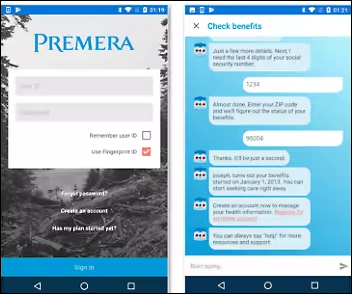
Microsoft previews healthcare-specific safeguards for Azure AI Health Bot services that integrate with Copilot Studio to allow healthcare organizations to develop their own copilots.


Business

Symplr announces SymplrAI, which will offer healthcare efficiency tools via Amazon Web Services AI/ML.

Peter Thiel-backed Cognition AI unveils Devin, an AI-powered software engineer that can generate, debug, and deploy code for websites and videos from a single command. It has its own command line, code editor, and browser.

Amazon Web Services lists the generative AI solutions that its healthcare customers have created:

  • Digital pathology (Philips).
  • Phone-based, voice-enabled progress note generation (Pieces Technologies).
  • Hospital operations efficiency (Symplr).
  • Enterprise imaging (Konica Minolta).

image

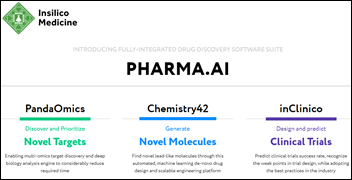
Biotech startup Insilico Medicine describes how it used its AI platform to create a drug candidate for idiopathic pulmonary fibrosis that is undergoing Phase II clinical trials. The company says the process took 2.5 years versus the six years that would have been needed without AI. The company used biology AI to discover the drug, then generated the molecule using chemistry AI.


Research

In England, University of Oxford researchers warn clinicians that using ChatGPT and Bard to create care plans could compromise patient privacy or mislead users with incorrect information.

image

In Israel, Sheba Medical Center researchers develop an AI platform to help mental health professionals diagnose and manage conditions efficiently, concluding that its diagnostic accuracy is comparable to that of experience psychiatrists.

image

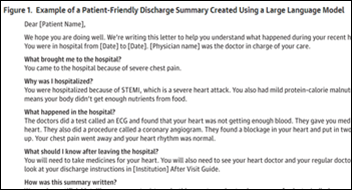
A study finds that large language models can translate discharge summaries into readable, patient-friendly language, which helps providers comply with requirements to give patients immediate access to their discharge notes. However, the authors found examples of key information being omitted, most often history of present illness and procedures, which they attribute to prompt engineering that optimized readability in the form of shorter documents.


Other

image

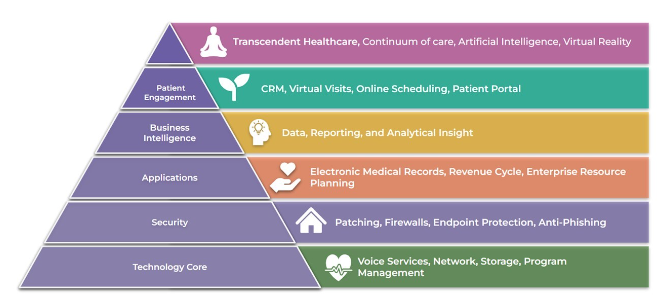
CommonSpirit Health EVP/CIO Daniel Barchi, MS says that healthcare’s adoption of AI should follow the Maslow’s Hierarchy of Needs in first being applied to technical needs, then moved up the triangle to improve healthcare efficiency and safety. (click graphic to enlarge)


Contacts

Mr. H, Lorre, Jenn, Dr. Jayne.
Get HIStalk updates.
Send news or rumors.
Contact us.

Comments Off on Healthcare AI News 3/13/24

From HIMSS with Dr. Jayne 3/12/24

March 13, 2024 News 2 Comments

Tuesday was a busy day at HIMSS. As much as I thought the humidity was absent yesterday, it returned in full force this morning as I walked the ¾ mile from my hotel to the convention center.

I didn’t hear much commentary on the keynote speaker, which was supposed to be about harnessing AI to improve the patient experience. I didn’t make it to the session due to some breakfast meetings I had scheduled, and it didn’t feel like too many people were enthusiastic about the speech. When I arrived at the convention center well before the keynote was scheduled to end, there were plenty of people milling around and not attending the session. From what I’ve heard, it was lightly attended.

image

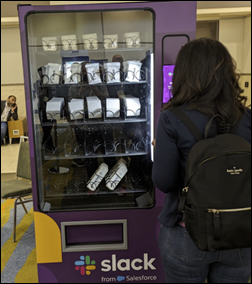
The exhibit hall opened at 10 a.m. and several people were killing time at the Slack vending machine outside the first entrance to the hall. Attendees could scan their badges for a chance to win prizes, including a reusable utensil kit, which is what I ended up with. I usually carry a set of utensils in my consulting bag because you never know when a take-out order will be missing them, so the set was much appreciated.

image

The exhibit hall was hopping from the moment it opened until the moment it closed, which made it feel like the boat-show style HIMSS of old. Hornet Security (booth 1220) had an excellent spokesperson engaging passers-by with this crazy pull-out banner inside his jacket. He wasn’t just a speaker, though, he knew all about the product and was able to answer questions about cybersecurity threats without handing them off to colleagues.

In general, booth staffers were attentive and warm in greeting those walking by. Of course, that is likely to fade as the week wears on. After a brief session of stalking the lower numbered aisles in the exhibit hall, I headed to some educational sessions so that I could at least earn enough Continuing Medical Education credits to make this trip worthwhile.

image

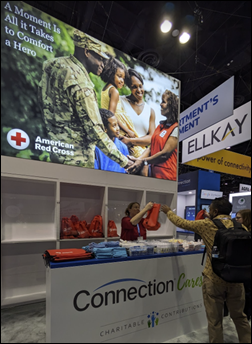
Connection (booth 1449) was filling bags for the Palm Beach VA hospital. I was glad to help, and they were good at gently redirecting people who just wanted to take a pack of tissues and didn’t understand that it was a “fill the backpack” event. They have a lofty goal of backpacks that they’d like filled before the end of the conference, so be sure to stop by and help them out.

image

The best shoes of the day were spotted at First Databank (booth 1747). Kudos to the ladies who chose comfort and style.

image

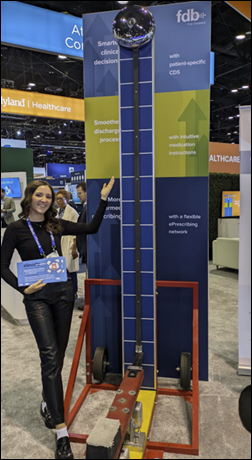
First Databank also wound up on the HIMSS naughty list with their carnival game. I arrived just as their sledgehammer prop was being hidden away, having been shut down by HIMSS officials because the noise of the bell exceeded HIMSS noise standards. Kudos to their rep who was tasked to run the game and but ended up with nothing to do, but who engaged the crowd nevertheless. I suggested a quick run to Costco for the indoor axe throwing set I saw there recently, so we’ll have to see if they have a replacement for tomorrow.

image

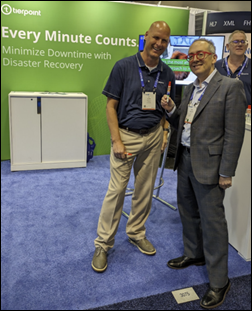
I did my annual booth crawl with Nordic CMO Craig Joseph, which was fun as usual. We decided to award Tierpoint (booth 3075) with the “best swag” award for handing out Tide pens. The booth staff were also engaging and kept up the energy level throughout the day, which is an achievement in itself.

image

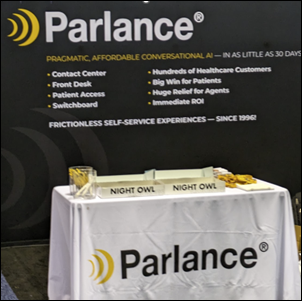
Parlance (booth 5183) had wonderful chocolate chip cookies and promised another delivery for Wednesday and leftovers on Thursday, so be sure to check them out. I was grateful to have a snack at the end of the day, since the lunch promised by my noon focus group was never delivered.

image

I saw this fantastic suit several times.

Several exhibitors had happy hours at the end of the day, including Cox Health, Intelligent Medical Objects, and the Patient Experience pavilion. From there I headed to events hosted by Evergreen Healthcare Partners and Clearsense, which were both fun and great for networking.

image

The CommonWell Health Alliance party at Icebar had drinks powered by dry ice in the indoor bar area, sponsored by Ellkay. Those electing to don jackets and gloves were treated to cocktails served in ice mugs. Thanks to both for sponsoring the coldest part of the night.

After that, I was ready to head to my hotel and crash. It’s been 14 years since my first HIMSS and I’m definitely less of a night owl than I used to be. Kudos to the next generation who is keeping the wild nightlife vibes alive.

What has been your favorite part of HIMSS so far? Leave a comment or email me.

Email Dr. Jayne.

Morning Headlines 3/13/24

March 12, 2024 News Comments Off on Morning Headlines 3/13/24

Oracle Stock Surges On Strong Earnings, AI Cloud Demand

Oracle reports Q3 results: revenue up 7%, adjusted EPS $1.41 versus $1.22, beating Wall Street expectations for earnings and meeting revenue expectations.

Frazier Healthcare Partners Announces Acquisition of RevSpring

Investment firm Frazier Healthcare Partners acquires patient engagement and payments technology firm RevSpring from its private equity owner.

CodaMetrix Announces $40M Series B Financing to Advance Medical Coding Quality and Clinically Enrich Claims Data Through AI

Automated medical coding software company CodaMetrix raises $40 million in Series B funding, bringing its total raised to $95 million.

Comments Off on Morning Headlines 3/13/24

News 3/13/24

March 12, 2024 News 4 Comments

Top News

image

Oracle reports Q3 results: revenue up 7%, adjusted EPS $1.41 versus $1.22, beating Wall Street expectations for earnings and meeting revenue expectations. ORCL shares rose sharply to a 52-week high on the news as investors reacted to the company’s cloud and AI prospects. From the earnings call:

  • CEO Safra Catz once again recited the need to “drive Cerner profitability to Oracle standards,” as the growth in that business lagged the company’s overall growth.
  • Catz said that the Cerner business ”is a significant headwind this year,“ but she expects it to return to growth next year.
  • Board chair and CTO Larry Ellison says that the company is using its Apex application generator and autonomous database to develop new healthcare applications. He says that an ambulatory clinic system that includes a Clinical Digital Assistant voice interface will be released in Q4.
  • The Clinical Digital Assistant will include ambient encounter documentation and will create prescriptions, orders, and notes that automatically update the EHR.
  • Ellison predicts that Oracle’s AI-centric healthcare cloud applications will allow customers to rapidly modernize their systems and transform Oracle Health into a high-growth business.
  • Ellison says that running Cerner on Oracle Cloud Infrastructure is less expensive than using a Cerner-dedicated data center in Kansas City; is more secure against cyberattacks; and allows automatic updates every three months.

Oracle also announced enhancements to Oracle Health Data Intelligence, formerly Cerner HealthIntent, that include a generative AI service that summarizes patient histories for care managers.


Reader Comments

image

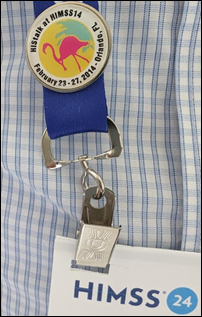
From Mike: “Re: HIMSS24. Rocking my HIStalk 2014 pin for the 10-year anniversary. My awesome HIStalk mug has finally faded out, so sad. And I miss the HIStalkapalooza days — HIMSS just isn’t the same.” My ideas are often financially unsound, such as lugging boxes of pins and mugs to HIMSS14 and then trashing most of them afterward as attendees were too overwhelmed with booth swag to want more. Ditto HIStalkapalooza, which was was a financial nail-biter every year and would have wiped me out in 2020 had I not ended it with the 10th edition in 2017. Still, like many things in life, the good memories outlive the not-so-good ones. The flamingo with a stethoscope design was reasonably clever.

From Booth Crawler: “Re: HIMSS24. Twitter is lit up with ‘influencers’ who are charging vendors to promote their talks, moderate their panels, or pitch their booth presence.” I’ve noticed a lot of that this year. I started HIStalk forever ago because so-called news sites mostly ran paid vendor promos in which no discouraging word was ever heard. I’m glad that’s still the case since it gives me a reason to keep doing it my way. Everybody has to choose what works for them.


HIStalk Announcements and Requests

Attending HIMSS24? I’m anxious to hear your thoughts about the buzz, trends, surprises. Did you attend any HIMSS-owned educational sessions versus the Informa-owned exhibit hall? That also reminds me that SxSW’s healthcare track ended Tuesday and I haven’t heard a peep out of it even though it and CES at one time looked like potential HIMSS competitors.


Webinars

March 27 (Wednesday) 3 ET. “Houston Methodist: Deploying clinical AI at scale for improved outcomes.” Sponsor: Health Data Analytics Institute. Presenters: Khurram Nasir, MD, MPH, chief of cardiovascular disease prevention and wellness, Houston Methodist DeBakey Heart & Vascular Center; Brenda Campbell, RN, senior consultant, HM Health System Innovations; Nassib Chamoun, MS, founder and CEO, HDAI. The presenters  will share how an interdisciplinary team collaborated to successfully use predictive models and a novel AI-driven approach to address post-discharge mortality. They will also describe how they expanded use of the platform to reduce clinician time spent digging through the EHR with a one-page risk profile, including codes extracted from notes using generative AI, and targeting their highest risk patients for extra attention. They will speak to how they overcame barriers to bringing AI at scale to support clinicians across the care continuum.

Previous webinars are on our YouTube channel. Contact Lorre to present or promote your own.


Acquisitions, Funding, Business, and Stock

image

Cognitive assessment software vendor Linus Health acquires clinical-grade speech analytics company Aural Analytics.

Access Information Management acquires Triyam, which specializes in healthcare data conversion, migration, and archiving.

image

Investment firm Frazier Healthcare Partners acquires patient engagement and payments technology firm RevSpring from its private equity owner.

Trey Lauderdale, who founded and led Voalte and then sold it to Hill-Rom for $180 million in 2019, brings his new, healthcare-unrelated company Atomic Canyon out of stealth as founder and CEO. The company’s AI platform scans federal databases to help nuclear power plant operators obtain regulatory approvals

AI-enabled precision medicine technology vendor Tempus hires Morgan Stanley to take the company public.


Sales

  • Ferrell Hospital (IL) selects remote patient monitoring technology from CareSimple.
  • Foothold Technology will integrate Findhelp’s social services referral management software with its human services EHR and care coordination technology.
  • Children’s Wisconsin will implement Locus Health’s remote patient monitoring software.
  • University Hospitals Plymouth NHS Trust in England selects Epic.
  • Sentara Healthcare (VA) opts for virtual rheumatology care services from Remission Medical.
  • Halifax Health (FL) will implement Epic.

People

image

Walmart Health names consultant and former ChristianaCare executive Ken Silverstein, MD, MBA as VP of clinical operations.

image

Divurgent names Mike Nash, MBA (RPM Advisors) SVP of its new Divurgent Canada division.

image

Cone Health (NC) promotes Jason Wright, MA to VP of enterprise business platforms and digital solutions.

image

Former Cherokee Nation Health CIO Donnie Parish joins General Dynamics Information Technology as VP of strategic operations.

image

Clinithink names former consultant Mark Johnston as CEO.


Announcements and Implementations

CommonSpirit Health (UT) goes live on Epic across 45 outpatient departments.

image

Crook County Medical Services District (WY) implements Oracle Health.

Wolters Kluwer Health announces the availability of UpToDate Enterprise and UpToDate Pro digital clinical decision support solutions under the UpToDate brand.

Symplr announces the GA of SymplrAI, a virtual workforce assistant designed to help streamline hospital operations.

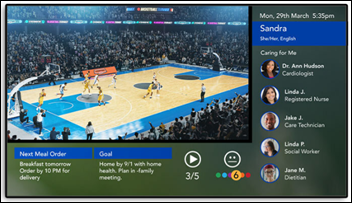
image

Sonifi Health debuts cloud-based smart room technology featuring patient engagement tools at the bedside.

Stanford Health Care (CA) deploys Nuance’s DAX Copilot automated clinical documentation software.

image

Altera Digital Health announces Paragon Denali, an Azure-based EHR for rural, critical access, and community hospitals.

Clearwater announces an addition to its IRM|Pro platform that allows organizations to gauge their cybersecurity program performance against NIST’s framework.

Several Meditech sites are deploying ambient listening technology with its Expanse EHR using multiple voice assistant vendors.

InterSystems enhances the patient matching functionality of its HealthShare Patient Index by incorporating LexisNexis LexID.

ECRI publishes its Top 10 Patient Safety Concerns 2024, which includes these technology-related items:

  • Workarounds with barcode medication administration systems, such as administering meds whose barcodes won’t scan and charting after the fact.
  • Unintended consequences of technology adoption, such as clinician burnout, and the potential of making bad clinical decisions because of unreliable or poorly trained AI.

image

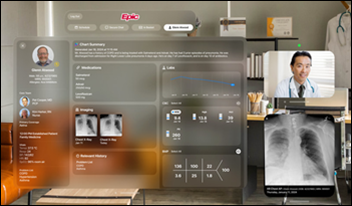
Apple touts the development of health and wellness apps for Apple Vision Pro, noting currently available apps for visual surgical planning, medical equipment training, and Epic Spatial Computing Concept, which allows clinicians to interact with Epic to complete charting, review results, conduct secure chats, and complete in-basket workflows.


Other

image

UnitedHealthcare asks Oregon regulators for emergency approval of its acquisition of The Corvallis Clinic, which it says is in imminent danger of closing because of financial challenges. It didn’t mention that those challenges were caused by the weeks-long claims and payment outage of Change Healthcare, which is owned by UnitedHealthcare. The excellent report by The American Prospect concludes that UHG-owned Optum, which is the largest employer of physicians in the US, “can add to its stable by securing purchases of companies put into a terrible position by its own ransomware hack.” The article also notes that UnitedHealth pays $662 million in medical claims each day, so it is piling up cash as its own systems prevent it from sending out the money it owes to providers.


Sponsor Updates

  • CereCore releases a new podcast, “Why EHR Optimization is Worth the Effort and Budget.”
  • Agfa HealthCare accelerates growth in enterprise imaging cloud business amidst strong market momentum.
  • Black Book’s latest user survey ranks Innovaccer’s Data Activation Platform as the top end-to-end population health solution.
  • CHIME’s Leader to Leader Podcast features Divurgent Chief of US Operations Joe Grinstead, “The Science of Organizational Change Management.”
  • FinThrive announces enhancements to its Analyze, Authorization Manager, and Real-Time Insurance Discover and Active Insurance Discover revenue cycle solutions.
  • First Databank adds CDS Hooks integration to its Targeted Medication Warnings solution.
  • Surescripts publishes its 2023 national progress report, “Tracking the Impact of Health Intelligence Sharing Across the United States.”
  • Linus Health adds Hearing Screener and Digital Trail Making Test Part B assessments to its comprehensive, AI-enhanced brain health platform.
  • TruBridge partners with the newly-created Trustworthy & Responsible AI Network, which aims to operationalize responsible AI principles to improve the quality, safety, and trustworthiness of AI in healthcare.
  • Wolters Kluwer Health announces key milestones for AI Labs, its Clinical Generative AI beta launched last year and powered by its UpToDate CDS solution.
  • EClinicalWorks offers a new customer success story, “Empowering Population Health & Revenue Growth.”

Blog Posts


Contacts

Mr. H, Lorre, Jenn, Dr. Jayne.
Get HIStalk updates.
Send news or rumors.
Contact us.

From HIMSS with Dr. Jayne 3/11/24

March 12, 2024 News 2 Comments

image 

Monday was my travel day since I couldn’t justify an extra hotel night and had other more exciting things to do. I was tempted to wear some mouse ears just so I could feel like I was fitting in with the rest of the crowd. Traveling to Orlando during spring break isn’t my favorite thing to do, although HIMSS seems to think it’s the best thing ever.

I was sad to receive a couple of emails and texts from people I had hoped to connect with at the conference but who wouldn’t be attending. One had become sick during travel last week and decided to keep his germs to himself, which I fully appreciate. Another had her travel withdrawn by her employer at the last minute. Seems like poor planning given the non-cancelable nature of most hotel and airline reservations, but there are plenty of poor decisions that happen in healthcare IT every day.

My home airport was a hot mess, with the TSA PreCheck line stretching about four times longer than I’ve ever seen it. Some of us were tempted to hop into the regular line, which was much shorter, but overly aggressive airport staff were turning away TSA PreCheck holders from that checkpoint and directing them to the back of our line. It turns out that before 6 a.m., there is only one person checking IDs on the PreCheck lane even though they were running three x-ray machines. Once 7 a.m. rolled around, another two ID agents were deployed and the backlog was quickly cleared. Still, there were plenty of people griping about it and one guy who claimed to have missed his flight, but it’s just one more thing to reassure those of us who are habitually early that we should continue our routines.

There were some badly behaved travelers on my flight, and they looked to be of the business traveler variety, so they should have known better. I was flying Southwest Airlines, where checked bags fly free, and the gate agent was very clear about the fact that there were 140 people ticketed on our flight and only 40 checked bags. She noted that a quick count of bags in the gate area made it look like they would have to do some last-minute gate checking and encouraged people to check their bags in advance. Of course, people didn’t comply, which made for chaos in the aisle as people couldn’t find places for their bags.

The cranky traveler in question was boarding position C20-something, which for those of you who don’t routinely fly Southwest, means he was one of the last people to board and of course that he had to check his roller bag. He was angry about that and then huffed about in the cabin because there was nowhere to put his backpack, lamenting that “this effing backpack never fits under the seat.” As a student of the English language, the “never” implies that he has experienced non-fitting of the bag multiple times previously but chooses to carry it anyway. First, there’s no reason to curse on a flight full of small children, and second, his discomfort seemed to be self-inflicted and I have little sympathy for that.

My flight was smoothed by my complimentary margarita, and after a nice nap, I emerged from my flight and found the HIMSS registration desk located in the airport baggage claim. I had printed my QR code, so badge pickup took about 60 seconds, which made me happy. The taxi line was nearly non-existent, but I had booked a last-minute discounted rental car, so I was quickly on my way. The hotel gods smiled on me with an early check-in, and from there I was on my way to take the long hike to the convention center. The weather was gorgeous with minimal humidity compared to what we usually experience in Orlando.

image

The opening reception kicked off with a bang, or at least a rat-a-tat-tat, as a neon-adorned drum line played in the lobby. From there, they proceeded up the escalator to the now-open doors of the reception room. Initially, there was an overactive fog machine that was making me cough, but the mist dissipated quickly. There was entertainment with acrobats on neon-adorned hula hoops, some kind of robot-looking character in an LED costume, and a DJ with lots more neon on display. The drum line made another appearance partway through the reception.

Food lines and bar lines were reasonable and the room wasn’t too crowded, although as we were leaving it appeared that a lot of the party had shifted into the lobby, probably because of the volume in the room. Overall, the vibe seemed positive. Following the reception there were a number of private parties, but after a quick round of drinks with friends, I called it a night and headed back to plot tomorrow’s adventures.

image

Plenty of organizations are hosting happy hours on the exhibit hall floor, which always makes me happy to reach the end of the day. I’m hoping there will be some scones or other good treats as well, but as usual I’ll settle for wine. IMO (booth 2251) won the booth happy hour advertising game with their email offering wine pairings for various healthcare IT goals. In case you’re curious:

  • Simplified clinical documentation pairs best with chardonnay.
  • Standardized condition and treatment data goes well with pinot grigio.
  • Meaningful problem lists are better with merlot (and I would agree).
  • Streamlined OR scheduling is best with reisling (personally I’d put that with optimized patient education, but that’s just me).

I’ll offer some additional pairings for those of you who prefer spirits: lab crosswalk review goes best with vodka, marketing workshops definitely require beachy rum drinks, and the art of constructing governance documents most certainly pairs best with bourbon.

What are your favorite healthcare IT and beverage pairings? Leave a comment or email me.

Email Dr. Jayne.

Morning Headlines 3/12/24

March 11, 2024 Headlines Comments Off on Morning Headlines 3/12/24

Linus Health Acquires Aural Analytics

Cognitive assessment software vendor Linus Health acquires Aural Analytics, which offers clinical-grade speech analytics.

Access, a Leader in Information Management Services, to Significantly Accelerate Its Digital Solutions Strategy with Acquisition of Triyam, an Innovative Data and Software Business

Information management services company Access acquires healthcare data conversion, migration, and archiving vendor Triyam.

Divurgent Announces Formal Expansion into the Canadian Healthcare Market

Virginia Beach-based healthcare technology consulting firm Divurgent announces its expansion into Canada.

R1 RCM Forms Special Committee to Evaluate Strategic Alternatives

R1 forms an advisory committee to consider the acquisition offer made by majority shareholder New Mountain Capital, a deal that would value the technology and services company at $5.8 billion.

Comments Off on Morning Headlines 3/12/24

Curbside Consult with Dr. Jayne 3/11/24

March 11, 2024 Dr. Jayne 1 Comment

Mr. H reported on this last week, but I’m still struggling with the story about Guam Memorial Hospital spending $5 million on an EHR that isn’t fit for purpose. As someone who used to do consulting work to help healthcare organizations with EHR system selection needs, it’s just baffling that this hospital’s project has reached this point.

You can try to blame the fact that there was a pandemic that caused delays, but that feels like a convenient excuse to try to cover problems that range from incompetence to willful neglect. There’s also the question on who will profit from the $20 to $60 million that it will take to replace the current system with one that will actually get the job done.

The system has been in place since October 2022. An administrator has stated that leadership determined it “really wasn’t built for an acute care hospital landscape” and would be more suitable for a behavioral health application. Because there isn’t funding to address the issues, caregivers are essentially stuck with it for the time being.

It feels like the basic tasks involved in system selection were somehow skipped: demonstrations, reference checks, and site visits with peer organizations that were currently using the system. This isn’t a magical new process for buying an EHR. I’ve done it at least a dozen times in the last two decades, and it’s pretty straightforward. Even if you claimed that the pandemic prevented site visits, you could still address a number of needs through a virtual site visit. In my experience, physicians rarely lie about the capabilities of an EHR unless they are being bribed.

I can’t throw the vendor under the proverbial bus without all the facts. It’s not entirely clear with of the vendor’s modules were actually purchased and how they were implemented.

I’ve personally been involved with EHR implementations where health systems did some pretty silly things, such as “forgetting” to include laboratory interfaces in their original Request for Proposal document, and grossly underestimating the volume of patient data that would need to be converted in order for physicians to work efficiently and for patients to be safe.

On the other hand, it feels like the facility might have skimped out on certain implementation steps as well as system selection steps, including elements such as workflow design, inclusion of patient safety and quality reporting features, and a little thing called user acceptance testing. Maybe issues were raised and leadership just plowed on through, though – I’ve certainly seen that happen a number of times.

As for the complicity of the vendor in this situation, I did a quick glance at its website, which may not at all resemble what the hospital had access to as it was selecting the system. There are plenty of areas of the website that channel language specific to behavioral health inpatient applications. There are consistent mentions of using DSM 5 to capture diagnoses in the chart rather than using ICD-10. There are also several mentions of the ability to document group visit notes, which typically don’t occur in the standard medical / surgical inpatient setting. The vendor does list a number of component products, however, and it looks like there may have been some mergers or acquisitions along the way, so that might be part of the issue too.

The news article notes that management is busy preparing a new RFP and therefore couldn’t offer additional comments on the downstream operations and billing impacts caused by the situation. I suspect they can’t offer comments because they’re actually preparing updates to their resumes as they consider pursuing other opportunities. The hospital is tied into a subscription-based contract, so they’re stuck with it until they can get a replacement live.

Hospital IT projects don’t happen overnight, and if the same leadership team remains in place, I’m sure it won’t be an efficient rip-and-replace at all. Even in the best of situations, you’re looking at an 18-month lead time to install a hospital system, just due to the sheer number of decisions that have to be made, the workflows that have to be mapped, the clinical data that has to be converted, and of course the ever-hellish hospital contracting process. That’s not allowing additional time for lots of questions to be asked, since the facility has already bought a lemon and stakeholders probably don’t want to buy another one.

Reading through the article, the organization has dealt with a number of technology problems in the past, including concerns logged during site visits from the Centers for Medicare & Medicaid Services (CMS). Those citations focused blame on the hospital’s previous EHR, which has since been discontinued. CMS cited the facility for failure to systematically track medical errors.

The administrator speaking to the media for the article noted that the new system had been recommended by the previous vendor. That’s problematic in my book, because when I have a vendor that’s failing to meet expectations, the last thing I want to do is to take their recommendation for a replacement. Apparently the two vendors were somehow affiliated, but trying to figure that out is beyond the scope of my investigative reporting motivation at this point. Apparently it was a no-bid contract situation, and that’s enough information for me. I can’t help but feel concern for and outrage on behalf of the patients who are now stuck receiving care in this environment, and the clinicians who have to try to make do with something that is clearly incapable of supporting them.

There are only a handful of comments on the article, and I wonder if any of them are from clinicians. If I had inside knowledge of the situation, I’d certainly be spilling it. I’m curious if we have any readers who work with the vendor in question or who have inside knowledge on the situation and would be happy to help you share your thoughts anonymously. Inquiring minds want to know: How do situations like this happen? Is there more to this story than meets the eye? Or is it simply a case of rampant incompetence? Leave a comment or email me.

Email Dr. Jayne.

Morning Headlines 3/11/24

March 10, 2024 Headlines Comments Off on Morning Headlines 3/11/24

UnitedHealth Group Update on Change Healthcare Cyberattack

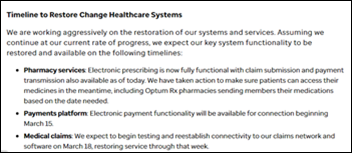
UnitedHealth Group hopes to restore Change Healthcare’s electronic payments systems by March 15 and its medical claims platform the week of March 18.

MPath Health Raises $1.1 Million to Improve Cancer Screening and Save Lives

MPath, an automated cancer screening technology startup that got its start at Wake Forest University School of Medicine, announces $1.1 million in new funding.

Emory Healthcare transforms clinician access to health records with Epic and MacBook Air

Emory Healthcare goes live on Epic on MacBook Air via Epic’s just-announced native Hyperspace app that is available in the Mac App Store.

VA, DoD launch new EHR at joint site — a major milestone for each agency’s rollout

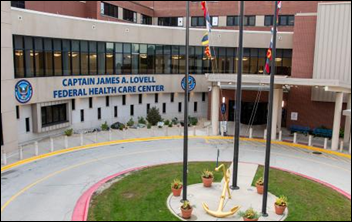
DoD goes live on Oracle Health in the Lovell FHCC that it operates in conjunction with the VA.

Comments Off on Morning Headlines 3/11/24

Monday Morning Update 3/11/24

March 10, 2024 News 5 Comments

Top News

image

UnitedHealth Group hopes to restore Change Healthcare’s electronic payments systems by March 15 and its medical claims platform the week of March 18.  The company says that e-prescribing and pharmacy claims and payments came back online on March 7.

UHG has suspended some of its requirements through March 31: (a) prior authorization for Medicare Advantage plans; (b) utilization review for MA admissions; and (c) drug formulary review for Medicare Part D. 

The company says that recommends that providers use multiple paths and workarounds for submitting claims, noting that, “If there’s anything we’ve learned as an industry, it’s that system redundancy is critical.” It acknowledges that some of the temporary workarounds will lack full edits and functionality, which could require rework.

The hacker who claimed to provide the BlackCat ransomware group as an a ransomware-as-a-service “affiliate” may be associated with China-base cybercrime syndicates, according to a security group that spoke to the hacker “Notchy,” who claims that BlackCat stiffed them of the 90% commission due on the $22 million ransom that UHG supposedly paid.

CMS, which initially announced plans to offer financial assistance to Medicare Part A providers (hospitals) who are experiencing claims disruption, expanded the plan to include Medicare Part B providers (physician practices).


Reader Comments

From HSA Card User: “Re: credit card. Some practices are charging for paying by credit cards, even HSA cards. Apparently processing fees are being passed to practices that are then passing them along to patients.” Charging extra to cover the cost of processing a customer’s credit card seems to be a lot more common lately, especially among restaurants that previously preferred it over managing a drawer full of cash. Some business have gone card-only. My questions in all such cases are: (a) what customer behavior are you trying to encourage?; and (b) are you willing to annoy and potentially lose customers who wouldn’t even notice a slight price bump, but resent the heck out of a separate charge for using plastic? It’s galling enough for a $15 burrito, but a $2,000 co-pay means donating maybe $60 for the privilege of giving the practice your money.

From Sunshine Superman: “Re: Children’s Minnesota. See this supposed Oracle Health insider’s comments.” The anonymous, unverified poster says that 97% of the Children’s Minnesota participants who sat through presentations from Epic and Oracle Health voted to replace Cerner after 26 years at a cost of $200 million:

Oracle Health’s approach was to admit how much they screwed up over the years and how Oracle has so much more technical talent compared to Cerner to get things done right / quickly. They couldn’t actually give any sort of commitments on what they would do to make things right other than their same BS vaporware that something great will be coming soon. Meanwhile, Epic did a full presentation on their current solutions and the future plans.


HIStalk Announcements and Requests

image

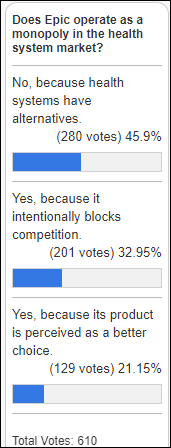
Summarized comments from a nearly even poll vote on whether Epic is a monopoly:

  • It would be a stronger “not a monopoly” vote if Epic didn’t charge fees for client-chosen third parties to access its APIs.
  • Those so say Epic is a monopoly may have competed against Epic and lost or feel that Epic doesn’t give their companies enough integration options.
  • Epic is the safest purchase for CIOs, although struggling health systems must be challenged to justify the cost of Epic to their boards.
  • Epic saw where the market was going, built all its own products, and figured out how to train new college grads to provide the large number of employees needed. Perhaps allowing health systems to resell Epic to small hospitals and clinics is questionable, but of all of healthcare’s monopolistic behaviors, Epic isn’t the real problem.
  • The company’s business practices thwart innovation by third parties, although that isn’t a legal monopoly.
  • Epic’s market share in academic medical centers meets the monopoly threshold of 50%.
  • Weak competitors, such as Eclipsys and McKessonHBOC, limited a prospect’s choice, and the competition seems to be getting weaker.
  • Mid-sized and smaller hospitals choosing Epic because it has a monopoly on interoperability, which is 100% a monopolistic practice. CIOs of any health systems under 500 beds will tell you that’s why they chose it.
  • CEO Judy Faulkner greased the wheel of Washington by serving on the federal health IT policy panel.
  • Just because something is dominant doesn’t make it a monopoly, and the DoD’s bake-off didn’t result in selecting Epic. A natural monopoly where it’s more efficient and effective for customers to have a single provider is sometimes a good thing.

New poll to your right or here: Have you scheduled an in-person medical visit purely online in the past year? Sending a request message and waiting for a return email or call doesn’t count – you have to have booked completely in real time using just your keyboard.

image

I don’t bury you with teacher updates from the Donors Choose projects that were funded by reader donations, but Ms. W from New York City checked in after she started using the STEM building kits we provided for just a $60 reader donation (Con Edison matched half of the $234 total cost, while my Anonymous Vendor Executive matched half of the remaining half):

I’ve seen academic benefits and positive social changes in my students. Building the kits required my students to use teamwork and collaboration as they worked together to connect the pieces. Your thoughtful contribution has improved their science knowledge and helped build friendships and communication skills. Thank you for making a lasting impact on my students’ learning journey.


Webinars

March 27 (Wednesday) 3 ET. “Houston Methodist: Deploying clinical AI at scale for improved outcomes.” Sponsor: Health Data Analytics Institute. Presenters: Khurram Nasir, MD, MPH, chief of cardiovascular disease prevention and wellness, Houston Methodist DeBakey Heart & Vascular Center; Brenda Campbell, RN, senior consultant, HM Health System Innovations; Nassib Chamoun, MS, founder and CEO, HDAI. The presenters  will share how an interdisciplinary team collaborated to successfully use predictive models and a novel AI-driven approach to address post-discharge mortality. They will also describe how they expanded use of the platform to reduce clinician time spent digging through the EHR with a one-page risk profile, including codes extracted from notes using generative AI, and targeting their highest risk patients for extra attention. They will speak to how they overcame barriers to bringing AI at scale to support clinicians across the care continuum.

Previous webinars are on our YouTube channel. Contact Lorre to present or promote your own.


Sales

  • WellSpan Health will implement Nuance’s DAX Copilot, embedded in Epic.

People

image

Kulwant Gill (KPMG) joins Pivot Point Consulting, A Vaco Company as SVP of management consulting.

image

RadiantGraph hires Geeta Nayyar, MD, MBA (Salesforce) as chief medical officer.


Announcements and Implementations

Emory Healthcare goes live on Epic on MacBook Air via Epic’s just-announced native Hyperspace app that is available in the Mac App Store. The health system expects to save $300 per device pear year in licensing and support costs by running on Macs instead of PCs.

Rhapsody announces Autopilot, an AI-powered patient linking solution that it says boosts people-based identity resolution from 72% to 85% consistency to 98%. 

image

Albany Medical Center (NY) goes live on Epic, the first of Albany Med Health System’s four hospitals that will implement Epic.


Government and Politics

image

DoD goes live on Oracle Health in the Lovell FHCC that it operates in conjunction with the VA. The DoD’s MHS Genesis is now live at every DoD domestic and international site. The VA, which paused its rollout after going live at five of its 170 medical centers, says that Lovell’s results will drive its decision to restart its implementation.


Sponsor Updates

  • KLAS Research names AGS Health the most improved services solution in its “2024 Best in KLAS – Software & Services” report.
  • Nuance and Providence are working to accelerate AI innovation at scale, propel in-house solutions development, advance clinical research, and spur further collaborations between health systems and health IT vendors.
  • Nordic Consulting and SupraNet Communications extend their partnership to offer unlimited free WiFi services at Dane County Regional Airport in Madison, WI.
  • ServiceNow names Optimum Healthcare IT Senior Developer Elijah Aromola a 2024 ServiceNow MVP for the fifth year in a row.
  • The Customerland Podcast features SmartSense VP of Customer Success Danny Keough, “Elevating Customer Success with IoT.”
  • SnapCare wins the Best Use of Technology Award during the 2024 Tiara Staffing Awards.
  • Sphere’s TrustCommerce integrates with PayPal and Venmo to offer more flexible payment options to patients.
  • The FinnVoices Podcast features TruBridge Chief People Officer Amaris McComas, “Preparing the Healthcare Workforce for AI: Time to Build Culture, Upskill, and Invest.”
  • Visage Imaging offers a new case study, “Accelerating PACS on AWS with Visage Imaging.”

Blog Posts


Contacts

Mr. H, Lorre, Jenn, Dr. Jayne.
Get HIStalk updates.
Send news or rumors.
Contact us.

Morning Headlines 3/8/24

March 7, 2024 Headlines Comments Off on Morning Headlines 3/8/24

First round bids collected for Netsmart, sources say

The private equity owners of Netsmart are reportedly reviewing first-round bids for the company that could value it at $5 billion.

Patients struggle to get lifesaving medication after cyberattack on a major health care company

The Change Healthcare hack is preventing pharmacists from processing manufacturer co-pay assistance cards and prescription discount cards.

PreemptiveAI Emerges From Stealth With a Groundbreaking Biomedical Foundation Model For Health Prediction

Seattle-based health prediction and monitoring startup PreemptiveAI launches with $6.4 million in funding.

Comments Off on Morning Headlines 3/8/24

News 3/8/24

March 7, 2024 News 3 Comments

Top News

image

A hacker who claims to have given the BlackCat ransomware group access to Change Healthcare’s network says that BlackCat reneged on paying him or her their 60% to 90% share of the $22 million ransom the company has been rumored to have paid. The affiliate hacker also claims to have kept copies of Change’s data. Click above image to enlarge.

Meanwhile, BlackCat claims to have shut down because of FBI pressure and claims that it will sell its ransomware source code, which some experts call an “exit scam” form of fake shutdown that is intended to avoid paying freelancers like the one above who participate in its ransomware-as-a-service operation.

A cybersecurity expert says that “this is our Colonial Pipeline,” referring the 2021 ransomware attack that was orchestrated by the same group, which disrupted fuel supplies in the eastern US for several days until the demanded ransom was paid to restore systems.


Reader Comments

From Full Price: “Re: Change Healthcare. I haven’t seen reported that pharmacies can’t process manufacturer coupons for their drugs. I am not sure how patients will be able to afford them.” Manufacturer co-pay assistance cards can’t be processed by pharmacies last I heard because of the Change outage, so that $5 per month Humira prescription will cost $8,000 per month. Patients can’t even use GoodRx for the $1,000 or so Humira savings it would provide because pharmacies can’t process that either.


HIStalk Announcements and Requests

image

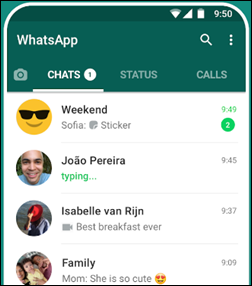
I recently traveled internationally and was reminded that WhatsApp is like the metric system – logically and productively used by the entire rest of the world, but stubbornly resisted in the US. The free, Zuck-owned app offers superior group chats, end-to-end encryption, the ability to make free international voice and video calls over the Internet, and can be used on the desktop or web. The product even offers click-to-message advertising for contact a rep or ordering a product from a company’s website. It also doesn’t diminish Android users by displaying their messages in blue.

image

I was thinking about Kipp Lassetter, MD, who in 2011 sold HIE technology vendor Medicity to Aetna for $500 million, after which the insurer basically let it die. Anyway, I was fascinated to learn via LinkedIn that Kipp is the proud owner since 2012 of Scottsdale, AZ’s The Thumb, a wildly popular auto spa, gas station, bakery, and barbeque restaurant and catering operation that has been featured on “Diners, Drive-ins, and Dives” (that’s him with Guy above), I like that Kipp used Aetna’s money to pivot to brisket. Fun fact: Kipp emailed in around 2004 to say that he was a fan of HIStalk, of which I didn’t know I had any, and he helped me figure out how Medicity could become my first sponsor 20 years ago.


HIMSS24

HIMSS removed the HIMSS24 exhibitor count from the conference website a while back, but I used some amateurish data parsing techniques to scrape their exhibitor page, which I now know lists 1,007 booths. It occurred to me as I was scraping that self-promotion doesn’t end at the exhibit hall exit door, however, as attendees will be trying to convince each other of their employability, party attendee desirability, and producer of endless podcasts and videos.

I’m pleased to have spotted just a handful of “HIMMS” spelling gaffes this year, so I will be better rested to gripe about people who can’t master the idea that this weekend means replacing EST with EDT.

Support my sponsors by seeing what they’re doing at the conference.

image

Orlando weather calls for partly cloudy days next week, with highs around 80. Early arrivals and booth setter-uppers will sweat out 89 on Saturday.


Webinars

March 27 (Wednesday) 3 ET. “Houston Methodist: Deploying clinical AI at scale for improved outcomes.” Sponsor: Health Data Analytics Institute. Presenters: Khurram Nasir, MD, MPH, chief of cardiovascular disease prevention and wellness, Houston Methodist DeBakey Heart & Vascular Center; Brenda Campbell, RN, senior consultant, HM Health System Innovations; Nassib Chamoun, MS, founder and CEO, HDAI. The presenters  will share how an interdisciplinary team collaborated to successfully use predictive models and a novel AI-driven approach to address post-discharge mortality. They will also describe how they expanded use of the platform to reduce clinician time spent digging through the EHR with a one-page risk profile, including codes extracted from notes using generative AI, and targeting their highest risk patients for extra attention. They will speak to how they overcame barriers to bringing AI at scale to support clinicians across the care continuum.

Previous webinars are on our YouTube channel. Contact Lorre to present or promote your own.


Acquisitions, Funding, Business, and Stock

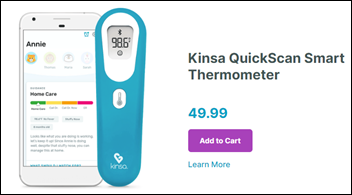
Health and human services software vendor Healthy Together acquires previously-shuttered Kinsa Health, which offered AI-powered epidemiological prediction models using consumer smart thermometers as well as healthcare demand forecasting.

Patient engagement technology vendor Carenet Health acquires the population health management business of Health Dialog from Rite Aid, which is restructuring under bankruptcy.

Cigna subsidiary Evernorth Health Services offers companies and health plans that want to cover GLP-1 drugs the ability to have the cost capped, with the EncircleRx program also including virtual lifestyle support via Omada’s digital health tools.

image

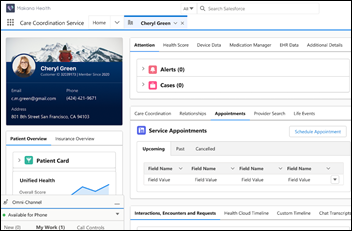
Salesforce announces healthcare conversational AI solutions: Einstein Copilot (allows providers to schedule appointments, send referrals, and get a patient summary) and Assessment Generation (health assessment surveys).

PE Hub reports that the private equity owners of Netsmart are reviewing first-round bids for the company that could value it at $5 billion. The firms bought their stake from Allscripts in 2018 for a reported $525 million.


Sales

  • An unnamed, 10-hospital US university health network chooses Sectra One Cloud for imaging.

People

image

VirtualHealth hires Sameer Gaikwad (HealthEdge) as VP of account management and customer success.

image

Jerry Hogge, JD, MS (Calibre Systems)  joins MultiPlan as COO.

image

Curae hires Joe Block (GeBBS Healthcare Solutions) as SVP of sales.

image

Clinical Architecture promotes Marck DuBois to chief revenue officer.


Announcements and Implementations

InterSystems announces GA of TrakCare Assistant, a navigation and search tool for its EHR that the company says can reduce EHR interaction time by 66%.

The Meditech Traverse Exchange Canada goes live, connecting four Meditech-using hospitals and 65 long-term care sites that use PointClickCare.

image

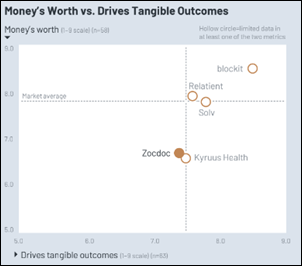
A new KLAS report characterizes patient self-scheduling as “an early but broadening market,” as providers choose from EHR offerings, patient engagement platforms, and standalone solutions. Self-scheduling represents a small percentage of visits. Relatient has the highest overall performance, followed closely by Zocdoc, although the report notes that while Zocdoc customers love the product, they aren’t thrilled with paying a per-booking charge for canceled or no-show visits.


Government and Politics

In Ireland, watchdogs warn that delays in replacing Beaumont Hospital’s 25-year-old IT system present a serious operational risk.

FDA gives marketing clearance for Dexcom’s non-prescription continuous glucose monitor for diabetics who don’t use insulin. The wearable sensor captures blood glucose levels every 15 minutes and can be worn for 15 days before replacing.


Other

A closed nursing home blames its failure on the Pennsylvania Department of Health, which halted new admissions to the facility last fall over safety concerns. The facility is awash in unpaid bills and payroll, which it blames on the Change Healthcare cyberattack.

image

This headline must be surprising to Walgreens, which owns VillageMD.


Sponsor Updates

clip_image001

  • Ascom Americas staff sort, inventory, and pack toy donations at Zach’s Toy Chest for delivery to local children’s hospitals in North Carolina.
  • Bella Medical (TX) adds Sunoh.ai medical scribe software to its EClinicalWorks implementation.
  • FinThrive releases a new Health Rethink Podcast, “Let’s Get Bio, Socio, Psych with It!”
  • Verato is awarded a patent for its Referential Matching technology for healthcare identity resolution.
  • Five9 continues to grow, surpassing revenue records with industry-leading AI innovations, international expansion, and partner acceleration.
  • Healthcare IT Leaders provides assistance for organizations affected by the Change Healthcare incident.
  • Arcadia, Inovalon, InterSystems, Wolters Kluwer, Availity, Ellkay, and MRO will exhibit at the Rise National Conference March 17-19 in Nashville.

Blog Posts


Contacts

Mr. H, Lorre, Jenn, Dr. Jayne.
Get HIStalk updates.
Send news or rumors.
Contact us.

EPtalk by Dr. Jayne 3/7/24

March 7, 2024 Dr. Jayne Comments Off on EPtalk by Dr. Jayne 3/7/24

I was hanging out with some medical friends the other night, and as it happens when adult beverages are involved, the conversation was all over the place. We were talking about patient education, and one of my colleagues who is fairly new at working directly with patients admitted to having used ChatGPT to help him formulate an answer to the question of “What is a placenta?” while keeping the answer at the level a 12-year old could understand.

It points out the importance of answering questions in language that patients can comprehend, especially when medical folks are used to using larger words and entirely too many Latin phrases. Patient education is important as are communication skills, but both tend to be undervalued in healthcare today. As a side note, following that conversation I decided it would be cool to be able to peek behind the curtain of the commercially available generative AI solutions to see the kinds of questions that are being asked by the general public.

Other hot topics include a local hospital tasked with cutting 10% of its frontline nursing staff to help balance the books. Although I understand the slim margins that most hospitals operate under, I doubt that cutting nursing staff is going to be a positive as far as patient safety, nurse-to-patient ratios, or patient and family satisfaction. They’ve already gotten rid of their weight management program, which doesn’t make sense given the obesity epidemic and people’s willingness to pay cash out of pocket for obesity drugs. In addition, they’ve eliminated a number of physicians and service lines related to women’s and children’s health. I’m sure if the community knew what was going on there would be an outcry, but the hospital has been keeping it pretty hush-hush.

From Burned Out PCP: “Re: AI. What do you think about this article that looks at AI as the solution to the primary care physician shortage? I’m hanging up my stethoscope because I can’t take it any more. Thankfully, my ability to do clinical informatics work is serving as a lifeboat.” The article does a nice job summarizing some of the statistics, including the staggering savings the US could realize ($67 billion) if everyone had a primary care provider, as well as the projected primary care physician shortage ballparked in the neighborhood of 40,000 physicians by 2034. The author summarizes some of the factors contributing to primary care physician burnout, such as the fact that “most doctors enter the profession because they want to build trusting, long-term relationships with patients and see them get healthier. Instead, primary care has increasingly become short-term and transactional.”

I agree with this statement. It has been difficult to watch the erosion of respect for primary care practice since I graduated from residency training. Generational values have shifted and it feels like patients no longer value those relationships. Healthcare costs and economic realities have pushed patients to select convenience over comprehensiveness and low-cost over longitudinal relationships.

The author lists the likely suspects for AI tools to assist physicians, including digital scribing and documentation. They also include the ability to digest information from physician notes, laboratory and imaging reports, and other documents to create a more useful view of the patient and to identify potential gaps in care or recommendations for changes to the treatment plan. I don’t feel like the author really added much to the current understanding of the role of AI, and assumed it was a generic op ed piece until I got to the author info at the bottom which identified the writer as the chief medical officer for Amazon Health Services. I think I would have expected a bit more from someone in that role, especially with an article that appeared in Fortune, but that’s just me.

The US Food and Drug Administration has authorized a “first of its kind” feature for the Samsung Galaxy Watch, intended to assist with management of sleep apnea. The feature allows users over the age of 22 who have not been previously diagnosed with the condition to conduct a two-night monitoring period. I know from my experiences tent camping at a variety of locations that there are plenty of people with sleep apnea out there. Of course, some of them are likely diagnosed but haven’t figured out the logistics of bringing a CPAP machine to the woods, but I suspect a number of them are undiagnosed. Perhaps I need to start dropping hints to my camping friends who are on team Android.

The US Department of Health & Human Services (HHS) has recently published a notice in the Federal Register that explains changes to the data required for providers to obtain and keep a National Provider Identifier. The National Plan and Provider Enumeration System (NPPES) will now permit providers to list a post office box as a practice location when the provider doesn’t have an office location other than their home. It also expands reportable gender values to include X for “Unspecified or another gender identity” and U for “Undisclosed” beyond the usual M and F for male and female. The system will begin collecting these new values next month. If you love the Federal Register or just need supplemental reading material before bedtime, details on the changes can be found here.

Like many people, I’m getting ready for HIMSS and appreciate having HIStalk’s Guide to HIMSS24 to help me find booth numbers without having to use the annoying HIMSS exhibition website. The list feels a little shorter this year than it has been in the past, but it’s unclear if people didn’t submit a blurb for inclusion or if they’re simply not submitting. Based on the friends I’ve reached out to in order to determine if they’re attending, it feels like I may be at HIMSS by myself and surrounded by tumbleweed.

On the other hand, I just was “uninvited” from a HIMSS-sponsored lunch and learn session after previously being confirmed, so maybe there are plenty of cool kids going. This is the first year that I don’t have multiple party choices for the evenings, so I might be making an early night of it. If you’re looking for anonymous but sassy reporting on your event, you know where to send the invite.

A friend of mine reached out about the recent Oracle Health reduction in force, which apparently was conducted in sync with National Employee Appreciation Day. Nothing says appreciation like a layoff, so here’s a jeer to the people who decided on the timing. What does your organization do to make employees feel appreciated? Anything different they should be doing instead? Leave a comment or email me.

Email Dr. Jayne.

Comments Off on EPtalk by Dr. Jayne 3/7/24

Morning Headlines 3/7/24

March 6, 2024 Headlines Comments Off on Morning Headlines 3/7/24

Healthy Together Acquires Kinsa Health To Build AI Illness Forecasting & Expand Into New Markets

Health and human services software vendor Healthy Together acquires Kinsa Health, which offers AI-powered epidemiological prediction models using consumer smart thermometers as well as healthcare demand forecasting.

BrainCheck Secures $15 Million to Fuel Expansion and Adoption of its Next Generation Digital Cognitive Assessment and Care Planning Platform

Cognitive health technology company BrainCheck announces $15 million in new funding.

Carenet Health Acquiring Health Dialog, Enhancing Clinical Team and Advancing Insights-driven Platform Dedicated to the Business of Healthcare

Healthcare consumer engagement company Carenet Health acquires the majority of population health management business Health Dialog from Rite Aid, which filed for Chapter 11 bankruptcy protection last October.

Limbic nets $14M for AI mental health triage

Limbic AI, which offers mental health triage and support tools, raises $14 million in a Series A funding round.

Comments Off on Morning Headlines 3/7/24

Healthcare AI News 3/6/24

March 6, 2024 Healthcare AI News Comments Off on Healthcare AI News 3/6/24

News

image

UPMC physicians develop a AI-powered smartphone app that can diagnosis acute otitis media by analyzing video from a phone-connected otoscope.

Pediatric clinicians at Mass General Brigham create a series of 45 instructional smartphone videos for clinicians, then use ChatGPT to create Spanish language versions that they distributed to nurses in Guatemala and Colombia.

image image

The Coalition for Health AI names co-founder Brian Anderson, MD as CEO and co-founder John Halamka, MD, MS as board chair. The company added federal leaders to its board and will work with the government to develop quality and safety standards.

The American Medical Association’s house of delegates defines AI as “augmented intelligence” rather than “artificial intelligence” to focus on AI’s role of enhancing human intelligence rather than replacing it.


Business

UMass Memorial Health will use Google Cloud to build patient care and research tools.

image

Health and human services software vendor Healthy Together acquires Kinsa Health, which offers AI-powered epidemiological prediction models using consumer smart thermometers as well as healthcare demand forecasting. Kinsa had shut down several months ago after 12 years, with founder and CEO Inder Singh expressing hope that he could find a new home for the company’s work.

Machinify launches an AI-powered healthcare claims system that includes apps for prior authorization approval, claims auditing, and claims review and correction. Founder and CO Prasanna Ganesan, PhD was a co-founder of digital video store Vudu, which was acquired by Walmart in 2010 and then in 2020 by Fandango, which now brands it as Fandango At Home.


Research

image

The federal government awards Philadelphia-based non-profit Every Cure a $48 million grant to use AI to find new uses for existing drugs. Penn medical school professor and immunologist David Fajgenbaum, MD, MBA, MSc co-founded the organization after saving his own life by finding a “repurposed” drug, a process he described in his book.


Other

Attorneys list potential areas of liability exposure for using healthcare-related AI, urging providers to avoid Practice Fusion type kickback situations by vetting the product’s explainability and the governance and privacy practices of its vendor:

  • Payers using AI to manage prior authorization while denying legitimate claims or improperly influencing the process.
  • Using AI to analyze medical images that could raise questions about how the system were trained, whether their vendors are paid for the volume and value of the resulting referrals, and kickback implications of AI systems that are tied to specific treatments.
  • Possible clinical studies fraud in which AI could be tweaked to overstate drug efficacy.

image

Open Notes launches OpenNotes Lab, which will advocate and study the use of AI to enhance trust and communication between patients and their care teams. The company is interesting in partnering with vendors, health systems, patient advocacy groups, professional associations, and regulatory agencies.


Contacts

Mr. H, Lorre, Jenn, Dr. Jayne.
Get HIStalk updates.
Send news or rumors.
Contact us.

Comments Off on Healthcare AI News 3/6/24

Readers Write: ViVE 2024: Enthusiasm Mixed with Caution Around Interoperability

March 6, 2024 Readers Write Comments Off on Readers Write: ViVE 2024: Enthusiasm Mixed with Caution Around Interoperability

ViVE 2024: Enthusiasm Mixed with Caution Around Interoperability
By John Blair, MD

A. John Blair III, MD is CEO of MedAllies of Fishkill, NY.

image

As a first-time attendee of digital healthcare conference ViVE, I wasn’t quite sure to expect prior to the 2024 event in Los Angeles. However, amidst all the inevitable talk of artificial intelligence and the massive chaos caused by the Change Healthcare saga, I found the event to be well conceived to maximize learning and networking with an efficient, upbeat approach. I enjoyed checking out presentations of all types on the floor, then was able to conveniently chat in meeting rooms with leaders of companies following sessions and panels, making the event a great opportunity to meet with people.

As a founder of a Qualified Health Information Network (QHIN), I attended the event to get a feel for the state of interoperability across the industry.

For the unfamiliar, QHINs were created under the Trusted Exchange Framework and Common Agreement (TEFCA), a federal regulation guided by the Office of the National Coordinator for Health Information Technology (ONC). A QHIN is a network of organizations working together to share data. QHINs will connect directly to each other to ensure interoperability between the networks they represent, with the goal of improving patient care through faster, more accurate data exchange.

QHINs achieved a major milestone in late 2023, when ONC announced that they had become operational. After completing the rigorous TEFCA onboarding process, we were one of five initially designated QHINs by the ONC. With QHINs now operational, I was enthusiastic to learn more about how the market is responding. With that, here are five major takeaways from ViVE.

  • A focus on interoperability. The interoperability area of ViVE was terrific. There were continuous presentations and panels on one of three small stages that lent themselves to engaged and pertinent discussion. Also, because all the booths were interoperability companies, the interaction and discussions were rich and fruitful.
  • QHINs spark a mix of enthusiasm and caution. As a representative of a recently designated QHIN, I was enthusiastically received everywhere, leading to informative and fruitful conversations. Although there is strong interest in and hope for TEFCA, understandable skepticism remains. There was a counterbalance between a high level of enthusiasm for TEFCA as a catalyst to significantly increase and improve interoperability to skepticism about the ability for a public-private effort of such magnitude to move much quickly.
  • Privacy concerns. Individuals and organizations are concerned about privacy protections in TEFCA. Understandably, with all of the cybersecurity and privacy incidents happening, TEFCA’s massive scale has privacy and security professionals worried. However, those individuals close to the activity and process tend to agree that planning and adequate measures are taking place.
  • Let me stand next to your FHIR. There is strong interest in TEFCA being a catalyst to move FHIR to scale. FHIR has made great progress and holds real promise, but achieving FHIR at national scale will be difficult. TEFCA is seen by many as the best way to address the challenge.
  • Wanted: More use cases. Non-treatment use cases under TEFCA are needed, and the sooner the better. I had several conversations with individuals and companies interested in Individual Assess Services and Health Care Operations. They all want this to get live as soon as possible.

Perhaps the most relevant, concise remark I can make about ViVE is that I’m planning to attend next year. See you in Nashville.

Comments Off on Readers Write: ViVE 2024: Enthusiasm Mixed with Caution Around Interoperability

HIStalk Interviews Jason Brown, CEO, MRO

March 6, 2024 Interviews Comments Off on HIStalk Interviews Jason Brown, CEO, MRO

Jason Brown, MBA is CEO of MRO of Norristown, PA.
image

Tell me about yourself and the company.

I have been in the healthcare technology space for almost 20 years. I have been working at the intersection of providers, payers, rev cycle, value-based care, and payment integrity, with an eye toward solutions that help take cost out of the healthcare system, move data, drive interoperability, and support value-based care.

At MRO, we think of the business as driving clinical data exchange among providers, payers, patients, and other third-party requesters at scale and driving health care interoperability across the ecosystem.

Is the term “release of information” still valid?

The business started in a document management style release of information. That’s still a core part of what we do and will continue to be. As we look at it, we are expanding out from that platform and taking perhaps a wider view of the opportunity. That opportunity is, how you make clinical data available on time, every time, to the right, credentialed user? The minimum necessary information available in the purpose fit format. 

Digital and release of information is a component of that, but not necessarily the totality of that. It is our core DNA where the company started and is still a big part of what we do. We built off of that capability and solution set to do a number of other things, and we will continue to advance those capabilities.

How has the demand for data exchange changed as providers captured more data electronically?

That’s a big part of the thesis that the demand for clinical data, in addition to claims data or maybe in replacement of claims data, continues to grow at a fast clip. The healthcare system places the burden on hospitals and providers to manage that clinical data and make sure that it gets to the right user, even though it sits in a bunch of different formats all over the place. 

As we see demand growing and complexity of data growing, there’s a great opportunity to be that middleware in between, partnering with providers, payers, other third parties — it could be pharmaceutical companies or patients themselves as legal requesters — to make sure that the minimum necessary data can get to the right place in the right format. On time, every time.

Life sciences companies seem to be the highest-profile data consumers, to the point that companies and provider groups have made a business of selling them data. How is that market progressing?

It is in an early stage.The appetite and demand from the pharma companies, life science companies, probably outstrips the supply or the ability to satisfy that data today. But there’s a lot of strides in interoperability, commercial models, etc. that is increasingly spinning up opportunities to be able to meet that demand, to do that in a secure way, do that in a way that is beneficial to the providers to allow them to participate in some of the economics, and then to make sure that we are ultimately helping to use the data that we have available to create the right type of pharmaceutical solutions for patients.

It’s early innings for sure, but that market has a long runway in front of it in terms of opportunities as we are able to meet that demand from life sciences companies.

What about data related to valued-based care, quality management, and care management?

I would say that is more mature than the life sciences market, but probably moving slower than all of us would hope. Part of the gating issue or pacing issue on more value-based care adoption is having that clinical data exchange between providers and payers. As you start to see a lot of the push and pull there, it is most acute in situations where there is some sort of value-based care relationship, where the provider needs to share data with the payer and vice versa so that they can both be successful in those risk-based relationships. 

That’s an area that has picked up a lot of traction for us over the last couple of years, but that market still is mid-innings. We would love to see it grow a lot faster, and I think it’s great for the overall healthcare system as well. As we enable more high fidelity, low latency, longitudinal clinical data to be available, I think you’ll see a step-function increase in value-based care arrangements, because both parties will feel that they can be successful in those relationships.

Does provider data still need a lot of cleanup and transformation to be understandable by the outside world?

That is certainly still the case. Strides have been made for sure. How you normalize standardized data, and in some cases tokenize it, to make it usable on the other end is still a big part of the healthcare value chain. Our solution set and capabilities is all about data extraction, digitization, ingestion, normalization, and standardization, and then you draw insights and intelligence from that. To make it useful, so that you can get it to whomever is requesting it in a format that they can consume it and have that data in a way that can drive the downstream insights and actions that you want to be able to power.

How is the market for patient registries that have been created or endorsed by professional and specialty societies?

That continues to be a very active market. It picked up a lot of traction over last 10 or 15 years. We have seen the evolution from value-based care type measures and quality reporting to now getting into some of the things we talked about earlier, which drive bigger clinical quality opportunities and opportunities with life sciences and pharma. That market is active and continuing to advance and innovate because they are sitting on large corpus of clinical data and deep clinical insights around certain specialties. Now they are looking at things in addition to their legacy work in value-based care around more quality stuff and partnering with life sciences firms in real-world data and real-world evidence.

Do you see company opportunities from using AI?

We are certainly digging into it now, looking at ways to leverage it across our entire book of business. We are actively developing a couple of AI solutions to power and automate parts of our workflow today that allow us to do more faster around quality insights, etc. We have big efforts around that. 

The other side of that coin is that of the vendors a company works with, all of them are developing AI solutions. We are actively working to evaluate those and understand how to move those into our workflows and into how we do things, whether that’s Microsoft Copilot, solutions from our telephony vendors, and even to back office systems such as HR and Salesforce. They all have different AI capabilities. 

We think it’s going to touch every part of our organization, not just the stuff that we can deliver to our clients and solutions that we can build, but also how we work with our vendors and automate different parts of our company. We are excited about that and are actively pursuing various initiatives right now. We have a lot of experience in different aspects of creating, running, and selling businesses in healthcare.

Is the business environment improving overall?

I think that the market is getting better and starting to normalize. People are a little bit more bullish about where the rate environment is going to be. We are heading into an election, and in any election cycle, healthcare tends to be on the ballot in some shape, form, or fashion. We keep an eye on all those things from a macro perspective. 

For our business more specifically, the tailwinds continue to be quite strong, as the demand for clinical data continues to grow at a pretty exceptional rate. That’s driven by a whole host of things, not the least of which is demographic factors. Ten thousand people age into Medicare every day, and a third or more of those go into Medicare Advantage. That’s a big tailwind for our business. Value-based care is big tailwind for our business. Demand for clinical data from sophisticated requestors, like life sciences, continues to be a tailwind for our business.  

Macro environment notwithstanding, we like all the trend lines of the need for clinical data to make healthcare decisions, treat patients, and drive better insights. We think that this is a long-term trend that will go unabated for at least a couple of decades.

What impact do you expect to see from the Change Healthcare cyberattack in terms of financing, healthcare policy, and antitrust concerns?

I’ll start with the last one because that will probably be the biggest. We now see where Change, United, and Optum touch every part of the healthcare system. This situation exposed the fragility of some of that and showed how connected some of these pieces are. Greater thought needs so be given to those aspects.

If you’re a provider, you have to think about who has your data and who you are connecting with. How do you make sure, as a provider or payer, that they have the highest standards of security, probably beyond HITRUST? We at MRO pride ourselves that we have been delivering secure, compliant data for 20-plus years, and we understand the sensitivity of that. Heightening those standards will increase. Every provider and payer will take a closer look, not that they weren’t before.

I also think about diversification, making sure that you don’t have all your eggs in one basket. That will have implications in how both providers and payers think about deploying technology and vendors. 

What are the key parts of the company’s near-term strategy?

We are in the early innings of a digital transformation. We want to continue to deploy technology across every part of our business. That will be a big part of our strategy.  We need to continue our client centricity and make sure that we are widening and deepening our relationships with our clients. We operate in a multi -sided network and need to make sure that we continue to deliver value to all sides of that network to continue to drive network effects across our business model.

Comments Off on HIStalk Interviews Jason Brown, CEO, MRO

Text Ads


RECENT COMMENTS

  1. RE NEJM piece: He shouldn’t future-conditional with “they can retreat, which might mean abdicating medicine’s broad public role, perhaps in…

  2. The sentence was "most people just go to Epic UGM" - that's people going to Epic's annual user conference and…

  3. Merry Christmas and a Happy New Year to the HIStalk crowd. I wish you the joys of the season!

  4. "most people just go to Epic" that's a problem because then EPIC becomes a monopoly in healthcare, if it isn't…

Founding Sponsors


Platinum Sponsors


Gold Sponsors


RSS Webinars

  • An error has occurred, which probably means the feed is down. Try again later.