Recent Articles:

Monday Morning Update 3/2/26

March 1, 2026 News 2 Comments

Top News

image

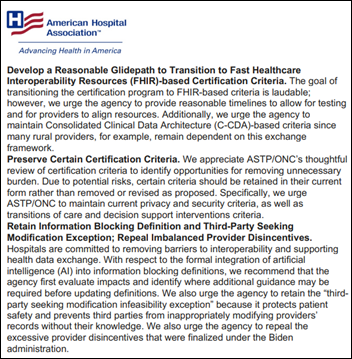
AHA asks for these changes to ASTP/ONC’s HTI-5 proposed rule:

  • Set a reasonable transition timeline for changing the certification program to FHIR-based criteria.
  • Maintain criteria for C-CDA since rural providers depend on it.
  • Retain certification criteria for privacy and security, transitions of care, and decision support interventions.
  • Retain real-world testing conditions.
  • Issue broad guidance on AI before defining how it fits within information blocking.
  • Retain the “infeasibility” exception that allows providers to deny third-party requests to modify medical records.
  • Repeal the disincentive actions that can be taken for information blocking.

Reader Comments

image

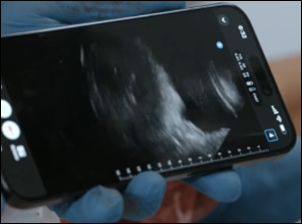
From K-Pop: “Re: medical innovations. This TV series shows cool technologies that are actually real.” Gizmodo lists real-life technical innovations that have been shown on HBO Max’s “The Pitt” that include hand-held ultrasound, AI-assisted transcription, and virtual reality.

From Janus: “Re: conferences. ViVE is an expensive conference, and reading that people attend without a plan makes me cringe. Then folks like Clear are sitting in on all these regulatory meetings pushing products that don’t actually provide any real value. Do patients even WANT Clear? Also, is anyone at HHS considering the fact that patients don’t trust them, and the idea of a nationwide framework / TEFCA is terrifying for a lot of Americans?”


HIStalk Announcements and Requests

image

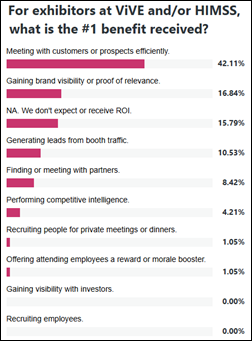
Poll respondents say that using conferences as a way to meet with customers or prospects efficiently is their top reason for attending. Most don’t place ROI on generating leads.

New poll to your right or here: What does vendor litigation over network patient data sharing say about interoperability governance?

Listening: reader-recommended The Shoaldiggers,  a nine-piece band from NC whose eclectic music, as portrayed on You Tube, requires a van full of instruments such as mandolin, banjo, flute, washboard, a bow-played handsaw that sounds like a theremin, and a comically large upright bass. They are a testimonial for seeing local talent instead of ignoring music that isn’t from your college years or getting locked in to catchiness-engineered hits that feature “performers” who can’t write music or play an instrument.


Sponsored Events and Resources

Publication: HIStalk’s Guide to HIMSS26 lists the activities of sponsors at the conference.

Contact Lorre to have your resource listed.


People

image

Christina Waters, MBA (AssistRx) joins PerfectServe as chief revenue officer.


Announcements and Implementations

A study finds that primary care physicians who cut visit volume by 10% spent more time per visit in Epic, while their after-hours work and inbox time also increased. The authors conclude that asynchronous EHR work continues even when visit volume declines.

image

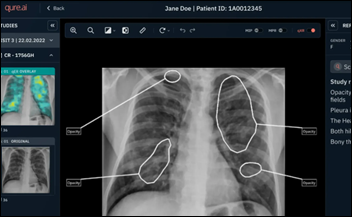
The FDA issues 510(k) clearance for six indications to Qure.ai’s algorithm for chest x-ray analysis, increasing its total to 26.

image

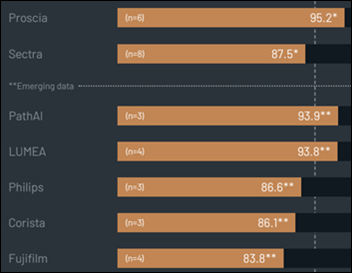
A new KLAS early insight report on digital pathology finds that while adoption by US healthcare organizations lags that of global counterparts at just 15%, use is growing due to newly FDA-cleared products and the possibility of billing for the service.


Privacy and Security

University of Mississippi Medical Center will reopen its clinics on Monday, stating that “we can access patient records” following a February 19 ransomware attack.


Other

This must-read post seems relevant to how small-business health tech folks like physicians and boutique consultants could use healthcare AI. It’s also convinced me that I need to dig deeper into Anthropic’s Claude. An attorney describes how his two-person business law practice competes with huge firms by building its work around Claude:

When legal AI companies talk about customizing AI to a firm’s playbook, they are solving a problem that barely matters and ignoring the one that does. The real leverage comes not from which template the AI starts with, but from the instructions that tell it how to think about the work …. I’ve created custom instruction files, called “skills,” that encode my analytical frameworks, my preferred formats, my voice, and my judgment about how specific types of legal work should be done. When I upload a contract for review, Claude doesn’t apply a generic framework. It doesn’t even apply my firm’s framework. It applies my framework, the one I’ve developed over a decade of practice, automatically. The difference between a firm playbook and an individual lawyer’s encoded judgment is the difference between giving someone a recipe and teaching them how to cook.

Also possibly relevant, Block, the parent company of Square and Cash App, will lay off nearly half of its workforce despite strong business performance. CEO Jack Dorsey says that expanded use of AI allows smaller teams to operate more efficiently and effectively, and he predicts that most companies will follow a similar path within the next year. My observation is that many corporate executives are so convinced, logically or not, that AI will dramatically reduce their headcount needs that they are willing to undertake big downsizings now and figure out the details later.

image

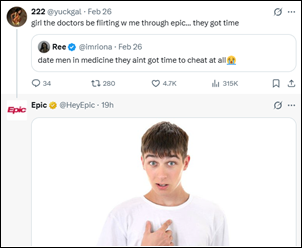
Epic is right up there with Wendy’s for sassy corporate tweets. I want to believe that doctors aren’t really using MyChart to hit on women, but I’ve worked in hospitals too long to rule it out.


Sponsor Updates

  • CVS Caremark expands its use of Surescripts Touchless Prior Authorization.
  • Nym celebrates its eighth anniversary.
  • Optimum Healthcare IT receives a 2026 ServiceNow Partner of the Year Award.
  • Qure.ai’s FDA cleared indications now total 26 across nine products for X-ray and CT, exceeding 65 CE certified indications and other global validations.

Blog Posts


Contacts

Mr. H, Lorre, Jenn, Dr. Jayne.
Get HIStalk updates.
Send news or rumors.
Follow on X, Bluesky, and LinkedIn.
Sponsorship information.
Contact us.

Morning Headlines 2/27/26

February 26, 2026 Headlines Comments Off on Morning Headlines 2/27/26

Health Gorilla Files Motion to Dismiss, Reaffirming Confidence in Interoperability System

Health Gorilla files a motion to dismiss the lawsuit brought by Epic and several health systems, which alleges that it enabled third parties to improperly access patient data by misrepresenting their purpose for obtaining records.

Honest Health Raises $140 Million to Advance Value-Based Care for Health Systems; NewSpring Leads Investment

Value-based care enablement company Honest Health announces $140 million in new funding.

Oracle Health Launches Device Validation Program to Streamline Medical Device Integration and Accelerate Innovation in Healthcare

Oracle Health launches a paid program that will validate medical device connectivity, functionality, and workflow alignment.

Third Way Health Raises $15M to Expand AI-Powered Healthcare Front-Office Operations

Healthcare operations software vendor Third Way Health raises $15 million in Series A funding.

Comments Off on Morning Headlines 2/27/26

News 2/27/26

February 26, 2026 News 1 Comment

Top News

image

Health Gorilla files a motion to dismiss the lawsuit brought by Epic and several health systems, which alleges that it enabled third parties to improperly access patient data by misrepresenting their purpose for obtaining records.

Health Gorilla argues that both Carequality and TEFCA require mandatory dispute resolution before litigation, that the interoperability frameworks assign enforcement authority to Carequality and the TEFCA RCE rather than private litigants, and that the complaint alleges at most that Health Gorilla should have been more suspicious rather than that it acted with actual knowledge of willful misconduct.

An Epic spokesperson says that Health Gorilla remains responsible for safeguarding patient data and understanding how it is used, and adds that the matter should be resolved in federal court for transparency.

Meanwhile, LlamaLab, which was also named in the lawsuit, files its own motion to dismiss the document, arguing that Epic bypassed its own contractual dispute obligations and wrongly included the company in the case among several unrelated defendants. LlamaLab, which sells medical records to negligence law firms for $50 per request, says that Epic is protecting its dominance and targeting companies that make it easier for patients to retrieve their own medical records.


Reader Comments

image

From Beagle Eagle: “Re: Epic v. Health Gorilla. If interoperability only works when one dominant EHR vendor plays traffic cop, then it was never really interoperability. Either the governance frameworks function as designed, or we admit that the network-of-networks model is mostly branding. Watching vendors argue in federal court about who gets to define ‘treatment purpose’ feels like a preview of how TEFCA disputes will play out when real money and market share are at stake.”

From Thalamus: “Re: UMMC downtime. Every health system says downtime procedures are solid, yet hospitals or clinics still go dark for days when ransomware hits. If core ambulatory operations can’t function without network access, then business continuity planning is still theoretical.”


HIStalk Announcements and Requests

ViVE down, HIMSS to go. My guide to HIMSS26 will be updated ongoing (see Dr. Jayne’s unsolicited testimonial). HIStalk sponsors can provide their participation information to be included. Companies that aren’t sponsors can still get in on the action by contacting Lorre to sign up.


Sponsored Events and Resources

Publication: HIStalk’s Guide to HIMSS26 lists the activities of sponsors at the conference.

Contact Lorre to have your resource listed.


Acquisitions, Funding, Business, and Stock

image

The chief legal officer of personal health record company ChartSquad warns that law firms and other organizations, including their intermediaries, cannot misrepresent themselves as treating providers to obtain medical records from exchanges. She adds that attorneys should not pay third-party companies to retrieve records, then bill the patient for that service, when established legal pathways allow them to obtain records directly from patients or providers with proper authorization.


Sales

  • Wayne General Hospital (MS) will deploy Eko Health’s Sensora AI cardiac detection platform and digital stethoscopes in its emergency and primary care departments.

People

image

Teresa Tonthat, MBA (Texas Children’s Hospital) joins Cook Children’s Health Care System as SVP/CDIO.


Announcements and Implementations

Mend launches Nutrition for Healing, a free educational resource that addresses evidence-based nutrition as a cornerstone of healing and recovery. Mend’s CEO is industry veteran Paul Roscoe.

A NEJM editorial says that the human-in-the-loop principle should be treated as a design specification that includes three parts: the clinical loop at the point of care, the governance loop, and the learning loop that oversees ongoing monitoring and model updates.

Oracle Health launches a paid program that will validate medical device connectivity, functionality, and workflow alignment.


Government and Politics

image

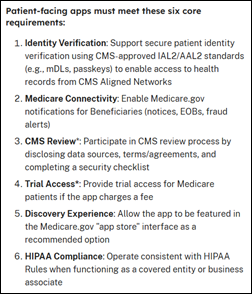
CMS develops a Medicare App Library on Medicare.gov that beneficiaries can use to find and access digital tools that meet standards for security, privacy, use of medical evidence, usability, and equity. The use cases include “Kill the Clipboard,” conversational AI assistance, and prevention of diabetes and obesity. The library is part of the CMS Digital Health Tech Ecosystem.

A federal jury convicts Texas medical laboratory owner and former professional football player Keith Gray of running a genetic testing fraud scheme that billed Medicare $328 million, of which $54 million was paid. His labs paid kickbacks to marketers to supply DNA samples and Medicare beneficiary information that was used to bill for medically unnecessary genetic tests. Gray earned a bachelor’s degree in actuarial science and mathematics from UConn and played center on its football team, although his NFL career consisted of only a few weeks on a practice squad.


Privacy and Security

Cognizant-owned TriZetto updates the size of its 2024 breach to 3.5 million people.

University of Mississippi Medical Center clinics remain offline from a confirmed ransomware attack on February 19. Officials say that the attackers have communicated them, but declined to divulge the amount of ransom requested. UMMC hopes to reopen the clinics on Monday. 


Other

image

Epic CEO Judy Faulkner posts a tribute to Meditech’s Neil Pappalardo, who died last month:

Neil Pappalardo, who founded MEDITECH in 1969, passed away in January at the age of 83. He created a great company.

Neil helped Epic get a start. He and others at MEDITECH shared advice with me; for example, how to assign offices, what to do about titles, forms to fill out such as for vacation — and everything they shared was very helpful. They care for their customers, they focus on technology, and they never went public, so they avoid the tyranny of the quarter. Epic holds MEDITECH in high regard.

Years ago, when they were helping us get started, Neil invited me to his home for dinner. I realized it was unusual when his kids asked why a piece of folded cloth was next to each plate. I felt honored to be there.


Dolly Parton never ceases to amaze me and everybody else (after all, she wrote “Jolene” and “I Will Always Love You” in the same day), so it’s not shocking that East Tennessee Children’s Hospital renames itself Dolly Parton Children’s Hospital.


Sponsor Updates

  • Fortified Health Security names Harold Hansen EOD security analyst and Alex Goldstein third-party risk analyst.
  • Inbox Health becomes an UrgentIQ preferred patient payments partner.
  • Shannon Health (TX) goes live on Mednition’s Kate AI.
  • Optimum Healthcare IT posts a new episode of “Visionary Voices” podcast featuring Trinity Health.

Blog Posts


Contacts

Mr. H, Lorre, Jenn, Dr. Jayne.
Get HIStalk updates.
Send news or rumors.
Follow on X, Bluesky, and LinkedIn.
Sponsorship information.
Contact us.

EPtalk by Dr. Jayne 2/26/26

February 26, 2026 Dr. Jayne 4 Comments

image 

I appreciated Mr. H’s comments earlier in the week about the challenges that companies encounter when trying to justify the cost of ViVE and HIMSS exhibits via booked revenue.

As a CMIO, I am unlikely to do business with someone just because I saw their booth at a conference. In fact, having a poorly prepared or apathetic booth staff is probably worse than having no booth at all.

Years ago, my CIO had recommended that I follow up with a vendor whose rep he had spoken to at a high level. I arrived at the booth, identified myself, and said that my CIO had referred me to take a look. I received the conversational equivalent of a pat on the head, with an instruction to come back when my CIO could also participate. I guess they missed the title on my badge and didn’t understand that I was the one with the actual decision-making authority for clinical applications.

In preparing to attend ViVE, I spent too much time deciding what to wear given temperatures ranging from 50 to 80 degrees. And of course, figuring out which shoes to pack. I was grateful to have HIStalk’s Guide to ViVE document to help me scope out some visits with vendors that weren’t on my list.

I noticed that some savvy vendors didn’t list booth numbers, but instead provided a list of their executives who would be on site and instructions on how to book a meeting. I also appreciated those who highlighted members of their company who would be speaking, the planned topics, and where to find them. Those kinds of listings are more likely to catch my attention than a boring blurb about being a cloud-hosted SaaS platform just like everyone else.

In traveling to ViVE on Sunday morning, I was caught in the gap between the Department of Homeland Security saying that they would be suspending TSA PreCheck security lines and the subsequent reversal of the decision. I travel often and at generally the same time, so I recognize a lot of the TSA staffers that typically work PreCheck at my airport. They’re usually pretty chill, even during busy Monday rushes.

Going through the “regular” security line on Sunday, the agents seemed more stressed. Travelers were also certainly stressed. Many who usually go through PreCheck didn’t seem to know how to put their items in a bin or get through quickly. Fortunately, I had seen the announcement of closures before I went to bed on Saturday night and left early. Even so, the security line was extremely long. About an hour later, the PreCheck line was back open, providing relief to the chaotic main screening line.

I’ve been part of several startup companies, so I understand what it’s like to have to show up and work without pay while you’re waiting for your next funding check to clear. Several members of my family were without pay during the last government shutdown. It can be devastating for the average US family that isn’t positioned to absorb that financial challenge.

When traveling, remember that kindness costs nothing. If you have friends or neighbors who are being impacted by government shutdowns that seem to be our new normal, consider offering whatever support you can.

ViVE is an interesting conference due to its co-location with CHIME events. These tend to draw more CIOs, which can make for a higher proportion of conversations with attendees who not only have a budget for solutions, but also the authority to spend it. Still, a “see and be seen” element exists. 

I overheard a couple of folks talking about how they didn’t really have a plan for the conference. They weren’t sure why they were there, or how their attendance was adding value. They were, however, happy to have gotten away from the northeastern US before winter storms hit, and seemed to appreciate the California sunshine.

I also overheard someone who said that he was prospecting for his company that was less than a week old. As a seasoned buyer, I hope he’s not leading with that tidbit.

ViVE provides meal service for a portion of the conference. They had a large seating area, but it was crowded. Outside food truck options were available and popular, but my schedule sent me to the grab-and-go option more than I would have liked.

It was great to see old friends and meet new people. Monday was my busy night attending vendor events. The Healio AI launch party was seafood forward and seemed to have a good turnout. From there, I was off to the Supreme Communications event, which was casual but fun, and then to the Abridge soiree at the Ritz Carlton. I spotted quite a few CMIOs from top 20 health systems at that one.

The best party of the night by far was hosted by Evergreen Healthcare Partners and Fortified Health Security at the Grammy Museum. Attendees had access to an exhibit featuring Tejano music queen Selena. The menu choices were on point, particularly the mini salted caramel chocolate tarts. I had an early morning of work waiting for me in the Eastern time zone, so I was back at my hotel early.

Following my calls, I made my way to the convention center and attended a few sessions that seemed meatier than those that I encountered at HLTH in the fall.

I noticed several people who were wearing microphones even though they weren’t speaking. I wonder how much of their day they record, or maybe they just aren’t taking their microphone off between times they need it. It reminded me of the early days of Google Glass, when people had to wonder if they were being recorded. If you are one of those folks who always has a microphone at the ready, feel free to weigh in with your strategy.

image

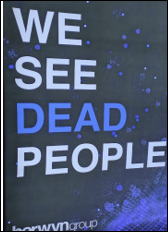
The most eye-catching booth backdrop that I saw was this one from the Berwyn Group. It drew me into stopping in to hear their pitch, where I learned about how they support organizational population health efforts by ensuring the accuracy of information when patients are deceased. I hadn’t thought about that in detail, other than how it impacts me in primary care. The team was great to talk to and explained their business well, so if you’re in the market for a solution to support death audits, give them a look.

 image

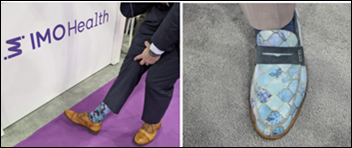
As always, IMO Health brought their footwear A game to the conference. On the last day of the show, I saw a woman who was walking to the show floor wearing flip flops at 8 a.m. I don’t know if that was her first choice, or whether it was need-based following less than stellar footwear selections earlier in the week, but kudos to her for sporting them proudly.

image

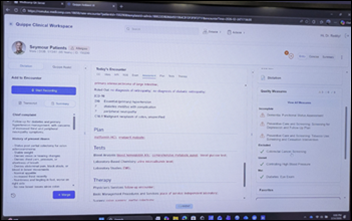
I have enjoyed my time in the industry and in seeing tools evolve. I had a chance to chat with the folks at Medicomp Systems, who showed me their generative AI capabilities and how new elements are working seamlessly with the Medicomp Quippe tool. I was glad to see that one of their demo personas named “Seymour Patients” continues to be alive and well, or at least as much as one can be in the virtual world.

Overall, it was a more productive week than I anticipated, which is always a nice surprise. Now I’m hoping for the best for my trip back to the East given the number of canceled and delayed flights and the amount of snow on the ground.

If you attended ViVE, how was it? What were your biggest takeaways? Leave a comment or email me.

Email Dr. Jayne.

Morning Headlines 2/26/26

February 25, 2026 Headlines Comments Off on Morning Headlines 2/26/26

Baba raises $6.5M Seed led by General Catalyst

Baba, which offers Medicare beneficiaries tech-enabled patient advocacy and care navigation services, raises $6.5 million in seed funding.

CMS announces library of digital health apps for Medicare beneficiaries 

CMS develops a Medicare App Library to help beneficiaries access apps focused on eliminating manual check-in, conversational AI assistance, and diabetes and obesity management.

QC Capital Announces Strategic Investment in My Pediatric Doctor to Expand Nationwide 24/7 Pediatric Urgent Care Telehealth Access

Online urgent care provider My Pediatric Doctor secures funding from QC Capital Group.

Oura launches a proprietary AI model focused on women’s health

Smart ring-maker Oura develops an AI model that its Oura Advisor chatbot will use to offer wearers customized insights about women’s health.

Comments Off on Morning Headlines 2/26/26

Healthcare AI News 2/25/26

February 25, 2026 Healthcare AI News Comments Off on Healthcare AI News 2/25/26

News


Anthropic introduces workflow plugins for Claude Cowork that allow users to connect to enterprise software, develop private plugin marketplaces, and deploy AI agents. New connectors include Google Workspace, Docusign, WordPress. New plugins support HR, design, operations, brand voice, financial analysis, and equity research.

image

An NVIDIA survey of 600 healthcare and life sciences executives and AI practitioners finds that 70% of organizations are actively using AI, with medical technology and drug companies reporting return on investment and nearly half deploying agentic AI. The most common use case is data analytics and data science. Among management respondents, 85% say that AI has increased revenue, and 80% say that it has reduced costs.


Business

image

Anthropic announces that its Claude Code tool can modernize COBOL programs, sending IBM shares down 13% in their biggest one-day drop since 2000 and wiping out $40 billion in market value. IBM responds that COBOL modernization has been a solved problem for years and that the real issue is cost and return on investment. Analysts say that Anthropic could take some market share from IBM’s tooling, which they believe provides minimal revenue. IBM shares have rebounded slightly, but have lost 9% in the past 12 months.

image

Publicly traded business software vendor UiPath announces agentic AI solutions for healthcare that include medical record summarization, claims denial prevention and resolution, and prior authorization support.

image

B. well Connected Health launches a white-label health AI assistant that it says can be deployed by app developers in just a few weeks.

image

Ardent Health will deploy Hellocare.ai’s AI-assisted virtual clinician and patient observation platform in 2,000 patient rooms.


Research

A study finds that ChatGPT Health failed to recommend emergency care in more than half of serious cases compared to physicians. In some instances, the tool appeared to recognize a serious condition but still offered reassuring guidance, prompting researchers to conclude that a disconnect exists between its clinical understanding and its recommendations. The authors also report that the tool performed inconsistently in directing users with suicide risk to a crisis hotline.


Other

image

A hospital and medical school in Thailand deploy AI-powered robots to support the care of patients with thyroid cancer and tuberculosis.


Contacts

Mr. H, Lorre, Jenn, Dr. Jayne.
Get HIStalk updates.
Send news or rumors.
Follow on X, Bluesky, and LinkedIn.
Sponsorship information.
Contact us.

Comments Off on Healthcare AI News 2/25/26

This Week in Health Tech 2/25/26

February 25, 2026 This Week in Health Tech Comments Off on This Week in Health Tech 2/25/26
LinkedIn weekly 22526 - Copy
Comments Off on This Week in Health Tech 2/25/26

Morning Headlines 2/25/26

February 24, 2026 Headlines Comments Off on Morning Headlines 2/25/26

SEC ends Veradigm (MDRX) investigation without recommending enforcement action

The SEC concludes its investigation of Veradigm with no enforcement action recommended.

HealthStream Announces Fourth Quarter & Full-Year 2025 Results

HealthStream announces Q4 results: revenue up 7.4%, adjusted EPS $0.18 versus $0.16, beating expectations for both.

Coral Care Raises $13M to Tackle the Pediatric Therapy Shortage

Coral Care, a wraparound services and software company for pediatric speech, occupational, and physical therapists, raises $13 million.

Healthcare Access Performance Leader BlockIt Rebrands as Alluvium Healthcare

BlockIt, which offers a health system access and capacity performance system, renames itself Alluvium Healthcare.

Comments Off on Morning Headlines 2/25/26

News 2/25/26

February 24, 2026 News 2 Comments

Top News

image

The SEC concludes its investigation of Veradigm with no enforcement action recommended.


Reader Comments

From Sidelineguy: “Re: AI note-taking in meetings. I am interested in how healthcare organizations and vendors are thinking about this. I’ve seen vendors pushing back on providers, citing security and confidentiality concerns. In extreme cases, I’ve seen vendors refuse to be on calls with the note-taking took turned on.” I’m not surprised that vendors are reluctant to have meetings recorded, especially large or publicly traded companies. Customer pitches and meetings that once were forgotten almost immediately can now be converted into searchable transcripts, internal knowledge assets, potential AI training inputs, or discoverable material for litigation, and the company is the party that will be held accountable. It is easy to understand why even an honest vendor wouldn’t want to give a prospect or customer control of the institutional memory of the discussion that could be used in contract negotiations or enforcement disputes. Participants may also be required in advance to avoid topics related to product trade secrets, pricing, or information that would require a business associate agreement. Calls could have been recorded before AI, but new technology raises a company’s risk profile and justifies a “no recording” policy, even though that might annoy the client.


HIStalk Announcements and Requests

image

Welcome to new HIStalk Platinum Sponsor Qure.ai. Qure.ai is a global AI company that is innovating diagnostic solutions in healthcare for early detection and care management. Qure’s solutions power early diagnosis in lung cancer, neurology, and infectious disease to support clinicians and propel developments in the pharmaceutical and medical device industries. The company empowers healthcare workers or health systems by helping to identify conditions fast, prioritize treatment planning, and ultimately improve quality of patient life.  Qure.ai has deployments in over 107 countries, with regional offices in New York, London and Mumbai. It is a TIME100 Most Influential Company 2025. Thanks to Qure.ai for supporting HIStalk.


Sponsored Events and Resources

Publication: HIStalk’s Guide to ViVE 2026 lists the activities of sponsors at the conference.

Contact Lorre to have your resource listed.


Acquisitions, Funding, Business, and Stock

BlockIt, which offers a health system access and capacity performance system, renames itself Alluvium Healthcare.

HealthStream announces Q4 results: revenue up 7.4%, adjusted EPS $0.18 versus $0.16, beating expectations for both.


People

image

Meghan Molitor (Symplr) joins TeamBuilder as VP of sales.

image

Altera Digital Health names Sean Sykes (Advanced Utility Solutions) as EVP of Ventus.

image

Experity promotes Bobby Ghoshal, MBA to CEO.

image

Health Catalyst promotes Ben Albert, MBA to CEO.


Announcements and Implementations

San Juan Regional Medical Center (NM) implements Wellsheet’s AI-powered predictive clinical workflow and operations software.

Pixel Health incorporates Praia Health’s patient experience orchestration technology into its new One Thread patient experience software.

image

Golden Valley Memorial Healthcare (MO) launches a remote pregnancy monitoring program using technology from Nuvo.

LexisNexis Risk Solutions develops a healthcare-specific identity management platform.


Government and Politics

image

ASTP/ONC opens the EHIgnite Challenge, which will award cash prizes for tools, platforms, and workflows that turn exported electronic health information into actionable insights.


Other

image

A survey of 880 hospital nurses finds that 57% feel that virtual nursing programs don’t reduce their workload, while 10% say it actually worsens it. Just over half say it improves care quality, with 11% noting that improvement is substantial.

Cedars-Sinai (CA) pilots Kneu Health’s disease-monitoring app as part of its Parkinson’s disease program. The health system is an investor in the UK-based company, which participated in its accelerator program two years ago.


Sponsor Updates

  • Altera Digital Health announces that 14 customers have renewed their contracts for its Sunrise EHR.
  • Waystar will exhibit at EClinicalWorks Day Chicago February 26.
  • Concord Technologies celebrates 30 years of innovation and leadership.
  • Meditech announces that 15 rural hospitals opted for Meditech Expanse in 2025.
  • Arrive Health publishes a new white paper titled “Real-Time Prescription Benefit: Cutting Through the Noise to Deliver Real Value.”
  • Black Book Research releases a new market intelligence report titled “Healthcare IT Capital Signals 2026: What VCs, PE and Banks Are Underwriting.”
  • Clearwater will sponsor HPE Miami March 4-5 in Miami Beach.

Blog Posts


Contacts

Mr. H, Lorre, Jenn, Dr. Jayne.
Get HIStalk updates.
Send news or rumors.
Follow on X, Bluesky, and LinkedIn.
Sponsorship information.
Contact us.

Morning Headlines 2/24/26

February 23, 2026 Headlines Comments Off on Morning Headlines 2/24/26

Ignite the Future of Health Data Usability

ASTP/ONC launches the EHIgnite Challenge to discover novel ways to transform electronic health information into usable insights for providers and patients.

IU Health files lawsuit against firm hit by 2024 ransomware attack

Indiana University Health files a lawsuit against Change Healthcare for its failure to prevent a 2024 ransomware attack that IU Health claims cost it $66 million and prevented it from processing payments in a timely manner.

Bobby Ghoshal Appointed as CEO of Experity in Planned Leadership Transition

Urgent care technology vendor Experity promotes Bobby Ghoshal to CEO.

Comments Off on Morning Headlines 2/24/26

Curbside Consult with Dr. Jayne 2/23/26

February 23, 2026 Dr. Jayne Comments Off on Curbside Consult with Dr. Jayne 2/23/26

It’s clear that AI is here to stay. I’ve spent quite a bit of time looking at studies that seem to be either proving its value or dismissing it on the basis of inaccuracy and risk.

Healthcare people tend to look at it with a specific lens. I reached out to contacts in other industries to better understand how they are approaching it, and whether their professional organizations have produced policies or recommendations around its use.

The first person who responded to my query is in the field of law. The initial portion of his response addressed the high-profile problems with AI that have surfaced in the legal world. A number of cases involved attorneys who used AI to construct briefs, but failed to catch that the AI fabricated citations for cases that didn’t exist.

Similar to what we encounter in healthcare, issues exist with the content on which AI systems are trained. Attorney-client confidentiality must not be compromised by becoming part of a data set. Similar risks involve algorithmic bias and discrimination. Attorneys have been sanctioned for misusing AI, with some being fined for fictitious citations.

The legal community is discussing accountability for the use of AI. Ethics experts agree that attorneys are ultimately responsible for the accuracy of matters that are being handled in their name.

My attorney friend shared his opinion that even the best AI isn’t as good as some of his most seasoned paralegals and researchers. His firm tends to proceed with caution, although it does not have a formal policy on the use of the technology. He thinks about about using AI to create documents similarly to having a summer legal intern do it. He reads everything with a critical eye in case it misses the mark, just like interns sometimes do.

We chatted a bit about the idea that AI probably isn’t as good as a law student at the top of their class, but might be better than a student at the bottom of their class. This has parallels with medical education. It is different asking a fourth-year sub-intern to present a case than to ask a third-year student who is on their first clinical rotation to do the same.

We agreed that the idea of blind trust in AI is risky, especially when professional licensure is on the line.

The American Bar Association issued its first guidance on the ethics of AI use in 2024. It specifically noted the need to ensure that legal billings are appropriate for tasks that are conducted using generative AI tools.

The attorney in question is also a commercial pilot. He had a few things to say about the use of AI in the aviation space. Airlines have been using it for operations functions, including maintenance optimization and the modeling of passenger behaviors such as their likelihood to check bags or buy additional services and amenities. Consumer-facing AI includes support chatbots and booking and ticketing systems.

On the maintenance side, AI can help with troubleshooting complex airframes that generate sensor data. Mechanics also use it for maintenance documentation.

He mentioned incorporating AI into flight simulator systems. It uses real-world cases and events to create realistic emergency scenarios that might go beyond the experience of a human simulator operator or operational handbooks.

I must have posed my question at just the right time, because he mentioned a recent announcement about the US Air Force’s Flying Training Center of Excellence. It is developing an AI-based “Instructor Pilot GPT” that is designed to interact with students who are undergoing pilot training. The tool will be trained on flight manuals and aviation documentation. It will help student pilots assess their performance and will provide rapid access to reference procedures. Similar to the commercial side, they hope to use the technology in flight simulators.

The Air Force uses a closed training environment that contains documents such as military protocols, federal guidance, and flight-related publications. I chuckled when I read a quote from one of the people who is involved with the project, who referred to the subset of information as a “data pond.”

Another comment in the article sounded a lot like the conversations that we are having regularly in medical education. Students are on their phones using LLMs every day, so they will expect it as they move forward in training.

The article also notes important concerns that I hadn’t considered in healthcare, such as cybersecurity risks. What happens when your fighter jet GPT gets hacked and harmful information is injected? The same thing could happen to a healthcare system, which would provide the ultimate example of medical misinformation.

As far as professional organizations or regulations, the Federal Aviation Administration issued a formal notice on the use of generative AI tools and services in March 2025. The first page of the document highlights the need to ensure that generative AI use “is conducted in an ethical and responsible manner.”

The notice applies only to FAA’s employees and contractors, but it includes policy elements that are similar to what I see in hospitals and care delivery organizations. These include a requirement to request approval for using generative AI software, the ability to request support for specific use cases that have already been identified, and the need to ensure that AI tools that are found on the internet have been approved by the organization.

The FAA also cautions about the risks of AI infringing on intellectual property, the need to review AI-generated content for accuracy, the need to be transparent about where AI tools are being used, and the principle that it shouldn’t be used to “perform or facilitate illegal or malicious activities.”

I am waiting to hear back from contacts in other industries and will share if I receive compelling insights. If you or your organization does crossover work in areas other than healthcare, how are those industries tackling the use of generative AI? Leave a comment or email me.

Email Dr. Jayne.

Comments Off on Curbside Consult with Dr. Jayne 2/23/26

Readers Write: Lessons from the ChatGPT Health Debate

February 23, 2026 Readers Write Comments Off on Readers Write: Lessons from the ChatGPT Health Debate

Lessons from the ChatGPT Health Debate
By Robert Stewart

By Robert Stewart is CTO of Arbital Health.

image

A recent column by Geoffrey Fowler in The Washington Post that describes his disappointing experience with ChatGPT Health sparked discussion in the health IT community. While many remain optimistic about the long-term potential of platforms such as ChatGPT Health and Claude for Healthcare, Fowler’s piece highlights issues that healthcare leaders, clinicians, and technologists should examine carefully.

Variability and inaccuracy are not unique to large language model (LLM)-based systems. Many clinical diagnostics have known false-positive rates, and repeat testing is routine when results are unexpected. Clinicians themselves may reach different conclusions when presented with the same clinical information months later. Medicine has always operated within a probabilistic framework.

What is different with LLM-driven systems is their non-deterministic behavior when given the same input repeatedly. Identical prompts can generate materially different responses. Fowler demonstrated this when ChatGPT assigned his cardiac health scores ranging from a B to an F using the same underlying data. That level of variability can cause confusion or anxiety when applied to personal health interpretation.

Many consumer health AI tools are built on retrieval-augmented generation (RAG) architectures, in which the model is grounded using user-specific information such as medical records or wearable device data. Even when anchored to structured inputs, however, the LLM’s narrative interpretation can still vary, reinforcing the need for clinician oversight and appropriate guardrails when deploying these tools in consumer health settings.

It’s also important to recognize the potential psychological impact of these tools. Researchers such as Eric Topol caution against indiscriminate screening of asymptomatic individuals because it often produces “incidentalomas,”(findings that lead to unnecessary follow-up testing or treatment without improving outcomes. Consumer AI health scoring systems risk amplifying this phenomenon by continuously surfacing probabilistic interpretations in the absence of appropriate clinical context.

Wearable Data Challenges

Wearable device data introduces another layer of complexity. Anyone who works with longitudinal wearable datasets understands that the signal-to-noise ratio is inconsistent. Devices are removed for charging, replaced every few years, or switched across vendors that have different calibration baselines. Environmental and behavioral factors such as travel, altitude changes, illness, stress, or sleep disruption can produce statistically significant physiological changes that an AI system may misinterpret without broader context.

Jessilyn Dunn, PhD and her lab at Duke University have conducted extensive research that uses machine learning and statistics to extract valuable insights from consumer wearables, but the work remains challenging. Even highly targeted machine learning applications, such as arrhythmia detection platforms developed by companies like AliveCor, still operate with non-trivial false-positive rates. Wrapping a general-purpose LLM around wearable data without similarly rigorous modeling layers is unlikely to deliver clinically reliable outputs.

Security and Privacy Considerations

As consumer AI health tools evolve, security becomes increasingly important. Anyone who uses ChatGPT, particularly those who are sharing sensitive health information, should enable multi-factor authentication (MFA), which is one of the most effective controls for reducing account compromise risk.

Users should also recognize an important regulatory distinction. Information that is entered into consumer AI services is generally not protected under HIPAA. OpenAI’s enterprise offering, ChatGPT for Healthcare, is designed for HIPAA-covered environments and supports Business Associate Agreements (BAAs), but consumer versions operate under different legal frameworks.

The Takeaway for Health IT Leaders

The lesson from Fowler’s experience is not that consumer health AI lacks value, but that context, governance, and clinical integration matter. Non-deterministic systems that interpret noisy consumer data can easily generate variable outputs that users may misunderstand as clinical conclusions rather than probabilistic insights.

For health systems, payers, and digital health innovators, the near-term opportunity lies in combining LLM interfaces with validated predictive models, strong clinical workflow integration, and transparent communication about uncertainty. Without those guardrails, even well-intentioned consumer health AI tools risk creating confusion rather than clarity.

Comments Off on Readers Write: Lessons from the ChatGPT Health Debate

Readers Write: Doing Everything For the Patient, Not To the Patient

February 23, 2026 Readers Write Comments Off on Readers Write: Doing Everything For the Patient, Not To the Patient

Doing Everything For the Patient, Not To the Patient
By Nassib Chamoun

Nassib Chamoun, MS is founder, president, and CEO of Health Data Analytics Institute.

image

“Do as much as possible for the patient and as little as possible to the patient.”

That single sentence, written by Bernard Lown, MD in “The Lost Art of Healing,” should serve as a universal guide to thinking about medicine, caregiving, and what it truly means to heal. Dr. Lown was my mentor beginning in my early 20s and remained a close friend until his death in 2021 at age 99, He was decades ahead of his time. He believed that medicine should integrate scientific rigor with moral imagination, and that clinical excellence without compassion is incomplete care.

Today, his words feel less like a reflection and more like a challenge. Our population is aging rapidly. Older adults are the fastest-growing consumers of healthcare services.

As more patients approach the later stages of life, the central question facing clinicians, health systems, and policymakers is not whether we can do more, but rather if doing more truly serves the patient. Increasingly, the evidence suggests that quality of life, not simply quantity of life, must be the defining outcome.

This is not a new conversation. In 1974, Balfour Mount, MD, who is widely regarded as the father of palliative care in North America, established the first hospital-based palliative care unit at Montreal’s Royal Victoria Hospital. Since then, the field has grown steadily. Decades of research demonstrate improvements in symptom control, patient and family satisfaction, alignment of care with patient goals, and, in many cases, lower healthcare utilization and costs.

More recently, the World Health Organization issued a call-to-action urging health systems to expand palliative care access. Not only for humanitarian reasons, but also as a sustainable response to the use of our healthcare resources.

Organizations such as the Center to Advance Palliative Care (CAPC) have worked to standardize best practices and train clinicians to deliver high-quality, interdisciplinary palliative care across settings. Leading physician researchers and ethicists have published extensively in peer-reviewed journals, academic texts, and mainstream media.

Despite this robust evidence base, many patients and families still experience end-of-life care as a stark binary: aggressive inpatient interventions on one side, or hospice and “giving up” on the other. Why does this false choice persist?

For me, this question is no longer theoretical. It is deeply personal. As my parents age, I have watched them navigate serious illness, both at home and in the hospital. Again and again, I have seen a system that is reflexively oriented toward intervention — more procedures, more monitoring, and more escalation.

The intent is usually good. But too often the outcome is suffering, including physical discomfort, emotional distress, and a loss of agency at precisely the moment when patients need it most. Where is palliative care in these situations?

End-of-life care should not be an either-or proposition. It should not require patients to choose between life-prolonging treatment that may diminish quality of life or dying at home without support.

Palliative care belongs alongside disease-directed treatment, especially during hospitalizations, where it can provide expert symptom management, clarify goals of care, support families, and guide thoughtful transitions home when appropriate.

I have seen the power of this model first hand. Palliative-focused hospitalizations can be transformative, not only for patients who experience relief from pain and fear, but also for caregivers who gain reassurance, guidance, and partnership. This approach preserves dignity, respects patient values, expands hospital capacity and access, and makes more responsible use of limited healthcare resources. Most importantly, it restores humanity to care.

For me, the conclusion is clear. When possible, our loved ones should not die in hospitals. They also should not have to forgo care, comfort, or hope.

To palliative care clinicians, healthcare leaders, policymakers, advocates, and anyone who has walked this path with someone they love, let us build a healthcare system that truly does everything for the patient, not to the patient. Compassion and evidence are not competing priorities. Together, they form the highest standard of care.

Comments Off on Readers Write: Doing Everything For the Patient, Not To the Patient

Readers Write: What a Modern Application Managed Services Model Should Deliver

February 23, 2026 Readers Write Comments Off on Readers Write: What a Modern Application Managed Services Model Should Deliver

What a Modern Application Managed Services Model Should Deliver
By Scott Gildea

Scott Gildea, MBA is EVP of client delivery for Optimum Healthcare IT.

image

For years, application managed services in healthcare has been treated as a singular staffing solution. When teams were short-handed or roles went unfilled, organizations added overseas resources to keep systems running. That approach worked until the environment changed.

Today’s healthcare landscape is more complex than ever. EHRs, ERPs, and enterprise platforms are deeply connected to patient care, revenue, and operations. Downtime is no longer just an inconvenience, it is a risk. At the same time, IT teams are burned out and being asked to support transformation while maintaining stability.

In this environment, application managed services cannot be about coverage alone. They must deliver accountability, consistency, and operational confidence.

This is the Moment for Application Managed Services

As a whole, healthcare organizations are at a dramatic inflection point in healthcare IT. Some of the biggest reasons for this include:

  • Mounting pressure surrounding increasing costs, stagnant budgets. and fluctuating reimbursement rates.
  • Socioeconomic pressures, such as increasing prices.
  • Downward pressure from health system executives to be more efficient and forward-thinking.

Application managed services must keep pace with the expedited evolution of technology in healthcare. Change is here for most organizations, whether it takes the shape of AI, the mergers and acquisitions, or the increasing socioeconomic pressures. 

Health systems are no longer asking whether they need managed services. They are asking which models will actually support their organizations over the long term. The answer lies in delivery models that are built specifically for healthcare, designed for accountability, and focused on the people who keep these systems running every day.

What a Modern Application Managed Services Model Should Deliver

Health systems are not looking for another vendor. They are looking for a delivery model that they can rely on every day, not just during go-lives or major initiatives. Traditional approaches often fall short.

What organizations need now is a managed services model that is explicitly built for healthcare enterprise applications, operates as a valid extension of the internal team. and has clear ownership and shared accountability.

A modern application managed services solution should answer a few basic questions:

  • Who owns the day-to-day operations?
  • How are issues identified before they become incidents?
  • How is performance measured and improved over time?
  • How does the model scale without disrupting internal teams?
  • Will this allow us to keep up with the ever-changing landscape of health IT, including EHR updates, AI advancements, and more?

When managed services are designed well, they reduce operational noise. Leaders spend less time reacting and more time planning. Internal teams stay focused on strategy and improvement instead of constant firefighting. That does not happen by accident. It requires healthcare-specific experience, disciplined delivery, and a model that is built for complex enterprise environments.

Comments Off on Readers Write: What a Modern Application Managed Services Model Should Deliver

Morning Headlines 2/23/26

February 22, 2026 Headlines Comments Off on Morning Headlines 2/23/26

RevSpring Acquires TrustCommerce, Expanding Integrated Payments and Delivering End-to-End Payment Visibility Across Healthcare

Healthcare payment solutions vendor RevSpring acquires TrustCommerce, an integrated payment platform vendor.

Waystar Reports Fourth Quarter and Fiscal Year 2025 Results, Provides 2026 Guidance

Waystar reports Q4 results: revenue up 24%, EPS $0.10 versus $0.11, beating revenue expectations but falling short on earnings.

FDA taps AI executive to lead digital health center

The FDA names former Annalise.ai Chief Medical Officer Rick Abramson, MD director of its Digital Health Center of Excellence, which provides input on the FDA’s regulatory review of digital health technology.

UMMC clinics statewide remain closed after cyber attack

University of Mississippi Medical Center officials enlist the help of several federal agencies as they communicate with hackers behind Thursday’s ransomware attack.

Comments Off on Morning Headlines 2/23/26

Monday Morning Update 2/23/26

February 22, 2026 News 1 Comment

Top News

 image

Healthcare payment solutions vendor RevSpring acquires TrustCommerce, an integrated payment platform vendor.

RevSpring acquired Kyruus Health in September 2025 and Loyale Healthcare in early 2020.

RevSpring was acquired by investment firm Frazier Healthcare Partners in May 2024.


Reader Comments

From BoothWeary: “Re: exhibiting at ViVE and HIMSS. We spend mid six figures on booth, travel, advertising, and private events. I can’t tie any of that to booked revenue. Are we fooling ourselves?” You are fooling yourself if you expect badge scans and foot traffic to turn directly into leads. Value comes from using the booth as a landing zone and meeting hub rather than a lead farm. Exhibiting can even save money if you can book meetings with prospects and existing customers without separate travel costs. Show up with a list of the top 10 accounts that you hope to influence and try to get your executives face time with theirs. ROI is generated in back-of-hall private meeting rooms, not the carpeted glad-handing area that is populated mostly by nondecision-makers. Still, be nice, since they might have been charged as underlings to scout and report back to their big boss.

From Seeking Answers: “Re: HIMSS26. The keynote speaker list is wacky, maybe trying to match the celebrity appeal of ViVE.” On the list is Jon McNeill (who quit as a Telsa sales exec, then lasted just 18 months as COO of Lyft); actor and snowcat casualty Jeremy Renner; and streetwear mogul Daymond John of “Shark Tank.” You will need to squint to see any connection to healthcare or health tech. The one keynoter who might be fun is the coach of the Savanna Bananas, although I wouldn’t stick around for his last-day slot.

image

From Bonecrusher: “Re: the Alliance for Advancing Rural Healthcare. Isn’t this, and others like it, just a thinly veiled sales opportunity for the vendors involved? Seems like a gussied up consulting push to take advantage of those with fresh influxes of federal cash.” SAIC forms the newly announced AARH to “help state governments … execute the Rural Health Transformation program.” SAIC’s sudden interest in rural healthcare coincides with the federal government’s plan to plow $50 billion into it. SAIC earns $7.5 billion in revenue selling mostly to the federal government, so it is approaching AARH like a prime contractor:

  • Form an “alliance” to exclude competitors as states issue RFPs.
  • Capture some of the revenue that each partner generates by locking in its own implementation, infrastructure, and integration services..
  • Build a long sales runway with the multi-year program.
  • Create the perception of turnkey execution and the appearance of aligning with federal goals.

HIStalk Announcements and Requests

image

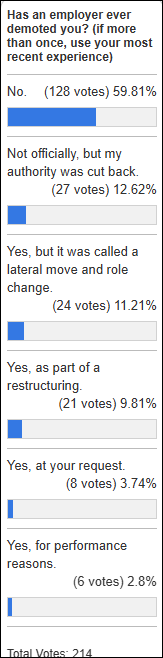
Around 30% of poll respondents have been demoted at some point in their careers. I have seen variations that involve losing all direct reports, such as being moved to special projects, tapped as an advisor, or assigned to formulate strategy. All of those are compliments. Organizations are smart to let a high-performing executive who doesn’t manage people well the chance to focus on their strengths. Value shouldn’t always be measured by headcount or budget.

New poll to your right or here: For exhibitors at ViVE and/or HIMSS, what is the #1 benefit received? What one thing keeps your company coming back, and has that changed?

Attending ViVE? Your updates, photos, and rumors are welcome and I won’t name you unless you ask. Tell me.


Sponsored Events and Resources

Publication: HIStalk’s Guide to ViVE 2026 lists the activities of sponsors at the conference.

Contact Lorre to have your resource listed.


Acquisitions, Funding, Business, and Stock

image

Waystar reports Q4 results: revenue up 24%, EPS $0.10 versus $0.11, beating revenue expectations but falling short on earnings. WAY shares have lost 39% in the past 12 months, valuing the company at $4.8 billion. CEO Matt Hawkins talked up AI in the earnings call, saying that 50 of the company’s solutions use AI, 40% of its revenue is generated by AI-embedded tools, and 30% of bookings were attributed to AI capabilities. He added that its Altitude AI prevented $15 billion in claims denials, reduced appeal time by 90%, and drove double-digit increases in denial overturn rates.

image

From a Veradigm update call:

  • CEO Don Trigg emphasized the company’s ongoing “Reset, Recover, and Reignite” plan to stabilize operations and refocus strategy.
  • The company will discontinue six unnamed low-revenue products.
  • Veradigm’s preliminary 2025 results show flat revenue and a significant decline in cash due to debt financing and share repurchases.
  • Trigg says that the company is making progress toward becoming current on its SEC filings but provided no specifics. It will file 2023 and 2024 information in a Super 10-K, which is a single annual report that includes data that would have been included in overdue previous reports.
  • The company has established Pune, India and Raleigh, NC as its hubs. It closed three locations in 2025, will close two more in 2026, and will vacate its Chicago headquarters in 2027.
  • Veradigm eliminated 15% of its workforce in 2025.
  • Trigg says that Veradigm was previously run as “a holding company as opposed to an operating company,” but will now focus on growth and market impact.

Sales

  • Mayo Clinic implements the productivity platform of Dock Health in cardiovascular, e-consult, and specialty contract programs.

Announcements and Implementations

Belgium-based cardiologist Michal Nedoszytko, MD, PhD creates Postvisit.ai, an agentic AI post-visit companion for patients. The tool, which he developed in Claude Code in seven days as a hackathon entry, helps patients understand and follow up on their treatment by using a “reverse AI scribe.”

image

Element Biosciences introduces a high-throughput benchtop sequencing system that can generate a whole genome sequence for $100.


Other

A Fierce Healthcare report says that the Coalition for Health AI has shelved its flagship plan to create a national network of independent AI assurance labs and shifted its focus to other initiatives. CHAI, which was founded in 2024 with several health systems as founding members, has drawn scrutiny from Republican lawmakers who question whether CHAI’s work overlaps FDA responsibilities and whether participation by large technology companies creates potential conflicts of interest. HHS Secretary Robert F. Kennedy Jr. went further, calling CHAI a “cartel” while backing the department’s position that private groups should not receive implicit government endorsement or taxpayer support for assurance labs. Founding members Amazon and Microsoft resigned after the White House signaled its broader opposition to the group and to AI regulation generally. CHAI says that the change in direction reflects stakeholder feedback, particularly stronger interest in post-deployment monitoring over upfront certification.

image

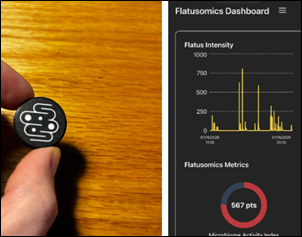
The Wall Street Journal reports early testing of an “underwear-able” flatulence monitoring system and tracker for studying diet-related gas and bloating. The top 3% of studied gas-passers in the study cohort will earn a “Prodigious Hydrogen Producer” plaque. Hat tip to my favorite medical research explainer @EricTopol for headlining this piece with “you gotta be kidding me,” which was also my initial reaction as I quickly verified that it wasn’t April 1.


Sponsor Updates

  • RLDatix releases the results of the “2026 Leadership Pulse Survey from the College of Healthcare Information Management Executives.”
  • TruBridge and Arcadia join the new Alliance for Advancing Rural Healthcare.
  • Afga HealthCare lists its new US installations, included an expended rollout of enterprise imaging at Tampa General Hospital.
  • Waystar’s AI capabilities deliver industry-leading outcomes and earn client accolades.
  • Optimum Healthcare IT publishes a new white paper titled “Your Ultimate Checklist for a Successful Healthcare CMMS Migration.”
  • Nordic releases a new “Designing for Health” podcast featuring Becket Mahnke, MD.
  • Optimum Healthcare IT opens a managed services center of excellence in Costa Rica. 
  • SlicedHealth releases a new episode of its “Substance Over Form” podcast titled “Your 2026 Guide to Price Transparency.”
  • WellSky will expand its clinical coding and documentation advisory services to additional Adoration Home Health locations.

Blog Posts


Contacts

Mr. H, Lorre, Jenn, Dr. Jayne.
Get HIStalk updates.
Send news or rumors.
Follow on X, Bluesky, and LinkedIn.
Sponsorship information.
Contact us.

HIStalk’s Guide to ViVE 2026

February 21, 2026 News Comments Off on HIStalk’s Guide to ViVE 2026

Agfa HealthCare

image

Booth 2203

Contact: Kara Clarke, director or marketing, North America
kara.clarke@agfa.com
978.761.9432

At ViVE 2026, Agfa HealthCare will showcase the latest advancements in its cloud-ready, SaaS-enabled Enterprise Imaging platform, designed to reduce complexity, strengthen interoperability, and elevate both IT performance and the clinician experience. Highlights include its zero-footprint streaming technology for fast, full-fidelity image access anywhere care is delivered; as well as RUBEE workflow orchestration; and embedded, vendor-neutral AI capabilities that streamline operations and support confident clinical decision-making within unified imaging workflows. Global Chief Medical Officer and Global Director of Enterprise Imaging & AI Anjum Ahmed, MBBS, MBA will attend and is available for meetings to discuss clinician-first imaging strategy, AI in practice, and the evolving role of enterprise imaging in connected care environments.


Altera Digital Health

image

Meeting Cube 350

Contact: Heewon Shin, segment marketing manager
heewon.shin@alterahealth.com

A global healthcare IT leader, Altera Digital Health develops and elevates technology to bring next-level healthcare within reach. Altera’s approach to our solutions is changing the way healthcare is delivered. We see the summit of what healthcare can be, but rather than total transformation, we’re focused on helping organizations take the steps they need to get there.    

At ViVE, we’re excited to showcase how Altera is addressing the top challenges healthcare providers and payers are facing today by enabling interoperability and data-sharing, strengthening financial stability, and leveraging AI to help alleviate clinical and administrative burden. Stop by our meeting cube (#350) to meet with our experts and learn more about how Altera can help you deliver next-level care. Click here to schedule a meeting. For more, visit www.alterahealth.com.


Arcadia

image

To arrange a meeting, visit https://arcadia.io/resources/vive-2026.

Join Arcadia at ViVE 2026 as healthcare leaders, policymakers, and innovators come together to shape the future of digital health. As the industry accelerates toward true interoperability and consumer-grade digital experiences, Arcadia is helping organizations turn connected data into real progress — reducing friction, improving outcomes, and empowering patients at scale.   

Arcadia Chief Strategy Officer Aneesh Chopra will moderate a discussion with CMS’ Amy Gleason titled “How CMS Is Modernizing Healthcare” on Tuesday, February 24 from 11:40am–12:00pm on the West Coast Stage. CMS’ healthcare technology push has moved quickly from announcement to execution. Following the launch of its White House-backed Health Tech Ecosystem initiative — and early commitments from more than 60 major health and technology organizations — CMS is now calling on the industry to deliver real progress toward a truly patient-centric digital ecosystem in early 2026. This session explores how a voluntary, standards-based alliance — paired with CMS’ broader interoperability push — aims to unlock seamless data sharing, consumer-grade digital tools, and patient-facing applications focused on chronic disease management, digital-first navigation, and streamlined check-in. The ultimate question: can this effort finally reduce administrative burden and deliver on healthcare technology’s long-promised potential to empower patients?


Artera

image

Booth V-835

Contact: Adrianna Hosford, chief communications officer and head of marketing
adrianna.hosford@artera.io
833.234.9355

Artera is the proven agentic healthcare company, leveraging a decade of deep expertise to support 2 billion patient communications annually. Our solutions empower humans and AI agents to work together to fix patient communications across text, phone, and web, unifying the entire patient journey – from scheduling and intake to billing and more. Trusted by over 1,000 healthcare organizations (including specialty groups, FQHCs, large IDNs, and federal agencies), Artera directly increases staff efficiency, boosts patient engagement, and improves the provider bottom line, helping patients get the care they need with simplicity and speed.   

2B+ Annual Comms. | 200M+ Patients | 10yrs Experience | FedRAMP High in Process | www.artera.io |   

Join us at ViVE to experience our fully autonomous AI Agents in action. We’ll demonstrate how these agents manage a range of complex workflows (scheduling, FAQ resolution, appointment management, and more) to reduce staff burden and improve the patient experience. Stop by our booth to connect with our experts and explore strategies for optimizing patient access, implementing AI-driven patient communication, and much more. Plus, receive a $25 Amazon gift card when you schedule and attend a meeting with an Artera team member. As an added bonus, you’ll be entered to win an iPad Pro in our post-event raffle. Schedule a meeting with our team here.


Cardamom

image

Contact Adam Dial to arrange a meeting.

Contact: Adam Dial, chief customer officer
adam@cardamom.health
608.469.6154

Cardamom is a minority-owned, technology-forward health IT professional services company serving healthcare providers, payers, and health IT organizations. With a team-based, AI- and automation-first approach focused on committed outcomes, Cardamom helps customers more effectively use data, analytics, AI, and applications to improve care quality, reduce costs, and enhance patient and provider experiences. Cardamom is also committed to growing industry talent by hiring high-potential team members without prior health IT experience and providing comprehensive training and mentorship to deliver industry-leading results. For more about Cardamom, visit https://cardamom.health.   

Team Cardamom is excited to attend ViVE! Join us and Vitea for cocktails and appetizers on Monday, February 23 from 6:00-8:00pm in the Pico Boardroom (7th floor) at the Moxy Hotel. We can’t wait to connect!


CereCore

image

Booth 1154 in the Club CHIME Lounge

Contact: Phil Sobol, CCO
Phil.Sobol@CereCore.net
615.344.4169

CereCore works behind the scenes to empower hospitals and health systems with IT services around the nation and globe. Looking for IT and application support, technical professional and managed services, strategic IT consulting and advisory services, or EHR consulting? Let’s meet so we can help you find EHR experts to maximize your investment, tap into support desk solutions that will result in happier users and providers, supplement your technical and support teams, and connect you with the right talent so you can better manage IT operations. Find meaningful change with CereCore’s healthcare IT managed services. See you in the Club CHIME Lounge at ViVE26.


Clearsense

image

Booth 1741

Contact: Kära Freeman, senior director, revenue operations
kfreeman@clearsense.com
612.747.2134

Gartner’s “2026 CIO and Technology Executive Survey” shows cost optimization is the number one priority shaping CIO objectives over the next two years.

Join us live on the Palm Stage at ViVE on Monday, February 23 at 4:30pm for the CHIME-curated case study panel, “IT Cost Optimization and Enterprise Strategy.” This featured session brings together Clearsense CEO Jason Rose with Trinity Health Chief IT Strategy Officer Mike Prokic and CTO and VP of Product Engineering Nick O’Connor for a candid discussion on how application decommissioning can be transformed into a scalable financial strategy. Trinity Health will share its roadmap for eliminating nearly $80 million in recurring operating expenses, offering a practical blueprint for any health system looking to drive cost optimization while protecting its workforce — without compromising patient care.

Clearsense will also be available for one-on-one discussions throughout the event. For health systems looking to reduce financial waste, manage merger-related complexity, or advance digital transformation initiatives, this is an opportunity to explore one of the most powerful — and underused — levers available to health systems today.

Visit us at booth 1741 or schedule a meeting in advance using our booking link.

About Clearsense
Clearsense is a healthcare data-enablement platform designed to help health systems optimize operating costs while revitalizing access to data. The 1Clearsense Platform enables large-scale decommissioning of redundant legacy applications using a disciplined, assembly line–style approach that prioritizes speed and cost impact. By retiring legacy systems while preserving access to historical data through active archiving, Clearsense helps organizations eliminate ongoing costs tied to licensing, infrastructure, and support while establishing a stronger data foundation for analytics, AI, and research. Learn more at clearsense.com.


Clearwater

image

Booth 618 in the Cybersecurity Zone

Contact: Lisa Munro, director of marketing
lisa.munro@clearwatersecurity.com
205.767.9141

Clearwater is healthcare’s largest pure play cybersecurity and compliance firm helping organizations across the healthcare ecosystem move to a more secure, compliant, and resilient state so they can achieve their missions. We provide a deep pool of experts across a broad range of cybersecurity, privacy, and compliance domains; purpose-built software that enables efficient identification and management of cybersecurity and compliance risks; managed cloud services; and a 24/7 Security Operations Center with managed threat detection and response capabilities.   

Visit us in the Cybersecurity Zone to experience our latest innovations and connect with our team about the future of cybersecurity, data integrity, and digital resilience in healthcare. Be sure to catch our presentations in the Cybersecurity Data Innovation theater:    

Wearing Two Hats: A CIO/CISO Case Study in Cyber Resilience (Monday, February 23, 1:35-1:55pm) 
When ransomware struck and key security leaders departed, Enloe Health faced the reality many community hospitals know well –  limited resources, expanding risk, and one leader wearing multiple hats. In this candid discussion, Enloe Health’s CIO and CISO will share how the organization rebuilt its cybersecurity program, regained leadership trust, and strengthened resilience without overextending staff. Attendees will walk away with practical insights for navigating cyber incidents, staffing constraints, and executive accountability in small-to-mid-sized healthcare environments.   

When the Cloud Becomes the Attack Surface (Tuesday, February 24, 10:05-10:25am) 
Healthcare organizations are moving fast to the cloud, but security models haven’t always kept pace. In this fireside chat, a healthcare cloud security architect and healthcare security leader will unpack the most common cloud misconfigurations, identity mistakes, and visibility gaps hospitals encounter and why they’re so hard to detect. Attendees will leave with a clearer understanding of how to manage cloud risk across complex, multi-cloud environments without overwhelming internal teams.


Clinical Architecture

image

Booth 1241

Contact: Marck DuBois, chief revenue officer
marck_dubois@clinicalarchitecture.com
317.580.8400

Meaningful outcomes start with high-quality data. Our data quality solutions give you the ability to objectively assess and improve patient information, normalize and uplift data, and transform message formats. Visit booth 1241 to learn more about the PIQXL Gateway, our implementation of the PIQI framework, which allows you to measure the quality of patient information and pinpoint the root cause of issues for improvement.


EFax by Consensus Cloud Solutions

image

Booth 1918

Contact: Alyssa Stephens, events
alyssa.stephens@consensus.com
844.804.1234

Visit the EFax by Consensus Cloud Solutions booth at ViVE to see how we’re turning healthcare’s biggest data bottleneck into your greatest clinical advantage. We’re going far beyond traditional faxing by using AI, NLP, and machine learning to transform static, unstructured documents into structured, HL7-ready data. Don’t let critical patient insights stay trapped in digital scans — learn how our automated data extraction slashes administrative burden, accelerates treatment, and drives revenue for providers and payers alike. Stop by booth 1918 for a free latte and watch a live demo of your data in motion to see why the future of the continuum of care is no longer unstructured.


CTG

image

Booth 1125 & Booth 318 in the Cybersecurity Zone

Contact: Sarah Blafer, marketing team lead, demand generation
Sarah.Blafer@ctg.com
860.942.2180

CTG, a Cegeka company, delivers IT and business solutions that enhance digital agility. Over the last 35-plus years, we’ve supported more than 1,000 healthcare organizations, empowering them to modernize systems, improve performance, and advance digital initiatives with innovative services and technologies. Our expertise spans EHR implementation and managed services, cybersecurity, ERP, cloud, infrastructure, IT/application support, and clinical optimization. Visit CTG at booths 1125 and 318 to learn more.


Divurgent

image

Club CHIME

Contact: Danny Arnold, EVP of growth and strategy
Danny.Arnold@divurgent.com
518.495.2594

Divurgent is a full-service, healthcare-focused/HIT consulting firm led by people you actually want to work with. We’re one of the only firms out there that has your back for the whole journey. We can help you select an EHR or tool, implement it, staff it, bring you live, optimize it, and more. Three-hundred sixty degrees. Most of our focus is on EHRs, but we do much more than that. We think beyond the system and below the surface. Think workflow, digital strategy, operational readiness, change management and more. Sure, we can help augment your talent or get boots on the ground, but we’re most excited by helping you solve your most complex challenges. Our consultants have worked for health systems, so they’ve been in your shoes and understand operations and clinical demands. Give us a problem and we’ll solve it together. And before we do any of that, we listen.


Ellkay

image

Booth 1516

Contact: Morgan Hassell, marketing director of communications
morgan.hassell@ELLKAY.com
602.663.0529

Ellkay is a trusted healthcare data enablement partner helping payers, providers, labs, and health IT companies simplify interoperability and build AI-ready data foundations. Through our modern platform and deep healthcare expertise, we help organizations connect, manage, and optimize data across their ecosystem — without adding complexity.   

At ViVE, meet with Team Ellkay to learn how we help organizations:

  • Streamline workflows and reduce operational friction.
  • Simplify data exchange across systems, partners, and networks.
  • Build scalable, secure data strategies that support innovation.   

Why stop by? If you’re navigating fragmented data, legacy systems, or growing interoperability demands, Ellkay brings both the technology and the expertise to help you move faster with confidence.   

Special Events 
Join us for Happy Hour at booth 1516 — both days! Stop by to connect with our team, enjoy a drink, and see how Ellkay is powering seamless interoperability behind the scenes.

Want to plan ahead? Set some time with us here. Let’s connect — and raise a glass to better healthcare data.


Elsevier’s ClinicalKey AI

image

Booth 1041 in the AI @ ViVE Zone

Contact: Meg Maguire, events manager
m.maguire@elsevier.com

Discover how ClinicalKey AI can support clinical decision-making at the point of care. Visit booth 1041 in the AI @ ViVE Zone and join our expert speaker session. Physician Executive Claudine Lott, MD will present on implementing AI at scale on Monday, February 23, and CTO Rhett Alden will present on API-enabled AI content integration on Tuesday, February 24. See how trusted content and AI can streamline workflows and elevate patient care.


Five9

image

Booth 2049

Contact: Roni Jamesmeyer, senior healthcare marketing manager
roni.jamesmeyer@five9.com
972.768.6554

Five9 provides a comprehensive suite of CX solutions, powered by Five9 Genius AI, to elevate customer experiences that deliver better business outcomes in the cloud contact center space. The New CX redefines how brands connect with customers through seamless and efficient AI-driven journeys that anticipate and meet each customer’s unique needs. Our unified cloud-native offering enables AI and human agents to create hyper-personalized customer experiences, so every customer interaction is more connected, effortless, and personal. Trusted by 3,000+ customers and 1,400+ partners globally, Five9 brings together the power of our AI, our platform, and our people to drive AI-elevated CX. For more information, visit www.five9.com.


Fortified Health Security

image`

Booth 1347

Contact: Rachel Bryant, marketing coordinator
rbryant@fortifiedhealthsecurity.com
904.316.3310

Join Fortified Health Security at ViVE 2026 to explore the latest in digital health innovation, cybersecurity, and healthcare transformation. Fortified is built for healthcare, offering tailored solutions to help you address your unique challenges, navigate the ever-changing legislative landscape, and working alongside you to create a stronger cybersecurity posture.   

Connect with our team at booth 1347. Set up a meeting ahead of time by emailing connect@fortifiedhealthsecurity.com. Join us at one of our events on Monday, February 23, when we will host an exclusive reception at the Grammy Museum, followed by a Nightcap in the City of Angels at the Moxy hotel. Get all the details to secure your spot here: https://fortifiedhealthsecurity.com/event/vive26/. We look forward to seeing you in Los Angeles!


Get-to-Market Health

image

Contact Steve Shihadeh to arrange a meeting

Contact: Steve Shihadeh, founder and CEO
steve@gettomarkethealth.net

We partner with healthcare technology leaders to accelerate growth, strengthen go-to-market execution, and build lasting customer relationships. Whether navigating post-investment expansion or launching new solutions, GTMH helps companies market, sell, and scale in ways that drive sustainable success. “Driving Growth in Healthcare Technology”


Health Data Movers

image

Contact Brooke Foster to arrange a meeting.

Contact: Brooke Foster, marketing coordinator
Brooke@HealthDataMovers.com
847.404.0326

Health Data Movers (HDM) is a healthcare technology services firm. We are trusted partners to healthcare organizations, biotechnology companies, and digital health enterprises through our services – data management, integration, project management, and clinical and business applications. We are the smart choice for creating unique solutions that empower patients and providers by unleashing the potential of healthcare data and technology.

Find us at our focus group, “Conversions without Chaos: Strategic Planning for High Stakes Healthcare Data Migration,” on Sunday, February 22 at 4:15pm.

Join Health Data Movers and CitiusTech on Tuesday, February 24 from 6:00-9:00pm for Data & Drinks After Dark at ViVE! RSVP here, space is limited!       

We Make IT Happen! Visit www.healthdatamovers.com.


Impact Advisors

image

Contact John Stanley to arrange a meeting.

Contact John Stanley, chief growth officer
john.stanley@impact-advisors.com
562.243.4937

Impact Advisors is a leading healthcare management consulting firm committed to solving the industry’s emerging and evolving challenges through tech-enabled operations performance improvement. Our high-performing team of clinical, financial, operations, and technology experts collaborate to architect quality solutions and deliver measurable value for our clients. We are the most awarded consulting firm in healthcare, with services recognized among Best in KLAS for 18 consecutive years and a culture deemed a “Best Place to Work” by Modern Healthcare for 16 years.


Lincata

image

Booth 2206

Contact: Adam DeRocher, chief revenue officer
adam.derocher@lincata.com
712.541.9132

Lincata’s Bedside Operating System (OS) transforms hospital televisions into digital experience tools that launch MyChart Bedside TV directly in-room. It’s simple. LincTV, coupled with MyChart Bedside TV, existing TV screens, cameras, microphones and other equipment, enables health systems to create the foundation for smart room capabilities and virtual care. LincTV consists of a proprietary set top box and purpose-built MDM, which provides flexibility, scalability, security, and ease of deployment.


Med Tech Solutions

image

Contact Kaitlyn Nelson to arrange a meeting.

Contact: Kaitlyn Nelson, director of account solutions and development
knelson@medtechsolutions.com

Stoltenberg Consulting, a leading healthcare technology consulting firm and proud Med Tech Solutions (MTS) brand, helps hospitals and health systems maximize the value of their EHR systems. With deep clinical and financial module expertise across Epic, Oracle Cerner, Meditech, NextGen, eClinicalWorks, and Veradigm, Stoltenberg’s EHR-certified consultants bring an average of 15+ years of real-world hospital experience to every engagement. Earning 3x Best in KLAS recognition for Partial IT Outsourcing, Stoltenberg specializes in EHR implementation, managed services including help desk and legacy system support, go-live command centers and ATE support, and flexible staffing solutions. Focused on reducing EHR burden, lowering support costs, and improving clinician and patient experience, Stoltenberg partners with healthcare organizations nationwide to drive meaningful, measurable outcomes for EHR improvement. No matter where you are in your EHR journey, partner with Stoltenberg and the MTS family of brands to help you make the most of your technology investment.

Director of Account Solutions and Development Kaitlyn Nelson and Chief Client Officer Imran Siddiqui will be on site at ViVE26. Please submit meeting requests here.


Medicomp Systems

image

Booth 2329

Contact: James Aita, director of business development and strategy
info@medicomp.com
703.803.8080

Medicomp delivers the industry’s only physician-curated universal data foundation, transforming healthcare data into trusted intelligence through its evidence-based Clinical Intelligence Engine, Quippe. Quippe connects information across domains, normalizes every input, and validates AI outputs to ensure accurate, interoperable insights at the point of care — fueling innovation, improving accuracy, and unlocking the full value of clinical data.

Medicomp will be showcasing entirely new functionality that streamlines clinical workflow, combining technologies like ambient listening, natural language processing (NLP), Model Context Protocol (MCP), and leveraging its universal data foundation and knowledge graph to deliver the efficient, intelligent clinical workspace that clinicians have been craving. 

The gap between data and understanding is probably costing you – in denied claims, compliance penalties, technology ROI, clinician burnout, and patient safety risks.

Stop by the Medicomp booth to learn how your systems can benefit from:

  • Clinically validated LLM outputs.
  • Diagnostic intelligence that understands context, is evidence-based, and makes disparate data computable.
  • Clinical grade agents based on a universal data foundation.

Solve the data reliability problem with diagnostically intelligent clinical data solutions.

To learn more, visit Medicomp.com.


Meditech

image

Booth 1436

Contact: Rachel Wilkes, associate VP of marketing
rwilkes@meditech.com
781.774.4555

Join Meditech in booth 1436 as we showcase how the latest evolution of the Expanse EHR is helping healthcare organizations thrive. Built on a secure, cloud-native platform, Expanse provides the technological infrastructure necessary to help organizations balance clinical excellence with long-term financial sustainability.

Meditech will spotlight Expanse’s intelligent EHR tools that minimize cognitive strain, boost satisfaction, foster loyalty, and improve health outcomes. Key features include AI tools that function as intelligent collaborators, interoperability solutions like Meditech’s nationwide Traverse Exchange network for seamless data integration and consolidation, and patient empowerment tools like MyHealth patient portal’s AI-assistant that supports active patient participation.

Hear from the leaders defining the future of health IT. Meditech and customer executives will lead several high impact discussions at ViVE 2026, including:

  • Fueling Rural Transformation panel discussion with Meditech EVP and COO Helen Waters.
  • EHR Maturity Moment panel discussion with Meditech EVP and COO Helen Waters.
  • The Supply & Demand for Patient Data featuring Meditech Senior Director of Interoperability Mike Cordeiro
  • When Small Gets Tough: Digital Health in Resource -Thin Environments with panelists Wooster Community Hospital Health System VP and CIO of Information Systems Eric Gasser and Meditech Chief Marketing and Nursing Executive Cath Turner, MBA, RN-BC.
  • How AI Fixed a Hidden Fax Drain on Staff Time featuring Northfield Hospital and Clinics Manager of Information Technology Debbie Oathoudt.

Meditech invites guests to an in-booth networking reception on Monday, February 23, from 4:45-5:45 pm in booth 1436. Learn more about Meditech’s presence at ViVE by visiting its event page.


MRO

image

Booth V-330

Contact: Brad Hawkins, VP of payer solutions
BHawkins@mrocorp.com
601.405.2470

MRO is “The Single Source for Smarter Data” – driving a new era of clinical data intelligence where data is connected, structured, and transformed into actionable insights. The result – confident decisions, operational precision, accelerated research, and most importantly, better patient care. This innovative model for clinical data management is built for speed and scale, combining FHIR-native connectivity, deep clinical expertise, and advanced automation to turn a fragmented healthcare ecosystem into a connected pathway where every data point delivers impact. The outcome is a faster, smarter, more secure platform for managing enterprise clinical data that drives better outcomes and creates revenue-generating opportunities for our client partners, while enhancing security, compliance, and clinical integrity. With 24 years of trusted solutions and partnerships, MRO knows that a stronger healthcare ecosystem begins with smarter data, leading to data-driven decisions and better performance. Learn more at www.mrocorp.com.


Nordic

image

Meeting Room 547

Contact: Rebecca Whaley, SVP of marketing
Rebecca.Whaley@NordicGlobal.com

Navigating the flux of the healthcare landscape takes a seasoned partner who can envision technology’s role in your organization’s success and execute the right plan.

With a singular focus on healthcare and proven experience, Nordic understands the big picture and is ready to take on your toughest technology and business challenges.

Connect with us at meeting room 547 to discuss our end-to-end solutions and how they can help you solve for today and tomorrow. Reserve your spot!

Nordic is also proud to sponsor CHIME’s ViVE Welcome Reception for CHIME members. Connect with members of our team on Sunday, February 22, from 5:30-7:00pm at the JW Marriott Los Angeles.

Learn more about what Nordic is doing at ViVE 2026 here.


Optimum Healthcare IT

image

Booth 2202

Contact: Larry Kaiser, CMO
lkaiser@optimumhit.com

Optimum Healthcare IT is a Best in KLAS healthcare IT digital transformation and consulting firm based in Jacksonville Beach, Florida. Optimum’s comprehensive service offerings include Enterprise Application Services, Digital Transformation, and Workforce Management, which features our Optimum CareerPath skill development program. Backed by a leadership team with extensive expertise, we deliver tailored healthcare consulting solutions to diverse organizations.   

Optimum Healthcare IT has the right pit crew at the right time for your organization. We prepare you for the track and keep you on the track with each of our specialized crew members. You have desired and required outcomes; we make sure you meet them.    

Make a Pit Stop at:  

  • Booth 2202  
  • CHIME Stage on February 24 at 3:30pm – From Tune-Up to Top Speed: How 2 Major Health Systems Achieved Cloud Success 
  • Sunset Stage on February 25 at 9:25am – Reducing Clinician and IT Burden with Just One Click

PerfectServe

image

Booth 1665

Contact: Jenn Corcoran, senior marketing manager
jcorcoran@perfectserve.com
802.379.5352

Struggling with after-hours coverage, missed handoffs, or “who’s on call?” confusion? At ViVE, PerfectServe is offering complimentary 15-minute workflow reviews for healthcare leaders who want to identify gaps in their communication and scheduling processes – and leave with clear, practical next steps. In 15 minutes, we’ll: 

  • Walk through any visitor’s current communication and scheduling workflow. 
  • Identify failure points that create delays, burnout, or risk. 
  • Highlight opportunities to simplify, automate, or integrate with the EHR. 
  • Share how peers are addressing similar challenges.   

Visitors will leave with a clearer picture of where things break down, practical ideas to take back to teammates, and a benchmarked perspective from other health systems.   

Who should book time? This is ideal for CMOs, CIOs, and COOs; clinical operations leaders; IT leaders responsible for clinical communication; physician and nursing leadership; and scheduling managers. Book a review here.

Why PerfectServe?
PerfectServe helps health systems accelerate speed to care by bringing communication and scheduling into a single, EHR-integrated platform. We help organizations create a single source of truth for staff scheduling; enable secure, role-based care team communication; power a reliable clinical contact center; and, finally, answer, with confidence, “Who’s on call right now?”


Praia Health

image

Contact Scott North to arrange a meeting.

Contact: Scott North, VP of partnerships
scott.north@praiahealth.com

Praia Health is the patient experience orchestration platform for health systems. We help health systems attract, engage, and retain patients by supercharging their portals and digital tools with seamless, personalized journeys in one platform. The result is higher retention, lower costs, and measurable ROI.


Sonifi Health

image

Viosk 2136

Contact: Jared Allen, SVP of sales
jallen@sonifihealth.com
801.386.1450

Sonifi Health provides industry-leading, interactive patient engagement technology proven to improve patient outcomes and staff productivity. The EHR-integrated platform is designed to anticipate the needs of patients and clinicians, infusing the principles of hospitality into care experiences. As part of Sonifi Solutions, Inc., the company supports more than 300 million end-user experiences annually. Learn more at sonifihealth.com.


TeamBuilder

image

Booth 1667

Contact: Taylor Bockweg, VP of sales
taylor@teambuilder.io

TeamBuilder is the Operational Intelligence platform for healthcare scheduling, purpose-built for ambulatory care. Traditional scheduling tools rely on static rules, staffing ratios, or forecast-only models that fail to reflect how care is actually delivered. TeamBuilder takes a fundamentally different approach. Its intelligence evaluates multiple operational signals — including appointment complexity, provider mix, staffing capabilities, throughput constraints, and available clinical space — to understand true demand and capacity. By modeling supply as capability rather than headcount and continuously re-optimizing as conditions change, TeamBuilder enables predictive scheduling for both staff and space. This allows healthcare organizations to move from reactive schedule management to proactive operational planning. The result is clearer visibility into capacity, improved access, and reduced labor inefficiency across clinics, specialties, and regions.

Comments Off on HIStalk’s Guide to ViVE 2026

Text Ads


RECENT COMMENTS

  1. Challenger exploded on lift-off when the O-rings failed. Columbia disintegrated on reentry after one of the heat shield tiles were…

Founding Sponsors


Platinum Sponsors


Gold Sponsors


RSS Webinars

  • An error has occurred, which probably means the feed is down. Try again later.