Recent Articles:

News 10/2/09

October 1, 2009 News 11 Comments

HERtalk by Inga

From: Coding Guy “Re: ER Documentation System. I can tell you from compliance training I have received from HBMA and networking with other compliance officers, that providing prompting for higher services is a no-no. It’s similar to having superbills where there are no checkboxes for non-billable services – if you’re not providing a mechanism for recording non-billable services it could get attention. I’m not a lawyer but I do have access to very good counsel and providing provider feedback that hints of guiding upwards for bills is definitely to be avoided.  Most OIG investigations are triggered by disgruntled employee tips, so any bad messaging and training around a system like this could lead to unwelcome attention.”

More than three-quarters of healthcare executives surveyed by PricewaterhouseCoopers LLP agree that the secondary use of EMR data will be their organization’s greatest asset over the next five years. Essentially, it is all about data mining, and how it can be used to improve patient care, predict public health, and reduce healthcare costs. However, PWC finds that the lack of standards, privacy concerns and technology limitations are holding back progress.  PWC just published  “Transforming Healthcare through Secondary Use of Health Data,” which calls for public-private collaboration and government incentives to collect, share and use health data; to establish standards; and to redefine technical architecture to allow interoperability.

Here’s a keynote address I would have loved to hear. Ron Galloway spoke at the Healthcare Facilities Symposium & Expo this week and said that the Wal-Mart’s distribution of eClinicalWorks “is the biggest thing going on in healthcare right now.” Galloway also predicts that between the company’s plan to get its 1.4 million employees’ health record formatted electronically and the projected 22 million patients visiting its EHR-equipped clinics by 2014, Wal-Mart is positioned to be a major force in HIT.

st. anthony

Surgical Information Systems (SIS) names St. Anthony’s Medical Center (MO) an SIS Center of Excellence, based on its “best practices” use of the SIS Solution. Within a year of installing SIS, St. Anthony increased efficiencies in several areas, was able to increase OR caseloads 5%, and decreased late case starts by 4%.

Jewett Orthopaedic Clinic, a 32-provider, seven-office clinic in Florida, selects the SRS hybrid EMR. Speaking of SRS, I noticed that Evan Steele was recently interviewed on the EMR and HIPAA blog. His take on ARRA and stimulus money: “The cost associated with reduced productivity that a high-volume, high-performance physician would incur by entering the data to meet the meaningful use requirements dwarfs the incentives being offered and the relatively small penalties which start six years from now (in 2015).”

Allscripts announces its first quarter numbers, which include non-GAAP revenue of $167.5 million compared to $164.7 million last year. The non-GAAP revenue numbers take into account the 2008 and 2009 revenue numbers of both Allscripts and Misys Healthcare. GAAP revenue was $164.9 million versus $92.8 last year and earnings were $.15/share. The company exceeded Wall Street estimates of $.14 cents/share earnings. During Allscripts’ investor call, the company indicated its recent deal with North Shore-Long Island Jewish was worth just over $10 million, but had a potential value of more than $75 million, depending on how many physicians signed on. Investors seemed pleased, with shares on Wednesday hitting their highest point in nearly two years ($20.61.)

Southeastern Regional Medical Center (NC) plans to implement Allscripts suite of care management solutions, by the way. The hospital will use the web-based SaaS  product to enhance continuity of care across the organization and prepare for Medicare’s RAC program.

CVS pharmacy customers now have the ability to download their prescription histories into HealthVault.

caretracker

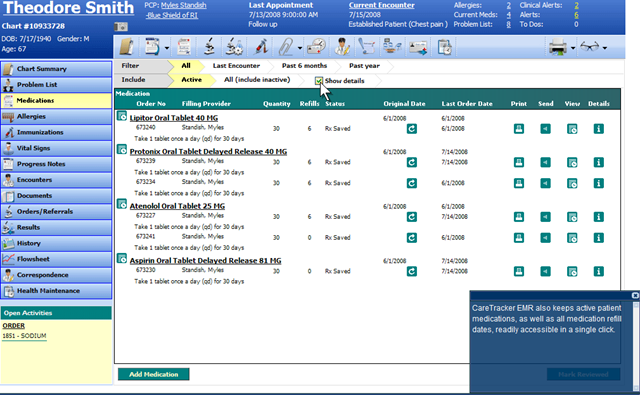
Ingenix expands the e-prescribing capabilities of its CareTracker EMR solution and is now SureScripts-certified.

Emergisoft releases its iPhone Simulator, which will allow physicians to customize the iPhone for use with Emergisoft’s physician documentation in the ER.

HHS Secretary Kathleen Sebelius releases a report detailing how The Columbia Basin Health Association (WA) was able to improve health care using HIT. After implementing an EHR, the community health center initiated automated tools to increase the monitoring of diabetic patients. Within six months, the facility documented dramatic increases in overall care for its diabetics, including a 55% jump in the number who received foot exams and a 34% increase in eye exams.

Virginia Blood Services purchases Mediware’s LifeTrak software to manage its blood donor records throughout central Virginia.

iMedicor successfully completes a pilot project involving 225 pharmacy outlets using iMedicor’s information exchange portal. All the outlets successful implemented iMedicor’s direct-to-pharmacy electronic prescription refill technology, which is available at no charge to physicians and pharmacies.

eMED-ID introduces a wearable device that uses GPS technology to track a person. Their target market includes people prone to wander, such as Alzheimer’s patients and those with autism. No mention if it is appropriate for straying boyfriends.

greg ericon

Broadlane, a cost-management company for healthcare providers, names Greg Ericson CIO. Most recently Ericson worked for a medical device company, but I’d love to hear more about his stint at the Home Shopping Network.

API Healthcare announces the general availability of its Acuality Patient Classification System. The software helps hospital to assess patient care requirements to make appropriate staffing assignments.

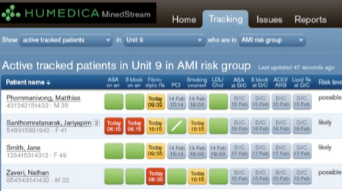
A mere week or so after its official launch, Humedica says it’s entered a long-term partnership with Anceta, the healthcare informatics subsidiary of AMGA. The association selected Humedica as its exclusive partner to develop a nationwide data warehouse and clinical analytics platform.

doylestown

Doylestown Hospital (PA) selects MedQuist to provide RAC consulting services and software.

Mr. H finally found an Internet connection and checked in long enough to say he doesn’t miss any of us. (Well, that isn’t really what he said. That was just my interpretation. His exact words: “Life sucks 90% of the time. This is that other 10%.”)

Maybe he will smile just a bit upon learning that Fierce Healthcare named HIStalk to a list of  Nine Healthcare Bloggers Worth a Click. Editor Anne Zieger says that “if you’re in health IT, there’s no excuse to miss HIStalk.” And, Dodge Communication put HIStalk on their list of Top 10 Twitterers for healthcare marketing and PR Professionals, saying HIStalk is “a great way to hear the perspective of those professionals working in the trenches.”  Many thanks!

inga

E-mail Inga.

CIO Unplugged – 10/1/09

October 1, 2009 Ed Marx Comments Off on CIO Unplugged – 10/1/09

The views and opinions expressed in this blog are mine personally, and are not necessarily representative of Texas Health Resources or its subsidiaries.

Work-Life Balance…Debunked!
By Ed Marx

The first thing we boys did after disembarking the school bus was head north for the neighborhood 7-Eleven. Liberated from a day of junior high classes and a numbing thirty-minute bus ride, we hungered for entertainment. Pinball was the current rage, and we all sought the coveted crown of The Who’s, “pinball wizard.” Grasping the corners of the machine, I’d let my fingers become one with the flipper-buttons, slapping the ball into the pins and rails and racking up points. In the heat of the moment, I’d jiggle and rattle the sloped table, eager to outscore my buddies. And then…it happened. My overzealous manhandling would cause the dreaded tilt—the machine disengaged—and my silver ball drained straight down the middle. Even as I write this, I can hear and feel the ominous skull-pounding, buzz. I lacked the perfect touch between allowable manipulation and sheer force. Tilt!

We all go through life encountering a fair amount of tilt. The abundance of balls we’re juggling come crashing to the floor because we can’t manage them all. The contemporary word for the phenomena today is “balance.” Stores carry dozens of books on the subject, and magazines print oodles of articles trying to help us live balanced lives and avoid a tilt scenario.

As CIO’s, our careers are demanding and change is a common constant. Yet families are our support and our hobbies provide fulfillment and, thus, both deserve our time. We desire to perform well in all aspects of life. It’s how we’re wired.

I never experienced as much imbalance, or tilt, until I tried to seek after the elusive balanced life. I’d read all the articles and believed the myth. Like the man chasing the end of the rainbow, I found a pot of disappointment instead of gold. In my stressed effort, I tried to run faster.

At last, it occurred to me. In this information age, the balanced life is not achievable. Nor should it be. We fool ourselves into thinking that life is made up of set components with solid boundaries that stack neatly together like Tetris, with micro interfaces where convenient.

I advocate a different approach—Life-Work Integration. We all look for ways in which to maximize areas of our lives without having a negative impact on our values and ideals. We all desire to live a life of significance. I had the privilege of speaking on this theory at a recent healthcare professional society meeting. The President had heard me touch on the subject a year back while giving a talk on mentoring; he thought the concepts would be of value to his society. Based on the session feedback, the ideas resonated with the majority of attendees.

Balance implies that you give up something on one side of a scale until both sides are even—an exchange. Integration, on the other hand, is fluid and dynamic, bending and blending endeavors—time sharing. I don’t want to allocate 50 hours for work, 10 hours for fitness, 25 hours for family, 50 hours for sleep, etc. I want to bend and blend—to work 60 hours one week but 30 the next. I want to symphonize the flow of all my roles and responsibilities. I may have a desire to get up early and complete an outstanding task, or catch all my daughter’s daytime dance recitals. I may need an extra 10 hours per week to perfect the Argentine Tango with my wife, made doable by combining practice with our weekly date night. I don’t turn off my connectedness to any aspect of life. It is fluid and dynamic, bend and blend.

Here are some everyday examples of integration. One that serves me well is my virtual office. This setup untethers me, further enabling bend and blend opportunities. I carry a single device, and my digital schedule reflects all of my life roles, including my “honey do” list. No more home phone, multiple email addresses, or home PC to slow me down. I network socially through a single portal. Ninety-five percent of my athletic events have, in some aspect, included one or more family members. And I try to bring at least one family member on every business trip. I leverage systems, as well. I belong to an athletic club offering multiple locations. Depending where I start my day, I find the nearest club, all of which are preprogrammed in my GPS. Then there are repetitive tasks. You can hard wire these so you have more time and energy to focus on things that will have greater impact. Andy Stanley states that “systems can have a greater impact on behavior than mission statements.” For some tips on how to maximize the time you do have, see Green Standard Time.

A strong foundation will enable life-work integration and help avoid tilt. Some key aspects:

  • Develop and maintain a strategic plan for your life
  • Make sure principles/values are well defined and unmoving
  • Ensure your life passion is identified and calibrated
  • Surround yourself with accountable relationships and mentors
  • Embrace technology to master time and leverage efficiencies (don’t let them master you)
  • Create margin and set boundaries
  • Develop systems to support your principles and plans
  • Expand your creative capacity
  • Adopt a consistent worldview and belief system (for me this is based on my faith)
  • Man up and make tough choices

The last one is the hardest. Many people go through the process of prioritizing and discovery but then fail in the execution because they won’t pull the trigger on the difficult choices that would propel them to the next level. No one can do everything; and creating healthy boundaries often means eliminating the “good” in order to keep the “great.” Yet, out of a fear of change, of hurting others, or other perceived pains, some continue down the same path, trying to find an unachievable balance.

Take some time to reflect on this post and the possibilities of life-work integration. Review the elements of a strong foundation and how they might keep you from Tilt.

You can do it!


Ed Marx is senior vice president and CIO at Texas Health Resources in Dallas-Fort Worth, TX. Ed encourages your interaction through this blog. (Use the “add a comment” function at the bottom of each post.) You can also connect with him directly through his profile pages on social networking sites LinkedIn and Facebook, and you can follow him via Twitter – User Name “marxists.”

Comments Off on CIO Unplugged – 10/1/09

News 9/30/09

September 29, 2009 News 20 Comments

HERtalk by Inga

From: Overworked “Re: UCSF cancels GE Centricity project & lays off 33 IT analysts & support staff. Was this reported already somewhere? I work with a pharmacist who was formally laid off from UCSF last week and given 2 months severance pay. Apparently UCSFMC cancelled their GE Centricity project three weeks ago and he said he knows of 33 IT analysts and IT support folks that were laid off. He says the GE project budget was blown out of the water within 1 year and it had been going on for over 3 years – he had been on board for 3+1/2 years. He says it wasn’t even close to being implemented. I thought it was interesting that I couldn’t find anything in the press – but forgive me if I’m telling you old news.” Unverified. Dang. Mr. H always accuses me of not reading what he writes but I don’t think we have any official word that UCSF ha terminated its relationship with GE. However, UCSFWatch did send over a note last month suggesting things were not going well. The medical center management had hired Kurt Salmon Associates to figure things out and at that time GE-related activity was on hold.

The North Shore-LIF Health System (NY) announces it is subsidizing up to 85% of the EMR implementation and operating costs for over 7,000 of its affiliated physician. Participating doctors can received subsidies of up to $40,000 each over five years to implement Allscripts EHR. The initial agreement with Allscripts includes licenses for 1,200 doctors and one analyst suggests the deal is worth $20 million. In any case, it’s definitely one of Allscripts’ largest sales ever. North Shore’s subsidy program includes a unique twist: physicians will be subsidized at a rate of  either 85% or 50%, depending on whether or not they are willing to allow North Shore to use the EHR to report and share their performance data and allow them to compare it against a set of nationally care and outcome metrics.

Allscripts also announces that Baptist Memorial Health Care (TN) has selected Allscripts EHR/PM to automate its 65 employed and 3,100 affiliated physicians.

Meanwhile, a Jeffries’ analyst upgrades Misys to a buy and predicts the company will sell off each of its three divisions. Speculation is that the first division to go would be the Allscripts segment, which would appeal to buyers like “GE Healthcare and similar major players.” Analyst Milan Radia says, “”Our upgraded price target reflects our view that we are now approaching an end game in the transformation of Misys.”

coding

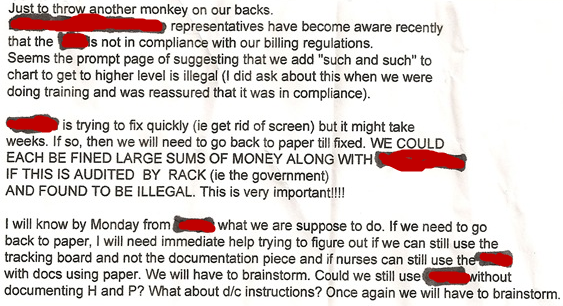
A reader forwarded the attached copy of an email sent to all the ER docs at his hospital. He explained to me the ER recently adopted a new documentation system and is now paperless. However, authorities are now questioning if the system is in compliance with billing regulations because it prompts users to add certain items in earn a higher level service. If the “experts” determine that the system is out of compliance, the hospital will likely need some sort of fix from the vendor. In the worst case, the hospital (and presumably others in its chain) will have to revert to paper for some amount of time. I asked a reader his opinion, and he believed that technically the system was “legal” because the doctor still has to approve the code. However, he suggests it is a tricky game that can invite “serious auditing.” Any other opinions?

If you are a careful reader, you will have noticed that Mr. H left me to my own devices this week while he is out gallivanting the world. We always joke about how I would handle things if some major IT story broke while he was out of pocket, like someone buying Cerner or Judy Faulkner resigning from Epic. I’m thinking that Xerox’s acquisition of ACS was just a warm-up for some really big, breaking story during Mr. H’s next vacation. Investors, by the way, appeared lukewarm on the merger, and Xerox’s stock price fell 15% on Monday. The $5.7 billion cash and stock deal allows Xerox to expand its footprint into the services business, not unlike HP’s EDS purchase last year and Dell’s recently announced bid to buy Perot.

cerner mo

Cerner and the University of Missouri announce a $100 million partnership that reassigns about 100 workers from the UM Health System to Cerner. The plan calls for the creation of the Tiger Institute of Health Innovation, which will be tasked with designing innovations to improve patient care and population health. University and Cerner officials say the collaboration could improve patient safety and save the state $1 billion (sounds optimistic.) As part of the 10-year agreement, the university and Cerner would split profits from any new developments based on the amount of money each invests in the institute. A portion of the proceeds would be used to continue funding the institute. Former Ascension Health CIO Sherry Browne will lead the institute.

Accretive Health, a provider of RCM services, files for  a $200 IPO.

HHS Secretary Kathleen Sebelius announces $27.8 million in ARRA awards, including 18 grants totaling $22.6 million for EHR implementations. The balance will support various HIT projects, including HIEs and helping existing health centers use existing EHRs to improve patient health outcomes. Think how fun it must be to be Sebelius, handing out millions of dollars to grateful recipients every couple of weeks. Almost as good a gig as Santa Claus

health quest

The Hannaford Charitable Foundation presents Health Quest (NY) a $50,000 donation to help fund its CPOE project. This is the second such gift from the foundation that was created by the Hannaford supermarket chain. Health Quest is investing about $60 million to overhaul its IT infrastructure, including implementation of a Cerner system.

Freshmen at Indiana University are embracing the school-supplied PHR, with 40% already using the program just weeks after the start of school. NoMoreClipboard.com is the PHR vendor.

The State University of New York at Stony Brook expands its deployment of PatientKeeper products, adding the ePrescription and Pay for Performance applications.

Nuance Communications announces the availability of version 9 of its eScription application. Among other changes, version 9 offers advancements in document quality review and administrator efficiency.

The Lake Erie Regional Health System/TLC Health Network is awarded a $4 million grant towards a $5.6 million IT integration project between the Brooks Memorial Hospital and TLC Health Network facilities. The grant is part of $436 million in funds being distributed through the Health Care Efficiency and Affordability Law of New York State.

RelayHealth says that both Hill Physicians Medical Group (CA) and Montefiore Medical Center (NY) have improved care collaboration, patient satisfaction, and specialty treatment prioritization using RelayHealth’s referral management service. The product, which was co-developed with Hill Physicians, facilitates secure health information exchange between primary care providers and specialists.

west ga

West Georgia Health System signs a seven year deal with Perot Systems for revenue cycle services to the hospital organization. Perot just recently provided the health system support services to implement MEDITECH 6.0.

Speaking of Perot, I was sad to hear that the individual charged with insider trading ahead of Dell’s proposed purchase of Perot was one of the heroes in the 1979 Iranian hostage rescue. If you aren’t familiar with the story, Ross Perot spearheaded a mission to rescue two of his employees held hostage in an Iranian jail. Reza Saleh was an EDS employee at the time and led the mob that broke into the prison and ultimately rescued the hostages. The SEC has now charged Saleh of making $8.6 million in illicit profits from the Perot/Dell deal.

Hudson Headwaters Health Network, a network of 16 community health centers in upstate New York, receives a $7 million grant to finance HIT and a medical centered home initiative.

ehr adoption1

A new report from the Information Technology and Innovation Foundation finds that Finland, Sweden, and Denmark are the clear global leaders in terms of EHR adoption in hospitals. Those countries also ranked far better in their use of electronic prescribing and CPOE. At least we beat the Brits and New Zealand.

University Hospitals (OH) makes plans to rent a closed school to train more than 4,000 employees on its new Eclipsys Sunrise EMR system. The health system wants 6-day-a-week, 24-hours-a-day access to the school from January to June.

Cumberland Consulting Group is named one of 2009 Best Small Firms to Work for by Consulting Magazine.

The CDC issues $4.37 million in grants to fund four new Centers of Excellence in Public Health Informatics. The recipients will use the funds to enhance HIT and improve the detection of and response to emerging public health interests. Winners are Harvard Pilgrim Health Care, Indiana University, the University of Pittsburgh, and the University of Utah.

scrabble

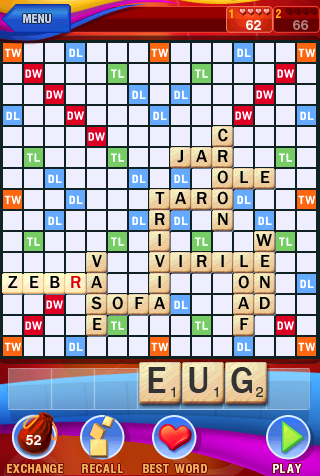
Warning: if you are an HIT purist, feel free to mosey along and not read this last note. For the rest of you, here is an amazing statistic: more than 2 billion applications have been downloaded from Apple’s App store since July, 2008. More than 85,000 apps are currently available, and only about 18% of the downloaded apps are paid for. However, the average cost of paid applications is growing and US revenues for applications will grow 10 times between 2009 and 2013, reaching $4.2 billion. I downloaded my first paid application recently: Scrabble ($4.99) and I am totally addicted.

inga

E-mail Inga.

Xerox to acquire Affiliated Computer Services

September 28, 2009 News 1 Comment

Xerox announces plans to buy ACS for in a $6.4 billion cash-and-stock deal. The deal is worth $63.11 per share, which is a 34% premium over Friday’s closing price.

Monday Morning Update 9/28/09

September 25, 2009 News 4 Comments

From Evan Marcos: “Re: conference invitations. Amen. After a lifetime in healthcare marketing, this is how the VIP scam works. Target a slice of C-level pigeons (CEO, CFO, CIO, CNO, etc) who need a few days off to relax. Next, choose a speaker panel of political hacks, policy wonks, executive has-beens, and think tank blowhards. Throw an innocuous agenda that yaks about the obvious in a fabulous, expensive resort. Now, the hook. Market the VIP ‘Summit’, ‘Roundtable’, or ‘Executive Leadership Council’ to healthcare C-levels and tell them they can attend for next to nothing but airfare in exchange for 20-30 minutes of their time talking to a vendor. Second hook, market the ‘executive lead opportunity’ to vendors wanting badly to make their quarterly numbers and find low-hanging fruit in exchange for a mere $30,000 – $50,000 (which pays for the conference and salaries for the organizers). Now, market the everloving stew out of it with aggressive, relentless, pit bull sale folks in a boiler room. I’ve been on both sides of the invitee list and I assure you there’s rarely anything truly positive to come from it except for the salaries and commissions to the organizing company. And I think you know who the top two or three offenders are.”

From Larry Leotard: “Re: new company. I saw an analysis that said new SaaS companies need to assume negative cash flow for 3-4 years because when you get paid monthly, the cash comes in slowly compared to selling licenses. Sales expectations in start-up biz plans are always too optimistic. Anyone can sell 10 hospitals, but getting to 40 is hard.”

I’m taking a little break, so Miss Inga will be presiding for a few days. Please treat her with the appropriate deference and civility as she is a delicate flower.

janepauley

The newly opened Jane Pauley Community Health Center (IN), a collaboration between Community Health Network and the local school system, is using the GE Centricity EMR, merging physical and behavioral data. Its namesake, the former news anchor and Mrs. Garry “Doonesbury” Trudeau, was on hand.

Salem Hospital (OR) signs for PureSafety’s Occupational Health Manager.

The PACS Designer is putting together a list of iPhone apps designed for healthcare people to use on the job. Send me the names of those you like and I will forward to TPD for a future Readers Write article.

rfds

In Australia, the Royal Flying Doctor Service is rolling out a new EMR for its remote patients.

Some employees of Regional Medical Center (SC) are crying “institutional racism” after a hospital ceremony recognizing the IT people involved in its Cerner project kicked off with someone in a gorilla suit handing out bananas while “Hail to the Chief” played in the background. The committee who planned the program always starts off with that music to introduce the CEO and the theme of the program was, “We’re Bananas Over You”, but that explanation didn’t appease those who were offended. The trustees get into the act, claiming the hospital tried to “sweep things under the rug,” so the hospital is sending everybody off for diversity training.

I’m happy to announce that we’ll be having another blockbuster HIStalk event at the Atlanta HIMSS conference in March. Sponsors have stepped forward, a topnotch venue has been secured, and liquor trucks are being diverted from all over the Southeast to stock it up. More details to follow, but mark down Monday, March 1 in your planner. Your event ideas are welcome.

rk

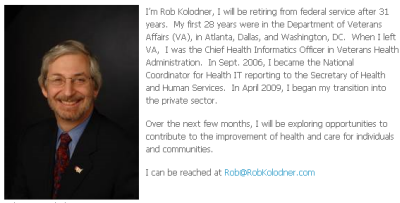
Former ONCHIT head Rob Kolodner retired on September 22 after 31 years of public service. A job darned well done, I say. In his e-mail announcement, he said, “I am delighted to not only to have had the honor to serve our nation’s veterans for almost three decades, and be able to help them in their time of need after so many of them put themselves in harm’s way on our behalf, but also to have had the privilege of participating in VA-wide and nationwide activities to improve the quality, safety, and efficiency of patient-centered health care. Hopefully, this time we will finally succeed in achieving sufficient health reform to trigger the transformations in health and care that we so desperately need in the US.” 

contourusb 

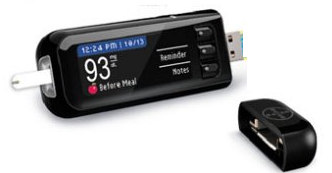
Bayer announces Contour USB, a plug & play glucometer that launches diabetes management software on a PC.

West Georgia Health System chooses Perot for revenue cycle services in a seven-year agreement.

An insurance company executive recommends three areas of focus for HIT startups: electronic connections for families, caregiver coordination, and population health.

Boston Medical Center, which just gave former CEO a one-time $3.5 million parting gift at her retirement, will close an ICU and lay off its 40 workers. The selectively generous facility will lose $170 million this year. Maybe it has board members from Merrill Lynch.

Newly announced Davies winner Urban Health Plan (NY) was able to create alerts and clinical decision support rules on its eClinicalWorks EMR the same day that CDC issued its H1N1 guidelines.

Odd lawsuit: an ambulance chaser and a Florida hospital are suing each other after the malpractice lawyer demanded records of all the hospital’s adverse events going back to its opening in 1934. The lawyer claims he’s thinking about getting a colonoscopy and wants to know how many perforated colons have occurred there. So why not just ask for those specific records? “"I could have a family member contemplating another procedure,” he said evasively. Or a client — he’s suing the hospital over a client’s perforated colon.

E-mail me.

News 9/25/09

September 24, 2009 News 12 Comments

 humedica

From Been There: “Re: Humedica. It’s a good thing they raised $30 million because with a CEO, CMO, CTO, CFO and five vice-presidents (among just 40 employees), they might be a touch top-heavy. One other observation: no VP of Sales. I hope their solutions sell themselves.” Humedica, a “next-generation health care informatics company”, launches itself in a blaze of buzzwords. I don’t know any of the people on the board or management team, but it’s got a lot of investment people in charge, especially from Leerink Swann (one of the companies that provided its $30 million in seed money). It sounds like they’re doing population-based data analytics stuff. I’m going to guess that the company was formerly Health Insight Technologies since I see some people and address overlaps. If so, that means they’re going to be selling de-identified patient data, which means they have to figure out how to get hospitals to give it to them. Hoping to cash in on Uncle Sam’s proposed effectiveness and outcomes studies, I’ll postulate, since they seem in an awfully big hurry to gear up.

From Fan of Mr. HIStalk: “Re: Accretive. They are backed by the same VC money as Exault, an HR outsourcer created form BP’s HR department that went public and was picked up by a big player. Ascension says, ‘We will give you 14 of our hospitals in Michigan to try this in at no cost to us. If you succeed, we will let your take over all of our RC functions. If not we can just ask you to go away. We have had more than one client curious and concerned about what Accretive might launch in the RC space. It is lucrative and prime for re-engineering."

From Carrie Ann: “Re: Newsweek’s Top 500 Green Companies rankings. I thought it was interesting who made the list and who was not on it. Equally interesting is the criteria they used (which is up to speculation and debate) as well as the categories said companies fall into. For instance, Cerner made the list under Technology yet McKesson is listed under Retail. Things that make you go hmmmm.” Here’s the healthcare list and technology is here. Cerner snuck in only because, being in the software business, it doesn’t create greenhouse gas, acid rain, or toxic emissions. Otherwise, it earned a 4.04 score (on a 100-point scale) for green performance reputation.

From Fuzzy: “Re: ACS. I work for ACS in their healthcare solutions division and there has been absolutely no word of a furlough, mandatory or otherwise. And we’ve no end in sight for the contract that I’m currently assigned to.”

eyeonbi

From BostonGuy: “Re: BIDMC. Interesting issue about ER physicians charging more at night.” SEUI’s organizers are making a fuss about the $30 ED surcharge for patients seen between 10 p.m. and 8 a.m., parking their billboard truck outside the Four Seasons where the hospital’s community leaders are meeting (a pretty swanky place for a hospital meeting — rooms start at $500).

From The PACS Designer: “Re: Linux desktop. Linux, the open source software platform, is finding more uses as developers build more applications using Linux as a server operating system. One area of growth for Linux is desktop applications, and one of the desktop systems that is free is Gnome. Gnome just released its latest version, Gnome 2.28, which adds support for Bluetooth devices, and should gain new mobile users who want a desktop view for their netbooks and phones.”

Jobs: System Analyst: SQL Server/Web Developer, CMS Operations Specialist, Epic Beacon Consultant, Java Developer.

I keep getting “you’re invited” e-mail blasts, urging me to attend one conference or another. I figure maybe I’m getting a VIP offer of free attendance for some reason. Nope – only after I’ve skimmed a mountain of marketing prose do I find that my “invitation” entitles me to pay the same exorbitant registration fee as everybody else.

British police appeal to the public to help find a man who stole two PCs from St. James Hospital last month. The new HP laptop and desktop contained “vital” radiotherapy software for cancer research that had not been backed up.

London Health Sciences Centre, stung by a whistleblower’s disclosure of an auditors’ report showing that its CIO had issued $3 million of no-bid contracts to friend, takes decisive action. It launches an investigation to find the whistleblower, saying the report was confidential. Not the smartest PR move I’ve seen.

Piedmont Healthcare expands its use of NextGen’s PM/EMR.

Dragon NaturallySpeaking 10 Standard with Headset – $29.99 after rebate and pretty cheap shipping. Saw it in the ad and thought someone might be interested.

The prospect of getting stimulus money has brought new HIEs out of the woodwork, so here’s yet another: Camden Health Information Exchange (NJ). Noteworthy Medical Systems will run it, I’ve heard.

A British shoplifter is arrested after a judge questions the veracity of her doctor’s note that claimed she couldn’t appear because of an appointment. Said the judge, “I have never seen a doctor write that clearly.”

The customer service director of a UK Internet service provider sends out a mass marketing e-mail pitching the company’s new billing system, but accidentally attaches a CSV file with full information on all the nearly 4,000 people who had signed up for it, including their contact and logon information. Among those whose information was contained in the file were a local hospital and New Scotland Yard.

Susan Neimeier joins medical device connectivity vendor Capsule Tech as chief nursing officer.

Red Hat announces Q2 numbers: revenue up 12%, EPS $0.15 vs. $0.10, beating estimates for both revenue and earnings. Nice.

E-mail me.

HERtalk by Inga

From My Fair Lady” “Re: KLAS appoints UPMC to board. This should be interesting. With UPMC owning a stake in dbMotion, how can they possibly be unbiased in their approach to interoperability platforms?”

From Joe Wilson: “Re: CEP America Chart off. Here is some clarification from the CIO of California Emergency Physicians – MedAmerica. Though Picis was quickest with regard to timing, they were missing two of the six elements of the case. Since CEP gave the cases out in advance, timing was far less important than having a complete chart. CEP declared Wellsoft the ‘winner’ by five seconds based on both quality and timing.”

From Alex DeLarge: “Re: foreign healthcare. Remember A Clockwork Orange? We ought to make all our legislators read these anecdotes and then challenge them to keep repeating that our healthcare is the best in the world.” 

sun life

Sun Life Family Health Center (AZ) selects the browser-based InteGreat EHR for its six clinics. InteGreat is a division of MED3OOO.

The 180-provider Jackson Physicians Alliance (MI) inks an agreement with Cielo MedSolutions to purchase licenses for Cielo Clinic software.

The SEC charges two men with running an $8.6 million insider trading scheme in connection with Dell’s recent agreement to buy Perot. One of the men, who has done work for Perot, apparently got wind of the pending Perot acquisition. Less than three weeks ago, he and a buddy then purchased over 9,000 Perot call options. The SEC was not amused.

It’s been the best of times and it’s been the worst of times for IT provider InfoLogix. The company announces a new contract with Albert Einstein Healthcare Network (PA) to develop Web-based eLearning software to support its EMR implementation. InfoLogix also releases word that it received a deficiency letter from NASDAQ stating that it no longer meets the minimum $1.00 per share requirement for continued listing, though they have until March 15, 2010 to regain compliance.

Hewlett-Packard retires the Electronic Data Systems name, renaming it HP Enterprise Services.

central ct

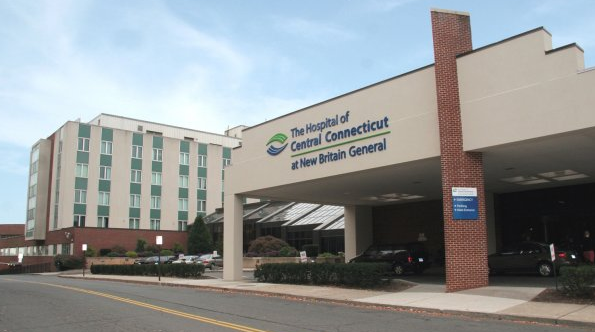
The Hospital of Central Connecticut selects Ingenious Med’s IM Practice Manager for electronic charge capture.

The Ottawa Hospital partners with EDCO to implement its Solarity and Solcom  products to digitize, store, and route paper documents electronically.

Former MinuteClinic CEO Michael Howe joins MEDNETWorld.com’s board of directors. Interestingly, Howe also is the former CEO of Arby’s, which may or not come in handy when dealing with HIEs.

LibertyHealth (NJ) launches EDIMS’s nursing documentation and charge capture systems. The health system implemented EDIMS’s CPOE and physician documentation systems in March.

Outpatient Surgery Center of Jonesboro (AR) selects ProVation MD software to document GI procedures.

Halfpenny Technologies’ new Web-based portal allows physicians to order lab procedures and view results.

Vermont Information Technology Leaders and Allscripts reveal plans to enter into a strategic alliance. Allscripts will extend preferred pricing to Vermont physicians, with both organizations focusing on providers in small practices or rural areas.

kolosky

Doctations appoints Jerry Kolosky chief operating officer. He was a VP for 3M Health Information Systems.

The Washington Health Information Collaborative extends grants to 34 physician practices, health clinics, and hospitals in small and rural communities across the Pacific Northwest. Providers will receive up to $20,000 each to invest in IT to improve health care. First Choice Health is contributing $500,000, the largest single donation.

WellSpan Health’s York Hospital implements AeroScout’s Wi-Fi solution for asset tracking.

In case you missed it,we posted an interview with athenahealth’s Jonathan Bush on HIStalk Practice yesterday. Bush, in his ever-amusing, passionate, and irreverent way, gives the low-down on the company’s new program that guarantees athenaclinical users six months’ free service if  they fail to qualify for government stimulus money. Here’s a sample: “I believe that every single doctor that we give a proposal to on athenaClinicals will actually make more cash as a result of being on athenaClinicals than not. I couldn’t say that for (the last) five years, and I still can’t say that about any of the other software products that I’ve seen.” While you are over on HIStalkPractice, sign up for e-mail updates so you don’t miss any other cool stuff.

inga

E-mail Inga.

Readers Write 9/23/09

September 23, 2009 Readers Write 11 Comments

Thoughts on the Proposed Acquisition of Perot Systems by Dell
By Ralph P. Fargnoli, Jr.

rfargnoli 

The Dell acquisition of Perot means that Dell wants to be taken seriously in the HIT market, providing PCs, servers, and strategic outsourcing and consulting services to the HIT industry and beyond. As others before them, they are interested in their piece of the $2 trillion market. With Perot, they have a name recognition factor going for them.

With Dell focused on services with the Perot acquisition, they need to keep the Perot management that understands the HIT market. If they are not successful holding onto the people that made the Perot acquisition attractive, some of their HIT verticals will disappear from the market. Perot is the recognized player in HIT services, not Dell.  

This will also drive competition for the benefit of the HIT market, as HP and IBM also have a recognized HIT services group. Overall, it can be a win for Dell and the HIT market as there are more choices for HIT adoption along the technology vertical.

As it relates to the consulting business, we believe it is a positive because over the long term, the acquisition removes a layer of competition due to strategic focus and revenue needs of public companies. We saw this with the acquisitions made by ACS, IBM, CSC, and others. The billion-dollar players cannot meet Wall Street expectations being everything to everyone. That opens the gate for Beacon Partners to grow.

Ralph P. Fargnoli, Jr. is the president and CEO of Beacon Partners, Weymouth, MA.

Order Set Software: Clinician-Focused Design is Key to Adoption
By Stephen Claypool, MD

sclaypool

Few physicians will argue that standardized order sets are valuable tools. Paper versions have been around for decades and typically enjoy high adoption rates because they are easy to use and don’t disrupt the clinical workflow. But they are also time-consuming to create, nearly impossible to keep current and cannot be altered when a patient’s needs fall outside the norm.

For these reasons — and because they are key requirement for HITECH funds — more hospitals are seeking to automate the development and use of order sets. Unfortunately, many are discovering that their physicians are far less receptive to electronic order sets than they were to their paper-based counterparts.

The problem is that too many order set applications are designed by engineers with little or no understanding of actual clinical workflows. They work, but not in a way that actually drives efficiencies for physicians.

To avoid adoption problems, it is important to evaluate the software through the eyes of the clinicians who will be using it. Starting with the basics, any order set application should include:

  • A large selection of prebuilt, yet customizable, order sets based on nationally recognized best practices
  • Templates for creating new order sets
  • Links to trusted medical content
  • Robust authoring and editing tools
  • Ability to track reviewer comments and version changes
  • Easy integration with any EMR/CPOE system
  • User-friendly navigation requiring little training to achieve proficiency

Beyond the basics, order set software must offer features and functionality that enhance — rather than complicate — authoring and use at the point of care. For example, applications with a sizeable library of orderable items will eliminate the need for manual re-entry. Software with an underlying structure that is data vs. text-based will streamline mapping and simplify integration into EMRs or CPOE.

The solution should also deliver intuitive clinical decision support during authoring and at the point of care. “Intuitive” is key, as it avoids alert fatigue by taking each order in context and delivering only meaningful alerts or recommendations.

Formatting is also important. Like their paper-based counterparts, electronic order sets should be easy to read and make clinical sense. The trouble is that many applications are too rigidly constructed, which can hamper treatment of conditions (e.g. meningitis) that fall outside routine protocols. Yes, the elements of the order set must be mapped to specific orderable items, but an appropriate level of flexibility must be built in to allow for necessary alterations to the sequence in which individual orders are issued.

On the back end, maintenance is the greatest long term challenge facilities face with evidence-based order sets. Look for an application that automates medical content monitoring and delivers alerts when new evidence or guidelines are available.

Creation happens once and maintenance is forever. Thus, a powerful maintenance component must be considered alongside the format, functionality and the intuitive nature of order set solutions.

Stephen Claypool, MD is a practicing physician and vice president of clinical development and informatics-clinical solutions with Wolters Kluwer Health.


Healthcare Clearinghouses and the 80/20 Rule
By Nick Revak

The Pareto Principle, also know as the 80/20 rule, states that, for many events, roughly 80% of the effects come from 20% of the effort.

Variations of this principle can be applied to a wide range of situations, including healthcare EDI transactions. That is, 80% of a provider’s EDI transactions will be exchanged with 20% of its payers.

Here’s another one. In software development, 80% of results are achieved with the first 20% of effort.

Providers would do well to heed the 80/20 rule when considering their EDI transaction strategy. Providers should consider building their own connections to their top 3-4 payers (Care/Caid/Blue) and leave the rest to a clearinghouse. This will result in the provider saving 80% of the transactions fees while leaving 80% of the effort to the clearinghouse.

Nick Revak was a senior developer with Healthcare Data Exchange (HDX) for many years and is currently an independent consultant/contract programmer on assignment to Stanford University Medical Center.


Healthcare Litigation Reform Versus Pay for Performance
By Greg Park

Defensive Medicine is a significant factor in healthcare costs. In fact, studies by The Harvard School of Public Health found that eight percent of healthcare spending is directly related to physicians ordering tests, procedures, and scheduling visits primarily to reduce malpractice exposure. These numbers are nearly twenty years old, but logic tells us they have compounded since the study was first published.

Three out of four physicians recommend some form of malpractice reform. And why not? Fees for malpractice insurance have skyrocketed to a point where many physicians simply pack their bags for less risky waters. Worse than that, medical students understand these conditions and are opting more for specialization and research rather than direct patient care. 

But is the issue really that physicians are so worried about being sued that they over analyze? Or is the problem of over-analysis a symptom of the volume-based practices that exist today?  Isn’t it much easier to diagnose an unknown medical condition with a sledgehammer of tests when your daily office queue exceeds forty patients? Aren’t we as a nation rewarding this behavior by continuing our payment methods that reward tests, but turn a blind eye to results?

No, malpractice reform is either another distraction or a means to treat the symptom rather than the disease. 

Let’s dig further into this issue and support those who are promoting evidence-based medicine and the financial rewarding of physicians with positive outcomes that follow established medical pathways. Agree that there will be those clinical situations that exist outside the norm, or where the chance of positive outcomes will be slim. These are high-risk situations that need to be examined differently, but whatever we do we do not want to create disincentives for care.

There are deeper issues than malpractice reform, single-payer systems, and public options that are not the focus of our public debate. We need to discuss how physicians can spend quality time with patients while maintaining their practices. We need to discuss how to grow the ever-shrinking demographic of general physicians while giving them the time to review a deluge of medical information published daily. 

Perhaps we even need to discuss why medicine must be a for-profit industry. Economists will tell you that competition and the pursuit of wealth creates strong markets, but do we really want our healthcare professionals wondering how to squeeze profits from the system? I believe that those driven to the industry are motivated beyond personal profit and are focused on providing care. Quality care.

I know many of you are debating these topics in your think tanks, ivory towers, and specialized committees, but this is pure Latin to a majority of Americans. The general debate going on now is distraction which prevents us from considering how the fundamental beliefs of our system must radically change.

Greg Park is national account and product manager at DB Technology.

News 9/23/09

September 22, 2009 News 11 Comments

healthcareui

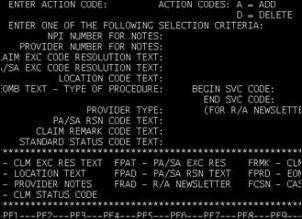
From Shane O’Keefe: “Re: Boingboing. Healthcare UI is on it it today.” It’s a Minnesota HHS app screen shot. I thought sure it was from my hospital since we’ve got an app that’s a dead ringer, PF keys and all. One of our clinical apps at a hospital I worked at jumped from merely unattractive and clunky screens to what nurses called “the DOS screen,” some kind of function the vendor must have slapped in there in the early 1990s without ever finishing it. Every time a group got trained, you could stand outside the door and hear the universal gasp when it came up, a moment every bit as horrifying as the chest buster scene in Alien.

spacetime

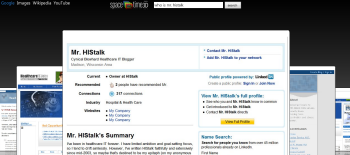
From The PACS Designer: “Re: search in 3D. If you want to save some clicks while searching and scrolling for information, try SpaceTime 3D. TPD entered HIStalk in the search box and selected Who is Mr. HIStalk and got some interesting links about our Mr. H. and his fame in the healthcare space!” Now that’s pretty darned cool. I was captivated at being able to flip through images of Web pages with the scroll wheel, although maybe the attraction was that I was reading about me.

From Barb Wyerr: “Re: CCR data exchange between practices in Wisconsin. I am a physician interested in learning who accomplished this task.” I didn’t get the name from the rumor reporter, so shoot it over if you know. Thanks.

From Raphel Cherry: “Re: Accretive Health. They are indeed a rising star in the area of revenue cycle management. They perform end-to-end accounts receivable process enhancement for hospitals, working closely as a partner with the internal staff rather than an outsourcing service. Their forte is analyzing PPO contracts between insurance companies and hospitals. The system they developed for this is very effective at finding areas of discrepancy between the contracts’ stated amount and actual reimbursement, giving hospitals an edge in appealing claims. It’s a good value proposition for the hospitals because they only charge a percentage of the incremental revenue recovered. So far they have invested very little in marketing because they have been able to build a strong backlog on word-of-mouth referrals.” I notice that its Web site is not only primitive, it’s running a DotNuke add-in that has a lapsed license (it comes up first thing when you Google the company). They must be real tightwads, a characteristic I admire in a business.

From Hilton Valentine:
“Re: Accretive Health. I believe Accretive Health is owned or at least partially owned by Ascension Health. Ascension essentially seeded it by outsourcing revenue cycle work and workers from Ascension Health Hospitals in Michigan and Indiana. They have consolidated those people, systems and processes from their not-for-profit hospitals and I believe their long-term goal was to also provide services outside of Ascension Health and take the company public.” I think you are right. Accretive is listed among the many, many portfolio holdings of Ascension Health Ventures. Ascension is obviously doing just fine and about to do a lot better after the IPO. In snooping through Ascension’s tax records, I believe we have a new winner in the highest paid non-profit hospital CIO category – $803K. The legal counsel,  CMO, and several VPs make over $1 million, the CFO nearly $2 million, and the CEO over $2.5 million. It spent $700K on lobbying and has its own advocacy department. All are puzzled about how to bring exorbitant healthcare costs down.

From Billy Bear: “Re: ACS. They have mandated a one week ‘furlough’ for all employees. In other words, an enforced week’s vacation without pay. In a generous gesture, the Tucson based Midas+ division management negotiated to take the burden on themselves with a two week ‘furlough’ each. Meanwhile ACS posted a profit of $97.5 million on revenue of $1.696 billion in its fiscal fourth quarter.That’s down from a profit of $98.6 million in same period in 2008, but despite the economic downturn, ACS had its second-best quarter ever in terms of new business signings. It added accounts valued at $271 million.” Unverified.

Salar, the Baltimore clinical document solutions vendor I mentioned the other day, is named one of Baltimore’s Best Places to Work. The Fells Point company is hiring, their spokesperson let me know, and among its clients are Johns Hopkins, UMass, UPMC, and George Washington. 

My doctor’s EMR pleased me again. I got an e-mail yesterday that my lab results were in. Clicked the link, signed into the portal, and not only were all my results there, my doc had put a comment at the top of each set, adding stuff like “looks good”, “everything’s normal”, etc. I thought it was very cool, like getting another session with my doc without having to drive and fork over a co-pay.

Cerner shares are on a tear once again, screaming up to $75.17 at Tuesday’s close. That values the whole shebang at over $6 billion and Neal Patterson’s shares at an amazing $420 million. One analyst speculates that Dell wants to get into the software business and might be interested in Cerner, CPSI, or Eclipsys.

Things you can do on HIStalk: (a) sign up for e-mail updates using the form at the upper right of the page, thus ensuring that you, like 4,680 of your peers who have already signed up, can pedantically recite fresh fact after fact to your impressed colleagues who didn’t have your enviable foresight in signing up for updates of their own; (b) search through all the stuff written here since June 2003 using the Google-powered search box, also to your right; (c) check out the sponsor ads to your left (Founding, Platinum, Gold) and give the folks who keep me spouting nonsense the chance to see some return on their investment; and (d) see the cool stuff to your right: text ads, the Rumor Report button that lets you tell me your darkest secrets, a jobs list, the latest posts from the discussion board, and the most recent comments left on HIStalk posting (you are missing out if you don’t read those). And I almost forgot: the HIStalk Calendar is bulging with fun events.  Lastly, pat yourself on the back in my stead since I appreciate your reading here.

markamey

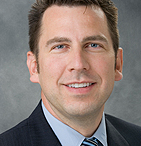
Mark Amey, formerly of Ascension Health, is named CIO over several healthcare units of University of Southern California. Don’t blame me for scalping Mark in the picture – it was some kind of arty USC photographer.

HIMSS announces the 2009 Davies winners: MultiCare Health System, Tacoma, WA (organizational); Virginia Women’s Center, Richmond, VA (ambulatory); and Urban Health Plan, New York, NY and Hearts of Texas, Waco, TX (community health). 

Listening: reader-recommended Anberlin, hard-rocking emo from Winter Haven, FL. On tour now crisscrossing all over the US. I like it when readers say, “I think you’d like this” and I do.

This is one of the most bizarre HIT-related press releases I’ve seen. The MyMedicalRecords PHR people proudly announce that they’ve paid $250,000 for an 80-million person marketing database (provided by a company whose Web site doesn’t even work). Tons of irrelevant and frankly embarrassing details are included, like how the company will pay for it, how annoyed spam recipients can unsubscribe, that they bought cell phone numbers along with the usual e-mail and street addresses, and how competitors can’t use the same database. So, let’s review: would you trust your sensitive healthcare information to a company that brags on its newfound spamming capabilities? What the hell were their PR people thinking? 

Australia’s health department cancels a contract for a desktop software package that would have provided stopgap interoperability functionality. The biggest practice management vendor decided not to participate, saying the timeline was too short and the budget too small. “Clearly, this is just another little pilot where the initial work consumes the whole budget, and there is no provision for ongoing support.”

Nobody had much to say about Dell’s acquiring Perot. Here’s your chance. I’ll probably run a Readers Write on Wednesday, so feel free send me your opinion piece. Who wins and loses? Does Dell do another healthcare acquisition? And since grabbing up consulting companies seems to be cyclically imitative, who else might buy or sell?

Speaking of Perot, the family will supposedly make $400 million on the sale, boosting the $2 billion fortune of Ross Junior and the $5 billion pile of Ross Senior. There’s that theory that even if you redistributed all the country’s wealth evenly, the same tiny percentage of people who have it now would get it all back in a few decades. I tend to believe that.

Blessing Hospital (IL) integrates its AtStaff ClairVia patient acuity system with its EMR to calculate acuity and workload on the fly from patient assessments.

samplemd

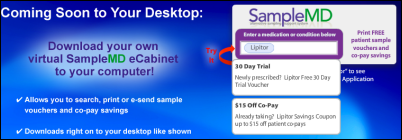
A WebMD co-founder is involved with a startup called SampleMD that will replace traditional doctor drug samples with downloadable vouchers and co-pay coupons that are sent directly from doctors to pharmacies. Sounds good other than that pharma will get even more prescribing and patient data that’s none of their business.

Thanks to Kermit, who e-mailed me bright early Monday morning about the Dell-Perot deal, allowing me to scoop all the pros, which being shallow and insecure, makes me happy.

A BIDMC doctor wants patients to read the notes that doctors record in the chart, electronically or otherwise, and urges removing obstacles such as high copying costs or requiring the chart to be read only in the doctor’s presence. Mentioned is a $1.5 million national study that will see how doctors and patients like it when patients can read the chart notes.

ed

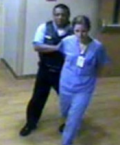
Weird News Andy mines this gem: an ED nurse is handcuffed by a Chicago police officer and locked in his squad car after she tells him he can’t get blood samples from a DUI suspect until they’re admitted. She’s suing, saying, “We work hard. We get abused. We get yelled at. We get, you know, beat up. And to have a police officer treat an emergency room nurse that way goes against so many things.”

E-mail me.

HERtalk by Inga

Picis is declared the winner of a live “Chart-Off” during the California Emergency Physician Annual Partnership Meeting. The challenge pitted EDIS vendors against each other in documenting an electronic patient record, with Picis ED PulseCheck winning over competitors that included Cerner, Wellsoft, and T-System.

Schuylkill Health (PA) deploys SafeTrace Tx transfusion management software, which is offered through Global Med Technologies and its Wyndgate Technologies division.

Rex Healthcare (NC) signs a multi-year agreement with MEDSEEK to design and implement a clinical portal.

Apparently the locals are pleased by the economic boon provided by Epic’s annual user conference, which started Tuesday. The 3,600 attendees are expected to provide a $2.5 million boost to the economy. As I wore my boots this weekend, I thought about all the fun events planned for the the Wild West-themed meeting: horse and carriage rides, a tug-of-war tournament, mechanical bull rides, and a cow-chip tossing. Yee-haw!

comm hospital south

Community Hospital South (IN) goes live on GE Centricity Enterprise 6.1 and Monitored Care. The combined solutions will help the hospital capture clinical and medical device data into their existing Centricity EMR system.

Two new healthcare systems successfully launch Siemens Soarian Clinicals: Ingalls Health System (IL) and St. Peter’s Hospital (NY), both of which went live in the spring.

Quality Systems, the parent company of NextGen, appoints Philip N. Kaplan COO of NextGen and the QSI dental unit. Kaplan resigned as a board member in order to take over the COO role. Craig A. Barbarosh, an attorney who specializes in organizational restructuring, becomes NextGen’s newest board member.

I got my first news bit from Weird News Andy, who said, “If ANYBODY would be interested in this, it would be you.” Apparently there’s a movement afoot (no pun intended) in the UK to ban stiletto heels in the workplace. Which is obviously just plan wrong and a violation of women’s civil rights, as suggested by the proposal’s critics. The gals on my side argue that stiletto heels give women a power advantage in male-dominated workplaces because the shoes make them appear taller and enhance their sex appeal. Someone needs to throw shoes at those crazies supporting function over fashion.

KLAS adds four members to its advisory board: Russell Branzell, CIO, Poudre Valley Health System; Chuck Christian, CIO, Good Samaritan; Jessica Grosset, CIO, Mayo Clinic; and Rasu Shrestha, chief of enterprise imaging software, UPMC.

Speaking of KLAS, the prolific research firm’s latest report looks at customer satisfaction for hospital staffing software, finding a significant gap between the vendor solutions favored by nurses and other stakeholders. Nurses prefer RES-Q Labor Resource Management and McKesson ANSOS One-Staff. Kronos Workforce Scheduler is their least favorite option. On the other hand, the financial and HR people types strongly favor Kronos over other options for its strong reporting capabilities and anticipated cost savings. That probably makes sense both ways.

MEDHOST is selected to provide the ED solution for Cox Healthcare (MO).

iasis

IASIS Healthcare goes live with the Medicity Novo Grid in two of its six regions. The implementation facilitates health information exchange between IASIS and providers, regardless of whether the providers use electronic or paper records.

If you are wondering how US healthcare compares to the rest of the word, this article includes a number of “real-life” anecdotes from American travelers. For the most part, patients reported care was good and much cheaper than comparable services in the US.

ACS State Healthcare wins a $4.5 million, two-year deal to develop the Kentucky HIE.

Blessing Hospital (IL) goes live on AtStaff’s ClairVia Patient Acuity system, which is integrated with the hospital’s Eclipsys EMR.

Officials at Phoenix Children’s Hospital calculate a $140,000 savings in license fees after implementing Orion Health’s Rhapsody Integration Engine. The hospital made monitor data available to clinicians within the hospitals. They’re adding a second Rhapsody interface, this one to establish bi-directional information exchange between the pharmacy application and EMR for another $180,000 in savings.

The local paper provides detail on the McKesson EMR go-live at Three Rivers Health (MI).

CareTech Solutions partners with Peak Positions to provide a turnkey organic SEO program to improve the search engine ranking of hospital Web sites.

pocketpack

This new iPhone case looks pretty handy, complete with its flash option and credit card holder. All it needs is a removable side pack for lipstick.

E-mail Inga.

HIStalk Interviews Tom Liddell

September 21, 2009 Interviews Comments Off on HIStalk Interviews Tom Liddell

Tom Liddell is executive director of the Michiana Health Information Network of South Bend, IN.

Every RHIO and HIE sounds successful, but clearly some aren’t. What yardstick should they be measured against?

I think the yardsticks they should be measured against are sustainability from the standpoint of broad-based community support. That would be support not only from the institutional community — hospitals, laboratories, radiology centers — but from the physician and clinical community as well. That’s the foundation of an exchange in a medical service or medical trading areas.

The second one is, they really do have to have an economic or financial model that is accountable not only to the servicing organization but to the physician provider. In our particular market, we ask financial participation from most, if not all of the parties that are involved. That’s been an interesting secret, because then the value is not only perceived, but it is realized. You actually then have to deliver.

The third thing, I think, is the actual delivery of results. In our particular case, we are extremely focused on enabling the physician provider to have what we call 100% of the data in relevant care of an individual. So physician-led care that is driven by as much appropriate information that should be available.

If you have all those things, I think you then really have that sustainability, and it can provide a good long-term success.

What are some of the most innovative aspects of your service?

In terms of innovation, our approach is to try to be innovative in the service delivery components. By that, we do probably two things that are unique. We are standards based, so whether it’s HL7 or CCHIT qualifications or the emerging meaningful use qualifications, we try to stay pretty close to those bodies of work.

In doing that, there are times when we have to shape an interface delivery service where there’s an electronic health record that’s not quite there. But we try to have its origination as close to the standards as possible. I don’t know if it’s innovative, but we think it is, and we still get the job done.

I think the second innovation that we came to a few years ago was we said we want to have some available service for every provider, be it fax replacement, pushing clinical results, or, what we call clinical messaging: a community health record that is extendable, meaning over 9, 10 years worth of data, or interface integration.

Innovation is an innovation in service. We have something for everybody. If you’re a nursing home, we’re going to make you more efficient. If you’re a specialty provider, anything that you’re copied on that a primary care doc orders is coming your way, whether it be through a delivered portal or through your integration or interface integration.

The other thing that we’ve done, which I don’t know if it’s innovative, but it’s really working, is that we are one pipe into that physician provider. We are really taking care of so much of the burden that a physician practice would have if they had to go out and say, “Hey, I need to connect to laboratory, and then I need to go to this hospital, and then I need to go to that hospital.” We literally take it all the way down through the vendor and watch results go into that electronic health record. That’s been a huge spark and fuel that’s been there.

The last thing that we do is what I would call it a best-of-breed provider. I believe that the market is still pretty early with an incredible amount of business opportunity, meaning I think we’re going to see a ton of innovation over the next five to ten years. We are not, “Hey, it’s only going to be Cerner’s architecture.” While we think it’s great, we see that Axolotl had a fit for us, and we see that Medicity might have a play with their box. We also see that there are places where something like the Mirth engine might fit.

So we’re a best-of-breed, meaning we want to keep ourselves open to not being only locked into a single vendor, a single strategy.

How many employees do you have and what do they do?

We have 14 full-time, two part-time, and two interns. They’re largely boxed in three areas. The first area is our development area. That is the area that we have services around the creation development, the deployment of, that which is exchanged. That could be anything from standards creation for an interface bringing a new hospital onboard, bringing a large multi-site physician provider practice and literally doing that development. That’s coding interfaces that’s creating the roadmap for those things. In some cases it’s sort of boring, benign, making sure that we have a common set of standards that are deployed. That’s the development group.

We then have the service and operations team. That’s where hardware, technical, and application support reside. That’s everything from working with our servers and data farms to data management to our Oracle database as well as we have other database management tools to the team that runs what we call our frontline services. We try to, if anything, overemphasize that first-line service, and that we answer calls all the time. There’s no other drop boxes for that. We believe that that’s important, because if anything, it’s right at that point that that coordination and service needs to be there. That’s that group.

The third group that we have houses what we call our physician services. That’s comprised of anything that relates to the physician or clinical service that goes out to the community. They do all statements of work, all integrational projects around, whether it be pushing results to our clinical messaging system and rolling it out for a hospital. We do work with Dragon, those kinds of things and add-on products. It’s really enablement in that physician clinic space for that.

Inside of that, sorted of grafted on to that group, we also have what we call the institutional team. That’s just one person working on the institutional side to make sure that their efforts are coordinated. That’s your hospitals, labs, etc.

The last little group we have is really myself and one other guy that do what we call our business development, which is when we go and talk to a new customer, RFIs and RFPs. What we’ve done is we actually outsource with one of our partners, one of our owners, some technical services. You can almost say we’ve got two additional FTEs that do technical capacity work for us.

Our interns — we’ve done a couple of things. We have a medical student — in fact his whole summer was dedicated to, and is still keeping track, and he’ll be back in the holiday season — we’ve been studying what we call medication management. Everything from how many people have adopted by county, by specialty, to what’s happening on medication reconciliation and what a patient needs in the hospital. It takes about 24 months to set up a service properly.

The second intern we have is a programming intern. We’ve really tried to call out both clinical users as well as people that are more in the technical line of services out there.

You are working with the GAO on PHI disclosure. What are your thoughts around that?

I guess I could say we completed the first round of work. We were the first place they called, so I guess that was exciting. They were very nice and accommodating. A team from Atlanta came and spent the better part of a day and into the next day. We went through everything.

It was actually a great example where we were able to bring security specialists from the institutions and we lined up basically according to the services. If you were doing clinical messaging, we hooked them up with a clinic, so that they could understand how that would go. If you were doing interface integration, we brought them over, and a CEO of a 25-provider oncology group showed them how they their release and how their information kind of flows. And then we did a roundtable with them in the afternoon.

I think it was a very eye-opening and kind of a learning process for those guys. I think what they also understood in the end was that we are mimicking the delivery and replacing the delivery mechanisms that are already in place today. If a provider is copied on a laboratory result, we’re basically just improving that method of delivery and really making it more secure in that. So I think it was beneficial there. Then we had a follow-up and help them see what other exchanges are operational across the country that they could coordinate with.

It’s very important, because as ONC not only lets funding out at the state level, that coordination be able to monitor if those dollars are going out appropriately. Are they being spent appropriately? Is there security and protection for that individual consumer? I think these are important integrations to that.

Many people wouldn’t think of Cerner in the practice EMR area. What’s been your experience with that product?

In my experience from my WebMD days and when I was a senior VP of product management and had a lot of work in developing an EHR, you start to see the tremendous capabilities that the tools that they’ve built have. They are committed clearly to making sure that the enterprise, whether it’s an institution, clinic, laboratory, etc., are able to be co-joined, commingled, and integrated into that process.

They’re working their tails off to change perception and image. I can only tell you that it’s pretty operational for me, with my sleeves rolled up, that the product itself has an incredible set of capabilities. If anything, you want to try to gear those back. That’s probably easier to do in the long run than to try to catch up and add an incredible set of features.

One of the nice things that I have the benefit of is for those that use the component, which is more of an EHR in our market, it’s not a question of “could we do something?” It’s how they want to do it. For me, that’s actually pleasing, because I can have a discussion that says, “Do you want to proxy to your inbox for something that was just ordered or copied to inpatient/outpatient?”

Unfortunately we want to make healthcare simple, but it’s a pretty complex enterprise, especially around health information.

Having said that, like anything, there are lumps along the way. We busted our tails to make sure that e-prescribing and all those things are up. There’s a lot of parts that are moving, whether it is Surescripts RxHub or whether it’s having a clinical summary available in an HTML or XML format.

In fact, we had a strategy call yesterday with two other executives. We do it regularly, and it went almost two hours. They can tell you they’re listening. I can tell you we’ve had a pretty significant summer in terms of adding providers to their core business as well.

How sustainable is your business model?

First of all, there’s been these naysayers out there saying, “Should we work to build these kinds of businesses and services?” I guess I would say you have to have value, and if you deliver value, I think people come and are willing to pay for those services.

Certainly health exchange has an element of a political aspect to it, but I don’t mean on the national level. I mean certainly against the competitive entities and those kinds of things. But once people get beyond the notion “don’t compete on health information; compete on everything else” you can start to make the exchange sustainable — you can make that case for doing that.

But I think in all things there has to be that perceived value. One thing I do know is when you settle all the noise around it, there has to be an entity that is a facilitator of those common services, whether it’s building a referral management network, whether it’s moving or integrating data. At least it’s demonstrable in places where you don’t have that. It doesn’t get off the ground, or it doesn’t sustain, because there’s nothing to sustain itself with.

I’m certainly not naïve to say, “Are there risks in any business?” Certainly there are, but the big key, I would say, is that you’ve got to be willing to adapt. When I came in 36 months ago, the only real interfaces that we were going on were basically from suppliers and I just said, “Listen, in twelve months, we’re going to be able to deliver any piece of data we have to an EHR and have it happen in there.” Well over 65% of our total market has data integrated into their electronic health record, and we feel that by the end of next year, 15 months from now, we can be over 80%.

What effects are you expecting from HITECH?

It’s been almost a tsunami so far, in that it certainly has caused all of healthcare IT to have to think differently. I don’t mean just on the funding level potentials, but to say, “How are we going to work together in and out of markets? How are we going to work together at the state levels? What can the role of a health exchange be whether it’s a working component of the extension centers or whether it’s how we pass data from exchange to exchange?” We’re in the throes right now of connecting two different exchanges just in our particular state where we can move relevant data.

I think in the end, what it’s doing for us, or will do for us is, if anything, accelerate the level of activity that’s there. By that, I mean the services that we can deliver. It’s certainly bringing awareness to those things.

I think in the long run, what I hope doesn’t occur are some of the unnatural effects. As an example, in e-prescribing, it’s great to adopt it, but if it’s adopted in a silo, I don’t know that there’s a clinical benefit, that the clinical benefits are harder to get to. There is a clinical benefit long term, but I don’t know that the patient realizes that other than maybe a medication error. You have to kind of look at it holistically and say, “But if I can do that in a more organized, methodical way inside the complement of my full EHR, I’ll have a better perspective on the patient.” I use that as an example.

Overall, it’s great. It’s exciting. It’s causing the coffee to be made late at night and early mornings, but that’s why you play the game.

Why is Indiana so strong, do you think, in interoperability and informatics?

I think there are a few things. First of all, there’s a history of innovation across the state in terms of health IT. In the market that we serve, Northern Indiana and up in through Michigan, we had early adoptions early on — early adoption both by hospitals and by physician practices of automation.

In this particular market, there have been some pretty innovative companies that have gone on and created applications, and they’ve moved down the road. When you look to the central and southern parts of the state, both with our public universities as well as Notre Dame to the north, there’s a commitment to life sciences; there’s a commitment to health information technology. We have institutes across the state that have created products.

I think one of the things that happened is that all of a sudden, we pop up, and then a group in Indianapolis pops up. You look in Cincinnati and you can almost see a corridor developing from, I would say, the middle of Michigan all the way through Tennessee that is sort of powerfully evolving health integration, health exchange.

I think those are some of the core properties as to why there’s success.

The other thing we have going in Indiana is that we are committed as a group. We got together over a year ago and just said, “How do we start to work even more closely together? What makes sense is while we’re competing, we’re still committed to doing these kinds of things that enable it.”

We found a great working relationship in the people that are across the state that are very committed to an approach that not only takes us through Indiana, but through all the neighboring states here in the Midwest.

Anything else that you want to add?

Look at the seeds of where we are. We’re ten years old. We have services in a variety of areas that help our sustainability. We’ve had significant financial commitments in growing this exchange. All those things are all reflective of the commitment that our particular market has to the products and services that we’re about.

It’s interesting — this particular exchange started from the seeds of a workgroup that I participated in in 1994. There’s a long history of people concerned with where healthcare is going and moving, and asking, “How do we become parts of the process?” There’s been a long-term commitment to health information technology. There’s been a commitment for me in a market that I’ve been basically been around my whole life. So, there’s kind of a personal passion as well.

I guess the last thing that I would say is that I can’t say enough about the commitment of our people. They not only feel that they’re into something that’s very important, but there’s a personal mission that they have. Many of these people could be in other places, frankly even making more money, but their level of commitment is incredible. And their creativity is pretty incredible as well. So, I would compliment that in our team.

Comments Off on HIStalk Interviews Tom Liddell

Dell To Acquire Perot Systems
September 21, 2009 News 7 Comments

perot

Dell announced this morning that it will acquire Perot Systems Corporation for $3.9 billion. The all-cash transaction is expected to close in the November to January time frame.

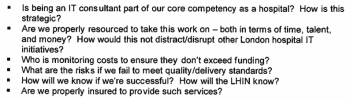
The $30 per share offer for Perot represents a 68% price premium to Friday’s close.

Perot will become a services unit within Dell as it attempts to diversify beyond hardware sales. Perot President and CEO Peter Altabef will say on, Dell says.

Monday Morning Update 9/21/09

September 19, 2009 News 8 Comments

From Carpluv: “Re: CCR. It has been reported that a group in Wisconsin has actually tested and exchanged CCR record from a different ambulatory EHR system. This is big news since hospitals tell doctors they have no interoperability unless they work through them. CCR and CCD are part of CCHIT certification and are certainly a component of future HIEs, but nobody really did it until this week. This reduces the drama and cost of interfaces on both sides and plays well in the small physician market.”

From Clint Gristwood: “Re: Epic. I consulted a friend and Epic employee when considering a job there. According to him, turnover is extremely high. In his trainee class of 20, only five or six were left standing after a few months. Responsibility and workload constantly accrue, and those who are struggling will only get buried. Most of the people who fail try moving into consulting or return to school for graduate studies. As far as the employment contracts, Epic cannot legally enforce them, but will try other tactics. One trick they pull is threatening to not work clients who poach Epic’s human capital. This puts a steep price on employers picking up talent out of contract.”

From Eli Cummings: “Re: Emdeon. I believe the stock analyst’s sour note on Emdeon should be taken with a grain of salt. Emdeon has a solid core transactions processing business that is unlikely to see an erosion of its recurring revenue anytime soon. This analyst previously worked at Leerink Swann, where he gained notoriety for making outlandishly bearish calls on healthcare IT companies. eResearch’s stock was devastated by a report of his, even though the thesis has yet to play out in fundamentals. Perhaps the fact that this analyst was one of only two analysts covering that company had to do with its precipitous decline. He launched a similar assault on Computer Programs & Systems (CPSI) with an Underperform rating, albeit less successful. After leaving Leerink, Bret Jones resurfaced at Brean Murray, completely turning around his opinion by launching with an Outperform on CPSI. Some stock analysts will go out of their way to craft outrageous statements if it gets them the limelight.”

From Rex Wife: “Re: smart phone software. Do you have a good list of healthcare software for the iPhone? It’s too hard to find the good stuff in the apps store.” No, but I could start one. Good idea or not?

I asked in my previous poll how much influence Dell will have now that it’s jumping into the practice EMR fray. Not much, according to readers: 62% said none and 31% said a little. New poll to your right: we keep talking about vendors as employers, so if you had an equivalent job offer from the ones listed, which would you choose?

Those computer programs that crunch through long lists of kidney donors and would-be recipients to find compatible pairs are very cool, making it possible for family members to get a transplant for a loved one even when their blood types are incompatible. University of Michigan announces that it has developed its own organ matching software. Profiled are two husbands whose tissue incompatibilities precluded donating a kidney to their respective wives, but the program matched them so they could donate to each other’s wives. Confusing, which is why it takes major software to sort it out when dealing with thousands of people and infinite possibilities.

Speaking of transplants, here’s a sad tale of family bickering: a man accepts $37,500 from his leukemic brother to donate bone marrow to him, but then backs out and says he’s too sick, claiming the money was a loan. In a statement to the newspaper, he said, “I did not make David ill, and I am not to blame for his illness” and suggested his brother find a donor registry or hit up their other brother. His brother responds, “If he knew he had this Wizard of Oz disease, this magical disease that he won’t disclose to anybody, then why did he take the money? And to say I loaned him the money, then, gee, it’s a coincidence that he needed money and I needed a transplant".”

 apelon

Welcome aboard to new HIStalk Platinum Sponsor Apelon of Ridgefield, CT. The international clinical informatics company focuses on data standardization and interoperability. Its computer scientists, informaticians, and clinicians are involved with projects involving Mayo, CDC, NLM, Stanford, and many others. The company is heavily involved with deploying and maintaining terminology and vocabulary such as SNOMED CT, UMLS, RxNorm, ICD-9 and ICD-10, also working with US Cancer Institute, VA, FDA, NIST, ONC, the Social Security Administration, and Canada Health Infoway. All the work involving EMR deployment, interoperability, and data mining will require stringent deployment of expertly designed terminologies, so I’m sure their phone is ringing a lot these days. All that plus it’s their tenth birthday this month. Thanks to Apelon for supporting HIStalk and the people who read it.

lhsc

The CIO of two hospitals in London is named in a whistleblower’s complaint for hiring a former colleague to do $3 million worth of no-bid consulting over six years. An internal auditor concluded, “The arrangement — and in particular, the dollars involved — begs the question as to whether LHSC should just be hiring TV (Tom Vlasic) as an employee, and stop paying the exorbitant per diem rates of a consultant. An in-house solution would most likely be more economical.” Nobody’s claiming the work was subpar, so at least the money wasn’t wasted. Also in question is whether the hospital should be working on regional integration projects (observations from the audit are above).

An LA Times article covering California’s 12.2% unemployment rate mentions a hospital IT guy who lost his job eight months ago. Shown are union members picketing Toyota for daring shut down their plant, which is full of all kinds of irony. Maybe we’ll all learn lessons about not getting too complacent about being someone else’s employee since it’s a voluntary arrangement both ways. Personally, I wish more people would hang out their own shingles instead of just looking for someone else to pay them since the idea of working for yourself is just as foreign (no pun intended) as paying your own medical bills. Small business is usually what keeps the economy moving, not multi-national corporations.

A VA inspector’s report finds that the Hampton VA Medical Center misdiagnosed a man’s stroke that left him permanently disabled. The former paramedic told the ED clerk that he was having a stroke and presented with classic symptoms, but was sent home. Also noted was that another patient’s lab result had been posted to his EMR, leading to the incorrect assessment that his labs were OK. The doctor, whose contract was not renewed, had copied and pasted results from another patient.

I interviewed Justin Barnes and Mark Segal, the chairman and vice chairman of the HIMSS Electronic Health Record Association, on HIStalk Practice.

tolan

I don’t think I’ve heard of Accretive Health, but a reader says their primitive and information-devoid Web site hides a powerhouse revenue cycle company. I found this Crain’s Chicago Business article (warning: PDF) on CEO Mary Tolan, who sounds like a fireball (the “happy, confident capitalist” fires the bottom 10% of company employees, or as she says, “invites them to their next career chapter that is not us”). It’s a $250 million company with former Secretary of State George Shultz on the board. Gearing up for an IPO, so I’ve heard.

Weird News Andy loves this, proclaiming “I’ve heard of inhaling your food, but your utensils, too?” A man puzzled by months of coughing spells and lack of energy sees several doctors who eventually figure out there’s something stuck in his lung. One offers to remove the lung, but he fortunately he seeks more opinions. Turns out he had a one-inch chunk of a Wendy’s spoon stuck there, apparently inhaled as he gulped down a drink. The doctor summarizes: “We’re looking at it and realizing that there are letters on it … We started reading out loud, ‘A-M-B-U-R-G-E-R,’ and realized it spelled, ‘hamburgers.’ Everybody was shocked. We had no clue why something that said, ‘hamburgers’ would be in someone’s lung." The patient is doing great, saying he can get around and breathe again.

billboard

Andy also noticed that two Central Florida hospitals have put up electronic billboards showing their ED wait times, updated every half hour.

Former Healthlink/IBM VP Stacey Empson joins Courtyard Group (or Couryard Group, if you believe the misspelled headline) as partner.

Two Johns Hopkins cardiologists write a Washington Post editorial extolling VistA as a cheaper, more effective practice solution that is “much more user-friendly than its counterparts.”

Boston Medical Center, a safety net hospital on such shaky financial ground that it could be closed, pays its retiring CEO $3.5 million on top of her $1.3 million salary.

Speaking of Hopkins, JHMI, MedStar, UMMS, and Erickson Retirement Communities are mentioned as the organizations behind Chesapeake Regional Information System for our Patients (CRISP), which is hopefully better at creating an HIE than it is at brute-forcing a cute and irrelevant acronym out of the uncooperative name it also chose. It’s getting $10 million in Maryland money to get going. Also mentioned is Baltimore vendor Salar Inc., which sells documentation and charge capture applications.

Former Cardinal Health marketing director Laura Bellon is named VP of healthcare solutions and strategy of Perceptive Software, makers of the ImageNow document management system.

Anesthesia systems vendor DocuSys raises $9 million in financing. It also says business has slowed and its plans to add 300 Atlanta-based employees to its current 55 have been postponed.

Allscripts shares hit a 52-week high on rumors it has signed a $20 million contract with North Shore Long Island Jewish Hospital. Market cap is at $2.69 billion, more than double that of Eclipsys and nearly half that of Cerner. Share price has nearly quadrupled in a near, so like all other investments you didn’t make, it was a natural.

maxhc

Perot Systems gets its first international outsourcing deal, winning a 10-year contract with India’s Max Healthcare hospital chain worth $18 million. Perot will also deploy VistA there.

Someone goofs at Great Ormond Street Hospital in London, e-mailing detailed patient care complaints from the family of a teenager who died there to the local newspaper by mistake. It’s the usual story – the employee was trying to send an e-mail to someone by name, but instead got someone else with a similar name, in this case a newspaper reporter. The paper, showing restraint that would be surprising here, alerted the hospital and declined to disclose details about the information.

E-mail me.

News 9/18/09

September 17, 2009 News 41 Comments

From Doofus: “Re: Allscripts. Word on the street that Allscripts is sending a letter to Misys EMR clients stating that they will not make MISYS EMR compliant with ARRA guidelines and that these clients will need to move to the Allscripts family of products. Fees are in the area of $2,500 per provider and a fee per practice. Training and data conversion are not included but are discounted.” A contact there says word on the street is wrong. Since meaningful use hasn’t been defined, Allscripts hasn’t made any statement about the likelihood of MEMR being compliant or what they’ll do (or offer) if it isn’t. Maybe there was some confusion over an ongoing offer to those MEMR customers who would like to upgrade to one of the company’s better products at their convenience.

From Pat Patterson: “Re: HIStalk Practice. The last e-mail blast link takes you to the eClinicalWorks home page. PS – Tell Inga she is my ‘secret girlfriend’. I just love women who can talk tech and shoes all in one column!” Inga was scurrying to the airport and pasted the wrong link into the e-mail, leading Pat to joke that we must have sold the mailing list to eCW. She can definitely talk the girl stuff, to which I agree there’s nothing more attractive than a really smart woman who’s still fun. My secret girlfriend is Tina Fey since I’ve become a big 30 Rock fan. Love the glasses.

From The PACS Designer: “Re: InformationWeek Top 250. The latest rankings from InformationWeek’s Top 250 Innovators has been released with the following healthcare providers being amongst the top 25:  #2 Cincinnati Children’s Hospital M. C., Marianne F. James, Sr. VP & CIO; #9 University of Pittsburgh M.C. (UPMC), Daniel S. Drawbaugh, Sr. VP & CIO; #18 Beth Israel Deaconess M.C., John D. Halamka,CIO; #21 Sentara Healthcare, Bertram S. Reese, Sr. VP & CIO; #22 Christus Health, George Conklin, Sr. VP & CIO;  #23 University of Arkansas for Medical Sciences, Kari Cassel, CIO. TPD salutes these institutions for being tops in IT innovation!”

From Dr. Curious: “Re: Eclipsys. After reading the post about Eclipsys letting their consultants go and giving their implementation work to consulting partner, a huge red flag went off. In this year, they have replaced their CEO, CFO, and dismantled their professional services division. It makes me wonder if there is more to this than meets the eye. For example, could it be that they are preparing for a buyout, or are they struggling through financial difficulties? Everything I have seen and heard about Eclipsys points to a near-term end for them. What are your thoughts?” I suppose it was time to replace the CEO and CFO. Outsourcing the professional services organization is puzzling since theirs was pretty good, but it never seemed to make the money they expected it to, possibly because they don’t sell Sunrise all that often and that probably caused bench time (how else can you lose money billing out $50 an hour employees as $250 an hour consultants?) You may not have noticed that share price has made a steep climb up in the last six months, going from $8 to $20, which is highly positive given the company’s erratic financials in years past. Despite some impressive successes in clinical systems, they’re always going to be banging heads (usually unsuccessfully) with the Epic juggernaut since they have the same sweet spot, but Epic’s got everything else and not just the core doctor-nurse-pharmacist stuff. Positives: the former Premise, EPSi, and MediNotes, all good (but not cheap) acquisitions. Andy Eckert knew zip about healthcare, so I’d consider that a minus, as was the long roster of lackluster and revolving door VPs that served time there. OK, so now that I’ve brain-dumped, here’s what I think: excellent products, hopefully improved management, but sorely in need of a strategy that keeps them out of Epic’s way while earning the confidence of stock analysts. They need a Neal Patterson.

The rumored Eclipsys contractors, by the way, are Vitalize, ACS, and MaxIT. All fine companies, but as one reader said, it all rides on how Eclipsys manages them.

From Anomymously Happy to be Done with Epic: “Re: Epic. I find it really hard to believe that an office is such a perk, given that the employees actually working hard for Epic don’t spend more than three days a month in the office! And as you nicely put it, people become ‘untouchable’ when they leave Epic. They don’t truly try to LEGALLY enforce the non-compete, because they can’t! I was a team lead at Epic and you are ‘encouraged’ to set mutual end dates with your team members rather than fire them. These people are too naive to know that if they do set a mutual end date that they won’t be eligible for unemployment, etc. Mr. HIStalk, please don’t ‘Like their model as a capitalist!’ I feel really bad for new young people who think that Epic is a place to start their career!” I’ll have to disagree a little. Lots of those folks aren’t all that employable, so it’s a darned good job in comparison to their likely alternatives (and pays a lot more than Meditech without the Boston expense besides). The former employees who complain about the company are self-selecting, i.e. they left, so naturally they aren’t going to brag. The ultimate measure is employee turnover, a stat I don’t have.

From Dan: “Re: your doctor’s EMR. You are an experienced observer and your comments are welcome, but we could all use the context of the make to put it all into some perspective.” I hinted around to my doc, but he never came out and said whose product it was and, surprisingly, I didn’t see its name on the screen. I was thinking GE, but that might have been another doc that I’m recalling. He mentioned McKesson, but he was tying into some hospital information, too, so I don’t know which system he was talking about. I don’t know that there was anything all that special about the EMR anyway, but I was impressed with how he integrated it into his practice.

From RIS Reporter: “Re: Kindred. The Radiology Information System unexpectedly went down at more than half of all Kindred LTAC hospitals in the US. Current radiographs were unavailable for interpretation or view for hours. That would not be so bad, except that Kindred harbors hundreds of train wreck patients.” Unverified.

spyagent

An Ohio hospital employee opens a personal e-mail from a former boyfriend using Yahoo Mail on a hospital PC, surely violating a number of IT security policies. The e-mail had been intentionally infected with a $115 commercially available program that sends all keystrokes and a regular series of screen images to a designated party (the former boyfriend in this case). He not only got 1,000 screen captures loaded with patient and employee information, he also was the recipient of up to five years in jail and a bill for the hospital’s trouble in the amount of $33,000. A quoted security expert was mildly sympathetic to the hospital, but questioned how they allowed it to happen.

Weird News Andy finds this odd but not humorous story: a patient dies six days after she is somehow set on fire during surgery in an Illinois hospital.

ahn_thumb[2]

Alliance Health Network, which runs disease-specific patient social networks used by vendors of related products and services to try to sell them stuff, raises $3.3 million in Series C funding, raising its total to $6.6 million.

University of Missouri big wheels meet behind closed doors with “several unidentified men”, leading to speculation by 100 IT employees that their jobs are about to be outsourced to Cerner. One was quoted as saying, “The workplace is miserable. We come in every day not knowing if we’re going to have a job in five months,” which means nothing much would change if CERN takes over. The suits got careless, apparently, with the CIO letting slip the never-heard term Tiger Partnership in referring to the Cerner relationship and another executive denying a newspaper’s open records requests with the excuse that pending contract discussions are exempt, then saying “we’re done here” when he realized that he had just let the cat out of the bag by acknowledging that the Cerner correspondence involved a contract.

Edgefield Hospital (SC) signs for Swearingen Software’s RISynergy RIS. I didn’t know Randall was still selling, to be honest. Great product, but the “what if he gets hit by a bus” question always came up when we considered it at places I’ve worked, even though we all liked it. I like their Web site, in which the first menu item to the left of the standard About Us is one called About You, which is fun.

uci

UC Irvine acknowledges that CMS nailed it with an “immediate jeopardy” warning earlier this summer, the result of a California Nurses Association complaint that faulty PCA pumps were overdosing patients. Ironically, the CMS found that the pumps were fine and it was nurse errors that caused the overdoses, one of which happened while the inspectors were on site. I’m guessing the rather radical and pro-union CNA quieted down the mad-dog rhetoric a bit on hearing the nurses were at fault like the hospital said all along.

Revenue cycle management vendor Passport Health Communication hires former Cerner VP Seth Rupp as CTO.

Medicity is offering a Webinar next Friday called On the Leading Edge of Meaningful Use: HIE in the State of Delaware.

Listening: new from Muse, dramatic and theatrical orchestral progressive. They even sound kickin’ live — a little Uriah Heep, a little Queen, a little U2 (by my untrained ear). I’m surprised that they’re #6 on Amazon and they have 63 million MySpace plays. Like it lots, although I wish they were more obscure so I could feel smug about finding them by accident.

Our sponsor friends at Culbert Healthcare Solutions redesigned their Web site with a lot of highlights listed for some of their practice areas (Allscripts, Epic, GE/IDX, revenue cycle, etc.) I have to admit that I didn’t know they did as much as they do – workflow, EHR, RCM, interim management, and systems integration. Business must be good because they’re looking for consultants, I noticed.

National coordinator David Blumenthal tells an AHRQ audience that nobody’s done enough research to really know how to implement EMRs, saying “one thing we haven’t done is apply the scientific method in the practice of healthcare and medicine.” So in other words, if EMRs were drugs, FDA wouldn’t allow them to be sold, especially $19 billion worth of taxpayer expense. I’m feeling really good about HITECH right about now. I’m being facetious, but the problem with studying technology implementation is that, unlike drugs and devices, the technology is just a reliable extender of unreliable human variation. Hospitals are run like mom-and-pop shops when it comes to repeatable processes, with a massive variation between what administration decrees and what the front-liners actually do in the uncarpeted areas of the hospital. It would be unenlightening, as well as unfair, to hold the technology accountable for any change in outcomes (good or bad). This makes probably the thousandth time I’ve said this, but here I go again: if you are really good (personally or organizationally), healthcare IT has the potential make you a little bit better. If you aren’t very good, your level of suckitude will be unchanged or very likely will increase when you throw technology into the mix.

Rwanda will implement the Jeeva system in all hospitals next year. A little Googling turned up its vendor, India-based Karishma, which focuses mostly on East Africa, Southeast Asia, and the Middle East, but which lists the USA as its #4 market, with partners IBM, Intel, and Oracle and a US office in Virginia. They offer every kind of system that a hospital would need from what I can tell. The clinical decision support system sounds really cool. This might be a company to watch.

Henry Ford Health System chooses Apollo PACS.

A stock analyst says newly public Emdeon is a “melting platform” whose clearinghouse business is threatened by new competitors (athenahealth) and HIEs, speculating that providers will bypass clearinghouses and simply submit claims directly to payors. You don’t often see a new issue getting a “sell” rating.

I’m behind again, so be patient if you’ve e-mailed. We’ve got some good stuff coming, but it takes more time than you might think. I love every minute, but there just aren’t enough of them available.

bangkok_thumb[2]

Seventeen Bangkok hospitals will use a single EMR, with one benefit being the ability to attract medical tourists. IBM is involved.

You have to like the name of this long-term care physician system: PAR 3 EMR.

Sharp HealthCare is the subject of a press release by ColdFusion Web framework / content management vendor PaperThin, which says the health system redeveloped all its Intranet and Internet pages using its CommonSpot CMS.

North Carolina wants $40 million of federal money to build an HIE, $20-30 million to hire 40 employees for nine regional extension centers, and $28 million for a broadband network for medical images.

National Library of Medicine launches the Newborn Screening Coding and Terminology Guide, intended to help states move forward with common standards for including newborn screening information in EMRs.

Children’s National Medical Center (DC) gets a $150 million donation from the government of Abu Dhabi to create the Sheikh Zayed Institute for Pediatric Surgical Innovation.

E-mail me.


HERtalk by Inga

epic wild west


From: Miss Manager “Re: Epic prepares for a Wild, Wild UGM. Please share fashion tips for western wear, thank you!” Miss Manager sent over this link to the Verona paper detailing Epic’s user group meeting next week, which features a Wild, Wild West theme. First, I am so glad Miss Manager inquired about fashion, since I know far more about that than I do the Epic software. Obviously, boots are a must. I have some adorable Steve Maddens with spurs, so I am bummed I wasn’t invited to attend. Other than that, you can never go wrong with lots of rhinestones and studs. For those of you more focused on HIT than fashion, here are some interesting details to note. Epic is foregoing a traditional keynote speaker, choosing to “not go overboard” in light of the poor economy. The company is offering “recession pricing” of $300 per person, versus the last year’s $600 fee. Expected attendance is 3,000 plus the company’s 3,400 staff. Needless to say, the area’s 2,500 hotel rooms are going fast, and the Super 8 and Holiday Inn Express are already booked.

3M Health Information Systems releases a new application to covert ICD-9 based applications to IC-10.

JPS Health Network (TX) selects Order Optimizer as its evidence-based order set and clinical decision support platform.

I’d love to know who wrote this. Maybe it was Mr. H himself.

oschner

Ochsner Health Systems (LA) goes live on DocuSys Anesthesia Information Management and Anesthesia Drug Management at its 41 anesthetizing locations.

Lots of apologies in the media these days: Joe Wilson, Kanye West, Serena Williams. Now Cleveland Clinic’s CEO also says he’s sorry if his recent comments on obesity caused any offense. Could Mr. H also be trying to make amends with the disabled after he recently accused the elderly of wasting government money on free scooters?

CliniComp names Stephen Armstrong VP of marketing. Armstrong is former VP of marketing and founding executive of Patient Care Technology Systems.

EHRtv.com posts 40 videos from the Allscripts Client Experience, including Glen Tullman’s keynote address and several client interviews.

Healthcare analytics company MedAssurant acquires fellow analytics vendor Catalyst Technologies. The merger creates the country’s largest company providing administrative and hybrid medical record data review and analysis.

methodist dallas

Methodist Health System (TX) agrees to implement Webmedx’s Transcription Outsourcing Service and Enterprise software solution. The system will interface with Methodist’s EHR.

I understand that pharmacies would prefer you hang up the cell phone and talk to the pharmacist when picking up your meds. However, I think this Illinois CVS pharmacy is stretching the truth a bit with its posted signs claiming they’re unable to help customers on cell phones “due to HIPAA regulations.”

The Minnesota HIE is named a finalist for a Minnesota High Tech Association 2009 Tekne Award. The HIE is up for the Innovative Collaboration of the Year award.

The Premier healthcare alliance becomes the first group-purchasing organization to contract with AirStrip Technologies. The AirstripOB product provides providers real-time remote access to such data as maternal contractions and fetal heart rates.

Streamline Health announces its Q2 numbers: $18K loss, compared to a $429K loss last year; quarterly revenue fell 16% to $4.1 million, compared to $4.9 million in 2008.

St. Vincent Health (IN) expands it use of MedAssets’ RCM products to improve contract management, charge capture ad recovery, and claims management.

Adventist Health System signs up to implement Dolvey Systems’ computer-assisted coding solution. Fusion CAC will be installed in Adventist’s 33 hospitals to enhance both the inpatient and outpatient coding process.

Sentara Healthcare moves a fifth hospital to Epic’s EHR with its recent go-live at  Sentara Williamsburg (VA.) Sentara is investing over $230 million in the project for its seven acute care facilities and 380 clinics.

Novant Health plans to roll out MEDai’s PinPoint Review predictive modeling solution across its nine hospitals. Novant will use the tool to identify and manage its inpatient populations while patients are still in the hospital.

Here’s some promising news: at last week’s HITSP board meeting, committee chairman Dr. John Halamka predicted the cost of developing health data exchanges are likely to fall as providers begin adopting standards. Halamka is betting that interfaces that today might cost $20,000 to $30,000 might in time fall to $5,000 to $10,000.

inga

E-mail Inga.

HIStalk Interviews Bill Shickolovich

September 16, 2009 Interviews 1 Comment

Bill Shickolovich is VP/CIO at Tufts-New England Medical Center of Boston, MA.

You recently spoke at a conference about what hospitals should do now for ARRA. What did you say? 

I think you’re referring to a dialogue we had with HealthLeaders. That may have been back, I think, several months ago. Essentially, it was a nice round table with a series of folks nationally. I think the punch line that I was trying to get through and essentially what the others were aligning to is to first understand where you are relative to your own strategy. I think that’s first and foremost.

What we’re doing is resetting our strategy. We already have a strategy in motion relative to the elements of meaningful use. The stimulus is not making us do anything new. But it has drawn attention to understanding how much of what we’re doing lines up with the various financial opportunities.

So what I recommend people to do is to understand and have a strategy. If you don’t have one, get one. If you have one, ensure that you based on that with your leadership. Then go to a process of education. Overlay what stimulus means relative to your strategy. Simply, do you go in a different direction or do you accelerate, essentially, is what it nets down to.

That’s what we were recently in the process of doing. And it helps us to say, “Here’s the dialogue, here’s what the strategy in our program was prior to this opportunity, and here’s the various elements and scope of schedule and budget, and here’s now what it may mean relative to some of the things that we better understand now, and here are some of the things that we know, here are the things respectively that we don’t know, and of what we don’t know, we’ve gone out on a limb a little bit and through their resources tried to figure where that’s going to go, and help our leadership understand that we’ll be back to you in a monthly basis to talk a little bit about and as things mature, it has the opportunity to affect our direction the following ways.”

So essentially everyone talks about governance, but essentially I think it’s critical relative to this topic to keep leadership informed as to how your current strategy relates to what is happening and what may happen.

You’re actively involved in translational medicine. What are the IT implications?

We are, as you know, a CTSI awardee, and the clinical translation activities have broad implications to try to help various research enterprises collaborate. When we first looked at it, we were thinking, “Boy, this has very, very deep consequences.” But we’re now respectfully at the basic level of trying to just create various toolsets to at least understand and inventory what researchers are doing.

Furthermore, we’re creating some basic level of capabilities and, I hate to admit it, these are basic directories starting with human inventory. Who are the researchers, where do they work, and how do I get in touch with them?

So you’d think when this whole thing first came out, we had a deeper strategy that got into the weeds a little bit. We started to just say, “Let’s get started here a little bit.” And then we realized we’ve got to start at ground zero, and that is basic understanding of what the CTSA is in ARRA, an inventory of what people are doing, putting up a web portal and a collaboration tool, if you will, to try to help people share and exchange information, and help people understand who people are.

Those are some of the early things we found that we took for granted a little bit, because each organization does a certain amount of that on their own. But it’s taken us a little longer than we thought, relative to getting off the ground.

What we do now is we meet quarterly with various CIOs and their respective institutions and talk a little bit about what we’re doing, how it lines up, and how it relates to what other people are doing. I think we’re still in the formative stages, if you will.

What are your capabilities and plans about storing and analyzing data for quality improvement?

Great question. We are making heavy bets in our EHR program. Right now, our capabilities are around basic registry technologies, around claims data. We are working very hard to implement and deploy our EHR technology through eCW — we’re an eClinicalWorks customer. We are deploying that to our community physicians. We’re beyond our pilot now and are into our first wave of general deployment.

We are building in all of the necessary quality measures within that deployment. We’ve got a quality AQHC contract with Blue Cross that we recently completed this past year, and it’s imperative we meet those quality measures. So our quality strategy relative to information technology is leveraging our existing technologies, which consist of the patient registry and certainly our key information system, and working very hard to incorporate and ensure that any and all deployments subsequent to our deployment right now in the community encompass those various quality measures that we are contractually bound to.

It’s exciting. When you correlate investment and technology deployment to physician value and what it’s going to mean to them and to their paycheck, it’s an incredible moment.

Dr. Halamka and I had recently spoken; we collaborated on a dialogue. He had a great way to frame it. Certainly, when you speak of physician compensation, that is a very important driver to compliance. We’re finding that in order to get the adoption that we’re working very hard to gain, meeting the AQHC measures is critically important to our clinician base relative to their compensation.

How is the physician acceptance with your ambulatory and inpatient applications?

The acceptance has been very good. It’s not without its challenges, and I think you and the industry knows that. Our pilot has gone extremely well by the measure that we consider; our adoption rate has been very good.

But as we move out into general deployment, we are certainly uncovering some issues that we all have faced. It’s a constant balance between how fast you go and how much support and how much care and feeding do you give along the way.

And so our general acceptance of the technology and the strategy has been very good. It’s completely tied to our business strategy; our clinicians recognize it’s an imperative.

However, it doesn’t help us when there are various technology issues which compromise adoption. We’ve had a few of those recently, and we’re working very hard to mitigate this.

On the acute side, we are a Siemens Soarian customer, and we’re proud to say we’ve done what we consider a fair amount of work with it. We’ve actually got between 47 and 52 percent of our orders that are being entered electronically by our clinicians, and that’s on a voluntary basis.

We did not mandate that. That was actually something that our house staff came to us with and simply stated that the pressures that they are under to deal with throughput and deal with length-of-stay issues and deal with basic efficiencies, it was simply that they wanted to get off paper so badly that they were willing to work with us in a hybrid fashion to create a series of interim states relative to order processing. The house staff has adopted it extremely well.

So what are your top IT priorities over the next three to five years?

Our top IT priorities are to continue the deployment of our community EHR — that’s going to go through 2011. We’re working very hard to get in line and ensure that we have significant penetration, if not 100% penetration by then.

Two is to continue our acute information technology strategy, which includes completing medication administration, which is scheduled to be done in the acute side this fall, and move into the intensive care units, and to begin and complete the deployment of medication CPOE which is scheduled to start this winter.

Our top priorities for the next several years is to essentially meet and exceed the meaningful use criteria, so as not to leave any opportunity if subsequent funding comes on the table. We are not economically in a position to do so.

It’s not driving our strategy, because again, as I stated earlier, it’s something that’s already been in flight, but now that it’s out there, it’s certainly getting a lot of attention in light of our economic position and our competitive space in the market. We cannot afford to leave any of those funding, any of those dollars on the table if we can help it.

What would you say are your three biggest challenges as a CIO?

I think that the number one challenge right now is access to capital. I think that we all understand the economic climate that we’re in, and notwithstanding the value of healthcare information technology — I don’t think we suffer from understanding its value and importance to us; it’s reconciling the other various priorities and institutions, and ensuring that we can do the necessary things outside of IT for capital funding, and also IT.

So it’s access to capital. The markets haven’t helped us, obviously, in that way. It’s a scramble. I think that’s one.

Two, it’s respectfully dealing with the change management associated with deploying these strategies. These are not technical, and I understand not all that complex — they are tricky — but dealing with all the change management issues in a way that deploys technology in a meaningful way, pardon the pun, to get a meaningful business result in a short period of time is tricky.

Dealing with vendors that are still coming up the curve — I think they have a long road ahead of them relative to understanding what it really takes to have a successful deployment. I think we’ve come a long way, but I don’t think we’re there yet. I think the ARRA pressures will further compromise their ability to get it, if you will.

So access to capital and managing the confluence of change relative to clinical information system deployment, I guess, are my top two barriers right now, or challenges that we’re working through. I mean there’s a whole host of others. [laughs]

Keeping the infrastructure alive and running is sort of a variant to access to capital, but everybody wants the sexy new things, everybody’s pushing to deploy, and I think that’s good and we’ll be doing it for many years. But we can’t forget that there’s an investment required to have a stable and secure architecture or infrastructure.

That’s something that I think there’s a temptation, in my opinion in this space, that there’s a recognition and a deference to it, but in organizations that are financially compromised or challenged, it’s sometimes one of those things where people say, “Yeah, I know we need some more servers, I know we need some of these things, but we’re probably going to put that off because we need a new MRI machine.”

Those are difficult decisions, but decisions that are real and get made every day.

If someone asked you to list the three most important things you’ve learned as a healthcare CIO, what would you say?

Be relevant. [laughs] Relevance is probably the top of my mind. Coming from a managing consulting background, I don’t think it was hard for me to understand, but I probably underestimated it, respectfully. It was surprisingly something that I learned early on that can’t be underestimated. I think that that’s significant.

Two, I guess, understand what’s going on. It’s a variant of relevance. I think that one of the most important things that we should be doing is to understand how the operation, how the organization works. If we are to understand the business strategy, if we are to try to align our technology strategy to it, we cannot be irresponsibly neglectful to the operations of the institution.

I think that we have an opportunity or a tendency in the industry simply to look at the business strategy, look at IT high level strategy and just march toward and through it, and we forget what it takes along the way.

So a big lesson learned to me was: a) relevance, and b) understanding. Understanding, connecting all the dots, and not just the top two dots.

That was two, right?

That was two. [laughs] You need a third?

If you don’t have a third, that’s OK. [laughs]

There are so many. I think, communication. Being engaged — it’s all part of relevance. Relevance to me is such a broad and important topic that it covers these other things respectfully, variations of it. Yeah, I think I’m going to hang with my top two.

Anything else you’d like to share? Any wisdom?

I don’t know about wisdom. [laughs] I’m just a simple CIO, right? I think that it’s an extremely exciting time; I think that we all recognize it. The good news is, in light of the healthcare reform in ARRA, it’s shining a light on the topic that I think many of us have implicitly understood as needed, but we’ve struggled with one of the number one barriers, and that is cost. ARRA doesn’t make that go away, but it certainly greases that conversation, right?

I think that’s great. It’s a wonderful time, it’s a perfect storm. I hope we get it right. We are in an interesting time where it’s directionally correct, if I may use that term, where we understand how healthcare reform has to happen and it’s not something we should wait for forever to materialize.

Technology is important to the space in achieving its local and national goals relative to quality and safety outcomes, and certainly some level of fiscal responsibility around the space.

So it’s directionally correct, but the devil is in the detail. I hope that we find an effective balance between our drive and our desire to move forward as quick as we can in light of what we haven’t done, in the last 10 to 20 years, but yet I hope we don’t do so in a way that doesn’t take into account the necessary details that really need to be thought through.

That’s the tricky balance that I think, respectfully, we as an industry and the government has to reconcile. We all know good strategies that were directionally correct but got caught up in the mud and didn’t go anywhere, and we’ve also seen directionally correct strategies take off significantly without the appropriate — not vetting, but appropriate balance of reality.

This is so important not just to our healthcare ecosystem. It is almost a fifth of the economy. We’re talking about a significant element to who we are, that the stakes are so high that finding an effective balance is so critical. I think in the short term measured in months, call it six, and in the long term within the next three to five years.

I personally have a high confidence level in John Glaser and others as a former customer, and certainly as a colleague, who’s such a good rational thinker. I just hope that our governmental process gets it right.


After our interview, Dell announced its expanded presence in the PM/EMR world. It turns out Tufts was instrumental in helping Dell (and eCW) develop the basic framework for Dell’s offering. We went back to Bill and asked him if Tufts is working with any major corporations in developing their EMR strategies.

To summarize Tufts’ role, about a year ago Bill approached Dell and asked them to assist with the deployment of EMR to their community physicians. Though Dell and eCW already had a relationship, Bill brought the parties together to discuss how everyone could work together to create a new delivery model that would benefit the health system, the physicians, and the vendors. The health system lacked the resources required to provide physical support, including helping physician offices with infrastructure assessment, design, hardware procurement, deployment, and support.

Dell was interested in expanding its footprint in healthcare, especially on the services side. eCW’s expertise is software and not hands-on support.

In the end, Tufts established a support model that does not require an in-house help desk, but relies on Dell for physical support and eCW for software support. Bill anticipates the model will save 5-10% on support costs over five years, compared to providing services in-house or through a boutique vendor. Based on the success of the initial pilot installation with Tufts and ECW, Dell further tweaked its healthcare strategy into the model announced this week.

News 9/16/09

September 15, 2009 News 10 Comments

From Herb Alpert: “Re: Eclipsys. They are designating three business partners that will replace their own professional services people. Eclipsys is emphasizing speed-to-value, pushing cookie cutter implementations. They listed the partners last week on their Partners page, but appear to have removed that page from their site.” I know that Orchestrate Healthcare picked up some of their people and used them on their SCM/eLink project at UC Irvine (someone from there told me).

ciovideo

From Roger Dodger: “Re: videos. These hit the big vendor mentality on the head.” The animated videos are pretty funny (Video 1, Video 2). Guess along with me which vendor the animated CIO is talking about. “Our front-end processes blow and your 1970s-build application is the problem. The competition is killing us with ease of access and the payors are denying every claim we send them. When is your effing next generation system going to be ready?”

epic

From William Faulkner: “Re: Epic. I can tell you without much discomfort that expectations are high and few places give 20-somethings this much autonomy. I have truly enjoyed working for one of the two hottest companies in one of the hottest industries despite little healthcare experience. The employment structure is incredibly flat, so high turnover and burnout have put five-year vets in fairly senior positions, which keeps new hires motivated. KLAS is king – I must have seen our KLAS ratings 15 times in training. Everyone does get an office, in my case fully equipped with an office mate.”

From Been There, Done That: “Re: Caymans. It’s been a while since I heard of Cayman Island Healthcare! At one point, the old CIO from U of Miami was ‘consulting’ there and bringing in his old friends from Cerner.” Brand new CIO Dale Sanders posted a comment to Monday’s post, so I e-mailed to ask him for an update. Nothing heard so far, but I’m sure he’s busy.

The Health IT Standards Committee submits its recommended EHR privacy and security standards. The initial set is basic, but by 2013, EHRs would be required to use HL7 BRAC role-based access control, security assertion markup language, and WS-Trust for secure exchange of Simple Object Access Protocol messages.

calendar

Several new events were added to the HIStalk Calendar (and you can add yours for free, of course). Among them is a September 22 free Webinar entitled Understanding State and National HIT Policy, sponsored by eHealth Initiative and featuring John Glaser.

Weird News Andy likes this story detailing Medicare’s stance on buying assistive technology for patients with speech problems. They will buy an $8,000 desktop PC whose only function is generating speech from text, but not a $150 iPhone app that does something similar. Personally, I’m riding the fence here because I keep remembering those “free scooter” commercials that beg any Medicare recipient with any kind of walking problem to get their sporty ride, courtesy of taxpayers. And if it’s that great of a device, maybe patients should spend their own money on it instead of relying on Medicare to cover every little thing.

Retired hospital CEO and current hospital consultant Ronald Gade, MD joins the board of Doctations.

Hybrid EMR vendor SRSsoft is named to the Inc. 5000 list of fastest growing private companies in America.

newt

Newt Gingrich does a video pitch for StatCom, remarkably coincident with StatCom’s ponying up big bucks to join Newt’s civic-sounding yet entirely for-profit Center for Health Transformation.

IASIS Healthcare implements Sentillion single sign-on in seven of its 15 facilities, yielding a 60% reduction in password reset calls to the help desk. They say they’ll have all 15 running by the end of the year.

Inga and I thought it would be interesting to get a look at eClinicalWorks from the customer perspective, so she attended their user group meeting in Las Vegas this week. Her updates are on HIStalk Practice: #1, #2, #3, where she also covers some eCW announcements, including opening some new offices.

mychildrens

Speaking of eCW, Children’s Boston announces that its Indivo/MyChildren’s PHR will bring in data from both the hospital’s Cerner system and the eCW system used by its physician group. It will use eClinicalWorks Electronic Health Exchange.

Athenahealth announces its guarantee that physician users will be able to quality for HITECH incentives, offering them six months of service free if not. The announcement covers in some detail the complex corporate accounting that’s required to offer something like that, which is interesting in itself. Jonathan Bush quotes Malcolm Gladwell in saying it takes 3% to reach a tipping point, so he’s hoping the program takes the company over the top.

Swedish Medical Center (WA) takes an equity position in 72-doctor multi-specialty group Minor & James Medical, citing their belief that healthcare reform will require cooperation beyond having hospitals simply buy practices. The local newspaper article speculates that the group will move to Swedish’s Epic system, which sounded possible if not likely when I interviewed Swedish CIO Janice Newell a couple of weeks ago.

I visited my doctor recently and have to say I was impressed with the practice’s EMR use. He conducted the whole session with both of us looking at the monitor, walking me through labs and meds (sounds simple, but it was amazingly effective and the display was great even on his puny 15” or so monitor). He mentioned that he would never put a keyboard or monitor between him and a patient, which was cool. I had a sleep study done awhile back and he pulled up the on-screen transcription from the polysomnography people and walked me through their findings. I needed a prescription refilled and he shot that off electronically, saying he was a big fan of e-prescribing, especially for drug interaction checking. The practice is just starting to use speech recognition, which he seemed to like, and also templates, which he seemed to hate (he said he refuses to use them because they create reams of worthless junk data in the EMR). He likes his EMR, I’m in fine health, and we’re both happy. He also said he would definitely get the H1N1 flu shot when it comes out, just in case you’re waffling like me.

A Buffalo group gets a $1 million grant to develop a data sharing pilot project.

Spacelabs announces its Sentinel cardiology information system.

The West Virginia Health information Network delays its RFP for creating a statewide HIE as it figures out how stimulus money and meaningful use definition could change its plans. The new date is November.

Odd lawsuit: a hospital stages a fake pharmacy stickup as a drill without telling employees. A pharmacy technician is suing the hospital and its parent company for false imprisonment, claiming the drill’s aftermath required her to have ongoing therapy for depression, anxiety, panic disorders, post-traumatic stress syndrome, and emotional distress.

E-mail me.

CIO Unplugged – 9/15/09

September 15, 2009 Ed Marx Comments Off on CIO Unplugged – 9/15/09

The views and opinions expressed in this blog are mine personally, and are not necessarily representative of Texas Health Resources or its subsidiaries.

The Politicalization of Health Information Technology
By Ed Marx

Admit it. Health information technology (HIT) deployment is headed nowhere fast. Despite the evidence and supply side rhetoric, demand wanes. Depending on whose study you believe and their definition of HIT, industry adoption of CPOE is languishing in the low teens at best. We can do better for our patients.

Before we dive in, I want to acknowledge the Office of National Coordinator for Healthcare Information Technology (ONC). The National Coordinator plays a central role in how information technology transforms our care delivery system. The leadership is strong, and the Office is blessed by a greater level of funding and authority than in the past. ONC is the principal Federal entity charged with coordinating nationwide efforts to implement the use of the most advanced health information technology, including the electronic exchange of health information. The position of National Coordinator was created in 2004 through an Executive Order and legislatively mandated in the Health Information Technology for Economic and Clinical Health Act [HITECH Act] of 2009.

Next to the ONC, the Centers for Medicaid and Medicare Services (CMS) is another powerful division of the Department of Health and Human Services (HHS). The CMS mission is “To achieve a transformed and modernized health care system.” A key tool for success in their workbench is leveraging information technology. CMS, a professional bureaucracy, was clearly the driver for federal HIT direction and investment until recent legislative changes codified ONC. The ONC and CMS will need to work in concert, finding unity of command and vision, in order to achieve their unsynchronized goals.

Complicating the situation is the legislative branch attempt to control healthcare reform and policy via HIT. On one hand, you have ONC laying out a firm HIT direction; they have the necessary framework, but it’s juxtaposed to the quagmire of healthcare reform. Congress and the white house are materially on different sides of what to do, when to do it, and how. The only certainty is that HIT will be a key component. Unfortunately, due to the lack unity of vision and clarity of goals, HIT is quickly becoming a political lever. And that scares me. HIT is the means, not the end.

Morphing into a government program, HIT could rank with cash for clunkers. We’re incentivized to turn in the old and adopt the new. Although I’m a serious advocate of care transformation via IT, I fear that the motivation is becoming more political than substantive. Where the cash for clunker strategy is a onetime event, we should be investing long term (10 plus years) in HIT and looking for sustainable advocacy with demonstrable support. Incentives are misaligned.

We need to push for challenging meaningful use criteria. What started out provocative and game changing has since been watered down to a welfare-like program. The bar is set too low. Everyone qualifies!—which means we’re not demonstratively leveraging HIT. Instead of reaching high, expectations are lowered, thus removing the incentive to progress materially.

Advocacy groups. Although active dialogue is essential and everyone deserves a seat at the table, too much politicking will derail HIT. Potential is lost in the quagmire of uber engagement, and special interest groups tend to lower expectations and standards. Each group claims to represent a large number of constituents, but at the end of the day, hospital leaders are the ones who will need to make the tough decisions, and execute.

While I appreciate the private/public approach to forming advisory committees, we must intentionally set aside our personal biases to favor the common good. If you look closely at the outcomes derived thus far, you can trace the DNA back to some of the participating organizations. I face the same challenge at the State and City level. It takes a degree of maturity to set aside personal thoughts, prejudices, and organizational goals to pursue the common good. Keeping the patient benefit foremost in our minds will yield the best outcome.

What can we do to help ensure ideal outcomes and prevent the politicalization of healthcare information technology?

  • Actively support the ONC leadership.
  • Contact senior staff of the House Committee on Ways and Means.
  • Contact senior CMS leadership.
  • Advocate for more meaningful meaningful use.
  • Provide feedback to advisory committee members and pushback on tailor made recommendations that may be of a minority interest.
  • Lead by example by ensuring your organization is ahead of the curve.
  • Actively participate in your region and state HIT efforts.
  • Keep pressure on for healthcare reform

Do it while we still have the freedom to make these choices and influence government decisions.


Ed Marx is senior vice president and CIO at Texas Health Resources in Dallas-Fort Worth, TX. Ed encourages your interaction through this blog. (Use the “add a comment” function at the bottom of each post.) You can also connect with him directly through his profile pages on social networking sites LinkedIn and Facebook, and you can follow him via Twitter – User Name “marxists.”

Comments Off on CIO Unplugged – 9/15/09

Healthcare IT from the Investor’s Chair 9/15/09

September 14, 2009 News 4 Comments

Thanks to all who commented on my earlier posting, I appreciated all the feedback and look forward to an ongoing dialogue here courtesy of Mr. HIStalk and the lovely Inga. I’ll compile all questions asked and answer one or two with each posting in addition to my current topic.

With the recent stock market recovery, companies are once again going public (or, as they say on the Street, “the IPO window is open”). Emdeon returned to the public market with a successful IPO in mid-August and Healthport recently filed its prospectus with the SEC. I’ll sound off on both of those shortly, but I’m sure some might appreciate a plain English translation of what I just said along with how it happens.

Following my last post, Healthfreak asked, When does an investment banker tell a company to go in for an IPO or plain loan from a bank?

First, traditionally there were two types of banks — commercial banks (loans) and investment banks (IPOs). Both did much more, of course, but the Glass-Steagall act signed in 1933 drew strict firewalls between the two. While Glass-Steagall was repealed by the Gramm-Leach-Bliley Act of 1999 (and we can see what fun that led to in the financial world of late), let’s assume it’s still in place as different bankers within the a larger bank that offers both services still do different things.

Why would a company go public? It’s expensive, intrusive, and, as the leadership of such companies as Epic, Meditech, or eClinicalworks would likely attest, requires a dramatically increased focus on short-term results over potential long-term benefits. Not to mention it means anyone with a Web browser can learn what senior management is paid.

Companies typically go public for two reasons: they need the money for corporate purposes (such as developing a product, expanding a sales force, or making an acquisition) or they want to provide liquidity to investors or shareholders. Microsoft, for example, never needed additional capital, so its IPO was to allow its employees and founders to ultimately sell stock. Even if existing shareholders aren’t selling stock in the IPO, part of the goal is to create liquidity and a marketplace so they ultimately can, be they founders, employees, or investors.

A loan makes more sense if the company needs growth capital and has, importantly, a business that will generate sufficient cash flow to ensure the loan’s repayment, and if the owners don’t want to give up any control by selling stock. In the case of, say, a biotech or early-stage software company, the business is perceived as too risky to loan to, but is often financeable, as equity investors will take on significantly more risk (in exchange, of course, for significantly higher return potential). Incidentally, the economics of running IPOs are inherently more attractive than loaning money, hence the spate of commercial banks buying investment banks — Citi, Bank of America, and Chase, to name a few.

What’s the process? It typically begins with the company and its board of directors selecting the underwriting team (aka, “syndicate”) by conducting what is fondly known as a “bake-off”. This is a grueling ordeal for both sides, where the company invites a large number of investment banks to come pitch for the business. The banks are often pre-screened based on the firm’s reputation, the quality of the research analysts they have covering the space, and how successful the bankers have been at showing love to management and the private investors.

Bake-offs consist of 60-90 minute sessions during which a team of bankers from each firm parades through the company’s boardroom and explains, through dramatic interpretation of huge PowerPoint decks, why their firm should be part of the underwriting team and, ideally, lead the process.

In an act that has become almost ritual, each bank comes in and presents their firm’s credentials and skills in taking companies public as well as which buy-side accounts they would expect to participate in the wonderful stock offering. Each firm has, in effect, the same map of the country with the same mutual and hedge funds highlighted and talks about their special relationship with the buyers. “But we’re not here to talk about ourselves, we’re here to talk about HIStalkCo” the senior team member says (typically the more the merrier in these meetings, as it shows the prospective firm’s view that this is a client worth dragging senior people across the country for).

The bankers then drop to their knees to talk about what a wonderful company HIStalkCo is (“transformational” and “game-changing” are always good words) and how they would position the story to prospective investors. Prior to Elliot Spitzer’s intervention, this part was done by the research analyst, but subsequently, the bankers have had to play that role, with varying degrees of success.

Next comes the part the investors really care about: stating just how much the bankers think the company is worth.

Here’s where people lean forward. As I shared in an earlier post, stocks trade on their earnings potential and so the company has already shared its projections with the bankers to help them prepare their valuation analysis. I’ll note that at this point one assumes that management’s projections are gospel and (at this point) never challenges them.

(Incidentally, everyone seems to ignore the fact that management’s projections rarely see the light of day — prudent analysts always “haircut” management’s forecasts to help ensure the company can actually achieve them, and valuation is ultimately driven off those projections.)

To predict value, the bankers define a “comp group”, a peer group of similar companies with similar characteristics. The assumption is that similar companies will trade at similar multiples of earnings / revenues / EBITDA, and it’s not an unreasonable assumption. Of course HIStalkCo will trade at the high end of its peer group, so one assumes a similar forward price-earnings multiple and then applies a 15% “IPO Discount” to reach your best guess of the likely value of the stock once it’s publicly traded. The reason for the IPO discount is that portfolio managers need to be compensated for taking the risk inherent in an untried stock. For some reason, it’s always 15% — I’ve often wondered why (perhaps it’s like 186,000 miles per second or other laws of nature).

The fun part in valuation, however, is choosing the comps themselves in such a way as to maximize the predicted value. Everyone wants to hear their company is worth a huge amount, so this is where it gets laid on the thickest. Every software-as-a-service (SaaS) company is comped to salesforce.com. Every HCIT company is comped to athenahealth or whoever the high flyer-du-jour happens to be. Desperate to win the battle of the value, some bankers were comparing Emdeon to Mastercard to goose the expected value — after all, they both process transactions!

It astounds me that companies seem to give so much credence to this part of the presentation, because picking an underwriter based on their take on value is like picking a realtor based on what they tell you your house is worth. As I’ve said in more than one pitch (stating the obvious), it’s the buyers that will set value here, not the bankers.

After all this bragging, positioning, discussing the marketing plan, and valuation, the board room has become a bored room and it’s time to thank the bankers for their thoughtful work and invite the next group in. Then, most likely, hear a presentation that has 90% overlap with all the rest. Finally it’s time to chose the lucky team and move to the next phase.

Time to start writing the prospectus? Sorry, there’s still the happy task of informing the winners, consoling (and justifying decisions) to the losers, and then dividing the hoped-for spoils of victory. Companies, in effect, typically pay the underwriters 7% of the offering proceeds. For a $200 million IPO, that means there’s $14 million to go around. How it’s divided is, as you’d expect, is topic near and dear to everyone’s hearts.

IPOs have a lead manager who typically does most of the work — running drafting sessions, coordinating diligence, scheduling investor meetings (the “road show”), taking orders from accounts, and ultimately setting the price. Not unreasonably, they want a good chunk of the fees for those services — sometimes as much as 70% (way too much, IMO).

There’s also some prestige associated with it. Lead-managed deals are tracked and give bragging rights, so the phenomenon of “co-lead managers” emerged. After negotiating with the lead (aka, bookrunning manager) on how much they get, the company needs to divide what’s left with the co-managers. Each co-manager will insist that they need more — for fairness’s sake, to “motivate the organization to pay attention to the deal”, or due to precedence.

Start writing? Not yet. Besides how much they make on the deal, the banks also care about what order they appear on the cover as that’s another source of prestige and bragging rights. While names on the prospectus cover are first set by order of how big a share of the underwriting the banks receive, after that, it’s due to “precedence”, and it really matters to the banks.

(Please don’t laugh — in my banking career, I’m sure I spent literally hours pleading for a better placement on various prospectus covers even though there was no extra money involved. I even had junior bankers research the vaunted precedence to prove that William Blair was listed under B, not W, and my counterparts no doubt did the same to prove the opposite! Why do the banks care? Candidly, I always wondered.)

Now that the underwriting team has been chosen, we’ll take a short break and my next topic will take us from the organizational meeting through pricing the deal and beyond.

In the mean time, RustBelt Fan asks, What are the signs and symptoms that my vendor is being shopped for buyers?

Ideally, there should be none. Part of a banker’s job is trying to minimize the potential of a leak. As you can expect, that’s a challenge, as information exchange is the lifeblood of the Street. However, while investors and companies might find out, it’s much harder for customers and employees to learn it.

I first encountered HIStalk a number of years ago when a client of mine whose business we were selling called us on the carpet for allegedly leaking information to Mr. HIStalk. The blog had almost perfect information about the process. I confessed with embarrassment that I’d actually never read it (nor had any of my colleagues). But, needless to say, I started reading it then.

Bottom line, RBF — in a skillful process, you rarely can tell. But remember, where there are outside investors, there’s an ultimate need for them to get liquidity in their investment, either through a sale or IPO. Whether you’re talking to a potential vendor or employer, I don’t think asking about investor plans, or, in fact, the state of the company’s balance sheet, should be taboo. As a customer, you’re making a commitment to a vendor, and while a sale of the company might not impact it, hearing what the vendor says can never hurt. Just keep the grain of salt in mind, as they’re often not able to predict what investors will want them to do.


Ben Rooks is the founder of ST Advisors, a strategic consultancy offering long-term and project-relationships to companies and financial sponsors. He earned an MBA in healthcare management from The Wharton School of the University of Pennsylvania, has done healthcare IT equity research, and has worked as an investment banker in over 25 successfully closed healthcare and medical technology transactions valued from $40 to $365 million.

Monday Morning Update 9/14/09

September 13, 2009 News 17 Comments

From Ex-Cerner Guy: “Re: Cerner. Not only does Cerner re-sell the data they collect, but it’s part of their Lighthouse agreement and the client gets to pay for the privilege of giving their data away. Look closely at the wording of the agreement — it’s in there. It’s good to read their contracts closely. It’s more fun to sit in on the negotiations and watch the squirming.”

From The PACS Designer: “Re: Govt 2.0 Summit. Tim O’Reilly, of Web 2.0 fame and founder of O’Reilly Media, had some interesting comments at the Gov 2.0 Summit about turning government into a platform to foster true innovation in the years to come.” Tim’s got some shopworn analogies about the iPhone and Twitter in case you haven’t had enough of those, making the point that third-party products should plug into the “government platform” to build citizen services, no different than the Interstate system and the Internet (oops, more analogies). All I could think of was the cool movie Startup.com that documented the quick ride up and equally quick ride down of Govworks.com, which was going to make the founders zillionaires by allowing people to pay parking tickets online. Where were you during the dot-com wars?

From Needs_Gas: “Re: Eclipsys. A recruiter says they have a new model and will be partnering with third-party firms to provide services.” Unverified.

From Luke O’Scyte: “Re: anonymization. There is no such thing as real anonymization any more due to the science of re-identification. You can uniquely identify 87% of Americans with only zip code, date of birth, and gender. Release of such information by companies like Cerner should not be allowed.” I’ve covered that topic before, but it’s worth another mention: all you need is a second database that state or federal governments sell cheap and you can re-identify most of the records in a “de-identified” set. Luke sent a link to a fun article describing a well-intentioned 1990s mandate from Massachusetts state government to release anonymized data covering state employee hospitalizations, which sounded great until a grad student mailed the medical history of the governor to his office. She had easily obtained his full record of his diagnoses and prescriptions by matching the anonymized employee data to a voter database she bought for $20. Only six people in Cambridge shared his birth date, only three were men, and only one (the governor) lived in his ZIP code. That grad student was Latanya Sweeney, now a noted Carnegie Mellon professor and privacy technology expert.

cayman

The Conficter worm shuts down takes down all hospital information systems in the Cayman Islands. What’s most interesting about the story, though, is that the article quotes new CIO Dale Sanders, who has been on the job less than a week and who, until recently, was CIO at Northwestern Medical Faculty Foundation. I’m interested in how he ended up there since that sounds like a fun move. I’ve been to the Caymans several times and my impressions are (a) it’s beautiful with stunning green-blue water great snorkeling; (b) it’s also horrendously expensive and has a bad exchange rate on the US-to-Cayman dollar, and (c) it’s an international haven for tax-dodging corporations and shady banks (was that redundant?) whose physical presence is a post office box. Oh, and it has a turtle farm and rum cakes.

Opinions about working at Epic are mixed on Job Vent, which is always entertaining as well as hardly reliable. General observations of those posting: (a) they hire only easily controlled new grads of any major; (b) job evaluations and promotions are based only on hours worked; (c) if you quit to work for a customer after the mandatory one-year waiting period specified in the contracts of customers, you are an untouchable who isn’t allowed to interact with current employees; (d) the money, benefits, and the non-cubicle environment is nice for new grads. Some of the posters claim a 1984-type environment where employee conversations and Web activity are monitored, warning of the “thought police.” One pro-Epic cheerleader claims, “We hire scary-smart people, so if they can’t cut it at Epic, they will still be a rock star somewhere else” which maybe means in a different industry since 22-year-old philosophy grads with zero work experience of any kind aren’t exactly in high demand in HIT. As a capitalist, though, I like the model: pay a little more than you have do, bring people to a location where they have few career alternatives, demand more than you should expect, proclaim cheap meals and snacks a benefit instead of a way to get extra hours out of employees who might actually leave for lunch otherwise, keep enough quirk on hand to fool wide-eyed noobs into thinking that wintry Wisconsin farmland is a hip Silicon Valley Midwest, and keep a big file of backup resumes to feed the churn. It’s working for Epic and, greenhorns or not, they innovate more than their competitors.

Cerner will hire 12,000 new employees by 2020, Neal Patterson says to the government of KCMO to soothe the civic feathers he ruffled by choosing the Kansas side of the border for his soccer and HIT complex.

kronos

Thanks to Kronos for becoming an HIStalk Platinum Sponsor. The Chelmsford, MA company offers a wide range of workforce management systems that optimize the cost of delivering quality care, minimize risk due to noncompliance with requirements, and maximize productivity. Some of its applications include timekeeping, human resources management, payroll, workforce analytics, employee scheduling, and absence management. They have several research and case study papers on their site. My thanks to Kronos for supporting HIStalk and its readers.

Results from my poll about vendors notifying customers when their software has patient-endangering problem: 37% said their vendors were bad about that, 39% said mediocre, 25% said good. New poll to your right: how much impact will Dell have on the healthcare IT market now that it will offer EMR hardware, software, and services?

I like this idea: an online debate on whether to implement CPOE vs. barcoded medication administration first. It features two highly regarded pharmacists with informatics expertise. 

I think I may have joked before that RHIOs might as well try for ARRA grants as regional extension centers since they often don’t have a business model otherwise. Apparently it’s no joke: the Harrisburg Health Information Exchange (PA) submits its grant request

Another reason to ignore stock analysts who cover industries they clearly know nothing about: this article covering Dell’s announcement about reselling EMRs is full of eye-rolling inaccuracies: (a) the headline says Dell will “make” electronic records; (b) it calls EMRs “the device”; and (c) it opines that Dell’s big competitors will be Google and Microsoft, apparently confusing PHRs with EMRs.

pandorum

An odd lineup on yesterday’s CBS News Sunday Morning: “Dennis Quaid discusses electronic medical records; the end of ‘Guiding Light’; poetry; upcoming fall films.” Dennis’s G.I. Joe did great until word got around, disappearing without a trace after three weeks. He’s up next in the sci-fi (or is it Syfy?) thriller Pandorum, which opens September 25. The trailer looks lame to me, but my taste varies considerably from the apparent mainstream.

Merge Health extends its agreement with Russian medical equipment vendor Rossyln Medical, which will integrate Merge’s PACS technologies into its custom solutions.

E-mail me.

Text Ads


RECENT COMMENTS

  1. Challenger exploded on lift-off when the O-rings failed. Columbia disintegrated on reentry after one of the heat shield tiles were…

  2. RE the AI GLP1 company, Washington Post has an article today by someone who used one of those compounded products,…

  3. Re: A chief health AI transformation officer (CHAITO) I predict a position evolution along the following lines. "We have too…

Founding Sponsors


Platinum Sponsors


Gold Sponsors


RSS Webinars

  • An error has occurred, which probably means the feed is down. Try again later.