

Monday Morning Update 5/19/14
Top News

Robert Petzel, the VA’s undersecretary of health, resigns over allegations of falsified electronic wait time records at the Phoenix VA hospital. The only benefit is political since Petzel had previously announced plans to retire this year. Arguably the VA and Kaiser have led the healthcare industry in innovation, quality management, and use of technology even though the VA is, like all federal agencies, a politically motivated money pit. The VA’s problem is the tsunami of returning veterans who were sent off in huge numbers to fight pointless political wars that left many of them physically and psychologically damaged, leaving the VA to pick up the healthcare pieces with minimal increases in funding. It would be interesting to see the VA’s volume and quality metrics over the past 10 years. The VA is the ultimate ACO provider that might be able to provide warnings about the hazards ahead to the ready-fire-aim pioneers charging down the path of managing populations even though their outcomes and cost effectiveness in managing individual encounters have been unimpressive.
Reader Comments
From Beth: “Re: IT productivity. I’m looking for better ways to measure and compare with other facilities. Do people use closed help desk tickets, number of network nodes, number of user accounts, adjusted patient days, or some other formula?” Leave a comment if you can help Beth. It’s always tough to benchmark IT as an entire department since hospitals configure it differently – outsource parts of it, include biomedical engineering or not, have field support in individual hospitals in the system that aren’t assigned to corporate IT, use external consultants for application support or training, etc. I’m always skeptical of benchmarking since it’s hard to find a two hospital IT shops that are mostly alike, not to mention that once metrics have been identified, everybody’s goal shifts to gaming them rather than actually improving service (see: VA patient scheduling.) It’s like school testing: the metrics are supposed to be a by-product of excellence, not the sole focus of the program where teachers teach run entire classes on how to pass standardized tests rather than comprehend reading and math. Maybe that’s a case for metric opacity vs. transparency – let an independent organization define and report the metrics as broad themes without telling anyone, including management, how they are measured. That keeps your help desk people from begging users on Friday to let them closed unresolved tickets so that Monday’s numbers don’t get them in trouble.
From The PACS Designer: “Re: Apple and biosensing. They have a patent for a pedometer that could be a biosensing device as well for an iWatch. Apple has hired biomedical engineers from Vital Connect, Masimo Corp., Sano Intelligence, and O2 MedTech.” The timing is good since the fitness tracking device craze is in full retreat, making it ripe to become just another part of your smartphone rather than a dedicated piece of hardware, much like portable music players. Few people want to pay $100 for a not terribly intelligent pedometer that needs to be recharged separately.
HIStalk Announcements and Requests

The recent buzz about athenahealth’s prospects and share price was negative to one-third of respondents. New poll to your right: should ONC require certified EHRs to offer open APIs? You can elaborate further after voting by adding comments to the poll.

Welcome to new HIStalk Platinum Sponsor Glytec. The Greenville, SC-based company is admirably focused on one big hospital problem: improving insulin management and glycemic control. Around 40 percent of inpatients experience hyperglycemia or hypoglycemia during their stay, which requires lot of clinician time and contributes to infection, length of stay, and mortality. Glytec’s Glucommander Suite is the only FDA-cleared glycemic management and surveillance system. It delivers physician-directed computer algorithms to both adult and pediatric patients and those on either IV or SC insulin. It offers one-click access to the patient’s chart in the EMR. GlucoSurveillance flags patients in real time who may require glycemic therapy, while GlucoMetrics Analytics monitors the success inpatient glycemic control initiatives. According to the VP of medical affairs of Sentara Healthcare, “If you aren’t using Glytec, you aren’t using the standard of care,” while University of Virginia’s consult team reported a length of stay reduction of over one full day in the first six months of using Glucommander. Thanks to Glytec for supporting HIStalk.
I found this just-published YouTube video by Sentara Healthcare describing in a remarkably frank manner the problems it was having with glycemic control and how it uses Glytec’s eGlycemic Management system. It isn’t the usually glossy overview – the physicians in the video get into specific details, such as how they made EMR changes to drive some improvements but then “hit a wall.”
Listening: new Tori Amos.
Announcements and Implementations

Health Datapalooza announces the speaker lineup for its June 1-3 conference in Washington, DC: US CTO Todd Park, HHS Secretary Kathleen Sebelius, AHIP CEO Karen Ignagni, author and surgeon Atul Gawande, athenahealth CEO Jonathan Bush, UK Secretary of State for Health Jeremy Hunt, and Time author Steven Brill, among others. I’ll be there, so you’ll read more about it on HIStalk. I don’t attend many conferences and in fact I don’t even hear about most of them (the appetite for HIT-related conferences is apparently ferocious given the number of people who seem to make a career of tweeting from them), so if there’s one you recommend that’s worth the time and money to attend, let me know.
Massachusetts Health Data Consortium elects four new board members: Frank Barresi (VP/CIO, Fallon Health); Julie Berry (CIO, Steward Health Care System); Joseph Frassica, MD (VP and chief informatics / chief technology officer, Philips Healthcare); and James Noga (VP/CIO, Partners HealthCare.)

IBM announces that Modernizing Medicine is one of three partner companies that will release “Made with Watson” apps this year. The company offers specialty EMRs and is developing an iPad app that will guide physicians through a patient encounter to provide evidence-based medicine suggestions.
Other
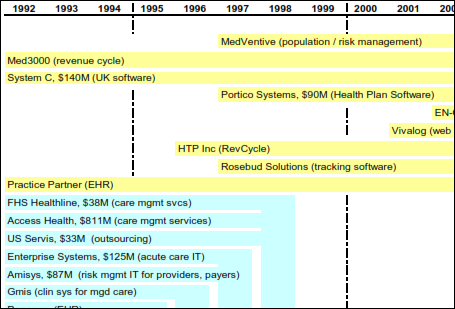
Constantine Davides of AlphaOne Capital Partners LLC has updated his HIT Family Tree that shows pretty much every company’s acquisition history over the years. It is fascinating, useful, and sometimes a bit scary when you see the number of acquired pieces and parts that make up a vendor’s “integrated” systems.
Apple and Google drop their smartphone lawsuits against each other and agree to work together on patent reform.
The Chicago business paper describes interesting hospital-doctor conflicts at 313-bed Swedish Covenant Hospital (IL) following the hospital’s firing of its chief of medicine after he and other of his independent practitioner colleagues joined a rival hospital’s accountable care organization. The issues: (a) new payment models make it difficult for doctors who practice at multiple hospitals to choose their loyalties; (b) independent doctors say they are forced to take ED call, but most of the patients they see there are sent to the hospital’s employed physicians; (c) the hospital is demanding that independent practices adopt EHRs that integrate with their systems, leading to concerns that the hospital will use the information in them to tell them how to practice medicine (which of course they will since that’s the whole point of analytics-powered population health management, which like most powerful forces can be used for both good and evil.)
The former president of the Philippines, now a representative, proposes creating an Electronic Medical Record Center (an HIE-like central records strorage center) under the Department of Health, with initial funding of $230,000 USD.

Long Island Jewish Medical Center (NY) installs video cameras in all of its 24 operating rooms as a remote video auditing (RVA) system. Staff will check the cameras every two minutes to make sure the surgical teams take the mandatory pre-procedure timeouts and patient safety measures. The cameras will also be used to alert housekeeping of completed procedures so they can clean the room and as a video record that room disinfection was performed properly. The video can be monitored live throughout the OR and on smartphones. The system was provided by the hospital’s anesthesia contractor and Arrowsight, Inc., whose video system the hospital installed in 2011 to improve hand hygiene rates to nearly 90 percent (I’m picturing in-room loudspeakers from which emanate the stern voices of invisible handwashing video overlords who tell doctors to step away from the door and toward the sink.)
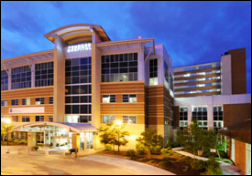
Centura Health (CO) will replace Meditech with Epic, a good source tells me.
Police say they may make more arrests in the identify theft case at Albany Medical Center (NY), in which a nurse and her boyfriend have been arrested for using the Social Security numbers of over 100 patients to apply for credit cards, write bad checks, and file fraudulent tax returns.
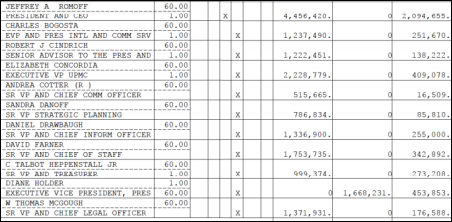
New tax returns filed by UPMC disclose that CEO Jeffrey Romoff was paid $6.6 million in 2012, with 30 other health system executives and physicians exceeding $1 million each in compensation. SVP/CIO Dan Drawbaugh makes the list with $1.6 million in 2012 income, a big drop from the $2.3 million he took home the previous year. UPMC is famously embroiled in a lawsuit with the City of Pittsburgh in claiming that it is a humble non-profit that should not contribute to the city’s budget by paying taxes.
Here is Regina Holliday’s keynote speech from the We Can Do Better conference from a couple of weeks ago.
Contacts
Mr. H, Inga, Dr. Jayne, Dr. Gregg, Lt. Dan, Dr. Travis, Lorre.
More news: HIStalk Practice, HIStalk Connect.
Get HIStalk updates.
Contact us online.







































... because it's a construction worksite. (It's a bit more evident from the second photo in the linked post.)