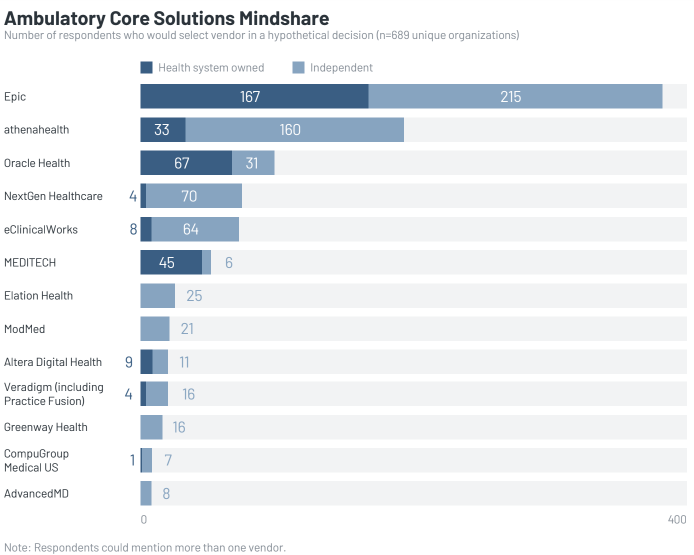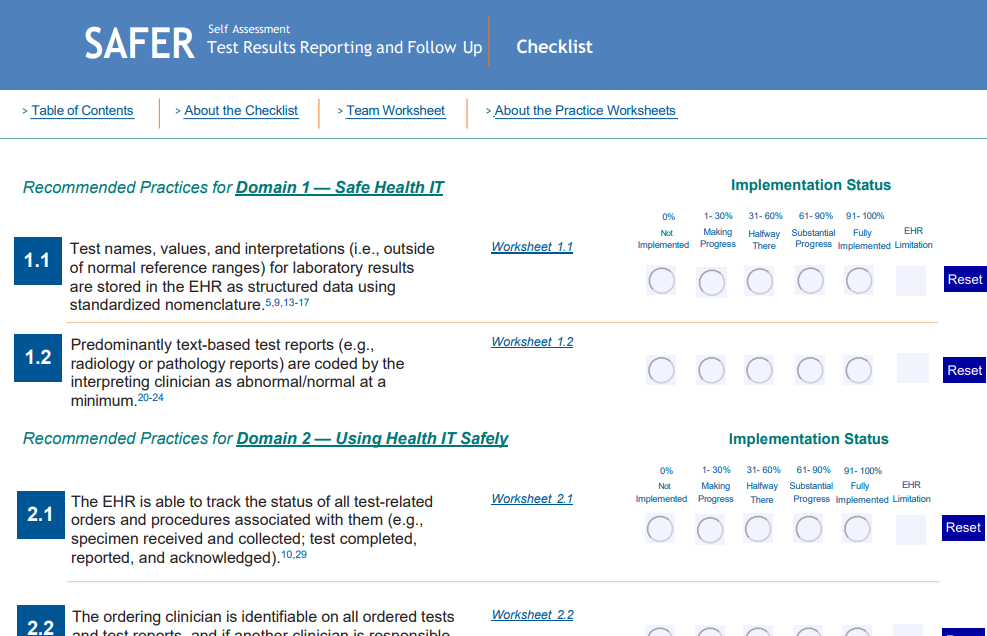
CVC Capital Partners will likely acquire German health IT company CompuGroup Medical in a take-private deal valued at $1.2 billion. The acquisition is expected to close in the first half of 2025.
CGM acquired EMDs in 2020 in a $240 million deal that included the assets of Aprima Medical Software, which EMDs had acquired the year before. CGM, which has a US office in Austin, also acquired certain European assets of Cerner’s portfolio around the same time for $236 million.
Reader Comments
From Independent Primary Care: “Re: CareMax. Has laid off 530 employees since filing for bankruptcy in November. I think it’s safe to say that the Medicare Gold Rush has ended with the implosion of VillageMD, Walmart Health, Cano Health, Clinical Care Medical Centers, and now CareMex. Who’s next? Amazon’s One Medical, CVS’s Oak Street, or Optum?” CareMax, which is a Medicare Advantage delivery system, hopes to sell its management services organization and care centers to Revere Medical, the private equity-backed recent acquirer of Steward Health Care’s physician group. CMAX shares, which began trading in 2021 via a SPAC merger, are approaching worthlessness. The sustainability of MA value-based care is uncertain due to high labor costs, unexpectedly high demand for services, competition among publicly traded companies, and more complicated payment rules that are tied to quality ratings. The MA business isn’t making anyone happy, as those plans cost taxpayers a lot more money than traditional Medicare, companies use questionable diagnostic and documentation practices to exploit the system, and sicker patients who encounter MA denials or restrictions can move their high costs to traditional Medicare when it benefits them.
Webinars
None scheduled soon. Previous webinars are on our YouTube channel. Contact Lorre to present or promote your own.
Acquisitions, Funding, Business, and Stock
Oracle reports Q2 results: revenue up 9%, EPS $1.10 versus $0.89, missing Wall Street expectations for both and sending shares moderately down. The company’s healthcare business wasn’t mentioned except as a use case for its AI agents.
Walgreens is reportedly considering selling itself to private equity firm Sycamore Partners in a take-private transaction. The drugstore operator is struggling with lower prescription payments and front-of-store competition with Walmart and online retailers such as Amazon. It took a $6 billion charge this year for the declining value of its investment in primary care operator VillageMD, its only significant non-drugstore business. Sycamore invests in dying mall retail businesses such as Hot Topic, Belk, and Lane Bryant and, like most PE firms, has a history of loading its acquisitions with debt and pulling out billions of dollars from the already-struggling businesses.
The US Patent and Trademark Office grants TeamBuilder a patent for its predictive staff scheduling technology that incorporates patient volume, workflow, and employee availability and characteristics.
Healthcare workflow AI startup Evidently raises $15 million in a Series A funding round.
A new KLAS report on clinical communications technologies finds that PerfectServe Telmediq is the most broadly adopted and has the most users live on physician scheduling, while users of TigerConnect and Symplr report simple deployments and easy adoption. End user training and integration are the biggest implementation obstacles.
Sales
Syracuse Area Health (NE) will launch telenephrology services using technology from Teledigm Health.
Sanford Health (SD) selects Availity’s Essentials Pro RCM software.
People
Wolters Kluwer names Mark Sherwood, MBA (Microsoft) EVP/CIO.
Lori Jones (Agiliti) joins Aptarro as chief growth officer.
C3HIE promotes Jim Hoag, MA, MBA to interim CEO. He takes over from Phil Beckett, who will join Texas Health Services Authority as CEO.
RhythmX AI names Andrei Zudin, PhD (Carequality) head of interoperability and security.
Tyler Turner (Optum) joins Edifecs as RVP of payer sales.
HealthAlliance (NY) will pay a $550,000 fine for its failure to prevent a cyberattack in July 2023 that exposed the information of 243,000 patients. The organization had been made aware of a system vulnerability by one of its vendors, but failed to implement a patch because of technical issues.
Other
Informatics researchers propose adapting the Clinical Laboratory Improvement Amendments (CLIA) model — which allows labs to develop and modify FDA-approved tests without further review — to regulate healthcare AI. The framework could include local oversight, risk stratification, assurance of appropriate staff training, validation of developer claims using local data, a recalibration schedule, ongoing quality control, and a certification program for AI-competent organizations.
Sponsor Updates
Cardamom Health moves to new offices in downtown Madison, WI.
The Norwegian healthcare region Helse Nord RHF will expand its use of Sectra’s enterprise imaging solution to include digital pathology.
Agfa HealthCare recaps its team’s experience at RSNA with daily updates.
Arcadia publishes a new report, “The current state of healthcare analytics platforms.”
Availity promotes Sujin Park to senior marketing operations manager.
Capital Rx releases a new episode of The Astonishing Healthcare Podcast, “What’s Hot In and Around the Pharmacy Supply Chain, with RSM’s Tom Evegan.”
Cardamom Health moves to new and expanded office space in downtown Madison, WI.
CTG publishes a new whitepaper, “Optimizing the Epic Journey: Workflow Alignment as the Cornerstone of EHR Success.”
Divurgent publishes a new success story, “Integrating Project Portfolio and IT Operations Management at the Child Mind Institute (CMI).”
HealthAlliance, a health system in New York’s Hudson Valley, will pay a $550,000 fine for its failure to prevent a cyberattack in July 2023 that exposed the information of 243,000 patients.
Munson Healthcare (MI) warns people of a scam involving bad actors posing as Munson HR staff offering job applicants false jobs and sending them fraudulent checks for equipment purchases.
December 9, 2024Dr. JayneComments Off on Curbside Consult with Dr. Jayne 12/9/24
It’s definitely a slow time in the healthcare technology universe. The HLTH conference is in the rearview mirror and HIMSS is still a couple of months away.
CES will happen in January, although on the healthcare side, I see more entrepreneurs there than I do those who work for hospitals and health systems. I’m looking forward to seeing cool consumer products and wearables announced at CES, although I have low expectations for anything that will truly transform healthcare. Even if there’s something useful for patients, cost is still a barrier for the majority of patients I interact with. Many of them struggle to afford their medications, can’t afford to take time off work for a physician visit, and aren’t going to pay hundreds of dollars for devices that may or may not improve their health.
One physician I spoke with recently is working extra hours trying to fit in patients who want to proceed with non-urgent procedures because they’ve met their deductibles for the year and can now afford them even though they couldn’t do so earlier in the year. He’s been in practice for a while and this isn’t a new phenomenon for him, so he avoids scheduling family vacations during November and December so that he can accommodate the needs of his patients. It creates a bit of a burden on his office staff because he has to limit their ability to take vacations as well, but that’s not an unusual situation for staff members working in a small private practice.
Several of my physician colleagues are planning to cut back on their working hours in 2025. I’m happy for them because at least one of them is experiencing severe burnout and it’s been difficult to see all that she’s gone through in the last couple of years. Depending on how physician employment agreements are structured, many physicians don’t take enough time off to allow themselves to recharge from drain caused by physical and psychological stressors on a daily basis. Some physicians don’t take time off because they don’t have appropriate coverage for patient care tasks. Others take the time off but end up working because they don’t have coverage for inbox messages or other patient care needs, and therefore don’t get a real break.
Lack of adequate coverage for physician time off is a pervasive issue and causes enough issues that the AMA recently released a module under their STEPS Forward series to address it. The webinar reviews various barriers to physicians taking time off and strategies for organizations to address them. Some of the strategies are straightforward, like making it easy for employees to track their time off and understand how much they have used versus how much remains. Especially if your organization has a use it or lose it policy for time off, this is important. Another strategy is to block physician time off well in advance so that it’s not a surprise. I’d go one step farther with that one and recommend that when the physician schedule is blocked, the scheduling team creates buffers around those blocks so that physicians can manage last-minute issues before their time out of office as well as to have additional capacity available for their return.
Other strategies are more subtle but might be more challenging, like having physician leadership model expected behavior. That might be easier said than done depending on the organization. Another example is ensuring that leadership isn’t celebrating the fact that team members are working while they’re supposed to be off. If your organization wholeheartedly endorses hustle culture, it’s unlikely that they will be making that change. Another significant change called out in the module is making it the organization’s responsibility to find coverage for clinical matters while a physician is out instead of making the physician find their own coverage, which can be a disincentive to taking time away.
The module also addresses physician compensation programs and how they might be adding to the pressures that make physicians less likely to take time off. They recommend that organizations construct productivity models to reflect appropriate time off including holidays, educational time, and sick time. As someone who has managed a consulting team, I know how important this is, because if you calculate productivity expectations based on 40 hours a week for 52 weeks per year, you’re going to make your team crazy with unrealistic expectations. In addition to time away from work, you also need to consider productivity losses for mandatory training (fraud, waste, and abuse, anyone?) as well as office and hospital closures due to holidays.
The module also challenges organizations to look at how physicians are taking time off as part of their organizational scorecard. New research has shown that physicians who have adequate time off are less likely to leave an organization, so it would make sense to look at that data in conjunction with turnover data. Especially for larger organizations that are using human resources systems to track time off, looking at this data should be fairly easy. For those of us on the administrative side, many EHR/practice management systems have stock reports that let you look at scheduled clinic hours and blocked hours, and if you’re a physician leader and you don’t have access to that data for your team, I’d recommend you track it down – you just might see some interesting trends.
As far as my colleagues who plan to cut back their working hours in the coming year, it will be interesting to see how their organizations support them in those efforts. I know of a number of physicians who are supposed to be working at 75 or 80% of their previous full time schedules, but who end up working nearly as much as they did previously due to the same kinds of organizational barriers that keep people from taking adequate time off. At least a couple of them have gone back to full time work so that they at least get full time compensation for their efforts. It’s something to think about for those looking to reduce hours.
What are your plans for time off in the coming weeks? Will your workplace be a dead zone as everyone struggles to use up their vacation time? Leave a comment or email me.
Hospitals are always striving to deliver a better patient experience. Unfortunately for many health systems, the front line of patient interactions, the contact center, is often the weakest link in the chain. Burned-out agents, lengthy hold times, and frustrated patients are the norm.
What if AI and the cloud could turn the tide? What if health systems could reduce call volumes, capture valuable patient insights, and drive down operational costs by using AI-powered contact centers?
Practical, cloud-based AI tools are ready to make life easier for agents, patients, and healthcare execs alike. This is the low-hanging fruit of AI in healthcare, delivering results today while paving the way for tomorrow’s tech innovations. As it turns out, AI-powered contact centers are the low-risk, high-reward solution health systems need right now.
Every day, hospitals handle countless calls: appointment scheduling, prescription refills, billing questions, you name it. Patients expect quick, accurate, empathetic responses, but most contact center agents are working with outdated tools, incomplete patient data, and scattered knowledge bases.
Throw in staffing shortages and fluctuating call volumes and it’s no wonder long wait times and unresolved issues are the norm. Today’s patients also expect to connect through multiple channels — phone, chat, email — but many hospitals just don’t have the infrastructure to keep up. And those legacy systems? They’re buckling under the weight of modern demands.
Now for the good news. AI and cloud-based contact centers can tackle these problems head-on with minimal disruption and cost. These technologies aren’t pie-in-the-sky aspirations. They are operational game-changers that are already delivering these kinds of quick wins:
Automating the everyday. AI-powered chatbots and voice assistants can handle routine tasks like appointment scheduling and FAQs, freeing up human agents for more complex cases. Interactive voice response systems (IVRs) use natural language processing to direct patients to the right department without the endless “Press 1 for…” menus.
Smarter triage. AI can assess patient symptoms through virtual tools or integrate data from remote monitoring devices, alerting clinicians to potential red flags. Patients get quicker answers, and fewer calls are escalated to clinical teams unnecessarily.
Personalized interactions. By analyzing patient data, AI can tailor responses to individual needs. It can even pick up on emotional cues, like frustration in a caller’s tone, and prompt agents to respond with extra empathy.
Streamlined workflows. No more toggling between five systems to answer one question. AI unifies data and tools into a single interface, cutting down call times and improving first-call resolution rates.
Data-driven insights. With AI monitoring of call trends and patient sentiment, managers can identify bottlenecks, predict call surges, and optimize staffing in real time. Agent training becomes more targeted and precise, with AI creating simulations based on actual patient scenarios.
Imagine this. A patient calls to reschedule an appointment. Instead of waiting on hold, they’re greeted by an AI assistant that offers new time slots in seconds. If the issue requires a live agent, the AI assistant hands it off to an agent with all the relevant information already on-screen, saving time and reducing stress. After the call, the system updates the EHR automatically, reducing admin work for clinicians.
Now multiply that scenario across thousands of interactions daily. Patients are happier, agents are less stressed, and hospitals save money. Everybody wins.
One standout solution is Amazon Connect, a cloud-based, AI-powered contact center platform. Its pay-as-you-go model appeals to cost-conscious health systems, and its integration capabilities make it a natural fit for EHR and ERP systems. Features like sentiment analysis, real-time agent guidance, and automated follow-ups are helping hospitals improve patient satisfaction scores, reduce costs, and boost agent productivity.
Healthcare organizations often approach AI with caution, fearing high costs and uncertain ROI. But contact centers offer a low-risk AI entry point. The stakes are manageable, the technology is already being used with great success in healthcare, and the benefits are immediate. In an era of tightening margins and growing patient expectations, AI-powered contact centers are the rare innovation that checks all the right boxes.
The contact center of the future isn’t just about answering calls. It’s a hub for patient engagement, seamlessly integrating with clinical and administrative workflows. It captures real-time insights to improve operations, outcomes, and experiences across the board.
Here’s the bottom line. Healthcare doesn’t need to wait for AI to revolutionize clinical care. The revolution can start today, in the contact center, with tools that deliver immediate, meaningful improvements for patients, providers, and staff alike.
Comments Off on Readers Write: AI Meets the Front Lines: The Contact Center of the Future
The HHS National Action Alliance for Patient and Workforce Safety develops an online patient and healthcare workforce safety dashboard incorporating hospital data from CMS and AHRQ, with plans to expand to clinic and nursing home data.
HHS OCR fines Children’s Hospital Colorado $548,000 for HIPAA breaches involving phishing and cyberattacks.
In the first incident from 2020, an IT help desk technician disabled two-factor authentication for a physician’s account and forgot to turn it back on. The 2020 breaches occurred when two employees accepted phony multi-factor authentication requests.
Multi-factor authentication attacks usually involve sending a user a phishing link to a phony login page that looks like the real thing, using the login credentials that they enter to initiate a password reset, and then getting them to divulge the 2FA code that they receive by text message.
HIStalk Announcements and Requests
Most poll respondents expect HHS to change for the worse under the new administration and leadership. I intentionally didn’t qualify what “better” or “worse” means, allowing respondents to make their own interpretation.
New poll to your right or here: What OS runs your primary personal cell phone?
Listening: a dazzling remake of Pink Floyd’s “Comfortably Numb” by Body Count, rapper Ice-T’s 35-year-old heavy metal band. The Tonight Show video shows how good he and his band are at reworking a legendary song after obtaining unlikely permission from the perpetually feuding David Gilmour and Roger Waters. His wall of guitars is searing on Fallon, but the official video features the 80-year-old Gilmour himself – who approved Ice-T’s request and then asked if he could get involved — reprising the song that he and Waters wrote 50 years ago with a full six minutes of his unmistakable guitar. A lyrical snip: “You’ve got a TV, a computer, so you don’t care; A roof, some clothes, some food, that’s right, it’s all there; Lock yourself in your house, try to forget about; The millions dyin’ from wars, starvation and drought.” Also deep from life’s experience: new from Nick Cave and the Bad Seeds (live video here). Cave has pushed through the deaths of two sons to turn grief into hope and reflection on “Wild God,” which takes exuberant advantage of his full band and a choir compared to some sparely accompanied poetry on his last couple of albums.
Pet peeve: websites that won’t let you look at a page until you disable your adblocker, after which it then throws up a paywall lockout.
Webinars
None scheduled soon. Previous webinars are on our YouTube channel. Contact Lorre to present or promote your own.
Acquisitions, Funding, Business, and Stock
Cardiac imaging Cleerly raises $106 million in a Series C funding extension. The company applies AI to heart CT scans for early detection of coronary artery disease.
Sales
Four Interim HealthCare agencies will implement Netsmart’s CareFabric EHR in their post-acute care settings.
Announcements and Implementations
Oura enhances its smart rings with Symptom Radar, an “illness warning light” that watches for changes from the wearer’s long-term baseline of pulse, heart rate variability, temperature, and respiratory rate.
OnMed unveils CareStation, a “clinic in a box” system that targets underserved communities. The company says that its product, which offers real-time clinician consultation and tools for measuring vital signs, is being used in five locations. It will be officially introduced next month at CES, where zero attendees have the slightest clue about underserved communities or the systemic health equity problems that a doc-in-a-box can’t overcome.
Other
The Guardian reports that a hospital in Malawi saw stillbirths and neonatal deaths drop by 82% three years after implementing AI-powered fetal monitoring software. Just 10% of the hospital’s delivery doctors have been trained to perform traditional electronic monitoring, so the software automatically alerts them of potential problems. The perinatal solution was donated by PeriGen in collaboration with the global women’s health program of Texas Children’s Hospital.
A HLTH conference expert AI panel unanimously suggests that health systems resist the trend of hiring a chief AI officer. Baptist Health Medical Group CMIO Brett Oliver, MD believes that organizations need to raise their AI literacy before putting someone in that role, which might send the message that only that person is responsible for AI deployment. His group established a broad AI oversight committee to create a governance structure.
I ran across this magazine cover from 100 years ago, which is even more notably prescient given that TV itself wasn’t invented until a couple of years later. Editor Hugo Gernsback also predicted the next year the use of the “teledactyl,” a feel-at-a-distance device that he described as, “The doctor manipulates his controls, which are then manipulated at the patient’s room in exactly the same manner. The doctor sees what is going on in the patient’s room by means of a television screen.” Gernsback created science fiction as a genre right after this issue ran with his launch of Amazing Stories magazine. Smithsonian Magazine’s 2012 story about him, which features fascinating illustrations, is worth a look for sure.
Sponsor Updates
Healthcare IT Leaders sponsors the Third Annual Golf Classic benefiting the Florida Cancer Specialists & Research Institute Foundation.
PerfectServe integrates Five9’s customer experience platform and Intelligent Virtual Agent technology with its Operator Console for improved contact center operations.
Tegria publishes a new case study, “Automated Estimates Increase Accuracy and Transparency.”
King Abdullah Medical City Makkah in Saudi Arabia upgrades its EHR to the latest version of InterSystems TrakCare.
Nordic and Benevolence Health partner to support healthcare organizations with the new CMS TEAM bundled payment model.
Rhapsody publishes a new customer story, “Axia Women’s Health saved $300,000, replacing a standalone API engine with Rhapsody Corepoint.”
Surescripts offers a new whitepaper, “The Current Landscape of Pharmacy Interoperability.”
Visage hires Victoria Hibbits as executive enterprise sales director.
WellSky publishes a new case study, “Client value: The story behind $2M in recovered aged receivables.”
The HHS Office of Inspector General recommends that the federal Organ Procurement and Transplantation Network ramp up cybersecurity efforts after simulated cyberattacks uncover 22 vulnerabilities within its IT system.
Apple CEO Tim Cook repeats his previous assertion that health apps will define the company’s legacy.
Cook says in an excellent Wired interview that enabling AirPods as hearing aids for moderate hearing loss is “the democratization of health.”
He summarizes that Apple is “pouring all of ourselves” into health, such as real-time biometric data analysis.
HIStalk Announcements and Requests
Two former HIStalk sponsors rejoined the fold this week, in both cases because employee turnover had left them unaware that they had unintentionally departed in the first place. Other potential prodigal sons and potential new sponsors can contact me directly and I’ll either answer your inquiry myself or send you over to Lorre. I can also confirm your sponsorship status if you aren’t sure.
Listening: Teenage Fanclub and 311, both of which having been playing guitar rock for 25 years. I discovered them from my recent infatuation with REM and my request to ChatGPT to find other bands that I would like. I’ve been watching REM concert videos for at least a half hour every night to catch up on their body of work, from which I note the contributions of retired drummer Bill Berry (he played multiple instruments and added another layer of harmony with Mike Mills in addition to orchestral drumming), replacement drummer Bill Rieflin (he died in 2020 at 59), and “fifth member” Scott McCaughey (I can’t get enough of his licks in the live version of one of my favorite REM songs “Supernatural Superserious,” which also has a fine contribution by Rieflin). My favorite concert video is from an appearance in Athens, Greece, although they did a great show at the other Athens in Georgia at the 40-Watt Club. I would choose REM as the best rock band in American history, perhaps nostalgically since now the “band” concept is passé in favor of computers, collaborations, and outsourced songwriting.
If you attended the ASTP annual meeting in person this week, let me know what you thought was important or interesting. They livestreamed it, but the hallway conversations are the good stuff.
Reader Vicki’s generous donation on Giving Tuesday allowed me to stack up a bunch of matching funds, including the matching money that was donated by my Anonymous Vendor Executive, to fully fund these Donors Choose teacher needs:
Whiteboards and equation solving supplies for Ms. D’s middle school class in Kerens, TX.
Headphones for Ms. G’s elementary school class in Pharr, TX.
Math learning tools for Ms. C’s elementary school class in Brooklyn, NY.
STEM learning kits for Ms. C’s elementary school class in Chino, CA.
Geometric transformation supplies for Ms. S’s middle school class in Chicago, IL.
STEM kits for Ms. B’s kindergarten class in Sacramento, CA.
Headphones for Ms. N’s elementary school class in Greensboro, NC.
Podcasting equipment for Ms. P’s high school Podcast News class in Santa Rosa, NM.
Headphones for Ms. J’s elementary school English as a Second Language class in Fridley, MN.
A printer for college applications for Ms. N’s high school class in Hollywood, FL.
Motivation awards for Ms. S’s elementary school class in Ontario, CA.
Research project tools for Ms. P’s middle school class in New York, NY.
Webinars
None scheduled soon. Previous webinars are on our YouTube channel. Contact Lorre to present or promote your own.
Acquisitions, Funding, Business, and Stock
Black Book Research lists nine countries that its expert panel says are poised for significant EHR adoption in 2025.
Aya Healthcare, which operates a travel nurse staffing service and job-matching website, will acquire staffing company Cross Country Healthcare for $615 million in cash.
Marketing firm Supreme Group acquires health tech and life sciences PR and marketing agency Amendola Communications. Amendola will keep its name and founder Jodi Amendola will remain as president. I interviewed her a month ago.
Publicly traded Embecta, which earned FDA clearance for its first insulin patch pump in September with plans to add a dosing algorithm, will lay off 118 employees and end that program to focus on its core business of making pen needles and insulin syringes.
Sales
Moorfields Eye Hospital NHS Foundation Trust will implement Meditech Expanse.
People
Frank Forte, MBA (Anatomy_IT) joins EnableComp as CEO.
Chris Paton, DPhil, MBA is named editor in chief of BMJ Digital Health & AI.
Retired Vanderbilt informatics professor and health tech pioneer Edward Shultz, MD, MS died last week at 76.
Announcements and Implementations
ECRI names the use of AI in healthcare as the most significant health technology hazard for 2025. The patient safety non-profit emphasizes the need to balance innovation with privacy and safety.
Vanderbilt University Medical Center’s IT department goes live on alert tool that can send messages directly to the computer displays of employees who will be affected by upcoming changes. The software is from Lakeside.
University of Central Florida offers students in its Health Informatics and Information Management BS degree program training on Epic, with materials and a simulated environment provided by Orlando Health.
The Joint Commission recognizes Inova as the first health system to earn its voluntary Responsible Use of Health Data certification.
Government and Politics
The Indian Health Service becomes the first federal health agency to go live on TEFCA, selecting EHealth Exchange as it designated QHIN.
FDA publishes recommendations for a smoother process for manufacturers to update their AI-enabled devices.
ASTP issues its first AI contract to Audacious Inquiry, a PointClickCare company, for technology to improve efficiency in its core areas. The reasoning behind using the technology of a care collaboration company to automate back-office government processes wasn’t stated.
Privacy and Security
Mount Nittany Health offers to pay $1.8 million to settle a lawsuit over its use of pixel tracking software on its website and patient portal.
Kevin Holland dives into Meta policy changes that will affect healthcare and health tech advertisers, as the company will restrict tracking of form fills and retargeting based on medical information starting in January. He concludes that condition-specific products or marketing campaigns will face significant restrictions and that direct conversation tracking will disappear as a campaign metric.
The Sequoia Project publishes a free Information Blocking Rule educational toolkit.
Three-hospital PIH Health takes its systems, network, and phone system offline following a ransomware attack Sunday.
In England, two NHS trusts continue their restoration of systems following ransomware attacks.
Other
Only mildly health tech related, but eye-catching as a societal observer. A 22-year-old OnlyFans model earns Internet scorn after sharing a TikTok of herself in the hospital room of her 85-year-old boyfriend, dancing and joking about speeding up her inheritance. She describes their relationship as, “He takes me to Cartier, I take him to pound town.” Meanwhile, a fellow OnlyFans adult content creator has made $43 million so far this year, leading me to ponder society’s valuation of a 20-year-old — who claims that she is a devout Christian and a virgin, which I can see would draw a certain demographic whether accurate or not — as equal to a couple of hundred doctors. She says that one smitten follower has made it rain nearly $5 million for her in the past few months.
Sponsor Updates
Healthmonix team members support Ann’s Heart in Phoenixville, PA.
Agfa HealthCare integrates Rad AI’s reporting and FHIRcast solutions with its enterprise imaging platform.
Meditech Alliance triples its membership to 37 solution members whose products complement, enhance, or extend Expanse.
FindHelp welcomes CenCal Health, Maryland Physicians Care, BronxCare Health System, and Central Iowa Shelter & Services to its network.
Commure’s Augmedix achieves Oracle Validated Integration with Industry Healthcare Expertise for its full suite.
Five9 announces that SVP Jake Butterbaugh has been named a Channel Futures Top UC/Contact Center Leader for 2024.
Fortified Health Security names William Hicks EOD security engineer.
It’s that time of year, with cybersecurity firm NordPass releasing its annual list of most used passwords. Topping the Hall of Shame list this year: secret, 123456, password, qwerty123, qwerty1, 123456789, password1, 12345678, 12345, and abc123. I didn’t have to scan too much farther down the list to find ones that were more interesting: iloveyou, baseball, princess, football, monkey, and sunshine all ranked within the top 20.
Come on, people, it’s not that hard to have at least a minimally secure password. The list can be sorted by country, and some of the international options are a bit more entertaining: liverpool, arsenal, and chelsea were popular in the UK, but hockey made the list in Canada.
From Cheer Mom: “Re: prescription drug fraud. Wise advice from Mr. H on physicians remaining vigilant around prescription drug fraud. One of our hospital’s providers recently discovered that his DEA number had been used for a number of fraudulent prescriptions for controlled substances. Too bad the patient in question was another provider at the hospital, who had been calling in her own prescriptions under her colleague’s name. The pharmacy didn’t catch the fact that the alleged prescribing physician sent every single prescription using electronic prescribing except for those called in for one single patient.” As someone who has had fraud committed against their DEA number, it’s a terrible thing when it happens. With the widespread adoption of electronic prescribing, it still amazes me that some states still permit certain levels of controlled substances to be phoned in.
A friend sent me this article from JAMA Network Open and asked my opinion on it since I’ve worked in telehealth for quite some time. It’s an original research article and looks at the rates of so-called low-value care services in primary care practices that use telehealth. The authors looked at care performed between January 2019 and December 2022 and used Medicare fee-for-service claims data for practices in Michigan. Practices were stratified as low, medium, or high users of telehealth and the low-value services were grouped as office-based, laboratory-based, imaging-based, and mixed-modality services. Over 577,000 patients were represented in the claims. Some of the low-value services avoided during telehealth visits included cervical cancer screening, PSA testing, and thyroid testing for patient groups where those tests were not indicated.
Non-clinical readers may ask why these services are considered low-value since at least some of them are marketed as potentially life-saving. In reality, it all depends on the patient, their age, and their risk factors as to whether the tests should be done. Sometimes physicians get in the habit of ordering tests across the board even when they’re not truly indicated, which makes them low value since they provide little to no clinical benefit for patients and can even cause harm or unnecessary follow-up testing. Since they require a physical exam or a blood draw, you can’t exactly conduct them during a telehealth visit, and doing so would require either a follow up-visit in office or a trip to the lab.
The authors found that practices that had high telehealth use had lower rates of low-value services performed in the office. There was no association between telehealth use and other low-value services that were not performed in the office. They concluded that, “our findings suggest the potential for telehealth to help reduce office-based low-value care and could reassure policymakers concerned about telehealth encouraging unnecessary or wasteful care due to added convenience.” One of the limitations of the study is the time period during which it was performed, which overlapped the worst parts of the COVID pandemic, when in-person visits were down across the board simply because primary care offices were closed. It would be interesting to perform a follow up on years post 2022 as well as to look at data from various parts of the country, to determine whether the results hold across time and place.
Still, I look at my own recent visit to my primary care physician. Except for a blood draw, it could have been performed via telehealth. The majority of the visit was spent discussing data gathered from home monitoring devices and updating the physician on a recent visit to a subspecialist who is not on the same EHR and who didn’t send a copy of their visit note. The blood draw wasn’t time sensitive and could have been easily done the next day since I would have to drive past the lab on a planned errand. For the labs that were ordered, it would have been easy for my physician to order a broad spectrum of labs, but fortunately he practices evidence-based medicine and only ordered the ones for which I was truly due. But for every physician who practices like that, there are twice as many who just order larger laboratory panels to “cover everything.”
There is still plenty of low-value care being performed, whether via telehealth or in-person visits. Antibiotics for viral illnesses are at the top of my list, and likely the lists of anyone who has ever worked in a primary care, urgent care, or telehealth urgent care setting during the three days leading up to Thanksgiving in the US. The number of patients who are presenting with what are almost certainly viral upper respiratory infections but who are simply seeking antibiotics is staggering. They come in with requests like, “I just want to get ahead of this because I’m having 20 people for dinner on Thursday” or “I just know this is going to turn into a sinus infection” and often haven’t tried any home care or over the counter remedies.
Frankly, writing an antibiotic prescription is a lot easier than a 20-minute conversation on why antibiotics aren’t indicated and how they can even cause harm, so you can guess how those visits often turn out, especially in practice settings where physicians are graded on patient satisfaction. I’d love to see a national public health campaign on appropriate use of antibiotics and why you don’t need to throw them at a common cold, but I don’t see that coming any time soon.
Like Mr. H, I’m migrating to Bluesky. You can find me there as @Jaynehistalkmd.bsky.social, although I’m slow to get started. I haven’t been much of a user of the platform formerly known as Twitter since its change of ownership, so maybe 2025 will be my year for returning to social media. I’m following Mr. H’s tip sheet for making the transition and looking forward to scrolling again with a more curated feed and hopefully fewer distractions.
A recent article published in Nature Communications looks at the effectiveness of an artificial intelligence system for matching patients with relevant clinical trials. Researchers from the University of Illinois and the National Institutes of Health have developed a solution called TrialGPT that was 87% accurate in matching patients with clinical trial eligibility criteria, which isn’t terribly far off from the performance level of humans. The study was limited by the fact that the system looks at written patient summaries versus lab values and imaging results, but I imagine it wouldn’t take too much work to bring structured data into the mix. I recently enrolled in a clinical trial that I only found out about through a tangential reference from one of my clinicians. It won’t yield results for five to 10 years, so it would be interesting to see what else I might be eligible for.
Have you ever participated in a clinical trial? Was there a technology component or did it involve manual data collection? Leave a comment or email me.
December 4, 2024Healthcare AI NewsComments Off on Healthcare AI News 12/4/24
News
Non-profit healthcare safety group ECRI names AI as its top healthcare technology hazard for 2025. Organization President and CEO Marcus Schabacker, MD, PhD said in the list’s announcement, “Balancing innovation in AI with privacy and safety will be one of the most difficult, and most defining, endeavors of modern medicine.”
Withings and the government of France launch Project DEEP, which will use AI and non-invasive medical device innovation to detect and prevent cardiometabolic diseases, with a $23 million investment.
Business
AI and precision medicine technology vendor Tempus will work with Northwestern Medicine to explore the use of AI in clinical care and research. Their first project involves cardiology, where the health system has deployed the company’s algorithm that helps physicians identify patients who may have a one-year risk of atrial fibrillation / flutter. The Tempus ECG-AF algorithm received FDA’s 510(k) clearance in June 2024.
Spectral AI completes its analysis of burn center images that will be used to train its AI-powered DeepView System for predicting wound healing outcomes.
Research
New York University Langone Health analyzes use of its private instance of ChatGPT by its employees, of whom 1,000 applied for access in a six-month period. Clinical and research users represented half of those requests, with the most common uses being writing, editing, summarizing, analyzing data, searching for new information, and generating ideas. Examples include creating teaching materials, drafting email responses, generating job descriptions, assessing clinical reasoning documentation, and translating SQL queries. Some users reported that they struggled to create prompts and saw occasional hallucinations.
Other
Politico reports that leading house Republications want HHS to end participation in non-government AI oversight groups, specifically the Coalition for Health AI. The lawmakers said in a letter to HHS that they are concerned about having ASTP’s Micky Tripathi serve as a CHAI board observer, stating that, “help us understand how putting the organization directly in control of market entry for innovative technologies does not represent a significant conflict of interest.”
A Brookings Institution report says that use of AI in healthcare could reduce the annual US budget deficit by 20% while expanding access. The analysts, who point out that every US industry except healthcare has improved productivity in the past 50 years, say that AI could help by automating appointment scheduling, patient flow management, and preliminary data analysis. They also predict that AI could improve preventative care and disease detection.
A developer creates They See Your Photos, which allows anyone to upload a photo to see the private information Google can glean from it. I sent it a HIMSS conference photo that it analyzed well, including a note that “many people are looking down at their mobile devices.”
Like many heavily regulated industries, healthcare has seen limited progress towards the use of artificial intelligence (AI) and automation, despite the enormous potential they hold for improving productivity, accuracy, care access, and the bottom line. Much of that promise comes from use cases that span the revenue cycle management (RCM) continuum, where legacy automation tools are already having a positive impact through activities like patient reminders, insurance verification, coding, and claims status transactions.
Today, generative AI (GenAI) is poised to upend, in a positive way, healthcare’s approach to front- and back-end financial operations. It has the potential to re-imagine the massive volumes of historical and real-time revenue-related data that is flowing through RCM departments and create entirely new approaches to optimize revenue and minimize financial risk.
AI is an advanced set of tools run by algorithms that use data to simulate human intelligence. GenAI takes things several steps further by leveraging that same data to not only tell the story of what it sees, but to also create entirely new, more effective approaches to RCM.
Already present in many RCM functions, AI and automation represent a continuum of capabilities that can be broken down into four major categories:
Basic. Rules-based processes for repetitive tasks that typically follow pre-defined instructions without exceptions. Examples include a claim status or transaction query submitted by a provider using a basic bot or ANSI transaction that returns a response based on a predefined set of values.
Advanced. Leverages more complex algorithms and machine learning to make predictions based on past performance, which allows for proactive intervention based on those probabilities. For example, a machine learning model may be able to identify claims that are likely to be denied and can be corrected before being submitted to the payer.
Intelligent. Here is where AI enters the continuum with the addition of natural language processing (NLP) that uses unstructured data and human-like reasoning to process ambiguity. An example in RCM would be the use of machine learning, deep learning, and NLP models that recommend “next best actions” to prevent denials from even happening in the first place.
GenAI. Uses neural networking and large language models (LLMs) with deep learning and other techniques to automate design and do complex problem solving, often aided by visual and written materials. An example would be a human-like chatbot that negotiates with payers to reverse claim denials using the clinician’s notes and imaging studies to develop an argument complete with appropriate medical terminology.
While healthcare remains in the early stages of the AI continuum, more complex and sophisticated Intelligent and GenAI use cases are on the horizon.
While all eyes are on GenAI, earlier-stage AI and automation is already impacting RCM outcomes and efficiencies. Meanwhile, ample opportunity exists to further influence RCM as capabilities grow. In fact, just as AI and automation fall on a continuum, so too do the RCM processes and workflows that can be boosted by their adoption.
Scheduling and Registration
Legacy automation has a stronghold in scheduling and registration with the use of basics like automated patient reminders now nearly ubiquitous among healthcare organizations. Looking toward the future, scheduling chat bots, integrated scheduling across care sites and clinical specialties, and comprehensive scheduling packages for patients that include cost estimates are high-priority investments for their potential to reduce patient friction, enhance the patient experience, and make a provider “stickier” by strengthening the provider-patient bond and improving patient retention.
Patient Access
Insurance and benefit verification are already close to fully automated. RCM’s holy grail of future automation use cases is prior authorization, particularly as payers build more complex and ever-changing policy requirements for prior auth. AI can help manage the prior auth process, maximize the probability of approval, and automate the appeals process if an authorization is denied. The challenge is the enormous amount of information that is required from both providers and payers who have little incentive to be transparent with those details.
Coding/HIM
Computer-assisted coding (CAC) enjoys broad adoption for inpatient coding and billing, delivering reported productivity gains of 10% to 30% for hospitals. Computer-assisted professional coding (CAPC) is beginning to make inroads on the professional side. Future use cases include autonomous coding, which has limited use in a handful of specialties due to the significant amounts of data needed to properly train the specialty-specific LLMs. Early work is also underway around ambient charting, which converts voice dictation into coding and promises to save physicians up to 4.5 minutes per chart by some estimates.
Patient Financial Services
As with prior authorization, AI and automation adoption in patient financial services is influenced by increasingly aggressive payer policies around denials, delays, and underpayments. There is enormous potential for streamlining collection workflows, including touchless A/R. Other promising areas are automated denials management and the movement to a reduced friction patient experience.
Clinical Services
Though farther behind other stops on the RCM continuum, future AI and automation use cases within clinical services include real-time patient status monitoring in utilization management (UM) to ensure accurate reimbursement. Other potential applications include professional fee UM and automated clinical documentation integrity (CDI) that uses NLP and other advanced tools.
Revenue Integrity
Also behind the adoption curve, revenue integrity AI and automation use cases include charge master maintenance, late charge identification, and coding/billing compliance audits. AI and automation are also used to proactively identify and resolve problem areas.
Healthcare has taken a cautious approach to adopting GenAI and other advanced forms of AI and automation within RCM, due in part to the industry’s necessarily risk-averse nature. Also at play are the complexities that are involved with adapting critical workflows to advanced AI and the need to balance the application of limited resources between multiple and sometimes conflicting strategic priorities.
For example, while advancements like ambient documentation are crowd pleasers that promise to deliver improvements in physician productivity and satisfaction, they won’t necessarily improve the completeness of clinical documentation. As such, CDI will remain a critical part of the RCM process.
The reality is that while GenAI and its AI peers hold great promise for optimizing RCM, these technologies can be expensive to use, staff, and support. Health systems and other provider organizations will have to place bets with scarce resources, and it’s more likely that AI use cases that improve physician and patient satisfaction will come out on top.
GenAI and advanced automation also require close collaboration between operating departments like RCM and their IT colleagues to create and test APIs, move/share data between systems, and access datasets to test predictive models and train LLMs and other advanced AI models. This collaboration may be hampered by information and data silos that were created by legacy technologies. This also impacts the opportunity to leverage AI and automation to create a seamless patient experience, which requires integration across multiple settings of care, systems of record, and data siloes.
As GenAI and other advanced automation solutions continue to deliver on their promise, the impact on healthcare RCM has the potential to be transformational. They also have the potential to reduce the challenges that are confronting providers across the RCM continuum, while streamlining patient access, increasing coding and billing accuracy, improving utilization management, and speeding the revenue cycle.
When the productivity and accuracy promises are fully realized, investing in GenAI and its predecessors becomes a true win for the entire healthcare industry.
Comments Off on Readers Write: The Future State of AI and Automation in the Revenue Cycle
What does mental healthcare in the United States have in common with a farm? As a healthcare executive who grew up on a cattle farm in Missouri, I can tell you there are more similarities than you might think.
Let’s start with what we know. Mental healthcare in the US is in crisis. One-third of Americans say they can’t get the help they need, and both individuals and employers face the same barriers to care of cost and access. Mercer reports that 94% of large employers have increased their investment in mental health coverage over the last three years, a trend we’ve also seen in small- and medium-sized businesses.
And yet, people aren’t getting the care they need because it’s too expensive and there aren’t enough providers to meet the demand. Costs will only continue to rise, making it increasingly more challenging for employers to provide adequate coverage.
Virtual care has the potential to fill this gap. For employers, virtual care offers the promise of low administrative costs, high utilization, ease of engagement, and a positive patient experience. For patients, virtual mental healthcare means that they can see providers on their own schedule, with fewer barriers to getting care.
Seems like virtual care is the silver bullet, right? Not exactly. A lot of virtual mental healthcare models have fallen short where it counts. With low engagement rates and poor patient satisfaction scores, the current model has proven unsustainable. Many providers are cutting out telehealth options altogether.
Clearly, the system is broken.
This is where the farm analogy comes back in. On the farm where I grew up, things are constantly broken – fences, machinery, you name it. I learned that small fixes each day can make a big impact over time. A problem may seem overwhelming, and healthcare surely is, but big problems just don’t get solved overnight. They require a series of small, ongoing fixes rather than a one-and-done solution. I bring that mentality to my work in healthcare every day.
Revolutionizing the mental healthcare landscape is a lofty goal, and no one company can do it alone. It requires insights and innovative ideas from people with a wide variety of expertise and experience who are passionate about being part of the solution.
During the pandemic, when mental health services were desperately needed, we saw a proliferation of virtual mental health solutions enter the market. Those early solutions addressed some of the problems, but we learned there was more to fix.
Effective care requires removing the barriers that prevent people from accessing it. In mental healthcare, high costs, difficulties in connecting with providers, and lack of long-term support all hinder patients from getting the care they need. Moreover, mental healthcare can’t be siloed from the rest of a patient’s care; it must be integrated to treat both the mind and body as a whole.
The right virtual model can address many of these roadblocks. First, effective virtual care, particularly in rural areas, combined with on-demand access to licensed therapists and mental health coaches, can connect patients wherever they are.
Second, a streamlined payment model allows for flexibility for providers and patients. It eliminates both out-of-pocket costs and the complicated and expensive reimbursement process.
Third, progress with mental health looks different for everyone, and care works best when it’s ongoing and sustainable. Long-term care models that also support provider selection allow patients to build a relationship with a provider they choose, making them more engaged and invested in their care journey.
It’s unlikely that the demand for mental health services will decline any time soon, making it more important than ever to have sustainable models that can get patients the care they need. Virtual mental healthcare works best when patients have options that increase their access, are low-cost, and allow for relationships to build between patients and providers over time.
Just like on the cattle farm, fixing what’s broken requires constant problem-solving and resilience. To make meaningful change, we must leapfrog over the status quo and commit to reshaping mental healthcare into a system that emphasizes whole-person health, seamless access, and that puts patients first.
Comments Off on Readers Write: What We Can Learn about Mental Healthcare from a Cattle Farm
Soda Health, whose platform allows members to use their health insurance benefit dollars on approved goods and services, raises $50 million in a Series B funding round.
The Drug Enforcement Administration says that criminals who have been committing prescription drug fraud are now using EHRs and e-prescribing systems to create bogus prescriptions that are often sent to pharmacies all over the US.
Those involved are generating up to 1,000 prescriptions per day for a given prescriber’s DEA number.
DEA says the solution will need to involve doctors, EHR vendors, prescription processing companies, and pharmacies. It recommends that providers check their profile in their state’s prescription drug monitoring program to look for irregularities.
Reader Comments
From Lattice: “Re: Bluesky. I was surprised by your strong endorsement of a platform you mentioned not having fully explored. Are you suggesting that it offers a superior experience compared to X?” I wasn’t endorsing Bluesky, just mentioning that I am using it. I like Bluesky for mostly superficial reasons — the absence of ads, the control I have over what posts I see, and a clubbier vibe that feels like a cool secret society (at least until the trolls and bots on X join me). It’s also open, so people are building apps on top of it whereas X has shut off most of its APIs to wall off its garden. My timing was triggered because of its huge influx of new users, whose reasons aren’t necessarily the same as mine, that give it critical mass. I like that I don’t have to pledge exclusivity since it’s free and easy to use both services, plus I wouldn’t be too smart if I abandoned my 14,000 followers on X versus the 140 I have on Bluesky. My plan:
I’m not a very active user of X, but I will continue to post on both services, probably a bit more interesting stuff on Bluesky.
I will spend far less time reading X’s “For You” algorithm-pushed posts that are designed to enrage, silo, and troll to boost engagement.
I will still check X’s “Following” posts, probably a few times each day. I follow only 109 accounts, so I can zip through those quickly.
From Summoner: “Re: Chromebook. I’ve been meaning to thank you for recommending a ruggedized, small, light and cheap model a number of years ago, which I picked up for $150.” I love my Chromebook, which fills the gap between using my laptop at my desk versus my IPad from a comfy chair when I don’t need a real keyboard or Windows-only tools. I paid $99 in mid-2022 for my low-end Lenovo that has 4 GB of memory and 64 GB of storage. I like the 11.6 inch, 2.4 pound form factor, the automatic updates, and a battery that runs for days.
From Researcher: “Re: Altmetric. The social media citation measurement tool that journals use to measure interest in their article now cites HIStalk as both a news organization and a blog.” Thanks, I didn’t know that. The site calculates a real-time Attention Score for each journal article that is based on media mentions. I read this morning that it just added Bluesky posts. The value of such a service is that the feedback is immediate compared to measuring citations months or years later when new articles finally emerge from the research journal sausage maker.
From Old Aprima: “Re: CompuGroup Medical, which had acquired EMDs and Aprima. Just did its fourth round of layoffs this year, with 15 people let go, including some high tenure employees.” Unverified.
From Spellchequer: “Re: RSNA. Add this to your list of conference misspellings such as HIMMS.” A search of this site – which I won’t name even though I could shame them as an HIStalk competitor — surfaces dozens of examples of RSNA butchering, most often in headlines, going back to 2011.
HIStalk Announcements and Requests
A reader’s donations funded the Donors Choose teacher grant request of Mr. M in Dallas, who asked for a wireless voice amplifier and microphone to help his pre-schoolers hear him without straining his voice. He sent a photo, although my face-blurring hides the brand new headset he wanted to show us. Speaking of Donors Choose, a donation from reader Natalie, boosted by some juicy matching funds including those from my Anonymous Vendor Executive, funded these projects:

A laptop for the seventh grade science class of first-year teacher Ms. E in Grand Island, ME.

Interactive STEM games for Mr. W’s high school class in Conyers, GA.
Headphones for the second grade class of Ms. S in Paterson, NJ.
Mini whiteboards for Mr. S’s English as a Second Language high school class in Chicago, IL.
Welcome to new HIStalk Platinum Sponsor SmarterDx. SmarterDx builds clinical AI that empowers hospitals to true the patient record to fully capture the value of care delivered. Founded by physicians in 2020, its proprietary AI platform understands the nuances of clinical reasoning, enabling hospitals to true every patient record. By doing so, hospitals recover millions in earned revenue, enhance care quality metrics, successfully overturn denials, and optimize healthcare operations. Discover how SmarterDx is transforming healthcare.
None scheduled soon. Previous webinars are on our YouTube channel. Contact Lorre to present or promote your own.
Acquisitions, Funding, Business, and Stock
Toronto-based AI-enabled decision support vendor Healwell acquires a majority stake in Mutuo Health Solutions, which offers an ambient scribe product.
Healthcare quality organization ECRI acquires The Just Culture Company, which addresses workforce culture.
Soda Health, whose platform helps members use their health insurance benefit dollars to pay for approved goods and services, raises $50 million in a Series B funding round.
Sales
Great River Health System (IA) will switch from Oracle Health to Epic in 2026.
People
VillageMD names President and COO Jim Murray interim CEO following the departure of co-founder Tim Barry. Parent company Walgreens Boots Alliance, which has invested over $6 billion in the primary care chain, is considering selling all or parts of VillageMD due to struggling profitability.
Cotiviti hires Suvajit Gupta, MS (Appian Corporation) as CTO.
Former Intermountain Health CIO Ryan Smith, MBA (Graphite Health) rejoins the health system as chief digital and information officer.
Announcements and Implementations
Marshfield Clinic Health System (WI) implements Switchboard, MD’s MDAware inbox management technology at three facilities.
Xsolis launches an AI-powered solution for appeals documentation, with MultiCare Health System serving as its pilot site.
Academy Medtech Ventures releases Move PT, a home rehab care system that uses AI, computer vision, and remote therapeutic monitoring.
A new KLAS report on imaging AI reveals that high-volume organizations are leading adoption, with mid-sized ones poised to follow. AI is now more commonly used in neurology and stroke cases than computer-aided detection, with breast and mammography applications ranking second. The most widely used solutions are RapidAI and Viz.ai, while Aidoc and Nuance top the list of those under consideration for purchase.
Government and Politics
HHS secretary nominee Robert F. Kennedy, Jr. suggests that CMS, rather than the American Medical Association’s RUC panel of doctors, should be tasked with recommending provider payments amounts for individual CPT codes for Medicare billing. CPT products such as licenses generate $266 million annually, which represents half of AMA’s revenue.
Privacy and Security
HHS OCR levies a $1.19 million fine against Gulf Coast Pain Consultants, who it says violated HIPAA when a former contractor used patient information from its EHR to file 6,500 fraudulent Medicare claims. The contractor was previously indicted but found not guilty.
Holy Redeemer Family Medicine (PA) pays $35,581 to settle federal allegations that it potentially violated HIPAA when it disclosed a patient’s full health record to a prospective employer, including information about reproductive healthcare, rather than the single test result that the patient had authorized.
Other
Unity Health Toronto puts together a fun “Breaking News” video to celebrate its Epic go live across its three hospitals. You can almost smell the typical command center Eau de Parfum (picked-over “I’ll just have a half” everything bagels and congealed pizza).
Sponsor Updates
Goliath Technologies publishes a case study about Intermountain Healthcare’s use of the company’s solution to identify reliability and response time issues to improve end user EHR experience.
Agfa HealthCare Rubee AI customers can now access Carpl.ai’s marketplace of 140 AI applications, testing, deployment and monitoring tools.
TheMuse.com recognizes Arcadia with its 2024 VIBE (Voted in by Employees) Award in the employee health and wellness category.
Artera offers a new case study, “Jane Pauley Community Health Center Increases Access to Care Across Community-Based Populations in Central Indiana with Artera.”
AvaSure publishes the results of its “Inpatient Virtual Care Insight Survey.”
Capital Rx releases a “Best of 2024” episode of “The Astonishing Healthcare Podcast.”
Clinical Architecture will present at the 2024 Assistant Secretary for Technology Policy Annual Meeting December 5 in Washington, DC.
CliniComp shares insights from recent site optimization visits at VA facilities in Atlanta and Augusta, GA.
Many, yourself included, chose to make healthcare and Healthcare IT a political exercise. Shouldn't be shocked when the other side…