Recent Articles:

News 11/26/25

November 25, 2025 News 7 Comments

Top News

image

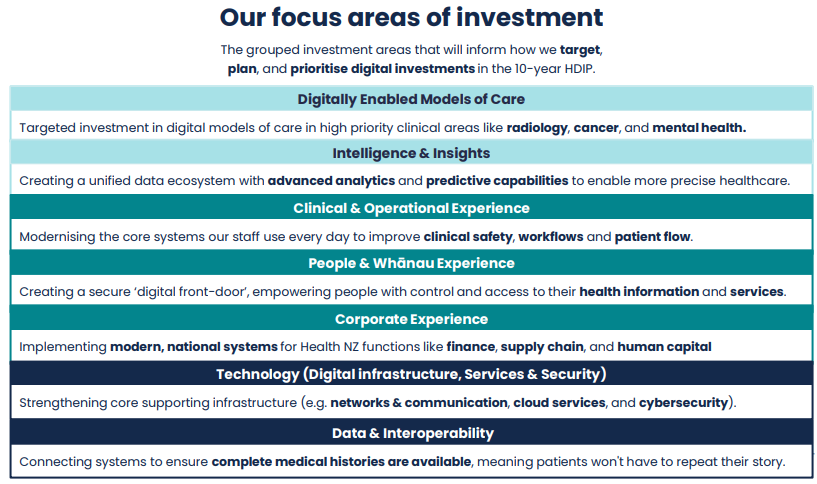
New Zealand’s health minister announces a 10-year investment plan to convert the 65% of hospitals that use paper records to digital systems.

The plan calls for a single national digital medical records system, remote patient monitoring, a national radiology system, and stronger cybersecurity.


Reader Comments

From GoBeyond: “Re: HIMSS. Please investigate whether HIMSS was technically insolvent when it sold the global conference to Informa. Also, who does it count as a ‘member’ in announcing a big increase?” On the latter issue, only HIMSS can answer how it counted its announced 75% membership increase over the past eight years. I wonder about HIMSS organizational affiliate memberships, the all-you-can-eat plan where an organization pays one price for unlimited individual members. For example, health systems can sign up unlimited individual members for a total annual cost of just $5,000. On the first issue, a non-profit’s financial health can be ascertained only from its 990 tax forms or audited financials and I haven’t seen those. Here’s some background:

  • A 501(c)(6) trade association like HIMSS is required to file a Form 990 every year, although IRS backlogs (which IRS has confirmed) can affect the visibility of those filings.
  • IRS records show no timely HIMSS Form 990 filings for fiscal years 2022, 2023, and 2024. HIMSS has also not provided recent returns upon my multiple requests as required by federal disclosure rules.
  • The organization’s fiscal year change to a December year-end for 2021 explains a one-time shift in timing, but not a multi-year absence of posted filings.
  • HIMSS announced a global headquarters in the Netherlands in 2023 and sold its conference operations to Informa in the same year. The global headquarters change does not relieve HIMSS of the obligation to file 990s for its US operation.
  • I don’t know who HIMSS uses as an external auditor in the absence of 990 filings. HIMSS CFO Annemarie Tuzik left the organization in October 2025 after two years and an interim is in place. She was hired at the same time as its general counsel, who left after just over one year and does not appear to have been replaced.
  • Without 990s or audited financials, an organization’s financial health can be assessed only through observable behaviors such as persistent late filings, refusing to provide disclosure, downsizings, executive or board turnover, selling core revenue-generating assets, a reduction in membership or sponsorship levels, office relocations, program cancellations, and major operational shifts.

HIStalk Announcements and Requests

My aggravation of the day: news websites that force me to turn off my ad blocker, then dump me off to paywall anyway.

It’s nearly Thanksgiving, which means that tens of thousands of people will pack their heavy coats and turkey sandwiches for Chicago and RSNA, where the already cold weather will worsen under a forecast winter storm. Exhibitors love adverse weather that keeps attendees in the exhibit hall.

image

Subject-verb agreement matters, at least to me. Removing those first three words fixes the problem and shortens the headline as a bonus.


Sponsored Events and Resources

None scheduled soon. Contact Lorre to have your resource listed.


Acquisitions, Funding, Business, and Stock

image

Canada’s competition bureau is investigating Well Health Technologies over concerns that its recent acquisitions, including Healwell AI and Orion Health Holdings, are reducing competition in the AI transcription market. The former yoga studio operator now operates 227 medical clinics and has announced plans to take its software subsidiary Wellstar public next year.


Sales


Announcements and Implementations

RapidAI obtains FDA clearance for five new imaging modules in its Rapid Enterprise Platform.


Government and Politics

The White House launches the Genesis Mission, a national effort to use AI to transform scientific research.


Sponsor Updates

  • Health Gorilla’s Chief Medical Officer Steven Lane, MD, MPH and Altera Digital Health Chief Medical Officer Laura Kohlhagen, MD, MBA will co-present at the Harris Customer Training Conference in San Diego on “A New Dawn: Data Exchange in Sunrise via TEFCA” December 3 in San Diego.
  • Wolters Kluwer Health adds Lexidrug to its UpToDate Expert AI.

Sponsor Spotlight

image

AGFA HealthCare returns to RSNA 2025 with fresh insights, cloud-powered innovation, and a “Clinician-First” approach to transforming the imaging experience. Attendees can explore interactive demos, join expert-led Lunch & Learn sessions, and participate in peer-to-peer conversations with AGFA HealthCare’s imaging leaders who are shaping what’s next in radiology. From streaming workflows to smart reporting and deep integrations, AGFA HealthCare’s RSNA lineup offers a first look at how enterprise imaging is evolving. Discover the full schedule and reserve your spot. (Sponsor Spotlight is free for HIStalk Platinum sponsors).


Contacts

Mr. H, Lorre, Jenn, Dr. Jayne.
Get HIStalk updates.
Send news or rumors.
Follow on X, Bluesky, and LinkedIn.
Sponsorship information.
Contact us.

HIStalk Interviews Kevin Phillips, Business Category Leader, Philips Capsule

November 25, 2025 Interviews Comments Off on HIStalk Interviews Kevin Phillips, Business Category Leader, Philips Capsule

Kevin Phillips, MBA is business category leader of acute care informatics with Philips Capsule.

image

Tell me about yourself and the company.

I joined Philips in 2021 through the acquisition of Capsule. I’ve been with the company for 16 years.

Now more than ever, we have an opportunity to make an impact on improving how clinicians can more effectively care for their patients and reduce the tedious elements of documentation, the steps to find information, and the need to react to details, all to allow making faster and more informed decisions.

How does the former Capsule Technologie business fit into the healthcare strategy of Philips?

It’s clear for us that to support the move toward virtual care, to remove some of the manual repetitive tasks for the frontline care team, we need to find ways to arm clinicians remotely to support and assist that frontline care team. It all starts with how we harness the live data that is connected to all of those devices around that patient bedside,

We started, decades ago, with how we automate data for use in medical device integration to the EMR. That has now expanded to, how do we leverage that same data and transform that into actionable insights in a host of different locations? It could be within the central station at the nursing center station. It could be at centralized virtual care centers. It could even be at the mobile handset of that care team. They can now start to manage their patients really anywhere.

It started with the observation that live streaming data is a critical resource for moving from reactive to proactive care.

Once all of that data became available and the opportunities to analyze it became obvious, how did it shake out whether that would be done a company like yours or the EHR vendors themselves?

If we look back over the past 25 years, medical device integration was once a Class Two medical device. Most EMR companies have historically shied away from moving into the medical device realm. Also, connecting to these devices requires at times hardware connectivity such as hubs and unique cabling that gets deployed in the room.

For those two reasons, while a few EMRs have moved in that direction, it was a logical place for a dedicated entity to focus. Philips, as a leader in patient monitoring, said, we have the capabilities to connect to all these devices in the room. Not just manage them for getting data into the EMR, because less than 1% of that data makes its way into that patient record, but to leverage all of that data for more proactive use cases as well. Other use cases around full disclosure databases, where you can dive into risk initiatives or leverage things for alarming and alerting as well.

Moving more and more into this regulated space is why EMRs haven’t dipped their toes fully into the space today.

What is the value of that other 99% of data that EHR vendors don’t use?

In most charting systems, you’ll typically chart every one to 15 minutes. The key element is that there needs to be a clinical validation step. That’s why they’re not doing it in more routine fashion.

What is missed when you capture only a snapshot of that data is alarms, waveforms, and device settings that provide comprehensive but subtle insights in patient care, such as the physiology of that patient and the status of devices. If you start to understand those subtleties, can new insights be brought? How can we, through partnerships where these same questions are being asked, better leverage all of that data to leverage some insights as well?

What kind of device monitoring do you do?

One example is the different modes of a ventilator. The data is critical for a respiratory therapist to understand the state of the respiratory care for that patient.  Those sorts of elements give additional context to not just the device, such as ventilators, but if we look at all the devices that are surrounding that patient and capture all of that together, you can have a richer view of that patient.

There are also scenarios of failure modes for devices or sensors falling off. Understanding those alarms or states can give additional clues around how somebody who responds to those alerts remotely, or who provides secondary oversight, can tell the bedside care team or the remote care technician how to effectively manage that patient and how to manage the devices in that room. That’s why even the device settings are of critical importance in many situations.

How much of the company’s strategy is driven by data needs that didn’t exist or weren’t possible a few years ago, such as clinical surveillance, virtual care, and real-time analytics?

Most of our investments are toward moving us into that direction. We’ve invested significantly in the data model of all the drivers that are communicating to each of these medical devices to truly support this semantic interoperability where waveforms, alarms, and device settings can be liberated and ubiquitously understood by all endpoints.

Secondly, we are seeing this move towards flexible, centralized monitoring units. Remote virtualization, where patients may not move from one care setting to another, but the technology does and the care team moves and adjusts with them. To do that, we needed to find ways that we deploy this data management backbone so that data can be leveraged. But also tools, applications, holistic viewers, and the ability to alert assigned care teams to changes in that status.

The technology now supports these new care models. But there’s also this collaboration with our clinical services team and clients that help understand their objectives are and how we can help them change how care is delivered from that in-person to remote virtual care location as well.

Is the level of EHR integration as deep as you need? Does the EHR need to follow you along as you come up with new concepts of how the data you capture can be used on their side?

Yes, but I would say that sometimes the EHRs get maligned with “they’re not interoperable” and “they won’t share data.” We share a lot of the data that we capture from devices. The context around the ADT, labs, and patient history is fairly easily obtained from the EMR. 

This relevant context, when paired with live data, that deliver this additional insight. A lot of the research and partnerships that we have with key academic hospitals like MGB are allowing us to identify these observations and then deliver those insights back into production.

I find the EMRs to be actually quite collaborative in this. For the clinicians, these are contextually launched within EMRs. It’s actually a quite collaborative process across the board.

What opportunities does AI present?

We have used machine learning techniques to help us build a variety of our algorithms that are deployed in our solutions today. We’re also seeing that new agentic AI helps us streamline mapping that we use within our drivers, obviously with human validation at the back end.

We also have many different reporting, retrospective reporting solutions. We have surveillance tools where you can see alarm events trends, but sometimes you just want to ask a simple question about what has happened. These are areas where generative AI and assistants can be deployed in these tools. We are continuing to explore that area and drive it into the solutions moving forward.

Agentic AI will allow us to reason with the data and eventually  integrate video over time. We can reduce and streamline unnecessary workflow steps. That is just fascinating. In all aspects of our life, we are evaluating how AI can reduce the number of steps to get certain activities completed. That’s no different than what we are trying to accomplish within Philips as well.

What factors will be most important to your business strategy over the next few years?

We have seen tremendous advancements in technology. But we have to co-create with hospitals to identify how we can support clinical adoption and change workflows. Activating virtual nursing, virtual observation, and virtual surveillance use cases requires a shift in the activities that are done at the bedside, which activities are done virtually, and how that collaboration occurs. There is certainly a big push and a need to move towards that. But we have to figure out how we continue to collaborate with our health systems to maximize and streamline that workforce.

There is also the reimbursement landscape and the regulatory landscape around deploying AI into solutions and medical devices. We expect to see additional guidance from the FDA. How can we identify the best pathway to introduce this new technology in a safe and effective way? That’s always our core focus.

We could focus on a million different use cases. Our focus is to co-create with specific leading health systems and work backwards from highly impactful use cases. 

If we do these things, our investments will have a global impact with the clients who use our solutions.

Comments Off on HIStalk Interviews Kevin Phillips, Business Category Leader, Philips Capsule

Morning Headlines 11/25/25

November 24, 2025 Headlines Comments Off on Morning Headlines 11/25/25

Geisinger Health, Nuance reach $5M settlement over data breach

Geisinger Health and Nuance propose to pay $5 million to settle a class action lawsuit that stems from a 1 million person data breach by a Nuance employee who had been fired two days earlier.

Catalyzing Health AI by Fixing Payment Systems

The authors argue that misaligned payment models are the primary barrier to broad healthcare AI adoption, suggesting that CPT adoption bottlenecks be resolved, integration overhead addressed, and pricing models aligned with AI cost structures.

Exclusive: DOGE ‘doesn’t exist’ with eight months left on its charter

Reuters reports that DOGE disbanded eight months ahead of its scheduled end, also noting that Acting DOGE Administrator and former health tech executive Amy Gleason is now an advisor to HHS Secretary Robert F. Kennedy, Jr.

Comments Off on Morning Headlines 11/25/25

HIStalk Interviews James Lakes, President, Mednition

November 24, 2025 Interviews Comments Off on HIStalk Interviews James Lakes, President, Mednition

James Lakes, MSc is president of Mednition.

image

Tell me about yourself and the company.

Mednition works with healthcare leaders and providers who are looking to improve the clinical, financial, and operational performance of their emergency departments. The ED is the front door for about 40% and up to 60% of all their inpatient volume.

We believe in the concept of catching things early, whether that be high-risk conditions or sepsis. Catching the problem early, putting people on the right care track, and then leading to better outcomes from clinical, operational, and financial standpoints.

I spent almost 30 years of my career working in health IT, primarily at big platform companies like Microsoft, VMware, and Salesforce. Over the last four or five years, I’ve focused more on startups, which led me to Mednition.

How is AI for nurses and operations philosophically different from physician-focused AI?

No ill intent towards any of our clinical leaders, but when we’re investing in innovation, in the provider space in particular, the focus is typically physicians. These are your highest-cost employees. They have high benefit, whether that be thoracic surgeons or orthopedic surgeons.

We often see that because EDs have traditionally been considered a loss or cost center for most providers, there hasn’t been a lot of investment in innovation for ED nurses and ED departments in general. The nurses in triage ED are the first people to meet and assess the patient. Helping them get more accurate within their acuity setting to send them on a path with providers leads to better outcomes across the board.

Upwards of 55% to 60% of clinical staff are nurses. We believe that helping them is just as important as helping physicians.

How do nurses choose that path or make triage decisions?

We based our software on the ESI model, the Emergency Severity Index, which is sponsored and built by the Emergency Nurses Association. This is a scale from one to five, five being the least sensitive or least urgent, with one being the most urgent. About 85% of all ED nurses in the country are trained on that model. We based our model on that, and we have a deep research partnership with ENA to improve our model to make sure that we’re taking best practice into consideration.

Nurses spend more time with patients and have intuition about outcomes that aren’t found in charts. How do you incorporate that?

A nurse has two to four minutes in that triage moment with the patient. They are interviewing, getting their primary complaint, taking their vitals, and observing that patient to make a decision on what care path this individual should be on. In that time, they interview you and observe you, but they really don’t have time to check all of your clinical history, the accuracy of what you tell them about the medications you take, or what conditions you have had previously.

Our product is called Kate, which is the name of the daughter of one of our co-founders. She showed up in ED with an inaccurate acuity setting and was in serious condition. She survived and is now a young adult. The founders wanted to prevent other families from going through that.

Kate  goes to work in the background. The nurse does their observation. They set their acuity setting. Kate looks at the patient’s health, their history, their medication lists, all those things. She compares that to millions of cases in our model and comes back with an acuity setting only if she differs with the nurse. If not, she doesn’t send anything, which means that she’s not disturbing the nurse unnecessarily.

The only time the acuity does not matter is when Kate suspects sepsis. Then she will automatically send an alert regardless of the acuity setting of the nurse. Sepsis is the biggest killer in hospital settings and testing, getting antibiotics in them, and acting quickly, leads to better outcomes. That time to action is important.

Executives in some health systems influence software decisions more than frontline clinicians. How do you sell the product?

Like any startup, you work early on product-market fit. Next you figure out what your target audience is.

We know, and can see in our engagements, that ED nurses who are on the front line, their managers, and their directors are our biggest champions. However, often they are not the ones who make the final decision or have the budget. We understand the nurses deeply and work with them collaboratively to take that to their leadership. We highlight the issues, how Kate addresses them, and then build the case for the ROI from a clinical, operations, and finance perspective to justify the investment.

We’re getting better and better at it. The nurses are getting better and better at advocating for themselves with our support. But we do see that it’s a broad stakeholder sales engagement. It requires having champions at the front lines, but then making sure that the leaders at the top who are making the decisions where those critical investments go are aware of the impact of Kate.

What is the value proposition that you present to the CEO, CFO, or CIO?

I’ll use an example of a provider that we worked with recently. Within six months of going live, Kate actually paid for herself. They tracked  a number of metrics. One was left without being seen. Patients who show up in the ED will leave if they wait too long, and that can lead to worse outcomes. The might have to come back, or it could be lost revenue because they go someplace else.

Length of stay is also a big issue. This organization was able to not only lower their left without being seen rate by 1%, but also lowered their length of stay by 23 minutes in less than six months.

On the financial side, because they had better accuracy and better documentation, they saw $400,000 of additional financial revenue because they had fewer down charges and fewer denials from payers.

How well do health systems integrate what happens in the ED with opportunities for long-term patient engagement or revenue generation?

The market is getting better at recognizing the value of getting things right at your front door and the downstream impact of that. It’s definitely a shift in mindset and a shift in focus.

How does Kate integrate with other health system platforms?

We integrate with the EHR, specifically Epic and Cerner. We are working on a couple of others, such as Meditech and Medhost.

The good thing about Kate is that she’s working in the background. She alerts or notifies nurses only when she has to. It’s  not obtrusive to them. We talk a lot about alert fatigue for clinicians. We have made it a distinct focus of our company to not be a notification alert problem for our clinicians.

How much evidence or background do you provide along with the recommendation?

Kate provides a message. The nurse says it’s a three, Kate thinks it’s a two, and she delivers why she believes it’s a two. The nurse then has the option. We don’t make the decision for the nurses. They have the option to change the acuity setting to a two.

Typically when they do that, it’s because Kate has identified something they may have missed, or they may have made an error. Then they correct that error or they improve the documentation when they do the up-triage, as we call it, that then drives the decision, which leads to better outcomes downstream.

When they don’t act, they typically document why, which leads to feedback to us. We have a clinical team of physicians and nurses, some of the top in the space, who review those cases and feedback from the nurses. We use that to generate cases and continuously improve our model.

Having come from big tech companies, what are their advantages and disadvantages in their involvement with health technology?

Those companies have incredible R&D teams, incredible market reach, and incredible flexibility in those platforms that provide a tremendous amount of value. But when you start to get down into deeply research-oriented, specific use cases, the specific clinical decision support, they will struggle, because they are trying to build a big platform to then fit into various scenarios in healthcare. Whereas when you’re a startup and you’re focused on that specific problem, you can get very, very good at it.

I’m a former athlete. It’s like thinking about Steph Curry. He’s a marksman, maybe the best marksman we’ve ever seen. He’s a specialist. He’s deeply talented at that one thing. If I tried to make him an all-around player where he was going to be the best defender, the best rebounder, the best passer, and all those other things, he may not be able to be world class across all them all. I might dilute his talent. It doesn’t mean that there aren’t any players that can do that, Michael Jordan being one of them, but there aren’t many, and that’s why they stand out.

If I have a person, system, or solution that is really targeted and can be world class at that, that is the benefit of the startups. The platform companies can bring broader value across broader spectrums, but they may not be as specific as you need for things like sepsis identification or triage acuity.

What is the present state of the healthcare buying market from the viewpoint of a startup that is trying to scale, and how will it look in a year or two?

We’re all concerned about what will happen with changes in Medicaid and any reductions in Medicare expenditures. What does it mean? In our particular space of EDs, a recent Vizient report says that they anticipate higher volumes in the ED because more and more people who lose coverage will use the ED as a form of primary care. When they use that as primary care, they typically wait until their state is dire or even worse. Acuity and severity will become more difficult and intense for our EDs.

If you have increasing volume and increasingly complex cases, it becomes a recipe for potential chaos in our EDs. We are hoping to help them alleviate some of that by being proactive with something like Kate.

What is the company’s strategy over the next three or four years?

We will have a sepsis breakthrough designation for our Kate sepsis model in early 2026. We are submitting for final approval from the FDA. We hope to have that by the end of Q1. I think we will be the only software product with FDA approval for sepsis early detection.

We are including more and more models. We have a partnership with a leading children’s hospital and research center for building triage models for people under one year old. We are working all the way down to infants, both for triage and sepsis.

Another model that we’re working on is continuous monitoring for sepsis post-triage. You’ll see some of that come out in early 2026.

We will continue to add models. Our focus will primarily be early detection of any high-risk patient condition.

The biggest thing is being an advocate for our ED departments and the ED leaders out there, They are sometimes not the first line of thought for for our healthcare leaders. If you talk to a CEO of the health system, they can often tell you who all the cardiac thoracic surgeons are and who their family members are, because that’s a high revenue focus area for them. But if you bring that attention to their ED leaders or ED departments, that’s not their focus and they don’t have that same familiarity. We  try to be an advocate for that space because that front line sometimes gets forgotten.

Comments Off on HIStalk Interviews James Lakes, President, Mednition

Curbside Consult with Dr. Jayne 11/24/25

November 24, 2025 Dr. Jayne 2 Comments

I wrote earlier this month about an article that examined whether physicians think their peers who use AI are less competent. I brought this up in a recent conversation with other clinical informaticists to see what they had to say.

The responses were interesting. Although the general answer was “it depends,” opinions differed depending on the type of AI.

Many of the individuals who were part of the conversation are knee-deep in AI solutions as part of their work. They have a different level of understanding of exactly what constitutes AI compared to others who aren’t as engaged with the technology.

For most non-generative AI solutions, the group had a level of comfort that was commensurate with the time that the solutions have been in use. No one questioned the utility of AI in situations where pattern recognition is key, such as in the review of cervical cytology specimens or in diagnostic imaging. No concerns were voiced about AI-powered search tools that help clinicians dig into large data sets and provide verbatim answers.

Peers also raised no concerns about AI being used for natural language processing tasks, as long as the systems are non-generative. These can be used for analyzing the output of interviews or feedback sessions and have been used for years. One colleague specifically called out spam filters, challenging people who are afraid of AI to go a couple of days without one to see how they like it.

Another colleague mentioned a “smart buoy” that is located on a lake near his home. It determines if it’s safe to swim by monitoring temperature, wind, water pH, and turbidity while analyzing the correlation of those elements to bacterial counts.

As far as generative AI, people were generally positive about AI-assisted responses to patient portal messages, as long as the system requires a clinician to click the send button to indicate that they read the response and agree with it.

They were less confident about AI-assisted chart summarization tools because of the potential liability if data elements are missing or incorrect.

Some good discussion arose around the fact that it’s a trade-off since humans might miss or misinterpret something when reviewing bulky charts. Studies of this are not widely known in some clinician circles. Everyone agreed that we need better data that compares the performance of AI versus humans for specific tasks to better understand the risk-benefit equation.

The conversation drifted away from patient-facing generative AI to the tools that clinicians are using as they complete their Maintenance of Certification (MOC) activities. In response to the question of whether peers perceive physicians who use AI tools as less competent, one person noted, “If you’re not using AI to do your MOC, you’re crazy.” Maintenance of Certification questions often take the form of a block of questions that must be answered quarterly, or annually in some circumstances, and many physicians feel that it’s a make-work activity that doesn’t necessarily reflect the realities of their practice or expertise.

For example, in family medicine, the questions cover the whole scope of the specialty, even though most family physicians tailor their practices to include or exclude certain procedures or populations. The majority of us don’t provide obstetric care. Those who practice in student health clinics likely don’t see patients in the geriatric demographic. Some don’t see infants and young children. Some practice exclusively in emergency or urgent care settings.

Some who are in full-time clinical informatics had to give up clinical care due to lack of access to appropriate part-time opportunities. They are required to maintain their primary certification to retain board certification in clinical Informatics. That creates a significant burden for those who aren’t still seeing patients.

For those who have stopped seeing patients, MOC is a “check the box” activity. Most boards allow users to answer the questions in an open-book format, so using AI tools is a natural evolution. They help physicians get to their answers faster, just like they would in the clinical world, although in this case they’re helping reduce an administrative burden.

No one in the conversation had seen any specific prohibition on using AI tools to answer the questions. The only limitations are that you can’t discuss the questions with another person and you must answer them within the provided time limit.

All agreed that a pathway is needed for those who boarded in clinical informatics to allow their primary board certification to lapse after some amount of time. However, they also agreed such a change is unlikely before their anticipated retirement.

When asked specifically about using AI to create notes, such as with an ambient documentation solution, no one admitted to thinking badly about clinicians who do so. There was a general consensus that ambient documentation solutions are one of the few things that CMIOs have rolled out that generate thank you notes rather than emails of complaint and that the technology isn’t going away anytime soon. The concerns were more about the cost of the solution.

Some spirited discussion was raised about whether they will have a negative impact on physicians in training. Some firmly asserted that learning to write a good note is essential for physicians and that the note-writing process serves as a reasoning exercise. One residency program director noted that several applicants have asked him if residents are allowed to use the technology, so it may become a differentiator as candidates assess potential programs.

Anecdotally, I don’t think patients think worse of physicians who use AI solutions. A friend recently reached out with his experience. “I just got back from my annual visit with my PCP.  He’s using some new AI tool that transcribes the entire conversation during the visit, then cobbles the important parts together in the after-visit summary.  It was done cranking that out in the time it took him to listen to my lungs and look in my ears and down my throat, and everything was correct.  It even transcribed non-traditional words like ‘voluntold’ correctly.”

As a patient who has had inaccurate notes created by physicians who were in a hurry while charting, I would prefer AI if it meant not having imaginary exam elements added to my chart.

It’s always gratifying to meet with others who are doing work in my field and to learn how those from different institutions approach a problem differently or have different outcomes. I wish I could have those kinds of robust conversations more often, but I’ll have to settle for only having the opportunity a couple of times a year.

If you had a group of clinical informaticists captive for an hour, what topic would you want to see them discuss? Leave a comment or email me.

Email Dr. Jayne.

Morning Headlines 11/24/25

November 23, 2025 Headlines Comments Off on Morning Headlines 11/24/25

Vohra Wound Physicians and its Owner Agree to Pay $45M to Settle Fraud Allegations of Overbilling for Wound Care Services

The company pushed its doctors to perform surgeries, also altering its EHR to bill Medicare for the higher-paying procedure and to generate false supporting documentation.

Accuracy of Smartwatches in the Detection of Atrial Fibrillation: A Systematic Review and Diagnostic Meta-Analysis

Researchers find that all smartwatches except for Google’s Fitbit do a good job of detecting atrial fibrillation.

Memorial Sloan Kettering posts $62M loss as Epic system costs mount

The health system has spent $169 million, which it says was a planned expense, implementing Epic in the first three quarters of the year.

Eli Lilly Reaches $1 Trillion in Value, Buoyed by Demand for Its Weight Loss Drugs

The drug maker becomes the first healthcare company to be valued at $1 trillion.

Comments Off on Morning Headlines 11/24/25

Monday Morning Update 11/24/25

November 23, 2025 News Comments Off on Monday Morning Update 11/24/25

Top News

image

GE HealthCare will acquire medical imaging company Intelerad for $2.3 billion in cash.

London-based private equity firm Hg Capital, whose healthcare portfolio also includes HHAeXchange and Rhapsody, acquired intelerad in 2020 for a reported $500 million. It then made several acquisitions and increased the company’s revenue by 3.5 times.


Reader Comments

From Former HIMSS Manager: “Re: HIMSS. Hal Wolf held a five-minute call to announce layoffs, ended with ‘be well,’ and hung up. The entire membership team was eliminated. Factors were that HIMSS has missed financial targets for years, doesn’t have much to show from selling the annual conference to Informa, and has experienced constant executive turnover. I can confirm that Hal hired Deloitte to restructure and push analytics. Coincidentally, we were recently ranked among the lowest by the Global Digital Health Partnership. HIStalk, please investigate and share what is happening. Your reporting is one of the few independent voices.” Unverified, except to note that HIMSS indeed didn’t perform well in the September 2025 report that the reader cites. I received an unsigned response to my inquiries from HIMSS, which I greatly appreciate even though I don’t know who sent it from their generic press email address. They (someone) said, and I quote:

  • The number of team members impacted was much less than stated. HIMSS is making changes based on the evolving needs of our 125,000+ members, including the growing demand for our thought leadership and expertise in the areas of analytics solutions, professional development, and media offerings. In response to those needs, we have made thoughtful adjustments to our organization, including the redesign or elimination of certain roles. These decisions were made with the utmost care and respect for the talented colleagues who have contributed to the HIMSS mission.
  • HIMSS does not provide public comment on internal financial matters.
  • HIMSS follows the IRS process and timing for completing and submitting HIMSS 990 forms. We will continue to abide by IRS policy for public disclosure as more recent 990s are completed and filed.

The response confirms that HIMSS hasn’t filed recent 990 forms, but doesn’t say why. It also confirms the reader’s report that analytics will be a focus, although it doesn’t say what kind. HIMSS sold the data portion of the provider analytics business of HIMSS Analytics to Definitive Healthcare in early 2019 while keeping the Adoption Model part of the business.

From Former HIMSS Employee: “Re: HIMSS. I left voluntarily a while back. Here’s what I learned from several people who were terminated this week.” This reader entrusted me with their identity, so I can confirm that this came from a former employee.

  • Deloitte advised on layoffs and reorganizations, resulting in the termination of 40 staff members last week. 
  • Middle management is gone across analytics, media, marketing, engagement, and membership.
  • Marketing and HIMSS Media were significantly downsized.
  • Engagement strategies and membership teams were eliminated.  
  • The 2025 goal was to increase membership, and that was accomplished. Now the membership team has been eliminated. Corporate membership went down after Informa bought the conference since it sells booth space directly to vendors, which was previously available as HIMSS corporate membership perk.
  • HIMSS seems interested in trying to become a consulting firm since it is charging for previously free consulting for the maturity models they sell.
  • A meeting with chapter leaders on Monday confirmed that the focus will be on content, professional development, and the HIMSS Analytics maturity models, advisory services, and validations.

From Sepulchre: “Re: survey. You did a weekly survey in 2019 about which services such as KLAS and Black Book provider decision-makers use when making a buying decision. It’s budget time for 2026 and I’m looking for input on planned investments.” I will run that as next week’s poll.


HIStalk Announcements and Requests

image

Most poll respondents haven’t experienced a provider’s AI chatbot, and three-fourths of those who have say it wasn’t useful.

New poll to your right or here: Who is most responsible for Done’s online Adderall prescribing misconduct? I acknowledge the easy out that an “all of the above” option would offer, but think harder.


Sponsored Events and Resources

None scheduled soon. Contact Lorre to have your resource listed.


Acquisitions, Funding, Business, and Stock

Drug maker Eli Lilly becomes the first healthcare company to be valued at $1 trillion, buoyed by sales of its blockbuster weight loss drug that it sells as Zepbound and Mounjaro. That injection is expected to be the top-selling drug of 2025 as it constantly erodes the market share of Novo Nordisk’s less-effective Ozempic and Wegovy. Lilly is working on an oral version of its products and is testing another possibly better GLP-1. A $10,000 investment in LLY shares when current CEO Dave Ricks took over in early 2017 would be worth $144,000 today.

Memorial Sloan Kettering reports a $62 million loss on $1.2 billion in Q3 operating revenue, which a spokesperson attributes to the budgeted cost of implementing Epic. The hospital spent $169 million on the project in the year’s first three quarters. It began the implementation in 2022 and went live in February 2025.


People

image

Vermont Health Information Exchange, VITL, hires Randy Farmer, MS, MEd (Delaware Health Information Network) as president and CEO.


Announcements and Implementations

Penn Medicine authors describe the organization’s self-developed tool that automates integrating data from inbound faxes into the EHR. They report that it has saved significant staff time and improved staff satisfaction since its rollout in 2002.

image

AMA profiles and interviews Elise Boventer, MD, MPH, medical informatics strategist for Northwell Health. Her comments cover the need for physician informaticists, the importance of female representation in the field, and the value of mentorship. She finishes up with an insightful comment about AI:

It’s been surprising how often I’ll see an idea or an algorithm, either from industry or research, where there clearly wasn’t much thought about how to integrate it into the workflow or the impact it has on physicians. For example, if there is a new generative AI tool that summarizes data, I’d ask: How many pages long is the output that the physicians are now expected to read? When in the care process are they expected to read it and what is the liability if something is missed? And how does reading the output change management?

A Navina study finds that using ambient AI alone to generate clinical documentation for chronic disease management performs poorly compared to approaches that integrate patient-clinician conversations with the patient’s medical history.

Findhelp launches a solution that allows states, payers, and providers to manage new work requirements for Medicaid eligibility within a single workflow.

A study of 26 cancer clinics finds that 88% believe that team-based supportive care model will improve care, versus 25% who favor a technology-first model.

A meta-analysis concludes that most smart watches perform well at detecting atrial fibrillation, with sensitivity and specificity in the 96-99% range, but Google’s Fitbit performed poorly at 66% and 79%. The top performer was Amazfit, model unspecified, with 99% on both. The $65 Amazfit Bip 6 watch provides fitness tracking, AI coaching, 14-day battery life, GPS navigation, and real-time monitoring of heart rate, sleep, blood oxygen, and stress. Amazfit is owned by China-based health technology Zepp Health. Thanks to Paulius Mui, MD for mentioning the article on LinkedIn.


Government and Politics

Vohra Wound Physicians Management will pay $45 million to settle False Claims Act allegations that it billed Medicare for unnecessary surgeries, overtreated patients to increase procedure volume, and submitted claims for non-billable services. Federal investigators say the company pushed physicians to perform debridement at as many visits as possible, then altered its EHR to automatically bill Medicare for higher-paying surgical excisions and generate false supporting documentation. The settlement also requires an independent review of its EHR. Founder Ameet Vohra, MD said recently that the company has 300 physicians and 50 nurse practitioners serving 3,000 skilled nursing facilities.

The VA will implement ambient AI in all of its medical centers in 2026 following a 10-VAMC pilot that started last month. The pilot project vendors are Knowtex and Abridge.

Cancer registries that receive funding from the CDC or the National Cancer Institute will be required by a White House directive to record patient sex only as male, female, or unknown.


Other

image

A Tucson woman who was scheduled to have her tongue and larynx removed because of mouth cancer uses AI to preserve her commonly used phrases for use after she permanently loses her voice. She recorded “Happy birthday,” “I’m proud of you,” and a string of essential curse words. She also recorded a dozen children’s books for future grandchildren. She types messages into the free, open source text-to-speech app Whisper, which speaks them aloud using her AI-generated voice. When insurance refused to cover the $3,000 cost, she said through the app, “Apparently, having a voice is not considered a medical necessity.” Her daughter summarizes, “She got her sass back. When we heard her AI voice, we all cried, my sister, my dad, and I. It’s crazy similar.”


Sponsor Updates

  • Vyne Medical offers a new guide titled “Machine Learning vs. RPA in Healthcare: Finding the Right Automation for Intelligent Data Processing.”
  • Praia Health releases a new case study titled “Platform Results: 3 Years of Impact at Providence.”
  • SmarterDx publishes a new white paper titled “Metrics that matter for AI in RCM.”
  • TrustCommerce, a Sphere company, collaborates with Complete Clinic Software to bring clinics a smarter, more seamless way to manage payments.
  • Waystar offers a new e-book titled “The ROI of AI in healthcare payments: Which metrics matter?”

Blog Posts


Contacts

Mr. H, Lorre, Jenn, Dr. Jayne.
Get HIStalk updates.
Send news or rumors.
Follow on X, Bluesky, and LinkedIn.
Sponsorship information.
Contact us.

Comments Off on Monday Morning Update 11/24/25

Morning Headlines 11/21/25

November 20, 2025 Headlines Comments Off on Morning Headlines 11/21/25

GE HealthCare to acquire Intelerad, advancing cloud-enabled enterprise imaging across care settings

GE HealthCare will acquire medical imaging software vendor Intelerad for $2.3 billion.

Powered by AI, VA is improving Veteran care experience

The VA is piloting new ambient AI scribe technology at 10 medical centers and plans to expand implementation to all medical centers in 2026.

With a $2.5B Valuation, Function Becomes the New Standard for Health and Launches Medical Intelligence Lab

Function, which offers lab test memberships, raises $298 million in a Series B funding round that values the company at $2.5 billion.

Comments Off on Morning Headlines 11/21/25

News 11/21/25

November 20, 2025 News Comments Off on News 11/21/25

Top News

image

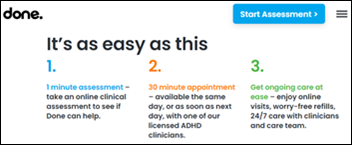
Ruthia He, founder and CEO of ADHD-prescribing site Done, is convicted on federal charges of illegally distributing Adderall, committing healthcare claims fraud, and conspiring to obstruct justice. The company’s clinical president, David Brody, MD, was also convicted on the distribution and fraud counts.

HHS OIG’s deputy inspector general calls it “one of the most egregious abuses of telehealth that we’ve seen.”

Prosecutors say the billion-dollar startup raised investor money by offering frictionless access to 40 million doses of Adderall and other stimulants and spent $40 million on social media ads during the pandemic to target drug seekers and convince people that they had ADHD.

The company required clinicians to rush first visits, paid nurse practitioners up to $60,000 per month to refill prescriptions without patient contact, and barred clinicians from discharging patients even when families reported Adderall-induced psychosis.

The obstruction charge stems from He moving the company’s operations to her home country of China to hinder evidence discovery. Each defendant faces up to 20 years in prison.


Reader Comments

From IT Networker: “Re: HIMSS. Insiders say that layoffs started with managers on Monday and non-management on Wednesday. Entire teams were eliminated in some cases, while others were downsized to minimal staff. Hal reportedly used a top tier consulting firm to make the staff reduction and reorganization decisions, but those who remain still aren’t clear on direction.” Unverified, in the absence of a response to my inquiries from HIMSS. People who are better LinkedIn users than I am could probably find some newly available names. A reader’s notes from the Georgia HIMSS annual meeting last month quoted Hal Wolf as saying that membership has increased 75% over the past eight years. It’s shocking, shocking I say, that the hard-hitting, HIMSS-owned Healthcare IT News has shared no investigative reporting on the topic. Email me if you are an insider who has details and I’ll keep you anonymous.


HIStalk Announcements and Requests

Last chance to sign up as a new or returning HIStalk sponsor to get year-end spiffs. Contact Lorre.

It’s going to be mighty quiet in health tech land starting right about now, so I’ll probably skip some updates between now and New Year’s Day.  


Sponsored Events and Resources

None scheduled soon. Contact Lorre to have your resource listed.


Acquisitions, Funding, Business, and Stock

WellBeam, which facilitates information exchange between the EHRs of acute care providers and those of post-acute care providers, raises $10 million in Series A funding.

Arbiter launches with $52 million to offer AI solutions that automate administrative healthcare tasks like appointment scheduling, follow-up, and referrals.

Ember, an AI-powered denial prevention software startup, announces $4.3 million in seed funding.

image

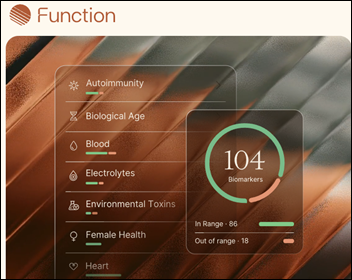
Function, which offers lab test memberships, raises $298 million in a Series B funding round that values the company at $2.5 billion. 


People

image

LiveData hires David Owen (Symplr) as chief product officer.


Announcements and Implementations

image

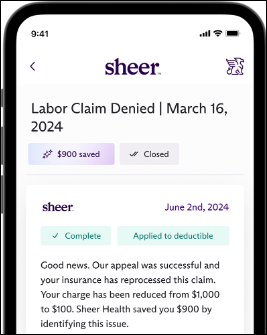
Sheer Health rolls out an app that lets consumers compare their medical bills to their insurance coverage so that they can understand deductibles, co-pays, and benefits. The app uses AI and human reviewers to answer questions, and the company offers billable services to contest denied claims and out-of-network determinations.

image

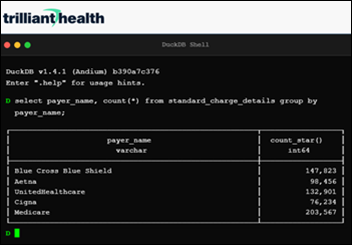
Trilliant Health publishes a machine-readable dataset of the negotiated prices of 5,000 hospitals, which it obtained from hospitals that are required to publish them by the Hospital Price Transparency rule.

The American Medical Association will develop and disseminate AI learning tools for medical schools and provide CME to upskill practitioners.


Privacy and Security

image

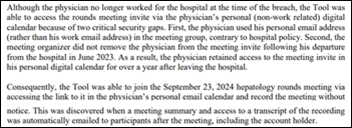
In Ontario, Canada, an AI-powered bot sends confidential patient details from an unnamed hospital’s grand rounds meeting to 65 invitees, 12 of whom no longer worked there. A doctor who had left the hospital a year earlier sent an Otter.ai “meeting agent” to attend the virtual meeting in his place. The tool then emailed the transcript, including full details on seven patients, to everyone on the invitee list.


Sponsor Updates

  • Optimum Healthcare IT will partner with non-profit solution provider Celerate to develop a chatbot for neurosurgeons.
  • Visage Imaging will showcase innovations, including AI, to its Visage 7 Enterprise Imaging Platform at RSNA.
  • Vyne Medical offers a new case study titled “How Automation is Shaping the Future of Document Management at VHC Health.”
  • Artera promotes Michael Jensen to CFO.
  • Altera Digital Health adds Sunrise Thread AI, its new ambient scribe and note generation assistant, to its Sunrise EHR.
  • Kyruus Health publishes a new report titled “”From Crisis to Control: Executive Insights to Transform Care Guidance with Data and AI.”
  • Ellkay offers a new success story featuring West Feliciana Hospital titled “Empowering Rural Healthcare: From Integration to Enterprise Data Management.”
  • Findhelp will host a Washington Social Care Summit December 4 in Seattle.
  • Five9 introduces updates to its Genius AI Suite, introducing AI across routing, quality management, and analytics.
  • Visage Imaging propels AI optimized enterprise imaging at RSNA 2025.
  • Healthcare Growth Partners advises Tonic Health on its sale to Luma Health.
  • InterSystems establishes a public sector subsidiary.
  • AdvancedCare launches Inbox Health’s billing communication and payment technology across its provider network.
  • Health Data Movers releases a new episode of its “Quick HITs” podcast titled “Advancing Community Health Through Innovation with Alex Romillo & Oscar Perez.”
  • Healthmonix welcomes Akira Health of Fresno and Akira Health of Los Angeles as new customers.
  • Infinx releases a new case study titled “How an Academic Health Network Achieved a 70% Revenue Growth & 88% Increase in Charge Volume.”
  • CommonWell Health Alliance completes its technical migration to Ellkay.
  • Linus Health will present new evidence validating its AI-enabled tools for early detection and trial readiness at the Clinical Trials on Alzheimer’s Disease conference December 1-4 in San Diego.

Blog Posts


Contacts

Mr. H, Lorre, Jenn, Dr. Jayne.
Get HIStalk updates.
Send news or rumors.
Follow on X, Bluesky, and LinkedIn.
Sponsorship information.
Contact us.

Comments Off on News 11/21/25

EPtalk by Dr. Jayne 11/20/25

November 20, 2025 Dr. Jayne 12 Comments

Hot off the presses, the new Oracle Health EHR has received certification for ambulatory use and approval for electronic prescribing of controlled substances.

Oracle claims that the EHR was built independently of the original Cerner platform and that it has AI integrated within the system rather than being an add-on. The tool includes AI-supported information retrieval using voice commands and contains information on diagnoses and lab results that are specific to an individual patient context.

The EHR was certified by the Drummond Group, and details about the certification can be found here. For those who may have seen it, I’m curious how different it is from the current Oracle offerings and how the usability compares. If anyone from Oracle Health is interested in sharing a demo, feel free to reach out.

I recently learned that the AMA Journal of Ethics will cease publication, with the December 2025 issue being its last. The news was unexpected, especially considering that authors and editors were planning issues through 2026 and into 2027.

The journal was unique because of the involvement of students and trainees who worked in partnership with professional editors to create themed issues. Speculation is that the Journal’s demise is largely due to financial issues, since it is open access and generates no advertising revenue.

Many physicians are skeptical about the value of the American Medical Association in today’s healthcare climate, and the Journal could have been viewed as something they funded purely because it was the right thing to do. Eliminating it brings up questions about the direction of the organization and the other factors that might have been at play in the decision.

The Minnesota Department of Health is preparing to include wastewater data in its disease surveillance reporting, although I haven’t seen it appear yet on the department’s website. Wastewater sampling gained widespread attention during the COVID pandemic as a method of detecting potential outbreaks. It has also been used to monitor the spread of influenza and respiratory syncytial virus. Given waning vaccination rates, having passive capabilities for early detection is essential.

Medical students are panicking after the news that an AI tool that is used for residency application review and screening has made errors in the display of student grades. The tool was designed to transfer grades from academic transcripts to a summary page. The vendor did its best to minimize the issue, stating that, “there is no current evidence that applicants’ interview outcomes have been impacted.”

The company plans to form an AI advisory board with student members as well as representatives from medical schools and residency programs. They are also building a portal that will allow students to see how their data is displayed and indicate whether it is accurate. This is slated to be live by the summer of 2026, but I imagine the incident will result in a lack of confidence among users.

For those of us who worked on the front lines during the worst parts of the COVID pandemic, speculation continues about the potential long-term side effects of the virus given its impact on so many tissues and body systems. It may be decades before we know, similar to when researchers discovered that shingles is linked to the chicken pox virus.

Along those lines, a recent article in Science Translational Medicine looks deeper at the evidence that links Epstein-Barr virus and the development of systemic lupus erythematosus. Given the high rates of exposure to the virus and the many different impacts of lupus, this is exciting research.

Speaking of academic pursuits, a research letter in the Journal of the American Medical Association looked at the impact of social media posts on the promotion of certain prescription medications. Social media content is more challenging to regulate than old-school TV or radio commercials since influencers often do not declare the sources of their funding.

The authors looked at a sampling of social media posts from 2023 and found that “drug promotion content is frequently posted by individual creators, lacks essential risk information, and bears the hallmarks of undisclosed marketing.” Physicians are already burned out, and having to educate and counsel patients about the veracity of claims by individual content creators is just one more thing weighing down on them.

Another AMIA Annual Symposium is in the books, and I have to say I’m tired. It was five days of full-throttle clinical informatics presentations, punctuated by ad hoc conversations, sharing ideas, and meeting new people.

I had an unusually chatty Uber driver on my way back to the airport and was surprised to learn that he is a former healthcare executive from one of Atlanta’s larger integrated delivery networks. After 20 years in the business, he decided that he didn’t want to be part of a process that was causing moral injury to physicians and limiting options for patients. He is doing contract work for a medical publishing company, but enjoys occasional Uber trips for the social outlet. I’m not sure if his other fares this week were healthcare-adjacent or not, but it was an interesting conversation.

Although sessions formally concluded midday Wednesday, many of the attendees wrapped it up at the AMIA Dance Party on Tuesday night. As I was catching up on email, I was delighted to see a conversation on the AMIA Connect forum that looked at what kinds of playlists various large language models might generate for such an occasion.

Based on a prompt about attendees ranging from their 20s to their 70s, Gemini 3.0 referred to the multi-generational dance floor as “the Holy Grail of JD scenarios.” Gemini offered commentary on each of the selections (referring to Neil Diamond’s “Sweet Caroline” as “the ultimate drunk uncle song” and offered two “emergency rescue” options should the DJ lose control. It also offered to convert the list into a Spotify-ready format.

ChatGPT 5.1 offered a list to make attendees “happy and mildly dehydrated,” but didn’t offer song-specific commentary. It did offer tips on actually making the mix happen.

Claude Sonnet 4.5 promoted its list by saying it “avoided jarring genre jumps that would empty the dance floor” and had some descriptions with the song list, but they weren’t as expansive as what Gemini offered.

Meta Llama 4 offered an oddly numbered list that had little commentary.

I’m curious if anyone else has done an event playlist using AI and whether it delivered as much fun as you hoped. Will we see AI replacing DJs in the future? Inquiring minds want to know.

What song should no dance party be without? Leave a comment or email me.

Email Dr. Jayne.

Morning Headlines 11/20/25

November 19, 2025 Headlines Comments Off on Morning Headlines 11/20/25

This former Eli Lilly exec just raised a $52 million seed round from family offices to build a new healthcare AI startup

Arbiter launches with $52 million to offer AI solutions that automate administrative healthcare tasks like appointment scheduling and follow-up and referrals.

Founder/CEO and Clinical President of Digital Health Company Convicted in $100M Adderall Distribution and Health Care Fraud Scheme

A federal jury convicts the founder and CEO and clinical president of Done for their roles in a scheme to illegally distribute Adderall over the Internet, and to conspire to commit healthcare fraud through the submission of false reimbursement claims.

FamilyWell Health Announces $8M Series A Funding to Accelerate Nationwide Expansion of Integrated Women’s Mental Health Care

FamilyWell Health, which helps providers embed its virtual mental healthcare services for women into their practices, announces $8 million in Series A funding.

WellBeam closes $10 Million Series A to Transform Clinical Interoperability and Care Coordination between Acute and Post-Acute Providers

Post-acute care coordination software company WellBeam raises $10 million in Series A funding.

Nexus Venture Partners Leads $4.3M Seed Funding in Healthcare AI Startup Ember

Ember, an AI-powered denial prevention software startup, announces $4.3 million in seed funding.

Comments Off on Morning Headlines 11/20/25

Healthcare AI News 11/19/25

November 19, 2025 Healthcare AI News Comments Off on Healthcare AI News 11/19/25

News

Google releases Gemini 3 and Google Antigravity, a new agentic AI development platform.

Microsoft announces Agent 365, which helps enterprises deploy, organize, and govern agents that are developed internally or provided by ecosystem partners.

image

An anecdotal New York Times review of how people are using AI chatbots for medical purposes shows interesting points:

  • A survey from last year shows that one in six adults, and one in four of those under 30, regularly seek medical information from AI bots like ChatGPT.
  • The primary reasons for asking AI are lack of medical system support, excessive wait times, inattentive doctors, and unaffordable bills.
  • Many users say that AI is kinder than their human providers.
  • One woman copied ChatGPT’s responses and sent them to her oncologist to show how their bedside manner could improve.
  • Another patient, frustrated by her PCP’s generic advice in response to her bone density questions, asked ChatGPT the same questions and immediately received specific diet instructions. She emailed her doctor to complain that ChatGPT gave her more information than they did. The patient says she does not not fully trust ChatGPT but is frustrated with the state of corporate medical care.

Business

Arbiter emerges from stealth with $52 million in funding to apply AI to longitudinal patient records to match referrals, automate authorizations, support outreach, and manage scheduling.

image

Ember, which offers AI technology for proactive denial prevention, prior authorizations and appeals, eligibility checks, and charge capture, raises $4.3 million in seed funding.

Medical imaging company Nanox will acquire VasoHealthcare IT, a health IT implementation services provider that will accelerate deployment of Nanox’s AI solutions.

RapidAI earns FDA clearance for its aortic disease assessment and management AI tool.

Medscape transforms searches of its site to an AI tool that can answer questions using its continuously updated content, peer-reviewed medical literature, and medical news.


Research

A Black Book Research survey of hospital leaders finds that hospitals are quickly piloting AI solutions, but lack the governance that is needed to ensure clarity, accountability, and proof of claims. Hospitals often fail to measure success factors during pilots and sign contracts that don’t require re-validation when the vendor makes major updates to its AI model. Three-fourths of respondents say their hospital has experienced at least one AI pilot that didn’t scale, most often because of endpoints that fail to measure clinical or operational impact, lack of performance data, and failure to integrate AI tools into existing workflows.


Contacts

Mr. H, Lorre, Jenn, Dr. Jayne.
Get HIStalk updates.
Send news or rumors.
Follow on X, Bluesky, and LinkedIn.
Sponsorship information.
Contact us.

Comments Off on Healthcare AI News 11/19/25

HIStalk Interviews David Lareau, CEO, Medicomp Systems

November 19, 2025 Interviews Comments Off on HIStalk Interviews David Lareau, CEO, Medicomp Systems

David Lareau is CEO of Medicomp Systems.

image

Tell me about yourself and the company.

I have been with Medicomp for a number of years. Our core competence is that we produce a clinical data engine that we call a Clinical Knowledge Graph. We’ve been building it based on expert input since 1978.

We have been through many technology transitions. Now we’re in the world of AI with clinical applications. We feel that we are well positioned in that area since we have very domain-specific knowledge for training small models to do what we need them to do.  

Will the customer cost of using AI technology that is sold by big tech firms that have to keep investors happy going to inevitably increase?

We think that the Butcher’s Bill is going to come in for these large models that are expensive to use. People already are starting to say, “We are going to use AI to train for specific workflow issues and specific clinical domain issues.” We believe right now that we are well positioned in that space.

We are having great success in terms of performance and lower cost by using a small model rather than a large model. Our engine, and all the power that’s in it, can be run on CPUs rather than GPUs, inside a vendor’s own security environment without going out there. We can do that because we have a target of 400,000 clinical concepts with hundreds of millions of links for diagnostic relevancy and coding relevancy. To be able to do that with a small model is because we have a clinical target that’s been very well-defined over the last 40-some years. 

The vendors that we are working with have seen their costs drop by using a smaller domain-specific model that is trained on our clinical data points that link to our engine. The roadblock to that was the lack of a clear standard for how to communicate between applications using various aspects of AI. The MCP, or Model Context Protocol, developing as a standard has allowed us to expand the number of partners that might be able to take advantage of our unique Clinical Knowledge Graph.

That’s why what’s happening in the industry is an opportunity for us rather than a threat. If I want to know the 250 clinical concepts that might be relevant for somebody with chronic kidney disease, that’s in our engine. The MCP allows us to present a standardized way to request that information from our engine and send it back to the application, whether it’s a language model or somebody else that wants that information. It will be what drives the integration of all these AI agents that people are building.

It was an essential, missing building block for communications between systems that are using AI to do very specific tasks. When Epic, for instance, announces that they’re building hundreds of AI agents, they will be using things like MCP to communicate between various aspects of their system.

Has AI changed your business strategy?

It has. We definitely have had to adapt to it. The conversational AI still captures text. It does a very good job at it. We’re really astonished and pleased at how effective it is at removing the need to enter text into a medical record. But it’s still text.

We have been using AI. We’ve been using language models internally to fine tune our offerings and our tools. We are building a small model, domain-specific, task-specific ways to use our data, extract data from text, and then operate on it to service all the downstream things that you have to do, like quality measures, adequacy of documentation for Medicare’s Hierarchical Condition Categories, that sort of thing. We’ve had to embrace it and figure out how to use it transparently, effectively, and affordably in the clinical domain. 

It is an exciting time as the AI tools have matured, the power has matured, and you have everybody in the industry rowing in the same direction. But they need clinically specific tools to get where they need to to make it affordable and useful at the point of care.

We saw it as more of a threat two or three years ago. A threat being anything that causes people to not need to do business with you today is a competitive threat. When the frenzy over AI started a few years ago and really built lately, it really was a competitive threat to us because it made people sit on the sidelines and wait to let AI figure it out. Now people are realizing that generalized predictive pre-trained transformer is not enough for clinically specific work. That’s where we are hooking it into our Quippe Clinical Knowledge Graph to do very specific things for clinicians. People are realizing the proper uses of AI in clinical medicine and the things that it doesn’t do so well.

We are pleased with the way things have developed over the last 12 months, as the rubber is starting to meet the road with AI in medicine.

Startups and big tech companies might be slow to realize that AI and ambient documentation are table stakes that aren’t much of a business moat. Does your phone ring from companies that have the technology but need help understanding how to integrate it into healthcare workflows?

I get four or five inquiries a week. Most people that call when they hear the specificity of what we’re doing say, “We’re not quite to that point yet. We’re just trying to figure out how to compete with all the other people that are in our space.”

We’re starting to see that people are actually putting these applications into use. Those are the more serious inquiries when calling us. They say, “We’ve got the table stakes working, but now we’re having trouble meeting all the downstream requirements because we just have text, we don’t have data.” They need to get there because when the government puts in very specific requirements for things like quality measures. They are looking for specific data points. That’s what’s in our engine.

They say, “The acquisition of documentation is no longer an issue. Now we need to do something with all the downstream processes that are tied to the information in that text.” When they hit that wall, that’s when they’re calling us.

You wrote something about instafraud, the claim by insurers that some providers are using AI to increase billing, and their intention to use AI to stop it.

We’re in initial conversations with some folks in compliance and regulation. One example where it shows up is in Medicare Advantage, which was supposed to reduce the cost of caring for people people in Medicare. It uses risk adjustment codes, Hierarchical Condition Categories, to identify somebody who has a disease that puts them at risk of poorer outcomes, and then to manage those conditions. But to do that, you have to code a diagnosis to get that risk, and then receive more money put in your risk pool each year. 

AI was algorithms even before AI became a thing. People were using algorithms to say, “This guy has a high creatinine. He probably has chronic kidney disease, so let’s code that.” If you code it and send it, you get a higher risk score, but the documentation has to support it. 

When we published our E&M algorithms when the 1997 guidelines first came out, the most common question we got was, “You guys have all this data that can support a code. Could you use it to tell us the three things we need to do to get a higher level of service to get more money?“ We said that we could, but the government has seen what we’re doing and warned us off and said, “If you do that, we’re going to come after you.” So that feature was disabled. You can’t ask it the minimum you needed to document to get a higher code.

The same thing started to happen about five years ago with risk adjustment. They called it “suspecting.” They wanted to use AI to look at the record and find potential evidence for one of these HCCs that would support a higher code. This would be submitted without necessarily seeing that the documentation supported that the patient actually had that condition.

Suspecting is a valid thing if there is a condition that’s unaddressed and you then address it, but it’s fraud if you look for the possibility that somebody has something and then code that they have it without investigating whether they actually do.

There’s a tug-of-war going on between the payers, the regulators, and the enterprises over the proper handling of patients with chronic conditions in the Medicare Advantage program. The government is starting to pay a lot of attention to that because Medicare Advantage was supposed to cost less per patient than traditional Medicare fee-for-service and that hasn’t turned out to be the case. I think it’s because people are over-coding for risk factors.

How does Epic’s public sharing of its AI roadmap affect innovation?

There are a number of layers to that question. Epic is not the only large vendor that I would call an impediment to innovation just because they’re a dominant in their space. We do quite a bit of business in Asia, and this is not limited to the United States.

Years ago, we had another unnamed vendor in the US, not Epic, whose customers told them, “We really like what this niche vendor is supplying. I want it.“ We had the experience with a different vendor years ago, where they said, “We’re getting a lot of customers that are asking for what you have. We’re probably going to develop that ourselves so we’re not interested, but we are willing to work with you. But since we think of our customers as an asset, you’re going to have to pay us the bulk of your revenue for access to that asset.”

That’s the moment where I realized that dominant vendors, because this vendor was large in the space then, tend to treat their customer as an asset and as turf that they own, not as an obligation to provide a higher level of service. When vendor app store organizations were first set up, the agreement that you had to sign as a niche vendor said, “We need to vet what you have. You need to show it to us. You need to show us your source code so that we can make sure it doesn’t create any vulnerabilities on our system. But if we then decide to do something like that ourselves, you have no recourse to us.”  That scares off the niche vendors.

We’ve also had the situation where a large consulting company that specializes in implementations for the large HISs said, “We have a lot of customers asking for what you have. We have a lot of people asking for the kinds of things that you and other companies like yours provide. But we also have $90 million a year in consulting revenue from this vendor for implementation assistance, and they’ve told us that we’re putting that at risk if we start to introduce these niche best-of-breed vendors into their ecosystem.” So it really does stifle innovation in that sense.

Do companies call you wanting to buy Medicomp rather than try to build complex healthcare technology?

Yes, we get that from investors, private equity, and larger vendors. The issue for us is that we do one thing. We focus on it. We don’t do anything else. Being employee owned, basically, allows us to focus on what we do and not get distracted, and we plan to keep doing that.

As people see how you can leverage our Clinical Knowledge Graph for a very specific thing that has a widespread need, we get a lot of activity. I thank people very politely and explain that we see a model of sustaining what we’re doing for quite a while, even into the next generation of the company.

What will be important to the company’s strategy over the next few years?

We need to make certain that we are using these new AI tools to make ourselves more productive while producing our Clinical Knowledge Graph. With the new Model Context Protocol, MCP, stuff that is coming out, we’ve been API based for a long time. We make it easy and transparent to link to our clinically data specific APIs to accomplish specific tasks. Acquiring documentation, no longer a problem. Acting upon it and doing something with it is the next step.

Our strategy over the next three to four months is that some EHR vendors will start showing the intersection between ambient listening coming in as documentation, then link to our engine that will validate, filter, and present that information and accomplish all the specific things that you have to do with the data, such as getting the right billing codes, meeting the quality measures, and verifying adequacy of documentation for HCCs. Linking our stuff and allowing our engine to be accessed through the MCPs to accomplish specific tasks other than just documentation.

We see great potential in that space. We will have the first few implementations of that hitting the market over the next few months with some specialty-specific EHR vendors.

Comments Off on HIStalk Interviews David Lareau, CEO, Medicomp Systems

This Week in Health Tech 11/19/25

November 19, 2025 This Week in Health Tech Comments Off on This Week in Health Tech 11/19/25
LinkedIn weekly 111925 - Copy
Comments Off on This Week in Health Tech 11/19/25

Morning Headlines 11/19/25

November 18, 2025 Headlines Comments Off on Morning Headlines 11/19/25

US jury says Apple must pay Masimo $634 million in smartwatch patent case

A federal jury orders Apple to pay Masimo $634 million for violating the company’s blood oxygen reading patents in Apple Watch’s workout mode and heart rate notification feature.

MRO Accelerates Clinical Research Innovation with the Acquisition of Clinetic

MRO acquires Clinetic, which uses EHR data to help providers and life sciences companies find, screen, and enroll patients for clinical trials.

HHS eyes AI to support caregivers in multimillion-dollar competition

HHS launches the $2 million Caregiver Artificial Intelligence Prize Competition to discover AI-based solutions focused on supporting professional and personal caregivers.

Comments Off on Morning Headlines 11/19/25

News 11/19/25

November 18, 2025 News Comments Off on News 11/19/25

Top News

image

A federal jury orders Apple to pay Masimo $634 million for violating the company’s blood oxygen reading patents in Apple Watch’s workout mode and heart rate notification feature.

The legal battle between the companies has involved numerous lawsuits over six years, with the federal government instituting a ban in 2023 on imports of select Apple smartwatches because of the technology infringement.

Apple subsequently introduced an updated, import-friendly version of its technology.


Reader Comments

From Funicular: “Re: HIMSS. Staff tell me that layoffs started Monday as part of a 30% workforce reduction.” Unverified. I asked HIMSS to comment as I always do, which resulted in the usual lack of response. They have also not responded to my repeated requests for their updated nonprofit tax filings, the most recent of which that I have seen is from 2021.

From AccelerateHIMSS: “Re: HIMSS. Heading toward a 60% workforce reduction by year’s end. Did they spend the HIMSS20 insurance payout and rumored $150 million sale of the annual conference on the failed Accelerate instead of refunding attendees and exhibitors, which would have allowed them to thrive?” Unverified.


Sponsored Events and Resources

None scheduled soon. Contact Lorre to have your resource listed.


Acquisitions, Funding, Business, and Stock

image

MRO acquires Clinetic, which uses EHR data to help providers and life sciences companies find, screen, and enroll patients for clinical trials.


Sales

  • University of Illinois Health and EFW Radiology in Canada select enterprise imaging technology from Agfa HealthCare.
  • Advanced Radiology Management will implement Visage Imaging’s Visage 7 Enterprise Imaging Platform in a five-year, $29 million contract.

People

image

Divurgent names Vitalize Consulting Solutions co-founder Danny Arnold EVP of growth and strategy.

image

Penn State Health (PA) names Dennis Sutterfield (SUNY Downstate Medical Center) VP/CIO.

image

Brandon Theophilus (NextGen Healthcare) joins Basata as SVP of growth.

image

Unite Us appoints Sean Burke (Ascend Learning) president.


Announcements and Implementations

Humana goes live on Epic’s Coverage Finder and Digital Insurance Card Exchange capabilities for its 800,000 Medicare Advantage members, which provides insurance verification and streamlined check-in.

Edifecs introduces a member consent management solution for health plans.

A CHG Healthcare survey of physicians finds that 82% are not highly engaged in their workplaces, 59% don’t trust their executive leaders, and 60% say their leadership doesn’t ask for their input.

Healthcare technology consulting and staffing services firm ROI International renames itself Quoris.

image

Early users of Oracle Health’s Clinical AI Agent for ambient documentation give the product a 94% “would recommend” in a new KLAS report, with strong integration, flexible cost, and product accuracy being its key strengths.


Privacy and Security

An Illinois school superintendent is charged with felony misconduct after ordering a county health nurse to share information about students who were diagnosed with hand, foot, and mouth disease. The superintendent and two IT employees were arrested for violating student privacy laws.


Other

The family of a university freshman who died by suicide files a wrongful-death lawsuit against telehealth firm Hims & Hers Health Inc. for allegedly prescribing an antidepressant that is known to increase suicide risk without proper patient evaluation. Also named in the lawsuit is a fraternity that the lawsuit alleges hazed the student and contributed to alcohol misuse. The family says that Hims & Hers targeted their son through an Instagram ad, prescribed him a 90-day supply of antidepressants with only text messaging contact, and doubled his dose 30 days later.

image

Northern Maine Medical Center launches its Comprehensive Patient Assessment & Specialist Support program to offer critical care and pulmonology patients bedside virtual consults with specialists. The hospital will add neurology and cardiology to the COMPASS program next year.


Sponsor Updates

  • Arcadia will exhibit at NAMD Fall 2025 November 19-21 in National Harbor, MD.
  • Artera will exhibit at ModMed Momentum November 21-23 in Orlando.
  • Linus Health will present new evidence validating its AI-enabled tools for early detection and trial readiness at the Clinical Trials on Alzheimer’s Disease (CTAD) conference in San Diego December 1-4.
  • Black Book Research releases the “2026 Health System & Hospital AI Governance Resource Guide.”
  • KLAS recognizes Impact Advisors as best positioned to meet specific organizational needs in theKLAS Healthcare HIT Professional Services Outlook 2025 Report.”
  • Agfa HealthCare, Concord Technologies, Elsevier, PerfectServe, Rhapsody, Wolters Kluwer Health, and Visage Imaging will exhibit at RSNA 2025 November 30-December 3 in Chicago.

Blog Posts


Contacts

Mr. H, Lorre, Jenn, Dr. Jayne.
Get HIStalk updates.
Send news or rumors.
Follow on X, Bluesky, and LinkedIn.
Sponsorship information.
Contact us.

Comments Off on News 11/19/25

Morning Headlines 11/18/25

November 17, 2025 Headlines Comments Off on Morning Headlines 11/18/25

No Barrier Raises $2.7M to Remove Language Barriers in Healthcare

AI medical translation software startup No Barrier announces $2.7 million in seed funding.

Siemens Healthineers could divest diagnostics arm by 2030, says CEO

Siemens Healthineers is considering selling or spinning off its diagnostics division within the next four years, with its remaining focus on its imaging and precision therapy units.

Lawmakers signal support for using AI to prevent veteran suicides in FY26 VA funding bill reports

House and Senate committee budget reports prepared ahead of the recently passed VA funding bill indicate strong support for using AI as part of the VA’s continued efforts to prevent veteran suicides.

Comments Off on Morning Headlines 11/18/25

Text Ads


RECENT COMMENTS

  1. RE NEJM piece: He shouldn’t future-conditional with “they can retreat, which might mean abdicating medicine’s broad public role, perhaps in…

  2. The sentence was "most people just go to Epic UGM" - that's people going to Epic's annual user conference and…

  3. Merry Christmas and a Happy New Year to the HIStalk crowd. I wish you the joys of the season!

  4. "most people just go to Epic" that's a problem because then EPIC becomes a monopoly in healthcare, if it isn't…

Founding Sponsors


Platinum Sponsors


Gold Sponsors


RSS Webinars

  • An error has occurred, which probably means the feed is down. Try again later.