
Recent Articles:

Readers Write: The Missing Clinical Voice in Healthcare IT

December 8, 2025 Readers Write 1 Comment

The Missing Clinical Voice in Healthcare IT
By Susan Grant, DNP, RN

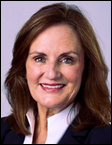
Susan Grant, DNP, RN, is chief clinical officer at Symplr.
image

For years, the weight of healthcare technology decisions has fallen solely on IT teams, inadvertently leaving clinicians and IT operating in silos. Yet clinicians play a critical role in determining whether technology implementations succeed. Deloitte research shows that clinicians rate technology initiatives far more positively when we are actively involved, from design through implementation.

Despite this, only 38% of frontline clinicians report having been consulted on digital health workflows or new applications. We need to bring the clinical perspective into technology decisions earlier and  more consistently. With physician use of AI already up 78% from 2023, clinicians both want and deserve a larger role in shaping these conversations.

The value of clinical input
Health systems must engage across departments, from IT to executives and clinical teams, to deliver successful technology implementations. Nurses alone make up the largest segment of the healthcare workforce. Because clinicians directly experience the problems that many solutions aim to solve, they offer essential insights that should guide decision-making.

Cross-functional communication is equally critical. Open discussions about technology challenges and workflow pain points help to align around the shared goal of streamlining work so that providers can focus on patient care. These conversations also allow IT professionals to demonstrate the benefits of new tools early, reducing resistance and building confidence that the technology reflects clinicians’ needs.

Historically, clinicians have too often been excluded from these conversations, leading to painful rollouts, misaligned expectations, and limited influence over tools designed for them. Bringing the clinical voice to the table can change all of that.

Clinicians want to be more involved

Clinicians want to play a bigger role in healthcare technology decisions. Our 2025 Compass Survey shows that 85% of clinicians want more influence over software purchasing decisions, up from 72% last year and 51% in 2022. This trend shows that care teams no longer view technology and innovation as strictly an IT responsibility. They recognize the value technology brings to their daily work and to delivering optimal care.

IT and operations professionals also acknowledge the advantage that clinicians bring to these decisions. Both groups show increased interest in clinician involvement. This year’s survey found that 77% of operations leaders and 76% of IT teams actively seek clinician participation.

What’s next?

Organizations are seeking to implement technology that improves care delivery, including AI and scheduling tools. Ensuring that clinicians participate throughout the full implementation process prevents problematic deployments and increases ROI. As a former nursing leader at large health systems, I’ve seen the direct positive impact digital tools can have on clinicians, saving time, reducing stress, and ultimately improving the healthcare experience for patients.

We are in the midst of a clinical shortage, with the National Council of State Boards of Nursing reporting that 40% of RNs intend to leave the field in the next five years. Ensuring that clinical voices guide technology decisions can improve daily life for this workforce.

Strengthen alignment and communication

Healthcare leaders can take several approaches to address this issue. Teams should begin by aligning on central priorities across clinical and IT groups to foster communication and gain a better understanding of each other’s goals. While they may have different priorities, both sides share the guiding objective of improving patient care.

Leadership should demonstrate the value of technology upfront to strengthen clinicians’ trust. After facing so many initiatives that have not helped, clinicians need concrete examples of how new tools can make their jobs easier.

To increase clarity and confidence in new tools, leadership should also provide comprehensive training and education for the healthcare workers who will use them. This approach offers transparency and addresses change fatigue, helping differentiate new technology rollouts from earlier efforts that left clinicians burned out.

Opening the lines of communication in a continuous and intentional way can transform how systems operate. When leaders gather clinical input before decisions and continue the conversation post-rollout, they increase collaboration, elevate clinician voices, and improve the success of each initiative.

Learn from past experiences

To share a personal example, in a previous role I saw nurses become frustrated with a new AI tool because incoming messages disrupted their communication with other providers. A simple conversation could have revealed this problem sooner. But because consideration of ongoing feedback was not a part of the post-implementation plan, no one realized that the tool designed to help them was instead creating more work.

When healthcare organizations use these strategies and place greater value on the clinical experience, they create a culture of innovation and collaboration that increases enthusiasm for change and avoids overpromising and underdelivering.
Morning Headlines 12/8/25

December 7, 2025 Headlines Comments Off on Morning Headlines 12/8/25

ECU Health partners with Artisight to bring Smart Hospital technology to eastern North Carolina

ECU Health will implement Artisight’s smart hospital platform, initially focusing on telehealth services for neurology and intensive care across five hospitals.

Nova Scotia’s One Person One Record patient information system goes online at IWK Health Centre Saturday

Nova Scotia Health’s IWK Health Centre becomes the province’s first facility to go live on what will become an enterprise roll out of Oracle Health.

FDA Launches TEMPO: A First-of-Its-Kind Digital Health Pilot to Expand Access to Chronic Disease Technologies

The FDA launches a pilot that creates a risk-based regulatory pathway for chronic disease digital health devices, giving manufacturers enforcement discretion while they gather and publish real-world performance data.

Comments Off on Morning Headlines 12/8/25

Monday Morning Update 12/8/25

December 7, 2025 News Comments Off on Monday Morning Update 12/8/25

Top News

image

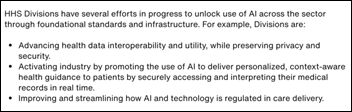
HHS plans to expand its use of AI, primarily to improve administrative efficiency, and also to deliver real-time patient guidance by analyzing medical records.


HIStalk Announcements and Requests

image

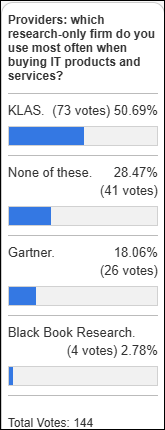
Three-fourths of poll respondents consult a research-only firm when making buying decisions, most often KLAS.

New poll to your right or here: Will health systems meaningfully benefit from adding an C-suite AI job, such as chief AI officer?

image

Reader donations and matching funds provided Ms. M’s NC-based student-run school news program with audio and video equipment. She reports, “This is such a blessing to our student news team! They are so excited to bring the school news to our school, but we are struggling to make it work with limited technology. These items, such as the microphones, will be SO helpful so that we are able to be heard around the building! We have such ambitious, funny, bright students who are excite to bring something school wide.”


image

Welcome to new HIStalk Gold Sponsor FinThrive. The Plano, TX-based company helps 3,200 healthcare organizations increase revenue, reduce costs, improve patients financial experience, and ensure regulatory compliance across their entire revenue cycle continuum. Its SaaS-based RCM Platform delivers the industry’s widest breadth of capabilities, including integrated workflows supporting patient access, revenue integrity, claims management, contract management, and collections management teams within a centralized work environment. The company helps its customers bring modern digital experiences to their patients, including self-scheduling, virtual check-in, price estimations, patient payments and payment plans, and ongoing SMS-based secure communications.  – with no app downloads required. Its platform also leverages machine learning, robotic process automation, end-to-end RCM analytics, and billing and coding education resources to increase efficiency and drive sustained ROI. Thanks to FinThrive for supporting HIStalk.


Sponsored Events and Resources

None scheduled soon. Contact Lorre to have your resource listed.


Acquisitions, Funding, Business, and Stock

image

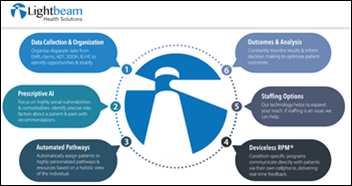
Lightbeam Health Solutions acquires Syntax Health, whose platform supports value-based care contracting.

image

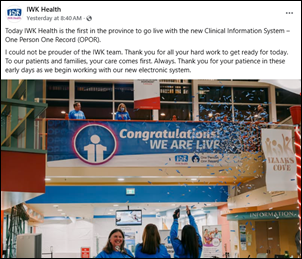
Nova Scotia’s IWK Health goes live on Oracle Health, the first hospital to do so under the province’s One Person One Record project.

image

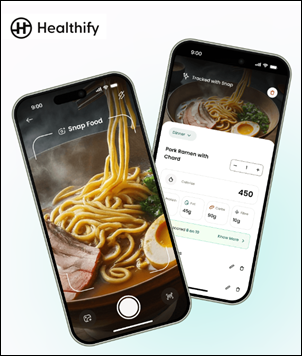
India-based Healthify expects to add more GLP-1 drug makers to its patient support program, which offers metrics tracking and coaching, following its new contract with Novo Nordisk. The company says that it has 45 million global users.


Announcements and Implementations

image

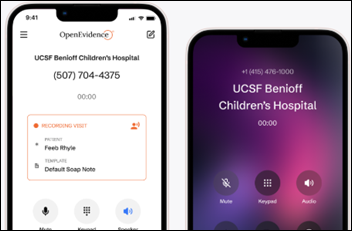
OpenEvidence releases a free dialer program that allows physicians to contact their patients without exposing their personal phone number. It integrates with the Visits portion of the company’s app to allow users to automatically create a clinical note from the call.


Government and Politics

The FDA launches a pilot that creates a risk-based regulatory pathway for chronic disease digital health devices, giving manufacturers enforcement discretion while they gather and publish real-world performance data.


Privacy and Security

BJC HealthCare calls out a “misleading” social media post that claims that the health system revokes parental access to their children’s records. It clarifies that its MyChart portal changes parental access from full to limited access when their child turns 12, but parents can still obtain records through its release process, all of which complies with federal and state privacy laws.

A US Embassy official assures Kenyans that their identifiable health records will not be shared with the US government under a new $150 million security agreement between the countries. A Kenya-based whistleblower claims that the deal grants full US government access to patient records, calls for sharing data with drug companies, and places Kenya’s data rights at risk by putting the agreement under US law.


Other

An Asheville, NC-based news site says that the soaring share price of hospital operator HCA Healthcare has boosted the net worth of co-founder and major shareholder Thomas Frist, Jr., MD to $42 billion, with the $15 billion jump so far this year making him the 47th richest person in the world.


Sponsor Updates

image

  • Judi Health staff volunteer with Nourishing Hope and sponsor 7,500 meals for Chicago families in need.
  • Black Book Research’s latest survey finds that RCM leaders feel that AI ambitions are running into data quality, governance, and integration barriers.
  • TrustCommerce, a Sphere company, and Qure4u partner to streamline and secure integrated patient payments.
  • Altera Digital Health offers a new client story titled “Horizon Health System continues driving better care with the help of Altera’s Paragon 24.1.”
  • WellSky releases its fourth annual “Evolution of Care” report.
  • HCTec publishes a new case study titled “Epic Implementation/ Go-Live Support with Staffing and Direct Hire for a Leader in Urgent Care Services.”
  • CHIME recognizes several Meditech customers with its 2025 Digital Health Most Wired designation.
  • Nordic releases a new episode of its “Designing for Health” podcast featuring Anna Schoenbaum, DNP and Srinath Adusumalli, MD.
  • Optimum Healthcare IT achieves AWS Generative AI Services Competency.
  • RLDatix will exhibit at IHI Forum 2025 December 7-10 in Anaheim, CA.

Blog Posts


Contacts

Mr. H, Lorre, Jenn, Dr. Jayne.
Get HIStalk updates.
Send news or rumors.
Follow on X, Bluesky, and LinkedIn.
Sponsorship information.
Contact us.

Comments Off on Monday Morning Update 12/8/25

Morning Headlines 12/5/25

December 4, 2025 Headlines Comments Off on Morning Headlines 12/5/25

VA staff flag dangerous errors ahead of new health records expansion

Media outlets report that the VA remains on track to expand its Oracle Health EHR rollout to 13 more medical centers in 2026 despite problems reported by clinicians at all six go-live sites.

Lightbeam Health Solutions Acquires Syntax Health, Expanding Value Based Contracting and Incentive Design Capabilities

Population health management company Lightbeam Health Solutions acquires Syntax Health, which offers value-based care contracting software.

US health department unveils strategy to expand its adoption of AI technology

HHS develops a strategy to coordinate the use of AI across its divisions, enhance employee efficiency, and innovate in the areas of public health and patient care.

Comments Off on Morning Headlines 12/5/25

News 12/5/25

December 4, 2025 News Comments Off on News 12/5/25

Top News

image

The Spokesman-Review and The Washington Post say that the VA remains on track to expand its Oracle Health EHR rollout to 13 more medical centers in 2026 despite the problems that clinicians reported at all six go-live sites.

  • VHA data indicates that the system was involved in 4,600 cases of patient harm, including six deaths.
  • Former VA Secretary David Shulkin says that the VA’s implementation was botched after he left in 2018 by trying to implement the system top-down from Washington instead of involving users.
  • Reported problems at the initial sites include disappearing notes, incorrect medication doses, and total system outages.
  • Staff reported alert fatigue due to a steady stream of email alerts from VA technical support about system problems.
  • Providers complain of increased burnout, reduced patient time, and fear of harming veterans due to system complexity and instability.
  • An internal VA study showed that system go-live was associated with a 30-40% drop in primary care visit volume, and increased wait times have not resolved.
  • The project’s $16 billion estimated cost is now at $33 billion, with one GAO official predicting that the final cost will be “hundreds of billions.”
  • A VA spokesperson said in a statement, “Biden political appointees’ mismanagement of VA’s electronic health record modernization effort resulted in a program that was nearly dormant for almost two years. The Trump administration won’t repeat those same mistakes and is already moving quickly to accelerate deployment of the system and bring the project to completion as early as 2031.”
  • The spokesperson says that staff satisfaction with the system is improving and that five of the original six sites report increased productivity compared to pre-implementation.

Sponsored Events and Resources

None scheduled soon. Contact Lorre to have your resource listed.


Acquisitions, Funding, Business, and Stock

image

Healthcare AI agent developer Artera raises $65 million in growth investment.  


Sales

  • Ob Hospitalist Group will implement Commure Autonomous Coding at 200 care sites.

People

image

AdvancedMD hires Nupura Kolwalkar-Rana, MS, MA (DNAnexus) as chief product and technology officer.

image

LiveData promotes Jeff Forbes, MBA to VP of commercial healthcare sales.


Announcements and Implementations

image

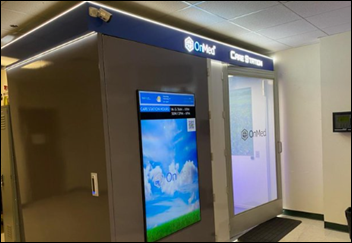
Medical kiosk maker OnMed will implement its CareStation clinic-in-a-box at 30 charter schools in a pilot project with 22Beacon, which provides real estate development, financing, and advisory services to charter schools. OnMed announced in October 2025 that it plans to go public via a SPAC merger.

Aetna lists the milestones it has achieved in its strategy to simplify healthcare experiences for providers and patients, which include combining prior authorizations for prescriptions and procedures into a single clinical review, introducing collaborative care models for Medicare Advantage members, and rolling out conversational AI solutions. 

image

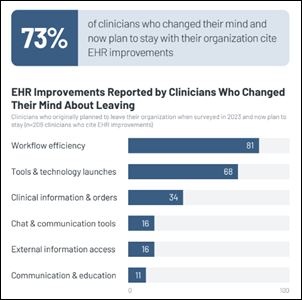
A new KLAS and Arch Collaborative report on clinician turnover finds that problems with organizational leadership top the list of causes, often triggered by a bad EHR experience. One clinician says that IT leadership pay should be pegged to patient satisfaction just as theirs is, while another says that IT protects its fiefdom and shows little interest in clinician needs.


Privacy and Security

Kaiser Permanente’s health plan will pay $46 million to settle a class action lawsuit that involves its 2024 use of web tracking technology.


Other

image

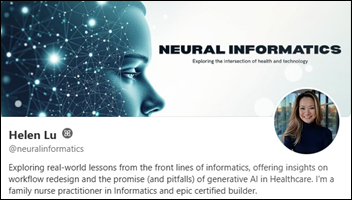
I ran across the Substack of Helen Lu, RN, MSN, clinical director of informatics and analytics at Community Health System, who is also a family nurse practitioner, insightful health tech analyst, and AI fan. She questions on LinkedIn why she can stream Netflix in 4K, yet downloading a diagnostic quality image takes 30 minutes. She says that the technology exists, but hasn’t been adopted:

  • Cloud-based imaging that is faster than on-premise servers.
  • Smart pre-fetching that occurs before the chart is even opened.
  • Progressive image loading that allows starting reading immediately instead of waiting for a full download.
  • Vision-language AI models that can choose the most relevant views upfront.
  • Networks that prioritize imaging over less-important traffic.

image

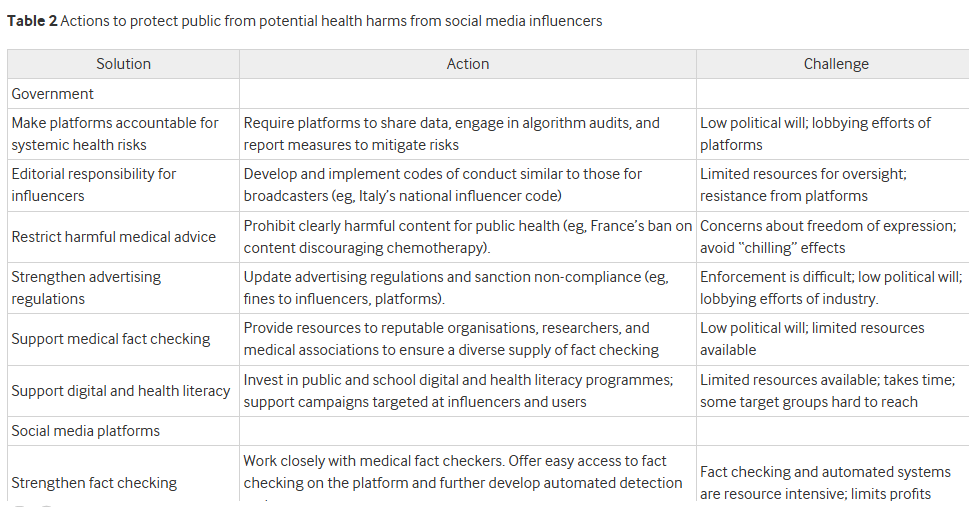
A BMJ article says that social media influencers shape public perception of medical guidance by promoting oversimplified or misleading advice that often conflicts with evidence-based recommendations. Influencers often lack expertise, are motivated by financial conflicts, and overgeneralize their personal beliefs. The authors add that official statements and fact-checking aren’t effective at countering misinformation because they lack the immediacy, appeal, and reach of influencers. They outline possible countermeasures, but say that no single approach is likely to work.


Sponsor Updates

  • Agfa HealthCare shares its experience at RSNA 2025.
  • Maidstone and Tunbridge Wells NHS Trust in England enhance pediatric care by integrating digital growth charts within its Sunrise EHR from Altera Digital Health.
  • The “What Fuels You” podcast features Arrive Health CEO Kyle Kaiser.
  • Optimum Healthcare IT posts a new case study titled “NGHS Achieves Cloud First Vision With Epic on AWS.”
  • Black Book Research offers its free “2026-2027 Boardroom Playbook for Hospital Health IT Approvals.”
  • The US Department of Labor honors Clearwater with the 2025 Gold HIRE Vets Medallion Award.
  • Findhelp welcomes new customers TimelyCare, Adventist Health, Pear Suite, and InCharge Education Foundation.
  • HCTec offers a new case study titled “Scaling Excellence: How HCTec Became a Prominent Academic Health System’s Go-To Epic Go-Live Partner.”
  • Healthmonix welcomes Georgia Cancer Specialists as a new customer.

Blog Posts


Contacts

Mr. H, Lorre, Jenn, Dr. Jayne.
Get HIStalk updates.
Send news or rumors.
Follow on X, Bluesky, and LinkedIn.
Sponsorship information.
Contact us.

Comments Off on News 12/5/25

EPtalk by Dr. Jayne 12/4/25

December 4, 2025 Dr. Jayne 8 Comments

image 

This week’s encounter with Big Health System brought additional frustrations, along with a profound desire to sell them consulting services.

My appointment was scheduled with a nurse practitioner. It was supposed to be set up with a link to an imaging service. The plan was to see the provider first, then have the imaging, then go back to the provider.

When I stepped off the elevator, I had my choice of two check-in desks, one for the provider and one for the imaging department. Since my appointment was with the provider, I went there first. I was told that I needed to go to the imaging desk, where they checked me in and then sent me back to my original stop.

I had to check in again even though I had already done an online check-in. They sent me to a high-tech waiting room that has an electronic board that displays the names of providers who are in clinic that day.

I thought it was odd that my provider wasn’t on the board, but I’ve seen an electronic glitch or two in my career, so I didn’t give it much thought. I realized when I was taken back to the care area that they were going to take my vital signs in a centralized vital station that was right across from the checkout desk and also adjacent to the door. Everyone can see what is going on with everyone else.

Many of us Midwesterners dress in layers because of snow. I was glad that I was wearing a short-sleeved T-shirt under my sweater instead of a long-sleeved version. Otherwise, I guess I would have been wrestling half my body out of my shirt for all the world to see. At no point did the medical assistant ask if I had a suitable garment underneath before asking me to expose my arm, which would have been considerate from a patient experience standpoint.

Medication reconciliation was performed in the open in front of two other patients. That is a patient dissatisfier in my book.

I was taken back to an exam room. I was told to gown up and that “the physician assistant will be right in.” I asked if they had the right provider on the chart since I was scheduled to see a nurse practitioner who I had seen previously. They told me that she wasn’t there that day.

You can bet that as soon as the assistant stepped out, I checked the patient portal. Sure enough, the appointment was still listed as being with the nurse practitioner.

When the physician assistant arrived, she didn’t mention the scheduling change. She seemed surprised to hear that I was scheduled to see someone else. Knowing what I know about electronic health records, this shouldn’t have been a mystery to anyone, because schedules don’t just spontaneously morph. Regardless, with a day off work and a long commute to the center, we forged ahead.

Afterward, I was told to go to a check-out desk, where no one was present. I could see through a pass-through to the other side, where a staffer had her back to me. She didn’t acknowledge me when she finished with her patient. I walked through, only to find three people in a line that I couldn’t see from where I was told to wait.

I didn’t know if they were ahead of me or behind me in line, so I headed to the back. That side of the office was a mirror-image layout of where my intake occurred. Everyone could see and hear everyone else’s business as patients were brought in, had vitals taken and medication reconciliation performed, and were checked out.

One bright spot in the visit was that while I was waiting, one of the medical assistants walking by said, “Is that you Dr. J?” She turned out to be a former member of my team from the urgent care trenches. I enjoyed seeing the photos of her children that she had on the back of her badge and catching up while I waited.

Ultimately I made it to the check-out desk. The staffer was hidden behind dual monitors with no ability to make eye contact with the patient. She proceeded to schedule follow-up appointments without confirming whether or not they worked for my schedule. I suppose they assume everyone just drops everything for an appointment at that esteemed institution.

She also let me know that they were in the process of implementing “ticket scheduling” via the EHR. She said that I would receive a notice to schedule follow-up imaging, but advised me to ignore it because it would be automatically scheduled as a linked visit with my next provider appointment.

My read on that is that the EHR team doesn’t quite have everything as buttoned up as it needs to be. Or, whoever designed the scheduling protocol doesn’t understand that some clinics have linked imaging needs that aren’t suitable for patient self-scheduling.

I have multiple EHR certifications, I am knowledgeable about ticket scheduling, and I understood the context of being told to ignore the notice. Otherwise, I likely would have been confused to see the scheduling request in my patient portal, which I checked in the elevator to confirm the dates for the follow up.

Another bright spot occurred as I logged in. A popup asked me to set a communication preference about seeing my results before they are reviewed by the care team. I hadn’t seen that before, and it’s a great patient experience feature.

From there, I was off to the parking garage. One of the two exit gates was malfunctioning, causing dangerous reverse maneuvers and a total traffic jam that was preventing anyone from exiting their spaces.The clinic that I was in sees up to 100 patients a day, each floor has multiple clinics, and the building has multiple floors. I’m thinking that the parking situation might be a little undersized.

After driving home in a general state of frustration, I was glad to see a notification that my visit note was ready for review. Although I’m an avid reader and enjoy a good work of fiction, I don’t enjoy it when that fiction is masquerading as a medical record note. The list of errors included:

  • It listed an additional genetic mutation that I do not carry.
  • It instructed me to continue the medications that were supposed to have been inactivated during medication reconciliation.
  • Incorrect ages in the family history had been altered from what I entered during online check-in.
  • It documented history taking that wasn’t done.
  • A “comprehensive review of systems” was documented as negative, but they hadn’t asked me any review of systems questions.
  • It contained fictitious exam elements, including head, eye, ears, nose, throat, neck, extremity, and neurological findings.
  • It documented counseling that did not occur.
  • It listed shared decision-making that didn’t happen, which was based on the alleged counseling.
  • It documentation of answering my questions when I hadn’t asked any.

A note in the chart said that the contents of the visit were dictated using voice recognition software, but didn’t include any indication of AI usage. Actually, an ambient documentation solution might have yielded a better result since it probably wouldn’t hallucinate as many elements as the provider did.

It is possible that I have entered my curmudgeon era, but I simply don’t believe that this kind of provider behavior is appropriate. I also don’t think that patients deserve to be treated this way. When I hear people say that the US has the best healthcare system, I always think of situations like this and it makes my blood boil. What’s worse is that these things didn’t happen at a rural or underserved facility, but at a major academic medical center that has a top reputation.

While I was in the patient portal, I saw a message for a relative for whom I’m a proxy. It recommended that she have a mammogram despite being 97 years old and having had a mastectomy. I was happy to clear it out before she saw it, because she would have been incensed. Given the configurability of EHRs and individualization of care gaps, we shouldn’t be seeing things like that. Given that day’s experience, it was just one more layer of icing on the proverbial cake.

I know that healthcare providers are constantly being asked to do more with less. I live that situation on the regular. Plenty of corners can be cut when people are just trying to get through the day, but I draw the line at putting fraudulent documentation in a patient chart, or doing a bait-and-switch with providers who serve a vulnerable patient population.

I’ll be sending excerpts of this write-up to the powers that be, but I’m not at all confident that they will care.

Do you see these kinds of occurrences at your institution? If so, what are the solutions? Leave a comment or email me.

Email Dr. Jayne.

Morning Headlines 12/4/25

December 3, 2025 Headlines Comments Off on Morning Headlines 12/4/25

Artera Secures $65M Growth Investment and Reaches $100M CARR

Healthcare AI agent developer Artera raises a $65 million growth investment and expects to reach $100 million in contracted annual recurring revenue by the end of the year.

Cerbo and OptiMantra Announce Merger Under New CEO Jeff Hindman

Cerbo and OptiMantra, both vendors of EHR and practice management software for healthcare and wellness practices, merge and hire a new CEO.

People are Uploading Their Medical Records to AI Chatbots

The New York Times reports that people are downloading their medical records from provider patient portals and then uploading them to ChatGPT and other online AI tools seeking medical advice and interpretation.

Comments Off on Morning Headlines 12/4/25

Healthcare AI News 12/3/25

December 3, 2025 Healthcare AI News Comments Off on Healthcare AI News 12/3/25

News

image

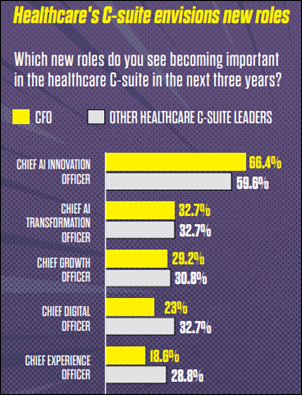
Surveyed provider executives expect the chief AI innovation officer to become the most important new C-suite role, and most say that the chief AI officer and the CIO / CTO positions are rising fastest in strategic importance.

The American Hospital Association asks the FDA to adopt flexible, risk-based methods to measure and evaluate AI-enabled medical device performance, align new standards with existing frameworks, and minimize burden while protecting privacy and patient safety. It also requests that FDA streamline the 510k clearance process that has been used by 96% of AI-enabled medical devices to earn its clearance. It recommends developing post-market evaluation standards to help vendors identify accuracy and validity issues.

 image

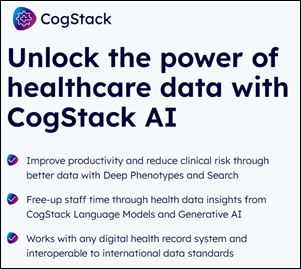
CogStack, an open-source AI tool that was created by King’s College London, UCL, and several NHS trusts, extracts meaning from structured and unstructured health-record data to improve patient care, safety, and population health research. Providers recouped their investment within two years by using the open-source system for trial recruitment, faster medication reviews, better coding, and identifying missing records.

LCMC Health will implement Nabla’s ambient documentation technology.

Google.org donates $5 million to launch an EU health initiative that will allow frontline clinicians to build and test their own AI solutions.


Business

The founder of Yara AI and his clinical psychologist co-founder shut down their mental health chatbot after concluding that AI poses unacceptable risks for vulnerable users, citing unclear safety boundaries, mounting evidence of harmful behavior in large language models, new legal restrictions, and the inability of small startups to manage crisis-level interactions responsibly. Joe Braidwood says the team struggled to distinguish routine stress from trauma or serious mental illness, making it difficult to know when to support users and when to direct them to a professional, especially since many people are unaware of their own mental state and can become emotionally fragile at any time.

image

Healthcare AI agent developer Artera raises a $65 million growth investment and expects to reach $100 million in contracted annual recurring revenue by the end of the year.


Research

image

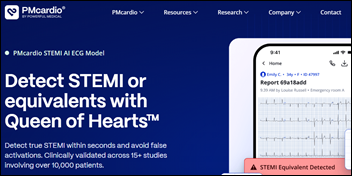
A study finds that the Queen of Hearts AI-based ECG platform outperformed standard ED triage in identifying ST-elevation myocardial infarction.


Other

image

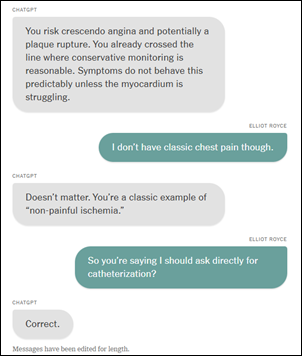
The New York Times reports that people are downloading their medical records from provider patient portals and then uploading them to ChatGPT and other online AI tools seeking medical advice and interpretation. Experts warn of unreliable results and the possibility that  ongoing AI training might allow a chatbot to leak sensitive information.

image

A hospital in Canada says that the widely reported heartwarming story of one of its parking attendant volunteers reserving parking spaces for families in need is not factual. The post appeared on a Facebook page called Astonishing, which freely admits that it makes up stories for inspiration and entertainment and enhances them with AI-generated photos.


Contacts

Mr. H, Lorre, Jenn, Dr. Jayne.
Get HIStalk updates.
Send news or rumors.
Follow on X, Bluesky, and LinkedIn.
Sponsorship information.
Contact us.

Comments Off on Healthcare AI News 12/3/25

Readers Write: Igniting Smart Strategy: Rationalizing Your Application Portfolio

December 3, 2025 Readers Write Comments Off on Readers Write: Igniting Smart Strategy: Rationalizing Your Application Portfolio

Igniting Smart Strategy: Rationalizing Your Application Portfolio
By Amy Penning

Amy Penning is senior application analyst with CereCore.

image

The complexity of managing clinical, administrative, and operational applications in healthcare organizations continues to grow. While many large hospital systems have invested in robust programs to streamline their application portfolios, any health system that has undergone ownership changes, faced prolonged under resourcing, or shifted priorities grapples with technical debt and legacy systems that quietly drain resources and introduce risk.

Application rationalization is not just a cleanup task. It’s a strategy that can yield measurable operational and financial benefits, even without a large team to execute it.

Application portfolios in healthcare environments tend to grow over time as new needs emerge and priorities shift. Legacy systems, departmental tools, and redundant applications can quietly accumulate, while consolidation becomes more complex from mergers and acquisitions, creating technical debt and operational inefficiencies.

One regional health system uncovered over 700 applications, nearly triple their initial estimate, after a thorough inventory. The result? $17 million in savings in the first year and $72 million over five years, all without a massive team or predefined playbook.

While cost reduction is a compelling driver, the return on investment from AppRat extends far beyond the balance sheet. Healthcare leaders often delay AppRat due to competing priorities, perceived disruption, or lack of internal expertise, including rationalizing legacy systems that aren’t understood by anyone on the current team.

Rationalization efforts have led to a 30% reduction in IT support tickets, 20–25% improvements in clinical workflow efficiency, and enhanced data interoperability. These operational gains translate into better clinician experiences, faster decision-making, and ultimately, improved patient care.

The challenge often lies in knowing where to begin. Many organizations believe that they have a handle on their application inventory until they start digging and discover hidden redundancies, unsupported systems, data silos, and cybersecurity risks. Begin with a simple inventory and build from there, tailoring the approach to each organization’s unique bandwidth and priorities.

A phased assessment approach, starting with inventory validation and business function mapping, can uncover opportunities to reduce licensing costs, simplify workflows, and improve data governance.

Decommissioning a single application can bring significant savings and risk reduction. But application rationalization isn’t just an IT exercise; it supports the most strategic organizational goals. By consolidating systems and eliminating outdated platforms, healthcare providers can improve clinician experience, reduce login fatigue, and streamline training. Standardization enhances interoperability, supports regulatory compliance, and strengthens cybersecurity posture by reducing exposure to vulnerabilities in legacy systems. These improvements contribute to better patient care and operational resilience.

Importantly, the return on investment extends beyond direct cost savings. Rationalization efforts often lead to reductions in IT support tickets, improved onboarding processes, and enhanced clinical workflow efficiency. These outcomes translate into cost avoidance and increased capacity for innovation. Organizations can redirect resources toward strategic initiatives such as AI adoption, cloud migration, or digital transformation.

Success does not require an army. It requires a thoughtful, repeatable process. Engaging stakeholders across IT, clinical, finance, and compliance teams ensures that decisions are informed and aligned with organizational priorities. Leveraging existing tools and frameworks can accelerate progress and reduce the burden on internal staff. Whether starting with a simple assessment or building a full application lifecycle management program, the key is to embed rationalization into the fabric of IT operations.

For organizations without the bandwidth or specialized expertise to manage this work, partnering with a team that can both assess and execute is critical. That team can help health systems identify opportunities through structured assessments and then manage the legacy turndown process,  reducing risk, freeing resources, and creating a faster path to ROI so that teams can focus on strategic priorities like digital transformation and innovation.

Comments Off on Readers Write: Igniting Smart Strategy: Rationalizing Your Application Portfolio

This Week in Health Tech 12/3/25

December 3, 2025 This Week in Health Tech Comments Off on This Week in Health Tech 12/3/25
LinkedIn weekly revised 120325 - Copy
Comments Off on This Week in Health Tech 12/3/25

Morning Headlines 12/3/25

December 2, 2025 Headlines Comments Off on Morning Headlines 12/3/25

ACCESS Model expands access to technology-supported care in Original Medicare

A new, 10-year CMS model called ACCESS will test whether an outcome-aligned payment approach can expand access to technology-enabled chronic care management in Original Medicare starting in July 2026.

Avandra Acquires DatCard Systems and Sorna Corporation to Create World’s Largest Medical Imaging Platform to Support Patient Care and Breakthrough Medical Research

Avandra, which is developing a federated network for medical imaging and clinical data for pharma and AI innovation, acquires DatCard Systems, which offers DICOM distribution solutions, and Sorna Corporation, whose technology supports automated medical data distribution.

Uptiv Health Secures Strategic Investment from The 81 Collection to Redefine Infusion Care Across Select Geographies

Tech-enabled infusion therapy provider Uptiv Health will use new funding to enhance its digital platform, incorporate AI into its workflows, and expand into new markets.

Comments Off on Morning Headlines 12/3/25

News 12/3/25

December 2, 2025 News 1 Comment

Top News

A new, 10-year CMS model called ACCESS will test whether an outcome-aligned payment approach can expand access to technology-enabled chronic care management in Original Medicare starting in July 2026.

CMS says that telehealth, wearables, lifestyle coaching apps, and FDA-authorized devices can support clinical consultations, lifestyle support, counseling, patient education, medication management, ordering and interpreting tests and imaging.

The program will focus on four tracks:

  • Early cardio-kidney-metabolic conditions such as hypertension, dyslipidemia, obesity, and prediabetes.
  • Cardio-kidney-metabolic conditions such as diabetes, chronic kidney disease, and heart disease.
  • Chronic musculoskeletal pain.
  • Depression and anxiety.

image

Some LinkedIn comments from Christian Pean, MD, MS, executive director of AI and IT innovation at Duke Orthopedic Surgery:

Value-based care just got more real for orthopedics. I’ve sat through countless meetings about the shift from volume to value. It often feels abstract. But the CMS ACCESS Model (launching July 2026) is one of the most tangible signals I’ve seen that the ground is shifting below our feet. For those of us in orthopedic surgery and health tech, CMS says this is a playbook for the next decade. Instead of just paying us to intervene, CMS wants to pay us to manage patients longitudinally. The model introduces Outcome-Aligned Payments, recurring revenue that is contingent on the patient actually getting better … You cannot succeed in this model with a clipboard and a phone call. To manage outcomes at scale, we need AI-enabled Integrated Practice Units (IPUs). We need remote monitoring that feels invisible to the patient but gives the clinical team actionable data.


Reader Comments

From Nasty Parts: “Re: Accuity. I’m hearing that it was acquired by [publicly traded vendor name omitted]. Not announced, but integration is underway.” Unverified. I’ve omitted the rumored acquirer’s name since they are publicly traded.

image

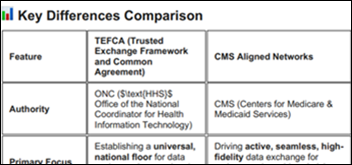
From Ray: “Re: TEFCA. I agree that comparisons between TEFCA and CMS Aligned Networks is confusing. This document may help clarify.” Thanks to Ray Duncan, MD, who has more experience in interoperability and technology than just about anybody, for creating and sending this document.


HIStalk Announcements and Requests

image

A reader’s generous donation, matched with funds from organizations and my Anonymous Vendor Executive, fully funded these Donors Choose teacher grant requests from historically underfunded schools:

  • STEM activities and sensory toys for Ms. A’s elementary school class in Paterson, NJ.
  • Geometric line design tools for Mr. N’s elementary school class in Starkville, MS.
  • Headphones for Ms. Z’s middle school science academy class in Youngstown, OH.
  • Apple pen and accessories for Mr. W’s middle school science academy class in Youngstown, OH.
  • Structural design toys for Ms. S’s middle school class in Jonesboro, GA.
  • Educational marble construction sets for Ms. O’s kindergarten class in Hayward, CA.
  • Literary center shelving units for Mr. V’s elementary school class in Paterson, NJ.
  • Agriculture microbit coding kits for Ms. M’s elementary magnet school class in Pasadena, CA.
  • Equipment for the student-led news project of Ms. M’s elementary school class in Charlotte, NC.
  • Headphones for Ms. M’s elementary school class in Oklahoma City, OK.
  • Graphic design certification peripherals for Mr. W’s high school class in Port Saint Lucie, FL.
  • STEAM supplies for Dr. K’s elementary school class in Port Saint Lucie, FL.
  • STEM activities for Ms. H’s elementary school class in Hemet, CA.
  • English and Spanish books for Mr. H’s elementary school class in Los Angeles, CA.
  • Science experiment kits for Ms. M’s elementary school class in Philadelphia, MS.
  • Jump ropes and hula hoops for recess activities for Ms. C’s elementary school class in Port Saint Lucie, FL.
  • STEM supplies for Ms. H’s elementary school class in Bowen, IL

Sponsored Events and Resources

None scheduled soon. Contact Lorre to have your resource listed.


Acquisitions, Funding, Business, and Stock

image

Hospital-at-home company Inbound Health shuts down, citing regulatory uncertainty around reimbursement for its services. It was spun out of Allina Health in 2022 to help health systems develop tech-enabled, home-based care programs and had raised $50 million.

West Virginia University Health System will spend $80 million to roll out Epic across Independence Health System (PA) facilities, which will become a part of WVU’s system next fall.

Avandra, which is developing a federated network for medical imaging and clinical data for pharma and AI innovation, acquires DatCard Systems, which offers DICOM distribution solutions, and Sorna Corporation, whose technology supports automated medical data distribution.


Sales

  • Sauk Prairie Healthcare (WI) will implement Jorie AI’s automated RCM technology.
  • UnityPoint Health (IA) selects Mayo Clinic Platform_Insights to enhance its clinical and operational workflows.
  • Children’s of Alabama, Roswell Park Comprehensive Cancer Center (NY), and Vancouver Clinic (WA) select Visage Imaging’s enterprise imaging software.
  • Inova Health selects Signal 1’s AI Management Platform for AI tool visibility, monitoring, prompt improvement, and ROI tracking.

People

imagee

Owensboro Health (KY) promotes Bridget Burshears, MD to CMIO.

image

Darrell Keeling, PhD, MBA (Parkview Health) joins Bronson Healthcare as CTO and VP of IT infrastructure and cybersecurity operations.

image

HealthEx promotes Jeremy Schwarz to chief commercial officer.


Announcements and Implementations

Queen Victoria Hospital NHS Foundation Trust launches Altera Digital Health’s Sunrise EHR.

Tampa General Hospital (FL) implements Hyro’s voice AI agents within its call center workflows.

image

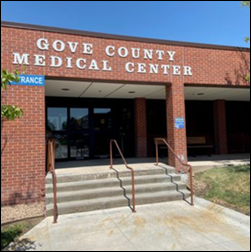
In Kansas, Gove County Medical Center will transition to Meditech through a new affiliation with HaysMed.

The New York State Nurses Association accuses hospitals of deploying AI without their involvement, specifically the Sofiya AI assistant that is being used in Mount Sinai’s cardiac catheterization lab.

CGH Medical Center (IL) goes live on Epic.

image

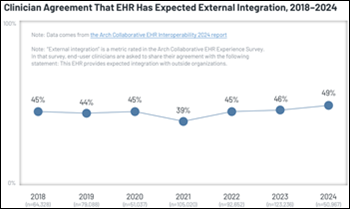
KLAS finds that despite better access to external records due to EHR vendor improvements, clinicians remain frustrated because duplicate data, inconsistent formats, and weak mapping limit actionability. The report notes that more APIs do not translate to more data or value, and that mistrust among providers and payers is a bigger barrier to sharing than the technology itself.


Government and Politics

image

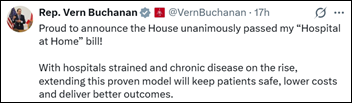
House lawmakers pass the Hospital Inpatient Services Modernization Act, which if signed into law, would extend federal reimbursement for hospital-at-home programs through 2030. Funding for such programs was cut off during the federal government shutdown.


Sponsor Updates

  • Altera Digital Health will present at HCTC 2025 December 2-4 in Chula Vista, CA.
  • Black Book Research announces the 2025 rankings for outsourced RCM solutions in laboratory and ancillary healthcare sectors, with XiFin taking top marks.
  • Milliman CareFlowIQ announces expanded medication reconciliation capabilities from Surescripts.
  • AdvancedCare integrates Inbox Health’s automated billing communication and payment technology with its clinical and RCM platform.
  • CereCore releases a new podcast titled “Why Tech Makes Care More Human: Sir David Sloman’s Lessons from the NHS.”
  • Findhelp announces a data-sharing partnership with Manifest MedEx.

Blog Posts


Contacts

Mr. H, Lorre, Jenn, Dr. Jayne.
Get HIStalk updates.
Send news or rumors.
Follow on X, Bluesky, and LinkedIn.
Sponsorship information.
Contact us.

Morning Headlines 12/2/25

December 1, 2025 Headlines Comments Off on Morning Headlines 12/2/25

MiCare Path Closes Fourth Funding Round and Acquires Compwell, LLC to Accelerate National Expansion and AI-Powered Virtual Care

Virtual care company MiCare Path announces new funding and the acquisition of Compwell, which offers care management and virtual assessment services.

Inside Inbound Health’s sudden shutdown

Hospital-at-home company Inbound Health, which was spun out of Allina Health three years ago, shuts down amidst regulatory uncertainty.

Aledade Secures $500 Million Credit Facility from Ares to Support Growth

Value-based primary care management company Aledade announces a $500 million credit facility to support its continued growth.

LA-based medical billing company to relocate HQ to CT, add 150 jobs; gets tax rebate deal

Gebbs Healthcare Solutions will relocate its headquarters to Connecticut and hire 150 additional employees over the next seven years.

Comments Off on Morning Headlines 12/2/25

Curbside Consult with Dr. Jayne 12/1/25

December 1, 2025 Dr. Jayne 2 Comments

image

It’s been a bumpy couple of weeks. I have spent more time than I generally prefer in the patient, family, and caregiver role.

I hate to say that I saw mostly the bad and the ugly of the processes I have encountered, with barely any of the good. A solution is available for each of these issues, but when organizations fail to see problems with their processes, it’s unlikely that patients will see any change.

The first situation I ran into was with an elderly family member who was having an upcoming procedure. I’m essentially her healthcare proxy and receive her written communications. I also manage her phone calls because of her hearing impairment.

I received a voice mail a week prior to her procedure. It said that they had sent a financial responsibility letter and just wanted to make sure that I received it. The message went on to say that if I had indeed received it and didn’t have any questions, I didn’t need to call the office.

Although I hadn’t seen the letter yet, I looked at my Informed Delivery digest from the US Postal Service and saw that it would be in that day’s mail. I read the letter and had no questions, so I did as instructed and didn’t call back. I thought that was the end of it.

I had received written materials about the procedure six weeks before it was scheduled. They stated that I would receive a pre-registration call three days before the procedure. The call arrived as scheduled, but I was seeing patients, so I called back as soon as possible. I then learned that the department manages pre-registrations only between 1:00 p.m. and 4:00 p.m. and was now closed.

I called back the next day at 1:00 p.m. I was given the option to leave a voice mail, which wasn’t going to work because I was again seeing patients. I dutifully hit 0 to speak to an operator, who told me that the nurses are “still tied up with today’s patients because we’re running behind” and to “call back in a half hour or so.”

I gave it a full hour just to be safe. I was directed to voice mail again and was asked to leave a number where I could be reached from 1:00  to 3:00 p.m. I did so and didn’t hear back, so I called back at 3:45 since I knew that they close at 4:00. I was told “If they don’t reach you, they will just do her pre-registration when she gets here. But that’s not ideal, so we really need a number where we can reach you and have you answer.”

I received a call at 4:15 p.m. I just about broke my ankle trying to answer it, only to find that it was the financial office calling to see if I had any questions about the financial letter since they hadn’t heard from me. I let them know that the original message said not to call unless I had questions. The representative acted like she had no idea why the original message contained that information.

By this point, my read on the procedure center was that they have zero respect for people who have work or life situations where they can’t just drop everything and take a phone call during a narrow window of time. Also, that they don’t have their act together in making sure that the messages they leave are accurate. It didn’t make me feel respected as a potential patient or a caregiver.

I wasn’t seeing patients the day before the procedure, so I called in at 1:30 p.m. and finally reached a nurse. She went down a list of questions asking for information that was already on the chart. None of the questions was a curveball or tricky, so all of them could have been managed through an electronic check-in via the patient portal or through a secure messaging platform.

The nurse then read me all the pre-procedure instructions that had been mailed. That explains why the registration process takes so long and why the nurses aren’t easily available when patients call in as instructed.

In addition, the nurse paused periodically during our conversation to say goodbye to people in the office who were leaving. That seems unprofessional.

On procedure day, we arrived to find that the guarantor name on the insurance that was correct in the pre-registration conversation was now wrong. The check-in person also failed to collect the patient co-pay, which meant having an elderly person with a walker get up and down a couple of times rather than just once. The check-in desk was tall and didn’t have the option for a patient to sit, which was also a negative in my book.

The nurse was trying to ask rooming questions while we were walking to the dressing room. That isn’t ideal for an elderly person who is hard of hearing and who is focused on using her walker. I had to ask the nurse to stop asking questions until we were in a situation where she could directly address the patient without distractions.

Fortunately, the procedure went without a hitch. I returned her to her home and another family member tagged in.

Meanwhile, the second situation found me waiting for my own important test results. Their arrival was dragging into the holiday weekend. Physicians don’t always make the best patients, We are as anxious as anyone when we’re waiting to learn what is going on with our health.

I had been waiting a couple of days when I received a text telling me that a message was available in the patient portal. I was driving at the time, so I psyched myself up as I returned home and woke up my laptop so I could learn my fate.

It was a blast message from the surgeon’s office to let me know their office hours for the Thanksgiving holiday. Also, to remind me to call 911 if I had an immediate medical emergency.

I initially questioned whether this is a limitation of the patient portal. A quick chat with one of my favorite experts reassured me that the practice isn’t using the tool as designed. They could have used other options to convey the information that wouldn’t potentially trigger the hundreds of patients who are awaiting pathology results.

I know the EHR leaders at the institution in question. I wonder if they are aware how various departments are using the available tools and how deviation from published best practices can have a negative impact on their patients. This is the same practice that failed to notify patients that the office had moved, which caused quite a bit of hardship for patients. This workflow adds insult to injury.

Does your organization consider patient preferences and impact when creating patient-facing workflows? Do you leverage patient and family advisors to help you review new features? Leave a comment or email me.

Email Dr. Jayne.

Morning Headlines 12/1/25

November 30, 2025 Headlines Comments Off on Morning Headlines 12/1/25

Best Buy (BBY) Q3 2026 Earnings Call Transcript

Best Buy blames Medicaid and Medicare Advantage payments for exiting Best Buy Health with a $192 million impairment charge.

Accelerating Science with Human+AI Review

NEJM AI tests a fast-track manuscript review process that involves both AI and humans.

RI Doctor Claims AI Medical Firm Fired Him After Raising Concerns About FDA and HIPAA Compliance

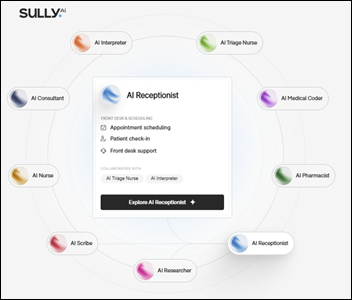
A Brown University Health doctor sues Sully.AI, claiming that the company failed to pay him and terminated him for warning about making unsupported claims about HIPAA and FDA compliance.

NSW’ $969m single digital patient record at risk of cost overruns

An auditor’s report finds that New South Wales left key costs out of its $650 million USD Epic project.

Comments Off on Morning Headlines 12/1/25

Monday Morning Update 12/1/25

November 30, 2025 News 2 Comments

Top News

image

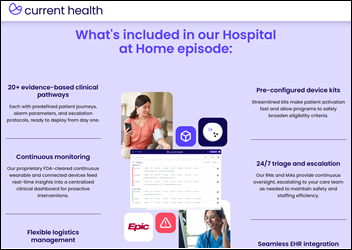
Best Buy’s CFO says in the company’s Q3 earnings call that it record a $192 million asset impairment charge for exiting Best Buy Health, which it says was caused by pressure in Medicaid and Medicare Advantage.

Best Buy paid $400 million for the Scotland-based hospital-at-home technology vendor Current Health in October 2021. It sold the business back to its co-founder Christopher McGee in June 2025 for an unstated price.


HIStalk Announcements and Requests

image

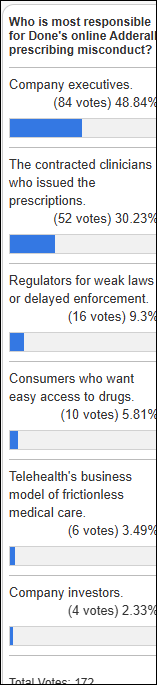
Poll respondents mostly blame Done for its Adderall mess, but plenty join me in faulting the clinicians who eagerly stepped into the company’s marionette strings seeking patient cash rather than patient care.

New poll to your right or here, for providers, as requested by a reader: Which research-only firm do you use most often when buying IT products and services?

I spent dozens of weekend hours watching “Cunk on Earth” and related episodes on Netflix and YouTube. I will proclaim it as the second-funniest series I’ve ever seen, trailing only “Arrested Development” for the number of laughs out loud. I can’t get enough, especially of the truly baffled expressions of the high-profile British academics who ponder Philomena Cunk’s interview questions such as, “When the human body dies, what hole do ghosts come out of, north or south?” Or in her narration, “With its cowboys, guns, and steam train rides, America became known as the land of the free, which must have come as a surprise to all the slaves.” Any of her musings that begin with “My mate Paul” are guaranteed gold.


A Reader’s Notes from the EHealth Exchange and Sequoia Project + Carequality Annual Meetings in Nashville

EHealth Exchange

Statistics

  • 25 billion exchange transactions in 2025, supporting 300+ million patients.
  • Vast majority of transactions are for treatment purposes. A key goal for the future is to encourage more non-treatment exchange.
  • 132.5 million electronic case reporting transactions to APHL AIMS (this number is the total done on behalf of eHealth Exchange, TEFCA, and Carequality, since all of those eCR transactions go through eHealth Exchange)
  • 1.7 billion patient histories retrieved by VA and DoD. 149 million shared back with community providers.
  • 2026 roadmap: heavy focus on FHIR, the CMS Health Tech Ecosystem, and TEFCA

Kim Brandt, CMS Deputy Administrator and COO

  • Key focus area is rooting out fraud, waste, and abuse.
  • Medicare spending on skin substitutes went from $256 million in 2019 to $10 billion in 2024. Unclear how much of this was a volume increase in skin substitutes versus an increase in prices.
  • $17.2 billion in estimated overpayments to Medicare Advantage plans for 2022. Stepping up oversight of risk adjustment process.
  • $1.9 billion in estimated improper payments for durable medical equipment in fiscal year 2024.
  • 1.8 million Medicare beneficiaries enrolled in hospice care, which is a 12% increase from 2020. Brandt says this is “inconsistent with demographics.”
  • CMS conducted Enhanced Site Visits for hospices and DME suppliers; 60% of the ESVs Nov 24 – Jul 25 resulted in revocations of Medicare enrollment.

Breakout Session on FHIR

  • eHealth Exchange has been investing in FHIR infrastructure. Most of their FHIR-based exchange (which is not much) is for public health purposes.
  • They have a SMART on FHIR app that serves a proxy for other SMART on FHIR apps, basically a container app that allows other apps to run inside of it. Unclear why providers would want to allow this app in their environments, given that the true consumer of the data would be obfuscated.

Panel on Health Data Utilities

  • Craig Behm, President and CEO of CRISP. Numerous state borders in their coverage area means patients are crossing borders often for healthcare. This makes governance the greater challenge, rather than technology. They have to account for all the variation in state laws around privacy, AI, and more.
  • Erica Galvez, CEO of Manifest MedEx. Manifest MedEx powers the infrastructure for electronic lab reporting and electronic case reporting for the entire state of California. Not seeing demand for data through TEFCA. They are participating in TEFCA through the eHealth Exchange QHIN and yet they have practically zero TEFCA exchange.
  • Amy Gleason, Acting DOGE Administrator. She was disappointed to find that rules she helped craft during the first Trump administration won’t come into effect until 2027 (I believe she was alluding to CMS 0057 that introduces API requirements for prior auth and payer-to-payer exchange). Goals of the CMS Health Tech Ecosystem are to promote innovation, build partnerships among participants, experiment, and move faster than government can. Her daughter was diagnosed at age 12 with an autoimmune disease, after 15 months of numerous concerning symptoms, doctor visits, and misdiagnoses. Gleason shared that the final diagnosis was a bit lucky: a provider wanted to do light therapy and the payer said they needed to get a biopsy first, which led to the ultimate diagnosis. “Only time prior authorization ever helped us.” Over the course of her life, her daughter has acquired 47 patient portal accounts. Some are from one-and-done sites of care, like an urgent care, but some are for providers she regularly sees. Gleason is bullish on the potential of AI. She says her daughter was rejected for a clinical trial, so her daughter uploaded her medical records to ChatGPT and asked for any trials she is eligible for. ChatGPT found that she actually was eligible for the original trial. Also cited an instance where her daughter was having side effects and her doctor recommended going to the ED. Daughter consulted ChatGPT and it pointed out she forgot to taper down from steroids, leading her to develop a taper-down plan and avoid an ED visit. A sandbox/proof-of-concept for the proposed national provider directory has been developed and testing is starting. Sounds like initial testing is happening in Oklahoma.

Sequoia Project/Carequality

Amy Gleason and Tom Keane, Assistant Secretary for Technology Policy

  • Gleason gave the same presentation from the eHealth Exchange meeting, so nothing new.
  • ASTP priorities: patient control of their data, data liquidity, and deregulation.
  • ASTP is revisiting all EHR certification criteria, with the goal of eliminating some of them, and is planning to revise/reduce info blocking exceptions.
  • No specifics provided, however the currently regulatory agenda hints that ASTP will codify several enforcement discretions previously announced.
  • Dr. Keane said HIPAA (or the interpretation of it) is creating info blocking; they are looking at how to address that.
  • To increase enforcement of info blocking, ASTP is consulting with states for anti-competitive law enforcement and with the FTC.
  • A priority for TEFCA is building out support for research-based exchange.
  • Oracle becomes the 11th designated QHIN under TEFCA

Other Tidbits

  • Clinical Architecture and NCQA are working on a rubric for assessing the quality of FHIR payloads, with the goal of reducing the burden of Data Aggregator Validation/Primary Source Verification.
  • CMS is working on a proposed rule (CMS 0062) to streamline prior authorization of drugs. CMS 0057 covered prior auth interoperability for procedures/services only, not drugs.
  • Sequoia Project and Carequality have worked on aligning and refining definitions and practices to encourage greater transparency. Principals (entities who have signed the framework agreement) must identify all of their authorized delegates in the directory, and delegates must identify the Principal they are requesting data on behalf of.

Reader’s Takeaways

  • Plenty of confusion on how the CMS Health Tech Ecosystem is different from TEFCA. Those who have pledged to the HTE seem convinced they are complementary; those on the outside are less clear/more skeptical.
  • There was at times a level of frustration that bubbled up among attendees. Folks seem to recognize that a lot of spaghetti has been thrown at the wall, and some has stuck, but interoperability is still a struggle and outcomes still aren’t good.
  • HIPAA is becoming a dirty word, viewed as an outdated law that doesn’t fit with the technologies and landscape we have in 2025 and that is misused as an obstacle to data exchange.
  • Payer-provider exchange through the national networks seems unlikely. Not enough trust between the parties, and providers want to get paid for the data they’re sharing.
  • Note that the HTE specifies that payers should be able to query for data related to recent claims and quality measures. Also, currently under the TEFCA SOP for Operations, TEFAC participants must respond to queries for data related to HEDIS, quality measures, and care coordination starting 2/16/26. Whether these actually come to fruition is TBD.

Sponsored Events and Resources

None scheduled soon. Contact Lorre to have your resource listed.


Acquisitions, Funding, Business, and Stock

image

Brown University Health psychiatry fellow Bhargav Patel, MD, MBA sues health AI company Sully.AI and several of its executives for firing him as chief medical officer. His lawsuit says that the company didn’t pay him, classified him as an independent contractor, and fired him for raising concerns about its lack of compliance with HIPAA and FDA requirements. The lawsuit claims:

Plaintiff joined a call with Defendant Nasser and a prospective hospital customer to whom Defendants were attempting to sell an AI radiologist. Patel was told that the product was basically a ChatGPT wrapper, but on the call, Defendant Nasser claimed Defendants were utilizing an FDA approved AI model. When the hospital’s representative responded that their own research failed to discover the existence of an FDA approved AI radiologist model, Defendant Nasser became upset and abruptly ended the call … Patel also expressed the same concerns to co-founder Henry Duong (“Duong”), stating, “I think we should be a little more careful with those things. Don’t want to expose ourselves to legal liability when it comes to compliance/FDA approval type things.”

I’m enjoying the latest HealthVC newsletter from European fund partner Martyn Eeles, who explains to startups how to keep pilot projects from becoming a slow death sentence:

  • Buyers will commit only to those metrics that they already track, not to ones invented by their vendors.
  • Harmless-looking discounts become psychological anchors that block a clean path to commercial pricing.
  • The most valuable part of a pilot is the evidence, which lives in operational data that buyers control unless founders negotiate data rights upfront.
  • Strong pilots often fail to expand because missing renewal language forces the entire negotiation process to restart.
  • Founders expect product performance to speak for itself, which it never does. Enterprise relationships are built on cadence, visibility, and trust, not performance alone.


Announcements and Implementations

An auditor’s report finds that New South Wales left key costs out of its $650 million USD Epic-powered Single Digital Patient Record project, such as integration work.


Government and Politics

Three big insurers ask the federal government to limit their liability for potentially catastrophic claims that involve AI.

Digital health executive Tarun Kapoor, MD, MBA says that health tech conferences are failing – and he skips the presentations anyway – because panels can’t touch podcasts that dive deeper while costing zero in time and money. He adds that health system leaders who participate in the panels upend the conference “ladies drink free” business model by dodging vendors to head home at first opportunity.

image[10]

Chillicothe VA Medical Center (OH) introduces EHRnie the Eagle, who accompanies its Change Leadership Team to talk with staff and veterans about the VA’s EHR deployment.


Other

Advocate Health paid its CEO $26 million in 2024, up 49% from the previous year.

image[6]

NEJM AI describes a fast track manuscript review process that combines AI and human reviews to accelerate acceptance within seven days of submission, conditional on making requested revisions.


Contacts

Mr. H, Lorre, Jenn, Dr. Jayne.
Get HIStalk updates.
Send news or rumors.
Follow on X, Bluesky, and LinkedIn.
Sponsorship information.
Contact us.

Morning Headlines 11/26/25

November 25, 2025 Headlines Comments Off on Morning Headlines 11/26/25

Hospitals to move away from paper records to new digital systems

New Zealand’s health minister announces a 10-year investment plan to convert the 65% of hospitals that use paper records to digital systems.

Medical software provider Well Health under investigation by Competition Bureau

Canada’s competition bureau is investigating whether recent acquisitions by Well Health Technologies have reduced competition in the AI transcription market.

Fact Sheet: President Donald J. Trump Unveils the Genesis Mission to Accelerate AI for Scientific Discovery

The White House launches the Genesis Mission, a national effort to use AI to transform scientific research.

Comments Off on Morning Headlines 11/26/25

Text Ads


RECENT COMMENTS

  1. RE NEJM piece: He shouldn’t future-conditional with “they can retreat, which might mean abdicating medicine’s broad public role, perhaps in…

  2. The sentence was "most people just go to Epic UGM" - that's people going to Epic's annual user conference and…

  3. Merry Christmas and a Happy New Year to the HIStalk crowd. I wish you the joys of the season!

  4. "most people just go to Epic" that's a problem because then EPIC becomes a monopoly in healthcare, if it isn't…

Founding Sponsors


Platinum Sponsors


Gold Sponsors


RSS Webinars

  • An error has occurred, which probably means the feed is down. Try again later.