Recent Articles:

News 4/11/25

April 10, 2025 News Comments Off on News 4/11/25

Top News

image

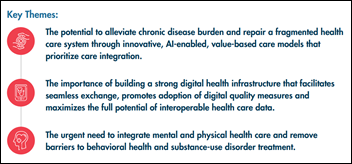
The National Committee for Quality Assurance (NCQA) offers the federal government its vision for evolving the US quality measurement ecosystem.


HIStalk Announcements and Requests

image

Industry veteran and long-time HIStalk reader Todd Karner, DHA, MGA, RN is now professor and graduate program director at the University of Maryland Baltimore County (UBMC). He asked me to let readers know that UMBC’s graduate program in health information technology can now be completed 100% remotely. The 10-course, 30-credit health IT master’s degree, which caters to working professionals, includes courses in strategy, policy, and management with more technical, hands-on courses. See their banner ad in the sponsor section and their link in the Sponsor Quick Links.


Sponsored Events and Resources

Live Webinar: April 15 (Tuesday) 1 ET. “Navigating ACO Quality in 2025: Lessons Learned and Future Directions.” Sponsor: Healthmonix. Presenters: Michael Lewis, VP of customer success, Healthmonix; Steven Tyson, senior account executive, Healthmonix.  Accountable care organizations (ACOs) must stay ahead of evolving quality requirements and reporting changes. Join us for an in-depth discussion on lessons learned from past ACO implementation, key areas for improvement, and the impact of Medicare Clinical Quality Measures (CQMs).

Contact Lorre to have your resource listed.


Acquisitions, Funding, Business, and Stock

Bain Capital is reportedly close to acquiring healthcare payer solutions vendor HealthEdge for $2.6 billion from Blackstone, which bought the company for $700 million in 2020 and expanded it with Wellframe and Altruista Health. The sale is expected to deliver a 2x return for Blackstone, which previously explored a sale in 2022 that was called off due to valuation concerns.


Sales

  • The Hazelden Betty Ford Foundation selects Netsmart’s EHR to support individuals who are experiencing substance use and mental health conditions.
  • Hackensack Meridian Health will incorporate AvaSure’s patient safety technology into its virtual nursing service to add real-time decision support and predictive analytics.
  • Sharp HealthCare chooses Abridge for ambient documentation.

Announcements and Implementations

Proprio, which offers an AI-powered surgical guidance system, earns FDA clearance to capture real-time measurements during surgery to assess progress against preoperative plans.

image

HCA Healthcare profiles Chief Health Information Officer Jake O’Shea, MD, MBA in a “Meet the Innovators” feature. He is leading HCA’s implementation of Meditech Expanse.

Health Catalyst launches Ignite Spark, a data and analytics solution for community health systems, regional hospitals, and multi-site practices.

Endeavor Health and Google Cloud will develop a cloud-based digital pathology model.

University of Colorado Health integrates on-demand language translation into its call system, pulling data from Epic to instantly connect patients with interpreters. UCHealth reports that in some regions, up to 13% of its patients aren’t native English speakers, and it has seen a 40% increase in calls while reducing operator workload and enabling more patients to communicate directly about their care.

image

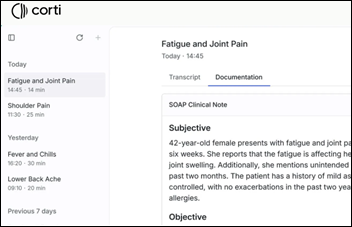
Denmark-based Corti launches a medical dictation API that it says offers 99% accuracy, responds to dynamic commands, and outperforms ambient AI tools in use cases that involve technical communication.


Other

image

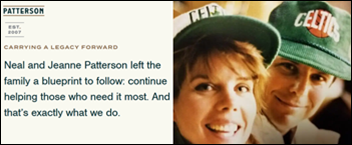
A philanthropy publication profiles Missouri’s Patterson Family Foundation, which was started by Cerner co-founder and CEO Neal Patterson and his wife Jeanne in 2007. The deaths of both founders from cancer in 2017 boosted the endowment of the foundation, which focuses on rural issues, to $1.4 billion, making it one of the 20 largest private foundations in the Midwest.


Sponsor Updates

  • A new Black Book Research report finds that Germany’s EHR market faces disruption amid AI caution, regulatory shifts, and vendor realignments.
  • CereCore will sponsor the MUSE Midwest Community Peer Group April 17 in Northfield, MN.
  • Capital Rx releases a new episode of “The Astonishing Healthcare Podcast” titled “Empowering Unions with Technology: A New ‘Hours Banking’ System.”
  • Surescripts publishes a new case study titled “Surescripts and Clear: Enhancing Provider Access & Security.”
  • The “AI in Healthcare and Life Sciences” podcast features Elsevier Health Markets CTO Rhett Alden.
  • First Databank extends its Founders Gift Donor agreement with the NCPDP Foundation by an additional $100,000 to support research grants focused on enhancing patient safety.
  • Findhelp welcomes new customers RAIN (NY), Greater Baden Medical Services (MD), and CityServe of the Tri-Valley (CA).
  • Five9 publishes its “2025 Customer Experience Report.”
  • Healthmonix names Tom O’Grady (Doceree) sales executive.
  • Impact Advisors releases a new episode of its “Impactful AI” podcast titled “DIY AI.”
  • Navina will present at the NAACOS 2025 Spring Conference April 22-24 in Baltimore.
  • The “Wilshire IT RevCast” podcast features Infinx VP of RCM Insights Stuart Newsome.
  • Mednition names Andrew Belonga business development representative and Dilpreet Singh growth marketing manager.
  • MRO will exhibit at the NAACOS 2025 Spring Conference April 22-24 in Baltimore.

Blog Posts


Contacts

Mr. H, Lorre, Jenn, Dr. Jayne.
Get HIStalk updates.
Send news or rumors.
Follow on X, Bluesky, and LinkedIn.
Contact us.

Comments Off on News 4/11/25

EPtalk by Dr. Jayne 4/10/25

April 10, 2025 Dr. Jayne Comments Off on EPtalk by Dr. Jayne 4/10/25

An article in Nature Medicine caught my eye this week. It examined the results of a tool that looks at real-time data for patient deterioration. These kinds of tools have been under evaluation for a while, but this one differs from some of the other ones out there because it looks at the content of nursing notes as opposed to the laboratory and vital signs data that are used by many other options. The Communicating Narrative Concerns Entered by RNs (CONCERN) tool was found to reduce sepsis risk by 7%, length of stay by 11%, and risk of death by 35%.

The study was conducted across two health systems with 60,000 hospital encounters and took place in 53 acute care units and 21 intensive care units. Examples of data that were found in nursing notes that wouldn’t otherwise be captured by some predictive tools include subtle mental status changes, changes in the tone of narrative comments, or increased frequency of nursing surveillance.

I would be curious to see the study taken a step further to look at how the tool performed based on the relative tenure of the nurses who are documenting the notes. We’re continuing to see a tremendous drain of bedside nursing experience and it would be helpful to have that kind of evidence to use when seeking funds for nursing retention initiatives.

From Jimmy the Greek: “Re: blood cleaning. This piece seems like the perfect thing to make Dr. Jayne shake her fist at the wind.” How could I pass up a clickbait headline like, “Clean blood is trendy, if you can afford it” when it’s served to me on the proverbial silver platter? Long story short, a London-based startup is looking to capitalize on microplastics fears with their $13K blood cleaning service. It sounds a bit like dialysis, but with a machine that removes microplastics “and other undesirable chemicals” from blood plasma before returning it to the body during a roughly two-hour session.

Claims abound as far as what the process is supposed to do, ranging from helping with chronic fatigue and long COVID to improving sleep. Although we don’t know the full risk related to microplastics, I was unable to find any high quality clinical trials that showed benefit from this approach in treating any diagnosed condition. Like other unproven interventions such as full-body scans, stem cell injections, and various unproven supplements, the only sure thing about this solution is its ability to part consumers and their cash.

I attended a seminar this week that featured several presenters who are from government-related entities. One agency in particular has put new rules in place such that everything that will be seen by an external audience has to go through a legal review. Despite having started the process a few weeks ago, the presenters from that agency were not able to get approval for their presentation, which covered some scholarly research on AI tools. They had no choice but to cancel, which was unfortunate as there was quite a crowd waiting to see the presentation. I wish the organizers would have been able to communicate this in advance, but I suppose that the presenters were hoping for a last-minute approval that never came.

I was able to connect with one of them between sessions later in the day. They mentioned that they’re attending the conference using vacation days and paying for it out of pocket because their agency will no longer cover travel to educational meetings. They’re actively seeking a new role because they’ve been told that if they stay, their work will be subject to censorship, which sounds like a way to get people to resign without actually terminating them. They were reluctant to say much more than that as they fear for their job and the wellbeing of their subordinates. Hopefully they will be cleared to present their work in the future because it sounded interesting enough to those of us in the packed meeting room.

I was able to slip into another session that was running at the same time and heard one of my former medical school classmates speak, which was great since I haven’t seen him in years. We’re all older and some of us are a bit grayer, but he still gives the same “nutty professor” vibe that he had while we were in school together. It has served him well over the years as he has received multiple teaching awards from his institution, where he’s been a fixture since residency. If we had created class predictions I don’t think I would have picked him as a long-term teacher, but after sitting through his lecture, I can understand why his students love him.

I also had the opportunity to catch up with a classmate who left her hospital-owned practice and set up shop as a direct primary care physician. She’s only been in that arrangement for a couple of years but is already making the same salary as she did as an employed physician while demonstrating higher clinical quality scores with less stress. Her panel of patients has gone from 2,500 to 500 and she spends between 30 and 60 minutes for each office visit. She’s about to add a second physician to the practice and mentioned that she had more applicants for the role than she thought she would see. The majority of her patients have high-deductible insurance plans coupled with healthcare spending accounts that make a direct primary care practice more appealing.

She mentioned the cost savings that she is able to pass along to her patients through her laboratory and pharmacy arrangements and I was shocked at how she’s able to deliver care with that level of cost effectiveness. It sounds like the majority of her patients are middle income, but find her care model to be a better value than traditional insurance as far as not having to take as much time off of work and being able to get all their needs addressed during a single longer visit compared to having to come back multiple times or see additional specialists. Talking to her was quite a contrast from what we were hearing from the mostly academic speakers, but I’m glad we were able to connect.

Are you part of a direct primary care, concierge, or retainer practice? Would you recommend it or not? Leave a comment or email me.

Email Dr. Jayne.

Comments Off on EPtalk by Dr. Jayne 4/10/25

HIStalk Interviews Najib Jai, MD, CEO, Conduce Health

April 10, 2025 Interviews 1 Comment

Najib Jai, MD, MBA is co-founder and CEO of Conduce Health.

image

I trained as an MD, MBA but did not practice clinically and did not do a residency. Instead, I went directly to Oak Street Health. My entire career has been in value-based care. Conduce is focused on incorporating specialists into value-based care models through personalized referrals and contracting specialists under aligned value-based arrangements.

What does the primary care physician see when they refer a patient to a specialist?

It depends whether the PCP is in a hospital system versus an independent primary care organization.

At a high level, the way a referral typically works is that at the point of care, a primary care provider determines for a given patient that they need some sort of specialized care, whether it’s for their heart, their kidneys, or whatever that may be. After that is where there are a lot of heterogeneous workflows. The provider typically inputs into some system, whether that’s an EMR or some sort of separate referral management organization system, that the patient needs to see a specialist. Let’s call it a cardiologist. 

From that point, either the patient is given information to go out and schedule that appointment with the specialist directly, or there’s some sort of care team that’s affiliated with the hospital system or practice that makes that schedule available for the patient on the patient’s behalf.

From the specialist standpoint, their reception of that referral largely is the same. They receive some sort of electronic record that a patient has been referred to see them. Then either that specialty practice or the patient gets a visit scheduled.

Compensation is a question that comes up a lot when we think about value-based care for specialists. Part of what made value-based care work well for primary care providers was that, relatively speaking, they weren’t compensated particularly highly. This idea of being able to create additional financial incentives to boost their income was particularly attractive, and we saw the results of it. There were a lot of PCPs who were willing to participate in these models.

Your average specialist is making three to five times more than a primary care provider, so you have to think about it less purely from a financial dynamic and more through a matter of practicing clinical medicine. The average specialist isn’t necessarily interacting with patients  who are aligned with their specialty, which can be incredibly frustrating when you’ve spent 10-plus years of your life training to manage some of the more complex disease states that are out there.

Value-based arrangements enable these specialists to practice top of license to provide more comprehensive care to patients who need that specialist involvement in their clinical outcomes, which is a subjective or qualitative improvement in what they’re seeing where the more quantitative or financial dynamic may matter a little bit less.

Is the referring PCP notified when their patient has been scheduled to see the specialist, when their visit is completed, and what decisions were made?

They don’t know any of those things. Anything that happens out of a primary care office, particularly as it relates to specialty care, is a black box. You don’t know when the patient shows up. You don’t necessarily know what care was administered or what tests were taken.

For the primary care provider, you don’t necessarily know how to adjust your care plan for that patient. When the patient comes back to see you in two to three weeks, particularly if they’re a Medicare patient 65 and older with some sort of comorbidity, you’re relying on that patient to tell you what happened with their specialist, if they actually saw a specialist. 

In the most ideal outcome, they’ve got a great memory and maybe took notes, so they can essentially relay to that primary care provider everything that occurred. But more often than not, that doesn’t happen. Perhaps you don’t see the patient in three weeks, or perhaps it’s three months, and you really don’t understand whether or not that patient showed up with a specialist and what actually occurred in that visit.

That is part of the problem that we are solving. How do you make that black box a little bit more translucent so there is is more clinical co-management between these two integral providers for any given patient who needs to see both of them?  

Is technology the reason that patient information isn’t shared in what could be an urgent or critical handoff?

It still is a technology challenge. Every specialty practice looks dramatically different. Believe it or not, some groups are still dependent on paper charts even if they do have some sort of EMR. If you are the primary care group sending patients out, how you actually receive data and information can be incredibly strained. Whether you’re trying to get someone from the specialist office to return your phone call, or more likely than, not return a fax, it can be incredibly challenging.

The crux of the issue is just how heterogeneous every single specialist or specialty office is within a given geography within the United States. It’s largely a technological problem. Given the fact that a lot of these primary care offices are already strained with managing complex patients when we think about value-based care and Medicare populations, there isn’t a whole lot of time to make sure that that works out particularly well. 

From the specialist’s vantage point, there’s not a whole lot of incentive. Ultimately you can still manage and take care of your patients, absent of needing to take that additional step of going through all the complexity of reaching back out to that primary care provider.

But the one thing I’ll call out here, and maybe this is me putting on my clinician hat for a second, is that the stakeholder who suffers the most in that paradigm is the patient. Because ultimately, they’re having a series of disjointed clinical interactions, whether it be in a hospital system or a series of private practices, where no one is really speaking to one another. The patient isn’t well equipped to manage their care through that paradigm either.

Does the specialist expect or want to see the PCP’s information, or do they just assume that they will start from scratch, redo any tests or imaging, and trust the patient to tell them the rest?

Specialists would love to not have to rework every single patient they see from scratch. The cardiologist didn’t necessarily specialize in taking all the labs for a patient that relates to their electrolyte function for their kidney. They have no real interest in that, but when a patient comes without any sort of notes or information from the PCP, you’re starting from zero. That can be incredibly frustrating clinically. But again, there’s not a convenient or scalable way for that specialist to then go back to the primary care provider and obtain that type of data unless you’re in some sort of closed loop system.

As an example, hospital systems in some cases can do this particularly well because they’re all operating under a single EMR. Even if you can’t reach the primary care provider or the care team, you can go back to that EMR and evaluate what notes were taken and what images may have resulted. That streamlines your process as a specialist in theory, because they’re going through the pain of not knowing what is going on clinically with that patient when they arrive for their visit. You would think that would incentivize them to then go back after their visit with the patient and provide it to the PCP, but again, that connectivity isn’t there. Unfortunately, even if there were to be a desire to more clearly communicate with the primary care provider, there just isn’t a technological chassis in place to make that seamless. 

Anyone in the health tech space will tell you that it’s oftentimes less about the technology, less about how efficacious that technology is, and more about the workflow. How can you make this easier for any provider who is managing patients to use this tool or to manage this particular action?  Unfortunately, while there’s a lot of technology in some cases, there aren’t really a lot of great workflows that seem to embed well with what either a primary care provider or a specialist is doing to ensure more of that streamlined back and forth communication.

Isn’t doctors using patients as a data mule for potentially critical information a malpractice lawsuit waiting to happen?

It’s sad. It’s unfortunate. I go back to some of my clinical training on the south side of Chicago. There is a lot of onus on the patient to be this historian of everything that has happened to them. The more complex these patients get, the more history you have to keep track of. 

Most of the patients who are benefiting from value-based arrangements in Medicare don’t have great health literacy, so not only are we asking them to be historians, they’re not really equipped to do that particularly well. The result is meaningful delays in care or an absence of care that cause poor patient outcomes that are incredibly expensive, whether that’s a series of hospitalizations or the progression of a chronic disease to a point in which the morbidity and mortality rates rise meaningfully. We see that all the time in nephrology care.

That, unfortunately, is the current state. That is essentially what we’re trying to address, and more broadly, what value-based care is trying to address. How do we create the systems in place to prevent these types of outcomes? Discontinuous care is a big part of it.

How extensively are value-based care models being used that involve specialist referrals?

Value-based care is perhaps one of the more frustrating terms because it’s an umbrella term. It means a variety of different things. But most concisely, you’re essentially seeking to compensate certain doctors in these value-based care arrangements for the quality of care they provide versus the quantity of care they provide. That quantity dynamic is more akin to what we see in a fee-for-service paradigm.

To make it even more specific, what does that actually mean? How are you compensating quality? You put the financial responsibility on a single physician for the outcomes of their patient. If a patient gets hospitalized and it’s particularly costly, that actually impacts the financial well-being of the provider taking care of them, i.e., how much they get paid or not paid. 

Prototypically in value-based care, for the past 15 to 20 years that it’s been around in its various iterations, that financial responsibility has been largely weighted on primary care providers, which intuitively made a lot of sense. Primary care is one thing. Theoretically, every Medicare patient should have a primary care provider, but in reality, it introduces a challenging dynamic, which is that 75% of typical medical spend, for primarily Medicare patients, is weighted in specialty care. We’ve put a lot of financial responsibility on a consistent stakeholder in a given patient’s experience, the PCP. But that stakeholder doesn’t necessarily have the influence to materially improve or impact finances for some of these patients, and put differently, the clinical outcome for some of these patients. 

To go to the heart of your question of the implications of referrals, the moment you refer out to a specialist is not only that data and technological black box that I described before, but it introduces an unalignment when it comes to incentives. That initial primary care provider is highly incentivized when in value-based care to make sure that patient’s healthy, that they’re not being hospitalized, that they’re not costing a lot of money. That doesn’t mean an absence of care, because if you don’t do certain things, that also results in a hospitalization. It means in theory, trying to provide as holistic care as possible, inclusive of maybe wraparound services and nursing and whatever that might look like, particularly if you’re a hospital system and well equipped to do that.

But to that referred specialist, the specialist that a given patient was just sent to, it’s just being compensated for seeing that particular patient. Therefore, that specialist may very well do all of their typical tests. They might suggest a certain procedure. Let’s remove some of the presumed altruism in healthcare for a moment and think about it purely as a business. In that scenario, every single specialist should be incentivized to do as much as possible, because that’s how they’re going to be compensated particularly well. Now in reality, hopefully that doesn’t happen, but oftentimes it does. The implications of referrals and value-based care is that they typically are very expensive and not great for your bottom line historically in these types of models.

In the example of referring a patient to a cardiologist, the PCP would need to consider administrative factors, such as whether the specialist is taking new patients or whether the patient can get to their office. They would need to think about patient-specific factors, where one cardiologists might be preferred over another. Lastly, they have to think about cost and compensation under value-based care. What does that decision tree look like for the PCP?

I love that question and I’ll answer it in two ways.

The current state is that you are absolutely right in calling out that there are a lot of logistics that  should be considered whenever referral is made. First and foremost, who’s available to see this patient in the meaningful amount of time. In the cardiology example, the referral is probably for congestive heart failure, if we think about what’s most prevalent in the 65 and older Medicare population. That’s a meaningful chronic disease in which if you don’t see that cardiologist soon, you might be hospitalized. Availability is really critical.

Coverage in Medicare is important, but in some cases, it’s less of a consideration. It depends on some of the nuances, such as Medicare Advantage versus traditional Medicare, but a little less relevant versus a commercial population where you have to think about who’s in network or out of network, but it’s still a consideration.

Then to your point, perhaps the most critical point is the patient. There’s a presumption even in clinical medicine that every patient with a given disease, let’s say heart failure in this case, is more or less the same. But the reality is that that could not be further from the truth.

I had a really good mentor in medical school who always said that evidence-based medicine is informative, but inherently flawed, because it’s based on the average patient, and no patient is the average patient. It’s a foundation to make decisions upon, but it should not necessarily be used as true. 

Going back to your question, there are all of these different variables for a primary care provider to consider when making a referral, but keep in mind that the average primary care provider, even in a value-based arrangement where they’re incentivized to provide holistic comprehensive care, is still pressed for time. They have a variety of different patients. They’re trying to evaluate why this particular patient is there, what medications they have to make adjustments for, what additional appointments the patient needs to see them again. Of course, the patient isn’t just sitting there simply listening to the provider. They have things they want to talk about. Having spent time in clinical medicine, I can tell you that it’s a very focused encounter, but not often with a focused participant.

Saying all that to say that the reality is that when a referral gets made, oftentimes none of those factors are considered because there’s no time to consider them. To contrast that, how we think about it from a Conduce perspective is that we seek to embed ourselves in that workflow. Again, you can develop the best technology in the world, but if it’s not workflow friendly, it’s not going to matter to a given provider. We consider all of these particular elements based on our AI predictive model, and most importantly, understanding the patient.

When we think about what makes a good provider, we think about, is this doctor a good doctor or a bad doctor? That makes a whole lot of sense, but in clinical medicine, it comes down to the patient. We seek to understand patients first. We group them based on shared characteristics. Here are patients that have heart failure, diabetes, they live in this ZIP code, they lack transportation, and they predominantly speak Spanish.  Those patients are going to do well with a particular cardiologist and not so well with another cardiologist. If the cardiologist doesn’t speak Spanish, that patient population I described isn’t going to do particularly well with them.

Our first product, the Conduce Referral Engine, incorporates all of those factors — who’s available, who’s within a reasonable driving distance, and then most importantly, who’s going be a really good fit for this particular patient – and provides that recommendation to that primary care provider at the point of care. They don’t have to sit there and manage the 20 different things that are happening in a 10 to 15 minute encounter. Instead, they have a convenient list of providers directly in the EMR in a closed loop hospital system. It can be a printout. It’s whatever that PCP is accustomed to for a workflow to streamline that process and make the best personalized decision for that particular patient.

What are your priorities for the next few years?

What we’re building here at Conduce is these personalized referrals. We’re connecting specialists into value-based care models, but to put it slightly differently, we are ushering in an era of personalized healthcare, this idea that you can understand patients and their unique characteristics to inform where they will get the best medical care possible. Our models right now are about as bad as they’re ever going to be. I don’t think they’re bad, but we can continue to improve them with more data, more patients, and more clinical outcomes.

What the next one, two, or five years looks like for us is that we continue to interact and improve the lives of more and more patients, accumulate more and more data, and become that much more personalized in ensuring that we don’t just find the good doctors and the bad doctors, but we find the best doctors for a given set of patients. That’s personalized medicine. I honestly think that’s both the future of medicine and what value-based care is all about.


Morning Headlines 4/10/25

April 9, 2025 Headlines Comments Off on Morning Headlines 4/10/25

Dayton VA makes $55M IT investment to prepare for electronic records

The Dayton VA Medical Center in Ohio embarks on an IT overhaul as it prepares to go live on the VA’s new Oracle Health-based EHR in June 2026.

Seattle Children’s Hospital Partners with Google Cloud to Launch AI Agent to Support Healthcare Providers’ Clinical Decision-Making

Google Cloud and Seattle Children’s Hospital launch Pathway Assistant, an AI-powered tool that gives clinicians instant access to evidence-based care pathways for 70 pediatric diagnoses.

Motivity Expands Into Practice Management with a Comprehensive All-in-One ABA Solution

Motivity adds practice management software built on technology developed by HumaneBITS to its offerings for applied behavior analysis providers.

Comments Off on Morning Headlines 4/10/25

Healthcare AI News 4/9/25

News

image

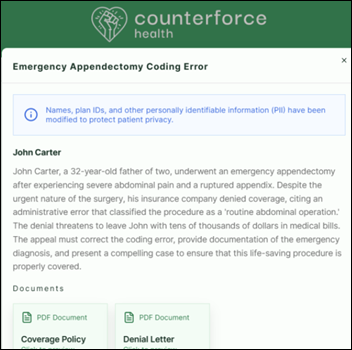
Counterforce Health offers no-cost AI tools that write patient appeal letters for insurance denials.

Google Cloud and Seattle Children’s Hospital launch Pathway Assistant, an AI-powered tool that gives clinicians instant access to evidence-based care pathways for 70 pediatric diagnoses.

Spain-based Neurologyca says that its Kopernica AI facial analysis tool can identify 100 emotions, even in crowds, which allows it to detect neurological conditions such as stroke and brain hemorrhages.

New CMS Administrator Mehmet Oz, MD, MBA says in his first town hall meeting that AI-powered avatars may outperform frontline doctors and may be preferable to humans by patients.


Research

An NIH-funded AI screening tool matched provider performance in identifying hospitalized patients who were at risk for opioid use disorder and recommending specialist referrals, while reducing 30-day readmission odds by 47%

A study by the Icahn School of Medicine at Mount Sinai finds that AI models may recommend different treatments for identical medical conditions based on patients’ socioeconomic and demographic backgrounds, highlighting the need for safeguards to ensure equitable AI-driven medical care. ​

image

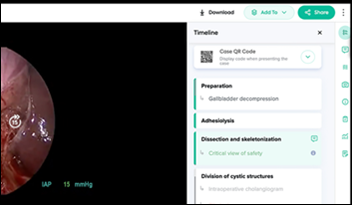
A study reports that implementing an AI-powered video management system enabled comprehensive documentation and analysis of over 10,000 minimally invasive surgeries, supporting the standardized assessment of key surgical steps and the self-assessment of surgeons.


Other

A new AI system for pediatrics that draws on data from 300 clinicians and years of hospital records will be deployed across China to deliver personalized care and interact with patients’ families.


Contacts

Mr. H, Lorre, Jenn, Dr. Jayne.
Get HIStalk updates.
Send news or rumors.
Follow on X, Bluesky, and LinkedIn.
Contact us.

Morning Headlines 4/9/25

April 8, 2025 Headlines Comments Off on Morning Headlines 4/9/25

Prime Minister turbocharges medical research

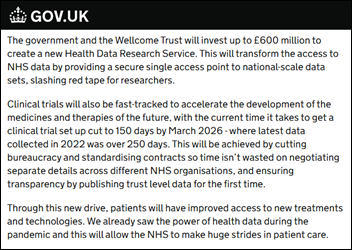
The UK government and the Wellcome Trust will invest $767 million to create a Health Data Research Service, which will offer researchers a single access point to NHS data.

New Mountain buys stake in healthcare software provider Office Ally

New Mountain Capital acquires a major stake in Office Ally from Francisco Partners in a deal that values the health IT company at $1.8 billion.

Walgreens tops estimates as drugstore chain cuts costs, prepares to go private

Walgreens reports Q2 earnings and revenue results that beat analyst expectations as it prepares to go private in a $10 billion deal with Sycamore Partners.

Comments Off on Morning Headlines 4/9/25

News 4/9/25

April 8, 2025 News Comments Off on News 4/9/25

Top News

image

The UK government and the Wellcome Trust will invest $767 million to create a Health Data Research Service, which will offer researchers a single access point to NHS data.

The Wellcome charity will contribute $128 million of the cost, while the UK government will provide up to $639 million.

The service will go live by the end of 2026.


HIStalk Announcements and Requests

image

I fully funded several DonorsChoose teacher grant requests using donations from Volpara Health, which contributed an amount for each response to a recent survey I ran. Their gift, combined with matching funds from my Anonymous Vendor Executive and others, supported these projects, with more to come:

  • Math as art activity books and supplies for Ms. H’s high school class in Byhalia, MS.
  • A presentation stand and clock for Ms. M’s second grade class in Roma, TX.
  • STEM activity kits for Ms. A’s elementary school class in Rio Grande City, TX.
  • STEM and engineering kits for Ms. S’s elementary school class in Thermal, CA.
  • STEM books for Mr. K’s middle school class in Olathe, CO.
  • Science books for Mr. A’s middle school class in Penitas, TX.
  • STEM activities for Ms. M’s first grade class in Naples, FL.
  • Robotics and STEM kits for Ms. M’s middle school class in Orrville, AL.
  • Uniform shirts for Ms. E’s high school class in Camden, NJ.
  • Group collaboration corner furnishings for Mr. K’s high school class in Trenton, NJ.

Sponsored Events and Resources

Live Webinar: April 15 (Tuesday) 1 ET. “Navigating ACO Quality in 2025: Lessons Learned and Future Directions.” Sponsor: Healthmonix. Presenters: Michael Lewis, VP of customer success, Healthmonix; Steven Tyson, senior account executive, Healthmonix.  Accountable care organizations (ACOs) must stay ahead of evolving quality requirements and reporting changes. Join us for an in-depth discussion on lessons learned from past ACO implementation, key areas for improvement, and the impact of Medicare Clinical Quality Measures (CQMs).

Contact Lorre to have your resource listed.


Acquisitions, Funding, Business, and Stock

image

Therapy Brands, which offers software and services to rehab therapists, mental and behavioral healthcare professionals, and health IT developers, rebrands to Ensora Health.

image

Transcarent completes its $621 million acquisition of Accolade.


Sales

  • Lake Norman Regional Medical Center (NC) will transition to Epic as a part of its acquisition by Duke Health.
  • Six hospitals in Eastern Ontario will join the Atlas Alliance of hospitals and implement Epic by the fall of 2026.

People

image

Bharath Perugu, MBA (Office Practicum) joins Surgimate as chief product and technology officer.

image

CVS Health names Amy Compton-Phillips, MD (Press Ganey) EVP / chief medical officer.

image

Aaron Mann (KeyCare) joins Veeva Systems as VP commercial site solutions.

image

Solarity hires Kevin Hidenfelter as chief growth officer.

 image

Brian Blackwell, MA (Point32Health) joins Healthcare Systems of America as VP of applications.

image

Prealize Health hires Jarret English (Sandata Technologies) as SVP of sales.


Announcements and Implementations

The Choctaw Nation Health Services Authority (OK) implements Epic.

image

McLaren Flint hospital (MI) implements Volpara Health’s Risk Pathways software for breast cancer risk assessment and care management.


Sponsor Updates

  • Capital Rx releases a new episode of “The Astonishing Healthcare Podcast” titled “A New Approach to Colorectal Cancer (CRC) Screening, with Geneoscopy.”
  • Optimum Healthcare IT launches a podcast titled “Visionary Voices,” with its first episode airing on April 21, 2025.
  • CereCore publishes a new case study featuring Jupiter Medical Center, “EHR Agnostic IT Support Leads to Provider and Patient Satisfaction.”
  • The Röntgen Domus radiology center in Iceland implements Agfa HealthCare’s Enterprise Imaging platform.
  • Altera Digital Health announces that Liverpool Heart and Chest Hospital NHS Foundation Trust has added its Clinical Health Psychology team to the trust’s Sunrise EPR from Altera.
  • New Black Book Research survey findings indicate that France’s EHR sector is undergoing significant transformation.
  • CHIME honors Censinet founder and CEO Ed Gaudet with its 2025 Baldrige Foundation Leadership Award.
  • The “Speaking Health Law” podcast features Clearwater Director of Consulting Services Hal Porter in an episode titled “How Have Cybersecurity Expectations for Health Tech Vendors Changed Over the Past 12 Months?”
  • Clinical Architecture joins the CommonWell Health Alliance Marketplace.
  • WEDI’s “The Collective Voice of Health IT” podcast features CliniComp SVP of Client Services Sandra Johnson in an episode titled “Clean Data, AI, and Interoperability to Eliminate ‘Pajama Time.’”
  • Divurgent publishes a new success story titled “Concierge Scheduling of Physician EHR Personalization.”

Blog Posts


Contacts

Mr. H, Lorre, Jenn, Dr. Jayne.
Get HIStalk updates.
Send news or rumors.
Follow on X, Bluesky, and LinkedIn.
Contact us.

Comments Off on News 4/9/25

HIStalk Interviews Helen Waters, COO, Meditech

April 8, 2025 Interviews 1 Comment

Helen Waters is EVP/COO of Meditech.

image

Tell me about yourself and the company.

I’ve been with Meditech for a number of years, having come up through the ranks in a variety of different positions.

Meditech as an organization has been in the electronic health record space for what’s coming upon 55 years, having in many respects given birth to the industry through the establishment of a programming language called MUMPS, which most people are familiar with. Our founder was the co-author of that language. Obviously we have since moved far beyond that language and into new technology and platform eras and have reinvented ourselves at several turns as the industry has changed.

How would you characterize the hospital EHR market?

It’s a market that has been busily on the move for the last probably 10 years. We’ve seen a significant amount of consolidation, which changed the market landscape quite drastically.

The rural and community healthcare space has been stressed by a lot of those changes. I was just reading this morning about the significant reduction of independent physicians in rural and community classified areas of the country being down to, I think the number was 12,000 or so. That has changed the hospital landscape accordingly as well.

But it’s an industry that is robust and tenacious. There are many places and spaces across the country, relative to rural and community hospitals, that are doing well to maintain their independence, to thrive, to recognize where and how new technologies can help them advance to more efficient organizations, more modernized organizations.

Conversely, we’re working hard to make sure that we can deliver advanced technologies and capabilities that allow them to do so, keeping our eye on the fiscal sustainability of the market as a whole. Most of us would acknowledge that in the broad landscape — whether they are large systems, academic systems, et cetera — there’s been a lot of fiscal strain on our industry from COVID and post-COVID.

We’re all working to try to advance into this new era, where innovation and technology can bear some assets that don’t always require people, or where technology can lighten and lessen the load. That includes the market space that we’re in.

When we talked last time, you mentioned that the high cost of implementing Epic or Oracle Health was probably locking in some health systems. Have you seen any indication that some of those health systems might, for financial or other reasons, now be open to making a replacement decision?

We’ve heard different levels of noise in that regard. I certainly think that the market has changed since you and I last spoke. The acquisition of Cerner by Oracle has changed the landscape in an interesting way. It was a rather large, significant investment on the part of Oracle. There’s going to be an expected return on that investment, which probably means a transition for a lot of customers. That transition will not be for free, I’m going to imagine. We see that market space attractively opening up to assess other alternatives. We are well positioned with Expanse to partake there.

The Epic customer base is coming up now on probably the 15- or 20-year mark. Our experience is that this is the point where people begin to think about their future. A lot of health systems bought electronic health records on the assumption that it would generate more volume. It would make them more fiscally successful. It would allow their expansion to grow and their quality scores to increase. Many of those same systems are struggling right now to figure out how to get to or out of red margins and try to get back to some fiscal strength and sustainability. 

That becomes more important now because of the advancements and the innovations that are going on in healthcare. There are important aspects to EHRs that are critical. They’re foundational digital systems of record. They are advanced. They are where people live and work all day long, doctors and nurses and allied health workers and many others that are in the health systems caring for patients. But they’re foundational. They are technologies now that have been in place for quite some time, for lots of different reasons.

We didn’t see the cost of these technologies come down, which for us was a bit surprising. Now those same organizations that may have overspent on the foundational technologies are feeling the challenge and the pinch of trying to find the funding to spend on the future technologies. That would relate to all aspects of artificial intelligence, ambient scribes, ambient chatbots, and certainly the large language models and generative AI. 

Our customers have been well positioned, both the smallest of them to the largest — which includes HCA and other larger organizations across the country — that are feeling well positioned for the investment they made in the foundational EHR, but now the position they stand in to take that to the next level of what the future of healthcare will be, which will be many aspects beyond the electronic health record.

What drives health systems to consolidate systems, which might mean choosing systems from an incumbent such as the EHR vendor that might otherwise not have been their first choice?

The consolidation factor has really surprised us. If you look at some of the larger national organizations, there’s very little patient crossover happening in those geographies when you own 80 or 120 hospitals. Otherwise, the technologies themselves have been ripped and replaced at times for not great gain. It depends on what system they were operating on. If it was a legacy older system, perhaps it made sense to bring into a more modernized platform.

Consolidation is something that everyone assumes or presumes to be the right thing to do, but I would say, generally speaking, if it’s not made in a wise, value-based mindset, it’s also proven to be a difficult, expensive proposition. We see a lot of the larger institutions looking to expand the footprint and spread the cost by extending systems into smaller facilities, and sometimes that ends up adding a burden of fiscal distress.

We’re big proponents of interoperability. We’re big proponents of moving that needle forward so that we can both consolidate data — which I think is more likely now to happen than ever in terms of how advanced some of the language models are, how advanced some of the analytics tools are — and then also able to interoperate with data to be able to share information across records, regardless of the vendor system source.

Interoperability has not been a technology problem in a while, but the industry has forced itself to make it a technology problem. But I think we are dawning a new era where the ability to have to consolidate on a single system may not be as prevalent as it might have seemed to be. If you look at the data from the major quality reporting systems. we haven’t achieved the scale that promised better efficiency, better quality care, lower cost, and higher patient and family satisfaction. If you don’t have those factors and you have increased your operating expense spend on foundational tools, you can be in a really challenged space. 

We are obviously proponents of interoperability and of the requirement for the vendor community to share information and data so that organizations can make sound decisions, but don’t all have to be on a ubiquitous platform.

Software being “in the cloud” doesn’t necessarily mean the same thing to every major vendor. How would you summarize cloud use and how will it develop further?

Cloud maturity has exponentially grown since we last talked. It has for our company. It has across the industry.

You’ll see organizations that are more progressive developing cloud-native applications, which we’ve done a series of, to ensure that the electronic health record is, in architecture and not just in front end, highly modernized. Most of the vendors in different capacities are moving in that direction, to different degrees.

Some are lifting and shifting an on-prem system into a cloud, but not necessarily taking advantage of that cloud architecture. It might just be hosted there. You might not have anything natively developed for the cloud. You might not be offering a SaaS model.

We transitioned both the development of new applications to be done natively in the cloud to modernize tool sets as to how we develop those applications, and in addition to that, we are obviously operating fully in the cloud and offering a service solution. This is quite different and has proved to be a really good decision for us. We announced in 2018 and began in 2019 and 2020 to see that uptick in the market. Now we have well over 120 customers that are operating natively on our cloud services offering called Meditech as a Service.

What results have you seen from working with Google and what projects do you have planned?

The product that we announced at HIMSS22 we called Expanse Navigator, which is a search and summarization capability within our record. It’s the ability to take advanced search features within the EHR and access and synthesize and surface structure and unstructured data. You have all of those aspects of scanned docs, handwritten notes, and images that are surfaced and scanned both within the live system and then obviously from legacy systems.

One of the advantages we saw there was being able to truly know the patient for whatever term they’ve been with that health system. Oftentimes as people migrate and move EHRs, a lot of the data gets left behind. This allowed us to bridge those two worlds for our customers and for any customer coming off of a legacy platform.

This initial product was built off of the BERT language model. It wasn’t necessarily generative AI, but it was one of their first large language models. The feature in that was called Conditions Explorer, and that functionality was really a leap forward. It was intelligently organizing the patient information directly from within the chart, and as the physician was working in the chart workflow, offering both a longitudinal view of the patient’s health by specific conditions and categorizing that information in a manner that clinicians could quickly access relevant information to particular health issues, correlated information, making it more efficient in informed decision making.

We felt that was a big step forward to give physicians who are quite busy in their 10 minutes with the patient wanting to feel more confident in what they were doing, making sure they had the right information in front of them.  It’s been really successful. It’s highly valued and enjoyed by our customer base, Expanse Navigator.

Beyond that, with the Vertex AI platform and certainly multiple iterations of Gemini, we’ve walked forward to offer additional AI offerings in the category of gen AI, and that includes both a physician hospital course-of-stay narrative at the end of a patient’s time in the hospital to be discharged. We actually generate the course-of-stay, which has been usually beneficial for docs to not have to start to build that on their own.

We also do the same for nurses as they switch shifts. We give a nurse shift summary, which basically categorizes the relevant information from the previous shift and saves them quite a bit of time. We are using the Vertex AI platform to do that. And in addition to everyone else under the sun, we have obviously delivered and brought live ambient scribe capabilities with AI platforms from a multitude of vendors, which has been successful for the company as well.

The concept of Google and the partnership remains strong. The results are clear with the vision that we had for Expanse Navigator. The progress continues around the LLMs, and what we’re seeing is great promise for the future of these technologies helping with administrative burdens and tasks, but also continued informed capacities to have clinicians feel strong and confident in the decisions they’re making.  

The voice capabilities in the concept of agentic AI will clearly go far beyond ambient scribing, which is both exciting and ironic when you think about how the industry started with a pen way back when, we took them to keyboards, and then we took them to mobile devices, where they could tap and swipe with tablets and phones. Now we’re right back to voice, which I think will be pleasing provided it works efficiently and effectively for clinicians.

What benefits have clients seen from Traverse Exchange?

We launched Traverse Exchange in Q4 2024. We had actually started the year prior in Canada. It’s a data exchange between Meditech customer organizations and organizations on other vendor EHRs. The core tenet is to share patient data regardless of where the patient is receiving the care and regardless of the EHR they’re using. It allows the customer to remain on or implement the systems that work best for their organizations.

There’s burden reduction in that we’re sharing information into and accessible within the standard clinical workflow and  to move beyond cumbersome static documents, which we’ve been dealing with with CCDs and even cumbersome data exchanges like CCDA. It’s leveraging our FHIR-based requests for targeted data at the point of care and physicians being able to easily access information regardless of its origin. We talked to so many customers who will say, I don’t want to go to XYZ vendor. I don’t want to be offered a connect system. But I’m terrified of being left out and I’m terrified of not having the right amount of data for my patients. 

The sole reason we did this was to try to finally debunk in the industry the fact that everyone has to be on the same system to arrive good decision making and get quality outcomes. We are pushing this envelope significantly. We’re going to push it on our EHR competitive partners and ask this industry to come together to finally allow for the free and easy exchange of information directly into clinical workflow. We’re happy to participate, in turn, on the other side.

What will be the most important factors in the company’s next few years?

I would say the same factors that have been in the past years. Continued introspection about the things that we do really well and the aspects of our company that we need to continue to retool for the future and the market that we’re in, actually the market that is in front of us where the puck is actually headed. Continuing to deliver very effectively for customers and be sure that our customers can do the speaking on our behalf.

Leveraging the success of HCA, who is rolling out our Expanse platform. That was a calculated decision. It was a value-based purchase on their part. We intend to prove the value relative to the outcomes, the clinician satisfaction, and also the innovation factor, which we are both seeking in this partnership. By the way, not just HCA. I would say that you’ll see us continue to focus on our outcomes in other markets where we have a good foothold on potentially driving and leading the market.

The US market consolidation was outside of our control, and there were some real benefits to that for some vendors. We intend to challenge and continue to move forward passionately the way we always have, but making sure that we’re continuing to adjust for what the market is looking for.

Morning Headlines 4/8/25

April 7, 2025 Headlines Comments Off on Morning Headlines 4/8/25

Therapy Brands Is Now Ensora Health

Therapy Brands, which offers software and services to therapists, mental and behavioral healthcare professionals, and health IT developers, rebrands to Ensora Health.

As Demand for Behavioral Health Services Surges, Atlanta’s Acuity Raises $1.5M to Bring AI-Powered Clinical Support to Hospitals

Acuity Behavioral Health, an inpatient psychiatric-focused clinical and staffing decision support startup based in Atlanta, raises $1.5 million in seed funding.

H.I.G. Capital Completes Acquisition of GetixHealth

A HIG Capital affiliate acquires Texas-based RCM vendor GetixHealth.

Metopio Secures Growth Investment to Expand Data-Driven Solutions for Community Health

Public health data analytics and visualization tools company Metopio secures new funding from Plymouth Growth.

Comments Off on Morning Headlines 4/8/25

HIStalk Interviews Andrew Smith, Managing Partner, Impact Advisors

April 7, 2025 Interviews Comments Off on HIStalk Interviews Andrew Smith, Managing Partner, Impact Advisors

Andrew “Andy” Smith is founder and managing partner of Impact Advisors.

image

Tell me about yourself and the company.

I started Impact Advisors 18 years ago with my brother, my wife, and one of our dear friends. It has been a journey. I feel very blessed and grateful for all of the great clients that we get to work with and all the great associates that have joined our team.

We are dedicated to healthcare. We have become a full-service healthcare management consultancy over the last 18 years. I am  proud of the work we’ve done.

What topics are top of mind for health system IT leaders?

It’s no surprise that merger and acquisition activity is driving a lot of work, particularly in the technology space. The technology becomes the central nervous system of a health system. As you merge, acquire, and increasingly, divest, we’re seeing a lot of investment to standardized systems. 

That ultimately drives standardization of systems, workflows, and process. That’s the biggest driver of technology change, and in itself, drives a lot of other things in terms of change management, optimization around clinical or rev cycle, labor force, or supply chain. We have built a lot of services to complement the technology change. We consider ourselves a technology-enabled process improvement firm. That’s an important part of catalyzing change and making sure that it’s persistent.

How does cloud migration fit into the strategy of health systems?

The migration to the cloud is probably going slower than most people would anticipate. But it’s obviously important in terms of scalability, the ability to make change quickly and to do it economically. It’s definitely a direction that’s going to continue. We have built services to help our clients make that journey. We think it’s an important complementary technology to all the other things that we talked about in terms of standardization, normalization, and change management.

What is the level of demand for AI-related services?

The demand is high. I don’t know if we’re at the zenith of the hype curve, but we’re probably getting pretty close. It’s getting debated in boardrooms. People are concerned about it. Our particular perspective is that the promise of it is unparalleled. This is a real revolution in technology and the opportunity is amazing.

It has been a slow uptake. A lot of people are hoping that their core vendor platforms are going to help them with this. But we think it’s a much more nuanced kind of patchwork quilt that people are going to have to embed into all of their systems.

Our advice is, don’t take it all on at once. Find a particular area or use case and focus on that. It’s hard not to get excited about it, but we will have to go through that hype curve. Then it becomes useful and embedded in the technology and workflow.

AI is changing daily and switching costs seem to be generally low. How will vendors plan for possible churn?

Our advice is on these innovative things is, don’t bet the farm. Place bets that you may be OK with displacing in two or three years as the market evolves, where it’s really nascent where we are right now. There will be a lot of change, a lot of dynamicism. It’s important to pilot. It’s important to be able to move quickly if you recognize that things aren’t working and cut bait and move on.

How are health systems addressing clinician burnout?

Just cleaning up the AI-generated note, abstracting, and patient communications are all good use cases for AI. All would help with clinician burnout. There’s high promise there. If you look at some of the EMR technology, what they’re doing in terms of building the note and building frameworks and templates for clinicians is probably one of the best things we can do with AI.

As they say, AI isn’t going to replace our clinicians, but clinicians who don’t use AI might get replaced by clinicians who do use AI. That’s really the future. This is not going to replace our clinicians. It’s got the promise to make their lives easier, to improve their efficacy, and to improve the clinical outcomes as a tool, but not as a displacement technology.

How do AI vendors pick a path to coexist with the handful of major health system EHR vendors?

There’s such a high barrier to entry. The path would be to find an area of expertise that’s maybe complementary or a different business model, like in the ERP space, where cloud vendors remove some of that high cost barrier to entry. 

We’ve condensed options in the EMR space to just a few platforms, and that won’t change any time soon. It takes years and it’s a complicated workflow that is hard for a new entrant. The technologies that I get excited about are those that are tackling or complementing a particular use case. Some exciting things are happening in the ambient documentation space, but it’s a high barrier to entry.

How do consulting companies resist the urge to offer any services that someone will pay for and instead develop a narrower but deeper and more easily explained expertise?

We develop services in collaboration with our clients. We’ve got a really nice relationship with them, I am grateful and thankful for the clients that we get to serve. Our service lines are developed collaboratively where our clients have need.

A CEO told me that no matter what the market is, if you’re helping people be more efficient, be more safe, and provide better clinical outcomes at a better price, you’re always going to be successful as a health system. If we can support that mission, then we’ll always be successful as a consulting firm. 

We’re excited about data and AI as an important growth topic for us. Business process outsourcing is a huge growth area. As people reach steady state and have implemented new ERP and EMR platforms, how they can maintain and enhance those platforms at a cheaper price? That’s a huge growth area for us.

We’ve developed some near-shore capability. We’ve developed a lot of outsourcing capability. That’s a real growth engine for us. As I said, mergers and acquisitions are driving a lot of it. If we can help our clients get to whatever their new normal is, or their aspirational state post-merger, that’s important and something that our clients are going to demand.

What is the health system balance now among outsourcing, managed services, and contracted short-term resources versus building their own internal expertise?

I’ve seen growth in demand around discrete outsourcing around particular processes, particularly AR management, rev cycle, supply chain, and clinical help desk. Things that are discrete carve-outs that may not be the mission of a health system. Economies of scale can be provided if you outsource some of those things, and maybe a discipline and set of methodologies that might be helpful.

We’ve seen a return to full outsourcing over the last couple years, but I’m not sure that’s always as effective. Sometimes the health system needs to control those moments of truth — their interaction with their customers, their clients, and their caregivers.

What is the status of remote work?

It has been fascinating to see how quickly that changed with COVID. We have always been remote. We have two offices, both in the Chicagoland area, but we are working in 48 states right now and have people living in all 50 states.

It has been an interesting shift for our clients as they move to remote. It requires a different management model and a different level of discipline and  communications to make that effective. Some of our clients have struggled with it, and some are really excelling at it.

I don’t see that it’s ever going to go back to the expectation that everybody will be in the office five days a week. Our clients like some flexibility, their staff likes some flexibility, and our staff likes the flexibility. It hasn’t reduced the efficiency of our clients or certainly our business, but you do lose some things around communication, teamwork, and joint problem solving. A hybrid environment makes a lot of sense.

We were wondering if this would be threatening to a consulting model, that all of a sudden our clients, instead of hiring consultants or purchasing services, they would just hire people in Fargo, California, New York, or wherever the talent may be. That has happened a little bit, but for the most part, we haven’t seen a huge displacement of our services resulting from that.

How are health systems and your company reacting to recent economic events, the possibility of major HHS changes, and the unknown role that the federal government wants to take in overseeing health systems?

I’ve talked to a lot of our clients and they are all worried about it. It’s at the top of everybody’s list. They are worried about cuts to Medicare, and Medicaid. 

NIH cuts have already affected them. I met with a researcher at a children’s hospital a couple of weeks ago whose entire budget had been slashed. They had longitudinal studies in flight and they are scrambling to find private and other public funding sources. Hospitals and providers will have to make some pretty difficult choices about whether they continue to fund these through operating income or they close down and scuttle some of these programs. 

They are all threatened and not quite sure what exactly it means, but I see our clients starting to tighten the belt, start some austerity, and get nervous about these anticipated changes.

It’s a tumultuous time for our providers and our health system right now. I feel an obligation to help find a way out of this, to find creative solutions. The answer is almost always that you can do things more efficiently. If you can do them more effectively, if you can make things safer and improve outcomes, that’s good for everybody. That’s what we’re going to stay focused on.

We talk about rising tide and waning tide services. Rising tide services might be as health systems can make big investments in big technology platforms, that’s a rising tide. We can help them with that. If there is waning tide, austerity, or labor issues, we have a set of services to help with that, too, in terms of labor optimization, change management, and workflow optimization. We can do that in different ways, such as that we would only benefit if they benefit. We can price things differently and more creatively. We can help our clients navigate these tumultuous times, but it’s going to be weird for a bit and our clients are nervous about it.

Despite some of the challenges, I’m really excited about the promise and potential of the solutions, the creativity, the technology, and the change. It seems like we’re working through a really magical time in our industry. We’ve seen a lot of change. I’ve been in this industry for 30 years and I’ve never been more excited about the pace of change, the opportunity, and the new and novel things that we’re doing as an industry. It’s an exciting time. I’m pleased to be serving our clients in the industry and I’m proud of our team that we’ve built and the work that we are doing.

Comments Off on HIStalk Interviews Andrew Smith, Managing Partner, Impact Advisors

Curbside Consult with Dr. Jayne 4/7/25

April 7, 2025 Dr. Jayne 1 Comment

I spent the majority of this weekend training to use a new electronic health record system and completing practice onboarding.

I’m going to be doing some per diem work at a local practice. It is busier than it wants to be, but not quite busy enough to support adding an additional physician. The practice needs additional coverage, especially before and after their physicians have scheduled vacation. Those are windows of time that usually end up overbooked, as physicians struggle to see people before they leave town or face an overloaded schedule when they return.

They are also looking for inbox coverage and possibly some acute care coverage during the vacation. It’s an ideal scenario for me because the physicians typically schedule their vacations six months in advance. That gives me plenty of lead time to build my consulting engagements around those weeks. I’ll also be doing some coverage here and there during the intervening months to become familiar with how the office runs.

The practice uses a fairly well known EHR. They signed me up to watch some online training modules first. I’ve used so many different EHRs over the years that I didn’t expect anything earth shaking as I sat down with my laptop and a nice cup of tea.

The first thing that struck me as I logged into the learning management system was that they had assigned comprehensive training to my profile, which included a broad swath of specialties that I don’t practice and won’t be covering. I called the office manager to make sure that this was intentional since family medicine uses a lot of the subspecialty templates. It wasn’t immediately clear whether that choice was made by the office or the EHR vendor.

Since I was being paid for the full time that was needed to cover all the assigned courses, I didn’t want to spend more time arguing about it. Not to mention that I figured that it would be a great way to see what vendors are developing and whether there’s anything new.

I had the practice’s training environment open while I was watching the modules. I have found that to be the easiest way to handle content, such as personalizing the physician workspace or setting up medication favorites. I learn by doing, so I was surprised that following the prescribed learning plan meant sitting through almost 90 minutes of content that didn’t contain anything that was remotely interactive. It reminded me of the old-school training I used to see when I was first doing informatics work, with a deluge of material that just droned on and on.

I’ve had enough experience working with people who are well versed in adult learning theory to know that this isn’t ideal. The voiceover for the training almost lulled me to sleep several times. I decided to switch from tea to my favorite coffee concoction, which is jokingly referred to as rocket fuel by those who have sampled it.

I have to say that this level of caffeine jolt was sorely needed. I ended up having to wade through specialty documentation with no way of fast forwarding or indexing to the part covering templates that would actually be of use to me. For example, the OB/GYN content wasn’t subdivided by template or visit type. I’m not going to be doing any obstetric visits, but do need to know what content is available for acute GYN problems.

I ended up just letting the video run its course and randomly surfing through the content that was available in the training environment, learning in a more hands-on way. I’ve done enough locum tenens and per diem work over the years that if I can document my top 15 most common visits, I’ll be good to go for at least the first day and will eventually pick up the rest of the workflows I need to know.

I was somewhat surprised when I arrived at the coding and billing part of the documentation template. It didn’t seem to be taking into account the newer coding guidelines that went into place a couple of years ago. The suggested codes were easy to override, but it gave me a bad feeling about the vendor in general, as if they weren’t keeping up with the times.

I couldn’t figure out how to see what version I was using or when the last update was, so I jotted those down as questions for my next conversation with the office manager. It also didn’t look like the Health Maintenance guidelines were totally up to par, because the recommendation for RSV vaccination for non-elderly adults wasn’t current, either. That’s a newer item, so I could see how it might be coming in a future upgrade, but  not having it in the reminders would be a bit of a pain for clinicians.

Day 2 was filled with completing all the practice’s HIPAA, Conflict of Interest, Ethics, and Fraud / Waste / Abuse training. I’ve done so many of those over the years that I can just about recite them. I can also generally predict the clinical scenarios that are going to be used. As someone who has worked in so many different places, I have a dream of a training passport that would exempt people from having to do the training at every new place, but I know organizations like to put their own spin on training.

I’m always on the lookout for a module that will top the wildest one I’ve ever seen, which I had the pleasure of watching when HIPAA first came out. It was a badly acted video with mafia overtones, kind of likening the idea of violating HIPAA to a brush with organized crime. It was so bad, but so attention getting, that nothing has really topped it yet.


I also had to fill out a ridiculous amount of credentialing paperwork, which I haven’t had to do in a number of years. Fortunately, I had a copy of the last packet that I had to complete, so it was straightforward. although tedious. Once I turn that in, they’ve assured me that I will be granted access to the production EHR. Then I can see what’s really in there and start the process of making sure that I have all the shortcuts enabled that I can, such as medication favorites, quick phrases, and other preferences.

It’s always fun to get those things set up. It reminds me a bit of getting your backpack ready for that first day of school. Even though it’s not as cool as a 64-pack of brand name Crayola crayons, I’m pretty hyped about going for my first day. We’ll see whether the reality meets the expectation in a few weeks.

What’s your favorite “first day of school” memory? Leave a comment or email me.

Email Dr. Jayne.

Morning Headlines 4/7/25

April 6, 2025 Headlines Comments Off on Morning Headlines 4/7/25

Hinge Health is considering delaying its IPO as the markets plummet on Trump tariffs

Hinge Health is reportedly considering postponing its much-anticipated IPO due to stock market volatility.

Rite Aid plots second bankruptcy in two years… sparking fears of mass closures

Rite Aid is reportedly considering another bankruptcy filing less than a year after the drugstore chain exited Chapter 11, retreating from markets where it trails Walgreens and CVS to focus on regions where it’s the second-largest player.

United States Files False Claims Act Complaint Against Vohra Wound Physicians Management and Its Owner Alleging False Claims for Wound Care Services

The federal government files a False Claims Act complaint against Vohra Wound Physicians, alleging that it built an EHR system that automatically billed routine wound care as surgical debridement regardless of clinical justification.

Comments Off on Morning Headlines 4/7/25

Monday Morning Update 4/7/25

April 6, 2025 News 3 Comments

Top News

image

Hinge Health is reportedly considering postponing its much-anticipated IPO due to stock market volatility.

The company filed IPO plans last month. Its most recent funding round in October 2021 valued the company at $6 billion.


HIStalk Announcements and Requests

image

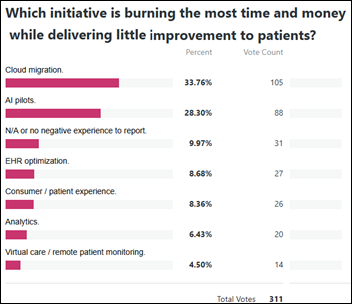
Respondents see little patient benefit to cloud migration. Some might argue that it’s not intended to impact patients directly, but others could reasonably ask, then what’s the point?

New poll to your right or here: What most limits your long-term career satisfaction in health system IT?


Thanks to these companies that recently supported HIStalk. Click a logo for more information.

image
image
image
image
image
image
image
image
image
image
image


Sponsored Events and Resources

Live Webinar: April 15 (Tuesday) 1 ET. “Navigating ACO Quality in 2025: Lessons Learned and Future Directions.” Sponsor: Healthmonix. Presenters: Michael Lewis, VP of customer success, Healthmonix; Steven Tyson, senior account executive, Healthmonix.  Accountable care organizations (ACOs) must stay ahead of evolving quality requirements and reporting changes. Join us for an in-depth discussion on lessons learned from past ACO implementation, key areas for improvement, and the impact of Medicare Clinical Quality Measures (CQMs).

Contact Lorre to have your resource listed.


Acquisitions, Funding, Business, and Stock

Rite Aid is reportedly considering another bankruptcy filing less than a year after the drugstore chain exited Chapter 11, retreating from markets where it trails Walgreens and CVS to focus on regions where it’s the second-largest player.


Sales

  • Good Shepherd Health System chooses Mednition’s Kate AI.

People

image

Door County Medical Center promotes Erick Schrier, MBA from CIO / compliance officer to chief administrative officer.


Government and Politics

The federal government files a False Claims Act complaint against Vohra Wound Physicians, alleging that it built an EHR system that automatically billed routine wound care as surgical debridement regardless of clinical justification. The company is also accused of setting revenue-driven debridement quotas and hiring inexperienced physicians who were misled during training about Medicare billing rules.

Hospital price transparency data remains mostly inaccessible and unhelpful to consumers due to complexity and inconsistent reporting, a KFF Health News report concludes. The White House plans to step up enforcement of a mostly ignored executive order from six years ago even though consumers haven’t found the cost data to be immediately useful – since it doesn’t reflect their actual out-of-pocket costs – and could encourage hospitals to raise prices if they learn that competitors charge more. 


Other

image

Penn Medicine News profiles SVP of Data and Technology Solutions Mitchell Schnall, MD, PhD.


Sponsor Updates

  • Capital Rx releases a new episode of “The Astonishing Healthcare Podcast” titled “Healthcare Sector Update & Outlook, with Bloomberg Intelligence’s Jonathan Palmer.”
  • Ellkay offers a new success story featuring WakeMed Health.
  • Nordic releases a new “Designing for Health” podcast featuring Mark Mabus, MD.
  • Nym names Tal Shmuel junior backend engineer, Rashad Kanaaneh and Mark Kapilyan software engineers, Idan Bressler NLP research engineer, and Roee Mey-Tal and Hadar Dikstein medical data analysts.
  • Praia Health celebrates its first anniversary.
  • The AONL Foundation for Nursing Research and Education recognizes Symplr as its 2025 Friend of the Year Award honoree.
  • Tegria will present at the IPMI Healthcare Finance Institute April 7 in Orlando.
  • Wolters Kluwer Health adds conversational AI to vrClinicals for Nursing.

Blog Posts


Contacts

Mr. H, Lorre, Jenn, Dr. Jayne.
Get HIStalk updates.
Send news or rumors.
Follow on X, Bluesky, and LinkedIn.
Contact us.

Morning Headlines 4/4/25

April 3, 2025 Headlines Comments Off on Morning Headlines 4/4/25

HSCC Calls for One-Year Consultative Process with Administration on Healthcare Cybersecurity Requirements

The Healthcare and Public Health Sector Coordinating Council Cybersecurity Working Group urges the White House to launch a one-year consultative process with healthcare leaders instead of proceeding with the planned HIPAA Security Rule update.

Senate confirms Oz as head of CMS along party lines

The Senate confirms former cardiologist and television show host Mehmet Oz, MD, MBA as administrator of CMS.

Oracle privately confirms Cloud breach to customers

Oracle acknowledges the previously reported breach of certain Cloud servers, telling customers that the FBI is investigating.

Comments Off on Morning Headlines 4/4/25

News 4/4/25

April 3, 2025 News Comments Off on News 4/4/25

Top News

image

Leaders from the Senate and House Veterans’ Affairs and Appropriations Committees ask the VA to submit an updated schedule and cost estimate for its Oracle Health EHR Modernization program. by September 30, 2025.

The group’s letter notes that “compliance with these laws, directives, and GAO recommendations is a critical step to ensuring EHRM’s success and accountability.”


Reader Comments

From HS CIO: “Re: Oracle breaches. Our Oracle Health rep said there was a call Monday evening where it was stated that the breach impacted legacy databases that were involved with migrations (I’m guessing Epic or the OCI instance of the EHR). On the cloud breach, the rep said that the message they were given is that no databases were breached, which seems to leave the door open. Wondering if you’ve heard anything similar from Oracle Health customers?” I invite those on the front lines to let me know what’s going on. Oracle has defended its claim that Oracle Cloud wasn’t breached because the incident apparently involved an older platform called Oracle Cloud Classic, although that is also an Oracle-managed cloud service. Meanwhile, a federal lawsuit that seeks class action status was filed against Oracle on Monday that involved both the cloud and Oracle Health breaches, accusing the company of violating Texas breach notification laws by not informing the alleged victims of the breach within the required 60 days. 


Sponsored Events and Resources

Live Webinar: April 15 (Tuesday) 1 ET. “Navigating ACO Quality in 2025: Lessons Learned and Future Directions.” Sponsor: Healthmonix. Presenters: Michael Lewis, VP of customer success, Healthmonix; Steven Tyson, senior account executive, Healthmonix.  Accountable care organizations (ACOs) must stay ahead of evolving quality requirements and reporting changes. Join us for an in-depth discussion on lessons learned from past ACO implementation, key areas for improvement, and the impact of Medicare Clinical Quality Measures (CQMs).

Contact Lorre to have your resource listed.


Acquisitions, Funding, Business, and Stock

image

Business Insider profiles the 29-year-old executives who are leading Palantir’s healthcare business, neither of whom has prior healthcare experience.


People

image

PeaceHealth hires Julie Eastman, MBA (UCI Health) as SVP/CIO.

image

Healthcare IT Leaders hires Paul Cannon (5plus2) as CTO.

image

Trimedx hires Neil de Crescenzo, MBA (Optum Insight) as CEO.

image

Apree Health, which was formed in the 2022 merger of Castlight Health and Vera Whole Health, promotes Jonathan Porter to CEO and restores the Castlight and Vera brands.

image

Advocate Health promotes Andy Crowder to SVP/chief digital officer.


Announcements and Implementations

A Stoltenberg Consulting survey of healthcare CIO members of CHIME finds:

  • The top priorities for 2025 are improving clinical workflows, improving the patient experience, and optimizing EHRs.
  • The #1 investment area is cybersecurity, privacy, and risk management.
  • Getting the most out of existing technology reached an all-time high of 62% of votes.
  • Clinician burnout rates are continuing their steady drop.
  • The top IT support frustration involves lack of training.
  • The biggest challenges are staff shortages, inadequate budgets, and EHR optimization.
  • More than half are exploring or using AI tools in areas such as revenue cycle management, clinical documentation improvement, and predictive analytics.
  • Health systems will continue to use hybrid or fully remote IT staffing.
  • IT budgets are flat or declining in 61% of respondent organizations.

Privacy and Security

The Healthcare and Public Health Sector Coordinating Council Cybersecurity Working Group urges the White House to launch a one-year consultative process with healthcare leaders instead of proceeding with the planned HIPAA Security Rule update.


Other

A class action lawsuit accuses a University of Maryland Medical Center pharmacist of installing webcam-activating software on at least 400 hospital computers over a 10-year period to spy on young female doctors and residents as they undressed or pumped breast milk. The six plaintiffs also allege that he installed keystroke logging software to steal their passwords, then accessed their home computers to watch them via webcam and to steal information from their cloud accounts. They are suing the hospital, who has fired the pharmacist, for negligence.


Sponsor Updates

  • Medicomp Systems releases a new “Tell Me Where IT Hurts” podcast titled “Live From HIMSS25 in Fabulous Las Vegas!”
  • AGS Health CEO Patrice Wolfe joins Verisma’s board.
  • CereCore publishes a new case study titled “Virtual CISOs Bring New Hope to Orgs Without Security Officials.”
  • A new analysis from Black Book Research identifies top global growth opportunities for OpenEHR adoption in 2025.
  • Symplr will accept nominations for its new Karlene Kerfoot Nursing Leadership in Technology Education Grant, named in honor of its late CNO, beginning June 1.
  • Clearwater announces the publication of its “Cyber Risk Benchmark Trend Report for Healthcare Vulnerability Management.”
  • WellSky announces CarePort Care Transitions Dashboard Suite.
  • The “Vanguards of Health Care” podcast features Capital Rx in an episode titled “How Capital Rx is Fixing America’s Broken Drug Pricing.”
  • Inovalon announces that its Safety Management solution is now available on the PointClickCare Marketplace.
  • Redox joins the CommonWell Health Alliance.
  • Ellkay will incorporate Dymo’s labeling solutions into its LKOrbit platform.
  • First Databank names Kelly Marino regional sales manager, and Thomas Pugh and Joseph Kuruvila software engineers.
  • FinThrive will present at the IPMI Healthcare Financial Institute April 7 in Orlando.
  • Infinx offers a new case study titled “New York Hospital Solves Prior Authorization & Scheduling Overflow With Tech-Enabled Patient Access Solution.”
  • WEDI’s “The Collective Voice of Health IT Podcast” features Linus Health Chief Strategy Officer John Showalter, MD.

Blog Posts


Contacts

Mr. H, Lorre, Jenn, Dr. Jayne.
Get HIStalk updates.
Send news or rumors.
Follow on X, Bluesky, and LinkedIn.
Contact us.

Comments Off on News 4/4/25

EPtalk by Dr. Jayne 4/3/25

April 3, 2025 Dr. Jayne 1 Comment

A blue and white logo

AI-generated content may be incorrect. 

I finally have some solid data from the recent residency match, as administered by the National Resident Matching Program.

For those who might not be familiar, this is where medical students indicate where they want to do their residency training; training programs indicate who they want to fill their allocated number of training slots; and an algorithm tries to bring them all together. This year’s match had 52,409 applicants, for which only 47,208 submitted a final rank order list. The candidates were competing for 43,237 positions. At noon Eastern time on match day, all the applicants learn where they’re going to be for the next three to seven years.

Different medical schools handle the big reveal in different ways, with some handing out sealed envelopes for class members to open privately. Others throw blowout match day celebrations complete with “walk-up” music like you might see at a major league baseball game, followed by live reveals as candidates open their notices. The latter can be a difficult environment for those who didn’t get their top choices, but everyone still acts thrilled regardless.

Those who didn’t match were notified earlier in the week and have the opportunity to compete in The Supplemental Offer and Acceptance Program (SOAP), commonly referred to as “the scramble,” where unfilled slots are offered and candidates have only two hours to accept a potential offer. If you saw a graduating medical student with their phone glued to their body March 17-20, chances are they were part of the scramble.

It’s a brutal process for those who have been through it, although some of my classmates who had top scores were largely unfazed. The final match data can be telling as far as what students think about a particular specialty, and following the worst parts of the COVID-19 pandemic we saw a significant drop in matches to emergency medicine as students saw what that specialty had become. After experiencing an 81.8% fill rate in 2023, emergency medicine rebounded to 95.5% in 2024 and landed at 97.9% for 2025.

Primary care specialties ended up with a 93.5% fill rate, even with an increase of 877 in the positions available. Family medicine matches fell from 87.8% to 85.0%, which means that we will continue to have shortages in that specialty for years to come. Unless healthcare payment policies change (and workloads shift), we’ll continue to see a decline as students choose specialties with higher compensation and better work-life balance.

A close-up of a ring

AI-generated content may be incorrect.

I had dinner with some friends last week, and one of them was showing off her Oura ring. She and her husband bought matching rings in an effort to use data to determine who was more disruptive during sleep. The company has been working to improve its sleep tracking algorithm, and although it’s better than competitor devices, it’s still not as accurate as formal polysomnography. Although it will probably be good enough to force one of the parties to consider seeking medical help, it’s not classified as a medical device, nor is it approved to diagnose, treat, or monitor health conditions. If you think your bed partner has apnea or another serious condition, it is best to see a licensed professional.

In another discussion, a friend asked me about this article on Gather Health, which aims to provide primary care services with a focus on keeping older patients out of the emergency department. Founded by an emergency physician who was tired of seeing patients seeking care in high-cost facilities when it could be better managed elsewhere, over 2,500 patients are enrolled, with the majority being covered by Medicare and Medicaid. The company has raised $17 million in funding and hopes to break even in 2025. The company pairs office-based care with home health, remote patient monitoring, and social opportunities to improve patient outcomes.

The article mentions revenue forecasts of $44 million this year. It hopes to expand from four to 17 sites in Massachusetts. Of course, when venture capital is involved, there’s an expectation that the services will yield a profit, and it would be interesting to learn more about how much money they think they can make on something like this. I’m not against people making a profit, but it’s the extreme focus on profitability that I’ve seen create a lot of issues in healthcare delivery organizations. Nearly every physician gathering that I attend features at least one horror story related to private equity or venture funding of care delivery organizations.

Caring for complex elderly patients is expensive and challenging. The company’s founder also served as chief operating officer of VillageMD, so it will be interesting to see what he does differently with this endeavor. From the patient perspective, I wish the company well and will be interested to see how it performs over the next few years.

A screenshot of a computer

AI-generated content may be incorrect.

The Open Payments program is a national system that creates transparency around payments made to physicians from drug companies, device manufacturers, and other regulated entities. Each spring, data is released so that physicians can review what is associated with their name and potentially dispute anything unexpected. It’s been many years since I attended so much as a drug company lunch, so I was surprised to see a significant amount of money posted against my name for the recent reporting period.

I’m glad I reviewed it, because the entry was from a company I don’t associate with and was tagged with a nebulous “food and beverage” category for a single event in the first few months of 2024. I’ve opened a dispute about the entry and hopefully it will be resolved quickly and with a minimum of extra work on my part. If you’re a provider subject to reporting, it might not be a bad idea to take a look at your account. Even if I’m unable to resolve it, my understanding is that my record will be flagged as “disputed,” which is good because I hate to break my record of perfect zeros.

Take-Back

Mark your calendar for the next DEA National Prescription Drug Take Back Day on Saturday, April 26. Communities will be holding collection events, often at local police departments or other health facilities. Unwanted and expired medications are a health hazard and also pose risks to the environment when people dispose of them incorrectly. Fortunately, my local law enforcement agency has a box that’s available for drop off around the clock, and I made good use of it when a relative passed away, leaving behind a cache of pain medications with a street value in the thousands of dollars. The program has collected 19 million pounds of medications over the years, which is pretty impressive.

Email Dr. Jayne.

Morning Headlines 4/3/25

April 2, 2025 Headlines Comments Off on Morning Headlines 4/3/25

Leaders of the House, Senate VA Committee & VA Appropriations Request Cost Estimate for VA Electronic Health Record

Senator Jerry Moran (R-KS), chairman of the Senate Committee on Veterans’ Affairs, spearheads an effort to request that the VA submit to Congress an updated schedule and cost estimate for its EHR Modernization program by September 30.

Deacon Health Launches to Bring Tech-Enabled Care Coordination Services to Specialty Care

Specialty care management company Deacon Health launches with $7 million in seed funding.

CareCloud Acquires RevNu Medical Management, Completing Second Acquisition in 31 Days

CareCloud acquires RevNu Medical Management, an RCM company focused on audiology providers.

Comments Off on Morning Headlines 4/3/25

Text Ads


RECENT COMMENTS

  1. RE NEJM piece: He shouldn’t future-conditional with “they can retreat, which might mean abdicating medicine’s broad public role, perhaps in…

  2. The sentence was "most people just go to Epic UGM" - that's people going to Epic's annual user conference and…

  3. Merry Christmas and a Happy New Year to the HIStalk crowd. I wish you the joys of the season!

  4. "most people just go to Epic" that's a problem because then EPIC becomes a monopoly in healthcare, if it isn't…

Founding Sponsors


Platinum Sponsors


Gold Sponsors


RSS Webinars

  • An error has occurred, which probably means the feed is down. Try again later.