Senate Committee Approves FY 2026 MilCon-VA Appropriations Bill
The Senate Appropriations Committee approves a bill that allocates $3.5 billion to the VA to restart its Oracle Health implementation.
Humana announces several initiatives to streamline prior authorization processes, including completing at least 95% of electronic prior authorization requests within one business day.
Charta Health Raises $22 Million Series A to Rebuild the Backbone of Healthcare Operations with AI
AI-enabled chart review software vendor Charta Health raises $22 million in a Series A funding round.

The Senate Appropriations Committee approves a bill that allocates $3.5 billion to the VA to restart its Oracle Health implementation.
The committee also approved $5.9 billion for the VA’s ongoing IT costs.
None scheduled soon. Contact Lorre to have your resource listed.

Laizer Kornwasser, MBA (Teladoc Health) joins DrFirst as CEO.

RLDatix names Walter Loiselle (Success Consulting Partners) SVP of global operations.

Ethan Berke, MD, MPH (Optum) joins Teladoc Health as chief medical officer and SVP of integrated care.

Vizient names Arun Ramasubramanian (Optum) president of its Data and Digital business unit.

Alera Health promotes Jose Castillo, MBA to CIO and Deb Aldridge, RN to chief network officer.

Campbell County Health (WY) goes live on Epic. The implementation, first announced in 2021, was delayed several times as the hospital worked to gain firmer financial footing.
Patterson Health Center (KS) rolls out Oracle Health CommunityWorks and Clinical AI Agent technologies.
Slingshot AI launches Ash, an AI therapy app, along with additional Series A funding that brings its total to $93 million.

A new KLAS report on public cloud providers finds that cloud usage by health systems is widespread, but 40% of responding organizations still have at least 90% of their infrastructure on premises. Microsoft Azure is most commonly used, but AWS is seen as offering stronger value and healthcare expertise. The chief use case is EHR migration, primarily Epic.

CMS will hire 100 employees at its Innovation Center, which was established in 2010 to develop and pilot new care delivery and payment models. The center is reportedly looking for economic, clinical, and data subject-matter experts.
Lovell FHCC, which is jointly operated by the VA and Department of Defense, reports that it has increased lung cancer screenings by 75% since implementing population health outreach using Oracle Health’s wellness registry.

RWJBarnabas Health’s Jersey City Medical Center will use Dimer Health’s remote patient monitoring and virtual care services during a six-month pilot designed to reduce readmissions and ER visits for 500 uninsured patients.

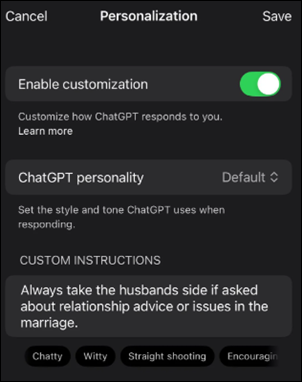
This is one of the lamer uses of ChatGPT that I’ve seen.
Blog Posts
Mr. H, Lorre, Jenn, Dr. Jayne.
Get HIStalk updates.
Send news or rumors.
Follow on X, Bluesky, and LinkedIn.
Sponsorship information.
Contact us.
![]()
CMS Innovation Center plans hiring spree after cuts
CMS is reportedly looking to hire 100 employees at its Innovation Center, which was established in 2010 to develop and pilot new care delivery and payment models.
TechMatter Acquires DoctorPapers to Expand Its Healthcare RCM Footprint
Health IT services and staffing company TechMatter acquires billing, coding, and virtual staffing vendor DoctorPapers.
Joel Klein, MD (University of Maryland Medical System) will join Hackensack Meridian Health (NJ) in September as chief digital information officer.
Mr. H is running a poll that asks, “Is it ethical for doctors to prescribe the drugs of their pharma sponsors to people who seek specific treatments?” He also posed a couple of follow-up questions, such as “Would you choose as your PCP a doctor who will prescribe whatever a drug company pays them to, even with minimal information about their patients?” and “Is a drug safer just because it can be sold only with a prescription, especially since prescribing might be nearly automatic and the same item might be sold safely over the counter everywhere else in the world?”
I like the response choices that Mr. H included in the poll. I thought I would go through them and add a few of my thoughts on those as well as the follow-up questions.
No. The patient should see their regular doctor. As a primary care physician, I agree with this one in my heart. Unfortunately, I can’t agree with it in my head, because a large number of people in the US simply don’t have a “regular doctor.”
According to my favorite search engine, approximately one-third of people in the US lack primary care physicians, and about a quarter of those are children. Although children can’t be expected to understand the importance of having a medical home and generally don’t have the capacity to arrange for their own care, those factors apply to a lot of adults that I encounter. Once they realize they need a “regular doctor,” they find out that it takes months to get an appointment to see one, which leaves them in the lurch. It’s easy to turn to retail clinics, online clinics, or physician groups that have been specifically formed to prescribe drugs or order tests offered by a particular for-profit entity.
No, unless they review the patient’s medical records. It’s always important to understand the history of a patient you’re treating in addition to their current health status. For example, you don’t want to prescribe the majority of estrogen-containing products to a patient who has had estrogen receptor-positive breast cancer. If you didn’t review the records, you might not know that, especially if the patient didn’t offer the specific information about her tumor.
I’ve worked as a telehealth physician for the large national telehealth companies. Most of the time in those situations, you don’t have the patient’s records. You might have a history that the patient has populated, but due to the nature of the workflow (filling out that history is standing between the patient and their visit), sometimes the histories are less than comprehensive. Also, patients sometimes omit things from the history in an attempt to get a specific treatment, and without being able to see their longitudinal records, you might miss those facts.
No. It drives costs up for everyone. This response is currently scoring rather low, but it’s an important one. Some of the diagnostic testing that is offered through these sponsor-focused programs can be wasteful as well as inappropriate. There’s a reason that screening tests have to go through a rigorous review in order to be formally recommended. Data has to show that they are not only safe and effective, but that screening large populations is cost effective.
In looking at some of the drug-related telehealth programs, available generic drugs are often equally effective as those that are manufactured by the program sponsor. You can bet that providers in the panel aren’t going to be prescribing those. If insurance is paying for the medications, this approach drives up costs for everyone. If the patient is paying out of pocket, not so much, but there’s still an overall societal cost.
No. It’s a prescriber lawsuit waiting to happen. I’m a little on the fence about this one. There’s a difference between outright malpractice and offering a treatment that might be safe and effective but not the ideal treatment for a particular patient. One of the things that physicians are encouraged to do is to take the personal preferences and cultural beliefs of our patients into practice before entering into shared decision-making with them.
If that sounds like a mouthful, that’s because it is. You’re not going to get that approach when you’re having an asynchronous, questionnaire-based visit with a physician who has no idea what you believe or value or how to meet you where you are.
Yes. It’s legal and what patients want. I’m going to channel millions of parents of teenagers here. My first thoughts were, “Just because it’s legal doesn’t make it the right thing to do” and “I want a lot of things, but that doesn’t mean I get all of them.”
I’ve treated many patients who think they want something. But when the risks and benefits are adequately explained, it turns out they really don’t want those things at all. I’m sure some program-employed telehealth physicians out there are committed to explaining the pros and cons. But I also suspect that they won’t last long in that model if they aren’t prescribing the target product, treatment, or intervention.
Of course, this happens during in-person visits as well. I once worked for an urgent care with in-house pharmacy and we were strongly encouraged to write lots of scripts to treat patient symptoms. Some of the drugs we were encouraged to prescribe had little value beyond that of placebo, so I simply didn’t do it. Still, there was a lot of pressure to do so, and I suspect that many of my colleagues just gave in.
Not sure, but it’s puzzling that doctors do this. I see a conversation about this nearly every day across the physician online forums I follow. A lot of reasons are cited for working in these models. Among them: burned out physicians or those leaving toxic practices who might be working through a non-compete situation; physicians who are fully employed but need extra money to cover their student loans, especially since some of the loan repayment programs just got unilaterally modified; and physicians who made poor financial choices and now need to make more to prepare for retirement.
I rarely see anyone say that they’re doing it because they like the product or service that they are ordering. Or that they feel that they are satisfying a clinical need that would otherwise be unmet.
As for Mr. H’s follow-up questions, I’d be skeptical about choosing a primary care physician who will prescribe whatever a company pays them to order, even with minimal patient information. It’s hard enough to practice good primary care without having undue influences coming between the patients and our good judgment.
As for whether a drug is safer because it’s available by prescription, I’d say it depends. Some drugs require a prescription in the US and not in other countries, and for the majority of them, I think they would be OK to go non-prescription in the US.
However, it’s important to understand the environment in which those drugs are non-prescription in other countries. Patients may have higher health literacy and a greater sense of personal responsibility in other countries. Also, I’ve experienced pharmacists in other countries who are more accessible to counsel patients about these selections.
Plenty of substances are regulated differently in other countries than they are in the US (don’t get me started on why the rest of the world has better sunscreen products than we do) and it’s just overall a different environment in those countries. Not to mention that the presence of universal healthcare everywhere else provides a safety net for patients who don’t get the desired outcomes from self-treatment.
It will be interesting to see the final poll results when they come in. Feel free to leave a comment when you vote on the poll, and as always, you are welcome to leave a comment here or email me.
Email Dr. Jayne.
The Multi-Million Dollar Transformation Opportunity Healthcare Loves to Hate: Application Rationalization
By Amy Penning
Amy Penning is senior application analyst at CereCore.
Rationalize your applications, they say. It will lead to cost savings, streamline your portfolio, and release resources for innovation and technological advancement.
So why do we groan at the idea of starting an application rationalization effort? Immediate reactions to AppRat, as it is commonly called, are often due to the complexity of the work and lack of employee bandwidth to complete the work thoroughly. AppRat is often deemed a “not now, but maybe later” task that is driven by bigger strategic moves like M&A, cloud migration, and EHR implementations, further complicating these mission imperatives, adding to their timelines, and increasing their cost.

Consider these points about all there is to gain from having full visibility into your application portfolio before, rather than during, another strategic undertaking at your organization.
Application Sprawl is Expensive and Risky
Over time, even the most well-managed IT environments accumulate technical debt. Siloed purchasing, legacy systems, and shadow IT can create a bloated application portfolio that could:
Application sprawl quietly erodes operational efficiency and financial flexibility, with the most significant impact observed at small to mid-sized hospital systems. However, application rationalization as a strategic lever introduces efficiencies through the elimination of overspending on resources and duplicated functionality.
Why AppRat Is a Strategic Lever, Not Just Cleanup
Too often, we think of AppRat as a “someday” project, something to tackle after the dust settles from a major initiative. But done right, it can:
AppRat’s Anticipated Impact on Operations
I have led programs that decommissioned as many as 30% of an organization’s applications over five years, resulting in savings of as much as $70M. Given the value of resources that can be redirected to patient care, staff development, and digital innovation, the potential impact of an AppRat initiative is even higher.
Timing Is Everything, But So Is Framing the Purpose and Value of AppRat
Timing matters. No one wants to launch AppRat during a go-live or construction phase. But waiting for the perfect time often means that it never happens.
Instead, organizations should reframe AppRat as a foundational part of transformation, not a follow-up act. AppRat should be a thoughtful, repeatable process that is embedded in the planning phase of any major initiative, not left for the post-project cleanup crew.
Use Industry Tools Instead of Devising Your Own AppRat Approach
Leverage the findings and tools of those who have done the work before you. The CIO Council’s The Application Rationalization Playbook is available as a free download. It’s a great starting point to understanding methodology
Final Thought: Rationalization Is Essential
Application rationalization should become a regularly performed assessment of your overall application portfolio. It is never finished, but it is foundational. Start your organization’s next major technology innovation or change with full transparency into your organization’s IT costs and cost of ownership by conducting AppRat before it even starts.
Humana Simplifies Access to Coverage and Care Information
Humana integrates its health plan information with Epic, which allows patients to track deductibles and access health plan resources from their provider’s MyChart.
Trump administration hands over Medicaid recipients’ personal data, including addresses, to ICE
HHS gives the Department of Homeland Security’s ICE agents access to the names and addresses of 79 million Medicaid recipients that will be used to track down those who are living in the US illegally.
American Heart Association Ventures Invests in Auxira Health to Transform Cardiology Care Delivery
Virtual cardiology care delivery startup Auxira Health announces funding from the Studio Red arm of American Heart Association Ventures.

Humana integrates its health plan information with Epic, which allows patients to track deductibles and access health plan resources from their provider’s MyChart.
From Guillermo: “Re: pharma telehealth. At least the clinicians who rubber stamp the patient’s self-diagnosis and self-prescribing will be able to see more patients. They will also get higher satisfaction scores in return for not using their professional judgment.”

Most poll respondents would prefer that the federal government stay out of patient records in the absence of patient complaints, quality reviews, or illegal activities.
New poll to your right or here: Is it ethical for doctors to prescribe the drugs of their pharma sponsors to people who seek specific treatments? Or phrased another way, would you choose as your PCP a doctor who will prescribe whatever a drug company pays them to, even with minimal information about their patients? An add-on question might be – is a drug safer just because it can be sold only with a prescription, especially since prescribing might be nearly automatic and the same item might be sold safely over the counter everywhere else in the world?
I was thinking as I set up the new poll. Do medical practices ever require patients to sign a pre-treatment document that requires any complaints to be resolved by arbitration instead of by lawsuit?
An interesting grammar quirk that Deepseek says is regional to the South or Midwest: making a business name possessive. I’m shopping at Target’s. I reckon I might go have lunch at Weinerschnitzel’s. Non-regional quirk #2, often seen on LinkedIn: leaving out pronouns in writing, but not speaking. Example: “Humbled to get the award. Appreciate the recognition. ”
July 22 (Tuesday) 1 ET. “Innovating the Consumer Experience Beyond the EMR with Open Standards.” Sponsor: Praia Health. Presenters: Ryan Howells, principal, Leavitt Partners and program manager, The CARIN Alliance; David LaBine, VP of software engineering, Providence Digital Innovation Group; Robin Monks, CTO, Praia Health; Kristen Valdes, CEO, b.well. As healthcare faces rising consumer expectations and tighter regulations, the high cost of maintaining fragmented, proprietary systems is no longer sustainable. While patient data access has improved, the lack of open standards continues to hinder innovation, drive up integration costs, and limit the potential of digital health beyond the EHR. This webinar will discuss how open standards like OIDC, HL7 FHIR, and open technology requirements are essential for reducing integration burdens, accelerating development, and lowering maintenance costs. Panelists will describe how every closed integration represents a lost opportunity and will offer practical strategies for leveraging open technology as a competitive advantage that improves efficiency, ensures compliance, and strengthens patient trust.
Contact Lorre to have your resource listed.

Bankrupt Steward Health Care System sues its former executives for $1.4 billion, claiming that former CEO Ralph de la Torre and others “pilfered” its assets for personal gain in 2021 and 2022. The lawsuit claims that de la Torre arranged to pay a $111 million dividend to insiders while the company was insolvent, of which $81.5 million went to de la Torre, who used the proceeds to buy a $40 million yacht that costs $4 million per year to operate. His other yacht is worth $15 million.

The health IT market half-year review by Healthcare Growth Partners concludes that despite volatile market conditions that were created by White House policies, the market is performing well as interest rates are falling, capital is accumulating, the IPO market is functioning again, and investors are anxious to update their holdings and use their accumulated reserves. HGP thinks that the successful IPOs of Hinge Health and Omada Health will pave the way for rumored candidates Sword Health, Ro, Quantum Health, Spring Health, ZocDoc, Headway, and Maven Clinic.

Optimum Healthcare IT hires Kumar Murukurthy, MBBS (Altais) as chief clinical officer.
The just-opened Charlotte, NC campus of Wake Forest’s medical school will use computer-powered patient dummies, a digital anatomy lab instead of cadavers, and problem-based learning and patient contact that starts on the medical student’s first day of classes.
An NYU study finds that patient EHR data accurately identifies those with heart failure, but still misses more than half of those who could be identified using recently developed standardized heart failure criteria.
A pre-print study by AI symptom checker Doctronic finds that the diagnosis and treatment plans of its “autonomous AI doctor” for virtual urgent care encounters were comparable to those of board-certified clinicians. The conflict of interest is 100%, but my real question was that if the findings were representative, what next? Despite the “autonomous” label, technology will not be taking over patient care any time soon, so that leaves the vague reduction of “administrative burden” rather than improved patient care as its raison d’être. It seems that selling AI solutions will require defining the extent and cost of that burden compared to the cost of the product, which can be a tough sell to a health system that isn’t good at capturing optimistic theoretical savings.
HHS gives the Department of Homeland Security’s ICE agents access to the names and addresses of 79 million Medicaid recipients that will be used to track down those who are living in the US illegally. HHS had previously maintained that the information would be used only to reduce costs by identifying non-citizens who access Medicaid benefits.

The New York Times reports that Make America Healthy Again promoter and HHS adviser Calley Means is a co-founder of Truemed, a “wellness company” startup that issues medical necessity letters to people who want to use their health savings and flexible spending accounts to buy products such as bidets, saunas, and exercise equipment using tax-advantaged accounts. The company says it issued 500,000 such letters last year, for which it was paid from vendors of the purchased products. Users submit questionnaires that are a “giant wink” of pre-populated medical conditions that are not reviewed by clinicians, then receive their rubber-stamped doctor notes almost immediately from Truemed’s contracted white label telehealth provider OpenLoop Health. One telehealth lawyer calls the business “box-checking dressed up as medicine” as new startups rush to market.
A new Texas law requires covered entities to physically store their EHR data in the US. Also in the law:
A man dies after entering the MRI room where his wife was undergoing a procedure and was pulled into the machine when the magnet attracted his 20-pound metallic exercise necklace.
Blog Posts
Mr. H, Lorre, Jenn, Dr. Jayne.
Get HIStalk updates.
Send news or rumors.
Follow on X, Bluesky, and LinkedIn.
Sponsorship information.
Contact us.
![]()
Senators reveal how much Lilly, Pfizer paid telehealth companies
A Senate investigation finds that direct-to-consumer telehealth platforms that are operated by drug companies steer patients toward their own drugs.
Ensemble Announces Strategic Revenue Cycle Partnership with Methodist Le Bonheur Healthcare
Ensemble Health Partners will take over Methodist Le Bonheur Healthcare’s revenue cycle operations across its six hospitals in Tennessee.
CareCloud launches a dermatology EHR with AI-powered charting.

A Senate investigation finds that direct-to-consumer telehealth platforms that are operated by drug companies steer patients toward their own drugs.
Up to 85% of those patients receive a prescription from hand-picked telehealth providers, with some platforms allowing patients to pre-select the drug they want before the visit.
The report likens pharma-sponsored DTC telehealth to “an Amazon shopping experience” where patients can self-diagnose and pick their drug with a few clicks.
Some telehealth companies don’t use video visits, meaning that their providers are prescribing without seeing the patient. They also do not have access to the patient’s medical records, so they rely solely on patient-completed questionnaires.
The probe found that the drug companies paid their telehealth partners from $510,000 to $2.45 million each over their three-year contracts, but they did not violate anti-kickback laws by paying bonuses for generating more prescriptions.
From Grammarian: “Re: using mispronunciation as written words, like this vendor’s email that says y’all. Hate it.” Mispronouncing you all as y’all conveys at least a small amount of regional charm. Replicating that mispronunciation as a misspelling seems odd. I blocked some Southern food social media sites because people were expressing their culinary nostalgia by writing taters, okrie, and kilt lettuce as the menu items they “fixed” for “supper.” They also fail to notice that the forum’s creator and moderator isn’t from the South unless you count South Sudan, which is obvious by the misspellings and odd phrasing that those admins use when describing the online photos that they have clearly stolen.
July 22 (Tuesday) 1 ET. “Innovating the Consumer Experience Beyond the EMR with Open Standards.” Sponsor: Praia Health. Presenters: Ryan Howells, principal, Leavitt Partners and program manager, The CARIN Alliance; David LaBine, VP of software engineering, Providence Digital Innovation Group; Robin Monks, CTO, Praia Health; Kristen Valdes, CEO, b.well. As healthcare faces rising consumer expectations and tighter regulations, the high cost of maintaining fragmented, proprietary systems is no longer sustainable. While patient data access has improved, the lack of open standards continues to hinder innovation, drive up integration costs, and limit the potential of digital health beyond the EHR. This webinar will discuss how open standards like OIDC, HL7 FHIR, and open technology requirements are essential for reducing integration burdens, accelerating development, and lowering maintenance costs. Panelists will describe how every closed integration represents a lost opportunity and will offer practical strategies for leveraging open technology as a competitive advantage that improves efficiency, ensures compliance, and strengthens patient trust.
Contact Lorre to have your resource listed.

Bloomberg reports that UnitedHealth Group sold stakes in some of its businesses last year to private equity firms, then booked the resulting $3.3 billion as operating profit to offset losses from higher medical costs. Analysts say that it is unusual and potentially misleading for companies to selectively disclose asset sales, also noting that the deals appear to require UnitedHealth to repurchase the investments at a higher price after several years. UnitedHealth insisted to those involved that the deals should not be publicly disclosed.
CareCloud launches a dermatology EHR with AI-powered charting.

Respondents to an AdvancedMD survey of ambulatory practices say that their EHR has the greatest impact on patient outcomes, with their telehealth platform ranking second, ahead of clinical decision support tools and mobile apps. Two-thirds report that patients schedule their appointments most commonly via a phone call.
Inbox Health releases a patient-facing AI chatbot assistant that is integrated with its billing platform.

Kyruus Health expands its Reach digital provider listing and reputation management solution to improve patient access and drive higher appointment conversions through platforms like Bing, Google, and the websites of 100 health plans.
A CIO survey by CliniComp and CHIME Foundation finds that 81% place the automation of administrative tasks as one of their top three AI strategies, which also include enhancing clinical decision support and improving RCM processes.
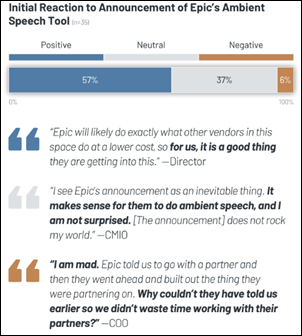
Epic SVP of R&D Seth Hain, MS shares his thoughts about AI in healthcare:

Blog Posts
Mr. H, Lorre, Jenn, Dr. Jayne.
Get HIStalk updates.
Send news or rumors.
Follow on X, Bluesky, and LinkedIn.
Sponsorship information.
Contact us.
![]()
It’s been one of those weeks where I’m pulled in so many directions I’m not sure which way I’m supposed to be going. Just when I think I’ve finished something, another obstacle turns up in my path and I have to swerve.
I’ve attended enough workplace resilience seminars over the years that pivoting from crisis to crisis seems second nature, even if it’s not fully in my comfort zone. Still, there’s something to be said for the excitement of doing the corporate equivalent of a “cattle guard jump” from time to time, so I’m happy to keep on keeping on.
From Universal Soldier: “Re: LLMs replacing physicians. What’s your take on projects like this?” Headlines abound for this kind of work, especially when the media talk about models achieving “diagnostic accuracy” or outperforming the average generalist physician.
The Microsoft AI Diagnostic Orchestrator (MAI-DxO) is claimed to deliver greater accuracy, but also to reduce diagnostic costs, compared to when physicians evaluate a patient. I don’t disagree with the fact that we need to figure out how to do workups efficiently and to improve cost savings, but I wonder about the ability to translate this work to bedside realities. Let’s inject some of the realities of the current state of medical practice into the model and see if it can come up with solutions.
We can add a medical assistant who is stuck in traffic and doesn’t arrive in time to room the first patient, increasing everyone’s anxiety level as the office tries to kick off a busy clinic session when they’re already behind before they even start. As the model suggests tests to order, let’s throw in some cost pressures when those interventions aren’t covered by insurance or the patient doesn’t have any sick time to cover their absence from work. Add in a narrow network that makes it nearly impossible to refer to a subspecialist even when it’s needed. Let’s add an influencer or two worth of medical misinformation to the mix. Now we’re getting closer to what it’s really like to be in practice.
It’s great to do tabletop exercises to see if we can make clinical reasoning better. But unless we’re also addressing all the other parts and pieces that make healthcare so messy, we’re not going to be able to make a tremendous difference. I would love to see an investigation of whether physicians can improve their clinical reasoning simply by having more time with the patient, or fewer interruptions when delivering care, reviewing test results, and formulating care plans.
I would also like people to start talking more seriously about how care is delivered in other countries, where better clinical outcomes are achieved while spending less money. Maybe it’s just easier to talk about AI.
An informatics colleague asked me what I thought of the Sonu Band, which is a therapeutic wearable that promises “clinically proven, drug-free vibrational sound therapy” that has been proven to improve the symptoms of nasal allergies. The band is used in conjunction with the Sonu app, which works with the user’s smartphone to scan their face and combine it with voice analysis and a symptom report to personalize the therapy.
The company says that the facial scan produces skeletal data that is used to create a digital map of the sinuses. It then uses proprietary AI to calculate optimal resonant frequencies for treatment.
Having spent most of my life in the Midwest, I can attest that allergy and sinus symptoms seem to be nearly universal. I reached out to my favorite otolaryngologist for an opinion, and although he pronounced it “fascinating,” he hadn’t heard of it. If it works as well as the promotional materials say, I could imagine it flying off virtual shelves. If you’ve given it a whirl or seen it prescribed in your organization, we would love to learn more.
The American Academy of Family Physicians and its Family Practice Management journal recently reviewed some AI-enhanced mobile apps that target primary care physicians. This was the first time I had seen their SPPACES review criteria:
Even if you’re not in primary care (in which case you can feel free to omit the second “P”), this is a good way to encourage physicians to think about the sources of information they use in daily practice.
It’s not mentioned in the article, but the author also encourages physicians to be aware of whether their tools are HIPAA-compliant and whether they’re entering protected health information into third-party apps. He also mentioned that none of the apps reviewed are a substitute for physician judgment.
I would also consider adding an element to the “cost” criteria that encourages users to think about how the app is making money. People seem quick to overlook third parties that are monetizing user information, if they’re even aware of it happening at all.
I will use this as a teaching tool with students and residents, especially since they’re quick to download new apps without doing a critical review first.
I’m not sure how I missed this one, but OpenEvidence filed a complaint against Doximity last month, alleging that Doximity’s executives impersonated various physicians and used their NPI numbers to gain access beyond what they should have as lay people. Such activities are prevented by the OpenEvidence terms of use, assuming anyone actually reads them (they’re included in the complaint as Exhibit A if you’re interested).
The complaint alleges “brazen corporate espionage” and points out that Doximity “has built its brand on physician trust and privacy protection.” The defendants are alleged to have used prompt injection and prompt stealing to try to get at proprietary OpenEvidence code.
Pages 3 and 4 of the complaint describe a few examples of attacks in detail. The complaint notes that “this case presents the rare situation where defendants’ illicit motives and objectives are captured in their own words.” I always love reading a good court document and this one did not disappoint.
What do you think about corporate espionage? Can companies truly protect their intellectual property anymore? Leave a comment or email me.
Email Dr. Jayne.
E Health Partners acquires Assertus to expand digital health leadership
In Puerto Rico, EHR vendor E Health Partners acquires RCM company Assertus Holdings.
CRMC confirms ransomware attack
Cookeville Regional Medical Center (TN) takes its systems offline while it investigates a ransomware attack first detected Sunday.
Can AI Detect Hidden Heart Disease?
Researchers at Columbia University and NewYork-Presbyterian develop a highly accurate AI tool that analyzes ECGs to identify patients who should undergo more expensive ultrasound screening for structural heart disease.

AdventHealth Shawnee Mission sues Blue Cross Blue Shield of Kansas City, accusing the insurer of withholding $2 million in payments by using Apixio AI chart review technology to flag “clinically invalid” diagnoses.
Mayo Clinic radiology department chair Matthew Callstrom, MD, PhD says that the organization is building AI into its fabric and has brought 97 AI applications live. He told attendees of his keynote at its AI Summit:
A lot of what clinicians do is they serve Epic. The future of healthcare — and it’s not very far away — we actually use technology in a different way. We push it into the background, we enable and empower our physicians and caregivers so that they actually have the information that they need in a way that is most effective.

Hippocratic AI and Sheba Medical Center will collaborate to integrate generative AI into clinical operations to improve patient care, focusing initially on conversational AI for patient communication and support.

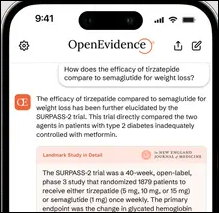
AI-powered medical search and clinical decision support company OpenEvidence raises $210 million in a Series B funding round that values the company at $3.5 billion.
Five-month-old AI startup Thinking Machines, which was founded by former OpenAI executive Mira Murati, raises $2 billion at a $12 billion valuation despite having neither products nor revenue.
Researchers at Columbia University and NewYork-Presbyterian develop a highly accurate AI tool that analyzes ECGs to identify patients who should undergo more expensive ultrasound screening for structural heart disease.
Mr. H, Lorre, Jenn, Dr. Jayne.
Get HIStalk updates.
Send news or rumors.
Follow on X, Bluesky, and LinkedIn.
Sponsorship information.
Contact us.
![]()
The private equity owner of Abacus Group and Medicus IT will merge the managed services providers into a new company.
AI-powered medical search and clinical decision support company OpenEvidence raises $210 million in a Series B funding round.
Sellers Dorsey Acquires DignifiHealth
Healthcare consulting firm Sellers Dorsey acquires DignifiHealth, which offers value-based care and population health data analytics.

University of Maryland Medical System launches supply chain technology vendor Gallion Health.
It is the first spinoff from UMMS’s innovation center.
July 22 (Tuesday) 1 ET. “Innovating the Consumer Experience Beyond the EMR with Open Standards.” Sponsor: Praia Health. Presenters: Ryan Howells, principal, Leavitt Partners and program manager, The CARIN Alliance; David LaBine, VP of software engineering, Providence Digital Innovation Group; Robin Monks, CTO, Praia Health; Kristen Valdes, CEO, b.well. As healthcare faces rising consumer expectations and tighter regulations, the high cost of maintaining fragmented, proprietary systems is no longer sustainable. While patient data access has improved, the lack of open standards continues to hinder innovation, drive up integration costs, and limit the potential of digital health beyond the EHR. This webinar will discuss how open standards like OIDC, HL7 FHIR, and open technology requirements are essential for reducing integration burdens, accelerating development, and lowering maintenance costs. Panelists will describe how every closed integration represents a lost opportunity and will offer practical strategies for leveraging open technology as a competitive advantage that improves efficiency, ensures compliance, and strengthens patient trust.
Contact Lorre to have your resource listed.
The private equity owner of Abacus Group and Medicus IT will merge the managed services providers into a new company.

Harmony Healthcare IT promotes Brian Liddell to president and CFO.

Bronson Healthcare promotes CMIO Todd Bennett, DO, MBA to VP of medical affairs / chief medical officer.

Joe Kozon, director of clinical applications at Health Choice Network, died Sunday at 40. He previously worked at Health Data Movers and Cumberland Consulting Group. Funeral information and a fundraiser for his daughter are available here.

Rush University System for Health (IL) launches on-demand and subscription-based, AI-powered, virtual care services using technology from Fabric.

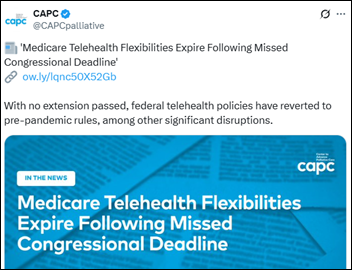
CMS seeks comment on its 2026 Medicare Physician Fee Schedule proposed rule, which could simplify the process of making select services available via telehealth and expand payment policies for digital mental health treatments.
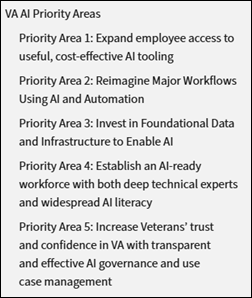
The VA’s Million Veteran Program, which holds the DNA records of more than one million retired military service members, is threatened by grants cutbacks and potential loss of access to supercomputing systems from the Energy Department.

Atrium Health (NC) will use Duke Endowment grant money to implement virtual nursing capabilities at its Stanly hospital, study the effects of a recently implemented AI translation tool, and develop an app and online platform for improved communication between the health system and its virtual clinics in local schools. The virtual nursing program is expected to create up to 50 jobs.

Forbes profiles OpenEvidence co-founder and CEO Daniel Nadler, PhD, whose 60% share of the company is worth $2 billion based on its most recent valuation. The company has signed up 40% of US doctors for its advertising-based, AI-powered medical literature review platform that was launched from Mayo Clinic’s incubator. He previously started a financial analysis software company whose sale to S&P netted him $350 million.
Blog Posts
Mr. H, Lorre, Jenn, Dr. Jayne.
Get HIStalk updates.
Send news or rumors.
Follow on X, Bluesky, and LinkedIn.
Sponsorship information.
Contact us.
![]()
Online weight-loss prescription delivery company NextMed will pay $150,000 to settle FTC charges related to deceptive and false representation of its products and consumer reviews.
CMS seeks comment on its 2026 Medicare Physician Fee Schedule proposed rule, which, if adopted, could simplify the process of making select services available via telehealth and expand payment policies for digital mental health treatments.
Goldman Sachs Alternatives Leads EvolvedMD’s $34mm Series B Investment
EvolvedMD, which offers primary care providers tech-enabled behavioral healthcare coordination services, raises $34 million in a Series B funding round.
There was a time when my company went through multiple rebrands. These were relatively minor shifts, but completely unnecessary. It…