Recent Articles:

Morning Headlines 6/26/25

June 25, 2025 Headlines Comments Off on Morning Headlines 6/26/25

$40 Million to Obliterate Specialty Drug Paperwork

Mandolin, which uses AI agents to manage specialty drug intake, benefits, prior authorizations, and RCM, raises $40 million in seed and Series A funding.

Best Buy Sells Current Health Back To Co-Founder, Former CEO

Best Buy divests care-at-home technology company Current Health less than four years after acquiring it for $400 million, selling it back to co-founder and former CEO Christopher McGhee.

BlueBriX Announces $15 Million Investment to Scale Agentic AI Workflow Orchestration for Value-Based Care

Health IT vendor BlueBriX announces $15 million in new funding.

Veradigm Provides 2025 Financial & Business Update

Veradigm expects to bring its SEC filings up to date sometime next year, after which it will seek to relist its stock.

Comments Off on Morning Headlines 6/26/25

Healthcare AI News 6/25/25

June 25, 2025 Healthcare AI News Comments Off on Healthcare AI News 6/25/25

News

image

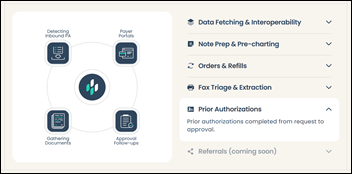
Commure launches EHR-integrated voice and text assistants that use agentic AI to answer calls, schedule appointments, and handle referrals and prior authorizations.


Business

image

Ambient documentation vendor Nabla raises $70 million in a new Series C funding round, increasing its total to $120 million. The company will deploy agentic AI to expand its documentation offerings to coding, direct EHR interaction, and new capabilities for nurses.

image

Mandolin raises $40 million in seed and Series A funding. The company uses AI agents to manage specialty drug intake, benefits, prior authorizations, and RCM.

UMass’s medical school partners with business incubator Red Cell Partners in a two-year project to test, evaluate, and certify AI healthcare tools using real-world clinical data through the school’s Health AI Assurance Laboratory


Other

Gartner predicts that 40% of agentic AI projects will be scrapped by the end of 2027 due to escalating costs and questionable business value. The company calls out “agent washing,” in which companies falsely claim that their technology uses agentic AI, estimating that only 130 out of thousands of agentic AI vendors are real.

A federal judge rules that Anthropic’s use of copyrighted books for AI training qualifies as fair use, rejecting claims from authors that the company infringed by scanning purchased copies to create searchable digital versions. The court found that Anthropic made no additional copies, created no derivative works, and did not redistribute any content. A separate trial over alleged use of pirated books is scheduled for December.

image

New parents, including OpenAI CEO Sam Altman, are increasingly turning to AI tools like ChatGPT for parenting advice, raising questions about overreliance on technology, information overload, and the loss of human connection in child-rearing. AI is also being used to answer child psychology questions via chatbot, track pregnancy, and to power baby monitors, cribs, and strollers.


Contacts

Mr. H, Lorre, Jenn, Dr. Jayne.
Get HIStalk updates.
Send news or rumors.
Follow on X, Bluesky, and LinkedIn.
Sponsorship information.
Contact us.

Comments Off on Healthcare AI News 6/25/25

This Week in Health Tech 6/25/25

June 25, 2025 This Week in Health Tech Comments Off on This Week in Health Tech 6/25/25
LinkedIn weekly 062525
Comments Off on This Week in Health Tech 6/25/25

Morning Headlines 6/25/25

June 24, 2025 Headlines Comments Off on Morning Headlines 6/25/25

Abridge Secures $300M Series E Led by a16z to Pioneer a New Paradigm of Care Intelligence

The ambient documentation vendor’s valuation reaches $5.3 billion after its latest investment follows a $250 million round just five months ago.

HHS Secretary Kennedy, CMS Administrator Oz Secure Industry Pledge to Fix Broken Prior Authorization System

HHS lists the details of the pledge by insurers to streamline PAs.

RFK Jr. wants a wearable on your wrist

The HHS secretary wants every American to wear a health tracker within four years.

Comments Off on Morning Headlines 6/25/25

News 6/25/25

June 24, 2025 News 9 Comments

Top News

image

Ambient documentation vendor Abridge raises $300 million in a Series E round, boosting its valuation to $5.3 billion.

The company raised a $250 million Series D round just five months ago at a valuation of $850 million.

Abridge’s annual revenue has been reported as $175 million.


Reader Comments

From Justa Bill: “Re: insurers fixing prior authorization. I can’t wait until they’re done so that I can get my medically unreasonable denials in real time.”

From Pinky: “Re: AI taking jobs. It will also enhance or create some healthcare positions.” Probably so, although most of those jobs will be pretty small in number and will require specialized education or experience, such as clinical informaticists, data architects, compliance leads, and cybersecurity experts. Consulting could go either way, where AI might replace some entry-level analysis and document work, but top performers will use it to rise even faster. We’re already seeing this with attorneys, where the junior folks are using AI to analyze documents and mine the firm’s vast data assets to perform higher-level work, and with investment pros who use AI to monitor markets and parse sentiment in real time. Regardless, surveys show that executives in all lines of work expect AI to lower their costs by allowing them to eliminate employees, a self-fulfilling prophecy that will make companies look successful regardless because they have enough fat to work around the dearly and forcibly departed.

image

From Cut Me Mick: “Re: Ascension acquiring AmSurg. How much overlap exists in the markets they each serve?” Not much, based on ChatGPT’s analysis of the maps I sent it. AmSurg locations are in red, Ascension hospitals in blue (note that I showed only the eastern part of the country. The biggest areas of new opportunity are in Central and South Florida, California, New York, New Jersey, and California, areas where AmSurg is strong and Ascension is absent. Indiana, Alabama, and Tennessee show more overlap that would be conducive to vertical integration. But if Ascension wants to compete as a value-based care challenger without trying to build or buy hospitals in the back yards of entrenched competitors, those AmSurg-heavy states offer better upside in high-growth, high-margin markets. I think we can skip over the obligatory “mission” and “compassion” part of the announcement’s verbiage and assume that Ascension saw the chance to buy higher-performing, already-scaled assets to diversify beyond legacy hospitals. Recall also that AmSurg was until recently under the leaky umbrella of hospital physician services outsourcer Envision Healthcare, whose bankruptcy and asset stripping under the leveraged buyout oversight of PE firm KKR ran up $7 billion in debt for Envision and the forced sale of its only real surviving asset to Ascension at about half the typical per-center cost. UPDATE: I’ve updated the graphic above to show more area. And I blame ChatGPT for drawing it to incorrectly look like Wisconsin is west of Austin, TX


HIStalk Announcements and Requests

image

Welcome to new HIStalk Platinum Sponsor VitalChat. Vitalchat offers a flexible audio and video platform for powering virtual nursing and intelligent hospitals — bringing the right presence into the room at the right moment —  without adding complexity to care. Whether it’s a virtual nurse providing reassurance after surgery, monitoring vitals remotely, or coordinating with the bedside team in real time, the platform enables care that feels connected, responsive and organized. With powerful, behind-the-scenes technology and an intuitive, clinician-friendly design, Vitalchat helps hospitals extend their teams, support their patients, and deliver meaningful touchpoints throughout the care journey. Thanks to VitalChat for supporting HIStalk.


Sponsored Events and Resources

None scheduled soon. Contact Lorre to have your resource listed.


Acquisitions, Funding, Business, and Stock

image

Therapy EHR vendor Prompt Health acquires PredictionHealth, which offers an ambient AI scribe for therapists. PredictionHealth’s co-founders Pedro Teixeira, MD, PhD and Ravi Atreya, MD, PhD met while earning dual MD and biomedical informatics degrees at Vanderbilt.

Remote care company CoachCare acquires MD Revolution, which offers remote care software. Investor-backed CoachCare, which was founded in 2013 by former private equity investors, has made nine recent acquisitions. MD Revolution was formed in 2011 to help providers bill Medicare for monthly chronic care condition management services.

image

SuperDial, which develops AI agents that manage provider phone calls to insurers, raises $15 million in a Series A funding round. Its platform supports benefits verification, prior authorization, claims follow-up, and credentialing.

Population health management technology vendor Jaan Health secures $25 million in funding.

Shares of telehealth provider Hims & Hers drop 35% after Novo Nordisk halts Wegovy sales to the company, which it accuses of illegally selling cheaper compounded versions of its weight loss drug alongside its own branded product. The CEO of Hims & Hers accuses Novo of trying to force it to steer patients toward the branded product.


Sales

  • Inspira Health selects DrFirst’s system migration platform to transition medication data from Oracle Health to Epic.

People

image

Symplr names Theresa Meadows, MS, RN (Cook Children’s Health Care System) as CIO in residence.

image

Leidos hires Andrew Burchett, DO (Meditech) as VP/chief technology and innovation officer.


Announcements and Implementations

FinThrive announces Fusion, an RCM platform, and will deploy agentic AI digital agents to enhance its RCM products.

Virtual care infrastructure company Wheel embeds Amazon Pharmacy’s medication access solution into its white-labeled solutions for digital health companies and health plans.


Government and Politics

A GAO report warns that the VA’s Oracle Health stalled rollout has left its schedulers juggling multiple VistA versions as well as the new system. GAO says that the VA’s May 2024 modernization timeline is “not reliable” by the GAO and has not been updated with a new plan. The VA cancelled its $624 million scheduling contract with Leidos and Epic in 2018 after three years when it chose Cerner.

HHS lists the details of the newly announced pledge of some health insurers to streamline prior authorization:

  • Standardize submissions by using FHIR.
  • Reduce the number of services that require PA.
  • Honor existing authorizations during transitions of care.
  • Enhance transparency of authorization decisions and appeals.
  • Provide real-time responses for most requests by 2027.
  • Have all clinical denials reviewed by a medical professional.

Taiwan accuses China-sponsored “cyber armies” of launching cyberattacks on its hospitals to humiliate the country, which Taiwan says is in preparation for an eventual takeover.

image

Health Secretary Robert F. Kennedy, Jr. tells House members that he wants every American wearing a health tracker within four years, with HHS planning a massive ad campaign to promote adoption. He cites continuous glucose monitors, which are priced at $100 to $300 per month, as a bargain for weight loss compared to GLP-1 drugs, and hints that federal subsidies may follow. An example I found for non-diabetics is Dexcom’s Stelo, which costs $80 per month for 14-day patches that pair with a smartphone.


Sponsor Updates

image

  • Kyruus Health team members volunteer with Cradles to Crayons Massachusetts during their Community Day.
  • CereCore earns five stars and a “best practice’ designation for its Meditech hosting from the Securance Consulting technology assessment firm.
  • Rhapsody names Shannon Matthews manager of brand and communications.
  • Black Book Research survey-takers rank Waystar as the top end-to-end RCM software vendor for large hospitals and health systems, and academic medical centers with clinics and outreach; and TruBridge the top vendor for small and rural hospitals.
  • Waystar releases the results of a new study titled “AI in Healthcare Payments Software: A Strategic Imperative.”
  • UZ Brussel University Hospital in Belgium selects enterprise imaging from Agfa HealthCare.
  • Artera releases a new study titled “How Vanderbilt University Hospital Tackled Readmission Rates By Leveraging Artera for Post-Discharge Communication.”
  • Clearsense and Nordic will collaborate to offer an end-to-end solution for application portfolio management.
  • The latest episode of Censinet’s “Risk Never Sleeps” podcast features Siskin Hospital CIO and CISO Shane Pilcher.
  • Clinical Architecture releases a new episode of “The Informonster Podcast” titled “Unpacking AI and Interoperability Trends with Joerg Schwarz.”

Blog Posts


Contacts

Mr. H, Lorre, Jenn, Dr. Jayne.
Get HIStalk updates.
Send news or rumors.
Follow on X, Bluesky, and LinkedIn.
Sponsorship information.
Contact us.

Morning Headlines 6/24/25

June 23, 2025 Headlines Comments Off on Morning Headlines 6/24/25

Prompt Health Acquires PredictionHealth to Amplify AI-Driven Rehab Therapy Innovation

Rehab therapy-focused practice management software vendor Prompt Health acquires PredictionHealth, which offers AI scribe and coding capabilities and compliance analytics.

CoachCare Acquires MD Revolution, Creating the Nation’s Leading Remote Care Platform

Remote care management company CoachCare acquires competitor MD Revolution.

VA needs to better plan appointment scheduling modernization, watchdog says

A new Government Accountability Office report stresses that the VA needs to improve the modernization of its appointment scheduling capabilities as many facilities grapple with legacy VistA systems and some prepare to move to new Oracle Health-based software.

Comments Off on Morning Headlines 6/24/25

Curbside Consult with Dr. Jayne 6/23/25

June 23, 2025 Dr. Jayne Comments Off on Curbside Consult with Dr. Jayne 6/23/25

You really don’t know how much you rely on certain technologies until they’re not available.

At one of our local hospitals, a PACS upgrade during daytime hours threw quite a few clinicians for a loop. I don’t think the IT teams really understood how important muscle memory is for clinicians who are trying to work efficiently in the EHR while seeing patients. Although a workaround was provided, it required physicians to go to a different part of the EHR to view images.

It sounds like some users had security issues and weren’t able to do their work from the new location, which caused frustration that was made worse by long wait times when they called the help desk. Even for those who were able to use the new link to access images, there were complaints that it took half the shift to get used to the new workflow. Later in the evening, it reverted back, which required another shift.

I’ve done plenty of upgrades in my career and I’m not sure what would be happening behind the scenes that would justify doing an upgrade during daytime hours. Most of the upgrades I’ve been involved in were conducted overnight so that they caused minimal impact to clinical workflows.

Based on the fact that nearly all of the IT decisions I’m seeing lately are made with significant attention to cost, I can hypothesize that it likely played a role. Still, I wonder if the people looking at that cost-benefit equation looked beyond the IT resources to include the cost for clinician inefficiency and the risk of clinical quality issues.

A colleague shared the downtime notification with me because they knew I wouldn’t believe it otherwise. I was surprised to see that it included mention of another clinical system that was being taken down from midnight to 2 a.m. the following weekend, so I’m sure there was some reason that this one was being done during peak hours.

If I had been on the leadership team that approved the communication, I would have recommended a mention of why we were doing the upgrade during the day. Users would at least understand that we had thought about them and were forced by extreme circumstances to do it that way.

I also was a fan of running our communications past people in different settings before finalizing them — including academic physicians, hospitalists, and community physicians — to make sure that we were covering all perspectives.

Just out of curiosity, I looked back through some communications from one of my hospitals to see if I could identify patterns from the biweekly newsletters. I was surprised to see that the newsletter had the same top blurb over a six-week period without any changes, which to me would create a risk for people ignoring the newsletter because they may have felt like they had already seen the materials.

I also noticed that over the last six months, the newsletter had become a compilation of unrelated blurbs rather than a more cohesive document. In the current version, each entry had different font and color schemes, including color choices that don’t meet accessibility guidelines for colorblindness. It also looks like it’s in a different order every time, with no standard formatting.

I would think that adding a framework to it might be useful so that people can quickly identify the items that are important to their work. Maybe start with a section for global updates that impact everyone, then move to updates by specialty, care setting, or a host of other categories that would keep people from having to wade through tons of irrelevant information.

I thought about offering some feedback (after all, I’m still a dues-paying member of the medical staff) but there wasn’t any information in the newsletter about who to contact if you have questions. I’ll just stay in the back row with my “Courtesy/Non-Admitting” privileges and hope I don’t have to look at any patient charts any time soon.

image 

I have several major presentations coming up. For once, my week wasn’t completely full of back-to-back meetings. I decided to do some personal development while I was creating the slide decks and see what AI has to offer.

I try to make my slides as non-wordy as possible, often choosing images that tell a story, or images that prompt me to talk about certain content rather than having too many formal text elements on the slide. I always create an outline-style summary first, so it seemed ideal to be able to take that outline and hit it with some AI and maybe save a little time. I tend to be a little stuck in my ways about backgrounds and formatting, so I was looking forward to spicing things up a little bit.

Unfortunately, what my AI friend came up with was entirely unusable. Not only did it just drop the outline into slides in a somewhat disjointed fashion, but the backgrounds it selected bloated a 25-slide deck up to over 80 MB in size. I could see that being possible if I were incorporating high-resolution radiology images or something like that, but this was just from backgrounds and non-critical design elements.

I guess I’m back to creating my presentations in the old-school way, at least until I have time to research whether there is some other way to use the tools differently, or until one of the savvy college interns agrees to give me a quick tutorial on how to not wind up in that place again. When I finished that slide deck in my usual way, it ended up well below 2 MB, so I’m still not sure what happened the first time around.

One of the presentations I was creating was for first-year medical students, introducing them to clinical informatics and explaining the kind of work done by physicians in this space. The incoming students are coming into an educational environment that’s so different from where I trained, and I have to say that I envy them a little bit. Here’s to hoping that I don’t wind up being talked about as someone who was out of touch or uninteresting. Fortunately, my session is a lunchtime one with free food, so I don’t think attendance will be a problem.

If you could go back in time to when you were first learning in your field, what do you wish you had done differently? Leave a comment or email me.

Email Dr. Jayne.

Comments Off on Curbside Consult with Dr. Jayne 6/23/25

Readers Write: Modernizing Healthcare’s Third-Party Risk Approach

June 23, 2025 Readers Write Comments Off on Readers Write: Modernizing Healthcare’s Third-Party Risk Approach

Modernizing Healthcare’s Third-Party Risk Approach
By Ryan Redman, JD

Ryan Redman, JD is product manager of marketing at Onspring.

image

Oracle Health’s announcement of its second data cyber incident in March of this year shocked healthcare providers and customers. Even more alarming was the specific data was impacted that is housed in its legacy cloud infrastructure.

According to publicly available information, approximately 6 million records containing protected health information (PHI) were likely compromised despite Oracle’s attempts to downplay the severity of the potential compromise. The repercussions left hospitals struggling to identify exposed data as the incident reminded compliance officers of the challenge of considering all data outside of centralized oversight, including legacy infrastructures, when accounting for third-party risk.

Many of these healthcare compliance professionals must rely on third-party risk strategies with limited visibility into the many networks of contractors, partners, and hosted environments that they are tasked with managing. Beyond compromising legacy infrastructure data, Oracle’s cyber incidents exposed the damaging compliance gap in how healthcare organizations manage third-party relationships. Healthcare compliance teams must adopt real-time, integrated GRC tools that boost visibility, reduce manual work, and enable proactive risk response to close this gap and protect their data.

The Hidden Dangers of Legacy Infrastructure and Outdated Third-Party Risk Strategies

It’s easy for legacy systems to fall by the wayside within healthcare’s intricate network of active systems that span internal platforms, external platforms, and cloud-hosted data. Using third parties only heightens critical risks. In Oracle’s case, the servers had not yet fully migrated to the company’s new environment, leading attackers to exploit compromised credentials to access those systems. Teams overlooked what appeared to be outdated, dormant infrastructures. Bad actors accessed sensitive data, and traditional assessment methods were unable to detect this risk.

Healthcare organizations face serious compliance consequences when third parties fail to safeguard patient data, whether due to misconfigured access, missed vulnerabilities, or neglected systems. In 2024, the healthcare sector emerged as the most targeted industry for data breaches, proving that third-party risk assessments are not cutting it. Often only conducted periodically and involving emailed surveys, spreadsheets, and disconnected records, these assessments result in hours of manual work and provide a limited, static view of risk. Outdated methods fail to catch emerging vulnerabilities in legacy systems over time. Risks often materialize by the time the next scheduled compliance review comes, meaning sensitive data has already been exposed.

Five Essential Steps to Improve Compliance Oversight

Healthcare organizations must take action to strengthen their third-party risk posture, and the following actions can help turn policy into practice.

  • Create a single source of truth for evidence and documentation. A secure, centralized repository ensures that materials that are relevant to organizational compliance are version-controlled and always accessible.
  • Track and classify third-party integrations and engagements. Different use cases with the same third parties can carry varying levels of risk. A clear inventory with engagement-level context supports more accurate classification and visibility.
  • Automate risk scoring and review cycles. Configurable scoring models based on regulatory frameworks allow compliance professionals to consistently assess third-party risk without manual intake processes.
  • Move from periodic reviews to continuous oversight. Periodic reviews leave critical gaps in risk oversight. Real-time alerts through continuous monitoring flag when risk scores increase with new findings.
  • Develop response plans for third-party risk. Organizations must regularly test even the most comprehensive risk programs through tabletop exercises or simulations.

Ultimately, maintaining trust is vital to compliance, and losing it comes at too high a cost.

Comments Off on Readers Write: Modernizing Healthcare’s Third-Party Risk Approach

Readers Write: Beyond Self-Scheduling: Analysis Shines Spotlight on The Future of Patient-Driven Access

June 23, 2025 Readers Write Comments Off on Readers Write: Beyond Self-Scheduling: Analysis Shines Spotlight on The Future of Patient-Driven Access

Beyond Self-Scheduling: Analysis Shines Spotlight on The Future of Patient-Driven Access
By David Dyke

David Dyke is chief product officer at Relatient.

image

“Access to care” has become a central theme in healthcare leadership discussions. While the term “access” can mean many different things in healthcare, it begins with the patient.

A new nationwide analysis of self-scheduling tool usage underscores a shift occurring in the industry that provider organizations must acknowledge and act on to stay relevant: patient-driven access. Findings across more than 150 million patient bookings reveal a 30% year-over-year uptick in patients who booked appointments through digital self-scheduling options from 2023 to 2024.

Patient interest in self-scheduling is likewise driving adoption from healthcare organizations. The analysis further revealed a 53% increase in implementations of self-scheduling tools across a wide variety of healthcare organizations and specialties.

Self-scheduling has evolved into an essential access tool for today’s practices that are striving to meet rising patient expectations. The key is making the right investments upfront to ensure that organizations reap the full benefits of patient-driven access. Early adopters stand to not only delight patients, but also to realize significant operational value and bottom-line impact – such as 24/7 patient access and new patient acquisition — faster.

Understanding Increased Adoption of Self-Scheduling

Patients increasingly prefer digital self-scheduling options, with an overwhelming desire for improved digital self-service. As the first touchpoint in the patient journey, scheduling has a critical impact on overall patient experience.

Consumerism trends point to the need for greater convenience and empowerment. This means manual processes that require having to call multiple times or wait on the phone to schedule an appointment are quickly being replaced with digital solutions by today’s healthcare organizations.

Healthcare leaders value the patient experience advantages of self-scheduling. They also gain operational efficiencies and greater revenue opportunities. Data uncovered from the analysis revealed:

  • A 50% decrease in no-show rates for self-scheduled appointments.
  • A 21% reduction in cancellations when self-scheduling is used. The reduction was 30% for established patients.
  • Two-thirds of appointments that are booked through online self-scheduling are for new patients.

These numbers significantly highlight ongoing industry opportunities to improve no-show rates and appointment cancellations.

Expanding the Impact of Self-Scheduling

Putting patients in the driver’s seat is a start, but the future of self-scheduling optimization relies on more intelligence and integration across the entire patient journey. Organizations can expand the impact of these tools by:

  • Integrating full-service scheduling APIs to meet patients where they are. These open scheduling APIs provide flexibility for healthcare organizations to scale access points across diverse channels, automating key scheduling functions across a variety of new and existing patient touchpoints, including virtual agents, AI-assisted chatbots, third-party apps, financial clearance processes, and virtual care platforms. By supporting a self-service, multi-touch model, these tools empower patients to take control of their care journey. Many organizations struggle to deliver this model due to disconnected systems, but tightly linked, multi-channel functionality allows patients to bypass long phone queues and enjoy a more seamless experience, while providers gain better system interoperability and operational efficiency.
  • Transforming staff and patient experiences by automating common appointment management tasks with AI-driven voice solutions. New Voice AI tools integrate seamlessly with existing scheduling systems, taking on repetitive, high-volume inquiries, such as appointment rescheduling and cancellations, so that staff can focus on more complex patient needs. By deflecting calls and reducing hold times, these tools not only ease operational strain, but also enhance the patient experience with immediate, conversational support that is available 24/7.
  • Driving action and education with integrated scheduling across the patient journey. Digital patient communication should not only inform —  it should drive action. By embedding scheduling functionality into key communication touchpoints, such as appointment reminders, referral activation, and rescheduling workflows, organizations can support patients with timely next steps. This creates a more seamless and scalable access model.

Whether booking a single primary care visit or managing ongoing specialty care, patients benefit from convenience and autonomy, while providers see increased appointment adherence and streamlined operations. Consequently, providers should think beyond traditional scheduling within the call center by embracing self-scheduling and the scalable infrastructures that are needed to support success for the long-term.

As the future of patient access continues to unfold, with more and more power placed in hands of the patient, a single self-service touchpoint won’t be enough. Savvy patients will come to expect a seamless, interconnected experience at every step of the way.

Expanding patient self-service functionality now allows organizations not just to keep up, but to actively fulfill the future of patient access, leading the pack in both patient access performance and operational efficiency.

Comments Off on Readers Write: Beyond Self-Scheduling: Analysis Shines Spotlight on The Future of Patient-Driven Access

Morning Headlines 6/23/25

June 22, 2025 Headlines Comments Off on Morning Headlines 6/23/25

Insurers Pledge to Ease Controversial Prior Approvals for Medical Care

Major US health insurers pledge to improve prior authorization practices, noting that they are aiming for 80% real-time decisions by 2027.

NM Vintage Fund Invests in Electronic Caregiver to Strengthen Expansion of Leading Virtual Care Ecosystem

New Mexico Vintage Fund invests in New Mexico-based Electronic Caregiver, which specializes in virtual care and remote patient monitoring technologies.

Enhancing the provider search experience through Smart Choice

UnitedHealthcare announces AI-powered provider search for members.

Comments Off on Morning Headlines 6/23/25

Monday Morning Update 6/23/25

June 22, 2025 News 8 Comments

Top News

image

Major US health insurers pledge to improve prior authorization practices. They aim for 80% real-time decisions by 2027, fewer procedures that require approval, and 90-day care continuity for patients who switch plans.

Insurer trade group AHIP says that it understands patient frustration. It did not mention mounting regulatory and political pressure.

image

Insurers blame half of PA delays on providers who submit requests via mail, phone, or fax. They say that they will help those providers transition to electronic submissions.


Reader Comments

From Frank: “Re: AI. Is a vendor’s platform AI-enabled just because the junior PR person used ChatGPT to write the press release?” AI-crafted announcements and lengthy punditry articles on social media – which are easily recognizable, by the way – are starting to get annoying. The AI versions are just a bit too polished, soulless, and peppered with em dashes and overly dramatic recitation of background facts that often contain hallucinations.


HIStalk Announcements and Requests

image

Few poll respondents think more highly of Oracle Health now than in the pre-acquisition days when it was Cerner. I ran this same poll one year ago and the numbers were identical, so at least they’re holding steady. It has been three years since EVP Mike Sicilia promised the Senate Committee on Veterans’ Affairs that it would “start over” in rewriting Cerner’s pharmacy module in 6-9 months.

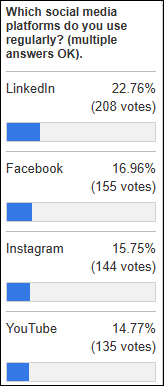
New poll to your right or here: How concerned are you that AI will diminish or eliminate your job within five years? The poll results may be tricky to interpret. People who are convinced that their role requires their unique insight, nuance, or relationship skills are possibly like medical transcriptionists in failing to see what’s coming. I might get more objective responses if I instead asked if AI could eliminate the job of co-workers or direct reports. I’ll predict with admittedly superficial insight that the first health tech jobs to be affected will be prior authorization specialists, records retrieval and chart abstracting folks, RCM coders, marketing staff, and call center / help desk people.


The onset of summer means that we offer incentives for companies who can take their minds off vacations and beach weekends and make the decision to sponsor HIStalk. I don’t discount normal sponsorship cost because that wouldn’t be fair to existing sponsors, but we will usually offer one-time extra months, webinar exposure, or email messages, not to mention special offers for startups or former sponsors who rejoin the fold. Contact Lorre.


Sponsored Events and Resources

None scheduled soon. Contact Lorre to have your resource listed.


Acquisitions, Funding, Business, and Stock

Business Insider describes the “New Mountain special” for VC firms, as private equity firm New Mountain Capital is acquiring and rolling up health tech AI companies that are unlikely to IPO or be acquired. The firm operates more like a venture studio, targeting higher-risk innovation with larger investments, minimal debt, and a focus on long-term value creation. Some of its big deals involve Datavant from its acquisition of Ciox Health and its recent combination of Access Healthcare, SmarterDx, and Thoughtful AI to create RCM technology vendor Smarter Technologies.

Ohio’s attorney general conditionally approves the $485 million acquisition of Akron-based Summa Health by a business venture that is owned by VC firm General Catalyst.

image

Non-profit, money-losing Ascension will acquire Amsurg, which runs 250 ambulatory surgery centers in 34 states, for $3.9 billion. Bring on those facility fees.


People

image

SmarterDx hires Kit Kieling, MD (Orderly Health) as CMIO. He is an Air Force veteran and US Air Force Academy graduate who volunteered to serve as a pediatric ICU director for host-national children in combat field hospitals in Iraq and Afghanistan with the 332nd Expeditionary Medical Operations Squadron.

image

Dan Phippen (R1 RCM) joins Evergreen Healthcare Partners as chief growth officer.

image

AdventHealth hires Erica Williams, MBA (Ascension) as VP/divisional CIO.


Announcements and Implementations

image

UnitedHealthcare announces AI-powered provider search for members.

image

Epic summarizes some of the main points it made in its response to HHS’s RFI on health tech interoperability and infrastructure.

image

Humanate Digital pilots its AI front desk receptionist. The assistant checks patients in for clinic visits and adjusts its tone based on patient facial expressions. Other versions handle medical records requests and billing.


Government and Politics

Every newborn in England will have DNA screening within 10 years to allow NHS to predict and prevent disease and personalize treatment.


Other

Hartford HealthCare installs an OnMed CareStation in Bradley International Airport, the first such device to be placed in a US airport. The health system hopes to attract six patients per day to the CareStation, which accepts insurance and cash payments.


Sponsor Updates

image

  • Healthcare IT Leaders staff volunteer at Children’s Healthcare of Atlanta.
  • Capital Rx releases a new e-book titled “Why Savings Don’t Materialize: The Truth About Pharmacy Benefit Procurement.”
  • Optimum Healthcare IT releases a new episode of its “Visionary Voices” podcast featuring Mike Mosquito.
  • Rhapsody offers a new white paper titled “The 5 Most Common Interoperability Missteps—and How to Avoid Them.”

Blog Posts


Contacts

Mr. H, Lorre, Jenn, Dr. Jayne.
Get HIStalk updates.
Send news or rumors.
Follow on X, Bluesky, and LinkedIn.
Sponsorship information.
Contact us.

Morning Headlines 6/20/25

June 19, 2025 Headlines Comments Off on Morning Headlines 6/20/25

Commure Raises $200 Million in Growth Financing from General Catalyst’s CVF to Accelerate AI-Powered RCM Platform

Commure raises $200 million in growth financing to advance its RCM, ambient documentation, and practice management tools.

Hoppr Secures $31.5M Series A to Scale AI Infrastructure for Medical Imaging

Hoppr, which offers a platform for developing medical AI imaging applications, raises $31.5 million in a Series A funding round.

Overland Park digital health startup closes $2.5M seed round with local, national investors

AI healthcare copilot developer CarePilot raises $2.5 million in seed funding.

Comments Off on Morning Headlines 6/20/25

News 6/20/25

June 19, 2025 News 1 Comment

Top News

image

Commure raises $200 million in growth financing to advance its RCM, ambient documentation, and practice management tools.

The company now calls itself “the fast-growing enterprise AI healthcare technology company,” which is a phrasing shift from previous press releases that described it more generically as “a leading healthcare technology company” or “a leader in healthcare technology innovation.”


Reader Comments

image

From Significant: “Re: Commure. A $200 million investment to build what, exactly? RCM, ambient notes, and practice tools aren’t exactly underrepresented in health tech. Maybe Commure can use the cash to invent a fourth buzzword.” The company’s current website is at the top of the page, while the year-ago, AI-absent version that vaguely described the company’s product as a “healthtech operating system” is directly above. This was prior to its late 2024 acquisitions of Memora Health (care navigation) and Augmedix (AI-powered medical scribing). Certainly the current website is more specific about what the company actually sells, which was difficult to determine not long ago. The company launched as a FHIR-native developer platform in 2020.


Sponsored Events and Resources

None scheduled soon. Contact Lorre to have your resource listed.


Acquisitions, Funding, Business, and Stock

Patient referral technology vendor Tennr raises $101 million in a Series C funding round.

image

Hoppr, which offers a platform for developing medical AI imaging applications, raises $31.5 million in a Series A funding round. Founder, CEO, and board chair Khan Siddiqui, MBBS spent executive time at Microsoft and Higi.

Consulting firm Huron will acquire Eclipse Insights, which offers revenue cycle consulting services.


People

image

Abby Polich, MBA (TridentCare) joins Health Data Movers as SVP of client services.


Announcements and Implementations

Oracle announces GA of Oracle Health Community Care, a cloud-based mobile extension of the Oracle Health Foundation EHR that can be operated offline.

Willis Knighton Health goes live with Meditech Expanse in its 132 clinics.

This may have healthcare implications and will almost certainly kill some competing apps. OpenAI announces ChatGPT Record, which records speech in real time (including from multiple speakers), creates a transcript, generates a summary, and allows rewriting into an email or project plan. A “reference record history” option allows ChatGPT to look back on previous transcripts to improve its responses and to recall previously shared information. The Record option is available only for paid users who run MacOS for now.


Government and Politics

image

I wrote back in the dark COVID days of early 2021 about Anosh Ahmed, MD, the COO of Chicago’s 122-bed Loretto Hospital who resigned after getting caught diverting scarce vaccine doses to his cronies. He’s back in the news for filing $900 million in bogus COVID testing claims, which netted him and his co-codefendants an astounding $300 million. Ahmed allegedly stole patient data from the hospital to bill the federal government for performing COVID tests on uninsured people who never actually received them. Beyond the $300 million, he also is accused of pocketing $147 million in kickbacks from a lab company. He put his $9 million Houston house on the market after the first round of charges, for which he generously threw in one of his Rolls Royces. He now lives in Dubai as a “wealth management strategist” and operates a charity whose books might warrant review. Kudos to Kelly Bauer of Block Club Chicago for originally breaking the story and chasing it aferward

image

Epic files a motion to move the CureIS lawsuit against it to a different venue, arguing that the Northern District of California doesn’t make sense given that both companies are based in the Midwest. CureIS’s lawsuit accuses Epic of anticompetitive behavior, requiring customers to use its own products instead of those of CureIS, blocking integration, stealing trade secrets, and violating Cures Act information blocking provisions. Epic says in the motion that the lawsuit contains “seven kitchen-sink causes of action” that “read like a bad spy novel.” In its motion, Epic argues that:

  • CureIS blames Epic for its stalled growth and fading customer relationships instead of looking inward.
  • Epic doesn’t need to steal IP given that its thousands of developers ship new software constantly.
  • CureIS cites information blocking rules that weren’t in effect at the time.
  • CureIS should win on merit, not in court, and its job is to prove to customers that its products are better than Epic’s.
  • CureIS wants to limit Epic’s ability to improve its offerings and inform its customers about what’s coming, which is “both absurd and antithetical to how competition works in the United States.”
  • This isn’t the first time a smaller company has tried to shift blame to a dominant competitor.

Privacy and Security

A late January ransomware attack on medical coding and risk adjustment firm Episource exposed the information of 5.4 million people.


Other

MIT researchers say that ChatGPT makes its users dumber, with brain scans of essay writers suggesting that they incur “cognitive debt” that dulls critical thinking, reduces creativity, and makes them more susceptible to manipulation. They found that 83% of the subjects couldn’t recall anything from the essays they had asked ChatGPT to write.


Sponsor Updates

image

  • Clearwater sponsors the Tennessee HIMSS Chapter Golf Tournament.
  • Black Book Research reveals the most promising European health IT firms selected by investors for their growth potential, regulatory preparedness, and ability to scale.
  • KLAS features Clearsense in its latest Emerging Insights case study titled “Clearsense Data Platform as a Service 2025: Reducing Costs & Increasing Efficiency Through Accelerated Data Archiving.”
  • Capital Rx releases a new episode of “The Astonishing Healthcare Podcast” titled “Inside Capital Rx’s Acquisition of Amino Health: Creating the Health Benefits Platform of the Future, Today.”
  • Netsmart announces that its MyUnity EHR platform has received the Community Health Accreditation Partner Verification for Home Health.
  • Ellkay will exhibit at Health Choice Network’s Annual Board Educational Conference June 20-22 on Marco Island, FL.
  • First Databank names Jessica Durm clinical informatics pharmacist, Ryan Cornell security operations engineer, and Keiron Jerome cloud operations engineer.
  • Linus Health receives Silver in the Connected Digital Health, Clinical Decision Support Tools category at the 2025 Spring Digital Health Awards.

Blog Posts


Contacts

Mr. H, Lorre, Jenn, Dr. Jayne.
Get HIStalk updates.
Send news or rumors.
Follow on X, Bluesky, and LinkedIn.
Sponsorship information.
Contact us.

EPtalk by Dr. Jayne 6/19/25

June 19, 2025 Dr. Jayne 5 Comments

image 

As a consultant working with care delivery organizations, I see many of them using “access” as some kind of a performance mantra. Whether it’s access to book a visit with a physician in an office or access to the emergency department, there is constant pressure to make sure patients are formally scheduled for some kind of revenue-generating service with the organization.

I was recently part of a discussion with other physicians who were talking about how access is being conflated with value. One example was the push for patients to book a visit with a provider, without giving full consideration to whether the provider had the correct experience and knowledge to actually treat the patient. It doesn’t matter if you get the patient in quickly, but to the wrong office since you’re ultimately going to have to book a second appointment elsewhere to meet their needs.

Another example was the boom in patient portal messages. Patients can reach their physicians quickly, but that’s not helpful when it causes providers to be burned out and creates risk that patients won’t receive the correct treatments because someone is trying to read between the lines of a series of message exchanges to create a diagnosis and treatment plan rather than having a direct conversation with a patient (either in person or via virtual care).

Another physician mentioned secure texting, which creates a staff access problem “where it’s easy to just fling messages out there rather than thinking through what you’re really asking. It seems like people formulated their questions better when they knew they had to make a phone call.” There may have been cocktails involved in this discussion, leading one of my colleagues to ponder the fact that that “patients have access to their notes, but they’re useless when the notes suck.”

We often look at ways to use technology to create more access, but these comments remind us that there might be “good” kinds of access along with those that are less desirable. I’m hoping that someone might read this and think it through the next time they’re in a meeting pushing for increased access. It’s not just about getting bodies through the door, messages to the provider, or notes to the patient. We need to get to a point where greater access is providing greater value and driving patient outcomes. Otherwise, it’s just a buzzword.

From Navy Fan: “Re: remote work. I’ve enjoyed being a remote worker for 15 years now and I hate seeing people mess it up for the rest of us. Did you see the story about Sentara Health, where remote workers accessed patient information using false identities?” I hadn’t seen it before a reader highlighted it, which reminds me how much we appreciate our readers when they bring us a good story. Apparently, the system hired remote workers to manage lab requisitions, but eventually discovered that they were not based in the US and may have been misrepresenting their identities. The situation impacted patients who had lab tests performed between January and April of this year. The bad actors had access to plenty of protected health information, including names, dates of birth, and Social Security numbers. A manager became concerned in early April when they noticed that the workers attending virtual department meetings did not match the photos that were submitted during hiring. Sentara Health is offering free credit monitoring and identity protection services.

I wanted to add my two cents to some of Mr. H’s comments earlier this week about virtual care prescribing of ADHD medications. He mentioned a study done at Massachusetts General Hospital that showed that at least with their virtual care model, there was not an increased risk of addiction in patients receiving stimulant medications. Mr. H noted that the findings don’t necessarily apply to freestanding telehealth companies that have been accused of cranking out prescriptions, especially those that are investor-backed startups where clinicians are paid on a per-visit basis.

Although I haven’t treated ADHD via telehealth, I’ve worked for several different freestanding telehealth companies and the pressure to prescribe is real. Large percentages of providers working for some of the big firms are 1099 contractors and some of them are trying to complete visits every three or four minutes, which means they’re not doing a detailed visit with the patient. Some of the companies are focused on patient satisfaction metrics, which means that if you don’t give the patients exactly what they request, you’re going to receive scrutiny due to your perceived poor performance. Some in-person organizations are hype- focused on the same metrics and place similar pressure on their physicians, but the risk is much lower with in-person care because you can do an actual examination and can leverage your care team to ensure you have a more comprehensive history from the patient.

Bad news for those of us that like a good nap: a recent research article showed that certain kinds of daytime napping are tied to an increased risk of death in middle- to older-aged adults. The study looked at 86,000 non-shift workers. Those who took longer naps, had high variability in the duration of their naps, and who took more naps around noon or early afternoon were those most impacted. One of the takeaways from the study is that physicians should be asking not only about sleep habits, but specifically about daytime napping. Given all the other data-driven recommendations, I don’t see this one being added to the formal recommendation set anytime soon.

My best time for napping is around 3 or 4 p.m. when my energy is fading and I just need a break. Conference calls during those times are the worst, but sometimes they’re unavoidable for me since I work in all of the US time zones. Based on the data, I should be able to mitigate my risk somewhat by taking consistent short naps in the late afternoon. That seems like a much more enjoyable option than some of the other things I can do to reduce my risk of all-cause mortality, especially since I’m already doing most of them.

What’s your favorite time and place for a nap? Do you like a hammock on the beach, or are you one of the folks I spotted catching a few winks on a park bench after leaving the local winery? Leave a comment or email me.

Email Dr. Jayne.

Morning Headlines 6/19/25

June 18, 2025 Headlines Comments Off on Morning Headlines 6/19/25

Healthcare referrals are where patients get lost. Tennr raises $101M to bring the visibility our system desperately needs

Referral optimization company Tennr raises $101 million in a Series C funding round, bringing its total raised to $160 million.

Vestar Capital puts Quest Analytics up for sale

Vestar Capital reportedly prepares to sell Quest Analytics, which offers management solutions for provider networks.

Huron to Acquire Revenue Cycle Consulting Firm Eclipse Insights

Professional services firm Huron acquires revenue cycle consulting business Eclipse Insights.

RevelAi Health Secures $3.1 Million Seed Funding to Scale Artificial Intelligence Care Coordination for Musculoskeletal Health

AI-powered musculoskeletal care software startup RevelAi raises $3.1 million in seed funding.

Comments Off on Morning Headlines 6/19/25

Healthcare AI News 6/18/25

June 18, 2025 Healthcare AI News Comments Off on Healthcare AI News 6/18/25

News

image

Lee Health (FL) launches Leah, an AI-powered conversational engagement platform that helps patients with hip, knee, and shoulder pain navigate the system’s services and receive guidance and education.

CONCERN EWS, an AI-powered early warning system that is powered by nurse observations and developed at CU Anschutz, analyzes nurses’ documentation patterns to predict patient deterioration up to 42 hours earlier than standard methods, reducing mortality and hospital stays while improving ICU transfers.

image

Abstractive Health launches Clinical Time Machine, an AI-powered game that lets users explore structured charts that are generated from centuries-old handwritten medical records. The company, which describes the tool as “a Microsoft Flight Simulator for Medicine,” says that fewer than 1% of physicians have ever seen a full AI-generated medical record summary.

SAS launches Health Cost of Care Analytics, a tool that analyzes claims data to build episodes of care, helping identify cost, quality, and outcome drivers to inform protocols and provider contracts.


Business

image

Abridge releases Inside for Inpatient, which converts bedside conversations into structured Epic notes. The company is also piloting integration of outpatient orders into Epic.

Hamilton Health Sciences is piloting an AI-powered phone receptionist that was developed by two local doctors and a software engineer. The system, which is being commercialized as Strello Health, books appointments, manages prescription refills, and answers questions. The company says it saves four hours per day and ensures that no caller is ever put on hold or sent to voicemail.

image

Intermountain Health will implement Layer Health’s AI-powered chart abstraction system for chart review and will invest in the company.


Other

Aidoc releases an open-source, expert-authored framework that it developed with Nvidia and 17 healthcare organizations that guides safe, scalable, trust‑focused deployment of clinical AI across technical, regulatory, operational, and monitoring domains.


Contacts

Mr. H, Lorre, Jenn, Dr. Jayne.
Get HIStalk updates.
Send news or rumors.
Follow on X, Bluesky, and LinkedIn.
Sponsorship information.
Contact us.

Comments Off on Healthcare AI News 6/18/25

This Week in Health Tech 6/18/25

June 18, 2025 This Week in Health Tech Comments Off on This Week in Health Tech 6/18/25
LinkedIn weekly 061825 - Copy
Comments Off on This Week in Health Tech 6/18/25

Text Ads


RECENT COMMENTS

  1. I'll bite on the disagreement side. 25+ years in EHR implementation, sales, and support. First, regarding the decision effect. Sure,…

  2. And which "political exercise[s]" by a private entity are appropriate for state governments in this country to punish with a…

  3. What do you mean? What was the "political exercise" that prompted this response?

  4. Many, yourself included, chose to make healthcare and Healthcare IT a political exercise. Shouldn't be shocked when the other side…

  5. I see a lot of people dislike what I said. I assume some don't like it because what I said…

Founding Sponsors


Platinum Sponsors


Gold Sponsors


RSS Webinars

  • An error has occurred, which probably means the feed is down. Try again later.