Recent Articles:

Morning Headlines 1/6/22

January 5, 2022 Headlines Comments Off on Morning Headlines 1/6/22

Castlight Health and Vera Whole Health to Combine to Pioneer and Scale Value-Based Care in Commercial Market

Primary care company Vera Whole Health will acquire health data and benefits navigation technology company Castlight Health in a deal valued at $370 million.

Babylon Acquires Higi to Extend its Digital-First Healthcare Platform to Millions of People in the U.S.

Global digital health company Babylon acquires health kiosk vendor Higi.

Kiddo Announces $16M in Growth Investment to Address the Growing Need for Remote Patient Monitoring and Care Coordination for At-Risk Children

Pediatrics-focused remote patient monitoring vendor Kiddo raises $16 million in a Series A funding round led by Vive Collective.

Scoop: IBM tries to sell Watson Health again

After potential sale efforts floundered in early 2021, IBM is once again fielding offers for its Watson Health business.

Comments Off on Morning Headlines 1/6/22

Morning Headlines 1/5/22

January 4, 2022 Headlines Comments Off on Morning Headlines 1/5/22

Symplr to Acquire Midas Health Analytics Solutions from Conduent

Symplr will acquire Midas Health Analytics Solutions from Conduent for $340 million in cash.

Waymark closes $45M Series A to improve healthcare access and outcomes among Medicaid beneficiaries

Waymark, which supports Medicaid primary care providers with technology-enabled community care teams, raises $45 million in a Series A funding round.

Growth Continues for Carenet Health with Acquisition of Access-to-Care Innovator, OpenMed

Consumer engagement and telehealth solutions vendor Carenet Health acquires healthcare collaboration platform vendor OpenMed.

Comments Off on Morning Headlines 1/5/22

News 1/5/22

January 4, 2022 News 8 Comments

Top News

image

After seven days of deliberation, a jury finds Theranos founder Elizabeth Holmes guilty of four out of 11 counts in her criminal fraud trial.

image

She had raised nearly $1 billion during the life of her blood testing startup, earning the company a valuation of $9 billion before it closed in 2018 after civil and criminal inquiries.

Jurors decided that those investments were raised using false claims about the technology’s effectiveness, including doctored reports, exaggerated capabilities, and concealment of the use of third-party devices and faked demonstrations. She was found not guilty on charges of defrauding patients.

Holmes, who will be sentenced at a later date, faces up to 20 years in prison.


Reader Comments

From Orlando: “Re: HIMSS. HIMSS and its Accelerate solution group — created by Hal Wolf and McKinsey — started layoffs this week.” Unverified, because the HIMSS press contact quit and I don’t see her replacement listed on the HIMSS site. I signed on to Accelerate and my reaction was the same as months ago — all I see is HIMSS hawking its vendor-paid webinars, a bunch of lame promotional stories with the obligatory stock photos from Healthcare IT News, and Accelerate people trying unsuccessfully to get users to interact. The default group lists 6,700 members, but searching for users named “Smith” and “Jones” turned up just 10 names each. None of the people Accelerate recommended that I follow have completed their profiles or posted anything to the site. LinkedIn shows 27 employees and 348 followers, with the HIMSS VP in charge appearing to be Barry Edelman (who lists “himms.org” on his lightly used Twitter profile). I will say from experience that readership and interaction happens quickly or not at all. Accelerate aspires to be the “digital platform that drives 365 healthcare transformation,” but like a lot of health IT websites, its “curated content” from its first five months of existence doesn’t strike me as being even slightly useful. I invite Accelerate users to correct me in explaining the value that rewards their participation.


HIStalk Announcements and Requests

image

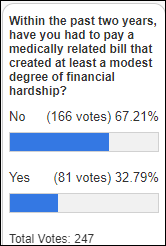
Poll respondents say they will beef up their COVID-19 precautions by avoiding unnecessary gatherings, upgrading cloth masks, and getting a booster shot. Most will follow the nearly universal trend of ignoring the one technical solution of contact tracing apps, whose minimal acceptance and low value demonstrate what happens when big tech companies barge into healthcare convinced that cool apps are disruptive.

New poll to your right or here: How does your work-from-home job effectiveness compare to working in the office?


Webinars

None scheduled soon. Previous webinars are on our YouTube channel. Contact Lorre to present your own.


Acquisitions, Funding, Business, and Stock

image

Jacob Reider, MD announces in a blog post that Circulo acquired his company, social determinants of health-focused Huddle Health, last October. Olive CEO Sean Lane launched Medicaid-focused managed care company Circulo nearly a year ago alongside a $50 million funding round. Reider, a former deputy national coordinator for health IT, has taken on the role of general manager of health solutions at Circulo Health.

Symplr will acquire Midas Health Analytics Solutions from Conduent for $340 million in cash. The deal marks the twelfth acquisition for Symplr, a healthcare governance, risk, and compliance technology vendor.

Waymark, which supports Medicaid primary care providers with technology-enabled community care teams, raises $45 million in a Series A funding round. The co-founders are MD-PhDs who care for Medicaid patients.

Healthcare market intelligence vendor Trella Health acquires PlayMaker Health, which offers a post-acute CRM and EMR referral management system.

Consumer engagement and telehealth solutions vendor Carenet Health acquires healthcare collaboration platform vendor OpenMed.

Share price of the Global X Telemedicine and Digital Health Fund was flat in December, up 7% since their first day of trading in July 2020.

Sales

  • Priority Health, the country’s third-largest provider-sponsored health plan, will use Epic’s Payer Platform.

People

image

Harris promotes Mihir Shah, MBA to EVP of its Clinical Computer Systems business, developer of the OBIX Perinatal Data System.

image

Bamboo Health promotes Rob Cohen, MCIT, MBA to CEO.

image

Marcus Gordon, MBA (Lumeris) joins Sharecare as SVP of growth marketing.

image image image

Jvion hires Curt Thornton (Medicom Health) as chief growth officer; Jim Stansell (TeleHealth Solution) as CTO; and Leah Ray (Zelis) as chief customer officer.

image

Kimberly Lynch, MPH (Aledade) joins Stellar Health as COO.

image

Marcus Osborne, MBA, SVP of Walmart Health & Wellness, announces on LinkedIn that he has left the company. Walmart removed Osborne from running its clinics reassigned in September 21, the same day it removed the SVP/COO over Health & Wellness.

image

Kieran Murphy, MSc, president and CEO of GE Healthcare, leaves the company as previously announced after 4 1/2 years in that role. He will be replaced by Peter Arduini, formerly president and CEO of Integra LifeSciences.


Announcements and Implementations

image

The Bermuda Hospitals Board will go live on Cerner Millennium across its two hospitals and urgent care center later this year.

image

Mary Washington Hospital (VA) will launch an e-ICU using remote patient monitoring technology from Hicuity Health later this month.

CES, the Consumer Electronic Show, will end a day early due to COVID-19 concerns. Several major exhibitors have cancelled their participation in the Las Vegas show, which will now run for three days.
image

At CES, Withings announces the Body Scan Connected Health Station, which measures weight, body composition, heart rate, and vascular age. It also includes a six-lead ECG function and nerve assessment. The $300 scale, which is awaiting FDA clearance, will be sold with a health monitoring service that includes coaching, clinical services, and health goals planning.

image

Amazon’s at-home COVID-19 PCR test earns FDA’s Emergency Use Authorization. Users register their $40 kits online, drop off their nasal swab sample at a UPS location with prepaid label attached, then have their results posted on the website within 24 hours of receipt. Amazon says it built its own CAP-accredited, CLIA-certified lab for its own employees in April 2020 and is now extending its services to Amazon customers.


Privacy and Security

Broward Health (FL) reports that the medical and personal information of 1.4 million patients was exposed in an October breach in which someone penetrated its network via the office of an unnamed third-party medical provider.

image

MU Health Care says it will implement a new time-keeping system after some employees report not being paid in full as a result of the Kronos ransomware attack last month. Hospital representatives say pay discrepancies will be resolved this week. Meanwhile, some UF Health (FL) employees say they are looking for new jobs after the Kronos problem left them underpaid for actual hours worked since the health system can’t track overtime with the system down.


Other

Fast Company says “the telehealth bubble has burst” as pandemic lockdowns have ended, proving wrong the technology experts who declared that most healthcare services will be delivered online. Soaring telehealth company share prices have crashed hard — Teladoc Health shares have tanked 70% in less than a year, Amwell is down 86%, and Hims has shed 75%. Telehealth companies are trying to figure out how to pivot, with behavioral health being the only service that has earned a permanent spot. Key issues are payments by CMS and insurers; the possible incorporation of telehealth into other areas such as retail clinics; and the possible future of individual tools and services being rolled up into an Amazon-like patient experience.

A NEJM perspective piece says that the US public health system is a patchwork of policies and technologies that the pandemic has exposed as being expensive while delivering poor population health outcomes. Notes:

  • The federal government has 21 major agencies that are involved with pandemic preparedness.
  • State health departments are sometimes independent but more commonly parts of other organizations, and top state health officials are governor-appointed.
  • Local health departments often perform fewer than half of the services HHS has deemed core to public health, with many of them offering nothing in tobacco prevention, opioid addiction, chronic disease management, and injury surveillance.
  • Much state and local public health work is conducted on paper, with limited ability to obtain, analyze, and share information. Just 3% of local health departments say their IT systems are interoperable.
  • Health officials who support evidence-based public health measures are often harassed and threatened and 32 states have passed new laws that limit the authority of public health departments during emergencies.

Sponsor Updates

image

  • Availity employees volunteer at the Jacksonville Humane Society.
  • Bluestream Health adds PCare’s patient engagement software to its virtual care platform.
  • Change Healthcare AVP Edward Hafner has received WEDI’s 2021 Andrew H. Melczer Leadership in Volunteerism Award.
  • Pivot Point Consulting has been honored for the eighth consecutive year as a winner in The Best and Brightest Companies to Work for in the Nation program, as well as the new 2021 regional program.
  • Cerner Director of Interoperability Strategy Hans Buitendijk joins the GAO’s National Health IT Advisory Committee.
  • Healthcare Triangle reports developing tech solutions to help the post-COVID healthcare industry use big data to deliver better care.
  • OptimizeRx CEO Will Febbo will moderate a panel on virtual care at the LifeSci Partners Corporate Access Event January 6.
  • AGS Health’s learning and development team has won an award from TISS Leap Vault CLO in the Best Induction Program category for new hires in healthcare.
  • Arcadia publishes a new study, “Reduced Incidence of Long-COVID Symptoms Related to Administration of COVID-19 Vaccines Both Before COVID-19 Diagnosis and Up to 12 Weeks After.”
  • CHIME releases a new podcast, “A Conversation with John Kravitz, 2020/21 CHIME Board Chair – The Year in Review.”
  • Emerge has improved revenue and quality for a multi-specialty group using natural-language processing.
  • Glytec’s EGlycemic Management System has achieved HITRUST CSF certification for information security.

Blog Posts


Contacts

Mr. H, Lorre, Jenn, Dr. Jayne.
Get HIStalk updates.
Send news or rumors.
Contact us.

125x125_2nd_Circle

Morning Headlines 1/4/22

January 3, 2022 Headlines Comments Off on Morning Headlines 1/4/22

Jury finds Theranos founder Elizabeth Holmes guilty on multiple charges in criminal fraud trial

Theranos founder Elizabeth Holmes has been found guilty on four of 11 charges in her criminal fraud trial.

DispatchHealth Acquires Dynamic Mobile Imaging Becoming One of the Nation’s Largest Mobile Imaging Providers

On-demand house call company DispatchHealth acquires mobile medical imaging vendor Dynamic Mobile Imaging for an undisclosed sum.

Huron Closes Acquisition of Perception Health

Global consulting firm Huron will incorporate newly-acquired predictive analytics vendor Perception Health into its healthcare operations segment.

Kiira Health raises $4M to transform healthcare for young women.

Virtual women’s health clinic Kiira Health raises $4 million in seed funding.

Comments Off on Morning Headlines 1/4/22

Curbside Consult with Dr. Jayne 1/3/22

January 3, 2022 Dr. Jayne 1 Comment

image 

Most of my regular readers know I’m a fan of pastry therapy, but I decided to start the year out with something a little different. My food-related knot-tying skills are apparently far less developed than those used for everyday applications (or even wilderness survival), but the taste made up for the lack of aesthetics. The warm oven made the kitchen a little more habitable with the cold snap we’re experiencing, and what better way to reflect on a new year than sitting around watching dough rise?

The last two years have made most of my friends and colleagues reflective, and I’m no different. After slogging through the worst year and a half of clinical practice I’ve ever had, I decided to hang up my stethoscope for a while. Although I’m still practicing telehealth, it’s been a transition, and I’ve spent a lot of time explaining to friends and relatives what exactly it is that I do. Unless they’ve had a telehealth visit themselves, they usually don’t quite understand how we can provide care without the ritual laying on of hands that occurs in the doctor’s office.

I’ve done some medical volunteering to keep my skills sharp, as well as some in-town locum tenens work. I’ve learned more about epidemiology and infectious diseases than I ever thought I would know, as I work to advise local schools and youth-serving organizations on how to navigate the ever-changing new normal. I’ve piloted new paradigms in specialty board certification for two different disciplines; experienced the good, the bad, and the ugly of remote continuing education; and have finally transitioned to reading all but one medical journal electronically.

I watched my consulting business ride the rollercoaster of the pandemic, alternating between not having enough work and being crushed by requests my team can’t fulfill. I picked up three clients, watched one get acquired, saw one flounder, and supported a couple more as they continue to onboard new clients and expand their offerings. I’ve become adept at canceling travel more than I book and finally let my Alaska Airlines credits that I couldn’t use in April 2020 lapse into oblivion. Victoria BC, I would have loved to have seen you, and to have embraced the floatplane adventure we had planned, but it just wasn’t meant to be.

After some medical misadventures, I started to embrace the idea of a bucket list – doing things while I’m young and healthy rather than waiting for the other shoe to drop. I’ve also vowed to take advantage of unique opportunities when they present themselves instead of overthinking them.

I spent a week in the Florida Keys, snorkeled through jellyfish, went nearly 60 miles per hour on a zip line, and did things in a climbing harness that I didn’t think I’d ever do. I’ve now officially soaked in a chandelier-lit hot tub in the French Quarter after a long day of work and shoe shopping, and am glad to have found some new travel companions for when things are a little closer to the “normal” we all remember. I had a multi-week adventure following an 80-year-old steam engine and enabled some quality teenaged school-skipping along the way. My only open bucket list item is exchanging my motorcycle permit for an actual license so I can do a road trip with my dad, but we’ll have to wait for the wind chill to disappear before I work on that one.

I’m looking forward to 2022, because frankly it can’t get any worse than what some of us have been through the last two years. Lives interrupted, loved ones lost, fires, floods, tornadoes, dreams denied, and life generally feeling upside-down are things we’ve all had to deal with as we figure out how to keep putting one foot in front of the other. I’ve met some amazing new colleagues who I’ll continue working with in the new year, and hopefully we’ll be able to deliver some cool new things that will help patients and providers alike. I’m excited to be entering my twelfth year writing for HIStalk and can’t wait to get back to the exhibit hall madness that is HIMSS and catch up in person with my healthcare IT besties.

What are you looking forward to in 2022? Leave a comment or email me.

Email Dr. Jayne.

Morning Headlines 12/31/21

December 30, 2021 Headlines Comments Off on Morning Headlines 12/31/21

Rhode Island attorney general reviewing RIPTA’s response to cyberattack

Rhode Island Public Transit Authority reports that thousands of medical records that were exposed in a breach were of people with no connection to RIPTA, which it blames on an insurer that sent someone else’s files.

Cybersecurity incident on Dec. 17

The president of Capital Region Medical Center (MO) warns of long ED wait times and overloaded phone lines as it recovers from a December 17 cybersecurity incident.

How telemedicine ruined a physician’s career

An anonymous physician who has done independent telehealth contracting work for 10 years says than the actions of an unnamed telehealth vendor have forced him to think about leaving medicine.

Comments Off on Morning Headlines 12/31/21

News 12/31/21

December 30, 2021 News 4 Comments

Top News

image

Rhode Island’s attorney general is investigating a breach of the state’s Public Transport Authority after thousands of people who have never worked for RIPTA were told that their health information had been compromised in the incident.

RIPTA says a previous insurer had sent it files that contained the information of people who had no connection to RIPTA. It did not name the insurer or explain why the information was not deleted.

RIPTA’s HHS breach filing says that 5,000 people were affected, but the letters it sent said that the information of 17,000 people was involved.


Webinars

None scheduled soon. Previous webinars are on our YouTube channel. Contact Lorre to present your own.


People

image

Juli Stover (Envision Healthcare) joins EVisit as chief strategy officer.

image

Industry long-timer Miriam Paramore retires as president and chief strategy officer of OptimizeRx.

image

Hannah Luetke-Stahlman, MPA (Cerner) joins WellSky as VP of its personal care solutions business.

image

Dan Ferris, MBA (Hillrom) joins Iris Telehealth as chief marketing officer.


Announcements and Implementations

HealthStream CEO Robert A. Frist, Jr. donates $2.25 million worth of his personally held company shares that will be distributed to 1,000 employees who don’t receive executive-level equity grants.


Privacy and Security

The president of Capital Region Medical Center (MO) warns of long ED wait times and overloaded phone lines as the health system recovers from a December 17 cybersecurity incident.

A surgeon in Spain is sentenced to a year in jail for illegally accessing the medical records of his housekeeper of 23 years to verify that she was sick enough to justify missing work.


Other

image

Computerworld interviews Mark Eimer, SVP, associate CIO, and CTO of 17-hospital Hackensack Meridian Health (NJ), about his department’s IT accomplishments in 2021:

  • Rolled out 3,000 Chromebooks to employees who were being shifted to remote work, increasing its Chromebook count to 5,000 with Citrix Workspace providing access to Epic.
  • Replaced Office 365 with Google Workspace for 40,000 employees who now use Docs, Meet, Chat, and Spaces. He observes that Office 365 applications don’t work well together, while Google offers a seamless experience in providing 80% of Office’s functionality. He also notes that Microsoft’s pricing was “exorbitant” in an environment where hospital payments are being reduced.
  • Moved ahead with a goal “to move off as many Microsoft platforms as we can” because  Windows is always targeted by ransomware attacks.
  • The health system is expanding its use of Google Cloud and is talking with Google executives about developing Workspace apps that support healthcare-specific workflows.

image

A NEJM Catalyst commentary piece says that telemedicine’s value can be maximized through sustaining innovation (improving what is already being done) and disruptive innovation (providing simpler solutions for simpler needs or for patients whose needs are not being met). It says that both in-person and virtual physician visits give patients “more than what they need and less of what they want,” with an example being people who use virtual solutions for hair loss, obesity, and contraception who haven’t seen a doctor for years. The authors tout the potential value of remote patient monitoring and coaching for chronic conditions. The graphic above shows the complexity of patient needs (and eventual profitability of the solution) at the top of the pyramid that is occupied by Firefly Health, which has expanded its virtual primary care platform by starting a health plan (the company’s executive chair is former Athenahealth CEO Jonathan Bush).

An anonymous physician describes how their telehealth work ruined their career:

  • Their work as an independent telehealth contractor turned into an “antibiotic dispensary service.” Physicians had to keep patients happy at all costs since they were being graded on customer service scores.
  • They were placed on a performance plan for using templated notes, with the alternative being that the telehealth company would report them to the National Practitioner Data Bank.
  • The terms of the performance plan limited them to 10 consults per day for one month, after which the company told them they failed the plan because they  didn’t work 30 consecutive days. The company reported the physician to the NPDB.
  • NPDB allows any health entity to report a physician. The reported physician cannot challenge the claim.
  • The physician says their professional reputation was damaged, they lost income, and they are having a hard time finding work, leading them to question whether they should leave medicine.

image

Physicians at Durham, NC-based private, for-profit Private Diagnostic Clinic — whose doctors work at Duke University and its health system – sue Duke for requiring 400 of PDC’s 1,850 physicians to take jobs instead with the recently formed Duke Faculty Practice to be able to continue their research. The lawsuit claims that Duke’s previous attempts to acquire PDC fell through because of its estimated value of $1 billion, so Duke is trying to take it over for free.

A virtual meeting of the Beverly, MA board of health is taken over by masking opponents who used the meeting software to hand off speaking to those with similar beliefs, including one who urged someone to burn down the house of Boston Mayor Michelle Wu. A participant declared that a proposed mask mandate would violate her HIPAA rights.


Contacts

Mr. H, Lorre, Jenn, Dr. Jayne.
Get HIStalk updates.
Send news or rumors.
Contact us.

125x125_2nd_Circle

EPtalk by Dr. Jayne 12/30/21

December 30, 2021 Dr. Jayne Comments Off on EPtalk by Dr. Jayne 12/30/21

Monday’s clinical adventures were full of patients who had been exposed to COVID-19 over the Christmas holiday. A good number of them tested positive on home tests and wanted to speak to a physician to request a laboratory order for a PCR test, because they didn’t believe the home test was accurate.

There’s a bunch of epidemiology calculations that can be done to explain this using pre-test probability, sensitivity, specificity, etc. but they all roll up to this. If you have symptoms and any test is positive, whether it’s a home test or not, you need to take it as fact and isolate yourself. The healthcare system is being crushed in my state and there aren’t enough tests for people to double test.

A couple of local physician offices turned off the phones Monday because so many staff members were out that they simply could not handle the volume and opted to triage everyone to their patient portal. I’m having some guilt about not seeing patients in person while my colleagues are being pummeled, but will do what I can to help from a telehealth standpoint.

Also on the telehealth front, both Ohio and New Jersey have new telehealth bills that were recently signed into law. Common themes include expanded access, preventing insurers from denying coverage, and granting payment parity between in-person and virtual care. The Ohio bill’s expansion provisions include allowing additional provider types to deliver virtual services including optometrists, pharmacists, physician assistants, and school psychologists. It also broadens the list of entities that can bill Medicaid for telehealth services.

Proponents don’t believe that the expansion and payment provisions will raise healthcare costs, as was argued in other states such as New Jersey earlier in the year. An initial telehealth bill was rejected there due to concerns about increased costs to taxpayers, but now the bill has been signed with the condition that the state department of health will study telehealth use and patient outcomes.

Telehealth advocacy group as well as patient advocacy groups are calling for reinstitution of so-called COVID-waivers for telehealth services, which were a key part of the initial pandemic response. On an individual basis, many states allowed any licensed provider to see patients regardless of whether they had a license in those specific states.

Even health systems that normally provide telehealth urgent care services are struggling, partly due to patients who have traveled for the holidays and now can’t get remote care from their “home” health system because they’re outside their normal state of residence. This is a great example of why the telehealth laws need to evolve. I’m confident that my personal physician can care for me virtually whether my body is in my house or sitting on the beach hundreds of miles away, even if my state doesn’t think so.

Also in telehealth news, the Department of Health and Human Services announced $35 million in American Rescue Plan funding to expand telehealth infrastructure and capacity for Title X family planning providers. Many of the Title X providers are part of the so-called health care safety net that provides care for low-income populations and other groups who might not otherwise receive care. The funds will be distributed as 60 one-time grants that will be given to active Title X program participants. Applications are open on Grants.gov through February 3.

clip_image002

I enjoyed a recent article on terms that make hospital executives cringe. I’d like to add my personal list of language elements I wish would go away: frictionless, the use of “solution” as a verb, ecosystem, the cloud, enablement, holistic, the Internet of Things, and anything prefixed with “smart.” They’re old and tired (and in the case of “working to solution something” just plain weird) and if we have all these brilliant minds in tech, certainly we can come up with something better.

I missed this story when Jenn sent it my way earlier in the month, but was happy to see it. It details the work of the Refugee Artisan Initiative, where newcomers to the US can receive skill training and experience with micro-businesses. The organization received a community investment grant from Swedish to cover creation of medical scrubs for its staff. The Initiative is making 500 sets of scrubs which will be custom sized for employees. My new clinical gig won’t allow me to wear scrubs, so after nearly two years of wearing them exclusively, I’m having to figure out what looks good under a white coat but won’t be bulky or aggravating.

Speaking of aggravating in the context of health tech, the team at the Consumer Electronics Show has spoken and has declined to approve my request for media credentials. The email simply said that my submitted credentials were inadequate and didn’t specify which of the two were problematic. I’m baffled because I submitted items that complied with their requirements and were of the same substance as last year (just more current, in keeping with their requirements). Lots of tech companies are backing out of the in-person show and switching to the digital edition, so we’ll have to see what the engagement level is for those who still plan to attend.

I’m still on the hunt for interesting health tech that can help engage patients and enjoyed reading about the Prevention circul+ Wellness Ring. The name is quite a mouthful and is partly due to the manufacturer’s co-branding with Prevention Magazine. The ring is bulkier than I’d like, but includes technology to measure blood oxygen levels, which is intriguing to any of us who are trying to manage COVID-positive patients in their homes. The team worked with clinicians at the VA and Kaiser to trial the technology and refine the design. It can now also record blood pressure and a single-lead electrocardiogram, with data captured in its associated app. FDA approval as a diagnostic medical device is still pending, but it’s something I’ll keep my eye on.

What kind of new devices would get your attention or hold your interest? Leave a comment or email me.

Email Dr. Jayne.

Comments Off on EPtalk by Dr. Jayne 12/30/21

Morning Headlines 12/30/21

December 29, 2021 Headlines Comments Off on Morning Headlines 12/30/21

Billing software error leaks info of 1,600 Advocate Aurora patients

The health system says that a billing software error sent the billing statements of 1,600 patients to a single patient’s address, but the mail did not arrive at its destination.

Healthcare IT vet Paramore retiring from OptimizeRx

Miriam Paramore, who has been in health IT for 37 years, retires as president and chief strategy officer of OptimizeRx.

Information on the current situation — Update December 29, 2021 02:30pm CET

CompuGroup Medical says the “vast majority” of its customer systems are up and running as the company implemented its backup infrastructure.

Comments Off on Morning Headlines 12/30/21

Health IT Turnover Survey Results

December 29, 2021 News 2 Comments

This is a recap of the responses received over the past couple of weeks.


Vendor executive

  • Significant turnover expected. Have lost 25% of staff, with marketing and sales most affected.
  • Considering leaving because of an impending merger.
  • Service levels have decreased at times.

Consulting contractor assigned to a single client for several years

  • Significant turnover due to retirement, vaccine mandates, and junior staff who leave for better pay and less work.
  • No special employer consideration except bonuses for clinical staff referrals.
  • Long waits for implementation and some projects have been cancelled.

Software vendor

  • Technical turnover, maybe 1%.
  • Considering retiring in 2022.

Independent family practice office

  • Saw 40% turnover in 2021, mostly MAs and front office. Were able to stabilize and hope turnover will decline in 2022.
  • Salaries are up for existing and new employees.
  • Patients haven’t been affected since staff pulled together.

Software vendor

  • Turnover of 15-20%, heavier in developer roles.
  • Have raised wages to closer match inflation, added monthly and annual incentive, boosted health insurance and 401K contributions.
  • No impact on customers, but global sniping of roles creates musical chairs with insane pay jumps.

Academic medical center physician

  • Lost 15% of faculty and added only 1-2 full-time replacements. Had to close some beds for months due to loss of nursing staff. One person left due to vaccination requirements, but the others left because they were disrespected by administrators, given inadequate protection against COVID, and were being subjected to an increased amount of physical violence and injury from patients. The IT people who left did so to retire – most could have kept working, but their pension had vested and they didn’t want to return to in-person work.
  • I will probably stay where I am or retire.
  • The hospital claims they are trying to enhance salaries and recruit nurses internationally. We’ve never been good at recruiting in my specialty, which has a shortage, so we’re just begging our residents to stay on July without real success. The bleak recruitment picture is fueling more departures from being forced to cover more patients.
  • We aren’t able to see as many patients. Outpatient appointment waits can be 4-6 months. Inpatients get less attentive care even though we try our best.

Clinically integrated network plus insurance plan plus ACO

  • Large loss of analytics headcount, not turnover, due to outsourcing. Outsourced staff left the new companies. Turnover among retained employees because of the mess.
  • Would consider leaving due to leadership and management instability, lack of strategy, growing workload, and lack of morale. Seeking happy workers, remote option, sense of purpose, peer-to-peer support, professional development, and interesting not-rote work where I can think and be more than a cog in the machine.
  • Employer is paying big dollars for some clinical positions such as CRNA. Bonuses in others, such as RN. Some retention bonuses around outsourcing, but not life-changing.
  • Analytics and IT are seeing a loss of institutional knowledge and the good people are leaving. Service levels and response time are getting worse. We struggle to deliver analytics as other teams we rely on suffer.

Vendor executive

  • We saw very high turnover in entry-level positions in Q3 2021, but this seems to have leveled out. These were mostly onsite support IT technician roles.
  • Divisions have been given flexibility to offer work from home for suitable positions. HR and exec teams formed a committee that meets bi-weekly to analyze turnover data, most of which is collected in exit interviews, to develop strategy. I budgeted above-normal salary increases for 2022, anticipating that employees facing inflation will need more than the typical 3% increase to remain satisfied.
  • No customer impact so far.

Consulting firm

  • Turnover was 25-40%.
  • Would consider leaving because of leadership response to COVID, pay discrepancies, and company culture. Will look for a more honest culture with a mission that more closely aligns with my personality. Executives with honor.
  • Customers have seen slow work delivery, decrease work quality, lack of integrity.

Clinical analyst in a multi-state health system

  • Heavy analyst and desktop support turnover. Long-term employees have been rebadged to contractors over the last 18 months and all of desktop are contractors now. Contracted analysts are offshore, are trained by a rebadged employee, and then the rebadged person disappears.
  • I dislike physician training and that is being dumped on me, so I will look aroundfor a challenging and diverse role in a company that values loyal employees who work hard.
  • The health system offers free lunch once a week, mostly for clinical and hospital staff retention, but I am remote, so nothing. We strongly feel that leaving or staying makes no difference to upper management.
  • We have work not being done. One program broke and none of the replacements knows about it, so doctors just don’t get that information any more and no one cares. Tickets sit around for months because nobody knows what the product is or who handles it. Poor customer service from the help desk, especially Level 1.

Vendor technology director

  • Engineering was the most affected turnover area, but it leveled off recently. I expect normal attrition next year, maybe 10-15%.
  • Changed jobs for work-life balance, an opportunity to work for a more technically sound team and manager, a deeper focus on more complex clinical integrations, mission around the product, and a 65% pay raise for an equivalent role.
  • We are using external recruiters and more focused sourcing. We do quarterly surveys for retention adjustments. We will start reviewing market level salaries quarterly and make adjustments.
  • No impact on customers. We have grown, even with periods of significant turnover this summer. Our company is small but has strong processes and good release and monitoring capabilities, so new folks can ramp up quickly.

Health system VP/CIO

  • Nursing has seen large turnover as staff leave to make more money as traveling nurses. It’s an unprecedented number. I’ve had a 20% resignation rate in IS versus a decade averaging 3%. COVID is encouraging people to reconsider their careers and either get out of IS or work remotely for more money.
  • Sign-on bonuses have been critical for nursing. For IS, we are regrading all of our positions and evaluating salaries to make sure we are competitive.
  • The hospitals have been full and cost is up due to the need to hire travelers and contractors. We are maintaining patient care, but not always able to staff beds, and have had to go on diversion at times. IS customers are seeing long lead times in service delivery and I have a long line of people contacting me with complaints.

Consulting firm

  • My firm was acquired and we’ve seen a reduction in “material benefits,” such as FMLA at 60% after four weeks instead of full pay. I expected to see a lot of folks leave after 2021 bonuses are paid and this will likely hit us most at at the senior level.
  • We are having to backfill from a contractor pool, which is fraught and limited.

Medical device vendor

  • Turnover at all job categories and levels.
  • Are offering referral bonuses, signing bonuses, and hiring less experienced staff so they have runway to grow.
  • Customers are seeing slow delivery of new value and innovation and slower response times for services.

IT in FQHC of ambulatory clinics

  • High turnover in MAs, nurses, and providers.
  • Would look at offers with good compensation.
  • Employer is offering more prizes in the Christmas raffle, better 401k matching, and one-time bonuses.
  • No patient impact except a longer wait for appointments.

Software vendor

  • I left my old job due to lack of advancement opportunities.
  • Company offers flexible schedules and extensive work-from-home options.
  • Customers have seen project timeline delays.

Vendor executive

  • Turnover is highest in customer support, then developers.
  • I would be looking for an employer with remote work and no vaccine mandates.
  • The company updated the employee experience intranet, implement 360 reviews of leadership, increased referral bonus amounts, and made salary market adjustments.
  • Customers have seen that we increased hiring, improved automation, upgraded our self-help knowledge base and portal, and adding chat bots for commonly asked questions.

Vendor executive

  • We have seen a 15-20% turnover in sales and developers.
  • I changed jobs to join a great team that offered better compensation, now hoping to stay put.
  • The company pays well and treats people with respect and appreciation.
  • I have seen no customer impact.

Vendor sales executive

  • We have seen 35% turnover in trainers and customer support.
  • My company’s new model is not sustainable and the future looks grim. I would like to work for a larger employer whose products and serves are geared for future technology.
  • When we were going in to the office, the company stocked our kitchen with snacks and food for employees and offered five half-day summer Fridays on top of PTO. Now that we are remote, nothing.
  • Customer support is suffering as we have lost experienced workers.

Vendor executive

  • Turnover is at 15-20% and is in all areas – sales, technology, operations, legal.
  • I have uncertainty about the long-term viability of the company and money.
  • The company is increasing salaries, offering retention bonuses, and making a concerted effort around culture.
  • Things are taking longer to get done and that cascades to our customers.

Vendor analyst

  • Turnover is at 35% and I don’t expect those numbers to go down. Mid-level leadership, senior development, senior implementation, and a few VPs.
  • I changed jobs because of leadership failings and layoffs that put too many good people out for no good reason. The pandemic layoff and pay cuts were particularly hard. I moved to a company that wanted to grow, needed my skill, and offered a 30% raise.
  • If I leave, and I’m only thinking about it, it would be to hang out my own shingle and consult internationally.
  • The company just eliminated PTO with the “take whatever you need” concept.
  • Customers are struggling not only on the clinical side due to the pandemic, they don’t have the people to keep up with upgrades, new releases, and support. They need to align with a lot of new initiatives that will be available only in future releases.

Software and benchmarking vendor VP

  • I anticipate very high turnover in software development, product management, high-aptitude analysts, data science and BI/data visualization, and any high performer who wants to make the jump to management.
  • I plan to stay in 2022 as long as they’ll have me. I’m satisfied with my personal comp and the company mission still resonates with me.
  • Employer is increasing pay bands, starting salaries, and annual merit raise percentages. However, it is also stressing a return to office and downplaying virtual work, which is hurting both recruiting and retention.
  • Customers have seen no impact, but recruiting for 2022 remains a major risk point. We have plenty of revenue to invest in software development and business development, but recruiting challenges mean it’s difficult to execute with those dollars. Resignations haven’t hit us badly, but annual bonuses for 2021 are paid in Q1 2022 and we anticipate a wave of resignations.

Health insurer

  • Turnover is higher than normal. We always have high turnover in our bilingual call center and it will probably get worse. Until we converted a number of jobs to full-time remote, we expected high turnover in IT.
  • Full-time remote and hybrid jobs is the company’s biggest innovation in recruitment and retention. My employer was old-school about telecommuting despite being in downtown Los Angeles, where almost everyone has a lousy commute. Now that we’ve been getting the work done successfully for 18 months, they have generally accepted that it can work. We lost some staff to a competitor that advertised full-time remote jobs sooner than we did.
  • Turnover has slowed a number of enterprise programs to roll out new services many of which are enabled by technology. We are a highly regulated entity and we’ve been struggling to meet all regulatory deadlines, in part because of a lack of people to do the work and make important decisions in these programs.

Health system

  • 10-15% turnover in nursing and IT.
  • Would consider leaving for flexibility and career advancement opportunities.
  • The company is adjusting salaries.

Software vendor sales

  • 10% turnover. Lots of engineering folks with a shift to cloud, on-prem resources will go. Lots of GTM changes due to poor company culture.
  • Left due to company culture.

Software vendor sales

  • Voluntary turnover has been low, but seems like it is ticking up. R&D has seen record turnover and I expect that to continue along with our implementation team.
  • I’m concerned about the company direction. New product announcements talk about functionality we should have had years ago. I don’t see full digitization happening in the next 10 years, but shouldn’t we be working towards that assumption? We aren’t able to quickly produce new code and updates. Pay isn’t so great and there’s no indication it will improve.
  • The company has had some sort of HR listening session with some teams, but it seems to have focused on soft things like culture rather than pay and product focus.
  • Our customers are certainly impacted by loss of experience in the implementation team, which is directly visible to them. The R&D team is not visible to them.

Multi-hospital health system IT senior solutions architect

  • We lost some folks earlier due to work-from-home policies, which have since been loosened up.
  • Work-from-home is 100% and work in multiple states.

Morning Headlines 12/29/21

December 28, 2021 Headlines Comments Off on Morning Headlines 12/29/21

Idea of national patient IDs revives privacy fight

Politico reports that even though the Senate has removed its HHS funding ban of a national patient identifier, political roadblocks remain and an ONC report that summaries its risks and benefits is overdue.

CES 2022: Amid COVID surge, AMD and OnePlus drop out, joining Microsoft, Google, Intel

The Las Vegas consumer electronics show faces big-exhibitor pullout, news sites cancelling onsite coverage, and the likelihood of far smaller attendance than the previous 2020 show that drew 170,000.

All 695 hospitals, clinics of railways connected through software

All Indian Railways facilities have been connected to Hospital Management Information System.

Comments Off on Morning Headlines 12/29/21

News 12/29/21

December 28, 2021 News 1 Comment

Top News

image

Politico notes that even though the Senate has, for the first time, removed the prohibition of spending HHS money on a national patient identifier for 2022, nothing is guaranteed because of the way HHS appropriations work.

Sen. Rand Paul (R-KY) and Rep. Chip Roy (R-TX) have filed bills that oppose the development national patient identifiers.

ONC was supposed to create a report describing how such identification would work and the benefits and risk of implementing it. That report is is overdue and is holding up the process.


Reader Comments

From IANAL: “Re: Cerner. I suspect the voice assistant statement in Oracles press release was aimed at buyers or holders of Oracle stock. Many see Oracle’s main competitor as Microsoft, which acquired Nuance/Dragon. The press releases of big, boring companies are often aimed at shareholders since shareholders are interested enough to read company press releases and usually need calming after big company decisions. I wouldn’t take it as an indication of Oracle’s actual intentions for Cerner.” Excellent point. Companies often say things in acquisition press releases that don’t match their actual intentions, instead using the limelight opportunity to improve their image with investors. The claim that Oracle will make its little-known voice assistant the primary clinician interface for Millennium may well have been smoke-blowing to make Microsoft’s acquisition of Nuance seem less significant. It seems obvious that the biggest benefit to Oracle is buying a company that in essence resells a lot of its high-margin products (like the Oracle database) and to stave off the company’s move to AWS and force customers onto Oracle’s less-competitive offering. I doubt that the worksheet analysis used by Oracle’s acquisition team contained a lot of columns that predict the acquisition’s positive impact on patients and clinicians, healthcare costs, and outcomes.


HIStalk Announcements and Requests

image

Few poll respondents expect Oracle’s acquisition of Cerner to improve healthcare. Mike thinks a new focus on infrastructure will slow down the rollout of more-important product features, turning Cerner into another McKesson Horizon that will be sold for parts. Multiple commenters say that both companies are focused on sales rather than products, which is tough in healthcare where sales cycles are long and complicated. Khyber Pass makes an eloquent comparison of US healthcare to Afghanistan, where outside powers waltzed unknowingly into the “Graveyard of Empires” and were undone by fractiousness, complexity, and problems that the locals couldn’t solve. IANAL makes several interesting predictions:

  • Meditech, once Neil Pappalardo is no longer involved, will sell to Oracle or private equity, will be acquired by a consortium of customers led by HCA, or will become irrelevant due to customer attrition.
  • Oracle will wait for Northwell to leave Allscripts and will then buy the Allscripts hospital division on the cheap.
  • Epic seems to be growing concerned about anti-trust issues as evidenced by its no longer using slogans involving world domination or market share. Oracle is tighter with the federal government, is a preferred bidder for government work, and is willing to outsource to India. Epic will move its focus outside of hospitals once it has run out of health systems to convert and the profits no longer outweigh the anti-trust risk.
  • Hospital software improvement and innovation will stop unless US healthcare undergoes major paradigm changes.

New poll to your right or here: Which COVID activities will you practice to a greater degree in the first several months of 2022 compared to mid-2021? I’m trying not to fall victim to the “I’ll get it no matter what I do, so I might as well just live my life” symptom of COVID fatigue, but I’ll at least switch from cloth to KN95 masks in some or all situations. Omicron has changed the dynamic to where all of us probably know someone personally who has had it recently. Post-holiday case numbers will be crazy, although only a small percentage of those will likely result in hospitalization (but a small percentage of a huge number is still a big number of occupied beds that will be unavailable for medical needs of all kinds).


Webinars

None scheduled soon. Previous webinars are on our YouTube channel. Contact Lorre to present your own.


Announcements and Implementations

In India, Indian Railways – the government-owned railway system that is the world’s eighth-largest employer with 1.3 million employees —  goes live on the Hospital Management Information System at its 695 hospitals and healthcare units, linked to the patient identifier of employees, family members, and employees. 

Mid-Columbia Medical Center (OR) and OHSU Health end most aspects of their longstanding collaboration agreement, which will require MCMC to move away from OHSU’s Epic system.


Other

Dr. Jayne is annoyed that the CES show denied her request for a media pass with a curt “insufficient credentials” response, but the January 5-8 conference might wish they had let her come given high-profile pullouts of dozens of companies from the in-person conference due to COVID-19 concerns – Lenovo, Microsoft, Google, Amazon, Intel, Meta (Facebook), and Omron Healthcare. Several tech reporting sites have decided not to send reporters to Las Vegas for live coverage of the conference, which drew 180,000 attendees the last time it was held in person in January 2020. CES declares that it won’t cancel the in-person show, saying that while 10% of exhibit hall space will now feature chairs and potted plants in being repurposed into impromptu lounges, smaller companies rely on the conference to do business. Some people still expect CES to either give up and cancel the show or try to put good spin (a la HIMSS and RSNA) on drawing 75% fewer attendees, many of whom had already decided to participate virtually or not at all even before emergence of the Omicron variant. According to one tech publisher, “You know something’s different on the Central Hall floor when you see the US Postal Service has really great booth position.”

A researcher says that nursing shortages, accelerated by pandemic-related retirements and reduced nursing school enrollment, will shift health system budgets away from expansion and acquisition of new technology. One travel nurse says the hospital she works at is so short staffed that she is paid more than surgeons, but many travel nurses say the money is only a short-term reason to continue practicing in a high-stress setting where hospitals don’t seem to value their mental health.

image

The coroner of an 80,000-resident county in Missouri – who, like many of his national peers, had no medical training or experience before he was elected to the low-paying job — tells a reporter that his office “doesn’t do COVID deaths,” having recorded COVID-19 as a cause of death zero times in 2021. Wavis Jordan, who is also a lay preacher, says families would need to provide proof of a positive test to have it included on the death certificate, which goes against CDC’s recommendation of taking symptoms and medical history into account. Many death certificates feature “garbage codes” such as “heart failure, unspecified” that are inappropriate as an underlying cause of death. A county coroner in Mississippi, where deaths labeled as “heart attacks” doubled in 2020, says family members often refuse to allow COVID-19 on death certificates until they learn that the federal government pays for the funerals of people who die of COVID-19.

HuffPost covers private equity’s heavy acquisition of hospice chains, with the number of PE-owned hospices tripling from 2012 to 2019 in a quest to cash in on dying baby boomers in a lightly regulated industry for which Medicare pays generously. Their formula involves slashing costs and staffing and pushing marketing teams to sign up people who might not actually need hospice services. One hospice company that says it is one of the fastest-growing companies in the US declines to name its owner, even after its private equity owner paid $200 million to buy a British Formula One racing team (racing reporters believe the owner is a low-key Hong Kong billionaire). Profits are high because Medicare pays the same per-day rate regardless of complexity, so an aide who feeds a patient lunch is billed at the same rate as a nurse who runs an IV. The acquired hospice market heavily to assisted living facilities since servicing patients who live under one roof increases efficiency.


Contacts

Mr. H, Lorre, Jenn, Dr. Jayne.
Get HIStalk updates.
Send news or rumors.
Contact us.

125x125_2nd_Circle

Curbside Consult with Dr. Jayne 12/27/21

December 27, 2021 Dr. Jayne 3 Comments

I’ve been working on a project with a new client for the last couple of months, and it’s been interesting to say the least. It’s been a great example for why you need to make sure that you have the right people at the table while you’re proposing the project, while you’re designing the technology, and especially while you’re executing it.

I was brought in initially to be a purely clinical resource, working with an existing clinical team to develop some evidence-based content that would feed an organization’s rules engine. It seemed straightforward until I really got into it.

The existing clinical folks were purely clinical and didn’t have an understanding of what happens when you try to put clinical information into a rules engine and how to think about documenting what needs to happen. They also had an extensive inpatient background, but minimal experience in the outpatient world, which is where the new content was to be used. They were also heavily academic and didn’t have a good understanding of how a busy ambulatory practice runs or how “just in time” the content needed to be in order to make sure the users weren’t overwhelmed. They were willing to learn, though, and once we brought them up to speed with a mini clinical informatics course, they were able to hit the ground running.

We were given some parameters around how we needed to document the content specifications, but since the front-end of the rules engine hadn’t been built yet, we were somewhat at the mercy of the designers to understand how the users would interact with our content. Wireframes were available, but don’t always tell the full story of how a workflow is going to feel or function. As we started presenting our finalized content, it became clear that we had built it to a different level of specificity than the rules engine could support. We had to do some rework to eliminate some of the granularity while maintaining the intent of the clinical rules. Although it was workable, I wasn’t entirely happy with it, but I understand that there often has to be some give and take as software is built.

After several months of development, it was time to do some user acceptance testing and we had our first look at the user interface in action. The physicians really liked the look and feel of how the rules engine connected to the workflow. It was almost seamless, until you got to the point where it was actually running. There were some definite lags in the performance as the application was trying to serve up the content we had built. At this point, the development team asked a question about how it was supposed to work and whether the users were supposed to be documenting by exception or documenting certain elements of the workflow. Since the physicians had been specifically told to build the content to support documentation by exception, this was surprising.

The mismatch in how we expected the content to perform compared to how the developers thought it was going to perform turned out to be the cause of some of the performance issues. This could have been avoided by having more cross-functional discussions earlier in the project, where everyone reviewed the specifications documents together and were able to ask questions directly. I understand the motivation in not bringing everyone together initially, since there were concerns about coordinating schedules, making sure that expensive resources were only used when needed, and that there was an understanding that the project managers were coordinating everything. Ultimately, though, it led to rework, so I’m not sure how much that decision actually supported efficiency or cost savings.

Working together, we found a few things that needed to be adjusted in the content, and they began working on changes to the rules engine. To the team’s credit, they did a quick turn-around, and at our next testing session, the workflows were performing much better. We were all very excited to get it in front of users from one of the organization’s practices and held a very small testing session where everything passed with flying colors. The next step was to release it to a single practice that had agreed to serve as our beta client.

The team had planned to hold a combined testing/training session to accomplish a couple of goals. First, making sure the rules engine performed under stress, then also making sure that the training materials and training strategy met the users’ expectations. We identified a couple of places where the materials could be tweaked for clarity, and the performance lags we had seen in the initial testing environment seemed to be gone. Everything was ready for the move to production a couple of weeks later, but unfortunately the biggest challenge was still yet to come.

The organization likes to roll out new features on a Wednesday since it’s typically calmer for an outpatient practice than a Monday. It also allows users to get used to the content for a couple of days and then have the weekend to recover if the new feature creates a stressful level of change in the workflows. They had asked the physician content creators to be available in case there were questions about the clinical aspects of the rules, so we had all blocked our schedules and were ready for the big day. It’s always exciting to see something become reality after it’s been largely theoretical for so many months.

Unfortunately, on Monday, the execution phase of the project started falling apart. Apparently, the operational leaders that the project manager had been talking to hadn’t mentioned that two of the practice’s busiest physicians had planned to take the week off to attend a conference and wouldn’t be present for the go-live. The team was happy to support whoever was available to go live, but we knew that there would likely be budgetary concerns about having the entire support team, including the physician content team, available for a secondary go-live with the remaining members of the practice. We couldn’t just push the go-live back a week because there were concerns about the physicians being busier than normal coming back from being gone for the conference.

Pushing two weeks into the future would put us in the middle of Thanksgiving week when key staff would be out of office, and then the next week would be a post-holiday week with a potential volume surge due to having been closed. Following that, the schedule was peppered with absences due to pre-holiday vacations, followed by the Christmas holiday, and more planned vacations. Having that failure of operational communications has now caused the go-live to be pushed from early November into late January, which isn’t what anyone expected, and in the mean time the lead developer announced that he had accepted a position elsewhere.

It remains to be seen how the rollout will go if we ever get to it. Failure to have the right people at the table cost us initially with the development process and then on the operational side. Looking at the root causes of the communications failures, I’m not sure the project ever had the right level of executive sponsorship to keep it on track or to ensure people were giving it the focus it deserved. As we all know, there’s no test like production, so everyone is eager to get things moving so it can be rolled to the rest of the organization. I’ve already started another engagement with a different client, but I still want to see this one through, so hopefully the January 2022 date will hold.

How does your organization handle shifting timelines? Leave a comment or email me.

Email Dr. Jayne.

Morning Headlines 12/24/21

December 23, 2021 Headlines Comments Off on Morning Headlines 12/24/21

EU clears Microsoft-Nuance without conditions

The EU’s competition regulator says it has no anti-competitive concerns with the deal.

Digital Health Technologies for Remote Data Acquisition in Clinical Investigations

FDA publishes draft guidance on using digital health technology to acquire data remotely from clinical investigation participants.

FDA’s Policy Changes for COVID-19 At-Home Diagnostics—Implications for Addressing Other Infectious Diseases and Future Pandemics

Former FDA Commissioner Scott Gottlieb, MD says in a JAMA Forum article that at-home diagnostic tests may be the most enduring technological innovation of the pandemic, so it will be critical to connect those tests with telemedicine to reduce office visits and increase access to care.

Comments Off on Morning Headlines 12/24/21

News 12/24/21

December 23, 2021 News 4 Comments

Top News

image

Medical software vendor CompuGroup Medical was hit by a ransomware attack on Saturday that has affected its network and telephone support systems. The company is setting up emergency telephone numbers and email addresses for customers.


Reader Comments

From Historian: “Re: Oracle acquiring Cerner. Acquisitions like this don’t usually work out well for health IT customers.” Very true, especially if the acquirer is new to healthcare and states upfront that its primary motivation of the acquisition is to increase growth. Extra negative points since Oracle seems to think that what Cerner needs to finisher higher than #2 in a three-horse race is bolted-on, market-lagging technologies such as its voice assistant. Oracle also may underestimate the challenges that lurk underneath its glib statement that it will magically increase non-US sales of Cerner products. The clinking of milkshake toasts must be echoing throughout the Verona cornfields, with the only other delighted parties being Cerner shareholders and the heirs of Neal Patterson, who are stacking their cash with fingers stuck in ears to avoid hearing him rolling over in his grave.


Webinars

None schedule soon. Previous webinars are on our YouTube channel. Contact Lorre to present your own.


Acquisitions, Funding, Business, and Stock

The EU’s regulator approves Microsoft’s acquisition of Nuance, which it says raises no anti-competitive concerns.


Sales

  • MUSC Health will implement Sectra’s enterprise imaging solution in a subscription model that covers its main campus, several satellite locations, and all affiliated regional hospitals in South Carolina.

Announcements and Implementations

Vyne Dental announces enhancements to its Trellis revenue cycle and communications platform.


Government and Politics

FDA issues draft guidance on using digital health technologies for remote data acquisition in clinical studies.


Other

The co-founder of the COVID Tracking Project says in The Atlantic that the US is about go temporarily blind in the Omicron variant fight because the folks who collect and report testing results take holiday periods off. Cases will appear to be dropping sharply over the next several days due to underreporting, then will skyrocket in the first several weeks of 2022 as the data backlog is cleared (or as infection rages, or both – it won’t be possible to tell). The only data that is likely to be accurate is HHS’s hospitalization figures, which are more of a record of interventions gone wrong than an early warning system. I think hospital admissions and deaths will become the only relevant numbers since case counts and positivity mean little when nearly everybody is going to become infected and the tools that can blunt the infection’s damage become more important.

An interesting aspect of the ransomware downtime of Ultimate Kronos Group’s cloud-based payroll system. Health systems that can’t access hourly pay records are being forced to issue employee paychecks in the same amount as a weeks-ago pay period. That means that not only will they have to claw back any overpayment right after Christmas (assuming the system is restored soon); they have to deal with newly hired employees, people who received bonuses or overtime in the pay period that is used; and W-2s will potentially be affected by paycheck adjustments.

The New York Times says Pediatrix and its parent company Mednax are earning millions of dollars each year by showing up at the bedside of a newborn’s mother and offering to administer expensive hearing tests, which the mother assumes is covered by the hospital stay. Pediatrix – which also offers pediatric intensive care, pediatric surgery, and obstetric services – is administering the hearing tests to nearly 1 million babies per year. Aetna sued the companies three years ago for inflating charges by more than $50 million but eventually settled, although Mednax admitted in court that it destroyed emails in which it pestered its doctors to upcode procedures. Pediatrix sponsored a successful campaign to pass state laws requiring hearing tests for newborns, then started doing a test that costs several hundred dollars instead of the previous $50. Patients have complained about the surprise bills, with at least one hospital warning expectant parents that the company may not be an approved provider under their insurance and that the company balance-bills patients for what insurance doesn’t cover.


Contacts

Mr. H, Lorre, Jenn, Dr. Jayne.
Get HIStalk updates.
Send news or rumors.
Contact us.

125x125_2nd_Circle

EPtalk by Dr. Jayne 12/23/21

December 23, 2021 Dr. Jayne 1 Comment

I haven’t been anywhere near the physician water cooler this week, but around the healthcare IT water cooler, the hot news (as expected) is the Oracle acquisition of Cerner.

I haven’t heard any optimism around it. Most of the comments are of the “lots of organizations have tried to succeed in healthcare and they all fail” variety. Many see it simply as a way for Oracle to increase its customer base as well as it being a win for Epic since customers who might have debated between it and Cerner choose the path that isn’t about to undergo changes to leadership and strategy.

I’ve been involved in a couple of EHR replacement evaluations where Cerner was a contender, but failed to win the deal despite being less costly than the alternative. Primary care physicians tend to find it underwhelming for high-volume ambulatory practices. It will be interesting to see if Oracle does any better at winning those hearts and minds with their promises of voice recognition-based workflows and automation of care delivery.

As far as the virtual hospital hallways are concerned, I’ve been in contact with several friends who are nurses, one of whom is currently infected with COVID-19. They’re irate at suggestions that infected healthcare workers should be subject to shorter isolation periods to avoid straining the US healthcare system. Especially with many healthcare organizations continuing to fail at providing adequate personal protective equipment, including N95 masks, asking those who have shouldered the burden of care to put themselves at additional risk working alongside COVID-positive colleagues is something we never imagined would be suggested at this stage of the game.

My COVID-positive friend, who happens to be an ICU nurse, commented on how beneficial it has been for her to actually sleep for as long as her body needs. She has found her isolation to be somewhat restorative even though she is having mild coronavirus-related symptoms. Asking for additional sacrifice from those workers to care for what truly has become a pandemic of the unvaccinated just rubs salt on existing wounds and will not bolster the morale of healthcare workers. I would propose that if anything, it makes them feel that people think they are expendable.

Another hot topic among healthcare policy friends is the jump in US health spending. The number topped $4.1 trillion for 2020 as we attempted to fight COVID-19 in our dysfunctional and misaligned way. Case in point: COVID testing. My county testing with no direct cost to patients through multiple drive-through clinics. Results are generally delivered same day via email. Appointments are readily available on its website, with dozens of unclaimed appointments each day. Despite this, I see dozens of posts every week in various community-focused Facebook groups and other forums where patients are looking for open slots at CVS, Walgreens, and other pharmacies because they are booked solid.

My former clinical employer is running four testing sites that do several hundred visits each day, but with a twist – they require each patient to be seen by a licensed provider (MD, DO, NP, PA), which results in a full visit billed to the insurance company. Since patients don’t incur that cost up front, they don’t understand that what could have been a relatively cost-effective testing visit has been inflated by a factor of 10. Even if they don’t pay the cost out of pocket, they’re going to pay it down the road through increased insurance premiums and shifts to cost sharing.

These processes are why spending has jumped nearly 10%, double its usual rate, with no corresponding improvement in outcomes. I don’t think people realize that $1 of every $5 in the economy is going to healthcare. Even if people did, I’m not sure it would have much meaning to them.

Other interesting tidbits in the report, since it’s hiding behind a paywall:

  • Health spending works out to approximately $12,500 per person.
  • The count of uninsured individuals held steady, although there was a shift in those covered from workplace-based policies to Medicaid and Affordable Care Act marketplaces.
  • Medicare beneficiary counts grew more slowly due to significant numbers of deaths in those aged 65 and older.
  • Individual out-of-pocket spending decreased due to deferred care, such as postponed surgeries and screening procedures.

The latter two are certainly negatives in my book. Where senior citizens accounted for roughly 15% of all COVID-19 cases, they represented 80% of the deaths. The loss of so many family members and loved ones is tragic. I’m fortunate that the elders in our family are extremely healthy and their living situations allowed them to be protected thus far, but plenty of my friends and colleagues have lost an entire generation to the virus.

I’m hearing a lot more this year about people planning to test prior to family gatherings. Hopefully that will help prevent at least a small amount of transmission and reduce the strain on our overwhelmed healthcare workers. I’ve been generally pre-quarantining just to be on the safe side, but not everyone has the luxury of working from home.

clip_image002

I enjoyed attending the Consumer Electronics Show last year, even though it was virtual. There were plenty of products to check out and many of the companies did a great job trying to engage the virtual audience. Obtaining a media registration last year was easy, but they made things trickier this year for me since a photo is required even for digital attendees. My credentials are still pending approval, so there’s no guarantee I’ll be on prowl in the virtual exhibit hall this year. I’ve lived a full year without the $16,000 bathtub I was eyeing last year, so I guess if I can’t attend, I will survive. One of my colleagues is attending in person and I’m a bit jealous, but I’ll be holding down the fort while he’s gone and will have to rely on him for the in-person buzz.

What conferences are you looking forward to attending this year, or do you think COVID-19 will keep us all close to home again? Leave a comment or email me.

Email Dr. Jayne.

Morning Headlines 12/23/21

December 22, 2021 Headlines Comments Off on Morning Headlines 12/23/21

Technical failure — Update December 22, 2021 08:30pm CET

CompuGroup Medical reports that it was been hit by “a so-called ransomware attack” on Tuesday morning whose effects have continued.

HFRI Changes Name to ParaRev; Move Reflects Expanded Revenue Cycle Capabilities

Healthcare accounts receivable recovery and resolution management company Healthcare Financial Resources changes its name to ParaRev.

Transition Plan for Medical Devices Issued Emergency Use Authorizations (EUAs) During the Coronavirus Disease 2019 (COVID-19) Public Health Emergency

FDA issues draft guidance for medical device manufacturers that are selling products approved under EUAs on how to transition to normal approvals once EUAs are discontinued.

Comments Off on Morning Headlines 12/23/21

Text Ads


RECENT COMMENTS

  1. You know what will radically improve patient lives? Universal healthcare, access to housing, paid childcare, better public transport. Improve a…

  2. History strongly suggests that AI applications in health care will be more often than not focused on reimbursement, cost containment…

  3. Ageed Mike, "patients are the widgets that must be processed" additionally when it costs close to $3,700 a month for…

Founding Sponsors


Platinum Sponsors


Gold Sponsors


RSS Industry Events

  • An error has occurred, which probably means the feed is down. Try again later.

RSS Webinars

  • An error has occurred, which probably means the feed is down. Try again later.