


EPtalk by Dr. Jayne 10/23/25

Despite the government shutdown, healthcare providers remain subject to CMS timelines, including those for the Merit-based Incentive Payment System (MIPS).
CMS has just released payment adjustment documentation for 2026, which is driven by 2024 performance. Providers can use the Quality Payment Program website to find their 2024 MIPS scores. Practice representatives can see individual, subgroup, and group performance information.
Those who don’t believe that their information accurately reflects their performance or that their submission might contain errors can request a Targeted Review, although reviews will be “delayed in most cases until normal government operations resume.”

The American Medical Informatics Association (AMIA) has released its 2025 awards, recognizing key contributors to medical informatics. Signature Awards recognize new investigators, thought leadership, health policy contributions, informatics, innovation, and informatics team science. Doctoral dissertations are also recognized. The Leadership Awards recognize volunteer leadership and service to AMIA, the field, and the profession of informatics.
Recipients will be recognized at the Annual Symposium in Atlanta next month. I’m looking forward to catching up with my informatics colleagues, and of course seeing what the annual AMIA Dance Party has to offer.
Voices that are discussing AI vary widely in knowledge and credibility. Some talk about the promise of AI, while others focus on the technology that is needed and the infrastructure and environmental ramifications.
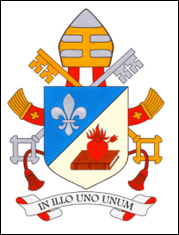
Others address societal impacts. One voice that I didn’t expect was Pope Leo XIV, yet his comments add needed perspective. Reports say he calls AI “the exceptional product of human genius,” but warns that it might “interfere with the proper human and neurological development of young people and children.” In June, he called for the “urgent need for serious reflection and ongoing discussion on the inherently ethical dimension of AI, as well as its responsible governance.”
I’ve had the pleasure of working with a couple of healthcare ethicists over the years. I wish there were more of them in the field to be able to address some of the perspectives that I don’t always see represented.
Pope Leo raised concerns about the impact of AI on “humanity’s openness to truth and beauty” and “on our distinctive ability to grasp and process reality.” Anyone who has visited the comments section on more than a handful of social media videos knows that plenty of people can’t identify videos as being AI-created. Some videos are sophisticated, but others are so obviously fake that I wonder if comments about their veracity are intended to be ironic or are truly reflective of someone’s beliefs.
I appreciated reading the Message of the Holy Father that was delivered to the AI for Good Summit, which summarizes Pope Leo’s position. It notes that while we’re grappling with issues like AI, 2.6 billion people around the world don’t have access to communication technologies. He calls for consideration of the “anthropological and ethical implications” of AI and recognition that such technology “cannot replicate moral discernment or the ability to form genuine relationships.”
Plenty of people are pushing AI in situations for which it is not well suited. I am glad to see a strong reminder that AI should be helping people and that we need to keep humanity at the heart of decisions that we are making as we add AI-driven solutions into our daily lives.
Speaking of keeping humanity at the core of our thought processes, it’s time to shine a light on situations that could stand for a little improvement as far as recognizing the humanity of workers and respecting their time and intelligence. I was recently on a call with an external consulting group that made me extremely uncomfortable. The team leader called out specific attendees to remind them that “this is a cameras-on call.” He then added, “so I expect that no one will have their cameras off, as I need to see your faces.”
I’m sure my face showed a less than positive expression when I heard that. It reminded me of what teachers would say during the lockdown phases of the COVID pandemic, when students were required to attend classes virtually. The environment did not feel supportive and respectful.
Even if compliance was an issue, it should have been handled better, especially with external attendees. A simple reminder in the chat of “Just a reminder that our Team Operating Agreement recommends that we all have our cameras on” or a private message to those not in compliance would have been a better way to approach the situation.
The team leader should also be careful what he wishes for. I immediately checked to see how many people were off camera. Instead of seeing engaged participants, I saw people who looked bored, were obviously multitasking, or were making inappropriate facial expressions.
As the meeting unfolded, other leadership problems surfaced beyond cameras-on. The meeting barely followed its agenda and ignored time blocks. My team wasted an hour because we never reached our agenda item.
From Finance Whiz: “Re:: failed attempts at team building. I wanted to share an example from my employer. Mind you, this organization recently sacked over 800 workers through job cuts and layoffs, making remaining employees do the work of those who departed, on top of their existing workloads. Oh yeah, and we all have to return to office to do so, even if we were hired as remote employees.” The screenshot was from a nationally-known firm that asked employees to complete a “State of the YOU-nion” survey on “If you were a fall-themed emoji, which one would you be?” Choices included “Turkey with a to-do list – busy, festive, and slightly frazzled;” “Jack-o-lantern with a plan – bright ideas and spooky good vibes;” “Leaf in the wind – just going with the seasonal flow”; and ”Cozy scarf energy – wrapped up in warmth and good intentions”.
I’m betting that the remaining employees had some other seasonal options they would offer instead, like: “Skeleton with a spreadsheet – tracking my job applications elsewhere” and “Snow plow on the sidelines – preparing to be overworked and salty.”
What’s the worst morale-impacting maneuver you’ve seen in the workplace this year? What’s the best? Leave a comment or email me.

Email Dr. Jayne.














Today's post contains the phoenixes rising from the ashes of the post COVID telehealth era. There's two things that destroy…