Recent Articles:

HIStalk Interviews Russell Branzell, CEO, CHIME

February 8, 2022 Interviews Comments Off on HIStalk Interviews Russell Branzell, CEO, CHIME

Russell Branzell, MS is president and CEO of the College of Healthcare Information Management Executives of Ann Arbor, MI.

image

Tell me about yourself and the organization.

I have been president and CEO of CHIME since 2013. I have held chief executive positions at UC Health and Poudre Valley Health System and some CIO positions  before that, including at one of my favorite places I started after I got out of the military, which was Mercy Health System in St. Louis. Before that, I was in the military and did medical administration and some other stuff that, like everybody in the military, you don’t talk about.

CHIME is a great organization. It has been around since 1992. I joined as a member in 1997 or 1998. It serves the purpose of supporting CIOs, digital health leaders, and the new titles in this space. We have over 5,000 members across the globe. We have members in 58 countries and chapters in 11. We have other associations that are part of our organization to include security and application technology officers. But in the end, we focus on one thing. One member at a time, we want to make sure they are exceptional leaders positioned to transform health and care. That’s what we do every single day. Everything we do revolves around our members and our industry, and we try to make it a little bit better every day.

How do those new titles and new roles such as chief digital officer fit into what has traditionally been a CIO world, and how does CHIME meet their needs?

I experienced some of that in my professional career, as the role of CIO changed fairly dramatically from the tech purveyor to a leader in the C-suite and transformation.This is just the next level of maturation.

It takes a lot of people to manage a digital enterprise. Eventually, you’re going to start hearing about the digital skills that are necessary for chief executive officers, chief financial officers, and so many others. Some CIOs, as they progress up the ranks, are positioned and ready to help lead an organization to that digital challenge and the digital journey they are going on. Some aren’t. People come and go depending on how their skills progress in the industry. The most important part for us is that we will do everything we can to help people move through that.

Our industry is in massive disruption. You’re also going to see that reflected in titles, skill requirements, and positions. Not just in the C-suite, but across the entire healthcare enterprise and ecosystem. We’re going to feel that every single day. We do everything we can, through a vetting process through membership, to identify those people that fit in that digital health ecosystem bubble. That’s who we want to serve.

What education and support does CHIME offer to technology leaders who are coming into healthcare from other industries?

It’s great that we are seeing more of them entering in the industry, mainly because more opportunities are available than ever for those leaders to transition into healthcare. It is a steep learning curve, although not insurmountable. We’ve always had some of them attending our CHIME Healthcare IT Leadership Academy, our ViVE event that is coming up soon in Miami Beach, and our Fall Forum. We’ve always tried to focus on building everyone’s skills up, and they plug right in.

The primary one for experienced people transitioning into healthcare, even though they may have 20 years of IT leadership or digital leadership in another industry, is our Healthcare CIO Boot Camp program, where we spend a lot of time working on and understanding the role of leadership inside healthcare. Part of that is digital health. Part of that is IT applications. But the primary thing is that you need to be a healthcare leader first to be able to apply those.

Then we help along with other things like mentorship programs, connecting them with a friend or a buddy along the way and trying to get them involved in the community. CHIME is a relational organization. We want to plug them into a support group and an environment where they feel like they can lean on people when they have those questions that maybe are a little bit too difficult to answer right there in a boardroom some days.

Has connecting people with peer support or networking changed now that in-person conferences aren’t the only option, or maybe at times aren’t an option at all?

COVID is a horrific thing that has been tragic and difficult for so many people, but it accelerated things that we thought would take five and 10 years, which is the acceleration of digital connections and digital thought. Part of that is exactly what you described. People have come to rely on feeds of information from a digital format. Your site is one of those.

But we sometimes live in a world of isolation, because so many people work in a remote environment. We count on those connections digitally to accelerate as a relationship. That’s the part that is still a little bit hard. We are human beings. We are relational beings who still need to see and talk to each other. Sometimes Zoom and our cell phones don’t meet that need. There still is a need to come back together, and we are experiencing that across the entire human race as we speak. We’ve seen that isolation maybe is not a great thing.

Healthcare is also different in that even multi-billion dollar organizations often compete only locally or regionally, which allows people to share information freely with people outside that area.

Most healthcare is still local. That has been a cliché for so long, but it’s true. You get most of your healthcare locally, where you live. With healthcare at a macro level, it has been — maybe “inspiring” is too strong of a word — at least motivating that I’ve never met any of our peers or any CHIME members who said, “I’m never going to talk to my peers about IT. It’s my true competitive advantage.“ It’s an enabler, and people are always willing to openly and freely share that. Even those who are on the cutting and bleeding edge are more than willing to share their lessons learned. That’s what’s great about our industry — people will tell you everything they’re doing just because they want to share and improve healthcare.

What led to CHIME launching a graduate degree program under CHIME University?

This has been a journey. We launched CHIME University initially as the umbrella for all of our education and development programs, which includes certification and long-time programs. We started getting feedback from people that there were no programs that met their needs on a realistic basis of “this is the way I work, this is where I think my career is going.” We got that feedback in multiple forums.

We started the journey of considering it, going out and asking questions. Some of the questions we asked were simple, such as, “What did you really love about the graduate programs you were in, whether that was a master’s or doctorate?” We were amazed that there was almost nothing they really enjoyed about their graduate and doctoral process, with a couple of exceptions. One was engaging with professors and lecturers from the real world who had been there, done this, lived this, or are living it currently as part of the curriculum. The other was that it’s real-world applicable and current, not a textbook from five years ago. It was applicable to me now and in my near future.

When we asked them what they didn’t like, the list was long. They hated synchronous learning, that they had to be there at a specific time. I’m a professional — who knows what my life is going to be like tomorrow? They hated the fact that it was almost always a structured environment that had to start and stop on a specific date. They said, that’s not how we work, it’s not how you work, and it’s not how our digital lives are.

Just as importantly, they wanted something that was going to be tailored towards their life, not towards a purely academic mindset, even though this will be extremely academic as we go through this. We boiled it down to a simple program that was a true, self-paced, convenient way to operate. If you need to take a month off, take a month off. If you want to go really fast in some part of the program, go really fast. We made sure this was applicable to our industry’s digital leaders.

But most importantly, the thing we heard the most was, why the heck is education so expensive? I’ve got a dear friend who is six years and $200,000 into a doctorate program. We said, we’re going to offer this at a reasonable cost. We’re going to use our leaders and real experts. We can offer this at an affordable cost so participants can keep their career going and and truly advance their education.

What led to developing the ViVE conference with HLTH?

We’re in a disruptive period of time. We are in a place where we need to do things differently and bring the right thought leaders in. What CHIME has always done really well is bring serious thought leaders together who want to collaborate and find ways to do things differently, to create something in a unique way.

We’ve been working with HLTH for a few years. We worked around innovation and collaboration skills and did some different things with them at their events. It was a symbiotic relationship, one of those rarities in life where one plus one equals a much higher number than two. We really felt good about that, but what we still felt was truly missing was a place where executives, leaders, innovators, disruptors, investors, and startups can come together and work an environment that tries to advance the industry at a much faster pace, questions the status quo, and finds something that we can all agree upon in different little increments all over the place to work in a different way.

HLTH has done an amazing job at reinventing what an event looks like. CHIME has done a good job of focusing on what leaders need to improve their skills. This isn’t intended to be a giant trade show floor. It will bring digital health leaders together who want to work collaboratively, exchange thought leadership, and do things in a meaningful way. We feel good about where we are with that.

How do you walk the line between wanting to grow as an organization but making sure that vendors aren’t driving the agenda or that membership becomes so diverse that people don’t have much in common?

The great part about this, and the direction of our board with our strategies and direction of CHIME, is that CHIME will still be CHIME. CHIME is still the entity for the senior digital health leaders. We will still have our CHIME Spring Forum, which is exclusive for those members and our small number of vendor or foundation partners. There will be a larger conference called the ViVE conference that wraps around that, which will have a lot of speakers and a lot of other opportunities. That’s for those leaders who need that level.

But the CHIME part stays CHIME. For lack of better term or analogy here, it’s the nucleus that sits in the middle that we will always hold sacred and always make sure we’re supporting. We can get bigger. We can support the industry. We can look at the whole ecosystem. But we also need to be true to our roots and true to what we do well for our CHIME membership. We think we can balance both well and in a meaningful way, and at the same time, look at a larger ecosystem that needs support and leadership, because there’s a lot of people out there who need to continue to advance, improve their skills, come together, and collaborate.

How did the ViVE conference end up being so close to the HIMSS conference in both timing and geography?

I’s always been a hallmark that we think we’re doing the right thing for our members, the right thing for our leaders in the industry. This was the right location, the right timing.

If you put it in perspective, the last two major events in the industry since the easing of COVID — I don’t in any way want to suggest that it’s over — was our Fall Forum last fall and now this event in collaboration with HLTH, ViVE. We want to continue to make sure we’re supporting the industry, and this was the right location and the right timing for us. There are places for everybody in the industry who wants to make sure they are doing the right thing and supporting the industry as a whole, but this is what we are going to focus on. We are really, truly not going to worry about other people.


Are you seeing increased membership from those folks with those new digital health job titles or those who work outside of provider organizations, say for health plans or drug chains?

We’ve always had some members who work in non-traditional roles outside of acute care, ambulatory care, and large medical groups. Our primary membership for years has been the provider sector, which was mostly the acute and the ambulatory environment. But we’ve always had some members in things like long-term care, nursing facilities, rehab facilities, and payers. As we see that ecosystem continuum come together and there’s so many pieces — some through acquisitions, some through relationships and partnerships — we see more and more of those come in.

Now we have not gone out and said, “we’re going to go out and try to get every payer into CHIME.” No. What we say is, we have programs and activities for leaders regardless of where they are and where they want to fit in. But even today, we have members such as the CIO of Walgreens Boots clinic structure, payers, and long-term care. It really comes down to whether it’s a vendor foundation partner and they fit in our foundation model, or they are a deliverer of care of some type and they fit in our CHIME model.

What developments will most affect CHIME and its members over the next few years?

Our board spent a majority of the 2019 strategic retreat discussing this for multiple days. No offense to any of our previous retreats, but it was by far the most productive, forward-looking retreat we’ve ever seen, where we talked about where the industry is going. They shaped a model of our 3.0 strategy, some parts of which you’ve already addressed, such as absolutely doing everything we can to help people advance in their skills, whether that’s small training and certifications and support, or if they need an advanced degree to move forward and continue to advance their whole educational aptitude. That was part of that strategy.

The other is that we have a higher responsibility to more than just the CHIME membership. Absolutely, we’ll never take our eye off our CHIME membership and do everything we can, but there’s a lot of up-and-coming digital leaders, a lot of people who will need support and need that vision that CHIME provides to them. We will look to the larger digital health ecosystem to make sure we’re doing that along the way.

The third leg of that stool is that not everybody’s going to connect in an in-person event. As a matter of fact, a vast majority will not connect in an in-person event. We need to provide everything from a digital connection engagement perspective, where they can do those things just as much as in-person in a digital format around the globe.That’s one of the things we can do in an easy way. We can leverage all the things that we’re doing to connect the entire ecosystem to raise all the boats while actually putting the same effort toward those.

We feel good about addressing the large ecosystem, staying true to what we are, but also advancing the whole industry to a place that will look dramatically different in five years. Healthcare will be almost unrecognizable, with the amount of technology and opportunities to improve care in the next three to five years, and then the next three to five years after that. We are in the revolutionary stage of healthcare delivery.

Comments Off on HIStalk Interviews Russell Branzell, CEO, CHIME

Morning Headlines 2/8/22

February 7, 2022 Headlines Comments Off on Morning Headlines 2/8/22

AristaMD Acquires Referral Management Solution, Preferral, to Increase Patient Access to Specialty Care

E-consult company AristaMD acquires referral management platform developer Preferral for an undisclosed sum.

Press Ganey Announces Plans to Acquire Forsta — a Leader in the 2021 Gartner Magic Quadrant for Voice of the Customer — to Accelerate Innovation in the Global Healthcare Experience Industry

Healthcare advisory and analytics firm Press Ganey acquires Forsta, a customer experience and market research technology business.

Neura Health Raises $2.2M to Improve Access and Quality of Care for Neurologic Conditions

Neura Health, a membership-based virtual clinic specializing in treatments for headaches, raises $2.2 million in seed funding.

Comments Off on Morning Headlines 2/8/22

Curbside Consult with Dr. Jayne 2/7/22

February 7, 2022 Dr. Jayne Comments Off on Curbside Consult with Dr. Jayne 2/7/22

As a consulting clinical informaticist, one of the things I’m often tasked with is EHR optimization. Sometimes clients have robust structures for receiving feedback from clinical users as well as teams who are tasked with assessing workflows and recommending changes. In those situations, I might provide clinical input as they work through issues, getting proposed changes polished before we take them out to stakeholders for feedback. That’s a lot of fun, because the end users appreciate having a fully vetted solution presented to them versus having to be involved in the details of process.

Other times, clients need someone to help them create a structure to handle feedback and recommend solutions. Those projects are also rewarding because users really like feeling like they’re being heard and that someone cares, even if the process you’re creating is just getting started.

One of the hot topics in optimization right now is figuring out how to lighten physician documentation requirements. It’s been a year since the Centers for Medicare & Medicaid Services modified the Evaluation & Management coding requirements with the goal of simplifying documentation. Many clinicians thought the changes were too good to be true and I don’t blame them. Coming from a large health system background, I felt that the years of internal compliance audits had created a certain level of fear around under-documenting or over-coding. We had been conditioned to make sure we were documenting more than enough Review of Systems and Physical Exam checkboxes just to be on the safe side. This was made more complex when one needed to document an element that could be counted in two different systems, and most of the physicians I know had come to dread any conversation around coding.

Now that there has been some flexibility, and people have learned that auditors aren’t waiting around every corner to catch someone who isn’t documenting correctly, physicians are eagerly pushing their organizations to remove the excessive clicking that physicians and their support staff members have been complaining about for years. As people have reassessed their priorities during the pandemic, clinical users have been increasingly vocal about how much they feel technology is contributing to burnout. With staffing levels as dire as they are in some organizations, those organizations have figured out that they can’t afford to not listen to what their employees are saying. Those organizations who have consciously looked at how their users work have also figured out that so-called “note bloat” makes it harder to care for patients since notes that contain extraneous information make it harder to find the data elements that are important.

Physicians and other users who had created extensive macros to satisfy the previous E&M requirements are now spending time trimming down the content of those macros to better reflect what they do in a typical patient visit. Adjusting those configurations takes time, and end-users are eager to have an analyst or super user make the changes whenever possible. Depending on the EHR, the effort needed to do this can range from straightforward to cumbersome. Not surprisingly, I see more progress on “easy” systems than I do on those that require greater involvement of IT or other teams. Sometimes the level of difficulty to make a change is murky, though. The fact that I’ve worked in so many different EHRs is certainly an advantage when analysts push back and try to make it seem like it’s more complicated to make a change than it really is.

I also see more physicians who are using time-based coding since figuring out how to document that has become a bit easier. In the past, you had to keep track of how much of the visit was face-to-face, how much was counseling and coordination of care, etc. Now the majority of elements performed by a provider on the day of service count, making it much more likely that a physician might choose to code based on the duration of effort. This has led to greater number of high-level visits being coded by physician. Although one would think this should lead to greater pay for physicians, I’ve seen a number of organizations figure out ways to avoid paying their clinicians more. Some have made adjustments to keep physician salaries relatively flat, keeping a greater portion of the payments for the organization versus passing them on to the people doing the work.

When I hear that the latter is happening, I try to push optimization as much as possible in order to ensure the end users feel some relief. Even if they’re not receiving better compensation, I can hopefully make their days at least a little bit shorter and their visits a little easier.

There have been a couple of times recently when I’ve felt really torn when working on an optimization project. I’ve gotten a sense that administrators will perceive that the physicians are doing less work, will translate this to a perception that the physicians have greater capacity, and then continue to shift work towards them. We saw a great shift of low-level clinical work to physicians at the beginning of the Meaningful Use program, and physicians had to fight hard to get organizations to agree that they needed their support staff to take on some of this work. The idea of working at the top of your license could be used to show that physicians were expensive, and if you had more staff, you could see more patients and those changes were revenue neutral or even positive.

Now that there is such a labor shortage, finding capable staff at a price organizations and administrators are willing to pay can be tricky. Not surprisingly, physicians have filled the gap because it’s the right thing to do for their patients, but it’s hard to convince decision makers to look for unicorn-like staff members in this market when they know the physicians will do the work for free. No amount of optimization is going to improve clinician morale if they feel like they’re being pulled into a black hole of ongoing work with no help in sight. I’m interested in understanding how large organizations have optimized their systems based on the changes to the Evaluation & Management codes.

Are your ambulatory physicians writing the shortest notes of their careers with the same billing codes? Leave a comment or email me.

Email Dr. Jayne.

Comments Off on Curbside Consult with Dr. Jayne 2/7/22

HIStalk Interviews Torbjörn Kronander, CEO, Sectra

February 7, 2022 Interviews 8 Comments

Torbjörn Kronander, PhD, MSEE, MBA is president and SEO of Sectra of Linköping, Sweden.

image

Tell me about yourself and the company.

Sectra started out as a cybersecurity company in Sweden. In 1990, I had just completed my PhD and started up the medical imaging side of the business. Our first foray was in teleradiology and then we moved into radiology. We took what we learned in radiology, and we’re now focusing on enterprise imaging and have added modules for cardiology, ophthalmology, orthopedics, and pathology.

We are seeing the same trend in imaging that we’ve seen in EMRs, where there was a separate information system for every single department of the hospital. Then Epic and Cerner came around, and the CIOs said, we want as few systems as possible, and consolidated all the departmental information systems on one EMR.

What are the most significant trends in medical imaging?

Efficiency is important. There is an alarming risk of burnout among US physicians. You need to have systems that are fast and effective to use.

We see a trend toward consolidating to as few IT systems as possible. Having multiple systems is expensive and people underestimate the costs involved. You may have 100 IT people on your staff in a hospital, but without consolidation, a lot of them are doing the same thing on different systems. We are the only vendor who can manage all images in one system.

Cloud is also becoming increasingly important. Having a lot of hardware on site is expensive, and it is challenging to stay on top of the many updates of the underlying operating systems. If you can use Google or Microsoft to manage the cloud operations, they are, cybersecurity-wise, in a better place than almost any on-prem solution.

Combined, we see a large trend towards cloud and a single system for all your images — let’s call it a “pixel EMR,” which is a quote from one of our customers — and then within that space, digital pathology, which is rapidly coming along.

What role does AI play?

AI is very interesting. It will be large, but it will not be as fast as people anticipated. There is a famous quote that the first law of technology is that we always overestimate the impact in the short term of transformative new things, but we also inevitably underestimate the long-term impact. We see this exact trend in AI.

AI is not where it was a few years ago, when people predicted there will be no more radiologists needed to be trained after 2022, which of course is not a bit true. But we will see AI gradually coming into prominence. I’d like to quote one of our customers, Dr. Langlotz of Stanford, who says, “AI will not replace radiologists, but radiologist who use AI will replace radiologists who don’t.” It will drive efficiency, but it will not replace the radiologist. You will still need that human being in medicine. 

We see a lot of AI vendors right now in the market. At Sectra, we have said that you can’t compete with the hundreds and hundreds of AI startups, so we are going with the open systems approach. We have the Sectra Amplifier Store, where customers can use any AI application that they like. If we’re going to accept the AI software for their use, we will do the cybersecurity evaluation on it and ensure that it is secure.

Cybersecurity is a grossly underestimated trend in medical IT systems, because ransomware attacks are increasing, and healthcare is a primary target. Eighty-five percent of Sectra’s business is medical IT, and the other 15% is cybersecurity, which gave us our name — “SECure TRAnsmisson.” We are one of the most prominent cybersecurity vendors in all of Europe. We protect networks with high-level security. We provide secure mobile workplaces and phones for the entire European Union. We are using that same knowledge when we build our IT systems.

Is the company’s cybersecurity expertise a competitive advantage over companies that just sell imaging systems?

That is a very true statement. For many years, we have run our security and medical divisions in parallel. Over the last two to four years, this philosophy has increased in value. Cyberthreats are dangerous for healthcare because typically health systems have to pay the ransom. If other industries get attacked by ransomware, most of them will not pay if they can at all avoid it. But in healthcare, patients die unless you pay those who are responsible for ransomware. The cyber mafia knows this.

We see huge benefit from having defense-level and national government-level security knowledge in the company. We build our systems to be as safe as possible. We are one of the highest-ranked cybersecurity companies in the entire medical sector today. To have that knowledge in house is important. It’s also interesting to see that KLAS now ranks vendors for their cybersecurity preparedness and they consider Sectra to be very mature and safe in that aspect.

What challenges and opportunities have arisen due to the pandemic, especially with telehealth and teleradiology?

I would say the largest impact has been in telepathology. Pathologists are embracing the ability to digitally send images for second opinions as well as to read from remote locations. Previously, a pathologist had to sit at the site of the biopsy and wait for the sample to arrive from the operating room. Now they can see the slides digitally and make quick and easy diagnoses.

How would you assess the status of image sharing?

That is an important question, because sending images in a taxi from one end of New York City to the other is not very effective and it’s also dangerous for the patients. Sectra has the largest image-sharing network in the world, located in the UK, in which every single hospital is connected through our system which sends approximately 40,000 exams per week. There are no CDs in the UK anymore, thanks to us. We are also applying this technology to some places in the US, but the UK network is our biggest reference as of today.

How much of the company’s strategy and product design has to reflect the healthcare policies of the US that don’t apply anywhere else in the world?

The US is our most important market at this time. We have a market share of greater than 50% in many Northern European countries where we operate, whereas we have about 10% in the US. We do, however, have the happiest customers, as evidenced through KLAS and the Best in KLAS awards, and that gives us the ability to grow. We have some important American partners that we collaborate with for research, and some very prominent hospitals as customers. We spend a lot of effort and emphasis on the US market.

There are differences between regions in the world, but not as many as you might think in the imaging space. Images are images, and the way you need to work with them to complete the diagnosis is very similar in all countries.

You’ve said that the way you beat big imaging competitors is to have better employees, stick with your goals, and treat your customers better. How do you make that happen as a global company?

I’m a good friend with Judy Faulkner of Epic, and she told me once that the only way you can become big in the US is by having more happy customers. That resonates very well with my basic philosophy of life. You need to make money, but there’s more to life than money. Happiness is also very, very important. You cannot create happy customers without happy employees. We work a lot with employee satisfaction and recruiting to finding the best people.

It’s very interesting that the competitive advantage for product innovation is a fairly short timeframe. If a vendor introduces a new feature, by the next year, everybody has it embedded in their product. But that’s not the same thing with customer satisfaction. The only way you can sustain a high level is if you have happy employees who are motivated and who will do the best for customers. That culture will always win.

We also recruit the best possible people to join the company. I personally interview every single one, worldwide, before they get an offer. To maintain exceptional quality, every interviewer has the right to veto a candidate. We also have high employee retention, with many people working at Sectra for 15 or 20 years because they like it. And of course, if they like it, they also do a good job for our customers.

What will be important to the company over the next few years?

As I mentioned earlier, enterprise imaging is crucially important. The CIOs cannot afford to have multiple IT systems and they need to partner with companies who can manage all their departmental images in one single system. We have changed to a subscription-based, SaaS model which allows the customer to acquire new technology without large capital investments and we guarantee the cost for the underlying cloud infrastructure which no other vendor does, to our knowledge.

Morning Headlines 2/7/22

February 6, 2022 Headlines Comments Off on Morning Headlines 2/7/22

Premier, Inc. Reports Fiscal Year 2022 Second Quarter Results

Premier reports Q2 results: revenue down 10%, adjusted EPS $0.73 versus $0.65, beating Wall Street expectations for both.

Vyaire Medical Issues Voluntary Correction for Certain Bellavista Ventilators in Specific Software Configurations

Ventilator manufacturer Vyaire Medical warns users of certain models to turn off the HL7 communication option after customers reported that the devices “unintentionally ceased ventilation during clinical use and require rebooting to resume ventilation.”

HHS: Conti ransomware encrypted 80% of Ireland’s HSE IT systems

HHS publishes a threat brief dissecting the ransomware attack that disrupted Ireland’s health service for four months.

Comments Off on Morning Headlines 2/7/22

Monday Morning Update 2/7/22

February 6, 2022 News 2 Comments

Top News

image

Premier reports Q2 results: revenue down 10%, adjusted EPS $0.73 versus $0.65, beating Wall Street expectations for both.

The pandemic caused an 18% drop in supply chain revenue, while the company’s Performance Services segment – which includes analytics software – saw a 15% revenue increase. PINC shares are up 7% in the past 12 months versus the Nasdaq’s 2% gain, valuing the company at $4.5 billion.

From the earnings call:

  • The company’s analysis of its PINC AI data finds that health system clinical employees are working 50% more hours than they did pre-pandemic.
  • Premier is addressing purchasing inefficiencies by scaling its e-invoicing and e-payables technologies with its Remitra supply chain-focused digital payments solution.
  • The company is partnering with life sciences companies on prospective research.
  • Premier will offer Qventus’s patient flow solution and develop new AI-based solutions with the company.
  • The company sees opportunities in clinical decision support, prior authorization automation, and HCC coding.

Reader Comments

image

From Bob Pshaw: “Re: the HIMSS BrandHIT Marketing Summit. I just realized that this HIMSS conference, which launched in 2017 to help vendors sell stuff, seems to have died quickly and quietly. Heard anything?” The conference, which was presented by HIMSS Media in a startling display of not even pretending to be journalistically objective, seems to have lasted two iterations, one in Las Vegas and the other in Nashville. That’s not exactly a testimonial to the topic in which it claimed expertise, and neither was the inconsistent name that HIMSS used to promote it (sometimes calling it Brand HIT, others BrandHIT, sometimes both in adjacent sentences). I assume HIMSS Media still runs its Media Lab, which sells marketing services, content, webinars, and basically paid access to HIMSS members.


HIStalk Announcements and Requests

image

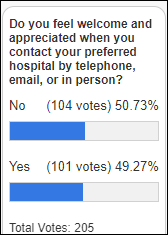
Poll respondents show a preference for self-scheduling via a webpage rather than an app. Mario brings up the point that contactless appointments don’t triage based on patient need and are therefore problematic, while Rebecca notes that her least-favorite scheduling option is when the practice just tells her when to show up without asking first.

New poll to your right or here: Which factor would most entice you to seek information from a conference booth exhibitor?

Listening: Bartees Strange, who joyously follows his ear in veering from hard-charging rock to melodic hip-hop and making it all sound good.


image

Welcome to new HIStalk Platinum Sponsor Enlace Health of Columbus, OH. The Connected World of Enlace empowers payers, providers, and patients to participate together in an economically sound environment. Enlace Health solves healthcare from the inside out, fixing healthcare at its core. The Enlace solution is the only end-to-end infrastructure that bridges the gap between the current, chaotic system and an orderly healthcare world. Enlace always meets clients where they are, creating solutions based on need and maturity in value-based care. Enlace is Sustainable Healthcare. Delivered. Thanks to Enlace Health for supporting HIStalk.

I found this introductory video for Enlace Health on YouTube.


Thanks to the following companies for recently supporting HIStalk. Click a logo for more information.

image
image
image
image
image
image
image
image
image
image
image
image
image
image
image
image
image
image
image


Webinars

February 9 (Wednesday) 1 ET. “2022 – Industry Predictions and Medicomp Roadmap.” Sponsor: Medicomp Systems. Presenters: David Lareau, CEO, Medicomp Systems; Jay Anders, MD, chief medical officer, Medicomp Systems; Dan Gainer, CTO, Medicomp Systems. The presenters will provide an update on the health IT industry and a review of the company’s milestones and insights that it gained over the past two years. Topics will include Cures Act implications, interoperability, AI, ambient listening, telehealth-first primary care, chronic care management, and new Quippe functionality and roadmap.

Previous webinars are on our YouTube channel. Contact Lorre to present your own.


Acquisitions, Funding, Business, and Stock

Shares in the Global X Telemedicine and Digital Health ETF (EDOC) dropped 10% in the past month versus the Nasdaq’s 11% loss. Digital health stocks have been on a tear lately, “tear” being the kind that pours from the eyes of investors who have watched their former high-flying companies auger into the hard ground of reality, especially those that took the SPAC back door. Private equity seems better suited lately to make startups successful compared to taking those companies public prematurely to ride an investment wave-slash-bubble, so we may see more companies exiting public markets after short, unsuccessful visits there.


Sales

  • ChartWise Medical Systems selects SyTrue’s Natural Language Processing Operating System to mine structured and unstructured chart data into its NotePath AI-based chart review system.

People

image

Terri Sanders, MPH, formerly chief marketing and communications officer of HIMSS, joins Kivvit as managing director.


Announcements and Implementations

image

Labcorp launches OnDemand, which allows consumers to buy lab tests online and either collect samples at home or at its patient service centers. Competitor Quest offers a similar service, which is also marketed through Walmart. Physicians approve the tests behind the scenes in both cases, in Labcorp’s case via PWNHealth, for which Labcorp absorbs its $6.50 fee in the test purchase price.


Other

Ventilator manufacturer Vyaire Medical warns users of certain models to turn off the HL7 communication option after customers reported that the devices “unintentionally ceased ventilation during clinical use and require rebooting to resume ventilation.”


Sponsor Updates

  • EClinicalWorks publishes a new customer success story, “How Records in Prisma Overcame a Language Barrier.”
  • Fortified Health Security publishes its “2022 Horizon Report: The State of Cybersecurity in Healthcare.”
  • OptimizeRx will present at BTIG’s MedTech, Digital Health, Life Science & Diagnostic Tools Conference February 15, and SVB Leerink’s virtual Global Healthcare Conference February 17.
  • Olive announces the five winners of its Hack for Health developer contest.
  • Frost & Sullivan has recognized Wolters Kluwer Health with its 2021 North American Company of the Year Award.
  • Kyruus announces results from 2021, including expanding its customer base by 25 new healthcare organizations and expanding its online scheduling platform, among other achievements.
  • Talkdesk appoints Tom Reilly (Cloudera) to its board.
  • Vocera’s clinical communication and workflow solutions are now available for procurement through the NHS Shared Business Services Patient/Citizen Communications and Engagement Framework.
  • Well Health announces its 2021 Well Health Award Winners.
  • Arcadia publishes an analysis of data involving COVID-19 patients who were hospitalized and discharged from US hospitals in 2020.
  • Zen Healthcare IT President and co-founder Marilee Benson has been selected to join The Carequality Advisory Council and the HIMSS Interoperability and HIE Committee.

Blog Posts


Contacts

Mr. H, Lorre, Jenn, Dr. Jayne.
Get HIStalk updates.
Send news or rumors.
Contact us.

125x125_2nd_Circle

Morning Headlines 2/4/22

February 3, 2022 Headlines Comments Off on Morning Headlines 2/4/22

SOC Telemed to be Acquired by Patient Square Capital

Healthcare investment firm Patient Square Capital will acquire acute care telemedicine platform vendor SOC Telemed for about $300 million.

Baker Tilly Acquires Orchestrate Healthcare

Advisory CPA firm Baker Tilly, US acquires Orchestrate Healthcare, which offers consulting services for EHR implementation, analytics, IT security, and health IT staffing.

Change Healthcare Inc. Reports Third Quarter Fiscal 2022 Financial Results

Change Healthcare reports Q3 results: revenue up 10%, adjusted EPS $0.36 versus $0.34, meeting earnings expectations and beating on revenue.

‘The darkest, most bottomless pit in healthcare:’ Goodbill raises $3.4M to tackle medical billing

Hospital billing and payment transparency software startup Goodbill has raised $3.4 million in seed funding.

Comments Off on Morning Headlines 2/4/22

News 2/4/22

February 3, 2022 News Comments Off on News 2/4/22

Top News

image

Healthcare investment firm Patient Square Capital will acquire acute care telemedicine platform vendor SOC Telemed for $3 per share, about $300 million. That is a 366% premium to the company’s closing share price Wednesday before the announcement.

SOC went public via a SPAC merger in November 2020, with shares opening at $10.

TLMD shares had dropped to around 60 cents prior to the acquisition announcement, with a market cap in the $65 million range

SOC Telemed’s Q3 earnings report from November 2021 showed a loss of $11 million on revenue of $27 million.


HIStalk Announcements and Requests

image

Welcome to new HIStalk Platinum Sponsor NeuroFlow. The Philadelphia-based company provides best-in-class technology and care services for the effective integration of behavioral health. NeuroFlow’s HIPAA-compliant platform supports over 14 million users across 300 health systems, payors, and organizations, helping them capture behavioral health insights and take action to proactively manage individuals and populations holistically. I noted that co-founder and CEO Christopher Molaro, MBA graduated from West Point and served as a US Army platoon leader deployed to Iraq. Thanks to NeuroFlow for supporting HIStalk.

I found this YouTube video from NeuroFlow that explains how the company’s technology supports organizations that embrace the collaborative care model.


Webinars

February 9 (Wednesday) 1 ET. “2022 – Industry Predictions and Medicomp Roadmap.” Sponsor: Medicomp Systems. Presenters: David Lareau, CEO, Medicomp Systems; Jay Anders, MD, chief medical officer, Medicomp Systems; Dan Gainer, CTO, Medicomp Systems. The presenters will provide an update on the health IT industry and a review of the company’s milestones and insights that it gained over the past two years. Topics will include Cures Act implications, interoperability, AI, ambient listening, telehealth-first primary care, chronic care management, and new Quippe functionality and roadmap.

Previous webinars are on our YouTube channel. Contact Lorre to present your own.


Acquisitions, Funding, Business, and Stock

image

Advisory CPA firm Baker Tilly, US acquires health IT consulting firm Orchestrate Healthcare. Baker Tilly says it will continue to invest heavily in digital health to support providers who need to control costs and adopt new business models while continuing to deliver high-quality care. The company has 3,150 healthcare organization customers. The 120-employee Orchestrate offers services for EHR implementation. analytics, IT security and health IT staffing.

Relaxation app vendor Calm acquires Ripple Health Group, which offers a care coordination platform. Ripple’s CEO will serve as co-CEO with Calm’s founder and the combined companies will develop a replacement for its Calm for Business app.

Change Healthcare reports Q3 results: revenue up 10%, adjusted EPS $0.36 versus $0.34, meeting earnings expectations and beating on revenue. Its acquisition by UnitedHealth Group remains on track for sometime after February 22 and before its deadline of April 5.

Shares in Meta (Facebook) tanked 26% Thursday after the company reported its first-ever decline in quarterly user count and it warned of expected weaker revenue growth. The resulting $230 billion loss in market value was unprecedented. Meanwhile, Amazon’s shares jumped 17% in after-hours trading after it reported strong earnings and another increase in Prime annual pricing to $139, increasing its market value by around $250 billion.


Sales

  • UCI Health will use Epic-integrated digital health solutions from Biofourmis to establish a virtual care for remote patient monitoring and hospital-at-home initiatives, replacing its legacy system.

People

image

Drug discount management platform vendor Kalderos names industry long-timer Brent Dover (Commure) as CEO.

image

Nym Health, which offers autonomous medical coding, hires Or Peles (Tasq.ai) as SVP of R&D.

image

Behavioral health EHR/PM vendor Kipu Health appoints Andy Eckert, MBA (Zelis) as board chair.

image

Real-world oncology data platform vendor COTA promotes Paige Whitney to SVP of life sciences.

image

Impact Advisors hires Randy Notes, MPH (RSM) as managing director of its margin improvement practice.

image

Eisenhower Medical Center (CA) hires Ken Buechele, MBA (Bronson Healthcare Group) as VP/CIO.

image

Availity hires Nathan von Colditz (McKinsey & Company) as chief strategy officer.

image

Janice Wurz (Scottsdale Institute) joins Garner as executive partner.

image

Pam Arora, MBA (Children’s Health) joins the Association for the Advancement of Medical Instrumentation (AAMI) as president and CEO.

image

CliniSys, which just acquired Horizon Lab Systems and merged with Sunquest Information Systems, names industry long-timer Mark Spencer (Abbott Informatics) as SVP of global strategy.


Announcements and Implementations

image

Memorial Health System Cancer Center (OH) implements Sonifi Health’s interactive platform, which offers on-demand movies, relaxation content, educational programs, and live programming.

A study finds that patient-generated behavioral health data can be reliably submitted via NeuroFlow’s app and was associated with a 50% reduction in suicidal thinking.

MedStar Health goes live on a patient experience platform from B.well Connected Health.

image

MyConnectSolutions adds virtual care capabilities to its MedConnect platform, powered by Bluestream Health.

image

Walmart will offer customers the ability to order lab tests from Quest’s QuestDirect online. Their order will be approved by a doctor when required and the company will then either mail the customer an at-home test kit or direct them to a Quest patient service center, depending on the test’s requirements. The patient can share their results with their doctor via Quest’s MyQuest portal.


Other

image

I ran across MedLion Clinic, which provides a glimpse into the commoditization of virtual primary care. The company’s “unlimited” plan costs $13 per month and offers customers in about half the US states 24×7 texting with an assigned doctor, scheduled video visits weekdays 9-6, management of both acute and chronic conditions, ordering of prescriptions and labs, and access to $1 medications.

The New York Times looks at the use of surveillance tracking by some cities in Japan to find people with dementia who wander, which is the leading cause of its missing persons cases. The country has adopted an “age in place” focus that leads to more wandering incidents. Digital solutions include security cameras, shoe-worn tracking devices, and QR tracking codes on the person’s fingernail. Caregivers initiate the registration process with a medical review required for approval, but individuals themselves are not required to give permission.


Sponsor Updates

  • ReMedi Health Solutions publishes a free guide titled “The Health System’s Guide to Cerner in 2022.”
  • Black Book names PerfectServe its top client-rated secure communications platform for 2022.
  • Fortified Health Security names Ryan Jackson (Churchill Mortgage) billing specialist.
  • Kyruus recaps its 2021 customer growth in which it added 25 provider organizations and increased revenue by 150% following its acquisition of HealthSparq.
  • Health Data Movers promotes Brandon Camp to director of the project management office, and Michael Martin to director of interoperability.
  • Lumeon completes SOC 2 Type II Certification for its Care Journey Orchestration platform.
  • Meditech will host its virtual 2022 Home Care Symposium March 21-25.
  • NTT Data retains its leader position in Everest Group’s annual Intelligent Automation in Healthcare Report.

Blog Posts


Contacts

Mr. H, Lorre, Jenn, Dr. Jayne.
Get HIStalk updates.
Send news or rumors.
Contact us.

125x125_2nd_Circle

Comments Off on News 2/4/22

EPtalk by Dr. Jayne 2/3/22

February 3, 2022 Dr. Jayne Comments Off on EPtalk by Dr. Jayne 2/3/22

For many companies, HIMSS preparation is in full swing, if my inbox is any indicator of the situation. Multiple marketing people have reached out inviting me to visit their booths for demos or conversation. I must say that the invites for happy hour appetizer and beverage events seem to be lacking, so I’m wondering if HIMSS is clamping down on food and beverage service in the exhibit hall due to COVID. If that’s the case, I’ll definitely be missing the scones.

As for booth invitations, I’m more likely to respond if a company has a compelling pitch and understands that I have to visit them anonymously versus trying to get me to make an appointment, since that undermines the whole anonymous blogger vibe. No invites for after-hours events yet, so I’m not sure how this year’s social scene is shaping up just yet.

For frontline physicians, the creation of Prescription Drug Monitoring Programs (PDMPs) brought to life key pieces of technology that made a tremendous difference in patient care. I keep receiving emails from my local PDMP, asking me to approve delegate requests for nurse practitioners and physician assistants that I worked with at my former practice. Our state won’t allow non-physician providers to have an account unless they’re sponsored by a physician, which in many cases was me. There has been a lot of turnover in the physician ranks and apparently some of the new supervising physicians either don’t have PDMP accounts and therefore can’t delegate to the midlevel providers, or somehow don’t think it’s important for the providers they supervise to be able to look for patterns of controlled substance abuse or diversion. This has been going on for more than eight months, and I feel bad for the providers who don’t have access to this vital information. It’s yet another illustration why a patchwork of state laws isn’t always the best thing for patient care. On the other hand, it’s also a pretty telling commentary on the leadership of my former practice, who could solve the problem by requiring that everyone makes use of the PDMP and that appropriate operational structures are in place to support the effort.

From Jimmy the Greek: “Re: this week’s Snowmageddon. I’m tired of seeing organizations talk about their ‘inclimate’ weather” preparations. Spelling counts. Take a look at this email – not only is the inclimate weather virus spreading, but now I have contact information for 200+ patients.” Jimmy forwarded me an email from his local physical therapy provider, who apparently doesn’t understand patient privacy or how to use blind carbon copy functionality on an email. The body of the email made it clear that the addressees were patients with appointments scheduled today or tomorrow and also mentioned that they’d be contacted to reschedule. I hope Jimmy gives them an earful when he receives his call.

Hot on the heels of my weekend piece about healthcare organizations that aren’t giving their employees time to recover from illness and injury, I’m mentoring young physician informaticist who emailed with some questions about professionalism. He was on a training call with one of his organization’s tech vendors. The lead presenter seemed tired and out of it, and about 20 minutes into the call, admitted that he was COVID-positive and was having a difficult time focusing and asked if they could take a break so he could hand off to his backup. As a physician, my friend was surprised that someone who was obviously symptomatic would be working, especially in a non-essential role. From a business perspective, he was surprised that the vendor hadn’t asked to reschedule the call, or that they didn’t start the session with the backup presenter in the first place.

Even with people working remotely, if they’re not well enough to work, they shouldn’t be working. In this situation the presenter knew well enough that they weren’t 100% that they arranged for a backup presenter. This situation speaks not only to poor individual judgment (which I guess you could probably attribute to COVID-induced brain fog), but potentially to corporate policies that push people to work even when they shouldn’t.

My young colleague was wondering about what he should have done if there hadn’t been a backup presenter. Should he have called a stop to the presentation after realizing the presenter was in some distress? He was also questioning whether he should say something to others at the vendor about what had happened. I think compassion dictates asking a struggling presenter if they need a moment, and if they don’t realize there’s an issue, then I’d probably ask them if we could reschedule. It’s difficult where a medical condition is concerned and one doesn’t want to pry or appear inappropriate pointing out that things aren’t going well, so I’m not sure if there’s a great answer here.

This ties in nicely to an article I read about the CDC’s recent update to workplace guidelines for COVID-positive healthcare personnel. Although many assume those roles are largely occupied by physicians, nurses, therapists, and others who are performing hands-on patient care, the CDC guidance also includes “persons not directly involved in patient care, but who could be exposed to infectious agents that can be transmitted in the healthcare setting,” including administrative and billing personnel. This also may include a lot of healthcare IT workers depending on their roles. Many healthcare workers who aren’t in the weeds on the recommendations might not realize that work restrictions for healthcare personnel are broken into three categories:

  • Conventional standard. Those with COVID-19 should be restricted from the workplace for 10 days or for seven days with a negative test – assuming asymptomatic, mild, or moderate illness with improving symptoms. Many organizations interpret conventional as applying when there is adequate staff or personnel are non-essential.
  • Contingency standard. Those with COVID-19 may return after five days if asymptomatic, mild, or moderate illness with improving symptoms.
  • Crisis standard. There are no work restrictions, but there may be prioritization considerations, such as having COVID-positive staff only work with COVID-positive patients.

We’re starting to come down from crisis standards of care to contingency in some parts of the country, and in others, it may be time to see a change from contingency to conventional standards. Regardless of the definition, if people aren’t able to perform the essential functions of their job, they shouldn’t be working. We need to stand up for each other when we see someone in the workplace who probably shouldn’t be.

How would you handle someone who is obviously too sick to work? Leave a comment or email me.

Email Dr. Jayne.

Comments Off on EPtalk by Dr. Jayne 2/3/22

Morning Headlines 2/3/22

February 2, 2022 Headlines Comments Off on Morning Headlines 2/3/22

KIPU Health Appoints Healthcare Industry Leader R. Andrew Eckert as Chairman of its Board of Directors

Kipu Health appoints former TriZetto and Eclipsys CEO Andrew Eckert (Zelis) as chairman of its board.

Calm app acquires Ripple Health Group and appoints a new co-CEO

Relaxation app developer Calm acquires Ripple Health Group, which offers caregivers digital healthcare organizers and coordination with professional care teams.

Biden relaunches cancer-fighting ‘moonshot’

President Biden announces the relaunch of his Cancer Moonshot program, which aims to reduce the cancer death rate by 50% over the next 25 years, alongside the proposed launch of the Advanced Research Projects Agency for Health.

Comments Off on Morning Headlines 2/3/22

Morning Headlines 2/2/22

February 1, 2022 Headlines Comments Off on Morning Headlines 2/2/22

PointClickCare Technologies Announces Intent to Acquire Audacious Inquiry

Post-acute care software vendor PointClickCare will acquire Audacious Inquiry, a Baltimore-based care notification and coordination technology company.

Jasper Health Raises $25 Million in Series A Funding to Increase Access to Comprehensive Cancer Experience and Care Navigation Platform

Cancer care navigation and experience platform vendor Jasper Health raises $25 million in a Series A funding round.

VA failed to ensure data quality during initial EHR rollout, GAO finds

A GAO report finds that the VA did not establish performance measures and goals for migrating data from VistA to Cerner Millennium and HealteIntent before initial go-live in October 2020, resulting in the recommendation that the VA establish and use data performance measures and use a stakeholder register to make sure reporting needs are addressed.

Forescout Acquires CyberMDX to Expand Healthcare Cybersecurity Focus

Enterprise cybersecurity firm Forescout Technologies acquires healthcare cybersecurity company CyberMDX.

Comments Off on Morning Headlines 2/2/22

News 2/2/22

February 1, 2022 News Comments Off on News 2/2/22

Top News

image

Post-acute care software vendor PointClickCare will acquire Audacious Inquiry, a Baltimore-based care notification and coordination technology company. Terms were not disclosed.

Canada-based PointClickCare acquired care coordination platform operator Collective Medical in December 2020 for $650 million. Its earlier acquisitions include Co-Pilot Analytics and QuickMar.

A year-ago minority investment reportedly valued PointClickCare at $4 billion.


Webinars

February 9 (Wednesday) 1 ET. “2022 – Industry Predictions and Medicomp Roadmap.” Sponsor: Medicomp Systems. Presenters: David Lareau, CEO, Medicomp Systems; Jay Anders, MD, chief medical officer, Medicomp Systems; Dan Gainer, CTO, Medicomp Systems. The presenters will provide an update on the health IT industry and a review of the company’s milestones and insights that it gained over the past two years. Topics will include Cures Act implications, interoperability, AI, ambient listening, telehealth-first primary care, chronic care management, and new Quippe functionality and roadmap.

Previous webinars are on our YouTube channel. Contact Lorre to present your own.


Acquisitions, Funding, Business, and Stock

image

Advanced care planning and virtual palliative care company Vynca raises $30 million. Vynca, which counts Intermountain, Ochsner, and Sutter health systems among its customers, acquired palliative care provider ResolutionCare last summer.

image

Vista Equity Partners and Evergreen Coast Capital will acquire Citrix for $16.5 billion. They will take the company private and merge it with Tibco Software, an enterprise data management company that includes healthcare providers and payers among its customers.

image

Seattle-based remote patient monitoring startup Measure Labs raises $4.7 million. CEO Jamien McCullum, CSO Matt Whitehill and CTO Eric Chen are entrepreneurs-in-residence at the Allen Institute for Artificial Intelligence, which the company lists as an investor.

Cancer care navigation and experience platform vendor Jasper Health raises $25 million in a Series A funding round.

Digital diabetes management company Glooko acquires Xbird, a Berlin-based company that offers diabetes-focused predictive analytics and care management.

image

Healthcare consumer experiences platform vendor League raises a $95 million funding round. I can’t decipher exactly what it sells, but it has implemented an impressive array of buzzwords. The three co-founders, none of whom have healthcare experience, came from Kobo, a company that sold a e-reader that attempted to compete with Amazon’s Kindle.


Sales

  • The Ohio State University Wexner Medical Center will use WellSky’s care coordination software and home health service to care for heart failure patients after discharge.
  • Cone Health (NC) will implement RadAI’s Continuity care coordination technology to ensure timely, appropriate care is delivered based on radiology reports.
  • Walmart will offer its health plan enrollees personalized provider recommendations from Health at Scale, which covers 25 specialties and 34 procedures and imaging with “next best action.”

People

image

Nathalie McCaughley, MBA, MS (Cigna) joins Agfa HealthCare as president.

image

RapidAI names Karim Karti (IRhythm Technologies) as CEO.

image

Andrew Resnick, MD (Mass General Brigham) joins The Chartis Group as chief medical and quality officer.

image

Quantum Health names Veronica Knuth (CoverMyMeds) as chief people officer.

image image image image

Pager names Simon Mathews, MD (Vivante Health) chief medical officer, Bulent Ugurlu (Optum) VP of engineering, and Max Anfilofyev (SOC Telemed) VP of product; and promotes Joe Martinez, RN to VP of virtual care and Alison Thomas (not pictured) to VP of partner solutions.

image

Jessica Beegle, JD — who has worked in healthcare business development for GE, Amazon Web Services, Google, and Walgreens Health – joins for-profit hospital operator LifePoint Health as SVP/chief innovation officer. 

image

Allscripts promotes Salman Naqvi, MBBS, MPH to VP of professional services.

image image

ResMed hires Urvashi Tyagi, MS, MBA (ADP) as CTO, where she will lead the company’s digital health technology team and investments. She replaces Bobby Ghoshal, MBA, who was previously promoted to president of the company’s SaaS business unit.


Announcements and Implementations

Hackensack Meridian Health (NJ) implements data integration, quality, and management capabilities from Informatica.

image

Community Hospital of the Monterey Peninsula says its use of the care management platform of Force Therapeutics helped reduce 90-day admissions following total joint arthroplasty procedures by 26%.

Azara Healthcare launches Care Connect, a care coordination application that draws data from its analytics platform and integrates it with health plan data to support outreach teams.

image

AliveCor launches the FDA-cleared KardiaMobile Card, a $149 credit card-sized personal ECG device that pairs with smartphones using Bluetooth to detect six common types of arrhythmias. Purchase requires signing up for a $99, automatically renewing annual membership.


Government and Politics

A GAO report finds that the VA did not establish performance measures and goals for migrating data from VistA to Cerner Millennium and HealteIntent before initial go-live in October 2020. The VA concurred with GAO’s recommendation that it establish and use data performance measures and use a stakeholder register make sure reporting needs are addressed. The VA notes that any VistA data can be extracted, packaged, and sent to Cerner automatically even in the absence of a database model, 80% of critical reports are now using Cerner-generated data, and its data migration team is monitoring VistA for changes and patches that may require regenerating extraction code to keep data flowing.

ONC will convene the virtual education sessions of its annual meeting Wednesday and Thursday. Topics include information blocking, TEFCA/QHIN, public health IT coordination, Lantern FHIR tool update, and USCDI expansion.


Other

A Stat special report recaps the 40-year history of what is now IBM Watson Health’s MarketScan, soon to be owned by private equity firm Francisco Partners. The business that was originally known as Medstat holds the employer-provided, de-identified records of 270 million Americans, but Medstat founder Ernie Luder expresses fears that instead of creating disruptive healthcare change in the insurance industry as he had hoped in the pre-Internet era, consumers are losing control of information about them as companies profit from it without their express permission. An attorney and bioethics professor says that the federal government has allowed big businesses “to run amok without almost any regulation whatsoever,” to the point that it’s easier for academic researchers to buy their data from private companies. 


Sponsor Updates

image

  • Cerner distributes 120 gently used laptops and 49 phones to eight charitable partners.
  • Agfa HealthCare becomes certified under the Service Capability & Performance Standards.
  • Azara Healthcare publishes a new report, “The Future of Population Health 2022.”
  • Netsmart becomes the first post-acute technology vendor with its MyUnity EHR to achieve ONC-Health IT 2015 Edition Health IT Certification.
  • CHIME releases speaker highlights for ViVE, which will take place March 6-9 in Miami Beach.
  • Clinical Architecture releases a new episode of its Informonster Podcast featuring Lyniate Chief Strategy Officer Drew Ivan.
  • OBIX Perinatal Data System, developed by Clinical Computer Systems, launches The Perinatal Heartbeat Newsletter.
  • Bamboo Health becomes a preferred vendor of the Association for Community Affiliated Plans.

Blog Posts


Contacts

Mr. H, Lorre, Jenn, Dr. Jayne.
Get HIStalk updates.
Send news or rumors.
Contact us.

125x125_2nd_Circle

Comments Off on News 2/2/22

Morning Headlines 2/1/22

January 31, 2022 Headlines Comments Off on Morning Headlines 2/1/22

Vynca Secures $30 Million in Funding to Expand Integrated Palliative Care Platform

Advanced care planning software vendor Vynca raises $30 million in a funding round led by Quest Capital.

Citrix to Be Acquired by Affiliates of Vista Equity Partners and Evergreen Coast Capital for $16.5 Billion

Vista Equity Partners and Evergreen Coast Capital will acquire Citrix for $16.5 billion and merge it with Tibco Software, an enterprise data management company that includes healthcare providers and payers among its customers.

Athelas raises $132mm+ to power remote care for healthcare systems and practices. Company now valued at $1.5 Billion.

Remote patient monitoring company Athelas achieves a $1.5 billion valuation after raising $132 million in two funding rounds.

Comments Off on Morning Headlines 2/1/22

Curbside Consult with Dr. Jayne 1/31/22

January 31, 2022 Dr. Jayne 1 Comment

A physician friend has been waiting patiently to have a surgical procedure, which has been cancelled multiple times due to COVID. The first time it was due to the rapidly rising omicron peak, and the second time due to overall staffing challenges.

She has been patiently dealing with the delays despite the fact that she’s in a great deal of pain, and also despite the disruptions it’s causing to her practice, when she had to cancel and reschedule six weeks’ worth of patient visits, only to have to try to get them back on her schedule after the procedure gets canceled. Her patients love her and have been accommodating, but now that some of them have been through the cycle twice, I’m sure their patience is wearing thin.

In addition to moving her work schedule, she’s had to rearrange the schedules of others who had planned to come stay with her post-op, rearrange planned meal deliveries, rearrange delivery of durable medical equipment, and more. People who don’t understand what goes into procedure scheduling might not understand all the dominoes that fall when there’s a change to what should be a standardized process. Labor shortages in healthcare continue to be an issue, and she’s hoping the surgery goes ahead this week as planned so she can start recovering and getting back to the things she liked to do before her injury.

Her experience has made her more aware of what’s going on in her health system and how both individuals and the organization are responding to those who need to take medical leave. From talking to others in similar positions, it’s a reflection on what’s happening in the workplace as a whole, and why so many people are choosing to be part of the Great Resignation that’s under way.

When she first tried to schedule surgery, she had immense push-back from her department. It sounded out of proportion given that she’s a 20+ year employee who has never taken more than her usual accrued vacation time – no family leaves, no medical leaves, no bereavement leave.

Even though it’s not department policy, her department chair expected her to make up her on-call days, and went as far as to tell her she should double-up on call before she goes out (despite the fact that she is already having difficulty doing her very physical job due to her injury). She had to check her contract and threaten to get an attorney involved before they backed down. The contract clearly says that she’s not on the hook for call that she can’t take during a time of disability or incapacity. Her department is large, and she’s certainly done enough coverage for her colleagues for their various leaves over the years, so I encouraged her to not feel guilty about taking the time she needs to recover.

One colleague went to far as to tell her that since they can do some visits via telemedicine, she shouldn’t take a medical leave and should just work remotely and cover her own inbox and messages. I guess that colleague thinks it’s OK to practice medicine while taking post-operative opioid pain medications. Apparently, they also missed the part in medical school where we’re supposed to understand that patients need to rest and recover for optimal healing.

We were chatting about this on a virtual happy hour with a couple of other physicians when another friend mentioned that her hospital-owned group had told women who were on maternity leave that they had the option of coming in to see hospital consultations that had been requested. The administrators felt those visits were quick and shouldn’t take too much time each day. I thought she was kidding until she shared her screen on Zoom and showed the proof. They weren’t even subtle about the fact that they were addressing women only. Maybe that was a rogue manager, but even so, their boss should be all over them.

That certainly seems contrary to all the messaging that healthcare providers are getting from their administrators about the need to practice self-care and build resilience. I guess those suggestions only go so far until they interfere with the hospital’s ability to move patients through the system, and at that point, self-care (or care for an infant) isn’t important.

I’m not a labor attorney, but it feels like trying to coerce someone who is on family or medical leave into performing work probably isn’t the right thing to do, regardless of what your human resources department might have suggested. Those kinds of behaviors aren’t the kind of thing that makes an organization the employer of choice in a tight labor market, either.

As physicians, we’re wired to do our best to help our patients, but I hope that physicians and other clinicians continue to just say no when those suggestions are made. I don’t think having a sleep-deprived parent who would rather be home with their newborn leads to the highest quality care. Nor does having a clinician who is in a rush to get home before their childcare resource has to leave. There are plenty of studies that show that at a certain level of sleep deprivation that people are as cognitively impaired as they would be if they were under the influence of alcohol.

If this level of pressure is being applied to physicians who have a high level of education, autonomy, financial resources, and insight, it makes me wonder what strategies administrators might be using on staff members who might have less understanding of their rights or who are more afraid to push back.

What makes this even more shocking is how starkly it contrasts with what I’m seeing in other parts of the industry, where companies pride themselves on their culture and on making sure their employees feel valued. Being able to recover properly after surgery shouldn’t be a boutique ask from a culture-centric employer, it should be a basic human right. Similarly, being able to take one’s federally protected family or medical leave shouldn’t involve coercion, pressure, or the guilt treatment.

It will be interesting to see whether these organizations figure out that their tactics are counterproductive, or whether they continue to run their workforce into the ground.

Have you seen any unusual HR tactics during the labor shortage? Leave a comment or email me.

Email Dr. Jayne.

Readers Write: What The (Behavioral) Health? Let’s Shift the Focus from Access to Care to Quality of Care

January 31, 2022 Readers Write 3 Comments

What The (Behavioral) Health? Let’s Shift the Focus from Access to Care to Quality of Care
By Eric Meier

Eric Meier, MBA is president and CEO of Owl of Portland, OR.

image

Expanding access to care has been a top challenge over the last two years in behavioral health due to a significant increase in demand for treatment services. Fortunately, traditional providers and new market entrants have quickly responded to this need and dramatically increased virtual care through telehealth and digital offerings to improve access for communities across the country.

While expanding access to care should and will remain a priority, the conversation should now include, are we providing quality care to improve outcomes? Are people actually getting better through our behavioral health services?

Delivering quality behavioral health services is focused on delivering the right treatment to the right person at the right time for the right duration. Essentially, quality is defined as effective and efficient delivery of care that improves patient outcomes at the lowest cost of care.

Now that we’ve defined quality, how do you know how to achieve it? That’s where the focus on measurement comes in. Measurement of health outcomes and quality in physical health is the status quo, but it isn’t yet a consistent practice in behavioral health. 

Imagine if the nation had a hypertension crisis and we spent half a trillion dollars to get patients seen by a physician, yet failed to measure their blood pressure on an ongoing basis to confirm they were delivering quality care that improved patient health. That just doesn’t make sense in physical health, and with the availability of advanced and easy-to-use measurement-based care (MBC) technology, it doesn’t make sense for behavioral health either.

MBC incorporates the longitudinal use of evidence-based measurement assessments to gather patient-reported outcomes. This tool captures symptomatology as well as progress throughout treatment. The data from MBC provides clinicians with actionable insights to personalize treatment in real-time to therefore optimize patient care.

Two critical success factors of a MBC strategy are strong patient engagement (i.e. 90% of your patients are completing the assessments at their convenience, on any device, throughout treatment) and consistent, standardized use of MBC throughout the organization as part of patient care regimen. Armed with this critical data, organizations are equipped to screen and triage patients to the right level of care, individualize treatment based on each patient’s unique symptomatology, and guide the treatment plan to know when to step the patient up, down, or out of care. 

Furthermore, behavioral health organizations are starting to recognize the critical role that MBC-derived data will play as the foundation for value-based reimbursement contracting. It is precisely these data insights that will prove how patient populations are improving and how your organization is delivering quality care. This data transparency on patient outcomes enables providers and payers to be on equal footing to create value-based payment contracts.

Morning Headlines 1/31/22

January 30, 2022 Headlines Comments Off on Morning Headlines 1/31/22

Suicide hotline shares data with for-profit spinoff, raising ethical questions

Crisis Text Line, a non-profit that uses big data and AI to provide text-based behavioral support, reportedly shares its anonymized text conversations with a for-profit spinoff that sells customer service software.

1-800 Contacts Announces New Company Focused on B2B Vision Technologies and Services

1-800 Contacts launches Luna Solutions, a new business that will offer third parties vision-focused services and technologies including telehealth and online prescriptions.

Cleveland Clinic Appoints Rohit Chandra, Ph.D., as Chief Digital Officer

Cleveland Clinic hires Rohit Chandra, PhD (Sunshine) to the newly created role of chief digital officer.

Comments Off on Morning Headlines 1/31/22

Monday Morning Update 1/31/22

January 30, 2022 News 5 Comments

Top News

image

Politico reports that Crisis Text Line, a non-profit that uses big data and AI to provide text-based behavioral support, shares its anonymized text conversations with a for-profit spinoff that sells customer service software.

Experts question whether the data could be re-identified. They also note that its 50-paragraph disclosure form allows user data to be shared without further user consent, including with Facebook Messenger.

Crisis Text Line’s founder and former CEO has said that text conversations are predictive of self-harm – “numbs” and “sleeves” is 99% predictive of cutting, while chat terms “sex,” “oral,” and “Mormon” indicates that the user is questioning whether they are gay.

The service offers help for COVID-19, anxiety, eating disorders, depression, suicide, and self-harm. It triages texters based on suicidal risk from their first few messages, moving “code orange” texters to the top of the queue in reaching them in an average of 39 seconds.


Reader Comments

From Undulation: “Re: DoD database. Three DoD doctors testified that data from its Defense Medical Epidemiology Database contains ICD codes that document massive side effects from COVID-19 vaccines. They cite numbers so extreme that I suspect they arise from database and/or EHR issues – as compared to five-year averages, an 300% increase in cancers, 269% increase in myocardial conditions, and a 1,000% increase in neurological conditions. I can’t find any fact checks on this.” I don’t know anything about DoD databases, but I’ll invite those who do to weigh in. The hearing was convened by Senator Ron Johnson (R-WI), whose chosen “second opinion” physician panelists are often labeled as misinformation spreaders. 


HIStalk Announcements and Requests

image

About one-fourth of poll respondents who didn’t attend HIMSS21 plan to go to HIMSS22, while 80% of those who attended HIMSS21 will be back this year.

New poll to your right or here: What is your ideal way to make a health-related appointment? I read a New York Times article today about restaurants that have stopped answering phones, believing that it’s more efficient for customers to message them via Instagram or other means instead of taking up employee time to speak to them in real time (some have also decided that a web page is unnecessary). Reader comments were fascinating: some claimed ageism by restaurants that only want young customers for whom actually speaking to someone has become an inconvenience, many don’t like giving big tech sites even more clout, and others said that this change (along with delivery services, ghost kitchens, etc.) will kill the industry since cooking at home is better and cheaper once the social aspects have been eliminated. Some comments wisely questioned why restaurants can’t have a regularly updated, non-social media page that shows wait time since that’s often what people want to know. A wonderfully sarcastic reader opined, “Many folks nowadays cannot handle phone calls because it requires immediate listening, thinking, and responding skills. Texting, email and app driven activities provide a buffer for the slower witted and conformist lot.” Anyway, my take is that the market will sort itself out it always does, and a restaurant that misjudges customer preferences will either reverse course or close. Ditto patient scheduling, at least to the extent that the healthcare market is actually competitive.

Home tech tip: Mrs. HIStalk wanted to stream a  movie from the 2022 Sundance Film Festival and bought a ticket, but Roku’s Online Festival Screenings app geoblocked us for some reason. Ten seconds of Googling alerted me that Roku devices now support AirPlay, which I didn’t know, so we streamed perfectly from her IPad to the Roku and TV.


image

Welcome to new HIStalk Platinum Sponsor Nym Health. The New York City-based company translates clinical language into accurate, compliant medical billing codes within seconds, automating revenue cycle management for healthcare providers. Combining computational linguistics and clinical intelligence, Nym’s autonomous medical coding platform is reducing costs and improving payment cycles for healthcare providers across the United States. Along with over 96% accuracy, Nym delivers comprehensive, audit-ready, traceable codes for full transparency. The Nym platform’s clinical language understanding engine processes over three million charts annually in more than 90 emergency department and urgent care settings. Thanks to Nym Health for supporting HIStalk.

I found this YouTube interview with Nym Health founder and CEO Amihai Neiderman, who explains the company’s technological approach to medical coding.


image

Eric Rosow reminded me in our conversation about the amazing vision of medical records pioneer Larry Weed, MD, which was well captured in his 1971 grand rounds presentation at Emory University, where he spoke eloquently without using notes. I was so taken by re-watching the primitive video recording that I transcribed the whole 53 minutes’ worth for posterity. For those who find a fascinating but long read daunting, here are some quotes, which were so far-reaching that whiz-bang app developers and freshly graduated medical students should still be inspired from them today.

  • We really aren’t taking care of records — we take care of people. We’re trying to get across the idea that this record cannot be separated from the caring of that patient.
  • You can’t look at the management of a single problem without knowing the context. What are all the problems?
  • The practice of medicine is the way you handle data and think with it. The way you handle it determines the way you think.
  • If you can’t audit a thing for quality, it means you do not have the means by which to produce quality … If you can’t evaluate what you’re doing, then there’s a very serious possibility that you do not know what you’re doing.
  • Under pressure, if you let people get data in a Sherlock Holmes way, they get so they get less and less data, have more and more intuition, draw conclusions more and more prematurely, and get people into more and more trouble.
  • This profession truly is a cottage industry, everybody wandering around defining his own game. And when you’re allowed to define your own game, you’re a fool not to define it in a way that you’re always the victor. Of course the medical profession gets the appearance of being arrogant and independent. Anybody that’s been allowed to define his own game all his life, that’s conducive to arrogance.
  • The Lord and the chiropractors can get 85% of these people better. The only reason you run these fantastic establishments is to get that other 10%.
  • You have to be ruthless with [the doctor] if he does not keep the problem list up to date so that anyone in seconds can be in context and make intelligent decisions.
  • When someone says “I take care of that patient. I’m her doctor.” that’s fraudulent. No one points to a Pontiac and says, “I made that car.” A system makes that car.
  • We’ve got to fix the system so that students are much more ashamed of being imprecise and dishonest than they are of being unsophisticated.
  • Good medicine is a careful, rigorous inching your way towards a more and more secure position. A final diagnosis is a myth.
  • In no place in American records do we have an organized approach to what we’re going to tell the patient.
  • I’ve yet to have a doctor say to me, I was so busy I didn’t have time to order anything. He’s always so busy he didn’t have time to find out anything, but he’s always got time to order something.
  • A doctor has to be a guidance system. He is not an oracle that knows answers. Once he accepts the concept of being a guidance system, then he knows that the data system is the basis from which all his work must take place.
  • Art is Hemingway, three weeks on a single paragraph. It’s Bach recording in detail everything he did a couple hundred years ago so we can hear it today. It’s not a scribble in the middle of the night. It’s not saying, “I took good care of her,” leaving absolutely no trail for us to ever find out whether you did or did not. We debase the word art itself when we call what we’ve been doing art. And it’s not science.

Webinars

February 9 (Wednesday) 1 ET. “2022 – Industry Predictions and Medicomp Roadmap.” Sponsor: Medicomp Systems. Presenters: David Lareau, CEO, Medicomp Systems; Jay Anders, MD, chief medical officer, Medicomp Systems; Dan Gainer, CTO, Medicomp Systems. The presenters will provide an update on the health IT industry and a review of the company’s milestones and insights that it gained over the past two years. Topics will include Cures Act implications, interoperability, AI, ambient listening, telehealth-first primary care, chronic care management, and new Quippe functionality and roadmap.

Previous webinars are on our YouTube channel. Contact Lorre to present your own.


Sales

  • Mayo Clinic chooses Oracle Fusion Cloud Applications Suite (ERP, supply chain, and HR) and Oracle Fusion Analytics.

People

image

Cleveland Clinic hires Rohit Chandra, PhD (Sunshine) to the newly created role of chief digital officer.

image

Patient payments and engagement platform vendor Millennia names Ankit Sharma, MBA (NThrive) as chief data and analytics officer.


Privacy and Security


Other

image

The New York Times says the government of China is using its digital COVID-19 pass as a “potent techno-authoritarian tool” to control its citizens – tracking them, restricting their movements, and locating fugitives and dissenters. The government was already tracking people by cell phone, but the app also allows them to control travel by using unspecified criteria to change the app’s health code from green to yellow.

The US Consulate issues a “health alert” that a hospital in Los Cabos, Mexico preys on Americans patients by demanding upfront payments, overcharging them, and refusing to release their medical records. Mexican Consulate, you know what to do.


Sponsor Updates

  • Divurgent gives their Managed Services customers access to Zendesk’s service desk solutions.
  • OptimizeRx will sponsor DigiPharma Connect February 27-March 1 in Savannah, GA.
  • Olive publishes a new analysis, “How the pandemic and supply chain challenges have impacted surgical supplies.”
  • Symplr announces a golf sponsorship program with four top-ranked professional golfers.
  • Protenus will sponsor the HCCA Managed Care Compliance Conference in Phoenix January 30-February 1.
  • Relatient’s Dash patient engagement platform achieves certified status for information security by HITRUST.
  • The Pharmacy Podcast Network features Surescripts VP and CMIO Andrew Mellin, MD in “Welcome to the 21st Century for Specialty Pharmacy I UN-Scripted by Surescripts.”

Blog Posts


Contacts

Mr. H, Lorre, Jenn, Dr. Jayne.
Get HIStalk updates.
Send news or rumors.
Contact us.

125x125_2nd_Circle

Text Ads


RECENT COMMENTS

  1. That, or we see if Judy will announce Epic's new Aviation module (probably called Kitty Hawk) that has integrated Cruise…

  2. The $50 billion Rural Health payout is welcome. In context, it's less than the total cost of the F22 raptor…

  3. RE NEJM piece: He shouldn’t future-conditional with “they can retreat, which might mean abdicating medicine’s broad public role, perhaps in…

  4. The sentence was "most people just go to Epic UGM" - that's people going to Epic's annual user conference and…

Founding Sponsors


Platinum Sponsors


Gold Sponsors


RSS Webinars

  • An error has occurred, which probably means the feed is down. Try again later.