Recent Articles:

Curbside Consult with Dr. Jayne 1/16/23

January 16, 2023 Dr. Jayne Comments Off on Curbside Consult with Dr. Jayne 1/16/23

As a CMIO, one of my primary responsibilities is to make sure the EHR is configured in a way that makes it easy for clinicians to do the right thing. This involves everything from determining the content and display order of an order set to creating documentation templates and workflows that make sense for a given specialty, subspecialty, or particular type of visit.

In a large healthcare organization, managing this content can be complex. It can seem like we never have enough money, time, or personnel to do everything we want to do. We have to juggle priorities and manage conflicting requests from teams that might be in conflict with organizational priorities. Some days are easier than others, but when the going gets tough I’m glad that I have my “village” of fellow CMIOs that I can reach out to for advice.

During a recent call, one of them brought up this study that was recently published in the Journal of the American Medical Informatics Association. The title was eye-catching: “Behavioral ‘nudges’ in the electronic health record to reduce waste and misuse: 3 interventions.” The authors, working with the EHR team at an academic medical center, identified three workflows that might be driving users towards medical errors, waste, and misuse. They modified the system to try to nudge providers towards high-quality outcomes. but with varying degrees of success.

They had a couple of strategies for how they updated the EHR. “By changing the direction of these nudges – in one case, via making the less appropriate order more difficult to find and use; in the second case, by making the more frequently desired imaging easier to find; and in the final case, by presenting an easy to find alternative – we attempted to nudge providers toward reduced waste and misuse.”

The first situation dealt with a blood test. There were several variations of the test available and having an alphabetical order display that placed the least-desirable option higher on the list was likely contributing to erroneous orders. The modification removed the less-appropriate option, replacing it with an order panel that included educational content to help the provider make a better choice, including pre-checking the more desired test.

The second situation addressed the issue of providers erroneously ordering a CT scan of the abdomen when it was more likely that they wanted to order a CT of the abdomen and pelvis. The researchers assumed that alphabetical placement was an issue here as well. They reordered the list to place the more desired option higher in the list.

In the third situation, the authors looked at prescriptions of benzodiazepines that are given to help patients with anxiety during medical procedures. Prior to the intervention, the default quantity for the medication order in the EHR was what one would prescribe for a patient who was taking the medication on a routine basis rather than just taking it before a procedure. This led to prescriptions for more pills than would be appropriate for the situation. The team created a new order that made it clear that the intent was for pre-procedure use. It dispenses two pills with no refills and includes an additional comment that it is to be used as needed for anxiety prior to a procedure.

The authors noted some challenges in determining how effective the nudges were. For the anxiety prescription, there was a very short baseline, so it was difficult to determine the level of improvement. They also commented that the benefits of changes to the system have to be balanced against the cost of implementing them. There was a fairly dramatic difference in the time needed to create each solution: six hours for the blood test, three hours for the imaging order, and 16 hours for the anxiety medication order.

The changes were presented to end users as part of general educational guidance that is released with monthly EHR updates. In my experience the uptake of monthly update documentation can be variable, so there’s a good chance that some users simply stumbled upon the changes in the system. It would be interesting to look at how different specialties interacted with the new orders. For example, whether they made more of a difference among physicians in a specialty that interacted with the orders at a higher frequency than those who ordered the tests less frequently.

In the article’s discussion, I was interested to learn that “as compared to interruptive alerts, nudges in the EHR literature have not been as well described.” That’s an interesting point, because alerts that interrupt the workflow have become general annoyances for many clinicians, where nudges can be embedded in the design to the point where users might not even perceive them as having been deliberately placed. I wasn’t aware of the “Nudge” group at the University of Pennsylvania, but I’ll definitely be keeping an eye out for writeups of their work.

I also hadn’t thought of some of the work I recently incorporated into my own EHR as being nudges, but in hindsight, they are. I got the idea from a presentation I saw from one of the nation’s premier children’s hospitals and extrapolated a piece of it to the work that our clinicians do. It hasn’t been live long enough for me to know how well it’s been received, but I’m looking forward to finding out.

Another interesting dynamic to explore would be whether there were any specific complaints from end users about the incorporation of the nudges. For items that appear in a list, changing the order or removing an item can interfere with muscle memory and will feel bothersome to those who had adapted to finding the right choice in the list in their own way. It can take time for those users to re-adapt to the new presentation. For items that appear as part of a search, changing those can be less bothersome.

Since the study was done at University of California, San Francisco (UCSF) Health, I’d be interested to hear from anyone who was on the team responsible for the changes or from end users who experienced it.

What user-facing nudges or interventions are you working on for 2023? Leave a comment or email me.

Email Dr. Jayne.

Comments Off on Curbside Consult with Dr. Jayne 1/16/23

Morning Headlines 1/16/23

January 15, 2023 Headlines Comments Off on Morning Headlines 1/16/23

GAO rules Booz Allen has no conflict in $860M VA award

The Government Accountability Office rejects bid protests involving the VA’s selection of Booz Allen to continue managing its Oracle Cerner implementation for another five years.

Definitive Healthcare lays off 6% of staff despite revenue growth

Healthcare market intelligence company Definitive Healthcare, which went public in 2021, will lay off 55 employees as it struggles to balance hiring and expenses with revenue.

Owensboro Health and Optum Launch Comprehensive Partnership to Enhance Patient Care and Experience in Western Kentucky and Southern Indiana

Owensboro Health (KY) outsources revenue cycle management and IT to Optum, which will take on 575 health system employees.

Comments Off on Morning Headlines 1/16/23

Monday Morning Update 1/16/23

January 14, 2023 News 1 Comment

Top News

The Government Accountability Office rejects bid protests involving the VA’s selection of Booz Allen to continue managing its Oracle Cerner implementation for another five years.

Unsuccessful bidders Cognosante and Pro Sphere Tech said that Booz Allen has an organization conflict of interest because the $860 million contract will allow it to steer work under a different VA task order to its subsidiary Liberty IT Solutions, which it acquired in June 2021 for $725 million.

GAO dismissed a similar year-ago protest by a Liberty IT Solutions competitor, determining that Liberty and Booz Allen are performing different kinds of work that is managed by different VA offices.


Reader Comments

From Cron: “Re: disruptors. Does any company actually disrupt anything?” Rarely in healthcare, since those companies that would be disrupted are usually entrenched, well funded, and politically connected. Expectations are misplaced that scrappy startups will somehow fix our healthcare non-system for us since politicians won’t. The job of a startup is to survive, grow, and make money, and tangling with huge insurers, health systems, and vendors isn’t a great way to do that.


HIStalk Announcements and Requests

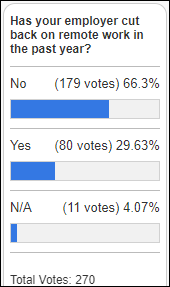
Poll respondents are mixed on assigning responsibility to the VA’s struggling rollout of Oracle Cerner.

New poll to your right or here: Which social media service have you used in the past seven days?

Several folks have reached out about the death of industry long-timer Frank Pecaitis. His family has started a GoFundMe to establish a scholarship in his name.


Welcome to new HIStalk Platinum Sponsor RxLightning. The New Albany, IN-based company enables physicians to accelerate patient access to their preferred specialty therapies. Its MedAccess platform was designed for physicians and their clinical team to re-imagine the entire specialty medication experience without paper forms or fax machines, supporting over 1,200 specialty medications across all therapeutic specialties. Ninety-four percent of patients get access in less than one hour and 99% in less than one day. Its proven approach simplifies the historically cumbersome process of specialty medication access by providing visibility into the entire patient journey through a digital platform, which acts as a single source of truth for all stakeholders. This MedAccess Ecosystem optimizes the patient journey from enrollment to fulfillment and makes the disconnected, connected. Thanks to RxLightning for supporting HIStalk.


Thanks to these companies that recently supported HIStalk. Click a logo for more information.


January 19 (Thursday) 2 ET. “Supercharge Your Clinical Data Searches.” Sponsor: Particle Health. Presenter: Paul Robbins, MSMBA, VP of product, Particle. Particle’s team will preview the exciting results of Specialty Search, a new condition-specific record locator service. This webinar will review how to collect patient records from top Centers of Excellence across the entire country; how healthcare organizations of all types are benefiting from Specialty Search capabilities, using Particle’s simple API; and why a focused search of chronic condition data — in oncology, cardiology, endocrinology, orthopedics, and more — has an outsized impact on care outcomes.

Previous webinars are on our YouTube channel. Contact Lorre to present your own


Acquisitions, Funding, Business, and Stock

Not directly healthcare related, but interesting. JP Morgan Chase sues Charlie Javice, the 30-year-old founder of student loan signup platform vendor Frank, which it acquired for $175 million in September 2021 and has since shut down. Executives of Frank allegedly hired a data science professor to create 4.25 million phony user accounts versus its actual 300,000 users who used the service to apply for school loans. The company came under Congressional scrutiny in 2020 on suspicions that it was misleading students and  selling their personal information to advertisers. JP Morgan discovered discrepancies when it asked for a customer list so it could begin marketing its own offerings to students, then found that three-fourths of test emails were undeliverable and only 1% were opened.

Jingyun Fan, MS, founder and CEO of app-based insomnia coaching startup Shuni, lists the lessons she learned that resulted in shutting the company down after three years:

  1. Founders must manage their egos in balancing the many naysayers while still listening to legitimate feedback.
  2. First-time founders focus on “build it and they will come” instead of the real challenge of distribution. They should learn about marketing and sales and split their time equally between product and growth.
  3. Operational excellence is easily copied and just doing something better isn’t enough to provide the returns that venture capital seeks.
  4. Startups should not focus on building a services business, which is operational excellence that incumbents can copy given their capital and reputation.
  5. Don’t try to sell platform technology into healthcare since better technology is a nice-to-have that may never result in a sale, and it’s hard to disrupt Epic or Oracle Cerner.
  6. For behavioral health offerings, focus on direct-to-consumer growth rather than pursuing academia-grade outcomes data that would interest only employers and insurers.
  7. Cost-of-acquisition is high in behavioral health and marketing strategies should focus on long-form content written by authentic personalities as brand representatives, making YouTube as the primary channel because you can speak directly to target clients, has good discoverability, and is good for search engine optimization.
  8. Make sure as a founder that the problem you are addressing is worth dedicating a major part of your life to.
  9. Venture capital isn’t right for every business. Capital comes with timeline expectations and what startups need is time.
  10. Ignore these lessons. People do the impossible all the time, doing meaningful work and transforming their own lives.

Sales

  • Two hospitals on the border between France and Belgium choose Sectra for digital pathology in a joint project.
  • Owensboro Health (KY) outsources revenue cycle management and IT to Optum, which will take on 575 health system employees.

Government and Politics

ONC publishes Draft Version 4 of USCDI.


Sponsor Updates

  • Current Health publishes a new case study, “UMass Memorial Health Builds Leading Hospital at Home Program.”
  • EClinicalWorks releases a new customer success story, “Value-Based Care Achieved Through PCMH and HEDIS.”
  • Relatient publishes a new case study featuring One Pediatrics, “Activating Patients Through Targeted Messaging and Segmentation.”
  • West Monroe appoints TED Conferences CEO Jay Herratti to its board.

Blog Posts


Contacts

Mr. H, Lorre, Jenn, Dr. Jayne.
Get HIStalk updates.
Send news or rumors.
Contact us.

Morning Headlines 1/13/23

January 12, 2023 Headlines Comments Off on Morning Headlines 1/13/23

Censinet Secures $9M in New Funding to Accelerate Third Party Risk Management in Healthcare

Healthcare risk management company Censinet raises $9 million in new funding, bringing its total raised to $22 million.

Talent Group Acquires Queen Consulting Group

IT staffing company Talent Group acquires Queen Consulting Group, which specializes in pharma and healthcare IT, including EHR implementations.

Alpine Investors Announces Partnership with Leading Revenue Cycle Management Provider, Medusind

Alpine Investors acquires RCM, practice management, and analytics company Medusind from HIG Capital.

Comments Off on Morning Headlines 1/13/23

News 1/13/23

January 12, 2023 News 1 Comment

Top News

Alphabet’s Verily health sciences unit will lay off 240 employees, 15% of its workforce, as the company tries to bolster its financials to reduce reliance on its parent.

The company will end early-stage projects that involved remote patient monitoring and microneedles for drug delivery.


Reader Comments

From High Vibration Go On: “Re: J.P. Morgan Healthcare Conference. You should ask your readers for their assessment and any zingers, predictions, etc.” Readers who attended JPM, what thoughts do you have?


HIStalk Announcements and Requests

The migration to the new, more powerful server overnight went mostly OK, with a few errors due to permissions, security certificates, and the “contact us” online forms (still working on those). Let me know if you see anything that is irritatingly broken.


Webinars

January 19 (Thursday) 2 ET. “Supercharge Your Clinical Data Searches.” Sponsor: Particle Health. Presenter: Paul Robbins, MSMBA, VP of product, Particle. Particle’s team will preview the exciting results of Specialty Search, a new condition-specific record locator service. This webinar will review how to collect patient records from top Centers of Excellence across the entire country; how healthcare organizations of all types are benefiting from Specialty Search capabilities, using Particle’s simple API; and why a focused search of chronic condition data — in oncology, cardiology, endocrinology, orthopedics, and more — has an outsized impact on care outcomes.

Previous webinars are on our YouTube channel. Contact Lorre to present your own.


Acquisitions, Funding, Business, and Stock

Censinet raises $9 million in new funding.

Talent Group acquires Queen Consulting Group.


Sales

  • C By Precision Care chooses EClinicalWorks, Healow, and PRISMA.
  • Meditech UK chooses CloudWave’s OpSus Cloud Services to deploy its cloud-based Meditech Expanse implementation at two NHS trusts.
  • Eye Health America will implement NextGen Patient Experience Platform and NextGen Pay powered by InstaMed.
  • Jefferson County Human Services (WI) chooses Eleos Health’s natural language understanding technology to interpret behavioral health conversations and reduce documentation time.
  • Transcarent will offer expert second opinions from specialists at The Clinic by Cleveland Clinic, which is a joint venture between Cleveland Clinic and Amwell.
  • Nicklaus Children’s Hospital will implement the ActX Genomic Decision Support platform.

People

Life sciences medical intelligence company Dr. Evidence hires Rose Higgins, RN, MPM (HealthMyne) as CEO.

DrFirst promotes G. Cameron Deemer to CEO. He replaces founder James Chen, MS, who moves to executive chairman of the board. The company also promotes Anthony Brooke to chief technology and innovation officer.

ModMed hires Jody Beaverson (Change Healthcare) as chief people officer.

Industry long-timer Frank Pecaitis — who held executive roles at QuadraMed, Medsphere, GE Healthcare, PatientSafe Solutions, Agfa HealthCare, and most recently at Philips in a 30-year career — died December 24 at 59.


Announcements and Implementations

A trigger method adverse event study of 11 hospitals in Massachusetts finds that nearly one-fourth of admissions included an adverse event, of which about 1% were both serious and preventable. The most common type of events involved drugs (39%), surgeries or procedures (30%), nursing care (15%), and healthcare-associated infections (12%).

Northwell Health releases a pregnancy chatbot for its patients that offers education and triage with escalation.


Sponsor Updates

  • Nordic posts a new episode of DocTalk titled “The two sides of digital health.”
  • Healthjump earns Validated Data Stream designation in the new NCQA Data Aggregator Validation Program.
  • EClinicalWorks customer Children First Pediatrics reports successful process automation, increased patient compliance, and general cost savings using the company’s Healthcare Effectiveness Data and Information Set (HEDIS).
  • Ellkay hosts a virtual blood drive through the Red Cross in support of National Blood Donor Month.
  • Fortified Health Security names Ayinde Mitchell (Cognoa) regional sales director.
  • HCTec sponsors five families as part of Operation Stand Down Tennessee’s holiday program.
  • Impact Advisors announces that is has been recognized as one of the top leaders in Canada in the KLAS Canada EMR Consulting Services 2023 report.
  • Kyruus reports a landmark year in 2022, serving over 100 health systems, 500 independent medical groups, and 100 health plan brands.

Blog Posts


Contacts

Mr. HLorreJennDr. Jayne.
Get HIStalk updates.
Send news or rumors.
Contact us.

EPtalk by Dr. Jayne 1/12/23

January 12, 2023 Dr. Jayne 3 Comments

I volunteer with a couple of community organizations. Although I find the work gratifying, it can also be frustrating for those of us who are used to workplaces where time is seen as precious and communication is key.

One of my organizations keeps sending out “friendly reminder” emails telling recipients that “if you haven’t taken care of XYZ yet, please do so, but if you have already done it, disregard this message.” I’ve certainly seen this approach in business situations as well, so those who are guilty should be on notice. For those of us in fast-paced situations who tend to juggle way too many balls, it can be difficult to know if you did it or not – especially if the original request was some time ago. Sending the email only to the people who actually need to take action would be more useful and would avoid wasting other people’s time.

From Jimmy the Greek: “Re: telehealth. Check out this company that will set you up with a video chat with a doctor, and then sell you a bunch of prescription meds to keep on hand  ‘just in case.‘” Duration Health describes itself as “a mission-driven organization with a deep belief in patient autonomy.” Following a consultation, they prepare a customized kit from their list of 60 medications so that you can have the good stuff on hand in the event of trouble in the backcountry, natural disaster, or all civil unrest. They note that their formulary “contains the medications most prescribed at urgent cares for acute, non-emergent conditions, along with a select set of potentially life-saving medications for emergent scenarios where help is limited.” The list includes such favorites as antibiotics, antifungals, antimalarials, steroids, epinephrine, antihistamines, laxatives, altitude sickness treatments, emergency contraception, and anti-nerve gas agents. They focus their sales on those who anticipate traveling outside the US, into the backcountry, to an area at risk for natural disasters, or to a medically underserved area as defined by HRSA. Their OFFGRID promo will net you a hefty discount if you’re interested.

Here’s some good news for those of us who spend a lot of time at our desks. A recent study published in Nature Medicine shows that even short bursts of vigorous activity as part of daily life can help reduce the risk of death. Activities might include climbing stairs, brisk walks during a commute, and more. Participants wore wrist-based accelerometers that helped measure the amount of vigorous intermittent lifestyle physical activity (VILPA). More than 25,000 people aged 40 to 69 years participated in the study and wore the devices more than 16 hours a day for at least three days during a weeklong period. The “nonexerciser” group said they didn’t exercise during leisure time and they didn’t walk more than once weekly for recreation. The researchers compared mortality rates between those nonexercisers who did and did not have spurts of VILPA recorded by their devices. They also looked at data from another 62,000 research subjects who self-reported that they exercised regularly. The subjects’ health outcomes were tracked for approximately seven years.

The study found that even in nonexercisers, having engaged in bursts of vigorous activity was associated with a nearly 50% decrease in mortality from cardiovascular disease. Although the study can’t show causality, it’s hopefully interesting enough to help set a framework for additional investigations. The authors noted some limitations of the study. Only about 6% of people invited to participate actually accepted, so the subjects might not represent the general population. Additionally, some bursts of activity such as carrying something heavy like a shopping bag might not have been accurately captured by wrist-based devices.

It looks like every bit of movement during the day counts, so I’ll keep that in mind when I’m racing to the laundry room to rotate a load of towels in between conference calls or scurrying down the driveway to bring the recycle bin in before one of my neighbors calls the city inspector for leaving it out past dusk.

Of no surprise to anyone: MyChart message volumes decreased at UCSF Health after the organization began billing for them, even though the number of messages that actually generated charges were small. A research letter published in the Journal of the American Medical Association found that although charges occurred about 2% of the time, the overall number of messages declined from 59,648 to 57,925. The authors propose that the decline was likely due to “awareness of the possibility of being billed.” Interestingly, they found no significant changes in the numbers of scheduled visits or unscheduled telephone calls. They note that “future research should investigate overall costs under different payment models and the effect of billing for messaging on outcomes, health equity, and patient and clinician satisfaction.”

In speaking with my peers around the virtual water cooler, it doesn’t seem like patients understand the burdens that primary care physicians are facing including the deluge of messages that has happened since COVID appeared. Patients are unaware that a majority of primary care physicians are taking work home with them and continuing to manage phone messages, insurance preauthorizations, and visit notes well into the evenings. As I coach physicians on trying to make documentation more efficient, I keep hearing themes about not only lack of office staff, but lack of highly qualified staff, which pushes more work onto the physicians.

One physician I spoke with recently has had to perform all patient care tasks in his office, including patient intake (history updates, vital signs, etc.) because his medical assistant is on medical leave and the health system employer claims they can’t find anyone to serve as a temporary replacement. He’s thinking about resigning because he can’t get caught up and other physicians in the practice are unwilling to share their staffing capacity. I know that my former clinical employer still has a percentage of its locations closed because it can’t staff them, so I’m not surprised about any hiring crises I hear about.

Is your organization charging for messages, and how are patients receiving the change? Leave a comment or email me.

Email Dr. Jayne.
 

Morning Headlines 1/12/23

January 12, 2023 Headlines Comments Off on Morning Headlines 1/12/23

Array Behavioral Care Secures $25 Million from CVS Health to Help Address National Mental Health Crisis through Virtual Care

Telepsychiatry provider Array Behavioral Care raises $25 million in a Series C funding round led by CVS Health, which will look for ways in which Array’s capabilities can complement its own healthcare delivery services.

OpenLoop Acquires Reliant.MD Practice Group, Expanding Services and Strengthening Position in Insured Care Market

OpenLoop, a white label telehealth services company focused on payers and employers, acquires Reliant.MD’s practice group.

Alphabet to cut staff of health sciences unit Verily by 15%

Verily will lay off 240 employees and shutter several product lines, including remote patient monitoring for heart failure, in an effort to streamline operations and achieve financial independence from parent company Alphabet.

Comments Off on Morning Headlines 1/12/23

Morning Headlines 1/11/23

January 10, 2023 Headlines Comments Off on Morning Headlines 1/11/23

LeanTaaS Acquires Hospital IQ to Create AI Innovator for Hospital Operations Optimization

Capacity management and patient flow software vendor LeanTaaS acquires Hospital IQ, which offers hospital automation solutions.

Avel eCare Announces the Acquisition of NightWatch to Expand Pharmacy Telemedicine Services

National telemedicine provider Avel ECare acquires after-hours remote pharmacy service NightWatch.

20 Ontario Hospitals Transition to Meditech Expanse as Members of the ONE Shared Service Organization

In Canada, 23 hospitals form a shared services IT organization as they implement a shared instance of Meditech Expanse.

Comments Off on Morning Headlines 1/11/23

News 1/11/23

January 10, 2023 News 7 Comments

Top News

image

Capacity management and patient flow software vendor LeanTaaS acquires Hospital IQ, which offers hospital automation solutions.


Webinars

January 19 (Thursday) 2 ET. “Supercharge Your Clinical Data Searches.” Sponsor: Particle Health. Presenter: Paul Robbins, MSMBA, VP of product, Particle. Particle’s team will preview the exciting results of Specialty Search, a new condition-specific record locator service. This webinar will review how to collect patient records from top Centers of Excellence across the entire country; how healthcare organizations of all types are benefiting from Specialty Search capabilities, using Particle’s simple API; and why a focused search of chronic condition data — in oncology, cardiology, endocrinology, orthopedics, and more — has an outsized impact on care outcomes.

Previous webinars are on our YouTube channel. Contact Lorre to present your own.


Acquisitions, Funding, Business, and Stock

Kaufman Hall will acquire six-employee advisory firm and media publisher Gist Healthcare.

image

Behavioral health clinical database company Holmusk raises $45 million in a Series B funding round led by Veradigm, which will incorporate segments of its behavioral health and related de-identified patient data into Holmusk’s NeuroBlu Database.

image-32

CVS Health is reportedly interested in acquiring senior-focused primary care provider Oak Street Health in a deal that could be worth $10 billion. The retail pharmacy chain is in the midst of an $8 billion acquisition of home healthcare company Signify Health. Chicago-based Oak Street, which went public in 2020, operates 170 clinics across the country.

Tech-enabled kidney care company Monogram Health raises $375 million, bringing its total to $547 million.

image-34

Carbon Health announces a $100 million investment from CVS Health Ventures less than a week after announcing layoffs and the shuttering of several business lines. CVS will pilot the primary and urgent care company’s operating model and software within several of its CVS Health locations.

Wolters Kluwer Health acquires nursing education and training company NurseTim.

National telemedicine provider Avel ECare acquires after-hours remote pharmacy service NightWatch. Avel ECare got its start at South Dakota health system Avera Health before it was sold to private equity buyers and renamed in 2021.

Microsoft is in talks to invest $10 billion in ChatGPT owner OpenAI at a valuation of $29 billion


Sales

  • Connecticut Children’s Care Network will offer nursing mothers Nest Collaborative’s virtual lactation consultation service.
  • The VA will integrate Renalytix’s KidneyIntelX kidney disease assessment and management software with its EHR.
  • Bon Secours Mercy Health (OH), Adventist Health (CA), Northside Hospital (GA), Duly Health and Care (IL), and Onsite Women’s Health (TN) select Volpara Health’s breast cancer screening and detection software.
  • Meditech UK will use CloudWave’s OpSus Cloud Services to power its Expanse EPR at East Cheshire NHS Trust and Mid Cheshire Hospitals NHS Foundation Trust.


People

image-35

Retired Army Colonel Bobby Saxon, MS (CMS) joins Leidos as a VP focused on customer advocacy.

image-36

Curve Health names Matthew Michela, MBA (Life Image) CEO.

image-37

R1 RCM promotes Kyle Hicok, MBA to chief commercial officer.

image image image

Nordic Consulting promotes Terri LeFort, RN, MBA to president of Nordic International and hires Kieran Hughes (Tegria) as president of its markets in Europe and the Middle East and Thomas O’Shaughnessy, MSc (Deloitte) as president of its Canada-based subsidiary Healthtech.

image

Ventra Health hires Steven Huddleston (Pelitas) as CEO.

image

Consulting firm Brightwork Health IT hires Eliza Corrigan (Tasman Global) as chief sales officer.

image

Divurgent promotes Hannah Ellerbee, MBA to chief customer officer.

image

Colin Ashby (Talkdesk) joins Healthmap Solutions as VP of sales for healthcare systems.


Announcements and Implementations

Ardent Health Services (TN) will implement remote patient monitoring and virtual care services from Cadence as part of its remote care programs for patients with chronic conditions.

In Canada, 23 hospitals form a shared services IT organization as they implement a shared instance of Meditech Expanse.


Other

image-41

The Bermuda Hospitals Board provides a breakdown of costs and timelines associated with the rollout of its Oracle Cerner-based PEARL system, noting that its staff had to work through several COVID waves and a hurricane as its October 29 go-live approached. The board saved $1.3 million by hosting planning meetings remotely, though it spent $1.7 million to feed and house 160 extra support staff at the Hamilton Princess & Beach Club. The net cost of the project is expected to be $30 million paid over 10 years.

image-42

The Better Business Bureau alerts consumers to the shady business practices of North Texas-based telemedicine company Doctor Alexa. The bureau revoked the company’s accreditation last June after it failed to address 24 of the 46 consumer complaints filed on the BBB’s website. Complaints related to paying for services never rendered, chronic lack of communication, and failure to send prescriptions to pharmacies after virtual consults. The BBB received over 300 complaints related to telemedicine between 2019 and 2021.


Sponsor Updates

  • AdvancedMD announces that it has been awarded 21st Century Cures Act Certification from ONC.
  • Baker Tilly releases a new BuzzHouse Podcast, “Fostering healthcare and housing through relationships as a community investment.”
  • ChartSpan welcomes Lauren Wyatt (Change Healthcare) as client success director and Shelby Statom (Everly Health) as implementation project manager.
  • Netsmart’s MyUnity earns ONC’s Cures Update certification, the first post-acute EHR to do so.
  • CHIME releases a new Leader2Leader Podcast featuring Symplr Chief Product Officer Brian Fugere.
  • Diameter Health again achieves the Certified Partner designation in NCQA’s Data Aggregator Validation program.

Blog Posts


Contacts

Mr. H, Lorre, Jenn, Dr. Jayne.
Get HIStalk updates.
Send news or rumors.
Contact us.

125x125_2nd_Circle_thumb3

Morning Headlines 1/10/23

January 9, 2023 Headlines Comments Off on Morning Headlines 1/10/23

Carbon Health Secures Series D Investment to Drive Primary and Urgent Care Expansion

Carbon Health announces a $100 million investment from CVS Health Ventures as part of a Series D funding round, and that CVS will pilot the primary care company’s operating model and software within several of its CVS Health locations.

Veradigm Announces Strategic Investment in Holmusk

Behavioral health clinical database company Holmusk raises $45 million in a Series B funding round led by Veradigm.

Monogram Health Closes $375M Growth Capital Raise to Support Continued Expansion of Innovative In-Home Kidney and Polychronic Care Model

Tech-enabled kidney care company Monogram Health raises $375 million, bringing its total raised to $547 million.

CVS Is Exploring a $10 Billion-Plus Acquisition of Oak Street Health

Bloomberg reports that CVS Health may acquire senior-focused primary care provider Oak Street Health in a deal that could be worth $10 billion.

Comments Off on Morning Headlines 1/10/23

Curbside Consult with Dr. Jayne 1/9/23

January 9, 2023 Dr. Jayne 3 Comments

image[3] 

I read a number of articles this week that addressed various hot topics about how people spend their time and how employees should be treated.

It was quite ironic that the best thing I saw on Facebook this week was a link to a piece in The Atlantic titled “The Age of Social Media Is Ending.” I have a love/hate relationship with social media depending on how much I feel like I’m being forced to use it versus how much I’m electively using it to keep up with things I care about. I despise it when community organizations (including our local schools) decide that Facebook is the best way to communicate important information. They don’t seem to understand that Facebook isn’t a static place you go to view things, like a bulletin board. The algorithm serves up different things to different people at different times and depending on your settings it’s possible to miss information unless you’re stalking a particular group or page on the daily.

I also dislike the fact that social media posts from individuals have become newsworthy. Outlets like MSN are constantly posting stories about things that people share on TikTok. Often, these stories are about happenings that we’re supposed to find outrageous, but I can’t take any more earnest-appearing people complaining about things that aren’t really that outrageous. I enjoy social media when I see updates from friends I don’t often see or use various groups or forums to get advice about my hobbies. Rather than broadcast to the entire universe on Twitter or Facebook or Instagram, I prefer to be part of smaller platforms that let me connect in a deeper way with my actual friends, like private workspaces on Slack or chats on GroupMe. I still can’t figure out why Twitter thinks I want to see most of the tweets it recommends for me, or what behaviors to exhibit to see content I would actually read.

The piece from The Atlantic talks about the evolution of social media from the early days of collecting friends to the recent explosion of its use as a “latent broadcast channel” where “all at once, billions of people saw themselves as celebrities, pundits, and tastemakers.” Social media has certainly made it more difficult for primary care physicians to do our jobs, with the constant barrage of headlines touting so-called “things your doctor doesn’t want you to know about” and the proliferation of people trying to make a buck with pseudo-medical “wellness” offerings that physicians have to spend time debunking.

The author notes that “as the original name suggested, social networking involved connecting, not publishing.” The evolution to “social media” happened around 2009, according to the article, “between the introduction of the smartphone and the launch of Instagram. Instead of connection – forging latent ties to people and organizations we would mostly ignore – social media offered platforms through with people could publish content as widely as possible, well beyond their networks of immediate contacts.”

The piece notes that the 2006 introduction of Twitter “amounted to a giant, asynchronous chat room for the world.” It goes on to discuss “the data-driven advertising profits that the attention-driven content economy created,” including the influencer economy, where people are essentially paid for sharing marketing messages or for product placements, creating the idea that becoming an influencer “became an aspirational role, especially for young people for whom Instagram fame seemed more achievable than traditional celebrity – or perhaps employment of any kind.”

It talks about the potential decline of social media given the current state of things, and what a remodeling might look like – drawing an analogy from the cultural changes needed to drive a decline in smoking across several decades. The idea that social media could play a smaller role in our lives is an interesting one. Many people check their accounts, feeds, and streams compulsively and I wonder what they would do with all the time they might get back.

Speaking of time, I also enjoyed this read from Forbes: “Companies Fret About Time Theft – But Who’s Taking From Whom?” Time theft has traditionally been defined as the hours when employees do things like managing personal business while on the company clock, or otherwise wasting time that is seen as belonging to their employers. With the rise of remote work, employers have taken to doing things like monitoring laptop use, the time spent in various applications, or the calendars of employees.

The article looks at the idea that time theft can go both ways. It talks about employers who demand work outside of normal working hours, but who don’t provide additional compensation or mandating unpaid training. It notes that “this kind of time theft more often affects marginalized people who are asked to go the extra mile and work harder than others to be considered for advancement opportunities.”

The author describes the pathway by which people who are constantly battling additional demands “grow weary of their work time encroaching so insidiously on their personal time…They lose their desire to shine and they focus on self-preservation instead.” I’ve worked in plenty of organizations like this, including one health system where the IT team was constantly expected to deliver the impossible. The teams sacrificed themselves on the altar of this principal and what resulted was global burnout and the departure of key leaders and high performers from the organization.

The author notes that “Workers shouldn’t feel that their private time can be snatched from them at a moment’s notice for questionable reasons, and that if they balk at putting in those additional hours their chances of advancing in the organization will be compromised.” In my experience, healthcare IT organizations are particularly at risk for this due to the 24×7 nature of our work. When someone has to be on call, it’s easy to reach out to them as opposed to thinking carefully about whether the situation needs to be addressed immediately or whether it can wait until the next business day.

Also in my reading, I came across a number of articles about the proposed end to non-compete clauses. Companies seem to love them, workers hate them, and states have done variable jobs regulating them. Most physicians are subject to non-compete clauses.

When I left the medical practice that I had built from the ground up (literally it was a slab when I started), one of the things the health system used to sweeten the deal was voiding my non-compete clause. I’m not a fan of them, especially in medicine, because they jeopardize the patient-physician relationship. They force employees to decide between uprooting their families and preserving their livelihoods and I’ve seen them hasten the demise of numerous relationships. Employees who feel handcuffed aren’t going to be as productive or successful as those who feel they’re remaining at their employer by choice. The best way to keep an employee from leaving to go work for the competition is to treat them with respect, pay them fairly, and support them.

Those concepts were among the topics at the most recent session of my leadership intensive. The theme of one of the presentations was “What fills your bucket?” We were asked to visualize our psychological bucket and the things that fill or drain it. Your bucket might be filled by support from co-workers, knowledge of a job well done, or completion of a difficult task. It might be drained by an overly demanding boss, stressful working conditions, or a chaotic environment. When people feel forced to remain in situations where they can’t fill their bucket, letting them leave might be the best option for all parties. There are plenty of other things that can fill or drain our buckets, including our own habits. When thinking about social media or time theft or a number of different things, it’s useful to determine the impact they have on our buckets.

What has filled your bucket lately, and what has drained it? Leave a comment or email me.

JAYNE-125x125_thumb_thumb

Email Dr. Jayne.

Morning Headlines 1/9/23

January 8, 2023 Headlines Comments Off on Morning Headlines 1/9/23

Carbon Health to cut more than 200 jobs, narrow focus

Primary and urgent care company Carbon Health lays off 200 employees and will end its initiatives in public health, remote patient monitoring, and chronic care.

Walgreens Boots Alliance (WBA) Q1 2023 Earnings Call Transcript

Walgreens says during its most recent earnings call that it will pause M&A activities short term and will eventually consider smaller acquisitions that advance its core business, stressing that it won’t “go out and do a $2 billion or $3 billion acquisition on a health tech company.”

Codex IT Acquires Utah Managed Services Provider

Healthcare IT consulting and managed services company Codex IT acquires competitor Intranet Consulting.

Comments Off on Morning Headlines 1/9/23

Morning Headlines 1/6/23

January 6, 2023 Headlines Comments Off on Morning Headlines 1/6/23

KeyCare Completes $27M Series A Investment Round to Expand Adoption and Grow Capabilities of its Epic-based Virtual Care Platform

Epic-integrated virtual care platform vendor KeyCare completes its $27 million Series A funding round.

Onc.AI Raises $25 Million Series A Financing Co-Led by MassMutual and Action Potential Venture Capital

Onc.AI, which offers a medical oncologist clinical decision-making platform, raises $25 million in Series A funding.

Porter Raises $5.4M in Seed Funding

Porter, a Miami-based software and services startup specializing in care coordination and quality optimization, raises $5 million in seed funding.

Careficient Acquires Home Health, Hospice, Home Care, Palliative and RCM Solutions and Services from Net Health

Home health, hospice, and home care management company Careficient acquires Net Health’s HealthWyse, Hospicesoft, and RCM division.

Comments Off on Morning Headlines 1/6/23

News 1/6/23

January 6, 2023 News 6 Comments

Top News

aa

Allscripts changes its company name to Veradigm.

The company sold many of its health IT assets in the past two years. It says it has now consolidated its remaining portfolio of EHR, PM, and patient communication systems into the Veradigm Network.

Shares will continue to trade under the MDRX ticker symbol. They are down 8% in the past 12 months versus the Nasdaq’s 34% drop.


Reader Comments

ab

From Publius: “Re: non-competes. This would significantly impact Epic, which would have a mass exodus of employees. I assume they would fight it in court.” The Federal Trade Commission proposes banning the use of non-compete clauses that prevent employees from taking jobs with competitors or starting their own businesses. FTC says the clauses are exploitative, affect one in five American workers, and are sometimes imposed by companies on low-earning employees who don’t have significant company knowledge. Previous studies have shown that non-compete agreements protect established companies from startups, reduce competition, and limit the ability of companies to hire the best-suited workers. FTC says the change would provide new opportunities for 30 million Americans and raise wages by $300 billion per year. The proposed change would not affect non-disclosure agreements, but those could be subject to FTC review if they interfere with workers changing jobs. Among the companies named in FTC’s complaints are two Michigan-based security companies that prevented low-wage security guards from working within a 100-mile radius for two years after leaving.

From Pure Energy: “Re: M&A in a down market. Predictions?” Previously overvalued but cash-burning startups that have no obvious path to profitability will find themselves selling out to larger competitors – assuming any are interested in attaching new weights to their corporate ankles – at barely more than asset value as being ‘disruptive” and “innovative” without making money causes newly focused eyes to roll. Modestly or selectively successful companies will shed non-core business in hopes of generating quick cash from carve-outs. Companies that went public during the recent boom, especially those that took the sketchy SPAC route, will have to figure out how to continue operating (or not) based on trashed share price with zero chance of obtaining favorable funding. This is healthy and necessary, just like thinning and pruning deadwood, and survivors will emerge stronger. Also important is that the profitable aspects of the entire hospital and health system market may be consolidated into a couple of dozen big provider and provider-insurer players over the next 10 years, so it will be feast or famine for companies who sell into that market whose participants are focused on decreasing their vendor count.


HIStalk Announcements and Requests

I’ll be migrating HIStalk to a new server shortly, which includes a lot of changes to the underlying programming and databases, so expect the usual (hopefully minor and short-lived) glitches.


Webinars

January 19 (Thursday) 2 ET. “Supercharge Your Clinical Data Searches.” Sponsor: Particle Health. Presenter: Paul Robbins, MSMBA, VP of product, Particle. Particle’s team will preview the exciting results of Specialty Search, a new condition-specific record locator service. This webinar will review how to collect patient records from top Centers of Excellence across the entire country; how healthcare organizations of all types are benefiting from Specialty Search capabilities, using Particle’s simple API; and why a focused search of chronic condition data — in oncology, cardiology, endocrinology, orthopedics, and more — has an outsized impact on care outcomes.

Previous webinars are on our YouTube channel. Contact Lorre to present your own.


Acquisitions, Funding, Business, and Stock

Salesforce will reduce its workforce by 10%, about 7,000 jobs, and will close offices in some markets, reductions the company blames on reduced customer spending and its own excessive hiring during the pandemic’s boom times. It not break out how many of the job cuts were related to healthcare. The company’s market value has dropped more than half to $134 billion from its late-2021 high.

ac

Shares of GE spinoff GE HealthCare begin trading on the Nasdaq under the GEHC ticker. Shares closed their first day of trading Wednesday up 8%.

Epic-integrated virtual care platform vendor KeyCare completes its $27 million Series A funding round.

Onc.AI, which offers a medical oncologist clinical decision-making platform, raises $25 million in Series A funding.


Sales

  • East Tennessee HIN chooses 4medica’s patient matching system.

People

ad

Ardent Health Services hires Brad Hoyt, MD (Utica Park Clinic) as CMIO.

ae

Acadia Healthcare Company hires Laura Groschen (Medtronic) as CIO.

af

Experity promotes Brian Berning, MS to CFO.

ag

Curve Health hires Matt Michela, MBA (Life Image) as CEO.

ah

Nicholas Anderson (G2o) joins Olah Healthcare Technology as VP of product management.


Announcements and Implementations

EHNAC publishes new versions of its program criteria for its accreditation programs.

The new quarterly market report of Pivot Point Consulting, A Vaco Company makes these points:

  • Amazon’s acquisition of One Medical gives the company partnerships with big health systems and a business that has off-the-charts member satisfaction, 90% retention, and 300% member growth over five years, plus a growing Medicare and Medicare Advantage business via its Iora Health.
  • Amazon’s relaunched virtual service of Amazon Clinic will be challenged to attract both consumers and providers to its platform, with modest synergies with its pharmacy business but little impact on expensive chronic condition spending.
  • CVS Health gained 10,000 contracted clinicians with its September 2022 acquisition of Signify Health, which also gives it a Medicare presence with its Caravan marketplace.
  • The acquisition of Summit Health by Walgreens-controlled VillageMD, which closed Thursday will double the company’s PCP count to 2,800 working in 680 locations.
  • Walmart made no healthcare acquisitions in 2022, but expanded its telehealth and Medicare preventive care markets using its 4,000-stores footprint.
  • Pivot Point recommends that providers start with the digital front door to enhance patient and staff experience, use data to innovate, and build partnerships with payers since the big retailers have shown little interest in hospital care.

An EpicShare article describes how University of Michigan Health – West uses Nuance’s DAX to reduce physician time spent writing notes, with some doctors reporting a total daily effort of 10 minutes to review the results. The organization says the cost can be high and DAX works better in primary care than with specialties, but notes got better and faster over time, more prior authorization requests were approved on the first try, and patients say they enjoy seeing their own words in the doctor’s notes in MyChart.

ai

Withings announces U-Scan, a toilet bowl device that takes daily biomarker readings. The device, which is pending US FDA clearance, will debut in Europe with consumer health cartridges for women’s cycle tracking and hydration.


Government and Politics

A JAMA Network opinion piece warns that clinical algorithms may be found to violate antidiscrimination laws under the Affordable Care Act or may be regulated by FDA as medical devices, both of which the authors urge the federal government to avoid for lower-risk algorithms and until discrimination aspects are better defined. 


Other

aj

Amy Abernethy, MD, PhD, who runs Verily’s life sciences clinical studies platforms, discusses the state of clinical trials in a brief Politico interview:

  • Clinical trials will move to using existing data from EHRs and claims, along with sensor data, although data quality mismatches need to be resolved.
  • Clinical trials need to involve a low burden for participants to generate representative participation.
  • Clinical trials recruitment needs to include digital marketing, call centers, and extra service.
  • Future clinical trials will involve long-term following of participants, which will require new ways of thinking about keeping people enrolled.

ak

This is an interesting observation by Will Weider, although perhaps less relevant than it seems to healthcare since ordering is the focus at Amazon and most of us have done it many times. I don’t mind a chat bot as long as it doesn’t hog the screen, make sounds, or pop up on every new page after I’ve already dismissed it. I always renew my car registration online and DMV’s chat bot is like a nicer, field-prompting version of an online form. At least even the dumbest chat bot is smarter than the smartest telephone auto attendant.


Sponsor Updates

 al

  • Availity associates volunteer at the 24th annual Make-a-Wish Request-a-Thon.
  • Medicomp Systems releases a new Tell Me Where IT Hurts Podcast featuring National Coordinator Micky Tripathi.
  • Wolters Kluwer Health marks the 30th anniversary of its UpToDate clinical decision support solution by announcing that it has donated over 100,000 subscriptions to UpToDate to caregivers and organizations in 159 countries.
  • EClinicalWorks publishes a new customer success story featuring Orthopaedic Institute of Ohio, “Prisma: How Better Data Improves Care and Reduces Costs.”
  • Everbridge appoints RSA CEO Rohit Gai and Blackbaud EVP David Benjamin to its Board of Directors.
  • Nordic launches a new podcast series titled “In Network.”
  • The Empowered Patient Podcast features First Databank VP of Product Management Virginia Halsey, “Improving Access for Pharmacists to Appropriate Drug Interaction and Dosing Data.”
  • Get Well offers a digital inclusivity toolkit to help healthcare teams address workplace violence.
  • InterSystems announces it has been positioned in the Visionaries Quadrant of the recently published Gartner Magic Quadrant for Cloud Database Management Systems.
  • Juniper Networks announces it has been named a leader in the 2022 Gartner Magic Quadrant for Enterprise Wired and Wireless LAN Infrastructure for the third consecutive year.
  • Meditech publishes a new case study, “Frederick Health Aligns Workflows Across Care Settings with Meditech Professional Services.”

Blog Posts


Contacts

Mr. H, Lorre, Jenn, Dr. Jayne.
Get HIStalk updates.
Send news or rumors.
Contact us.

am

EPtalk by Dr. Jayne 1/5/23

January 6, 2023 Dr. Jayne Comments Off on EPtalk by Dr. Jayne 1/5/23

I’m a big fan of my Withings blood pressure cuff, which captures readings wirelessly and syncs them with health management software. It is useful to show my physicians what my blood pressure actually runs at home, as opposed to the elevated values I have when I walk into a healthcare facility and start having anxiety symptoms related to the last few years I spent working in emergency department and urgent care facilities.

Withings has announced U-Scan, which it claims is “the first hands-free connected home urine lab.” The device is 90 mm in diameter and is placed in the toilet bowl to provide “an immediate snapshot of the body’s balance by monitoring and detecting a large variety of biomarkers found in urine.” It also promises to offer “actionable advice for health improvements.” The unit contains a cartridge that holds “test pods” and chemical reagents, along with a reader that transmits data by Bluetooth or Wi-Fi. The cartridge and its battery are designed to last for three months and the website notes that it is “designed to be compatible with most Western-style toilets” and can be mounted with an included fixation arm. The battery can be charged via USB-C during periodic cleaning and maintenance.

Other language on the website notes it can follow menstrual cycle-related monthly hormonal fluctuations and deliver “key hydration and nutrition biomarker analysis, recommended actions based on cycle phases, and data correlation for an optimized menstrual cycle.” Since none of this data is protected by HIPAA, as a woman of reproductive age, I would be leery of giving a private company access to this data, but I’m sure a number of potential users won’t even think of that as a problem.

It also promises to give information on hydration status, but I was surprised to see that the smartphone app featured on the website recommended the “eight glasses of water” each day that has been widely debunked. As someone who has medically managed cohorts of people doing strenuous activities in the backcountry, I know that people can also learn a lot about their hydration status by following the collective wisdom to keep urine “clear and copious,” and that advice is free to boot.

Withings makes it clear that the Nutri Balance and Cycle Sync cartridges are not considered medical devices and are intended to encourage a “healthy lifestyle,” which is the same advertising speak used by a lot of quasi-medical items including nutritional supplements and non-regulated devices. Nutri Balance will measure specific gravity, pH, ketones, and vitamin C, but to be honest, I’m not sure how useful those markers are to the average person. The site doesn’t make it clear how often it will be testing which components, but states that each cartridge includes “more than 100 biomarker results” which should be a three-month supply “when following the recommended measurement plan in the Withings App.”

They do mention that they have a U-Scan for Professionals cartridge for monitoring of urinalysis data, which is likely where the real utility of this device might lie. The website notes that remote patient monitoring will be subject to “appropriate regulatory clearances.” They’ll be unveiling the device at the Consumer Electronics Show (CES) this week, with a plan to move to a public launch in Europe during the second half of the year. The consumer-grade starter kit contains one cartridge and a reader for 500 Euros ($526), with a 30 Euro monthly subscription. Pricing for the professional model is by request only. I’m sure plenty of people will be lining up to purchase one, though if nothing else than to have something that’s latest and greatest, especially if they are deeply into analyzing their quantified selves.

The New Year always brings out plenty of articles for predictions about the coming year, and I got a chuckle out of one that surveyed a few dozen investors, founders, and other startup and corporate folks for their take on 2023. The best question in my book: If Elon Musk were to buy and operate one healthcare company (for better or worse), what company would you suggest he buy? Oscar Health came in first, with Epic and Bright Health tied for second place. UnitedHealth Group ranked third, with the next cohort being a tie between Cerebral, Athena, and “Will not happen/please stay away from healthcare.” Based on recent events I don’t think Mr. Musk will be buying any companies soon, so we are safe at least from that kind of drama.

My second favorite question was “Where will VBC be on the Gartner hype cycle curve at the end of 2023?” with 55% of respondents saying it will be in the “trough of disillusionment.” Let’s face it – preventive care and the kinds of routine chronic care that are the hallmark of value-based care are not sexy and they are not big moneymakers, and many primary care providers agree that short of something miraculous or stemming from massive government regulations and a complete realignment of incentives, we are never going to be at the forefront as we’d need to be to really drive change. Needless to say, I won’t be leaving clinical informatics for the primary care trenches any time soon.

The New Year came in with a bang in my area with spring-like temperatures and the chance to take care of some yard cleanup tasks that didn’t happen before the holidays. It was good to get outside and do something that created a visible change. Sometimes in healthcare IT, we work on large projects for a significant amount of time, but since the work is largely behind the scenes, it doesn’t feel as productive as it might be if it were more visible. Still, we create tangible changes that benefit users and patients regardless of whether they see them or not.

Sometimes we work on projects that don’t even see the light of day. I’ve had entire upgrade projects that were shelved when organizational priorities shifted. During my career I’ve helped build two complete EHRs that never saw broad adoption. The work helped me get where I am today, and some experiences can only be learned through the school of hard knocks.

Here’s to hoping the new year brings us projects that are complete successes, upgrades that are smooth, and projects that run on time and on budget. What are you most excited to work on in 2023? Leave a comment or email me.

Email Dr. Jayne.
Comments Off on EPtalk by Dr. Jayne 1/5/23

Morning Headlines 1/5/23

January 4, 2023 Headlines Comments Off on Morning Headlines 1/5/23

HealthStream Acquires Electronic Education Documentation System, LLC (d/b/a “eeds”)

Healthcare workforce management company HealthStream acquires continuing education management vendor Electronic Education Documentation System for $7 million.

CommonSpirit Health sued over data breach involving 600,000 patients

Multistate CommonSpirit Health faces a proposed class action lawsuit over its alleged negligence in protecting the private data of 600,000 patients during an October ransomware attack.

Salesforce to cut workforce by 10% after hiring ‘too many people’ during the pandemic

CRM software vendor Salesforce, which includes healthcare among its verticals, will lay off 7,000 employees and close offices in certain markets.

Comments Off on Morning Headlines 1/5/23

Morning Headlines 1/4/23

January 3, 2023 Headlines Comments Off on Morning Headlines 1/4/23

Allscripts Announces Corporate Name Change to Veradigm Inc.

Allscripts rebrands to Veradigm after transitioning many of its products over the last year to the Veradigm name.

Ransomware gang gives decryptor to Toronto’s SickKids Hospital

The LockBit ransomware group apologizes for a cyberattack on Toronto’s Hospital for Sick Children and gives the hospital a free decryptor to release their files.

EHNAC Announces Finalized 2023 Accreditation Criteria Versions for All Accreditation Programs

The Electronic Healthcare Network Accreditation Commission finalizes and publishes criteria for its accreditation programs focused on the electronic exchange of healthcare data.

Comments Off on Morning Headlines 1/4/23

Text Ads


RECENT COMMENTS

  1. I don't think the Paradigm transaction includes OncoEMR....just plans to collaborate on it. Looks like the only bought the clinical…

  2. You know what will radically improve patient lives? Universal healthcare, access to housing, paid childcare, better public transport. Improve a…

  3. History strongly suggests that AI applications in health care will be more often than not focused on reimbursement, cost containment…

Founding Sponsors


Platinum Sponsors


Gold Sponsors


RSS Industry Events

  • An error has occurred, which probably means the feed is down. Try again later.

RSS Webinars

  • An error has occurred, which probably means the feed is down. Try again later.