Recent Articles:

Monday Morning Update 9/22/25

September 21, 2025 News 2 Comments

Top News

image

The American College of Medical Informatics will present its Morris F. Collen Award of Excellence to Christopher Chute, MD, DrPH at the AMIA annual meeting November 15-19 in Atlanta.

He is an informatics professor and head of biomedical informatics and data science at Johns Hopkins University and professor emeritus of biomedical informatics at Mayo Clinic, a division he founded and chaired for 20 years.


HIStalk Announcements and Requests

image

The vast majority of poll respondents don’t agree with Larry Ellison’s belief that Oracle’s size and application development technology gives it a strong competitive advantage over Epic. Reader Jim says this:

I think Epic’s customer focused strategy and market size gives it a strategic advantage. Oracle has significantly underestimated what it takes to win in healthcare. Healthcare requires a long-term view and consistency even when profits are elusive. Mass layoffs, major customer losses, and not mentioning healthcare in their quarterly presentations supports my belief.

New poll to your right or here: Do you expect your personal financial situation to improve in 2026? Leave a poll comment to elaborate further.


image

Welcome to new HIStalk Platinum Sponsor Canopii Collaborative. Canopii is a healthcare IT services firm that specializes in providing consulting services for health plans and health systems. Our primary focus is ensuring that you achieve the maximum value of your Epic software. Leveraging deep domain expertise in the Epic ecosystem, Canopii offers personalized attention to clients and delivers measurable, sustainable results. We are committed to improving healthcare outcomes by optimizing systems, increasing efficiency, and helping clients achieve their strategic goals. Thanks to Canopii for supporting HIStalk.


Sponsored Events and Resources

None scheduled soon. Contact Lorre to have your resource listed.


Acquisitions, Funding, Business, and Stock

Morgan Stanley predicts that AI will generate “trillions of dollars in savings” by 2050, including $600 billion from drug development and $900 billion from hospital costs.

Investigative outlet The Lever reports that Epic’s new MyChart user agreement requires users to accept binding arbitration and a class action waiver, with patients who decline being redirected to a downgraded version of the portal.


People

image

Ganesh Persad, MSBI (Emory Healthcare) joins Cottage Health as VP/CIO.

image

UnitedHealth Group promotes Sandeep Dadlani, MMS, MBA to CEO of Optum Insight, its technology-enabled services business that includes the acquired Change Healthcare.


Announcements and Implementations

image

Evidently launches Ask Evidently, an AI chat tool that embeds in any EHR and lets users query information in the patient’s chart.

image

Joint Commission and the Coalition for Health AI publish “Guidance on Responsible Use of AI in Healthcare,” which provides internal governance for US health systems on implementing AI at scale.

University Hospitals launches its whole-hospital Connected Care Team initiative at UH Lake West, where it provides virtual nursing support to inpatient nursing units.

image

A new KLAS report reviews patient communications.


Other

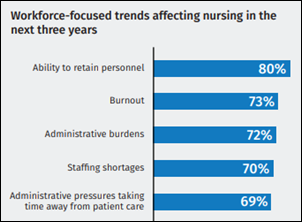
A new Harris Poll survey finds that half of healthcare workers will seek or take a new job next year, although two-thirds say they would stay if their employers provide tuition support. Half of healthcare employers say that lack of advancement and educational opportunities drive employees to seek jobs elsewhere. Employees cite AI as the top skill they expect to need within five years, although 42% worry that it will take their jobs. 

A therapist accidentally shares his screen during a virtual session, allowing the patient to see that he is pasting their conversation into ChatGPT to suggest responses. In another case, a therapist who is replying via email to a grieving patient forgets to delete the AI prompt header, “Here’s a more human, heartfelt version with a gentle, conversational tone.” Patients not only feel misled, but unhappy when they find out that their private thoughts are being exposed to a tool that offers limited privacy assurances.


Sponsor Updates

  • PerfectServe surpasses $100 million in contracted annual recurring revenue, a testament to the accelerating adoption of its Unite healthcare communication and scheduling platform.
  • Black Book Research announces that Meditech Expanse has been ranked the top EHR for community hospitals under 150 beds.
  • Surescripts publishes a new data brief titled “Care Teams Seek Tools to Improve the Patient Experience.”
  • Meditech announces that customers are now live with the latest workflow advancements to its Traverse Exchange interoperability solution, which now includes consolidated patient summaries.
  • Altera Digital Health, Artera, HealthMark Group, Infinx, Meditech, MRO, Nym, PerfectServe, TruBridge, and Waystar will exhibit at the MGMA Leaders Conference September 28-October 1 in Orlando.
  • Nordic releases a new episode of its “Designing for Health” podcast titled “Interview with Justin Schrager, MD and Nick Sterling, MD, PhD.”

Blog Posts


Contacts

Mr. H, Lorre, Jenn, Dr. Jayne.
Get HIStalk updates.
Send news or rumors.
Follow on X, Bluesky, and LinkedIn.
Sponsorship information.
Contact us.

125x125_2nd_Circle_thumb3

Morning Headlines 9/19/25

September 18, 2025 Headlines Comments Off on Morning Headlines 9/19/25

After Transforming Neurological Care, Sevaro Secures $39M to Expand AI Powered Specialty Care Platform

Virtual neurology care company Sevaro Health raises $39 million in a Series B funding round.

Doximity Faces Lawsuit Over Alleged AI Prompt Hacking for Trade Secrets

Doximity countersues OpenEvidence for defamation and false advertising in response to a lawsuit filed by OpenEvidence in June that claims Doximity engaged in corporate espionage and defamation.

Seven Starling Raises Fresh Funding to Accelerate National Expansion of Women’s Mental Health Platform

Virtual maternal mental healthcare provider Seven Starling announces $8 million in new funding.

Comments Off on Morning Headlines 9/19/25

News 9/19/25

September 18, 2025 News 1 Comment

Top News

image

Sevaro Health raises $39 million in a Series B funding round.

The company’s Synapse AI technology connects hospital-based providers with virtual neurology care.


Sponsored Events and Resources

None scheduled soon. Contact Lorre to have your resource listed.


Acquisitions, Funding, Business, and Stock

image

Bambu Ventures and Innova Capital Partners acquire telehealth company Lemonaid Health from what’s left of 23andMe, which is currently in the midst of bankruptcy proceedings, for $10 million. 23andMe acquired Lemonaid Health in 2021 for $400 million.

image

Provider workforce management software startup Assured raises $6 million in seed funding.

image

The feud between OpenEvidence and Doximity heats up, with Doximity now countersuing OpenEvidence for defamation and false advertising. OpenEvidence sued Doximity in June for “brazen corporate espionage” related to Doximity executives allegedly impersonating various physicians and using their NPI numbers to gain access beyond what they were entitled to, with their alleged ultimate goal being to grab OpenEvidence code. (Dr. Jayne had fun summarizing the suit when she came across it several months ago.) Both companies are looking to create a ChatGPT-like tool for healthcare.


Sales

  • Sutter Health (CA) customer support teams will use Hyro’s AI-based voice and chat capabilities.

People

image

Todd Holling (University of Texas Health San Antonio) will join Kootenai Health (ID) as interim CIO.

image image image

Konza Health promotes David Dooley, MBA to VP of software solutions and engineering, Melissa Talley to VP of clinical data quality, and Sara Warnock to VP of health IT.


Announcements and Implementations

Ardent Health implements Ambience Healthcare’s AI software for documentation, coding, and clinical workflows across its ambulatory sites.

University Hospitals (OH) launches a Connected Care Team virtual nursing program at its Lake West Medical Center using technology from Vitalchat.


Other

Mayo Clinic’s Department of Nursing develops Nurse Virtual Assistant, a generative AI tool that displays patient care summaries and evidence-based nursing resources in a tab within Mayo Clinic’s EHR.


Sponsor Updates

image

  • Infinx sponsors The Cancer Research Collaboration & RadNet Golf Tournament in Mission Viejo, CA.
  • Ellkay sponsors the Emerson Health (MA) Auxiliary Golf Tournament.
  • First Databank names David Beam strategic account manager, Ethan Donohue software engineer, and Crystal Krebs clinical informatics pharmacist.
  • Five9 develops an AI-powered integration for ServiceNow.
  • Fortified Health Security names Grant Thorburn enterprise regional director.
  • Healthcare IT Leaders sponsors the SCHIMSS Annual Fall Golf Tournament & Scholarship Fundraiser.
  • Health Data Movers wins a Best Firms to Work For Award from Consulting Magazine.
  • MRO will exhibit at the NAHRI Revenue Integrity Symposium September 25-26 in Westminster, CO.

Blog Posts


Contacts

Mr. H, Lorre, Jenn, Dr. Jayne.
Get HIStalk updates.
Send news or rumors.
Follow on X, Bluesky, and LinkedIn.
Sponsorship information.
Contact us.

EPtalk by Dr. Jayne 9/18/25

September 18, 2025 Dr. Jayne Comments Off on EPtalk by Dr. Jayne 9/18/25

image

This week marks the fifth annual Telehealth Awareness Week with the American Telemedicine Association hosting numerous online events. Many of the clinicians I know didn’t have any awareness of telemedicine prior to the COVID pandemic and some of them had to be diligently persuaded to offer video visits. I had been doing telehealth work (both on the IT side as well as clinically) for several years prior to its significant expansion in 2020, so I was used to working with that modality and was able to do some provider coaching and education when things started getting busy. It’s important to remember that there are many different varieties of telehealth beyond the traditional patient/provider video visit. I’ve worked with organizations using telehealth for referral/consultation visits where the referring provider is in the room with the patient, for physician triage in the emergency department, for additional expert coverage in the intensive care unit, for lactation support, and more. The benefits of a well-run telehealth program are substantial, and I hope organizations continue to refine their telehealth offerings.

In celebration of the event, I’d like to share a classic article from Smithsonian Magazine, which reports that the idea of telemedicine was initially predicted in 1925. Radio pioneer Hugo Gernsback envisioned a device called the “teledactyl” that would allow physicians to view patients but also perform remote examinations via robot arms. As I read the article, I noted the similarities between this and surgical robots, which can be used to perform surgery when the surgeon is at a remote location. The article is a quick read and there are some links to similarly interesting articles at the bottom detailing “The iPad of 1935” and “The Episode Where George Jetson Rages Against the Machine,” which covers some topics that are still relevant more than a decade after the piece was written.

Speaking of TV, I’m a big fan of the show “Call the Midwife,” which depicts community-based nurses and midwives in London’s East End from the 1950s to the 1970s. The series’ writers do a great job showcasing different healthcare events of the various eras including major happenings such as the availability of oral contraceptives and the injuries caused by the drug thalidomide. It’s a window into how healthcare has been delivered in the home and how having nurses and physicians who actually know their patients can make a difference. Although a lot of health systems are expanding home health offerings, including “hospital at home” efforts, they still feel more fragmented than the community-based approaches with which patients may have even more benefits. Since the midwives in the show support home deliveries (as well as ones at the community maternity hospital), they also provide postpartum care in the home, so a recent article about “How home-based postpartum care could improve health for women and children” caught my eye.

It looks at how home visits can support patients who just gave birth as well as their infants, how they can improve breastfeeding outcomes, and how they can reduce emergency visits. I always think about the fact that in the US you have to take a test (both written and skills-based) to become licensed to operate a motor vehicle, but it’s assumed that everyone has the skills to take home a newborn without any formal training or scheduled support. Things may be different in situations where new parents live close to family members or have community support, but I often encounter new parents who feel like they’re adrift and end up having an urgent care visit to try to make sense of what’s going with their own body or with their infant.

The article mentions a 2024 study that looked at newborns and caregivers in South Carolina and found that those participating in a home-based program had fewer emergency department visits in the first twelve weeks postpartum than those who weren’t in the program. It also mentions lower costs and better outcomes for infants receiving home visits. I don’t see a lot of insurance companies advertising these kinds of benefits, so if there are readers whose organizations are involved in similar programs, I’d love to hear your thoughts.

There have been a few studies looking at the number of problems a patient mentions at the average primary care visit compared to the number of problems documented in the medical record and the number of diagnoses that make it to the billing screens. In general, physicians talk about more issues than they document, and bill for even fewer. A recent article in JAMIA titled “Comparing patient-reported symptoms and structured clinician documentation in electronic health records” caught my eye. I agree with the authors as to the importance of these types of information, especially with the focus on real world data, which relies on what is documented in EHRs. Patient-reported outcome measures (PROMs) are a way of getting more structured data into the chart rather than relying on clinicians adding structured elements as they gather the patient’s story. The authors set out to see how symptoms reported via PROMs compared to those reported by clinicians via EHR data entry.

The study looked at 913,000 adult primary care visits for “annual physical” done between January 2019 and December 2023. With that specified visit type, there should have been a lot of preventive care going on, with possibly a smattering of chronic condition management depending on how strictly the clinicians interpreted the concept of the annual physical. Regardless, most visits have a Review of Systems that is designed to elicit additional symptoms beyond what the patient volunteers as part of the History of Present Illness, and one would try to document them accurately. Unsurprisingly, the authors found that patient-reported symptoms for some conditions (joint pain, headache, sleep disturbance) were more numerous than those reported via clinical documentation. However, other symptoms had a higher frequency via clinical documentation (anxiety and depression). Researchers noted that “agreement between symptom self-report and clinician-documented structured codes was low to moderate.”

Most medical studies need to be replicated across diverse populations and in different care settings in order to have maximum validity. They also often lead to discovery of additional questions that need to be researched. Given the push for ambient documentation across all facets of healthcare today, one could hypothesize that ambient should do a better job of helping clinicians capture all the symptoms that patients report. I’d love to see this research replicated in an organization that is exploring the use of ambient documentation tools and perhaps comparing two sites that have the same EHR setup, but only one has access to ambient documentation tools. I think it would make for a fascinating read. I’d also be interested to see whether organizations that use tools specifically designed to capture PROMs have better agreement with clinical documentation, especially if they have workflows where the patient-generated data is reviewed as part of the visit. If you’re doing work using patient-reported outcome measures, I’d love to hear from you.

What’s a topic that you really wish healthcare technology researchers would sink their teeth into? Leave a comment or email me.

Email Dr. Jayne.

Comments Off on EPtalk by Dr. Jayne 9/18/25

Morning Headlines 9/18/25

September 17, 2025 Headlines Comments Off on Morning Headlines 9/18/25

Imagine Pediatrics Raises $67M to Expand Access to Value-Based Care for Children with Special Health Care Needs

Virtual and home-based care provider Imagine Pediatrics raises $67 million in Series B funding.

Lemonaid Health, 23andMe’s Telehealth Platform Including Mental Health Care, Sold for $10M

Bambu Ventures acquires Lemonaid Health from 23andMe, which is currently in the midst of bankruptcy proceedings, for $10 million.

Meditech advances toward agentic user experience and previews new AI initiatives

Meditech announces several AI enhancements to its MyHealth patient portal and Expanse EHR, including the addition of chatbots and the integration of AI-powered clinical documentation software with its Expanse Now app.

BetterNight Acquires Coastal and Epoch Sleep Centers to Expand National Sleep Health Services

Virtual sleep health solutions company BetterNight acquires Epoch Sleep Centers (RI) and Coastal Sleep Diagnostics (MA).

Comments Off on Morning Headlines 9/18/25

Healthcare AI News 9/17/25

September 17, 2025 News Comments Off on Healthcare AI News 9/17/25

News

image

Meditech announces several AI enhancements to its MyHealth patient portal and Expanse EHR at its customer event, including the addition of chatbots and the integration of Commure’s AI-powered clinical documentation software with its Expanse Now app. Meditech is also working to bring agentic AI to its billing and operational workflows.

URAC launches a healthcare AI accreditation program with pathways for AI developers and users of AI in healthcare delivery.

Sutter Health (CA) customer support teams will use Hyro’s AI-based voice and chat capabilities.

Ardent Health implements Ambience Healthcare’s AI software for documentation, coding, and clinical workflows across its ambulatory sites.


Business

The FDA grants clearance for the upgraded Tempus Pixel cardiac imaging platform from precision medicine vendor Tempus AI. The company acquired Paige, a developer of FDA-cleared AI pathology tools, last month for $81 million.

image

AI-powered virtual care startup Doctronic announces $20 million in Series A funding. The company has developed a chatbot that can assess symptoms, offer guidance, and connect users with virtual care providers.

Automated patient billing and payments software vendor Inbox Health announces $20 million in new funding.

Healthcare AI operating system developer Innovaccer acquires Story Health, which offers a digital specialty care management platform.


Research

image

Researchers at Stanford University develop healthcare AI benchmarks to help users determine how well AI agents can automate tasks that clinicians typically perform manually in EHRs.

image

Mount Sinai Fuster Heart Hospital (NY) launches a cardiac catheterization AI research lab to explore how AI can improve patient care and outcomes.


Other

HHS makes ChatGPT available to its employees, noting that it’s a helpful tool for summarizing long documents and advising users to to read results with a healthy dose of skepticism.

image

Three high school seniors in Nebraska develop MedFinanceAI, a bilingual chatbot designed to help Omaha residents better understand local medical costs. The team sourced the online tool’s data from local hospitals and medical databases.

The National University Health System in Singapore initiates AI-free periods amongst its providers to help prevent clinical de-skilling.

A patient in southeastern Pennsylvania uses Confluence Health’s AI tool to successfully appeal her insurer’s repeated denial of coverage for her ADHD medication. The insurer, however, claims the denial was initially caused by a physician reviewer error and that the AI-generated, 11-page appeal letter had no bearing on its final decision.


Contacts

Mr. H, Lorre, Jenn, Dr. Jayne.
Get HIStalk updates.
Send news or rumors.
Follow on X, Bluesky, and LinkedIn.
Sponsorship information.
Contact us.

Comments Off on Healthcare AI News 9/17/25

This Week in Health Tech 9/17/25

September 17, 2025 This Week in Health Tech Comments Off on This Week in Health Tech 9/17/25
LinkedIn weekly 091725 - Copy
Comments Off on This Week in Health Tech 9/17/25

Morning Headlines 9/17/25

September 16, 2025 Headlines Comments Off on Morning Headlines 9/17/25

Innovaccer Acquires Story Health to Pioneer AI Agents that Augment Specialty Care Teams

Innovaccer acquires Story Health, which offers a digital specialty care management platform.

Doctronic Raises $20 Million Series A to Bring Private and Personalized AI Doctor to the Masses

AI-powered virtual care startup Doctronic announces $20 million in Series A funding.

Bambu Ventures Establishes SPV to Acquire Lemonaid Health

Bambu Ventures and Chrome Holding plan to acquire Lemonaid Health, pending approval by the federal court that is overseeing 23andMe’s bankruptcy proceedings.

Assured raises $6M for AI-native network management that gets providers seeing billable patients faster

Provider workforce management software startup Assured raises $6 million in seed funding.

Comments Off on Morning Headlines 9/17/25

News 9/17/25

September 16, 2025 News Comments Off on News 9/17/25

Top News

image

Innovaccer acquires Story Health, which offers a digital specialty care management platform. Innovaccer will incorporate Story Health’s technology with its AI-enabled Healthcare Intelligence Cloud operating system for health systems.


Reader Comments

From Danger Mouse: “Re: Siemens Healthineers. Have you heard the rumor about Siemens Healthineers in preliminary negotiation to sell its Diagnostics division? If yes, do you have further details?” There were rumblings at the end of last year, when Siemens execs began taking a long, hard look at their Healthineers ROI. Bloomberg let the “exploring strategic alternatives” cat out of the bag last week, causing an uptick in company stock. Sources say the sale could bring in as much as $7 billion.


Sponsored Events and Resources

None scheduled soon. Contact Lorre to have your resource listed.


Acquisitions, Funding, Business, and Stock

image

Automated patient billing and payments software vendor Inbox Health announces $20 million in new funding, bringing its total raised to $55 million since launching in 2014.

Virginia Mason Franciscan Health (WA) initiates a second round of layoffs within its Virtual Health Services division, with the elimination of 24 roles expected to begin in November. The health system laid off 116 virtual health employees in June, citing financial problems.

image

Virtual mental healthcare company Cerebral raises $25 million in new funding, bringing its total raised to nearly $500 million. Cerebral acquired competitor Resilience Labs, its first acquisition, last month.

image

Post-acute care coordination startup MedSetGo raises $2.4 million in seed funding.

image

AI-powered virtual care startup Doctronic announces $20 million in Series A funding. The company has developed a chatbot that can assess symptoms, offer guidance, and connect users with virtual care providers.


Sales

  • Hospice of the Western Reserve (OH) selects Netsmart’s CareFabric platform.
  • Bergen New Bridge Medical Center (NJ) will go live on Epic in early 2027.

People

image

Health Catalyst names Ben Albert (Upfront Healthcare) president and COO. Health Catalyst acquired Upfront in January.

image

Alan Roga, MD (TruLite Health) joins Transcarent as chief clinical officer.

image

WittKeiffer hires Jeffrey Sturman (Memorial Healthcare System) as managing partner and IT practice leader.

image image

Agfa HealthCare names Chris LaFratta (Ascom Americas) SVP of client services, North America and Colleen Healy (Microsoft) VP of customer growth, North America.


Announcements and Implementations

North Valley Hospital District (WA) implements Oracle Health.

Meditech adds Commure’s AI-powered clinical documentation software to its Expanse Now app.

Sentara Health (VA) rolls out HealthSnap’s remote patient monitoring and chronic care management capabilities at 12 primary care locations.

image

Hospital General Castañer in Puerto Rico implements emergency room EHR software from EClinicalWorks.


Government and Politics

image

HHS OCR and ASTP release an updated version of the free Security Risk Assessment Tool for small and midsized providers.


Sponsor Updates

  • Wolters Kluwer Health will exhibit at Magnet & Pathway Conference 2025 October 8-10 in Atlanta.
  • CereCore publishes a new info sheet titled “Meditech Optimization Results.”
  • In observance of World Patient Safety Day, Black Book Research recognizes top vendors by patient safety technology category, including the following HIStalk sponsors: Elsevier and Wolters Kluwer Health (diagnostic and treatment accuracy tools), PerfectServe (care coordination and communication safety), AvaSure (fall prevention and safety sensors), and RLDatix (reporting and safety intelligence platforms).

Blog Posts


Contacts

Mr. H, Lorre, Jenn, Dr. Jayne.
Get HIStalk updates.
Send news or rumors.
Follow on X, Bluesky, and LinkedIn.
Sponsorship information.
Contact us.

Comments Off on News 9/17/25

Morning Headlines 9/16/25

September 15, 2025 Headlines Comments Off on Morning Headlines 9/16/25

Inbox Health Closes $20M in New Funding to Accelerate AI for Patient Billing

Automated patient billing and payments software vendor Inbox Health announces $20 million in new funding.

CMS Launches Landmark $50 Billion Rural Health Transformation Program

CMS releases details on how states can apply for funding through the $50 billion Rural Health Transformation Program.

MedSetGo Closes $2.4M Oversubscribed Seed Round to Transform Healthcare Navigation with AI

Post-acute care coordination startup MedSetGo raises $2.4 million in seed funding.

Comments Off on Morning Headlines 9/16/25

Curbside Consult with Dr. Jayne 9/15/25

September 15, 2025 Dr. Jayne 5 Comments

I recently got together with some of my longest-standing healthcare IT colleagues. We were reminiscing about “the good old days” when health systems implemented EHRs because it was the right thing for patients.

Our organization took that further. We knew that when we could better demonstrate that we were doing the right thing for patients, we could legitimately claim top-decile quality. 

Our health system was supportive of the effort. It believed that proving better care and lower costs would justify higher contracted rates. We had seen similar moves by organizations that had already ditched paper charts, and we were impressed by their ability to generate quality data without expensive manual audits. We wanted those successes.

A couple of offices had chronic problems with “missing” charts. One file clerk spent most of her day looking for charts that had last been touched by a specific provider. It turns out that he was taking charts home to complete his documentation. Sometimes they would be in the trunk of his car, sometimes at home on his dining room table.

It’s funny that so-called pajama time documentation predated EHRs, but I’m sure fewer people were taking physical charts home. Most likely they just stayed at the office to do the after-hours work that is often required to care for patients.

When we implemented the EHR in his office and couldn’t find charts to scan, we became the bad guys for identifying the problem. Until then, his office manager covered for him, which is amazing in a post-HIPAA world with charts being left on a dining room table where a family member could browse.

We also reminisced about the vendors we had worked with over the years, some in a good light and some with less than positive sentiments. All of us had encountered unscrupulous sales reps, vaporware pitched as real, and systems that didn’t remotely perform as advertised.

Initially, all of the companies we worked with on our EHR project were publicly traded. That gave us visibility into the financial health of the company and whether it was likely to be around to support us in one, three, or five years. This was before health tech unicorns were even a thought.

In retrospect, I’m glad we were doing our project during that time. It was hard enough to deal with the operational challenges and trying to perform clinical workflow transformation magic without worrying that a vendor was spinning nonsense or likely to go out of business mid-implementation. This has become much more difficult during the startup era, as we’ve seen so many companies deliver empty promises that eventually translate to negative financial margins.

We talked about the vendor executives we’ve worked with. The industry has archetypes – the wild dreamer, the steadfast engineer, and everything in between. There are those whose actions stick with you because their way of conducting business was so impossibly bad.

I remember one executive who tried to tell us that as customers, we were at fault for his company’s defective software because “your thinking is constrained by the technology of today.” Unfortunately, that happened at a point in my career where I hadn’t fully honed my poker face and was irritated on behalf of my physicians. I’m told him that it wasn’t about my thinking, but his half-baked tools that made caring for patients harder.  

I remember one vendor exec who used the word “synergy” every few minutes in a way that wanted me to channel my inner “The Princess Bride” with a response of, “You keep using that word. I do not think it means what you think it means.” Among this small circle of healthcare IT friends, I can make them laugh by simply making a hand gesture that one vendor executive made all the time, as if a professional coach told him to do it regardless of whether it was appropriate to the situation.

Some executives went above and beyond to care for customers. They provided daily updates when things weren’t going well and took personal accountability to ensure that solutions were delivered.

We worked with one vendor that had members of their support, product, and development teams camped out at our facilities for weeks following a challenging upgrade. I’m proud to be friends with some of those folks to this day, and I am grateful for a partnership that was deeper than today’s vague use of the word. Sometimes it’s the little things that make a difference, and knowing that someone is trying to make things right is worth its weight in gold.

Ultimately, our conversation landed on the idea of integrity and the vendors that were honest even when it was difficult. It’s sometimes challenging to tell the truth when it puts you or your company in a bad light. Too many people sacrifice the truth to stay liked or to avoid de-installs. 

I’ve also run across a couple of companies that are so morally and ethically focused that it makes you think twice, because consistently taking the high road is something that feels like an exception rather than a rule. I’ve come out of a handful of meetings during my career where I’ve wondered whether I was in some kind of alternate universe, but in a good way. Those situations are rare, but I’m grateful to model them in my own work.

Among my group of friends, we have well over 100 years of healthcare IT experience. We thought of the advice that we would give to the current crop of vendors that are trying to earn our business. The concept that resonated the most was that of honesty, being willing and able to tell the truth even when it is difficult or unflattering to the company. 

Sometimes good people make decisions that hurt others. Simply admitting what happened goes a long way, whether it was personally your fault or not. We respect leaders who say “I am sorry” more than those who make excuses or go silent hoping things blow over.

In a complicated industry, plenty of companies could benefit from adjustments to what they think is business as usual. As a decision-maker I’m glad to steer business to those who do right not only by their customers, but by patients.

What is your most memorable example of vendor integrity? Have you worked with a company that stands head and shoulders above the rest? Leave a comment or email me.

Email Dr. Jayne.

Morning Headlines 9/15/25

September 14, 2025 Headlines Comments Off on Morning Headlines 9/15/25

Why Tempus AI Stock Soared Nearly 14% Higher Today

Tempus AI stock jumps on the news that the FDA has granted clearance for its upgraded cardiac imaging platform.

Goodpath Accelerates AI Development and Expands Care Offerings Following $18M Series A

Virtual chronic condition care provider Goodpath raises $17 million in a Series A funding round.

Cerebral Raises $25M Just Over a Month After First Acquisition

Virtual mental healthcare company Cerebral raises $25 million in new funding, bringing its total raised to nearly $500 million.

EqualizeRCM Acquires the Assets of Pittsburgh Based Revenue Cycle Solutions, LLC

Texas-based EqualizeRCM acquires competitor Revenue Cycle Solutions.

Comments Off on Morning Headlines 9/15/25

Monday Morning Update 9/15/25

September 14, 2025 News 5 Comments

Top News

image

The FDA grants clearance for the upgraded cardiac imaging platform of precision medicine vendor Tempus AI, sending the company’s shares up 14% on Thursday to reach a market cap of $15 billion.

Billionaire Tempus founder and CEO Eric Lefkofsky, JD was a co-founder of Groupon and remains chair. He started Tempus in 2015.


HIStalk Announcements and Requests

image

Here’s what last week’s poll respondents see as AI risks. 

New poll to your right or here: Does Oracle’s size and use of application code generators give it an edge over Epic in addressing healthcare problems? Larry Ellison made the claim during the earnings call, as his net worth was rising that day  by $100 billion.

image

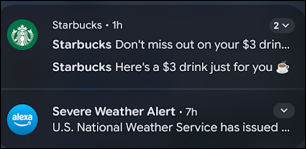
This ad popped up during my morning time-wasting ritual.


Sponsored Events and Resources

Online Event: September 16 (Tuesday) 11:30 a.m. ET. “Waystar Innovation Showcase: Activating Advanced Automation + AI to Transform Healthcare RCM.” Join us for Waystar’s Fall Innovation Showcase  to see the tools and tactics that are transforming healthcare payments and driving real, measurable results, like a 36% boost in workforce efficiency. In just one hour, we’ll reveal major advancements helping teams streamline processes, ensure accuracy, and speed reimbursement with AI + less manual work.

Contact Lorre to have your resource listed.


Acquisitions, Funding, Business, and Stock

Virtual chronic condition care provider Goodpath raises $17 million in a Series A funding round.


Government and Politics

image

A whistleblower lawsuit accuses Alphabet-owned Verily of misusing patient data, with its former diabetes business chief commercial officer alleging he was fired for reporting HIPAA violations to company leaders.


Other

image

A LinkedIn post by Archbold Medical Center (GA) CIO/CMIO Kendall Wyatt, MD, RN summarizes the just-concluded Oracle Health and Life Sciences Summit:

  • Several clients are using the company’s new EHR.
  • The company is moving beyond “listen and create a patient note” ambient AI capability to creating orders for physician review based on their practice patterns.
  • The Clinical AI agent is being used by nurses and medical assistants at BayCare Health System to chart by voice.
  • Also mentioned: prior authorization approval prediction, automated coding, patient history summaries, and answering questions using the patient history.
  • He predicts that Epic is now like the former Cerner, which lost customers because bolting new capabilities onto an old EHR led to disconnected workflow and design.

Today’s bizarre company news: Medical Care Technologies announces that it is supporting its AI health diagnostics mission by acquiring a collection of sports trading cards and memorabilia.


Sponsor Updates

  • Censinet announces that enrollment is now open for the 2026 Healthcare Cybersecurity Benchmarking Study.
  • AdvancedMD will exhibit at the 2025 Psych Conference September 17-21 in San Diego.
  • Vyne Medical publishes a new guide titled “Machine Learning vs. RPA in Healthcare: Finding the Right Automation for Intelligent Data Processing.”
  • Netsmart will exhibit and present at the 2025 Ohio Council for Home Care & Hospice Annual Conference September 15-17 in Columbus.
  • Meditech releases a new case study titled “Wooster Community Hospital Health System Frees Up Nurses’ Charting Time by Almost 1,600 Hours Annually in Expanse.”
  • Tegria publishes a new case study titled “Accelerating Revenue Cycle Performance for Measurable Financial Gains.”
  • ReferWell names Natalie Dahle manager of people and culture.
  • TrustCommerce, a Sphere company, offers a new white paper titled “Demystifying Healthcare Payments: A Practical Overview.”
  • Bolton NHS Foundation Trust in England extends its rollout of Altera Digital Health’s Sunrise EPR to its community services.
  • TeamBuilder signs a partnership agreement with Workday.
  • Waystar will exhibit at the 2025 Biennial HFMA Tri-State Conference September 17-19 in Florence, IN.

Blog Posts


Contacts

Mr. H, Lorre, Jenn, Dr. Jayne.
Get HIStalk updates.
Send news or rumors.
Follow on X, Bluesky, and LinkedIn.
Sponsorship information.
Contact us.

Morning Headlines 9/12/25

September 11, 2025 Headlines Comments Off on Morning Headlines 9/12/25

OpenEvidence Acquires Google Ventures-Backed AI Startup, Amaro

OpenEvidence, which offers ad-supported medical search and AI for clinicians, acquires advertising company Amaro to enable advertising on its site.

Alphabet’s Verily covered up HIPAA violations, whistleblower says in lawsuit

A former Verily executive sues the company for allegedly covering up the improper use of patient health data and then firing him for bringing it to the attention of upper management.

Penguin Ai Secures $29.7M in Venture Funding to Tackle the $1 Trillion Administrative Burden in the Healthcare Industry

Healthcare administrative workflow software company Penguin Ai announces $30 million in funding.

TailorCare Acquires Leading Computer Vision Technology to Advance Personalized MSK Recovery at Home

Musculoskeletal care navigation vendor TailorCare acquires Stabl, which offers a computer vision monitoring platform.

Comments Off on Morning Headlines 9/12/25

News 9/12/25

September 11, 2025 News 3 Comments

Top News

image

OpenEvidence, which offers ad-supported medical search and AI for clinicians, acquires advertising company Amaro to enable advertising on its site.


Sponsored Events and Resources

Online Event: September 16 (Tuesday) 11:30 a.m. ET. “Waystar Innovation Showcase: Activating Advanced Automation + AI to Transform Healthcare RCM.” Join us for Waystar’s Fall Innovation Showcase  to see the tools and tactics that are transforming healthcare payments and driving real, measurable results, like a 36% boost in workforce efficiency. In just one hour, we’ll reveal major advancements helping teams streamline processes, ensure accuracy, and speed reimbursement with AI + less manual work.

Contact Lorre to have your resource listed.


Acquisitions, Funding, Business, and Stock

image

Penguin Ai raises $30 million in funding. The company offers AI solutions for administrative workflows that include medical coding, prior authorizations, claims adjudication, and medical chart summarization.

image

Ascend Learning acquires Laudio, which sells a workforce management system for frontline leaders in health systems. I interviewed Laudio co-founder and CEO Russ Richmond, MD last year.

image

Bayer will shut down its radiology AI businesses, discontinuing Calantic Digital Solutions AI and the service offerings of Blackford Analysis.

image

Musculoskeletal care navigation vendor TailorCare acquires Stabl, which offers a computer vision monitoring platform.

image

Humana-owned CenterWell will acquire bankrupt The Villages Health, the North Florida-based healthcare system that serves 55,000 patients in the sprawling retirement community.


People

image

Joel Klein, MD, MA (University of Maryland Medical System)  joins Hackensack Meridian Health as chief digital and information officer.


Announcements and Implementations

image

Oracle CTO Larry Ellison — who briefly became the world’s richest person Wednesday as his ORCL shares rose by $101 billion — fielded a fanboy-style analyst question about enterprise application competitors during the earnings call.

It’s a huge advantage to be on both sides of that equation, both being an application builder and a builder of the application generation technology, the underlying AI application code generators. That’s a huge advantage. Let me give you another advantage, which is often a disadvantage. We’re very large. We no longer sell individual discrete applications. We sell suites of applications. We decided to go into the medical business against Epic, believing that we could solve much more of the problem because we’re much bigger than they are. By the way, we’re much bigger than Workday or ServiceNow, and we’re solving a larger portion of the problem. We’re able to do all of ERP, then we can add all of CRM, but all the pieces are engineered to fit together. That makes it so much easier for customers to consume.

Oracle launches the Oracle AI Center of Excellence for Healthcare, which will provide a dedicated company team, a resource hub, and advice on regulatory requirements.

Oracle will add OpenAI-powered features to its patient portal, including test result explanations, plain-language translations of medical terms, visit preparation, provider message drafting, and follow-up scheduling. General availability is expected in 2026. The company also announced that it will add precision medicine features from DNAnexus to its EHR.

image

Apple’s new Watch Series 11 offers hypertension notifications and sleep scoring. Prices start at $399.

AMA releases the CPT 2026 code set.


A study in England finds that primary care physicians who use Eko Health’s AI-enabled smart stethoscope increased detection of heart failure by 2.3 times, atrial fibrillation by 3.5 times, and valvular heart disease by 1.9 times.

Homecare Homebase will incorporate Element5’s agentic AI platform in its EHR.

image

A new KLAS report on end-to-end revenue cycle outsourcing ranks  Ensemble highest, while clients of R1 RCM and Optum report low satisfaction. Most vendors are investing in AI, but clients say it has yet to deliver operational or financial gains.


Government and Politics

The FDA will convene an advisory panel on November 6 to review AI-powered digital mental health tools.

Texas Attorney General Ken Paxton drops the state’s lawsuit against a pediatric endocrinologist who he had accused of falsifying medical records in providing transgender youth care. Paxton’s office said that it found no legal violations after reviewing the doctor’s medical records, but warned that it will continue to pursue cases against “delusional, left-wing medical professionals.”


Privacy and Security

US Senator Ron Wyden (D-OR) asks the FTC to investigate Microsoft over Ascension’s 2024 ransomware attack, which his office says began when a contractor clicked a malicious Bing search result. The incident was enabled by Microsoft’s continued support of the outdated RC4 encryption standard, which the company had pledged to fix in October 2024.


Sponsor Updates

  • Medicomp Systems achieves implementation milestones across Southeast Asia.
  • Vyne Medical publishes an automation guide e-book titled “Machine Learning vs. RPA in Healthcare: Finding the Right Automation for Intelligent Data Processing.”
  • HCTec staff sort and pack 3,420 pounds of food at the Second Harvest Food Bank of Middle Tennessee during the company’s volunteer day.
  • Health Data Movers names Anthony Velazquez integration engineer.
  • A new study using Inovalon data published in the Journal of the American College of Radiology reveals a decline in the number of US radiologists dedicating most of their clinical effort to pediatric imaging.

Blog Posts


Contacts

Mr. H, Lorre, Jenn, Dr. Jayne.
Get HIStalk updates.
Send news or rumors.
Follow on X, Bluesky, and LinkedIn.
Sponsorship information.
Contact us.

EPtalk by Dr. Jayne 9/11/25

September 11, 2025 Dr. Jayne 1 Comment

Most of us have seen images created by AI, whether we realize it or not. Sometimes they’re easy to spot, such as when people don’t have the correct numbers of digits or have atypical facial expressions.

Those who use stock images in their work rather than AI-generated images may have higher quality options, but a recent article in Hypertension looked specifically at the accuracy of images that are used to educate patients on how to monitor their blood pressures outside the medical environment.

The authors visited the websites of 11 major online stock photo providers and analyzed the first 100 images on each after searching for the term “blood pressure check.” They found that only 14% of the images were accurate as far as the patient being correctly positioned and with an appropriate device, but scores ranged from 7% to 28%.

Some of the most common issues were patients whose backs weren’t supported, feet weren’t on the floor, forearms weren’t resting on a surface or level with the heart, and legs were crossed. The authors call for better education, not only for patients, but for media organizations and website developers.

From Patagonia Sweater: “Re: professional attire. Right after I saw your mention about that and the role of white coats last week, my office administrator shared this article about the potential for medical coats to aid in the spread of drug-resistant infections. Nearly everyone in my office wears a monogrammed jacket courtesy of our academic department. Unlike white coats, the heathered appearance makes it much harder to tell if they’ve been cleaned lately so I think there’s a bit of an “ick” factor there.” The study looked specifically at contamination of healthcare personnel gowns (as they are called in the country where the study originated) by gram-negative bacteria and the relationship of that contamination to growing antimicrobial resistance. The observational study looked at 321 hospital workers and found a contamination rate of 61% for the gowns, with medically important bacteria found more often on those worn in operating suites and intensive care units.

The authors concluded that healthcare personnel gowns are a significant reservoir of pathogenic bacteria at the hospital in question. They stated that “It is essential to implement infection control strategies that include improving the cleaning and laundering of gowns and ideally eliminating them from clothing to reduce the risk of transmission of nosocomial infection.”

There’s some irony to this when you consider the origin of the white coat as mentioned in the article that such attire has “been considered a symbol of authority, respect, cleanliness, neatness, commitment to health, and perceived patient safety” and that it dates back to the 1800s when Joseph Lister promoted its use during surgical procedures as an element to combat the presence of germs.

From AI Skeptic: “Re: AI. I’m one of the curmudgeons sitting in the back row and eating popcorn while waiting for the AI bubble to burst. There have been examples of AI creating bogus citations for scholarly articles and legal filings, but I got a kick out of this piece that looked at how an AI tool flagged journals for ‘questionable’ conduct.” The article proposes that making use of the algorithm “could help scientists avoid publishing in shady titles.” The underlying study looked at 15,000 open access journals to identify those that could negatively impact scholarly work by prioritizing profits over scientific integrity. More than 1,000 journals were flagged as potentially problematic. 

The work is receiving praise from organizations that promote quality and transparency in scientific publishing. The article mentions shifts in publishing business models, where authors pay a fee so that their articles are free to read, and notes that such a model has created incentives to publish high volumes of papers fast at the expense of ensuring quality. 

That last sentence really resonated with me. I’ve seen too many examples lately where quality is being devalued in favor of incentivizing other factors, such as patient reviews, facility aesthetics, and speed of treatment. No one wants to spend more time waiting around for healthcare services than they have to, and inefficient processes are maddening to me whether I’m wearing my patient hat or my physician hat. However, I also don’t want to be rushed through the care process by an organization or care team that’s cutting corners because they’re trying to meet an outsized metric.

The article mentioned that the algorithm isn’t as strong as it could be, noting that there were 1,700 false negatives, but also some false positives. Attempts to tune the model weren’t as effective as they hoped. Researchers in the field note the need for ongoing development of the model in order to combat unscrupulous publishers who change their titles or processes in an attempt to avoid being identified. The article notes that such publications will persist as long as research institutions base tenure and promotions on the number of papers published.

I’m always on the lookout for articles about wearable health devices. This one brought up a point that I hadn’t thought of previously. One of the physicians interviewed commented that, “When you become too dependent on what you perceive to be objective data … you lose a certain relationship with your body, such that it becomes hard for you to discern how you feel apart from what a device is telling you.”

We as physicians are always counseled to treat the patient, not the numbers, as a way of reminding us that we need to look at the entire picture of a patient’s history, symptoms, and exam and not just lab values. Maybe we need to incorporate some similar messaging into the conversations we have with patients about the best way to use health trackers in the real world.

image

Speaking of wearables, I’ve written previously about the Oura Ring, but a recent item mentions that the new facility in Forth Worth, TX is needed to support the company’s expanding relationship with the US Department of Defense, which is referred to as the company’s largest enterprise customer. The partnership has been around since 2019 and focuses on stress management, resilience training, fitness optimization, fatigue risk management, and early illness detection. The Texas facility is being purpose-built to fulfill defense orders and will have additional security.

I reached out to some active-duty military personnel, including ones for whom disrupted sleep is the norm. It sounds like the decision to purchase them is handled at the unit level. One officer mentioned that although he has heard about it, he’s never seen one in the wild.

Another mentioned that some human performance staffers showed interest in obtaining them, but it was determined to be a questionable use of funding, noting that “people who work in a SCIF (Sensitive Compartmented Information Facility) are probably most likely to be stressed, but can’t wear one. Nor can those at high risk of fatigue, such as air crew and special operations personnel.”

I would be interested if other military folks would like to weigh in. If you’re an Oura user and you feel that the device is making a difference for your health and well-being, give us a shout.

Do clinicians in your organization recommend fitness trackers or other wearables for patients? Have you used one to help manage your health? Leave a comment or email me.

Email Dr. Jayne.

Morning Headlines 9/11/25

September 10, 2025 Headlines Comments Off on Morning Headlines 9/11/25

Daymark Health Raises $20M For In-Home Cancer Platform

Virtual and in-home cancer care coordination startup Daymark Health announces $20 million in new funding, bringing its total raised within the last six months to $31.5 million.

Ascend Learning Acquires Laudio to Accelerate Innovation in Frontline Healthcare Leadership

Healthcare workforce management company Ascend Learning acquires competitor Laudio.

Bayer pivots away from AI platform business

Bayer will shut down its radiology AI businesses, discontinuing Calantic Digital Solutions AI and the service offerings of Blackford Analysis.

Oracle to Bring New AI Capabilities to its Patient Portal, Making It Easier for People to Understand Their Medical Records

Oracle Health will add AI features powered by OpenAI technology to its patient portal in 2026.

Comments Off on Morning Headlines 9/11/25

Text Ads


RECENT COMMENTS

  1. I'll bite on the disagreement side. 25+ years in EHR implementation, sales, and support. First, regarding the decision effect. Sure,…

  2. And which "political exercise[s]" by a private entity are appropriate for state governments in this country to punish with a…

  3. What do you mean? What was the "political exercise" that prompted this response?

  4. Many, yourself included, chose to make healthcare and Healthcare IT a political exercise. Shouldn't be shocked when the other side…

  5. I see a lot of people dislike what I said. I assume some don't like it because what I said…

Founding Sponsors


Platinum Sponsors


Gold Sponsors


RSS Webinars

  • An error has occurred, which probably means the feed is down. Try again later.