Recent Articles:

Healthcare AI News 9/24/25

September 24, 2025 Healthcare AI News Comments Off on Healthcare AI News 9/24/25

News

image

A new ASTP report says that 71% of hospitals used predictive AI tools in EHRs in 2024, mainly for outcomes, but increasingly for billing and scheduling.

image

Cleveland Clinic will expand its rollout of AI-powered sepsis detection system from Bayesian Health, in which it is an investor.

image

Clinic operator Akido Labs uses a proprietary LLM to let medical assistants conduct visits that are guided by ScopeAI, which generates and adapts questions, then summarizes the encounter for physician review. The company says the approach allows doctors to see four to five times more patients.


Business

image

Apple says that it  applied AI to its Heart and Movement Study data to build an algorithm that powers blood pressure monitoring in the new Apple Watch.


Research

An AI model that was trained on population data forecasts rates and outcomes across 1,000 diseases more accurately than many standard models, while also identifying comorbidity patterns over time.

A study says that the rollout of imaging AI in NHS hospitals has proven harder than expected, citing long procurement and contracting timelines, challenges in integration with legacy systems, resistance from skeptical clinical staff, and uneven governance. The authors conclude, “While AI tools may offer valuable support for diagnostic services, they may not address current healthcare service pressures as straightforwardly as policymakers may hope.”


Other

Albania’s government pledges a healthcare transformation that will be based on introducing AI in hospitals and expanding international alliances.

image

Expper Technology’s “huggable” AI robot Robin is being used in 30 nursing homes and pediatric units to offset staff shortages, engaging patients with music, conversation, jokes, and memory games. Thirty percent of Robin’s actions are autonomous,  while remote operators control the rest under clinical supervision.

Mayo Clinic nurses help build an AI-powered, EHR-integrated virtual assistant that creates nurse-specific patient summaries with links to clinical references.


Contacts

Mr. H, Lorre, Jenn, Dr. Jayne.
Get HIStalk updates.
Send news or rumors.
Follow on X, Bluesky, and LinkedIn.
Sponsorship information.
Contact us.

Comments Off on Healthcare AI News 9/24/25

Morning Headlines 9/24/25

September 23, 2025 Headlines Comments Off on Morning Headlines 9/24/25

Oracle Names Co-CEOs to Replace Catz as Software Provider Raises AI Bets

Oracle promotes Clay Magouyrk and Mike Sicilia to co-CEOS, replacing Safra Catz.

RevSpring to Acquire Kyruus Health, Creating a Connected Care Journey from Search to Final Payment

Patient communications and payment solutions RevSpring will acquire Kyruus Health, which offers provider search and scheduling.

Capital Rx Announces Funding Round of $400M to Accelerate AI-Powered Health Benefits Platform; Rebrands as “Judi Health” to Reflect Expansion Beyond Pharmacy

Pharmacy benefit manager and administrator Capital Rx rebrands to Judi Health, the name of its AI-powered health benefit management platform, and announces $400 million in new funding.

Glooko acquires Monarch to advance diabetes platform reach

Diabetes software vendor Glooko acquires Monarch Medical Technologies, which offers a glucose management system.

Caregility Raises $25 Million to Drive the Future of Hospital-Based Virtual Care

Enterprise telehealth vendor Caregility announces $25.1 million in new funding, bringing its total raised to $92 million.

Comments Off on Morning Headlines 9/24/25

News 9/24/25

September 23, 2025 News Comments Off on News 9/24/25

Top News

image image

Oracle promotes Clay Magouyrk and Mike Sicilia to co-CEOS, replacing Safra Catz.

Magouyrk was president of Oracle Cloud Infrastructure and has been with the company 11 years. Sicilia joined the company in 2008 and most recently was president of Oracle Industries. Both were heavily involved with Oracle’s AI work.

Sicilia, a former lobbyist, was an early post-acquisition spokesperson for Oracle in several federal hearings about the VA’s stalled Oracle Health project. He is a regular critic of Epic and CEO Judy Faulkner. CTO Larry Ellison said, “Mike has spent the last several years modernizing Oracle’s Industry applications businesses, including Oracle Health, by completely rebuilding those applications using the latest AI technologies.”

The promotions were first disclosed in a June SEC filing.


Sponsored Events and Resources

None scheduled soon. Contact Lorre to have your resource listed.


Acquisitions, Funding, Business, and Stock

image

Patient communications and payment solutions RevSpring will acquire Kyruus Health, which offers provider search and scheduling.

image

Pharmacy benefit manager and administrator Capital Rx rebrands to Judi Health, the name of its AI-powered health benefit management platform, and announces $400 million in new funding. The company has raised $732 million since its 2017 launch. I interviewed CEO AJ Loiacono last October.

image

Patient Square Capital will acquire tech-enabled group purchasing and supply chain company Premier Inc. in a $2.6 billion take-private deal. Premier, which went public in 2013, has been evaluating strategic alternatives for two years.

image

Prosper AI raises $5 million in seed funding. The company develops AI voice agents for patient access and administrative workflows.

image

Enterprise telehealth vendor Caregility announces $25.1 million in new funding, bringing its total raised to $92 million.

Diabetes software vendor Glooko acquires Monarch Medical Technologies, which offers a glucose management system. Glooko’s CEO says the acquisition will support its efforts to deliver a full hospital-to-home service.


Sales

  • The New York Office of Mental Health will implement Oracle Health’s EHR across 24 inpatient psychiatric facilities and 300 outpatient programs.
  • Yale New Haven Health (CT) will roll out Artisight’s Smart Hospital Platform, initially focusing on virtual nursing.

People

image

ReferWell names Loren Koerber (Medecision) VP of strategic account management.

image

Jason Bond, MBA (CareAbout Health) joins Sevaro Health as CFO and SVP of strategy.

image

Matt Rockhold (GE HealthCare) joins Thynk Health as chief commercial officer.

image

Joe Moscola, PA, MBA (Northwell Health) leaves the organization and will offer advisory consulting services.

image

Allymar Health Solutions hires Cecil Lynch, MD, MSc (Accenture) as CMIO.

image

Scottsdale Institute appoints John Glaser, PhD (Harvard Medical School) as board chair, replacing co-founder Don Wegmiller.


Announcements and Implementations

image

Sutter Health (CA) will use Epic-connected medical devices in its Sutter Sync digital care program for patients with chronic conditions and pregnancy.

Quest Diagnostics announces a collaboration with Epic to integrate its lab operations nationally, streamlining ordering, results, billing, and patient engagement through technologies like MyChart as part of its Project Nova initiative

Micromedex adds AI-powered drug information search for clinical decision support.


Government and Politics

VA Electronic Health Record Modernization Integration Office CNIO Toni Phillips, RN touts the new Oracle Health-based federal EHR’s streamlined medication administration capabilities, noting that the clicks to scan patient IDs have been reduced from 15 to two.


Sponsor Updates

  • Worcestershire Acute Hospitals NHS Trust’s review of Altera Digital Health’s Sunrise EPR finds that the system has delivered significant advancements in care quality, patient safety, and clinical efficiency.
  • Black Book Research publishes a new report titled “The Middleware Mandate.”
  • Linus Health, Navina, and Wolters Kluwer Health will exhibit at AAFP FMX October 5-9 in Anaheim, CA.
  • Clinical Architecture sponsors CHIME Innovation Summit Southwest through September 25 in Irving, TX.
  • Consensus Cloud Solutions will exhibit at the HIMSS Gulf Coast Conference September 24-26 in New Orleans.
  • Divurgent releases a new episode of “The Vurge” podcast celebrating the company’s 18th anniversary.
  • Canopii Collaborative names Brady Thomas account executive.
  • Symplr adds capabilities to its Operations Platform that unify provider data.
  • Surescripts announces the 11 winners of its 2025 Surescripts White Coat Award.

Blog Posts


Contacts

Mr. H, Lorre, Jenn, Dr. Jayne.
Get HIStalk updates.
Send news or rumors.
Follow on X, Bluesky, and LinkedIn.
Sponsorship information.
Contact us.


125x125_2nd_Circle_thumb3

Comments Off on News 9/24/25

Morning Headlines 9/23/25

September 22, 2025 Headlines Comments Off on Morning Headlines 9/23/25

Premier, Inc. Announces Definitive Agreement to Be Acquired by Patient Square Capital in Transaction Valued at $2.6 Billion

Patient Square Capital will acquire tech-enabled group purchasing and supply chain company Premier Inc. in a $2.6 billion take-private deal.

DispatchHealth Scales Back In 10 Markets, Lays Off Employees After Merger

House-call provider DispatchHealth lays off employees and scales back services as it reorganizes after acquiring hospital-at-home software and services company Medically Home.

Overbilling at women’s health care group padded private equity profits while costing patients, insider says

Florida Woman Care co-founder and former employee-turned-whistleblower Kenneth Konsker, MD notifies state officials and insurers of alleged upcoding that he says amounts to $100 million in improper billing.

Comments Off on Morning Headlines 9/23/25

Curbside Consult with Dr. Jayne 9/22/25

September 22, 2025 Dr. Jayne 6 Comments

image 

I am always up for a good read. I tend to read more fiction than anything else, but a couple of non-fiction offerings caught my eye recently.

“Superbloom: How Technologies of Connection Tear Us Apart” by Nicholas Carr came out earlier this year. It takes its title from a botanical event where a significantly higher than normal number of wildflowers bloom all at once. It usually happens when there are unusually wet conditions and seeds that have been dormant are able to come to life.

The superbloom mentioned in the book happened in California’s Walker Canyon in 2019, leading to numerous social media posts around the hashtag #superbloom and a boom in photos that went viral. The phenomenon and widespread promotion of the event drew thousands of visitors to the site and led to massive traffic jams, public safety issues, and damage to fragile ecosystems as people rushed to the area and shared posts about it on social media.

The author looks at the phenomenon and different aspects of internet-based communications and social media, countering the idea that increased communication pathways are good for society. Carr gives a history of media and communication technologies, going back to the days when movable type made mass printing a viable option. He covers the birth of the telegraph, evolution of telephones and radio, and the explosion of TV and internet.

It’s a wide-ranging discussion of how technology impacts society, changes culture, and can create division rather than bring people together. He discusses how being constantly connected can make people feel isolated and how the internet can create vast echo chambers that encourage the dissemination of hateful content.

Carr spends a significant amount of time talking about the evolution of Facebook, and in particular, the creation of its newsfeed. The platform’s users are not only the audience, but also the content creators, and ultimately a product sold to advertisers. He discusses research that looks at why increased time spent on social media makes people less empathetic.

Interesting tidbits: The phrase “social media” was first documented in the 1800s. Radio transmissions were largely unregulated until the Titanic disaster, when private radio operators interfered with the rescue, an early example of “fake news.”

image

I have a bad habit of seeing or hearing about a book and adding it to my reading list without making a note about who recommended it or why I wanted to read it. “Unaccountable: What Hospitals Won’t Tell You and How Transparency Can Revolutionize Care” was one of these. I added it to my library hold queue at some point and was a little surprised when it turned up on the shelf.

Still, it sounded good. I was excited to read it until I saw that it was published in 2012. I decided to read it with an eye towards understanding how far we’ve come since, although as I got into it, I quickly realized that we haven’t come very far at all.

Author Marty Makary introduces himself as a medical student who left medical school during his third year, disillusioned with the “dangerous and dishonest” behaviors that he saw during his training. He began graduate work at the Harvard School of Public Health and quickly fell into the movement around quality measurement as a mechanism of healthcare improvement. He returned to medical school after a year and began residency training in preparation for a career in surgical oncology.

On page 2 of the introduction, he describes “patients increasingly fed up with a fragmented healthcare system littered with perverse incentives,” which is what grabbed my attention in making me feel like we haven’t come far at all.

He describes situations where dangerous attending physicians aren’t confronted due to hospital politics. That still happens, although at least in my area, it seems to be less of a factor than it was when I first entered practice. He talks about patients winding up at hospitals that aren’t a good fit for their specific medical needs. Although there might be more transparency now with hospitals reporting quality measures and payers publishing that data, it still happens quite a bit due to the narrow networks that many insurance plans create.

Even today, people are talking about patient choice and how important it is for patients to do their research. However, when you are facing an expensive procedure, many in the US make their decisions on where to receive care based on insurance coverage and financial necessity.

He hits on one of my pet peeves, which is hospitals that shamelessly self-promote by naming their own departments “centers of excellence” without actually being accredited or recognized by an independent third party for any specific level of excellence. He puts it right out there: “Patient satisfaction surveys do not capture quality medical care, and ‘top’ scores and rankings in magazines are often paid for.” On these points, nothing has changed in the last decade.

He is open about his role in a few episodes of poor care. I admire his willingness to share this information since many physicians wouldn’t write about those events in a non-protected document. He looks at those episodes of care in a systematic way and identifies how individual decisions can be influenced by systems failures.

One passage in the book gave me a flashback from my own medical training. I was a lower-level resident on call, and the senior or supervising resident failed to provide the backup support that they should have. In my case, the resident told the interns not to call unless something was “really bad,” but didn’t give us any definition of the term.

In Makary’s case, he called his senior resident, who told him to go back to handling his workload (even though what is described in the book is more than one physician should be managing at a given time unless you’re in a disaster situation).

He goes on to skewer some of the same things that we are still skewering, including inflated CEO salaries. He takes particular issue with hospitals that aggressively fundraise from the public while spending money on all kinds of things other than actually treating patients, and finds it “unethical to raise massive monetary surpluses from local schools and charities while making cutbacks to frontline workers.” There’s still plenty of that going on these days.

He also laments “the culture of doing stuff” that is still pervasive in certain subspecialties, although the quality movement and greater patient advocacy are helping chip away at that trend.

Parts of the book were dated, but it still served as a good reminder that there is much work to be done in healthcare and that we need good and thoughtful people to do it. Overall, I’m glad I read it.

What nonfiction book would you recommend to a healthcare or technology colleague? Leave a comment or email me.

Email Dr. Jayne.

Readers Write: For Better Member Engagement, Talk to a Human

September 22, 2025 Readers Write 3 Comments

For Better Member Engagement, Talk to a Human
By Kevin M. Healy

Kevin M. Healy is CEO of ReferWell.

image

The healthcare industry is experiencing a digital gold rush. AI platforms are everywhere, offering innovative promises to change how we engage with members for the better. From chatbots to automated outreach tools, the future is fast, efficient, and increasingly faceless.

The issue that many people aren’t discussing is that while these tools offer a quick, and seemingly intelligent, alternative to direct outreach, people are not responding to it. 

Despite the excitement around AI and automation, the majority of healthcare appointments are still made over the phone. Not through an app or  chatbot, but a phone call, often with another human being, because healthcare is personal.

Research shows that 84% of healthcare consumers identified communication quality as a crucial factor in their overall patient experience. When someone needs help navigating the system, whether it’s finding a doctor, scheduling a mammogram, or understanding their benefits, they want to talk to someone who listens and knows their needs, not an AI bot that doesn’t truly understand the emotions that can come with complex healthcare decisions.

Digital tools have their place. Text reminders and emails can be helpful for tech-savvy members, and portals are a fantastic tool for direct follow-up questions with your provider or to reference after visit summary notes.

However, when it comes to driving action, such as actually getting people to the doctor, technology alone rarely moves the needle. A generic text cannot reassure someone who is anxious about an upcoming procedure. A portal doesn’t know if your insurance covers the provider you need to see. Instead, a phone call from a trained care navigator who speaks the member’s preferred language, understands their needs, and respects their time can make the difference.

A study conducted at the University of Alabama’s Patient Care Connect program found that 83% of patients were satisfied or very satisfied with assistance provided by care navigators, and an impressive 90% recommended the program to others. These human connections are more than feel-good anecdotes. They are proven strategies for increasing show rates, improving outcomes, and reducing care gaps.

This isn’t just a rejection of technology. It’s a reminder that we’re in the business of human health. AI can support and inform engagement efforts. It can help us identify the right people to reach and the right time to call, but it shouldn’t replace the human voice at the heart of care.

Let’s build smarter systems that elevate empathy, not eliminate it. Let’s use AI to empower human outreach, not sideline it. Let’s stop mistaking automation for connection. Because when it comes to getting someone to take that critical step, to schedule the appointment, show up, ask the hard question, and take control of their health, a conversation still works better than an algorithm.

Morning Headlines 9/22/25

September 21, 2025 Headlines Comments Off on Morning Headlines 9/22/25

Christopher G Chute, MD, DrPH, FACMI, to be awarded Morris F. Collen Award of Excellence at the AMIA 2025 Annual Symposium

The American College of Medical Informatics will present its Morris F. Collen Award of Excellence to Christopher Chute, MD, DrPH at the AMIA annual meeting November 15-19 in Atlanta.

Governor Hochul Announces $218 Million Investment to Improve Patient Care Across New York State’s Mental Health System

The New York Office of Mental Health will implement Oracle Health’s EHR across 24 inpatient psychiatric facilities and 300 outpatient programs.

The Responsible Use of AI in Healthcare

Joint Commission and the Coalition for Health AI publish “Guidance on Responsible Use of AI in Healthcare,” which provides internal governance for US health systems on implementing AI at scale.

Comments Off on Morning Headlines 9/22/25

Monday Morning Update 9/22/25

September 21, 2025 News 2 Comments

Top News

image

The American College of Medical Informatics will present its Morris F. Collen Award of Excellence to Christopher Chute, MD, DrPH at the AMIA annual meeting November 15-19 in Atlanta.

He is an informatics professor and head of biomedical informatics and data science at Johns Hopkins University and professor emeritus of biomedical informatics at Mayo Clinic, a division he founded and chaired for 20 years.


HIStalk Announcements and Requests

image

The vast majority of poll respondents don’t agree with Larry Ellison’s belief that Oracle’s size and application development technology gives it a strong competitive advantage over Epic. Reader Jim says this:

I think Epic’s customer focused strategy and market size gives it a strategic advantage. Oracle has significantly underestimated what it takes to win in healthcare. Healthcare requires a long-term view and consistency even when profits are elusive. Mass layoffs, major customer losses, and not mentioning healthcare in their quarterly presentations supports my belief.

New poll to your right or here: Do you expect your personal financial situation to improve in 2026? Leave a poll comment to elaborate further.


image

Welcome to new HIStalk Platinum Sponsor Canopii Collaborative. Canopii is a healthcare IT services firm that specializes in providing consulting services for health plans and health systems. Our primary focus is ensuring that you achieve the maximum value of your Epic software. Leveraging deep domain expertise in the Epic ecosystem, Canopii offers personalized attention to clients and delivers measurable, sustainable results. We are committed to improving healthcare outcomes by optimizing systems, increasing efficiency, and helping clients achieve their strategic goals. Thanks to Canopii for supporting HIStalk.


Sponsored Events and Resources

None scheduled soon. Contact Lorre to have your resource listed.


Acquisitions, Funding, Business, and Stock

Morgan Stanley predicts that AI will generate “trillions of dollars in savings” by 2050, including $600 billion from drug development and $900 billion from hospital costs.

Investigative outlet The Lever reports that Epic’s new MyChart user agreement requires users to accept binding arbitration and a class action waiver, with patients who decline being redirected to a downgraded version of the portal.


People

image

Ganesh Persad, MSBI (Emory Healthcare) joins Cottage Health as VP/CIO.

image

UnitedHealth Group promotes Sandeep Dadlani, MMS, MBA to CEO of Optum Insight, its technology-enabled services business that includes the acquired Change Healthcare.


Announcements and Implementations

image

Evidently launches Ask Evidently, an AI chat tool that embeds in any EHR and lets users query information in the patient’s chart.

image

Joint Commission and the Coalition for Health AI publish “Guidance on Responsible Use of AI in Healthcare,” which provides internal governance for US health systems on implementing AI at scale.

University Hospitals launches its whole-hospital Connected Care Team initiative at UH Lake West, where it provides virtual nursing support to inpatient nursing units.

image

A new KLAS report reviews patient communications.


Other

A new Harris Poll survey finds that half of healthcare workers will seek or take a new job next year, although two-thirds say they would stay if their employers provide tuition support. Half of healthcare employers say that lack of advancement and educational opportunities drive employees to seek jobs elsewhere. Employees cite AI as the top skill they expect to need within five years, although 42% worry that it will take their jobs. 

A therapist accidentally shares his screen during a virtual session, allowing the patient to see that he is pasting their conversation into ChatGPT to suggest responses. In another case, a therapist who is replying via email to a grieving patient forgets to delete the AI prompt header, “Here’s a more human, heartfelt version with a gentle, conversational tone.” Patients not only feel misled, but unhappy when they find out that their private thoughts are being exposed to a tool that offers limited privacy assurances.


Sponsor Updates

  • PerfectServe surpasses $100 million in contracted annual recurring revenue, a testament to the accelerating adoption of its Unite healthcare communication and scheduling platform.
  • Black Book Research announces that Meditech Expanse has been ranked the top EHR for community hospitals under 150 beds.
  • Surescripts publishes a new data brief titled “Care Teams Seek Tools to Improve the Patient Experience.”
  • Meditech announces that customers are now live with the latest workflow advancements to its Traverse Exchange interoperability solution, which now includes consolidated patient summaries.
  • Altera Digital Health, Artera, HealthMark Group, Infinx, Meditech, MRO, Nym, PerfectServe, TruBridge, and Waystar will exhibit at the MGMA Leaders Conference September 28-October 1 in Orlando.
  • Nordic releases a new episode of its “Designing for Health” podcast titled “Interview with Justin Schrager, MD and Nick Sterling, MD, PhD.”

Blog Posts


Contacts

Mr. H, Lorre, Jenn, Dr. Jayne.
Get HIStalk updates.
Send news or rumors.
Follow on X, Bluesky, and LinkedIn.
Sponsorship information.
Contact us.

125x125_2nd_Circle_thumb3

Morning Headlines 9/19/25

September 18, 2025 Headlines Comments Off on Morning Headlines 9/19/25

After Transforming Neurological Care, Sevaro Secures $39M to Expand AI Powered Specialty Care Platform

Virtual neurology care company Sevaro Health raises $39 million in a Series B funding round.

Doximity Faces Lawsuit Over Alleged AI Prompt Hacking for Trade Secrets

Doximity countersues OpenEvidence for defamation and false advertising in response to a lawsuit filed by OpenEvidence in June that claims Doximity engaged in corporate espionage and defamation.

Seven Starling Raises Fresh Funding to Accelerate National Expansion of Women’s Mental Health Platform

Virtual maternal mental healthcare provider Seven Starling announces $8 million in new funding.

Comments Off on Morning Headlines 9/19/25

News 9/19/25

September 18, 2025 News 1 Comment

Top News

image

Sevaro Health raises $39 million in a Series B funding round.

The company’s Synapse AI technology connects hospital-based providers with virtual neurology care.


Sponsored Events and Resources

None scheduled soon. Contact Lorre to have your resource listed.


Acquisitions, Funding, Business, and Stock

image

Bambu Ventures and Innova Capital Partners acquire telehealth company Lemonaid Health from what’s left of 23andMe, which is currently in the midst of bankruptcy proceedings, for $10 million. 23andMe acquired Lemonaid Health in 2021 for $400 million.

image

Provider workforce management software startup Assured raises $6 million in seed funding.

image

The feud between OpenEvidence and Doximity heats up, with Doximity now countersuing OpenEvidence for defamation and false advertising. OpenEvidence sued Doximity in June for “brazen corporate espionage” related to Doximity executives allegedly impersonating various physicians and using their NPI numbers to gain access beyond what they were entitled to, with their alleged ultimate goal being to grab OpenEvidence code. (Dr. Jayne had fun summarizing the suit when she came across it several months ago.) Both companies are looking to create a ChatGPT-like tool for healthcare.


Sales

  • Sutter Health (CA) customer support teams will use Hyro’s AI-based voice and chat capabilities.

People

image

Todd Holling (University of Texas Health San Antonio) will join Kootenai Health (ID) as interim CIO.

image image image

Konza Health promotes David Dooley, MBA to VP of software solutions and engineering, Melissa Talley to VP of clinical data quality, and Sara Warnock to VP of health IT.


Announcements and Implementations

Ardent Health implements Ambience Healthcare’s AI software for documentation, coding, and clinical workflows across its ambulatory sites.

University Hospitals (OH) launches a Connected Care Team virtual nursing program at its Lake West Medical Center using technology from Vitalchat.


Other

Mayo Clinic’s Department of Nursing develops Nurse Virtual Assistant, a generative AI tool that displays patient care summaries and evidence-based nursing resources in a tab within Mayo Clinic’s EHR.


Sponsor Updates

image

  • Infinx sponsors The Cancer Research Collaboration & RadNet Golf Tournament in Mission Viejo, CA.
  • Ellkay sponsors the Emerson Health (MA) Auxiliary Golf Tournament.
  • First Databank names David Beam strategic account manager, Ethan Donohue software engineer, and Crystal Krebs clinical informatics pharmacist.
  • Five9 develops an AI-powered integration for ServiceNow.
  • Fortified Health Security names Grant Thorburn enterprise regional director.
  • Healthcare IT Leaders sponsors the SCHIMSS Annual Fall Golf Tournament & Scholarship Fundraiser.
  • Health Data Movers wins a Best Firms to Work For Award from Consulting Magazine.
  • MRO will exhibit at the NAHRI Revenue Integrity Symposium September 25-26 in Westminster, CO.

Blog Posts


Contacts

Mr. H, Lorre, Jenn, Dr. Jayne.
Get HIStalk updates.
Send news or rumors.
Follow on X, Bluesky, and LinkedIn.
Sponsorship information.
Contact us.
EPtalk by Dr. Jayne 9/18/25

September 18, 2025 Dr. Jayne Comments Off on EPtalk by Dr. Jayne 9/18/25

image

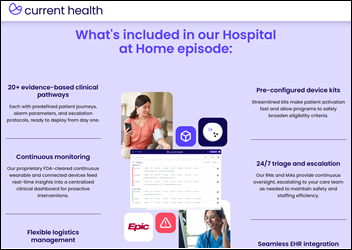
This week marks the fifth annual Telehealth Awareness Week with the American Telemedicine Association hosting numerous online events. Many of the clinicians I know didn’t have any awareness of telemedicine prior to the COVID pandemic and some of them had to be diligently persuaded to offer video visits. I had been doing telehealth work (both on the IT side as well as clinically) for several years prior to its significant expansion in 2020, so I was used to working with that modality and was able to do some provider coaching and education when things started getting busy. It’s important to remember that there are many different varieties of telehealth beyond the traditional patient/provider video visit. I’ve worked with organizations using telehealth for referral/consultation visits where the referring provider is in the room with the patient, for physician triage in the emergency department, for additional expert coverage in the intensive care unit, for lactation support, and more. The benefits of a well-run telehealth program are substantial, and I hope organizations continue to refine their telehealth offerings.

In celebration of the event, I’d like to share a classic article from Smithsonian Magazine, which reports that the idea of telemedicine was initially predicted in 1925. Radio pioneer Hugo Gernsback envisioned a device called the “teledactyl” that would allow physicians to view patients but also perform remote examinations via robot arms. As I read the article, I noted the similarities between this and surgical robots, which can be used to perform surgery when the surgeon is at a remote location. The article is a quick read and there are some links to similarly interesting articles at the bottom detailing “The iPad of 1935” and “The Episode Where George Jetson Rages Against the Machine,” which covers some topics that are still relevant more than a decade after the piece was written.

Speaking of TV, I’m a big fan of the show “Call the Midwife,” which depicts community-based nurses and midwives in London’s East End from the 1950s to the 1970s. The series’ writers do a great job showcasing different healthcare events of the various eras including major happenings such as the availability of oral contraceptives and the injuries caused by the drug thalidomide. It’s a window into how healthcare has been delivered in the home and how having nurses and physicians who actually know their patients can make a difference. Although a lot of health systems are expanding home health offerings, including “hospital at home” efforts, they still feel more fragmented than the community-based approaches with which patients may have even more benefits. Since the midwives in the show support home deliveries (as well as ones at the community maternity hospital), they also provide postpartum care in the home, so a recent article about “How home-based postpartum care could improve health for women and children” caught my eye.

It looks at how home visits can support patients who just gave birth as well as their infants, how they can improve breastfeeding outcomes, and how they can reduce emergency visits. I always think about the fact that in the US you have to take a test (both written and skills-based) to become licensed to operate a motor vehicle, but it’s assumed that everyone has the skills to take home a newborn without any formal training or scheduled support. Things may be different in situations where new parents live close to family members or have community support, but I often encounter new parents who feel like they’re adrift and end up having an urgent care visit to try to make sense of what’s going with their own body or with their infant.

The article mentions a 2024 study that looked at newborns and caregivers in South Carolina and found that those participating in a home-based program had fewer emergency department visits in the first twelve weeks postpartum than those who weren’t in the program. It also mentions lower costs and better outcomes for infants receiving home visits. I don’t see a lot of insurance companies advertising these kinds of benefits, so if there are readers whose organizations are involved in similar programs, I’d love to hear your thoughts.

There have been a few studies looking at the number of problems a patient mentions at the average primary care visit compared to the number of problems documented in the medical record and the number of diagnoses that make it to the billing screens. In general, physicians talk about more issues than they document, and bill for even fewer. A recent article in JAMIA titled “Comparing patient-reported symptoms and structured clinician documentation in electronic health records” caught my eye. I agree with the authors as to the importance of these types of information, especially with the focus on real world data, which relies on what is documented in EHRs. Patient-reported outcome measures (PROMs) are a way of getting more structured data into the chart rather than relying on clinicians adding structured elements as they gather the patient’s story. The authors set out to see how symptoms reported via PROMs compared to those reported by clinicians via EHR data entry.

The study looked at 913,000 adult primary care visits for “annual physical” done between January 2019 and December 2023. With that specified visit type, there should have been a lot of preventive care going on, with possibly a smattering of chronic condition management depending on how strictly the clinicians interpreted the concept of the annual physical. Regardless, most visits have a Review of Systems that is designed to elicit additional symptoms beyond what the patient volunteers as part of the History of Present Illness, and one would try to document them accurately. Unsurprisingly, the authors found that patient-reported symptoms for some conditions (joint pain, headache, sleep disturbance) were more numerous than those reported via clinical documentation. However, other symptoms had a higher frequency via clinical documentation (anxiety and depression). Researchers noted that “agreement between symptom self-report and clinician-documented structured codes was low to moderate.”

Most medical studies need to be replicated across diverse populations and in different care settings in order to have maximum validity. They also often lead to discovery of additional questions that need to be researched. Given the push for ambient documentation across all facets of healthcare today, one could hypothesize that ambient should do a better job of helping clinicians capture all the symptoms that patients report. I’d love to see this research replicated in an organization that is exploring the use of ambient documentation tools and perhaps comparing two sites that have the same EHR setup, but only one has access to ambient documentation tools. I think it would make for a fascinating read. I’d also be interested to see whether organizations that use tools specifically designed to capture PROMs have better agreement with clinical documentation, especially if they have workflows where the patient-generated data is reviewed as part of the visit. If you’re doing work using patient-reported outcome measures, I’d love to hear from you.

What’s a topic that you really wish healthcare technology researchers would sink their teeth into? Leave a comment or email me.

Email Dr. Jayne.

Comments Off on EPtalk by Dr. Jayne 9/18/25

Morning Headlines 9/18/25

September 17, 2025 Headlines Comments Off on Morning Headlines 9/18/25

Imagine Pediatrics Raises $67M to Expand Access to Value-Based Care for Children with Special Health Care Needs

Virtual and home-based care provider Imagine Pediatrics raises $67 million in Series B funding.

Lemonaid Health, 23andMe’s Telehealth Platform Including Mental Health Care, Sold for $10M

Bambu Ventures acquires Lemonaid Health from 23andMe, which is currently in the midst of bankruptcy proceedings, for $10 million.

Meditech advances toward agentic user experience and previews new AI initiatives

Meditech announces several AI enhancements to its MyHealth patient portal and Expanse EHR, including the addition of chatbots and the integration of AI-powered clinical documentation software with its Expanse Now app.

BetterNight Acquires Coastal and Epoch Sleep Centers to Expand National Sleep Health Services

Virtual sleep health solutions company BetterNight acquires Epoch Sleep Centers (RI) and Coastal Sleep Diagnostics (MA).

Comments Off on Morning Headlines 9/18/25

Healthcare AI News 9/17/25

September 17, 2025 News Comments Off on Healthcare AI News 9/17/25

News

image

Meditech announces several AI enhancements to its MyHealth patient portal and Expanse EHR at its customer event, including the addition of chatbots and the integration of Commure’s AI-powered clinical documentation software with its Expanse Now app. Meditech is also working to bring agentic AI to its billing and operational workflows.

URAC launches a healthcare AI accreditation program with pathways for AI developers and users of AI in healthcare delivery.

Sutter Health (CA) customer support teams will use Hyro’s AI-based voice and chat capabilities.

Ardent Health implements Ambience Healthcare’s AI software for documentation, coding, and clinical workflows across its ambulatory sites.


Business

The FDA grants clearance for the upgraded Tempus Pixel cardiac imaging platform from precision medicine vendor Tempus AI. The company acquired Paige, a developer of FDA-cleared AI pathology tools, last month for $81 million.

image

AI-powered virtual care startup Doctronic announces $20 million in Series A funding. The company has developed a chatbot that can assess symptoms, offer guidance, and connect users with virtual care providers.

Automated patient billing and payments software vendor Inbox Health announces $20 million in new funding.

Healthcare AI operating system developer Innovaccer acquires Story Health, which offers a digital specialty care management platform.


Research

image

Researchers at Stanford University develop healthcare AI benchmarks to help users determine how well AI agents can automate tasks that clinicians typically perform manually in EHRs.

image

Mount Sinai Fuster Heart Hospital (NY) launches a cardiac catheterization AI research lab to explore how AI can improve patient care and outcomes.


Other

HHS makes ChatGPT available to its employees, noting that it’s a helpful tool for summarizing long documents and advising users to to read results with a healthy dose of skepticism.

image

Three high school seniors in Nebraska develop MedFinanceAI, a bilingual chatbot designed to help Omaha residents better understand local medical costs. The team sourced the online tool’s data from local hospitals and medical databases.

The National University Health System in Singapore initiates AI-free periods amongst its providers to help prevent clinical de-skilling.

A patient in southeastern Pennsylvania uses Confluence Health’s AI tool to successfully appeal her insurer’s repeated denial of coverage for her ADHD medication. The insurer, however, claims the denial was initially caused by a physician reviewer error and that the AI-generated, 11-page appeal letter had no bearing on its final decision.


Contacts

Mr. H, Lorre, Jenn, Dr. Jayne.
Get HIStalk updates.
Send news or rumors.
Follow on X, Bluesky, and LinkedIn.
Sponsorship information.
Contact us.
Comments Off on Healthcare AI News 9/17/25

This Week in Health Tech 9/17/25

September 17, 2025 This Week in Health Tech Comments Off on This Week in Health Tech 9/17/25
LinkedIn weekly 091725 - Copy
Comments Off on This Week in Health Tech 9/17/25

Morning Headlines 9/17/25

September 16, 2025 Headlines Comments Off on Morning Headlines 9/17/25

Innovaccer Acquires Story Health to Pioneer AI Agents that Augment Specialty Care Teams

Innovaccer acquires Story Health, which offers a digital specialty care management platform.

Doctronic Raises $20 Million Series A to Bring Private and Personalized AI Doctor to the Masses

AI-powered virtual care startup Doctronic announces $20 million in Series A funding.

Bambu Ventures Establishes SPV to Acquire Lemonaid Health

Bambu Ventures and Chrome Holding plan to acquire Lemonaid Health, pending approval by the federal court that is overseeing 23andMe’s bankruptcy proceedings.

Assured raises $6M for AI-native network management that gets providers seeing billable patients faster

Provider workforce management software startup Assured raises $6 million in seed funding.

Comments Off on Morning Headlines 9/17/25

News 9/17/25

September 16, 2025 News Comments Off on News 9/17/25

Top News

image

Innovaccer acquires Story Health, which offers a digital specialty care management platform. Innovaccer will incorporate Story Health’s technology with its AI-enabled Healthcare Intelligence Cloud operating system for health systems.


Reader Comments

From Danger Mouse: “Re: Siemens Healthineers. Have you heard the rumor about Siemens Healthineers in preliminary negotiation to sell its Diagnostics division? If yes, do you have further details?” There were rumblings at the end of last year, when Siemens execs began taking a long, hard look at their Healthineers ROI. Bloomberg let the “exploring strategic alternatives” cat out of the bag last week, causing an uptick in company stock. Sources say the sale could bring in as much as $7 billion.


Sponsored Events and Resources

None scheduled soon. Contact Lorre to have your resource listed.


Acquisitions, Funding, Business, and Stock

image

Automated patient billing and payments software vendor Inbox Health announces $20 million in new funding, bringing its total raised to $55 million since launching in 2014.

Virginia Mason Franciscan Health (WA) initiates a second round of layoffs within its Virtual Health Services division, with the elimination of 24 roles expected to begin in November. The health system laid off 116 virtual health employees in June, citing financial problems.

image

Virtual mental healthcare company Cerebral raises $25 million in new funding, bringing its total raised to nearly $500 million. Cerebral acquired competitor Resilience Labs, its first acquisition, last month.

image

Post-acute care coordination startup MedSetGo raises $2.4 million in seed funding.

image

AI-powered virtual care startup Doctronic announces $20 million in Series A funding. The company has developed a chatbot that can assess symptoms, offer guidance, and connect users with virtual care providers.


Sales

  • Hospice of the Western Reserve (OH) selects Netsmart’s CareFabric platform.
  • Bergen New Bridge Medical Center (NJ) will go live on Epic in early 2027.

People

image

Health Catalyst names Ben Albert (Upfront Healthcare) president and COO. Health Catalyst acquired Upfront in January.

image

Alan Roga, MD (TruLite Health) joins Transcarent as chief clinical officer.

image

WittKeiffer hires Jeffrey Sturman (Memorial Healthcare System) as managing partner and IT practice leader.

image image

Agfa HealthCare names Chris LaFratta (Ascom Americas) SVP of client services, North America and Colleen Healy (Microsoft) VP of customer growth, North America.


Announcements and Implementations

North Valley Hospital District (WA) implements Oracle Health.

Meditech adds Commure’s AI-powered clinical documentation software to its Expanse Now app.

Sentara Health (VA) rolls out HealthSnap’s remote patient monitoring and chronic care management capabilities at 12 primary care locations.

image

Hospital General Castañer in Puerto Rico implements emergency room EHR software from EClinicalWorks.


Government and Politics

image

HHS OCR and ASTP release an updated version of the free Security Risk Assessment Tool for small and midsized providers.


Sponsor Updates

  • Wolters Kluwer Health will exhibit at Magnet & Pathway Conference 2025 October 8-10 in Atlanta.
  • CereCore publishes a new info sheet titled “Meditech Optimization Results.”
  • In observance of World Patient Safety Day, Black Book Research recognizes top vendors by patient safety technology category, including the following HIStalk sponsors: Elsevier and Wolters Kluwer Health (diagnostic and treatment accuracy tools), PerfectServe (care coordination and communication safety), AvaSure (fall prevention and safety sensors), and RLDatix (reporting and safety intelligence platforms).

Blog Posts


Contacts

Mr. H, Lorre, Jenn, Dr. Jayne.
Get HIStalk updates.
Send news or rumors.
Follow on X, Bluesky, and LinkedIn.
Sponsorship information.
Contact us.
Comments Off on News 9/17/25

Morning Headlines 9/16/25

September 15, 2025 Headlines Comments Off on Morning Headlines 9/16/25

Inbox Health Closes $20M in New Funding to Accelerate AI for Patient Billing

Automated patient billing and payments software vendor Inbox Health announces $20 million in new funding.

CMS Launches Landmark $50 Billion Rural Health Transformation Program

CMS releases details on how states can apply for funding through the $50 billion Rural Health Transformation Program.

MedSetGo Closes $2.4M Oversubscribed Seed Round to Transform Healthcare Navigation with AI

Post-acute care coordination startup MedSetGo raises $2.4 million in seed funding.

Comments Off on Morning Headlines 9/16/25

Text Ads


RECENT COMMENTS

  1. RE NEJM piece: He shouldn’t future-conditional with “they can retreat, which might mean abdicating medicine’s broad public role, perhaps in…

  2. The sentence was "most people just go to Epic UGM" - that's people going to Epic's annual user conference and…

  3. Merry Christmas and a Happy New Year to the HIStalk crowd. I wish you the joys of the season!

  4. "most people just go to Epic" that's a problem because then EPIC becomes a monopoly in healthcare, if it isn't…

Founding Sponsors


Platinum Sponsors


Gold Sponsors


RSS Webinars

  • An error has occurred, which probably means the feed is down. Try again later.