News 2/15/17

February 14, 2017 News 9 Comments

Top News

image

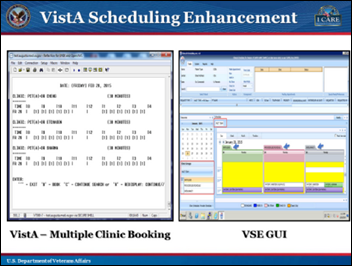
The VA will continue its planned tests of a homegrown patient scheduling system, but will hedge its bets by resuming testing of the Epic-developed, $624 million Medical Appointment Scheduling System (MASS) that had been put on hold in April 2016 pending a decision on which system to use.

The VA issued a scheduling system RFP in late 2014 following the wait time scandal that had nothing to do with technology. I wrote in mid-2015 in responding to a reader rumor that the Lockheed/Epic MASS project might be in jeopardy as a bolt-on solution,

The VA neatly sidestepped Congressional demands for firings, reorganization, and funding decreases by simply throwing its scheduling system under the bus and signing up for Epic. I don’t know what it will take to compartmentalize Cadence to run without any other Epic apps and then integrate it with the VA’s systems, but I do know that standalone healthcare scheduling systems have fallen by the wayside given the need for integration. It also seems that $624 million is a lot to spend for automating a single function, but then again both the VA and DoD are used to squandering mountains of taxpayer money on systems that are often failures in every way except as never-ending revenue streams for the chosen contractor.

A 2010 GAO report found that the VA had spent $127 million in trying to develop an outpatient scheduling system but hadn’t implemented anything, with the unnamed contractor that developed the defective system walking away with $65 million.


Reader Comments

From Tyga Choonz: “Re: Epic 2016 release. Being renamed to Epic 2017 after it was  released in late November and no customers upgraded to it. The name change is to help ensure that ‘customers don’t feel behind.’” Unverified, but reported by several readers.

image

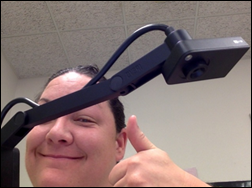
From Neon Cowboy: “Re: HIMSS. Will you be looking for booth reps on their phones again?” Of course, with my phone camera at the ready to document their inattentiveness for posterity (the above photo was posed by the Epic people at HIMSS14 as their homage to my never-ending phone rants). It’s moot, however, since past conferences have fulfilled my trifecta: (a) finding reps already staring at their phones within the first few seconds of the exhibit hall’s opening; (b) for booths that have at least three reps working, catching all of them immersed into their imaginary phone worlds simultaneously; and (c) watching a rep ignore someone standing right in front of him or her in favor of screwing around with their phone and then watching the potential prospect walk away in frustration. As I always say, vendors are spending fortunes to staff the world’s most expensive phone booths. Preliminary results in this week’s poll make “friendly, alert reps” easily the #1 draw for HIMSS attendees, with games, fancy booths, and refreshments finishing last in attracting passers-by into booths. Here’s the simple advice I gave to exhibitors back in 2015 to encourage their reps to seek out interaction with those whose appearance suggests at least mild interest:

  • Confiscate the phones of people assigned to booth duty.
  • Make it clear that booth reps shouldn’t be talking to each other unless they are with a booth visitor.

HIStalkapalooza Sponsor Profile

image

CareSync is the leading provider of software and services for chronic disease management, combining technology, data, and 24/7 nursing services to facilitate care coordination among patients, family and caregivers, and all healthcare providers. Founded in 2011, CareSync exceeds Medicare’s requirements for Chronic Care Management (CPT code 99490, 99487, 99489), and also offers care coordination services and technology for Annual Wellness Visits, Transitional Care Management, and CPC+. Additionally, CareSync clients are well positioned for positive payment adjustments with support for measures in all of the performance categories under the Merit-based Incentive Payment System (MIPS), and the CareSync consulting team helps healthcare organizations of all sizes prepare for the shift from fee-for-service to value-based healthcare. CareSync nurses serve as an advocate for the patient to turn doctor’s instructions into action, remove the barriers to care plan adherence, and ensure that information is shared with the right people at the right time. For more information about CareSync, visit www.caresync.com/ccm.


HIStalk Announcements and Requests

image

Here’s an interesting fact about upcoming HIMSS conferences. After HIMSS18 in Las Vegas, it’s then two straight years in Orlando for 2019/2020 since HIMSS pulled the 2019 conference from Chicago in a “two strikes and you’re out” hotel room pricing spat, with Chicago’s loss being Orlando’s gain. The Orlando dates are a bit screwy – February 11-15 in 2019 and March 9-13 in 2020, a full month’s difference.
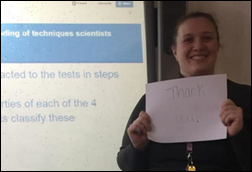

image image

We funded the DonorsChoose grant request of Ms. K in New York, who asked for SmartBoard replacement bulbs for her seventh grade special education and English language class since her school can no longer afford technology resources. She says the newly reactivated projectors have “awakened her students,” adding that they marveled that her project was chosen among all the others on DonorsChoose.

I have seats left for my CMIO lunch at the HIMSS conference next Tuesday at noon. It’s a no-agenda social get-together (provider CMIOs only). I’m buying a great buffet at a private table and it’s right off the exhibit hall, guaranteeing a return to the hubbub both physically and mentally nourished. Everybody seemed to enjoy it last time. Apparently the term “CMIO lunch” is confusing since vendor VPs keep signing up, but I will clarify by not sending them an invitation.


Webinars

None scheduled soon. Previous webinars are on our YouTube channel. Contact Lorre for information on webinar services.


Acquisitions, Funding, Business, and Stock

image

Aetna decides not to follow through on its vow to appeal a federal judge’s decision that blocked its $34 billion merger with Humana, instead opting to pay Humana the $1 billion breakup fee and move on. Humana also announces that it will exit the ACA insurance marketplace in 2018, the first insurer to pull out after President Trump’s first steps to repeal Obamacare.

image

In a related story, Cigna terminates its planned $54 billion merger with Anthem and sues Anthem for a $1.85 billion termination fee plus $13 billion in damages. Anthem, meanwhile, says Cigna doesn’t have the right to cancel the deal.


Sales

image

Hanover Hospital (PA) chooses QuadraMed’s enterprise master patient index.

image

Hospital for Special Surgery (NY) will implement PerfectServe’s Synchrony care team collaboration platform.

image

In England, Great Ormond Street NHS Foundation Trust chooses Epic, the fourth UK trust to do so.

image

Novant Health selects Voalte Platform for care team collaboration in its 14 hospitals.
image

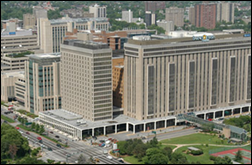
BJC Healthcare will deploy Oneview Healthcare’s interactive patient care solution at its Barnes-Jewish Hospital Tower and St. Louis Children’s Hospital, committing to 2,000 devices. 


People
image

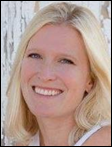
Chadron Community Hospital (NE) names CIO/COO Anna Turman as interim CEO, where she will transition to permanent CEO in six months.

image

Jennifer Haas (Aventura) joins TriNetX as marketing VP.

image

Skilled nursing facility operator National HealthCare Corporation hires Andy Flatt (Corizon Health) as SVP/CIO.

image

Healthwise Chief Science Officer Michael Barry, MD is appointed to the US Preventive Services Task Force.


Announcements and Implementations
SNAGHTMLae7d311c

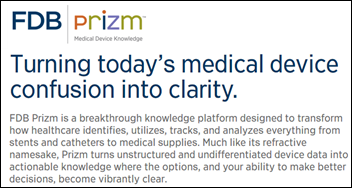
First Databank launches its Prizm medical device knowledge platform that helps providers make supply chain and clinical decisions.


Government and Politics
image

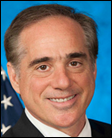
The Senate confirms David Shulkin, MD as Veterans Affairs secretary in a rare 100-0 vote and as the first non-veteran to run the agency. Among other accomplishments, he founded DoctorQuality, a safety reporting vendor that was acquired by Quantros in 2004.

Politico reports that Congress originally considered shutting down ONC as part of 21st Century Cures to reduce EHR frustration, but ended up giving the office even more responsibility, although potentially with more focus on coordinating rather than administering.

The US Supreme Court pushes back its review of whether employee class action lawsuits are valid if the employees are covered by arbitration clauses — which includes Epic as one of three cases to be argued — until the fall term that begins in October 2017, presumably when all nine judges will be in place.

image

In England, Health Secretary Jeremy Hunt says his 2013 goal of a paperless NHS by 2018 won’t be achieved, with hospital IT systems being a weak link. He’s now hoping for 2022. He replied to a question about using patient data to drive NHS strategy:

This is an area in which we have been behind but we are hoping to leapfrog the rest of the world due to a very remarkable thing that our GPs did about 10 years ago. They decided to ignore the Government’s plans for a national IT program in the NHS and exercise their right to go their own way. The government program collapsed, but they set up fantastic electronic health records, some of the best primary health records anywhere in the world … they have digitized people’s lifetime records … What we do not do at the moment, but it is starting to happen, is allow those records to flow around the NHS … If you are trying to set up electronic health records in America, you simply do not have that asset to use, because they have very good electronic hospital records, but those are episodic records, not people’s lifetime records … next year we will go a step further and introduce what we are calling the Blue Button scheme.


Privacy and Security
image

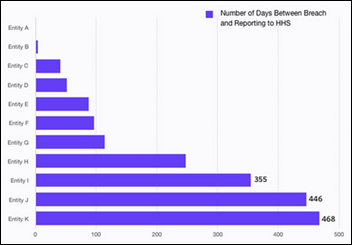
The Protenus Breach Barometer lists 31 reported incidents for January, with 58 percent of them attributable to insiders. HHS wasn’t notified until an average of 174 days after the breach, exposing those organizations to heavy fines for missing the 60-day reporting window.


Other
image

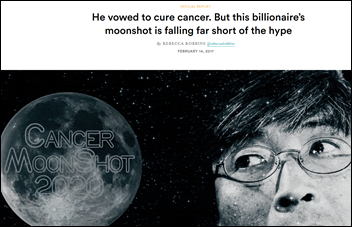
A STAT investigation finds that billionaire doctor Patrick Soon-Shiong’s “Cancer Moonshot 2020” has made little scientific progress, proclaiming it to instead be an “elaborate marketing tool” for his money-bleeding publicly traded companies. An independent scientist reviewer described the progress as only “the most miniscule and vague findings,” with some of the claimed success involving old research done elsewhere. The article also quotes MD Anderson’s lawsuit over the “moonshot” name (which it trademarked for its fundraising projects) in which it describes Soon-Shiong as “a greedy, if not shady, billionaire businessman who oversells his ideas and falsely takes credit for other’s work.” HIMSS is giving him stage time, which he will use to pitch NantDaVinci, a medical reasoning engine. A snippet from the STAT article, of which NantHealth and NantKwest investors were apparently either indifferent or unaware based on minimal share price reaction:

Soon-Shiong’s moonshot initiative looks less like a diverse coalition than a roll call of his tangled web of business interests. For starters, it’s not a separate legal entity; it appears to be housed within Soon-Shiong’s cluster of companies. The five biotech companies that are participating in the moonshot are the only ones sponsoring registered QUILT trials. And they are all closely tied to Soon-Shiong: He is either the CEO, a board member, or the controlling owner in each of them. Though Soon-Shiong has talked for a year about bringing major drug companies into the coalition, so far, just two have joined: Amgen and Celgene. He is a shareholder in both. And both are investors in Soon-Shiong’s companies … The moonshot website also touts a “historic alliance” with companies … The role of both appears to be simply that they cover doctors’ use of the GPS Cancer diagnostic for patients on their insurance plans. (Other corporate partners, BlackBerry and Allscripts, have invested in Soon-Shiong’s NantHealth.)
image

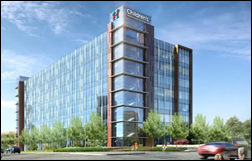
Children’s Healthcare of Atlanta will spend more than $1 billion to build a new pediatric hospital at North Druid Hills Road and I-85.

image

Pope Francis says in an address that when healthcare delivery models emphasize money, “there can be a temptation to lose the protections to the right to healthcare” for the poor and elderly. He adds that communities should reach out to those who live alone and not just the tiny fraction of people who are hospital inpatients.

Researchers find that the number of Americans over age 65 who are prescribed at least three psychiatric drugs has tripled in the past 10 years, with nearly half of those patients having no recorded diagnosis of mood, chronic pain, or sleep problems. The paper observes that the jump was highest in rural areas, leading them to speculate that the lack of availability of talk therapy, massage, or relaxation techniques may cause excessive reliance on drugs (they didn’t note that much of rural America is zonked out on narcotics, which might cause an increased demand for other drugs).
image

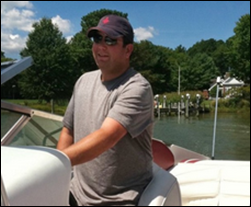
A fascinating Wall Street Journal story describes Evan Morris, a drug company lobbyist who oversaw a $50 million budget in running a “black ops” program to influence lawmakers. He wined and dined elected officials in convincing the Bush administration to stockpile $1 billion worth of Roche’s Tamiflu to prepare for an bird flu/H5N1 outbreak that never happened. He then launched a grassroots campaign to promote the use of Avastatin — a $90,000-per-patient breast cancer drug whose use the FDA wanted to ban given low effectiveness and significant side effects – planting articles on conservative websites describing women who said it gave them their only chance, with the resulting consumer and political pressure buying the company another year of sales and another $1 billion in revenue before the FDA finally cracked down. He raised money for Hillary Clinton’s presidential campaign in hoping to land an ambassadorship. Upon hearing that his drug company employer was investigating his unusual expenses in suspecting embezzlement, he played a round of golf, ate a steak dinner while buying the whole restaurant a round of drinks, then took a $2,000 bottle of wine into the woods and killed himself.

image

Bizarre: in Ghana, a family reneges on paying an undertaker who had prepared the body of an elderly relative for burial and instead steals the body to bury it themselves. The undertaker crashes the funeral with an assistant, opens up the casket, and starts carrying the decedent away until the family hurriedly pays up. Some attendees ran away in horror, while others whipped out their phones to record video in making their own “Grim Repo Man.”


Sponsor Updates

  • Besler Consulting’s The Hospital Finance Podcast wins a Gold AVA Digital Award.
  • CareSync adds services to support CPC+ practices.
  • Carevive Systems publishes its poster presentation from ASCO’s Cancer Survivorship Symposium: “Survivorship Care Plans: Strategies to Enhance Patient Utility and Value.”
  • Consulting Magazine recognizes The HCI Group as the eleventh fastest-growing consulting form of 2016.
  • HealthCast will exhibit at the 2017 MUSE Executive Institute.

Blog Posts


Contacts

Mr. H, Lorre, Jennifer, Dr. Jayne, Lt. Dan.
More news: HIStalk Practice, HIStalk Connect.
Get HIStalk updates. Send news or rumors.
Contact us.

125x125_2nd_Circle

HIStalk Interviews Kevin Daly, President, Zynx Health

February 14, 2017 Interviews 2 Comments

Kevin Daly is president of Zynx Health of Los Angeles, CA.

image

Tell me about yourself and the company.

I’ve been in healthcare for about 25 years in different segments. I started my career at Blue Cross and Blue Shield of Massachusetts. I spent a number of years at McKesson, both on their payor focus and then their hospital focus in software. I was a partner at Milliman for about 10 years, working on their Milliman Care Guidelines. I joined Hearst about four years ago. In January 2016, I was offered the opportunity to lead the Zynx group, which is one of the foundational companies of Hearst Health.

What’s the level of maturity among health systems in using evidence-based order sets and guidance?

I always represent that I’m not a clinician. My joke is I play one at work, but we can’t say that in the media. [laughs] Maybe the adoption is there, but what’s the use? Have hospital systems and post-acute organizations received the full benefit of evidence-based medicine and what it can actually do? I think the data shows that we still have a lot of opportunity to do some work in that area.

The core foundation of how Zynx started X number of year ago out of Cedars-Sinai was standardization and variation of care. That led to that evidence-based medicine and how it can be rolled through systems.

Now that health systems have in most cases implemented EHRs, are they still using ZynxOrder to maintain order sets and assemble external evidence?

ZynxOrder and ZynxCare are the foundational content or product offerings that help manage patients across the continuum. They’re actually still quite relevant. The question becomes, what next? Now that we have this solution, how can we continue to enhance it, build upon it, and then ultimately get to that nirvana of using clinical decision support in the optimal way?

As you think about where Zynx has been, we’ve been tremendously successful in pivoting in different ways around that concept of standardization and variations of care. Those two product offerings, order sets and plans of care, were extremely helpful. They’re still very helpful and relevant, but we’re looking at how can we continue to grow with some other offerings that the market needs.

Companies are taking guidelines from professional societies, like the American College of Radiology, and creating real-time decision support ordering guidelines. Are they competitors to Zynx or will you incorporate that kind of guidance into your products?

As you think about what Zynx does, it’s clinical content at the core. It’s how we look at the evidence and different types of data. We synthesize it and we bring it forward.

Some of that technical functionality that some of these standalone organizations are bringing actually resides within the existing EMRs. Is it as perfect? Is it as strong? Is the graphical user interface as nice? Maybe not, but that functionality still rests within most of the EMR vendors. We’re partnering pretty tightly with them to continue to keep our content in that forefront.

What’s the overlap in products or strategies among Zynx and the other Hearst Health offerings?

Greg Dorn is the president of Hearst Health. He was one of the co-founders of Zynx along with Scott Weingarten. There’s Zynx. There’s First Databank, or FDB. MCG, previously Milliman Care Guidelines, which is the group that I was originally associated with. Most recently, we have Homecare Homebase, which focuses in that post-acute homecare setting. Then MedHOK, which is a platform that focuses around payor interactions.

The umbrella of Hearst Health gives an organization like Zynx an opportunity to leverage a lot of different domain expertise and experience. One of the comments that was on HIStalk was about some of the changes that were going on at Zynx. We have made some changes in some structures and some reorganization within Zynx, but what’s enabled us to continue to grow and innovate is that we have some resources from Hearst Health. Not just our sister companies, but the actual broader Hearst Health.

It’s pretty nice to be able to pick up the phone and speak with Anil Kotoor, the founder of MedHOK, and talk about, what are you seeing as the risk model is moving around within this particular space? It’s actually quite useful.

You’re on the sharp end of technology changes that involve things incorporating pharmacogenomics into decision support, but also changes that involve the structure of how healthcare works, such as continuity of care. How do you incorporate those changes into your products?

I always like to say the folks on the sharp end of that stick are the clinicians and the administrators trying to get it done. I just happen to be the guy who shows up with what I think is the solution that’s best for them.

When you look at all those changes, everybody likes to think that their product or their offering is the total solution. We’re a component of a lot of bigger problems. That’s where being able to leverage, for example, the strengths of FDB is helpful. We do a lot of synergistic work, particularly with our order sets and their pharmacy data. As they’re spending a significant amount of time and effort in this pharmacogenomics area, we’re able to leverage that work as well.

I’m seeing that synergy with our sister company for sure. Care teams, care management, and how our tools or our content support all the changes that are coming as the risk models change. It’s kind of interesting because from a legacy perspective, Zynx was very much focused in the acute hospital setting. We had tremendous success, that’s where all the opportunities were, that’s where a lot of the mechanisms existed to deliver our solution, namely the legacy EHRs.

Now as you think about this post-acute space and some of the opportunities that are happening there, we’re still partnering with the legacy EHRs — the standard-bearers, if you will — but there’s some new, interesting players in this space. Hopefully there will be a press release about somebody we’re working with at HIMSS that will talk about what’s a longitudinal care plan and how can you execute on it utilizing someone’s technological platform and Zynx’s content that spans the continuum. Things like that are what’s exciting to me.

What’s the future look like for Zynx?

In my view of what we need to accomplish as an organization, you have to stick with what your core competency is. Then, not be afraid to stretch and expand. But when you think about standardization and variation of care, Zynx has been extremely successful in supporting and helping the standardization and limiting that variation.

How do we take that concept and continue to apply it, across not just the acute setting, but the post-acute setting? That’s why we are thinking about the different technological mechanisms by which to deliver this content in different places along that continuum. Is that a component of partnering with an organization that’s doing alerting versus us creating a technological platform or buying someone that does alerting? It’s those facets of sticking with what our core competencies are, understanding it, and then expanding it in a way that’s responsible and reflects our continued support of our existing customers.

We have a very significant install base of users who are still looking for what Zynx has always done, which we will continue to do, but we need to make advancements. We were just recognized again by KLAS for our order sets, which is important and valuable, but where are we going in the future? There’s a product called Knowledge Analyzer where we are seeing a significant amount of opportunity to help organizations who are merging, who are trying to understand their variations in their order sets and their plans of care and other documentation, and getting back to standardization and clinical variation. How can we, Zynx, continue to support that?

Do you have any final thoughts?

Zynx products are foundational to managing patients across the continuum. We’re going to continue to support our legacy products, but we’re going to continue to grow and evolve through additional product offerings and technological innovations that the industry needs and continue to support the mission that has mattered for 20-plus years. I thank you and I thank all of our customers and everybody who’s reading HIStalk.

Curbside Consult with Dr. Jayne 2/13/17

February 13, 2017 Dr. Jayne Comments Off on Curbside Consult with Dr. Jayne 2/13/17

I spent a couple of hours today getting ready for HIMSS. Priority one was outlining my agenda for continuing medical education sessions, which was tricky since it always turns out that there are multiple sessions I want to attend at the same time. The conference offers 22 hours of the specialized credit that informaticists certified by the American Board of Preventive Medicine need.

HIMSS delivers the sessions on demand as part of your HIMSS registration, but my experience last year was that some of the audio recordings were poor quality. There is also no substitute for attending a session in person and being able to participate in the discussion or connect with colleagues. I chose a primary and alternate session for each available time slot, but we’ll see what happens when I get to Orlando and the exhibit hall is beckoning.

I also worked on planning my social schedule, which also had too many overlapping offerings. I’ll be doing the exhibit hall booth crawl with at least four good friends. It’s always enjoyable to get other people’s opinions on new technologies and solutions. Of course it’s always a bonus to have someone help you scout out interesting shoes or create a diversion so you can photograph footwear or badly-behaved booth personnel without being too obvious.

Speaking of shoes, I spent some time looking for the perfect solution to get me through five days of nonstop walking. Last year I had some awesome pink running shoes from Edifecs as part of their #WhatIRun campaign. I’ve pretty much run those into the ground since then, but enjoyed being part of their campaign. I didn’t have much luck shopping, so I might have to pull out some sparkly running shoes to get through the week after all.

HIMSS is the virtual Super Bowl of conferences, so making sure I have a solid packing list was also part of today’s prep. I have a growing number of devices and various pieces of wearable tech that unfortunately involves a growing number of chargers. I have a universal adapter that takes care of the Android vs. iPad problem, but my Garmin watch has its own charger, as does my new favorite piece of wearable tech, my Ringly bracelet.

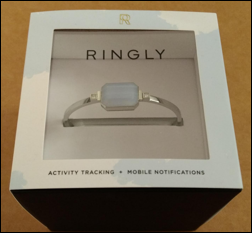
I had heard about Ringly more than a year ago, but am not big on wearing rings and was worried about the size of the stone being too much for me. I joked that if they ever came out with a silver bracelet, I’d be the first to order. Shortly after that, they came out with a stainless steel version, so I went on the waiting list last spring. I had to wait until the fall for it to arrive and have been putting it through its paces over the last several months. I’m pleased to say it’s HIMSS-worthy.

image

I’ve never ordered a piece of jewelry sight unseen, so I was a little nervous about it. It arrived in a big chunky cube of a box with the bracelet front and center. Sliding off the outer sleeve revealed the charging box nested underneath. The charger connects via USB to your laptop or USB transformer of choice. Not a problem for me since I usually end up charging things off my docking station anyway.

Advertising on the website at the time I ordered it said that the charging box had its own battery and would hold an 8-10 day charge depending on use. I was disappointed to learn that only applies to the ring version. For the bracelet, I’ll have to tote the charging box when I travel more than 2-3 days, which is what seems to be its maximum lifespan. I can forgive the lack of clarity on the website since they’re a startup and when I ordered they weren’t even shipping product yet. Still, having a battery in the box would be an improvement for those of us who travel.

image

Having to pack the charger, however, is a small price to pay for what the Ringly does. I don’t like carrying my phone in a pocket. It’s way too bulky even if I take it out of its protective case. If I put it in a purse, I have to turn the ringer on, which isn’t a great idea most of the time. I don’t like to carry my phone in my hands or leave it on the table when I’m out, which a lot of people do, but just isn’t my thing. The Ringly solves that problem – not only by providing discreet vibratory notifications, but best of all, it allows me to screen my calls and texts by configuring contacts in the Ringly app.

image

The Ringly app connects with dozens of other apps to provide notifications through a combination of vibrations and LED flashes. You can set it up dozens of ways, depending on how many buzzes and what color blink you associate with each app. For phone calls and texting, it links to your contacts and you can set it to either flash an additional color for certain people, or you can set it to only receive calls and texts from certain contacts. The LED is pretty subtle but helpful for giving you information on whether you need to dig out your phone or take other action.

I wanted to test drive it extensively before I decided to trust it. As a physician who is sometimes on call, I needed to know it was reliable, and it is. The connection screen in the app also shows charging and battery status.

There are a couple of quirky things about the Ringly. It likes your location to be turned on when it connects for the first time (or sometimes when it reconnects after a period of non-use). Every once in a while it doesn’t get along with my phone – usually first thing in the morning – and you have to “forget” it in your Bluetooth settings and then rediscover it. Sometimes it wants to be on the charger in order to connect.

Issues are uncommon, but you need to know the tricks in case it acts up on you. They’re also putting out app updates pretty frequently, and if it really doesn’t want to connect, usually it’s because there is an app update available. Another quirk is that Ringly does all their support through email and Facebook chats, so forget it if you like to talk to an actual person.

The other bonus of the Ringly is that it is an activity tracker. Based on how my phone identified it before I had the Ringly app installed, I suspect that it has Garmin innards. I tested it against my trusty Garmin Forerunner and found that it under-calculates by about 30 percent, however. That’s a pretty big margin of error if you’re into accurate distance traveled, but if you just want something as a relative indicator of activity, it gets the job done. The “silver” bracelet is actually stainless steel, so I’ve worn it running and to the gym with no worries. Not sure I’d do that with the plated gold-tone version.

We’ll have to see how it does on the exhibit hall floor. I’m counting on it to remind me of my appointments and to notify me when people are trying to track me down. It’s also pretty snazzy as a bracelet, so I can’t complain about that. The stone is smaller than I anticipated. If only they’d come out with a stainless version of the ring, I’ll be first in line.

What’s your favorite piece of wearable tech? Email me.

Email Dr. Jayne.

HIStalk Interviews Jason Mabry, CEO, Optimum Healthcare IT

February 13, 2017 Interviews Comments Off on HIStalk Interviews Jason Mabry, CEO, Optimum Healthcare IT

Jason Mabry is founder and CEO of Optimum Healthcare IT of Jacksonville, FL.

image

Tell me about yourself and the company.

I started my career in the healthcare industry about 10 years ago. Before that, I worked in the information technology industry. I’ve been focused for the past 15 years on consulting services and the last 10 on healthcare providers.

Along with my business partner Gene Scheurer, we started Optimum in 2012. We have built a company that has grown to over 500 consultants servicing about 75 healthcare systems nationwide. Our services include advisory, EHR implementation, training and activation, Community Connect, security, analytics, and managed services.

What consulting services are you finding are most in demand?

I’ve seen the trends and the evolution of service lines over the last 10 years. When we first started the organization, our clients were looking to us for implementation work. Implementation work was the focus and still is. Systems consolidate and form super systems. Clients are updating their EHR platforms and sunsetting old ones. That work continues.

I’m asked all the time, "Is this a short runway? Do you see this ending in the next two years?" I’ve been saying no for 10 years. All our clients are involved in some degree of implementing, optimizing, or upgrading.

Implementation work has been our bread and butter. We’ve been involved in all phases of that life cycle. From advisory services — where we assist clients with the associated cost and planning around implementing their EHR — to the implementation and build work and eventually the go-live and training.

Over the last two years, we’ve been developing services lines to help our clients prepare for the challenges they face in the coming years. The implementation piece is still there, but clients are looking to the future. They’re thinking and planning how to successfully transition to a value-based care model. They’re thinking about analytics. They’re thinking about Epic Community Connect.

Our focus and our value lies not just with providing key resources to support implementations, but working with and advising clients to proactively prepare for the future — regulatory changes, technology innovations, patient-driven healthcare choices, shrinking margins, and much more.

We’re also strongly focused on managed services. Healthcare organizations have spent an enormous amount of capital on implementing their EHR systems and understandably want to protect the investment. They’re finding, however, that the traditional means of supporting their users and systems are both expensive and ineffective. It’s getting hard for them to justify the large operating budgets being allocated for support. We’ve developed a methodology in this area that’s resonating very well with our clients.

Simply put, we do it better and cheaper. In this new space, we know it’s not good enough to say, “We can do this very well in your place, but it’s going to cost you.” We have a methodology and approach that we know allows us to do it better for less. Our leaders aren’t career consultants, but rather people who have demonstrated success and innovation inside healthcare organizations. They know an effective approach to support goes well beyond having staff who know the mechanics of tweaking the inanimate software system. We’re well aware of the expectations and complexities put upon healthcare IT leaders from inside their organizations. Our managed services method brings relief and credibility to the leaders as much as it provides line staff who do the day-to-day work.

Are you seeing hospitals holding back on implementing new products or services due to uncertainty about the Affordable Care Act?

I’m not. I see the opposite. I’m seeing clients planning for it. They, especially the physicians, are absolutely focused on that. As we transition from a transactional-based model to a financial model more focused around the prolonged well-being of the patient, we’re seeing these CMIOs focus on analytics, evidenced-based care, device integration, home health, and population health. I expect we’ll begin to see healthcare organizations looking to cut costs based on this uncertainty, and when we do, we’ll be here for them.

We recognize that providing services in this space isn’t about working with organizations with unlimited budgets. We understand the cost constraints healthcare organizations are under and our main objective is to stretch the value of their healthcare IT dollar, so they have more resources available for direct patient care efforts. Whether those cost constraints are coming from uncertainty about the future of ACA or something else, the result is the same for us — driving value for our customers.

Are any of them actually doing something with population health management?

The transition to value-base care is top of mind for almost all of our clients, from large health systems to small physician groups. Each of them is in a different phase of evolution in their journey toward patient-centered, accountable care.

We recognized several years ago that population health was going to be the next approach to improving health outcomes for healthcare providers. For us to be able to guide our clients through this period of transformation, we made a strategic decision to broaden and deepen our services in several key areas. Analytics, process improvement, and usable smart technology are some of these areas that we focus on when working with our clients in this space.

We know that healthcare providers must be able to deliver high-quality care with exceptional service at a reduced cost without burning out the providers or staff. Helping them understand their data to produce accurate, timely, and actionable information about the health of their patients, operations, and finances is critical. Next, we know that the workflows of 10 years ago in the ambulatory and acute care settings are not efficient in today’s world. So we focus on Lean methodology to establish new processes that create value for both the providers and the patients.

Finally, we understand that implementing technology that is neither intuitive nor helpful to the client does not create value. So we leverage our knowledge of the EMR and other third-party applications to adapt the technology to enable the efforts around process improvement and the ability to capture useful data. There is a huge focus right now on consumerism and technologies that empower patients to take control of their own healthcare needs. This is really exciting for us as it fits nicely into our service model and will help further value for our clients and their patients.

Are you seeing an interest in exchanging information among competing health systems?

We are. We still see some hesitancy in the marketplace. However, with the M&A activity, the need to find alternative and less-costly EHR options, and the federal regulations geared towards performance-based reimbursement, we’re seeing organizations opening up to options they wouldn’t have considered previously.

Essentially, they know they have to get ahead of this and are implementing the technology to enable it. If the power of a patient’s healthcare is going to be put back into their hands, they will begin to look for different options that best meet their needs. These may be accessing services at different locations, often out of network and often at competing locations. The patient is a smart consumer, so sharing across networks to care for the patient and not manage transactions is key. I think you’re going to see interoperability move forward at a faster pace than we’ve ever seen.

How do you see the balance of power shifting among what is arguably just four significant inpatient EHR vendors?

As a consulting company, we’re vendor neutral. However, we see two large vendors gaining a preponderance of market share. We work primarily with Epic and to a lesser degree Cerner. We support others such as Meditech and Allscripts as well. Then there are all the intermediate, peripheral, third-party vendors associated with the enterprise EHR products. But primarily, those two are the ones rising to the top on a regular basis during vendor selection. It’s no secret that a large part of our consulting staff is subject matter experts in those two areas, including our thought leaders and our line staff.

What we’re seeing outside the US is quite different based on the market. Epic and Cerner are still dominant in commercialized Middle Eastern regions and Europe, but are not yet major players in the Latin-speaking markets. This brings an entirely new set of vendors such as Philips and InterSystems that were built to support Latin speaking markets as a base language.

Is an ecosystem developing around Cerner and Epic where clients are willing to look outside their core solutions, or are those vendors are increasingly promoting those external solutions to their own customers?

Organizations have spent a lot of money on these enterprise systems, so they obviously want to get as much out of them as possible. I think most organizations have a policy of looking to their existing platform for any functionality being pursued before entertaining another vendor as an option. I certainly think these two vendors’ solutions have created a basis for an ecosystem, but there is always room for innovation and exceptions on the periphery.

From an application perspective, I think most healthcare organizations look at their EHR system and their ERP system as their two main hubs. So you have Lawson and PeopleSoft on the ERP side and we do a lot of work in that space as well. But yes, most peripheral applications run through the enterprise systems or as an adjunct to those core platforms. The idea is to drive down costs and increase integration through the use of enterprise platforms.

Are health systems that have developed innovation centers or started an incubator to create rather than simply consume technology seeing success from the time and money they’ve invested?

Absolutely. They’ve seen more end-user engagement because of it. Sometimes innovations are born out of multiple optimization cycles, but we know multiple clients who created their own innovation lab with some of their brightest clinical and technical minds. The end result is to improve the technology they’ve implemented and take the user experience to a higher level.

How has Epic’s Community Connect program touched the small-hospital and the physician practice markets?

It gives those organizations an opportunity to tap into some of the best and most technologically advanced EMRs without all the overhead. It’s a different paradigm. The hospitals themselves turn into the vendor. They have spent months and sometimes years optimizing their own system, so if you’re a recipient, you’re going to be receiving an optimized version of that instance. Epic, for example.

For those that can’t really afford to install their own instance of, say, Epic, or are too small to purchase Epic, this gives them an opportunity partner at a better cost with the hospital. Health systems providing the EMR have already gone through the pains of implementing and optimization. The receiving partner is getting all the lessons learned, documentation, tools, and best practices from the hub health system. Private practicing physicians have all the lab, radiology, and inpatient data at their fingertips allowing for immediate patient care.

As the industry moves from volume- to value-based care, accountable care organizations, and clinical integration, the need for a Community Connect model will continue to be in demand. Sharing information on one platform eliminates the need for interface development and enhances the ability to integrate clinical data.

What’s the demand for vendors hosting their own solutions?

It makes sense. These folks are in the business of providing for patients. With the information technology arm of the hospital requiring more and more investment, I think they view potential outsourcing as a solution to that.

In a particular market, you may have five or six Epic clients that have their own data centers and their own individual staff members devoted to the product. There’s an opportunity to consolidate that. There are opportunities to outsource some of that overhead and reinvest that back into the clinicians, back into the hospital staff.

As we move into the next phase, where margins may be thinner, healthcare providers are looking for ways to cut overhead. Outsourcing is a way to do that. A number our clients are listening to the conversation around managed services, such as a hosted data center or application support.

What was the single most important change you saw in the consulting business last year and what do you think it will be in the next year?

Last year as health systems moved past the large-scale EHR implementations, we saw a noticeable uptick in services involving optimization, data governance and analytics, ERP, managed services, and security. I believe next year we still see massive growth in these same areas, but also a focus on services that help navigate the implications of MIPS and MACRA.

Do you have any final thoughts?

We are excited to be so deeply involved in this industry. Our focus from the beginning has been improving patient care and improving the patient experience. The healthcare industry is exciting because of all the innovation currently underway. Healthcare is growing up at a rapid pace.

The shift from transactions to value-based care will create opportunities for innovation. We’ve seen that in the financial services industry, where instead of going into the bank to check your balance or to move money around, you have an app on your phone. The healthcare industry is moving toward involving the patient in his or her own healthcare in a similar fashion.

We’ve been involved in multiple implementations, but it really hits home when you walk the halls during a go-live. You’ve devoted so much time to bringing this system live and now it’s finally getting turned on. You walk through the NICU and other parts of the hospital and see that patients are at the center. They are the ones affected. Everyone in our company is focused on how to make that experience better.

Monday Morning Update 2/13/17

February 12, 2017 News 6 Comments

Top News

image

From the Cerner earnings call, following its release of Q4 results that met analyst expectations but sent shares down 4.4 percent Friday:

  • Full-year bookings revenue was basically unchanged vs. “a very tough comparable” of 2015, while revenue grew 8 percent.
  • President Zane Burke says that “2016 was disappointing from an ITWorks perspective,” referring to the company’s IT management services.
  • Population health revenue grew 13 percent in 2016.
  • Non-US revenue grew 6 percent on the year vs. 9 percent growth in domestic revenue.
  • The company touted its Value Creation Office that will work with clients in a joint governance model to make organizational improvements, with Cerner going at risk to earn a share of the financial outcome.
  • The migration of former Siemens Health Services clients is about halfway through, with a Cerner win rate of 80 percent.

Reader Comments

image

From Radar Love: “Re: tracking HIMSS attendees. You said it was gone from badges, but it’s back in the HIMSS conference app.” The HIMSS17 app from Canada-based Sherpa Solutions boasts geolocation services that allow attendees to find each other and apparently for exhibitors to track them (“leverage this innovative tool to reach the right people and boost their ROI.”) It also invisibly monitors attendees – which booths they visit and how long they spend there – so the conference organizer can “implement new pricing strategies, boost your booth space revenue, and design your most effective floor plan ever.” Seems pretty big-brotherish coming from an organization that runs privacy conferences. The app warns that it tracks location even when it’s not open and eats up your phone’s battery power accordingly. Pass.

From New Girl In Town: “Re: stress levels. I’m new to HIT (January) and feeling overwhelmed. Maybe this wasn’t the right industry for me.” I can assure you from experience that health IT has clearly defined seasons and this is the busiest one. January 2 until the HIMSS conference is an absolute madhouse of strategy-setting, PR, and business moves and everybody gets frazzled. A couple of weeks after the conference ends, everything quiets down by 60 percent, and then the summer doldrums begin in May and last until after Labor Day, when the second season runs until Thanksgiving. It may continue to be overwhelming if you work for a fast-growing or fast-failing vendor, but for most of us, a return to a more normal pace is imminent. The HIMSS conference is like the Super Bowl – it’s all you hear about for weeks before and the week after, but then nothing much happens for months.

From Taped Tie: “Re: the Andy Slavitt interview. It’s unusual that you ran it in two parts, the second on a Friday. The Twitterverse was all over it.” The conversation ran longer than usual, so I split it up to make it less burdensome to read in one sitting. Readership is usually a bit lighter on Fridays as people are traveling home and otherwise wrapping up their work week, but the site got around 6,000 page views that day. More importantly, since I run full interview transcripts and don’t give the interviewee a chance to see my questions in advance or to edit their responses afterward, it’s an unfiltered look into what he’s thinking. Speaking of the interview, here’s a fun behind-the-scenes fact – I had told Andy I would need 30 minutes, and as we were getting close to the bottom of the hour, he graciously alerted me that NPR would be calling at any moment, but he would put them off if I needed more time.

image

From Nurse Analyst: “Re: Presence Health (IL). Just announced Cheryl Rodenfels as SVP of IT operations after serving as interim since Deceber 5, 2016.” The forwarded internal announcement and her LinkedIn profile say just that.


HIStalk Announcements and Requests

image

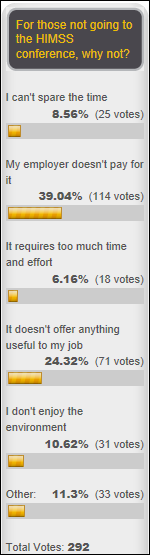
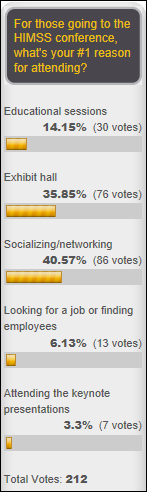
The folks who aren’t going to the HIMSS conference mostly say it’s because their employer doesn’t pay for their attendance (which suggests they would attend otherwise) or because it’s not useful to their jobs. Other reasons expressed:

  • “It’s too much of vendor peeing contest.”
  • “It’s become a boondoggle / network event.”
  • “Too expensive for value provided to us.”
  • “Tired of feeling like the duck in the shooting gallery.”
  • “It’s about creating new business – not.”
  • “All show and not enough substance.”

New poll to your right or here: What would most entice you to interact with a HIMSS exhibitor you don’t know much about?

image

Welcome to new HIStalk Gold Sponsor Diameter Health. The Farmington, CT-based company’s platform aggregates and normalizes EHR data for use in clinical and analytic applications by health systems, ACOs, HIEs, and health plans. Its Fusion core product scrubs and enhances EHR data using parsing, natural language processing, and proprietary logic to standardize, classify, de-duplicate, and enrich clinical data to create a single, longitudinal patient view that can be exposed via its API. Other products include Analyze (clinical data quality ratings and dashboards); Envision (detects gaps in clinical documentation); and Predict (identifies high-risk patients). The company’s CEO is industry long-timer and biomedical engineer  Eric Rosow (Premise, Allscripts). They’ll be at the HIMSS17 Interoperability Showcase, Booth 9000. Thanks to Diameter Health for supporting HIStalk.

I found a brand new explainer video for Diameter Health on YouTube.

image

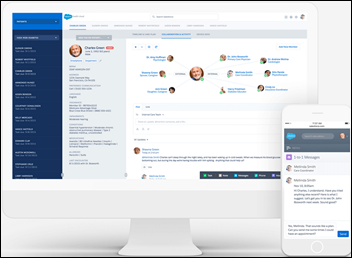
Welcome to new HIStalk Platinum Sponsor Salesforce. Salesforce Health Cloud puts patients at the center of care, giving providers a deep understanding of them (demographics, communications, clinical and non-clinical information, and data from EHRs and wearables) to deliver insightful, personalized care faster. Patients can access and track their health goals and care plans from any device, while providers unlock their EHR data by using it in apps that turn the system of record into a system of engagement. Salesforce Health Cloud is the ultimate patient relationship management platform. The world’s #1 CRM, reimagined for healthcare, costs $300 per user per month (Health Cloud Enterprise) and includes patient health timelines, care team productivity and collaboration, population analytics, patient lists, a patient community, EHR integration, EHR data objects via FHIR integration, and sophisticated security, support, and educational offerings. You can watch an online demo, schedule a HIMSS meeting (or just drop by Booth # 2675), and see Fitz and The Trantrums live Tuesday night of HIMSS week at the company’s party at BB King’s. Thanks to Salesforce for supporting HIStalk.

I found an intro video for Salesforce Health Cloud on YouTube.

image SNAGHTML9efc3d5a

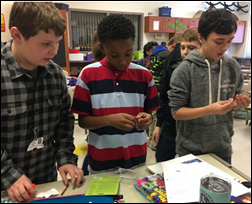
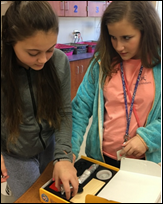
We funded the DonorsChoose teacher grant request of Ms. S in South Carolina, who asked for hands-on science supplies for her sixth grade class. She reports: “I was originally supposed to teach sixth grade math, but we lost a teaching position so I was given a near-empty classroom. We have used the meter sticks in several scientific investigations, we have used the magnets with iron filings to see magnetic fields, and the electric motor / generator kits were a huge success. Their eyes lit up when they actually made the motors work. I will forever be grateful for the opportunity to see how my students worked together to create science.”

image image

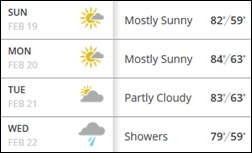
Orlando weather looks good, especially for those now buried in snow: the extended forecast says the HIMSS conference will kick off Sunday with 82-degree sunshine. Northeasterners may be shocked to emerge into a world of nearly forgotten colors like green and blue, shown in the live webcam shot of Orlando that I took Saturday afternoon.

Listening: new from One Desire, a new band from Finland whose Flying-V, swirling-synthesizer, harmony-heavy rock sound is reminiscent of Asia, Survivor, or Journey. Fresh nostalgia for fans of 1980s album-oriented rock only. Or, there’s Charly Bliss, which is good once you can get past the helium-sounding vocals that remind me of Kristin Hersh of Throwing Muses.


Last Week’s Most Interesting News

  • A Black Book survey finds that 70 percent of hospitals don’t use any electronic patient information that originates from outside their EHR.
  • The VA indicates that it will pursue a commercial EHR, with the GAO saying that system should be Cerner since the DoD uses it.
  • The Department of Defense goes live at its first MHS Genesis EHR site, Fairchild Air Force Base.
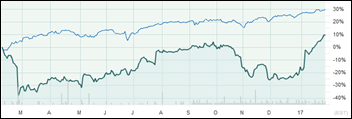
  • The Advisory Board Company is reported to be exploring strategic options following share acquisition by an activist investor.

Webinars

None scheduled soon. Previous webinars are on our YouTube channel. Contact Lorre for information on webinar services.


Acquisitions, Funding, Business, and Stock

image

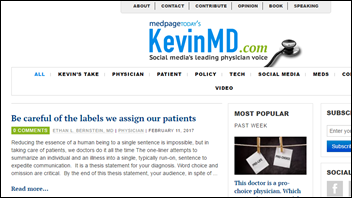
Internet company J2 Global and its Ziff Davis subsidiary may sell off the less-profitable parts of freshly acquired Everyday Health, which runs sites such as MedPage Today (acquired 2010), KevinMD.com (acquired 2010), MayoClinic.org (partnership signed 2009), and Cambridge BioMarketing (acquired 2015) as well as hospital marketing firm Tea Leaves Health. Publicly traded J2, which also owns PCMag.com, bought the company for $465 million. It admits that Tea Leaves Health, acquired for $30 million in August 2015, may never make money. J2 will also lay off 7 percent of the workforce and combine two offices, but its Medpage sites seem safe.


Decisions

  • Arkansas Children’s Hospital (AR) will switch from Meditech to Epic in November 2017.
  • Crawford Memorial Hospital (IL) will go live with a BD Pyxis MedStation automated dispensing cabinet system in April 2017.
  • Sitka Community Hospital (AK) will go live with an Omnicell automated dispensing cabinet system in 2018.
  • Scotland County Memorial Hospital (MO) will switch from TouchPoint Medical MedDispense to a BD Pyxis MedStation automated dispensing cabinet system In June 2017.
  • New London Hospital (NH) will switch from BD Pyxis MedStation to an Omnicell automated dispensing cabinet system in summer 2017.

These provider-reported updates are provided by Definitive Healthcare, which offers powerful intelligence on hospitals, physicians, and healthcare providers.


People

image

Audacious Inquiry hires Samit Desai, MD (Saint Agnes Healthcare) as chief medical officer.


Announcements and Implementations

image

Definitive Healthcare adds episode of care data for hospitals and post-acute care facilities, helping users to understand cost variance in high-impact procedures and conditions covered by CMS Bundled Payments for Care Improvement and Comprehensive Care for Joint Replacement programs, made possible by the company’s incorporation of ICD-10 claims data a few weeks ago.   

Rauland and Versus Technology announce bi-directional integration of their respective nurse call and RTLS systems.

image

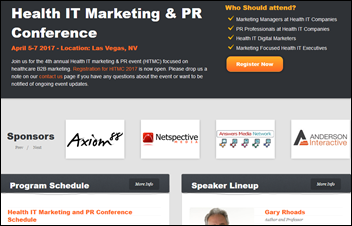
Registration continues through March 6 for the Healthcare IT Marketing and PR Conference in Las Vegas April 5-7. Register with promo code “histalk” to save $300. I agreed to mention the event in return for a free pass that I offered to the first responding reader willing to write what they learned on HIStalk afterward, so look for that report later.


Government and Politics

I missed this from a few weeks back. A CMS review of Medicare Advantage Organization online provider directories finds that 45 percent contain inaccurate provider contact information or incorrectly state that the provider was accepting new patients. CMS was following up on the results of a study of dermatologist plan directory listings in which 46 percent were duplicates and only half of those remaining had correct contact information, accepted the stated insurance, and were willing to schedule a new patient visit. CMS found common problems: medical groups list all their providers at each location regardless whether they actually see patients there; the Medicare Advantage providers don’t validate their provider information thoroughly; and doctors listed as active had often had been retired or dead for years. The studies will continue through a second round.


Other

image

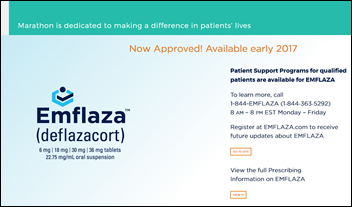
Marathon Pharmaceuticals, whose CEO’s previous company acquired old drugs cheap and then jacked up their prices, will sell a 1990s drug that costs $1,600 per year in Europe for $89,000 per year for US patients with a rare form of muscular dystrophy. Marketing the drug, which offers modest improvement rather than a cure, also earned the company a free FDA fast-track voucher that it can sell to any bidder, which in the past has profited the holder by up to $350 million. The company’s CEO also founded the Chicago-based healthcare technology incubator MATTER.

image

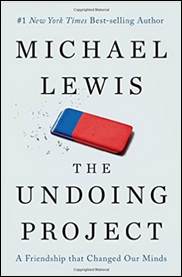
An excerpt from a new book from “Moneyball” and “The Big Short” author Michael Lewis says that doctors are no more logical than anyone else when faced with a diagnostic situation – they tend to force observable patient factors into a convincing but possibly wrong diagnosis instead of applying probability theory (note that we’re getting into the issue of whether emotionless artificial intelligence might outperform individual diagnostic judgment, although the article doesn’t mention that). It observes that doctors see what they’re trained to see with undue weighting applied to their own previous cases. It says medicine does not acknowledge uncertainty because doing so also unacceptably acknowledges that doctors make mistakes. Lewis points out that doctors invariably think that a patient’s recovery was due to the treatment they ordered and will more heavily order those same treatments on other patients even though conditions often resolve themselves without treatment. Lewis describes the disconnect between treating an individual patient and treating cohorts of patients:

The safest treatment for any one patient, for instance, might be a course of antibiotics; but the larger society suffers when antibiotics are overprescribed … A doctor who did his job properly really could not just consider the interests of the individual patient; he needed to consider the aggregate of patients with that illness. The issue was even bigger than one of public health policy. Doctors saw the same illness again and again. Treating patients, they weren’t merely making a single bet; they were being asked to make that same bet over and over again … To avoid troubling issues, they were likely to order additional tests … In treating individual patients, doctors often did things they would disapprove of if they were creating a public policy to treat groups of patients with the exact same illness.

image

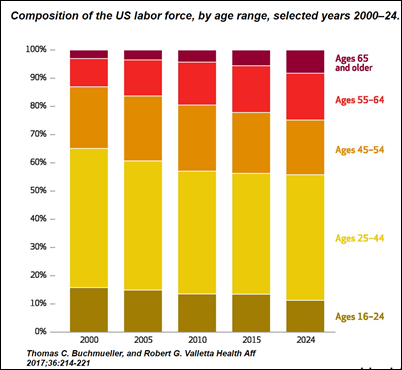
A Health Affairs article analyzes the relationship among employment, health, and insurance. Some of its points:

  • The labor force continues to age because of the Baby Boomer generation and those who are working past 65.
  • Higher numbers of part-time and contract workers, the increasing “gig economy,” and a decline in union membership have led to a 10 percent reduction in employer-sponsored insurance from 2000 to 2010.
  • Widespread opiate misuse has increased mortality in middle-aged, less-educated men who were already hit hardest by unemployment.
  • Higher unemployment has encouraged more people to claim disabilities, with 43 percent of middle-aged, unemployed men reporting having a disability, with many of them taking prescription pain medications every day.
  • The Affordable Care Act raised the number of insured people, including Medicaid, but did not reduce the extent of employer-sponsored insurance. It created a safety net that mitigated some aspects of the changing labor market.
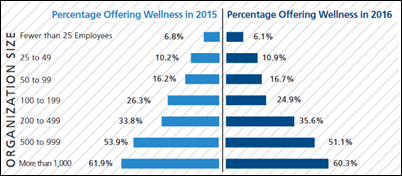
  • Employers are trying wellness programs to address costly chronic conditions by rewarding good health behavior, but they won’t necessarily see financial benefit since employees might not stick around as long as it takes for their health to improve. Wellness programs may also raise employee privacy issues,  the targeted conditions and financial penalties they incorporate may fall disproportionately on lower-income employees. and some aspects of those programs can run afoul of the Americans with Disabilities Act.

A hospital inpatient is arrested for drug possession after nurses revive him from a narcotic stupor, only to find that “numerous” visitors afterward were bringing him more heroin.


Sponsor Updates

  • Verscend Technologies’ HEDIS Measure are certified and ready for the 2017 season.

Blog Posts


Contacts

Mr. H, Lorre, Jennifer, Dr. Jayne, Lt. Dan.
More news: HIStalk Practice, HIStalk Connect.
Get HIStalk updates. Send news or rumors.
Contact us.
125x125_2nd_Circle

HIStalk Interviews Andy Slavitt, Former Acting Administrator, CMS (Part Two)

February 10, 2017 Interviews 4 Comments

Andy Slavitt, MBA was acting administrator for the Centers for Medicare and Medicaid Services from March 2015 until January 2017.

This is Part Two of the lengthy interview. Topics in Part One included perceptions of the healthcare system, high healthcare prices, doing a better job of explaining the Affordable Care Act, risk pools, and the individual mandate.

image

Experts thought high-deductible plans, which is a lot of them these days, would encourage people to become wiser healthcare consumers. Studies suggest that didn’t happen, that instead people who can’t afford to pay the deductible are avoiding getting care.

You’re right and you’re wrong. You’re right in the fact that we don’t have a functioning market that people make rational decisions because they’re paying out of pocket. You’re wrong. though. in how you’re characterizing what insurance looks like and feels like to people.

There are meaningful differences in the number of people today that say they can afford to take their medications — and do take their medications — than before the ACA. There’s meaningful differences in the number of people who report having a regular relationship with a primary care physician than before the ACA. There’s meaningful numbers of people who say they are satisfied and can sleep better at night because of coverage.

Two-thirds of policies have primary care outside of the deductible. About the same number — actually it’s more than that, it’s about 80 percent of policies, last I saw — you can get three primary care visits outside your deductible. About two-thirds have prescription drug coverage outside of the deductible. Lesser numbers,  you can see specialists and have name-brand drugs outside of the deductible. Preventive care is free. There’s a whole package of things.

By the way, cost-sharing reductions have meant that up at least until 2016 — I haven’t seen the data for 2017 — the average out-of -pocket costs, i.e. deductible and co-insurance, have declined every year slightly. They’re about flat, but they have actually declined from 2015 to 2016.

There’s this mass media perception driven by, I think, a lot of propaganda which isolates several of the stories. Particularly, again, of the middle-class people that people are paying attention to, but it’s about 2 percent of the population as a whole that’s showing these higher deductibles.

I’m not a believer that higher deductibles make people better shoppers. I do think that the package of things in the ACA — given what you said earlier, which is that we have to work on unit cost and healthcare is still too expensive — is a darned good package for people and really valuable. Because when things happen, they will have the out-of-pocket max and then they have no limit in terms of what’s covered.

It’s a really great deal. Can it be made better? Of course. Of course it can be made better if people really put the spirit to it.

Did we as taxpayers get our money’s worth in funding $35 billion in EHR incentives?

Not yet. Not yet we haven’t.

Here’s what we’ve accomplished — and I’m sure you could agree or disagree and have as much knowledge base if not more than I do on this topic — but there’s now what I call a chicken in every pot. You walk into a doctor’s office, you walk into a hospital, they have technology there. It’s not as connected as it should be, it’s not giving people the information they need. It’s not satisfying the clinicians in general. it’s not increasing their productivity. It’s probably not improving care.

But remember, before the ARRA, we didn’t even have the means to have the technology to hook up. We’re sort of like using computers pre-Internet, wondering why our factories aren’t getting more productive. We’ve got computers and it’s just basically fancy ways of writing down what we used to do in pen and paper. 

It has come some of the way. We clearly, though, have productivity breakthroughs, Moore’s Law breakthroughs, and other breakthroughs ahead of us. I don’t think anybody should lose promise in the power of what technology can do and that that investment will eventually pay off.

But if not, we need to be very honest about the barriers. We need to be very honest about what it’s not doing.

I get a little bit sickened every time I go to HIMSS, in some part, because we’ve got this massive industry that puts on a great party and has massive shows, and yet they have a customer base that is basically unsatisfied with the product. That seems like it’s where we should put all our energy.

Are incentives aligned to use technology to improve care?

You’d like to think that’s where it goes next. That’s exactly where it has to go next. If you’re an internal medicine physician seeing patients every day, people should be building things for you to help you do a better job with your patients, and that they feel and that you feel.

I just got back from a trip in Silicon Valley. I visited with some of the country’s and world’s best technology companies, and the way they do things … I mean, complex problems have been solved before. Let me give you an example.

Before TurboTax, you literally had to sit down with the tax manual and a bunch of forms and do a bunch of back and forth, back and forth, and back and forth. It took people weeks to do what you can do in like 20 minutes now. You don’t even have to accumulate your forms — for most people, they’re automatically lined up and populated. If you stacked up the IRS code, it would be over your head by double in terms of the volume of paper. They took all that, they codified it, and they put it some simple yes and no questions and preloaded all the information.

Doing your taxes now is a breeze. In fact, you’re not even focused on getting them submitted. Now you’re focused on, "How do I optimize to get my best refund?" and so on and so forth. That’s a pretty good analogy for the complexity that’s in healthcare systems.

They could have had you fill out the IRS 1040 form on the computer, typing into something that looked like the form. They didn’t. That’s what you have with EMRs. You’re basically going through and filling out a billing record instead of something that is helpful and intuitive to a doctor and a patient.

I don’t think it’s hard, It doesn’t happen for a variety of reasons, of which I’m happy to talk about, but I think that’s exactly what needs to happen.

What does your post-government career look like?

Everybody tells you when you leave the government, you shouldn’t make any decisions for 90 days. You should just take in all the incoming and hear what people have to say. I’ve already kind of violated that, I think, because we’re just in a special moment. I’m going to keep a presence in DC. It won’t be a full-time thing. I’ll announce in the next few weeks where that’ll be.

Essentially, to the extent that I can be helpful as sort of an honest broker, what we really need to do is stop healthcare from being either a Democratic issue or a Republican issue. It wasn’t great for us as Democrats. Republicans are finding it’s not great for them, either. But more importantly, the country, patients, physicians, innovators, and hospitals just will not be able to afford the back and forth and the high-risk, high-stakes nature of this. People resent having their healthcare politicized.

I’m going to do something. It will be in a more pragmatic fashion. I’ve been really doing that on the road, talking to CEOs, talking to governors, talking to people on the Hill, anybody who needs help and is working on an honest path towards a solution.

Other than that, I’m free, so I’m spending more time with my family and I’m letting the phone ring. People want to talk to me about something and it seems interesting, I’ll talk to them and see where I can be helpful. A lot of people are trying to figure out what to do next, so it’s a nice thing to be able to do to be able to help your friends when they need help. I’m in no rush to tie myself up for the next long-term thing as long as I can be helpful doing what I’m doing. I’m speaking and I’m writing and I’m convening sessions and so forth.

News 2/10/17

February 9, 2017 News 2 Comments

Top News

image

VA Acting Assistant Secretary/CIO Rob Thomas tells the House Veterans Committee that he is confident that the VA will replace VistA with a commercial system.

GAO Director of Management Issues Dave Powner added, “VA needs to let go of VistA and go with a commercial solution. We see no justification for VA and DoD pursuing separate systems.”

Thomas said the VA has remedied its previous lack of a coherent strategy, but Powner says a series of revolving door CIOs has caused too much strategic pondering without much to show for it.


HIStalkapalooza Sponsor Profiles

SNAGHTML9416186f

Lucro is a digital platform helping healthcare organizations make better purchasing decisions. Created with input from innovators at the nation’s leading health systems and a deep understanding of the healthcare buying cycle, Lucro exists to support providers by giving them the tools to evaluate and choose their best vendor partners. Accelerate your decisions with Lucro. Visit www.lucro.com.

image

Hedgeye Risk Management is an independent investment research and online financial media company. Focused exclusively on generating and delivering thoughtful investment ideas in a proven buy-side process, the firm combines quantitative, bottom-up and macro analysis with an emphasis on timing. The Hedgeye team features some of the most highly-regarded research analysts on Wall Street, all with buy-side experience, covering Macro, Financials, Energy, Healthcare, Retail, Gaming, Lodging & Leisure (GLL), Restaurants, Industrials, Consumer Staples, Internet & Media, Housing, Materials, Technology, Demography and Washington policy analysis.  For more information please visit www.hedgeye.com.


HIStalk Announcements and Requests

image

Welcome to new HIStalk Gold Sponsor Casenet. The Bedford, MA-based company offers the TruCare enterprise care management solution to improve care coordination, offering a single, member-centric, interoperable platform for utilization, case, disease, and population health management. Its customer base includes health plans, TPAs, and states that manage their own Medicaid programs. Benefits include improved outcomes, reduced cost, enhanced care management team productivity, and increased satisfaction. Thanks to Casenet for supporting HIStalk.

image

Welcome to new HIStalk Platinum Sponsor Solutionreach. The Lehi, UT-based company offers patient relationship management tools. Solutions include SR Conversations (incoming text message management), Limelight Self-Scheduling, appointment reminders, appointment wait list management, a check-in tablet, a patient portal, patient payments, patient surveys, electronic newsletters and email marketing, patient reviews and referrals, online reviews with Healthgrades integration, video testimonials, integrated social media, patient geographic mapping, and a mobile app that allows patients to manage appointments, submit payments, and send secure messages. Sign up for a demo and get a $50 Amazon gift card and download the “No-Shows No More” white paper. Thanks to Solutionreach for supporting HIStalk.

I found this just-published Solutionreach video describing how the company’s technology helps a dental clinic fill gaps in its schedule by text messaging patients.

image

We funded the DonorsChoose grant request of Ms. M in Arkansas, who asked for economics books and games for her elementary school classes. She reports, “The excitement that my students express when we have a day filled with economics games and experiences is hard to explain. I am so blessed with students who love to learn; however, challenged with the responsibility to continue to find innovative ways to reach each of them. Your donation provided my students with games such as Ticket to Ride and The Game of Life. These games simulate the economics present in our lives.”

image

One final HIStalkapalooza reminder before we stop talking about it and actually do it: those who received an email invitation must click the enclosed link to complete their registration. You otherwise won’t be on our check-in list, meaning you’ll be sulking around dejectedly at the neighboring Bongo’s Cuban Cafe while more attentive link-clickers are carousing without you inside the House of Blues. At least you’ll be warm even with our cold shoulder in that case – the extended weather forecast for Orlando looks like mid-70s for the high each day.

SNAGHTML94761937

Well, this is a confidence-inspiring vendor email.

This week on HIStalk Practice: InnovaTel Telepsychiatry raises $2 million. Community Care of North Carolina launches digital doc-sharing program with pharmacists. Innovaccer, Modernizing Medicine add MIPS reporting tools. Illuma Care Connections launches with HIE-like capabilities for eye care providers. Fauquier Free Clinic adds telepsychiatry services. Mission Treatment and Recovery adopts Telehealthcare’s messaging tech. The Consultant’s Corner focuses on healthcare reform’s impact on revenue cycle integration.


Webinars

None scheduled soon. Previous webinars are on our YouTube channel. Contact Lorre for information on webinar services.


Acquisitions, Funding, Business, and Stock

SNAGHTML95f1ad56

Cerner reports Q4 results: revenue up 7 percent, adjusted EPS $0.61 vs. $0.61, meeting analyst expectations for both.

image image

A federal judge blocks the proposed $48 billion merger of insurers Anthem and Cigna, citing anticompetitive concerns. Anthem, which will owe Cigna $1.8 billion if the deal falls through, says it will appeal.

image

Phynd Technologies announces that it has received an unspecified new investment by the venture fund of UNC Rex Healthcare (NC).

image

Doctor review site CareDash raises $2 million in venture debt financing and a line of credit. The company says it differs from other doctor review sites because it doesn’t accept money to remove negative reviews and it focuses on lower-income consumers. CareDash has raised $500,000 in equity funding and says it generated $6.7 million in revenue in 2016, although it doesn’t say how it makes money. I looked up a few doctors and the tiny number of reviews make the site’s usefulness questionable compared to Healthgrades or other doctor search sites.

SNAGHTML94c3872d

Nashville-based healthcare blockchain vendor consortium Hashed Health raises $2 million in an initial funding round led by Martin Ventures.

image

Israel-based Intensix, which offers a real-time predictive analytics solution that detects ICU patient deterioration, raises $8.3 million in a Series A funding round.

China-focused search engine provider Baidu shuts down its mobile healthcare business to focus on AI-enabled healthcare research. The two-year-old unit focused on online hospital appointment scheduling and an ask-a-doctor service. Baidu’s AI arm will add a service where experts answer medical questions online as well as a diagnostic chatbot. The company says it wants to move upstream from low-tech healthcare offerings into AI-powered genomic and drug research. The Chinese government restricted the company’s healthcare advertising last year following the death of a student who sought questionable treatment based on Baidu’s paid search results of a company that was operating from inside a hospital, but only as a paying tenant.


Sales

image

San Juan Medical Center (NM) chooses Cerner’s clinical, financial, and population health management systems.


People

image

Welltok hires Rob Scavo (TriZetto) as president/COO.

image

Alex Ginzburg (Intervention Insights) joins Casenet as CIO.

image

Avaap hires Craig Joseph, MD (El Camino Hospital) as chief medical officer.


Announcements and Implementations

image

HIMSS announces its 2016 Book of the Year as “Health Information Exchange: Navigating and Managing a Network of Health Information Systems,” edited by Brian Dixon, PhD of Indiana University.

The Society for Participatory Medicine will create a research library at Weill Cornell Medicine (NY) to identify key literature references related to participatory health interventions, best practices for patient participation, and benefits. 

Netsmart  will use the InterSystems data and analytics platform to expand the capabilities of its MyAvatar CareRecord behavioral and post-acute care EHR.


Government and Politics

image

The Department of Defense goes live at its first Cerner-powered MHS Genesis EHR site at Fairchild Air Force Base (WA), adding that it will provide more information about the implementation to the public next week.


Privacy and Security

image

The National Hockey League, defending itself against a class action lawsuit related to player head injuries, demands research information from Boston University that includes the identities and medical records of deceased athletes who donated their brains for research. The university’s studies of the brains of 96 former National Football League players found that 92 showed signs of chronic traumatic encephalopathy, as did those of all five professional hockey players it has reviewed. The NHL argues that the link is inconclusive even though the NFL has acknowledged the problem among football players.

The owner of a Milwaukee,WI-based educational publishing company sues pharmacy benefits manager EnvisionRXOptions, saying he keeps getting patient faxes intended for the PBM even though their fax numbers are not at all similar. The publishing company owner says the PBM is negligent (but doesn’t explain how since they aren’t the ones sending the faxes) and argues that receiving PHI-containing faxes makes him liable for HIPAA violations (which clearly is not the case since he’s not a covered entity or business associate). The publisher seeks more than $500,000. He had previously offered to sell his fax number to the PBM, but no deal was reached.


Other

Results from a new Black Book EHR user survey show that interoperability is falling short for most providers:

  • 70 percent of hospitals aren’t using any information from outside their own EHR
  • 22 percent of medical records administrators say they can’t obtain external information in a useful format
  • 21 percent of hospital-based doctors don’t trust information sent from outside
  • More than three-fourths of independent practices don’t think their technologies can support value-based payments
  • Two-thirds of independent practices are considering merging with a health system because of technology and reimbursement issues
  • 81 percent of doctors expect their EHR vendor to enable the interoperability they will need to support population health management, precision medicine, and value-based payments

In England, a nurse whose mistake killed a heart bypass patient is spared jail time. She pulled the wrong blood type from a dispensing cabinet, checked it against the wrong computer records, then tried to blame a co-worker after the patient died. She claimed that the information of two patients with the same last name were not displayed correctly on the computer screen.

An Austin, TX lawyer says that public records show that the University of Texas Dell Medical School gets 84 percent of its faculty compensation from taxpayer-funded Central Health, taking $105 million so far from funds that he says should instead be spent on providing services to low-income residents.


Sponsor Updates

image

  • Sagacious Consultants employees pack 1,400 pounds of food to help prepare 20,000 meals at the Atlanta Community Food Bank.
  • AdvancedMD opens registration for its Evo17 user conference that will be held in Nashville September 20-24.
  • HCS redesigns its website.
  • Sara Miller joins Audacious Inquiry as senior director.
  • Diameter Health posts a new video titled “Taming Clinical Data Across the Care Continuum.”
  • Optimum Healthcare IT hires Toni Tribble Jarrett as executive director for advisory services.
  • Gartner includes Logicworks in its “Market Guide for Cloud Service Providers to Healthcare.”
  • MedData will exhibit at the American Physical Therapy Association Combined Sections Meeting February 15-18 in San Antonio.
  • Medicomp Systems will host its customer conference April 24-28 in Reston, VA
  • Navicure will exhibit at the 2017 Healthpac Annual Users Meeting February 10-12 in Savannah, GA.
  • Experian Health will exhibit at HFMA North Dakota February 16-17 in Minot, ND.
  • PeriGen will exhibit at the AWHONN California Section Conference February 17-18 in Berkeley.
  • Point-of-Care Partners releases a new video, “EHR Trends: Integrated PDMPs. Key to Combating Opioid Abuse.”
  • Think Bigger Business Magazine names Sphere3 a 2017 “25 Under 25 Award” winner.

Blog Posts


Contacts

Mr. H, Lorre, Jennifer, Dr. Jayne, Lt. Dan.
More news: HIStalk Practice, HIStalk Connect.
Get HIStalk updates. Send news or rumors.
Contact us.
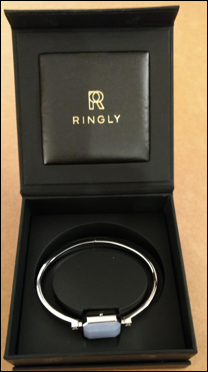
125x125_2nd_Circle

HIStalk Interviews Andy Slavitt, Former Acting Administrator, CMS

February 9, 2017 Interviews 4 Comments

Andy Slavitt, MBA was acting administrator for the Centers for Medicare and Medicaid Services from March 2015 until January 2017.

This is Part One of the lengthy interview. Topics in Part Two include whether high-deductible plans encourage wise consumer choices, the value delivered by the HITECH EHR incentive program, whether incentives are aligned for EHRs to improve patient outcomes and the provider experience, and Slavitt’s future plans.

image

Everybody has their own perceptions and beliefs about the US healthcare system and how it should change. How much of that is driven by personal experience that can vary widely based on income, health status, and location?

That’s a great question to start with. People would always come at us at CMS with whatever their point of view is. My warning to the staff — because you get pretty cynical because people always are representing some interest, whether it’s money, some industry group, etc. — is that everybody is right, to some extent.

If you say that there’s too much burden in healthcare, you’re right. If you say that there is too much fraud in healthcare, you’re right. If you say that we don’t measure enough, you’re in part right. If you say we measure too much, you’re right.

Then you add to that the fact that the healthcare industry isn’t really capable of changing at any great pace — and certainly not en masse at scale — and you end up having to always balance a lot of perspectives. Sometimes just moving forward in any direction, as long as it’s somewhat positive, is better than doing too much overthinking. Getting to understand what actually engages people. If they’re engaged by technology, if they’re engaged by measurement, if they’re engaged by simplicity, getting them to make progress along those fronts is going to just move things in the right direction.

Healthcare arguments always boil down to access and cost. Studies have suggested that we have a problem with high prices, not high utilization, and prices were not addressed by ACA. Will pricing pressure be applied to the health systems and drug and device companies that have benefited from having more insured patients?

Unit costs are the primary factor. You are right — it’s one we don’t talk enough about. We’re not talking as a country about prescription drug costs for a couple of reasons, and I think maybe there’s lessons in here. It has hit people extraordinarily hard. People depend on their medications and so many people are past the point of being able to afford them. Then there’s just been some really egregious examples.

I think in healthcare, for there to be a change in attention, yes, you need data, but you need stories. I think the EpiPen became a story everybody could relate to. The $50 aspirin in the hospital became a story that people could relate to.

If you talk to a serious hospital CEO or a serious pharmaceutical company CEO, they will tell you that they need to work on their unit cost and their pricing. Most serious hospital CEOs – of big IDNs, I’m not talking about serious community hospitals, I’m talking about ones with scale — have some sense that they need to reduce their cost structure by 10 to 20 percent and are working on it.

Likewise, not exactly parallel, but in the pharma industry, you have many of the big pharma CEOs who understand that around the world, there is some gating factor on prices and that they have to figure out how to strike that balance.

We can afford to get people access to care before we completely tackle unit prices. I don’t think you would wait, but I think you can use the force of more consumers and more volume. That’s what we’ve been trying to do to get people to take these issues on. They’re very serious issues and there’s plenty of resistance.

Does it sting a little bit when people blame the Affordable Care Act for higher premiums and deductibles when they might have increased anyway?

Boy, I tell you what, if I felt stung by every little criticism, I would be in the wrong place. At this point, I’m pretty calloused to that.

Let me start this way. We clearly could do a better job of explaining to people why the ACA matters to them, what the ACA is intended to do, what it means to people, and why it matters in their lives.

Seniors love the fact that their donut holes closed, but they don’t necessarily know it was because of the ACA. People who are employed love the fact that there’s no longer lifetime caps or limits on their policies, but they may not know that it’s because of the ACA. Many young people with pre-existing conditions don’t even remember a time when pre-existing conditions weren’t protected. Then of course you’ve got the millions of people who’ve gotten new coverage. They may know, but they’re not a politically powerful force.

On the one hand, I’d say that story needs to be told better, and I think people are starting to understand those things now. The other side of it is there needs to be an understanding that a law, just like a business strategy, is the first step in a process. It’s not supposed to be the end point. It’s supposed to be the first step. 

The ACA was supposed to be a launching point towards improving all sorts of things in our healthcare system. When you go through eight years, where there’s not just active resistance but an active attempt to tear down the law, to strip out funds — billions of dollars were taken out by Congress that were intended to stabilize rates and so forth – lawsuits, etc., you realize it’s harder to make progress.

As a country, we need to move past the place where one party owns health reform or the other party owns health reform. It’s just not the right kind of environment. It’s not so easy. The people now who are putting together plans, people that complained about high deductibles, you look at the replacement plans, what do they have? High deductibles. There are no silver bullets here.

President Obama told me once early on that once we pass the ACA, we tacitly agreed in everybody’s mind that everything that happens in the healthcare system from here on will be our fault. We own it. We just have to understand that there’s now a tactical place to point your concerns. Literally, if your doctor closes his office two hours early, people would write President Obama to tell him it was because of the ACA. That’s what they were led to believe.

The people insured by the ACA are a decentralized population, many of them receiving subsidies, without a lot of economic clout. However, many of the millions of people who obtained insurance via the exchange may have the financial means but don’t have an alternative because insurers don’t otherwise sell individual policies. Are the people who are ACA-insured mischaracterized as a group or are they not a cohesive enough group to convey the message that there is no alternative for them if exchange-sold insurance goes away?

President Obama has said, and I agree with him, that the ACA was a massive policy success and a political failure. If you were going to try to make this a political success, you would have focused on marginal improvements for middle and upper middle class people. 

I’ve been in healthcare for decades and a sad reality is that I could do the most brilliant thing in Medicaid policy or the most awful thing in Medicaid policy and it wouldn’t even make the newspaper. But if I did something that affects some fitness craze, it’s going to get massively covered, because people care a lot more about the programs that they can relate to. People just don’t want to read about what happens with people who have less than them.

What’s interesting– and I think this has happened since the election — is the 27 percent of Americans who have pre-existing conditions and are speaking in a more unified, loud voice. I think you’re seeing now today in Congressional town halls, in social media, and in all other kinds of events and places that people are speaking out and saying, I wouldn’t be here today, I wouldn’t have been able to have left my job and started this company today, I wouldn’t have the economic freedom today, if it wasn’t for the ACA.

There’s no pride of authorship for me, whether it’s the ACA or how it continues to evolve. It’s supposed to evolve. But the reality is that group of people is saying, if we go backwards as some are hoping or proposing, here are the consequences. I believe that’s starting to get heard over the last 60 days or so.

Insurance companies struggle to cover costs incurred by a self-selecting risk pool in which young and healthy people don’t sign up and the insurers get stuck paying for older, sicker people. How can that be fixed?

It’s a feature, not a bug. We should step back and think about this. We have never as a country, until six years ago, said to people, we will make sure you can get coverage. It doesn’t matter your financial needs. Doesn’t matter your health status. We will make sure you get access to protection. We’ve never done that. In the history of our country, we’ve never done that. A lot of countries around the world do that. We never have.

We decided to. It’s a big thing. It’s a big change. It’s a hard thing. No one should have been expected to know how many people that would be, how sick people would be.That’s why we created a rate stabilization fund that the Republicans de-funded, because no one could be sure.

The point of it all was to say, we will learn over the first few years what that costs and how to price it. In the mean time, we will get the data, we will study it, and we will look. If it turns out to be more expensive than we thought originally, we can look at that. If it turns out to be less expensive, we can look at that. We can see what kind of adjustments are needed. There are a series of adjustments that I think would help make healthcare much more affordable for that very small group of individuals that are saying “higher rates."

By the way, it’s about 2 percent. So when people talk about the rate increases and the talk about the pool and they talk about all these things, we’re talking about 2 percent of the population. We’re talking about only people in the individual market and only people that don’t receive a subsidy. Maybe 2-4 percent, not to try to be too precise, but it’s a very, very small percentage of the population.

That small percentage is dealing with rates that have grown a little bit higher because, as you say, the risk pool is a little bit sicker. There are things we can do, and if Congress or the states are willing to do those things, they’re pretty incremental. There’s no question it would work because it’s just math. It’s not anything complicated.

The individual mandate is always a question, where young invincibles or people who don’t want to pay premiums and deductibles decide not to buy coverage knowing they won’t be denied care in a real emergency. How do you address the issue of people who are willing to gamble that they won’t need health insurance?

I’s a question of health literacy. You don’t need anything until you need it. We live in a bit of an on-demand society. That’s OK in many arenas. But until you have a kid with autism, you never thought in a million years you’d need mental health services. Until you are a 30-something year old woman who gets diagnosed with breast cancer, you never really thought that was possible.

It’s one of those things that isn’t too useful to rail against it too hard. It is a mindset. Would making insurance a little more affordable or a little more flexible help? Probably, on the margin. But I don’t think you change the fundamental truth that when you’re 25, a little extra pizza and beer money is a little bit more important to you than paying an insurance premium. That’s always a reality.

That’s why you sometimes need policy. The purpose of government policy, not just health policy, is to help make laws for the collective good that aren’t necessarily good for any one particular individual. If you try to make a law that creates the flexibility that every single person gets exactly what they want, then you’re really not supporting the society as much as you need to.

Part Two of the interview will follow.

EPtalk by Dr. Jayne 2/9/17

February 9, 2017 Dr. Jayne Comments Off on EPtalk by Dr. Jayne 2/9/17

Several readers asked whether I saw this article about Obamacare vs. the Affordable Care Act, so I feel compelled to respond. I don’t know about the exact statistics, but we’re having lots of conversations with patients in the office about their coverage and their concerns about what will be changing. Usually it’s in the context of their being grateful for our transparent pricing and low costs, but a lot of people are genuinely worried about pre-existing conditions and whether their insurance will still cover preventive services.

When patients complain about rising premiums or changes to insurance plan offerings, I typically mention that while the laws regulate doctors and hospitals, there hasn’t been much done in the way of insurance regulation. Whether or not you think enormous bonuses for insurance company CEOs are warranted, the sheer economics dictate that the money has to come from somewhere.

On the payer front, Centene’s recent report showed quarterly revenue and profit ahead of expectations, helped by growth in the individual coverage market and by Medicaid expansion. Net earnings for Centene were $261 million for the fourth quarter of 2016. Based on 11.4 million patients covered, it’s a small margin, but when you couple it with the administrative costs of running a health plan, it represents a tremendous amount of premium and tax dollars that are not being spent on patient care.

I’ve been inundated by requests from HIMSS for their corporate member focus groups. Some of the sessions are pretty drab sounding and others don’t work with my schedule, so I probably won’t make it to any this year. I was a little aggravated, though, that they can’t figure out how to blind copy the invitation – seems like a basic email skill.

Some of the sessions are vendor-specific and it’s obvious who you will be talking to or about, but others are a bit more vague. I was tempted by one that advertised discussion of precision medicine solutions, but I figured it would just irritate me. As a preventive and public health curmudgeon, I have a hard time talking about spending millions of dollars on focused gene-based therapy when we can’t fund the basics of health promotion and disease prevention.

I attended a service launch webinar for another consulting company this week. They’re not in the same space as me, but they’re a fun bunch of people, so I wanted to see what they’re up to. They’ve partnered with a third-party vendor for the tool, although they didn’t say it. If it’s not totally white labeled, I think it’s better to say you’re at least “powered by X vendor” rather than having prospects or vendors see “copyright X vendor” at the bottom of the screen and wonder what’s going on. The presenter also seemed nervous. Even if you’re a presentation pro, I’d definitely recommend a dry run when you’re launching something new or presenting in a new format.

For weird news fans: I stumbled across an article about a patient who lived for six days without lungs. She had been waiting for a transplant but developed influenza and sepsis along with organ therapy. After concluding that death was likely imminent unless there was intervention, physicians removed the source of infection – her lungs. She was placed on an external oxygenation device (Novalung) with rapid improvement and received donor lungs several days later. Four months later, she’s breathing normally on room air, although she does still have to have dialysis following kidney failure. Hearing about physicians pushing the boundaries and having success reminds me of the excitement of medical school, when it seemed like our faculty was making history on a weekly basis.

image

CMS has extended the submission deadline for 2016 clinical quality measure reporting required by eligible hospitals and critical access hospitals participating in the Medicare EHR Incentive Program or the Hospital Inpatient Quality Reporting program. Electronic clinical quality measures are now due March 13 rather than February 28. For 2017 reporting, CMS plans to start a rule-making process looking at modifications to the final rule. It’s always fun to wait for the rules to be finalized after you’re already playing the game.

image

The AMIA Mentor Match program is looking for informaticists willing to spend an hour a month for the next 11 months working with mentees. I’m thinking about signing up, but struggle with how to describe my experience and areas of expertise. Somehow I don’t think “Sassy former CMIO turned consultant seeks idealistic mentee to remind me how idealistic I used to be, before corporate healthcare and chaotic vendors drove me over the edge” is what they’re looking for. Some days I wish I had a mentor of my own to give me perspective on the bizarre work situations in which I often find myself.

I’m spending some extended time in the patient care trenches due to a colleague’s medical leave. We’ve started seeing some EHR performance issues during the times of peak patient volume. It’s bad enough when you’re overwhelmed with patients, but having your system fail you makes it intolerable. At times, the system is at a crawl.

I was spoiled when I was a CMIO because our EHR vendor had a SWAT team they would send out for issues like this. Even if you had strong resources in house, you could leverage the team to review performance and monitoring tools and make recommendations. My current vendor is on the smaller side and not terribly helpful when it comes to helping us manage the issues.

We use a third party to manage desktop and wireless solutions, so as you can imagine, there is a bit of finger-pointing between the access crowd and the application support folks. It always unnerves the IT team when you have a physician who starts asking about latency and Citrix load balancing, but I’m happy to give everyone a nudge to stop the blame game and get about the business of finding solutions.

The HIMSS mailings have started rolling in. Every year it seems like the marketing themes and giveaways get a little goofier. Physicians have long been scrutinized for regarding gifts from industry, but there’s no reporting for the majority of healthcare IT professionals. I hope the Open Payments system has fields available for tracking giveaways such as virtual reality goggles, scooters, art pieces, and more.

What’s the best trade show giveaway you’ve ever seen? Email me.

Email Dr. Jayne.

HIStalk Interviews Tom White, CEO, Phynd

February 8, 2017 Interviews Comments Off on HIStalk Interviews Tom White, CEO, Phynd

Thomas White is co-founder and CEO of Phynd Technologies of Kearney, NE.

image

Tell me about yourself and the company.

Phynd is the third company I’ve co-founded. Two of those were in healthcare IT and one in the 1990s was in Internet real-time news search. All of the businesses that we’ve started have been focused on new categories of software that simplify and improve search, profiling, and content. The second addressed diagnostic results. Now it’s provider data for this third company.

We see an intersection of provider data being important. Historically, there have been patient systems, EMR systems, payer systems, and rev cycle systems. But there’s really never been a provider data system. We see the elevated issue of provider data being an opportunity in the marketplace.

What problems do health systems have with provider management?

Hospitals have 10, 15, or maybe 20 IT systems that silo provider data. Each system has a specific function, whether it’s radiology, lab, EMR, or credentialing. Each has a specific core function with a provider database embedded inside.

Our clients tell us they have a hard time harvesting the data across all those systems and managing the data. There’s good data in all of those core systems that impacts clinical outcomes, rev cycle, and marketing. It is buried in these systems. Our clients have problems exposing the provider data into one platform where it can be curated and managed by the organization versus being buried in these silos.

What benefits do they expect from implementing a provider management system?

On the business side, inaccurate provider data creates a significant delay in the billing cycle. The reality of healthcare is that providers from all over the country are in the databases of hospitals. A hospital in New York is going to have referring physicians from Dallas, Los Angeles, and Chicago. When they discharge the patient and invoice for that claim, they need accurate provider data to process the bill. If they don’t, it will get kicked back. We’ve seen a delay of a month to two months for up to 10 to 20 percent of our clients’ invoices because of inaccurate provider data.

On the clinical side, as hospitals have grown their physical footprint, they have added clinics in the field. They have large referring bases. They’ve created clinically integrated networks. As they have to communicate more and more — whether it’s by fax, phone, or Direct address – maintaining the data elements on the providers in the field has become difficult. We impact the clinical care process from the communications side by having accurate, good information that is curated by the client themselves.

Is it harder for hospitals to track their provider relationships under new care delivery models?

A hospital has to track 10 to 15 times as many providers as they have credentialed. If they have 1,000 providers, they’re going to need to manage 10,000 to 15,000 referring providers.

As they shift into clinically integrated networks, ACOs, narrow health networks, and narrow health plans, the provider base is going to shift. It’s not just their historical credentialed base. It’s everyone within a certain geography or target market segment they’re going after. They need to know who is in the clinically integrated network and then the specific data around their referral patterns, communication preferences, and rev cycle information.

Does having that self-curated information accessible enterprise-wide provide a competitive advantage?

It does. The end user can look at our client’s data  through their native systems, whether it’s their EMR, credentialing, radiology, lab, cardiology, or pathology systems or into their marketing platform. Also being able to expose that data on internal and external websites for provider search. Then using the UI to curate and manage the data. It’s available wherever the end user is. We think that’s a competitive advantage.

Are hospitals getting more interested in marketing the physicians that work with them via provider search?

Yes. Our philosophy is that you have to get the provider data right first. That’s the core Phynd platform. Once you have the provider data in a format that’s accurate, then you can expose that data across multiple systems, such as provider search.

Provider search matters because it helps with referral patterns. It helps with customer satisfaction. But it also grows the top line. It’s good for healthcare organizations to provide the best search algorithm environment for consumers to find the right doctor the first time.

Are physicians finding that the marketing clout of their local health system benefits their practices, such as in a hospital website’s provider search function?

Yes. The world of search is a complicated world. How healthcare organizations are creating large franchises on the web is important. That drives traffic into their clinically integrated network providers, people in their ACO, and the different organizations that they’ve created.

What business advice would you offer someone thinking about starting a company?

The first thing is that startups are really hard. In general, they’re very difficult to go do, from concept all the way to customer acquisition. They require a lot of patience and a long-term view of solving the core problem that you’re going after. That’s the first bit of advice.

The second bit is that building happy customers is a long-term approach that requires an all-in mentality. To be at the customer site, to see how they use the product, to hear the conversations they’re having with their peers. Then to communicate with them routinely thereafter. It’s about being a part of the customer conversation long term.

You need the idea to start the business, but the reality is that you pivot. Part of being a startup is you’re pivoting based on conversations you have with your clients. Finding clients that are willing to work with you and to pay you is the hardest part. Once you get those folks, you can pivot the product ideas around what their needs are.

You need the core, basic idea. Ours is that we want to simplify provider data management across the healthcare industry. How we do that is dependent on a number of factors, including our partners, our customers, and then our long-term vision as well.

Where do you see the company in the next five years?

Healthcare organizations are going through significant change. They’re driven by the opportunities to attract new patients across new locations. Their physical footprint is growing. They’re building alliances and clinically integrated networks. They’re participating in narrow health plans.

We see Phynd as a gathering point of provider data that can be used to improve clinical communications, revenue operations, provider, consumer, and web touch points across all these really big businesses that are being formed right now across healthcare. We see ourselves growing with that marketplace.

I’m not sure where the healthcare organization ends. Is it payers? Is it vendors? We’re focused on the hospital space right now. Long term, healthcare is  the biggest industry in the country. We see ourselves growing with it.

News 2/8/17

February 7, 2017 News 6 Comments

Top News

image

A National Academy of Sciences article describes a reusable, inkjet-printable lab-on-a-chip for point-of-care diagnostics that costs just $0.01.

Heading the NIH-funded project is Stanford Genome Technology Center’s Rahim Esfandyarpour, PhD, an engineering associate who says inexpensive diagnostics could improve low survival rates in developing countries of conditions such as breast cancer, malaria, tuberculosis, and HIV.

Esfandyarpour summarizes, “Maybe $1 in the US doesn’t count that much, but somewhere in the developing world, it’s a lot of money.”


Reader Comments

image

From Guacamole Greg: “Re: EHR. This doctor’s article says she inadvertently closed the wrong EHR tab and lost the note she was writing without warning. It fascinates me to what extent my colleagues view things like this as anything less than criminally negligent design errors. Still, I’m also amazed to the extent to which medical people don’t grasp the difference between structured data entry and word processing.” The doctor-author practices at Bellevue Hospital. She doesn’t mention the EHR she was using, although I assume QuadraMed since I don’t think they’re live on Epic yet. She bemoans the “special circle of hell created by cocksure computer programmers whose systems can incinerate hours of work” and wonders why EHRs don’t have a Word-like auto-save feature. Perhaps those who know common EHRs can answer the question – do the systems you know allow closing an entry screen without warning the user that they will lose their work? I think expecting auto-save is a bit much, but it’s reasonable to warn a user that their action is going to trash whatever they’ve entered but haven’t saved. The author had previously complained in a New York Times article that the EHR has a limit of 1,000 characters and she struggles to squeeze in lengthy notes.

image

From Chris: “Re: VitalWare’s website. It’s been hacked again, with comments suggesting a different hacker. Any concern with PHI or customer data?” Not likely. Their public-facing website is running WordPress v. 4.7, which is getting hacked all over the place due to a REST API vulnerability. They really need to apply the 4.7.2 upgrade, which takes maybe 30 seconds and is unlikely to cause problems. Auto-updating of the WordPress core is enabled by default, I think, so perhaps they made the mistake of turning that off. In any case, it’s probably only WordPress that was hacked and that platform isn’t connected to anything sensitive on the back end – it’s just a website content management system.

image

From Cabin Boy: “Re: Stanford. I can confirm the changes reported by Silicon Valley Geek in your late January post. At least some parts of the Epic rollout have been cut back after the organization failed to fund parts of its project plan and a lot of executives and contractors were replaced.”  


HIStalkapalooza Sponsor Profile

image

Healthcare’s most trusted data integration and compliant hosting company has a new name — Datica. Same trusted expertise; new and exciting moniker. The rebranded name better reflects the company’s emphasis on healthcare’s great challenge — a deluge of data to be integrated, exchanged, shared, and protected. Datica provides the ways and means for connecting healthcare. Check out the rebranded website www.datica.com, the new Twitter page @daticahealth, and make sure you stop by HIMSS booth #8152 for coffee or check this HIStalkapalooza sponsor out at their Datica cabana on the dance floor.


HIStalk Announcements and Requests

image image

We funded the DonorsChoose grant request of Ms. L in Texas, who asked for books and a storage cart for her elementary school class. She says students are now able to choose books at their own reading level, where they “pick spots on the floor where they are able to stretch out and read.”

image image

Stopping by our HIMSS booth (#4845) on Tuesday, February 21 will be Industry long-timer and WebPT CEO Nancy Ham, who will offer career advice to women from 4:00 until 5:00 p.m. Saying hello to visitors from our microscopic booth on Monday from 1:00 to 2:00 will be Regina Benjamin, MD, MBA, the 18th US Surgeon General.

Thanks to new HIStalkapalooza sponsors Clearsense (healthcare data science) and Hedgeye (financial and research media). I’ll have more about them later. 

image

Welcome to new HIStalk Gold Sponsor AssessURhealth. The company helps clinicians assess a patient’s health risk in several mental and behavioral health categories using a five-minute iPad survey that can be completed in the waiting room, after which the results are securely delivered directly to the EHR so they can be reviewed with the patient. Providers increase their revenue while screening patients for depression, anxiety, opioid risk, PTSD, and other conditions in raising awareness of mental and behavioral health. Thanks to AssessURhealth for supporting HIStalk.

I found this AssessURhealth intro video on YouTube.

SNAGHTML8b590e9c

image

Dear HIMSS-owned publication, sorry to be on your case again, but it’s really embarrassing that a publication dispensing health IT information can’t spell HIPAA correctly. Not that it matters since the JPP case had nothing to do with HIPAA despite your headline – ESPN is not a covered entity. Searching your site even turned up examples where you’ve spelled your own organization’s name incorrectly. Fake news! Sad!


Webinars

February 8 (Wednesday) 1:00 ET. “Machine Learning Using Healthcare.ai: a Hands-on Learning Session.” Sponsored by Health Catalyst. Presenter: Levi Thatcher, director of data science, Health Catalyst. This webinar offers a tour of Healthcare.ai, a free predictive analytics platform for healthcare, with a live demo of using it to implement a healthcare-specific machine learning model from data source to patient impact. The presenter will go through a hands-on coding example while sharing his insights on the value of predictive analytics, the best path towards implementation, and avoiding common pitfalls.

Previous webinars are on our YouTube channel. Contact Lorre for information on webinar services.


Acquisitions, Funding, Business, and Stock

image

HIPAA-compliant hosting and integration services vendor Catalyze renames itself to Datica. I’m sometimes skeptical of a seemingly gratuitous rebranding, but co-founder Travis Good, MD explained that quite a few healthcare-related companies, incubators, and venture funds have used the name Catalyst as their service mark, observing that the Internet has made it hard to find a name that is securable and unique. There’s a good lesson there for newly formed companies – choose a name that is memorable, Google-able, and not already in use in healthcare, which is harder than it sounds (which is why new companies often prefer making up a word).

image

Cloud-based patient matching system vendor Verato raises $12.5 million in a Series B funding round, increasing its total to $25 million.

A Connecticut investment bank loses its bid to avoid paying $1.25 million to two elderly retirees to whom its broker sold shares of Nashville-based EHR implementation vendor iPractice Group in 2012. The Nashville startup shut down the following year.

Physician staffing company TeamHealth will pay $60 million to settle charges that its hospitalists up-coded to create inflated bills as pressured by the company.


People

image

Rich Walsh (Philips Wellcentive) joins Continuum Health Alliance as VP of business development.


Sales

image

Novant Health (NC) chooses Glytec’s eGlycemic Management System for personalized glucose control in its 14 hospitals.

Oregon Advanced Imaging (OR) selects McKesson for revenue cycle management.

Saint Francis Healthcare Partners (CT) will implement Orion Health’s Amadeus precision medicine platform.


Announcements and Implementations

First Databank and Translational Software, Inc. will collaborate to develop pharmacogenomics-based drug knowledge that will provide clinicians with genomic-related risk information when prescribing drugs.

BloodCenter of Wisconsin and Fresenius Kabi launch a pilot program at Children’s Hospital of Wisconsin that will use RFID to track and inventory blood products.

InstaMed releases a secure token that allows providers and payers to accept online credit card payments without storing or accessing cardholder data directly.


Other

image

A USA Today article by the CEO of The Permanente Medical Group questions why the US isn’t paying more attention to India’s 20-hospital Narayana Health, where state-of-the-art heart surgery costs $1,800 vs. $90,000 in the US with outcomes that are among the best in the world. He observed the procedures first hand:

In surgery, the experience of the surgeon and the team are the best predictors of superior clinical outcomes. As you might imagine, given the huge volume of procedures his team performs each day, his hospital’s results are exceptional … clinicians use a sophisticated electronic health record they developed, with the information stored on an iPad. Unlike nearly all US EHR systems, the application is so intuitive that minimal physician or nurse training is required. The operating rooms themselves have huge windows leading to protected gardens designed to allow natural sunlight to enter and spur creativity. The bedside monitoring equipment links with a central computer system, allowing clinical leaders like Devi to measure each day how long it took a physician to intervene for a potentially urgent medical problem. In the United States this often exceeds an hour at night and on the weekend. In India it was eight minutes. The disruptive innovation he has implemented isn’t just lower cost, it’s also higher quality. The hospital’s focus on people was widely evident. Embroidered on the white coats of doctors, nurses and staff was the question, "How can I help you?"

Weird News Andy titles this story “Roach Nosetel,” where roaches check in but don’t check out – they get evicted. Doctors in India investigate a woman’s “wiggling” sensation in her nose following her unsuccessful visits to three other hospitals, finally identifying the problem as a full-grown, live cockroach that had made its way high into her nasal passages. They removed it, adding it to their list of successful nasal extractions in previous patients that includes beads, batteries, chalk, and a leech.


Sponsor Updates

  • The Sequoia Project appoints Medicity’s Brian Ahier to its board.
  • Florida Governor Rick Scott honors Voalte Founder and President Trey Lauderdale for creating jobs in the state.
  • ZeOmega’s Jiva 6.1 achieves ONC Health IT 2014 edition modular EHR certification from ICSDA Labs.
  • ZirMed will exhibit at the Healthpac Users Meeting February 9-11 in Savannah, GA.
  • Meditech posts a case study titled “It’s in Their DNA – Avera Health Drives Precision Medicine at the Point of Care”
  • Agfa HealthCare and Telemedicine Technologies Company sign a memorandum of understanding at Arab Health.
  • The South Florida Business Journal profiles Aprima Medical Software’s acquisition of Healthcare Data Solutions.
  • Bernoulli publishes a new booklet, “Medical Device Connectivity & Informatics.”
  • Besler Consulting releases a new podcast, “What is Revenue Integrity?”
  • CoverMyMeds COO Michelle Brown will speak at the Columbus Women in Technology event February 15 in Columbus, OH.
  • HCI Group releases a new podcast, “MACRA: Preparation, Benefits, and Third-Party Assistance.”

Blog Posts


Contacts

Mr. H, Lorre, Jennifer, Dr. Jayne, Lt. Dan.
More news: HIStalk Practice, HIStalk Connect.
Get HIStalk updates. Send news or rumors.
Contact us.
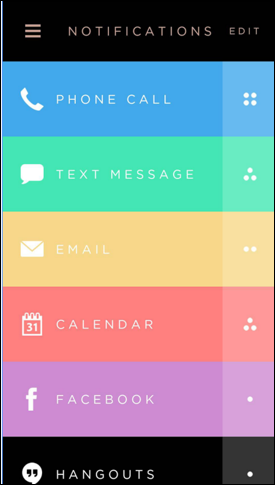
125x125_2nd_Circle

Curbside Consult with Dr. Jayne 2/6/17

February 6, 2017 Dr. Jayne Comments Off on Curbside Consult with Dr. Jayne 2/6/17

image 

I’m playing cleanup for one of my clients this week. They’re dealing with one of the most common management challenges I see – lack of redundancy for key positions or functions.

Due to some leadership personality issues, individual contributors were allowed to become “experts” on a variety of topics without any thought to backup, collaboration, or shared responsibility. When issues came up, it placed the experts in a position of being able to swoop in and solve the problem using their sacred knowledge, further solidifying the idea that only the rescuer had full command of the information. Instead of raising appropriate red flags about why only one person could solve a problem, previous leadership continued to groom these expert resources.

In reality, what some of the experts were doing was front line customer support, but because no one else had visibility into what they were doing, it appeared that they were doing a lot more than was actually going on. Now that a couple of them have left the organization, it has become apparent that some of them were doing very little, and others were doing work that could have been handled by appropriately training the practice call center employees who interact with the internal customers on a daily basis.

When I came into the situation, the organization was in a tailspin trying to figure out how they could possibly replace these people. The reality was that we were able to outsource it pretty quickly, along with selling them some consulting services to document the process, educate others, and prevent this from happening in the future.

In looking at the broader structure of the organization, however, there are much larger cultural factors at play that allowed this behavior to continue. There is a history of promoting individual contributors to management positions because there was no other career path for them. When you take people with no management experience and plop them into a management role, it often feels very uncomfortable. That can lead to the new manager withdrawing from those responsibilities and instead to try to create new individual responsibilities that are more in their comfort zones. Couple that with upper management that is too crisis-oriented and doesn’t budget adequate time to develop these new managers and you have a recipe for a mess.

My task with these folks now is to evaluate the depth and breadth of the experts and figure out what they were actually doing. Some of them have been doing obscenely little given their titles and pay grade. Others were trying to do more than anyone could possibly do well because of wheel-spinning and inefficiency. Once we identify the core body of knowledge and the tasks that need to be completed, I assign an external resource to first cover the acute needs, but second, to document everything and create a training plan to build out multiple resources to cover the needs moving forward. I’m unfortunately seeing a lot of resistance as members of the organization figure out that the emperor has no clothes and begin to worry that they might be next in being exposed.

This fear of being exposed leads to all kinds of bad behavior: information hoarding, siloing, manipulation, maneuvering, and more. People feel threatened when they’re worried others will figure out they have been operating outside accepted boundaries and will do anything to protect themselves.

My favorite strategy is blaming the consultant, who has clearly been brought in by the leadership to fix something that has been identified as a problem. There’s a certain level of trust (and money on the line) when you bring in an outsider and give them carte blanche to realign resources and shift roles and responsibilities. Complaining about it or pitching a fit only makes you look bad and potentially tees you up to be “realigned” outside the company if you are uncooperative enough. Couple that with the fact that the consultant was able to replicate your job duties at a fraction of your cost, and it might just be better to keep your head down and cooperate.

I’m on site this week doing stakeholder interviews, trying to sort out what people think about their role in the project and how the project is going overall, vs. what others have to say and what the leadership thinks is going on. It’s not looking good for some members of the management team who are behaving like cornered animals. Although downsizing was not an original goal of this consulting engagement, how they’re handling it is making it seem like losing a few people might be a good idea.

I enjoy doing stakeholder interviews and organizational assessments. Sometimes they can be enlightening, but often they’re fascinating journeys into the underlying psychological baggage that people carry around with them. Some of my standard interview questions involve the team, its goals, what people think about their participation, the overall health of the project, and how they think they’re contributing.

I conducted one interview this morning where the participant raved on and on about a colleague and how helpful she is, how much of an asset to the team, how she enjoyed working with her, etc. A few hours later, I met with the subject of the glowing commentary, who went on and on about how she thinks my previous interview subject hates her and is trying to undermine her within the company. This client has a fair number of “you can’t make this up” scenarios that I have to figure out how to deal with. I’m thinking I need to bring in a therapist in addition to subject matter expert consultants.

The leadership is not without blame here. Although they’re relatively new and inherited the bulk of the mess, they’ve been complicit in allowing some of the craziness to continue without stepping in earlier. They’ve allowed the process of making people managers because there’s no way to promote people in various job classes, which has compromised people’s effectiveness and weakened the organization.

Members of the leadership also project the air of being too busy to help the little people sort it out, which is going to be a long-term issue. They’d be much better served by at least appearing that they’re willing to roll up their sleeves and dig in to build the organization rather than making it clear that their main goal is to continue acquiring physician practices and everything else is secondary. Adding more practices (many of which are distressed when they’re acquired) when they’re struggling to support their existing practices doesn’t seem like the best strategy, so I’ll continue to work on that piece as well.

What’s your current project? Does it make you want to crawl back in bed every morning? Email me.

Email Dr. Jayne.

Health IT Changes the Game for Workplace Wellness

February 6, 2017 News 8 Comments

From next-generation wearables to predictive analytics, healthcare technology is helping employers gain greater ROI from workplace wellness programs.
By
@JennHIStalk

The month of January has come and gone, no doubt leaving a plethora of abandoned New Year’s resolutions in its wake. Personal goals related to weight loss, healthier eating, better sleep, and less stress – to name a few – have fallen by the wayside for some, as regular routines (and familiar bad habits) kick back in after the holidays. This month’s Super Bowl parties, Valentine’s treats, and even HIMSS exhibit hall fare threaten to trip up even the most dedicated of goal-keepers.

image

Employers of all sizes have, over the last several years, recognized they have a part to play in the resolution game – one that extends beyond pounds shed and muscle gained to fewer sick days, increased productivity, and lower overall healthcare costs for employee and employer alike. Nearly 20 percent of all employers offered comprehensive wellness programs in 2015 and 2016, according to a 2016 United Benefit Advisors survey, which also found that such programs are the most prevalent among education, government, and utilities employers.

These programs have typically consisted of health risk assessments, biometric screenings or physical exams, coaching for high-risk employees, seminars or workshops, and, of course, incentives for participation. Technology’s role in these programs has become increasingly sophisticated,  evolving from basic clip-on pedometers to BYOD programs that serve up tailored employee offerings based on claims and clinical data. Some may see that level of sophistication as being in direct correlation to the out-of-pocket healthcare costs increasingly shouldered by consumers.

image

“In the past, employee wellness programs have mostly been built around physical health,” explains Michelle Snyder, chief marketing officer at Welltok, which has developed a wellness technology platform that uses predictive analytics to offer employees custom programs and incentives. “But now that consumers are having to take on more of the cost burden for healthcare, they’re beginning to want their employers to help them manage not only their physical health, but also their financial health, emotional health, and social connectedness.”

Employers, in turn, are looking to better control their healthcare costs and improve employee productivity, satisfaction, and morale. Snyder adds that employers are also eager to find ways to better engage employees in wellness programs already up and running. “The two main reasons we’ve found that employees aren’t engaging have to do with the fact that they didn’t know the programs existed and the programs aren’t relevant to the individual employee.”

From Pedometers to Predictive Analytics

image

As employers have begun to focus on more than just the physical health of their employees, their need for more tailored technologies has grown. “I think wearables sometimes get a bad rap,” Snyder says. “People will wear them and some employers think of that as the centerpiece. That’s the answer to their corporate wellness program. That’s great, but those devices should be just a piece of the bigger picture. The real-time data you can get from wearables is important, but its importance is tied to all of the other data streams that are a part of that wellness program. Those step counts, for example, have to be tied to other data sets to make it really rich and valuable for the employer, and for the employer to figure out how to better target and engage with employees.”

The State of Colorado has realized the need to think beyond pedometers in the years since it launched its wellness program. “When we launched our program in mid-2013, we secured funds to distribute 1,000 digital pedometers on a first-come, first-serve basis,” says Statewide Wellness Coordinator Nate Sassano. “Those pedometers connected automatically to a customized activity in our program. Since then, we have expanded that activity, and Welltok, which provides our platform, has expanded its digital connections. Today, employees who own just about any device can connect it to our physical activity programs on the CafeWell platform.”

image

Sassano has steered the state beyond pedometers to include CafeWell Concierge, an IBM Watson-powered app that offers up personalized recommendations to help employees achieve optimal health and get the most out of their state health plan benefits. “I believe that having one hub, as we do with CafeWell — where employees can go to access all of our wellness programming as well as become educated about their benefits — has greatly enhanced our program and increased participation.”

Sassano isn’t stopping there. He is in the process of expanding the offerings in the CafeWell platform to include other wellness vendors that deal with weight and stress management. He adds that, “This connection between vendors will allow our employees to participate in activities seamlessly and help them easily earn incentives for their participation.”

Turnkey Benefits

Smaller companies tend to look for similar wellness program benefits, albeit in a more turnkey fashion. Sanford, FL-based beverage distribution company Wayne Densch, for example, is somewhat new to the world of wellness programs, but is already aware of the role health technology can play in making them a success.

The company, which launched its wellness program in 2015 with biometric screenings, began using activity trackers when it adopted UnitedHealthcare’s Motion program in January 2016. The program enables employees and their covered spouses to earn up to $1,500 per year in deductible credits by meeting daily walking goals related to frequency, intensity, and tenacity. Deposits are made on a quarterly basis and help employees and their dependents offset covered medical expenses.

image

“As a relatively small company, it was important to find a wellness program that was largely turnkey and easy to implement, while still effective in driving engagement,” says Thomas Williams, director of accounting. “We use the program’s proprietary Trio device, which was developed to track the program’s specific walking goals. Employees are able to keep tabs on their progress using the program’s mobile app or website. By using technology that is intuitive and engaging, our employees have become more invested in maintaining and improving their well-being.”

Fine-Tuning for Better Engagement

image

UnitedHealthcare initially rolled out its Motion program early last year as a pilot across 12 states and has since expanded it to 40 states. That initial trial helped the company realize what employees liked and disliked about the program. “Interest in the program has been very broad, with companies across all industries and sizes adopting it,” says Craig Hankins, VP of digital products. “After introducing the program as a pilot, we identified several lessons that we applied to the broader expansion. First, to help people get going with the program, we added a registration credit. By providing a $40 credit for signing up, we created an incentive to get people started, which helped drive higher adoption rates. Second, we recognized people are interested in accessing additional devices. That’s why we worked with Qualcomm Life to introduce a BYOD model, which enables the addition of activity trackers from some of the nation’s leading technology companies.”

“Ultimately,” he adds, “the motivation for implementing Motion was simple: Help create happier and healthier employees. We know wearable devices represent a new way to encourage employees to become more active, helping people walk their way to improved health and earn financial incentives in the process.”

Understanding Employer ROI

Healthier, happier employees are surely good for a company’s bottom line, but how do employers translate happiness into lower overall costs and greater productivity? Where does the pilot phase end and true ROI begin?

Sassano seems optimistic about the State of Colorado’s expected return. “Participation in our first year was 50 percent, which I think speaks to the excitement of our employees and their interest in the program,” he says. “Of the 32,000 benefit-eligible employees we have today, we have around 52 percent participation today. While it is still early to effectively measure effects on health outcomes and productivity, we are starting to see evidence that participating employees have a lower cost in our health plans.”

Williams sings a similar tune, noting that Wayne Densch’s initial results have been positive for both employees and employer. “With participation rates exceeding 90 percent, the response from employees has been overwhelmingly positive. We are seeing walking and wellness become a bigger priority among our employees, with daily walking groups helping to keep people motivated. We have seen employees shed pounds and improve their fitness levels.”

Gaining in Importance

Employers of all sizes look to corporate wellness programs to help them trim costs and attract and retain talent. As the healthcare industry remains on high alert for impending changes to the Affordable Care Act (which may result in higher out-of-pocket costs for all), wellness programs and the technologies they use will have a greater role to play in keeping costly, preventable conditions at bay.

Monday Morning Update 2/6/17

February 5, 2017 News 1 Comment

Top News

image

Bloomberg reports that The Advisory Board Company is considering strategic options – potentially including a sale of the company — following last month’s acquisition of 8.3 percent of its shares by an activist investor.

image

ABCO shares have climbed nearly 50 percent since mid-December 2016, although their one-year performance of 9.6 percent and five-year increase of 29 percent trails the Nasdaq’s 30 percent and 95 percent, respectively. Above is the one-year chart of ABCO (green) vs. the Nasdaq (blue). The company’s valuation is nearly $2 billion.

The Advisory Board announced a six percent workforce reduction last month along with its exit of some business lines and the closing of four offices. The company says it will honor its commitment to add 1,000 jobs as required by a $60 million, 10-year tax break offered by Washington, DC to consolidate its offices at a new location in Mount Vernon Square.


Reader Comments

image

From Flash in the Pan: “Re: Verscend Technologies, formerly Verisk Health. Restructuring since the Veritas acquisition resulted in 185 layoffs and the elimination of solutions this week.” CEO Emad RIzk, MD provided this response: “Verscend Technologies reorganized this week, resulting in a small workforce reduction. Verscend is a high-performing organization positioned for growth and will continue to invest in its people, technology, solutions, and customers. We reorganized to improve efficiency, reduce redundancies, and position us for significant growth. We are not eliminating any products, and no Verscend offices are closing as a result.”

image

From Ruby Claret: “Re: APIs. This article says APIs are like the industrial age, when adoption of interchangeable parts changed everything.” I’m not sure that’s an apt analogy. Interchangeable parts were devised to allow a specific company to move from the work of individual craftsmen to mass producing products on an assembly line at a lower cost. Those early companies weren’t standardizing parts to be used by their competitors. Interchangeable parts are more like proprietary code libraries used by vendors across multiple products. As an alternative theory of how interoperability might be supported and incented, I offer a 20-year-old article about Visa founder Dee Hock:

Hock designed the organization according to his philosophy: highly decentralized and highly collaborative. Authority, initiative, decision making, wealth — everything possible is pushed out to the periphery of the organization, to the members … On the one hand, the member financial institutions are fierce competitors … On the other hand, the members also have to cooperate with each other: for the system to work, participating merchants must be able to take any Visa card issued by any bank, anywhere. That means that the banks abide by certain standards on issues such as card layout. Even more important, they participate in a common clearinghouse operation, the system that reconciles all the accounts and makes sure merchants get paid for each purchase, the transactions are cleared between banks, and customers get billed … No one way of doing business, dictated from headquarters, could possibly have worked. "It was beyond the power of reason to design an organization to deal with such complexity," says Hock.

image

From Banshee: “Re: VitalWare. Site hacked?” Apparently. Most horrifying is that hacker MuhmadEmad, who apparently hit a bunch of sites over the weekend as evidenced by Googling the text above, changed the font to Comic Sans. The good news is that his hack seems to consist of just posting an anti-ISIS messages as a WordPress post while leaving the site otherwise intact, which should make recovery uneventful.


HIStalkapalooza Sponsor Profile

image

Since its founding in 2010, Nordic has evolved from its roots as a leader in EHR staffing to not only the world’s largest Epic consulting firm, but a firm with a broad set of KLAS-proven healthcare IT solutions. Featuring nearly 700 consultants, Nordic has organized those experts to solve healthcare organizations’ most challenging health IT problems with carefully crafted solutions. These solutions were developed and refined over the last few years to meet the evolving needs of Nordic’s client partners, including the shift to value-based care, mergers and acquisitions, Community Connect, upgrades, optimization, revenue cycle transformation, analytics, a suite of managed service offerings (including tier 2 application support), and more. At HIMSS17, visit Nordic at booth 903 and RSVP for Nordic’s reception. To learn more, visit nordicwi.com.


Meet Your HIStalkapalooza Hosts

Allow your hosts to introduce themselves:

image

Bonny Roberts slid down the rabbit hole in 2013 when her “Ode to Mr. H” earned her the preeminent title (and sash) as Mr. H’s Secret Crush. Since then she has contributed a bit to the publication and much to the fervor that is HIStalkapalooza. In preparation for role as greeter on the red carpet, Bonny admits to using her Frontier Airline miles to purchase People, Us, and Star magazine subscriptions. She has also studied Melissa Rivers technique and is diligently practicing the complete opposite. Bonny has worked in the healthcare information technology industry for the past 19 years and is the VP of customer experience for Aventura Software in Denver, CO.

image

First things first – Barry Wightman published his first novel, Pepperland, a revolutionary, technology, rock ‘n’ roll love story in 2013. The book received a starred review on Booklist, won a Silver IPPY for best fiction from the Independent Publishers Book Awards. His day job – he’s creative director for Forward Health Group, Inc., a maker of population health measurement platforms and data strategies that drive success in the move to value. Rest of the time – he can still be found with a guitar in hand figuring out the riffs to old Kinks records.

image

Ever since she was a little girl, Julie Yoo‘s lifelong dream has been to emcee the HISsies at HIStalkapalooza. In between grueling rehearsals, Julie oversees the product and business development teams at Kyruus. After February 20, with lifelong aspirations fulfilled, she will shift her focus back to improving patient access one patient-provider match at a time.


HIStalk Announcements and Requests

image

Poll respondents say they’re going to the HIMSS conference primarily to socialize and spend time in the exhibit hall, which should shock only that handful of people who thought the educational track was the big draw. Mobile Man provides the unsolicited but satisfying response: “One word … HIStalkapalooza!”

New poll to your right or here, as suggested by a reader: if you aren’t going to the HIMSS conference, why not? I’m sure I omitted some good reasons in my list of presumptive choices, so I’ve added a space for providing your own answer.

image

Ms. F from Arizona reports on the Chromebooks we provided in funding her DonorsChoose teacher grant request, saying that most of her students wouldn’t have access to technology otherwise. She is assigning them work on school-approved math programs that can be completed without leaving the classroom. 

Thanks to the following companies for their recent support of HIStalk. Click a logo for more information.

image
image
image
image
image
image
image
image
image
image
image
image
image
image
image
image
image
image
image
image
image
image 
image
image
image
image
image
image
image
image
image
image
image
image


Last Week’s Most Interesting News

  • Children’s Health (TX) is fined $3.2 million for repeated non-compliance with HIPAA security standards, including loss of two unencrypted devices.
  • Meditech’s FY2016 financial report shows significant declines in product and overall revenue, as net income has dropped 41 percent since FY2014.
  • OxyContin manufacturer Purdue Pharma gives the State of Virginia a $3.1 million grant to integrate its prescription drug monitoring database with provider EHRs.
  • The source of President Trump’s claim that illegally cast votes cost him a popular vote win is discovered to be Gregg Phillips, chairman of Medicaid eligibility decision support tool vendor AutoGov.
  • Global Health Exchange and Vyne are reported to be exploring selling the companies.
  • A JAMA article finds that providers continue to overcharge patients for copies of their medical records despite specific HHS OCR guidance that addresses allowable costs that can be passed on.

Webinars

February 8 (Wednesday) 1:00 ET. “Machine Learning Using Healthcare.ai: a Hands-on Learning Session.” Sponsored by Health Catalyst. Presenter: Levi Thatcher, director of data science, Health Catalyst. This webinar offers a tour of Healthcare.ai, a free predictive analytics platform for healthcare, with a live demo of using it to implement a healthcare-specific machine learning model from data source to patient impact. The presenter will go through a hands-on coding example while sharing his insights on the value of predictive analytics, the best path towards implementation, and avoiding common pitfalls.

Previous webinars are on our YouTube channel. Contact Lorre for information on webinar services.


Acquisitions, Funding, Business, and Stock

image

From the Athenahealth earnings call following a revenue miss that sent shares down 14 percent Friday:

  • Collection volumes were down in Q4 and clients pushed some professional services work back.
  • The company expects to gain business as provider focus shifts away from government-mandated functionality.
  • The company’s Q4 Net Promoter Score of 23.9 fell far short of its target of 44.
  • The company closed 52 AthenaOne for Hospitals and Health Systems deals in 2016, says it is building momentum with under-50 bed hospitals, and will double its hospital base in 2017 as customers look for “one throat to choke.”
  • Jonathan Bush says whatever form repeal-and-replace takes will help the company sell to under-50 bed hospitals that are short on capital.
  • Bush said of the revenue miss compared to previous guidance, “We were very surprised and upset with the revenue guidance thing,” as CFO Karl Stubelis added, “We should have had a better handle on this.”
  • Bush said the company “did very badly” in the group segment because Athenahealth’s fees sometimes exceed user cost savings.
  • The company reported increased integration with Epic and expects that to increase sales to health systems using Epic, Cerner, and Meditech, noting that population health management requires a “fabric that crosses across systems” since most of the doctors involved will never use Epic.
  • Bush says that under HITECH, the company only had to be better than other vendors, while today they have to be “better than doing nothing” since providers won’t buy new systems unless they increase cash. He says the company will be issuing a net patient market share guarantee.

image

Canada-based long-term care software vendor PointClickCare Technologies raises an $85 million round of funding.


People

image

Talent management solution vendor HealthcareSource hires Bob Zurek (Scribe Software) as SVP/CTO.

image

Doctor waiting room advertising company Outcome Health, recently renamed from ContextMedia, hires former US CIO Vivek Kundra (Salesforce) as EVP/chief growth officer.


Privacy and Security

image

ESPN settles the lawsuit brought against it by pro football player Jason Pierre-Paul, who objected to the network’s tweeting out photos of his medical records indicating that he had blown off a finger while playing with fireworks on July 4, 2015. ESPN maintains that running an illicitly obtained photo of an on-screen surgery schedule describing Pierre-Paul’s amputation – for which two Jackson Memorial Hospital employees were later fired — was “both newsworthy and journalistically appropriate,” calling into question its understanding of both principles.


Other

image

A Los Angeles TV station uncovers the lucrative side business run by a medical marijuana doctor who, for $150 and a quick Skype chat, will sign a letter proclaiming that his customer needs an “emotional support animal.” Airlines are then required to accept the precious pooch (or in some cases, pigs and monkeys) as a main cabin passenger for free. I Googled “emotional support animal” and came up with many examples of people buying such certification to do what they want instead of what is allowed or reasonable.

A fired surgical resident is caught participating in medical rounds, attending lectures, and observing surgeries in several Boston hospitals by “tailgating” — entering restricted areas without an ID badge by tagging along with people who helpfully hold the door open for someone who seems to be a co-worker. Hospitals worry that such inherent politeness renders their electronic card systems and security cameras less useful, but are reluctant to install subway-style turnstiles, station guards outside ORs, or implement biometric ID. IT people know that anyone can enter card-protected spaces by simply wearing UPS-like brown shorts and a shirt and walking up to a secure door while holding large packages.

image

Crain’s Chicago Business runs a lengthy (and a obviously homer-written) profile of Glen Tullman (Allscripts, Livongo), including his political thoughts, investments, and investment style. Apparently he sleeps just four hours per night and bolts down meals to move on to something more interesting than eating with his family.

An interesting article explains why the level of fear people have about something (like being killed by a terrorist) is often in disproportion to the likelihood of that happening. It blames the “bleeds it leads” media, click-seeking news reports, and violent movies and TV shows as part of the Mean World Theory, which has led Americans to misperceive that crime rates are high when they aren’t and to ignore known significant but unsexy threats like gun violence and climate change (and as CIO Sean Gilliland notes in his retweet, they are more scared of terrorists than their much more likely but partially preventable executioners, cancer and heart disease). 

The president of Pakistan’s medical association says that 10 percent of the country’s medical schools are “fleecing the public,” offering low-quality education strictly for profit by owners whose other holdings include sugar mills and textile plants.


Sponsor Updates

  • Fortified Health Security is approved as a HITRUST CSF Assessor.

Contacts

Mr. H, Lorre, Jennifer, Dr. Jayne, Lt. Dan.
More news: HIStalk Practice, HIStalk Connect.
Get HIStalk updates. Send news or rumors.
Contact us.

125x125_2nd_Circle

News 2/3/17

February 2, 2017 News 5 Comments

Top News

image

Children’s Medical Center of Dallas (TX) will pay $3.2 million to settle HIPAA charges related to the loss of an unencrypted BlackBerry in 2010 and theft of an unencrypted laptop in 2013.

image

The organization failed to encrypt all PHI-containing devices as recommended by two consulting firms that had performed security gap and vulnerability analyses. It had also allowed its biomedical department to inventory its own IT equipment, causing the IT department to miss those devices in enforcing its security policies.

HHS OCR says Children’s practiced “non-compliance over many years with multiple standards of the HIPAA Security Rule.”

Pam Arora, SVP/CIO of Children’s Health since January 2007, was named last month by CHIME and HIMSS as their John E. Gall CIO of the Year.


Reader Comments

image

From Deranged Bunny: “Re: mistakes in the HIMSS-owned publication. Here’s one from the first sentence in their lead story today.” Re-wording a press release into a “story” should have been easy for their writer since all the words were right there. For the record, “Purdue” pushes OxyContin, while “Perdue” sells chicken.


HIStalkapalooza Sponsor Profile

image

InstaMed, healthcare’s most trusted payments network, delivers secure and fully integrated patient payment solutions to the largest health systems, children’s hospitals, and provider organizations across the US, processing billions of dollars in healthcare payments per month. Connect with InstaMed during HIMSS17 at booth 609 to chat about the healthcare payments experience your patients are demanding, the need for integration of patient payments into EHR/PMS, and the increasing pressure on security and compliance, including PCI scope. Plus, we are hosting an evening of conversation, food, and drinks on February 19 after the HIMSS17 opening reception. Learn more.


HIStalk Announcements and Requests

I still have seats available for our CMIO lunch at the HIMSS conference, Tuesday, February 21 at noon, conveniently located just off the exhibit hall and paid for by me. CMIOs can sign up here. Our 20 or so CMIO attendees will enjoy a great buffet lunch and casual peer-to-peer conversations – the only non-CMIO attendee will be Lorre, who is hosting. Everybody has to eat even with all the conference hustle and bustle, so a relaxing lunch with peers is a nice way to escape the neon jungle.

image

We funded the DonorsChoose grant request of Mrs. W from Arizona, whose elementary school class is using the document camera we provided for reading and phonics skills along with their sections in science, math, and social studies.

This week on HIStalk Practice: Family Choice Urgent Care implements Practice Velocity software. ATA asks for comments on pediatric, mental health, stroke guidelines. MediSys adds Alpha II PQRS capabilities. PatientClick launches telepsychiatry service. DrFirst acquires VisibilityRx. Das Health develops online mental health assessment tools. Greenwood Genetic Center’s Michael Lyons, MD discusses GGC’s decision to add telemedicine capabilities.

image

Welcome to new HIStalk Platinum Sponsor Siemens Healthineers. The company’s product lines include medical imaging, laboratory diagnostics, and point-of-care testing. Imaging and IT offerings include PACS, RIS, image sharing, clinical data management, software for multi-modality reading, cardiovascular care software, and enterprise imaging, workflow, visualization, and archiving. Diagnostic products include data and workflow management systems, diagnostics system remote monitoring, and laboratory inventory management. Nine out of 10 US hospitals depend on the company’s solutions, including every hospital listed on the US News & World Report Honor Roll. Siemens Healthineers and IBM Watson Health are working together to develop and deploy new population health management products and services to help providers transition to value-based care with analytics and patient engagement. It will offer IBM Watson Care Manager, a cognitive solution that supports nurses and other care managers as they monitor and counsel people with chronic conditions. See them in HIMSS Booth # 2323. Thanks to Siemens Healthineers for supporting HIStalk.

Here’s a Siemens Healthineers intro video I found on YouTube. It’s from May 2016, when the company announced its name change from Siemens Healthcare.

Listening: new from Horisont, fantastic 1970s-sound prog rock that’s actually from a fairly new band from Sweden (think Kansas meets Deep Purple in Uriah Heep’s basement). Speaking of which, RIP John Wetton, whose long career as a prog-band bassist, singer, and songwriter included stints with King Crimson, UK, Uriah Heep, and most notably Asia. Asia’s tour starts on March 15, but Wetton had already bowed out due to his chemotherapy treatments, replaced by Yes’s Billy Sherwood, who previously replaced another deceased legendary prog bassist, Chris Squire of Yes.


Webinars

February 8 (Wednesday) 1:00 ET. “Machine Learning Using Healthcare.ai: a Hands-on Learning Session.” Sponsored by Health Catalyst. Presenter: Levi Thatcher, director of data science, Health Catalyst. This webinar offers a tour of Healthcare.ai, a free predictive analytics platform for healthcare, with a live demo of using it to implement a healthcare-specific machine learning model from data source to patient impact. The presenter will go through a hands-on coding example while sharing his insights on the value of predictive analytics, the best path towards implementation, and avoiding common pitfalls.

Previous webinars are on our YouTube channel. Contact Lorre for information on webinar services.


Acquisitions, Funding, Business, and Stock

image

image

Meditech announces Q4 results: revenue down nine percent, EPS $0.62 vs. $0.52. For the year, revenue was down 2.8 percent as product revenue slipped 15 percent, having declined by 38 percent since 2014. The privately held company’s net income was $73 million in 2016, up 4 percent from last year but down 41 percent vs. 2014’s total.

image

DrFirst acquires VisibilityRx, which identifies and recruits patients for clinical trials.

image

Athenahealth reports Q4 results: revenue up 12 percent, adjusted EPS $0.62 vs. $0.45, beating earnings expectations but falling short on revenue.


Sales

George Washington University (DC) chooses Castlight Health’s employee health benefits management platform.


Announcements and Implementations

image

Catholic Health Services (NY) rolls out Uniphy Health’s mobile collaboration app to its providers.

image

Jupiter Medical Center (FL) will go live in March 2017 on IBM Watson for Oncology, the first community hospital to do so following the system’s “training” at Memorial Sloan Kettering Cancer Center. It presents individualized, evidence-based treatment options to oncologists in drawing information from 15 million pages of text from medical journals and textbooks.

image

UCHealth (CO) announces technology-related developments that include virtual visits, online scheduling, a new app, and adoption of the OpenNotes standard.


Government and Politics

image

A Florida urologist will pay $3.8 million to settle False Claims Act charges that he ordered medically unnecessary lab tests. Meir Daller, MD ordered 13,000 FISH bladder cancer tests of questionable medical value on Medicare patients who were steered to a lab owned by his employer, who then paid the doctor $2 million in bonuses. The assistant US attorney says the doctor would look at paper-based urinalysis results but then throw them away so he could enter whatever he wanted into the EHR, often falsely recording that blood was found in the patient’s urine to justify ordering the test. The practice’s owner, 21st Century Oncology, previously paid $20 million for its role in over-ordering the $1,000 tests for Medicare patients. The company, which operates 180 cancer treatment centers, also reported an October 2015 breach of its systems that exposed the information of 2.2 million patients.

image

USA Today reports that shares of McKesson were among the healthcare-related investments made by HHS Secretary nominee Rep. Tom Price (R-GA) since 2012 that appear to be improper. Price bought MCK shares in March 2016, McKesson warned investors in early May that Medicare’s reduction in medical equipment payments could hurt its bottom line, and Price introduced legislation to cancel the cuts on May 12.


Privacy and Security

In England, an analysis of the four-day October downtime of three-hospital Northern Lincolnshire and Goole NHS Foundation Trust finds that it was caused by a misconfigured firewall that allowed ransomware to penetrate its systems.

President Trump’s long-time doctor Harold Bornstein, MD lists the president’s medical conditions and prescriptions in a New York Times interview, raising the question of whether he violated HIPAA in doing so.


Other

image

HRH Princess Haya of Jordan, the junior wife of UAE’s prime minister (she’s the second of his five wives), addresses the Arab Health Exhibition and Congress in Dubai:

I have already alluded to the difficulty faced in embracing new technology in healthcare. To ensure successful adoption, we need to equip the physician, the patient, and the system with the right tools and knowledge. We also need to improve medical training to ensure future generations of doctors are proficient in the use of technology, social media, and digital platforms. This is my point. This is where the balance lies. We have seen all kinds of machines and technologies that have created the architecture, but in the end, it was for the benefit of the people, to give them a home for the future. This same balance needs to be struck between innovation and medicine.

image

An interesting article lists the biometric measurements that will soon allow police to identity suspects in ways that go far beyond fingerprints. They include signature recognition, typing pattern recognition, recognizing patterns used in reading predefined passages aloud, eye movement tracking, gait analysis, and identifying people by their body odor. Facial recognition systems are already in place, with the FBI having stored the images of half of Americans in its databases. The article notes that President Trump’s executive order on immigration calls for expediting the use of biometric screening at the US border.


Sponsor Updates

  • Kyruus will present at the Harvard Healthcare Business Conference February 4 in Boston.
  • ZeOmega’s Jiva 6.1 earns ONC Health IT 2014 Edition Modular EHR certification.
  • Learn on Demand Systems releases details about its invite-only Launch event in March for customers and partners.
  • LiveProcess releases a new case study, “Communication During a Cyberattack.”
  • MedData will exhibit at the HFMA NENY Women in Leadership Conference February 9 in Clifton Park, NY.
  • Medecision releases a new video, “Aerial Powering Population Health Success.”
  • Meditech will exhibit at the AHA’s Rural Healthcare Leadership Conference February 5-8 in Phoenix.
  • Navicure will exhibit at the 2017 Healthpac Annual Users Meeting February 10-12 in Savannah.
  • Nordic will sponsor the inaugural Epic North Carolina Users Group Meeting February 8-9 in Greensboro.

Blog Posts


Contacts

Mr. H, Lorre, Jennifer, Dr. Jayne, Lt. Dan.
More news: HIStalk Practice, HIStalk Connect.
Get HIStalk updates. Send news or rumors.
Contact us.
125x125_2nd_Circle

EPtalk by Dr. Jayne 2/2/17

February 2, 2017 Dr. Jayne Comments Off on EPtalk by Dr. Jayne 2/2/17

It’s increasingly difficult to keep up with the literature when there is so much coming out and the pace of change is so rapid. This article in PLOS One regarding influenza vaccination for healthcare workers caught my eye. It looked at vaccination statistics in long-term care facilities and whether the “number needed to vaccinate” in order to prevent patient death was in alignment with what had been predicted based on previous data. Rather than the previously predicted number of eight vaccinations needed to prevent a single patient death, the number was calculated at somewhere between 6,000 and 32,000. Authors concluded that the four studies supporting enforced vaccination for healthcare workers “attribute implausibly large reductions in patient risk to healthcare worker vaccination, casting serious doubts on their validity.”

This is a great lesson in small data vs. big data and the need to keep questioning and keep researching as the healthcare knowledge base continues to expand. Through the magic of eBay, I once purchased a set of medical student notebooks from the 1920s. They’re half-legal sized bound notebooks that flip at the top, and it’s amazing to see what is written and what we knew then. My favorite page starts with the statement, “There is so much we still do not know about the thyroid.” I wonder what that medical student would think of our current knowledge base? Those notebooks also make me wonder what physicians will think of us 80 years in the future, especially given the current wrangling over whether we as a nation are committed to ensuring medical care for all.
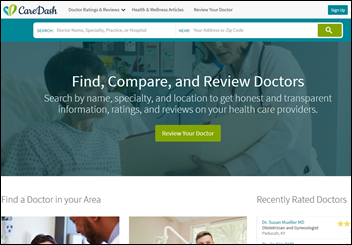
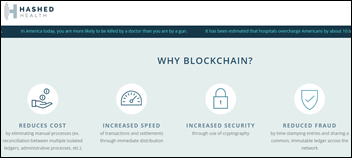


image

I recently posed the question to my readers about what would their ideal jobs would look like.

From Sunshine State: “An optimal role would be leading several business units from a COO or similar position, with a focus on solving problems in our industry in a fast-paced and dynamic environment. A level of risk is attractive — as John Paul Jones stated, he who will not risk cannot win. How do we shrink an industry and not put people out of work while advancing care? With a generalist background, a greater contribution is possible with coordinating resources and goals across groups rather than leading a specific business unit or department requiring specialized skills.” I agree that the idea of having more than one business unit at your disposal might make it easier to solve problems creatively without the distraction or bottlenecks that occurs with more siloed organizations. There’s a temptation for leaders to protect their own rather than stepping out of their comfort zones in an effort to solve the bigger problem. Certainly figuring out how to reduce cost, increase quality, and maintain jobs is a challenge, even more so when you have limited financial or personnel resources.

From At Bat: “Funny you should ask about the perfect job because I happened into it several years ago. I worked at a large hospital for 30+ years in direct patient care, managed care, the physician organization, the health plan, patient safety, and at the last part of my career in evidence-based medicine. I’m not technical, but was involved system-wide in various projects. I was contacted by the executive for our data warehouse asking if I would speak at a conference on a particular topic. I replied, ‘No problem, any opportunities?’ and after a whirlwind of phone interviews and a quick meet-up at HIMSS, I was offered my dream job helping health systems with analytics initiatives. I have to honestly say that if you gave me a pencil and paper and said to write down the perfect job, this would have been the result. I work from home when I am not traveling, and while I do get a tad lonely, it is the most rewarding job I have ever held. I am slowly getting used to working in the for-profit vs. non-profit world.” The ability to wear fuzzy bunny slippers to work cannot be underestimated. It can be a drag, though, when you realize you’ve been wearing pajamas all day and have been so busy working that you’re not even sure you brushed your teeth today. I’m always happy to hear when people find something that really clicks and hope that it lasts for them.

From What The?: “I wrote you a couple years ago about the perfect job and thought you might appreciate an update. I had decided after being a healthcare IT consultant that I knew without a doubt that I wanted to be a doctor. I have a liberal arts degree and zero science background, but seeing how people like you approach healthcare convinced me that this was something I needed to do. I was accepted to my medical school of choice last fall and am doing contract HIT consulting work to save up money until I start classes. I just got an email about my white coat ceremony in July and could not be more excited about the opportunities ahead.” This put a big smile on my face. Although sometimes those of us in the profession knock it due to the hours, the stress, the external pressures, and more, being a physician is still one of the greatest privileges any of us can have. For patients to trust us in their times of vulnerability and weakness is truly something special. Even though there are tens of thousands of “healthcare IT people” who never go anywhere near a patient, we need to continue to remember why we are doing this. It’s about our grandmothers, brothers, sisters, and everyone else who relies on the systems we use to make decisions and deliver care.

Email Dr. Jayne.

Readers Write: The Patient Experience Is Clinical

February 1, 2017 Readers Write Comments Off on Readers Write: The Patient Experience Is Clinical

The Patient Experience Is Clinical
By Mark Crockett, MD

image

As quickly as healthcare began to focus on patient experience, the law of unintended consequences kicked in. While well received as a tool to help improve care, this situation unintentionally gave rise to a consumer culture around patient treatment. Today’s value-based care arrangements call for providers to take a fresh look at patient experience.

While patients certainly deserve to be treated with dignity and listened to carefully, the top patient experience expectation is receiving safe, quality care. “Patient experience [is] not about making patients happy over quality,” says James Merlino, MD of the Association for Patient Experience. “It’s about safe care first, high-quality care, and then satisfaction.”

The best way to deliver on this expectation is for providers to view these issues of safety, risk, and compliance as a cohesive whole, thus enabling patients to receive the safe, quality care they expect, in the caring and supportive environment they deserve.

The Beryl Group defines patient experience as “the sum of all interactions, shaped by an organization’s culture, that influences patient perceptions across the continuum of care.”

That’s a big job. Most providers lack the tools to make that happen. Where to start?

It begins with developing provider/patient and provider/organization relationships that encourage collaboration.

In 2013, a British Medical Journal review of 55 studies found that patient experience is “positively associated with clinical effectiveness and patient safety, and supports the case for the inclusion of patient experience as one of the central pillars of quality in healthcare. Clinicians should resist sidelining patient experience as too subjective or mood-oriented, divorced from the ‘real’ clinical work of measuring safety and effectiveness.”

What the BMJ study revealed, and my own anecdotal evidence bears out, is that if a patient experience is positive, the patient feels empowered and can enter into a therapeutic “alliance” with the provider. Patients are motivated to follow treatment plans and are less likely to withhold information if they don’t feel intimidated—or worse, ignored—by their provider and the hospital where treatment was rendered. This supports swifter diagnoses and improved clinical decision-making and leads to fewer unnecessary referrals or diagnostic tests.

Many hospital CFOs don’t need the BMJ study to know a positive patient experience is a clinical indicator that ties to financial outcomes. As outlined in the chart (Figure 1), patient experience is directly associated with a hospital’s Star Rating and patient outcomes:

clip_image002

Creating a positive patient experience, and better clinical outcomes, begins with an understanding of what patients expect from providers. The primary expectation of any patient is, first and foremost, safety. To the unfamiliar, hospitals are scary places. Patients no doubt have read or heard stories (or watched doctor shows on TV) of medical errors and medication mix-ups or of being treated by an unqualified caregiver. Hospitals and other healthcare settings must communicate clearly that theirs is a safe place where patients can trust their caregivers.

If patients believe they are in a safe, trusted environment, their next expectation is, of course, to get better. To be healed. This requires consistent excellence across a wide variety of performance areas. Finally, patients expect to be treated with courtesy and respect.

How do we establish patient experience as one of the pillars of quality healthcare? Not surprisingly, it’s a judicious combination of technology, effective communication, and employee engagement and physician alignment.

Most patients assume all clinicians are highly qualified and fully credentialed. A robust credentialing platform helps providers deliver on that assumption. Other examples of technology impacting patient experience is the ease of electronically submitting information to a Patient Safety Organization. Participating in a PSO not only enables federal protection under the Patient Safety and Quality Improvement Act (PSQIA) but enables the organization to share and learn from peers as it relates to patient safety initiatives that most certainly impact patient experience.

Effective communication improves not just patient satisfaction, but also physician satisfaction. It boosts patient adherence and compliance and reduces medical errors and malpractice claims. The benefits of a culture that encourages open, honest, and direct communication among patients, providers, and staff go directly to the heart of patient experience.

There is a tremendous benefit to incorporating digital rounding (levering mobile technology to gather information in real-time during the rounding process) into a health system’s employee engagement strategy to generate information from patient rounding, safety rounding, and leader rounding. There is much to be learned from the voices of providers, patients, and employees.

For example, although nurses and physicians generate an equal number of complaints, nurses are three times more likely to have positive reports as compared to MDs. However, physician complaints have higher severity and fewer resolutions.

Patient feedback gathered through a rounding process identifies critical focus areas including peer review events, compliance events (particularly in infection control), and patient and employee safety issues.

For one healthcare system, more than 50 percent of all peer review cases at its 30 facilities actually began in patient relations. In addition, validation audits from compliance organizations (specifically CMS) often stem from a patient complaint. Another reason to centralize data gathered from the feedback of patients, providers, and employees is to identify patterns that allow organizations to transform risk management from a reactive process to a proactive component of healthcare delivery.

clip_image004

Patient experience is clinical. It matters to value-based care and has direct impact on an institution’s long-term financial survival. Organizations that sideline patient experience, or simply meet the minimum standards required, do so at their peril.

Mark Crockett, MD is CEO of  Verge Health of Charleston, SC.

Text Ads


RECENT COMMENTS

  1. Re: Deliberately Faked Academic Papers in Nature See, this doesn't surprise me at all. Of course AI quotes these bogus…

  2. Challenger exploded on lift-off when the O-rings failed. Columbia disintegrated on reentry after one of the heat shield tiles were…

Founding Sponsors


Platinum Sponsors


Gold Sponsors


RSS Webinars

  • An error has occurred, which probably means the feed is down. Try again later.