


HIStalk Interviews Guillaume Castel, CEO, PerfectServe
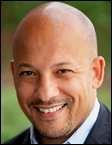
Guillaume Castel, MBA is CEO of PerfectServe.
Tell me about yourself and the company.
I have been CEO at PerfectServe for almost seven years. We have been working hard and making a lot of progress in driving value for our customers and our partners.
Almost seven years ago, we had a different vantage point on the constituents we serve, typically hospitals, health systems, and physician groups. Our commitment to them was that we were going to get the right communication workflows to the right people at the right time using the right channel. To accomplish all this, we went about acquiring and putting together four companies and then a fifth one.
If you fast-forward to today, we have more than doubled the size of our company. We are now 400-plus employees around the United States and Canada, along with some contractors outside the US. We have been deliberate about driving one big value proposition, which is accelerating speed-to-care across the continuum for all users and doing it from the cloud.
Doing all this the right way took some time. Integrating the pieces the right way took some time. But now we have a value proposition that resonates across diverse stakeholders in the United States, increasingly in Canada, and we are knee-deep in some really interesting conversations in Europe.
What does the clinical communication systems market look like, and how do EHR vendors fit in it?
We think of solving two reasonably evergreen problems. One is making sure that your workforce is optimized in the workplace and in the right place. Right people in the right place at the right time, clinicians and staff, to meet the demands of patients. Then once they are there, that they have an almost intuitive way of communicating and collaborating with one another. We are focused on those two big problems.
The second one leverages clinical communication capabilities. We have been ahead of the market in using logic, routing, and technologies to enable complex workflows for typically very large health systems. We partner with a ton of ecosystem vendors. We keep a catalog of 270 integration points with our competitors, with our friends, and obviously with the EHR companies.
I am proud to say that in many instances, we drive value with and for the EHRs with a number of our customers. Having this open-minded view of how to collaborate with clinical systems inside hospitals will continue to be important.
What metrics do health systems use to measure return on investment?
It has changed a lot. If you go back five to 10 years, it was throughput, length of stay, patient satisfaction, and physician and clinician productivity. Those metrics continue to be extraordinarily important for us to track. But now, what is always front and center on the minds of decision makers is clear and demonstrable ROI.
We have put together a comprehensive platform that offers a lot of capabilities. Our conversation is, this is what we do at PerfectServe. Our Unite platform delivers value across the continuum for all of your users. We can help you with clinical communication issues. We can help you with provider scheduling issues. We can help you with your physician group and practice management issues. We are increasingly helping you with transfer center and operator console software issues. And last but certainly not least, we follow patients when they go home with well integrated patient and family communications.
This allows us to say, tell us what you are using today. Tell us all your scheduling systems across your various sites of care. Tell us about your pagers. Tell us about your sometimes point-to-point texting capabilities. Tell us about your old-school faxing capabilities. Tell about all the servers you have in the basement of your hospitals that are allowing you to power transfer centers.
We can rationalize all of that and drive almost immediate financial ROI for them. This has been a successful strategy for us. It does not exclude the clinical benefit that we drive, and we continue to be clinician-focused. But that immediate consolidation play with guaranteed financial ROI and tackling problems like physician and clinician burnout has been resonating for us in a way that we frankly did not fully anticipate five to seven years ago.
How is the industry looking at how provider scheduling impacts job satisfaction and burnout?
We continue to be surprised with the fact that there continues to be a need for fairness in how schedules are built. Fairness may be as simple as, “I don’t want to be on call three times this week,” or “I want to make sure that I can go attend my kid’s recital on Sunday. Therefore, take my preferences into account.”
Our technology allows administrators and sometimes physician leaders to make sure that all those preferences are taken into account when the schedule is being created, and that people feel that they have been heard. This concept of technology being leveraged to create fair and equal schedules, removing human bias and taking preferences into account, has led to health systems and large physician groups having higher retention rates with their clinicians over long periods of time.
We continue to refine that model. We make sure that when an administrator creates a schedule with our technology, it is a near-perfect schedule that requires as little human intervention as possible.
How are health systems and provider groups using technology to manage inbound communications?
It is going at a rapid pace. We are excited about solving, in partnership with some of our largest customers, this equation and algorithm for almost real-time alignment of patient-to-clinician supply and demand. You will see soon, and in fact a couple of instances are already live, the ability to flex the number of clinicians and support staff that you have in any given location based on the type of patients coming in and the acuity that they are presenting with.
That cannot be predicted six months ahead. You can build a really good schedule six months ahead, but day-to-day changes happen, and we need to be able to embrace that. Our technology is flexible and reflects near-realtime preferences. We can recalibrate who should be where and why.
It’s not as simple as saying that physician Guillaume is going to work from 8 to 4 in this location every Thursday. Sometimes it will be 7 to 3. Sometimes it will be 8 to 6. This alignment of supply and demand is paramount to the wellbeing and the financial health of all of our customers.
How has the role of contact centers changed?
This concept of a contact center is probably the least well-understood part of the hospital. It is the face of it. It is bidirectional. It is both outbound and inbound. It now requires vendors to be nimble with AI capabilities that support patients, their families, clinicians who call the hospital, and even ambulances that call the hospital with an important case that needs care teams to be mobilized in very short order.
The diversity of use cases that go through a transfer center or a contact center has changed a lot. We are proud to have a technology that powers that transfer center. When I think about the product that has driven the most momentum for us over the last couple of years, it’s probably that.
It’s this strategic control point, where you have agents who are trying to match incoming calls from a diverse set of stakeholders. It could be an ambulance, a patient, a family member, or a clinician calling from a physician group who is trying to get an update on their patients that have been admitted. We make sure that those agents can do their best work by having access to schedules and using proper routing and clinical communication to actually deliver a message that will get to the right person at the right time.
That is real innovation, real-time productivity, and true operational improvement for health systems. We are gaining a ton of momentum on that front, and we think that it’s a very big control point for the rest of our technologies.
How do you incorporate AI into your strategy and product roadmap?
We serve about a million users, and as such, we take our job seriously. We embrace AI, but we are also careful, because we cannot afford to make mistakes with models that are imperfect.
The way we think about AI at PerfectServe is twofold. One is internally, where we have embraced AI for the last two years. It has made us more productive. It has made us more efficient. It has made our people happier. There is no end in sight. We have appointed a person who runs AI across all programs at PerfectServe. We have a clear mission to make our company go faster.
Then you have AI applied to our capabilities that are customer-facing. A simple view that I believe is exactly right is that AI will help us get more out of workflow software by converting what was viewed as a workflow into actual work, enabled by agentic AI.
We have seen clear examples. If you are running a call center, you can definitely improve the experience by embracing AI at the first layer of triage levels so that the call gets to the right person in that transfer center, the right way, and with the right context. This is embracing AI in a way that makes an operational difference for the health system without putting at risk any of the clinical outcomes.
We are just starting there. We have a roadmap full of AI projects that are being applied to our work in the ambulatory setting, inside the operator console work that we do in health systems, and increasingly in our provider scheduling capabilities.
What are your lessons learned in leading the company so long and seeing it reach $100 million in annual recurring revenue?
Listen to customers. Invest in technologies that are differentiated, that can stand on their own, and that have real logic. We don’t invest in me-too products that are simple. We think that those will disappear fast.
Integrate your capabilities. Have an open mind to spending money to integrate with all the other vendors that hospitals and physician groups use. We will eventually prove to all of them that our products not only can integrate, but can also enhance the strategy they have already decided.
We had a breakthrough in 2022-2023 where we talked about putting together capabilities that had not been put together before. As recently as earlier this week, we see competitors following our strategy, and it makes us proud. We are focused on the next best thing that we will add to our roster of services and capabilities.
What makes me proudest is our people. We have more than 400 people who spend every day thinking about how they can make our customers better and how we can stitch together better solutions to drive value for them financially, operationally, and clinically. It has worked for us. We still have work to do, but it has been a great ride.
Have you seen challenged startups that might be ripe for acquisition that could help you expand your product?
We are super disciplined. The problem with the market right now is that there is a misalignment between startup valuation expectations and what we believe to be the actual embedded value in the asset that we are interested in. We look at four or five companies every week. When we find the right match between value, culture, and the people that are coming along with the technology, we will pull the trigger, and we will make sure that our customers are aligned with our strategy.
M&A is part of our strategy, and so is building new capabilities internally. We have a track record of doing that. The Healthcare Operator Console product is a good example.
If we pay attention to what our customers are telling us, and if we continue to have a mind pointed towards the future, we will put the right stuff together. That has worked well for us.
Consolidation of capabilities is only starting, and scale is going to matter. The track record is going to matter. Being secure for our customers and proving that every day is going to matter. Embracing AI, integrating, and making sure that we’re present for all stakeholders.
There’s a ton of momentum on the ambulatory side right now, with big multi-specialty groups that have clear enterprise-level software and AI needs. We are happy to be present there. We see very good synergies between those groups and the large health systems that we are lucky enough to have as partners.
We like our position. We work hard every day to make sure that we stay ahead. Research firms have been kind to us, and I think that we have earned it. Gartner has placed us at the top of the Magic Quadrant three years in a row, and we don’t take that lightly. We have had the same success with KLAS reports.
We are focused. We continue to pay attention to what the market is saying. We listen to our customers. We keep our culture. We believe that this is the right recipe for continued success.

A Week in the Life of Clinical Informatics: Sunday: patient care. Monday: system design. Tuesday: iterate on feedback. Wednesday: governance…