


Healthcare AI News 4/8/26
News
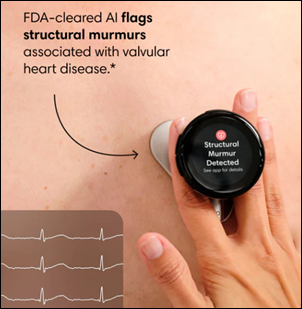
FIU and Baptist Health are developing an AI system that analyzes recordings from Eko digital stethoscopes to detect subtle heart sound patterns that humans can’t hear, which allows earlier diagnosis of cardiovascular disease. The tool will undergo clinical testing to validate it as a routine screening tool.
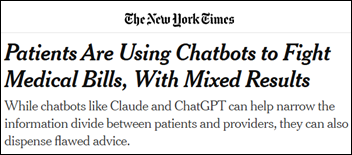
Patients are increasingly using AI chatbots to analyze and dispute their medical bills and to generate insurer appeal letters. Experts warn that people should not rely solely on the tools in high-risk situations.
An Oxford-developed AI model can predict heart failure risk up to five years early from routine CT scans with 86% accuracy, enabling earlier intervention and population screening. The researchers are seeking regulatory approval to incorporate the tool in routine cardiac CT scans in the NHS.
Business
A private equity-owned cardiology practice in Florida hires Clinlab.AI to develop and operate an AI-powered laboratory. The company has constructed 200 labs, manages 45 sites, and processes 300,000 tests monthly.
Research
A large health system study finds that use of AI ambient scribes reduced clinician documentation time by 16 minutes per day and slightly increased productivity, but had little impact on after-hours EHR work. The biggest improvements were associated with frequent use, which suggests that impact depends more on adoption and workflow integration than on the technology itself.
Other
AI-boosted developers are generating software faster than organizations can review it, turning early productivity gains into a growing backlog of bugs, security risks, and unfinished work. While ideas can be turned into working code quickly, the resulting surge has left companies struggling to understand, secure, and manage their systems and meet the demand for scarce application security engineers to review the AI’s work.
The New York Times finds that many people, especially women who have chronic conditions, are turning AI chatbots when their physicians can’t pin down a diagnosis, resolve their chronic symptoms, or make themselves available for more in-depth research.
Contacts
Mr. H, Lorre, Jenn, Dr. Jayne.
Get HIStalk updates.
Send news or rumors.
Follow on X, Bluesky, and LinkedIn.
Sponsorship information.
Contact us.


One solution would be federal (or state) requirements; but more ideally health systems would view their digital patient tools as…