


Healthcare AI News 3/25/26
News
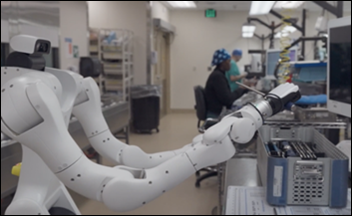
Nvidia describes the use of high-fidelity simulation and digital twins of hospitals to train and test robots before deploying them. Developers can model workflows, navigation, and edge cases in simulation, allowing robots to learn tasks such as delivery, transport, and patient interaction in a virtual hospital environment.

Heidi Health, an Australia-based AI scribe vendor, introduces Heidi Remote, a wearable microphone that captures higher-quality audio without relying on room placement. The device can operate offline, offers a 14-hour battery life, and allows the user to turn it off for privacy concerns. The company has raised $100 million.
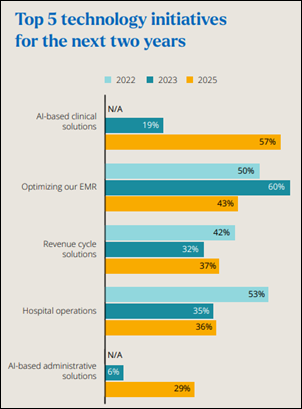
Health systems are cutting budgets and tightening approval standards, requiring clear 2x–3x ROI before buying new IT, according to a small survey of hospital leaders by Sage Growth Partners. Spending is shifting aggressively toward AI and growth-focused tools, which suggests a move from experimentation to financially driven adoption.
Japan’s health ministry approves a plan to allow AI to perform the initial review of diagnostic images for lung, stomach, and breast cancer screening. Under the proposal, AI-flagged abnormalities would be reviewed by a single physician, while normal images would still require the standard two-physician review.
In England, more than half of surveyed respondents say that they would not use the proposed “doctor in your pocket” feature of the NHS app for medical advice. Three-fourths say that they would use features to book hospital appointments, choose a preferred hospital, and access information about procedures.
Business
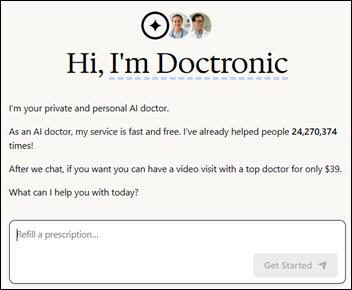
Consumer-facing AI chatbot maker Doctronic raises $40 million in Series B funding. The company makes money by charging for telehealth, billing health systems for patient acquisition, and managing prescription refills in Utah. Future plans might include charging for consultations or referrals and partnering with payers and health systems to reduce costs.
Qualifed Health raises $125 million in Series B funding. The company offers a healthcare AI governance platform. Co-founder and CEO Justin Norden, MD, MBA, MPhil co-founded an AI risk modeling technology company that was sold to Waymo.
Research
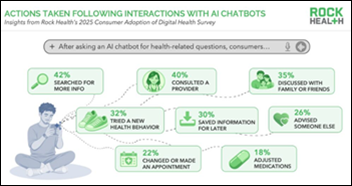
A Rock Health consumer survey finds that one-third of respondents used AI chatbots for health inquiries in 2025, double the prior year. About half of those AI users say that they used chatbots to identify possible diagnoses, review treatment options, research medications and side effects, and obtain wellness information, while about one-third say that they used them to prepare for appointments, find providers, check insurance coverage, research vitamins, or support mental health.
Other
An AI professor describes “AI psychosis,” in which users experience delusions or breaks from reality while interacting with chatbots. He says that the experience can feel immersive, similar to being drawn into a movie, but is more compelling because it is interactive and conversational. Because chatbots are designed to mimic human dialogue and may express concern or affection, users can form attachments similar to those they feel toward pets. He adds that some systems are tuned to be agreeable or even sycophantic, which can reinforce delusional thinking as conversations deepen. He concludes that users must remember that chatbots are not conscious or emotional, but are designed to keep users engaged, which can sometimes amplify false beliefs.
Contacts
Mr. H, Lorre, Jenn, Dr. Jayne.
Get HIStalk updates.
Send news or rumors.
Follow on X, Bluesky, and LinkedIn.
Sponsorship information.
Contact us.


The link from Sizzler doesn’t work.