


News 3/20/26
Top News

Alphabet-owned Verily raises $300 million, renames itself Verily Health, and says that it will focus on developing AI-enabled precision health solutions.
Alphabet participated in the round but, gave up its majority stake in the company. Other investors include Series X Capital, UCHealth, and the University of Colorado Anschutz.
Verily’s moonshot phase ran from 2012 to 2016, when it pursued ideas such as glucose-sensing contact lenses and massive health mapping studies. It struggled with layoffs and leadership changes through mid-2024, when it pivoted to become a vendor of data platforms and technology to health systems and pharma.
Verily Chairman and CEO Stephen Gillett, whose background was cybersecurity and retail before joining Google in 2016 and Verily in 2020, will remain with the company.
Reader Comments
From DataTrust: “Re: GuardDog. What stood out to me wasn’t just that one company crossed the line, it’s how easy it seems to claim treatment as the reason for access without much verification.”
From ChartAudit: “Re: Epic wrongful death lawsuit. The allegation that clinicians couldn’t reconstruct a medication timeline or clearly distinguish active versus discontinued meds is the kind of issue most of us have worked around for years. The question is whether that’s a usability nuisance or a true patient safety risk, and whether courts are now going to be asked to decide the difference in product design.”
Sponsored Events and Resources
None scheduled soon. Contact Lorre to have your resource listed.
Acquisitions, Funding, Business, and Stock
Chartis acquires Leap AI, a venture studio.
Diabetes and insulin management technology company Glytec announces plans to relocate its headquarters from Boston to Atlanta, where it will hire an additional 500 employees over the next several years.
About 2,400 Kaiser Permanente mental health professionals stage a one-day strike after being warned by their union that KP will replace therapists with AI. They were joined by 23,000 Kaiser nurses. Kaiser denies the claim.
Announcements and Implementations
MRO adds identity verification technology to its Patient Central patient records request system.
In Canada, Ontario considers implementing a province-wide patient data-sharing system and says that it is in discussion with vendors. The province spent $6 billion on previous projects with little success.
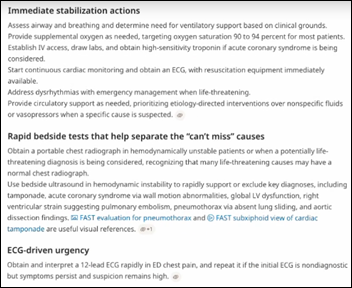
Wolters Kluwer Health will provide Continuing Medical Education to clinicians who use its UpToDate Expert AI.
Google partners with CMS to pull patient medical records into Fitbit, positioning its AI health tools as a consumer-facing front end for longitudinal health data.
Government and Politics

VA Deputy Secretary Paul Lawrence, PhD says in an EHR update that “The bottom line is that, this time, the Federal EHR is working, stable, and reliable” as rollouts accelerate “with the right leadership in place.” The VA has scheduled 23 sites to go live in 2026, starting in April with Michigan sites in Detroit, Saginaw, Ann Arbor, and Battle Creek.
Meanwhile, a proposed House bill would restrict the VA from signing new agreements with Oracle Health or bringing new sites live if the VA doesn’t implement and meet system and operational metrics.
A report says that politicians of Sweden’s Region Skåne were misled by an IT procurer into selecting Cerner Millennium in 2017, which allegedly did not meet mandatory EU safety requirements. The civil servant who led the selection later took a job with Cerner at twice the pay. The government announced the selection in September 2017, but no go-lives have occurred and the project’s cost has risen to $234 million. Meanwhile, implementation has been mothballed after a system review by 150 government employees concluded that Millennium is not “useful enough to be implemented.” The government will pursue other options.
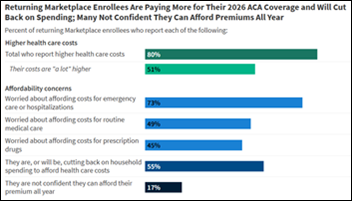
A study of the ACA Marketplace finds that rising premiums and subsidy losses have left 10% of last year’s enrollees uninsured, driven half of those ages 18 to 29 out of the market, and forced many to cut basic expenses while worrying about affording premiums, emergency care, and hospitalization.
Sponsor Updates
- Judi Health wins seven 2026 Stevie Awards for sales and customer service.
- CTG will introduce a cyber resilience scoring dashboard next week at the 2026 RSA Conference.
Blog Posts
- Who Owns Lung Nodule Follow Up in Health Systems and Why That Matters (Qure.ai)
- From Strategy to Execution: Key Insights From HIMSS26 (Tegria)
- Patient Safety Awareness Week: Teaming Up for Safer Medication Decisions (First Databank)
- Data, AI, and the Contact Center: Turning Insight into Real Business Growth (Five9)
- How to Build a Resilient Ransomware Defense Program in Healthcare (Fortified Health Security)
- Why Health System IT Investment Works Like a 401(k): Insights From Former CIO Todd Richardson (HCTec)
- Why patient confusion could be one of your biggest revenue cycle management bottlenecks (and what to do about it) (Inbox Health)
- How Boone Health is using predictive no-show modeling to improve access and outcomes (Meditech)
- 10 Ways EHRs Cause Physician Burnout (And What to Do) (Med Tech Solutions)
Contacts
Mr. H, Lorre, Jenn, Dr. Jayne.
Get HIStalk updates.
Send news or rumors.
Follow on X, Bluesky, and LinkedIn.
Sponsorship information.
Contact us.


Re: Deliberately Faked Academic Papers in Nature See, this doesn't surprise me at all. Of course AI quotes these bogus…