


Healthcare AI News 2/11/26
News
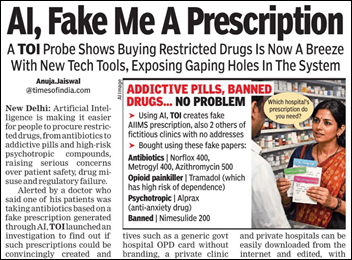
An India-based newspaper reports that AI tools make it easier to create fake paper prescriptions by generating authentic-looking documents from simple prompts and altering the images of legitimate prescriptions. The report notes that weak pharmacy enforcement and verification practices make it easier for people to obtain prescription medicines without a doctor’s examination. The newspaper notes that the practice would not work in the US and Canada because prescriptions are sent electronically prescribers directly to pharmacies, which verify the patient’s identity.
An AI-enhanced surgical navigation system is linked to a spike in patient injury reports, including misidentified anatomy and instrument misguidance, with Johnson & Johnson’s Acclarent TruDi logging at least 100 incidents after its 2021 AI upgrade versus seven in the prior three years. Studies find that AI-enabled devices are recalled more often than traditional ones, while the FDA cautions that adverse event reports are incomplete and do not prove fault. Federal staffing cuts have reduced the number of scientists who are working in AI device oversight at the FDA.
Business
India-based hospital operator Superhealth launches SuperOS, a self-developed, agentic AI-powered platform that it says can manage an entire hospital’s clinical and operational work. The system includes intelligent appointment-length scheduling, ambient AI listening with automated order entry, pharmacy and lab inventory management and scheduling, cloud-based imaging and analytics, patient monitoring, medication management, and a “magic discharge” feature that generates a discharge summary and bypasses multi-department approval processes.
Research

Researchers find that large language models often repeat medical misinformation when it is worded authoritatively and embedded in realistic clinical notes. The authors conclude that model safety improvements will probably come from enhancing guardrails rather than increasing model size or using more sophisticated prompting methods.
A 200-employee, single-company study finds that implementing AI intensifies work rather than reducing it. Optional use of enterprise AI tools was associated with expanded job scope, use during breaks and meetings, and increased multitasking. Experts say that companies may welcome those gains, but warn that employees could make more mistakes, experience burnout, and see erosion of work-life balance. The authors recommend that employers define how they want employees to us AI, build intentional pauses into workflows, pair human judgment with AI at key points, monitor workload and address burnout, and eliminate low-value tasks instead of instead of just boosting output.
Contacts
Mr. H, Lorre, Jenn, Dr. Jayne.
Get HIStalk updates.
Send news or rumors.
Follow on X, Bluesky, and LinkedIn.
Sponsorship information.
Contact us.


The link from Sizzler doesn’t work.