


The news about AHRQ is very unfortunate. The AHRQ staff were always excellent to collaborate with. They had an impressive…
Healthcare AI News 12/17/25
News
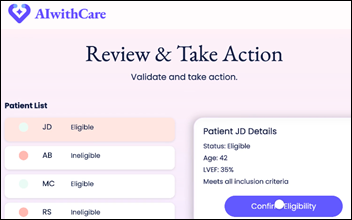
Mass General Brigham spins out AIwithCare, an AI-powered tool that matches patients to clinical trials.

In China, a health app from a financial technology company is answering 5 million questions daily. Ant Afu, whose parent company is affiliated with tech firm Alibaba, provides health tracking, goal reminders, smart device integration, AI Clinic follow-ups, report interpretation, and a connection to 300,000 doctors for online consultations and appointment booking.
NAACP urges an equity-first approach to designing and deploying healthcare AI to prevent widening racial and socioeconomic disparities.
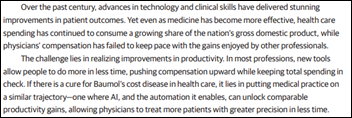
Scott Gottlieb, MD writes in JAMA Health Forum that AI has not yet lifted healthcare productivity because clinical work remains labor-intensive and is judged by outcomes, not output. He argues that AI will raise productivity by taking over cognitive and physical tasks, allowing physicians to focus on judgment-driven care. He also calls for replacing FDA’s static device framework with a system that allows safe, iterative AI updates without full reapproval unless performance fails to meet standards. He adds that adoption remains slow because Medicare’s budget-neutral payment rules require any new technology spending to be offset by cuts to physician reimbursement.
A Brookings report says that AI companion apps pose health risks because they lack guardrails, encourage addictive use, and displace human relationships. It concludes that AI companions should be treated as a public health issue using regulatory tools such as those that govern medical products.
Business
A UK doctor and YouTube celebrity says that Google’s AI search summary incorrectly claimed that his license had been suspended and that he exploited patients, misled insurers, and was disciplined for his online content.
Research

Researchers offer guidance for physicians on responding when patients present AI-generated recommendations that conflict with the clinician’s diagnosis or treatment plan.
Other
Many healthcare organizations have set up AI governance committees, but most lack a formal approval process for deploying AI and ommit ethics representation, a survey from Censinet and the CHIME Foundation finds. Two-thirds expect to implement agentic AI within the next year, a risky shift because these systems execute autonomous workflows rather than offering recommendations.
Health systems with under $1 billion in revenue see strong value in AI for revenue cycle management, but cost and budget restrictions slow their adoption. Survey respondents cite the top opportunities as finding missed reimbursement, flagging gaps in clinical documentation, and identifying missed quality indicators.

Hospitals and cosmetic surgery centers in South Korea are using inexpensive AI-generated stock “patient” photos to show expected surgical results. The practice is legal, but experts warn that failing to disclose AI use could violate consumer advertising rules. Patients are also bringing AI-enhanced images of themselves to consultations to illustrate desired outcomes, raising concerns that standardized, often Westernized, features could drive new forms of discrimination. Up to half of female Korean college students have undergone procedures, often provided as graduation gifts, and hospitals promote plastic surgery medical tourism packages to non-residents.
Contacts
Mr. H, Lorre, Jenn, Dr. Jayne.
Get HIStalk updates.
Send news or rumors.
Follow on X, Bluesky, and LinkedIn.
Sponsorship information.
Contact us.


I saw mention of the CHIME / Censinet AI survey. Wanted to flag that CHIME also release our updated Al principles on Dec. 1