
Photo: Zenoss
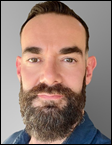
A reader suggested I interview Jim Stalder, CIO of Mercy Health Services, Baltimore, MD. I like interviewing CIOs because it’s a great way to find out what’s really happening in hospitals out there. Jim’s got a lot of technology interests, so some of our chat involves tools, which I think is interesting (he even provided links so I wouldn’t have to look them up). Anyway, thanks to Jim for spending time with HIStalk. I enjoyed it.
Tell me about your background and about your job.
I’ve been the CIO at Mercy Health Services for the past five years. I consider myself a midwesterner, even though I live outside of Annapolis right now. I was born and raised in Ohio, Minnesota, and Illinois. I went to Duke University and majored in electrical engineering.
I’ve always been interested in computers. I started tinkering with Apple II+ computers when I was a kid and got interested in electronic bulletin board services like FidoNet World back then and never really looked back. After Duke, I found myself at Anderson Consulting, or Accenture now. I was there for a number of years, doing a lot of large-scale database design and development work for telecom clients. Like a lot of the Anderson folks, there’s only so many 24 hour, seven days a week workdays that you can tolerate. The burnout rate is pretty high, so I looked for something different.
A buddy of mine had left Anderson and went over to a company called Digex, which was an up-and-coming web hosting and early ASP business that had some venture funding. I jumped ship completely from the large, 100,000+ person organization to the small Internet startup. I did that for a couple of years. Went through the fundraising aspect of things; went through an IPO; went though a couple of subsequent sales to some telecom firms; and ended up at a similar company called USinterNetworking, which one of the first true application service providers. We managed people’s salesforce automation tools and procurement tools, HR systems, and our data center in Annapolis and on the west coast. The subscription revenue based model. We didn’t produce our own software, but we hosted other people’s software and managed the systems for our clients. Did the same rocket ride there: fundraising, IPO, went through a bankruptcy …
That’s kind of the whole era in a nutshell, isn’t it?
Yes. That whole dot-com ride, I was right in the middle of, so it was a fun, interesting time. But then, after the bankruptcy, it was time for something different. I wanted to really get on the user side of things. I’d been a provider of technology for essentially my whole career, until about 5½ years ago. I really wanted to take what I knew about technology and how it could be provided and get on the other side and be a buyer and a user of it.
So it was kind of the right time, right place to get a job at Mercy, even though I had zero healthcare experience. The only time I had set foot in a hospital was when my children were born. I have three kids. Other than that, I came in cold turkey. It’s been an interesting ride for the last five years here at Mercy.
Tell me about your responsibilities there.
Mercy is a diverse organization, an independent, non-profit healthcare provider. We’re in Baltimore and we have a traditional community hospital downtown. We also have a long-term care facility named Stella Maris that’s about 30 miles north of the city. We have probably about 35 physician practices in and around Baltimore. I sometimes say we’ve got one of everything. We’ve got a hospital, physician practices, and long-term care. So here at Mercy, the IT function is pretty much consolidated into the shop here. We provide network, telecom, and application services to those three different entities.
What surprised you about healthcare when you came in as a CIO from the outside?
I think what was surprising about it initially was the complexity. Clearly the complexity in healthcare is unlike any other organization, as I’ve come to realize. In fact, someone asked me the other day what was my learning curve coming here to Mercy. I said, “It’s been about 5½ years and I’m still learning every day.” It’s a ridiculously complex environment.
So that was the biggest surprise. I really underestimated the diversity of applications, the diversity of functions of the various departments. I’ve come to appreciate the uniqueness that everyone requires to do their job in each of the different areas here. One of the things that surprised me was the state of the applications as a whole. The software vendors as a industry in healthcare, I think, traditionally are a few years behind that of other areas. They’ve rapidly been catching up, but when I came on board five years ago, Web-based apps were nowhere to be found, where it was fully becoming the standard elsewhere.
What talents did you have to develop to become an effective CIO and how did you go about doing that?
When I was at Digex and USinternetworking, my roles were product management, strategic development, some business development, and some M&A activities. I’d always had a technology background and a technology bent to what I was working on. So the aspect of trying to come in and understand what was unique about the technology here was relatively straightforward, but a lot of the culture and the dynamics of how different groups interact was definitely one of the more challenging things I had to learn.
Anderson was huge, but you really worked on a project basis, so there might be a couple of hundred people on a project. Digex and USI were at the early stages, just a few people, but they peaked at maybe 1,000 employees or, in one case, 1,500. Coming in to Mercy was a whole different dynamic. We’ve got 3,500 employees all performing significantly different functions, so getting up to speed with what everyone was doing was definitely one of the more challenging aspect of things.
You’re a Meditech customer. A lot of CIOs seem to enjoy the complexity of running, not only complex healthcare applications, but ones that are best of breed, because that usually means you get a bigger budget and bigger staff. Are you happy where the organization is with Meditech?
Well, in general, yeah. We’ve been a Meditech Magic user for coming on 13 years now, I believe. Meditech is a very stable, reliable application for us. I say it’s the jack of all trades, master of none. Actually it’s the master of some, but it doesn’t do everything that we want do from an end-user perspective. Our users often try to look for something different.
We’ve got this hybrid model going on here now where Meditech is still our core, but we’ve got a lot of bolt-on applications around it. For labor and delivery, we’re using GE’s Centricity product that we’ve bolted on and interfaced onto Meditech. We’ve just chosen Picis for a new perioperative system that we’re beginning the implementation of. We’ve got Allscripts for an ambulatory EMR system that we’re rolling out and we’ll interface some components, probably lab and radiology results, back into Meditech. That rollout has been going particularly well.
When you came into healthcare, you said there were things that surprised you. I would think looking at an application using healthcare-focused technologies like Cache’ and MUMPS and sold by a privately held company, you might think, “‘What the heck? Somebody explain this to me.”
When I came into the organization, the changes that were being made weren’t widely advertised. So, my first day was being introduced to the rest of the IT team. As a result, I also got introduced to some of the applications. One of the guys sat me down in front of Meditech which, as you know, Magic was a character-based application, similar to a VT-100 mainframe app. I remember thinking, ‘What have I gotten myself into?’ because where I had come from, I was used to the newer, Web-based applications, whether we were hosting them for clients or whether we were implementing them for clients. Everything was about the Internet or Web-based. And fat client was some of the things we’d done, but certainly not day-to-day. So, I felt like I was thrown back in time for a little bit. That was quite surprising. The other surprising thing was that the IT offices were, as they are traditionally are in hospitals as I’ve since come to learn, in the basement next to the morgue.
So I’m thinking to myself, “What am I doing?”’, but it all quickly came that I learned to really enjoy it. These past five years have been the most fulfilling, career-wise, than any other previous roles that I’ve had.
You mentioned your Allscripts ambulatory EMR. What kind advice would you give to others who were undertaking that sort of project?
Mercy is a little unique, I think, compared to some other organizations. Mercy employs a large number of our physicians, and so our rollout model has really been to our employed physician base. Frankly, it makes things a little bit easier. They’re all part of the same Mercy family and they’re already greatly interested in sharing information with each other, so Allscripts makes it all that bit easier for folks.
But the advice I have for the ambulatory side is, what we’ve done is basically gone practice-by-practice, versus the big bang approach. We’ve probably got about 25-30 practices under our belt, and probably have about 10-15 more to go before we consider ourselves complete for our employed physician base. What we’ve really done is put folks on-site in the practice for the first two weeks of the rollout to do some hand-holding with the staff, do some hand-holding with the physicians, and get then comfortable and have someone right there, immediately available for questions. Sometimes some of our staff may even actually go into the exam room with the physician to help answer questions and consulting, getting things done.
So that phased-in rollout, that’s been very smooth for us. We’ve spent a lot of time training the staff in the traditional training environment. We do so with the physicians when we can, but obviously that’s a little more challenging. But the nice thing about Allscripts in particular is that most of our users have found it to be very intuitive. I’ve been very impressed with them. Its one of the more intuitive applications from a healthcare standpoint that I’ve come across.
Are you on Touchworks?
Yes. Version 10, and right now, in the process of converting to Version 11.
You’ve done some work with application virtualization.
We’re past the experiment stage, but we’re still doing some trials with it. We’ve got a few folks on our team here who have used Altiris in the past. Altiris was recently purchased by Symantec. It’s fantastic. We use it for our trouble ticketing system, for our application distribution system, our PC and server imaging. We’ve got our whole biomedical medical preventative maintenance ticketing system in there, so our clinical engineers get alerts when preventative maintenances for equipment are up and coming and they use that to document what they’ve one.
One of the nice features about Altiris is that it has a software virtualization piece. There’s a lot of talk about server virtualization with things like the VMware, which another thing that we’re doing, but this client-side virtualization is particularly interesting. So, we can run applications that may have conflicts with another application, but on the same PC, in this virtualized layer.
A couple of our applications at our long-term care facility don’t play nicely with another app on the PC, and so what we’ve been able to do is virtualize it isolate this application to run in its own memory space and avoid conflicts with the other tools. It’s as simple as clicking on an icon to launch it and then, when you’re done, it disappears from memory and the PC goes on with its normal activities and its previous configuration and the other app that conflicted with that other app can run with no problem. So, one example is, just as a test, we’ve been able to run Office 2003, Office XP, and Office 2007, as an example, all on the same PC and all at the same time. That’s the power of this thing.
You license this by the desktop and basically you just install it? There’s not a lot of configuration that has to be done?
You can download the Altiris software. I think I have this correct – individuals who want to experiment with it for their own personal use, all the tools are up on the Altiris Web site that you can download for free and trial it. Basically, what you do is you get your machine set up in the pristine state that you want it to be, and then you run a tool that looks at how the application that you want to virtualize installs itself. It remembers all the registry changes, all the files that are installed, and creates a separate executable, a separate layer that you can turn on and off with a very small client that runs on your desktop.
Sounds pretty cool.
It’s pretty straightforward to use and it’s pretty powerful. It doesn’t work with everything, but we’ve been able to work with a lot of different applications.
What we hope to able to do is create an application self-service environment. So, ignoring licensing issues for a minute, if a person needed Microsoft Visio today, they have to call the help desk, log a ticket, and then one of the technicians will push out, through Altiris, a Visio package that we’ve done and install itself on the person’s desktop and they’re good to go. That works pretty well, but, in an ideal world, the user will be able to go to a self-service software portal and install the layer that runs Visio and really end up not installing anything on the PC. Essentially, they just download this layer and, when they need it, they activate it; and when they’re done, it turns itself off.
And so, you can imagine from an IT standpoint, we’d no longer have to deal with software installation issues. We’re really dealing with flipping a layer on and off and keeping the desktop pretty static. We’re not there yet, but that’s where we hope to get. And the nice thing is that, then let’s say somebody’s PC blows up. All we really have to do is get them a new PC with a base image on it and there’s no additional installation of software required, in theory. They can really just have these application layers on that client and turn them on and turn them off as they need them. The whole process of installing all the software is gone. We’re not going to get there for a while, but for some key application that people need quick access to, this is a fast, easy way to get it done.
Tell me what kind of IT issues you’re seeing or what kind of successes you’ve had in general.
We’ve been doing a lot over the past six months to revamp our governance process. Like everybody else, we’ve got too much going on. We’ve got a lot of demand for new applications and luckily Mercy has been, financially, doing quite well to be able to afford those applications. But as a result, there’s obviously only so much talent, time and expertise for that. The team has to get all these things done. Juggling the priorities has been a big challenge for us.
About six months ago, we bought a product that then was called E-Project, but now is called Daptive. It’s part project management and it’s part portfolio management for projects. We chose one that will do both because we’ve got some of our project managers who are really deep in Microsoft Project and use that extensively, but we wanted to keep that compatibility and we wanted to have a way to keep track of projects at a detail level.
We didn’t have a great way of doing things at the portfolio level, so we wanted some tools that we could expose to our executive sponsors to say, “Here are the ten things that we’re working on now for you, and there’s the twenty things we’ve got queued up. They’re on your wish list.” We spent a lot of time the past few months getting all of our projects and all the attributes about these projects, whether they’re ongoing, or ones that are funded but not started yet, or ones that are wish list items and someday may be items that we’ll do in to this application, now we’ve got about probably 500 different projects in there, 75 or 80 that are going on right now; and the other ones on hold or on the wish list queue, depending on funding.
We hope to get all this stuff and the rest of the attributes about these products cleaned up, and then in the New Year, begin to expose this Web-based portal out to all these executive sponsors and use that as a vehicle to better communicate with them, “Here’s what we know that you want. Here’s what we’ve got teed up and that we’ve all agreed to as the timeframes for project XYZ. Let’s make sure we communicate with each other about. Is this data accurate? Does it meet your expectations? Or is there something else that you though you wanted to do or have that’s not on this list?”
What are the most important projects?
Clearly the ambulatory EMR project with Allscripts is a big one. It’s one of our corporate priorities. Our perioperative system with Picis will be a two-year project, certainly in earnest over the next year. We’re in the process of finishing up an electronic medication administration point-of-care system with CareFusion, purchased by Cardinal recently. That’s where our nurses are at the bedside, barcoding the unit dose medication, barcoding the patient’s wristband, making sure it’s the right med and the right time. That’s in the process of finishing up. That’s been a very important patient safety initiative we undertook about a year ago.
What’s the department’s staffing and budget?
We’re about 75 people, just over 2% of our operating revenues go to IT. From the networking side, we’ve got the network team that’s also responsible for data center and telecom. We’ve got a help desk, a traditional service center. We’ve obviously got folks managing our data centre and our servers. They’re our engineering team.
Clinical engineering is part of IT here at Mercy. We integrated those guys probably about 2½ years ago. We found that IT was involved in all the bio-med projects and vice versa. Essentially, all the clinical equipment is coming out on the network now.
We’ve got a small project management office of about six folks. Now I say small, but it’s kind of funny. I was in a meeting with several other CIOs from various hospitals in Maryland and I mentioned that fact, and I think people were very curious how I was able to get six project managers approved. I can’t imagine not having a team of dedicated PMs that can go out and herd the cats for all the complex projects we’ve got going on. And then, of course, we’ve got a team that’s the traditional business systems analysts and clinical analysts.
A big help for IT and how we relate with the clinical folks, is we actually have four nurses on the team who are part of the clinical analyst team. They’re nurses with a deep technology twist to them, and they able to not only talk technology with the rest of the team and with the vendors, but they’re able to talk to the clinical staff quite well.
If you look at the concerns you have, either for your department specifically or for the hospital, if you’re looking out, say, three years, what worries you the most?
A couple of things. One, we’re in the process of building a new patient tower, so we have an 18-story building today, it’s about fifty years old, that’s pretty much at its end of life. We just broke ground a couple of months ago on a new facility just one block to the north. So, trying to figure out how to plan and budget for 2-3 years in advance for all the technology they want to put in place in this new tower is challenging. Everybody’s got a different idea of what they want to have done. We’re not fork-lifting all the operations from the current tower to the new one. We’re going to have some clinical functions on both towers. And as a result, its going to be hard to revamp all the processes, but clearly some process re-engineering is going to be part of this move and trying to layer in some new technologies that people want to implement as part of this move are certainly things we think about quite a bit.
While we have Meditech as our core, the fact that we have added on these other systems is certainly challenging. Obviously as we add more disparate applications into the environment, how we manage those, how we attach them, how we support them, how we interface them, how vendors get access to them, how we monitor them – that just gets more and more complex. Best-of-breed is a great approach for folks who have mastered change management as an organization, but we’re not 100% there yet. So, I think if we continue to go down this best-of-breed approach, we have to get a lot better internally at managing the change that comes with all the different applications.
I saw that you’re an advisor for an open source software company. What areas within healthcare IT will be influenced by open source how long will it take?
That’s a good question. The open source software company you referred to is Zenoss. We use Zenoss for our enterprise systems management here. All of our servers and our network equipment is managed through Zenoss in a nice common dashboard front-end. Wey hope they extend that to a lot of our bio-med equipment and other areas over time.
I think open source has applicability in most areas of healthcare. Some people think of open source as, “Hey great. I’ve got the source code, I can make any modification I want to it” and other people think open source is, “Just another piece of software out there that I can hire somebody else out there to support and manage for me”. So I don’t really look at open source as fundamentally different than most of the other software that is out there. It really just depends on how deep your shop is at being able to customize the environment, customize that particular application.
We don’t have a lot of developers here at Mercy. We’re more integrating off-the-shelf stuff, but I think if there was some open source software application that could meet our needs in a particular area, we’d be certainly ready, willing and able to take a look at that. Support of that open source app, we’d have to figure out, do we hire a third party to do it, or do we staff up internally and train folks on how to do it.
You’re one of few CIOs who has a Facebook page, so I know you like cool applications. What kind of stuff have you run across that my readers should check out?
Grand Central is a great tool that I’m slowly rolling out as my main number. Once you get into the details of Grand Central, its really amazing – all the customization you can do. Most people, in this day and age, will have a home phone, a cell phone, an office phone, and sometimes a pager. You can do some interesting things with Grand Central. For instance, if I’m going on vacation somewhere, the primary way people will get a hold of me is to my cell phone, but I may have coverage problems or I may not have it with me. So with Grand Central, in about 10 seconds, I can say, any calls coming into my Grand Central number forward to the vacation house’s number. Now that phone will ring anytime someone calls me. That’s just one of many tools you can leverage Grand Central for, so it’s a great way to let people to get a hold of you when they need to.
Another tool I don’t know what I would do without is Jott. Basically, I’ve got it speed dialed on my cell phone, so when I’m driving home at night and have an idea or a thought or something I want to track … in the previous days on my Treo, I’d sit there while I’m driving and try to type in on my notes page my thought, or something might call their voice mail and leave themselves a voice mail message. With Jott, you call up a number and it recognizes your caller ID from your cell phone, so it goes to your account, and you leave yourself a message; it gets transcribed, essentially in real time, and sent back to you in the form of an e-mail. So when I get back to my desk, I’ve got my thought, my note sitting there waiting for me. I’m a great fan of David Alllen and the GTD methodology, if you’re familiar with that. One of the things about getting things done is that you need to get things off your mind, off your conscience, get it down where you know you’re going to look. So Jott drops it right in my e-mail, which is something I’m in every day, and allows me to keep myself organized.
The other big thing I don’t know what I would do without is Mind Manager from Mindjet. It’s a mind-mapping tool. So, I use that for basically everything. Outlining any kind of documentation that I’m working on or strategic planning or meetings I’m going to have with folks all get outlined in there. Also, on top of Mindjet’s Mind Manager is a tool from a company called Gyronix called Results Manager that sits on top of Mind Manager and allows you manage your to-do list, for lack of a better term. So I might have 20 or 30 different maps of all these different ideas of all these things that I want to do, whether its personal or work-related. Results Manager will comb through them all and present them to me through a simple dashboard all those things that I’ve told myself that are a priority or important that I want to get done. Mind Manager helps keep me organized, and then Results Manager really helps me get the things accomplished that I want to get done. Frankly, I used to just use Microsoft Outlook tasks for everything, but there’s only so far that takes you, because you really can’t nest things and do hierarchies. You have to have one level of items and maybe apply different categories and notes, but if you really want to organize things and move them around and reposition them, Mind Manager’s the way to go.
What kind of hobbies interest you when you’re not at work?
My wife says I’m on the computer all the time when I’m at home, which is probably true. I’ve got three kids, all in elementary school, so I help out coaching their sports teams. They’re playing basketball right, now so that’s definitely an interest. It’s more than a hobby, but something that takes a large part of my time. I used to be wannabe chef. I considered actually going to cooking school for a long time and changing careers, but IT was much more interesting to me. I don’t cook or bake as much as I used to, but I still enjoy doing it when I find the time.
I’m a big fan of music. I’ve got music playing all the time. Whether it’s at work or at home. I’m a big fan of Rhapsody, which allows me to, for one price, play an unlimited set of music, look at different styles and different artists, and pick up some new tunes. You had a post where you were talking about Love, so I listen to them. I’d not heard them before and I was like, “Wow. This is fantastic.” So, that’s a band I’m listening to now. I really enjoy the ’80s tunes for the most part. I’ve been a big fan of collecting a lot of obscure acoustic eighties music. If you need any acoustic Duran Duran or Def Leppard, I’m your guy. [laughs]
Interesting Information from Jim
Department staffing
Business/Clinical Analysts (20)
Project Management (7)
Clinical Engineering (9)
Server Engineering (8)
Logistics (4)
Service Center (17)
Telecom/Data (5)
Information Architecture (3)
Process Manager (1)
No outsourcing of any function currently.
Average tenure is 6.7 years. Half of the team has a healthcare background.
Other Projects Requiring IT Involvement
Security: IP enabled video cameras are the new standard at Mercy. Obviously, now another device on the network that requires management and storage (a lot of storage!) Check out www.vidsys.com for an interesting vendor merging IT and security.
Point of Care Testing: More and more POC devices are network enabled (wired and wireless). These devices need to managed, patched, secured, and replaced (frequently).
Wayfinding/Signage: Signage is moving digital. Check out http://www.cisco.com/web/solutions/dms/index.html for some interesting tools we are starting to look at as we consider signage and wayfinding for our new patient tower. Cisco’s DMS is a network-based, set-top box solution with centralized content management.
Patient Entertainment: We haven’t pursued this yet, but will probably be looking to implement hotel-like amenities in our new patient room. Movies on demand, Internet access, meal selections online, etc. are all coming to a hospital near you.
Smart Beds: The day is coming (has come for some) where even the patient bed is a device on the network. I can see a Patient Command Center running Zenoss, where bed rail up/down status, 30 degree bed elevation in the ICU status, patient location, late medication alert, etc. all monitored via a central control center. We use Zenoss for server and systems monitoring today, but why not extend it to patient centric functions – particularly since it is an open source product!
Links to tools Jim mentioned
Jott
Grand Central
Mind Manager
Gyronix
Zenoss
Daptiv
Altiris
Regardless of how you feel about how multi-national conglomerates have changed healthcare IT, you must at least acknowledge GE Healthcare’s size and influence. GE Healthcare, formed in 2000 and headquartered in the United Kingdom, replaced the old GE Medical Systems Information Technology (GEMS-IT) and brought medical imaging, patient monitoring, and drug research into the fold to form a $17 billion business unit (over ten times Cerner’s size, to put that into perspective). The company’s IT profile was raised with its 2005 acquisition of IDX for $1.2 billion.
I don’t hear all that much about the company’s plans, so I was pleased to have Laurent Rotival volunteer to be interviewed (or, more precisely, to have one of his executives suggest it with his subsequent approval). To have a top leader of the industry’s largest vendor agree to be interviewed by an anonymous blogger … well, I was surprised and delighted to take him up on the opportunity. Thanks to the folks at GE Healthcare who made the arrangements.
Tell me a little bit about your background and your responsibilities at GE.
I’ve been with GE for about twelve years. I’ve just joined this role. I’m senior vice president and general manager of what we call the Enterprise Solutions business that includes five product lines. The most notable one is Centricity Enterprise, with the Carecast line or LastWord. We have Centricity Perinatal, Centricity Perioperative, Centricity Anesthesia, Centricity Laboratory, and Centricity Pharmacy. So, it’s basically the clinicals.
Vishal Wanchoo, who’s the CEO of GE Healthcare IT, has two other business units. One of them is called Imaging Solutions, which is run by Don Woodlock. That’s our RIS/PACS solutions, and with the recent acquisition of Dynamic Imaging, it includes that product as well. And then the third business is called the Clinical Business Solutions. Actually, that’s the integration of two businesses. They were separated before. One is called Practice Solutions that was focused on selling EMR solutions for physician practices, smaller physician practices and distributive physician practices. And then the business side is what used to be Flowcast or the revenue cycle management solution, again for physician practices and standalone hospitals. That’s run by Jim Corrigan. That’s the total entity, so I’m one of three business leaders under the GE Healthcare IT umbrella.
I’ve been here one year. Before that, I was the CIO of GE Energy Services, which is the service arm of the GE Energy business, which is based out of Atlanta. It’s about a $9 billion service business that basically takes care of all the support services that follow the sale of the turbine from installation all the way to its life cycle management.
Prior to that, I was the CIO of NBC in New York. And prior to that, I was the CIO of GE Oil and Gas based out of Florence, Italy, which was also an acquisition, a state-owned Italian business that GE had bought that went through tremendous growth. From what I recall, from a $900 million business to a $5 billion business while I was there. I think they’re reaching to $10 billion now, so that’s quite a neat story.
What about your personal background?
I went to Brown University. I have a bachelor’s and a master’s degree in Material Science and Solid Mechanics. Loved that. Prior to that, I’m what you might call a United Nations brat. I was born in Kinshasa, Zaire, now called the Democratic Republic of the Congo. I spent thirteen years in Africa and lived in Chad, Malawi, Niger, Ivory Coast, and Congo of course. I also lived in France, Switzerland, Italy, and Romania prior to graduating from high school.
I used to have lots of hobbies. [laughs] Not too sure anymore what my hobbies are, but I do have three young kids, married, living in Seattle and absolutely thrilled to be in the Pacific Northwest. I sort of accepted this job sight unseen, but I was not disappointed by this region. It’s a very beautiful place and I’m getting into all kinds of outdoor sports kind of things, like hiking and skiing and those types of things, which seems quite natural around here.
GE moves executives around a lot around their vertical markets. You’re a healthcare outsider. What’s your assessment, being fairly new to it and seeing it as a CIO who’s been in other industries?
You know, its fascinating and daunting at the same time. What’s fascinating from a technology standpoint is that healthcare is going through a lot of the same struggles and transformations that other industries have been part of.
What is not the same is the extraordinary impact technology can have in a positive and a negative way on the processes and workflows that we impact. And I think that’s quite a thrill, but also very intimidating in my position, because clearly not having the clinical background, ramping up as quickly as I can, of course, with the help of our clinical leaders here at GE Healthcare IT, not to mention the CMOs and our customers.
But I have to say, I guess it’s a bit of a dichotomy. You have this tremendous opportunity to upgrade the technology, to bring in new solutions that have the potential of significantly improving the quality and cost of the operation. The flip side is the risk associated to those conversions are probably greater that I’ve seen in any industry I’ve been part of, and so it’s something to be taken very seriously. That’s probably what makes this job one of the most exciting jobs I’ve had in my career — because of the impact you can have.
Also, when you work in gas turbines or in broadcasting or oil and gas pipelines or automotive plastics – you know you’re part of something important, but its all about money and cycle time and inventory turns and things of that sort. Where here, it’s neat to be able to go home and know that you have a real personal impact in everything you do every day. It adds a personal and maybe even an emotional dimension that is probably wasn’t as strong in other roles that I’ve had. I find that’s actually an extremely positive thing.
GE buys most of its applications instead of building them. Do you think that’s a good strategy as far as the customer is concerned?
That’s a good question. Actually, what’s interesting is what we’re doing with this business is a bit of a shift on what you’ve just stated.
There’s no doubt that the GE Healthcare business has been built by acquisitions. So, the GE was not in the space. I mean, they had some nominal departmental applications that were extensions of the diagnostic equipment that is the bread and butter of GE Healthcare, but very small activities in software. You could argue even that GE, especially under Jack Welch, never thought of software as necessarily a core competency.
What has changed over the last fifteen years, however, is that there is practically no technology that we have in our portfolio, whether it’s in healthcare or outside of healthcare, which is not differentiated by the software products and the software technology that we associate to those products. So I think in the healthcare space, we’ve made a number of acquisitions.
We’ve created a business that in 2000 was just under $400 million and we’re closing in on $1.7 billion this year. A lot of this was through acquisition, but a great deal of it actually was organic growth and, of course, on almost all the platforms that we’ve acquired or inherited, we’ve followed an evolutionary path to enhancing them, rather than re-writing them from scratch.
What we’re doing in the Centricity Enterprise space is actually taking Carecast to that next generation, which we call Centricity Enterprise 6, which we just launched a few months ago. Actually, it was one of the first major releases of the new product in this business in at least three years as far as I can tell. What we’re doing is grounding ourselves and reinforcing the very strong position that this business has been able to build over at least 25 years. And then what we’re doing in parallel to that is starting to build a state-of-art tech stack for the Intermountain partnership. A set of applications that will extend the Centricity Enterprise 6 platform, and then ultimately over a long period of time, overtake it.
We’re very sensitive to the risk our customers are facing as we re-write a platform. I think it’s dangerous, sometimes. On the one hand, you’d love to write from a clean sheet of paper because you have no constraints and you can usually develop a new application faster. But then when you look at the risks associated for one of your existing customers to actually convert from what becomes a legacy platform to the new platform, you find yourselves getting into some significant risks.
So the approach we’re taking, that might take a little bit longer, is to reinforce the foundation that our customers depend on every day for the same values and benefits and risks that I mentioned earlier. Then, incrementally add on some cutting-edge components, which ultimately will add up to a completely new footprint. We believe that that’s a path that presents less risk for our customers, protects their total costs of ownership, and ultimately takes them from a legacy architecture to a state-of-the-art architecture.
GE’s healthcare IT acquisitions were mostly middle of the pack, not the best or those with the biggest market share. Is that contrary to the overall GE strategy?
I think GE has multiple strategies. I’m not sure there is a single strategy for acquisitions, but then again, I won’t speak on behalf of all my colleagues across the company.
You know, the #1 and #2 thing was very much something we were aligned to in the Jack Welch days. But as you want to grow as a business, you can’t afford to just go for #1 and #2 because then, by definition, you don’t have that much growth left.
So the approach we’re taking now is to try to position yourself, not always necessarily with the absolute best technology, with the absolute best customers and partners. And one of the things we found that was extremely valuable, and is proving itself out every day and every week that we work here, is the customers that we have in the Carecast installed base, organizations like UCSF and Wake Forest and University of Virginia and so on, are really exceptional. And as you look at developing that next generation platform, what’s more important is not to have the best technology today, but to have the organizations that are the most distinguished in practicing care so that they can influence us as we build this next generation software.
So we actually think that we have a ton of room to grow and, because to some degree, you could argue this is the silver lining in not having the absolute best dominant technology, is that we’re not quite as anxious about leaving some of it behind.
Someone once said, “No company has ever benefited from being acquired by GE.” Your reaction to that?
Well, in my personal experience, I mentioned the oil and gas business. So this is a state-owned organization, somewhere around the $900 million range; a strong supplier of a certain type of technology but without a dominant position. Today, they’re probably a $6 billion or $7 billion business. Not only the company and the employees have benefited. The city of Florence, Italy has benefited because it has only depended on tourism and now they’ve got a global giant right there in their back door. Which, by the way, is not a pure American brainwashed entity, it’s actually a very Tuscan Italian company that’s part of the GE company. I think that was a fantastic story.
Now you know sometimes, if companies are too small, they can kind of get steamrolled. That happens. I won’t say we haven’t had our fits and starts. But in my experience, companies have done pretty well. I mean, NBC, the RCA acquisition in the eighties — NBC Universal is certainly an impressive outfit today.
There’s no doubt there’s complexities. When you look at GE Healthcare IT, there are a number of entities. It’s well published and reported that we have become part of this business. Sometimes change takes time. Coming up with technical solutions to integrate everything in a seamless fashion is not easy when most of the products weren’t meant to work together to start with. But, we’re making good progress there. You start with the culture; you line it up with the financial and the common set of metrics, and then you start attacking the more complex parts, which is bringing all the products together and delivering on the promise of the very rich portfolio of technologies and products we have.
Healthcare IT has two camps, the conglomerates like Siemens and GE and McKesson on one side and the “we built everything” group on the other side like Cerner and Epic. How do you think that will play out?
I won’t comment on our peers’ strategies, but what I can certainly say about ourselves is that we feel very confident that there is not only value in the individual components of our organization, whether it’s Centricity EMR or the Centricity Enterprise business from the Carecast side, but we truly believe that these solutions have got to work together.
I think there are two dimensions. There are solutions that should be fully integrated, ideally intrinsically,like the clinicals. We believe there are tremendous benefits from a patient safety standpoint, from a workflow efficiency standpoint, to have the clinicals integrated. But then at the same time, for solutions like imaging integrated with Centricity Enterprise, we believe that it is our responsibility to provide a seamless integration of those solutions, but they don’t need to be intrinsically sharing the same database or the same back-end data storage or data management solutions. It become more of a connectivity play. We have not made these acquisitions or invested in these programs to pretend that they are integrated or to put some lipstick on them and hope that nobody notices.
I think GE culturally has a tradition of being very transparent, which of course a lot of people can use against us because we’ll tell you pretty much what it is, and whether it works or doesn’t work. But we are committed, and if you look at the resources we’re dedicating to integrating the portfolio, we believe that integration is critical. Now compared to some of our colleagues who have built their own applications, I think they’re doing a fabulous jobs and it’s simpler to integrate. By definition, they’re built to be integrated.
The flip-side is that I don’t think its going to be as easy for them to integrate the complete continuum of care from not only the software standpoint, the data management standpoint, the clinical decision support standpoint, but especially all the device connectivity and the integration from a total workflow standpoint in the space and the environment the physician or the clinician themselves is surrounded by. Not just a software company, not just a hardware company, but actually working through the total space in which the clinicians are working. That’s where GE Healthcare is trying to position itself.
How close do you think we are to that picture where the traditional lines of demarcation like being FDA approved or having sensors that actually touch patients, or whatever it is, separate IT companies from bio-medical equipment companies?
I don’t have the answer to that. But I can tell you that is a big question. It has very significant implications for all of us, especially in the IT industry.
The key to success, and this is certainly what we’re pursuing, is rather than trying to demonstrated absolute integration on a seamless basis across all these technologies and all these disciplines, we want to create an environment where we have a technology stack and a technology framework that makes it easy to integrate all the things that you know today, and also to integrate all those things that you don’t know you require in the future, but you will acquire and that it will make it significantly easier than it is today.
So all the investments we’re making today are based on open architecture and open tech stacks, so that as you invest in our products, whether you start at the departmental end or you come to the enterprise end, as you continue investing in them, it will not only be easier to integrate GE technologies, but it will be easier to integrate any technology. Where the regulatory impact to all this is — I unfortunately don’t have the answer to that, but I’m sure we’ll all experience that over the next 10 or 15 years.
Do you strive to be #1 or #2 in the inpatient and the ambulatory EMR product segment?
That’s certainly what we strive for, but we want to do this correctly. We don’t look to growing at breakneck speed without having the quality and the support and the services. I had a business leader I admire who used to say, ‘You have to earn your right to grow’. And you can’t just grow because you have a lot of money or you have a lot of capacity or you have a lot of engineers.
We recognize that we have some work to do to improve the quality of our products and our services. We’re making very significant investments as we speak — to the service, the engineering, and the support side — to ensure that we are ready to grow. We’re GE and we have every intention to grow and we have every intention to be market leaders. That said, we don’t want to do it at the expense of delivering high quality products that serve our customers as we promised they should.
How is the $1.2 billion GE paid for IDX being realized?
The IDX portfolio was a very rich portfolio of products and customers. I described to you the three major business units we have. All those business units are doing very well and the business is growing. Certainly from a financial standpoint, the performance is very positive.
What’s particularly valuable about the realization of the IDX acquisition is that GE Healthcare needed a very strong information technology backbone to integrate all the various products and solutions that it offers. And what IDX had been able to bring was not only strong ambulatory products, but particularly the Centricity Enterprise side, is the platform we’re going to use to provide that core centerpiece of information management for the hospitals and the large IDNs. So we recognize we’ve got some gaps, but we’re making some significant investments jointly with Intermountain and a number of our other development partners.
The continuum of care is vital. There’s not a single healthcare organization that I meet with – certainly in our customer base, and even potential prospects – who doesn’t stress the essential importance of having a fully integrated IT backbone to run your operations, not only on a day-to-day workflow basis, but also on a retroactive advanced decision support capability, to be able to analyze how to improve care and how to tighten up the tolerances on how care is being delivered across different physicians, operations, hospitals, etc.
So I think that’s where the real return on investment is going to come, where we’re going to be able to not just deliver and implement a Centricity Enterprise inpatient or outpatient solution, but when that solution will actually allow our customers to fully integrate all their diagnostic equipment, all their labs, all their practices, and do it in a seamless way. So that’s the bed we’re in. When we reach that point, the $1 billion plus will be a small cost in the context of the rewards we’ll be able to get not only as a company, but for our customers.
When does the work at Intermountain come out from under the covers?
It started 18 or 19 months ago or so. There was a ramp-up of resources prior to the IDX acquisition in 2006. And as we acquired IDX and started integrating the business after the first quarter of 2006, we were at about 100 resources. We’ve been fully staffed for about three or four months. We’re a little over 310 or 320 resources, not only at Salt Lake City, but also in a couple of other GE sites.
We’re going to be releasing the first major parts soon. Not releasing to the market, but implementing them within Intermountain, the first major phase of the program, which will be focused on the emergency department. So we’re very excited about that. We’re targeting that for the end of the first quarter or beginning of the second quarter next year.
So the team is heads-down working on that, and we’re designing and developing the specs for the next two generations of the product and we’re very excited about it. So, it’s going very well. I think there was a little bit of silence for awhile because the team was really getting its sea legs. We had acquired IDX, and we bought in the Carecast business. As we were looking at the exceptional partnership we had with Intermountain, we also recognized that there were some luminary customers within the installed base that IDX brought in. We wanted to make sure they could participate and help enhance what is designed to become a transformational, next generation platform.
We talked about the acquisition integration, getting the cultures aligned, understanding what’s in conflict and what’s not in conflict. So that perhaps delayed us a little bit, but the result is that we’ve never been in a better place when it comes to our partnership. Our customers are excited about it. And, we’re having a pretty impressive set of collaboration across half a dozen large, very respected healthcare organizations, with Intermountain, of course, at the core. So it’s very exciting. We’ll have some cool things to show at the beginning of next year.
Do you think the end result will be targeted at large organizations like those ones you just referred to, or will it be something that the average community hospital can use?
It’s targeted for the average community hospital. We’re architecting it so it can be run completely on commodity hardware. So, it’ll be completely available to scale up to the Intermountains and the UCSFs of this world, but it also has the capability of running off Linux boxes and a fully open tech stack. Pretty much a state-of-art technology stack, which will provide not only a very low cost point and a low TCO, but also provide tremendous opportunity for integration, not only our products, but also third party products.
As we all know, and I certainly know from my 10+ years as a CIO, there is no such thing as a homogenous portfolio of applications in any organization. So I think that’s the other element we’re trying to address here. You’ve got to have something that can work easily with other technologies. I think that will be a differentiator as well.
When do you think you’ll have the first fully commercial sale of the end result?
We’re not looking for a big bang, “Here’s the GE-Intermountain EMR, ready for sale with a nice ribbon.” We’re basing everything on the Centricity Enterprise 6 platform, which we released earlier this year. And the way we’re looking at it is to implement it on a modular basis. So what we’re recommending is that you implement Centricity Enterprise 6, and then we are building all the engineering integration requirements so that, as modules come out, whether it’s for ED, whether it’s for a flow sheet, whether it’s for a PDA, whether it’s for other types of services that we’ll be releasing over time.
Basically, every year we’ll be releasing different components. You’ll be able to enhance the Centricity Enterprise 6 platform with those components. And over time, and it all depends on the appetite and the rate at which an organization wants to consume these things, you will find yourself having the center of gravity of your application will be increasingly the new tech stack rather than the old tech stack. But it really will be up to the client organization to decide at what rate they want to absorb them. So we’ll start releasing some things next year.
You will be marketing it to new customers, correct?
Absolutely. But in 2008 and 2009, the output of the GE-Intermountain partnership is not going to be a full, complete, 360 EMR solution. I mean, we’re building this, we’re very focused on starting with ED. We’re going after ambulatory. We’re going after certain infrastructure components. We’re going to sequence it that way.
This is sort of the internal debates we’re having these days. What are we focused on first? What will we focus on afterwards? Where are we strong? And so, to a degree, we think we have the best of both worlds. We have a very strong orders and CPOE solution with Carecast. We recognize that there’s some areas of improvement, but we also have departmental products that compliment it well.
I thought one of the braver, more honest things I’ve seen a vendor do was when GE responded to the KLAS nursing adoption study and pretty much said, ‘Look, we admit it. We and our competitors haven’t really done a good job of giving nurses the systems they need.” What actions resulted from that?
It was a hard decision, but we certainly didn’t want be rewarded by trying to sugar-coat it. GE has a strong culture of transparency.
We’re trying to get our customers upgraded to the latest release of our product. There are a number of features in the latest release of our product that actually mitigate some of the issues that were identified in that report. But we’re also putting a very strong focus on nursing workflow. We’re taking advantage of a lot of the best practice methodologies and the operational rigor that GE can bring here to ensure that we not only interact with our nursing client communities in a productive way, but we also translate their requirements and their requests into actionable product requirements that will be built out and integrated into our future releases.
It’s a tough situation to be in, because clearly nurses are among the largest population of our users, probably without any competition. And at the same time, we would obviously prefer to have better solutions for them. But I feel good considering the resources we’ve invested in this business. Just to maybe give you a sense of the kind of resources we have in development today compared to the resources this business had in the IDX days, the Centricity Enterprise business or the Carecast had about 250 engineers when we acquired them. We’re now in the range of about 620 or 630 engineers dedicated to this one product.
So the exciting part is that if you combine the clinical expertise, the software expertise, the domain expertise that the IDX team has, and you combine that with the rigor and the operational excellence and the focus on execution that GE brings, and you add on top of that the significant resources to actually walk the talk, it’s not just a question of gathering the requirements, but its doing something with them. I think the prospects are very positive and optimistic.
What we’ve also done from an organizational standpoint is a CxO kind of client forum called the Physician Advisory Group, then the CIO group. We’ve added a Chief Nursing Officer Advisory Group. That was one of the things we did early last year. We have a chief nursing officer internally. We’ve been hiring more experienced professional nurses into our organization. So I think there’s a very strong culture so our nursing users have very strong advocates internally and we’re including them now in what was already a good communications process with the CIO and the CMOs or CMIOs. Now we also have the CNOs included in that. It’s making a huge difference in helping us understand how to continuously improve our products.
If you look at the broad spectrum of healthcare IT, which areas would you say are most popular right now?
One is a tremendous focus on clinical workflow. The software industry has had a tendency to always think in modules or components of modules and has always focused on the connectivity side and the automation side and the paperless aspect. Everybody has been talking about paperless and eliminating the paper artifact. I think a lot of organizations have taken care of that and are less focused on paperless and more focused on ‘How do I really optimize and maximize the efficiency and the quality of my workflows?’, which of course doesn’t always work naturally with the way IT solutions are architected.
I think the other aspect is driving evidence-based medicine; making sure the data is available, so it’s not just gathered after the fact through some kind of manual reporting, but that every transaction, every encounter with the patient captures data on a standardized basis. And as you look at the work we’re doing with Intermountain, literally leveraging knowledge terminology, management, setting up standard databases, and setting up clinical data models, ensuring that the data is captured at the moment of the transaction or the encounter with the patient, which then allows you obtain a very, very rich database that then can be mined for analysis and for discovery of how to improve care.
The other thing that we’re doing, of course, is including in the workflows best practice care. So I think that is something else that we’re hearing more and more about. How do we keep our physicians and our clinicians fully up to date on the latest developments in healthcare? How do we help them as individuals who have a tremendous amount of pressure both transitionally and from a responsibility standpoint to be aware of the latest developments, the latest adverse interactions, the latest discoveries on how to practice care and how to address certain types of concerns?
Through the software we’re developing, we believe we have a unique opportunity, not just as GE, but as a partnership with other organizations like Intermountain healthcare; organizations like UCSF and others, to take the best practices that they’ve developed and make them available, not only to large institutions, but particularly to community health hospitals and others. And so that’s what we’re targeting going forward.

Photo: Hartford Courant
I was certain I knew Eric Rosow of Premise when he introduced himself as a new HIStalk sponsor, but I couldn’t place him. Finally, I remembered: I had seen his presentation at the 2002 HIMSS conference in Atlanta called “Real-time Executive Dashboards and Virtual Instrumentation: Solutions for Healthcare Systems”. It was one of a handful that I thought were interesting enough to cull out for further review, the idea that a feed of information and instrument sources could, like a car’s dashboard, provide an array of information needed to keep the vehicle operating efficiently and going in the right direction.
Patient throughput and its underlying components (patient assignment, bed managment, housekeeping, and patient transportation) have an enormous impact on hospitals that I’ve seen first-hand: ED waits, patient satisfaction, staff satisfaction, and even clinical outcomes (another great HIMSS presentation from years ago was from CareScience, which dealt with bed assignment and the clinical variation that occurs when nursing units get patients whose needs are vastly different from the average patient on that unit).
Hospitals need the kind of measurement and transparency that products like Premise’s can provide. Many (most?) of them have the expensive symptoms of poorly managed patient throughput. No wonder Premise has enjoyed growth of over 2,000% in five years.
Tell me about yourself and about Premise.
First, I have to say that I feel like I’m talking to an underground celebrity. I really love your blog. It’s just so refreshing and humorous and insightful and thought-provoking. It looks like at the rate you’re growing, it could blossom into a great vehicle for communication.
I’m a geek by definition, in some respects. I’m an engineer by training. I went to Trinity College here in Hartford, Connecticut. I majored in mechanical engineering and then got my Masters in biomedical engineering.
My Masters program had an internship, so not only did I get my degree in biomedical engineering, I also spent two full years at St. Francis Hospital and Medical Center in Hartford. That’s really where I fell in love with applied technology in healthcare. After graduating, I got to row with the US team for a couple of years, which was a great experience to see other parts of the world. I then went back to Trinity and taught for a year. It’s very true that you have to learn something to teach it.
After that, I joined Hartford Hospital as clinical engineer, where I was immersed in front lines of healthcare delivery and the role that technology can play in addressing those challenges. I did a 13-year stint at Hartford Hospital and was the director of biomedical engineering for the last seven. I served on the capital committee and was involved with the technology assessment of major projects, including enterprise-wide monitoring and re-engineering engagements.
It was the reengineering initiatives in late 1990s that led to the opportunity to develop what we now call our bed management platform. Hartford Hospital was faced with a number of challenges. A top initiative there was to find, build, or buy enabling technologies to help streamline capacity management/bed management. They had looked at different solutions on the market, but felt there was need for better communication and better integration of clinical information. That provided the opportunity to co-develop the Bed Management Dashboard.
I love the sport of rowing and helped started a rowing team in our town. Through that experience, I learned to value the passion, the teamwork, and the commitment that can come with a high-performing team. I think that experience fostered the entrepreneurial DNA that must have been in me. Or, the lack of a fear gene – I’m not really sure which [laughs] that resulted in us creating this crazy thing called Premise.
Premise is an interesting ride. It wasn’t just, “Let’s go off and create this thing called Premise.” It started out as two guys in the basement, myself and a long-time friend and colleague named Joe Adam. We met as high school lab partners. We were the yin and yang of complementary skill sets. In the early days, we were more of a consulting firm. Over time, we evolved to apply our applications to product-focused and decision support and business intelligence, ultimately to workflow applications. That was the next generation of Premise, in the late 90s, where we evolved from consulting and data acquisition and data presentation and focused on how we could apply those tools and visualization dashboard metaphors to really impact healthcare. For me as a biomedical engineer, it was such as great intersection of connecting devices and communications with workflow and safety and efficiency initiatives.
Hospitals used management engineers a lot a few years back to find and fix process problems. Did that work and are they using them enough today?
One of the ways I got engaged in developing the bed management dashboard was that I was one of first non-GE employees to go through GE’s Six Sixma quality training. Whether it’s management engineer or TQM or CQI or Six Sigma, I think the goal of trying to make informed decisions based on data and trends is what will always be required in healthcare, particularly given the challenges of aging nurses and baby boomers, the perfect storm that’s happening with capacity demand.
Hospitals respect the science of management engineering in day-to-day operations, but saying and doing it are two different things. In our focus area of capacity management, there’s a huge opportunity where information technology can play a huge role in improving that. Specifically, in things that IT is really good at – providing transparency across the organization, analyzing variation, looking at historical trends like where are peak discharges and admissions by time of day, day of week, time of year – and most importantly, streamlining communication among stakeholders.
MRSA is an example of where, when we developed our application, it was really important from the get-go to provide that type of clinical information so that caregivers could take the precautions they needed to and not put patients at risk, particularly if they’re in a semi-private room.
How big a problem is patient throughput in hospitals?
It’s amazing to me how ubiqitious it is, not only in large hospitals, but small hospitals, and not only here in the US, but internationally. We’ve been fortunate to work with a lot of great thought-leading hospitals, places like Cleveland Clinic, Mass General, MD Anderson, and even recently at a kickoff for our first international application at Singapore General Hospital. Places like that who have lived through the SARS epidemic have an even greater appreciation for the challenges when it comes to emergency management. The day-to-day issues include ED wait times, the metrics around diversion, people who leave without treatment, satisfaction indicators, not only people coming from what we call portals of entry, like ED and ancillary areas, but are transfers from other hospitals.
The challenge I’ve seen is that ED backups or diversions and OR and PACU backups are symptoms of a much broader patient flow challenge. Studies have been done that show that ED wait time isn’t necessarily tied to volume or ED staffing, but the visibility of upstream bed capacity. That’s the challenge in hospitals from 100 to 1600 bed hospitals throughout the world. The opportunity to create virtual capacity by better utilization of existing beds is important, especially when we’re seeing bricks and mortar and cranes helping to build out capacity, but at a cost of half a million to a million dollars per bed, plus several years to do that. That’s the real benefit.
It’s looking at the right metrics. The bed turns in a year or in a given time period is a key operating metric that all hospitals need to monitor in real time to better manage their operation.
What are the symptoms that your hospital has a throughput problem and do executives recognize them?
Certainly diversion, excessive wait times in ED, people who leave without treatment, operating room cancellations or delays or backups in PACU. Corresponding derivative effects of that are upset physicians, caregivers, and surgeons who have to cancel or delay their cases due to lack of ICU or stepdown beds for patients to go to after the surgery. Also the challenge of what we call the shell game, where patients are placed on off-service units. An orthopedic patient who’s had their hip done that morning may go to a medical floor. That creates a whole host of challenges. Those units are not trained to manage an orthopedic patient and they are often placed in a temporary holding state. Medications and meals may play catch-up as the patient moves from one holding area to another. You create work for the organization because you’ve got a bed that was occupied that has to be cleaned and prepared for another patient to come in.
There’s great efficiency if you can get them to that right level of care the first time. We’ve seen hospitals that have done more than 40 intra-unit transfers per day. You’re just not getting the throughput you need because of poor visibility across the enterprise. In our experience, capacity management in many hospitals is reactive and decisions made round a diversion, cancellations, and delays are made without good, real-time information that can support these decisions. That’s the biggest value that Premise is focusing on – increasing that visibility and decision support.
Can throughput problems be fixed without an actively managed patient transportation program?
Clearly it’s a continuum. I’ll go on record as saying that you can’t fix throughput with any technology solution. It’s a holistic approach looking at as-is, the to-be state, gap analysis to configure a solution to manage that continuum. The way we look at it is that you’ve got a circle – a portal of entry, bed assignment, bed management. Then, you need the transportation on site to move the patient and/or assets and other equipment to their room and level of care. Communicating all the activities throughout the length of stay to discharge, when a housekeeping event occurs and the room and bed are cleaned. We were originally focused on clinically driven bed management and evolved to environmental service functionality. Our newest module, Transportation Dashboard, provides that visibility across the transportation team as well.
Are hospitals getting better at discharge planning?
I think they’ve had to. As more information becomes available, it becomes easier to plan. The challenge we’ve seen is this notion of hiding beds. People can only make decisions only based on timeliness and accuracy of the data they have. Patients may leave the hospital at 10 in the morning, but that event may not be broadly visible across the organization. If you’re looking only at one ADT system, it could appear that that patient is still up there occupying that bed. That’s the type of mis-information that can create a cascading effect of backups. That continues to be a challenge in terms of visibility in discharge planning and overall patient flow.
Hospitals often think that bed turnover is a housekeeping issue. Is it?
No, I absolutely don’t think so. I often think one of the most rewarding aspects of our solution and the clients we’ve worked with is vindicating and supporting what a great job the housekeeping departments actually do. Because housekeeping departments may not have all the tools and data to support the job they do, they can be the easiest to blame. By providing metrics such as response time to a cleaning request and bed turnaround time, and doing that both on a shift and employee basis, Premise can really empower an organization to see where the bottlenecks can be in their patient flow process. In general, they’re not with housekeeping.
Can census levels be predicted?
I think hospitals can predict some of them. Certainly if you’ve got scheduled procedures, you can see what’s coming up. You can look at histograms and historical trends and control charts of what patterns have been historically for different regions of the country. There is a growing capability with some of the business analytic tools to look at what patterns have been and to use that going forward.
Having been at Hartford Hospital on 9/11, a tragic day for this whole world, the ability to look at patients that were in the hospital that day … there were only three open beds that morning and calls were coming down from state and federal authorities. There were two questions: how many beds do you have available right now by type and how many can you have available in one, two, and three hours from now? Without technology to augment your hypothesis, it would be almost impossible for many hospitals to answer that question. Hartford was able to free up over 140 beds that day to make room for anticipated casualties from New York City, which tragically never came.
What’s the ROI on your products?
There are different pain points for different organizations. Many we’ve worked with have looked purely at their ability to increase admissions without increasing their bed compliment or increasing their staff. Going back to virtual capacity and making better use of the beds they have. Other ROI elements can tie in to reduction in diversion, reduction in OR delays and cancellations. We’ve developed quantitative and qualitative ROI metrics that may or may not apply to a particular hospital’s geography or challenges.
We’re seeing more and more organizations view patient flow as a strategy, not just a problem. It’s critical, it’s real time, it’s strategic. The ability to increase efficiency and therefore profitability is why inpatients are such a high profile. It also plays an important role in patient and staff satisfaction. Chief nursing officers and other leaders use tools that help manage beds and and patient flow as a recruiting tool that makes it a more desirable place to work. All the years I’ve worked with nurses and physicians, they want to do the best job possible and take care of patients like they’ve been trained to. When you have such a potentially out of control system with patients not appropriate for their population, that can create anxiety and risk. Getting the patient in the right bed the first time is critical.
What vendors are competitors to Premise and how would you compare your offerings to theirs?
Certainly the market continues to mature. The vendors we typically see are Tele-Tracking, who I have a lot of respect for; Navicare; Statcom as a pure play vendor as well; and certainly Awarix is a really impressive company and obviously McKesson thought so as well. Those are the pure play vendors we see most often. The large healthcare IT vendors have some functionally. We see ourselves as complimentary to them. We can work in concert with the big HIT or ADT vendors out there. It’s good for the market that we’re all raising the bar, all bringing features and functions to bear as strategy that allows hospitals to better utilize their beds.
In terms of differences, our architecture is open, flexible, based on industry standards. We’re a Microsoft technology platform. We’re unique in the clinical functionality we use to match the patient’s clinical attributes to their level of care. If a patient presents with chest pain and tuberculosis and MRSA, we might need to find a bed with a patient monitor and negative pressure capability in that room. We used to joke that if you have a Yankee fan and Red Sox fan, you may not want to put them in the same semi-private room during the playoffs.
There’s all kind of attributes that may not be readily apparent. Some hospitals have to track gang affiliations. You don’t want to put rival gang members in semi-private room. This ability to complement ADT demographic data with specific attributes, like monitoring infectious disease, is really important to optimize the patient flow experience.
We want to have a highly intuitive look and feel and an easy-to-use user experience. We have patent pending technology called our Intelligent Workflow Engine to optimize and load level how tasks are assigned, particularly in the area of bed turnover, environmental service/housekeeping, and transportation tasks.
I do think it’s not just about technology. You don’t just double click the install button and it’s done. We measure the as-is state and the to-be state based on desired outcomes, and then gap analysis. We bring subject matter experts, a number of clinicians who are nurses with backgrounds in clinical patient flow, project managers, and technical specialists to make sure that when we go live with client, we tune that application to align with their desired workflow. For that reason, our solution may not be right for everybody, but for those it is, it will fit like a glove when we’re done.
Deloitte recognized Premise for outstanding growth of nearly 2300% over five years, one notch behind Google. How did you create that growth and how do you manage it?
We’ve certainly been excited to have grown the way we have. We joke internally that we were right behind Google in terms of statistics, so we love that “lies, damned lies, and statistics.” [laughs] We have great people who have a lot of experience in building companies and also focusing on what’s important. Our goal isn’t to grow, it’s to have 100% referencability. People here are exceptionally passionate. We say we have a company, but we have a mission to make a meaningful difference in healthcare. Hiring the right leaders, the right skill sets and, most importantly, the right culture and chemistry is key to any high performing organization.
In some cases, we’ve been better served by hiring people from outside of our industry. We recently created a chief technology officer position and, after an extensive search, hired a person from the digital media space, somebody familiar with innovation, user experience, and time to market, unencumbered by the traditional healthcare IT world. That has been an advantage for us to innovate. We also made a decision, for the first time, to take on a round of investor money. Through that process, we’ve got a very strong board of directors and thought leaders who have been wonderful advisors and strategists and also mentors to me and other members of our team. One gentleman in particular, Joe Zaccagnino, was the former CEO of Yale New Haven Health. He brings a tremendous insight into the challenges going forward in hospital management and administration.
You said when you hired Craig Gavina as CTO that innovative consumer technologies have healthcare potential. What are some of them?
Certainly as we look at different forms by which information can be displayed. Form has to fit function. We don’t want to be too ahead of curve, but we want to be responsive to what’s out there. One thing we say here at Premise is NEHITO – nothing every happens in the office. We want to make sure we understand what is the most effective way to deliver information, through touch screen interfaces to PDAs to iPhones, as well as traditional vehicles.
The other thing that’s exciting to me as a biomedical engineer is the convergence of other medical devices and applications with patient flow. We have relationship with Stryker,where their next generation smart bed, or iBed as they’re calling it, can communicate bed parameters. For example, are the side rails up, are the brakes on, is the bed at a low height. That information can be critical to another hospital challenge, falls and fall risk and the ability to integrate that type of information into an application like our patient flow system. The same applies to scheduling and resource management. We have a history of form fitting function.
We do what’s right for the customer, and by having a lot of what I call Chuck Yeager accounts – hospitals that push the envelope of this company in a good way to make sure we’re thinking ahead but also grounding our thinking in what will work and what won’t. I know from my experience at Hartford Hospital that things that don’t work the first time often don’t get a second chance. Applications that are innovative and functional and, at the end of the day, will get used.
I love to read books and ideas from thought leaders. One of my favorite authors is Guy Kawasaki, who describes himself as Apple Computer’s evangineer, someone who wants to change the world and has the technical ability to do it. That’s what I see that at Premise. We’re excited to have this technical ability to influence how patients move through organization. We’ve had housekeepers come up to use with tears in their eyes and hugging us, thanking us for being able to show what a great job they do in helping that organization improve their patient flow.
Where does the company go next?
We see a tremendous challenge of continuing to focus and build on the base we have. The opportunity we have to extend into the ability to tie into other devices, staff scheduling, analytics – the market will see a lot more functionality on reporting and analytics. We will continue to be opportunistic as we see challenges and synergies that are presented. We don’t want to boil the ocean – we want to focus on what we do really well. We see the benefits and value of RFID technology.
At Singapore General, we’ll see the integration of advanced RFID technology into our patient flow platform. Technology that can not only show the location of a patient, of staff, or an asset, but also be able to measure physiological signals of those patients, like core body temperature. In Singapore, that can be a useful tool to for precursors or outbreaks of infection or disease states like SARS or avian flu.
Who do you admire in the industry?
I think people like Michael McNeal, who I know you interviewed a while ago. What he’s doing with Emergin is really exciting, how he’s looking holistically across multiple vendors and providing that glue, middleware that can tie information and devices together to enable companies like Premise to add value quicker. Outside the industry, I really admire Steve Jobs and the elegance of what Apple has done and continues to do. I’m one of the heretics here at Premise that carries the iPhone and MacBook running Windows applications. I hold that as the standard to try for in terms of elegance, ease of use, and functionality.
Also, Bill and Melinda Gates and the incredible work their foundation is doing for global health with access to vaccines and drugs and research to develop health solutions that are affordable and practical. I’ve been an Apple evangelist since college, but I’ve always admired Bill’s ability to scale his vision and organization through the vehicle of Microsoft and especially the standards and rigor of the Gates Foundation. It has always been my goal to create social value through my profession and now through Premise. I’ve been in the healthcare profession my entire career because I can think of no better industry to devote one’s time and energy to. Their leadership by example has been a tremendous catalyst for others to contribute, like Warren Buffett, to such an important initiative — global health and the challenging inequities in the world.
Any other thoughts?
The patient flow is a strategy and looking at logistics and analytics is a platform to look at the core processes of delivery. That’s what we’re really focused on doing.
Our success to date has been a combination of our company’s humility. We don’t think we know it all, but we have have great advisors and customers to guide us through a dynamic market. I think it’s due to our passion, a desire to innovate, and our commitment to realizing that vision that has made this place, while at times challenging given the growth we’ve experienced, rewarding. Everybody who works here wakes up every morning excited about what we’re contributing to healthcare. It’s not for everyone, I wouldn’t want anything else. I’m really proud of this team. I don’t want to sound like an infomercial, but I really mean that. It’s a great experience we’re building on and I really appreciate the opportunity to talk with you and I appreciate all the great work you’re doing with your website.
A doctor I worked once with made a great analogy. Why do people buy drills? What they’re really buying is holes. I love that analogy. What is it you really do? What we really do is provide workflow automation, but what we really provide are analytics and real-time information. That’s what people need. We are never going to be a replacement, nor do we want to be, for the big HIT vendors. What we want to be is a decision support tool and real-time dashboard that can work in concert with ancillary systems to make the best, accurate, timely decisions so that the patient gets to the right place at the right time. That ties into patient safety and a whole host of other benefits.

Every CIO’s dream is to start fresh with a new hospital in a new market with all-new employees, choosing technologies from scratch and building the necessary infrastructure right into the structure. Tanya Townsend had that opportunity. The level of automation in most small hospitals is modest, but Saint Clare’s Hospital in the Village of Weston, Wisconsin, is a 107-bed digital hospital, thanks to some cooperation with Marshfield Clinic and parent organization Ministry Health Care.
The all-digital characterization generates a lot of industry interest, so thanks to Tanya for sharing the story with HIStalk’s readers.
Tell me about yourself and your job.
I am IT director for Saint Clare’s Hospital in Weston, Wisconsin. I’ve been here three years now, so I was involved with project about a year before it opened. We are the first and only all-digital hospital in state of Wisconsin, a very remarkable and unique experience and I’ve been part of that since the beginning.
If I walked the halls of Saint Clare’s, what would I see that’s different form the average hospital?
First and foremost, it would be lack of paper chart and a lot of paper-pushing of the paper chart. So, for example, on our nursing units, based on our design for an all-digital hospital and knowing we didn’t have to worry about having a central communications station where that paper chart is generally stored. We started to rethink how we were going to provide care and do business with this new model in mind.
We actually decentralized nursing unit and put all of our nursing staff closer to patient. Now we have alcoves outside all of the patient rooms where documentation can occur, otherwise our document is completely mobile and wireless. Documentation can occur at the bedside as well.
We also implemented voice over IP wireless phones so all our communication can happen either via the computer or phones, tied into our nurse call system. Everything is very mobile and everything is real-time action. It’s a different model for communication and lot more of a decentralized approach, closer to the patient and then hopefully more family-friendly as well.
How do you define an all-digital hospital?
That’s a great question because I’m finding out, as we start sharing stories with other so-called digital organizations, we all have a little different definition of what exactly all-digital means. Going into our guiding principles, we certainly had a lot of different ideas of what we wanted the all-digital approach to be. One was that we didn’t want a paper chart and to worry about storing or maintaining a paper chart in a long-term format. That was the first piece – understanding how you’re going to get rid of any paper coming into your facility in the first place.
It’s also about optimizing information flows across the continuum and building in decision support and patient safety into all of the different systems as much as possible. That means implementing systems such as CPOE and clinical documentation with decision support at the bedside. Not neccessarily just about scanning paper on the back end.
One of the biggest problems CIOs have is change management. What opportunities did you have starting from scratch?
That was actually a unique opportunity. We were a brand new facility – we weren’t even a replacement facility, in a new market and a new area. Everybody coming into the facility was brand new. We all came in with open eyes, the sky was the limit, with a sense of camaraderie and collaboration from the very beginning, both business as well as IT, starting with the senior leadership level. The senior leaders built this vision, and upon hiring everybody into the hospital, everybody was part of that same vision. Very open minded, a lot less of “we’ve always done it that way.” We set expectations right at the beginning, even with the recruitment process.
Other pieces are building the culture of what we wanted to accomplish, so this idea of decision support, best practices, patient safety – it was at the core of every one of our processes that we built. It was also part of the initial process before the hospital opened – building our culture and process flows. We formed multidisciplinary teams for year before hospital opened, forming process flows. It could be as simple as registering a patient or as complex as medication reconciliation. We have 8,400 pages of process maps, all available digitally and used for both training purposes and process improvement purposes..
It really is an evolution. They’re not just one-time static documents. Any time we want to improve a process, we go back to the process maps and they get continuously updated.
How did you create the process maps?
We have a project manager. We use a project management methodology and we had a project manager to help facilitate those sessions. We had simulations and walkthroughs, and since then have a process improvement manager who will update the process flows and facilitate the sessions sessions. Our quality department is absolutely integral as well. They usually identify the areas we want to look at for process improvement activities. They’re available on our Intranet and we built them with Visio.
What systems do you use and why did you choose them?
Where we had the opportunity to really start fresh, we also knew from a cost savings opportunity as well as efficiency, and what we needed on this campus was a lot of collaboration, with both Ministry Healthcare and Marshfield Clinic present on this campus. Rather than reinventing the wheel, we took a look at what was available to us within both organizations that we thought we could fit in here. We looked at the tools that then did a gap analysis of where the holes were that we needed to identify solutions for.
We came up with two core systems. One of the was GE LastWord, now called Centricity Enterprise, and we’re in the process of converting to that. The other is the Marshfield Clinic application, which is now called Cattails MD. They officially got their CCHIT certification. 90% of all our documentation for our medical record is found in those two core tools.
The OR and ED are two very niche areas that typically require their own set of documentation. In the OR, we are partnered with Picis. They do our OR and anesthesia documentation for pre-op and intra-op. In the ED, we recently went live with MedHost for ED documentation. We also have the GE perinatal product, formerly known as QS, in family birth center. The other gaps was progress notes. How were we going to handle hospital progress notes? We had hunch that we were probably not going to get physicians to type their progress notes. It was one thing to ask them to do CPOE, but we weren’t sure we were going to get them to type progress notes.
Also, the different types of paper forms that are typically found in a medical record chart that we don’t have solutions for – anatomical drawings, for example. There’s some forms that get approved through the medical records committee every month. And, documents coming in from outside facilities. We knew that patients would be coming here and transferring their care who might have some paper coming with them. We needed to find a way to acquire that into the record. We partnered into Marshfield Clinic. Since they do their own development, we could partner with them and decide on solutions for that.
With Marshfield Clinic, they developed a system called Digital Ink over Forms. That’s a tool that allows you to use a tablet style PC, pull up a form, and complete it with a stylus on the tablet. It digitizes your handwriting or whatever you did on the tablet. That’s our solution for progress notes as well as those different types of forms like the anatomical drawings. We have a scanning solution also developed by Marshfield Clinic for scanning those paper documents that will make their way into the facility.
How does the Marshfield Clinic’s homegrown EMR application work?
It’s actually been in development for the last 20 years or so. It was a system developed by physicians, for physicians. Marshfield Clinic is physician-run group. A lot of it was just a unique opportunity for us to say, “These are the gaps are on the hospital side, can we partner together to help with that collaboration across the continuum”, which is where you often have handoff issues, between ambulatory and hospital and back. That’s where a lot of handoff errors can occur. How can we partner together so that our systems are integrated across the platforms? So they’ve done a lot of very remarkable things, a very powerful tool.
We use it differently in the hospital than they do on the ambulatory side, but we share a problem list, medication list, and allergies. That was a key requirement for patient safety, that we have a medication list that would cross the continuum between ambulatory and hospital and back. The developed a very powerful medication reconciliation processes called Medication Manager. That’s also for patient prescription-writing as well.
Like I mentioned, the scanning solution is embedded right within their system. We have all our radiology and PACS images integrated with their system that allows dictation. And, one of the most unique functions is the Digital Ink over Forms that allows you, with your tablet and stylus, complete forms digitally or electronically. I’m probably missing a bunch of things it does. One of the reasons that Cattails is certified is that because it certainly meets all the standard criteria that commercial vendors already have as well.
What kind of user devices are in place?
Our core tool is the Fujitsu tablet, primarily because of that Digital Ink over Form documentation opportunity where we can use it with the stylus pen and complete the forms digitally. It’s mobile and wireless, of course. That’s our core clinical device. Each provider gets a tablet, whether a nurse or physician. The physician typically gets their own assigned to them and can take that from the clinic to the hospital and can roam freely throughout the campus using their personal tablet. On the nursing units, we have a pool of devices that they check out for the day and that’s their clinical tool they use throughout their shift.
How’s the battery life?
We have docking stations outside all those patient alcoves that I mentioned, so there’s lots of opportunity to sit and charge up. We also have the COWs that they can charge up on. If you’re operating wirelessly, continuously, it’s probably about four hours.
What kind of IT infrastructure was created for the hospital?
We’re completely Cisco, using the voice over IP technology as well of all of our wireless mobility. We’re using the tablets on wireleess, phones on wireless, wireless IV pump … lots of devices sitting on our wireless infrastructure. One of the concerns that I often get asked is about downtime and how to avoid any systems from going down, it both wireless as well as wired. We have multiple categories of redundancy, both on the wireless side as well as wired. Redundancy with different paths going to our data center so that if one of those ties is severed, the other would be up, entirely seamlessly. That’s another goal of the all-digital strategy, to make sure you have 99.9% uptime.
Is your data center on campus?
Actually, no. We have several data centers to house all of these different systems. They’re in Marshfield, Wisconsin, which is about 45 minutes away from Weston. We have a local data center as well, but our core main servers for both the Marshfield Clinic application and GE are in Marshfield.
So you’re running their systems and don’t have to run a separate instance?
Correct, which goes back to that we looked at the tool already available to us that made sense to us to adopt.
What about your wireless infrastructure?
We run 802.11g. We are running into the issues of the A-B-G compatibility with different devices that were available at the time. For example, our wireless phones operate only at the B level, so we have a little bit of issues with the access points being drained with too many devices on the access point, all at the same frequency at the same time. We’re upgrading our wireless infrastructure to separate out that traffic, which is again where it came in handy to have several areas of redundancy for an access point.
Do the B-devices slow everyone down to B-speed when they connect?
It drops the whole thing and we’re living that. Because the phones are almost always connecting to an access point, they limit the number of connections to each access point to try to streamline some of that traffic. The hospital opened and we learned that lesson.
What lessons learned would you have for IT departments moving into a new facility?
A lot of it was on the wireless side, to do the appropriate site assessments. That’s the trickiest thing, to put as much traffic on the network as you think you’re going to have to try to get those correct assessments. That was the tricky piece, especially trying to do that before the furniture was placed. Once you occupy the building, there’s all sort of findings with the wireless piece. So that’s a lesson learned – once everything is occupied, you probably want to do a few more assessments.
We had all kinds of interesting things happen. TVs, for example. We almost didn’t have TVs on our opening day because it was the same time as Hurricane Katrina and they were stuck out in the ocean somewhere. You never know what you’ll have to plan for.
In terms of disaster recovery, as much as you plan for avoiding an outage in the first place, you still have to be prepared because the inevitable will happen and did. Three months after opening, we had one of those unexpected WAN outages and we were essentially an island over here. The good news is that we had a good backup downtime electronic medical record system that we could access in that event, but not everybody was as familiar yet. It was one of those things that you have a procedure for, but you don’t necessarily walk through as often as you need to. That was another lesson learned.
How does the downtime EMR work?
We have a lot of our information stored in there. Even our niche systems like Picis in the OR and perinatal QS in the family birthing center and MedHost in the ED, all of those systems feed a summary document or quite a lot of patient information to the Marshfield Clinic Cattails system. That’s essentially our core repository. That information is then replicated, both in their data center as well as another offsite data center located in Madison, Wisconsin. That’s replicated near real time. So, we have the ability to access that through the Web in the event of an outage. Even if Cattails is down, we can still get to it.
Or, if the WAN is down, we have a satellite on the roof directly connected to this location in Madison so that we can pull up all of our patient information over the Web. It is just view-only at that point, so our downtime procedure is that you’re viewing information, but any new information that’s being captured, you go to a downtime process of paper. Imagine that. We do have paper. [laughs] That’s part of the downtime procedure process – identifying what are those core paper forms that you need to keep on standby.
IT in 107-bed hospitals is usually unsophisticated because of financial constraints. Can comparably sized hospitals accomplish what Saint Clare’s did?
That actually was part of the analysis. We did say, “Let’s try to leverage what we have available to us”, but we did a feasibility study and other vendors were looked at. For some of these systems, the vendor wasn’t too interested in us and we couldn’t touch the ballpark figures. That’s where it really made sense to leverage what was available to us. From a cost savings perspective, that was phenomenal.
What’s your IT staffing?
I have 21 FTEs on my payroll, but there’s a lot of sharing and collaboration with the parent organization. Saint Clare’s is the hospital proper, but it shares this campus with three other entities: MMG Weston, which is the family practice group also owned and operated by Ministry Healthcare, and I’m the IT director of that as well. Then we have the Marshfield Clinic Weston Center, which is over here, and then Ministry and Marshfield Clinic formed the joint venture on the campus called the Diagnostic and Treatment Center. That provides ancillary services for the entire campus – lab, radiology, cath lab, rehab, etc.
I’m over just MMG Weston and Saint Clare’s Hospital. At Marshfield Clinic, there isn’t a local director. They’re supported by the Clinic. Diagnostic and Treatment Center does have a local project coordinator, but we provide services to them. While I have 21 FTEs, resources are shared throughout those parent organizations because we are sharing systems, so I get services from them as well.
Can you prove the value of the technology in terms of cost or patient outcomes?
That was a little bit tricky for us. We didn’t personally have the before and after picture. In terms of looking at our guiding principles, which was to avoid a medical record filing room and storing charts, there was quite a bit of cost savings upfront. Same with PACS. We don’t have a radiology film room, everything is digital as well. A lot of avoidanace in the first place, but then we start to look at our outcomes and successes, that’s where we can try to do some benchmarking in comparison to our peers. We’ve been doing a lot of that. For the true use of CPOE, we’ve pretty much met compliance with all the mandates for best practice and quality outcomes.
For turnaround times on order sets, we’ve done some benchmarking. For delivering antibiotics stat, we’ve been able to turn that around in about five minutes. In a paper world at some of our peer facilities, it’s probably one and half to three hours.
The CPOE side was most controversial area. Lot of organizations are skeptical and taking a wait-and-see attitude. All of our order communications is as fast as the stat antibiotics. We’ve seen cost containment. We’ve been able to drive the doctors to use the formulary. They are 99.6% compliant.
The biggest result of all goes back to our guiding principles – optimizing the flow of information across the continuum. Having somewhat of an integrated system record, even if it is a best-of-breed vendor approach. Making sure none of our patients would be harmed due to lack of access to available information. By collaborating with Marshfield and sharing tools, have been able to avoid that.
Those are the types of things that we’re capitalizing on now and that process will continue. That certainly was a part of why Ministry and Marshfield looked at this campus as a unique opportunity and put quite a bit of effort into it, because it was an opportunity to look at how can we do this from the ground up and apply some of those lessons learned, good and bad, to rest of the organization as we continue to develop an electronic health record strategy.
My advice to others is to develop your strategy and stick to it. Get buy-in and understanding from senior leadership. The vision must be accepted at the senior leadership level. CPOE is not easy to implement. Make sure everybody is committed to vision, but adaptable. It’s a continuous evolution.
Where do you see yourself in ten years?
Hmm. Geez, I just don’t know. [laughs] Continued growth and development. Probably still in healthcare IT – this is definitely my passion. So, I can’t say for sure where exactly, but I’ll be doing something similar.
Your formal medical informatics training sets you apart from most IT leaders.
It’s absolutely been a plus. It’s been a weird development, I guess. I actually started out in health information management, more on the medical records documentation side. As I was finishing up and about to start in that career is really when the whole electronic medical record future started to pick up. I though I’d keep on going, continue to not only work, but also develop my career on the IT side because that’s where I could see myself was development of the electronic medical record and continued process improvement of our healthcare industry through the power of technology.
It wasn’t necessarily what I planned on in the very beginning, but absolutely where I want to be now. It has been extremely beneficial for me not only to have the technical training, but also have that healthcare background so I can communicate effectively and collaborate with my peers on the clinical side of the business, but also can effectively manage the IT technical component.
What do you do when you’re not working?
Who’s got time for that? [laughs] That’s an interesting question, probably another lesson learned. While it’s very fun to tell this story now, it’s been quite a journey to open an all-digital hospital, even if was from the ground up. It’s an incredible amount of effort and work. While it’s been extremely beneficial and a wonderful opportunity, it also was extremely busy. We found the eighth day of the week many times. It’s been such a great team-building experience. This will probably be one of those things that I’ll always look back as such a great experience and great friends for the rest of my life. Not a whole lot of time for everything else in life. But now that hospital is open and we’ve gotten into a little bit more of an operational mode, we’re going to get out and do some more fun things.